



Jack Stern
-
Posts
764 -
Joined
-
Last visited
-
Days Won
2
Content Type
Profiles
Forums
Blogs
Events
News
2026 Milwaukee Brewers Top Prospects Ranking
Milwaukee Brewers Videos
2022 Milwaukee Brewers Draft Picks
Milwaukee Brewers Free Agent & Trade Rumors, Notes, & Tidbits
Guides & Resources
2023 Milwaukee Brewers Draft Picks
2024 Milwaukee Brewers Draft Picks
The Milwaukee Brewers Players Project
2025 Milwaukee Brewers Draft Pick Tracker
2026 Milwaukee Brewers Draft Tracker: Picks & Bonuses
Store
Downloads
Gallery
Everything posted by Jack Stern
-
 After a spring training of twists and turns involving the infield and pitching plans, the Brewers are inching closer to finalizing the roster they’ll take to New York next week. Image courtesy of © Mark J. Rebilas-Imagn Images After a spring training of twists and turns involving the infield and pitching plans, the Brewers are inching closer to finalizing the roster they’ll take to New York next week. Pat Murphy succinctly summarized the challenges he and the front office face in crafting the Brewers’ initial 26-man roster. “It’s hard,” Murphy said on Tuesday, minutes after meeting with Matt Arnold and other Brewers executives to discuss precisely that. “We sat and went over every scenario we’re talking about right now. We didn’t solve anything.” With Opening Day a week away, the catching tandem of William Contreras and Eric Haase is the only position fully set in stone. Club decision-makers already had to mull moving pieces around the infield, and recent injuries have further complicated the process on both sides of the ball. Blake Perkins fractured his right shin early in camp, cutting into the outfield depth. After the Brewers flipped their preferred middle infield alignment, moving Brice Turang to shortstop and Joey Ortiz to second base, the former’s shoulder ailment prompted them just as abruptly to switch it back. DL Hall, Aaron Ashby, Tobias Myers, and Nick Mears will open the year on the injured list, making the pitching puzzle more complex. While not every question has been answered decisively, things are starting to take shape after the latest round of cuts and an approaching decision deadline for a handful of players. On the pitching side, Brewers camp is down to the 13 hurlers who will not begin the season on the injured list and figure to comprise half of the roster: Freddy Peralta Nestor Cortes Aaron Civale Jose Quintana Tyler Alexander Trevor Megill Jared Koenig Joel Payamps Bryan Hudson Elvis Peguero Abner Uribe Connor Thomas Elvin Rodriguez Murphy confirmed that Peralta, Cortes, and Civale will start the first three games of the season in New York. He also said Peralta will start the sixth game of the year against the Kansas City Royals, indicating the Brewers do not plan to utilize a four-man rotation through its first turn with an early off day. The skipper stopped short of naming Tyler Alexander the fourth starter in Myers’s stead, but the signs point that way after he stretched to four innings in his latest Cactus League outing. Quintana will round out the rotation, but not until he’s ready to go after a delayed start to spring training. Because he’d likely be ready before the 15-day minimum absence mandated by an injured list placement or agreed-upon optional assignment, he’ll likely make the roster regardless of his immediate availability. The Brewers could still recall Logan Henderson or Chad Patrick shortly into the season to cover innings, particularly if Quintana isn’t ready to go for the season’s fifth game. Murphy also raised the possibility of waiting until the club’s road trip at the end of April to recall Uribe to serve his suspension, in which case it would likely recall Grant Anderson to round out the initial bullpen. In any case, they’ll exchange an optionable reliever for a fresh one from Triple A a few days into the season, if not sooner. On the position player side, the Brewers optioned Andruw Monasterio on Wednesday, and they must inform non-roster veterans Mark Canha, Jake Bauers, and Manuel Margot by Friday morning whether they’ve made the team. So as not to tip the club’s hand, Murphy said the Brewers could roster more than one of those veterans, but assuming Caleb Durbin will join Vinny Capra as the other part-time infielder, it seems those three non-roster guys are competing for the final spot on the bench. Tyler Black also remains in camp, but is still an apparent odd man out due to his continued lack of defensive improvement at first base. As somewhat versatile pieces who can play first base and the corner outfield, Canha and Bauers appear to be the leading contenders for the last spot. Bauers has outperformed Canha this spring, posting a .985 OPS compared to his competitor’s .511. However, Canha has never performed well in preseason play, and his signature plate discipline has still looked strong. Murphy has also intimated repeatedly that the Brewers perceive Bauers as the more likely of the pair to accept a reassignment to Triple A. A surprise roster decision could still be in the cards, but it is becoming less likely by the day. What was a convoluted roster puzzle is starting to come together, and there should be even more clarity by the weekend. View full article
 -
Once-Convoluted Milwaukee Brewers Roster Picture is Coming into Focus
Jack Stern posted an article in Brewers
.png.ffa4773132dec021e630e53726c49185.png) Pat Murphy succinctly summarized the challenges he and the front office face in crafting the Brewers’ initial 26-man roster. “It’s hard,” Murphy said on Tuesday, minutes after meeting with Matt Arnold and other Brewers executives to discuss precisely that. “We sat and went over every scenario we’re talking about right now. We didn’t solve anything.” With Opening Day a week away, the catching tandem of William Contreras and Eric Haase is the only position fully set in stone. Club decision-makers already had to mull moving pieces around the infield, and recent injuries have further complicated the process on both sides of the ball. Blake Perkins fractured his right shin early in camp, cutting into the outfield depth. After the Brewers flipped their preferred middle infield alignment, moving Brice Turang to shortstop and Joey Ortiz to second base, the former’s shoulder ailment prompted them just as abruptly to switch it back. DL Hall, Aaron Ashby, Tobias Myers, and Nick Mears will open the year on the injured list, making the pitching puzzle more complex. While not every question has been answered decisively, things are starting to take shape after the latest round of cuts and an approaching decision deadline for a handful of players. On the pitching side, Brewers camp is down to the 13 hurlers who will not begin the season on the injured list and figure to comprise half of the roster: Freddy Peralta Nestor Cortes Aaron Civale Jose Quintana Tyler Alexander Trevor Megill Jared Koenig Joel Payamps Bryan Hudson Elvis Peguero Abner Uribe Connor Thomas Elvin Rodriguez Murphy confirmed that Peralta, Cortes, and Civale will start the first three games of the season in New York. He also said Peralta will start the sixth game of the year against the Kansas City Royals, indicating the Brewers do not plan to utilize a four-man rotation through its first turn with an early off day. The skipper stopped short of naming Tyler Alexander the fourth starter in Myers’s stead, but the signs point that way after he stretched to four innings in his latest Cactus League outing. Quintana will round out the rotation, but not until he’s ready to go after a delayed start to spring training. Because he’d likely be ready before the 15-day minimum absence mandated by an injured list placement or agreed-upon optional assignment, he’ll likely make the roster regardless of his immediate availability. The Brewers could still recall Logan Henderson or Chad Patrick shortly into the season to cover innings, particularly if Quintana isn’t ready to go for the season’s fifth game. Murphy also raised the possibility of waiting until the club’s road trip at the end of April to recall Uribe to serve his suspension, in which case it would likely recall Grant Anderson to round out the initial bullpen. In any case, they’ll exchange an optionable reliever for a fresh one from Triple A a few days into the season, if not sooner. On the position player side, the Brewers optioned Andruw Monasterio on Wednesday, and they must inform non-roster veterans Mark Canha, Jake Bauers, and Manuel Margot by Friday morning whether they’ve made the team. So as not to tip the club’s hand, Murphy said the Brewers could roster more than one of those veterans, but assuming Caleb Durbin will join Vinny Capra as the other part-time infielder, it seems those three non-roster guys are competing for the final spot on the bench. Tyler Black also remains in camp, but is still an apparent odd man out due to his continued lack of defensive improvement at first base. As somewhat versatile pieces who can play first base and the corner outfield, Canha and Bauers appear to be the leading contenders for the last spot. Bauers has outperformed Canha this spring, posting a .985 OPS compared to his competitor’s .511. However, Canha has never performed well in preseason play, and his signature plate discipline has still looked strong. Murphy has also intimated repeatedly that the Brewers perceive Bauers as the more likely of the pair to accept a reassignment to Triple A. A surprise roster decision could still be in the cards, but it is becoming less likely by the day. What was a convoluted roster puzzle is starting to come together, and there should be even more clarity by the weekend.
Pat Murphy succinctly summarized the challenges he and the front office face in crafting the Brewers’ initial 26-man roster. “It’s hard,” Murphy said on Tuesday, minutes after meeting with Matt Arnold and other Brewers executives to discuss precisely that. “We sat and went over every scenario we’re talking about right now. We didn’t solve anything.” With Opening Day a week away, the catching tandem of William Contreras and Eric Haase is the only position fully set in stone. Club decision-makers already had to mull moving pieces around the infield, and recent injuries have further complicated the process on both sides of the ball. Blake Perkins fractured his right shin early in camp, cutting into the outfield depth. After the Brewers flipped their preferred middle infield alignment, moving Brice Turang to shortstop and Joey Ortiz to second base, the former’s shoulder ailment prompted them just as abruptly to switch it back. DL Hall, Aaron Ashby, Tobias Myers, and Nick Mears will open the year on the injured list, making the pitching puzzle more complex. While not every question has been answered decisively, things are starting to take shape after the latest round of cuts and an approaching decision deadline for a handful of players. On the pitching side, Brewers camp is down to the 13 hurlers who will not begin the season on the injured list and figure to comprise half of the roster: Freddy Peralta Nestor Cortes Aaron Civale Jose Quintana Tyler Alexander Trevor Megill Jared Koenig Joel Payamps Bryan Hudson Elvis Peguero Abner Uribe Connor Thomas Elvin Rodriguez Murphy confirmed that Peralta, Cortes, and Civale will start the first three games of the season in New York. He also said Peralta will start the sixth game of the year against the Kansas City Royals, indicating the Brewers do not plan to utilize a four-man rotation through its first turn with an early off day. The skipper stopped short of naming Tyler Alexander the fourth starter in Myers’s stead, but the signs point that way after he stretched to four innings in his latest Cactus League outing. Quintana will round out the rotation, but not until he’s ready to go after a delayed start to spring training. Because he’d likely be ready before the 15-day minimum absence mandated by an injured list placement or agreed-upon optional assignment, he’ll likely make the roster regardless of his immediate availability. The Brewers could still recall Logan Henderson or Chad Patrick shortly into the season to cover innings, particularly if Quintana isn’t ready to go for the season’s fifth game. Murphy also raised the possibility of waiting until the club’s road trip at the end of April to recall Uribe to serve his suspension, in which case it would likely recall Grant Anderson to round out the initial bullpen. In any case, they’ll exchange an optionable reliever for a fresh one from Triple A a few days into the season, if not sooner. On the position player side, the Brewers optioned Andruw Monasterio on Wednesday, and they must inform non-roster veterans Mark Canha, Jake Bauers, and Manuel Margot by Friday morning whether they’ve made the team. So as not to tip the club’s hand, Murphy said the Brewers could roster more than one of those veterans, but assuming Caleb Durbin will join Vinny Capra as the other part-time infielder, it seems those three non-roster guys are competing for the final spot on the bench. Tyler Black also remains in camp, but is still an apparent odd man out due to his continued lack of defensive improvement at first base. As somewhat versatile pieces who can play first base and the corner outfield, Canha and Bauers appear to be the leading contenders for the last spot. Bauers has outperformed Canha this spring, posting a .985 OPS compared to his competitor’s .511. However, Canha has never performed well in preseason play, and his signature plate discipline has still looked strong. Murphy has also intimated repeatedly that the Brewers perceive Bauers as the more likely of the pair to accept a reassignment to Triple A. A surprise roster decision could still be in the cards, but it is becoming less likely by the day. What was a convoluted roster puzzle is starting to come together, and there should be even more clarity by the weekend.- 3 comments
-
- 1
-

-
- tyler alexander
- tobias myers
- (and 5 more)
-
Seeking More Ways to Get Outs, Bryan Hudson is Experimenting With a Sinker
Jack Stern posted an article in Brewers
.png.8cd3e405c8f2cf511bd8984f8ca7cdb2.png) It’s a tale as old as baseball’s modern era: a pitcher using spring training to develop a new pitch. Even in an age when hurlers can visit high-tech pitching labs to develop and refine a new offering off the field, the ultimate litmus tests are whether they can execute it in games and the outcomes it generates against live hitters. Low-pressure preseason games are the best opportunity for pitchers to see whether they can parlay new pitches into the regular season. After an offseason of experimentation, Bryan Hudson is taking advantage of that time this spring. “You just got a little bit more time,” he said of the spring training environment. “You're not so on edge, so cutthroat about, ‘I don't want to get beat by my worst stuff. I'm going to throw my best stuff here.’ Here, you're working on stuff, getting better, and trying to see what will help you and what won’t in-season.” Hudson had already debuted a changeup that gives him fading action away from right-handed batters. He’s also developing another new trick: a sinker he broke out against the San Diego Padres in Peoria on Monday. He and the Brewers are partly motivated by a desire to improve his below-average 40% ground ball rate from last year. “It was a group decision for me to work on it,” Hudson said. “There were a few times last year where I felt like a two-seam could’ve got me a ground ball in a good spot where my four-seam didn’t.” The first sinker he threw in Cactus League play induced the kind of batted ball he desired. Unfortunately, Jake Cronenworth’s ground ball near third base rolled past a shaded Juan Baez and down the line for a double. TUF2eU5fWGw0TUFRPT1fVXdSUlZRSUNCd1lBRGxBREJRQUFDRk1DQUFBTlZsUUFVRmNGQnd0UlZRZFVDRlpY.mp4 Hudson threw the pitch inside to the left-handed-hitting Cronenworth, which is how he plans to use it in the regular season. While his four-seamer, cutter, and sweeper mix decimated lefties last year, holding them to a .295 xwOBA, the absence of arm-side movement largely relegated him to pitching them away. The sinker gives Hudson a pitch he can run inside on same-handed opponents at the bottom of the zone, to change their sights. “I can go (four-seamer) up and away, and then I can go sinker down and in, and then I’ve got the slider or the cutter, or I can go four up again (because) I just changed their eye level,” he illustrated. “Really, it’s a pitch just to change their eye level, trying to miss a barrel, get a ground ball. I don’t think it’ll be a swing-and-miss pitch that often, but I think it will get some weak contact.” Hudson’s sidearm slot equips him to kill ride on the pitch and create sink. The one he threw on Monday had -1.1 inches of induced vertical break, meaning the orientation and spin of the baseball are slightly assisting gravity in making the ball drop instead of resisting it. That’s about where the pitch has been sitting as he’s worked on it, Hudson said. “Yeah, zero (induced vertical break) and like negative 15, 16 (horizontal break), so it’s a decent sinker … On my four-seam, I’m across (the seams), and on the two-seam, I’m just literally ripping down off of one seam on my middle finger, and whenever I’m pronating, it turns it over and makes it (sink).” As he enters his second season in Milwaukee, Hudson is working to become a more complete pitcher with more cards in his deck. His spring training results so far have been underwhelming, but he’s more focused on feeling good about his arsenal by Opening Day. “I think it'll all pay off in the season," he said. "I’m not necessarily putting up zeros like I want to, but I think it’s a lot of trial and error right now. So that’s frustrating, but it’ll get better.”
It’s a tale as old as baseball’s modern era: a pitcher using spring training to develop a new pitch. Even in an age when hurlers can visit high-tech pitching labs to develop and refine a new offering off the field, the ultimate litmus tests are whether they can execute it in games and the outcomes it generates against live hitters. Low-pressure preseason games are the best opportunity for pitchers to see whether they can parlay new pitches into the regular season. After an offseason of experimentation, Bryan Hudson is taking advantage of that time this spring. “You just got a little bit more time,” he said of the spring training environment. “You're not so on edge, so cutthroat about, ‘I don't want to get beat by my worst stuff. I'm going to throw my best stuff here.’ Here, you're working on stuff, getting better, and trying to see what will help you and what won’t in-season.” Hudson had already debuted a changeup that gives him fading action away from right-handed batters. He’s also developing another new trick: a sinker he broke out against the San Diego Padres in Peoria on Monday. He and the Brewers are partly motivated by a desire to improve his below-average 40% ground ball rate from last year. “It was a group decision for me to work on it,” Hudson said. “There were a few times last year where I felt like a two-seam could’ve got me a ground ball in a good spot where my four-seam didn’t.” The first sinker he threw in Cactus League play induced the kind of batted ball he desired. Unfortunately, Jake Cronenworth’s ground ball near third base rolled past a shaded Juan Baez and down the line for a double. TUF2eU5fWGw0TUFRPT1fVXdSUlZRSUNCd1lBRGxBREJRQUFDRk1DQUFBTlZsUUFVRmNGQnd0UlZRZFVDRlpY.mp4 Hudson threw the pitch inside to the left-handed-hitting Cronenworth, which is how he plans to use it in the regular season. While his four-seamer, cutter, and sweeper mix decimated lefties last year, holding them to a .295 xwOBA, the absence of arm-side movement largely relegated him to pitching them away. The sinker gives Hudson a pitch he can run inside on same-handed opponents at the bottom of the zone, to change their sights. “I can go (four-seamer) up and away, and then I can go sinker down and in, and then I’ve got the slider or the cutter, or I can go four up again (because) I just changed their eye level,” he illustrated. “Really, it’s a pitch just to change their eye level, trying to miss a barrel, get a ground ball. I don’t think it’ll be a swing-and-miss pitch that often, but I think it will get some weak contact.” Hudson’s sidearm slot equips him to kill ride on the pitch and create sink. The one he threw on Monday had -1.1 inches of induced vertical break, meaning the orientation and spin of the baseball are slightly assisting gravity in making the ball drop instead of resisting it. That’s about where the pitch has been sitting as he’s worked on it, Hudson said. “Yeah, zero (induced vertical break) and like negative 15, 16 (horizontal break), so it’s a decent sinker … On my four-seam, I’m across (the seams), and on the two-seam, I’m just literally ripping down off of one seam on my middle finger, and whenever I’m pronating, it turns it over and makes it (sink).” As he enters his second season in Milwaukee, Hudson is working to become a more complete pitcher with more cards in his deck. His spring training results so far have been underwhelming, but he’s more focused on feeling good about his arsenal by Opening Day. “I think it'll all pay off in the season," he said. "I’m not necessarily putting up zeros like I want to, but I think it’s a lot of trial and error right now. So that’s frustrating, but it’ll get better.” -
The Brewers' deceptive southpaw reliever unveiled his new changeup earlier this spring, and this week, he broke out the other arm-side mover he's been crafting. The Brewers' deceptive southpaw reliever unveiled his new changeup earlier this spring, and this week, he broke out the other arm-side mover he's been crafting. It’s a tale as old as baseball’s modern era: a pitcher using spring training to develop a new pitch. Even in an age when hurlers can visit high-tech pitching labs to develop and refine a new offering off the field, the ultimate litmus tests are whether they can execute it in games and the outcomes it generates against live hitters. Low-pressure preseason games are the best opportunity for pitchers to see whether they can parlay new pitches into the regular season. After an offseason of experimentation, Bryan Hudson is taking advantage of that time this spring. “You just got a little bit more time,” he said of the spring training environment. “You're not so on edge, so cutthroat about, ‘I don't want to get beat by my worst stuff. I'm going to throw my best stuff here.’ Here, you're working on stuff, getting better, and trying to see what will help you and what won’t in-season.” Hudson had already debuted a changeup that gives him fading action away from right-handed batters. He’s also developing another new trick: a sinker he broke out against the San Diego Padres in Peoria on Monday. He and the Brewers are partly motivated by a desire to improve his below-average 40% ground ball rate from last year. “It was a group decision for me to work on it,” Hudson said. “There were a few times last year where I felt like a two-seam could’ve got me a ground ball in a good spot where my four-seam didn’t.” The first sinker he threw in Cactus League play induced the kind of batted ball he desired. Unfortunately, Jake Cronenworth’s ground ball near third base rolled past a shaded Juan Baez and down the line for a double. TUF2eU5fWGw0TUFRPT1fVXdSUlZRSUNCd1lBRGxBREJRQUFDRk1DQUFBTlZsUUFVRmNGQnd0UlZRZFVDRlpY.mp4 Hudson threw the pitch inside to the left-handed-hitting Cronenworth, which is how he plans to use it in the regular season. While his four-seamer, cutter, and sweeper mix decimated lefties last year, holding them to a .295 xwOBA, the absence of arm-side movement largely relegated him to pitching them away. The sinker gives Hudson a pitch he can run inside on same-handed opponents at the bottom of the zone, to change their sights. “I can go (four-seamer) up and away, and then I can go sinker down and in, and then I’ve got the slider or the cutter, or I can go four up again (because) I just changed their eye level,” he illustrated. “Really, it’s a pitch just to change their eye level, trying to miss a barrel, get a ground ball. I don’t think it’ll be a swing-and-miss pitch that often, but I think it will get some weak contact.” Hudson’s sidearm slot equips him to kill ride on the pitch and create sink. The one he threw on Monday had -1.1 inches of induced vertical break, meaning the orientation and spin of the baseball are slightly assisting gravity in making the ball drop instead of resisting it. That’s about where the pitch has been sitting as he’s worked on it, Hudson said. “Yeah, zero (induced vertical break) and like negative 15, 16 (horizontal break), so it’s a decent sinker … On my four-seam, I’m across (the seams), and on the two-seam, I’m just literally ripping down off of one seam on my middle finger, and whenever I’m pronating, it turns it over and makes it (sink).” As he enters his second season in Milwaukee, Hudson is working to become a more complete pitcher with more cards in his deck. His spring training results so far have been underwhelming, but he’s more focused on feeling good about his arsenal by Opening Day. “I think it'll all pay off in the season," he said. "I’m not necessarily putting up zeros like I want to, but I think it’s a lot of trial and error right now. So that’s frustrating, but it’ll get better.” View full article
-
The Brewers' 2024 Co-Minor League Pitcher of the Year knows he has a unique ability to generate elite movement to both sides of the plate. His next objective is to find the best way to keep that break within or near the strike zone more consistently. Image courtesy of © Curt Hogg / USA TODAY NETWORK The Brewers' 2024 Co-Minor League Pitcher of the Year knows he has a unique ability to generate elite movement to both sides of the plate. His next objective is to find the best way to keep that break within or near the strike zone more consistently. Craig Yoho's screwball-like changeup has been the talk of Brewers camp, but one of his other pitches drew the spotlight in the Brewers' Spring Breakout Game on Sunday night. With his final pitch of a perfect inning, Yoho landed a back-door breaking ball to strike out Cincinnati Reds prospect Carlos Jorge. Yoho only threw the pitch 16% of the time in Triple A last year and has thrown it even less in most of his spring training outings. However, its break is arguably as impressive as his changeup's. In last year's sample, Yoho's Statcast-tracked breaking balls averaged 20.2 inches of horizontal movement. There's no pitch quite like it at the MLB level. In 2024, only one qualified pitch—Boston Red Sox reliever Greg Weissert's sweeper—averaged at least that much glove-side break. Most sweeper-like offerings have minimal depth, but Yoho's breaker averaged -7.8 inches of induced vertical movement. That unorthodox shape has left evaluators and pitch-tracking systems divided on how to label it. Some within the Brewers organization view it as a curveball. Statcast tags it as a sweeper. Yoho prefers to call it a slider, because it reinforces his mental cue of ripping the pitch as hard as possible. "That's what I've called it since I started throwing it in college," he recalled on Monday morning. "If I try and think curveball, I probably slow up a little bit, so I call it a slider. So that's what I like to think it is. But it's just more for my own thought process." Yoho tries to keep that thought process as simple as possible, setting him apart in an era when many pitchers fixate on spin and release data to achieve their desired direction and degree of movement. "I don't think necessarily about spin direction or anything on that," he said. "I'm already kind of on the side of the baseball. It's kind of almost like a cutter grip on it, and then I'm just kind of supinated on it when I come through, and I'm just thinking about ripping the seams down the side of the baseball." That's a luxury Yoho enjoys as a rare breed on the mound. Most pitchers are biased toward pronating or supinating the baseball, but he excels at both, allowing him to generate elite movement in both directions. That creates the daunting matchup that terrorized hitters across three levels last year. "It just forces the hitters to stay on everything for so long and make those swing decisions hard," Yoho said of the interplay between his two big breakers. "I might throw a changeup in there and it might run away, and then, all of a sudden, you see a swing at a slider in the other batter's box. It's like, 'Why do they do that?' And it's because everything starts at different spots and finishes somewhere else." The drawback to all that movement is that, at times, it's proven difficult to land in the strike zone. If there was a nit to pick with Yoho's dazzling first full professional season, it was the frequency of free bases he conceded. He issued progressively more walks as he faced increasingly disciplined hitters, culminating in a 14.5% walk rate at Triple-A Nashville. Cutting down those free passes has been an area of focus this spring. On that front, Yoho debuted a minor adjustment in his appearance on Sunday. He has long pitched from the extreme third base end of the rubber to maximize the perceived break of his stuff. As recently as the beginning of this month, Matt Trueblood talked to Yoho and wrote about his theory for working from that spot. In the short time since, though, the Brewers' pitching development brass nudged him slightly toward the middle to keep his pitches over the plate longer. "I've been so far to the third base side, my toes are kind of hanging off (the rubber)," he said. "And they were like, 'Hey, I think it might help your stuff, just to keep it more on-plane with the plate longer, to kind of move back towards the middle.' So (Sunday night), I kind of tinkered with it where I moved back a little bit. So now my toes are in line with the edge of the rubber." Yoho is correct in believing that pitching from the third-base side makes right-handed movement look more extreme to a right-handed batter. But the Brewers led him to a more important realization: he needs no such illusions to make his stuff more challenging to hit. "A lot of times, guys do that because they don't have good stuff," he explained. "I already have good stuff. Now it's like, how much can I get that in the zone and competitive? And so that might actually take away from how good my stuff is if I'm that far, where it's hard to get my changeup back over the plate with having to get so much to my glove side." Yoho is positioned to become the latest in a long line of dominant Milwaukee relievers. He has the stuff and the poise. All that's missing is more consistent control, which could fall into place with his new starting point. "It's just kind of like, 'Hey, you've got good stuff, it's just got to be in the zone. So just keep throwing it and find those sight lines of where you got to start the pitches.'" View full article
-
.png.04e0546a440d9f317d469c27f390c16f.png) Craig Yoho's screwball-like changeup has been the talk of Brewers camp, but one of his other pitches drew the spotlight in the Brewers' Spring Breakout Game on Sunday night. With his final pitch of a perfect inning, Yoho landed a back-door breaking ball to strike out Cincinnati Reds prospect Carlos Jorge. Yoho only threw the pitch 16% of the time in Triple A last year and has thrown it even less in most of his spring training outings. However, its break is arguably as impressive as his changeup's. In last year's sample, Yoho's Statcast-tracked breaking balls averaged 20.2 inches of horizontal movement. There's no pitch quite like it at the MLB level. In 2024, only one qualified pitch—Boston Red Sox reliever Greg Weissert's sweeper—averaged at least that much glove-side break. Most sweeper-like offerings have minimal depth, but Yoho's breaker averaged -7.8 inches of induced vertical movement. That unorthodox shape has left evaluators and pitch-tracking systems divided on how to label it. Some within the Brewers organization view it as a curveball. Statcast tags it as a sweeper. Yoho prefers to call it a slider, because it reinforces his mental cue of ripping the pitch as hard as possible. "That's what I've called it since I started throwing it in college," he recalled on Monday morning. "If I try and think curveball, I probably slow up a little bit, so I call it a slider. So that's what I like to think it is. But it's just more for my own thought process." Yoho tries to keep that thought process as simple as possible, setting him apart in an era when many pitchers fixate on spin and release data to achieve their desired direction and degree of movement. "I don't think necessarily about spin direction or anything on that," he said. "I'm already kind of on the side of the baseball. It's kind of almost like a cutter grip on it, and then I'm just kind of supinated on it when I come through, and I'm just thinking about ripping the seams down the side of the baseball." That's a luxury Yoho enjoys as a rare breed on the mound. Most pitchers are biased toward pronating or supinating the baseball, but he excels at both, allowing him to generate elite movement in both directions. That creates the daunting matchup that terrorized hitters across three levels last year. "It just forces the hitters to stay on everything for so long and make those swing decisions hard," Yoho said of the interplay between his two big breakers. "I might throw a changeup in there and it might run away, and then, all of a sudden, you see a swing at a slider in the other batter's box. It's like, 'Why do they do that?' And it's because everything starts at different spots and finishes somewhere else." The drawback to all that movement is that, at times, it's proven difficult to land in the strike zone. If there was a nit to pick with Yoho's dazzling first full professional season, it was the frequency of free bases he conceded. He issued progressively more walks as he faced increasingly disciplined hitters, culminating in a 14.5% walk rate at Triple-A Nashville. Cutting down those free passes has been an area of focus this spring. On that front, Yoho debuted a minor adjustment in his appearance on Sunday. He has long pitched from the extreme third base end of the rubber to maximize the perceived break of his stuff. As recently as the beginning of this month, Matt Trueblood talked to Yoho and wrote about his theory for working from that spot. In the short time since, though, the Brewers' pitching development brass nudged him slightly toward the middle to keep his pitches over the plate longer. "I've been so far to the third base side, my toes are kind of hanging off (the rubber)," he said. "And they were like, 'Hey, I think it might help your stuff, just to keep it more on-plane with the plate longer, to kind of move back towards the middle.' So (Sunday night), I kind of tinkered with it where I moved back a little bit. So now my toes are in line with the edge of the rubber." Yoho is correct in believing that pitching from the third-base side makes right-handed movement look more extreme to a right-handed batter. But the Brewers led him to a more important realization: he needs no such illusions to make his stuff more challenging to hit. "A lot of times, guys do that because they don't have good stuff," he explained. "I already have good stuff. Now it's like, how much can I get that in the zone and competitive? And so that might actually take away from how good my stuff is if I'm that far, where it's hard to get my changeup back over the plate with having to get so much to my glove side." Yoho is positioned to become the latest in a long line of dominant Milwaukee relievers. He has the stuff and the poise. All that's missing is more consistent control, which could fall into place with his new starting point. "It's just kind of like, 'Hey, you've got good stuff, it's just got to be in the zone. So just keep throwing it and find those sight lines of where you got to start the pitches.'"
Craig Yoho's screwball-like changeup has been the talk of Brewers camp, but one of his other pitches drew the spotlight in the Brewers' Spring Breakout Game on Sunday night. With his final pitch of a perfect inning, Yoho landed a back-door breaking ball to strike out Cincinnati Reds prospect Carlos Jorge. Yoho only threw the pitch 16% of the time in Triple A last year and has thrown it even less in most of his spring training outings. However, its break is arguably as impressive as his changeup's. In last year's sample, Yoho's Statcast-tracked breaking balls averaged 20.2 inches of horizontal movement. There's no pitch quite like it at the MLB level. In 2024, only one qualified pitch—Boston Red Sox reliever Greg Weissert's sweeper—averaged at least that much glove-side break. Most sweeper-like offerings have minimal depth, but Yoho's breaker averaged -7.8 inches of induced vertical movement. That unorthodox shape has left evaluators and pitch-tracking systems divided on how to label it. Some within the Brewers organization view it as a curveball. Statcast tags it as a sweeper. Yoho prefers to call it a slider, because it reinforces his mental cue of ripping the pitch as hard as possible. "That's what I've called it since I started throwing it in college," he recalled on Monday morning. "If I try and think curveball, I probably slow up a little bit, so I call it a slider. So that's what I like to think it is. But it's just more for my own thought process." Yoho tries to keep that thought process as simple as possible, setting him apart in an era when many pitchers fixate on spin and release data to achieve their desired direction and degree of movement. "I don't think necessarily about spin direction or anything on that," he said. "I'm already kind of on the side of the baseball. It's kind of almost like a cutter grip on it, and then I'm just kind of supinated on it when I come through, and I'm just thinking about ripping the seams down the side of the baseball." That's a luxury Yoho enjoys as a rare breed on the mound. Most pitchers are biased toward pronating or supinating the baseball, but he excels at both, allowing him to generate elite movement in both directions. That creates the daunting matchup that terrorized hitters across three levels last year. "It just forces the hitters to stay on everything for so long and make those swing decisions hard," Yoho said of the interplay between his two big breakers. "I might throw a changeup in there and it might run away, and then, all of a sudden, you see a swing at a slider in the other batter's box. It's like, 'Why do they do that?' And it's because everything starts at different spots and finishes somewhere else." The drawback to all that movement is that, at times, it's proven difficult to land in the strike zone. If there was a nit to pick with Yoho's dazzling first full professional season, it was the frequency of free bases he conceded. He issued progressively more walks as he faced increasingly disciplined hitters, culminating in a 14.5% walk rate at Triple-A Nashville. Cutting down those free passes has been an area of focus this spring. On that front, Yoho debuted a minor adjustment in his appearance on Sunday. He has long pitched from the extreme third base end of the rubber to maximize the perceived break of his stuff. As recently as the beginning of this month, Matt Trueblood talked to Yoho and wrote about his theory for working from that spot. In the short time since, though, the Brewers' pitching development brass nudged him slightly toward the middle to keep his pitches over the plate longer. "I've been so far to the third base side, my toes are kind of hanging off (the rubber)," he said. "And they were like, 'Hey, I think it might help your stuff, just to keep it more on-plane with the plate longer, to kind of move back towards the middle.' So (Sunday night), I kind of tinkered with it where I moved back a little bit. So now my toes are in line with the edge of the rubber." Yoho is correct in believing that pitching from the third-base side makes right-handed movement look more extreme to a right-handed batter. But the Brewers led him to a more important realization: he needs no such illusions to make his stuff more challenging to hit. "A lot of times, guys do that because they don't have good stuff," he explained. "I already have good stuff. Now it's like, how much can I get that in the zone and competitive? And so that might actually take away from how good my stuff is if I'm that far, where it's hard to get my changeup back over the plate with having to get so much to my glove side." Yoho is positioned to become the latest in a long line of dominant Milwaukee relievers. He has the stuff and the poise. All that's missing is more consistent control, which could fall into place with his new starting point. "It's just kind of like, 'Hey, you've got good stuff, it's just got to be in the zone. So just keep throwing it and find those sight lines of where you got to start the pitches.'" -
It was a triumphant day for the Brewers' former ace, but it was also the first public demonstration of the areas where he's still tinkering and trying to unlock the best version of his post-surgery self. Image courtesy of © Curt Hogg / USA TODAY NETWORK via Imagn Images It was a triumphant day for the Brewers' former ace, but it was also the first public demonstration of the areas where he's still tinkering and trying to unlock the best version of his post-surgery self. Sunday was a major milestone for Brandon Woodruff. For the first time since Sept. 23, 2023, the right-hander toed the rubber in a big-league game, tossing a scoreless inning. The obvious highlight was his velocity. According to the stadium gun, Woodruff’s fastballs averaged 93.1 mph, and he touched 95 twice. Given the adrenaline boost that accompanied his first big-league appearance in 18 months, it wouldn’t be surprising if Woodruff’s velocity ticks down a notch in his next outing. Still, the fact that he’s already recovered this much of it after major shoulder surgery is remarkable. It’s not just about velocity, though. Pat Murphy noted that morning that the Brewers were more focused on Woodruff’s pitch shapes. “You still got to go through this process where it's coming out with the same—it's not just the number on that gun, you know—the same lift on the ball, the same properties of the pitch, and then we know he's getting closer,” Murphy said. Then Woodruff took the mound and immediately threw a few fastballs with a different shape. Instead of riding with backspin at the top of the zone like his signature four-seamer, they cut. That’s been a recurring twist throughout his rehab, he explained. Woodruff, a natural pronator for his entire career, is fighting to recapture consistency in his lower-body mechanics to keep his hand behind the ball. “My lower half drives everything,” he said. “But I’m trying to make adjustments with it to help, because it coincides with my release point. So I have been cutting the ball a little bit, which is not a bad thing if I can use it the right way. But ideally, I’d like to get back to having that four-seam that rides. That’s kind of my thing.” He made adjustments throughout the inning, throwing some four-seamers with a more standard shape. His fastest pitch of the afternoon was his last, a heater that induced a groundout off the bat of Jhonkensy Noel. “The funny thing is, I’m a bigger guy, so getting the timing in my delivery has always been important for me, and spring training is always the time for me to really hammer that out," Woodruff said. "The ones that were at higher velocities actually felt easier, delivery-wise. That’s a positive. That just means you’re timed up better.” Woodruff showed his entire arsenal during the inning, inducing whiffs on a curveball and a pair of changeups. He said the latter was the sharpest it's been this spring, after mixed results in his bullpens and minor-league outings. He also debuted a modified slider with more glove-side break, preceding that final fastball. NXlhN2VfV0ZRVkV3dEdEUT09X1ZWSUhCVlVFVWxjQUMxcFVVUUFBVWdNREFBTURVRk1BQkZFR0FsQU1Cd1ZRQ1ZOUg==.mp4 For his entire career, Woodruff has thrown a shorter gyro slider that has never exceeded an average of 3.8 inches of horizontal break in a season. He’s long desired more lateral movement, though, to better separate the pitch from his 12-6 curveball and better compliment the rest of his arsenal. Notice in the chart below how Woodruff lacks movement away from a right-handed batter. Woodruff said he started toying with the longer slider in 2023 and resumed the experiment as he worked his way back to a big-league mound. After some trial and error, he feels he’s starting to add more consistent sweep after a new cue from pitching coach Chris Hook. The Brewers’ former ace isn’t just returning from a serious injury. He’s also trying to better shape his arsenal along the way, and he may need to tweak his approach on the mound to match changes in the behavior of his pitches. His unofficial return to a big-league mound showcased how far he’s come, and where he remains a work in progress. Even an effective post-surgery Woodruff appears unlikely to get there the same way he once did. He’s embracing and working through that part of the process. View full article
-
.png.7f56924d11f9731b48d0f10fed5f9d3b.png) Sunday was a major milestone for Brandon Woodruff. For the first time since Sept. 23, 2023, the right-hander toed the rubber in a big-league game, tossing a scoreless inning. The obvious highlight was his velocity. According to the stadium gun, Woodruff’s fastballs averaged 93.1 mph, and he touched 95 twice. Given the adrenaline boost that accompanied his first big-league appearance in 18 months, it wouldn’t be surprising if Woodruff’s velocity ticks down a notch in his next outing. Still, the fact that he’s already recovered this much of it after major shoulder surgery is remarkable. It’s not just about velocity, though. Pat Murphy noted that morning that the Brewers were more focused on Woodruff’s pitch shapes. “You still got to go through this process where it's coming out with the same—it's not just the number on that gun, you know—the same lift on the ball, the same properties of the pitch, and then we know he's getting closer,” Murphy said. Then Woodruff took the mound and immediately threw a few fastballs with a different shape. Instead of riding with backspin at the top of the zone like his signature four-seamer, they cut. That’s been a recurring twist throughout his rehab, he explained. Woodruff, a natural pronator for his entire career, is fighting to recapture consistency in his lower-body mechanics to keep his hand behind the ball. “My lower half drives everything,” he said. “But I’m trying to make adjustments with it to help, because it coincides with my release point. So I have been cutting the ball a little bit, which is not a bad thing if I can use it the right way. But ideally, I’d like to get back to having that four-seam that rides. That’s kind of my thing.” He made adjustments throughout the inning, throwing some four-seamers with a more standard shape. His fastest pitch of the afternoon was his last, a heater that induced a groundout off the bat of Jhonkensy Noel. “The funny thing is, I’m a bigger guy, so getting the timing in my delivery has always been important for me, and spring training is always the time for me to really hammer that out," Woodruff said. "The ones that were at higher velocities actually felt easier, delivery-wise. That’s a positive. That just means you’re timed up better.” Woodruff showed his entire arsenal during the inning, inducing whiffs on a curveball and a pair of changeups. He said the latter was the sharpest it's been this spring, after mixed results in his bullpens and minor-league outings. He also debuted a modified slider with more glove-side break, preceding that final fastball. NXlhN2VfV0ZRVkV3dEdEUT09X1ZWSUhCVlVFVWxjQUMxcFVVUUFBVWdNREFBTURVRk1BQkZFR0FsQU1Cd1ZRQ1ZOUg==.mp4 For his entire career, Woodruff has thrown a shorter gyro slider that has never exceeded an average of 3.8 inches of horizontal break in a season. He’s long desired more lateral movement, though, to better separate the pitch from his 12-6 curveball and better compliment the rest of his arsenal. Notice in the chart below how Woodruff lacks movement away from a right-handed batter. Woodruff said he started toying with the longer slider in 2023 and resumed the experiment as he worked his way back to a big-league mound. After some trial and error, he feels he’s starting to add more consistent sweep after a new cue from pitching coach Chris Hook. The Brewers’ former ace isn’t just returning from a serious injury. He’s also trying to better shape his arsenal along the way, and he may need to tweak his approach on the mound to match changes in the behavior of his pitches. His unofficial return to a big-league mound showcased how far he’s come, and where he remains a work in progress. Even an effective post-surgery Woodruff appears unlikely to get there the same way he once did. He’s embracing and working through that part of the process.
Sunday was a major milestone for Brandon Woodruff. For the first time since Sept. 23, 2023, the right-hander toed the rubber in a big-league game, tossing a scoreless inning. The obvious highlight was his velocity. According to the stadium gun, Woodruff’s fastballs averaged 93.1 mph, and he touched 95 twice. Given the adrenaline boost that accompanied his first big-league appearance in 18 months, it wouldn’t be surprising if Woodruff’s velocity ticks down a notch in his next outing. Still, the fact that he’s already recovered this much of it after major shoulder surgery is remarkable. It’s not just about velocity, though. Pat Murphy noted that morning that the Brewers were more focused on Woodruff’s pitch shapes. “You still got to go through this process where it's coming out with the same—it's not just the number on that gun, you know—the same lift on the ball, the same properties of the pitch, and then we know he's getting closer,” Murphy said. Then Woodruff took the mound and immediately threw a few fastballs with a different shape. Instead of riding with backspin at the top of the zone like his signature four-seamer, they cut. That’s been a recurring twist throughout his rehab, he explained. Woodruff, a natural pronator for his entire career, is fighting to recapture consistency in his lower-body mechanics to keep his hand behind the ball. “My lower half drives everything,” he said. “But I’m trying to make adjustments with it to help, because it coincides with my release point. So I have been cutting the ball a little bit, which is not a bad thing if I can use it the right way. But ideally, I’d like to get back to having that four-seam that rides. That’s kind of my thing.” He made adjustments throughout the inning, throwing some four-seamers with a more standard shape. His fastest pitch of the afternoon was his last, a heater that induced a groundout off the bat of Jhonkensy Noel. “The funny thing is, I’m a bigger guy, so getting the timing in my delivery has always been important for me, and spring training is always the time for me to really hammer that out," Woodruff said. "The ones that were at higher velocities actually felt easier, delivery-wise. That’s a positive. That just means you’re timed up better.” Woodruff showed his entire arsenal during the inning, inducing whiffs on a curveball and a pair of changeups. He said the latter was the sharpest it's been this spring, after mixed results in his bullpens and minor-league outings. He also debuted a modified slider with more glove-side break, preceding that final fastball. NXlhN2VfV0ZRVkV3dEdEUT09X1ZWSUhCVlVFVWxjQUMxcFVVUUFBVWdNREFBTURVRk1BQkZFR0FsQU1Cd1ZRQ1ZOUg==.mp4 For his entire career, Woodruff has thrown a shorter gyro slider that has never exceeded an average of 3.8 inches of horizontal break in a season. He’s long desired more lateral movement, though, to better separate the pitch from his 12-6 curveball and better compliment the rest of his arsenal. Notice in the chart below how Woodruff lacks movement away from a right-handed batter. Woodruff said he started toying with the longer slider in 2023 and resumed the experiment as he worked his way back to a big-league mound. After some trial and error, he feels he’s starting to add more consistent sweep after a new cue from pitching coach Chris Hook. The Brewers’ former ace isn’t just returning from a serious injury. He’s also trying to better shape his arsenal along the way, and he may need to tweak his approach on the mound to match changes in the behavior of his pitches. His unofficial return to a big-league mound showcased how far he’s come, and where he remains a work in progress. Even an effective post-surgery Woodruff appears unlikely to get there the same way he once did. He’s embracing and working through that part of the process. -
.png.d4a0d21761087fa85e6dc3dff64da36f.png) The Brewers have an embarrassment of riches in the bullpen, but they'll utilize all of it throughout a long regular season. Pat Murphy made sure to note as much on Saturday morning. "This group," he said, referring to all of the remaining pitchers in big-league spring training, "they're all going to pitch. They're all going to pitch in the big leagues. We used 36 or something last year." Only eight can break camp in the bullpen, though. Until recently, most of that group already appeared locked in. Trevor Megill and Jared Koenig are the top high-leverage arms. Joel Payamps and Nick Mears cannot be optioned to the minor leagues. Neither can southpaw swingmen Tyler Alexander and Connor Thomas, who seemed ticketed for relief roles after the addition of Jose Quintana. "It's about health, who we're playing, who has options, you know?" Murphy said. The health disclaimer proved prescient, as hours later, Tobias Myers left his start in Tempe with left oblique discomfort. Myers downplayed his removal as precautionary and the injury as minor, but Murphy reminded reporters of the fickle nature of oblique ailments. "Whenever you're talking about an oblique, whether it's mild or whatever it is, he had to come out of the game. It's concerning." As Myers undergoes imaging, Murphy listed Logan Henderson and Chad Patrick as candidates to start in his absence. Alexander, Thomas, or Elvin Rodriguez could also receive spot starts. Henderson and Rodriguez are scheduled to start the Brewers' next two Cactus League games. Mears also appears to be headed for the injured list, after losing nearly 10 pounds due to illness last week. He appeared in three games beforehand, but Murphy said Mears is effectively starting from scratch as he builds back up. "He was down a long time, you know? He has to build back up, hasn't had a back-to-back," the skipper said. "I mean, he's not going to be able to throw a pen for four or five days. So now it's like, kid loses that much weight, that much strength, that could be a possible injury situation. So more and more opportunities are opened up." While an unfortunate break for Mears, it could be good news for Rodriguez and Abner Uribe. It opens a more flexible bullpen spot and an opportunity to get Uribe's four-game suspension from last year out of the way to open the season. With Mears on the shelf, the Brewers could roster a suspended Uribe, carry Rodriguez as added length to cover some of those innings (if he doesn't start for Myers), and still have space for at least one of Bryan Hudson or Elvis Peguero. The extra optionable bullpen spot would also allow them to rotate through more arms over the season's first two weeks, giving Murphy more room to enact his aggressive "win tonight" management style without taxing his relief corps out of the gates. "That's the exact thinking," he said, adding that the potential of only needing to cover eight innings in some of the season-opening road games is another potential reason for rostering Uribe. However, the Brewers may need their multi-inning relievers to cover Myers's innings, which could make a dead bullpen spot more detrimental. Another option, Murphy said, is waiting until road games in St. Louis and Chicago at the end of April, when there is a day off between series to help the active relievers recuperate. A few days ago, there was no apparent black-and-white bullpen alignment for Opening Day. Now, the Brewers have even more roster math to think about. "We have a bunch of pitchers that are going to pitch for us," Murphy said, "and it's kind of how we reconnoiter it." [Ed. note: No, that's not what 'reconnoiter' means. That's one of Murphy's pet words this spring, a remembered bit of verbiage from card games with his father as a kid. As they said in Animal House: Forget it. He's rolling.]
The Brewers have an embarrassment of riches in the bullpen, but they'll utilize all of it throughout a long regular season. Pat Murphy made sure to note as much on Saturday morning. "This group," he said, referring to all of the remaining pitchers in big-league spring training, "they're all going to pitch. They're all going to pitch in the big leagues. We used 36 or something last year." Only eight can break camp in the bullpen, though. Until recently, most of that group already appeared locked in. Trevor Megill and Jared Koenig are the top high-leverage arms. Joel Payamps and Nick Mears cannot be optioned to the minor leagues. Neither can southpaw swingmen Tyler Alexander and Connor Thomas, who seemed ticketed for relief roles after the addition of Jose Quintana. "It's about health, who we're playing, who has options, you know?" Murphy said. The health disclaimer proved prescient, as hours later, Tobias Myers left his start in Tempe with left oblique discomfort. Myers downplayed his removal as precautionary and the injury as minor, but Murphy reminded reporters of the fickle nature of oblique ailments. "Whenever you're talking about an oblique, whether it's mild or whatever it is, he had to come out of the game. It's concerning." As Myers undergoes imaging, Murphy listed Logan Henderson and Chad Patrick as candidates to start in his absence. Alexander, Thomas, or Elvin Rodriguez could also receive spot starts. Henderson and Rodriguez are scheduled to start the Brewers' next two Cactus League games. Mears also appears to be headed for the injured list, after losing nearly 10 pounds due to illness last week. He appeared in three games beforehand, but Murphy said Mears is effectively starting from scratch as he builds back up. "He was down a long time, you know? He has to build back up, hasn't had a back-to-back," the skipper said. "I mean, he's not going to be able to throw a pen for four or five days. So now it's like, kid loses that much weight, that much strength, that could be a possible injury situation. So more and more opportunities are opened up." While an unfortunate break for Mears, it could be good news for Rodriguez and Abner Uribe. It opens a more flexible bullpen spot and an opportunity to get Uribe's four-game suspension from last year out of the way to open the season. With Mears on the shelf, the Brewers could roster a suspended Uribe, carry Rodriguez as added length to cover some of those innings (if he doesn't start for Myers), and still have space for at least one of Bryan Hudson or Elvis Peguero. The extra optionable bullpen spot would also allow them to rotate through more arms over the season's first two weeks, giving Murphy more room to enact his aggressive "win tonight" management style without taxing his relief corps out of the gates. "That's the exact thinking," he said, adding that the potential of only needing to cover eight innings in some of the season-opening road games is another potential reason for rostering Uribe. However, the Brewers may need their multi-inning relievers to cover Myers's innings, which could make a dead bullpen spot more detrimental. Another option, Murphy said, is waiting until road games in St. Louis and Chicago at the end of April, when there is a day off between series to help the active relievers recuperate. A few days ago, there was no apparent black-and-white bullpen alignment for Opening Day. Now, the Brewers have even more roster math to think about. "We have a bunch of pitchers that are going to pitch for us," Murphy said, "and it's kind of how we reconnoiter it." [Ed. note: No, that's not what 'reconnoiter' means. That's one of Murphy's pet words this spring, a remembered bit of verbiage from card games with his father as a kid. As they said in Animal House: Forget it. He's rolling.] -
The Brewers had some tough decisions to make about their final bullpen spots in the coming days, but the near-certain absences of two would-be locks open fresh opportunities to carry certain pitchers—and introduce some even trickier roster math. Image courtesy of © Dave Kallmann / Milwaukee Journal Sentinel / USA TODAY NETWORK via Imagn Images The Brewers had some tough decisions to make about their final bullpen spots in the coming days, but the near-certain absences of two would-be locks open fresh opportunities to carry certain pitchers—and introduce some even trickier roster math. The Brewers have an embarrassment of riches in the bullpen, but they'll utilize all of it throughout a long regular season. Pat Murphy made sure to note as much on Saturday morning. "This group," he said, referring to all of the remaining pitchers in big-league spring training, "they're all going to pitch. They're all going to pitch in the big leagues. We used 36 or something last year." Only eight can break camp in the bullpen, though. Until recently, most of that group already appeared locked in. Trevor Megill and Jared Koenig are the top high-leverage arms. Joel Payamps and Nick Mears cannot be optioned to the minor leagues. Neither can southpaw swingmen Tyler Alexander and Connor Thomas, who seemed ticketed for relief roles after the addition of Jose Quintana. "It's about health, who we're playing, who has options, you know?" Murphy said. The health disclaimer proved prescient, as hours later, Tobias Myers left his start in Tempe with left oblique discomfort. Myers downplayed his removal as precautionary and the injury as minor, but Murphy reminded reporters of the fickle nature of oblique ailments. "Whenever you're talking about an oblique, whether it's mild or whatever it is, he had to come out of the game. It's concerning." As Myers undergoes imaging, Murphy listed Logan Henderson and Chad Patrick as candidates to start in his absence. Alexander, Thomas, or Elvin Rodriguez could also receive spot starts. Henderson and Rodriguez are scheduled to start the Brewers' next two Cactus League games. Mears also appears to be headed for the injured list, after losing nearly 10 pounds due to illness last week. He appeared in three games beforehand, but Murphy said Mears is effectively starting from scratch as he builds back up. "He was down a long time, you know? He has to build back up, hasn't had a back-to-back," the skipper said. "I mean, he's not going to be able to throw a pen for four or five days. So now it's like, kid loses that much weight, that much strength, that could be a possible injury situation. So more and more opportunities are opened up." While an unfortunate break for Mears, it could be good news for Rodriguez and Abner Uribe. It opens a more flexible bullpen spot and an opportunity to get Uribe's four-game suspension from last year out of the way to open the season. With Mears on the shelf, the Brewers could roster a suspended Uribe, carry Rodriguez as added length to cover some of those innings (if he doesn't start for Myers), and still have space for at least one of Bryan Hudson or Elvis Peguero. The extra optionable bullpen spot would also allow them to rotate through more arms over the season's first two weeks, giving Murphy more room to enact his aggressive "win tonight" management style without taxing his relief corps out of the gates. "That's the exact thinking," he said, adding that the potential of only needing to cover eight innings in some of the season-opening road games is another potential reason for rostering Uribe. However, the Brewers may need their multi-inning relievers to cover Myers's innings, which could make a dead bullpen spot more detrimental. Another option, Murphy said, is waiting until road games in St. Louis and Chicago at the end of April, when there is a day off between series to help the active relievers recuperate. A few days ago, there was no apparent black-and-white bullpen alignment for Opening Day. Now, the Brewers have even more roster math to think about. "We have a bunch of pitchers that are going to pitch for us," Murphy said, "and it's kind of how we reconnoiter it." [Ed. note: No, that's not what 'reconnoiter' means. That's one of Murphy's pet words this spring, a remembered bit of verbiage from card games with his father as a kid. As they said in Animal House: Forget it. He's rolling.] View full article
-
 Connor Thomas has quietly been one of the Brewers’ better performers this spring. Perhaps that’s a fitting beginning to his stint with a new team. Listed generously at six feet tall, Thomas is not an intimidating presence on the mound. He does not post gaudy strikeout figures, nor are modern stuff models enamored with his arsenal, but he effectively mixes and commands five pitches. He appeared on prospect lists in the St. Louis Cardinals organization but never near the top. As a Rule 5 draft selection, the Brewers cannot send Thomas to the minor leagues without first offering him back to the Cardinals. That alone gives him a leg up on his competition for a roster spot, but he’s bolstered his case with solid work on the mound. He’s allowed just one earned run in 9 ⅓ innings across five appearances. Team decision-makers have taken notice. “He’s been very, very good,” Pat Murphy said. “He’s very much in the conversation, very much in the conversation. He’s pitched really well. I think that the consensus is he’s made our job a lot tougher than we thought. Do you know what I mean? He’s throwing the ball good.” As Tobias Myers awaits word on the severity of his oblique injury, Thomas will likely be among the hurlers tasked with filling the void, whether as a long man in the bullpen or as a spot starter. He has starting experience and stretched out to three innings in his latest outing on Saturday. Known as a cerebral pitcher (like most Milwaukee arms these days), Thomas is making his bid with a fuller understanding and tightened utilization of his glove-side-moving pitches. The Brewers selected him after a breakout 2024 season in which he permanently morphed his slider into a sweeper, seemingly in an attempt to differentiate it from his cutter. Thomas confirmed Saturday morning that was indeed his motivation. “As I started throwing the cutter more, they started to kind of morph into the same pitch,” he recalled, “but the slider was slower and in the zone more, so it was getting hit pretty hard. And so I kind of self-assessed and said, ‘Hey, maybe I need to work on maybe sweeping it more to have a little differentiation.’ End of (2023), I started playing around with it, and then in (2024) kind of let it happen. And it turned out to be my best pitch last year in most aspects – movement profile, all that.” While Thomas’s slider held opponents to similar slugging percentages across both seasons, the longer version yielded more sustainable success. Opponents’ hard hit rate dropped from 46.8% against his standard slider in 2023 to 35.1% against his sweeper in 2024. “Hitters were just having a field day,” he said of his old slider. “Specifically, righties were having a field day whenever I threw it. And so when I started throwing the sweeper more, I started missing barrels again with it, and I was like, ‘Okay, that's kind of the result I'm looking for.’” The linchpin of Thomas’s arsenal is his cutter, which he locates primarily up-and-in to right-handed batters. That’s a somewhat unique approach, particularly because his cutter is more of a gyro-spinning, slider-like pitch without much ride than a true cutting fastball. However, Thomas confirmed it plays up there due to his low three-quarters arm slot. “From talking to righties that I've been teammates with, they said to me, ‘Just from your arm slot, it looks like it's going 20 inches inside the way you throw it.’ So it may not have a big movement profile, but to the hitter's eyes, it looks like it's bearing in on them, which is exactly what I was trying to do with it, because then that opens up the sinker and the changeup away, and I can truly go expand it to both sides.” The feedback from hitters was helpful, but the informationally-driven Thomas also dove into the data to determine how to use the pitch. “The Cardinals had a database, kind of like what the Brewers have. I think every team, for the most part, nowadays has a database to look at your numbers. And I just went and looked at heat maps and something called RAW and all these different advanced stats about where I should go – this pitch, what counts, and all that. It said if you're facing a righty, it's a reset pitch for me to get their eyes up. So I don't really want to throw that down. I want to get it up.” Jamming righties with elevated cutters has worked well, but the Brewers’ top pitching minds have challenged Thomas to explore new ways in which the pitch can complement the rest of his arsenal. Specifically, they’ve encouraged him to adopt their strategy of “making X’s” with his cutter and sinker to both sides of the plate at the bottom of the zone, which has made past hurlers like Colin Rea and Bryse Wilson more deceptive. “Kind of advancing my cutter to more of an early strike-throwing machine on both sides of the plate, as opposed to just kind of keyholing me to the inner part of the plate,” Thomas explained. “Now hitters are having to respect the cutter back-door and on both sides of the plate. We're playing around with it… They’ve really kind of opened my eyes to what I can do as far as crisscrossing on both sides of the plate, up and down, here and there.” While working his cutter high-and-tight last year, Thomas unconventionally threw most of his sinkers over the middle of the plate instead of working them away as he did in past seasons. That wasn’t so much a conscious effort to better tunnel the two pitches, he said, as it was increased confidence that he could get more roll-over swings on sinkers over the plate because hitters were protecting against the cutter. “Seeing the cutter, seeing their reactions – changing their eyes and kind of a little get-back from the hitter – it gave me so much more confidence just to have the sinker middle away in the zone and be comfortable that I'm going to get the ground ball or get the end-of-the-barrel kind of swing because they have to respect both sides of the plate now. And so that comes from me just having confidence throwing it for a strike, not worrying about nit-picking on the corner and missing away.” Thomas is the latest entry into what has become a successful development practice for the Brewers: taking a smart, deliberate pitcher making strides toward maximizing his arsenal, implementing more changes to get him over the hump of productivity, and reaping the benefits of an unexciting but valuable innings-eater. He has eagerly bought into the process, and it could start to pay off even more in a few weeks.
 -
In recent years, the Brewers' Rule 5 draft pick has transformed how his cutter and sweeper interact with the rest of his arsenal. He's put in additional work on that front with his new team as he looks to establish a foothold in the big leagues. Image courtesy of © Dave Kallmann / Milwaukee Journal Sentinel / USA TODAY NETWORK via Imagn Images In recent years, the Brewers' Rule 5 draft pick has transformed how his cutter and sweeper interact with the rest of his arsenal. He's put in additional work on that front with his new team as he looks to establish a foothold in the big leagues. Connor Thomas has quietly been one of the Brewers’ better performers this spring. Perhaps that’s a fitting beginning to his stint with a new team. Listed generously at six feet tall, Thomas is not an intimidating presence on the mound. He does not post gaudy strikeout figures, nor are modern stuff models enamored with his arsenal, but he effectively mixes and commands five pitches. He appeared on prospect lists in the St. Louis Cardinals organization but never near the top. As a Rule 5 draft selection, the Brewers cannot send Thomas to the minor leagues without first offering him back to the Cardinals. That alone gives him a leg up on his competition for a roster spot, but he’s bolstered his case with solid work on the mound. He’s allowed just one earned run in 9 ⅓ innings across five appearances. Team decision-makers have taken notice. “He’s been very, very good,” Pat Murphy said. “He’s very much in the conversation, very much in the conversation. He’s pitched really well. I think that the consensus is he’s made our job a lot tougher than we thought. Do you know what I mean? He’s throwing the ball good.” As Tobias Myers awaits word on the severity of his oblique injury, Thomas will likely be among the hurlers tasked with filling the void, whether as a long man in the bullpen or as a spot starter. He has starting experience and stretched out to three innings in his latest outing on Saturday. Known as a cerebral pitcher (like most Milwaukee arms these days), Thomas is making his bid with a fuller understanding and tightened utilization of his glove-side-moving pitches. The Brewers selected him after a breakout 2024 season in which he permanently morphed his slider into a sweeper, seemingly in an attempt to differentiate it from his cutter. Thomas confirmed Saturday morning that was indeed his motivation. “As I started throwing the cutter more, they started to kind of morph into the same pitch,” he recalled, “but the slider was slower and in the zone more, so it was getting hit pretty hard. And so I kind of self-assessed and said, ‘Hey, maybe I need to work on maybe sweeping it more to have a little differentiation.’ End of (2023), I started playing around with it, and then in (2024) kind of let it happen. And it turned out to be my best pitch last year in most aspects – movement profile, all that.” While Thomas’s slider held opponents to similar slugging percentages across both seasons, the longer version yielded more sustainable success. Opponents’ hard hit rate dropped from 46.8% against his standard slider in 2023 to 35.1% against his sweeper in 2024. “Hitters were just having a field day,” he said of his old slider. “Specifically, righties were having a field day whenever I threw it. And so when I started throwing the sweeper more, I started missing barrels again with it, and I was like, ‘Okay, that's kind of the result I'm looking for.’” The linchpin of Thomas’s arsenal is his cutter, which he locates primarily up-and-in to right-handed batters. That’s a somewhat unique approach, particularly because his cutter is more of a gyro-spinning, slider-like pitch without much ride than a true cutting fastball. However, Thomas confirmed it plays up there due to his low three-quarters arm slot. “From talking to righties that I've been teammates with, they said to me, ‘Just from your arm slot, it looks like it's going 20 inches inside the way you throw it.’ So it may not have a big movement profile, but to the hitter's eyes, it looks like it's bearing in on them, which is exactly what I was trying to do with it, because then that opens up the sinker and the changeup away, and I can truly go expand it to both sides.” The feedback from hitters was helpful, but the informationally-driven Thomas also dove into the data to determine how to use the pitch. “The Cardinals had a database, kind of like what the Brewers have. I think every team, for the most part, nowadays has a database to look at your numbers. And I just went and looked at heat maps and something called RAW and all these different advanced stats about where I should go – this pitch, what counts, and all that. It said if you're facing a righty, it's a reset pitch for me to get their eyes up. So I don't really want to throw that down. I want to get it up.” Jamming righties with elevated cutters has worked well, but the Brewers’ top pitching minds have challenged Thomas to explore new ways in which the pitch can complement the rest of his arsenal. Specifically, they’ve encouraged him to adopt their strategy of “making X’s” with his cutter and sinker to both sides of the plate at the bottom of the zone, which has made past hurlers like Colin Rea and Bryse Wilson more deceptive. “Kind of advancing my cutter to more of an early strike-throwing machine on both sides of the plate, as opposed to just kind of keyholing me to the inner part of the plate,” Thomas explained. “Now hitters are having to respect the cutter back-door and on both sides of the plate. We're playing around with it… They’ve really kind of opened my eyes to what I can do as far as crisscrossing on both sides of the plate, up and down, here and there.” While working his cutter high-and-tight last year, Thomas unconventionally threw most of his sinkers over the middle of the plate instead of working them away as he did in past seasons. That wasn’t so much a conscious effort to better tunnel the two pitches, he said, as it was increased confidence that he could get more roll-over swings on sinkers over the plate because hitters were protecting against the cutter. “Seeing the cutter, seeing their reactions – changing their eyes and kind of a little get-back from the hitter – it gave me so much more confidence just to have the sinker middle away in the zone and be comfortable that I'm going to get the ground ball or get the end-of-the-barrel kind of swing because they have to respect both sides of the plate now. And so that comes from me just having confidence throwing it for a strike, not worrying about nit-picking on the corner and missing away.” Thomas is the latest entry into what has become a successful development practice for the Brewers: taking a smart, deliberate pitcher making strides toward maximizing his arsenal, implementing more changes to get him over the hump of productivity, and reaping the benefits of an unexciting but valuable innings-eater. He has eagerly bought into the process, and it could start to pay off even more in a few weeks. View full article
-
The Brewers confirmed their signing of the former All-Star on Wednesday, completing a gradual but dramatic rotation makeover since last year. Image courtesy of © Jovanny Hernandez / Milwaukee Journal Sentinel / USA TODAY NETWORK via Imagn Images The Brewers confirmed their signing of the former All-Star on Wednesday, completing a gradual but dramatic rotation makeover since last year. Last year, the Brewers opened the regular season with a starting rotation of Freddy Peralta, DL Hall, Colin Rea, Jakob Junis, and Joe Ross. Durability concerns surrounded that group; Junis had not started full-time since 2019, Ross missed the previous two seasons recovering from Tommy John surgery, and Hall's brief big-league experience was almost exclusively in relief. The worst-case scenario quickly unfolded. Hall, Junis, and Ross struggled to work deep into games and were injured by the end of May, combining to start just 18 games. That threw Pat Murphy's pitching staff into an immediate all-hands-on-deck scramble, which ultimately included 17 different starting pitchers and necessitated midseason trades for Aaron Civale and Frankie Montas. The Brewers made it work, which is a credit to their outstanding pitching development system. It's not an ideal way to operate, though, so they moved to prevent a repeat shortage of legitimate starters. Fast-forward a year, and the club has rebuilt its rotation around experience and durability. The bow on top is José Quintana, who will join Peralta, Nestor Cortes, Tobias Myers, and Civale after signing a one-year deal with a mutual option for 2026. Quintana's not the most exciting pitcher, nor does he have the rosiest 2025 projections. There's a reason he lingered on the market this long before settling for Milwaukee's $4-million guarantee. While he posted a 3.75 ERA in 31 starts last year, most ERA estimators (4.56 FIP, 4.52 xERA, 4.57 SIERA, 116 DRA-) painted him as a below-average starter. That's less concerning to the Brewers, who have overperformed their FIP by the widest margin in baseball since 2023 thanks to excellent defense. Jake McKibbin explored what makes Quintana successful and why that recipe might work again under Milwaukee's run-prevention system. The true value in this deal, though, is his consistent availability. He's started at least 30 games in nine of his 13 seasons. Even if Quintana regresses to a middle ground between last year's results and peripherals, he'll still round out the rotation with greater stability than the previous options promised. The starting staff could have survived without another addition, but only with a carousel of arms requiring extra maintenance from Murphy, Matt Arnold, and Chris Hook. Neither Aaron Ashby nor Tyler Alexander have started more than 19 big-league games in a season, and the former is awaiting a second opinion for an oblique injury. DL Hall was placed on the 60-day IL to make room for Quintana and faces a lengthy absence due to a lat strain. Connor Thomas and Chad Patrick have no MLB experience. Brandon Woodruff's live bullpens have gone as well as one could hope, but he remains on a delayed build-up schedule and has not enjoyed a fully healthy season since 2021. With Quintana in tow, Murphy will open the year with four starters who started at least 30 games last year. Instead of being forced to get creative and stretch his relievers out of the gates, he can set a more traditional rotation and better pace his bullpen. "I'm really happy he's on our side now," Murphy said after Wednesday's Cactus League game against the White Sox. "I believe in the person. I believe in his preparation—that he can come out fast, and I think he'll really help us out. "Great job by Matt Arnold, getting that done. He did it personally. I mean he worked at this for a while, personally, and I think it's great." You can see the labor that went into the deal in the details of it. Murphy badly wanted the reinforcement of an extra arm, and Arnold concurred, so if they had simply had $4.5 million to hand to Quintana for 2025, they would have done so a few weeks ago. Instead, working in the very fine margin between his existing payroll and the limits of his budget, Arnold hammered out a deal with Quintana and his representatives that will pay the pitcher just $2 million in 2025; a $250,000 roster bonus for making the team (almost a certainty, but not technically a guarantee); bonuses at five different tiers for games started and four for innings pitched; and a $2-million buyout on a $15-million mutual option for 2026. That degree of creativity demonstrates both the rigidity of the constraints within which Arnold needed to work—even if he meets every incentive in the deal, Quintana will only make $3.5 million before that buyout in November—and the level of urgency the front office and the coaching staff felt. The addition also clarifies how the bullpen will look on Opening Day. Alexander and Thomas cannot be optioned to the minor leagues; Alexander will almost certainly make the team as a long reliever. That's a blow to Elvis Peguero, Elvin Rodriguez, Abner Uribe, Grant Anderson, and Grant Wolfram, most of whom will now be optioned to Triple-A, regardless of their spring training performances. The chances of Thomas being returned to the St. Louis Cardinals (or claimed elsewhere on waivers) just rose significantly. It's in the best interests of the team, though. All of these pitchers will get big-league innings throughout a 162-game regular season. Quintana's presence takes weight off their shoulders and ensures the Brewers have the pitching depth they'll need. View full article
-
.png.a002a6f905514206bd3e080374e50d2f.png) Last year, the Brewers opened the regular season with a starting rotation of Freddy Peralta, DL Hall, Colin Rea, Jakob Junis, and Joe Ross. Durability concerns surrounded that group; Junis had not started full-time since 2019, Ross missed the previous two seasons recovering from Tommy John surgery, and Hall's brief big-league experience was almost exclusively in relief. The worst-case scenario quickly unfolded. Hall, Junis, and Ross struggled to work deep into games and were injured by the end of May, combining to start just 18 games. That threw Pat Murphy's pitching staff into an immediate all-hands-on-deck scramble, which ultimately included 17 different starting pitchers and necessitated midseason trades for Aaron Civale and Frankie Montas. The Brewers made it work, which is a credit to their outstanding pitching development system. It's not an ideal way to operate, though, so they moved to prevent a repeat shortage of legitimate starters. Fast-forward a year, and the club has rebuilt its rotation around experience and durability. The bow on top is José Quintana, who will join Peralta, Nestor Cortes, Tobias Myers, and Civale after signing a one-year deal with a mutual option for 2026. Quintana's not the most exciting pitcher, nor does he have the rosiest 2025 projections. There's a reason he lingered on the market this long before settling for Milwaukee's $4-million guarantee. While he posted a 3.75 ERA in 31 starts last year, most ERA estimators (4.56 FIP, 4.52 xERA, 4.57 SIERA, 116 DRA-) painted him as a below-average starter. That's less concerning to the Brewers, who have overperformed their FIP by the widest margin in baseball since 2023 thanks to excellent defense. Jake McKibbin explored what makes Quintana successful and why that recipe might work again under Milwaukee's run-prevention system. The true value in this deal, though, is his consistent availability. He's started at least 30 games in nine of his 13 seasons. Even if Quintana regresses to a middle ground between last year's results and peripherals, he'll still round out the rotation with greater stability than the previous options promised. The starting staff could have survived without another addition, but only with a carousel of arms requiring extra maintenance from Murphy, Matt Arnold, and Chris Hook. Neither Aaron Ashby nor Tyler Alexander have started more than 19 big-league games in a season, and the former is awaiting a second opinion for an oblique injury. DL Hall was placed on the 60-day IL to make room for Quintana and faces a lengthy absence due to a lat strain. Connor Thomas and Chad Patrick have no MLB experience. Brandon Woodruff's live bullpens have gone as well as one could hope, but he remains on a delayed build-up schedule and has not enjoyed a fully healthy season since 2021. With Quintana in tow, Murphy will open the year with four starters who started at least 30 games last year. Instead of being forced to get creative and stretch his relievers out of the gates, he can set a more traditional rotation and better pace his bullpen. "I'm really happy he's on our side now," Murphy said after Wednesday's Cactus League game against the White Sox. "I believe in the person. I believe in his preparation—that he can come out fast, and I think he'll really help us out. "Great job by Matt Arnold, getting that done. He did it personally. I mean he worked at this for a while, personally, and I think it's great." You can see the labor that went into the deal in the details of it. Murphy badly wanted the reinforcement of an extra arm, and Arnold concurred, so if they had simply had $4.5 million to hand to Quintana for 2025, they would have done so a few weeks ago. Instead, working in the very fine margin between his existing payroll and the limits of his budget, Arnold hammered out a deal with Quintana and his representatives that will pay the pitcher just $2 million in 2025; a $250,000 roster bonus for making the team (almost a certainty, but not technically a guarantee); bonuses at five different tiers for games started and four for innings pitched; and a $2-million buyout on a $15-million mutual option for 2026. That degree of creativity demonstrates both the rigidity of the constraints within which Arnold needed to work—even if he meets every incentive in the deal, Quintana will only make $3.5 million before that buyout in November—and the level of urgency the front office and the coaching staff felt. The addition also clarifies how the bullpen will look on Opening Day. Alexander and Thomas cannot be optioned to the minor leagues; Alexander will almost certainly make the team as a long reliever. That's a blow to Elvis Peguero, Elvin Rodriguez, Abner Uribe, Grant Anderson, and Grant Wolfram, most of whom will now be optioned to Triple-A, regardless of their spring training performances. The chances of Thomas being returned to the St. Louis Cardinals (or claimed elsewhere on waivers) just rose significantly. It's in the best interests of the team, though. All of these pitchers will get big-league innings throughout a 162-game regular season. Quintana's presence takes weight off their shoulders and ensures the Brewers have the pitching depth they'll need.
Last year, the Brewers opened the regular season with a starting rotation of Freddy Peralta, DL Hall, Colin Rea, Jakob Junis, and Joe Ross. Durability concerns surrounded that group; Junis had not started full-time since 2019, Ross missed the previous two seasons recovering from Tommy John surgery, and Hall's brief big-league experience was almost exclusively in relief. The worst-case scenario quickly unfolded. Hall, Junis, and Ross struggled to work deep into games and were injured by the end of May, combining to start just 18 games. That threw Pat Murphy's pitching staff into an immediate all-hands-on-deck scramble, which ultimately included 17 different starting pitchers and necessitated midseason trades for Aaron Civale and Frankie Montas. The Brewers made it work, which is a credit to their outstanding pitching development system. It's not an ideal way to operate, though, so they moved to prevent a repeat shortage of legitimate starters. Fast-forward a year, and the club has rebuilt its rotation around experience and durability. The bow on top is José Quintana, who will join Peralta, Nestor Cortes, Tobias Myers, and Civale after signing a one-year deal with a mutual option for 2026. Quintana's not the most exciting pitcher, nor does he have the rosiest 2025 projections. There's a reason he lingered on the market this long before settling for Milwaukee's $4-million guarantee. While he posted a 3.75 ERA in 31 starts last year, most ERA estimators (4.56 FIP, 4.52 xERA, 4.57 SIERA, 116 DRA-) painted him as a below-average starter. That's less concerning to the Brewers, who have overperformed their FIP by the widest margin in baseball since 2023 thanks to excellent defense. Jake McKibbin explored what makes Quintana successful and why that recipe might work again under Milwaukee's run-prevention system. The true value in this deal, though, is his consistent availability. He's started at least 30 games in nine of his 13 seasons. Even if Quintana regresses to a middle ground between last year's results and peripherals, he'll still round out the rotation with greater stability than the previous options promised. The starting staff could have survived without another addition, but only with a carousel of arms requiring extra maintenance from Murphy, Matt Arnold, and Chris Hook. Neither Aaron Ashby nor Tyler Alexander have started more than 19 big-league games in a season, and the former is awaiting a second opinion for an oblique injury. DL Hall was placed on the 60-day IL to make room for Quintana and faces a lengthy absence due to a lat strain. Connor Thomas and Chad Patrick have no MLB experience. Brandon Woodruff's live bullpens have gone as well as one could hope, but he remains on a delayed build-up schedule and has not enjoyed a fully healthy season since 2021. With Quintana in tow, Murphy will open the year with four starters who started at least 30 games last year. Instead of being forced to get creative and stretch his relievers out of the gates, he can set a more traditional rotation and better pace his bullpen. "I'm really happy he's on our side now," Murphy said after Wednesday's Cactus League game against the White Sox. "I believe in the person. I believe in his preparation—that he can come out fast, and I think he'll really help us out. "Great job by Matt Arnold, getting that done. He did it personally. I mean he worked at this for a while, personally, and I think it's great." You can see the labor that went into the deal in the details of it. Murphy badly wanted the reinforcement of an extra arm, and Arnold concurred, so if they had simply had $4.5 million to hand to Quintana for 2025, they would have done so a few weeks ago. Instead, working in the very fine margin between his existing payroll and the limits of his budget, Arnold hammered out a deal with Quintana and his representatives that will pay the pitcher just $2 million in 2025; a $250,000 roster bonus for making the team (almost a certainty, but not technically a guarantee); bonuses at five different tiers for games started and four for innings pitched; and a $2-million buyout on a $15-million mutual option for 2026. That degree of creativity demonstrates both the rigidity of the constraints within which Arnold needed to work—even if he meets every incentive in the deal, Quintana will only make $3.5 million before that buyout in November—and the level of urgency the front office and the coaching staff felt. The addition also clarifies how the bullpen will look on Opening Day. Alexander and Thomas cannot be optioned to the minor leagues; Alexander will almost certainly make the team as a long reliever. That's a blow to Elvis Peguero, Elvin Rodriguez, Abner Uribe, Grant Anderson, and Grant Wolfram, most of whom will now be optioned to Triple-A, regardless of their spring training performances. The chances of Thomas being returned to the St. Louis Cardinals (or claimed elsewhere on waivers) just rose significantly. It's in the best interests of the team, though. All of these pitchers will get big-league innings throughout a 162-game regular season. Quintana's presence takes weight off their shoulders and ensures the Brewers have the pitching depth they'll need.- 1 comment
-
- 1
-
-
- jose quintana
- dl hall
- (and 1 more)
-
After reports from camp and a sampling of Statcast tracking, it’s becoming clearer what the Brewers see in one of their few offseason signings. Image courtesy of © Dave Kallmann / Milwaukee Journal Sentinel / USA TODAY NETWORK via Imagn Images After reports from camp and a sampling of Statcast tracking, it’s becoming clearer what the Brewers see in one of their few offseason signings. When the Brewers inked Elvin Rodriguez to a split deal in January, it was unclear what role he would play on the 2025 pitching staff. He had an arsenal headlined by a couple of standout pitches that played best in relief, where he found success in Japan in 2024. Possibilities included stretching him out or using him as a strict reliever and simplifying his arsenal to his best pitches. With spring training in full swing, we now have a partial answer. After his first preseason outing, Pat Murphy indicated to beat reporters that the Brewers view Rodriguez as a multi-inning reliever. Rodriguez worked into a second inning in his follow-up outing on Monday night. That was also his first appearance of the year in a Statcast-equipped stadium, providing the first glimpse of his repertoire after some time with Milwaukee’s pitching development brass. There’s been no downsizing. Rodriguez’s entire arsenal remains intact and appears more refined than in his last Stateside stint. Most notably, his breaking stuff is bigger. His curveball has a few more inches of depth, and his slider is a full-blown sweeper. He also showed an extra tick of velocity, averaging nearly 96 mph with his fastball and touching 97 multiple times. Rodriguez focused on his fastball in his second spring appearance, but his secondaries should receive more time in subsequent outings. His cutter is arguably his least remarkable pitch, but it may be the one to watch most moving forward, especially after he has landed on an extremely horizontal slider. With a wide movement gap between his riding fastball and large breakers, Rodriguez needs a shorter offering to fill the chasm and tie his arsenal together. Working multiple innings is important to Rodriguez's roster utility, and eventually, he might even start games at Triple A. Murphy didn't want to commit to that, but didn't rule it out, either. "We’re gonna ramp him up a little bit, but how far, we'll see," he told reporters Saturday. The Brewers’ abundance of bullpen depth will force them to use the minor-league options of capable relievers, so Rodriguez may not make the Opening Day roster regardless of how well he performs his camp. In any case, he’ll surface sooner than later, and it’s becoming clearer why the club believes he can make an impact. View full article
-
.png.99dc066e222e7d28038c5f9280800af9.png) When the Brewers inked Elvin Rodriguez to a split deal in January, it was unclear what role he would play on the 2025 pitching staff. He had an arsenal headlined by a couple of standout pitches that played best in relief, where he found success in Japan in 2024. Possibilities included stretching him out or using him as a strict reliever and simplifying his arsenal to his best pitches. With spring training in full swing, we now have a partial answer. After his first preseason outing, Pat Murphy indicated to beat reporters that the Brewers view Rodriguez as a multi-inning reliever. Rodriguez worked into a second inning in his follow-up outing on Monday night. That was also his first appearance of the year in a Statcast-equipped stadium, providing the first glimpse of his repertoire after some time with Milwaukee’s pitching development brass. There’s been no downsizing. Rodriguez’s entire arsenal remains intact and appears more refined than in his last Stateside stint. Most notably, his breaking stuff is bigger. His curveball has a few more inches of depth, and his slider is a full-blown sweeper. He also showed an extra tick of velocity, averaging nearly 96 mph with his fastball and touching 97 multiple times. Rodriguez focused on his fastball in his second spring appearance, but his secondaries should receive more time in subsequent outings. His cutter is arguably his least remarkable pitch, but it may be the one to watch most moving forward, especially after he has landed on an extremely horizontal slider. With a wide movement gap between his riding fastball and large breakers, Rodriguez needs a shorter offering to fill the chasm and tie his arsenal together. Working multiple innings is important to Rodriguez's roster utility, and eventually, he might even start games at Triple A. Murphy didn't want to commit to that, but didn't rule it out, either. "We’re gonna ramp him up a little bit, but how far, we'll see," he told reporters Saturday. The Brewers’ abundance of bullpen depth will force them to use the minor-league options of capable relievers, so Rodriguez may not make the Opening Day roster regardless of how well he performs his camp. In any case, he’ll surface sooner than later, and it’s becoming clearer why the club believes he can make an impact.
When the Brewers inked Elvin Rodriguez to a split deal in January, it was unclear what role he would play on the 2025 pitching staff. He had an arsenal headlined by a couple of standout pitches that played best in relief, where he found success in Japan in 2024. Possibilities included stretching him out or using him as a strict reliever and simplifying his arsenal to his best pitches. With spring training in full swing, we now have a partial answer. After his first preseason outing, Pat Murphy indicated to beat reporters that the Brewers view Rodriguez as a multi-inning reliever. Rodriguez worked into a second inning in his follow-up outing on Monday night. That was also his first appearance of the year in a Statcast-equipped stadium, providing the first glimpse of his repertoire after some time with Milwaukee’s pitching development brass. There’s been no downsizing. Rodriguez’s entire arsenal remains intact and appears more refined than in his last Stateside stint. Most notably, his breaking stuff is bigger. His curveball has a few more inches of depth, and his slider is a full-blown sweeper. He also showed an extra tick of velocity, averaging nearly 96 mph with his fastball and touching 97 multiple times. Rodriguez focused on his fastball in his second spring appearance, but his secondaries should receive more time in subsequent outings. His cutter is arguably his least remarkable pitch, but it may be the one to watch most moving forward, especially after he has landed on an extremely horizontal slider. With a wide movement gap between his riding fastball and large breakers, Rodriguez needs a shorter offering to fill the chasm and tie his arsenal together. Working multiple innings is important to Rodriguez's roster utility, and eventually, he might even start games at Triple A. Murphy didn't want to commit to that, but didn't rule it out, either. "We’re gonna ramp him up a little bit, but how far, we'll see," he told reporters Saturday. The Brewers’ abundance of bullpen depth will force them to use the minor-league options of capable relievers, so Rodriguez may not make the Opening Day roster regardless of how well he performs his camp. In any case, he’ll surface sooner than later, and it’s becoming clearer why the club believes he can make an impact. -
The Brewers' lumbering former relief ace looked more like his best self in his Cactus League debut—and he has a new pitch. Image courtesy of © Dave Kallmann / Milwaukee Journal Sentinel / USA TODAY NETWORK via Imagn Images The Brewers' lumbering former relief ace looked more like his best self in his Cactus League debut—and he has a new pitch. Yes, Bryan Hudson struck out two of the four batters he faced in his first preseason outing, but that's unimportant. Results are usually meaningless in spring training games, and the Brewers already know how effective Hudson can be, after he posted a 1.73 ERA in 62 1/3 innings last year. Most of that production came in the first half, though, before Hudson's physical freshness waned. That's why he entered camp with something to prove, and why the form he showed on Tuesday was a notable first step toward reclaiming his status as a key part of the team's bullpen. The Brewers raised eyebrows when they optioned their towering southpaw to Triple-A last September. We've covered in detail why they did it and why he never returned to the active roster. The Cliffs Notes version is that Hudson's velocity tapered throughout the season, altering how his fastball and sweeper played and forcing him to lean increasingly on his mediocre cutter. He no longer projected as the excellent reliever he was for most of the year. The club initially painted the demotion as temporary until Hudson looked rejuvenated, but the lost velocity never returned. Fast-forward several months, and Hudson is much closer to his best self. His first fastball of the year clocked in at 93.9 mph—the firmest heater he's thrown in a game since last June—and his sweeper touched 84.2 mph. Month 4FB Avg. Velo 4FB Max Velo SW Avg. Velo SW Max Velo April 2024 91.8 94.5 80.7 83.6 June 2024 91.5 94.0 83.1 86.9 September 2024 89.3 91.2 78.4 79.8 February 2025 92.4 93.9 81.2 84.2 He also debuted a new toy. Hudson had never thrown a changeup in a big-league game, but he mixed one in against the right-handed-hitting Juan Brito. MDRPTjFfWGw0TUFRPT1fQUZSWFZsMENWRk1BRGxzQ0FnQUFWQTVWQUZoUlZBQUFCMXhXVlFBRlZGQmRCMVpV.mp4 The off-centered camera angle and Hudson missing away make it harder to see the shape, but this pitch had -2 inches of induced vertical break and 16 inches of arm-side movement. He's never thrown a pitch with more than 13 inches of run in a regular-season game. Most of Hudson's stuff cuts, sweeps, or stays straight. While he doesn't truly need a changeup, it adds the fade away from righties that was once the missing link in his arsenal. Because he has an option remaining, Hudson is not a lock to crack the Opening dDay bullpen. That said, if he sustains his velocity and carries a new pitch into the regular season, he'll reclaim a significant post in the bullpen sooner, rather than later. View full article
-
Bryan Hudson's Spring Training Debut Was a Step in the Right Direction
Jack Stern posted an article in Brewers
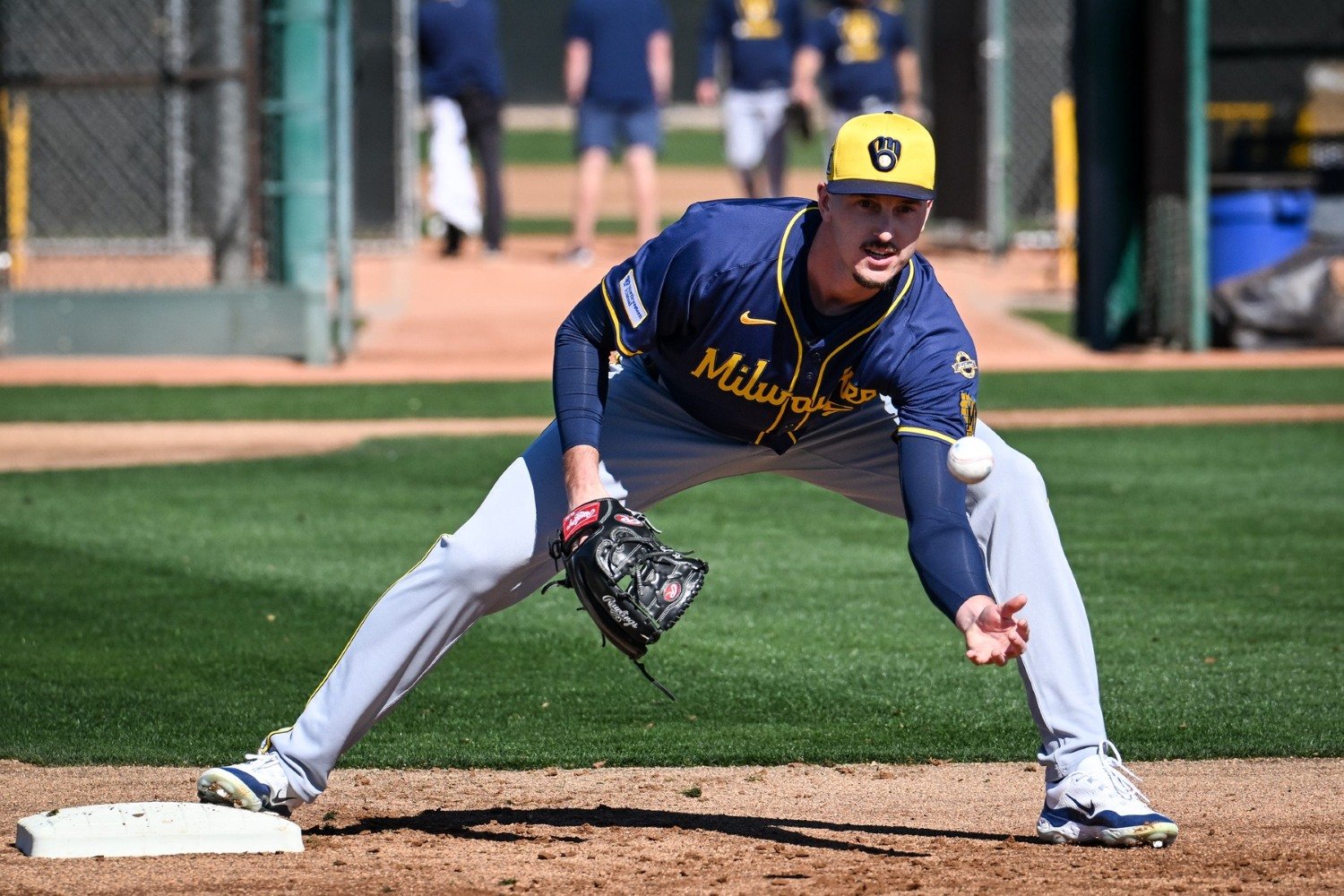 Yes, Bryan Hudson struck out two of the four batters he faced in his first preseason outing, but that's unimportant. Results are usually meaningless in spring training games, and the Brewers already know how effective Hudson can be, after he posted a 1.73 ERA in 62 1/3 innings last year. Most of that production came in the first half, though, before Hudson's physical freshness waned. That's why he entered camp with something to prove, and why the form he showed on Tuesday was a notable first step toward reclaiming his status as a key part of the team's bullpen. The Brewers raised eyebrows when they optioned their towering southpaw to Triple-A last September. We've covered in detail why they did it and why he never returned to the active roster. The Cliffs Notes version is that Hudson's velocity tapered throughout the season, altering how his fastball and sweeper played and forcing him to lean increasingly on his mediocre cutter. He no longer projected as the excellent reliever he was for most of the year. The club initially painted the demotion as temporary until Hudson looked rejuvenated, but the lost velocity never returned. Fast-forward several months, and Hudson is much closer to his best self. His first fastball of the year clocked in at 93.9 mph—the firmest heater he's thrown in a game since last June—and his sweeper touched 84.2 mph. Month 4FB Avg. Velo 4FB Max Velo SW Avg. Velo SW Max Velo April 2024 91.8 94.5 80.7 83.6 June 2024 91.5 94.0 83.1 86.9 September 2024 89.3 91.2 78.4 79.8 February 2025 92.4 93.9 81.2 84.2 He also debuted a new toy. Hudson had never thrown a changeup in a big-league game, but he mixed one in against the right-handed-hitting Juan Brito. MDRPTjFfWGw0TUFRPT1fQUZSWFZsMENWRk1BRGxzQ0FnQUFWQTVWQUZoUlZBQUFCMXhXVlFBRlZGQmRCMVpV.mp4 The off-centered camera angle and Hudson missing away make it harder to see the shape, but this pitch had -2 inches of induced vertical break and 16 inches of arm-side movement. He's never thrown a pitch with more than 13 inches of run in a regular-season game. Most of Hudson's stuff cuts, sweeps, or stays straight. While he doesn't truly need a changeup, it adds the fade away from righties that was once the missing link in his arsenal. Because he has an option remaining, Hudson is not a lock to crack the Opening dDay bullpen. That said, if he sustains his velocity and carries a new pitch into the regular season, he'll reclaim a significant post in the bullpen sooner, rather than later.
 -
While the unheralded infielder's multi-homer Cactus League opener didn't hurt matters, he was already a solid (if overlooked) bet to secure a place when the team heads north next month. Image courtesy of © Dave Kallmann / Milwaukee Journal Sentinel / USA TODAY NETWORK via Imagn Images While the unheralded infielder's multi-homer Cactus League opener didn't hurt matters, he was already a solid (if overlooked) bet to secure a place when the team heads north next month. You would not be alone if you forgot Vinny Capra was in the organization until his headline-capturing spring training debut over the weekend. The 28-year-old has just five career big-league hits, in 37 plate appearances. He received only a three-game cup of coffee with the Brewers last year, and his overall numbers at Triple-A Nashville were unremarkable. As the front office maneuvered changes and worked within the constraints of the 40-man roster to fill needs and weather minor-league injuries, they found ways to hang onto Capra throughout last season and the winter. That implies that they view him as a useful depth piece with traits they value. Capra has never been a power threat, reaching double-digit home runs even in the minors for the only time in his career in 2021. Expecting above-average offense in the big leagues is optimistic. However, he plays solid defense at multiple positions and makes smart swing decisions, which are among the chief attributes the Brewers emphasize at all levels of the organization. Last year in Nashville, Capra chased only 23% of pitches outside the strike zone and walked at a 10.6% clip. He also shrewdly selects which pitches to swing at within the zone. Like most hitters, Capra is at his best when he pulls the ball, so he’s aggressive on inside fastballs and passive on outside ones. After that brief midseason stint with the Brewers, Capra returned to Nashville and finished strong. From July through September, he slashed .282/.365/.431, making more contact and hitting the ball harder. Months OPS wRC+ BB% K% Whiff% Hard Hit% Barrel/BBE% March-June .685 82 11.6% 20.9% 22.1% 33.7% 3.6% July-September .797 111 9.1% 15.2% 17.1% 39.6% 8.3% Capra revealed to reporters that he spent the winter training for bat speed, which could further nudge his quality of contact forward. He’ll never crush the ball, though, and he doesn’t have to. During the offseason, Capra’s lack of minor-league options was a reason to assume his 40-man spot was in jeopardy. Fast-forward to spring training, where it now gives him a leg up on his peers. Oliver Dunn, Caleb Durbin, Andruw Monasterio, and Isaac Collins can all be sent to the minors throughout the year. Rostering Capra over any of them on the bench best maintains depth. If he looks the part of a competent utility man who can reach base at a decent clip, he’ll likely grab one of the final roster spots when the club breaks camp. View full article
-
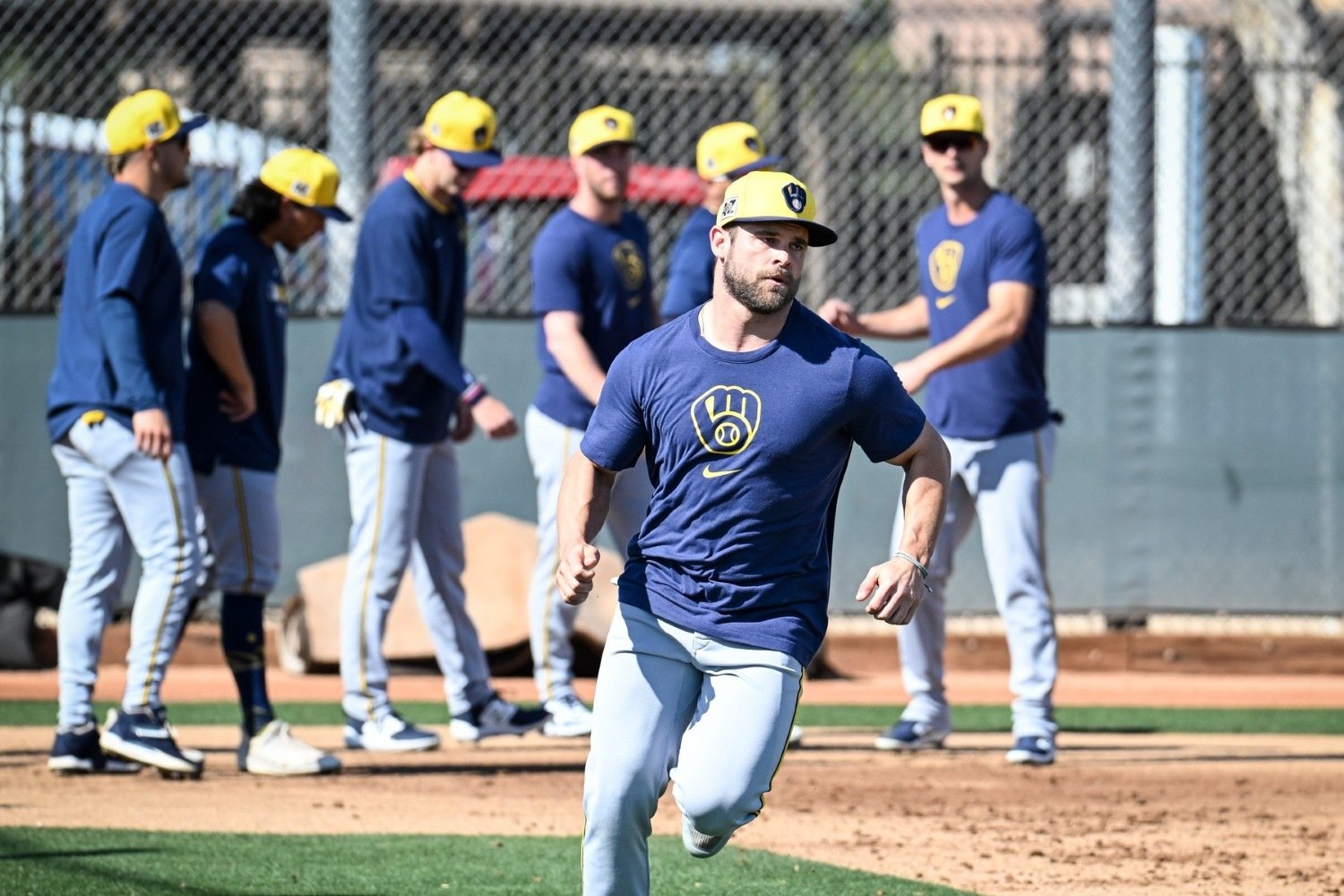 You would not be alone if you forgot Vinny Capra was in the organization until his headline-capturing spring training debut over the weekend. The 28-year-old has just five career big-league hits, in 37 plate appearances. He received only a three-game cup of coffee with the Brewers last year, and his overall numbers at Triple-A Nashville were unremarkable. As the front office maneuvered changes and worked within the constraints of the 40-man roster to fill needs and weather minor-league injuries, they found ways to hang onto Capra throughout last season and the winter. That implies that they view him as a useful depth piece with traits they value. Capra has never been a power threat, reaching double-digit home runs even in the minors for the only time in his career in 2021. Expecting above-average offense in the big leagues is optimistic. However, he plays solid defense at multiple positions and makes smart swing decisions, which are among the chief attributes the Brewers emphasize at all levels of the organization. Last year in Nashville, Capra chased only 23% of pitches outside the strike zone and walked at a 10.6% clip. He also shrewdly selects which pitches to swing at within the zone. Like most hitters, Capra is at his best when he pulls the ball, so he’s aggressive on inside fastballs and passive on outside ones. After that brief midseason stint with the Brewers, Capra returned to Nashville and finished strong. From July through September, he slashed .282/.365/.431, making more contact and hitting the ball harder. Months OPS wRC+ BB% K% Whiff% Hard Hit% Barrel/BBE% March-June .685 82 11.6% 20.9% 22.1% 33.7% 3.6% July-September .797 111 9.1% 15.2% 17.1% 39.6% 8.3% Capra revealed to reporters that he spent the winter training for bat speed, which could further nudge his quality of contact forward. He’ll never crush the ball, though, and he doesn’t have to. During the offseason, Capra’s lack of minor-league options was a reason to assume his 40-man spot was in jeopardy. Fast-forward to spring training, where it now gives him a leg up on his peers. Oliver Dunn, Caleb Durbin, Andruw Monasterio, and Isaac Collins can all be sent to the minors throughout the year. Rostering Capra over any of them on the bench best maintains depth. If he looks the part of a competent utility man who can reach base at a decent clip, he’ll likely grab one of the final roster spots when the club breaks camp.
 -
The Brewers already needed more depth at first base, and an early spring training injury thinned the crop in the outfield. Enter a former trade deadline pickup who adds reliability at both spots. Image courtesy of © Darren Yamashita-Imagn Images The Brewers already needed more depth at first base, and an early spring training injury thinned the crop in the outfield. Enter a former trade deadline pickup who adds reliability at both spots. An old friend is joining Brewers camp. Jon Heyman reported Saturday evening that the club agreed to a minor-league deal with Mark Canha that includes an invite to big-league spring training. Milwaukee first acquired Canha via trade from the New York Mets in 2023, when they needed competent hitters to aid a then-feeble lineup. While the team's shape looks quite different now, he returns with a similar task of supporting the position player core with his unassuming but capable floor as a hitter. The 36-year-old offers little game power at this stage of his career, hitting just seven home runs last season, but he remains a solid on-base hitter who consistently provides quality plate appearances. For now, he provides insurance in the outfield and at first base. A fractured shin will sideline Blake Perkins until at least May, pushing Garrett Mitchell and Sal Frelick into center field more frequently. That left the Brewers needing another corner outfielder. They signed Manuel Margot to a minor-league deal last week, but Canha has a superior offensive track record. While third base has rightfully received attention as the roster’s weak spot, things are quietly precarious across the diamond. Neither Rhys Hoskins nor Tyler Black are competent defenders at first base, prompting the Brewers to re-up with Jake Bauers on a minor-league pact as a better option in the field. Barring substantial improvement from Black, it seemed the club would run it back with last year’s Hoskins and Bauers tandem, which combined for replacement-level production. Hoskins is still the primary option at first, and whether the Brewers improve at the position hinges on him bouncing back. Canha could supersede Bauers on the depth chart, though, even if it would give Pat Murphy two right-handed-hitting first basemen. While Bauers and Canha are both patient hitters, they have opposing profiles in many respects. The former boasts impressive raw power that has gone unrealized due to alarming levels of swing-and-miss, while the latter makes softer but far more frequent contact. Canha won’t wow anyone on either side of the ball, but he’s a safe choice to have available for multiple positions should the Brewers need one. He slashed .242/.344/.346 (102 wRC+) last year, and ZiPS projects him for a nearly identical .243/.345/.355 (103 wRC+) line in 2025. He shouldn’t be a leading choice at any position, but he could crack the Opening Day roster as a plug-and-play veteran who can start a couple of times per week. View full article
-
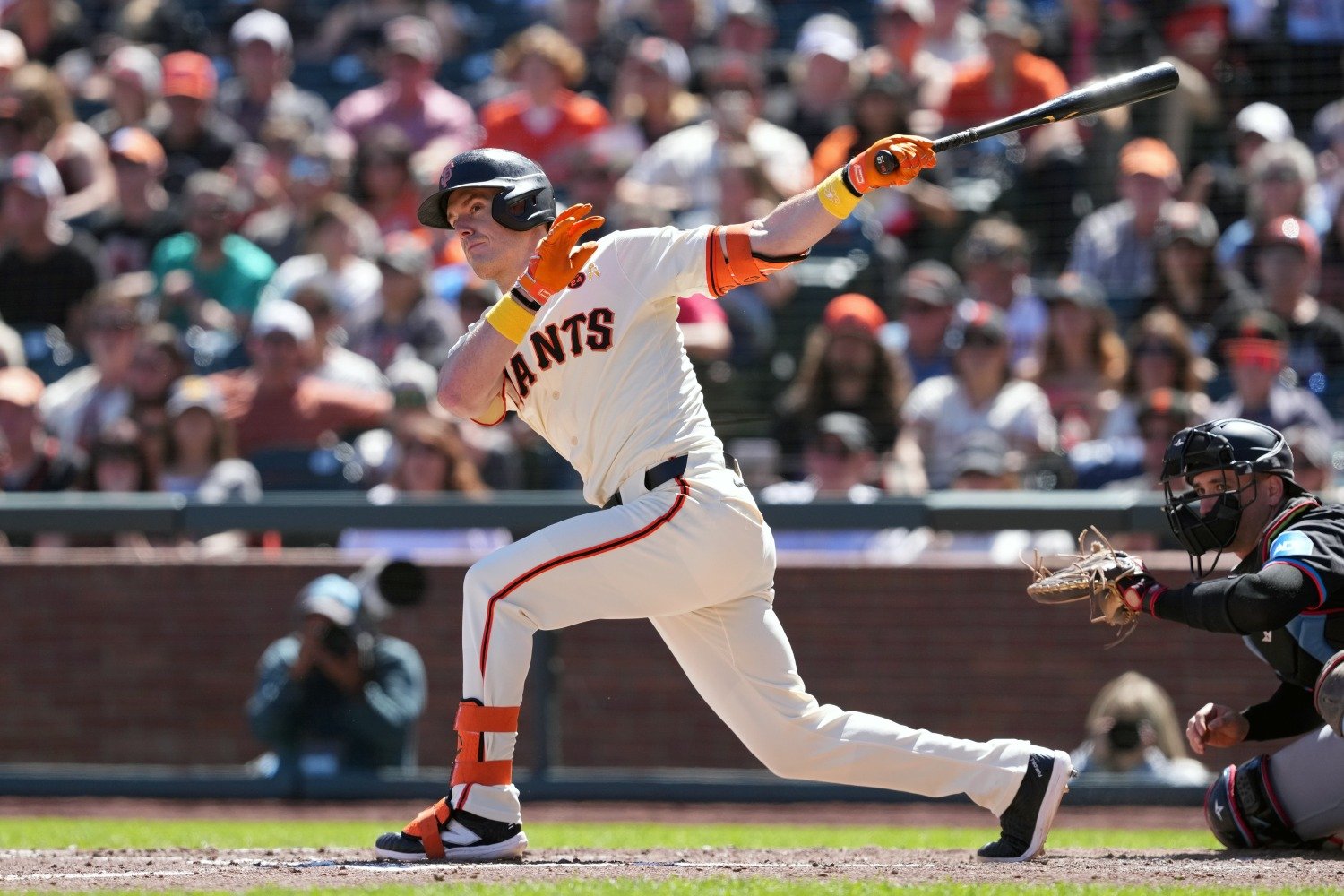 An old friend is joining Brewers camp. Jon Heyman reported Saturday evening that the club agreed to a minor-league deal with Mark Canha that includes an invite to big-league spring training. Milwaukee first acquired Canha via trade from the New York Mets in 2023, when they needed competent hitters to aid a then-feeble lineup. While the team's shape looks quite different now, he returns with a similar task of supporting the position player core with his unassuming but capable floor as a hitter. The 36-year-old offers little game power at this stage of his career, hitting just seven home runs last season, but he remains a solid on-base hitter who consistently provides quality plate appearances. For now, he provides insurance in the outfield and at first base. A fractured shin will sideline Blake Perkins until at least May, pushing Garrett Mitchell and Sal Frelick into center field more frequently. That left the Brewers needing another corner outfielder. They signed Manuel Margot to a minor-league deal last week, but Canha has a superior offensive track record. While third base has rightfully received attention as the roster’s weak spot, things are quietly precarious across the diamond. Neither Rhys Hoskins nor Tyler Black are competent defenders at first base, prompting the Brewers to re-up with Jake Bauers on a minor-league pact as a better option in the field. Barring substantial improvement from Black, it seemed the club would run it back with last year’s Hoskins and Bauers tandem, which combined for replacement-level production. Hoskins is still the primary option at first, and whether the Brewers improve at the position hinges on him bouncing back. Canha could supersede Bauers on the depth chart, though, even if it would give Pat Murphy two right-handed-hitting first basemen. While Bauers and Canha are both patient hitters, they have opposing profiles in many respects. The former boasts impressive raw power that has gone unrealized due to alarming levels of swing-and-miss, while the latter makes softer but far more frequent contact. Canha won’t wow anyone on either side of the ball, but he’s a safe choice to have available for multiple positions should the Brewers need one. He slashed .242/.344/.346 (102 wRC+) last year, and ZiPS projects him for a nearly identical .243/.345/.355 (103 wRC+) line in 2025. He shouldn’t be a leading choice at any position, but he could crack the Opening Day roster as a plug-and-play veteran who can start a couple of times per week.
 -
Last year was a rough sophomore campaign for the Brewers utility man, but he made an adjustment that could serve him well in the long run—if he can better harness it, moving forward. Image courtesy of © Mike De Sisti / Milwaukee Journal Sentinel / USA TODAY NETWORK via Imagn Images Last year was a rough sophomore campaign for the Brewers utility man, but he made an adjustment that could serve him well in the long run—if he can better harness it, moving forward. Andruw Monasterio was a pleasant surprise for the Brewers two years ago. The versatile infielder carved out a nearly three-month run as the regular third baseman, carrying a .780 OPS and 116 wRC+ into mid-August. While some of his favorable batted-ball luck faded down the stretch and saw him cede playing time at the hot corner to Josh Donaldson, Monasterio’s final line of .259/.330/.348 (88 wRC+) and solid chase and contact rates left him looking like a viable utility player moving forward. His follow-up campaign was not nearly as productive. Monasterio again spent most of the season on the roster but received just 142 plate appearances, limping to a .575 OPS and 68 wRC+. It’s often best to focus on processes, rather than results. That's even more true in such a small sample. While the results weren’t there last year, Monasterio made an adjustment that could help him in the long run: he started swinging harder, without compromising his compact swing length. Monasterio’s average bat speed increased from 67.1 mph in his debut season to 69.1 mph in 2024. That still leaves him within the bottom quartile of hitters, but would have ranked as one of the highest year-to-year increases had he accrued enough playing time to qualify. Harder swings are usually longer, but Monasterio’s 6.7-foot swing length remained unchanged. Because he was generating more velocity with his bat, Monasterio made significantly more hard contact. His hard-hit and Barrel rates jumped from poor to just above the league averages. Despite this, he was actually less productive when he put the ball in play. Year Hard Hit% Barrel% wOBAcon xwOBAcon 2023 33.5% 5.5% .337 .346 2024 41.2% 9.4% .305 .349 Shoddy luck is partially to blame. Monasterio’s expected production on contact remained roughly the same from his rookie season. Still, that’s not the improvement one would expect to follow from hitting the ball harder. Velocity off the bat isn’t the only thing that matters, though. The launch angle and direction of the ball can be even more important, particularly for a hitter like Monasterio. Two years ago, he was a line-drive machine who was among baseball’s best at catching the ball out in front of the plate with the sweet spot of the bat. That wasn’t the case after he adopted a faster swing. Year SweetSpot% SquaredUp% LD% Contact% 2023 41.3% 32.5% 29.8% 78.3% 2024 36.5% 23.0% 23.5% 76.0% Statcast considers batted balls with a launch angle between eight and 32 degrees to have hit the sweet spot, and it defines squared-up balls as those with at least 80% of the exit velocity made possible by the speed of the pitch and the swing. Noticeable dropoffs in both metrics mean Monasterio was not catching nearly as many pitches at the right time in his swing path. This was especially true against hard pitches. Despite making more hard contact per batted ball, Monasterio’s batting average against fastballs fell from .299 to .214, and his whiff rate on in-zone heaters jumped from 12.5% to 17.9%. It’s hard to dig deeper due to the small sample size and lack of side-angle video, but the evidence implies that while Monasterio’s swing remained short, his timing was off, and his path to the ball was less consistent. If he can better harness his newfound bat speed, he could once again become a useful bench piece for a club still sorting through some of its infield options. View full article
-
With Increased Bat Speed, is an Andruw Monasterio Bounceback in Order?
Jack Stern posted an article in Brewers
 Andruw Monasterio was a pleasant surprise for the Brewers two years ago. The versatile infielder carved out a nearly three-month run as the regular third baseman, carrying a .780 OPS and 116 wRC+ into mid-August. While some of his favorable batted-ball luck faded down the stretch and saw him cede playing time at the hot corner to Josh Donaldson, Monasterio’s final line of .259/.330/.348 (88 wRC+) and solid chase and contact rates left him looking like a viable utility player moving forward. His follow-up campaign was not nearly as productive. Monasterio again spent most of the season on the roster but received just 142 plate appearances, limping to a .575 OPS and 68 wRC+. It’s often best to focus on processes, rather than results. That's even more true in such a small sample. While the results weren’t there last year, Monasterio made an adjustment that could help him in the long run: he started swinging harder, without compromising his compact swing length. Monasterio’s average bat speed increased from 67.1 mph in his debut season to 69.1 mph in 2024. That still leaves him within the bottom quartile of hitters, but would have ranked as one of the highest year-to-year increases had he accrued enough playing time to qualify. Harder swings are usually longer, but Monasterio’s 6.7-foot swing length remained unchanged. Because he was generating more velocity with his bat, Monasterio made significantly more hard contact. His hard-hit and Barrel rates jumped from poor to just above the league averages. Despite this, he was actually less productive when he put the ball in play. Year Hard Hit% Barrel% wOBAcon xwOBAcon 2023 33.5% 5.5% .337 .346 2024 41.2% 9.4% .305 .349 Shoddy luck is partially to blame. Monasterio’s expected production on contact remained roughly the same from his rookie season. Still, that’s not the improvement one would expect to follow from hitting the ball harder. Velocity off the bat isn’t the only thing that matters, though. The launch angle and direction of the ball can be even more important, particularly for a hitter like Monasterio. Two years ago, he was a line-drive machine who was among baseball’s best at catching the ball out in front of the plate with the sweet spot of the bat. That wasn’t the case after he adopted a faster swing. Year SweetSpot% SquaredUp% LD% Contact% 2023 41.3% 32.5% 29.8% 78.3% 2024 36.5% 23.0% 23.5% 76.0% Statcast considers batted balls with a launch angle between eight and 32 degrees to have hit the sweet spot, and it defines squared-up balls as those with at least 80% of the exit velocity made possible by the speed of the pitch and the swing. Noticeable dropoffs in both metrics mean Monasterio was not catching nearly as many pitches at the right time in his swing path. This was especially true against hard pitches. Despite making more hard contact per batted ball, Monasterio’s batting average against fastballs fell from .299 to .214, and his whiff rate on in-zone heaters jumped from 12.5% to 17.9%. It’s hard to dig deeper due to the small sample size and lack of side-angle video, but the evidence implies that while Monasterio’s swing remained short, his timing was off, and his path to the ball was less consistent. If he can better harness his newfound bat speed, he could once again become a useful bench piece for a club still sorting through some of its infield options.
 -
Unlocking More Power Internally Will Be Key for 2025 Brewers Offense
Jack Stern posted an article in Brewers
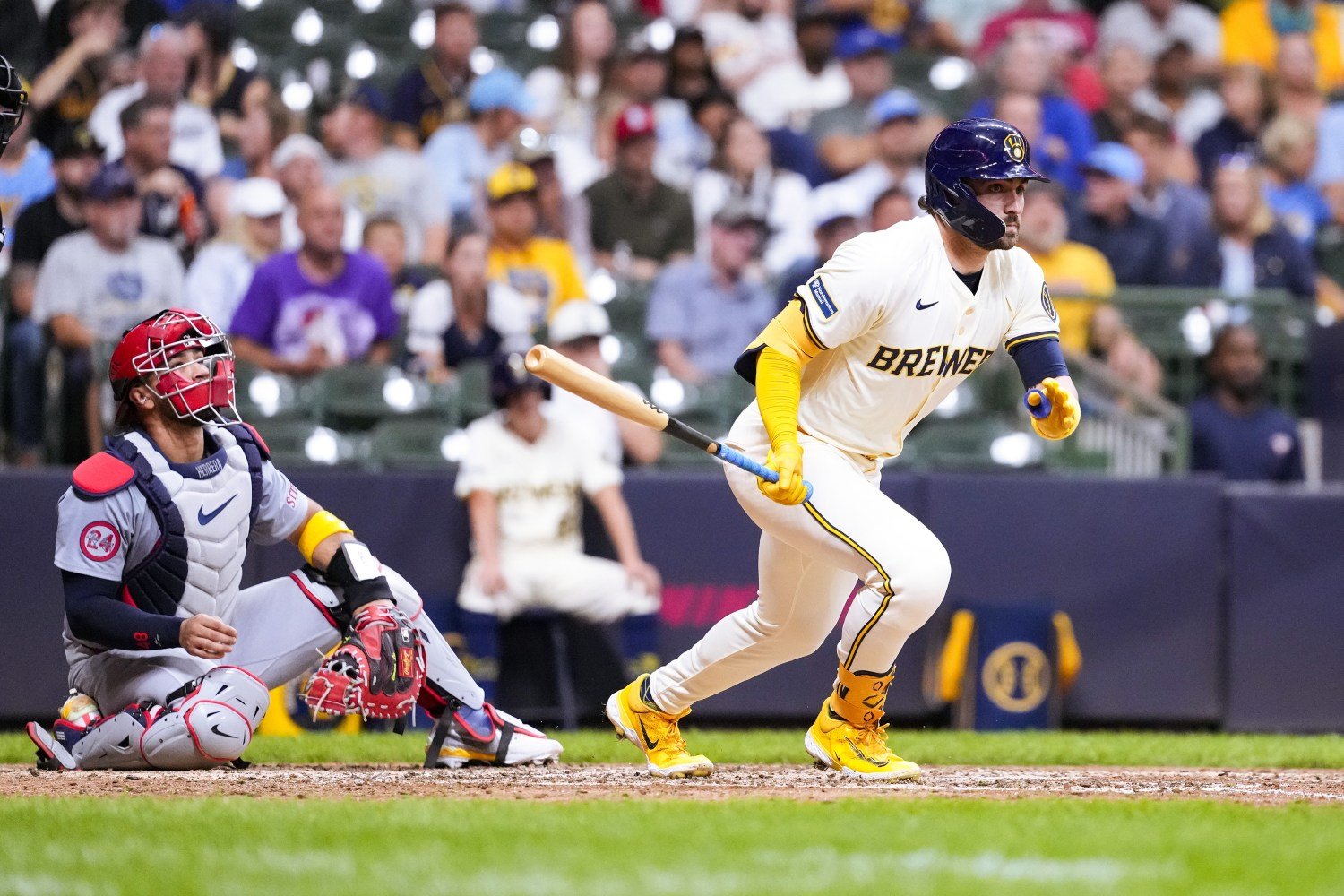 One of the main questions regarding the Brewers' offseason was how they would replace the power output of the departing Willy Adames. With spring training now in full swing, the answer is in: they didn't—at least, not externally. Adames launched a career-best 32 home runs last year, in 688 plate appearances. Scaling their aggregate playing time to that same sample size, ZiPS projects the in-house replacements Oliver Dunn, Caleb Durbin, and Andruw Monasterio to combine for just 12 long balls. Subbing that trio for Adames on the 2024 Brewers would have dropped them from ranking 16th in home runs and 18th in ISO to 25th and 23rd, respectively. Last year's lineup had a scrappy identity but hit for just enough power to be a solid offense, finishing 10th in baseball with a 104 wRC+. Any step back in that department is unacceptable for a contending team; it's the chief concern with the roster about to take shape. While the Brewers could still swing a trade or scoop up one of the remaining free-agent infielders, at this point, nobody who would meaningfully improve this team's power output is walking through the door. That leaves Milwaukee reliant on internal improvement. The good news is that the young Brewers lineup features ample raw power. The bad news is that it hasn't been realized in games by most of these players, and the organization has a spotty track record of developing hitters over the last decade. That makes the 2025 lineup challenging to project. The Brewers could feasibly hit for above-average power, but they could just as easily be among the most punchless offenses in baseball. With the exceptions of Brice Turang and Sal Frelick, nearly every position features some raw pop. Even with those two combining for 1,142 plate appearances last year, the Brewers still ranked 16th in average bat speed and 10th in fast swing rate, and they're returning up to seven hitters with an average bat speed of at least 73 mph. There are two standouts who should be hitting for significantly more power than they have so far. William Contreras and Garrett Mitchell are bat speed darlings, with Contreras making some of the hardest contact in the sport, including baseball's fourth-highest maximum exit velocity in 2024. Because both ran ground ball rates well north of 50% last year, however, Contreras only hit 23 home runs, and Mitchell hit just eight in another injury-truncated campaign. Mitchell's profile has additional flaws, including his well-documented inability to touch velocity at the top of the zone. On elevated hard pitches, he has a career 50.9% whiff rate and just one non-bunt hit. Whether he realizes his power in games hinges on mitigating these weaknesses. Mitchell spent the offseason training at Driveline Baseball, where he focused on working behind the ball to improve his timing and open a wider contact window for pulling balls in the air. Dunn also falls into this category, albeit more loosely. His 75.2-mph average bat speed barely trailed Mitchell's as the fastest on the team, and he hit 21 homers in Double A in 2023. An untenable 38.5% strikeout rate held him back last year and is the leading reason for his uninspiring 2025 projection. If Dunn can make more contact, his exciting skill set could shine through in his second taste of the big leagues. A pair of veterans are eyeing resurgent seasons. Christian Yelich was on pace to exceed 20 homers last season before back surgery ended his season shortly after the All-Star break. The longtime left fielder has assured reporters early in camp that he expects to be ready for Opening Day. Rhys Hoskins still hit 26 home runs in a down year, but he's presumably looking to recapture the lower-body mobility that helped him slug 30 long balls in his last healthy season, 2022. Finally, two less experienced players could continue to grow into more power. Jackson Chourio and Joey Ortiz emerged as valuable regulars in their rookie campaigns, and how close they get to their ceilings as sophomores will be key determiners in how far this year's team goes. Chourio left the yard 21 times last year, but he's hardly a finished product as he enters his age-21 season. He launched the Brewers' longest home run of the year (a 449-foot blast off the American Family Field video board in August), and his quick hands fuel above-average bat speed and impressive plate coverage. Ortiz hit seven homers through June and reached a 77th-percentile maximum exit velocity, but lingering complications from a midseason neck injury and an overly passive approach limited him to a .345 slugging percentage over the season's final three months. While it's more realistic to hope only a couple of them get there, there are reasons to believe each of Contreras, Chourio, and Hoskins could reach 30 home runs, with others not far behind. That affords the Brewers multiple permutations by which they can hit for sufficient power. Whether enough of that internal development actually occurs is another story. Backfilling Adames's output will be a group effort, and enough must go right to make it happen. Time will tell if the Brewers made a worthwhile gamble by not investing in a more direct and accomplished replacement.
- 3 comments
-
- 1
-
-
- william contreras
- garrett mitchell
- (and 2 more)
.png.ffa4773132dec021e630e53726c49185.png)
.png.8cd3e405c8f2cf511bd8984f8ca7cdb2.png)
.png.04e0546a440d9f317d469c27f390c16f.png)

.png.7f56924d11f9731b48d0f10fed5f9d3b.png)
.png.d4a0d21761087fa85e6dc3dff64da36f.png)
.png.a002a6f905514206bd3e080374e50d2f.png)
.png.99dc066e222e7d28038c5f9280800af9.png)
