



Harold Hutchison
-
Posts
6,909 -
Joined
-
Last visited
Content Type
Profiles
Forums
Blogs
Events
News
2026 Milwaukee Brewers Top Prospects Ranking
Milwaukee Brewers Videos
2022 Milwaukee Brewers Draft Picks
Milwaukee Brewers Free Agent & Trade Rumors, Notes, & Tidbits
Guides & Resources
2023 Milwaukee Brewers Draft Picks
2024 Milwaukee Brewers Draft Picks
The Milwaukee Brewers Players Project
2025 Milwaukee Brewers Draft Pick Tracker
2026 Milwaukee Brewers Draft Tracker: Picks & Bonuses
Store
Downloads
Gallery
Everything posted by Harold Hutchison
-
Naming Rights
Harold Hutchison replied to Matthew Trueblood's topic in Brewer Fanatic Front Page News
Uecker Stadium at American Family Field. American Family Insurance keeps the AFF part, but the stadium itself stays named for Uecker. -
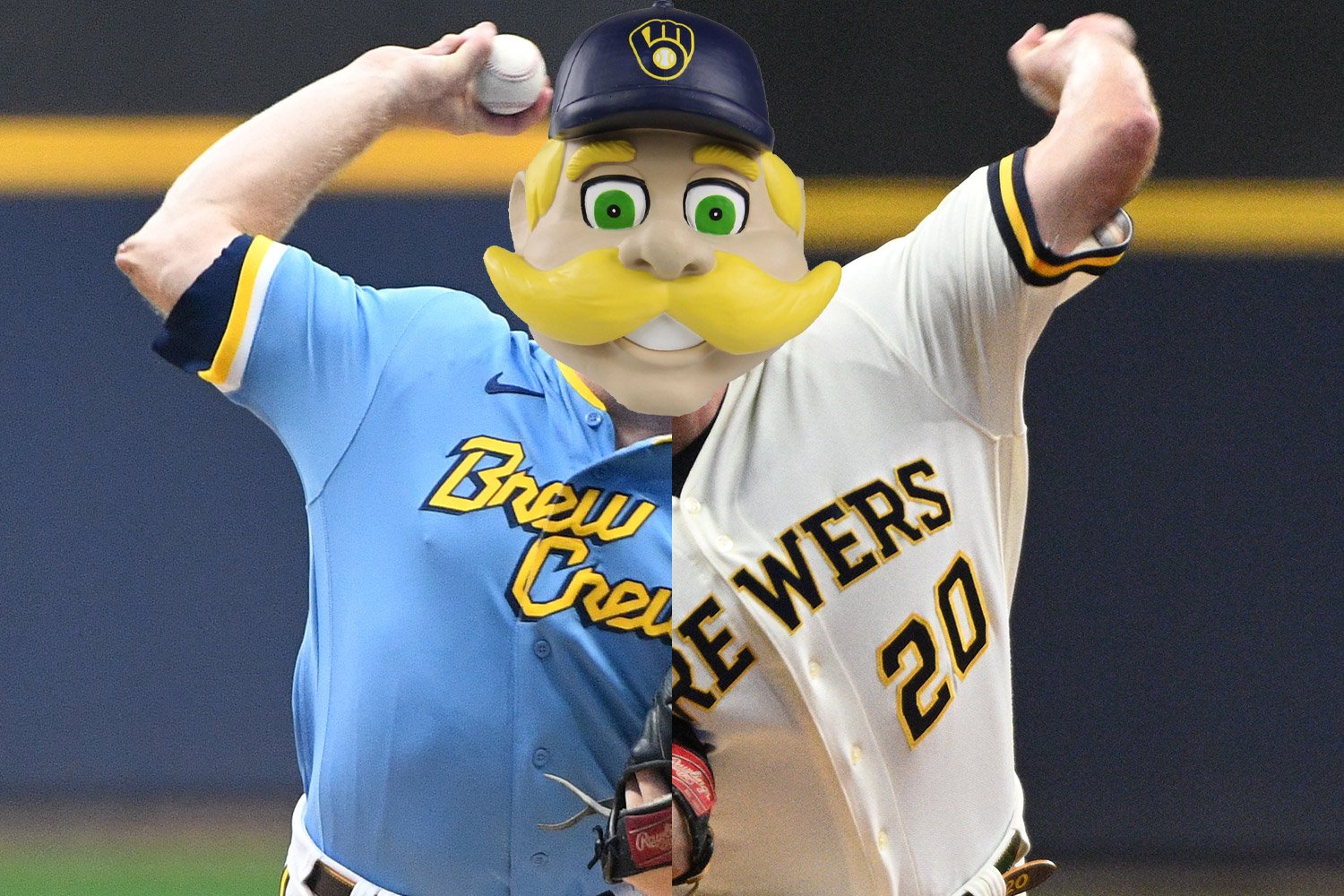 Brandon Woodruff is coming off a shoulder surgery that cost him much of 2023 and all of 2024, while Miley’s 2024 was cut short by Tommy John surgery. There are questions about how much they could pitch, but the bullpen’s unpredictability comes with its risks. However, Milwaukee may find an answer from its farm system – specifically, its Rookie league teams. Their two Dominican Summer League and Arizona Complex League teams often take a “piggyback” approach with their young pitchers. One will start the game and be relieved by another after three or four innings. Both of the young pitchers would operate on a “starter’s” routine, but the wear and tear on their arms is greatly reduced in the early portion of their careers. Overall, this approach has worked and is part of how the Brewers have established themselves with a very young Triple-A rotation. Jacob Misiorowski, Carlos F. Rodriguez, and Logan Henderson are among the Brewers’ pitching prospects who have benefitted from this developmental approach. Given that Woodruff and Miley are both coming off significant arm injuries and lengthy layoffs from pitching, the Brewers may find that a “piggyback” approach used for their young pitching prospects is the answer to their conundrum about how to keep them both in the rotation while reducing the risk that they could re-injure their arms. Woodruff and Miley could maintain the routine of being starting pitchers, but neither would be racking up massive pitch counts. However, this approach may bring benefits for Woodruff and Miley in terms of health and reduce Milwaukee’s reliance on the Milwaukee-Nashville shuttle in 2025. The Brewers have something to gain besides keeping two darn good pitchers from making trips to the injured list. In fact, at the game-day level, the whole of “Brade Milruff,” as Milwaukee’s fifth starter, could be a lot greater than the sum of its parts. As anyone following the Brewers knows, Woodruff and Miley are entirely different pitchers. Woodruff is among Milwaukee’s all-time leaders in strikeouts per nine innings, while Miley has been a guy who has a talent for inducing poor contact. Woodruff brings heat; Miley’s “stuff” isn’t world-beating. And there’s the obvious fact Woodruff is right-handed, and Miley’s a southpaw. If they were to piggyback, each going twice through the order, opposing hitters would have to make a drastic adjustment mid-game. That alone is an edge for the Crew. But if Pat Murphy is willing to try to get in the head of his counterpart on the other team, they can always leave exactly WHO is starting a mystery… right until the lineup cards are exchanged. In other words, the opposing manager would have to figure out who is getting the start – because the skillset to handle Woodruff’s pitching is much different than what would best handle Miley’s and vice versa. Or, the Brewers could even use Jared Koenig or another reliever as an “opener” for the Woodruff/Miley combo. The possibilities with this are not quite endless, but they do get the mind going. Milwaukee is in a small market and must innovate to remain competitive with teams in larger markets. In 2025, having “Brade Milruff” as the fifth starter could be just the ticket to making the postseason again.
 -
Two pitchers with good track records in Milwaukee are coming off arm injuries. Brandon Woodruff has posted some historically good numbers (not to mention a moment of glory), while Wade Miley has been solid. Could the Brewers help both succeed with a trick from their Rookie league teams? Brandon Woodruff is coming off a shoulder surgery that cost him much of 2023 and all of 2024, while Miley’s 2024 was cut short by Tommy John surgery. There are questions about how much they could pitch, but the bullpen’s unpredictability comes with its risks. However, Milwaukee may find an answer from its farm system – specifically, its Rookie league teams. Their two Dominican Summer League and Arizona Complex League teams often take a “piggyback” approach with their young pitchers. One will start the game and be relieved by another after three or four innings. Both of the young pitchers would operate on a “starter’s” routine, but the wear and tear on their arms is greatly reduced in the early portion of their careers. Overall, this approach has worked and is part of how the Brewers have established themselves with a very young Triple-A rotation. Jacob Misiorowski, Carlos F. Rodriguez, and Logan Henderson are among the Brewers’ pitching prospects who have benefitted from this developmental approach. Given that Woodruff and Miley are both coming off significant arm injuries and lengthy layoffs from pitching, the Brewers may find that a “piggyback” approach used for their young pitching prospects is the answer to their conundrum about how to keep them both in the rotation while reducing the risk that they could re-injure their arms. Woodruff and Miley could maintain the routine of being starting pitchers, but neither would be racking up massive pitch counts. However, this approach may bring benefits for Woodruff and Miley in terms of health and reduce Milwaukee’s reliance on the Milwaukee-Nashville shuttle in 2025. The Brewers have something to gain besides keeping two darn good pitchers from making trips to the injured list. In fact, at the game-day level, the whole of “Brade Milruff,” as Milwaukee’s fifth starter, could be a lot greater than the sum of its parts. As anyone following the Brewers knows, Woodruff and Miley are entirely different pitchers. Woodruff is among Milwaukee’s all-time leaders in strikeouts per nine innings, while Miley has been a guy who has a talent for inducing poor contact. Woodruff brings heat; Miley’s “stuff” isn’t world-beating. And there’s the obvious fact Woodruff is right-handed, and Miley’s a southpaw. If they were to piggyback, each going twice through the order, opposing hitters would have to make a drastic adjustment mid-game. That alone is an edge for the Crew. But if Pat Murphy is willing to try to get in the head of his counterpart on the other team, they can always leave exactly WHO is starting a mystery… right until the lineup cards are exchanged. In other words, the opposing manager would have to figure out who is getting the start – because the skillset to handle Woodruff’s pitching is much different than what would best handle Miley’s and vice versa. Or, the Brewers could even use Jared Koenig or another reliever as an “opener” for the Woodruff/Miley combo. The possibilities with this are not quite endless, but they do get the mind going. Milwaukee is in a small market and must innovate to remain competitive with teams in larger markets. In 2025, having “Brade Milruff” as the fifth starter could be just the ticket to making the postseason again. View full article
-
Should The Brewers Give Up On First Base And Focus On The Hot Corner?
Harold Hutchison posted an article in Brewers
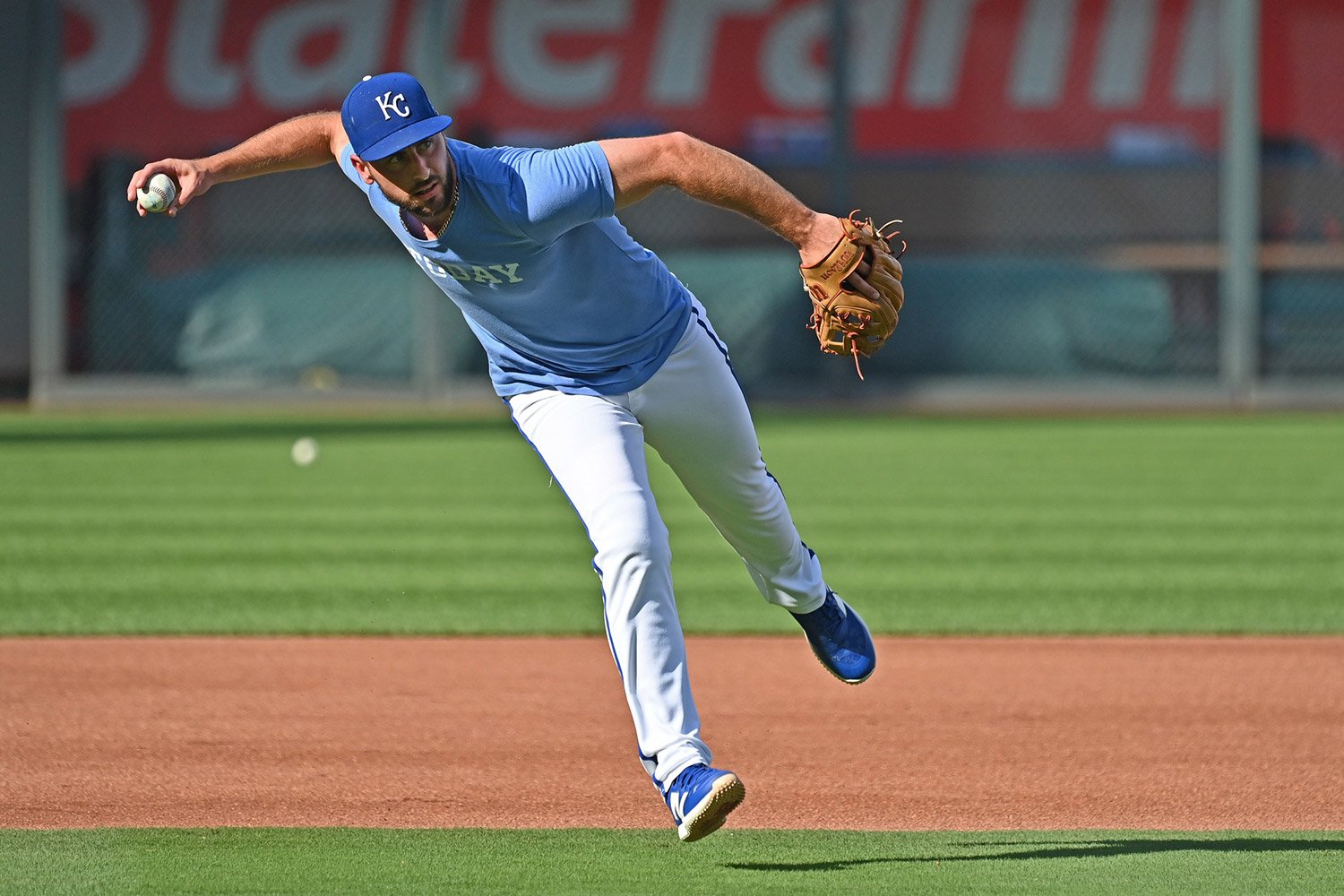 The free agent market had some big names at first base, with Christian Walker, Paul Goldschmidt, Pete Alonso, and Carlos Santana among those on the open market. But now, that market seems to be settled, with Walker going to Houston, Santana to Cleveland, and Goldschmidt to the Yankees. So, should the Brewers give up on finding an external upgrade at first base and deal with their hole at the hot corner? The Current First Base Situation The Brewers are not in terrible shape at first base entering 2025. Rhys Hoskins had a solid offensive season after missing all of 2023 with a knee injury, but he is owed $18 million for 2025. Jake Bauers was a decent backup first baseman who also filled in at the corner outfield spots, although the Brewers let him walk after last season. Tyler Black, who was on the Milwaukee-Nashville shuttle, has to be the favorite to replace Bauers on the 26-man, adding more positional versatility (Black has played second base, third base, and center field during his professional career in addition to first base and designated hitter). At the same time, his bat is widely acknowledged to be MLB-ready. One X-factor is non-roster invitee Ernesto Martinez. Martinez has been under the radar for a while. Despite a massive 6’6”, 250-pound frame, he’s also been quite athletic, manning center field in his professional career. He’s provided excellent defense during his long journey to NRI status. Wes Clarke could also emerge, having spent 2023 between Double-A Biloxi and Triple-A Nashville. It's not a bad situation for the Crew. The Current Market For First Base Per MLB.com’s listing of 2024-2025 free agents by position, Pete Alonso is the only real significant upgrade available on the market. Alonso, who crushed a ninth-inning home run in Game Three of the NL Wild Card Series off Devin Williams, declined a qualifying offer from the Mets and could be in line for a huge deal. The Mets have broken the bank for Juan Soto, luring him from the Bronx with the biggest deal ever given to a player. They also added Frankie Montas from the Brewers. With their current set-up at first base, the Brewers probably can’t go on the free-agent market for Alonso, and players like Connor Joe and Justin Turner may not be much of an improvement. The Crew’s Current Hot Corner Hole With Joey Ortiz likely to move to shortstop to replace Willy Adames, the Brewers are in the market for a third baseman. Even after ruling out using Black at the position, even as a short-term solution for 2025 as they await Brock Wilken or Mike Boeve’s arrival in Milwaukee, they have several internal options, but all have their warts. Oliver Dunn’s swing showed major holes at the MLB level in 2024, and he missed a lot of time with injuries. Caleb Durbin is an unproven rookie with an exciting blend of speed, some power, and OBP skills, but he also has had several injury list visits. Andruw Monasterio’s solid in the field, but his offensive ceiling is limited compared to Durbin, Dunn, and Black. Cooper Pratt, Luke Adams, Eric Bitonti, and Jadher Areinamo look promising, but they are not likely to compete for 26-man roster spots until 2026 or 2027. The Hot Free Agent Market At The Hot Corner The Brewers could look to sign a third baseman, but the options on the market are limited. Alex Bregman is likely out of their price range. Yoan Moncada could be an option, but he barely saw the field for an atrocious White Sox team. Another option could be to look for a free agent at shortstop to move to third base. Ha-Seong Kim could be an option as he looks to rebound from a 2024 slump after finishing in the top 15 for MVP voting and securing a Gold Glove in 2023. Paul DeJong provides a chance to replace the power lost when Adames packed his bags for the Bay Area, but he has had high strikeout totals over his career, and his walk rate has been down since 2022. If they went the free-agency route, the best option would be to see if they could acquire Kim on a two-year deal with a team option. However, with questions about TV revenue since the bankruptcy of the Bally Sports networks and the massive money currently committed to Hoskins, the budget looks tight for a free-agent addition. Overview The small-market straightjacket is hitting the Brewers some in the 2024-2025 offseason when it comes to finding a third baseman. Still, the team’s internal options are not entirely horrible, and they could get some decent stopgaps at the hot corner for a cut-rate price, while first base looks solid for 2025.
- 1 comment
-
- 1
-

-
- joey ortiz
- rhys hoskins
- (and 3 more)
-
Players have been moving in free agency for about two months, the Brewers have not made any major splashes yet, and the first base market seems all but settled. Should they move on to find help at the hot corner? Image courtesy of © Peter Aiken-Imagn Images The free agent market had some big names at first base, with Christian Walker, Paul Goldschmidt, Pete Alonso, and Carlos Santana among those on the open market. But now, that market seems to be settled, with Walker going to Houston, Santana to Cleveland, and Goldschmidt to the Yankees. So, should the Brewers give up on finding an external upgrade at first base and deal with their hole at the hot corner? The Current First Base Situation The Brewers are not in terrible shape at first base entering 2025. Rhys Hoskins had a solid offensive season after missing all of 2023 with a knee injury, but he is owed $18 million for 2025. Jake Bauers was a decent backup first baseman who also filled in at the corner outfield spots, although the Brewers let him walk after last season. Tyler Black, who was on the Milwaukee-Nashville shuttle, has to be the favorite to replace Bauers on the 26-man, adding more positional versatility (Black has played second base, third base, and center field during his professional career in addition to first base and designated hitter). At the same time, his bat is widely acknowledged to be MLB-ready. One X-factor is non-roster invitee Ernesto Martinez. Martinez has been under the radar for a while. Despite a massive 6’6”, 250-pound frame, he’s also been quite athletic, manning center field in his professional career. He’s provided excellent defense during his long journey to NRI status. Wes Clarke could also emerge, having spent 2023 between Double-A Biloxi and Triple-A Nashville. It's not a bad situation for the Crew. The Current Market For First Base Per MLB.com’s listing of 2024-2025 free agents by position, Pete Alonso is the only real significant upgrade available on the market. Alonso, who crushed a ninth-inning home run in Game Three of the NL Wild Card Series off Devin Williams, declined a qualifying offer from the Mets and could be in line for a huge deal. The Mets have broken the bank for Juan Soto, luring him from the Bronx with the biggest deal ever given to a player. They also added Frankie Montas from the Brewers. With their current set-up at first base, the Brewers probably can’t go on the free-agent market for Alonso, and players like Connor Joe and Justin Turner may not be much of an improvement. The Crew’s Current Hot Corner Hole With Joey Ortiz likely to move to shortstop to replace Willy Adames, the Brewers are in the market for a third baseman. Even after ruling out using Black at the position, even as a short-term solution for 2025 as they await Brock Wilken or Mike Boeve’s arrival in Milwaukee, they have several internal options, but all have their warts. Oliver Dunn’s swing showed major holes at the MLB level in 2024, and he missed a lot of time with injuries. Caleb Durbin is an unproven rookie with an exciting blend of speed, some power, and OBP skills, but he also has had several injury list visits. Andruw Monasterio’s solid in the field, but his offensive ceiling is limited compared to Durbin, Dunn, and Black. Cooper Pratt, Luke Adams, Eric Bitonti, and Jadher Areinamo look promising, but they are not likely to compete for 26-man roster spots until 2026 or 2027. The Hot Free Agent Market At The Hot Corner The Brewers could look to sign a third baseman, but the options on the market are limited. Alex Bregman is likely out of their price range. Yoan Moncada could be an option, but he barely saw the field for an atrocious White Sox team. Another option could be to look for a free agent at shortstop to move to third base. Ha-Seong Kim could be an option as he looks to rebound from a 2024 slump after finishing in the top 15 for MVP voting and securing a Gold Glove in 2023. Paul DeJong provides a chance to replace the power lost when Adames packed his bags for the Bay Area, but he has had high strikeout totals over his career, and his walk rate has been down since 2022. If they went the free-agency route, the best option would be to see if they could acquire Kim on a two-year deal with a team option. However, with questions about TV revenue since the bankruptcy of the Bally Sports networks and the massive money currently committed to Hoskins, the budget looks tight for a free-agent addition. Overview The small-market straightjacket is hitting the Brewers some in the 2024-2025 offseason when it comes to finding a third baseman. Still, the team’s internal options are not entirely horrible, and they could get some decent stopgaps at the hot corner for a cut-rate price, while first base looks solid for 2025. View full article
-
I could see it going a little differently: DH: Contreras 26, Black 26, Yelich 110 C: Contreras 110, Haase 26, Quero 26 1B: Hoskins 136, Black 26 2B: Turang 136, Durbin 26 SS: Ortiz 136, Monasterio 26 3B: Black 52, Durbin 52, Monasterio 58 LF: Chourio 110, Yelich 26, Black 26, CF: Mitchell 110, Perkins 52 RF: Frelick 110, Chourio 26, Mitchell 26
-
The start of a new year is always a time for reflection, and MLB franchises should be no different. What resolutions should the Milwaukee Brewers make for 2025? Image courtesy of © Benny Sieu-Imagn Images In one sense, the 2024 Brewers really did not really leave a lot of room for improvement. They boasted a balanced offense, while their pitching showed tremendous depth despite a host of injuries. While they had great years from veteran players, they also had exciting development from rookies. That said, the offseason has seen some significant departures. Starting pitcher Colin Rea and reliever Hoby Milner were allowed to go into free agency, while Willie Adames declined a qualifying offer and signed a $182-million deal with the Giants. Closer Devin Williams was traded to the Yankees for starting pitcher Nestor Cortes and infield prospect Caleb Durbin. There could be more to come. But what should the Brewers resolve to do for 2025? Here are a few thoughts. Go All-In For Roki Sasaki Landing the NPB phenom may seem like a long shot, but the Brewers have some advantages that they can pitch to Sasaki. The Japanese ace would join Freddy Peralta and Tobias Myers at the top of the Brewers’ rotation, joining veterans Aaron Civale, Nestor Cortes, and Brandon Woodruff. It would likely take a large chunk of the $7.55-million international bonus pool allotment that the Brewers have for 2025, but it would be well worth it for the ace. Although the league will watch closely and discourage an early extension because of what it might do to the perceived legitimacy of Sasaki's tightly constrained free agency, the team would control Sasaki for at least six years, which is also a lot of time in which to negotiate a longer-term engagement if it suits both sides. At the very least, they could drive his price up for whoever does acquire him. Wherever he signs, the team acquiring him will have to relinquish their claims on a handful of international prospects to whom that bonus allotment would have otherwise gone. Maybe the Brewers can force that issue and sign an extra talented teenager, if they don’t land Sasaki himself. Free Tyler Black Tyler Black spent most of 2024 stuck in Nashville, and it was as if he couldn’t get into a groove. The Brewers need to get him in the 2025 lineup; he's one of the best internal options to replace the production of Adames. While Black can’t replace the power Adames brought to the lineup, he does have superb bat-to-ball skills; is much better on the basepaths; and is very good at getting on base via the walk. The Brewers have options for how to get Black in the lineup, either by moving him all over the diamond, or having him stick at one position. Either way, the team needs Black to make key adjustments to MLB pitching—and get them done sooner, rather than later. Figure Out The Hot Corner – Ideally With An Internal Option The departure of Adames means Joey Ortiz will likely move to shortstop to fill that hole, creating a new one at third. The Brewers have options to fill that gap – whether it’s Oliver Dunn, Caleb Durbin, having Andrew Monasterio take over again, or sliding Sal Frelick down from the outfield. While a trade could be one way to fill the hot corner, it would have its own costs for the Brewers, even if it were from a position of depth. Free agency would be another option, but the best option (Alex Bregman) is likely out of the Brewers’ price range. None of the internal options are completely horrible, although all of them would have issues of one sort or another. Dunn’s swing has some serious holes, but he has power potential. Durbin brings speed and great strike-zone skills, but he’d need to adjust to MLB pitching, and he’s been injured a lot. Monasterio was serviceable in 2023, but his offensive ceiling is limited. Clear Out The Bullpen Clutter The Brewers have a very deep bullpen, but they may need to channel the spirit of Marie Kondo. The fact of the matter is that with a 13-pitcher staff, after the five-man rotation (currently looking like Peralta, Myers, Civale, Cortes, and Woodruff), the Crew will have eight slots for the bullpen. Trevor Megill will handle the closing duties, and the team will have to have Connor Thomas on the 26-man all season due to the Rule 5 draft rules. After that, it gets crowded. Abner Uribe and Nick Mears will be looking to rebound from rough 2024 seasons, but they have high-upside stuff. Jared Koenig and Bryan Hudson are both solid options as lefties, and DL Hall and Aaron Ashby will likely serve as firemen for multi-inning relief outings. That leaves the Crew having to figure out what to do with Joel Payamps and Elvis Peguero, who could be the odd men out. Both are solid relief options for about two-thirds of the teams in MLB. That’s before the Crew has to fit Craig Yoho into the bullpen, and he’s not the only relief prospect who could come up in 2025. The team’s best choice would be to flip Payamps and Peguero to bolster their farm system while decluttering the bullpen. Eventually, they might also need to drop J.B. Bukauskas and Tyler Jay in favor of the young pitching talent on the farm. Establish A Long-Term Front Office Plan The Brewers have done very well in the front office, with a solid stream of talent since the start of the 2003 season, when the team began its long climb from the franchise’s 2002 nadir. That said, one of the most important things is to keep up the development of front-office talent. This is not a small thing. The manager and players one sees at American Family Field are the tip of the iceberg for a successful franchise. The work to get the players there is often done by a lot of people most fans never hear of. Investment here may be far more important than signing or retaining a big-name free agent. In this case, it may involve having a constant flow of talent lined up to replace scouts, coaches, and other personnel, including the manager and general manager. That is probably the best approach. As ever, they will be well-served to cast a wide net in their search for talent, and they do that as well when it comes to staffing the front office as they do when hunting talented players for the big-league roster. What do you think the Brewers’ resolutions for the New Year should be? View full article
-
 In one sense, the 2024 Brewers really did not really leave a lot of room for improvement. They boasted a balanced offense, while their pitching showed tremendous depth despite a host of injuries. While they had great years from veteran players, they also had exciting development from rookies. That said, the offseason has seen some significant departures. Starting pitcher Colin Rea and reliever Hoby Milner were allowed to go into free agency, while Willie Adames declined a qualifying offer and signed a $182-million deal with the Giants. Closer Devin Williams was traded to the Yankees for starting pitcher Nestor Cortes and infield prospect Caleb Durbin. There could be more to come. But what should the Brewers resolve to do for 2025? Here are a few thoughts. Go All-In For Roki Sasaki Landing the NPB phenom may seem like a long shot, but the Brewers have some advantages that they can pitch to Sasaki. The Japanese ace would join Freddy Peralta and Tobias Myers at the top of the Brewers’ rotation, joining veterans Aaron Civale, Nestor Cortes, and Brandon Woodruff. It would likely take a large chunk of the $7.55-million international bonus pool allotment that the Brewers have for 2025, but it would be well worth it for the ace. Although the league will watch closely and discourage an early extension because of what it might do to the perceived legitimacy of Sasaki's tightly constrained free agency, the team would control Sasaki for at least six years, which is also a lot of time in which to negotiate a longer-term engagement if it suits both sides. At the very least, they could drive his price up for whoever does acquire him. Wherever he signs, the team acquiring him will have to relinquish their claims on a handful of international prospects to whom that bonus allotment would have otherwise gone. Maybe the Brewers can force that issue and sign an extra talented teenager, if they don’t land Sasaki himself. Free Tyler Black Tyler Black spent most of 2024 stuck in Nashville, and it was as if he couldn’t get into a groove. The Brewers need to get him in the 2025 lineup; he's one of the best internal options to replace the production of Adames. While Black can’t replace the power Adames brought to the lineup, he does have superb bat-to-ball skills; is much better on the basepaths; and is very good at getting on base via the walk. The Brewers have options for how to get Black in the lineup, either by moving him all over the diamond, or having him stick at one position. Either way, the team needs Black to make key adjustments to MLB pitching—and get them done sooner, rather than later. Figure Out The Hot Corner – Ideally With An Internal Option The departure of Adames means Joey Ortiz will likely move to shortstop to fill that hole, creating a new one at third. The Brewers have options to fill that gap – whether it’s Oliver Dunn, Caleb Durbin, having Andrew Monasterio take over again, or sliding Sal Frelick down from the outfield. While a trade could be one way to fill the hot corner, it would have its own costs for the Brewers, even if it were from a position of depth. Free agency would be another option, but the best option (Alex Bregman) is likely out of the Brewers’ price range. None of the internal options are completely horrible, although all of them would have issues of one sort or another. Dunn’s swing has some serious holes, but he has power potential. Durbin brings speed and great strike-zone skills, but he’d need to adjust to MLB pitching, and he’s been injured a lot. Monasterio was serviceable in 2023, but his offensive ceiling is limited. Clear Out The Bullpen Clutter The Brewers have a very deep bullpen, but they may need to channel the spirit of Marie Kondo. The fact of the matter is that with a 13-pitcher staff, after the five-man rotation (currently looking like Peralta, Myers, Civale, Cortes, and Woodruff), the Crew will have eight slots for the bullpen. Trevor Megill will handle the closing duties, and the team will have to have Connor Thomas on the 26-man all season due to the Rule 5 draft rules. After that, it gets crowded. Abner Uribe and Nick Mears will be looking to rebound from rough 2024 seasons, but they have high-upside stuff. Jared Koenig and Bryan Hudson are both solid options as lefties, and DL Hall and Aaron Ashby will likely serve as firemen for multi-inning relief outings. That leaves the Crew having to figure out what to do with Joel Payamps and Elvis Peguero, who could be the odd men out. Both are solid relief options for about two-thirds of the teams in MLB. That’s before the Crew has to fit Craig Yoho into the bullpen, and he’s not the only relief prospect who could come up in 2025. The team’s best choice would be to flip Payamps and Peguero to bolster their farm system while decluttering the bullpen. Eventually, they might also need to drop J.B. Bukauskas and Tyler Jay in favor of the young pitching talent on the farm. Establish A Long-Term Front Office Plan The Brewers have done very well in the front office, with a solid stream of talent since the start of the 2003 season, when the team began its long climb from the franchise’s 2002 nadir. That said, one of the most important things is to keep up the development of front-office talent. This is not a small thing. The manager and players one sees at American Family Field are the tip of the iceberg for a successful franchise. The work to get the players there is often done by a lot of people most fans never hear of. Investment here may be far more important than signing or retaining a big-name free agent. In this case, it may involve having a constant flow of talent lined up to replace scouts, coaches, and other personnel, including the manager and general manager. That is probably the best approach. As ever, they will be well-served to cast a wide net in their search for talent, and they do that as well when it comes to staffing the front office as they do when hunting talented players for the big-league roster. What do you think the Brewers’ resolutions for the New Year should be?
 -
If they're going to move Civale and Payamps, I think they'd be better served at making a run for Sasaki instead of a one-year Scherzer/Verlander gamble.
-
Fielder and Weeks are arguably the best players the Brewers ever had at second and first. Hardy arguably now the third best shortstop in Brewers history given Willy Adames' three-plus seasons. Braun's defense was a weakness at third, but he only led the NL in slugging that year and won Rookie of the Year. The `82 infield had two who were the best of all time at third (Molitor) and short (Yount), with Cooper the #3 all-time first baseman (behind Fielder and Richie Sexson). At second base, there's Gantner, who was very good on defense, but whose bat was not exactly his strong suit - and who arguably has been eclipsed as the 5th-best second baseman of all time by Platinum Glove winner Brice Turang. Yount brings the MVP hardware. The question is, which do you think was a bigger anchor, Braun's defense at third, or Gantner's lack of offensive prowess? To me, it's Gantner.
-
The infield of that season (3B Braun. SS Hardy, 2B Weeks, 1B Fielder) was arguably the best infield of any Brewers team of all time - with maybe the 1982 infield (3B Molitor, SS Yount, 2B Gantner, 1B Cooper) as the only rival.
- 7 replies
-
- 1
-
-
- ryan braun
- yovani gallardo
- (and 4 more)
-
The key, then is two-fold: 1. Constantly have a pipeline of FO talent. Evaluate FO personnel on how well they train those below them. "Next man up" isn't just for on the field, have it be the same for the front office as well. Just have a constant pipeline for when people get poached/retire/move on. 2. Make the Brewers more than just a club, fill that same front office with people for whom winning baseball IN MILWAUKEE is their passion. Work with local high schools and colleges to talent-scout potential front office talent for the Brewers.
-
The Conditional Picks You Aren’t Aware Brewers Have for 2026
Harold Hutchison posted an article in Brewers
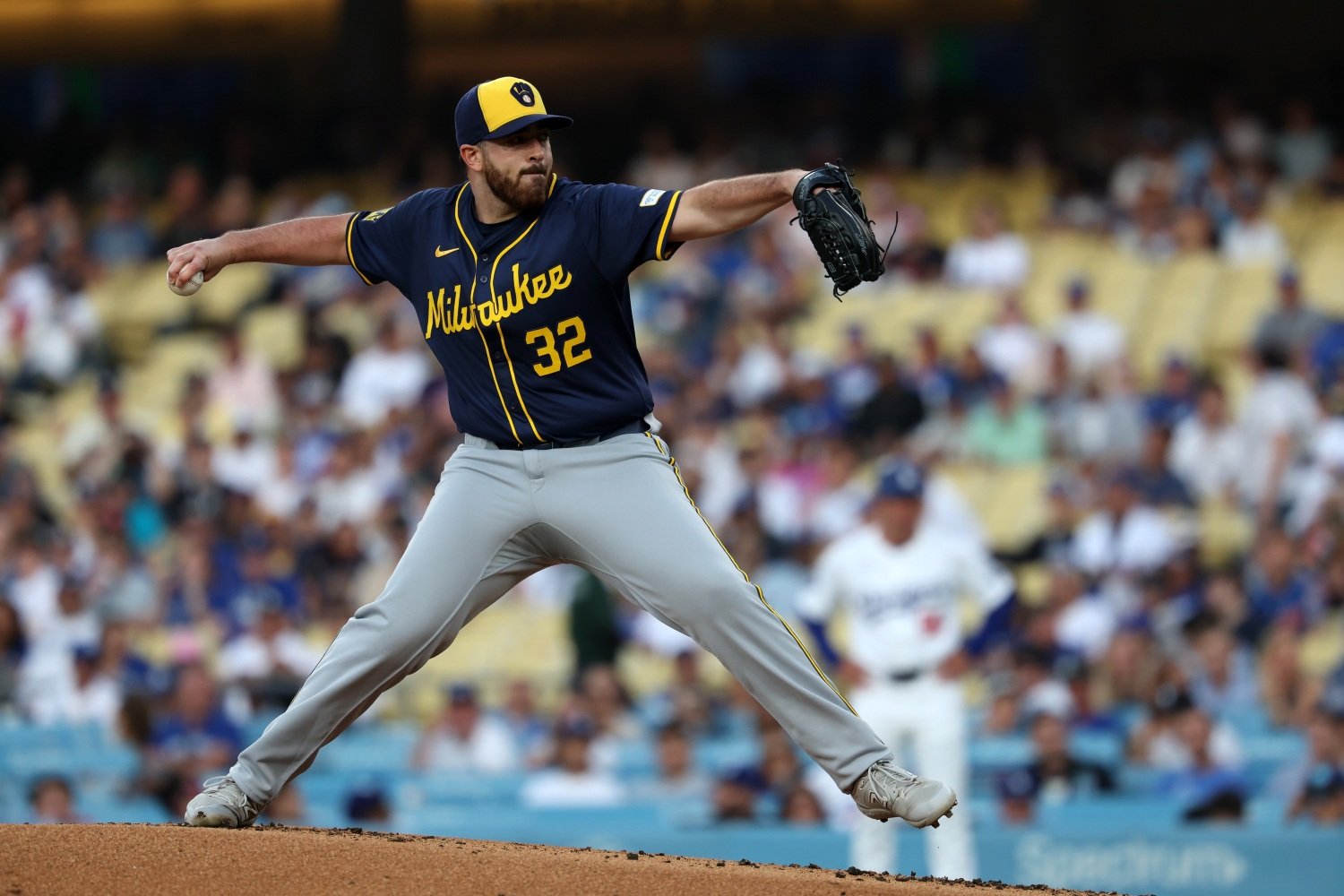 The Devin Williams trade gave the Brewers what amounted to a conditional draft pick from the Yankees. But Rhys Hoskins and Aaron Civale could also net the Brewers some serious draft compensation, if the Brewers hang onto them and things pan out well. Let’s review the reasons why. Rhys Hoskins Hoskins lost the entire 2023 season to an ACL injury. His return in 2024 saw him post a slightly below-average OPS+ of 98. Before that, though, Hoskins averaged a 125 OPS+ over six years with the Phillies. If Hoskins returns to the 2021-2022 form he had with the Phillies (when he posted an .822 OPS and 4.9 Wins Above Replacement, according to Baseball Reference), he could be in line for a big deal for some team looking for a full-time designated hitter/first baseman. This would be good for the Brewers, both in the short term and for the long haul. Hoskins would be 33 years old, but in this scenario, it would be an easy call for him to decline his side of an $18-million mutual option for 2026. The Brewers would be able to offer him a qualifying offer thereafter, because the Phillies didn't do so when he hit free agency after suffering that ACL injury. After Hoskins (inevitably) signed elsewhere, the Brewers would get an extra draft pick in 2026, tucked at the end of either the first or the second round. Aaron Civale As with Hoskins, holding Civale could be good for the Brewers in both the 2025 season and the long run. Civale rebounded from a rough start to the 2024 season with the Rays after being dealt to Milwaukee for minor-league prospect Gregory Barrios, posting a 3.53 ERA and a 1.22 WHIP in 74 innings pitched for the Crew. This was a slightly better line than Civale posted in five seasons with the Cleveland Guardians (3.77 ERA in 430 innings, across 76 starts). With a full offseason of access to the Brewers’ pitching lab before his his contract year, Civale could end up with a big year for the Crew—or, at the very least, surface numbers similar to Freddy Peralta’s 2024 season. In that circumstance, it’s not hard to see the Brewers making a qualifying offer to Civale, and it wouldn’t be a stretch to see him pull in a bigger deal than Frankie Montas did; think about four years at $15 million per annum as a reasonable expectation. That nets the Brewers a second compensation pick after the first round in the 2026 amateur draft. That would have the Brewers sitting very pretty. The Potential 2026 Draft For the 2026 MLB Draft, the Brewers would, in the first three rounds, potentially come away with their first-round pick, two comp picks after the first round, their second-round pick, a pick in the Competitive Balance B round, another comp pick at the end of that round, and their third-round pick. With the Brewers having a first-round pick, a comp pick for Willy Adames, another for not signing Chris Levonas this summer, and a pick in the Competitive Balance A round in 2025, plus their second and third-round picks, there is a chance for the team to supercharge their farm system into the late 2020s and early 2030s. For that to happen, the Brewers would need to take some risks. They’d have to hold on to Hoskins and Civale for the 2025 season; those guys would need to play well; and the player market would need to not crater under baseball's various flavors of economic pressure. That said, even as a small-market team, the Brewers run risks every season. These rolls of the dice could benefit them in a huge way for years to come.
 -
The acquisition of Nestor Cortes was more than a one-year rental for the Brewers, it gave them a chance for a compensatory pick if Cortes pitches well enough for the Brewers to make a qualifying offer. But the Brewers don’t just have that chance with Cortes, they have two other shots with players on their roster. Image courtesy of © Kiyoshi Mio-Imagn Images The Devin Williams trade gave the Brewers what amounted to a conditional draft pick from the Yankees. But Rhys Hoskins and Aaron Civale could also net the Brewers some serious draft compensation, if the Brewers hang onto them and things pan out well. Let’s review the reasons why. Rhys Hoskins Hoskins lost the entire 2023 season to an ACL injury. His return in 2024 saw him post a slightly below-average OPS+ of 98. Before that, though, Hoskins averaged a 125 OPS+ over six years with the Phillies. If Hoskins returns to the 2021-2022 form he had with the Phillies (when he posted an .822 OPS and 4.9 Wins Above Replacement, according to Baseball Reference), he could be in line for a big deal for some team looking for a full-time designated hitter/first baseman. This would be good for the Brewers, both in the short term and for the long haul. Hoskins would be 33 years old, but in this scenario, it would be an easy call for him to decline his side of an $18-million mutual option for 2026. The Brewers would be able to offer him a qualifying offer thereafter, because the Phillies didn't do so when he hit free agency after suffering that ACL injury. After Hoskins (inevitably) signed elsewhere, the Brewers would get an extra draft pick in 2026, tucked at the end of either the first or the second round. Aaron Civale As with Hoskins, holding Civale could be good for the Brewers in both the 2025 season and the long run. Civale rebounded from a rough start to the 2024 season with the Rays after being dealt to Milwaukee for minor-league prospect Gregory Barrios, posting a 3.53 ERA and a 1.22 WHIP in 74 innings pitched for the Crew. This was a slightly better line than Civale posted in five seasons with the Cleveland Guardians (3.77 ERA in 430 innings, across 76 starts). With a full offseason of access to the Brewers’ pitching lab before his his contract year, Civale could end up with a big year for the Crew—or, at the very least, surface numbers similar to Freddy Peralta’s 2024 season. In that circumstance, it’s not hard to see the Brewers making a qualifying offer to Civale, and it wouldn’t be a stretch to see him pull in a bigger deal than Frankie Montas did; think about four years at $15 million per annum as a reasonable expectation. That nets the Brewers a second compensation pick after the first round in the 2026 amateur draft. That would have the Brewers sitting very pretty. The Potential 2026 Draft For the 2026 MLB Draft, the Brewers would, in the first three rounds, potentially come away with their first-round pick, two comp picks after the first round, their second-round pick, a pick in the Competitive Balance B round, another comp pick at the end of that round, and their third-round pick. With the Brewers having a first-round pick, a comp pick for Willy Adames, another for not signing Chris Levonas this summer, and a pick in the Competitive Balance A round in 2025, plus their second and third-round picks, there is a chance for the team to supercharge their farm system into the late 2020s and early 2030s. For that to happen, the Brewers would need to take some risks. They’d have to hold on to Hoskins and Civale for the 2025 season; those guys would need to play well; and the player market would need to not crater under baseball's various flavors of economic pressure. That said, even as a small-market team, the Brewers run risks every season. These rolls of the dice could benefit them in a huge way for years to come. View full article
-
I think the Brewers have gotten hung up on what Black can't do as opposed to what he can. He's not going to be a Gold Glove-caliber defender, whether at first base, third base, or left field. DH is likely to be the primary role for Christian Yelich. But that's no reason to leave his bat on the bench or to keep him in Triple-A. Once he adjusts, I think he is reminiscent of the offensive profile the Brewers got from Paul Molitor from 1987-1992. He's also got the skills on the basepaths at arguably Brice Turang's level, but his bat is that much better.
-
If Civale pitches like he did for the Crew or his six seasons in Cleveland (3.50 to 3.75 ERA, 160+ IP), then the smart call may be to extend a QO. He'll pass, and get a good-sized deal (say, over $50 million), and the Crew gets a first-round pick out of the deal.
-
Perkins is a better option to attach. Sign Santana as a replacement (get Gold Glove-level defense) and move Black to LF, Chourio to RF, Frelick to 4th OF,
-
I'd say 14, just behind Luke Adams, but ahead of Craig Yoho. Floor is a more potent Monasterio. Ceiling is a righty Brice Turang with a little more pop, given his pull-hitting tendencies.
-
The other half of the coin is offense. Dunn's a strikeout-heavy hole in the batting order who in the best-case scenario needs a full year at Nashville. Black's bat is MLB-ready and assuming a month to six weeks of adjustment to MLB pitching, he'd be a huge offensive contributor. I think the Crew would get something like the .790 OPS Choruio posted in 2024, but with a .350-.360 OBP and a .430-.440 SLG (figure 25-30 doubles, a half-dozen triples, and 12-15 homers), plus about 25-35 steals.
- 18 replies
-
- 1
-
-
- caleb durbin
- oliver dunn
- (and 1 more)
-
In 112 minor-league game 2022-2024, Black posted a ,931 fielding percentage at third with a total of 17 errors. Braun's was .899 with 47 errors in 186 games. That's 32-point difference, which is a lot. Black isn't a Gold Glover at the hot corner, but he isn't horrible, either. In a soft platoon (he gets 3 starts a week at third, Durbin getting another 3, with Black getting a start a week at first and DH, Durbin getting 1 a week at second and short to spell Turang/Ortiz), he'd certainly be better for the Brewers than Dunn at this point.
- 18 replies
-
- 1
-
-
- caleb durbin
- oliver dunn
- (and 1 more)
-
I think a Tyler Black/Caleb Durbin platoon would work best for Milwaukee. Black's not horrible at third, and could get some PT at 1B once or twice a week to rest Hoskins and give Yelich a break at DH. Dunn's bat is too hit-or-miss for me, and I'm just not sold on him. He could prove me wrong, but the holes in his swing need to get a lot smaller.
-
Major League Baseball’s Winter Meetings have ended, and the Brewers are two months away from spring training. With one big trade checked off the winter to-do list, how will their 26-man roster look on Opening Day? Image courtesy of © Benny Sieu-Imagn Images The Brewers will have a huge hole in their lineup, left by the departure of Willy Adames, and there are going to be some changes in their pitching staff with the departures of reliable contributors like Devin Williams, Colin Rea and Hoby Milner. Still, taking the 40-man roster as it stands, the Brewers could still assemble a very good team likely to contend again for the NL Central crown. Let’s look over the team and what the 26-man roster looks like following the Williams trade. Starting Rotation The Brewers already had what they hoped was a solid 1-2-3 punch in their rotation, between Freddy Peralta, Tobias Myers, and Aaron Civale. The acquisition of Nestor Cortes adds a solid mid-rotation starter whose real value for the Brewers is two-fold: He pushes Brandon Woodruff to the fifth spot for his comeback season after large chunks of 2023 and all of 2024 were lost due to injury; and he buys time for a stocked Triple-A rotation that includes Logan Henderson, Chad Patrick, Jacob Misiorowski, and Carlos F. Rodriguez to gain seasoning. Cortes and Woodruff will determine how Milwaukee’s 2025 can go, especially in the early going. If both return to the form that made them top-10 vote recipients for the Cy Young Award not long ago, the Brewers could be able to go toe-to-toe with any team in the playoffs. Projected Opening Day Rotation: Freddy Peralta, Tobias Myers, Aaron Civale, Nestor Cortes, Brandon Woodruff Bullpen The Brewers pen is quite deep—so much so that the Williams trade did little to ease congestion. Trevor Megill will likely take up the closer role, which he performed very well in 2024. The eighth inning, though, is up for grabs. Will it be Jared Koenig, Nick Mears, Abner Uribe, Joel Payamps, or Elvis Peguero? The losers will likely end up handling the seventh inning; twirl in Triple-A Nashville for a bit; or be moved to teams looking for help. Notably, the Brewers' AL counterparts (the Cleveland Guardians, another small-market team with an elite bullpen) have traded two relievers away already this offseason, in Eli Morgan and Nick Sandlin. The Brewers will then turn to the back end of the bullpen, which will feature a number of prospective relievers who can go multiple innings. The top four contenders are all lefties: Bryan Hudson, DL Hall, Aaron Ashby and Rule 5 pick Connor Thomas. The team also has Craig Yoho knocking at the door of MLB, while injuries could see some of the Triple-A starters end up in the bullpen. Payamps, Mears, and Thomas cannot be optioned to the minors. This could be one area where the Brewers make some trades. Projected Opening Day Bullpen: Megill (closer), Payamps, Koenig, Mears, Hudson, Hall, Ashby, Thomas Catchers This is a straightforward position for the Brewers. William Contreras will likely be the starter for the third season, having secured a huge payday in his first year of arbitration. Eric Haase will be the backup to start the season, but he will be looking over his shoulder, as Jeferson Quero will be in Triple-A Nashville after recovering from a shoulder injury that cost him virtually all of 2024. Projected Opening Day Catchers: William Contreras (starter), Eric Haase (bench) Infielders Three of the four positions will be set going into Opening Day. First base will be manned by Rhys Hoskins, who opted in with the Brewers for 2025. Joey Ortiz will move to shortstop to fill the very big shoes of Adames, who took a seven-year, $182-million deal from the San Francisco Giants. Brice Turang will return at second base, where he earned both the Gold Glove and Platinum Glove. That leaves third base, where the Brewers already had some solid internal options before Caleb Durbin’s acquisition in the Devin Williams trade. Depending on how spring training goes, the Brewers could go with a platoon of Oliver Dunn and Andruw Monasterio at the hot corner for Opening Day, while Durbin may start in Triple-A Nashville to get regular playing time. Don't be surprised if Durbin bumps Monasterio out of the platoon at third, and also spells Ortiz and Turang later in the season. Isaac Collins, a switch-hitter who has seen playing time at third base, second base, and who can also play some outfield, could also be an option off the bench for the Brewers. Vinny Capra could also be in the mix, but will likely be at Triple-A Nashville. Projected Opening Day Infielders: Rhys Hoskins (1B), Brice Turang (2B), Joey Ortiz (SS), Oliver Dunn (3B/platoon), Andruw Monasterio (3B/platoon), Isaac Collins (bench) Outfielders Arguably the deepest position group on the team, all of the likely 26-man roster candidates for the Brewers have significant professional experience in center field. Blake Perkins handled most of the duties in 2024, where he was a Gold Glove finalist. Sal Frelick earned a Gold Glove primarily playing right field. Garrett Mitchell displaced Perkins in center and will likely start there most of the time, if healthy. Jackson Chourio finished third in Rookie of the Year voting in a historically strong class, and will end up in left field. That will likely bump Christian Yelich to being the designated hitter most of the time, which should make things easier on his surgically-repaired back. Collins and Tyler Black may also see some time in the outfield, with Brewer Hicklen likely to be the first callup in case of injury. Projected Opening Day Outfielders: Christian Yelich (DH), Jackson Chourio (LF), Garrett Mitchell (CF), Sal Frelick (RF), Blake Perkins (bench) Lineup Projection 2B: Brice Turang LF: Jackson Chourio DH: Christian Yelich C: William Contreras CF: Garrett Mitchell 1B: Rhys Hoskins RF: Sal Frelick SS: Joey Ortiz 3B: Oliver Dunn Bench Projection C Eric Haase IF Andruw Monasterio IF/OF Isaac Collins OF Blake Perkins Projected Rotation RHP Freddy Peralta RHP Tobias Myers RHP Aaron Civale LHP Nestor Cortes RHP Brandon Woodruff Projected Bullpen RHP Trevor Megill (closer) RHP Joel Payamps (set-up) LHP Jared Koenig (set-up) RHP Nick Mears (set-up) LHP Bryan Hudson (middle/long relief) LHP DL Hall (long relief) LHP Aaron Ashby (long relief) LHP Connor Thomas (long relief) View full article
-
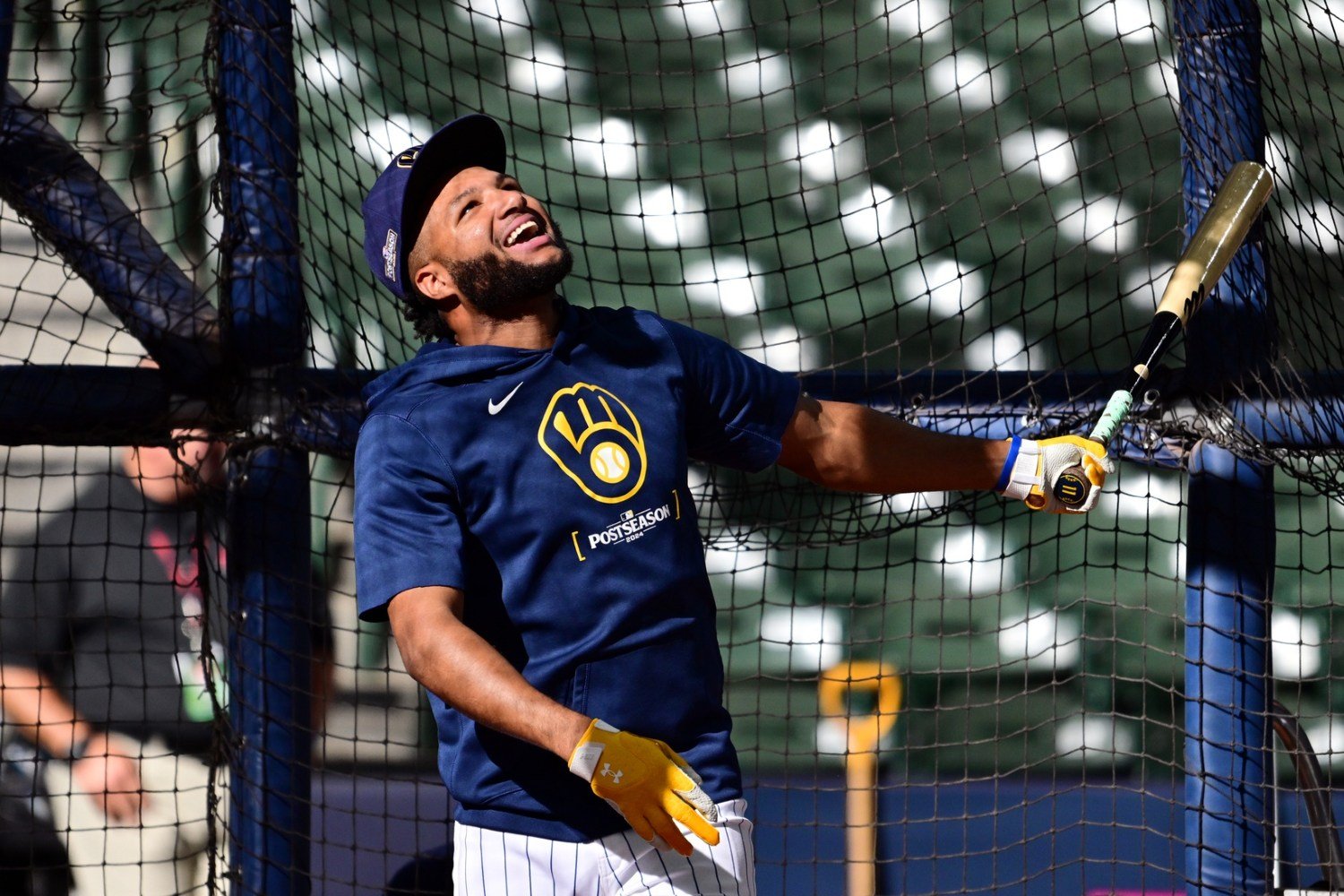 The Brewers will have a huge hole in their lineup, left by the departure of Willy Adames, and there are going to be some changes in their pitching staff with the departures of reliable contributors like Devin Williams, Colin Rea and Hoby Milner. Still, taking the 40-man roster as it stands, the Brewers could still assemble a very good team likely to contend again for the NL Central crown. Let’s look over the team and what the 26-man roster looks like following the Williams trade. Starting Rotation The Brewers already had what they hoped was a solid 1-2-3 punch in their rotation, between Freddy Peralta, Tobias Myers, and Aaron Civale. The acquisition of Nestor Cortes adds a solid mid-rotation starter whose real value for the Brewers is two-fold: He pushes Brandon Woodruff to the fifth spot for his comeback season after large chunks of 2023 and all of 2024 were lost due to injury; and he buys time for a stocked Triple-A rotation that includes Logan Henderson, Chad Patrick, Jacob Misiorowski, and Carlos F. Rodriguez to gain seasoning. Cortes and Woodruff will determine how Milwaukee’s 2025 can go, especially in the early going. If both return to the form that made them top-10 vote recipients for the Cy Young Award not long ago, the Brewers could be able to go toe-to-toe with any team in the playoffs. Projected Opening Day Rotation: Freddy Peralta, Tobias Myers, Aaron Civale, Nestor Cortes, Brandon Woodruff Bullpen The Brewers pen is quite deep—so much so that the Williams trade did little to ease congestion. Trevor Megill will likely take up the closer role, which he performed very well in 2024. The eighth inning, though, is up for grabs. Will it be Jared Koenig, Nick Mears, Abner Uribe, Joel Payamps, or Elvis Peguero? The losers will likely end up handling the seventh inning; twirl in Triple-A Nashville for a bit; or be moved to teams looking for help. Notably, the Brewers' AL counterparts (the Cleveland Guardians, another small-market team with an elite bullpen) have traded two relievers away already this offseason, in Eli Morgan and Nick Sandlin. The Brewers will then turn to the back end of the bullpen, which will feature a number of prospective relievers who can go multiple innings. The top four contenders are all lefties: Bryan Hudson, DL Hall, Aaron Ashby and Rule 5 pick Connor Thomas. The team also has Craig Yoho knocking at the door of MLB, while injuries could see some of the Triple-A starters end up in the bullpen. Payamps, Mears, and Thomas cannot be optioned to the minors. This could be one area where the Brewers make some trades. Projected Opening Day Bullpen: Megill (closer), Payamps, Koenig, Mears, Hudson, Hall, Ashby, Thomas Catchers This is a straightforward position for the Brewers. William Contreras will likely be the starter for the third season, having secured a huge payday in his first year of arbitration. Eric Haase will be the backup to start the season, but he will be looking over his shoulder, as Jeferson Quero will be in Triple-A Nashville after recovering from a shoulder injury that cost him virtually all of 2024. Projected Opening Day Catchers: William Contreras (starter), Eric Haase (bench) Infielders Three of the four positions will be set going into Opening Day. First base will be manned by Rhys Hoskins, who opted in with the Brewers for 2025. Joey Ortiz will move to shortstop to fill the very big shoes of Adames, who took a seven-year, $182-million deal from the San Francisco Giants. Brice Turang will return at second base, where he earned both the Gold Glove and Platinum Glove. That leaves third base, where the Brewers already had some solid internal options before Caleb Durbin’s acquisition in the Devin Williams trade. Depending on how spring training goes, the Brewers could go with a platoon of Oliver Dunn and Andruw Monasterio at the hot corner for Opening Day, while Durbin may start in Triple-A Nashville to get regular playing time. Don't be surprised if Durbin bumps Monasterio out of the platoon at third, and also spells Ortiz and Turang later in the season. Isaac Collins, a switch-hitter who has seen playing time at third base, second base, and who can also play some outfield, could also be an option off the bench for the Brewers. Vinny Capra could also be in the mix, but will likely be at Triple-A Nashville. Projected Opening Day Infielders: Rhys Hoskins (1B), Brice Turang (2B), Joey Ortiz (SS), Oliver Dunn (3B/platoon), Andruw Monasterio (3B/platoon), Isaac Collins (bench) Outfielders Arguably the deepest position group on the team, all of the likely 26-man roster candidates for the Brewers have significant professional experience in center field. Blake Perkins handled most of the duties in 2024, where he was a Gold Glove finalist. Sal Frelick earned a Gold Glove primarily playing right field. Garrett Mitchell displaced Perkins in center and will likely start there most of the time, if healthy. Jackson Chourio finished third in Rookie of the Year voting in a historically strong class, and will end up in left field. That will likely bump Christian Yelich to being the designated hitter most of the time, which should make things easier on his surgically-repaired back. Collins and Tyler Black may also see some time in the outfield, with Brewer Hicklen likely to be the first callup in case of injury. Projected Opening Day Outfielders: Christian Yelich (DH), Jackson Chourio (LF), Garrett Mitchell (CF), Sal Frelick (RF), Blake Perkins (bench) Lineup Projection 2B: Brice Turang LF: Jackson Chourio DH: Christian Yelich C: William Contreras CF: Garrett Mitchell 1B: Rhys Hoskins RF: Sal Frelick SS: Joey Ortiz 3B: Oliver Dunn Bench Projection C Eric Haase IF Andruw Monasterio IF/OF Isaac Collins OF Blake Perkins Projected Rotation RHP Freddy Peralta RHP Tobias Myers RHP Aaron Civale LHP Nestor Cortes RHP Brandon Woodruff Projected Bullpen RHP Trevor Megill (closer) RHP Joel Payamps (set-up) LHP Jared Koenig (set-up) RHP Nick Mears (set-up) LHP Bryan Hudson (middle/long relief) LHP DL Hall (long relief) LHP Aaron Ashby (long relief) LHP Connor Thomas (long relief)
 -
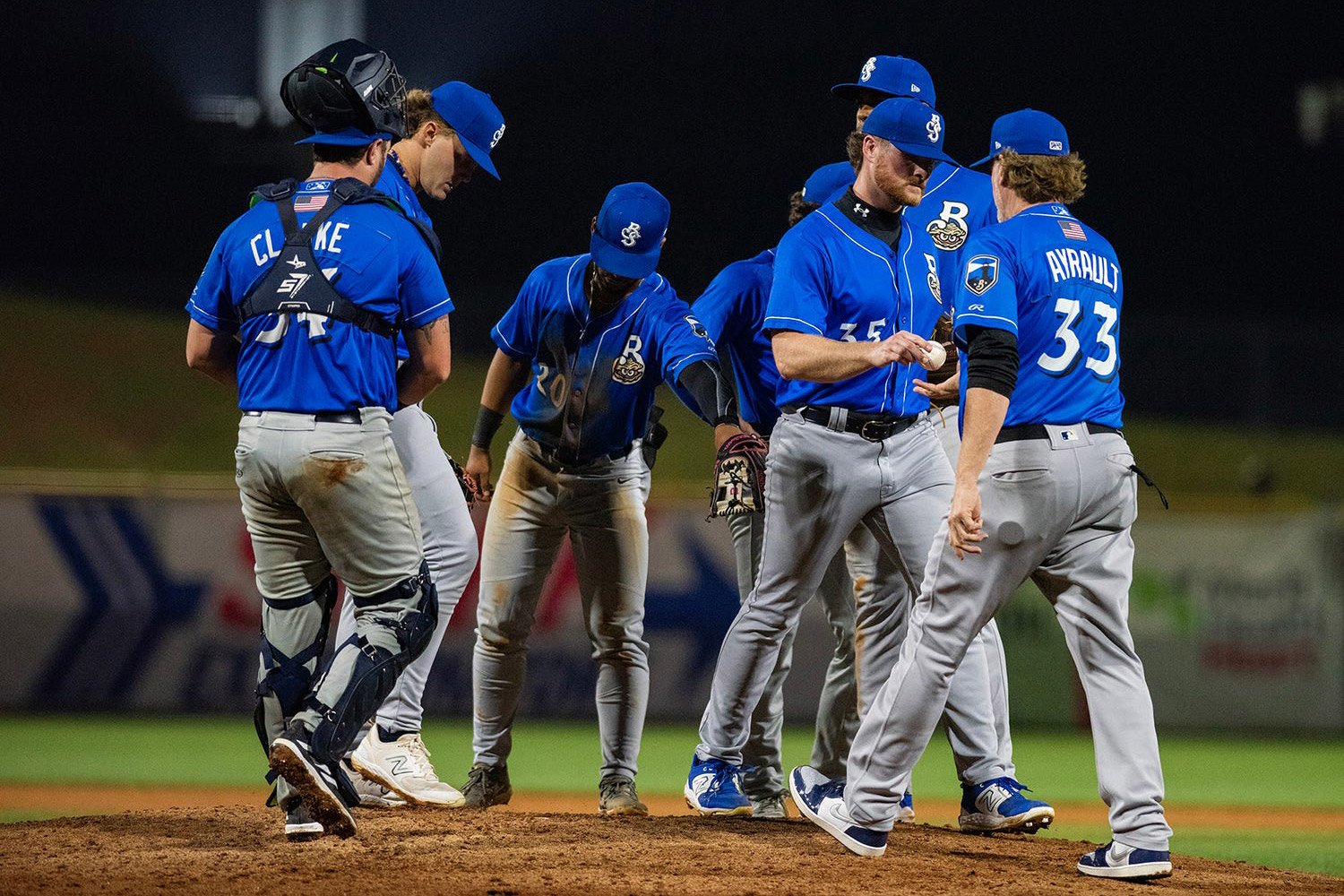 Shane Smith made his mark since signing as an undrafted free agent in 2021. He broke out in 2023, becoming Brewer Fanatic’s Minor League Relief Pitcher of the Year that season, then was fourth in the voting for Brewer Fanatic’s Minor League Starting Pitcher of the Year in 2024. With honors like that, it’s quite surprising that he was available for the Rule 5 draft, where the White Sox made him the first overall pick. The Brewers received $100,000 for Smith, who must remain on the White Sox roster for the 2025 season or be offered back for $50,000. Here’s what is a little concerning: The Brewers went into the Rule 5 draft with three open spots on the 40-man roster. They didn’t have to lose Smith; if anything, they could have come out of the Rule 5 draft with Smith alongside Connor Thomas and still have had a 40-man spot to offer Grant Wolfram. The good news of this pick, if losing a talented pitcher who was a surefire steal, is that the Brewers still have a lot of depth that they can leave Smith unprotected and not worry about him being picked up by MLB’s basketcase. The Nashville rotation has Chad Patrick, Logan Henderson, Jacob Misiorowski, Carlos Rodriguez, and Evan McKendry as likely returning pitchers, with Jon Duplantier, Coleman Crow, Nate Peterson, and Brett Wichrowski among the contenders. So, the loss of Smith via the Rule 5 draft doesn’t kill the Brewers in the short term. But it does hurt the team. Smith certainly could have replaced Elvis Peguero or Joel Payamps on the 26-man, offering more capability to go multiple innings than either of those two. The Brewers are considering creative approaches to using DL Hall and Aaron Ashby to maximize their performance. With a pitch count limit of 60 to 70, the Brewers will probably want multiple multi-inning relievers in the back end of their bullpen to bridge the gap to the top end instead of relievers like Payamps and Peguero. In other words, the Brewers didn’t need a cheap replacement for Bryse Wilson, who they allowed to walk in free agency; in their bullpen, they needed multiple pitchers like Wilson to join him (or replace him if they still wanted to let Wilson walk) to “piggyback” with Hall and Ashby. Shane Smith was looking very much like he was exactly the kind of pitcher to fill that role. The other factor is much more related to the bottom line, which the Brewers must consider down the road. The collapse of the Bally regional sports networks will make it harder to develop and keep high-performing Milwaukee players in the long term. They can’t lose prospects like Smith for less than $100,000 via the Rule 5 draft, particularly when they had an open spot to protect them. Does one back-end, multi-inning reliever break a franchise? No, but the Brewers will need to put a lot more thought into their 40-man, including taking a long look at minor deals that can set the franchise up for longer-term success and free up spots on the 40-man for prospects like Shane Smith. Unforced errors in roster management will cost the Brewers at the margins. Given the harsh hot-stove economic realities the Brewers face, they can’t afford these errors to become common.
 -
While the Brewers acquired an intriguing lefty from the St. Louis Cardinals in the Rule 5 draft, they also lost a very promising pitcher to the White Sox that same day. Image courtesy of © Lauren Witte/Clarion Ledger / USA TODAY NETWORK Shane Smith made his mark since signing as an undrafted free agent in 2021. He broke out in 2023, becoming Brewer Fanatic’s Minor League Relief Pitcher of the Year that season, then was fourth in the voting for Brewer Fanatic’s Minor League Starting Pitcher of the Year in 2024. With honors like that, it’s quite surprising that he was available for the Rule 5 draft, where the White Sox made him the first overall pick. The Brewers received $100,000 for Smith, who must remain on the White Sox roster for the 2025 season or be offered back for $50,000. Here’s what is a little concerning: The Brewers went into the Rule 5 draft with three open spots on the 40-man roster. They didn’t have to lose Smith; if anything, they could have come out of the Rule 5 draft with Smith alongside Connor Thomas and still have had a 40-man spot to offer Grant Wolfram. The good news of this pick, if losing a talented pitcher who was a surefire steal, is that the Brewers still have a lot of depth that they can leave Smith unprotected and not worry about him being picked up by MLB’s basketcase. The Nashville rotation has Chad Patrick, Logan Henderson, Jacob Misiorowski, Carlos Rodriguez, and Evan McKendry as likely returning pitchers, with Jon Duplantier, Coleman Crow, Nate Peterson, and Brett Wichrowski among the contenders. So, the loss of Smith via the Rule 5 draft doesn’t kill the Brewers in the short term. But it does hurt the team. Smith certainly could have replaced Elvis Peguero or Joel Payamps on the 26-man, offering more capability to go multiple innings than either of those two. The Brewers are considering creative approaches to using DL Hall and Aaron Ashby to maximize their performance. With a pitch count limit of 60 to 70, the Brewers will probably want multiple multi-inning relievers in the back end of their bullpen to bridge the gap to the top end instead of relievers like Payamps and Peguero. In other words, the Brewers didn’t need a cheap replacement for Bryse Wilson, who they allowed to walk in free agency; in their bullpen, they needed multiple pitchers like Wilson to join him (or replace him if they still wanted to let Wilson walk) to “piggyback” with Hall and Ashby. Shane Smith was looking very much like he was exactly the kind of pitcher to fill that role. The other factor is much more related to the bottom line, which the Brewers must consider down the road. The collapse of the Bally regional sports networks will make it harder to develop and keep high-performing Milwaukee players in the long term. They can’t lose prospects like Smith for less than $100,000 via the Rule 5 draft, particularly when they had an open spot to protect them. Does one back-end, multi-inning reliever break a franchise? No, but the Brewers will need to put a lot more thought into their 40-man, including taking a long look at minor deals that can set the franchise up for longer-term success and free up spots on the 40-man for prospects like Shane Smith. Unforced errors in roster management will cost the Brewers at the margins. Given the harsh hot-stove economic realities the Brewers face, they can’t afford these errors to become common. View full article
