CheeseheadInQC
-
Posts
2,588 -
Joined
-
Last visited
-
Days Won
7
Content Type
Profiles
Forums
Blogs
Events
News
2026 Milwaukee Brewers Top Prospects Ranking
Milwaukee Brewers Videos
2022 Milwaukee Brewers Draft Picks
Milwaukee Brewers Free Agent & Trade Rumors, Notes, & Tidbits
Guides & Resources
2023 Milwaukee Brewers Draft Picks
2024 Milwaukee Brewers Draft Picks
The Milwaukee Brewers Players Project
2025 Milwaukee Brewers Draft Pick Tracker
2026 Milwaukee Brewers Draft Tracker: Picks & Bonuses
Store
Downloads
Gallery
Everything posted by CheeseheadInQC
-
Jesus MadeLuis PenaCooper PrattJeferson QueroLogan HendersonBraylon PayneRobert GasserBishop LetsonMarco DingesLuke AdamsBrock WilkenAndrew FischerLuis LaraJosh AdamczewskiBryce MeccageJosh KnothBrady EbelColeman CrowTyson HardinEthan Dorchies Some really tough exclusions here. It will be interesting to see how many players will be on every ballot (or all but one or two outliers). The tier once you get past 9 or 10 is so large, I've got a feeling the votes will be pretty well scattered.
-
Ah, good. At least they are targeting the other end of the age spectrum.
-
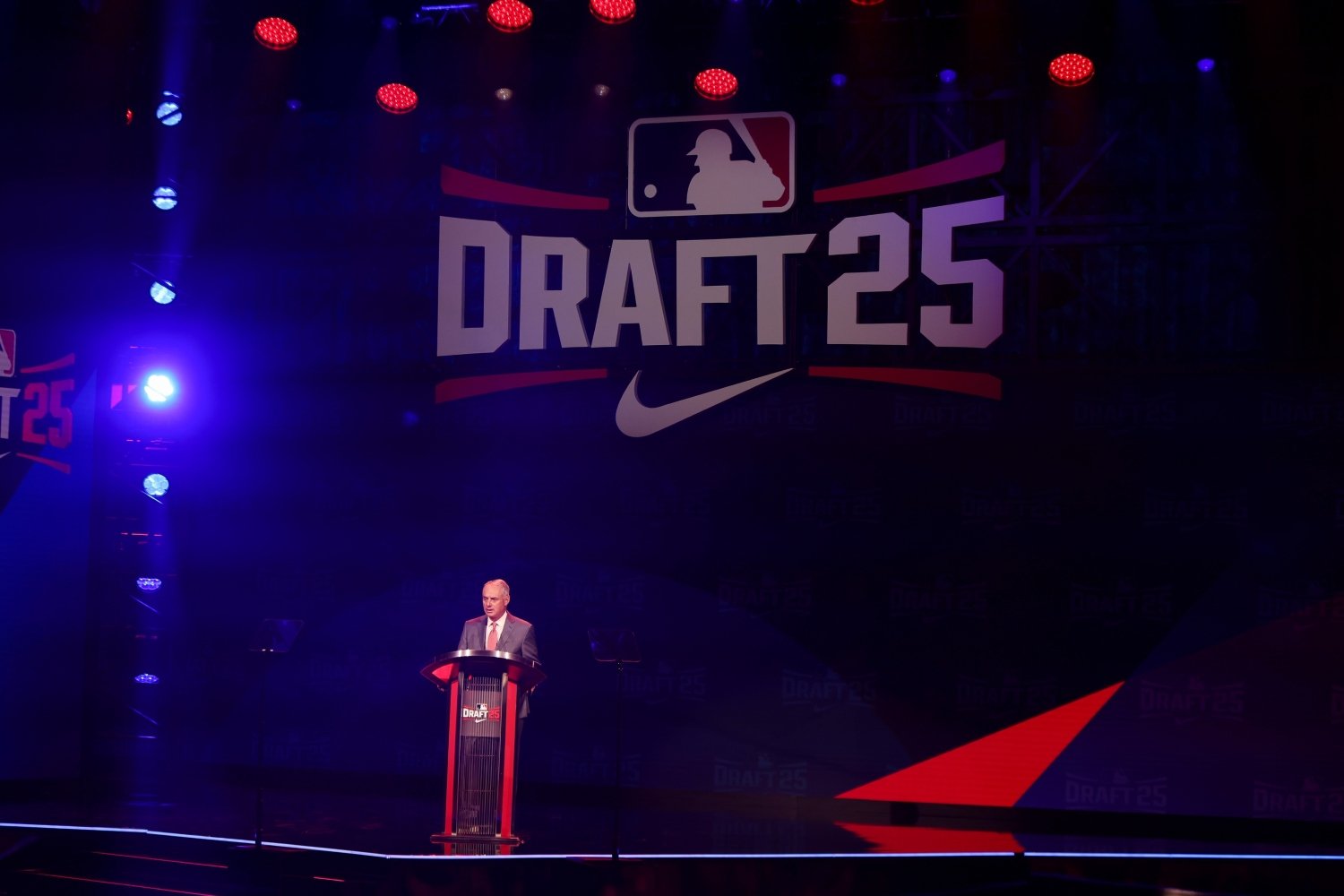
Image courtesy of © Brett Davis-Imagn Images When the Brewers drafted seven of the 55 prep pitchers taken in the 2023 draft (and five of the 40 who signed), I thought it might be a fluke. It was seen as a great draft class, and perhaps the amount of depth suppressed bonuses a bit, opening up a door for an opportunistic Brewers front office. When they drafted nine of the 47 prep pitchers taken (and signed six of the 35), it was clear this was a trend, an instance of an organization choosing to zig while everyone else zagged. Coming into this draft, therefore, it felt likely that the strategy would continue. The question was, would any team rise to challenge their dominance, at least numbers-wise, in this area of the draft? I had my reasons to be skeptical. Since the draft dropped to 20 rounds, the total number of prep pitchers picked hadn't even hit 60, which would be two per team. The 40 who signed in 2023 represented a high-water mark. If a team was to challenge the Brewers, they had to: Have a willingness to buck the conventional approach to the draft. Be willing to devote an overwhelming portion of their draft to pitching, because everyone takes some college pitchers. Have already freed themselves from the notion that the latter rounds of the draft are where you fill out organizational depth charts, a remnant from the 40- or 50-round era. Be aggressive enough in their promotions where a glut of high-school pitchers doesn't complicate roster-building, in an era of condensed minor leagues and player caps. Looking back at this list, perhaps what transpired shouldn't have been as shocking as it initially seemed. Maybe you could even call it inevitable. It was always going to be the Angels. The Unusual Suspects The Angels, of course, are not associated with picking high schoolers. They are the team that generally takes the most big league-ready option available in the first round or two, and if they are still in the minor leagues come the following draft, well, things have gone horribly awry. Because of this (and the insane rate at which they try to push some of their younger top prospects through the system), I've even joked that they view the levels between the DSL and Double A as an inconvenience. It's why the surprising pick of Tyler Bremner at No. 2 overall was less shocking than had it been any other team. It seemed to be met with more bemusement than anything else. "It's the Angels; whatcha gonna do?" Then a strange thing happened. The Angels started picking prep arms. It started innocently enough, with Johnny Slawinski in Round 3. I barely noticed, because even the Angels take a couple of high schoolers. Slawinski was followed by CJ Gray and Luke Lacourse in Rounds 5 and 6. Then they turned on the afterburners starting in Round 12, picking Talon Haley (12), Xavier Mitchell (13), Mikey Cascino (15) and Cole Raymond (17). Seven high-school pitchers in all, second only to the Brewers' eight. It was decidedly off-brand, to say the least. Does It Matter? Maybe I might have exaggerated when I said that no team has challenged the Brewers in the drafting of high-school pitching the last two years. The Guardians have signed their fair share, although not as many as the Brewers. However, the Guardians are also like the Brewers, in that they have a reputation for top-shelf pitching development. If either has success with the strategy, it will simply be chalked up to the strength of their pitching lab, rather than the draft strategy. The Angels don't really have that reputation. There are plenty of reasons why teams shy away from prep pitchers. It is, quite simply, seen as the riskiest subset of draftees. It is why Seth Hernandez can generally be talked about as the top talent in the draft, but never seriously enter the conversation as the top pick. A lot of development time is needed. As pitching injuries have surged, there is an increasing chance that development gets interrupted by a year of rehab. It is much easier to let them develop in college. You have a better idea of what velocity they will end up sitting at. You might get an elbow injury "out of the way" (a mindset I absolutely hate, by the way, for a number of reasons). You get better certainty. All of that opens the door for an organization like the Brewers, which is confident in its pitching development system, to have a greater choice of prep pitchers, especially in the $90,000-$300,000 range. Success from a team like the Angels in this zone could inspire more teams to accept the greater risk, diluting the pool of available talent. The questions are: Does the 2025 draft signify a mindset shift in Anaheim, or a one-year blip? Are the plethora of prep arms just a byproduct of happening to be higher than most everyone else on Bremner, or was the Bremner pick made with the rest of the draft in mind? It is easy to dismiss it as the former, but as much as I mock the Angels front office at times, the issue has never been an abundance of conformity. If any team was going to create a draft strategy that chops off the middle of the safety-risk bell curve in the draft to focus on the extremes, it might be them. Are they willing to stick with the strategy if it doesn't bear immediate fruit? Besides the Brewers and the Guardians, the team that has been the most active in the prep pitching market in the draft is the Detroit Tigers. Of the seven prep pitchers the Tigers signed from the 2023 and 2024 draft classes, they have gotten a total of 15 ⅓ innings in full-season ball. That is one inning less than Ethan Dorchies, the lowest-signing bonus pitcher among the Brewers' group. Will an organization that seems to be the most instant-gratification focused in baseball when it comes to player development stick with it if a couple of the prospects don't immediately pop next season? Ultimately, I'm not convinced they stick with it, although you might see them pop up occasionally when (like this year) one of the more big league-ready players is willing to sign under-slot. In a draft that seemed abundantly, well, normal in many respects, though, the Angels at least provided an interesting bit of macro-level weirdness and something interesting to watch going forward. View full article
-
 When the Brewers drafted seven of the 55 prep pitchers taken in the 2023 draft (and five of the 40 who signed), I thought it might be a fluke. It was seen as a great draft class, and perhaps the amount of depth suppressed bonuses a bit, opening up a door for an opportunistic Brewers front office. When they drafted nine of the 47 prep pitchers taken (and signed six of the 35), it was clear this was a trend, an instance of an organization choosing to zig while everyone else zagged. Coming into this draft, therefore, it felt likely that the strategy would continue. The question was, would any team rise to challenge their dominance, at least numbers-wise, in this area of the draft? I had my reasons to be skeptical. Since the draft dropped to 20 rounds, the total number of prep pitchers picked hadn't even hit 60, which would be two per team. The 40 who signed in 2023 represented a high-water mark. If a team was to challenge the Brewers, they had to: Have a willingness to buck the conventional approach to the draft. Be willing to devote an overwhelming portion of their draft to pitching, because everyone takes some college pitchers. Have already freed themselves from the notion that the latter rounds of the draft are where you fill out organizational depth charts, a remnant from the 40- or 50-round era. Be aggressive enough in their promotions where a glut of high-school pitchers doesn't complicate roster-building, in an era of condensed minor leagues and player caps. Looking back at this list, perhaps what transpired shouldn't have been as shocking as it initially seemed. Maybe you could even call it inevitable. It was always going to be the Angels. The Unusual Suspects The Angels, of course, are not associated with picking high schoolers. They are the team that generally takes the most big league-ready option available in the first round or two, and if they are still in the minor leagues come the following draft, well, things have gone horribly awry. Because of this (and the insane rate at which they try to push some of their younger top prospects through the system), I've even joked that they view the levels between the DSL and Double A as an inconvenience. It's why the surprising pick of Tyler Bremner at No. 2 overall was less shocking than had it been any other team. It seemed to be met with more bemusement than anything else. "It's the Angels; whatcha gonna do?" Then a strange thing happened. The Angels started picking prep arms. It started innocently enough, with Johnny Slawinski in Round 3. I barely noticed, because even the Angels take a couple of high schoolers. Slawinski was followed by CJ Gray and Luke Lacourse in Rounds 5 and 6. Then they turned on the afterburners starting in Round 12, picking Talon Haley (12), Xavier Mitchell (13), Mikey Cascino (15) and Cole Raymond (17). Seven high-school pitchers in all, second only to the Brewers' eight. It was decidedly off-brand, to say the least. Does It Matter? Maybe I might have exaggerated when I said that no team has challenged the Brewers in the drafting of high-school pitching the last two years. The Guardians have signed their fair share, although not as many as the Brewers. However, the Guardians are also like the Brewers, in that they have a reputation for top-shelf pitching development. If either has success with the strategy, it will simply be chalked up to the strength of their pitching lab, rather than the draft strategy. The Angels don't really have that reputation. There are plenty of reasons why teams shy away from prep pitchers. It is, quite simply, seen as the riskiest subset of draftees. It is why Seth Hernandez can generally be talked about as the top talent in the draft, but never seriously enter the conversation as the top pick. A lot of development time is needed. As pitching injuries have surged, there is an increasing chance that development gets interrupted by a year of rehab. It is much easier to let them develop in college. You have a better idea of what velocity they will end up sitting at. You might get an elbow injury "out of the way" (a mindset I absolutely hate, by the way, for a number of reasons). You get better certainty. All of that opens the door for an organization like the Brewers, which is confident in its pitching development system, to have a greater choice of prep pitchers, especially in the $90,000-$300,000 range. Success from a team like the Angels in this zone could inspire more teams to accept the greater risk, diluting the pool of available talent. The questions are: Does the 2025 draft signify a mindset shift in Anaheim, or a one-year blip? Are the plethora of prep arms just a byproduct of happening to be higher than most everyone else on Bremner, or was the Bremner pick made with the rest of the draft in mind? It is easy to dismiss it as the former, but as much as I mock the Angels front office at times, the issue has never been an abundance of conformity. If any team was going to create a draft strategy that chops off the middle of the safety-risk bell curve in the draft to focus on the extremes, it might be them. Are they willing to stick with the strategy if it doesn't bear immediate fruit? Besides the Brewers and the Guardians, the team that has been the most active in the prep pitching market in the draft is the Detroit Tigers. Of the seven prep pitchers the Tigers signed from the 2023 and 2024 draft classes, they have gotten a total of 15 ⅓ innings in full-season ball. That is one inning less than Ethan Dorchies, the lowest-signing bonus pitcher among the Brewers' group. Will an organization that seems to be the most instant-gratification focused in baseball when it comes to player development stick with it if a couple of the prospects don't immediately pop next season? Ultimately, I'm not convinced they stick with it, although you might see them pop up occasionally when (like this year) one of the more big league-ready players is willing to sign under-slot. In a draft that seemed abundantly, well, normal in many respects, though, the Angels at least provided an interesting bit of macro-level weirdness and something interesting to watch going forward.
 -
I was hoping that last year would prove to be the fluke rather than his 2023 DSL performance. Some of the playing time and lineup placements made it seem like he had to prove himself to the organization this time around, and so far he is doing it.
-
I imagine we’ll see some of the slot or below ones trickle in, but I am wondering if they are going to officially sign and introduce Fischer and maybe the second rounders at Friday’s game. Anything official with any significantly above slot signings would have to wait until after that logistically.
-
Man, the pitching staff has been dealing. 10 K’s, no walks for Priester plus three shutout innings of relief? That’ll definitely play.
-
It will be interesting if the bonuses come in closer to 2023 or 2024. 2023 was surprisingly low, but last year was comparatively high.
-
With Mis eventually hitting an innings limit, Baldwin would probably have to slow down to not win it (catcher with an .800+ OPS). The second place vote-getter seems likely to be a Brewer or Dodger (probably Kim more so than the relievers).
-
2025 MLB Draft Day 2 Thread
CheeseheadInQC replied to Jake McKibbin's topic in MLB Draft & International Signings
They needed more high school arms to keep their title of drafting the most of them. -
2025 MLB Draft Day 2 Thread
CheeseheadInQC replied to Jake McKibbin's topic in MLB Draft & International Signings
Didn’t something say redshirt sophomore? So he would be a redshirt junior, I guess. -
2025 MLB Draft Day 2 Thread
CheeseheadInQC replied to Jake McKibbin's topic in MLB Draft & International Signings
One of the pitchers profiled here -
2025 MLB Draft Day 2 Thread
CheeseheadInQC replied to Jake McKibbin's topic in MLB Draft & International Signings
Taking two college bats past round 5? No senior signs so far? Is this a Brewers draft? -
2025 MLB Draft Day 2 Thread
CheeseheadInQC replied to Jake McKibbin's topic in MLB Draft & International Signings
I wonder if that contributed to his slide. -
2025 MLB Draft Day 2 Thread
CheeseheadInQC replied to Jake McKibbin's topic in MLB Draft & International Signings
Nice prediction @Spencer Michaelis -
2025 MLB Draft Day 2 Thread
CheeseheadInQC replied to Jake McKibbin's topic in MLB Draft & International Signings
James seemed to be getting some late first round hype. Wonder if he is headed to school or someone is floating him. -
2025 MLB Draft Day 1 Thread
CheeseheadInQC replied to Jake McKibbin's topic in MLB Draft & International Signings
Unfortunately that has a way of working itself out, as we saw this year. -
2025 MLB Draft Day 1 Thread
CheeseheadInQC replied to Jake McKibbin's topic in MLB Draft & International Signings
I think this was about where he was expected to go and he's a junior, so I don't know if he's too under slot here. -
2025 MLB Draft Day 1 Thread
CheeseheadInQC replied to Jake McKibbin's topic in MLB Draft & International Signings
Feeling another prep here, but will it be another hitter. Actually wouldn't shock me, although a lot of high school arms still there. -
2025 MLB Draft Day 1 Thread
CheeseheadInQC replied to Jake McKibbin's topic in MLB Draft & International Signings
Well, the Guardians certainly went against type. -
2025 MLB Draft Day 1 Thread
CheeseheadInQC replied to Jake McKibbin's topic in MLB Draft & International Signings
Cervantes, Kilby or Owens next? I guess de Brun is still on the board too from the prep ranks, but I don't expect him to last. Edit because I forgot Hammond was there too. -
2025 MLB Draft Day 1 Thread
CheeseheadInQC replied to Jake McKibbin's topic in MLB Draft & International Signings
I'm generally a college 1st-base early skeptic, but this is kind of what I expected with the way the board fell for them. A few of the guys who were left ranked higher didn't tend to fit the Brewers' type. I'm wondering if 32 ends up being a prep arm or infielder after this. -
2025 MLB Draft Day 1 Thread
CheeseheadInQC replied to Jake McKibbin's topic in MLB Draft & International Signings
Unless they like Cunningham or Wood (assuming Irish is gone), I am thinking this is going to be a below slot hitter. -
2025 MLB Draft Day 1 Thread
CheeseheadInQC replied to Jake McKibbin's topic in MLB Draft & International Signings
I had the TV and the livestream on and had to mute the TV because it was consistently two picks behind. -
2025 MLB Draft Day 1 Thread
CheeseheadInQC replied to Jake McKibbin's topic in MLB Draft & International Signings
So that whole Ike Irish goes early on a deal thing really didn't pan out.