



Spencer Michaelis
-
Posts
1,119 -
Joined
-
Last visited
-
Days Won
17
Content Type
Profiles
Forums
Blogs
Events
News
2026 Milwaukee Brewers Top Prospects Ranking
Milwaukee Brewers Videos
2022 Milwaukee Brewers Draft Picks
Milwaukee Brewers Free Agent & Trade Rumors, Notes, & Tidbits
Guides & Resources
2023 Milwaukee Brewers Draft Picks
2024 Milwaukee Brewers Draft Picks
The Milwaukee Brewers Players Project
2025 Milwaukee Brewers Draft Pick Tracker
2026 Milwaukee Brewers Draft Tracker: Picks & Bonuses
Store
Downloads
Gallery
Everything posted by Spencer Michaelis
-
 The Brewers keep winning, and Jacob Misiorowski keeps dominating to start his big-league career. Meanwhile, Jack's efforts to catch a foul ball in the press box keep failing with worsening results. Apple Podcasts: https://podcasts.apple.com/us/podcast/the-brewer-fanatic-podcast/id1740648724 Spotify: https://open.spotify.com/show/5CY8mWsQayqjDXqw9OT2Td iHeartRadio: https://www.iheart.com/podcast/263-the-brewer-fanatic-podcast-166534588/ Pocket Casts: https://pca.st/ommzz627 Watch On YouTube: https://www.youtube.com/@brewerfanatic View full article
 -
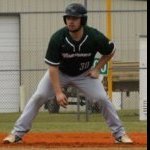
Image courtesy of © Dave Kallmann / Milwaukee Journal Sentinel / USA TODAY NETWORK via Imagn Images We're back for another week of farm system observations. This week, we cover two pitchers seemingly flying under the radar and a position player who's made a major adjustment, while knocking on the door of the big leagues. All statistics are season-long unless otherwise noted Anthony Seigler - UTIL - Nashville Sounds: 245 PA, 149 wRC+, 19.6 K%, 18.4 BB%, 7 HR Seigler was signed as a minor-league free agent this past offseason. Drafted in the first round by the Yankees in 2018 as a catcher. He's a switch-hitter, who also throws with both arms. He moved to second base for the Yankees in 2024 and had a bit of an offensive breakout, which has continued into 2025 with the Nashville Sounds. The Brewers have used him at both catcher and second base this season and, more recently, have mixed in some time at third base. Seigler has been hitting the ball well all season and was featured as the second-best hitter in the system for May. You can read more about his hitting ability in that article. However, something notable happened with Seigler at the plate this week that was not discussed in the article from earlier this month. It came to the forefront on one of his two game-winning hits over the weekend. I mentioned in the opening paragraph that Seigler is a switch-hitter. But did you notice that the second game-winning hit came against a left-handed pitcher, while Seigler also hit lefty? That is a new development for him. He has five plate appearances as a left-handed hitter against a left-handed pitcher. He had only one such plate appearance in the first six seasons of his professional career. Looking at his splits this season, Seigler is slashing .325/.455/.569 for a 1.024 OPS in 202 plate appearances as a left-handed hitter against right-handed pitchers. In 38 plate appearances as a right-handed hitter, he has posted a line of .097/.263/.097, for a paltry .360 OPS. While he's been better than ever from the left side, the right-handed numbers are not abnormal throughout his career. He has long struggled as a righty bat. Just watching the quality of the at-bats in lefty-lefty matchups, I like the change and hope he commits to it fully. Despite being a switch-hitter, Seigler was likely to be a platoon-only option. As backward as the logic feels, if he's more comfortable in same-handed matchups, he might become less platoon-dependent if he only hits left-handed. Caleb Durbin has been performing much better lately, allowing Seigler to continue working on things in Triple-A. Continuing to get reps at third base and potentially getting more opportunities to face lefty arms as a lefty bat could help him be more well-equipped for his eventual MLB debut. Ethan Dorchies - RHP - Carolina Mudcats: 32.2 IP, 2.20 ERA, 2.82 FIP, 31.5 K%, 6.9 BB%, 27.3 Whiff% (Whiff% in Low-A only) Another 18-year-old, Dorchies was the Brewers' 10th-round selection in the 2024 draft out of Cary-Grove High School in Illinois. He spent the first month of his professional career in the Arizona Complex League, posting dominant numbers over 27 innings spanning six appearances (three starts). He was recently promoted to Low-A and made two appearances this week, finally allowing me to get eyes on full outings rather than highlights. Let me start by saying that Dorchies absolutely looks the part. He stands six feet, five inches, and weighs 215 pounds. He has filled out well already but likely still has some body projection left at his height. That's exciting, because his fastball is already touching 95 MPH and sitting in the 91-93 range. Dorchies pitched in one game in the ACL with Statcast data, which means we know more than just his velocity on the pitch. We also know he generates nearly seven feet of extension and can get 15-17 inches of vertical break on the pitch, from a relatively low release height of 5-foot-6. You could see how the fastball can jump on hitters on Sunday, as he used it to generate two of his six strikeouts by going up with the pitch. With a jump in velocity, it could border on being a plus offering. Dorchies has a five-pitch mix, mixing in a cutter and a sinker, meaning he has the three-fastball mix that the Brewers covet. The sinker is thrown at a similar velocity to the four-seam, generating nearly 10 more inches of run than the four-seam and around 10 inches less induced vertical break. They do not blend together. His cutter is thrown in the 87-89 MPH range, again separating well from the other fastballs. He uses the cutter more than the sinker at the moment, and has shown an ability to command it to both sides of the plate early on. One of his strikeouts on Sunday came via a backdoor cutter. His offspeed portfolio consists of a shorter sweeper that can sometimes look more like a slurve. He throws this in the low to mid-80s and uses it mainly to get chases away from right-handed hitters. It's possible he's trying to throw different types of breaking balls, but I believe it's an inconsistent slider or sweeper shape. I mentioned it's a five-pitch mix and am saving the best for last. His splitter is in a similar velocity band to his breaking ball, but it looks like a potential plus pitch. He kills the spin on the pitch extremely well, and it has late and sharp depth to it. He's looked comfortable throwing it as an out pitch against hitters from both sides of the plate. He recorded two strikeouts with the splitter on Sunday. The Brewers and area scout Ginger Poulson got a steal in the 10th round, signing Dorchies for $162,500 out of high school, below the slot value of $180,400. Like Hernandez, Dorchies shows an impressive understanding of his pitches and attacks the strike zone. With his build, pitch mix, and early ability to attack the zone, it is easy to imagine a future number four starter. If he can add some velocity and continue developing the breaking ball, he could eventually be considered more of a middle-of-the-rotation arm. Melvin Hernandez - RHP - Carolina Mudcats: 63.2 IP, 2.40 ERA, 3.41 FIP, 18.7 K%, 5.0 BB%, 25.8 Whiff% Signed out of Nicaragua in 2023, Hernandez spent his first season in the DSL, moving to the Arizona Complex League in 2024 as a 17-year-old, even getting a short, six-inning cup of coffee in Low-A at the end of the season. Currently 18, Hernandez has gotten off to an awfully impressive start in his return to Carolina this year. I have been able to tune in for most of Hernandez's starts this year, but this past Friday was probably his best yet. In that start, he threw six shutout innings, with eight strikeouts and no walks, while only allowing four hits. Hernandez showed off his elite strike-throwing ability while using his full repertoire, headlined by his impressive changeup. One of his strongest suits is his ability to command all four (or five) pitches. The changeup is thrown in the 80 MPH range, with a lot of depth and fade to his arm side. It's his go-to pitch for generating whiffs against left-handed hitters, but he is also very comfortable throwing it against righties. The velocity difference between his fastballs and changeup is around 10 MPH, and he appears to tunnel it well with the fastballs. Hernandez throws a sinker as his primary fastball, sitting in the 88-90 range and getting up to 92 MPH. His heavy use of the pitch is a big reason for his above-average 55% groundball rate. His four-seam is mixed in more rarely, getting up to 93 and sitting around 90-91. He uses the four-seam at the top of the zone or above, often throwing it with two strikes. Some pitches have the appearance of cutting, but I have yet to figure out if they are actual cutters or if he is simply cutting his four-seam a bit. His curveball is thrown in the mid-70s and offers a nice counter to his changeup. He uses it much more often against right-handed hitters but has also shown an ability to land the curveball against left-handed hitters. It's probably his worst pitch presently, but it projects to be a fringe-average pitch. At only 18 years old, Hernandez shows an extremely impressive command of his repertoire. His frame shows the potential for added strength, which could help him add some much-needed velocity to his fastball. That velocity is one of the few things holding him back from being a legitimate prospect worthy of getting votes in the Brewer Fanatic Top 20. If he can sit around 92-94 MPH with his fastballs, there would be the potential for a Logan Henderson lite profile with Hernandez. That's all I've got for this week; let us know what you think in the replies! View full article
-
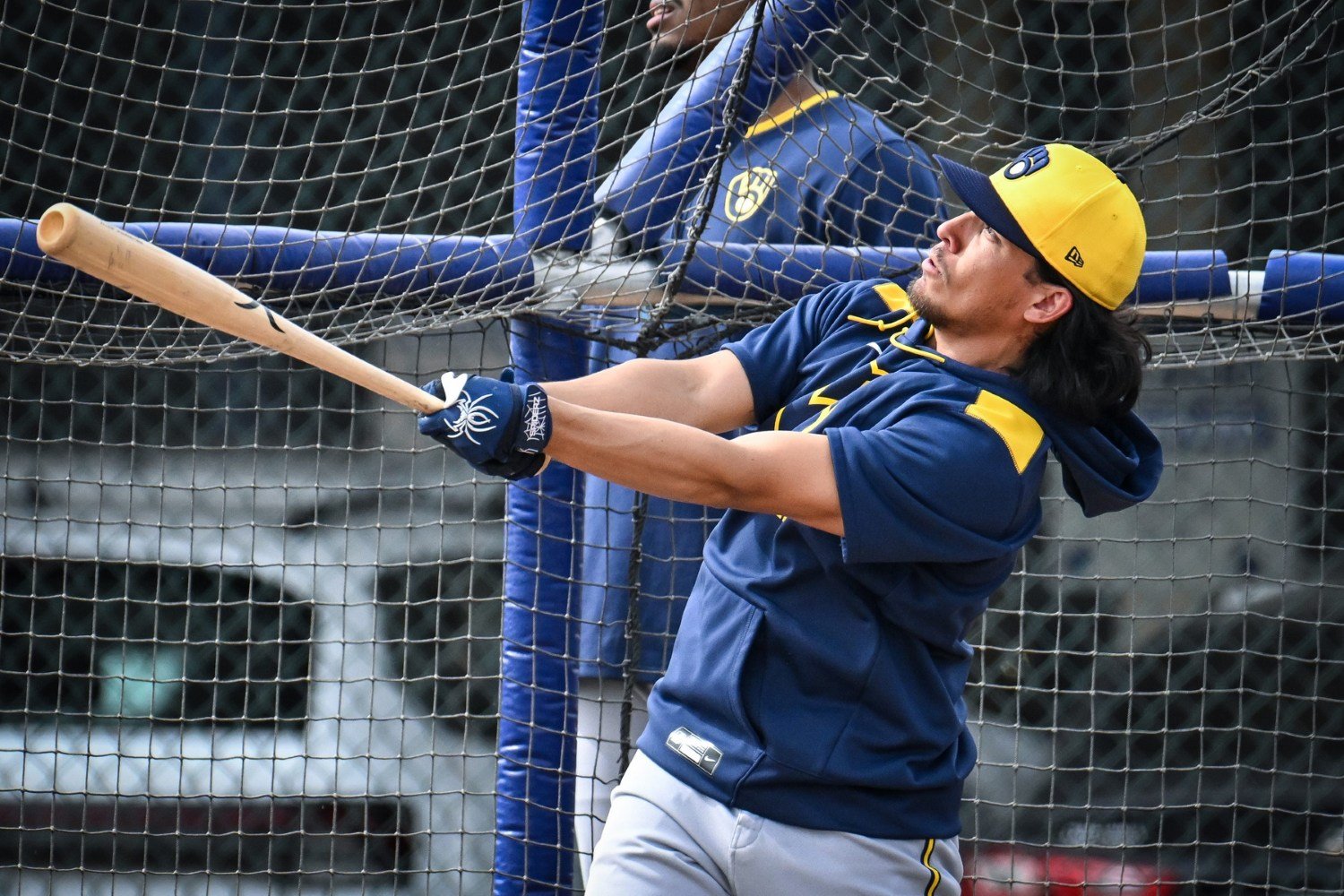 We're back for another week of farm system observations. This week, we cover two pitchers seemingly flying under the radar and a position player who's made a major adjustment, while knocking on the door of the big leagues. All statistics are season-long unless otherwise noted Anthony Seigler - UTIL - Nashville Sounds: 245 PA, 149 wRC+, 19.6 K%, 18.4 BB%, 7 HR Seigler was signed as a minor-league free agent this past offseason. Drafted in the first round by the Yankees in 2018 as a catcher. He's a switch-hitter, who also throws with both arms. He moved to second base for the Yankees in 2024 and had a bit of an offensive breakout, which has continued into 2025 with the Nashville Sounds. The Brewers have used him at both catcher and second base this season and, more recently, have mixed in some time at third base. Seigler has been hitting the ball well all season and was featured as the second-best hitter in the system for May. You can read more about his hitting ability in that article. However, something notable happened with Seigler at the plate this week that was not discussed in the article from earlier this month. It came to the forefront on one of his two game-winning hits over the weekend. I mentioned in the opening paragraph that Seigler is a switch-hitter. But did you notice that the second game-winning hit came against a left-handed pitcher, while Seigler also hit lefty? That is a new development for him. He has five plate appearances as a left-handed hitter against a left-handed pitcher. He had only one such plate appearance in the first six seasons of his professional career. Looking at his splits this season, Seigler is slashing .325/.455/.569 for a 1.024 OPS in 202 plate appearances as a left-handed hitter against right-handed pitchers. In 38 plate appearances as a right-handed hitter, he has posted a line of .097/.263/.097, for a paltry .360 OPS. While he's been better than ever from the left side, the right-handed numbers are not abnormal throughout his career. He has long struggled as a righty bat. Just watching the quality of the at-bats in lefty-lefty matchups, I like the change and hope he commits to it fully. Despite being a switch-hitter, Seigler was likely to be a platoon-only option. As backward as the logic feels, if he's more comfortable in same-handed matchups, he might become less platoon-dependent if he only hits left-handed. Caleb Durbin has been performing much better lately, allowing Seigler to continue working on things in Triple-A. Continuing to get reps at third base and potentially getting more opportunities to face lefty arms as a lefty bat could help him be more well-equipped for his eventual MLB debut. Ethan Dorchies - RHP - Carolina Mudcats: 32.2 IP, 2.20 ERA, 2.82 FIP, 31.5 K%, 6.9 BB%, 27.3 Whiff% (Whiff% in Low-A only) Another 18-year-old, Dorchies was the Brewers' 10th-round selection in the 2024 draft out of Cary-Grove High School in Illinois. He spent the first month of his professional career in the Arizona Complex League, posting dominant numbers over 27 innings spanning six appearances (three starts). He was recently promoted to Low-A and made two appearances this week, finally allowing me to get eyes on full outings rather than highlights. Let me start by saying that Dorchies absolutely looks the part. He stands six feet, five inches, and weighs 215 pounds. He has filled out well already but likely still has some body projection left at his height. That's exciting, because his fastball is already touching 95 MPH and sitting in the 91-93 range. Dorchies pitched in one game in the ACL with Statcast data, which means we know more than just his velocity on the pitch. We also know he generates nearly seven feet of extension and can get 15-17 inches of vertical break on the pitch, from a relatively low release height of 5-foot-6. You could see how the fastball can jump on hitters on Sunday, as he used it to generate two of his six strikeouts by going up with the pitch. With a jump in velocity, it could border on being a plus offering. Dorchies has a five-pitch mix, mixing in a cutter and a sinker, meaning he has the three-fastball mix that the Brewers covet. The sinker is thrown at a similar velocity to the four-seam, generating nearly 10 more inches of run than the four-seam and around 10 inches less induced vertical break. They do not blend together. His cutter is thrown in the 87-89 MPH range, again separating well from the other fastballs. He uses the cutter more than the sinker at the moment, and has shown an ability to command it to both sides of the plate early on. One of his strikeouts on Sunday came via a backdoor cutter. His offspeed portfolio consists of a shorter sweeper that can sometimes look more like a slurve. He throws this in the low to mid-80s and uses it mainly to get chases away from right-handed hitters. It's possible he's trying to throw different types of breaking balls, but I believe it's an inconsistent slider or sweeper shape. I mentioned it's a five-pitch mix and am saving the best for last. His splitter is in a similar velocity band to his breaking ball, but it looks like a potential plus pitch. He kills the spin on the pitch extremely well, and it has late and sharp depth to it. He's looked comfortable throwing it as an out pitch against hitters from both sides of the plate. He recorded two strikeouts with the splitter on Sunday. The Brewers and area scout Ginger Poulson got a steal in the 10th round, signing Dorchies for $162,500 out of high school, below the slot value of $180,400. Like Hernandez, Dorchies shows an impressive understanding of his pitches and attacks the strike zone. With his build, pitch mix, and early ability to attack the zone, it is easy to imagine a future number four starter. If he can add some velocity and continue developing the breaking ball, he could eventually be considered more of a middle-of-the-rotation arm. Melvin Hernandez - RHP - Carolina Mudcats: 63.2 IP, 2.40 ERA, 3.41 FIP, 18.7 K%, 5.0 BB%, 25.8 Whiff% Signed out of Nicaragua in 2023, Hernandez spent his first season in the DSL, moving to the Arizona Complex League in 2024 as a 17-year-old, even getting a short, six-inning cup of coffee in Low-A at the end of the season. Currently 18, Hernandez has gotten off to an awfully impressive start in his return to Carolina this year. I have been able to tune in for most of Hernandez's starts this year, but this past Friday was probably his best yet. In that start, he threw six shutout innings, with eight strikeouts and no walks, while only allowing four hits. Hernandez showed off his elite strike-throwing ability while using his full repertoire, headlined by his impressive changeup. One of his strongest suits is his ability to command all four (or five) pitches. The changeup is thrown in the 80 MPH range, with a lot of depth and fade to his arm side. It's his go-to pitch for generating whiffs against left-handed hitters, but he is also very comfortable throwing it against righties. The velocity difference between his fastballs and changeup is around 10 MPH, and he appears to tunnel it well with the fastballs. Hernandez throws a sinker as his primary fastball, sitting in the 88-90 range and getting up to 92 MPH. His heavy use of the pitch is a big reason for his above-average 55% groundball rate. His four-seam is mixed in more rarely, getting up to 93 and sitting around 90-91. He uses the four-seam at the top of the zone or above, often throwing it with two strikes. Some pitches have the appearance of cutting, but I have yet to figure out if they are actual cutters or if he is simply cutting his four-seam a bit. His curveball is thrown in the mid-70s and offers a nice counter to his changeup. He uses it much more often against right-handed hitters but has also shown an ability to land the curveball against left-handed hitters. It's probably his worst pitch presently, but it projects to be a fringe-average pitch. At only 18 years old, Hernandez shows an extremely impressive command of his repertoire. His frame shows the potential for added strength, which could help him add some much-needed velocity to his fastball. That velocity is one of the few things holding him back from being a legitimate prospect worthy of getting votes in the Brewer Fanatic Top 20. If he can sit around 92-94 MPH with his fastballs, there would be the potential for a Logan Henderson lite profile with Hernandez. That's all I've got for this week; let us know what you think in the replies!
 -
Sun. 6/22 - Escape from West Michigan
Spencer Michaelis replied to Jim Goulart's topic in Brewers Minor League Talk
Here are 5 of the 6 K's (the other was a pitch clock violation) -
So part of the reason he didn’t catch at FSU was that his body was still recovering from the HLH and it couldn’t handle the workload. But he’s definitely a great athlete back there. The receiving was pretty raw to start but he’s worked incredibly hard and it’s already made huge strides this year. I’m very confident he’s gonna stick back there and eventually end up being quite good as a defender.
- 9 replies
-
- 5
-

-
- marco dinges
- bryce meccage
- (and 2 more)
-
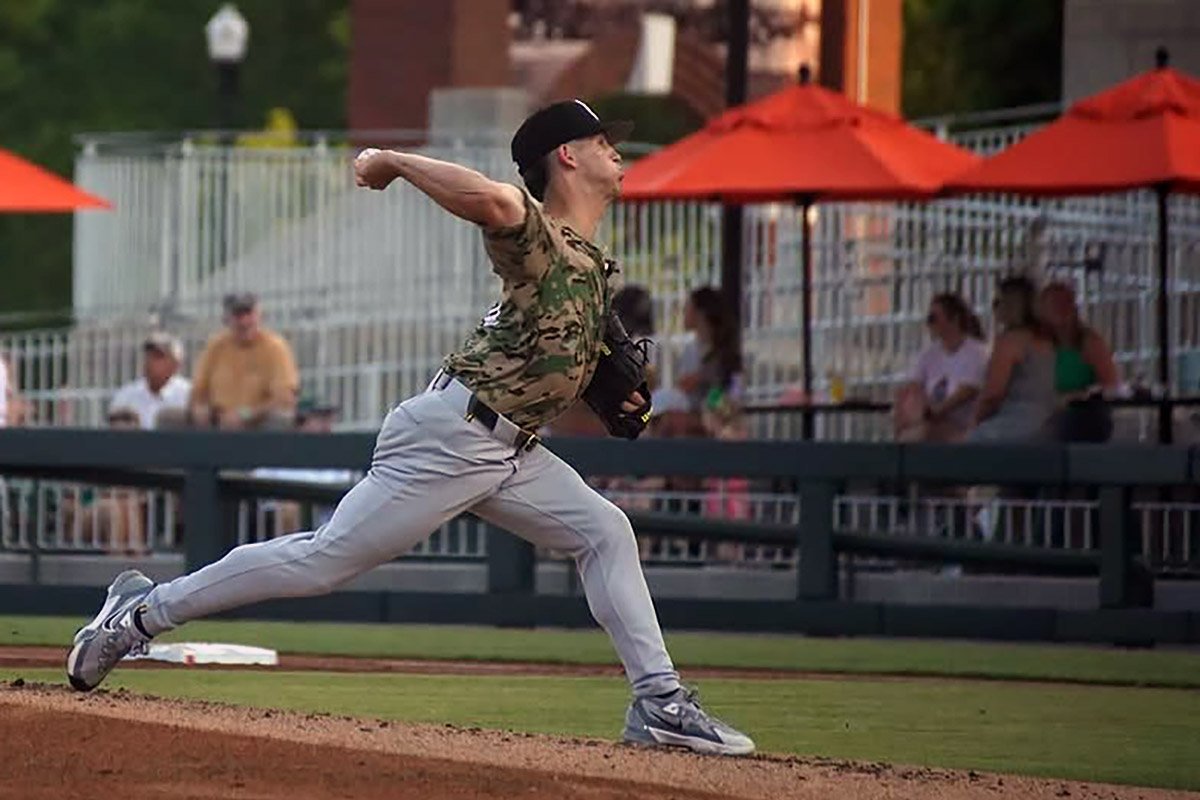 The Brewers' farm system continues to impress despite several big-time graduations over the last few years. These four new names are just a few examples of the system's depth. Click here to view the entire Top 20 Prospect Rankings. #9 C Marco Dinges The Brewers used their 2024 fourth-round pick on Dinges out of Florida State, only a year after he had battled a rare immune deficiency disorder called hemophagocytic lymphohistiocytosis (HLH). Severe cases can lead to organ failure and death, and Dinges had to fight for his life in the hospital for almost six weeks, all while transferring from Tallahassee Community College to Florida State. He eventually beat HLH and still put up a strong performance in his lone season as a Seminole. Dinges got off to an incredible start offensively with Low-A Carolina this year, posting a 199 wRC+ in 112 plate appearances. He is now 100 plate appearances into his High-A career, and he is also sporting a 157 wRC+ at that level. With bat speed that, according to Brenton Del Chiaro (Brewers Assistant Director of Player Development), has been "cruising at 77 MPH", Dinges has plus raw power. He's shown exit velocities of at least 112 MPH this season, including a home run at 111. He has started to lift the ball more often, which has allowed his power to show up in games more frequently, resulting in eight home runs combined between the two levels. Not only has Dinges shown power in games, but he's also done a good job of not sacrificing his ability to get the ball in play. His strikeout rate of 18% is well above average for High-A. He shows the signs of a potentially average or better hit tool on top of his power potential. An outstanding athlete for a catcher, Dinges's defense has been the question. He caught only his senior year of high school and one year at Tallahassee Community College. Despite his lack of experience, he has been making massive strides this season and looks like a catcher who will be an average defender at his peak, if not better. Dinges also has a very strong arm, with FanGraphs giving it a 70 grade. His footwork needs work on throws to second, but he looks very comfortable on pickoffs to first and throws to third. His arm could be a big-time weapon for him behind the dish. Continued improvement in Dinges's defense and getting to his raw power even more often will be essential if he is to reach his actual ceiling. If he does reach his ceiling, Dinges could be a high-quality starting catcher with very few weaknesses in the profile. #18 RHP Bryce Meccage Meccage, the 57th pick in the 2024 draft, made his professional debut this season with Low-A Carolina. He has shown the tools that led to his selection and his $2.5 million bonus, nearly a million dollars over slot. Meccage's fastball has been in the 94-96 MPH range in most of his outings and has reportedly reached back for 98 on several occasions. It has generated quite a few whiffs so far, and there appears to be some pretty good carry on the pitch, helping it play at the top of the zone and above. Meccage throws a high-spin slider in the 82-86 MPH range with some sweep and depth. He struggles to land it for strikes at this time, but it is a good put-away pitch for him. He also throws a curveball with more depth than the slider, which makes him more comfortable landing it for strikes and using it in any count. The curve comes in a few ticks slower, sitting in the upper-70s. A changeup in the upper-80s rounds out the repertoire for Meccage. It's a pitch he has improved significantly over the last couple of years, largely thanks to learning the relatively new "kick" change. It's not an offering he's been super comfortable throwing in games, but it looks like a playable pitch for him when he does. Meccage has shown average command at times this season, but it's been inconsistent and as the season has progressed it seems to be regressing a bit. More consistency will be an important piece of the puzzle for him moving forward, but it is not abnormal for a 19-year-old to have bouts with loss of command. Meccage's command will need to become more consistent, but the combination of his raw stuff and his presence on the mound gives him a chance to be a solid starter. #19 RHP Coleman Crow Crow was a 28th-round selection by the Angels in 2019, but he didn’t make his professional debut until 2021 due to COVID-19. He worked his way through the system those next two years and ended up starting 2023 in Double-A. He made four starts before going on the injured list with an elbow issue that would eventually be prescribed Tommy John Surgery. Traded to the Brewers at the end of 2023, amid his recovery, he made his first appearance in the Brewers organization this year. Crow throws a four-seam fastball sitting in the 91-93 range, with a shape that plays pretty well at the top of the zone. Crow mixes in his cutter as a change-of-pace fastball in the upper 80s, a pitch that can get some swing and miss on pitches away from righties or be back-doored against lefties. However, its primary use is generating soft contact and groundballs for him. The best pitch and the put-away pitch for Crow is his curveball. Thrown in the mid-70s, he has spun some of his curveballs up to nearly 3,600 RPMs. Shuckers broadcaster Javik Blake tweeted data on one of Crow’s curveballs in April: 77 MPH, -15.5 IVB, -19.3 HB, and 3240 RPMs. Even when you account for the different baseball used in Double-A, that pitch moves similarly to Seth Lugo’s curveball—one of the best curveballs in MLB. Crow also throws a high spin, low-80s sweeper that he can use for whiffs against righties, though he has struggled to command it at times, likely due to the amount of movement it has. He rounds out his repertoire with a changeup—a weapon he desperately needed to keep left-handed hitters at bay, which he has improved significantly in 2025, now sitting in the 86-88 range and getting up to 17” of horizontal movement. On top of his interesting repertoire, Crow is a fierce competitor on the mound who seems to find ways to get outs even when he doesn’t have his “A” stuff that night. He has the makings of a pitcher who could make a lot of big league starts in the future. He was recently promoted to Triple-A, where he should be making his first start soon. #20 1B Blake Burke The Brewers' second selection in the 2024 draft, they used the pick acquired from Baltimore in the Corbin Burnes trade to take Burke out of Tennessee. At the time, Burke was most well known for having immense raw power, but his hit tool has stood out early in his career. While Burke only has three home runs to this point, he has hit balls as hard as 113 MPH, and he hit a home run in spring training at 110.6 MPH. The power is in there and his raw power is still a plus tool. He would benefit from lifting the ball more often, posting a groundball rate over 50%. The power will likely show up for him more often as he progresses in pro ball, but the lack of lifting the ball does create concern over whether it will ever come close to reaching its full potential. Burke’s ability to cover all quadrants of the zone has been a big part of his success in 2025. His whiff rate of 26.6% and strikeout rate of only 22.2% are better than average for the level. He also draws walks at a high level. It’s not been the profile that was expected from him, but it’s been productive to this point. Though not athletic enough to make up for a groundball-heavy approach at the plate, Burke moves reasonably well for his size. His baserunning IQ is high, and he recognizes that pitchers will lose track of him occasionally. He is seven for ten in stolen base attempts this year and has also legged out two triples. Defensively, his hands do most of the heavy lifting, but the sneaky athleticism also benefits him at first base, where he’s more nimble than he would appear. His footwork is pretty strong, and he seems to get good reads off the bat. Touted as a power-only bat who may not be able to handle first base defensively, Burke appears to be quite a bit different than that. While the power will eventually need to show up to reach his ceiling, Burke has shown that his perceived weaknesses may not be as concerning as many thought when he was drafted. What are your thoughts on the four additions to the Top 20 prospects?
- 9 comments
-
- 3
-

-
-
- marco dinges
- bryce meccage
- (and 2 more)
-
Image courtesy of Coleman Crow The Brewers' farm system continues to impress despite several big-time graduations over the last few years. These four new names are just a few examples of the system's depth. Click here to view the entire Top 20 Prospect Rankings. #9 C Marco Dinges The Brewers used their 2024 fourth-round pick on Dinges out of Florida State, only a year after he had battled a rare immune deficiency disorder called hemophagocytic lymphohistiocytosis (HLH). Severe cases can lead to organ failure and death, and Dinges had to fight for his life in the hospital for almost six weeks, all while transferring from Tallahassee Community College to Florida State. He eventually beat HLH and still put up a strong performance in his lone season as a Seminole. Dinges got off to an incredible start offensively with Low-A Carolina this year, posting a 199 wRC+ in 112 plate appearances. He is now 100 plate appearances into his High-A career, and he is also sporting a 157 wRC+ at that level. With bat speed that, according to Brenton Del Chiaro (Brewers Assistant Director of Player Development), has been "cruising at 77 MPH", Dinges has plus raw power. He's shown exit velocities of at least 112 MPH this season, including a home run at 111. He has started to lift the ball more often, which has allowed his power to show up in games more frequently, resulting in eight home runs combined between the two levels. Not only has Dinges shown power in games, but he's also done a good job of not sacrificing his ability to get the ball in play. His strikeout rate of 18% is well above average for High-A. He shows the signs of a potentially average or better hit tool on top of his power potential. An outstanding athlete for a catcher, Dinges's defense has been the question. He caught only his senior year of high school and one year at Tallahassee Community College. Despite his lack of experience, he has been making massive strides this season and looks like a catcher who will be an average defender at his peak, if not better. Dinges also has a very strong arm, with FanGraphs giving it a 70 grade. His footwork needs work on throws to second, but he looks very comfortable on pickoffs to first and throws to third. His arm could be a big-time weapon for him behind the dish. Continued improvement in Dinges's defense and getting to his raw power even more often will be essential if he is to reach his actual ceiling. If he does reach his ceiling, Dinges could be a high-quality starting catcher with very few weaknesses in the profile. #18 RHP Bryce Meccage Meccage, the 57th pick in the 2024 draft, made his professional debut this season with Low-A Carolina. He has shown the tools that led to his selection and his $2.5 million bonus, nearly a million dollars over slot. Meccage's fastball has been in the 94-96 MPH range in most of his outings and has reportedly reached back for 98 on several occasions. It has generated quite a few whiffs so far, and there appears to be some pretty good carry on the pitch, helping it play at the top of the zone and above. Meccage throws a high-spin slider in the 82-86 MPH range with some sweep and depth. He struggles to land it for strikes at this time, but it is a good put-away pitch for him. He also throws a curveball with more depth than the slider, which makes him more comfortable landing it for strikes and using it in any count. The curve comes in a few ticks slower, sitting in the upper-70s. A changeup in the upper-80s rounds out the repertoire for Meccage. It's a pitch he has improved significantly over the last couple of years, largely thanks to learning the relatively new "kick" change. It's not an offering he's been super comfortable throwing in games, but it looks like a playable pitch for him when he does. Meccage has shown average command at times this season, but it's been inconsistent and as the season has progressed it seems to be regressing a bit. More consistency will be an important piece of the puzzle for him moving forward, but it is not abnormal for a 19-year-old to have bouts with loss of command. Meccage's command will need to become more consistent, but the combination of his raw stuff and his presence on the mound gives him a chance to be a solid starter. #19 RHP Coleman Crow Crow was a 28th-round selection by the Angels in 2019, but he didn’t make his professional debut until 2021 due to COVID-19. He worked his way through the system those next two years and ended up starting 2023 in Double-A. He made four starts before going on the injured list with an elbow issue that would eventually be prescribed Tommy John Surgery. Traded to the Brewers at the end of 2023, amid his recovery, he made his first appearance in the Brewers organization this year. Crow throws a four-seam fastball sitting in the 91-93 range, with a shape that plays pretty well at the top of the zone. Crow mixes in his cutter as a change-of-pace fastball in the upper 80s, a pitch that can get some swing and miss on pitches away from righties or be back-doored against lefties. However, its primary use is generating soft contact and groundballs for him. The best pitch and the put-away pitch for Crow is his curveball. Thrown in the mid-70s, he has spun some of his curveballs up to nearly 3,600 RPMs. Shuckers broadcaster Javik Blake tweeted data on one of Crow’s curveballs in April: 77 MPH, -15.5 IVB, -19.3 HB, and 3240 RPMs. Even when you account for the different baseball used in Double-A, that pitch moves similarly to Seth Lugo’s curveball—one of the best curveballs in MLB. Crow also throws a high spin, low-80s sweeper that he can use for whiffs against righties, though he has struggled to command it at times, likely due to the amount of movement it has. He rounds out his repertoire with a changeup—a weapon he desperately needed to keep left-handed hitters at bay, which he has improved significantly in 2025, now sitting in the 86-88 range and getting up to 17” of horizontal movement. On top of his interesting repertoire, Crow is a fierce competitor on the mound who seems to find ways to get outs even when he doesn’t have his “A” stuff that night. He has the makings of a pitcher who could make a lot of big league starts in the future. He was recently promoted to Triple-A, where he should be making his first start soon. #20 1B Blake Burke The Brewers' second selection in the 2024 draft, they used the pick acquired from Baltimore in the Corbin Burnes trade to take Burke out of Tennessee. At the time, Burke was most well known for having immense raw power, but his hit tool has stood out early in his career. While Burke only has three home runs to this point, he has hit balls as hard as 113 MPH, and he hit a home run in spring training at 110.6 MPH. The power is in there and his raw power is still a plus tool. He would benefit from lifting the ball more often, posting a groundball rate over 50%. The power will likely show up for him more often as he progresses in pro ball, but the lack of lifting the ball does create concern over whether it will ever come close to reaching its full potential. Burke’s ability to cover all quadrants of the zone has been a big part of his success in 2025. His whiff rate of 26.6% and strikeout rate of only 22.2% are better than average for the level. He also draws walks at a high level. It’s not been the profile that was expected from him, but it’s been productive to this point. Though not athletic enough to make up for a groundball-heavy approach at the plate, Burke moves reasonably well for his size. His baserunning IQ is high, and he recognizes that pitchers will lose track of him occasionally. He is seven for ten in stolen base attempts this year and has also legged out two triples. Defensively, his hands do most of the heavy lifting, but the sneaky athleticism also benefits him at first base, where he’s more nimble than he would appear. His footwork is pretty strong, and he seems to get good reads off the bat. Touted as a power-only bat who may not be able to handle first base defensively, Burke appears to be quite a bit different than that. While the power will eventually need to show up to reach his ceiling, Burke has shown that his perceived weaknesses may not be as concerning as many thought when he was drafted. What are your thoughts on the four additions to the Top 20 prospects? View full article
- 9 replies
-
- 5
-
-
-
- marco dinges
- bryce meccage
- (and 2 more)
-
Episode 57: Misiorowski's Debut & The Emergence Of Isaac Collins
Spencer Michaelis posted an article in Podcasts
 Jack and Spencer recap Jacob Misiorowski's debut, two intense series against division rivals, Isaac Collins' emergence, and more. Apple Podcasts: https://podcasts.apple.com/us/podcast/the-brewer-fanatic-podcast/id1740648724 Spotify: https://open.spotify.com/show/5CY8mWsQayqjDXqw9OT2Td iHeartRadio: https://www.iheart.com/podcast/263-the-brewer-fanatic-podcast-166534588/ Pocket Casts: https://pca.st/ommzz627 Watch On YouTube: https://www.youtube.com/@brewerfanatic
 -
Jack and Spencer recap Jacob Misiorowski's debut, two intense series against division rivals, Isaac Collins' emergence, and more. Apple Podcasts: https://podcasts.apple.com/us/podcast/the-brewer-fanatic-podcast/id1740648724 Spotify: https://open.spotify.com/show/5CY8mWsQayqjDXqw9OT2Td iHeartRadio: https://www.iheart.com/podcast/263-the-brewer-fanatic-podcast-166534588/ Pocket Casts: https://pca.st/ommzz627 Watch On YouTube: https://www.youtube.com/@brewerfanatic View full article
-
Jesus MadeJacob MisiorowskiLuis PenaJeferson QueroCooper PrattLogan HendersonBishop LetsonBraylon PayneRobert GasserCraig YohoBryce MeccageMarco DingesTyson HardinBrailyn AntunezBrock WilkenLuke AdamsMike BoeveJosh AdamczewskiColeman CrowEric Bitonti Don't have time to add notes for my T20, but in honor of Toby, AKA "And That" from the old days on Fanatic, here are my current tiers through 35 OFP. I view the tiers as much more important than the rankings, especially once you get outside of the Top 10-20. On my personal spreadsheet, 30+ through 40 tiers have quite a bit of shuffling done throughout the year, but it's harder to move into the 40+ tier and higher. 60 OFP: Made, Misiorowski 55 OFP: Peña 50 OFP: Quero, Pratt 45+ OFP: Henderson through Meccage 45 OFP: Dinges through Bitonti 40+ OFP 21 Luis Lara OF 22 Kenny Fenelon OF 23 K.C. Hunt RHP 24 Blake Burke 1B 25 Josh Knoth RHP 26 Brett Wichrowski RHP 27 Jadher Areinamo UTIL 28 Anthony Seigler UTIL 29 Ernesto Martinez 1B 40 OFP 30 Carlos Rodriguez RHP 31 Jose Anderson OF 32 Tyler Black UTIL 33 Yorman Galindez RHP 34 Jorge Quintana SS 35 Ethan Dorchies RHP 36 Tyler Renz RHP 37 Jason Woodward RHP 38 Manuel Rodriguez RHP 39 Luis Corobo C 40 Yeuri Ramirez RHP 41 Alexander Cornielle RHP 42 Tate Kuehner LHP 35+ OFP 43 Jack Hostetler RHP 44 Juan Baez UTIL 45 Jaron Deberry RHP 46 Handelfry Encarnacion OF 47 Cristopher Acosta SS 48 Hayden Robinson RHP 49 Alexander Frias OF 50 Gerlyn Payano OF 51 Ryan Birchard RHP 52 Joseph Broughton LHP 53 Melvin Hernandez RHP 54 Juan Ortuno UTIL 55 Filippo Di Turi SS 56 Matthew Wood C 57 Eduardo Garcia UTIL 58 Jayden Dubanewicz RHP 59 Luiyin Alastre SS 60 Will Childers RHP 61 Travis Smith RHP 62 Sam Garcia LHP 63 Bjorn Johnson LHP 64 Quinton Low Two Way 65 Dylan O'Rae UTIL 66 Wande Torres LHP 67 Bryan Rivera RHP 68 Diustin Mayorquin RHP 35 OFP 69 Enniel Cortez RHP 70 Tyler Rodriguez SS 71 Justin Yeager RHP 72 Eric Brown SS 73 Luis Aguayo RHP 74 Cristian Montilla SS 75 Brian Fitzpatrick LHP 76 Eryks Rivero OF 77 Kay-Lan Nicasia OF 78 Luis Castillo OF 79 Daniel Corniel RHP 80 Miqueas Mercedes RHP 81 Chase Costello RHP 82 Aidan Maldonado RHP 83 Tyler Bryant RHP 84 Hedbert Perez OF 85 Yerlin Rodriguez RHP 86 Luis Lameda UTIL 87 Demetrio Nadal UTIL 88 Mark Manfredi LHP 89 Ayendy Bravo RHP 90 Isais Chavez C 91 Edgardo Ordonez C 92 Tayden Hall 1B 93 Easton McGee RHP 94 Frederi Montero 3B 95 Griffin Tobias RHP 96 Moises Polanco 2B 97 Carlos Carra RHP 98 Anthony Flores LHP 99 Leonard Rijo SS 100 Zach Peek RHP 101 Tanner Gillis RHP 102 Jesus Flores RHP 103 Chandler Welch RHP 104 Cameron Wagoner RHP 105 Frandy Lafond OF 106 Nick Merkel RHP 107 Wenderlyn King RHP 108 Enrique Velasquez RHP 109 Enderson Mercado LHP 110 Raynel Delgado 2B 111 Eric Prado RHP 112 Dikember Sanchez RHP 113 Merwin Manrique RHP 114 Blake Holub RHP 115 Gustavo Garcia RHP
-
Jesus MadeJacob MisiorowskiLuis PenaJeferson QueroCooper PrattLogan HendersonBishop LetsonBraylon PayneRobert GasserCraig YohoBryce MeccageMarco DingesTyson HardinBrailyn AntunezBrock WilkenLuke AdamsMike BoeveJosh AdamczewskiColeman CrowEric Bitonti Don't have time to add notes for my T20, but in honor of Toby, AKA "And That" from the old days on Fanatic, here are my current tiers through 35 OFP. I view the tiers as much more important than the rankings, especially once you get outside of the Top 10-20. On my personal spreadsheet, 30+ through 40 tiers have quite a bit of shuffling done throughout the year, but it's harder to move into the 40+ tier and higher. 60 OFP: Made, Misiorowski 55 OFP: Peña 50 OFP: Quero, Pratt 45+ OFP: Henderson through Meccage 45 OFP: Dinges through Bitonti 40+ OFP 21 Luis Lara OF 22 Kenny Fenelon OF 23 K.C. Hunt RHP 24 Blake Burke 1B 25 Josh Knoth RHP 26 Brett Wichrowski RHP 27 Jadher Areinamo UTIL 28 Anthony Seigler UTIL 29 Ernesto Martinez 1B 40 OFP 30 Carlos Rodriguez RHP 31 Jose Anderson OF 32 Tyler Black UTIL 33 Yorman Galindez RHP 34 Jorge Quintana SS 35 Ethan Dorchies RHP 36 Tyler Renz RHP 37 Jason Woodward RHP 38 Manuel Rodriguez RHP 39 Luis Corobo C 40 Yeuri Ramirez RHP 41 Alexander Cornielle RHP 42 Tate Kuehner LHP 35+ OFP 43 Jack Hostetler RHP 44 Juan Baez UTIL 45 Jaron Deberry RHP 46 Handelfry Encarnacion OF 47 Cristopher Acosta SS 48 Hayden Robinson RHP 49 Alexander Frias OF 50 Gerlyn Payano OF 51 Ryan Birchard RHP 52 Joseph Broughton LHP 53 Melvin Hernandez RHP 54 Juan Ortuno UTIL 55 Filippo Di Turi SS 56 Matthew Wood C 57 Eduardo Garcia UTIL 58 Jayden Dubanewicz RHP 59 Luiyin Alastre SS 60 Will Childers RHP 61 Travis Smith RHP 62 Sam Garcia LHP 63 Bjorn Johnson LHP 64 Quinton Low Two Way 65 Dylan O'Rae UTIL 66 Wande Torres LHP 67 Bryan Rivera RHP 68 Diustin Mayorquin RHP 35 OFP 69 Enniel Cortez RHP 70 Tyler Rodriguez SS 71 Justin Yeager RHP 72 Eric Brown SS 73 Luis Aguayo RHP 74 Cristian Montilla SS 75 Brian Fitzpatrick LHP 76 Eryks Rivero OF 77 Kay-Lan Nicasia OF 78 Luis Castillo OF 79 Daniel Corniel RHP 80 Miqueas Mercedes RHP 81 Chase Costello RHP 82 Aidan Maldonado RHP 83 Tyler Bryant RHP 84 Hedbert Perez OF 85 Yerlin Rodriguez RHP 86 Luis Lameda UTIL 87 Demetrio Nadal UTIL 88 Mark Manfredi LHP 89 Ayendy Bravo RHP 90 Isais Chavez C 91 Edgardo Ordonez C 92 Tayden Hall 1B 93 Easton McGee RHP 94 Frederi Montero 3B 95 Griffin Tobias RHP 96 Moises Polanco 2B 97 Carlos Carra RHP 98 Anthony Flores LHP 99 Leonard Rijo SS 100 Zach Peek RHP 101 Tanner Gillis RHP 102 Jesus Flores RHP 103 Chandler Welch RHP 104 Cameron Wagoner RHP 105 Frandy Lafond OF 106 Nick Merkel RHP 107 Wenderlyn King RHP 108 Enrique Velasquez RHP 109 Enderson Mercado LHP 110 Raynel Delgado 2B 111 Eric Prado RHP 112 Dikember Sanchez RHP 113 Merwin Manrique RHP 114 Blake Holub RHP 115 Gustavo Garcia RHP
-
On the note of Quero's arm, he got an opportunity to throw on a decent pitch yesterday, and posted a solid 1.88-1.9 pop time on it:
- 19 replies
-
- 1
-
-
- luke adams
- jeferson quero
- (and 1 more)
-
Honestly, I doubt it changes much about how they handle Contreras. I don't expect them to attempt to extend him for anything other than a short-term extension either way (which he likely won't take). I wonder if it might make it less likely they trade him when he gets to a year of control left, but that's the only thing I think they might change if Quero isn't what they had hoped. Paying catchers long-term just hardly ever works out.
- 19 replies
-
- 1
-
-
- luke adams
- jeferson quero
- (and 1 more)
-
2025 Major Publication Prospect Rankings
Spencer Michaelis replied to sveumrules's topic in Brewers Minor League Talk
-
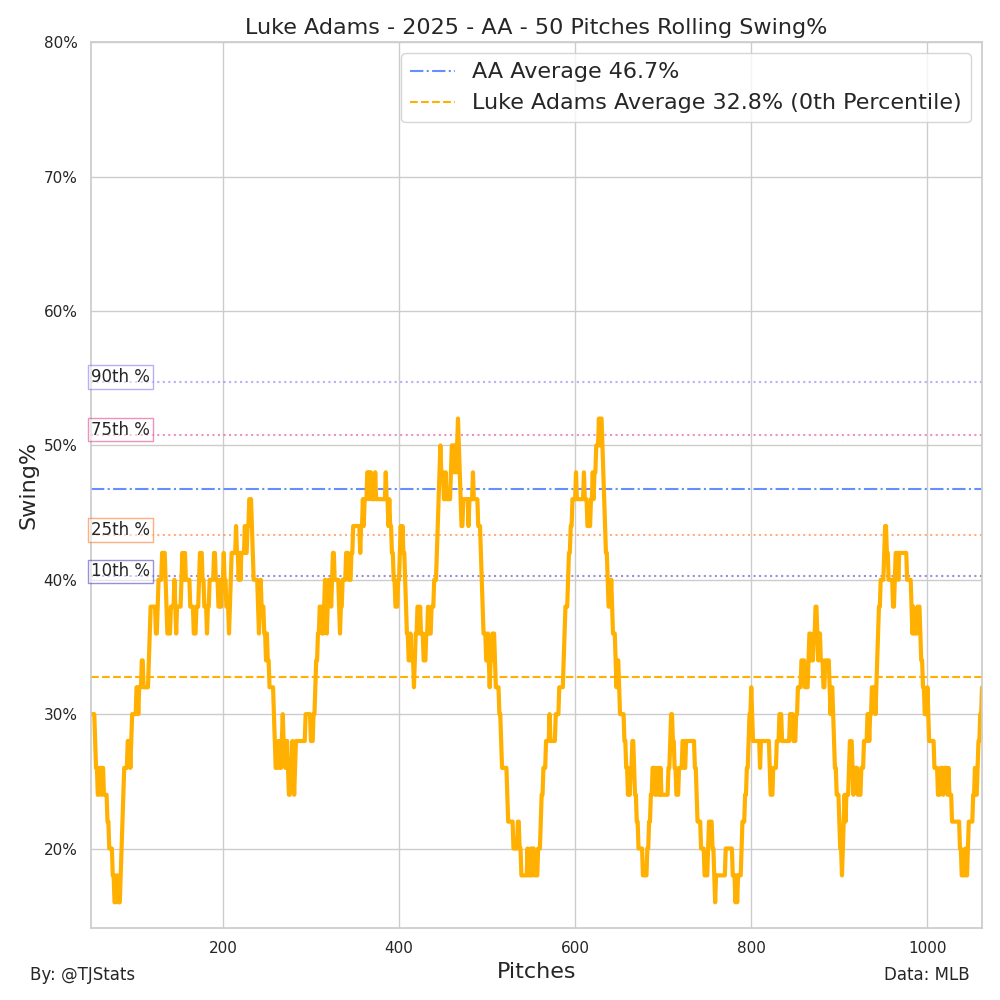
The swing rate definitely holds him back in the eyes of a lot of evaluators, but I think at some point it does end up being hard to ignore the production for a guy who's consistently multiple years younger than the average age at his level.
- 19 replies
-
- 1
-
-
- luke adams
- jeferson quero
- (and 1 more)
-
Yeah my guess is that Wilken will get a promotion before Adams and that will open up some 3B reps, while Boeve handles more 1B time now that he's able to play the field again.
- 19 replies
-
- 2
-
-
-
- luke adams
- jeferson quero
- (and 1 more)
-
Good call! I was thinking he had a really rough start. Should've looked at the game logs and gone further into a date range.
- 19 replies
-
- 1
-
-
- luke adams
- jeferson quero
- (and 1 more)
-
Welcome to Fanatic! Here's a chart showing his rolling swing rate. It was actually higher earlier in the year.
- 19 replies
-
- 1
-
-
- luke adams
- jeferson quero
- (and 1 more)
-
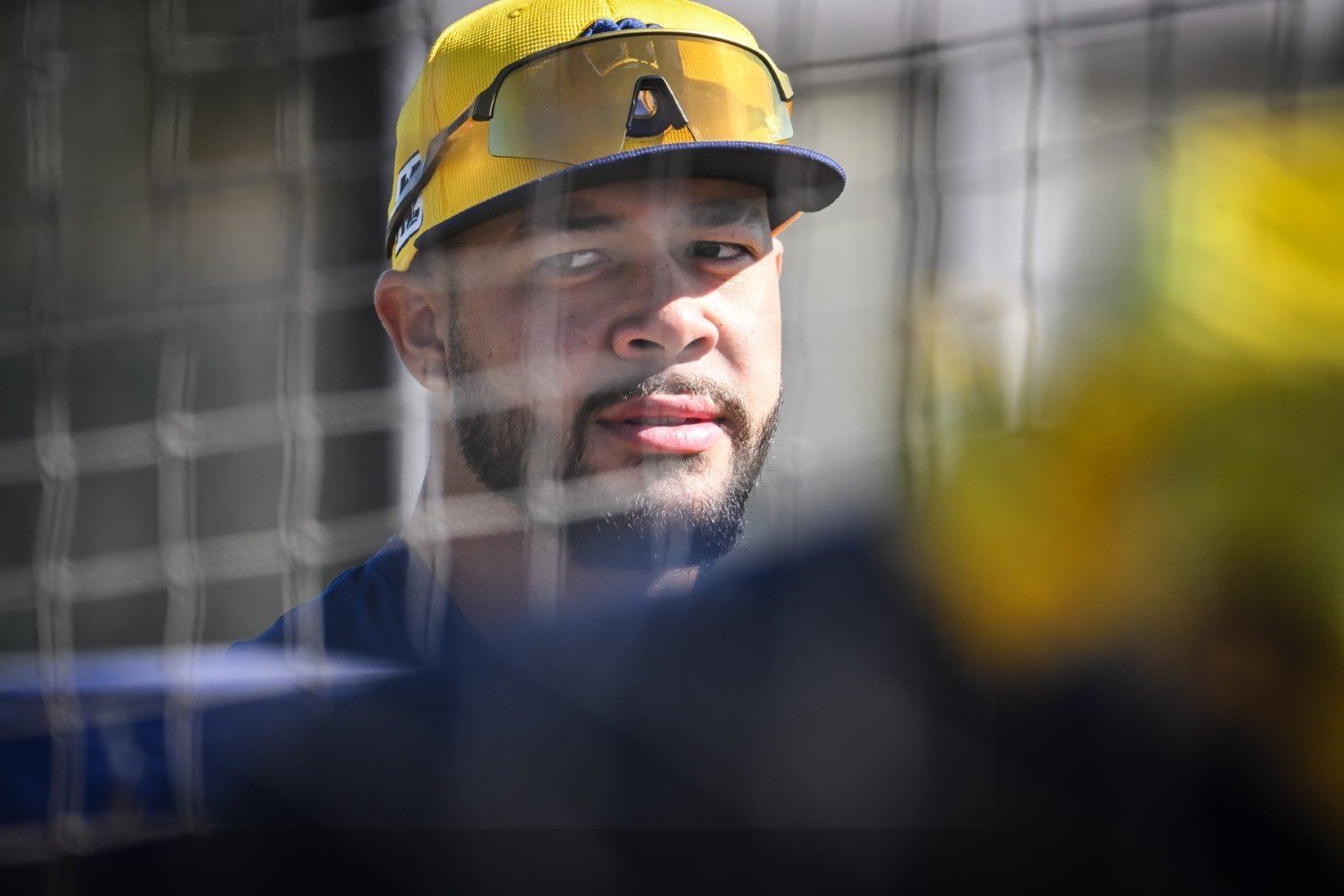
Image courtesy of © Dave Kallmann / Milwaukee Journal Sentinel / USA TODAY NETWORK via Imagn Images (Jeferson Quero) We're back for another week of farm system observations. Last week, we covered two pitchers (one more established and one under-the-radar arm), as well as a position player. This week, there will be two pretty well-known position-player prospects and a starting pitcher from the 2024 draft under the microscope. Let's begin this edition with a player who evokes a wide opinion gap on his long-term abilities. All statistics are season-long unless otherwise noted Luke Adams - 1B/3B - Biloxi Shuckers: 247 PA, 179 wRC+, 21.1 K%, 16.6 BB%, 11 HR The Brewers' 12th-round pick in the 2022 draft, Adams stands 6-foot-4 and weighs 210 pounds. He has a rare blend of patience at the plate, plus raw power and surprising baserunning ability. Adams has spent most of the season at first base, with Brock Wilken manning third, but he has shown the ability to play over there, too. Adams only turned 21 in April and was the fifth-youngest player in the Southern League on Opening Day. It wasn’t a huge surprise, therefore, when the bat got off to a bit of a slow start; he posted a line of .173/.326/.387 in April. This was good for a 118 wRC+ in the oppressive Southern League hitting environment, but it was not the type of line you'd hope to see from a genuine prospect. On top of his age, Adams was taking some offseason swing changes into games for the first time. These changes continued something he had been working on the last couple of years: simplifying his operation. You can see the changes Adams made from 2023 to 2024 in the first tweet below, and then the second shows how he simplified it even further heading into 2025. From 2023 to 2024, the hand movement in his load lessened significantly. In 2025, the hands haven’t changed much pre-swing, but the angle of his barrel is more in line with the angle at which he wants to swing the bat—going from a flat angle in the 2024 video to more of a 20-degree angle in 2025. This change has minimized that movement even further. The other significant change Adams seems to have made heading into 2025 is that he does a much better job of staying “stacked” throughout his swing. He keeps the upper body (shoulders and torso) aligned over the lower body (hips and legs) during his load and swing. You can see, in the 2023 and 2024 videos, that he has a bit of a hunch in his torso. In the video below, showing the grand slam Adams hit this past weekend, you can see how well-aligned his lower and upper halves are. I mentioned his April slash earlier. It was a fine month of production, but not in the shape you want to see from a legitimate prospect. Since April ended, he has posted a .294/.490/.569 line, good for a 215 wRC+. Including the final two games of April, Adams has reached base in 36 straight, setting the Shuckers franchise record on the grand slam above. Adams has always been considered patient, but really, it’s a passive approach. His swing rate of 30.7% in 2024 was among the lowest in professional baseball. He has upped his swing rate to 32.8% in 2025, but this would still make him an outlier at the major-league level. Juan Soto has the lowest rate among qualified hitters in MLB, at 34.4%. This is the concern with Adams, when it comes to prospect evaluators. Yes, this approach works fine in the lower levels of the minor leagues, but when pitchers throw strikes more consistently, will it still work? That’s the question, and it’s a good one. The good news is that the approach has worked at every level, actually improving his production, going from a 130 wRC+ in Low-A to 153 in High-A and now 179 in Double-A. He has also already matched his career high in home runs, at 11, in only 60% of the plate appearances. At some point, it gets hard to push the production aside. You start to hope (and assume) that he'll make the adjustments and swing a bit more often, because he's shown that he knows what he's doing. Jaron DeBerry - RHP - Wisconsin Timber Rattlers: 26 IP, 3.46 ERA, 3.25 FIP, 27.5% K%, 7.3 BB%, 25.2 Whiff% The Brewers drafted DeBerry in the third round of the 2024 draft. A personal favorite fit of mine in the draft, DeBerry has a kitchen-sink repertoire, but I think there’s more of a ceiling to dream on than most pitchers in that category have—especially those drafted as senior sign pitchers and those who receive only $25,000 in bonus money, when the slot value is $788,700. I have watched DeBerry’s last few starts in High-A, where he was promoted after he showed he was a bit too talented for Low-A hitters in 8 2/3 innings at the level. His most recent start was his best with Wisconsin. He showed off his entire repertoire throughout, on his way to a line of 5 2/3 innings with seven strikeouts, four hits, and two walks, resulting in two earned runs. DeBerry mixes in all three fastball variations, sitting in the low-90s on his two- and four-seam heaters. The cutter, which he has used quite a bit in High-A, sits in the 86-88 MPH range. DeBerry also throws two breaking ball variations, a sweeper and a curveball, which each sit in the 79-81 MPH range. A late addition to his college repertoire was a changeup in the 83-85 range, which he has not used much in pro ball. He did record a strikeout with it on Thursday (the fourth strikeout in the video above) and when he’s used it, it has looked like a solid-average pitch. Going back to the ceiling that DeBerry possesses, he enters pro ball with an extremely slender frame, standing 6-foot-3 and weighing (a seemingly generous) 178 pounds. There is some hope for added velocity, simply from adding some mass to his frame as he moves up the ladder. The four-seam and two-seam shapes are a bit generic at this point, though the two-seam has improved from the one he threw in college, so added velocity would go a long way. On top of the potential for a bit of a velocity jump, DeBerry’s ceiling is interesting because of his ability to spin the ball. Both the sweeper and curveball have had spin rates of over 3,000 RPMs and have sat in the 2,900 range. To me, these are both above-average pitches or better. I question whether his heavy fastball approach with the Timber Rattlers is the best way to deploy him. That said, pitch usage in the minor leagues isn’t always aimed at getting the best results. Rather, it's tailored to help development the most. If he can increase his velocity by a couple of ticks, there are a lot of Coleman Crow similarities in DeBerry's game. His numbers in High-A haven’t been nearly as strong as they were in the small sample of Low-A outings, but I believe there’s still quite a bit to be excited about with DeBerry. Minimally, he should be looked at as more than a money-saving pick. This is a prospect worth following. Jeferson Quero - C - Nashville Sounds: 36 PA, 79 wRC+, 13.9 K%, 8.3 BB% (Triple-A only) Quero is a different story than the other two in the article. Having missed all of 2024 (outside of one plate appearance), the top prospect has made his long-awaited return to Triple-A over the last couple of weeks. I have been wanting to see, more than anything else, Quero’s ability to throw the ball coming off his torn labrum. Formerly throwing the ball as well as any catcher in baseball, he was posting pop times around 1.80 seconds in 2023, as a 20-year-old in Double-A. It would have been one of the strongest arms in MLB at that time. Since returning from injury, his stats say that he has thrown out two of five attempted base stealers. However, one steal came on a pitch he didn't make a throw on, and the two “caught stealings” are both pickoffs where he never touched the ball. Baserunners are 2-for-2 on their actual stolen base attempts. Both of those attempts saw pop times in the 2.00 to 2.05 range, but both were on breaking balls in the dirt that caused a long transfer, neither of which was very clean. All that context to say, we haven’t learned anything in that regard so far, at least visually. We did get some information in the form of Sounds announcer Jeff Hem’s interview with manager Rick Sweet (around the 2:10 mark of the interview below), where Sweet mentions that Quero has 12 bolts in his shoulder and it will still be a while before he’s back to 100%. He also says that Quero used to have an “80 arm” but will most likely have an average to above-average arm moving forward. It’s unfortunate news. At one point, there was a path to Quero being a bit of a defensive game-breaker, where he could control the running game at an elite level, as well as bring his exceptional game-calling and solid receiving skills to the table. The lack of that elite arm makes it more likely that he ends up being an above-average defender, rather than a great one. Quero’s bat hasn’t been great in his first week’s worth of plate appearances in Nashville. Still, he showed plenty of ability when he was on his rehab assignment in Arizona, hitting five home runs in 44 plate appearances at the level. The exit velocity numbers have been weak so far for Quero, topping out at 101 MPH. The shoulder may also be causing an inability to finish his swing the same way he did when he was last healthy. Formerly a two-hand finisher, Quero has very noticeably been finishing with one hand this year. Compare the video below to the video above, and it sticks out like a sore thumb. Not that there aren’t plenty of hitters who finish with one hand, but Quero’s hand seems to be coming off pretty early at times, which leads to a one-handed swing rather than just a finish. These are concerning signs for a guy whose offensive game was primarily built around his ability to drive the ball, as he’s never been overly strong in the swing-decision department. His bat-to-ball skills still appear to be pretty solid, but he will need the power to return to offensive relevancy. All of this said, it’s been a tiny sample, and things could change quickly in a positive direction—especially if, as Sweet mentioned in the interview, he is still not back to 100%. The early returns on his return to the field haven’t been great for Quero, but we will need to check back in on him in a month or two. That’s all I’ve got for this week; let us know what you think in the replies! View full article
- 19 replies
-
- 1
-
-
- luke adams
- jeferson quero
- (and 1 more)
-
 We're back for another week of farm system observations. Last week, we covered two pitchers (one more established and one under-the-radar arm), as well as a position player. This week, there will be two pretty well-known position-player prospects and a starting pitcher from the 2024 draft under the microscope. Let's begin this edition with a player who evokes a wide opinion gap on his long-term abilities. All statistics are season-long unless otherwise noted Luke Adams - 1B/3B - Biloxi Shuckers: 247 PA, 179 wRC+, 21.1 K%, 16.6 BB%, 11 HR The Brewers' 12th-round pick in the 2022 draft, Adams stands 6-foot-4 and weighs 210 pounds. He has a rare blend of patience at the plate, plus raw power and surprising baserunning ability. Adams has spent most of the season at first base, with Brock Wilken manning third, but he has shown the ability to play over there, too. Adams only turned 21 in April and was the fifth-youngest player in the Southern League on Opening Day. It wasn’t a huge surprise, therefore, when the bat got off to a bit of a slow start; he posted a line of .173/.326/.387 in April. This was good for a 118 wRC+ in the oppressive Southern League hitting environment, but it was not the type of line you'd hope to see from a genuine prospect. On top of his age, Adams was taking some offseason swing changes into games for the first time. These changes continued something he had been working on the last couple of years: simplifying his operation. You can see the changes Adams made from 2023 to 2024 in the first tweet below, and then the second shows how he simplified it even further heading into 2025. From 2023 to 2024, the hand movement in his load lessened significantly. In 2025, the hands haven’t changed much pre-swing, but the angle of his barrel is more in line with the angle at which he wants to swing the bat—going from a flat angle in the 2024 video to more of a 20-degree angle in 2025. This change has minimized that movement even further. The other significant change Adams seems to have made heading into 2025 is that he does a much better job of staying “stacked” throughout his swing. He keeps the upper body (shoulders and torso) aligned over the lower body (hips and legs) during his load and swing. You can see, in the 2023 and 2024 videos, that he has a bit of a hunch in his torso. In the video below, showing the grand slam Adams hit this past weekend, you can see how well-aligned his lower and upper halves are. I mentioned his April slash earlier. It was a fine month of production, but not in the shape you want to see from a legitimate prospect. Since April ended, he has posted a .294/.490/.569 line, good for a 215 wRC+. Including the final two games of April, Adams has reached base in 36 straight, setting the Shuckers franchise record on the grand slam above. Adams has always been considered patient, but really, it’s a passive approach. His swing rate of 30.7% in 2024 was among the lowest in professional baseball. He has upped his swing rate to 32.8% in 2025, but this would still make him an outlier at the major-league level. Juan Soto has the lowest rate among qualified hitters in MLB, at 34.4%. This is the concern with Adams, when it comes to prospect evaluators. Yes, this approach works fine in the lower levels of the minor leagues, but when pitchers throw strikes more consistently, will it still work? That’s the question, and it’s a good one. The good news is that the approach has worked at every level, actually improving his production, going from a 130 wRC+ in Low-A to 153 in High-A and now 179 in Double-A. He has also already matched his career high in home runs, at 11, in only 60% of the plate appearances. At some point, it gets hard to push the production aside. You start to hope (and assume) that he'll make the adjustments and swing a bit more often, because he's shown that he knows what he's doing. Jaron DeBerry - RHP - Wisconsin Timber Rattlers: 26 IP, 3.46 ERA, 3.25 FIP, 27.5% K%, 7.3 BB%, 25.2 Whiff% The Brewers drafted DeBerry in the third round of the 2024 draft. A personal favorite fit of mine in the draft, DeBerry has a kitchen-sink repertoire, but I think there’s more of a ceiling to dream on than most pitchers in that category have—especially those drafted as senior sign pitchers and those who receive only $25,000 in bonus money, when the slot value is $788,700. I have watched DeBerry’s last few starts in High-A, where he was promoted after he showed he was a bit too talented for Low-A hitters in 8 2/3 innings at the level. His most recent start was his best with Wisconsin. He showed off his entire repertoire throughout, on his way to a line of 5 2/3 innings with seven strikeouts, four hits, and two walks, resulting in two earned runs. DeBerry mixes in all three fastball variations, sitting in the low-90s on his two- and four-seam heaters. The cutter, which he has used quite a bit in High-A, sits in the 86-88 MPH range. DeBerry also throws two breaking ball variations, a sweeper and a curveball, which each sit in the 79-81 MPH range. A late addition to his college repertoire was a changeup in the 83-85 range, which he has not used much in pro ball. He did record a strikeout with it on Thursday (the fourth strikeout in the video above) and when he’s used it, it has looked like a solid-average pitch. Going back to the ceiling that DeBerry possesses, he enters pro ball with an extremely slender frame, standing 6-foot-3 and weighing (a seemingly generous) 178 pounds. There is some hope for added velocity, simply from adding some mass to his frame as he moves up the ladder. The four-seam and two-seam shapes are a bit generic at this point, though the two-seam has improved from the one he threw in college, so added velocity would go a long way. On top of the potential for a bit of a velocity jump, DeBerry’s ceiling is interesting because of his ability to spin the ball. Both the sweeper and curveball have had spin rates of over 3,000 RPMs and have sat in the 2,900 range. To me, these are both above-average pitches or better. I question whether his heavy fastball approach with the Timber Rattlers is the best way to deploy him. That said, pitch usage in the minor leagues isn’t always aimed at getting the best results. Rather, it's tailored to help development the most. If he can increase his velocity by a couple of ticks, there are a lot of Coleman Crow similarities in DeBerry's game. His numbers in High-A haven’t been nearly as strong as they were in the small sample of Low-A outings, but I believe there’s still quite a bit to be excited about with DeBerry. Minimally, he should be looked at as more than a money-saving pick. This is a prospect worth following. Jeferson Quero - C - Nashville Sounds: 36 PA, 79 wRC+, 13.9 K%, 8.3 BB% (Triple-A only) Quero is a different story than the other two in the article. Having missed all of 2024 (outside of one plate appearance), the top prospect has made his long-awaited return to Triple-A over the last couple of weeks. I have been wanting to see, more than anything else, Quero’s ability to throw the ball coming off his torn labrum. Formerly throwing the ball as well as any catcher in baseball, he was posting pop times around 1.80 seconds in 2023, as a 20-year-old in Double-A. It would have been one of the strongest arms in MLB at that time. Since returning from injury, his stats say that he has thrown out two of five attempted base stealers. However, one steal came on a pitch he didn't make a throw on, and the two “caught stealings” are both pickoffs where he never touched the ball. Baserunners are 2-for-2 on their actual stolen base attempts. Both of those attempts saw pop times in the 2.00 to 2.05 range, but both were on breaking balls in the dirt that caused a long transfer, neither of which was very clean. All that context to say, we haven’t learned anything in that regard so far, at least visually. We did get some information in the form of Sounds announcer Jeff Hem’s interview with manager Rick Sweet (around the 2:10 mark of the interview below), where Sweet mentions that Quero has 12 bolts in his shoulder and it will still be a while before he’s back to 100%. He also says that Quero used to have an “80 arm” but will most likely have an average to above-average arm moving forward. It’s unfortunate news. At one point, there was a path to Quero being a bit of a defensive game-breaker, where he could control the running game at an elite level, as well as bring his exceptional game-calling and solid receiving skills to the table. The lack of that elite arm makes it more likely that he ends up being an above-average defender, rather than a great one. Quero’s bat hasn’t been great in his first week’s worth of plate appearances in Nashville. Still, he showed plenty of ability when he was on his rehab assignment in Arizona, hitting five home runs in 44 plate appearances at the level. The exit velocity numbers have been weak so far for Quero, topping out at 101 MPH. The shoulder may also be causing an inability to finish his swing the same way he did when he was last healthy. Formerly a two-hand finisher, Quero has very noticeably been finishing with one hand this year. Compare the video below to the video above, and it sticks out like a sore thumb. Not that there aren’t plenty of hitters who finish with one hand, but Quero’s hand seems to be coming off pretty early at times, which leads to a one-handed swing rather than just a finish. These are concerning signs for a guy whose offensive game was primarily built around his ability to drive the ball, as he’s never been overly strong in the swing-decision department. His bat-to-ball skills still appear to be pretty solid, but he will need the power to return to offensive relevancy. All of this said, it’s been a tiny sample, and things could change quickly in a positive direction—especially if, as Sweet mentioned in the interview, he is still not back to 100%. The early returns on his return to the field haven’t been great for Quero, but we will need to check back in on him in a month or two. That’s all I’ve got for this week; let us know what you think in the replies!
- 19 comments
-
- 5
-
-
-
- luke adams
- jeferson quero
- (and 1 more)
-
2025 Minor League Transaction Thread
Spencer Michaelis replied to Jim Goulart's topic in Brewers Minor League Talk
I looked through the last couple pages, but apologies if I'm missing this having been posted already. Looks like the Brewers also signed 18-year-old 6'1" Dominican Republic native RHP Derlin Garcia and assigned him to DSL Brewers Gold as well. Garcia's Instagram Regalado's Instagram is here, for good measure. -
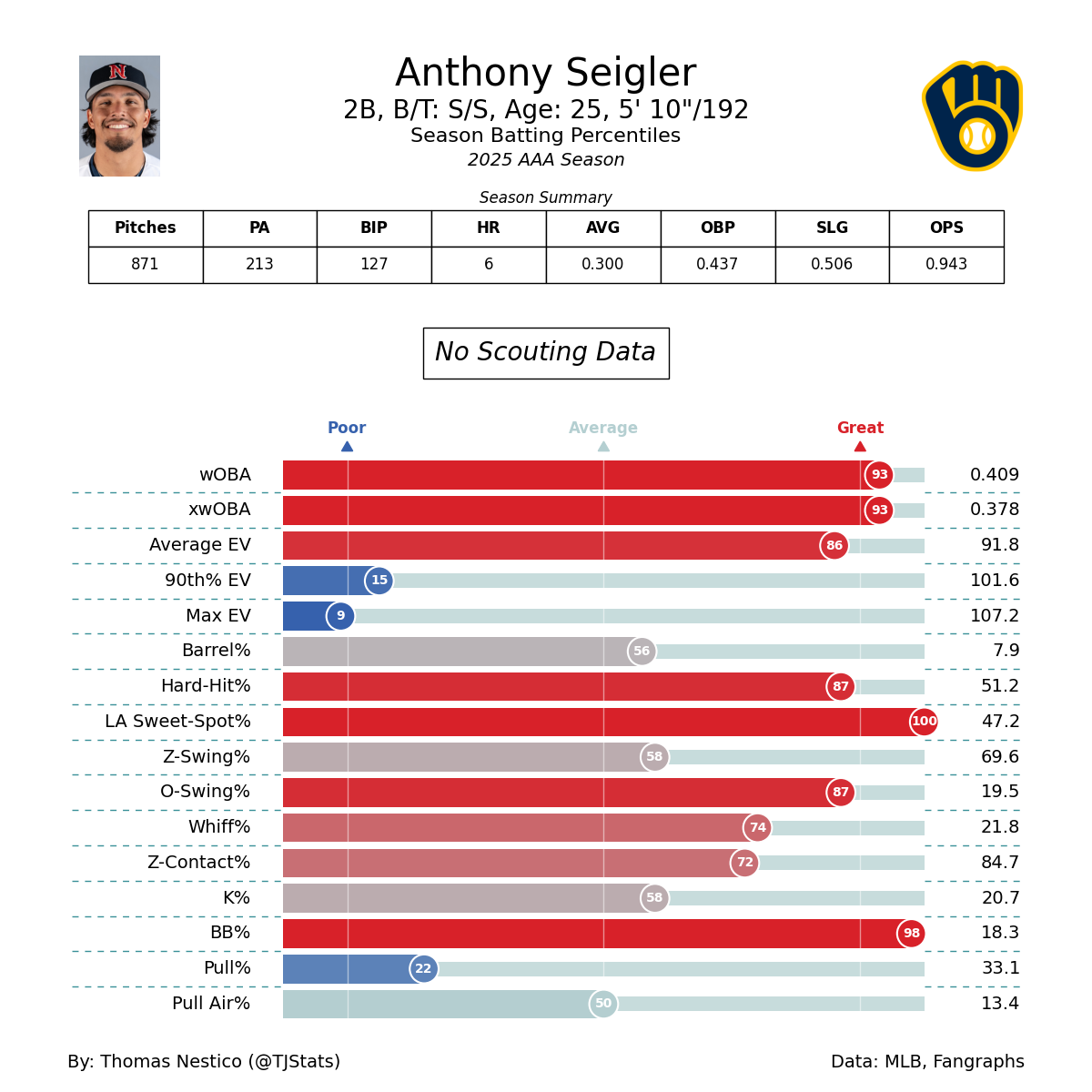
I think people have fallen into a trap with looking at individual BABIP over the years. Yes, a high BABIP often means you're due for regression, but when you hit your batted balls at an ideal launch angle more than anyone else in all of AAA, as well as having a well above-average hard hit rate and average EV, .372 actually isn't a crazy high number. Is he overperforming? Probably a bit. But not by a ton, imo.
-
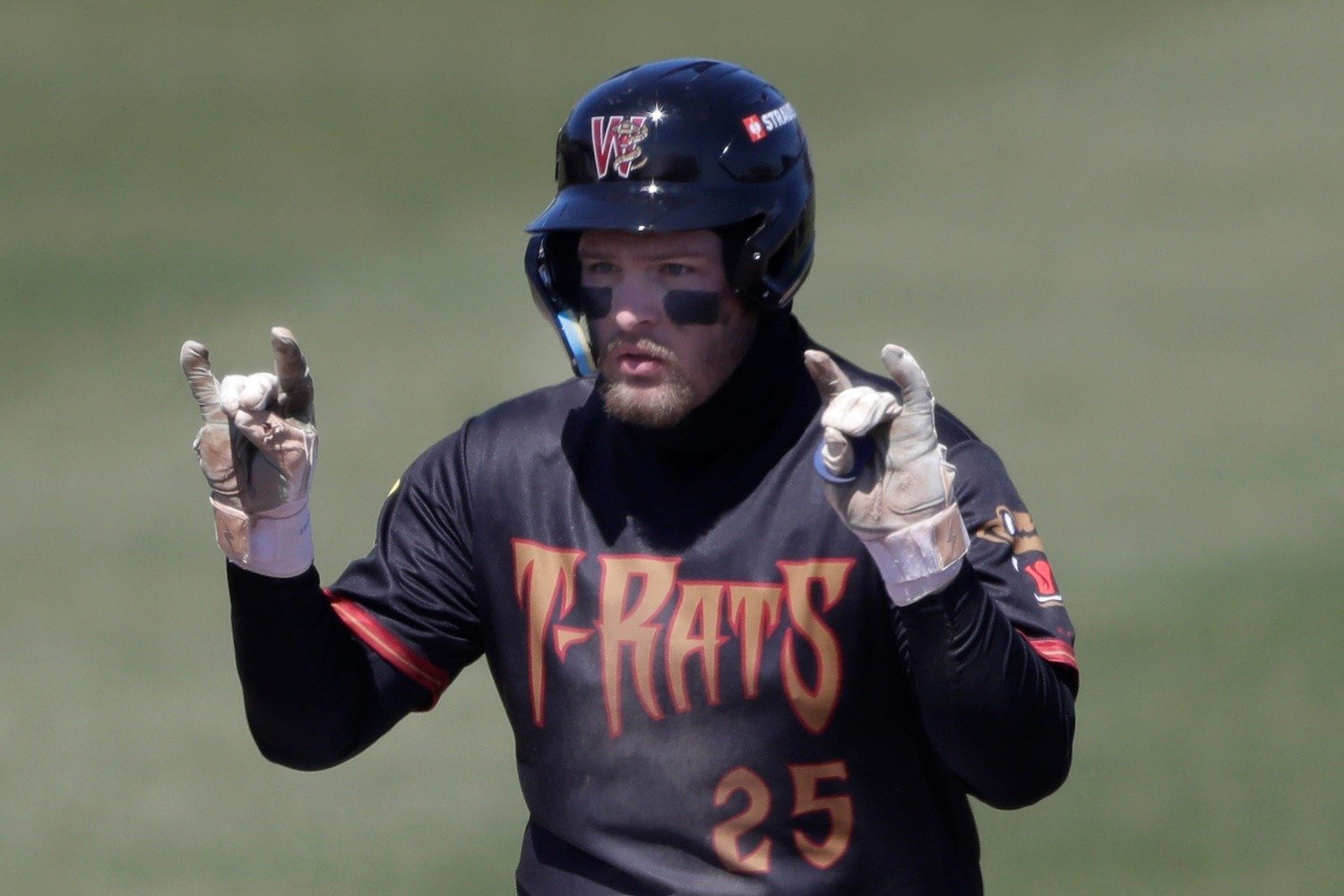 We are back for week three of Brewers farm system observations. Last week, we covered two pitchers—one more established and one under-the-radar arm—as well as a position player. This week will be more of the same, starting with one of the Brewers' top picks in last year’s amateur draft. All statistics are season-long unless otherwise noted Blake Burke - 1B - Wisconsin Timber Rattlers: 144 wRC+, 21.4 K%, 12.6 BB%, 3 HR The Brewers' second selection in the 2024 draft, they used the pick they had acquired in the Corbin Burnes trade to take Burke out of Tennessee. At the time, Burke was best known for having huge raw power, but it's been his hit tool that has stood out while watching him this season. Before the season, if you had told me that Burke would only have three home runs to this point, I would have assumed he was either injured or struggling. Neither of those things are true, though. Burke has played in 56 of 57 games for the Timber Rattlers, and he’s posting a 144 wRC+. So what’s causing the power outage, and is it cause for concern? To answer the latter, from my personal perspective, it is not something I am concerned about at all. The power is going to be there for Burke. He has hit balls as hard as 117 MPH, and he hit a home run in spring training at 110.6 MPH. The power is in there. One of the bigger questions for Burke coming out of Tennessee was whether his solid bat-to-ball skills in college would transfer to pro ball, and the answer so far is a resounding yes. Burke’s ability to cover all quadrants of the zone has been impressive to watch. His whiff rate of 26.4% and strikeout rate of only 21.4% are both better than average for the level. He draws walks, and hits low line drives to all fields with regularity, though it should be noted that his ground ball rate of 52% is higher than you’d want from a player of his build. It’s not been the profile that was expected from him, but it’s been extremely productive—44% better than league average to be exact. Even though a groundball-heavy approach is unlikely to work well for him, Burke actually moves reasonably well for his size. His baserunning IQ is high, and he recognizes that pitchers will lose track of him occasionally. He is 7-for-10 in stolen base attempts this year, and has also legged out two triples. Having watched a handful of games while he was at Tennessee, I knew Burke’s glovework would translate well. He has good hands and was able to show that off in the games I had seen. The nimbleness around the bag wasn’t as evident in the small sample as in a larger sample of High-A viewing. He’s not going to be a Matt Olson-level defender at first base. Still, he seems to have more mobility and better reaction times than similarly built former Brewers first baseman Rowdy Tellez, for example. Touted as a power-only bat who may not be able to handle first base defensively, Burke appears to be quite a bit different than that. While the power will eventually need to show up, it seems likely that it will, and in the meantime, Burke has shown that his perceived weaknesses may not be as concerning as many thought 11 months ago. K.C. Hunt - RHP - Biloxi Shuckers: 4.30 ERA, 4.16 FIP, 24.9 K%, 9.3 BB%, 33.3 Whiff% From going undrafted in the 2023 draft to being named Co-Minor League Pitcher of the Year for the Brewers in 2024, Hunt actually got off to a pretty slow start in 2025. Through his first seven starts of the season, covering 30 2/3 innings, Hunt posted a 5.28 ERA with 27 strikeouts and 15 walks. After putting up a 5.6 strikeout-to-walk ratio in 2024, seeing it at 1.8 was unsettling. In Hunt’s most recent three starts, though, he has gone 15 1/3 innings, with 21 strikeouts to only three walks. That stat line is much more in line with what we became accustomed to seeing from him last year. For the most part, Hunt is still getting the job done on the back of his array of breaking balls. His mid-80s cutter and slider both play well, and his curveball in the upper 70s shows flashes of being an above-average or better pitch, as well. Hunt’s high-spin fastball velocity is down a tick or two in 2025, sitting more in the 90-92 range rather than 92-94. However, outside of being in the zone more consistently, the most significant positive change of late has been Hunt’s improved changeup. Formerly a distant fifth pitch for Hunt, the changeup has been a real weapon against lefties, sitting in the mid-80s and showing more depth than in the past. The changeup generated five of the 24 called strikes and whiffs in the video below. One of the main questions for Hunt has been whether he’s capable of sticking as a starter. Many of those questions were related to whether his fastball would play well enough. While the improved changeup helps Hunt’s profile as a starter, the drop in velocity on his fastball does the opposite. If Hunt can get his velocity back to where it was in 2024, he still has a good chance to slot into a back-of-the-rotation spot down the line, where he can use the fastball around a third of the time. If not, he may end up being a reliever, where lower fastball usage is more sustainable. Either way, it’s good to see him getting back on track, especially with the help of that improved fifth pitch. Bjorn Johnson - LHP - Carolina Mudcats: 3.34 ERA, 2.23 FIP, 33.1 K%, 10.2 BB%, 34.0 Whiff% This should shock absolutely nobody, but Bjorn Johnson is yet another 2023 draft pick performing well in the early portion of his career. The 12th-round selection was drafted out of high school and signed away from an Auburn commitment. Unlike many of his 2023 draftmates, 2024 was not a story of immediate success for Johnson. In fact, it was the exact opposite, as Johnson posted an 8.38 ERA over 19 1/3 innings in the Arizona Complex League. He walked 18 while striking out 16. It was a nightmare of a debut season in the small sample of games Johnson pitched in. Given the numbers he put up, it felt noteworthy when the Brewers assigned him to full-season ball and put him on Carolina’s Opening Day roster. He has shown exactly why the organization gave him that promotion and vote of confidence over the first two-plus months of the season. He continued his string of strong performances this past week, pitching in two outings, combining for 6 1/3 innings, striking out five, walking zero, and allowing only one earned run. While his ACL games were not televised, based on the numbers, he certainly seems to have made huge strides in his command since last season. As you may have noticed in the video above, Johnson throws a hammer of a curveball in the 79-81 MPH range. Coming out of high school, his changeup was seen as his best secondary, but the curveball has overtaken it since he arrived in pro ball. It is his primary pitch, as he uses it comfortably in any count or situation. His changeup is also still a strong offering, though he mainly uses it against right-handed batters, while the curve is less platoon-dependent. Johnson throws his fastball in the low 90s, though it seems to play up a bit beyond that, likely due to his approach of pitching backward, using the fastball as his change-of-pace pitch. To add to the equation, he occasionally mixes in a cutter and seems to use it more lately. He has gone four innings multiple times this season; it’s possible that starting games could be in his future, whether this season or another. Regardless of his future role, Johnson has been impressive this year at just twenty years old. That’s all I’ve got for this week; let us know what you think in the replies!
 -
Image courtesy of © Wm. Glasheen/USA TODAY NETWORK-Wisconsin / USA TODAY NETWORK via Imagn Images We are back for week three of Brewers farm system observations. Last week, we covered two pitchers—one more established and one under-the-radar arm—as well as a position player. This week will be more of the same, starting with one of the Brewers' top picks in last year’s amateur draft. All statistics are season-long unless otherwise noted Blake Burke - 1B - Wisconsin Timber Rattlers: 144 wRC+, 21.4 K%, 12.6 BB%, 3 HR The Brewers' second selection in the 2024 draft, they used the pick they had acquired in the Corbin Burnes trade to take Burke out of Tennessee. At the time, Burke was best known for having huge raw power, but it's been his hit tool that has stood out while watching him this season. Before the season, if you had told me that Burke would only have three home runs to this point, I would have assumed he was either injured or struggling. Neither of those things are true, though. Burke has played in 56 of 57 games for the Timber Rattlers, and he’s posting a 144 wRC+. So what’s causing the power outage, and is it cause for concern? To answer the latter, from my personal perspective, it is not something I am concerned about at all. The power is going to be there for Burke. He has hit balls as hard as 117 MPH, and he hit a home run in spring training at 110.6 MPH. The power is in there. One of the bigger questions for Burke coming out of Tennessee was whether his solid bat-to-ball skills in college would transfer to pro ball, and the answer so far is a resounding yes. Burke’s ability to cover all quadrants of the zone has been impressive to watch. His whiff rate of 26.4% and strikeout rate of only 21.4% are both better than average for the level. He draws walks, and hits low line drives to all fields with regularity, though it should be noted that his ground ball rate of 52% is higher than you’d want from a player of his build. It’s not been the profile that was expected from him, but it’s been extremely productive—44% better than league average to be exact. Even though a groundball-heavy approach is unlikely to work well for him, Burke actually moves reasonably well for his size. His baserunning IQ is high, and he recognizes that pitchers will lose track of him occasionally. He is 7-for-10 in stolen base attempts this year, and has also legged out two triples. Having watched a handful of games while he was at Tennessee, I knew Burke’s glovework would translate well. He has good hands and was able to show that off in the games I had seen. The nimbleness around the bag wasn’t as evident in the small sample as in a larger sample of High-A viewing. He’s not going to be a Matt Olson-level defender at first base. Still, he seems to have more mobility and better reaction times than similarly built former Brewers first baseman Rowdy Tellez, for example. Touted as a power-only bat who may not be able to handle first base defensively, Burke appears to be quite a bit different than that. While the power will eventually need to show up, it seems likely that it will, and in the meantime, Burke has shown that his perceived weaknesses may not be as concerning as many thought 11 months ago. K.C. Hunt - RHP - Biloxi Shuckers: 4.30 ERA, 4.16 FIP, 24.9 K%, 9.3 BB%, 33.3 Whiff% From going undrafted in the 2023 draft to being named Co-Minor League Pitcher of the Year for the Brewers in 2024, Hunt actually got off to a pretty slow start in 2025. Through his first seven starts of the season, covering 30 2/3 innings, Hunt posted a 5.28 ERA with 27 strikeouts and 15 walks. After putting up a 5.6 strikeout-to-walk ratio in 2024, seeing it at 1.8 was unsettling. In Hunt’s most recent three starts, though, he has gone 15 1/3 innings, with 21 strikeouts to only three walks. That stat line is much more in line with what we became accustomed to seeing from him last year. For the most part, Hunt is still getting the job done on the back of his array of breaking balls. His mid-80s cutter and slider both play well, and his curveball in the upper 70s shows flashes of being an above-average or better pitch, as well. Hunt’s high-spin fastball velocity is down a tick or two in 2025, sitting more in the 90-92 range rather than 92-94. However, outside of being in the zone more consistently, the most significant positive change of late has been Hunt’s improved changeup. Formerly a distant fifth pitch for Hunt, the changeup has been a real weapon against lefties, sitting in the mid-80s and showing more depth than in the past. The changeup generated five of the 24 called strikes and whiffs in the video below. One of the main questions for Hunt has been whether he’s capable of sticking as a starter. Many of those questions were related to whether his fastball would play well enough. While the improved changeup helps Hunt’s profile as a starter, the drop in velocity on his fastball does the opposite. If Hunt can get his velocity back to where it was in 2024, he still has a good chance to slot into a back-of-the-rotation spot down the line, where he can use the fastball around a third of the time. If not, he may end up being a reliever, where lower fastball usage is more sustainable. Either way, it’s good to see him getting back on track, especially with the help of that improved fifth pitch. Bjorn Johnson - LHP - Carolina Mudcats: 3.34 ERA, 2.23 FIP, 33.1 K%, 10.2 BB%, 34.0 Whiff% This should shock absolutely nobody, but Bjorn Johnson is yet another 2023 draft pick performing well in the early portion of his career. The 12th-round selection was drafted out of high school and signed away from an Auburn commitment. Unlike many of his 2023 draftmates, 2024 was not a story of immediate success for Johnson. In fact, it was the exact opposite, as Johnson posted an 8.38 ERA over 19 1/3 innings in the Arizona Complex League. He walked 18 while striking out 16. It was a nightmare of a debut season in the small sample of games Johnson pitched in. Given the numbers he put up, it felt noteworthy when the Brewers assigned him to full-season ball and put him on Carolina’s Opening Day roster. He has shown exactly why the organization gave him that promotion and vote of confidence over the first two-plus months of the season. He continued his string of strong performances this past week, pitching in two outings, combining for 6 1/3 innings, striking out five, walking zero, and allowing only one earned run. While his ACL games were not televised, based on the numbers, he certainly seems to have made huge strides in his command since last season. As you may have noticed in the video above, Johnson throws a hammer of a curveball in the 79-81 MPH range. Coming out of high school, his changeup was seen as his best secondary, but the curveball has overtaken it since he arrived in pro ball. It is his primary pitch, as he uses it comfortably in any count or situation. His changeup is also still a strong offering, though he mainly uses it against right-handed batters, while the curve is less platoon-dependent. Johnson throws his fastball in the low 90s, though it seems to play up a bit beyond that, likely due to his approach of pitching backward, using the fastball as his change-of-pace pitch. To add to the equation, he occasionally mixes in a cutter and seems to use it more lately. He has gone four innings multiple times this season; it’s possible that starting games could be in his future, whether this season or another. Regardless of his future role, Johnson has been impressive this year at just twenty years old. That’s all I’ve got for this week; let us know what you think in the replies! View full article
-
Yeah… like you said, It’s definitely not going to match up to 2024 but Antunez has very real buzz as a legit dude down there from people who watched him in the exhibitions and workouts and everything else, despite a slow start in his first week. Also think it’s always a good reminder that Chourio was 0 for his first 19 in the DSL. Sometimes you get Pena and Made who explode immediately, sometimes it’s more like Chourio and takes some time to really get going. Fenelon is off to a solid start. Chavez is doing well. Mayorquin had a good first start. Leonard Rijo has had a good first week (and despite his size did get $225k to sign, so a pretty decent bonus guy), Barrios has done a solid job. I think it could still be a strong class, just not quite the ceiling of, like you said, what might end up being one of the greatest international classes ever signed.

