



Spencer Michaelis
-
Posts
1,119 -
Joined
-
Last visited
-
Days Won
17
Content Type
Profiles
Forums
Blogs
Events
News
2026 Milwaukee Brewers Top Prospects Ranking
Milwaukee Brewers Videos
2022 Milwaukee Brewers Draft Picks
Milwaukee Brewers Free Agent & Trade Rumors, Notes, & Tidbits
Guides & Resources
2023 Milwaukee Brewers Draft Picks
2024 Milwaukee Brewers Draft Picks
The Milwaukee Brewers Players Project
2025 Milwaukee Brewers Draft Pick Tracker
2026 Milwaukee Brewers Draft Tracker: Picks & Bonuses
Store
Downloads
Gallery
Everything posted by Spencer Michaelis
-
 Welcome back to Brewer Fanatic's 2023 top 20 prospect rundown! In this edition, we will be taking a deep dive look at our number eight prospect, as voted on and compiled by the Brewer Fanatic community, Luis Lara. #8 OF Luis Lara (Carolina Mudcats, Wisconsin Timber Rattlers) The Brewers signed Lara in their 2022 International signing class, and he was one of the bigger signings for the Brewers in that class. He received the third-highest bonus in the class at $1.1 Million, behind only shortstops Jhonny Severino and Johan Barrios. After getting off to a scalding hot start in the DSL, Lara slowed down dramatically for a few weeks before a strong finish. While his 2022 stats didn’t look all that special, a 12% K-Rate and 9% BB-Rate were great signs for a player his age. He began 2023 in Extended Spring Training but soon proved too talented to be sent to the Arizona Complex League and was promoted to Low-A Carolina a month into the season. What to Like: Lara has the potential for a plus hit tool, potentially even elite. A switch hitter from the left side, he has a very compact swing. He appears to have very good rotational mobility, and that mobility helps him swing his bat at an elite rate of speed. That bat speed, combined with his hand-eye coordination, gives Lara tremendous bat-to-ball skills. He posted a 90% contact rate on pitches in the zone in 2023, which would have been a top 25 number among qualified MLB hitters. His swing can look Ronald Acuna-esque from the right side at times, though the results were not very good against left-handed pitchers this year. As for the defensive side of the ball, Lara combines his plus speed with good reads and routes. At his peak, he could be an elite defender in center field. His arm is borderline plus as well, and because of that, if he needs to, he could also handle right field with no issue. The aforementioned speed also comes in handy on the offensive side of the ball. It especially shows when he puts a ball in the gap or goes first to third on a hit. He did have a pretty successful season stealing bases, with 30 overall. However, while certainly not bad, a 75% success rate for a guy with plus speed isn’t exactly what you’re looking for. What to Work On: Power is the biggest question mark for Lara moving forward. Despite his diminutive stature, Lara has shown flashes of raw power in a batting practice setting and even some in-game power from both sides of the plate. However, both of his home runs in 2023 were from the right side, and he possesses more of his in-game power from that side. His swing from the right side is much more aggressive and has more moving parts than the left. It allows him to get to his power more, but as mentioned earlier, his results from that side could have been better in 2023. His OPS of .593 from the right side was nearly .200 points lower than the .770 OPS he posted from the left. The one thing Lara will be looking to improve upon defensively is on batted balls that are hit straight at Lara. He sometimes struggles to get good reads on a ball hit directly over his head or in front of him. Many consider that particular part of playing the outfield the most difficult part of the position, so this isn't abnormal, but he will need to get better at it if he wants to stick in center field full-time. Lara's other “weakness” is the lack of baserunning instincts, which results in being caught stealing 25% of the time. As a younger player, pitchers often struggle with the concept of holding runners, allowing a baserunner to build some bad or lazy habits. Catchers also don’t possess the same type of arms they see in full-season ball. There’s a very real chance that Lara will improve greatly in that regard simply by getting more and more reps on the bases against professional pitchers and catchers. What’s next: Lara was 18 years old for the entirety of the 2023 season, and after his birthday in November, he will spend all of 2024’s season at 19. The Brewers have generally been extremely aggressive with their prospects the last couple of years, and Lara was no exception. Being pushed to High-A at 18 shows how much they believe in him. However, a Double-A assignment would seem over the top to start 2024. It seems likely that Lara will begin back in Appleton, WI, next spring. Barring a power breakout, he probably won’t ever be a top 10-20 prospect in baseball. However, Lara could find himself in the Sal Frelick territory of the top 50 if he continues to perform as one of the youngest players at each level. What are your thoughts on Luis Lara? What are you hoping to see from him in 2024? Let us know in the comments! View full article
 -
Welcome back to Brewer Fanatic's 2023 top 20 prospect rundown! In this edition, we will be taking a deep dive look at Cooper Pratt. Pratt comes in as the number nine prospect in the system, as voted on and compiled by the Brewer Fanatic community. Image courtesy of © Mark J. Rebilas-USA TODAY Sports #9 SS Cooper Pratt (Arizona League Brewers) The Brewers selected Pratt in the sixth round in 2023, a pick that many evaluators considered the steal of the draft at the time. Pratt was ranked the 25th overall prospect in the draft by Fangraphs, 45th by MLB Pipeline, and 63rd by Baseball America. Much like Mike Boeve, Pratt was a pick that was based on a mix of analytics and pure scouting. He would stand out in most teams' models, but he also stood out to the pro scouts watching him on the prep circuit over the last few years. What to Like: On the defensive side, Pratt has a good chance to stick at shortstop despite his 6’4 build. He has good hands and solid actions at the position. He gets good reads off the bat and does especially well when coming in on the ball. If he does have to move off of shortstop, he should be a plus defender at third base. Offensively, Pratt’s approach at the plate was considered one of the best among all the high school selections. During his time on the tournament circuit, according to Baseball America, “Over a 668-pitch sample, Pratt had just a 12% overall miss rate and 17% chase rate. His miss rate falls to just 6% on pitches in the zone.” Those are fantastic numbers for a player his age. Pratt has a small leg kick and extremely quick hands. Those traits combine to form a smooth swing that keeps the barrel in the zone for a long time and allows him to hit the ball with some authority to all fields. Currently, Pratt is not providing too much in-game power. Still, his frame shows the potential to grow into much more, and evaluators say he is already showing it in batting practice, especially to the pull side. What to Work On: As mentioned, on the defensive side of the ball, a move to third base is still well within the range of possibilities for Pratt. The main reason he may not be able to stick at shortstop is that he struggles to move laterally at times. Going side to side is incredibly important at the shortstop position, but at third base, you don’t need that same level of range. It is something that a player can get better at by increasing their mobility, but a player of Pratt’s size will have a harder time making those improvements. At the plate, Pratt’s improvements are most likely to come in the form of adding power. Beyond that, simply adjusting to professional pitching will be the biggest thing for Pratt in 2024, as he did struggle with strikeouts in his pro debut, not to an extreme degree, but a bit more than his profile would suggest. Remember that the 26.6% swinging strike rate Pratt shows in his 54 PAs at the Complex level likely isn’t correct, as the pitch-by-pitch data at the rookie levels isn’t very accurate. What’s next: Pratt received Gunnar Henderson comps throughout the draft process, and it’s easy to see why, given his build and fluidity at that size. Henderson only hit one home run in his first 121 plate appearances in rookie ball, but he started tapping into his power during his first full season in pro ball, and the hope is that Pratt will do the same. Pratt’s assignment next season will likely depend on how he looks in spring. It seems most likely that he will stay in extended spring training for a while and then either be assigned back to the ACL Brewers or pushed to Low-A Carolina if he is showing what the Brewers hope to see. What do you think about Cooper Pratt? What are you hoping to see from him in 2024? Let us know in the comments! View full article
-
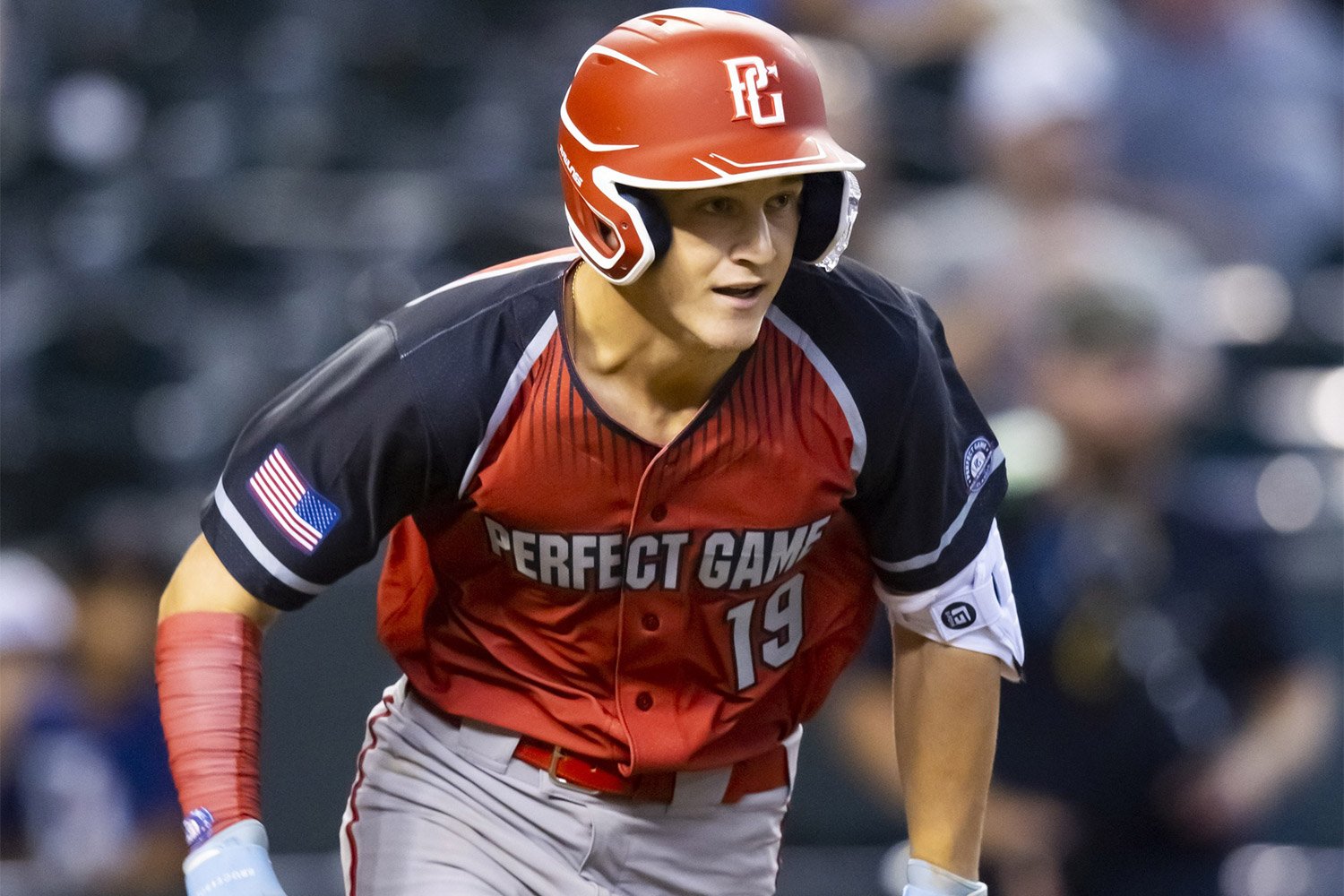 #9 SS Cooper Pratt (Arizona League Brewers) The Brewers selected Pratt in the sixth round in 2023, a pick that many evaluators considered the steal of the draft at the time. Pratt was ranked the 25th overall prospect in the draft by Fangraphs, 45th by MLB Pipeline, and 63rd by Baseball America. Much like Mike Boeve, Pratt was a pick that was based on a mix of analytics and pure scouting. He would stand out in most teams' models, but he also stood out to the pro scouts watching him on the prep circuit over the last few years. What to Like: On the defensive side, Pratt has a good chance to stick at shortstop despite his 6’4 build. He has good hands and solid actions at the position. He gets good reads off the bat and does especially well when coming in on the ball. If he does have to move off of shortstop, he should be a plus defender at third base. Offensively, Pratt’s approach at the plate was considered one of the best among all the high school selections. During his time on the tournament circuit, according to Baseball America, “Over a 668-pitch sample, Pratt had just a 12% overall miss rate and 17% chase rate. His miss rate falls to just 6% on pitches in the zone.” Those are fantastic numbers for a player his age. Pratt has a small leg kick and extremely quick hands. Those traits combine to form a smooth swing that keeps the barrel in the zone for a long time and allows him to hit the ball with some authority to all fields. Currently, Pratt is not providing too much in-game power. Still, his frame shows the potential to grow into much more, and evaluators say he is already showing it in batting practice, especially to the pull side. What to Work On: As mentioned, on the defensive side of the ball, a move to third base is still well within the range of possibilities for Pratt. The main reason he may not be able to stick at shortstop is that he struggles to move laterally at times. Going side to side is incredibly important at the shortstop position, but at third base, you don’t need that same level of range. It is something that a player can get better at by increasing their mobility, but a player of Pratt’s size will have a harder time making those improvements. At the plate, Pratt’s improvements are most likely to come in the form of adding power. Beyond that, simply adjusting to professional pitching will be the biggest thing for Pratt in 2024, as he did struggle with strikeouts in his pro debut, not to an extreme degree, but a bit more than his profile would suggest. Remember that the 26.6% swinging strike rate Pratt shows in his 54 PAs at the Complex level likely isn’t correct, as the pitch-by-pitch data at the rookie levels isn’t very accurate. What’s next: Pratt received Gunnar Henderson comps throughout the draft process, and it’s easy to see why, given his build and fluidity at that size. Henderson only hit one home run in his first 121 plate appearances in rookie ball, but he started tapping into his power during his first full season in pro ball, and the hope is that Pratt will do the same. Pratt’s assignment next season will likely depend on how he looks in spring. It seems most likely that he will stay in extended spring training for a while and then either be assigned back to the ACL Brewers or pushed to Low-A Carolina if he is showing what the Brewers hope to see. What do you think about Cooper Pratt? What are you hoping to see from him in 2024? Let us know in the comments!
 -
As far as I know, it’s pronounced BO-vee. That’s how I’ve been saying it, how the T-Rats broadcaster and PA announcer said it, and it looks like the Journal Sentinel reported it as BO-vee as well in their draft article
-
Just to clarify, I do believe that Joe Ayrault mentioned on one of the post game shows that Boeve was, in fact, injured and that was what caused the assignment. Probably just figured it wasn't worth a true designation at the very end of the season, and given that he was probably going to spend time in the Instructional League either way.
-
Agreed. I like Boeve quite a bit, and even listed him as a guy I thought the Brewers should draft and as someone I thought they would like quite a bit. But I think people got a little high on his ACL start and bumped him up way too far, way too fast.
-
Welcome back to Brewer Fanatic's 2023 top 20 prospect rundown! In this edition, we will be taking a deep dive look at Mike Boeve. Boeve comes in as the number ten prospect in the system, as voted on and compiled by the Brewer Fanatic community. Image courtesy of Omaha Baseball #10 IF Mike Boeve (Arizona League Brewers, Wisconsin Timber Rattlers) The Brewers' second-round selection in the 2023 MLB Draft, Boeve stood out as a player the franchise could have interest in. Even going back before the draft, he possessed some analytical traits that any team would like. The Brewers aren’t one of the franchises that are strictly model-based when making draft decisions, but they value them quite a bit, and Boeve was a model darling. What to Like: Boeve is the definition of what one would consider a “Moneyball” profile. He's not a “good-looking” player, but he's pretty good at everything he does. He was always known for making a lot of contact during his time at Nebraska-Omaha. He was actually hit by the same number of pitches in 2023 as his strikeout total, both of which were nine. That strikeout total resulted in a minuscule 4% strikeout rate, which paired extremely well with his 15.2% walk rate. While he struck out even less than he had in the past, he wasn't sacrificing any of his power to get the bat on the ball. Boeve’s contact quality also took a major step forward this past spring. Coming into the season, he was viewed as a bit of a punchless bat, but he hit his first ball over 110 mph in college during the 2023 season and posted a 90th percentile EV above 105 mph. His home run numbers actually dropped from eight in 2022 to four in 2023, but the quality of contact is more likely to translate to pro ball than his home run numbers. While he wasn’t putting up the exit velocity numbers of a future 40-home-run hitter, he showed that he is more than a punchless bat. After signing and reporting to the Arizona Complex League, Boeve posted wood bat exit velocities of up to 112 MPH in his few weeks down there. His build should also be able to add power to the profile as he gets stronger and continues to adjust to pro ball. What to Work On: Defensively, Boeve isn’t the most graceful-looking player on the infield, but he does appear to get good reads at third and second bases. His arm is around average for third and a little above average for second. He struggles at times with keeping his feet moving on grounders, especially when he is at second base. He was caught flat-footed and ended up fielding the ball off to his side more than a couple of times during his time with the Timber Rattlers. On the offensive side of the ball, as mentioned above, Boeve got off to an incredible start with the Arizona League Brewers, hitting four home runs in what essentially amounted to his first week's worth of games with the team. He was quickly promoted to High-A Wisconsin, completely passing by Carolina. He hit another home run in his first game with the Timber Rattlers but struggled to close out the season. While he had seen some higher velocity and good secondary pitches at times in college, he did play in a smaller conference at the NCAA level. He certainly hadn’t seen that level of stuff with such regularity as he did at High-A. The strikeout rate of nearly 21% in pro ball, compared to that measly 4% in college, illustrates the difference in the quality of pitchers he was seeing. Boeve has been said to be great at making adjustments, so it would not be a surprise to see things revert to somewhere in between the pro ball numbers and the college ones. What’s next: Overall, there are a lot of Tyler Black similarities at the plate, including his swing. Black is a much faster player than Boeve, but Boeve would get the nod on the defensive side of the ball. Given his struggles toward the end of the season, Boeve is a clear candidate to begin 2024 back at High-A Wisconsin. During his time there, he will most likely spend time at third and second bases as he continues to work through his footwork and consistency in the field. Boeve will be getting more reps against this higher-level pitching, and the Brewers hope to see him tap into more of his power. This could be tough to do, as the cold and the wind throughout the Midwest League in April and May can present a very tough-hitting environment, especially in terms of power output. As a college draft pick who moved quickly to High-A, early success next year could place him on a fast track up the minor league chain. We will learn more about Boeve in 2024, but he made a strong first impression. What are your thoughts on Boeve? What are you hoping to see from him in 2024? Let us know in the comments! View full article
-
Brewer Fanatic 2023 Offseason Top 20 Prospect #10 - Mike Boeve
Spencer Michaelis posted an article in Minor Leagues
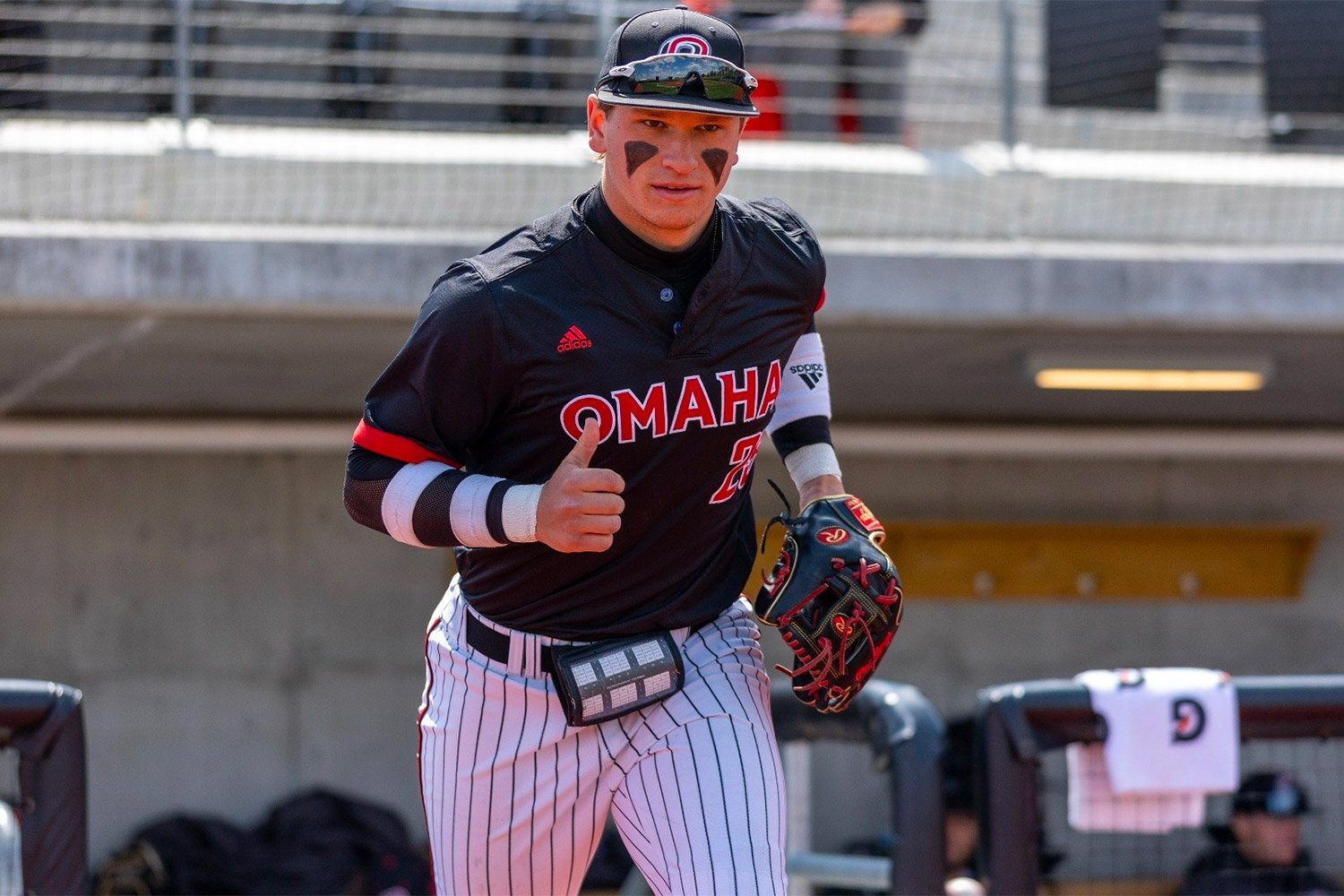 #10 IF Mike Boeve (Arizona League Brewers, Wisconsin Timber Rattlers) The Brewers' second-round selection in the 2023 MLB Draft, Boeve stood out as a player the franchise could have interest in. Even going back before the draft, he possessed some analytical traits that any team would like. The Brewers aren’t one of the franchises that are strictly model-based when making draft decisions, but they value them quite a bit, and Boeve was a model darling. What to Like: Boeve is the definition of what one would consider a “Moneyball” profile. He's not a “good-looking” player, but he's pretty good at everything he does. He was always known for making a lot of contact during his time at Nebraska-Omaha. He was actually hit by the same number of pitches in 2023 as his strikeout total, both of which were nine. That strikeout total resulted in a minuscule 4% strikeout rate, which paired extremely well with his 15.2% walk rate. While he struck out even less than he had in the past, he wasn't sacrificing any of his power to get the bat on the ball. Boeve’s contact quality also took a major step forward this past spring. Coming into the season, he was viewed as a bit of a punchless bat, but he hit his first ball over 110 mph in college during the 2023 season and posted a 90th percentile EV above 105 mph. His home run numbers actually dropped from eight in 2022 to four in 2023, but the quality of contact is more likely to translate to pro ball than his home run numbers. While he wasn’t putting up the exit velocity numbers of a future 40-home-run hitter, he showed that he is more than a punchless bat. After signing and reporting to the Arizona Complex League, Boeve posted wood bat exit velocities of up to 112 MPH in his few weeks down there. His build should also be able to add power to the profile as he gets stronger and continues to adjust to pro ball. What to Work On: Defensively, Boeve isn’t the most graceful-looking player on the infield, but he does appear to get good reads at third and second bases. His arm is around average for third and a little above average for second. He struggles at times with keeping his feet moving on grounders, especially when he is at second base. He was caught flat-footed and ended up fielding the ball off to his side more than a couple of times during his time with the Timber Rattlers. On the offensive side of the ball, as mentioned above, Boeve got off to an incredible start with the Arizona League Brewers, hitting four home runs in what essentially amounted to his first week's worth of games with the team. He was quickly promoted to High-A Wisconsin, completely passing by Carolina. He hit another home run in his first game with the Timber Rattlers but struggled to close out the season. While he had seen some higher velocity and good secondary pitches at times in college, he did play in a smaller conference at the NCAA level. He certainly hadn’t seen that level of stuff with such regularity as he did at High-A. The strikeout rate of nearly 21% in pro ball, compared to that measly 4% in college, illustrates the difference in the quality of pitchers he was seeing. Boeve has been said to be great at making adjustments, so it would not be a surprise to see things revert to somewhere in between the pro ball numbers and the college ones. What’s next: Overall, there are a lot of Tyler Black similarities at the plate, including his swing. Black is a much faster player than Boeve, but Boeve would get the nod on the defensive side of the ball. Given his struggles toward the end of the season, Boeve is a clear candidate to begin 2024 back at High-A Wisconsin. During his time there, he will most likely spend time at third and second bases as he continues to work through his footwork and consistency in the field. Boeve will be getting more reps against this higher-level pitching, and the Brewers hope to see him tap into more of his power. This could be tough to do, as the cold and the wind throughout the Midwest League in April and May can present a very tough-hitting environment, especially in terms of power output. As a college draft pick who moved quickly to High-A, early success next year could place him on a fast track up the minor league chain. We will learn more about Boeve in 2024, but he made a strong first impression. What are your thoughts on Boeve? What are you hoping to see from him in 2024? Let us know in the comments!
 -
Jackson Chourio Call-Up Predictions
Spencer Michaelis replied to Brewcrew82's topic in Brewers Minor League Talk
Yeah, I had somewhat forgotten about the potential first round pick if he makes the OD roster and then win ROY. I am going to change my guess to Opening Day. The potential for an extra first is worth an incredible amount to a team like Milwaukee. -
I have Moore about 15 spots lower than Boeve. I've been a big believer in him since before the draft, but I do agree with the premise on EBJ being a pretty easy choice over Boeve. I was pretty shocked by that one... Just don't agree with it at all. But a full breakdown on Boeve is forthcoming. The Top 10 all will have their own individual, deeper dives coming out over the next few weeks.
- 20 replies
-
- 1
-

-
- yophery rodriguez
- logan henderson
- (and 3 more)
-
Agreed completely. My personal top 20 actually has EBJ 8th. I really like Boeve, but like you said, there’s a much higher floor with Brown due to the other things he does well.
- 20 replies
-
- 1
-
-
- yophery rodriguez
- logan henderson
- (and 3 more)
-
Brewer Fanatic 2023 Offseason Top 20 Prospects: #11-15
Spencer Michaelis posted an article in Minor Leagues
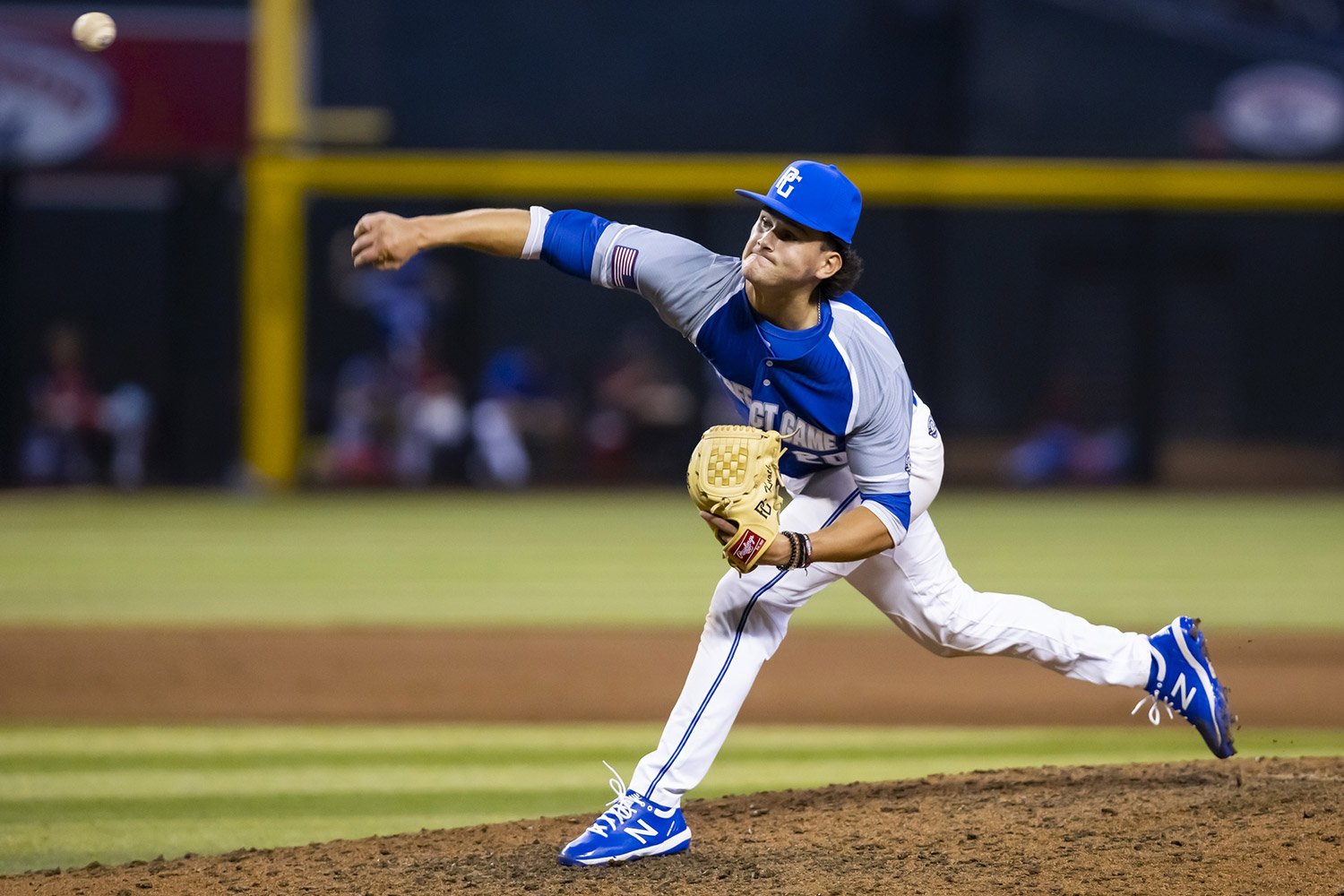 #15 OF Yophery Rodriguez (DSL Brewers) The Brewers handed Rodriguez their biggest signing bonus in the 2023 international class, giving him $1.5 million to join the system. Rodriguez doesn’t have one standout tool. Instead, he has one of the most balanced skill sets you will find from a player his age. A patient hitter with an average ability to make contact, Rodriguez is very young and has plenty of projection ahead of him as he matures. He has already shown some in-game pop, but it’s safe to project even more in the future. He has a flat swing path, which is part of the reason the power hasn’t quite come around yet. That swing path also allows him to make such consistent contact, though, and reports have him handling velocity and spin extremely well early in his career. His BABIP of .289 in the DSL is abnormally low, especially for a guy who hits the ball as hard as he does and only carries a 10% infield fly ball rate. He likely had some bad luck this year, and his numbers could have looked much better. Rodriguez isn’t the fastest center fielder around, but he still has above-average speed overall, and he will likely be a capable base stealer as he advances through the system. Defensively, Rodriguez has excellent instincts and gets great jumps. He will have a chance to stick in center, but he also has a good enough arm to handle right field if needed. Rodriguez could have 55-grade tools across the board at his peak, making him a Top 100 prospect at minimum. His combination of advanced hitting skills and physical upside give him a pretty high floor, which is rare for his age, but also gives him a significant ceiling. Look for Rodriguez to follow the Luis Lara route next year, potentially skip the Arizona Complex League altogether, and make his full-season ball debut a month or so into the season. #14 RHP Logan Henderson (Carolina Mudcats) Henderson was the Brewers'. A fourth-round selection in 2021 out of McLennan Community College in Texas, and thus far, he’s looking like another fantastic find in the Junior College pitching ranks by the Brewers. He was committed to Texas A&M at the time of the draft, but Henderson chose to sign with the Brewers. Unfortunately, most of his first year and a half after signing was spent continuously bitten by the injury bug. Before the 2023 season, Henderson had only thrown 15.2 professional innings. Equipped with a low 90s fastball coming out of McLennan, he has raised his average velocity to a little closer to 93 and has even reached back for 97 MPH a few times. The fastball plays especially well when thrown up in the zone due to its high spin and spin efficiency. He spins his slider at nearly 3000 RPM, and it shows signs of being a nice pitch. At times, however, it seems that he loses the angle/tilt on the pitch, and in that scenario, the slider doesn’t move much. His best pitch, though, is his changeup. You would be hard-pressed to find a better changeup in the Brewers system. It has some airbender qualities when he’s really got it going. Like Devin Williams, the changeup is a great pitch on its own, but it also helps his fastball to play above the velocity readings. Striking out over twelve batters per nine innings while walking fewer than three per nine, Henderson showed exactly what the Brewers saw in him at McClennan to use a fourth-round pick on him. Henderson mixed all his pitches with regularity and used them all in tandem to have a fantastic and, more importantly, healthy season. Given all of that success in 2023 and that he’s a bit older than the average prospect at Low-A, it would not be a huge surprise to see him skip High-A altogether and the Brewers have him begin 2024 in Double-A Biloxi. #13 1B/3B Luke Adams (Carolina Mudcats) The Brewers twelfth-round pick in the 2022 draft. Adams was drafted out of Hinsdale Central High School in Illinois and appeared to have been a nice find by Area Scout Ginger Poulson. Adams spent the first few weeks of the 2023 season still an 18-year-old before turning 19 in late April. Standing 6’4, 210 pounds, he comes with a rare blend of patience at the plate to go along with his plus raw power and surprising speed for his size. Adams has played a very solid third base where he has the arm to handle the position and has shown an early ability to make off-platform throws, which is not easily done at 6’4. He also spent some time at first base, where he is a definite above-average defender. His plus arm would be a good fit in right field as well, which he has the athleticism to handle. At the plate, Adams has an… interesting swing, to say the least. It’s a very violent swing with a ton of moving parts. Yet, at the same time, he also shows an impressive amount of patience. The key for him will be continuing to find the balance between being passive and patient. Otherwise, that may be something that pitchers will be able to take advantage of as he begins to climb the organizational ladder. His loudest contact so far has been on the ground, though his overall batted ball profile suggests he has no issues getting the ball in the air. Early in the season, he struggled with hitting a lot of infield pop-ups, but he corrected that as the season progressed, and that was when he started to see his average climb. When you hit the ball as hard as Adams does, a pop-up is the only ball in play that doesn’t have a chance. His 90th percentile exit velocity this year was 106 MPH. The MLB average for 90th percentile exit velocity in 2022 was 103.7 MPH. As an 18 and 19-year-old hitter, fresh out of high school, Adams posted exit velocity data that would have been well above average in MLB. While the swing isn’t the most visually appealing operation, his results, and batted ball data all point to a very good offensive prospect. Combine that with his stealing 30 bases this year and some interesting defensive skills; Adams will almost certainly have some ups and downs over the next few seasons, but he has an extremely high ceiling if he can put it all together. If Adams had not signed with the Brewers as a twelfth-round pick and had gone to Michigan State and posted batted ball data like this, he would likely already be generating first-round buzz in the 2025 draft. #12 RHP Josh Knoth (Yet to make pro debut) The Brewers Competitive Balance Round A selection in the most recent draft, Knoth has arguably the highest ceiling of the Brewers' day one selection. Knoth has a smooth delivery that is easily repeatable. Going back to the summer of 2022, his profile was extremely enticing, even though he only threw his fastball in the 90-93 range and was topping out at 95 at the time. This past spring, however, he was up to 98 on occasion and sitting more in the 93-96 range. The fastball has a good life at the top of the zone and pairs extremely well with what might be the best secondary offering in the entire system. That offering is his hammer curveball. It’s a 3000 RPM pitch with a late bite and a ton of vertical movement. His slider could also be a plus pitch, coming in on a different plane than his curve but also having sharp movement and a spin rate of around 3000 RPM. Knoth also mixes in a changeup that shows some interesting fade but doesn’t take as much velocity off of it as you would hope. The Brewers will likely work with him to create more separation between the fastball and changeup. Knoth will be 18 for the majority of next season, and barring an incredible spring training showing, the Brewers will likely keep him in extended spring training next year before he makes his debut with the ACL Brewers in mid-summer. Knoth’s upside on the mound might be second only to Jacob Misiorowski in the Brewers system, and the Brewers will likely be careful with his innings load at the beginning. Knoth is far from a finished product, but if he can stay healthy and they can maximize the pitch mix he already has, the Brewers could have a top-of-the-line starter on their hands in a few years. #11 SS Eric Brown Jr (Wisconsin Timber Rattlers, Biloxi Shuckers) Brown Jr, the Brewers' first-round pick in the 2022 draft, is a premium athlete at a premium position. He plays a strong shortstop defensively, where his arm is above average, especially with the quick release he uses to get his throws off. His quick-twitch athleticism, good range, and good hands have allowed him to make impressive defensive plays. At times, he has seemed to lose concentration and make some errors in some of his routine plays, but that is not uncommon for younger players. On the offensive side of the ball, Brown came out of Coastal Carolina with a very low strikeout rate and an even lower chase rate, to go along with some pretty intriguing exit velocity numbers. Brown Jr fell slightly and further than his numbers indicated, mainly due to his peculiar-looking load and stance in college and some concerns about elevating the ball. He was an analytical darling, but traditional scouts weren’t as convinced due to his stance. Last offseason, he made some changes and came into 2023 with a load involving much less movement than the one he was sporting in 2022. With his new load, his hands are still starting in an awkward position, out in front of his head, but his big change was with his lower half. No longer using his big leg kick (he has gone to a much quieter leg lift), Brown seemed to have a bit of an adjustment period to get used to this new load in games. His wRC+ through the end of April was 39. He was hit in the face by a pitch on April 26th but luckily avoided major injury, and after returning on May 3rd, he started hitting much more like one would expect a first-rounder to hit. From May 3rd through the end of the season, Brown Jr would post a 122 wRC+ and an OPS of .781 in that span. The Midwest League is a tough-hitting environment, and Brown Jr did pretty well when he was healthy. He limited his strikeouts to a very reasonable 17.2% rate and walked at a high rate. While he didn’t tap into the power that he has shown flashes of with much regularity, he did steal 39 bases while only being caught five times. Brown Jr is taking part in the Arizona Fall League this offseason, and the hope is that he can take that experience to go along with what will hopefully be a healthier season in 2024 and show why the Brewers took him in the first round. His path thus far has been very similar to Tyler Black’s through Black’s first year and a half of pro ball. The hope is that Brown Jr will follow Black’s footsteps even further on his way to a breakout in 2024. He will likely begin next season in Double-A Biloxi. What stands out from 11-15 in this list? Let us know your thoughts in the comments!
- 20 comments
-
- 2
-
-
- yophery rodriguez
- logan henderson
- (and 3 more)
-
Welcome to Brewer Fanatic's 2023 top 20 prospect rundown! The Brewers graduated a number of their top prospects throughout the 2023 season, so there are some new names to look at heading into the offseason. Let's look at the second installment of prospects, which will cover 11-15, as voted on and compiled by the Brewer Fanatic community. Image courtesy of © Mark J. Rebilas-USA TODAY Sports #15 OF Yophery Rodriguez (DSL Brewers) The Brewers handed Rodriguez their biggest signing bonus in the 2023 international class, giving him $1.5 million to join the system. Rodriguez doesn’t have one standout tool. Instead, he has one of the most balanced skill sets you will find from a player his age. A patient hitter with an average ability to make contact, Rodriguez is very young and has plenty of projection ahead of him as he matures. He has already shown some in-game pop, but it’s safe to project even more in the future. He has a flat swing path, which is part of the reason the power hasn’t quite come around yet. That swing path also allows him to make such consistent contact, though, and reports have him handling velocity and spin extremely well early in his career. His BABIP of .289 in the DSL is abnormally low, especially for a guy who hits the ball as hard as he does and only carries a 10% infield fly ball rate. He likely had some bad luck this year, and his numbers could have looked much better. Rodriguez isn’t the fastest center fielder around, but he still has above-average speed overall, and he will likely be a capable base stealer as he advances through the system. Defensively, Rodriguez has excellent instincts and gets great jumps. He will have a chance to stick in center, but he also has a good enough arm to handle right field if needed. Rodriguez could have 55-grade tools across the board at his peak, making him a Top 100 prospect at minimum. His combination of advanced hitting skills and physical upside give him a pretty high floor, which is rare for his age, but also gives him a significant ceiling. Look for Rodriguez to follow the Luis Lara route next year, potentially skip the Arizona Complex League altogether, and make his full-season ball debut a month or so into the season. #14 RHP Logan Henderson (Carolina Mudcats) Henderson was the Brewers'. A fourth-round selection in 2021 out of McLennan Community College in Texas, and thus far, he’s looking like another fantastic find in the Junior College pitching ranks by the Brewers. He was committed to Texas A&M at the time of the draft, but Henderson chose to sign with the Brewers. Unfortunately, most of his first year and a half after signing was spent continuously bitten by the injury bug. Before the 2023 season, Henderson had only thrown 15.2 professional innings. Equipped with a low 90s fastball coming out of McLennan, he has raised his average velocity to a little closer to 93 and has even reached back for 97 MPH a few times. The fastball plays especially well when thrown up in the zone due to its high spin and spin efficiency. He spins his slider at nearly 3000 RPM, and it shows signs of being a nice pitch. At times, however, it seems that he loses the angle/tilt on the pitch, and in that scenario, the slider doesn’t move much. His best pitch, though, is his changeup. You would be hard-pressed to find a better changeup in the Brewers system. It has some airbender qualities when he’s really got it going. Like Devin Williams, the changeup is a great pitch on its own, but it also helps his fastball to play above the velocity readings. Striking out over twelve batters per nine innings while walking fewer than three per nine, Henderson showed exactly what the Brewers saw in him at McClennan to use a fourth-round pick on him. Henderson mixed all his pitches with regularity and used them all in tandem to have a fantastic and, more importantly, healthy season. Given all of that success in 2023 and that he’s a bit older than the average prospect at Low-A, it would not be a huge surprise to see him skip High-A altogether and the Brewers have him begin 2024 in Double-A Biloxi. #13 1B/3B Luke Adams (Carolina Mudcats) The Brewers twelfth-round pick in the 2022 draft. Adams was drafted out of Hinsdale Central High School in Illinois and appeared to have been a nice find by Area Scout Ginger Poulson. Adams spent the first few weeks of the 2023 season still an 18-year-old before turning 19 in late April. Standing 6’4, 210 pounds, he comes with a rare blend of patience at the plate to go along with his plus raw power and surprising speed for his size. Adams has played a very solid third base where he has the arm to handle the position and has shown an early ability to make off-platform throws, which is not easily done at 6’4. He also spent some time at first base, where he is a definite above-average defender. His plus arm would be a good fit in right field as well, which he has the athleticism to handle. At the plate, Adams has an… interesting swing, to say the least. It’s a very violent swing with a ton of moving parts. Yet, at the same time, he also shows an impressive amount of patience. The key for him will be continuing to find the balance between being passive and patient. Otherwise, that may be something that pitchers will be able to take advantage of as he begins to climb the organizational ladder. His loudest contact so far has been on the ground, though his overall batted ball profile suggests he has no issues getting the ball in the air. Early in the season, he struggled with hitting a lot of infield pop-ups, but he corrected that as the season progressed, and that was when he started to see his average climb. When you hit the ball as hard as Adams does, a pop-up is the only ball in play that doesn’t have a chance. His 90th percentile exit velocity this year was 106 MPH. The MLB average for 90th percentile exit velocity in 2022 was 103.7 MPH. As an 18 and 19-year-old hitter, fresh out of high school, Adams posted exit velocity data that would have been well above average in MLB. While the swing isn’t the most visually appealing operation, his results, and batted ball data all point to a very good offensive prospect. Combine that with his stealing 30 bases this year and some interesting defensive skills; Adams will almost certainly have some ups and downs over the next few seasons, but he has an extremely high ceiling if he can put it all together. If Adams had not signed with the Brewers as a twelfth-round pick and had gone to Michigan State and posted batted ball data like this, he would likely already be generating first-round buzz in the 2025 draft. #12 RHP Josh Knoth (Yet to make pro debut) The Brewers Competitive Balance Round A selection in the most recent draft, Knoth has arguably the highest ceiling of the Brewers' day one selection. Knoth has a smooth delivery that is easily repeatable. Going back to the summer of 2022, his profile was extremely enticing, even though he only threw his fastball in the 90-93 range and was topping out at 95 at the time. This past spring, however, he was up to 98 on occasion and sitting more in the 93-96 range. The fastball has a good life at the top of the zone and pairs extremely well with what might be the best secondary offering in the entire system. That offering is his hammer curveball. It’s a 3000 RPM pitch with a late bite and a ton of vertical movement. His slider could also be a plus pitch, coming in on a different plane than his curve but also having sharp movement and a spin rate of around 3000 RPM. Knoth also mixes in a changeup that shows some interesting fade but doesn’t take as much velocity off of it as you would hope. The Brewers will likely work with him to create more separation between the fastball and changeup. Knoth will be 18 for the majority of next season, and barring an incredible spring training showing, the Brewers will likely keep him in extended spring training next year before he makes his debut with the ACL Brewers in mid-summer. Knoth’s upside on the mound might be second only to Jacob Misiorowski in the Brewers system, and the Brewers will likely be careful with his innings load at the beginning. Knoth is far from a finished product, but if he can stay healthy and they can maximize the pitch mix he already has, the Brewers could have a top-of-the-line starter on their hands in a few years. #11 SS Eric Brown Jr (Wisconsin Timber Rattlers, Biloxi Shuckers) Brown Jr, the Brewers' first-round pick in the 2022 draft, is a premium athlete at a premium position. He plays a strong shortstop defensively, where his arm is above average, especially with the quick release he uses to get his throws off. His quick-twitch athleticism, good range, and good hands have allowed him to make impressive defensive plays. At times, he has seemed to lose concentration and make some errors in some of his routine plays, but that is not uncommon for younger players. On the offensive side of the ball, Brown came out of Coastal Carolina with a very low strikeout rate and an even lower chase rate, to go along with some pretty intriguing exit velocity numbers. Brown Jr fell slightly and further than his numbers indicated, mainly due to his peculiar-looking load and stance in college and some concerns about elevating the ball. He was an analytical darling, but traditional scouts weren’t as convinced due to his stance. Last offseason, he made some changes and came into 2023 with a load involving much less movement than the one he was sporting in 2022. With his new load, his hands are still starting in an awkward position, out in front of his head, but his big change was with his lower half. No longer using his big leg kick (he has gone to a much quieter leg lift), Brown seemed to have a bit of an adjustment period to get used to this new load in games. His wRC+ through the end of April was 39. He was hit in the face by a pitch on April 26th but luckily avoided major injury, and after returning on May 3rd, he started hitting much more like one would expect a first-rounder to hit. From May 3rd through the end of the season, Brown Jr would post a 122 wRC+ and an OPS of .781 in that span. The Midwest League is a tough-hitting environment, and Brown Jr did pretty well when he was healthy. He limited his strikeouts to a very reasonable 17.2% rate and walked at a high rate. While he didn’t tap into the power that he has shown flashes of with much regularity, he did steal 39 bases while only being caught five times. Brown Jr is taking part in the Arizona Fall League this offseason, and the hope is that he can take that experience to go along with what will hopefully be a healthier season in 2024 and show why the Brewers took him in the first round. His path thus far has been very similar to Tyler Black’s through Black’s first year and a half of pro ball. The hope is that Brown Jr will follow Black’s footsteps even further on his way to a breakout in 2024. He will likely begin next season in Double-A Biloxi. What stands out from 11-15 in this list? Let us know your thoughts in the comments! View full article
- 20 replies
-
- 2
-
-

-
- yophery rodriguez
- logan henderson
- (and 3 more)
-
Welcome to Brewer Fanatic's 2023 top 20 prospect rundown! The Brewers graduated a number of their top prospects throughout the 2023 season, so we have some new names to look at heading into the offseason. Let's take a look at the first installment, as voted on and compiled by the Brewer Fanatic community. Image courtesy of © Mark J. Rebilas-USA TODAY Sports 20. Juan Baez, IF (Arizona League Brewers, Carolina Mudcats) Baez was signed in the 2022 international class out of the Dominican Republic for only $10,000, one of the lowest bonuses in the entire class. After a run-of-the-mill showing in the Dominican Summer League (DSL) in his debut season, he was given a surprising assignment to the Arizona Complex League as a soon-to-be 18-year-old. Baez did his part to show why the Brewers were so aggressive with him, despite the numbers he had put up in the DSL. Equipped with plus feel for contact, he is said to have above-average speed as well, which shows in his 19 stolen bases in 21 attempts. Reports coming into the season suggested a strong defender up the middle, but he did end up finishing the season with 18 errors, while only playing 45 games in the field. A large majority of his errors were of the throwing variety, which is a bit easier to fix than errors that come with the glove. His arm is pretty strong, so it would seem likely that his footwork is not where it needs to be, and there could be a lack of focus as well. While the offensive profile is pretty interesting, the defensive side of the game is going to be something that will need to be monitored. On the offensive side, one thing Baez is going to have to work on is his patience at the plate. His bat-to-ball skills did all of the heavy lifting on his way to an extremely successful season in 2023, but succeeding at the MLB level with a 4.2% walk rate would make him a major outlier, as only three qualified hitters finished 2023 with that low of a rate. Baez was certainly able to make it work at the Complex level and in his short cup of coffee with Low-A Carolina, due in large part to his ability to get the bat to the ball so consistently. He has a pretty big leg kick and a swing that is somewhat reminiscent of Alfonso Soriano's. With that leg kick and swing path, he is more than a slap hitter, despite what the rest of the profile might suggest. He showed a decent amount of extra-base pop, with 27 total, including four home runs. He will, most likely, begin 2024 with Carolina, which will be his first year of full-season ball. He will have the opportunity to answer the questions about his defense, and to continue to develop his swing decisions a bit. If he can see more pitches and potentially draw more walks, this is the profile of a future MLB hitter. 19. Bradley Blalock, RHP (Boston Red Sox organization, Wisconsin Timber Rattlers) Acquired from the Boston Red Sox at the 2023 trade deadline in exchange for Luis Urias, Blalock is a bit more than a lottery-ticket arm. The Red Sox’s 32nd-round selection in 2019 had struggled with injuries early in his career, and returned from Tommy John Surgery this season after missing all of 2022. Throwing from an over-the-top arm angle, he came back this season throwing 93-95 on his fastball, even getting up to 97 at times. Due (in part) to that high slot, his fastball has really good shape, and it plays well up in the zone. He throws three secondaries: curveball, slider and changeup. The quality of the pitches goes in that same order. His curveball is a hammer that comes in around 77-82, with a ton of depth on it. The fastball and curveball are both plus pitches. His slider is the third offering. It’s a firmer breaking ball, getting into the upper 80s, and has more horizontal movement than vertical. It hasn’t been completely dialed in yet, and it can be inconsistent from start to start, but it has the makings of being a pretty good tertiary pitch for him. His changeup is a distant fourth pitch at the moment, and given his arm slot, that will likely remain the case. It can be hard to throw a changeup from that angle. The Brewers like their splitters, and that is often the changeup that works best from an overhand slot, so perhaps that will be something they work on moving forward. Blalock got fantastic results prior to the trade, posting a 2.19 ERA and nearly 10 strikeouts per nine innings with the Red Sox's Low-A and High-A affiliates and limiting his walks to only 2.2 per nine. The results did not carry over in his first four starts after the trade. He walked over four batters per nine frames, and his ERA was 5.27 in that stretch. Unfortunately, he left his final start after recording only two outs, and ended up being placed on the IL to finish the season. We don’t know the extent of that injury at the moment. Blalock is Rule 5-eligible this offseason, and since his fastball and curveball could play up out of the bullpen, it wouldn’t be a complete shock to see him get selected if the Brewers leave him unprotected. He will likely receive heavy consideration for a 40-man roster spot. 18. Daniel Guilarte, IF (Carolina Mudcats) Guilarte was an international signing by the Brewers in 2021, and is somebody the organization appears to be very high on. Guilarte can really pick it at shortstop, as well as third and second base. He has clean actions, good range and a strong arm. Offensively, Guilarte has a patient approach, though that patience may border on passivity at times. He struggles to tap into power, though he does hit the ball with some authority. He will need to do a better job elevating the ball in order to get to the extra-base power. His speed is above-average, and he’s a strong baserunner in general. The previously mentioned patience showed up for Guilarte in a strong 12.5% walk rate, but it also shows up in his batted-ball profile. Slight indecisiveness can lead to a profile such as Guilarte’s, in which he does not pull the ball much, and is often hitting it on the ground. Despite the profile not being exactly what you’re looking for, Guilarte got off to a pretty good start to his full-season career in 2023, and as he matures more, there is definitely the potential for more pop there. His 111 wRC+ means he was an above-average hitter for the level, and he did that while being about two years younger than the league's average. Even if he struggles to develop that power, Guilarte’s above-average-to-plus speed, defense and hit tools will keep him on prospect radars. 17. Dylan O’Rae, IF/CF (Arizona League Brewers, Carolina Mudcats) The Brewers selected O’Rae with their third-round pick in 2022, to the surprise of pretty much everyone. Unranked on all of the major publications at draft time, the MLB Pipeline gurus struggled to find information on him. The Brewers clearly dug deep for the pick, and the early returns have been very good. O’Rae is small in stature, standing only 5-foot-7, and is listed at 160 pounds--though he appears to have bulked up this offseason and that weight might no longer be accurate. It isn’t out of the realm of possibility that he has gotten taller, either, as he’s still a teenager. Even if the growth spurt never hits, O’Rae has the potential to be a top-of-the-order hitter, as well as handling the middle infield or center field defensively. He possesses an elite eye at the plate and very good bat-to-ball skills, but he is severely lacking in the power department. Even if he can't clear or dent the fences, though, he does have the ability to turn singles into doubles by stealing bases with his plus speed. In 2023, he showed his well-measured approach by posting a 20% walk rate and only a 6.7% swinging-strike rate to go with his 13% strikeout rate. All of those would be elite numbers for anybody, but especially for a teenager in his first real taste of pro ball. The absence of power does show in the numbers as well, with only nine total extra-base hits, none of which were home runs. However, an on-base percentage of nearly .500 and 44 steals is a good way to bring production without hitting the ball hard. On the defensive side, he mainly played second base early in the season, but as the year progressed, he spent some time in center field. After his promotion to Low-A Carolina, he actually spent more time in center than on the dirt. His speed, instincts and the fact that he has a decent arm should allow him to handle either of them without issue. There are a lot of Sal Frelick similarities with O’Rae, but Frelick had more juice in his bat, even at this young age. If he can continue to put on some good weight and deliver just a bit more thump, O’Rae has the makings of someone who could make a career out of annoying the heck out of opposing pitchers. 16. Eric Bitonti, 3B/SS (Arizona League Brewers) Selected in the third round of the Brewers' most recent draft, Bitonti won’t turn 18 until mid-November. Equipped with some of the biggest raw power in the high school class, Bitonti has a sweet-looking left-handed swing. Despite being a pretty good athlete for his size, it’s unlikely he will be able to stick at shortstop. He should be a pretty strong defender at the hot corner, however, and he certainly has the arm to handle the position. The question for Bitonti will come with his hit tool. He has some holes in his swing, and he has struggled with making solid contact on breaking balls. His issues there seem to be more aligned with his feel to hit them, rather than a failure to recognize them, as he doesn’t chase them much. This is a good sign. It means he likely just needs to get more comfortable with his bat path against spinners. He crushed fastballs in the prep circuit and should have no issues handling professional velocity. His short stint in Arizona started really well, as he hit two home runs in the first three games of his professional career. After that, he experienced some struggles. In his final eight games, he went a combined 2-24, though he did draw eight walks in that stretch. Brewers fans will need to remember to be patient with Bitonti. He’ll be 18 for the entirety of the 2024 season and he’s got a lot of development in front of him. This is a bit of a boom-or-bust pick, but the upside is a big-time, middle-of-the-order bat. What stands out from 16-20 in this list? Let us know your thoughts in the comments! View full article
- 6 replies
-
- 3
-
-
-
- juan baez
- bradley blalock
- (and 3 more)
-
Brewer Fanatic 2023 Offseason Top 20 Prospects: #16-20
Spencer Michaelis posted an article in Minor Leagues
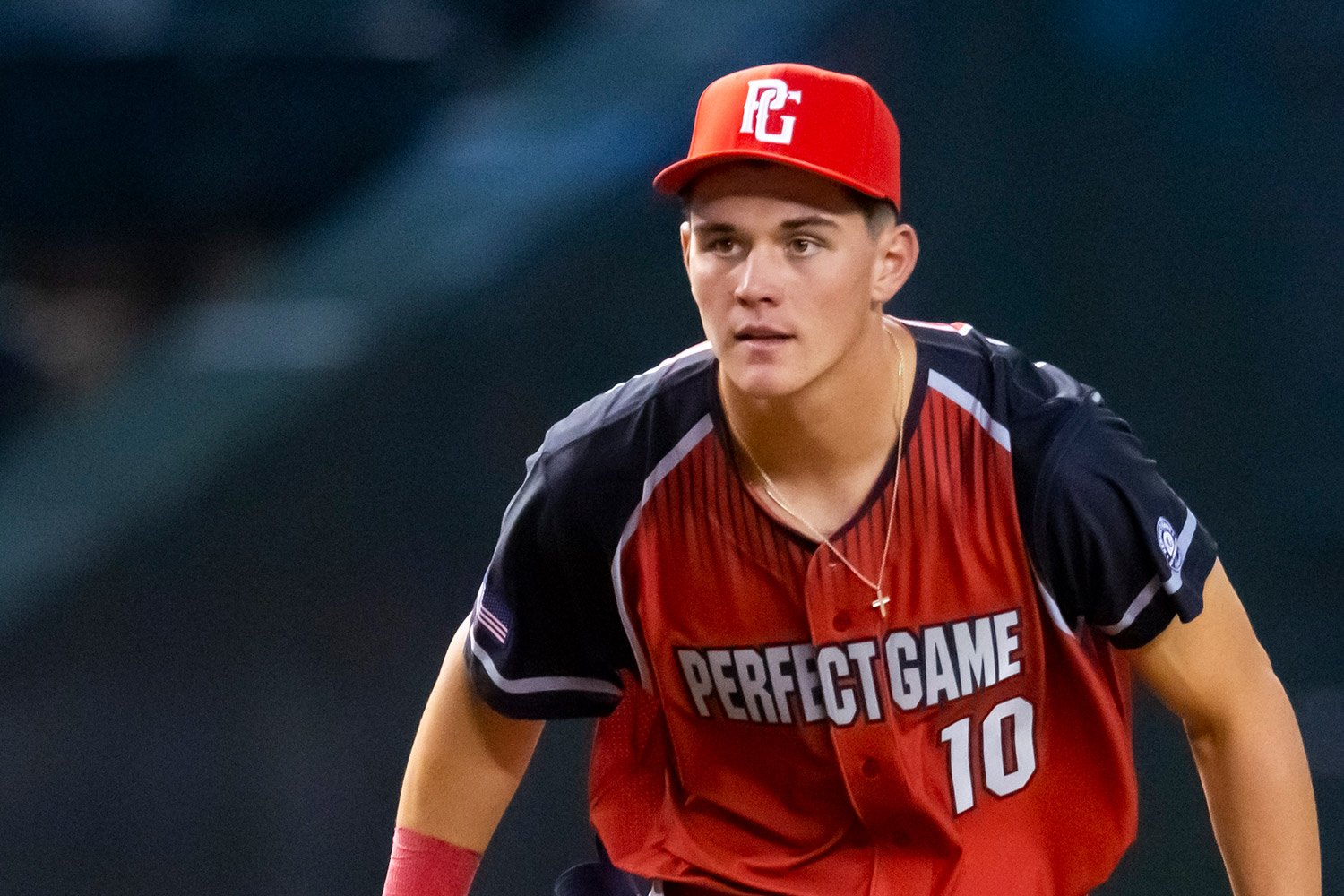 20. Juan Baez, IF (Arizona League Brewers, Carolina Mudcats) Baez was signed in the 2022 international class out of the Dominican Republic for only $10,000, one of the lowest bonuses in the entire class. After a run-of-the-mill showing in the Dominican Summer League (DSL) in his debut season, he was given a surprising assignment to the Arizona Complex League as a soon-to-be 18-year-old. Baez did his part to show why the Brewers were so aggressive with him, despite the numbers he had put up in the DSL. Equipped with plus feel for contact, he is said to have above-average speed as well, which shows in his 19 stolen bases in 21 attempts. Reports coming into the season suggested a strong defender up the middle, but he did end up finishing the season with 18 errors, while only playing 45 games in the field. A large majority of his errors were of the throwing variety, which is a bit easier to fix than errors that come with the glove. His arm is pretty strong, so it would seem likely that his footwork is not where it needs to be, and there could be a lack of focus as well. While the offensive profile is pretty interesting, the defensive side of the game is going to be something that will need to be monitored. On the offensive side, one thing Baez is going to have to work on is his patience at the plate. His bat-to-ball skills did all of the heavy lifting on his way to an extremely successful season in 2023, but succeeding at the MLB level with a 4.2% walk rate would make him a major outlier, as only three qualified hitters finished 2023 with that low of a rate. Baez was certainly able to make it work at the Complex level and in his short cup of coffee with Low-A Carolina, due in large part to his ability to get the bat to the ball so consistently. He has a pretty big leg kick and a swing that is somewhat reminiscent of Alfonso Soriano's. With that leg kick and swing path, he is more than a slap hitter, despite what the rest of the profile might suggest. He showed a decent amount of extra-base pop, with 27 total, including four home runs. He will, most likely, begin 2024 with Carolina, which will be his first year of full-season ball. He will have the opportunity to answer the questions about his defense, and to continue to develop his swing decisions a bit. If he can see more pitches and potentially draw more walks, this is the profile of a future MLB hitter. 19. Bradley Blalock, RHP (Boston Red Sox organization, Wisconsin Timber Rattlers) Acquired from the Boston Red Sox at the 2023 trade deadline in exchange for Luis Urias, Blalock is a bit more than a lottery-ticket arm. The Red Sox’s 32nd-round selection in 2019 had struggled with injuries early in his career, and returned from Tommy John Surgery this season after missing all of 2022. Throwing from an over-the-top arm angle, he came back this season throwing 93-95 on his fastball, even getting up to 97 at times. Due (in part) to that high slot, his fastball has really good shape, and it plays well up in the zone. He throws three secondaries: curveball, slider and changeup. The quality of the pitches goes in that same order. His curveball is a hammer that comes in around 77-82, with a ton of depth on it. The fastball and curveball are both plus pitches. His slider is the third offering. It’s a firmer breaking ball, getting into the upper 80s, and has more horizontal movement than vertical. It hasn’t been completely dialed in yet, and it can be inconsistent from start to start, but it has the makings of being a pretty good tertiary pitch for him. His changeup is a distant fourth pitch at the moment, and given his arm slot, that will likely remain the case. It can be hard to throw a changeup from that angle. The Brewers like their splitters, and that is often the changeup that works best from an overhand slot, so perhaps that will be something they work on moving forward. Blalock got fantastic results prior to the trade, posting a 2.19 ERA and nearly 10 strikeouts per nine innings with the Red Sox's Low-A and High-A affiliates and limiting his walks to only 2.2 per nine. The results did not carry over in his first four starts after the trade. He walked over four batters per nine frames, and his ERA was 5.27 in that stretch. Unfortunately, he left his final start after recording only two outs, and ended up being placed on the IL to finish the season. We don’t know the extent of that injury at the moment. Blalock is Rule 5-eligible this offseason, and since his fastball and curveball could play up out of the bullpen, it wouldn’t be a complete shock to see him get selected if the Brewers leave him unprotected. He will likely receive heavy consideration for a 40-man roster spot. 18. Daniel Guilarte, IF (Carolina Mudcats) Guilarte was an international signing by the Brewers in 2021, and is somebody the organization appears to be very high on. Guilarte can really pick it at shortstop, as well as third and second base. He has clean actions, good range and a strong arm. Offensively, Guilarte has a patient approach, though that patience may border on passivity at times. He struggles to tap into power, though he does hit the ball with some authority. He will need to do a better job elevating the ball in order to get to the extra-base power. His speed is above-average, and he’s a strong baserunner in general. The previously mentioned patience showed up for Guilarte in a strong 12.5% walk rate, but it also shows up in his batted-ball profile. Slight indecisiveness can lead to a profile such as Guilarte’s, in which he does not pull the ball much, and is often hitting it on the ground. Despite the profile not being exactly what you’re looking for, Guilarte got off to a pretty good start to his full-season career in 2023, and as he matures more, there is definitely the potential for more pop there. His 111 wRC+ means he was an above-average hitter for the level, and he did that while being about two years younger than the league's average. Even if he struggles to develop that power, Guilarte’s above-average-to-plus speed, defense and hit tools will keep him on prospect radars. 17. Dylan O’Rae, IF/CF (Arizona League Brewers, Carolina Mudcats) The Brewers selected O’Rae with their third-round pick in 2022, to the surprise of pretty much everyone. Unranked on all of the major publications at draft time, the MLB Pipeline gurus struggled to find information on him. The Brewers clearly dug deep for the pick, and the early returns have been very good. O’Rae is small in stature, standing only 5-foot-7, and is listed at 160 pounds--though he appears to have bulked up this offseason and that weight might no longer be accurate. It isn’t out of the realm of possibility that he has gotten taller, either, as he’s still a teenager. Even if the growth spurt never hits, O’Rae has the potential to be a top-of-the-order hitter, as well as handling the middle infield or center field defensively. He possesses an elite eye at the plate and very good bat-to-ball skills, but he is severely lacking in the power department. Even if he can't clear or dent the fences, though, he does have the ability to turn singles into doubles by stealing bases with his plus speed. In 2023, he showed his well-measured approach by posting a 20% walk rate and only a 6.7% swinging-strike rate to go with his 13% strikeout rate. All of those would be elite numbers for anybody, but especially for a teenager in his first real taste of pro ball. The absence of power does show in the numbers as well, with only nine total extra-base hits, none of which were home runs. However, an on-base percentage of nearly .500 and 44 steals is a good way to bring production without hitting the ball hard. On the defensive side, he mainly played second base early in the season, but as the year progressed, he spent some time in center field. After his promotion to Low-A Carolina, he actually spent more time in center than on the dirt. His speed, instincts and the fact that he has a decent arm should allow him to handle either of them without issue. There are a lot of Sal Frelick similarities with O’Rae, but Frelick had more juice in his bat, even at this young age. If he can continue to put on some good weight and deliver just a bit more thump, O’Rae has the makings of someone who could make a career out of annoying the heck out of opposing pitchers. 16. Eric Bitonti, 3B/SS (Arizona League Brewers) Selected in the third round of the Brewers' most recent draft, Bitonti won’t turn 18 until mid-November. Equipped with some of the biggest raw power in the high school class, Bitonti has a sweet-looking left-handed swing. Despite being a pretty good athlete for his size, it’s unlikely he will be able to stick at shortstop. He should be a pretty strong defender at the hot corner, however, and he certainly has the arm to handle the position. The question for Bitonti will come with his hit tool. He has some holes in his swing, and he has struggled with making solid contact on breaking balls. His issues there seem to be more aligned with his feel to hit them, rather than a failure to recognize them, as he doesn’t chase them much. This is a good sign. It means he likely just needs to get more comfortable with his bat path against spinners. He crushed fastballs in the prep circuit and should have no issues handling professional velocity. His short stint in Arizona started really well, as he hit two home runs in the first three games of his professional career. After that, he experienced some struggles. In his final eight games, he went a combined 2-24, though he did draw eight walks in that stretch. Brewers fans will need to remember to be patient with Bitonti. He’ll be 18 for the entirety of the 2024 season and he’s got a lot of development in front of him. This is a bit of a boom-or-bust pick, but the upside is a big-time, middle-of-the-order bat. What stands out from 16-20 in this list? Let us know your thoughts in the comments!
- 6 comments
-
- 2
-
-
- juan baez
- bradley blalock
- (and 3 more)
-
Thanks! I personally would have chose Rudy over Jarvis as well, but these were voted on by all the writers, so the honorable mentions were those that fell outside of the top 4 but received at least one vote.
-
A Way Too Early 2024 MLB Draft Thread
Spencer Michaelis replied to Joseph Zarr's topic in MLB Draft & International Signings
To go along with the "random Juco arm they're bound to take" theme, Scott Rienguette is one I'll be watching. He's a pitcher who would be right up their alley. Very Matt Brash like stuff with the insane spin rates on all his pitches and tons of movement. Brash was more in the low-90's until he got to pro ball where he started pushing mid-upper 90's with regularity (averaged 98.1 MPH on the four seam this season, out of the bullpen). -
2023 Arizona Fall League Thread
Spencer Michaelis replied to Ro Mueller's topic in Brewers Minor League Talk

- 133 replies
-
- 1
-

-
- eric brown jr
- wes clarke
- (and 3 more)
-
I didn't really mention this in any part of the article, but all of the rankings and honorable mentions were "as voted on" by those that were polled. I just listed all the pitchers that got votes and missed the top 4 as "honorable mentions" 🙂
-
We continue to hand out minor league awards this week. Today, we have our first repeat winner. Continue reading to get a ton of detailed content on the top four starting pitchers this season, four prospects that have a chance to be a part of the Brewers future. There were a handful of notable performances this season, within the Brewers organization. With every organization putting such a premium on developing pitching, having players stand out early at the lowest level is a must. Being able to continue to foster that growth throughout their experience in professional baseball is what hopefully will translate to major-league success. Before getting into the top four, here are a few others that received votes. Honorable Mentions RHP Patricio Aquino, 20, Carolina RHP Edwin Jimenez, 21, Carolina/Wisconsin RHP Justin Jarvis, 23, Biloxi/Nashville **Jarvis’ numbers only include his time in the Brewers organization (he was traded to the New York Mets in a one-for-one deal for outfielder Mark Canha)** Brewers Minor League Starting Pitcher of the Year Here are the top four vote-getters for the Brewers Minor League Starting Pitcher of the Year. 4. RHP Jacob Misiorowski, 21, Carolina/Wisconsin/Biloxi In terms of pure ceiling, the Brewers' second-round selection in the 2022 draft has one of the highest in all of baseball. A Junior College standout from Crowder College in Missouri, Misiorowski is a freak athlete on the mound, with long levers and a fastball that regularly touches triple digits and has been up to 102. He also throws a wicked slider in the 89-91 range, and has even seen the velocity up to 94 on the slider. His third offering is his curveball that is usually in the mid-80s and can have a slider shape to it at times. During the Futures Game, Statcast had labeled his slider as a cutter, but Misiorowski refers to them as a slider and curveball. His fourth offering is a changeup that has been used more sparingly as he struggles to throw it for strikes, though it has shown flashes of having some decent depth to it as well. The changeup registers in the low 90’s. Since selecting Misiorowski, the Brewers have been extremely cautious in terms of managing his workload. He only appeared in two games in 2022, and in spring training of 2023 he was built up very slowly. That continued as he began making starts for Carolina in April. Misiorowski did not throw a pitch in the fifth inning until May 25th. In that appearance he went five hitless innings, only allowing one base runner on a hit by pitch, and he struck out nine hitters in the process. Following one more strong start on the final day of May, Misiorowski was aggressively promoted to High-A Wisconsin, where he continued chugging along to the tune of a 1.15 ERA in June. The strikeout numbers did come down a bit at High-A, as he began to see more hitters that were able to keep the bat on their shoulder when his fastball command wasn’t at its best. When given the chance to make a name for himself on the national stage in Mid-July though, Misiorowski took advantage. He threw one inning in the previously-mentioned Futures Game appearance and took the baseball world by storm. Touching 102 MPH on his fastball and getting up to 94 MPH on his slider. Pitching Ninja even took notice and that seemed to be what put Misiorowski on everyone’s radar. After that outing in Seattle, Misiorowski had one more outing in Appleton before getting the call to Double-A, where he pitched at his third level in only 3 1/2 months. His first two starts at that level did not go how he would have liked, allowing nine earned runs in only 6 1/3 innings, while allowing thirteen free passes. After his rough start though, he was able to adjust and eventually finished his season with three outings where he struck out eight, nine and twelve. In his final appearance of the season, Misiorowksi threw a career-high six innings, allowed one hit, and struck out twelve. He was already approaching his career-high in innings at the time, and when his arm didn’t bounce back how they were hoping, the Brewers decided to shut him down for the remainder of the season. While he likely would have preferred to finish the season a bit differently, he was able to go out on a high note with that final start, and hopefully will be able to carry it over into 2024. He will likely return to Double-A next season, where an arm as lively and electric as his could be knocking on the doorstep to the majors in short order. 3. RHP Logan Henderson, 21, Carolina As was the case with Misiorowski, the Brewers selected Henderson out of a Junior College. A member of their 2021 draft, Henderson was drafted out of McLennan Community College and bypassed his Texas A&M commitment to sign with the club. Unfortunately for Henderson, during the early part of his professional career he struggled mightily to stay healthy. Prior to this season, he had only thrown 15 2/3 innings in his first year-and-a-half of pro ball. Equipped with a low-90s fastball coming out of McLennan, he has raised his average velocity to about 93 and has even reached 97 MPH a few times. The fastball plays especially well when it’s thrown up in the zone, due to its high spin rate and spin efficiency. He spins his slider at nearly 3000 RPMs, and it shows signs of being a really nice pitch. At times, however, it seems that he loses the angle/tilt on the pitch , and in that scenario the slider doesn’t move much. His best pitch is his changeup. You would be hard-pressed to find a better changeup in the Brewers system. There are some airbender qualities to it when he’s really got it going. Much like with Devin Williams, the changeup is a great pitch on its own, but it also helps his fastball to play up above the velocity readings. Due to past health issues, Henderson had battled prior to this season, he began the season in Extended Spring Training. His first appearance of the season didn’t come until May 9th. Even then, he had to be built back up and that first start only lasted 1 1/3 innings. He began an impressive run where he struck out 22 batters in his next four starts, which encompassed a total of 15 1/3 innings. He allowed one earned run in each of those starts. His sixth start of the season is probably the start he would most like to have a shot at a do-over. In that appearance, he went three innings, only striking out one batter while walking four and allowing five earned runs. After that start, Henderson went on a tear over his final 12 starts. In those 12 starts, Henderson never allowed more than three earned runs in a start, and he only allowed three earned runs one time. He did have one start mixed in where he was essentially acting as an opener and only went one inning. In the other eleven starts, he struck out at least five batters and punched out at least eight in seven of 11 starts. When it was all said and done, Henderson finished with a 2.29 ERA in his final 12 starts and had a 12.4 K/9 rate while limiting his walks to a 1.98 per nine clip. It was an extremely impressive finish to his first professional season. He put the cherry on top of that stretch in his final start, when he went six innings of one run baseball, struck out a career high ten batters and did not issue any free passes. Given all of his success and being a bit older than the average prospect at Low-A, it was a bit surprising that Henderson never got a promotion to High-A this year. At his age, it would not be a huge surprise if we see him skip that level altogether and have him begin 2024 in Double-A Biloxi, where hopefully he can build upon his first full season of professional baseball and continue to stay healthy. If he can, be on the lookout for Henderson to shoot up prospect lists and begin to put himself on the major league radar. 2. LHP Robert Gasser, 24, Nashville Gasser was acquired as part of the prospect return in the infamous Josh Hader trade with San Diego at the 2022 trade deadline. He throws three above-average or better pitches in his fastball, slider, and cutter. His four-seam fastball sits in the 91-93 range most days and can get up to 94 at times. His slider is best described as a sweeper and is a pitch he can throw in any count or situation. The sweeper sits in the low 80s and is his biggest swing-and-miss pitch. He mixed his cutter in more with the Brewers than he had with the Padres, and while it wasn’t always perfect, it showed some flashes of being a really good pitch for missing barrels and as another counter to right-handed hitters. He also uses a changeup and a sinker. Both show flashes but are considered a work-in-progress still. His changeup is a bit more firm than you would want, but it has good late action and could act as a counter to right-handed hitters. The sinker is a newer pitch for him. He was able to get the sinker in the zone more often than any other pitch. It generated a 52% ground ball rate in 2023. Unfortunately, he also gave up a lot of his hardest contact against the sinker, as hitters had an average exit velocity of 91.4 MPH against it. As a Padres 2021 draft pick, Gasser was in the midst of his first full season when the trade happened in 2022. He finished his Padres career at the High-A level, having thrown 90 1/3 innings for the Fort Wayne TinCaps. The Brewers decided that was plenty of experience at that level and assigned him to Double-A Biloxi to begin his Brewers career. Four starts later, Gasser and his 2.21 ERA and 11.5 K/9 were headed to Triple-A Nashville. This is where he would finish the 2022 campaign and where he spent all of 2023. Gasser didn’t get off to the best start in 2023, as he struggled to adjust to a very strong hitting environment in Triple-A in April and May. Through his first nine starts, Gasser was checking in with a 4.59 ERA. Having never walked more than 2.79 batters per nine innings with the Padres organization, Gasser had raised that number to 3.5 in his four Biloxi starts. Once he reached Triple-A, that number had jumped up to 5.5 in 2022. In April of 2023, he had the same number at 5.5 per nine. His walk numbers in May did show some improvement, as he brought that number down to 4.2 per nine. While still higher than you would want that number to be, it was a sign of progress and something he would look to continue to improve upon as the season continued. When June rolled around, Gasser did exactly that. In his four starts that month, Gasser walked only 1.4 per nine, and the rest of the results followed. He posted an ERA of 2.84 and went at least six innings in all four starts. His July didn’t go as well. The walk numbers went back up to 3.4 per nine, while he couldn’t get through the sixth inning in any of his starts. His ERA in July would end up at 4.71, and unfortunately, those struggles came at a time when the Brewers were likely considering him for a promotion due to the injuries at the major-league level. Gasser never did get that call, but he did finish the season on a very high note in August and September. Over the course of his final seven starts, Gasser posted a 2.93 ERA, walked only 2.7 per nine and struck out 11.7 per nine. During that stretch he never allowed more than three earned runs in one game, and he had two games with 10 strikeouts and a game with nine strikeouts. His last two starts were his two worst during that stretch and the Brewers elected to skip his final start of the season as Nashville had been eliminated from playoff contention. Gasser’s final season line may not look special in comparison to what we expect from a MLB starting pitcher. When the numbers are looked at in the Triple-A environment, however, Gasser stacks up extremely well. Among the 38 pitchers who threw at least 100 innings in Triple-A, Gasser finished first in total strikeouts and strikeouts per nine innings. He finished second in ERA and FIP while also having the second-highest K:BB ratio. Considering it took him about two months to adjust to the league, those numbers are very impressive. Assuming the Brewers move on from at least one of their top starters this offseason, Gasser will likely be given a chance to make the major-league rotation out of spring training. He appears to be ready. 1. RHP Carlos F. Rodriguez, 21, Biloxi/Nashville For the second straight season, the Brewer Fanatic choice for Brewers Minor League Starting Pitcher of the Year is Carlos F. Rodriguez. Rodriguez was selected by the Brewers in the sixth round of the 2021 MLB Draft out of Florida Southwestern State Junior College. That means that three of the top four pitchers on this list were drafted out of junior college. Pretty impressive work on the part of the Brewers area scouts. Rodriguez is a six-pitch pitcher who throws the kitchen sink at hitters and keeps them off balance. Don’t assume that he’s just a junk-baller with a bunch of average offerings. A number of his pitches are above average. First of all, he throws three different “fastballs.” He throws a four-seam fastball, a sinker and a cutter. The four-seamer is a riding fastball that he can throw up in the zone and miss bats with. He throws the four-seamer in the 90-93 range and can get all the way up to 96 on occasion. His sinker moves quite a bit and is the pitch he gets the majority of his ground balls with. The sinker sits in a similar velocity band to the four-seam. His cutter is a bit slower, usually in the upper 80s, around 86-88 most days. He uses it to keep the ball off the barrel. It isn’t a big swing-and-miss offering for him at this time, but he can get soft contact with it, especially against left-handed hitters. To go along with the three fastballs, he also throws three different offspeed pitches. His offspeed offerings include a changeup and two different breaking balls, a slider and curveball. The changeup is probably his best pitch out of any of the six. Usually thrown in the 82-85 MPH range, it’s his go-to swing-and-miss pitch and can generate ground balls. It pairs really well with his sinker. The slider is his second-best offspeed pitch. With a velocity usually hovering around 80 MPH, it shows flashes of being another big time swing-and-miss pitch, but with some inconsistencies in the command of the pitch, the results he gets have a lot of variance. His curveball is mainly used to “steal a strike” by landing a slow one in the zone. When he’s throwing it as a swing-and-miss pitch, the velocity is usually around 73-75 MPH. When he wants to land it for a strike, he has dropped into the 60’s at times. It isn’t a great pitch on its own, but he can use it to help all his other offerings and to give a hitter more velocity bands to think about. Rodriguez used his entire six-pitch repertoire to dominate for basically the entirety of 2023. As a 21-year-old who hadn’t pitched above rookie ball prior to 2022 and hadn’t thrown in Double-A prior to this season, Rodriguez didn’t waste any time adjusting to the level. Over the course of the first two months, Rodriguez made nine starts and came out of it with a 2.82 ERA. He was striking out 12.5 batters per nine during that stretch and had two starts where he struck out double digits. Included in those two starts was an outing on May 27th when he went seven complete innings while striking out eleven and allowing zero free passes. His next start came in June and did not go very well, as he allowed six earned runs in only 3 2/3 innings. Including that start, from the start of June to the end of the first half, he posted a 3.29 ERA and went into the break at 3.00 exactly. It should be noted that the Southern League was using the pre-tacked baseballs during the first half of the season. A lot of Southern League pitchers saw a decline in results after that change. Is it possible Rodriguez was a product of the baseball? If you believe he was, good luck proving it. After the Southern League made the change to go back to the regular MLB baseballs in the second half, Rodriguez actually posted a 2.44 ERA in his remaining ten starts at Double-A. While his strikeout numbers did see a bit of a decline in the second half, going down to 10.1 strikeouts per nine, his results improved from really good, to great. The biggest improvement from Carlos came in the form of his control. He only walked 2.9 per nine in the second half, which was down from 4.5 in the first half. Another improvement as the season went on was his ability to get himself a little deeper into games. That goes hand in hand with the walk totals, but while he struggled to keep his pitch count down at times, he was able to work into the sixth or later in all of his final three starts at Double-A. Rodriguez finished the Double-A season ranked first in ERA and OPS against. He came in third in Swinging Strike rate and WHIP and then fourth in strikeout rate and fifth in FIP. His impressive season and the signs of growth ended with Rodriguez being rewarded with a promotion to Triple-A in the final week. Giving him an opportunity to make one start at the level before he makes his likely return there to begin next season. Rodriguez will be a candidate to help the MLB rotation in 2024. So there you have it. The Brewers decided to go with co-Pitchers of the Year. We selected Carlos Rodriguez just ahead of Robert Gasser. How would you have voted? View full article
- 7 replies
-
- 6
-
-
-
- carlos rodriguez
- robert gasser
- (and 3 more)
-
Brewers Minor League Starting Pitcher of the Year - 2023
Spencer Michaelis posted an article in Minor Leagues
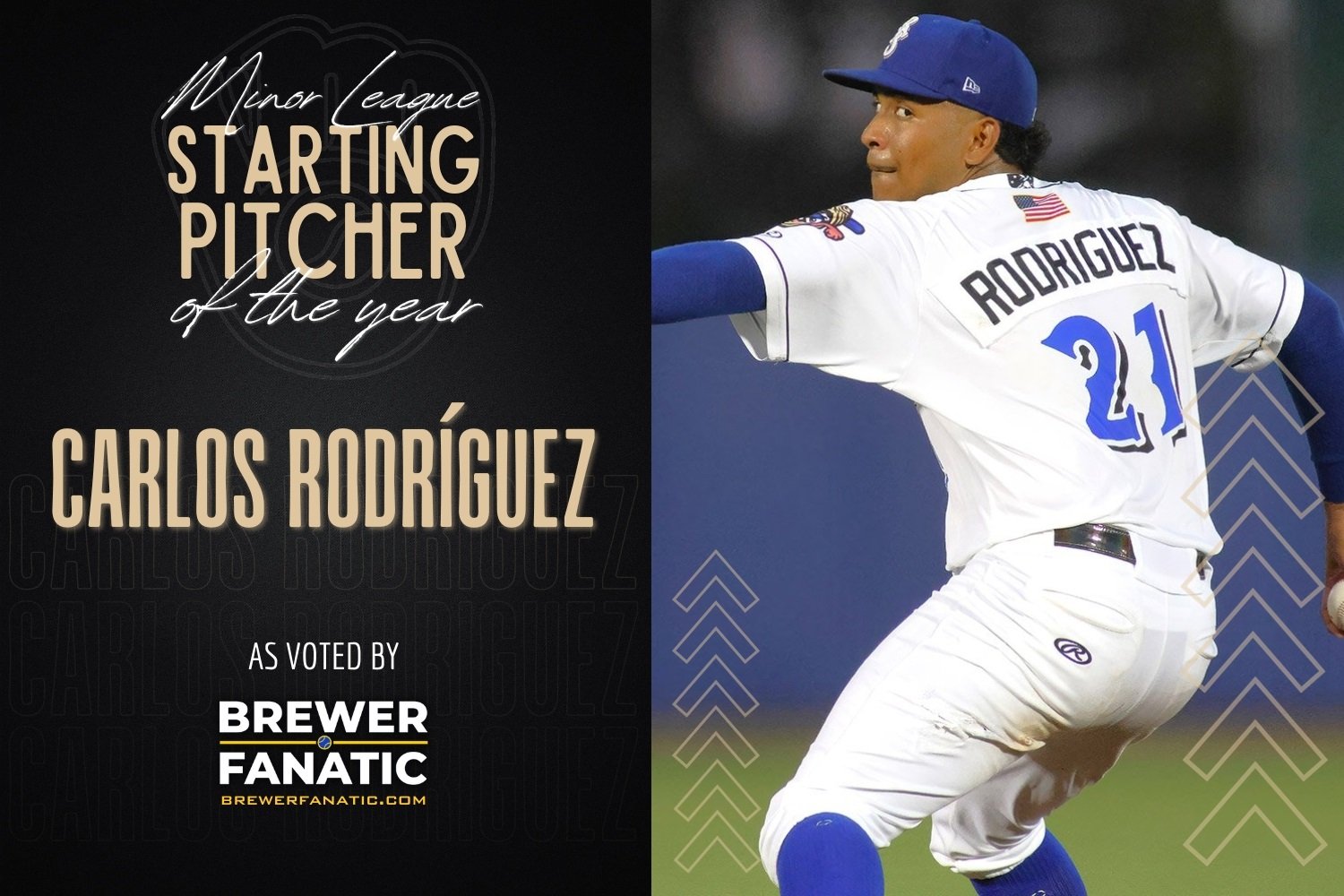 There were a handful of notable performances this season, within the Brewers organization. With every organization putting such a premium on developing pitching, having players stand out early at the lowest level is a must. Being able to continue to foster that growth throughout their experience in professional baseball is what hopefully will translate to major-league success. Before getting into the top four, here are a few others that received votes. Honorable Mentions RHP Patricio Aquino, 20, Carolina RHP Edwin Jimenez, 21, Carolina/Wisconsin RHP Justin Jarvis, 23, Biloxi/Nashville **Jarvis’ numbers only include his time in the Brewers organization (he was traded to the New York Mets in a one-for-one deal for outfielder Mark Canha)** Brewers Minor League Starting Pitcher of the Year Here are the top four vote-getters for the Brewers Minor League Starting Pitcher of the Year. 4. RHP Jacob Misiorowski, 21, Carolina/Wisconsin/Biloxi In terms of pure ceiling, the Brewers' second-round selection in the 2022 draft has one of the highest in all of baseball. A Junior College standout from Crowder College in Missouri, Misiorowski is a freak athlete on the mound, with long levers and a fastball that regularly touches triple digits and has been up to 102. He also throws a wicked slider in the 89-91 range, and has even seen the velocity up to 94 on the slider. His third offering is his curveball that is usually in the mid-80s and can have a slider shape to it at times. During the Futures Game, Statcast had labeled his slider as a cutter, but Misiorowski refers to them as a slider and curveball. His fourth offering is a changeup that has been used more sparingly as he struggles to throw it for strikes, though it has shown flashes of having some decent depth to it as well. The changeup registers in the low 90’s. Since selecting Misiorowski, the Brewers have been extremely cautious in terms of managing his workload. He only appeared in two games in 2022, and in spring training of 2023 he was built up very slowly. That continued as he began making starts for Carolina in April. Misiorowski did not throw a pitch in the fifth inning until May 25th. In that appearance he went five hitless innings, only allowing one base runner on a hit by pitch, and he struck out nine hitters in the process. Following one more strong start on the final day of May, Misiorowski was aggressively promoted to High-A Wisconsin, where he continued chugging along to the tune of a 1.15 ERA in June. The strikeout numbers did come down a bit at High-A, as he began to see more hitters that were able to keep the bat on their shoulder when his fastball command wasn’t at its best. When given the chance to make a name for himself on the national stage in Mid-July though, Misiorowski took advantage. He threw one inning in the previously-mentioned Futures Game appearance and took the baseball world by storm. Touching 102 MPH on his fastball and getting up to 94 MPH on his slider. Pitching Ninja even took notice and that seemed to be what put Misiorowski on everyone’s radar. After that outing in Seattle, Misiorowski had one more outing in Appleton before getting the call to Double-A, where he pitched at his third level in only 3 1/2 months. His first two starts at that level did not go how he would have liked, allowing nine earned runs in only 6 1/3 innings, while allowing thirteen free passes. After his rough start though, he was able to adjust and eventually finished his season with three outings where he struck out eight, nine and twelve. In his final appearance of the season, Misiorowksi threw a career-high six innings, allowed one hit, and struck out twelve. He was already approaching his career-high in innings at the time, and when his arm didn’t bounce back how they were hoping, the Brewers decided to shut him down for the remainder of the season. While he likely would have preferred to finish the season a bit differently, he was able to go out on a high note with that final start, and hopefully will be able to carry it over into 2024. He will likely return to Double-A next season, where an arm as lively and electric as his could be knocking on the doorstep to the majors in short order. 3. RHP Logan Henderson, 21, Carolina As was the case with Misiorowski, the Brewers selected Henderson out of a Junior College. A member of their 2021 draft, Henderson was drafted out of McLennan Community College and bypassed his Texas A&M commitment to sign with the club. Unfortunately for Henderson, during the early part of his professional career he struggled mightily to stay healthy. Prior to this season, he had only thrown 15 2/3 innings in his first year-and-a-half of pro ball. Equipped with a low-90s fastball coming out of McLennan, he has raised his average velocity to about 93 and has even reached 97 MPH a few times. The fastball plays especially well when it’s thrown up in the zone, due to its high spin rate and spin efficiency. He spins his slider at nearly 3000 RPMs, and it shows signs of being a really nice pitch. At times, however, it seems that he loses the angle/tilt on the pitch , and in that scenario the slider doesn’t move much. His best pitch is his changeup. You would be hard-pressed to find a better changeup in the Brewers system. There are some airbender qualities to it when he’s really got it going. Much like with Devin Williams, the changeup is a great pitch on its own, but it also helps his fastball to play up above the velocity readings. Due to past health issues, Henderson had battled prior to this season, he began the season in Extended Spring Training. His first appearance of the season didn’t come until May 9th. Even then, he had to be built back up and that first start only lasted 1 1/3 innings. He began an impressive run where he struck out 22 batters in his next four starts, which encompassed a total of 15 1/3 innings. He allowed one earned run in each of those starts. His sixth start of the season is probably the start he would most like to have a shot at a do-over. In that appearance, he went three innings, only striking out one batter while walking four and allowing five earned runs. After that start, Henderson went on a tear over his final 12 starts. In those 12 starts, Henderson never allowed more than three earned runs in a start, and he only allowed three earned runs one time. He did have one start mixed in where he was essentially acting as an opener and only went one inning. In the other eleven starts, he struck out at least five batters and punched out at least eight in seven of 11 starts. When it was all said and done, Henderson finished with a 2.29 ERA in his final 12 starts and had a 12.4 K/9 rate while limiting his walks to a 1.98 per nine clip. It was an extremely impressive finish to his first professional season. He put the cherry on top of that stretch in his final start, when he went six innings of one run baseball, struck out a career high ten batters and did not issue any free passes. Given all of his success and being a bit older than the average prospect at Low-A, it was a bit surprising that Henderson never got a promotion to High-A this year. At his age, it would not be a huge surprise if we see him skip that level altogether and have him begin 2024 in Double-A Biloxi, where hopefully he can build upon his first full season of professional baseball and continue to stay healthy. If he can, be on the lookout for Henderson to shoot up prospect lists and begin to put himself on the major league radar. 2. LHP Robert Gasser, 24, Nashville Gasser was acquired as part of the prospect return in the infamous Josh Hader trade with San Diego at the 2022 trade deadline. He throws three above-average or better pitches in his fastball, slider, and cutter. His four-seam fastball sits in the 91-93 range most days and can get up to 94 at times. His slider is best described as a sweeper and is a pitch he can throw in any count or situation. The sweeper sits in the low 80s and is his biggest swing-and-miss pitch. He mixed his cutter in more with the Brewers than he had with the Padres, and while it wasn’t always perfect, it showed some flashes of being a really good pitch for missing barrels and as another counter to right-handed hitters. He also uses a changeup and a sinker. Both show flashes but are considered a work-in-progress still. His changeup is a bit more firm than you would want, but it has good late action and could act as a counter to right-handed hitters. The sinker is a newer pitch for him. He was able to get the sinker in the zone more often than any other pitch. It generated a 52% ground ball rate in 2023. Unfortunately, he also gave up a lot of his hardest contact against the sinker, as hitters had an average exit velocity of 91.4 MPH against it. As a Padres 2021 draft pick, Gasser was in the midst of his first full season when the trade happened in 2022. He finished his Padres career at the High-A level, having thrown 90 1/3 innings for the Fort Wayne TinCaps. The Brewers decided that was plenty of experience at that level and assigned him to Double-A Biloxi to begin his Brewers career. Four starts later, Gasser and his 2.21 ERA and 11.5 K/9 were headed to Triple-A Nashville. This is where he would finish the 2022 campaign and where he spent all of 2023. Gasser didn’t get off to the best start in 2023, as he struggled to adjust to a very strong hitting environment in Triple-A in April and May. Through his first nine starts, Gasser was checking in with a 4.59 ERA. Having never walked more than 2.79 batters per nine innings with the Padres organization, Gasser had raised that number to 3.5 in his four Biloxi starts. Once he reached Triple-A, that number had jumped up to 5.5 in 2022. In April of 2023, he had the same number at 5.5 per nine. His walk numbers in May did show some improvement, as he brought that number down to 4.2 per nine. While still higher than you would want that number to be, it was a sign of progress and something he would look to continue to improve upon as the season continued. When June rolled around, Gasser did exactly that. In his four starts that month, Gasser walked only 1.4 per nine, and the rest of the results followed. He posted an ERA of 2.84 and went at least six innings in all four starts. His July didn’t go as well. The walk numbers went back up to 3.4 per nine, while he couldn’t get through the sixth inning in any of his starts. His ERA in July would end up at 4.71, and unfortunately, those struggles came at a time when the Brewers were likely considering him for a promotion due to the injuries at the major-league level. Gasser never did get that call, but he did finish the season on a very high note in August and September. Over the course of his final seven starts, Gasser posted a 2.93 ERA, walked only 2.7 per nine and struck out 11.7 per nine. During that stretch he never allowed more than three earned runs in one game, and he had two games with 10 strikeouts and a game with nine strikeouts. His last two starts were his two worst during that stretch and the Brewers elected to skip his final start of the season as Nashville had been eliminated from playoff contention. Gasser’s final season line may not look special in comparison to what we expect from a MLB starting pitcher. When the numbers are looked at in the Triple-A environment, however, Gasser stacks up extremely well. Among the 38 pitchers who threw at least 100 innings in Triple-A, Gasser finished first in total strikeouts and strikeouts per nine innings. He finished second in ERA and FIP while also having the second-highest K:BB ratio. Considering it took him about two months to adjust to the league, those numbers are very impressive. Assuming the Brewers move on from at least one of their top starters this offseason, Gasser will likely be given a chance to make the major-league rotation out of spring training. He appears to be ready. 1. RHP Carlos F. Rodriguez, 21, Biloxi/Nashville For the second straight season, the Brewer Fanatic choice for Brewers Minor League Starting Pitcher of the Year is Carlos F. Rodriguez. Rodriguez was selected by the Brewers in the sixth round of the 2021 MLB Draft out of Florida Southwestern State Junior College. That means that three of the top four pitchers on this list were drafted out of junior college. Pretty impressive work on the part of the Brewers area scouts. Rodriguez is a six-pitch pitcher who throws the kitchen sink at hitters and keeps them off balance. Don’t assume that he’s just a junk-baller with a bunch of average offerings. A number of his pitches are above average. First of all, he throws three different “fastballs.” He throws a four-seam fastball, a sinker and a cutter. The four-seamer is a riding fastball that he can throw up in the zone and miss bats with. He throws the four-seamer in the 90-93 range and can get all the way up to 96 on occasion. His sinker moves quite a bit and is the pitch he gets the majority of his ground balls with. The sinker sits in a similar velocity band to the four-seam. His cutter is a bit slower, usually in the upper 80s, around 86-88 most days. He uses it to keep the ball off the barrel. It isn’t a big swing-and-miss offering for him at this time, but he can get soft contact with it, especially against left-handed hitters. To go along with the three fastballs, he also throws three different offspeed pitches. His offspeed offerings include a changeup and two different breaking balls, a slider and curveball. The changeup is probably his best pitch out of any of the six. Usually thrown in the 82-85 MPH range, it’s his go-to swing-and-miss pitch and can generate ground balls. It pairs really well with his sinker. The slider is his second-best offspeed pitch. With a velocity usually hovering around 80 MPH, it shows flashes of being another big time swing-and-miss pitch, but with some inconsistencies in the command of the pitch, the results he gets have a lot of variance. His curveball is mainly used to “steal a strike” by landing a slow one in the zone. When he’s throwing it as a swing-and-miss pitch, the velocity is usually around 73-75 MPH. When he wants to land it for a strike, he has dropped into the 60’s at times. It isn’t a great pitch on its own, but he can use it to help all his other offerings and to give a hitter more velocity bands to think about. Rodriguez used his entire six-pitch repertoire to dominate for basically the entirety of 2023. As a 21-year-old who hadn’t pitched above rookie ball prior to 2022 and hadn’t thrown in Double-A prior to this season, Rodriguez didn’t waste any time adjusting to the level. Over the course of the first two months, Rodriguez made nine starts and came out of it with a 2.82 ERA. He was striking out 12.5 batters per nine during that stretch and had two starts where he struck out double digits. Included in those two starts was an outing on May 27th when he went seven complete innings while striking out eleven and allowing zero free passes. His next start came in June and did not go very well, as he allowed six earned runs in only 3 2/3 innings. Including that start, from the start of June to the end of the first half, he posted a 3.29 ERA and went into the break at 3.00 exactly. It should be noted that the Southern League was using the pre-tacked baseballs during the first half of the season. A lot of Southern League pitchers saw a decline in results after that change. Is it possible Rodriguez was a product of the baseball? If you believe he was, good luck proving it. After the Southern League made the change to go back to the regular MLB baseballs in the second half, Rodriguez actually posted a 2.44 ERA in his remaining ten starts at Double-A. While his strikeout numbers did see a bit of a decline in the second half, going down to 10.1 strikeouts per nine, his results improved from really good, to great. The biggest improvement from Carlos came in the form of his control. He only walked 2.9 per nine in the second half, which was down from 4.5 in the first half. Another improvement as the season went on was his ability to get himself a little deeper into games. That goes hand in hand with the walk totals, but while he struggled to keep his pitch count down at times, he was able to work into the sixth or later in all of his final three starts at Double-A. Rodriguez finished the Double-A season ranked first in ERA and OPS against. He came in third in Swinging Strike rate and WHIP and then fourth in strikeout rate and fifth in FIP. His impressive season and the signs of growth ended with Rodriguez being rewarded with a promotion to Triple-A in the final week. Giving him an opportunity to make one start at the level before he makes his likely return there to begin next season. Rodriguez will be a candidate to help the MLB rotation in 2024. So there you have it. The Brewers decided to go with co-Pitchers of the Year. We selected Carlos Rodriguez just ahead of Robert Gasser. How would you have voted?
- 7 comments
-
- 1
-
-
- carlos rodriguez
- robert gasser
- (and 3 more)
-
Jackson Chourio Stud. Superstar. Best position prospect the Brewers have had in decades. Barring injury, we will see him next year.Jeferson Quero Always has been one of my favorites, had him top 3 early on in the 2022 season. He's a stud defender, great leader, and the bat could be quite good. Likely see him in 2024 as well.Jacob Misiorowski The arm talent is insane. Probably the best of any pitcher in the minor leagues. Can he hold up as a starter and can the command be serviceable? I lean more toward yes than no, but they're real concerns.Tyler Black He's ready for MLB at bats, wouldn't totally shock me to see him make the 26 man out of spring training next season. Potentially at first base with Santana and (likely) Rowdy gone. Luis Lara I think this is a 70 grade defender in center field with hit-ability traits and more power that he will tap into as he matures. 60 grade baserunner but he's faster than that. Just needs to work on his jumps and that could turn to a 70 as well. Even if the power doesn't come, it's easy to see a lot of similarities to Sal Frelick, but as a switch hitter.Robert Gasser Most seasons we would have already seen him in MLB. If the Brewers do trade Burnes (which I expect), I think Gasser will get a real chance to make the rotation out of Spring Training.Eric Brown Jr Still a huge believer. Excited to see him in the AFL, hopefully the start of better injury luck and overall health. I think he's an electric player to watch on the bases and in the field and that the bat is going to be there for him once he gets consistent reps.Brock Wilken If you read my draft breakdown, you know I was a little down on Wilken's fit with the Brewers. Having seen him play in person twice while he was in Appleton, and watched him at all three levels... He's grown on me. I still worry about the defense (though less than at draft time), and I think the K's are going to start to show more at the upper levels. But he's more of a gamer than I expected, showing some great instincts on the bases. and the hit tool is better than I thought as well.Carlos F Rodriguez I think we will see Carlos in MLB next season as well. Southern League Pitcher of the Year, the command will need to continue to get better, but he's a bulldog competitor with really good stuff and a starters mix. Cooper Pratt Still hard to believe the Brewers got Pratt where they did. Huge upside in pretty much every facet. Will need to be patient with him, but the payoff could be a Gunnar Henderson type.Josh Knoth Ceiling wise, only Miz has a higher ceiling in the system. Mid-Upper 90's fastball with great life, two nasty breaking balls. Really just need to see how it looks in pro ball, but he's one that has TOR stuff, which isn't easy to find.Luke Adams I remain extremely high on Adams, I think both his glove and his baserunning are heavily underrated. He might not be the most visually appealing player of all time, but I expect him to be able to get it done as he climbs the ladder.Logan Henderson I'm surprised we never saw him in Appleton. I think they just wanted him to lead the Mudcats rotation during their playoff push. Best changeup in the system, fastball with ride that has jumped in velo since draft day. I want to see how it goes at tougher levels and if he can continue to stay healthy like he did in 2023. But this is a potential mid-rotation arm.Yophery Rodriguez Slowed down toward the end of the DSL season. Not uncommon for players in their first season. I think he's the guy this far down that could make the leap to top 5 or so in the system by next year.Mike Boeve Big time hit tool, started to tap into the power more in pro ball. I think it's there, but it may not be there consistently for a year or so. Similar hitter to Tyler Black, but not going to steal bases like Black. Likely a better defender at third and second though, has cleaner actions, though still needs some work to be sure.Eric Bitonti Huge raw power, the strikeouts will be something to monitor. A very good athlete for his size, he's likely a third baseman. Really one that I am in wait and see mode on, but the ceiling is very high if he can make contact consistently.Ryan Birchard I liked Birchard as a potential Brewers target from the start and I really loved this pick. He shows 60 grade stuff across the board in his FB/CV/SL mix. The fastball had an induced vertical break of 20" in the MLB Draft League which is elite. He can touch up to 98 with the fastball. The curve is a near 3000 RPM hammer and the slider is a 2500 RPM pitch with 12-15" of horizontal break. It's a tiny sample, but I'm hoping we get some video from instructs. Big time ceiling.Patricio Aquino Great slider that carries the repertoire. He strikes a lot of people out, he limits walks decently, he's young for the level and can get into the mid-90's with his fastball. A lot to dream on, hopefully the success can continue as he climbs the ladder.Bradley Blalock Didn't really get to see him throw much in Appleton and when he did, he may have been battling an injury that eventually shut him down. Wait and see on this one.Dylan O'Rae Lots of similarities to Sal Frelick, especially now that he's playing the outfield. He has even less pop than Frelick though. The ceiling is probably a Frelick type, but the total lack of ability to drive the ball currently does make the floor a punchless hitter that fades in the upper minors. Did not include Uribe because he graduated, but he would've been #13 and 50+ OFP as a future closer. I'll give a quick run down of my tiers and then I'll extend to the rest of the last tier containing my top 20. I lean a little more toward the ceiling on OFP than someone like Fangraphs does with FV. Especially after the top 30 or so, the tiers are way more important than the ranking that goes with them. Tier 1 (70 OFP) Chourio Tier 2 (60 OFP) Quero Tier 3 (55 OFP) Misiorowski at 3 through Lara at 5 Tier 4 (50+ OFP) Gasser at 6 through Adams at 12 Tier 5 (50 OFP) Henderson at 13 through Bitonti at 16 Tier 6 (45+ OFP) Birchard at 17 through O'Rae at 20 AND 21 Daniel Guilarte SS 22 Jadher Areinamo INF 23 Juan Baez INF 24 Jace Avina OF 25 Tyler Woessner RHP 26 Hendry Mendez OF 27 Matthew Wood C 28 Jesus Rivero RHP 29 Will Rudy RHP 30 Robert Moore 2B 31 Freddy Zamora SS 32 Blake Perkins OF 33 Evan McKendry RHP 34 Tayden Hall C 35 Alexander Cornielle RHP 36 Shane Smith RHP 37 Wes Clarke 1B 38 Filippo Di Turi SS 39 Quinton Low Two Way 40 Stiven Cruz RHP 41 Edwin Jimenez RHP 42 Luis Castillo OF 43 Gregory Barrios SS 44 Satchell Norman C 45 Kevin Ereu SS 46 Noah Campbell UTIL Tier 7 (45 OFP) 47 Bishop Letson RHP 48 Josh Adamczewski SS 49 Joseph Hernandez RHP 50 Ernesto Martinez 1B 51 Craig Yoho RHP 52 James Meeker RHP 53 Cameron Wagoner RHP 54 Ethan Small LHP 55 Zavier Warren 1B 56 Yorman Galindez RHP 57 Cam Devanney UTIL 58 Harold Chirino RHP 59 Darrell Thompson LHP 60 Kay-Lan Nicasia OF 61 Ethan Murray SS 62 Yeison Perez OF 63 Ryan Middendorf RHP 64 Johan Barrios SS 65 Carlos Rodriguez OF 66 Darrien Miller C 67 Aidan Maldonado RHP 68 Eduardo Garcia SS 69 Justin Chambers LHP 70 Hedbert Perez OF 71 Ryan Brady RHP 72 Cam Robinson RHP 73 Clayton Andrews LHP 74 Max Lazar RHP 75 Manuel Rodriguez RHP 76 Nate Peterson LHP 77 Justin Yeager RHP 78 Tanner Shears RHP 79 Adam Seminaris LHP 80 Alexander Vallecillo RHP 81 Felix Valerio 2B 82 Jheremy Vargas 3B
-
Jackson Chourio Stud. Superstar. Best position prospect the Brewers have had in decades. Barring injury, we will see him next year.Jeferson Quero Always has been one of my favorites, had him top 3 early on in the 2022 season. He's a stud defender, great leader, and the bat could be quite good. Likely see him in 2024 as well.Jacob Misiorowski The arm talent is insane. Probably the best of any pitcher in the minor leagues. Can he hold up as a starter and can the command be serviceable? I lean more toward yes than no, but they're real concerns.Tyler Black He's ready for MLB at bats, wouldn't totally shock me to see him make the 26 man out of spring training next season. Potentially at first base with Santana and (likely) Rowdy gone. Luis Lara I think this is a 70 grade defender in center field with hit-ability traits and more power that he will tap into as he matures. 60 grade baserunner but he's faster than that. Just needs to work on his jumps and that could turn to a 70 as well. Even if the power doesn't come, it's easy to see a lot of similarities to Sal Frelick, but as a switch hitter.Robert Gasser Most seasons we would have already seen him in MLB. If the Brewers do trade Burnes (which I expect), I think Gasser will get a real chance to make the rotation out of Spring Training.Eric Brown Jr Still a huge believer. Excited to see him in the AFL, hopefully the start of better injury luck and overall health. I think he's an electric player to watch on the bases and in the field and that the bat is going to be there for him once he gets consistent reps.Brock Wilken If you read my draft breakdown, you know I was a little down on Wilken's fit with the Brewers. Having seen him play in person twice while he was in Appleton, and watched him at all three levels... He's grown on me. I still worry about the defense (though less than at draft time), and I think the K's are going to start to show more at the upper levels. But he's more of a gamer than I expected, showing some great instincts on the bases. and the hit tool is better than I thought as well.Carlos F Rodriguez I think we will see Carlos in MLB next season as well. Southern League Pitcher of the Year, the command will need to continue to get better, but he's a bulldog competitor with really good stuff and a starters mix. Cooper Pratt Still hard to believe the Brewers got Pratt where they did. Huge upside in pretty much every facet. Will need to be patient with him, but the payoff could be a Gunnar Henderson type.Josh Knoth Ceiling wise, only Miz has a higher ceiling in the system. Mid-Upper 90's fastball with great life, two nasty breaking balls. Really just need to see how it looks in pro ball, but he's one that has TOR stuff, which isn't easy to find.Luke Adams I remain extremely high on Adams, I think both his glove and his baserunning are heavily underrated. He might not be the most visually appealing player of all time, but I expect him to be able to get it done as he climbs the ladder.Logan Henderson I'm surprised we never saw him in Appleton. I think they just wanted him to lead the Mudcats rotation during their playoff push. Best changeup in the system, fastball with ride that has jumped in velo since draft day. I want to see how it goes at tougher levels and if he can continue to stay healthy like he did in 2023. But this is a potential mid-rotation arm.Yophery Rodriguez Slowed down toward the end of the DSL season. Not uncommon for players in their first season. I think he's the guy this far down that could make the leap to top 5 or so in the system by next year.Mike Boeve Big time hit tool, started to tap into the power more in pro ball. I think it's there, but it may not be there consistently for a year or so. Similar hitter to Tyler Black, but not going to steal bases like Black. Likely a better defender at third and second though, has cleaner actions, though still needs some work to be sure.Eric Bitonti Huge raw power, the strikeouts will be something to monitor. A very good athlete for his size, he's likely a third baseman. Really one that I am in wait and see mode on, but the ceiling is very high if he can make contact consistently.Ryan Birchard I liked Birchard as a potential Brewers target from the start and I really loved this pick. He shows 60 grade stuff across the board in his FB/CV/SL mix. The fastball had an induced vertical break of 20" in the MLB Draft League which is elite. He can touch up to 98 with the fastball. The curve is a near 3000 RPM hammer and the slider is a 2500 RPM pitch with 12-15" of horizontal break. It's a tiny sample, but I'm hoping we get some video from instructs. Big time ceiling.Patricio Aquino Great slider that carries the repertoire. He strikes a lot of people out, he limits walks decently, he's young for the level and can get into the mid-90's with his fastball. A lot to dream on, hopefully the success can continue as he climbs the ladder.Bradley Blalock Didn't really get to see him throw much in Appleton and when he did, he may have been battling an injury that eventually shut him down. Wait and see on this one.Dylan O'Rae Lots of similarities to Sal Frelick, especially now that he's playing the outfield. He has even less pop than Frelick though. The ceiling is probably a Frelick type, but the total lack of ability to drive the ball currently does make the floor a punchless hitter that fades in the upper minors. Did not include Uribe because he graduated, but he would've been #13 and 50+ OFP as a future closer. I'll give a quick run down of my tiers and then I'll extend to the rest of the last tier containing my top 20. I lean a little more toward the ceiling on OFP than someone like Fangraphs does with FV. Especially after the top 30 or so, the tiers are way more important than the ranking that goes with them. Tier 1 (70 OFP) Chourio Tier 2 (60 OFP) Quero Tier 3 (55 OFP) Misiorowski at 3 through Lara at 5 Tier 4 (50+ OFP) Gasser at 6 through Adams at 12 Tier 5 (50 OFP) Henderson at 13 through Bitonti at 16 Tier 6 (45+ OFP) Birchard at 17 through O'Rae at 20 AND 21 Daniel Guilarte SS 22 Jadher Areinamo INF 23 Juan Baez INF 24 Jace Avina OF 25 Tyler Woessner RHP 26 Hendry Mendez OF 27 Matthew Wood C 28 Jesus Rivero RHP 29 Will Rudy RHP 30 Robert Moore 2B 31 Freddy Zamora SS 32 Blake Perkins OF 33 Evan McKendry RHP 34 Tayden Hall C 35 Alexander Cornielle RHP 36 Shane Smith RHP 37 Wes Clarke 1B 38 Filippo Di Turi SS 39 Quinton Low Two Way 40 Stiven Cruz RHP 41 Edwin Jimenez RHP 42 Luis Castillo OF 43 Gregory Barrios SS 44 Satchell Norman C 45 Kevin Ereu SS 46 Noah Campbell UTIL Tier 7 (45 OFP) 47 Bishop Letson RHP 48 Josh Adamczewski SS 49 Joseph Hernandez RHP 50 Ernesto Martinez 1B 51 Craig Yoho RHP 52 James Meeker RHP 53 Cameron Wagoner RHP 54 Ethan Small LHP 55 Zavier Warren 1B 56 Yorman Galindez RHP 57 Cam Devanney UTIL 58 Harold Chirino RHP 59 Darrell Thompson LHP 60 Kay-Lan Nicasia OF 61 Ethan Murray SS 62 Yeison Perez OF 63 Ryan Middendorf RHP 64 Johan Barrios SS 65 Carlos Rodriguez OF 66 Darrien Miller C 67 Aidan Maldonado RHP 68 Eduardo Garcia SS 69 Justin Chambers LHP 70 Hedbert Perez OF 71 Ryan Brady RHP 72 Cam Robinson RHP 73 Clayton Andrews LHP 74 Max Lazar RHP 75 Manuel Rodriguez RHP 76 Nate Peterson LHP 77 Justin Yeager RHP 78 Tanner Shears RHP 79 Adam Seminaris LHP 80 Alexander Vallecillo RHP 81 Felix Valerio 2B 82 Jheremy Vargas 3B
-
After naming the Brewer Fanatic choices for short-season Hitter and Pitcher of the Year the past two days, today we will name our choice for Brewers Minor League Relief Pitcher of the Year. There were several candidates, but ultimately, our selection won the vote in a landslide. There were a handful of notable performances this season. With every organization putting such a premium on developing pitching, having players stand out early at the lowest level is a must. Being able to continue to foster that growth throughout their experience in professional baseball is what hopefully will translate to major-league success. Coming off a year with no minor-league action, these guys really stepped up when returning to the mound. Before getting into the top three, here are a couple of others that received votes. . Honorable Mention RHP Gerson Calzadilla (ACL Brewers/Carolina) LHP Justin King (Wisconsin) LHP Luis Amaya (Wisconsin/Biloxi) RHP Thyago Vieira (Nashville) RHP Miguel Guerrero (Carolina/Wisconsin) RHP Ryan Brady (Wisconsin/Biloxi) RHP Chase Costello (Carolina) Brewers Minor League Relief Pitcher of the Year Here are the top four vote-getters for Brewers Minor League Relief Pitcher of the Year. 4. LHP Clayton Andrews, 26, (Nashville) **Unranked by all major publications** Drafted in the 17th round in 2018, Andrews stands in at only 5’6, and if we’re being honest, that might be a bit generous. Despite his stature, his ride through the minor leagues has been an exhilarating one. In 2019, he was not only pitching, but also playing center field and racking up a batting average hovering around .300. After COVID he did get a few more plate appearances during the 2021 season, but would undergo Tommy John surgery shortly thereafter. He returned from the surgery during the 2022 season to mixed results. He was striking out nearly two batters per inning. Unfortunately he was also walking close to a batter an inning and had an ERA over nine. He had become an afterthought for many. That changed a bit when he came into a spring training game this year and immediately caught a lot of people’s attention when he touched 96 MPH and sat in the 94-95 range. For a left handed pitcher, that type of velocity will always create some intrigue. When that left handed pitcher is 5’6 or shorter? Then it creates a lot of intrigue. He also throws a 3000 RPM slider and a very interesting changeup as his secondary pitches. His April in Triple-A did nothing to slow down the excitement he had generated in spring training. Again striking out close to two batters an inning, Andrews did a much better job of limiting his walks, and baserunners in general, this time around. He struck out 14 in 8.1 innings and only walked three, on his way to a 1.02 ERA for the month. He followed that up with a strong May and June where he posted a 1.85 ERA between those two months to go with striking out 10 per nine. He did however walk nearly five per nine during that stretch. The command was an issue at times all season long, and in July it really showed in the results. In nine appearances Andrews pitched 7 1/3 innings and walked nine. His ERA that month was 7.36. In the midst of this month he made his MLB debut which unfortunately did not go as he would’ve hoped either. After a really tough month of July, it was great to see Andrews bounce back with a strong last two months. In his final 17 innings he posted a 2.12 ERA and struck out over 11 per nine. He also appeared in a couple more MLB games during that stretch. Unfortunately his other MLB appearances did not go much better than his debut and there will be some questions about the quality of his stuff as he moves forward. While the fastball velocity is pretty fun for a guy as short as he is, the shape and movement of the pitch are not what you’d want and for hitters, the fastball is extremely hittable. One has to wonder if the Brewers might attempt to teach him a sinker or something other than the four seam fastball this offseason. If they can, it’s possible we will see the fantastic Triple-A results start to translate a bit better to MLB. 3. RHP James Meeker, 28 (Biloxi/Nashville) **Unranked by all major publications** Meeker was signed out of independent ball in August of 2021. Meeker has moved from Low-A to Triple-A since signing and has done it with the use of a five-pitch mix. He throws a four seam fastball, a sinker and a cutter. The fastball and sinker sit in the 91-93 range and he may end up settling on one of them, as they can blend together at times. His cutter is a pitch he uses to get a lot of soft contact, coming in around 88 MPH regularly. He also throws a curveball and a changeup. The curveball comes in around 78-81 and has been a good swing and miss pitch for Meeker against right-handed hitters. His changeup is in the mid-80’s and is his best strikeout pitch against left-handed bats. In a lot of ways, there are some Matt Albers similarities with Meeker’s repertoire and that is the type of pitcher we could see Meeker becoming in MLB. Meeker is able to land all five pitches for strikes and throughout 2023 he used all five of his pitches to keep hitters off balance, landing himself third place on this list. He began the season on a tear out of the bullpen in Biloxi. Over the course of his first 34 1/3 innings pitched, Meeker had struck out 44 batters and only walked three, for an otherworldly 14.67 K:BB ratio. At that time his ERA sat at 2.62 and he seemed to be on his way to an incredible season. Unfortunately for Meeker, some injuries in the Shuckers rotation actually forced him into a starters role for eight starts. He made his first start on June 23rd and his final start on August 6th. In that time he posted a 5.14 ERA over 35 innings and he only struck out 17 batters. That stretch really tanked his season long numbers, as he went right back to his dominating ways while being used as a reliever again. He finished his Double-A season with 19 1/3 innings out of the bullpen, allowing only one earned run, which was good for a 0.46 ERA. He struck out 19 batters and only walked four during that stretch. He sacrificed to help the team by starting games, but it was clear that his future lies in the bullpen and the numbers show it. Meeker did make two appearances at Triple-A to close out the season and they did not go very well. Allowing four earned runs in four innings while walking three batters to only one strikeout. It may take some time to adjust to the highest level of the minors, but assuming he does eventually get there, Meeker will be right on the fringe of contributing to the 2024 Brewers bullpen shuttle. 2. RHP Tanner Shears (Carolina/Wisconsin): **Unranked by all major publications** An Independent league signing by the Brewers this past offseason, Shears had to work through some command issues all season, walking nearly eight batters per nine innings. Despite the command issues, he got fantastic surface level results. This is due, in large part, to having arguably the best stuff of any relief prospect in the system. His splitter is an elite pitch that completely kills spin and sits around 83-86. His fastball has arm side run, but sits mid-90's and touches upper 90’s. It does a great job riding up in the zone and plays well with the big splitter. He mixes in a slider that gets some sweep in the mid-80's as a pretty strong third pitch as well. Shears’ stuff is pretty ridiculous to watch. It’s so nasty that catchers struggle to catch his pitches, even when they’re in the zone. Because of that, it’s not hard to believe that he would have fewer walks if there was an automatic strike zone in place. That said, the inability to command his pitches is a real concern and the walks really caused his peripheral stats to look quite a bit worse than his ERA. Shears began the season in Carolina where his stuff was just overpowering for the hitters he was facing. He struck out nearly 15 per nine in his 20 innings at Low-A, and only allowed an opponent batting average of .171 at the level. He was promoted to High-A after his June 9th appearance and would finish the rest of the season there. Shears would get off to a strong start at High-A as he posted a 2.21 ERA from the time of his promotion, through the end of July. He struck out 12.7 per nine during that stretch, and while the walks were still up, he was showing that he belonged at that level. In August though, he turned things up a notch. Shears did not allow a single earned run in his 9 2/3 innings and struck out over 12 per nine once again. He would finish the season with three September outings, in which he struck out seven in 3 1/3 innings and only allowed one earned run. In the end, Shears posted very similar numbers at both levels and showed signs of being a potential shut down reliever. It will come down to his ability to rein in his command and nothing more. When he is around the zone consistently, hitters are going to struggle. As he reaches the upper levels though, hitters will become even more patient and he will need to work even harder to avoid the walks. Shears has a wide range of outcomes, from a possible MLB reliever in 2024 to someone that walks too many to stick around in pro ball. Based on the glimpses of dominance that he showed this season, let’s hope it’s closer to the former. 1. RHP Shane Smith (Carolina/Wisconsin): **Unranked by all major publications** Smith was a member of the undrafted class following the 2021 draft, signed out of Wake Forest, where he had been their closer in 2020. Unfortunately for Smith, he was in the midst of Tommy John rehab during the draft, which played a big role in him not being selected. Prior to this 2023 season he had only thrown three professional innings, all of which had come at the complex level. This season he was able to move from Low-A all the way up to Double-A, using his three pitch mix. Smith comes equipped with a mid-90’s fastball that he uses up in the zone, and pairs extremely well with his sharp curveball that he often goes to as his “out” pitch. He also mixes in a cutter that shows good shape and life as well. It’s possible that he also sprinkled in a slider at times, but those could have been cutters that are generating a bit more movement than average. Starting his season at Low-A Carolina, Smith struck out an impressive 14.4 per nine while only walking 2.87 per nine at that level. He ended up with a 2.59 ERA, which was a really strong number. However, he finished his time at Low-A with a bang, throwing 14 1/3 inning scoreless while posting a 19:3 strikeout to walk ratio in that time. That stretch earned him a promotion to High-A where the scoreless streak would be extended one more inning, before Smith allowed one earned run in his second appearance at that level. Following his promotion, Smith kept showing improvement and hitters continued to be mystified by his fastball/curveball combination. While his strikeout numbers weren’t quite as ridiculous as they were in Carolina, he still ended up with a very strong 11.6 per nine number with the Timber Rattlers. His ERA actually dropped quite a bit at the more advanced level, going down to 1.37 over the course of his 26 1/3 innings. His performance at both of the Class A levels did end up getting Smith a cup of coffee in Double-A, where he made two appearances for the Biloxi Shuckers. He threw a total of two scoreless innings, allowing one hit, one walk and striking out two. When Smith was closing games at Wake Forest, he was once considered one of the better relief prospects in college baseball. Tommy John obviously ended up hurting Smith in more ways than one, but his loss at the time may have ended up being a positive for both him and the Brewers. Smith landed with one of the best pitching development organizations in baseball and the Brewers took a flier on a pitcher who now looks like somebody that could be a high leverage reliever at the major league level as soon as the next year or two. Smith is part of the eight-player Brewers contingent in the Arizona Fall League. Congratulations to Shane Smith and each of the Brewers minor league relievers that have been recognized today. Please join us in congratulating them and discussing them in the Comments below. View full article
- 1 reply
-
- 2
-
-
-
- shane smith
- james meeker
- (and 3 more)
-
Brewers Minor League Relief Pitcher of the Year - 2023
Spencer Michaelis posted an article in Minor Leagues
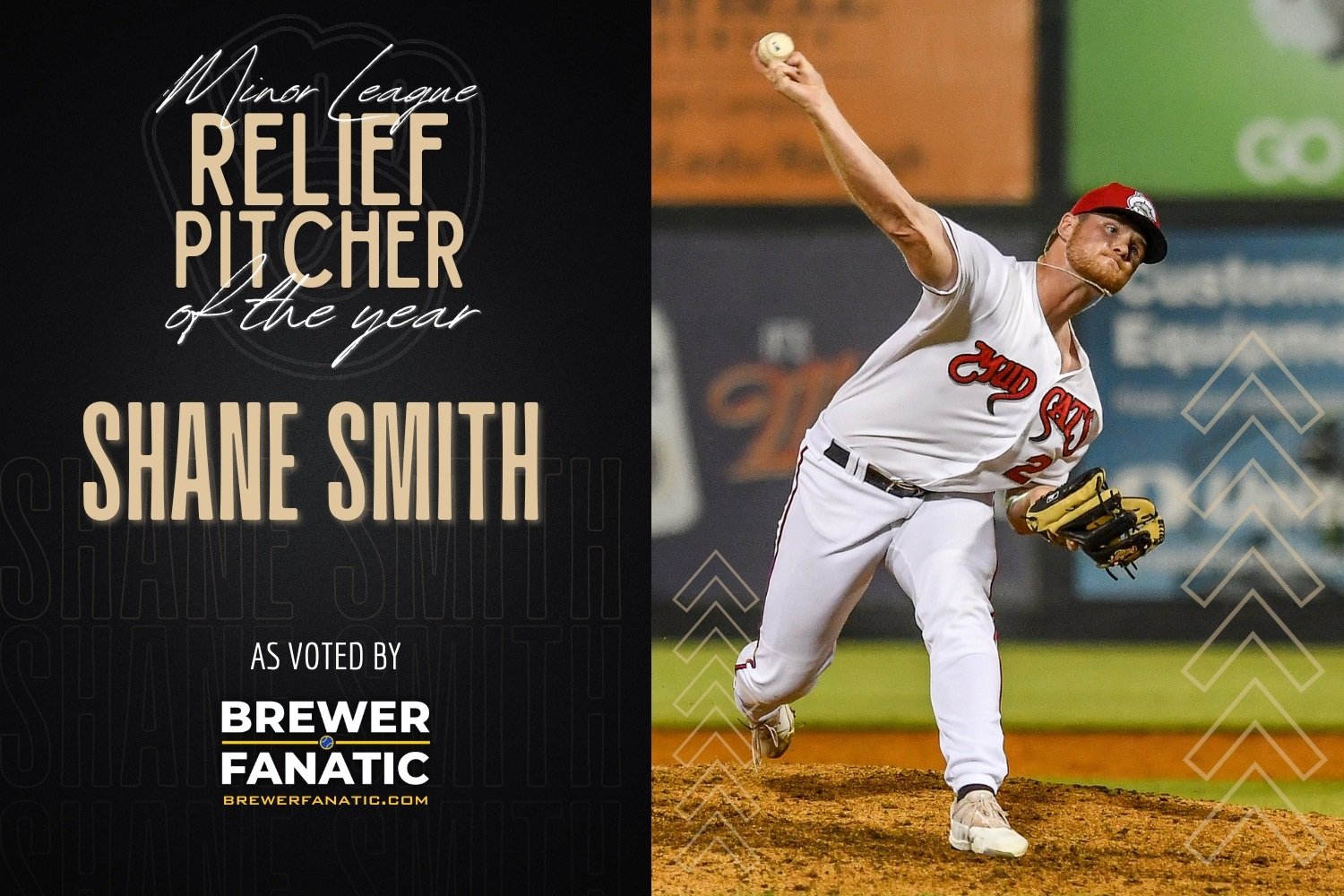 There were a handful of notable performances this season. With every organization putting such a premium on developing pitching, having players stand out early at the lowest level is a must. Being able to continue to foster that growth throughout their experience in professional baseball is what hopefully will translate to major-league success. Coming off a year with no minor-league action, these guys really stepped up when returning to the mound. Before getting into the top three, here are a couple of others that received votes. . Honorable Mention RHP Gerson Calzadilla (ACL Brewers/Carolina) LHP Justin King (Wisconsin) LHP Luis Amaya (Wisconsin/Biloxi) RHP Thyago Vieira (Nashville) RHP Miguel Guerrero (Carolina/Wisconsin) RHP Ryan Brady (Wisconsin/Biloxi) RHP Chase Costello (Carolina) Brewers Minor League Relief Pitcher of the Year Here are the top four vote-getters for Brewers Minor League Relief Pitcher of the Year. 4. LHP Clayton Andrews, 26, (Nashville) **Unranked by all major publications** Drafted in the 17th round in 2018, Andrews stands in at only 5’6, and if we’re being honest, that might be a bit generous. Despite his stature, his ride through the minor leagues has been an exhilarating one. In 2019, he was not only pitching, but also playing center field and racking up a batting average hovering around .300. After COVID he did get a few more plate appearances during the 2021 season, but would undergo Tommy John surgery shortly thereafter. He returned from the surgery during the 2022 season to mixed results. He was striking out nearly two batters per inning. Unfortunately he was also walking close to a batter an inning and had an ERA over nine. He had become an afterthought for many. That changed a bit when he came into a spring training game this year and immediately caught a lot of people’s attention when he touched 96 MPH and sat in the 94-95 range. For a left handed pitcher, that type of velocity will always create some intrigue. When that left handed pitcher is 5’6 or shorter? Then it creates a lot of intrigue. He also throws a 3000 RPM slider and a very interesting changeup as his secondary pitches. His April in Triple-A did nothing to slow down the excitement he had generated in spring training. Again striking out close to two batters an inning, Andrews did a much better job of limiting his walks, and baserunners in general, this time around. He struck out 14 in 8.1 innings and only walked three, on his way to a 1.02 ERA for the month. He followed that up with a strong May and June where he posted a 1.85 ERA between those two months to go with striking out 10 per nine. He did however walk nearly five per nine during that stretch. The command was an issue at times all season long, and in July it really showed in the results. In nine appearances Andrews pitched 7 1/3 innings and walked nine. His ERA that month was 7.36. In the midst of this month he made his MLB debut which unfortunately did not go as he would’ve hoped either. After a really tough month of July, it was great to see Andrews bounce back with a strong last two months. In his final 17 innings he posted a 2.12 ERA and struck out over 11 per nine. He also appeared in a couple more MLB games during that stretch. Unfortunately his other MLB appearances did not go much better than his debut and there will be some questions about the quality of his stuff as he moves forward. While the fastball velocity is pretty fun for a guy as short as he is, the shape and movement of the pitch are not what you’d want and for hitters, the fastball is extremely hittable. One has to wonder if the Brewers might attempt to teach him a sinker or something other than the four seam fastball this offseason. If they can, it’s possible we will see the fantastic Triple-A results start to translate a bit better to MLB. 3. RHP James Meeker, 28 (Biloxi/Nashville) **Unranked by all major publications** Meeker was signed out of independent ball in August of 2021. Meeker has moved from Low-A to Triple-A since signing and has done it with the use of a five-pitch mix. He throws a four seam fastball, a sinker and a cutter. The fastball and sinker sit in the 91-93 range and he may end up settling on one of them, as they can blend together at times. His cutter is a pitch he uses to get a lot of soft contact, coming in around 88 MPH regularly. He also throws a curveball and a changeup. The curveball comes in around 78-81 and has been a good swing and miss pitch for Meeker against right-handed hitters. His changeup is in the mid-80’s and is his best strikeout pitch against left-handed bats. In a lot of ways, there are some Matt Albers similarities with Meeker’s repertoire and that is the type of pitcher we could see Meeker becoming in MLB. Meeker is able to land all five pitches for strikes and throughout 2023 he used all five of his pitches to keep hitters off balance, landing himself third place on this list. He began the season on a tear out of the bullpen in Biloxi. Over the course of his first 34 1/3 innings pitched, Meeker had struck out 44 batters and only walked three, for an otherworldly 14.67 K:BB ratio. At that time his ERA sat at 2.62 and he seemed to be on his way to an incredible season. Unfortunately for Meeker, some injuries in the Shuckers rotation actually forced him into a starters role for eight starts. He made his first start on June 23rd and his final start on August 6th. In that time he posted a 5.14 ERA over 35 innings and he only struck out 17 batters. That stretch really tanked his season long numbers, as he went right back to his dominating ways while being used as a reliever again. He finished his Double-A season with 19 1/3 innings out of the bullpen, allowing only one earned run, which was good for a 0.46 ERA. He struck out 19 batters and only walked four during that stretch. He sacrificed to help the team by starting games, but it was clear that his future lies in the bullpen and the numbers show it. Meeker did make two appearances at Triple-A to close out the season and they did not go very well. Allowing four earned runs in four innings while walking three batters to only one strikeout. It may take some time to adjust to the highest level of the minors, but assuming he does eventually get there, Meeker will be right on the fringe of contributing to the 2024 Brewers bullpen shuttle. 2. RHP Tanner Shears (Carolina/Wisconsin): **Unranked by all major publications** An Independent league signing by the Brewers this past offseason, Shears had to work through some command issues all season, walking nearly eight batters per nine innings. Despite the command issues, he got fantastic surface level results. This is due, in large part, to having arguably the best stuff of any relief prospect in the system. His splitter is an elite pitch that completely kills spin and sits around 83-86. His fastball has arm side run, but sits mid-90's and touches upper 90’s. It does a great job riding up in the zone and plays well with the big splitter. He mixes in a slider that gets some sweep in the mid-80's as a pretty strong third pitch as well. Shears’ stuff is pretty ridiculous to watch. It’s so nasty that catchers struggle to catch his pitches, even when they’re in the zone. Because of that, it’s not hard to believe that he would have fewer walks if there was an automatic strike zone in place. That said, the inability to command his pitches is a real concern and the walks really caused his peripheral stats to look quite a bit worse than his ERA. Shears began the season in Carolina where his stuff was just overpowering for the hitters he was facing. He struck out nearly 15 per nine in his 20 innings at Low-A, and only allowed an opponent batting average of .171 at the level. He was promoted to High-A after his June 9th appearance and would finish the rest of the season there. Shears would get off to a strong start at High-A as he posted a 2.21 ERA from the time of his promotion, through the end of July. He struck out 12.7 per nine during that stretch, and while the walks were still up, he was showing that he belonged at that level. In August though, he turned things up a notch. Shears did not allow a single earned run in his 9 2/3 innings and struck out over 12 per nine once again. He would finish the season with three September outings, in which he struck out seven in 3 1/3 innings and only allowed one earned run. In the end, Shears posted very similar numbers at both levels and showed signs of being a potential shut down reliever. It will come down to his ability to rein in his command and nothing more. When he is around the zone consistently, hitters are going to struggle. As he reaches the upper levels though, hitters will become even more patient and he will need to work even harder to avoid the walks. Shears has a wide range of outcomes, from a possible MLB reliever in 2024 to someone that walks too many to stick around in pro ball. Based on the glimpses of dominance that he showed this season, let’s hope it’s closer to the former. 1. RHP Shane Smith (Carolina/Wisconsin): **Unranked by all major publications** Smith was a member of the undrafted class following the 2021 draft, signed out of Wake Forest, where he had been their closer in 2020. Unfortunately for Smith, he was in the midst of Tommy John rehab during the draft, which played a big role in him not being selected. Prior to this 2023 season he had only thrown three professional innings, all of which had come at the complex level. This season he was able to move from Low-A all the way up to Double-A, using his three pitch mix. Smith comes equipped with a mid-90’s fastball that he uses up in the zone, and pairs extremely well with his sharp curveball that he often goes to as his “out” pitch. He also mixes in a cutter that shows good shape and life as well. It’s possible that he also sprinkled in a slider at times, but those could have been cutters that are generating a bit more movement than average. Starting his season at Low-A Carolina, Smith struck out an impressive 14.4 per nine while only walking 2.87 per nine at that level. He ended up with a 2.59 ERA, which was a really strong number. However, he finished his time at Low-A with a bang, throwing 14 1/3 inning scoreless while posting a 19:3 strikeout to walk ratio in that time. That stretch earned him a promotion to High-A where the scoreless streak would be extended one more inning, before Smith allowed one earned run in his second appearance at that level. Following his promotion, Smith kept showing improvement and hitters continued to be mystified by his fastball/curveball combination. While his strikeout numbers weren’t quite as ridiculous as they were in Carolina, he still ended up with a very strong 11.6 per nine number with the Timber Rattlers. His ERA actually dropped quite a bit at the more advanced level, going down to 1.37 over the course of his 26 1/3 innings. His performance at both of the Class A levels did end up getting Smith a cup of coffee in Double-A, where he made two appearances for the Biloxi Shuckers. He threw a total of two scoreless innings, allowing one hit, one walk and striking out two. When Smith was closing games at Wake Forest, he was once considered one of the better relief prospects in college baseball. Tommy John obviously ended up hurting Smith in more ways than one, but his loss at the time may have ended up being a positive for both him and the Brewers. Smith landed with one of the best pitching development organizations in baseball and the Brewers took a flier on a pitcher who now looks like somebody that could be a high leverage reliever at the major league level as soon as the next year or two. Smith is part of the eight-player Brewers contingent in the Arizona Fall League. Congratulations to Shane Smith and each of the Brewers minor league relievers that have been recognized today. Please join us in congratulating them and discussing them in the Comments below.
- 1 comment
-
- 1
-
-
- shane smith
- james meeker
- (and 3 more)

