



Tim Muma
-
Posts
436 -
Joined
-
Last visited
-
Days Won
1
Content Type
Profiles
Forums
Blogs
Events
News
2026 Milwaukee Brewers Top Prospects Ranking
Milwaukee Brewers Videos
2022 Milwaukee Brewers Draft Picks
Milwaukee Brewers Free Agent & Trade Rumors, Notes, & Tidbits
Guides & Resources
2023 Milwaukee Brewers Draft Picks
2024 Milwaukee Brewers Draft Picks
The Milwaukee Brewers Players Project
2025 Milwaukee Brewers Draft Pick Tracker
2026 Milwaukee Brewers Draft Tracker: Picks & Bonuses
Store
Downloads
Gallery
Everything posted by Tim Muma
-
 The annual ZIPS projections are intriguing to analyze while waiting for the season to start. And while the stats and minutiae provide some value, the real fun comes from the player comparisons. The 2023 Milwaukee Brewers have a handful of interesting comps to examine this season. Who knows how entertaining the Milwaukee Brewers will be in 2023; however, based on the ZIPS projections, some guys could ramp up the excitement this year. Baseball fans and experts have always been obsessed with comparing players from different eras. That is different from the goal of ZIPS projections, but its analytical computations for the coming season also spit out player comps by age. Specifically, "Top Near-Age Comps." Only some of the comps are compelling because of a player's quality. There are multiple reasons players' comps could be fun or fascinating. Let's take a look at the best Brewers ZIPS Player Comps. Honorable Mention Mike Brosseau (Infielder) Three former Brewers made Brosseau's top-three comp list, though they all played less than 120 games with the Crew: Junior Spivey, Joe Dillion, and Kurt Bevacqua. Dillon and Bevacqua are footnotes in Brewers' history who combined for a 0.1 bWAR in parts of four seasons. Spivey came to Milwaukee as part of enormous trade with the Arizona Diamondbacks in 2003. The Brewers sent two-time All-Star slugger Richie Sexson (and others) to Arizona for Spivey, Chris Capuano, Chad Moeller, Lyle Overbay, Jorge De La Rosa, and current Brewers manager Craig Counsell. Spivey was serviceable, but Overbay and Capuano gave the Brewers much more production from that trade. As for the comps to Brosseau, he should outperform them if used properly. Alex Jackson (Catcher) One of Jackson's comps is Bruce Bochy, which would be more interesting if it meant Jackson could be as successful as a manager. As a catcher - meh. But that comp pales in comparison to another on the list. Long-time Brewers' broadcaster Bill Schroeder is also a comp for Jackson. Does this mean that Jackson will be just the second catcher to be part of a single-pitcher no-hitter for the franchise (and remind us weekly)? No one expects Jackson to play a significant role in the 2023 season, but the club would be happy with one of Schroeder's seasons. In 1987, Schroeder posted a .332/.379/.548/.927 slash line with a 139 OPS+ and 14 HR in 270 plate appearances. That would work for a backup backstop. Top Five Brewers Player Comps 5 - Devin Williams (Relief Pitcher) Not surprisingly, Williams' comps feature a few dominant relievers, two with shorter bursts of success and one all-timer. First up, Scott Williamson, who burst onto the scene with the Cincinnati Reds by winning Rookie of the Year and earning an All-Star bid in his age-23 season. He had an ERA+ of 144 or better in three of his first four seasons (injured in 2001) and had a 136 ERA+ for his career. As a second comp, Tommy Kahnle's career ERA+ of 116 is nice, but his age-26 and 27 seasons featured a 155 and 171 ERA+, respectively. He was lights out in 2017 with a 13.8 K/9 and just 17 walks allowed in 62.2 innings. Longevity of value and output would be the concern with the first two comps. But Williams' most fascinating comp is Francisco (K-Rod) Rodriguez. The 16-year veteran is on the Hall of Fame ballot for the first time in 2023, and deservedly so: MLB record for saves in a season (62) Fourth all-time in saves (437) Led the league in saves three times Six-time All-Star Three top-four finishes in Cy Young Award voting The Brewers would be thrilled to get these long-term shutdown performances from Williams for the next decade. Of course, K-Rod pitched parts of five seasons in Milwaukee as well, as a valuable set-up man for John Axford, then back in the closer's role. Rodriguez is fifth in franchise history with 95 saves for the Crew. 4 - Willy Adames (Shortstop) The first thing that stands out about Adames' comps is that only some of the three guys played shortstop. Instead, two were exclusively third basemen, and the third played most games at the hot corner (then second base mostly). After a cup of coffee as a 21-year-old in 1930, Pinky Higgins played from 1933-1946 (he missed 1945 serving in the military). He played in three All-Star games, earned MVP votes in five seasons, and drove in 106 runs in his age 28 and 29 seasons each. Overall a solid player with a 107 OPS+ and a .370 OBP in his career. Comp number two, Jim Morrison, played thrice in more than 100 games in his 12 MLB seasons in the '70s and '80s. He had a few years with a 119 OPS+ or better, though some had limited playing time. But Adames' best comp to watch is Scott Rolen, who is also on the Hall of Fame ballot this year. Rolen received 63.2% of votes last year (75% gets you in the Hall), and some think he will get enough votes in 2023. Rolen's career accolades are among the best, as he consistently performed for 17 seasons. He should be considered an all-time top-ten third baseman in MLB history. Rookie of the Year Award Eight-time Gold Glove winner at third base Seven-time All-Star Silver Slugger Award 20+ HR in 10 seasons Any player would be honored to compare himself to Rolen. As Adames enters his age-27 season, Brewers' fans would love to see him mimic Rolen's same-age campaign. That season, Rolen won the Gold Glove and Silver Slugger Award, earned an All-Star berth, and hit 31 HR with 110 RBI. He also had an .860 OPS (129 OPS+) and a 6.5 fWAR, good for ninth in baseball that year. Adames' career-best fWAR is 4.7 (last season). 3 - Brandon Woodruff Three hurlers with some terrific peak seasons land on Woodruff's comp list, including two active starters. Camilo Pascual is likely the least known of the three, but a quality arm to have by your side. Pascual led the league in strikeouts for three straight seasons while with the Minnesota Twins. Across 18 years, between 1954-1971, Pascual was a seven-time All-Star and garnered MVP votes in two of those years. From '59-'64, he had a 128 ERA+ (3.04 ERA). Carlos Carrasco also had a few strong peak seasons with the Cleveland Guardians, finishing fourth in Cy Young voting in his age-30 season (which Woodruff is entering). From 2014-2018, Carrasco posted a 133 ERA+ and tossed at least 183 innings three times. When he struggled in 2019 and sought a medical opinion, he found it he had cancer. He bounced back last season for the New York Mets with a 3.97 ERA over 152 innings. Saving Woodruff's best comp for last, it's Stephen Strasburg. The hyped-up phenom has put up some big numbers, leading the league in strikeouts in 2014 (242), earning four All-Star berths, and finishing in the top five in Cy Young twice. They have the same K/9 ratio in their careers (10.5), but Woodruff has a better ERA+ (132 to 129). There's no reason to think Woody couldn't have a better age-30 season than Strasburg, who posted a 135 ERA+ in 2019. The biggest thing Woodruff would like to take as his own from that year was Strasburg winning a World Series, which started with the Washington National beating the Brewers in the Wild Card game. 2 - Rowdy Tellez The big lefty first baseman has three recognizable names as his comps, with two of them popular fan-favorites with the Twins. The lone non-Twins player, Tino Martinez, had a couple of OPS seasons over .900, including 44 homers in 1997 with the New York Yankees to finish second in MVP voting. That was his age-28 season, just as Tellez turns 28 this March. Martinez had 12 seasons with 20+ HR and eight years with an OPS+ of 108 or better between the Seattle Mariners and Yankees. Kent Hrbek played all 14 MLB seasons in Minnesota with a career .848 OPS (128 OPS+). Hrbek was second in MVP honors in 1984, but his best year was 1987, with a career-high 34 HR and .934 OPS. He was a consistent hitter who showed solid plate discipline and boasted a .367 OBP to go with his .481 SLG. Hrbek seemed to have a little mean streak and dirty side to him, something that doesn't come across in Tellez. Hrbek's fellow Twins' first baseman, Justin Morneau, is the top comp for Tellez. He played 11 seasons with the Twins (14 overall), with the five-year stretch from 2006-2010 the best of his career. During that time, Morneau averaged 34 doubles, 27 HR, and 105 RBI with a slash line of .298/.372/.528/.900 (138 OPS+). He won the MVP in 2006, took second in voting in 2008, earned two Silver Slugger Awards, and had four All-Star appearances. In his MVP season, Morneau blasted 34 homers with 130 RBI, 37 doubles, 97 runs scored, and a .934 OPS (140 OPS+). As for Morneau's age-28 season, Brewers' fans would love to see a reboot of that slash line with Tellez: .274/.363/.516/.878 (130 OPS+) 1 - Corbin Burnes One would expect some elite comps here, and they don't disappoint. It shows how amazing Burnes has pitched and the heights he could reach. Let's start with the one retired pitcher: Hall-of-Famer Don Drysdale. The Los Angeles Dodgers legend was a nine-time All-Star, three-time World Series champion, and won the 1962 Cy Young Award. Pitching in the '50s and '60s was a different beast as Drysdale logged more than 300 innings in four straight seasons and 239-plus frames nine times. Drysdale owned a 2.95 ERA (121 ERA+) in more than 3,400 career innings and led the league in strikeouts three times. Gerrit Cole is also on the comp list, and when Burnes hits free agency, Cole's contract will undoubtedly be used as a gauge as well. Cole has yet to win a Cy Young Award like Burnes, but he's posted some disgusting seasons where he has twice finished second and top-five in three other seasons. Cole led his league in strikeouts twice, including last season in the American League (257), while Burnes led the National League (243). Cole is a five-time All-Star and remains one of the best pitchers in baseball. It would be phenomenal if Burnes, in 2023, could copy Cole's age-28 season. Cole went 20-5 with a 2.50 ERA, 326 strikeouts, and a ridiculous 185 ERA+ (all the best in the league). One of the few active starters to top Cole would be Burnes' last comp, Justin Verlander. His Hall of Fame plaque is already waiting in Cooperstown. It feels like people forget how good Verlander has always been and continues to be, despite his age and mileage on his right arm. Regardless, his elite resume is beautiful: Rookie of the Year Award MVP Award Three Cy Young Awards Two-time ERA title winner Nine-time All-Star Two-time World Series champ Last season, at age 39, Verlander went 18-4 with a 1.75 ERA in 175 innings. Just stupid. He has led his league in strikeouts five times, and he punched out 300 batters in 2019. Verlander has had an ERA+ of at least 120 in 13 of his 17 seasons, topping a 150 ERA+ on six occasions. Just an unreal career that will continue with the Mets in 2023. So for kicks, with Burnes prepping for his age-28 season, what did Verlander's numbers look like at that age? All he did was lead the league in all the categories below: 24-5 record 2.40 ERA and 172 ERA+ 250 strikeouts 0.920 WHIP 6.2 hits per nine innings 251 innings In case you were wondering, Verlander not only won the Cy Young that season but was also named the American League MVP in 2011. Does somebody want to relay this information to Burnes? For the record, I'm not making any predictions for the 2023 Brewers based on their ZIPS projections or their comps. At the same time, if one or two of these guys could reach the levels of their MLB brethren, that would be quite incredible. View full article
 -
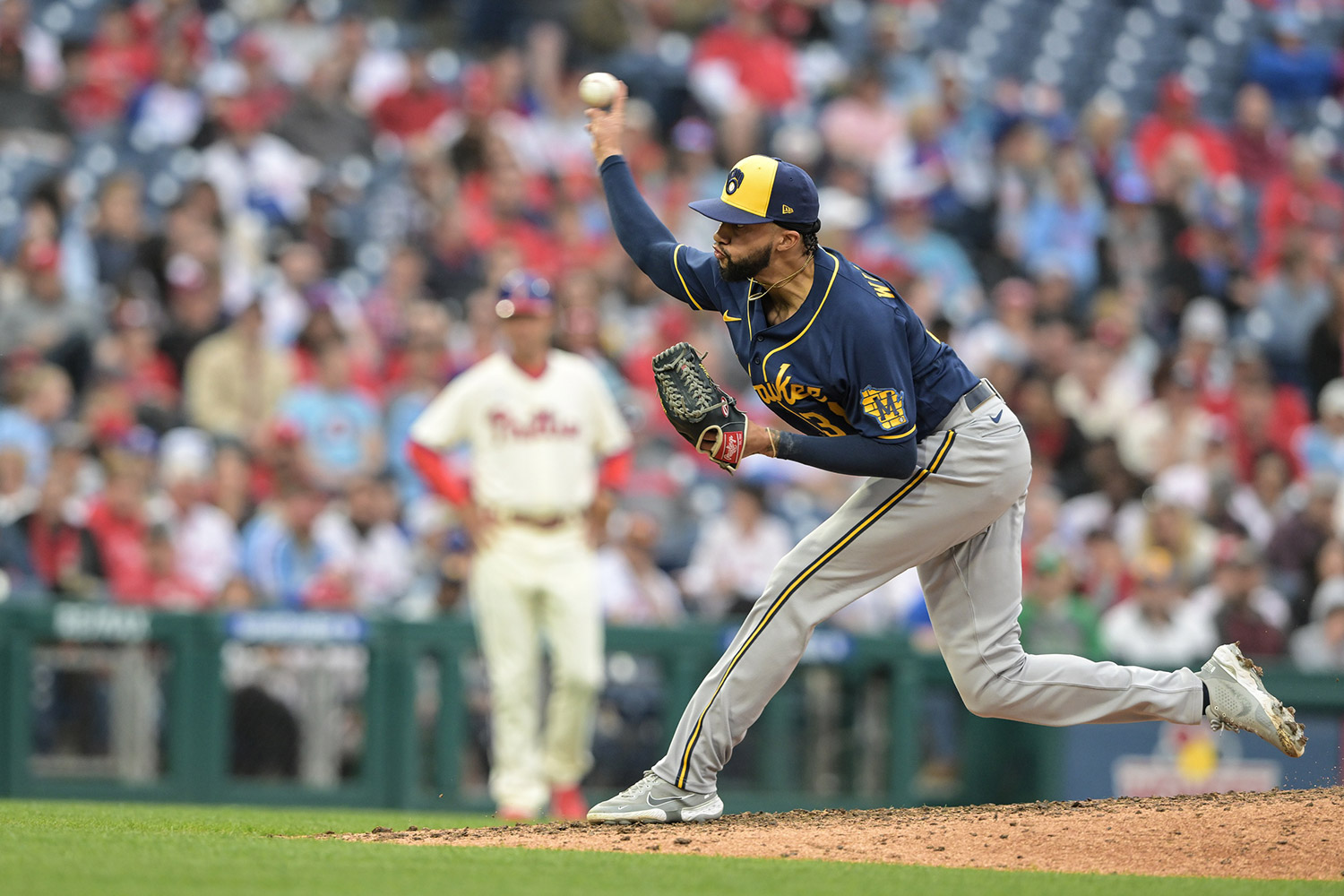 Who knows how entertaining the Milwaukee Brewers will be in 2023; however, based on the ZIPS projections, some guys could ramp up the excitement this year. Baseball fans and experts have always been obsessed with comparing players from different eras. That is different from the goal of ZIPS projections, but its analytical computations for the coming season also spit out player comps by age. Specifically, "Top Near-Age Comps." Only some of the comps are compelling because of a player's quality. There are multiple reasons players' comps could be fun or fascinating. Let's take a look at the best Brewers ZIPS Player Comps. Honorable Mention Mike Brosseau (Infielder) Three former Brewers made Brosseau's top-three comp list, though they all played less than 120 games with the Crew: Junior Spivey, Joe Dillion, and Kurt Bevacqua. Dillon and Bevacqua are footnotes in Brewers' history who combined for a 0.1 bWAR in parts of four seasons. Spivey came to Milwaukee as part of enormous trade with the Arizona Diamondbacks in 2003. The Brewers sent two-time All-Star slugger Richie Sexson (and others) to Arizona for Spivey, Chris Capuano, Chad Moeller, Lyle Overbay, Jorge De La Rosa, and current Brewers manager Craig Counsell. Spivey was serviceable, but Overbay and Capuano gave the Brewers much more production from that trade. As for the comps to Brosseau, he should outperform them if used properly. Alex Jackson (Catcher) One of Jackson's comps is Bruce Bochy, which would be more interesting if it meant Jackson could be as successful as a manager. As a catcher - meh. But that comp pales in comparison to another on the list. Long-time Brewers' broadcaster Bill Schroeder is also a comp for Jackson. Does this mean that Jackson will be just the second catcher to be part of a single-pitcher no-hitter for the franchise (and remind us weekly)? No one expects Jackson to play a significant role in the 2023 season, but the club would be happy with one of Schroeder's seasons. In 1987, Schroeder posted a .332/.379/.548/.927 slash line with a 139 OPS+ and 14 HR in 270 plate appearances. That would work for a backup backstop. Top Five Brewers Player Comps 5 - Devin Williams (Relief Pitcher) Not surprisingly, Williams' comps feature a few dominant relievers, two with shorter bursts of success and one all-timer. First up, Scott Williamson, who burst onto the scene with the Cincinnati Reds by winning Rookie of the Year and earning an All-Star bid in his age-23 season. He had an ERA+ of 144 or better in three of his first four seasons (injured in 2001) and had a 136 ERA+ for his career. As a second comp, Tommy Kahnle's career ERA+ of 116 is nice, but his age-26 and 27 seasons featured a 155 and 171 ERA+, respectively. He was lights out in 2017 with a 13.8 K/9 and just 17 walks allowed in 62.2 innings. Longevity of value and output would be the concern with the first two comps. But Williams' most fascinating comp is Francisco (K-Rod) Rodriguez. The 16-year veteran is on the Hall of Fame ballot for the first time in 2023, and deservedly so: MLB record for saves in a season (62) Fourth all-time in saves (437) Led the league in saves three times Six-time All-Star Three top-four finishes in Cy Young Award voting The Brewers would be thrilled to get these long-term shutdown performances from Williams for the next decade. Of course, K-Rod pitched parts of five seasons in Milwaukee as well, as a valuable set-up man for John Axford, then back in the closer's role. Rodriguez is fifth in franchise history with 95 saves for the Crew. 4 - Willy Adames (Shortstop) The first thing that stands out about Adames' comps is that only some of the three guys played shortstop. Instead, two were exclusively third basemen, and the third played most games at the hot corner (then second base mostly). After a cup of coffee as a 21-year-old in 1930, Pinky Higgins played from 1933-1946 (he missed 1945 serving in the military). He played in three All-Star games, earned MVP votes in five seasons, and drove in 106 runs in his age 28 and 29 seasons each. Overall a solid player with a 107 OPS+ and a .370 OBP in his career. Comp number two, Jim Morrison, played thrice in more than 100 games in his 12 MLB seasons in the '70s and '80s. He had a few years with a 119 OPS+ or better, though some had limited playing time. But Adames' best comp to watch is Scott Rolen, who is also on the Hall of Fame ballot this year. Rolen received 63.2% of votes last year (75% gets you in the Hall), and some think he will get enough votes in 2023. Rolen's career accolades are among the best, as he consistently performed for 17 seasons. He should be considered an all-time top-ten third baseman in MLB history. Rookie of the Year Award Eight-time Gold Glove winner at third base Seven-time All-Star Silver Slugger Award 20+ HR in 10 seasons Any player would be honored to compare himself to Rolen. As Adames enters his age-27 season, Brewers' fans would love to see him mimic Rolen's same-age campaign. That season, Rolen won the Gold Glove and Silver Slugger Award, earned an All-Star berth, and hit 31 HR with 110 RBI. He also had an .860 OPS (129 OPS+) and a 6.5 fWAR, good for ninth in baseball that year. Adames' career-best fWAR is 4.7 (last season). 3 - Brandon Woodruff Three hurlers with some terrific peak seasons land on Woodruff's comp list, including two active starters. Camilo Pascual is likely the least known of the three, but a quality arm to have by your side. Pascual led the league in strikeouts for three straight seasons while with the Minnesota Twins. Across 18 years, between 1954-1971, Pascual was a seven-time All-Star and garnered MVP votes in two of those years. From '59-'64, he had a 128 ERA+ (3.04 ERA). Carlos Carrasco also had a few strong peak seasons with the Cleveland Guardians, finishing fourth in Cy Young voting in his age-30 season (which Woodruff is entering). From 2014-2018, Carrasco posted a 133 ERA+ and tossed at least 183 innings three times. When he struggled in 2019 and sought a medical opinion, he found it he had cancer. He bounced back last season for the New York Mets with a 3.97 ERA over 152 innings. Saving Woodruff's best comp for last, it's Stephen Strasburg. The hyped-up phenom has put up some big numbers, leading the league in strikeouts in 2014 (242), earning four All-Star berths, and finishing in the top five in Cy Young twice. They have the same K/9 ratio in their careers (10.5), but Woodruff has a better ERA+ (132 to 129). There's no reason to think Woody couldn't have a better age-30 season than Strasburg, who posted a 135 ERA+ in 2019. The biggest thing Woodruff would like to take as his own from that year was Strasburg winning a World Series, which started with the Washington National beating the Brewers in the Wild Card game. 2 - Rowdy Tellez The big lefty first baseman has three recognizable names as his comps, with two of them popular fan-favorites with the Twins. The lone non-Twins player, Tino Martinez, had a couple of OPS seasons over .900, including 44 homers in 1997 with the New York Yankees to finish second in MVP voting. That was his age-28 season, just as Tellez turns 28 this March. Martinez had 12 seasons with 20+ HR and eight years with an OPS+ of 108 or better between the Seattle Mariners and Yankees. Kent Hrbek played all 14 MLB seasons in Minnesota with a career .848 OPS (128 OPS+). Hrbek was second in MVP honors in 1984, but his best year was 1987, with a career-high 34 HR and .934 OPS. He was a consistent hitter who showed solid plate discipline and boasted a .367 OBP to go with his .481 SLG. Hrbek seemed to have a little mean streak and dirty side to him, something that doesn't come across in Tellez. Hrbek's fellow Twins' first baseman, Justin Morneau, is the top comp for Tellez. He played 11 seasons with the Twins (14 overall), with the five-year stretch from 2006-2010 the best of his career. During that time, Morneau averaged 34 doubles, 27 HR, and 105 RBI with a slash line of .298/.372/.528/.900 (138 OPS+). He won the MVP in 2006, took second in voting in 2008, earned two Silver Slugger Awards, and had four All-Star appearances. In his MVP season, Morneau blasted 34 homers with 130 RBI, 37 doubles, 97 runs scored, and a .934 OPS (140 OPS+). As for Morneau's age-28 season, Brewers' fans would love to see a reboot of that slash line with Tellez: .274/.363/.516/.878 (130 OPS+) 1 - Corbin Burnes One would expect some elite comps here, and they don't disappoint. It shows how amazing Burnes has pitched and the heights he could reach. Let's start with the one retired pitcher: Hall-of-Famer Don Drysdale. The Los Angeles Dodgers legend was a nine-time All-Star, three-time World Series champion, and won the 1962 Cy Young Award. Pitching in the '50s and '60s was a different beast as Drysdale logged more than 300 innings in four straight seasons and 239-plus frames nine times. Drysdale owned a 2.95 ERA (121 ERA+) in more than 3,400 career innings and led the league in strikeouts three times. Gerrit Cole is also on the comp list, and when Burnes hits free agency, Cole's contract will undoubtedly be used as a gauge as well. Cole has yet to win a Cy Young Award like Burnes, but he's posted some disgusting seasons where he has twice finished second and top-five in three other seasons. Cole led his league in strikeouts twice, including last season in the American League (257), while Burnes led the National League (243). Cole is a five-time All-Star and remains one of the best pitchers in baseball. It would be phenomenal if Burnes, in 2023, could copy Cole's age-28 season. Cole went 20-5 with a 2.50 ERA, 326 strikeouts, and a ridiculous 185 ERA+ (all the best in the league). One of the few active starters to top Cole would be Burnes' last comp, Justin Verlander. His Hall of Fame plaque is already waiting in Cooperstown. It feels like people forget how good Verlander has always been and continues to be, despite his age and mileage on his right arm. Regardless, his elite resume is beautiful: Rookie of the Year Award MVP Award Three Cy Young Awards Two-time ERA title winner Nine-time All-Star Two-time World Series champ Last season, at age 39, Verlander went 18-4 with a 1.75 ERA in 175 innings. Just stupid. He has led his league in strikeouts five times, and he punched out 300 batters in 2019. Verlander has had an ERA+ of at least 120 in 13 of his 17 seasons, topping a 150 ERA+ on six occasions. Just an unreal career that will continue with the Mets in 2023. So for kicks, with Burnes prepping for his age-28 season, what did Verlander's numbers look like at that age? All he did was lead the league in all the categories below: 24-5 record 2.40 ERA and 172 ERA+ 250 strikeouts 0.920 WHIP 6.2 hits per nine innings 251 innings In case you were wondering, Verlander not only won the Cy Young that season but was also named the American League MVP in 2011. Does somebody want to relay this information to Burnes? For the record, I'm not making any predictions for the 2023 Brewers based on their ZIPS projections or their comps. At the same time, if one or two of these guys could reach the levels of their MLB brethren, that would be quite incredible.
 -
 Baseball managers prefer having job security heading into a new season for several reasons. Manager Craig Counsell is entering the final year of his three-year contract extension with the Milwaukee Brewers. He signed that deal on January 8, 2020 - right around this time a few years back. Something may happen this week, but intriguingly, nothing has even leaked out about the two sides having conversations. A lame-duck leader can cause uncertainty among players, strange decisions by the skipper, and possible trust issues among all parties. Counsell has given the club plenty of reasons to want him in the fold for the foreseeable future. Hired May 4, 2015, the 52-year-old skipper is the longest-tenured manager in the National League (third in MLB). Counsell is the Brewers' franchise leader in managerial wins (615) and led the Crew to four consecutive postseason appearances from 2018-2022. The 2018 squad came within one game of the World Series, dropping Game 7 of the NLCS to the Los Angeles Dodgers. Furthering Counsell's dedication and connection to the Brewers is his hometown appeal, as he grew up in a suburb of Milwaukee and passionately rooted for the team for which his father worked. From the time he was hired, Counsell stressed his long-time love for the team and how he feels responsible for bringing success to the Milwaukee baseball fans. "Baseball in this city is important to me. It's part of me. I feel a responsibility for it. I always have. And I'm proud to have that responsibility." Perhaps that adds to his strength as a manager of this particular team - but that is subjective. But most people within MLB rave about Counsell, his ability to manage a clubhouse, and his approach to the game on a nightly basis. Though he hasn't won a Manager of the Year Award, he's consistently listed among the best skippers in baseball when polls are taken. What could be preventing another extension? General Manager Matt Arnold Although Doug Melvin hired Counsell, Stearns took over as GM four months later. By all accounts, Stearns and Counsell worked well together and combined forces when discussing personnel moves, in-game strategies, statistical evaluation, and many other aspects. With Stearns stepping down after the 2022 season and Matt Arnold taking the lead role, there could be some hesitancy. Further muddying the waters, some reports indicate Arnold's contract also expires after this season. However, front office contracts are often kept quiet until someone leaks it out. As far as his GM duties, Arnold seems to think and act similarly to Stearns in constructing a roster and looking at player values. However, he likely has plans that separate him from his predecessor, which could mean different thoughts on management. One would assume Counsell and Arnold have a relationship in some capacity. But would Arnold like to select his own man to lead the Brewers if he's here for the long run? Need for a New Voice After eight years of running the on-field tactics of the Brewers, some could feel a new voice is necessary to move the club forward. Counsell is often cited as a manager who forms strong relationships with players and handles the personalities in the clubhouse as well as anyone. However, many teams across all sports start to tune out the same messages they hear over time. Some might think that failing to reach the playoffs last season, after getting off to a franchise-best start, is a sign of his fading effectiveness. Others have also raised in-game decisions and "crutches" when utilizing statistics. Whether it is lineup construction, bullpen management, or how to handle starting pitchers, players can lose faith when things go wrong. It's nearly impossible to gauge, but sometimes a fresh perspective can be something the players - and front office - would like to have. The Josh Hader Trade As noted above, Counsell is privy to front office information and possible personnel moves. The Josh Hader trade negatively impacted the 2022 club more than anyone thought it would within Milwaukee's staff. How much blame falls on Counsell is up for debate. One aspect of Counsell's managerial success has been his communication with players. No one knows precisely when he knew the trade was going down or how he addressed it with players, but there was a failure on the organization's side. Did Counsell get ahead of it? Did he react too slowly? It could be part of the hesitation to extend him. Craig Counsell Himself We often assume the manager would be happy to have a multi-year commitment from the club. However, it could be Counsell who wants to wait and see. Counsell may be interested in another job at some point, especially if he wants to work with Stearns (if he goes elsewhere). Maybe he is frustrated with the lack of financial resources in Milwaukee. Much like players often need a new voice, a leader sometimes wants to explore another fan base, league, or group of players. Counsell's two sons might be the more significant factor. His older son (Brady) is playing baseball as a sophomore at the University of Minnesota this year. His younger son (Jack) is currently a senior in high school and has already committed to playing at the University of Michigan. If Counsell were to leave the Brewers after the 2023 season, it would give him the freedom to follow each of his sons for the next few years. For those who are parents, that could be a powerful pull away from managing. He could return to the big leagues in five years with plenty of interested teams waiting for him. There are plenty of strong feelings among fans regarding Counsell in both directions. Regardless of how one feels about him, the closer the Brewers get to Spring Training without an extension, the more intriguing 2023 becomes.
 -
Manager Craig Counsell's contract expires at the end of the 2023 season. About five weeks before Milwaukee Brewers' pitchers and catchers report to Arizona, it's curious that things have been quiet regarding a possible extension. Is there something holding one side or the other back? Baseball managers prefer having job security heading into a new season for several reasons. Manager Craig Counsell is entering the final year of his three-year contract extension with the Milwaukee Brewers. He signed that deal on January 8, 2020 - right around this time a few years back. Something may happen this week, but intriguingly, nothing has even leaked out about the two sides having conversations. A lame-duck leader can cause uncertainty among players, strange decisions by the skipper, and possible trust issues among all parties. Counsell has given the club plenty of reasons to want him in the fold for the foreseeable future. Hired May 4, 2015, the 52-year-old skipper is the longest-tenured manager in the National League (third in MLB). Counsell is the Brewers' franchise leader in managerial wins (615) and led the Crew to four consecutive postseason appearances from 2018-2022. The 2018 squad came within one game of the World Series, dropping Game 7 of the NLCS to the Los Angeles Dodgers. Furthering Counsell's dedication and connection to the Brewers is his hometown appeal, as he grew up in a suburb of Milwaukee and passionately rooted for the team for which his father worked. From the time he was hired, Counsell stressed his long-time love for the team and how he feels responsible for bringing success to the Milwaukee baseball fans. "Baseball in this city is important to me. It's part of me. I feel a responsibility for it. I always have. And I'm proud to have that responsibility." Perhaps that adds to his strength as a manager of this particular team - but that is subjective. But most people within MLB rave about Counsell, his ability to manage a clubhouse, and his approach to the game on a nightly basis. Though he hasn't won a Manager of the Year Award, he's consistently listed among the best skippers in baseball when polls are taken. What could be preventing another extension? General Manager Matt Arnold Although Doug Melvin hired Counsell, Stearns took over as GM four months later. By all accounts, Stearns and Counsell worked well together and combined forces when discussing personnel moves, in-game strategies, statistical evaluation, and many other aspects. With Stearns stepping down after the 2022 season and Matt Arnold taking the lead role, there could be some hesitancy. Further muddying the waters, some reports indicate Arnold's contract also expires after this season. However, front office contracts are often kept quiet until someone leaks it out. As far as his GM duties, Arnold seems to think and act similarly to Stearns in constructing a roster and looking at player values. However, he likely has plans that separate him from his predecessor, which could mean different thoughts on management. One would assume Counsell and Arnold have a relationship in some capacity. But would Arnold like to select his own man to lead the Brewers if he's here for the long run? Need for a New Voice After eight years of running the on-field tactics of the Brewers, some could feel a new voice is necessary to move the club forward. Counsell is often cited as a manager who forms strong relationships with players and handles the personalities in the clubhouse as well as anyone. However, many teams across all sports start to tune out the same messages they hear over time. Some might think that failing to reach the playoffs last season, after getting off to a franchise-best start, is a sign of his fading effectiveness. Others have also raised in-game decisions and "crutches" when utilizing statistics. Whether it is lineup construction, bullpen management, or how to handle starting pitchers, players can lose faith when things go wrong. It's nearly impossible to gauge, but sometimes a fresh perspective can be something the players - and front office - would like to have. The Josh Hader Trade As noted above, Counsell is privy to front office information and possible personnel moves. The Josh Hader trade negatively impacted the 2022 club more than anyone thought it would within Milwaukee's staff. How much blame falls on Counsell is up for debate. One aspect of Counsell's managerial success has been his communication with players. No one knows precisely when he knew the trade was going down or how he addressed it with players, but there was a failure on the organization's side. Did Counsell get ahead of it? Did he react too slowly? It could be part of the hesitation to extend him. Craig Counsell Himself We often assume the manager would be happy to have a multi-year commitment from the club. However, it could be Counsell who wants to wait and see. Counsell may be interested in another job at some point, especially if he wants to work with Stearns (if he goes elsewhere). Maybe he is frustrated with the lack of financial resources in Milwaukee. Much like players often need a new voice, a leader sometimes wants to explore another fan base, league, or group of players. Counsell's two sons might be the more significant factor. His older son (Brady) is playing baseball as a sophomore at the University of Minnesota this year. His younger son (Jack) is currently a senior in high school and has already committed to playing at the University of Michigan. If Counsell were to leave the Brewers after the 2023 season, it would give him the freedom to follow each of his sons for the next few years. For those who are parents, that could be a powerful pull away from managing. He could return to the big leagues in five years with plenty of interested teams waiting for him. There are plenty of strong feelings among fans regarding Counsell in both directions. Regardless of how one feels about him, the closer the Brewers get to Spring Training without an extension, the more intriguing 2023 becomes. View full article
-
Signing Wade Miley to a one-year contract isn't going to turn many heads for the Milwaukee Brewers. However, the club's acquisition of another starting pitcher opens up several strategic options for the team to explore. Do the Brewers already have something in mind, or will they sit back and let the answer come to them? Assuming Wade Miley can stay relatively healthy, the Milwaukee Brewers view him as a reliable out-getter at the back of the rotation. He threw just 37 innings last season, but his 2021 campaign in Cincinnati was impressive, with a 3.37 ERA (139 ERA+) in 163 innings. With Miley in the fold (pending a physical), the Brewers have multiple routes depending on their player evaluations, strategic plans, and potential outside interest or opportunity. Option 1: Move a starting pitcher or two to the bullpen Miley didn't sign with Milwaukee to pitch in relief, while Corbin Burnes and Brandon Woodruff are your co-aces. That would leave two rotation spots among Freddy Peralta, Eric Lauer, Aaron Ashby, and Adrian Houser (at minimum). Assuming health, Peralta should be the third starter. Only if manager Craig Counsell and his staff are concerned about his shoulder would they consider Peralta for the pen long-term. That leaves two more starters who need to sit beyond the outfield fence. Houser seems like an easy call. The Brewers could control who he faces, minimizing his issues against lefties, and he's had some success as a reliever. Lauer and Ashby would be intriguing arms to throw multiple innings out of the pen. Both have a K/9 over 12 in relief, but Lauer has just 17 frames under his belt with below-average results. Considering the Brewers' commitment to him, Ashby is likely seen as a future rotation arm for the Crew. However, for the 2023 pitching staff, he might be best suited in relief - at least to start the season - if the Brewers stick with a traditional rotation. He's had more success there, it would limit mileage on his arm, and Counsell can pick the best spots for him to dominate. Option 2: Utilize a six-man rotation as they did in 2021 The Brewers' starting pitchers stayed remarkably healthy in 2021, partly due to their decision to primarily use a six-man rotation. As pitchers threw few innings in 2020 due to the COVID-shortened season, Milwaukee went conservative in 2021 to spare their hurlers from big jumps in their innings. It worked. Last season, the Brewers returned to a five-person option and saw Woodruff, Peralta, Ashby, and Lauer all missed time with injury. Was it bad luck, or did the strain of pitching every fourth day play a role? It's something I'm sure the Brewers' brass is exploring. Implementing a six-man starting staff could prevent injuries and keep arms fresher late into the season. And if you're getting typical results from the likely candidates, the drop-off would be minimal. The Brewers can also use off days to give Burnes and Woodruff additional starts. Plus, it might encourage Milwaukee to let their starters go deeper into some contests, ultimately saving the relievers from overuse. Option 3: Trade a starting pitcher for a quality bat This option would be the biggest risk-reward decision, either paying off hugely or biting the Brewers in the butt. But the risk might not be as significant as one would think. GM Matt Arnold has stockpiled arms this offseason, including guys with starting experience and arsenals the staff could cultivate. To go with the seven previously mentioned starters, Milwaukee also has Janson Junk and Bryse Wilson on the 40-man roster, with minor leaguers Robert Gasser and Ethan Small looking for a shot. Even if you don't trust Small, you're talking about nine starting pitchers if you dealt one away. That is the type of coverage the Brewers lacked in 2022. Lauer would be the piece most likely moved for a strong return. He has produced at a high level the past two seasons (116 ERA+), makes relatively little money, and has two remaining control seasons. Some people, myself included, are wary he will continue pitching nearly 20% better than the league when looking at some of his stats. However, if the right team believes in his talent and recent success, it makes some sense. The Brewers could use a right-handed power bat as a right field option or on the infield to cover second or third base and even backup Rowdy Tellez at first base. A team like the Baltimore Orioles is still a great fit. The O's need starting pitching and more time to push their top prospects into full-time MLB roles in 2023. Two years of Lauer would improve their rotation and open a spot for a youngster when they are ready. Meanwhile, Anthony Santander is an Oriole I have brought up a couple of times as a fit for the Brewers. The 28-year-old switch-hitter blasted 33 HR last season while mostly playing corner outfield positions. Baltimore has a couple of talented outfield prospects close to the big leagues, and rumors had Santander on the trading block around last season's trade deadline. As for other Brewers' starters who could be traded, it seems less likely. Houser likely has little value across the league, and there's almost no reason to entertain a deal involving Ashby or Peralta, who have loads of potential and have been under team control for many years. Milwaukee would need a guaranteed stud in return (and maybe more). They could also entertain a Burnes trade, but I need to get the sense that it is being discussed. Any one of those options could be the "right" way to go. It all depends on how the front office values certain players and how they view the club's strengths and weaknesses. Of course, they could go way outside the box with something completely different. It could use three traditional starting pitchers (Burnes, Woodruff, and Peralta) plus two-man pairs who piggyback their starts each outing. I wouldn't put it past the Brewers to find a way to win on the margins. So which option do you like best for the Brewers? View full article
-
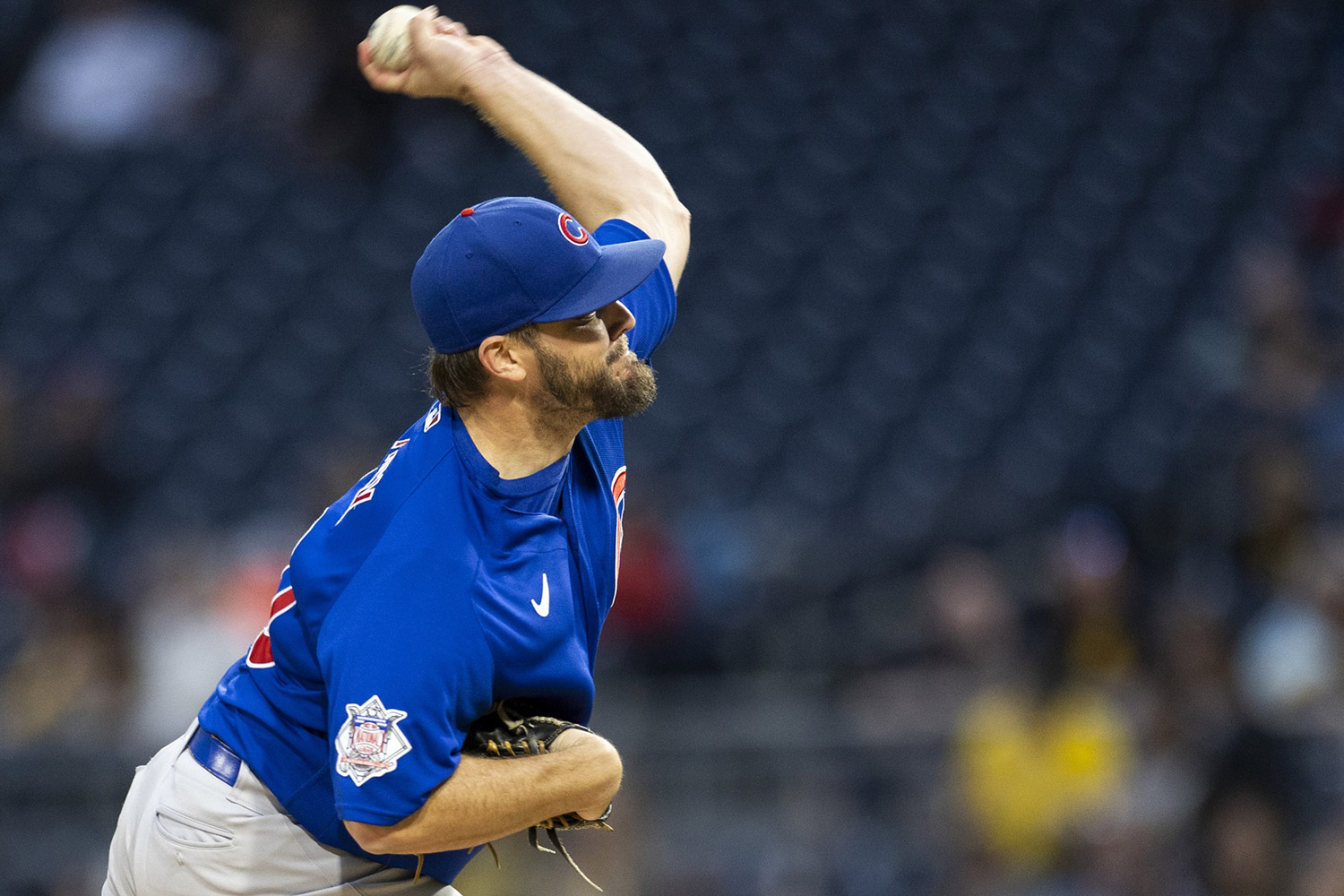 Assuming Wade Miley can stay relatively healthy, the Milwaukee Brewers view him as a reliable out-getter at the back of the rotation. He threw just 37 innings last season, but his 2021 campaign in Cincinnati was impressive, with a 3.37 ERA (139 ERA+) in 163 innings. With Miley in the fold (pending a physical), the Brewers have multiple routes depending on their player evaluations, strategic plans, and potential outside interest or opportunity. Option 1: Move a starting pitcher or two to the bullpen Miley didn't sign with Milwaukee to pitch in relief, while Corbin Burnes and Brandon Woodruff are your co-aces. That would leave two rotation spots among Freddy Peralta, Eric Lauer, Aaron Ashby, and Adrian Houser (at minimum). Assuming health, Peralta should be the third starter. Only if manager Craig Counsell and his staff are concerned about his shoulder would they consider Peralta for the pen long-term. That leaves two more starters who need to sit beyond the outfield fence. Houser seems like an easy call. The Brewers could control who he faces, minimizing his issues against lefties, and he's had some success as a reliever. Lauer and Ashby would be intriguing arms to throw multiple innings out of the pen. Both have a K/9 over 12 in relief, but Lauer has just 17 frames under his belt with below-average results. Considering the Brewers' commitment to him, Ashby is likely seen as a future rotation arm for the Crew. However, for the 2023 pitching staff, he might be best suited in relief - at least to start the season - if the Brewers stick with a traditional rotation. He's had more success there, it would limit mileage on his arm, and Counsell can pick the best spots for him to dominate. Option 2: Utilize a six-man rotation as they did in 2021 The Brewers' starting pitchers stayed remarkably healthy in 2021, partly due to their decision to primarily use a six-man rotation. As pitchers threw few innings in 2020 due to the COVID-shortened season, Milwaukee went conservative in 2021 to spare their hurlers from big jumps in their innings. It worked. Last season, the Brewers returned to a five-person option and saw Woodruff, Peralta, Ashby, and Lauer all missed time with injury. Was it bad luck, or did the strain of pitching every fourth day play a role? It's something I'm sure the Brewers' brass is exploring. Implementing a six-man starting staff could prevent injuries and keep arms fresher late into the season. And if you're getting typical results from the likely candidates, the drop-off would be minimal. The Brewers can also use off days to give Burnes and Woodruff additional starts. Plus, it might encourage Milwaukee to let their starters go deeper into some contests, ultimately saving the relievers from overuse. Option 3: Trade a starting pitcher for a quality bat This option would be the biggest risk-reward decision, either paying off hugely or biting the Brewers in the butt. But the risk might not be as significant as one would think. GM Matt Arnold has stockpiled arms this offseason, including guys with starting experience and arsenals the staff could cultivate. To go with the seven previously mentioned starters, Milwaukee also has Janson Junk and Bryse Wilson on the 40-man roster, with minor leaguers Robert Gasser and Ethan Small looking for a shot. Even if you don't trust Small, you're talking about nine starting pitchers if you dealt one away. That is the type of coverage the Brewers lacked in 2022. Lauer would be the piece most likely moved for a strong return. He has produced at a high level the past two seasons (116 ERA+), makes relatively little money, and has two remaining control seasons. Some people, myself included, are wary he will continue pitching nearly 20% better than the league when looking at some of his stats. However, if the right team believes in his talent and recent success, it makes some sense. The Brewers could use a right-handed power bat as a right field option or on the infield to cover second or third base and even backup Rowdy Tellez at first base. A team like the Baltimore Orioles is still a great fit. The O's need starting pitching and more time to push their top prospects into full-time MLB roles in 2023. Two years of Lauer would improve their rotation and open a spot for a youngster when they are ready. Meanwhile, Anthony Santander is an Oriole I have brought up a couple of times as a fit for the Brewers. The 28-year-old switch-hitter blasted 33 HR last season while mostly playing corner outfield positions. Baltimore has a couple of talented outfield prospects close to the big leagues, and rumors had Santander on the trading block around last season's trade deadline. As for other Brewers' starters who could be traded, it seems less likely. Houser likely has little value across the league, and there's almost no reason to entertain a deal involving Ashby or Peralta, who have loads of potential and have been under team control for many years. Milwaukee would need a guaranteed stud in return (and maybe more). They could also entertain a Burnes trade, but I need to get the sense that it is being discussed. Any one of those options could be the "right" way to go. It all depends on how the front office values certain players and how they view the club's strengths and weaknesses. Of course, they could go way outside the box with something completely different. It could use three traditional starting pitchers (Burnes, Woodruff, and Peralta) plus two-man pairs who piggyback their starts each outing. I wouldn't put it past the Brewers to find a way to win on the margins. So which option do you like best for the Brewers?
 -
As we say goodbye to the holiday season and flip the calendar to 2023, Spring Training will be here before we know it. The Milwaukee Brewers appear to have a postseason-level club, but several important questions remain before the first exhibition pitch is thrown in Arizona on February 25. The answers to these four essential questions could determine the club's path today and in the future. For the first time since the start of 2018, the Milwaukee Brewers prepare for a new season after failing to reach the playoffs. Despite last year's disappointment, the squad is set to reach the postseason in 2023 and 2024. Where the Brewers stand within the National League this season and how long the competitive window remains open are things to ponder as the days get longer. The perception of those two areas can change depending on what happens about these four huge questions leading into Spring Training. 1 - Will Any of the "Big Three" Brewers Receive a Contract Extension? Corbin Burnes, Brandon Woodruff, and Wily Adames are all under team control through the 2024 season. It would be a terrific triumvirate to build around for the next five years, but the Brewers will keep only some of the three for the long haul. The club has three options for each player: Trade him by mid-season 2024. Let his contract expire after the 2024 season to become a free agent. Sign him to a multi-year extension. There isn't a deadline to sign an extension before Spring Training, but it would raise the spirits of fans (and some players) as they prep for the season. It's also usually best to wrap up contract talks before players focus on on-field performance. Woodruff would likely agree to an extension that fits the Brewers' plans. The oldest of the three, he might accept a shorter deal (five years max) and not demand the Cy Young salary Burnes will command. Coincidentally, Burnes is likely to have differing views on a long-term deal. Burnes should receive enormous offers for extended seasons (up to seven or eight years) from several teams when he hits free agency. Both numbers will be more than Milwaukee can offer, considering the risk. Adames is intriguing, especially after the shortstop explosion this offseason. Position players are less risky than pitchers, and Adames isn't quite to the upper levels of his position to reach exorbitant figures. A top-eight shortstop in the league is worth locking up at a high price; it is a matter of finding what works for both sides. 2 - Is Craig Counsell Going to be a Lame Duck Manager? Craig Counsell, the longest-tenured manager in the NL, is currently entering the final year of his contract. Counsell has led the Brewers since 2015, winning a franchise-record 615 games with four playoff appearances and two NL Central titles. Teams rarely begin new seasons with a lame-duck manager due to the uncertainty it can create in the clubhouse. It can negatively impact managerial decisions, player commitments, and front-office strategies. Though some people think a new voice or fresh perspective could benefit the team as Counsell starts his ninth year at the helm, his consistency is a valued trait. It isn't easy to imagine owner Mark Attanasio and GM Matt Arnold with thoughts of replacing Counsell. Thus, it is fair to expect the Brewers to extend his contract for another year or two. An announcement should come within the next two weeks. 3 - Are the Brewers Set in the Outfield? Christian Yelich, Jesse Winker, and Tyrone Taylor are the MLB veterans set to roam the outfield; however, Winker will primarily serve as DH. Garrett Mitchell, Sal Frelick, Joey Wiemer, and Blake Perkins are the young guys who could be in play. Only Mitchell has MLB at-bats (61), all coming at the end of last season. Are the Brewers genuinely comfortable with this group opening in 2023? Lock in Yelich for left field, with Winker filling in. After that, Taylor is a solid fourth outfielder but not a true everyday bat. His use should be limited and mostly against lefties. There's optimism for the three outfield prospects, but it's a gamble to rely on a big season from any of them and an enormous risk to plan on significant contributions from two or more. Perkins mentioned above, who Milwaukee signed to a major league contract, must have the eye of someone in the organization, but I wonder why. The 26-year-old has played seven seasons in the minors with a .686 OPS. It's hard to believe he is the answer, either. Several (ideally) right-hand hitting outfielders remain on the free-agent market (e.g., Adam Duvall, AJ Pollock), and others might be available in trade (e.g., Anthony Santander, Ramon Laureano). Even if the Brewers went bargain bin shopping, they need another outfield bat to ensure depth and have insurance for injury or ineffectiveness. 4 - Is Anyone a Leading Candidate to be the Setup Man for Devin Williams? One explicit goal of Arnold's this offseason has been to stockpile potential relief arms. While none of his trades or free agent signings have been splashy, he has added a diverse talent pool to the already-stocked system of veterans and youngsters. The Brewers have 29 total pitchers between the 40-man roster and among non-roster invitees to Spring Training, ranging from 22-year-old fireballer Abner Uribe to 36-year-old Matt Bush. With a variety of option years among the large group, Milwaukee will throw a bunch of stuff at the wall and see what sticks. And when someone starts to slide, they'll rotate in another guy or two. But many relievers like to have a specific role, and bullpens often function better with one or two pitchers utilized as the "setup" men for late, high-leverage innings. Is Milwaukee looking at anyone as the leader for such an important role? Brewers' fans might not like it, but Bush likely has a step on the competition if he can squish the home run bug that killed him last season. Jake Cousins has the stuff to lock things down, but he needs to stay healthy and limit the walks. Another pitcher could prove his worth, like Peter Strzelecki, who turned heads in 2022. It's possible the Brewers could still snag a veteran free agent, but considering they let Brad Boxberger go, it's likely it would be someone worth little. They might believe quantity over quality is best in the pen and that someone is bound to take the reins of a true setup man. Those are the Milwaukee Brewers' biggest questions as we begin 2023 and look ahead to Spring Training. What are your thoughts on these topics, and what might happen between now and the start of spring games? View full article
-
 For the first time since the start of 2018, the Milwaukee Brewers prepare for a new season after failing to reach the playoffs. Despite last year's disappointment, the squad is set to reach the postseason in 2023 and 2024. Where the Brewers stand within the National League this season and how long the competitive window remains open are things to ponder as the days get longer. The perception of those two areas can change depending on what happens about these four huge questions leading into Spring Training. 1 - Will Any of the "Big Three" Brewers Receive a Contract Extension? Corbin Burnes, Brandon Woodruff, and Wily Adames are all under team control through the 2024 season. It would be a terrific triumvirate to build around for the next five years, but the Brewers will keep only some of the three for the long haul. The club has three options for each player: Trade him by mid-season 2024. Let his contract expire after the 2024 season to become a free agent. Sign him to a multi-year extension. There isn't a deadline to sign an extension before Spring Training, but it would raise the spirits of fans (and some players) as they prep for the season. It's also usually best to wrap up contract talks before players focus on on-field performance. Woodruff would likely agree to an extension that fits the Brewers' plans. The oldest of the three, he might accept a shorter deal (five years max) and not demand the Cy Young salary Burnes will command. Coincidentally, Burnes is likely to have differing views on a long-term deal. Burnes should receive enormous offers for extended seasons (up to seven or eight years) from several teams when he hits free agency. Both numbers will be more than Milwaukee can offer, considering the risk. Adames is intriguing, especially after the shortstop explosion this offseason. Position players are less risky than pitchers, and Adames isn't quite to the upper levels of his position to reach exorbitant figures. A top-eight shortstop in the league is worth locking up at a high price; it is a matter of finding what works for both sides. 2 - Is Craig Counsell Going to be a Lame Duck Manager? Craig Counsell, the longest-tenured manager in the NL, is currently entering the final year of his contract. Counsell has led the Brewers since 2015, winning a franchise-record 615 games with four playoff appearances and two NL Central titles. Teams rarely begin new seasons with a lame-duck manager due to the uncertainty it can create in the clubhouse. It can negatively impact managerial decisions, player commitments, and front-office strategies. Though some people think a new voice or fresh perspective could benefit the team as Counsell starts his ninth year at the helm, his consistency is a valued trait. It isn't easy to imagine owner Mark Attanasio and GM Matt Arnold with thoughts of replacing Counsell. Thus, it is fair to expect the Brewers to extend his contract for another year or two. An announcement should come within the next two weeks. 3 - Are the Brewers Set in the Outfield? Christian Yelich, Jesse Winker, and Tyrone Taylor are the MLB veterans set to roam the outfield; however, Winker will primarily serve as DH. Garrett Mitchell, Sal Frelick, Joey Wiemer, and Blake Perkins are the young guys who could be in play. Only Mitchell has MLB at-bats (61), all coming at the end of last season. Are the Brewers genuinely comfortable with this group opening in 2023? Lock in Yelich for left field, with Winker filling in. After that, Taylor is a solid fourth outfielder but not a true everyday bat. His use should be limited and mostly against lefties. There's optimism for the three outfield prospects, but it's a gamble to rely on a big season from any of them and an enormous risk to plan on significant contributions from two or more. Perkins mentioned above, who Milwaukee signed to a major league contract, must have the eye of someone in the organization, but I wonder why. The 26-year-old has played seven seasons in the minors with a .686 OPS. It's hard to believe he is the answer, either. Several (ideally) right-hand hitting outfielders remain on the free-agent market (e.g., Adam Duvall, AJ Pollock), and others might be available in trade (e.g., Anthony Santander, Ramon Laureano). Even if the Brewers went bargain bin shopping, they need another outfield bat to ensure depth and have insurance for injury or ineffectiveness. 4 - Is Anyone a Leading Candidate to be the Setup Man for Devin Williams? One explicit goal of Arnold's this offseason has been to stockpile potential relief arms. While none of his trades or free agent signings have been splashy, he has added a diverse talent pool to the already-stocked system of veterans and youngsters. The Brewers have 29 total pitchers between the 40-man roster and among non-roster invitees to Spring Training, ranging from 22-year-old fireballer Abner Uribe to 36-year-old Matt Bush. With a variety of option years among the large group, Milwaukee will throw a bunch of stuff at the wall and see what sticks. And when someone starts to slide, they'll rotate in another guy or two. But many relievers like to have a specific role, and bullpens often function better with one or two pitchers utilized as the "setup" men for late, high-leverage innings. Is Milwaukee looking at anyone as the leader for such an important role? Brewers' fans might not like it, but Bush likely has a step on the competition if he can squish the home run bug that killed him last season. Jake Cousins has the stuff to lock things down, but he needs to stay healthy and limit the walks. Another pitcher could prove his worth, like Peter Strzelecki, who turned heads in 2022. It's possible the Brewers could still snag a veteran free agent, but considering they let Brad Boxberger go, it's likely it would be someone worth little. They might believe quantity over quality is best in the pen and that someone is bound to take the reins of a true setup man. Those are the Milwaukee Brewers' biggest questions as we begin 2023 and look ahead to Spring Training. What are your thoughts on these topics, and what might happen between now and the start of spring games?
 -
Thanks! For sure tough to leave it out. That was why I listed it 1st in honorable mention...give it the opening recognition. The game was as memorable for the Angel Hernandez typical issues & the Schwarber tantrum at the end.
-
The Milwaukee Brewers starting rotation took a step back in 2022. In fairness, it would have been almost impossible for the starters to duplicate what they accomplished in 2021. Regardless, there was still plenty of talent and fantastic outings. Let's look at the five best starting pitching performances of 2022. As we reminisce about the Milwaukee Brewers' top outings in 2022, keep in mind the list is subjective. Various factors go into selecting the "Best five starting pitching performances," and people value different things: innings pitched, time of year, runs allowed, strikeouts, etc. Let us appreciate what these men gave us from the bump, showing off the tremendous skill they possess with these flashes of brilliance. HONORABLE MENTIONS Eric Lauer vs. Philadelphia Phillies (April 21) Facing one of the best lineups in MLB on Sunday Night Baseball, Eric Lauer tossed six shutout innings in a 1-0 Brewers' win. Lauer struck out 13 of the 24 Phillies he faced, allowing one walk and five hits in silencing the eventual NL Champions. Though Lauer got a no-decision, it was the first of three straight phenomenal starts as he struck out 32 batters and posted a 0.93 ERA. Corbin Burnes vs. St. Louis Cardinals (May 29) This performance would have been higher for Burnes, but since it happened in May, the impact was lower. He was brilliant, striking out 11 Cardinals in seven shutout frames in an 8-0 victory. St. Louis managed only two hits and a walk - a rarity for a top-five offense in baseball. Burnes dominated the NL Central Champs in 2022, posting a 1.29 ERA and 32 whiffs in four starts (28 IP). Brandon Woodruff vs. Chicago Cubs (August 27) Woodruff was the Brewers' most consistent starter in the season's final couple of months (2.53 ERA). Milwaukee had lost eight of 12 contests when Woodruff took the hill, and he shut down the Cubs for a 7-0 Brewers win. Woody struck out ten across six innings while giving up four hits and one walk to end the Crew's three-game skid. TOP FIVE STARTING PITCHER PERFORMANCES 5 - Freddy Peralta vs. Chicago Cubs (August 26) Making just his fifth start after 73 days off with a strained right lat, Peralta tossed six no-hit innings (one walk) with five punch outs. After 82 pitches, manager Craig Counsell made the unpopular, conservative decision to pull Peralta with a 1-0 lead. Peralta said after the game, "I was really just a little tired." Unfortunately, the Brewers would lose the lead in the next frame, tie it up in the ninth inning, but eventually lose 4-3 in extras. It was a great sign to see Peralta show out and a preview of Milwaukee's late-season struggles. 4 - Corbin Burnes vs. San Francisco Giants (September 8) Following a rough 2-5 road trip that put Milwaukee in dire straits for the postseason, Burnes proved why he is a genuine ace. In the first game of a doubleheader, the 2021 Cy Young punched out 14 Giants (no walks) over eight innings in a pivotal 2-1 victory. Burnes was in total control from the outset, with ten strikeouts through the first five innings, carving up hitters who had little chance at making contact. By Baseball-Reference "Game Score," this was the best Brewers' pitching performance of 2022. With Burnes, you're just picking nits when figuring out how to rank his starts. Brewers fans have been spoiled. 3 - Freddy Peralta vs. Atlanta Braves (May 16) Fastball Freddy makes another appearance on the list, showing his immense talent (if he can stay healthy). Peralta completely shut down the defending World Champion Braves over seven shutout frames, giving up two hits and one walk while punching out 10 hitters. Devin Williams and Josh Hader locked down the last two innings for a brilliant 1-0 win. This was Peralta's third consecutive victory as he looked poised to roll in 2022. Unfortunately, he'd make one more start before hitting the IL. This fantastic start against Atlanta was the third-best by Game Score for Milwaukee. 2 - Brandon Woodruff vs. New York Yankees (September 17) Facing Aaron Judge and baseball's second-best run-scoring club, Woodruff stepped up big time as the Brewers fought for a playoff spot. Woodruff was locked in for eight innings (101 pitches), giving up just one run while striking out 10 Yankees. He scattered five hits and one walk as New York went 0-for-8 with RISP. The tension kept getting thicker as the game wore on into the eighth. Leading 4-1, Woodruff walked Judge before striking out Giancarlo Stanton and getting Gleyber Torres to bounce into a double play. Woody walked off as "that dude" as the crowd acknowledged his fantastic outing en route to a huge 4-1 win. 1 - Corbin Burnes vs. Miami Marlins (September 30) The setup for this game made Burnes' performance even more incredible. Entering the night: Brewers trailed Philadelphia by 0.5 games for the final playoff spot with five contests left Miami was starting eventual NL Cy Young Award winner, Sandy Alcantara Milwaukee lost a heartbreaker the night before on an Avisail Garcia grand slam In a 0-0 game through five innings, Burnes and Alcantara matched punches. Alcantara then gave up the lone run of the night in the sixth, while Burnes finished with eight shutout frames and seven strikeouts (no walks). Burnes retired the final eight batters he faced before turning it over to Williams in the ninth. After all sorts of drama in the last inning, Milwaukee escaped with a thrilling 1-0 victory to keep pace with the Phillies. Burnes went toe-to-toe with Alcantara and came out on top, proving he is still a Cy Young candidate going forward. It looked as though Woodruff and Burnes found themselves down the stretch in 2022, and the hope is they both elevate their games this coming season. Peralta and Lauer gave fans a peek at what they bring to the table, and more consistency is the goal in 2023. Here's to even more tough calls next year when deciding on the Milwaukee Brewers' top five starting pitching performances. View full article
-
 As we reminisce about the Milwaukee Brewers' top outings in 2022, keep in mind the list is subjective. Various factors go into selecting the "Best five starting pitching performances," and people value different things: innings pitched, time of year, runs allowed, strikeouts, etc. Let us appreciate what these men gave us from the bump, showing off the tremendous skill they possess with these flashes of brilliance. HONORABLE MENTIONS Eric Lauer vs. Philadelphia Phillies (April 21) Facing one of the best lineups in MLB on Sunday Night Baseball, Eric Lauer tossed six shutout innings in a 1-0 Brewers' win. Lauer struck out 13 of the 24 Phillies he faced, allowing one walk and five hits in silencing the eventual NL Champions. Though Lauer got a no-decision, it was the first of three straight phenomenal starts as he struck out 32 batters and posted a 0.93 ERA. Corbin Burnes vs. St. Louis Cardinals (May 29) This performance would have been higher for Burnes, but since it happened in May, the impact was lower. He was brilliant, striking out 11 Cardinals in seven shutout frames in an 8-0 victory. St. Louis managed only two hits and a walk - a rarity for a top-five offense in baseball. Burnes dominated the NL Central Champs in 2022, posting a 1.29 ERA and 32 whiffs in four starts (28 IP). Brandon Woodruff vs. Chicago Cubs (August 27) Woodruff was the Brewers' most consistent starter in the season's final couple of months (2.53 ERA). Milwaukee had lost eight of 12 contests when Woodruff took the hill, and he shut down the Cubs for a 7-0 Brewers win. Woody struck out ten across six innings while giving up four hits and one walk to end the Crew's three-game skid. TOP FIVE STARTING PITCHER PERFORMANCES 5 - Freddy Peralta vs. Chicago Cubs (August 26) Making just his fifth start after 73 days off with a strained right lat, Peralta tossed six no-hit innings (one walk) with five punch outs. After 82 pitches, manager Craig Counsell made the unpopular, conservative decision to pull Peralta with a 1-0 lead. Peralta said after the game, "I was really just a little tired." Unfortunately, the Brewers would lose the lead in the next frame, tie it up in the ninth inning, but eventually lose 4-3 in extras. It was a great sign to see Peralta show out and a preview of Milwaukee's late-season struggles. 4 - Corbin Burnes vs. San Francisco Giants (September 8) Following a rough 2-5 road trip that put Milwaukee in dire straits for the postseason, Burnes proved why he is a genuine ace. In the first game of a doubleheader, the 2021 Cy Young punched out 14 Giants (no walks) over eight innings in a pivotal 2-1 victory. Burnes was in total control from the outset, with ten strikeouts through the first five innings, carving up hitters who had little chance at making contact. By Baseball-Reference "Game Score," this was the best Brewers' pitching performance of 2022. With Burnes, you're just picking nits when figuring out how to rank his starts. Brewers fans have been spoiled. 3 - Freddy Peralta vs. Atlanta Braves (May 16) Fastball Freddy makes another appearance on the list, showing his immense talent (if he can stay healthy). Peralta completely shut down the defending World Champion Braves over seven shutout frames, giving up two hits and one walk while punching out 10 hitters. Devin Williams and Josh Hader locked down the last two innings for a brilliant 1-0 win. This was Peralta's third consecutive victory as he looked poised to roll in 2022. Unfortunately, he'd make one more start before hitting the IL. This fantastic start against Atlanta was the third-best by Game Score for Milwaukee. 2 - Brandon Woodruff vs. New York Yankees (September 17) Facing Aaron Judge and baseball's second-best run-scoring club, Woodruff stepped up big time as the Brewers fought for a playoff spot. Woodruff was locked in for eight innings (101 pitches), giving up just one run while striking out 10 Yankees. He scattered five hits and one walk as New York went 0-for-8 with RISP. The tension kept getting thicker as the game wore on into the eighth. Leading 4-1, Woodruff walked Judge before striking out Giancarlo Stanton and getting Gleyber Torres to bounce into a double play. Woody walked off as "that dude" as the crowd acknowledged his fantastic outing en route to a huge 4-1 win. 1 - Corbin Burnes vs. Miami Marlins (September 30) The setup for this game made Burnes' performance even more incredible. Entering the night: Brewers trailed Philadelphia by 0.5 games for the final playoff spot with five contests left Miami was starting eventual NL Cy Young Award winner, Sandy Alcantara Milwaukee lost a heartbreaker the night before on an Avisail Garcia grand slam In a 0-0 game through five innings, Burnes and Alcantara matched punches. Alcantara then gave up the lone run of the night in the sixth, while Burnes finished with eight shutout frames and seven strikeouts (no walks). Burnes retired the final eight batters he faced before turning it over to Williams in the ninth. After all sorts of drama in the last inning, Milwaukee escaped with a thrilling 1-0 victory to keep pace with the Phillies. Burnes went toe-to-toe with Alcantara and came out on top, proving he is still a Cy Young candidate going forward. It looked as though Woodruff and Burnes found themselves down the stretch in 2022, and the hope is they both elevate their games this coming season. Peralta and Lauer gave fans a peek at what they bring to the table, and more consistency is the goal in 2023. Here's to even more tough calls next year when deciding on the Milwaukee Brewers' top five starting pitching performances.
 -
Outside of Corbin Burnes and Brandon Woodruff, Aaron Ashby is the most crucial pitcher for the 2023 Milwaukee Brewers. Ashby enters his third MLB season as a valuable weapon to deploy in the rotation and out of the bullpen. Some numbers from 2022 point to a possible breakout this coming season if Ashby can clean up a few areas. Young hurlers need time to develop from throwers with great stuff to consistent MLB pitchers. The Milwaukee Brewers' Aaron Ashby is a perfect example of this general belief, with signs pointing to a breakout in 2023. Regardless of the talent level, pitchers must learn to read hitters, pitch to counts, command their pitches, and learn how to adjust game-to-game, batter-to-batter, and pitch-to-pitch. Ashby, who turns 25 years old next May, went through some growing pains last season, but he gained invaluable experience starting and relieving, which could lead to a breakout season. No one questions Ashby's talent and "stuff." His slider is especially devastating, ranking ninth in vertical movement (42.3 inches) and 24th in horizontal movement (10 inches) across MLB in 2022. His sinker also rated 30th in horizontal direction (15.4 inches), giving him tons of ride, run and drop to work with daily. However, Ashby's strength in pitch movement can sometimes also be a weakness. He has yet to consistently find the touch to command his arsenal, leading to more walks and pitches out over the plate that get hit. Ashby's 2022 season had its ups and downs. He threw 107.1 innings (up from 31.2 in 2021) across 19 starts and eight relief appearances. A handful of stats declined for the southpaw but considering his massive increase in workload, it's expected from a young hurler. Despite the step back in walk rate, home run rate, and opponent batting average, some numbers say Ashby is due some better luck in 2023. Like it or not, luck exists in baseball. Balls get hit in the "wrong" spot, have funky spin, and even get hit too softly for the defense to make a play. The Brewers saw Ashby on the negative side of that equation quite last season. Despite his Statcast HardHit% dropping from 34.6% to 34.1%, Ashby watched hitters reach base far more often - and often due to perceived luck. Opponents had a .324 BABIP (Batting Average of Balls in Play) against Ashby. The league average was .289 for pitchers, a full 34 points lower across baseball. If you watched any of his starts, you probably remember thinking he was unlucky, where a quality pitch still led to a hit. Even more, telling is that his BABIP in 2021 was .273, albeit in a smaller sample size. If Ashby's BABIP regresses toward the mean, that should naturally improve his production. Fewer baserunners, fewer pitches in particular innings, and getting out of frames scoreless instead of giving up bad-luck runs. To take the luck factor further, Ashby owned a 12.7% Infield Hit Percentage (IFH%) last year when the league average for hitters reaching via infield hit was 6.8%. Few things are more frustrating than allowing a hit on an end-of-the-bat squibber. Aside from the base knock itself, it can mentally impact and drain a pitcher when this happens more often than it should. Should they move back toward the average, these two batted-ball luck factors alone will elevate Ashby's value to the Brewers. However, some of that bad luck is self-induced. Many probably remember how poorly Ashby pitched when ahead 0-2 on the batter in 2022. The numbers in that count (below) tell the story from last season. Those are some of the worst numbers in baseball in that situation. It might have been a fluke, in which case one would expect better things this coming season. Imagine dropping your opponents' OPS 300 points in those 70 plate appearances and the effect it would have in each game. Again, not all of it is luck, of course. Ashby has to look in the mirror and figure out why he had so much trouble retiring hitters in the ultimate pitcher's count. First, he should consider throwing fewer sliders in that count. Ashby threw that pitch about 55% of the time on 0-2, and hitters likely were looking for it. For a guy with five pitches at his disposal, more mix should help, even if the 0-2 sinker is just a show-me pitch to set up a 1-2 slider. Especially against right-handed hitters, other options should be the norm. This chart shows the location of Ashby's pitches last season (not just 0-2 counts). You'll notice that up-and-in to righties and off the plate, down-and-away to righties (or down-and-in to lefties) could be much better. Perhaps Ashby needs help locating those spots, but they need to be more utilized. It would behoove the Brewers to push Ashby out of his comfort zone this offseason to work on non-sliders in these locations. If nothing else, it gives hitters more to think about and creates doubt when they are behind in the count. These minor adjustments could also prove valuable in turning around his perceived bad luck in 2023. As mentioned to start, some of this is about Ashby getting a better feel for his pitches and commanding his arsenal more consistently. Throwing a pitch eight inches off the plate will get a few swings and misses. Conversely, throwing for a corner and watching a ball leak over the heart of the plate can cause even more damage. Another offseason, with a full Spring Training, should help Ashby take steps in the right direction. Steamer's projections for Ashby have him with a 3.43 ERA across 127 innings (21 starts). That's a one-run improvement in ERA from last season (4.44 ERA), despite many similar stats projected for 2023. So at least initially, it looks like Steamer's projections believe in Ashby's development and luck factor. It also sees him giving up fewer homers (0.83 HR/9), fewer walks (3.94 BB/9), a lower WHIP (1.28), and a much more reasonable BABIP of .301 in 2023. The Milwaukee Brewers would be thrilled to get that type of production from Ashby in 2023, a small breakout on his way to (hopefully) a long, successful career. Will it be enough to push the Brewers back into the playoffs? It's a big step toward 90+ wins and a bounce-back season for the rotation. View full article
-
 Young hurlers need time to develop from throwers with great stuff to consistent MLB pitchers. The Milwaukee Brewers' Aaron Ashby is a perfect example of this general belief, with signs pointing to a breakout in 2023. Regardless of the talent level, pitchers must learn to read hitters, pitch to counts, command their pitches, and learn how to adjust game-to-game, batter-to-batter, and pitch-to-pitch. Ashby, who turns 25 years old next May, went through some growing pains last season, but he gained invaluable experience starting and relieving, which could lead to a breakout season. No one questions Ashby's talent and "stuff." His slider is especially devastating, ranking ninth in vertical movement (42.3 inches) and 24th in horizontal movement (10 inches) across MLB in 2022. His sinker also rated 30th in horizontal direction (15.4 inches), giving him tons of ride, run and drop to work with daily. However, Ashby's strength in pitch movement can sometimes also be a weakness. He has yet to consistently find the touch to command his arsenal, leading to more walks and pitches out over the plate that get hit. Ashby's 2022 season had its ups and downs. He threw 107.1 innings (up from 31.2 in 2021) across 19 starts and eight relief appearances. A handful of stats declined for the southpaw but considering his massive increase in workload, it's expected from a young hurler. Despite the step back in walk rate, home run rate, and opponent batting average, some numbers say Ashby is due some better luck in 2023. Like it or not, luck exists in baseball. Balls get hit in the "wrong" spot, have funky spin, and even get hit too softly for the defense to make a play. The Brewers saw Ashby on the negative side of that equation quite last season. Despite his Statcast HardHit% dropping from 34.6% to 34.1%, Ashby watched hitters reach base far more often - and often due to perceived luck. Opponents had a .324 BABIP (Batting Average of Balls in Play) against Ashby. The league average was .289 for pitchers, a full 34 points lower across baseball. If you watched any of his starts, you probably remember thinking he was unlucky, where a quality pitch still led to a hit. Even more, telling is that his BABIP in 2021 was .273, albeit in a smaller sample size. If Ashby's BABIP regresses toward the mean, that should naturally improve his production. Fewer baserunners, fewer pitches in particular innings, and getting out of frames scoreless instead of giving up bad-luck runs. To take the luck factor further, Ashby owned a 12.7% Infield Hit Percentage (IFH%) last year when the league average for hitters reaching via infield hit was 6.8%. Few things are more frustrating than allowing a hit on an end-of-the-bat squibber. Aside from the base knock itself, it can mentally impact and drain a pitcher when this happens more often than it should. Should they move back toward the average, these two batted-ball luck factors alone will elevate Ashby's value to the Brewers. However, some of that bad luck is self-induced. Many probably remember how poorly Ashby pitched when ahead 0-2 on the batter in 2022. The numbers in that count (below) tell the story from last season. Those are some of the worst numbers in baseball in that situation. It might have been a fluke, in which case one would expect better things this coming season. Imagine dropping your opponents' OPS 300 points in those 70 plate appearances and the effect it would have in each game. Again, not all of it is luck, of course. Ashby has to look in the mirror and figure out why he had so much trouble retiring hitters in the ultimate pitcher's count. First, he should consider throwing fewer sliders in that count. Ashby threw that pitch about 55% of the time on 0-2, and hitters likely were looking for it. For a guy with five pitches at his disposal, more mix should help, even if the 0-2 sinker is just a show-me pitch to set up a 1-2 slider. Especially against right-handed hitters, other options should be the norm. This chart shows the location of Ashby's pitches last season (not just 0-2 counts). You'll notice that up-and-in to righties and off the plate, down-and-away to righties (or down-and-in to lefties) could be much better. Perhaps Ashby needs help locating those spots, but they need to be more utilized. It would behoove the Brewers to push Ashby out of his comfort zone this offseason to work on non-sliders in these locations. If nothing else, it gives hitters more to think about and creates doubt when they are behind in the count. These minor adjustments could also prove valuable in turning around his perceived bad luck in 2023. As mentioned to start, some of this is about Ashby getting a better feel for his pitches and commanding his arsenal more consistently. Throwing a pitch eight inches off the plate will get a few swings and misses. Conversely, throwing for a corner and watching a ball leak over the heart of the plate can cause even more damage. Another offseason, with a full Spring Training, should help Ashby take steps in the right direction. Steamer's projections for Ashby have him with a 3.43 ERA across 127 innings (21 starts). That's a one-run improvement in ERA from last season (4.44 ERA), despite many similar stats projected for 2023. So at least initially, it looks like Steamer's projections believe in Ashby's development and luck factor. It also sees him giving up fewer homers (0.83 HR/9), fewer walks (3.94 BB/9), a lower WHIP (1.28), and a much more reasonable BABIP of .301 in 2023. The Milwaukee Brewers would be thrilled to get that type of production from Ashby in 2023, a small breakout on his way to (hopefully) a long, successful career. Will it be enough to push the Brewers back into the playoffs? It's a big step toward 90+ wins and a bounce-back season for the rotation.
 -
Yeah...I completely understand the stolen base and PA projections aren't going to be "reliable" really. The point was that, many people do like to look at these and at a glance, some areas are "disappointing," even if they technically mean nothing. For Urias, yes, the wRC+ is saying the same player, but I was focused on his on-base numbers & BB%. I value and appreciate stats that try to be all-encompassing like wRC+, but I also feel it's easy to fall into the trap of believing that value (or any) is to be trusted to fully evaluate what a player/team is. For example, if you have 9 guys with a wRC+ of 110-115, you should be in good shape. But is there more value in a diversified lineup that gets to those 110-115 wRC+ in different ways? Or maybe some guys are even lower in wRC+, but because they are more OBP heavy or strike out less, they bring something different to the table than the other 8 hitters who are high K, high power, low OBP types. It's just something that seems to be ignored and/or undervalued. Or maybe it's that it is somewhat impossible to determine.
-
I was also confused seeing the 122 wRC+ but such little projected power. It must be his OBP/wOBA carrying the weight relative to the league average in those areas. If he is healthy & starting every game against RHP...20+ HRs seems like a lock.
-
As we slog through the doldrums of winter, it's fun to peek ahead to what could be this upcoming season via projection systems. The Milwaukee Brewers offense will be under the microscope this season, and the Steamer projections have some disappointing numbers worth examining. It's important to note that projections are not predictions. Projections utilize numerical data and values to give a snapshot of the true talent level in a given season. Steamer's projections shared by FanGraphs display the "median outcome" for each player. That means he is as likely to finish with stats below the median projection as he is to end the season below these numbers. It would be terrific if each player performed at the 75% level of his projected talent, but he could also be at 25% in any given season. After checking out the Milwaukee Brewers' Steamer projections, a few hitters stood out on the low end. If they were to perform to this median level, it would be disappointing considering other factors that impact the outcomes. If you're a Brewers fan, you hope the system has a few errors that favor these four Milwaukee hitters in 2023. Sal Frelick 131 Plate Appearances This is a tricky projection considering Frelick has zero MLB plate appearances (PA). It's also subjective because I prefer to see Frelick get the most opportunities among the young outfielders to prove his chops in "The Show." Frelick's bat-to-ball skills, on-base ability (.406 OBP in 731 minor league PA), and base running potential (36 stolen bases) would be a perfect, diverse profile for the Brewers' lineup. The guy hits and reaches base everywhere he goes. At 23 years old, with college and minor league experience, he has the mentality to make an impact immediately. Steamer projects him for a .337 OBP in those limited PAs, but that would be third-best on the club. It would be a mistake to give Frelick just 30 games of action while hoping Garrett Mitchell (432 projected PAs) put up worse numbers. One comparative projection between these two gives Frelick the wRC+ edge of 111-99 (which might be generous for Mitchell). Luis Urias Continues On-Base Dip (.330 OBP, 10.2 BB%) His 2021 power surge was incredible as Urias hit 23 HR for a .445 SLG. But Urias's quality at-bats and on-base skills are the keys to his value. His .345 OBP and 11.1 BB% in 2021 showed that Urias was on the rise. Partly due to injury last season, Urias took a small step back (.335 OBP, 10.6 BB%), and many saw a healthy 2023 as a true breakout season for the 25-year-old. But Steamer projects Urias to slip in those areas again to .330 and 10.2%. Those are fine numbers, but with a projected.409 SLG as well, it is different from what the Brewers had in mind when they acquired him before the 2020 season. Urias deserves a shot to be the everyday guy at second or third base. Still, he should reach greater heights regarding his best offensive qualities. Christian Yelich 14 Stolen Bases The bases will be larger, and pitchers will have limits on pickoff attempts in 2023. Those advantages for base runners should push Yelich over 20 stolen bases this season. Instead, Steamer projects him to steal 14 bags, five fewer than in 2022. Yes, Yelich is a year older, but he still ranked in the 70th percentile in sprint speed last season, the same rate he had in 2020. On top of being a swift runner, Yelich is smart. With the rules changes and a projected OBP identical to last season, it would be disappointing to see him snag fewer bases. It would help the Brewers' offense if he moved up 90 feet more often without the ball in play, and if Milwaukee turns to some of the kids who also boast wheels, they could all play off each other to drive pitchers and catchers mad. Jesse Winker Power Outage (17 HR, .424 SLG) Aside from his injuries in 2022, playing home games in Seattle undoubtedly sapped Winker's power numbers. In 547 PA, Winker hit just 14 homers and 15 doubles while posting a measly .344 SLG. In about 60 fewer PA in 2021 with Cincinnati, Winker blasted 24 dingers and 32 doubles to boast a .556 SLG. With Steamer projecting Winker to get 494 PA with the Brewers, it would be a massive bust if he had 17 homers and a .424 SLG - especially with the shorter porch in right field at American Family Field. The projections appear to be punishing him disproportionately for his 2022 struggles that were injury-marred and in Seattle, a cavernous ballpark to call home. The Brewers certainly expect 20+ home runs and slugging north of .450 (at least). Combine those with Winker's projected .355 OBP, and Milwaukee has the bat they were looking for in its trade with the Seattle Mariners. Once again, Steamer projections give the median outcomes for each player. Any number of factors can boost or drop the actual results in 2023. Based on past performance and club expectations, Brewers' fans should hope that the projections fail to assess these four players this season accurately. View full article
-
 It's important to note that projections are not predictions. Projections utilize numerical data and values to give a snapshot of the true talent level in a given season. Steamer's projections shared by FanGraphs display the "median outcome" for each player. That means he is as likely to finish with stats below the median projection as he is to end the season below these numbers. It would be terrific if each player performed at the 75% level of his projected talent, but he could also be at 25% in any given season. After checking out the Milwaukee Brewers' Steamer projections, a few hitters stood out on the low end. If they were to perform to this median level, it would be disappointing considering other factors that impact the outcomes. If you're a Brewers fan, you hope the system has a few errors that favor these four Milwaukee hitters in 2023. Sal Frelick 131 Plate Appearances This is a tricky projection considering Frelick has zero MLB plate appearances (PA). It's also subjective because I prefer to see Frelick get the most opportunities among the young outfielders to prove his chops in "The Show." Frelick's bat-to-ball skills, on-base ability (.406 OBP in 731 minor league PA), and base running potential (36 stolen bases) would be a perfect, diverse profile for the Brewers' lineup. The guy hits and reaches base everywhere he goes. At 23 years old, with college and minor league experience, he has the mentality to make an impact immediately. Steamer projects him for a .337 OBP in those limited PAs, but that would be third-best on the club. It would be a mistake to give Frelick just 30 games of action while hoping Garrett Mitchell (432 projected PAs) put up worse numbers. One comparative projection between these two gives Frelick the wRC+ edge of 111-99 (which might be generous for Mitchell). Luis Urias Continues On-Base Dip (.330 OBP, 10.2 BB%) His 2021 power surge was incredible as Urias hit 23 HR for a .445 SLG. But Urias's quality at-bats and on-base skills are the keys to his value. His .345 OBP and 11.1 BB% in 2021 showed that Urias was on the rise. Partly due to injury last season, Urias took a small step back (.335 OBP, 10.6 BB%), and many saw a healthy 2023 as a true breakout season for the 25-year-old. But Steamer projects Urias to slip in those areas again to .330 and 10.2%. Those are fine numbers, but with a projected.409 SLG as well, it is different from what the Brewers had in mind when they acquired him before the 2020 season. Urias deserves a shot to be the everyday guy at second or third base. Still, he should reach greater heights regarding his best offensive qualities. Christian Yelich 14 Stolen Bases The bases will be larger, and pitchers will have limits on pickoff attempts in 2023. Those advantages for base runners should push Yelich over 20 stolen bases this season. Instead, Steamer projects him to steal 14 bags, five fewer than in 2022. Yes, Yelich is a year older, but he still ranked in the 70th percentile in sprint speed last season, the same rate he had in 2020. On top of being a swift runner, Yelich is smart. With the rules changes and a projected OBP identical to last season, it would be disappointing to see him snag fewer bases. It would help the Brewers' offense if he moved up 90 feet more often without the ball in play, and if Milwaukee turns to some of the kids who also boast wheels, they could all play off each other to drive pitchers and catchers mad. Jesse Winker Power Outage (17 HR, .424 SLG) Aside from his injuries in 2022, playing home games in Seattle undoubtedly sapped Winker's power numbers. In 547 PA, Winker hit just 14 homers and 15 doubles while posting a measly .344 SLG. In about 60 fewer PA in 2021 with Cincinnati, Winker blasted 24 dingers and 32 doubles to boast a .556 SLG. With Steamer projecting Winker to get 494 PA with the Brewers, it would be a massive bust if he had 17 homers and a .424 SLG - especially with the shorter porch in right field at American Family Field. The projections appear to be punishing him disproportionately for his 2022 struggles that were injury-marred and in Seattle, a cavernous ballpark to call home. The Brewers certainly expect 20+ home runs and slugging north of .450 (at least). Combine those with Winker's projected .355 OBP, and Milwaukee has the bat they were looking for in its trade with the Seattle Mariners. Once again, Steamer projections give the median outcomes for each player. Any number of factors can boost or drop the actual results in 2023. Based on past performance and club expectations, Brewers' fans should hope that the projections fail to assess these four players this season accurately.
 -
Roster resource has the Brewers' estimated 2023 payroll at $116 million right now with estimated arbitration figures. It lists the final 2022 payroll as $137 million. So if the Brewers just match last year, that is $21 million in space, some of which they'd save for trade deadline. In reality, they should increase the payroll some with 1) $30 million from Disney money, 2) increased streaming revenue, 3) annual rising costs/prices of salries, and 4) the impact of the new CBA, which has been seen with free agent contracts. There is plenty of room if they choose to use it. They shouldn't spend just to spend, but the money is there for a couple solid additions.
-
A few things here... 1) I was being a bit hyperbolic in saying fewer than 4 runs per game, but I believe that regular lineup would be bottom third. 2) I appreciate projections, that that is all they are. And especially for rookies/guys with 1 year experience, there's a fair amount of pure faith in non-MLB performance. I would be surprised if Mithell and Turang reached 99 wRC+ and 94 wRC+ respectively. And if you want to go with Steamer wRC+, Santander is 115 and Brandon Drury is 105. With a window to win now, I'd like those upgrades. 3) I'd also warn about utilizing 1 or 2 stats to determine how well an offense works/fits as a whole. By some measures last season, the Brewers offense should have been seen as a reliable, dangerous group. However, they were wildly inconsistent and it felt like the "mix" of players didn't work for some reason. Hard to measure or evaluate, but I think there is something bigger to lineup construction. Again, not saying I am right or anyone is wrong, just my thoughts on the whole idea of adding to the position players.
-
Each person is completely entitled to their opinions and we can't prove that anyone is wrong or right here because we can't play out the season in different ways. So for the "let all the kids play" crowd, you are comfortable with the following lineup, when you're in a competitive window with one of the best rotations in baseball? 1 - Yelich LF 2 - Adames SS 3 - Winker DH 4 - Contreras C 5 - Tellez 1B 6 - Urias 3B/2B 7 - Frelick RF 8 - Mitchell CF 9 - Turang 2B/3B And against LHP? Frelick, Mitchell, Turang, Yelich, Winker, Tellez all LH. Taylor, Brosseau the only 2 right-handed options. Toro a switch-hitter. I don't know. Looks like less than 4 runs per game to me. And with an injury or two, big dropoff. I just think you need to trickle in the youngsters, like they did with Weeks, Hardy, Braun, Fielder, and Hart.
-
I'm all for giving young guys a shot, but like @Brock Beauchampnoted, there is enormous risk to the team's success to go rookie heavy. If you think the Brewers can be contenders with their pitching, you can't plan to rely on 2-3 rookies regularly in your lineup unless they are all can't miss, top 25 in baseball hitters. You will be lucky to win 83 games if ALL goes right. For me? I would start Freick in CF and us Turang as a super utility guy getting maybe 2-3 starts a week. Have Mitchell & Wiemer ready to go in AAA in case of injury or ineffectiveness. Too often, people just think the 26 guys who start in the big leagues will just play the whole season. Bring in a veteran outfielder to keep depth ready to perform. If you have all your top guys up & you need to go to the minors later, now there is a big dropoff.
-
 There's an exciting mix of players for the Milwaukee Brewers to choose a core outfield but they need to create the right combination of offensive production and defensive reliability. Part of that stems from the possible reliance on more than one rookie regularly in the upcoming season. So while the Brewers have internal decisions to make, they also should be looking to add one more outfield alternative from outside the organization. When GM Matt Arnold traded right fielder Hunter Renfroe to the Anaheim Angels, it left a giant hole in the lineup. Arnold replaced that divot with Jesse Winker in a swap with the Seattle Mariners, but that wasn't an equal replacement as Winker bats from the left side and is a sizable dropoff defensively. It's likely Winker occupies the designated hitter spot most nights against right-handed pitchers, but that still leaves right field open and a lineup slot versus lefties. Here's a look at the group Milwaukee could choose from internally to be on the 26-man roster: Christian Yelich (L) Leadoff hitter with quality on-base skills and hard contact (.355 OBP, 111 OPS+ in 2022) Average-to-below-average defensive skills but has one of the weakest arms in the outfield Jesse Winker (L) Among the worst defenders last season with a bad arm and -16 defensive runs saved (last among outfielders with 200 innings played) MVP-level offense against right-handed pitching in his career (.388 OBP, .885 OPS) but struggles vs. lefties Tyrone Taylor (R) Quality outfielder who can play all three positions and provides decent power (.448 SLG past two seasons) Best suited as a fourth outfielder playing a few times a week due to poor plate discipline (102 K, 22 BB in 2022) Garrett Mitchell (L) Played only 28 MLB games last season, with up-and-down results Showed off speed and defensive ability in center field and posted an .832 OPS, but he looked overmatched at times and averaged one strikeout per game Sal Frelick (L) Brewers' number two prospect with plate discipline (.403 OBP in minors in 2022), highly-rated hit tool, and top speed Questions about him in center field and little in-game power Joey Wiemer (R) Brewers' number three prospect with a power bat (21 HR, 34 doubles in minors last season), strong arm, and sneaky speed High strikeout guy with few walks and average defense Each five-man option has its concerns and apparent warts. Yelich, Winker, and Taylor are locks on the 26-man roster if they're with the organization. That leaves only three rookies to choose from (Mitchell still has rookie status) for the remaining two slots. Having two rookies on the big league roster as outfielders are problematic for two reasons: 1) It's difficult to rely on their bats for consistent production in the lineup (and possibly three rookies with infielder Brice Turang). 2) If one of them is not playing much, their development is stunted, and they would be better off getting regular at-bats in the minor leagues. But let's say the Brewers roll the dice and decide the best route. Which two guys fortify the team better? Mitchell and Frelick are left-handed and profile as speed and contact guys overpower. If you keep both of them, you have four left-handed hitting outfielders with only Taylor as a right-handed stick. Not ideal since the Brewers should limit Winker's appearances against southpaws. So could Wiemer, a power bat pegged for a corner spot, pair with one of the lefty center fielders? Wiemer's hit tool is the question, and if he struggles, will he get the at-bats he needs to figure out MLB pitching? In either scenario, but especially if Milwaukee kept the two lefty bats, Taylor would see a lot more action in 2023. The more at-bats Taylor receives, the more he scuffles. Taylor's best output comes in limited action against carefully selected pitchers. For example, in 2021, he had 271 plate appearances and posted a .247/.321/.457 slash line. In 2022, with 405 plate appearances, those numbers dipped to .233/.286/.442. All this leads to exploring the Brewers' options outside of the club. There are still a few viable free agents and possible trade targets. Assuming Milwaukee isn't getting a top-tier hitter, the new acquisition should hit right-handed to provide additional coverage versus lefty pitching. Trade Candidates Anthony Santander (Baltimore Orioles): Santander blasted 33 HR last season for a 117 OPS+. The switch-hitter was on the trade block at last year's deadline before hitting 14 homers in the final two months. He's been a solid right fielder in his career, as well. Baltimore has up-and-coming outfielders and needs pitching badly. Could Adrian Houser and a minor-league arm be enough? Ramón Laureano (Oakland A's): The Brewers were mentioned as a destination for Laureano at the trade deadline, and Oakland is dumping veterans left and right. He had a rough 2022 but owned a career .324 OBP and .444 SLG while playing half his games in a vast pitcher's park. With a 111 OPS+ in 2021, his bat could reawaken in Milwaukee, and he brings plus defense to right field, as well. You would think Oakland would be happy with a couple of prospects. Free Agents Wil Myers: He has had only one season with an OPS+ below 108 since 2015. Myers' playing time was severely limited in 2022, and he could be drawn to more opportunity in Milwaukee, where he could easily pop 20 home runs playing half his games in American Family Field instead of cavernous Petco Park. His right field defense is inconsistent but not terrible, and he could help with coverage at first base. AJ Pollock: He took a step back last season but had a tremendous 134 OPS+ in 2021. You wouldn't expect that in 2023 at age 35, but he can still provide value at the plate and in the field. As a bonus, Pollock crushes left-handers, including a .619 slugging percentage and .935 OPS last season. He lost a step as a center fielder but would also play well in right with a strong arm. Adding one of these for players gives the lineup more punch and reliability from the outfield, especially against lefties. It would also allow one of the rookies to start regularly with the Brewers while the other two continue to hone their skills on the farm. It's also possible that the Brewers trade Taylor or one of the youngsters is traded for another significant piece, but that's for another article. Who would your five-man outfield group be for Opening Day 2023?
 -
The Milwaukee Brewers have already had a busy offseason, and more moves are coming. While they could roll into Opening Day with the current position players, the outfield has questions and is far from settled. Fortunately, there's plenty of time to improve and solidify this part of the roster. There's an exciting mix of players for the Milwaukee Brewers to choose a core outfield but they need to create the right combination of offensive production and defensive reliability. Part of that stems from the possible reliance on more than one rookie regularly in the upcoming season. So while the Brewers have internal decisions to make, they also should be looking to add one more outfield alternative from outside the organization. When GM Matt Arnold traded right fielder Hunter Renfroe to the Anaheim Angels, it left a giant hole in the lineup. Arnold replaced that divot with Jesse Winker in a swap with the Seattle Mariners, but that wasn't an equal replacement as Winker bats from the left side and is a sizable dropoff defensively. It's likely Winker occupies the designated hitter spot most nights against right-handed pitchers, but that still leaves right field open and a lineup slot versus lefties. Here's a look at the group Milwaukee could choose from internally to be on the 26-man roster: Christian Yelich (L) Leadoff hitter with quality on-base skills and hard contact (.355 OBP, 111 OPS+ in 2022) Average-to-below-average defensive skills but has one of the weakest arms in the outfield Jesse Winker (L) Among the worst defenders last season with a bad arm and -16 defensive runs saved (last among outfielders with 200 innings played) MVP-level offense against right-handed pitching in his career (.388 OBP, .885 OPS) but struggles vs. lefties Tyrone Taylor (R) Quality outfielder who can play all three positions and provides decent power (.448 SLG past two seasons) Best suited as a fourth outfielder playing a few times a week due to poor plate discipline (102 K, 22 BB in 2022) Garrett Mitchell (L) Played only 28 MLB games last season, with up-and-down results Showed off speed and defensive ability in center field and posted an .832 OPS, but he looked overmatched at times and averaged one strikeout per game Sal Frelick (L) Brewers' number two prospect with plate discipline (.403 OBP in minors in 2022), highly-rated hit tool, and top speed Questions about him in center field and little in-game power Joey Wiemer (R) Brewers' number three prospect with a power bat (21 HR, 34 doubles in minors last season), strong arm, and sneaky speed High strikeout guy with few walks and average defense Each five-man option has its concerns and apparent warts. Yelich, Winker, and Taylor are locks on the 26-man roster if they're with the organization. That leaves only three rookies to choose from (Mitchell still has rookie status) for the remaining two slots. Having two rookies on the big league roster as outfielders are problematic for two reasons: 1) It's difficult to rely on their bats for consistent production in the lineup (and possibly three rookies with infielder Brice Turang). 2) If one of them is not playing much, their development is stunted, and they would be better off getting regular at-bats in the minor leagues. But let's say the Brewers roll the dice and decide the best route. Which two guys fortify the team better? Mitchell and Frelick are left-handed and profile as speed and contact guys overpower. If you keep both of them, you have four left-handed hitting outfielders with only Taylor as a right-handed stick. Not ideal since the Brewers should limit Winker's appearances against southpaws. So could Wiemer, a power bat pegged for a corner spot, pair with one of the lefty center fielders? Wiemer's hit tool is the question, and if he struggles, will he get the at-bats he needs to figure out MLB pitching? In either scenario, but especially if Milwaukee kept the two lefty bats, Taylor would see a lot more action in 2023. The more at-bats Taylor receives, the more he scuffles. Taylor's best output comes in limited action against carefully selected pitchers. For example, in 2021, he had 271 plate appearances and posted a .247/.321/.457 slash line. In 2022, with 405 plate appearances, those numbers dipped to .233/.286/.442. All this leads to exploring the Brewers' options outside of the club. There are still a few viable free agents and possible trade targets. Assuming Milwaukee isn't getting a top-tier hitter, the new acquisition should hit right-handed to provide additional coverage versus lefty pitching. Trade Candidates Anthony Santander (Baltimore Orioles): Santander blasted 33 HR last season for a 117 OPS+. The switch-hitter was on the trade block at last year's deadline before hitting 14 homers in the final two months. He's been a solid right fielder in his career, as well. Baltimore has up-and-coming outfielders and needs pitching badly. Could Adrian Houser and a minor-league arm be enough? Ramón Laureano (Oakland A's): The Brewers were mentioned as a destination for Laureano at the trade deadline, and Oakland is dumping veterans left and right. He had a rough 2022 but owned a career .324 OBP and .444 SLG while playing half his games in a vast pitcher's park. With a 111 OPS+ in 2021, his bat could reawaken in Milwaukee, and he brings plus defense to right field, as well. You would think Oakland would be happy with a couple of prospects. Free Agents Wil Myers: He has had only one season with an OPS+ below 108 since 2015. Myers' playing time was severely limited in 2022, and he could be drawn to more opportunity in Milwaukee, where he could easily pop 20 home runs playing half his games in American Family Field instead of cavernous Petco Park. His right field defense is inconsistent but not terrible, and he could help with coverage at first base. AJ Pollock: He took a step back last season but had a tremendous 134 OPS+ in 2021. You wouldn't expect that in 2023 at age 35, but he can still provide value at the plate and in the field. As a bonus, Pollock crushes left-handers, including a .619 slugging percentage and .935 OPS last season. He lost a step as a center fielder but would also play well in right with a strong arm. Adding one of these for players gives the lineup more punch and reliability from the outfield, especially against lefties. It would also allow one of the rookies to start regularly with the Brewers while the other two continue to hone their skills on the farm. It's also possible that the Brewers trade Taylor or one of the youngsters is traded for another significant piece, but that's for another article. Who would your five-man outfield group be for Opening Day 2023? View full article
-
 Figuring out the best time to offer guaranteed contract extensions in MLB is like a financial game of chicken. Timing is paramount as free agents set the market for everyone else in the league. Thus, having four of the best shortstops available this offseason might price Willy Adames out of an extension with the Milwaukee Brewers. A comparison of statistics and value, offensively and defensively, will determine how much Adames is worth to his agent and the Brewers' front office. Adames is under team control through 2024, which could make or lose him tens of millions of dollars. Should he struggle with performance or health, his value drops quicker as he nears 30. His stock rises to the top of the heap if he progresses and puts up better numbers across two more seasons. Of course, signing a deal now shares the same risks and rewards for both club and player (just in reverse). The wads of cash teams are throwing around this offseason, especially at shortstops, has to give pause to Adames and GM Matt Arnold. It has been reported the two sides have discussed a possible extension, but no details have been leaked. So let's treat Adames like a free agent this offseason and stack him up against the other four shortstops to assess his "current value" based on the last two seasons. Noticeably, Adames sits well below Trea Turner, Carlos Correa, and Xander Bogaerts offensively. That bodes well for the Brewers at this point. While they would love a guy with a .360 wOBA, .840 OPS, and 132 wRC+ in their lineup, Adames' lesser production should keep his cost down (for now). Without reaching those levels on offense, a contract this offseason means Adames doesn't reach the upper echelon of salaries. Adames gains ground on Bogaerts and Turner in the field if you believe in Defensive Runs Saved (DRS). This could also be more valuable with the new shift rules and for a team like the Brewers, who focus on run prevention. Adames gains slightly on Correa in baserunning, but it needs to be clarified how much clubs value that skill even with the larger bases. Now compare Adames to Swanson, and you start to get a better idea of where the Brewers' shortstop fits in. Adames has been better than Swanson in wOBA, OPS, wRC+, and DRS since 2021; however, Swanson's fWAR is still higher. Either way, the money for Adames is likely in the neighborhood of what Swanson will get. Adames is two years younger, but if he waited to reach free agency, he would be 29 like Swanson. It all factors into the math. Why does all of this matter? Look at the two contracts already signed and what Correa and Swanson could be getting soon. I show an AAV for a nine-year contract (assuming the total salary remained the same) because Bogaerts and Turner signed 11-year deals for an intriguing reason. The belief is that the San Diego Padres and Philadelphia Phillies did this to lower the AAV. This makes it look like Bogaerts and Turner's market values were lower. Spotrac.com estimates Correa's $31.8 million AAV based on an eight-year contract. That puts the market AAV rankings as follows: Turner - $33.33 Correa - $31.80 Bogaerts - $31.10 Swanson - $24.80 That brings us to Adames. What might the options look like if the Brewers were to entice him to sign a long-term deal this offseason fairly? Keep in mind he is the youngest of the five (helps Adames' value), but he is under team control for two more years (supports the Brewers' side). For this exercise, the contract would begin immediately in 2023. Based on current market values and the unique factors for Adames, we're looking at the following: $209 million over eight years ($26.13 million AAV) through his age-34 season $189 million over seven years ($27 AAV) through his age-33 season $163 million over six years ($27.3 AAV) through his age-32 season The numbers might look huge to many of you, but you rarely have a top-10 shortstop in your grasp. The Brewers would also be banking on seeing several peak seasons before declining in his early 30s, making his AAV look like a steal. With Christian Yelich's enormous contract on the books, will the Brewers push to have another superstar-sized commitment? They could always look to backload some of the money or go with the ever-popular "deferred payments." Regardless, despite this year's free agency frenzy driving prices even higher for shortstops, locking up Adames should still be the best move for the club overall. It will all come down to how much risk the Brewers perceive and how confident Adames would feel betting on himself the next two seasons in a quest to secure Correa or Turner money. Would you sign him to any of the contracts above?
 -
After two elite-level shortstops signed enormous free agent deals this offseason, the Milwaukee Brewers might realize they waited too long to extend Willy Adames' contract at a reasonable price. Once the other two top shortstops agree to long-term big dollars, the picture will be clearer and likely disheartening. That doesn't mean the Brewers should put away the checkbook. Figuring out the best time to offer guaranteed contract extensions in MLB is like a financial game of chicken. Timing is paramount as free agents set the market for everyone else in the league. Thus, having four of the best shortstops available this offseason might price Willy Adames out of an extension with the Milwaukee Brewers. A comparison of statistics and value, offensively and defensively, will determine how much Adames is worth to his agent and the Brewers' front office. Adames is under team control through 2024, which could make or lose him tens of millions of dollars. Should he struggle with performance or health, his value drops quicker as he nears 30. His stock rises to the top of the heap if he progresses and puts up better numbers across two more seasons. Of course, signing a deal now shares the same risks and rewards for both club and player (just in reverse). The wads of cash teams are throwing around this offseason, especially at shortstops, has to give pause to Adames and GM Matt Arnold. It has been reported the two sides have discussed a possible extension, but no details have been leaked. So let's treat Adames like a free agent this offseason and stack him up against the other four shortstops to assess his "current value" based on the last two seasons. Noticeably, Adames sits well below Trea Turner, Carlos Correa, and Xander Bogaerts offensively. That bodes well for the Brewers at this point. While they would love a guy with a .360 wOBA, .840 OPS, and 132 wRC+ in their lineup, Adames' lesser production should keep his cost down (for now). Without reaching those levels on offense, a contract this offseason means Adames doesn't reach the upper echelon of salaries. Adames gains ground on Bogaerts and Turner in the field if you believe in Defensive Runs Saved (DRS). This could also be more valuable with the new shift rules and for a team like the Brewers, who focus on run prevention. Adames gains slightly on Correa in baserunning, but it needs to be clarified how much clubs value that skill even with the larger bases. Now compare Adames to Swanson, and you start to get a better idea of where the Brewers' shortstop fits in. Adames has been better than Swanson in wOBA, OPS, wRC+, and DRS since 2021; however, Swanson's fWAR is still higher. Either way, the money for Adames is likely in the neighborhood of what Swanson will get. Adames is two years younger, but if he waited to reach free agency, he would be 29 like Swanson. It all factors into the math. Why does all of this matter? Look at the two contracts already signed and what Correa and Swanson could be getting soon. I show an AAV for a nine-year contract (assuming the total salary remained the same) because Bogaerts and Turner signed 11-year deals for an intriguing reason. The belief is that the San Diego Padres and Philadelphia Phillies did this to lower the AAV. This makes it look like Bogaerts and Turner's market values were lower. Spotrac.com estimates Correa's $31.8 million AAV based on an eight-year contract. That puts the market AAV rankings as follows: Turner - $33.33 Correa - $31.80 Bogaerts - $31.10 Swanson - $24.80 That brings us to Adames. What might the options look like if the Brewers were to entice him to sign a long-term deal this offseason fairly? Keep in mind he is the youngest of the five (helps Adames' value), but he is under team control for two more years (supports the Brewers' side). For this exercise, the contract would begin immediately in 2023. Based on current market values and the unique factors for Adames, we're looking at the following: $209 million over eight years ($26.13 million AAV) through his age-34 season $189 million over seven years ($27 AAV) through his age-33 season $163 million over six years ($27.3 AAV) through his age-32 season The numbers might look huge to many of you, but you rarely have a top-10 shortstop in your grasp. The Brewers would also be banking on seeing several peak seasons before declining in his early 30s, making his AAV look like a steal. With Christian Yelich's enormous contract on the books, will the Brewers push to have another superstar-sized commitment? They could always look to backload some of the money or go with the ever-popular "deferred payments." Regardless, despite this year's free agency frenzy driving prices even higher for shortstops, locking up Adames should still be the best move for the club overall. It will all come down to how much risk the Brewers perceive and how confident Adames would feel betting on himself the next two seasons in a quest to secure Correa or Turner money. Would you sign him to any of the contracts above? View full article


