Jake McKibbin
-
Posts
2,395 -
Joined
-
Last visited
-
Days Won
6
Content Type
Profiles
Forums
Blogs
Events
News
2026 Milwaukee Brewers Top Prospects Ranking
Milwaukee Brewers Videos
2022 Milwaukee Brewers Draft Picks
Milwaukee Brewers Free Agent & Trade Rumors, Notes, & Tidbits
Guides & Resources
2023 Milwaukee Brewers Draft Picks
2024 Milwaukee Brewers Draft Picks
The Milwaukee Brewers Players Project
2025 Milwaukee Brewers Draft Pick Tracker
2026 Milwaukee Brewers Draft Tracker: Picks & Bonuses
Store
Downloads
Gallery
Everything posted by Jake McKibbin
-
At the start of the season, absolutely. However all metrics have their weaknesses and Quintana's profile is an outlier. His goal is to generate chase, and keep you just off balance enough that when you do, he'll miss barrels and get ground balls. He nibbles consistently and isn't concerned with walking hitters because of the ground ball threat. t has its limitations, but it also means his strengths aren't taken into account in his FIP with its model focusing on infield fly balls, strikeouts and home runs. Also there is increased desperation at the halfway mark than at the start of the season. Injury lists pile up and teams who have no option but to compete in the playoffs due to their fanbase/spending will be desperate. The Yankees certainly fir this mould as well
- 11 replies
-
- 1
-

-
- jose quintana
- 2025 trade deadline
- (and 2 more)
-
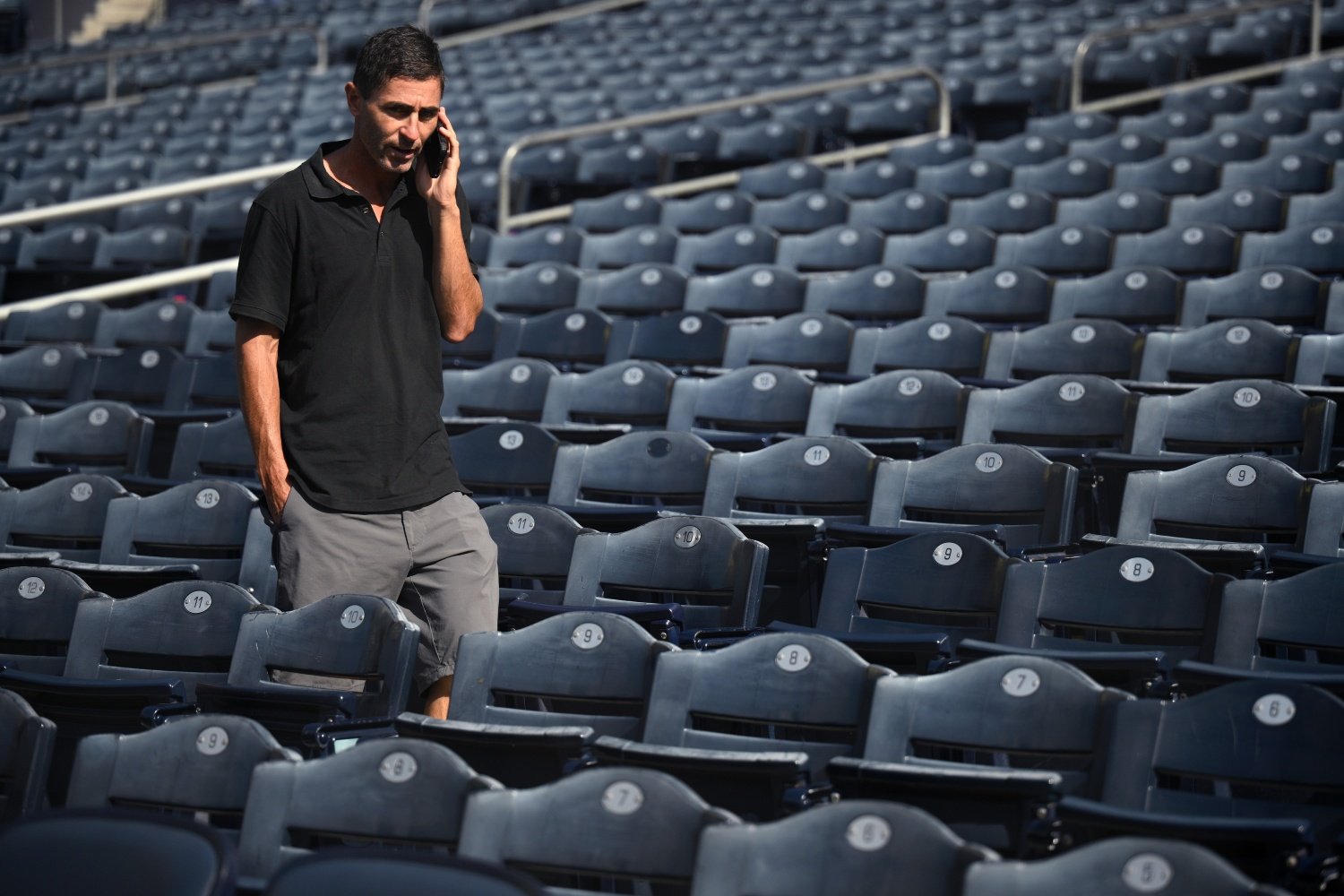 ESPN recently wrote an article that covered some of the wilder trade deadline stories among current GM's, within which there was an unsurprising quote regarding Preller. Preller is a known overpayer. He's an all-in guy who has made a slew of trades in recent years, including six of their top 12 prospects in 2024, and he's likely to do so again in 2025. Outside of their high-level international talents in Leo De Vries and Ethan Salas, almost anyone else is on the table. What Would the San Diego Padres Want From the Milwaukee Brewers? Preller's team doesn't have a lefthander in their active rotation or on the injured list. Kyle Hart is their only left-handed starter on the 40-man roster, and he's sitting in Triple A having thrown 29 1/3 innings to begin the season. Hw owns a 5.83 ERA and just 19 strikeouts. Jose Quintana may fit their needs perfectly, as a proven starter with an ERA below 4.00 in every season since 2022. He's a proven performer in the postseason and a reliable arm, nibbling around the zone and taking advantage of poor swing decisions to occasionally go deep into ball games. Usually, he can be relied upon for a solid five innings of work every five days. He fits what the Padres need to a "T", as they struggle for depth in their rotation—even as Yu Darvish made his return from the injured list this week. Now, the Padres like to trade for major-league players under control for more than one year, but they aren't averse to deviating from that principle. This is a team that traded their second-, fourth-, fifth- and 24th-ranked prospects for Tanner Scott and Bryan Hoenig at last year's trade deadline. Quintana may not have that back-end reliever, shutdown closer status, but arguably, he can provide comparable value in terms of WAR given the additional volume of innings he would cover. The Trade Packages The Brewers could really go only one way in terms of a return here, with the Padres system heavily favoring arms (and young arms, at that). They also do not have anyone that they could do a roster swap with who fits the Brewers' needs (though I'm sure Pat Murphy would love Luis Arraez), so any deal would likely be predicated on prospect capital. The Padres farm system is heavily based on potential, rather than proven results, after the top two in their system. That means that almost any but those top players could be on the table. One thing the Brewers may really enjoy is the plethora of high-upside teenage arms in the Padres farm, led by Kash Mayfield, Humberto Cruz and Boston Bateman. Brewers Trade Jose Quintana (LHP) for Boston Bateman (RHP, A) and Bradgley Rodriguez (RHP, AA) Boston Bateman is a high-stuff, fringy-command pitcher with an excellent fastball. Despite lower life on the pitch, he's been up to 98 mph with deceptive action and a low three-quarters release that also helps him generate good horizontal movement on his slider. Bateman has some development to go to polish his stuff and get the most out of it, but at 6-foot-7 and 245 pounds, his frame is mostly maxed out even at 19 years old. Bateman has 68 strikeouts and a 3.41 ERA at Low A in 60 2/3 innings pitched. Bradgley Rodriguez is a filthy right-handed reliever with a devastating one-two punch between his fastball and changeup. With 34 strikeouts to seven walks in 27 2/3 innings at Double A in 2025, Rodriguez has been showcasing his potential wonderfully. In 2024, he managed to touch 101 mph with his fastball, while the changeup has dastardly tumbling action that led to a 58% whiff rate. He's working on a hard slider/cutter with some potential, too, to round out the arsenal—though he is expected to remain in a relief role. Rodriguez may be a push in this deal, but his relief-only profile limits his value somewhat. Bateman is the headliner, with stuff that could land him in a major-league rotation one day (albeit a day a few years removed from this one). Quintana is unlikely to be enough to pry Cruz away from them, with San Diego having traded an over-slot fourth-rounder in 2023 just to get enough bonus pool money to sign Cruz in 2024. Mayfield, meanwhile, is more of a command merchant, with lower velocity on his fastball but a low arm slot and potential velocity gains to come that might make him a viable alternative to Bateman. For two months of Quintana, this would certainly be a deal in favor of the Brewers, with long-term upside in both the rotation and the bullpen. Both prospects would likely fall into the 11-25 range in the Brewers system at present. What would you think of trading Quintana? Do you think the Brewers could get Preller to bite on even higher demands? Let us know your thoughts in the comments below!
- 11 comments
-
- 1
-
-
- jose quintana
- 2025 trade deadline
- (and 2 more)
-
Image courtesy of © Orlando Ramirez-Imagn Images ESPN recently wrote an article that covered some of the wilder trade deadline stories among current GM's, within which there was an unsurprising quote regarding Preller. Preller is a known overpayer. He's an all-in guy who has made a slew of trades in recent years, including six of their top 12 prospects in 2024, and he's likely to do so again in 2025. Outside of their high-level international talents in Leo De Vries and Ethan Salas, almost anyone else is on the table. What Would the San Diego Padres Want From the Milwaukee Brewers? Preller's team doesn't have a lefthander in their active rotation or on the injured list. Kyle Hart is their only left-handed starter on the 40-man roster, and he's sitting in Triple A having thrown 29 1/3 innings to begin the season. Hw owns a 5.83 ERA and just 19 strikeouts. Jose Quintana may fit their needs perfectly, as a proven starter with an ERA below 4.00 in every season since 2022. He's a proven performer in the postseason and a reliable arm, nibbling around the zone and taking advantage of poor swing decisions to occasionally go deep into ball games. Usually, he can be relied upon for a solid five innings of work every five days. He fits what the Padres need to a "T", as they struggle for depth in their rotation—even as Yu Darvish made his return from the injured list this week. Now, the Padres like to trade for major-league players under control for more than one year, but they aren't averse to deviating from that principle. This is a team that traded their second-, fourth-, fifth- and 24th-ranked prospects for Tanner Scott and Bryan Hoenig at last year's trade deadline. Quintana may not have that back-end reliever, shutdown closer status, but arguably, he can provide comparable value in terms of WAR given the additional volume of innings he would cover. The Trade Packages The Brewers could really go only one way in terms of a return here, with the Padres system heavily favoring arms (and young arms, at that). They also do not have anyone that they could do a roster swap with who fits the Brewers' needs (though I'm sure Pat Murphy would love Luis Arraez), so any deal would likely be predicated on prospect capital. The Padres farm system is heavily based on potential, rather than proven results, after the top two in their system. That means that almost any but those top players could be on the table. One thing the Brewers may really enjoy is the plethora of high-upside teenage arms in the Padres farm, led by Kash Mayfield, Humberto Cruz and Boston Bateman. Brewers Trade Jose Quintana (LHP) for Boston Bateman (RHP, A) and Bradgley Rodriguez (RHP, AA) Boston Bateman is a high-stuff, fringy-command pitcher with an excellent fastball. Despite lower life on the pitch, he's been up to 98 mph with deceptive action and a low three-quarters release that also helps him generate good horizontal movement on his slider. Bateman has some development to go to polish his stuff and get the most out of it, but at 6-foot-7 and 245 pounds, his frame is mostly maxed out even at 19 years old. Bateman has 68 strikeouts and a 3.41 ERA at Low A in 60 2/3 innings pitched. Bradgley Rodriguez is a filthy right-handed reliever with a devastating one-two punch between his fastball and changeup. With 34 strikeouts to seven walks in 27 2/3 innings at Double A in 2025, Rodriguez has been showcasing his potential wonderfully. In 2024, he managed to touch 101 mph with his fastball, while the changeup has dastardly tumbling action that led to a 58% whiff rate. He's working on a hard slider/cutter with some potential, too, to round out the arsenal—though he is expected to remain in a relief role. Rodriguez may be a push in this deal, but his relief-only profile limits his value somewhat. Bateman is the headliner, with stuff that could land him in a major-league rotation one day (albeit a day a few years removed from this one). Quintana is unlikely to be enough to pry Cruz away from them, with San Diego having traded an over-slot fourth-rounder in 2023 just to get enough bonus pool money to sign Cruz in 2024. Mayfield, meanwhile, is more of a command merchant, with lower velocity on his fastball but a low arm slot and potential velocity gains to come that might make him a viable alternative to Bateman. For two months of Quintana, this would certainly be a deal in favor of the Brewers, with long-term upside in both the rotation and the bullpen. Both prospects would likely fall into the 11-25 range in the Brewers system at present. What would you think of trading Quintana? Do you think the Brewers could get Preller to bite on even higher demands? Let us know your thoughts in the comments below! View full article
-
It may have been, or it may have been a little time while they worked on his swing behind closed doors. Spencer wrote an excellent piece today on how the swing is different from the start of the season which might explain it. I got it from TJstats! I think he has some free models and this is one of them, but he's also worth the subscription if you can afford it for the data he can provide
-
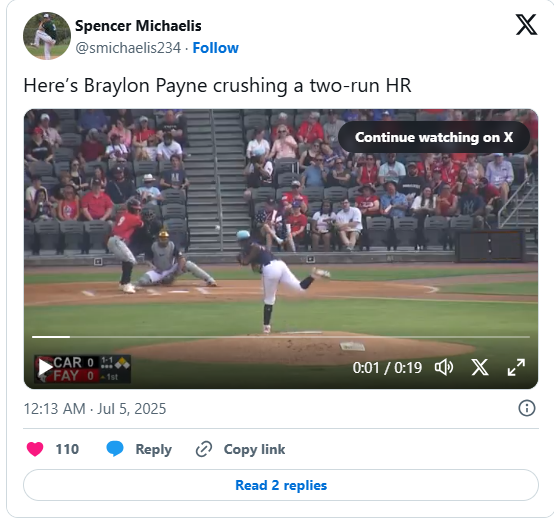
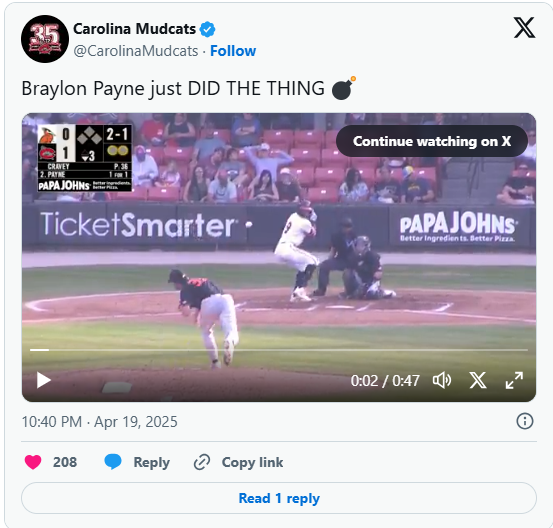
vs There's certainly a change here. The foot's down earlier, there's a lot less "sink" in the knees and the weight seems further back. I think the stance might be a little closer together too, which if anything, may allow him to impact the baseball even more. Awesome spot Spencer!
- 10 replies
-
- 4
-

-
-
- braylon payne
- tate kuehner
- (and 1 more)
-
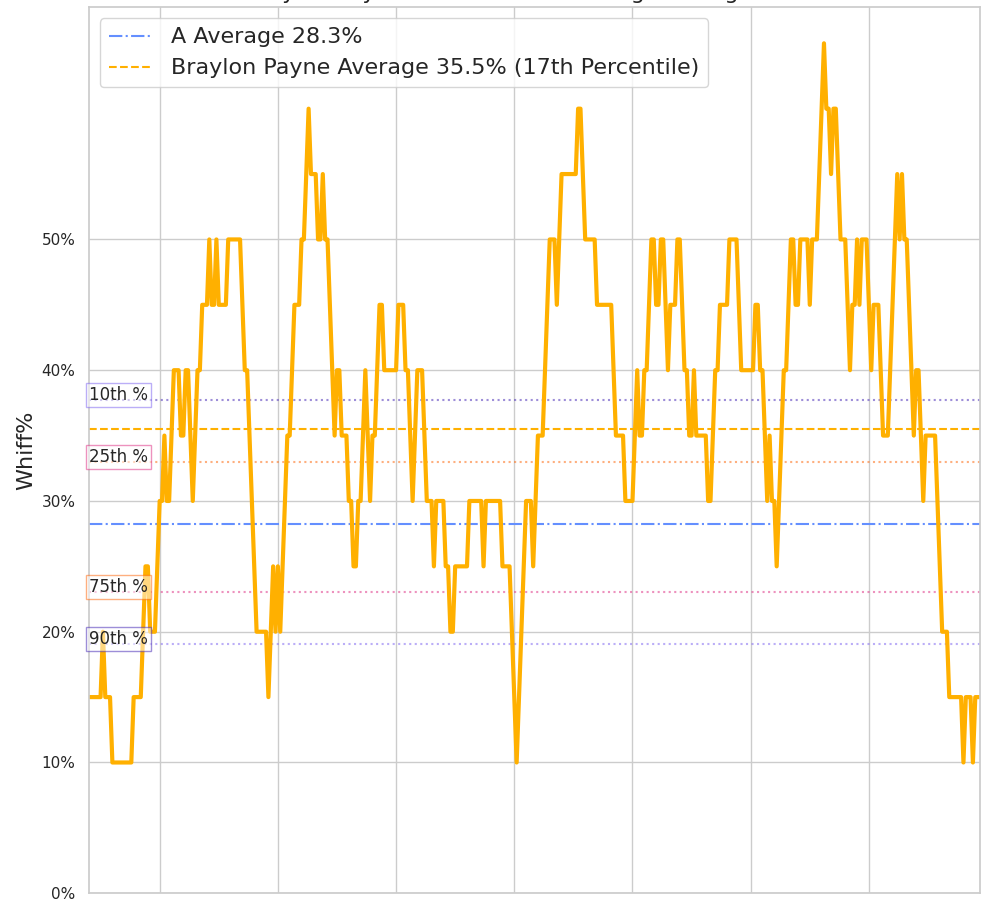
I can't tell for sure, as it's based on a graph, but I think Braylon Payne's whiff rate was around 15% last week, maybe even lower. A stark difference compared to what it's been like over the last two months, even accounting for the variability of a 10 swing sample (had to go low to isolate it to a week-ish)
- 3 replies
-
- 1
-
-
- jonathan rangel
- kenny fenelon
- (and 3 more)
-
Same, it just looks like he's found some rhythm and timing, and a little bit of confidence again. I wonder if it was less an injury he was off for, and more just some time off on an unofficial development list placement
-
Is it just me or does Braylon Payne look a LOT more consistent in the box since his return?
-
I'm not denying he played a role but I did have a look into this after Matt Truebloods article the other day on Turang. The Brewers are averaging.3 feet less, but actually an extra .1 feet from the base on stolen base attempts, so it's not the leads that are really a difference. I do wonder if he picked the pitch coming better than most, but I can't get data on that unfortunately. He's also the Cubs third base coach so even that "pitch selection" piece wouldn't have an impact. Perhaps it's game planning on what to look for but the Cubs do also have big speed in their ranks especially. In short you could be right but I can't find any data to back that up

-
Image courtesy of © Wendell Cruz-Imagn Images Jacob Misiorowski's workload is becoming increasingly concerning, given what he's been able to get through in previous seasons. As a general rule of thumb, teams don't like their pitchers to throw half again as many innings in one season as in the previous one, especially if the hurler in question is young and throws hard. After throwing 97 1/3 innings in 2024, Misiorowski already has 83 frames on his arm this season, and there might be 15 more turns through the rotation. Assuming a moderate five innings in each, that would push him past the 150-inning mark—before even considering what happens if the Brewers make the playoffs. Taking a different approach, it's important to factor in that Misiorowski was far less efficient with his pitches in 2024, meaning that when he only threw four or five innings in a start, he was potentially in the 90-100 pitch range. In other words, although he's eating more innings in 2025, that doesn't necessarily translate to him throwing more pitches (although that will happen by the season's end, and comfortably so). We also have to take into account the additional strain and mental fatigue of pitching in the big leagues, compared to toiling for the Biloxi Shuckers. It adds tension, and thus adds to the drain placed on his arm from start to start. With an arm moving as fast as Misiorwoski's, health is an absolute priority for the Brewers and there may be one way they can manage that pitch load even if it does present some additional risks. With the upcoming All-Star break (and Misiorowski penciled in to start July 8 against the Dodgers), they could give him an extended break of up to 15 days to refresh himself and reset somewhat. The Brewers have an upcoming crunch of returns from the injured list, in Brandon Woodruff (this weekend) and hopefully Nestor Cortes after the break. They may need to resolve that logjam by the trade deadline, but in the interim, they can use their wealth of options to give Misiorowski time to reset in the middle of the season and slowly ramp up again. With multiple long relievers on their roster, they could build up again from a 2-3 inning pace toward a stretched-out five innings as you come into August. In theory, this could save Misiorowski from around 20 innings of pitching this year while keeping his arm fresh during the dog days, but it does present its own risks. There's a reason we see the majority of long-term elbow injuries happen in the first month of the season. Stress on the elbow is heightened when the arm isn't accustomed to that stress. The question is, medically, whether a two- or three-week layoff for Misiorowski would completely unwind his arm, or whether he would still be considered "hot", for want of a better term. The All-Star break presents the Brewers with the perfect opportunity to give Misiorowski a rest during what could be a career year. The questions are whether they feel they can afford that, and whether it's truly necessary. With Misiorowski looking so good, the other option is to simply let him pitch and be ready to take proactive action if and when he shows signs of wearing down. View full article
-
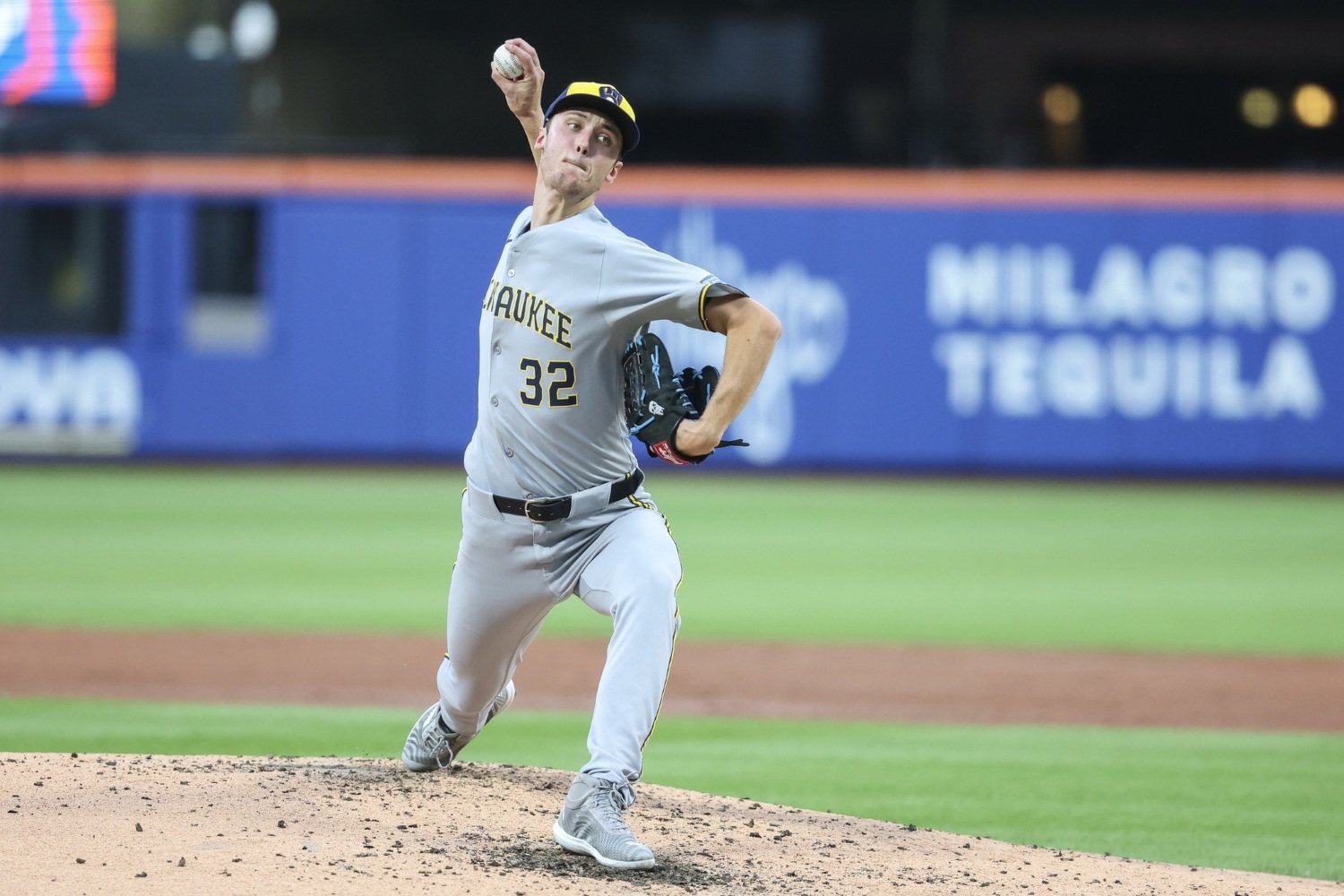 Jacob Misiorowski's workload is becoming increasingly concerning, given what he's been able to get through in previous seasons. As a general rule of thumb, teams don't like their pitchers to throw half again as many innings in one season as in the previous one, especially if the hurler in question is young and throws hard. After throwing 97 1/3 innings in 2024, Misiorowski already has 83 frames on his arm this season, and there might be 15 more turns through the rotation. Assuming a moderate five innings in each, that would push him past the 150-inning mark—before even considering what happens if the Brewers make the playoffs. Taking a different approach, it's important to factor in that Misiorowski was far less efficient with his pitches in 2024, meaning that when he only threw four or five innings in a start, he was potentially in the 90-100 pitch range. In other words, although he's eating more innings in 2025, that doesn't necessarily translate to him throwing more pitches (although that will happen by the season's end, and comfortably so). We also have to take into account the additional strain and mental fatigue of pitching in the big leagues, compared to toiling for the Biloxi Shuckers. It adds tension, and thus adds to the drain placed on his arm from start to start. With an arm moving as fast as Misiorwoski's, health is an absolute priority for the Brewers and there may be one way they can manage that pitch load even if it does present some additional risks. With the upcoming All-Star break (and Misiorowski penciled in to start July 8 against the Dodgers), they could give him an extended break of up to 15 days to refresh himself and reset somewhat. The Brewers have an upcoming crunch of returns from the injured list, in Brandon Woodruff (this weekend) and hopefully Nestor Cortes after the break. They may need to resolve that logjam by the trade deadline, but in the interim, they can use their wealth of options to give Misiorowski time to reset in the middle of the season and slowly ramp up again. With multiple long relievers on their roster, they could build up again from a 2-3 inning pace toward a stretched-out five innings as you come into August. In theory, this could save Misiorowski from around 20 innings of pitching this year while keeping his arm fresh during the dog days, but it does present its own risks. There's a reason we see the majority of long-term elbow injuries happen in the first month of the season. Stress on the elbow is heightened when the arm isn't accustomed to that stress. The question is, medically, whether a two- or three-week layoff for Misiorowski would completely unwind his arm, or whether he would still be considered "hot", for want of a better term. The All-Star break presents the Brewers with the perfect opportunity to give Misiorowski a rest during what could be a career year. The questions are whether they feel they can afford that, and whether it's truly necessary. With Misiorowski looking so good, the other option is to simply let him pitch and be ready to take proactive action if and when he shows signs of wearing down.
 -
I kind of like the swing. I think, to my untrained eye, it's a very flat bat path but the hand speed is electric. Really fast barrel movement
-
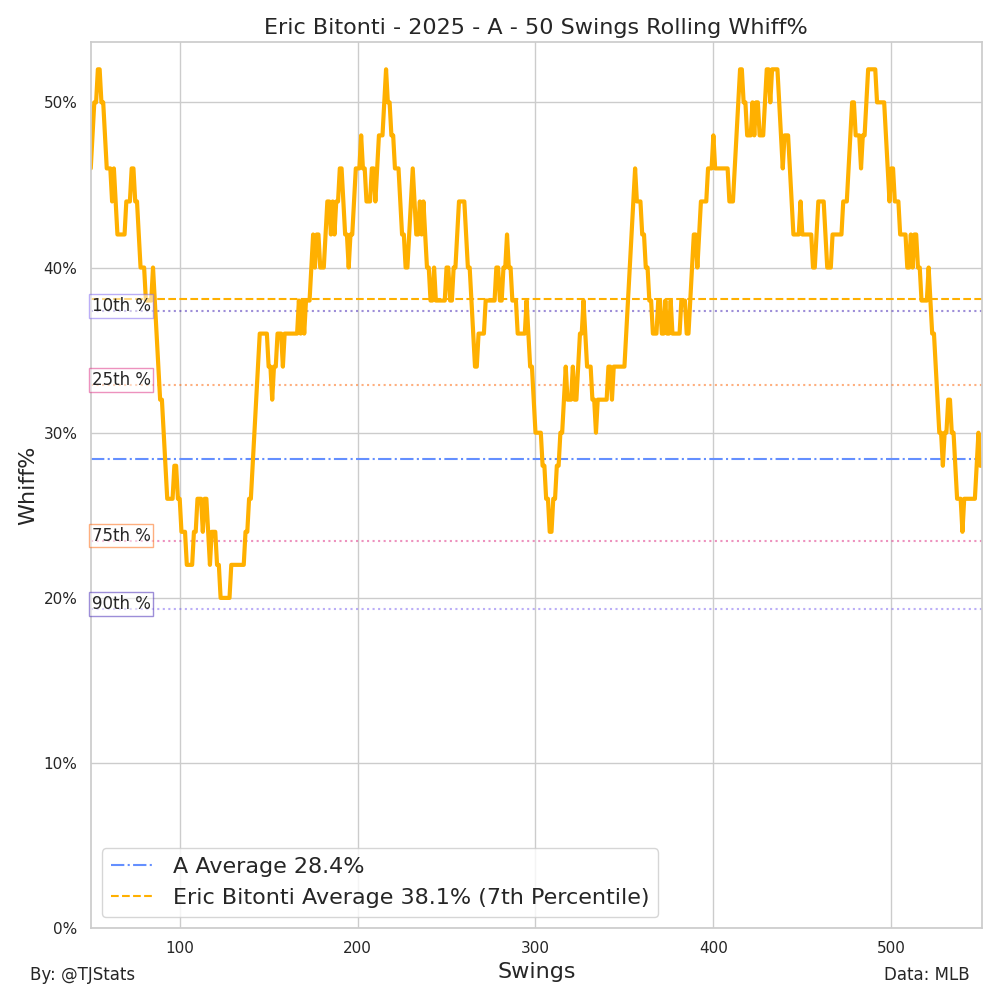
Eri Bitonti, over the last 30 days, still has an egregious 31.3% strikeout rate but he is slashing .274/.384/4.93 and making the type of contact we hoped to see from the get go in 2025. The other good news (and we'll see if this holds) is that his whiff rate is on the decline and his current 50-swing average is around 50th percentile. He has reached that at other points of the season but with tangible changes in his impact on the ball I wonder if it sticks this time
- 4 replies
-
- 3
-
-
-
- luis pena
- nestor cortes
- (and 8 more)
-
Absolutely! It's a small sample but a healthy, confident Joel Payamps is a good bullpen arm and he looks to be approaching some form. You do NOT want me to share Elvis Peguero's numbers mind. nasty stuff
-
Joel Payamps in Triple A, based on these metrics, looks... outstanding. Tons of whiffs, tons of chases, an xWOBA of .112. All contact is aerial but outside of that, this looks like a regular in big league bullpen. Not a single barrel as of yet

-
Remi has done a phenomenal dive I to similarities between Priester and Burnes including arm slot, supination bias and more, well worth checking out
-
With the double header I wouldn't now be surprised to see Chad Patrick stay in the rotation for one more start over the weekend as well as Woodruff. You can't ask Peralta to throw Wednesday and Sunday on three days rest
-
It's probably a lot to term anyone as a left handed Jacob Misiorowski given his recent starts, but there is upside there. Schoolcraft has a big frame and a big fastball but Misiorowski is more than just that. A unqiue release point, feel for spin and outrageous arm speed are borderline impossible to replicate Schoolcraft has the velocity but doesn't have much feel to create that rising effect and I think personally that's a red flag. Apparently the slider has good bite so there's maybe a chance he can work on that fastball shape but it won't be linear and is a risky and, likely, costly first pick. Certainly not a no-brainer for me, but the upside is there and if the Brewers took him you know they'd have a plan ready and waiting. It seems that the 15-30 list is really up in the air with a lot of preference built in. I think we might see more than a couple of currently projected teen ranked players available at the 20th pick Also Fien's bat is pretty highly rated but the high hands MLB.com mentioned worries me just a tad on how that will profile against higher velocities. Given the plethora of corner IF bats the Brewers have I wonder if they'll look to athleticism and to work on the bat from there in t draft. Daniel Pierce/Steele Hall could be interesting and in play on that note
-
This is why we're patient! Phenomenal job Jim!
-
Mon. 6/30: Made to Play in MLB Future's Game
Jake McKibbin replied to Jim Goulart's topic in Brewers Minor League Talk
Brailyn Antuñez had fly balls exit velocities of 102 and 101 mph in Saturdays game -
Anthony Seigler is getting the call per Francys Romero
Jake McKibbin replied to wiguy94's topic in Milwaukee Brewers Talk
The interesting thing about this is, time wise, by missing 12 games they could give someone 18 days off due to the ASB. Not too bad, but we'll see how they play it. I'd say its far more likely that Monasterio is sent down at this point given his lack of utility off the bench, he's barely been used and mostly as a PR for Hoskins. -
Image courtesy of © James A. Pittman-Imagn Images Trevor Megill has been admirable this season, closing out 18 of 22 games and often coming up clutch even in non-save, late-game situations. That being said, the Milwaukee Brewers have become accustomed to a certain shutdown "unhittability" from their closers, and Megill doesn't quite meet that lofty standard. The four-seam fastball has been more hittable than ever this year, meaning that if he loses the feel for his knuckle-curveball, it can become a dire situation quite quickly. On top of that, they've moved Nick Mears away from high-leverage spots to decrease his burden, while Abner Uribe is tiring. Both Mears and Uribe have shown wear under extreme usage. Jared Koenig has been solid as well, but the Brewers bullpen just hasn't had that same aura of invincibility—even as they've come on strong over the last month. The Brewers rank fourth in Major League Baseball for innings pitched out of the bullpen (332 1/3) and are running a 4.22 relief ERA. Yes, some blowouts (such as the Yankees series) may be skewing that ERA, but even from the start of May, their bullpen ERA is 17th with a 4.04 mark. In 2023 and 2024, they had the second-best bullpen in baseball, but that just hasn't been a strength this season. A few distinct problems plague the relief corps. They don't keep the ball on the ground all that effectively (42.8%, 15th), don't strike a lot of hitters out (22.6%, 13th) and have a moderately high walk rate (12th-highest in MLB, at 9.5%). Those are the components of a mid-tier pitching performance, and that's exactly where the bullpen sits right now. The addition of one player comfortable in high-leverage spots could change all of that immediately. Whether it be in place of DL Hall (who appears to be in the dog house right now), Grant Anderson or Rob Zastryzny (who has actually been very effective but would have less leeway than most), if the Brewers can split the 7th- to 9th-inning duties between Uribe, Megill, Koenig and one new weapon, they can allow for one of that group to rest with greater regularity. Anderson, Zastryzny and Aaron Ashby have the stuff to handle the 7th inning, and the funkiness to exploit situational matchups every once in a while. Allowing Uribe, Koenig and Megill to be fresh come September by adding another dominant arm could have massive implications in September and beyond. As it stands, Uribe is tied for sixth in the majors in games pitched out of the bullpen, while Koenig is tied for 13th. The question, of course, is whom they should add to the mix. On the surface, Seranthony Domínguez has been highly effective, albeit with a few command issues. His raw stuff is some of the best in baseball, with a 97-98 mph fastball from a low arm slot (adding some variety when following or preceding the slots of Megill or Mears) and a deep arsenal for a reliever. With above-average whiff rates (misses per swing) on his four-seamer and sinker and the deadly offspeed mix of his splitter and sweeper, Domínguez has a ceiling of being one of the best relievers in baseball. To add to that, when he's keeping his fastball in that upper third, every single one of his pitches generates poor quality of contact against them. Domínguez's electric raw stuff would give the Brewers' coaching staff a lot to work with. He's in the top 5 percent of major-league hurlers in both expected batting average and expected slugging, and has given up just three home runs all season—all on fastballs he missed down in the zone with. He's very hard to square up Historically, Domínguez also hasn't been as wild with his walk rates, sitting at 9.8% and 8,2% in 2023 and 2024 before jumping to 14.2% in 2025. If we compare the different pitch usage, a couple of things stand out. Here's his movement plot for 2025 (left) and for 2024 (right): Domínguez has ditched his slider for the bigger-breaking sweeper and is leaning on the sweeper and splitter—two pitches that traditionally work best when they end up outside the strike zone. Thus, he's sitting inside the strike zone a lot less. To round out his arsenal, the Brewers may want to bring back that shorter slider and use it to create a breaking pitch that can land in the strike zone (and still manage contact effectively), creating that thought in a hitter that a glove-side pitch isn't necessarily going to break almost a foot. Maybe the answer is even replacing the slider with a firmer, shorter version thereof, akin to a cutter. Overall, Domínguez is landing just 42.3% of his pitches inside the strike zone. With his prodigious stuff, he doesn't need to be landing a lot in the zone, but it needs to be closer to that 50% mark for him to have more sustainable success, especially against the more patient offenses that you'll face come October. All in all, Domínguez is one of the best high-ceiling relievers in baseball and is a free agent after 2025, curtailing the price somewhat. There should be serious demand for him, but it's unlikely to be a true top prospect-caliber deal, which is where the depth of the Brewers' farm system could come to the fore. The price tag for Dominguez could look more like Brett Wichrowski than Josh Knoth or Bryce Meccage. Having such a bevy of talented hurlers gives the Brewers the luxury of considering that kind of move, to deepen their bullpen for a pennant race to come. What would you think of a package for Seranthony Dominguez? Would you chase him to bolster this Brewers bullpen? Let us know your thoughts in the comments below! View full article
-
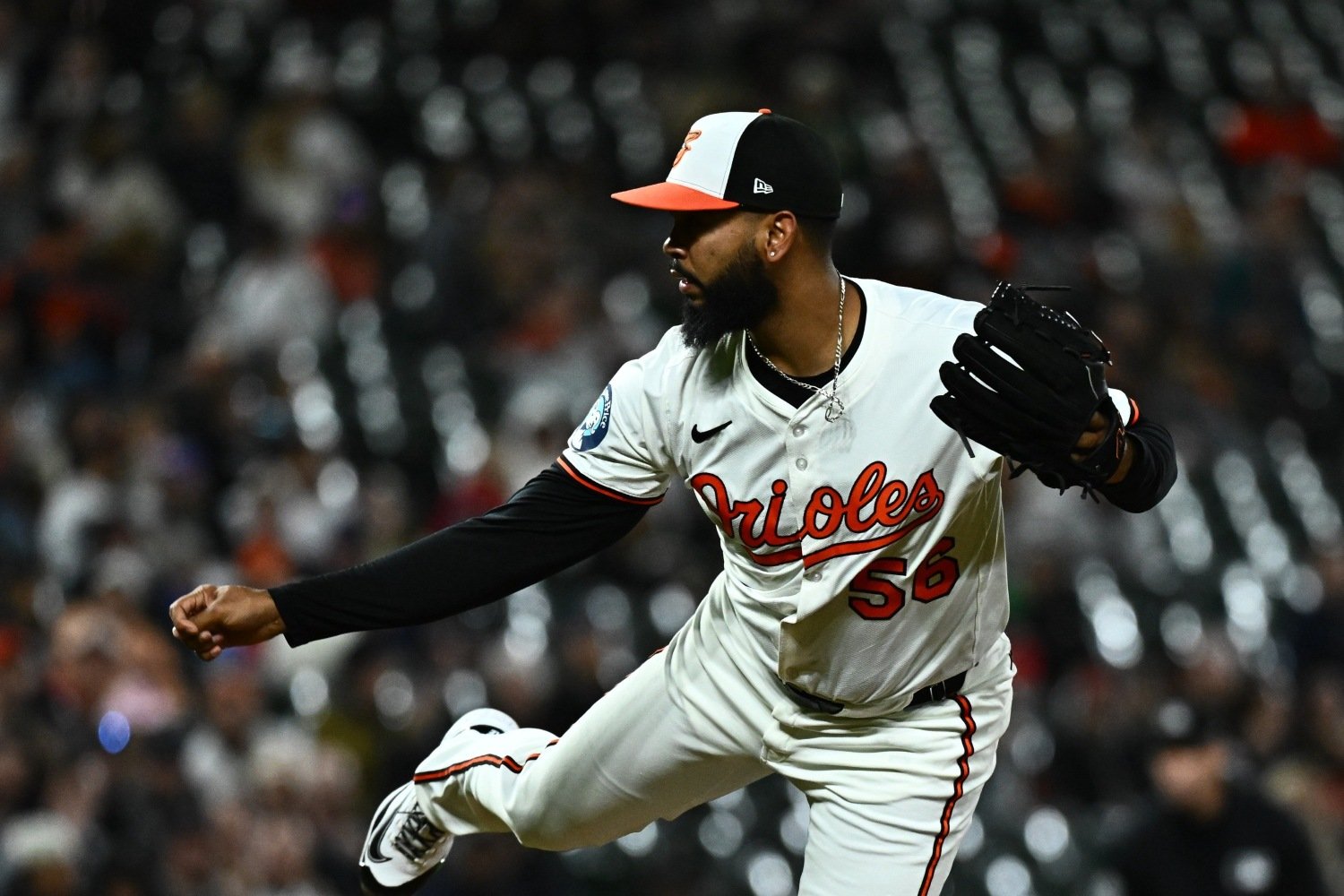 Trevor Megill has been admirable this season, closing out 18 of 22 games and often coming up clutch even in non-save, late-game situations. That being said, the Milwaukee Brewers have become accustomed to a certain shutdown "unhittability" from their closers, and Megill doesn't quite meet that lofty standard. The four-seam fastball has been more hittable than ever this year, meaning that if he loses the feel for his knuckle-curveball, it can become a dire situation quite quickly. On top of that, they've moved Nick Mears away from high-leverage spots to decrease his burden, while Abner Uribe is tiring. Both Mears and Uribe have shown wear under extreme usage. Jared Koenig has been solid as well, but the Brewers bullpen just hasn't had that same aura of invincibility—even as they've come on strong over the last month. The Brewers rank fourth in Major League Baseball for innings pitched out of the bullpen (332 1/3) and are running a 4.22 relief ERA. Yes, some blowouts (such as the Yankees series) may be skewing that ERA, but even from the start of May, their bullpen ERA is 17th with a 4.04 mark. In 2023 and 2024, they had the second-best bullpen in baseball, but that just hasn't been a strength this season. A few distinct problems plague the relief corps. They don't keep the ball on the ground all that effectively (42.8%, 15th), don't strike a lot of hitters out (22.6%, 13th) and have a moderately high walk rate (12th-highest in MLB, at 9.5%). Those are the components of a mid-tier pitching performance, and that's exactly where the bullpen sits right now. The addition of one player comfortable in high-leverage spots could change all of that immediately. Whether it be in place of DL Hall (who appears to be in the dog house right now), Grant Anderson or Rob Zastryzny (who has actually been very effective but would have less leeway than most), if the Brewers can split the 7th- to 9th-inning duties between Uribe, Megill, Koenig and one new weapon, they can allow for one of that group to rest with greater regularity. Anderson, Zastryzny and Aaron Ashby have the stuff to handle the 7th inning, and the funkiness to exploit situational matchups every once in a while. Allowing Uribe, Koenig and Megill to be fresh come September by adding another dominant arm could have massive implications in September and beyond. As it stands, Uribe is tied for sixth in the majors in games pitched out of the bullpen, while Koenig is tied for 13th. The question, of course, is whom they should add to the mix. On the surface, Seranthony Domínguez has been highly effective, albeit with a few command issues. His raw stuff is some of the best in baseball, with a 97-98 mph fastball from a low arm slot (adding some variety when following or preceding the slots of Megill or Mears) and a deep arsenal for a reliever. With above-average whiff rates (misses per swing) on his four-seamer and sinker and the deadly offspeed mix of his splitter and sweeper, Domínguez has a ceiling of being one of the best relievers in baseball. To add to that, when he's keeping his fastball in that upper third, every single one of his pitches generates poor quality of contact against them. Domínguez's electric raw stuff would give the Brewers' coaching staff a lot to work with. He's in the top 5 percent of major-league hurlers in both expected batting average and expected slugging, and has given up just three home runs all season—all on fastballs he missed down in the zone with. He's very hard to square up Historically, Domínguez also hasn't been as wild with his walk rates, sitting at 9.8% and 8,2% in 2023 and 2024 before jumping to 14.2% in 2025. If we compare the different pitch usage, a couple of things stand out. Here's his movement plot for 2025 (left) and for 2024 (right): Domínguez has ditched his slider for the bigger-breaking sweeper and is leaning on the sweeper and splitter—two pitches that traditionally work best when they end up outside the strike zone. Thus, he's sitting inside the strike zone a lot less. To round out his arsenal, the Brewers may want to bring back that shorter slider and use it to create a breaking pitch that can land in the strike zone (and still manage contact effectively), creating that thought in a hitter that a glove-side pitch isn't necessarily going to break almost a foot. Maybe the answer is even replacing the slider with a firmer, shorter version thereof, akin to a cutter. Overall, Domínguez is landing just 42.3% of his pitches inside the strike zone. With his prodigious stuff, he doesn't need to be landing a lot in the zone, but it needs to be closer to that 50% mark for him to have more sustainable success, especially against the more patient offenses that you'll face come October. All in all, Domínguez is one of the best high-ceiling relievers in baseball and is a free agent after 2025, curtailing the price somewhat. There should be serious demand for him, but it's unlikely to be a true top prospect-caliber deal, which is where the depth of the Brewers' farm system could come to the fore. The price tag for Dominguez could look more like Brett Wichrowski than Josh Knoth or Bryce Meccage. Having such a bevy of talented hurlers gives the Brewers the luxury of considering that kind of move, to deepen their bullpen for a pennant race to come. What would you think of a package for Seranthony Dominguez? Would you chase him to bolster this Brewers bullpen? Let us know your thoughts in the comments below!
- 6 comments
-
- 1
-
-
- seranthony dominguez
- trevor megill
- (and 1 more)
-
Anthony Seigler is getting the call per Francys Romero
Jake McKibbin replied to wiguy94's topic in Milwaukee Brewers Talk
Anthony Seiglers quality of contact as a lefty are absolutely nuts. To produce those averages without big top end EV's speaks to remarkable consistency and barrel control