



Jake McKibbin
-
Posts
2,395 -
Joined
-
Last visited
-
Days Won
6
Content Type
Profiles
Forums
Blogs
Events
News
2026 Milwaukee Brewers Top Prospects Ranking
Milwaukee Brewers Videos
2022 Milwaukee Brewers Draft Picks
Milwaukee Brewers Free Agent & Trade Rumors, Notes, & Tidbits
Guides & Resources
2023 Milwaukee Brewers Draft Picks
2024 Milwaukee Brewers Draft Picks
The Milwaukee Brewers Players Project
2025 Milwaukee Brewers Draft Pick Tracker
2026 Milwaukee Brewers Draft Tracker: Picks & Bonuses
Store
Downloads
Gallery
Everything posted by Jake McKibbin
-
Image courtesy of © Mark Hoffman/Milwaukee Journal Sentinel / USA TODAY NETWORK via Imagn Images Jackson Chourio's start to 2025 has been underwhelming. Losing all plate discipline and struggling to pick up breaking pitches, he's looked lost at the plate, despite his eight home runs. He's still running into occasional bombs, as he did against Garrett Crochet this week, but his OPS is steadily trending down. The problem, again, is chasing too much. His rolling chase rates (by a 50-plate appearance sample) have regularly been above the 40% mark and have regressed there again recently. The problem is that these haven't always correlated with his production, because of how effectively he punished mistakes earlier in the season (although there is still some correlation). Of course, if Chourio can force pitchers inside the strike zone, he should be able to do more damage with more hittable pitches. That would make sense, but it also seems like his confidence is just shot at the moment. Despite a period of improved swing decisions recently, his hard-hit rates have plummeted over his last 90-plus batted balls, to a 10th percentile range. He's lost all confidence and conviction at the plate, meaning that even when pitchers give him something to hit, he's struggling to punish it. There's nothing in his offensive skill set that's materially changed, other than his approach. His setup and swing are almost identical to 2024, but he's not meting out hit swings judiciously. It all points toward a player forcing it, in search of becoming the superstar Milwaukee craves. He got a taste of it in the postseason, and he has all the talent to perform at those levels again. With an under-confident player feeling that level of pressure, he'll be prone to overthinking—perhaps even a state of panic in the box. A short hot streak, or some Brewers wins will take some of the burden off him and perhaps allow him to relax and let the game come to him once more. A new month brings a fresh slate, and with that, Chourios has a chance of repeating his scorching June of last year. He isn't showing signs of breaking out, but then, he didn't show many at this time last year, either. It just clicked, and nothing has changed (outside of his mind) to indicate that the exact same thing can't happen once again. That being said, his results are showing clear decline and the confidence drop is more embedded than a mere dip. Chourio isn't able to slow the game down at the moment, even though his rapid hands should allow him all the time he needs to make good swing decisions. It's there. He'll likely be all the better for this experience in the future. And he might just go nuclear once more, just when the Brewers really need his bat. However, right now, he isn't showing any signs of busting this long, drawn-out slump, save the occasional blast. View full article
-
2025 Minor League Transaction Thread
Jake McKibbin replied to Jim Goulart's topic in Brewers Minor League Talk
Not quite a transaction, but a notable similar event. Bishop Letson is scheduled to start on Saturday -
That's an awesome visual! Thanks Terry! Explains wonderfully in regards to Yelich
-
I noticed you just found this one haha! Either way, I hope you enjoyed the analysis!
-
His overall OPS is actually lower too. If Arcia came, it'd likely be just while Ortiz gets some time to recalibrate in triple A
- 6 replies
-
- 1
-

-
- joey ortiz
- al leboeuf
- (and 2 more)
-
Image courtesy of © Charles LeClaire-Imagn Images It's not breaking news to say that Christian Yelich and William Contreras have struggled this season. With the former recovering from a back surgery that removed a significant amount of tissue and muscle from his lower back, while the latter embodies the spirit of the black knight from Monty Python, there are understandable reasons for each to be a far cry from their MVP-caliber best form. Last week, Baseball Savant released some new metrics showcasing the specific shapes of various swings. Perhaps these numbers will allow us to delve deeper into their struggles, seeing what their swings have looked like at their best and their worst—and, therefore, what factors are key to their success in the future. Before I go into the weeds, a couple of these new statistics that may be important are described below: EV50 - An average of the hardest-hit half of a player's batted balls, EV50 bins everything a batter hits as either above or below their norm. Separating outcomes this way lets us break down what happens when a hitter meets it well, and tell what's different when they don't. Attack Angle - The vertical angle the sweet spot of the bat is traveling at the point of impact, this metric helps us see how geared that swing is toward elevating the baseball. The ideal attack angle is considered between 5° and 20°, but that's a catch-all range. For most hitters, there's some specific, smaller range of attack angles that indicates they timed up a pitch correctly. Attack Direction - The horizontal angle the sweet spot travels at the instant of contact tells us how a swing is likely to direct the ball. It's also a measurement of timing, but in a different dimension than Attack Angle. Swing path tilt - This is the average angle of "tilt" across their shoulders/bat path, as in the picture below. Imagine a horizontal line through the handle of the bal. This is the angle between that imaginary line and the bat itself. Intercept Point - How far in front of the front edge of the plate a hitter impacts the ball—or, if the number be negative, how far behind that point they do so So what I'm going to attempt to do is isolate the "good" contact each of our subjects has made, and compare the results over their last two seasons. William Contreras Immediately, a couple of things stand out for Contreras, thanks to the shading system employed by Baseball Savant. The batted balls that have reached his EV50 in both 2024 and 2025 have been largely similar. The attack angle is slightly better in 2025, finding that ideal bat path with more regularity, while the attack directions are identical. In theory, the higher average attack angle and the better concentration within the ideal attack angle range should be producing better results, but that's not what we've actually seen in 2025. Whence comes the difference? Well, if we look at the difference between the EV50 and non-EV50 balls, a couple of things become clear. The first is that, in 2024, Contreras largely caught the ball at the same average distance in front of the plate, actually getting further out in front on his non-EV50 batted balls. There's a drastic change, however, in 2025, where he's catching the ball several inches further back. With the deeper contact point (relative either to the plate or to his body), Contreras can't get his arms extended through the point of contact, and he can't turn through the natural arc of the swing, which is resulting in more balls going toward the opposite field. So in 2024, with Contreras's best attack direction to get to his maximum exit velocities being around 5°, he would often access power by being early on the ball. The average non-EV50 batted ball at just 1° to the opposite field at contact tells us that. In essence, he was further extended through the ball in these contacts, and thus still found good elevation to the pull side at times. In 2025, however, that number is more to the opposite field at 8°. In short, he's late, partially because he might be mistiming things, but partially, too, because his bat is slower. There's also the point that Contreras's swings are at their best in that 1° to 5° range of attack direction. We can see below, when we sort Contreras's data by pitch result into whiffs, fouls and balls in play, that the balls in play all average within that range—while the fouls and whiffs all sit outside of that. That makes sense; you mostly put the ball in play when you get the bat across it, rather than striking a glancing blow. Contreras is capable of incredible power, so even when not making the best contact of which he's capable, he can get to extra bases—especially when he is getting it elevated to the pull side. If he's late to the ball, however, that means he's likely hitting down on the ball, resulting in less elevation and a greater ground-ball profile, which has certainly manifested itself early in 2025. The main differentiator here is the bat speed. Due to the arc of the swing, if we took a swing starting from the exact same time, but one swing was two miles per hour faster, that swing would be able to impact the ball further out in front and more to the pull side. Exacerbating this problem is Contreras's stance, which (by becoming more closed off) is making it harder for him to pull the ball with authority and starting the bat slightly farther behind him. That, in turn, changes the sweet spot of contact for him. His stride is pulling him open, but then comes the challenge of keeping the barrel in the hitting zone long enough to punish pitches on the outer third. The broken finger is no doubt having an impact on the power Contreras can generate through the final parts of the swing with how his wrists and hands manipulate the barrel, and that impact on bat speed is having a huge effect on Contreras's intercept point and quality of contact as a result. This marries with his 2024 results. Contreras had a hot start in April and May last year; cooled off in June; heated up again in August; and struggled in September, with the effects of a grueling season piling up. We can see the peaks are coming in those hotter periods for Contreras, while dipping off in those periods where he struggled. I'd love to put a rolling average line on the chart above, but unfortunately, Statcast doesn't provide that for bat speed just yet. The good news is the bat speed has come back more of late, though it's still sporadic. Two of his hits on his big night last Monday came on swings north of 75 mph, a good sign for Contreras. If he can manage the pain in his finger to an acceptable level, hopefully, he can rediscover that bat speed on a more consistent basis. If not, it raises further questions about why an IL stint to get him right isn't being attempted. Christian Yelich Yelich's struggles are slightly different from Contreras's. His biggest struggles are in his inability to impose himself on fastballs, with drastic increases in his swing-and-miss rates against sinkers and four-seamers—to say nothing of his travails against anything out of a lefthander's release point. Where it differs for Yelich is that his bat speed has been absolutely fine this season—if not superior on his EV50 batted balls. His non-EV50 balls come on only slightly slower bat speeds, compared to those same batted balls in 2024, while his tilt, attack angle and even the percentage of ideal launch angles all look impressive. Yet, using the intercept point against his center of mass, we can see that he, too, is catching the ball quite a bit later than he has previously, with his EV50 batted balls being caught almost 2" further back. (This may not sound like much, but wait until we get to the diagrams and you can see the difference.) As we know from years of watching Yelich, it's not how hard he hits the ball, but how often he can get it in the air that makes a big difference. In 2024, he was ensuring more of those hard-hit balls were out in front, and thus, he elevated them more often. As Matthew Trueblood wrote recently, even when he does hit the ball hard in 2025, he's hitting so many ground balls that the most he can get is a single from that hard contact. The idea here is that Yelich is catching the ball deeper, and although he's trying to get an upward angle of attack, and actually succeeding with his bat path despite being so much further back in his stance, the contortions required to do so aren't allowing him to consistently time up the baseball with what is a long, fluid swing, even when his timing is on point. On top of the ideal attack angles, another way we can notice this is the angle of the bat direction at contact. MLB average is 2° toward the pull side, but Yelich, in 2025, is averaging 7° toward the opposite field. He's always had prodigious opposite-field power, but that is an outlier number, and while he is able to adjust the angle of the bat using his hands and wrists to try and gain some loft, he's not able to do so with his attack direction. What should be a natural timing out in front to loft the ball to the pull side is now more of a forced mechanism that's unwieldy in both feel and results. If we contrast that with 2024 below, the difference in contact point and attack direction is noticeable: At the extraordinarily high level of competition in the majors, the smallest of changes are often the difference between greatness and failure. If we look closely at the two images, we can see three important things: When Yelich made contact in 2024, the ball at the point of contact was in front of home plate, not behind it The attack direction, as a result of the swing's natural arc, is 3° to the opposite field, rather than 7° Perhaps most importantly, if we observe the angle of Yelich's elbows in both the diagrams above (the right arm especially), they are closer to straightening out in 2024 than 2025. In other words, he's further extended through the ball at the point of contact On batted balls in play, the swing direction becomes an even more stark: 12° toward the opposite field. Yet, Yelich is pulling the ball more than he ever has. It's a clear sign of trying to make his new contact point work, but the good news is that his issues are entirely related to timing. If he can find that sweet spot once more, the whole picture could change overnight. He'll not have to use those excellent hands and the adaptability in his swing to try and manufacture a good attack angle, or pull the ball, instead letting his swing speed do all the work and just flow. We saw a beautiful example of just this in Pittsburgh. Hitting home runs hasn't been a problem for Yelich this year, so consistency is key in how he backs this up, but a 110-mph monster shot to right field is an impressive sign of a great point of impact for Yelich. If you've stayed with me for this long, congratulations on surviving my nerd-off! What do you think of the points above? Have you different interpretations on the success of Christian Yelich and William Contreras? Let us know your thoughts in the comments below! View full article
-
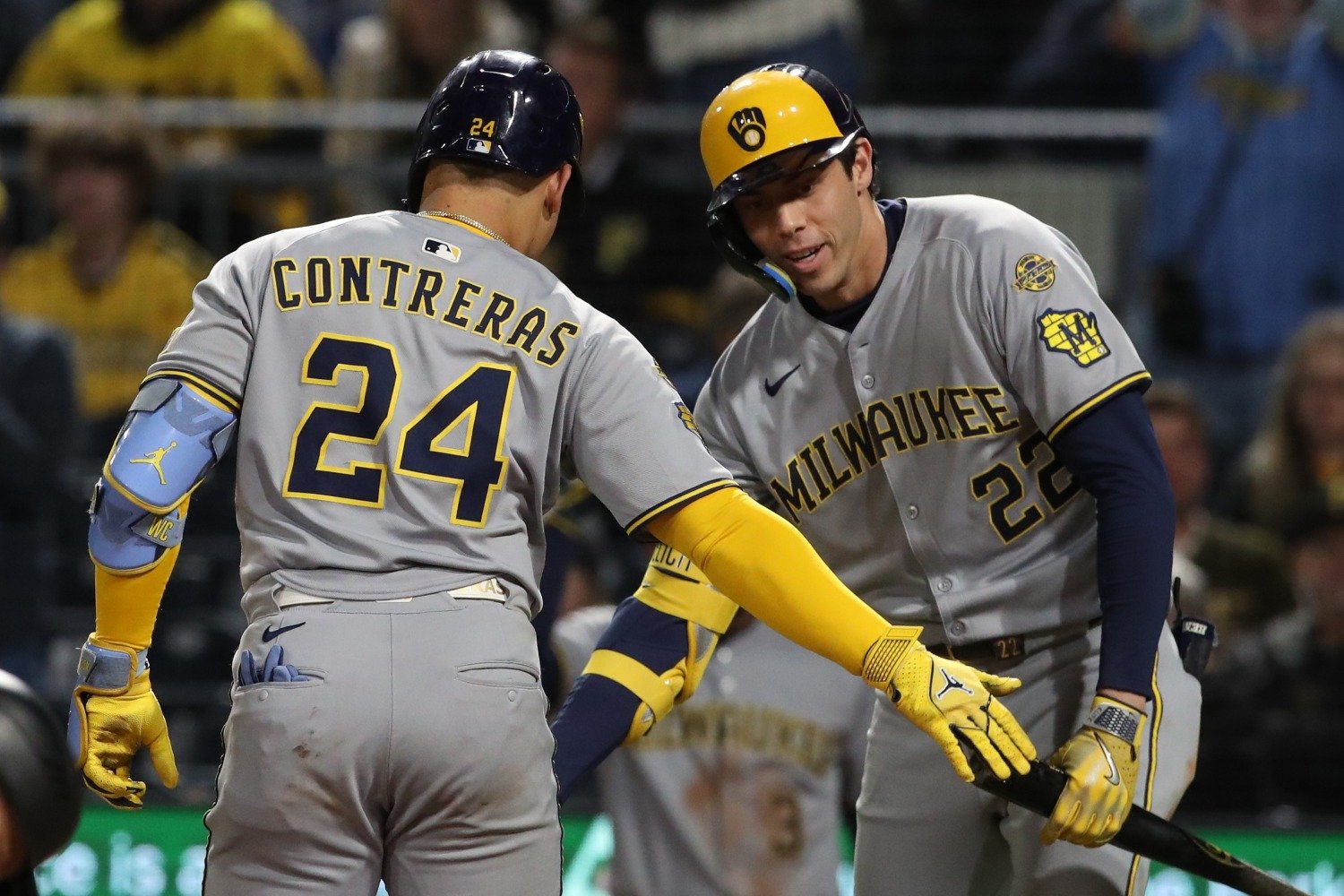 It's not breaking news to say that Christian Yelich and William Contreras have struggled this season. With the former recovering from a back surgery that removed a significant amount of tissue and muscle from his lower back, while the latter embodies the spirit of the black knight from Monty Python, there are understandable reasons for each to be a far cry from their MVP-caliber best form. Last week, Baseball Savant released some new metrics showcasing the specific shapes of various swings. Perhaps these numbers will allow us to delve deeper into their struggles, seeing what their swings have looked like at their best and their worst—and, therefore, what factors are key to their success in the future. Before I go into the weeds, a couple of these new statistics that may be important are described below: EV50 - An average of the hardest-hit half of a player's batted balls, EV50 bins everything a batter hits as either above or below their norm. Separating outcomes this way lets us break down what happens when a hitter meets it well, and tell what's different when they don't. Attack Angle - The vertical angle the sweet spot of the bat is traveling at the point of impact, this metric helps us see how geared that swing is toward elevating the baseball. The ideal attack angle is considered between 5° and 20°, but that's a catch-all range. For most hitters, there's some specific, smaller range of attack angles that indicates they timed up a pitch correctly. Attack Direction - The horizontal angle the sweet spot travels at the instant of contact tells us how a swing is likely to direct the ball. It's also a measurement of timing, but in a different dimension than Attack Angle. Swing path tilt - This is the average angle of "tilt" across their shoulders/bat path, as in the picture below. Imagine a horizontal line through the handle of the bal. This is the angle between that imaginary line and the bat itself. Intercept Point - How far in front of the front edge of the plate a hitter impacts the ball—or, if the number be negative, how far behind that point they do so So what I'm going to attempt to do is isolate the "good" contact each of our subjects has made, and compare the results over their last two seasons. William Contreras Immediately, a couple of things stand out for Contreras, thanks to the shading system employed by Baseball Savant. The batted balls that have reached his EV50 in both 2024 and 2025 have been largely similar. The attack angle is slightly better in 2025, finding that ideal bat path with more regularity, while the attack directions are identical. In theory, the higher average attack angle and the better concentration within the ideal attack angle range should be producing better results, but that's not what we've actually seen in 2025. Whence comes the difference? Well, if we look at the difference between the EV50 and non-EV50 balls, a couple of things become clear. The first is that, in 2024, Contreras largely caught the ball at the same average distance in front of the plate, actually getting further out in front on his non-EV50 batted balls. There's a drastic change, however, in 2025, where he's catching the ball several inches further back. With the deeper contact point (relative either to the plate or to his body), Contreras can't get his arms extended through the point of contact, and he can't turn through the natural arc of the swing, which is resulting in more balls going toward the opposite field. So in 2024, with Contreras's best attack direction to get to his maximum exit velocities being around 5°, he would often access power by being early on the ball. The average non-EV50 batted ball at just 1° to the opposite field at contact tells us that. In essence, he was further extended through the ball in these contacts, and thus still found good elevation to the pull side at times. In 2025, however, that number is more to the opposite field at 8°. In short, he's late, partially because he might be mistiming things, but partially, too, because his bat is slower. There's also the point that Contreras's swings are at their best in that 1° to 5° range of attack direction. We can see below, when we sort Contreras's data by pitch result into whiffs, fouls and balls in play, that the balls in play all average within that range—while the fouls and whiffs all sit outside of that. That makes sense; you mostly put the ball in play when you get the bat across it, rather than striking a glancing blow. Contreras is capable of incredible power, so even when not making the best contact of which he's capable, he can get to extra bases—especially when he is getting it elevated to the pull side. If he's late to the ball, however, that means he's likely hitting down on the ball, resulting in less elevation and a greater ground-ball profile, which has certainly manifested itself early in 2025. The main differentiator here is the bat speed. Due to the arc of the swing, if we took a swing starting from the exact same time, but one swing was two miles per hour faster, that swing would be able to impact the ball further out in front and more to the pull side. Exacerbating this problem is Contreras's stance, which (by becoming more closed off) is making it harder for him to pull the ball with authority and starting the bat slightly farther behind him. That, in turn, changes the sweet spot of contact for him. His stride is pulling him open, but then comes the challenge of keeping the barrel in the hitting zone long enough to punish pitches on the outer third. The broken finger is no doubt having an impact on the power Contreras can generate through the final parts of the swing with how his wrists and hands manipulate the barrel, and that impact on bat speed is having a huge effect on Contreras's intercept point and quality of contact as a result. This marries with his 2024 results. Contreras had a hot start in April and May last year; cooled off in June; heated up again in August; and struggled in September, with the effects of a grueling season piling up. We can see the peaks are coming in those hotter periods for Contreras, while dipping off in those periods where he struggled. I'd love to put a rolling average line on the chart above, but unfortunately, Statcast doesn't provide that for bat speed just yet. The good news is the bat speed has come back more of late, though it's still sporadic. Two of his hits on his big night last Monday came on swings north of 75 mph, a good sign for Contreras. If he can manage the pain in his finger to an acceptable level, hopefully, he can rediscover that bat speed on a more consistent basis. If not, it raises further questions about why an IL stint to get him right isn't being attempted. Christian Yelich Yelich's struggles are slightly different from Contreras's. His biggest struggles are in his inability to impose himself on fastballs, with drastic increases in his swing-and-miss rates against sinkers and four-seamers—to say nothing of his travails against anything out of a lefthander's release point. Where it differs for Yelich is that his bat speed has been absolutely fine this season—if not superior on his EV50 batted balls. His non-EV50 balls come on only slightly slower bat speeds, compared to those same batted balls in 2024, while his tilt, attack angle and even the percentage of ideal launch angles all look impressive. Yet, using the intercept point against his center of mass, we can see that he, too, is catching the ball quite a bit later than he has previously, with his EV50 batted balls being caught almost 2" further back. (This may not sound like much, but wait until we get to the diagrams and you can see the difference.) As we know from years of watching Yelich, it's not how hard he hits the ball, but how often he can get it in the air that makes a big difference. In 2024, he was ensuring more of those hard-hit balls were out in front, and thus, he elevated them more often. As Matthew Trueblood wrote recently, even when he does hit the ball hard in 2025, he's hitting so many ground balls that the most he can get is a single from that hard contact. The idea here is that Yelich is catching the ball deeper, and although he's trying to get an upward angle of attack, and actually succeeding with his bat path despite being so much further back in his stance, the contortions required to do so aren't allowing him to consistently time up the baseball with what is a long, fluid swing, even when his timing is on point. On top of the ideal attack angles, another way we can notice this is the angle of the bat direction at contact. MLB average is 2° toward the pull side, but Yelich, in 2025, is averaging 7° toward the opposite field. He's always had prodigious opposite-field power, but that is an outlier number, and while he is able to adjust the angle of the bat using his hands and wrists to try and gain some loft, he's not able to do so with his attack direction. What should be a natural timing out in front to loft the ball to the pull side is now more of a forced mechanism that's unwieldy in both feel and results. If we contrast that with 2024 below, the difference in contact point and attack direction is noticeable: At the extraordinarily high level of competition in the majors, the smallest of changes are often the difference between greatness and failure. If we look closely at the two images, we can see three important things: When Yelich made contact in 2024, the ball at the point of contact was in front of home plate, not behind it The attack direction, as a result of the swing's natural arc, is 3° to the opposite field, rather than 7° Perhaps most importantly, if we observe the angle of Yelich's elbows in both the diagrams above (the right arm especially), they are closer to straightening out in 2024 than 2025. In other words, he's further extended through the ball at the point of contact On batted balls in play, the swing direction becomes an even more stark: 12° toward the opposite field. Yet, Yelich is pulling the ball more than he ever has. It's a clear sign of trying to make his new contact point work, but the good news is that his issues are entirely related to timing. If he can find that sweet spot once more, the whole picture could change overnight. He'll not have to use those excellent hands and the adaptability in his swing to try and manufacture a good attack angle, or pull the ball, instead letting his swing speed do all the work and just flow. We saw a beautiful example of just this in Pittsburgh. Hitting home runs hasn't been a problem for Yelich this year, so consistency is key in how he backs this up, but a 110-mph monster shot to right field is an impressive sign of a great point of impact for Yelich. If you've stayed with me for this long, congratulations on surviving my nerd-off! What do you think of the points above? Have you different interpretations on the success of Christian Yelich and William Contreras? Let us know your thoughts in the comments below!
 -
Mitchell will need less time thank Perkins, who didn't really get a spring training. Haven't heard anything at all about him mind. Mitchell's strain is probably grade 2, meaning 4-6 weeks recovery. Were currently at the end of week 4, so hopefully we'll hear some news in the coming week!
-
Thanks Ed! Love to hear it, these are my favourite type of pieces to write so I'm glad it went down well!
-
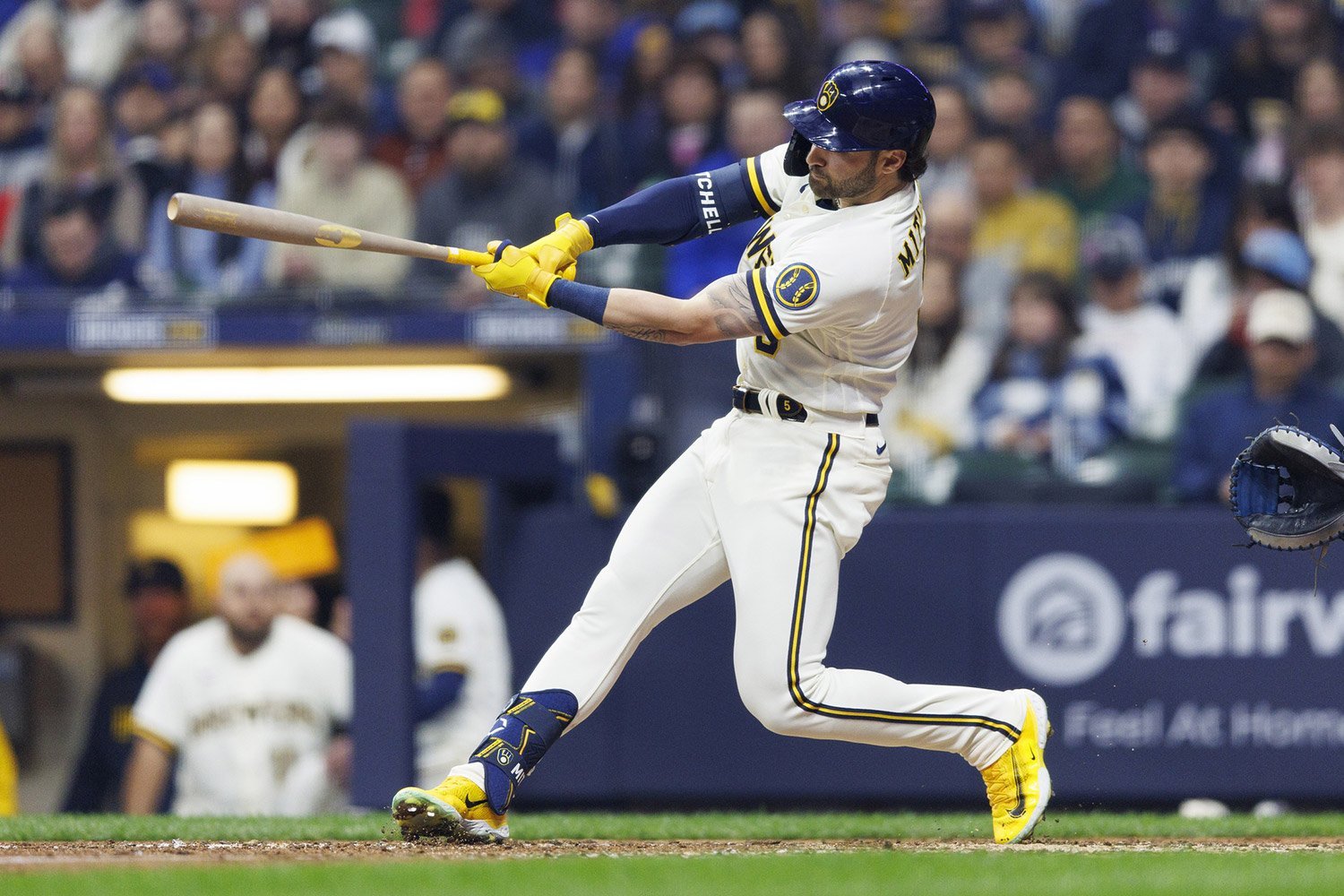 Garrett Mitchell recognized that his issues with the high fastball throughout his career would be unsustainable for future seasons, and went to work at Driveline in the offseason in an effort to adjust his swing and make it easier for him to access this particular part of the zone before it became his downfall. Mitchell's entire success came from pitchers throwing him breaking balls and seeing them get punished in zone with unerring accuracy, as we saw in the 2024 playoffs. But it was only a matter of time before they just spammed those upper-third fastballs where his whiff rates and strikeout rates looked something like this in 2024 (apologies, I can't isolate to just fastballs, but that would tell a similar story): The big reason for Mitchell's struggles is how far behind the pitch he was. Baseball savant's new swing metrics allow us to see how Mitchell's swings against high fastballs looked when he whiffed, fouled, or put the ball in play, and it's shown an interesting trend despite a small sample size. These are the raw numbers for 2024/2025, and we can immediately see a pattern in the attack direction. Mitchell's average attack direction is 4°, and we can see he's managing to get to this on the balls he hits in play. On those that he fouls, and even more extreme on those he whiffs on however, the attack direction is extreme. Due to the natural arc of the swing, it's easily explained that Mitchell is incredibly late to the pitch and finds himself unable to achieve a short bat path towards the top of the zone. Garrett Mitchell's swing length is only slightly above average, which suggests a different issue altogether going on here. His swing decisions were absolutely elite in 2024, taking an approach to lay off anything that looked like a high fastball and attempting to sit on those breaking pitches. He made his swing decisions late, resulting in an 11% walk rate and 17.6% chase rate, both elite numbers in the 90th percentile or above for 2024, despite big swing and miss concerns. His patient approach, however, was likely to come undone if pitchers just pounded the strike zone with those upper third pitches. So, Mitchell went to work and we can see the fruits of that in the results above. Between 2024 and 2025 in each of the above pitch locations on fastballs, Mitchell's "swing path tilt" (demonstrated in the photo above), the angle at which his shoulders and hips tilt when making contact, has flattened out to make it easier to reach fastballs at the top of the strike zone. Coming flatter through the zone rather than his previous technique of dipping underneath and coming up on the ball allowed him to be shorter to the pitch, and it's borne interesting results so far. It's also exactly what he worked on at Driveline: The swing and miss rates still aren't great, but they're significantly better, especially on the up-and-in third of the strike zone, which, in the small sample size we have, has dropped from 60% in 2024 to just 10% whiff rates in 2025. He's also achieved (and again, remember this isn't a lot of swings as Mitchell tends to take pitches in the upper third of the zone early in counts) a 100% ideal attack angle across every swing in the upper third of the zone so far in 2025. His overall production against fastballs has improved too, with an expected batting average/expected slugging of .274/.417, an average exit velocity of 91.7 mph alongside improved launch angles, xWOBA and whiff rates. The issue is a significant drop off in his contact quality against breaking pitches where he's whiffing more often and hasn't found any slugging power whatsoever in 2025: So, let's take a look into his swings against these pitches, and the answer might again be his swing tilt. It's the method Mitchell uses to adjust his swing and allow the bat to cover as much of the zone as possible, but it's flattened out this season as a result of the changes made to make more contact on the high fastball. Even a few degrees can make a big difference here, and although it won't stop him punishing breaking pitches, it will take some time to adjust in terms of timing. When we isolate it down to breaking pitches, the swing path tilt has reduced by 3° on competitive swings against breaking pitches, but his overall swing speed and attack angles are fairly similar. This suggests that, if Mitchell can find the barrel of the bat more often, then the damage potential is still there. The contact point is different, finding himself catching the ball less out in front of his center of mass, but this indicates a timing issue more than anything The other noticeable change in Mitchell's swing is, like Sal Frelick and Brice Turang, he's narrowed his stance, at least initially. His leg kick and stride after that point is longer by almost a foot. meaning that, although the initial set up is narrower, he actually gets in the same position which might create a little more pressure on the timing element of getting that front foot down. In doing so, it's completely natural for Mitchell to have some timing issues affect his contact point, especially as he'll have spent the majority of the offseason focusing purely on that high fastball, to solid success so far. 2024 Stance (Black is the initial stance, red is the stance at the point of contact) 2025 Stance Once he finds the timing that allows him to uncork on those breaking balls, all the elements are still there to do damage as he did in 2024. He's got the bat speed, he's finding good attack angles, and is just catching them a little bit late, which could largely be as a result of the longer leg kick. It's purely timing, but Mitchell's swing is showing that if he can just stay on the field and find some rhythm, he could be a major force in the second half of 2025.
 -
Image courtesy of © Jeff Hanisch-Imagn Images Garrett Mitchell recognized that his issues with the high fastball throughout his career would be unsustainable for future seasons, and went to work at Driveline in the offseason in an effort to adjust his swing and make it easier for him to access this particular part of the zone before it became his downfall. Mitchell's entire success came from pitchers throwing him breaking balls and seeing them get punished in zone with unerring accuracy, as we saw in the 2024 playoffs, but it was only a matter of time before they just spammed those upper third fastballs where his whiff rates and strikeout rates looked something like this in 2024 (apologies, I can't isolate to just fastballs, but that would tell a similar story): The big reason for Mitchell's struggles is how far behind the pitch he was. Baseball savant's new swing metrics allow us to see how Mitchell's swings against high fastballs looked when he whiffed, fouled or put the ball in play and it's shown an interesting trend despite a small sample size. Here are the raw numbers for 2024/2025 and we can immediately see a pattern in the attack direction. Mitchell's average attack direction is 4° and we can see he's managing to get to this on the balls he hits in play. On those that he fouls, and even more extreme on those he whiffs on however, the attack direction is extreme in the attack direction achieved. Due to the natural arc of the swing, it's easily explained that Mitchell is incredibly late to the pitch and finds himself unable to achieve a short bat path towards the top of the zone. Garrett Mitchell's swing length is only slightly above average which suggests an altogether different issue going on here. His swing decisions were absolutely elite in 2024, taking an approach to lay off anything that looked like a high fastball and attempting to sit on those breaking pitches. He made his swing decisions late, resulting in an 11% walk rate and 17.6% chase rate, both elite numbers in the 90th percentile or above for 2024, despite big swing and miss concerns. His patient approach however was likely to come undone if pitchers just pounded the strike zone with those upper third pitches. So Mitchell went to work and we can see the fruits of that in the results above. Between 2024 and 2025 in each of the above pitch locations on fastballs, Mitchell's "swing path tilt" (demonstrated in the photo above), the angle at which his shoulders and hips tilt when making contact, has flattened out to make it easier to reach fastballs at the top of the strike zone. Coming flatter through the zone rather than his previous technique of dipping underneath and coming up on the ball allowed him to be shorter to the pitch and it's borne interesting results so far. It's also exactly what he worked on at Driveline: The swing and miss rates still aren't great, but they're significantly better, especially on the up and in third of the strike zone, which in the small sample size has dropped from 60% in 2024 to just 10% whiff rates in 2025. He's also achieved, and again remember this isn't a lot of swings as Mitchell tends to take pitches in the upper third of the zone early in counts, a 100% ideal attack angle across every swing in the upper third of the zone so far in 2025. His overall production against fastballs has improved too, with an expected batting average/expected slugging of .274/.417, an average exit velocity of 91.7 mph alongside improved launch angles, xWOBA and whiff rates. The issue has coming in a significant drop off in his contact quality against breaking pitches where he's whiffing more often and hasn;t found any slugging power whatsoever in 2025: So let's take a look into his swings against these pitches, and the answer might again be his swing tilt. It's the method Mitchell uses to adjust his swing and allow the bat to cover as much of the zone as possible but it's flattened out this season as a result of the changes made to make more contact on the high fastball. Even a few degrees can make a big difference here, and although it won't stop him punishing breaking pitches, it will take some time to adjust in terms of timing. When we isolate it down to breaking pitches, the swing path tilt has reduced by 3° on competitive swings against breaking pitches but his overall swing speed and attack angles are fairly similar. This suggests that, if Mitchell can find the barrel of the bat more often, then the damage potential is still there. The contact point is different, finding himself catching the ball less out in front of his center of mass but this indicates a timing issue more than anything The other noticeable change in Mitchell's swing is, like Sal Frelick and Brice Turang, he's narrowed his stance, at least initially. His leg kick and stride after that point is longer by almost a foot meaning that, although the initial set up is narrower, he actually gets in the same position which might create a little more pressure on the timing element of getting that front foot down. In doing so, it's completely natural for Mitchell to have some timing issues affect his contact point, especially as he'll have spent the majority of the offseason focusing purely on that high fastball, to solid success so far. 2024 Stance (Black is the initial stance, red is the stance at the point of contact) 2025 Stance Once he finds the timing that allows him to uncork on those breaking balls, all the elements are still there to do damage as he did in 2024. He's got the bat speed, he's finding good attack angles and is just catching them a little bit late which could largely be as a result of the longer leg kick. It's purely timing, but Mitchell's swing is showing that if he can just stay on the field and find some rhythm, he could be a major force in the second half of 2025. View full article
-
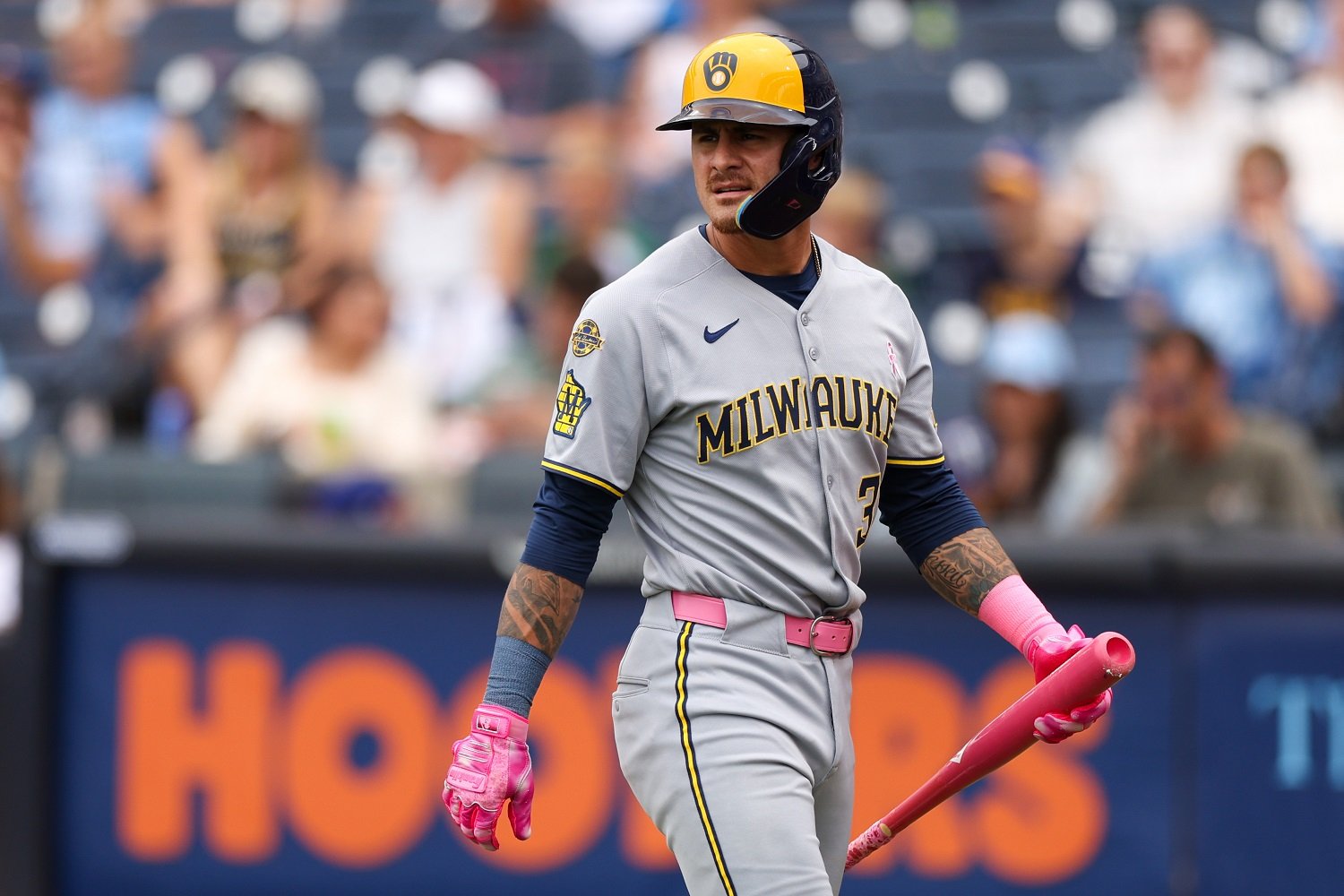 Earlier this year, I offered a deep dive into the alterations of Joey Ortiz's swing, namely, looking at the change in the aggressiveness of his leg kick. Ortiz's pre-swing movement has become less pronounced, less decisive, in contrast to his setup during those halcyon days when he cut loose in May and June of 2024. A neck injury created some debilitating results in the dog days of summer, but Ortiz had clearly found a blueprint for how he can achieve success when healthy. Fast-forward to a new season, and with Ortiz back to full health, his swing has deviated significantly (and, arguably, indefensibly) from that which showed the most success for him. Aside from the pronounced leg kick, Ortiz has made changes in his batting stance that have had large-scale implications in his contact point and quality of contact in 2025. @Jack Stern mused recently about Ortiz being late in the hitting zone, citing that as the cause of numerous pop-ups to first base. It seems the changes to his stance have fed into that somewhat. His bat speed has been high, allowing him to attempt to pull breaking pitches while still being able to damage and hit fastballs hard to the opposite field, a hallmark of his success in the first half of 2024. Coming into 2025, there are some recognizable changes in his setup that Ortiz has worked through. His stance was around 26° open in 2024, even before the neck injury, but has closed off to around 18° in 2025. He's also moved deeper into the batter's box, a move that gives him more time to react to high velocity and adjust to breaking pitches. We've seen a corresponding improvement in his whiff rate and strikeout rate, which have reached quite elite levels in 2025. The problem is, the quality of contact he's producing off the back of that has absolutely cratered: After a strong spring training, you would think Joey Ortiz was full of confidence, but his reduced bat speed and inability to impact the ball have led to pitchers ruthlessly exploiting him in the zone. In summary, Ortiz has reduced his leg kick, moved back in the box, and closed off his stance, all changes that seem geared towards making better swing decisions and increasing contact. The question is, why was this a priority for Ortiz, given the rates he was achieving in those categories in 2024? Looking at bat speed spreads so far in 2025, we can see clearly that Ortiz is struggling to access the swing and bat speed that gave him a high ceiling as a prospect: So with a slower bat and a more closed-off stance, as well as a setup that's seen him move further back in the batter's box, Ortiz has found himself struggling to pull the ball much at all in 2025, taking away one of his sources of damage from 2024. His pull rate has dropped from 38.2% down to 24.0%, and as Jack said, he's consistently catching the ball late. Now, perhaps the main issue here is not the stance, but rather the bat speed. A faster bat in the 75-76 mph range would allow Ortiz to potentially catch the ball slightly further out in front and perhaps unlock that pulling power once more. Ortiz has a very flat swing and will therefore likely never be a huge home run hitter; more likely to spray hard line drives. However, it's this exact profile that can ill afford to be so off with his swing plane. It's also completely closing off the inner third of the plate to hard contact and a large zone for his incessant pop-ups. If we compare Ortiz's average exit velocity on the inner third in 2024 (left) vs 2025 (middle), and his 2025 popup rate, this is what we find: On top of the reduced bat speed, Ortiz is starting the bat later than ever. A clear sign of a lack of confidence will be how much Ortiz is consciously thinking rather than merely reacting instinctively from the moment of release. Consciously thinking will cause indecision and late movements, something we're seeing a lot of from Ortiz in 2025. Let's contrast his bat position at the point a pitch enters the pitch map using Baseball Savant's new visual metrics. In 2025 (below), Ortiz's set-up further back in the box is clear, but his bat path is late, even despite this, barely reaching the strike zone at the moment the pitch comes into view: Contrast that with 2024, and it's clear the bat is further ahead at this point: It's not a massive difference, but the effect this has on the quality of contact is monumental when you fast forward to that part of the swing: 2024 2025 In 2024, Ortiz was managing to catch the ball out in front a lot more often, straightening through the point of contact and impacting the ball more consistently as a result. The delayed bat path and lower bat speeds are having a significant impact on his contact point, and the source of these issues is where the question of the Brewers' coaches or just Joey Ortiz comes into question. If the lower bat speed is a result of the change in his load, or a lack of confidence and comfortability in the changes he's made over the off-season, then Al LaBoeuf and Eric Thiesen should come under some pressure. They've tried to improve his consistency of contact by simplifying the operation, but have actually made things worse for the young shortstop in doing so. It's also clear that confidence plays a part in this whole ordeal. He's delayed in getting the bat off his shoulder, the bat speed could be down due to issues of conviction in his swing decisions, and it's having a knock-on effect. If he can regain some confidence once more, things could click back into place with regard to the timing of the rest of his swing. Sadly, Ortiz is completely bereft of such positive thought. His efforts to bunt on Wednesday afternoon encapsulated the state of his mind at this moment, popping up to third base and happy to be a sacrificial lamb with no conviction whatsoever that he could make solid contact. He may need time away from the spotlight to find that confidence again, something the Brewers and their dearth of infield options can ill afford to give, leaving it all a little bit pickled. The question then remains: Should the Brewers' hitting coordinators suffer some flak for the changes made with Joey Ortiz? Does Ortiz need to be more resilient in the face of adversity? Does he simply need more faith in the changes made by the Brewers coaches to see the full effects of those tweaks? Or how could the Brewers go about improving his clearly destroyed confidence levels? Let us know your thoughts in the comments below!
 -
Image courtesy of © Nathan Ray Seebeck-Imagn Images Earlier this year, I offered a deep dive into the alterations of Joey Ortiz's swing, namely, looking at the change in the aggressiveness of his leg kick. Ortiz's pre-swing movement has become less pronounced, less decisive, in contrast to his setup during those halcyon days when he cut loose in May and June of 2024. A neck injury created some debilitating results in the dog days of summer, but Ortiz had clearly found a blueprint for how he can achieve success when healthy. Fast-forward to a new season, and with Ortiz back to full health, his swing has deviated significantly (and, arguably, indefensibly) from that which showed the most success for him. Aside from the pronounced leg kick, Ortiz has made changes in his batting stance that have had large-scale implications in his contact point and quality of contact in 2025. @Jack Stern mused recently about Ortiz being late in the hitting zone, citing that as the cause of numerous pop-ups to first base. It seems the changes to his stance have fed into that somewhat. His bat speed has been high, allowing him to attempt to pull breaking pitches while still being able to damage and hit fastballs hard to the opposite field, a hallmark of his success in the first half of 2024. Coming into 2025, there are some recognizable changes in his setup that Ortiz has worked through. His stance was around 26° open in 2024, even before the neck injury, but has closed off to around 18° in 2025. He's also moved deeper into the batter's box, a move that gives him more time to react to high velocity and adjust to breaking pitches. We've seen a corresponding improvement in his whiff rate and strikeout rate, which have reached quite elite levels in 2025. The problem is, the quality of contact he's producing off the back of that has absolutely cratered: After a strong spring training, you would think Joey Ortiz was full of confidence, but his reduced bat speed and inability to impact the ball have led to pitchers ruthlessly exploiting him in the zone. In summary, Ortiz has reduced his leg kick, moved back in the box, and closed off his stance, all changes that seem geared towards making better swing decisions and increasing contact. The question is, why was this a priority for Ortiz, given the rates he was achieving in those categories in 2024? Looking at bat speed spreads so far in 2025, we can see clearly that Ortiz is struggling to access the swing and bat speed that gave him a high ceiling as a prospect: So with a slower bat and a more closed-off stance, as well as a setup that's seen him move further back in the batter's box, Ortiz has found himself struggling to pull the ball much at all in 2025, taking away one of his sources of damage from 2024. His pull rate has dropped from 38.2% down to 24.0%, and as Jack said, he's consistently catching the ball late. Now, perhaps the main issue here is not the stance, but rather the bat speed. A faster bat in the 75-76 mph range would allow Ortiz to potentially catch the ball slightly further out in front and perhaps unlock that pulling power once more. Ortiz has a very flat swing and will therefore likely never be a huge home run hitter; more likely to spray hard line drives. However, it's this exact profile that can ill afford to be so off with his swing plane. It's also completely closing off the inner third of the plate to hard contact and a large zone for his incessant pop-ups. If we compare Ortiz's average exit velocity on the inner third in 2024 (left) vs 2025 (middle), and his 2025 popup rate, this is what we find: On top of the reduced bat speed, Ortiz is starting the bat later than ever. A clear sign of a lack of confidence will be how much Ortiz is consciously thinking rather than merely reacting instinctively from the moment of release. Consciously thinking will cause indecision and late movements, something we're seeing a lot of from Ortiz in 2025. Let's contrast his bat position at the point a pitch enters the pitch map using Baseball Savant's new visual metrics. In 2025 (below), Ortiz's set-up further back in the box is clear, but his bat path is late, even despite this, barely reaching the strike zone at the moment the pitch comes into view: Contrast that with 2024, and it's clear the bat is further ahead at this point: It's not a massive difference, but the effect this has on the quality of contact is monumental when you fast forward to that part of the swing: 2024 2025 In 2024, Ortiz was managing to catch the ball out in front a lot more often, straightening through the point of contact and impacting the ball more consistently as a result. The delayed bat path and lower bat speeds are having a significant impact on his contact point, and the source of these issues is where the question of the Brewers' coaches or just Joey Ortiz comes into question. If the lower bat speed is a result of the change in his load, or a lack of confidence and comfortability in the changes he's made over the off-season, then Al LaBoeuf and Eric Thiesen should come under some pressure. They've tried to improve his consistency of contact by simplifying the operation, but have actually made things worse for the young shortstop in doing so. It's also clear that confidence plays a part in this whole ordeal. He's delayed in getting the bat off his shoulder, the bat speed could be down due to issues of conviction in his swing decisions, and it's having a knock-on effect. If he can regain some confidence once more, things could click back into place with regard to the timing of the rest of his swing. Sadly, Ortiz is completely bereft of such positive thought. His efforts to bunt on Wednesday afternoon encapsulated the state of his mind at this moment, popping up to third base and happy to be a sacrificial lamb with no conviction whatsoever that he could make solid contact. He may need time away from the spotlight to find that confidence again, something the Brewers and their dearth of infield options can ill afford to give, leaving it all a little bit pickled. The question then remains: Should the Brewers' hitting coordinators suffer some flak for the changes made with Joey Ortiz? Does Ortiz need to be more resilient in the face of adversity? Does he simply need more faith in the changes made by the Brewers coaches to see the full effects of those tweaks? Or how could the Brewers go about improving his clearly destroyed confidence levels? Let us know your thoughts in the comments below! View full article
-
Thurs. 5/22 - A-Ball A-List Starter in Hardin
Jake McKibbin replied to Jim Goulart's topic in Brewers Minor League Talk
I wonder if there's some inside info on this from the Burke family? And the corresponding moves for other hitters in Double A
-
Joseph, you genuinely make me laugh. Tip of the hat sir!
- 7 replies
-
- 1
-

-
- marco dinges
- jacob misiorowski
- (and 3 more)
-
I'd agree with this. He's showing a pretty decent hit tool, but it's the power that'll be his calling card and he needs to find his timing to get that ball in the air a lot more often before he'll force his way up. Lots of good unexpected signs from Burke from his non-carrying tools but I agree with Lucas that he has some work to do before progressing up to the toughest leap in the minor leagues
-
That's fair! I actually view them as quite similar from a lot of vantage points, maybe slightly prefer Mears after the changes he's made this season and hence went for the higher value player to other teams. That being said, either could be traded. One thing I'm keen to stress is I'm not sure this is punting. I think the Brewers expect Ashby to be in high leverage on his return, and Hall to boost the longer relief meaning that they can perhaps afford to part with one of their higher arms without weakening the overall structure as such. Megill would be a loss, but maybe not as big as we'd imagine
- 18 replies
-
- 1
-
-
- jose alvarado
- trevor megill
- (and 3 more)
-
Great minds, or fools seldom differing? I'm not sure if Chace is just out for reach on this one, especially given megill isn't lock down in the mold of a Hader or Williams. He is prone to home run issues when the fastball is slightly off or he loses feel for the curveball, but I do think he'll get a fairly solid package back. If Chace was available then absolutely, but I'd imagine you'd maybe only get two players back in that instance if he was. Chace's three strong pitches, with a really impressive fastball, and the uptick in control at the end of 2024 may put him out of reach for relief arm, but he would be an impressive return
-
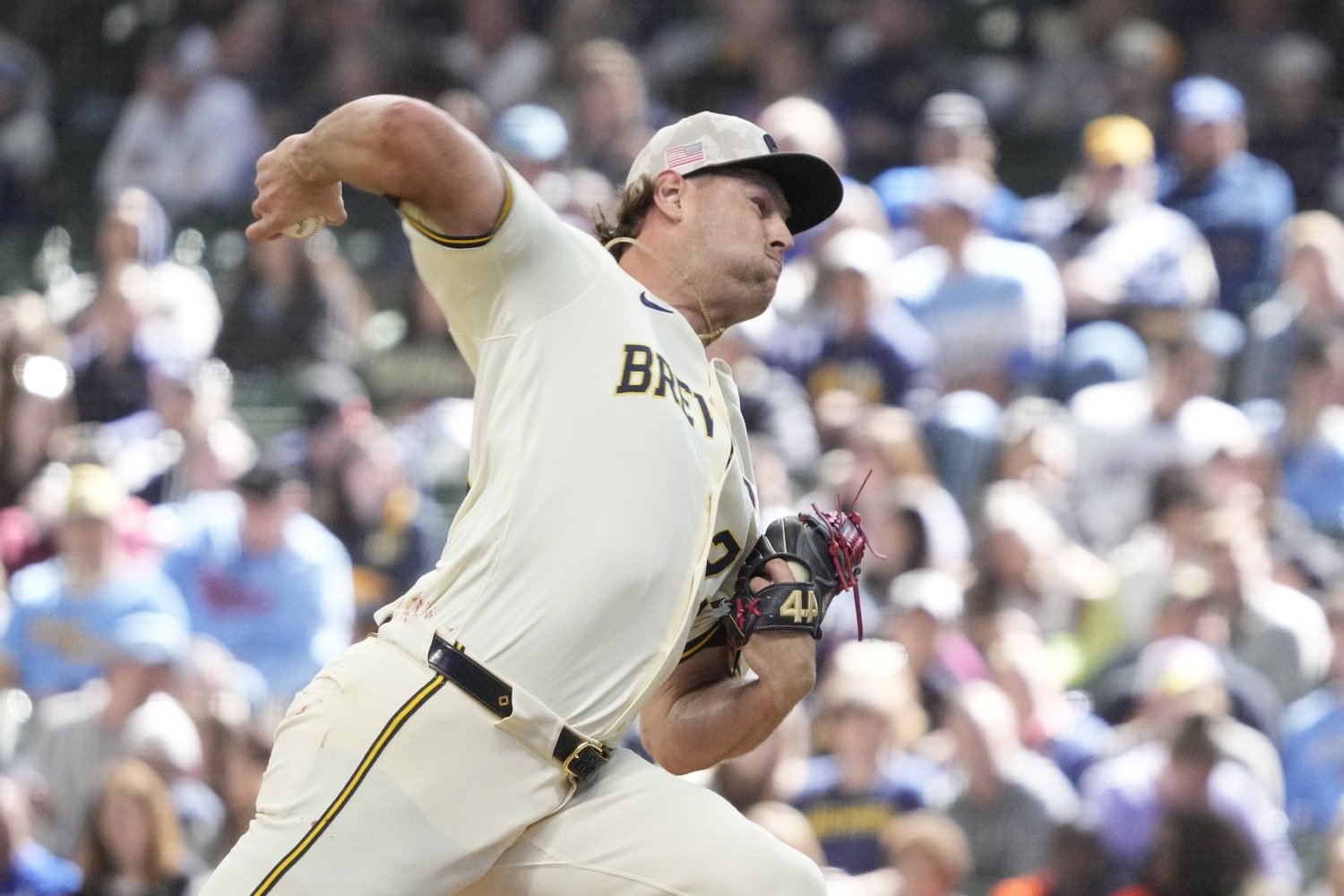 The Brewers have struggled to begin the season, with a relatively easy schedule in April followed by a shocking offensive downturn in May. The Brewers front office is capable of fixing such glaring problems as the rotation and the left side of their infield, but the rest of the team isn't giving them much inspiration to do so. It may be that the Brewers will have to take opportunities that help them in future seasons this July, rather than just looking to success in 2025. The Phillies were dealt a shocking blow on Sunday, when José Alvarado tested positive for exogenous testosterone. Despite Alvarado's stellar performance this year, the Phils had already had some trouble in the back end of their pen. Still at 27-18 and sitting pretty to be in contention come October once again, they'll know the importance of having a lockdown relief corps, especially with the Braves surging somewhat back into contention after a sluggish start. Alvarado can't pitch for them if and when they do reach the playoffs, either, and the Phillies' focus is very much on what happens if and when they get that far. They want a World Series run, and that means having an October-ready bullpen—a task that just got much taller. Trevor Megill's devastating fastball and shutdown knuckle-curveball would fit on any postseason roster. Under control through 2027, Megill would come at a cost, but the struggles of Jordan Romano and Alvarado's banishment mean the Phillies need to make a move. They might need to make more than one. Megill is a Stuff+ darling who has found his command again in recent outings on the fastball. When both pitches are firing, he's one of the toughest closers in baseball. The Brewers may look to move Nick Mears toward a closing role of his own, as Mears has made strong strides thus far in 2025 (and is also under team control through 2027). Milwaukee could reinforce their own bullpen with the returns of DL Hall and Aaron Ashby, alongside the newly added Easton McGee and Rob Zastryzny. In return, the Brewers would (as always) be looking for long-term, controllable talent. You're not going to get a top prospect for any non-superstar reliever, regardless of years of control, but you can get some exciting upside. The Phillies farm system is top-heavy, with some strong prospects in their top five or six but a steeper decline after the top 10 than you would like. I'd propose a package involving one of two high-upside pitchers and an exciting second-rounder from 2024. Griffin Burkholder is the Phillies' seventh-ranked prospect, per Baseball America, with electric speed that allows him to play all three outfield positions well and an average hit/power combination. He makes good swing decisions, and there's a suspicion that as he ages (currently, he's just 19 in Low A), Burkholder could develop above-average power. With a solid profile and a slightly overslot bonus when he signed in 2024, Burkholder may be tough to pry away from the Phillies, but he should be front and center for the Brewers, given his distance from the big leagues and their desire for some additional outfield talent in their farm system. His capabilities in the field, strong swing decisions and potential upside would fit right in with the Brewers philosophy. Think of him, perhaps, as a replacement for Yophery Rodriguez. Alex McFarlane is making his way back from Tommy John surgery, having added 10-15 pounds of muscle that the Phillies hope can help him take steps forward in the command department. Similar (in some ways) to Jacob Misiorowski, McFarlane's fastball is 70-grade per MLB pipeline and touches triple digits, with good sink. He has a legitimate three-pitch mix, with a low arm slot and the potential to get lots of whiffs from an upper-80s slider (54% whiff rate in 2023) and a splitter that possesses good arm-side movement and drop. Finally, Wen-Hui Pan is a 22-year-old out of Taiwan, with an electric fastball, a fantastic splitter and a solid slider. He's currently on the injured list with Tommy John surgery, but that hasn't halted the Brewers in the past—as we saw with Coleman Crow. His fastball averaged 96.7 mph when last he was on the mound, while the splitter had a 63% whiff rate in 2024. The slider looked better as the year went on. Pan has the ability to be a high-leverage relief arm when healthy, a scenario in which splitters and their ground ball rates are incredibly valuable to accompany the high swing-and-miss rates his three-pitch arsenal should support. If the Brewers are truly looking to the future, a trade like this could make sense in a variety of ways for a team in need of 40-man roster spots and with ample depth in the bullpen ranks. Burkholder would be a suitable headliner, despite his slow start in 2025, and could really add to the strength of the Brewers' lower minor leagues. Meanwhile, returning a high upside arm is always of value. If the Brewers wanted someone hotter than Burkholder, the other option is a third baseman at Low A called Aroon Escobar. Escobar is slashing .328/.426/.573 early this season, with tons of red on his Statcast page across all areas. Good contact, good plate discipline and solid exit velocities may make him enticing, although the Brewers have third basemen all over their system, especially at Low A. Would you consider trading Trevor Megill to the Phillies? If so, who would you want in return? Let us know your thoughts in the comments below!
- 18 comments
-
- 1
-
-
- jose alvarado
- trevor megill
- (and 3 more)
-
Image courtesy of © Michael McLoone-Imagn Images The Brewers have struggled to begin the season, with a relatively easy schedule in April followed by a shocking offensive downturn in May. The Brewers front office is capable of fixing such glaring problems as the rotation and the left side of their infield, but the rest of the team isn't giving them much inspiration to do so. It may be that the Brewers will have to take opportunities that help them in future seasons this July, rather than just looking to success in 2025. The Phillies were dealt a shocking blow on Sunday, when José Alvarado tested positive for exogenous testosterone. Despite Alvarado's stellar performance this year, the Phils had already had some trouble in the back end of their pen. Still at 27-18 and sitting pretty to be in contention come October once again, they'll know the importance of having a lockdown relief corps, especially with the Braves surging somewhat back into contention after a sluggish start. Alvarado can't pitch for them if and when they do reach the playoffs, either, and the Phillies' focus is very much on what happens if and when they get that far. They want a World Series run, and that means having an October-ready bullpen—a task that just got much taller. Trevor Megill's devastating fastball and shutdown knuckle-curveball would fit on any postseason roster. Under control through 2027, Megill would come at a cost, but the struggles of Jordan Romano and Alvarado's banishment mean the Phillies need to make a move. They might need to make more than one. Megill is a Stuff+ darling who has found his command again in recent outings on the fastball. When both pitches are firing, he's one of the toughest closers in baseball. The Brewers may look to move Nick Mears toward a closing role of his own, as Mears has made strong strides thus far in 2025 (and is also under team control through 2027). Milwaukee could reinforce their own bullpen with the returns of DL Hall and Aaron Ashby, alongside the newly added Easton McGee and Rob Zastryzny. In return, the Brewers would (as always) be looking for long-term, controllable talent. You're not going to get a top prospect for any non-superstar reliever, regardless of years of control, but you can get some exciting upside. The Phillies farm system is top-heavy, with some strong prospects in their top five or six but a steeper decline after the top 10 than you would like. I'd propose a package involving one of two high-upside pitchers and an exciting second-rounder from 2024. Griffin Burkholder is the Phillies' seventh-ranked prospect, per Baseball America, with electric speed that allows him to play all three outfield positions well and an average hit/power combination. He makes good swing decisions, and there's a suspicion that as he ages (currently, he's just 19 in Low A), Burkholder could develop above-average power. With a solid profile and a slightly overslot bonus when he signed in 2024, Burkholder may be tough to pry away from the Phillies, but he should be front and center for the Brewers, given his distance from the big leagues and their desire for some additional outfield talent in their farm system. His capabilities in the field, strong swing decisions and potential upside would fit right in with the Brewers philosophy. Think of him, perhaps, as a replacement for Yophery Rodriguez. Alex McFarlane is making his way back from Tommy John surgery, having added 10-15 pounds of muscle that the Phillies hope can help him take steps forward in the command department. Similar (in some ways) to Jacob Misiorowski, McFarlane's fastball is 70-grade per MLB pipeline and touches triple digits, with good sink. He has a legitimate three-pitch mix, with a low arm slot and the potential to get lots of whiffs from an upper-80s slider (54% whiff rate in 2023) and a splitter that possesses good arm-side movement and drop. Finally, Wen-Hui Pan is a 22-year-old out of Taiwan, with an electric fastball, a fantastic splitter and a solid slider. He's currently on the injured list with Tommy John surgery, but that hasn't halted the Brewers in the past—as we saw with Coleman Crow. His fastball averaged 96.7 mph when last he was on the mound, while the splitter had a 63% whiff rate in 2024. The slider looked better as the year went on. Pan has the ability to be a high-leverage relief arm when healthy, a scenario in which splitters and their ground ball rates are incredibly valuable to accompany the high swing-and-miss rates his three-pitch arsenal should support. If the Brewers are truly looking to the future, a trade like this could make sense in a variety of ways for a team in need of 40-man roster spots and with ample depth in the bullpen ranks. Burkholder would be a suitable headliner, despite his slow start in 2025, and could really add to the strength of the Brewers' lower minor leagues. Meanwhile, returning a high upside arm is always of value. If the Brewers wanted someone hotter than Burkholder, the other option is a third baseman at Low A called Aroon Escobar. Escobar is slashing .328/.426/.573 early this season, with tons of red on his Statcast page across all areas. Good contact, good plate discipline and solid exit velocities may make him enticing, although the Brewers have third basemen all over their system, especially at Low A. Would you consider trading Trevor Megill to the Phillies? If so, who would you want in return? Let us know your thoughts in the comments below! View full article
-
I really hope that's not the reason, or he'll be facing a lot of high and tights when he reaches the majors. Completely understandable reaction gives his history, but I really hope he can conquer those demons or he may never reach what he's capable of
-
Pratt is having real trouble with this slider
-
That was perhaps the most awkward at bat I've seen from Pratt. Really didn't seem able to pick up the pitch with two on, no outs. Two big chases v the slider, then Wilken had two nice fastballs to hit that he took before whiffing on an in zone slider
-
I guess you never know if he's trying to make some swing changes and we're seeing the in between bit where everything goes to pot. That's maybe my only reservation with it being a month and a half


