Jake McKibbin
-
Posts
2,394 -
Joined
-
Last visited
-
Days Won
6
Content Type
Profiles
Forums
Blogs
Events
News
2026 Milwaukee Brewers Top Prospects Ranking
Milwaukee Brewers Videos
2022 Milwaukee Brewers Draft Picks
Milwaukee Brewers Free Agent & Trade Rumors, Notes, & Tidbits
Guides & Resources
2023 Milwaukee Brewers Draft Picks
2024 Milwaukee Brewers Draft Picks
The Milwaukee Brewers Players Project
2025 Milwaukee Brewers Draft Pick Tracker
2026 Milwaukee Brewers Draft Tracker: Picks & Bonuses
Store
Downloads
Gallery
Everything posted by Jake McKibbin
-
It's a little more difficult to find good side on footage of him from the right hand side, but I think it's a similar issue. The swings are quite different from each side but the weight transfer is relatively similar
-
Unfortunately not yet as not all have statcast, though he can get some low A data from the opposite league to the Brewers which oddly has all statcast stadiums Because most franchises use different data providers, it's not uniform or publicly available, but I do find his estimator does quite well. His description of how he made it is incredibly detailed, and it seems to pass the eye test such as say this for Luis Pena at high A (note the chase rate) Vs Jesus made at the same level
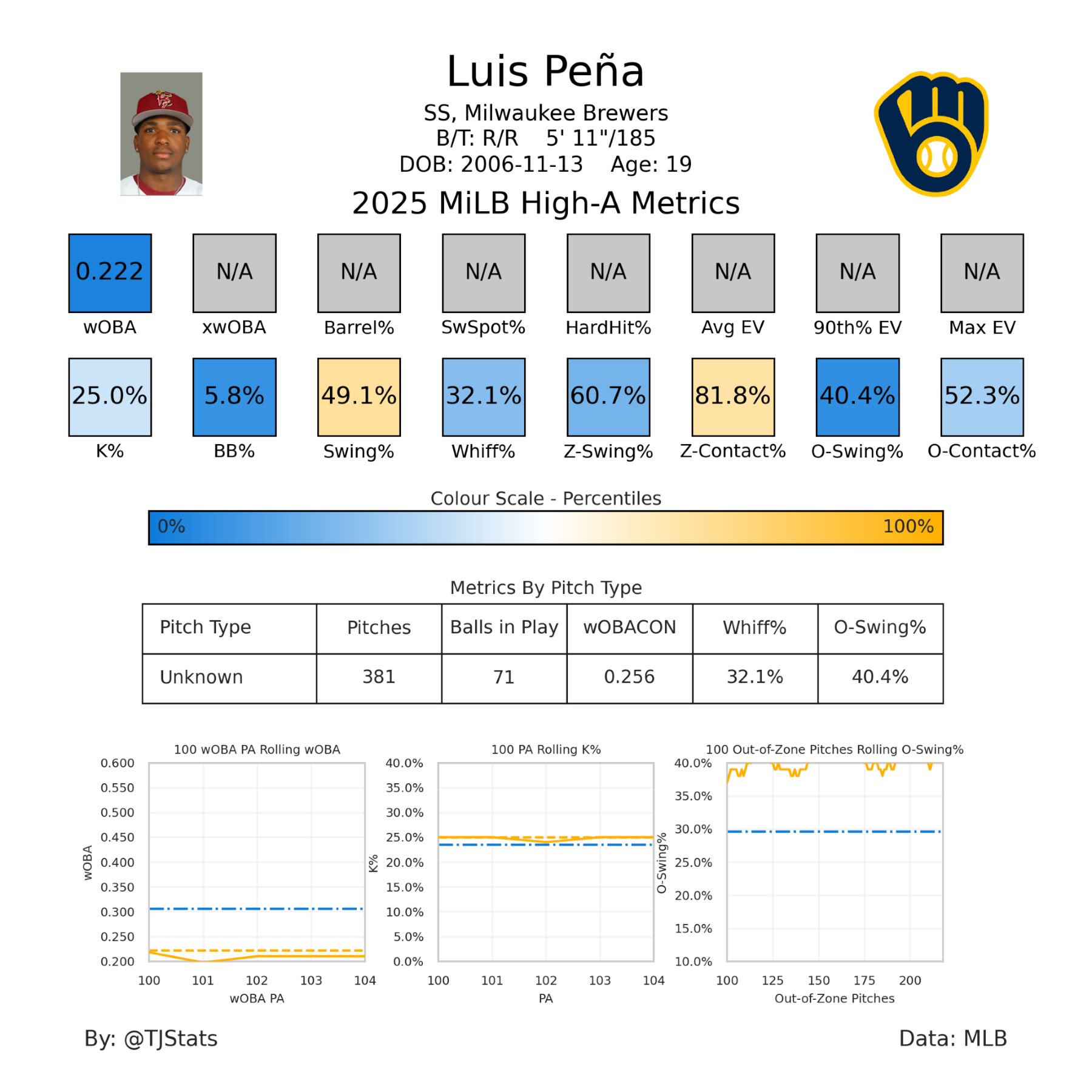
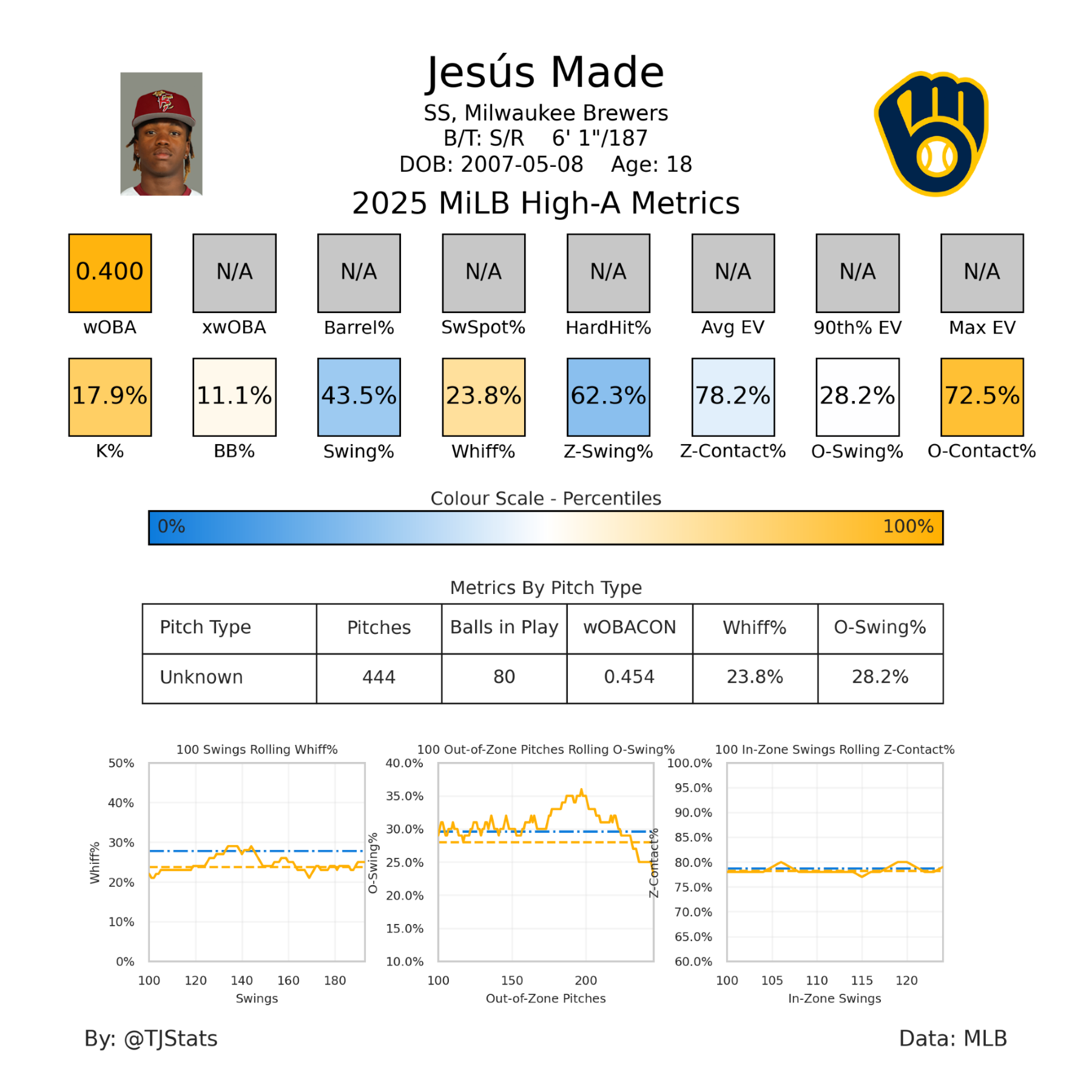
-
Hey can for triple A, he has an estimator app for levels/divisions without statcast data, and I think it's roughly accurate but not exact
-
Some big podcasts/news sites I think have access to organisations data internally, but I don't quite know how that works. Can you imagine the fun Spencer would be having if we had access to it? I do wonder if the consolidation of data equipment might result in more batted balls and pitch data from the minors in the future, but that's gonna be a few years in the works at least and is very hypothetical
-
Misc. Offseason Updates - AFL, Winter Leagues
Jake McKibbin replied to Spencer Michaelis's topic in Brewers Minor League Talk
Just been chatting to a few birdies, keep a very close eye on Josiah Ragsdale this season. Some of his off-season bat speeds sound really impressive given his draft profile -
Thanks for that! I remember a tickle of doubt on that assumption, even better!
-
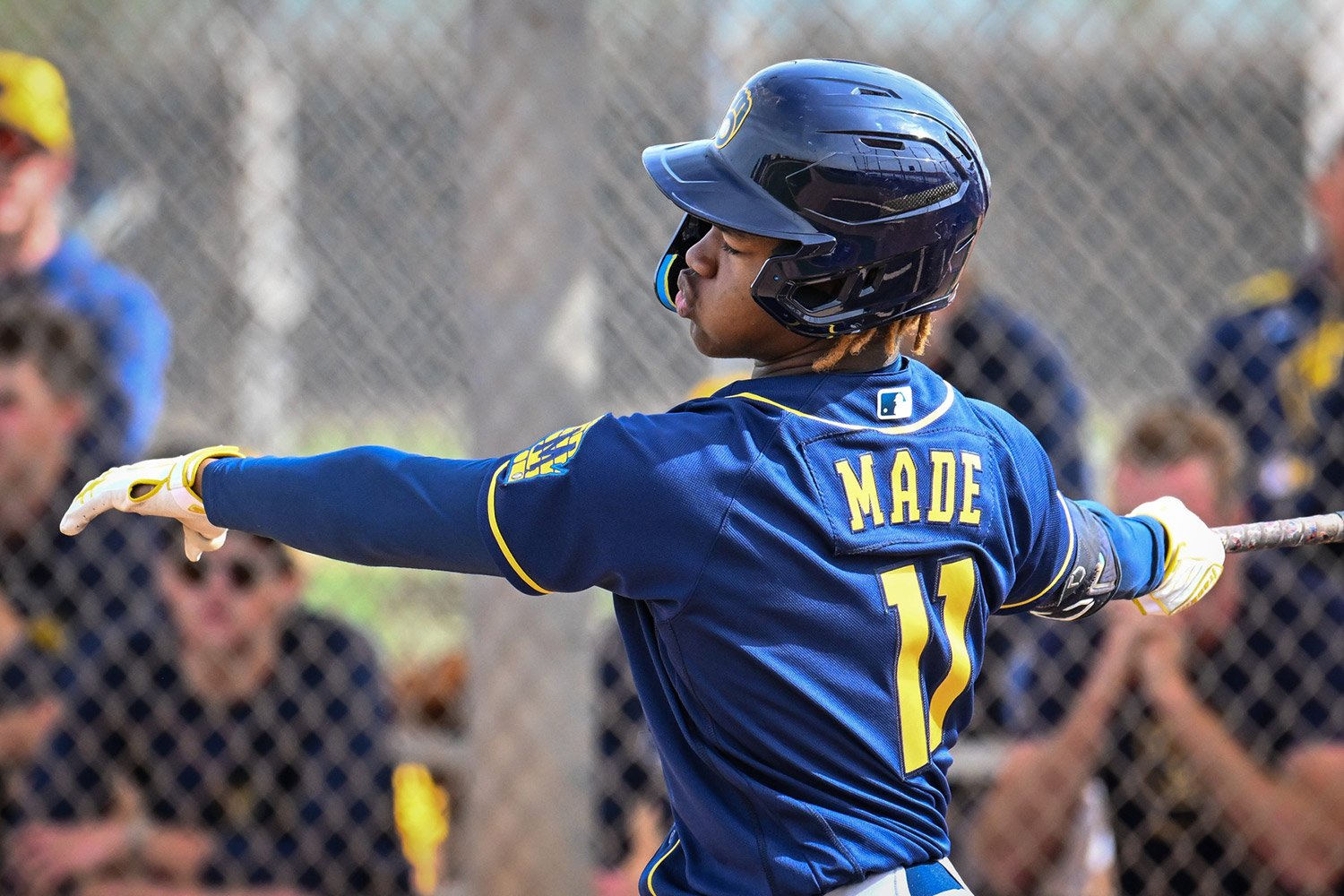
Image courtesy of © Dave Kallmann / Milwaukee Journal Sentinel / USA TODAY NETWORK via Imagn Images Jesus Made has some of the most freakish athleticism in baseball at just 19 years old. He stole 47 bases in 59 attempts last year. He was regularly sitting at 74 mph in bat speed as at May 2025 (MLB average 71.9 mph) per Brenton del Chiaro's interview on the Just Baseball Podcast. He also displayed extremely polished swing decisions, sitting at league average in zone swing rates in High-A Wisconsin and better than league average chase rates, all mightily impressive from someone who was 18 to start the 2025 season. Combining that with a highly regarded hit tool, using fantastic hands to manoeuvre the barrel to the ball, as Aram Leighton noted. Even when he was beaten on a pitch, his hand control was sublime to square up the baseball. Combine that with a surging development at shortstop in 2025, and you have almost all of the traditional tools covered. The only thing I haven't talked about is the power production, and that's what currently distinguishes Made from the likes of Konnor Griffin. While Made has the present bat speed and a frame that teases even further upside with natural growth, at present, that power isn't being tapped into. Made slashed .285/.379/.413 in 2025, showcasing those impressive plate discipline and hitting tools, but the actual home run and extra base power wasn't quite where one would expect from a top prospect in the game. Contrast that to Konnor Griffin, who, while a year older than Made, traversed the same levels of the minor leagues and stole 65 bases, slugged 21 home runs, and also produced excellent defense at both shortstop and in center field, and Griffin certainly gets the nod for now. Made's age is part of this, and we should expect some rawness in the tools, but that doesn't mean we can't investigate how the Brewers will cut this diamond to produce the best possible results. The Front Leg Jesús Made's issue isn't that he struggles to make quality contact, nor that he doesn't hit the ball hard. It all comes down to elevating the ball. Aram Leighton was talking about Made recently and mentioned that his average launch angle on hard-hit balls was just 5°, meaning his barreled balls weren't leaving his bat at angles that could clear the fence and instead were more predisposed towards doubles power and hard-hit singles. His best quality contact was averaging a low line drive, limiting his offensive ceiling. Again, Made is just 19 years old and has plenty of time to work on this, but something Del Chiaro has noted in the past is how Made's weight at the point of contact, especially from the left-hand side, is very much on his front foot. Here's a freeze frame from a ball Made almost took out to the opposite field (impressive in its own right, given his age), but I thought it best to highlight the mechanics on one of his better swings. If you look at his right leg, his entire weight is balanced on it just before contact. He tries to lean back after in an effort to gain more natural loft, but the sheer weight on that foot (he could almost stand on one leg here) reduces the tilt he can get from the left side, and it prevents him from accessing more loft in his batted ball profile. From there, Made continues to see his weight moving forward over that leg, with his head in front of his hips as he gets too much momentum forward, creating what is a very flat bat path. Yes, he manages to barrel the ball and almost slices it under it enough to take it out of the park, but it's not a consistent way to gain that launch angle. The most remarkable thing about this contact is that he sliced under the ball, using a steep-ish bat path to backspin underneath the ball. How he blasted this ball as far as he did, I have absolutely no idea. It's absurd and speaks to the raw tools the Brewers are working with in this instance. The second video below is from a side angle and presents a different view of the issue. You can see Made doesn't get quite so on top of his lead leg, but his weight is moving forward too far and preventing him from getting that natural loft. Even as he's finishing his swing, the head and the body weight are continuing to move forward through the swing, actually diluting some of the rotational power he's generating and keeping that plane of his swing on a very flat arc. Let's contrast this with someone Jesús Made has oft been compared to, Ketel Marte. A fellow switch hitter with lightning fast hands and covering the middle infield, it feels an apt comparison, and the Brewers would love to see Made find the same level of home run threat out of his physical capabilities. You can see below how Marte's swing looks more balanced at impact, using his lead leg to push his hip and weight back, sling-shotting his bat through the strike zone while also creating a more upward plane for the bat path as he leans back at the point of contact: We mentioned hard-hit launch angles earlier, and these are going to be key for Made's development. For a player who hits the ball as hard as he does, you want to see those barreled balls going for extra bases and home runs, not singles through the infield (a profile Brewers fans will be acutely aware of with Christian Yelich). In 2017, Marte hit six home runs in 70 games, not dissimilar to Made, A couple of seasons later, he instituted changes to his leg kick allowing him to stay more on his back leg, leading to an average launch angle going from 5.2° in 2018 to 11.7° in 2019, all while increasing his average exit velocities and creating even more consistently hard contact. His 2025 hard hit launch angle was 12°, almost 7° above Made's, but his transition in 2019 shows that, with a more optimized loading pattern and weight transfer in his legs, Made can achieve that relatively quickly if all goes according to plan. Looking at the freeze frames of the follow-through, you can see how the weight had shifted through and after the point of contact. Where Made's weight continues to move forward, leaving his head actually ahead of his hips, Marte's has kicked backward, creating a more upward path to the baseball and allowing him to do a lot more damage. As previously mentioned, Made is still just 19. He will be until May this year, and he's likely to be playing at Double-A Biloxi. He's a top prospect for a reason, and it's because people can dream on the tools and freakish athleticism he possesses. If he can find a way to get into his back leg more, particularly from the left side (where he should see more plate appearances), Made will go from being a consistent, strong performer and potential All-Star at shortstop to a perennial MVP candidate. His recent Instagram stories suggest this hasn't been a point of emphasis yet this offseason, still putting a lot of weight on his lead leg, but it's something Brenton Del Chiaro is acutely aware of as the minor league hitting co-ordinator. The Brewers' organizational philosophy is not to step in unless the player approaches them, but with Made now in the upper minors, I would expect to see this emphasized during 2026 spring training and in-season work. It's certainly something to keep an eye on, especially in games. It's not a monumental change, in fact, it's relatively subtle, but the difference it could make to Made's offensive profile is startling. View full article
-
 Jesus Made has some of the most freakish athleticism in baseball at just 19 years old. He stole 47 bases in 59 attempts last year. He was regularly sitting at 74 mph in bat speed as at May 2025 (MLB average 71.9 mph) per Brenton del Chiaro's interview on the Just Baseball Podcast. He also displayed extremely polished swing decisions, sitting at league average in zone swing rates in High-A Wisconsin and better than league average chase rates, all mightily impressive from someone who was 18 to start the 2025 season. Combining that with a highly regarded hit tool, using fantastic hands to manoeuvre the barrel to the ball, as Aram Leighton noted. Even when he was beaten on a pitch, his hand control was sublime to square up the baseball. Combine that with a surging development at shortstop in 2025, and you have almost all of the traditional tools covered. The only thing I haven't talked about is the power production, and that's what currently distinguishes Made from the likes of Konnor Griffin. While Made has the present bat speed and a frame that teases even further upside with natural growth, at present, that power isn't being tapped into. Made slashed .285/.379/.413 in 2025, showcasing those impressive plate discipline and hitting tools, but the actual home run and extra base power wasn't quite where one would expect from a top prospect in the game. Contrast that to Konnor Griffin, who, while a year older than Made, traversed the same levels of the minor leagues and stole 65 bases, slugged 21 home runs, and also produced excellent defense at both shortstop and in center field, and Griffin certainly gets the nod for now. Made's age is part of this, and we should expect some rawness in the tools, but that doesn't mean we can't investigate how the Brewers will cut this diamond to produce the best possible results. The Front Leg Jesús Made's issue isn't that he struggles to make quality contact, nor that he doesn't hit the ball hard. It all comes down to elevating the ball. Aram Leighton was talking about Made recently and mentioned that his average launch angle on hard-hit balls was just 5°, meaning his barreled balls weren't leaving his bat at angles that could clear the fence and instead were more predisposed towards doubles power and hard-hit singles. His best quality contact was averaging a low line drive, limiting his offensive ceiling. Again, Made is just 19 years old and has plenty of time to work on this, but something Del Chiaro has noted in the past is how Made's weight at the point of contact, especially from the left-hand side, is very much on his front foot. Here's a freeze frame from a ball Made almost took out to the opposite field (impressive in its own right, given his age), but I thought it best to highlight the mechanics on one of his better swings. If you look at his right leg, his entire weight is balanced on it just before contact. He tries to lean back after in an effort to gain more natural loft, but the sheer weight on that foot (he could almost stand on one leg here) reduces the tilt he can get from the left side, and it prevents him from accessing more loft in his batted ball profile. From there, Made continues to see his weight moving forward over that leg, with his head in front of his hips as he gets too much momentum forward, creating what is a very flat bat path. Yes, he manages to barrel the ball and almost slices it under it enough to take it out of the park, but it's not a consistent way to gain that launch angle. The most remarkable thing about this contact is that he sliced under the ball, using a steep-ish bat path to backspin underneath the ball. How he blasted this ball as far as he did, I have absolutely no idea. It's absurd and speaks to the raw tools the Brewers are working with in this instance. The second video below is from a side angle and presents a different view of the issue. You can see Made doesn't get quite so on top of his lead leg, but his weight is moving forward too far and preventing him from getting that natural loft. Even as he's finishing his swing, the head and the body weight are continuing to move forward through the swing, actually diluting some of the rotational power he's generating and keeping that plane of his swing on a very flat arc. Let's contrast this with someone Jesús Made has oft been compared to, Ketel Marte. A fellow switch hitter with lightning fast hands and covering the middle infield, it feels an apt comparison, and the Brewers would love to see Made find the same level of home run threat out of his physical capabilities. You can see below how Marte's swing looks more balanced at impact, using his lead leg to push his hip and weight back, sling-shotting his bat through the strike zone while also creating a more upward plane for the bat path as he leans back at the point of contact: We mentioned hard-hit launch angles earlier, and these are going to be key for Made's development. For a player who hits the ball as hard as he does, you want to see those barreled balls going for extra bases and home runs, not singles through the infield (a profile Brewers fans will be acutely aware of with Christian Yelich). In 2017, Marte hit six home runs in 70 games, not dissimilar to Made, A couple of seasons later, he instituted changes to his leg kick allowing him to stay more on his back leg, leading to an average launch angle going from 5.2° in 2018 to 11.7° in 2019, all while increasing his average exit velocities and creating even more consistently hard contact. His 2025 hard hit launch angle was 12°, almost 7° above Made's, but his transition in 2019 shows that, with a more optimized loading pattern and weight transfer in his legs, Made can achieve that relatively quickly if all goes according to plan. Looking at the freeze frames of the follow-through, you can see how the weight had shifted through and after the point of contact. Where Made's weight continues to move forward, leaving his head actually ahead of his hips, Marte's has kicked backward, creating a more upward path to the baseball and allowing him to do a lot more damage. As previously mentioned, Made is still just 19. He will be until May this year, and he's likely to be playing at Double-A Biloxi. He's a top prospect for a reason, and it's because people can dream on the tools and freakish athleticism he possesses. If he can find a way to get into his back leg more, particularly from the left side (where he should see more plate appearances), Made will go from being a consistent, strong performer and potential All-Star at shortstop to a perennial MVP candidate. His recent Instagram stories suggest this hasn't been a point of emphasis yet this offseason, still putting a lot of weight on his lead leg, but it's something Brenton Del Chiaro is acutely aware of as the minor league hitting co-ordinator. The Brewers' organizational philosophy is not to step in unless the player approaches them, but with Made now in the upper minors, I would expect to see this emphasized during 2026 spring training and in-season work. It's certainly something to keep an eye on, especially in games. It's not a monumental change, in fact, it's relatively subtle, but the difference it could make to Made's offensive profile is startling.
 -
Misc. Offseason Updates - AFL, Winter Leagues
Jake McKibbin replied to Spencer Michaelis's topic in Brewers Minor League Talk
I think this might be a great shout tbh, there's been times I've trawled through forums to find notes and tidbits you've been able to share -
2026 International Free Agent Market
Jake McKibbin replied to Jake McKibbin's topic in MLB Draft & International Signings
Alexander Mercedes video has a gorgeous rhythm to it -
A rephrasing of the trade might be, would you trade Luis Pena (#18 prospect per MLN) for Tai Peete (Seattle's No. 11 prospect per pipeline) and Gabe Speier (2.61 ERA in 62 innings in 2025) I'm not as high on Pena as some, but even then you'd be trading away huge upside for a 7th/8th inning reliever and a throw in position player prospect with some potential and some question marks to boot. It feels fairly uneven whichever way you look at it
-
Aww shucks, thanks guys! Really appreciate the love, glad you enjoyed the piece!
- 4 replies
-
- 1
-

-
- dl hall
- dc analysis
- (and 1 more)
-
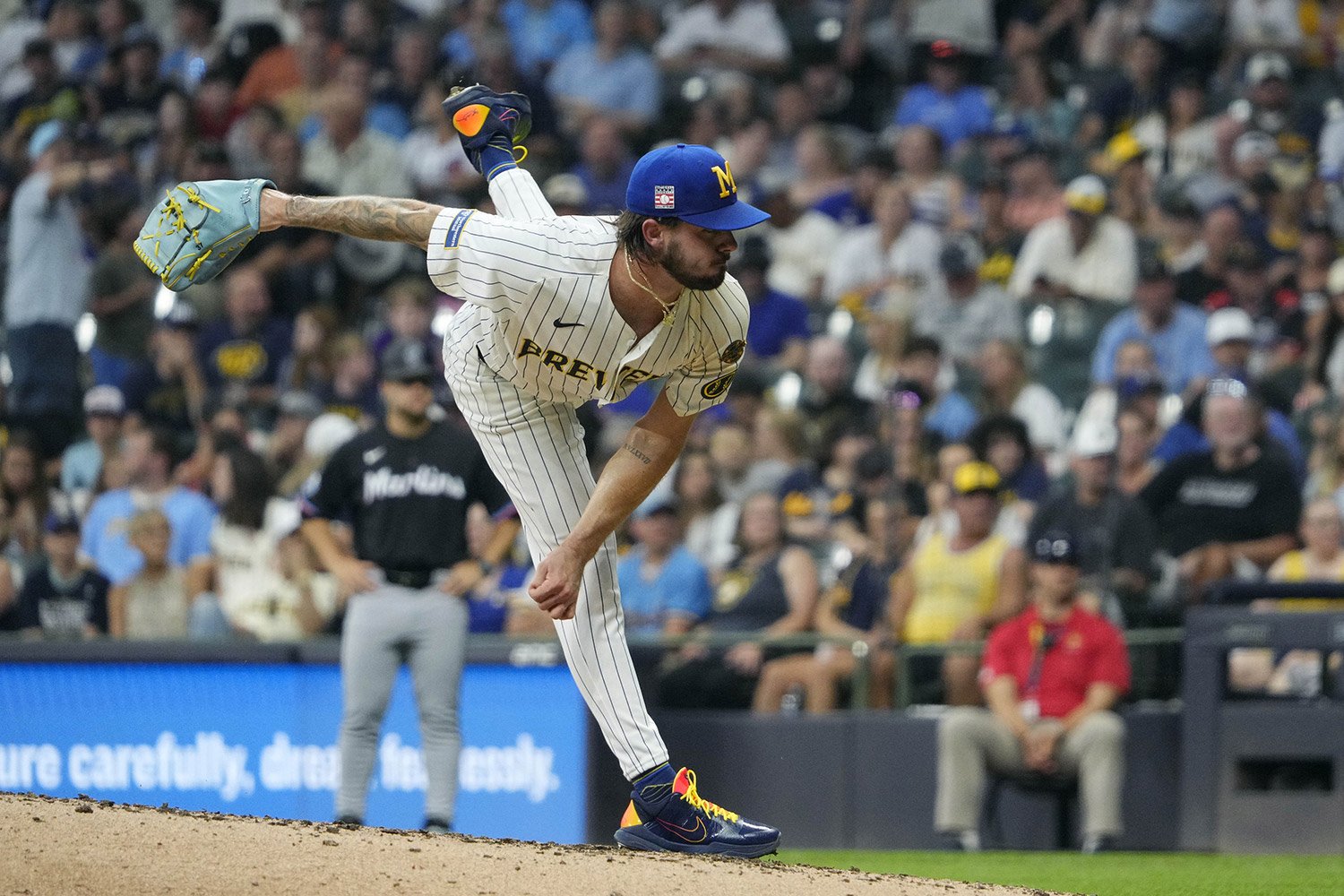
Image courtesy of © Michael McLoone-Imagn Images DL Hall had some injury problems with the Baltimore Orioles, but his stock rose as a top 100 prospect from some elite swing-and-miss pitches. His fastball was given an 80 grade by Baseball America, and it appeared that his command, once an Achilles heel, took large strides in the back half of 2023. The Brewers had every right to dream on his upside as a potential top-of-the-rotation starter. Alas, this hasn't materialised. Hall's fastball has slowed down by a tick on average, but it's important to remember his time with Baltimore in the big leagues was in a bullpen role. If we break it down to his Triple-A results, when he was prolific in racking up strikeouts, you can see the fastball shape actually improved with the Brewers, seeing slight increases in velocity, spin rates, and a lower vertical approach angle: Thomas Nestico's model gives us a great basis for comparison, but I think Jeremy Maschino's at Pitch Profiler might give an even better indication as to what's changed for DL Hall since 2023, and why he's causing hitters to swing and miss a whole lot less. To really analyse the difference between DL Hall's 2023 arsenal and the plethora of strikeouts and ugly swings it induced, compared to the 2025 pitcher we saw for the Brewers, first, we have to deconstruct what made him so effective. Hall's Slider Has Lost Its Seam-Related Movement Below is the breakdown of DL Hall's pitch movement, separated by Magnus (i.e., spin-related effects) and non-Magnus (seam-oriented movement). I wrote about the subject here earlier this month if you need a recap, however if you're up to speed, let's dive in! The large benefit of non-magnus movement is that it's more deceptive to the hitter. They can pick up spin out of a pitcher's hand, but non-magnus is far more difficult to anticipate. Some pitch types are affected more than others, but it's interesting to note the amount of additional rise DL Hall achieved through seam orientation in 2023 at the Triple-A level, far more than is common for a slider (seen in yellow). Let's contrast that with 2025: The non-magnus-affected movement has almost disappeared, while the spin-related movement is essentially the same as in 2023. In essence, because of the way the baseball's seams are interacting with the air resistance, DL Hall is getting less late movement on his slider. It's affecting his Stuff+ grades, dropping from 107 to 101 per Pitch Profiler, and is getting considerably less swing-and-miss as a result. Is DL Hall In The Dead Zone? A "Dead Zone" pitch moves exactly as a hitter expects and finds it easy to square up. Jeremy Maschino attempts to quantify this dead zone to also include the arm angle a pitch is thrown from, which drastically affects what should be considered dead zone. For example, from your average arm angle (say your three-quarter slot), getting 20" of induced vertical break (IVB) would be considered exceptional; however, if you have a high delivery point like Trevor Megill, that IVB is considered far less of an outlier and thus easier to hit. Below is Hall's dynamic dead zone in 2025, with the circles showing his actual movement and the shaded areas showing what a hitter might expect out of the hand: Immediately noticeable is that the fastball (red) and curveball (blue) are moving exactly as expected for his delivery, but he does get some additional movement on the changeup (green) and slider (yellow). You might also note some dispersion in the arm angles from which each of these pitches is thrown (these aren't large differences, but they are further separated than his almost imperceptible release point in 2023). These movement patterns are dwarfed by his 2023 iteration: You can see that the curveball and fastball remain quite dead zones in terms of their movement, but the slider and changeup are massively changed. As we discussed earlier, the slider has changed shape completely, going from a pitch that rose over four inches more than expected in 2023 to a pitch that dropped two inches more than expected in 2025. That's six inches of separation that has impacted his strikeout potential. Playing for Triple-A Norfolk in 2023, the changeup registered an incredible 50% whiff rate when hitters took a swing, and this rise is part of that. We commonly expect changeups to drop down and away, but in recent seasons, we've seen a new type of changeup, such as those by Drew Thorpe of the White Sox and even Tobias Myers in 2024, that rise more. The key here is that changeups are based around deception, and the closer they can mirror a fastball before separation, movement-wise, the more effective they can be. How Deceptive Is Hall's Delivery? With the additional rise, it made Hall's dead zone fastball and his changeup both play better against live hitters, aided further by how similar his arm angles were in 2023. He averaged a 39° arm angle for his slider, changeup, and fastball in 2023, whereas he now varies from 41 ° to 45 ° in 2025. This isn't a huge discrepancy, but it is notable for a pitcher who thrives on deception. Hall's delivery involves a lot of rotation, almost turning his chest towards second base, meaning the ball springs out of nowhere. He still retains much of the same natural deception in his delivery, and it's one reason he's been successful without the swings and misses of yesteryear, managing an xWOBACON of .298 in 2025. He's not far away from the elite swing and miss artist he showed as a prospect, but that seam-related movement seems to be the key, and it may come from his altered release point. So, to summarise, DL Halls' high-end promise in 2023 seems to revolve around two things: Non-magnus (seam-oriented) movement that helped both his slider and changeup "rise" to miss bats Deceptive delivery and arm angles It's likely the altered arm angles are an effort to improve Hall's long-term injury outlook. Still, they may have negatively impacted both his ability to unlock the seam-related movement and the deceptiveness in his delivery. It's an actual risk-reward scenario for a player with multiple long-term injuries in his past, but if the Brewers want to unlock DL Hall as a dominant rotation arm, they may need to take that risk. Hall is a candidate for the shuttle between Triple A and the big leagues this year, having failed to establish himself in 2024/25, so this may be worth it for both parties at this point. If he can rediscover his release point, and with it his non-magnus movement, there's an outside chance DL Hall can become more than a swingman in the bullpen. It's not guaranteed, but there is a chance. Without that deception, he will struggle to establish the fastball and get the swings and misses needed for the next big step in his development. What do you think of DL Hall's outlook? Where do you think his strengths and his flaws lie? Let us know your thoughts in the comments below! View full article
-
DL Hall's Fastball Isn't The Cause Of His Swing-And-Miss Concerns
Jake McKibbin posted an article in Brewers
 DL Hall had some injury problems with the Baltimore Orioles, but his stock rose as a top 100 prospect from some elite swing-and-miss pitches. His fastball was given an 80 grade by Baseball America, and it appeared that his command, once an Achilles heel, took large strides in the back half of 2023. The Brewers had every right to dream on his upside as a potential top-of-the-rotation starter. Alas, this hasn't materialised. Hall's fastball has slowed down by a tick on average, but it's important to remember his time with Baltimore in the big leagues was in a bullpen role. If we break it down to his Triple-A results, when he was prolific in racking up strikeouts, you can see the fastball shape actually improved with the Brewers, seeing slight increases in velocity, spin rates, and a lower vertical approach angle: Thomas Nestico's model gives us a great basis for comparison, but I think Jeremy Maschino's at Pitch Profiler might give an even better indication as to what's changed for DL Hall since 2023, and why he's causing hitters to swing and miss a whole lot less. To really analyse the difference between DL Hall's 2023 arsenal and the plethora of strikeouts and ugly swings it induced, compared to the 2025 pitcher we saw for the Brewers, first, we have to deconstruct what made him so effective. Hall's Slider Has Lost Its Seam-Related Movement Below is the breakdown of DL Hall's pitch movement, separated by Magnus (i.e., spin-related effects) and non-Magnus (seam-oriented movement). I wrote about the subject here earlier this month if you need a recap, however if you're up to speed, let's dive in! The large benefit of non-magnus movement is that it's more deceptive to the hitter. They can pick up spin out of a pitcher's hand, but non-magnus is far more difficult to anticipate. Some pitch types are affected more than others, but it's interesting to note the amount of additional rise DL Hall achieved through seam orientation in 2023 at the Triple-A level, far more than is common for a slider (seen in yellow). Let's contrast that with 2025: The non-magnus-affected movement has almost disappeared, while the spin-related movement is essentially the same as in 2023. In essence, because of the way the baseball's seams are interacting with the air resistance, DL Hall is getting less late movement on his slider. It's affecting his Stuff+ grades, dropping from 107 to 101 per Pitch Profiler, and is getting considerably less swing-and-miss as a result. Is DL Hall In The Dead Zone? A "Dead Zone" pitch moves exactly as a hitter expects and finds it easy to square up. Jeremy Maschino attempts to quantify this dead zone to also include the arm angle a pitch is thrown from, which drastically affects what should be considered dead zone. For example, from your average arm angle (say your three-quarter slot), getting 20" of induced vertical break (IVB) would be considered exceptional; however, if you have a high delivery point like Trevor Megill, that IVB is considered far less of an outlier and thus easier to hit. Below is Hall's dynamic dead zone in 2025, with the circles showing his actual movement and the shaded areas showing what a hitter might expect out of the hand: Immediately noticeable is that the fastball (red) and curveball (blue) are moving exactly as expected for his delivery, but he does get some additional movement on the changeup (green) and slider (yellow). You might also note some dispersion in the arm angles from which each of these pitches is thrown (these aren't large differences, but they are further separated than his almost imperceptible release point in 2023). These movement patterns are dwarfed by his 2023 iteration: You can see that the curveball and fastball remain quite dead zones in terms of their movement, but the slider and changeup are massively changed. As we discussed earlier, the slider has changed shape completely, going from a pitch that rose over four inches more than expected in 2023 to a pitch that dropped two inches more than expected in 2025. That's six inches of separation that has impacted his strikeout potential. Playing for Triple-A Norfolk in 2023, the changeup registered an incredible 50% whiff rate when hitters took a swing, and this rise is part of that. We commonly expect changeups to drop down and away, but in recent seasons, we've seen a new type of changeup, such as those by Drew Thorpe of the White Sox and even Tobias Myers in 2024, that rise more. The key here is that changeups are based around deception, and the closer they can mirror a fastball before separation, movement-wise, the more effective they can be. How Deceptive Is Hall's Delivery? With the additional rise, it made Hall's dead zone fastball and his changeup both play better against live hitters, aided further by how similar his arm angles were in 2023. He averaged a 39° arm angle for his slider, changeup, and fastball in 2023, whereas he now varies from 41 ° to 45 ° in 2025. This isn't a huge discrepancy, but it is notable for a pitcher who thrives on deception. Hall's delivery involves a lot of rotation, almost turning his chest towards second base, meaning the ball springs out of nowhere. He still retains much of the same natural deception in his delivery, and it's one reason he's been successful without the swings and misses of yesteryear, managing an xWOBACON of .298 in 2025. He's not far away from the elite swing and miss artist he showed as a prospect, but that seam-related movement seems to be the key, and it may come from his altered release point. So, to summarise, DL Halls' high-end promise in 2023 seems to revolve around two things: Non-magnus (seam-oriented) movement that helped both his slider and changeup "rise" to miss bats Deceptive delivery and arm angles It's likely the altered arm angles are an effort to improve Hall's long-term injury outlook. Still, they may have negatively impacted both his ability to unlock the seam-related movement and the deceptiveness in his delivery. It's an actual risk-reward scenario for a player with multiple long-term injuries in his past, but if the Brewers want to unlock DL Hall as a dominant rotation arm, they may need to take that risk. Hall is a candidate for the shuttle between Triple A and the big leagues this year, having failed to establish himself in 2024/25, so this may be worth it for both parties at this point. If he can rediscover his release point, and with it his non-magnus movement, there's an outside chance DL Hall can become more than a swingman in the bullpen. It's not guaranteed, but there is a chance. Without that deception, he will struggle to establish the fastball and get the swings and misses needed for the next big step in his development. What do you think of DL Hall's outlook? Where do you think his strengths and his flaws lie? Let us know your thoughts in the comments below!
- 4 comments
-
- 2
-
-
- dl hall
- dc analysis
- (and 1 more)
-
He does indeed! He manages to get the slider really rising due to the seam orientation. Like Ashby, the spin on his four seam and his sinker are identical, so the fact he negyes the seam shifted wake on the 4S is what gives him some separation and allows it to play up on the odd time he uses it
-
I'm not a wizard on this, but it's possible! He's unlikely to generate much with his fastball, I think the most affected fastballs are sinkers, specifically the one seam variation (something you'll notice for both Ashby and Priester) while curveballs don't usually have a ton either The one pitch he might get some benefits out of is the cutter/slider which can see an enhanced effect, but as you mentioned control is paramount for Miz, and certainly earlier in the season he was using that slider as a pitch he knew he could find the zone when he needed it
-
Image courtesy of © Jeff Hanisch-Imagn Images Seam-shifted wake has been a hot topic for baseball nerds over the last few years. Thanks to rapid advancements in the quality of pitch-tracking information, we can now quantify this movement, in addition to the spin-related movement of a pitch. These two types of movement are also known as Magnus movement (spin-related movement) and non-Magnus movement (aka seam position-related movement). The name comes from Heinrich Gustav Magnus, who concluded that when a spinning ball moves through the air, it creates a force that makes it curve away from its straight-line path. The spin changes the amount of friction the air can impart on the ball, and thus alters the effect it has on the ball's flight, relative to what the flow of air across a non-spinning surface would have. Magnus movement is everywhere in sports—especially in baseball. A curveball has topspin, causing the ball to bite downward, while a four-seam fastball has backspin that helps the ball resist gravity and gives the appearance (to a hitter) of rising action. The best example, perhaps, is this YouTube video demonstrating how a basketball (which doesn't have the same raised seams as a baseball, and therefore doesn't have the same non-Magnus effect) reacts when dropped off a dam with no spin, and then with backspin: There are some variables here that don't apply to baseball, but it's perfect for showing one thing: spin affects how a ball moves. Baseballs are vastly different than basketballs, though, because of those seams. While spinning a ball alters how a pitch moves by reducing its friction with the air around it, the baseball's seams increase how the air can affect the ball. A perfectly round object would not encounter any seam-shifted wake, but the protruding seams create an alternative force on the ball in addition to its spin, and often in a different direction. In baseball history, many pitchers have attempted to scuff balls or spit on them to gain some unexpected movement on their pitches, so the existence of this movement is not a new phenomenon, but modern pitchers have found ways to capitalize on the seam position to devastating effect. The reason for this non-Magnus movement (or seam-shifted wake) being so useful is that hitters have no way to see what's coming, unless they've faced that pitch before. While hitters have been trained to identify spin to anticipate the pitch that's been thrown and anticipate how it will move, accounting for non-Magnus movement is a whole different problem. Aaron Ashby is a prime example. He has one of the straightest four-seam fastballs in the game, struggling to generate the riding life that usually defines that offering. However, he boasts one of the best sinkers in the game, with extremely heavy action. The interesting thing is that the spin-based movement (on the left) of his four-seam fastball (red) and his sinker (orange) is not dissimilar. Where he excels is in how he uses the seams to generate up to 10 inches of additional horizontal break and 5-8 inches of vertical drop when he throws a sinker, compared with expectation. This partially explains why hitters struggle to pick up Ashby's four-seam fastball on the rare occasions when he does use it, and why they have a ground ball rate of 65% against it. The ball just keeps dropping on them, in ways that their spin-trained eyes don't expect. You can see from Ashby's profile that he gets a lot of "unexpected movement" on his slider, sinker and changeup, all three of which had above-average swing-and-miss rates for their pitch category and all of which avoided extra-base hits exceptionally well. The unexpected nature of seam position-based movement may be a source for Ashby's persistent command issues, as this is much less repeatable and controllable than spinning the baseball, but the movement he generates is above-average because of seam-shifted wake. One other Brewers pitcher with even more extreme seam-shifted wake control is Quinn Priester. Before coming to the Brewers, the scouting report on Priester was that he had a fringy sinker that had never really performed, and the total movement he generated was nothing to write home about. However, when you factor in his arm angle, spin rate and seam-shifted wake factors, his profile jumps off the page—particularly thanks to his cutter and his sinker. Like Ashby, Priester is getting 6-8 inches of vertical drop on his sinker, relative to what the hitter expects, as well as almost 10 inches of horizontal break. His cutter is moving the other way, riding and breaking in on left-handed hitters with a spin direction that has some crossover with his sinker, making it difficult to differentiate the two pitches based on spin alone. Seam-shifted wake plays up far better when the spin directions of two offerings match or mirror each other, while the non-Magnus effect takes them in different directions out of the hand. Ashby's four-seam fastball and his slider, despite similar non-Magnus effects, would not get mistaken for each other out of the pitcher's hand. Another, better example is how you can see with both Ashby and Priester that the changeup closely resembles their primary fastballs. Not so with Freddy Peralta, whose changeup spins slightly differently from his primary fastball, which makes it easier to recognize and thus lay off. One of Peralta's biggest problems is that none of his pitches resemble his fastball in how they spin. He can get fantastic grades for his raw stuff with the fastball, but its lack of deception out of his hand means he is fighting an uphill battle with his primary offering. He fools hitters with angles and good repetition of his delivery, rather than with spin or non-spin movement. Some pitchers are very spin-oriented. Jacob Misiorowski is a prime example, generating nearly all of his movement from the spin profile. He's heavily reliant on his raw velocity and stuff to keep hitters off-balance: For most pitchers, though, manipulating the seams is part of generating movement that the batter can't readily anticipate and neutralize. Seam-shifted wake has a massive impact on how a pitcher can continue to get uncomfortable swings, the more so when two pitches move differently due to seam position while having comparable spin directions. Ashby and Priester use this to devastating effect, and it's been a major part of pitcher development programs for years. The concept isn't new—many changeups, sinkers, cutters and some versions of the slider have relied on seam-shifted wake for decades. Now, though, we can measure it, train it, and talk about it much more readily, because technology has caught up to the craft of pitching. Pitchers are better than ever throughout the major leagues, and it's not just because there hasn't been an expansion to stretch the league's pitching staffs thinner in over 25 years. Hurlers make better use of technology, and are learning how to not only harness both spin- and seam position-based movement, but use them in concert. Better measurement and understanding of these effects has been a game-changer, and it will continue to play a major role in pitching development and instruction for years to come. View full article
-
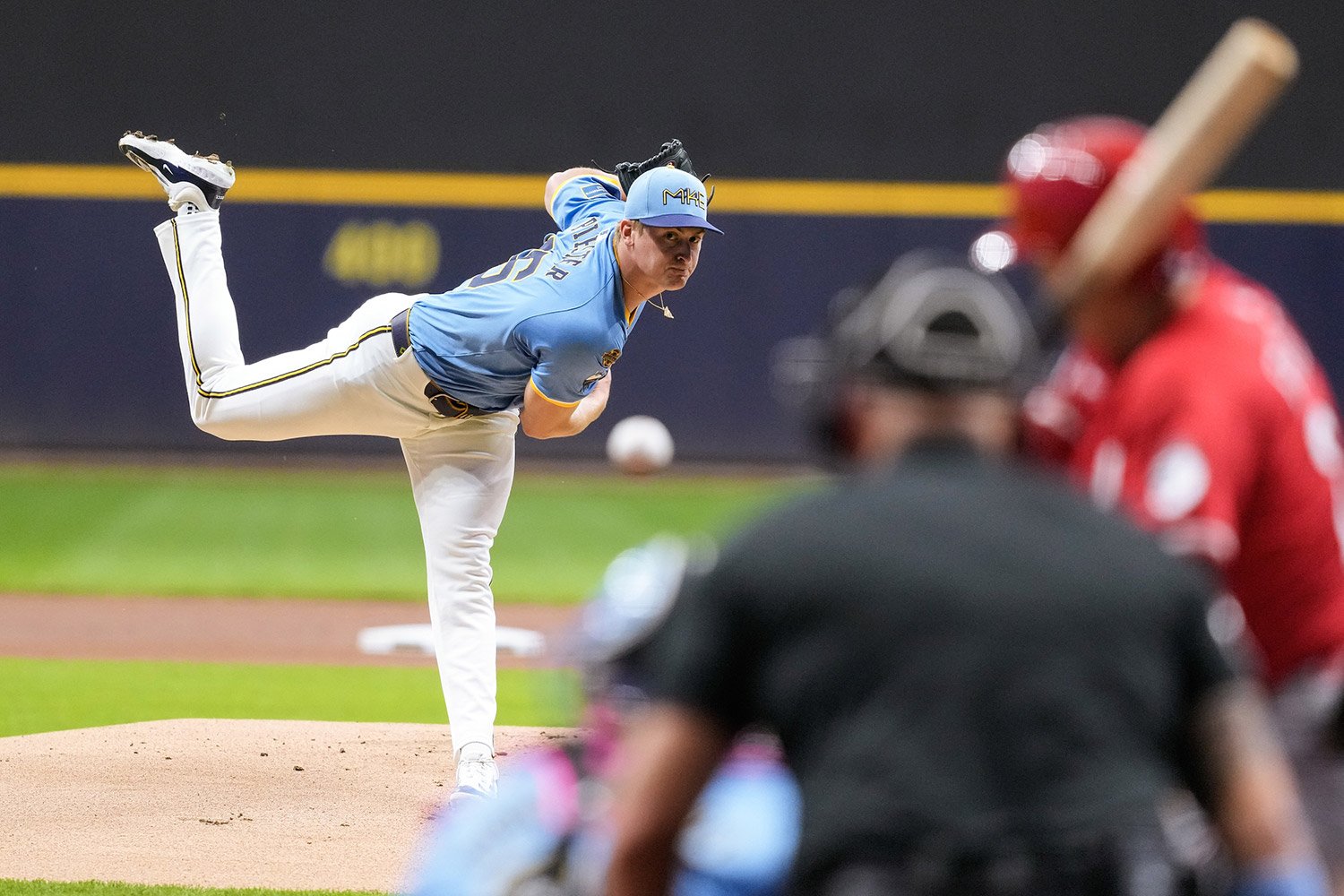 Seam-shifted wake has been a hot topic for baseball nerds over the last few years. Thanks to rapid advancements in the quality of pitch-tracking information, we can now quantify this movement, in addition to the spin-related movement of a pitch. These two types of movement are also known as Magnus movement (spin-related movement) and non-Magnus movement (aka seam position-related movement). The name comes from Heinrich Gustav Magnus, who concluded that when a spinning ball moves through the air, it creates a force that makes it curve away from its straight-line path. The spin changes the amount of friction the air can impart on the ball, and thus alters the effect it has on the ball's flight, relative to what the flow of air across a non-spinning surface would have. Magnus movement is everywhere in sports—especially in baseball. A curveball has topspin, causing the ball to bite downward, while a four-seam fastball has backspin that helps the ball resist gravity and gives the appearance (to a hitter) of rising action. The best example, perhaps, is this YouTube video demonstrating how a basketball (which doesn't have the same raised seams as a baseball, and therefore doesn't have the same non-Magnus effect) reacts when dropped off a dam with no spin, and then with backspin: There are some variables here that don't apply to baseball, but it's perfect for showing one thing: spin affects how a ball moves. Baseballs are vastly different than basketballs, though, because of those seams. While spinning a ball alters how a pitch moves by reducing its friction with the air around it, the baseball's seams increase how the air can affect the ball. A perfectly round object would not encounter any seam-shifted wake, but the protruding seams create an alternative force on the ball in addition to its spin, and often in a different direction. In baseball history, many pitchers have attempted to scuff balls or spit on them to gain some unexpected movement on their pitches, so the existence of this movement is not a new phenomenon, but modern pitchers have found ways to capitalize on the seam position to devastating effect. The reason for this non-Magnus movement (or seam-shifted wake) being so useful is that hitters have no way to see what's coming, unless they've faced that pitch before. While hitters have been trained to identify spin to anticipate the pitch that's been thrown and anticipate how it will move, accounting for non-Magnus movement is a whole different problem. Aaron Ashby is a prime example. He has one of the straightest four-seam fastballs in the game, struggling to generate the riding life that usually defines that offering. However, he boasts one of the best sinkers in the game, with extremely heavy action. The interesting thing is that the spin-based movement (on the left) of his four-seam fastball (red) and his sinker (orange) is not dissimilar. Where he excels is in how he uses the seams to generate up to 10 inches of additional horizontal break and 5-8 inches of vertical drop when he throws a sinker, compared with expectation. This partially explains why hitters struggle to pick up Ashby's four-seam fastball on the rare occasions when he does use it, and why they have a ground ball rate of 65% against it. The ball just keeps dropping on them, in ways that their spin-trained eyes don't expect. You can see from Ashby's profile that he gets a lot of "unexpected movement" on his slider, sinker and changeup, all three of which had above-average swing-and-miss rates for their pitch category and all of which avoided extra-base hits exceptionally well. The unexpected nature of seam position-based movement may be a source for Ashby's persistent command issues, as this is much less repeatable and controllable than spinning the baseball, but the movement he generates is above-average because of seam-shifted wake. One other Brewers pitcher with even more extreme seam-shifted wake control is Quinn Priester. Before coming to the Brewers, the scouting report on Priester was that he had a fringy sinker that had never really performed, and the total movement he generated was nothing to write home about. However, when you factor in his arm angle, spin rate and seam-shifted wake factors, his profile jumps off the page—particularly thanks to his cutter and his sinker. Like Ashby, Priester is getting 6-8 inches of vertical drop on his sinker, relative to what the hitter expects, as well as almost 10 inches of horizontal break. His cutter is moving the other way, riding and breaking in on left-handed hitters with a spin direction that has some crossover with his sinker, making it difficult to differentiate the two pitches based on spin alone. Seam-shifted wake plays up far better when the spin directions of two offerings match or mirror each other, while the non-Magnus effect takes them in different directions out of the hand. Ashby's four-seam fastball and his slider, despite similar non-Magnus effects, would not get mistaken for each other out of the pitcher's hand. Another, better example is how you can see with both Ashby and Priester that the changeup closely resembles their primary fastballs. Not so with Freddy Peralta, whose changeup spins slightly differently from his primary fastball, which makes it easier to recognize and thus lay off. One of Peralta's biggest problems is that none of his pitches resemble his fastball in how they spin. He can get fantastic grades for his raw stuff with the fastball, but its lack of deception out of his hand means he is fighting an uphill battle with his primary offering. He fools hitters with angles and good repetition of his delivery, rather than with spin or non-spin movement. Some pitchers are very spin-oriented. Jacob Misiorowski is a prime example, generating nearly all of his movement from the spin profile. He's heavily reliant on his raw velocity and stuff to keep hitters off-balance: For most pitchers, though, manipulating the seams is part of generating movement that the batter can't readily anticipate and neutralize. Seam-shifted wake has a massive impact on how a pitcher can continue to get uncomfortable swings, the more so when two pitches move differently due to seam position while having comparable spin directions. Ashby and Priester use this to devastating effect, and it's been a major part of pitcher development programs for years. The concept isn't new—many changeups, sinkers, cutters and some versions of the slider have relied on seam-shifted wake for decades. Now, though, we can measure it, train it, and talk about it much more readily, because technology has caught up to the craft of pitching. Pitchers are better than ever throughout the major leagues, and it's not just because there hasn't been an expansion to stretch the league's pitching staffs thinner in over 25 years. Hurlers make better use of technology, and are learning how to not only harness both spin- and seam position-based movement, but use them in concert. Better measurement and understanding of these effects has been a game-changer, and it will continue to play a major role in pitching development and instruction for years to come.
- 5 comments
-
- 1
-

-
- aaron ashby
- jacob misiorowski
- (and 3 more)
-
Thanks Eddie! Yeah COTs has the Brewers at 113.1m, and when you factor in the accounting for buyouts, they're still below last years $131.6m closing position so that doesn't worry me. The attitude problems are fascinating as Pat Murphy will either cure him or destroy him with the tough love approach. It's been a fascinating watch
- 11 replies
-
- 1
-
-
- ketel marte
- brice turang
- (and 4 more)
-
Image courtesy of © Allan Henry-Imagn Images Ketel Marte has been the best second baseman in baseball over the last two seasons, producing 6.8 bWAR in 2024 and 4.4 bWAR (in a reduced workload) in 2025. He slugged 28 home runs in just 480 at-bats, and overall, he was one of the most potent bats in baseball. He was a slightly above-average defender at the keystone, to boot, further enhancing his value to a team set up like the Brewers are. With trade season upon us (and rumors of Marte's unhappiness within the Diamondbacks), could the Brewers pounce on a potentially era-defining move? Can it Fit Defensively? Any acquisition of Marte would mean Brice Turang sliding over to shortstop, putting some dent in the premium infield defense of 2025. Turang has proved to be an excellent second baseman, but some arm strength concerns and slightly unexpected range-based metrics at second base in 2025 hint that he may not be the above-average shortstop some hoped he could be. Combine that with some concerns about whether Turang's shoulder can handle the longer throws over 162 games, and perhaps this defensive alignment isn't as viable in practice as it is on paper. This is something the front office would need to have some certainty about, before executing a trade of this magnitude. How Valuable Is Ketel Marte? Marte is 32 years old, probably entering the last of his prime seasons. However, his all-around skill set in the batter's box is something to behold. Marte shows great plate discipline, rarely chasing outside the strike zone. He shows strong bat-to-ball skills that give him both strikeout and walk rates far better than the league averages. He also generates ample hard contact. While he crushes fastballs, he has an expected weighted on-base average (xwOBA) over .360 in each of the last two seasons against breaking pitches. His contract carries him through his age-37 season and is heavily backloaded, with five years and $96 million guaranteed and a player option for $11.5 million in 2031. That already reflects some escalation from when he signed the deal less than a year ago, because he eclipsed 550 plate appearances in 2025. That boosts his salary in each remaining year of the deal by $1 million, and he can increase his salaries for following years by up to $2.5 million each year if he stays healthy and plays every day. Thus, there's a good chance this balloons into a nine-figure commitment. However, there are also substantial deferrals in the deal, which brings the real cost back down even as the nominal payouts threaten to rise significantly. All told, it's a very team-friendly deal for a player of Marte's caliber. The only other discussion point around this is that Marte has incurred the ire of his teammates with repeated requests for days off. Ken Rosenthal reported on that in the wake of Marte being away from the team without permission for two days coming out of the All-Star break. The Brewers are constructed to outwork their opponents, grinding harder day to day and fighting for every inch available. How Marte fits into that is anybody's guess, and the front office would surely need to do enough background research to know whether he would disrupt things before pulling the trigger on a deal. What Would a Trade Package Look Like? With Marte locked up for at least five more years and Turang under team control for another three, it opens some possibilities in the short term for the Brewers. They may be able to sell high on Cooper Pratt—whose bat has struggled to create impact in the minor leagues—and wait on the arrival of Jesús Made. They have a plethora of strong prospects, all of whom (except Made) could be used to chase Marte. A package could look somewhere along the lines of this: Luis Peña (#2 Brewer Fanatic prospect) Robert Gasser (#7 Brewer Fanatic prospect) Brock Wilken (#11 Brewer Fanatic prospect) The Brewers would be trading away a strong defensive shortstop with power that many scouts consider untapped, in Luis Peña, one of the hottest prospects in baseball; Robert Gasser, a left handed arm who showed well during a small sample so far in the major leagues; and Brock Wilken, an upside third baseman with thump who could profile similarly to Eugenio Suárez at his peak upside. It's an enticing deal for both parties, costing a lot of capital for the Brewers, but with monumental improvements to their offensive production in the short and medium term. It would give their lineup a dynamic a bit closer to those of the other elite teams in the National League, and the players they might trade to make it happen (while very valuable) could be drawn from places where the team enjoys a surplus. Would you take this deal? Let us know your thoughts in the comments below! View full article
-
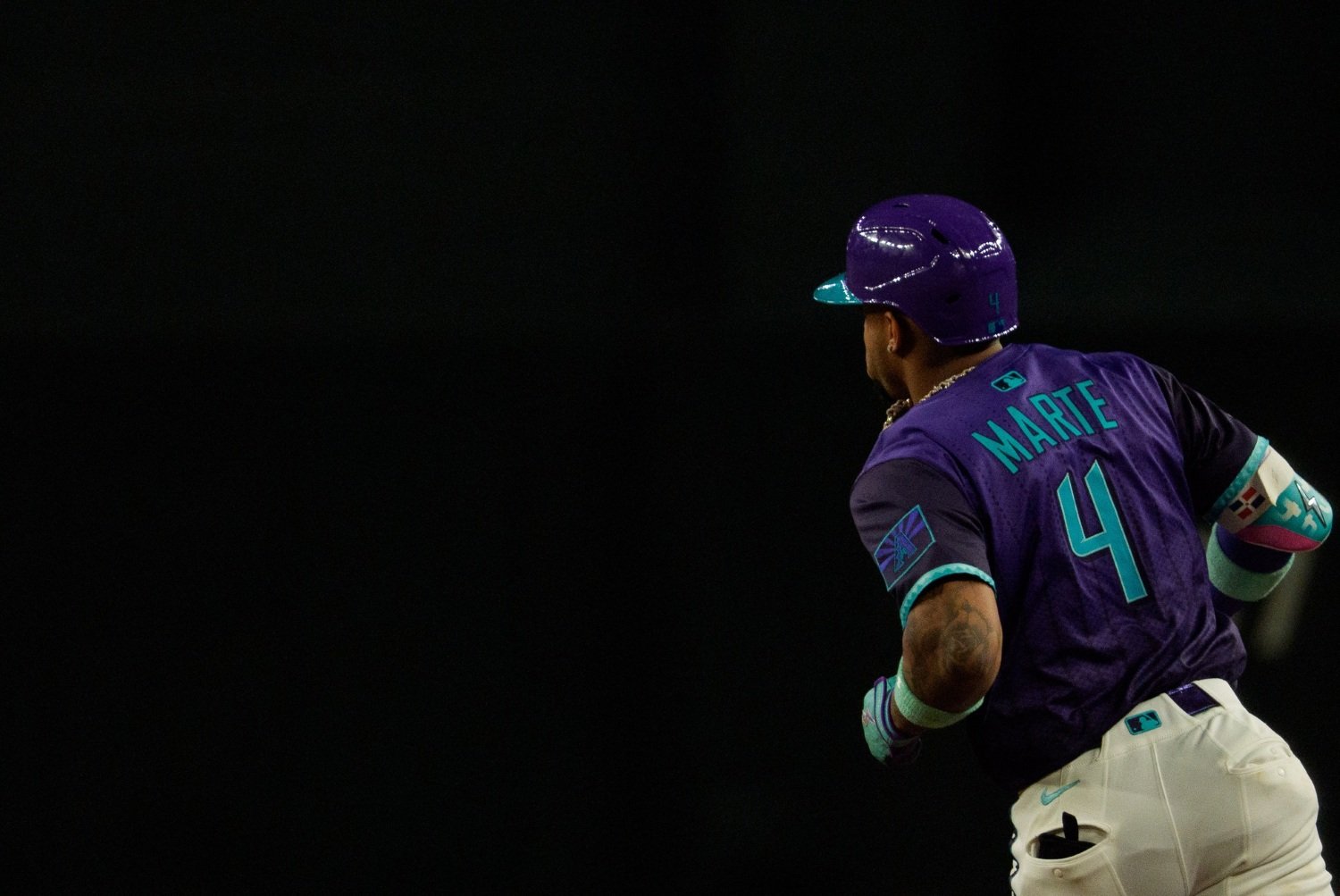 Ketel Marte has been the best second baseman in baseball over the last two seasons, producing 6.8 bWAR in 2024 and 4.4 bWAR (in a reduced workload) in 2025. He slugged 28 home runs in just 480 at-bats, and overall, he was one of the most potent bats in baseball. He was a slightly above-average defender at the keystone, to boot, further enhancing his value to a team set up like the Brewers are. With trade season upon us (and rumors of Marte's unhappiness within the Diamondbacks), could the Brewers pounce on a potentially era-defining move? Can it Fit Defensively? Any acquisition of Marte would mean Brice Turang sliding over to shortstop, putting some dent in the premium infield defense of 2025. Turang has proved to be an excellent second baseman, but some arm strength concerns and slightly unexpected range-based metrics at second base in 2025 hint that he may not be the above-average shortstop some hoped he could be. Combine that with some concerns about whether Turang's shoulder can handle the longer throws over 162 games, and perhaps this defensive alignment isn't as viable in practice as it is on paper. This is something the front office would need to have some certainty about, before executing a trade of this magnitude. How Valuable Is Ketel Marte? Marte is 32 years old, probably entering the last of his prime seasons. However, his all-around skill set in the batter's box is something to behold. Marte shows great plate discipline, rarely chasing outside the strike zone. He shows strong bat-to-ball skills that give him both strikeout and walk rates far better than the league averages. He also generates ample hard contact. While he crushes fastballs, he has an expected weighted on-base average (xwOBA) over .360 in each of the last two seasons against breaking pitches. His contract carries him through his age-37 season and is heavily backloaded, with five years and $96 million guaranteed and a player option for $11.5 million in 2031. That already reflects some escalation from when he signed the deal less than a year ago, because he eclipsed 550 plate appearances in 2025. That boosts his salary in each remaining year of the deal by $1 million, and he can increase his salaries for following years by up to $2.5 million each year if he stays healthy and plays every day. Thus, there's a good chance this balloons into a nine-figure commitment. However, there are also substantial deferrals in the deal, which brings the real cost back down even as the nominal payouts threaten to rise significantly. All told, it's a very team-friendly deal for a player of Marte's caliber. The only other discussion point around this is that Marte has incurred the ire of his teammates with repeated requests for days off. Ken Rosenthal reported on that in the wake of Marte being away from the team without permission for two days coming out of the All-Star break. The Brewers are constructed to outwork their opponents, grinding harder day to day and fighting for every inch available. How Marte fits into that is anybody's guess, and the front office would surely need to do enough background research to know whether he would disrupt things before pulling the trigger on a deal. What Would a Trade Package Look Like? With Marte locked up for at least five more years and Turang under team control for another three, it opens some possibilities in the short term for the Brewers. They may be able to sell high on Cooper Pratt—whose bat has struggled to create impact in the minor leagues—and wait on the arrival of Jesús Made. They have a plethora of strong prospects, all of whom (except Made) could be used to chase Marte. A package could look somewhere along the lines of this: Luis Peña (#2 Brewer Fanatic prospect) Robert Gasser (#7 Brewer Fanatic prospect) Brock Wilken (#11 Brewer Fanatic prospect) The Brewers would be trading away a strong defensive shortstop with power that many scouts consider untapped, in Luis Peña, one of the hottest prospects in baseball; Robert Gasser, a left handed arm who showed well during a small sample so far in the major leagues; and Brock Wilken, an upside third baseman with thump who could profile similarly to Eugenio Suárez at his peak upside. It's an enticing deal for both parties, costing a lot of capital for the Brewers, but with monumental improvements to their offensive production in the short and medium term. It would give their lineup a dynamic a bit closer to those of the other elite teams in the National League, and the players they might trade to make it happen (while very valuable) could be drawn from places where the team enjoys a surplus. Would you take this deal? Let us know your thoughts in the comments below!
 -
Check Out Franchise Ball, The FREE Baseball Simulator
Jake McKibbin commented on Brock Beauchamp's blog entry in Battle Your Tail Off
Just an aside here, but I gave this game a go last month and its oddly entertaining. Have to say it might be worth a go if you're bored in the offseason, its an intriguing simulator with a solid community and tons to do!