



Jake McKibbin
-
Posts
2,450 -
Joined
-
Last visited
-
Days Won
6
Content Type
Profiles
Forums
Blogs
Events
News
2026 Milwaukee Brewers Top Prospects Ranking
Milwaukee Brewers Videos
2022 Milwaukee Brewers Draft Picks
Milwaukee Brewers Free Agent & Trade Rumors, Notes, & Tidbits
Guides & Resources
2023 Milwaukee Brewers Draft Picks
2024 Milwaukee Brewers Draft Picks
The Milwaukee Brewers Players Project
2025 Milwaukee Brewers Draft Pick Tracker
2026 Milwaukee Brewers Draft Tracker: Picks & Bonuses
Store
Downloads
Gallery
Everything posted by Jake McKibbin
-
Image courtesy of © Jeff Hanisch-Imagn Images Seam-shifted wake has been a hot topic for baseball nerds over the last few years. Thanks to rapid advancements in the quality of pitch-tracking information, we can now quantify this movement, in addition to the spin-related movement of a pitch. These two types of movement are also known as Magnus movement (spin-related movement) and non-Magnus movement (aka seam position-related movement). The name comes from Heinrich Gustav Magnus, who concluded that when a spinning ball moves through the air, it creates a force that makes it curve away from its straight-line path. The spin changes the amount of friction the air can impart on the ball, and thus alters the effect it has on the ball's flight, relative to what the flow of air across a non-spinning surface would have. Magnus movement is everywhere in sports—especially in baseball. A curveball has topspin, causing the ball to bite downward, while a four-seam fastball has backspin that helps the ball resist gravity and gives the appearance (to a hitter) of rising action. The best example, perhaps, is this YouTube video demonstrating how a basketball (which doesn't have the same raised seams as a baseball, and therefore doesn't have the same non-Magnus effect) reacts when dropped off a dam with no spin, and then with backspin: There are some variables here that don't apply to baseball, but it's perfect for showing one thing: spin affects how a ball moves. Baseballs are vastly different than basketballs, though, because of those seams. While spinning a ball alters how a pitch moves by reducing its friction with the air around it, the baseball's seams increase how the air can affect the ball. A perfectly round object would not encounter any seam-shifted wake, but the protruding seams create an alternative force on the ball in addition to its spin, and often in a different direction. In baseball history, many pitchers have attempted to scuff balls or spit on them to gain some unexpected movement on their pitches, so the existence of this movement is not a new phenomenon, but modern pitchers have found ways to capitalize on the seam position to devastating effect. The reason for this non-Magnus movement (or seam-shifted wake) being so useful is that hitters have no way to see what's coming, unless they've faced that pitch before. While hitters have been trained to identify spin to anticipate the pitch that's been thrown and anticipate how it will move, accounting for non-Magnus movement is a whole different problem. Aaron Ashby is a prime example. He has one of the straightest four-seam fastballs in the game, struggling to generate the riding life that usually defines that offering. However, he boasts one of the best sinkers in the game, with extremely heavy action. The interesting thing is that the spin-based movement (on the left) of his four-seam fastball (red) and his sinker (orange) is not dissimilar. Where he excels is in how he uses the seams to generate up to 10 inches of additional horizontal break and 5-8 inches of vertical drop when he throws a sinker, compared with expectation. This partially explains why hitters struggle to pick up Ashby's four-seam fastball on the rare occasions when he does use it, and why they have a ground ball rate of 65% against it. The ball just keeps dropping on them, in ways that their spin-trained eyes don't expect. You can see from Ashby's profile that he gets a lot of "unexpected movement" on his slider, sinker and changeup, all three of which had above-average swing-and-miss rates for their pitch category and all of which avoided extra-base hits exceptionally well. The unexpected nature of seam position-based movement may be a source for Ashby's persistent command issues, as this is much less repeatable and controllable than spinning the baseball, but the movement he generates is above-average because of seam-shifted wake. One other Brewers pitcher with even more extreme seam-shifted wake control is Quinn Priester. Before coming to the Brewers, the scouting report on Priester was that he had a fringy sinker that had never really performed, and the total movement he generated was nothing to write home about. However, when you factor in his arm angle, spin rate and seam-shifted wake factors, his profile jumps off the page—particularly thanks to his cutter and his sinker. Like Ashby, Priester is getting 6-8 inches of vertical drop on his sinker, relative to what the hitter expects, as well as almost 10 inches of horizontal break. His cutter is moving the other way, riding and breaking in on left-handed hitters with a spin direction that has some crossover with his sinker, making it difficult to differentiate the two pitches based on spin alone. Seam-shifted wake plays up far better when the spin directions of two offerings match or mirror each other, while the non-Magnus effect takes them in different directions out of the hand. Ashby's four-seam fastball and his slider, despite similar non-Magnus effects, would not get mistaken for each other out of the pitcher's hand. Another, better example is how you can see with both Ashby and Priester that the changeup closely resembles their primary fastballs. Not so with Freddy Peralta, whose changeup spins slightly differently from his primary fastball, which makes it easier to recognize and thus lay off. One of Peralta's biggest problems is that none of his pitches resemble his fastball in how they spin. He can get fantastic grades for his raw stuff with the fastball, but its lack of deception out of his hand means he is fighting an uphill battle with his primary offering. He fools hitters with angles and good repetition of his delivery, rather than with spin or non-spin movement. Some pitchers are very spin-oriented. Jacob Misiorowski is a prime example, generating nearly all of his movement from the spin profile. He's heavily reliant on his raw velocity and stuff to keep hitters off-balance: For most pitchers, though, manipulating the seams is part of generating movement that the batter can't readily anticipate and neutralize. Seam-shifted wake has a massive impact on how a pitcher can continue to get uncomfortable swings, the more so when two pitches move differently due to seam position while having comparable spin directions. Ashby and Priester use this to devastating effect, and it's been a major part of pitcher development programs for years. The concept isn't new—many changeups, sinkers, cutters and some versions of the slider have relied on seam-shifted wake for decades. Now, though, we can measure it, train it, and talk about it much more readily, because technology has caught up to the craft of pitching. Pitchers are better than ever throughout the major leagues, and it's not just because there hasn't been an expansion to stretch the league's pitching staffs thinner in over 25 years. Hurlers make better use of technology, and are learning how to not only harness both spin- and seam position-based movement, but use them in concert. Better measurement and understanding of these effects has been a game-changer, and it will continue to play a major role in pitching development and instruction for years to come. View full article
-
Thanks Eddie! Yeah COTs has the Brewers at 113.1m, and when you factor in the accounting for buyouts, they're still below last years $131.6m closing position so that doesn't worry me. The attitude problems are fascinating as Pat Murphy will either cure him or destroy him with the tough love approach. It's been a fascinating watch
- 11 replies
-
- 1
-

-
- ketel marte
- brice turang
- (and 4 more)
-
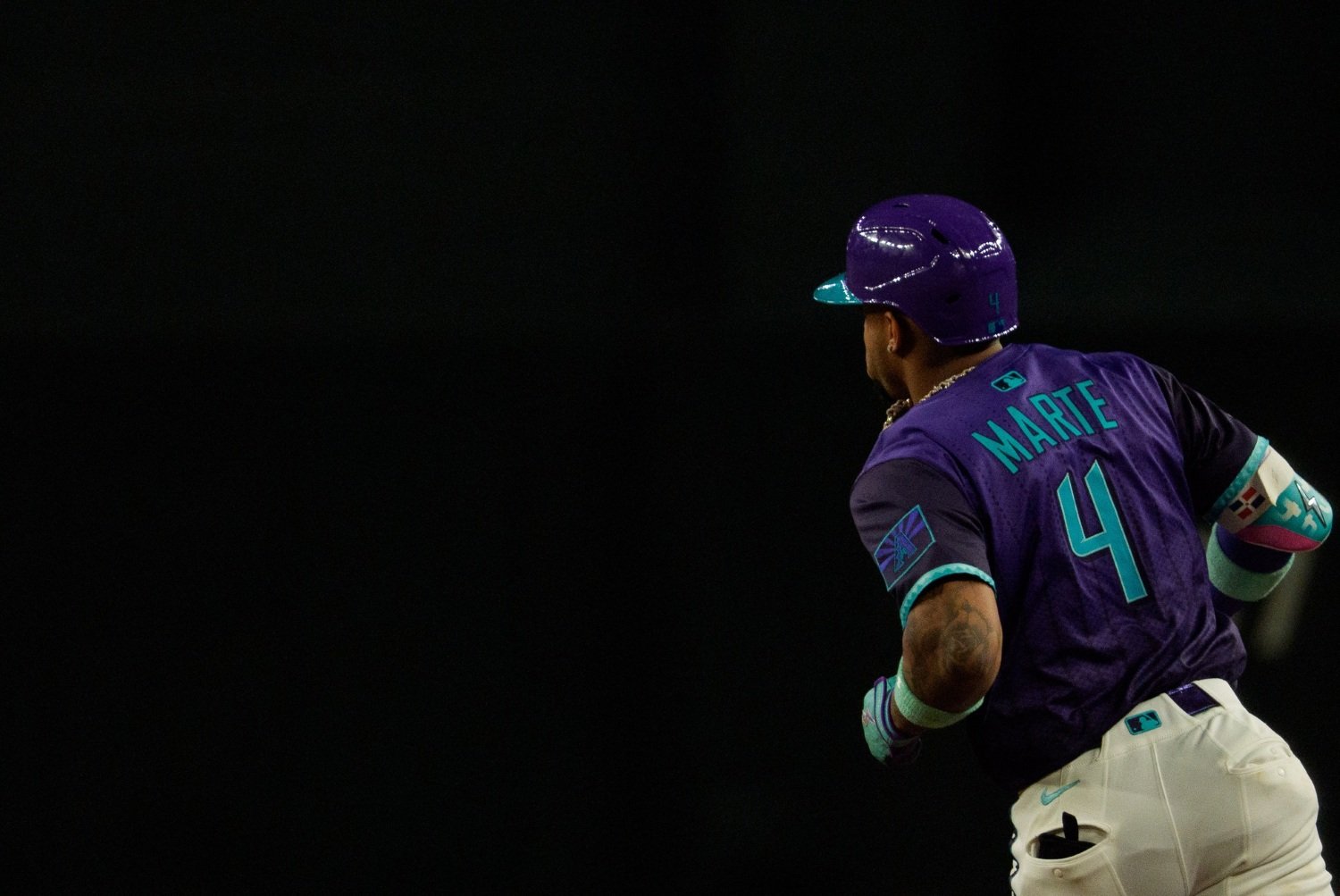 Ketel Marte has been the best second baseman in baseball over the last two seasons, producing 6.8 bWAR in 2024 and 4.4 bWAR (in a reduced workload) in 2025. He slugged 28 home runs in just 480 at-bats, and overall, he was one of the most potent bats in baseball. He was a slightly above-average defender at the keystone, to boot, further enhancing his value to a team set up like the Brewers are. With trade season upon us (and rumors of Marte's unhappiness within the Diamondbacks), could the Brewers pounce on a potentially era-defining move? Can it Fit Defensively? Any acquisition of Marte would mean Brice Turang sliding over to shortstop, putting some dent in the premium infield defense of 2025. Turang has proved to be an excellent second baseman, but some arm strength concerns and slightly unexpected range-based metrics at second base in 2025 hint that he may not be the above-average shortstop some hoped he could be. Combine that with some concerns about whether Turang's shoulder can handle the longer throws over 162 games, and perhaps this defensive alignment isn't as viable in practice as it is on paper. This is something the front office would need to have some certainty about, before executing a trade of this magnitude. How Valuable Is Ketel Marte? Marte is 32 years old, probably entering the last of his prime seasons. However, his all-around skill set in the batter's box is something to behold. Marte shows great plate discipline, rarely chasing outside the strike zone. He shows strong bat-to-ball skills that give him both strikeout and walk rates far better than the league averages. He also generates ample hard contact. While he crushes fastballs, he has an expected weighted on-base average (xwOBA) over .360 in each of the last two seasons against breaking pitches. His contract carries him through his age-37 season and is heavily backloaded, with five years and $96 million guaranteed and a player option for $11.5 million in 2031. That already reflects some escalation from when he signed the deal less than a year ago, because he eclipsed 550 plate appearances in 2025. That boosts his salary in each remaining year of the deal by $1 million, and he can increase his salaries for following years by up to $2.5 million each year if he stays healthy and plays every day. Thus, there's a good chance this balloons into a nine-figure commitment. However, there are also substantial deferrals in the deal, which brings the real cost back down even as the nominal payouts threaten to rise significantly. All told, it's a very team-friendly deal for a player of Marte's caliber. The only other discussion point around this is that Marte has incurred the ire of his teammates with repeated requests for days off. Ken Rosenthal reported on that in the wake of Marte being away from the team without permission for two days coming out of the All-Star break. The Brewers are constructed to outwork their opponents, grinding harder day to day and fighting for every inch available. How Marte fits into that is anybody's guess, and the front office would surely need to do enough background research to know whether he would disrupt things before pulling the trigger on a deal. What Would a Trade Package Look Like? With Marte locked up for at least five more years and Turang under team control for another three, it opens some possibilities in the short term for the Brewers. They may be able to sell high on Cooper Pratt—whose bat has struggled to create impact in the minor leagues—and wait on the arrival of Jesús Made. They have a plethora of strong prospects, all of whom (except Made) could be used to chase Marte. A package could look somewhere along the lines of this: Luis Peña (#2 Brewer Fanatic prospect) Robert Gasser (#7 Brewer Fanatic prospect) Brock Wilken (#11 Brewer Fanatic prospect) The Brewers would be trading away a strong defensive shortstop with power that many scouts consider untapped, in Luis Peña, one of the hottest prospects in baseball; Robert Gasser, a left handed arm who showed well during a small sample so far in the major leagues; and Brock Wilken, an upside third baseman with thump who could profile similarly to Eugenio Suárez at his peak upside. It's an enticing deal for both parties, costing a lot of capital for the Brewers, but with monumental improvements to their offensive production in the short and medium term. It would give their lineup a dynamic a bit closer to those of the other elite teams in the National League, and the players they might trade to make it happen (while very valuable) could be drawn from places where the team enjoys a surplus. Would you take this deal? Let us know your thoughts in the comments below!
 -
Image courtesy of © Allan Henry-Imagn Images Ketel Marte has been the best second baseman in baseball over the last two seasons, producing 6.8 bWAR in 2024 and 4.4 bWAR (in a reduced workload) in 2025. He slugged 28 home runs in just 480 at-bats, and overall, he was one of the most potent bats in baseball. He was a slightly above-average defender at the keystone, to boot, further enhancing his value to a team set up like the Brewers are. With trade season upon us (and rumors of Marte's unhappiness within the Diamondbacks), could the Brewers pounce on a potentially era-defining move? Can it Fit Defensively? Any acquisition of Marte would mean Brice Turang sliding over to shortstop, putting some dent in the premium infield defense of 2025. Turang has proved to be an excellent second baseman, but some arm strength concerns and slightly unexpected range-based metrics at second base in 2025 hint that he may not be the above-average shortstop some hoped he could be. Combine that with some concerns about whether Turang's shoulder can handle the longer throws over 162 games, and perhaps this defensive alignment isn't as viable in practice as it is on paper. This is something the front office would need to have some certainty about, before executing a trade of this magnitude. How Valuable Is Ketel Marte? Marte is 32 years old, probably entering the last of his prime seasons. However, his all-around skill set in the batter's box is something to behold. Marte shows great plate discipline, rarely chasing outside the strike zone. He shows strong bat-to-ball skills that give him both strikeout and walk rates far better than the league averages. He also generates ample hard contact. While he crushes fastballs, he has an expected weighted on-base average (xwOBA) over .360 in each of the last two seasons against breaking pitches. His contract carries him through his age-37 season and is heavily backloaded, with five years and $96 million guaranteed and a player option for $11.5 million in 2031. That already reflects some escalation from when he signed the deal less than a year ago, because he eclipsed 550 plate appearances in 2025. That boosts his salary in each remaining year of the deal by $1 million, and he can increase his salaries for following years by up to $2.5 million each year if he stays healthy and plays every day. Thus, there's a good chance this balloons into a nine-figure commitment. However, there are also substantial deferrals in the deal, which brings the real cost back down even as the nominal payouts threaten to rise significantly. All told, it's a very team-friendly deal for a player of Marte's caliber. The only other discussion point around this is that Marte has incurred the ire of his teammates with repeated requests for days off. Ken Rosenthal reported on that in the wake of Marte being away from the team without permission for two days coming out of the All-Star break. The Brewers are constructed to outwork their opponents, grinding harder day to day and fighting for every inch available. How Marte fits into that is anybody's guess, and the front office would surely need to do enough background research to know whether he would disrupt things before pulling the trigger on a deal. What Would a Trade Package Look Like? With Marte locked up for at least five more years and Turang under team control for another three, it opens some possibilities in the short term for the Brewers. They may be able to sell high on Cooper Pratt—whose bat has struggled to create impact in the minor leagues—and wait on the arrival of Jesús Made. They have a plethora of strong prospects, all of whom (except Made) could be used to chase Marte. A package could look somewhere along the lines of this: Luis Peña (#2 Brewer Fanatic prospect) Robert Gasser (#7 Brewer Fanatic prospect) Brock Wilken (#11 Brewer Fanatic prospect) The Brewers would be trading away a strong defensive shortstop with power that many scouts consider untapped, in Luis Peña, one of the hottest prospects in baseball; Robert Gasser, a left handed arm who showed well during a small sample so far in the major leagues; and Brock Wilken, an upside third baseman with thump who could profile similarly to Eugenio Suárez at his peak upside. It's an enticing deal for both parties, costing a lot of capital for the Brewers, but with monumental improvements to their offensive production in the short and medium term. It would give their lineup a dynamic a bit closer to those of the other elite teams in the National League, and the players they might trade to make it happen (while very valuable) could be drawn from places where the team enjoys a surplus. Would you take this deal? Let us know your thoughts in the comments below! View full article
-
Check Out Franchise Ball, The FREE Baseball Simulator
Jake McKibbin commented on Brock Beauchamp's blog entry in Battle Your Tail Off
Just an aside here, but I gave this game a go last month and its oddly entertaining. Have to say it might be worth a go if you're bored in the offseason, its an intriguing simulator with a solid community and tons to do! -
Depending on control, that sounds like James wood and that'll cost a heck of a lot more than Freddy, so who would you package for him? Pratt, Peña, Peralta?
-
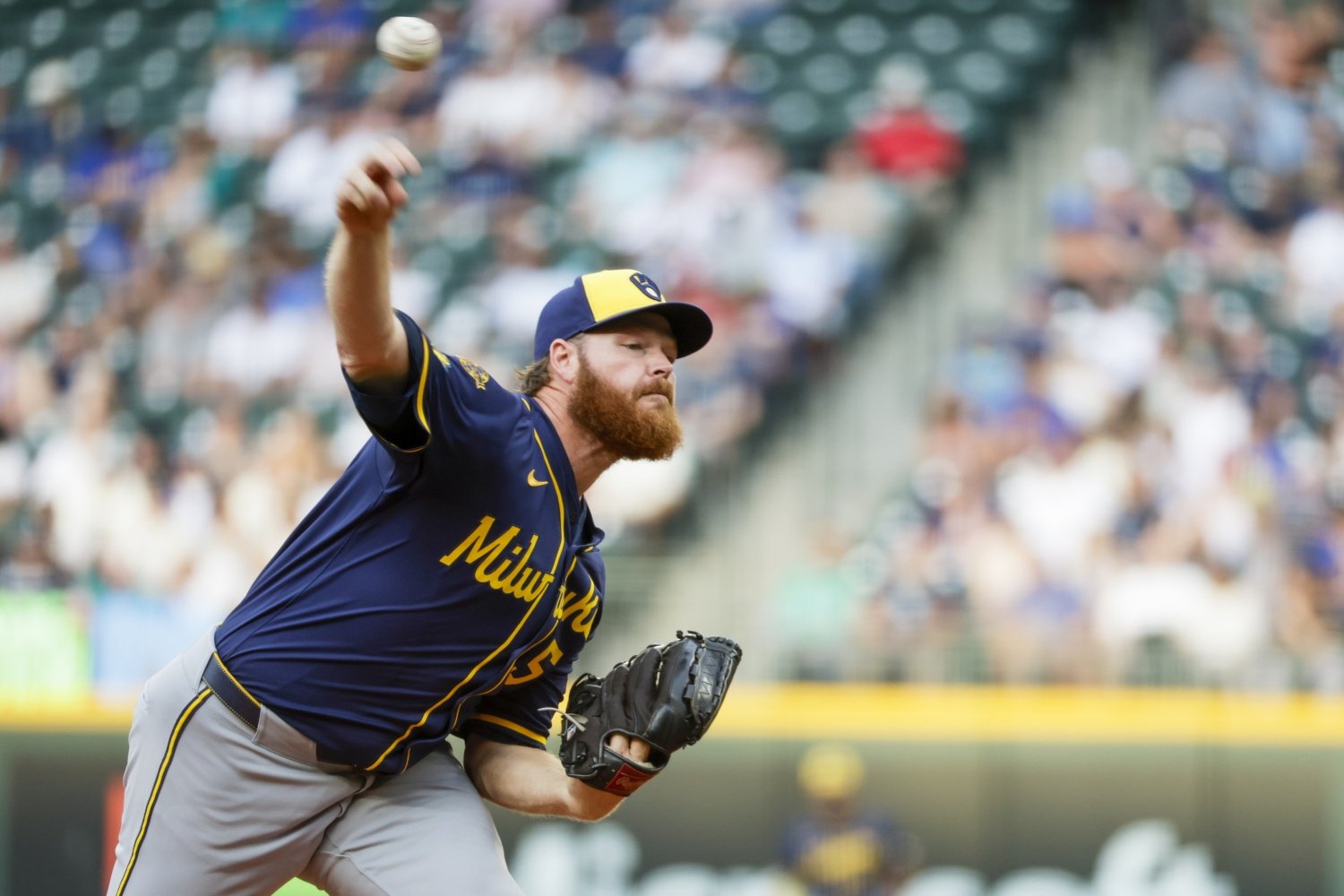 The Milwaukee Brewers have another veteran inked in for 2026, with the return of Brandon Woodruff on a one-year, $22.05-million deal. The club will now gamble that Woodruff might be able to remain healthy and perhaps take a step toward regaining his former velocity, while guaranteeing themselves a veteran presence in their rotation for next season. There are durability risks, but the upside play from this is quite large—and as the adage goes, there's no such thing as a bad one-year deal. Cast your minds back to July 6, when Woodruff made his return from the IL in Miami. Despite reduced fastball velocity and an overall drop in raw stuff, Woodruff's precision and competitiveness won the day. He didn't back down. The interesting follow-up to that was how it affected the rest of the rotation, namely Jacob Misiorowski. Misiorowski commented in awe about that start and the aggressiveness Woodruff showed. Intriguingly, we saw similar results in his next start. Facing the Dodgers' fearsome lineup, Misiorowski began to follow Woodruff's example, pounding the strike zone with first pitches and eliciting chases after that. He threw 82.6% first-pitch strikes against the Dodgers (including 69% of his four-seam fastballs inside the strike zone) and 71.4% against the Mariners in his next start, both of which were the high points for Misiorowski in 2025. For all of Freddy Peralta's strengths, that direct, attacking style eludes him. It's something Woodruff can impart that Peralta can't, particularly to rookies: trust your pitches both in and out of the strike zone, especially early in counts. Woodruff did give up a long home run to Heriberto Hernandez in that Miami start and didn't change his approach one iota, continuing to command the zone. For all that these players have done developmentally to reach the big leagues, sometimes it takes a veteran to lead by example. Among other reasons, this is why the Crew are intent on having at least one veteran pitcher on their roster in 2026. Peralta has led the rotation since Corbin Burnes's departure and done an admirable job, continuing to be effective throughout with a 3.19 ERA and 3.90 FIP and taking the ball every sixth day. He has looked shaky at times, including in the playoffs, but then, one could argue that he has at least been available in the playoffs. With one veteran shored up, the question is whether the Brewers will be more open to trading Peralta. Entering the last year of his contract, and due just $8 million, Peralta is unquestionably a bargain. Yet, prior success is no guarantee of future performance, and one elbow injury sends that value down the drain from an on-field standpoint. The same goes for Woodruff, with his injury history. There's no guarantee both of these pitchers can reach 100 innings (let alone 150 each) in 2026. Strength in depth has been the Brewers' calling card in the rotation in recent seasons, and that should continue in 2026. If Tyson Hardin and Bishop Letson were established Triple-A arms banging on the door, this is a different conversation, but they're not at that stage just yet. The Brewers have no immediate pressure to make room in their rotation, and have plenty of optionable arms that they can use to retain that depth, with Robert Gasser, Logan Henderson, Chad Patrick and more all able to be cycled through. Now, though, they might have to trade one of their erstwhile aces. With Woodruff taking up over $22 million, their payroll has little room for other upgrades, and if they're going to use trades to make those improvements, it's likely to come in the form of trading either Peralta or Woodruff. The latter, now, would have to give his permission to be traded until June 15. Peralta has greater trade value, too, because of his greater durability; lower salary; and the fact that an acquiring team could still extend him a qualifying offer next winter. His value to the Brewers inside the clubhouse exceeds the value most MLB teams put on that character, and that hasn't changed just because Woodruff signed on for next season. Still, a trade of Peralta feels much more likely in the wake of Woodruff's return. What do you think of the Woodruff signing? Do you think it's now more likely that Freddy Peralta gets moved? Let us know your thoughts in the comments below!
 -
Image courtesy of © Joe Nicholson-Imagn Images The Milwaukee Brewers have another veteran inked in for 2026, with the return of Brandon Woodruff on a one-year, $22.05-million deal. The club will now gamble that Woodruff might be able to remain healthy and perhaps take a step toward regaining his former velocity, while guaranteeing themselves a veteran presence in their rotation for next season. There are durability risks, but the upside play from this is quite large—and as the adage goes, there's no such thing as a bad one-year deal. Cast your minds back to July 6, when Woodruff made his return from the IL in Miami. Despite reduced fastball velocity and an overall drop in raw stuff, Woodruff's precision and competitiveness won the day. He didn't back down. The interesting follow-up to that was how it affected the rest of the rotation, namely Jacob Misiorowski. Misiorowski commented in awe about that start and the aggressiveness Woodruff showed. Intriguingly, we saw similar results in his next start. Facing the Dodgers' fearsome lineup, Misiorowski began to follow Woodruff's example, pounding the strike zone with first pitches and eliciting chases after that. He threw 82.6% first-pitch strikes against the Dodgers (including 69% of his four-seam fastballs inside the strike zone) and 71.4% against the Mariners in his next start, both of which were the high points for Misiorowski in 2025. For all of Freddy Peralta's strengths, that direct, attacking style eludes him. It's something Woodruff can impart that Peralta can't, particularly to rookies: trust your pitches both in and out of the strike zone, especially early in counts. Woodruff did give up a long home run to Heriberto Hernandez in that Miami start and didn't change his approach one iota, continuing to command the zone. For all that these players have done developmentally to reach the big leagues, sometimes it takes a veteran to lead by example. Among other reasons, this is why the Crew are intent on having at least one veteran pitcher on their roster in 2026. Peralta has led the rotation since Corbin Burnes's departure and done an admirable job, continuing to be effective throughout with a 3.19 ERA and 3.90 FIP and taking the ball every sixth day. He has looked shaky at times, including in the playoffs, but then, one could argue that he has at least been available in the playoffs. With one veteran shored up, the question is whether the Brewers will be more open to trading Peralta. Entering the last year of his contract, and due just $8 million, Peralta is unquestionably a bargain. Yet, prior success is no guarantee of future performance, and one elbow injury sends that value down the drain from an on-field standpoint. The same goes for Woodruff, with his injury history. There's no guarantee both of these pitchers can reach 100 innings (let alone 150 each) in 2026. Strength in depth has been the Brewers' calling card in the rotation in recent seasons, and that should continue in 2026. If Tyson Hardin and Bishop Letson were established Triple-A arms banging on the door, this is a different conversation, but they're not at that stage just yet. The Brewers have no immediate pressure to make room in their rotation, and have plenty of optionable arms that they can use to retain that depth, with Robert Gasser, Logan Henderson, Chad Patrick and more all able to be cycled through. Now, though, they might have to trade one of their erstwhile aces. With Woodruff taking up over $22 million, their payroll has little room for other upgrades, and if they're going to use trades to make those improvements, it's likely to come in the form of trading either Peralta or Woodruff. The latter, now, would have to give his permission to be traded until June 15. Peralta has greater trade value, too, because of his greater durability; lower salary; and the fact that an acquiring team could still extend him a qualifying offer next winter. His value to the Brewers inside the clubhouse exceeds the value most MLB teams put on that character, and that hasn't changed just because Woodruff signed on for next season. Still, a trade of Peralta feels much more likely in the wake of Woodruff's return. What do you think of the Woodruff signing? Do you think it's now more likely that Freddy Peralta gets moved? Let us know your thoughts in the comments below! View full article
-
Apologies, I thought you were talking strict platoon! I do think form will come into this, and either can force their way into more starting time, but I'd agree that your split is more likely to be where they'll at least start the season from a time-share standpoint
-
I think this may mean a little into sunk cost fallacy, in that if you spend the money you have to use them, when in reality whoever is performing better (and likely to perform better) should get the role. It's one of the advantages the Brewers have, chopping and changing players who aren't working which you can't do with large contracts as easily I would ask a question (as Devil's advocate, I believe the Brewers will want both in 2026 for depth as much as anything, as both have been streaky even in 2025): If Bauers is likely to take more of the playing time, should they tender Vaughn a contract of that size?
-
MLB's Revenue-Sharing Model Has Two Big Problems. How Can They Be Fixed?
Jake McKibbin posted an article in Brewers
 Major League Baseball's revenue-sharing model was created to level the platform all teams play from, without completely removing the incentive for some clubs to seek stronger financial positions and revenue sources. The idea is that the Dodgers and Yankees need a sturdy competitive landscape to exist, in order to bring in the massive sums of money they accumulate. The problem is that, at present, two large loopholes exist in the league's revenue-sharing plan: Some teams have managed to avoid paying what they should owe; and The revenues shared are then distributed equally, rather than on a meritocratic basis. That disincentivizes some teams from trying to win and improve the on-field product. Tax Avoidance Let's start with the first, and perhaps the most obvious culprit: the Los Angeles Dodgers. Way back in 2012, with the team facing imminent bankruptcy after Frank McCourt siphoned funds from the club to finance his divorce, MLB awarded the Dodgers a favorable deal to pull themselves out of a hole. The following season, they would be permitted to treat their media revenue as a maximum of $84 million for revenue-sharing purposes, a figure that would increase by 4% each year thereafter. This deal would continue for the following 25 years. (Note: yes, that is a ludicrous period of time for this kind of deal.) In 2017, MLB realized the folly of their ways and adjusted the initial starting point to $130 million, but even that has proven to be an insufficient change. The Dodgers' TV Deal with Spectrum far exceeds that; it's valued at $8.35 billion over 25 years, or $334 million per year. Here's how that looks over the course of the 25-year period, with all values below in millions: Year Real Local TV Revenue Revenue Sharing Due Adjusted Local TV Revenue Adjusted Revenue Sharing Due Annual Savings Cumulative Savings 2014 $334.00 $113.60 $130.00 $44.20 $69.40 $69.40 2015 $334.00 $113.60 $135.20 $45.97 $67.63 $137.03 2016 $334.00 $113.60 $140.60 $47.80 $65.80 $202.83 2017 $334.00 $160.30 $146.20 $70.18 $90.12 $292.95 2018 $334.00 $160.30 $152.10 $73.01 $87.29 $380.24 2019 $334.00 $160.30 $158.20 $75.94 $84.36 $464.61 2020 $334.00 $160.30 $164.80 $79.10 $81.20 $545.80 2021 $334.00 $160.30 $171.10 $82.13 $78.17 $623.98 2022 $334.00 $160.30 $177.90 $85.39 $74.91 $698.88 2023 $334.00 $160.30 $185.00 $88.80 $71.50 $770.38 2024 $334.00 $160.30 $192.40 $92.35 $67.95 $838.33 2025 $334.00 $160.30 $200.10 $96.05 $64.25 $902.58 2026 $334.00 $160.30 $208.10 $99.89 $60.41 $963.00 2027 $334.00 $160.30 $216.50 $103.92 $56.38 $1,019.38 2028 $334.00 ? $225.10 ? 2029 $334.00 ? $234.10 ? 2030 $334.00 ? $243.50 ? 2031 $334.00 ? $253.20 ? 2032 $334.00 ? $263.40 ? 2033 $334.00 ? $273.90 ? 2034 $334.00 ? $284.80 ? 2035 $334.00 ? $296.20 ? 2036 $334.00 ? $308.10 ? 2037 $334.00 ? $320.40 ? 2038 $334.00 ? $333.20 ? With 48% of all teams' local revenues being shared, the Dodgers are saving over $60 million per year even now, halfway through this slow walk back to paying full freight. In the first year of Shohei Ohtani's contract, they saved the entire salary ($68 million) they deferred to after the end of Ohtani's deal in revenue-sharing avoidance alone. They were required to put that much into escrow, and they could easily do so, because they had all that extra cash they didn't have to pay into the league's shared pool. If the next CBA changes nothing about the fundamental revenue-sharing structure, the Dodgers will surpass $1 billion in cumulative savings in the first year of the new deal. Another loophole in Major League Baseball’s revenue-sharing system involves local media deals, more generally. Clubs can manipulate revenue figures by acquiring partial ownership of the broadcasters that air their games. While revenue from local TV rights is subject to sharing across the league, profits generated through ownership stakes in the broadcasting networks are not. Instead, they are treated as a subsidiary/investment earning. The most prominent example is the New York Yankees, who own a significant share of the YES Network. The network reportedly generates around $500 million annually, yet only about $200 million is included in the revenue-sharing calculations. Other teams employing similar strategies include: Chicago Cubs – Marquee Sports Network Boston Red Sox – New England Sports Network Chicago White Sox – CHSN Atlanta Braves – Bally Sports South/Southeast Detroit Tigers – Bally Sports Detroit St. Louis Cardinals – Bally Sports Midwest Houston Astros – AT&T SportsNet Southwest Miami Marlins – Bally Sports Florida Ownership stakes vary among these teams. For instance, the Marlins have a much smaller share in Bally Sports Florida, compared to the Cubs’ stake in Marquee. Additionally, the financial instability of Bally Sports and its parent company, Sinclair Group, introduces risk. However, in larger markets, the risks are lower and the financial rewards greater, enabling teams like the Yankees, Cubs, and Red Sox to significantly reduce their revenue-sharing obligations—at least relative to the spirit of the revenue-sharing rules. The core issue with these loopholes isn’t the modest additional income small-market clubs would receive—less than $10 million annually per team, most years—but the missed opportunity to limit the spending power of big-market franchises. This perpetuates a concentration of top-tier talent among the wealthiest teams, increasing monopolization within the league. Addressing these loopholes would be a meaningful step toward greater competitive balance in Major League Baseball. The league could go a long way to addressing competitive balance by implementing changes to address these two methods by which big-market teams reserve large portions of their revenue, which may handicap some in a meaningful way. The impact to the Dodgers of changing their revenue-sharing agreement would be substantial, but it's shrinking every year. The league already adjusted this once and could do so again. On top of this, the shares in local network's to avoid treating them as local revenue earnings is a clear workaround—the type that, were it a tax avoidance scheme, would be closed quickly. It's particularly important the league do so, given that some of the ownership groups mentioned above (the Red Sox and the Cubs, most notably) do not appear to be investing as they are capable of. They're pulling that money out of the game's circulation entirely. This all invites the question: Do small-market teams deserve a greater share of revenues? Problem Number Two - This Isn't A Meritocracy Some small-market teams take being competitive very seriously. The Brewers, Rays, and Guardians all take pride in their on-field product, trying to compete year after year. They have shown themselves to be capable of standing with, and beating, the bigger-payroll teams within their divisions. Over the last five years, the Brewers have four division titles; the Guardians have three; and the Rays have reached the postseason three times, with one division title and a 100-win season to boot. The point of revenue sharing is to maintain a strong, competitive sport. These teams have certainly done that. Others have certainly not. Bob Nutting of the Pirates has invested almost nothing into his team, despite the increased draw of Paul Skenes and a phenomenal rotation behind him that's crying out for some offensive support. The Cincinnati Reds haven't been quite so poor, but they certainly haven't done much around Elly De La Cruz. The Chicago White Sox have been a dumpster fire, while the Rockies have shown minimal interest in doing anything that will actually help them win (though they have spent money; we'll blame this one on ineptitude). Finally, the Minnesota Twins' recent culling is a poor look for the sport and their fan base. Some of these teams tanked in 2025, and will probably do so again in 2026. Some have done it on such a consistent basis that it should be questioned whether they deserve the additional revenue at all. Just as the Cubs should have extra revenues wrested from them if they're not rolling them back into the team, small-market teams with no intention of spending should be denied extra funds. It's hard to argue against the Brewers, Rays and Guardians receiving more funds than the Pirates or Rockies from revenue sharing. They're advancing the sport, performing well within their markets, and playing some unique brands of baseball that allow them to win on the margins. With clear statements of intent, it seems as though these teams should be better rewarded. Teams with winning records could receive larger shares of revenue-sharing funds the following year, while teams who lose more than 100 games or spend less than a certain amount could be barred from receiving their full allotments the next year. Perhaps such a ploy would better incentivize small-market teams to compete with more urgency, addressing the competitive balance issue in MLB. Can you see any of the changes mentioned above coming into MLB in the next CBA? Would either make a difference? Let us know your thoughts in the comments below!
 -
Image courtesy of © Mark Hoffman/Milwaukee Journal Sentinel / USA TODAY NETWORK via Imagn Images Major League Baseball's revenue-sharing model was created to level the platform all teams play from, without completely removing the incentive for some clubs to seek stronger financial positions and revenue sources. The idea is that the Dodgers and Yankees need a sturdy competitive landscape to exist, in order to bring in the massive sums of money they accumulate. The problem is that, at present, two large loopholes exist in the league's revenue-sharing plan: Some teams have managed to avoid paying what they should owe; and The revenues shared are then distributed equally, rather than on a meritocratic basis. That disincentivizes some teams from trying to win and improve the on-field product. Tax Avoidance Let's start with the first, and perhaps the most obvious culprit: the Los Angeles Dodgers. Way back in 2012, with the team facing imminent bankruptcy after Frank McCourt siphoned funds from the club to finance his divorce, MLB awarded the Dodgers a favorable deal to pull themselves out of a hole. The following season, they would be permitted to treat their media revenue as a maximum of $84 million for revenue-sharing purposes, a figure that would increase by 4% each year thereafter. This deal would continue for the following 25 years. (Note: yes, that is a ludicrous period of time for this kind of deal.) In 2017, MLB realized the folly of their ways and adjusted the initial starting point to $130 million, but even that has proven to be an insufficient change. The Dodgers' TV Deal with Spectrum far exceeds that; it's valued at $8.35 billion over 25 years, or $334 million per year. Here's how that looks over the course of the 25-year period, with all values below in millions: Year Real Local TV Revenue Revenue Sharing Due Adjusted Local TV Revenue Adjusted Revenue Sharing Due Annual Savings Cumulative Savings 2014 $334.00 $113.60 $130.00 $44.20 $69.40 $69.40 2015 $334.00 $113.60 $135.20 $45.97 $67.63 $137.03 2016 $334.00 $113.60 $140.60 $47.80 $65.80 $202.83 2017 $334.00 $160.30 $146.20 $70.18 $90.12 $292.95 2018 $334.00 $160.30 $152.10 $73.01 $87.29 $380.24 2019 $334.00 $160.30 $158.20 $75.94 $84.36 $464.61 2020 $334.00 $160.30 $164.80 $79.10 $81.20 $545.80 2021 $334.00 $160.30 $171.10 $82.13 $78.17 $623.98 2022 $334.00 $160.30 $177.90 $85.39 $74.91 $698.88 2023 $334.00 $160.30 $185.00 $88.80 $71.50 $770.38 2024 $334.00 $160.30 $192.40 $92.35 $67.95 $838.33 2025 $334.00 $160.30 $200.10 $96.05 $64.25 $902.58 2026 $334.00 $160.30 $208.10 $99.89 $60.41 $963.00 2027 $334.00 $160.30 $216.50 $103.92 $56.38 $1,019.38 2028 $334.00 ? $225.10 ? 2029 $334.00 ? $234.10 ? 2030 $334.00 ? $243.50 ? 2031 $334.00 ? $253.20 ? 2032 $334.00 ? $263.40 ? 2033 $334.00 ? $273.90 ? 2034 $334.00 ? $284.80 ? 2035 $334.00 ? $296.20 ? 2036 $334.00 ? $308.10 ? 2037 $334.00 ? $320.40 ? 2038 $334.00 ? $333.20 ? With 48% of all teams' local revenues being shared, the Dodgers are saving over $60 million per year even now, halfway through this slow walk back to paying full freight. In the first year of Shohei Ohtani's contract, they saved the entire salary ($68 million) they deferred to after the end of Ohtani's deal in revenue-sharing avoidance alone. They were required to put that much into escrow, and they could easily do so, because they had all that extra cash they didn't have to pay into the league's shared pool. If the next CBA changes nothing about the fundamental revenue-sharing structure, the Dodgers will surpass $1 billion in cumulative savings in the first year of the new deal. Another loophole in Major League Baseball’s revenue-sharing system involves local media deals, more generally. Clubs can manipulate revenue figures by acquiring partial ownership of the broadcasters that air their games. While revenue from local TV rights is subject to sharing across the league, profits generated through ownership stakes in the broadcasting networks are not. Instead, they are treated as a subsidiary/investment earning. The most prominent example is the New York Yankees, who own a significant share of the YES Network. The network reportedly generates around $500 million annually, yet only about $200 million is included in the revenue-sharing calculations. Other teams employing similar strategies include: Chicago Cubs – Marquee Sports Network Boston Red Sox – New England Sports Network Chicago White Sox – CHSN Atlanta Braves – Bally Sports South/Southeast Detroit Tigers – Bally Sports Detroit St. Louis Cardinals – Bally Sports Midwest Houston Astros – AT&T SportsNet Southwest Miami Marlins – Bally Sports Florida Ownership stakes vary among these teams. For instance, the Marlins have a much smaller share in Bally Sports Florida, compared to the Cubs’ stake in Marquee. Additionally, the financial instability of Bally Sports and its parent company, Sinclair Group, introduces risk. However, in larger markets, the risks are lower and the financial rewards greater, enabling teams like the Yankees, Cubs, and Red Sox to significantly reduce their revenue-sharing obligations—at least relative to the spirit of the revenue-sharing rules. The core issue with these loopholes isn’t the modest additional income small-market clubs would receive—less than $10 million annually per team, most years—but the missed opportunity to limit the spending power of big-market franchises. This perpetuates a concentration of top-tier talent among the wealthiest teams, increasing monopolization within the league. Addressing these loopholes would be a meaningful step toward greater competitive balance in Major League Baseball. The league could go a long way to addressing competitive balance by implementing changes to address these two methods by which big-market teams reserve large portions of their revenue, which may handicap some in a meaningful way. The impact to the Dodgers of changing their revenue-sharing agreement would be substantial, but it's shrinking every year. The league already adjusted this once and could do so again. On top of this, the shares in local network's to avoid treating them as local revenue earnings is a clear workaround—the type that, were it a tax avoidance scheme, would be closed quickly. It's particularly important the league do so, given that some of the ownership groups mentioned above (the Red Sox and the Cubs, most notably) do not appear to be investing as they are capable of. They're pulling that money out of the game's circulation entirely. This all invites the question: Do small-market teams deserve a greater share of revenues? Problem Number Two - This Isn't A Meritocracy Some small-market teams take being competitive very seriously. The Brewers, Rays, and Guardians all take pride in their on-field product, trying to compete year after year. They have shown themselves to be capable of standing with, and beating, the bigger-payroll teams within their divisions. Over the last five years, the Brewers have four division titles; the Guardians have three; and the Rays have reached the postseason three times, with one division title and a 100-win season to boot. The point of revenue sharing is to maintain a strong, competitive sport. These teams have certainly done that. Others have certainly not. Bob Nutting of the Pirates has invested almost nothing into his team, despite the increased draw of Paul Skenes and a phenomenal rotation behind him that's crying out for some offensive support. The Cincinnati Reds haven't been quite so poor, but they certainly haven't done much around Elly De La Cruz. The Chicago White Sox have been a dumpster fire, while the Rockies have shown minimal interest in doing anything that will actually help them win (though they have spent money; we'll blame this one on ineptitude). Finally, the Minnesota Twins' recent culling is a poor look for the sport and their fan base. Some of these teams tanked in 2025, and will probably do so again in 2026. Some have done it on such a consistent basis that it should be questioned whether they deserve the additional revenue at all. Just as the Cubs should have extra revenues wrested from them if they're not rolling them back into the team, small-market teams with no intention of spending should be denied extra funds. It's hard to argue against the Brewers, Rays and Guardians receiving more funds than the Pirates or Rockies from revenue sharing. They're advancing the sport, performing well within their markets, and playing some unique brands of baseball that allow them to win on the margins. With clear statements of intent, it seems as though these teams should be better rewarded. Teams with winning records could receive larger shares of revenue-sharing funds the following year, while teams who lose more than 100 games or spend less than a certain amount could be barred from receiving their full allotments the next year. Perhaps such a ploy would better incentivize small-market teams to compete with more urgency, addressing the competitive balance issue in MLB. Can you see any of the changes mentioned above coming into MLB in the next CBA? Would either make a difference? Let us know your thoughts in the comments below! View full article
-
Wouldn't that mean, with the majority of pitchers being right handed, that Bauers would face more as the strong side of a platoon?
-
An additional item that I've just gotten into digging up. Of all players with 100+ competitive swings in each of 2024 and 2025, Jake Bauers ranked 5th in average bat speed increase, a category led by Brice Turang (IYKYK: pivot tables are fun) Unlike Brice Turang, whose swing lengthened on average by 0.75 ft per swing to gain that extra 4.48mph bat speed, a co-efficient of 0.17 ft per extra mph of bat speed. Jake Bauers' swing length only increased by 0.25 ft, a co-efficient of 0.09 ft in swing length per extra mph of bat speed, suggesting he's leaning less on a longer swing to generate that additional power and is perhaps less likely to incur additional penalties in the swing and miss department
-
Image courtesy of © Kiyoshi Mio-Imagn Images Jake Bauers's hitting profile has always been a fascinating one. Bat-tracking models love him for how he can do damage on pitches on which he connects. He generates steep, dangerous attack angles and above-average bat speed. He consistently elevated the ball with hard contact to the outfield, but he never made enough of that contact to take advantage of that swing, especially inside the strike zone. In 2025, he came in with a different approach, sacrificing some of those pulled fly balls for a little more contact inside the strike zone. He succeeded, as you can see above, lowering his swing-and-miss substantially against all pitches inside the zone. Even better, these continued to improve as the season went on, finishing September with just a 14% whiff rate against fastball variations and a 16.7% whiff rate against offspeed pitches, either in or out of the strike zone. His zone contact in September against all pitches was 91.2%, and it was 85% in October, against some of the best pitching the game has to offer. Bauers did see a reduction in his pulled balls, taking a more all-fields approach while also coming up with a few more ground balls. The exchange worked, but how did he do it? Well, first of all, he changed his stance in 2025, becoming more closed and slightly closing the gap between his feet. That being said, his actual stance at the point of contact was consistent year to year, as you can see below (2024 vs 2025): The key change is the way in which he gets there. Bauers no longer requires as much effort in his setup. He's coiling his hips a little bit less into his backside, creating a simpler motion forward within which it's easier to maintain balance and seems to be easier for him to time up the pitch. On top of that, he's unlocked serious bat speed: Above are Jake Bauers in 2024 compared to 2025. He found ideal attack angles on the baseball 50% of the time in 2025 (and 77% of the time in September), while seeing his average bat speed jump from 73.8 mph to 76.5 mph—a monumental difference. He's swinging harder, making more contact on both fastballs and off-speed pitches, and making the most of that contact by "squaring it up" more consistently. Some might question how important that bat speed is. Justin Sartori put it through a model at Driveline and came to this conclusion in regard to Junior Caminero: If you need further evidence, a crude Baseball Savant overview may help win you over. You can see how Bauers's exit velocities, expected slugging and expected weighted on-base average (xwOBA) are considerably higher. The strikeout and whiff rates still don't look pretty, but both are considerably improved, and would look even more promising if you isolated the form he showed in September/October (18.6% strikeout rate in September, 21.4% in October). Bauers also swung less this season, which is part of how he achieved better results when he did swing. A more selective and intelligent approach boosted his walk rate to elite territory, and locking in on specific locations let him use a flatter swing and achieve that increased bat speed. An improved approach unlocked some of his improved physical indices, which only buttresses the argument that he can sustain the production he managed in 2025. The upside with Bauers is why the Brewers traded for him in 2023, and why (after initially cutting him) they brought him back last winter. It might finally be here. He's produced in small samples before, and it's not clear whether he could carry over what he did in 2025 if burdened with a larger role and a tougher overall array of matchups, but the underlying signs suggest that Bauers is going to be a real handful next season. His quality of contact has usually been electric. If he's making more of that contact and drawing more walks, to boot, you have an incredibly potent bat in the Brewers lineup on a part-time basis. It would seem, at least, as though the Crew has an easier call to retain Bauers this fall than they had last year. View full article
-
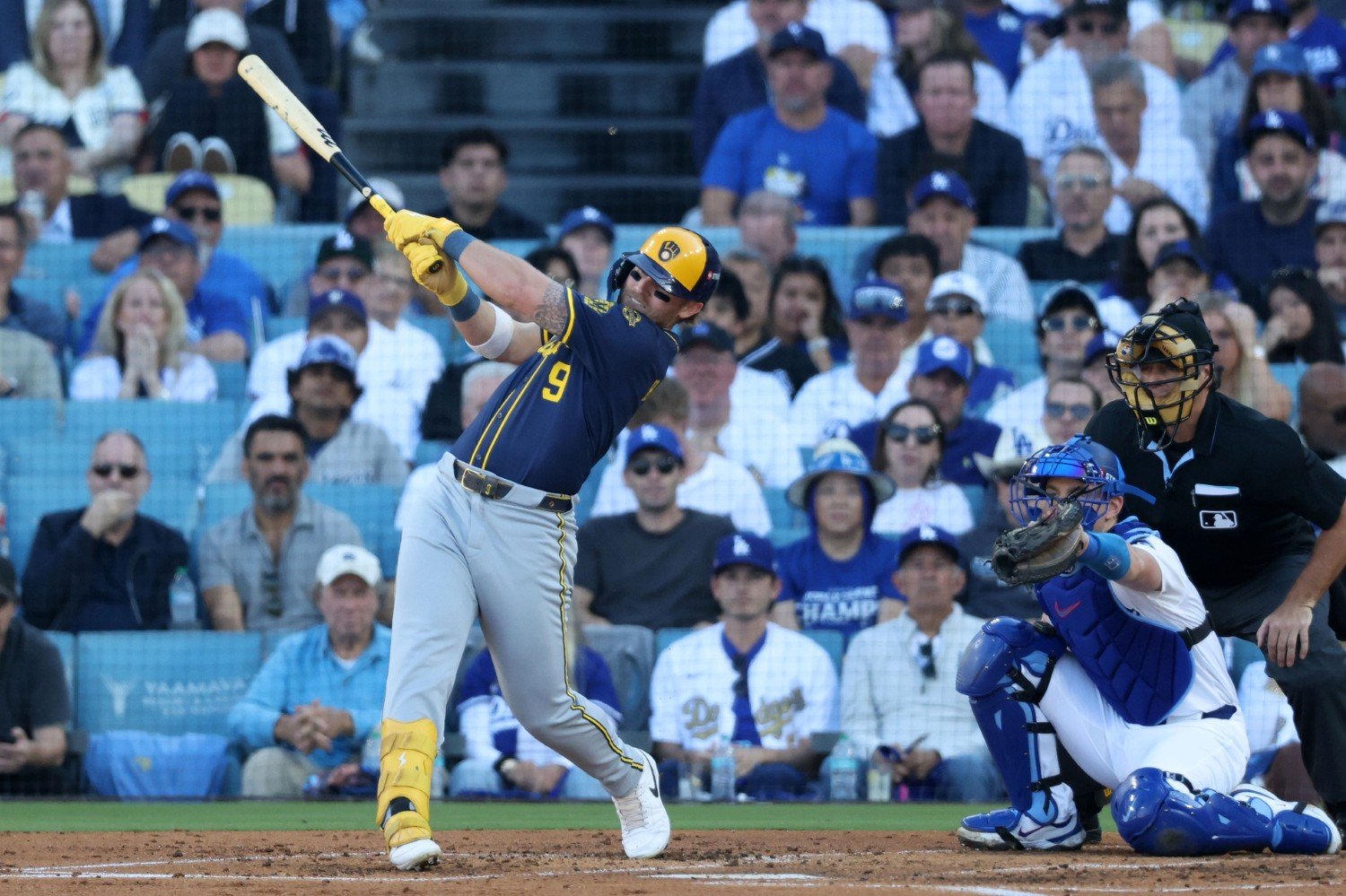 Jake Bauers's hitting profile has always been a fascinating one. Bat-tracking models love him for how he can do damage on pitches on which he connects. He generates steep, dangerous attack angles and above-average bat speed. He consistently elevated the ball with hard contact to the outfield, but he never made enough of that contact to take advantage of that swing, especially inside the strike zone. In 2025, he came in with a different approach, sacrificing some of those pulled fly balls for a little more contact inside the strike zone. He succeeded, as you can see above, lowering his swing-and-miss substantially against all pitches inside the zone. Even better, these continued to improve as the season went on, finishing September with just a 14% whiff rate against fastball variations and a 16.7% whiff rate against offspeed pitches, either in or out of the strike zone. His zone contact in September against all pitches was 91.2%, and it was 85% in October, against some of the best pitching the game has to offer. Bauers did see a reduction in his pulled balls, taking a more all-fields approach while also coming up with a few more ground balls. The exchange worked, but how did he do it? Well, first of all, he changed his stance in 2025, becoming more closed and slightly closing the gap between his feet. That being said, his actual stance at the point of contact was consistent year to year, as you can see below (2024 vs 2025): The key change is the way in which he gets there. Bauers no longer requires as much effort in his setup. He's coiling his hips a little bit less into his backside, creating a simpler motion forward within which it's easier to maintain balance and seems to be easier for him to time up the pitch. On top of that, he's unlocked serious bat speed: Above are Jake Bauers in 2024 compared to 2025. He found ideal attack angles on the baseball 50% of the time in 2025 (and 77% of the time in September), while seeing his average bat speed jump from 73.8 mph to 76.5 mph—a monumental difference. He's swinging harder, making more contact on both fastballs and off-speed pitches, and making the most of that contact by "squaring it up" more consistently. Some might question how important that bat speed is. Justin Sartori put it through a model at Driveline and came to this conclusion in regard to Junior Caminero: If you need further evidence, a crude Baseball Savant overview may help win you over. You can see how Bauers's exit velocities, expected slugging and expected weighted on-base average (xwOBA) are considerably higher. The strikeout and whiff rates still don't look pretty, but both are considerably improved, and would look even more promising if you isolated the form he showed in September/October (18.6% strikeout rate in September, 21.4% in October). Bauers also swung less this season, which is part of how he achieved better results when he did swing. A more selective and intelligent approach boosted his walk rate to elite territory, and locking in on specific locations let him use a flatter swing and achieve that increased bat speed. An improved approach unlocked some of his improved physical indices, which only buttresses the argument that he can sustain the production he managed in 2025. The upside with Bauers is why the Brewers traded for him in 2023, and why (after initially cutting him) they brought him back last winter. It might finally be here. He's produced in small samples before, and it's not clear whether he could carry over what he did in 2025 if burdened with a larger role and a tougher overall array of matchups, but the underlying signs suggest that Bauers is going to be a real handful next season. His quality of contact has usually been electric. If he's making more of that contact and drawing more walks, to boot, you have an incredibly potent bat in the Brewers lineup on a part-time basis. It would seem, at least, as though the Crew has an easier call to retain Bauers this fall than they had last year.
 -
What if they only offered Ohtani without the deferred money being paid?
- 13 replies
-
- 1
-

-
- melvin hernandez
- tate kuehner
- (and 4 more)
-
Misc. Offseason Updates - AFL, Winter Leagues
Jake McKibbin replied to Spencer Michaelis's topic in Brewers Minor League Talk
Jeferson Quero with another bomb to his total, a rocket to dead center He's now hitting .313 with a 1.139 OPS in the Venezuelan winter league -
Misc. Offseason Updates - AFL, Winter Leagues
Jake McKibbin replied to Spencer Michaelis's topic in Brewers Minor League Talk
Dylan O'Rae has hit two balls over 100 mph so far, one a 104.2 mph single and the other a 102.7 mph double -
So is this four years, $70m plus another basically $10m buyout and some extensions to payments deadlines? An interesting addition to this, which Ryan Topp of the MKE tailgate podcast alerted me too, is that deferred sums have to be put in escrow, reducing the boost given by later timed payouts (one reason why mutual options are popular in that they don't fall into this bracket, and the franchise can make a return elsewhere via investments in markets or other players). Basically deferred payments aren't as advantageous as we think from a cash flow perspective
-
Image courtesy of © Mark Hoffman/Milwaukee Journal Sentinel / USA TODAY NETWORK via Imagn Images Brandon Woodruff encapsulates the Milwaukee Brewers in many ways. He's shown the adaptability, fierce competitiveness and aggressiveness that typify this franchise. He adds as much off the field as he does on it. However, questions remain about his on-field production. Can he remain healthy over a full season, for the first time since 2022? Can he regain his former fastball velocity? Most importantly, what will his market value look like? Can Brandon Woodruff stay healthy? The first question is the most difficult to answer, and perhaps the hardest about which to be optimistic. Pitchers can pick up long-term injuries at any time, a matter Woodruff has become well-acquainted with after untimely injuries both in 2023 and in 2025—each time, within days of what would have been a playoff start, and with a free-agent payday in sight. He hasn't been injury-prone his whole career. Woodruff was one of the team's trusted starting pitching trio from 2019 through 2022, before beginning to falter in 2023. That season, he dealt with a strained lat, ankle tendinitis and (finally) the shoulder capsule injury that held him out for almost 20 months. Upon returning to the mound in July, Woodruff looked healthy, but he wore down as the season neared its conclusion, eventually succumbing to another lat strain that he referred to as a "ticking time bomb" following his shoulder rehab. The question, now, is with how much of a role he can be trusted heading into 2026. Though it came as a reliever, Aaron Ashby's workload this season gives some hope that Woodruff's shoulder can hold up next season, but you never quite know when these things will rear their ugly heads again. Woodruff will be 33 by the start of spring training, which makes questions of durability harder to shake and figures to limit him to relatively short-term offers this winter. Whether it be a recurrence of the same trouble he's had for the last two years or something wholly new, something is likely to stop Woodruff from making 32 starts in 2026. Workload management will be needed. Can Brandon Woodruff pitch like a top-of-the-rotation arm once more? Woodruff showed immense development in the depth of his arsenal in 2025, with pinpoint command allowing him to mow down hitters despite a substantial drop in velocity across the board. Woodruff is optimistic about that velocity returning in the future, and the case of Aaron Ashby after a similar surgery is proof that there is a chance. The first chart is from Aaron Ashby's first four months at Triple A in 2024, as a starter; the second is from his outings in long relief throughout 2025. Ashby's velocity is up almost four miles per hour on his primary fastball. Ditto for his slider, curveball and changeup. His spin rates have also significantly increased. With a clean offseason, there's a chance Woodruff may rediscover his raw stuff from 2023. Even if not, perhaps with an even more well-rounded arsenal, he can end up becoming a more complete pitcher. He may find more wiggle room to mitigate mistakes, after a career-high home run rate in 2025. The difference isn't as extreme for Woodruff as it was for Ashby. There are several ticks missing from his fastball, and the lower spin rates across the board are notable, too. What Will Brandon Woodruff Command On The Open Market? Woodruff will almost certainly decline his side of the $20-million mutual option on his contract for 2026. Due to the $10-million buyout, it would effectively mean that Woodruff is returning for only $10 million on a one-year deal, which is significantly below market value for a pitcher who's showcased his ability to dominate with his best stuff and compete with diminished velocity. Woodruff is also likely to seek future security with a multi-year deal, given his history and age. This fall's season-ending injury deprived Woodruff of a platform in the playoffs to really gain some momentum entering free agency. The Brewers could stack things in their favor by extending a qualifying offer, which Woodruff could accept to lock up a small raise but which would not commit Milwaukee beyond 2026. That way, if he signed elsewhere, the Crew would get a draft pick to compensate them. With Woodruff's upside, there's no such thing as a bad one year deal. If he declines, that would mean any potential suitor would be penalized, depending on a few factors: If a team exceeded the luxury tax threshold in 2025 (as have the Dodgers, Yankees and others), they would lose $1 million in international bonus pool money and their second- and fifth-round picks for the 2026 MLB Draft A team that receives revenue sharing (like the Rays) would lose its third-round pick A team meeting neither of these qualifications will lose their second-round pick and $500,000 in international bonus pool money If the Brewers believe Woodruff is searching for a longer-term deal in the $50 million range across three years, this could be an intelligent gamble with limited downside. The penalties are harsh enough to give some teams pause, so attaching hte QO would deflate Woodruff's market. Jack Flaherty, of the Tigers, could end up being a relevant comp to Woodruff at this stage of the veteran's career. Though they're different pitchers who have traced different arcs, they end up being fair facsimiles of one another as free-agent cases. Flaherty signed a two-year deal with Detroit last winter that guaranteed him $35 million, with the chance to see that rise to $45 million if he stayed healthy in 2025—as he then did. Now, Flaherty can opt for free agency or stick around to finish off that deal in 2026. Woddruff could sign a similarly flexible and incentive-laden deal with the Crew. One other factor in this. There has been a lot of chatter about how the Brewers would be loathe to let him go, and they worked incredibly hard to retain him during his last free agency period. in actual fact, Woodruff commented that the Brewers hadn't been in touch, and he'd been about to sign with another organization (the Red Sox, or perhaps the Cubs) when they finally reached out with a superior offer. There's a clear affinity between team and player, but no sense of inevitability in their staying together. There's a very real chance that Woodruff will return to the Brewers this offseason. It almost definitely will not be by accepting his side of the option, though. The most likely outcome is that Woodruff wants a long-term deal, and a guaranteed sum of money that truly sets him and his family up for life. Three years and $50 million may be the mark to pass. Would you make that offer, as the Brewers front office? Or do you think he'll get more elsewhere? Let us know your thoughts in the comments below! View full article
-
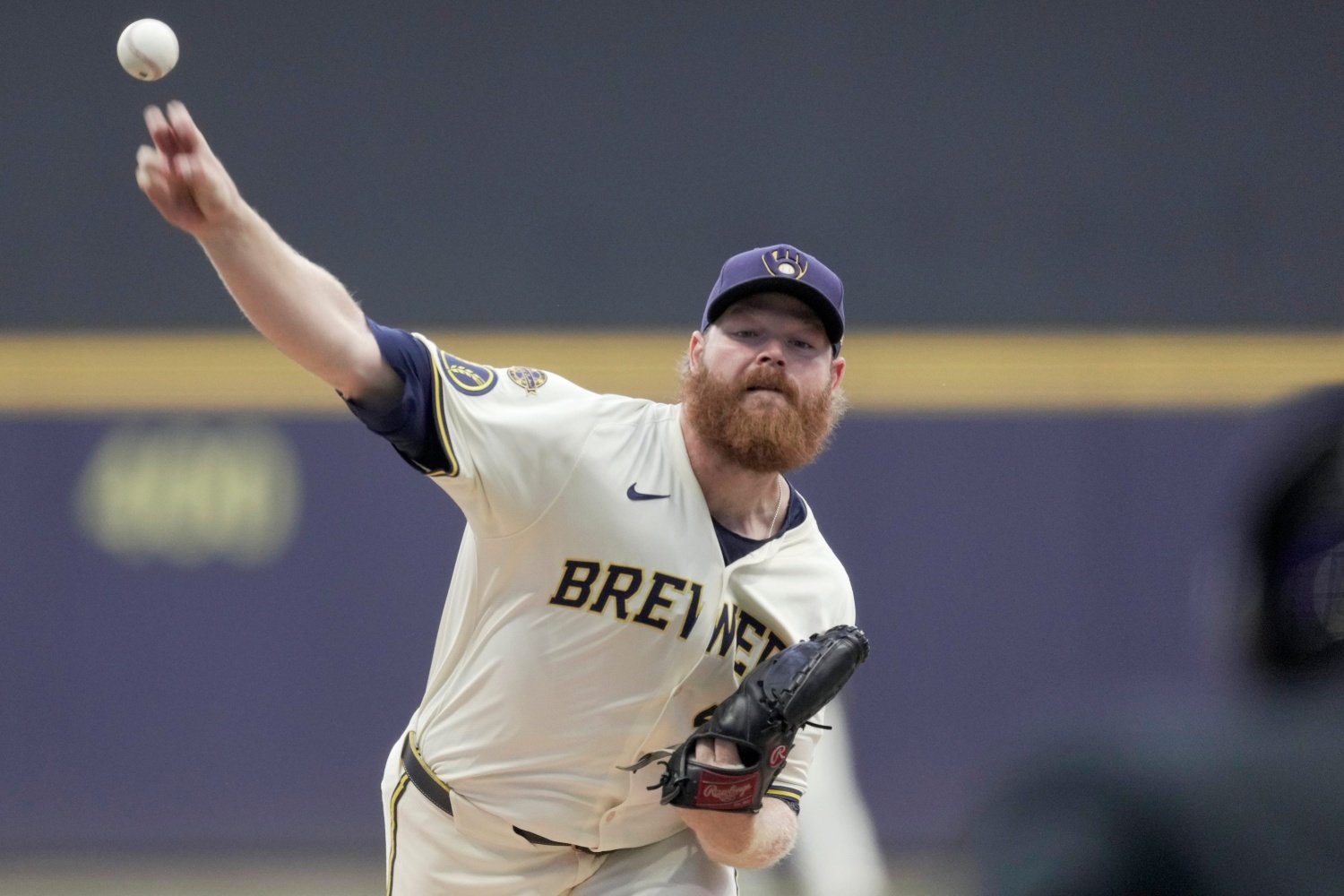 Brandon Woodruff encapsulates the Milwaukee Brewers in many ways. He's shown the adaptability, fierce competitiveness and aggressiveness that typify this franchise. He adds as much off the field as he does on it. However, questions remain about his on-field production. Can he remain healthy over a full season, for the first time since 2022? Can he regain his former fastball velocity? Most importantly, what will his market value look like? Can Brandon Woodruff stay healthy? The first question is the most difficult to answer, and perhaps the hardest about which to be optimistic. Pitchers can pick up long-term injuries at any time, a matter Woodruff has become well-acquainted with after untimely injuries both in 2023 and in 2025—each time, within days of what would have been a playoff start, and with a free-agent payday in sight. He hasn't been injury-prone his whole career. Woodruff was one of the team's trusted starting pitching trio from 2019 through 2022, before beginning to falter in 2023. That season, he dealt with a strained lat, ankle tendinitis and (finally) the shoulder capsule injury that held him out for almost 20 months. Upon returning to the mound in July, Woodruff looked healthy, but he wore down as the season neared its conclusion, eventually succumbing to another lat strain that he referred to as a "ticking time bomb" following his shoulder rehab. The question, now, is with how much of a role he can be trusted heading into 2026. Though it came as a reliever, Aaron Ashby's workload this season gives some hope that Woodruff's shoulder can hold up next season, but you never quite know when these things will rear their ugly heads again. Woodruff will be 33 by the start of spring training, which makes questions of durability harder to shake and figures to limit him to relatively short-term offers this winter. Whether it be a recurrence of the same trouble he's had for the last two years or something wholly new, something is likely to stop Woodruff from making 32 starts in 2026. Workload management will be needed. Can Brandon Woodruff pitch like a top-of-the-rotation arm once more? Woodruff showed immense development in the depth of his arsenal in 2025, with pinpoint command allowing him to mow down hitters despite a substantial drop in velocity across the board. Woodruff is optimistic about that velocity returning in the future, and the case of Aaron Ashby after a similar surgery is proof that there is a chance. The first chart is from Aaron Ashby's first four months at Triple A in 2024, as a starter; the second is from his outings in long relief throughout 2025. Ashby's velocity is up almost four miles per hour on his primary fastball. Ditto for his slider, curveball and changeup. His spin rates have also significantly increased. With a clean offseason, there's a chance Woodruff may rediscover his raw stuff from 2023. Even if not, perhaps with an even more well-rounded arsenal, he can end up becoming a more complete pitcher. He may find more wiggle room to mitigate mistakes, after a career-high home run rate in 2025. The difference isn't as extreme for Woodruff as it was for Ashby. There are several ticks missing from his fastball, and the lower spin rates across the board are notable, too. What Will Brandon Woodruff Command On The Open Market? Woodruff will almost certainly decline his side of the $20-million mutual option on his contract for 2026. Due to the $10-million buyout, it would effectively mean that Woodruff is returning for only $10 million on a one-year deal, which is significantly below market value for a pitcher who's showcased his ability to dominate with his best stuff and compete with diminished velocity. Woodruff is also likely to seek future security with a multi-year deal, given his history and age. This fall's season-ending injury deprived Woodruff of a platform in the playoffs to really gain some momentum entering free agency. The Brewers could stack things in their favor by extending a qualifying offer, which Woodruff could accept to lock up a small raise but which would not commit Milwaukee beyond 2026. That way, if he signed elsewhere, the Crew would get a draft pick to compensate them. With Woodruff's upside, there's no such thing as a bad one year deal. If he declines, that would mean any potential suitor would be penalized, depending on a few factors: If a team exceeded the luxury tax threshold in 2025 (as have the Dodgers, Yankees and others), they would lose $1 million in international bonus pool money and their second- and fifth-round picks for the 2026 MLB Draft A team that receives revenue sharing (like the Rays) would lose its third-round pick A team meeting neither of these qualifications will lose their second-round pick and $500,000 in international bonus pool money If the Brewers believe Woodruff is searching for a longer-term deal in the $50 million range across three years, this could be an intelligent gamble with limited downside. The penalties are harsh enough to give some teams pause, so attaching hte QO would deflate Woodruff's market. Jack Flaherty, of the Tigers, could end up being a relevant comp to Woodruff at this stage of the veteran's career. Though they're different pitchers who have traced different arcs, they end up being fair facsimiles of one another as free-agent cases. Flaherty signed a two-year deal with Detroit last winter that guaranteed him $35 million, with the chance to see that rise to $45 million if he stayed healthy in 2025—as he then did. Now, Flaherty can opt for free agency or stick around to finish off that deal in 2026. Woddruff could sign a similarly flexible and incentive-laden deal with the Crew. One other factor in this. There has been a lot of chatter about how the Brewers would be loathe to let him go, and they worked incredibly hard to retain him during his last free agency period. in actual fact, Woodruff commented that the Brewers hadn't been in touch, and he'd been about to sign with another organization (the Red Sox, or perhaps the Cubs) when they finally reached out with a superior offer. There's a clear affinity between team and player, but no sense of inevitability in their staying together. There's a very real chance that Woodruff will return to the Brewers this offseason. It almost definitely will not be by accepting his side of the option, though. The most likely outcome is that Woodruff wants a long-term deal, and a guaranteed sum of money that truly sets him and his family up for life. Three years and $50 million may be the mark to pass. Would you make that offer, as the Brewers front office? Or do you think he'll get more elsewhere? Let us know your thoughts in the comments below!
 -
If he agrees. Remember Harold, it's a mutual option and the expectation is that Woodruff would get more than a $10m deal for one year. With his injury past, he's likely wanting his next contract to guarantee that lifetime security, and probably for multiple years. There's a possibility more velocity returns in the off season as well, but health is a question mark. Still , his performance in 2025 was far above expectation and I think he'll get a multi year deal somewhere
-
Image courtesy of © Mike De Sisti / Milwaukee Journal Sentinel / USA TODAY NETWORK via Imagn Images The Brewers had one of their lowest payrolls of the 2020s this season. Their year-end 40-man roster payroll was around $115 million, according to Cot's Contracts. That was the lowest mark since 2021, when they spent $105 million, and their ranking (23rd in the league) was lower than it's been since 2017. They had a high number of pre-arbitration salaries, combined with deferred salaries and likely-to-be-declined mutual options that have been pushed onto 2026, as the team always tries to maximize their liquidity and the utility of their money within the revenue cycle of the sport. Here's an early roster projection, based on last year's salaries and MLB Trade Rumors arbitration estimates: Player 2025 Base Salary ($m) 2026 Base Salary ($m) Catcher William Contreras 6.00 11.00 Jeferson Quero 0.00 0.82 Infielders Andrew Vaughn 5.85 7.85 Jake Bauers 1.40 2.00 Brice Turang 0.78 4.40 Caleb Durbin 0.76 0.82 Joey Ortiz 0.78 0.82 Andruw Monasterio 0.76 0.82 Outfielders Garrett Mitchell 0.76 1.00 Blake Perkins 0.80 0.82 Sal Frelick 0.76 0.82 Jackson Chourio 4.25 7.25 Christian Yelich 22.00 22.00 Starting Pitchers Freddy Peralta 8.10 8.00 Jacob Misiorowski 0.76 0.76 Chad Patrick 0.76 0.76 Quinn Priester 0.76 0.76 Logan Henderson 0.76 0.76 Relief Pitchers Trevor Megill 1.94 4.20 Abner Uribe 0.76 0.82 Jared Koenig 0.78 0.82 DL Hall 0.77 0.82 Aaron Ashby 3.45 5.50 Grant Anderson 0.80 0.82 Tobias Myers 0.76 0.82 Nick Mears 0.96 1.60 Total Active Payroll 86.86 Deferred/Option Declined Contracts Brandon Woodruff (Buyout on mutual option) 10.00 Danny Jansen (Buyout on mutual option) Rhys Hoskins (Buyout on mutual option) 0.50 4.00 Ryan Braun 1.80 Jose Quintana (Buyout on mutual option) 2.00 Lorenzo Cain 1.00 William Contreras (Buyout on club option, sending him to arbitration) 0.10 Total Declined Options/Deferred 19.40 Total Cash Payroll 2026 106.26 The team is always spinning plates and kicking cans down the road, but there are a few more plates in motion and a bit more litter on the path than usual this offseason. The deferred salary still being paid to long-retired stars Ryan Braun and Lorenzo Cain is no big deal. Most teams have such line items; the payments are just bills coming due for things that saved the club money in the past; and Christian Yelich's $4-million deferral (which will be paid out in 2037 and 2038) offsets that money anyway. (That deferral is why, though his official salary is $26 million, Yelich is only listed at $22 million above.) The buyouts the team owes to Brandon Woodruff, Rhys Hoskins and Jose Quintana, however, add up to real money. They won't really think of those as part of next year's budget, and the money they made in reaching the NLCS this fall will cushion the pain of paying those buyouts this winter, but they're still there. How Much Revenue Do the Brewers Have to Spend? In the wake of the postseason exit, a lot of graphics went around about the percentage of total revenue teams spend on payroll, but this isn't exactly a fair fight. For one thing, player payroll is only the most visible (and, admittedly, the most expensive) of several ways to invest in the team. It doesn't include money spent on coaching staffs, analytics departments, facilities, the farm system, or other ancillary supports. For another, some teams' costs are more elastic than others'. Ditto for revenue. The Brewers' revenue depends much more heavily on their on-field success, for instance, than does the Dodgers'. Still, there's a trend to observe. Generally, teams spend something like $160 million less on their roster than they took in the previous year. (Note: Forbes's revenue estimates, while better than nothing, are likely far from perfect. Spotrac, used by the creator of this content to estimate payroll, is not especially good at capturing the dynamics of payroll in baseball, so consider that estimate of spending even rougher than Forbes's shot at revenues. Again, though, it's better than nothing.) There are some exceptions, but for instance, the Dodgers had $203 million left after their on-field payroll, compared to the Brewers' $198 million. It could be worse, if you're someone who worries that Mark Attanasio isn't spending freely enough; the Chicago Cubs have $371 million remaining. In short, what I'm saying here is that if we can estimate the Brewers' total revenue for 2025 and deduct around $200 million, we could have an upper limit for their 2026 payroll. How Much Revenue Did the Brewers Make In 2025? First of all, the Brewers' total attendance in 2025 was higher than they managed in 2024. With 2.65 million fans crossing the turnstiles (up around 112,000, or something like 1,400 per game), they'll have created additional revenue from ticket sales, concessions and merchandise. The merchandise is more variable, but if we prudently estimate the gross revenue as somewhere around $12 per person for concessions and the average cost of a ticket in 2024 being $57 (per Gametime; another imperfect source that beats wild shooting in the dark), the Brewers have added an additional $7-8 million in revenue. On top of that is the playoff success @Matthew Trueblood covered on Sunday. Reaching the NLCS has serious financial implications for the Brewers, adding around $15 million by Matt's estimate. All things considered, a conservative estimate might be that the team made $22 million more this season than last. They may want to retain some of this as insurance against a potential lockout in 2027, when the CBA is re-negotiated, but they do have more to spend than they've had even very recently. The Brewers have also been one of the heaviest spenders in revamping their minor-league structure, an effort that has been undertaken heavily in recent years—and will continue in 2026 with the relocation of the Carolina Mudcats to form the Wilson Warbirds with brand-new, state-of-the-art facilities. The Brewers partially own that affiliate, so they do factor some of the costs associated with their move into their own finances. Prior success is no guarantee of future profits. The Brewers cannot afford to say that, because they made an additional $20-25 million in 2025 and have lots of money to spend relative to what they invested this season, they can splurge on a 10-year, $300-million contract. Nor would they be likely to do so, anyway. This is a team with major reinforcements on the way in positions of need throughout their minor-league system, from Cooper Pratt and Jesus Made at shortstop to Blake Burke, Brock Wilken and Luke Adams as infielders with some thump. It does, however, give the front office some breathing room, should they choose a two- or three-year deal with a manageable average annual value, similar to the Hoskins and Woodruff ones. They may have even more than that to spend. There should be some room for a steady veteran upgrade this offseason, perhaps someone like Ha-Seong Kim. Perhaps they'll decide to go large, if they can get a short-term, high-AAV deal for someone like Trevor Story or Alex Bregman. Will the Brewers make those moves? Or will they, as in 2021, be cautious with their spending, as TV uncertainty and the CBA negotiations loom large? They certainly have additional funds and some budget space, if they choose to be aggressive. View full article
-
 The Brewers had one of their lowest payrolls of the 2020s this season. Their year-end 40-man roster payroll was around $115 million, according to Cot's Contracts. That was the lowest mark since 2021, when they spent $105 million, and their ranking (23rd in the league) was lower than it's been since 2017. They had a high number of pre-arbitration salaries, combined with deferred salaries and likely-to-be-declined mutual options that have been pushed onto 2026, as the team always tries to maximize their liquidity and the utility of their money within the revenue cycle of the sport. Here's an early roster projection, based on last year's salaries and MLB Trade Rumors arbitration estimates: Player 2025 Base Salary ($m) 2026 Base Salary ($m) Catcher William Contreras 6.00 11.00 Jeferson Quero 0.00 0.82 Infielders Andrew Vaughn 5.85 7.85 Jake Bauers 1.40 2.00 Brice Turang 0.78 4.40 Caleb Durbin 0.76 0.82 Joey Ortiz 0.78 0.82 Andruw Monasterio 0.76 0.82 Outfielders Garrett Mitchell 0.76 1.00 Blake Perkins 0.80 0.82 Sal Frelick 0.76 0.82 Jackson Chourio 4.25 7.25 Christian Yelich 22.00 22.00 Starting Pitchers Freddy Peralta 8.10 8.00 Jacob Misiorowski 0.76 0.76 Chad Patrick 0.76 0.76 Quinn Priester 0.76 0.76 Logan Henderson 0.76 0.76 Relief Pitchers Trevor Megill 1.94 4.20 Abner Uribe 0.76 0.82 Jared Koenig 0.78 0.82 DL Hall 0.77 0.82 Aaron Ashby 3.45 5.50 Grant Anderson 0.80 0.82 Tobias Myers 0.76 0.82 Nick Mears 0.96 1.60 Total Active Payroll 86.86 Deferred/Option Declined Contracts Brandon Woodruff (Buyout on mutual option) 10.00 Danny Jansen (Buyout on mutual option) Rhys Hoskins (Buyout on mutual option) 0.50 4.00 Ryan Braun 1.80 Jose Quintana (Buyout on mutual option) 2.00 Lorenzo Cain 1.00 William Contreras (Buyout on club option, sending him to arbitration) 0.10 Total Declined Options/Deferred 19.40 Total Cash Payroll 2026 106.26 The team is always spinning plates and kicking cans down the road, but there are a few more plates in motion and a bit more litter on the path than usual this offseason. The deferred salary still being paid to long-retired stars Ryan Braun and Lorenzo Cain is no big deal. Most teams have such line items; the payments are just bills coming due for things that saved the club money in the past; and Christian Yelich's $4-million deferral (which will be paid out in 2037 and 2038) offsets that money anyway. (That deferral is why, though his official salary is $26 million, Yelich is only listed at $22 million above.) The buyouts the team owes to Brandon Woodruff, Rhys Hoskins and Jose Quintana, however, add up to real money. They won't really think of those as part of next year's budget, and the money they made in reaching the NLCS this fall will cushion the pain of paying those buyouts this winter, but they're still there. How Much Revenue Do the Brewers Have to Spend? In the wake of the postseason exit, a lot of graphics went around about the percentage of total revenue teams spend on payroll, but this isn't exactly a fair fight. For one thing, player payroll is only the most visible (and, admittedly, the most expensive) of several ways to invest in the team. It doesn't include money spent on coaching staffs, analytics departments, facilities, the farm system, or other ancillary supports. For another, some teams' costs are more elastic than others'. Ditto for revenue. The Brewers' revenue depends much more heavily on their on-field success, for instance, than does the Dodgers'. Still, there's a trend to observe. Generally, teams spend something like $160 million less on their roster than they took in the previous year. (Note: Forbes's revenue estimates, while better than nothing, are likely far from perfect. Spotrac, used by the creator of this content to estimate payroll, is not especially good at capturing the dynamics of payroll in baseball, so consider that estimate of spending even rougher than Forbes's shot at revenues. Again, though, it's better than nothing.) There are some exceptions, but for instance, the Dodgers had $203 million left after their on-field payroll, compared to the Brewers' $198 million. It could be worse, if you're someone who worries that Mark Attanasio isn't spending freely enough; the Chicago Cubs have $371 million remaining. In short, what I'm saying here is that if we can estimate the Brewers' total revenue for 2025 and deduct around $200 million, we could have an upper limit for their 2026 payroll. How Much Revenue Did the Brewers Make In 2025? First of all, the Brewers' total attendance in 2025 was higher than they managed in 2024. With 2.65 million fans crossing the turnstiles (up around 112,000, or something like 1,400 per game), they'll have created additional revenue from ticket sales, concessions and merchandise. The merchandise is more variable, but if we prudently estimate the gross revenue as somewhere around $12 per person for concessions and the average cost of a ticket in 2024 being $57 (per Gametime; another imperfect source that beats wild shooting in the dark), the Brewers have added an additional $7-8 million in revenue. On top of that is the playoff success @Matthew Trueblood covered on Sunday. Reaching the NLCS has serious financial implications for the Brewers, adding around $15 million by Matt's estimate. All things considered, a conservative estimate might be that the team made $22 million more this season than last. They may want to retain some of this as insurance against a potential lockout in 2027, when the CBA is re-negotiated, but they do have more to spend than they've had even very recently. The Brewers have also been one of the heaviest spenders in revamping their minor-league structure, an effort that has been undertaken heavily in recent years—and will continue in 2026 with the relocation of the Carolina Mudcats to form the Wilson Warbirds with brand-new, state-of-the-art facilities. The Brewers partially own that affiliate, so they do factor some of the costs associated with their move into their own finances. Prior success is no guarantee of future profits. The Brewers cannot afford to say that, because they made an additional $20-25 million in 2025 and have lots of money to spend relative to what they invested this season, they can splurge on a 10-year, $300-million contract. Nor would they be likely to do so, anyway. This is a team with major reinforcements on the way in positions of need throughout their minor-league system, from Cooper Pratt and Jesus Made at shortstop to Blake Burke, Brock Wilken and Luke Adams as infielders with some thump. It does, however, give the front office some breathing room, should they choose a two- or three-year deal with a manageable average annual value, similar to the Hoskins and Woodruff ones. They may have even more than that to spend. There should be some room for a steady veteran upgrade this offseason, perhaps someone like Ha-Seong Kim. Perhaps they'll decide to go large, if they can get a short-term, high-AAV deal for someone like Trevor Story or Alex Bregman. Will the Brewers make those moves? Or will they, as in 2021, be cautious with their spending, as TV uncertainty and the CBA negotiations loom large? They certainly have additional funds and some budget space, if they choose to be aggressive.
- 14 comments
-
- 1
-
-
- 2026 payroll
- brandon woodruff
- (and 1 more)

