



Jason Wang
-
Posts
955 -
Joined
-
Last visited
-
Days Won
1
Content Type
Profiles
Forums
Blogs
Events
News
2026 Milwaukee Brewers Top Prospects Ranking
Milwaukee Brewers Videos
2022 Milwaukee Brewers Draft Picks
Milwaukee Brewers Free Agent & Trade Rumors, Notes, & Tidbits
Guides & Resources
2023 Milwaukee Brewers Draft Picks
2024 Milwaukee Brewers Draft Picks
The Milwaukee Brewers Players Project
2025 Milwaukee Brewers Draft Pick Tracker
2026 Milwaukee Brewers Draft Tracker: Picks & Bonuses
Store
Downloads
Gallery
Everything posted by Jason Wang
-
 TIL what moxie means
 -
Image courtesy of © Dave Kallmann / Milwaukee Journal Sentinel / USA TODAY NETWORK via Imagn Images He wasn’t quite as flashy as his 6-foot-7 fellow rookie, but don’t get it twisted: Chad Patrick played a significant role in Milwaukee’s success in 2025. He posted a 3.53 FIP (the best figure of anyone on the Brewers with more than 80 innings pitched) and accumulated 2.6 fWAR, second only to Freddy Peralta on the team’s pitching staff. To those who didn’t get a chance to follow him very closely, this might come as a surprise, since none of his peripherals are particularly impressive. Outside of a 25.2% strikeout rate, his Statcast metrics are pretty average across the board. So, can he continue his success in 2026, or will opposing hitters finally figure him out, necessitating a decrease in workload or leverage? Chad Patrick’s Strengths Patrick’s primary pitch was his cutter, which he threw 41.1% of the time. Unlike the famous cutter of former Milwaukee ace Corbin Burnes, it’s more of a hard slider than a fastball, coming in at an average velocity of just 87.9 mph. As a result, though, it gets significantly more movement than your typical cutter, which allowed him to get a whiff rate of 27.2% on it. It did run into a few barrels here and there, but overall, a hard-hit rate of 39.7% isn’t bad. For context, Drew Rasmussen had the most valuable cutter by Run Value last year, and it had a hard hit rate of 42.3% and a whiff rate of 26.8%. To complement this pitch, Patrick also threw a sinker and a four-seam fastball, which were remarkably similar in both usage (23%) and velocity (94.1 mph). His heater was particularly effective due to its 16.6 inches of induced vertical break and his ability to consistently command it at the top of the zone. His sinker didn’t miss many bats, but it was great at generating soft contact, as is expected. It didn’t stand out compared to other sinkers around the league, but it was an effective tool nonetheless, especially for getting double plays when needed. His trio of fastballs was responsible for most of his production last year. He typically attacked right-handed hitters with sinkers and left-handed hitters with four-seam fastballs, while doling out cutters to everyone. Chad Patrick’s Weaknesses His fastballs are dandy, but his secondary pitches fail to meet the same lofty standard. For the majority of his time in the big leagues, he used his slider against righties and changeups against lefties, but his offspeed stuff was getting battered. He held onto it through the end of the season, but ended up slowly phasing out his slider in favor of a slurve that had encouraging results over a small sample. One of the most challenging aspects of being a starting pitcher is needing to face the entire lineup multiple times. At minimum, a six-inning appearance requires facing everyone in the lineup twice, so the ability to give hitters different looks is necessary for long-term success. This is where Patrick’s lack of a truly effective arsenal of breaking balls really hurts him. When facing hitters for the second time in a game, he holds them to just a .597 OPS. When facing them for the third time, this balloons to an .875 OPS. It’s a significant issue that eventually pushed the team to option him later in the season. If the slurve ends up sticking around for the long haul (and if he’s able to refine his offspeed offerings, in general), he could have a very compelling five-pitch mix. If he enters 2026 still holding onto the stuff that worked in 2025, it may be tough for him to hold down a stable spot in the Brewers’ rotation. What Should Chad Patrick’s Role Be In 2026? In 2024, there was a young hurler by the name of Tobias Myers who posted similarly strong numbers in his rookie campaign, keeping an injury-battered rotation afloat. The next year, he pitched just 50 ⅔ big-league innings, spending the rest of the time in roster purgatory with 12 starts in Triple-A. He was eventually included in the Freddy Peralta trade, the final signal that Milwaukee simply didn’t believe in his ability to sustain the success he found in his freshman season. The possibility that Patrick follows a similar path isn’t out of the question just yet. Milwaukee has an excess of starting pitchers, and most of them are younger than Patrick is, with more upside. Given the return from the Mets and Red Sox trades this offseason, acquiring young starting pitching depth seems to have been the guiding theme for the front office this winter, giving guys like Patrick more competition for a coveted spot in the rotation. For starters (see what I did there?), he probably won’t be in the bullpen. There’s no room there, either, especially since the Brewers already have two long relievers in Aaron Ashby and DL Hall. He’s more than likely going to be a starter, but whether it’s in Milwaukee or in Nashville depends on how he stacks up against his teammates in spring training. With even a slight step forward, he’d be a solid back-of-the-rotation arm, but regression or stagnation could push him far enough down the roster to spend a significant portion of the season in the minor leagues. Thanks to his strong numbers last year, he’s starting (ohp, did it again) with a good reputation, but baseball—like all sports—runs on “what have you done for me lately?” It’s an inquiry that only Patrick can answer, but there’s no doubt that he has the pieces and wherewithal to prove himself at the big-league level. View full article
-
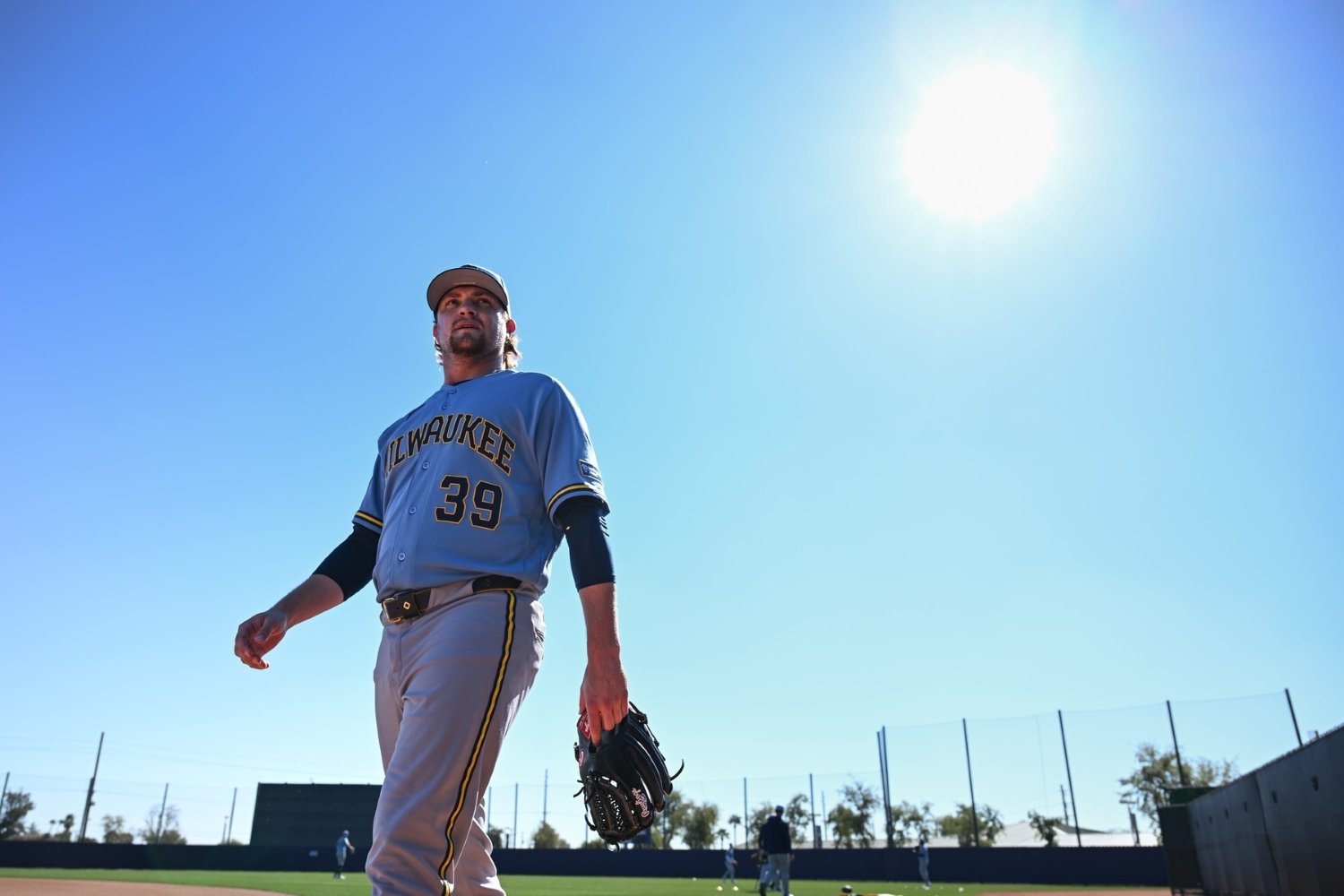 He wasn’t quite as flashy as his 6-foot-7 fellow rookie, but don’t get it twisted: Chad Patrick played a significant role in Milwaukee’s success in 2025. He posted a 3.53 FIP (the best figure of anyone on the Brewers with more than 80 innings pitched) and accumulated 2.6 fWAR, second only to Freddy Peralta on the team’s pitching staff. To those who didn’t get a chance to follow him very closely, this might come as a surprise, since none of his peripherals are particularly impressive. Outside of a 25.2% strikeout rate, his Statcast metrics are pretty average across the board. So, can he continue his success in 2026, or will opposing hitters finally figure him out, necessitating a decrease in workload or leverage? Chad Patrick’s Strengths Patrick’s primary pitch was his cutter, which he threw 41.1% of the time. Unlike the famous cutter of former Milwaukee ace Corbin Burnes, it’s more of a hard slider than a fastball, coming in at an average velocity of just 87.9 mph. As a result, though, it gets significantly more movement than your typical cutter, which allowed him to get a whiff rate of 27.2% on it. It did run into a few barrels here and there, but overall, a hard-hit rate of 39.7% isn’t bad. For context, Drew Rasmussen had the most valuable cutter by Run Value last year, and it had a hard hit rate of 42.3% and a whiff rate of 26.8%. To complement this pitch, Patrick also threw a sinker and a four-seam fastball, which were remarkably similar in both usage (23%) and velocity (94.1 mph). His heater was particularly effective due to its 16.6 inches of induced vertical break and his ability to consistently command it at the top of the zone. His sinker didn’t miss many bats, but it was great at generating soft contact, as is expected. It didn’t stand out compared to other sinkers around the league, but it was an effective tool nonetheless, especially for getting double plays when needed. His trio of fastballs was responsible for most of his production last year. He typically attacked right-handed hitters with sinkers and left-handed hitters with four-seam fastballs, while doling out cutters to everyone. Chad Patrick’s Weaknesses His fastballs are dandy, but his secondary pitches fail to meet the same lofty standard. For the majority of his time in the big leagues, he used his slider against righties and changeups against lefties, but his offspeed stuff was getting battered. He held onto it through the end of the season, but ended up slowly phasing out his slider in favor of a slurve that had encouraging results over a small sample. One of the most challenging aspects of being a starting pitcher is needing to face the entire lineup multiple times. At minimum, a six-inning appearance requires facing everyone in the lineup twice, so the ability to give hitters different looks is necessary for long-term success. This is where Patrick’s lack of a truly effective arsenal of breaking balls really hurts him. When facing hitters for the second time in a game, he holds them to just a .597 OPS. When facing them for the third time, this balloons to an .875 OPS. It’s a significant issue that eventually pushed the team to option him later in the season. If the slurve ends up sticking around for the long haul (and if he’s able to refine his offspeed offerings, in general), he could have a very compelling five-pitch mix. If he enters 2026 still holding onto the stuff that worked in 2025, it may be tough for him to hold down a stable spot in the Brewers’ rotation. What Should Chad Patrick’s Role Be In 2026? In 2024, there was a young hurler by the name of Tobias Myers who posted similarly strong numbers in his rookie campaign, keeping an injury-battered rotation afloat. The next year, he pitched just 50 ⅔ big-league innings, spending the rest of the time in roster purgatory with 12 starts in Triple-A. He was eventually included in the Freddy Peralta trade, the final signal that Milwaukee simply didn’t believe in his ability to sustain the success he found in his freshman season. The possibility that Patrick follows a similar path isn’t out of the question just yet. Milwaukee has an excess of starting pitchers, and most of them are younger than Patrick is, with more upside. Given the return from the Mets and Red Sox trades this offseason, acquiring young starting pitching depth seems to have been the guiding theme for the front office this winter, giving guys like Patrick more competition for a coveted spot in the rotation. For starters (see what I did there?), he probably won’t be in the bullpen. There’s no room there, either, especially since the Brewers already have two long relievers in Aaron Ashby and DL Hall. He’s more than likely going to be a starter, but whether it’s in Milwaukee or in Nashville depends on how he stacks up against his teammates in spring training. With even a slight step forward, he’d be a solid back-of-the-rotation arm, but regression or stagnation could push him far enough down the roster to spend a significant portion of the season in the minor leagues. Thanks to his strong numbers last year, he’s starting (ohp, did it again) with a good reputation, but baseball—like all sports—runs on “what have you done for me lately?” It’s an inquiry that only Patrick can answer, but there’s no doubt that he has the pieces and wherewithal to prove himself at the big-league level.
 -
Figured that Yoho would be higher. I know he didn't do great in his eight big league appearances but his 21 ERA- and 55 FIP- across 43 appearances in Triple-A are still pretty mind-blowing to me.
- 8 replies
-
- 2
-

-
- jd thompson
- brady ebel
- (and 3 more)
-
pat murphy recounting brandon woodruff's start on july 6, 2025
-
robert manfred would highlight that this is a skill issue. In all seriousness, I think MLB has a irrational hatred of Iowa since it's literally the most blacked out state.
-
 Streaming Milwaukee Brewers games has never been easier. Changes To Brewers Television & Streaming In 2026 For years, the Brewers’ broadcast rights were held by Bally Sports, which was renamed FanDuel Sports Network at the start of 2025. These regional sports channels were owned and operated by Diamond Sports Group, which later rebranded as Main Street Sports Group after emerging from bankruptcy at the beginning of 2025. Although the name may have changed, its financial troubles did not. In January 2026, all nine MLB teams whose broadcast rights were held by FDSN ended their contracts after missed payments. Main Street Sports Group attempted to renegotiate a new deal, but later announced that the company would shutter after the conclusion of the current NBA and NHL seasons. On the bright side, this means MLB will reclaim the Brewers’ broadcast rights. Milwaukee baseball will now be distributed by MLB Local Media, which also holds rights to 14 other teams. What Is Brewers.TV? This means that to stream Brewers games without blackouts, simply purchase a subscription to Brewers.TV, which will cost $99.99 for the entire season. This will finally give in-market fans a convenient way to watch without jumping through the hoops of a cable subscription or regional sports network. For out-of-market fans, the standard option is an MLB.TV subscription remains the same. If you’re a first-time subscriber, it’s important to note that MLB.TV will include a free trial of ESPN+ that will automatically renew unless canceled. The subscription is currently priced at $30 per month. For additional questions, feel free to visit the FAQ page here. Despite being a very similar process for fans to enjoy, this will undoubtedly have a drastic impact on the team’s revenue. San Diego, which has been streaming its games directly through the MLB app since 2023, lost an estimated $60 million in annual revenue. The Brewers have a smaller market and could see a meaningful budget crunch depending on how many people ultimately sign up for the standalone service. Most MLB teams that have migrated to this streaming service have retained their previous broadcasting team, so don't expect much to change on a daily basis in the Brewers' broadcasts. The Difference Between MLB.TV & Brewers.TV An MLB.TV subscription will work for anyone outside the Brewers' blackout region. The blackout region is all of Wisconsin, and parts of Minnesota, Michigan (the upper peninsula), Iowa, and Illinois. To check whether your region is blacked out, you can use this MLB blackout tool. Over-The-Air Brewers Games Here are the cities, and the channels from which the games will be simulcast by the Brewers.TV feed: Milwaukee: WITI Madison: WISC, TVW Duluth-Superior: KDLH, KBJR Green Bay: WGBA, WACY La Crosse-Eau Claire: WKBT Marquette, Mich.: WJMN Wausau-Rhinelander: WSAW, WZAW, WYOW Here are the games that will be telecast locally (all times Central): March 26: vs. Chicago White Sox, 1:10 p.m. March 31: vs. Tampa Bay Rays, 6:40 p.m. April 28: Brewers vs. Arizona Diamondbacks, 6:40 p.m. May 12: vs. San Diego Padres, 6:40 p.m. May 19: at Chicago Cubs, 6:40 p.m. June 2: vs. San Francisco Giants, 6:40 p.m. Aug. 4: vs. Pittsburgh Pirates, 6:40 p.m. Aug. 18: vs. Seattle Mariners, 6:40 p.m. Aug. 25: at New York Mets, 6:10 p.m. Sept. 8: Brewers vs. Chicago Cubs, 6:40 p.m. Brewers Television Cable/Satellite Providers Information on cable and satellite broadcasts, including which channels will be hosting Brewers games, will be announced at a later date.
 -
I totally forgot that Vinny Capra was Milwaukee's Opening Day third baseman. Milwaukee having their own proprietary method of evaluating player defense to be more forward-looking is pretty interesting though. Kinda seems like Willy Wonka and the Defensive Factory.
- 2 replies
-
- 1
-

-
- luis rengifo
- matt erickson
- (and 2 more)
-
I think they might keep him in a similar role as last year where he was coming out of the bullpen for multiple innings. With a young rotation that could still have some stamina to build, it's a perfect opportunity to use his length without stretching him too far. Over the past few seasons, he has posted a 2.37 ERA over 95 innings in 57 appearances. He's really good the first time through the order but I feel like he lacks the depth of arsenal to be a rotation guy. In 2025, only his sinker and curveball contributed positive run value.
-
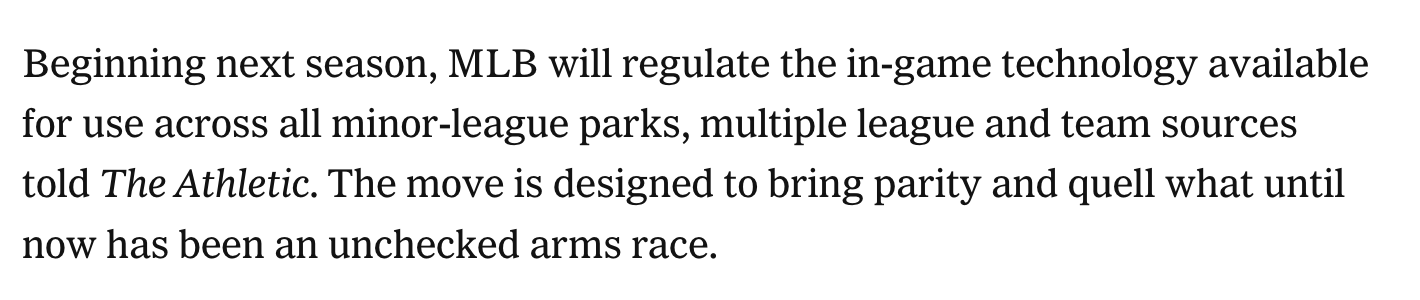
Based on the article by Eno Sarris, it looks like it's actually a step in the right direction. It seems like the wealthier organizations just had more to spend on/invest in analytics tech and MLB wants everyone to be working with the same data. Where the wheat gets separated from the chaff is how each organization ends up using the data. It's similar to things like BaseballReference/Savant/FanGraphs which area easily accessible to everyone but contain troves of information that many often gloss over. So to be fair I think it moves towards parity in the right direction and it still seems like organizations have some optionality on how they get their data, as long as it's approved by MLB.
-
@Jake McKibbin ramon urias mentioned
-
The only hope we have is that Rengifo has a higher offensive upside than Durbin that the Brewers hope to unlock, at least until their younger guys come up. Defensively, I believe in the power of friendship I guess idk.
-
Image courtesy of © Jay Biggerstaff-Imagn Images In case you somehow missed it, the Brewers sent all of their third base depth to the Red Sox in exchange for a pair of southpaw pitchers and infielder David Hamilton. It raised some eyebrows, but aside from the now-crowded rotation, Milwaukee's bigger roster issue was that they needed a third baseman. Luis Rengifo was the answer to the prayers of Brewers fans, although they must not have dared dream terribly big. He was just one of several names on a long list of underwhelming third base options on this year’s free-agent market, and the lack of demand is unsurprising. In 2025, he posted a 73 wRC+ and 0.0 fWAR over 541 plate appearances. So what is Milwaukee expecting to get out of him? When looking at his broader body of work, it’s clear that he does have some redeeming qualities. He was a respectable contributor to the Angels lineup from 2022 to 2024, accumulating 4.9 fWAR and posting a 111 wRC+ over those three seasons. The key to that success was a low strikeout rate of 16.3% and a whiff rate that was consistently better than average. His 2024 was promising, especially given his outstanding results against four-seam fastballs (.412 BA, .529 SLG). Even in 2025, a year that saw him reach a new nadir for offensive production in a full season, his contact skills remained above average. Although he doesn’t strike out much, he does have a propensity to chase pitches and rarely takes free passes, having a walk rate of just 6.8% over the course of his career. The piece that he clearly lacks in his offensive game is quality of contact. His average exit velocity is consistently in the bottom quartile of qualified hitters, and given his small frame, that's no surprise. Still, we’ve seen players like Isaac Paredes and Brendan Donovan overcome low exit velocities by pulling the ball in the air consistently or squaring up balls at an elite rate. Sadly, Rengifo does neither. Outside of 2022, Rengifo pulls the ball in the air roughly 13% of the time, well below the MLB average of 16.7%. He squares the ball up at an average rate, but is held back by his low bat speed and suboptimal launch angles. Funnily enough, his hitting profile resembles that of Caleb Durbin. Both players are better at making contact than hitting the ball with authority, although based on last year’s numbers alone, Durbin is more extreme in both aspects and pulls the ball in the air far more often. Although his offensive profile has similarities to Durbin, they couldn’t be more different defensively. Durbin was an above-average defender at third last season, posting 5 Defensive Runs Saved; Rengifo managed just -5 DRS. Originally brought up as a second baseman, he fared much better when playing closer to first base. He doesn’t have the strongest or most accurate arm, leading to plenty of poorly thrown balls to first base. He also lacked range at third base, especially when moving laterally toward first base. This limited his defensive production, particularly against right-handed batters. Given all of his flaws, it’s easy to jump to the conclusion that the Brewers clearly downgraded. There simply isn’t a lot on paper to write home about. Furthermore, they’re paying him $3.5 million guaranteed with another $1.5 million in incentives. Even $5 million isn’t much by the standards of this time and this industry, but it’s definitely more than what they would’ve had to give Durbin, so what’s going on? First, it’s important to recognize that Rengifo is mostly a stopgap. The Brewers’ top four prospects (Jesús Made, Luis Peña, Jett Williams, and Cooper Pratt) are all infielders. Williams and Pratt are expected to be called up this season, while Made and Peña will be knocking on the door within a year or two. It would’ve been foolish to commit any more cash or prospect capital to acquiring a more capable third baseman, since Rengifo may not even occupy the top spot on the depth chart for very long. Second, the Brewers could be more excited about what they can do with Rengifo than what he’s already demonstrated at the big-league level. If the Crew can improve Rengifo's swing decisions the same way they improved Andrew Vaughn's last summer, it would make a world of difference, in his profile as much as anyone else's. His career year, 2023, was also the year he walked 9.2% of the time. Third, and most importantly, the Brewers probably don't see as great a difference between Durbin and Rengifo as most of their fans perceive—if any, at all. While what happened last feels most urgent and relevant, that's not always true. Baseball Prospectus's PECOTA system projects Rengifo to bat .255/.313/.394 in 419 plate appearances this year. It projects Durbin to hit .253/.330/.375. If you bump Rengifo up to his 60th-percentile projection (.258/.316/.401) and pull Durbin down to his 40th-percentile one (.250/.327/.369), Rengifo becomes a more valuable player. That implies about a 1-in-4 chance that Rengifo is the better player this year, and another 20% chance that they're virtually a coin toss. Durbin has long-term team control remaining, which makes him more valuable than Rengifo, but because the team has all that organizational infield depth, the ability to retain Durbin for the long haul wasn't worth all that much. Thus, it made sense for them to cash in Durbin and pick up Rengifo instead, given all the controllable, high-upside pitching depth they got in the exchange. They didn't choose Rengifo over Durbin; they chose Rengifo, Kyle Harrison and Shane Drohan over Durbin. Even if it doesn’t work out, Milwaukee has enough infield flexibility to make things work. Pat Murphy has gone on record to say that he doesn’t want to move Joey Ortiz off of shortstop and back to the hot corner, but it could happen if Rengifo, Jett Williams, and Hamilton are unable to do the job. In recent years, the Brewers have made countless trades that were questionable at first, only to end up turning water to wine. They’re one of the most cunning front offices, and any moves they make must have compelling reasons under the hood. Rengifo is not the third baseman of the future, and he may not even be the third baseman of the present, but he gives the team something to work with in spring training. Either way, don’t count him out yet. Milwaukee may still have yet another ace up their sleeve. View full article
-
What Luis Rengifo Could Bring to Brewers' Empty Table At Third Base
Jason Wang posted an article in Brewers
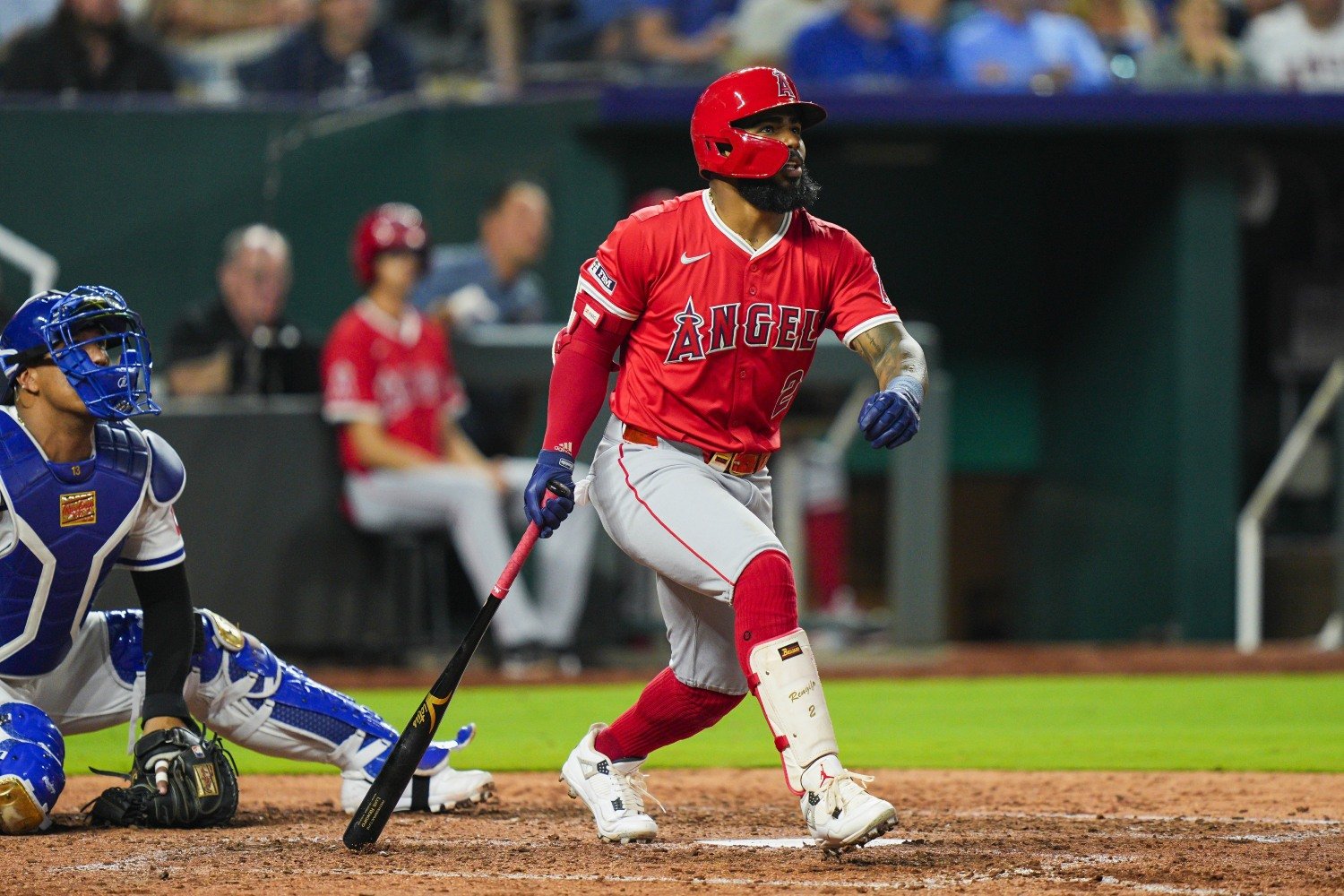 In case you somehow missed it, the Brewers sent all of their third base depth to the Red Sox in exchange for a pair of southpaw pitchers and infielder David Hamilton. It raised some eyebrows, but aside from the now-crowded rotation, Milwaukee's bigger roster issue was that they needed a third baseman. Luis Rengifo was the answer to the prayers of Brewers fans, although they must not have dared dream terribly big. He was just one of several names on a long list of underwhelming third base options on this year’s free-agent market, and the lack of demand is unsurprising. In 2025, he posted a 73 wRC+ and 0.0 fWAR over 541 plate appearances. So what is Milwaukee expecting to get out of him? When looking at his broader body of work, it’s clear that he does have some redeeming qualities. He was a respectable contributor to the Angels lineup from 2022 to 2024, accumulating 4.9 fWAR and posting a 111 wRC+ over those three seasons. The key to that success was a low strikeout rate of 16.3% and a whiff rate that was consistently better than average. His 2024 was promising, especially given his outstanding results against four-seam fastballs (.412 BA, .529 SLG). Even in 2025, a year that saw him reach a new nadir for offensive production in a full season, his contact skills remained above average. Although he doesn’t strike out much, he does have a propensity to chase pitches and rarely takes free passes, having a walk rate of just 6.8% over the course of his career. The piece that he clearly lacks in his offensive game is quality of contact. His average exit velocity is consistently in the bottom quartile of qualified hitters, and given his small frame, that's no surprise. Still, we’ve seen players like Isaac Paredes and Brendan Donovan overcome low exit velocities by pulling the ball in the air consistently or squaring up balls at an elite rate. Sadly, Rengifo does neither. Outside of 2022, Rengifo pulls the ball in the air roughly 13% of the time, well below the MLB average of 16.7%. He squares the ball up at an average rate, but is held back by his low bat speed and suboptimal launch angles. Funnily enough, his hitting profile resembles that of Caleb Durbin. Both players are better at making contact than hitting the ball with authority, although based on last year’s numbers alone, Durbin is more extreme in both aspects and pulls the ball in the air far more often. Although his offensive profile has similarities to Durbin, they couldn’t be more different defensively. Durbin was an above-average defender at third last season, posting 5 Defensive Runs Saved; Rengifo managed just -5 DRS. Originally brought up as a second baseman, he fared much better when playing closer to first base. He doesn’t have the strongest or most accurate arm, leading to plenty of poorly thrown balls to first base. He also lacked range at third base, especially when moving laterally toward first base. This limited his defensive production, particularly against right-handed batters. Given all of his flaws, it’s easy to jump to the conclusion that the Brewers clearly downgraded. There simply isn’t a lot on paper to write home about. Furthermore, they’re paying him $3.5 million guaranteed with another $1.5 million in incentives. Even $5 million isn’t much by the standards of this time and this industry, but it’s definitely more than what they would’ve had to give Durbin, so what’s going on? First, it’s important to recognize that Rengifo is mostly a stopgap. The Brewers’ top four prospects (Jesús Made, Luis Peña, Jett Williams, and Cooper Pratt) are all infielders. Williams and Pratt are expected to be called up this season, while Made and Peña will be knocking on the door within a year or two. It would’ve been foolish to commit any more cash or prospect capital to acquiring a more capable third baseman, since Rengifo may not even occupy the top spot on the depth chart for very long. Second, the Brewers could be more excited about what they can do with Rengifo than what he’s already demonstrated at the big-league level. If the Crew can improve Rengifo's swing decisions the same way they improved Andrew Vaughn's last summer, it would make a world of difference, in his profile as much as anyone else's. His career year, 2023, was also the year he walked 9.2% of the time. Third, and most importantly, the Brewers probably don't see as great a difference between Durbin and Rengifo as most of their fans perceive—if any, at all. While what happened last feels most urgent and relevant, that's not always true. Baseball Prospectus's PECOTA system projects Rengifo to bat .255/.313/.394 in 419 plate appearances this year. It projects Durbin to hit .253/.330/.375. If you bump Rengifo up to his 60th-percentile projection (.258/.316/.401) and pull Durbin down to his 40th-percentile one (.250/.327/.369), Rengifo becomes a more valuable player. That implies about a 1-in-4 chance that Rengifo is the better player this year, and another 20% chance that they're virtually a coin toss. Durbin has long-term team control remaining, which makes him more valuable than Rengifo, but because the team has all that organizational infield depth, the ability to retain Durbin for the long haul wasn't worth all that much. Thus, it made sense for them to cash in Durbin and pick up Rengifo instead, given all the controllable, high-upside pitching depth they got in the exchange. They didn't choose Rengifo over Durbin; they chose Rengifo, Kyle Harrison and Shane Drohan over Durbin. Even if it doesn’t work out, Milwaukee has enough infield flexibility to make things work. Pat Murphy has gone on record to say that he doesn’t want to move Joey Ortiz off of shortstop and back to the hot corner, but it could happen if Rengifo, Jett Williams, and Hamilton are unable to do the job. In recent years, the Brewers have made countless trades that were questionable at first, only to end up turning water to wine. They’re one of the most cunning front offices, and any moves they make must have compelling reasons under the hood. Rengifo is not the third baseman of the future, and he may not even be the third baseman of the present, but he gives the team something to work with in spring training. Either way, don’t count him out yet. Milwaukee may still have yet another ace up their sleeve.
 -
it's kinda got a bay
-
That's what I'm saying!
-
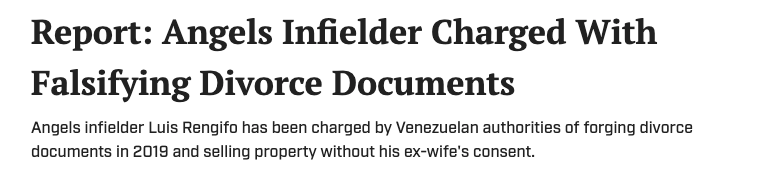
He's either talking about when he forged divorce documents in Venezuela OR that he has a slightly unkempt beard but not really sure which one to be honest 🤔
-
Image courtesy of © Charles LeClaire / David Richard - Imagn Images Milwaukee and Cleveland have a lot in common. They’re both in what many coastal dwellers would deem “flyover states." They both sit on the shores of one of the Great Lakes, where they became major hubs of commerce because of their ports. Both cities have seen their populations stagnate or shrink, relative to other big cities, as the things that powered their economies have been made obsolete or changed in such major ways that they no longer dominate the marketplace, but neither absorbed quite as hard a punch as Detroit and Pittsburgh did at the end of the 20th century and beginning of the 21st. They're tough, proud Midwestern towns. They have even more similarities when it comes to baseball. Both teams have found consistent regular-season success despite operating on a shoestring budget, but have failed to make deep runs. Neither city has won a World Series since color television was introduced to U.S. markets. The now-Guardians last won in 1948; Milwaukee hasn't seen a champion since before the Brewers came to town. However, one thing the Guardians have that the Brewers don’t is a player on a Hall of Fame track who will likely wear but one jersey for his entire career. Last week, José Ramírez agreed to an extension that will keep him under club control until 2032, his age-40 season. This is the third extension he has signed with the club, but given his consistently incredible production, it’s no wonder that Cleveland wanted to keep him around for the long haul. His $18.36-million salary in 2026 (it's $25 million, technically, but he'll receive just $15 million of it this year, and the deferral structure of the rest dramatically reduces its value) currently represents roughly 24% of the Guardians’ total payroll, which is more of an indictment of just how little the franchise spends than it is evidence that he’s being overpaid. The team’s current 40-man payroll of $76.2 million pales in comparison to the Brewers’ $123.5 million, which means that if they wanted to, Milwaukee could make a similar move. The Brewers are no stranger to getting ahead of the curve when it comes to locking down promising talent on team-friendly terms. In 2023, Jackson Chourio signed an eight-year, $82-million extension, the largest in history for a player yet to debut. Before the 2020 season, Freddy Peralta signed a five-year, $15.5-million extension with club options. Aaron Ashby signed a very similar deal, for slightly more money over the same span. None of these contracts quite stack up to Ramírez’s deal. Ashby has been held back by injury, Peralta was traded to the Mets this offseason, and Chourio could be a Brewer for life, but since he’ll be 30 years old when the final club option expires, there’s a chance he gets another long-term deal in free agency. Signing Chourio to that early deal did give the team both leverage and goodwill with him, and maybe they can convert that to tangible value by going to him with an offer for another extension in a few years, before the end of his current deal is really in sight. That's what's worked for the Guardians and Ramírez, but there's no guarantee that it will work the same way with Chourio. If none of these three will end up being Milwaukee’s Brewer for Life, are there other candidates for the role? On the current big-league roster, the answer is probably no. There simply isn’t enough compelling talent on a Hall of Fame trajectory (at least not yet) to justify it. The closest candidate might be Brice Turang, who has been one of the squad’s most valuable assets over the past two years. An extension may be in his near future, but he’ll likely hit the free market at least once before hanging up the cleats, especially if his production remains consistently strong. He's not terribly dissimilar to the player Ramírez was at the same stage in his career, when Cleveland first captured his long-term upside with a Peralta-like deal, but Turang has already made almost $7 million in professional baseball, not to mention the $4.15 million he'll earn on the deal he and the team have already struck for 2026. When Ramírez signed his first deal, he had made less than $1.5 million, and unlike Turang, his dad was not a former big-leaguer, so the promise of an eight-figure payday made a much bigger difference in his life. There’s more hope in the farm system. If anyone currently in the organization has a chance of being the next franchise player, it’s one of the Brewers’ top two prospects. Both Luis Peña (MLB No. 18 overall prospect) and Jesús Made (No. 4) already have considerable hype, despite neither player being 20 years old. Luis Peña signed for $800,000 in the 2024 class of international free agents and was exceptional in the 2024 Dominican Summer League, posting a 177 wRC+ and winning the batting title with a .393 average. He also stole 39 bases in just 44 games, making the most out of his 70-grade speed. His numbers were more modest in his first full season in the minor leagues, posting a 139 wRC+ in Low A but struggling to a 42 wRC+ over 109 plate appearances in High A. At 19 years old, he has plenty of time to develop, but there’s too much uncertainty to warrant an extension at this time. More plate appearances against higher-level competition will give us a better idea of how his game will adapt over time. Because his biggest strength is arguably his speed, we'll need more time to evaluate whether he can remain valuable into his late 20s and his 30s, once he loses a step. Made was a part of the same international free agent class as Peña, and got a bigger signing bonus ($950,000). Although he’s slightly younger, he dominated High A last year, posting a 157 wRC+ across 123 plate appearances, resulting in a short stint at Double-A Biloxi. He had a 12.8% walk rate across all levels of the minor leagues, but struggled to hit for power, posting an underwhelming .128 ISO. Although he didn’t get a chance to put his pop on full display, Made is an immensely well-rounded talent. He has few weaknesses in his game. His defensive flexibility is a strength, but the current goal seems to be to keep him at shortstop. If he stays the course, the offensive upside he brings to a premium defensive position could be too good to pass up. Ramírez debuted in 2013, at age 20, and by the time he was 24, he signed his first five-year deal for just $26 million. His style of play and versatile profile have allowed him to maintain a consistent level of production over his 13-year career, and he hasn’t shown any signs of slowing down yet. As things stand, Made is the closest comparison to him within the Brewers system. Like Ramírez, Made is toolsy and already off to a hot start as a baseball professional. Like Ramírez, Made won’t get a lifetime extension off the bat; he'd have to earn it and decide to embrace the community multiple times. For a team with Milwaukee’s spending habits, getting a true franchise player is something most fans can only dream of. Christian Yelich is the closest thing the organization currently has, and he spent several of his best years in Miami. Even once you find that guy, when you play in the league's smallest media market, he has to want to be around for the long haul. Ramírez only got $50,000 when he first signed out of the Dominican Republic, so locking him up on that first contract was easy. With each of the last two, though, Cleveland has gotten very lucky—and has been rewarded for very good relationship-building. Ramírez loves the organization and the city, and he's agreed to deals he knew were less lucrative than ones he could have found elsewhere. If a player is ever going to have a Ramírez-like Brewers tenure spanning their entire career, it will have to be because they, too, have fallen so in love with the team, the city and the fans that they would eschew tens of millions to stay. That could be Chourio, Turang, Made or Peña, but the truth is that it's unlikely to happen at all—even in a city so significantly similar to the one where it's happening now. View full article
- 5 replies
-
- 1
-

-
- jackson chourio
- brice turang
- (and 3 more)
-
.png.317486a52585d8361e8143a012e76386.png) Milwaukee and Cleveland have a lot in common. They’re both in what many coastal dwellers would deem “flyover states." They both sit on the shores of one of the Great Lakes, where they became major hubs of commerce because of their ports. Both cities have seen their populations stagnate or shrink, relative to other big cities, as the things that powered their economies have been made obsolete or changed in such major ways that they no longer dominate the marketplace, but neither absorbed quite as hard a punch as Detroit and Pittsburgh did at the end of the 20th century and beginning of the 21st. They're tough, proud Midwestern towns. They have even more similarities when it comes to baseball. Both teams have found consistent regular-season success despite operating on a shoestring budget, but have failed to make deep runs. Neither city has won a World Series since color television was introduced to U.S. markets. The now-Guardians last won in 1948; Milwaukee hasn't seen a champion since before the Brewers came to town. However, one thing the Guardians have that the Brewers don’t is a player on a Hall of Fame track who will likely wear but one jersey for his entire career. Last week, José Ramírez agreed to an extension that will keep him under club control until 2032, his age-40 season. This is the third extension he has signed with the club, but given his consistently incredible production, it’s no wonder that Cleveland wanted to keep him around for the long haul. His $18.36-million salary in 2026 (it's $25 million, technically, but he'll receive just $15 million of it this year, and the deferral structure of the rest dramatically reduces its value) currently represents roughly 24% of the Guardians’ total payroll, which is more of an indictment of just how little the franchise spends than it is evidence that he’s being overpaid. The team’s current 40-man payroll of $76.2 million pales in comparison to the Brewers’ $123.5 million, which means that if they wanted to, Milwaukee could make a similar move. The Brewers are no stranger to getting ahead of the curve when it comes to locking down promising talent on team-friendly terms. In 2023, Jackson Chourio signed an eight-year, $82-million extension, the largest in history for a player yet to debut. Before the 2020 season, Freddy Peralta signed a five-year, $15.5-million extension with club options. Aaron Ashby signed a very similar deal, for slightly more money over the same span. None of these contracts quite stack up to Ramírez’s deal. Ashby has been held back by injury, Peralta was traded to the Mets this offseason, and Chourio could be a Brewer for life, but since he’ll be 30 years old when the final club option expires, there’s a chance he gets another long-term deal in free agency. Signing Chourio to that early deal did give the team both leverage and goodwill with him, and maybe they can convert that to tangible value by going to him with an offer for another extension in a few years, before the end of his current deal is really in sight. That's what's worked for the Guardians and Ramírez, but there's no guarantee that it will work the same way with Chourio. If none of these three will end up being Milwaukee’s Brewer for Life, are there other candidates for the role? On the current big-league roster, the answer is probably no. There simply isn’t enough compelling talent on a Hall of Fame trajectory (at least not yet) to justify it. The closest candidate might be Brice Turang, who has been one of the squad’s most valuable assets over the past two years. An extension may be in his near future, but he’ll likely hit the free market at least once before hanging up the cleats, especially if his production remains consistently strong. He's not terribly dissimilar to the player Ramírez was at the same stage in his career, when Cleveland first captured his long-term upside with a Peralta-like deal, but Turang has already made almost $7 million in professional baseball, not to mention the $4.15 million he'll earn on the deal he and the team have already struck for 2026. When Ramírez signed his first deal, he had made less than $1.5 million, and unlike Turang, his dad was not a former big-leaguer, so the promise of an eight-figure payday made a much bigger difference in his life. There’s more hope in the farm system. If anyone currently in the organization has a chance of being the next franchise player, it’s one of the Brewers’ top two prospects. Both Luis Peña (MLB No. 18 overall prospect) and Jesús Made (No. 4) already have considerable hype, despite neither player being 20 years old. Luis Peña signed for $800,000 in the 2024 class of international free agents and was exceptional in the 2024 Dominican Summer League, posting a 177 wRC+ and winning the batting title with a .393 average. He also stole 39 bases in just 44 games, making the most out of his 70-grade speed. His numbers were more modest in his first full season in the minor leagues, posting a 139 wRC+ in Low A but struggling to a 42 wRC+ over 109 plate appearances in High A. At 19 years old, he has plenty of time to develop, but there’s too much uncertainty to warrant an extension at this time. More plate appearances against higher-level competition will give us a better idea of how his game will adapt over time. Because his biggest strength is arguably his speed, we'll need more time to evaluate whether he can remain valuable into his late 20s and his 30s, once he loses a step. Made was a part of the same international free agent class as Peña, and got a bigger signing bonus ($950,000). Although he’s slightly younger, he dominated High A last year, posting a 157 wRC+ across 123 plate appearances, resulting in a short stint at Double-A Biloxi. He had a 12.8% walk rate across all levels of the minor leagues, but struggled to hit for power, posting an underwhelming .128 ISO. Although he didn’t get a chance to put his pop on full display, Made is an immensely well-rounded talent. He has few weaknesses in his game. His defensive flexibility is a strength, but the current goal seems to be to keep him at shortstop. If he stays the course, the offensive upside he brings to a premium defensive position could be too good to pass up. Ramírez debuted in 2013, at age 20, and by the time he was 24, he signed his first five-year deal for just $26 million. His style of play and versatile profile have allowed him to maintain a consistent level of production over his 13-year career, and he hasn’t shown any signs of slowing down yet. As things stand, Made is the closest comparison to him within the Brewers system. Like Ramírez, Made is toolsy and already off to a hot start as a baseball professional. Like Ramírez, Made won’t get a lifetime extension off the bat; he'd have to earn it and decide to embrace the community multiple times. For a team with Milwaukee’s spending habits, getting a true franchise player is something most fans can only dream of. Christian Yelich is the closest thing the organization currently has, and he spent several of his best years in Miami. Even once you find that guy, when you play in the league's smallest media market, he has to want to be around for the long haul. Ramírez only got $50,000 when he first signed out of the Dominican Republic, so locking him up on that first contract was easy. With each of the last two, though, Cleveland has gotten very lucky—and has been rewarded for very good relationship-building. Ramírez loves the organization and the city, and he's agreed to deals he knew were less lucrative than ones he could have found elsewhere. If a player is ever going to have a Ramírez-like Brewers tenure spanning their entire career, it will have to be because they, too, have fallen so in love with the team, the city and the fans that they would eschew tens of millions to stay. That could be Chourio, Turang, Made or Peña, but the truth is that it's unlikely to happen at all—even in a city so significantly similar to the one where it's happening now.
Milwaukee and Cleveland have a lot in common. They’re both in what many coastal dwellers would deem “flyover states." They both sit on the shores of one of the Great Lakes, where they became major hubs of commerce because of their ports. Both cities have seen their populations stagnate or shrink, relative to other big cities, as the things that powered their economies have been made obsolete or changed in such major ways that they no longer dominate the marketplace, but neither absorbed quite as hard a punch as Detroit and Pittsburgh did at the end of the 20th century and beginning of the 21st. They're tough, proud Midwestern towns. They have even more similarities when it comes to baseball. Both teams have found consistent regular-season success despite operating on a shoestring budget, but have failed to make deep runs. Neither city has won a World Series since color television was introduced to U.S. markets. The now-Guardians last won in 1948; Milwaukee hasn't seen a champion since before the Brewers came to town. However, one thing the Guardians have that the Brewers don’t is a player on a Hall of Fame track who will likely wear but one jersey for his entire career. Last week, José Ramírez agreed to an extension that will keep him under club control until 2032, his age-40 season. This is the third extension he has signed with the club, but given his consistently incredible production, it’s no wonder that Cleveland wanted to keep him around for the long haul. His $18.36-million salary in 2026 (it's $25 million, technically, but he'll receive just $15 million of it this year, and the deferral structure of the rest dramatically reduces its value) currently represents roughly 24% of the Guardians’ total payroll, which is more of an indictment of just how little the franchise spends than it is evidence that he’s being overpaid. The team’s current 40-man payroll of $76.2 million pales in comparison to the Brewers’ $123.5 million, which means that if they wanted to, Milwaukee could make a similar move. The Brewers are no stranger to getting ahead of the curve when it comes to locking down promising talent on team-friendly terms. In 2023, Jackson Chourio signed an eight-year, $82-million extension, the largest in history for a player yet to debut. Before the 2020 season, Freddy Peralta signed a five-year, $15.5-million extension with club options. Aaron Ashby signed a very similar deal, for slightly more money over the same span. None of these contracts quite stack up to Ramírez’s deal. Ashby has been held back by injury, Peralta was traded to the Mets this offseason, and Chourio could be a Brewer for life, but since he’ll be 30 years old when the final club option expires, there’s a chance he gets another long-term deal in free agency. Signing Chourio to that early deal did give the team both leverage and goodwill with him, and maybe they can convert that to tangible value by going to him with an offer for another extension in a few years, before the end of his current deal is really in sight. That's what's worked for the Guardians and Ramírez, but there's no guarantee that it will work the same way with Chourio. If none of these three will end up being Milwaukee’s Brewer for Life, are there other candidates for the role? On the current big-league roster, the answer is probably no. There simply isn’t enough compelling talent on a Hall of Fame trajectory (at least not yet) to justify it. The closest candidate might be Brice Turang, who has been one of the squad’s most valuable assets over the past two years. An extension may be in his near future, but he’ll likely hit the free market at least once before hanging up the cleats, especially if his production remains consistently strong. He's not terribly dissimilar to the player Ramírez was at the same stage in his career, when Cleveland first captured his long-term upside with a Peralta-like deal, but Turang has already made almost $7 million in professional baseball, not to mention the $4.15 million he'll earn on the deal he and the team have already struck for 2026. When Ramírez signed his first deal, he had made less than $1.5 million, and unlike Turang, his dad was not a former big-leaguer, so the promise of an eight-figure payday made a much bigger difference in his life. There’s more hope in the farm system. If anyone currently in the organization has a chance of being the next franchise player, it’s one of the Brewers’ top two prospects. Both Luis Peña (MLB No. 18 overall prospect) and Jesús Made (No. 4) already have considerable hype, despite neither player being 20 years old. Luis Peña signed for $800,000 in the 2024 class of international free agents and was exceptional in the 2024 Dominican Summer League, posting a 177 wRC+ and winning the batting title with a .393 average. He also stole 39 bases in just 44 games, making the most out of his 70-grade speed. His numbers were more modest in his first full season in the minor leagues, posting a 139 wRC+ in Low A but struggling to a 42 wRC+ over 109 plate appearances in High A. At 19 years old, he has plenty of time to develop, but there’s too much uncertainty to warrant an extension at this time. More plate appearances against higher-level competition will give us a better idea of how his game will adapt over time. Because his biggest strength is arguably his speed, we'll need more time to evaluate whether he can remain valuable into his late 20s and his 30s, once he loses a step. Made was a part of the same international free agent class as Peña, and got a bigger signing bonus ($950,000). Although he’s slightly younger, he dominated High A last year, posting a 157 wRC+ across 123 plate appearances, resulting in a short stint at Double-A Biloxi. He had a 12.8% walk rate across all levels of the minor leagues, but struggled to hit for power, posting an underwhelming .128 ISO. Although he didn’t get a chance to put his pop on full display, Made is an immensely well-rounded talent. He has few weaknesses in his game. His defensive flexibility is a strength, but the current goal seems to be to keep him at shortstop. If he stays the course, the offensive upside he brings to a premium defensive position could be too good to pass up. Ramírez debuted in 2013, at age 20, and by the time he was 24, he signed his first five-year deal for just $26 million. His style of play and versatile profile have allowed him to maintain a consistent level of production over his 13-year career, and he hasn’t shown any signs of slowing down yet. As things stand, Made is the closest comparison to him within the Brewers system. Like Ramírez, Made is toolsy and already off to a hot start as a baseball professional. Like Ramírez, Made won’t get a lifetime extension off the bat; he'd have to earn it and decide to embrace the community multiple times. For a team with Milwaukee’s spending habits, getting a true franchise player is something most fans can only dream of. Christian Yelich is the closest thing the organization currently has, and he spent several of his best years in Miami. Even once you find that guy, when you play in the league's smallest media market, he has to want to be around for the long haul. Ramírez only got $50,000 when he first signed out of the Dominican Republic, so locking him up on that first contract was easy. With each of the last two, though, Cleveland has gotten very lucky—and has been rewarded for very good relationship-building. Ramírez loves the organization and the city, and he's agreed to deals he knew were less lucrative than ones he could have found elsewhere. If a player is ever going to have a Ramírez-like Brewers tenure spanning their entire career, it will have to be because they, too, have fallen so in love with the team, the city and the fans that they would eschew tens of millions to stay. That could be Chourio, Turang, Made or Peña, but the truth is that it's unlikely to happen at all—even in a city so significantly similar to the one where it's happening now.- 5 comments
-
- 3
-
-
- jackson chourio
- brice turang
- (and 3 more)
-
personally i believe in mr. mitchell also joey wiemer mentioned

-
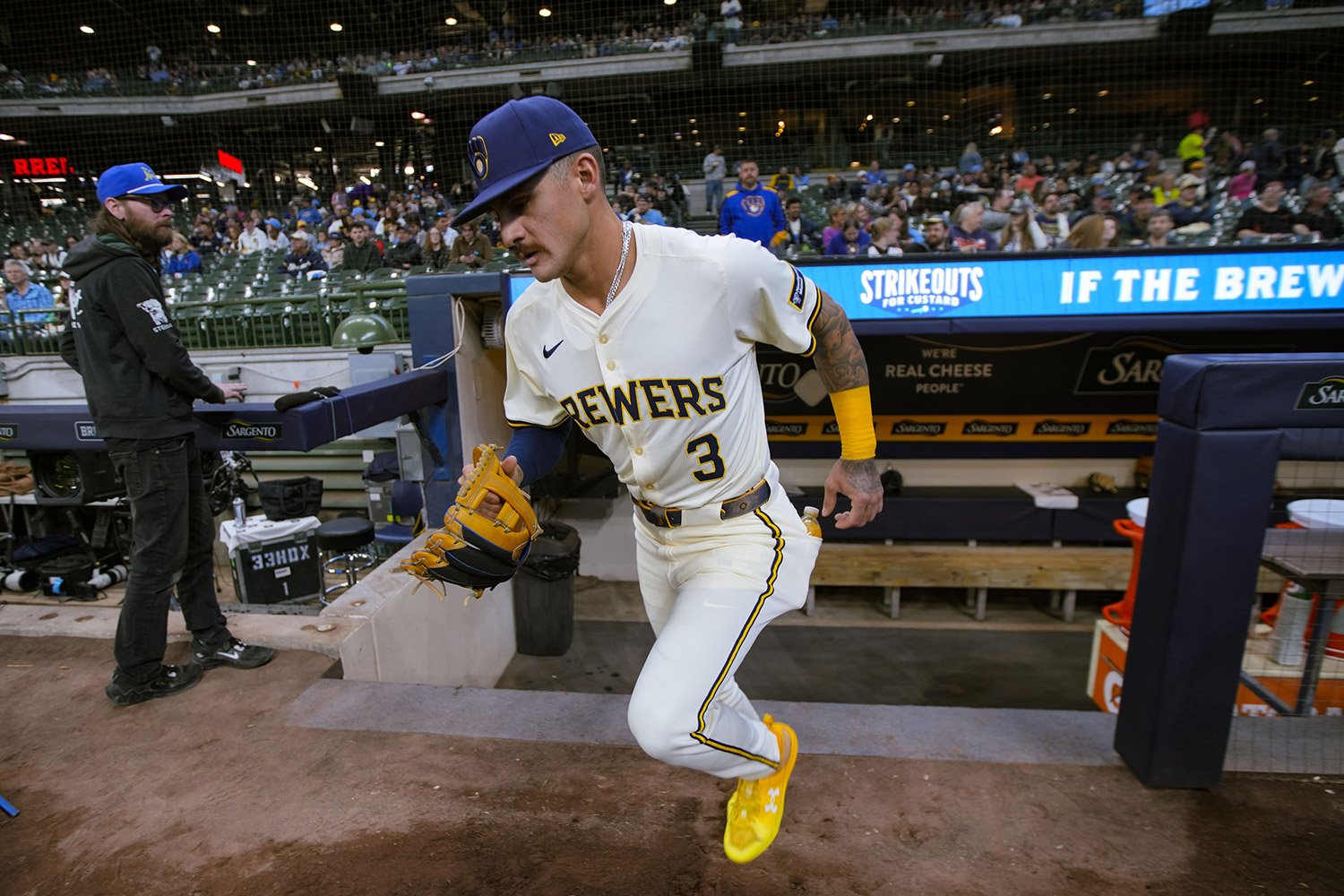 With a little over a month left before the start of the tournament, the rosters for each participating nation are all but finalized. Some countries have a few spots to fill, and Joey Ortiz was recently announced as part of the newest crop of baseball talent to join the Mexican National Team. He was added alongside Jonathan Aranda, Alek Thomas, and Taijuan Walker. Ortiz has Mexican heritage through his parents and should be a big upgrade over Alan Trejo, who served as the team's starting shortstop in 2023. His offensive regression for the Brewers last season was a point of concern, but his defensive production allowed him to stay slightly above replacement, giving him 1.4 fWAR. He'll be joined in the infield by Ramón and Luis Urías, the latter of whom is a former Brewer. Mexico's roster is now stacked with big-leaguers, including many returning faces from 2023 like Randy Arozarena and Jarren Duran. The schedule of the tournament will directly conflict with Spring Training, a crucial time for young talent like Ortiz to prepare for the upcoming season. These refusals are often due to injury risk ,but front offices have occasionally been strict with the way that their younger players are managed. Despite his regression in 2025, it's an encouraging vote of confidence by the franchise that he'll be allowed to forego spring training for the WBC. Ortiz will join fellow Brewers Brice Turang, Jackson Chourio, and Tyler Black in Miami for the competition.
 -
With a little over a month left before the start of the tournament, the rosters for each participating nation are all but finalized. Some countries have a few spots to fill, and Joey Ortiz was recently announced as part of the newest crop of baseball talent to join the Mexican National Team. He was added alongside Jonathan Aranda, Alek Thomas, and Taijuan Walker. Ortiz has Mexican heritage through his parents and should be a big upgrade over Alan Trejo, who served as the team's starting shortstop in 2023. His offensive regression for the Brewers last season was a point of concern, but his defensive production allowed him to stay slightly above replacement, giving him 1.4 fWAR. He'll be joined in the infield by Ramón and Luis Urías, the latter of whom is a former Brewer. Mexico's roster is now stacked with big-leaguers, including many returning faces from 2023 like Randy Arozarena and Jarren Duran. The schedule of the tournament will directly conflict with Spring Training, a crucial time for young talent like Ortiz to prepare for the upcoming season. These refusals are often due to injury risk ,but front offices have occasionally been strict with the way that their younger players are managed. Despite his regression in 2025, it's an encouraging vote of confidence by the franchise that he'll be allowed to forego spring training for the WBC. Ortiz will join fellow Brewers Brice Turang, Jackson Chourio, and Tyler Black in Miami for the competition. View full rumor
-
Andrew Fischer Ranked As No. 1 Third Base Prospect
Jason Wang replied to Jason Wang's topic in Brewers Minor League Talk
There's something in the water. There are quiet a few shortstop prospects in the MLB Top 100 and I have a feeling the Brewers will be just one of several teams around the league getting some outstanding players to fill that role. -
MLB Pipeline recently rolled out its list of top prospects at each position, and the Brewers' only representative wasn't Jesús Made or Luis Peña but rather Andrew Fischer. Fischer was drafted 20th overall in 2025 out of the University of Tennessee, where he had an outstanding collegiate career with a blue-chip program. As a Volunteer, he slashed .307/.438/.672 with 56 home runs over three seasons and carried over this success into the 19 professional games he played. Across 87 plate appearances with High-A Wisconsin, he posted a 141 wRC+ and seems poised to continue rocketing up through the minor league ranks. Scouts love the power he generates from the left side, but have questions about his defensive viability. He spent the majority of his final college season playing first base because of his limited agility and range, but the Brewers moved him back to the hot corner after being drafted. This could be a win-win situation. The organization will likely continue assessing his ability to fill the role, and if not, they could move him to first base, where the team arguably has a greater need. While the likes of Joey Ortiz and Caleb Durbin have several years of club control left, Andrew Vaughn will be a free agent in 2028. Milwaukee does have another top corner infield prospect in Luke Adams, but more future depth at the position is certainly welcome. View full rumor
-
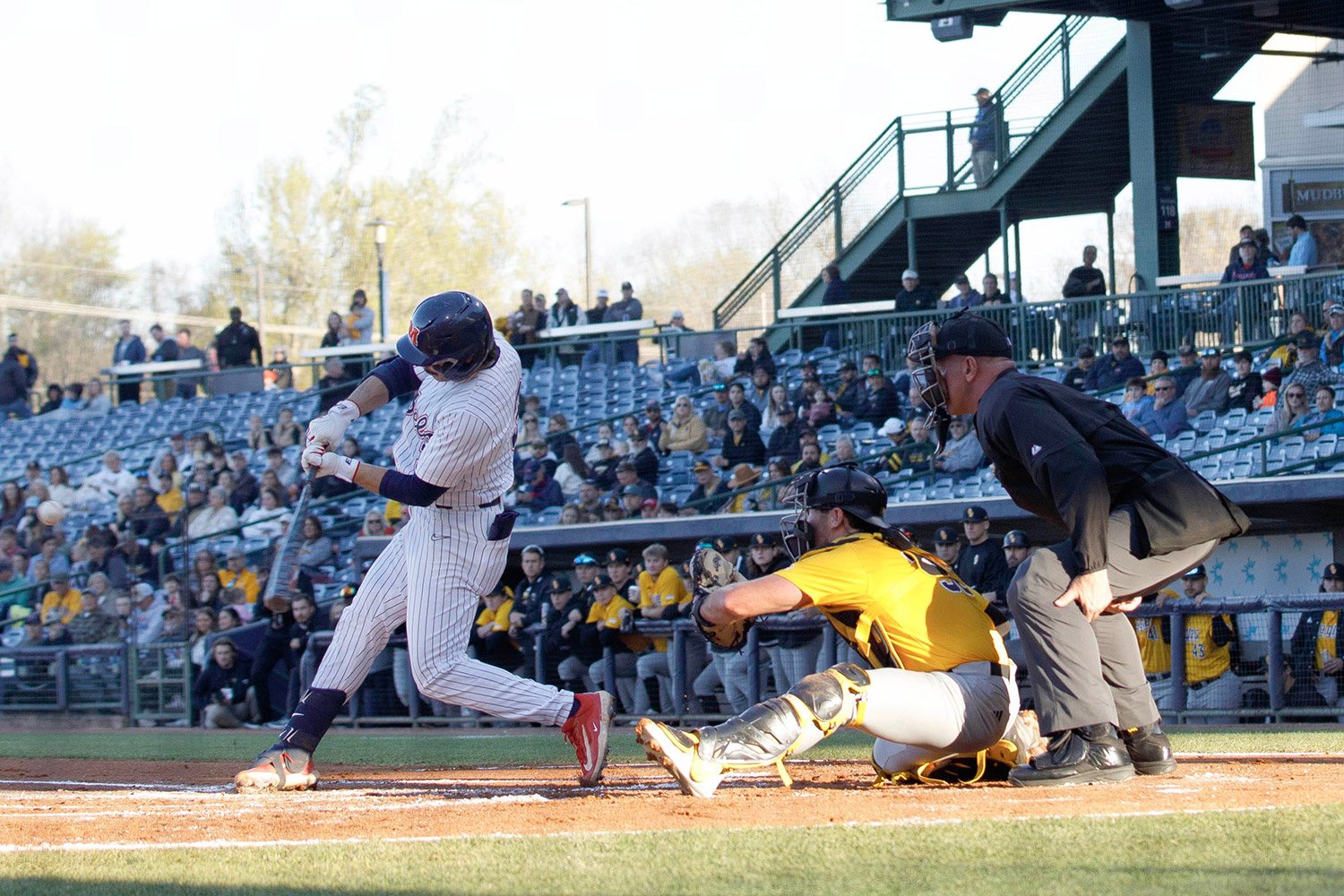 MLB Pipeline recently rolled out its list of top prospects at each position, and the Brewers' only representative wasn't Jesús Made or Luis Peña but rather Andrew Fischer. Fischer was drafted 20th overall in 2025 out of the University of Tennessee, where he had an outstanding collegiate career with a blue-chip program. As a Volunteer, he slashed .307/.438/.672 with 56 home runs over three seasons and carried over this success into the 19 professional games he played. Across 87 plate appearances with High-A Wisconsin, he posted a 141 wRC+ and seems poised to continue rocketing up through the minor league ranks. Scouts love the power he generates from the left side, but have questions about his defensive viability. He spent the majority of his final college season playing first base because of his limited agility and range, but the Brewers moved him back to the hot corner after being drafted. This could be a win-win situation. The organization will likely continue assessing his ability to fill the role, and if not, they could move him to first base, where the team arguably has a greater need. While the likes of Joey Ortiz and Caleb Durbin have several years of club control left, Andrew Vaughn will be a free agent in 2028. Milwaukee does have another top corner infield prospect in Luke Adams, but more future depth at the position is certainly welcome.

.png.317486a52585d8361e8143a012e76386.png)
