Jason Wang
-
Posts
955 -
Joined
-
Last visited
-
Days Won
1
Content Type
Profiles
Forums
Blogs
Events
News
2026 Milwaukee Brewers Top Prospects Ranking
Milwaukee Brewers Videos
2022 Milwaukee Brewers Draft Picks
Milwaukee Brewers Free Agent & Trade Rumors, Notes, & Tidbits
Guides & Resources
2023 Milwaukee Brewers Draft Picks
2024 Milwaukee Brewers Draft Picks
The Milwaukee Brewers Players Project
2025 Milwaukee Brewers Draft Pick Tracker
2026 Milwaukee Brewers Draft Tracker: Picks & Bonuses
Store
Downloads
Gallery
Everything posted by Jason Wang
-
 I think this is a valid concern but I believe the out likelihood of each batted ball is compared to other similar batted balls, so assuming softly hit ground balls that must be charged have been difficult to convert to outs for other infielders, it would be reflected into the out probability. Another good point. Fielder positioning is also acknowledged as a weakness of rPM per BIS: So as with pretty much every statistic in baseball, interpret each number as you will but I wouldn't rely on it to define your perspective entirely. My perspective on Joey Ortiz is broadly that it has been a worse year than last year and of all the positions in the lineup, shortstop seems like one of the biggest holes right now. That said, I still think he has great upside and it's not like there's an easy and obvious upgrade out there so I don't think there's as much urgency to get rid of him.
 -
DRS is definitely a pretty opaque metric but I think once you take a look at the deeper numbers, it adds a little more color. If you're super bored while having to spend time with your in-laws or that nephew you resent, Fielding Bible has a brief description of the DRS calculation as well as how each underlying piece is calculated. The biggest area that drags down Ortiz's DRS is rPM (AKA Plus Minus Runs Saved) which, according to FanGraphs, evaluates the fielder’s range and ability to convert a batted ball to an out. More specifically, each batted ball event is compared to similar batted balls based on exit velocity and horizontal launch angle to calculate a likelihood that it is converted to an out. The less likely the play goes for an out, the more "credit" the fielder receives for making the play. The more likely the play goes for an out, the more the fielder is punished for not making an out. More can be found at the top of this article. Of course, other statistics like Run Value and Expected Batting Average share a similar weakness in that we can only go so deep as external viewers. I wish I could see all of the batted ball events that punished Joey Ortiz the most but until then, we only have the metric to go off of. Furthermore, it is noted that DRS isn't a great metric over a single season since defense varies quite a bit. One might point out that Ortiz has a top decile OAA which highlights the difference in the two metrics. Outs Above Average only measures range but doesn't penalize players for making errors or botching double plays. OAA is a narrower measurement of fielding while DRS is more of a composite figure. Because FRV is based heavily on OAA and arm strength, it paints a similar picture of being above average that doesn't seem to align with DRS. To me, this is the key differentiator. If we look at fielding percentage, Ortiz's number of .975 places him 18th out of 25 qualified shortstops. It still doesn't explain why the Brewers have insisted on giving him consistent playing time at the role and how their internal metrics may differ. Maybe they think he can figure things out, maybe they insist he's the next Derek Jeter. Either way, the statistics that we have access to paint a suboptimal picture, even if it isn't the entire story.
-
Image courtesy of © Vincent Carchietta-Imagn Images Every baseball roster is at least a little lopsided. The existence of a “Goldilocks” team where every position contributes evenly is about as possible as a Mariners World Series appearance in the next decade. On the bright side, this uneven distribution of talent on a major league squad is exactly what makes trade deadline conversations so entertaining. For a team as competitive as the Brewers, the discussion should largely be framed on what sort of upgrades they should prioritize before making the final postseason push. To start, let’s make this process as empirical as possible. First, we’ll look at the high-level offensive and defensive statistics of each position and how those numbers compare to the rest of the league. Using this information, we can gauge where the most glaring holes in the lineup are, if any exist. Position OPS Defensive Runs Saved Catcher .722 (11th) 2 (10th) First base .793 (9th) 0 (16th) Second base .731 (7th) 6 (6th) Third base .619 (26th) 6 (4th) Shortstop .546 (29th) -7 (27th) Left field .756 (12th) 2 (14th) Center field .738 (10th) -6 (23rd) Right field .728 (16th) 7 (8th) This simple table makes a few things quite apparent. The outfield is well-rounded, except for some lackluster fielding work by Jackson Chourio and Sal Frelick when they have to play center field. Brice Turang is still one of the best second basemen in baseball, Rhys Hoskins has remained a solid contributor at the plate when healthy, and William Contreras is still a valuable backstop, even given his offensive regression. These positions are by no means perfect, and most are good, not great, but they aren’t problematic enough to be high priorities for the front office this year. While most positions are above average with either the bat or the glove, one position is clearly below average in both: shortstop. The struggles of Joey Ortiz have been apparent for the entire season, and despite seemingly coming back in June with a .748 OPS over 90 plate appearances, his first 30 plate appearances of July culminated in just a .578 OPS. This mark is still somehow better than the .570 OPS he has for the entire season. His struggles at the plate seem to be creeping into his defensive effectiveness as well. His range is still top-notch, but his eight errors and -8 Defensive Runs Saved paint a grim picture. There seems to be a lack of urgency and focus overall, something the Brewers are clearly aware of. Still, it may not be enough to push them to pursue a new shortstop. Ortiz has already shown that he can hang at the major league level when things are clicking; he has plenty of team control left, and there just aren’t very many viable shortstop targets available. I suppose Eugenio Suárez played a bit of shortstop for the Reds four years ago, and I bet Zac Gallen was an excellent shortstop in Little League. However, realistically, it’d be challenging to find a suitable upgrade. There are slight upgrades that can be made at other positions, such as right field and third base, but one quality the lineup is clearly missing is power. The Brewers are slugging just .383 as a team, 22nd in MLB. Getting a power bat, perhaps at third base, could be what Milwaukee’s offense has been missing. The aforementioned Eugenio Suárez is one of the most enticing options here as he has been having a career year in Arizona, posting a 142 OPS+ and leading the National League in RBIs with 78. Ryan McMahon and Ramón Urías are two other options, but both are similar to Caleb Durbin in that they’re all defensive assets and offensive liabilities. However, Durbin has turned things around recently and is now sitting at a 103 OPS+, far better than the marks posted by McMahon and Urías, so expect him to keep his spot if Suárez isn’t available. When it comes to pitching, the Brewers are actually in pretty good shape. Overall, Milwaukee has a combined 3.66 ERA, which is tied for 7th in MLB. However, separating the numbers by role highlights some potentially glaring issues. ERA WHIP Innings Pitched Starters 3.39 (5th) 1.24 (13th) 477 ⅔ (25th) Relievers 4.00 (18th) 1.26 (10th) 375 ⅔ (5th) The bullpen is on the verge of being overworked. Of the four teams with more bullpen innings than the Brewers, three are non-contenders (White Sox, Marlins, Athletics), and the other is the Dodgers, whose 60-day injured list would be a top-five rotation in baseball if they were healthy. Milwaukee’s rotation is rich in talent, but other than Freddy Peralta, none are really innings eaters. Brandon Woodruff has made just two starts since returning from his long layoff, Jacob Misiorowski is a true rookie, Jose Quintana sometimes finds himself laboring to get through five innings, and Quinn Priester is still ramping up to higher volume. It puts Milwaukee in a tricky position because there’s just no room for a back-of-the-rotation arm that would give you six to seven gutsy innings every five days and reduce the bullpen’s workload. The Brewers have clearly chosen to prioritize quality over quantity, which should dictate how they plan on constructing the bullpen in the second half. The two hidden gems of the bullpen are Aaron Ashby and DL Hall. Milwaukee has recently experienced great success using long relievers (shoutout my guy, Bryse Wilson), and having two quality arms capable of covering multiple innings of relief is a primary reason the pitching staff has made it this far. Of course, more is always better, so if they so choose, the front office could look at another durable arm. There’s hardly a need for a flashy, lights-out, one-inning closer like Emmanuel Clase or Jhoan Duran, but someone capable of getting more than three outs like Jake Bird could be a sneaky upgrade. As is, the Brewers have a solid roster. It’s the reason that they find themselves within striking distance of the Chicago Cubs in the NL Central despite a rocky start to the year. However, they have a relatively high strength of remaining schedule with a series against the Dodgers ringing in the latter half of the season, so they can’t afford to rest on their laurels just yet. Furthermore, making it to the postseason is one thing. Milwaukee’s faithful are all too familiar with the feeling of a first-round exit. If the team wants a real chance at making a meaningful run, the seemingly small upgrades at this year’s deadline could end up making big differences come October. View full article
-
Brewers At The Trade Deadline: Where Do They Need To Improve?
Jason Wang posted an article in Brewers
 Every baseball roster is at least a little lopsided. The existence of a “Goldilocks” team where every position contributes evenly is about as possible as a Mariners World Series appearance in the next decade. On the bright side, this uneven distribution of talent on a major league squad is exactly what makes trade deadline conversations so entertaining. For a team as competitive as the Brewers, the discussion should largely be framed on what sort of upgrades they should prioritize before making the final postseason push. To start, let’s make this process as empirical as possible. First, we’ll look at the high-level offensive and defensive statistics of each position and how those numbers compare to the rest of the league. Using this information, we can gauge where the most glaring holes in the lineup are, if any exist. Position OPS Defensive Runs Saved Catcher .722 (11th) 2 (10th) First base .793 (9th) 0 (16th) Second base .731 (7th) 6 (6th) Third base .619 (26th) 6 (4th) Shortstop .546 (29th) -7 (27th) Left field .756 (12th) 2 (14th) Center field .738 (10th) -6 (23rd) Right field .728 (16th) 7 (8th) This simple table makes a few things quite apparent. The outfield is well-rounded, except for some lackluster fielding work by Jackson Chourio and Sal Frelick when they have to play center field. Brice Turang is still one of the best second basemen in baseball, Rhys Hoskins has remained a solid contributor at the plate when healthy, and William Contreras is still a valuable backstop, even given his offensive regression. These positions are by no means perfect, and most are good, not great, but they aren’t problematic enough to be high priorities for the front office this year. While most positions are above average with either the bat or the glove, one position is clearly below average in both: shortstop. The struggles of Joey Ortiz have been apparent for the entire season, and despite seemingly coming back in June with a .748 OPS over 90 plate appearances, his first 30 plate appearances of July culminated in just a .578 OPS. This mark is still somehow better than the .570 OPS he has for the entire season. His struggles at the plate seem to be creeping into his defensive effectiveness as well. His range is still top-notch, but his eight errors and -8 Defensive Runs Saved paint a grim picture. There seems to be a lack of urgency and focus overall, something the Brewers are clearly aware of. Still, it may not be enough to push them to pursue a new shortstop. Ortiz has already shown that he can hang at the major league level when things are clicking; he has plenty of team control left, and there just aren’t very many viable shortstop targets available. I suppose Eugenio Suárez played a bit of shortstop for the Reds four years ago, and I bet Zac Gallen was an excellent shortstop in Little League. However, realistically, it’d be challenging to find a suitable upgrade. There are slight upgrades that can be made at other positions, such as right field and third base, but one quality the lineup is clearly missing is power. The Brewers are slugging just .383 as a team, 22nd in MLB. Getting a power bat, perhaps at third base, could be what Milwaukee’s offense has been missing. The aforementioned Eugenio Suárez is one of the most enticing options here as he has been having a career year in Arizona, posting a 142 OPS+ and leading the National League in RBIs with 78. Ryan McMahon and Ramón Urías are two other options, but both are similar to Caleb Durbin in that they’re all defensive assets and offensive liabilities. However, Durbin has turned things around recently and is now sitting at a 103 OPS+, far better than the marks posted by McMahon and Urías, so expect him to keep his spot if Suárez isn’t available. When it comes to pitching, the Brewers are actually in pretty good shape. Overall, Milwaukee has a combined 3.66 ERA, which is tied for 7th in MLB. However, separating the numbers by role highlights some potentially glaring issues. ERA WHIP Innings Pitched Starters 3.39 (5th) 1.24 (13th) 477 ⅔ (25th) Relievers 4.00 (18th) 1.26 (10th) 375 ⅔ (5th) The bullpen is on the verge of being overworked. Of the four teams with more bullpen innings than the Brewers, three are non-contenders (White Sox, Marlins, Athletics), and the other is the Dodgers, whose 60-day injured list would be a top-five rotation in baseball if they were healthy. Milwaukee’s rotation is rich in talent, but other than Freddy Peralta, none are really innings eaters. Brandon Woodruff has made just two starts since returning from his long layoff, Jacob Misiorowski is a true rookie, Jose Quintana sometimes finds himself laboring to get through five innings, and Quinn Priester is still ramping up to higher volume. It puts Milwaukee in a tricky position because there’s just no room for a back-of-the-rotation arm that would give you six to seven gutsy innings every five days and reduce the bullpen’s workload. The Brewers have clearly chosen to prioritize quality over quantity, which should dictate how they plan on constructing the bullpen in the second half. The two hidden gems of the bullpen are Aaron Ashby and DL Hall. Milwaukee has recently experienced great success using long relievers (shoutout my guy, Bryse Wilson), and having two quality arms capable of covering multiple innings of relief is a primary reason the pitching staff has made it this far. Of course, more is always better, so if they so choose, the front office could look at another durable arm. There’s hardly a need for a flashy, lights-out, one-inning closer like Emmanuel Clase or Jhoan Duran, but someone capable of getting more than three outs like Jake Bird could be a sneaky upgrade. As is, the Brewers have a solid roster. It’s the reason that they find themselves within striking distance of the Chicago Cubs in the NL Central despite a rocky start to the year. However, they have a relatively high strength of remaining schedule with a series against the Dodgers ringing in the latter half of the season, so they can’t afford to rest on their laurels just yet. Furthermore, making it to the postseason is one thing. Milwaukee’s faithful are all too familiar with the feeling of a first-round exit. If the team wants a real chance at making a meaningful run, the seemingly small upgrades at this year’s deadline could end up making big differences come October.
 -
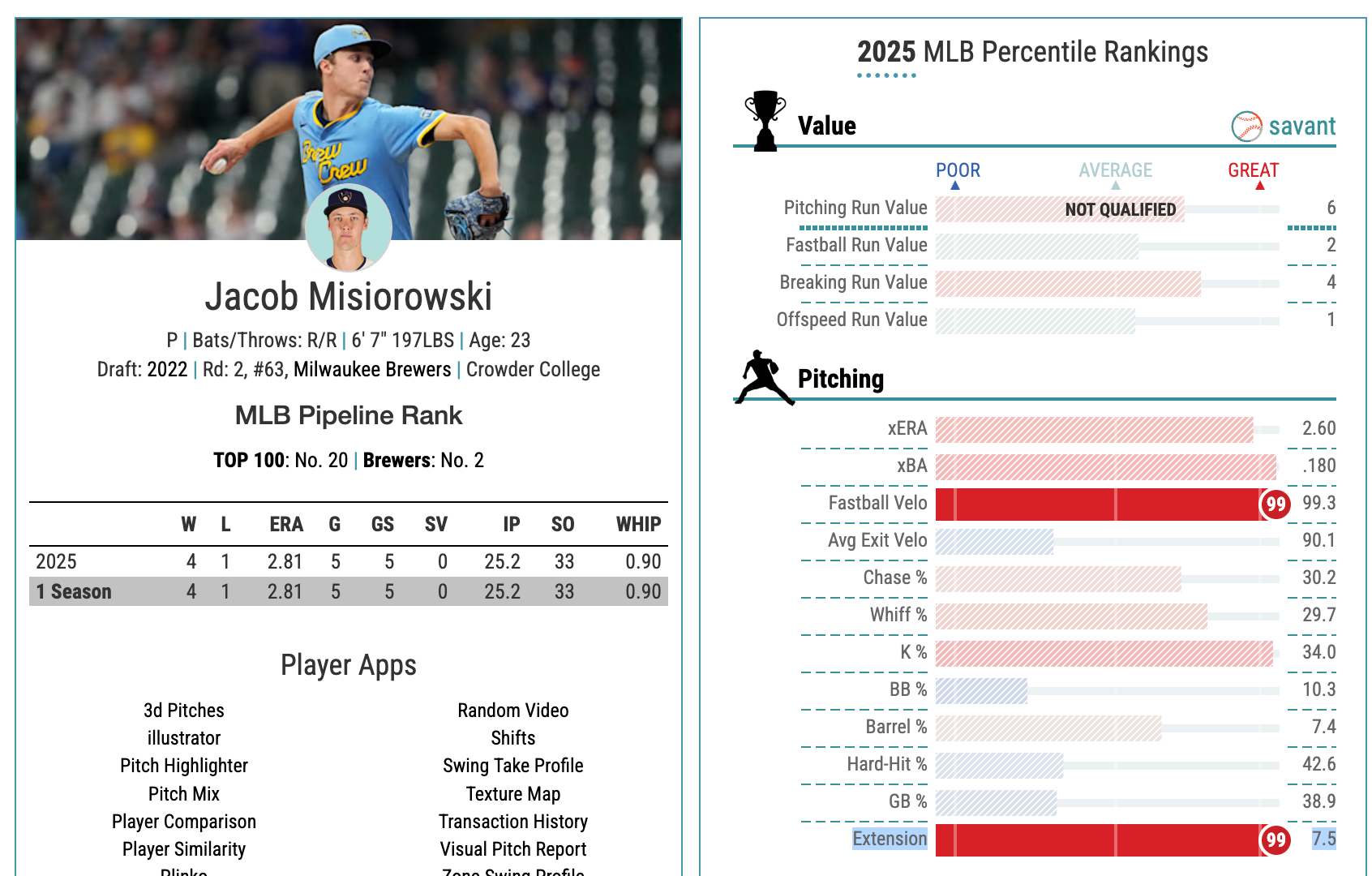
we already know what his extension looks like its 7.5 feet jk love ya jake :)
-
Vote For Your Top Brewers Prospects!
Jason Wang replied to Brock Beauchamp's topic in Brewers Minor League Talk
hey wait why can't i find keston hiura anywhere on that list i thought he was next up -
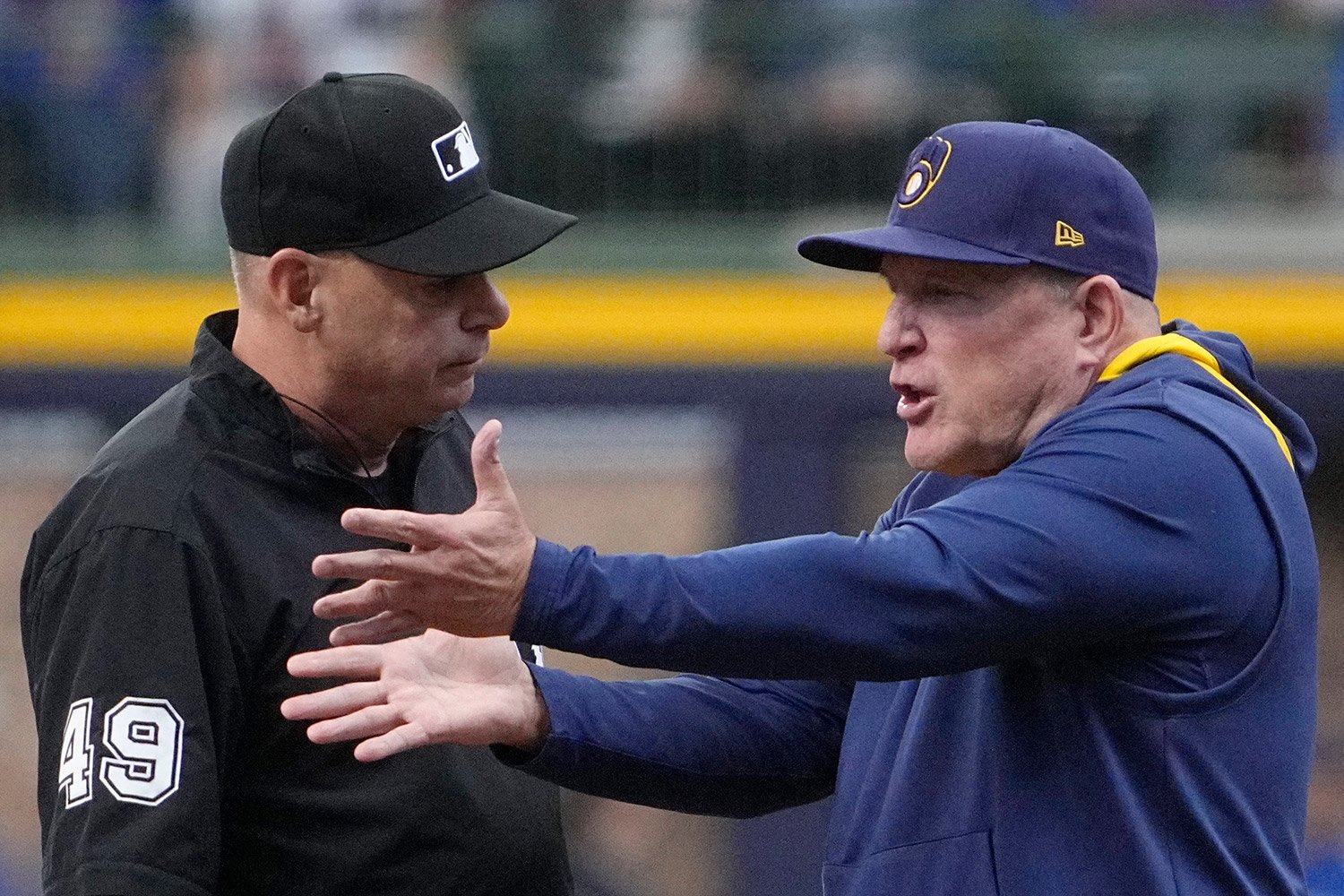
Image courtesy of © Michael McLoone-Imagn Images ABS, or automated ball-strike, is technology that seeks to solve the age-old problem of missed umpire calls. Even the most casual of baseball fans has, at least once, witnessed a pitch down the middle being called a ball or a pitch in the other batter’s box being called a strike. As pitches have only become nastier over the years, it has become increasingly difficult for home plate umpires to make consistent, accurate calls. To try and rectify this recurring pain point, MLB has experimented with shifting this responsibility onto our future robot overlords. The process is straightforward. Home plate umpires will continue to make calls manually, but if a pitcher, catcher, or hitter believes the call was incorrect, they can signal for an ABS review by tapping their head. At this point, the high-tech system will be consulted for its call of the pitch, which will serve as the final result. Each team will receive two total challenges per game, and these challenges must be made immediately without help from teammates or the dugout. The team will only lose a challenge if the umpire's call is confirmed. While this system has already been in use in the minor and independent leagues for quite some time, the closest it has gotten to debuting in the big leagues was this year’s spring training. The technology wasn’t ubiquitous, but it was used in 13 different ballparks, and overall, the reception was quite positive. According to MLB officials, 72% of fans reported that it had a positive impact on the game, and 69% expressed interest in seeing it implemented in the future. But what are the downsides? One might be the delaying of games. After all, rules like the pitch clock and three-batter minimum were implemented solely to ensure that baseball moved at a more Gen-Z pace, but this seems like it's moving in the opposite direction. More consistent challenges and reviews of every bad call would theoretically drag things out. However, the whole process is pretty seamless, and based on spring training results, each challenge added just under 14 seconds to the game time. Another possible outcome is that catcher framing may become obsolete as a result. Backstops spend their whole lives learning how best to manipulate umpires' eyes to steal strikes, and it has created immense defensive value for the position, but it’s far more difficult to deceive a machine. If opposing batters are able to challenge pitches, the subtle art of framing could become significantly less important or even entirely anachronistic. Perhaps you’re concerned about the welfare of umpires as a group of working individuals, and you're seeking a fair and empathetic perspective. Like Charlie Bucket’s father in the famous Roald Dahl tale, will their jobs be taken by a man-made replacement? Initially, it seemed that way. During the later stages of minor and independent league testing, MLB considered using full ABS to call every pitch, but they ended up deciding on the challenge system instead. Why they’re hesitating on a complete transfer of responsibility depends on who you ask and how cynical they are, but even if every pitch were called by machine, home plate umpires would still be needed to make other sorts of calls at the plate. Despite its flaws, it’s clear that the consensus around ABS is largely positive. Unless you have a deep distrust of machines and are somehow reading this article on a clay tablet or papyrus sheet, this is a positive evolution of the sport. In many ways, the All-Star Game is a perfect proving ground for this technology. It’s a low-stakes event that’s more fun than functional, and there will be plenty of eyes on it. MLB’s biggest stars who didn’t get exposure to the technology during spring training may finally get a crack at it, although most individual appearances are admittedly very brief. The group that is probably most excited about this change is probably the active players. We’ve already seen instances of ejections over missed calls this year, and let’s not forget when the Brewers were on the favorable end of a bad call and witnessed one of the greatest player meltdowns of the past decade. To fans at home, a missed ball or strike is just that, but to those whose job it is to play the game at the highest level, these mistakes are far more costly. It may not be long before we see this technology installed in every major league ballpark. Like the pitch clock, it may initially seem like a rule that'll take some getting used to, but before long, it’ll likely become an integral and necessary part of the baseball experience. View full article
-
 ABS, or automated ball-strike, is technology that seeks to solve the age-old problem of missed umpire calls. Even the most casual of baseball fans has, at least once, witnessed a pitch down the middle being called a ball or a pitch in the other batter’s box being called a strike. As pitches have only become nastier over the years, it has become increasingly difficult for home plate umpires to make consistent, accurate calls. To try and rectify this recurring pain point, MLB has experimented with shifting this responsibility onto our future robot overlords. The process is straightforward. Home plate umpires will continue to make calls manually, but if a pitcher, catcher, or hitter believes the call was incorrect, they can signal for an ABS review by tapping their head. At this point, the high-tech system will be consulted for its call of the pitch, which will serve as the final result. Each team will receive two total challenges per game, and these challenges must be made immediately without help from teammates or the dugout. The team will only lose a challenge if the umpire's call is confirmed. While this system has already been in use in the minor and independent leagues for quite some time, the closest it has gotten to debuting in the big leagues was this year’s spring training. The technology wasn’t ubiquitous, but it was used in 13 different ballparks, and overall, the reception was quite positive. According to MLB officials, 72% of fans reported that it had a positive impact on the game, and 69% expressed interest in seeing it implemented in the future. But what are the downsides? One might be the delaying of games. After all, rules like the pitch clock and three-batter minimum were implemented solely to ensure that baseball moved at a more Gen-Z pace, but this seems like it's moving in the opposite direction. More consistent challenges and reviews of every bad call would theoretically drag things out. However, the whole process is pretty seamless, and based on spring training results, each challenge added just under 14 seconds to the game time. Another possible outcome is that catcher framing may become obsolete as a result. Backstops spend their whole lives learning how best to manipulate umpires' eyes to steal strikes, and it has created immense defensive value for the position, but it’s far more difficult to deceive a machine. If opposing batters are able to challenge pitches, the subtle art of framing could become significantly less important or even entirely anachronistic. Perhaps you’re concerned about the welfare of umpires as a group of working individuals, and you're seeking a fair and empathetic perspective. Like Charlie Bucket’s father in the famous Roald Dahl tale, will their jobs be taken by a man-made replacement? Initially, it seemed that way. During the later stages of minor and independent league testing, MLB considered using full ABS to call every pitch, but they ended up deciding on the challenge system instead. Why they’re hesitating on a complete transfer of responsibility depends on who you ask and how cynical they are, but even if every pitch were called by machine, home plate umpires would still be needed to make other sorts of calls at the plate. Despite its flaws, it’s clear that the consensus around ABS is largely positive. Unless you have a deep distrust of machines and are somehow reading this article on a clay tablet or papyrus sheet, this is a positive evolution of the sport. In many ways, the All-Star Game is a perfect proving ground for this technology. It’s a low-stakes event that’s more fun than functional, and there will be plenty of eyes on it. MLB’s biggest stars who didn’t get exposure to the technology during spring training may finally get a crack at it, although most individual appearances are admittedly very brief. The group that is probably most excited about this change is probably the active players. We’ve already seen instances of ejections over missed calls this year, and let’s not forget when the Brewers were on the favorable end of a bad call and witnessed one of the greatest player meltdowns of the past decade. To fans at home, a missed ball or strike is just that, but to those whose job it is to play the game at the highest level, these mistakes are far more costly. It may not be long before we see this technology installed in every major league ballpark. Like the pitch clock, it may initially seem like a rule that'll take some getting used to, but before long, it’ll likely become an integral and necessary part of the baseball experience.
 -
Image courtesy of © Michael McLoone-Imagn Images Outside of a shaky first month, it has been another solid year for Trevor Megill. Now the Brewers’ undisputed closer, he has a 2.64 ERA with 19 saves, on pace to comfortably surpass what he accomplished last year. There’s plenty to be happy about, especially for a player costing the team less than $2 million this year, and while almost everything is moving in the right direction, one aspect within his arsenal could be a cause for concern. Like many relievers, he throws just two pitches: a four-seam fastball and a knuckle curve. The latter is a notoriously difficult pitch to hit, boasting a whiff rate of 56.8% and a slugging percentage against of just .250 this year. With late and sharp downward movement, opposing hitters are often left looking foolish while swinging over it. However, despite having similar metrics on the pitch in 2024, it wasn’t his most valuable weapon. That award went to his four-seam fastball, which generated four times the run value. This came as no surprise since he threw it more than 70% of the time and averaged 98.8 mph with 18 inches of induced vertical break. In 2025, he’s throwing it just as hard with even more induced vertical break (19.2 inches, to be exact), but a few key statistics have shown year-over-year regression, not improvement. Fastball 2024 2025 Whiff % 22.2 16.3 BA .209 .265 SLG .279 .368 Normally, this wouldn’t be a huge deal. As stated earlier, he’s still having a great year. However, it’s a clear weakness in his game and hitters are starting to notice. In his most recent outing against the Marlins on July 4th, he threw 21 fastballs. Eight of them were called balls, four were called strikes, and eight were fouled. Velocity wise, he got up as high as 101.3 mph, but he still failed to generate a single swing and miss. We saw a similar story in his outing during his June 29 against the Rockies. Of the 12 fastballs he threw, he generated no called strikes and just two swinging strikes. In what was ultimately his third blown save of the season, a fastball that was chased outside of the zone by Thairo Estrada was the nail in the coffin. Even on pitches that are located off the plate, guys are finding a way to get their bats to the ball. One could argue that it was actually the home run he gave up to Orlando Arcia on a knuckle curve that spelled his doom, but that’s exactly what the bigger issue is. With only one effective offering, it’s not nearly as difficult for hitters to use an approach that works. We may already be seeing cracks in the ice. In May, Megill posted a 0.90 ERA over ten innings. In June, he posted a 3.18 ERA over 11 ⅓ innings. Reduced effectiveness also means reduced efficiency and higher pitch counts in each appearance. Prior to May 26, there was only one appearance in which he threw more than 20 pitches. Starting with a grueling 34-pitch inning against the Red Sox at the end of May, he has since had five outings with more than 20 pitches (although one of which was admittedly for two innings). Baseball demands frequent adjustments, and it’s difficult to survive in the big leagues if you don’t adapt. In a constant game of cat-and-mouse, pitchers and hitters struggle to gain an upper hand on each other, exploiting even the most minor mistakes. Based on his recent performance, it seems like Megill is more on the hot seat than one might initially assume. If he wants to remain a dominant bullpen presence through the second half, something with the fastball will have to change to get him back to peak form. View full article
-
Trevor Megill Has Been Excellent for Brewers, Except in One Key Area
Jason Wang posted an article in Brewers
 Outside of a shaky first month, it has been another solid year for Trevor Megill. Now the Brewers’ undisputed closer, he has a 2.64 ERA with 19 saves, on pace to comfortably surpass what he accomplished last year. There’s plenty to be happy about, especially for a player costing the team less than $2 million this year, and while almost everything is moving in the right direction, one aspect within his arsenal could be a cause for concern. Like many relievers, he throws just two pitches: a four-seam fastball and a knuckle curve. The latter is a notoriously difficult pitch to hit, boasting a whiff rate of 56.8% and a slugging percentage against of just .250 this year. With late and sharp downward movement, opposing hitters are often left looking foolish while swinging over it. However, despite having similar metrics on the pitch in 2024, it wasn’t his most valuable weapon. That award went to his four-seam fastball, which generated four times the run value. This came as no surprise since he threw it more than 70% of the time and averaged 98.8 mph with 18 inches of induced vertical break. In 2025, he’s throwing it just as hard with even more induced vertical break (19.2 inches, to be exact), but a few key statistics have shown year-over-year regression, not improvement. Fastball 2024 2025 Whiff % 22.2 16.3 BA .209 .265 SLG .279 .368 Normally, this wouldn’t be a huge deal. As stated earlier, he’s still having a great year. However, it’s a clear weakness in his game and hitters are starting to notice. In his most recent outing against the Marlins on July 4th, he threw 21 fastballs. Eight of them were called balls, four were called strikes, and eight were fouled. Velocity wise, he got up as high as 101.3 mph, but he still failed to generate a single swing and miss. We saw a similar story in his outing during his June 29 against the Rockies. Of the 12 fastballs he threw, he generated no called strikes and just two swinging strikes. In what was ultimately his third blown save of the season, a fastball that was chased outside of the zone by Thairo Estrada was the nail in the coffin. Even on pitches that are located off the plate, guys are finding a way to get their bats to the ball. One could argue that it was actually the home run he gave up to Orlando Arcia on a knuckle curve that spelled his doom, but that’s exactly what the bigger issue is. With only one effective offering, it’s not nearly as difficult for hitters to use an approach that works. We may already be seeing cracks in the ice. In May, Megill posted a 0.90 ERA over ten innings. In June, he posted a 3.18 ERA over 11 ⅓ innings. Reduced effectiveness also means reduced efficiency and higher pitch counts in each appearance. Prior to May 26, there was only one appearance in which he threw more than 20 pitches. Starting with a grueling 34-pitch inning against the Red Sox at the end of May, he has since had five outings with more than 20 pitches (although one of which was admittedly for two innings). Baseball demands frequent adjustments, and it’s difficult to survive in the big leagues if you don’t adapt. In a constant game of cat-and-mouse, pitchers and hitters struggle to gain an upper hand on each other, exploiting even the most minor mistakes. Based on his recent performance, it seems like Megill is more on the hot seat than one might initially assume. If he wants to remain a dominant bullpen presence through the second half, something with the fastball will have to change to get him back to peak form.
 -
yeah that may be fault. i paid a small bot farm to crank up the votes so I could put out an article about how unjust the process was but I didn't have enough money to beat out the dodgers PR machine :(
- 13 replies
-
- 1
-

-
- rhys hoskins
- jake bauers
- (and 1 more)
-
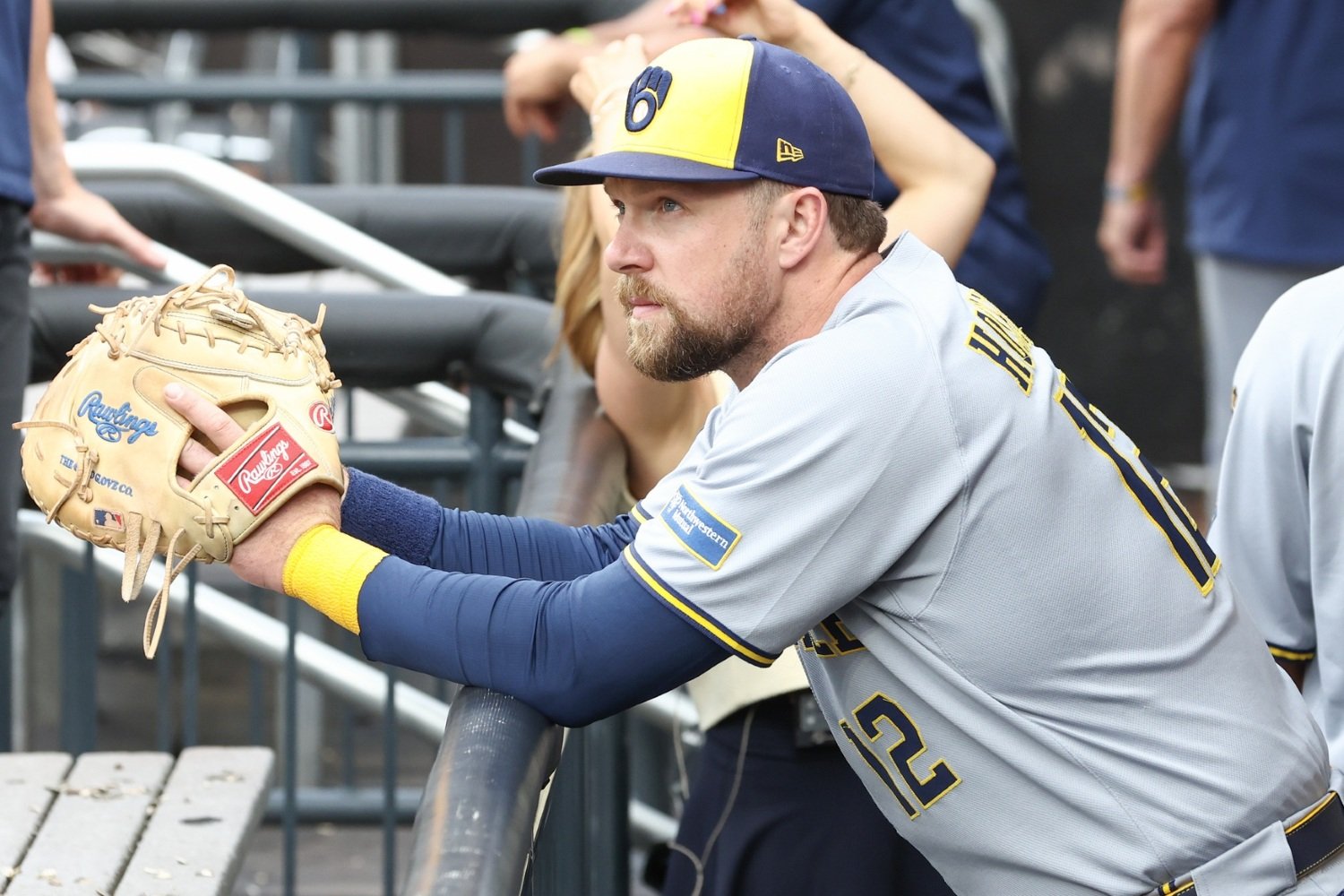
Image courtesy of © Wendell Cruz-Imagn Images Heading into June, the Brewers had a great duo at first base. Rhys Hoskins was seemingly back to his old self, holding an .849 OPS on the first day of the month, while Jake Bauers had an OPS of .814 as an understudy. However, despite Milwaukee having an outstanding month of June as a team, their sluggers at first base weren’t necessarily included in the festivities. Hoskins and Bauers had OPS figures of .538 and .532, respectively, a sobering fact that would only become apparent if one had deliberately taken a peek under the hood. The Brewers have struggled to get the most out of Hoskins since they signed him as a free agent heading into 2024, and while he is better this year, he’s just one more less-than-ideal month from regressing to replacement-level territory. His profile is somewhat confusing to interpret, as he has one of the lowest chase rates of qualified hitters (19.0%) but his whiff rate (27.4%) is comfortably worse than average. Generally, this means that he is primarily getting beaten in the strike zone, which isn’t a good sign for someone who’s expected to be a power hitter. His struggles against breaking balls (.247 SLG) and offspeed (.250 SLG) only make his numbers even more lopsided, and opposing pitchers have apparently picked up on this, attacking him more aggressively with non-fastballs. In the month of June, he swung and missed a total of 44 times. Fourteen of these whiffs were against some sort of fastball variant (four-seamer, sinker, cutter), whereas 17 of them were against sliders, alone. In a perfect world, Bauers would be the yin to Hoskins’ yang, but in reality, they are actually remarkably similar. Neither hitter chases pitches outside of the zone, but both still have high whiff and strikeout rates. Bauers is great against sinkers and cutters, but has been getting dominated by the four-seam fastball—a fatal flaw in the big leagues. This doesn't even give Pat Murphy the luxury of plugging and playing an option depending on the situation, since they share too many weaknesses. The fact that Bauers would even be discussed as a candidate for more serious playing time speaks to the issue at hand. I am as much of a Jake Bauers truther as anyone you’ll ever meet, but if a career backup player with an 86 wRC+ over nearly 2,000 big-league plate appearances is someone who might be asked to step up into a key role for a postseason team, the results are likely going to be subpar. Internally, the minor-league options at first base aren’t much better. Ernesto Martinez Jr. has the most innings at first base with the Sounds and has been perfectly okay at the plate this year, posting a 108 wRC+. Andrew Vaughn was so bad he was unplayable even for the White Sox but has put up a respectable 144 wRC+ since joining the Sounds (albeit over a span of just 44 plate appearances). Tyler Black has barely played a month's worth of games and has plenty of work to do before he’s ready to return to the big leagues, currently sitting at a 15 wRC+ at Triple-A. At this point, the best option on paper might unironically be Bobby Dalbec who has a 144 wRC+ in the minors this year while dipping his toes in the first base waters. And before anyone laments the departure of Wes Clarke in exchange for a few simoleons, the Astros have kept him at Double-A for the time being, signaling a lack of confidence in his preparedness for the majors. If the Brewers want to retain their current Wild Card spot and get past the first round of the postseason for the first time since 2018, they’ll probably need more than what they currently have. It’s theoretically possible for Bauers and Hoskins to tinker with their approaches and get back to being viable options in the lineup, but neither has done so in the recent past. With less than a month to go before the deadline and a narrow lead in the standings, Milwaukee’s front office is left in an unenviable position at first base. View full article
-
 Heading into June, the Brewers had a great duo at first base. Rhys Hoskins was seemingly back to his old self, holding an .849 OPS on the first day of the month, while Jake Bauers had an OPS of .814 as an understudy. However, despite Milwaukee having an outstanding month of June as a team, their sluggers at first base weren’t necessarily included in the festivities. Hoskins and Bauers had OPS figures of .538 and .532, respectively, a sobering fact that would only become apparent if one had deliberately taken a peek under the hood. The Brewers have struggled to get the most out of Hoskins since they signed him as a free agent heading into 2024, and while he is better this year, he’s just one more less-than-ideal month from regressing to replacement-level territory. His profile is somewhat confusing to interpret, as he has one of the lowest chase rates of qualified hitters (19.0%) but his whiff rate (27.4%) is comfortably worse than average. Generally, this means that he is primarily getting beaten in the strike zone, which isn’t a good sign for someone who’s expected to be a power hitter. His struggles against breaking balls (.247 SLG) and offspeed (.250 SLG) only make his numbers even more lopsided, and opposing pitchers have apparently picked up on this, attacking him more aggressively with non-fastballs. In the month of June, he swung and missed a total of 44 times. Fourteen of these whiffs were against some sort of fastball variant (four-seamer, sinker, cutter), whereas 17 of them were against sliders, alone. In a perfect world, Bauers would be the yin to Hoskins’ yang, but in reality, they are actually remarkably similar. Neither hitter chases pitches outside of the zone, but both still have high whiff and strikeout rates. Bauers is great against sinkers and cutters, but has been getting dominated by the four-seam fastball—a fatal flaw in the big leagues. This doesn't even give Pat Murphy the luxury of plugging and playing an option depending on the situation, since they share too many weaknesses. The fact that Bauers would even be discussed as a candidate for more serious playing time speaks to the issue at hand. I am as much of a Jake Bauers truther as anyone you’ll ever meet, but if a career backup player with an 86 wRC+ over nearly 2,000 big-league plate appearances is someone who might be asked to step up into a key role for a postseason team, the results are likely going to be subpar. Internally, the minor-league options at first base aren’t much better. Ernesto Martinez Jr. has the most innings at first base with the Sounds and has been perfectly okay at the plate this year, posting a 108 wRC+. Andrew Vaughn was so bad he was unplayable even for the White Sox but has put up a respectable 144 wRC+ since joining the Sounds (albeit over a span of just 44 plate appearances). Tyler Black has barely played a month's worth of games and has plenty of work to do before he’s ready to return to the big leagues, currently sitting at a 15 wRC+ at Triple-A. At this point, the best option on paper might unironically be Bobby Dalbec who has a 144 wRC+ in the minors this year while dipping his toes in the first base waters. And before anyone laments the departure of Wes Clarke in exchange for a few simoleons, the Astros have kept him at Double-A for the time being, signaling a lack of confidence in his preparedness for the majors. If the Brewers want to retain their current Wild Card spot and get past the first round of the postseason for the first time since 2018, they’ll probably need more than what they currently have. It’s theoretically possible for Bauers and Hoskins to tinker with their approaches and get back to being viable options in the lineup, but neither has done so in the recent past. With less than a month to go before the deadline and a narrow lead in the standings, Milwaukee’s front office is left in an unenviable position at first base.
- 13 comments
-
- 2
-
-
- rhys hoskins
- jake bauers
- (and 1 more)
-
I think there's a little more to the numbers. Statcast Baserunning Run Value combines both runs from stolen bases as well as runs via extra bases (e.g., going first to third on a short single). This year, Turang is indeed above average but he has six fewer runs via stolen bases than he did last year. He is on pace for 6 WAR but could what if he was on pace for 7 or 8? Would that be the difference between a division title, a Wild Card berth, and missing the playoffs entirely? Could a stolen base or caught stealing be the deciding factor in a pivotal elimination game? Maybe – baseball games are often decided by small mistakes. His offense is better and his defense is still great but swiping bags was also a major part of his toolkit in 2024. He's still an awesome contributor to the team but the thing is, we've seen him be an incredible contributor by being a major stolen base threat just last year so a closer look into why exactly a major aspect of his success last year hasn't been replicated this year is definitely worth a closer look. But I'm also biased so take everything I've said with a grain of salt.
-
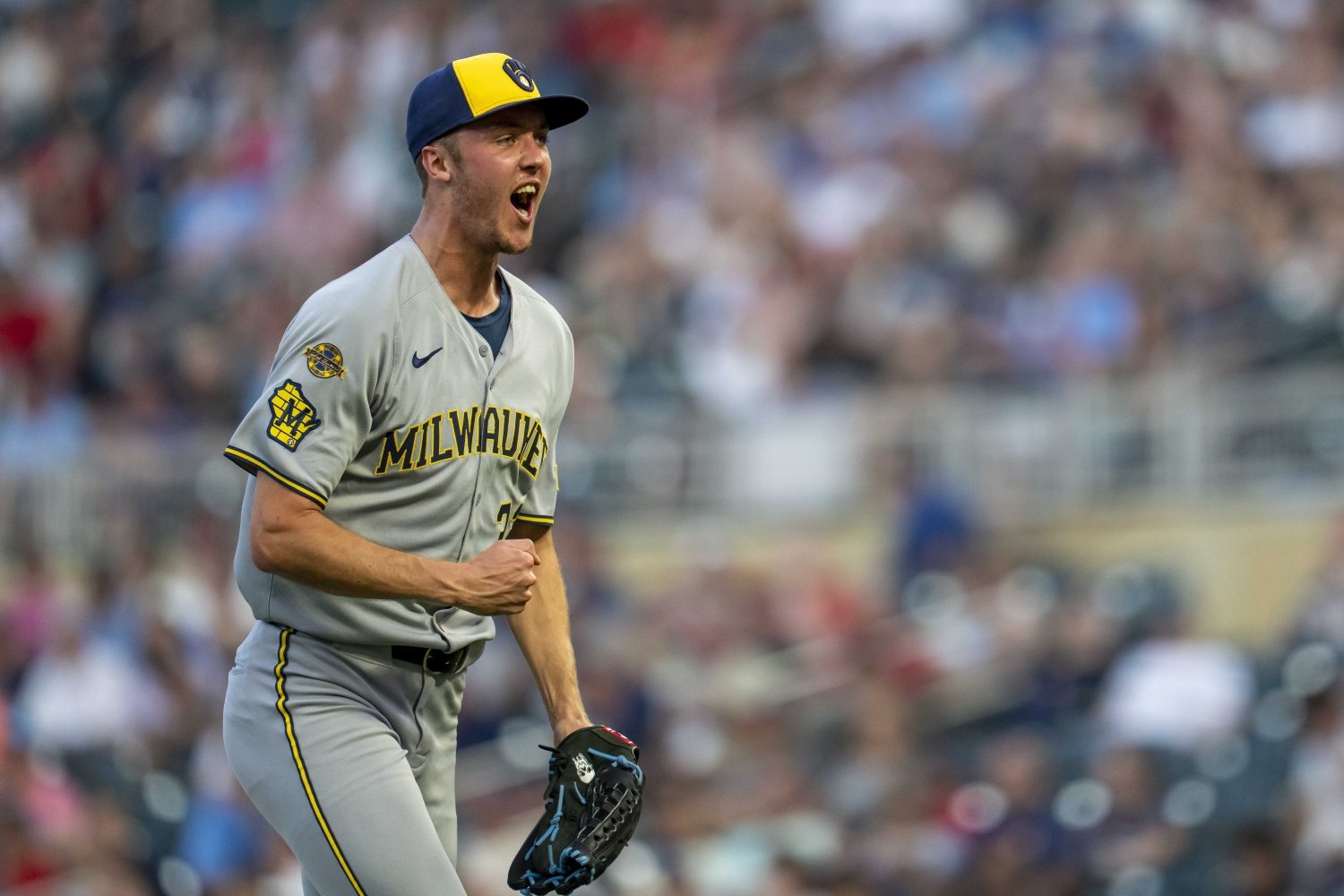 Jacob Misiorowski was supposed to toe the slab on June 18 against the Chicago Cubs, before the game was postponed due to rain. Personally, I’ve never heard of a few drops of water getting in the way of America’s national pastime but alas, his next outing was pushed until June 20, when he’d face the Twins. Given how he performed, I assume the Cubs breathed a sigh of relief that the clouds had moved in their favor. In a scintillating follow-up to his debut, Misiorowski gave up just one hit, one walk, and two earned runs, all of which came in the seventh inning—at which point Misiorowski was promptly pulled. On 86 pitches, he threw 60 strikes and generated nine whiffs, five of which came against his slider. You know, the slider that averages 94 mph and really behaves more like a cutter, but is labeled a slider, because why the heck not? He threw six perfect innings against an offense that has averaged a .731 OPS over the past 30 days, the third-highest in MLB. The Cubs would have been quite the test, but when presented with a different challenge and less time to prepare specifically for them, he stepped up in an even bigger way. So this all invites the question: What comes next for the rookie? Two games still isn’t a ton of data, but it has given us a closer look at what he can do besides throwing the ball super duper hard—and how he attacks hitters at the highest level of competition. His four-seam fastball is one of the best in baseball. It has an average velocity of 99.7 mph, with 16 inches of induced vertical break. FanGraphs has given it a Stuff+ figure of 124, the highest of any fastball on the Brewers. It’s really the key to his success, and scouts bumped it from a 70 to an 80 grade heading into this year. With its velocity, rise, and Misiorowski’s ridiculous 7.7 feet of extension, it’s simply a tough pitch to catch up to, especially when located well. His slider is similarly effective, having a whiff rate of 33.3%. It is the only pitch he has given up any hits on so far this year, but it has also been a tough pitch to hit. He used it to pick apart Carlos Correa to great effect, getting him to swing and miss three times. His curveball grades similarly to his fastball, although we haven’t seen much of it just yet since he’s only thrown it 13 times thus far. A three-pitch arsenal is a little thin for a modern-day starter, especially since he’s more of a two-pitch guy anyway, but I’m sure as he continues to develop, he’ll work on getting some off-speed offerings and stuff going arm side. He has thrown a few changeups, but his usage of that pitch so far has been so selective as to be minimal. In terms of what he can work on, command is undoubtedly the biggest thing. It has been an issue since he was drafted, and he’s never really come close to having a walk rate below 10%. It’s also a contributing factor to his first pitch strike rate of 54.1%, quite a bit lower than the average mark of 61.1%. He’s doing better when it comes to finding the strike zone overall, landing 50.9% of his pitches, but greater precision that allows him to get into more pitcher-friendly counts would make him even more dominant. Then there’s his whiff rate. Despite his stuff, his whiff rate after two starts is just 25.9%, right about league average. Both his zone swing (70.6%) and zone contact (85.0%) rates are higher than average, which signals that he’s filling up the juicier parts of the zone a little too often. His hard-hit rate is better than league average, but his average exit velocity is worse, meaning that all his power does help a hitter get the ball moving the other way if they can connect with it. With a 1.64 ERA after his first 11 innings, it may seem like the possibilities for Misiorowski are endless, but it will only take one start for all of that to be turned upside down. The potential is clearly there, but if he wants to have a longer career that allows him to tap into all of it, he’ll need to make a few adjustments. Developing his arsenal is one tweak that the Brewers will likely focus on in the near future. Spencer Strider is an example of a starter who can be successful with just two pitches, but as we’ve seen from his rocky start to the year, the second his velocity or movement dips even slightly, it no longer plays. Misiorowski won’t be able to throw 100 mph forever; nor should he expect to. A season-ending injury is all but a sure thing these days, and for someone with his skillset, developing a game plan that is resilient to an unforeseen circumstance can help prevent him from becoming the next Noah Syndergaard. I don’t doubt that the command will improve. It was steadily getting better through his minor-league career and Milwaukee has been pretty good about getting things under control. Abner Uribe had a walk rate of 15.7% in 2023, and it’s down to 10.4% this year. Freddy Peralta debuted with a 12.5% walk rate, and now consistently hovers around the 9% mark. At this point, it really seems like the sky's the limit for Misiorowski. He’s rightfully the talk of the town, and it will be a privilege to watch him develop into a potentially generational pitching talent with the Brewers. He’s already got all of the makings of a big-league ace and he’ll likely be leading this team’s rotation before you know it. With a few more steps in the right direction, he has the potential to be one of the greatest arm talents to ever stroll through town.
 -
Jacob Misiorowski was supposed to toe the slab on 6/18 against the Chicago Cubs before the game was postponed due to rain. Personally, I’ve never heard of a few drops of water getting in the way of America’s national pastime but alas, his next outing was pushed until 6/20 where he’d face the Twins. Given how he performed, I assume the Cubs breathed a sigh of relief that the nimbostratus clouds had swung in their favor. In what was likely a miserable viewing experience for Twins fans, Misiorowski gave up just one hit, one walk, and two earned runs, all of which came in the seventh inning at which point Misiorowski was promptly pulled. On 86 pitches, he threw 60 strikes and generated nine whiffs, five of which came against his slider. You know, the slider that averages 94 mph and really behaves more like a cutter but is labeled a slider because why the heck not? He threw six perfect innings against an offense that has averaged a .731 OPS over the past 30 days, the third-highest in MLB. The Cubs would have been quite the test but when presented with arguably greater challenge, he stepped up in an even bigger way. So this all begs the question, what comes next for the rookie? Two games still isn’t a ton of data but it has given us a closer look at what he can do beside throwing the ball super duper hard and how he attacks hitters at the highest level of competition. His four-seam fastball is one of the best in baseball. It has an average velocity of 99.7 mph with 16 inches of induced vertical break and FanGraphs has given it a Stuff+ figure of 124, the highest of any fastball on the Brewers. It’s really the key to his success and scouts bumped it from a 70 to an 80-grade heading into this year. With its velocity, rise, and Misiorowski’s ridiculous 7.7 foot extension, it’s simply a touch pitch to catch up to, especially when located well. His slider is similarly effective, having a whiff rate of 33.3%. It is the only pitch he has given up any hits on so far this year but it has also been a tough pitch to hit. He used it to pick apart Carlos Correa to great effect, getting him to swing and miss three times. His curveball grades similarly to his fastball although we haven’t seen much of it just yet since he’s only thrown it 13 times thus far. A three-pitch arsenal is a little thin for a modern-day starter, especially since he’s more of a two-pitch guy anyway, but I’m sure as he continues to develop he’ll work on getting some off-speed offerings and stuff going arm side. He has thrown a few changeups according to Statcast but given the intrinsic properties, it’s really hard to tell whether they were actually changeups or just wonky fastballs that were misclassified. In terms of what he can work on, command is undoubtedly the biggest thing. It has been an issue since he was drafted and he’s never really come close to having a walk rate below 10%. It’s also a contributing factor to his first pitch strike rate of 54.1%, quite a bit lower than the league average mark of 61.1%. He’s doing better when it comes to finding the strike zone overall, landing 50.9% of his pitches, but greater precision that allows him to get into more pitcher-friendly counts would make him even more dominant. Then there’s his whiff rate. Despite his stuff, his whiff rate after two starts is just 25.9%, right about league average. Both his zone swing (70.6%) and zone contact (85.0%) rates are higher than league average which signals that he’s filling up the juicier parts of the zone a little too often. His hard hit rate is better than league average but his average exit velocity is worse, meaning that when hitters do get into one of his pitches, they’re getting pummeled. With a 1.64 ERA after his first 11 innings, it may seem like the possibilities for Misiorowski are endless but it will only take one start for all of that to be turned upside down. The potential is clearly there but if he wants to have a longer career that allows him to tap into all of it, he’ll need to make a few adjustments. Developing his arsenal is one tweak that the Brewers will likely focus on in the near future. Spencer Strider is an example of a starter who can be successful with just two pitches but as we’ve seen from his rocky start to the year, the second his velocity or movement dips even slightly, it no longer plays. Misiorowski won’t be able to throw 100 mph forever nor should he expect to. A season-ending injury is all but a sure thing these days and for someone with his skillset, developing a game plan that is resilient to an unforeseen circumstance can help prevent him from becoming the next Noah Syndergaard. I don’t doubt that the command will improve. It was steadily getting better through his minor league career and Milwaukee has been pretty good about getting things under control. Abner Uribe had a walk rate of 15.7% in 2023 and it’s down to 10.4% this year. Freddy Peralta debuted with a 12.5% walk rate and now consistently hovers around the 9% mark. At this point, it really seems like the sky's the limit for Misiorowski. He’s rightfully the talk of the town and it will be a privilege to watch him develop into a potentially generation pitching talent with the Brewers. He’s already got all of the makings of a big league ace and he’ll likely be leading this team’s rotation before you know it. With a few more steps in the right direction, he has the potential to be one of the greatest arm talents to ever stroll through town. View full article
-
maybe u guys are right. .933 OPS so far in june is not bad. that said i hope that he does remain healthy so that he and brice turang can become urban planners after their playing days are done.
-
I have to ask where all of this leaves Christian Yelich. After last year, I feel like there was a lot of discussion about moving him to first base or DH permanently which seemed like an uncharacteristic move by the Brewers who'd be paying him $26 million to sit for half the game. This year, it seems like a reality. Of the 72 games he has played so far, he has been a DH in 66 of them. Isaac Collins has been a huge defensive upgrade (we all know how much the Brewers tend to prioritize that) and his bat isn't half bad either. If Collins continues to be as good as he has been (5'8 by the way short king outfielders stay winning), what does that mean for Yelich? His contract has him under team control through 2028 with a $20mm mutual option and $6.5mm buyout in 2029. Curious.
-
i do it for you, MattK
-
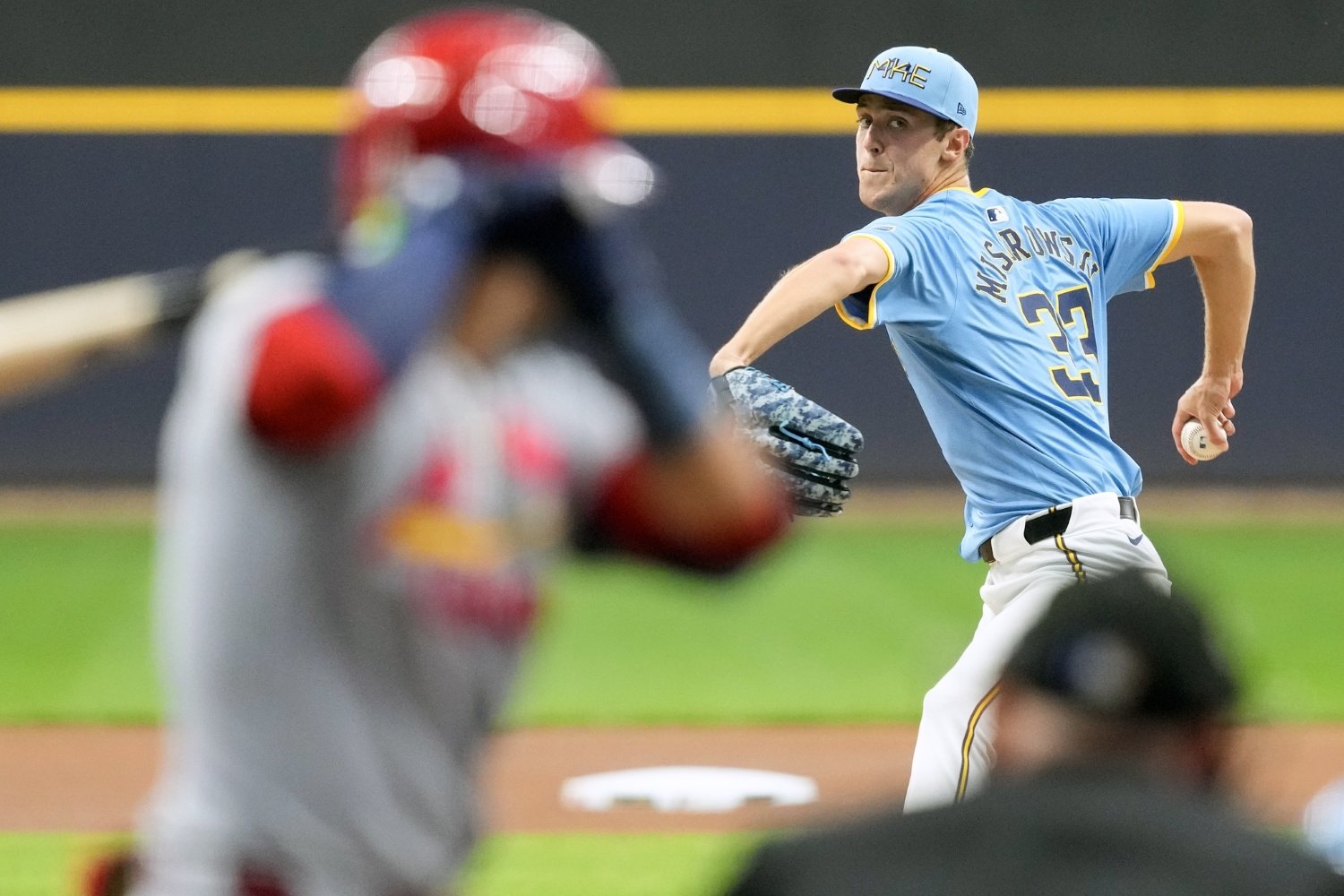 If you only know one current Brewers prospect, it’s probably Jacob Misiorowski. Ever since he was drafted in the second round of the 2022 draft, people have been talking about the 6’7” kid who has a wicked fastball and unbelievable stuff. After posting outstanding numbers in Triple-A and witnessing another cascade of devastating starting pitcher injuries for Milwaukee, he was finally called up to take the big league mound for the first time on June 12. For the most part, he met his lofty expectations. As I mentioned earlier, Misiorowksi’s most impressive tool is his fastball. Scouts have given it the elusive 80 grade, and in his first major-league start, it was easy to see why. It averaged a velocity of 99.0 mph, touched 102.2 mph, and had nearly 17 inches of induced vertical break. For those who are more qualitatively minded, all of those numbers describe an elite fastball. But wait folks, there’s more. He also throws a slider that averages 94.3 mph (illegal in 10 states) and a curveball at 87.9 mph (illegal in nine states). He's far from being a one-trick pony, and every pitch that comes out of his hand has quite a bit of gas behind it. But don’t let the box score showing five scoreless innings fool you: his first big-league showdown was quite the challenge for the young 23-year-old. The Cardinals have been neck-and-neck with the Brewers in the standings for the majority of the season, largely thanks to their lineup, whose combined .721 OPS places them 11th in MLB. Leading the group in OPS is Iván Herrera, the team’s backup catcher and frequent designated hitter. His sample size is a little smaller than everyday players on the team, but he entered the matchup against Misiorowski with a .941 OPS. He profiles as a guy with great bat speed, quality-of-contact abilities, and outstanding numbers against fastballs. In other words, he’s a tough nut to crack for any pitcher. So, when he ran into Misiorowski for the second time while the Cardinals were down just 1-0, it was sure to be a tense moment. By the top of the fourth inning, the reality of Misiorowski's workload had begun to set in. The velocity on his heater was comfortably below the triple-digit mark he started off at, and the issues with command that have followed him since he became a professional caused him to walk the leadoff hitter, Lars Nootbaar, on four noncompetitive pitches. After getting Masyn Winn to fly out, in stepped Herrera. Misiorowski’s first pitch was risky: a 98-mph four-seam fastball right down the middle. If it had been any slower, there’s a good chance that Herrera would’ve put St. Louis on top. Luckily, he was just a tad late and fouled it back, putting him behind 0-1. Likely wanting to work quickly and get further ahead in the count, Misiorowski threw another fastball, but he overcorrected on the finish, yanking it away from Herrera. In retrospect, it’s probably good that he missed the zone by as much as he did, because he also lost velocity on it and it ended up at just 95.5 mph. This evened up the count at 1-1. Now, 1-1 is a crucial count in baseball. As a pitcher, if you can get to two strikes, you set the pace of the rest of the at-bat. You get to expand the zone, deploy your breaking stuff, and typically close the situation early and efficiently. Usually, being aggressive at 1-1, especially with a great fastball, is the move. However, Misiorowski had just thrown two non-competitive fastballs back-to-back. Neither pitch had good location, and since Herrera has been a great fastball hitter all year, it was time to dip into the secondary stuff. It seems like the game plan was to use his curveball as a putaway pitch since he only ever threw it when he was ahead with two strikes. It seemed like the slider would be the better option here. Furthermore, Herrera had already whiffed on the slider and taken a called strike on the only two sliders had seen in the previous at-bat. The pitch was in a good spot, just touching the outside edge of the zone, and Herrera got just enough to foul it off and fall behind 1-2. Fun fact: the broadcast seems to have misclassified the pitch as a cutter—because seriously, who allowed a slider to be thrown at 94 mph? Now the rookie was in the driver’s seat. In some cases, this would allow him to get a few low-risk pitches out of the zone in, but with Willson Contreras coming up and a runner already on first, there wasn’t any time to waste. He had to execute and locate a great fastball. If he missed outside of the zone, it would allow Herrera to get back in the count, and if he missed his spot in the zone, it could go for extra bases. So, Misiorowski placed a 98-mph fastball at the top of the zone, right over Herrera’s swing, punching him out in impressive fashion. There should be two main takeaways from this at-bat and debut. First, his command will become a real problem if Misiorowski isn’t able to get it under control. Not only did he walk four batters against just five strikeouts, his pitch count was up to 78 after just five innings. With more traffic on the basepaths, he'll limit his own longevity and be more susceptible to injury, he even reported some minor cramping after his outing. On the other hand, his stuff is so darn competitive that when he does locate pitches where they need to go, it’s nigh unhittable. The Cardinals proved this claim by, well, failing to record a single hit against him. He’s young, but will be facing an even bigger test against the current kings of the NL Central, the Cubs, in his next start. In a potential case of unstoppable force vs. immovable object, we’ll get another glimpse at someone who might be leading Milwaukee’s rotation in the not-so-distant future, in a game with plenty of stakes even beyond that portent.
 -
Image courtesy of © Jeff Hanisch-Imagn Images If you only know one current Brewers prospect, it’s probably Jacob Misiorowski. Ever since he was drafted in the second round of the 2022 draft, people have been talking about the 6’7” kid who has a wicked fastball and unbelievable stuff. After posting outstanding numbers in Triple-A and witnessing another cascade of devastating starting pitcher injuries for Milwaukee, he was finally called up to take the big league mound for the first time on June 12. For the most part, he met his lofty expectations. As I mentioned earlier, Misiorowksi’s most impressive tool is his fastball. Scouts have given it the elusive 80 grade, and in his first major-league start, it was easy to see why. It averaged a velocity of 99.0 mph, touched 102.2 mph, and had nearly 17 inches of induced vertical break. For those who are more qualitatively minded, all of those numbers describe an elite fastball. But wait folks, there’s more. He also throws a slider that averages 94.3 mph (illegal in 10 states) and a curveball at 87.9 mph (illegal in nine states). He's far from being a one-trick pony, and every pitch that comes out of his hand has quite a bit of gas behind it. But don’t let the box score showing five scoreless innings fool you: his first big-league showdown was quite the challenge for the young 23-year-old. The Cardinals have been neck-and-neck with the Brewers in the standings for the majority of the season, largely thanks to their lineup, whose combined .721 OPS places them 11th in MLB. Leading the group in OPS is Iván Herrera, the team’s backup catcher and frequent designated hitter. His sample size is a little smaller than everyday players on the team, but he entered the matchup against Misiorowski with a .941 OPS. He profiles as a guy with great bat speed, quality-of-contact abilities, and outstanding numbers against fastballs. In other words, he’s a tough nut to crack for any pitcher. So, when he ran into Misiorowski for the second time while the Cardinals were down just 1-0, it was sure to be a tense moment. By the top of the fourth inning, the reality of Misiorowski's workload had begun to set in. The velocity on his heater was comfortably below the triple-digit mark he started off at, and the issues with command that have followed him since he became a professional caused him to walk the leadoff hitter, Lars Nootbaar, on four noncompetitive pitches. After getting Masyn Winn to fly out, in stepped Herrera. Misiorowski’s first pitch was risky: a 98-mph four-seam fastball right down the middle. If it had been any slower, there’s a good chance that Herrera would’ve put St. Louis on top. Luckily, he was just a tad late and fouled it back, putting him behind 0-1. Likely wanting to work quickly and get further ahead in the count, Misiorowski threw another fastball, but he overcorrected on the finish, yanking it away from Herrera. In retrospect, it’s probably good that he missed the zone by as much as he did, because he also lost velocity on it and it ended up at just 95.5 mph. This evened up the count at 1-1. Now, 1-1 is a crucial count in baseball. As a pitcher, if you can get to two strikes, you set the pace of the rest of the at-bat. You get to expand the zone, deploy your breaking stuff, and typically close the situation early and efficiently. Usually, being aggressive at 1-1, especially with a great fastball, is the move. However, Misiorowski had just thrown two non-competitive fastballs back-to-back. Neither pitch had good location, and since Herrera has been a great fastball hitter all year, it was time to dip into the secondary stuff. It seems like the game plan was to use his curveball as a putaway pitch since he only ever threw it when he was ahead with two strikes. It seemed like the slider would be the better option here. Furthermore, Herrera had already whiffed on the slider and taken a called strike on the only two sliders had seen in the previous at-bat. The pitch was in a good spot, just touching the outside edge of the zone, and Herrera got just enough to foul it off and fall behind 1-2. Fun fact: the broadcast seems to have misclassified the pitch as a cutter—because seriously, who allowed a slider to be thrown at 94 mph? Now the rookie was in the driver’s seat. In some cases, this would allow him to get a few low-risk pitches out of the zone in, but with Willson Contreras coming up and a runner already on first, there wasn’t any time to waste. He had to execute and locate a great fastball. If he missed outside of the zone, it would allow Herrera to get back in the count, and if he missed his spot in the zone, it could go for extra bases. So, Misiorowski placed a 98-mph fastball at the top of the zone, right over Herrera’s swing, punching him out in impressive fashion. There should be two main takeaways from this at-bat and debut. First, his command will become a real problem if Misiorowski isn’t able to get it under control. Not only did he walk four batters against just five strikeouts, his pitch count was up to 78 after just five innings. With more traffic on the basepaths, he'll limit his own longevity and be more susceptible to injury, he even reported some minor cramping after his outing. On the other hand, his stuff is so darn competitive that when he does locate pitches where they need to go, it’s nigh unhittable. The Cardinals proved this claim by, well, failing to record a single hit against him. He’s young, but will be facing an even bigger test against the current kings of the NL Central, the Cubs, in his next start. In a potential case of unstoppable force vs. immovable object, we’ll get another glimpse at someone who might be leading Milwaukee’s rotation in the not-so-distant future, in a game with plenty of stakes even beyond that portent. View full article
-
He does have a pretty affordable $8mm team option for next year but that's it. He has been trying to get an extendo though.
- 10 replies
-
- 1
-
-
- rhys hoskins
- freddy peralta
- (and 1 more)
-
completely irrelevant to what you said but my barber once cut bobby dalbec's hair while he was in Seattle for a road trip apparently
-
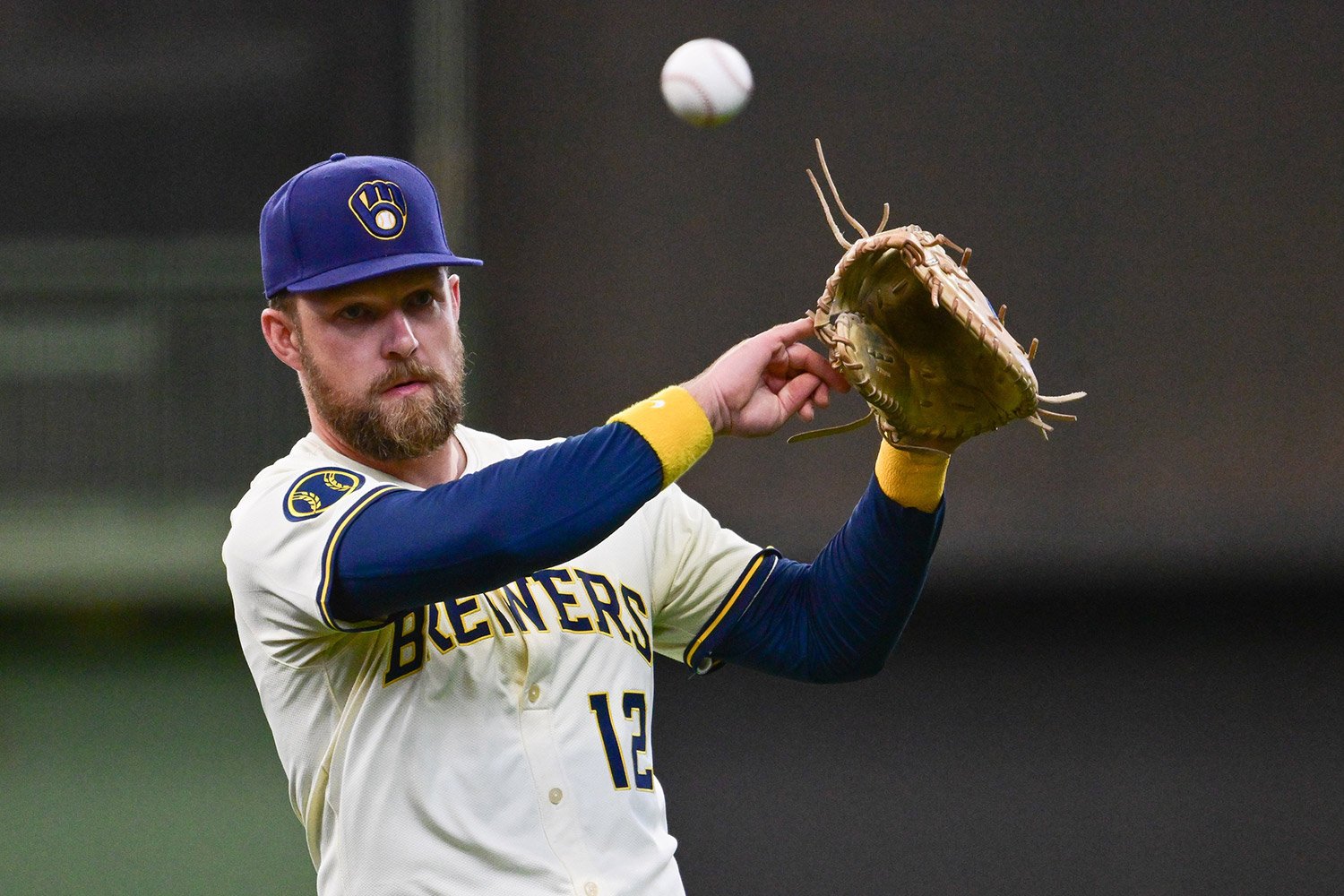 There have been so many tempting opportunities to throw in the towel this year as a Brewers fan. Maybe it was the way the team started off 0-4. Maybe it was the fact that, as recently as May 21st, the Brewers were below .500 and fourth in the NL Central. Or maybe you’re just generally pessimistic. Regardless of where you stand on the spectrum of optimism, it seems less debatable that the team has been less dominant this year than they have been in recent memory. The team’s playoff odds are currently hovering around the 30% mark, according to FanGraphs, while Baseball Reference provides more optimistic odds of around 40%. In both cases, Milwaukee has less than a coin-flip chance to make the playoffs, setting them up to miss October for just the second time in eight years. Given the current state of the division and the National League, this makes plenty of sense. The Chicago Cubs have seemed nearly unstoppable all season long, holding a dominant 42-28 record with the second-best run differential in MLB (+104). In addition to the big offseason acquisition of Kyle Tucker, Pete Crow-Armstrong has looked less like a defense-first center fielder and more like an MVP candidate, while Carson Kelly is having the best year of his career on all fronts by far. Even in the face of some starting pitching injuries, the rotation has managed to stay afloat thanks to a great year by Matthew Boyd and a solid year by Jameson Taillon. The Wild Card picture doesn’t seem much better, as a highly competitive NL West currently occupies two of the three total slots, with the Phillies claiming the final spot. To their credit, the Brewers are just 2.5 games out of the picture, but it won’t be an easy road forward. The future is even further muddied by the trade deadline, which inconveniently forces teams to classify themselves as buyers or sellers. If they’re willing to take their chances, the Brewers can fork over prospect equity and young talent to give them a better chance to reach the playoff bracket this season. Alternatively, they can trade away some of their impact players and hope that the scheduled bobblehead giveaways are enough to make up for the B-team product that will take the field for the final few months of the season. The case for selling is clear. In addition to the aforementioned obstacles standing between them and a postseason spot, they do have a few impending free agents who could be valuable assets to contenders. Rhys Hoskins has bounced back after a down year last year, and his 118 OPS+ could be a good fit for any team in need of help at first base. Freddy Peralta has a 2.69 ERA over his first 14 starts and would be an outstanding short-term starter rental. Heck, even Jose Quintana may have some suitors if he’s put on the market. In return, some infield and starting pitching depth would be ideal. The best part would be, at least for the front office, it’d allow the payroll to be cut even lower, something that seems to be a top priority based on the organization’s most recent roster move. But the Brewers’ hopes aren’t dead just yet. Sure, there has been discourse online about the possibility of Peralta and Hoskins being traded, but the Brewers haven’t demonstrated the same enthusiasm on the topic. Furthermore, although they were in the depths of the NL Central less than a month ago, they’ve managed to claw their way back, and things seem to be moving in the right direction. The pitching staff has combined for a 3.23 ERA, seventh best in MLB. They’ve called up phenom prospect Jacob Misiorowski and plan to make him an integral part of the rotation. The offense still leaves a little to be desired, especially when it comes to certain players, but other stars are starting to bring it back around. Christian Yelich has taken slight steps forward in the past month, Jackson Chourio’s June is looking much better than his May, and Joey Ortiz is almost back to being an acceptable bat. Almost. Because the Brewers are currently on the fence, the results of the next few weeks will help push them in one direction or the other. Nothing is certain, and the tone of this conversation might change by the start of July. A win streak here or a loss streak there could make or break the season, so while there are still plenty of games left to play, Milwaukee doesn’t have much room for error.
- 10 comments
-
- 1
-
-
- rhys hoskins
- freddy peralta
- (and 1 more)