



Michael Trzinski
-
Posts
923 -
Joined
-
Last visited
-
Days Won
1
Content Type
Profiles
Forums
Blogs
Events
News
2026 Milwaukee Brewers Top Prospects Ranking
Milwaukee Brewers Videos
2022 Milwaukee Brewers Draft Picks
Milwaukee Brewers Free Agent & Trade Rumors, Notes, & Tidbits
Guides & Resources
2023 Milwaukee Brewers Draft Picks
2024 Milwaukee Brewers Draft Picks
The Milwaukee Brewers Players Project
2025 Milwaukee Brewers Draft Pick Tracker
2026 Milwaukee Brewers Draft Tracker: Picks & Bonuses
Store
Downloads
Gallery
Everything posted by Michael Trzinski
-
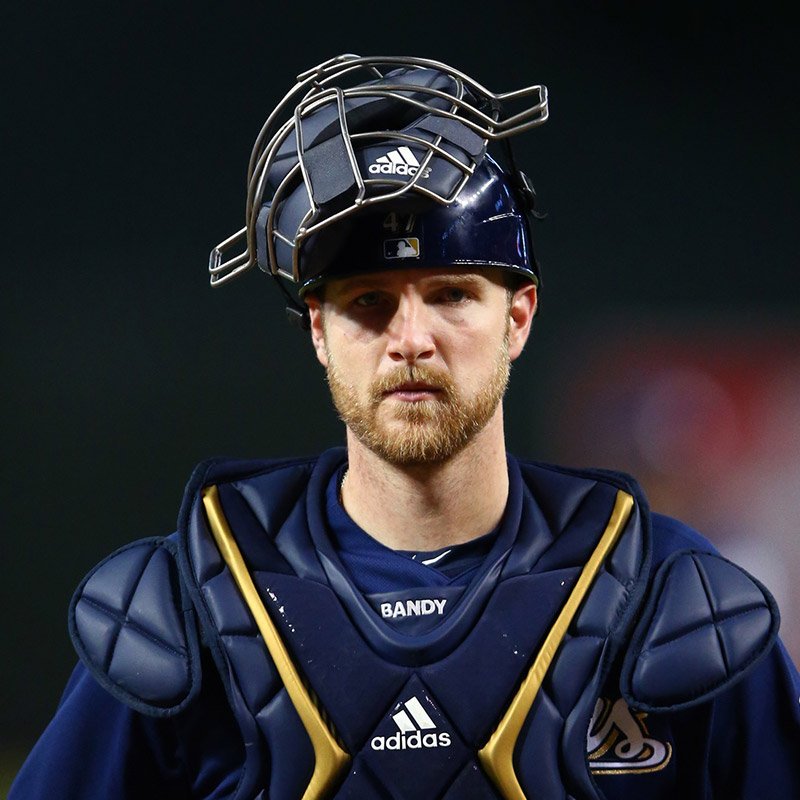 Jett Adam Bandy was born in 1990 in West Hills, California. The Thousand Oaks High School athlete was drafted in the 41st round by the Los Angeles Dodgers in the 2008 MLB draft but instead chose to attend the University of Arizona. He did sign with the Los Angeles Angels when selected in the 31st round of the 2011 MLB draft. The right-handed hitting catcher toiled in the Angels minor league organization for five years before getting called up to the big club, when he appeared in two games in September 2015. His first big league hit was a home run off the Twins’ Glen Perkins. Bandy split time with Carlos Pérez in 2016 and showed some pop, hitting eight home runs in 209 at-bats. After the season, he was traded to the Brewers for Drew Gagnon and Martin Maldonado. In 2017, Bandy got 169 at-bats while backing up Manny Piña. Bandy was red-hot in April, slashing .327/.377/.633 across 49 at-bats. He had a pair of three-hit games and hit homers in three consecutive games in mid-April. Bandy cooled off and after going just 2-for-38 in June, was sent down to Triple-A Colorado Springs. He was called back up in mid-July and finished the season with a slash line of .207/.287/.349. In 2018, Bandy hit .188/.268.266 in limited action and was DFA’d in late May. Although Bandy signed as a free agent with both Texas and Boston over a three-year span, he never again played in the major leagues.
 -
Jett Adam Bandy was born in 1990 in West Hills, California. The Thousand Oaks High School athlete was drafted in the 41st round by the Los Angeles Dodgers in the 2008 MLB draft but instead chose to attend the University of Arizona. He did sign with the Los Angeles Angels when selected in the 31st round of the 2011 MLB draft. The right-handed hitting catcher toiled in the Angels minor league organization for five years before getting called up to the big club, when he appeared in two games in September 2015. His first big league hit was a home run off the Twins’ Glen Perkins. Bandy split time with Carlos Pérez in 2016 and showed some pop, hitting eight home runs in 209 at-bats. After the season, he was traded to the Brewers for Drew Gagnon and Martin Maldonado. In 2017, Bandy got 169 at-bats while backing up Manny Piña. Bandy was red-hot in April, slashing .327/.377/.633 across 49 at-bats. He had a pair of three-hit games and hit homers in three consecutive games in mid-April. Bandy cooled off and after going just 2-for-38 in June, was sent down to Triple-A Colorado Springs. He was called back up in mid-July and finished the season with a slash line of .207/.287/.349. In 2018, Bandy hit .188/.268.266 in limited action and was DFA’d in late May. Although Bandy signed as a free agent with both Texas and Boston over a three-year span, he never again played in the major leagues. View full player
-
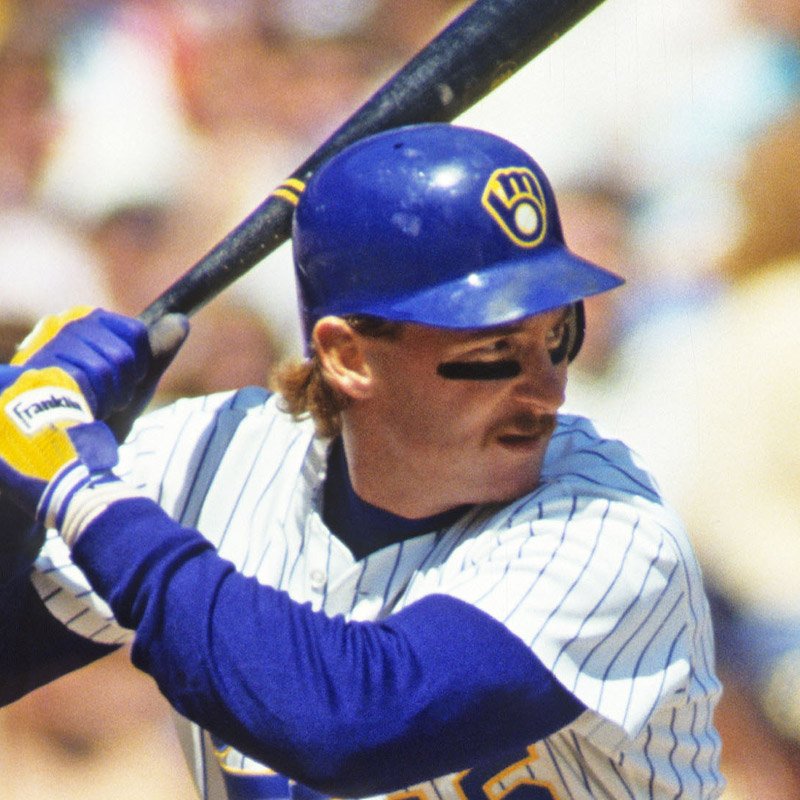 Robert George Deer was born in September 1960 in the Los Angeles suburb of Orange. He starred in both baseball and football at Canyon High School in Anaheim. Living up to his last name, Deer was a swift wide receiver as a teen but would make his living hitting baseballs instead of catching footballs. Rob Deer was drafted in the fourth round of the 1978 June Amateur Draft by the San Francisco Giants. Fellow Anaheim area pitcher Mike Witt was selected seven picks behind Deer, who was the 85th pick overall in that draft. Although Deer would be known for his majestic home runs, he failed to hit a single long ball in his first pro season at Rookie League Great Falls (Montana) in 137 at-bats. Deer started the 1979 season at Cedar Rapids (Iowa) in the Low-A Midwest League but was sent back to Great Falls after one month with a batting line of .209/.266/.267 across 86 at-bats, with only one home run. The lanky (6-foot-3, 210 pound) Deer showed promise in his second try in the rookie league, batting .317/.422/.560 with 18 doubles, seven triples, and seven homers in 218 at-bats. It would be the only time in Deer’s 19-year professional career that he had a batting average above .300 for the season. Over the next five seasons, Deer moved up from Single-A to Triple-A in the Giants’ organization, finally showing his power as he slugged 139 homers in just over 2,200 at-bats. He finished as league home run king three of those years and finished in the runner-up spot another year. He got called up to San Francisco at the end of the 1984 season and hit three jacks in 24 at-bats. In 1985, Deer played the whole season in the ‘City By The Bay,’ but only appeared in 78 games, slashing .185/.283/.377 across 162 at-bats. In December the Giants traded Deer to Milwaukee for pitching prospects Eric Pilkington and Dean Freeland. The swap favored the Brewers as Deer played five seasons for the Brew Crew while neither Pilkington nor Freeland ever played in the big leagues. Deer quickly became a Milwaukee fan favorite, reminiscent of slugging Brewer hero Gorman Thomas, who had returned to Milwaukee for the 1986 season after bouncing around in Cleveland and Seattle for a few years. Deer led Milwaukee in home runs during each of his five seasons, compiling 137 dingers in that time frame, which currently ranks 14th on the Brewers all-time career list, just behind Christian Yelich’s 145. In his first season in Milwaukee, Deer slashed .232/.336/.494 and hit 33 homers, which was a career-high for the righty slugger. He also led the team with 86 RBIs while whiffing 179 times, which was a crazy-high number in those days. Deer usually played right field with his strong arm, but also played in left field and spent a few dozen games at first base during his Brewer career. The following season, Deer batted .238/.360/.456 with 28 homers. His 186 strikeouts were a career high and led the American League. He also stole a career-high 12 bases. The Brewers started the season with 13 consecutive wins, including the thrilling comeback win on Easter Sunday. Deer hit the game-tying home run in the ninth, a three-run shot, before Dale Sveum smacked a two-out, two-run homer to give the Brewers a 6-4 win in front of a raucous County Stadium crowd of 29,357. Deer was featured on the April 27 edition of Sports Illustrated, his fist raised in jubilation as he circled the bases after his home run. In 1988, Deer hit a career-high .252 and hit 23 homers, and once again led the AL in whiffs with 153. His 85 RBIs were second on the team behind Robin Yount’s 91. Deer’s stats dropped off a bit in 1989, as he slashed only .210/.305/.425. But he did hit 26 homers and was third on the team with 65 RBIs. In his final season in Milwaukee, Deer produced a carbon copy of the previous year, slashing .209/.313/.432 with 27 homers and 67 RBIs. Deer was granted free agency after the season and signed with the Detroit Tigers. He played two-plus seasons with the Tigers and slugged 71 home runs in over 1,150 at-bats. Deer also led the AL in strikeouts two of those seasons. He was demoted to part-time status in 1993 and asked to be traded. In August, he was sent to the Boston Red Sox for the proverbial ‘played to be named later,’ which ended up being an ‘unspecified amount of cash.’ Deer was granted free agency after the season and signed a one-year, $2.5 million contract with the Hanshin Tigers of the Japan Central League. He played only 70 games with a slash line of .151/.279/.297 with eight home runs. His season ended when he tore ligaments in his right thumb trying to make a catch of a foul pop-up while playing first base. In April 1995, the California Angels signed Deer to a minor-league contract. He played at Triple-A Vancouver (British Columbia) and despite batting .288/.398/.525 with four home runs in 80 ABs, the 34-year-old Deer was released to make room for a younger player. A couple weeks later he was signed to a minor-league deal by the San Diego Padres. He had a solid summer in Triple-A Las Vegas, slashing .292/.377/.587 with 14 round-trippers in just 223 ABs. However, he was released after the season. The Padres re-signed Deer before Christmas 1995, but the player asked for his release in late March 1996. Three weeks later after receiving no calls from major league teams, Deer re-signed with the Las Vegas club. He was called up to San Diego in early July when Tony Gwynn went on the disabled list and played in 25 games, slashing just .180/.359/.480 across 50 ABs with four HRs. When Gwynn returned to the team, Deer was designated for assignment. In April 1997, the Madison (Wisconsin) Black Wolf team of the Independent Northern League made a contract offer to both Deer and pitcher Jim Abbott, but nothing came of those offers. Deer finished his career with 230 home runs and a slash line of .220/.324/.442 in 11 big league seasons. After his playing career ended, Deer worked as a hitting instructor and hitting coach in the San Diego organization, as well as being an assistant hitting coach for the Chicago Cubs under manager and former teammate Sveum. When asked how a .220 career hitter could be a hitting instructor, Deer said with a smile, "I’ll be the first to admit I don’t want them to hit like I did."
 -
Robert George Deer was born in September 1960 in the Los Angeles suburb of Orange. He starred in both baseball and football at Canyon High School in Anaheim. Living up to his last name, Deer was a swift wide receiver as a teen but would make his living hitting baseballs instead of catching footballs. Rob Deer was drafted in the fourth round of the 1978 June Amateur Draft by the San Francisco Giants. Fellow Anaheim area pitcher Mike Witt was selected seven picks behind Deer, who was the 85th pick overall in that draft. Although Deer would be known for his majestic home runs, he failed to hit a single long ball in his first pro season at Rookie League Great Falls (Montana) in 137 at-bats. Deer started the 1979 season at Cedar Rapids (Iowa) in the Low-A Midwest League but was sent back to Great Falls after one month with a batting line of .209/.266/.267 across 86 at-bats, with only one home run. The lanky (6-foot-3, 210 pound) Deer showed promise in his second try in the rookie league, batting .317/.422/.560 with 18 doubles, seven triples, and seven homers in 218 at-bats. It would be the only time in Deer’s 19-year professional career that he had a batting average above .300 for the season. Over the next five seasons, Deer moved up from Single-A to Triple-A in the Giants’ organization, finally showing his power as he slugged 139 homers in just over 2,200 at-bats. He finished as league home run king three of those years and finished in the runner-up spot another year. He got called up to San Francisco at the end of the 1984 season and hit three jacks in 24 at-bats. In 1985, Deer played the whole season in the ‘City By The Bay,’ but only appeared in 78 games, slashing .185/.283/.377 across 162 at-bats. In December the Giants traded Deer to Milwaukee for pitching prospects Eric Pilkington and Dean Freeland. The swap favored the Brewers as Deer played five seasons for the Brew Crew while neither Pilkington nor Freeland ever played in the big leagues. Deer quickly became a Milwaukee fan favorite, reminiscent of slugging Brewer hero Gorman Thomas, who had returned to Milwaukee for the 1986 season after bouncing around in Cleveland and Seattle for a few years. Deer led Milwaukee in home runs during each of his five seasons, compiling 137 dingers in that time frame, which currently ranks 14th on the Brewers all-time career list, just behind Christian Yelich’s 145. In his first season in Milwaukee, Deer slashed .232/.336/.494 and hit 33 homers, which was a career-high for the righty slugger. He also led the team with 86 RBIs while whiffing 179 times, which was a crazy-high number in those days. Deer usually played right field with his strong arm, but also played in left field and spent a few dozen games at first base during his Brewer career. The following season, Deer batted .238/.360/.456 with 28 homers. His 186 strikeouts were a career high and led the American League. He also stole a career-high 12 bases. The Brewers started the season with 13 consecutive wins, including the thrilling comeback win on Easter Sunday. Deer hit the game-tying home run in the ninth, a three-run shot, before Dale Sveum smacked a two-out, two-run homer to give the Brewers a 6-4 win in front of a raucous County Stadium crowd of 29,357. Deer was featured on the April 27 edition of Sports Illustrated, his fist raised in jubilation as he circled the bases after his home run. In 1988, Deer hit a career-high .252 and hit 23 homers, and once again led the AL in whiffs with 153. His 85 RBIs were second on the team behind Robin Yount’s 91. Deer’s stats dropped off a bit in 1989, as he slashed only .210/.305/.425. But he did hit 26 homers and was third on the team with 65 RBIs. In his final season in Milwaukee, Deer produced a carbon copy of the previous year, slashing .209/.313/.432 with 27 homers and 67 RBIs. Deer was granted free agency after the season and signed with the Detroit Tigers. He played two-plus seasons with the Tigers and slugged 71 home runs in over 1,150 at-bats. Deer also led the AL in strikeouts two of those seasons. He was demoted to part-time status in 1993 and asked to be traded. In August, he was sent to the Boston Red Sox for the proverbial ‘played to be named later,’ which ended up being an ‘unspecified amount of cash.’ Deer was granted free agency after the season and signed a one-year, $2.5 million contract with the Hanshin Tigers of the Japan Central League. He played only 70 games with a slash line of .151/.279/.297 with eight home runs. His season ended when he tore ligaments in his right thumb trying to make a catch of a foul pop-up while playing first base. In April 1995, the California Angels signed Deer to a minor-league contract. He played at Triple-A Vancouver (British Columbia) and despite batting .288/.398/.525 with four home runs in 80 ABs, the 34-year-old Deer was released to make room for a younger player. A couple weeks later he was signed to a minor-league deal by the San Diego Padres. He had a solid summer in Triple-A Las Vegas, slashing .292/.377/.587 with 14 round-trippers in just 223 ABs. However, he was released after the season. The Padres re-signed Deer before Christmas 1995, but the player asked for his release in late March 1996. Three weeks later after receiving no calls from major league teams, Deer re-signed with the Las Vegas club. He was called up to San Diego in early July when Tony Gwynn went on the disabled list and played in 25 games, slashing just .180/.359/.480 across 50 ABs with four HRs. When Gwynn returned to the team, Deer was designated for assignment. In April 1997, the Madison (Wisconsin) Black Wolf team of the Independent Northern League made a contract offer to both Deer and pitcher Jim Abbott, but nothing came of those offers. Deer finished his career with 230 home runs and a slash line of .220/.324/.442 in 11 big league seasons. After his playing career ended, Deer worked as a hitting instructor and hitting coach in the San Diego organization, as well as being an assistant hitting coach for the Chicago Cubs under manager and former teammate Sveum. When asked how a .220 career hitter could be a hitting instructor, Deer said with a smile, "I’ll be the first to admit I don’t want them to hit like I did." View full player
-
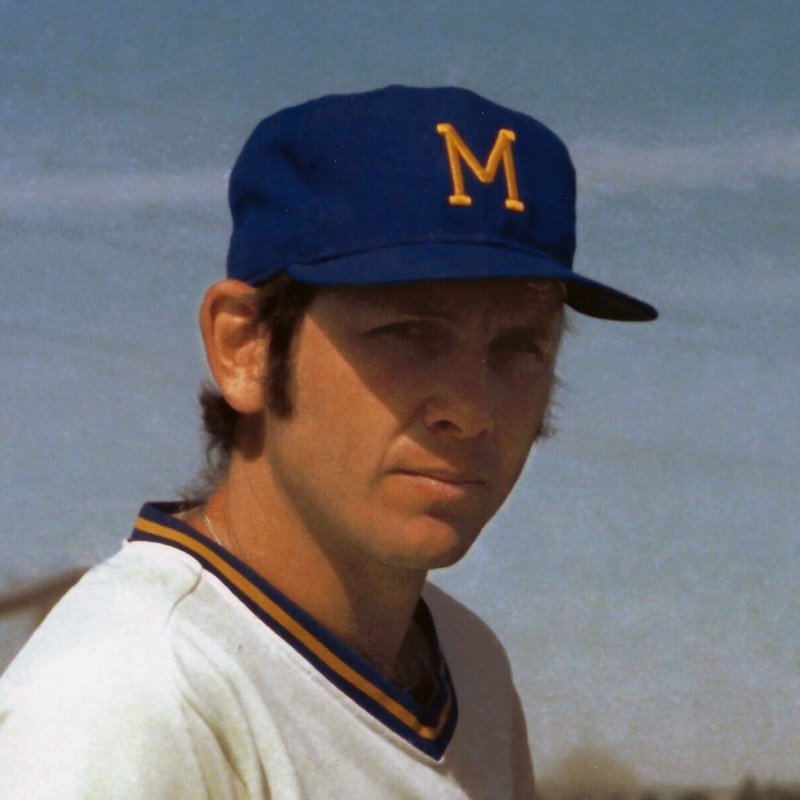 Donald Wayne Money was born in June 1947 in Washington, DC. His family moved to Cherry Hill, New Jersey when Money was an infant. He started playing baseball when he was seven years old and played every year for the next 31 years until he retired at age 37. Don Money graduated from La Plata High School (Maryland) in 1965 and was signed by the Pittsburgh Pirates two weeks after his 18th birthday. The right-handed infielder began his pro career at Salem (Virginia) in the rookie Appalachian League, where he made the All-Star team despite batting only .241 with six home runs. Money enlisted in the Marine Corps Reserves after the season and was on active duty one weekend a month and two weeks in the summer for the next eight years. The following season, Money played for Clinton (Iowa) in the Class-A Midwest League, where he once again struggled with the bat, slashing only .236/.304/.341 in 125 games. In 1967, Money had arguably his finest minor league season with a slash line of .310/.382/.508 across 545 plate appearances for Raleigh (North Carolina) in the Class-A Carolina League. After lighting up the Florida Winter Instruction League in the offseason with a batting line of .336/.414/.544 and a league-leading six homers, Money was traded shortly before Christmas, along with pitchers Harold Clem, Woodie Fryman, and Bill Laxton to the Philadelphia Phillies for pitcher Jim Bunning. Money started the 1968 season with the Phillies, and in his first major league game, he doubled off Dodgers pitcher Claude Osteen in the eighth inning for his first big-league hit. In mid-April, after only four games with the Phillies, Money was optioned to Triple-A San Diego in the Pacific Coast League for the remainder of the season, where he batted .303/.353/.430. Other than two brief flings in the Florida winter leagues the next two seasons, Money would never again toil in the minors. Over the next four seasons, Money was a regular for Philadelphia, playing primarily at third base or shortstop, but he also played left field and second base. In his first full season (1969), he was named the Topps Major League Rookie All-Star shortstop. After hitting .295/.361/.463 in 1970, his batting average fell to .223 in 1971 and .222 in 1972. Money had said that playing numerous positions did not help matters at the plate. With future Hall of Famer Mike Schmidt waiting in the wings, Money was traded on Halloween 1972 with pitcher Bill Champion and infielder John Vukovich to the Milwaukee Brewers for pitchers Jim Lonborg, Ken Brett, Ken Sanders, and Earl Stephenson. In his first season with the Brewers, Money slashed .284/.347/.401 with 11 bombs and 22 steals, a career high. The following season was almost a carbon copy of 1973, as Money had a batting line of .283/.346/.415 with 15 home runs, earning All-Star Game honors. He also set a major league record with 86 consecutive errorless games at third base and committed only five errors during the season. Despite those numbers, Money was denied the Gold Glove in the American League; Brooks Robinson won it for the 15th straight year. Money’s new nickname became “Brooks.” After another solid year in 1975, Money again earned All-Star honors from 1976 to 1978. He hit a career-high 25 home runs and 83 RBIs in 1977 and followed up with a nice season in 1978, which would be his last as a full-time player. Money slashed .293/.361/.440 in 137 games. He also clubbed 14 homers and 30 doubles in a solid season. Injuries plagued the rest of his career, and he never played more than 96 games after 1978. In 1982, he played only 28 games in the field but platooned at designated hitter with southpaw Roy Howell as the Brewers made it to the World Series for the first (and only) time in franchise history. Money went 3-for-13 with a double and an RBI in the seven-game loss to St. Louis in the “Suds Series.” Money played his final big-league season in 1983 but saw sporadic action, hitting only .149/.221/.219 in 43 games. After the season, he turned down a small contract from Milwaukee and took an offer to play in Japan for the Osaka Kintetsu Buffaloes. After only 29 games, Money and his family returned home after his Japanese experience was less than memorable. His major league numbers included 1,720 games, 1,623 hits, 302 doubles, 176 home runs, 729 RBIs, and a career slash line of .261/.328/.406. After his retirement, he coached for five years at Sacred Heart High School in New Jersey and then managed the Brewers organization at Beloit (1998-2004), Huntsville (2005-2008), and Nashville (2009-2011). He served as a hitting coach and special instructor from 2012-2015. His grandson Buddy Kennedy has played with Arizona, Detroit, and Philadelphia and is currently in the Phillies organization. Money was elected to the Brewers ‘Walk of Fame’ in 2005 and the Brewers ‘Wall of Honor’ in 2014.
 -
Donald Wayne Money was born in June 1947 in Washington, DC. His family moved to Cherry Hill, New Jersey when Money was an infant. He started playing baseball when he was seven years old and played every year for the next 31 years until he retired at age 37. Don Money graduated from La Plata High School (Maryland) in 1965 and was signed by the Pittsburgh Pirates two weeks after his 18th birthday. The right-handed infielder began his pro career at Salem (Virginia) in the rookie Appalachian League, where he made the All-Star team despite batting only .241 with six home runs. Money enlisted in the Marine Corps Reserves after the season and was on active duty one weekend a month and two weeks in the summer for the next eight years. The following season, Money played for Clinton (Iowa) in the Class-A Midwest League, where he once again struggled with the bat, slashing only .236/.304/.341 in 125 games. In 1967, Money had arguably his finest minor league season with a slash line of .310/.382/.508 across 545 plate appearances for Raleigh (North Carolina) in the Class-A Carolina League. After lighting up the Florida Winter Instruction League in the offseason with a batting line of .336/.414/.544 and a league-leading six homers, Money was traded shortly before Christmas, along with pitchers Harold Clem, Woodie Fryman, and Bill Laxton to the Philadelphia Phillies for pitcher Jim Bunning. Money started the 1968 season with the Phillies, and in his first major league game, he doubled off Dodgers pitcher Claude Osteen in the eighth inning for his first big-league hit. In mid-April, after only four games with the Phillies, Money was optioned to Triple-A San Diego in the Pacific Coast League for the remainder of the season, where he batted .303/.353/.430. Other than two brief flings in the Florida winter leagues the next two seasons, Money would never again toil in the minors. Over the next four seasons, Money was a regular for Philadelphia, playing primarily at third base or shortstop, but he also played left field and second base. In his first full season (1969), he was named the Topps Major League Rookie All-Star shortstop. After hitting .295/.361/.463 in 1970, his batting average fell to .223 in 1971 and .222 in 1972. Money had said that playing numerous positions did not help matters at the plate. With future Hall of Famer Mike Schmidt waiting in the wings, Money was traded on Halloween 1972 with pitcher Bill Champion and infielder John Vukovich to the Milwaukee Brewers for pitchers Jim Lonborg, Ken Brett, Ken Sanders, and Earl Stephenson. In his first season with the Brewers, Money slashed .284/.347/.401 with 11 bombs and 22 steals, a career high. The following season was almost a carbon copy of 1973, as Money had a batting line of .283/.346/.415 with 15 home runs, earning All-Star Game honors. He also set a major league record with 86 consecutive errorless games at third base and committed only five errors during the season. Despite those numbers, Money was denied the Gold Glove in the American League; Brooks Robinson won it for the 15th straight year. Money’s new nickname became “Brooks.” After another solid year in 1975, Money again earned All-Star honors from 1976 to 1978. He hit a career-high 25 home runs and 83 RBIs in 1977 and followed up with a nice season in 1978, which would be his last as a full-time player. Money slashed .293/.361/.440 in 137 games. He also clubbed 14 homers and 30 doubles in a solid season. Injuries plagued the rest of his career, and he never played more than 96 games after 1978. In 1982, he played only 28 games in the field but platooned at designated hitter with southpaw Roy Howell as the Brewers made it to the World Series for the first (and only) time in franchise history. Money went 3-for-13 with a double and an RBI in the seven-game loss to St. Louis in the “Suds Series.” Money played his final big-league season in 1983 but saw sporadic action, hitting only .149/.221/.219 in 43 games. After the season, he turned down a small contract from Milwaukee and took an offer to play in Japan for the Osaka Kintetsu Buffaloes. After only 29 games, Money and his family returned home after his Japanese experience was less than memorable. His major league numbers included 1,720 games, 1,623 hits, 302 doubles, 176 home runs, 729 RBIs, and a career slash line of .261/.328/.406. After his retirement, he coached for five years at Sacred Heart High School in New Jersey and then managed the Brewers organization at Beloit (1998-2004), Huntsville (2005-2008), and Nashville (2009-2011). He served as a hitting coach and special instructor from 2012-2015. His grandson Buddy Kennedy has played with Arizona, Detroit, and Philadelphia and is currently in the Phillies organization. Money was elected to the Brewers ‘Walk of Fame’ in 2005 and the Brewers ‘Wall of Honor’ in 2014. View full player
-
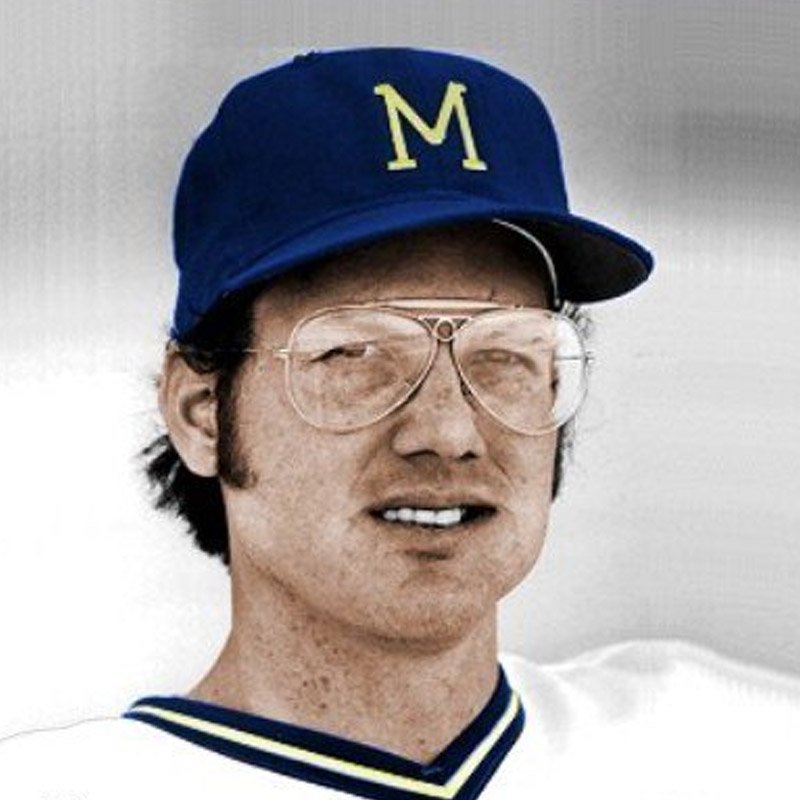 Dan Thomas was born in Birmingham, Alabama, in 1951 and moved to the East St. Louis, Illinois, area as a youngster. He described his mother as a ‘religious fanatic.’ For a time, Thomas attended a World Wide Church of God (WWCG) church with his mom but quit when the decree that no member could work from sundown Friday until sundown Saturday interfered with his baseball schedule. At Dupo (Illinois) High School, he starred in football and baseball before heading to college at Southern Illinois University. The Salukis lost in the championship game of the 1971 College World Series to USC, 7-2. On the team that finished 43-9 were future major leaguers Duane Kuiper, Mike Eden, Jim Dwyer, and Thomas. The following season, SIU finished the season with an outstanding record of 32-8-1 but did not make it to postseason play. Thomas and Joe Wallis were named to the NCAA District 4 all-star team. In June, Thomas was chosen by the Brewers as the sixth pick in the first round of the 1972 draft. He began at Low-A Newark (New York) and slashed .271/.352/.396 in 48 at-bats but failed to hit a home run. He moved up to Triple-A Evansville (Indiana) but struggled tremendously, batting only .130/.230/.167 in 54 at-bats. Thomas was then demoted and finished the season in Double-A San Antonio. For the whole season, he had a slash line of .202/.288/.292 with only one homer while striking out 31.8% of the time. Thomas also struggled defensively at third and second bases, making 19 errors in 221 chances for a fielding percentage of .914. Thomas spent both the 1973 and 1974 campaigns at Double-A Shreveport and performed well the first year, hitting nine home runs while slashing .266/.355/.376 in 458 at-bats. Midway through the year, he switched from third base to left field and became an adequate defender. Thomas spoke out before the 1974 season about hitting advice he received from Milwaukee coaches, saying, “They took a great prospect and destroyed him. They tried to change me again this year (1974), and I told them to jump back. And I think that’s one reason I’m here (in Double-A).” In 1974, Thomas suffered a hairline break in his leg sliding into home plate in early June. He missed about seven weeks but returned in late July and finished the season, hitting a pair of home runs while slashing .255/.350/.335 in 188 at-bats. He cut down on his strikeouts, whiffing at a 22% rate, about a 10% drop from 1972. Thomas began his third straight year at Double-A in 1975 at Thetford Mines, Quebec. He found his power stroke, knocking out eight homers in 191 at-bats before he got suspended in late June for punching an umpire. Thomas had been angered by a call at second base that didn’t even involve him. After the game, he caught up with umpire Greg Henley in the parking lot and hit the arbiter in the face. Thomas was given an early ‘vacation’ and ended the year with a slash line of .251/.316/.445. However, the Brewers stuck with him and assigned Thomas to Double-A Berkshire (Massachusetts) in 1976, the fourth different Brewers’ Double-A location in five years. Thomas paid them back by having the best season of his career. He slashed .325/.414/.614, hitting 29 home runs, knocking in 83, and stealing 15 bases. He won the Triple Crown and was named the Eastern League MVP despite missing two weeks after ear surgery to repair a perforated eardrum from a bad hop ball that struck him in the ear. That earned him a September call-up to Milwaukee. Thomas continued his hot-hitting ways, slashing .276/.372/.457 in 105 at-bats, including four long balls. After the season ended, the Brewers sent Thomas to Venezuela for winter ball. One night, Thomas swallowed a handful of muscle relaxers, but his wife was able to take him to a doctor in time to save his life. The Brewers brought him back to Milwaukee, where he stayed in a hospital for three weeks. His behavior started to get stranger; he was found wandering next to a freeway in Milwaukee and later walked away from a job the Brewers had arranged for him. He returned to East St. Louis and was in a psychologist’s care for four months. And at that time, he also went back to the teachings of the WWCG. Thomas played well in spring training in 1977 and made the big club as the left fielder. However, since the Brewers played many Friday night and Saturday afternoon games, Thomas would miss about one-fourth of the team’s games due to his religious beliefs, which entailed no work (baseball) between sundown Friday and sundown Saturday. “[The Brewers] were quite surprised,” Thomas said. “They asked me to reconsider, and I did. I thought about all the things I’ve been through and whether I should go back and become the old me or not. I decided there is something more important [than baseball] and said I couldn’t play on my Sabbath.” Thomas played for about a month, and although he performed well, he was sent to Triple-A Spokane. The Brewers said they needed another pitcher; Thomas thought it was something else. “I think my religion has something to do with it.” He slashed .237/.320/.344 in Spokane over 131 at-bats while hitting only one home run. He was demoted again to Double-A Holyoke (Massachusetts) but refused to report and sat out the rest of the season. The Brewers released Thomas before the 1978 season. He caught on with independent Boise in the Northwest League and did well, slashing .359/.448/.653 in 170 at-bats, but no major league team showed interest. In 1979, he played 39 games for Miami in the Inter-American League and then quit. That was his last season in organized ball. After the season, he moved back to Mobile, Alabama, with his wife and three daughters and lived with friends. Thomas was nearly broke, as he had spent most of his salary from baseball. He worked as a riveter and installed swimming pools. Thomas told his wife that he wished he’d had cancer so people would at least be able to understand what was wrong with him. On June 1, 1980, he was arrested for the sexual assault of a 12-year-old girl. He admitted to nothing but spoke to officers about the pressures on him from his past successes, his addictions, and his mental problems. A friend offered to pay for a lawyer, but Thomas refused. Eleven days later, he hung himself in his jail cell with strips of fabric ripped from his bed sheets. He had no money and was buried in a potter’s field next to a highway. Only a few people attended his funeral. His parents and three of his four siblings refused to show up. The ‘Sundown Kid’ showed bright potential, but darkness ultimately brought him down. Dan Thomas was 29 years old.
 -
Dan Thomas was born in Birmingham, Alabama, in 1951 and moved to the East St. Louis, Illinois, area as a youngster. He described his mother as a ‘religious fanatic.’ For a time, Thomas attended a World Wide Church of God (WWCG) church with his mom but quit when the decree that no member could work from sundown Friday until sundown Saturday interfered with his baseball schedule. At Dupo (Illinois) High School, he starred in football and baseball before heading to college at Southern Illinois University. The Salukis lost in the championship game of the 1971 College World Series to USC, 7-2. On the team that finished 43-9 were future major leaguers Duane Kuiper, Mike Eden, Jim Dwyer, and Thomas. The following season, SIU finished the season with an outstanding record of 32-8-1 but did not make it to postseason play. Thomas and Joe Wallis were named to the NCAA District 4 all-star team. In June, Thomas was chosen by the Brewers as the sixth pick in the first round of the 1972 draft. He began at Low-A Newark (New York) and slashed .271/.352/.396 in 48 at-bats but failed to hit a home run. He moved up to Triple-A Evansville (Indiana) but struggled tremendously, batting only .130/.230/.167 in 54 at-bats. Thomas was then demoted and finished the season in Double-A San Antonio. For the whole season, he had a slash line of .202/.288/.292 with only one homer while striking out 31.8% of the time. Thomas also struggled defensively at third and second bases, making 19 errors in 221 chances for a fielding percentage of .914. Thomas spent both the 1973 and 1974 campaigns at Double-A Shreveport and performed well the first year, hitting nine home runs while slashing .266/.355/.376 in 458 at-bats. Midway through the year, he switched from third base to left field and became an adequate defender. Thomas spoke out before the 1974 season about hitting advice he received from Milwaukee coaches, saying, “They took a great prospect and destroyed him. They tried to change me again this year (1974), and I told them to jump back. And I think that’s one reason I’m here (in Double-A).” In 1974, Thomas suffered a hairline break in his leg sliding into home plate in early June. He missed about seven weeks but returned in late July and finished the season, hitting a pair of home runs while slashing .255/.350/.335 in 188 at-bats. He cut down on his strikeouts, whiffing at a 22% rate, about a 10% drop from 1972. Thomas began his third straight year at Double-A in 1975 at Thetford Mines, Quebec. He found his power stroke, knocking out eight homers in 191 at-bats before he got suspended in late June for punching an umpire. Thomas had been angered by a call at second base that didn’t even involve him. After the game, he caught up with umpire Greg Henley in the parking lot and hit the arbiter in the face. Thomas was given an early ‘vacation’ and ended the year with a slash line of .251/.316/.445. However, the Brewers stuck with him and assigned Thomas to Double-A Berkshire (Massachusetts) in 1976, the fourth different Brewers’ Double-A location in five years. Thomas paid them back by having the best season of his career. He slashed .325/.414/.614, hitting 29 home runs, knocking in 83, and stealing 15 bases. He won the Triple Crown and was named the Eastern League MVP despite missing two weeks after ear surgery to repair a perforated eardrum from a bad hop ball that struck him in the ear. That earned him a September call-up to Milwaukee. Thomas continued his hot-hitting ways, slashing .276/.372/.457 in 105 at-bats, including four long balls. After the season ended, the Brewers sent Thomas to Venezuela for winter ball. One night, Thomas swallowed a handful of muscle relaxers, but his wife was able to take him to a doctor in time to save his life. The Brewers brought him back to Milwaukee, where he stayed in a hospital for three weeks. His behavior started to get stranger; he was found wandering next to a freeway in Milwaukee and later walked away from a job the Brewers had arranged for him. He returned to East St. Louis and was in a psychologist’s care for four months. And at that time, he also went back to the teachings of the WWCG. Thomas played well in spring training in 1977 and made the big club as the left fielder. However, since the Brewers played many Friday night and Saturday afternoon games, Thomas would miss about one-fourth of the team’s games due to his religious beliefs, which entailed no work (baseball) between sundown Friday and sundown Saturday. “[The Brewers] were quite surprised,” Thomas said. “They asked me to reconsider, and I did. I thought about all the things I’ve been through and whether I should go back and become the old me or not. I decided there is something more important [than baseball] and said I couldn’t play on my Sabbath.” Thomas played for about a month, and although he performed well, he was sent to Triple-A Spokane. The Brewers said they needed another pitcher; Thomas thought it was something else. “I think my religion has something to do with it.” He slashed .237/.320/.344 in Spokane over 131 at-bats while hitting only one home run. He was demoted again to Double-A Holyoke (Massachusetts) but refused to report and sat out the rest of the season. The Brewers released Thomas before the 1978 season. He caught on with independent Boise in the Northwest League and did well, slashing .359/.448/.653 in 170 at-bats, but no major league team showed interest. In 1979, he played 39 games for Miami in the Inter-American League and then quit. That was his last season in organized ball. After the season, he moved back to Mobile, Alabama, with his wife and three daughters and lived with friends. Thomas was nearly broke, as he had spent most of his salary from baseball. He worked as a riveter and installed swimming pools. Thomas told his wife that he wished he’d had cancer so people would at least be able to understand what was wrong with him. On June 1, 1980, he was arrested for the sexual assault of a 12-year-old girl. He admitted to nothing but spoke to officers about the pressures on him from his past successes, his addictions, and his mental problems. A friend offered to pay for a lawyer, but Thomas refused. Eleven days later, he hung himself in his jail cell with strips of fabric ripped from his bed sheets. He had no money and was buried in a potter’s field next to a highway. Only a few people attended his funeral. His parents and three of his four siblings refused to show up. The ‘Sundown Kid’ showed bright potential, but darkness ultimately brought him down. Dan Thomas was 29 years old. View full player
-
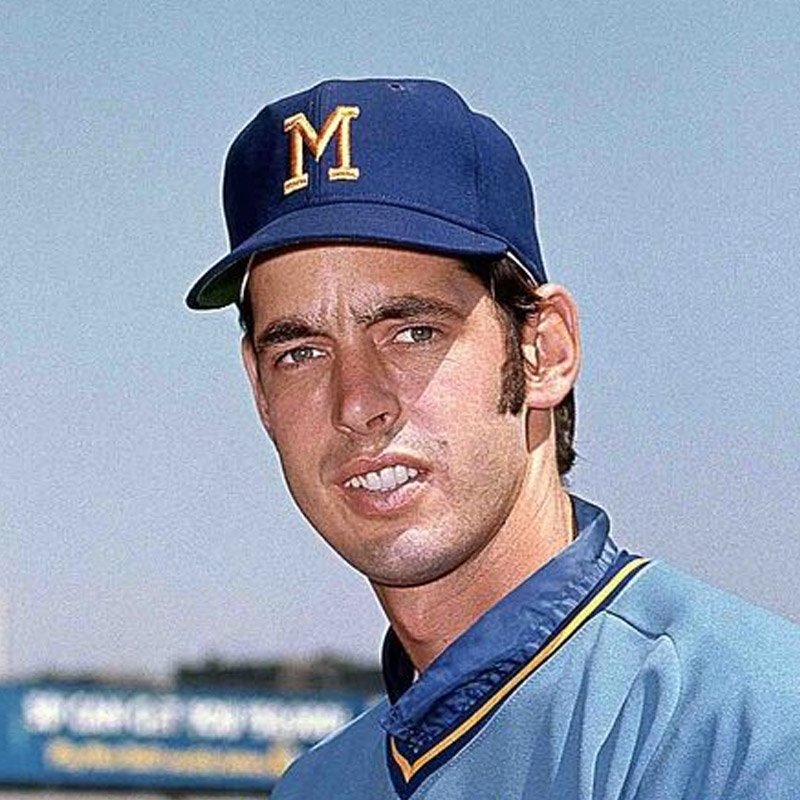 Bill Parsons was one of the top hurlers for the Milwaukee Brewers in the early 1970s. He won 13 games in each of his first two seasons in Brewtown, but injuries and inconsistency derailed his promising career. Parsons—born in 1948—attended Riverside (California) Polytechnic High School and was a star in both basketball and baseball. The 6-foot-6 center was named the All-Ivy League Player of the Year his senior year and had a game where he scored 24 points and grabbed 33 rebounds. After graduation, he attended Riverside City College and played both sports there. In June 1968, Parsons was chosen in the seventh round by the Seattle Pilots. He was assigned to Lower-A Newark (New York) in the New York-Penn League. Parsons struggled with his control, walking batters at nearly an 18% rate while losing six of eight decisions and posting an ERA of 4.69. In 1969, Parsons was moved down to Billings (Montana) in the rookie Pioneer League. The big right-hander pitched once for Billings, striking out 11 in seven innings, before he was promoted to Class-A Clinton (Iowa) of the Midwest League. In 11 appearances (10 starts) for the Pilots, Parsons compiled a 5-4 mark with an ERA of 1.57 and a WHIP of 0.986. He also pitched in the Arizona Instructional League that fall/winter and performed well there. He won four games (against two losses) and fashioned a nifty 1.80 ERA and a WHIP of 1.109. Parsons moved up to Triple-A Portland in the Pacific Coast League in 1970. He pitched four games with a record of 3-0 when his National Guard unit at Fort Ord, California, called him to active duty for four months. After his discharge in the fall, he pitched for Mayaguez in the Puerto Rican Winter League. His manager was Cal Ermer, who sent glowing reports back to Milwaukee. Parsons won four straight games, including a two-hitter over Ponce. The 1971 Milwaukee starting rotation included Parsons, and he quickly proved his worth. In his first major league game, he went the distance, allowing only six hits and two earned runs in a 2-0 loss to Oakland. In his first nine starts, he had five complete games and two shutouts. His record was 5-4, and his ERA was 1.80. If the Brewers could have scored a couple of runs here and there, he could have easily been 8-1. He finished the year with a 13-17 record, ERA of 3.20, WHIP of 1.275, and ERA+ of 107. He finished second in the American League Rookie of the Year voting to Cleveland’s Chris Chambliss. Parsons also earned The Sporting News AL Rookie Pitcher of the Year and was named to the Topps Rookie All-Star Team. His 244 2/3 innings pitched rank 15th in Brewer history. His 12 complete games are tied for 12th, and his four shutouts rank in a tie for third. The following year, Parsons struggled early, completing only two games in his first 16 starts while owning an inflated ERA of 5.05. In his final 14 starts, he did much better. Parsons had eight complete games, two shutouts, and held opposing hitters to a .204 batting average. He finished 13-13 for the year with an ERA of 3.91 and tossed a pair of shutouts among his ten complete games. It was not as good as his rookie season, but it was a solid year nonetheless. Parsons hurt his shoulder during 1973 spring training and only pitched 13 innings in Arizona. He was tabbed to work the home opener against Baltimore and came away with a 2-0 win, allowing only one hit in 7 1/3 innings. The bad news? He walked six and struck out nobody. Things went downhill after that. He missed three weeks in late July through early August, and then his season ended after his outing on September 3rd. In 17 starts and three relief appearances, Parsons pitched 59 and 2/3 innings, allowed 59 hits, and struck out 30. His walk total was an incredible 67. His three wins increased his career total to 29, and those would be his last major league victories. His ERA was a career-worst 6.79. After the season, Parsons’ name was mentioned in trade talks with San Francisco for Willie McCovey. But the trade never happened, as ‘Big Mac’ was traded with another player to San Diego for future Brewer Mike Caldwell. During spring training in 1974, manager Del Crandall had mentioned that some advice in 1973 given to Parsons by then-pitching coach Bob Shaw “wrecked his motion and arm.” In late March, Parsons was sent down to Triple-A Sacramento. He had the misfortune of pitching at Hughes Stadium, which featured a left field fence only 233 feet from home plate but had a tall 40-foot screen. Parsons led the league in gopher balls and had a record of 5-8 in 14 games before he was traded in late June, along with cash, to Oakland for Deron Johnson. Parsons pitched in a dozen games at Triple-A Tucson, losing eight of 12 games before getting called to Oakland in September. He made four appearances totaling two innings. In his final big-league game on September 28, he faced four batters, walking two and allowing a double in one-third of an inning. In December, Parsons was sold to St. Louis. In 1975, he pitched in 14 games at Triple-A Tulsa before being traded to the White Sox in July for Buddy Bradford. Parsons pitched in 15 games at Triple-A Denver. By 1976, Parsons was out of baseball. He attempted a comeback in 1978 and spent some time with Seattle in spring training. "I just listened to too many people," Parsons told the Milwaukee Journal. "I was thinking about too many mechanical things, and I didn't think about getting people out. In the state of mind I was in, I couldn't get my mother out."
 -
Bill Parsons was one of the top hurlers for the Milwaukee Brewers in the early 1970s. He won 13 games in each of his first two seasons in Brewtown, but injuries and inconsistency derailed his promising career. Parsons—born in 1948—attended Riverside (California) Polytechnic High School and was a star in both basketball and baseball. The 6-foot-6 center was named the All-Ivy League Player of the Year his senior year and had a game where he scored 24 points and grabbed 33 rebounds. After graduation, he attended Riverside City College and played both sports there. In June 1968, Parsons was chosen in the seventh round by the Seattle Pilots. He was assigned to Lower-A Newark (New York) in the New York-Penn League. Parsons struggled with his control, walking batters at nearly an 18% rate while losing six of eight decisions and posting an ERA of 4.69. In 1969, Parsons was moved down to Billings (Montana) in the rookie Pioneer League. The big right-hander pitched once for Billings, striking out 11 in seven innings, before he was promoted to Class-A Clinton (Iowa) of the Midwest League. In 11 appearances (10 starts) for the Pilots, Parsons compiled a 5-4 mark with an ERA of 1.57 and a WHIP of 0.986. He also pitched in the Arizona Instructional League that fall/winter and performed well there. He won four games (against two losses) and fashioned a nifty 1.80 ERA and a WHIP of 1.109. Parsons moved up to Triple-A Portland in the Pacific Coast League in 1970. He pitched four games with a record of 3-0 when his National Guard unit at Fort Ord, California, called him to active duty for four months. After his discharge in the fall, he pitched for Mayaguez in the Puerto Rican Winter League. His manager was Cal Ermer, who sent glowing reports back to Milwaukee. Parsons won four straight games, including a two-hitter over Ponce. The 1971 Milwaukee starting rotation included Parsons, and he quickly proved his worth. In his first major league game, he went the distance, allowing only six hits and two earned runs in a 2-0 loss to Oakland. In his first nine starts, he had five complete games and two shutouts. His record was 5-4, and his ERA was 1.80. If the Brewers could have scored a couple of runs here and there, he could have easily been 8-1. He finished the year with a 13-17 record, ERA of 3.20, WHIP of 1.275, and ERA+ of 107. He finished second in the American League Rookie of the Year voting to Cleveland’s Chris Chambliss. Parsons also earned The Sporting News AL Rookie Pitcher of the Year and was named to the Topps Rookie All-Star Team. His 244 2/3 innings pitched rank 15th in Brewer history. His 12 complete games are tied for 12th, and his four shutouts rank in a tie for third. The following year, Parsons struggled early, completing only two games in his first 16 starts while owning an inflated ERA of 5.05. In his final 14 starts, he did much better. Parsons had eight complete games, two shutouts, and held opposing hitters to a .204 batting average. He finished 13-13 for the year with an ERA of 3.91 and tossed a pair of shutouts among his ten complete games. It was not as good as his rookie season, but it was a solid year nonetheless. Parsons hurt his shoulder during 1973 spring training and only pitched 13 innings in Arizona. He was tabbed to work the home opener against Baltimore and came away with a 2-0 win, allowing only one hit in 7 1/3 innings. The bad news? He walked six and struck out nobody. Things went downhill after that. He missed three weeks in late July through early August, and then his season ended after his outing on September 3rd. In 17 starts and three relief appearances, Parsons pitched 59 and 2/3 innings, allowed 59 hits, and struck out 30. His walk total was an incredible 67. His three wins increased his career total to 29, and those would be his last major league victories. His ERA was a career-worst 6.79. After the season, Parsons’ name was mentioned in trade talks with San Francisco for Willie McCovey. But the trade never happened, as ‘Big Mac’ was traded with another player to San Diego for future Brewer Mike Caldwell. During spring training in 1974, manager Del Crandall had mentioned that some advice in 1973 given to Parsons by then-pitching coach Bob Shaw “wrecked his motion and arm.” In late March, Parsons was sent down to Triple-A Sacramento. He had the misfortune of pitching at Hughes Stadium, which featured a left field fence only 233 feet from home plate but had a tall 40-foot screen. Parsons led the league in gopher balls and had a record of 5-8 in 14 games before he was traded in late June, along with cash, to Oakland for Deron Johnson. Parsons pitched in a dozen games at Triple-A Tucson, losing eight of 12 games before getting called to Oakland in September. He made four appearances totaling two innings. In his final big-league game on September 28, he faced four batters, walking two and allowing a double in one-third of an inning. In December, Parsons was sold to St. Louis. In 1975, he pitched in 14 games at Triple-A Tulsa before being traded to the White Sox in July for Buddy Bradford. Parsons pitched in 15 games at Triple-A Denver. By 1976, Parsons was out of baseball. He attempted a comeback in 1978 and spent some time with Seattle in spring training. "I just listened to too many people," Parsons told the Milwaukee Journal. "I was thinking about too many mechanical things, and I didn't think about getting people out. In the state of mind I was in, I couldn't get my mother out." View full player
-
John Berton Axford was born in 1983 in Simcoe, Ontario, Canada. He was raised in nearby Port Dover, Ontario and since his school did not have a team, he played for Port Dover Minor Baseball, Team Ontario, and Team Canada. He was drafted by the Seattle Mariners in the seventh round of the 2001 MLB draft but elected to attend the University of Notre Dame instead. Two years after undergoing Tommy John surgery, he was drafted in the 42nd round of the 2005 MLB draft by the Cincinnati Reds. “Ax Man” had one year of eligibility left so he played for Canisius College. After a terrible season, the Reds declined to offer him a contract. After a 19-strikeout performance in a Canadian summer league game, the New York Yankees signed him. He spent 2007 in the Yankees chain but was released after the season. Axford signed with the Brewers in early 2008 and after one season in the minors, he was called up to Milwaukee, where he spent most of the next five seasons. Between 2010-2012, he amassed 105 saves for Milwaukee, including an NL-leading 46 saves in 2011. Axford finished ninth in the NL Cy Young race that year and received a few NL MVP votes. In 2013, his velocity dropped from the high 90s to the low 90s and he lost his closer job to fellow Canadian Jim Henderson. Axford was traded to the St. Louis Cardinals in late 2013 but was released after the season. Axford pitched for six teams between 2014-2018, and then after two years in the Toronto Blue Jays system, was traded back to Milwaukee in August 2021. He pitched in one game for the Brewers and left because of an injury to his right elbow. The big righthander pitched one inning for Team Canada in the 2023 World Baseball Classic and announced his retirement from professional baseball March 2024. His 46-save season ranks number one in Brewers history, while his 106 career saves rank third. View full player
-
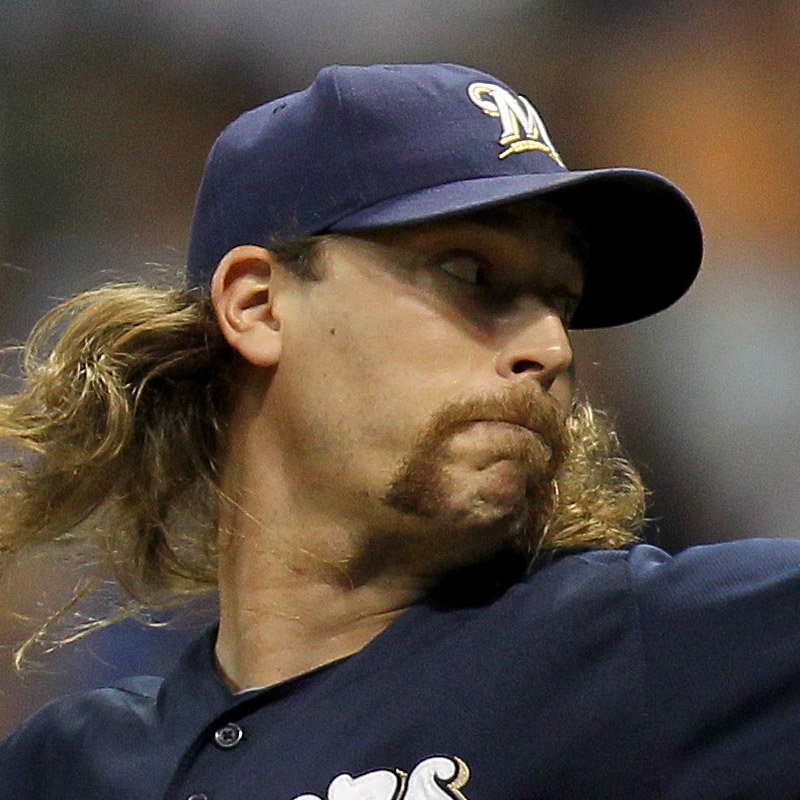 John Berton Axford was born in 1983 in Simcoe, Ontario, Canada. He was raised in nearby Port Dover, Ontario and since his school did not have a team, he played for Port Dover Minor Baseball, Team Ontario, and Team Canada. He was drafted by the Seattle Mariners in the seventh round of the 2001 MLB draft but elected to attend the University of Notre Dame instead. Two years after undergoing Tommy John surgery, he was drafted in the 42nd round of the 2005 MLB draft by the Cincinnati Reds. “Ax Man” had one year of eligibility left so he played for Canisius College. After a terrible season, the Reds declined to offer him a contract. After a 19-strikeout performance in a Canadian summer league game, the New York Yankees signed him. He spent 2007 in the Yankees chain but was released after the season. Axford signed with the Brewers in early 2008 and after one season in the minors, he was called up to Milwaukee, where he spent most of the next five seasons. Between 2010-2012, he amassed 105 saves for Milwaukee, including an NL-leading 46 saves in 2011. Axford finished ninth in the NL Cy Young race that year and received a few NL MVP votes. In 2013, his velocity dropped from the high 90s to the low 90s and he lost his closer job to fellow Canadian Jim Henderson. Axford was traded to the St. Louis Cardinals in late 2013 but was released after the season. Axford pitched for six teams between 2014-2018, and then after two years in the Toronto Blue Jays system, was traded back to Milwaukee in August 2021. He pitched in one game for the Brewers and left because of an injury to his right elbow. The big righthander pitched one inning for Team Canada in the 2023 World Baseball Classic and announced his retirement from professional baseball March 2024. His 46-save season ranks number one in Brewers history, while his 106 career saves rank third.
 -
Norichika Aoki was born in Hyuga, Japan in 1982. After graduating from Miyazaki Prefectural Hyuga High School, he attended Waseda University. In his four-year college career, he hit .332 but did not hit a single home run. After college, Aoki was selected in the fourth round of the 2003 amateur draft by the Yakult Swallows of the Nippon Professional Baseball League. Aoki played eight years for Yakult and batted .329 and hit 84 home runs. After the 2011-12 season, the Swallows posted Aoki to MLB, where the Brewers won the posting and signed Aoki to a two-year contract with an option for a third year. The 5-foot 9, 180-pound left-handed hitter played all three outfield positions, but played mostly right field. His rookie season was solid with a slash line of .288/.355/.433 across 520 at-bats. He also banged 10 home runs and stole 30 bases, and his 37 two-base hits were a season record for a Brewer rookie. Aoki finished an impressive fifth in the NL ROY voting. His second and final season for Milwaukee in 2013 saw him slash .286/.356/.370 across 597 at-bats. Aoki’s numbers dropped slightly across the board, but it was still a nice season. In early December Aoki was traded to the Kansas City Royals. Over the next four seasons, Aoki played for Kansas City, Seattle, San Francisco, Houston, and Toronto. His MLB career numbers showed a slash line of .285/.350/.387 with 774 hits and 98 stolen bases. Aoki was released after the 2017 campaign and returned to Japan, where he played with Yakult through the 2024 season. Aoki announced his retirement in September. During his 21-year major league career (MLB and NPB) Aoki collected over 2,700 hits. View full player
-
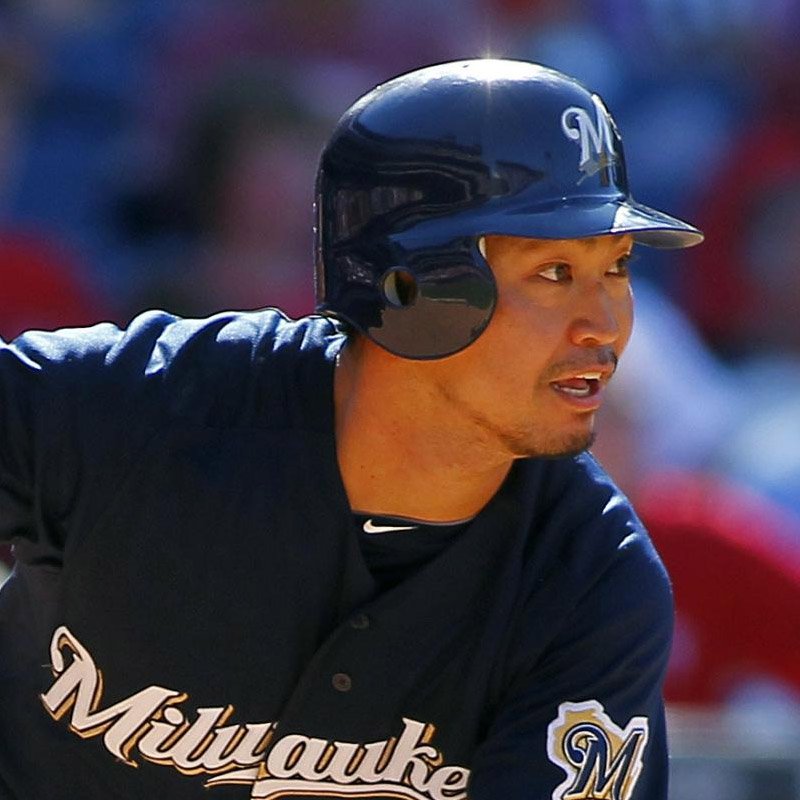 Norichika Aoki was born in Hyuga, Japan in 1982. After graduating from Miyazaki Prefectural Hyuga High School, he attended Waseda University. In his four-year college career, he hit .332 but did not hit a single home run. After college, Aoki was selected in the fourth round of the 2003 amateur draft by the Yakult Swallows of the Nippon Professional Baseball League. Aoki played eight years for Yakult and batted .329 and hit 84 home runs. After the 2011-12 season, the Swallows posted Aoki to MLB, where the Brewers won the posting and signed Aoki to a two-year contract with an option for a third year. The 5-foot 9, 180-pound left-handed hitter played all three outfield positions, but played mostly right field. His rookie season was solid with a slash line of .288/.355/.433 across 520 at-bats. He also banged 10 home runs and stole 30 bases, and his 37 two-base hits were a season record for a Brewer rookie. Aoki finished an impressive fifth in the NL ROY voting. His second and final season for Milwaukee in 2013 saw him slash .286/.356/.370 across 597 at-bats. Aoki’s numbers dropped slightly across the board, but it was still a nice season. In early December Aoki was traded to the Kansas City Royals. Over the next four seasons, Aoki played for Kansas City, Seattle, San Francisco, Houston, and Toronto. His MLB career numbers showed a slash line of .285/.350/.387 with 774 hits and 98 stolen bases. Aoki was released after the 2017 campaign and returned to Japan, where he played with Yakult through the 2024 season. Aoki announced his retirement in September. During his 21-year major league career (MLB and NPB) Aoki collected over 2,700 hits.
 -
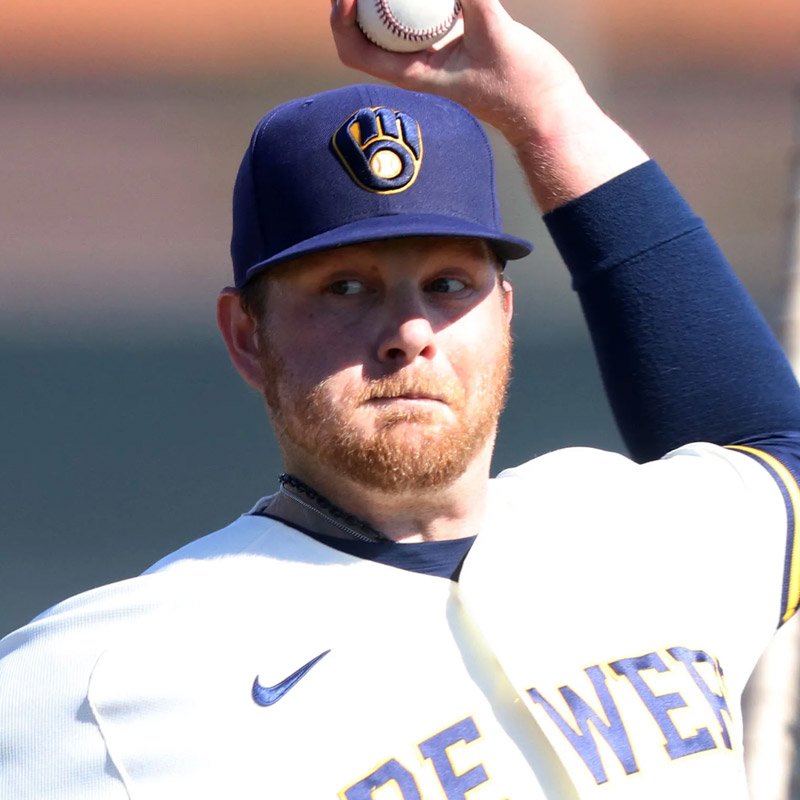 Brett Franklin Anderson was born in Midland, Texas in 1988. After playing his high school ball in Stillwater, Oklahoma, Anderson signed a letter of intent to play for his father, Frank Anderson, at Oklahoma State University. Anderson instead decided to sign with the Arizona Diamondbacks after being drafted by them in the second round of the 2006 MLB Amateur Draft. After just one season in the D’Backs organization, Anderson was traded to the Oakland Athletics. In 2008, Anderson pitched in the All-Star Futures Game and also pitched for the US Olympic team, earning the win in the bronze medal game against Japan. He made his big-league debut with Oakland in 2009 and won 11 games with one complete game shutout. His performance helped him to a sixth-place finish in the AL ROY race. Anderson pitched for the A’s for five seasons before being traded to the Colorado Rockies after the 2013 season. The big (6-foot-4, 230 pound) southpaw performed for just one season for the Rockies and after the Rockies declined his $12 million option, signed with the Los Angeles Dodgers as a free agent in late December 2014. Over the next seven years, Anderson played with five different teams, including another turn with Oakland, where he won a career-high 13 games in 2019. The Brewers signed him as a free agent after the 2019 season. In two seasons with Milwaukee, Anderson started 34 games, winning eight times while posting a 4.22 ERA. He was granted his free agency after the 2021 season but has not played organized ball since. Across 13 big league seasons, Anderson pitched in 222 games (210 starts) and notched a record of 67-74 with an ERA of 4.07.
 -
Brett Franklin Anderson was born in Midland, Texas in 1988. After playing his high school ball in Stillwater, Oklahoma, Anderson signed a letter of intent to play for his father, Frank Anderson, at Oklahoma State University. Anderson instead decided to sign with the Arizona Diamondbacks after being drafted by them in the second round of the 2006 MLB Amateur Draft. After just one season in the D’Backs organization, Anderson was traded to the Oakland Athletics. In 2008, Anderson pitched in the All-Star Futures Game and also pitched for the US Olympic team, earning the win in the bronze medal game against Japan. He made his big-league debut with Oakland in 2009 and won 11 games with one complete game shutout. His performance helped him to a sixth-place finish in the AL ROY race. Anderson pitched for the A’s for five seasons before being traded to the Colorado Rockies after the 2013 season. The big (6-foot-4, 230 pound) southpaw performed for just one season for the Rockies and after the Rockies declined his $12 million option, signed with the Los Angeles Dodgers as a free agent in late December 2014. Over the next seven years, Anderson played with five different teams, including another turn with Oakland, where he won a career-high 13 games in 2019. The Brewers signed him as a free agent after the 2019 season. In two seasons with Milwaukee, Anderson started 34 games, winning eight times while posting a 4.22 ERA. He was granted his free agency after the 2021 season but has not played organized ball since. Across 13 big league seasons, Anderson pitched in 222 games (210 starts) and notched a record of 67-74 with an ERA of 4.07. View full player
-
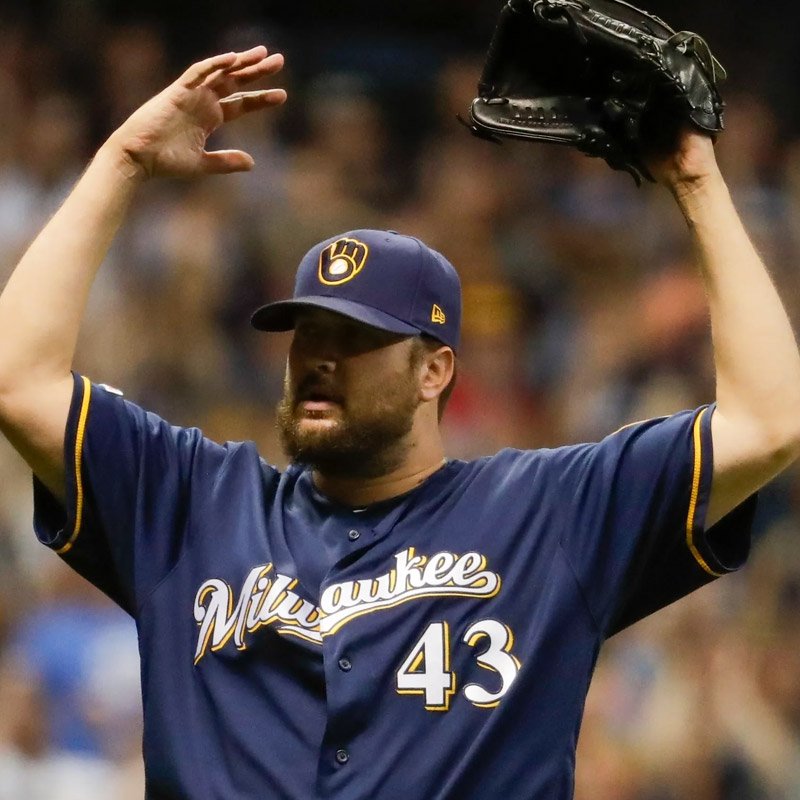 Matthew James Albers was born in Houston, Texas in 1983. He was drafted in the 23rd round of the 2001 MLB Draft by the Houston Astros and made his MLB debut with the ‘Stros in 2006. Used as a starter in the minors, the man known as “Big Salt” made 20 starts in parts of two seasons for Houston, but then worked almost exclusively as a reliever for the rest of his 14-year major league career. Albers was traded by Houston in December 2007 with four other players to Baltimore for Miguel Tejada. He spent three years with the Orioles, making 146 appearances (three starts) in that time frame before he was granted free agency in December 2010. Two weeks later, the Boston Red Sox signed him. After 1 ½ seasons in Boston, Albers was traded again, this time with former Brewer Scott Podsednik to Arizona for closer Craig Breslow in July 2012. Five months later, Albers was part of a three team, nine-player deal which saw the Texas native going to Cleveland. Albers spent one season each in Cleveland and then back in Houston, this time in the American League. He was granted free agency once again and was signed by the Chicago White Sox, where he spent two seasons, appearing in 88 games and winning four. The right-hander was then signed by the Washington Nationals after the 2016 season and became a mainstay in the Nationals bullpen in 2017. Interestingly, Albers was released in spring training by the Nationals and then re-signed by them just a week later. He went on to lead the team with 63 appearances while posting a sparkling 1.62 ERA as the Nationals won the NL East for the second straight year. Albers was granted free agency after the 2017 season and was signed by the Brewers. He spent the 2018 and 2019 seasons with the Crew, pitching in 100 games, winning 11 and saving five. His 67 appearances in 2019 ranked third on the team behind Alex Claudio and Junior Guerra. The Brewers granted him free agency after the 2019 season and Albers has been out of professional ball since. In his big-league career, Albers pitched in 616 games, compiling a record of 47-48 with seven saves.
 -
Matthew James Albers was born in Houston, Texas in 1983. He was drafted in the 23rd round of the 2001 MLB Draft by the Houston Astros and made his MLB debut with the ‘Stros in 2006. Used as a starter in the minors, the man known as “Big Salt” made 20 starts in parts of two seasons for Houston, but then worked almost exclusively as a reliever for the rest of his 14-year major league career. Albers was traded by Houston in December 2007 with four other players to Baltimore for Miguel Tejada. He spent three years with the Orioles, making 146 appearances (three starts) in that time frame before he was granted free agency in December 2010. Two weeks later, the Boston Red Sox signed him. After 1 ½ seasons in Boston, Albers was traded again, this time with former Brewer Scott Podsednik to Arizona for closer Craig Breslow in July 2012. Five months later, Albers was part of a three team, nine-player deal which saw the Texas native going to Cleveland. Albers spent one season each in Cleveland and then back in Houston, this time in the American League. He was granted free agency once again and was signed by the Chicago White Sox, where he spent two seasons, appearing in 88 games and winning four. The right-hander was then signed by the Washington Nationals after the 2016 season and became a mainstay in the Nationals bullpen in 2017. Interestingly, Albers was released in spring training by the Nationals and then re-signed by them just a week later. He went on to lead the team with 63 appearances while posting a sparkling 1.62 ERA as the Nationals won the NL East for the second straight year. Albers was granted free agency after the 2017 season and was signed by the Brewers. He spent the 2018 and 2019 seasons with the Crew, pitching in 100 games, winning 11 and saving five. His 67 appearances in 2019 ranked third on the team behind Alex Claudio and Junior Guerra. The Brewers granted him free agency after the 2019 season and Albers has been out of professional ball since. In his big-league career, Albers pitched in 616 games, compiling a record of 47-48 with seven saves. View full player
-
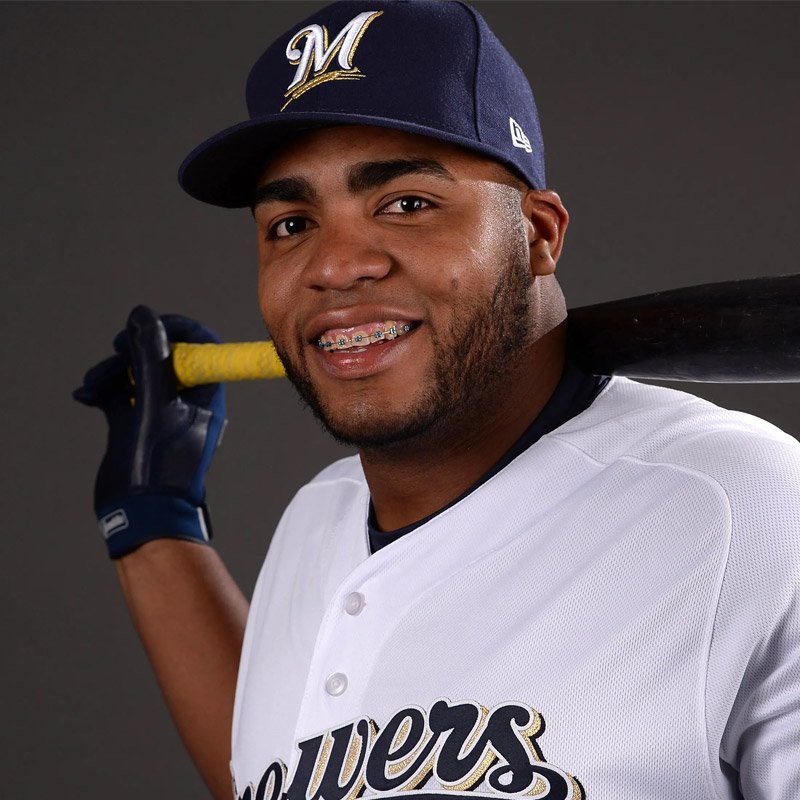 Jesús Alexander Aguilar was born in Venezuela in 1990. He was signed as an amateur free agent by Cleveland in November 2007 and spent six-plus years in the minor leagues before he got called up to the big leagues briefly in 2014. He languished three more years with the Indians organization, getting only 58 at-bats in three brief cups of coffee with Cleveland. Out of minor league options in 2017, Aguilar was selected off waivers in early February by the Brewers. Aguilar platooned at first base with lefty Eric Thames and did well in his first year with Milwaukee, slashing .265/.331/.505 across 279 at-bats, with 16 home runs and 52 RBIs. The following season, Thames and Aguilar were once again scheduled to platoon at first, but when Thames had surgery in late April on an injured left thumb, Aguilar took over the position on a full-time basis. Taking advantage of the unfortunate situation, he became an NL All-Star and finished 16th in MVP voting, hitting .274/.352/.539 across 492 at-bats. He hit 35 HRs, tied for fifth best in the league, and his 108 RBIs were tied for fourth. In 2019, Aguilar didn't get his batting average above the Mendoza Line until mid-May. At the end of July, he was hitting .225/.320/.374 with eight homers. Frustrated with his lack of production--and also looking for pitching help--the Brewers traded the struggling slugger to the Tampa Bay Rays for pitcher Jake Faria. Neither player fared well for their new teams: Faria was released by Milwaukee after the 2020 season, while Aguilar last 37 games for the Rays and was waived after the 2019 season. Aguilar, also known as "Dino," was selected off waivers by the Miami Marlins in December. The big man (6-foot-3, 277 pounds) played during the pandemic-abbreviated season of 2020, and then played most of the next two seasons with Miami before getting released in late August 2022. He was picked up by the Baltimore Orioles but played only 16 games before being granted his free agency. Aguilar was signed by the Oakland Athletics in early 2023 and played 36 games for the A's before getting released in June. He soon signed with the Atlanta Braves, but after hitting only five HRs in 214 ABs at a pair of minor league stops, was granted his free agency by the Braves. Aguilar signed with the Saitama Seibu Lions of the Japanese Pacific League in December 2023. He played just 30 games in 2024 before undergoing season-ending surgery on his right ankle. Just before Halloween, the Lions announced that they would not re-sign Aguilar, making him a free agent.
 -
Jesús Alexander Aguilar was born in Venezuela in 1990. He was signed as an amateur free agent by Cleveland in November 2007 and spent six-plus years in the minor leagues before he got called up to the big leagues briefly in 2014. He languished three more years with the Indians organization, getting only 58 at-bats in three brief cups of coffee with Cleveland. Out of minor league options in 2017, Aguilar was selected off waivers in early February by the Brewers. Aguilar platooned at first base with lefty Eric Thames and did well in his first year with Milwaukee, slashing .265/.331/.505 across 279 at-bats, with 16 home runs and 52 RBIs. The following season, Thames and Aguilar were once again scheduled to platoon at first, but when Thames had surgery in late April on an injured left thumb, Aguilar took over the position on a full-time basis. Taking advantage of the unfortunate situation, he became an NL All-Star and finished 16th in MVP voting, hitting .274/.352/.539 across 492 at-bats. He hit 35 HRs, tied for fifth best in the league, and his 108 RBIs were tied for fourth. In 2019, Aguilar didn't get his batting average above the Mendoza Line until mid-May. At the end of July, he was hitting .225/.320/.374 with eight homers. Frustrated with his lack of production--and also looking for pitching help--the Brewers traded the struggling slugger to the Tampa Bay Rays for pitcher Jake Faria. Neither player fared well for their new teams: Faria was released by Milwaukee after the 2020 season, while Aguilar last 37 games for the Rays and was waived after the 2019 season. Aguilar, also known as "Dino," was selected off waivers by the Miami Marlins in December. The big man (6-foot-3, 277 pounds) played during the pandemic-abbreviated season of 2020, and then played most of the next two seasons with Miami before getting released in late August 2022. He was picked up by the Baltimore Orioles but played only 16 games before being granted his free agency. Aguilar was signed by the Oakland Athletics in early 2023 and played 36 games for the A's before getting released in June. He soon signed with the Atlanta Braves, but after hitting only five HRs in 214 ABs at a pair of minor league stops, was granted his free agency by the Braves. Aguilar signed with the Saitama Seibu Lions of the Japanese Pacific League in December 2023. He played just 30 games in 2024 before undergoing season-ending surgery on his right ankle. Just before Halloween, the Lions announced that they would not re-sign Aguilar, making him a free agent. View full player
-
Matthew Lenz of our sister site, Twins Daily, recently wrote a piece featuring the Twins' top rookies by position in their 63-year history. The Milwaukee Brewers have been in business since 1970. I decided to copy his idea with some slight changes. My criterion for inclusion is a little different than his. In my reality, any player who had yet to reach the MLB ‘rookie limit’ of 130 at-bats was eligible for my ‘Best Rookie Campaign.’ So, check it out and let me know where I was right or where I veered off into the ditch. I did not add ‘bench bats,’ just eight position players plus the designated hitter. CATCHER- B.J. Surhoff (1987) Surhoff started his 19-year major league career with a bang, slashing .299/.350/.423 across 395 at-bats in 115 games. His 2.5 bWAR was good for seventh on the team. Surhoff—the number one pick overall in the 1985 MLB draft out of the University of North Carolina—showed versatility by playing a few games at third base while not squatting behind the plate. He showed a good arm, throwing out 35% of the runners trying to steal. Others Considered: Dave Nilsson (1992), Jonathan Lucroy (2010), Martin Maldonado (2012) FIRST BASE- Prince Fielder (2006) After getting a cup of coffee and a continental breakfast in 2005, the slugging son of Cecil Fielder broke out in 2006, slashing .271/.347/.483 with 28 home runs and 81 RBIs across 569 at-bats. He finished seventh in NL Rookie of the Year voting. Fielder was error-prone at first base but made 150+ starts at first in all six of his full seasons in Milwaukee. He led the team with 154 hits in 2006 and was second in several other categories. Others Considered: Jesus Aguilar (2017) SECOND BASE- Ronnie Belliard (1999) The stocky (5-foot-9, 210-pound) Belliard arguably had a better rookie season than Paul Molitor did 21 years prior. His OPS+ was nearly 20 points higher than Molly’s, and all three slash numbers were superior to Molitor's. Belliard had a batting mark of .295/.379/.429 across 457 at-bats; his 2.2 bWAR was seventh on the team. He finished third with four triples and 64 bases on balls. He was an average fielder at the keystone during his four full seasons in Milwaukee. Others Considered: Paul Molitor (1978), Scooter Gennett (2013), Keston Hiura (2019) THIRD BASE- Ryan Braun (2007) Braun was the fifth overall pick in the 2005 MLB draft and earned the NL Rookie of the Year award two years later. He hit 34 homers, drove in 97 runs, and led the NL with a .634 slugging percentage. His slash line was an outstanding .324/.370/.634 across 451 at-bats, with his .324 average leading the team. Despite his very solid batting stats, his fielding brought his bWAR down to 2.0, which ranked seventh on the Brewers. After a brutal rookie season at the hot corner (.895 fielding percentage with 26 errors), Braun finished his career in the outfield, playing a total of 14 seasons. Others Considered: Dale Sveum (1986), Casey McGehee (2009), Joey Ortiz (2024) SHORTSTOP- Pat Listach (1992) The speedy Listach was the first Brewer to win a Rookie of the Year award, this time in the American League. Along with 54 stolen bases, his slash line was .290/.352/.349 across 579 at-bats. Listach led the team with 93 runs and was second with 168 hits. His bWAR was 4.5, which ranked fourth on the team. Listach played four more years for Milwaukee and one with Houston but never replicated his rookie season. Others Considered: Robin Yount (1974), Ernest Riles (1985), Jose Valentin (1994), J.J. Hardy (2005) LEFT FIELD- Danny Walton (1970) After two at-bats for Houston in 1968 and 92 for the Seattle Pilots in 1969, Walton came with the team to Milwaukee and hit 17 home runs for the Brewers, slashing .251/.349/.441 across 397 at-bats in 1970. On a very weak Brewer team (65-97-1), Walton was second in homers, second with 175 total bases, and third with 20 doubles. He played two seasons with Milwaukee and spent nine years in the big leagues overall with seven different teams. Others Considered: Greg Vaughn (1990), Corey Hart (2006) CENTER FIELD- Scott Podsednik (2003) ‘The Podfather’ was a speedy fly chaser who finished second in the NL ROY race. Podsednik stole 43 bases in his rookie season and had a slash line of .314/.379/.443 across 558 ABs. He led the team with a 3.6 bWAR, 100 runs scored, 175 hits, eight triples, stolen bases, batting average, and on-base percentage. He led the NL with 70 steals in 2004 and would be a part of the 2005 Chicago White Sox World Series winners. Others Considered: Alex Sanchez (2002), Lorenzo Cain (2010) RIGHT FIELD- Jackson Chourio (2024) ‘Chewy’ lived up to all the hype and will likely earn votes for the National League Rookie of the Year when results come out in mid-November. Chourio slashed .275/.327/.464 in 528 at-bats, recovering from a slow start during which he batted .207 on June 1. In the final four months, Chourio had a slash line of .305/.360/.527 with 16 home runs and 61 RBIs across 364 at-bats after the weather warmed. He finished among the top three for the Brewers in runs scored, hits, doubles, triples, stolen bases, batting average, and total bases. His 3.8 bWAR was third-best on the team. Chourio is a fan favorite, and the sky seems to be the limit for the 20-year-old star. Others Considered: Bob Coluccio (1973), Dion James (1984), Matt Mieske (1994) DESIGNATED HITTER- Joey Meyer (1988) The burly (6-foot-3, 260-pound) Hawaiian only played two seasons for the Brewers, but his rookie campaign saw him hit 11 homers with a slash line of .263/.313/.419 across 327 at-bats. After a slow start in 1989, he was sent to Triple-A in early May and later returned to Milwaukee, only to play 35 more games in the bigs. Milwaukee released him after the season and played in Japan the following year, crushing 26 homers in 378 at-bats for the Yokohama Taiyo Whales. He is best known for a home run he hit in Denver in 1987, which was said to have traveled 582 feet. Did I miss anyone? Let me know in the comments. Thanks for reading! View full article
-
Best All-Time Rookie Campaigns By Milwaukee Brewers Hitters
Michael Trzinski posted an article in History
 CATCHER- B.J. Surhoff (1987) Surhoff started his 19-year major league career with a bang, slashing .299/.350/.423 across 395 at-bats in 115 games. His 2.5 bWAR was good for seventh on the team. Surhoff—the number one pick overall in the 1985 MLB draft out of the University of North Carolina—showed versatility by playing a few games at third base while not squatting behind the plate. He showed a good arm, throwing out 35% of the runners trying to steal. Others Considered: Dave Nilsson (1992), Jonathan Lucroy (2010), Martin Maldonado (2012) FIRST BASE- Prince Fielder (2006) After getting a cup of coffee and a continental breakfast in 2005, the slugging son of Cecil Fielder broke out in 2006, slashing .271/.347/.483 with 28 home runs and 81 RBIs across 569 at-bats. He finished seventh in NL Rookie of the Year voting. Fielder was error-prone at first base but made 150+ starts at first in all six of his full seasons in Milwaukee. He led the team with 154 hits in 2006 and was second in several other categories. Others Considered: Jesus Aguilar (2017) SECOND BASE- Ronnie Belliard (1999) The stocky (5-foot-9, 210-pound) Belliard arguably had a better rookie season than Paul Molitor did 21 years prior. His OPS+ was nearly 20 points higher than Molly’s, and all three slash numbers were superior to Molitor's. Belliard had a batting mark of .295/.379/.429 across 457 at-bats; his 2.2 bWAR was seventh on the team. He finished third with four triples and 64 bases on balls. He was an average fielder at the keystone during his four full seasons in Milwaukee. Others Considered: Paul Molitor (1978), Scooter Gennett (2013), Keston Hiura (2019) THIRD BASE- Ryan Braun (2007) Braun was the fifth overall pick in the 2005 MLB draft and earned the NL Rookie of the Year award two years later. He hit 34 homers, drove in 97 runs, and led the NL with a .634 slugging percentage. His slash line was an outstanding .324/.370/.634 across 451 at-bats, with his .324 average leading the team. Despite his very solid batting stats, his fielding brought his bWAR down to 2.0, which ranked seventh on the Brewers. After a brutal rookie season at the hot corner (.895 fielding percentage with 26 errors), Braun finished his career in the outfield, playing a total of 14 seasons. Others Considered: Dale Sveum (1986), Casey McGehee (2009), Joey Ortiz (2024) SHORTSTOP- Pat Listach (1992) The speedy Listach was the first Brewer to win a Rookie of the Year award, this time in the American League. Along with 54 stolen bases, his slash line was .290/.352/.349 across 579 at-bats. Listach led the team with 93 runs and was second with 168 hits. His bWAR was 4.5, which ranked fourth on the team. Listach played four more years for Milwaukee and one with Houston but never replicated his rookie season. Others Considered: Robin Yount (1974), Ernest Riles (1985), Jose Valentin (1994), J.J. Hardy (2005) LEFT FIELD- Danny Walton (1970) After two at-bats for Houston in 1968 and 92 for the Seattle Pilots in 1969, Walton came with the team to Milwaukee and hit 17 home runs for the Brewers, slashing .251/.349/.441 across 397 at-bats in 1970. On a very weak Brewer team (65-97-1), Walton was second in homers, second with 175 total bases, and third with 20 doubles. He played two seasons with Milwaukee and spent nine years in the big leagues overall with seven different teams. Others Considered: Greg Vaughn (1990), Corey Hart (2006) CENTER FIELD- Scott Podsednik (2003) ‘The Podfather’ was a speedy fly chaser who finished second in the NL ROY race. Podsednik stole 43 bases in his rookie season and had a slash line of .314/.379/.443 across 558 ABs. He led the team with a 3.6 bWAR, 100 runs scored, 175 hits, eight triples, stolen bases, batting average, and on-base percentage. He led the NL with 70 steals in 2004 and would be a part of the 2005 Chicago White Sox World Series winners. Others Considered: Alex Sanchez (2002), Lorenzo Cain (2010) RIGHT FIELD- Jackson Chourio (2024) ‘Chewy’ lived up to all the hype and will likely earn votes for the National League Rookie of the Year when results come out in mid-November. Chourio slashed .275/.327/.464 in 528 at-bats, recovering from a slow start during which he batted .207 on June 1. In the final four months, Chourio had a slash line of .305/.360/.527 with 16 home runs and 61 RBIs across 364 at-bats after the weather warmed. He finished among the top three for the Brewers in runs scored, hits, doubles, triples, stolen bases, batting average, and total bases. His 3.8 bWAR was third-best on the team. Chourio is a fan favorite, and the sky seems to be the limit for the 20-year-old star. Others Considered: Bob Coluccio (1973), Dion James (1984), Matt Mieske (1994) DESIGNATED HITTER- Joey Meyer (1988) The burly (6-foot-3, 260-pound) Hawaiian only played two seasons for the Brewers, but his rookie campaign saw him hit 11 homers with a slash line of .263/.313/.419 across 327 at-bats. After a slow start in 1989, he was sent to Triple-A in early May and later returned to Milwaukee, only to play 35 more games in the bigs. Milwaukee released him after the season and played in Japan the following year, crushing 26 homers in 378 at-bats for the Yokohama Taiyo Whales. He is best known for a home run he hit in Denver in 1987, which was said to have traveled 582 feet. Did I miss anyone? Let me know in the comments. Thanks for reading!
-
- 2
-

-
- bj surhoff
- prince fielder
- (and 5 more)
-
Rob Deer was a fan favorite in Milwaukee in the mid-to-late 1980s as a player who could hit a 450-foot home run or strike out with equal aplomb. Deer was a forerunner of the modern 'Three True Outcomes' player, much like former Brewer Russell Branyan and Adam Dunn. Image courtesy of © RVR Photos-Imagn Images Robert George Deer was born in September 1960 in the Los Angeles suburb of Orange. He starred in both baseball and football at Canyon High School in Anaheim. Living up to his last name, Deer was a swift wide receiver as a teen but would make his living hitting baseballs instead of catching footballs. Rob Deer was drafted in the fourth round of the 1978 June Amateur Draft by the San Francisco Giants. Fellow Anaheim area pitcher Mike Witt was selected seven picks behind Deer, who was the 85th pick overall in that draft. Although Deer would be known for his majestic home runs, he failed to hit a single long ball in his first pro season at Rookie League Great Falls (Montana) in 137 at-bats. Deer started the 1979 season at Cedar Rapids (Iowa) in the Low-A Midwest League but was sent back to Great Falls after one month with a batting line of .209/.266/.267 across 86 at-bats, with only one home run. The lanky (6-foot-3, 210 pound) Deer showed promise in his second try in the rookie league, batting .317/.422/.560 with 18 doubles, seven triples, and seven homers in 218 at-bats. It would be the only time in Deer’s 19-year professional career that he had a batting average above .300 for the season. Over the next five seasons, Deer moved up from Single-A to Triple-A in the Giants’ organization, finally showing his power as he slugged 139 homers in just over 2,200 at-bats. He finished as league home run king three of those years and finished in the runner-up spot another year. He got called up to San Francisco at the end of the 1984 season and hit three jacks in 24 at-bats. In 1985, Deer played the whole season in the ‘City By The Bay,’ but only appeared in 78 games, slashing .185/.283/.377 across 162 at-bats. In December the Giants traded Deer to Milwaukee for pitching prospects Eric Pilkington and Dean Freeland. The swap favored the Brewers as Deer played five seasons for the Brew Crew while neither Pilkington nor Freeland ever played in the big leagues. Deer quickly became a Milwaukee fan favorite, reminiscent of slugging Brewer hero Gorman Thomas, who had returned to Milwaukee for the 1986 season after bouncing around in Cleveland and Seattle for a few years. Deer led Milwaukee in home runs during each of his five seasons, compiling 137 dingers in that time frame, which currently ranks 14th on the Brewers all-time career list, just behind Christian Yelich’s 145. In his first season in Milwaukee, Deer slashed .232/.336/.494 and hit 33 homers, which was a career-high for the righty slugger. He also led the team with 86 RBIs while whiffing 179 times, which was a crazy-high number in those days. Deer usually played right field with his strong arm, but also played in left field and spent a few dozen games at first base during his Brewer career. The following season, Deer batted .238/.360/.456 with 28 homers. His 186 strikeouts were a career high and led the American League. He also stole a career-high 12 bases. The Brewers started the season with 13 consecutive wins, including the thrilling comeback win on Easter Sunday. Deer hit the game-tying home run in the ninth, a three-run shot, before Dale Sveum smacked a two-out, two-run homer to give the Brewers a 6-4 win in front of a raucous County Stadium crowd of 29,357. Deer was featured on the April 27 edition of Sports Illustrated, his fist raised in jubilation as he circled the bases after his home run. In 1988, Deer hit a career-high .252 and hit 23 homers, and once again led the AL in whiffs with 153. His 85 RBIs were second on the team behind Robin Yount’s 91. Deer’s stats dropped off a bit in 1989, as he slashed only .210/.305/.425. But he did hit 26 homers and was third on the team with 65 RBIs. In his final season in Milwaukee, Deer produced a carbon copy of the previous year, slashing .209/.313/.432 with 27 homers and 67 RBIs. Deer was granted free agency after the season and signed with the Detroit Tigers. He played two-plus seasons with the Tigers and slugged 71 home runs in over 1,150 at-bats. Deer also led the AL in strikeouts two of those seasons. He was demoted to part-time status in 1993 and asked to be traded. In August, he was sent to the Boston Red Sox for the proverbial ‘played to be named later,’ which ended up being an ‘unspecified amount of cash.’ Deer was granted free agency after the season and signed a one-year, $2.5 million contract with the Hanshin Tigers of the Japan Central League. He played only 70 games with a slash line of .151/.279/.297 with eight home runs. His season ended when he tore ligaments in his right thumb trying to make a catch of a foul pop-up while playing first base. In April 1995, the California Angels signed Deer to a minor-league contract. He played at Triple-A Vancouver (British Columbia) and despite batting .288/.398/.525 with four home runs in 80 ABs, the 34-year-old Deer was released to make room for a younger player. A couple weeks later he was signed to a minor-league deal by the San Diego Padres. He had a solid summer in Triple-A Las Vegas, slashing .292/.377/.587 with 14 round-trippers in just 223 ABs. However, he was released after the season. The Padres re-signed Deer before Christmas 1995, but the player asked for his release in late March 1996. Three weeks later after receiving no calls from major league teams, Deer re-signed with the Las Vegas club. He was called up to San Diego in early July when Tony Gwynn went on the disabled list and played in 25 games, slashing just .180/.359/.480 across 50 ABs with four HRs. When Gwynn returned to the team, Deer was designated for assignment. In April 1997, the Madison (Wisconsin) Black Wolf team of the Independent Northern League made a contract offer to both Deer and pitcher Jim Abbott, but nothing came of those offers. Deer finished his career with 230 home runs and a slash line of .220/.324/.442 in 11 big league seasons. After his playing career ended, Deer worked as a hitting instructor and hitting coach in the San Diego organization, as well as being an assistant hitting coach for the Chicago Cubs under manager and former teammate Sveum. When asked how a .220 career hitter could be a hitting instructor, Deer said with a smile, "I’ll be the first to admit I don’t want them to hit like I did." View full article
-
Rob Deer, One Of The First ‘Three True Outcomes’ Players
Michael Trzinski posted an article in History
 Robert George Deer was born in September 1960 in the Los Angeles suburb of Orange. He starred in both baseball and football at Canyon High School in Anaheim. Living up to his last name, Deer was a swift wide receiver as a teen but would make his living hitting baseballs instead of catching footballs. Rob Deer was drafted in the fourth round of the 1978 June Amateur Draft by the San Francisco Giants. Fellow Anaheim area pitcher Mike Witt was selected seven picks behind Deer, who was the 85th pick overall in that draft. Although Deer would be known for his majestic home runs, he failed to hit a single long ball in his first pro season at Rookie League Great Falls (Montana) in 137 at-bats. Deer started the 1979 season at Cedar Rapids (Iowa) in the Low-A Midwest League but was sent back to Great Falls after one month with a batting line of .209/.266/.267 across 86 at-bats, with only one home run. The lanky (6-foot-3, 210 pound) Deer showed promise in his second try in the rookie league, batting .317/.422/.560 with 18 doubles, seven triples, and seven homers in 218 at-bats. It would be the only time in Deer’s 19-year professional career that he had a batting average above .300 for the season. Over the next five seasons, Deer moved up from Single-A to Triple-A in the Giants’ organization, finally showing his power as he slugged 139 homers in just over 2,200 at-bats. He finished as league home run king three of those years and finished in the runner-up spot another year. He got called up to San Francisco at the end of the 1984 season and hit three jacks in 24 at-bats. In 1985, Deer played the whole season in the ‘City By The Bay,’ but only appeared in 78 games, slashing .185/.283/.377 across 162 at-bats. In December the Giants traded Deer to Milwaukee for pitching prospects Eric Pilkington and Dean Freeland. The swap favored the Brewers as Deer played five seasons for the Brew Crew while neither Pilkington nor Freeland ever played in the big leagues. Deer quickly became a Milwaukee fan favorite, reminiscent of slugging Brewer hero Gorman Thomas, who had returned to Milwaukee for the 1986 season after bouncing around in Cleveland and Seattle for a few years. Deer led Milwaukee in home runs during each of his five seasons, compiling 137 dingers in that time frame, which currently ranks 14th on the Brewers all-time career list, just behind Christian Yelich’s 145. In his first season in Milwaukee, Deer slashed .232/.336/.494 and hit 33 homers, which was a career-high for the righty slugger. He also led the team with 86 RBIs while whiffing 179 times, which was a crazy-high number in those days. Deer usually played right field with his strong arm, but also played in left field and spent a few dozen games at first base during his Brewer career. The following season, Deer batted .238/.360/.456 with 28 homers. His 186 strikeouts were a career high and led the American League. He also stole a career-high 12 bases. The Brewers started the season with 13 consecutive wins, including the thrilling comeback win on Easter Sunday. Deer hit the game-tying home run in the ninth, a three-run shot, before Dale Sveum smacked a two-out, two-run homer to give the Brewers a 6-4 win in front of a raucous County Stadium crowd of 29,357. Deer was featured on the April 27 edition of Sports Illustrated, his fist raised in jubilation as he circled the bases after his home run. In 1988, Deer hit a career-high .252 and hit 23 homers, and once again led the AL in whiffs with 153. His 85 RBIs were second on the team behind Robin Yount’s 91. Deer’s stats dropped off a bit in 1989, as he slashed only .210/.305/.425. But he did hit 26 homers and was third on the team with 65 RBIs. In his final season in Milwaukee, Deer produced a carbon copy of the previous year, slashing .209/.313/.432 with 27 homers and 67 RBIs. Deer was granted free agency after the season and signed with the Detroit Tigers. He played two-plus seasons with the Tigers and slugged 71 home runs in over 1,150 at-bats. Deer also led the AL in strikeouts two of those seasons. He was demoted to part-time status in 1993 and asked to be traded. In August, he was sent to the Boston Red Sox for the proverbial ‘played to be named later,’ which ended up being an ‘unspecified amount of cash.’ Deer was granted free agency after the season and signed a one-year, $2.5 million contract with the Hanshin Tigers of the Japan Central League. He played only 70 games with a slash line of .151/.279/.297 with eight home runs. His season ended when he tore ligaments in his right thumb trying to make a catch of a foul pop-up while playing first base. In April 1995, the California Angels signed Deer to a minor-league contract. He played at Triple-A Vancouver (British Columbia) and despite batting .288/.398/.525 with four home runs in 80 ABs, the 34-year-old Deer was released to make room for a younger player. A couple weeks later he was signed to a minor-league deal by the San Diego Padres. He had a solid summer in Triple-A Las Vegas, slashing .292/.377/.587 with 14 round-trippers in just 223 ABs. However, he was released after the season. The Padres re-signed Deer before Christmas 1995, but the player asked for his release in late March 1996. Three weeks later after receiving no calls from major league teams, Deer re-signed with the Las Vegas club. He was called up to San Diego in early July when Tony Gwynn went on the disabled list and played in 25 games, slashing just .180/.359/.480 across 50 ABs with four HRs. When Gwynn returned to the team, Deer was designated for assignment. In April 1997, the Madison (Wisconsin) Black Wolf team of the Independent Northern League made a contract offer to both Deer and pitcher Jim Abbott, but nothing came of those offers. Deer finished his career with 230 home runs and a slash line of .220/.324/.442 in 11 big league seasons. After his playing career ended, Deer worked as a hitting instructor and hitting coach in the San Diego organization, as well as being an assistant hitting coach for the Chicago Cubs under manager and former teammate Sveum. When asked how a .220 career hitter could be a hitting instructor, Deer said with a smile, "I’ll be the first to admit I don’t want them to hit like I did."
 -
I should clarify what I meant... A person who watches hundreds or thousands of games is more likely to become expert at 'grading' players than someone like me who just reads about them or sees some videos. Kinda like being a scout!
- 18 replies
-
- 1
-
-
- carlos f rodriguez
- luis lara
- (and 3 more)

