



Michael Trzinski
-
Posts
923 -
Joined
-
Last visited
-
Days Won
1
Content Type
Profiles
Forums
Blogs
Events
News
2026 Milwaukee Brewers Top Prospects Ranking
Milwaukee Brewers Videos
2022 Milwaukee Brewers Draft Picks
Milwaukee Brewers Free Agent & Trade Rumors, Notes, & Tidbits
Guides & Resources
2023 Milwaukee Brewers Draft Picks
2024 Milwaukee Brewers Draft Picks
The Milwaukee Brewers Players Project
2025 Milwaukee Brewers Draft Pick Tracker
2026 Milwaukee Brewers Draft Tracker: Picks & Bonuses
Store
Downloads
Gallery
Everything posted by Michael Trzinski
-
Okay Jack, for your next piece, explain what some of those esoteric positions entail...lol.
- 2 replies
-
- 3
-

-

-
- daniel vogelbach
- spencer allen
- (and 4 more)
-
I need a beer...
-
Will The Brewers’ Winter Ever Heat Up?
Michael Trzinski replied to Jason Wang's topic in Brewer Fanatic Front Page News
Good piece, Jason! The Brewers are a small-market team and as such, have a tendency to keep their wallet in the back pocket. And the fact that they have been doing quite well in the standings lately means they will continue to do so. A difference might come if the Brewers slip to the 80-win level (or below) for a couple years. That could mean that their internal player development and/or the pitching and catching labs are producing failing results. At that point, do they step into the free agent market in a serious way? Maybe. Probably. Who knows? -
For the last year, I have been working on the Player Project for the Brewers, writing small 'Wiki-type' bios for past Brewers players. To date, we have about 150 players completed. After the end of the 2025 season, 1,075 players have competed in at least one game for Milwaukee. Unfortunately, the traffic for those bios has been a smidge on the slow side, so we are temporarily halting work on the Player Project bios. That said, I am a huge fan of Brewers history and would like to share it with our readers. What kind of history would you like to see on BF? Memorable games? More about players? I like baseball history. I have published one dozen SABR (Society for American Baseball Research) bios on players, including former Brewer Roger Miller, long-time minor league manager Dave Machemer, and also have an upcoming bio scheduled for Brewers announcer Tim Dillard. I want to keep providing history for the Brewers. Let us know what you would like to see!
-
Especially if 'King Tuck' doesn't re-sign with them. And I am not certain that 'Opie' (PCA) can match his 2025 stats. He got off to a really hot start and then petered (pardon the pun) out.
-
Image courtesy of © Denis Poroy-Imagn Images The Milwaukee Brewers have made a few transactions this offseason, but Brewers fans are still waiting for the ‘big one.’ Off the field, general manager Matt Arnold was promoted to the position of president of baseball operations, as the Crew tries to fend off the risk that he departs for a top job in a larger market. On the field, the Brewers traded Isaac Collins and Nick Mears to Kansas City for lefty reliever Ángel Zerpa. The team also signed free-agent outfielder Akil Baddoo to a big-league deal. Pitcher Coleman Crow was added to the 40-man roster and will be part of this year's fallback plan if and when starting pitchers get hurt. Southpaw Sammy Peralta was selected off waivers from the Los Angeles Angels. Meanwhile, Rhys Hoskins, Jose Quintana and Danny Jansen have hit free agency, after the mutual options for 2026 in each of their contracts were turned down by one side or the other. Jansen has already signed with the Rangers; Hoskins and Quintana aren't expected to return. Let’s take a look at the rest of the National League Central and see how those teams look after their rosters have been slightly shuffled. Note: All WAR numbers are courtesy of Baseball-Reference. All contracts are big league deals. Chicago Cubs The Cubs have made several small moves, but haven’t made a big splash in the trade or free agent market so far. Additions: Signed RHP Jacob Webb to a one-year deal, with club option for 2027. 2025 WAR: 0.3 Signed INF/OF Tyler Austin to a one-year deal. 2025: played in Japan Re-signed LHP Caleb Thielbar to a one-year deal. 2025 WAR: 1.1 Signed LHP Hoby Milner to one-year deal. 2025 WAR: -0.6 Signed RHP Phil Maton to a two-year deal, with club option for 2028. 2025 WAR: 1.3 Re-signed LHP Shota Imanaga to a 2026 QO. 2025 WAR: 1.5 Re-signed RHP Colin Rea to a one-year deal, with club option for 2027. 2025 WAR: 0.6 Signed RHP Hunter Harvey to a one-year deal. 2025 WAR: 0.7 Subtractions: RHP Andrew Kittredge (sold to Baltimore). 2025 WAR: 0.6 RHP Brad Keller (free agent to Philadelphia). 2025 WAR: 1.4 LHP Drew Pomeranz (free agent to LA Angels). 2025 WAR: 0.9 RHP Michael Soroka (free agent to Arizona). 2025 WAR: 0.6 Still Out There: RHP Ryan Brasier, 2025 WAR: -0.2 INF/OF Willi Castro, 2025 WAR: -0.2 RHP Aaron Civale, 2025 WAR: 0.1 C Reese McGuire, 2025 WAR: 0.3 RHP Eli Morgan, 2025 WAR: -0.4 LHP Taylor Rogers, 2025 WAR: 0.4 1B Carlos Santana, 2025 WAR: 1.1 OF Kyle Tucker, 2025 WAR: 4.6 INF Justin Turner, 2025 WAR: -0.1 As always with the Cubs, pitchers come and go. It seems like manager Craig Counsell is drawn to former Brewers, like Hoby Milner and Colin Rea. Could Tyler Austin come back to the bigs and hammer left-handed pitching in his return from Japan? Can Shota Imanaga return to his All-Star form of 2024? The Cubs will challenge for the NL Central crown, but do they have enough to unseat the Brewers? Right now, that seems far-fetched, but they could have another big move or two in them. Cincinnati Reds The Reds have made a handful of moves, but not enough to change things significantly. It's status quo in the Queen City. Additions: Signed OF JJ Bleday to a one-year deal. 2025 WAR: -0.3 Re-signed RHP Emilio Pagán to a two-year deal. 2025 WAR: 2.0 Signed LHP Caleb Ferguson to a one-year deal. 2025 WAR: 0.9 Traded for OF Dane Myers. 2025 WAR: -0.1 Claimed C Ben Rortvedt off waivers (LA Dodgers). 2025 WAR: -0.5 Subtractions: RHP Lyon Richardson (DFA). 2025 WAR: -0.2 Still Out There: INF/OF Miguel Andujar, 2025 WAR: 0.8 RHP Scott Barlow, 2025 WAR: 0.7 OF Austin Hays, 2025 WAR: 0.8 RHP Zack Littell, 2025 WAR: 3.2 LHP Wade Miley, 2025 WAR: -0.1 RHP Nick Martinez, 2025 WAR: 2.3 LHP Brent Suter, 2025 WAR: 0.3 Bleday will join the left-handed mix in the outfield, but will likely be a platoon/fourth outfielder. Myers is the right-handed version of Bleday with less power. Pagán saved 32 games last year and returns to the closer role. Ferguson is likely to be the main southpaw in the pen, but is more of a LOOGY than a guy who can get both sides out. With the declined options, there are a few bullpen jobs up for grabs. Will the Reds re-sign one or more of the pitchers that had been cut free? Pittsburgh Pirates A few moderate-to-big names have flown across the Buccos’ transaction page so far this winter, including those involved in a three-way trade with Tampa Bay and Houston. Additions: Traded for 2B Brandon Lowe. 2025 WAR: 1.9 Signed 1B/OF Ryan O’Hearn to a two-year deal. 2025 WAR: 2.4 Signed LHP Gregory Soto to a one-year deal. 2025 WAR: -0.1 Traded for OF Jake Mangum. 2025 WAR: 1.6 Traded for LHP Mason Montgomery. 2025 WAR: -0.9 Traded for OF Jhostynxon Garcia. 2025 WAR: 0.0 Subtractions: RHP Colin Holderman (signed by Cleveland), 2025 WAR: -0.8 RHP Johan Oviedo (traded to Boston), 2025 WAR: 0.8 RHP Mike Burrows (traded to Houston), 2025 WAR: 1.5 SS Cam Devanney (released), 2025 WAR: -0.5 Still Out There: OF Alexander Canario, 2025 WAR: 0.5 DH/OF Andrew McCutchen, 2025 WAR: 0.1 OF Tommy Pham, 2025 WAR: 1.0 The Pirates traded away a couple of solid starters in Oviedo and Burrows, but got some pop on the offensive side with Lowe (31 homers this year) and O’Hearn (All-Star, 17 homers). Plus, even more importantly, they got the player with arguably the best nickname in baseball. Jhostynxon Garcia (pronounced JOES-tin-son) has the nickname ‘The Password.’ St. Louis Cardinals The Cardinals traded away pitcher Sonny Gray and catcher Willson Contreras to the Red Sox and gained a couple of young starting pitchers in return. New president of baseball operations Chaim Bloom hinted at a full rebuild, and this certainly confirms that. Additions: Traded for RHP Richard Fitts. 2025 WAR: -0.3 Signed RHP Dustin May to a one-year deal. 2025 WAR: -0.6 Traded for RHP Hunter Dobbins. 2025 WAR: 0.4 Re-signed C Yohel Pozo to a one-year deal. 2025 WAR: 0.2 Claimed RHP Zak Kent off waivers. 2025 WAR: 0.1 Subtractions: 1B/DH Willson Contreras (traded to Boston), 2025 WAR: 2.5 RHP Sonny Gray (traded to Boston), 2025 WAR: 1.4 OF/INF Garrett Hampson (released), 2025 WAR: -0.4 Still Out There: LHP John King, 2025 WAR: -0.3 RHP Miles Mikolas, 2025 WAR: 0.4 If the Cardinals' plan is to get younger, they certainly did that. In addition to Fitts, May, Dobbins, and Kent, the Cards also added pitcher Brandon Clarke, a top Red Sox prospect. Pozo joins a three-catcher mix for St. Louis, but they have high expectations for the Cards backstop. ‘El Birdos’ have been out of the mix in the National League Central for the last three years, but Bloom and company are hoping the influx of youngsters can change that. Are the Brewers going to be the 2026 favorites for the NL Central crown? Last year, the Cubs dealt for Kyle Tucker. Many pundits thought that was enough to get them to the front of the pack. How did that work for them? This year, no one has made the big trade or signing that could be a difference maker—at least, not yet. Do the Brewers have enough to claim their fourth consecutive NL Central title, or do you see another team that might be able to overtake them? Let us know in the comments. View full article
-
A Look at the Offseason for the Rest of the National League Central
Michael Trzinski posted an article in Brewers
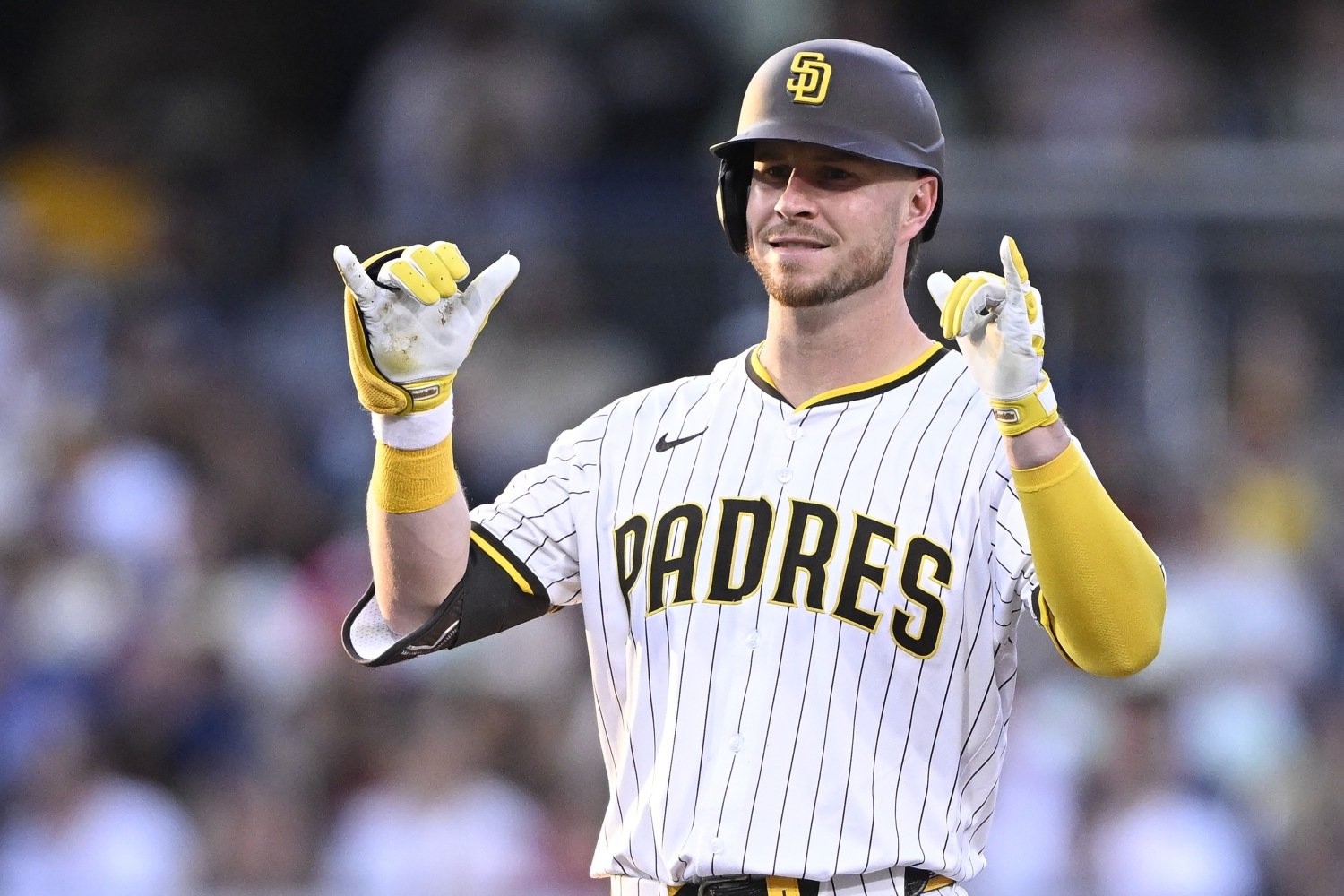 The Milwaukee Brewers have made a few transactions this offseason, but Brewers fans are still waiting for the ‘big one.’ Off the field, general manager Matt Arnold was promoted to the position of president of baseball operations, as the Crew tries to fend off the risk that he departs for a top job in a larger market. On the field, the Brewers traded Isaac Collins and Nick Mears to Kansas City for lefty reliever Ángel Zerpa. The team also signed free-agent outfielder Akil Baddoo to a big-league deal. Pitcher Coleman Crow was added to the 40-man roster and will be part of this year's fallback plan if and when starting pitchers get hurt. Southpaw Sammy Peralta was selected off waivers from the Los Angeles Angels. Meanwhile, Rhys Hoskins, Jose Quintana and Danny Jansen have hit free agency, after the mutual options for 2026 in each of their contracts were turned down by one side or the other. Jansen has already signed with the Rangers; Hoskins and Quintana aren't expected to return. Let’s take a look at the rest of the National League Central and see how those teams look after their rosters have been slightly shuffled. Note: All WAR numbers are courtesy of Baseball-Reference. All contracts are big league deals. Chicago Cubs The Cubs have made several small moves, but haven’t made a big splash in the trade or free agent market so far. Additions: Signed RHP Jacob Webb to a one-year deal, with club option for 2027. 2025 WAR: 0.3 Signed INF/OF Tyler Austin to a one-year deal. 2025: played in Japan Re-signed LHP Caleb Thielbar to a one-year deal. 2025 WAR: 1.1 Signed LHP Hoby Milner to one-year deal. 2025 WAR: -0.6 Signed RHP Phil Maton to a two-year deal, with club option for 2028. 2025 WAR: 1.3 Re-signed LHP Shota Imanaga to a 2026 QO. 2025 WAR: 1.5 Re-signed RHP Colin Rea to a one-year deal, with club option for 2027. 2025 WAR: 0.6 Signed RHP Hunter Harvey to a one-year deal. 2025 WAR: 0.7 Subtractions: RHP Andrew Kittredge (sold to Baltimore). 2025 WAR: 0.6 RHP Brad Keller (free agent to Philadelphia). 2025 WAR: 1.4 LHP Drew Pomeranz (free agent to LA Angels). 2025 WAR: 0.9 RHP Michael Soroka (free agent to Arizona). 2025 WAR: 0.6 Still Out There: RHP Ryan Brasier, 2025 WAR: -0.2 INF/OF Willi Castro, 2025 WAR: -0.2 RHP Aaron Civale, 2025 WAR: 0.1 C Reese McGuire, 2025 WAR: 0.3 RHP Eli Morgan, 2025 WAR: -0.4 LHP Taylor Rogers, 2025 WAR: 0.4 1B Carlos Santana, 2025 WAR: 1.1 OF Kyle Tucker, 2025 WAR: 4.6 INF Justin Turner, 2025 WAR: -0.1 As always with the Cubs, pitchers come and go. It seems like manager Craig Counsell is drawn to former Brewers, like Hoby Milner and Colin Rea. Could Tyler Austin come back to the bigs and hammer left-handed pitching in his return from Japan? Can Shota Imanaga return to his All-Star form of 2024? The Cubs will challenge for the NL Central crown, but do they have enough to unseat the Brewers? Right now, that seems far-fetched, but they could have another big move or two in them. Cincinnati Reds The Reds have made a handful of moves, but not enough to change things significantly. It's status quo in the Queen City. Additions: Signed OF JJ Bleday to a one-year deal. 2025 WAR: -0.3 Re-signed RHP Emilio Pagán to a two-year deal. 2025 WAR: 2.0 Signed LHP Caleb Ferguson to a one-year deal. 2025 WAR: 0.9 Traded for OF Dane Myers. 2025 WAR: -0.1 Claimed C Ben Rortvedt off waivers (LA Dodgers). 2025 WAR: -0.5 Subtractions: RHP Lyon Richardson (DFA). 2025 WAR: -0.2 Still Out There: INF/OF Miguel Andujar, 2025 WAR: 0.8 RHP Scott Barlow, 2025 WAR: 0.7 OF Austin Hays, 2025 WAR: 0.8 RHP Zack Littell, 2025 WAR: 3.2 LHP Wade Miley, 2025 WAR: -0.1 RHP Nick Martinez, 2025 WAR: 2.3 LHP Brent Suter, 2025 WAR: 0.3 Bleday will join the left-handed mix in the outfield, but will likely be a platoon/fourth outfielder. Myers is the right-handed version of Bleday with less power. Pagán saved 32 games last year and returns to the closer role. Ferguson is likely to be the main southpaw in the pen, but is more of a LOOGY than a guy who can get both sides out. With the declined options, there are a few bullpen jobs up for grabs. Will the Reds re-sign one or more of the pitchers that had been cut free? Pittsburgh Pirates A few moderate-to-big names have flown across the Buccos’ transaction page so far this winter, including those involved in a three-way trade with Tampa Bay and Houston. Additions: Traded for 2B Brandon Lowe. 2025 WAR: 1.9 Signed 1B/OF Ryan O’Hearn to a two-year deal. 2025 WAR: 2.4 Signed LHP Gregory Soto to a one-year deal. 2025 WAR: -0.1 Traded for OF Jake Mangum. 2025 WAR: 1.6 Traded for LHP Mason Montgomery. 2025 WAR: -0.9 Traded for OF Jhostynxon Garcia. 2025 WAR: 0.0 Subtractions: RHP Colin Holderman (signed by Cleveland), 2025 WAR: -0.8 RHP Johan Oviedo (traded to Boston), 2025 WAR: 0.8 RHP Mike Burrows (traded to Houston), 2025 WAR: 1.5 SS Cam Devanney (released), 2025 WAR: -0.5 Still Out There: OF Alexander Canario, 2025 WAR: 0.5 DH/OF Andrew McCutchen, 2025 WAR: 0.1 OF Tommy Pham, 2025 WAR: 1.0 The Pirates traded away a couple of solid starters in Oviedo and Burrows, but got some pop on the offensive side with Lowe (31 homers this year) and O’Hearn (All-Star, 17 homers). Plus, even more importantly, they got the player with arguably the best nickname in baseball. Jhostynxon Garcia (pronounced JOES-tin-son) has the nickname ‘The Password.’ St. Louis Cardinals The Cardinals traded away pitcher Sonny Gray and catcher Willson Contreras to the Red Sox and gained a couple of young starting pitchers in return. New president of baseball operations Chaim Bloom hinted at a full rebuild, and this certainly confirms that. Additions: Traded for RHP Richard Fitts. 2025 WAR: -0.3 Signed RHP Dustin May to a one-year deal. 2025 WAR: -0.6 Traded for RHP Hunter Dobbins. 2025 WAR: 0.4 Re-signed C Yohel Pozo to a one-year deal. 2025 WAR: 0.2 Claimed RHP Zak Kent off waivers. 2025 WAR: 0.1 Subtractions: 1B/DH Willson Contreras (traded to Boston), 2025 WAR: 2.5 RHP Sonny Gray (traded to Boston), 2025 WAR: 1.4 OF/INF Garrett Hampson (released), 2025 WAR: -0.4 Still Out There: LHP John King, 2025 WAR: -0.3 RHP Miles Mikolas, 2025 WAR: 0.4 If the Cardinals' plan is to get younger, they certainly did that. In addition to Fitts, May, Dobbins, and Kent, the Cards also added pitcher Brandon Clarke, a top Red Sox prospect. Pozo joins a three-catcher mix for St. Louis, but they have high expectations for the Cards backstop. ‘El Birdos’ have been out of the mix in the National League Central for the last three years, but Bloom and company are hoping the influx of youngsters can change that. Are the Brewers going to be the 2026 favorites for the NL Central crown? Last year, the Cubs dealt for Kyle Tucker. Many pundits thought that was enough to get them to the front of the pack. How did that work for them? This year, no one has made the big trade or signing that could be a difference maker—at least, not yet. Do the Brewers have enough to claim their fourth consecutive NL Central title, or do you see another team that might be able to overtake them? Let us know in the comments.
 -
When it comes time to make these subjective/objective rankings, I don't think anybody is ever on the same page. Yes the subjective facts are the same, but the objective opinions will always differ. It Woodruff can stay healthy and make 30 starts, he deserves that #9 ranking. If he doesn't stay off the IL, he probably should be farther down the list.
- 5 replies
-
- 1
-
-
- sal frelick
- caleb durbin
- (and 3 more)
-
Image courtesy of © Michael McLoone-Imagn Images This is part four of a five-part series about top Milwaukee Brewers player assets for 2026. Part 1: Players 21-25 Part 2: Players 16-20 Part 3: Players 11-15 Part 4: Players 6-10: 10. Caleb Durbin 2026 Season Age: 26 Controlled through: 2031 Jason's rank: 16 | Michael's rank: 9 | Steve's rank: 11 Durbin was acquired (along with Nestor Cortes) from the New York Yankees for Devin Williams last December and was added into the mix at third base as spring training began. When Vinny Capra and Oliver Dunn batted a combined .134 (9-for-67) for Milwaukee, Durbin was called up from Triple-A Nashville. He got a hit in his first big league at-bat, and the newest Brewer third sacker was found. Other than a slow month of May, Durbin was fairly consistent and finished the season with a batting line of .256/.334/.387, across 445 at-bats. Durbin hit lefties and righties equally (.717 OPS vs. LHP, .722 OPS vs. RHP) and showed a bit of power (11 homers) and speed (18 stolen bases). He was one of the few players to play well in the postseason, including 4-for-13 against Los Angeles in the NLCS. Defensively, Durbin posted a Defensive Runs Saved (DRS) number of +5, which placed him in the company of Gold Glovers Nolan Arenado (+6) and Matt Chapman (+5). His Outs Above Average (OAA) was +2, which was in the middle of the pack for third basemen. Durbin had a fine rookie year, and with little pressure on him to start the upcoming season, the Brewers should expect even more from him in his sophomore campaign. Caleb Durbin on his rookie season. 9. Brandon Woodruff 2026 Season Age: 33 Controlled through: 2026 Jason's rank: 23 | Michael's rank: 6 | Steve's rank: 6 Jason appears to be a little skeptical about Woodruff’s 2026 season, while the other two think that this season will be ‘business as usual’ for Big Woo. We all know what he can do, but the question is whether he can recover from the lat strain he suffered late last year—and avoid further injuries. Woodruff struck out batters at a higher rate than in 2023, increasing his K rate from 29.2% to 32.2%. He also changed his repertoire, using fewer fastballs (41% to 30%) while throwing more cutters and sinkers. His velocity dropped a couple ticks, but he found ample compensations for that shortfall. The righty accepted the qualifying offer (QO) of $22.025 million, and if he can have a successful season, he will be in line for a big raise in 2027. 8. Quinn Priester 2026 Season Age: 25 Controlled through: 2030 Jason's rank: 12 | Michael's rank: 12 | Steve's rank: 8 ‘The Reverend’ had a great stretch for Milwaukee last year, winning 12 straight decisions while pitching well enough that Milwaukee won 19 consecutive contests while he was on the mound. Priester came over from the Boston Red Sox in an April trade that much of ‘Bushville’ hated. Losing Yophery Rodriguez, John Holobetz, and a competitive draft pick for a seemingly fringy pitcher chapped the hides of many Brewer fans. However, when Priester started winning, he quickly became a fan favorite. He became a sinker, slider, cutter guy, throwing those three offerings a combined 89% of the time to great success. He improved his K rate from 15% to 20% and kept his groundball rate at 56%, a great thing when you have Turang-Ortiz-Durbin behind you. Priester has a pretty safe lock on a starting job in the rotation; he would have to fall apart in order to lose it. Quinn Priester reflecting on the 2025 season. 7. Sal Frelick 2026 Season Age: 26 Controlled through: 2029 Jason's rank: 15 | Michael's rank: 5 | Steve's rank: 9 Frelick starred in football, baseball, and hockey at Lexington High School in Massachusetts. Is it any wonder that the guy would dive for any ball or run through a fence to catch a fly ball? The lefty-swinging Frelick, aka ‘The Hit Collector,’ has become a fan favorite in Milwaukee, a smaller, faster version of ‘Stormin’ Gorman Thomas, a much-beloved Brewer from 40 years ago. Frelick has already won a Gold Glove in 2024 and challenged for a batting title in 2025. What more can he do? He set a career high with 12 home runs and 19 stolen bases, and smart money says he will better those numbers soon. In 2025, Frelick actually hit for a better average (.301) against lefties than against righties (.282), though all his power came against opposite-handed pitchers. Everyday play and some minor injuries made for a long season for Frelick, which might have been a big part of his less-than-stellar 1-for-14 showing against Los Angeles in the NLCS. One thing to know about Frelick: he will never give up. That is the kind of player that Milwaukee fans fall in love with. Sal Frelick's crazy twin killing in the NLCS. 6. Jesús Made 2026 Season Age: 19 Controlled through: TBD Jason's rank: 2 | Michael's rank: 7 | Steve's rank: 17 There is much discord in the rankings of this trio of BF scribes for the future Brewer infielder. All I know is that all three of us hope that he lives up to what all the scouts have projected for him. Made has moved quickly up the ladder, from Single-A to High-A to Double-A, all in one year. Made should start at Biloxi this year, and if history is any guide, will be at Triple-A Nashville before the year ends. Made has 60 grades for the hit, power, arm, and overall tools. Last year at three levels, he batted .285/.379/.413 across 453 at-bats. He has good line-drive power, as he stroked 28 two-baggers and showed his speed tool with 47 stolen bases. Currently ranked the fourth-best prospect in baseball by MLB Pipeline, the 18-year-old phenom has an ETA of 2028 at ‘The Ueck,’ but if he keeps making progress like he has been, we could see him as early as September 2026 in a big-league uniform. Made's first home run in at Double-A Biloxi. Next up, Part 5 (1-5). Enjoy! Let us know how we are doing. Did we miss anyone? Somebody rated too high or too low? Start the conversation in the comments section below! View full article
-
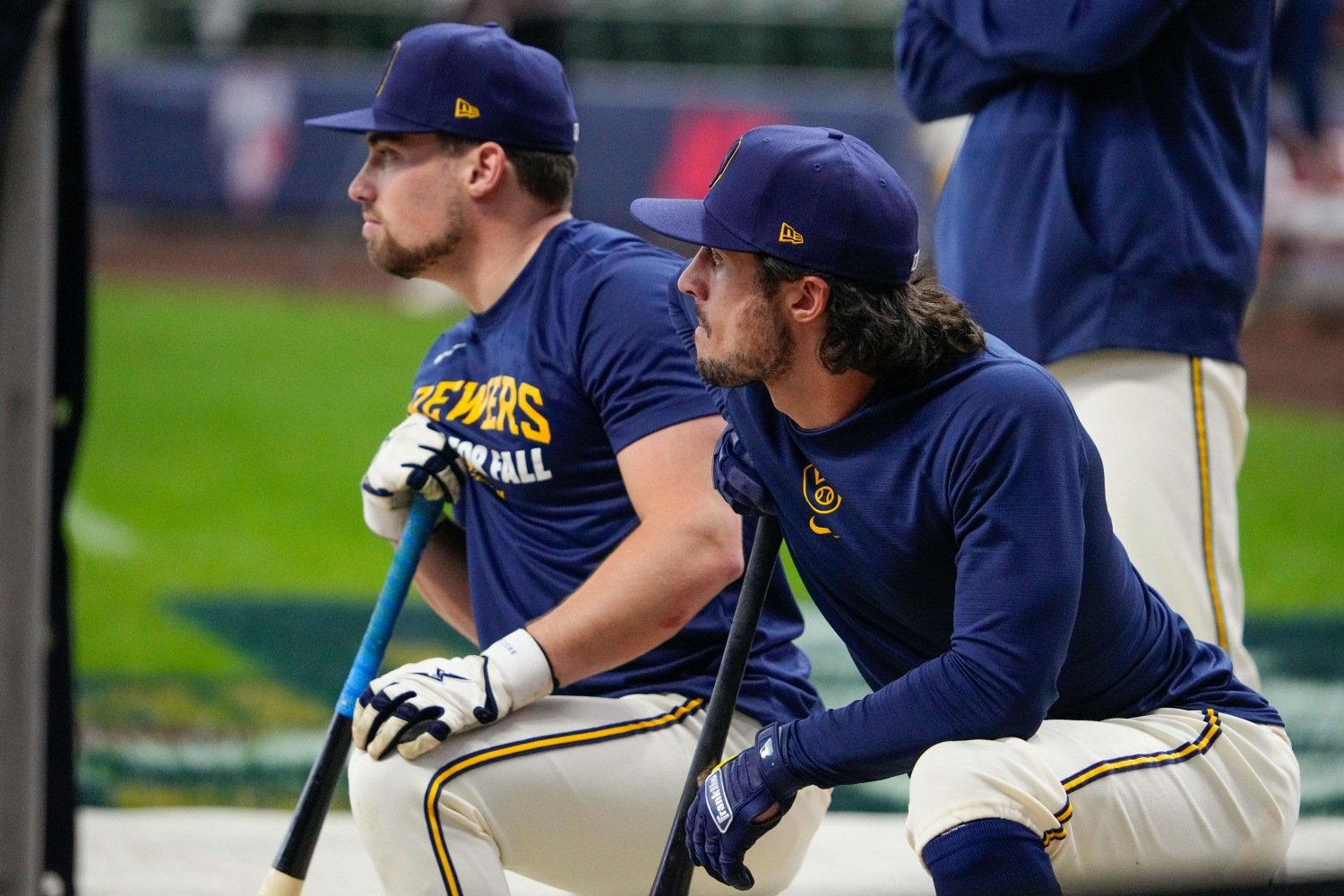 This is part four of a five-part series about top Milwaukee Brewers player assets for 2026. Part 1: Players 21-25 Part 2: Players 16-20 Part 3: Players 11-15 Part 4: Players 6-10: 10. Caleb Durbin 2026 Season Age: 26 Controlled through: 2031 Jason's rank: 16 | Michael's rank: 9 | Steve's rank: 11 Durbin was acquired (along with Nestor Cortes) from the New York Yankees for Devin Williams last December and was added into the mix at third base as spring training began. When Vinny Capra and Oliver Dunn batted a combined .134 (9-for-67) for Milwaukee, Durbin was called up from Triple-A Nashville. He got a hit in his first big league at-bat, and the newest Brewer third sacker was found. Other than a slow month of May, Durbin was fairly consistent and finished the season with a batting line of .256/.334/.387, across 445 at-bats. Durbin hit lefties and righties equally (.717 OPS vs. LHP, .722 OPS vs. RHP) and showed a bit of power (11 homers) and speed (18 stolen bases). He was one of the few players to play well in the postseason, including 4-for-13 against Los Angeles in the NLCS. Defensively, Durbin posted a Defensive Runs Saved (DRS) number of +5, which placed him in the company of Gold Glovers Nolan Arenado (+6) and Matt Chapman (+5). His Outs Above Average (OAA) was +2, which was in the middle of the pack for third basemen. Durbin had a fine rookie year, and with little pressure on him to start the upcoming season, the Brewers should expect even more from him in his sophomore campaign. Caleb Durbin on his rookie season. 9. Brandon Woodruff 2026 Season Age: 33 Controlled through: 2026 Jason's rank: 23 | Michael's rank: 6 | Steve's rank: 6 Jason appears to be a little skeptical about Woodruff’s 2026 season, while the other two think that this season will be ‘business as usual’ for Big Woo. We all know what he can do, but the question is whether he can recover from the lat strain he suffered late last year—and avoid further injuries. Woodruff struck out batters at a higher rate than in 2023, increasing his K rate from 29.2% to 32.2%. He also changed his repertoire, using fewer fastballs (41% to 30%) while throwing more cutters and sinkers. His velocity dropped a couple ticks, but he found ample compensations for that shortfall. The righty accepted the qualifying offer (QO) of $22.025 million, and if he can have a successful season, he will be in line for a big raise in 2027. 8. Quinn Priester 2026 Season Age: 25 Controlled through: 2030 Jason's rank: 12 | Michael's rank: 12 | Steve's rank: 8 ‘The Reverend’ had a great stretch for Milwaukee last year, winning 12 straight decisions while pitching well enough that Milwaukee won 19 consecutive contests while he was on the mound. Priester came over from the Boston Red Sox in an April trade that much of ‘Bushville’ hated. Losing Yophery Rodriguez, John Holobetz, and a competitive draft pick for a seemingly fringy pitcher chapped the hides of many Brewer fans. However, when Priester started winning, he quickly became a fan favorite. He became a sinker, slider, cutter guy, throwing those three offerings a combined 89% of the time to great success. He improved his K rate from 15% to 20% and kept his groundball rate at 56%, a great thing when you have Turang-Ortiz-Durbin behind you. Priester has a pretty safe lock on a starting job in the rotation; he would have to fall apart in order to lose it. Quinn Priester reflecting on the 2025 season. 7. Sal Frelick 2026 Season Age: 26 Controlled through: 2029 Jason's rank: 15 | Michael's rank: 5 | Steve's rank: 9 Frelick starred in football, baseball, and hockey at Lexington High School in Massachusetts. Is it any wonder that the guy would dive for any ball or run through a fence to catch a fly ball? The lefty-swinging Frelick, aka ‘The Hit Collector,’ has become a fan favorite in Milwaukee, a smaller, faster version of ‘Stormin’ Gorman Thomas, a much-beloved Brewer from 40 years ago. Frelick has already won a Gold Glove in 2024 and challenged for a batting title in 2025. What more can he do? He set a career high with 12 home runs and 19 stolen bases, and smart money says he will better those numbers soon. In 2025, Frelick actually hit for a better average (.301) against lefties than against righties (.282), though all his power came against opposite-handed pitchers. Everyday play and some minor injuries made for a long season for Frelick, which might have been a big part of his less-than-stellar 1-for-14 showing against Los Angeles in the NLCS. One thing to know about Frelick: he will never give up. That is the kind of player that Milwaukee fans fall in love with. Sal Frelick's crazy twin killing in the NLCS. 6. Jesús Made 2026 Season Age: 19 Controlled through: TBD Jason's rank: 2 | Michael's rank: 7 | Steve's rank: 17 There is much discord in the rankings of this trio of BF scribes for the future Brewer infielder. All I know is that all three of us hope that he lives up to what all the scouts have projected for him. Made has moved quickly up the ladder, from Single-A to High-A to Double-A, all in one year. Made should start at Biloxi this year, and if history is any guide, will be at Triple-A Nashville before the year ends. Made has 60 grades for the hit, power, arm, and overall tools. Last year at three levels, he batted .285/.379/.413 across 453 at-bats. He has good line-drive power, as he stroked 28 two-baggers and showed his speed tool with 47 stolen bases. Currently ranked the fourth-best prospect in baseball by MLB Pipeline, the 18-year-old phenom has an ETA of 2028 at ‘The Ueck,’ but if he keeps making progress like he has been, we could see him as early as September 2026 in a big-league uniform. Made's first home run in at Double-A Biloxi. Next up, Part 5 (1-5). Enjoy! Let us know how we are doing. Did we miss anyone? Somebody rated too high or too low? Start the conversation in the comments section below!
- 5 comments
-
- 1
-
-
- sal frelick
- caleb durbin
- (and 3 more)
-
I agree. The only problem is that this assignment was 'Four-dimensional' chess, but I only understand three-dimensional...
-
100% agree. The only problem is: which one is right?
-
I don't think that is a typo. Where would you put him, and why?
-
Damn, Jake, the Brewers should sign you as the 'Doctor of Spin-ology' and put you on staff! I know that would be a pay cut for you, but still...
- 4 replies
-
- 1
-
-
- dl hall
- dc analysis
- (and 1 more)
-
One of the three (Pratt, Pena, Made) could wash out...it happens. Hopefully not here. Otherwise, there is the possibility of a position change. If trading one of them would net a big bat, it could be worth it. Time will tell...
- 5 replies
-
- 1
-
-
- logan henderson
- aaron ashby
- (and 3 more)
-
I'm gonna steal this (more or less) from Nick Nelson of Twins Daily. He said it better than I could. The idea of this exercise is to take stock of the organization's talent through the scope of team-building. Our goal is to answer this question: Which current players in the organization are most indispensable to fulfilling the vision of building a champion? We account for age, contract, controllability, upside, etc. It's not strictly a ranking of trade value, because that would be more team-agnostic, whereas this list aims to capture a very Brewers-specific point of view. As such, players at areas of scarcity (i.e., catching) get elevated, while those at areas of abundance (i.e., relief pitchers) get downgraded a bit. Without more ado from afar, here is Part 2 of the Top Brewers Players Assets of 2025. Part 1: #21-25 20. Logan Henderson, RHP 2026 Season Age: 24 Controlled through: 2031 Jason's rank: 18 | Michael's rank: 17 | Steve's rank: 18 After moving up in the Brewers chain for four years, Henderson made his highly awaited debut in Milwaukee in 2025 and didn’t disappoint. He earned wins in his first three decisions and struck out batters at a rate of 33% while walking only eight percent. He suffered a flexor tendon strain in August and missed the balance of the season. Henderson features two plus pitches: a fastball in the 92-95 MPH range with over 17” of Induced Vertical Break (IVB), and a changeup that comes to the plate at 80-82 MPH and has an average of 18” of arm-side movement. He also throws a cutter and slider a combined 10% of the time, but he needs to work on those pitches. The right-hander is expected to be healthy coming into the 2026 season and is a frontrunner for a spot in the Brewers' starting rotation. Here are some of the highlights in Henderson's start against Washington on August 3, his last appearance of the season. 19. Jeferson Quero, C 2026 Season Age: 23 Controlled through: TBD Jason's rank: 11 | Michael's rank: 15 | Steve's rank: NR Quero returned in 2025 from the torn labrum in his right shoulder that sidelined him for all of 2024. He split time between the Arizona Complex League and Triple-A Nashville in 2025. Quero caught 34 games at Nashville and threw out only 19% of baserunners, dropping from 35% in his last full season. Opposing teams ran 50% more than they did in 2023; is the arm healthy? Although he had only 250 trips to the plate at Nashville, I feel he has little to prove in the minors. His batting mark of .255/.336/.412 shows a good eye and decent pop. He could benefit from learning nuances of the catching job from ‘Wild Bill,’ and short of an injury, slump, or significant free agent/trade at the ‘2’ spot, Quero should be the primary back-up behind the plate this year. Quero's three-run homer against Louisville in September 2025. 18. Cooper Pratt 2026 Season Age: 21 Controlled through: TBD Jason's rank: 10 | Michael's rank: 16 | Steve's rank: NR Pratt’s batting numbers dropped off from 2024, but two things have remained constant: speed and defense. His combined 2024 batting numbers were .277/.362/.406, compared to last year’s .238/.343/.348. His stolen base number improved from 27 to 31 last season. With a Gold Glove already on his résumé and 60 grades for fielding and arm, defense is not a problem. Pratt is a line-drive hitter, but with his size (6-foot-3, 205 pounds), he should grow into his power. Once the face of Milwaukee’s future shortstop, he has been passed up by Jesús Made and Luis Peña. Those two are probably a year behind Prat, but are coming fast. Our own Telemachus opined that Pratt might be a trade chip in the future. Having too many players at the same spot is a good thing. Or is it? All things staying the same, Pratt should make his big-league debut sometime this season. A nice leaping grab by Cooper Pratt. 17. Aaron Ashby 2026 Season Age: 28 Controlled through: 2028 Jason's rank: 17 | Michael's rank: 20 | Steve's rank: 13 It seems hard to believe, but Ashby will be entering his fifth year as a Brewer in 2026. Last year, he was a major part of the mid-to-high leverage relief corps and set career highs with 43 appearances, three saves, 193 ERA+, and a 2.70 FIP. The Brewers have vacillated between using the left-hander as a starter or reliever, but smart money has Ashby in the pen, unless he is needed in the rotation in an emergency. Last season, Ashby used his sinker 40% of the time with a velo of about 96 MPH. The slider (23%), curve (16%), and change (18%) are all formidable weapons. Just to keep batters honest, he has a fastball that also arrives at about 96 MPH. Ashby will once again be a major part of the Brewers pen, either with multiple innings or as a late-inning guy if needed. Aaron Ashby strikes out Freddie Freeman in the NLCS. 16. Andrew Vaughn 2026 Season Age: 28 Controlled through: 2027 Jason's rank: 24 | Michael's rank: 11 | Steve's rank: 15 Last year was a ‘tale of two cities’ for Vaughn after playing in Chicago and later in Milwaukee. It was the best of times (.308/.375/.493 in Milwaukee), and it was the worst of times (.189/.218/.314 in Chicago). Vaughn slumped in August (.695 OPS) but rebounded in the last month of the season (.942 OPS). Like the rest of the Brewers, Vaughn struggled in the NLCS against the Dodgers, taking a 0-for-12 collar. Vaughn was a decent fielder according to FanGraphs, with a Defensive Runs Saved (DRS) of zero and an Outs Above Average (OAA) of +4 while playing for the Brewers. The powerful righty is expected to, at the very least, split the job with southpaw Jake Bauers. But a hot start by either one of them could put the other on the bench. Here's Vaughn robbing Max Muncy in the NLCS. Next up, Part 3 (11-15). Enjoy!! Let us know how we are doing. Did we miss anyone? Somebody rated too high or too low? Start the conversation in the comments section below! View full article
-
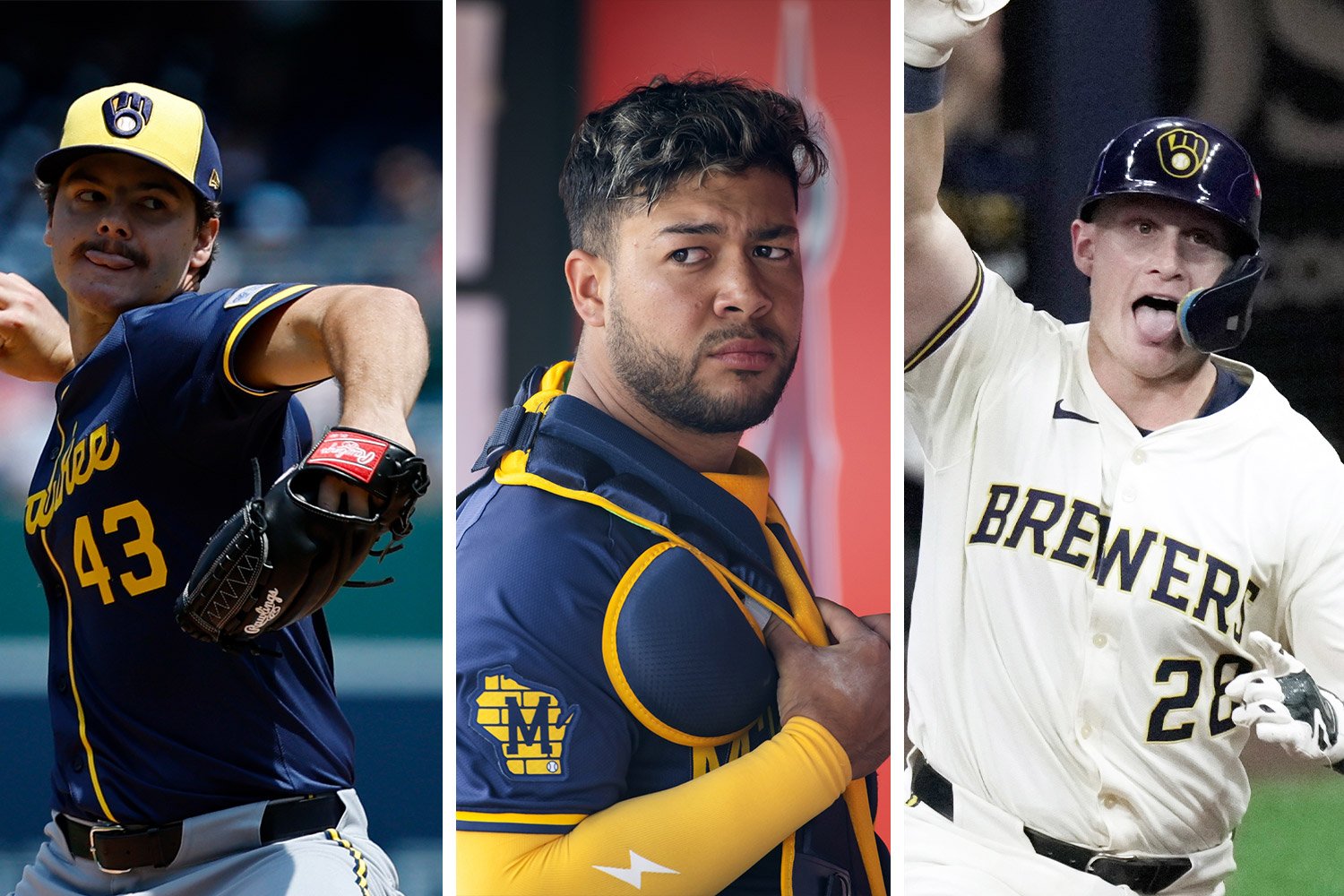 I'm gonna steal this (more or less) from Nick Nelson of Twins Daily. He said it better than I could. The idea of this exercise is to take stock of the organization's talent through the scope of team-building. Our goal is to answer this question: Which current players in the organization are most indispensable to fulfilling the vision of building a champion? We account for age, contract, controllability, upside, etc. It's not strictly a ranking of trade value, because that would be more team-agnostic, whereas this list aims to capture a very Brewers-specific point of view. As such, players at areas of scarcity (i.e., catching) get elevated, while those at areas of abundance (i.e., relief pitchers) get downgraded a bit. Without more ado from afar, here is Part 2 of the Top Brewers Players Assets of 2025. Part 1: #21-25 20. Logan Henderson, RHP 2026 Season Age: 24 Controlled through: 2031 Jason's rank: 18 | Michael's rank: 17 | Steve's rank: 18 After moving up in the Brewers chain for four years, Henderson made his highly awaited debut in Milwaukee in 2025 and didn’t disappoint. He earned wins in his first three decisions and struck out batters at a rate of 33% while walking only eight percent. He suffered a flexor tendon strain in August and missed the balance of the season. Henderson features two plus pitches: a fastball in the 92-95 MPH range with over 17” of Induced Vertical Break (IVB), and a changeup that comes to the plate at 80-82 MPH and has an average of 18” of arm-side movement. He also throws a cutter and slider a combined 10% of the time, but he needs to work on those pitches. The right-hander is expected to be healthy coming into the 2026 season and is a frontrunner for a spot in the Brewers' starting rotation. Here are some of the highlights in Henderson's start against Washington on August 3, his last appearance of the season. 19. Jeferson Quero, C 2026 Season Age: 23 Controlled through: TBD Jason's rank: 11 | Michael's rank: 15 | Steve's rank: NR Quero returned in 2025 from the torn labrum in his right shoulder that sidelined him for all of 2024. He split time between the Arizona Complex League and Triple-A Nashville in 2025. Quero caught 34 games at Nashville and threw out only 19% of baserunners, dropping from 35% in his last full season. Opposing teams ran 50% more than they did in 2023; is the arm healthy? Although he had only 250 trips to the plate at Nashville, I feel he has little to prove in the minors. His batting mark of .255/.336/.412 shows a good eye and decent pop. He could benefit from learning nuances of the catching job from ‘Wild Bill,’ and short of an injury, slump, or significant free agent/trade at the ‘2’ spot, Quero should be the primary back-up behind the plate this year. Quero's three-run homer against Louisville in September 2025. 18. Cooper Pratt 2026 Season Age: 21 Controlled through: TBD Jason's rank: 10 | Michael's rank: 16 | Steve's rank: NR Pratt’s batting numbers dropped off from 2024, but two things have remained constant: speed and defense. His combined 2024 batting numbers were .277/.362/.406, compared to last year’s .238/.343/.348. His stolen base number improved from 27 to 31 last season. With a Gold Glove already on his résumé and 60 grades for fielding and arm, defense is not a problem. Pratt is a line-drive hitter, but with his size (6-foot-3, 205 pounds), he should grow into his power. Once the face of Milwaukee’s future shortstop, he has been passed up by Jesús Made and Luis Peña. Those two are probably a year behind Prat, but are coming fast. Our own Telemachus opined that Pratt might be a trade chip in the future. Having too many players at the same spot is a good thing. Or is it? All things staying the same, Pratt should make his big-league debut sometime this season. A nice leaping grab by Cooper Pratt. 17. Aaron Ashby 2026 Season Age: 28 Controlled through: 2028 Jason's rank: 17 | Michael's rank: 20 | Steve's rank: 13 It seems hard to believe, but Ashby will be entering his fifth year as a Brewer in 2026. Last year, he was a major part of the mid-to-high leverage relief corps and set career highs with 43 appearances, three saves, 193 ERA+, and a 2.70 FIP. The Brewers have vacillated between using the left-hander as a starter or reliever, but smart money has Ashby in the pen, unless he is needed in the rotation in an emergency. Last season, Ashby used his sinker 40% of the time with a velo of about 96 MPH. The slider (23%), curve (16%), and change (18%) are all formidable weapons. Just to keep batters honest, he has a fastball that also arrives at about 96 MPH. Ashby will once again be a major part of the Brewers pen, either with multiple innings or as a late-inning guy if needed. Aaron Ashby strikes out Freddie Freeman in the NLCS. 16. Andrew Vaughn 2026 Season Age: 28 Controlled through: 2027 Jason's rank: 24 | Michael's rank: 11 | Steve's rank: 15 Last year was a ‘tale of two cities’ for Vaughn after playing in Chicago and later in Milwaukee. It was the best of times (.308/.375/.493 in Milwaukee), and it was the worst of times (.189/.218/.314 in Chicago). Vaughn slumped in August (.695 OPS) but rebounded in the last month of the season (.942 OPS). Like the rest of the Brewers, Vaughn struggled in the NLCS against the Dodgers, taking a 0-for-12 collar. Vaughn was a decent fielder according to FanGraphs, with a Defensive Runs Saved (DRS) of zero and an Outs Above Average (OAA) of +4 while playing for the Brewers. The powerful righty is expected to, at the very least, split the job with southpaw Jake Bauers. But a hot start by either one of them could put the other on the bench. Here's Vaughn robbing Max Muncy in the NLCS. Next up, Part 3 (11-15). Enjoy!! Let us know how we are doing. Did we miss anyone? Somebody rated too high or too low? Start the conversation in the comments section below!
- 5 comments
-
- 1
-
-
- logan henderson
- aaron ashby
- (and 3 more)
-
Dear Santa, From Brewers Fans
Michael Trzinski replied to Telemachus Rafaelidys's topic in Brewer Fanatic Front Page News
Hurricane Hazle!!! -
What team? WiPH seems like so long ago.
-
At least he didn't say 'chopped liver.' 😎
-
My bad. I believe I wrote the Pirates preview before the 2025 campaign, so I should have remembered they had some decent SP depth. But sending out two pretty solid starters seems to be asking for trouble. Remember what happened to the Brewers last spring...
-
Yeah, Bader would be a nice add...
-
If I was a Pirates fan I would be wondering why they traded away two of their top five (six) starters. Hunter Barco will probably make the rotation, and Thomas Harrington might. All of the other prospects are at least two years out.
-
Next time I am just going to ask you for my rankings...lol. Great in-depth analysis. Kudos to you, sir!!
-
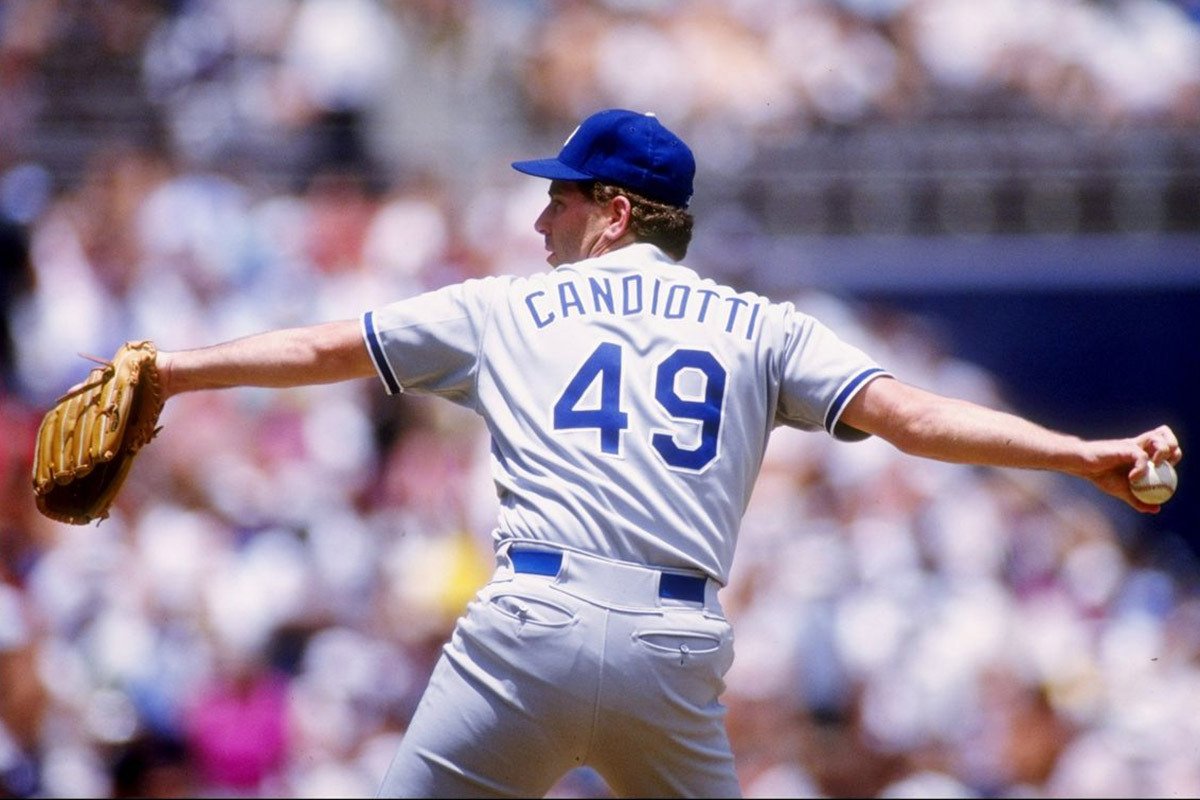 If you thought that the Brewers found slim pickings when it came to the Major League Rule 5 Draft, check out the dribs and drabs of the minor league phase of the draft. Milwaukee had only a couple of players who made any impression at the major league level for the Brewers, and a handful of others who made it to the big leagues, albeit for other teams. Here are the five players drafted by the Brewers who actually played for Milwaukee. Isaac Collins, OF-2B (from Colorado), 2022 Despite showing good speed with 30 steals at Double-A Hartford in 2022, the Colorado Rockies elected not to protect Collins, and the Brewers scooped him up in the Minor League portion of the draft. Collins began the 2023 season at Double-A Biloxi and showed power (10 HR), speed (29 steals), and a good eye, drawing 75 walks while batting .269/.424/.431 across just 376 plate appearances. He earned a late-season promotion to Triple-A Nashville but went 0-for-7 in three games. The following year, Collins showed his stuff at Nashville, batting .273/.386/.475 with 14 homers and 24 steals in 500 trips to the plate. The Brewers called him up for a sip of Starbucks in September. Although Collins struggled with only two hits in 17 at-bats, he showed his moxie, singling on the first pitch he saw in the major leagues and then stealing second base against his former organization in a 4-1 loss to the Rockies. The switch-hitter earned the final spot on the 2005 Brewers Opening Day roster after Blake Perkins suffered a broken tibia in training camp. Although the Brewers stumbled out of the gate, losing four straight games, Collins went 3-for-6, including a pair of doubles. He scuffled through mid-June but then caught fire over the next three months, hitting .297/.383/.485 with 26 extra-base hits in 229 ABs. Collins ran out of steam the last three weeks of the regular season, batting just .133/.333/.167 over 30 at-bats. In the postseason, Collins got only one start and went 0-for-9. Defensively, he posted a -1 Defensive Runs Saved (DRS), which put him squarely in the middle of all left fielders, but had a +5 Outs Above Average (OAA), which ranked him near the top of the list. After the 2025 season, Collins was traded, along with relief pitcher Nick Mears, to the Kansas City Royals for pitcher Ángel Zerpa. Caleb Boushley, RHP (from San Diego), 2021 The Brewers selected the Hortonville, Wisconsin product (via UW-La Crosse) from the San Diego Padres in the 2021 Minor League phase. The major league portion was postponed and then cancelled due to an offseason lockout. Boushley spent the entire 2022 season at Nashville, starting 25 games while posting a 12-2 record with an ERA of 3.25. His 1.17 WHIP was solid. He repeated the Triple-A level in 2023, and although his stats weren’t as good as the previous year, Boushley got called up to Milwaukee in late September. In his first action on a major league mound, Boushley had mixed results as he gave up a home run to Ian Happ, blew a save, but got the win in extra innings. In 2 1/3 innings, he allowed the Happ home run, walked two (one intentionally), and struck out five. To date, it is his only major league win. After the season, Boushley was outrighted to Nashville, and in January, the Minnesota Twins signed him to a minor league contract. He made two appearances in two separate stints for the Twins, and after the season, he became a free agent after he refused a minor league assignment. The Texas Rangers signed Boushley to a minor league contract in November. In 2025, Boushley spent most of the season with Texas, making 25 appearances and earning one save. Two days before Thanksgiving, Boushley signed a contract with the KT Wiz in the KBO League, hoping to find a little overseas magic. David Manning, RHP (from Minnesota), 2002 Manning was a third-round pick of the Texas Rangers in the 1992 MLB Amateur Draft. He spent seven years in the Rangers organization and barely made it to Triple-A, pitching in 12 games over a three-year period. He was granted free agency after the 1998 season and signed a minor league deal with the Chicago Cubs. Manning pitched two seasons at Double-A and Triple-A but suffered an undisclosed elbow injury that curtailed his 2000 season and the following season. He was a member of the New York Yankees organization for two months in early 2002 before being released. Manning signed with the Minnesota Twins in July and made 10 starts at Double-A New Britain. He was released once again and then was signed in the Minor League Rule 5 draft by Milwaukee. Manning began the 2003 season at Triple-A Indianapolis and got called up to Milwaukee in early August when Glendon Rusch went on the disabled list. It only took a few days for him to make his big-league debut. Unfortunately, he got rocked in his first outing, giving up four hits, five walks, and seven runs in a four-inning start against Montreal. A week later, he made his second start, and the results weren’t very different. Manning allowed seven hits, three walks, and six runs in just 2 2/3 innings against Florida. He was released 10 days later. He never made it back to the majors, but he did see a lot of the world. In addition to playing two seasons in the Chinese Professional Baseball League, he played three years in the Mexican leagues and one winter in Venezuela. He also played in two independent leagues and had partial seasons in the Cubs and Orioles organizations. Matías Carrillo, OF (from Pittsburgh), 1987 Carrillo was purchased by the Pirates in December 1985 from the Mexico City Tigers after four seasons in the Mexican League. After two ho-hum seasons in the Pirates chain, he was selected by the Brewers in the 1987 Minor League Rule 5 Draft. He spent four years (one at Double-A and three at Triple-A) in the minors for Milwaukee and was a decent player, finally getting his shot in the bigs in May 1991 when outfielder Darryl Hamilton went on the disabled list. Carillo did his best Moonlight Graham impression, although he played in three games to Graham’s one contest. In late May, Carrillo came into three consecutive games as a defensive replacement in left field for Franklin Stubbs and Greg Vaughn. Carrillo’s Milwaukee career showed no plate appearances and no defensive chances in the field. He was sent back to Triple-A Denver to make room for the return of pitcher Teddy Higuera at the end of May. Carrillo returned to the Mexican League for two years before he got signed by the Florida Marlins. He finally got his first big-league at-bat on September 1, 1993, and singled off Padres’ pitcher Andy Benes. He also had a double and two RBI. In his first dozen games, Carrillo batted .323/.323/.452 with four doubles across 31 at-bats. He finished the year with a batting line of .255/.281/.364 across 55 at-bats. In 1994, Carrillo played 80 games up until the Major League Strike. He batted .250/.295/.301 across 136 at-bats. He became a free agent after the year and played the next 15 years in the Mexican Leagues, retiring from baseball at age 46. Carrillo managed eight years in the Mexican League and one year in the independent Pioneer League before pulling the plug. Tom Candiotti, RHP (from Kansas City), 1980 How many people remember that ‘Cotton’ Candiotti pitched for the Brewers? He began his career with an unaffiliated team in the Low-A Northwest League in 1979 before signing with the Royals. He pitched for one year with the Royals at Double-A and Triple-A before getting picked by the Brewers in the minor league phase of the Rule 5 Draft in 1980. He made 21 appearances (14 starts) in 1981 at Double-A El Paso and went on the shelf with an elbow injury. He underwent Tommy John surgery and missed the end of 1981 and the entire 1982 season. He pitched at two levels in 1983 before getting called up to Milwaukee in August when Don Money went on the disabled list. After a pair of relief outings, Candiotti earned four straight wins, including two complete games and one shutout. The last four games were a disaster as he lost four straight. He posted an ERA+ of 117 and a FIP of 3.90. Candiotti was viewed as a long reliever in 1984 by manager Rene Lachemann, but instead was sent down to Triple-A Vancouver. He was recalled by Milwaukee in mid-July and made three starts with mixed results before going on the DL with right shoulder tendinitis. Upon his return, he made five appearances in September, finishing his Brewer career. In 1985, Candiotti made 28 combined starts between El Paso and Vancouver and was released after the season. Candiotti made 18 appearances (14 starts) for Milwaukee, posting an ERA+ of 96 and a FIP of 4.04. Candiotti spent the next 14 years in the bigs, toiling for Cleveland, the Los Angeles Dodgers, Toronto, and Oakland. He amassed 200+ innings nine times in his career. He retired at age 42 with 151 wins and an ERA+ of 108. The Ones That Got Away Five of the players chosen by the Brewers in the draft didn't make it to Milwaukee, but instead, made their big-league debuts with other clubs. Mike Warren, RHP (from Oakland), 1981 Warren made six starts at Single-A Stockton (4-0, 3.27 ERA), striking out batters at a rate of nearly 25% while posting a 1.14 WHIP. He was traded, along with first baseman Johnny Evers, to the A's for utilityman Rob Picciolo. Warren pitched for Oakland for three years (1983-85) and made 27 starts among 52 appearances and had an ERA+ of 75 and a FIP of 4.75. Juan Cerros, RHP (from Cincinnati), 2004 Cerros actually pitched in the bigs before Milwaukee scooped him up. He made 11 relief appearances for the Reds in 2003 and pitched to an ERA+ of 87 and FIP of 4.26. Not sure what happened in early 2005, but Cerros never pitched in the Brewers chain, instead electing to play in his native Mexico for the next 10 years. Brett Campbell, RHP (from Washington), 2007 Campbell also pitched in the bigs prior to getting drafted by the Brewers. In 2006, Campbell appeared in four games for the Nationals, posting an ERA+ of 45 and a FIP of 6.38. The Brewers released him before the start of the 2008 season. After his playing career, Campbell was a coach at Georgia Perimeter College, a small school near Atlanta. After two years, he became a scout for the Texas Rangers and, more recently, is scouting for the New York Mets. Kevin Mattison, OF (from Miami), 2013 Mattison also played in the majors prior to being drafted by Milwaukee, appearing in just three games for Miami in 2012, going 0-for-5. In 2014, Mattison played in 91 games at Triple-A Nashville, batting just .212/.294/.387 with 21 extra-base hits in 217 at-bats, but he struck out 33% of the time. He was released by the Brewers in mid-August. He signed with the Nationals before the 2015 season but was released after just three games at Triple-A Syracuse. Matt Ramsey, RHP (from Miami), 2016 Ramsey pitched for Double-A Biloxi in 2017 and led the Southern League with 27 saves. In mid-July, he was promoted to Triple-A Colorado Springs but scuffled there and was sent back to Biloxi, where he finished the season. Ramsey was released after the season and was picked up by Houston. He spent the 2018 campaign in the minors for Houston and once again chose free agency. The Los Angeles Angels signed him, and he started the 2019 season at Triple-A Salt Lake. He was called up to the Angels in late April and the next day made his only big show appearance, pitching a perfect ninth against the New York Yankees, striking out Mike Ford to end the game. He was let go by the Angels in early June. He pitched in Mexico and in an independent league, but retired after the season. Final Thoughts The Brewers, like most other teams, hope to find that special needle in a haystack with the Minor League phase of the Rule 5 Draft. It happened with Collins, Candiotti, and, to a lesser extent, Mike Warren. But for the most part, major league teams are just happy if they can find someone who can be a solid performer for them at the higher levels of the minors. And if they happen to make it to the bigs? That's a job well done by that organization. Please feel free to share any thoughts or comments in the comments section below.
-
- 1
-
-
- isaac collins
- caleb boushley
- (and 8 more)
