Bashopolis
-
Posts
108 -
Joined
-
Last visited
Content Type
Profiles
Forums
Blogs
Events
News
2026 Milwaukee Brewers Top Prospects Ranking
Milwaukee Brewers Videos
2022 Milwaukee Brewers Draft Picks
Milwaukee Brewers Free Agent & Trade Rumors, Notes, & Tidbits
Guides & Resources
2023 Milwaukee Brewers Draft Picks
2024 Milwaukee Brewers Draft Picks
The Milwaukee Brewers Players Project
2025 Milwaukee Brewers Draft Pick Tracker
2026 Milwaukee Brewers Draft Tracker: Picks & Bonuses
Store
Downloads
Gallery
Everything posted by Bashopolis
-
Why did the Brewers sign another backup catcher? This signing fits with how the Brewers see the process of roster development. Image courtesy of © Isaiah J. Downing-USA TODAY Sports Player acquisition is about winning each plate appearance, not about filling positions. November through February is the initial asset development phase for the 2024 Brewers team. Over this period, the goal is to compile the assets necessary to maximize production through approximately 6,100 separate plate appearances by the Brewers and their opponents during the season. The Brewers, especially this offseason, are generally not looking at players from a starter-nonstarter perspective or even totally from a left-right platoon perspective; instead, they are looking at this from the perspective that each additional asset provides a greater likelihood of a positive outcome during each plate appearance by the offense or defense than if it wasn’t made. Adding Sanchez to take bats as the designated hitter means greater depth in the outfield, as those outfielders won’t consume DH plate appearances. The young outfielder producing positive outcomes less often will get fewer at-bats in this mix. Each acquisition has ramifications at other positions. In this case, the overall potential for positive outcomes will be improved at the DH and two outfield positions. An offseason is a sequence of related events. Each season should be addressed through a continual improvement strategy during which the team adds assets that improve the likelihood of positive outcomes during each plate appearance. Why did the Brewers sign Eric Haase, Jake Bauers, and then Rhys Hoskins and Gary Sanchez to play the same positions? It's because an offseason isn’t a single event like some fantasy baseball league draft day. It is a string of chronological events. When they signed Haase and Bauers, the Brewers didn’t know that they would be able to sign Hoskins and Sanchez later. Haase and Bauers were efficient signings to improve the roster at that moment. Could they have offered more at the moment and signed Hoskins and Sanchez? Maybe, but unlikely, both players probably wanted to see how their market played out. If the Brewers did want to sign them in December, it likely would have cost more than signing them later in the winter. That cost would have been more than the sunk cost in Haase and Bauers. And if the Brewers are lucky, they can slide Haase and Bauers through to provide depth waiting in the minors. Replacing the outcome of players who leave doesn’t have to come solely from that player's position on the field. There are a variety of ways to replace a loss of production. It could be from directly replacing that player or, more likely, it is through adjusting the mix of production on the whole team. The Brewers traded Corbin Burnes and realized they could not replace that output with a single player. Instead, they are leaning into a different pitching philosophy, focusing on using a variety of pitchers to cover multiple innings for several games. And they are coupling this with better offensive production, signing Hoskins to provide as many winnable games as they got from Burnes in 2023. By signing Sanchez, the Brewers have prepared to trade Willy Adames. Whether that happens this week or at the trade deadline, the Brewers likely feel they have the players to replace his production. The addition of Joey Ortiz in the Burnes trade gives them a major-league-ready shortstop with a defensive skill set that is ranked very highly. Offensively, Gary Sanchez (.482 slugging and .780 OPS in 2023) is a slight upgrade over Willy Adames (.407 slugging and .717 OPS in 2023). Sanchez will likely not reach Adames’ 638 plate appearances as the DH and backup catcher. But with even 500 plate appearances and playing most of his games in Milwaukee, Sanchez should eclipse Adames’ 24 home runs on the season. This doesn’t mean that Willy Adames will be traded, but signing Sanchez preemptively fills a potential hole in the lineup if Adames is traded. View full article
-
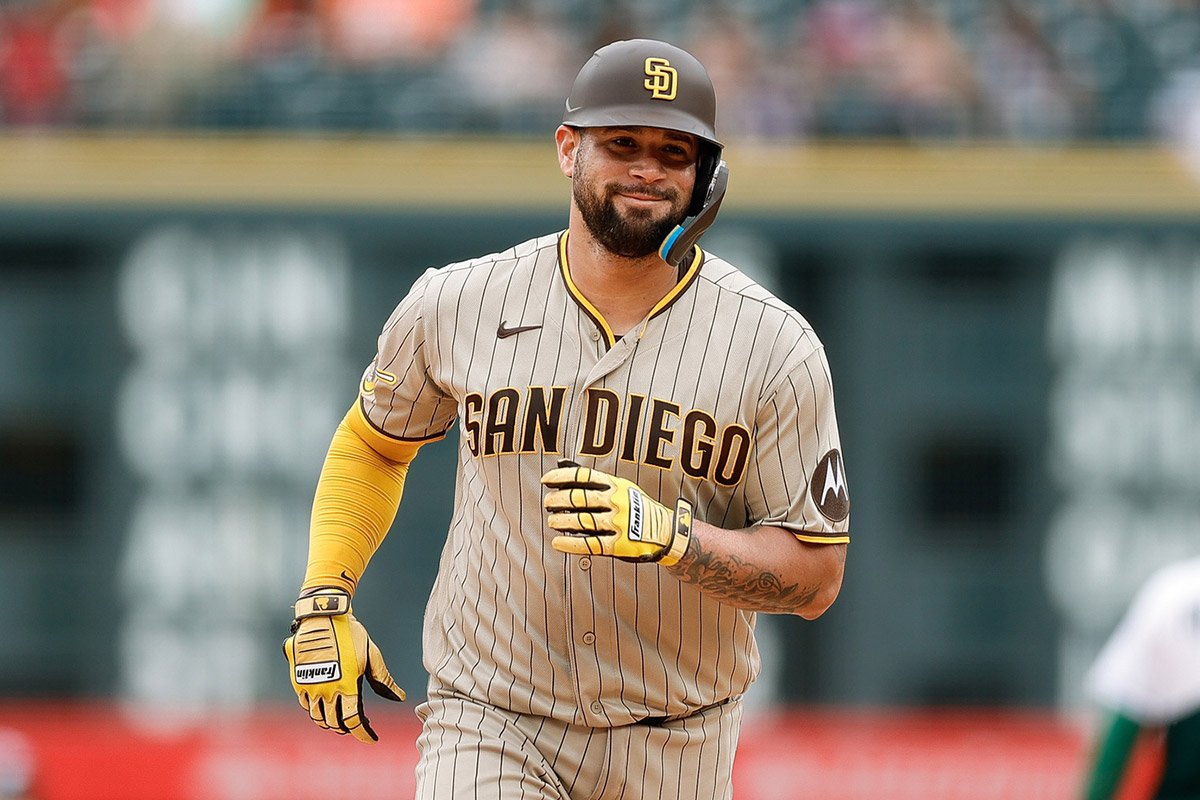 Player acquisition is about winning each plate appearance, not about filling positions. November through February is the initial asset development phase for the 2024 Brewers team. Over this period, the goal is to compile the assets necessary to maximize production through approximately 6,100 separate plate appearances by the Brewers and their opponents during the season. The Brewers, especially this offseason, are generally not looking at players from a starter-nonstarter perspective or even totally from a left-right platoon perspective; instead, they are looking at this from the perspective that each additional asset provides a greater likelihood of a positive outcome during each plate appearance by the offense or defense than if it wasn’t made. Adding Sanchez to take bats as the designated hitter means greater depth in the outfield, as those outfielders won’t consume DH plate appearances. The young outfielder producing positive outcomes less often will get fewer at-bats in this mix. Each acquisition has ramifications at other positions. In this case, the overall potential for positive outcomes will be improved at the DH and two outfield positions. An offseason is a sequence of related events. Each season should be addressed through a continual improvement strategy during which the team adds assets that improve the likelihood of positive outcomes during each plate appearance. Why did the Brewers sign Eric Haase, Jake Bauers, and then Rhys Hoskins and Gary Sanchez to play the same positions? It's because an offseason isn’t a single event like some fantasy baseball league draft day. It is a string of chronological events. When they signed Haase and Bauers, the Brewers didn’t know that they would be able to sign Hoskins and Sanchez later. Haase and Bauers were efficient signings to improve the roster at that moment. Could they have offered more at the moment and signed Hoskins and Sanchez? Maybe, but unlikely, both players probably wanted to see how their market played out. If the Brewers did want to sign them in December, it likely would have cost more than signing them later in the winter. That cost would have been more than the sunk cost in Haase and Bauers. And if the Brewers are lucky, they can slide Haase and Bauers through to provide depth waiting in the minors. Replacing the outcome of players who leave doesn’t have to come solely from that player's position on the field. There are a variety of ways to replace a loss of production. It could be from directly replacing that player or, more likely, it is through adjusting the mix of production on the whole team. The Brewers traded Corbin Burnes and realized they could not replace that output with a single player. Instead, they are leaning into a different pitching philosophy, focusing on using a variety of pitchers to cover multiple innings for several games. And they are coupling this with better offensive production, signing Hoskins to provide as many winnable games as they got from Burnes in 2023. By signing Sanchez, the Brewers have prepared to trade Willy Adames. Whether that happens this week or at the trade deadline, the Brewers likely feel they have the players to replace his production. The addition of Joey Ortiz in the Burnes trade gives them a major-league-ready shortstop with a defensive skill set that is ranked very highly. Offensively, Gary Sanchez (.482 slugging and .780 OPS in 2023) is a slight upgrade over Willy Adames (.407 slugging and .717 OPS in 2023). Sanchez will likely not reach Adames’ 638 plate appearances as the DH and backup catcher. But with even 500 plate appearances and playing most of his games in Milwaukee, Sanchez should eclipse Adames’ 24 home runs on the season. This doesn’t mean that Willy Adames will be traded, but signing Sanchez preemptively fills a potential hole in the lineup if Adames is traded.
 -
If Adames has a year like last year, it is questionable whether the Brewers give Adames a QO. He might just accept it. And they have their SS of the future in Ortiz. So I’m not sure the draft pick compensation is the right level to set for a return. And even if it is the right level, let’s keep in mind that Brewers haven’t got a great record of recent high end draft choices providing impact at the MLB level. So this should also be a factor.
-
This seems like the perfect example of how performance by any single player could totally throw off what they project for the team. Pecota projects pretty even playing time distribution at third base from Black, Monastario, Miller and Ortiz while expecting Turang to get the majority of the work at second. What the Brewers need is for any two of these five performers to outplay the projections and then have them play the majority of the innings at these positions. This could drastically change the model. Or they could all be as bad as projected and then the Brewers will have bad hitting again.
- 1 reply
-
- 2
-

-
Was hoping for Mike Klevinger so not really excited for this move. Also worry about him moving from a SF pitching environment to playing home games in Milwaukee. It feels like the Brewers are leaning heavily into non traditional roles for a number of pitchers with folks like Rea, Ross, Wilson and now this guy.
-
2024 Prospect Previews: Eric Bitonti
Bashopolis replied to Jamie Cameron's topic in Brewers Minor League Talk
I appreciated the way the Brewers stashed money for later picks. And Bitonti seems like the type of player with whom you would use this strategy. He may totally flame out if he can't get his bat around fast enough to catch up with MLB pitching. But for now his sheer athleticism and potential are huge. I'm glad they didn't waste an earlier pick on such a risky prospect; but am also eager to see what he can do. -
Craig Counsell is Still Making Baseball Better for Brewers Fans
Bashopolis posted an article in Brewers
 A baseball season is measured out into 162 games, but treasured because of its story lines. You likely don’t remember Game 37 or Game 118 or Game 149; but you remember storylines and characters, like Joey Wiemer doing his best Hunter Pence impression or the veteran trade additions working out well in 2023. As a Brewers fan, Craig Counsell’s move down I-94 provides some excellent storylines to enrich the season ahead. In this time of analytics, what is the value of a manager? Expect us to have that conversation a few times this year. Will the Brewers suffer at all from Pat Murphy taking the helm? Was Murphy the real force behind the Brewers’ success? If Bryse Wilson isn’t effective, or if Owen Miller puts together a complete season, is it because of Murphy? If Willy Adames falls apart after being demoted to eighth in the lineup, is this Murphy’s fault? Would Counsell have handled an Adames slump differently? Did the Brewers need a fresh voice, anyway? There may be a reason that Counsell was the third-longest-tenured manager in MLB when he decided to bolt to a new team. Of the 96 potential pennants since the beginning of the playoff era in 1969 (48 AL, 48 NL), only five have won a division with a manager with more than 10 years experience. During this era, managers who have been with a team for less than five years have won the World Series more than twice as many times as managers whose tenure with a club was five or more years. Former San Francisco 49ers coach Bill Walsh believed in moving along after about a decade in any one job. Could the Brewers be better with Murphy rather than Counsell, because a new manager has greater ability to get his message across? Can you ever root for Counsell while he is managing the Cubs? Craig Counsell is like that friend from high school. Even when he moved away, you still wanted him to succeed. You probably rooted for him as a player with the Diamondbacks (when they weren’t playing the Brewers). It makes sense to not root for Counsell to succeed when the Cubs play the Brewers, but what about when they play the Dodgers? The Reds? The Cardinals? At some point, do you find peace with your former friend moving away and still wish them some success? Is this the best thing to ever happen to the Brewers/Cubs rivalry? This was already a heated rivalry, but Counsell’s move to the Cubbies adds some juice. Ok, it adds a whole cranberry bog’s worth of juice. Brewers-Cubs games will be extra special. A baseball season needs some dates that mean a bit more. A season of games against the Rockies and Marlins would be a sad season, indeed. Cubs games are going to be circled on everyone’s calendar, from the casual fan to the ardent fanatic. If Counsell hadn’t become the Cubs manager, 2024 would be another year much like the last eight. This year is different. The team will have a different leader and a different feel. As Brewers fans, we have a new reason to hate those large-market teams who can buy everything—even our own hometown manager. Counsell to the Cubs will make next season much more interesting. This has the potential to be an amazing season to be a Brewers fan.
 -
Given a little bit of time, it may be worthwhile to reflect on Craig Counsell’s decision to dump his hometown team to manage the hated Chicago Cubs. In some ways, Counsell as a Cub will make 2024 a better year to be a Brewers fan. Image courtesy of © Denny Simmons / The Tennessean / USA TODAY NETWORK A baseball season is measured out into 162 games, but treasured because of its story lines. You likely don’t remember Game 37 or Game 118 or Game 149; but you remember storylines and characters, like Joey Wiemer doing his best Hunter Pence impression or the veteran trade additions working out well in 2023. As a Brewers fan, Craig Counsell’s move down I-94 provides some excellent storylines to enrich the season ahead. In this time of analytics, what is the value of a manager? Expect us to have that conversation a few times this year. Will the Brewers suffer at all from Pat Murphy taking the helm? Was Murphy the real force behind the Brewers’ success? If Bryse Wilson isn’t effective, or if Owen Miller puts together a complete season, is it because of Murphy? If Willy Adames falls apart after being demoted to eighth in the lineup, is this Murphy’s fault? Would Counsell have handled an Adames slump differently? Did the Brewers need a fresh voice, anyway? There may be a reason that Counsell was the third-longest-tenured manager in MLB when he decided to bolt to a new team. Of the 96 potential pennants since the beginning of the playoff era in 1969 (48 AL, 48 NL), only five have won a division with a manager with more than 10 years experience. During this era, managers who have been with a team for less than five years have won the World Series more than twice as many times as managers whose tenure with a club was five or more years. Former San Francisco 49ers coach Bill Walsh believed in moving along after about a decade in any one job. Could the Brewers be better with Murphy rather than Counsell, because a new manager has greater ability to get his message across? Can you ever root for Counsell while he is managing the Cubs? Craig Counsell is like that friend from high school. Even when he moved away, you still wanted him to succeed. You probably rooted for him as a player with the Diamondbacks (when they weren’t playing the Brewers). It makes sense to not root for Counsell to succeed when the Cubs play the Brewers, but what about when they play the Dodgers? The Reds? The Cardinals? At some point, do you find peace with your former friend moving away and still wish them some success? Is this the best thing to ever happen to the Brewers/Cubs rivalry? This was already a heated rivalry, but Counsell’s move to the Cubbies adds some juice. Ok, it adds a whole cranberry bog’s worth of juice. Brewers-Cubs games will be extra special. A baseball season needs some dates that mean a bit more. A season of games against the Rockies and Marlins would be a sad season, indeed. Cubs games are going to be circled on everyone’s calendar, from the casual fan to the ardent fanatic. If Counsell hadn’t become the Cubs manager, 2024 would be another year much like the last eight. This year is different. The team will have a different leader and a different feel. As Brewers fans, we have a new reason to hate those large-market teams who can buy everything—even our own hometown manager. Counsell to the Cubs will make next season much more interesting. This has the potential to be an amazing season to be a Brewers fan. View full article
-
William Contreras Was A Framing Fanatic in 2023
Bashopolis replied to Jason Wang's topic in Brewer Fanatic Front Page News
It is impressive, hot the Brewers have had success transforming poor catchers into excellent framers. This allows Contreras to stay at catcher, which is great! What is more difficult is improving a catcher's ability to throw out runners. Contreras still isn't very good at this. It might get a little better, but some of this is just natural talent. Contreras hits well enough and now frames well enough to overcome this deficiency but it limits his ability to be one of the top ten or fifteen defensive catchers. -
Matt Arnold Is Confident In Aaron Ashby, Should Fans Feel The Same?
Bashopolis posted an article in Brewers
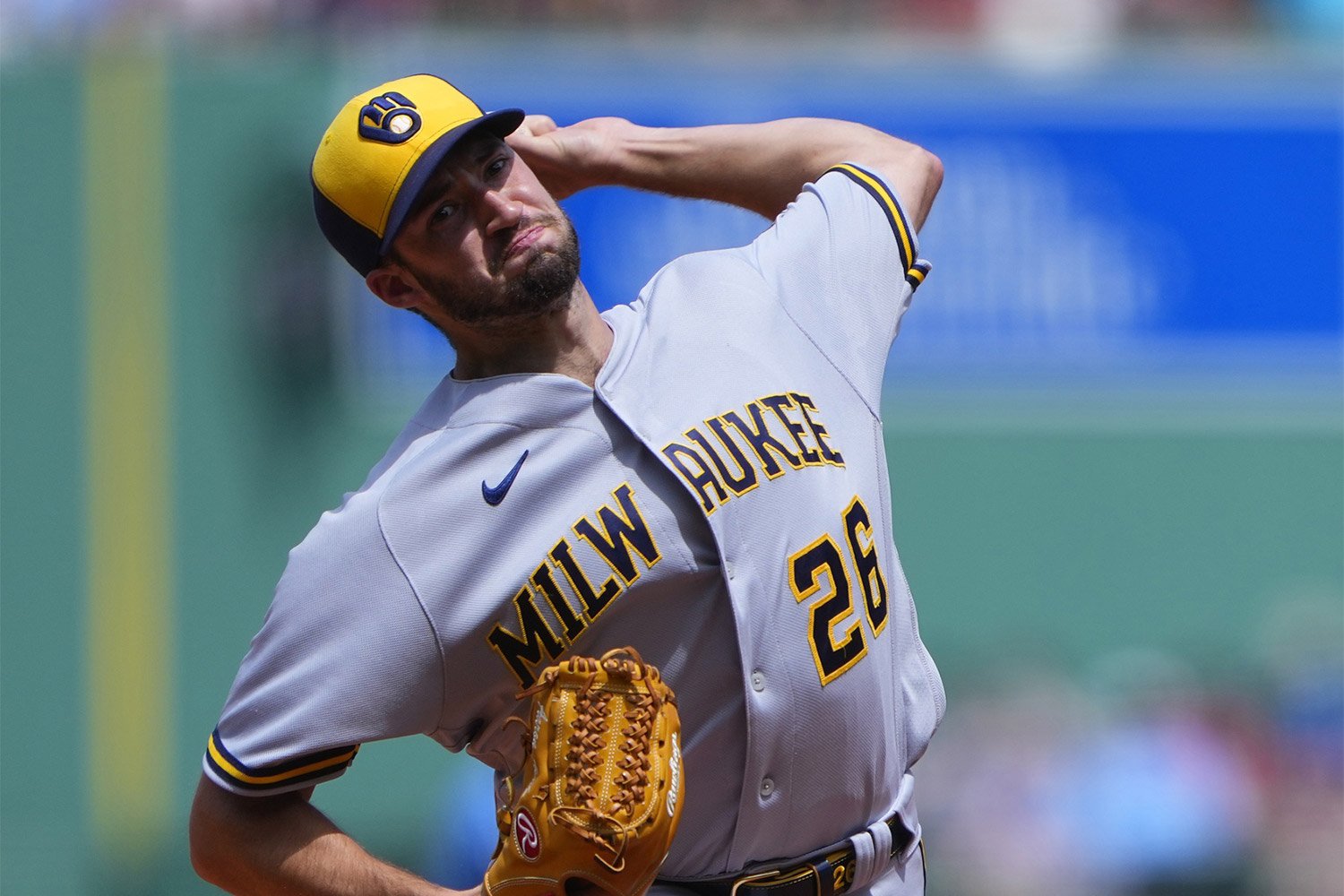 The Brewers are getting some promising news on Aaron Ashby. Brewers General Manager Matt Arnold has said that Ashby is “Doing well; these shoulder injuries are always tricky. Excited about what he can do for us this year.” Recently, Arnold has spoken about Ashby being part of the Brewers' starting rotation. It isn't easy projecting what to expect from Ashby, so many haven’t been projecting much. ZIPS projects Ashby to pitch 81 innings in 26 games, including 17 starts, but they don’t include him as one of the Brewers' top six starting pitchers. They are bullish on his skillset, predicting Ashby to have a better ERA than any other Brewers starting pitcher not named Freddy Peralta. If healthy, Ashby could show some significant development. He is entering his age 26 season, statistically, when a pitcher provides the greatest WAR and innings pitched to a team. If Ashby had not been injured last year, one would expect his arm to be built up to workhorse levels by this year, being his third full season in the majors. In addition to returning from injury, some other red flags may limit our expectations for Ashby. Primary amongst these is his inability to win battles later in a start or during a jam. Ashby’s career OPS against when facing a hitter for a third time through the lineup is .903. His OPS against runners on base is .815, and his OPS with two outs and runners on base is 1.098. Those aren’t good numbers. But he has the stuff. Brewer Fanatic pegged Ashby as a potential breakout player before the 2023 season. In 2022, his slider was ranked ninth in vertical movement and 24th in horizontal. movement His sinker ranked 30th in horizontal movement. Is it just knowing how to pitch in key situations and use his stuff best? Do these adjustments come with experience? An optimistic comparison for Ashby would be Brandon Woodruff’s age 26 season. That is the year Woodruff put things together, lowered his walk per nine from 3.0 to 2.2, and showed his potential to be a front-of-the-rotation starter (3.62 ERA) through 121 innings. Even though he has more major league innings than Woodruff did at age 26, Ashby could see this type of breakout. Ashby has a different pitch mix and has greater issues with control (career 3.8 walks per nine), so Woodruff's level of development may be too much. A more tempered but optimistic projection can have him on the same trajectory but toward being a solid middle-of-the-rotation starting pitcher. In this scenario, Ashby could throw around 120 innings in 2024 with an ERA of around 4.00, roughly league average starter material. To begin the season, the Brewers will likely be very careful with how they use Ashby, perhaps limiting him to 60 to 80 pitches an outing. It would be best to do this as a starter to ensure consistent rest between outings. An Aaron Ashby/Bryse Wilson piggyback may be seen quite a bit. If Ashby is successful, he could stretch out to go deeper into games. Robert Gasser, who pitched 135.1 very good innings in Triple-A Nashville last season, is also pounding on the door to see big-league time in Milwaukee later this summer. Any projection for Aaron Ashby is presented with two caveats. Will he be healthy? Labrum tears have derailed several pitchers’ careers. And will he take the developmental steps to harness his raw stuff and improve results later in innings and games?
 -
Aaron Ashby missed all of the 2023 season with a shoulder injury. Is he ready to contribute to the 2024 Brewers? Image courtesy of © Gregory Fisher-USA TODAY Sports The Brewers are getting some promising news on Aaron Ashby. Brewers General Manager Matt Arnold has said that Ashby is “Doing well; these shoulder injuries are always tricky. Excited about what he can do for us this year.” Recently, Arnold has spoken about Ashby being part of the Brewers' starting rotation. It isn't easy projecting what to expect from Ashby, so many haven’t been projecting much. ZIPS projects Ashby to pitch 81 innings in 26 games, including 17 starts, but they don’t include him as one of the Brewers' top six starting pitchers. They are bullish on his skillset, predicting Ashby to have a better ERA than any other Brewers starting pitcher not named Freddy Peralta. If healthy, Ashby could show some significant development. He is entering his age 26 season, statistically, when a pitcher provides the greatest WAR and innings pitched to a team. If Ashby had not been injured last year, one would expect his arm to be built up to workhorse levels by this year, being his third full season in the majors. In addition to returning from injury, some other red flags may limit our expectations for Ashby. Primary amongst these is his inability to win battles later in a start or during a jam. Ashby’s career OPS against when facing a hitter for a third time through the lineup is .903. His OPS against runners on base is .815, and his OPS with two outs and runners on base is 1.098. Those aren’t good numbers. But he has the stuff. Brewer Fanatic pegged Ashby as a potential breakout player before the 2023 season. In 2022, his slider was ranked ninth in vertical movement and 24th in horizontal. movement His sinker ranked 30th in horizontal movement. Is it just knowing how to pitch in key situations and use his stuff best? Do these adjustments come with experience? An optimistic comparison for Ashby would be Brandon Woodruff’s age 26 season. That is the year Woodruff put things together, lowered his walk per nine from 3.0 to 2.2, and showed his potential to be a front-of-the-rotation starter (3.62 ERA) through 121 innings. Even though he has more major league innings than Woodruff did at age 26, Ashby could see this type of breakout. Ashby has a different pitch mix and has greater issues with control (career 3.8 walks per nine), so Woodruff's level of development may be too much. A more tempered but optimistic projection can have him on the same trajectory but toward being a solid middle-of-the-rotation starting pitcher. In this scenario, Ashby could throw around 120 innings in 2024 with an ERA of around 4.00, roughly league average starter material. To begin the season, the Brewers will likely be very careful with how they use Ashby, perhaps limiting him to 60 to 80 pitches an outing. It would be best to do this as a starter to ensure consistent rest between outings. An Aaron Ashby/Bryse Wilson piggyback may be seen quite a bit. If Ashby is successful, he could stretch out to go deeper into games. Robert Gasser, who pitched 135.1 very good innings in Triple-A Nashville last season, is also pounding on the door to see big-league time in Milwaukee later this summer. Any projection for Aaron Ashby is presented with two caveats. Will he be healthy? Labrum tears have derailed several pitchers’ careers. And will he take the developmental steps to harness his raw stuff and improve results later in innings and games? View full article
-
And no the sweater isn't three sizes too small just because of all the Christmas cookies eaten.
-
In 2021 the Brewers drafted Tyler Black. An infielder from Toronto Canada who had just completed his Junior season at Wright State University. To be very specific the Brewers drafted Tyler Black: the 6.2” infielder from Wright State university. Also reporting that Tyler Black was 6’2” was the Toronto Star and many many scouting report websites. Today, Tyler Black is listed as a 5’10” tall third baseman by the Brewers, MLB and other player statistics sites. Perhaps this could be explained by Tyler Black being Canadian and someone got the math wrong when they translated his height in meters in Canada to feet and inches in the States? But for the three years, at Wright State their roster had Tyler Black as 6'2”. One would hope that Wright State folks know how to measure height and would not engage in unethically “stretching” the truth by four inches. The other potential answer is that Tyler Black shrunk. Could this have happened? Well, he was 6.2” in Canada, at Wright State and when he signed with the Brewers. It seems like the shrinkage happened around the time he was playing in the heat of the Arizona Fall League. Could the warm air of Arizona have shrunken Canadian Tyler Black? I ask this question while wearing a sweater that is now three sizes too small after accidentally being dried in a dryer set on high. And I ask you to come up with a better answer for the incredible shrinking Tyler Black? Also, should the Brewers be worried that Tyler Black will shrink from prospect status? He has shrunk four inches in about two years. If this keeps up, he will be 5’2” by the time he is 28. That may help Black draw walks; but it will be difficult to generate power from such a diminutive frame.
-
The Brewers were very adept at developing a productive bullpen again in 2023. How do they do this? Perhaps the most important element to a Brewers bullpen is a recognition that only a few players will be good bullpen pitchers for more than a couple years in a row. The Brewers plan accordingly: 1. They purge and restock the bullpen annually with pretty good success rate in recognizing who won’t be able to repeat their previous success. In 2022 they let Brad Boxberger go through free agency and his ERA ballooned from 2.95 with the Brewers to a 4.95 the following year. In 2021 they let Hunter Strickland (2021 ERA: 2.61) move on (2022 ERA: 4.91). 2. They over stock with flexible pieces to be prepared for players to not be able to duplicate their previous season. Players like Stryzelecki, Cousins, Yardley and Claudio may have been retained but the Brewers had other pitchers ready in case they faltered the next year. 3. They hunt around the margins of other MLB rosters to provide this depth. A lot of these don’t pan out (Junk, Sanchez, Gustave) but others do (Payamps, Peguero, and Wilson). The Brewers do a good job of recognizing potential bullpen pieces and having enough of them that they can churn through options and find some success. So far this off season the Brewers have focused on acquiring bullpen arms including Taylor Clarke, Byron Hudson and Joe Ross (although he may fill a swingman role). It may seem strange for a team that had a deep successful bullpen in 2023 to focus on adding more controllable arms. But this is how the Brewers do it. What is unusual is that they haven’t off loaded any relievers yet. Either through free agency, trades or declining to offer a contract the Brewers typically wave good bye to at least one relief pitcher each off season. This year, there weren’t any significant pieces set to be released as their salary increased or entering free agency. This year it is up to the Brewers to figure out who might have just had a career-year that they won’t be able to repeat. Although there are many higher profile decisions facing this team, how they decide which current reliever should be put on the trade block may be one of the more interesting choices. Will they out smart another team and trade away that pitcher who won’t find the same success in 2024 that they did last year? Or will they get it wrong and trade away a valuable arm or fail to trade someone at peak value? What move should they make? Either way, this team will turn over some bullpen pieces. Some one that was great won’t be as good. It is the way it goes in the Brewers bullpen.
-
Brewers Trade Target: Brandon Drury
Bashopolis replied to Tim Muma's topic in Brewer Fanatic Front Page News
I agree that there have been many times when it would have made sense for the Brewers to have brought Drury to the team. It is really difficult to fathom what the Angels would want in a trade. If the Angels were a well run organization they would want young players with a lot of control. A trade of Payamps, Turang and Perkins could make some sense. This provides Payamps as a headliner with a couple other good depth options included. The Angels wouldn't have to admit that they failed by trading away Peguero. If they are looking at true prospects maybe a trade for someone like Mike Boeve or if needed Eric Brown could be a center piece coupled with a lotter pick. -
Carlos Rodriguez seems much more projectable as a starting pitcher. He threw 123 innings last year while Misiorowski only threw 71. There are questions about whether Misiorowski can have the control or the stamina to go even 5 or 6 innings in a game. Rodriguez is probably on the radar as part of the starting pitching plan for 2024 although not up at the beginning of the season. It will be interesting to see if they can add enough good weight onto Misiorowski's frame so he can build the endurance to be a starting pitcher. Also will the Brewers be patient enough with him rather than calling him up and putting him in the pen some time in 2024? He seems much more on a Josh Hader path as a relief pitcher if he comes up this year.
-
It just isn't going to happen with the Brewers. Prior to his release, the Brewers went through these scenarios to see if there was a number that works for both the team and the player. There obviously wasn't. They also explored the trade market to see if another team would give value for the inside track to sign Woodruff beyond the 2024 season. That didn't work either. Woodruff is now free to explore other options. It seems like a huge risk for a team to invest $20M to $30M for a potential of one year of a potentially diminished Brandon Woodruff. This isn't to say some team won't take a chance. But successful return to prior form is likely around 60% for this injury for a player of Woodruff's age. The idea of a creative contract with options may make some sense to both team and player. I wonder whether a team can buy secondary insurance on such a deal to mitigate their risk?
-
There are reasons Adrian Houser has been a fan favorite. Anyone that can puke on the back of the mound and then turn around and continue pitching has to be appreciated. This is the definition of a gamer. Houser is also the last remaining Brewer from the 2015 fleecing of the Houston Astros in the trade of Carlos Gomez and Mike Fiers. That trade tree may continue to bear fruit if Coleman Crow, whom the Brewers got back for Houser and Tyrone Taylor, makes it to The Show. Many may be upset with trading Houser and Tyrone Taylor for Coleman Crow. It was giving up two major leaguers for a low draft choice minor league pitcher who is recovering from Tommy John surgery. It does seem like a lot to give up. But the Brewers look at everything as a value proposition. And they obviously didn’t value Taylor of Houser very highly. There are legitimate questions about whether the team correctly valued Taylor. He has had so much greater variation in production and has often been hampered by injury. Could Taylor be a stud for the Mets if he stays healthy? Conversely Houser is a pretty known quantity. Over a seven-year career Houser has an ERA of 4.00 with a WHIP of 1.357. Over the last two years the ERA is 4.43. Most importantly he has worked an average of 106 innings a year in 2022 and 2023. His WAR for this time period is an even zero. And in his age 31 season it is anticipated that he will make $5.6 million. Adrian Houser just didn’t have a lot of value. Especially to a team like the Brewers. The argument for keeping Houser is that they don’t have other proven pitchers to cover the innings. But this isn’t how the Brewers are looking at this trade. With the potential for other trades this off season, the Brewers primary concern isn’t covering innings, it is flexibility and potential. Houser doesn’t offer the flexibility of having options left. Most importantly, Houser doesn’t slot in as a workhorse and instead will put extra pressure on the rest of the pitching staff if he misses significant starts like he has the last two years. And finally, Houser doesn’t hold any value to the Brewers after this year. He is lost through free agency prior to the 2025 season. If the Brewers don’t trade him this off season, the only valuation that would matter to the Brewers is loss opportunity costs when he leaves before the 2025 season. In this trade, Adrian Houser held little value to the Brewers. Perhaps Houser has a little more value to a Mets team looking to fill roster spots with short-term MLB level production while Stearns works his magic during a rebuilding process. For the Brewers they looked at a player with little value over replacement level and chose to gamble on improving their opportunity profile over the next six years.
-
While the Yankees and Braves may argue over who is “America’s team,” and the Brewers and Cubs may argue about who is Kenosha’s team, the Dodgers are doing baseball at a totally different level. With the signing of Yoshinobu Yamamoto and Shohei Ohtani the Dodgers have set themselves up as Japan’s team. While much of the rest of the baseball world deals with reduction in revenue from existing cable TV contracts and fans that haven’t quite come back from pre-covid attendance levels, the Dodgers have the opportunity to explore how to develop revenue from adding 125.7 million people to their potential fanbase. Everyone else is trying to figure out how to win within the rules. The Dodgers will be living by their own rules. Yes, the Dodgers will go over the salary cap and have to pay the other owners some money. But they won’t care. The Los Angeles Dodgers have monopolized the Asian marketplace for the next ten years. The potential revenue from these signings is massive: In Stadium Advertising and Tourist Attendance: It is estimated that Japanese firms spent over $1 billion Yen or $141M on in stadium advertising while Ohtani was in Anaheim. Although this won’t double with the signing of Yamamoto it will likely increase with them both in LA. Don’t be surprised if you see more Japanese signage at Dodger Stadium than English ones. And I could see a massive deal to rename the stadium itself. The Dodgers will make back more than the salaries, signing bonuses and any luxury tax payments out of Japanese advertising alone. Regional Broadcast Streaming: Bally is going down. What replaces it is still unknown and isn’t of particular interest to the Dodgers as the Dodgers work with SportsNet LA for distribution rights. But what the Bally demise will do is force the MLB to take a look at how “local” broadcasts are provided and monetized via streaming? This opens the door for LA to garner substantial revenue for streaming games live to their Japanese fanbase. The final decision may include MLB as an intermediary for streaming; but I believe team’s viewership will still impact a team's share of "regional revenue." No one else will have a whole country as a fan base for streaming games. Playing in Japan: The Dodgers will go to Japan and generate a ton of money. It may not be a regular season game in the next few years, but it will be exhibition games or a few showcases. The sponsorship money for bringing these two megastars back to Japan will be huge. Additional talent: The LA Dodgers have set themselves up as the team to play for if you are Asian. This is likely just the start of the Dodgers signing Japanese players. They will continue this trend and strengthen the marketing platform. It is difficult to know exactly how valuable these signings will be for the Dodgers. The Angels kept pretty quiet about how much revenue was being generated by having Ohtani. But this isn’t a situation where the Dodgers expect to just break even. The Dodgers will make considerable bank from overseas that will eclipse the salary expenses by more than $100M a year. The revenue generated from these two players will be more than the Brewers annual salary budget. Could the Brewers have pulled this off? Not very likely. The Dodgers provided a west coast setting as close to Japan as possible. They have the budget to buy players to put around these superstars. And they are already a known entity to the Japanese marketplace. The Brewers have none of these things. The Brewers do get a piece of the revenue sharing produced by the Dodgers becoming Japan’s team. This is a piece of the shared revenue for Los Angeles becoming and continuing to be a luxury tax team as well as some portion of national media and playoff telecast monies generated in Japan that funnels through MLB. This is trickle-down economics in the world of baseball. The Dodgers saw an opportunity and pounced. Good for them. And a little bit good for the rest of MLB. But this will only make the playing field less even for small market teams. If MLB ever truly wants a level playing field here in the USA more revenue sharing will have to be implemented or the Dodgers will just keep raking in the cash as Japan’s Baseball team.
-
Any decision on whether to trade Willie Adames will be influenced by how the Brewers feel about extending a qualifying offer (QO) to him after the 2024 season. Players with six years of service time may opt to enter free agency. The team can attempt to retain the player for one year by extending a qualifying offer for a one year contract. This year the qualifying offer is $20.350M up from $19.625M last year. Next year it can be anticipated that this amount will go up to at least $21M. The qualifying offer then acts as an option for the player. If Adames performance level is the same as it has been this year, it could be interesting to see if the Brewers will provide Adames as QO. And if presented with one, would Adames sign it? He might sign it and become a much more attractive free agent the following year because draft compensation is only available once for for each qualified player. Would Adames sign the offer or would he forego the qualifying offer in hopes that there is a team that will sign him for more average annual salary or at least more years? If he has a worse offensive year in 2024 than he had in 2023, he very well may wish to sign the offer. On its surface the QO system provides small market teams with better draft compensation for losing a player to free agency than it does a larger market team. Great for competitive balance! Or is it? I give you the cases of Chris Taylor and Avi Garcia following the 2021 season – the last time the Brewers were faces with a QO decision. Taylor received a qualifying offer from the Dodgers. Garcia didn't from the Brewers. Statistically there wasn’t a whole lot separating these two: Garcia career: .325 OBP/.431 Slugging/ .756 OPS 2021: .330/.490//820 Taylor career: .337 OBP/ .443 Slugging/ .779 OPS 2021: .344/.438./782 Because of total budget, the Dodgers tagging Taylor for a QO was a no brainer. If he signs they got him for $18.4M which would have been focusing 7% of their $260M budget on one quality player. If the Brewers signed Garcia for the QO amount it would have been focusing 15% of their 120M budget. The risk was double for the Brewers. Considering this risk differential, I would surmise that the Dodgers would have taken the same risk of giving Garcia a QO and the Brewers would not have given Taylor a QO if the players were on the opposite team. Taking the risk meant that the Dodgers either get the player back filling an important role on the roster or they get the draft pick compensation. The Brewers got nothing. When you wonder why teams like the Dodgers, Yankees and Red Sox are able to keep having top ranked farm systems when the system is supposed to be stacked in favor of small market teams, keep this example in mind. Draft compensation for QO on players entering free agency only matters if a team is willing/able to convey that QO. The bigger budget teams are more likely to maintain players through their last season prior to entering free agency and much more willing to convey a QO. The intent of the QO system may have been to help small market teams; but it is doing the opposite. Willie Adames may be the next example of the QO systems negative impact on a small market team. Year to year, Willie Adames hasn’t been becoming a better baseball player. If his performance continues on the current trajectory, his projected value for the 2025 season may not be enough for a team like the Brewers to provide a QO. The real potential that the Brewers won’t QO Adames has to be part of the equation when the Brewers decide whether to trade him this off season. Yet another example of a small market team getting squeezed by a system ostensibly designed to benefit them.
-
I wish the Brewers would have signed Peyton Henry and given him a legit chance at being the back up catcher at the beginning of the year but he signed with the Blue Jays: https://www.mlbtraderumors.com/2023/12/blue-jays-payton-henry-agree-to-minor-league-contract.htmle
-
The Brewers and Jackson Chourio have agreed to an eight-year contract extension with a reported value of $82 million. It also includes a team option of extending the contract for $25M a year for two more years. There are $10M of incentives available to Chourio. Is this a good deal for the Brewers? Is it a good deal for Chourio? A look at recent history could provide some answers. If we look at the recent salary history of a few other center fielders, we may get an idea of the range of possibilities for how Chourio’s contract may look in the rear view mirror. The Floor: Harrison Bader is a free agent center fielder this year. He has struggled to consistently put up good offensive numbers with a career batting line of .243/.310/.396/.706. He has proven to be worthy as a defense first center fielder and MLB Trade Rumors projects him to earn $10M a year over a two-year free agent contract. So far in the six plus years in The Show, Bader has earned close to $13,000,000. An eight year total will be close to $33M. In his first eight years, Chourio will be paid $49 million more than what Bader will have been during his first eight years as an MLB player. Although considering salary inflation this may really be closer to a $40M overpay. Bader didn’t have the pedigree or the hype; but his defensive profile is a fair comparison to what the Brewers anticipate from Chourio while in the field. This speed and defense profile with limited offensive value provides a good floor for Chourio’s worth over this contract. If the offensive hype turns out to be an over sell, a defense first center fielder still holds value in MLB. But it would likely be an over pay of around $40M. The Ceiling: On the optimistic side of things, let’s look at how much value the Brewers would be gaining if Chourio ends up being like Mike --- Mike Trout. Mike Trout earned $110 million dollars over his first eight years as an MLB player. And as part of a longer free agent contract, he earned around $70M over the next two years. For total ten-year earnings of $180M. In this case, Chourio would be selling short on his potential earnings by around $60M. And perhaps the biggest value for the Brewers is that Chourio would still be a Brewer for those last two years of the contract. Chourio would have postponed his opportunity to sign the next mega free agent contract while going into his age twenty-seven or age twenty-eight season. A More Realistic In-the-Middle Perspective: If you aren’t as optimistic as to think that Jackson Chourio is the next Mike Trout, but still believe the hype; perhaps the most relevant comp is the last player to sign a long-term extension prior to joining the major league club: Luis Robert. The White Sox contract with Luis Robert likely provided both the Brewers and Chourio’s agent a good benchmark for their eventual contract. In the Winter of 2019, Robert signed a six-year contract with the White Sox for $50M with two additional club option years for $20M each. This is a total value of $90M over the first eight years. Without knowing Chourio’s incentive package, this seems roughly inline with the contract Chourio and the Brewers signed. Robert has proven to be a good deal for the White Sox providing elite defense and an .827 OPS although he has played in only 64% of the White Sox games over the last three years. And Robert has been provided with great wealth, security and a contract length that still provides an opportunity for a free agency pay off. Time will tell, if the Brewers and/or Chourio made the best choice in signing this contract. But contracts are signed in the moment with the information available right now. As fans, I am sure we will look back and judge this contract because that is what fans do. Today, considering the comps, this seems like a good deal for both sides.
-
Bally Sports is going through bankruptcy. This is causing consternation among many major league teams including the Brewers. There are fourteen teams that generate revenue by selling telecasting rights to the local Bally affiliate. In a number of markets Bally has already delayed or flat out refused to pay teams. This hasn’t happened, or at least we aren’t aware of this happening yet, in Milwaukee. But it could. Short Term Impact: Throughout Baseball, local media contracts comprise 23% of total team revenue. Of that 85% comes from regional sports networks. The Brewers had the lowest rights fees at $33M in all of MLB. Also, the Brewers are the second greatest value for Bally with a low cost per viewer at $.076 per viewer. There are many other items that influence media contracts; but, at least in cost per viewer value measurement the Brewers are one of the better deals for the regional provider. This may be one reason why we have heard about Bally cutting payments to other teams; but not to the Brewers. (Financial information from Forbes.com.) The immediate implication of the Bally bankruptcy is that teams that contract with Bally may be more wary to enter into longer player contracts. There is significant uncertainty about a team’s ability to generate similar revenue from telecasting rights in the post Bally bankruptcy era. Teams which have contracts with Bally have already expressed being skittish and may look to cut payroll. The Brewers haven’t expressed a desire to slash payroll or used the Bally bankruptcy as a reason…yet. But, it is likely that this uncertainty is impacting some short-term decision making within the Brewers organization. Long Term Impact: Long term the Bally bankruptcy and underlying market factors may be a boon for the Brewers. The team generated $294M in total revenue last year, of which $33M were from local media revenue. In comparison with the league average of 23% of total revenue, The Brewers local media revenue is only 11% of their total revenue. Any reduction in regional media partnership will negatively impact the other Bally contract teams more than the Brewers. And Bally isn’t going broke just because they were badly managed. They are also going broke as revenue from traditional media sponsorship is going down. This means that media revenue will also decrease for those teams that don’t contract with Bally. This will again help to even the playing field. In addition, it seems as if MLB may look to pick up the slack by providing central management of cable and streaming contracting. MLB will more likely move to a more equitable distribution of revenue for purchasing regional TV rights which could help a team like the Brewers which generates higher viewership rates per dollar than most other teams. Yes, revenue for the Brewers may diminish; but not as much as it will decrease for teams with a heavier reliance on this regional tv rights revenue. And in the battle to be able to sign players, the Brewers should gain ground over many opponents as their budget will suffer less restriction. Long term the Bally bankruptcy could help the Brewers. Short term there may be some rocky financial waters to navigate. Long term, Bally’s demise likely will create a more equitable field of competition for the Brewers.
-
Of note is that the Brewers almost always had five if not six outfielders on the active roster in 2023. One of them, Winker, I don't believe ever actually played in the outfield. If the Brewers consider that one of their rostered outfielders will be a DH almost every day than it works to roster at least five: Chourio, Yelich, Mitchell, Frelich and Taylor. Weimer would be insurance at AAA in this scenario. There is enough injury history and uncertainty of performance amongst this group to want a good insurance option. This doesn't preclude a trade, but it also provides a serviceable option if the right trade doesn't present itself. I also like the idea of exploring Weimer at first base. The idea that the Brewers would be wasting his athleticism is secondary to the Brewers ongoing propensity to not fully recognize the offensive value of having a good first base man. It is better to have "extra" athleticism that isn't used than have first basemen that are giant holes in the line up.
- 9 replies
-
- 1
-
-
- jackson chourio
- tyrone taylor
- (and 5 more)
-
Brace for Impact - Jackson Chourio is Ready
Bashopolis replied to Brock Beauchamp's topic in Brewer Fanatic Front Page News
Actually Chourio had a red hot July ( .388, .447 , .718 and 1.164) and then a fairly pedestrian August .266, .303, .415 and .718. This isn't unusual for a young player. But it is perhaps another reason the Brewers may wait a little bit for him to demonstrate an ability to sustain success over more of the season in the upper minors prior to a call up to the show.