



Jack Stern
-
Posts
764 -
Joined
-
Last visited
-
Days Won
2
Content Type
Profiles
Forums
Blogs
Events
News
2026 Milwaukee Brewers Top Prospects Ranking
Milwaukee Brewers Videos
2022 Milwaukee Brewers Draft Picks
Milwaukee Brewers Free Agent & Trade Rumors, Notes, & Tidbits
Guides & Resources
2023 Milwaukee Brewers Draft Picks
2024 Milwaukee Brewers Draft Picks
The Milwaukee Brewers Players Project
2025 Milwaukee Brewers Draft Pick Tracker
2026 Milwaukee Brewers Draft Tracker: Picks & Bonuses
Store
Downloads
Gallery
Everything posted by Jack Stern
-
 Image courtesy of © Benny Sieu-Imagn Images As is true of most teams, Brewers catchers have been far more successful in using baseball’s new ABS challenge system than their hitters have been. According to Statcast, catchers across the league (plus a small handful of pitchers) have won 59% of challenges, while hitters have won just 46%. That’s not surprising; catchers have a much better view of the strike zone from behind the plate than hitters do in the batter’s box. “People were saying back in spring training, like, it's going to take a while for the hitters, because they have, all of a sudden, the new strike zone,” said Pat Murphy, referring to the the system not using the rulebook 3D strike zone, but a 2D zone above the middle of the plate, determined based on percentages of the batter’s measured height. “Catchers do, too, but they've obviously got the view [behind the plate] that no one has.” What has been surprising, though, is just how poorly the Brewers have utilized their challenges on offense. Their catchers have combined to win a nearly average 57% of challenges, but their hitters have won just 33%, which ranks 28th among 30 teams. Overturn rate alone does not supply context for those challenges, nor does it measure whether the Brewers have a sound strategy that they’re executing well enough. More than anything, the club evaluates challenge decisions on the situation, wanting hitters and catchers to use it in the most impactful moments. “I think you could say leverage or non-leverage,” Murphy said last week of challenge situations. “If it’s a pitch that alters the at-bat—so strike three, ball four, something like that—look at those things. Guys in scoring position make it a bigger situation.” Statcast uses a pitch’s location and run probability to determine which are reasonable challenge opportunities. Using data on the types of pitches and situations in which most players across the league challenge, it also estimates how many runs a team has gained from its challenges, compared to expected runs gained. On average, 66% of challenges initiated by hitters have qualified as reasonable challenges. Milwaukee hitters are slightly above that mark at 67%, yet they’ve gained 0.5 fewer expected runs from overturns than expected, which ranks 23rd in the league. The Brewers have made some noticeably poor challenges lately. Greg Jones exhausted their final challenge in the fourth inning last week on a called strike almost entirely in the zone, and Garrett Mitchell lost it in the second inning over the weekend on a pitch on the outside corner. The real issue, though, is that they have not challenged enough at opportune times; their 15% challenge rate on reasonable opportunities ranks 27th. “It’s when you don’t challenge on a ball that’s clearly incorrect in an opportune time or a leverage time,” Murphy said. “We call them ‘fives.’ When you get a five, if you don’t challenge, you’re hurting your club. Even if it’s this much off.” The Brewers have such a low success rate because they decline to challenge more pitches that would be overturned. They’ve taken 90 called strikes outside the zone this year, the sixth-most in baseball. That hesitancy has been a theme throughout their lineup. With the exception of Gary Sanchez, who has been one of baseball’s most aggressive challengers, the team doesn't have anyone on the active roster who is proactive in suing for their rights at the edges of the zone. Whether it’s a fear of losing a challenge or a lack of discernment on pitches around the edges, it’s been a surprising weakness for a lineup that prides itself on knowing the strike zone. The Brewers have become known for winning on the margins, but they’re currently losing on this one. Murphy noted that there could be some understandable growing pains for hitters who have not used the challenge system before, but they must improve over time. “As long as our catchers are trending in the right direction, I think that’s equally as important,” Murphy said. “The hitters now [have] to get a little more comfortable with it.” View full article
 -
Brewers' Hitters Are Not Maximizing Baseball's New ABS Challenge System
Jack Stern posted an article in Brewers
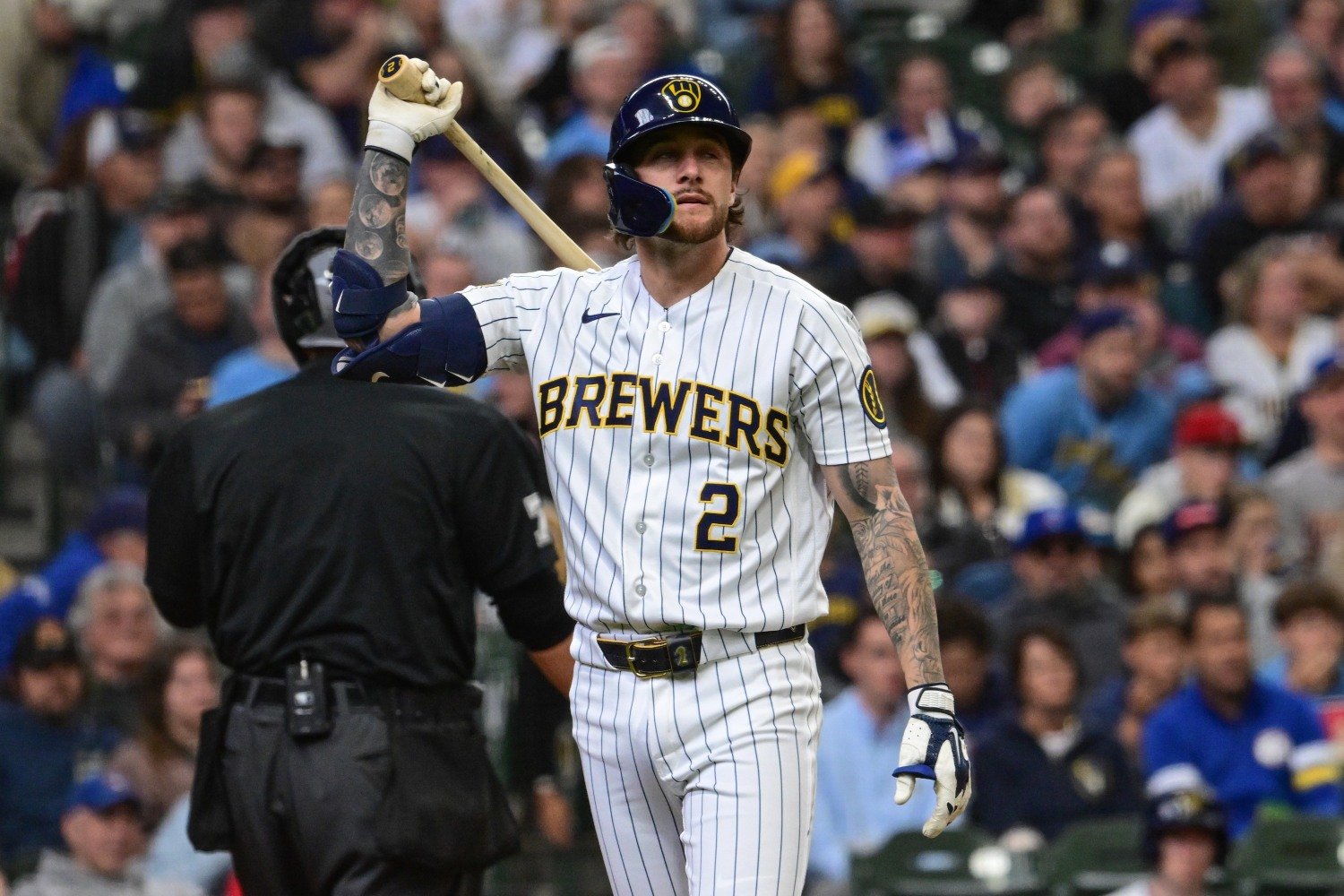 As is true of most teams, Brewers catchers have been far more successful in using baseball’s new ABS challenge system than their hitters have been. According to Statcast, catchers across the league (plus a small handful of pitchers) have won 59% of challenges, while hitters have won just 46%. That’s not surprising; catchers have a much better view of the strike zone from behind the plate than hitters do in the batter’s box. “People were saying back in spring training, like, it's going to take a while for the hitters, because they have, all of a sudden, the new strike zone,” said Pat Murphy, referring to the the system not using the rulebook 3D strike zone, but a 2D zone above the middle of the plate, determined based on percentages of the batter’s measured height. “Catchers do, too, but they've obviously got the view [behind the plate] that no one has.” What has been surprising, though, is just how poorly the Brewers have utilized their challenges on offense. Their catchers have combined to win a nearly average 57% of challenges, but their hitters have won just 33%, which ranks 28th among 30 teams. Overturn rate alone does not supply context for those challenges, nor does it measure whether the Brewers have a sound strategy that they’re executing well enough. More than anything, the club evaluates challenge decisions on the situation, wanting hitters and catchers to use it in the most impactful moments. “I think you could say leverage or non-leverage,” Murphy said last week of challenge situations. “If it’s a pitch that alters the at-bat—so strike three, ball four, something like that—look at those things. Guys in scoring position make it a bigger situation.” Statcast uses a pitch’s location and run probability to determine which are reasonable challenge opportunities. Using data on the types of pitches and situations in which most players across the league challenge, it also estimates how many runs a team has gained from its challenges, compared to expected runs gained. On average, 66% of challenges initiated by hitters have qualified as reasonable challenges. Milwaukee hitters are slightly above that mark at 67%, yet they’ve gained 0.5 fewer expected runs from overturns than expected, which ranks 23rd in the league. The Brewers have made some noticeably poor challenges lately. Greg Jones exhausted their final challenge in the fourth inning last week on a called strike almost entirely in the zone, and Garrett Mitchell lost it in the second inning over the weekend on a pitch on the outside corner. The real issue, though, is that they have not challenged enough at opportune times; their 15% challenge rate on reasonable opportunities ranks 27th. “It’s when you don’t challenge on a ball that’s clearly incorrect in an opportune time or a leverage time,” Murphy said. “We call them ‘fives.’ When you get a five, if you don’t challenge, you’re hurting your club. Even if it’s this much off.” The Brewers have such a low success rate because they decline to challenge more pitches that would be overturned. They’ve taken 90 called strikes outside the zone this year, the sixth-most in baseball. That hesitancy has been a theme throughout their lineup. With the exception of Gary Sanchez, who has been one of baseball’s most aggressive challengers, the team doesn't have anyone on the active roster who is proactive in suing for their rights at the edges of the zone. Whether it’s a fear of losing a challenge or a lack of discernment on pitches around the edges, it’s been a surprising weakness for a lineup that prides itself on knowing the strike zone. The Brewers have become known for winning on the margins, but they’re currently losing on this one. Murphy noted that there could be some understandable growing pains for hitters who have not used the challenge system before, but they must improve over time. “As long as our catchers are trending in the right direction, I think that’s equally as important,” Murphy said. “The hitters now [have] to get a little more comfortable with it.”
 -
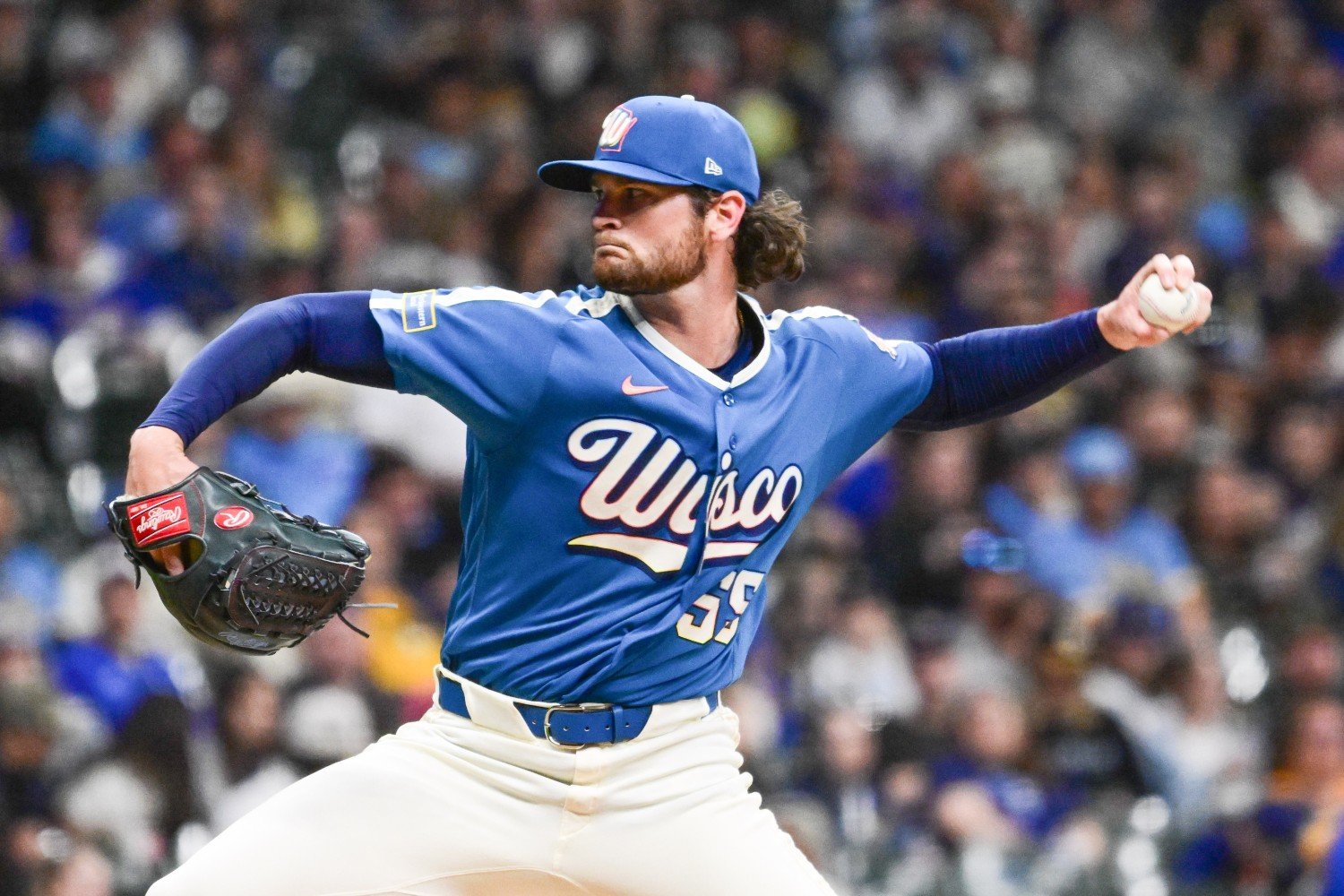 Pat Murphy has not been one to quickly trust unproven relievers. That made it notable when Shane Drohan, with two big-league appearances with mixed results to his name, warmed up for the sixth inning with the Brewers leading 3-2 on Tuesday night. Milwaukee added a few more runs to give him some breathing room, but Drohan was still tasked with protecting a three-run lead in the middle innings in his third MLB appearance. He worked a perfect inning, striking out one and generating three whiffs out of his 10 pitches. “I really like him, man,” Murphy said. “He was locked in. I don’t know how many pitches he threw in that inning, but it was 1-2-3, and it was crisp.” Drohan’s second stint with the team this month has been more successful than the first, but that doesn’t mean much in two small sample sizes. What matters is that the 27-year-old left-hander, who already learned plenty about himself throughout the past couple of seasons, has continued tinkering and polishing his game. That work has shown up in improved stuff and execution his past two times out. When Drohan debuted in Boston on April 8, he was using the full wind-up he reintroduced last season, which he felt improved the tempo and explosiveness of his delivery. drohan1.mp4 After that outing, Drohan reverted to a hybrid wind-up. In his last two outings, he’s been starting with his back leg parallel to and against the rubber, eliminating the extra movement of stepping back and repositioning his body as he begins his delivery. drohan2.mp4 “I just kind of went back to that preset back leg,” Drohan said. “It just felt like it synced everything up a lot better.” Because it’s closer to pitching fully out of the stretch with runners on, a reduced wind-up would always be best for Drohan to repeat his delivery consistently. Now that he feels it’s his best starting position, it should serve him well. The early results have been encouraging: more strikes and improved velocity, with his four-seamer averaging nearly 96 mph in that shortened outing on Tuesday. {C}%3C!%2D%2Dtd%20%7Bborder%3A%201px%20solid%20%23cccccc%3B%7Dbr%20%7Bmso-data-placement%3Asame-cell%3B%7D%2D%2D%3E--> Game Date Pitches 4FB Velo Zone% 4/8 63 93.4 46.0% 4/24 71 94.6 46.5% 4/28 10 95.9 60.0% “It just allows me to really step on the gas at the right time in my delivery,” he said. “Sometimes, it can be a little early, so I feel like that preset foot just allows me to get into the back leg and go down the mound and then really finish the throw at the right time.” With a six-pitch arsenal that includes two great breaking balls and a solid changeup, Drohan has the tools to start. That’s been his role in Triple-A, and the Brewers figure to keep him stretched out as depth for as long as possible. He could be optioned back down in the coming days for a fresher long relief arm. “We’re always trying to get as many starters as we can,” Murphy said. “I think there’s a length role there for him, for sure. He’s built up already.” However, Drohan flashed his upside as a reliever on Tuesday by letting his two best pitches – his four-seamer and slider – play at a higher speed in a shortened stint. That might be his more immediate path to impacting the big-league club in 2026. “It’s a cool, nice adrenaline rush when the phone rings and they say your name,” Drohan said of pitching in relief. “But other than that, it’s not much different. Just get guys out, whether it’s the beginning of the game or whenever they call you.” Whatever role he fills, the Brewers acquired him to contribute at times throughout the season. He hasn’t gotten the same opportunities as Kyle Harrison, whom they acquired alongside him from the Boston Red Sox a few months ago, but Drohan is showing glimpses of how effective he can be. “I think he can help us,” Murphy said.
 -
Image courtesy of © Benny Sieu-Imagn Images Pat Murphy has not been one to quickly trust unproven relievers. That made it notable when Shane Drohan, with two big-league appearances with mixed results to his name, warmed up for the sixth inning with the Brewers leading 3-2 on Tuesday night. Milwaukee added a few more runs to give him some breathing room, but Drohan was still tasked with protecting a three-run lead in the middle innings in his third MLB appearance. He worked a perfect inning, striking out one and generating three whiffs out of his 10 pitches. “I really like him, man,” Murphy said. “He was locked in. I don’t know how many pitches he threw in that inning, but it was 1-2-3, and it was crisp.” Drohan’s second stint with the team this month has been more successful than the first, but that doesn’t mean much in two small sample sizes. What matters is that the 27-year-old left-hander, who already learned plenty about himself throughout the past couple of seasons, has continued tinkering and polishing his game. That work has shown up in improved stuff and execution his past two times out. When Drohan debuted in Boston on April 8, he was using the full wind-up he reintroduced last season, which he felt improved the tempo and explosiveness of his delivery. drohan1.mp4 After that outing, Drohan reverted to a hybrid wind-up. In his last two outings, he’s been starting with his back leg parallel to and against the rubber, eliminating the extra movement of stepping back and repositioning his body as he begins his delivery. drohan2.mp4 “I just kind of went back to that preset back leg,” Drohan said. “It just felt like it synced everything up a lot better.” Because it’s closer to pitching fully out of the stretch with runners on, a reduced wind-up would always be best for Drohan to repeat his delivery consistently. Now that he feels it’s his best starting position, it should serve him well. The early results have been encouraging: more strikes and improved velocity, with his four-seamer averaging nearly 96 mph in that shortened outing on Tuesday. {C}%3C!%2D%2Dtd%20%7Bborder%3A%201px%20solid%20%23cccccc%3B%7Dbr%20%7Bmso-data-placement%3Asame-cell%3B%7D%2D%2D%3E--> Game Date Pitches 4FB Velo Zone% 4/8 63 93.4 46.0% 4/24 71 94.6 46.5% 4/28 10 95.9 60.0% “It just allows me to really step on the gas at the right time in my delivery,” he said. “Sometimes, it can be a little early, so I feel like that preset foot just allows me to get into the back leg and go down the mound and then really finish the throw at the right time.” With a six-pitch arsenal that includes two great breaking balls and a solid changeup, Drohan has the tools to start. That’s been his role in Triple-A, and the Brewers figure to keep him stretched out as depth for as long as possible. He could be optioned back down in the coming days for a fresher long relief arm. “We’re always trying to get as many starters as we can,” Murphy said. “I think there’s a length role there for him, for sure. He’s built up already.” However, Drohan flashed his upside as a reliever on Tuesday by letting his two best pitches – his four-seamer and slider – play at a higher speed in a shortened stint. That might be his more immediate path to impacting the big-league club in 2026. “It’s a cool, nice adrenaline rush when the phone rings and they say your name,” Drohan said of pitching in relief. “But other than that, it’s not much different. Just get guys out, whether it’s the beginning of the game or whenever they call you.” Whatever role he fills, the Brewers acquired him to contribute at times throughout the season. He hasn’t gotten the same opportunities as Kyle Harrison, whom they acquired alongside him from the Boston Red Sox a few months ago, but Drohan is showing glimpses of how effective he can be. “I think he can help us,” Murphy said. View full article
-
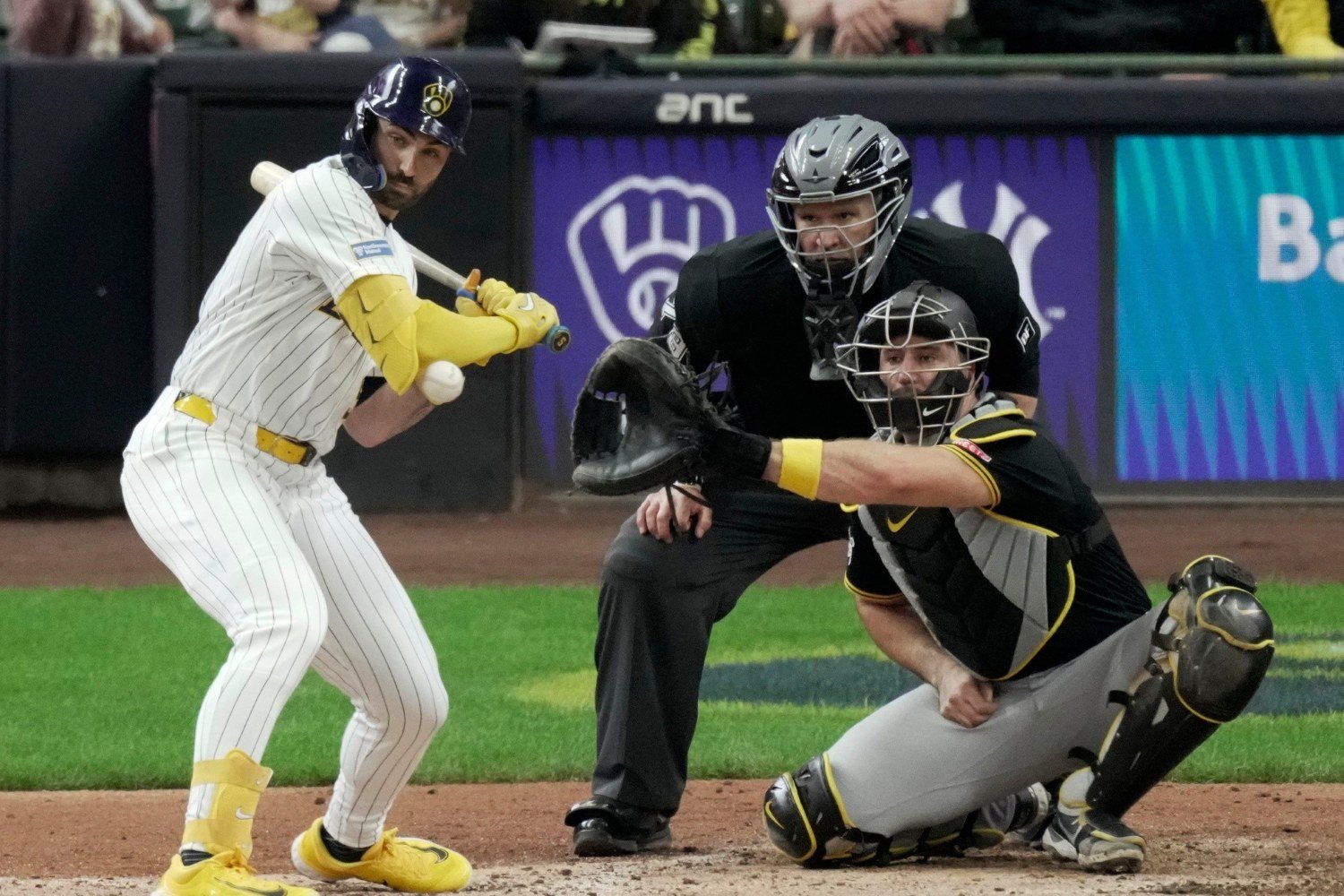 At times, pitchers have appeared aware of the hole in Garrett Mitchell's swing. Knowing his struggles against high fastballs and his excellence against breaking pitches around the bottom of the zone, they've consistently thrown him more hard pitches and fewer spinning ones than the average hitter. Right-handers have tried to beat him with the north-south game, pairing high fastballs with changeups below the zone. For the most part, though, opponents have yet to match the extreme nature of Mitchell's swing with a commensurate extremity of approach. In fact, many pitchers this year have dialed things back to a more standard mix. It's part of the reason why Mitchell has posted a career 116 wRC+ despite a 34.5% strikeout rate, including a 126 wRC+ (with a 37.9% strikeout rate) to begin the 2026 season. He still gets enough low fastballs and mistake breaking balls, which he obliterates thanks to his elite strength and bat speed. Mitchell has been pitched more like a normal hitter this year, but he's anything but that. Normal hitters have weaknesses, and many of them have one at the top of the zone, but Mitchell's bat is nearly guaranteed to miss anything elevated. For his career, he has put the ball in play on just 9.5% of swings against fastballs in or above the upper third of the zone (the league average during that span is 27.3%, nearly three times higher). He's whiffed on 54% of those swings and managed just four hits in 76 at-bats, a .053 batting average. With such a low success rate, there's an argument for throwing traditional pitch sequencing out the window, and that there's no need to show Mitchell anything but high fastballs until he proves he can touch them. Repeatedly executing that pitch is easier said than done, though, especially with the knowledge that the moment a pitcher misses below the letters, Mitchell will make them pay. That, along with disjointed playing time throughout his injury-riddled career, may be why no team had attempted such an approach. As Matt Trueblood laid out last week, a lower top line of the strike zone has also made it harder for pitchers to put the ball in places that force Mitchell to lean into his own weaknesses. Throwing it where he can't handle it often means throwing it where he can afford to lay off it and get ahead in the count, under the new, ABS-tailored zone. That changed over the weekend, when the Pittsburgh Pirates came to Milwaukee and peppered Mitchell with an onslaught of high fastballs. In three games, 37 of the 44 pitches he saw were fastballs, and 24—a whopping 54.5% of all pitches and nearly two-thirds of the heaters—were high. The approach worked. Mitchell pieced up a couple of mistake pitches, hitting a 108-mph lineout and a 100-mph double on fastballs around his belt line, but he went just 1-for-10 in the series, with three strikeouts. If there was a silver lining, it's that two of those strikeouts came against Paul Skenes in the series opener. As the weekend progressed, Mitchell began fouling off most of those high fastballs, instead of missing them entirely. That's an expected improvement after seeing the same pitch so many times, but Mitchell still looked thoroughly overmatched, swinging late and underneath those balls to softly clip them foul. Even knowing with near certainty that those high fastballs were coming, he still put those pitches in play on just two of 14 swings (14.3%) and whiffed on 35.7% of them. Here are all of those swings compiled on video: Mitchell high FBs.mp4 While most teams may not execute elevated fastballs as consistently as the Pirates did, their success could embolden more pitchers to take that extreme approach against Mitchell. Earlier in the week, the Detroit Tigers threw him high heaters 34.8% of the time. He tripled off one of those pitches but whiffed on 71.4% of swings against them, going 2-for-9 in the series. By being selective and capitalizing on pitches in his hot zones, Mitchell has produced despite having one of the sport's most extreme cold zones. To his credit, he has also spent significant time trying to close that hole in his swing path. None of that work has yielded improvement, though, and teams could start targeting that weakness more aggressively. In his fifth season, Mitchell may finally be staring down the ultimate test of whether his swing path will work against big-league pitching.
 -
Image courtesy of © Mark Hoffman/Milwaukee Journal Sentinel / USA TODAY NETWORK via Imagn Images At times, pitchers have appeared aware of the hole in Garrett Mitchell's swing. Knowing his struggles against high fastballs and his excellence against breaking pitches around the bottom of the zone, they've consistently thrown him more hard pitches and fewer spinning ones than the average hitter. Right-handers have tried to beat him with the north-south game, pairing high fastballs with changeups below the zone. For the most part, though, opponents have yet to match the extreme nature of Mitchell's swing with a commensurate extremity of approach. In fact, many pitchers this year have dialed things back to a more standard mix. It's part of the reason why Mitchell has posted a career 116 wRC+ despite a 34.5% strikeout rate, including a 126 wRC+ (with a 37.9% strikeout rate) to begin the 2026 season. He still gets enough low fastballs and mistake breaking balls, which he obliterates thanks to his elite strength and bat speed. Mitchell has been pitched more like a normal hitter this year, but he's anything but that. Normal hitters have weaknesses, and many of them have one at the top of the zone, but Mitchell's bat is nearly guaranteed to miss anything elevated. For his career, he has put the ball in play on just 9.5% of swings against fastballs in or above the upper third of the zone (the league average during that span is 27.3%, nearly three times higher). He's whiffed on 54% of those swings and managed just four hits in 76 at-bats, a .053 batting average. With such a low success rate, there's an argument for throwing traditional pitch sequencing out the window, and that there's no need to show Mitchell anything but high fastballs until he proves he can touch them. Repeatedly executing that pitch is easier said than done, though, especially with the knowledge that the moment a pitcher misses below the letters, Mitchell will make them pay. That, along with disjointed playing time throughout his injury-riddled career, may be why no team had attempted such an approach. As Matt Trueblood laid out last week, a lower top line of the strike zone has also made it harder for pitchers to put the ball in places that force Mitchell to lean into his own weaknesses. Throwing it where he can't handle it often means throwing it where he can afford to lay off it and get ahead in the count, under the new, ABS-tailored zone. That changed over the weekend, when the Pittsburgh Pirates came to Milwaukee and peppered Mitchell with an onslaught of high fastballs. In three games, 37 of the 44 pitches he saw were fastballs, and 24—a whopping 54.5% of all pitches and nearly two-thirds of the heaters—were high. The approach worked. Mitchell pieced up a couple of mistake pitches, hitting a 108-mph lineout and a 100-mph double on fastballs around his belt line, but he went just 1-for-10 in the series, with three strikeouts. If there was a silver lining, it's that two of those strikeouts came against Paul Skenes in the series opener. As the weekend progressed, Mitchell began fouling off most of those high fastballs, instead of missing them entirely. That's an expected improvement after seeing the same pitch so many times, but Mitchell still looked thoroughly overmatched, swinging late and underneath those balls to softly clip them foul. Even knowing with near certainty that those high fastballs were coming, he still put those pitches in play on just two of 14 swings (14.3%) and whiffed on 35.7% of them. Here are all of those swings compiled on video: Mitchell high FBs.mp4 While most teams may not execute elevated fastballs as consistently as the Pirates did, their success could embolden more pitchers to take that extreme approach against Mitchell. Earlier in the week, the Detroit Tigers threw him high heaters 34.8% of the time. He tripled off one of those pitches but whiffed on 71.4% of swings against them, going 2-for-9 in the series. By being selective and capitalizing on pitches in his hot zones, Mitchell has produced despite having one of the sport's most extreme cold zones. To his credit, he has also spent significant time trying to close that hole in his swing path. None of that work has yielded improvement, though, and teams could start targeting that weakness more aggressively. In his fifth season, Mitchell may finally be staring down the ultimate test of whether his swing path will work against big-league pitching. View full article
-
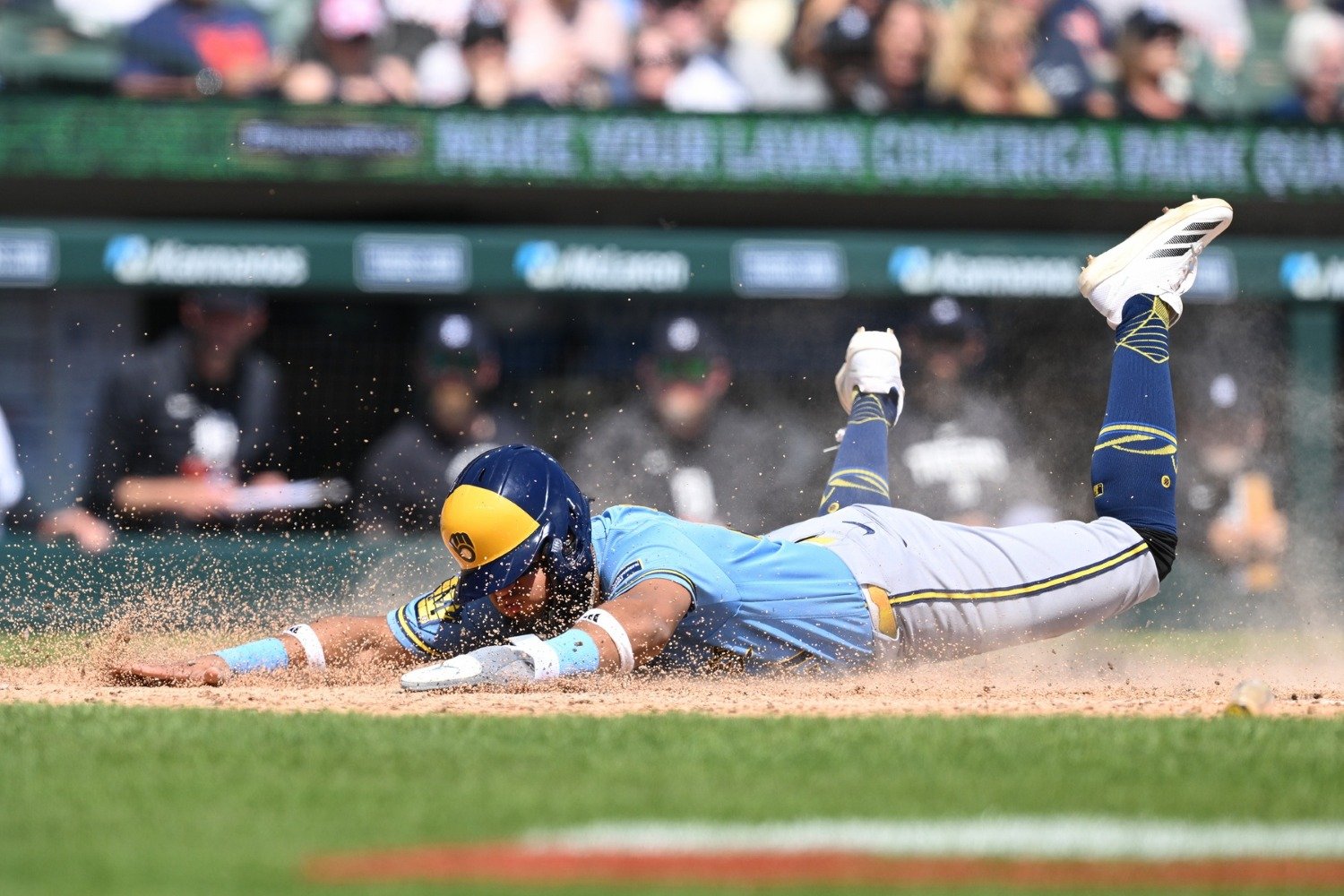 You could see the seeds of an eventual Brewers comeback early on, even as Tarik Skubal put up zeros for most of his start. After Skubal cruised through their lineup the first time through on just 26 pitches, Milwaukee made him throw 28 in the fourth inning. The Brewers were playing their game, working long at-bats and forcing the opposing starter to exert himself, even if they weren't hitting much. "Kind of make him uncomfortable and be annoying," Blake Perkins said. "That's kind of our game, sometimes." It's been an even bigger part of their game recently. Down Jackson Chourio, Andrew Vaughn, and Christian Yelich, the offense is in survival mode. With four starters in the lineup on most days with OPS marks well below .650, the Brewers aren't generating much offense by driving the baseball. That's left them scrapping even harder, relying on walks, infield singles, bunts, and steals—all ways to advance runners without the ball leaving the infield—to scratch across runs. They were back at it against Skubal on Thursday afternoon, even mixing in a few timely line drives. After a Gary Sánchez bloop single and a Luis Matos ground ball through the hole into right field to open the seventh, Perkins worked a seven-pitch at-bat, forcing Skubal into the heart of the strike zone with a fastball that he lined for a game-tying double. "He's coming after you, so I think we had to be ready to swing early," Perkins said. "But I think, at least for me in general, trying to bring him closer [to the middle], because he tries to throw that changeup off the outside part of the plate." Joey Ortiz hit a hard line drive up the middle to move Perkins to third, and David Hamilton snuck a ground ball into left to score him. The Brewers had an improbable lead, a hard-earned prize from an afternoon of gritty at-bats. "Skubal, he's really, really good," Pat Murphy said. "We had some things go our way and laid down some great bunts, put pressure on him. I'm proud of our club that we battled this way when things are going against us." That close lead would be short-lived. Ángel Zerpa allowed a game-tying solo home run to Jahmai Jones in the eighth, and Abner Uribe allowed a walk-off shot to Spencer Torkelson in the ninth, continuing a turbulent start to the season for the Milwaukee bullpen. "They did what they needed to do," Murphy said. "They hit homers off leverage relievers." The contrast was striking. According to Statcast, the Brewers managed just a 30% hard-hit rate on the afternoon with zero barreled balls, but they squeezed four runs out of minimal solid contact, giving it everything they had through meticulous approaches and small ball. On the other side, the Tigers flipped the game multiple times with one swing, scoring four of their five runs on home runs. Both lineups had competitive at-bats, but scoring seemed easier for the side that slugged. "They didn't attempt to steal, or they didn't attempt to bunt," Murphy said. "They could swing the bat. They were poised, and they deserved to win." While the Tigers got their big hits, the Brewers couldn't break the game open, even as they kept pecking away. "They kept their composure and turned those double plays and made quality pitches at quality times," Murphy said. "We didn't put the nail in and hit. We didn't get the big hit when we could." At a larger level, that's what's missing from the Brewers' current lineup. The healthy version is not built around slugging, but without their trio of currently injured hitters, it's forced to rely too heavily on the slow assemblage of single runs. Milwaukee is 25th in baseball in home runs and has the highest ground-ball rate, by a long shot. Small ball can be a separator between two good offenses, but it won't get you the big hit. Chourio is getting closer to a rehab assignment, while Vaughn and Yelich are further off—perhaps another four weeks from returning to action. For now, the Brewers don't have much choice but to keep grinding out at-bats. They'll continue to do that no matter the situation, but their lineup needs more true production.
 -
Image courtesy of © Lon Horwedel-Imagn Images You could see the seeds of an eventual Brewers comeback early on, even as Tarik Skubal put up zeros for most of his start. After Skubal cruised through their lineup the first time through on just 26 pitches, Milwaukee made him throw 28 in the fourth inning. The Brewers were playing their game, working long at-bats and forcing the opposing starter to exert himself, even if they weren't hitting much. "Kind of make him uncomfortable and be annoying," Blake Perkins said. "That's kind of our game, sometimes." It's been an even bigger part of their game recently. Down Jackson Chourio, Andrew Vaughn, and Christian Yelich, the offense is in survival mode. With four starters in the lineup on most days with OPS marks well below .650, the Brewers aren't generating much offense by driving the baseball. That's left them scrapping even harder, relying on walks, infield singles, bunts, and steals—all ways to advance runners without the ball leaving the infield—to scratch across runs. They were back at it against Skubal on Thursday afternoon, even mixing in a few timely line drives. After a Gary Sánchez bloop single and a Luis Matos ground ball through the hole into right field to open the seventh, Perkins worked a seven-pitch at-bat, forcing Skubal into the heart of the strike zone with a fastball that he lined for a game-tying double. "He's coming after you, so I think we had to be ready to swing early," Perkins said. "But I think, at least for me in general, trying to bring him closer [to the middle], because he tries to throw that changeup off the outside part of the plate." Joey Ortiz hit a hard line drive up the middle to move Perkins to third, and David Hamilton snuck a ground ball into left to score him. The Brewers had an improbable lead, a hard-earned prize from an afternoon of gritty at-bats. "Skubal, he's really, really good," Pat Murphy said. "We had some things go our way and laid down some great bunts, put pressure on him. I'm proud of our club that we battled this way when things are going against us." That close lead would be short-lived. Ángel Zerpa allowed a game-tying solo home run to Jahmai Jones in the eighth, and Abner Uribe allowed a walk-off shot to Spencer Torkelson in the ninth, continuing a turbulent start to the season for the Milwaukee bullpen. "They did what they needed to do," Murphy said. "They hit homers off leverage relievers." The contrast was striking. According to Statcast, the Brewers managed just a 30% hard-hit rate on the afternoon with zero barreled balls, but they squeezed four runs out of minimal solid contact, giving it everything they had through meticulous approaches and small ball. On the other side, the Tigers flipped the game multiple times with one swing, scoring four of their five runs on home runs. Both lineups had competitive at-bats, but scoring seemed easier for the side that slugged. "They didn't attempt to steal, or they didn't attempt to bunt," Murphy said. "They could swing the bat. They were poised, and they deserved to win." While the Tigers got their big hits, the Brewers couldn't break the game open, even as they kept pecking away. "They kept their composure and turned those double plays and made quality pitches at quality times," Murphy said. "We didn't put the nail in and hit. We didn't get the big hit when we could." At a larger level, that's what's missing from the Brewers' current lineup. The healthy version is not built around slugging, but without their trio of currently injured hitters, it's forced to rely too heavily on the slow assemblage of single runs. Milwaukee is 25th in baseball in home runs and has the highest ground-ball rate, by a long shot. Small ball can be a separator between two good offenses, but it won't get you the big hit. Chourio is getting closer to a rehab assignment, while Vaughn and Yelich are further off—perhaps another four weeks from returning to action. For now, the Brewers don't have much choice but to keep grinding out at-bats. They'll continue to do that no matter the situation, but their lineup needs more true production. View full article
-
Image courtesy of © Sam Navarro-Imagn Images Ángel Zerpa's tenure with the Brewers has gotten off to a rocky start. The hard-throwing left-hander has picked up two holds and two saves in 10 appearances, but he's also blown two saves and struggled to a 5.73 ERA, 6.45 xERA, and 4.78 FIP, with as many walks (five) as strikeouts. That's not what the Brewers envisioned when they acquired Zerpa from the Kansas City Royals over the offseason in exchange for Isaac Collins and Nick Mears. They believed—and still do—that he can be a dominant high-leverage reliever near the back of their bullpen. Zerpa's results in Kansas City never quite followed his great stuff, which is headlined by a power sinker that averages just 3.2 inches of induced vertical break with 17.3 inches of arm-side run. "I think it's frustrating from our standpoint, because I think he's so much better than what he's shown so far," said pitching coordinator Jim Henderson, who specializes in working with the team's relievers. "I think that there's just so much more in there." Because he left Brewers camp to pitch for Team Venezuela in the World Baseball Classic, Zerpa didn't get the amount of work with Henderson, Chris Hook, and the rest of the team's pitching coaches that they would have preferred. That's left them working things out on the fly in regular-season games. The Brewers deployed Zerpa across multiple innings in three of his first seven outings, the last of which saw him surrender four runs when he returned for a second frame. His last three outings have each been one-inning engagements, as the team has reevaluated whether he's suited to handle multiple ups in an appearance. They also want to make his delivery simpler and more consistent. As the rare reliever who pitches out of the windup with the bases empty, Zerpa has more movement than usual in his delivery. Those tweaks are much easier to make in a preseason setting. "I think we would have done those things in spring training, we just kind of missed those opportunities with the Classic," Henderson said. "So now we're just trying to attack those things, the simplified things, and get it more consistent for him." While the Brewers have not gotten as far as they would have liked by now in facilitating a breakout, one of the adjustments they have made has Zerpa on the right track. At the time of the trade, it looked like they could unlock his upside by turning his slurve-like breaking ball into a harder and shorter slider that appeared more like a fastball out of his hand. They did exactly that. "He's kind of a power guy," Henderson said, "so what can you do that can power this breaking ball in front? So we kind of settled on just wanting to throw it harder, maybe even just a little bit shorter, on the tip of the plate, and just match what he does intensity-wise [with the sinker] with a good breaking ball." Because he doesn't have long fingers, all of Zerpa's pitches have lower-than-average spin rates. By trying to throw a bigger breaking ball, he was working against his capabilities. "With guys trying to make bigger sweepers, if you don't have the fingers long enough, it kind of slips out on you, and I think that's kind of what was happening to him," Henderson said. "When he tried to make it big, he wasn't able to work in front of it or work around it as much as if somebody with a little longer fingers were." Because he's no longer trying too hard to spin the ball for bigger movement, Zerpa is now throwing the slider from a lower arm angle, much closer to his sinker. His release points are now similar enough that hitters shouldn't see that slider pop out of his hand earlier than his heater, which seemed to be the case at times earlier in his career. "It's not a big focus for us, but you can definitely tell that there's a little something there that's recognizable for the hitter when you see the slot change," Henderson said. "Just trying to have these two pitches funneled together is important." Starting the sinker and slider from the same tunnel should lead to more swings and misses and chases outside the zone, two significant missing pieces that have kept Zerpa from putting everything together. Instead, his 17.3% whiff rate is nearly identical to last year, and his chase rate has decreased from 26.6% to 19.2%. That's because poor command has left those pitches in the middle of the zone, instead of where they play best at the bottom. Even with too many pitches around the belt, Zerpa is still inducing ground balls at an elite 62.2% rate. The Brewers have tailored his side work toward getting the ball down more consistently. Zerpa no longer throws flat-ground pen sessions with a standing catch partner, which creates a higher target; all of his work is with catchers on a knee or in a squat, replicating where he needs to locate in games. "It's a good sinker," Henderson said. "The results are actually still fine, even when it's elevated. Can't imagine what it's going to be when we get it to the lower third." The ingredients in Zerpa's left arm are still there. In some ways, he's closer to that breakout than he was at the end of last year. For now, though, there's still work left to get everything into place. "He pitched fantastic in the Classic," Henderson said. "I think that's always tough. You come off this high and this intensity, and then you come back down a little bit, even though it's in the big leagues, and then we ask him to go multiple [innings]. It's a lot to handle, and I just don't think we've got to the crispest version of him yet. So I'm looking forward to getting him in a consistent kind of role here and getting him going." View full article
-
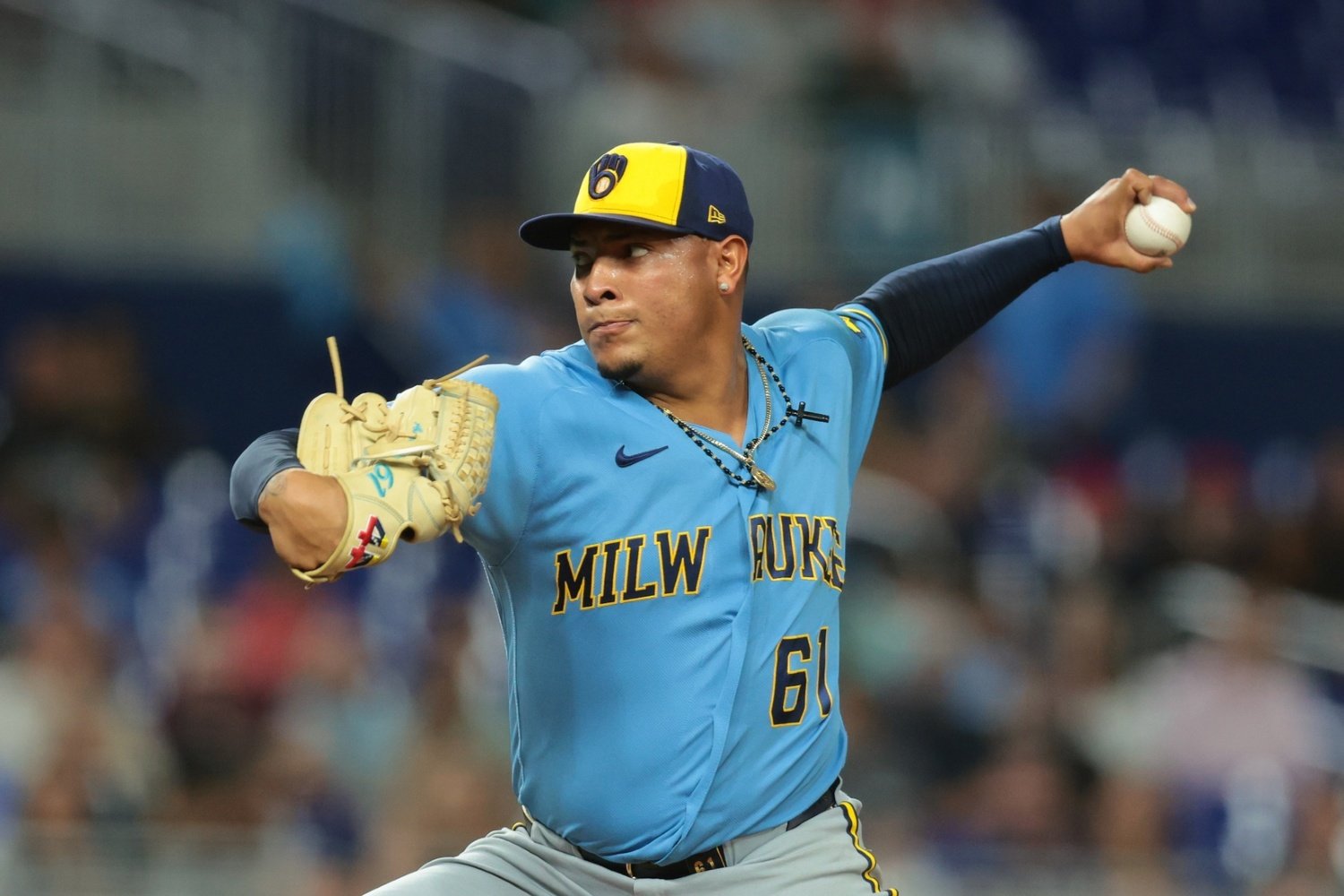 Ángel Zerpa's tenure with the Brewers has gotten off to a rocky start. The hard-throwing left-hander has picked up two holds and two saves in 10 appearances, but he's also blown two saves and struggled to a 5.73 ERA, 6.45 xERA, and 4.78 FIP, with as many walks (five) as strikeouts. That's not what the Brewers envisioned when they acquired Zerpa from the Kansas City Royals over the offseason in exchange for Isaac Collins and Nick Mears. They believed—and still do—that he can be a dominant high-leverage reliever near the back of their bullpen. Zerpa's results in Kansas City never quite followed his great stuff, which is headlined by a power sinker that averages just 3.2 inches of induced vertical break with 17.3 inches of arm-side run. "I think it's frustrating from our standpoint, because I think he's so much better than what he's shown so far," said pitching coordinator Jim Henderson, who specializes in working with the team's relievers. "I think that there's just so much more in there." Because he left Brewers camp to pitch for Team Venezuela in the World Baseball Classic, Zerpa didn't get the amount of work with Henderson, Chris Hook, and the rest of the team's pitching coaches that they would have preferred. That's left them working things out on the fly in regular-season games. The Brewers deployed Zerpa across multiple innings in three of his first seven outings, the last of which saw him surrender four runs when he returned for a second frame. His last three outings have each been one-inning engagements, as the team has reevaluated whether he's suited to handle multiple ups in an appearance. They also want to make his delivery simpler and more consistent. As the rare reliever who pitches out of the windup with the bases empty, Zerpa has more movement than usual in his delivery. Those tweaks are much easier to make in a preseason setting. "I think we would have done those things in spring training, we just kind of missed those opportunities with the Classic," Henderson said. "So now we're just trying to attack those things, the simplified things, and get it more consistent for him." While the Brewers have not gotten as far as they would have liked by now in facilitating a breakout, one of the adjustments they have made has Zerpa on the right track. At the time of the trade, it looked like they could unlock his upside by turning his slurve-like breaking ball into a harder and shorter slider that appeared more like a fastball out of his hand. They did exactly that. "He's kind of a power guy," Henderson said, "so what can you do that can power this breaking ball in front? So we kind of settled on just wanting to throw it harder, maybe even just a little bit shorter, on the tip of the plate, and just match what he does intensity-wise [with the sinker] with a good breaking ball." Because he doesn't have long fingers, all of Zerpa's pitches have lower-than-average spin rates. By trying to throw a bigger breaking ball, he was working against his capabilities. "With guys trying to make bigger sweepers, if you don't have the fingers long enough, it kind of slips out on you, and I think that's kind of what was happening to him," Henderson said. "When he tried to make it big, he wasn't able to work in front of it or work around it as much as if somebody with a little longer fingers were." Because he's no longer trying too hard to spin the ball for bigger movement, Zerpa is now throwing the slider from a lower arm angle, much closer to his sinker. His release points are now similar enough that hitters shouldn't see that slider pop out of his hand earlier than his heater, which seemed to be the case at times earlier in his career. "It's not a big focus for us, but you can definitely tell that there's a little something there that's recognizable for the hitter when you see the slot change," Henderson said. "Just trying to have these two pitches funneled together is important." Starting the sinker and slider from the same tunnel should lead to more swings and misses and chases outside the zone, two significant missing pieces that have kept Zerpa from putting everything together. Instead, his 17.3% whiff rate is nearly identical to last year, and his chase rate has decreased from 26.6% to 19.2%. That's because poor command has left those pitches in the middle of the zone, instead of where they play best at the bottom. Even with too many pitches around the belt, Zerpa is still inducing ground balls at an elite 62.2% rate. The Brewers have tailored his side work toward getting the ball down more consistently. Zerpa no longer throws flat-ground pen sessions with a standing catch partner, which creates a higher target; all of his work is with catchers on a knee or in a squat, replicating where he needs to locate in games. "It's a good sinker," Henderson said. "The results are actually still fine, even when it's elevated. Can't imagine what it's going to be when we get it to the lower third." The ingredients in Zerpa's left arm are still there. In some ways, he's closer to that breakout than he was at the end of last year. For now, though, there's still work left to get everything into place. "He pitched fantastic in the Classic," Henderson said. "I think that's always tough. You come off this high and this intensity, and then you come back down a little bit, even though it's in the big leagues, and then we ask him to go multiple [innings]. It's a lot to handle, and I just don't think we've got to the crispest version of him yet. So I'm looking forward to getting him in a consistent kind of role here and getting him going."
 -
Image courtesy of © David Reginek-Imagn Images The Brewers leaned heavily on their top relievers last season, but in a bullpen that covered the fourth-most regular-season innings in baseball, Grant Anderson was one of the hardest workers. The sidewinding right-hander logged 69 2/3 innings in relief, trailing only Abner Uribe. Once again, Anderson has quietly been an unsung workhorse. His 12 appearances thus far in 2026 tie him with Aaron Ashby for the club lead. In 13 1/3 innings, he’s posted a 2.70 ERA and 2.98 FIP. Anderson’s strikeout rate has decreased from last year, but he has paired a decent 10.5% swinging strike rate with an excellent 57.6% ground ball rate. “He’s been sharp,” Pat Murphy said. “He had the hiccup there in extra innings [against the Toronto Blue Jays on April 14], and then he’s been really good ever since.” Anderson has quickly become a Swiss Army knife for Murphy in the early weeks of the season, particularly as other relievers like Trevor Megill and Ángel Zerpa have struggled. He’s appeared in every inning from the third through the 10th. He’s kept the Brewers in games when trailing, protected close leads, and even entered jams as a fireman, collecting four holds along the way. He entered a fire on Tuesday evening in Detroit, before the Brewers’ offense broke through late in a 12-4 blowout win over the Tigers. Anderson inherited a bases-loaded, no-out situation from Kyle Harrison, who lost his fastball command in the fourth inning when the lead was still just 3-0. He promptly induced a double-play grounder from Javier Báez and struck out Kerry Carpenter to escape trouble with just one run scoring. “That was awesome,” Harrison said of Anderson’s effort. Anderson then returned to throw a scoreless fifth, giving the Brewers six crucial outs of middle relief before the momentum swung their way. “It was huge today for him to come in when he did,” Murphy said. “Bases loaded, no outs, get the ground ball, get a number of ground balls in the game. That was huge.” Anderson’s 20.4% strikeout rate is a touch below the league average, but the whiffs he had last year could soon return. His stuff is arguably better in his second season in Milwaukee. By slightly raising his arm slot (for a second straight season) from 4° to 8°, Anderson has added an extra inch of induced vertical break to his four-seamer, meaning what was already his top swing-and-miss pitch a year ago now has even more carry at the top of the strike zone. Stuff models grade it as an even better pitch than it was in 2025, even without its best velocity. {C}%3C!%2D%2Dtd%20%7Bborder%3A%201px%20solid%20%23cccccc%3B%7Dbr%20%7Bmso-data-placement%3Asame-cell%3B%7D%2D%2D%3E--> Season 4FB Velocity 4FB IVB 4FB Stuff+ 4FB StuffPro 2025 93.5 12.2 114 -0.2 2026 92.8 13.2 118 -0.5 He’ll need those strikeouts moving forward, particularly because he’s always been prone to walks and occasional home runs. But for now, Anderson is once again playing a pivotal role in the Brewers’ relief corps, even if he’s neither the flashiest nor the most conventionally effective member. View full article
-
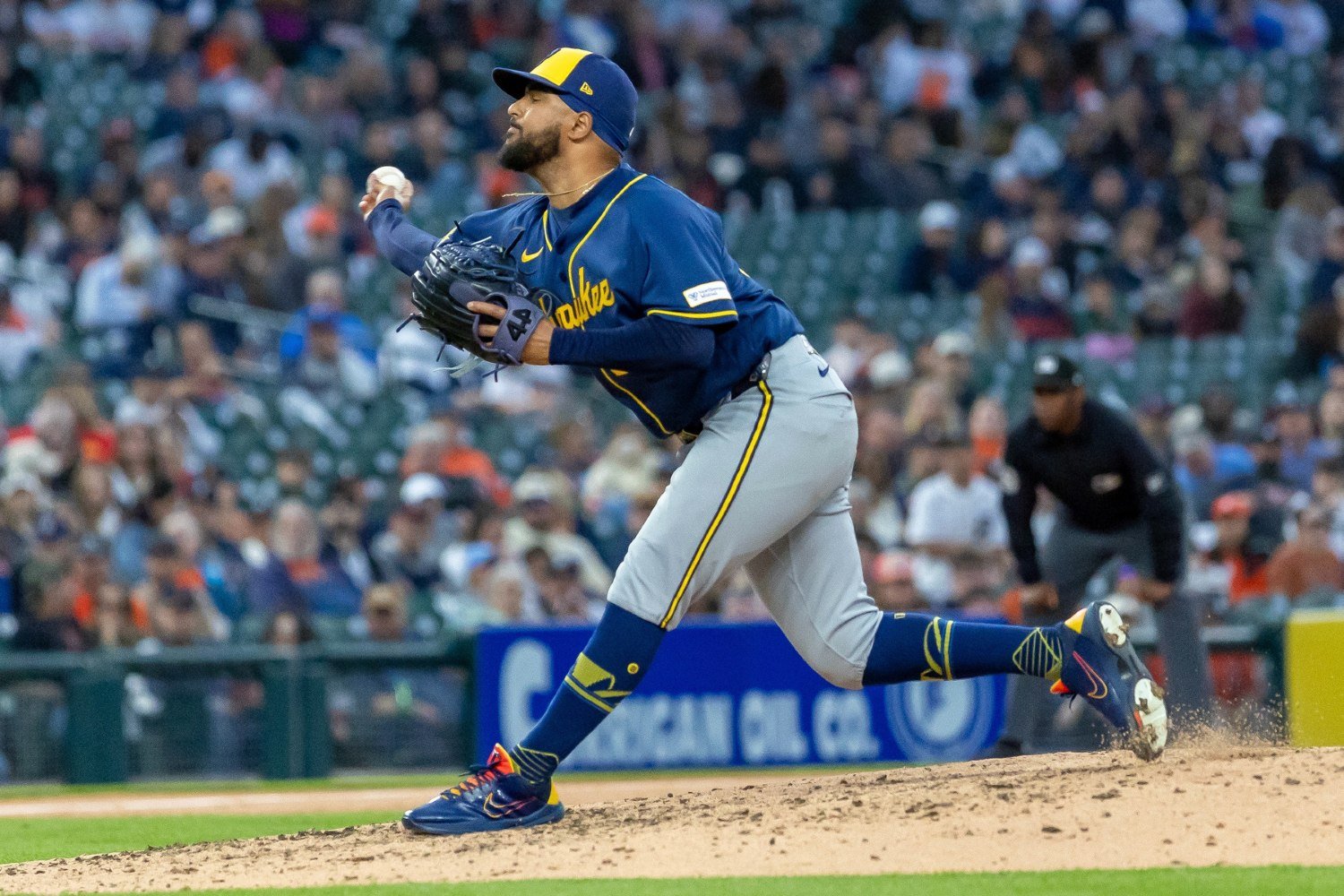 The Brewers leaned heavily on their top relievers last season, but in a bullpen that covered the fourth-most regular-season innings in baseball, Grant Anderson was one of the hardest workers. The sidewinding right-hander logged 69 2/3 innings in relief, trailing only Abner Uribe. Once again, Anderson has quietly been an unsung workhorse. His 12 appearances thus far in 2026 tie him with Aaron Ashby for the club lead. In 13 1/3 innings, he’s posted a 2.70 ERA and 2.98 FIP. Anderson’s strikeout rate has decreased from last year, but he has paired a decent 10.5% swinging strike rate with an excellent 57.6% ground ball rate. “He’s been sharp,” Pat Murphy said. “He had the hiccup there in extra innings [against the Toronto Blue Jays on April 14], and then he’s been really good ever since.” Anderson has quickly become a Swiss Army knife for Murphy in the early weeks of the season, particularly as other relievers like Trevor Megill and Ángel Zerpa have struggled. He’s appeared in every inning from the third through the 10th. He’s kept the Brewers in games when trailing, protected close leads, and even entered jams as a fireman, collecting four holds along the way. He entered a fire on Tuesday evening in Detroit, before the Brewers’ offense broke through late in a 12-4 blowout win over the Tigers. Anderson inherited a bases-loaded, no-out situation from Kyle Harrison, who lost his fastball command in the fourth inning when the lead was still just 3-0. He promptly induced a double-play grounder from Javier Báez and struck out Kerry Carpenter to escape trouble with just one run scoring. “That was awesome,” Harrison said of Anderson’s effort. Anderson then returned to throw a scoreless fifth, giving the Brewers six crucial outs of middle relief before the momentum swung their way. “It was huge today for him to come in when he did,” Murphy said. “Bases loaded, no outs, get the ground ball, get a number of ground balls in the game. That was huge.” Anderson’s 20.4% strikeout rate is a touch below the league average, but the whiffs he had last year could soon return. His stuff is arguably better in his second season in Milwaukee. By slightly raising his arm slot (for a second straight season) from 4° to 8°, Anderson has added an extra inch of induced vertical break to his four-seamer, meaning what was already his top swing-and-miss pitch a year ago now has even more carry at the top of the strike zone. Stuff models grade it as an even better pitch than it was in 2025, even without its best velocity. {C}%3C!%2D%2Dtd%20%7Bborder%3A%201px%20solid%20%23cccccc%3B%7Dbr%20%7Bmso-data-placement%3Asame-cell%3B%7D%2D%2D%3E--> Season 4FB Velocity 4FB IVB 4FB Stuff+ 4FB StuffPro 2025 93.5 12.2 114 -0.2 2026 92.8 13.2 118 -0.5 He’ll need those strikeouts moving forward, particularly because he’s always been prone to walks and occasional home runs. But for now, Anderson is once again playing a pivotal role in the Brewers’ relief corps, even if he’s neither the flashiest nor the most conventionally effective member.
 -
Sal Frelick is Experiencing the Thin Margin for Error of Hitting
Jack Stern posted an article in Brewers
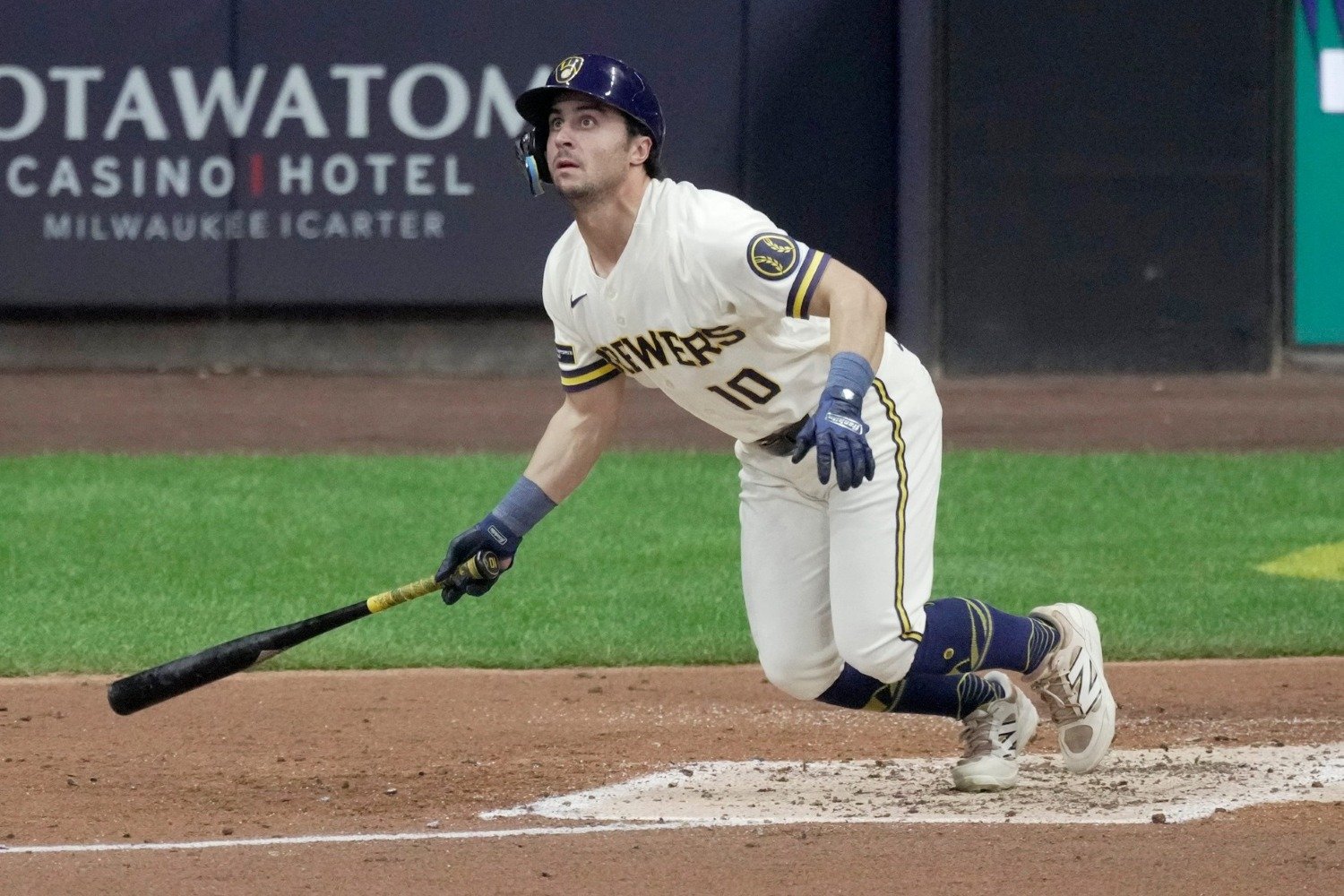 In the Brewers' first two games without an injured Christian Yelich, Pat Murphy has hit Sal Frelick in the leadoff spot. The change was partially due to a lineup shakeup in Yelich's absence—Brice Turang has moved from leadoff to the 3-hole—but it was also to spark a pressing Frelick's offense. The 25-year-old is hitting just .179/.303/.268 in 67 plate appearances to start the season. "I think what happens is a kid like him that wants it so badly, he gets going, and he's going to try and make it happen right now," Murphy said. "He doesn't look to have a perspective, in a way, of what's going on. That's why I put him leadoff [Tuesday night]." Frelick is much closer to last year's form than his results indicate. After overperforming his peripherals in his breakout season, it's been the opposite to begin his follow-up campaign. His expected production is essentially identical, mainly because he's chasing less and drawing more walks to begin 2026. {C}%3C!%2D%2Dtd%20%7Bborder%3A%201px%20solid%20%23cccccc%3B%7Dbr%20%7Bmso-data-placement%3Asame-cell%3B%7D%2D%2D%3E--> Season wRC+ DRC+ wOBA xwOBA Chase% xwOBAcon 2025 114 101 .332 .299 26.3% .305 2026 71 103 .276 .307 20.9% .290 His abnormally low batting average on balls in play (.209, down from .308 for his career before this) is destined to improve, especially for a hitter like Frelick, who hits plenty of grounders and line drives and can leg out infield hits with his speed. He did see some luck swing his way on Wednesday night as part of the Brewers' comeback win to snap their six-game losing streak. In the eighth inning, Frelick bounced a soft ground ball in front of the plate, where it landed on the dampened dirt from heavy rainfall leaking through American Family Field's roof. He reached when Toronto Blue Jays catcher Brandon Valenzuela could not pick up the ball cleanly, ultimately coming around to score the winning run. "He's had some unlucky things go wrong when he's hitting the ball well," starter Chad Patrick said after the game. "Sometimes the baseball gods give you rewards." It hasn't all been bad luck, though. Frelick isn't quite himself right now, in a small but meaningful way. His expected wOBA on contact is down 15 points, which means he's hitting fewer balls in ways that typically produce hits. Murphy believes "wanting it so badly" is the cause. "I think he's the first to try to do too much," Murphy said. "He cares so much. He's so passionate about competing and winning. One of the best I've been around. When it's not going your way, it's hard to be relaxed about it for a kid like him, and he's got to learn to just kind of do a little less, be a little more precise." The biggest difference has been that the baseball is getting on Frelick quicker than when he's been at his best. He's consistently late on the ball. On average, he's making contact about three inches deeper into his hitting zone (the purple dot in the graphic below) than last year (the white dot). Because he's late, Frelick is catching more balls as his bat head is still coming down through the zone, producing more ground balls. Compared to last year, his average attack angle (the vertical angle of the bat relative to the ground at point of contact) has decreased from 9° to 5°, and his ground ball rate has increased from 45.4% to 50.1%. It's not necessarily that Frelick is picking up the ball late, Murphy said, but that his load, which begins with a leg kick, has become exaggerated from trying to do too much. That makes it harder for his swing to be on time. "Think about it. The bigger the move, the bigger the get-ready, the less time you have," Murphy said. "So you have to usually time that up way earlier, if you're going to have a bigger move or a bigger get-ready. He's got some things he has to work through." The good news is that, metrically, Frelick's swing path is effectively the same as last year. As is typically the case for most hitters, the wide chasm between success and failure comes down to milliseconds of timing. "The swings don't change that much," Murphy said. "Even [Joey Ortiz], if he gets straightened out, the swing's going to look similar. It's the decision, and it's the timing of it all—because hitting is so much timing—that's going to change. You'll see that, like, 'Wow, he's on it. Wow, he's on time. Wow, he looks like a different hitter.' But when you break down the swing, it won't be that different. There might be a little angular shift, or there might be a little bit of grip difference. There might be a little bit of freedom in the swing that you don't see." He moved Frelick to the top of the order in part to bring him back to his roots. A leadoff man's job is not to produce power or drive in runners, but to get on base. "That little reminder, that's how he works," Murphy said. "When he's batting seventh sometimes, it's kind of, 'Do they want me to get on base?' It's kind of like, what does it call for? For him to know, you have to tell him." Because his quality of contact did not fully support his results last season, it's probably safer to expect Frelick to be closer to a league-average hitter than the well-above-average bat he was a year ago. Coupled with his speed and defense, that's still a very productive player. Murphy expects him to round into form. "One of the greatest attributes of this guy is he's a winning player," he said, "and winning players know what's needed."
 -
Image courtesy of © Mark Hoffman/Milwaukee Journal Sentinel / USA TODAY NETWORK via Imagn Images In the Brewers' first two games without an injured Christian Yelich, Pat Murphy has hit Sal Frelick in the leadoff spot. The change was partially due to a lineup shakeup in Yelich's absence—Brice Turang has moved from leadoff to the 3-hole—but it was also to spark a pressing Frelick's offense. The 25-year-old is hitting just .179/.303/.268 in 67 plate appearances to start the season. "I think what happens is a kid like him that wants it so badly, he gets going, and he's going to try and make it happen right now," Murphy said. "He doesn't look to have a perspective, in a way, of what's going on. That's why I put him leadoff [Tuesday night]." Frelick is much closer to last year's form than his results indicate. After overperforming his peripherals in his breakout season, it's been the opposite to begin his follow-up campaign. His expected production is essentially identical, mainly because he's chasing less and drawing more walks to begin 2026. {C}%3C!%2D%2Dtd%20%7Bborder%3A%201px%20solid%20%23cccccc%3B%7Dbr%20%7Bmso-data-placement%3Asame-cell%3B%7D%2D%2D%3E--> Season wRC+ DRC+ wOBA xwOBA Chase% xwOBAcon 2025 114 101 .332 .299 26.3% .305 2026 71 103 .276 .307 20.9% .290 His abnormally low batting average on balls in play (.209, down from .308 for his career before this) is destined to improve, especially for a hitter like Frelick, who hits plenty of grounders and line drives and can leg out infield hits with his speed. He did see some luck swing his way on Wednesday night as part of the Brewers' comeback win to snap their six-game losing streak. In the eighth inning, Frelick bounced a soft ground ball in front of the plate, where it landed on the dampened dirt from heavy rainfall leaking through American Family Field's roof. He reached when Toronto Blue Jays catcher Brandon Valenzuela could not pick up the ball cleanly, ultimately coming around to score the winning run. "He's had some unlucky things go wrong when he's hitting the ball well," starter Chad Patrick said after the game. "Sometimes the baseball gods give you rewards." It hasn't all been bad luck, though. Frelick isn't quite himself right now, in a small but meaningful way. His expected wOBA on contact is down 15 points, which means he's hitting fewer balls in ways that typically produce hits. Murphy believes "wanting it so badly" is the cause. "I think he's the first to try to do too much," Murphy said. "He cares so much. He's so passionate about competing and winning. One of the best I've been around. When it's not going your way, it's hard to be relaxed about it for a kid like him, and he's got to learn to just kind of do a little less, be a little more precise." The biggest difference has been that the baseball is getting on Frelick quicker than when he's been at his best. He's consistently late on the ball. On average, he's making contact about three inches deeper into his hitting zone (the purple dot in the graphic below) than last year (the white dot). Because he's late, Frelick is catching more balls as his bat head is still coming down through the zone, producing more ground balls. Compared to last year, his average attack angle (the vertical angle of the bat relative to the ground at point of contact) has decreased from 9° to 5°, and his ground ball rate has increased from 45.4% to 50.1%. It's not necessarily that Frelick is picking up the ball late, Murphy said, but that his load, which begins with a leg kick, has become exaggerated from trying to do too much. That makes it harder for his swing to be on time. "Think about it. The bigger the move, the bigger the get-ready, the less time you have," Murphy said. "So you have to usually time that up way earlier, if you're going to have a bigger move or a bigger get-ready. He's got some things he has to work through." The good news is that, metrically, Frelick's swing path is effectively the same as last year. As is typically the case for most hitters, the wide chasm between success and failure comes down to milliseconds of timing. "The swings don't change that much," Murphy said. "Even [Joey Ortiz], if he gets straightened out, the swing's going to look similar. It's the decision, and it's the timing of it all—because hitting is so much timing—that's going to change. You'll see that, like, 'Wow, he's on it. Wow, he's on time. Wow, he looks like a different hitter.' But when you break down the swing, it won't be that different. There might be a little angular shift, or there might be a little bit of grip difference. There might be a little bit of freedom in the swing that you don't see." He moved Frelick to the top of the order in part to bring him back to his roots. A leadoff man's job is not to produce power or drive in runners, but to get on base. "That little reminder, that's how he works," Murphy said. "When he's batting seventh sometimes, it's kind of, 'Do they want me to get on base?' It's kind of like, what does it call for? For him to know, you have to tell him." Because his quality of contact did not fully support his results last season, it's probably safer to expect Frelick to be closer to a league-average hitter than the well-above-average bat he was a year ago. Coupled with his speed and defense, that's still a very productive player. Murphy expects him to round into form. "One of the greatest attributes of this guy is he's a winning player," he said, "and winning players know what's needed." View full article
-
Image courtesy of © Mark Hoffman/Milwaukee Journal Sentinel / USA TODAY NETWORK via Imagn Images Trevor Megill’s struggles continued on Tuesday night. Tasked with protecting a one-run lead against the Toronto Blue Jays, Megill allowed the first three hitters to reach, ultimately allowing three runs in his inning of work as the Brewers eventually fell in extra innings for their sixth straight loss. In six appearances, he now has two losses and a blown save, while allowing eight runs in five innings. “I’m definitely way better than that,” Megill said. “Pitches can be a lot better. Pitch execution could be a lot better. A lot of things can be better.” Megill’s fastball is the primary culprit. So far this year, it’s averaging 97.4 mph. That’s about where it sat last April before averaging nearly triple digits over the summer, but he’s noticeably failed to reach that high-end velocity since suffering a flexor strain late in the year. “Everybody can hit velo up here,” Megill said. “Throwing 97, 98 is kind of the same velos [for him] from last season at this time. Just not executing and not getting it done right now.” That velocity matters, though. Because he throws a straight four-seamer that does not enter the zone from a deceptive angle, Megill needs that outlier heat to get whiffs or swings underneath the ball. At 97, it’s very hittable. Opponents tagged it for a .459 xwOBA at that speed last April, and they’ve managed a .418 xwOBA and 66.7% hard-hit rate against it so far this year. The only difference was that more of that loud contact was hit at defenders last year, so Megill was able to skate by for a month with an actual wOBA of .371 against his fastball. This year, the results are matching the loud contact. “The fastball didn’t have the same properties to it, for sure,” Pat Murphy said. Murphy affirmed his belief in Megill’s ability after the game, even expressing frustration with fans who booed him during his blown save. However, he also acknowledged that the Brewers must decide whether to keep him in the ninth inning. “We’ll see,” he said. “I don’t know for sure. I like to talk to other people about it. Obviously, you can’t have a guy go out there six times and three times not do the job. I mean, the way he’s throwing the ball now, he doesn’t deserve it, but he can earn it back.” Other pitchers at the back end of the bullpen have also struggled, though, and Murphy noted that the Brewers would have to feel better about a different option to make a closer change. “What are we going to do?” he said. “Who’s throwing the ball good back there that deserves it more? So we’ll figure that out. We won’t make those decisions after a heart-wrenching loss like this.” At this moment, it’s a short list. Should the Brewers make a change, matchups on a given night could determine roles. Right now, these are the leading candidates for saves. Abner Uribe As Megill’s setup man, Uribe would be the most obvious choice to slide into the ninth inning. He’s done it before. Uribe closed last September when Megill was injured and remained in that role into the postseason after he returned. However, Uribe has dealt with his own loss of velocity and movement after shouldering a heavy workload last year. As a result, his whiff and ground ball rates have plummeted in a small sample. He did look more like himself on Sunday, averaging 98.7 mph with his sinker and inducing three whiffs. “He pounded the zone today, and he had his velocity there,” Murphy said. Ángel Zerpa Murphy has shown plenty of trust in Zerpa early, pitching him eight times so far this season, particularly against pockets of left-handed hitters. He also recorded a save in Boston when Megill and Uribe were unavailable. However, as a left-hander, most of Zerpa’s ninth-inning opportunities would likely come based on matchups. A groundball pitcher, his low strikeout rate would make him an unusual fit as a full-time closer, but he could unlock more swing-and-miss by sequencing his slider and four-seamer differently off his power sinker. Grant Anderson Anderson would be a dark-horse choice to close. Unlike Megill, Uribe, and Zerpa, his velocity is below average for a late-inning reliever. He’s also been more prone to walks than one might prefer for a true high-leverage pitcher. However, Anderson’s arsenal makes him a well-rounded reliever, which could serve him well as a closer. His sinker gets ground balls against right-handed hitters, his sweeper induces weak contact, and his upshoot four-seamer produces an elite whiff rate at the top of the zone. Those three pitches have made him rather platoon-neutral since joining the Brewers, and depending on the situation, he can choose between pitching for strikeouts or ground balls, instead of being locked into one or the other. It might be an understatement to say that the best-case scenario for the Brewers involves Megill regaining his form. That possibility feels cruelly remote right now, but it also feels non-negotiable. With Jared Koenig gone from the bullpen picture and the offense diminished, it's simple, even though it's not easy: the Brewers need their erstwhile flamethrower to rediscover his best heat. View full article
-
If Brewers Make a Closer Change, Who Could Replace Trevor Megill?
Jack Stern posted an article in Brewers
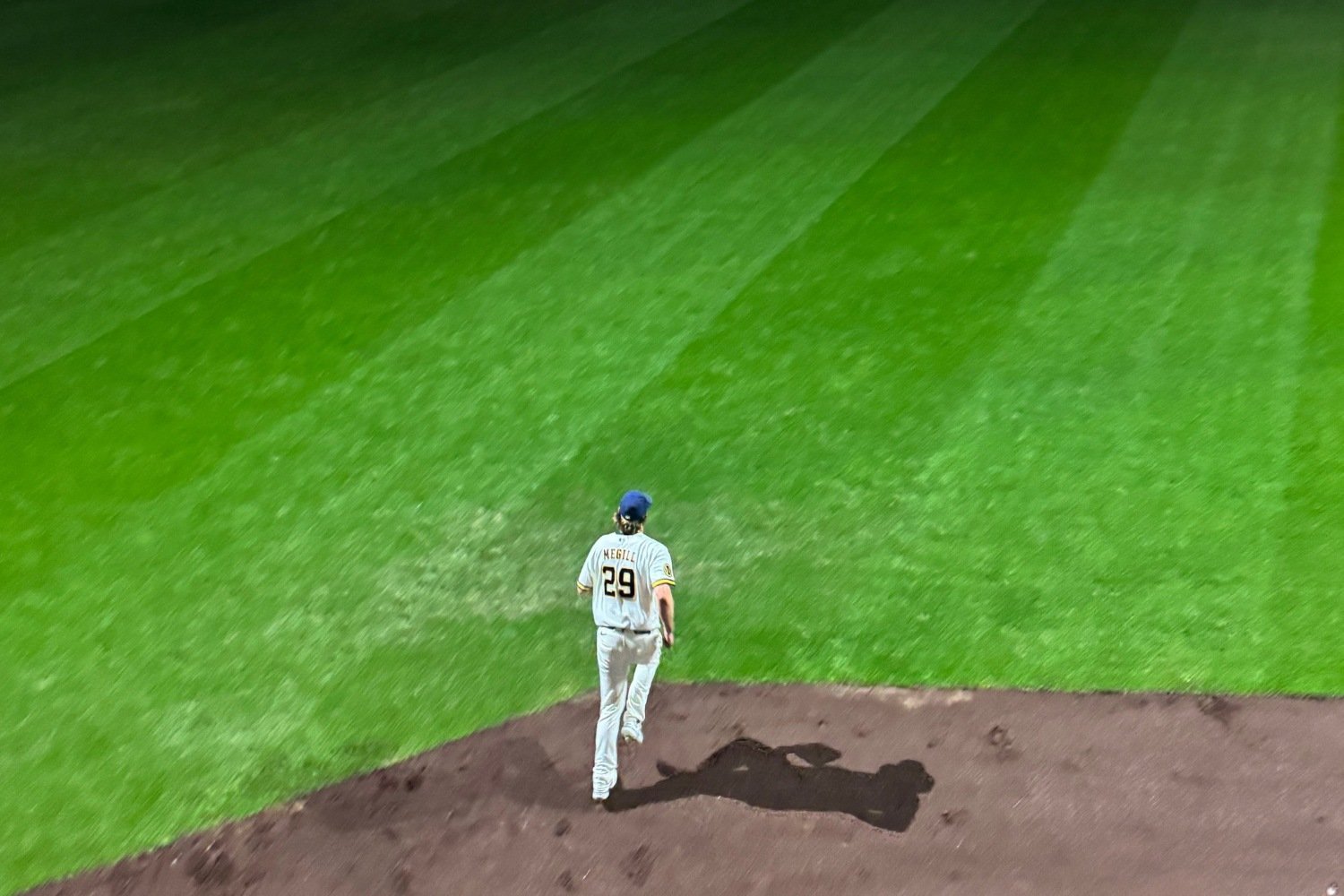 Trevor Megill’s struggles continued on Tuesday night. Tasked with protecting a one-run lead against the Toronto Blue Jays, Megill allowed the first three hitters to reach, ultimately allowing three runs in his inning of work as the Brewers eventually fell in extra innings for their sixth straight loss. In six appearances, he now has two losses and a blown save, while allowing eight runs in five innings. “I’m definitely way better than that,” Megill said. “Pitches can be a lot better. Pitch execution could be a lot better. A lot of things can be better.” Megill’s fastball is the primary culprit. So far this year, it’s averaging 97.4 mph. That’s about where it sat last April before averaging nearly triple digits over the summer, but he’s noticeably failed to reach that high-end velocity since suffering a flexor strain late in the year. “Everybody can hit velo up here,” Megill said. “Throwing 97, 98 is kind of the same velos [for him] from last season at this time. Just not executing and not getting it done right now.” That velocity matters, though. Because he throws a straight four-seamer that does not enter the zone from a deceptive angle, Megill needs that outlier heat to get whiffs or swings underneath the ball. At 97, it’s very hittable. Opponents tagged it for a .459 xwOBA at that speed last April, and they’ve managed a .418 xwOBA and 66.7% hard-hit rate against it so far this year. The only difference was that more of that loud contact was hit at defenders last year, so Megill was able to skate by for a month with an actual wOBA of .371 against his fastball. This year, the results are matching the loud contact. “The fastball didn’t have the same properties to it, for sure,” Pat Murphy said. Murphy affirmed his belief in Megill’s ability after the game, even expressing frustration with fans who booed him during his blown save. However, he also acknowledged that the Brewers must decide whether to keep him in the ninth inning. “We’ll see,” he said. “I don’t know for sure. I like to talk to other people about it. Obviously, you can’t have a guy go out there six times and three times not do the job. I mean, the way he’s throwing the ball now, he doesn’t deserve it, but he can earn it back.” Other pitchers at the back end of the bullpen have also struggled, though, and Murphy noted that the Brewers would have to feel better about a different option to make a closer change. “What are we going to do?” he said. “Who’s throwing the ball good back there that deserves it more? So we’ll figure that out. We won’t make those decisions after a heart-wrenching loss like this.” At this moment, it’s a short list. Should the Brewers make a change, matchups on a given night could determine roles. Right now, these are the leading candidates for saves. Abner Uribe As Megill’s setup man, Uribe would be the most obvious choice to slide into the ninth inning. He’s done it before. Uribe closed last September when Megill was injured and remained in that role into the postseason after he returned. However, Uribe has dealt with his own loss of velocity and movement after shouldering a heavy workload last year. As a result, his whiff and ground ball rates have plummeted in a small sample. He did look more like himself on Sunday, averaging 98.7 mph with his sinker and inducing three whiffs. “He pounded the zone today, and he had his velocity there,” Murphy said. Ángel Zerpa Murphy has shown plenty of trust in Zerpa early, pitching him eight times so far this season, particularly against pockets of left-handed hitters. He also recorded a save in Boston when Megill and Uribe were unavailable. However, as a left-hander, most of Zerpa’s ninth-inning opportunities would likely come based on matchups. A groundball pitcher, his low strikeout rate would make him an unusual fit as a full-time closer, but he could unlock more swing-and-miss by sequencing his slider and four-seamer differently off his power sinker. Grant Anderson Anderson would be a dark-horse choice to close. Unlike Megill, Uribe, and Zerpa, his velocity is below average for a late-inning reliever. He’s also been more prone to walks than one might prefer for a true high-leverage pitcher. However, Anderson’s arsenal makes him a well-rounded reliever, which could serve him well as a closer. His sinker gets ground balls against right-handed hitters, his sweeper induces weak contact, and his upshoot four-seamer produces an elite whiff rate at the top of the zone. Those three pitches have made him rather platoon-neutral since joining the Brewers, and depending on the situation, he can choose between pitching for strikeouts or ground balls, instead of being locked into one or the other. It might be an understatement to say that the best-case scenario for the Brewers involves Megill regaining his form. That possibility feels cruelly remote right now, but it also feels non-negotiable. With Jared Koenig gone from the bullpen picture and the offense diminished, it's simple, even though it's not easy: the Brewers need their erstwhile flamethrower to rediscover his best heat.
- 4 comments
-
- 1
-

-
- trevor megill
- abner uribe
- (and 2 more)
-
Image courtesy of © Benny Sieu-Imagn Images Working long plate appearances, taking extra bases, and playing tight defense have all been attributes of Pat Murphy's successful Brewers teams, but so has relying on the back end of their bullpen. In both 2024 and 2025, Milwaukee relievers logged the fourth-most innings of any bullpen in baseball. In that span, their 18.1 RA9-WAR ranks second to only the Cleveland Guardians' bullpen, at 18.2. Because WAR is not precise enough for a tenth of a win to be a reliable difference, it's reasonable to say Murphy's bullpens have been the most valuable in the sport. It's been a different story to start this season. Through 15 games, Brewers relievers have had results near the middle of the pack, ranking 17th with a 96 ERA- (an ERA 4% lower than the league average, after accounting for the ballparks where they've pitched). The group is coming off an especially tough week, too. Since last Saturday's doubleheader in Kansas City, Milwaukee relievers have allowed the third-most runs in baseball. That's far too small a sample to push the panic button. Trevor Megill, Abner Uribe, and Ángel Zerpa having a combined 7.27 ERA on April 14 is nothing to worry about, on its own. There have been warning signs in their stuff, though. All three have lost velocity on their upper-90s fastballs, lowering the quality of those pitches. Megill and Uribe, in particular, have both lost at least 1.5 mph from last season. The Stuff+ model at FanGraphs, which graded Megill's heater among the best in baseball and Uribe's as above-average, now sees both as underwhelming pitches. {C}%3C!%2D%2Dtd%20%7Bborder%3A%201px%20solid%20%23cccccc%3B%7Dbr%20%7Bmso-data-placement%3Asame-cell%3B%7D%2D%2D%3E--> Pitcher Season Primary FB Velo Primary FB Stuff+ Breaking Stuff+ Overall Stuff+ Trevor Megill 2025 99.2 116 141 125 Trevor Megill 2026 97.4 97 114 103 Abner Uribe 2025 98.7 102 120 115 Abner Uribe 2026 97.3 96 130 106 Angel Zerpa 2025 96.6 128 110 112 Angel Zerpa 2026 95.7 107 116 106 Stuff-wise, Zerpa is the least concerning. His sinker still has excellent depth and is getting ground balls, and he now has a tighter slider that tunnels better off that pitch. Better days could be ahead for him. Sitting around 97 mph isn't unprecedented for Megill, either. He averaged 97.8 mph last April before averaging nearly 100 until a flexor strain sidelined him down the stretch. Upon returning from that injury, though, Megill sat 97.5 in his regular-season return and 98.5 in the postseason. Since those elbow problems cropped up, his triple-digit velocity hasn't been there. Even at 97, Megill's heater is still much firmer than the league average for right-handed pitchers. However, he needs plus velocity to keep that fastball from finding barrels. Megill backspins his fastball from a high slot, so it averages 19.0 inches of induced vertical break and just 4.4 inches of arm-side movement. That's a very straight fastball, so Megill's goal is for hitters to swing late or underneath it. Without touching triple digits, it becomes easier for hitters to time up that fastball and get on top of it, instead of getting underneath well-struck fly balls that fall near the warning track for flyouts. That already became apparent in Megill's second outing of the season against the Tampa Bay Rays, when Nick Fortes drove a high fastball into the right-center gap for what was ultimately a game-winning double. SzRCVmVfWGw0TUFRPT1fRGxRRVhWeFdVbGNBRGxjSFVBQUhBMU5lQUFNQUFGa0FVMXdIVkZJRVVsQUhVUWRS.mp4 At 99-plus, a swing against that fastball is almost certainly a whiff or a flyout popped high into the air. At 96.4 mph, Fortes didn't perfectly barrel it, but he got on top of it enough to hit a high line drive with a 20-degree launch angle that split the gap. If his best fastball doesn't return, Megill faces a tougher path to being an effective late-inning reliever. He may have to lean more on his breaking ball, which he's continued to spin progressively more like a slider each year. So far this year, it's down to just -3.2 inches of induced vertical break, but has the same velocity as last year. Uribe may be the reliever to watch most closely, given his diminished stuff and the circumstances leading up to it. Unlike Megill and Zerpa, his breaking ball has also lost velocity. Whereas Megill has a history of taking time to warm up, Uribe is throwing slower than he ever has in his big-league career—something that started in the postseason last year. "If you remember last year at the end, it wasn't coming out great right at the end in the last two series [in the playoffs]," Murphy said after Uribe surrendered a lead on Sunday against the Washington Nationals. "In the last series, we pitched him at least twice [in the NLCS], maybe three, but it wasn't coming out the same. It got better, and he shows flashes, but it isn't as good." Uribe has still limited hard contact so far, but his whiff rate has cratered from 32.0% last year to 12.5% this season. That's not quite uncharted territory for him in a six-game sample, but when paired with the velocity decrease, it looks more suspicious. "Yeah, I'm sure it is," Murphy said when asked if that lower velocity is leading to fewer whiffs. "Again, you just look at that one number. You've also got to look at the movement and the patterns of it all." Uribe's stuff is moving less, too. His sinker has lost an inch of sink, going from 6.2 inches of induced vertical break last season to 7.3 this year (a lower single-digit number means more depth on pitches like sinkers, sliders, and changeups). It last had that shape in 2024 from a slightly higher arm slot. Opponents slugged .436 against it that year, and that was with Uribe averaging nearly 99 mph. The loss of velocity and movement follows a career-high workload last season. Uribe appeared in 75 regular-season games, tied for the sixth-most among relievers. Of the relievers with at least that many appearances, only Uribe averaged at least one inning per outing. He then pitched six more innings across five postseason appearances. He already looked fatigued by that point, and his stuff has not bounced back since. Uribe hasn't been Murphy's only sudden bullpen workhorse. Jared Koenig (career-high 72 appearances last year before losing velocity this spring and spraining his UCL), Bryan Hudson (60 2/3 innings through August in 2024 before losing velocity), Nick Mears (pitched in 46 of 95 team games between April and July 2025), and Aaron Ashby (50 innings in regular-season team games from July onward last year, a pace of 100 innings per season) all went prolonged stretches with extraordinary workloads during his first two seasons as manager. It's all part of the aggressive "win tonight" approach inspired by Murphy's days as a college head coach. Baseball at that level is chaotic. The season is shorter, and runs score in bunches due to the lower quality of pitching and defense. Having experienced that environment for more than 20 years, whenever Murphy sniffs a win, he puts the pedal down to secure it. That includes leaning on his best relievers. Murphy hasn't just used them to protect tight leads, but also with four- or five-run leads, and sometimes to keep the Brewers in close games when they're trailing. Using those pitchers in those situations isn't always necessary, though. Multi-run comebacks are not actually that common, meaning lower-leverage relievers can usually eat innings that are not save situations without meaningfully altering the outcome of the game. Pitching Jake Woodford in a five-run game, for example, is unlikely to change which team wins, and it keeps the high-leverage guys fresh to be at their best for protecting close leads. To his credit, Murphy never puts relievers at risk of injury with any single appearance. The Brewers' pitching coaches and high-performance team help him determine who is and isn't available every night based on pitch counts, number of appearances that week, and biomechanical data. Still, he's been reluctant to trust pitchers who are less proven or with whom he's less familiar. He'll use his best arms on days they're cleared to pitch, but in situations where they don't have to pitch. "We've been pretty good about limiting pitch counts and limiting days in a row, days per week, altering the early work, altering different things," Murphy said. "We have to be mindful of it. But, I mean, what are the options? Just say, 'Okay, here, kid in Triple-A. Come on up, close tonight.' It's probably not going to lead to a lot of success." As such, while he wants to mitigate health concerns, he often remains as aggressive as those guidelines allow. "How do you protect yourself from it without hurting your team?" he said earlier last weekend about preventing injuries to relievers. "Because you can't afford to just throw other guys in there. So how do you do that?" It's unfair to definitively blame Murphy's aggressive management for the Brewers' current bullpen troubles. At times, it has even facilitated comeback wins. However, from an outside perspective, diminished stuff from overuse—and, as a result, losses like the one they endured on Sunday—always looked like a potential future consequence. At the very least, the club should look back to determine how pitchers like Uribe, Koenig, and Megill ended up in their current states. It's an especially relevant question amid Ashby's current workload. Murphy said before Opening Day that he intended to pitch him at a similar rate to that 100-inning pace from the second half of last year. He's made good on those plans so far, throwing the left-hander a league-leading nine times in 14 games for 12 2/3 innings. That has put Ashby on pace to throw 92 2/3 innings over a full season. Some of those innings have been avoidable. On April 4 in Kansas City, Murphy used Ashby in the sixth and seventh innings with a five-run lead in the first game of that doubleheader. Woodford, acquired by the Brewers as a low-leverage long reliever, had not pitched in five days and ultimately went eight days between appearances. While game situations may force a manager to use some relievers more often than others in a given week, that lack of workload balance is striking. By all accounts, Ashby's body has handled his innings well so far. One of the reasons Murphy feels comfortable using him so often is that he wants to pitch as frequently as possible. The Brewers should monitor him closely, though, with an eye on how that usage might impact his effectiveness in the future. Milwaukee has enough talented arms to have a strong bullpen again this season. Regardless of how they got here, though, the reality is that Murphy's preferred relievers do not look like themselves. As the dust settles in the coming weeks, roles could look much different than they did on Opening Day. Along the way, the Brewers must also ensure that what has happened to Uribe and others is less likely to happen to Ashby and whoever else climbs Murphy's trust tree. Maybe that means setting stricter guidelines for when a reliever is available. If that's not the problem, it could mean a different change. Either way, if these velocity drops are not just a blip on the radar, they must lead to action. View full article
-
It's Early, But the Brewers' 'A' Bullpen Already Looks Depleted
Jack Stern posted an article in Brewers
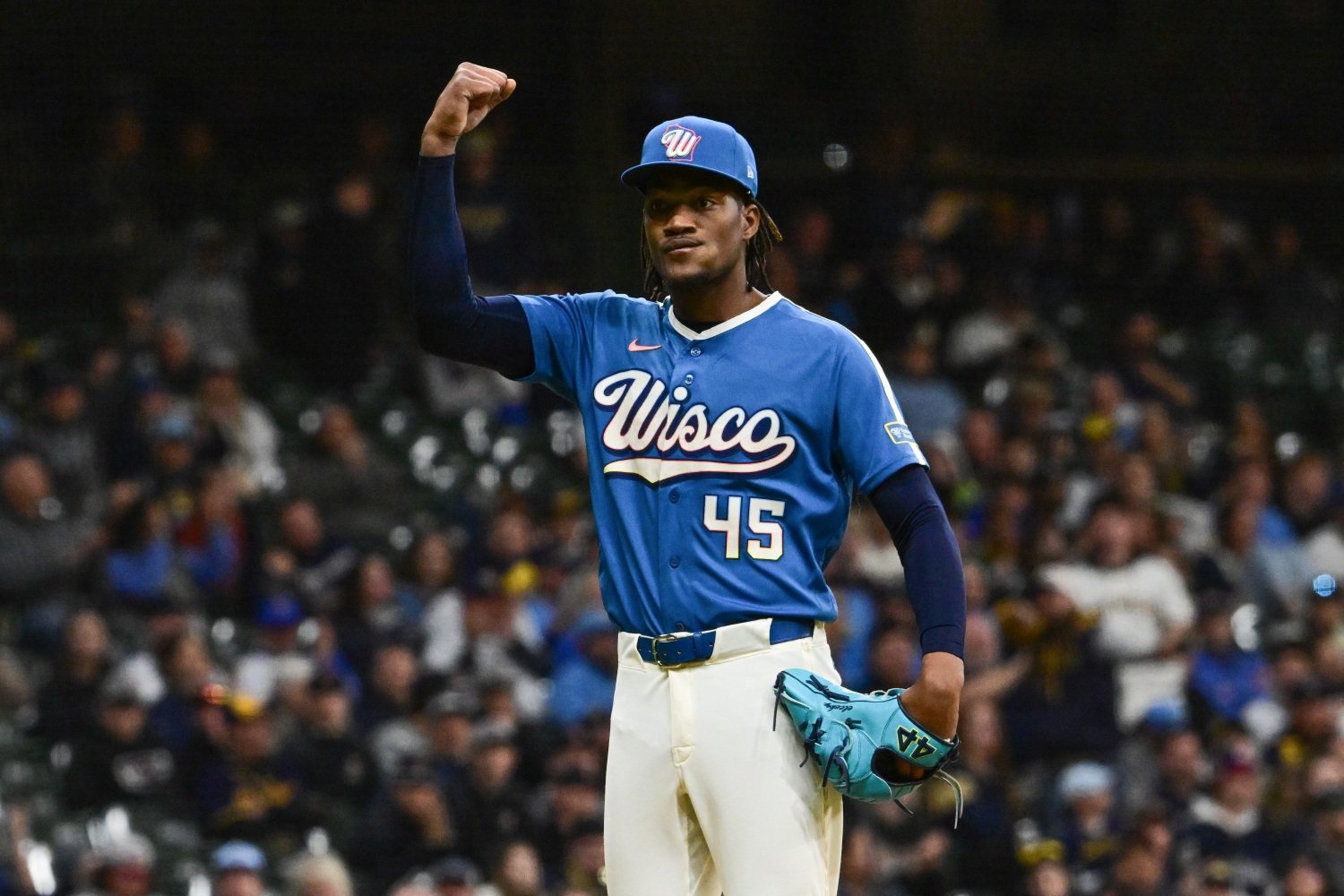 Working long plate appearances, taking extra bases, and playing tight defense have all been attributes of Pat Murphy's successful Brewers teams, but so has relying on the back end of their bullpen. In both 2024 and 2025, Milwaukee relievers logged the fourth-most innings of any bullpen in baseball. In that span, their 18.1 RA9-WAR ranks second to only the Cleveland Guardians' bullpen, at 18.2. Because WAR is not precise enough for a tenth of a win to be a reliable difference, it's reasonable to say Murphy's bullpens have been the most valuable in the sport. It's been a different story to start this season. Through 15 games, Brewers relievers have had results near the middle of the pack, ranking 17th with a 96 ERA- (an ERA 4% lower than the league average, after accounting for the ballparks where they've pitched). The group is coming off an especially tough week, too. Since last Saturday's doubleheader in Kansas City, Milwaukee relievers have allowed the third-most runs in baseball. That's far too small a sample to push the panic button. Trevor Megill, Abner Uribe, and Ángel Zerpa having a combined 7.27 ERA on April 14 is nothing to worry about, on its own. There have been warning signs in their stuff, though. All three have lost velocity on their upper-90s fastballs, lowering the quality of those pitches. Megill and Uribe, in particular, have both lost at least 1.5 mph from last season. The Stuff+ model at FanGraphs, which graded Megill's heater among the best in baseball and Uribe's as above-average, now sees both as underwhelming pitches. {C}%3C!%2D%2Dtd%20%7Bborder%3A%201px%20solid%20%23cccccc%3B%7Dbr%20%7Bmso-data-placement%3Asame-cell%3B%7D%2D%2D%3E--> Pitcher Season Primary FB Velo Primary FB Stuff+ Breaking Stuff+ Overall Stuff+ Trevor Megill 2025 99.2 116 141 125 Trevor Megill 2026 97.4 97 114 103 Abner Uribe 2025 98.7 102 120 115 Abner Uribe 2026 97.3 96 130 106 Angel Zerpa 2025 96.6 128 110 112 Angel Zerpa 2026 95.7 107 116 106 Stuff-wise, Zerpa is the least concerning. His sinker still has excellent depth and is getting ground balls, and he now has a tighter slider that tunnels better off that pitch. Better days could be ahead for him. Sitting around 97 mph isn't unprecedented for Megill, either. He averaged 97.8 mph last April before averaging nearly 100 until a flexor strain sidelined him down the stretch. Upon returning from that injury, though, Megill sat 97.5 in his regular-season return and 98.5 in the postseason. Since those elbow problems cropped up, his triple-digit velocity hasn't been there. Even at 97, Megill's heater is still much firmer than the league average for right-handed pitchers. However, he needs plus velocity to keep that fastball from finding barrels. Megill backspins his fastball from a high slot, so it averages 19.0 inches of induced vertical break and just 4.4 inches of arm-side movement. That's a very straight fastball, so Megill's goal is for hitters to swing late or underneath it. Without touching triple digits, it becomes easier for hitters to time up that fastball and get on top of it, instead of getting underneath well-struck fly balls that fall near the warning track for flyouts. That already became apparent in Megill's second outing of the season against the Tampa Bay Rays, when Nick Fortes drove a high fastball into the right-center gap for what was ultimately a game-winning double. SzRCVmVfWGw0TUFRPT1fRGxRRVhWeFdVbGNBRGxjSFVBQUhBMU5lQUFNQUFGa0FVMXdIVkZJRVVsQUhVUWRS.mp4 At 99-plus, a swing against that fastball is almost certainly a whiff or a flyout popped high into the air. At 96.4 mph, Fortes didn't perfectly barrel it, but he got on top of it enough to hit a high line drive with a 20-degree launch angle that split the gap. If his best fastball doesn't return, Megill faces a tougher path to being an effective late-inning reliever. He may have to lean more on his breaking ball, which he's continued to spin progressively more like a slider each year. So far this year, it's down to just -3.2 inches of induced vertical break, but has the same velocity as last year. Uribe may be the reliever to watch most closely, given his diminished stuff and the circumstances leading up to it. Unlike Megill and Zerpa, his breaking ball has also lost velocity. Whereas Megill has a history of taking time to warm up, Uribe is throwing slower than he ever has in his big-league career—something that started in the postseason last year. "If you remember last year at the end, it wasn't coming out great right at the end in the last two series [in the playoffs]," Murphy said after Uribe surrendered a lead on Sunday against the Washington Nationals. "In the last series, we pitched him at least twice [in the NLCS], maybe three, but it wasn't coming out the same. It got better, and he shows flashes, but it isn't as good." Uribe has still limited hard contact so far, but his whiff rate has cratered from 32.0% last year to 12.5% this season. That's not quite uncharted territory for him in a six-game sample, but when paired with the velocity decrease, it looks more suspicious. "Yeah, I'm sure it is," Murphy said when asked if that lower velocity is leading to fewer whiffs. "Again, you just look at that one number. You've also got to look at the movement and the patterns of it all." Uribe's stuff is moving less, too. His sinker has lost an inch of sink, going from 6.2 inches of induced vertical break last season to 7.3 this year (a lower single-digit number means more depth on pitches like sinkers, sliders, and changeups). It last had that shape in 2024 from a slightly higher arm slot. Opponents slugged .436 against it that year, and that was with Uribe averaging nearly 99 mph. The loss of velocity and movement follows a career-high workload last season. Uribe appeared in 75 regular-season games, tied for the sixth-most among relievers. Of the relievers with at least that many appearances, only Uribe averaged at least one inning per outing. He then pitched six more innings across five postseason appearances. He already looked fatigued by that point, and his stuff has not bounced back since. Uribe hasn't been Murphy's only sudden bullpen workhorse. Jared Koenig (career-high 72 appearances last year before losing velocity this spring and spraining his UCL), Bryan Hudson (60 2/3 innings through August in 2024 before losing velocity), Nick Mears (pitched in 46 of 95 team games between April and July 2025), and Aaron Ashby (50 innings in regular-season team games from July onward last year, a pace of 100 innings per season) all went prolonged stretches with extraordinary workloads during his first two seasons as manager. It's all part of the aggressive "win tonight" approach inspired by Murphy's days as a college head coach. Baseball at that level is chaotic. The season is shorter, and runs score in bunches due to the lower quality of pitching and defense. Having experienced that environment for more than 20 years, whenever Murphy sniffs a win, he puts the pedal down to secure it. That includes leaning on his best relievers. Murphy hasn't just used them to protect tight leads, but also with four- or five-run leads, and sometimes to keep the Brewers in close games when they're trailing. Using those pitchers in those situations isn't always necessary, though. Multi-run comebacks are not actually that common, meaning lower-leverage relievers can usually eat innings that are not save situations without meaningfully altering the outcome of the game. Pitching Jake Woodford in a five-run game, for example, is unlikely to change which team wins, and it keeps the high-leverage guys fresh to be at their best for protecting close leads. To his credit, Murphy never puts relievers at risk of injury with any single appearance. The Brewers' pitching coaches and high-performance team help him determine who is and isn't available every night based on pitch counts, number of appearances that week, and biomechanical data. Still, he's been reluctant to trust pitchers who are less proven or with whom he's less familiar. He'll use his best arms on days they're cleared to pitch, but in situations where they don't have to pitch. "We've been pretty good about limiting pitch counts and limiting days in a row, days per week, altering the early work, altering different things," Murphy said. "We have to be mindful of it. But, I mean, what are the options? Just say, 'Okay, here, kid in Triple-A. Come on up, close tonight.' It's probably not going to lead to a lot of success." As such, while he wants to mitigate health concerns, he often remains as aggressive as those guidelines allow. "How do you protect yourself from it without hurting your team?" he said earlier last weekend about preventing injuries to relievers. "Because you can't afford to just throw other guys in there. So how do you do that?" It's unfair to definitively blame Murphy's aggressive management for the Brewers' current bullpen troubles. At times, it has even facilitated comeback wins. However, from an outside perspective, diminished stuff from overuse—and, as a result, losses like the one they endured on Sunday—always looked like a potential future consequence. At the very least, the club should look back to determine how pitchers like Uribe, Koenig, and Megill ended up in their current states. It's an especially relevant question amid Ashby's current workload. Murphy said before Opening Day that he intended to pitch him at a similar rate to that 100-inning pace from the second half of last year. He's made good on those plans so far, throwing the left-hander a league-leading nine times in 14 games for 12 2/3 innings. That has put Ashby on pace to throw 92 2/3 innings over a full season. Some of those innings have been avoidable. On April 4 in Kansas City, Murphy used Ashby in the sixth and seventh innings with a five-run lead in the first game of that doubleheader. Woodford, acquired by the Brewers as a low-leverage long reliever, had not pitched in five days and ultimately went eight days between appearances. While game situations may force a manager to use some relievers more often than others in a given week, that lack of workload balance is striking. By all accounts, Ashby's body has handled his innings well so far. One of the reasons Murphy feels comfortable using him so often is that he wants to pitch as frequently as possible. The Brewers should monitor him closely, though, with an eye on how that usage might impact his effectiveness in the future. Milwaukee has enough talented arms to have a strong bullpen again this season. Regardless of how they got here, though, the reality is that Murphy's preferred relievers do not look like themselves. As the dust settles in the coming weeks, roles could look much different than they did on Opening Day. Along the way, the Brewers must also ensure that what has happened to Uribe and others is less likely to happen to Ashby and whoever else climbs Murphy's trust tree. Maybe that means setting stricter guidelines for when a reliever is available. If that's not the problem, it could mean a different change. Either way, if these velocity drops are not just a blip on the radar, they must lead to action.
- 1 comment
-
- 4
-
-
- abner uribe
- trevor megill
- (and 3 more)
-
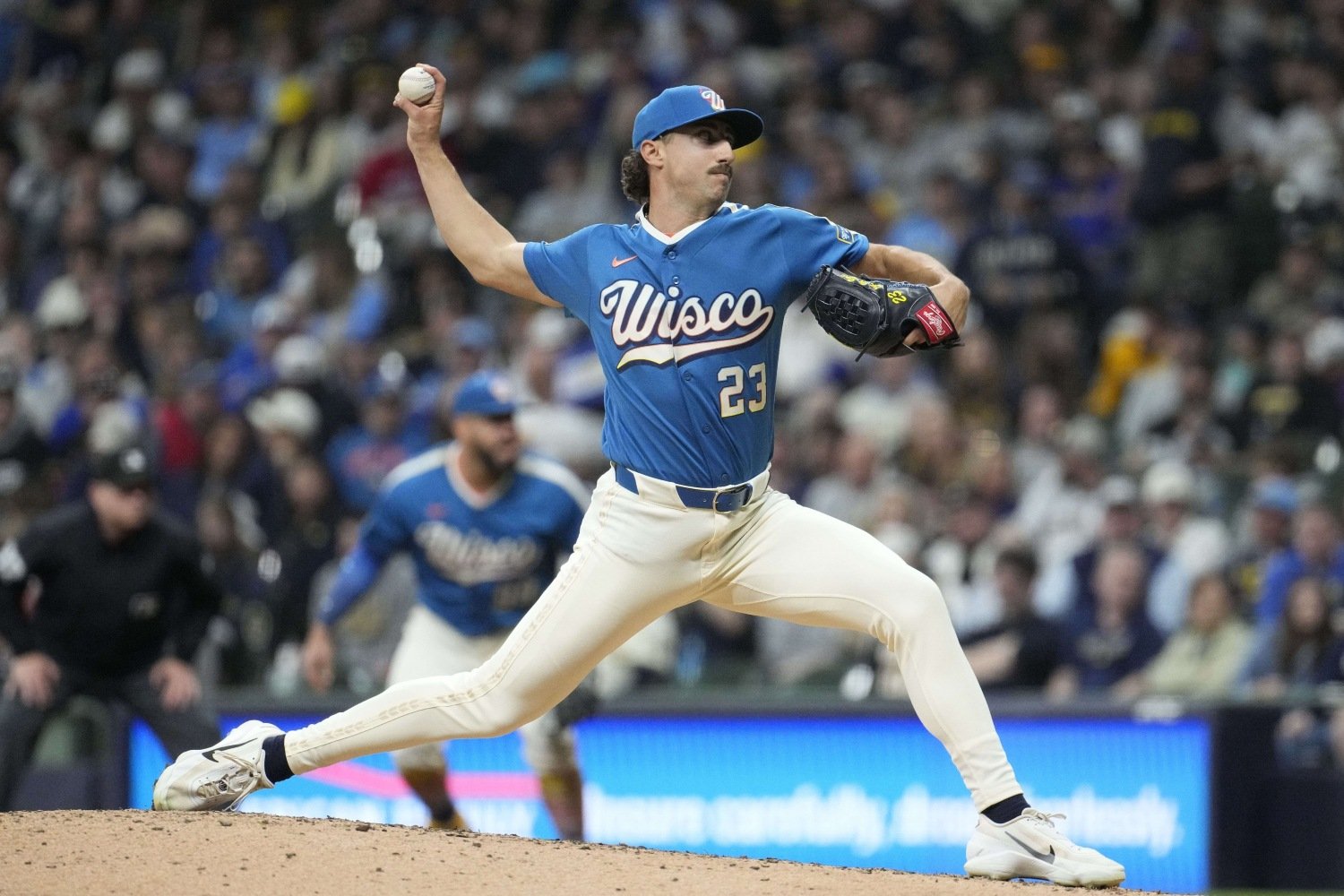 The Brewers adjusted their probable starters for their series against the Washington Nationals twice within 23 hours. Both changes reflected a need to be creative with their starting pitching, as they continue to develop young arms in the big leagues—particularly early in the season. Brandon Sproat was scheduled to make his next start on Friday night, but during Thursday’s off day, the club announced that Chad Patrick, Kyle Harrison, and Brandon Woodruff would each move up one day and start on a standard four days of rest. The change came after Sproat allowed 11 earned runs in just 6 2/3 innings over his first two starts, issuing as many walks (seven) as strikeouts and yielding four home runs. Pat Murphy said on Friday afternoon that Sproat was available out of the bullpen that night, but that he has not lost his rotation spot. The off day simply allowed the Brewers to reschedule his next start. “It’s just the way things have worked out,” Murphy said. “Sometimes that happens when you have the extra off days and things like that.” The decision was partially for matchup reasons. The Nationals’ offense entered Friday third in baseball with a 119 wRC+ and has a lineup heavy with left-handed hitters. Sproat has pitches in his arsenal that can retire lefties, but his reliance on his sinker has left him vulnerable to platoon splits. Last season in Triple-A, right-handers managed just a .548 OPS against him, but lefties posted a .743 mark. His next start could instead come against the Toronto Blue Jays next week, who also feature plenty of lefties but have scuffled offensively. “I’m pretty confident he’s in a good spot,” Murphy said. “He’s got to get better. He knows that. He’s been out there a couple times. He knows, ‘Hey, I’ve got to trust this and trust that, and I’ve got to be able to execute this.’ He’s learning on the job. When you have these young pitchers, that’s what happens.” Sproat did pitch better (though still not at the level the team hopes he'll reach, and soon) on Saturday, though he also tweaked his right knee. On Sunday morning, he reported no issues, so that start against Toronto is still possible. The Brewers also tweaked Patrick’s status hours before his scheduled start on Friday, using Aaron Ashby ahead of him as an opener. The fastball-heavy Patrick has also battled platoon splits, and Washington leadoff hitter James Wood has slugged .579 against right-handed fastballs for his career. “You guys obviously know we’re very inexperienced on the hill,” Murphy said. “We’re trying to thread the needle. These are the types of things you do.” The results were mixed. Ashby allowed a leadoff double to Wood in a two-run first inning before settling down to pitch into the third inning. Patrick only went three innings and threw 50 pitches as the bulk pitcher because he pitched into a bases-loaded jam in the sixth, forcing Murphy to turn to Ángel Zerpa, who induced an inning-ending double play to protect a one-run lead. “The plan was to try to win the game, and we had the pitching to do that,” Murphy said. “We had a bad matchup for [Patrick] in the bases-loaded situation, and we had the lead, so we went with Zerpa.” Zerpa would allow a game-tying double in the seventh before Washington pulled away with a four-run ninth, in which Luis Rengifo and Trevor Megill failed to defend a series of bunts. The loss dealt the Brewers their third straight defeat, an especially tough one to swallow after emptying their 'A' bullpen in the first game of a six-game homestand. “Disappointing,” Murphy said. “That type of loss really hurts.” Things only got worse from there. Coming out of the weekend, the team has a day off to savor, but they face further questions, after two more losses to the Nationals. For the first time since June 2023, Milwaukee will go a full week between wins. They have cause to wonder about Sproat, and now, there are also questions about Kyle Harrison, whose knee suffered a contusion (an X-ray ruled out a break, initially, but the team will continue monitoring it) Saturday, too. There’s some inherent chaos to early-season baseball. Roles, player performance, and team identity take time to stabilize. Amid a largely successful start, the Brewers are still working through some of those challenges, particularly with their young arms. "Tough times," Murphy said after the seesaw loss Sunday. "We haven’t been in these waters much in the last three years. Just have to get through it." The team has enough depth to do that. It also has enough vulnerability to fall problematically off the pace, if they don't find smoother sailing soon.
-
- 1
-
-
- pat murphy
- brandon sproat
- (and 1 more)
-
The Brewers adjusted their probable starters for their series against the Washington Nationals twice within 23 hours. Both changes reflected a need to be creative with their starting pitching as they continue to develop young arms in the big leagues, particularly early in the season. Brandon Sproat was scheduled to make his next start on Friday night, but during Thursday’s off day, the club announced that Chad Patrick, Kyle Harrison, and Brandon Woodruff would each move up one day and start on a standard four days of rest. The change came after Sproat allowed 11 earned runs in just 6 2/3 innings over his first two starts, issuing as many walks (seven) as strikeouts and yielding four home runs. Pat Murphy said on Friday afternoon that Sproat was available out of the bullpen that night, but that he has not lost his rotation spot. The off day simply allowed the Brewers to reschedule his next start. “It’s just the way things have worked out,” Murphy said. “Sometimes that happens when you have the extra off days and things like that.” The decision was partially for matchup reasons. The Nationals’ offense entered Friday third in baseball with a 119 wRC+ and has a lineup heavy with left-handed hitters. Sproat has pitches in his arsenal that can retire lefties, but his reliance on his sinker has left him vulnerable to platoon splits. Last season in Triple-A, right-handers managed just a .548 OPS against him, but lefties posted a .743 mark. His next start could instead come against the Toronto Blue Jays next week, who also feature plenty of lefties but have scuffled overall offensively. “I’m pretty confident he’s in a good spot,” Murphy said. “He’s got to get better. He knows that. He’s been out there a couple times. He knows, ‘Hey, I’ve got to trust this and trust that, and I’ve got to be able to execute this.’ He’s learning on the job. When you have these young pitchers, that’s what happens.” The Brewers also tweaked Patrick’s status hours before his scheduled start on Friday, using Aaron Ashby ahead of him as an opener. The fastball-heavy Patrick has also battled platoon splits, and Washington leadoff hitter James Wood has slugged .579 against right-handed fastballs for his career. “You guys obviously know we’re very inexperienced on the hill,” Murphy said. “We’re trying to thread the needle. These are the types of things you do.” The results were mixed. Ashby allowed a leadoff double to Wood in a two-run first inning before settling down to pitch into the third inning. Patrick only went three innings and threw 50 pitches as the bulk pitcher because he pitched into a bases-loaded jam in the sixth, forcing Murphy to turn to Angel Zerpa, who induced an inning-ending double play to protect a one-run lead. “The plan was to try to win the game, and we had the pitching to do that,” Murphy said. “We had a bad matchup for [Patrick] in the bases-loaded situation, and we had the lead, so we went with Zerpa.” Zerpa would allow a game-tying double in the seventh before Washington pulled away with a four-run ninth in which Luis Rengifo and Trevor Megill failed to defend a series of bunts. The loss dealt the Brewers their third straight defeat, an especially tough one to swallow after emptying their A bullpen in the first game of a six-game homestand. “Disappointing,” Murphy said. “That type of loss really hurts.” There’s some inherent chaos to early-season baseball. Roles, player performance, and team identity take time to stabilize. Amid a largely successful start, the Brewers are still working through some of those challenges, particularly with their young arms. View full article
-
Image courtesy of © Mark Hoffman/Milwaukee Journal Sentinel / USA TODAY NETWORK and Benny Sieu via Imagn Images At the end of last season, Brandon Lockridge approached Pat Murphy about playing infield to be more valuable to the Brewers. Primarily an outfielder as a professional, Lockridge played second base in college and started four games there for the New York Yankees' Triple-A team in 2024. Murphy liked the idea, but he had a different infield position in mind. "He's like, 'Have you ever played first base?'" Lockridge recalled. "That's probably one of the few positions on the field that I've never touched before in my entire life, but I said I'd be open to trying it." Lockridge incorporated ground ball work as a first baseman into his offseason training, but only with the expectation of being an emergency option at the position. He didn't take any reps there in spring training until the Brewers returned to Milwaukee. Two days before Opening Day, the coaching staff sent him there to receive balls during batting practice. Hours later, he moved to first base for the ninth inning of their exhibition game against the Cincinnati Reds. "It was that day that I played in the game that was my first day receiving balls over there," he said. "And then the ninth inning comes around, they were like, 'Hey, you got your [first base] glove out here?' I was like, 'Yeah, sounds good.'" With Andrew Vaughn sidelined for the next several weeks by a left hamate fracture, Lockridge is one of three students in a sudden first base crash course with third base and infield coach Matt Erickson. Backup catcher Gary Sánchez and utility infielder Luis Rengifo are also working there to fill Vaughn's role as a right-handed-hitting counterpart to Jake Bauers. The first lesson? Receiving. Everything else (fielding ground balls, positioning, and holding runners) is secondary to footwork around the bag and knowing when and how to stretch toward a throw. "Let's face it, you can go to first base and not get a single ground ball, but you're going to have to receive," Erickson said. "And if we can't have somebody finish the play, then everything that happens before that doesn't really matter." Of the three, only Sánchez entered the season with big-league experience at first base, albeit just 16 2/3 career innings. As such, the Brewers felt most comfortable giving him the first crack there and have started him twice at first against left-handed starters. Once Rengifo is familiar with the nuances of the position, he could receive more of that playing time. As an infielder, Erickson believes he has the easiest transition. "When you have a guy like a [Andruw] Monasterio or a Rengifo that's on the dirt already, especially at a corner, the timing of the ground balls is not that big a deal," Erickson said. "They're used to that part of it. What's foreign to them is receiving and holding runners and knowing what kind of picks they're going to get from the pitcher." Lockridge said the Brewers have not indicated that Vaughn's injury will lead to more game reps at first base. That's because he's third on that totem pole, facing a greater learning curve as he moves in from the outfield. "Because [catchers are] used to the speed of every pitch, they're not really wowed by the ball getting to them at 90 feet or 100 feet away," Erickson said. "With an outfielder, you've got to go kind of the opposite, because they're not used to the ball being on them that fast." Outfielders immediately judge every fly ball and start running toward it to make the catch or back up the outfielder making the play. A first baseman must immediately break toward the bag once he knows a ground ball is out of his fielding range. "Ball's put in play, my instinct is to see the play," Lockridge said. "As a first baseman, the second the ball's hit on the infield, you've got to be busting to first base to pick the ball up and position your feet [on the base]. So that's kind of the thing during BP, they're hitting fungoes to the infielders, and I try to play it like a game, run to first base and pick the ball up." Given his brief infield experience, though, he's not starting from square one. He and Sal Frelick are the club's top choices as a fifth infielder should it need one late in a tie game. "If you can pick balls at second, I'd like to think I can pick them at first," Lockridge said. "You don't see it much, an outfielder coming from the grass to the dirt," Erickson said. "You see a lot of infielders go to the grass. But Lockridge is unique because he has some infield time, and he has some experience at second base." Even if Sánchez and Rengifo are the leading candidates for more time at the cold corner, all three will continue prepping for the position. "The work is all applicable when it comes to approaching balls hard in the outfield and trusting your hands," Lockridge said. "So at the end of the day, it makes me a better outfielder, practicing as a first baseman, I'll take that." View full article
- 7 replies
-
- 1
-
-
- brandon lockridge
- luis rengifo
- (and 2 more)
-
.png.ee60a7a367e302d48d0de63404812a2d.png) At the end of last season, Brandon Lockridge approached Pat Murphy about playing infield to be more valuable to the Brewers. Primarily an outfielder as a professional, Lockridge played second base in college and started four games there for the New York Yankees' Triple-A team in 2024. Murphy liked the idea, but he had a different infield position in mind. "He's like, 'Have you ever played first base?'" Lockridge recalled. "That's probably one of the few positions on the field that I've never touched before in my entire life, but I said I'd be open to trying it." Lockridge incorporated ground ball work as a first baseman into his offseason training, but only with the expectation of being an emergency option at the position. He didn't take any reps there in spring training until the Brewers returned to Milwaukee. Two days before Opening Day, the coaching staff sent him there to receive balls during batting practice. Hours later, he moved to first base for the ninth inning of their exhibition game against the Cincinnati Reds. "It was that day that I played in the game that was my first day receiving balls over there," he said. "And then the ninth inning comes around, they were like, 'Hey, you got your [first base] glove out here?' I was like, 'Yeah, sounds good.'" With Andrew Vaughn sidelined for the next several weeks by a left hamate fracture, Lockridge is one of three students in a sudden first base crash course with third base and infield coach Matt Erickson. Backup catcher Gary Sánchez and utility infielder Luis Rengifo are also working there to fill Vaughn's role as a right-handed-hitting counterpart to Jake Bauers. The first lesson? Receiving. Everything else (fielding ground balls, positioning, and holding runners) is secondary to footwork around the bag and knowing when and how to stretch toward a throw. "Let's face it, you can go to first base and not get a single ground ball, but you're going to have to receive," Erickson said. "And if we can't have somebody finish the play, then everything that happens before that doesn't really matter." Of the three, only Sánchez entered the season with big-league experience at first base, albeit just 16 2/3 career innings. As such, the Brewers felt most comfortable giving him the first crack there and have started him twice at first against left-handed starters. Once Rengifo is familiar with the nuances of the position, he could receive more of that playing time. As an infielder, Erickson believes he has the easiest transition. "When you have a guy like a [Andruw] Monasterio or a Rengifo that's on the dirt already, especially at a corner, the timing of the ground balls is not that big a deal," Erickson said. "They're used to that part of it. What's foreign to them is receiving and holding runners and knowing what kind of picks they're going to get from the pitcher." Lockridge said the Brewers have not indicated that Vaughn's injury will lead to more game reps at first base. That's because he's third on that totem pole, facing a greater learning curve as he moves in from the outfield. "Because [catchers are] used to the speed of every pitch, they're not really wowed by the ball getting to them at 90 feet or 100 feet away," Erickson said. "With an outfielder, you've got to go kind of the opposite, because they're not used to the ball being on them that fast." Outfielders immediately judge every fly ball and start running toward it to make the catch or back up the outfielder making the play. A first baseman must immediately break toward the bag once he knows a ground ball is out of his fielding range. "Ball's put in play, my instinct is to see the play," Lockridge said. "As a first baseman, the second the ball's hit on the infield, you've got to be busting to first base to pick the ball up and position your feet [on the base]. So that's kind of the thing during BP, they're hitting fungoes to the infielders, and I try to play it like a game, run to first base and pick the ball up." Given his brief infield experience, though, he's not starting from square one. He and Sal Frelick are the club's top choices as a fifth infielder should it need one late in a tie game. "If you can pick balls at second, I'd like to think I can pick them at first," Lockridge said. "You don't see it much, an outfielder coming from the grass to the dirt," Erickson said. "You see a lot of infielders go to the grass. But Lockridge is unique because he has some infield time, and he has some experience at second base." Even if Sánchez and Rengifo are the leading candidates for more time at the cold corner, all three will continue prepping for the position. "The work is all applicable when it comes to approaching balls hard in the outfield and trusting your hands," Lockridge said. "So at the end of the day, it makes me a better outfielder, practicing as a first baseman, I'll take that."
At the end of last season, Brandon Lockridge approached Pat Murphy about playing infield to be more valuable to the Brewers. Primarily an outfielder as a professional, Lockridge played second base in college and started four games there for the New York Yankees' Triple-A team in 2024. Murphy liked the idea, but he had a different infield position in mind. "He's like, 'Have you ever played first base?'" Lockridge recalled. "That's probably one of the few positions on the field that I've never touched before in my entire life, but I said I'd be open to trying it." Lockridge incorporated ground ball work as a first baseman into his offseason training, but only with the expectation of being an emergency option at the position. He didn't take any reps there in spring training until the Brewers returned to Milwaukee. Two days before Opening Day, the coaching staff sent him there to receive balls during batting practice. Hours later, he moved to first base for the ninth inning of their exhibition game against the Cincinnati Reds. "It was that day that I played in the game that was my first day receiving balls over there," he said. "And then the ninth inning comes around, they were like, 'Hey, you got your [first base] glove out here?' I was like, 'Yeah, sounds good.'" With Andrew Vaughn sidelined for the next several weeks by a left hamate fracture, Lockridge is one of three students in a sudden first base crash course with third base and infield coach Matt Erickson. Backup catcher Gary Sánchez and utility infielder Luis Rengifo are also working there to fill Vaughn's role as a right-handed-hitting counterpart to Jake Bauers. The first lesson? Receiving. Everything else (fielding ground balls, positioning, and holding runners) is secondary to footwork around the bag and knowing when and how to stretch toward a throw. "Let's face it, you can go to first base and not get a single ground ball, but you're going to have to receive," Erickson said. "And if we can't have somebody finish the play, then everything that happens before that doesn't really matter." Of the three, only Sánchez entered the season with big-league experience at first base, albeit just 16 2/3 career innings. As such, the Brewers felt most comfortable giving him the first crack there and have started him twice at first against left-handed starters. Once Rengifo is familiar with the nuances of the position, he could receive more of that playing time. As an infielder, Erickson believes he has the easiest transition. "When you have a guy like a [Andruw] Monasterio or a Rengifo that's on the dirt already, especially at a corner, the timing of the ground balls is not that big a deal," Erickson said. "They're used to that part of it. What's foreign to them is receiving and holding runners and knowing what kind of picks they're going to get from the pitcher." Lockridge said the Brewers have not indicated that Vaughn's injury will lead to more game reps at first base. That's because he's third on that totem pole, facing a greater learning curve as he moves in from the outfield. "Because [catchers are] used to the speed of every pitch, they're not really wowed by the ball getting to them at 90 feet or 100 feet away," Erickson said. "With an outfielder, you've got to go kind of the opposite, because they're not used to the ball being on them that fast." Outfielders immediately judge every fly ball and start running toward it to make the catch or back up the outfielder making the play. A first baseman must immediately break toward the bag once he knows a ground ball is out of his fielding range. "Ball's put in play, my instinct is to see the play," Lockridge said. "As a first baseman, the second the ball's hit on the infield, you've got to be busting to first base to pick the ball up and position your feet [on the base]. So that's kind of the thing during BP, they're hitting fungoes to the infielders, and I try to play it like a game, run to first base and pick the ball up." Given his brief infield experience, though, he's not starting from square one. He and Sal Frelick are the club's top choices as a fifth infielder should it need one late in a tie game. "If you can pick balls at second, I'd like to think I can pick them at first," Lockridge said. "You don't see it much, an outfielder coming from the grass to the dirt," Erickson said. "You see a lot of infielders go to the grass. But Lockridge is unique because he has some infield time, and he has some experience at second base." Even if Sánchez and Rengifo are the leading candidates for more time at the cold corner, all three will continue prepping for the position. "The work is all applicable when it comes to approaching balls hard in the outfield and trusting your hands," Lockridge said. "So at the end of the day, it makes me a better outfielder, practicing as a first baseman, I'll take that."- 7 comments
-
- 2
-

-
-
- brandon lockridge
- luis rengifo
- (and 2 more)
-
Why Cooper Pratt's Unusual Extension Made Sense For Him and the Brewers
Jack Stern posted an article in Brewers
 After reports last week that the Brewers were nearing an eight-year, $50.75 million extension with shortstop prospect Cooper Pratt, the club announced the deal on Friday afternoon. Pratt’s deal also includes club options for the 2034 and 2035 seasons, which could keep the 21-year-old in Milwaukee for up to the next 10 seasons. “There have been so many people that from our perspective have had nothing but positive things to say about Cooper throughout his tenure as a Brewer, and even before he was a Brewer,” president of baseball operations Matt Arnold said. “So all of the arrows pointed in the right direction for us to commit to something like this.” “We're super excited to be able to do this with the Brewers and to be able to hopefully be a longtime Brewer, for sure,” said Pratt, who rejoined the Nashville Sounds over the weekend after traveling to Milwaukee to complete his physical and sign the deal. It’s the second investment the Brewers have made in Pratt, who is ranked by Brewer Fanatic as the club’s No. 4 prospect. Milwaukee crafted its draft strategy around him in 2023, saving its bonus pool money in the first few rounds and convincing him to forgo his college commitment with a $1.35 million bonus as its sixth-round pick. This extension reaffirms what was true three seasons ago: the Brewers are high on Pratt’s makeup. Despite his youth, Pratt has a high baseball IQ and feel for the game, which he pairs with well-rounded athleticism, even if none of his tools have developed into standout skills just yet. He’s already a solid defender, baserunner, and contact hitter. With that profile, it’s unsurprising the club sought to extend Pratt through his prime seasons. The timing, however, was unusual. Pratt was in just three games into his first stint at Triple-A, and the Brewers have a full big-league infield in front of him. He didn’t appear especially close to a promotion and did not need to be added to the 40-man roster until after the 2027 season. The extension forced the Brewers to select Pratt’s contract and option him to Triple-A. Arnold said the contract will not expedite his timeline to Milwaukee, which means Pratt will burn his first option season and spend most of the deal’s first year in the minor leagues. It’s an unusual upfront concession, but Arnold indicated that the length of the contract and Pratt’s potential make it worthwhile. “I think when you talk about a deal that has a potential to last for 10 years, it’s not just something that we want to think about in the moment,” he said. “Certainly, there’s an opportunity there to bring a guy up if we want to, but we don’t have to force it. He hasn’t been in Triple-A that long. We want to continue to let him develop there at his own pace, but we want to take the long view here with Cooper.” While Pratt’s glove at shortstop gives him a high floor and could make him a capable big-leaguer right now, more time in Triple-A may be best for his offensive development. His strong bat-to-ball skills helped him post a 123 DRC+ with Double-A Biloxi last year, according to Baseball Prospectus, but reducing his chases outside the strike zone and leveraging his 6-foot-4 frame for more power will make the difference between a glove-first infielder and one of the sport’s most well-rounded shortstops. “I think that we believe in the bat,” Arnold said. “We believe in the glove, certainly. And again, this guy is really toolsy, too. He’s very athletic. He’s a big, physical kid, so we think there’s a chance to grow into some power, and he can really run. So when you have that kind of athletic foundation, it’s a really good thing.” “There’s always something that you can get better at," Pratt said. "There’s always room to improve at some position of the game. And if I can improve every year at something, then I’ll be perfectly fine.” It was also an unusual deal for Pratt’s agent Scott Boras. His clients are typically known for avoiding extensions, preferring to enter free agency as scheduled to pursue a market-value contract. Pratt’s extension delays his free agency, but in this early stage of his career, he felt that squaring away the business side of the game for up to the next decade would help his on-field focus and development. “That was one of the biggest reasons why I kind of decided to do this,” he said. “I can just play and not have to worry about other stuff, all of the transactional stuff, and just play. When I do get called up to the show, I can just be ready to play in the show and not worry about any other outside things.” “For Cooper, how and why he played had a lot to do with this decision,” Boras said. “What it meant for him to move ahead and to advance to the big leagues, in his mind, quicker. What it meant for him to approach the game in a way that allowed him to develop appropriately.” Boras believes the stability secured by this contract could better position Pratt for that payday down the line. “We want to optimize Cooper,” Boras said. “And I felt after listening to him and his family that this was a deal that will allow him to be his best. And if we make Cooper his best, contractually, the risk on the back side of this will allow us optimization in the next contract. The risk of seven or eight years of play before [free agency] happens is immense. But I also know that the height of his performance, after listening to Cooper, will be enhanced because he made this decision.” The Brewers want Pratt to be a linchpin in their infield for years to come, and Pratt wants to develop into the best player he can be. Both sides feel his contract accomplishes those goals. “I feel like in my heart I made a good decision,” Pratt said.
 -
Image courtesy of © Mark J. Rebilas-Imagn Images After reports last week that the Brewers were nearing an eight-year, $50.75 million extension with shortstop prospect Cooper Pratt, the club announced the deal on Friday afternoon. Pratt’s deal also includes club options for the 2034 and 2035 seasons, which could keep the 21-year-old in Milwaukee for up to the next 10 seasons. “There have been so many people that from our perspective have had nothing but positive things to say about Cooper throughout his tenure as a Brewer, and even before he was a Brewer,” president of baseball operations Matt Arnold said. “So all of the arrows pointed in the right direction for us to commit to something like this.” “We're super excited to be able to do this with the Brewers and to be able to hopefully be a longtime Brewer, for sure,” said Pratt, who rejoined the Nashville Sounds over the weekend after traveling to Milwaukee to complete his physical and sign the deal. It’s the second investment the Brewers have made in Pratt, who is ranked by Brewer Fanatic as the club’s No. 4 prospect. Milwaukee crafted its draft strategy around him in 2023, saving its bonus pool money in the first few rounds and convincing him to forgo his college commitment with a $1.35 million bonus as its sixth-round pick. This extension reaffirms what was true three seasons ago: the Brewers are high on Pratt’s makeup. Despite his youth, Pratt has a high baseball IQ and feel for the game, which he pairs with well-rounded athleticism, even if none of his tools have developed into standout skills just yet. He’s already a solid defender, baserunner, and contact hitter. With that profile, it’s unsurprising the club sought to extend Pratt through his prime seasons. The timing, however, was unusual. Pratt was in just three games into his first stint at Triple-A, and the Brewers have a full big-league infield in front of him. He didn’t appear especially close to a promotion and did not need to be added to the 40-man roster until after the 2027 season. The extension forced the Brewers to select Pratt’s contract and option him to Triple-A. Arnold said the contract will not expedite his timeline to Milwaukee, which means Pratt will burn his first option season and spend most of the deal’s first year in the minor leagues. It’s an unusual upfront concession, but Arnold indicated that the length of the contract and Pratt’s potential make it worthwhile. “I think when you talk about a deal that has a potential to last for 10 years, it’s not just something that we want to think about in the moment,” he said. “Certainly, there’s an opportunity there to bring a guy up if we want to, but we don’t have to force it. He hasn’t been in Triple-A that long. We want to continue to let him develop there at his own pace, but we want to take the long view here with Cooper.” While Pratt’s glove at shortstop gives him a high floor and could make him a capable big-leaguer right now, more time in Triple-A may be best for his offensive development. His strong bat-to-ball skills helped him post a 123 DRC+ with Double-A Biloxi last year, according to Baseball Prospectus, but reducing his chases outside the strike zone and leveraging his 6-foot-4 frame for more power will make the difference between a glove-first infielder and one of the sport’s most well-rounded shortstops. “I think that we believe in the bat,” Arnold said. “We believe in the glove, certainly. And again, this guy is really toolsy, too. He’s very athletic. He’s a big, physical kid, so we think there’s a chance to grow into some power, and he can really run. So when you have that kind of athletic foundation, it’s a really good thing.” “There’s always something that you can get better at," Pratt said. "There’s always room to improve at some position of the game. And if I can improve every year at something, then I’ll be perfectly fine.” It was also an unusual deal for Pratt’s agent Scott Boras. His clients are typically known for avoiding extensions, preferring to enter free agency as scheduled to pursue a market-value contract. Pratt’s extension delays his free agency, but in this early stage of his career, he felt that squaring away the business side of the game for up to the next decade would help his on-field focus and development. “That was one of the biggest reasons why I kind of decided to do this,” he said. “I can just play and not have to worry about other stuff, all of the transactional stuff, and just play. When I do get called up to the show, I can just be ready to play in the show and not worry about any other outside things.” “For Cooper, how and why he played had a lot to do with this decision,” Boras said. “What it meant for him to move ahead and to advance to the big leagues, in his mind, quicker. What it meant for him to approach the game in a way that allowed him to develop appropriately.” Boras believes the stability secured by this contract could better position Pratt for that payday down the line. “We want to optimize Cooper,” Boras said. “And I felt after listening to him and his family that this was a deal that will allow him to be his best. And if we make Cooper his best, contractually, the risk on the back side of this will allow us optimization in the next contract. The risk of seven or eight years of play before [free agency] happens is immense. But I also know that the height of his performance, after listening to Cooper, will be enhanced because he made this decision.” The Brewers want Pratt to be a linchpin in their infield for years to come, and Pratt wants to develop into the best player he can be. Both sides feel his contract accomplishes those goals. “I feel like in my heart I made a good decision,” Pratt said. View full article
-
This Skill is Why the Brewers Love Joey Ortiz's Defense at Shortstop
Jack Stern posted an article in Brewers
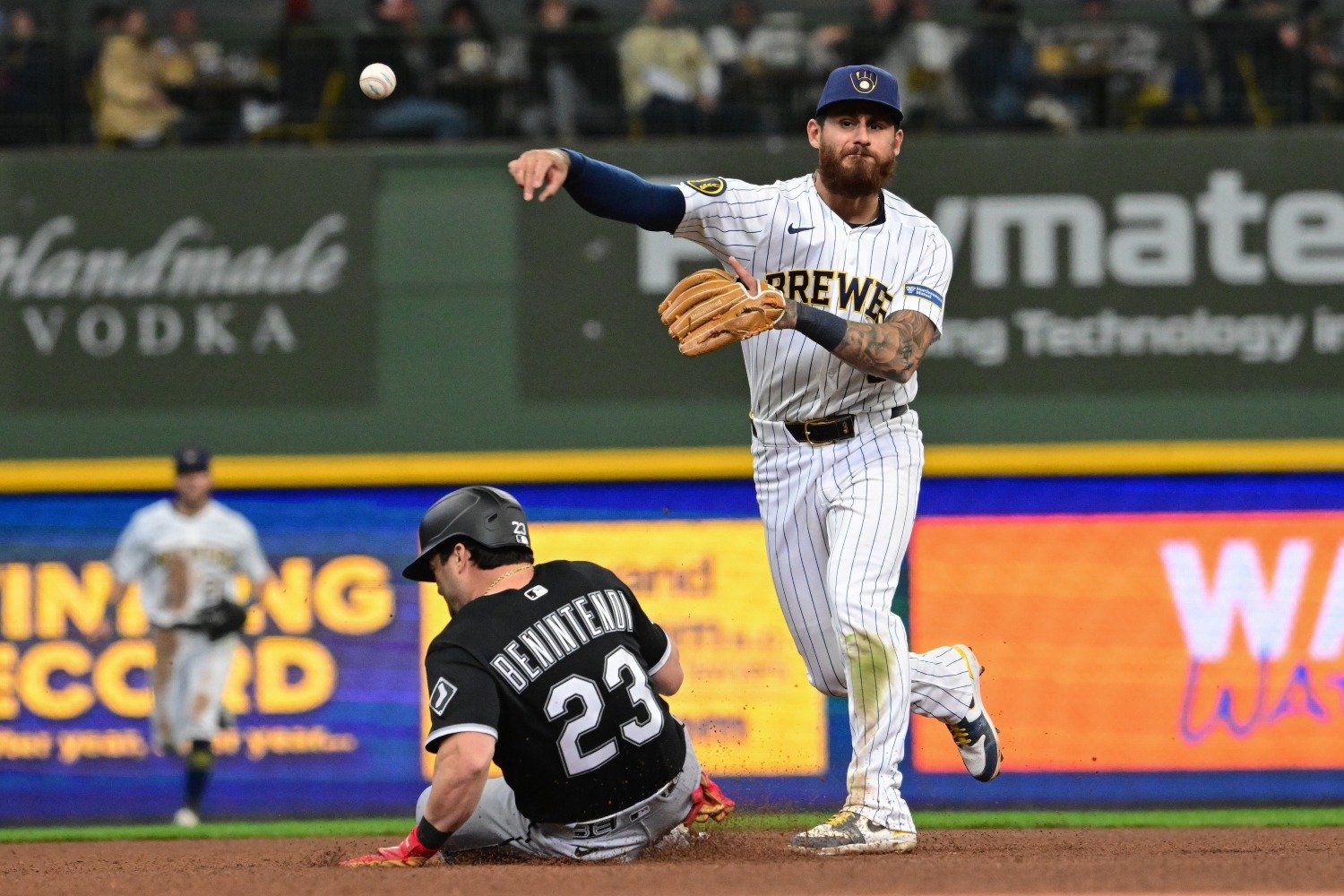 Joey Ortiz’s tenure with the Brewers has been filled with highs and lows, but there has been one constant. When given the opportunity—and, in many cases, on their own—coaches, teammates, and executives have raved about his defense, even as Ortiz’s public-facing fielding metrics have been more mixed in their praise. During the Brewers’ first homestand of the 2026 season, there was one play in particular that jumped out to Pat Murphy. On Saturday, White Sox pinch-hitter Austin Hays pulled a base hit toward the left-field line, away from a shaded Brandon Lockridge. Lockridge initially misplayed the ball before throwing it in to Ortiz, who fired a strike to William Contreras to nail Colson Montgomery at the plate. 9bb46f6e-9915db40-049f4d20-csvm-diamondgcp-asset_1280x720_59_4000K.mp4 Less than an hour later, Murphy was gushing over how Ortiz completed the play and his overall defensive prowess. “I don’t remember a dude that played shortstop for us like that, that played so consistently. And his key is the way he can redirect the baseball,” he said. “It’s uncanny. He did it a bunch last year. He did it tonight. It just sticks out. Watch that play on film. Not too many shortstops make that play, and that’s what separates him, I think.” Effectively redirecting the baseball is a product of what the Brewers believe is Ortiz’s standout skill—the one that makes his defense invaluable and explains why they’ve been incredibly patient with his offense: body control. The Brewers say Ortiz has an elite understanding of how his body moves and how to use it. It makes him the most fluid and sure-handed defender in their infield, even if he’s not the quickest or the most explosive. It also enables him to complete acrobatic plays that take him into unnatural fielding positions—plays that might not stand out to some range-focused algorithms, but are highly challenging to execute in reality. “Joey Ortiz has elite body control,” said third base and infield coach Matt Erickson, who has been integral to Ortiz’s development as a big-league shortstop. “You can argue the fact that he's probably average when it comes to just raw foot speed and quickness, but when it comes to body control and anticipation, he's as good as it gets.” Ortiz's coordination is excellent. He can speed himself up and slow himself down with precision, allowing him to adjust to a ground ball that takes a bad hop or changes direction due to funky spin. His quick hands transfer the ball swiftly out of his glove, and he can make accurate throws from awkward throwing positions. “He understands his legs in his throw,” Murphy said. “He understands space and timing. It's like a good shooter in basketball. It's more than just technique; it's the skill and the touch and the feel and the timing. He has it.” During spring training in 2024, when Ortiz was new to the team, Murphy had an even more succinct (if somewhat more opaque) way of communicating the same thing. He immediately saw and praised the fact that Ortiz "is comfortable when the ball gets close to him." That body control helps Ortiz effectively relay a throw from the outfield to the plate, but it shows up more obviously on plays like the one he made the following afternoon. Ortiz made a sliding stop on a grounder in the hole between shortstop and third base. With his body still moving toward third, he quickly transferred the ball to his throwing hand and made a strong throw from his knees to Brice Turang, who completed an impressive double play. fe69f051-b9a7-43f5-8816-2a09afc83e18.mp4 “That play is never practiced,” Erickson said. “That's a gift that he has, and he made it look incredibly easy.” The Brewers’ strength and conditioning team helps players understand the aptitudes and weaknesses of their body type and runs them through workouts designed to improve their mobility. Body control can only be improved to a certain extent through coaching, though. Natural ability is a huge piece of the equation, and much of the development must come from the player himself learning through experience and awareness. “They're teaching you things, but I think it happens within you when you have that ability,” Murphy said. “I don't think it's innate, but I think it's an ability that's acquired and developed to be able to realize that I can do this quicker, or I can do this smoother and not lose any speed, or actually gain speed by doing it smoothly with my body in the right position. So it's kind of a combination of all that. [Ortiz is] special, the way he does it.” As the Brewers discussed their infield arrangement last spring after the departure of Willy Adames, shoulder soreness ultimately locked Turang into second base to start the regular season. Ortiz’s body control was also a significant factor in the conversation, though, and is the reason he has since remained at short. “There's no doubt in my mind that Brice could be a really good shortstop and Joey can be a really good second baseman,” Erickson said. “But because of their skill set, because of Joey's glove confidence and body control, and his ability to catch the ball clean over and over in different fielding positions—it’s better than Brice’s, in my opinion.” The more explosive and rangier infielder might often be viewed as the better overall defender and the best fit to play shortstop. Erickson sees it differently. “Brice’s lateral range and quickness is much better than Joey’s,” he said, “and I believe that lateral range is important at second in today's game, because of the shifting rules, and when you're holding a runner [with a right-handed batter hitting], you need a guy that can really cover ground. We have that guy, arguably the best in the game.” The fluidity and hand-eye coordination from Ortiz’s body control, meanwhile, make a greater impact at shortstop. He may not cover as much ground as Turang, but he gloves the ball more consistently, transfers it faster, has a stronger throwing arm, and can react to the nuances of trickier plays at the position. “You have to catch the ball clean at shortstop, or you don't have a play,” Erickson said. “You don't necessarily have to do that at second or at third all the time, and you can still get an out. At shortstop, you've got to have a clean catch. And I think Joey's really good, definitely the best on our roster, at that.” The Brewers believe he’s still getting better at it, too. After another offseason of work, Erickson sees Ortiz using his body more efficiently than last year. “Out of spring training last year, there were certain things in the weight room that we thought he could improve on,” Erickson said. “There was a maintenance to it last year during the season, and then there was a focus to it this offseason. And I really like where he came in in spring training, because you can noticeably see he’s even better in some of those areas.” The Brewers’ infield could soon find itself in transition, particularly with the news of shortstop prospect Cooper Pratt’s extension and the ascension of Jesus Made and Andrew Fischer through the farm system. For now, though, Ortiz remains a valued linchpin of their infield defense. “The team believes in this dude,” Murphy said. “They believe in him.”
- 4 comments
-
- 4
-
-
- joey ortiz
- pat murphy
- (and 2 more)

.png.ee60a7a367e302d48d0de63404812a2d.png)
