


Brewers Video
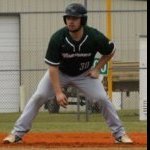
Cooper Pratt signed an eight-year, $50.75-million contract extension in April, and he got the call to the big leagues over the weekend. A lot happened between then and now, with many fans wondering when Pratt would come up—mainly due to the lack of production from the trio who have been patrolling the left side of the infield since Opening Day, in David Hamilton, Joey Ortiz, and Luis Rengifo. All of that is in the past now, though. Pratt is on his way to Milwaukee, and is expected to debut on Tuesday, June 16. As of this writing, a follow-up move on the 26-man roster has not been announced.
Now, though, a new question arises. What should fans (realistically) expect from a rookie Cooper Pratt at the big-league level?
On the field, one of the more reasonable expectations for any player is that good defense will translate at any level. Pratt was a 2024 Rawlings Gold Glove Award winner at shortstop, awarded to the best defensive player at each position in all of Minor League Baseball.
While there is reasonable skepticism about these awards and how they are decided, the prevailing opinion on Pratt is that he is an above-average shortstop, or better. Baseball America gives him a 55 grade on the 20-80 scale, as does FanGraphs, while MLB Pipeline labels him as a 60-grade defender (considered "plus").
At Pratt's height of 6-foot-4, he can appear to be a bit slower going after groundballs than many smaller shortstops do, but his range is strong, due in part to his tremendous ability to read swings and read the ball off the bat. His arm garners 60s from all three sites as well, and he has shown a strong ability to make "off-platform" throws while on the run, or even airborne.
Another tool that should translate well at the big-league level will be Pratt's baserunning. In terms of straight-line speed, he's an average runner, maybe a bit above average. However, he shows great instincts on the bases, and will pick pitchers apart if they don't pay close enough attention to him. He has successfully stolen nearly 90% of the bases he has attempted in his minor-league career (79/88), including 17 of 18 in Triple-A this season.
At the plate, there will be more questions for Pratt in the immediate future. After a very slow start to the season, with a 41 wRC+ in his first 70 plate appearances, Pratt posted a 125 wRC+ in his next 188 plate appearances. The chart below, courtesy of TJStats, shows the difference in some of the peripherals during those same two time periods.

The contact quality still does not indicate much game power, even during the much better stretch, but he does show tremendous bat-to-ball skills, and the angles at which the ball leaves the bat have improved over the course of the season. Pratt will probably not hit for much power in MLB this season, except on the rare occasions when he gets an opportunity to pull his hands in and pull a pitch, but his bat-to-ball skills have the potential to translate pretty well.
One thing to keep an eye on with Pratt will be how he handles the better breaking balls he will see in MLB. Handling fastball velocity has not been an issue for him this season, despite that being a concern of some evaluators heading into the season. When facing fastballs, in general, he posted a .358 xwOBA and only whiffed on 10.8% of his swings. To further emphasize the lack of struggle with velocity, he has seen 132 fastballs thrown at least 95 MPH, and against those offerings, he has posted an even better .393 xwOBA, while only whiffing on 9.8% of his swings.
Breaking balls, on the other hand, have been a different story. When thrown a breaking ball, he's posted a .270 xwOBA, with a whiff rate of 26.3% in 325 pitches seen. Big-league teams will look to expose that more often than Triple-A pitchers did, and teams will have more pitchers equipped to do so.
The Brewers believe there is power to come down the line, and Brice Turang could provide a blueprint for eventually realizing it. The Brewers believe Pratt can follow a similar path in that regard, but Turang also provides a crystal ball for how Pratt's inaugural season could go.
Turang finished his rookie season with a 61 wRC+, 12 Defensive Runs Saved, and he went 24 of 30 on stolen base attempts. He did that over 137 games, meaning Pratt's first campaign will need to be scaled down for comparison, as the Brewers will only have 93 games remaining when he debuts. The general scope of the production, though, is most likely going to look similar to Turang's rookie year. Pratt's value will be derived from his defense and his baserunning, and the Brewers will hope that they get a bit more out of the bat than Turang gave them. That said, even the Brewers' internal projections probably project Pratt as a below-average hitter in 2026.
The good news for Pratt is that he won't have a very high bar to clear at the position. A 59 wRC+ is all the Brewers have received from the shortstop position in 2026. Pratt is capable of clearing that mark, and could still be a relatively significant upgrade, even if he only winds up posting a 75-80 wRC+ line in 2026. That's what the Brewers are hoping for here.
Patience could prove to be challenging for fans and the Brewers alike. Struggles at the plate should not come as a surprise when they crop up. As Turang has shown, though, patience can be rewarded in a major way.
The former surprise sixth-round pick, Cooper Pratt, is officially a big leaguer. He earned the opportunity. Now, it's all about how he continues to grow while at the highest level, and how quickly he can show that growth.
Do you approve of the job Pat Murphy is doing as Brewers manager?

Follow Brewer Fanatic For Milwaukee Brewers News & Analysis



-
 3
3



Recommended Comments
Create an account or sign in to comment
You need to be a member in order to leave a comment
Create an account
Sign up for a new account in our community. It's easy!
Register a new accountSign in
Already have an account? Sign in here.
Sign In Now