



Harold Hutchison
-
Posts
6,909 -
Joined
-
Last visited
Content Type
Profiles
Forums
Blogs
Events
News
2026 Milwaukee Brewers Top Prospects Ranking
Milwaukee Brewers Videos
2022 Milwaukee Brewers Draft Picks
Milwaukee Brewers Free Agent & Trade Rumors, Notes, & Tidbits
Guides & Resources
2023 Milwaukee Brewers Draft Picks
2024 Milwaukee Brewers Draft Picks
The Milwaukee Brewers Players Project
2025 Milwaukee Brewers Draft Pick Tracker
2026 Milwaukee Brewers Draft Tracker: Picks & Bonuses
Store
Downloads
Gallery
Everything posted by Harold Hutchison
-
Jesus MadeCooper PrattLuis PenaCraig YohoMelvin HernandezJeferson QueroJosh AdamczewskiLogan HendersonBrett WichrowskiLuke AdamsBraylon PayneTyler BlackMarco DingesEric BitontiLuis LaraMike BoeveBishop LetsonJosh KnothErnesto MartinezJadher Areinamo
-
A high price for a rental, yes. But Suarez may be enticed to stay for at least one more year, especially with a deep playoff run.
- 25 replies
-
- 1
-

-
- eugenio suarez
- caleb durbin
- (and 2 more)
-
A better solution? Include Ortiz in the package for Suarez, and have Turang slide to short for the rest of 2025, let Durbin handle second. The Crew doesn't give up as many young pitchers, I'd also package Brock Wilken in the mix - per MLB Pipeline, the Brewers still would have two Top 10 3B prospects at Double-A Biloxi (Luke Adams and Mike Boeve) after shipping Wilken off. As for pitching, send over Coleman Crow and Carlos Rodriguez, two young, high-level pitchers. Brewers get: Suarez D-Backs get: Ortiz, Wilken, Crow, Rodriguez Or Suarez could play first base...
-
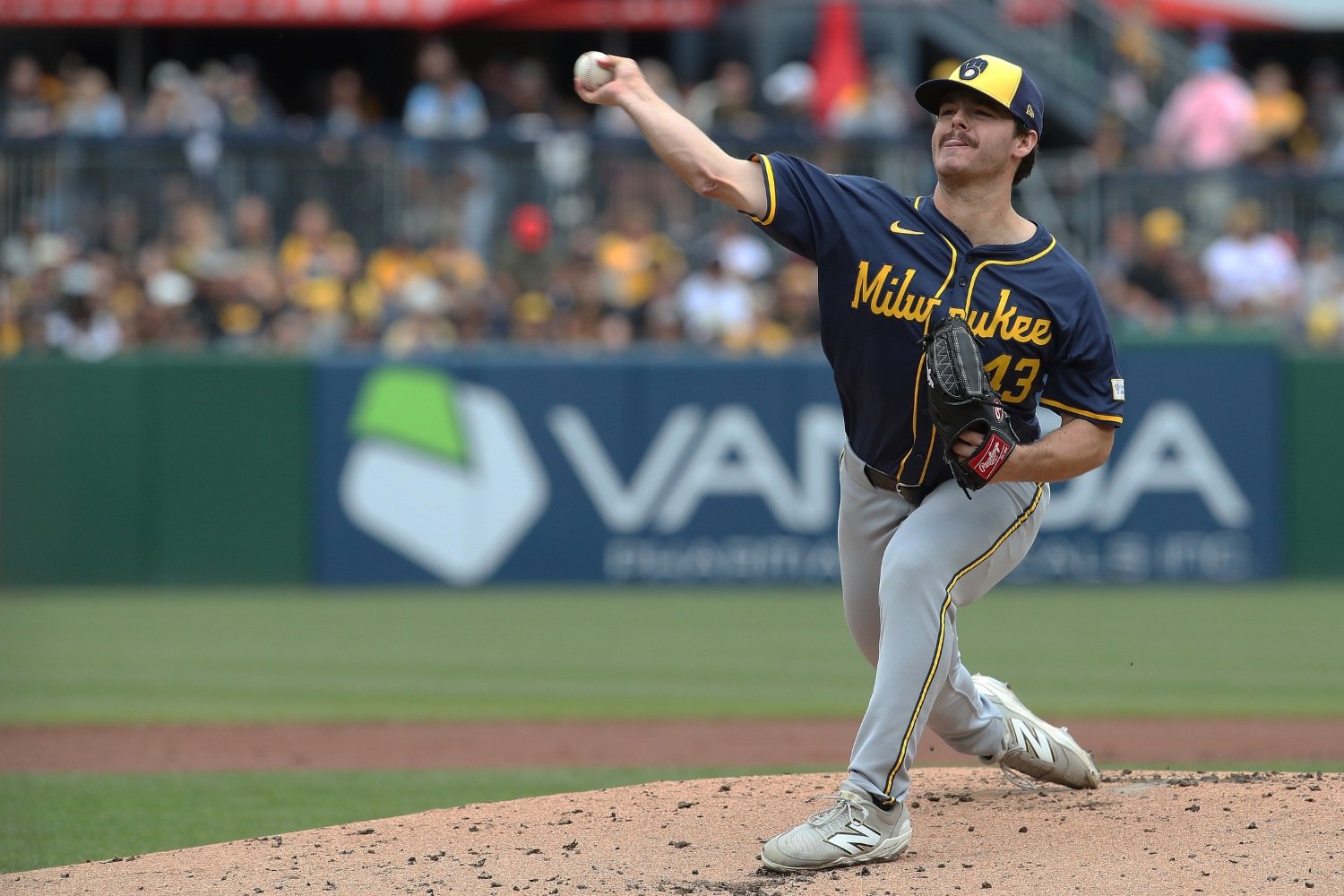 With the Brewers ready to face down the Chicago Cubs in a final sprint for the NL Central crown, the team’s biggest need may be what has been a traditional area of strength. That said, their best solution may be to borrow an approach from a very similar situation seen years ago. Currently, the concern centers around the rotation, which has several pitchers limited due to coming back from injury (Brandon Woodruff, Nestor Cortes, Robert Gasser down the road) or because they are young arms whose innings need to be managed (Jacob Misiorowski, Logan Henderson). This has taxed the bullpen, and the Brewers may need to find some help, mostly of the type that can go a couple of frames, maybe once around the order. In a sense, the Brewers had this problem before, and they overcame it. This was during the 2018 season, where they ultimately reached Game 7 of the NLCS, falling to the Dodgers. During that year, the Crew used Woodruff and Corbin Burnes—both highly-touted starting prospects—as high-leverage, multi-inning relief options. How did that work out? Burnes and Woodruff combined to go 8-0, with two saves and three holds from July 3 to the end of the season. The best part about it was that it solved a lot of problems for the Brewers. They were able to address a rotation that sometimes couldn’t go deep into games, while at the same time, they were able to bridge the gap to shut down late-inning options. They found a way to manage the innings of two top pitching prospects, and as a bonus, those players were able to be in the middle of a division race, which was the start of a very successful run that is still going on. Seven years post-2018, the Brewers have the in-house pitching firepower to do that again, without having to part with prospect capital. Henderson and Chad Patrick both pitched well in Milwaukee earlier this season, yet both have been sent down to Nashville due to the Brewers’ crowded rotation. Carlos Rodriguez has pitched well in Music City and may warrant a spot in Milwaukee, as well. The three of them (as well as Misiorowski and Gasser) will need to have their innings managed carefully, for their long-term health and the Brewers’ long-term success. But they can lift the burden from the starters and give the bullpen a shot in the arm. Here's how that pen would likely look: Closer: Trevor Megill Set-up: Abner Uribe, Jared Koenig Middle Relief: Henderson, Rodriguez, Patrick, DL Hall, Aaron Ashby Combining Henderson, Patrick and Rodriguez with Ashby and Hall in the bullpen would give the Brewers five multi-inning relievers who could handle high-leverage situations. In practice, they won't all be in the mix at once, because Grant Anderson has pitched too well to displace and Nick Mears is out of options, but rotating a few of the optionable long men through one or two spots could work nicely. The Brewers have done very well at developing pitchers over the last ten years, whether they were high-stuff talents like Burnes, Woodruff, Josh Hader, Freddy Peralta, and Misiorowski or hidden gems like Brent Suter, Patrick, or Tobias Myers (who could be another bullpen option). Now, it’s time for the Crew to cash in and have that development pay off yet again.
- 1 comment
-
- 2
-

-
- logan henderson
- chad patrick
- (and 2 more)
-
Image courtesy of © Charles LeClaire-Imagn Images With the Brewers ready to face down the Chicago Cubs in a final sprint for the NL Central crown, the team’s biggest need may be what has been a traditional area of strength. That said, their best solution may be to borrow an approach from a very similar situation seen years ago. Currently, the concern centers around the rotation, which has several pitchers limited due to coming back from injury (Brandon Woodruff, Nestor Cortes, Robert Gasser down the road) or because they are young arms whose innings need to be managed (Jacob Misiorowski, Logan Henderson). This has taxed the bullpen, and the Brewers may need to find some help, mostly of the type that can go a couple of frames, maybe once around the order. In a sense, the Brewers had this problem before, and they overcame it. This was during the 2018 season, where they ultimately reached Game 7 of the NLCS, falling to the Dodgers. During that year, the Crew used Woodruff and Corbin Burnes—both highly-touted starting prospects—as high-leverage, multi-inning relief options. How did that work out? Burnes and Woodruff combined to go 8-0, with two saves and three holds from July 3 to the end of the season. The best part about it was that it solved a lot of problems for the Brewers. They were able to address a rotation that sometimes couldn’t go deep into games, while at the same time, they were able to bridge the gap to shut down late-inning options. They found a way to manage the innings of two top pitching prospects, and as a bonus, those players were able to be in the middle of a division race, which was the start of a very successful run that is still going on. Seven years post-2018, the Brewers have the in-house pitching firepower to do that again, without having to part with prospect capital. Henderson and Chad Patrick both pitched well in Milwaukee earlier this season, yet both have been sent down to Nashville due to the Brewers’ crowded rotation. Carlos Rodriguez has pitched well in Music City and may warrant a spot in Milwaukee, as well. The three of them (as well as Misiorowski and Gasser) will need to have their innings managed carefully, for their long-term health and the Brewers’ long-term success. But they can lift the burden from the starters and give the bullpen a shot in the arm. Here's how that pen would likely look: Closer: Trevor Megill Set-up: Abner Uribe, Jared Koenig Middle Relief: Henderson, Rodriguez, Patrick, DL Hall, Aaron Ashby Combining Henderson, Patrick and Rodriguez with Ashby and Hall in the bullpen would give the Brewers five multi-inning relievers who could handle high-leverage situations. In practice, they won't all be in the mix at once, because Grant Anderson has pitched too well to displace and Nick Mears is out of options, but rotating a few of the optionable long men through one or two spots could work nicely. The Brewers have done very well at developing pitchers over the last ten years, whether they were high-stuff talents like Burnes, Woodruff, Josh Hader, Freddy Peralta, and Misiorowski or hidden gems like Brent Suter, Patrick, or Tobias Myers (who could be another bullpen option). Now, it’s time for the Crew to cash in and have that development pay off yet again. View full article
-
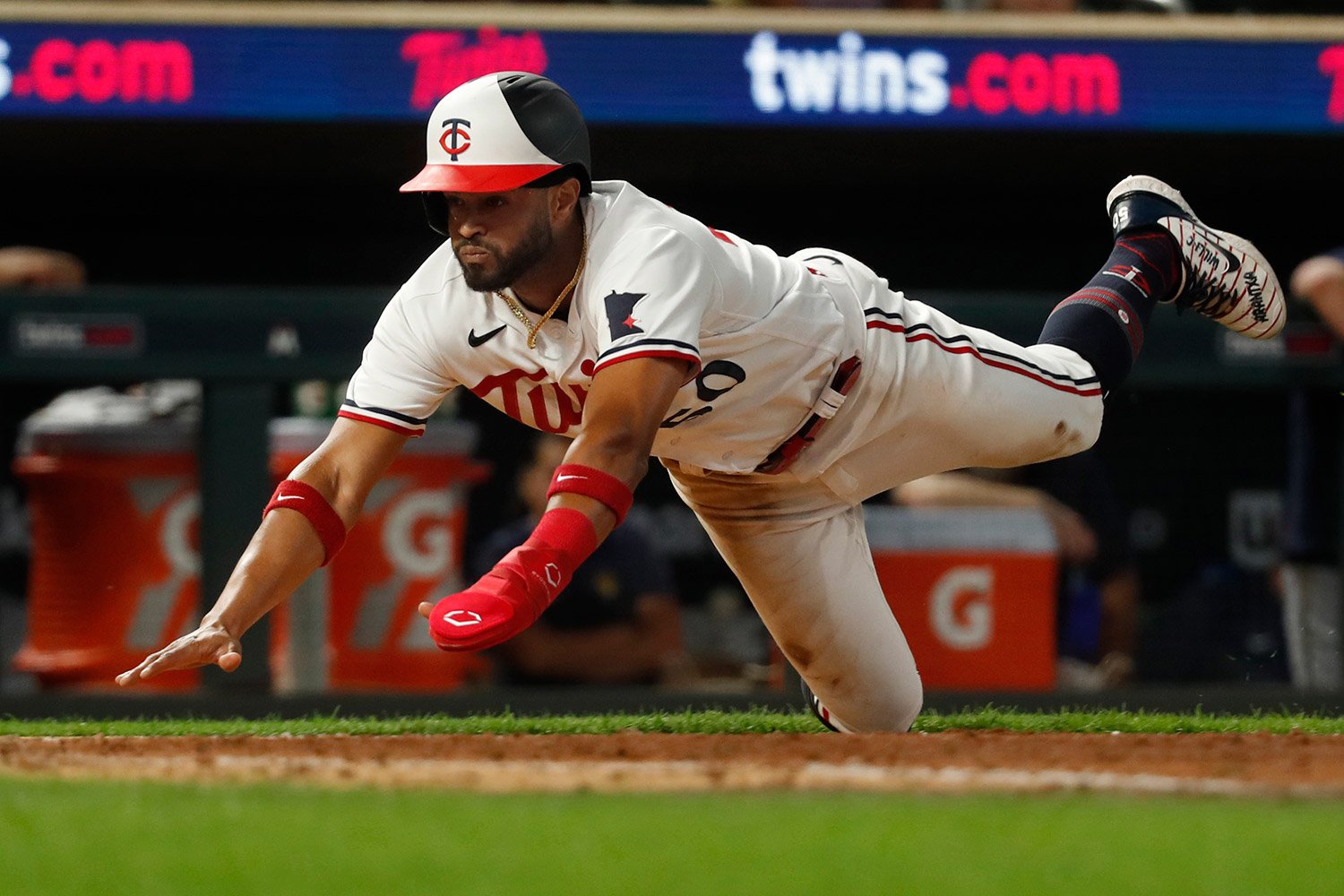 The Brewers are looking for an offensive jolt to deal with the short-term loss of Sal Frelick and a season-long issue with offensive production on the left side of the infield. How can the Brewers address these needs without mortgaging their future? The answer may be Willi Castro. The Minnesota Twins look like sellers, being four games back in the race for the American League’s last Wild Card spot and posting a 47-49 record coming out of the All-Star Break, while the Crew has surged over the last 30 games to a 56-40 record and just one game back of setting things in the NL Central in their proper order (looking down at four other teams). Castro’s posted a 117 OPS+ this year and has been a little above average for the Twins since arriving as a free agent after the 2022 season (106 OPS+ as of July 18). He has shown decent on-base skills, albeit his bat has exhibited some swing-and-miss tendencies with the Twins. Castro brings two assets that could boost the Crew down the stretch: a somewhat leveled-up power bat (his nine homers would be fourth on the Crew, while his 14 doubles would rank third) and versatility. That combination would be a huge boost for the Crew. Castro provided solid defense at second base, third base, shortstop, left field, right field, and center field in Minnesota, while his bat could, at the very least, extend the Brewers’ lineup. When Hoskins and Frelick return, Castro can be used just about anywhere on the diamond, but represents a massive upgrade over Joey Ortiz at shortstop at the plate. His salary for 2025? All of $6.4 million. That doesn’t break the bank for the Crew, especially since Milwaukee would only be liable for about 40% of that total. That’s a win for the Crew, which has to keep one eye on its cash flow. There is another bonus: Castro is slated to hit free agency in the 2025-2026 offseason, so he would not be a roadblock for the Brewers’ future at third base or shortstop, allowing Cooper Pratt, Brock Wilken, Luke Adams, Mike Boeve, Tyler Black, Freddy Zamora, Jesus Made, and Luis Pena (among others) a clear pathway to compete in spring training for spots over the next two years. He might also be easy to bring back on a one-year deal. The question, of course, comes down to cost. What might it take to get Castro? Here’s where the good news gets better for Milwaukee – as a short-term rental, the Crew could get a bargain. They could send the Twins a lower-ranked prospect, possibly something from the back half of their top 20. There is Jorge Quintana, a switch-hitting shortstop signed in the same year as Made and Pena, but has been eclipsed by the two Top 100 prospects almost from day one, both of whom appear ready to make the move to High-A Wisconsin. Wilken could be another option, especially if the Brewers want to get an additional asset or two (like some international bonus money or the Twins’ competitive balance pick in 2026), or the Crew could send over Hedbert Perez, who has quietly regained some of his prospect luster at the age of 22. While it can be tempting to think big, the best answer, sometimes, is to take a deep breath and look for the bargain.
 -
The Brewers are looking for an offensive jolt to deal with the short-term loss of Sal Frelick and a season-long issue with offensive production on the left side of the infield. How can the Brewers address these needs without mortgaging their future? The answer may be Willi Castro. The Minnesota Twins look like sellers, being four games back in the race for the American League’s last Wild Card spot and posting a 47-49 record coming out of the All-Star Break, while the Crew has surged over the last 30 games to a 56-40 record and just one game back of setting things in the NL Central in their proper order (looking down at four other teams). Castro’s posted a 117 OPS+ this year and has been a little above average for the Twins since arriving as a free agent after the 2022 season (106 OPS+ as of July 18). He has shown decent on-base skills, albeit his bat has exhibited some swing-and-miss tendencies with the Twins. Castro brings two assets that could boost the Crew down the stretch: a somewhat leveled-up power bat (his nine homers would be fourth on the Crew, while his 14 doubles would rank third) and versatility. That combination would be a huge boost for the Crew. Castro provided solid defense at second base, third base, shortstop, left field, right field, and center field in Minnesota, while his bat could, at the very least, extend the Brewers’ lineup. When Hoskins and Frelick return, Castro can be used just about anywhere on the diamond, but represents a massive upgrade over Joey Ortiz at shortstop at the plate. His salary for 2025? All of $6.4 million. That doesn’t break the bank for the Crew, especially since Milwaukee would only be liable for about 40% of that total. That’s a win for the Crew, which has to keep one eye on its cash flow. There is another bonus: Castro is slated to hit free agency in the 2025-2026 offseason, so he would not be a roadblock for the Brewers’ future at third base or shortstop, allowing Cooper Pratt, Brock Wilken, Luke Adams, Mike Boeve, Tyler Black, Freddy Zamora, Jesus Made, and Luis Pena (among others) a clear pathway to compete in spring training for spots over the next two years. He might also be easy to bring back on a one-year deal. The question, of course, comes down to cost. What might it take to get Castro? Here’s where the good news gets better for Milwaukee – as a short-term rental, the Crew could get a bargain. They could send the Twins a lower-ranked prospect, possibly something from the back half of their top 20. There is Jorge Quintana, a switch-hitting shortstop signed in the same year as Made and Pena, but has been eclipsed by the two Top 100 prospects almost from day one, both of whom appear ready to make the move to High-A Wisconsin. Wilken could be another option, especially if the Brewers want to get an additional asset or two (like some international bonus money or the Twins’ competitive balance pick in 2026), or the Crew could send over Hedbert Perez, who has quietly regained some of his prospect luster at the age of 22. While it can be tempting to think big, the best answer, sometimes, is to take a deep breath and look for the bargain. View full article
-
2025 MLB Draft Day 1 Thread
Harold Hutchison replied to Jake McKibbin's topic in MLB Draft & International Signings
Carolina won't be crying with Ebel there... -
2025 MLB Draft Day 1 Thread
Harold Hutchison replied to Jake McKibbin's topic in MLB Draft & International Signings
Wilken's my pick for that role. First-round pedigree, the plus power... but I'm not sold due to the high K rate. -
2025 MLB Draft Day 1 Thread
Harold Hutchison replied to Jake McKibbin's topic in MLB Draft & International Signings
Bauer was who I wanted here. He may slip... -
2025 MLB Draft Day 1 Thread
Harold Hutchison replied to Jake McKibbin's topic in MLB Draft & International Signings
Liked him a lot, pure hitter, lefty bat, that arm has me thinking he could also handle right field. -
Image courtesy of © Jeff Hanisch-Imagn Images What might be better than one Jacob Misiorowski? How about two left-handed versions of Milwaukee’s awesome Miz? That could happen in the 2025 MLB Draft. How might they pull it off, and who should they grab later? Let’s go through the first three rounds and see who the Brewers could pick up. First Round – Pick Number 20 Overall LHP Kurz Schoolcraft Schoolcraft comes in at #26 overall on the Brewer Fanatic draft board, but while he might be a slight reach in one sense, he’d be an easy call to make as well. While he has excellent velocity (97 mph fastball) and an above-average slider, he also flashes a solid changeup as pitch number three. The big thing is that he has a smooth delivery and pretty good control, even if his fastball is a few ticks slower than Misiorowski’s. Schoolcraft also is pretty solid at the plate, and could be an intriguing option as a two-way player (think a much better version of the revolutionary Jake Bauers) if the Crew can pry him away from a commitment to Tennessee, but that is probably a minor detail. Compensation for SS Willy Adames – Pick Number 32 Overall LHP Jack Bauer Bauer’s fastball has hit 103 miles per hour, putting it in the same arena as Misiorowski’s, maybe even a little faster. The issue here, as it was with Misiorowski, is control, but Bauer also adds a slider and changeup to the mix, both of which are a bit slower than the fastball. Worst case, maybe Bauer becomes another Josh Hader (a lights-out closer). Would it be risky to go for two left-handed prep arms so high? Yes, but the Brewers did teach Misiorowski (and Logan Henderson) how to control their arsenals to a degree, and that could be a good enough selling point to get him to turn away from Mississippi State and sign with the Brewers. Second Round – Pick Number 59 Overall 3B Brady Ebel Ebel is a high baseball-IQ player who has an excellent hit tool and a good arm, with a chance at some above-average pop in his bat. His defensive skill set points to third base, but he might also be an option in the corner outfield spots, given his 60-grade arm, per MLB Pipeline. As a left-handed hitter, he could do well at American Family Field. Competitive Balance B Round – Pick Number 68 Overall OF Alec Blair Blair could be a steal, but it might require the Brewers to either reach a little and draft him higher than some teams might, or go for bargains later in the draft to sweeten the signing bonus. He’s a two-sport recruit for Oklahoma (he also plays basketball), but on the baseball front, he could be a plus defender with excellent offense. That said, he could easily vault ahead of Luis Lara and Braylon Payne as a center field prospect, and offer a much more dynamic bat. Third Round – Pick Number 94 Overall SS Colin Yeaman Yeaman’s a middle infielder with an excellent hit tool, as well as some power that could sneak up. He’s a pure hitter with some pop, and could be the type of player to provide a decent option when the Brewers want to rest players at second base, third base, or shortstop. As a college bat, Yeaman could move up the ladder quickly, providing a solid bench bat for the Crew relatively quickly. Which players do you want the Brewers to pick in the 2025 MLB draft? Let us know in the comments below! View full article
-
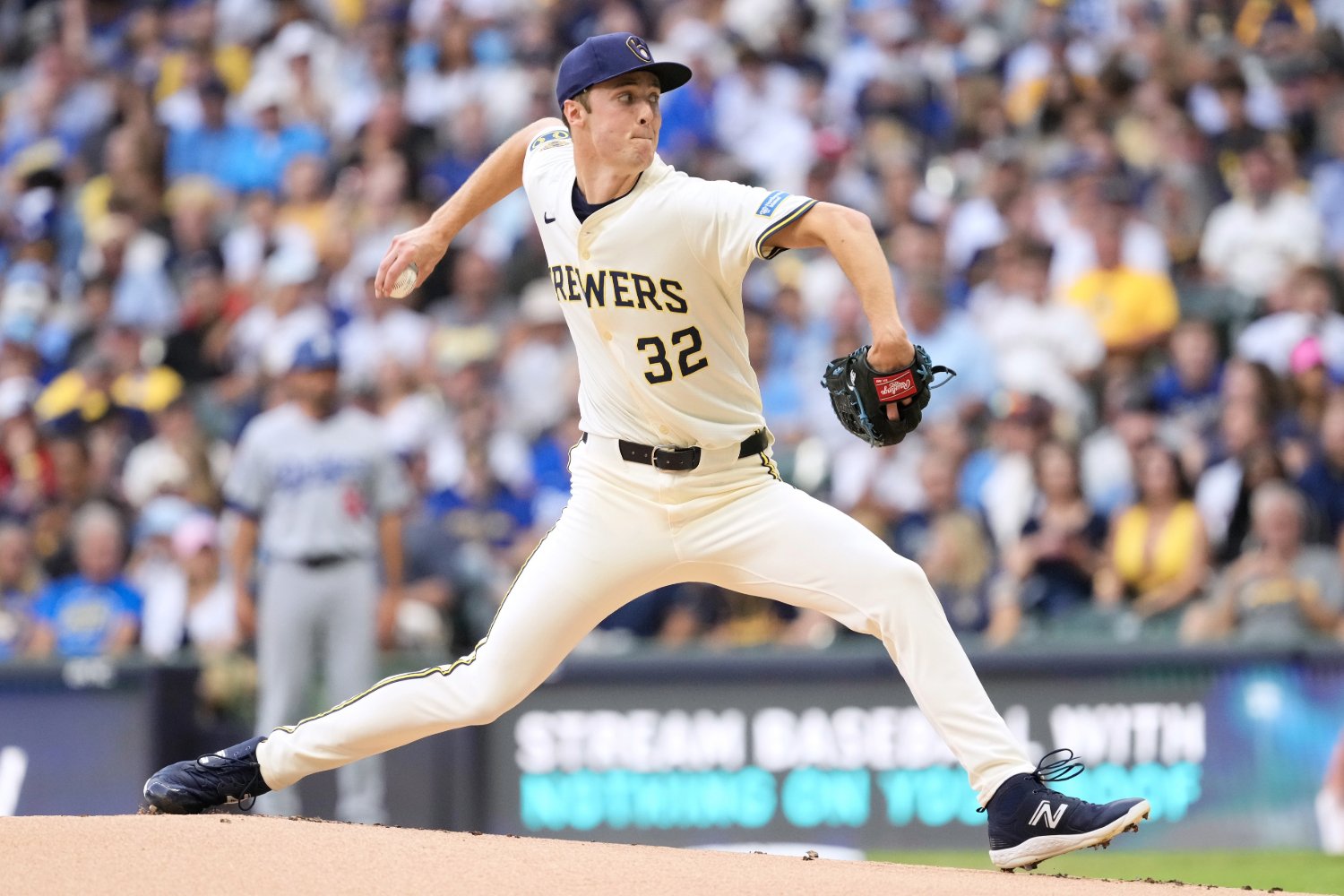 What might be better than one Jacob Misiorowski? How about two left-handed versions of Milwaukee’s awesome Miz? That could happen in the 2025 MLB Draft. How might they pull it off, and who should they grab later? Let’s go through the first three rounds and see who the Brewers could pick up. First Round – Pick Number 20 Overall LHP Kurz Schoolcraft Schoolcraft comes in at #26 overall on the Brewer Fanatic draft board, but while he might be a slight reach in one sense, he’d be an easy call to make as well. While he has excellent velocity (97 mph fastball) and an above-average slider, he also flashes a solid changeup as pitch number three. The big thing is that he has a smooth delivery and pretty good control, even if his fastball is a few ticks slower than Misiorowski’s. Schoolcraft also is pretty solid at the plate, and could be an intriguing option as a two-way player (think a much better version of the revolutionary Jake Bauers) if the Crew can pry him away from a commitment to Tennessee, but that is probably a minor detail. Compensation for SS Willy Adames – Pick Number 32 Overall LHP Jack Bauer Bauer’s fastball has hit 103 miles per hour, putting it in the same arena as Misiorowski’s, maybe even a little faster. The issue here, as it was with Misiorowski, is control, but Bauer also adds a slider and changeup to the mix, both of which are a bit slower than the fastball. Worst case, maybe Bauer becomes another Josh Hader (a lights-out closer). Would it be risky to go for two left-handed prep arms so high? Yes, but the Brewers did teach Misiorowski (and Logan Henderson) how to control their arsenals to a degree, and that could be a good enough selling point to get him to turn away from Mississippi State and sign with the Brewers. Second Round – Pick Number 59 Overall 3B Brady Ebel Ebel is a high baseball-IQ player who has an excellent hit tool and a good arm, with a chance at some above-average pop in his bat. His defensive skill set points to third base, but he might also be an option in the corner outfield spots, given his 60-grade arm, per MLB Pipeline. As a left-handed hitter, he could do well at American Family Field. Competitive Balance B Round – Pick Number 68 Overall OF Alec Blair Blair could be a steal, but it might require the Brewers to either reach a little and draft him higher than some teams might, or go for bargains later in the draft to sweeten the signing bonus. He’s a two-sport recruit for Oklahoma (he also plays basketball), but on the baseball front, he could be a plus defender with excellent offense. That said, he could easily vault ahead of Luis Lara and Braylon Payne as a center field prospect, and offer a much more dynamic bat. Third Round – Pick Number 94 Overall SS Colin Yeaman Yeaman’s a middle infielder with an excellent hit tool, as well as some power that could sneak up. He’s a pure hitter with some pop, and could be the type of player to provide a decent option when the Brewers want to rest players at second base, third base, or shortstop. As a college bat, Yeaman could move up the ladder quickly, providing a solid bench bat for the Crew relatively quickly. Which players do you want the Brewers to pick in the 2025 MLB draft? Let us know in the comments below!
 -
Murphy's approach definitely has not worked with Tyler Black, IMO. He didn't cause Black's hamate injury, but Black's bat really had little to prove in the minors.
-
Hernandez is untouchable - he's refined, and the body will develop. He's just 18. But even without the velocity, he knows how to get hitters out with that stuff. He's like Brent Suter in that regard. Pretty much since his DSL season, this is a guy I've had my eye on - and the fact he's doing what he doing at slightly over three years and nine months younger than the average player in the Carolina League. He's an outlier.
-
Image courtesy of © Wm. Glasheen/USA TODAY NETWORK-Wisconsin / USA TODAY NETWORK via Imagn Images As the trade deadline approaches, there have been some calls for the Crew to go big, especially to address weaknesses on the left side of the infield and fading production at first base. But such a deal could come at a high price—one that could make the package the Crew gave up in the April deal for Quinn Priester look small by comparison. It’s obvious the Brewers would need to be blown away to surrender top prospects, but are there others who should be considered untouchable? Here are several players whom the Crew should hold on to (unless they help reel in an especially big fish), even though they don’t have the hype of “top” prospects. IF Ethan Murray .287/.364/.496 in 135 AB at Double-A Biloxi Murray has rebounded from an atrocious 2024, filling in at multiple infield positions in his third year at Biloxi. Notably, in the pitching-friendly Southern League, he’s notched an .880 OPS and is fifth on the team with seven home runs, despite only having 135 at-bats. His defense has previously been his calling card, but the bat appears to be sneaky good. Spencer Michaelis highlighted him separately today, here. IF Jadher Areinamo .291/.362/.455 in 292 AB at High-A Wisconsin At 21, Areinamo looks like a solid shortstop with excellent bat-to-ball and OBP skills, while also flashing some extra-base pop (20 doubles, eight home runs) in his second straight year in Wisconsin. He doesn’t have a lot of speed and isn’t particularly threatening on the basepaths (9-for-16 in stolen base attempts), but looks to be ready to move up the minor-league ladder. RHP Melvin Hernandez 6-4, 2.13 ERA in 76 IP at Low-A Carolina Hernandez has done well, despite being extremely young for the leagues he has been in since bursting onto the scene in 2023. Hernandez is listed at 5-foot-11 and a slightly hilarious 139 pounds, but there is obviously some physical development going on. In any case, he's demonstrating that he can pitch. IF/OF Eduardo Garcia .239/.333/.456 in 281 AB at High-A Wisconsin Garcia, who can be a minor-league free agent after the season, is a conditional inclusion. It would seem logical to put him on the 40-man roster to replace someone like Drew Avans, given his age. His calling card has always been defense and speed, but he seems to have also evolved a three-true-outcome bat to go with it. Obviously, any player due to become a minor-league free agent has limited trade value, so teams aren't likely to ask about him—unless they think he might merit a 40-man spot come the fall. The Crew are good at bringing players along slowly, though, and even have some recent track record of retaining players when they have the chance to leave via minor-league free agency. IF Filippo di Turi .252/.356/.427 in 262 AB at Low-A Carolina With all the attention on Luis Pena and Jesus Made at Carolina, few people have paid attention to di Turi. But di Turi has quietly emerged as an all-around threat at the plate, while competently handling second base, third base, and shortstop. The real story is his power surge this year, which adds to excellent OBP skills. LHP Tate Kuehner 7-4, 2.82 ERA in 76.2 IP at Double-A Biloxi While a lot of attention is paid to the incredible performance of Brett Wichrowski and the comeback campaign of Cameron Crow in Biloxi this season, Kuehner has quietly emerged as a very solid starter for the Shuckers. He’d be a top prospect in some other systems, but for the Brewers, he’s one of those sleepers who could emerge with the right opportunity. Spencer detailed his progress of late Tuesday, too. OF/2B Jadyn Fielder .275/.429/.468 in 109 AB at Rookie-Level ACL Brewers Prince Fielder’s son (and Cecil Fielder's grandson) is proving to be a solid player in his own right, and appears to be forging his own identity distinct from his father and grandfather, both of whom were big-time sluggers. Jadyn’s got some more speed (four triples in 109 AB, 6-for-10 in stolen bases), and is a defensive asset (handling the outfield and second base competently). Obviously, all of these guys are so low-wattage that you can't let them stop a key deal from getting done. On the other hand, each has shown enough to be worth holding onto, if there's another way to complete a move—especially if it's something more minor, anyway. Which under-the-radar prospects do you think should be quasi-untouchable? Let us know in the comments below! View full article
-
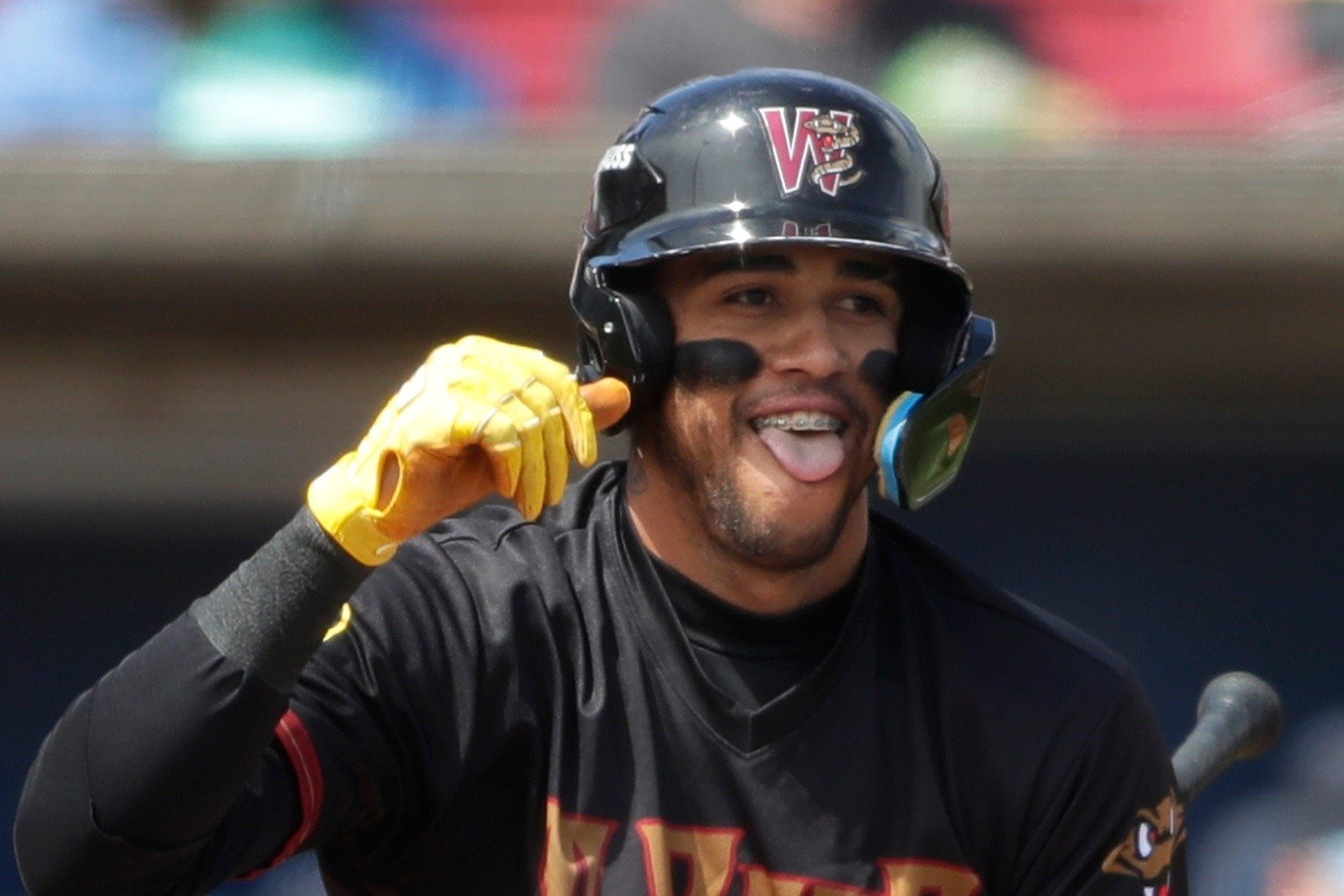 As the trade deadline approaches, there have been some calls for the Crew to go big, especially to address weaknesses on the left side of the infield and fading production at first base. But such a deal could come at a high price—one that could make the package the Crew gave up in the April deal for Quinn Priester look small by comparison. It’s obvious the Brewers would need to be blown away to surrender top prospects, but are there others who should be considered untouchable? Here are several players whom the Crew should hold on to (unless they help reel in an especially big fish), even though they don’t have the hype of “top” prospects. IF Ethan Murray .287/.364/.496 in 135 AB at Double-A Biloxi Murray has rebounded from an atrocious 2024, filling in at multiple infield positions in his third year at Biloxi. Notably, in the pitching-friendly Southern League, he’s notched an .880 OPS and is fifth on the team with seven home runs, despite only having 135 at-bats. His defense has previously been his calling card, but the bat appears to be sneaky good. Spencer Michaelis highlighted him separately today, here. IF Jadher Areinamo .291/.362/.455 in 292 AB at High-A Wisconsin At 21, Areinamo looks like a solid shortstop with excellent bat-to-ball and OBP skills, while also flashing some extra-base pop (20 doubles, eight home runs) in his second straight year in Wisconsin. He doesn’t have a lot of speed and isn’t particularly threatening on the basepaths (9-for-16 in stolen base attempts), but looks to be ready to move up the minor-league ladder. RHP Melvin Hernandez 6-4, 2.13 ERA in 76 IP at Low-A Carolina Hernandez has done well, despite being extremely young for the leagues he has been in since bursting onto the scene in 2023. Hernandez is listed at 5-foot-11 and a slightly hilarious 139 pounds, but there is obviously some physical development going on. In any case, he's demonstrating that he can pitch. IF/OF Eduardo Garcia .239/.333/.456 in 281 AB at High-A Wisconsin Garcia, who can be a minor-league free agent after the season, is a conditional inclusion. It would seem logical to put him on the 40-man roster to replace someone like Drew Avans, given his age. His calling card has always been defense and speed, but he seems to have also evolved a three-true-outcome bat to go with it. Obviously, any player due to become a minor-league free agent has limited trade value, so teams aren't likely to ask about him—unless they think he might merit a 40-man spot come the fall. The Crew are good at bringing players along slowly, though, and even have some recent track record of retaining players when they have the chance to leave via minor-league free agency. IF Filippo di Turi .252/.356/.427 in 262 AB at Low-A Carolina With all the attention on Luis Pena and Jesus Made at Carolina, few people have paid attention to di Turi. But di Turi has quietly emerged as an all-around threat at the plate, while competently handling second base, third base, and shortstop. The real story is his power surge this year, which adds to excellent OBP skills. LHP Tate Kuehner 7-4, 2.82 ERA in 76.2 IP at Double-A Biloxi While a lot of attention is paid to the incredible performance of Brett Wichrowski and the comeback campaign of Cameron Crow in Biloxi this season, Kuehner has quietly emerged as a very solid starter for the Shuckers. He’d be a top prospect in some other systems, but for the Brewers, he’s one of those sleepers who could emerge with the right opportunity. Spencer detailed his progress of late Tuesday, too. OF/2B Jadyn Fielder .275/.429/.468 in 109 AB at Rookie-Level ACL Brewers Prince Fielder’s son (and Cecil Fielder's grandson) is proving to be a solid player in his own right, and appears to be forging his own identity distinct from his father and grandfather, both of whom were big-time sluggers. Jadyn’s got some more speed (four triples in 109 AB, 6-for-10 in stolen bases), and is a defensive asset (handling the outfield and second base competently). Obviously, all of these guys are so low-wattage that you can't let them stop a key deal from getting done. On the other hand, each has shown enough to be worth holding onto, if there's another way to complete a move—especially if it's something more minor, anyway. Which under-the-radar prospects do you think should be quasi-untouchable? Let us know in the comments below!
- 6 comments
-
- 1
-
-
- jadher areinamo
- jadyn fielder
- (and 3 more)
-
Image courtesy of © Michael McLoone-Imagn Images With just 2.5 games separating the Brewers from the first-place Chicago Cubs, the Crew will be buyers before the upcoming trade deadline. However, the trade market might not be their best bet for stretch-run improvement. Almost three months ago, injuries in the rotation and the late signing of Jose Quintana led to a deal that cost the Brewers prospects Yophery Rodriguez and John Holobetz (plus the No. 33 overall pick in this month's draft) for Quinn Priester. In essence, the rotation already saw its worst-case scenario happen, though the team has survived it admirably. Will a similar crisis creep up on them in the bullpen this summer? There’s a very good chance that the Brewers can avoid the worst-case scenario. In fact, it would be surprisingly easy. All Matt Arnold has to do is pick up the phone and dial a phone number in the 615 area code and give Nashville Sounds manager Rick Sweet some bad news. It's time, once again, for him to do without his relief ace. Craig Yoho had a lot of buzz around him this spring. Seen as a future anchor of the bullpen in the preseason, his first time around in Milwaukee was rough (9.53 ERA in 5 2/3 innings pitched). But in Nashville, he’s dominated to the tune of a 1.01 ERA in 26 2/3 innings, notching five saves and a 3-1 record. Yoho has nothing left to prove in Nashville. His next ticket to Milwaukee ought to come sooner, rather than later. The best part of all that is that, unlike an outside hire, Yoho will not cost the Brewers anything other than sending someone else down to Nashville (or placing someone on the injured list, or making a separate deal). Yoho, Abner Uribe, Jared Koenig, and Trevor Megill could easily be the pitchers the Crew relies on in the late innings to hold a lead down. Yoho is not the only option for the Crew in Music City. Joel Payamps has also dominated in Nashville since being outrighted, and could be ready to return to Milwaukee for at least the short term; he would also be a candidate for the Crew to flip if he goes on a hot streak. Elvis Peguero hasn’t been as dominating, but he could be optioned back down to Nashville after giving Uribe a 15-day break. Then there are starters Logan Henderson, Carlos Rodriguez, and Tobias Myers, all of whom have seen time in Milwaukee in 2025. If they’re not able to fit in the rotation, they could become multi-inning relievers and bolster the bullpen that way. Henderson, who may need his workload monitored, might be a good choice for a relief role after dominating in three starts earlier this season, following in the 2018 footsteps of Corbin Burnes and Brandon Woodruff. Rodriguez and Myers might also fare better going through the opposing team’s lineup only once, as opposed to two or three times. The Brewers could use some bullpen help, but the best choice to get that help will not be calling another MLB executive—it’s placing a call to Nashville. They should keep their powder dry, and spend any prospect capital on a deal for a hitter instead of a relief arm. View full article
-
The Best Brewers Trade Deadline Pitching Acquisition is in Nashville
Harold Hutchison posted an article in Brewers
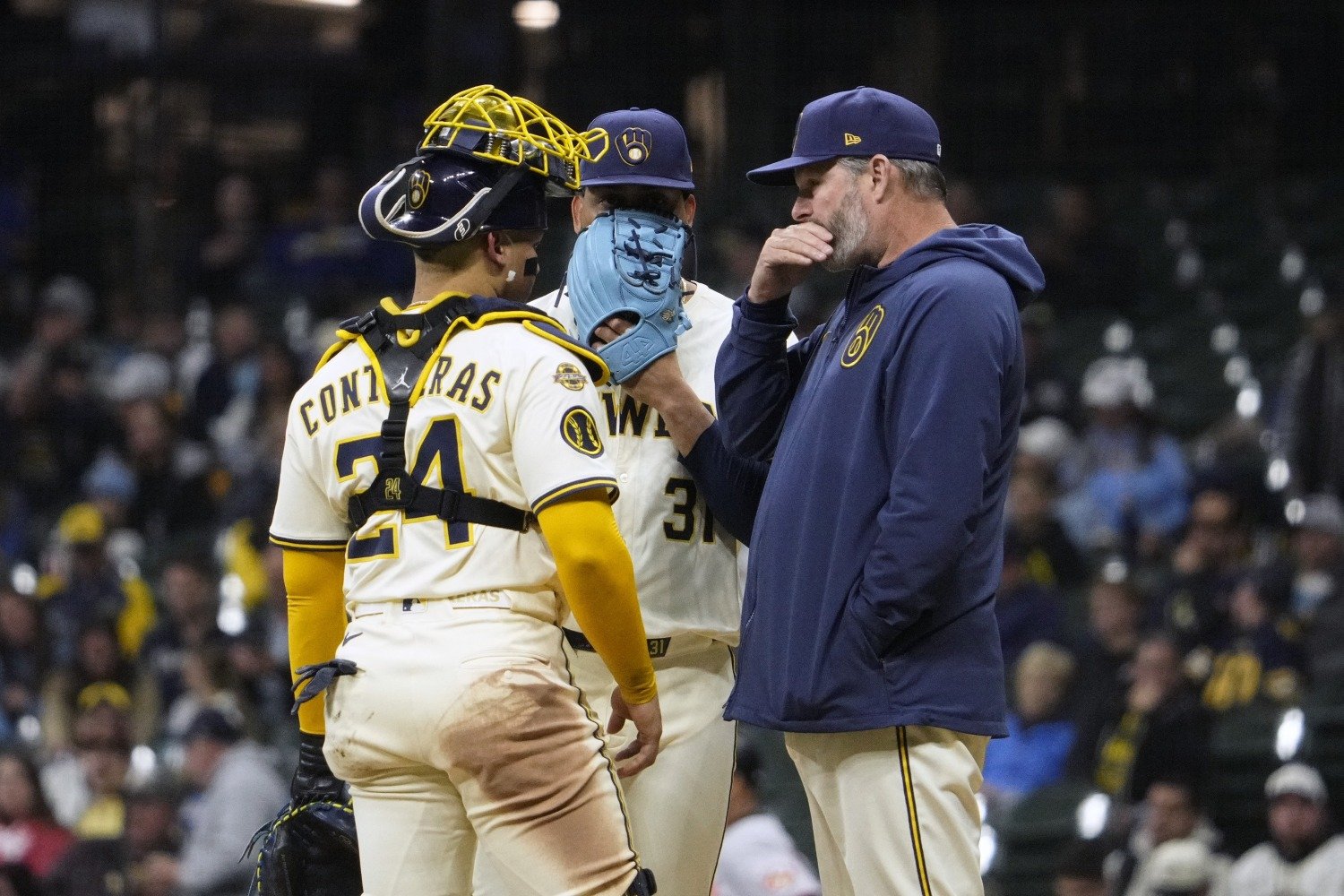 With just 2.5 games separating the Brewers from the first-place Chicago Cubs, the Crew will be buyers before the upcoming trade deadline. However, the trade market might not be their best bet for stretch-run improvement. Almost three months ago, injuries in the rotation and the late signing of Jose Quintana led to a deal that cost the Brewers prospects Yophery Rodriguez and John Holobetz (plus the No. 33 overall pick in this month's draft) for Quinn Priester. In essence, the rotation already saw its worst-case scenario happen, though the team has survived it admirably. Will a similar crisis creep up on them in the bullpen this summer? There’s a very good chance that the Brewers can avoid the worst-case scenario. In fact, it would be surprisingly easy. All Matt Arnold has to do is pick up the phone and dial a phone number in the 615 area code and give Nashville Sounds manager Rick Sweet some bad news. It's time, once again, for him to do without his relief ace. Craig Yoho had a lot of buzz around him this spring. Seen as a future anchor of the bullpen in the preseason, his first time around in Milwaukee was rough (9.53 ERA in 5 2/3 innings pitched). But in Nashville, he’s dominated to the tune of a 1.01 ERA in 26 2/3 innings, notching five saves and a 3-1 record. Yoho has nothing left to prove in Nashville. His next ticket to Milwaukee ought to come sooner, rather than later. The best part of all that is that, unlike an outside hire, Yoho will not cost the Brewers anything other than sending someone else down to Nashville (or placing someone on the injured list, or making a separate deal). Yoho, Abner Uribe, Jared Koenig, and Trevor Megill could easily be the pitchers the Crew relies on in the late innings to hold a lead down. Yoho is not the only option for the Crew in Music City. Joel Payamps has also dominated in Nashville since being outrighted, and could be ready to return to Milwaukee for at least the short term; he would also be a candidate for the Crew to flip if he goes on a hot streak. Elvis Peguero hasn’t been as dominating, but he could be optioned back down to Nashville after giving Uribe a 15-day break. Then there are starters Logan Henderson, Carlos Rodriguez, and Tobias Myers, all of whom have seen time in Milwaukee in 2025. If they’re not able to fit in the rotation, they could become multi-inning relievers and bolster the bullpen that way. Henderson, who may need his workload monitored, might be a good choice for a relief role after dominating in three starts earlier this season, following in the 2018 footsteps of Corbin Burnes and Brandon Woodruff. Rodriguez and Myers might also fare better going through the opposing team’s lineup only once, as opposed to two or three times. The Brewers could use some bullpen help, but the best choice to get that help will not be calling another MLB executive—it’s placing a call to Nashville. They should keep their powder dry, and spend any prospect capital on a deal for a hitter instead of a relief arm.
 -
I'd rather get a left-handed Misiorowski. The good news is Schoolcraft appears to have a smoother delivery and more control. https://www.mlb.com/milb/prospects/draft/kruz-schoolcraft-828244 If he's at 20, he'd be my pick, and it's a no-brainer.
-
I'd like the Crew to get Schoolcraft at 20. From what I've read, he seems like a left-handed Misiorowski, and the Crew does very well at developing pitchers.
-
I see Martinez as an upgrade over Bauers. He's heated up in the second half before. He's got a more well-rounded offensive profile (he's a baserunning threat) and he's been able to handle center field, plus he has Gold Glove-caliber defense.
-
Crow, Martinez, and Garcia should all be retained with spots on the 40-man. Let Bauers walk, DFA Dunn, and I'm sure a free-agent pitcher will also walk.
-
Image courtesy of © Eric Hartline-Imagn Images The Brewers have heated up and are closing in on the Cubs at the top of the National League Central. But even in the midst of a playoff chase in 2025, should the Brewers look for chances to bolster the team for the long haul? We’ve looked at starting pitchers and prospects the team should consider selling. Now, let’s look at the position player group on the 40-man roster and see whom the Brewers should consider dealing. UT/DH Tyler Black .083/.250/.167 at Triple-A Nashville .387/.513/.613 at Rookie-Level ACL Brewers Black was a one-time top-100 prospect, showing speed, excellent plate discipline and very good bat-to-ball skills. After a breakout 2023 season, he seemed poised to be a candidate to handle the hot corner for the Crew, making his debut alongside Jackson Chourio. While he made his debut, he ended up making multiple trips on the Milwaukee-Nashville shuttle. The 2025 season saw him injure his hamate, and even though he is back on the field, that injury has sapped his power. Now, he’s decidedly behind Caleb Durbin at the hot corner, with Brock Wilken, Luke Adams, and Mike Boeve all at Double-A Biloxi making their cases. Adams and Boeve made MLB Pipeline’s Top 10 list at third base. At first base, he’s behind Ernesto Martinez and Andrew Vaughn (not to mention Jake Bauers and Rhys Hoskins). The outfield remains crowded, as always. SS Joey Ortiz .214/.272/.294 in Milwaukee Ortiz is arguably the hottest Brewer right now, so why put him on the block? He put up decent numbers in 2024 after being acquired in the Corbin Burnes trade, but had an atrocious slump in 2025. He is under club control through 2029, and cheap through 2026. So why put him on the market? Two words: Cooper Pratt. The way Pratt is hitting in Double-A Biloxi, it’s hard not to imagine him catching a plane to Nashville soon, and equally hard to not envision him being a contender at shortstop for the Crew in 2026. So, the Brewers may want to try to move Ortiz now, before he swings back to being ice-cold at the plate; he could still fetch a decent return. The catch, of course, is that they can't deal Ortiz unless they also acquire a solid infielder on a short-term deal before the deadline. It's unlikely they'll risk creating a need for themselves just to capitalize on an opportunity to acquire farm depth, especially when the main impetus for doing so might be a player not yet even in Triple A. 1B Jake Bauers .230/.339/.430 in Milwaukee 0-0, 3.60 ERA in 5.0 IP in Milwaukee Bauers has been a decent platoon option for Rhys Hoskins and is a capable corner outfielder in a pinch. He's done what the team needs him to do, up to and including soaking up the odd inning in a blowout to preserve the pitching staff. Why, then, would they trade him? In this case, it’s to make way for what could be the next Brewers platoon at the cold corner: Andrew Vaughn and Ernesto Martinez. Bauers could net the Crew a lottery ticket or two, similar to the Adam Lind trade after the 2015 season. The package Lind fetched in that deal included some guy named Freddy Peralta. 1B Andrew Vaughn .189/.218.314 with the Chicago White Sox .211/.328/.315 with Triple-A Charlotte (White Sox) .290/.371/.613 with Triple-A Nashville (Milwaukee) Could Vaughn perform well as part of a platoon with Ernesto Martinez? That’s a distinct possibility. Might it be better to instead see what he might fetch in a trade? Maybe so. Vaughn was acquired after Aaron Civale demanded a trade, at a moment when the White Sox were eager to get their former first-round pick a change of scenery, too. On one hand, Vaughn would certainly be a decent complement to Martinez at first base. Such platoons have worked well before (see Eric Thames and Jesús Aguilar in 2017-2018). But on the other hand, perhaps the Brewers might decide to allow Christian Yelich to play the cold corner next year. Certainly, for the balance of 2025, Hoskins stands in the way of Vaughn and leaves the team without an urgent need at first. Like Bauers, Vaughn won’t bring home a massive package, but it could be another way to re-enact the Lind trade. If Vaughn's stellar numbers (not just the results, but an average exit velocity up about 3 mph and a whiff rate that's down, relative to his time with the White Sox's Triple-A affiliate) catch the eye of any needier teams throughout the league, this could be a very quick transition from buying low to selling high. OF Garrett Mitchell .206/.286/.294 in Milwaukee .000/.000/.000 with Rookie-League ACL Brewers .556/.636/.556 with Triple-A Nashville Mitchell is a superb player when he is on the field, averaging 4.1 Wins Above Replacement per 162 games, per Baseball Reference. The problem is keeping him on the field: Over his major-league career, spanning 2022 to the present, he’s played only 141 games total, for 3.6 career Wins Above Replacement. Mitchell is arbitration-eligible after 2025, and the Brewers may be selling low—but if he’s missing most of the last three seasons, is he really that irreplaceable? He may not net much at all, but clearing a roster spot and gaining clarity on who will (and who won't) be part of their future in the outfield would have a little bit of value. Which position players do you think the Brewers should try to move? Let us know in the comments below! View full article
-
5 Position Players Milwaukee Brewers Should Consider Selling
Harold Hutchison posted an article in Brewers
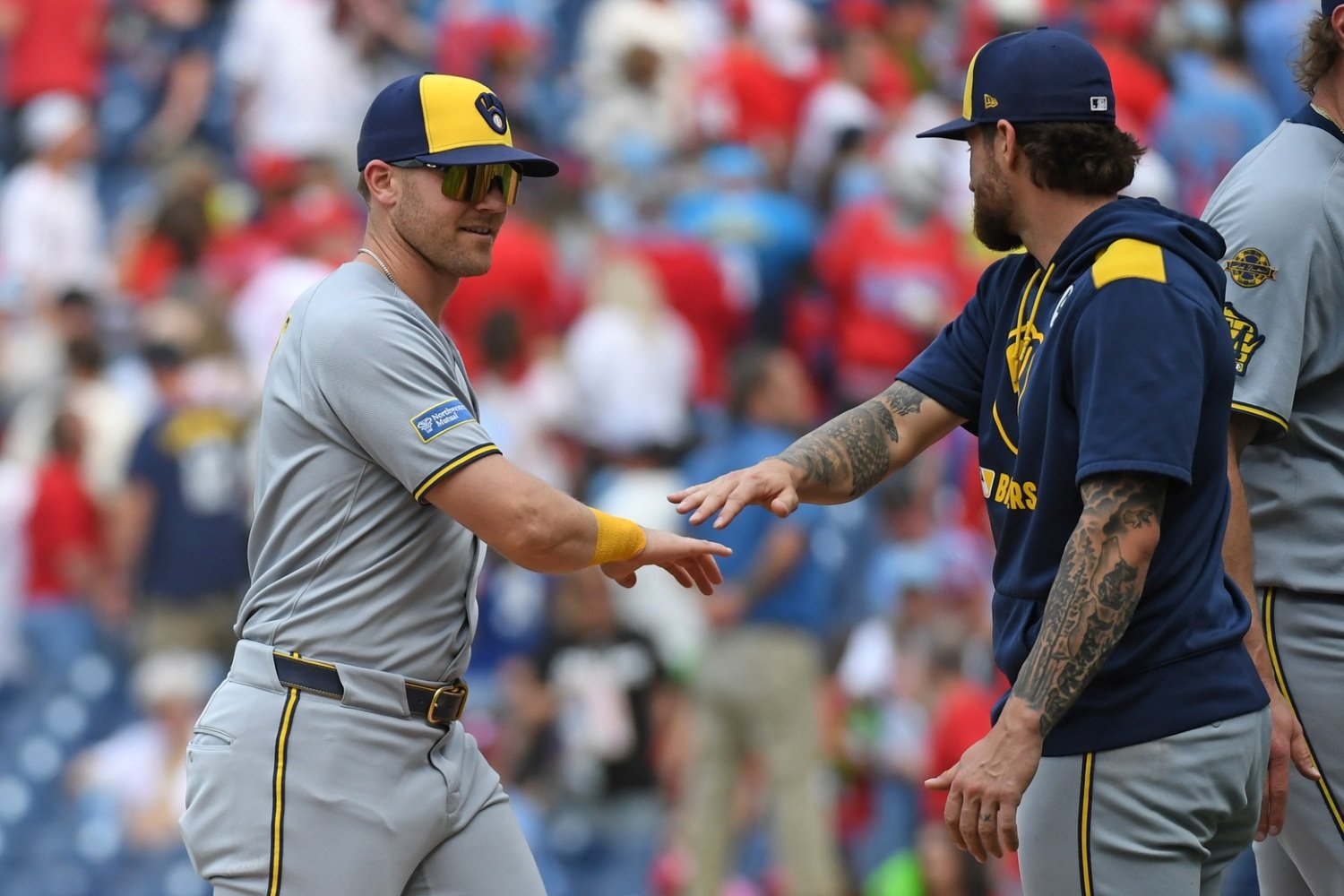 The Brewers have heated up and are closing in on the Cubs at the top of the National League Central. But even in the midst of a playoff chase in 2025, should the Brewers look for chances to bolster the team for the long haul? We’ve looked at starting pitchers and prospects the team should consider selling. Now, let’s look at the position player group on the 40-man roster and see whom the Brewers should consider dealing. UT/DH Tyler Black .083/.250/.167 at Triple-A Nashville .387/.513/.613 at Rookie-Level ACL Brewers Black was a one-time top-100 prospect, showing speed, excellent plate discipline and very good bat-to-ball skills. After a breakout 2023 season, he seemed poised to be a candidate to handle the hot corner for the Crew, making his debut alongside Jackson Chourio. While he made his debut, he ended up making multiple trips on the Milwaukee-Nashville shuttle. The 2025 season saw him injure his hamate, and even though he is back on the field, that injury has sapped his power. Now, he’s decidedly behind Caleb Durbin at the hot corner, with Brock Wilken, Luke Adams, and Mike Boeve all at Double-A Biloxi making their cases. Adams and Boeve made MLB Pipeline’s Top 10 list at third base. At first base, he’s behind Ernesto Martinez and Andrew Vaughn (not to mention Jake Bauers and Rhys Hoskins). The outfield remains crowded, as always. SS Joey Ortiz .214/.272/.294 in Milwaukee Ortiz is arguably the hottest Brewer right now, so why put him on the block? He put up decent numbers in 2024 after being acquired in the Corbin Burnes trade, but had an atrocious slump in 2025. He is under club control through 2029, and cheap through 2026. So why put him on the market? Two words: Cooper Pratt. The way Pratt is hitting in Double-A Biloxi, it’s hard not to imagine him catching a plane to Nashville soon, and equally hard to not envision him being a contender at shortstop for the Crew in 2026. So, the Brewers may want to try to move Ortiz now, before he swings back to being ice-cold at the plate; he could still fetch a decent return. The catch, of course, is that they can't deal Ortiz unless they also acquire a solid infielder on a short-term deal before the deadline. It's unlikely they'll risk creating a need for themselves just to capitalize on an opportunity to acquire farm depth, especially when the main impetus for doing so might be a player not yet even in Triple A. 1B Jake Bauers .230/.339/.430 in Milwaukee 0-0, 3.60 ERA in 5.0 IP in Milwaukee Bauers has been a decent platoon option for Rhys Hoskins and is a capable corner outfielder in a pinch. He's done what the team needs him to do, up to and including soaking up the odd inning in a blowout to preserve the pitching staff. Why, then, would they trade him? In this case, it’s to make way for what could be the next Brewers platoon at the cold corner: Andrew Vaughn and Ernesto Martinez. Bauers could net the Crew a lottery ticket or two, similar to the Adam Lind trade after the 2015 season. The package Lind fetched in that deal included some guy named Freddy Peralta. 1B Andrew Vaughn .189/.218.314 with the Chicago White Sox .211/.328/.315 with Triple-A Charlotte (White Sox) .290/.371/.613 with Triple-A Nashville (Milwaukee) Could Vaughn perform well as part of a platoon with Ernesto Martinez? That’s a distinct possibility. Might it be better to instead see what he might fetch in a trade? Maybe so. Vaughn was acquired after Aaron Civale demanded a trade, at a moment when the White Sox were eager to get their former first-round pick a change of scenery, too. On one hand, Vaughn would certainly be a decent complement to Martinez at first base. Such platoons have worked well before (see Eric Thames and Jesús Aguilar in 2017-2018). But on the other hand, perhaps the Brewers might decide to allow Christian Yelich to play the cold corner next year. Certainly, for the balance of 2025, Hoskins stands in the way of Vaughn and leaves the team without an urgent need at first. Like Bauers, Vaughn won’t bring home a massive package, but it could be another way to re-enact the Lind trade. If Vaughn's stellar numbers (not just the results, but an average exit velocity up about 3 mph and a whiff rate that's down, relative to his time with the White Sox's Triple-A affiliate) catch the eye of any needier teams throughout the league, this could be a very quick transition from buying low to selling high. OF Garrett Mitchell .206/.286/.294 in Milwaukee .000/.000/.000 with Rookie-League ACL Brewers .556/.636/.556 with Triple-A Nashville Mitchell is a superb player when he is on the field, averaging 4.1 Wins Above Replacement per 162 games, per Baseball Reference. The problem is keeping him on the field: Over his major-league career, spanning 2022 to the present, he’s played only 141 games total, for 3.6 career Wins Above Replacement. Mitchell is arbitration-eligible after 2025, and the Brewers may be selling low—but if he’s missing most of the last three seasons, is he really that irreplaceable? He may not net much at all, but clearing a roster spot and gaining clarity on who will (and who won't) be part of their future in the outfield would have a little bit of value. Which position players do you think the Brewers should try to move? Let us know in the comments below!
- 1 comment
-
- 1
-

-
- jake bauers
- garrett mitchell
- (and 3 more)
