Harold Hutchison
-
Posts
6,909 -
Joined
-
Last visited
Content Type
Profiles
Forums
Blogs
Events
News
2026 Milwaukee Brewers Top Prospects Ranking
Milwaukee Brewers Videos
2022 Milwaukee Brewers Draft Picks
Milwaukee Brewers Free Agent & Trade Rumors, Notes, & Tidbits
Guides & Resources
2023 Milwaukee Brewers Draft Picks
2024 Milwaukee Brewers Draft Picks
The Milwaukee Brewers Players Project
2025 Milwaukee Brewers Draft Pick Tracker
2026 Milwaukee Brewers Draft Tracker: Picks & Bonuses
Store
Downloads
Gallery
Everything posted by Harold Hutchison
-
Am I wrong for wishing it was Peguero instead of Strzelecki?
-
At this point, might a better option for the long term be to bring up Small and/or Andrews? Don't get me wrong, I'd love Hader back, but the best package to send would be Peguero, Small, Alexander, and Blake Perkins. Nothing higher for a two-month rental. Then again... extensions are possible.
-
That's your upgrade over Taylor. Jarvis stings a little, but a lower ceiling than other pitchers. Means a Houser extension could happen, which is not the worst thing.
-
Article: Week in Review: Getting Burnt
Harold Hutchison replied to Kyle Ginsbach's topic in Brewer Fanatic Front Page News
While getting swept is never good, the fact it was with Rea, Teheran, and Houser makes it less concerning than if it were with Burnes and Peralta in the mix. Add a healthy Woodruff and the Crew matches up well on that front. If Tellez's slump was injury-related, and Santana stays solid, then a DFA/60-day IL for Winker could upgrade the Crew at DH. Monasterio's 116 OPS+ is good enough at third. Frelick could handle right field. The Crew has a decent shot at making the NLCS as presently constituted. To me the big question is, can the Crew make improvements this year that won't risk the chances of a similar run in 2024-2025? -
I'd prefer Canha, with the OBP skills and I think his power bat woud improve if he came to Milwaukee (Citi Field has been a pitcher's park, with a 92 Park Factor for hitters and a 93 Park Factor for pitchers). Plus, he doesn't block the prospects coming up in 2024. Worth a package like Hedbert Perez and Russell Smith, perhaps?
-
My thinking is Opening Day 2025 at the earliest. Get a full year of Wiemer, and see if he can start, or is better as the 4th OF behind Frelick/Mitchell/Chourio. Or maybe it's a Wiemer/Mitchell platoon. Lots of possibilities... and we ain't even thinking about Yophery Rodriguez, who looks to be superb, as well.
-
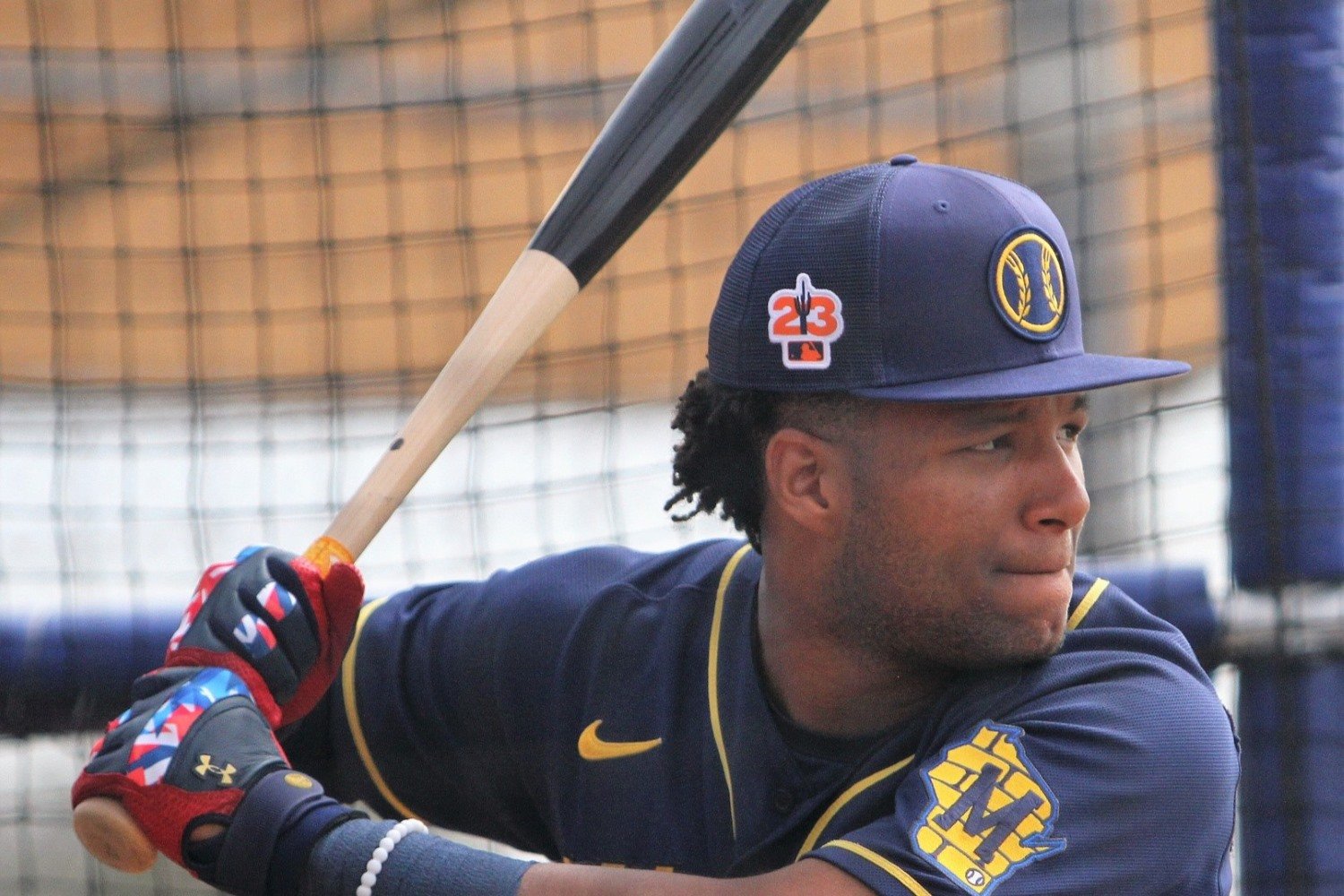 One of the reasons is the current state of the Brewers outfield for the short and medium term, but two are cautionary tales from recent Brewers history. Let’s take a look at those reasons why going slow with Jackson Chourio might be the best thing for the Brewers–and for Chourio himself. The Current State Of The Brewers Outfield The Brewers have a lot of outfield depth in the majors and the minors, as we have discussed when reviewing left field, center field, and right field in the Brewers system. It is quite likely that the Opening Day 2024 outfield for the Brewers could be Sal Frelick in left, Garrett Mitchell in center, and Joey Wiemer in right, with Christian Yelich moving to either first base or designated hitter, while Tyrone Taylor and Blake Perkins compete for the fourth outfielder spot. With the exception of Yelich, all are going to be quite cheap, too. This surfeit of outfield depth buys something for Chourio: Time. Time to develop and refine his game, particularly in drawing walks and in pitch selection. In Biloxi, Chourio struggled with the tackier ball used in the Southern League earlier this season. It might be best to have him develop those skills more in Nashville next year. The Brewers don’t need to put him on the 40-man until after the 2024 season, and they will have three option years. It also gives the Brewers time to evaluate Frelick, Mitchell, Wiemer, Perkins, and Taylor, so they can figure out how best to restructure the outfield when Chourio is ready, some time in 2025. So why not take advantage of the time to have Chourio’s skills fully honed and get a sense of to which outfielders the Brewers should commit for the long haul? It will be better for him and better for the Brewers. After all, there are some cautionary tales. When Jimmy Nelson Got Hammered In 2017, Jimmy Nelson injured his shoulder while running the bases. The injury not only took him out of the rest of the 2017 season, he missed all of 2018 as well, as the recovery took longer than expected. In 2019, he was returning from that long layoff. Nelson had an option left, and he could have been sent to Triple-A San Antonio to get back into the groove as a pitcher; think of it as an indefinite rehabilitation assignment. Instead, the Brewers brought him up with the team for Opening Day. To say it went poorly is an understatement. He ended up going up and down in the 2019 season, finishing with an 0-2 record and a 6.95 ERA with the Brewers, while doing better in San Antonio and Appleton (combined 4.79 ERA). Nelson was ultimately non-tendered after the 2019 season, and went to the Dodgers as a free agent, where he ended up being a solid reliever until he had to have Tommy John surgery. Would the pandemic and the Tommy John have still messed things up? Who can say? But the minor leagues are there for players to develop–and to rehabilitate–and the Brewers failed Nelson and themselves by failing to use the minors for that purpose. Chourio clearly has room to develop, based on his struggles early in the season, and the minors are the proper place for him to do that. Keston Hiura Never Fully Developed OBP Skills Keston Hiura has been hitting well in Nashville, but four years ago, he was a hot hitting prospect who many thought would be dominating in Milwaukee for a long time. His 2019 season, coming about two years after he was a first-round draft pick, was seen as a sign that he would fulfill the hopes that came with that status. In 2020, though, he led the NL in strikeouts–getting rung up 85 times in 59 games. Hiura's 2021 was even worse, and a rebound in 2022 wasn’t enough to keep the Brewers from acquiring Jesse Winker and Luke Voit, and ultimately outrighting Hiura to Nashville. But there were warning signs for Hiura. Perhaps the biggest: Hiura’s walk rate was never great (72 walks in 865 at-bats from 2017 to 2019). He also struck out 204 times during his minor-league career, prior to his MLB debut. That’s 2.83 whiffs for every walk. Aside from the DSL, Chourio’s numbers in his minor-league career are quite similar. He’s drawn 56 walks in 735 at-bats, while striking out 190 times as of July 25. That comes to 3.39 strikeouts per walk. Summary In 2019, the Brewers desperately needed help at second base. Travis Shaw was in a slump, so Mike Moustakas had to move back to third. Hernan Perez and Cory Spangenberg were each posting an OPS+ of 64. Hiura came up and helped the Brewers overcome Yelich’s season-ending knee injury to reach the wild-card game, but there was a cost to him and to the Brewers, down the road. That condition does not apply in 2023, and probably won’t in 2024. The Brewers have plenty of outfield depth, and even those who struggle at the plate (like Joey Wiemer) are contributing with outstanding defense. There is time for Chourio to hone his skills in Nashville in 2024 and even 2025. There’s no need to rush him to American Family Field.
 -
Jackson Chourio’s meteoric rise to playing a full season with the Brewers' Double-A affiliate in Biloxi at the age of 19 is profoundly impressive. However, there are some reasons for the Crew to consider taking their foot off the gas with Chourio. Image courtesy of © Curt Hogg / Milwaukee Journal Sentinel / USA TODAY NETWORK One of the reasons is the current state of the Brewers outfield for the short and medium term, but two are cautionary tales from recent Brewers history. Let’s take a look at those reasons why going slow with Jackson Chourio might be the best thing for the Brewers–and for Chourio himself. The Current State Of The Brewers Outfield The Brewers have a lot of outfield depth in the majors and the minors, as we have discussed when reviewing left field, center field, and right field in the Brewers system. It is quite likely that the Opening Day 2024 outfield for the Brewers could be Sal Frelick in left, Garrett Mitchell in center, and Joey Wiemer in right, with Christian Yelich moving to either first base or designated hitter, while Tyrone Taylor and Blake Perkins compete for the fourth outfielder spot. With the exception of Yelich, all are going to be quite cheap, too. This surfeit of outfield depth buys something for Chourio: Time. Time to develop and refine his game, particularly in drawing walks and in pitch selection. In Biloxi, Chourio struggled with the tackier ball used in the Southern League earlier this season. It might be best to have him develop those skills more in Nashville next year. The Brewers don’t need to put him on the 40-man until after the 2024 season, and they will have three option years. It also gives the Brewers time to evaluate Frelick, Mitchell, Wiemer, Perkins, and Taylor, so they can figure out how best to restructure the outfield when Chourio is ready, some time in 2025. So why not take advantage of the time to have Chourio’s skills fully honed and get a sense of to which outfielders the Brewers should commit for the long haul? It will be better for him and better for the Brewers. After all, there are some cautionary tales. When Jimmy Nelson Got Hammered In 2017, Jimmy Nelson injured his shoulder while running the bases. The injury not only took him out of the rest of the 2017 season, he missed all of 2018 as well, as the recovery took longer than expected. In 2019, he was returning from that long layoff. Nelson had an option left, and he could have been sent to Triple-A San Antonio to get back into the groove as a pitcher; think of it as an indefinite rehabilitation assignment. Instead, the Brewers brought him up with the team for Opening Day. To say it went poorly is an understatement. He ended up going up and down in the 2019 season, finishing with an 0-2 record and a 6.95 ERA with the Brewers, while doing better in San Antonio and Appleton (combined 4.79 ERA). Nelson was ultimately non-tendered after the 2019 season, and went to the Dodgers as a free agent, where he ended up being a solid reliever until he had to have Tommy John surgery. Would the pandemic and the Tommy John have still messed things up? Who can say? But the minor leagues are there for players to develop–and to rehabilitate–and the Brewers failed Nelson and themselves by failing to use the minors for that purpose. Chourio clearly has room to develop, based on his struggles early in the season, and the minors are the proper place for him to do that. Keston Hiura Never Fully Developed OBP Skills Keston Hiura has been hitting well in Nashville, but four years ago, he was a hot hitting prospect who many thought would be dominating in Milwaukee for a long time. His 2019 season, coming about two years after he was a first-round draft pick, was seen as a sign that he would fulfill the hopes that came with that status. In 2020, though, he led the NL in strikeouts–getting rung up 85 times in 59 games. Hiura's 2021 was even worse, and a rebound in 2022 wasn’t enough to keep the Brewers from acquiring Jesse Winker and Luke Voit, and ultimately outrighting Hiura to Nashville. But there were warning signs for Hiura. Perhaps the biggest: Hiura’s walk rate was never great (72 walks in 865 at-bats from 2017 to 2019). He also struck out 204 times during his minor-league career, prior to his MLB debut. That’s 2.83 whiffs for every walk. Aside from the DSL, Chourio’s numbers in his minor-league career are quite similar. He’s drawn 56 walks in 735 at-bats, while striking out 190 times as of July 25. That comes to 3.39 strikeouts per walk. Summary In 2019, the Brewers desperately needed help at second base. Travis Shaw was in a slump, so Mike Moustakas had to move back to third. Hernan Perez and Cory Spangenberg were each posting an OPS+ of 64. Hiura came up and helped the Brewers overcome Yelich’s season-ending knee injury to reach the wild-card game, but there was a cost to him and to the Brewers, down the road. That condition does not apply in 2023, and probably won’t in 2024. The Brewers have plenty of outfield depth, and even those who struggle at the plate (like Joey Wiemer) are contributing with outstanding defense. There is time for Chourio to hone his skills in Nashville in 2024 and even 2025. There’s no need to rush him to American Family Field. View full article
-
Article: Keep Calm, and Wait for Rowdy
Harold Hutchison replied to Jake McKibbin's topic in Brewer Fanatic Front Page News
I'd put Wiemer in with Adames/Tellez - he's been hitting homers almost on their pace, and there's always been plenty of pop in his bat. Turang and Monasterio are more OBP types, although Monasterio reminds me a little of Mark Loretta from back in the day. Turang is a glove/OBP/speed guy - I'm thinking Omar Vizquel.- 12 replies
-
- 1
-

-
- 2023 trade deadline
- rowdy tellez
- (and 2 more)
-
Could 2024 See Another Brewers Rookie Bumper Crop?
Harold Hutchison posted an article in Minor Leagues
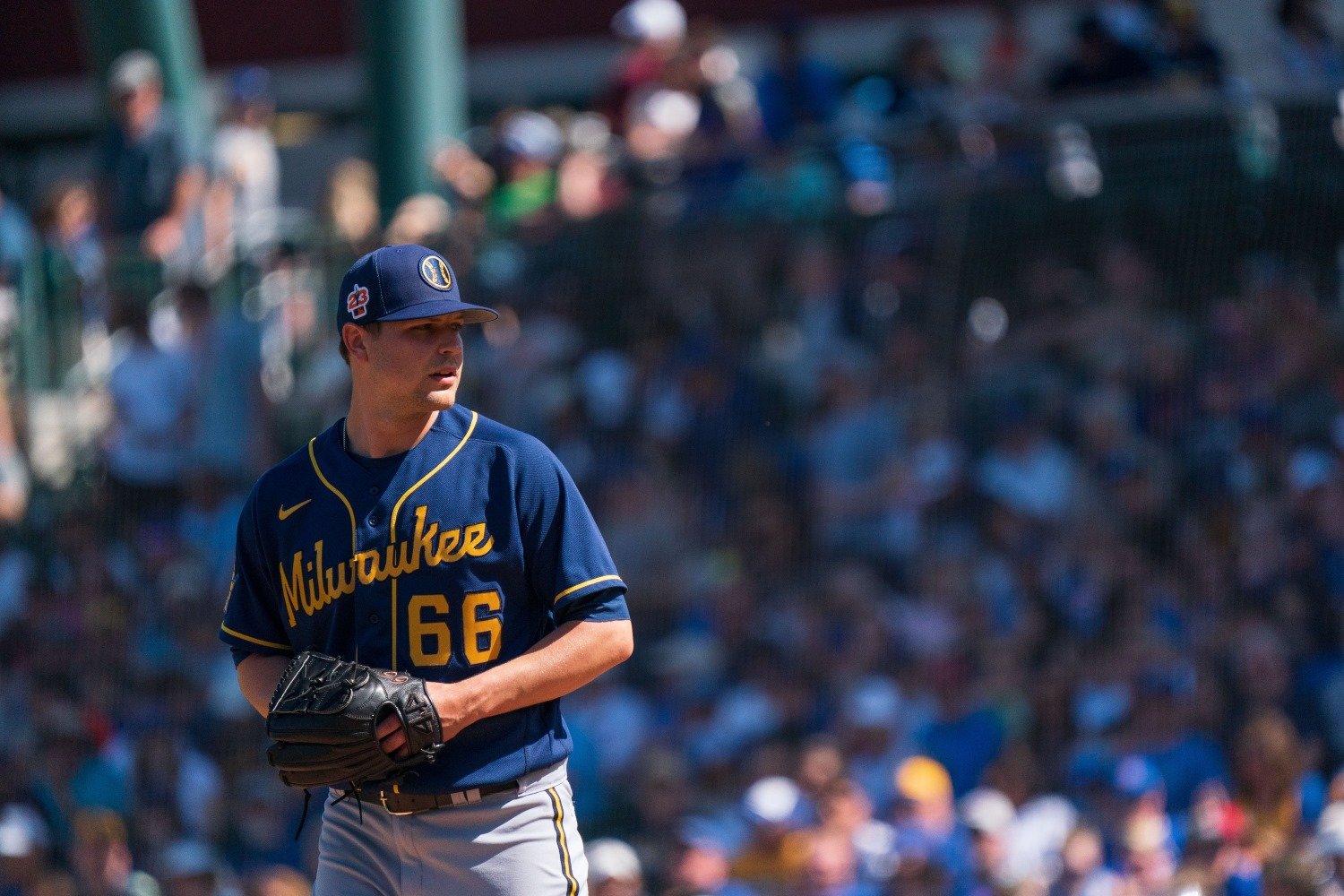 It’s hard to imagine topping what Brice Turang, Joey Wiemer, Andruw Monasterio, and Sal Frelick have done. Each of these players have come up and had big moments in 2023. That's not to dismiss the pitchers: Abner Uribe, Ethan Small, and Clayton Andrews have contributed in the bullpen for the Crew this season. That’s quite impressive for a team that is holding a lead in the NL Central going into the trade deadline. Let’s see who could step up for the Crew. Tyler Black Third base has been a bit of a black hole. Yes, Monasterio has held down the position decently in the wake of Brian Anderson’s injured list stints and time in right field (and of the season-long slump by Luis Urias), but Black represents a quantum upgrade offensively at the hot corner. It is hard to imagine him NOT bumping Monasterio to a bench role in 2024, potentially as soon as Opening Day. Noah Campbell Campbell may be one of the more astute pickups by the Brewers in recent memory–a 19th-roundpick in 2017 who wasn’t signed, but picked up after four years of college ball as an undrafted free agent in 2020. He gets nowhere near the hype of Jackson Chourio, Black, or Frelick, but he could be a highly valuable bench asset and has flashed two-way capability in the Brewers system. Cam Devanney Freddy Zamora, Eric Brown Jr., Daniel Guilarte, and 2023 draftees Cooper Pratt, Josh Adamczewski, and Eric Bitonti may get a lot of hype, but Cam DeVanney has quietly put up two very impressive years while playing shortstop with the Biloxi Shuckers and Nashville Sounds. He’s also seen plenty of action at third base and second base over his minor-league career, with limited action in left field and first base. Justin Jarvis Jarvis was promoted to Nashville from Double-A Biloxi, and while the initial promotion has been marked by rough outings, next year, he could at the very least be on the Nashville-Milwaukee shuttle. Robert Gasser The last of the players acquired in the Josh Hader trade to be with the Brewers, Gasser is very likely to also be among the pitchers on the Nashville-Milwaukee shuttle. He’s locked down in Nashville and striking out 10.9 batters per nine innings as of July 27. Janson Junk Still technically a rookie despite three cups of coffee in three years, Janson Junk, part of the haul in the Hunter Renfroe trade (along with Elvis Peguero and Adam Seminaris), could fill a role in the rotation or bullpen for the Brewers in 2024. James Meeker Yes he’ll be 29 in 2024, but over the last two years, Meeker has dominated as a reliever in Biloxi and Brisbane, then moved to the rotation in 2023 to address injuries. Meeker could be the 2024 version of Jason Alexander for the Brewers, or he could be a huge surprise from nowhere that dominates. Others Jeferson Quero and Jackson Chourio will likely start 2024 in Nashville, and could end up in Milwaukee – probably due to injuries in either case. Ethan Small and Clayton Andrews would be holdovers from the 2023 class.
 -
The Brewers' 2023 season has been enlivened by The Freshmen--the rookies who have brought energy and athleticism to a veteran club. Could another wave of young talent crash on Milwaukee's shores in 2024? Who could be in that wave? Image courtesy of © Allan Henry-USA TODAY Sports It’s hard to imagine topping what Brice Turang, Joey Wiemer, Andruw Monasterio, and Sal Frelick have done. Each of these players have come up and had big moments in 2023. That's not to dismiss the pitchers: Abner Uribe, Ethan Small, and Clayton Andrews have contributed in the bullpen for the Crew this season. That’s quite impressive for a team that is holding a lead in the NL Central going into the trade deadline. Let’s see who could step up for the Crew. Tyler Black Third base has been a bit of a black hole. Yes, Monasterio has held down the position decently in the wake of Brian Anderson’s injured list stints and time in right field (and of the season-long slump by Luis Urias), but Black represents a quantum upgrade offensively at the hot corner. It is hard to imagine him NOT bumping Monasterio to a bench role in 2024, potentially as soon as Opening Day. Noah Campbell Campbell may be one of the more astute pickups by the Brewers in recent memory–a 19th-roundpick in 2017 who wasn’t signed, but picked up after four years of college ball as an undrafted free agent in 2020. He gets nowhere near the hype of Jackson Chourio, Black, or Frelick, but he could be a highly valuable bench asset and has flashed two-way capability in the Brewers system. Cam Devanney Freddy Zamora, Eric Brown Jr., Daniel Guilarte, and 2023 draftees Cooper Pratt, Josh Adamczewski, and Eric Bitonti may get a lot of hype, but Cam DeVanney has quietly put up two very impressive years while playing shortstop with the Biloxi Shuckers and Nashville Sounds. He’s also seen plenty of action at third base and second base over his minor-league career, with limited action in left field and first base. Justin Jarvis Jarvis was promoted to Nashville from Double-A Biloxi, and while the initial promotion has been marked by rough outings, next year, he could at the very least be on the Nashville-Milwaukee shuttle. Robert Gasser The last of the players acquired in the Josh Hader trade to be with the Brewers, Gasser is very likely to also be among the pitchers on the Nashville-Milwaukee shuttle. He’s locked down in Nashville and striking out 10.9 batters per nine innings as of July 27. Janson Junk Still technically a rookie despite three cups of coffee in three years, Janson Junk, part of the haul in the Hunter Renfroe trade (along with Elvis Peguero and Adam Seminaris), could fill a role in the rotation or bullpen for the Brewers in 2024. James Meeker Yes he’ll be 29 in 2024, but over the last two years, Meeker has dominated as a reliever in Biloxi and Brisbane, then moved to the rotation in 2023 to address injuries. Meeker could be the 2024 version of Jason Alexander for the Brewers, or he could be a huge surprise from nowhere that dominates. Others Jeferson Quero and Jackson Chourio will likely start 2024 in Nashville, and could end up in Milwaukee – probably due to injuries in either case. Ethan Small and Clayton Andrews would be holdovers from the 2023 class. View full article
-
Let’s face it. Sometimes, things are not working out for a prospect at a given position. Maybe it’s a lack of playing time. Maybe it’s the risk of injury. Maybe they have the bat to go higher up the ladder, but the defense isn’t there. Image courtesy of © Mark J. Rebilas-USA TODAY Sports In such cases, all is not lost. Perhaps, all that is needed is to put these players at a new position. Let’s look over some Brewers prospects who probably could use a change of scenery–but not with another organization. Just a change in position. Darrien Miller, Wisconsin Timber Rattlers Current Position: Catcher New Positions: First base, left field, designated hitter Darrien Miller has proven he can hit. That hasn’t been in doubt in his professional career. His superb OBP skills and pop are clearly there. However, he’s stuck behind Jeferson Quero and Matthew Wood at the catcher spot, and he’s never thrown out more than 28% of baserunners trying to steal. The question is, how to get that bat in the lineup? The answer: A move to first base, with time in left field and as DH. Miller’s bat would arguably play well at any of those positions, and even if he was playing at those spots, he could still serve as an emergency catcher. Satchell Norman, ACL Brewers Current Position: Catcher New Position: Left field, designated hitter Like Miller, Norman’s bat is not really in question--far from it, based on his totals as of July 21 (.998 OPS). The big problem with Norman, though, is the fact that he doesn’t deter baserunners from having larcenous thoughts. In fact, to date, he has caught 9% of baserunners trying to steal in his professional career. No, that’s not a typo. It's also not good for encouraging baserunners to be honest. His stature (5'8") makes first base an iffy option, but he isn’t much shorter than Caleb Gindl was, and Gindl held down left field for part of a season. He also could be an excellent DH option, if the bat continues to produce at its current rate. Ernesto Martinez, Wisconsin Timber Rattlers Current Position: First Base New Position: Outfield (all positions) Martinez has rebounded from an early-season slump and missing time due to injury in 2022. He’s shown excellent defense at first base, but what is intriguing was a brief stint in center field in 2021. Think of the value Eric Thames provided during his three years in Milwaukee. That's what Martinez could be, plus the ability to steal bases and handle center field. Given the struggles of Hendry Mendez and Hedbert Perez, it could help Martinez get playing time should the Brewers move Darrien Miller. Tyler Black, Biloxi Shuckers Current Position: Third Base New Positions: Left Field, First Base, Designated Hitter Black has already benefited from one position shift, going to the hot corner from second base after missing a lot of time in 2022. Black’s bat is major-league ready, and it could be argued promoting him would constitute an instant upgrade over Jesse Winker at designated hitter. Pending free agency for Rowdy Tellez in the next year or two could make first base an option, as well. Should the Brewers deal one of their outfielders, Black could be an option to hold down left field. Noah Campbell, Nashville Sounds Current Positions: Left Field, Designated Hitter, First Base, Right Field New Positions: Anywhere Campbell has, over college and his professional career, played all nine defensive positions and handled DH duties. So, the Brewers need to make more use of this, and even work him up to being a two-way player. He was good enough to notch a save in 2021 with the Mudcats. The outfield is crowded for the foreseeable future with Sal Frelick, Garrett Mitchell, Joey Wiemer, Christian Yelich, and Tyrone Taylor, but Campbell’s proven versatility makes him an ideal bench asset–Hernan Perez with a better bat. View full article
-
Potential Position Changes For Brewers Prospects
Harold Hutchison posted an article in Minor Leagues
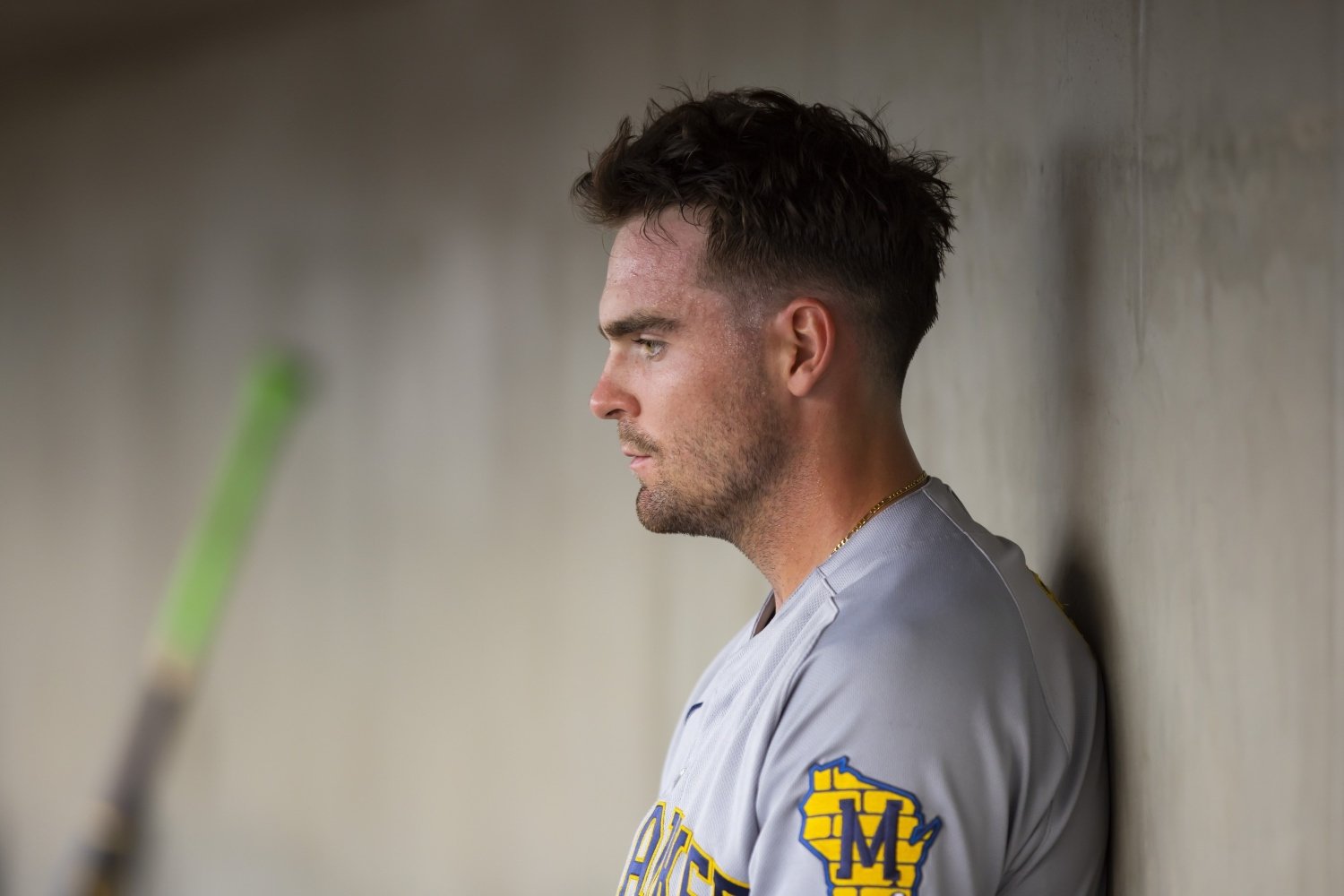 In such cases, all is not lost. Perhaps, all that is needed is to put these players at a new position. Let’s look over some Brewers prospects who probably could use a change of scenery–but not with another organization. Just a change in position. Darrien Miller, Wisconsin Timber Rattlers Current Position: Catcher New Positions: First base, left field, designated hitter Darrien Miller has proven he can hit. That hasn’t been in doubt in his professional career. His superb OBP skills and pop are clearly there. However, he’s stuck behind Jeferson Quero and Matthew Wood at the catcher spot, and he’s never thrown out more than 28% of baserunners trying to steal. The question is, how to get that bat in the lineup? The answer: A move to first base, with time in left field and as DH. Miller’s bat would arguably play well at any of those positions, and even if he was playing at those spots, he could still serve as an emergency catcher. Satchell Norman, ACL Brewers Current Position: Catcher New Position: Left field, designated hitter Like Miller, Norman’s bat is not really in question--far from it, based on his totals as of July 21 (.998 OPS). The big problem with Norman, though, is the fact that he doesn’t deter baserunners from having larcenous thoughts. In fact, to date, he has caught 9% of baserunners trying to steal in his professional career. No, that’s not a typo. It's also not good for encouraging baserunners to be honest. His stature (5'8") makes first base an iffy option, but he isn’t much shorter than Caleb Gindl was, and Gindl held down left field for part of a season. He also could be an excellent DH option, if the bat continues to produce at its current rate. Ernesto Martinez, Wisconsin Timber Rattlers Current Position: First Base New Position: Outfield (all positions) Martinez has rebounded from an early-season slump and missing time due to injury in 2022. He’s shown excellent defense at first base, but what is intriguing was a brief stint in center field in 2021. Think of the value Eric Thames provided during his three years in Milwaukee. That's what Martinez could be, plus the ability to steal bases and handle center field. Given the struggles of Hendry Mendez and Hedbert Perez, it could help Martinez get playing time should the Brewers move Darrien Miller. Tyler Black, Biloxi Shuckers Current Position: Third Base New Positions: Left Field, First Base, Designated Hitter Black has already benefited from one position shift, going to the hot corner from second base after missing a lot of time in 2022. Black’s bat is major-league ready, and it could be argued promoting him would constitute an instant upgrade over Jesse Winker at designated hitter. Pending free agency for Rowdy Tellez in the next year or two could make first base an option, as well. Should the Brewers deal one of their outfielders, Black could be an option to hold down left field. Noah Campbell, Nashville Sounds Current Positions: Left Field, Designated Hitter, First Base, Right Field New Positions: Anywhere Campbell has, over college and his professional career, played all nine defensive positions and handled DH duties. So, the Brewers need to make more use of this, and even work him up to being a two-way player. He was good enough to notch a save in 2021 with the Mudcats. The outfield is crowded for the foreseeable future with Sal Frelick, Garrett Mitchell, Joey Wiemer, Christian Yelich, and Tyrone Taylor, but Campbell’s proven versatility makes him an ideal bench asset–Hernan Perez with a better bat.
 -
 That prospect is Noah Campbell. He was initially picked in the 19th round of the 2017 amateur draft by the Brewers, but went to college instead. The Crew then signed him when he went undrafted in the truncated 2020 amateur draft, the one that produced Garrett Mitchell and Joey Wiemer. So, what would warrant him being untouchable? Let’s take a look. Offensive Profile Campbell is a switch-hitter who draws lots of walks. In fact, in 752 professional at-bats, he has drawn 131 walks, with 215 strikeouts. Compared to the ratios of Keston Hiura and Jackson Chourio, that is quite impressive. He’s done most of his damage against right-handed pitching in 2023, but still posted a .329 OBP against left-handed pitchers. Over his minor-league career, he has also hit for a solid average (.263), posting 45 doubles and 15 home runs. The doubles and homers are roughly the same sort of production one would expect from Jeff Cirillo over a full MLB season. Campbell has seen a bit of a power surge, too, hitting eight homers this season after totaling seven in 2021 and 2022. He also has flashed some speed, stealing 20 bases in 2021, and adding a half-dozen in 2022 and (so far) in 2023. So, in terms of offense, Campbell is a solid player who doesn’t embarrass himself, and the offense has arguably gone up a level. It isn’t just his offense that Brewers fans will love, though. Defensive Versatility Often, prospects get downgraded for lack of a so-called “defensive home.” Usually, this means a liability. In Campbell’s case, though, there hasn’t been a permanent home – because he’s arguably flashed the versatility of Hernan Perez, arguably the best utility player in Brewers history. Campbell has played all three outfield positions, all four infield positions, and even donned the tools of ignorance for part of a game as a professional. He didn’t embarrass himself at any of the positions, and in fact, even collected a save during his time on the mound. With the adoption of the DH, a team has four bench spots for the position player group. One will go to a second catcher. That leaves three others to back up the other seven positions. Campbell’s competence at those positions makes him an excellent choice to be on the bench, and gives the Brewers a viable “emergency” catcher on days when they deploy William Contreras as the DH. But Wait, There’s More Campbell also made four appearances on the mound in 2021 with the Carolina Mudcats, posting an 8.10 ERA (due to giving up three runs in one outing) but also notching a save in the last appearance. He has not seen the mound since, but this could be valuable, as it gives the Crew someone who can take up some “garbage” innings in blowouts–either in the Brewers’ favor, or when the team’s on the wrong end of one. Overall Noah Campbell might not be a normal top prospect to whom a team would cleave unless they were getting a massive upgrade or star, but for the Brewers, he could be a particularly valuable and potent weapon. They should not deal him any time soon.
 -
Brewers fans rightfully consider prospects like Jackson Chourio, Tyler Black, Jeferson Quero, and Jacob Misiorowski to be virtually untouchable–not for sale under anything but the absolutely most favorable circumstances. However, there is another prospect–a surprising one–who may also warrant that status. Image courtesy of © Jeff Hanisch-USA TODAY Sports That prospect is Noah Campbell. He was initially picked in the 19th round of the 2017 amateur draft by the Brewers, but went to college instead. The Crew then signed him when he went undrafted in the truncated 2020 amateur draft, the one that produced Garrett Mitchell and Joey Wiemer. So, what would warrant him being untouchable? Let’s take a look. Offensive Profile Campbell is a switch-hitter who draws lots of walks. In fact, in 752 professional at-bats, he has drawn 131 walks, with 215 strikeouts. Compared to the ratios of Keston Hiura and Jackson Chourio, that is quite impressive. He’s done most of his damage against right-handed pitching in 2023, but still posted a .329 OBP against left-handed pitchers. Over his minor-league career, he has also hit for a solid average (.263), posting 45 doubles and 15 home runs. The doubles and homers are roughly the same sort of production one would expect from Jeff Cirillo over a full MLB season. Campbell has seen a bit of a power surge, too, hitting eight homers this season after totaling seven in 2021 and 2022. He also has flashed some speed, stealing 20 bases in 2021, and adding a half-dozen in 2022 and (so far) in 2023. So, in terms of offense, Campbell is a solid player who doesn’t embarrass himself, and the offense has arguably gone up a level. It isn’t just his offense that Brewers fans will love, though. Defensive Versatility Often, prospects get downgraded for lack of a so-called “defensive home.” Usually, this means a liability. In Campbell’s case, though, there hasn’t been a permanent home – because he’s arguably flashed the versatility of Hernan Perez, arguably the best utility player in Brewers history. Campbell has played all three outfield positions, all four infield positions, and even donned the tools of ignorance for part of a game as a professional. He didn’t embarrass himself at any of the positions, and in fact, even collected a save during his time on the mound. With the adoption of the DH, a team has four bench spots for the position player group. One will go to a second catcher. That leaves three others to back up the other seven positions. Campbell’s competence at those positions makes him an excellent choice to be on the bench, and gives the Brewers a viable “emergency” catcher on days when they deploy William Contreras as the DH. But Wait, There’s More Campbell also made four appearances on the mound in 2021 with the Carolina Mudcats, posting an 8.10 ERA (due to giving up three runs in one outing) but also notching a save in the last appearance. He has not seen the mound since, but this could be valuable, as it gives the Crew someone who can take up some “garbage” innings in blowouts–either in the Brewers’ favor, or when the team’s on the wrong end of one. Overall Noah Campbell might not be a normal top prospect to whom a team would cleave unless they were getting a massive upgrade or star, but for the Brewers, he could be a particularly valuable and potent weapon. They should not deal him any time soon. View full article
-
We’re going to start the review of the Rookie League bullpens, with the same caveat we did with their starting pitching: We are dealing with some small samples, given that the seasons only started in June. Not only that, but the Brewers have often used the “piggyback” routine (where pitchers may not pitch that deep) in the rookie leagues, which makes identifying who is starting or relieving a bit more difficult. Image courtesy of © Joe Camporeale-USA TODAY Sports That said, the rookie leagues are a place where, often, excellent talent will emerge. Let’s look through the three teams the Brewers have at this level. ACL Brewers The ACL Brewers bullpen is distorted by the presence of players sent on rehabilitation assignments. Jake Cousins and Justin Wilson combined for four appearances there, before they moved up the ladder on their recovery from injury. The top reliever for the Cactus Crew is Gerson Calzadilla, who has a sub-1.00 WHIP as of July 21. Jesus Rivero also posted a sub-1.00 WHIP before he was called up to Carolina. Manuel Rodriguez and Christofher Carrasco have also been assets for the Maryvale team, while Edrian Robinson, Anthony Perez, Anfernny Reyes, and Henrison Mota have been workhorses. Some of the Brewers’ 2023 Draft signees will likely also make appearances from the bullpen in Maryvale. DSL Brewers 1 Jose Meneses and Jesael Cabrera are arguably the two best pitchers with the DSL Brewers 1. The former has a 1.82 ERA as of July 21, while the latter posted a 1.08 WHIP. Roman Perez leads the team with four saves, but as of this writing has issued more walks than strikeouts. Yonawil Florimon has three saves, and a 2.00 WHIP. Saul Sances and Nestor Mena have also been workhorses for that squad. One interesting asset is Argenis Aparicio, who has split time between the DSL Brewers 1 bullpen and the outfield. DSL Brewers 2 Pedro Quintana has been the lockdown guy for the second Brewers affiliate in the DSL, posting a 1.50 ERA, one save, and 0.83 WHIP in six outings. Dikember Sanchez, Lenin Mendez, and Justic Caceras have all posted saves for the DSL Brewers 2, while David Dominguez, Luis Guevara, and Carlos Maurera have also worked out of the pen. Elias Gonzales, Johan Zapata, and Dencer Geraldo have also provided some innings in relief. Overview Small sample sizes aside, there is a lot to like at each of the DSL teams. Many of these pitchers are raw, but as a whole, they have not been giving up the go-fer ball. Some in the DSL are flashing brilliance out of the bullpen, and doing so in outings lasting more than one inning. In Maryvale, Calzadilla and Chavez looked like they could follow in the footsteps of other dominant Brewers relievers. View full article
-
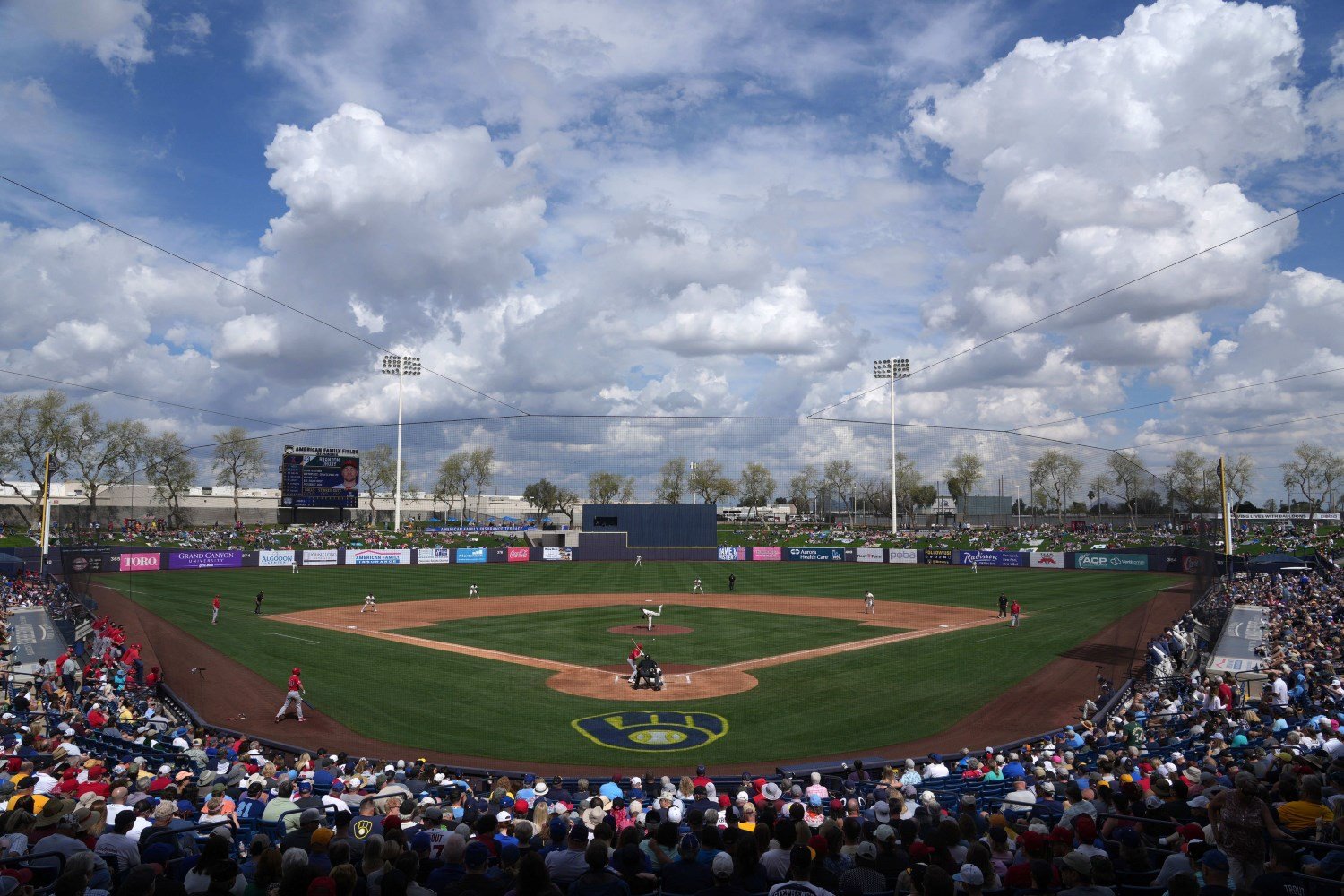 That said, the rookie leagues are a place where, often, excellent talent will emerge. Let’s look through the three teams the Brewers have at this level. ACL Brewers The ACL Brewers bullpen is distorted by the presence of players sent on rehabilitation assignments. Jake Cousins and Justin Wilson combined for four appearances there, before they moved up the ladder on their recovery from injury. The top reliever for the Cactus Crew is Gerson Calzadilla, who has a sub-1.00 WHIP as of July 21. Jesus Rivero also posted a sub-1.00 WHIP before he was called up to Carolina. Manuel Rodriguez and Christofher Carrasco have also been assets for the Maryvale team, while Edrian Robinson, Anthony Perez, Anfernny Reyes, and Henrison Mota have been workhorses. Some of the Brewers’ 2023 Draft signees will likely also make appearances from the bullpen in Maryvale. DSL Brewers 1 Jose Meneses and Jesael Cabrera are arguably the two best pitchers with the DSL Brewers 1. The former has a 1.82 ERA as of July 21, while the latter posted a 1.08 WHIP. Roman Perez leads the team with four saves, but as of this writing has issued more walks than strikeouts. Yonawil Florimon has three saves, and a 2.00 WHIP. Saul Sances and Nestor Mena have also been workhorses for that squad. One interesting asset is Argenis Aparicio, who has split time between the DSL Brewers 1 bullpen and the outfield. DSL Brewers 2 Pedro Quintana has been the lockdown guy for the second Brewers affiliate in the DSL, posting a 1.50 ERA, one save, and 0.83 WHIP in six outings. Dikember Sanchez, Lenin Mendez, and Justic Caceras have all posted saves for the DSL Brewers 2, while David Dominguez, Luis Guevara, and Carlos Maurera have also worked out of the pen. Elias Gonzales, Johan Zapata, and Dencer Geraldo have also provided some innings in relief. Overview Small sample sizes aside, there is a lot to like at each of the DSL teams. Many of these pitchers are raw, but as a whole, they have not been giving up the go-fer ball. Some in the DSL are flashing brilliance out of the bullpen, and doing so in outings lasting more than one inning. In Maryvale, Calzadilla and Chavez looked like they could follow in the footsteps of other dominant Brewers relievers.
 -
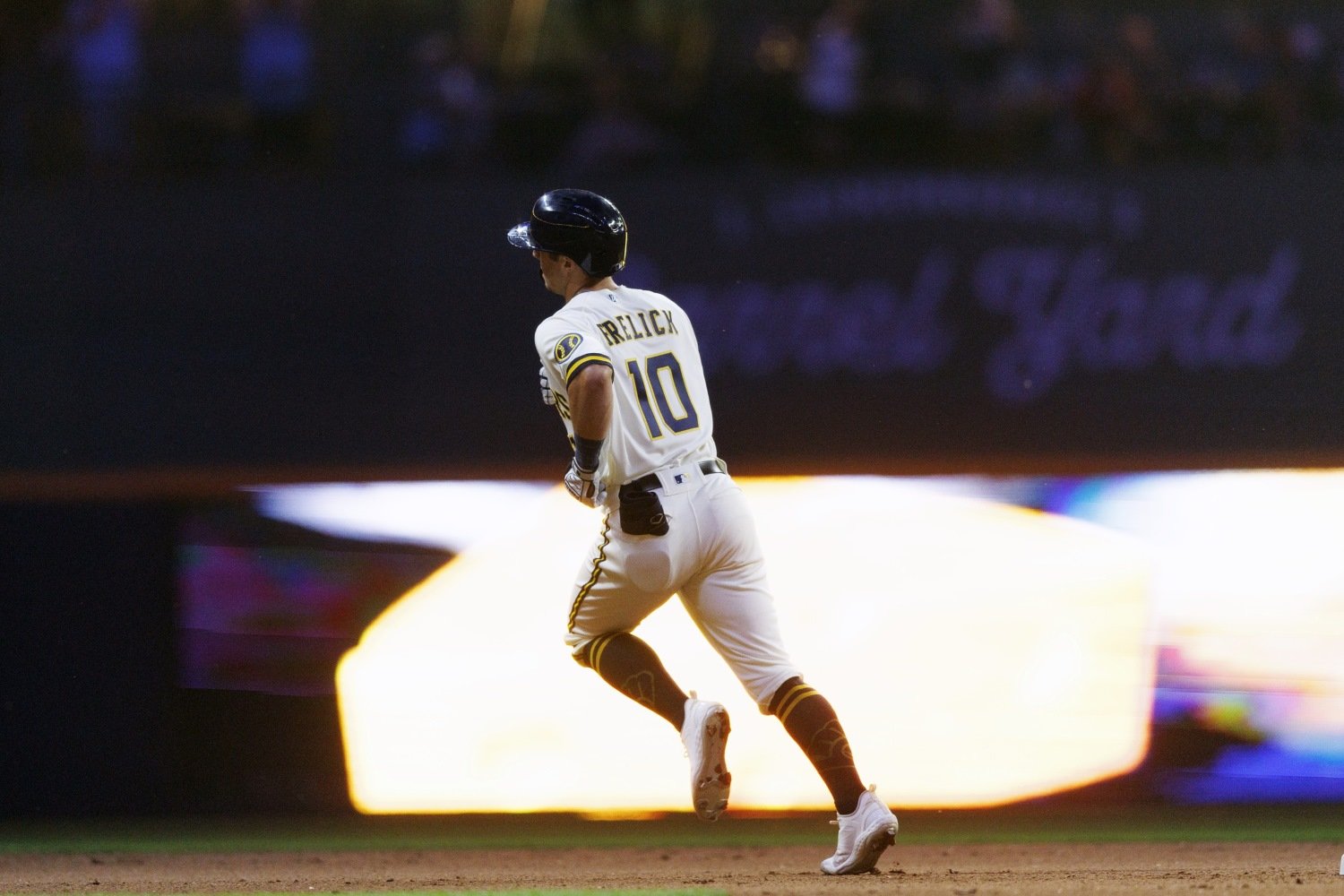 In his brief MLB tenure, Sal Frelick has batted sixth once, and cleanup twice in the three games he has played as of the morning of July 25. With his outstanding hit tool and speed, that just doesn’t make sense. It’s time to push him a little, and for the Brewers to tinker with the lineup a bit. The big move should be to have Frelick batting leadoff. Yes, Christian Yelich has done well in that spot for the Brewers in 2022 and 2023, but Frelick’s offensive skill set (as demonstrated through his pro career) screams LEADOFF HITTER. Similar Players To Frelick Batted Leadoff First, let’s go back to the players that Frelick seemed to evoke based on his minor-league career. The comparisons were rather lofty: One was Ichiro Suziki, a surefire Hall of Famer who collected 3,089 hits in MLB after he notched 1,278 in Japan. Suzuki also offered lots of speed, stealing as many as 56 bases in a season, as he usually batted leadoff for the Mariners, Yankees, and Marlins in his career. The other primary comparison was none other than Brewers legend Paul Molitor, who also mostly hit leadoff for the Crew. Like Frelick, Molitor hit for average, drew walks, and stole a lot of bases. Other players we compared Frelick to, like Lorenzo Cain and Nori Aoki, also spent a lot of time in the leadoff slot for the Crew, and both were very similar to Frelick in being able to hit for average and steal bases. The fact is, when you look at Frelick’s excellent hit-for-average tool, his speed, and his ability to draw walks, Frelick is just the guy you want leading off, especially if Yelich looks reasonably likely to hit close to 30 home runs a season again. Yelich Gets More RBIs Yelich and his apparent offensive resurgence in 2023 makes the other part of the case for Frelick in the leadoff spot. If Frelick leads off, with Willy Adames and/or William Contreras batting second, it is quite likely Yelich will come to the plate with runners on base. Yelich hitting home runs is nice, but wouldn’t it be nicer if the home runs came with runners on base? This is more about making the most of Yelich’s skills as well. Given that the Brewers have had some collective struggles scoring runs (four of the players in the July 25 lineup had an OPS+ below 100, and Andruw Monasterio’s OPS+ was at 100 on the dot, while Frelick and Jahmai Jones have very small sample sizes), if Yelich is going to have plate appearances, it is best for them to come with runners on base, so that the Brewers can score more runs. Yes, Yelich has done well in the leadoff spot, and the adage of not fixing what isn’t broken is generally wise, but in this case, the Brewers offense has been broken for a bit. Moving Frelick to leadoff may be just the spark that is needed to improve the offense.
 -
Does it hurt to keep the pipeline going? Williams-Uribe-Payamps can shut things down from 7-9. Use Milner to fill in at 7 on occasion, then have Suter, Bryse Wilson, and Rea as the multi-inning guys.
-
I agree. To me, the smart move is to punt on his 2023 season, and get him ready for a rotation sport in 2024. Send the Rockies SS Eduardo Garcia and OF Hedbert Perez for Suter. Flip Peguero to the Rays for a 2024 CB pick and some international bonus slots.
-
He's missed most of the season, there's a ton of rust. In a tight pennant race, it's a risk to put him in that spot. I hate to say it, but the Crew might be better off burning an option year and having him rehab indefinitely in the minors for 2023, and focus on having him in the 2024 rotation.
-
We need two multi-inning relievers. Ashby is likely to be back a bit too late, and I don't want to repeat the Jimmy Nelson mistake of 2019 (they put him in the majors too soon instead of using the option to have him on what would effectively be an indefinite rehab assignment). For a six-man rotation of Burnes, Woodruff, Peralta, Houser, Teheran and Rea/Miley, I see two spots that need multi-inning guys. Ideally, I'd like one to be a lefty. Suter's done well, and he is known to be a good clubhouse fit. I was thinking of dealing Peguero for a prospect to an AL contender - see if we can't re-stock the farm some more.
-
Chourio is a 0, the other four are 0.5s - to only be dealt for major talent on a long-term basis (at least through 2024 if not longer).
-
I'd like a second multi-inning guy. Maybe flip Peguero for a prospect and put Uribe in his place. Or replace the Small/Andrews duo and bump Rea to AAA.
-
I think he'd pair up nicely with Bryse Wilson as guys who could go 2 IP after a five-inning start from Rea or Teheran. Rotation of Burnes, Woodruff, Peralta, Houser, Teheran, Rea Bullpen of D. Williams, Payamps, Peguero, Milner, Suter, B. Wilson, and Small/Andrews until Miley gets off the IL would be a good approach. Miley could then bump Rea to the bullpen or AAA.