Tim Muma
-
Posts
436 -
Joined
-
Last visited
-
Days Won
1
Content Type
Profiles
Forums
Blogs
Events
News
2026 Milwaukee Brewers Top Prospects Ranking
Milwaukee Brewers Videos
2022 Milwaukee Brewers Draft Picks
Milwaukee Brewers Free Agent & Trade Rumors, Notes, & Tidbits
Guides & Resources
2023 Milwaukee Brewers Draft Picks
2024 Milwaukee Brewers Draft Picks
The Milwaukee Brewers Players Project
2025 Milwaukee Brewers Draft Pick Tracker
2026 Milwaukee Brewers Draft Tracker: Picks & Bonuses
Store
Downloads
Gallery
Everything posted by Tim Muma
-
 I've run an "All-Time Milwaukee Brewers" bracket in some of my previous writing stops. Now it's time to stick to the modern version of the franchise we (sometimes begrudgingly) love. We have 64 players - 32 pitchers and 32 hitters - as we try to determine your favorite Brewers from 2010-2019. To qualify for the bracket, pitchers had to have at least 85 innings pitched during that decade, while hitters required 250 plate appearances. Some things to keep in mind when you're voting: You can vote based on their entire Brewers' career, even if it happened outside of the 2010-2019 timeframe. Example: Corbin Burnes' performance from 2020-2022 led to his high seed, even though his 2018-2019 were uneven You should vote for your favorite player in each matchup, not just who was the "better" player. Sometimes average players create a cult following that All-Star guys never acquire Conversations with many Brewers fans of varying ages and interest levels in the team determined seeding. Remember, this is meant to be fun, and if some of the seeds are a bit "off," that hopefully means a few upsets, just as there are in the actual NCAA tournament. With all that in mind, you will vote one round at a time as we pare it down from 64 players to the Final Four and, ultimately, the fans' favorite Milwaukee Brewer from 2010-2019. We will reveal the matchups by region, and naturally, for Brewers fans, we begin with the Yount Region. #1 Ryan Braun vs. #16 Mark Reynolds Sixteen seeds never really have a chance in the opening round, and someone had to go against Braun. We all know why he is a top seed, though some in the committee wanted him lower due to his PED issues. Reynolds seemed like a nice enough guy in his one season, but fans hoped for a 2009 version (44 home runs); instead, he hit half that many, with a .196 average. #8 Brent Suter vs. #9 Dave Bush As quirky lefties go, Suter had a nice run of success in his seven years with the Brewers. But his personality and fun videos with teammates upped his "favorite" quotient for seeding. Bush had a niche fanbase who bought into his peripheral numbers and waited for a breakout. His most memorable moment came before this decade, getting the first Brewers' postseason win in 26 years. #5 Jeremy Jeffress vs. #12 Marco Estrada Estrada earned the respect of fans during the 2010s by getting the most out of his talent. He spent five seasons in Milwaukee, posting a 113 ERA+ in 2013. Jeffress brought fun, excitement, and passion to the ballpark on top of his terrific output. He could have easily been a higher seed as a fan favorite, especially factoring in his 43 saves and 157 ERA+ across seven seasons with the Brewers. #4 John Axford vs. #13 Adrian Houser Axford sported the facial hair and personality to thrive in the closer's role in Milwaukee. The Ax Man has the single-season franchise record for saves (46) and is third on the club's all-time list (106). A three-seed would've been in play if Twitter was more prominent in the early 2010s. Houser doesn't have much that stands out about him, other than a nasty sinker--but it's among the best in baseball. As a "hurler," he still needs to choke down his couple of yaks on the mound in his career. That's why a win from him would be an upchu--er, upset. #6 Corey Knebel vs. #11 Shaun Marcum Marcum caused the committee trouble in seeding. His two regular seasons with the Brewers were tremendous, and he was instrumental in the Crew's 2011 NL Central title. But his postseason failure torpedoed the club, and the committee had no clue how he was as a person. Did he ever talk? An All-Star as a closer (39 saves), Knebel had filthy stuff, as he anchored a couple of the best bullpens in club history. He was fun to watch, got pumped up, and gave it his all each time out--always a quick way to endear oneself to fans. #3 Rickie Weeks vs. #14 Manny Parra During his 11-year run with the Brewers, Weeks was part of the franchise's return to success. He owned a quick and powerful stick, plus that distinctive bat waggle. His combo of on-base skill and slugging were elite at second base, as he posted an .829 OPS (122 OPS+) from 2009-2011. Parra had the same upside as Weeks on the pitching side. He showed tremendous flashes featuring lights-out stuff, but he never put it all together. The committee wasn't sure if his scuffle with Prince Fielder helped or hurt his seeding. #7 Jimmy Nelson vs. #10 Keon Broxton Broxton brought youthful energy to the club and a tantalizing skill set. A rangy center fielder with speed on the bases and some pop in his bat intrigued the fans. He had a couple of solid seasons before Christian Yelich and Lorenzo Cain showed up. Nelson looked poise to enter "ace" status with a terrific 2017, a precursor to Burnes and Brandon Woodruff. It would have been a great story of draft and development success for the Brewers, but Nelson destroyed his shoulder so severely on the base paths he was never the same. #2 Carlos Gomez vs. #15 Hernán Pérez Pérez has a group of fans who will hate his seeding. They valued his versatility and loved his dugout antics with his teammates. Still, the committee acted more "meh" and "blah" when discussed. Gomez skyrocketed into popularity when things clicked in 2013. That season was electric, earning him a Gold Glove, an All-Star berth, and MVP votes. His fan-favorite profile was raised by his tremendous power, blazing speed, cannon for an arm, infectious personality, and a propensity for chaos. Gomez was an authentic gem who loved to play and appreciated the fans. There you have it! The first eight matchups of the Favorite Brewers Bracket (2010-2019) in the Yount Region. Every vote counts to try and advance your favorites into the round of 32. So take to Twitter to influence the outcome of the bracket!
 -
 Though the Milwaukee Brewers offense took a lot of heat in 2022, the pitching staff ultimately led to the club's downfall. Especially compared to expectations, Brewers' hurlers had a disappointing year, and the main culprit was the home run. Image courtesy of © Milwaukee Journal Sentinel-USA TODAY NETWORK Home runs were down significantly across MLB in 2022, compared to 2021. Unfortunately, the Brewers' starting pitchers took a sharp turn in the opposite direction. The bullpen only minimally improved in two key statistics: Home runs allowed per nine innings (HR/9) and the percentage of fly balls allowed that left the park (HR/FB). Going from the fifth-best staff in limiting home runs to the sixth-worst group is an enormous dive in the rankings. That happens when the league's HR/9 drops 0.17 points, but your hurlers see their HR/9 rise by 0.13 overall. The HR/FB percentage and subsequent Brewers' statistical ranking is extremely telling of the home run environment. Though Milwaukee's HR/FB ticked up just one-tenth of a percentage point, they went from the middle of the pack to third-worst in that category. Is there a rhyme or reason to the Brewers' relatively steep increase in homers allowed, or is it a fluke? The first thing that jumps out is seeing where the most significant problems arose. Let's narrow our focus to the Brewers relievers' stats over the last two seasons. As you can see, the bullpen arms improved statistically in HR/9 and HR/FB from 2021 to 2022. While the numbers paint a slightly rosier picture, the group still ranked second-worst in those two vital categories. Still, the relievers' year-to-year change wouldn't account for the ugly overall change in 2022. Take a look at the starters. And there you have the frightening turn of events with the home run ball among the starting pitchers. Their HR/9 worsened by 0.31, dropping them from the second-best rotation in baseball to average. Somehow, their HR/FB percentage rose substantially, despite a clearly deadened baseball in 2022. That 1.6-percentage point increase took the starters from number one to the fifth-worst group. When your starters give up home runs more frequently, they put the team in a hole regularly. It also tends to mean starters fail to shut down lineups when the club needs a "stopper" during a rough stretch. So where did things go wrong? It was a widespread problem for the starters. Corbin Burnes He allowed only seven home runs in 2021 (0.4 HR/9) and two dingers in the shortened 2020 season (0.3 HR/9), but his HR/9 jumped to 1.0 as his K/9 fell to its lowest mark (10.8) since 2019 Opponents' average exit velocity of 87.2 MPH was the highest allowed by Burnes since 2019 Brandon Woodruff He allowed the same number of home runs in 2022 as he did in 2021 (18), but he threw 26 fewer innings Opponents' average exit velocity (88.8 MPH) and Hard Hit % (37.5) were both easily career highs for Woodruff Eric Lauer He had a 1.53 HR/9, the worst on the team (minimum 50 innings), and his HR/FB percentage has increased in each of the last four seasons, jumping from 12.0% in 2021 to 14.1% in 2022 Lauer threw a "meatball" 8.7% of the time, according to Baseball Savant, easily the highest percentage of his career Freddy Peralta He allowed just six home runs last season, but he only logged 76.1 innings as a starter, contributing to the problem Positively, his HR/9 dropped in 2022 to 0.7 Aaron Ashby and Jason Alexander Due to injuries to Peralta and Woodruff, both Ashby (19) and Alexander (11) made more starts than the Brewers planned Ashby had a 1.3 HR/9, with all of his homers allowed as a starter (15) and zero dingers in 19.1 relief innings Alexander owned a 1.51 HR/9, second-worst on the club The issues last season were a combination of circumstances, career trends, and unlucky flukes. That doesn't necessarily give a clear picture of what the starters' performances will look like in 2023, but there are some basic thoughts to focus on. Burnes: Last year looks like a fluke. He was due to give up a decent amount of homers after barely allowing any the previous two seasons. Woodruff: Dealt with an injury early on after a career high in innings in 2021. A combination of fatigue and learning to pitch with Raynaud's Disease may have been factors. Lauer: His numbers indicate home runs will likely continue being a problem. He'll need to limit runners or make adjustments to cut down the dingers (such as not throwing so many meatballs) Peralta: The health of his shoulder will be the number one factor. Even if his HR/9 increases in 2023, it helps the Brewers if Peralta throws 130+ innings as a starter. Ashby: Unfortunately, he will miss time in the first half of the season. This might make it more likely he pitches primarily in relief in 2023. Alexander: The Brewers added a lot of depth with their pitching. This should limit Alexander from taking the mound as a starter - if at all. Wade Miley: The veteran has a career 0.98 HR/9 rate. He only threw 37 innings with the Chicago Cubs last season but had a 0.94 HR/9 in 163 innings in 2021. Adrian Houser: He might make some starts again this season. Home runs have never been his issue (career 0.88 HR/9), but general ineffectiveness is the concern. Overall, the Brewers should see a sizable decline in home runs allowed this season, at least among the starters. There are still concerns in the bullpen, but 2021 showed that if the starting staff keeps the ball in the yard, the relievers' dinger problem is less impactful. Some of the worst culprits out of the pen last season are gone or should see less time on the bump: Taylor Rogers, Trevor Kelley, Miguel Sanchez, Trevor Gott, and Josh Hader (just saying). Meanwhile, returning relievers who did a good job limiting the long ball last season need to do it again: Devin Williams, Hoby Milner, Peter Strzelecki, and Ashby. One holdover from 2022 that many will keep an eye on is Matt Bush. He owns a 1.3 HR/9 for his career, but it skyrocketed to 2.3 when he pitched for the Brewers last season. It was a small sample size, but Milwaukee will need Bush to lock down high-leverage innings ahead of Williams in 2023. Where is your confidence in the pitching staff and their ability to keep down the home runs? It's fair to worry about the bullpen, but outside of Lauer, the rotation should be much better and see their fortunes turn in the luck department. As always, health will be a significant indicator of success for the pitchers, and they will be the keys to a potential NL Central title. View full article
-
- 2
-

-
 Home runs were down significantly across MLB in 2022, compared to 2021. Unfortunately, the Brewers' starting pitchers took a sharp turn in the opposite direction. The bullpen only minimally improved in two key statistics: Home runs allowed per nine innings (HR/9) and the percentage of fly balls allowed that left the park (HR/FB). Going from the fifth-best staff in limiting home runs to the sixth-worst group is an enormous dive in the rankings. That happens when the league's HR/9 drops 0.17 points, but your hurlers see their HR/9 rise by 0.13 overall. The HR/FB percentage and subsequent Brewers' statistical ranking is extremely telling of the home run environment. Though Milwaukee's HR/FB ticked up just one-tenth of a percentage point, they went from the middle of the pack to third-worst in that category. Is there a rhyme or reason to the Brewers' relatively steep increase in homers allowed, or is it a fluke? The first thing that jumps out is seeing where the most significant problems arose. Let's narrow our focus to the Brewers relievers' stats over the last two seasons. As you can see, the bullpen arms improved statistically in HR/9 and HR/FB from 2021 to 2022. While the numbers paint a slightly rosier picture, the group still ranked second-worst in those two vital categories. Still, the relievers' year-to-year change wouldn't account for the ugly overall change in 2022. Take a look at the starters. And there you have the frightening turn of events with the home run ball among the starting pitchers. Their HR/9 worsened by 0.31, dropping them from the second-best rotation in baseball to average. Somehow, their HR/FB percentage rose substantially, despite a clearly deadened baseball in 2022. That 1.6-percentage point increase took the starters from number one to the fifth-worst group. When your starters give up home runs more frequently, they put the team in a hole regularly. It also tends to mean starters fail to shut down lineups when the club needs a "stopper" during a rough stretch. So where did things go wrong? It was a widespread problem for the starters. Corbin Burnes He allowed only seven home runs in 2021 (0.4 HR/9) and two dingers in the shortened 2020 season (0.3 HR/9), but his HR/9 jumped to 1.0 as his K/9 fell to its lowest mark (10.8) since 2019 Opponents' average exit velocity of 87.2 MPH was the highest allowed by Burnes since 2019 Brandon Woodruff He allowed the same number of home runs in 2022 as he did in 2021 (18), but he threw 26 fewer innings Opponents' average exit velocity (88.8 MPH) and Hard Hit % (37.5) were both easily career highs for Woodruff Eric Lauer He had a 1.53 HR/9, the worst on the team (minimum 50 innings), and his HR/FB percentage has increased in each of the last four seasons, jumping from 12.0% in 2021 to 14.1% in 2022 Lauer threw a "meatball" 8.7% of the time, according to Baseball Savant, easily the highest percentage of his career Freddy Peralta He allowed just six home runs last season, but he only logged 76.1 innings as a starter, contributing to the problem Positively, his HR/9 dropped in 2022 to 0.7 Aaron Ashby and Jason Alexander Due to injuries to Peralta and Woodruff, both Ashby (19) and Alexander (11) made more starts than the Brewers planned Ashby had a 1.3 HR/9, with all of his homers allowed as a starter (15) and zero dingers in 19.1 relief innings Alexander owned a 1.51 HR/9, second-worst on the club The issues last season were a combination of circumstances, career trends, and unlucky flukes. That doesn't necessarily give a clear picture of what the starters' performances will look like in 2023, but there are some basic thoughts to focus on. Burnes: Last year looks like a fluke. He was due to give up a decent amount of homers after barely allowing any the previous two seasons. Woodruff: Dealt with an injury early on after a career high in innings in 2021. A combination of fatigue and learning to pitch with Raynaud's Disease may have been factors. Lauer: His numbers indicate home runs will likely continue being a problem. He'll need to limit runners or make adjustments to cut down the dingers (such as not throwing so many meatballs) Peralta: The health of his shoulder will be the number one factor. Even if his HR/9 increases in 2023, it helps the Brewers if Peralta throws 130+ innings as a starter. Ashby: Unfortunately, he will miss time in the first half of the season. This might make it more likely he pitches primarily in relief in 2023. Alexander: The Brewers added a lot of depth with their pitching. This should limit Alexander from taking the mound as a starter - if at all. Wade Miley: The veteran has a career 0.98 HR/9 rate. He only threw 37 innings with the Chicago Cubs last season but had a 0.94 HR/9 in 163 innings in 2021. Adrian Houser: He might make some starts again this season. Home runs have never been his issue (career 0.88 HR/9), but general ineffectiveness is the concern. Overall, the Brewers should see a sizable decline in home runs allowed this season, at least among the starters. There are still concerns in the bullpen, but 2021 showed that if the starting staff keeps the ball in the yard, the relievers' dinger problem is less impactful. Some of the worst culprits out of the pen last season are gone or should see less time on the bump: Taylor Rogers, Trevor Kelley, Miguel Sanchez, Trevor Gott, and Josh Hader (just saying). Meanwhile, returning relievers who did a good job limiting the long ball last season need to do it again: Devin Williams, Hoby Milner, Peter Strzelecki, and Ashby. One holdover from 2022 that many will keep an eye on is Matt Bush. He owns a 1.3 HR/9 for his career, but it skyrocketed to 2.3 when he pitched for the Brewers last season. It was a small sample size, but Milwaukee will need Bush to lock down high-leverage innings ahead of Williams in 2023. Where is your confidence in the pitching staff and their ability to keep down the home runs? It's fair to worry about the bullpen, but outside of Lauer, the rotation should be much better and see their fortunes turn in the luck department. As always, health will be a significant indicator of success for the pitchers, and they will be the keys to a potential NL Central title.
 -
 Though he had a down year in 2022, Luke Voit has shown the ability to produce lofty power numbers in the past, even in part-time duty. It surprised him that teams weren't calling with an MLB contract offer, but he also wanted a shot with a winning team. Now Voit has to earn his way onto the Opening Day roster. He has his offensive flaws and defensive limitations, but Voit could fill the giant void left by Hunter Renfroe on the right side of the dish. Matthew Trueblood shared an interesting comparison of Voit and Rowdy Tellez to show how they complement each other. The question for the Brewers will be, will the 26-man roster be better with Voit's bat as a 1B/DH or with a defensively versatile player? Let's look at some areas where Voit's numbers could tempt Milwaukee to keep him on the big-league club, despite how it might limit the Crew's flexibility. His Previous Three Seasons (2019-2021) The 2022 campaign was a struggle for Voit (to say the least), playing in two home parks that work against right-handed power hitters (PETCO Park in San Diego, and Nationals Park in Washington). He also felt lingering effects from knee surgery before the 2021 season to repair a torn meniscus. That surgery kept him from repeating his performance from 2020, when Voit led baseball in home runs, blasting 22 dingers in 234 plate appearances. With a pair of shortened seasons following a terrific 2019 season, his three campaigns before last season were All-Star worthy. 162-game averages: .261/.356/.494/.850 36 HR, 22 doubles, 100 RBI, 93 R Voit will never see those counting stats in a season, because he won't come close to playing 162 games. However, finding the best matchups for 100 games of Voit while securing an .850 OPS would be a fantastic development for the Brewers' offense. Especially against southpaws, a known struggle for the recent Milwaukee squads, Voit might bring a semblance of consistency. Platoon Splits You might have heard that Voit doesn't have traditional left-right platoon splits, meaning he hasn't been noticeably better versus left-handed pitchers than against righties. While it's true Voit has better career stats against right-handers, it doesn't mean he's been bad against lefties. Yes, 2022 was terrible from that perspective, but guys are allowed to have a bad season. If we again check out those previous three years, the numbers look much better with the platoon advantage. As noted before, Voit's bat can replace some of the lost production created with the Renfroe trade to the Los Angeles Angels. Renfroe was easily the Brewers' best hitter against lefties (minimum 50 PAs) last season. Only Mike Brosseau and Luis Urias in 2022 had numbers better than Voit's worst season versus southpaws between 2019-2021; those stats were only slightly better. Like many in today's game, Voit's big issue is strikeouts. He owns a career strikeout percentage (K%) of 28.5%, though it has jumped up over 30% in the past two seasons. Can the Brewers stomach a hitter with such a high propensity for whiffs? They've tried with Keston Hiura, whose career rate is 36%. Voit also owns a 10.2% walk percentage (BB%), nearly three percentage points higher than Hiura's (7.4%). Theoretically, this should put Voit ahead of Hiura on the depth chart, but there are other decisions to make. The Brewers will likely keep 13 position players, and view Tellez as the primary first baseman. Manager Craig Counsell tends to prefer guys who can offer defensive versatility and who give him a chance to create numerous lineups and matchups. Voit can only play first base in the field, and Jesse Winker is likely holding down the DH spot against righties. Milwaukee's brass might feel uncomfortable carrying two first basemen when they could instead have a utility player to cover multiple spots. These decisions often come down to minor-league options and the hope to keep organizational depth for as long as possible. Voit is under a minor-league contract, but he might have a contract clause that lets him elect free agency if he isn't on the big-league club by a specific date. Brice Turang and Mike Brosseau each have options that could hurt their chances, especially since Hiura is out of options. These four players don't factor in the outfield, either. Would the Brewers carry only four true outfielders? They could feel that Brian Anderson, Brosseau, and Winker (when he's ready) can help hold down the outfield. If so, that allows Milwaukee's staff to carry someone like Voit. The difference between winning a division title and missing the playoffs often happens in the margins. Finding a way to utilize a player like Voit without compromising the core of your team improves the chances that that team realizes its full potential. If Voit can rediscover something close to his previous output, he might be the game-changer the Brewers need.
 -
As Spring Training begins, remaining free agents get antsy and start taking offers at which they would have balked in December. The Milwaukee Brewers benefited from that, as they signed big, right-handed hitting Luke Voit to a minor-league contract. It could be a huge deal for both sides if things break right. Image courtesy of © Jeff Curry-USA TODAY Sports Though he had a down year in 2022, Luke Voit has shown the ability to produce lofty power numbers in the past, even in part-time duty. It surprised him that teams weren't calling with an MLB contract offer, but he also wanted a shot with a winning team. Now Voit has to earn his way onto the Opening Day roster. He has his offensive flaws and defensive limitations, but Voit could fill the giant void left by Hunter Renfroe on the right side of the dish. Matthew Trueblood shared an interesting comparison of Voit and Rowdy Tellez to show how they complement each other. The question for the Brewers will be, will the 26-man roster be better with Voit's bat as a 1B/DH or with a defensively versatile player? Let's look at some areas where Voit's numbers could tempt Milwaukee to keep him on the big-league club, despite how it might limit the Crew's flexibility. His Previous Three Seasons (2019-2021) The 2022 campaign was a struggle for Voit (to say the least), playing in two home parks that work against right-handed power hitters (PETCO Park in San Diego, and Nationals Park in Washington). He also felt lingering effects from knee surgery before the 2021 season to repair a torn meniscus. That surgery kept him from repeating his performance from 2020, when Voit led baseball in home runs, blasting 22 dingers in 234 plate appearances. With a pair of shortened seasons following a terrific 2019 season, his three campaigns before last season were All-Star worthy. 162-game averages: .261/.356/.494/.850 36 HR, 22 doubles, 100 RBI, 93 R Voit will never see those counting stats in a season, because he won't come close to playing 162 games. However, finding the best matchups for 100 games of Voit while securing an .850 OPS would be a fantastic development for the Brewers' offense. Especially against southpaws, a known struggle for the recent Milwaukee squads, Voit might bring a semblance of consistency. Platoon Splits You might have heard that Voit doesn't have traditional left-right platoon splits, meaning he hasn't been noticeably better versus left-handed pitchers than against righties. While it's true Voit has better career stats against right-handers, it doesn't mean he's been bad against lefties. Yes, 2022 was terrible from that perspective, but guys are allowed to have a bad season. If we again check out those previous three years, the numbers look much better with the platoon advantage. As noted before, Voit's bat can replace some of the lost production created with the Renfroe trade to the Los Angeles Angels. Renfroe was easily the Brewers' best hitter against lefties (minimum 50 PAs) last season. Only Mike Brosseau and Luis Urias in 2022 had numbers better than Voit's worst season versus southpaws between 2019-2021; those stats were only slightly better. Like many in today's game, Voit's big issue is strikeouts. He owns a career strikeout percentage (K%) of 28.5%, though it has jumped up over 30% in the past two seasons. Can the Brewers stomach a hitter with such a high propensity for whiffs? They've tried with Keston Hiura, whose career rate is 36%. Voit also owns a 10.2% walk percentage (BB%), nearly three percentage points higher than Hiura's (7.4%). Theoretically, this should put Voit ahead of Hiura on the depth chart, but there are other decisions to make. The Brewers will likely keep 13 position players, and view Tellez as the primary first baseman. Manager Craig Counsell tends to prefer guys who can offer defensive versatility and who give him a chance to create numerous lineups and matchups. Voit can only play first base in the field, and Jesse Winker is likely holding down the DH spot against righties. Milwaukee's brass might feel uncomfortable carrying two first basemen when they could instead have a utility player to cover multiple spots. These decisions often come down to minor-league options and the hope to keep organizational depth for as long as possible. Voit is under a minor-league contract, but he might have a contract clause that lets him elect free agency if he isn't on the big-league club by a specific date. Brice Turang and Mike Brosseau each have options that could hurt their chances, especially since Hiura is out of options. These four players don't factor in the outfield, either. Would the Brewers carry only four true outfielders? They could feel that Brian Anderson, Brosseau, and Winker (when he's ready) can help hold down the outfield. If so, that allows Milwaukee's staff to carry someone like Voit. The difference between winning a division title and missing the playoffs often happens in the margins. Finding a way to utilize a player like Voit without compromising the core of your team improves the chances that that team realizes its full potential. If Voit can rediscover something close to his previous output, he might be the game-changer the Brewers need. View full article
-
 PECOTA allows you to see a variety of projections if a player plays up to their highest or down to their lowest levels. Thus, looking at their 50th percentile stats is the "safest" play. But it's also fun to see what they could accomplish if they reached their 70th or 80th percentile figures. Let's first stick with the 50th percentile to check out the projections for the anticipated starting rotation. Starting with Corbin Burnes, his ERA, strikeout-per-nine (K/9), and FIP project better than last season. PECOTA sees him with 217 total strikeouts over 174.1 innings (about 28 fewer frames than last season). Though the numbers see fewer innings, it also displays six fewer home runs allowed in 2023. Last season, the homer bug bit Burnes, as he surrendered 23 dingers after giving up only seven in 2021. So while PECOTA sees his WHIP rising north of his career average, everything else is on track for another stellar year. Of course, those are only his 50th percentile numbers. Burnes is 28 years old, and has an argument as the best MLB pitcher since 2020. For a guy in the prime of his career - and healthy - what would 80th-percentile projections say? Congratulations to the 2023 NL Cy Young Award winner: 2.18 ERA 2.72 FIP 1.03 WHIP 11.20 K/9 2.26 BB/9 The Brewers' co-ace, Brandon Woodruff, shouldn't be far behind, even if PECOTA sees some regression. The projections show a slight decrease in K/9 from 11.20 to 10.58 with a higher WHIP and FIP. But assuming Woodruff throws more innings as projected, his walks-per-nine (BB/9) and ERA could improve over last season. If Woody can manage his Reynaud's disease and approach what he did in the second half of 2022 (6-1, 2.38 ERA, 0.977 WHIP), the Brewers have the most formidable one-two punch in baseball. As far as we can tell, projections don't include the "bulldog mentality" factor. Woodruff's toughness and approach to pitching could play a factor in reaching greater heights, whether it's measurable or not. Can the 30-year-old get in on the Cy Young conversation by hitting his 80th percentile projections? 2.46 ERA 3.19 FIP 1.04 WHIP 10.63 K/9 2.19 BB/9 That brings us to the bridge, the linchpin, the potential game-changer in the middle of the rotation: Freddy Peralta. The 26-year-old right-hander says he's fully healthy, but has battled shoulder and lat issues the past two seasons. After just 78 innings pitched in 2022, PECOTA projects him to get to 111.2 frames this season. Milwaukee is probably hoping for around 130 in a perfect world. Like Woodruff, more innings could lead to less dominance, though only minimally. PECOTA projects Peralta to increase his BB/9 by 0.24 but also increase his strikeouts by a full batter per nine frames (that's a win!). Overall, the projection sees Peralta allowing plenty more base runners but using his strikeout rate and a terrific ground ball percentage (36%) to get out of jams. PECOTA envisions a 3.26 ERA for Peralta, down from 3.58 in 2022. With the Brewers monitoring his shoulder and youth on his side, Peralta's 80th-percentile numbers are top-to-the-rotation worthy. 2.94 ERA 3.50 FIP 1.14 WHIP 10.90 K/9 3.10 BB/9 Perhaps the most intriguing arm, in terms of floor-to-ceiling prospects, belongs to Eric Lauer. He was incredible to start 2022, posting a 2.38 ERA with a 10.3 K/9 and 3.8 K/BB ratio through his first 10 starts. His next 17 outings led to a 4.95 ERA, though, thanks primarily to giving up 1.9 home runs per nine innings (HR/9). So while the Brewers will gladly take Lauer's 3.69 ERA in 2022 as a fourth starter, other stats show risk (e.g., 4.50 FIP). PECOTA seems to be splitting the difference between last year's performance and the concerns over Lauer's metrics. The projection has Lauer's walks and strikeouts remaining steady, but sees his WHIP jumping to 1.32 with a 3.89 ERA. Perhaps the most significant positive is PECOTA's projection of a 4.15 FIP. That's much better than his 4.50 FIP last season, meaning (ideally) less volatility in 2023. Again, the Brewers should be happy with a sub-4.00 ERA in that spot, but let's continue to play the optimist and look at Lauer's 80th-percentile projections. 3.59 ERA 3.98 FIP 1.27 WHIP 8.71 K/9 3.11 BB/9 Last and (likely) least valuable is Wade Miley. The 36-year-old southpaw tossed just 37 innings last season due to injury. His 2021 campaign was fantastic for a projected fifth starter, posting a 3.37 ERA across 163 frames. Miley isn't going to get a lot of strikeouts, though, and he's allowed more than nine hits per nine innings in 2020 and 2021. PECOTA doesn't feel great about Miley's ability to bounce back in 2023. PECOTA projects a 4.42 ERA for Miley with a stunning 1.45 WHIP. His inability to get whiffs plays a considerable role in the projection, with a 6.6 K/9 rate and a .312 BABIP. Adding to the problem in the projections are 40 walks in 108.2 innings. Miley might be least likely to find his 80th-percentile production, but this is what that could look like in 2023. 4.06 ERA 4.03 FIP 1.39 WHIP 6.6 K/9 3.0 BB/9 The Brewers will certainly have several other pitchers making starts throughout the season, and those guys will play a significant role in determining the team's win total. Last year, those "extra guys" were mostly brutal. Losing Aaron Ashby to start 2023 doesn't help the cause, but hurlers like Bryse Wilson, Janson Junk, and prospect Robert Gasser should do a better job of filling the void in 2023. Milwaukee also still has Adrian Houser, who has displayed both brilliance and ineptitude in his time with the Brewers. As for the projected starting five, let's not pretend it will all be roses. You've seen the 80th-percentile and 50th-percentile projections; now peek at the 20th-percentile stats should any of these starters struggle. At the bottom of the article, you'll find their 80th, 50th, and 20th-percentile PECOTA projections. Let's play a game with them. Based on the following criteria, how would you break down these five pitchers to give the Brewers the best chance at success? Choose two pitchers to reach their 80th-percentile figures Choose two hurlers to fall to their 20th-percentile numbers Choose one starter to stick at his 50th-percentile range Do you want the most dominant numbers for the top two pitchers? Do you find the most balanced way to have a strong starting five? Let us know in the comments how you would determine the best version of the starting five based on the criteria above.
 -
The underachieving pitching staff was the main reason the Milwaukee Brewers failed to reach the postseason in 2022. With the new PECOTA projections released, there is renewed hope in the starting rotation's numbers for 2023. Image courtesy of © Michael McLoone-USA TODAY Sports PECOTA allows you to see a variety of projections if a player plays up to their highest or down to their lowest levels. Thus, looking at their 50th percentile stats is the "safest" play. But it's also fun to see what they could accomplish if they reached their 70th or 80th percentile figures. Let's first stick with the 50th percentile to check out the projections for the anticipated starting rotation. Starting with Corbin Burnes, his ERA, strikeout-per-nine (K/9), and FIP project better than last season. PECOTA sees him with 217 total strikeouts over 174.1 innings (about 28 fewer frames than last season). Though the numbers see fewer innings, it also displays six fewer home runs allowed in 2023. Last season, the homer bug bit Burnes, as he surrendered 23 dingers after giving up only seven in 2021. So while PECOTA sees his WHIP rising north of his career average, everything else is on track for another stellar year. Of course, those are only his 50th percentile numbers. Burnes is 28 years old, and has an argument as the best MLB pitcher since 2020. For a guy in the prime of his career - and healthy - what would 80th-percentile projections say? Congratulations to the 2023 NL Cy Young Award winner: 2.18 ERA 2.72 FIP 1.03 WHIP 11.20 K/9 2.26 BB/9 The Brewers' co-ace, Brandon Woodruff, shouldn't be far behind, even if PECOTA sees some regression. The projections show a slight decrease in K/9 from 11.20 to 10.58 with a higher WHIP and FIP. But assuming Woodruff throws more innings as projected, his walks-per-nine (BB/9) and ERA could improve over last season. If Woody can manage his Reynaud's disease and approach what he did in the second half of 2022 (6-1, 2.38 ERA, 0.977 WHIP), the Brewers have the most formidable one-two punch in baseball. As far as we can tell, projections don't include the "bulldog mentality" factor. Woodruff's toughness and approach to pitching could play a factor in reaching greater heights, whether it's measurable or not. Can the 30-year-old get in on the Cy Young conversation by hitting his 80th percentile projections? 2.46 ERA 3.19 FIP 1.04 WHIP 10.63 K/9 2.19 BB/9 That brings us to the bridge, the linchpin, the potential game-changer in the middle of the rotation: Freddy Peralta. The 26-year-old right-hander says he's fully healthy, but has battled shoulder and lat issues the past two seasons. After just 78 innings pitched in 2022, PECOTA projects him to get to 111.2 frames this season. Milwaukee is probably hoping for around 130 in a perfect world. Like Woodruff, more innings could lead to less dominance, though only minimally. PECOTA projects Peralta to increase his BB/9 by 0.24 but also increase his strikeouts by a full batter per nine frames (that's a win!). Overall, the projection sees Peralta allowing plenty more base runners but using his strikeout rate and a terrific ground ball percentage (36%) to get out of jams. PECOTA envisions a 3.26 ERA for Peralta, down from 3.58 in 2022. With the Brewers monitoring his shoulder and youth on his side, Peralta's 80th-percentile numbers are top-to-the-rotation worthy. 2.94 ERA 3.50 FIP 1.14 WHIP 10.90 K/9 3.10 BB/9 Perhaps the most intriguing arm, in terms of floor-to-ceiling prospects, belongs to Eric Lauer. He was incredible to start 2022, posting a 2.38 ERA with a 10.3 K/9 and 3.8 K/BB ratio through his first 10 starts. His next 17 outings led to a 4.95 ERA, though, thanks primarily to giving up 1.9 home runs per nine innings (HR/9). So while the Brewers will gladly take Lauer's 3.69 ERA in 2022 as a fourth starter, other stats show risk (e.g., 4.50 FIP). PECOTA seems to be splitting the difference between last year's performance and the concerns over Lauer's metrics. The projection has Lauer's walks and strikeouts remaining steady, but sees his WHIP jumping to 1.32 with a 3.89 ERA. Perhaps the most significant positive is PECOTA's projection of a 4.15 FIP. That's much better than his 4.50 FIP last season, meaning (ideally) less volatility in 2023. Again, the Brewers should be happy with a sub-4.00 ERA in that spot, but let's continue to play the optimist and look at Lauer's 80th-percentile projections. 3.59 ERA 3.98 FIP 1.27 WHIP 8.71 K/9 3.11 BB/9 Last and (likely) least valuable is Wade Miley. The 36-year-old southpaw tossed just 37 innings last season due to injury. His 2021 campaign was fantastic for a projected fifth starter, posting a 3.37 ERA across 163 frames. Miley isn't going to get a lot of strikeouts, though, and he's allowed more than nine hits per nine innings in 2020 and 2021. PECOTA doesn't feel great about Miley's ability to bounce back in 2023. PECOTA projects a 4.42 ERA for Miley with a stunning 1.45 WHIP. His inability to get whiffs plays a considerable role in the projection, with a 6.6 K/9 rate and a .312 BABIP. Adding to the problem in the projections are 40 walks in 108.2 innings. Miley might be least likely to find his 80th-percentile production, but this is what that could look like in 2023. 4.06 ERA 4.03 FIP 1.39 WHIP 6.6 K/9 3.0 BB/9 The Brewers will certainly have several other pitchers making starts throughout the season, and those guys will play a significant role in determining the team's win total. Last year, those "extra guys" were mostly brutal. Losing Aaron Ashby to start 2023 doesn't help the cause, but hurlers like Bryse Wilson, Janson Junk, and prospect Robert Gasser should do a better job of filling the void in 2023. Milwaukee also still has Adrian Houser, who has displayed both brilliance and ineptitude in his time with the Brewers. As for the projected starting five, let's not pretend it will all be roses. You've seen the 80th-percentile and 50th-percentile projections; now peek at the 20th-percentile stats should any of these starters struggle. At the bottom of the article, you'll find their 80th, 50th, and 20th-percentile PECOTA projections. Let's play a game with them. Based on the following criteria, how would you break down these five pitchers to give the Brewers the best chance at success? Choose two pitchers to reach their 80th-percentile figures Choose two hurlers to fall to their 20th-percentile numbers Choose one starter to stick at his 50th-percentile range Do you want the most dominant numbers for the top two pitchers? Do you find the most balanced way to have a strong starting five? Let us know in the comments how you would determine the best version of the starting five based on the criteria above. View full article
-
Tough to point out specific situations, in part because the more you break it down, the more you can argue small sample sizes of course. I think it's more in his day-to-day approach. Statistically, according to Baseball Reference's "Leverage" stats, his approach is working in high leverage, but terrible in "medium leverage." Sometimes a 2-run double in the 5th inning of a 2-run game is more "valuable" than a hit in a high leverage situation. Or wouldn't it have been nice if a few times last season the Brewers turned a 2-1 lead into a 5-1 lead instead of playing a tense, one-run game that tore through their bullpen. So I think it's more of a big-picture approach and how it would improve Tellez and the offense over the course of the entire season.
-
Certainly there is a risk in making changes; however, the league also makes adjustments to attack players' weaknesses and tendencies. So staying the course carries its own risks. Considering his late-inning heroics last season, you can argue he shouldn't change his approach - in those situations. But there's no reason a Major Leaguer can't have one, general approach for the majority of their at-bats, but alter that approach in certain scenarios. As noted in the piece, the concern is the little amount of damage he did on pitches in the heart of the plate. While the home runs are terrific, he left a LOT of production behind. For an offense who had consistency issues, I'd argue that 5 fewer home runs from Tellez, but an increase in AVG/OBP/SLG is better for the Brewers overall (and Tellez himself).
-
After joining the Milwaukee Brewers in the middle of 2021, Rowdy Tellez finally got the opportunity to play full-time in 2022, and he responded with 35 home runs and 89 RBI. Many see an even bigger year coming in 2023 with the new shift rules, but Tellez should use an adjustment in his plate discipline to take full advantage of restricted shifting. Image courtesy of © Dale Zanine-USA TODAY Sports The conversation around plate discipline typically centers on refraining from chasing pitches outside the strike zone. If Rowdy Tellez is going to take the next step with the Brewers, though, he has to be more aggressive, especially on pitches in the zone. While there's value in working longer at-bats and seeing many pitches, it can be an overall negative to watch too many meatballs go by, missing the chance to produce damage. Before we get further into Tellez's plate discipline, let's look at the superficial stats. Tellez owned a 10.4% walk percentage (BB%) in 2022, which was good for 31st in MLB. That marked his career-best BB%, 2.1% higher than his career average. Unfortunately, it only translated into a .306 OBP, tied for 100th among qualified hitters. The low OBP stems from Tellez's meager .215 batting average. Despite the lower-than-ideal OBP and average, Tellez's power stroke helped balance out his production with a .461 slugging percentage last season (37th in MLB). Yet for a man with the eighth-most homers in baseball, his 115 OPS+ in 2022 felt underwhelming. Tellez's OPS+ ranked just 63rd out of 129 qualified batters. While hitting into the shift had something to do with the low average and muted OPS+, several other trends are as significant. Simply put, Tellez takes too many pitches that he could crush. Taking too many strikes can also put a hitter on his heels and at a disadvantage too often. Two key stats from 2022: Swung at 60.5% of pitches in the strike zone (Z-Swing%), the seventh-lowest percentage in MLB Had a 19.5% called strike percentage (CStr%), the 17th-highest percentage in MLB That is a lot of hittable pitches in no danger of causing problems for opposing hurlers. Not only are many of these pitches wasted, they often put the hitter behind in the count and on the defensive. Considering Tellez was in the 98th percentile for maximum exit velocity in 2022 and the 80th percentile or better in average exit velocity, Barrel%, and HardHit%, more hacks earlier in counts could be a game-changer. Another visualization of Tellez's missed opportunities last season can be seen in Statcast's swing-take zone mapping. As you can see below, there are four attack regions for a hitter: Heart: The ideal hitting zone in the middle of the plate, well within the top and bottom of the strike zone Shadow: This region is split in half vertically and horizontally both inside the strike zone and outside of it Chase: The area outside the strike zone that is tempting enough to make hitters chase high velocity or quality movement Waste: Well outside of the strike zone, where only free swingers and desperately fooled hitters take cuts Statcast takes the data from these regions to create a run value based on the outcome of the pitch in each section (walk, home run, strikeout, etc.). If you peek back at Tellez's illustration above, he had a -4 run value on pitches in the heart of the zone and -8 runs in the shadow region. His 2022 rankings in each area: Heart - 130th Shadow - 87th Chase - 116th Waste - 96th The place to do the most damage is in the heart of the plate, and to do that, more swings (and hard contact) are necessary. Especially with MLB limiting defensive shifting in 2023, Tellez needs to take advantage by worrying less about taking pitches and more about hitting mistakes. As he has gotten more playing time over the past two seasons, the shifting increased against him, making a big difference in his weighted on-base average (wOBA). Tellez also saw his batting average on balls in play (BABIP) plummet to .215 last season. The combination of shifting and rotten luck played a significant role for a player with a career .255 BABIP. These numbers should excite Brewers fans for 2023, and motivate Tellez to get more hacks in. Last year, he hit 129 ground balls into the shift and picked up just 16 hits (.124 average). With only two defenders on the right side of second base, coupled with Tellez's 86th-percentile average exit velocity, more hits should be coming. And if he puts even more balls in play, the production increases further. In fact, his expected batting average in 2022 was .252 vs. his actual .219 mark. Hopefully, Tellez and the Brewers at least discuss an altered strategy at the dish. It's challenging to modify a hitter's tendency mid-career, but adjusting to changing environments and results is essential. Many people have suggested that Tellez is a strong breakout candidate because of the shifting rules. If he can also lose his patience more often, Tellez could find himself among the best offensive first basemen in the league and on the All-Star roster. View full article
-
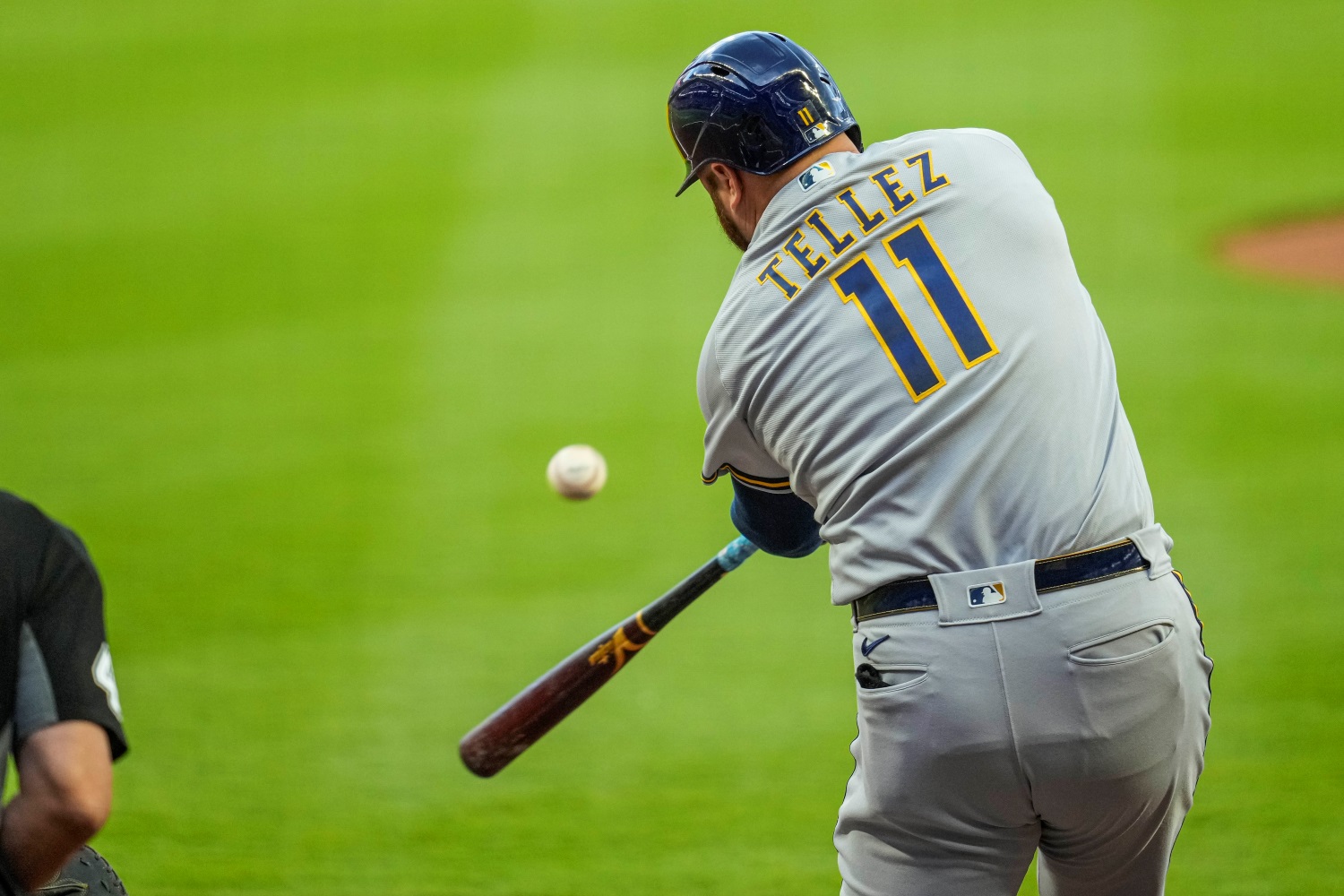 The conversation around plate discipline typically centers on refraining from chasing pitches outside the strike zone. If Rowdy Tellez is going to take the next step with the Brewers, though, he has to be more aggressive, especially on pitches in the zone. While there's value in working longer at-bats and seeing many pitches, it can be an overall negative to watch too many meatballs go by, missing the chance to produce damage. Before we get further into Tellez's plate discipline, let's look at the superficial stats. Tellez owned a 10.4% walk percentage (BB%) in 2022, which was good for 31st in MLB. That marked his career-best BB%, 2.1% higher than his career average. Unfortunately, it only translated into a .306 OBP, tied for 100th among qualified hitters. The low OBP stems from Tellez's meager .215 batting average. Despite the lower-than-ideal OBP and average, Tellez's power stroke helped balance out his production with a .461 slugging percentage last season (37th in MLB). Yet for a man with the eighth-most homers in baseball, his 115 OPS+ in 2022 felt underwhelming. Tellez's OPS+ ranked just 63rd out of 129 qualified batters. While hitting into the shift had something to do with the low average and muted OPS+, several other trends are as significant. Simply put, Tellez takes too many pitches that he could crush. Taking too many strikes can also put a hitter on his heels and at a disadvantage too often. Two key stats from 2022: Swung at 60.5% of pitches in the strike zone (Z-Swing%), the seventh-lowest percentage in MLB Had a 19.5% called strike percentage (CStr%), the 17th-highest percentage in MLB That is a lot of hittable pitches in no danger of causing problems for opposing hurlers. Not only are many of these pitches wasted, they often put the hitter behind in the count and on the defensive. Considering Tellez was in the 98th percentile for maximum exit velocity in 2022 and the 80th percentile or better in average exit velocity, Barrel%, and HardHit%, more hacks earlier in counts could be a game-changer. Another visualization of Tellez's missed opportunities last season can be seen in Statcast's swing-take zone mapping. As you can see below, there are four attack regions for a hitter: Heart: The ideal hitting zone in the middle of the plate, well within the top and bottom of the strike zone Shadow: This region is split in half vertically and horizontally both inside the strike zone and outside of it Chase: The area outside the strike zone that is tempting enough to make hitters chase high velocity or quality movement Waste: Well outside of the strike zone, where only free swingers and desperately fooled hitters take cuts Statcast takes the data from these regions to create a run value based on the outcome of the pitch in each section (walk, home run, strikeout, etc.). If you peek back at Tellez's illustration above, he had a -4 run value on pitches in the heart of the zone and -8 runs in the shadow region. His 2022 rankings in each area: Heart - 130th Shadow - 87th Chase - 116th Waste - 96th The place to do the most damage is in the heart of the plate, and to do that, more swings (and hard contact) are necessary. Especially with MLB limiting defensive shifting in 2023, Tellez needs to take advantage by worrying less about taking pitches and more about hitting mistakes. As he has gotten more playing time over the past two seasons, the shifting increased against him, making a big difference in his weighted on-base average (wOBA). Tellez also saw his batting average on balls in play (BABIP) plummet to .215 last season. The combination of shifting and rotten luck played a significant role for a player with a career .255 BABIP. These numbers should excite Brewers fans for 2023, and motivate Tellez to get more hacks in. Last year, he hit 129 ground balls into the shift and picked up just 16 hits (.124 average). With only two defenders on the right side of second base, coupled with Tellez's 86th-percentile average exit velocity, more hits should be coming. And if he puts even more balls in play, the production increases further. In fact, his expected batting average in 2022 was .252 vs. his actual .219 mark. Hopefully, Tellez and the Brewers at least discuss an altered strategy at the dish. It's challenging to modify a hitter's tendency mid-career, but adjusting to changing environments and results is essential. Many people have suggested that Tellez is a strong breakout candidate because of the shifting rules. If he can also lose his patience more often, Tellez could find himself among the best offensive first basemen in the league and on the All-Star roster.
 -
I'd actually like to know why he considers this clickbait. How else can I learn to avoid it? And it's a bit "offensive" to have someone say that, especially since I don't believe in random "hot takes." I see clickbait as something sensational, misleading, and/or using inaccurate information intentionally. Not sure which apply here.
-
He is not pitching in the WBC. I know he had interest, but decided against it - likely at the urging of the Brewers.
-
Going back to your original comment here: Why do you think every pitcher should be treated or managed the same way. Even if every pitcher says they are 100% healthy, each person's body responds differently, has unique weaknesses, etc. This is also why some pitchers can throw 90 pitches in a game and others tire after 25 or 30. It is why there is no standard that keeps every pitcher healthy. As someone who has been fortunate enough to coach baseball for more than 15 years at varying levels, I put lots of thought into how my pitchers are used based on their own personal history, their body type, their training, their usage, and many other individual factors. We have certain general guidelines, but those aren't one size fits all. Two seasons in a row, Peralta has missed time due to his shoulder/lat (which are connected in the kinetic chain of throwing). There is certainly concern for his durability. When I had a pitcher with an elbow injury the previous season, I put him on a 12-week arm program as opposed to our usual 8 weeks in the preseason. He was also limited to 1 inning per outing and always given at least 2 days rest. He said his arm was 100%, but the injury risk meant a "rebuilding" year for his arm.
-
Well...I hope he would be at 100% since he hasn't pitched in a few months. Unfortunately, the past two seasons he has had some shoulder/lat issue during the season. As noted in the article, while the 2021 injury was exacerbated by a swing, he had admitted his shoulder was already feeling uncomfortable - meaning it had to do with throwing, not hitting. Peralta may need more monitoring, rest, med care, etc. than other pitchers based on his recent problems. Brock's note about his lack of innings speaks to this, as does the potential issue with pushing him up too many innings, too quickly. That might have contributed to his shoulder problem, going from 29.1 innings in 2020 to 144.1 in 2021.
-
I could see mostly using a 6-man rotation, while also using off days to skip starts for some guys other than Burnes & Woodruff. That way they can maximize the starts of those two and still give them 5 days rest (with off days).
-
The health and effectiveness of Freddy Peralta will be imperative to the Milwaukee Brewers' success in 2023. GM Matt Arnold wisely built pitching depth this offseason in response to the club's injury issues a year ago, which included Peralta's two stints on the injured list. Still, taking care of the 26-year-old is critical, because none of the extra arms on the roster have his impact potential. Image courtesy of © Benny Sieu-USA TODAY Sports Freddy Peralta's value to the Milwaukee Brewers can't be overstated. The biggest questions for the team are, can they keep him healthy, and how do they accomplish it while getting the most out of his skill? Last season, the right-handed hurler missed more than two months with a right lat strain. Peralta returned to the club on August 3 to make seven appearances (31.2 innings) but left his September 8 start after two frames with "shoulder fatigue." That landed him back on the injured list (IL). Though Peralta came back to pitch in three more contests before the season's end, he tossed just 7.2 total frames in them, while giving up seven hits and four earned runs (4.70 ERA). More concerning is that Peralta's shoulder problem began in 2021, making it a bit of a trend. Peralta left the August 18, 2021, game after an awkward swing at the plate. However, he admitted afterward that his shoulder felt "a little uncomfortable yesterday and a little bit today before the game." The two shoulder issues, coupled with the lat injury, must concern the Brewers, since the lat and shoulder are connected in their movements and effectiveness when throwing. Peralta brings tremendous value to the Brewers, posting 4.0 fWAR in 144.1 innings in 2021 and a 2.0 fWAR in 78 frames last season. That only tells part of the story. He's a vital bridge between Cy Young candidates Corbin Burnes and Brandon Woodruff and the second half of the rotation. What can the Brewers do to get the most out of Peralta without stifling his impact or losing him for longer stretches? A few options could be in play: 1 - Use a Six-Man Starting Rotation The Brewers mainly employed a six-man rotation in 2021, coming off the short 2020 campaign. Manager Craig Counsell and company were worried the sudden uptick in innings pitched from one season to another put arm health in danger. It worked beautifully, both in keeping pitchers healthy and in the staff's record performances. Getting Peralta (and others) at least five days of rest between starts instead of four could relieve the strain on his shoulder and lat. Making 26 starts and averaging 5.1 innings per outing would get Peralta to nearly 140 innings. If he's near his peak performance levels in those fewer starts with extra rest, the value will be there. 2 - Plan for Short Starts It's difficult to judge if total innings or innings per outing have a more significant effect on Peralta's shoulder. The Brewers may prefer maximizing his number of starts but limiting the number of up-and-downs (times visiting and getting cold on the dugout bench, then having to ramp back up for a new inning). Milwaukee could plan for starts of three or four innings (or by pitches), planning to piggyback another multi-inning pitcher to follow Peralta. This gets Peralta through the top-middle of the order twice and allows him to hone his pitches over shorter periods. He would likely max out at 130 innings or so, but it could be best for the team and Peralta's long-term health. 3 - Utilize Sporadic Extra Days Off The Brewers could also monitor Peralta on a start-by-start basis. In watching his velocity, command, and body language each time on the mound, Counsell and his staff can make decisions when needed. With Milwaukee's added pitching depth, Peralta could take seven or eight days off while the Brewers utilize a different starter or go with a bullpen day. This option creates more uncertainty in his schedule, but it offers the club a chance to let Peralta ride deeper when he's strong and recharge him when he appears to be losing something. 4 - Move Peralta to the Bullpen There could be unique value in having an arm like Peralta's coming out of the pen, especially for multiple innings or in high-leverage situations. It would also clearly limit the amount of innings he would throw, both within a game and throughout the season. He could be the right-handed version of Josh Hader, utilizing him more frequently than as a starter and picking spots when he impacts the game the most. There are a couple of downsides. For one, there would be even more uncertainty with Peralta's usage daily. Maybe he doesn't get enough time to loosen up in the pen, comes in too early, and that hurts his shoulder. Plus, trying to bounce back more frequently is often more challenging than a five or six-day schedule. He's also been slightly less effective as a reliever in his career. Peralta has allowed a .667 OPS in relief (.619 as a starter) and owns a 1.29 WHIP out of the bullpen (1.09 as a starter). Regardless of when or where he is pitching, Peralta is a formidable weapon in the Brewers' arsenal. Though it was in a smaller sample size, Peralta sat in the 90th percentile in some key Statcast metrics in 2022. You can see why Milwaukee needs him as often as possible. Figuring out the best option for Peralta will have an influence on numerous pitchers and their usage throughout the season. Arnold's creation of pitching depth, including starters and multiple-inning relievers, gives Counsell various options, without painting the coaching staff into a corner. The Brewers have proven they are willing to strategize in unique ways and take whatever measures are needed to utilize the team's talent to its full extent. Peralta is both a special challenge and a perfect opportunity to continue doing so. View full article
-
 Freddy Peralta's value to the Milwaukee Brewers can't be overstated. The biggest questions for the team are, can they keep him healthy, and how do they accomplish it while getting the most out of his skill? Last season, the right-handed hurler missed more than two months with a right lat strain. Peralta returned to the club on August 3 to make seven appearances (31.2 innings) but left his September 8 start after two frames with "shoulder fatigue." That landed him back on the injured list (IL). Though Peralta came back to pitch in three more contests before the season's end, he tossed just 7.2 total frames in them, while giving up seven hits and four earned runs (4.70 ERA). More concerning is that Peralta's shoulder problem began in 2021, making it a bit of a trend. Peralta left the August 18, 2021, game after an awkward swing at the plate. However, he admitted afterward that his shoulder felt "a little uncomfortable yesterday and a little bit today before the game." The two shoulder issues, coupled with the lat injury, must concern the Brewers, since the lat and shoulder are connected in their movements and effectiveness when throwing. Peralta brings tremendous value to the Brewers, posting 4.0 fWAR in 144.1 innings in 2021 and a 2.0 fWAR in 78 frames last season. That only tells part of the story. He's a vital bridge between Cy Young candidates Corbin Burnes and Brandon Woodruff and the second half of the rotation. What can the Brewers do to get the most out of Peralta without stifling his impact or losing him for longer stretches? A few options could be in play: 1 - Use a Six-Man Starting Rotation The Brewers mainly employed a six-man rotation in 2021, coming off the short 2020 campaign. Manager Craig Counsell and company were worried the sudden uptick in innings pitched from one season to another put arm health in danger. It worked beautifully, both in keeping pitchers healthy and in the staff's record performances. Getting Peralta (and others) at least five days of rest between starts instead of four could relieve the strain on his shoulder and lat. Making 26 starts and averaging 5.1 innings per outing would get Peralta to nearly 140 innings. If he's near his peak performance levels in those fewer starts with extra rest, the value will be there. 2 - Plan for Short Starts It's difficult to judge if total innings or innings per outing have a more significant effect on Peralta's shoulder. The Brewers may prefer maximizing his number of starts but limiting the number of up-and-downs (times visiting and getting cold on the dugout bench, then having to ramp back up for a new inning). Milwaukee could plan for starts of three or four innings (or by pitches), planning to piggyback another multi-inning pitcher to follow Peralta. This gets Peralta through the top-middle of the order twice and allows him to hone his pitches over shorter periods. He would likely max out at 130 innings or so, but it could be best for the team and Peralta's long-term health. 3 - Utilize Sporadic Extra Days Off The Brewers could also monitor Peralta on a start-by-start basis. In watching his velocity, command, and body language each time on the mound, Counsell and his staff can make decisions when needed. With Milwaukee's added pitching depth, Peralta could take seven or eight days off while the Brewers utilize a different starter or go with a bullpen day. This option creates more uncertainty in his schedule, but it offers the club a chance to let Peralta ride deeper when he's strong and recharge him when he appears to be losing something. 4 - Move Peralta to the Bullpen There could be unique value in having an arm like Peralta's coming out of the pen, especially for multiple innings or in high-leverage situations. It would also clearly limit the amount of innings he would throw, both within a game and throughout the season. He could be the right-handed version of Josh Hader, utilizing him more frequently than as a starter and picking spots when he impacts the game the most. There are a couple of downsides. For one, there would be even more uncertainty with Peralta's usage daily. Maybe he doesn't get enough time to loosen up in the pen, comes in too early, and that hurts his shoulder. Plus, trying to bounce back more frequently is often more challenging than a five or six-day schedule. He's also been slightly less effective as a reliever in his career. Peralta has allowed a .667 OPS in relief (.619 as a starter) and owns a 1.29 WHIP out of the bullpen (1.09 as a starter). Regardless of when or where he is pitching, Peralta is a formidable weapon in the Brewers' arsenal. Though it was in a smaller sample size, Peralta sat in the 90th percentile in some key Statcast metrics in 2022. You can see why Milwaukee needs him as often as possible. Figuring out the best option for Peralta will have an influence on numerous pitchers and their usage throughout the season. Arnold's creation of pitching depth, including starters and multiple-inning relievers, gives Counsell various options, without painting the coaching staff into a corner. The Brewers have proven they are willing to strategize in unique ways and take whatever measures are needed to utilize the team's talent to its full extent. Peralta is both a special challenge and a perfect opportunity to continue doing so.
 -
That is sort of the way I see it, too. Which player can prove to be more well-rounded by cleaning up their biggest weaknesses. Of course, you can't necessarily figure that out with one Spring Training, either. They could show improvements, but they might not be legit. It will be interesting to follow for sure.
-
I contemplated noting this in the post, but didn't really want to focus on that aspect. I get that it is fair to bring it up, but man...I would hate to think the Brewers miss the playoffs or a division title because they settled for Mitchell & lost a few games in April/May they might have won with Frelick. That's assuming a lot, of course, but I'm a believer in doing the right things for the right reasons.
-
The Milwaukee Brewers will be relying on a rookie outfielder in some capacity in 2023. There could be a mix of players, or one prospect might step up to take hold of a starting spot. Since center field is the biggest question mark on the diamond in Milwaukee, it likely comes down to Garrett Mitchell or Sal Frelick on Opening Day. Among the Milwaukee Brewers' high-end outfield prospects, Garrett Mitchell received the first call-up in 2022, and Sal Frelick looks poised to make his debut in 2023, but it isn't clear when that will happen. That is one significant decision the Brewers' front office will need to make, perhaps as soon as Opening Day. The choice might be based on the club's prioritization and how one player or the other fits into the overall team's 2023 plan. Although Mitchell got the first crack at a big-league job last season, Frelick is ranked higher in various top-100 prospect rankings. Frelick sits at 30 for MLB Pipeline, 34 for Baseball America, and 41 on Keith Law's rankings. Mitchell didn't even appear on the MLB Pipeline or Keith Law lists, which is interesting. Of course, prospect rankings aren't about projecting success in the coming season. For example, Jackson Chourio is Milwaukee's clear-cut top farmhand and likely center fielder of the future. Still, he's probably a couple of years away from (hopefully) being a full-time Major Leaguer. For 2023, the Brewers will evaluate which young center fielder can contribute the most immediately. Positional value is the first question. Is Frelick able to handle center field? Most view him as a corner outfielder in the majors, but he did win ACC Defensive Player of the Year honors as a center fielder at Boston College. He possesses the speed needed to cover all that ground and appears to have quality instincts as well. But some question his jumps and routes to the ball, believing he will be better served in right or left field. There are varying thoughts on Frelick's ability to be an MLB center fielder, but some are trending toward believing in his continued development defensively. Mitchell, however, will be the favorite if Milwaukee wants to put a premium on defense this season. He showed off his range and arm during his short stint with the Brewers, turning raw ability into defensive production. Mitchell fits the center field profile better and has more experience manning that spot. As a run prevention club, a plus-defender like Mitchell would have the inside track in Milwaukee. You can see in the Fangraphs prospect evaluation below why the Brewers called up Mitchell late last season with an emphasis on speed and defense. The script flips if the Brewers believe Frelick can be serviceable in center and want to add to their offense. MLB Pipeline gives Frelick a 70-hit tool (on a 20-80 scale), naming him the top prospect in baseball by hit tool. Across multiple levels in two minor league seasons, Frelick displayed plate discipline and a high-level stick with a .331/.406/.477/.882 slash line. While minor league stats aren't necessarily predictive of MLB success, that's an excellent place to start. He hasn't shown the power yet, but 36 doubles, 13 home runs, and 36 stolen bases to go with his hitting and on-base skills are impressive and tantalizing. Can it translate to immediate value for the Brewers? Here's how Fangraphs breaks him down, rating him as Milwaukee's third-best prospect while Mitchell ranks sixth. Mitchell comes with a set of question marks at the plate. He brings more raw power to the table and 70-speed (Frelick is 60), an intriguing power-speed combo. The concerns for Mitchell lie primarily in his approach and struggles to make consistent contact. Though clearly a small sample, he owned a frightening 41.2% strikeout percentage with the Brewers. So while his numbers looked good (.373 OBP, .832 OPS), there were concerns facing MLB pitching. If he can improve his contact rate and limit the strikeouts (28 strikeouts in 68 plate appearances), his speed can be put to great use. Overall, center field has been a weaker position in MLB in recent years. You'll often find a team employing a defensive whiz in center who can't hit or squeeze a solid hitter with defensive deficiencies into the position and hope for the best. It's a similar situation for the Brewers in choosing between Mitchell and Frelick. How will Milwaukee make its decision? Spring Training "tryouts" don't always give you the information you're looking for in an evaluation, but it might be necessary to break the "tie." Do the Brewers trust their current evaluation or put additional stock in how the kids perform in Arizona? Especially in today's game, I value the high on-base percentage potential and great hit tool from Frelick. It might hurt the Brewers at times in center field, but with so many strikeouts and the value of defensive positioning, I think it's less of an issue. The ability to consistently reach base and make contact is more rare in MLB at this point. That's just one man's opinion. Which guy would you like to see handed the center field reins on Opening Day and why? View full article
-
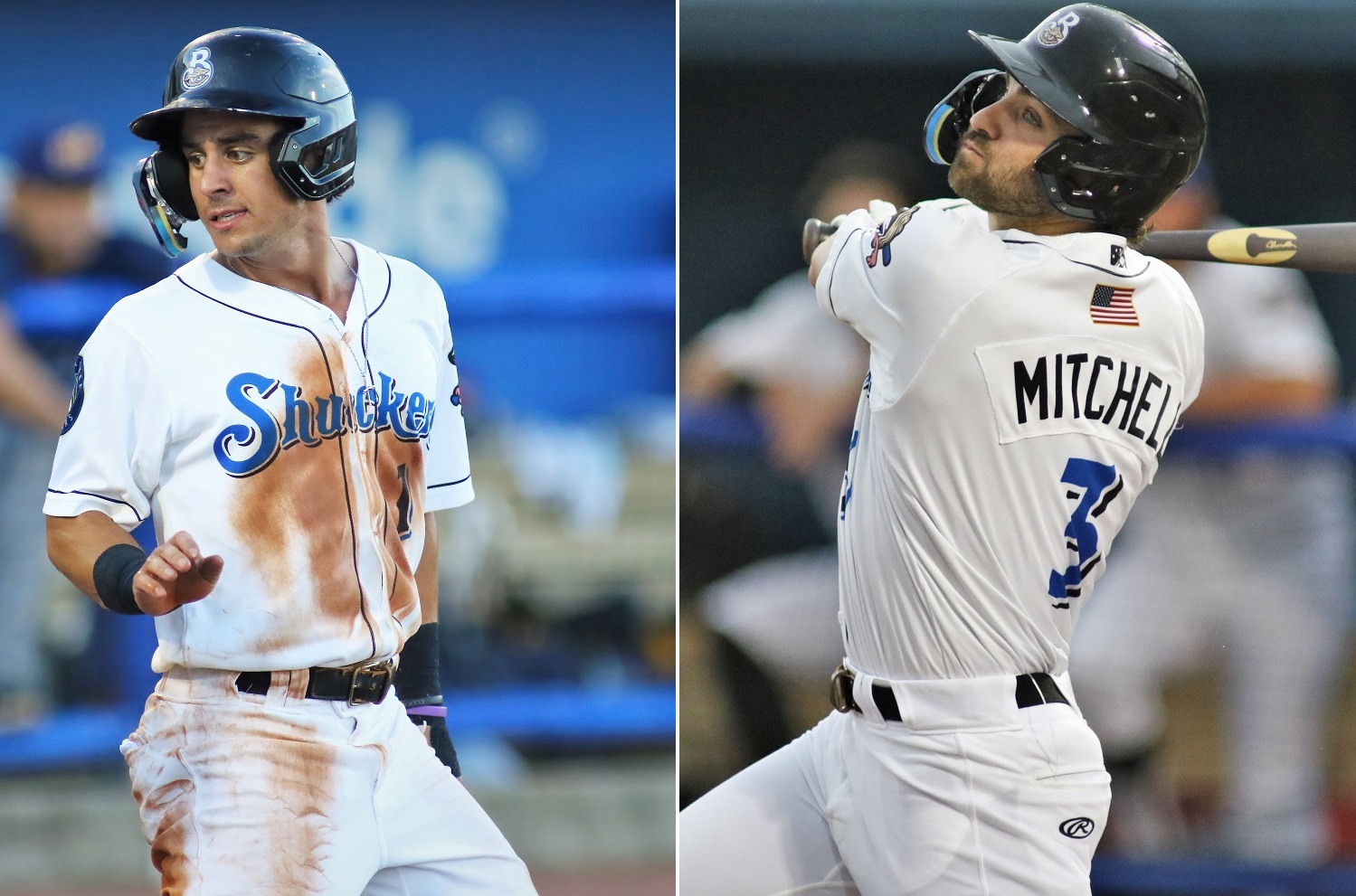 Among the Milwaukee Brewers' high-end outfield prospects, Garrett Mitchell received the first call-up in 2022, and Sal Frelick looks poised to make his debut in 2023, but it isn't clear when that will happen. That is one significant decision the Brewers' front office will need to make, perhaps as soon as Opening Day. The choice might be based on the club's prioritization and how one player or the other fits into the overall team's 2023 plan. Although Mitchell got the first crack at a big-league job last season, Frelick is ranked higher in various top-100 prospect rankings. Frelick sits at 30 for MLB Pipeline, 34 for Baseball America, and 41 on Keith Law's rankings. Mitchell didn't even appear on the MLB Pipeline or Keith Law lists, which is interesting. Of course, prospect rankings aren't about projecting success in the coming season. For example, Jackson Chourio is Milwaukee's clear-cut top farmhand and likely center fielder of the future. Still, he's probably a couple of years away from (hopefully) being a full-time Major Leaguer. For 2023, the Brewers will evaluate which young center fielder can contribute the most immediately. Positional value is the first question. Is Frelick able to handle center field? Most view him as a corner outfielder in the majors, but he did win ACC Defensive Player of the Year honors as a center fielder at Boston College. He possesses the speed needed to cover all that ground and appears to have quality instincts as well. But some question his jumps and routes to the ball, believing he will be better served in right or left field. There are varying thoughts on Frelick's ability to be an MLB center fielder, but some are trending toward believing in his continued development defensively. Mitchell, however, will be the favorite if Milwaukee wants to put a premium on defense this season. He showed off his range and arm during his short stint with the Brewers, turning raw ability into defensive production. Mitchell fits the center field profile better and has more experience manning that spot. As a run prevention club, a plus-defender like Mitchell would have the inside track in Milwaukee. You can see in the Fangraphs prospect evaluation below why the Brewers called up Mitchell late last season with an emphasis on speed and defense. The script flips if the Brewers believe Frelick can be serviceable in center and want to add to their offense. MLB Pipeline gives Frelick a 70-hit tool (on a 20-80 scale), naming him the top prospect in baseball by hit tool. Across multiple levels in two minor league seasons, Frelick displayed plate discipline and a high-level stick with a .331/.406/.477/.882 slash line. While minor league stats aren't necessarily predictive of MLB success, that's an excellent place to start. He hasn't shown the power yet, but 36 doubles, 13 home runs, and 36 stolen bases to go with his hitting and on-base skills are impressive and tantalizing. Can it translate to immediate value for the Brewers? Here's how Fangraphs breaks him down, rating him as Milwaukee's third-best prospect while Mitchell ranks sixth. Mitchell comes with a set of question marks at the plate. He brings more raw power to the table and 70-speed (Frelick is 60), an intriguing power-speed combo. The concerns for Mitchell lie primarily in his approach and struggles to make consistent contact. Though clearly a small sample, he owned a frightening 41.2% strikeout percentage with the Brewers. So while his numbers looked good (.373 OBP, .832 OPS), there were concerns facing MLB pitching. If he can improve his contact rate and limit the strikeouts (28 strikeouts in 68 plate appearances), his speed can be put to great use. Overall, center field has been a weaker position in MLB in recent years. You'll often find a team employing a defensive whiz in center who can't hit or squeeze a solid hitter with defensive deficiencies into the position and hope for the best. It's a similar situation for the Brewers in choosing between Mitchell and Frelick. How will Milwaukee make its decision? Spring Training "tryouts" don't always give you the information you're looking for in an evaluation, but it might be necessary to break the "tie." Do the Brewers trust their current evaluation or put additional stock in how the kids perform in Arizona? Especially in today's game, I value the high on-base percentage potential and great hit tool from Frelick. It might hurt the Brewers at times in center field, but with so many strikeouts and the value of defensive positioning, I think it's less of an issue. The ability to consistently reach base and make contact is more rare in MLB at this point. That's just one man's opinion. Which guy would you like to see handed the center field reins on Opening Day and why?
 -
I think I was clear on this not being an A -> B type of thing. There are multiple factors, including how the ball travels in each stadium, weather, roof open/closed, trajectory of balls, etc. That would obviously be a much deeper dive and I felt a bit too much (at this point). Hence, focusing on the Statcast rolling ballpark factors with its three-year averages for HRs for righties is the main key. I appreciate you taking a more specific look at those "potential" homers. In generally, I just wanted to give people a quick visual, as basic as it is. I do believe 16-18 homers are well within range for Anderson, and I wasn't basing it off of those "nine more potential homers" with the spray chart. It's more about overall impact of the home park, plus more plate appearances with better health to boot.
-
The Brian Anderson signing wasn't a big splash for the Milwaukee Brewers, but they are likely banking on his power returning in 2023, which would increase his value and strengthen the lineup. The two biggest keys for the 29-year-old's resurgent power will be a new home ballpark and improved health. Between 2019-2020, Brian Anderson had a 162-game average slash line of .260/.343/.467/.811 (114 OPS+), including 35 doubles and 27 homers. No one should expect nearly 30 home runs from him in a single season, but it speaks to his potential. In the past two seasons, a left shoulder injury has played a part in sapping his power; however, the Milwaukee Brewers must also believe his previous home ballpark played a more significant role in the dip in pop. The switch in stadiums could have the same effect it had on Travis Shaw when he came to Milwaukee, which was an enormous boon for the player and the club. LoanDepot Park, home of the Miami Marlins, ranks as the seventh-worst park to hit home runs for right-handed hitters. Statcast's three-year rolling average rates LoanDepot Park at an 86 for right-handed homers, where 100 is "average." Not ideal for a hitter like Anderson. Meanwhile, American Family Field sits at 112 for righties, the seventh-best home run haven in MLB. That's a good way to jumpstart a turnaround. When the Brewers traded for Travis Shaw (who recently retired), Milwaukee saw a similar potential power tick by changing ballparks. Shaw had 34 doubles and 16 homers in his last season with the Boston Red Sox with a .421 slugging percentage and .726 OPS (90 OPS+). At the time, Fenway Park was the third-worst home run park for left-handed hitters (73), while Miller Park was the best for lefties (143). Milwaukee's power projection paid off as Shaw would hit 31 and 32 homers in the next two seasons with the Brewers, posting an. 862 OPS (121 OPS+) and .825 OPS (119 OPS+) in those years. Yes, the Fenway-to-Miller Park gap was larger than the Miami-to-Milwaukee transition, but the concept remains. Below is Anderson's 2022 spray chart overlayed on American Family Field. This doesn't mean all the hits translate perfectly, and not all of Anderson's balls in play came in Miami, of course. However, this can offer a visual hope for what could be in 2023. You could potentially count nine additional home runs at American Family Field, three of which were outs in 2022. We also can't know how the outfielders might be positioned differently in Milwaukee versus Miami, meaning some flyouts might otherwise find space to land. Yes, this leans on the optimistic side, but there's no doubt it's a plus move for Anderson. The other vital component for Anderson's power to return would be improved health. In his introduction to Brewers' media, he acknowledged that his shoulder issues in the past two seasons impacted his offense. With just a few weeks before Spring Training, Anderson is feeling a bounceback in the making. Several of Anderson's batted ball metrics in 2022 improved toward his 2019 figures, which was his best season. That could indicate the injury and some loss of strength he suffered in 2021 made less of an impact last season, and 2023 could mean even greater things. As you can see from the chart, Anderson saw a return of barrels and hard-hit balls, but the launch angle sunk. As many Brewers fans know, thanks to Christian Yelich, when a hitter can't get the ball off the ground consistently, his exit velocity means less. But Anderson's launch angle struggles could be attributed to his shoulder issue and the climb to being "normal" again. Anderson alluded to increasing his bat speed this offseason. With slower bat speed last year, he was likely late on more pitches than usual, leading to more ground balls as contact was made deep in the hitting zone. Whether he never adjusted his timing to having a slower bat or needed to catch up to increased velocity, starting a new season with a quicker swing might be enough to rediscover a better launch angle in 2023. Could the combination of a better home run park and improved health be enough to make Anderson a secret weapon in Milwaukee's lineup? If you go by Steamer's projections of .226/.308/.373/.681 and 13 homers, it won't seem like much of an improvement over last season. But if the park factor and a fresh start are catalysts to boost his numbers 10-20 percent above those projections, now you're onto something. Somewhere in the neighborhood of .254/.341/.442/.783 with 17 home runs would lengthen the Brewers' lineup and generate consistent offensive production. The more improvement Anderson shows early in the season, the more playing time he will get. Increasing his plate appearances creates more opportunities to hit the ball out of the yard. Of course, that requires good health as well. If those factors come together in 2023, it's a jackpot acquisition for the Brewers. Though signing Anderson didn't garner headlines across the league, it is the move good teams often make to complement the talent already in place. View full article
-
 Between 2019-2020, Brian Anderson had a 162-game average slash line of .260/.343/.467/.811 (114 OPS+), including 35 doubles and 27 homers. No one should expect nearly 30 home runs from him in a single season, but it speaks to his potential. In the past two seasons, a left shoulder injury has played a part in sapping his power; however, the Milwaukee Brewers must also believe his previous home ballpark played a more significant role in the dip in pop. The switch in stadiums could have the same effect it had on Travis Shaw when he came to Milwaukee, which was an enormous boon for the player and the club. LoanDepot Park, home of the Miami Marlins, ranks as the seventh-worst park to hit home runs for right-handed hitters. Statcast's three-year rolling average rates LoanDepot Park at an 86 for right-handed homers, where 100 is "average." Not ideal for a hitter like Anderson. Meanwhile, American Family Field sits at 112 for righties, the seventh-best home run haven in MLB. That's a good way to jumpstart a turnaround. When the Brewers traded for Travis Shaw (who recently retired), Milwaukee saw a similar potential power tick by changing ballparks. Shaw had 34 doubles and 16 homers in his last season with the Boston Red Sox with a .421 slugging percentage and .726 OPS (90 OPS+). At the time, Fenway Park was the third-worst home run park for left-handed hitters (73), while Miller Park was the best for lefties (143). Milwaukee's power projection paid off as Shaw would hit 31 and 32 homers in the next two seasons with the Brewers, posting an. 862 OPS (121 OPS+) and .825 OPS (119 OPS+) in those years. Yes, the Fenway-to-Miller Park gap was larger than the Miami-to-Milwaukee transition, but the concept remains. Below is Anderson's 2022 spray chart overlayed on American Family Field. This doesn't mean all the hits translate perfectly, and not all of Anderson's balls in play came in Miami, of course. However, this can offer a visual hope for what could be in 2023. You could potentially count nine additional home runs at American Family Field, three of which were outs in 2022. We also can't know how the outfielders might be positioned differently in Milwaukee versus Miami, meaning some flyouts might otherwise find space to land. Yes, this leans on the optimistic side, but there's no doubt it's a plus move for Anderson. The other vital component for Anderson's power to return would be improved health. In his introduction to Brewers' media, he acknowledged that his shoulder issues in the past two seasons impacted his offense. With just a few weeks before Spring Training, Anderson is feeling a bounceback in the making. Several of Anderson's batted ball metrics in 2022 improved toward his 2019 figures, which was his best season. That could indicate the injury and some loss of strength he suffered in 2021 made less of an impact last season, and 2023 could mean even greater things. As you can see from the chart, Anderson saw a return of barrels and hard-hit balls, but the launch angle sunk. As many Brewers fans know, thanks to Christian Yelich, when a hitter can't get the ball off the ground consistently, his exit velocity means less. But Anderson's launch angle struggles could be attributed to his shoulder issue and the climb to being "normal" again. Anderson alluded to increasing his bat speed this offseason. With slower bat speed last year, he was likely late on more pitches than usual, leading to more ground balls as contact was made deep in the hitting zone. Whether he never adjusted his timing to having a slower bat or needed to catch up to increased velocity, starting a new season with a quicker swing might be enough to rediscover a better launch angle in 2023. Could the combination of a better home run park and improved health be enough to make Anderson a secret weapon in Milwaukee's lineup? If you go by Steamer's projections of .226/.308/.373/.681 and 13 homers, it won't seem like much of an improvement over last season. But if the park factor and a fresh start are catalysts to boost his numbers 10-20 percent above those projections, now you're onto something. Somewhere in the neighborhood of .254/.341/.442/.783 with 17 home runs would lengthen the Brewers' lineup and generate consistent offensive production. The more improvement Anderson shows early in the season, the more playing time he will get. Increasing his plate appearances creates more opportunities to hit the ball out of the yard. Of course, that requires good health as well. If those factors come together in 2023, it's a jackpot acquisition for the Brewers. Though signing Anderson didn't garner headlines across the league, it is the move good teams often make to complement the talent already in place.