



Jake McKibbin
-
Posts
2,395 -
Joined
-
Last visited
-
Days Won
6
Content Type
Profiles
Forums
Blogs
Events
News
2026 Milwaukee Brewers Top Prospects Ranking
Milwaukee Brewers Videos
2022 Milwaukee Brewers Draft Picks
Milwaukee Brewers Free Agent & Trade Rumors, Notes, & Tidbits
Guides & Resources
2023 Milwaukee Brewers Draft Picks
2024 Milwaukee Brewers Draft Picks
The Milwaukee Brewers Players Project
2025 Milwaukee Brewers Draft Pick Tracker
2026 Milwaukee Brewers Draft Tracker: Picks & Bonuses
Store
Downloads
Gallery
Everything posted by Jake McKibbin
-
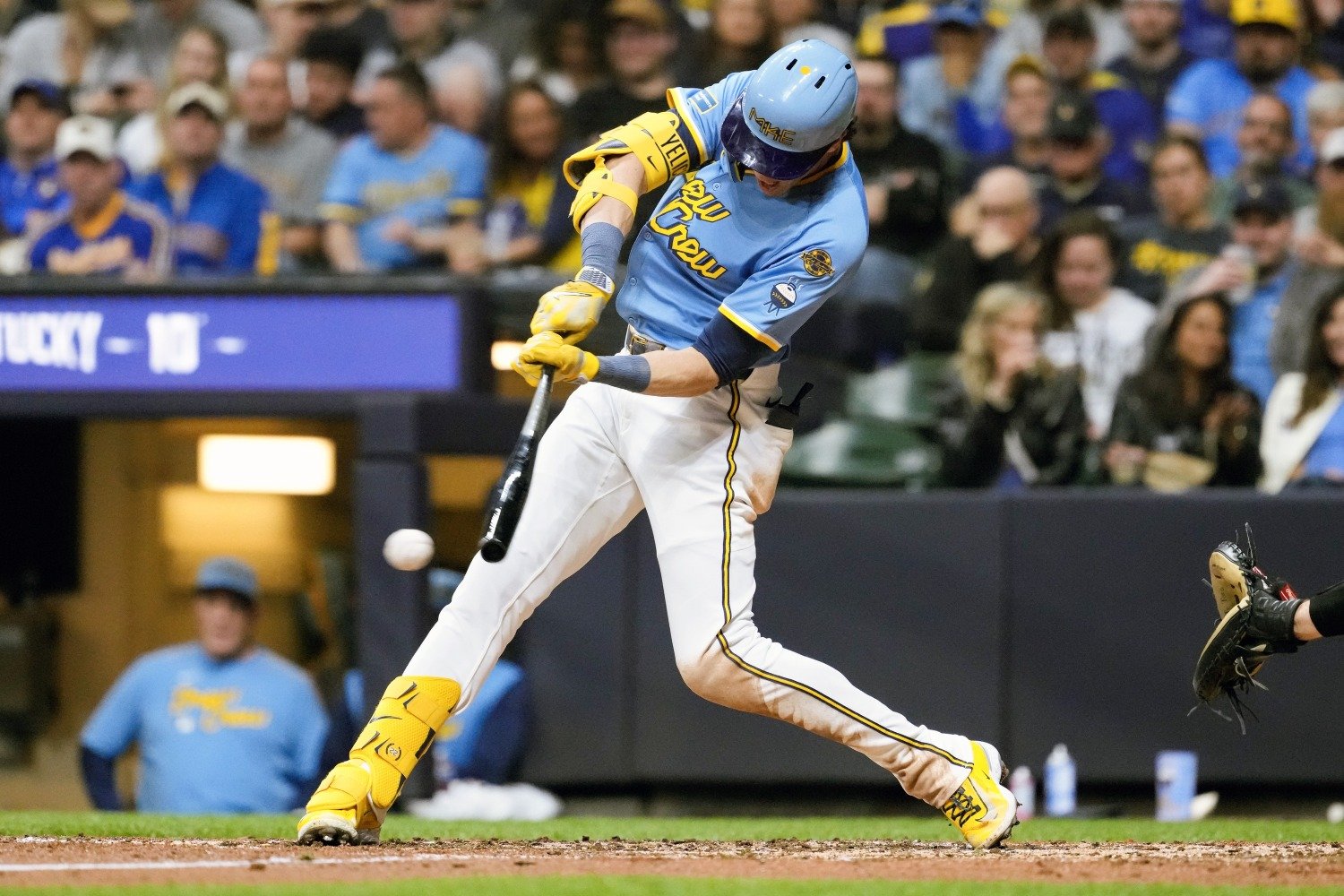 In the first 30 games of the season, the Brewers have a ground ball rate (as a team) of over 50%. That's five percentage points higher than the one they had in 2024. Worse, a lot of those grounders are coming from the hitters in the heart of their order—the veterans most relied upon to produce runs. Almost everyone is seeing a bump in their ground ball rate, already at an elevated level in 2024, and it's killing the offense. Yes, William Contreras and Christian Yelich hit the ball hard enough that their BABIP (batting average on balls in play) is likely to improve, but even so, getting the ball off the ground will help. Through the first month of baseball, the Brewers have been feast-or-famine offensively, showcasing what they can manage when they do elevate the ball versus what happens when they can't—which is to say, getting stymied over and over again. Without elevating the ball, their offensive production will become streaky, dependent on batted-ball luck in all the wrong ways. The question is, without change, is some regression to the mean coming, or will the Brewers simply struggle to produce runs in 2025? Power Is King The Brewers don't have a lot of innate power within their lineup. They were looking to modest but plausible power increases from Christian Yelich, Sal Frelick, Garrett Mitchell and others to collectively replace the power lost due to Willy Adames's departure. The problem is that they can't do that unless these hitters can catch the ball out in front more often. Of the names above, only Mitchell has reduced his ground ball rate (admittedly, aided by being pummelled in the upper third of the strike zone). Four of the top five in the Brewers order on a regular basis are hitting more ground balls than ever. Hitting 60% of pitches on the ground is a recipe for disaster. Hard-hit ones will result in rally-killing double plays for Yelich and Contreras. Frelick's spike has paid off short-term with some batted-ball luck, but it's unlikely to fare so well as the season progresses. When you factor in Jackson Chourio and his swing-happy approach (which brings its own inconsistency), it's clear why the Brewers are struggling to produce pressure and runs from one game to the next. As a unit, the Brewers are over eight percentage points (or a 20% jump) from average in ground ball rate, a category in which they ranked third-highest in 2024 with 45.4%. Rhys Hoskins has arguably provided the highest-quality at-bats, with a high walk rate, low strikeout rate and hardly any ground balls. Can It Be Fixed? The biggest factor that will drive consistency is for one of the players in the heart of the Brewers order to resolve their current issues. The issue with that is that Yelich and Contreras are well-known ground-ball hitters over their careers. Whenever either can get their ground ball rate under 50%, they become a terrifying proposition, but it can be streaky for both of them. It's typically the last thing to come for Yelich when returning from injury, and he struggles to catch it in his sweet spot. Contreras demonstrated in 2024 how he can go from a black hole to a dominant slugger in the flash of an eye. Both have shown improvements so far from their early form, but that's been in the form of less swing-and-miss, rather than a better batted-ball distribution. Enter Chourio, who has chased more than anyone else in the league but Adolis García (min 100 PA)—and has somehow pushed that rate even higher over his recent sample of pitches faced. When pitchers are silly enough to attack Chourio in the strike zone, he's punishing them, but eventually, they'll begin to take the Javier Báez approach and give him nothing near the heart of the plate. Over his last 40 pitches, Chourio is chasing over 50% of the pitches he sees outside the strike zone, and appears to be guessing at the plate. The best quality Chourio has, however, is an ability to adjust and learn more quickly than almost any other player his age. He took two months to suss out pitching last year, and went on a tear beginning when the calendar flipped to June. He'll probably manage to do the same here. His chase rates decreased each year in the minors as he adapted to each level, which makes the current issues something of an anomaly—but not one that we should anticipate he won't overcome. He's never played at a level this long before. He's into rounds of adjustments he's never had to make. If Chourio can force pitchers into his wheelhouse through an improved eye at the plate, he's showing every other sign of a monstrous season. The Brewers need consistency from their big names in the lineup. Can they find it as the months start to warm up, or will a continued series of ground balls derail their offense? Let us know your thoughts in the comments below!
 -
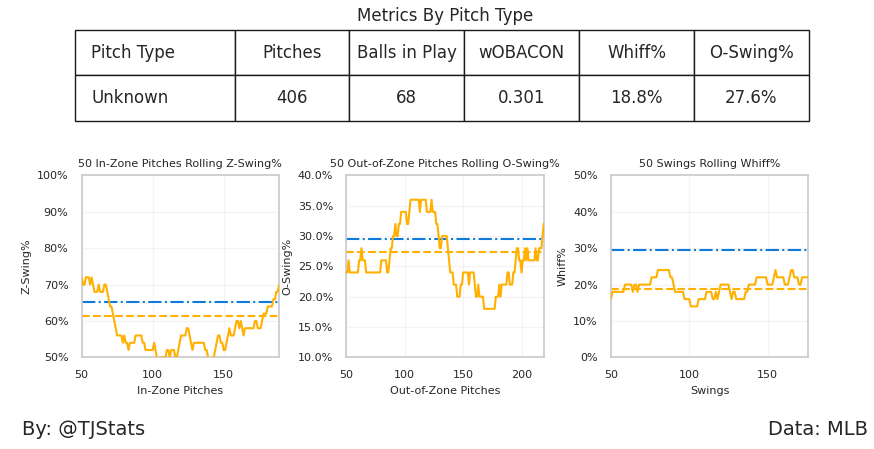
Shiny new tool alert! These completely back up what you say about Luis Lara. You can see he struggled early and went really into his shell, swing rate plummeted especially in zone, but it's working it's way up again over a rolling 50 pitch sample which shows he's likely feeling more and more comfortable at the plate
- 10 replies
-
- 4
-

-

-
- jesus made
- wande torres
- (and 3 more)
-
Joey Ortiz's lack of production has been startling to begin the year, and it may all stem from this change to his moves in the batter's box. Image courtesy of © Jeff Hanisch-Imagn Images Before the neck injury that briefly took him out of the lineup and then lingered throughout last summer, Joey Ortiz demonstrated power, bat-to-ball skills, and a keen eye at the plate that had many fans salivating over their return from the Corbin Burnes trade. With DL Hall's injury trouble, Ortiz has been the sole source of value for the Crew from that deal to date. He entered the Brewers organization with a reputation as a strong-to-elite defender from the left side who could also crush the ball, if a little too often on the ground. He was also reputed to have a swing-happy approach—something he got away with in the upper minors because of his bat control, although it did impede his walk rate. Ortiz showcased all of that defensive acumen virtually right away, on top of a bat that sparked to life. Through June last year, the new third baseman had a 135 WRC+, with a 13.9% walk rate, seven home runs, and 22 extra-base hits—12 of which came in May, when he really broke out. Then disaster struck, and Ortiz strained his neck. He changed his batting stance to a more open one, trying to relieve the tension in his neck, but lost all power production as a result. He couldn't hit the ball hard, and had to work to stay productive by just putting balls in play, not striking out and managing the injury until his neck felt better. So let's have a look through the stance changes and see where that leaves Ortiz today: Beginning of 2024: MVlEYVJfWGw0TUFRPT1fQmdVQVZnSUdCRllBV1Z0VFhnQUFBUU5VQUZoV0JnSUFWQUFHVmdJRUFRRUhCMVJY.mp4 Here is Ortiz pulling a home run at 107 mph off Luis Gil (who was on fire at this point). Notice Ortiz starts slightly open, but with his torso aligned directly with the pitcher. He's fairly upright, without a lot of knee flexion or hinge at the hips. Overall, he's in a strong position to impact the baseball. MzVEYVZfWGw0TUFRPT1fQlFjSEFnWlZWVk1BWGxSVFZ3QUFBd1ZSQUZoV1VGUUFVRkFIVVZZQkFnVUJCVlJX.mp4 It's a similar story against now-Brewers teammate Quinn Priester, again noting the powerful, but not crouched, knee flex and the upright torso position as he looks to pull the ball with authority from that open stance. He clears his hips brilliantly and uses all that torque to create a ton of power. Leave the ball up on the inner third of the plate at your peril. The other notable point is the bat being quite flat through the hitting zone. It's not an uppercut by any means, despite the slight upward trajectory. This is a swing geared for line drives. He also had a big leg kick, something he timed up exceptionally well. Ortiz's eye at the plate and his bat speed let him use the bigger leg kick well, and it triggered a strong chain of momentum for him. Post-Neck Injury 2024: bkdSTmdfWGw0TUFRPT1fVndOVkFBSUJWbGNBQUFBREFBQUFVMUJYQUZnTUIxVUFBRlZXVVFNTkNGRUFBbFpT.mp4 After his neck injury, Ortiz opened up his stance to avoid straining his neck looking at the pitcher, and it seemed to affect his ability to clear those hips. Dragging the foot back into position for his leg kick, then getting it down left him struggling to find the timing in his swing. That led to a lot of ground balls and weak fly balls. The left foot isn't rotating or rolling open with his hips at impact—a clear sign that he's struggling to generate that turn from his torso and translate that torque into bat speed. Indeed, his swing was much slower for about two months after he returned from the neck issue. He still has the big leg kick, despite the timing difficulties with his more open stance, but has lost some of the rhythm he had with that pre-pitch movement earlier in the year. April 2025 SzRkN2xfWGw0TUFRPT1fQXdVQVUxUlJVd01BV2dFQ0FnQUhBd0lEQUZsVFYxQUFCd0VGQkZJTVZRSUVWUU1F.mp4 Fast forward to this season and Ortiz has completely calmed down his pre-pitch movement. Gone is that big leg kick, with more of a half-hearted planting of the foot, and it seems to have thrown off his entire mechanical signature, as well as his timing. Ortiz is struggling to create the chain of energy through his body into bat speed, and he can't get the barrel to the ball on time as a result. He's swinging slower; struggling to pull the ball with authority and in the air; and seems to have an infield fly ball every other at-bat. Note this is against Brent Suter. Ortiz isn't having to shorten his leg kick for some flamethrower, Suter's fastball sits at 89-90 mph. The loss of the leg kick (a move that facilitated so much success for a healthy Ortiz last season) is confusing. It may be due to his attempts to manage the neck injury later in 2024, or perhaps to faltering confidence, but Ortiz isn't finding those higher bat speeds as effectively as he did in 2024. The Brewers, with their current lineup production, can ill afford a black hole at shortstop. Ortiz has shown himself capable of so much more than even average production, and should be able to contribute at a strong level if he can rediscover the rhythm and aggressiveness of his pre-pitch movements. If he can't, you wonder how long the Brewers will be able to continue with Ortiz as their everyday shortstop. View full article
-
Joey Ortiz's Leg Kick Has Lost Its Conviction—and With That, His Power
Jake McKibbin posted an article in Brewers
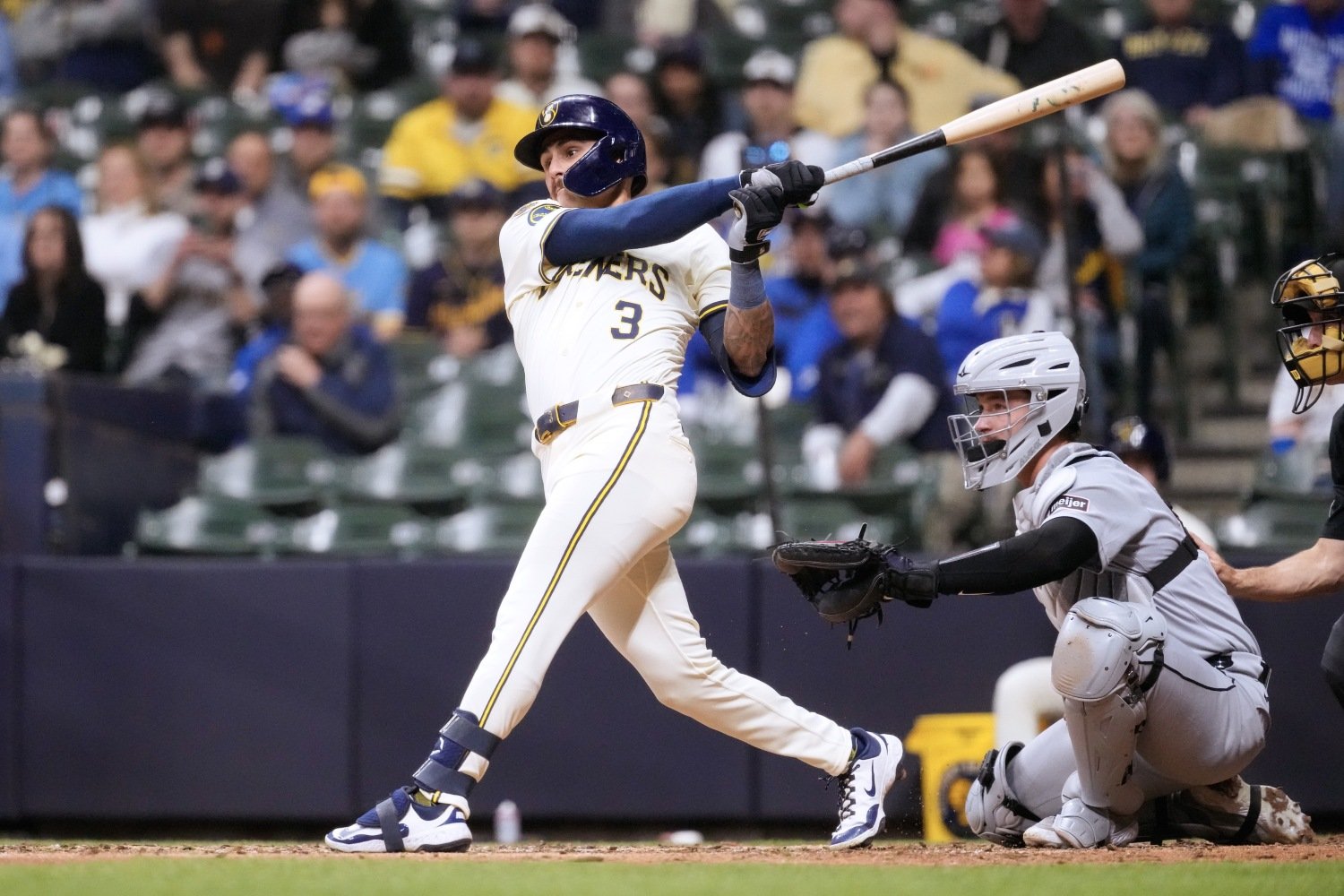 Before the neck injury that briefly took him out of the lineup and then lingered throughout last summer, Joey Ortiz demonstrated power, bat-to-ball skills, and a keen eye at the plate that had many fans salivating over their return from the Corbin Burnes trade. With DL Hall's injury trouble, Ortiz has been the sole source of value for the Crew from that deal to date. He entered the Brewers organization with a reputation as a strong-to-elite defender from the left side who could also crush the ball, if a little too often on the ground. He was also reputed to have a swing-happy approach—something he got away with in the upper minors because of his bat control, although it did impede his walk rate. Ortiz showcased all of that defensive acumen virtually right away, on top of a bat that sparked to life. Through June last year, the new third baseman had a 135 WRC+, with a 13.9% walk rate, seven home runs, and 22 extra-base hits—12 of which came in May, when he really broke out. Then disaster struck, and Ortiz strained his neck. He changed his batting stance to a more open one, trying to relieve the tension in his neck, but lost all power production as a result. He couldn't hit the ball hard, and had to work to stay productive by just putting balls in play, not striking out and managing the injury until his neck felt better. So let's have a look through the stance changes and see where that leaves Ortiz today: Beginning of 2024: MVlEYVJfWGw0TUFRPT1fQmdVQVZnSUdCRllBV1Z0VFhnQUFBUU5VQUZoV0JnSUFWQUFHVmdJRUFRRUhCMVJY.mp4 Here is Ortiz pulling a home run at 107 mph off Luis Gil (who was on fire at this point). Notice Ortiz starts slightly open, but with his torso aligned directly with the pitcher. He's fairly upright, without a lot of knee flexion or hinge at the hips. Overall, he's in a strong position to impact the baseball. MzVEYVZfWGw0TUFRPT1fQlFjSEFnWlZWVk1BWGxSVFZ3QUFBd1ZSQUZoV1VGUUFVRkFIVVZZQkFnVUJCVlJX.mp4 It's a similar story against now-Brewers teammate Quinn Priester, again noting the powerful, but not crouched, knee flex and the upright torso position as he looks to pull the ball with authority from that open stance. He clears his hips brilliantly and uses all that torque to create a ton of power. Leave the ball up on the inner third of the plate at your peril. The other notable point is the bat being quite flat through the hitting zone. It's not an uppercut by any means, despite the slight upward trajectory. This is a swing geared for line drives. He also had a big leg kick, something he timed up exceptionally well. Ortiz's eye at the plate and his bat speed let him use the bigger leg kick well, and it triggered a strong chain of momentum for him. Post-Neck Injury 2024: bkdSTmdfWGw0TUFRPT1fVndOVkFBSUJWbGNBQUFBREFBQUFVMUJYQUZnTUIxVUFBRlZXVVFNTkNGRUFBbFpT.mp4 After his neck injury, Ortiz opened up his stance to avoid straining his neck looking at the pitcher, and it seemed to affect his ability to clear those hips. Dragging the foot back into position for his leg kick, then getting it down left him struggling to find the timing in his swing. That led to a lot of ground balls and weak fly balls. The left foot isn't rotating or rolling open with his hips at impact—a clear sign that he's struggling to generate that turn from his torso and translate that torque into bat speed. Indeed, his swing was much slower for about two months after he returned from the neck issue. He still has the big leg kick, despite the timing difficulties with his more open stance, but has lost some of the rhythm he had with that pre-pitch movement earlier in the year. April 2025 SzRkN2xfWGw0TUFRPT1fQXdVQVUxUlJVd01BV2dFQ0FnQUhBd0lEQUZsVFYxQUFCd0VGQkZJTVZRSUVWUU1F.mp4 Fast forward to this season and Ortiz has completely calmed down his pre-pitch movement. Gone is that big leg kick, with more of a half-hearted planting of the foot, and it seems to have thrown off his entire mechanical signature, as well as his timing. Ortiz is struggling to create the chain of energy through his body into bat speed, and he can't get the barrel to the ball on time as a result. He's swinging slower; struggling to pull the ball with authority and in the air; and seems to have an infield fly ball every other at-bat. Note this is against Brent Suter. Ortiz isn't having to shorten his leg kick for some flamethrower, Suter's fastball sits at 89-90 mph. The loss of the leg kick (a move that facilitated so much success for a healthy Ortiz last season) is confusing. It may be due to his attempts to manage the neck injury later in 2024, or perhaps to faltering confidence, but Ortiz isn't finding those higher bat speeds as effectively as he did in 2024. The Brewers, with their current lineup production, can ill afford a black hole at shortstop. Ortiz has shown himself capable of so much more than even average production, and should be able to contribute at a strong level if he can rediscover the rhythm and aggressiveness of his pre-pitch movements. If he can't, you wonder how long the Brewers will be able to continue with Ortiz as their everyday shortstop.
 -
Bryse Wilson and Shane Smith up first for the Brewers... this'll be interesting
-
Sun. 4/27 - Impressive Slate of Starters Listed
Jake McKibbin replied to Jim Goulart's topic in Brewers Minor League Talk
That's the one! -
Sun. 4/27 - Impressive Slate of Starters Listed
Jake McKibbin replied to Jim Goulart's topic in Brewers Minor League Talk
Crazy stuff from Misiorowski this week. The changeup usage in yesterday's start was really something, clearly growing more comfortable with it and eliciting some awful swings -
The Brewers, aside from two players, have seen a massive dip in their defensive prowess this season, culminating in a painful loss to the Giants. Is it just inevitable fluctuation, or is there something more concrete occurring? Image courtesy of © Eakin Howard-Imagn Images The Milwaukee Brewers' loss on Thursday afternoon was a painful one, but it exposed a series of flaws we have seen since the start of the season from this Brewers defense. The reigning Team Gold Glove winners, led by the premium infield pairing of Joey Ortiz and Brice Turang, have made poor decisions, bobbled balls and displayed a lack of the range that drove their defensive excellence last year. So where exactly has it gone wrong so far? The first is that they led all of baseball in "range", per Statcast measurements, saving an estimated 27 runs from this alone. Willy Adames struggled in this regard in 2024, so you would think replacing him with the talented Ortiz at shortstop and the superbly athletic Oliver Dunn at third base (at least early in the season; Caleb Durbin is a new variable in the equation) would be an upgrade. Couple that with more DH days for Christian Yelich, and an outfield of young dynamos in Jackson Chourio, Sal Frelick and Garrett Mitchell would make them even more dominant. Unfortunately, this hasn't been the case. Early individual statistics defensively are tough to rely on, but team metrics can be more telling, due to the larger sample size involved. In the first month of 2025, only three players are above 0 for the Brewers in defensive range, per Statcast: Mitchell, Chourio and... Isaac Collins. Frelick has the lowest mark on the team, at -2, while Ortiz and Turang—a supposedly electric infield—are stuck on 0. The Brewers' combined talents at third base has a mark of -3. The infield is more of a concern than the outfield, with Frelick's marks likely to rebound. He's passing the eye test in the outfield, at least. Arguably, the best model for marking infield defense is Defensive Runs Saved (DRS). By its reckoning, both Ortiz and Turang have been subpar defenders, with -3 and -1 DRS, respectively. By now, you'd sooner have guessed the pair would have added four or five runs to the Brewers' ledgers. It hasn't worked that way. The thing is, Ortiz has made some very impressive plays. This may not grade out well, as defensive models don't often factor in the wind effect, but it's remarkable athleticism: TkE5Mk9fWGw0TUFRPT1fVXdsV0FGWldWZ0FBWFFCV1V3QUhBMVVBQUZrQ0Jsa0FBQWRRVVFvRUFnSmNCQUZY.mp4 The problem is the indecisiveness that has plagued both Ortiz and Turang. Both have fumbled easy plays on multiple occasions, bobbling double-play balls and making poor choices on which base to go to. It was the Brewers' metronomic ruthlessness that brought them success last season. They found outs they had no right to in 2024. This year, they've failed to convert some outs that seemed to be there for the taking. All in all, the Brewers seem to be forcing it, chasing some spectacular plays rather than retaining their zen-like, monotonous approach to getting outs. If they can alter that mentality, they should be able to rediscover the infield excellence they were known for last season. I twould also be unfair to dismiss the early work of Garrett Mitchell in all of this. Mitchell has accrued 6 outs above average in just 176 innings of baseball, leading center fielders on a per-inning basis (of those with 100+ innings). He's been the saving grace for the Brewers defensively so far. It's been a joy to watch—especially behind the likes of Quinn Priester and Jose Quintana. This is perhaps one of the best catches this season, with just a 20% catch probability: Uk80UGVfWGw0TUFRPT1fQmdZRlVnWURVMVFBWGxBSFVnQUhDUThIQUZrRFUxZ0FCbEZSVXdBSEFRQUFVd29G.mp4 The Brewers aren't a spent force defensively, but they do need to get back to basics. If they can stop forcing the great plays at the expense of the easy plays, they should return to those lofty heights of yesteryear. View full article
-
Why, Specifically, Have the Brewers Forgotten How to Defend?
Jake McKibbin posted an article in Brewers
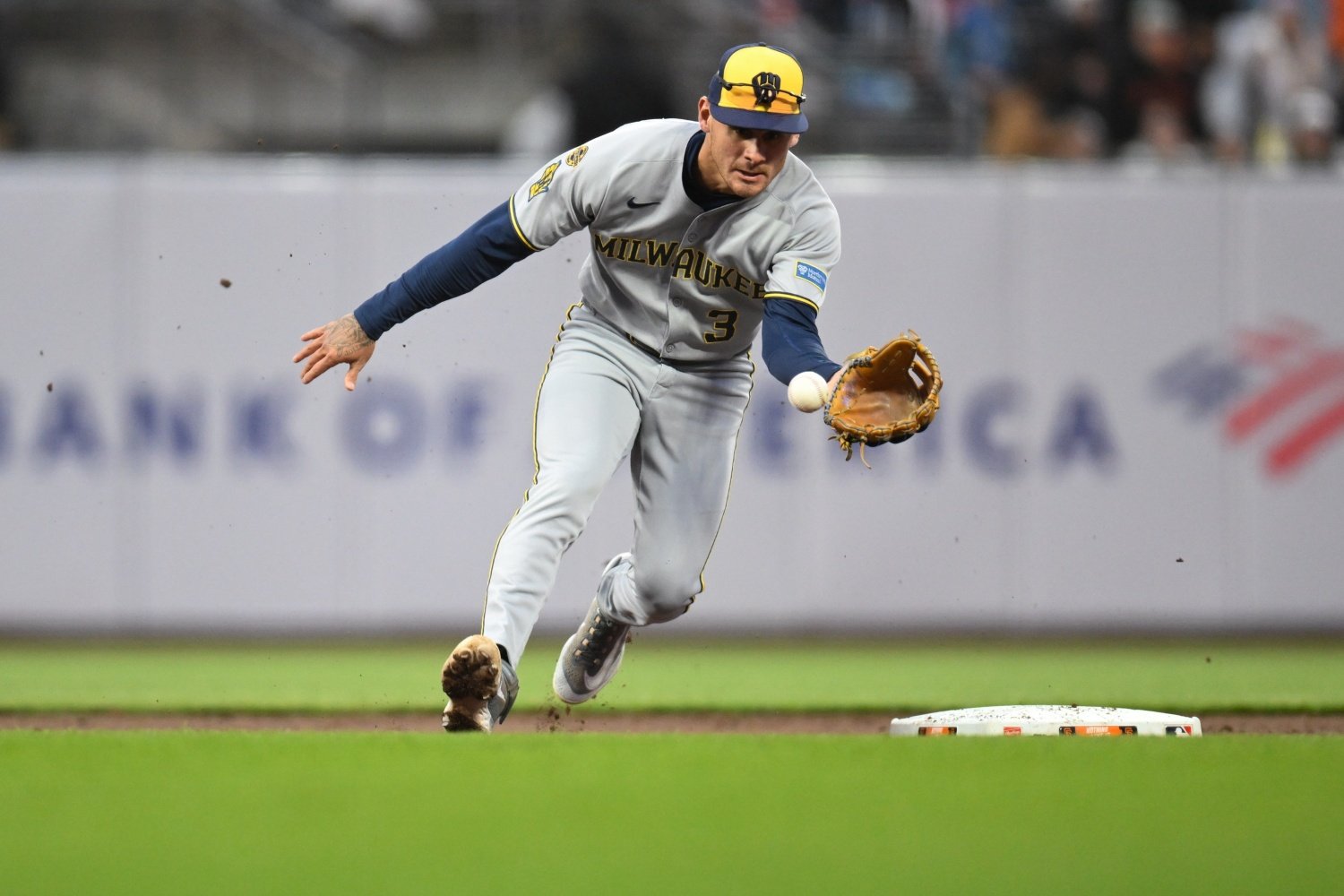 The Milwaukee Brewers' loss on Thursday afternoon was a painful one, but it exposed a series of flaws we have seen since the start of the season from this Brewers defense. The reigning Team Gold Glove winners, led by the premium infield pairing of Joey Ortiz and Brice Turang, have made poor decisions, bobbled balls and displayed a lack of the range that drove their defensive excellence last year. So where exactly has it gone wrong so far? The first is that they led all of baseball in "range", per Statcast measurements, saving an estimated 27 runs from this alone. Willy Adames struggled in this regard in 2024, so you would think replacing him with the talented Ortiz at shortstop and the superbly athletic Oliver Dunn at third base (at least early in the season; Caleb Durbin is a new variable in the equation) would be an upgrade. Couple that with more DH days for Christian Yelich, and an outfield of young dynamos in Jackson Chourio, Sal Frelick and Garrett Mitchell would make them even more dominant. Unfortunately, this hasn't been the case. Early individual statistics defensively are tough to rely on, but team metrics can be more telling, due to the larger sample size involved. In the first month of 2025, only three players are above 0 for the Brewers in defensive range, per Statcast: Mitchell, Chourio and... Isaac Collins. Frelick has the lowest mark on the team, at -2, while Ortiz and Turang—a supposedly electric infield—are stuck on 0. The Brewers' combined talents at third base has a mark of -3. The infield is more of a concern than the outfield, with Frelick's marks likely to rebound. He's passing the eye test in the outfield, at least. Arguably, the best model for marking infield defense is Defensive Runs Saved (DRS). By its reckoning, both Ortiz and Turang have been subpar defenders, with -3 and -1 DRS, respectively. By now, you'd sooner have guessed the pair would have added four or five runs to the Brewers' ledgers. It hasn't worked that way. The thing is, Ortiz has made some very impressive plays. This may not grade out well, as defensive models don't often factor in the wind effect, but it's remarkable athleticism: TkE5Mk9fWGw0TUFRPT1fVXdsV0FGWldWZ0FBWFFCV1V3QUhBMVVBQUZrQ0Jsa0FBQWRRVVFvRUFnSmNCQUZY.mp4 The problem is the indecisiveness that has plagued both Ortiz and Turang. Both have fumbled easy plays on multiple occasions, bobbling double-play balls and making poor choices on which base to go to. It was the Brewers' metronomic ruthlessness that brought them success last season. They found outs they had no right to in 2024. This year, they've failed to convert some outs that seemed to be there for the taking. All in all, the Brewers seem to be forcing it, chasing some spectacular plays rather than retaining their zen-like, monotonous approach to getting outs. If they can alter that mentality, they should be able to rediscover the infield excellence they were known for last season. I twould also be unfair to dismiss the early work of Garrett Mitchell in all of this. Mitchell has accrued 6 outs above average in just 176 innings of baseball, leading center fielders on a per-inning basis (of those with 100+ innings). He's been the saving grace for the Brewers defensively so far. It's been a joy to watch—especially behind the likes of Quinn Priester and Jose Quintana. This is perhaps one of the best catches this season, with just a 20% catch probability: Uk80UGVfWGw0TUFRPT1fQmdZRlVnWURVMVFBWGxBSFVnQUhDUThIQUZrRFUxZ0FCbEZSVXdBSEFRQUFVd29G.mp4 The Brewers aren't a spent force defensively, but they do need to get back to basics. If they can stop forcing the great plays at the expense of the easy plays, they should return to those lofty heights of yesteryear.
 -
Velocity held up well in outing one but this was a little more concerning. Probably a blip in the road in the ramp up process, but it's a good indicator of where he's at in that ramp up.

-
Tuesday night was Jacob Misiorowski's best start of the year, as he went six scoreless innings with eight strikeouts on only 76 pitches. A revamped pitch mix made it all possible, and could carry him to success. Image courtesy of © Dave Kallmann / USA TODAY NETWORK via Imagn Images Early in 2025, Jacob Misiorowski has faced the same issues with his overall stat line as in previous seasons—namely, high walk rates and too many hit batsmen. The thing is, it's for an entirely different reason. In a departure from past seasons, Misiorowski has rarely been outright wild. Instead, he's nibbling around the edges of the tighter zone forged by the challenge system in place throughout Triple A. No, his issue this year has been how to put away the more experienced hitters in the international league. Specifically, his command of breaking stuff has allowed him to fill up the zone better. The cutter/slider has been his main source, pounding the zone over 61% of the time with it in his first four starts, but despite having slider-like movement at 94 mph, that's probably his least effective pitch for putting hitters away. He gets less swing-and-miss with the slider, and has given up some hard contact when leaking it over the heart of the plate. It also doesn't tunnel as effectively with his four-seamer, and throwing it more has dampened the swing-and-miss on his primary offering. Enter the curveball. That's another pitch he's had no problem locating in the zone this season. He significantly upped its usage last night, to roaring success: The first chart is for Misiorowski's first four games of the season; the second is from yesterday's game (there is also a token changeup classified as a fastball for those with eagle eyes). Misiorowski was feeling his fastball, reaching an average velocity of 98 mph with great extension and movement, but the increased usage of his curveball from 11% to 27.6% is a massive jump, all coming at the expense of the slider. It's had better whiff rates all year, and more importantly, it tunnels effectively with his four-seamer at the top of the zone. That strong negative induced vertical break number means that hitters have to be aware of not just the rising fastball above the zone, but of the danger of the ball dropping off a cliff and landing in the zone—a prevalent occurrence in his recorded strikeouts from last night. Misiorowski has been getting ahead in the count more often this season, with significantly less wildness. If he can maintain this type of pitch mix (with occasional sliders and changeups, to keep hitters off-balance), he may have found an arsenal that he can really command at the big-league level. He did find the zone more often with his four-seamer, as well—up to 49%, from a season average of 43.9%—and that's important, too. Bringing that type of control to a big-league strike zone would bring him close to league average in how often he lands it in the strike zone, but the combination of the curveball and fastball from a pure stuff perspective (as well as how they play off one another) is going to be key for Misiorowski moving forward. Obviously, we will need to see more of this than just the 76-pitch sample that was Tuesday night. Still, Misiorowski has struggled to show this kind of efficiency even in his best outings in recent years. How he backs this up in his second start of the week on Sunday will be fascinating. View full article
-
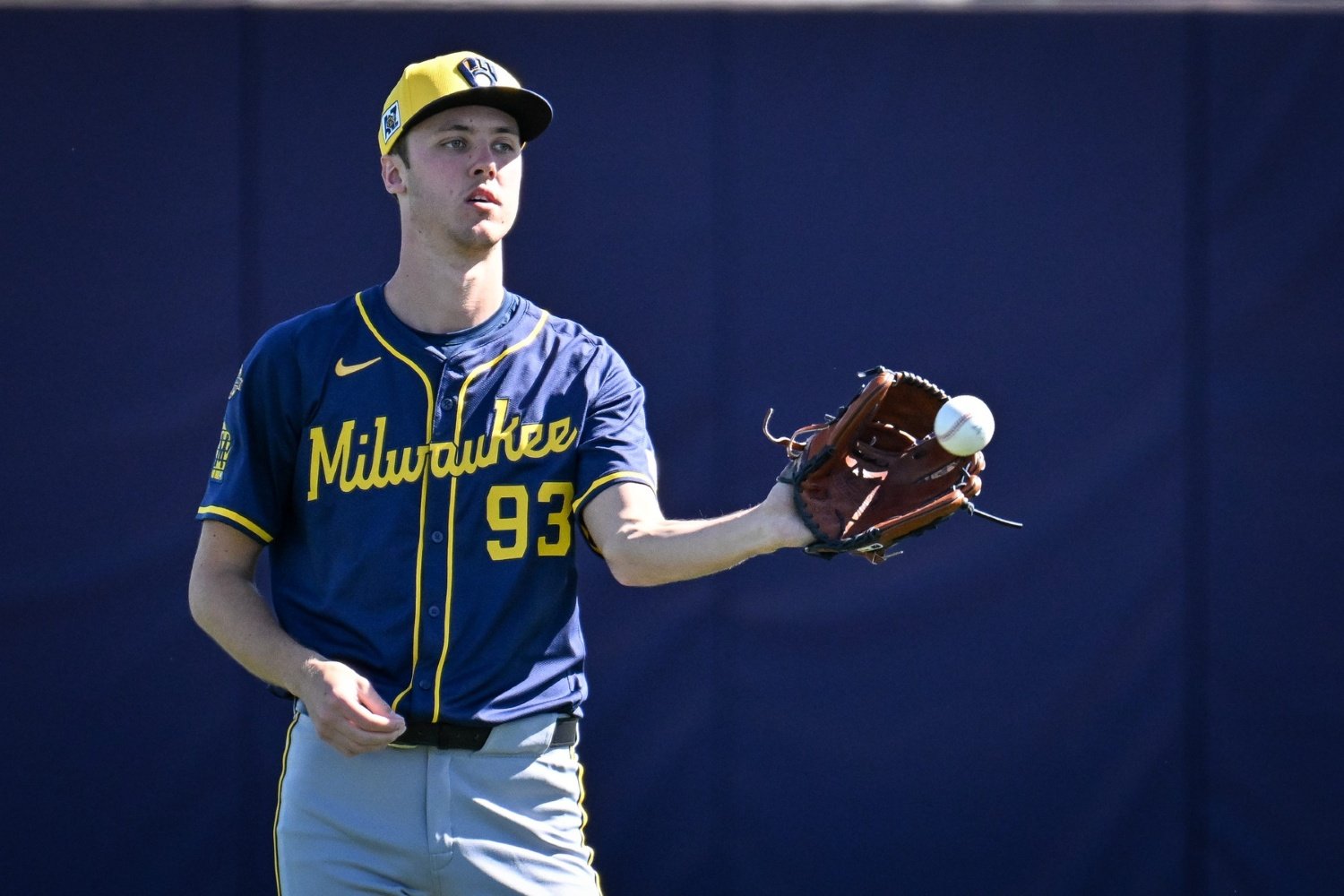 Early in 2025, Jacob Misiorowski has faced the same issues with his overall stat line as in previous seasons—namely, high walk rates and too many hit batsmen. The thing is, it's for an entirely different reason. In a departure from past seasons, Misiorowski has rarely been outright wild. Instead, he's nibbling around the edges of the tighter zone forged by the challenge system in place throughout Triple A. No, his issue this year has been how to put away the more experienced hitters in the international league. Specifically, his command of breaking stuff has allowed him to fill up the zone better. The cutter/slider has been his main source, pounding the zone over 61% of the time with it in his first four starts, but despite having slider-like movement at 94 mph, that's probably his least effective pitch for putting hitters away. He gets less swing-and-miss with the slider, and has given up some hard contact when leaking it over the heart of the plate. It also doesn't tunnel as effectively with his four-seamer, and throwing it more has dampened the swing-and-miss on his primary offering. Enter the curveball. That's another pitch he's had no problem locating in the zone this season. He significantly upped its usage last night, to roaring success: The first chart is for Misiorowski's first four games of the season; the second is from yesterday's game (there is also a token changeup classified as a fastball for those with eagle eyes). Misiorowski was feeling his fastball, reaching an average velocity of 98 mph with great extension and movement, but the increased usage of his curveball from 11% to 27.6% is a massive jump, all coming at the expense of the slider. It's had better whiff rates all year, and more importantly, it tunnels effectively with his four-seamer at the top of the zone. That strong negative induced vertical break number means that hitters have to be aware of not just the rising fastball above the zone, but of the danger of the ball dropping off a cliff and landing in the zone—a prevalent occurrence in his recorded strikeouts from last night. Misiorowski has been getting ahead in the count more often this season, with significantly less wildness. If he can maintain this type of pitch mix (with occasional sliders and changeups, to keep hitters off-balance), he may have found an arsenal that he can really command at the big-league level. He did find the zone more often with his four-seamer, as well—up to 49%, from a season average of 43.9%—and that's important, too. Bringing that type of control to a big-league strike zone would bring him close to league average in how often he lands it in the strike zone, but the combination of the curveball and fastball from a pure stuff perspective (as well as how they play off one another) is going to be key for Misiorowski moving forward. Obviously, we will need to see more of this than just the 76-pitch sample that was Tuesday night. Still, Misiorowski has struggled to show this kind of efficiency even in his best outings in recent years. How he backs this up in his second start of the week on Sunday will be fascinating.
 -
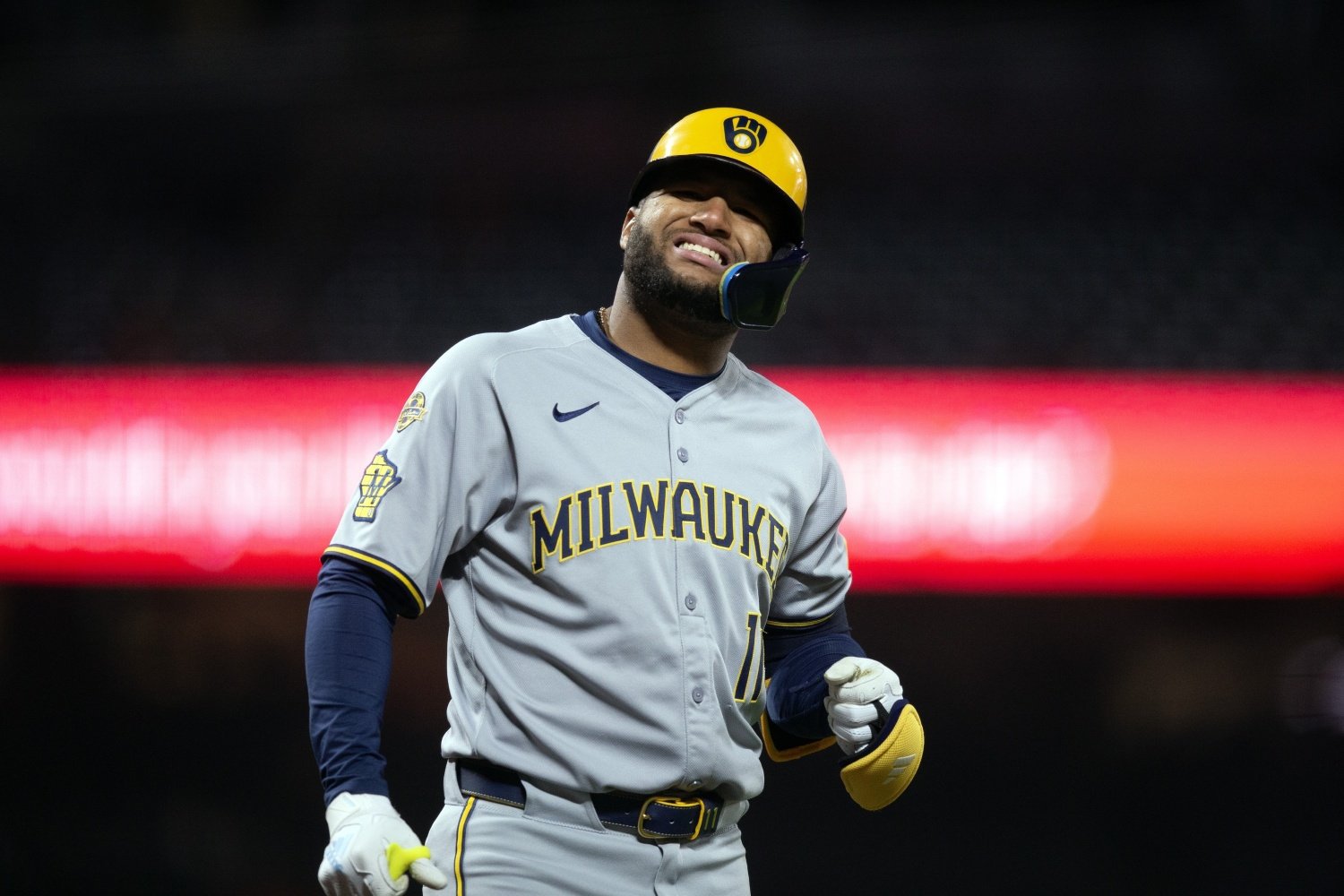 One of the issues Jackson Chourio has may be that his hands are too talented. Chourio has swung at some ludicrous pitches so far this year, but his ability to make contact (and even do damage) on pitches outside the strike zone makes it difficult to rein in his approach. Currently, he has five doubles and a .229 batting average on pitches outside the rulebook strike zone—a remarkable feat. All of these have come against fastballs, however, with deteriorating results against breaking and offspeed variations. His understanding of his own strike zone wasn't great in 2024, either, ranking in the 29th percentile, and not just as a result of a difficult start. Chourio had five separate periods where his rolling 50-pitch chase rate rose above 40%. In 2025, though, that's gotten even worse: Chourio has had a rolling 50-pitch chase rate above 50% for a stretch this season, an alarming mark, and his average on the year is over that 40% mark. It's impacting his walk rate, his ability to do damage, and his overall offensive output. It may be for a variety of reasons, from overconfidence to pressing a bit amid the team's strangely bipolar start—but for now, it isn't working, and pitchers seem to have figured him out. The problem Chourio is facing now is one of uncertainty. He's trying to swing less, but he's taking more in-zone pitches than ever, while continuing to chase at a high rate. If the pitch starts over the middle of the plate, he's likely going to swing, regardless of the pitch type. Actually recognizing what's coming is still a work in progress for him, and one he'll no doubt conquer, as he has every other challenge. Let's take this example from his first at-bat against Jordan Hicks Tuesday night: Chourio swung at two of these pitches. Sinker number one started on the outside edge of the plate and honed in on the inner third, exactly where Chourio usually does damage. The second and third offerings were sweepers starting over the heart of the plate and down, before veering almost into the dirt in the left-handed batter's box. Chourio swung at the first, before laying off the second, but based on even the initial trajectory, none of Hicks's pitches could have landed in the zone. Chourio shouldn't have twitched at either offering. Then, finally, Chourio got a sinker that started over the inner third, and his eyes lit up. Not factoring in that the pitch would either sweep down and away into his one weak zone, or swerve into his body. he swung at a pitch that may well have resulted in a hit by pitch, producing weak contact. He reached on the play, thanks to his speed and some good luck, but the process of that plate appearance was discouraging. He appears to be struggling to pick up pitch shapes early enough to make a good swing decision, more than anything, and someone with the horizontal separation of Hicks (between his electric two-seam fastball and sweeper) is perfectly situated to take advantage of that fact. If you wonder why it's important that Chourio can work counts and force pitchers into the strike zone, and into his favorite areas of the strike zone? Well: If you feed Chourio what he wants on the inner third or in the upper third of the strike zone, he will crush it. In fact, across the majority of the strike zone, you can almost guarantee high-quality contact from his bat, but if he can't force them into the zone, that contact is going to be rarer than the Brewers would like from their young star. His hand speed and coordination have allowed him to continue producing at a league-average level despite the lack of walks and discipline, but there are signs that pitchers are beginning to work his approach out. Chourio has made adjustments remarkably quickly at every level of the minor leagues. He likely will do so again. If he wants to reach the ceiling he's truly capable of, then pitch recognition and the virtue of patience may be his final frontier.
 -
The Brewers phenom has been chasing everything within a five-mile radius of his strike zone to start this season—something he did at times in his rookie campaign, as well. That was neatly encapsulated by one at-bat on Tuesday. Is it always going to be a problem, or can he tighten up his ball/strike recognition? Image courtesy of © D. Ross Cameron-Imagn Images One of the issues Jackson Chourio has may be that his hands are too talented. Chourio has swung at some ludicrous pitches so far this year, but his ability to make contact (and even do damage) on pitches outside the strike zone makes it difficult to rein in his approach. Currently, he has five doubles and a .229 batting average on pitches outside the rulebook strike zone—a remarkable feat. All of these have come against fastballs, however, with deteriorating results against breaking and offspeed variations. His understanding of his own strike zone wasn't great in 2024, either, ranking in the 29th percentile, and not just as a result of a difficult start. Chourio had five separate periods where his rolling 50-pitch chase rate rose above 40%. In 2025, though, that's gotten even worse: Chourio has had a rolling 50-pitch chase rate above 50% for a stretch this season, an alarming mark, and his average on the year is over that 40% mark. It's impacting his walk rate, his ability to do damage, and his overall offensive output. It may be for a variety of reasons, from overconfidence to pressing a bit amid the team's strangely bipolar start—but for now, it isn't working, and pitchers seem to have figured him out. The problem Chourio is facing now is one of uncertainty. He's trying to swing less, but he's taking more in-zone pitches than ever, while continuing to chase at a high rate. If the pitch starts over the middle of the plate, he's likely going to swing, regardless of the pitch type. Actually recognizing what's coming is still a work in progress for him, and one he'll no doubt conquer, as he has every other challenge. Let's take this example from his first at-bat against Jordan Hicks Tuesday night: Chourio swung at two of these pitches. Sinker number one started on the outside edge of the plate and honed in on the inner third, exactly where Chourio usually does damage. The second and third offerings were sweepers starting over the heart of the plate and down, before veering almost into the dirt in the left-handed batter's box. Chourio swung at the first, before laying off the second, but based on even the initial trajectory, none of Hicks's pitches could have landed in the zone. Chourio shouldn't have twitched at either offering. Then, finally, Chourio got a sinker that started over the inner third, and his eyes lit up. Not factoring in that the pitch would either sweep down and away into his one weak zone, or swerve into his body. he swung at a pitch that may well have resulted in a hit by pitch, producing weak contact. He reached on the play, thanks to his speed and some good luck, but the process of that plate appearance was discouraging. He appears to be struggling to pick up pitch shapes early enough to make a good swing decision, more than anything, and someone with the horizontal separation of Hicks (between his electric two-seam fastball and sweeper) is perfectly situated to take advantage of that fact. If you wonder why it's important that Chourio can work counts and force pitchers into the strike zone, and into his favorite areas of the strike zone? Well: If you feed Chourio what he wants on the inner third or in the upper third of the strike zone, he will crush it. In fact, across the majority of the strike zone, you can almost guarantee high-quality contact from his bat, but if he can't force them into the zone, that contact is going to be rarer than the Brewers would like from their young star. His hand speed and coordination have allowed him to continue producing at a league-average level despite the lack of walks and discipline, but there are signs that pitchers are beginning to work his approach out. Chourio has made adjustments remarkably quickly at every level of the minor leagues. He likely will do so again. If he wants to reach the ceiling he's truly capable of, then pitch recognition and the virtue of patience may be his final frontier. View full article
-
I used fangraphs! Go to Cameron's profile, click on the minor league symbol an it should come up!
-
I honestly couldn't believe this when I watched it this morning, I've actually just written something up after watching it. I completely agree re control, and actually would go so far as to say his issue has been an inability to put hitters away more than wildness, but I think he may have found an answer to that. Either way, mightily impressive stuff from the gangly hurler
-
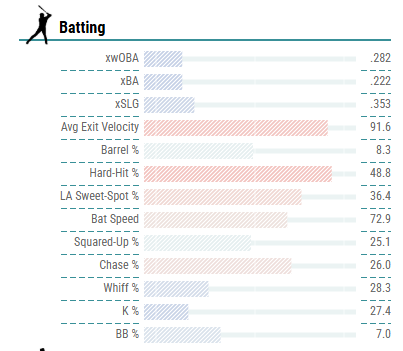
One thing I would say is that his contact rates, swing rates are all very very similar to those he posted in Triple A last season: 2024 vs 2025: Zone contact: 89.1% vs 88.4% Swinging strike rate: 8.1% vs 8.2% Both of these dropped off markedly when he reached MLB The one thing he is doing is hitting a ton of fly balls, up from 38% to 57% so far this season. That may be unsustainable long term, but still a possible jump from that end. Still he had a 1.001 OPS in AAA in 2024 for Oakland only to slash .200/.258/.329 in the majors. The jump appears to be a big one for Cameron, and he didn't showcase much range in the outfield either with -3 OAA. I wouldn't be averse to letting him get a stretch of appearances off the bench to see if he can make that final step and get comfortable at the big league level, but I'm not sure if he'll hit the ground running per se If he can make enough contact, he will do damage but that hasn't translated as well to the big leagues and he seems to have found himself getting behind in counts with some passivity early in the count last season too. I think his savant page pretty much sums it up, why there's intrigue but also maybe not to expect too much too soon. Batted ball quality was great... when it happened
-
Derry girls is prime time for it. I'm literally watching it as we speak! Slainte!
- 16 replies
-
- 2
-
-

-
- john holobetz
- andruw monasterio
- (and 3 more)
-
Calling a northern Irishman British is a dangerous game Joseph (despite the truth in the statement 😂). Chuffed is a slang word for happy/proud! My goal this year is to slip some British/Irish colloquialisms passed Trueblood in some articles, we'll see how that goes when talking about the Brewers hallions!
- 16 replies
-
- 2
-
-
-
- john holobetz
- andruw monasterio
- (and 3 more)
-
Apologies for the typo, I did mean 73% at the time 😅 Just odd with that sweeper, I'm unsure if he was facing a lot of lefties, but even then. Not super chuffed by the mix on show
- 16 replies
-
- 1
-
-
- john holobetz
- andruw monasterio
- (and 3 more)
-
Tue. 4/15 - Morning Mudcats
Jake McKibbin replied to Jim Goulart's topic in Brewers Minor League Talk
I do think Holobetz was a little snakebitten defensively in this one, I didn't catch the first inning but the second he generated a lot of weak contact and just couldn't get the outs behind him -
The Brewers' highest-paid player is slashing just .143/.262/.321 early in the season, and not providing a whole lot of production for the team. Is he showing any signs of a breakout? I haven't broadcasted it too much, mainly because I was impressed that Christian Yelich was still able to smoke bombs, but spring training wasn't pretty for the Brewers star—and that seems to have carried forward into the regular season. The main reason for concern was the regularity with which Yelich was swinging and missing. He has always had more swing-and-miss in the preseason than he does in the regular season—a very swing-happy approach geared towards finding his timing—but even then, this was quite excessive. (Unfortunately, Yelich didn't play in many Statcast-equipped parks, so this is based on the eye test.) It's understandable for a player who had major back surgery, and who was always likely to take a little time to find the timing in his swing. The good news is, it appears that he's beginning to do so. Yelich has shown some power, in between all of the whiffs reflected above, but it was undeniably concerning to see a player who has such good hand-eye coordination and plate discipline having a 50-pitch rolling average whiff rate of 68.4%. Since then, this has come down nicely, and even to the naked eye, he appears to be on time more often at the plate. There was a concern that he couldn't catch up to velocity, but the fastball whiff rate has been declining—although breaking balls are still giving him some trouble, particularly left on left, so it's possible he's cheating a bit to catch up to the heat. He was hitting the ball incredibly hard when making contact, doing damage, but he wasn't making contact often enough in the early going. Now that he's beginning to right the ship on that front, we can begin to look at the quality of batted balls. His expected slugging, due to the additional contact and some of the mammoth homers in Colorado, has spiked to above .520 over a rolling 25-plate appearance sample—a number that would leave us all quite content, were he to maintain it through the end of the year: The one downside, as always, is the last thing that usually comes round right for Yelich: his launch angles. Unfortunately, these have been trending down, but this has been a common theme throughout the 2020s. Yelich will, randomly, find that contact point out in front and go on some slugging tears, but at this point (over the same rolling 25 PA sample) the launch angle is averaging -4.2°. Thence the lack of production against Arizona. Perhaps it was rash to believe Yelich could slot straight back into the form he was on in 2024, it was always going to require a period of time for him to get back up to speed. Some of the early results (behind the bare stat lines) are showing that improvement. He appears in a similar place to his 2022 iteration (not his best form, I'll admit), but with more positive indicators early in the season, those final steps may not be all that far away. What are your thoughts on Christian Yelich? Has he met your expectations to begin the season, or did you have higher hopes? Let us know your thoughts in the comments below! View full article
-
Christian Yelich Isn't Locked In... But He Is Getting There
Jake McKibbin posted an article in Brewers
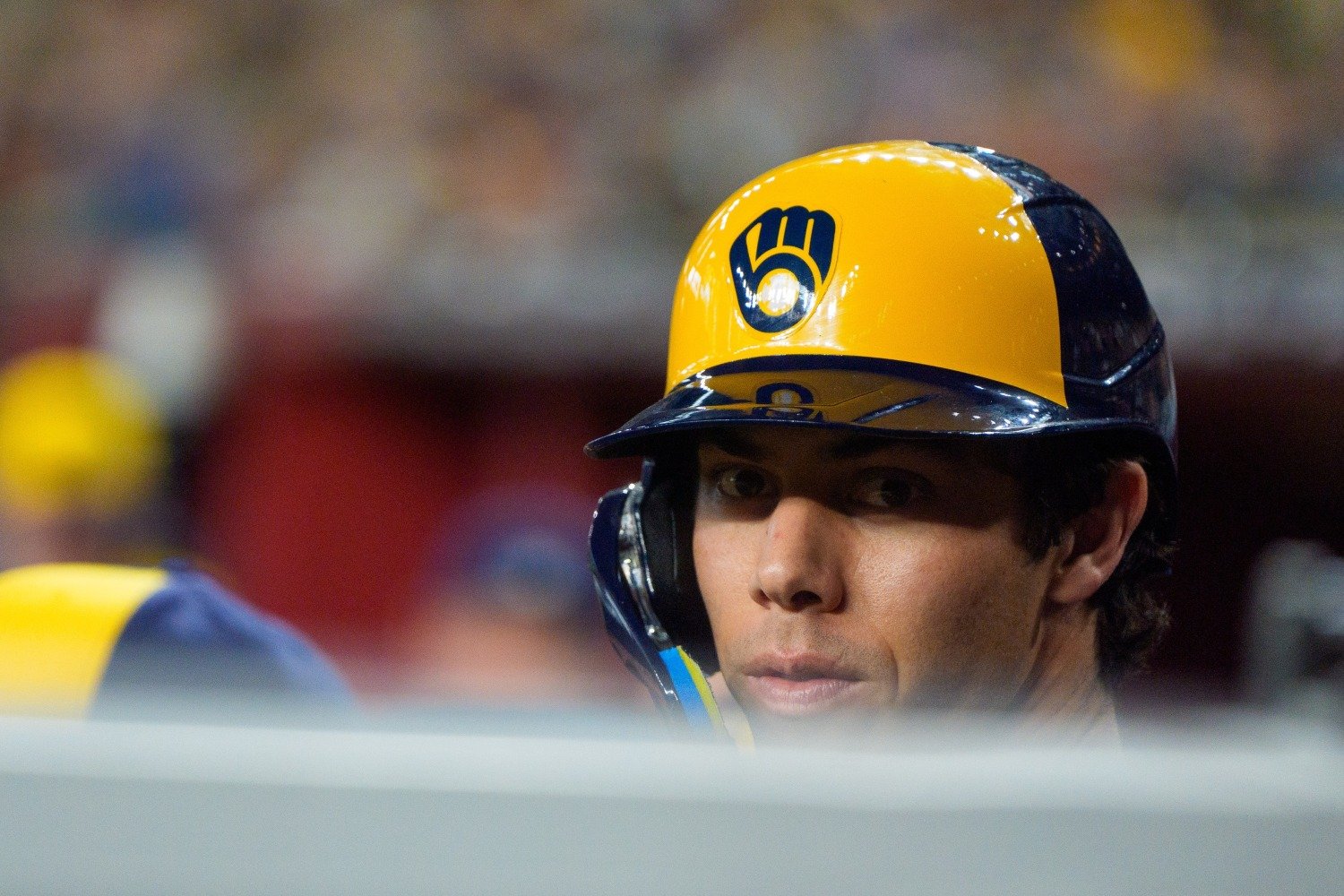 I haven't broadcasted it too much, mainly because I was impressed that Christian Yelich was still able to smoke bombs, but spring training wasn't pretty for the Brewers star—and that seems to have carried forward into the regular season. The main reason for concern was the regularity with which Yelich was swinging and missing. He has always had more swing-and-miss in the preseason than he does in the regular season—a very swing-happy approach geared towards finding his timing—but even then, this was quite excessive. (Unfortunately, Yelich didn't play in many Statcast-equipped parks, so this is based on the eye test.) It's understandable for a player who had major back surgery, and who was always likely to take a little time to find the timing in his swing. The good news is, it appears that he's beginning to do so. Yelich has shown some power, in between all of the whiffs reflected above, but it was undeniably concerning to see a player who has such good hand-eye coordination and plate discipline having a 50-pitch rolling average whiff rate of 68.4%. Since then, this has come down nicely, and even to the naked eye, he appears to be on time more often at the plate. There was a concern that he couldn't catch up to velocity, but the fastball whiff rate has been declining—although breaking balls are still giving him some trouble, particularly left on left, so it's possible he's cheating a bit to catch up to the heat. He was hitting the ball incredibly hard when making contact, doing damage, but he wasn't making contact often enough in the early going. Now that he's beginning to right the ship on that front, we can begin to look at the quality of batted balls. His expected slugging, due to the additional contact and some of the mammoth homers in Colorado, has spiked to above .520 over a rolling 25-plate appearance sample—a number that would leave us all quite content, were he to maintain it through the end of the year: The one downside, as always, is the last thing that usually comes round right for Yelich: his launch angles. Unfortunately, these have been trending down, but this has been a common theme throughout the 2020s. Yelich will, randomly, find that contact point out in front and go on some slugging tears, but at this point (over the same rolling 25 PA sample) the launch angle is averaging -4.2°. Thence the lack of production against Arizona. Perhaps it was rash to believe Yelich could slot straight back into the form he was on in 2024, it was always going to require a period of time for him to get back up to speed. Some of the early results (behind the bare stat lines) are showing that improvement. He appears in a similar place to his 2022 iteration (not his best form, I'll admit), but with more positive indicators early in the season, those final steps may not be all that far away. What are your thoughts on Christian Yelich? Has he met your expectations to begin the season, or did you have higher hopes? Let us know your thoughts in the comments below!
 -
Watching the shuckers produce offensively is just so fun. Adams, Pratt, Wilken, EBJ all contributing. Just awesome
-
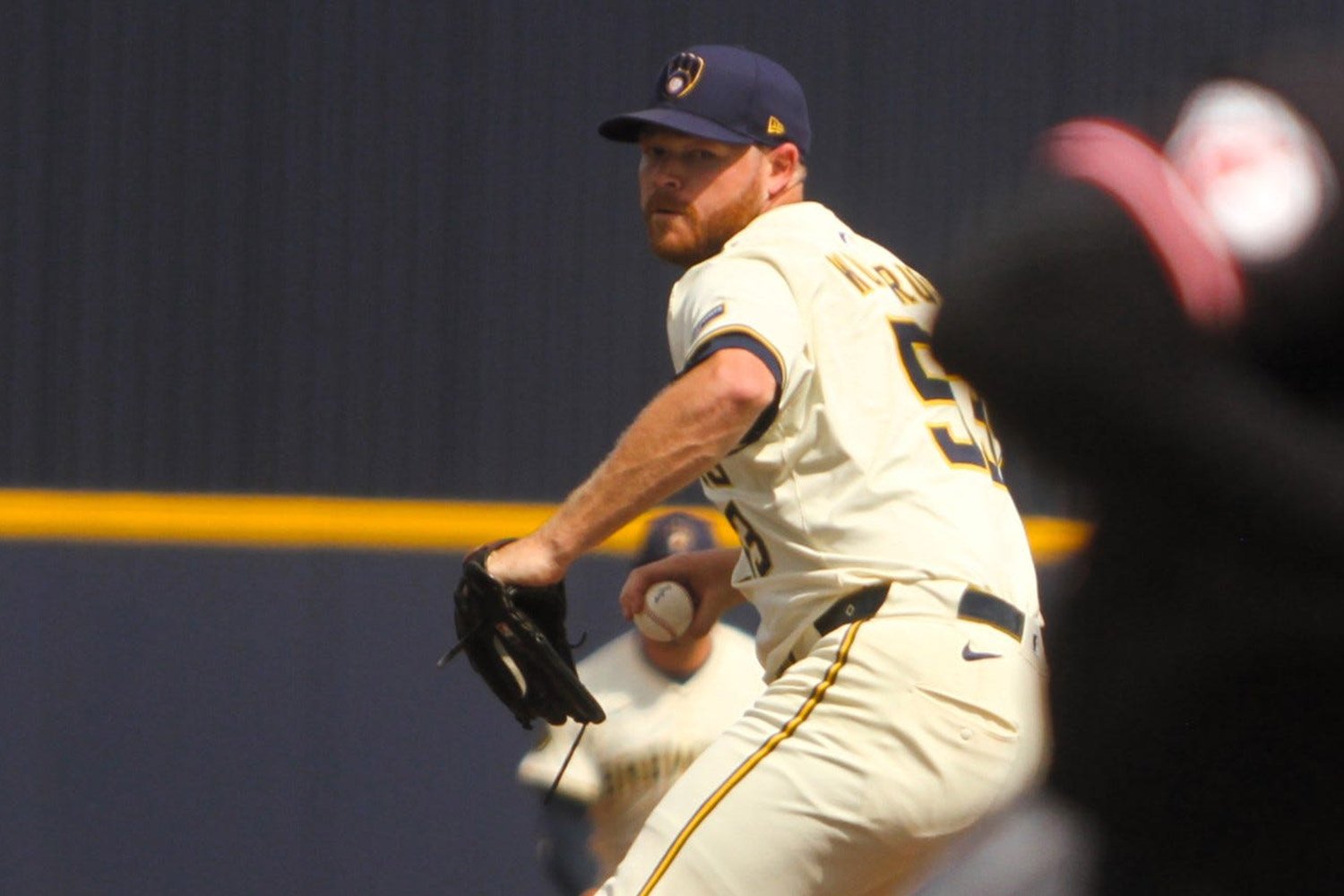 It's a miracle that Brandon Woodruff is where he is at the moment. For most, an injury that can be career-ending, or at least trajectory-altering, has been handled with aplomb by both Woodruff and the medical staff with the Brewers. A revamped shoulder usually affects future mobility and strength within the joint, creating big concerns about whether he would regain the outlier life and carry on his fastballs or the same sharp movement of his breaking pitches again. Medical science has come a long way, but given Woodruff's age and historical shoulder duress, it was possible he would never surpass 94 mph again. He may have still learned how to pitch around that, but we would see a markedly different arm than the one that leads MLB in the 2020s (min 400 IP) for ERA at 2.68. Woodruff, at his best, was an MLB-leading ace. He's beginning to show signs that not only has he rediscovered the pitch shapes and pronation that eluded him in spring (see Jack Stern's excellent article here), but he's even beginning to command an entirely new pitch, one that he's desired since 2023. Let's have a look at the data to see where we should be impressed with Woodruff and where he still has room to grow before returning to the Major Leagues. The Pitch Shapes Before I go too deep, special thanks to Thomas Nestico at TJStats for giving me access to some amazing tools. These tools allowed me to customize Woodruff's pitches manually, which provides you with the insight below. During spring, Brandon Woodruff talked about feeling like his legs weren't always working as intended underneath him, creating an intriguing cut-ride fastball shape. It's not what he would have preferred, but it was something he could have worked with. It seems that the true Woody four-seamer has returned, though, with just a few iterations that cut amongst his 66 pitches. The other fascinating item was the sweeper, showing a strong horizontal movement profile to differentiate it from his slider and curveball, which have historically been very north/south. The sweeper returned a TJStuff+ grade 105, grading at almost 60 on the 20-80 scouting scale per TJStats models. Overall, Woodruff flashed a four-seam fastball that graded out as above average despite averaging just 92.4 mph, alongside a nice movement profile for his changeup, slider, and sweeper, as mentioned above. I cannot stress enough how remarkable that is at this stage of his recovery. The below doesn't include my manually adjusted pitch plots for Woodruff, but it does highlight how his fastball shape roughly coincides with that of his 2023 version. The only thing missing at this point is a couple of ticks of velocity on all of his offerings, and that's entirely to be expected at this stage of his recovery. Woodruff has spoken of how the final part of the rehabilitation process is the "snap," and it's something that just comes one day several months into a return to pitching. With this, we'll hopefully see those final few ticks of velocity across his arsenal while maintaining the same degree of movement across his arsenal; we just don't know when exactly that will be. One final reason for positivity is how Woodruff improved his fastball as the outing went on; his fastball was in the 90-92 mph range for the first half of his outing before finishing more regularly in the 93-94 mph range quite consistently on the four-seamer, and even touching 95 mph with his sinker on his fifth and final strikeout of the evening. Here's how his stuff played out on a rolling 5-pitch TJstuff+ basis in his outing (the four-seamer is in pink): With some further snap to come, this is very impressive from Woodruff and bodes very well for his continued rehab. The one element that will still require some adjustment is his command of his arsenal. Remember, Brandon Woodruff didn't pitch off a mound for almost 18 months. Finding that rhythm and timing in his delivery to enable him to be accurate in locating pitches will take time, and we can see that (from the cutter still appearing at times) his delivery isn't entirely in sync with where it could be. He did get hit relatively hard on Saturday evening to the tune of an Expected Weighted on Base Average on Contact (xWOBACON) of .712, and command was a large reason for that. It's nothing to be concerned about at this point, and with time on the mound continuing to replicate his delivery, that command will return, but for now, that and the "snap" are the only two things of concern for Woodruff. As a result, we can begin to be perhaps more optimistic that maybe, just maybe, Brandon Woodruff can lead this staff as a true rotation ace once more. What did you think of Woodruff's outing? Did you see signs of positivity? Or am I being too optimistic? Let me know your thoughts in the comments below!

