



Jake McKibbin
-
Posts
2,450 -
Joined
-
Last visited
-
Days Won
6
Content Type
Profiles
Forums
Blogs
Events
News
2026 Milwaukee Brewers Top Prospects Ranking
Milwaukee Brewers Videos
2022 Milwaukee Brewers Draft Picks
Milwaukee Brewers Free Agent & Trade Rumors, Notes, & Tidbits
Guides & Resources
2023 Milwaukee Brewers Draft Picks
2024 Milwaukee Brewers Draft Picks
The Milwaukee Brewers Players Project
2025 Milwaukee Brewers Draft Pick Tracker
2026 Milwaukee Brewers Draft Tracker: Picks & Bonuses
Store
Downloads
Gallery
Everything posted by Jake McKibbin
-
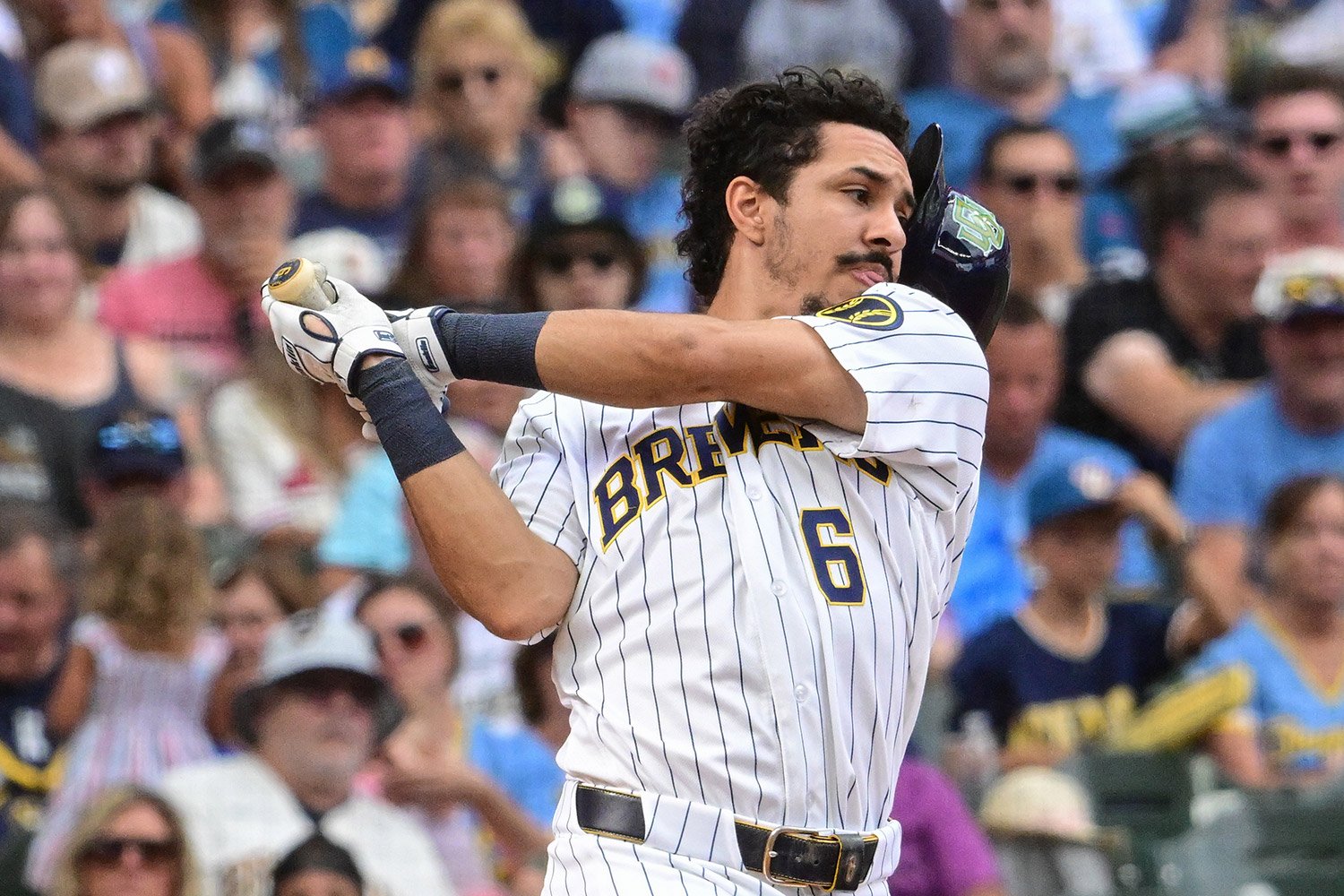
Image courtesy of USA TODAY Network via Reuters Connect While there have been some notable sparks on the offensive side of the ledger, questions remain for this Brewers team. Milwaukee has the best record in baseball and should earn a first-round playoff bye. That has plenty of people looking ahead to October, but looking ahead to October always gets folks wondering whether history could repeat itself with another early postseason exit fueled by an offense that goes cold at the worst possible time. The opportunity to trade for reinforcements has come and gone, and, to be honest, there wasn't a whole lot of offensive help available at the deadline in the first place. The lineup has shown more life of late, but some additional thump (even in the form of a pinch-hitting option) could be valuable down the stretch and into October. With the trade market closed, it's time to look within the organization. Coming into the season, there were high hopes that some of the Brewers' infield prospects could eventually provide more power. Brock Wilken, in particular, put together the best half-season of his career last year at Double-A Biloxi, but he's struggled to consistently make contact since reaching Triple-A, frequently finding himself in pitcher-friendly counts. Jett Williams is another name whom many expected to feature this season, but some struggles and untimely injuries have kept him down. The latter has even put his season in jeopardy. While these two may have been front-runners entering the season, they're by no means the only potential contributors in what remains a stacked farm system. Two other bat-first options could contribute offensively down the stretch. Luke Adams Luke Adams is expected to return shortly, and his inertiatic approach at the plate continues to not just survive, but thrive as he rises through the levels. Pairing the third-lowest in-zone swing rate in Triple-A this season with an in-zone contact rate of 87.6% is a great place to begin. Adams knows what he wants in the at-bat and is willing to wait for it. When he gets it, he's been able to capitalize. Pairing strong exit velocities with a sky-high walk rate, a (somehow) reasonable strikeout rate, and the barrel control to elevate consistently has led to Adams being one of the strangest and most successful hitters in Triple-A this season. When he does swing, the contact quality has been strong, and he addresses another need the Brewers may have: he can crush left-handers. While Adams has performed admirably regardless of platoon matchup, his 1.097 OPS against southpaws stands out for a Brewers team that ranks 19th with a 95 wRC+ against left-handed pitching this year. Certain players (like Brice Turang, David Hamilton and Christian Yelich) have struggled against same-sided pitching, and Adams provides more versatility as a pinch-hit bat than someone like Gary Sánchez. Adams can play a capable third base, and that's where his value to this roster as a pinch-hitter would come into the fold. If he can hit the ground running to close out August, he may have a route to some playing time when rosters expand in September, especially if the Brewers are content with the versatility they have in their current 13-man position player corps. Blake Burke This is entirely predicated on one of two things happening: Yelich's recent struggles worsen, or either Yelich or Jake Bauers suffers an injury down the stretch. Outside of that, Burke would be a pinch-hitting option with extraordinary power, but the limited versatility would hurt his chances in September, and he would need those at-bats to push for an opportunity on a postseason roster. But let's eschew reason for a short second and look closer. Burke's one weakness is his swing decisions. He chases too much, but his in-zone contact rates are above-average; that's almost unheard-of for a hitter with Burke's sheer thump. The postseason creates tension, and with tension come mistake pitches. If put in a position with a mistake, there might not be many hitters in the Brewers organization more likely to crush that pitch. The barrel rate, hard-hit rate and maximum exit velocities tell a story. If you hang it, Burke will bang it. In a situation where the Brewers want a bat in a pinch-hitting situation to make a difference, Burke could present the perfect option. He showed throughout college how comfortable he is under the bright lights in the biggest moments, and while he's raw, there's a world where this gamble makes sense for the Brewers. Anyone else? I'm not sure about going much further down the list when it comes to potential impact players. Akil Baddoo has shown some lively contact in Nashville and probably would have played with the Brewers at some point this year, if not for some untimely injuries. That being said, he also looks like a Quadruple-A player, with passable contact numbers and plate discipline in Triple-A but an inability to make enough contact at the highest level to access the power that drives his profile. Bo Naylor has been more selective in the strike zone since joining the Brewers, adopting a more all-fields approach and reducing his strikeout rate in Triple-A. That being said, he would be the third catcher on the roster, behind both Sánchez and William Contreras. There are also service-time considerations that may impact a potential call-up. For those looking toward Double-A Biloxi, it's worth noting that Jesús Made has run into an inevitable adjustment period in August, hitting .200/.291/.280 while striking out more than has been typical for him this season. He's not a player the Brewers would want to rush under the best of circumstances, and it seems unlikely they would do so under these circumstances. Andrew Fischer is another name on many tongues, but he seems to be getting found out a little at Double-A. Typically, players see more intensive game planning as they move through the levels, and Fischer had some trouble with spin earlier in the season that might be rearing its head again now. He's slashing .136/.289/.348 this month with a 37% strikeout rate, and he'll have some adjustments to work through before he can find consistent production at Triple-A and above. All in all, the most likely boost is Adams. He's shown strong production throughout the year, despite a very quirky profile, and he can address the Brewers' struggles against left-handed pitching somewhat from the bench. He can also add to the second- and third-base options, with Joey Ortiz capable of handling second to make room for an all-right-handed infield on occasion. That gives the Brewers some maneuverability when it comes to finding at-bats. Burke is a different proposition. He lacks some of the positional coverage Adams possesses, while also having less time to prove himself at Triple-A and force his way into the Brewers' thoughts. That's not to say he can't succeed—his raw power is there for all to see—and it could be particularly effective over a small sample size. Still, barring an injury, we probably won't see him this season. Are there any other names you would consider for the expanded rosters? Anyone who might possess some of the power the Brewers so desperately crave right now? Let us know your thoughts in the comments below! View full article
-
2 Brewers Prospects Who Could Boost Milwaukee’s Offense in September
Jake McKibbin posted an article in Brewers
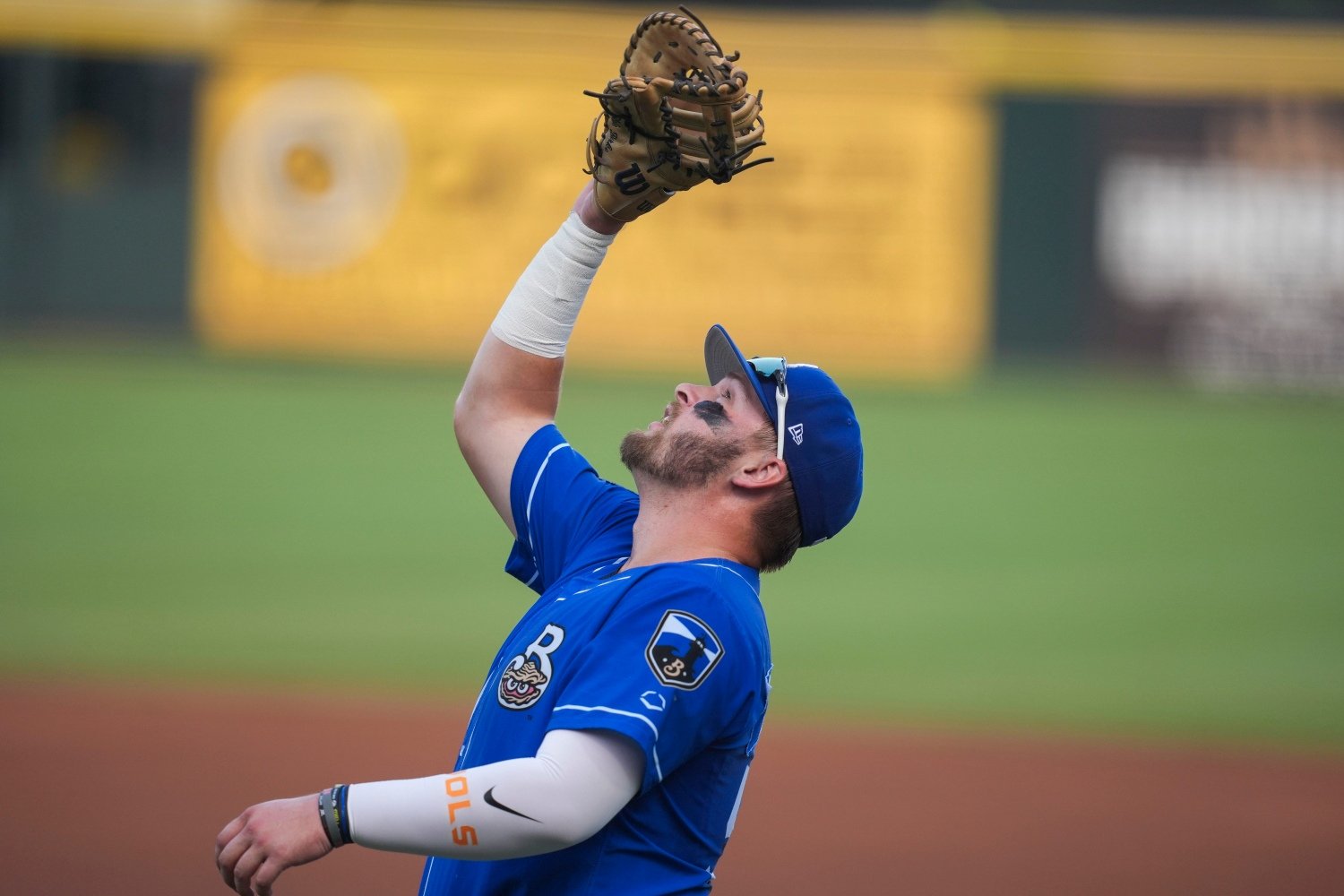 While there have been some notable sparks on the offensive side of the ledger, questions remain for this Brewers team. Milwaukee has the best record in baseball and should earn a first-round playoff bye. That has plenty of people looking ahead to October, but looking ahead to October always gets folks wondering whether history could repeat itself with another early postseason exit fueled by an offense that goes cold at the worst possible time. The opportunity to trade for reinforcements has come and gone, and, to be honest, there wasn't a whole lot of offensive help available at the deadline in the first place. The lineup has shown more life of late, but some additional thump (even in the form of a pinch-hitting option) could be valuable down the stretch and into October. With the trade market closed, it's time to look within the organization. Coming into the season, there were high hopes that some of the Brewers' infield prospects could eventually provide more power. Brock Wilken, in particular, put together the best half-season of his career last year at Double-A Biloxi, but he's struggled to consistently make contact since reaching Triple-A, frequently finding himself in pitcher-friendly counts. Jett Williams is another name whom many expected to feature this season, but some struggles and untimely injuries have kept him down. The latter has even put his season in jeopardy. While these two may have been front-runners entering the season, they're by no means the only potential contributors in what remains a stacked farm system. Two other bat-first options could contribute offensively down the stretch. Luke Adams Luke Adams is expected to return shortly, and his inertiatic approach at the plate continues to not just survive, but thrive as he rises through the levels. Pairing the third-lowest in-zone swing rate in Triple-A this season with an in-zone contact rate of 87.6% is a great place to begin. Adams knows what he wants in the at-bat and is willing to wait for it. When he gets it, he's been able to capitalize. Pairing strong exit velocities with a sky-high walk rate, a (somehow) reasonable strikeout rate, and the barrel control to elevate consistently has led to Adams being one of the strangest and most successful hitters in Triple-A this season. When he does swing, the contact quality has been strong, and he addresses another need the Brewers may have: he can crush left-handers. While Adams has performed admirably regardless of platoon matchup, his 1.097 OPS against southpaws stands out for a Brewers team that ranks 19th with a 95 wRC+ against left-handed pitching this year. Certain players (like Brice Turang, David Hamilton and Christian Yelich) have struggled against same-sided pitching, and Adams provides more versatility as a pinch-hit bat than someone like Gary Sánchez. Adams can play a capable third base, and that's where his value to this roster as a pinch-hitter would come into the fold. If he can hit the ground running to close out August, he may have a route to some playing time when rosters expand in September, especially if the Brewers are content with the versatility they have in their current 13-man position player corps. Blake Burke This is entirely predicated on one of two things happening: Yelich's recent struggles worsen, or either Yelich or Jake Bauers suffers an injury down the stretch. Outside of that, Burke would be a pinch-hitting option with extraordinary power, but the limited versatility would hurt his chances in September, and he would need those at-bats to push for an opportunity on a postseason roster. But let's eschew reason for a short second and look closer. Burke's one weakness is his swing decisions. He chases too much, but his in-zone contact rates are above-average; that's almost unheard-of for a hitter with Burke's sheer thump. The postseason creates tension, and with tension come mistake pitches. If put in a position with a mistake, there might not be many hitters in the Brewers organization more likely to crush that pitch. The barrel rate, hard-hit rate and maximum exit velocities tell a story. If you hang it, Burke will bang it. In a situation where the Brewers want a bat in a pinch-hitting situation to make a difference, Burke could present the perfect option. He showed throughout college how comfortable he is under the bright lights in the biggest moments, and while he's raw, there's a world where this gamble makes sense for the Brewers. Anyone else? I'm not sure about going much further down the list when it comes to potential impact players. Akil Baddoo has shown some lively contact in Nashville and probably would have played with the Brewers at some point this year, if not for some untimely injuries. That being said, he also looks like a Quadruple-A player, with passable contact numbers and plate discipline in Triple-A but an inability to make enough contact at the highest level to access the power that drives his profile. Bo Naylor has been more selective in the strike zone since joining the Brewers, adopting a more all-fields approach and reducing his strikeout rate in Triple-A. That being said, he would be the third catcher on the roster, behind both Sánchez and William Contreras. There are also service-time considerations that may impact a potential call-up. For those looking toward Double-A Biloxi, it's worth noting that Jesús Made has run into an inevitable adjustment period in August, hitting .200/.291/.280 while striking out more than has been typical for him this season. He's not a player the Brewers would want to rush under the best of circumstances, and it seems unlikely they would do so under these circumstances. Andrew Fischer is another name on many tongues, but he seems to be getting found out a little at Double-A. Typically, players see more intensive game planning as they move through the levels, and Fischer had some trouble with spin earlier in the season that might be rearing its head again now. He's slashing .136/.289/.348 this month with a 37% strikeout rate, and he'll have some adjustments to work through before he can find consistent production at Triple-A and above. All in all, the most likely boost is Adams. He's shown strong production throughout the year, despite a very quirky profile, and he can address the Brewers' struggles against left-handed pitching somewhat from the bench. He can also add to the second- and third-base options, with Joey Ortiz capable of handling second to make room for an all-right-handed infield on occasion. That gives the Brewers some maneuverability when it comes to finding at-bats. Burke is a different proposition. He lacks some of the positional coverage Adams possesses, while also having less time to prove himself at Triple-A and force his way into the Brewers' thoughts. That's not to say he can't succeed—his raw power is there for all to see—and it could be particularly effective over a small sample size. Still, barring an injury, we probably won't see him this season. Are there any other names you would consider for the expanded rosters? Anyone who might possess some of the power the Brewers so desperately crave right now? Let us know your thoughts in the comments below!
- 6 comments
-
- 1
-

-
- luke adams
- blake burke
- (and 2 more)
-
Do you think "not horrible" is severely under-stating this Harold? While you could argue Mitchell, for all his athleticism, is a little stiff at times, he's been really good out there especially since June onwards when the fear of an impact injury has slowly dissipated. Lara is a great center fielder, but he's also never dealt with the third level of stadiums before which does impact a players reads and takes some getting used to. For now, it seems clear the Brewers value Mitchell's CF defense higher than Lara's, and we should be judging it on the here and now, not for future occasions. @wiguy94is right, for example the highlight reel catches over the weekend were all 1* catches More to the point, there's been absolutely nothing to suggest, in any way, that Frelick is a better defensive outfielder than Garrett Mitchell. When healthy, Mitchell has far better range and a far better arm than Frelick, it's not close Also Mitchell has only failed to snag one play of 4* difficulty or below since May 10th. It was an error off Thomas Pannone, so while he hasn't made a 5* grab, he's been remarkably effect at anything from 25-75% catch probability This one in particular vs the Padres was a 30% probability, just an awesome grab Garrett Mitchell's incredible game-saving catch | Baseball Savant Videos | baseballsavant.com Meanwhile in 2025 (to help Frelick here with health), Sal made 10/45 grabs from 2*-4* difficulty. Sal is a solid, above average outfielder. He is not Garrett Mitchell
-
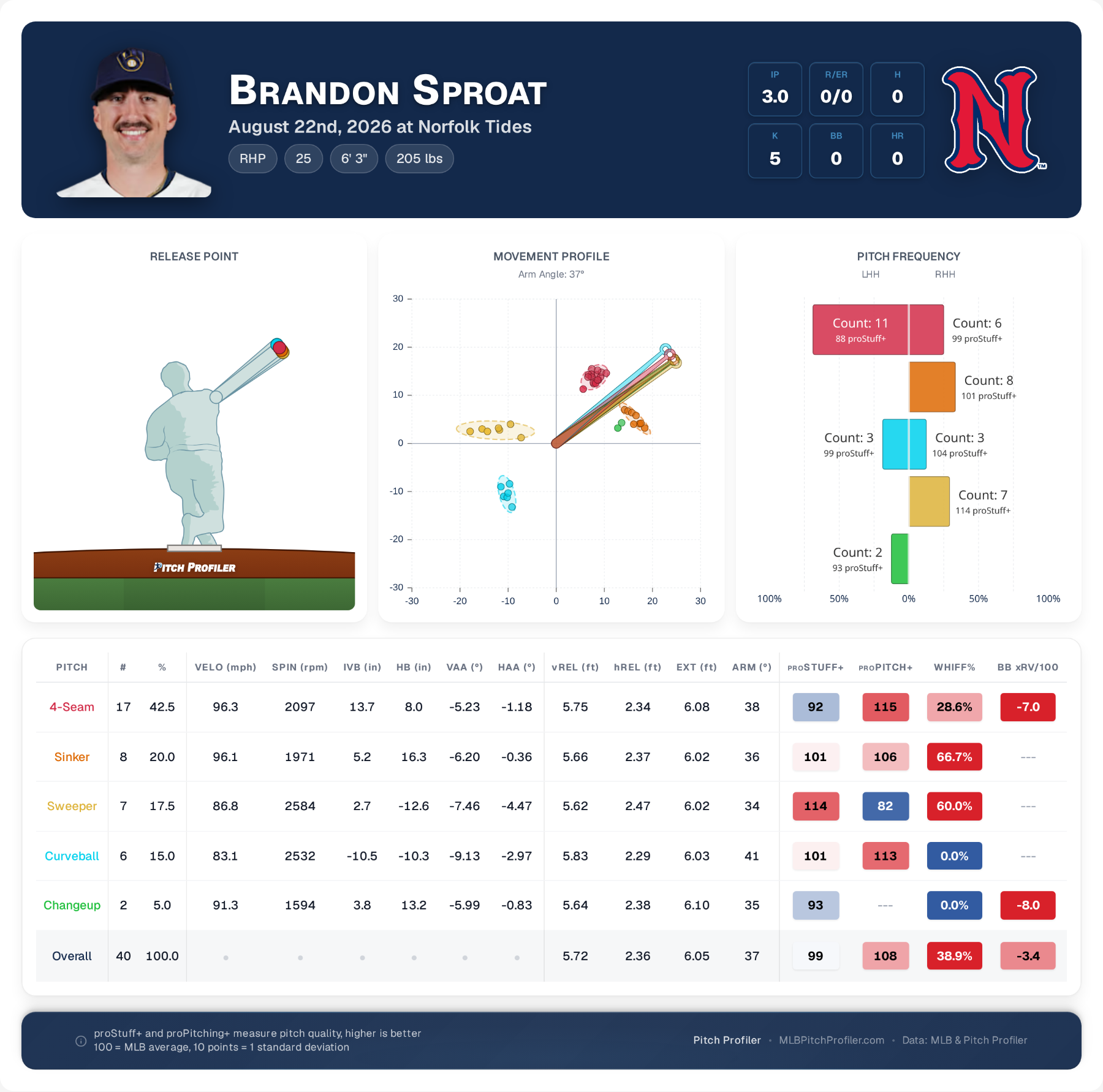
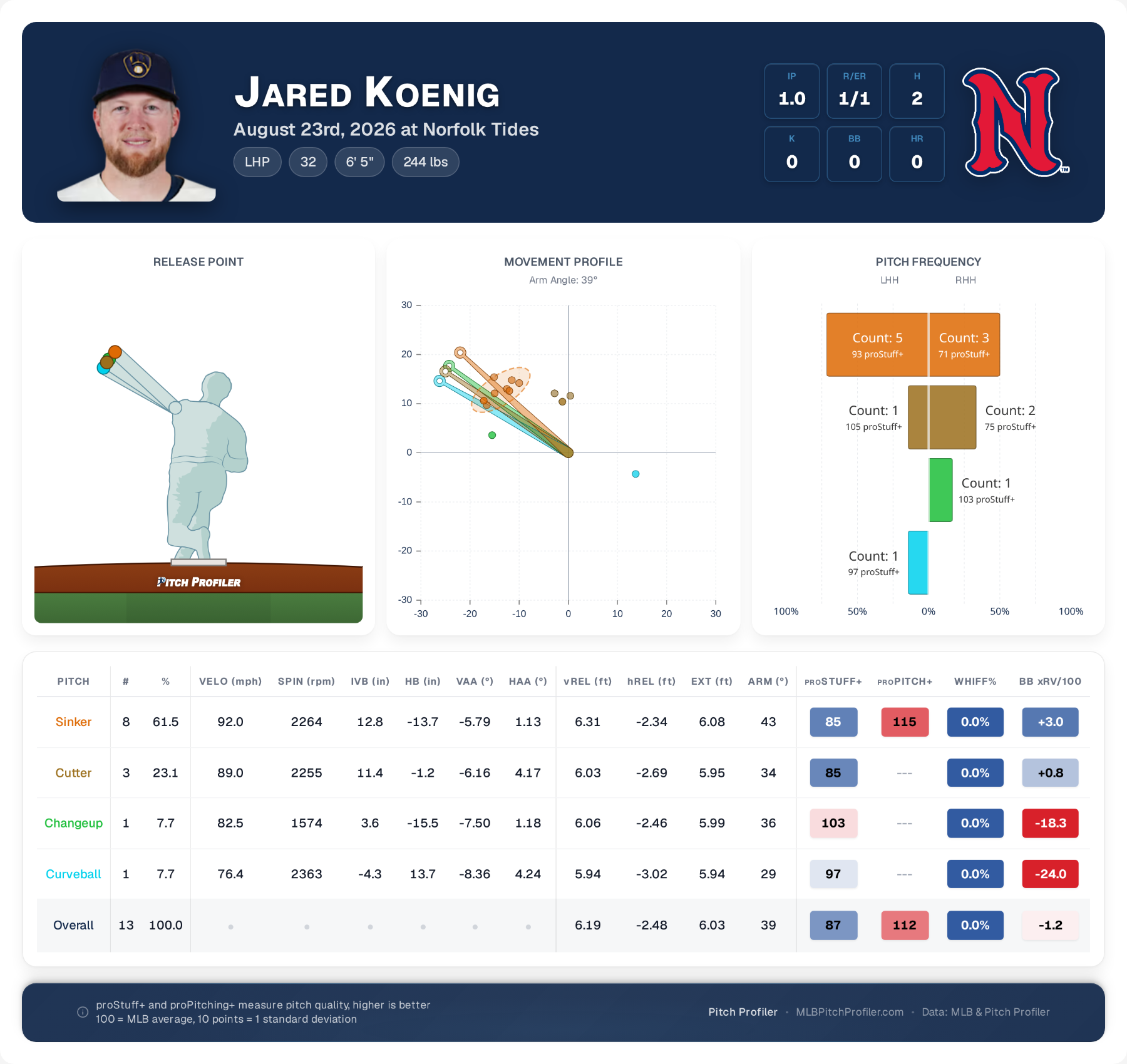
Two fun things to share. First of all, Tyson Hardin's sweeper was almost completely untouchable. 8 whiffs on 9 swings, and the 4S/Cutter are so tough to square up. A great outing in a shorter stint that's well deserved given his peripherals this season Secondly, another Sproat start where the cutter has been abolished. The command graded out excellently here (Pitch profiler's ProPitching + is an amalgam of the stuff+ you see in the first column and location + which isn't shown. Given his prostuff+ is lower than the pitching + on his fastballs, by a long way, the model really rated how he commanded the fastball/sinker On a less positive note, Jared Koenig is no longer looking remotely like Jared Koenig. Velocity is down across the board and his shapes won't cut it at 92 mph
.png.b91b9eb5f4b0f7beebdad5a115812fc7.png)
-
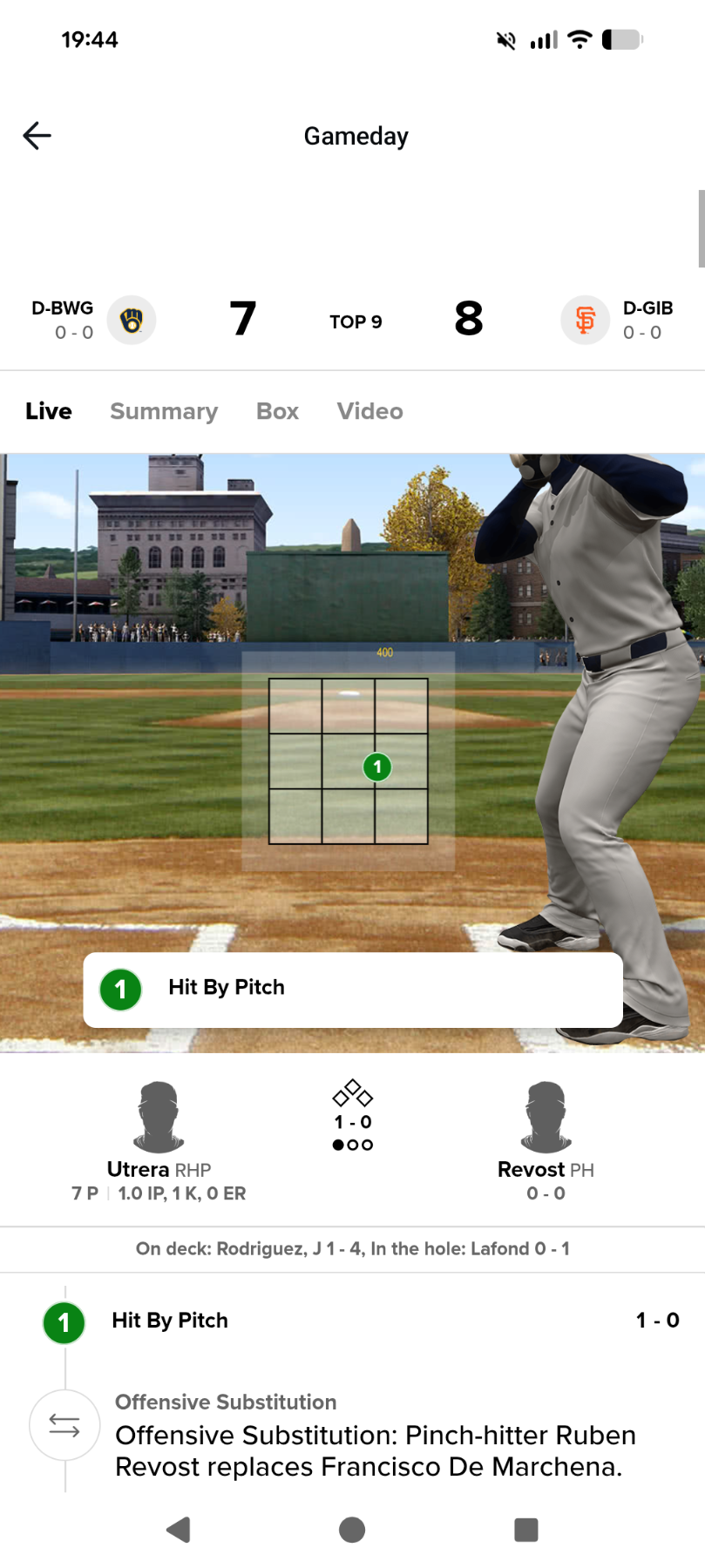
Really hoping the DSL game feed is accurate (it's not) as this would be hilarious
-
I would love to see an aerial side by side of Sal Frelick's 87 mph, 320 ft home run contrasted with Blake Burkes 11 mph, 437 ft one
-
There is an element of misfortune here from Hardin. Stuff wise, he should struggle more to get past left handers, but his .410 BABIP against right handers has given him reverse splits. a FIP of 3.58 vs an ERA of 5.14 highlights that further. His four-seam also had a 50% whiff rate yesterday. there's some command improvements (command over control) to really maximise his arsenal, but the numbers suggest he's still pitching well Here are his numbers on the year:
.png.3fff71722661afaa155b3158c57ec4ab.png)
-
Brewers' Offensive Struggles Raise Concerns Ahead of the Playoffs
Jake McKibbin posted an article in Brewers
 The Brewers' offense hasn't been firing for a while now. But the most concerning part isn't simply that they're struggling to score. It's how their approach appears to change when the pressure ramps up, and that's oddly reminiscent of the 2025 NLCS. We could look at the eighth inning, where Chad Patrick couldn't find the strike zone, or why Aaron Ashby once again was slow covering the bag after showcasing his own wild arsenal. We could look at the 10th, where Luis Lara got a pitch timer violation, and Brice Turang hesitated while trying to steal third base. Instead, the 11th inning is perhaps the best place to analyze the Brewers' recent travails under pressure. Picture the scene again. Trevor Megill just went multiple innings of work, closing out the ninth and shutting down the Manfred man in the tenth inning with the help of a wonderful catch from Garrett Mitchell. The Brewers have some momentum. To start the 11th, up steps Gary Sánchez against Adrian Morejón, one of the best relievers in baseball. Drilling a double down the left field line, Sánchez scores the runner from second, and the Brewers are now sitting with a runner on second, no outs, and a one-run lead. Sánchez took two triple-digit sinkers inside and off the plate, getting into a 2-0 count before getting something he wanted. He saw that Morejón was trying to bust him inside, so he waited for it to come back over the zone and got the bat head out early, ripping it into left field. Morejón was already showing some signs of his command deteriorating in his second inning of work, and a wild pitch got Gary Sanchez to third base with nobody out. Garrett Mitchell takes advantage, going up 3-0 in the count before working a six-pitch walk. Eventually, Mitchell would steal second base, but he showed patience and didn't over-extend himself. Then we come to David Hamilton. One of the criticisms we can have of this offense, particularly in the last two months, is how they lose their identity as hitters when they feel a big moment in the game. In this instance, scoring another run would have felt like a killer blow (and the Brewers would have approached the bottom of the inning differently with a two-run lead). Instead of waiting on the ball to come to him, Hamilton tried to snatch the glory. Morejón had already demonstrated that he couldn't reliably command the fastball, Hamilton had just watched Mitchell take three balls and walk, and the Brewers had a runner on third with nobody out. Given that context, expanding the zone twice was particularly difficult to justify. Yet expand on two straight pitches Hamilton did: Adrian Morejón follows the same script: two fastballs, too far inside and off the plate. Hamilton swings at both of them. Almost identical pitches, way in on Hamilton, and he was taking big cuts. Rather than patiently working the at-bat, working his counts, and trying to search for something he could drive, Hamilton tried to be the guy. Against a reliever like Morejón, that just won't work. Even if either of those pitches had clipped the top of the strike zone, Hamilton should not be swinging at them early in the count. He has squared up just 13% of pitches in the "up and in" quadrant, and produces a 64% ground ball rate with an average exit velocity of 65 mph in that zone, even if it did land in the strike zone. That is not the pitch Hamilton should be swinging on with the infield in and Sanchez at third base. Instead of staying patient and trusting his approach, Hamilton fell behind 0-2 and struck out on a high slider that would have looked very juicy in a 2-0 count. So up comes Joey Ortiz. He's seen Adrian Morejón throw seven of his eleven pitches outside the strike zone in this inning. Ortiz gets some leeway here as he should be looking for something up and away; that's a pitch he's done a good job of driving to the opposite field. That leeway, however, is wiped out by two things: one, he should be almost in auto-take mode on the first pitch. Two, he faced not a single pitch inside the strike zone in this entire at-bat. Morejón had thrown multiple non-competitive fastballs, and the Brewers had an advantage if they simply forced him to demonstrate he could throw strikes. Again, you don't want to hamper a hitter by saying don't swing at anything, but Ortiz should have been sitting on one very specific pitch, and taking anything that didn't resemble that pitch. None of the first four pitches Morejón threw in this at-bat would have resembled a quality pitch to hit. Morejón has the kind of elite raw stuff that makes chasing outside the zone particularly dangerous. You cannot chase a reliever of this caliber with impunity and expect to succeed. Either Hamilton or Ortiz walking would have put Morejón in an increasingly difficult position with the bases loaded, where his faltering command became even more dangerous. It would have forced an at-bat with Jackson Chourio, the one match-up the Brewers would have wanted to create. Instead, the Padres could intentionally walk Chourio and face Brice Turang against a top-tier left-hander, something Turang has struggled with all season. The Brewers offense is built on a team ethos. Pass the baton. Build pressure. Sequence good at-bats together. They're doing it in parts, but then moving away from that process when the pressure builds up, and it's costing them. What could have been an inspiring eleventh inning win turned into a gut-wrenching loss. Many will say the Brewers are fifth in runs scored this year, but it would be remiss not to mention how they've performed since the middle of June. Since June 10th, the Brewers have ranked 17th in runs scored. They've also had the joint best exit velocities in baseball during that time and an expected weighted on-base average that ranks fourth in that span. The Brewers' inability to convert opportunities is a major reason the offense has stopped producing at its earlier rate, and the deterioration has been particularly pronounced with runners in scoring position. I've showcased the splits before and after June 10th with runners in scoring position: Up to June 9th Since June 10th BA 0.280 0.227 xBA 0.255 0.220 xWOBA 0.335 0.299 Strikeout rate 19.90% 24.00% Walk rate 13.60% 10.50% The Brewers are striking out more and walking less, and it's the main reason for their dip in results with runners in scoring position. Yes, there was some fortune in their early-season production, but the last two months have been poor from both a process and expected results viewpoint too. Whatever the cause, the Brewers are showing signs that they're losing trust in the approach that got them here. It's exactly what we saw in the NLCS last year: a team forcing at-bats and suffering the results that come from that. The 2025 Brewers were built around an identifiable offensive philosophy: getting on base, avoiding strikeouts, making contact and creating pressure with a low chase rate and low strikeout rate. The NLCS exposed what happened when that philosophy disappeared against high-quality pitching, producing a historically awful .118 batting average in the series. This team is very capable of scoring runs, far more than we've seen in the last two months. There should be some optimism that they've performed as well as they have despite the malfunctioning offense, but they're going to need to find the belief in their approach soon. October baseball will not bode well without it.
- 11 comments
-
- 3
-

-
-
- david hamilton
- joey ortiz
- (and 1 more)
-
Image courtesy of Benny Sieu-Imagn Images The Brewers' offense hasn't been firing for a while now. But the most concerning part isn't simply that they're struggling to score. It's how their approach appears to change when the pressure ramps up, and that's oddly reminiscent of the 2025 NLCS. We could look at the eighth inning, where Chad Patrick couldn't find the strike zone, or why Aaron Ashby once again was slow covering the bag after showcasing his own wild arsenal. We could look at the 10th, where Luis Lara got a pitch timer violation, and Brice Turang hesitated while trying to steal third base. Instead, the 11th inning is perhaps the best place to analyze the Brewers' recent travails under pressure. Picture the scene again. Trevor Megill just went multiple innings of work, closing out the ninth and shutting down the Manfred man in the tenth inning with the help of a wonderful catch from Garrett Mitchell. The Brewers have some momentum. To start the 11th, up steps Gary Sánchez against Adrian Morejón, one of the best relievers in baseball. Drilling a double down the left field line, Sánchez scores the runner from second, and the Brewers are now sitting with a runner on second, no outs, and a one-run lead. Sánchez took two triple-digit sinkers inside and off the plate, getting into a 2-0 count before getting something he wanted. He saw that Morejón was trying to bust him inside, so he waited for it to come back over the zone and got the bat head out early, ripping it into left field. Morejón was already showing some signs of his command deteriorating in his second inning of work, and a wild pitch got Gary Sanchez to third base with nobody out. Garrett Mitchell takes advantage, going up 3-0 in the count before working a six-pitch walk. Eventually, Mitchell would steal second base, but he showed patience and didn't over-extend himself. Then we come to David Hamilton. One of the criticisms we can have of this offense, particularly in the last two months, is how they lose their identity as hitters when they feel a big moment in the game. In this instance, scoring another run would have felt like a killer blow (and the Brewers would have approached the bottom of the inning differently with a two-run lead). Instead of waiting on the ball to come to him, Hamilton tried to snatch the glory. Morejón had already demonstrated that he couldn't reliably command the fastball, Hamilton had just watched Mitchell take three balls and walk, and the Brewers had a runner on third with nobody out. Given that context, expanding the zone twice was particularly difficult to justify. Yet expand on two straight pitches Hamilton did: Adrian Morejón follows the same script: two fastballs, too far inside and off the plate. Hamilton swings at both of them. Almost identical pitches, way in on Hamilton, and he was taking big cuts. Rather than patiently working the at-bat, working his counts, and trying to search for something he could drive, Hamilton tried to be the guy. Against a reliever like Morejón, that just won't work. Even if either of those pitches had clipped the top of the strike zone, Hamilton should not be swinging at them early in the count. He has squared up just 13% of pitches in the "up and in" quadrant, and produces a 64% ground ball rate with an average exit velocity of 65 mph in that zone, even if it did land in the strike zone. That is not the pitch Hamilton should be swinging on with the infield in and Sanchez at third base. Instead of staying patient and trusting his approach, Hamilton fell behind 0-2 and struck out on a high slider that would have looked very juicy in a 2-0 count. So up comes Joey Ortiz. He's seen Adrian Morejón throw seven of his eleven pitches outside the strike zone in this inning. Ortiz gets some leeway here as he should be looking for something up and away; that's a pitch he's done a good job of driving to the opposite field. That leeway, however, is wiped out by two things: one, he should be almost in auto-take mode on the first pitch. Two, he faced not a single pitch inside the strike zone in this entire at-bat. Morejón had thrown multiple non-competitive fastballs, and the Brewers had an advantage if they simply forced him to demonstrate he could throw strikes. Again, you don't want to hamper a hitter by saying don't swing at anything, but Ortiz should have been sitting on one very specific pitch, and taking anything that didn't resemble that pitch. None of the first four pitches Morejón threw in this at-bat would have resembled a quality pitch to hit. Morejón has the kind of elite raw stuff that makes chasing outside the zone particularly dangerous. You cannot chase a reliever of this caliber with impunity and expect to succeed. Either Hamilton or Ortiz walking would have put Morejón in an increasingly difficult position with the bases loaded, where his faltering command became even more dangerous. It would have forced an at-bat with Jackson Chourio, the one match-up the Brewers would have wanted to create. Instead, the Padres could intentionally walk Chourio and face Brice Turang against a top-tier left-hander, something Turang has struggled with all season. The Brewers offense is built on a team ethos. Pass the baton. Build pressure. Sequence good at-bats together. They're doing it in parts, but then moving away from that process when the pressure builds up, and it's costing them. What could have been an inspiring eleventh inning win turned into a gut-wrenching loss. Many will say the Brewers are fifth in runs scored this year, but it would be remiss not to mention how they've performed since the middle of June. Since June 10th, the Brewers have ranked 17th in runs scored. They've also had the joint best exit velocities in baseball during that time and an expected weighted on-base average that ranks fourth in that span. The Brewers' inability to convert opportunities is a major reason the offense has stopped producing at its earlier rate, and the deterioration has been particularly pronounced with runners in scoring position. I've showcased the splits before and after June 10th with runners in scoring position: Up to June 9th Since June 10th BA 0.280 0.227 xBA 0.255 0.220 xWOBA 0.335 0.299 Strikeout rate 19.90% 24.00% Walk rate 13.60% 10.50% The Brewers are striking out more and walking less, and it's the main reason for their dip in results with runners in scoring position. Yes, there was some fortune in their early-season production, but the last two months have been poor from both a process and expected results viewpoint too. Whatever the cause, the Brewers are showing signs that they're losing trust in the approach that got them here. It's exactly what we saw in the NLCS last year: a team forcing at-bats and suffering the results that come from that. The 2025 Brewers were built around an identifiable offensive philosophy: getting on base, avoiding strikeouts, making contact and creating pressure with a low chase rate and low strikeout rate. The NLCS exposed what happened when that philosophy disappeared against high-quality pitching, producing a historically awful .118 batting average in the series. This team is very capable of scoring runs, far more than we've seen in the last two months. There should be some optimism that they've performed as well as they have despite the malfunctioning offense, but they're going to need to find the belief in their approach soon. October baseball will not bode well without it. View full article
- 11 replies
-
- 2
-
-
- david hamilton
- joey ortiz
- (and 1 more)
-
I would say yes, there's something, but only if they find a way to get more from the fastballs. Without that, it just can't play
-
Colton Gordon's fastballs from a stuff perspective are genuinely awful. If they're in any hittable location, it's getting pummelled (all three homers off the 4S/Sinker However, if the Brewers can find any sort of velocity to make them playable, I really like how the sounds used his pitch mix here, and he was getting a lot more swing and miss, especially elevating the four-seamer above the zone and using it as a chase pitch
.png.2959b493abd66765656436a2aa6d198c.png)
-
Definitely worth monitoring
-
Sunday Live: Starting the Second Half
Jake McKibbin replied to Brock Beauchamp's topic in Brewer Fanatic Front Page News
The second was slightly better with 6 innings, 3 earned runs in Oakland and they're small (albeit not Vegas small) park. I do hope the Rays can do something to help him find his extension again, but it's likely more of an off-season tweak. Would love to see him get paid somewhere but I don't know if that'll happen now -
Why Blake Burke’s Elite Power Could Outweigh His Swing Decisions
Jake McKibbin posted an article in Minor Leagues
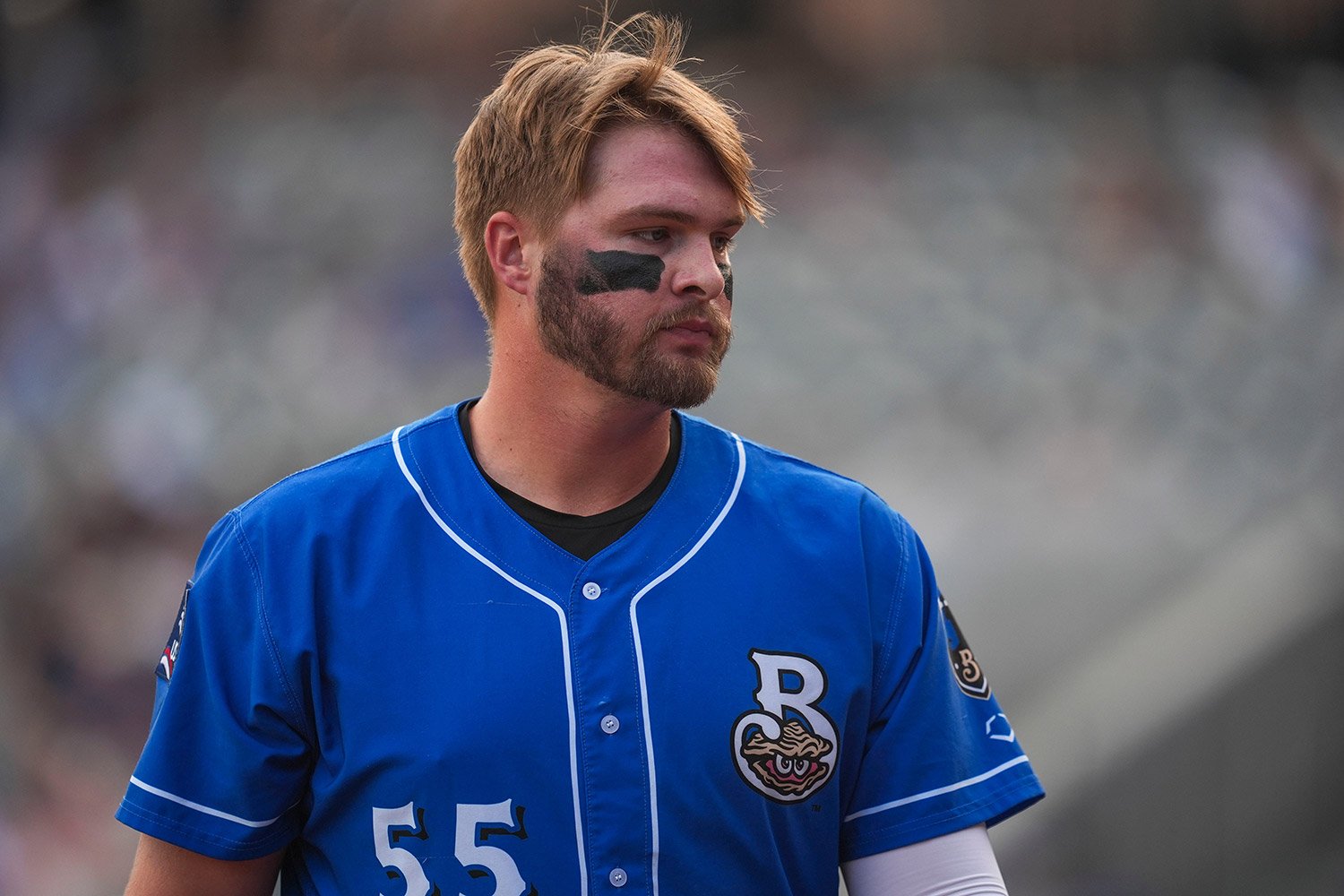 Blake Burke has more raw power than anyone else in the Brewers' minor league system. That's saying something considering the organization also has Andrew Fischer, Jesús Made, and Eric Bitonti. Burke has crushed his way to a 30 home run season in Biloxi (and 28 stolen bases ?!?) in just 96 games, and his promotion to Triple A is well earned after one of the most dominant months in Southern League history. Brewers player development shared a home run compilation along with Burke's statistics in July, which saw him fall just short of slugging 1.000 (yes, slugging) in the month: The exit velocities tell a story. Ranging from 106 mph to 116 mph, Blake Burke hit the ball hard, often, and was hitting it in the air. Burke is an aggressive swinger, but his contact rate overall is north of 70% this season, which is passable. His in-zone contact rate is around 78%, again a strong enough number to play well at the major league level if he can sustain it. The only concerns with Burke's profile to date are something the Brewers have been tight on, and that's his swing decisions. Burke has chased roughly 35% of pitches outside the strike zone this season, putting him in the bottom 10% of hitters in Double A by chase rate. The problem isn't necessarily that he'll miss every pitch he chases. It's that chasing removes him from counts where he can do the most damage, potentially turning elite raw power into merely above-average game power. Will there be a point where chasing too often limits the power he can produce? Well, if we look at the major league level, there are a bunch of names that have been chasing more than Burke, and some of those names may surprise you. This isn't a one-to-one comparison. Burke is seeing Double-A pitching, while these hitters are doing it against major league arms. But the comparison is still useful because it shows that a high chase rate doesn't automatically make an aggressive hitter unplayable. There are currently 30 hitters that chase more than Burke in the major leagues, and while the chart below that showcases expected Weighted On Base Average (xWOBA) should increase the more a hitter chases, there are some exceptions to this: There are a number of successful hitters who chase above 35% of the time, and some of them are the more exciting players in baseball. If we isolate it to just those who chase above 35% of the time and have an xWOBA over .340, we have Julio Rodriguez, Luis Garcia Jr, Michael Harris II, Alec Burleson, Jac Caglianone, CJ Abrams and Jordan Walker. Yes, they chase, but they offset it by maximizing their aggression inside the strike zone and leveraging that for power. Jac Caglianone is an interesting comparison for Burke. Sitting near or at the top of the league for hard-hit rates, barrel rates, average exit velocities and bat speed, his quality of contact metrics are superb. His chase rate, however, limits him from maximizing that contact into being a true superstar; however, he's doing exactly what he needs to do to maximize his profile. Slugging pitches over the heart of the plate. Caglianone has an expected slugging mark of .718 on pitches over the heart of the plate, ranking 17th in all of baseball (interestingly, Jackson Chourio is 15th). That damage has led him to hit .264/.317/.480 while playing the majority of his games in the pitcher-friendly Kauffman Stadium. So while he chases and strikes out, Caglianone is a prime example of why chase rate isn't necessarily the problem. Ineffective aggression is. Blake Burke's power is not in question. Regardless of the level, if pitchers are attacking him inside the strike zone, he has the kind of raw power Milwaukee hasn't seen from a first-base prospect since Prince Fielder that can damage those baseballs. If he can further develop his swing decisions, the Brewers may have one of the best first basemen in the league. If he can't, there's still a path to being a serviceable, powerful first baseman who steals more bases than Josh Naylor (it's wizardry, honestly). Burke's promotion has come at an interesting time. While there isn't a clear path currently to the major leagues for Burke with Jake Bauers taking the role of an everyday, left-handed first baseman, Bauers is hitting free agency after this year. This move is going to give Burke enough playing time in Nashville to potentially propel himself into that first base conversation for 2027, but it also gives the Brewers coverage. There are three potential, if unlikely, routes to seeing Blake Burke in Milwaukee this season. Jake Bauers is playing with a broken toe at the moment, and while he's playing through it using pain management and performing well, the toe is an interesting injury. It absorbs a lot of the ground force that hitters use to create torque from their legs, and it's not inconceivable the Brewers would want to give Bauers some time off down the stretch. It also provides some DH cover should Christian Yelich get injured, which hasn't been uncommon in past seasons. Finally, the rosters expand in September, allowing one extra hitter and one extra pitcher to join the team. The Brewers aren't in need of another position player without versatility, but Burke has a month of games to show he can be a force in a bench bat role. While this is likely a move for next season, it does give the Brewers some options in terms of injury cover, or even expanded roster cover in September, if Burke hits the ground running. It's worth continuing to monitor the chase rates with publicly available statcast data, but even if they stay steady, that doesn't mean Burke won't be successful at the highest level.
 -
Image courtesy of USA TODAY Network via Reuters Connect Blake Burke has more raw power than anyone else in the Brewers' minor league system. That's saying something considering the organization also has Andrew Fischer, Jesús Made, and Eric Bitonti. Burke has crushed his way to a 30 home run season in Biloxi (and 28 stolen bases ?!?) in just 96 games, and his promotion to Triple A is well earned after one of the most dominant months in Southern League history. Brewers player development shared a home run compilation along with Burke's statistics in July, which saw him fall just short of slugging 1.000 (yes, slugging) in the month: The exit velocities tell a story. Ranging from 106 mph to 116 mph, Blake Burke hit the ball hard, often, and was hitting it in the air. Burke is an aggressive swinger, but his contact rate overall is north of 70% this season, which is passable. His in-zone contact rate is around 78%, again a strong enough number to play well at the major league level if he can sustain it. The only concerns with Burke's profile to date are something the Brewers have been tight on, and that's his swing decisions. Burke has chased roughly 35% of pitches outside the strike zone this season, putting him in the bottom 10% of hitters in Double A by chase rate. The problem isn't necessarily that he'll miss every pitch he chases. It's that chasing removes him from counts where he can do the most damage, potentially turning elite raw power into merely above-average game power. Will there be a point where chasing too often limits the power he can produce? Well, if we look at the major league level, there are a bunch of names that have been chasing more than Burke, and some of those names may surprise you. This isn't a one-to-one comparison. Burke is seeing Double-A pitching, while these hitters are doing it against major league arms. But the comparison is still useful because it shows that a high chase rate doesn't automatically make an aggressive hitter unplayable. There are currently 30 hitters that chase more than Burke in the major leagues, and while the chart below that showcases expected Weighted On Base Average (xWOBA) should increase the more a hitter chases, there are some exceptions to this: There are a number of successful hitters who chase above 35% of the time, and some of them are the more exciting players in baseball. If we isolate it to just those who chase above 35% of the time and have an xWOBA over .340, we have Julio Rodriguez, Luis Garcia Jr, Michael Harris II, Alec Burleson, Jac Caglianone, CJ Abrams and Jordan Walker. Yes, they chase, but they offset it by maximizing their aggression inside the strike zone and leveraging that for power. Jac Caglianone is an interesting comparison for Burke. Sitting near or at the top of the league for hard-hit rates, barrel rates, average exit velocities and bat speed, his quality of contact metrics are superb. His chase rate, however, limits him from maximizing that contact into being a true superstar; however, he's doing exactly what he needs to do to maximize his profile. Slugging pitches over the heart of the plate. Caglianone has an expected slugging mark of .718 on pitches over the heart of the plate, ranking 17th in all of baseball (interestingly, Jackson Chourio is 15th). That damage has led him to hit .264/.317/.480 while playing the majority of his games in the pitcher-friendly Kauffman Stadium. So while he chases and strikes out, Caglianone is a prime example of why chase rate isn't necessarily the problem. Ineffective aggression is. Blake Burke's power is not in question. Regardless of the level, if pitchers are attacking him inside the strike zone, he has the kind of raw power Milwaukee hasn't seen from a first-base prospect since Prince Fielder that can damage those baseballs. If he can further develop his swing decisions, the Brewers may have one of the best first basemen in the league. If he can't, there's still a path to being a serviceable, powerful first baseman who steals more bases than Josh Naylor (it's wizardry, honestly). Burke's promotion has come at an interesting time. While there isn't a clear path currently to the major leagues for Burke with Jake Bauers taking the role of an everyday, left-handed first baseman, Bauers is hitting free agency after this year. This move is going to give Burke enough playing time in Nashville to potentially propel himself into that first base conversation for 2027, but it also gives the Brewers coverage. There are three potential, if unlikely, routes to seeing Blake Burke in Milwaukee this season. Jake Bauers is playing with a broken toe at the moment, and while he's playing through it using pain management and performing well, the toe is an interesting injury. It absorbs a lot of the ground force that hitters use to create torque from their legs, and it's not inconceivable the Brewers would want to give Bauers some time off down the stretch. It also provides some DH cover should Christian Yelich get injured, which hasn't been uncommon in past seasons. Finally, the rosters expand in September, allowing one extra hitter and one extra pitcher to join the team. The Brewers aren't in need of another position player without versatility, but Burke has a month of games to show he can be a force in a bench bat role. While this is likely a move for next season, it does give the Brewers some options in terms of injury cover, or even expanded roster cover in September, if Burke hits the ground running. It's worth continuing to monitor the chase rates with publicly available statcast data, but even if they stay steady, that doesn't mean Burke won't be successful at the highest level. View full article
-
That's fair! I will say, Tatis is the most interesting of these as he made a converted change in July. He's always been a very open stance guy, around 36°. For some reason, he was more closed to start the year, around 10°, and if you remember David Hamilton homered before he did. He's since opened up again and looked a lot more like the old Fernando. As for the others, I can't be sure, but we also know from Chourio that talented hitters usually find a way to get their timing at some point in the season, and Merrill/Machado deservedly fall into that category
-
The Brewers are about to face a very hot Padres offense, where Jackson Merrill and Fernando Tatis Jr have turned things around. Since June 1st: Jackson Merrill - 153 WRC+ Ty France - 144 WRC+ Fernando Tatis Jr - 138 WRC+ Manny Machado - 127 WRC+ Those four have combined to hit 29 home runs in 40 days between them. Luckily in Henderson, Harrison and May, the Brewers playoff rotation is about to be tested by a hot playoff offense. Hopefully the knackered bullpen doesn't hurt in a big way, as I'd expect Lyon Richardson to eat at least a couple of innings today. Maybe only Hall, Patrick and Richardson available
-
Jesus MadeLuis LaraLuis PenaJosh AdamczewskiBlake BurkeAndrew FischerBraylon PayneMarco DingesJett WilliamsJeferson QueroTyson HardinBrady EbelBishop LetsonJayden DubanewiczJaron DeBerryJosh KnothSawyer StrosniderLuke AdamsTrey EbelDiego Frontado
-
Jesus MadeLuis LaraLuis PenaJosh AdamczewskiBlake BurkeAndrew FischerBraylon PayneMarco DingesJett WilliamsJeferson QueroTyson HardinBrady EbelBishop LetsonJayden DubanewiczJaron DeBerryJosh KnothSawyer StrosniderLuke AdamsTrey EbelDiego Frontado
-
I'd imagine this is more to do with working on the breaking ball command rather than any concrete change to pitch usage, but he did land more sweepers and curveballs in zone in this outing. Curveball got hit hard. Sinker command didn't grade out well, but a lot of weak contact and it's the fastball I feel he has least command over at present. All in all, I like this approach from a development standpoint
- 1 reply
-
- 3
-
-
- daniel dickinson
- daniel corniel
- (and 2 more)
-
Has there been any further information on Jett Williams' injury Rob?
-
Christian Yelich Needs the Milwaukee Brewers Fan Base Now More Than Ever
Jake McKibbin posted an article in Brewers
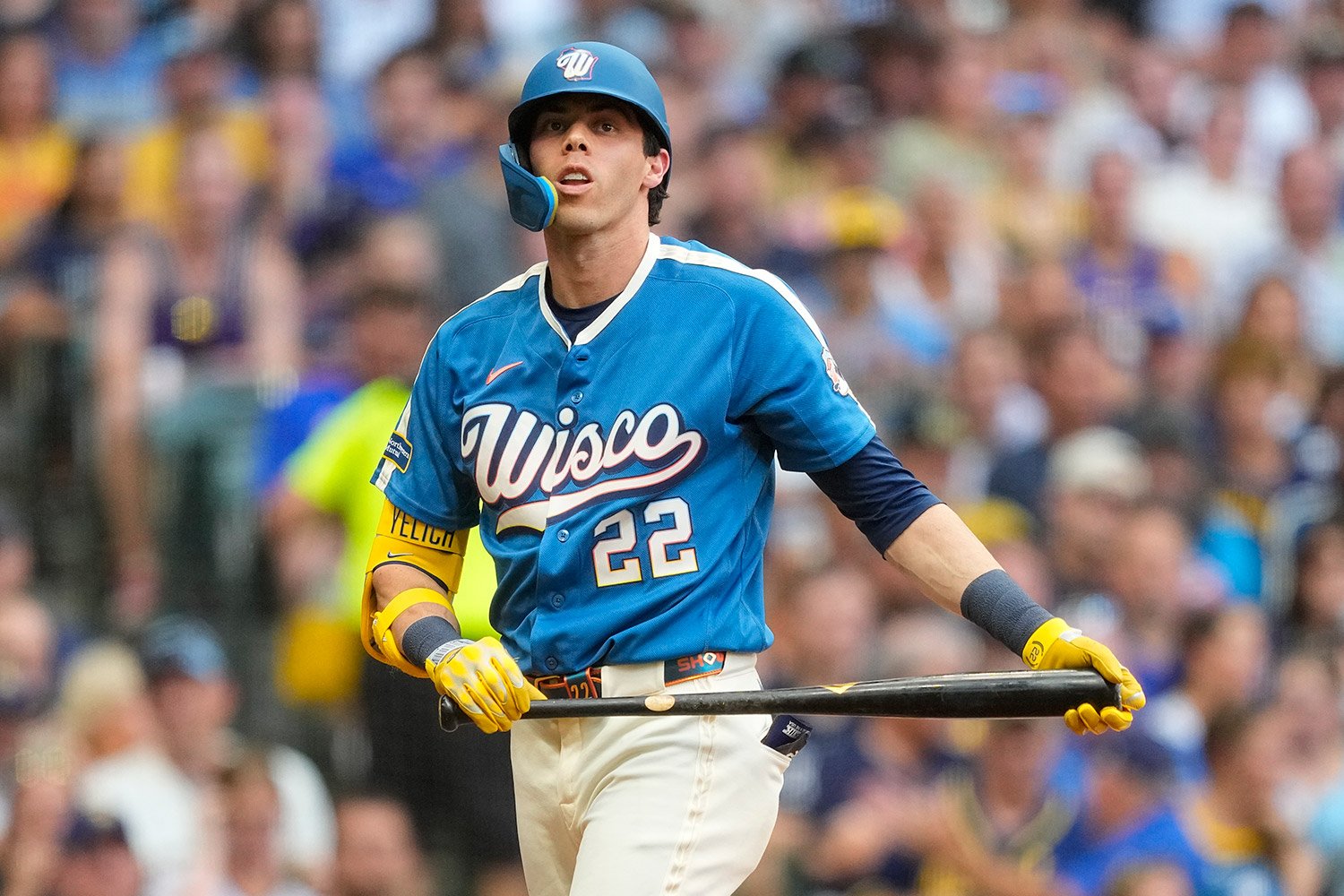 There has been an increasing subcurrent of unease around Christian Yelich in July. He's struggled since the start of June, slashing .220/.317/.340, and has struggled to replicate the impact he had last year. Matt Trueblood wrote a fantastic piece earlier in the year dissecting Yelich's swing path, specifically his struggles with the down-and-in breaking ball, which is worth a read if you haven't seen it already. The lack of production is tough to see for the franchise cornerstone, who's dealt with a lot since signing his seven-year extension with the Brewers in terms of injury, form, and expectation. Christian Yelich isn't playing with confidence right now. The swing looks hesitant, the timing is inconsistent, and frustration has started to spill over from the stands. But if the Brewers want to get the best version of their veteran DH, support—not criticism-is probably the better answer. He talked about this exact thing in an interview with the Midwest Legends podcast: Going through a confidence crisis is nothing a veteran hitter hasn't faced before. Yelich dealt with a lot of the same struggles in trying to live up to his MVP form from 2020-2023, before finally finding some semblance of his old self in 2024 and 2025. He'll never be that player again, as age and injury will limit his ability to do such destructive damage across the strike zone, but that doesn't mean Yelich can't go through bursts of power as we've seen across those other down seasons. Christian Yelich's swing is one of the oddest in baseball, with a lot of moving parts. It's a swing that puts a lot of torque through his lower back, from his hip coil, his load, getting his foot down, to releasing the barrel; Yelich has a lot of quirks within his swing that typically mean he'll be up and down in nature. That has been amplified this season as age and potentially back mobility have caught up to him. We have still seen signs earlier in the season, however, that, when on time, Yelich can be a difference maker. In the Brewers' first series of the season against the White Sox, Yelich pinch hit down one run, two men on, two out in the bottom of the eighth inning. Then this happened - a majestic, 111.1 mph home run to right field. Exactly the type of home run that usually indicates Yelich is feeling on time. He's also been absolutely fine as the strong side of a platoon this season. Yes, the swing and miss is a little higher than we're used to, but his swing decisions and exit velocities have been strong enough to justify DH-ing consistently at that position. His expected weighted on-base average is about league average, but it's startling to see the difference in contact quality between when Yelich faces left- or right-handed pitching (NB his OPS splits do not reflect the difference in at-bat quality, as you can see below. Don't @ me on this.) Confidence plays a big role in baseball. We've seen that with Joey Ortiz. I have a feeling we're about to see it with Jackson Chourio. You have no time to think as a hitter; it's incredibly reactionary in the box, so if you don't have the courage of your convictions, the whole process can look ugly in a hurry. Placing Yelich in situations where he can succeed more consistently is a good place to start. With confidence will come lower body tension, better timing, and perhaps (as we saw with Ortiz) better bat speed. I'd also point out that, against right-handers, his expected weighted on-base average on contact has ticked up month by month, and was .447 in July per Savant. He's taking these fastballs to opposite field, which limits some of his damage with the lower exit velocities we're seeing this season, but it is rising despite July being his roughest month of the year. The point of this article is to show that Christian Yelich is not a washed-up baseball player. There are signs of the old star still in there, and he can still be a productive member of this team in a slightly more restricted role. With a bit of confidence, he's also the kind of bat who can really step up and carry this offense for a week. Yelich was given some boo's from the crowd last night, and Murphy had this to say: This is Milwaukee's man. He's going to figure out a way to be productive, as he's done every season of his career. A little fan support can go a long way towards that (if in doubt, see Trea Turner and the Phillies fanbase in 2024). These guys care about Milwaukee. They care about the Brewers. Yelich took a discounted deal to stay here in 2019, and the fan base pressure will be adding to that tension, not helping remove it. He's earned that support. Few players have carried this franchise the way Yelich has, and while he may never again be an MVP, he can still be an important part of a winning Brewers team. If confidence is part of what's holding him back, the crowd has a chance to help instead of hinder.
 -
Image courtesy of IMAGN IMAGES via Reuters Connect There has been an increasing subcurrent of unease around Christian Yelich in July. He's struggled since the start of June, slashing .220/.317/.340, and has struggled to replicate the impact he had last year. Matt Trueblood wrote a fantastic piece earlier in the year dissecting Yelich's swing path, specifically his struggles with the down-and-in breaking ball, which is worth a read if you haven't seen it already. The lack of production is tough to see for the franchise cornerstone, who's dealt with a lot since signing his seven-year extension with the Brewers in terms of injury, form, and expectation. Christian Yelich isn't playing with confidence right now. The swing looks hesitant, the timing is inconsistent, and frustration has started to spill over from the stands. But if the Brewers want to get the best version of their veteran DH, support—not criticism-is probably the better answer. He talked about this exact thing in an interview with the Midwest Legends podcast: Going through a confidence crisis is nothing a veteran hitter hasn't faced before. Yelich dealt with a lot of the same struggles in trying to live up to his MVP form from 2020-2023, before finally finding some semblance of his old self in 2024 and 2025. He'll never be that player again, as age and injury will limit his ability to do such destructive damage across the strike zone, but that doesn't mean Yelich can't go through bursts of power as we've seen across those other down seasons. Christian Yelich's swing is one of the oddest in baseball, with a lot of moving parts. It's a swing that puts a lot of torque through his lower back, from his hip coil, his load, getting his foot down, to releasing the barrel; Yelich has a lot of quirks within his swing that typically mean he'll be up and down in nature. That has been amplified this season as age and potentially back mobility have caught up to him. We have still seen signs earlier in the season, however, that, when on time, Yelich can be a difference maker. In the Brewers' first series of the season against the White Sox, Yelich pinch hit down one run, two men on, two out in the bottom of the eighth inning. Then this happened - a majestic, 111.1 mph home run to right field. Exactly the type of home run that usually indicates Yelich is feeling on time. He's also been absolutely fine as the strong side of a platoon this season. Yes, the swing and miss is a little higher than we're used to, but his swing decisions and exit velocities have been strong enough to justify DH-ing consistently at that position. His expected weighted on-base average is about league average, but it's startling to see the difference in contact quality between when Yelich faces left- or right-handed pitching (NB his OPS splits do not reflect the difference in at-bat quality, as you can see below. Don't @ me on this.) Confidence plays a big role in baseball. We've seen that with Joey Ortiz. I have a feeling we're about to see it with Jackson Chourio. You have no time to think as a hitter; it's incredibly reactionary in the box, so if you don't have the courage of your convictions, the whole process can look ugly in a hurry. Placing Yelich in situations where he can succeed more consistently is a good place to start. With confidence will come lower body tension, better timing, and perhaps (as we saw with Ortiz) better bat speed. I'd also point out that, against right-handers, his expected weighted on-base average on contact has ticked up month by month, and was .447 in July per Savant. He's taking these fastballs to opposite field, which limits some of his damage with the lower exit velocities we're seeing this season, but it is rising despite July being his roughest month of the year. The point of this article is to show that Christian Yelich is not a washed-up baseball player. There are signs of the old star still in there, and he can still be a productive member of this team in a slightly more restricted role. With a bit of confidence, he's also the kind of bat who can really step up and carry this offense for a week. Yelich was given some boo's from the crowd last night, and Murphy had this to say: This is Milwaukee's man. He's going to figure out a way to be productive, as he's done every season of his career. A little fan support can go a long way towards that (if in doubt, see Trea Turner and the Phillies fanbase in 2024). These guys care about Milwaukee. They care about the Brewers. Yelich took a discounted deal to stay here in 2019, and the fan base pressure will be adding to that tension, not helping remove it. He's earned that support. Few players have carried this franchise the way Yelich has, and while he may never again be an MVP, he can still be an important part of a winning Brewers team. If confidence is part of what's holding him back, the crowd has a chance to help instead of hinder. View full article
-
Who do you think was better? So in response to this, I think it's as you'd think so far this year. Miz - Harrison - Henderson - May I love May's arsenal depth, and if his fastball command is on point like it has been most of this year, he's an electric arm with some great raw stuff and good command. When he loses that fastball command however he has been prone to longer at bats, grinding through and still providing results but not the dominance we've seen from Henderson/Harrison. They almost refuse to nibble around the edges, and that shows how confident they are with how their stuff plays in zone. Realistically, any of the secondary trio could perform better on a given day, and I can't wait to see May's start today. The sinker usage is something to monitor, and if that's helping him get quicker outs behind this defense, the next turns through the rotation could really be something to monitor. I think this is the best 1-4 the Brewers have had in a long, long time
.png.b91b9eb5f4b0f7beebdad5a115812fc7.png)

.png.3fff71722661afaa155b3158c57ec4ab.png)
.png.2959b493abd66765656436a2aa6d198c.png)
