Jake McKibbin
-
Posts
2,450 -
Joined
-
Last visited
-
Days Won
6
Content Type
Profiles
Forums
Blogs
Events
News
2026 Milwaukee Brewers Top Prospects Ranking
Milwaukee Brewers Videos
2022 Milwaukee Brewers Draft Picks
Milwaukee Brewers Free Agent & Trade Rumors, Notes, & Tidbits
Guides & Resources
2023 Milwaukee Brewers Draft Picks
2024 Milwaukee Brewers Draft Picks
The Milwaukee Brewers Players Project
2025 Milwaukee Brewers Draft Pick Tracker
2026 Milwaukee Brewers Draft Tracker: Picks & Bonuses
Store
Downloads
Gallery
Everything posted by Jake McKibbin
-
He'll be here for good now Michael! Lots of runway and game time
-
Wed. 6/10: Double the Action for T-Rats & Shuckers
Jake McKibbin replied to Jim Goulart's topic in Brewers Minor League Talk
Absolutely. We had some confirmation from the Brewers Minor League hitting coordinator that Made is really working on staying on the back leg and elevating the ball more, and it's really the only hole in his profile. His zone contact rate is above 90% apparently, he's chasing a little more than one would like in Double A but also, he's 19 and that's a big jump in stuff from High A. The Brewers org seems to think it's a very fixable issue to tap into more game power and will come, it's just being worked through at the moment -
Running 2026 MLB Draft Thread
Jake McKibbin replied to wiguy94's topic in MLB Draft & International Signings
Haha let's not go down that road, Spencer still cries over Chris Levonas -
Running 2026 MLB Draft Thread
Jake McKibbin replied to wiguy94's topic in MLB Draft & International Signings
Absolutely! I think from memory he'd grown up dreaming of going to Oklahoma and being a sooner, so really got the best of both worlds there -
Honestly his floor is higher. The defense is phenomenal, he's as competitive and comfortable as Sal with treating his body like a malleable instrument, but he's faster and better reads to boot. He's a premium CF whereas Sal is serviceable, and that's noteworthy We've seen how quickly PCA has accumulated WAR at times even when he's not hitting. Now it's just whether Lara can find a way to surpass Sals bar and really own the outfield spot as an everyday regular
-
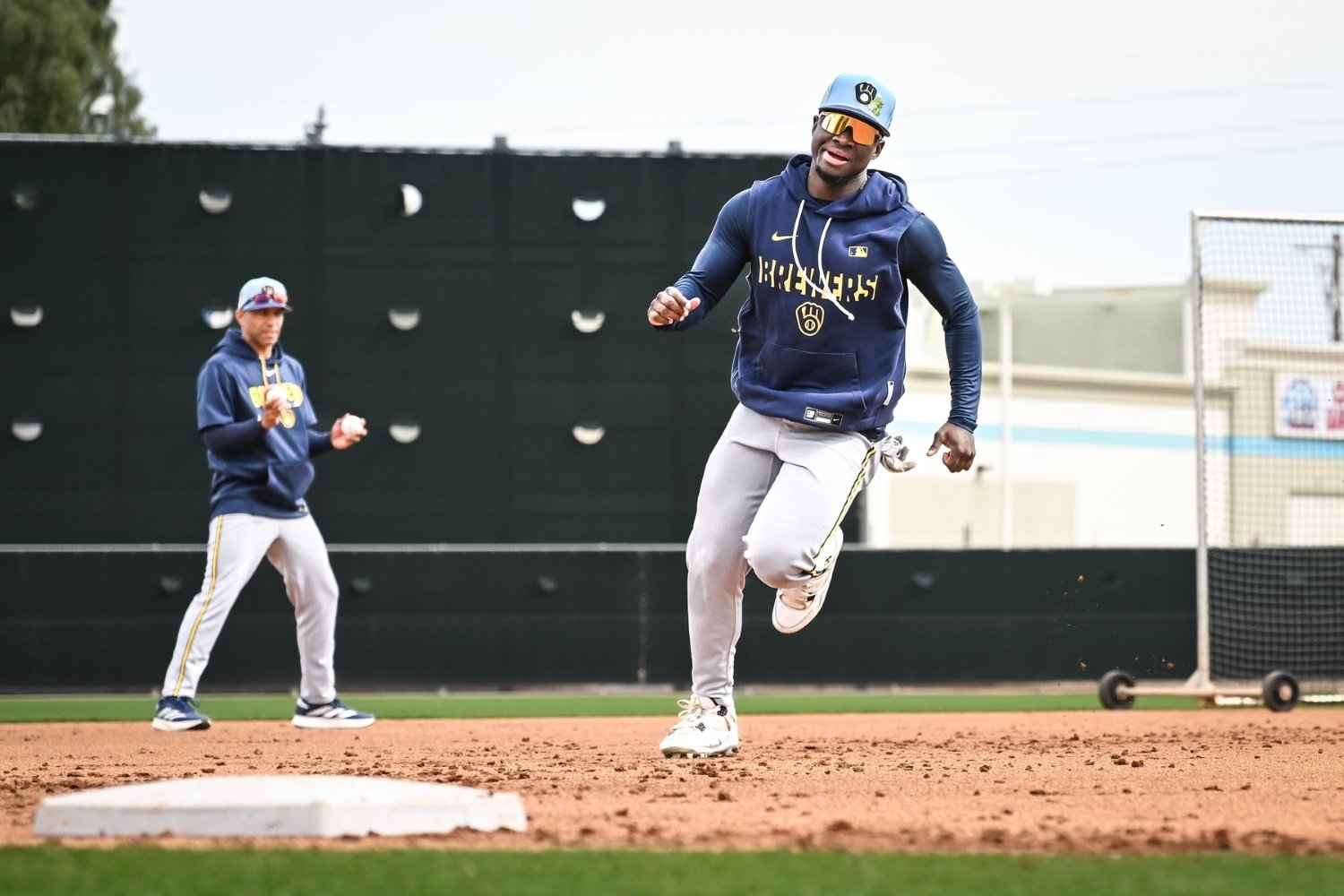 There are two things this should be prefaced with. One is that a lot of information on Luis Lara (and other top prospects) can be gleaned from listening to Spencer Michaelis wax lyrical each week on the Brewer Fanatic pod. Secondly, a massive congratulations to the young man for securing his future and defying a lot of stereotypes around his size and player archetype. Now, let's ask: why did the Brewers do this, and what future do they envision for him? Luis Lara is a phenomenal defender. Otherworldly. I'm not saying he's Pete Crow-Armstrong, because Crow-Armstrong is the greatest range monster we've seen in the outfield for a very long time, and possibly ever. That being said, Lara is close to that level of outfield coverage, combining exceptional jumps and reads with speed and great hands to flag down fly balls and line drives. This catch, in particular, shouldn't be marred simply because there's a position player on the mound: He currently holds a Minor League Gold Glove for his outfield prowess from last season, and there aren't really any faults. His arm strength has really improved over the past few years. He recorded 10 outfield assists in 2025 with the Double-A Biloxi Shuckers, and has three so far this season with Nashville. In short (a word Lara has been tagged with many times in his young career), this is the kind of defense the Brewers crave in their outfield mix, especially with the fly ball configuration of their pitching staff this season. The other facet of his game in which Lara has greatly excelled is his control of the strike zone—especially his contact rates. Lara has come a long way with his chase rates, which used to be a weakness, and is now above-average in that category, with some of the best bat-to-ball skills in Triple A. TJStats has a nice graphic showing his percentiles this season with the bat: He's a patient hitter who's walked more than he's struck out. He's consistently put the ball in play and has started pulling the ball in the air. All of those are really positive things, and perhaps the biggest is the hard-hit rate, which is now in the 55th percentile. Lara is just 5-foot-7, and while he's been young for nearly every level he's passed through on his journey, the ability to impact the ball has been lacking at those stages. This is the first season in which Lara's isolated power number (or the difference between his batting average and slugging) has been over .090 since he left the DSL. One thing we know from watching Sal Frelick and Luis Rengifo this year is that simply making contact is not enough in the big leagues. So this development is important, but it does come with a caveat: These are Lara's splits hitting as a lefty against right-handed pitching, and vice-versa. It seems like he's been a very different hitter when facing each side of the platoon. Against righties, Lara is battling and grinding his at-bats, taking his walks and getting on base, but he's not providing much—if any—thump. Contrast that with his performance against left-handers, and there's a noticeable difference. He swings more, he's more aggressive, and he's been barrelling up baseballs regularly. His expected weighted on-base average (xwOBA) tells the story, and it's important to pay attention to this. What it means is that Lara's everyday opportunity might need to wait a little longer, until he can handle right-handers with a little more panache. The majority of pitchers are right-handed, and simply being patient and hoping to walk or put a weakly hit ball in play against big league-caliber command and stuff won't cut it over the long term. Lara is, at present, an incredibly effective defensive fourth outfielder. He's also a good candidate for that role as a pinch-hitter against left-handers, something Sal Frelick can benefit from. Brandon Lockridge also fills this role well, however, and was beginning to show signs of his own adaptation prior to his calamitous collision with the concrete down the left-field line. He's due back sometime in the next few weeks, should his rehab stint go well. The Brewers will be hoping for big things from Lara. He's a 21-year-old playing in Triple A, and he's already shown some progress in the exit velocity department. This contract was arranged under the premise that they think more is to come, and Lara appears to be a very fast learner. He's shown that in the first half of the season, with improving launch angles. His xwOBA has steadily ticked up this year. He'll need to keep progressing if he wants to become a regular, and like Cooper Pratt, that may mean a little more seasoning for now. If all goes according to plan, he'll be worth the wait.
 -
Image courtesy of © Dave Kallmann / Milwaukee Journal Sentinel / USA TODAY NETWORK via Imagn Images There are two things this should be prefaced with. One is that a lot of information on Luis Lara (and other top prospects) can be gleaned from listening to Spencer Michaelis wax lyrical each week on the Brewer Fanatic pod. Secondly, a massive congratulations to the young man for securing his future and defying a lot of stereotypes around his size and player archetype. Now, let's ask: why did the Brewers do this, and what future do they envision for him? Luis Lara is a phenomenal defender. Otherworldly. I'm not saying he's Pete Crow-Armstrong, because Crow-Armstrong is the greatest range monster we've seen in the outfield for a very long time, and possibly ever. That being said, Lara is close to that level of outfield coverage, combining exceptional jumps and reads with speed and great hands to flag down fly balls and line drives. This catch, in particular, shouldn't be marred simply because there's a position player on the mound: He currently holds a Minor League Gold Glove for his outfield prowess from last season, and there aren't really any faults. His arm strength has really improved over the past few years. He recorded 10 outfield assists in 2025 with the Double-A Biloxi Shuckers, and has three so far this season with Nashville. In short (a word Lara has been tagged with many times in his young career), this is the kind of defense the Brewers crave in their outfield mix, especially with the fly ball configuration of their pitching staff this season. The other facet of his game in which Lara has greatly excelled is his control of the strike zone—especially his contact rates. Lara has come a long way with his chase rates, which used to be a weakness, and is now above-average in that category, with some of the best bat-to-ball skills in Triple A. TJStats has a nice graphic showing his percentiles this season with the bat: He's a patient hitter who's walked more than he's struck out. He's consistently put the ball in play and has started pulling the ball in the air. All of those are really positive things, and perhaps the biggest is the hard-hit rate, which is now in the 55th percentile. Lara is just 5-foot-7, and while he's been young for nearly every level he's passed through on his journey, the ability to impact the ball has been lacking at those stages. This is the first season in which Lara's isolated power number (or the difference between his batting average and slugging) has been over .090 since he left the DSL. One thing we know from watching Sal Frelick and Luis Rengifo this year is that simply making contact is not enough in the big leagues. So this development is important, but it does come with a caveat: These are Lara's splits hitting as a lefty against right-handed pitching, and vice-versa. It seems like he's been a very different hitter when facing each side of the platoon. Against righties, Lara is battling and grinding his at-bats, taking his walks and getting on base, but he's not providing much—if any—thump. Contrast that with his performance against left-handers, and there's a noticeable difference. He swings more, he's more aggressive, and he's been barrelling up baseballs regularly. His expected weighted on-base average (xwOBA) tells the story, and it's important to pay attention to this. What it means is that Lara's everyday opportunity might need to wait a little longer, until he can handle right-handers with a little more panache. The majority of pitchers are right-handed, and simply being patient and hoping to walk or put a weakly hit ball in play against big league-caliber command and stuff won't cut it over the long term. Lara is, at present, an incredibly effective defensive fourth outfielder. He's also a good candidate for that role as a pinch-hitter against left-handers, something Sal Frelick can benefit from. Brandon Lockridge also fills this role well, however, and was beginning to show signs of his own adaptation prior to his calamitous collision with the concrete down the left-field line. He's due back sometime in the next few weeks, should his rehab stint go well. The Brewers will be hoping for big things from Lara. He's a 21-year-old playing in Triple A, and he's already shown some progress in the exit velocity department. This contract was arranged under the premise that they think more is to come, and Lara appears to be a very fast learner. He's shown that in the first half of the season, with improving launch angles. His xwOBA has steadily ticked up this year. He'll need to keep progressing if he wants to become a regular, and like Cooper Pratt, that may mean a little more seasoning for now. If all goes according to plan, he'll be worth the wait. View full article
-
Haha maybe an ideal halfway house from Colorado then!
-
It'll be interesting to see how the Coors altitude affects these games. The Brewers had just adjusted to hitting with less movement on most pitches, and now you're back at sea level, they'll have to revert to type. Can Garrett Mitchell still hit the ball in the air? We'll see! Hopefully a fun week of baseball against two pretty fun offenses
-
Could Darrien Miller be on the trade block after a hot start Harold?
- 12 replies
-
- 3
-

-
- garrett mitchell
- trevor megill
- (and 2 more)
-
Running 2026 MLB Draft Thread
Jake McKibbin replied to wiguy94's topic in MLB Draft & International Signings
What's the general consensus on Will Brick, the catcher out of Christian Brother HS? I can see the Brewers picking up some reinforcements behind the plate, and he seems to have a solid floor with enough upside to make it intriguing in round two or so? -
I'm not saying they'd be a step down, but I don't think they'd be an upgrade and with perhaps another month or two to really get firing in an environment conducive to that development, when they do come up they'll be able to hit the ground running and make an impact rather than merely replicating Rengifos production
-
Cameron Wagoner: From Wags to Riches?
Jake McKibbin replied to Spencer Michaelis's topic in Brewers Minor League Talk
Such an interesting spot. If the mechanics can make that sort of velocity repeatable, they could really be onto something here. The wild pitches speak more to one wild offering rather than four for a walk, which is a small consolation but hopefully with reps that command can really hone in The stuff marks at Triple A might be get tasty -
Thanks man, really glad you enjoyed it!
-
Image courtesy of © Dave Kallmann / Milwaukee Journal Sentinel / USA TODAY NETWORK via Imagn Images The Brewers have two consensus top-100 prospects who can cover the left side of the infield at Triple A right now, one of whom has already signed a 10-year contract. The Brewers also rank 24th in wRC+ from third base and 29th in wRC+ at shortstop. It seems like a clear problem with an obvious solution, but that solution is murkier than first glance suggests. As much as we enjoy a shiny new toy over something we've seen already (prospects are always exciting for that reason), neither Cooper Pratt nor Jett Williams has yet shown the type of production to force themselves up onto the Brewers roster. Both have made some developments in their profiles, but they're not showing themselves as ready yet, with some flaws in their first two months of games that give red flags. The Brewers are the type of organization that ensures that players are genuinely ready for the major leagues and are happy to be patient until they feel the time has come. That's not always in the form of on-field production, but the underlying approach, quality of contact and mentality that players have. The step from Triple A to the heat of a playoff chase is monumental, and to date, neither Pratt nor Williams has done enough to imply that they'll produce more than the current incumbents. Cooper Pratt Pratt is a player the Brewers are extraordinarily high on—hence the long-term deal signed before he was even especially close to a promotion to the majors. His range, body control and arm all play very well at shortstop, with a high defensive floor, strong baseball instincts and good bat-to-ball skills. Coming into the season, Pratt's two areas to work on were his approach at the plate (specifically chasing down and away) and trying to tap into more damage, with questions arising over his bat speed. A slow start ensued, with Pratt struggling to square up baseballs in April but eventually finding some timing in May. That being said, let's consider those two work-ons. First up, this is his rolling chase rate over a 100 pitch sample size: After some real improvements and a steady decline in his chase rate until the first week in May, it's been on the rise ever since. Sitting around the 25th percentile is manageable in some profiles, but those profiles have high exit velocities and thump to compensate for their tendency to swing outside the zone. Pratt has never been this type of hitter, but has he shown any improved ability to impact the baseball? Most certainly yes, albeit not to the level he would need to push for a promotion, A lot of hitters see regression in their average exit velocity when they reach the big leagues, due to facing a higher quality of pitching, making it more difficult to find the barrel with regularity. Pratt has seen some improvements, finding the barrel more often and averaging 86-87 mph exit velocity, but that's still below average for the level. To compound that, he isn't pulling the ball in the air as we saw from Caleb Durbin or Isaac Paredes, who can get by with lower exit velocities by targeting the shorter fences: The Brewers have a plan for Pratt, and it's going to be something in the mold of Brice Turang's profile. They believe there's impact in that bat, and they're prepared to be patient to bring that out, at least in 2026. He just hasn't reached the culmination of that plan yet, and that's okay, but it does mean the Brewers can't definitively rely on him as an upgrade to their shortstop and third base problems. Jett Williams Jett Williams is, on the surface, a very Brewers-y hitter: yet another grindy, smaller hitter who looks to scrap his way on base, use his plus-plus speed on the basepaths, and provide strong defense at second base or even in center field, as he showed in 2025. The Brewers have had him working almost exclusively at third base this year, identifying a path for him to join their team, and defensively, he's been playing well. That being said, it's the bat that can bring him to the next level. Where Williams differs from the Brewers' militia of minions is that he can actually hit the ball hard. We saw a taste of this in spring training (always to be taken with a pinch of salt), but Williams showed that, when pitchers make mistakes, he can hit those mistakes hard: It's a small sample size of just 22 plate appearances, so we should definitely take these as an indicator of what he's capable of, rather than his current abilities. He was squaring the ball up consistently with hard line drives and fly balls, he wasn't whiffing, and his walks and strikeouts were in a strong place. A quad injury hampered him from getting more playing time, and since he's been in Triple A, the results haven't quite been there, but if we compare his 2026 season (right) to his 2025 efforts (left) we can see some improvements: Williams is walking more, making more in-zone contact, and swinging more at pitches in the strike zone. It's a more consistent profile, and he's made real strides in those areas the Brewers covet, with all of these stats combining to give tougher, better at-bats. The problem is, he's just not impacting the ball in the same vein he showed in the Mets organization. Just Baseball-projected average exit velocities combined with his air-pull rates would allow him to tap into solid power with Milwaukee, but those hard-hit rates and exit velocities have been anything but average to date. His hard-hit rate is trending up slightly, but that's also been offset by more strikeouts over the last while, and it's fair to say that a .292 expected Weighted On-Base Average is not going to be drawing a lot of eyes. This sounds more negative than I initially intended. Williams will be similar to Pratt, with defined work-ons with his plate discipline and potentially his swing path to try and maximize his contact rates before he finds the power again. It's the type of profile that could click overnight, but for now, it's not at a point where he's ready to impact the big-league ballclub. The big carrying tool for both of these players to reach the majors is how they hit. Both are adept defensively in positions with a clear need, but the upgrade will come from how well they hit when they land in Milwaukee. If this sort of performance continues for the next month or so, the Brewers may have to start looking for external help, rather than internal promotions, to fill the gaps in their lineup as they gear up for yet another playoff push. Both Williams and Pratt are players in whom the Brewers have extreme faith to make impactful contributions for many years at the highest level of the sport. They appear to be in the middle of some fine-tuning to get to that stage, and it shouldn't be seen as a negative that they haven't reached that level just yet. Their time will come, but that time just shouldn't be right now. View full article
-
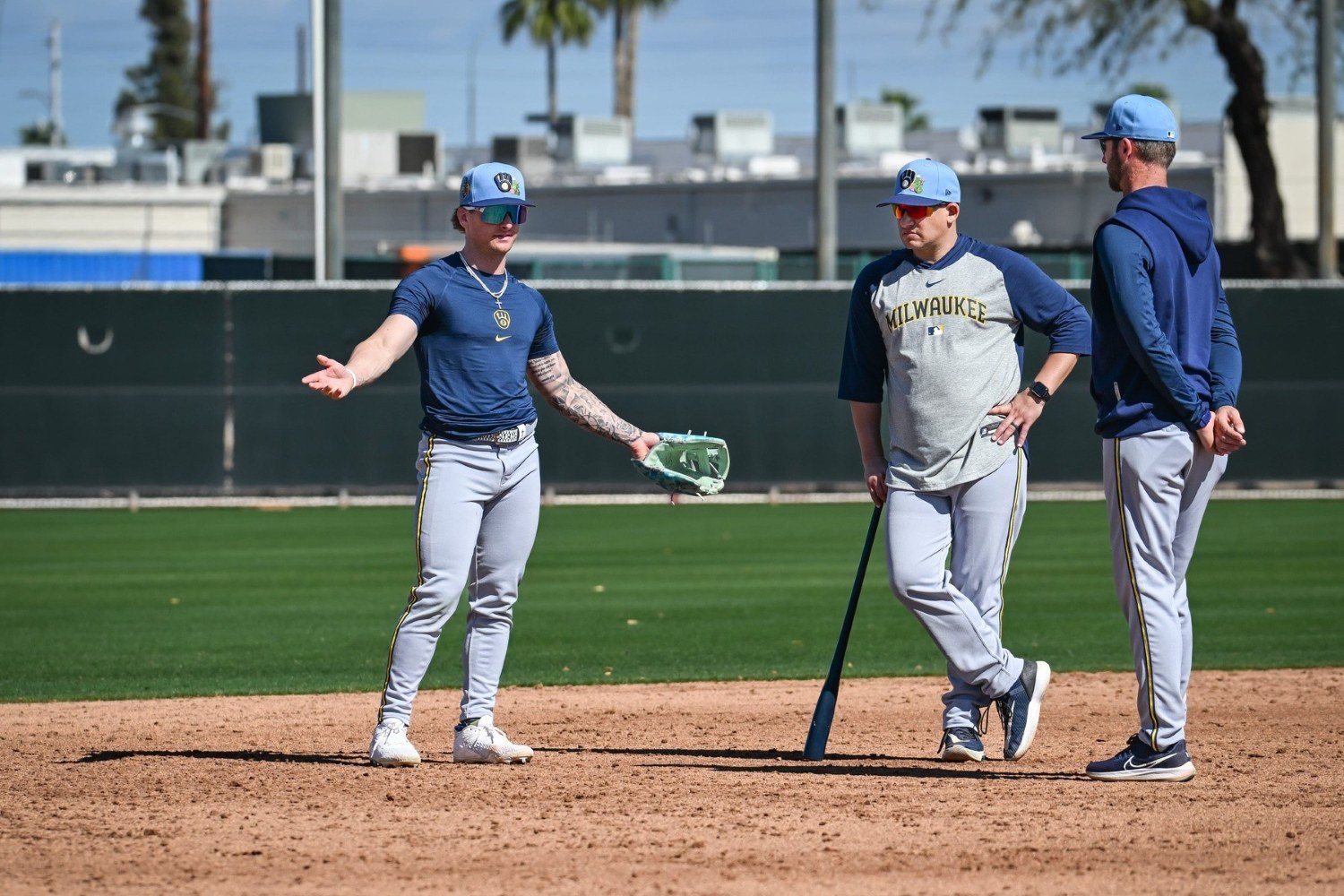 The Brewers have two consensus top-100 prospects who can cover the left side of the infield at Triple A right now, one of whom has already signed a 10-year contract. The Brewers also rank 24th in wRC+ from third base and 29th in wRC+ at shortstop. It seems like a clear problem with an obvious solution, but that solution is murkier than first glance suggests. As much as we enjoy a shiny new toy over something we've seen already (prospects are always exciting for that reason), neither Cooper Pratt nor Jett Williams has yet shown the type of production to force themselves up onto the Brewers roster. Both have made some developments in their profiles, but they're not showing themselves as ready yet, with some flaws in their first two months of games that give red flags. The Brewers are the type of organization that ensures that players are genuinely ready for the major leagues and are happy to be patient until they feel the time has come. That's not always in the form of on-field production, but the underlying approach, quality of contact and mentality that players have. The step from Triple A to the heat of a playoff chase is monumental, and to date, neither Pratt nor Williams has done enough to imply that they'll produce more than the current incumbents. Cooper Pratt Pratt is a player the Brewers are extraordinarily high on—hence the long-term deal signed before he was even especially close to a promotion to the majors. His range, body control and arm all play very well at shortstop, with a high defensive floor, strong baseball instincts and good bat-to-ball skills. Coming into the season, Pratt's two areas to work on were his approach at the plate (specifically chasing down and away) and trying to tap into more damage, with questions arising over his bat speed. A slow start ensued, with Pratt struggling to square up baseballs in April but eventually finding some timing in May. That being said, let's consider those two work-ons. First up, this is his rolling chase rate over a 100 pitch sample size: After some real improvements and a steady decline in his chase rate until the first week in May, it's been on the rise ever since. Sitting around the 25th percentile is manageable in some profiles, but those profiles have high exit velocities and thump to compensate for their tendency to swing outside the zone. Pratt has never been this type of hitter, but has he shown any improved ability to impact the baseball? Most certainly yes, albeit not to the level he would need to push for a promotion, A lot of hitters see regression in their average exit velocity when they reach the big leagues, due to facing a higher quality of pitching, making it more difficult to find the barrel with regularity. Pratt has seen some improvements, finding the barrel more often and averaging 86-87 mph exit velocity, but that's still below average for the level. To compound that, he isn't pulling the ball in the air as we saw from Caleb Durbin or Isaac Paredes, who can get by with lower exit velocities by targeting the shorter fences: The Brewers have a plan for Pratt, and it's going to be something in the mold of Brice Turang's profile. They believe there's impact in that bat, and they're prepared to be patient to bring that out, at least in 2026. He just hasn't reached the culmination of that plan yet, and that's okay, but it does mean the Brewers can't definitively rely on him as an upgrade to their shortstop and third base problems. Jett Williams Jett Williams is, on the surface, a very Brewers-y hitter: yet another grindy, smaller hitter who looks to scrap his way on base, use his plus-plus speed on the basepaths, and provide strong defense at second base or even in center field, as he showed in 2025. The Brewers have had him working almost exclusively at third base this year, identifying a path for him to join their team, and defensively, he's been playing well. That being said, it's the bat that can bring him to the next level. Where Williams differs from the Brewers' militia of minions is that he can actually hit the ball hard. We saw a taste of this in spring training (always to be taken with a pinch of salt), but Williams showed that, when pitchers make mistakes, he can hit those mistakes hard: It's a small sample size of just 22 plate appearances, so we should definitely take these as an indicator of what he's capable of, rather than his current abilities. He was squaring the ball up consistently with hard line drives and fly balls, he wasn't whiffing, and his walks and strikeouts were in a strong place. A quad injury hampered him from getting more playing time, and since he's been in Triple A, the results haven't quite been there, but if we compare his 2026 season (right) to his 2025 efforts (left) we can see some improvements: Williams is walking more, making more in-zone contact, and swinging more at pitches in the strike zone. It's a more consistent profile, and he's made real strides in those areas the Brewers covet, with all of these stats combining to give tougher, better at-bats. The problem is, he's just not impacting the ball in the same vein he showed in the Mets organization. Just Baseball-projected average exit velocities combined with his air-pull rates would allow him to tap into solid power with Milwaukee, but those hard-hit rates and exit velocities have been anything but average to date. His hard-hit rate is trending up slightly, but that's also been offset by more strikeouts over the last while, and it's fair to say that a .292 expected Weighted On-Base Average is not going to be drawing a lot of eyes. This sounds more negative than I initially intended. Williams will be similar to Pratt, with defined work-ons with his plate discipline and potentially his swing path to try and maximize his contact rates before he finds the power again. It's the type of profile that could click overnight, but for now, it's not at a point where he's ready to impact the big-league ballclub. The big carrying tool for both of these players to reach the majors is how they hit. Both are adept defensively in positions with a clear need, but the upgrade will come from how well they hit when they land in Milwaukee. If this sort of performance continues for the next month or so, the Brewers may have to start looking for external help, rather than internal promotions, to fill the gaps in their lineup as they gear up for yet another playoff push. Both Williams and Pratt are players in whom the Brewers have extreme faith to make impactful contributions for many years at the highest level of the sport. They appear to be in the middle of some fine-tuning to get to that stage, and it shouldn't be seen as a negative that they haven't reached that level just yet. Their time will come, but that time just shouldn't be right now.
 -
This was a comment made more in terms of his development with his swing decisions than anything. Age is certainly a factor, but usually we find players have a learning curve through their first 2-3 years as a professional, and it's more I expected to see more development in some key areas from Chourio. Chourio's production while managing his current swing decision problems is impressive. It also seems fair to question how he's joined Joey Ortiz in this bracket.
-
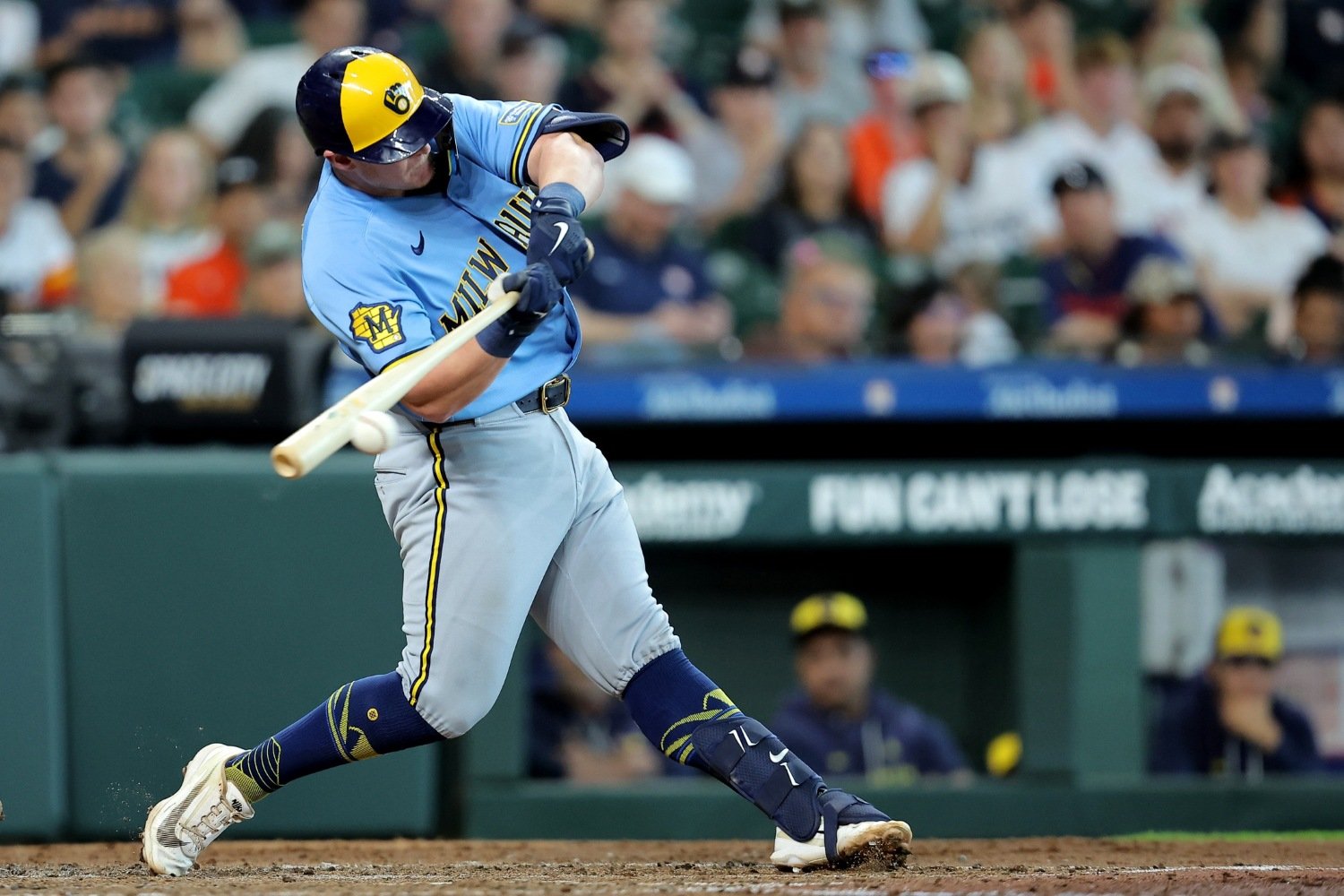 Throughout April, the Milwaukee Brewers' lineup struggled to scratch, claw, steal and bunt any run they could get across home plate. They survived a war of attrition in the first month of the season, covering for the absence of two players who were meant to be spark plugs in 2026: their young phenom Jackson Chourio and the resurgent former top draft pick, Andrew Vaughn. Combining for 41 games (22 for Chourio, 19 for Vaughn) since their return, though, they've managed to provide just three home runs. The Brewers have done Brewers things and continued to win, but they need to show more power if they're going to go all the way in 2026. So why haven't Vaughn and Chourio fired as expected? Andrew Vaughn Misses His (Ha)Mate The first one to tackle is, perhaps, the easier of the two. Vaughn was sidelined by a broken hamate bone in the first game of the 2026 season. That's an injury notorious for sapping bat speed. Bat speed is volatile and takes a while to even out, as the pitch location (and therefore swing length) have a big effect on the raw data. That being said, after a month, we have enough of a sample size to say Vaughn is swinging roughly 3 MPH slower than in 2025. The good news: Vaughn is a hitter, not just a slugger, and he's found ways to keep the quality of contact high. He's not chasing; he's not whiffing; he's hitting a lot of solid contact in the air. It just isn't leaving the park. Here are his 2025 exit velocity numbers by strike zone area: In 2025, Vaughn was crushing basically every pitch, but his real damage came on the inner and middle thirds of the plate. If it was belt-high in those zones, he crushed it in the air. Vaughn averaged 70.7 mph of bat speed in 2025, good for the 27th percentile in baseball, meaning he's not likely to clear the fences to straightaway center and does rely on that pull-side power. That's why getting the bat around on stuff inside is so important to him. With slower bat speed, this year (down to 67 mph on average), he's struggling to get the bat sufficiently out in front on the inner third to turn on the ball, and that's been hurting him, with exit velocities dropping on the inner third: The other big thing is that Vaughn had just enough in the exit velocity department to be a slugging threat last season. The majority of his batted balls in play were in the 100-105 range, compared with other 5-MPH increments, as you can see below: In fact, he was one of the most consistent producers of high-quality contact in baseball last season. That's continued to some extent in 2026, but the entire histogram has shifted one step to the left, now hitting the majority of his batted balls in the 95-100 mph range: This isn't terminal, and perhaps in two months' time, we'll see the bat speed return, as is traditional for hamate injuries. For now, we'll have to enjoy the quality of contact and strong at-bats, and perhaps hope for more of the power to come back in the second half of the season. Jackson Chourio Has Found The In-Between I couldn't resist a little Stranger Things metaphor. Chourio came into this year with one goal: to reach the heights his talent permits via better swing decisions. It showed in spring training, in his rehab stints, and even the World Baseball Classic. Chourio was being more selective, and there were hopes he could make strides in his chase rate. Let's take a look at his base for 2025 compared to the 2026 performance: He was aggressive with pitches inside the strike zone, and his bat-to-ball was good enough that, even while chasing to this extent, he was putting a lot of balls in play. Those balls were ineffective, weak contact, however, and that was hurting his results. It's the one clear area where he could make a step forward. Fast-forward to 2026, and Chourio is being more patient and less swing-happy... just on all the wrong pitches. His swing rate is down, but it's because he's swinging at fewer pitches inside the strike zone. If we look at the specific areas inside the strike zone, it's not pretty, either. It's more like intermittent passivity than being genuinely selective, although he does appear to be focusing on reducing swings on the outer third of the plate (these are how many percentage points up or down Jackson Chourio is swinging by zone in 2026 vs 2025) He's swinging less at meatballs, less on the inner third, and it's hurting him. Watching the games, Chourio has some at-bats where he seems to really effectively decipher pitch types and locations, and others where he's just guessing. He has the ability to let the ball travel and drive pitches to right-center field, and then turn on any breaking pitches off the back of that. His timing is just off at present, and his approach looks completely lost. The good news is, the under-the-hood swing mechanics are actually looking good. Bat speed is up; he's finding more ideal attack angles on baseballs despite not quite finding the barrel of the bat. That being said, these were never real problems for Chourio to begin with. In 2026, Joey Ortiz has a better differential between his in-zone swing rate and his chase rate than does Chourio. That speaks volumes. As always, if he can find an approach that works for him at the plate, the sky is the limit for Chourio. There's no better team to work with him on that than the Brewers. Still, after two and a half years, one might have hoped to see a little more progress than we have so far, and in fact, 2026 has been a regression, rather than progress. The Brewers need that to change. Thanks to Jake Bauers, they can live with a smaller role and a bit less pop than they might have hoped for from Vaughn. Not so with Chourio. To blossom into the superpower they can be, they need their young dynamo to become a more productive one.
 -
Image courtesy of © Erik Williams-Imagn Images Throughout April, the Milwaukee Brewers' lineup struggled to scratch, claw, steal and bunt any run they could get across home plate. They survived a war of attrition in the first month of the season, covering for the absence of two players who were meant to be spark plugs in 2026: their young phenom Jackson Chourio and the resurgent former top draft pick, Andrew Vaughn. Combining for 41 games (22 for Chourio, 19 for Vaughn) since their return, though, they've managed to provide just three home runs. The Brewers have done Brewers things and continued to win, but they need to show more power if they're going to go all the way in 2026. So why haven't Vaughn and Chourio fired as expected? Andrew Vaughn Misses His (Ha)Mate The first one to tackle is, perhaps, the easier of the two. Vaughn was sidelined by a broken hamate bone in the first game of the 2026 season. That's an injury notorious for sapping bat speed. Bat speed is volatile and takes a while to even out, as the pitch location (and therefore swing length) have a big effect on the raw data. That being said, after a month, we have enough of a sample size to say Vaughn is swinging roughly 3 MPH slower than in 2025. The good news: Vaughn is a hitter, not just a slugger, and he's found ways to keep the quality of contact high. He's not chasing; he's not whiffing; he's hitting a lot of solid contact in the air. It just isn't leaving the park. Here are his 2025 exit velocity numbers by strike zone area: In 2025, Vaughn was crushing basically every pitch, but his real damage came on the inner and middle thirds of the plate. If it was belt-high in those zones, he crushed it in the air. Vaughn averaged 70.7 mph of bat speed in 2025, good for the 27th percentile in baseball, meaning he's not likely to clear the fences to straightaway center and does rely on that pull-side power. That's why getting the bat around on stuff inside is so important to him. With slower bat speed, this year (down to 67 mph on average), he's struggling to get the bat sufficiently out in front on the inner third to turn on the ball, and that's been hurting him, with exit velocities dropping on the inner third: The other big thing is that Vaughn had just enough in the exit velocity department to be a slugging threat last season. The majority of his batted balls in play were in the 100-105 range, compared with other 5-MPH increments, as you can see below: In fact, he was one of the most consistent producers of high-quality contact in baseball last season. That's continued to some extent in 2026, but the entire histogram has shifted one step to the left, now hitting the majority of his batted balls in the 95-100 mph range: This isn't terminal, and perhaps in two months' time, we'll see the bat speed return, as is traditional for hamate injuries. For now, we'll have to enjoy the quality of contact and strong at-bats, and perhaps hope for more of the power to come back in the second half of the season. Jackson Chourio Has Found The In-Between I couldn't resist a little Stranger Things metaphor. Chourio came into this year with one goal: to reach the heights his talent permits via better swing decisions. It showed in spring training, in his rehab stints, and even the World Baseball Classic. Chourio was being more selective, and there were hopes he could make strides in his chase rate. Let's take a look at his base for 2025 compared to the 2026 performance: He was aggressive with pitches inside the strike zone, and his bat-to-ball was good enough that, even while chasing to this extent, he was putting a lot of balls in play. Those balls were ineffective, weak contact, however, and that was hurting his results. It's the one clear area where he could make a step forward. Fast-forward to 2026, and Chourio is being more patient and less swing-happy... just on all the wrong pitches. His swing rate is down, but it's because he's swinging at fewer pitches inside the strike zone. If we look at the specific areas inside the strike zone, it's not pretty, either. It's more like intermittent passivity than being genuinely selective, although he does appear to be focusing on reducing swings on the outer third of the plate (these are how many percentage points up or down Jackson Chourio is swinging by zone in 2026 vs 2025) He's swinging less at meatballs, less on the inner third, and it's hurting him. Watching the games, Chourio has some at-bats where he seems to really effectively decipher pitch types and locations, and others where he's just guessing. He has the ability to let the ball travel and drive pitches to right-center field, and then turn on any breaking pitches off the back of that. His timing is just off at present, and his approach looks completely lost. The good news is, the under-the-hood swing mechanics are actually looking good. Bat speed is up; he's finding more ideal attack angles on baseballs despite not quite finding the barrel of the bat. That being said, these were never real problems for Chourio to begin with. In 2026, Joey Ortiz has a better differential between his in-zone swing rate and his chase rate than does Chourio. That speaks volumes. As always, if he can find an approach that works for him at the plate, the sky is the limit for Chourio. There's no better team to work with him on that than the Brewers. Still, after two and a half years, one might have hoped to see a little more progress than we have so far, and in fact, 2026 has been a regression, rather than progress. The Brewers need that to change. Thanks to Jake Bauers, they can live with a smaller role and a bit less pop than they might have hoped for from Vaughn. Not so with Chourio. To blossom into the superpower they can be, they need their young dynamo to become a more productive one. View full article
-
Image courtesy of © Mark Hoffman/Milwaukee Journal Sentinel / USA TODAY NETWORK via Imagn Images Pitch-tipping has been a big topic for the Milwaukee Brewers over the last week. Robert Gasser saw his pitches being highlighted on Saturday by Andy Pages from second base. It appeared that Pages was able to gain an idea of what pitch was coming, giving Teoscar Hernandez all the information he needed to turn on a sweeper inside and crush it over the left field wall. Afterward, Pat Murphy had this to say: There are a variety of ways to steal signs. One of the most common is having a runner at second base who can see the pitcher's hand as it enters the glove, whether they grip it differently, set up differently, or make other mechanical tweaks for different offerings. Before the PitchCom system, this runner could also pick up on signs thrown down by the catcher. It can also be exposed by the catcher getting set too early, showcasing locations, or even assuming different stances for different receiving locations. Most catchers switch between putting different knees down for different offerings at different times, and there can be hidden clues in there. William Contreras goes with his right knee down around 15% of the time, with his left knee down about 83% of the time, for example. Again, after Saturday's game, Murphy spoke to Curt Hogg of the Milwaukee Journal Sentinel: Eliminating pitch tips altogether is almost impossible, and you usually need the issue to be exposed before you realize there's a problem. The Brewers have dealt with it earlier in the year with both Brandon Woodruff and Trevor Megill, and they'll no doubt see things getting picked up throughout the rest of the season. One thing they can do, however, is maximize their own chances to pick up on tells from the pitcher/catcher, and minimize those opportunities for other teams. How The Brewers Use Pitch-Tipping To Their Advantage It should surprise absolutely no one that the Brewers are well ahead of this offensively. Since 2024, no team has faced more pitches with a runner on second base, and only the Mets and Diamondbacks have slugged more with a runner on second base (I'm using pitches as a barometer, as it gives less time for the runner on second to watch for any signs that they can relay to the dugout for future at-bats). On top of that, the Brewers far and away led the league in the difference between slugging with men on second base and their overall slugging for the year. Below is a graph showcasing weighted on-base average (WOBA) on second base against the pitches faced by a team with a man on second: The Brewers rank third in WOBA since 2024 with a man on second base, and the sheer volume of pitches they see in this situation gives them ample opportunities to assess both pitchers and catchers for any clues or tells that might be coming, and relay that subtly to the man at the plate. Once something is picked up, the rest of the team can continue to observe this throughout the rest of the game, any time they reach second base, and it has an exponential effect. Slugging is valuable here as it implies hard hit contact and often of the aerial variety, something the Brewers aren't traditionally known for. Having a jump on a pitch allows them to get the bat head out earlier, and for people like Jackson Chourio, Christian Yelich, et al, that's all they need. Overall, from 2024-2026, the Brewers ranked 14th in the league for slugging with a .398 mark in all situations, but if we narrow it down to a man on second base, they jump all the way up to fifth with a .428 mark. Contrast this with the Dodgers, who jumped from a .438 mark to a .446 slugging mark with a man on second base, and it seems the Brewers have identified something in this situation that helps them surge in power output. So, is this a runner on base thing, or is it a man on second base thing? Well, if we isolate the stats over the 2+ years of this sample to men on base, but not including a runner on second, and the Brewers regress to similar positions in comparison with the rest of the league, ranking 12th in WOBA (0.329) and 16th in slugging percentage (0.426). So to conclude, the Brewers are getting: More pitches with a man on second base than anyone else in the league A big boost to slugging percentage with men on second, both in raw numbers and compared to the rest of the league A smaller boost to slugging with men on base and no one on second, but not an outlier jump vs the rest of the league's performance It almost seems as though having a man on second is their secret sauce. It's also something their offense is geared towards, with a number of speedsters who have good plate discipline and can reach first and steal second, or stretch a long single into a double. It's one reason they can survive without the home run ball, and why stealing bases and getting that extra base is so important to their offensive identity. So how does this play out on the other side of the ball? The Key To Avoiding Pitch-Tipping: Keep Your Opposition Off Second Base Defensively, the Brewers cannot control the tells their pitchers are showing, but they can make it a focal point to keep teams off of second base. They can also attempt to identify signs of pitch tipping internally before it becomes an issue, and we might be able to pick up some signs of that in the data. It should again come as no surprise that the Brewers grade out exceptionally well here, too. They face fewer pitches than any team bar the Chicago Cubs, who they're almost neck and neck with, and lead the league in WOBA against when they find men on second base: In fact, the Brewers are almost 30 points below the average wOBA league-wide, a monumental difference. Park factors can play into this (see Colorado in the top right), but the Brewers are evidently taking steps to mitigate pitch tipping. William Contreras has become an expert at controlling the run game, with the Brewers allowing a league-leading 17 stolen bases this year and having caught 16 would-be stealers. Murphy also mentioned that at times the catcher can be the source of pitch tipping, and it should be pointed out the lengths Contreras goes to in order to avoid being predictable. He's constantly twitching and moving around behind the plate, starting his glove in incorrect spots, dragging his glove in the dirt or up high, and using his athleticism to catch and frame the ball despite all of these moving parts. Here's one example, look at where he starts vs where he catches this ball back in 2025: It should come as no surprise that, once again, it appears the Brewers are leading on the margins. Compared with the rest of the league, they've found ways to mitigate the pitches a runner on second base sees over the course of the season; they've got a catcher with the athleticism and nous to throw off anyone assessing his own positioning and techniques. They're also seeing more pitches with men on second, and they're capitalizing with higher gains in WOBA and slugging percentage than any other team in baseball during those situations. The Brewers are leading the league in managing pitch tipping. Honestly, are we really surprised? View full article
-
The Milwaukee Brewers Have Created A Pitch-Tipping Advantage
Jake McKibbin posted an article in Brewers
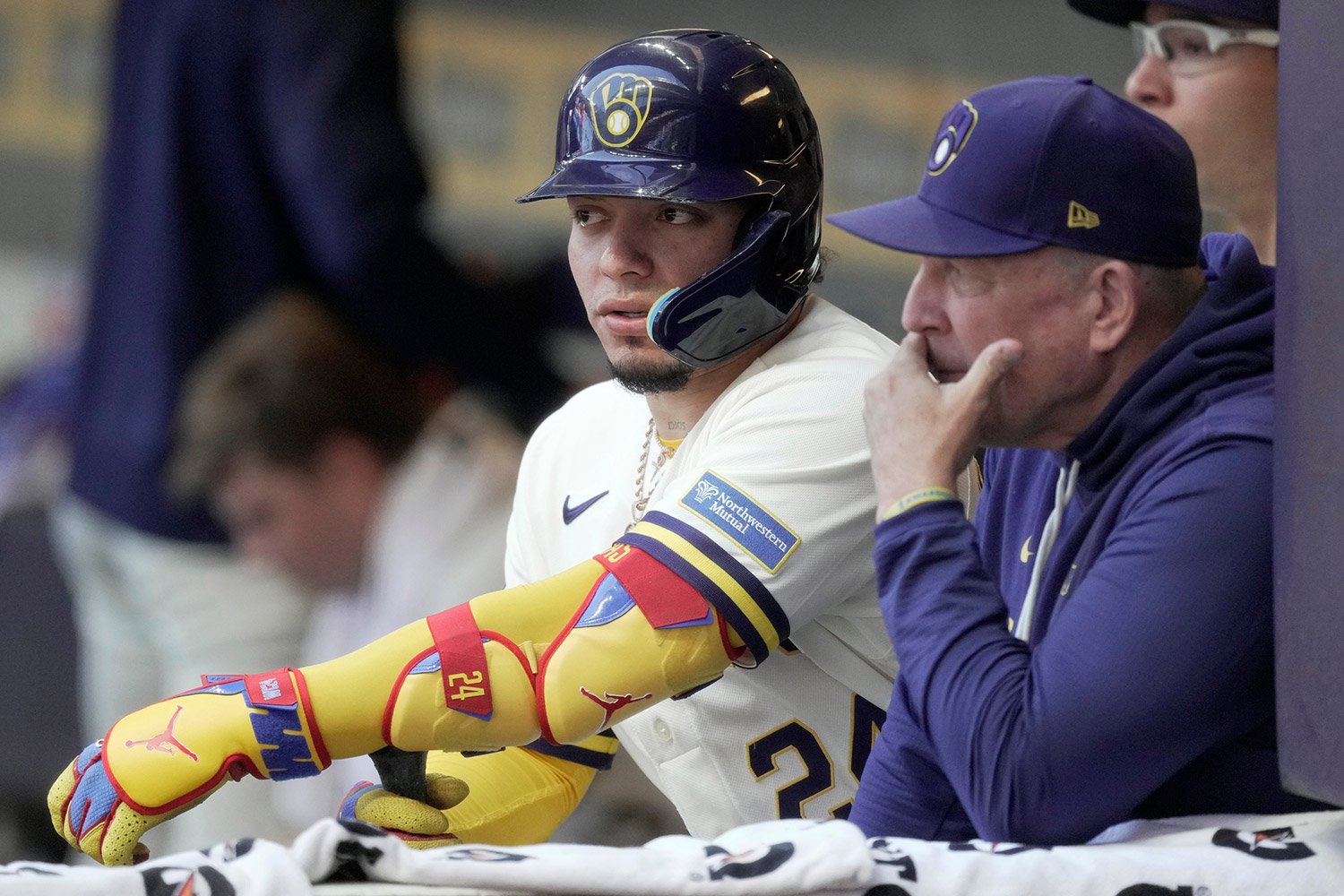 Pitch-tipping has been a big topic for the Milwaukee Brewers over the last week. Robert Gasser saw his pitches being highlighted on Saturday by Andy Pages from second base. It appeared that Pages was able to gain an idea of what pitch was coming, giving Teoscar Hernandez all the information he needed to turn on a sweeper inside and crush it over the left field wall. Afterward, Pat Murphy had this to say: There are a variety of ways to steal signs. One of the most common is having a runner at second base who can see the pitcher's hand as it enters the glove, whether they grip it differently, set up differently, or make other mechanical tweaks for different offerings. Before the PitchCom system, this runner could also pick up on signs thrown down by the catcher. It can also be exposed by the catcher getting set too early, showcasing locations, or even assuming different stances for different receiving locations. Most catchers switch between putting different knees down for different offerings at different times, and there can be hidden clues in there. William Contreras goes with his right knee down around 15% of the time, with his left knee down about 83% of the time, for example. Again, after Saturday's game, Murphy spoke to Curt Hogg of the Milwaukee Journal Sentinel: Eliminating pitch tips altogether is almost impossible, and you usually need the issue to be exposed before you realize there's a problem. The Brewers have dealt with it earlier in the year with both Brandon Woodruff and Trevor Megill, and they'll no doubt see things getting picked up throughout the rest of the season. One thing they can do, however, is maximize their own chances to pick up on tells from the pitcher/catcher, and minimize those opportunities for other teams. How The Brewers Use Pitch-Tipping To Their Advantage It should surprise absolutely no one that the Brewers are well ahead of this offensively. Since 2024, no team has faced more pitches with a runner on second base, and only the Mets and Diamondbacks have slugged more with a runner on second base (I'm using pitches as a barometer, as it gives less time for the runner on second to watch for any signs that they can relay to the dugout for future at-bats). On top of that, the Brewers far and away led the league in the difference between slugging with men on second base and their overall slugging for the year. Below is a graph showcasing weighted on-base average (WOBA) on second base against the pitches faced by a team with a man on second: The Brewers rank third in WOBA since 2024 with a man on second base, and the sheer volume of pitches they see in this situation gives them ample opportunities to assess both pitchers and catchers for any clues or tells that might be coming, and relay that subtly to the man at the plate. Once something is picked up, the rest of the team can continue to observe this throughout the rest of the game, any time they reach second base, and it has an exponential effect. Slugging is valuable here as it implies hard hit contact and often of the aerial variety, something the Brewers aren't traditionally known for. Having a jump on a pitch allows them to get the bat head out earlier, and for people like Jackson Chourio, Christian Yelich, et al, that's all they need. Overall, from 2024-2026, the Brewers ranked 14th in the league for slugging with a .398 mark in all situations, but if we narrow it down to a man on second base, they jump all the way up to fifth with a .428 mark. Contrast this with the Dodgers, who jumped from a .438 mark to a .446 slugging mark with a man on second base, and it seems the Brewers have identified something in this situation that helps them surge in power output. So, is this a runner on base thing, or is it a man on second base thing? Well, if we isolate the stats over the 2+ years of this sample to men on base, but not including a runner on second, and the Brewers regress to similar positions in comparison with the rest of the league, ranking 12th in WOBA (0.329) and 16th in slugging percentage (0.426). So to conclude, the Brewers are getting: More pitches with a man on second base than anyone else in the league A big boost to slugging percentage with men on second, both in raw numbers and compared to the rest of the league A smaller boost to slugging with men on base and no one on second, but not an outlier jump vs the rest of the league's performance It almost seems as though having a man on second is their secret sauce. It's also something their offense is geared towards, with a number of speedsters who have good plate discipline and can reach first and steal second, or stretch a long single into a double. It's one reason they can survive without the home run ball, and why stealing bases and getting that extra base is so important to their offensive identity. So how does this play out on the other side of the ball? The Key To Avoiding Pitch-Tipping: Keep Your Opposition Off Second Base Defensively, the Brewers cannot control the tells their pitchers are showing, but they can make it a focal point to keep teams off of second base. They can also attempt to identify signs of pitch tipping internally before it becomes an issue, and we might be able to pick up some signs of that in the data. It should again come as no surprise that the Brewers grade out exceptionally well here, too. They face fewer pitches than any team bar the Chicago Cubs, who they're almost neck and neck with, and lead the league in WOBA against when they find men on second base: In fact, the Brewers are almost 30 points below the average wOBA league-wide, a monumental difference. Park factors can play into this (see Colorado in the top right), but the Brewers are evidently taking steps to mitigate pitch tipping. William Contreras has become an expert at controlling the run game, with the Brewers allowing a league-leading 17 stolen bases this year and having caught 16 would-be stealers. Murphy also mentioned that at times the catcher can be the source of pitch tipping, and it should be pointed out the lengths Contreras goes to in order to avoid being predictable. He's constantly twitching and moving around behind the plate, starting his glove in incorrect spots, dragging his glove in the dirt or up high, and using his athleticism to catch and frame the ball despite all of these moving parts. Here's one example, look at where he starts vs where he catches this ball back in 2025: It should come as no surprise that, once again, it appears the Brewers are leading on the margins. Compared with the rest of the league, they've found ways to mitigate the pitches a runner on second base sees over the course of the season; they've got a catcher with the athleticism and nous to throw off anyone assessing his own positioning and techniques. They're also seeing more pitches with men on second, and they're capitalizing with higher gains in WOBA and slugging percentage than any other team in baseball during those situations. The Brewers are leading the league in managing pitch tipping. Honestly, are we really surprised?
 -
Not sure if I've nailed it 100%, but you can see roughly 4 mph of velo difference between the cutter and slider, and six inches or so more downward break
-
At this point, I would say we know as much as we ever will or should about Luis Peña barring any setback. @ARobsBrewCrewis providing a fantastic service but we also need to be careful not to cross any lines, and he's done a great job so far of keeping the fan base informed and the players medical situation private. If we could leave the Peña questions for a while as the situation is clearly sensitive and the Brewers are being justifiably cautious, I think that would be best for all involved. Can't say I speak for everyone, but let's just be careful not to abuse the privilege we have here
-
Wed. 5/20: Can the Sounds Win Nine Straight? TBD
Jake McKibbin replied to Joseph Zarr's topic in Brewers Minor League Talk
Haha honestly, I just love how del Chiaro is so excited for his prospects. He gets so pumped for them, like a proud dad. Seems like an awesome dude -
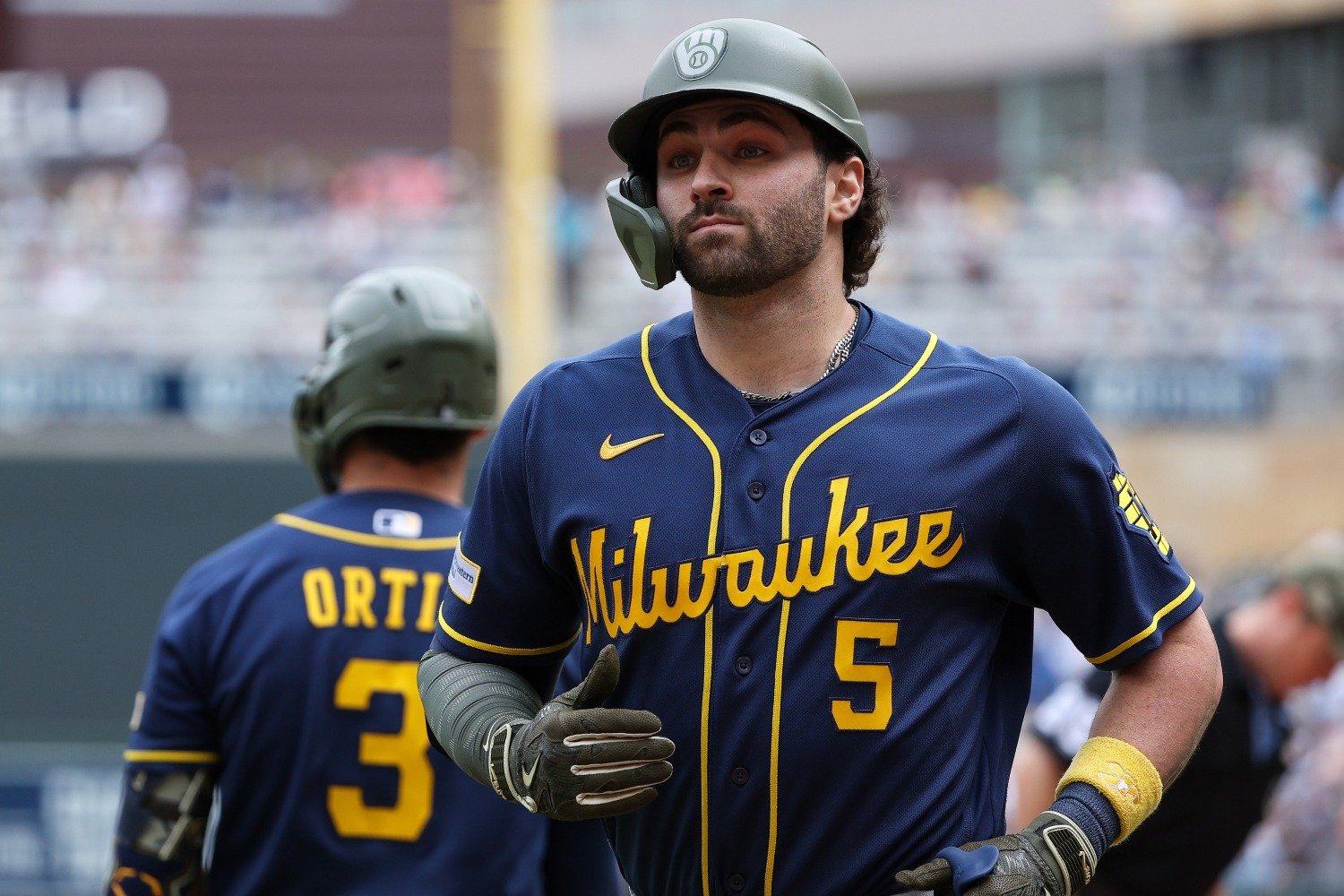 We've been here before. Garrett Mitchell may be one of the most polarizing players in the Brewers organization, combining tantalizing upside with glaring weaknesses. He's the type of player capable of dominating a playoff series matchup, or draining offensive momentum. We saw the Pirates destroy him with high fastballs a few weeks ago, and the results haven't been pretty overall. Including yesterday's home run, Mitchell has hit .281/.284/.303 over the last 30 days, with a 35,2% strikeout rate. Combined with Mitchell scuffling in the outfield (-5 Defensive Runs Saved (DRS), according to Sports Info Solutions) while trying to be careful to avoid diving on his weak shoulder, there has been a justifiably loud murmuring about whether Mitchell is fit to be an almost everyday player in the major leagues. Despite that, there has been some data to suggest that Mitchell has been improving, without the results to show for it. If we look at his rolling swing and miss rate on pitches inside the strike zone, there's some clear progress being made: We can see a steady trendline in the above graph, culminating in Mitchell (over his last 60 in-zone swings) being in the 50th percentile in MLB for contact rate. At points in the season, Mitchell's in-zone contact rate dropped below 60%, so to see it now approaching 85% marks an extreme transformation. Why hasn't this translated to results? Well, the problem is two-fold. Mitchell's strikeout rate has always garnered a lot of attention, but his ground ball rate has historically been a cause for concern, as well. He had a 55.8% ground ball rate in 2024, dropped to 46.5% in 2025, and is currently at 51.5% this year. No matter how hard you hit the ball, if you're hitting the majority of balls on the ground or low line drives, you will be susceptible to bad luck and rely on finding holes. Those holes are bigger if you hit a ball 115 MPH, but major-league infields are so good that you need to find the outfield grass to be consistent in this game. It should come as no surprise, then, that Mitchell's sweet-spot rate (the rate at which he finds ideal launch angles on his batted balls) almost perfectly mirrors his overall production: Mitchell got off to a rip-roaring start, before finding himself in a funk as he tried to cut down on the swing-and-miss. He was late on a lot of balls and pounding them into the ground, before recently making some better contact and seeing some extra bases as a result. There's one other problem. Mitchell is still striking out an awful lot despite the reduced whiff rate, with his 40-plate appearance rolling average sitting exactly on his season average of 37%: So, how has the zone contact improved to this extent and his chase rates also improved, but his actual strikeouts haven't changed? There are a couple of ways. Perhaps Mitchell is just not swinging as much? Or perhaps he's lasting longer in at-bats, fouling off pitches before eventually whiffing? Let's take a look! Up to April 19, Mitchell had swung at 25 high fastballs. He fouled off 13 of those pitches and whiffed on the other 12. In a two-strike count, you could force Mitchell into a swing, and he wasn't doing any damage in those locations. The ball wasn't even being put in play. Over the last month, he's swung at a lot more fastballs, and been targeted more heavily, but the whiff hasn't been as bad as we thought: Out of 91 high four-seam fastballs, Mitchell has swung and missed on just 20 of them, good for a 21.9% whiff rate. Initially, these resulted in more foul balls, and, when he did put the ball in play (note the numbers below the EVs are not balls in play, just the pitches located to that section), he's been hitting rockets: The problem is, while Mitchell has been getting his bat to the high fastball more often, he's being forced to do so more often. Pitchers (especially righties, working up and away) have worked him there more frequently. Mitchell hasn't whiffed in the last month on a lefty's four-seam fastball, but right-handers have found it easier to pound that spot. On top of that, Mitchell appears to have been so dialed into the high fastball that he's struggled against his bread-and-butter breaking pitches, with skyrocketing ground ball rates and high whiff rates against changeups and sliders. There's an implied question to parse here. Is Mitchell getting a hold of the high fastball only because he's expecting it on each and every pitch? Or can he find a balance where he can handle breaking pitches and off-speed offerings, while still managing the fastball? Hitting at the highest level of the sport is a chess match, and Mitchell showing off on Sunday with his home run against Bailey Ober is one way to place doubt in a pitcher's mind. If he can continue to progress against the high fastball and force pitchers into a more nuanced approach, that bodes well for him, but to avoid the streaky results, he will need to be capable of more than just selling out for one particular offering at a time. After all, everyone else in the league throws harder than Ober, which makes it easier for them to put Mitchell in the rocking chair. The initial signs are good. He's making more contact than ever, and he's not doing it by just stopping himself from swinging. There are more foul balls, and he'll need to turn those into actual balls in play more often, but the trend lines are pointing upward across the last month, and a little confidence can go a long way. If he can find that adjustability to cover more than just one offering at a time, the second half of 2026 could be a very fun time for Mitchell.