



Jake McKibbin
-
Posts
2,395 -
Joined
-
Last visited
-
Days Won
6
Content Type
Profiles
Forums
Blogs
Events
News
2026 Milwaukee Brewers Top Prospects Ranking
Milwaukee Brewers Videos
2022 Milwaukee Brewers Draft Picks
Milwaukee Brewers Free Agent & Trade Rumors, Notes, & Tidbits
Guides & Resources
2023 Milwaukee Brewers Draft Picks
2024 Milwaukee Brewers Draft Picks
The Milwaukee Brewers Players Project
2025 Milwaukee Brewers Draft Pick Tracker
2026 Milwaukee Brewers Draft Tracker: Picks & Bonuses
Store
Downloads
Gallery
Everything posted by Jake McKibbin
-
Frelick with four (from memory) balls hit over 90 mph, just not falling for him tonight but his quality of contact has massively improved, don't look too much into his box score here!
-
The Brewers had 4.5 million before signing their two college drafters in 11-20 range, the 7-10 picks (all of whom are likely very cheap) That by my count leaves ~ $1.4 million among the cheapest picks and for some of the HS guys in later round! May have ability to spend one million or so on on the 11-20 risky picks
-
That's way cheaper than I expected. Much much cheaper
-
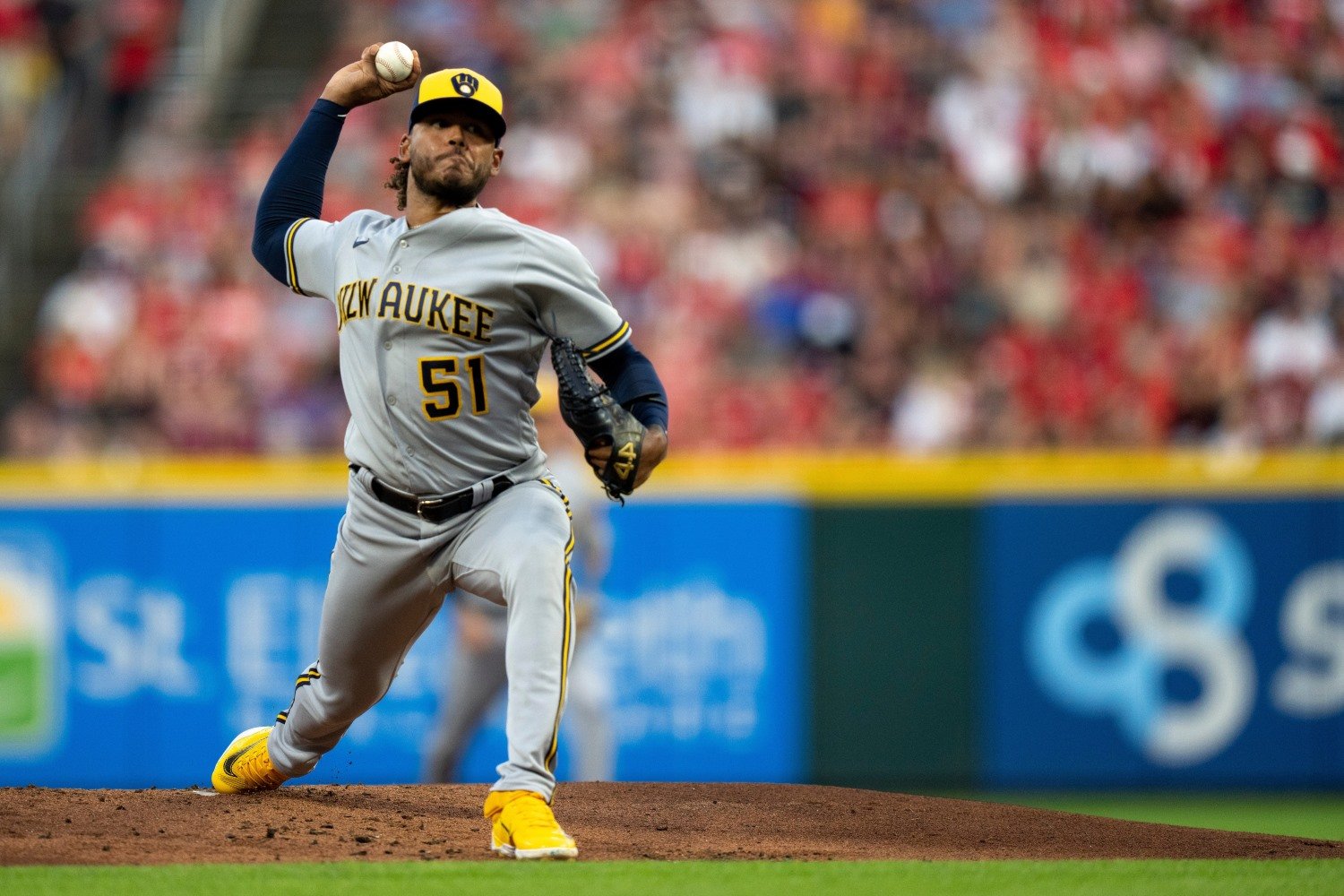 By this point, we know what Freddy Peralta has in his locker, and it’s enough to mesmerize and overpower any offense in the league when he’s got some semblance of command. The lack of control, however, brings about an inconsistency from game to game, and even a slight improvement in this area will bring marked improvements in his performance. So far this season, Peralta has shown with a healthy shoulder the type of velocity we used to see from him only as a reliever, but it hasn’t shown much in the way of added value, in part because of how poorly he has located either it, or his secondary pitches. It has become a regular thing for Peralta to get ahead 0-2 and throw multiple uncompetitive pitches in the at-bat, leading to excessively deep counts, high pitch counts, and a lot more pressure in games wherein he should have the stuff to wipe out opposing hitters. He has 22 2/3 innings pitched in 0-2 counts this season, and 28 innings pitched with a 2-2 count. Contrast this with Corbin Burnes, who has 29 2/3 innings in an 0-2 count and just 26 innings in a 2-2 count, because hitters are forced into making decisions behind in the count, and generating much more swing-and-miss. Typically, in an 0-2 count, a pitcher will try to reset the hitter's eye, and throw an uncompetitive pitch--something to set up the following sequence. Then, the 1-2 pitch will be used to generate a chase off of that. So let’s compare Burnes and Peralta in this way: As you may notice, Burnes has three pitches (the changeup, curveball and slider) all with chase rates around 50% in this count. Peralta has just one pitch (his curveball) with a chase rate above 30%. It’s a big reason why he struggles to go late in games, and also why he gets forced into the zone more than he would like, when hitters are doing damage. In 3-2 counts, hitters have a .300/.539/.540 slash line against him, which just can’t happen when you get into these situations as often as he does. During his career-best 2021 season, Peralta ignored walks for the most part, and tried to stay nibbling around the zone, getting a lot of strikeouts and limiting the number of hits against him to the point where he had a .179 batting average against him. In fact, Peralta has had three straight seasons of BAA being under .200. That’s changed this year, and is a large part of why he hasn’t been as effective. So what has changed in July that’s made him so good, so far? It’s really simple: He’s landing his breaking pitches on the edges of the strike zone, in particular the curveball. There are slight increases in the changeup and the slider, but he’s landed his curveball around the edge of the zone 50% of the time across his three starts this month, a significant improvement on the 35.5% mark he had in June, and landing it in the strike zone 57.1% of the time overall. However, interestingly, opponents' in-zone swing rate has dropped from 68% in June down to 37.5% in July, meaning he’s stealing strikes. In doing so, Peralta is forcing batters to chase significantly more on his slider and his changeup, and more on all four of his pitches in two-strike counts in July. Hitters will eventually adjust, and he’ll have to keep tweaking his pitch mix as he goes along, but landing these pitches is so crucial to his success. Hopefully, we'll see more of it in his next start.
 -
Freddy Peralta has been an enigma so far this season, with glimpses of his best form, and more than enough of his worst. However, like Corbin Burnes, he's showed that he could be firing on all cylinders after the All-Star break, making some significant strides along the way. Some seeds of success began to take root earlier in July, and blossomed into a one-hit effort against the sizzling Cincinnati Reds offense. How did he do it? Image courtesy of © Albert Cesare / The Enquirer / USA TODAY NETWORK By this point, we know what Freddy Peralta has in his locker, and it’s enough to mesmerize and overpower any offense in the league when he’s got some semblance of command. The lack of control, however, brings about an inconsistency from game to game, and even a slight improvement in this area will bring marked improvements in his performance. So far this season, Peralta has shown with a healthy shoulder the type of velocity we used to see from him only as a reliever, but it hasn’t shown much in the way of added value, in part because of how poorly he has located either it, or his secondary pitches. It has become a regular thing for Peralta to get ahead 0-2 and throw multiple uncompetitive pitches in the at-bat, leading to excessively deep counts, high pitch counts, and a lot more pressure in games wherein he should have the stuff to wipe out opposing hitters. He has 22 2/3 innings pitched in 0-2 counts this season, and 28 innings pitched with a 2-2 count. Contrast this with Corbin Burnes, who has 29 2/3 innings in an 0-2 count and just 26 innings in a 2-2 count, because hitters are forced into making decisions behind in the count, and generating much more swing-and-miss. Typically, in an 0-2 count, a pitcher will try to reset the hitter's eye, and throw an uncompetitive pitch--something to set up the following sequence. Then, the 1-2 pitch will be used to generate a chase off of that. So let’s compare Burnes and Peralta in this way: As you may notice, Burnes has three pitches (the changeup, curveball and slider) all with chase rates around 50% in this count. Peralta has just one pitch (his curveball) with a chase rate above 30%. It’s a big reason why he struggles to go late in games, and also why he gets forced into the zone more than he would like, when hitters are doing damage. In 3-2 counts, hitters have a .300/.539/.540 slash line against him, which just can’t happen when you get into these situations as often as he does. During his career-best 2021 season, Peralta ignored walks for the most part, and tried to stay nibbling around the zone, getting a lot of strikeouts and limiting the number of hits against him to the point where he had a .179 batting average against him. In fact, Peralta has had three straight seasons of BAA being under .200. That’s changed this year, and is a large part of why he hasn’t been as effective. So what has changed in July that’s made him so good, so far? It’s really simple: He’s landing his breaking pitches on the edges of the strike zone, in particular the curveball. There are slight increases in the changeup and the slider, but he’s landed his curveball around the edge of the zone 50% of the time across his three starts this month, a significant improvement on the 35.5% mark he had in June, and landing it in the strike zone 57.1% of the time overall. However, interestingly, opponents' in-zone swing rate has dropped from 68% in June down to 37.5% in July, meaning he’s stealing strikes. In doing so, Peralta is forcing batters to chase significantly more on his slider and his changeup, and more on all four of his pitches in two-strike counts in July. Hitters will eventually adjust, and he’ll have to keep tweaking his pitch mix as he goes along, but landing these pitches is so crucial to his success. Hopefully, we'll see more of it in his next start. View full article
-
Also, I'm convinced Josh Knoth was underrated by the scouts, it seems his fastball velo took a massive jump this Spring but most reports had him 90-92 mph rather than 94/95 topping at 98 mph It'll be interesting how it pans out, but seems to be an approach similar to the Brewers in the international market, picking up several top 30 guys rather than one superstar
-
Also Eric Bitonti (who they apparently have good relations with) And they haven't gone massively undeerslot, I really like Knoth, and Wilken has a massive upside if he can develop an opposite field approach of sorts. I like it, they've got a lot of potential in the system if they sign 1-10
-
Let's see if I can do the same for Peralta!
-
Burnes is almost certainly (especially if he keeps this dominant stretch going for any length of time) going to ink a 200 million + dollar deal somewhere, and the thing with contract is that if he signed for five years at that rate, he'd be taking away the years that produce most value from his next contract, Realistically if you're paying him say 8 years, 30 millions a year, you'd expect 40 million a year value the first four years, and 20 million for the next four years (roughly) Plus pitcher injuries are inevitable. So unfortunately don't think it'll happen, but Brewers would snap him up on that in a heartbeat if they could
-
Forget AAA, call Tyler Black to the majors right now
Jake McKibbin replied to Brewcrew82's topic in Milwaukee Brewers Talk
He isn't injured! Missed most of last season, played some AFL before getting injured there too -
Also given Hader is due a payday now no matter what, and it won't affect his arbitration value, much easier dynamic wise to fit him into 8th inning role. However the Brewers have almost no need for him as a late inning guy with the strength of their BP so far
-
Yep, can spend 150k base line, anything over that counts against the bonus pool
-
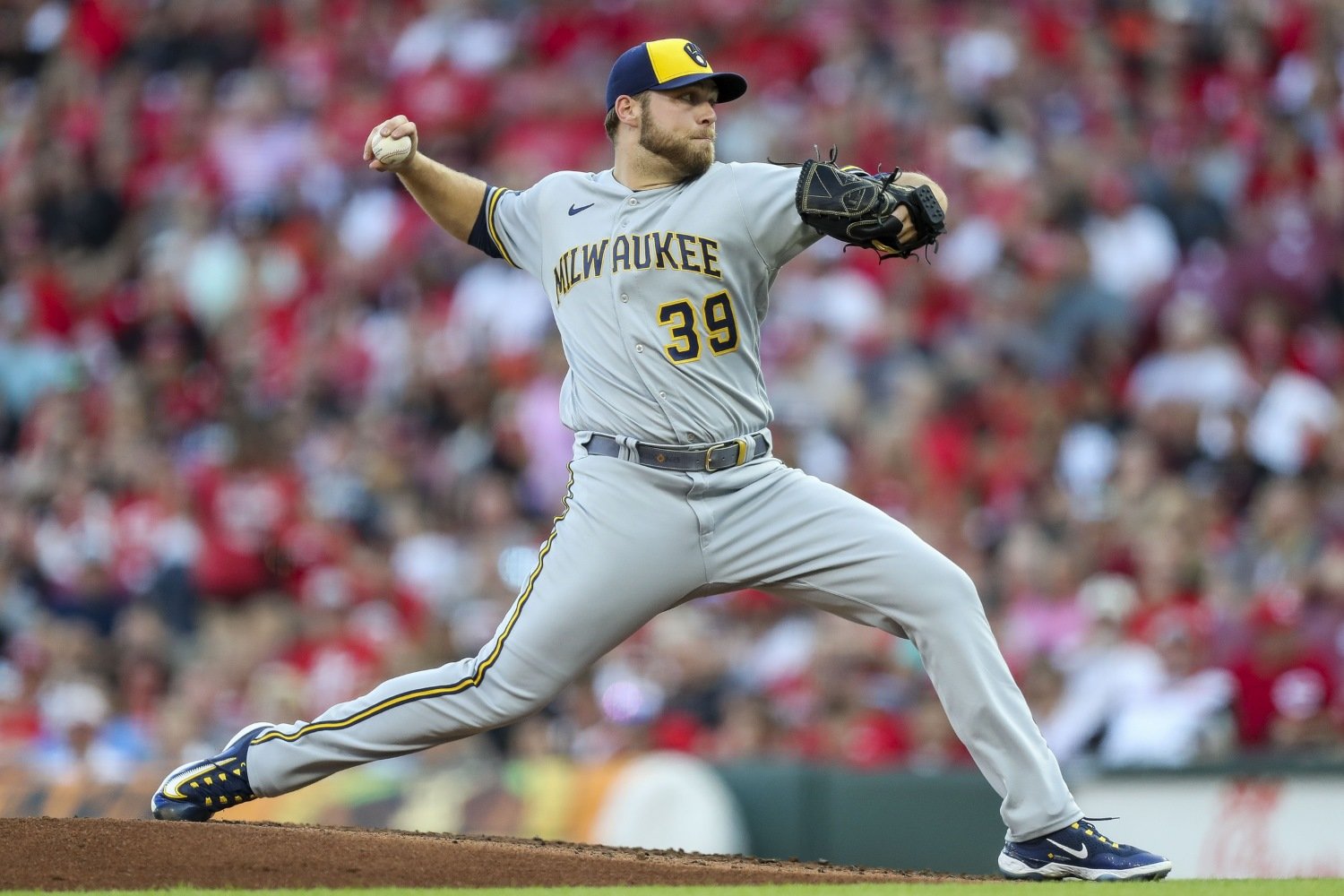 Having gone cutter-heavy (over 70%) in his last outing against the Cincinnati Reds, Corbin Burnes used it just 45% of the time on Friday, instead relying more heavily on his curveball (29%) and (the third time through the order) his changeup. The breaking pitch was on form, averaging over 54 inches of vertical break–something I’ll come back to in a moment, as it’s key to how he’s used the pitch this year. A big change for Burnes was how he used his cutter in this outing, noticeably going much higher in the zone, and getting rewarded for it, with not a single hard-hit ball against his cutter all day. (In fact, the Reds had just one hard-hit ball against any of his pitches.) Hitters have been doing a lot of damage when Burnes leaves his cutter over the heart of the plate, and (because they’ve been sitting on it, and spitting on other offerings that usually dip out of the zone) he’s been having real trouble racking up strikeouts. His outs have mostly been generated from ground balls, something with which he did excel in the last two years, due to the prolific movement on his cutter down in the strike zone. Going very cutter-heavy in his recent starts against the Reds, Guardians and Pirates while using the upper part of the zone is an effort by Burnes to address the predictability of his pitching. This time, however, the crucial ingredient was his curveball, and how he used it off his higher cutter. By playing off the pitch up in the zone, Burnes could keep his curveball in the strike zone for longer, starting higher, and thus forcing hitters to make decisions far later. When playing off the cutter down in the zone, the curveballs looked far less competitive and were out of the zone far more often. Our Tim Muma identified the need for Burnes to use more of the zone way back in early April. In June and July, Burnes’s curve has been in and around the edges of the strike zone 41 percent of the time, up from 32 percent in May. What this has done is made these pitches more relevant to hitters, and as such, improved the chase rates against them massively, allowing Burnes to be more effective at putting away hitters in two strike counts. Looking at the above graphic, it’s clear to see the chase rates on the curveball and changeup in two-strike counts have drastically increased in July, and will be key to Burnes’s effectiveness moving forward. Even when chasing the changeup, hitters are generally making some form of contact, but look at how the usage of these pitches in two-strike counts has impacted the whiff rate when chasing his other pitches in two-strike counts. By having a pitch like his curveball, which hitters chase over half the time in two-strike counts, and on which they whiff over 75 percent of the time on those swings, Burnes is able to wreak the kind of havoc we all expect from him. On top of this, you can see how the whiff rate on the cutter has also gone up massively, and by varying his location, he can prevent hitters from getting quite so locked in on his approach and make them a lot more uncertain in the batter’s box. Burnes has been mightily effective when he gets ahead in the count all year, but due to a lack of chase outside the zone, he’s been struggling to get ahead as consistently as in the past. Hitters have a .465 on-base percentage when they get ahead in the count, and a .925 OPS. Since May, however, he’s staying in the zone more often with everything except the curveball, with his zone rates rising by at least 15 percentage points on each of his slider, changeup and cutter. He’s being more aggressive, and it’s showing results with his cutter, especially in terms of the damage done against it. The expected slugging average against his cutter was .527 in May, but has dropped to .373 in June and .341 in July. The variety in his approach caused a called and swinging strike rate (CSW%) of 35%, on top of a 33% whiff rate against the cutter, something we haven’t really seen all season long. If this can be maintained, we have Cy Burnes back in business.
 -
On Friday night, Corbin Burnes looked every inch the version of himself we expected this season. He notched his first double-digit strikeout performance of the season, totaling 13 over the course of six innings, including a hat trick for Elly De La Cruz. Image courtesy of © Katie Stratman-USA TODAY Sports Having gone cutter-heavy (over 70%) in his last outing against the Cincinnati Reds, Corbin Burnes used it just 45% of the time on Friday, instead relying more heavily on his curveball (29%) and (the third time through the order) his changeup. The breaking pitch was on form, averaging over 54 inches of vertical break–something I’ll come back to in a moment, as it’s key to how he’s used the pitch this year. A big change for Burnes was how he used his cutter in this outing, noticeably going much higher in the zone, and getting rewarded for it, with not a single hard-hit ball against his cutter all day. (In fact, the Reds had just one hard-hit ball against any of his pitches.) Hitters have been doing a lot of damage when Burnes leaves his cutter over the heart of the plate, and (because they’ve been sitting on it, and spitting on other offerings that usually dip out of the zone) he’s been having real trouble racking up strikeouts. His outs have mostly been generated from ground balls, something with which he did excel in the last two years, due to the prolific movement on his cutter down in the strike zone. Going very cutter-heavy in his recent starts against the Reds, Guardians and Pirates while using the upper part of the zone is an effort by Burnes to address the predictability of his pitching. This time, however, the crucial ingredient was his curveball, and how he used it off his higher cutter. By playing off the pitch up in the zone, Burnes could keep his curveball in the strike zone for longer, starting higher, and thus forcing hitters to make decisions far later. When playing off the cutter down in the zone, the curveballs looked far less competitive and were out of the zone far more often. Our Tim Muma identified the need for Burnes to use more of the zone way back in early April. In June and July, Burnes’s curve has been in and around the edges of the strike zone 41 percent of the time, up from 32 percent in May. What this has done is made these pitches more relevant to hitters, and as such, improved the chase rates against them massively, allowing Burnes to be more effective at putting away hitters in two strike counts. Looking at the above graphic, it’s clear to see the chase rates on the curveball and changeup in two-strike counts have drastically increased in July, and will be key to Burnes’s effectiveness moving forward. Even when chasing the changeup, hitters are generally making some form of contact, but look at how the usage of these pitches in two-strike counts has impacted the whiff rate when chasing his other pitches in two-strike counts. By having a pitch like his curveball, which hitters chase over half the time in two-strike counts, and on which they whiff over 75 percent of the time on those swings, Burnes is able to wreak the kind of havoc we all expect from him. On top of this, you can see how the whiff rate on the cutter has also gone up massively, and by varying his location, he can prevent hitters from getting quite so locked in on his approach and make them a lot more uncertain in the batter’s box. Burnes has been mightily effective when he gets ahead in the count all year, but due to a lack of chase outside the zone, he’s been struggling to get ahead as consistently as in the past. Hitters have a .465 on-base percentage when they get ahead in the count, and a .925 OPS. Since May, however, he’s staying in the zone more often with everything except the curveball, with his zone rates rising by at least 15 percentage points on each of his slider, changeup and cutter. He’s being more aggressive, and it’s showing results with his cutter, especially in terms of the damage done against it. The expected slugging average against his cutter was .527 in May, but has dropped to .373 in June and .341 in July. The variety in his approach caused a called and swinging strike rate (CSW%) of 35%, on top of a 33% whiff rate against the cutter, something we haven’t really seen all season long. If this can be maintained, we have Cy Burnes back in business. View full article
-
Pending cost is the key point, in that I feel he will be massively overpriced based on a fortunate first half of the season. Can't argue he'd improve the Brewers but based on the talent in the system, is it worth it with the risk of him being Dodgers Bellinger? Pete Crow-Armstrong may not have been top 100 as a result of injury, but he was 19th pick out of a high school in 2020 draft (with no minor league games) he was however always considered a premium defender providing a substantial floor to work from. Black doesn't have that EBJ is closer to it, but again not quite there
- 12 replies
-
- 1
-

-
- 2023 trade deadline
- cody bellinger
- (and 2 more)
-
I'd happily do this, but I've a feeling with in demand for an impact from a few teams, especially the Yankees, he'll likely garner over the top offers. He may hit or miss, and we'll see I guess Out of curiosity, if he had a guarantee of .800 OPS and premium defense, what would you trade for him?
-
EBJ isn't a bad comp, but only if he was a truly elite shortstop. Tyler black is hitting better but with no defensive home which isn't a bad comparison for my money, though I see what you think. Maybe Luis Lara is the ideal fit but even then theres a potential for a very good player He'd be a lot better but for what he'd cost I don't believe it's as good as we think... Heck I'd take a trade for renfroe and the reduced cost of that ahead of Bellinger @wiguy94has summer my view well but I can absolutely see where you're coming from. A two month Bellinger hot streak would be a big bonus. A lesser Bellinger is quite useless, and either could be what we get
- 12 replies
-
- 1
-
-
- 2023 trade deadline
- cody bellinger
- (and 2 more)
-
@Smichaelis9was it you mentioned on MKE tailgate about estimated figures for Bitonti and Pratt? Can you remember what they were?
-
Jackson ChourioJeferson QueroRobert GasserMike BoeveJacob MisiorowskiSal FrelickJosh KnothCooper PrattTyler BlackCarlos F RodriguezAbner UribeBrock WilkenLuis LaraEric BitontiEric Brown JrYophery RodriguezJustin JarvisRobert MooreHendry MendezDaniel Guilarte
-
As the trade deadline approaches, there are some players out there who look on the surface to be perfect for the Brewers' needs, but who might come at a costly price that exceeds their true value. A lucky first half isn’t worth throwing the farm system into chaos; let's see if we can separate the hype from the real deal. Image courtesy of © David Banks-USA TODAY Sports Cody Bellinger – CF/1B Bellinger provides premium defense in both the outfield and at first base, two areas where the Brewer could use a potent bat. His fortunes have followed quite closely with those of Christian Yelich, but (as Yelich is in Milwaukee) he has been having a big bounce back season with the Chicago Cubs , recording a .308/.365/.523 slash line for an .888 OPS. Sounds like a big addition, perfect for the Brewers needs and likely to sign elsewhere for next season, meaning it’s a simple two-month rental. What is he likely to cost? In 2021, the Mets acquired Javier Baez (who was showing power, defensive skills, and a relatively acceptable OBP by his standards at that time) and Trevor Williams from the Chicago Cubs, a pair likely equal in value to Bellinger. The cost was Pete Crow-Armstrong, the 19th pick from the 2020 draft, likely to be the starting center fielder for the Cubs next season and one of the best defensive prospects in baseball. We’re therefore looking at a mid- to late first-round pick in terms of value for the services of Bellinger--potentially something such as Tyler Black + an extra. Why is it a bad idea? Well for starters, take a look at his Statcast page. It's not pretty; Bellinger has been the third-luckiest hitter in baseball in terms of his weighted on base average compared to his expected numbers, and is due for massive regression. He's on a hot streak at the moment, which may make him even more appealing, but there is a big potential for this trade to flop in the Brewers' face. He isn’t hitting the ball hard with any regularity and doesn’t have a great walk rate. Tyler Black himself may be as good a shout to cover first base while providing lefty power and on-base skills. Bobby Dalbec – 1B Dalbec has been on fire for the Red Sox' Triple-A affiliate this season, hitting .306/.419/.655 for a 1.074 OPS. The Red Sox are still in contention for the playoffs, but Triston Casas has been their first baseman and seems locked into the role now, with a .937 OPS over the last 30 days, making Dalbec a potential trade piece. They also have Justin Turner able to fill in more than adequately if needed, with his bat also a big boost for the Red Sox this year. What is he likely to cost? Given that the Red Sox have eyes on sneaking into the playoffs this season, there is a chance they would want MLB-ready players in return, potentially in the form of the currently underperforming Sal Frelick (though that is a bit lopsided), or some quality relievers, maybe an Elvis Peguero. On the surface, getting a big first baseman for a reliever looks like a good trade for the Brewers, right? Why is it a bad idea? Welcome to Keston Hiura 2.0, only he’ll strike out even more often. Dalbec hasn’t shown an ability to hit at the major-league level, and he currently has 95 strikeouts in just 279 plate appearances for the Worcester Red Sox, a whopping 34% K rate in Triple A. That would likely climb into the 40s, should he have to face major-league pitching. You’d be better off just promoting Hiura. Carlos Santana – 1B Santana’s stats don’t jump off the page, and he is likely a fairly cheap acquisition. He provides premium defense at first base, with his 77th percentile Outs Above Average. He’s quite the consistent performer, too, with considerably above-average chase rates, walk rates and whiff rates, providing a solid floor for him. What is he likely to cost? Santana could be quite cheap, in the sense of a prospect ranked somewhere between 10 and 20 in the Brewers organization. The Pirates may want a catcher with hitting potential like Matthew Wood, or maybe a Robert Moore could do the deal (I’m not as high on him as some). Why is it a bad idea? At 37, Santana’s hard-hit percentage has dropped from over 40% in the last two seasons to just 34.4% this year--a sizable drop, though he is elevating the ball more often. His xBA of .240 is an improvement in some ways, but he's shown minimal power, with an xSlg of just .359, and the Brewers again may have more options in-house that should be able to provide an OPS of .700, albeit in different ways, such as Hiura or Black. TLDR There are options out there available to the Brewers, but some of these are very risky, and given the improving farm system, the talent within and the closeness to a rebuild (of sorts) with very different trades looming this offseason, it doesn’t make a lot of sense to sell the farm for players such as the above, given what they would cost and how likely they are to have limited effect down the stretch. If you want a player who can get hot and actively carry an offense, the Brewers may in fact have those available in their system already. They haven’t had a lot of support in terms of the farm system reinforcements over the last few years, but that may change this season, and betting on themselves might be the best route for success. View full article
-
3 Hitters Brewers Should Avoid Trading For at Trade Deadline
Jake McKibbin posted an article in Brewers
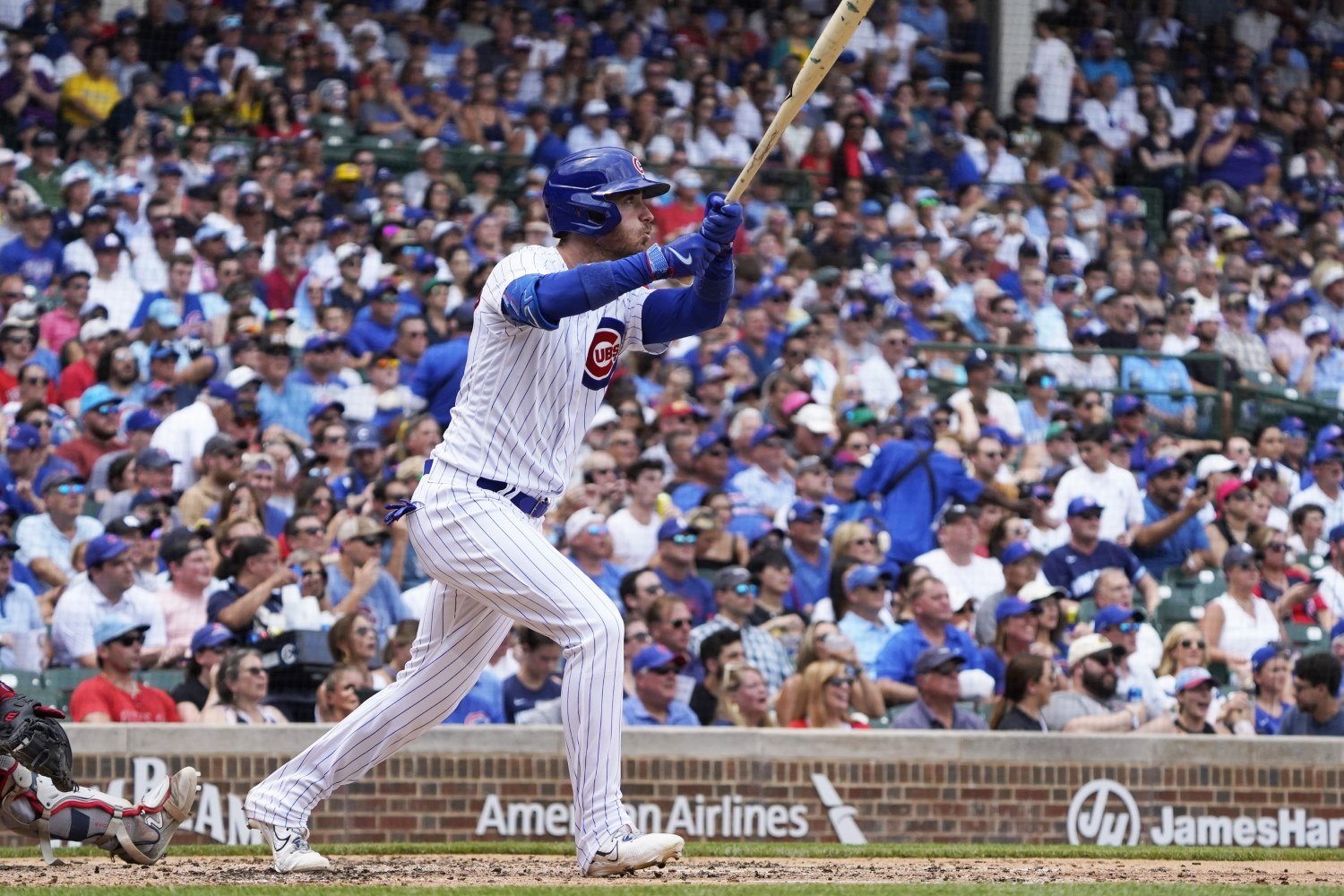 Cody Bellinger – CF/1B Bellinger provides premium defense in both the outfield and at first base, two areas where the Brewer could use a potent bat. His fortunes have followed quite closely with those of Christian Yelich, but (as Yelich is in Milwaukee) he has been having a big bounce back season with the Chicago Cubs , recording a .308/.365/.523 slash line for an .888 OPS. Sounds like a big addition, perfect for the Brewers needs and likely to sign elsewhere for next season, meaning it’s a simple two-month rental. What is he likely to cost? In 2021, the Mets acquired Javier Baez (who was showing power, defensive skills, and a relatively acceptable OBP by his standards at that time) and Trevor Williams from the Chicago Cubs, a pair likely equal in value to Bellinger. The cost was Pete Crow-Armstrong, the 19th pick from the 2020 draft, likely to be the starting center fielder for the Cubs next season and one of the best defensive prospects in baseball. We’re therefore looking at a mid- to late first-round pick in terms of value for the services of Bellinger--potentially something such as Tyler Black + an extra. Why is it a bad idea? Well for starters, take a look at his Statcast page. It's not pretty; Bellinger has been the third-luckiest hitter in baseball in terms of his weighted on base average compared to his expected numbers, and is due for massive regression. He's on a hot streak at the moment, which may make him even more appealing, but there is a big potential for this trade to flop in the Brewers' face. He isn’t hitting the ball hard with any regularity and doesn’t have a great walk rate. Tyler Black himself may be as good a shout to cover first base while providing lefty power and on-base skills. Bobby Dalbec – 1B Dalbec has been on fire for the Red Sox' Triple-A affiliate this season, hitting .306/.419/.655 for a 1.074 OPS. The Red Sox are still in contention for the playoffs, but Triston Casas has been their first baseman and seems locked into the role now, with a .937 OPS over the last 30 days, making Dalbec a potential trade piece. They also have Justin Turner able to fill in more than adequately if needed, with his bat also a big boost for the Red Sox this year. What is he likely to cost? Given that the Red Sox have eyes on sneaking into the playoffs this season, there is a chance they would want MLB-ready players in return, potentially in the form of the currently underperforming Sal Frelick (though that is a bit lopsided), or some quality relievers, maybe an Elvis Peguero. On the surface, getting a big first baseman for a reliever looks like a good trade for the Brewers, right? Why is it a bad idea? Welcome to Keston Hiura 2.0, only he’ll strike out even more often. Dalbec hasn’t shown an ability to hit at the major-league level, and he currently has 95 strikeouts in just 279 plate appearances for the Worcester Red Sox, a whopping 34% K rate in Triple A. That would likely climb into the 40s, should he have to face major-league pitching. You’d be better off just promoting Hiura. Carlos Santana – 1B Santana’s stats don’t jump off the page, and he is likely a fairly cheap acquisition. He provides premium defense at first base, with his 77th percentile Outs Above Average. He’s quite the consistent performer, too, with considerably above-average chase rates, walk rates and whiff rates, providing a solid floor for him. What is he likely to cost? Santana could be quite cheap, in the sense of a prospect ranked somewhere between 10 and 20 in the Brewers organization. The Pirates may want a catcher with hitting potential like Matthew Wood, or maybe a Robert Moore could do the deal (I’m not as high on him as some). Why is it a bad idea? At 37, Santana’s hard-hit percentage has dropped from over 40% in the last two seasons to just 34.4% this year--a sizable drop, though he is elevating the ball more often. His xBA of .240 is an improvement in some ways, but he's shown minimal power, with an xSlg of just .359, and the Brewers again may have more options in-house that should be able to provide an OPS of .700, albeit in different ways, such as Hiura or Black. TLDR There are options out there available to the Brewers, but some of these are very risky, and given the improving farm system, the talent within and the closeness to a rebuild (of sorts) with very different trades looming this offseason, it doesn’t make a lot of sense to sell the farm for players such as the above, given what they would cost and how likely they are to have limited effect down the stretch. If you want a player who can get hot and actively carry an offense, the Brewers may in fact have those available in their system already. They haven’t had a lot of support in terms of the farm system reinforcements over the last few years, but that may change this season, and betting on themselves might be the best route for success.
 -
He haasn't officially signed yet, and to be fair we haven't seen him in the minors at all yet. A good prospect but tough to include him as part of the farm just yet Also Cooper Pratt likely to move there too, could have a plethora of infield quality in no time
-
Keston Hiura has a .984 OPS in Nashville
Jake McKibbin replied to Brock Beauchamp's topic in Milwaukee Brewers Talk
He hasn't shown the high quality contact so far post injury, or actually he did but not so much the last week or two. Hopefully some big games and they can make use of him after that, but he'll definitely need a little confidence in his swing -
There was a potential for the giants and Red Sox to be out of it by now given the divisions strength they're competing in and slow starts, but they've come back hard and both teams had a plethora of players that would have been highly valued at the deadline. It's really impacted the options available, now Giants are ahead of the Diamondbacks, and Brewers aren't far off the Dodgers record either with their pitching struggles
-
He's also monstering balls to opposite field. He takes fastballs to opposite field with massive power, and turns on the off speed, it's really impressive. His last issue will be learning to lay off pitches and when to take his walks, but he really seems to have grasped the strike zone, and his contact skills have improved massively as shown by his strike outs dropping at a rate of knots over the last month or so

