



Jake McKibbin
-
Posts
2,395 -
Joined
-
Last visited
-
Days Won
6
Content Type
Profiles
Forums
Blogs
Events
News
2026 Milwaukee Brewers Top Prospects Ranking
Milwaukee Brewers Videos
2022 Milwaukee Brewers Draft Picks
Milwaukee Brewers Free Agent & Trade Rumors, Notes, & Tidbits
Guides & Resources
2023 Milwaukee Brewers Draft Picks
2024 Milwaukee Brewers Draft Picks
The Milwaukee Brewers Players Project
2025 Milwaukee Brewers Draft Pick Tracker
2026 Milwaukee Brewers Draft Tracker: Picks & Bonuses
Store
Downloads
Gallery
Everything posted by Jake McKibbin
-
Of course! I was trying to find something that suited both needs, an MLB for MLB trade and fix both teams needs (while factoring in vottos contract, though I think there's rumours the only place he would go is the Blue Jays in Canada) With CES and Spencer steer both rookie's, I can see a chance for a Votto trade there, but obviously unlikely for Brewers
-
Desperate times call for desperate measures. The Brewers’ first base situation is certainly desperate right now. Let’s talk measures, baby. Image courtesy of © David Kohl-USA TODAY Sports The Milwaukee Brewers received news that Rowdy Tellez could be out for up to a month, having broken his finger shagging flies during batting practice, a truly freak injury. That being said, he was performing poorly over the last couple of months, anyway, and the Brewers could do with a significant upgrade at a position that should be occupied by a quality batter. Owen Miller, after a hot streak in May, has cooled off considerably once pitchers worked out not to throw high and tight to him, and is more valuable as a versatility option or to face left-handers than to be an everyday first baseman–meaning the Brewers have a pressing need. The Cincinnati Reds have just called up Christian Encarnacion-Strand, who has been tearing up Triple A and is more than ready for his opportunity at the major-league level. With a plethora of quality hitters (particularly in left field and first base, meaning Spencer Steer will likely rotate between the two), there is a possibility that Joey Votto represents a surplus to requirements in the state of Ohio. Trades between divisional rivals seem impractical, but there’s the potential that both sides benefit from a trade of a higher-quality back-end starter than what the Reds currently have for the high-priced contract of Votto at first base, who isn’t quite the force he once was. Votto’s current line looks good, with a .951 OPS including a .351 on base percentage, as well as being a quality veteran presence. He’s hitting the ball at an average of 91.3 miles per hour, with an 11.7% walk rate (albeit an inflated 29.9% strikeout rate), and he’s slightly outperforming his expected numbers so far (in a small sample) this season. That being said, he’s a fairly reliable .800 OPS hitter when he’s healthy and fit. He has an expected slugging of .711 on four-seam fastballs, and could be a potent hitter vs right-handed starters, really making a potent top of the order with William Contreras, a fully-firing Willy Adames, and Christian Yelich. One thing you can’t do is fall behind in the count, because once you’re in a fastball count to Votto, he will do damage, and a pitcher who can’t land his breaking pitches for strikes will struggle. The 39-year-old has limited range but very good hands at first base, likely more reliable there than Owen Miller and certainly more of a cleanup hitter. While a big addition (especially if he hits one of his hot streaks), he’s not the Joey Votto of old, and that brings his price down substantially, on top of the $10-million salary the Brewers would have to pay over the balance of the season if they got him at the deadline. The Reds are in dire need of pitching, given the poor performances of the likes of Brandon Williamson and Luke Weaver and injuries to both Hunter Greene and Nick Lodolo. So, it depends entirely on what the Brewers are willing to give up, and how the Reds stand in terms of contending at the deadline. You would imagine that they would take Wade Miley in a heartbeat, but alas, he’s just hit the 15-day injured list with elbow discomfort. Could the performances of Colin Rea or Julio Teheran be acceptable for them? The Brewers also have Robert Gasser waiting in the wings, having worked out his command issues from earlier in the season, and he’s striking out batters in high numbers in Triple-A Nashville, ready to fill a slot should the Brewers need him. Gasser himself would be much more appealing to the Reds, of course, but the Brewers might be as reluctant to give him up for an aged Votto as the Reds would be to give up Votto for a fungible starter. The other thing the Reds need is some form of offensive catcher, a position they have almost no production from, and you could add someone like Alex Jackson to sweeten the deal. What would you be willing to trade for Joey Votto? View full article
-
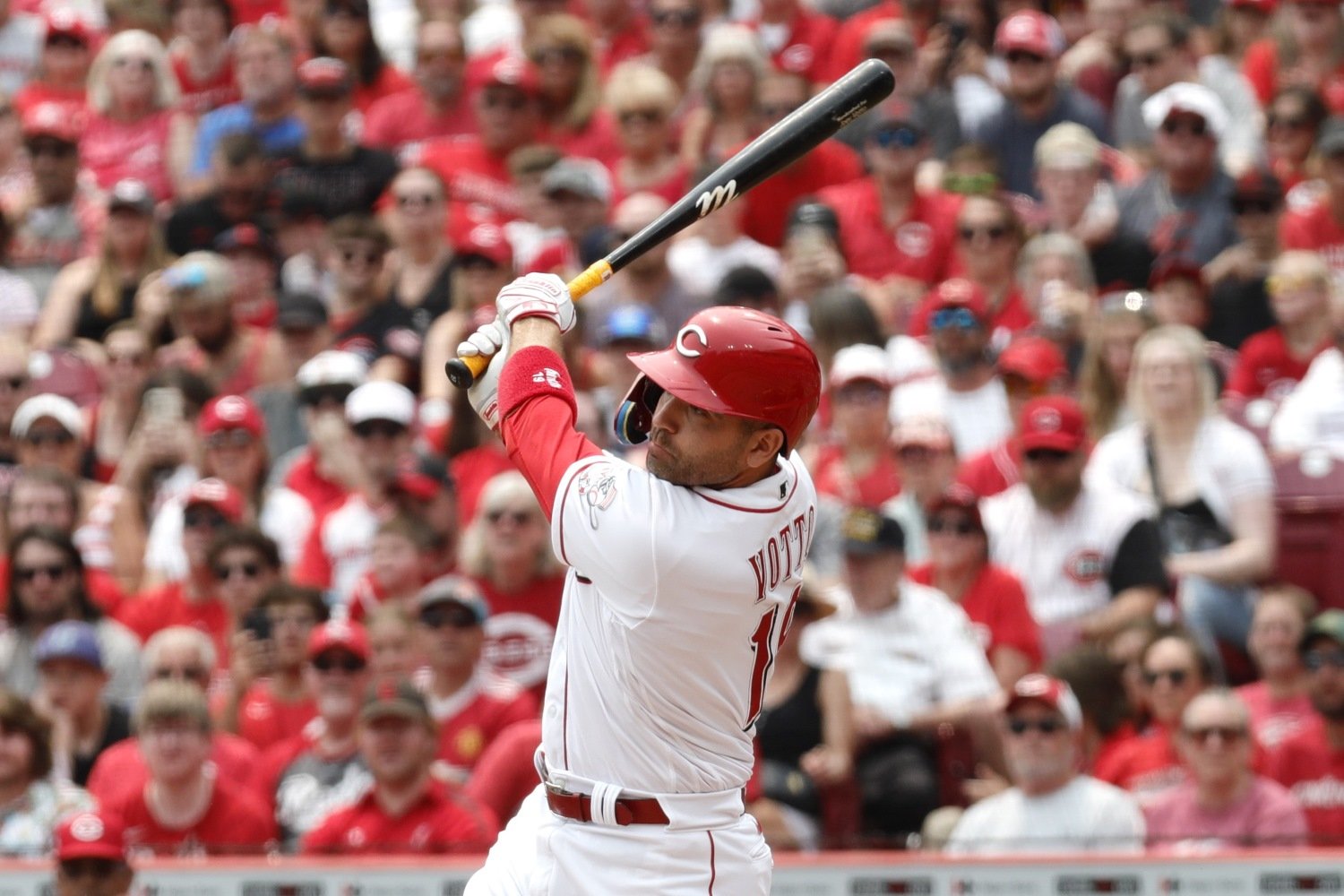 The Milwaukee Brewers received news that Rowdy Tellez could be out for up to a month, having broken his finger shagging flies during batting practice, a truly freak injury. That being said, he was performing poorly over the last couple of months, anyway, and the Brewers could do with a significant upgrade at a position that should be occupied by a quality batter. Owen Miller, after a hot streak in May, has cooled off considerably once pitchers worked out not to throw high and tight to him, and is more valuable as a versatility option or to face left-handers than to be an everyday first baseman–meaning the Brewers have a pressing need. The Cincinnati Reds have just called up Christian Encarnacion-Strand, who has been tearing up Triple A and is more than ready for his opportunity at the major-league level. With a plethora of quality hitters (particularly in left field and first base, meaning Spencer Steer will likely rotate between the two), there is a possibility that Joey Votto represents a surplus to requirements in the state of Ohio. Trades between divisional rivals seem impractical, but there’s the potential that both sides benefit from a trade of a higher-quality back-end starter than what the Reds currently have for the high-priced contract of Votto at first base, who isn’t quite the force he once was. Votto’s current line looks good, with a .951 OPS including a .351 on base percentage, as well as being a quality veteran presence. He’s hitting the ball at an average of 91.3 miles per hour, with an 11.7% walk rate (albeit an inflated 29.9% strikeout rate), and he’s slightly outperforming his expected numbers so far (in a small sample) this season. That being said, he’s a fairly reliable .800 OPS hitter when he’s healthy and fit. He has an expected slugging of .711 on four-seam fastballs, and could be a potent hitter vs right-handed starters, really making a potent top of the order with William Contreras, a fully-firing Willy Adames, and Christian Yelich. One thing you can’t do is fall behind in the count, because once you’re in a fastball count to Votto, he will do damage, and a pitcher who can’t land his breaking pitches for strikes will struggle. The 39-year-old has limited range but very good hands at first base, likely more reliable there than Owen Miller and certainly more of a cleanup hitter. While a big addition (especially if he hits one of his hot streaks), he’s not the Joey Votto of old, and that brings his price down substantially, on top of the $10-million salary the Brewers would have to pay over the balance of the season if they got him at the deadline. The Reds are in dire need of pitching, given the poor performances of the likes of Brandon Williamson and Luke Weaver and injuries to both Hunter Greene and Nick Lodolo. So, it depends entirely on what the Brewers are willing to give up, and how the Reds stand in terms of contending at the deadline. You would imagine that they would take Wade Miley in a heartbeat, but alas, he’s just hit the 15-day injured list with elbow discomfort. Could the performances of Colin Rea or Julio Teheran be acceptable for them? The Brewers also have Robert Gasser waiting in the wings, having worked out his command issues from earlier in the season, and he’s striking out batters in high numbers in Triple-A Nashville, ready to fill a slot should the Brewers need him. Gasser himself would be much more appealing to the Reds, of course, but the Brewers might be as reluctant to give him up for an aged Votto as the Reds would be to give up Votto for a fungible starter. The other thing the Reds need is some form of offensive catcher, a position they have almost no production from, and you could add someone like Alex Jackson to sweeten the deal. What would you be willing to trade for Joey Votto?
 -
Making me do some research! Brent Rooker Keston Hiura Spencer Torkelson Adley Rutschman Pete Alonso Josh Jung Obviously a lil hit or miss, but potential for big bats is there! That's just a cursory glance, other prospect huggers will know far more tbf
-
Absolutely on the defensive front, but isn't EBJ's arm a question for long term short stop? And might grade out better at second base (albeit a very effective one)? It's certainly interesting, but if you gave me either for a first round draft pick, I'd go Wilken and not bat an eyelid (although I do like people who can make an impact rather than just "get by" at the major league level)
-
I'm actually really excited to see Wilken, certainly a bit under slot but also has the power tool that if he can (per scouting reports) develop an opposite field approach for those pitches on the outer part of the plate, and with his arm, he could be a big difference maker down the line too. Definitely a different feel to EBJ who let's be honest, never really had a standout tool that screamed first rounder
-
Knoth said he got the extra velocity this season because it was his first with a pitching coach... this sounds like there's a lot of room to grow, can really see why the Brewers went for him over Charlee Soto
-
Mike Boeve looks very under slot potential too .. this could be some steal from the Brewers
-
I don't trust bellinger to maintain this. He's the third luckiest hitter by xWOBA Vs actual WOBA and his statcast page is very iffy. Could flop at any point but likely getting the cubs a good haul. The fact he's above average at first and outfield is appealing but certainly not giving up a haul for him
-
Archived Brewers Audio/Media 2023
Jake McKibbin replied to Jim Goulart's topic in Milwaukee Brewers Talk
@Smichaelis9 Awesome job! -
Interestingly, two is a prime number, one is not because it's only divisible by one number. Nerd alert 🤓
- 3 replies
-
- 1
-

-
- tyler black
- jackson chourio
- (and 3 more)
-
Entering the second half, the Brewers' relief corps is in a bit of upheaval. The All-Star break came at just the right time for a tired and heavily worked seven-man crew, but there might need to be more moves to finish assembling a fully functional bullpen. Image courtesy of © Michael McLoone-USA TODAY Sports So far this year, the top tier of the Brewers bullpen has been magnificent. Elvis Peguero, Joel Payamps and Devin Williams have vastly exceeded expectations, and been lights out in the seventh, eighth and ninth innings. The “B Squad” of Bryse Wilson (occasionally in long/middle relief) and Hoby Milner (the fireman) have been fantastic, as well, recording ERAs of 2.70 and 2.50, respectively. The only issue has been at the bottom of the hierarchy, a group which has cost the Brewers several games so far–sometimes by fully imploding, and sometimes by not-quite meeting the challenge of being called upon for emergency late-game, high-leverage work. Currently the Brewers are using a six-man rotation (which, intriguingly, has coincided with a small uptick in performance from both Corbin Burnes and Freddy Peralta) leaving seven pitching roster spots for the bullpen, and the last two are occupied by Abner Uribe and JC Mejia. Before that however, here’s a list of the Brewers that filled those spots: Javy Guerra – 8 1/3 innings pitched, eight earned runs (8.64 ERA) Gus Varland – 8 2/3 innings pitched, 11 earned runs, 15 hits, eight walks (11.42 ERA) Bennett Sousa – 2 2/3 innings pitched, four earned runs (13.50 ERA) Tyson Miller – 9 1/3 innings pitched, six earned runs (5.79 ERA) Trevor Megill – 14 2/3 innings pitched, eight earned runs, 20 strikeouts (4.91 ERA) Jake Cousins – 9 1/3 innings pitched, five earned runs, 2.14 WHIP (4.82 ERA) Ethan Small – 3 innings pitched, five earned runs (15 ERA) Matt Bush – 12 Games, 10 1/3 innings pitched, 11 earned runs, 1.65 WHIP and three blown saves (9.58 ERA) While I could argue Megill actually looked okay, and that Clayton Andrews (I couldn’t include him above with 1 ⅔ innings pitched) has potential but just struggled with nerves in his first MLB stint, the long and short of it all is that the back end has been a leaky dam for most of the season. Even Cousins was lucky to only have a 4.82 ERA with a WHIP that high It’s a large part of the reason why the Brewers have struggled to come back in games, and also why they have been involved in so many blowout losses, as well as some agonizing losses with a tired bullpen (see: the 8-7 loss to the Pirates a week before the break). Improvements could be on the way, however, and one might already be here. Abner Uribe is, quite simply, someone who can get outs. He showed in his first inning of work how filthy his stuff is, with a wipeout slider at 89 miles per hour and a 100-mph fastball. He’s shown an ability to get outs with ease at each level of the minors, with high strikeout totals and stuff that will obviously play at any level. His command isn’t all there, and he hasn’t had a lot of exposure to professional baseball due to a checkered injury history, but his first inning against the Cubs showed exactly what he can bring to the table. If the Brewers go to a five-man rotation, Peter Strzelecki may come back into the mix, and although he hasn’t been as dominant as he was last season, he still gets outs and has looked more than capable in a big-league bullpen, whilst also battling some batted-ball misfortune, with his 1.18 WHIP and an xERA of 4.00. He’s above-average for the muddle in the middle of a bullpen, and will definitely contribute once the Brewers select their starters going forward. I would expect one of Teheran or Rea to get dealt to someone for a prospect we wouldn’t have expected. Finally, to add another lefty into the mix, the team will soon give a look to Justin Wilson. The veteran free-agent signee has looked very sharp from the get-go in his rehab stints, and is currently working away in Nashville. He has a career 3.41 ERA, with 510 strikeouts to his name, another veteran presence that can and will get outs. He’s had just one season since 2016 with an ERA above 3.66, where he struggled for a short time in the Bronx. So far in the minors, Wilson has pitched in five innings (three in rookie ball, two in Triple A) with three hits and two strikeouts. He may not need much more than another couple of innings before he’s ready to contribute to the Brewers bullpen, and he could be invaluable for what is a relatively inexperienced setup. What the likes of Uribe and Wilson (if they perform as expected) can do is allow Craig Counsell to mix and match for hitters as he sees fit depending on their strengths and weaknesses, as well as giving the likes of Payamps and Peguero more rest. With the likely regression in Rea, Teheran and Miley in the second half, a shutdown bullpen with this improved offense of recent weeks could carry the Brewers all the way to the playoffs. View full article
-
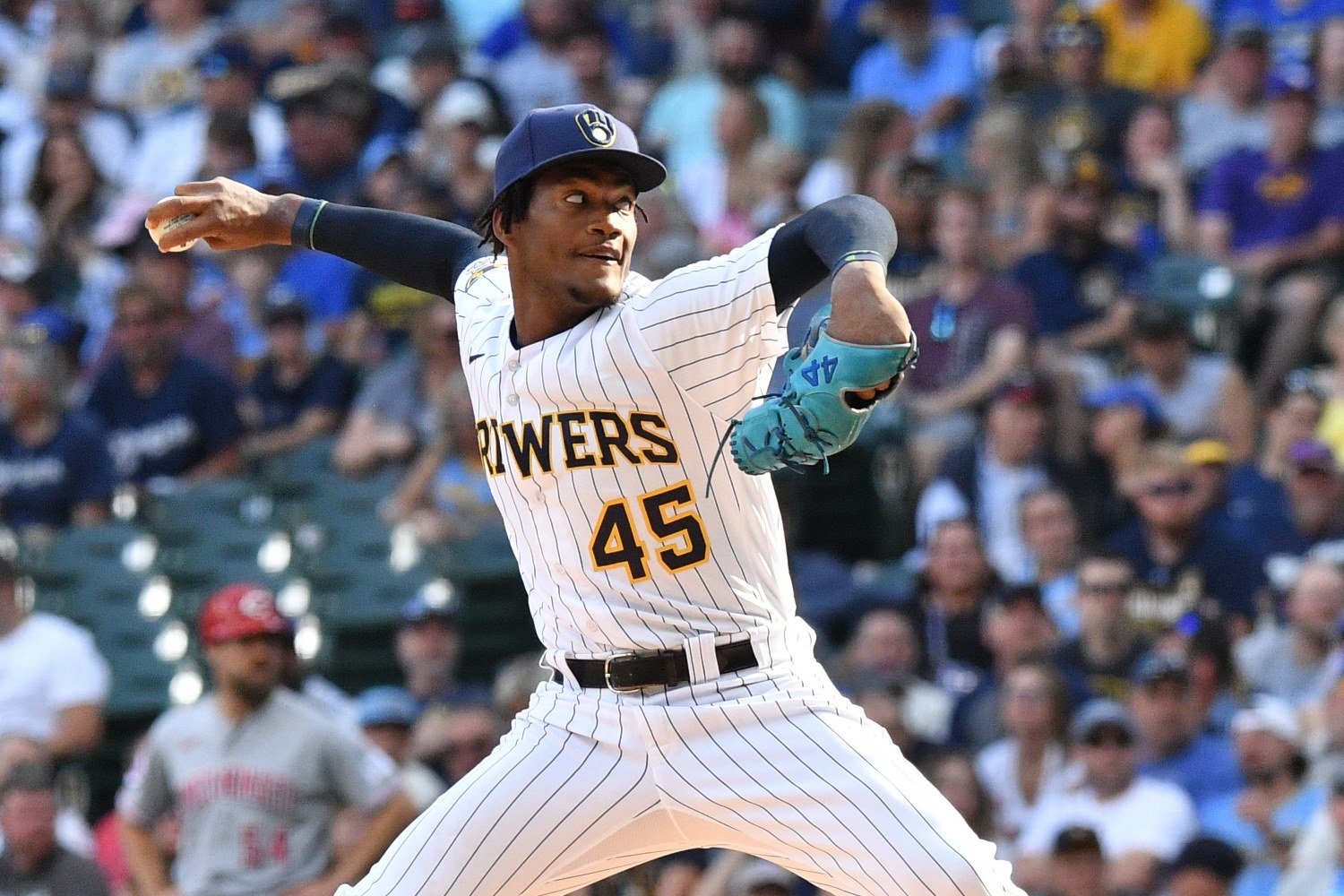 So far this year, the top tier of the Brewers bullpen has been magnificent. Elvis Peguero, Joel Payamps and Devin Williams have vastly exceeded expectations, and been lights out in the seventh, eighth and ninth innings. The “B Squad” of Bryse Wilson (occasionally in long/middle relief) and Hoby Milner (the fireman) have been fantastic, as well, recording ERAs of 2.70 and 2.50, respectively. The only issue has been at the bottom of the hierarchy, a group which has cost the Brewers several games so far–sometimes by fully imploding, and sometimes by not-quite meeting the challenge of being called upon for emergency late-game, high-leverage work. Currently the Brewers are using a six-man rotation (which, intriguingly, has coincided with a small uptick in performance from both Corbin Burnes and Freddy Peralta) leaving seven pitching roster spots for the bullpen, and the last two are occupied by Abner Uribe and JC Mejia. Before that however, here’s a list of the Brewers that filled those spots: Javy Guerra – 8 1/3 innings pitched, eight earned runs (8.64 ERA) Gus Varland – 8 2/3 innings pitched, 11 earned runs, 15 hits, eight walks (11.42 ERA) Bennett Sousa – 2 2/3 innings pitched, four earned runs (13.50 ERA) Tyson Miller – 9 1/3 innings pitched, six earned runs (5.79 ERA) Trevor Megill – 14 2/3 innings pitched, eight earned runs, 20 strikeouts (4.91 ERA) Jake Cousins – 9 1/3 innings pitched, five earned runs, 2.14 WHIP (4.82 ERA) Ethan Small – 3 innings pitched, five earned runs (15 ERA) Matt Bush – 12 Games, 10 1/3 innings pitched, 11 earned runs, 1.65 WHIP and three blown saves (9.58 ERA) While I could argue Megill actually looked okay, and that Clayton Andrews (I couldn’t include him above with 1 ⅔ innings pitched) has potential but just struggled with nerves in his first MLB stint, the long and short of it all is that the back end has been a leaky dam for most of the season. Even Cousins was lucky to only have a 4.82 ERA with a WHIP that high It’s a large part of the reason why the Brewers have struggled to come back in games, and also why they have been involved in so many blowout losses, as well as some agonizing losses with a tired bullpen (see: the 8-7 loss to the Pirates a week before the break). Improvements could be on the way, however, and one might already be here. Abner Uribe is, quite simply, someone who can get outs. He showed in his first inning of work how filthy his stuff is, with a wipeout slider at 89 miles per hour and a 100-mph fastball. He’s shown an ability to get outs with ease at each level of the minors, with high strikeout totals and stuff that will obviously play at any level. His command isn’t all there, and he hasn’t had a lot of exposure to professional baseball due to a checkered injury history, but his first inning against the Cubs showed exactly what he can bring to the table. If the Brewers go to a five-man rotation, Peter Strzelecki may come back into the mix, and although he hasn’t been as dominant as he was last season, he still gets outs and has looked more than capable in a big-league bullpen, whilst also battling some batted-ball misfortune, with his 1.18 WHIP and an xERA of 4.00. He’s above-average for the muddle in the middle of a bullpen, and will definitely contribute once the Brewers select their starters going forward. I would expect one of Teheran or Rea to get dealt to someone for a prospect we wouldn’t have expected. Finally, to add another lefty into the mix, the team will soon give a look to Justin Wilson. The veteran free-agent signee has looked very sharp from the get-go in his rehab stints, and is currently working away in Nashville. He has a career 3.41 ERA, with 510 strikeouts to his name, another veteran presence that can and will get outs. He’s had just one season since 2016 with an ERA above 3.66, where he struggled for a short time in the Bronx. So far in the minors, Wilson has pitched in five innings (three in rookie ball, two in Triple A) with three hits and two strikeouts. He may not need much more than another couple of innings before he’s ready to contribute to the Brewers bullpen, and he could be invaluable for what is a relatively inexperienced setup. What the likes of Uribe and Wilson (if they perform as expected) can do is allow Craig Counsell to mix and match for hitters as he sees fit depending on their strengths and weaknesses, as well as giving the likes of Payamps and Peguero more rest. With the likely regression in Rea, Teheran and Miley in the second half, a shutdown bullpen with this improved offense of recent weeks could carry the Brewers all the way to the playoffs.
- 2 comments
-
- 1
-
-
- abner uribe
- justin wilson
- (and 1 more)
-
Hoby Milner didn’t start the year particularly well, giving up a lot of hard contact in April and early May. During that span, he looked a little like what we currently see in Peter Strzelecki: a guy who did well initially, but whom the league subsequently figured out. Since then, he's turned things around. Image courtesy of © Jeff Hanisch-USA TODAY Sports Since May 7, Hoby Milner has rebounded incredibly strongly, giving up 20 hits, four walks, and just three earned runs across 23 2/3 innings pitched, with 26 strikeouts to boot. This isn’t success due to batted-ball luck (a BABIP of .311 is more than reasonable), and his xFIP of 3.07 is brilliant for a pitcher who doesn’t strike out large numbers of hitters. Craig Counsell has used him in a mop-up role, helping when starters can’t get through the sixth inning or when the ‘A’ relievers are struggling on a particular day. As a result, he gets a lot of innings with men on base, but has left a whopping 93.2% of these base runners stranded. Primarily put into favorable situations for his handedness and stuff, he actually has a better wOBA against right-handers, due to his curveball being effective against both kinds of hitters, but especially righties with an xBA of .108. That’s absurd. So how does a player with the lowest curveball spin rate in the league and who is in the 3rd percentile for fastball velocity and 2nd percentile for fastball spin rate manage to be so successful? For starters, as shown below, hitters have become pull-happy against him this season (rising from 32% of batted balls last year to 41.5%), and after the early troubles, he’s changed his approach and is pitching a lot more on the outer stripe of the plate, resulting in more weak contact. I mentioned earlier his facility with right-handed hitters, and this is partly down to his usage and effectiveness of his changeup in the last two months, culminating in a 42.9% whiff rate in July so far, to go along with a 44.4% whiff rate on his curveball. These are less down to the movement profiles and more to do with the incredibly accurate usage of them, with the changeup darting just down or off the outer edge of the zone, with late movement out of the zone. His curveball has worked well in the zone too, and he has shown a lot of command keeping it in the shadow zone around the plate, sequencing very well with the high fastball. The fastball itself has been effective against all hitters, and again has been kept up in the shadow area around the top of the strike zone, creating a 47.1% whiff rate in June, and a 50% fly -ball rate, leading to an xwOBA of just .048 in the month. Since April, he has steadily started using the four-seamer more, instead of his sinker, and it’s a massive reason for the increased effectiveness. When he comes in with men on base, or with a double play opportunity, he has several places he can go to for a ground ball. He had an 80% ground ball rate on the changeup in May, and a 100% ground ball rate in June with it. It was hit very hard earlier in the season, but its emergence as a plus pitch has really boosted his arsenal. He also has a curveball recording a 75% ground ball rate in May, and 66.7% ground ball rate in June, as well as a sinker with a 50%+ ground ball rate in both months. He has been a ground ball machine, in part because hitters are trying to pull him when they really shouldn’t, but also because of the change in his pitch mix, and how the changeup and curveball seem to play better behind the four-seam fastball. At his velocity, Milner is a control-based pitcher, trying to miss barrels, but his arm slot can make him tough to hit, and create some swing-and-miss when he does locate. Below is a chart showing how often he’s pitched to the edges of the strike zone this season, demonstrating an improvement most noticeably with his two most improved pitches, the changeup and the four-seamer. He’s been able to attack the zone efficiently and effectively as a result, which is why he walks so few hitters. His ability to defuse high-stress situations has been invaluable to the Brewers over the last two months, and has played a big role in what seems to be squeaking through tight game after tight game, resulting in more high-leverage situations and more usage against right-handed hitters. With the additions to come in the bullpen (more to come later this week), the Brewers could quite possibly have the best relief corps in the majors over the second half of the season. View full article
-
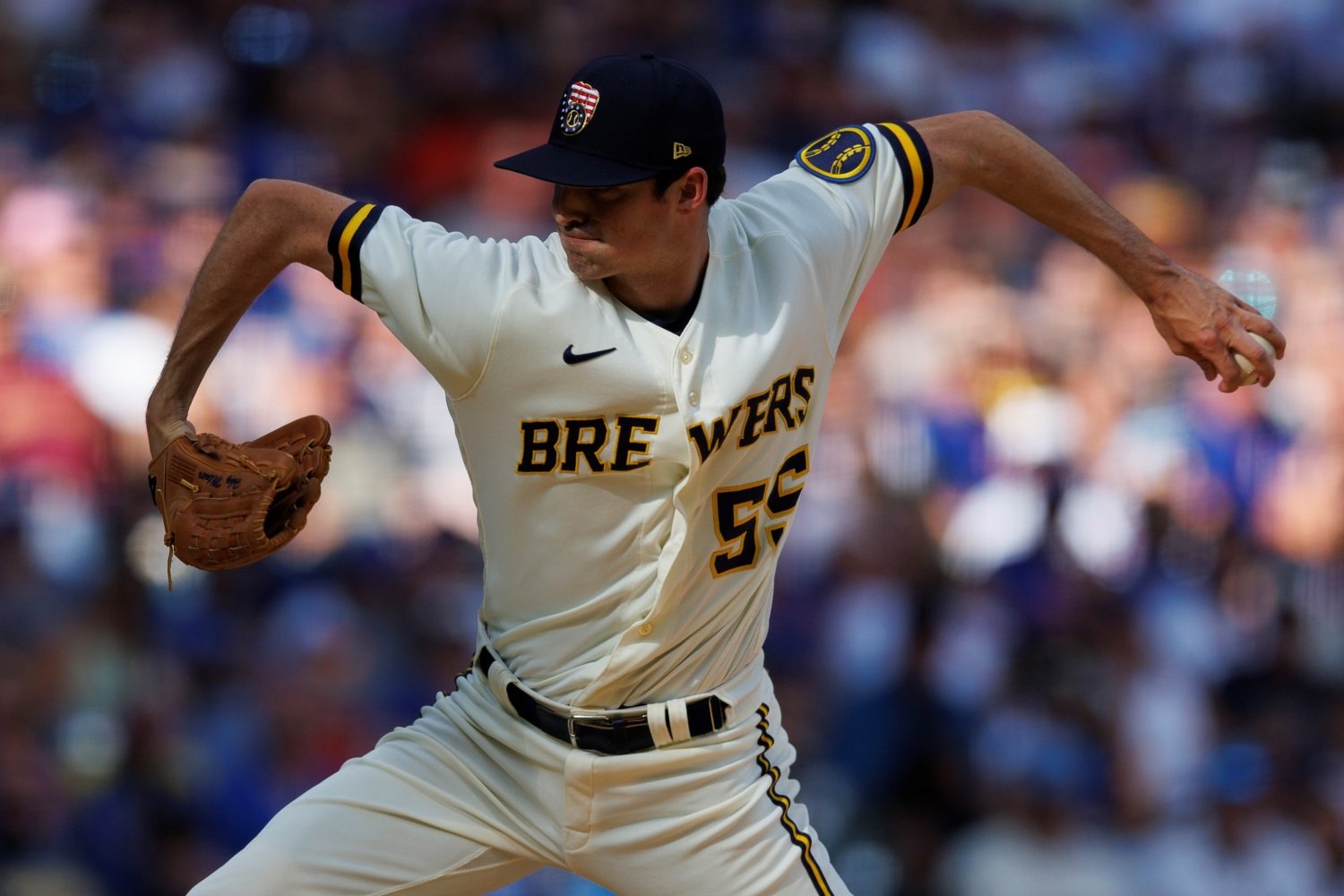 Since May 7, Hoby Milner has rebounded incredibly strongly, giving up 20 hits, four walks, and just three earned runs across 23 2/3 innings pitched, with 26 strikeouts to boot. This isn’t success due to batted-ball luck (a BABIP of .311 is more than reasonable), and his xFIP of 3.07 is brilliant for a pitcher who doesn’t strike out large numbers of hitters. Craig Counsell has used him in a mop-up role, helping when starters can’t get through the sixth inning or when the ‘A’ relievers are struggling on a particular day. As a result, he gets a lot of innings with men on base, but has left a whopping 93.2% of these base runners stranded. Primarily put into favorable situations for his handedness and stuff, he actually has a better wOBA against right-handers, due to his curveball being effective against both kinds of hitters, but especially righties with an xBA of .108. That’s absurd. So how does a player with the lowest curveball spin rate in the league and who is in the 3rd percentile for fastball velocity and 2nd percentile for fastball spin rate manage to be so successful? For starters, as shown below, hitters have become pull-happy against him this season (rising from 32% of batted balls last year to 41.5%), and after the early troubles, he’s changed his approach and is pitching a lot more on the outer stripe of the plate, resulting in more weak contact. I mentioned earlier his facility with right-handed hitters, and this is partly down to his usage and effectiveness of his changeup in the last two months, culminating in a 42.9% whiff rate in July so far, to go along with a 44.4% whiff rate on his curveball. These are less down to the movement profiles and more to do with the incredibly accurate usage of them, with the changeup darting just down or off the outer edge of the zone, with late movement out of the zone. His curveball has worked well in the zone too, and he has shown a lot of command keeping it in the shadow zone around the plate, sequencing very well with the high fastball. The fastball itself has been effective against all hitters, and again has been kept up in the shadow area around the top of the strike zone, creating a 47.1% whiff rate in June, and a 50% fly -ball rate, leading to an xwOBA of just .048 in the month. Since April, he has steadily started using the four-seamer more, instead of his sinker, and it’s a massive reason for the increased effectiveness. When he comes in with men on base, or with a double play opportunity, he has several places he can go to for a ground ball. He had an 80% ground ball rate on the changeup in May, and a 100% ground ball rate in June with it. It was hit very hard earlier in the season, but its emergence as a plus pitch has really boosted his arsenal. He also has a curveball recording a 75% ground ball rate in May, and 66.7% ground ball rate in June, as well as a sinker with a 50%+ ground ball rate in both months. He has been a ground ball machine, in part because hitters are trying to pull him when they really shouldn’t, but also because of the change in his pitch mix, and how the changeup and curveball seem to play better behind the four-seam fastball. At his velocity, Milner is a control-based pitcher, trying to miss barrels, but his arm slot can make him tough to hit, and create some swing-and-miss when he does locate. Below is a chart showing how often he’s pitched to the edges of the strike zone this season, demonstrating an improvement most noticeably with his two most improved pitches, the changeup and the four-seamer. He’s been able to attack the zone efficiently and effectively as a result, which is why he walks so few hitters. His ability to defuse high-stress situations has been invaluable to the Brewers over the last two months, and has played a big role in what seems to be squeaking through tight game after tight game, resulting in more high-leverage situations and more usage against right-handed hitters. With the additions to come in the bullpen (more to come later this week), the Brewers could quite possibly have the best relief corps in the majors over the second half of the season.
 -
The Yankees and Cardinals have been in business the last while... Dodgers could be a great fit as well, though they're looking to cut costs aren't they to avoid salary tax?
-
Interestingly, because of his poor walk rate, and limited enough power, I think he's always been a bit overrated. But he has hit .300 + for the last four seasons, and I don't know if that's going to just drop off a cliff at age 30. I can't quite see where he fits either, but certainly an interesting one. Could see them trying if they traded Adames who looks to have gotten his timing (again though, I'd hate that)
-
I would maybe take a pitcher of Giolito's quality for sure, but wouldn't go near Lance Lynn, he's been hit too ahrd with too much regularity. Unsure about Anderson too, he's clearly unhappy which could be having a big impact on his performance, i suspect he'll step up if he goes elsewhere Could have a high quality left side of the infield with him and Adames together
-
Article: 2023 MLB Draft Day 2 Thread
Jake McKibbin replied to Jeremy Nygaard's topic in MLB Draft & International Signings
This draft is seriously impressive so far, not sure the brewers could have scripted it any better- 112 replies
-
- 2
-
-
- mlb draft
- mlb draft 2023
- (and 3 more)
-
Jackson Chourio Has One Issue to Fix, But Plenty of Time to Fix It
Jake McKibbin posted an article in Brewers
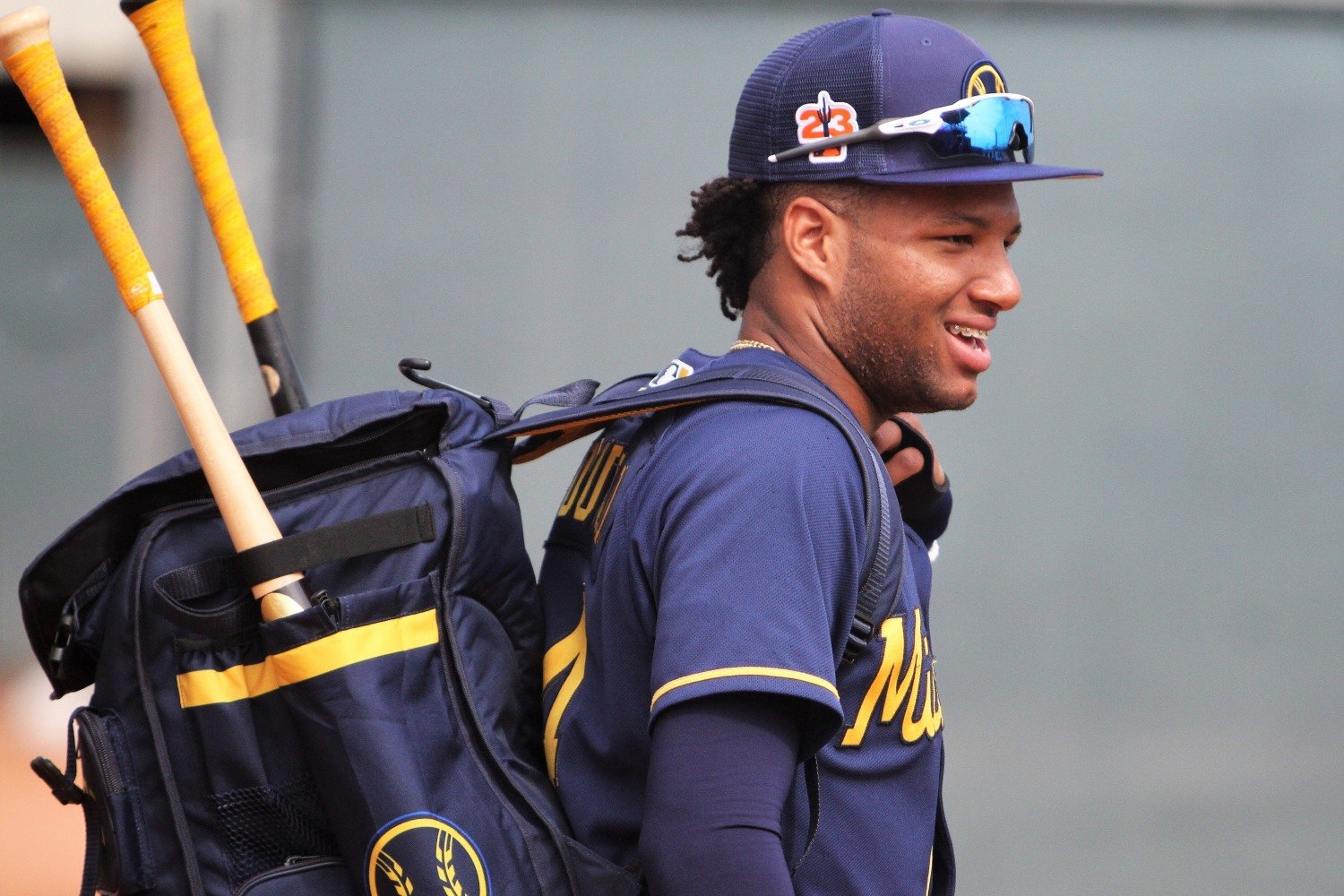 Oftentimes, when we talk about players being unable to adjust to better pitching and chasing excessively, it’s due to a variety of problems. When extreme power is shown in the lower minors, that can get caught out at higher levels, because of huge, hacking swings at the ball. Hitters accustomed to being able to exploit pitchers with certain deficiencies and attack the ball suddenly haven’t got the time to spot the pitch before they start to swing the bat. This is not Jackson Chourio’s issue. He’s a 19-year-old in Double A, facing a ball that’s moving at MLB levels with less command than usual from the pitchers (if early results are anything to go by), and as such, picking the pitches to hit is an extreme challenge. Chourio has so much power, but it actually comes from an incredibly short swing. Jim Bowden of the Athletic said as much, after observing batting practice before the Futures Game. “His line-drive stroke was the shortest and most direct to the ball of any right-handed hitter who took BP,” Bowden wrote. Keith Law was equally impressed after the game itself. “Jackson Chourio (Milwaukee) was 0-for-4, but you could see the crazy bat speed and how much he can let the ball travel on him before starting his hands,” Law wrote. He’s attempting to work out when to swing, and when not to, and as such, the results are less important than showing improvements in this area. Still, we can enjoy some of the results: Chourio has struck out just three times in his last 50 plate appearances, finishing the first half season on a high with a double and a home run. He has prodigious power, and potentially great contact skills once he fine-tunes his control of the plate, something even Elly De La Cruz struggled with until recently before his call up. Pitch recognition is a skill that requires experience more than any other, and it’s a major reason why Chourio’s age is so important in considering this. If he hasn’t developed plate awareness by this time next season, that’s a bigger issue, but he’s showing definite signs of development. This is still the best prospect in the Brewers system, and he’ll be leaping forwards in no time.
 -
Top Brewers prospect Jackson Chourio participated in the MLB Futures Game this weekend. It wasn't the sizzling showcase for which Brewers fans might have hoped, and it came at the end of a first half in which Chourio has batted just .249/.304/.410, albeit with good defense and impressive speed. Still, his performance isn't far from catching up to his tools. Chourio just needs to work on his approach. /images-custom/google-analytics/author-tracker.gif/images-custom/google-analytics/author-tracker.gif Keith Law was equally impressed after the game itself. “Jackson Chourio (Milwaukee) was 0-for-4, but you could see the crazy bat speed and how much he can let the ball travel on him before starting his hands,” Law wrote. He’s attempting to work out when to swing, and when not to, and as such, the results are less important than showing improvements in this area. Still, we can enjoy some of the results: Chourio has struck out just three times in his last 50 plate appearances, finishing the first half season on a high with a double and a home run. He has prodigious power, and potentially great contact skills once he fine-tunes his control of the plate, something even Elly De La Cruz struggled with until recently before his call up. Pitch recognition is a skill that requires experience more than any other, and it’s a major reason why Chourio’s age is so important in considering this. If he hasn’t developed plate awareness by this time next season, that’s a bigger issue, but he’s showing definite signs of development. This is still the best prospect in the Brewers system, and he’ll be leaping forwards in no time. View full article
-
Article: 2023 MLB Draft Day 1 Thread
Jake McKibbin replied to Jeremy Nygaard's topic in MLB Draft & International Signings
I have to say the only one in uninterested in because given Ruiz has low war, I think bradfield has a limited ceiling. I saw somewhere he's unlikely to get past the brewers however -
Yeah you can support a team for me and still just be a fan of baseball, especially as this is an entirely relevant point no? @Matthew TruebloodI didn't notice this during the game but I can imagine this can really hurt, you wonder if he knew anything from Willson about it last year?
-
.........
-
He's not floundering, he's just developing with his pitch recognition and the mental side of things. The bat speed is still outrageous

