



Jake McKibbin
-
Posts
2,394 -
Joined
-
Last visited
-
Days Won
6
Content Type
Profiles
Forums
Blogs
Events
News
2026 Milwaukee Brewers Top Prospects Ranking
Milwaukee Brewers Videos
2022 Milwaukee Brewers Draft Picks
Milwaukee Brewers Free Agent & Trade Rumors, Notes, & Tidbits
Guides & Resources
2023 Milwaukee Brewers Draft Picks
2024 Milwaukee Brewers Draft Picks
The Milwaukee Brewers Players Project
2025 Milwaukee Brewers Draft Pick Tracker
2026 Milwaukee Brewers Draft Tracker: Picks & Bonuses
Store
Downloads
Gallery
Everything posted by Jake McKibbin
-
Coming back from a two-month layoff, it’s understandable that Keston Hiura would take a little time to find his rhythm again. After he did a solid enough job of getting on base with some seeing-eye singles, Sunday night’s game was his first sign of really getting on time again. Image courtesy of © Katie Stratman, Katie Stratman / USA TODAY NETWORK Looking further into his at-bats, there are some reasons to be optimistic that we might see a prime Hiura in the Brewers lineup sooner rather than later. This is his second at bat below, and a slight indicator of his improvement at grinding against the high fastball: Having fallen behind 0-2 with fastballs on each edge of the plate, he stayed patient on some very high ones i tight, took a well-located sweeper just off the outside edge of the plate, and punished the slider left over the middle. Previous iterations of Hiura get antsy, swing at the fifth pitch, and strike out, but this version had a far calmer approach, resulting in a hard-hit single. This approach in his third at-bat is a typical example of how not to pitch to Hiura: a fastball down in the zone, followed by a cutter even lower. This is the AB finishing in the 98 mph “fly out”, and they got away with it, but this would be classified as a barreled-up baseball. His fourth at-bat is, perhaps, my favorite, as it located pitches exactly where you would want to Hiura He swings early in the count at pitches he would probably regard as very hittable, over the middle of the plate and slightly above the knees, whiffing one and fouling off the next to fall behind early. Then he takes a fastball just above the strike zone–again, something he’d previously be very likely to chase. A slider far off the plate and a high changeup evened the count, before a foul ball again on a pitch he would probably like back. And to finish it off, the high fastball, something he has perennially struggled with, slightly off the outside part of the plate. Mashed. A 107-mph double. All in all, here were his exit velocities from the game: 83.9 mph groundout 100.9 mph single 98 mph flyout (19 degree launch angle, so basically a line out) 107.1 mph double 99.9 mph lineout That’s four hard-hit balls consecutively, off a variety of different pitches in different locations. The Issues Let’s face it, a fully firing Jesse Winker is an upgrade on a firing Keston Hiura at the plate, and Winker has begun to show some resurgence in the last week or so, making much better contact, hitting the ball noticeably harder even to the opposite field. He’s hitting .261/.346/.478 over his last seven games, while hitting four doubles and a home run. (Bear in mind that he went over two months without an extra-base hit, beginning in mid-April). The ongoing struggles of Rowdy Tellez at first do, however, present an opportunity for Hiura to try and seize that role against right-handers as well as lefties. Tellez has still shown occasional power, but his lack of home runs (previously his main value to this team) is very concerning, and you can’t help but think even an average Keston Hiura is a substantial upgrade if his hands have improved with the regular playing time at first base. Tellez last hit a home run on May 22nd, and recorded just seven RBIs in the month of June–shocking, from a hitter in the three or four hole, and given how often Christian Yelich got on base ahead of him. Hiura has also played an average left field this season, unexpectedly, with some highlight-reel plays, so there are several ways to get him involved in the line-up should he come up. View full article
- 4 replies
-
- 1
-

-
- keston hiura
- jesse winker
- (and 1 more)
-
Timing--Of Two Kinds--Might Soon Be Right for Keston Hiura
Jake McKibbin posted an article in Brewers
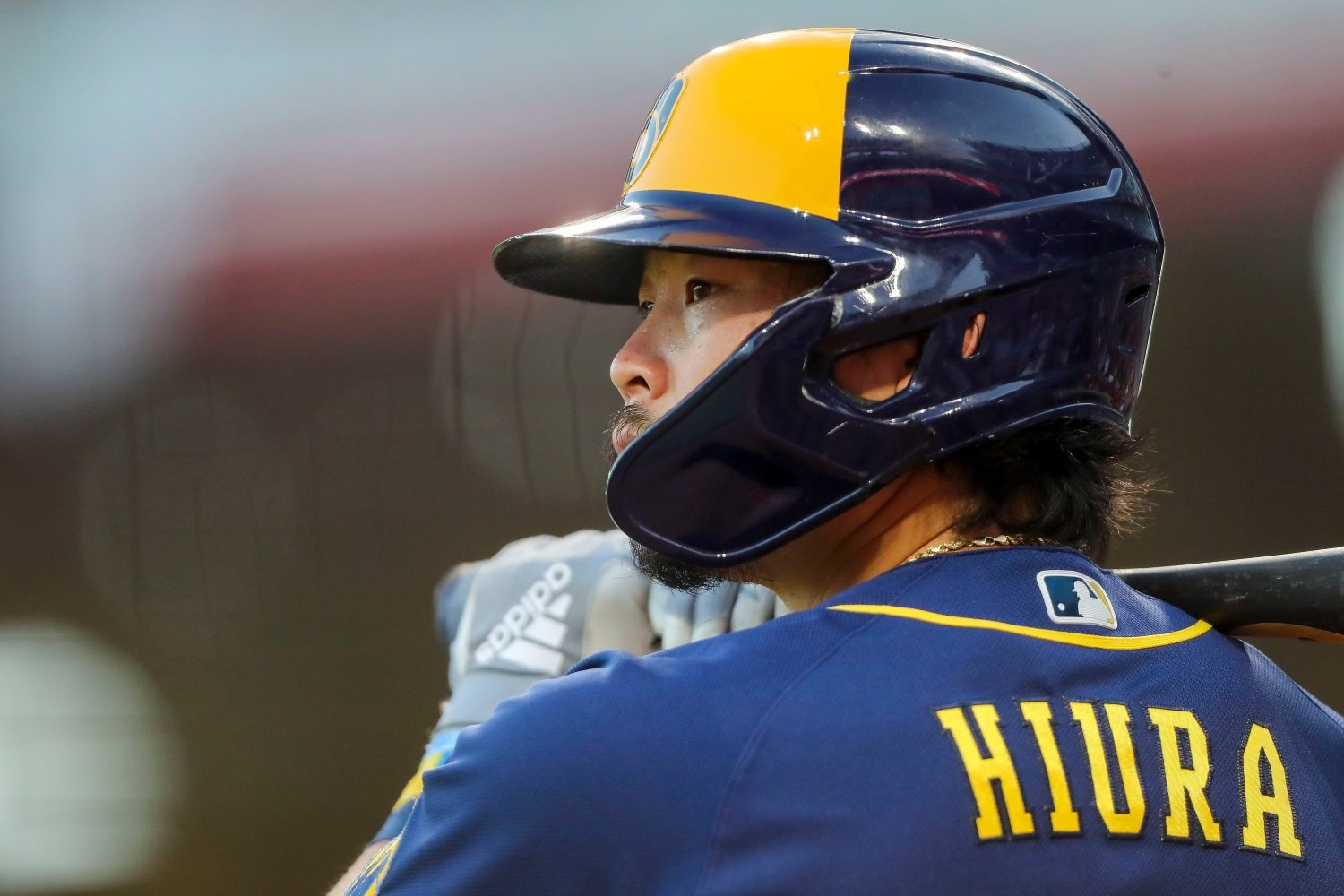 Looking further into his at-bats, there are some reasons to be optimistic that we might see a prime Hiura in the Brewers lineup sooner rather than later. This is his second at bat below, and a slight indicator of his improvement at grinding against the high fastball: Having fallen behind 0-2 with fastballs on each edge of the plate, he stayed patient on some very high ones i tight, took a well-located sweeper just off the outside edge of the plate, and punished the slider left over the middle. Previous iterations of Hiura get antsy, swing at the fifth pitch, and strike out, but this version had a far calmer approach, resulting in a hard-hit single. This approach in his third at-bat is a typical example of how not to pitch to Hiura: a fastball down in the zone, followed by a cutter even lower. This is the AB finishing in the 98 mph “fly out”, and they got away with it, but this would be classified as a barreled-up baseball. His fourth at-bat is, perhaps, my favorite, as it located pitches exactly where you would want to Hiura He swings early in the count at pitches he would probably regard as very hittable, over the middle of the plate and slightly above the knees, whiffing one and fouling off the next to fall behind early. Then he takes a fastball just above the strike zone–again, something he’d previously be very likely to chase. A slider far off the plate and a high changeup evened the count, before a foul ball again on a pitch he would probably like back. And to finish it off, the high fastball, something he has perennially struggled with, slightly off the outside part of the plate. Mashed. A 107-mph double. All in all, here were his exit velocities from the game: 83.9 mph groundout 100.9 mph single 98 mph flyout (19 degree launch angle, so basically a line out) 107.1 mph double 99.9 mph lineout That’s four hard-hit balls consecutively, off a variety of different pitches in different locations. The Issues Let’s face it, a fully firing Jesse Winker is an upgrade on a firing Keston Hiura at the plate, and Winker has begun to show some resurgence in the last week or so, making much better contact, hitting the ball noticeably harder even to the opposite field. He’s hitting .261/.346/.478 over his last seven games, while hitting four doubles and a home run. (Bear in mind that he went over two months without an extra-base hit, beginning in mid-April). The ongoing struggles of Rowdy Tellez at first do, however, present an opportunity for Hiura to try and seize that role against right-handers as well as lefties. Tellez has still shown occasional power, but his lack of home runs (previously his main value to this team) is very concerning, and you can’t help but think even an average Keston Hiura is a substantial upgrade if his hands have improved with the regular playing time at first base. Tellez last hit a home run on May 22nd, and recorded just seven RBIs in the month of June–shocking, from a hitter in the three or four hole, and given how often Christian Yelich got on base ahead of him. Hiura has also played an average left field this season, unexpectedly, with some highlight-reel plays, so there are several ways to get him involved in the line-up should he come up.
 -
I seem to remember one of his starts was a little harsh, with four runs coming from exit velocities that weren't even hard hit? But he actually pitched really well this month, I have to say I was impressed by the improvement he showed so quickly
- 10 replies
-
- 1
-

-
- robert gasser
- patricio aquino
- (and 3 more)
-
Let's hope Waino is still throwing by the time we play them next
-
A little glance at Chourio's page, I'm unsure if he's swinging at bad pitches, or the movement is slightly off for him, but his contact rates have improved, striking out just twice since June 20th in 38 plate appearances Given his lack of plate discipline at times, I wonder will a ball that's more controllable but moves less will show some significant boosts to contact quality in the second half of the season
-
2023 Minor League Transaction Thread
Jake McKibbin replied to Jim Goulart's topic in Brewers Minor League Talk
Misiorowski might be the saving grace, but definitely struggling a little with the hitters... I wonder if you could say Luke Adams has the highest ceiling of the hitters (will obviously have more of an indicator when he's 20 or so) -
Given how effective their starting rotation has been, with a bullpen going that well, and a pretty consistent and solid lineup, how on earth are the Cubs not doing better this season?
-
Probably even more appropriate in that case... seems to be a great find, 12 K's last night is massive
-
They have real potential in that department. I think if I could take any player, I'd probably want Matt McLain, I think he's been incredible so far this season with a really high floor too, and quality defense. With the continued development and potential of Lodolo, Greene, Ashcraft and Abbott, that could be fearsome if it all comes together. Fair play to them for some of the assets they've acquired by selling the last two seasons, some immense returns
-
Abbott has faced some tough opposition so far since his first start v the Brewers, but wow has he taken to it. Seems the Reds may have a genuine ace in town
-
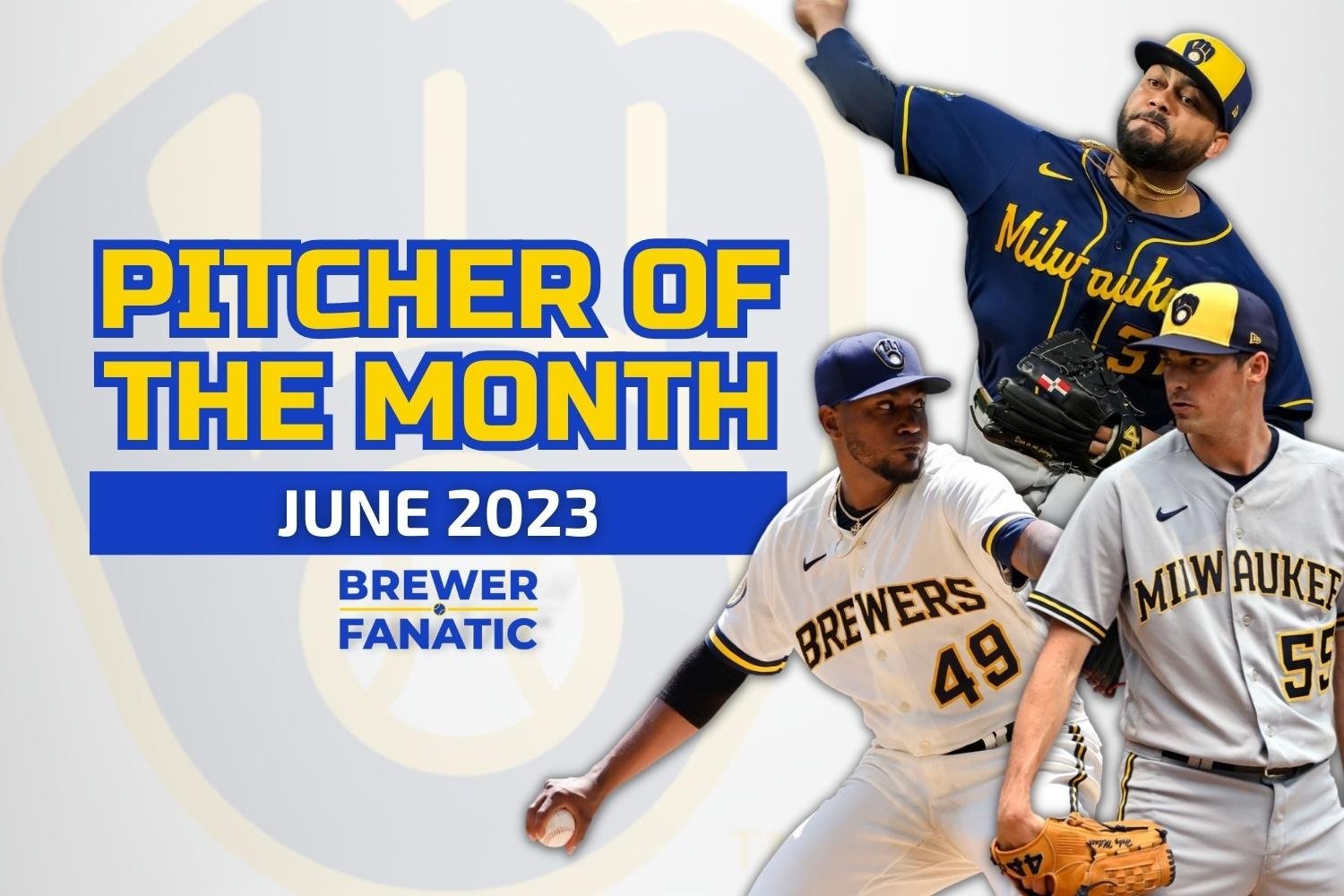 Pitching has been key to the Brewers success so far this season due to a serious lack of offensive output. Some of this has come from unusual places, with Colin Rea, Adrian Houser, Bryce Wilson, Elvis Peguero and Joel Payamps. In the month of June however, there is one standout. But first, let's highlight a couple other pitchers that did great work during the month in June. Honorable Mentions Hoby Milner If it wasn’t for the fantastic pitching this month from our winner, the award would have gone to Hoby Milner. The lefty shook off a rough May (1.043 OPS Against) to allow just one extra-base hit across 11 innings of work over 14 games. Not a single run was charged to his name. With 10 strikeouts, he was used to getting out tough lefties, and was utilized more and more as the month went on, including five games in six days at one point. His four-seam fastball has been almost unhittable at its 88.6 mph average speed, with an xBA of .108 and xSlg of .183, truly incredible numbers. He got a lot of swing-and-miss with a 41.5% whiff rate. His curveball has been almost as effective, with xBA of .163 and xSlg of .202. These two pitches have allowed him to come into a variety of situations and just get outs. There is some concern for how his changeup and sinker have been getting hit, but for now, hats off to Hoby. Joel Payamps This month, Payamps has been moved into the eighth-inning role after Strzelecki’s struggles, and has been almost immaculate. A 1.80 ERA in June, with a 2.17 ERA overall and a 1.07 WHIP on the season, Payamps has been invaluable despite almost being a throw-away player in the William Contreras deal. He is in the top 10% of pitchers in the league for both his walk rate and average exit velocity, a strong combination for a contact-oriented pitcher. He’s used his four-seam fastball to good effect against left-handers, but has increased his slider usage to right-handers, making it his main offering, and has averaged a -2 degree launch angle, with .184 BA and .261 slugging numbers. Payamps has been consistent day in, day out for the Brewers and deserves every credit that comes his way. For something that was a real worry for the Brewers coming into the season, the bullpen has been one of their biggest strengths so far this year, and Payamps is a big reason for that. Pitcher of the Month – Julio Teheran He’s received minimal run support so far, but save for his last blow up outing against the Mets, Teheran has been an absolute godsend for the Brewers. As Matthew Trueblood found, his new blend of a deeper sinker and a cutter into his pitch mix have worked wonders, and the way in which he has used them to great effect in tight to right handers has produced a lot of weak contact and thus a lot of success. In his five starts this month, he has three straight quality starts, then went five innings with no earned runs before his more recent explosion, and is pounding the strike zone. The fact the Brewers lost three of his four outstanding starts has nothing to do with him, and several stats really jump off the page. He is hitting the strike zone a lot, and the lack of walks have really helped him out when he does leave mistakes over the heart of the plate, with only one occasion this season where he has walked more than one hitter, putting him in the 91st percentile for walks per nine innings. A lot of his results this season have been fueled by a good BABIP, and that can’t be overlooked. However he has shown what a veteran pitcher can bring, by adapting his pitch usage and tunneling to great effect. As mentioned, he’s worked his sinker and cutter around the inside part of the plate to right handers, and has occasionally been hit hard, but has importantly kept it on the ground, a real benefit to this premium Brewers infield. This has been key to his success, and if he can adapt with the league, and stay confident in his stuff and his defense to do the job behind him, this success can continue into July. So there you have it. Signed to an MLB contract by the Brewers just days after the San Diego Padres released him from his minor-league contract, Julio Teheran responded with a very strong first month in Milwaukee. What are your thoughts on the choice, and the runners-up? Feel free to discuss in the COMMENTS below.
 -
Yesterday, we named the Brewer Fanatic Hitter of the Month for June. Today, we look at the top pitchers for the Milwaukee Brewers in June. Pitching has been key to the Brewers success so far this season due to a serious lack of offensive output. Some of this has come from unusual places, with Colin Rea, Adrian Houser, Bryce Wilson, Elvis Peguero and Joel Payamps. In the month of June however, there is one standout. But first, let's highlight a couple other pitchers that did great work during the month in June. Honorable Mentions Hoby Milner If it wasn’t for the fantastic pitching this month from our winner, the award would have gone to Hoby Milner. The lefty shook off a rough May (1.043 OPS Against) to allow just one extra-base hit across 11 innings of work over 14 games. Not a single run was charged to his name. With 10 strikeouts, he was used to getting out tough lefties, and was utilized more and more as the month went on, including five games in six days at one point. His four-seam fastball has been almost unhittable at its 88.6 mph average speed, with an xBA of .108 and xSlg of .183, truly incredible numbers. He got a lot of swing-and-miss with a 41.5% whiff rate. His curveball has been almost as effective, with xBA of .163 and xSlg of .202. These two pitches have allowed him to come into a variety of situations and just get outs. There is some concern for how his changeup and sinker have been getting hit, but for now, hats off to Hoby. Joel Payamps This month, Payamps has been moved into the eighth-inning role after Strzelecki’s struggles, and has been almost immaculate. A 1.80 ERA in June, with a 2.17 ERA overall and a 1.07 WHIP on the season, Payamps has been invaluable despite almost being a throw-away player in the William Contreras deal. He is in the top 10% of pitchers in the league for both his walk rate and average exit velocity, a strong combination for a contact-oriented pitcher. He’s used his four-seam fastball to good effect against left-handers, but has increased his slider usage to right-handers, making it his main offering, and has averaged a -2 degree launch angle, with .184 BA and .261 slugging numbers. Payamps has been consistent day in, day out for the Brewers and deserves every credit that comes his way. For something that was a real worry for the Brewers coming into the season, the bullpen has been one of their biggest strengths so far this year, and Payamps is a big reason for that. Pitcher of the Month – Julio Teheran He’s received minimal run support so far, but save for his last blow up outing against the Mets, Teheran has been an absolute godsend for the Brewers. As Matthew Trueblood found, his new blend of a deeper sinker and a cutter into his pitch mix have worked wonders, and the way in which he has used them to great effect in tight to right handers has produced a lot of weak contact and thus a lot of success. In his five starts this month, he has three straight quality starts, then went five innings with no earned runs before his more recent explosion, and is pounding the strike zone. The fact the Brewers lost three of his four outstanding starts has nothing to do with him, and several stats really jump off the page. He is hitting the strike zone a lot, and the lack of walks have really helped him out when he does leave mistakes over the heart of the plate, with only one occasion this season where he has walked more than one hitter, putting him in the 91st percentile for walks per nine innings. A lot of his results this season have been fueled by a good BABIP, and that can’t be overlooked. However he has shown what a veteran pitcher can bring, by adapting his pitch usage and tunneling to great effect. As mentioned, he’s worked his sinker and cutter around the inside part of the plate to right handers, and has occasionally been hit hard, but has importantly kept it on the ground, a real benefit to this premium Brewers infield. This has been key to his success, and if he can adapt with the league, and stay confident in his stuff and his defense to do the job behind him, this success can continue into July. So there you have it. Signed to an MLB contract by the Brewers just days after the San Diego Padres released him from his minor-league contract, Julio Teheran responded with a very strong first month in Milwaukee. What are your thoughts on the choice, and the runners-up? Feel free to discuss in the COMMENTS below. View full article
-
Three months complete. How is that possible? It's time to again crown some award winners for the month. Who were the top hitters of the month for the Milwaukee Brewers? Somehow, despite a five-game losing streak to the Twins and the A’s, the Brewers have made June a winning month of baseball through some timely hitting from a few individuals on the hitting side, dragging the rest of a struggling offense kicking and screaming into the month of July. I’m sure it’ll be no surprise, but this month’s hitting award goes to... Well, we're not just going to tell you right away. We're going to do a bit of a countdown starting at #3. #3: OF Blake Perkins Understandably, some eyebrows were raised when Blake Perkins got a 40-man roster spot in the offseason, and a major-league contract. However, our minor-league experts here at Brewer Fanatic lauded his smooth swing and smooth actions in the outfield. He made his big-league debut and played 10 games for the Brewers in April. Since he came back up to the Brewers on June 3rd, he has hit a strong .288/.351/.423 (.774). He has had high-quality at-bats with a double and two home runs and a propensity to get on base for the likes of Joey Wiemer and Christian Yelich. Unlike these two though, most of his damage comes against breaking pitches with a .317 xBA against the changeup and .290 xBA against the curveball. It’s a small enough sample size, and he’ll need harder contact to continue his stay in the big leagues, but he’s been more than what the Brewers could have hoped so far. #2: OF Joey Wiemer Wiemer has reinvented himself to care a little less about strikeouts. Now he is just looking to find a pitch and do damage. That’s exactly what he did in June, striking out just barely over 30% of the time, but with an ISO of .279, he mashed the ball for a .233/.337/.512 slash line and an .849 OPS. He hit six doubles, six home runs, and 16 RBI across the month. A lot of this is due to getting the ball in the air more, with a GO/AO of 0.79, and when he connects, the ball goes a long way. His center field defense has been outstanding to boot, and as he adjusts his approach and fine tunes at the plate, he’s only going to get better. Hitter of the Month – OF Christian Yelich Yelich was in sublime form for the Brewers in June. In 27 games, he hit .311/.408/.485 (.893). He used his speed to great effect in stretching out 10 doubles, a triple and mashing a couple of home runs. He’s been about as effective a leadoff hitter as you can get, and it’s not just due to good BABIP fortune or the shift being removed (though this undoubtedly helps his profile). His expected batting average is in the 91st percentile, compared to the 68th percentile last season, and a lot of this is due to an improvement in the number of extreme low launch angles (say less than -10 degrees). Due to the power with which he hits the ball, any uptick in launch angle will make a huge difference, and he’s currently hovering around a five-degree angle on the season, up about 1.5 degrees over last year. This may not sound like much, but it’s allowed the power to play a bit more, with increased line drives, and a propensity to go to the opposite field and swing slightly later on the fastball. Two of his swing metrics in particular seem to follow his success at the plate: Notice in 2018/19, Yelich was extremely successful at making contact when chasing, even while trying to do damage. And even more importantly, his percentage of first-pitch swings went up drastically. When he feels comfortable with his body at the plate, he’s more aggressive and it pays off in the form of a higher batting average and more hits, something we’re really seeing so far this season. One thing that did frustrate fans last season was how often he took pitches over the heart of the plate. Not anymore. He swung at just 73.6% of meatballs last season. He’s having a go at 86.3% this year, a career high, and something that’s certainly helping him at the plate. While he has many detractors, this version of Yelich is a joy to watch, and maintaining it through the second half, or even improving further with his launch angles, can keep this team in the playoff hunt. So what do you think of our top three Brewers hitters in June? Do you agree with the choices? Is anyone missing? Leave a comments in the Forum below. View full article
-
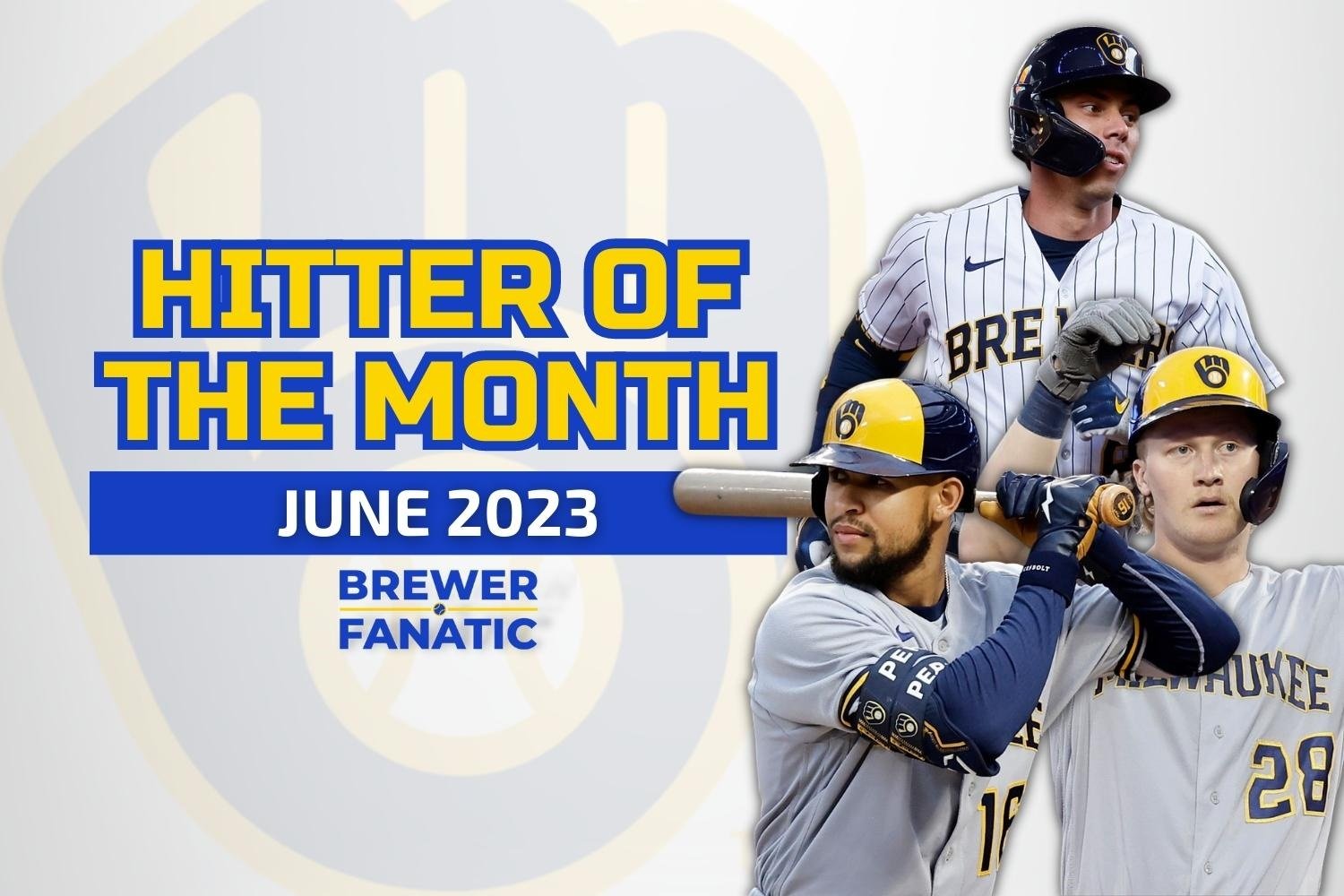 Somehow, despite a five-game losing streak to the Twins and the A’s, the Brewers have made June a winning month of baseball through some timely hitting from a few individuals on the hitting side, dragging the rest of a struggling offense kicking and screaming into the month of July. I’m sure it’ll be no surprise, but this month’s hitting award goes to... Well, we're not just going to tell you right away. We're going to do a bit of a countdown starting at #3. #3: OF Blake Perkins Understandably, some eyebrows were raised when Blake Perkins got a 40-man roster spot in the offseason, and a major-league contract. However, our minor-league experts here at Brewer Fanatic lauded his smooth swing and smooth actions in the outfield. He made his big-league debut and played 10 games for the Brewers in April. Since he came back up to the Brewers on June 3rd, he has hit a strong .288/.351/.423 (.774). He has had high-quality at-bats with a double and two home runs and a propensity to get on base for the likes of Joey Wiemer and Christian Yelich. Unlike these two though, most of his damage comes against breaking pitches with a .317 xBA against the changeup and .290 xBA against the curveball. It’s a small enough sample size, and he’ll need harder contact to continue his stay in the big leagues, but he’s been more than what the Brewers could have hoped so far. #2: OF Joey Wiemer Wiemer has reinvented himself to care a little less about strikeouts. Now he is just looking to find a pitch and do damage. That’s exactly what he did in June, striking out just barely over 30% of the time, but with an ISO of .279, he mashed the ball for a .233/.337/.512 slash line and an .849 OPS. He hit six doubles, six home runs, and 16 RBI across the month. A lot of this is due to getting the ball in the air more, with a GO/AO of 0.79, and when he connects, the ball goes a long way. His center field defense has been outstanding to boot, and as he adjusts his approach and fine tunes at the plate, he’s only going to get better. Hitter of the Month – OF Christian Yelich Yelich was in sublime form for the Brewers in June. In 27 games, he hit .311/.408/.485 (.893). He used his speed to great effect in stretching out 10 doubles, a triple and mashing a couple of home runs. He’s been about as effective a leadoff hitter as you can get, and it’s not just due to good BABIP fortune or the shift being removed (though this undoubtedly helps his profile). His expected batting average is in the 91st percentile, compared to the 68th percentile last season, and a lot of this is due to an improvement in the number of extreme low launch angles (say less than -10 degrees). Due to the power with which he hits the ball, any uptick in launch angle will make a huge difference, and he’s currently hovering around a five-degree angle on the season, up about 1.5 degrees over last year. This may not sound like much, but it’s allowed the power to play a bit more, with increased line drives, and a propensity to go to the opposite field and swing slightly later on the fastball. Two of his swing metrics in particular seem to follow his success at the plate: Notice in 2018/19, Yelich was extremely successful at making contact when chasing, even while trying to do damage. And even more importantly, his percentage of first-pitch swings went up drastically. When he feels comfortable with his body at the plate, he’s more aggressive and it pays off in the form of a higher batting average and more hits, something we’re really seeing so far this season. One thing that did frustrate fans last season was how often he took pitches over the heart of the plate. Not anymore. He swung at just 73.6% of meatballs last season. He’s having a go at 86.3% this year, a career high, and something that’s certainly helping him at the plate. While he has many detractors, this version of Yelich is a joy to watch, and maintaining it through the second half, or even improving further with his launch angles, can keep this team in the playoff hunt. So what do you think of our top three Brewers hitters in June? Do you agree with the choices? Is anyone missing? Leave a comments in the Forum below.
 -
I don't think the hit tool excites me enough, especially playing it safer last time out with Eric Brown Jr. I'd like to see a bat with a higher ceiling, wehreas Bradfield does scream "4th outfielder" potential at this point, although his speed is fun The potential for Jake Gelof and his ceiling though might be more tempting, but even then I'd like a slightly higher ceiling in first couple of rounds
-
And never forget, don't touch the "butt" I used to know an athlete with short term memory loss who swam, she got inundated with dory towels from fans
-
How would you try to motivate him?Do you think playoffs etc and the prestige of success there? Could a firing Woodruff provide some inspiration and friendly competition? They did say that sort of approach between the pitchers was key to the success of Him, Freddy and Lauer in 2021
-
Peterson is intersting today, had a 1.62 WHIP and 5.6 walks per nine in AAA, still striking out guys but a ton of contact otherwise. But he's a lefty coming up... still this might be negated by the fact you'll have actual scouting reports on him given he's been around a while. The Brewers are basically facing Eric Lauer here
-
Isn't this Bryce Wilson's role, and one he's excelling in as well? Do we need two long relievers? Especially as they're both used to maintain a deficit rather than be shutdown relievers
-
The Brewers' rotation is healthy enough to enjoy some stability, but it hasn't been the reliable group the team needs. Too many games are getting loose early, forcing the below-average lineup to produce at an above-average clip in order to win. Is a different fifth starter the answer to that problem? Image courtesy of © Jeff Hanisch-USA TODAY Sports Colin Rea has been a serviceable pitcher for the Milwaukee Brewers during their time of need, usually keeping things close enough that a decent offensive performance can grab the win. However, his statcast page is beginning to resemble Jason Alexander’s, with minimal chase rates, minimal whiffs, minimal curveball movement or fastball velocity. He has avoided barrels well enough to limit the damage, but he feels like a bomb waiting to explode, and he certainly can’t be credited with actively winning the Brewers games. Compare this to Adrian Houser, who was moved to the bullpen upon Wade Miley’s return. Since his last start on June 9, he’s made just two appearances, throwing four innings of relief in a game that had gotten away from the Brewers on June 19 and mopping up an inning against the Guardians Friday night. Houser has brought down his career-high line drive rate of 2022 (26.1% down to 21.3%) and increased his groundball rate back to 52.5%--not quite as effective as in his prime, but still able to generate a lot of weak grounders and cheap outs to a strong defense. He is in the 64th percentile for expected opponent slugging and walk rate, and 88th percentile for barrels, all key to his performance. When he himself returned from the injured list, Houser was using his four-seam fastball to left-handers with great effect, but it seems hitters have caught up to it now. They’re posting an average exit velocity of 97 miles per hour on it. However, Houser does still generate whiffs when he ties that heater in with his sinker. His changeup and slider have generated consistently weak contact, and his sinker has an average launch angle of 0 degrees, exactly what he would be hoping for. Have a look at the quality of contact against each of these pitchers: Houser Rea The most immediately noticeable stat is that Houser has a 2.8% solid contact rate, and 4.3% barrel rate, compared to Rea with 7% for each of those. Houser has limited hard and damaging contact much more effectively. Out of this alone, I cannot understand why Rea is getting more innings, with higher average leverage. Rea has gone through six innings just twice, and while he has the occasional gem, such as his eight-strikeout, five-inning shutdown of the Orioles earlier this month, he has also conceded at least three runs through five innings in his other three starts this month, for an ERA that is only rising as the league gets a good look at him. Houser did have a blowup start against the A’s, due mostly to walking hitters, something he hadn’t done much of so far this season. However, he has a track record of producing quality starts and being able to get on top of a lineup in a way that Rea just can’t. Houser does still struggle to corral left-handed batters, in particular with his command. He tries to use his sinker less against them, resulting in a strikeout-to-walk ratio of 1:1, but given the lack of barrels and hard-hit balls against him, even walking the occasional lefty isn’t going to harm him often. Is Adrian Houser a perfect pitcher? No. Is he likely, over a five-game stretch, to give you better starts than Colin Rea? Unquestionably. View full article
-
Colin Rea vs. Adrian Houser: Who Should Be the Brewers' Fifth Starter?
Jake McKibbin posted an article in Brewers
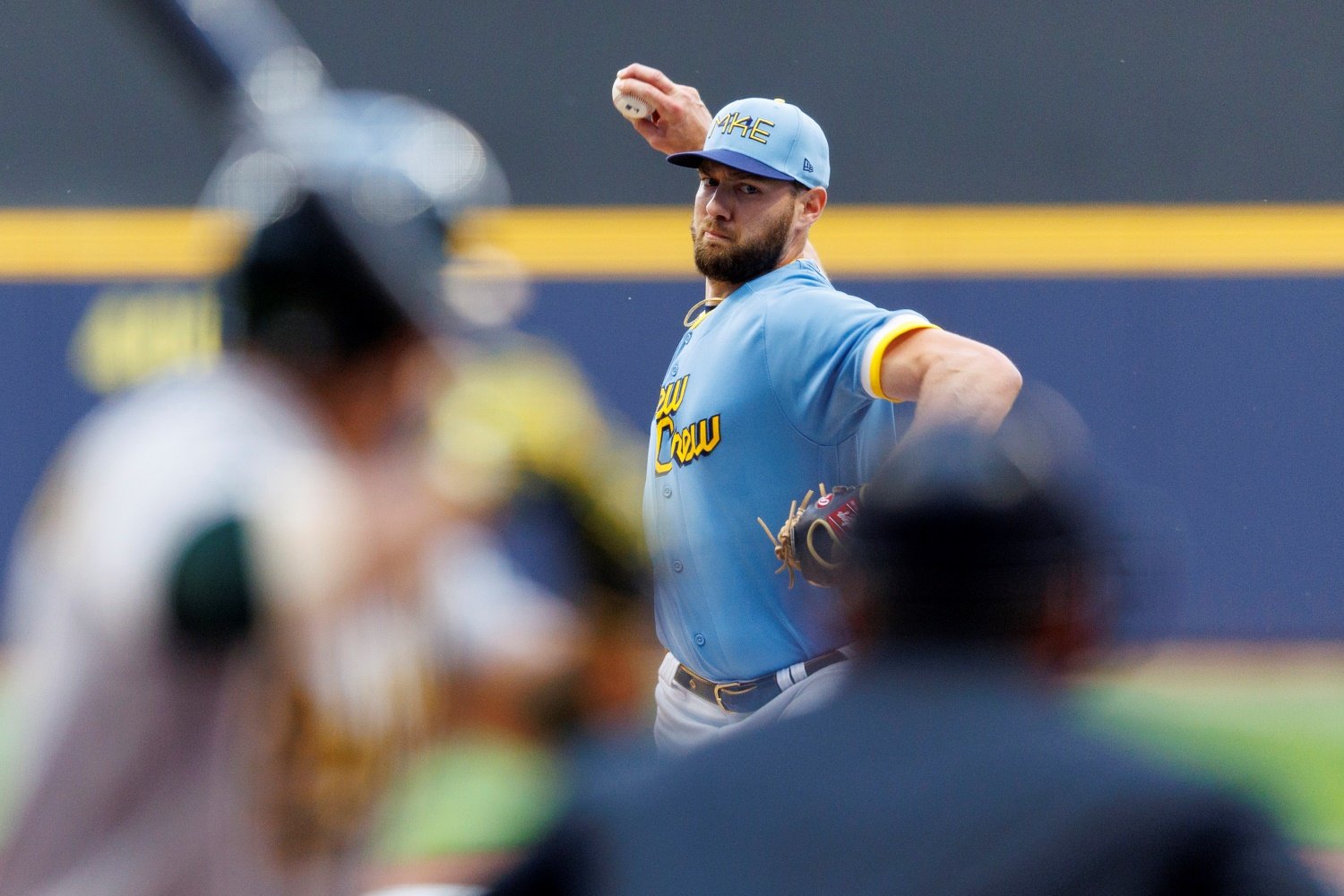 Colin Rea has been a serviceable pitcher for the Milwaukee Brewers during their time of need, usually keeping things close enough that a decent offensive performance can grab the win. However, his statcast page is beginning to resemble Jason Alexander’s, with minimal chase rates, minimal whiffs, minimal curveball movement or fastball velocity. He has avoided barrels well enough to limit the damage, but he feels like a bomb waiting to explode, and he certainly can’t be credited with actively winning the Brewers games. Compare this to Adrian Houser, who was moved to the bullpen upon Wade Miley’s return. Since his last start on June 9, he’s made just two appearances, throwing four innings of relief in a game that had gotten away from the Brewers on June 19 and mopping up an inning against the Guardians Friday night. Houser has brought down his career-high line drive rate of 2022 (26.1% down to 21.3%) and increased his groundball rate back to 52.5%--not quite as effective as in his prime, but still able to generate a lot of weak grounders and cheap outs to a strong defense. He is in the 64th percentile for expected opponent slugging and walk rate, and 88th percentile for barrels, all key to his performance. When he himself returned from the injured list, Houser was using his four-seam fastball to left-handers with great effect, but it seems hitters have caught up to it now. They’re posting an average exit velocity of 97 miles per hour on it. However, Houser does still generate whiffs when he ties that heater in with his sinker. His changeup and slider have generated consistently weak contact, and his sinker has an average launch angle of 0 degrees, exactly what he would be hoping for. Have a look at the quality of contact against each of these pitchers: Houser Rea The most immediately noticeable stat is that Houser has a 2.8% solid contact rate, and 4.3% barrel rate, compared to Rea with 7% for each of those. Houser has limited hard and damaging contact much more effectively. Out of this alone, I cannot understand why Rea is getting more innings, with higher average leverage. Rea has gone through six innings just twice, and while he has the occasional gem, such as his eight-strikeout, five-inning shutdown of the Orioles earlier this month, he has also conceded at least three runs through five innings in his other three starts this month, for an ERA that is only rising as the league gets a good look at him. Houser did have a blowup start against the A’s, due mostly to walking hitters, something he hadn’t done much of so far this season. However, he has a track record of producing quality starts and being able to get on top of a lineup in a way that Rea just can’t. Houser does still struggle to corral left-handed batters, in particular with his command. He tries to use his sinker less against them, resulting in a strikeout-to-walk ratio of 1:1, but given the lack of barrels and hard-hit balls against him, even walking the occasional lefty isn’t going to harm him often. Is Adrian Houser a perfect pitcher? No. Is he likely, over a five-game stretch, to give you better starts than Colin Rea? Unquestionably.
 -
He's having a down period but still making relatively consistent contact He carried the Brewers through May almost single handed and for that is worth the cash considerations alone It's kind of tough to argue otherwise PS I'm a diehard brew crew fan
-
I think this is a very easy solution to point to, that to be fair he could work at to get gains defensively and on the basepaths, as well as some added muscle mass with it. I'm surprised as a pro he hasn't, especially given he's known for being a total couch potato He's had one hot streak so far this year, but him and Adames, in short, need more of these hot streaks to justify their positions, and I'm not sure that's so much to do with his weight and mobility as a change in approach. He's actually whiffing less on high fastballs, so maybe made adjustments to cover more of the zone, but it's been detrimental to him overall
-
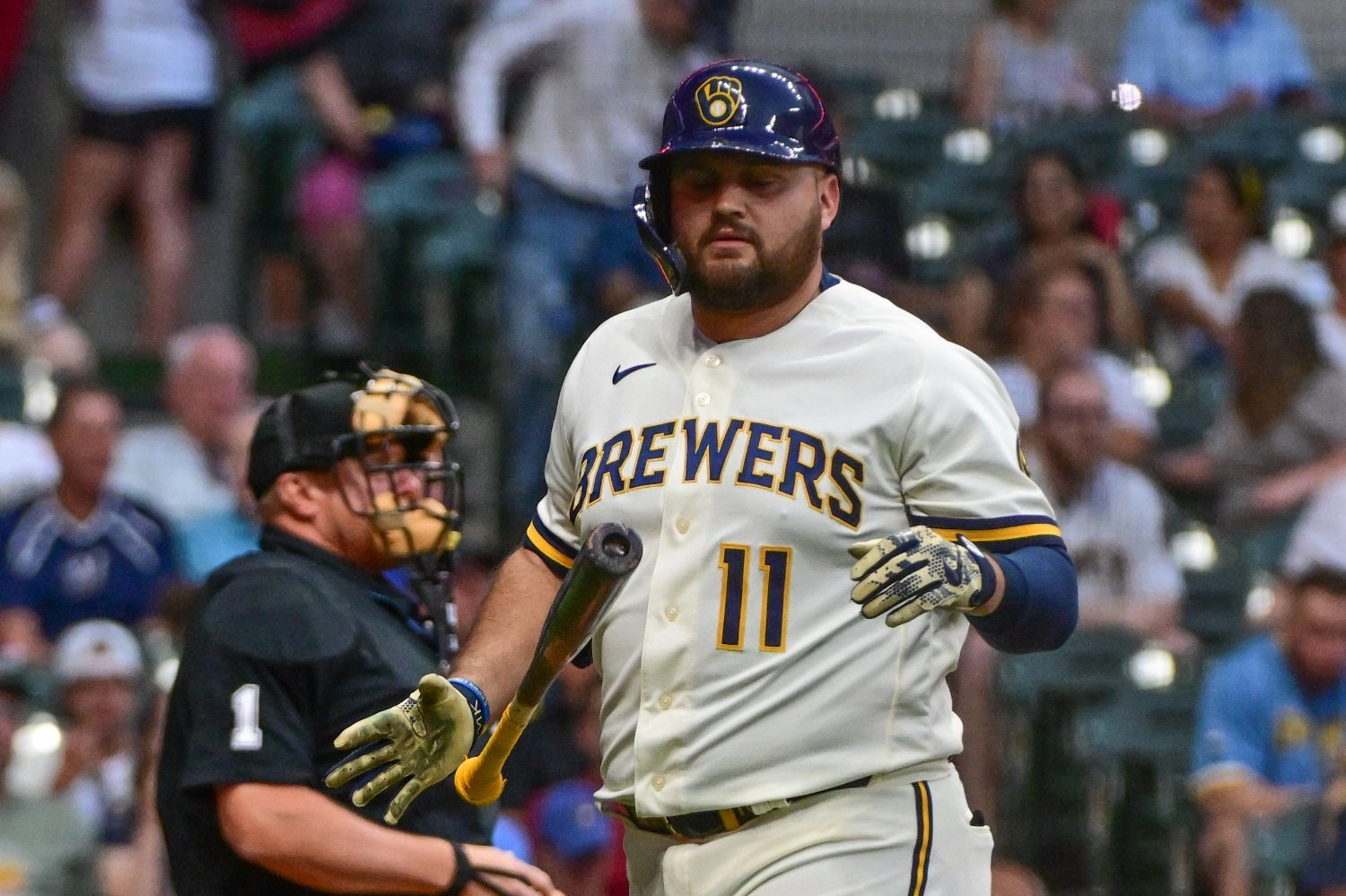 After taking a look into Willy Adames’s contact profile in the early part of this season (and how it’s contributed to a middle of the order that can’t seem to generate runs), let’s have a look at the other black hole: Rowdy Tellez. Tellez started the season off swinging at far fewer pitches than usual, being more patient at the plate, which led to an increase in strikeout rates and a struggle to access power once the league attacked him more in the zone. Coming into the year, it was expected he could be an .800+ OPS bat, given (as mentioned before) his dreadful, career-low BABIP in 2022 and how that affected his overall line. This hasn’t been the case, however. Tellez has just a .390 OPS in the month of June so far, and he’s been struggling to access his power since the middle of May. He is striking out at a 25-percent clip, another high since the start of 2020, and his expected slugging numbers have dropped by over 100 points. So what’s going on? He still has the ability to hit the ball hard, and he’s pulling the ball less than he used to while increasing the number of line drives. This all sounds good, but he has been less consistent in his quality of contact, with average exit velocities notably dropping to 88.4 mph this season, compared with 91.1 mph in 2022 and 92.2 mph in 2021. He is still hitting fastballs quite well, although with a significantly higher launch angle (13 degrees last year up to 19 this season), but his biggest weakness so far has been breaking pitches. One of Tellez’s big damage areas was around his knees, either inside or over the heart of the plate. Particularly inside this season, he has really struggled to make quality contact, with his average exit velocity on pitches down and in dropping from 94 mph to 83 mph. He has an xBA of .140 and xSlg of .268 against breaking pitches this year, and that needs to improve for him to become that middle-of-the-order force he has the potential to be. He’s getting under these far too often, and it’s causing a lot of weak fly balls to the outfield. On top of that, he’s whiffing more often at the breaking balls that drop below the zone–significantly more, in fact, going from a 34% whiff rate to a 53% whiff rate in 2023. He was quite adept at fouling off these pitches last season, but can’t seem to hang in the at-bat for long at all so far this year. The other issue Tellez is having is that when he does hit the ball hard, he used to get prime launch angles, turning those hard-hit balls into big home runs. As of late, a lot of those have been line drives that have hit the outfield when he does make prime contact, resulting in a lower barrel rate (12.9% down to 9.3%) than we are used to seeing. Interesting, too, is how he has struggled against the sinker, with a line of .135/.135 against it so far this year (against 190 pitches). He has a 50-percent hard-hit rate against it, but he’s pounding it into the ground–almost a guaranteed out with his complete lack of speed. In short, the middle of the order needs to perform better for the Brewers to regularly put up runs, particularly with Christian Yelich performing as he has in recent months. He deserves to be driven in a lot more, and Counsell is already tweaking the lineup to try and help, moving Contreras behind Yelich on Tuesday night. You can’t rely on a hot streak from Wiemer or Anderson to be your only hopes of offense. The big names need to start playing better, and they need to do it now.
 -
As the Brewers continue to seek more consistent production from their lineup, it's hard not to view the guys who were most responsible for their success in 2021 and 2022 as the biggest culprits in their struggles. Today, we turn our attention to the not-so-slugging first baseman. Image courtesy of © Benny Sieu-USA TODAY Sports After taking a look into Willy Adames’s contact profile in the early part of this season (and how it’s contributed to a middle of the order that can’t seem to generate runs), let’s have a look at the other black hole: Rowdy Tellez. Tellez started the season off swinging at far fewer pitches than usual, being more patient at the plate, which led to an increase in strikeout rates and a struggle to access power once the league attacked him more in the zone. Coming into the year, it was expected he could be an .800+ OPS bat, given (as mentioned before) his dreadful, career-low BABIP in 2022 and how that affected his overall line. This hasn’t been the case, however. Tellez has just a .390 OPS in the month of June so far, and he’s been struggling to access his power since the middle of May. He is striking out at a 25-percent clip, another high since the start of 2020, and his expected slugging numbers have dropped by over 100 points. So what’s going on? He still has the ability to hit the ball hard, and he’s pulling the ball less than he used to while increasing the number of line drives. This all sounds good, but he has been less consistent in his quality of contact, with average exit velocities notably dropping to 88.4 mph this season, compared with 91.1 mph in 2022 and 92.2 mph in 2021. He is still hitting fastballs quite well, although with a significantly higher launch angle (13 degrees last year up to 19 this season), but his biggest weakness so far has been breaking pitches. One of Tellez’s big damage areas was around his knees, either inside or over the heart of the plate. Particularly inside this season, he has really struggled to make quality contact, with his average exit velocity on pitches down and in dropping from 94 mph to 83 mph. He has an xBA of .140 and xSlg of .268 against breaking pitches this year, and that needs to improve for him to become that middle-of-the-order force he has the potential to be. He’s getting under these far too often, and it’s causing a lot of weak fly balls to the outfield. On top of that, he’s whiffing more often at the breaking balls that drop below the zone–significantly more, in fact, going from a 34% whiff rate to a 53% whiff rate in 2023. He was quite adept at fouling off these pitches last season, but can’t seem to hang in the at-bat for long at all so far this year. The other issue Tellez is having is that when he does hit the ball hard, he used to get prime launch angles, turning those hard-hit balls into big home runs. As of late, a lot of those have been line drives that have hit the outfield when he does make prime contact, resulting in a lower barrel rate (12.9% down to 9.3%) than we are used to seeing. Interesting, too, is how he has struggled against the sinker, with a line of .135/.135 against it so far this year (against 190 pitches). He has a 50-percent hard-hit rate against it, but he’s pounding it into the ground–almost a guaranteed out with his complete lack of speed. In short, the middle of the order needs to perform better for the Brewers to regularly put up runs, particularly with Christian Yelich performing as he has in recent months. He deserves to be driven in a lot more, and Counsell is already tweaking the lineup to try and help, moving Contreras behind Yelich on Tuesday night. You can’t rely on a hot streak from Wiemer or Anderson to be your only hopes of offense. The big names need to start playing better, and they need to do it now. View full article

