



Jake McKibbin
-
Posts
2,395 -
Joined
-
Last visited
-
Days Won
6
Content Type
Profiles
Forums
Blogs
Events
News
2026 Milwaukee Brewers Top Prospects Ranking
Milwaukee Brewers Videos
2022 Milwaukee Brewers Draft Picks
Milwaukee Brewers Free Agent & Trade Rumors, Notes, & Tidbits
Guides & Resources
2023 Milwaukee Brewers Draft Picks
2024 Milwaukee Brewers Draft Picks
The Milwaukee Brewers Players Project
2025 Milwaukee Brewers Draft Pick Tracker
2026 Milwaukee Brewers Draft Tracker: Picks & Bonuses
Store
Downloads
Gallery
Everything posted by Jake McKibbin
-
The Brewers' star shortstop is mired in a deep offensive funk. It's their lineup's biggest problem right now. There might just be light at the end of the tunnel, though. Image courtesy of © Reggie Hildred-USA TODAY Sports Willy Adames is hitting .205/.290/.386 in 2023, which would be okay for a shortstop with his defensive range and arm. However, statistically, he has been one of the unluckiest baseball players on the planet over the last month or so. Here’s why; Save for a short stretch before the All-Star break where we got a glimpse of the streaky, powerful hitter Adames can be, his results just have not been there this season: no real hot stretches where he’s carried the offense, none of the big numbers he has traditionally put up with men on base. He’s always been a totally different hitter in the big moments, but that just hasn’t been the case this year, hitting .202/.276/.393 with runners in scoring position. However, over the last month, he has been a significantly different hitter, and he's been incredibly unlucky about the results it’s produced. First, let’s clarify, he is hitting the ball softer than he did last season, he is whiffing too often and was basically showing us his floor up until June. That being said, here are what the underlying metrics say about his ability to hit the ball in just the wrong spot: The yellow highlight is the current season. You can see that he’s finding optimal launch angles roughly the same as he did in 2021 and in 2022, with an expected batting average (xBA) of .237 and an expected slugging (xSLG) of .439, remarkably similar to his 2021 numbers. His expected weighted on-base average (xwOBA, the number that estimates overall offensive value expected based on quality of contact) is higher than each of his previous two years, while he’s significantly improved his walk rate this season. By his expected metrics, he’s projected to have had a .237/.332/.439 slash line. Recently, however, he’s been even better, particularly against fastballs. The results just don’t show it. Here are his numbers for July (let’s ignore the small sample size that is August so far): He had a line of .161/.339 against fastballs, instead of the expected numbers of .277/.514, a massive difference, and one that could have swung a few of the many tight games the Brewers played in July in their direction. His exit velocities since the start of the season have risen steadily, and last month against breaking balls and fastballs he averaged 88 mph, more in line with his historic numbers, though he has struggled mightily with offspeed pitches this season. A big leap has been the number of fastballs he’s attacked in the zone, he went for just 58.5% of these fastballs in June, but in July that number rose to 80%, as well as having a rip at 83% of in-zone breaking pitches. This has corresponded with no real change in his chase rates, suggesting he’s feeling a lot better about himself at the plate, and is looking to do damage. Finally, he considerably lowered his swing and miss rates on each pitch type: Breaking Balls – 43% down to 36.8% Offspeed – 42.3% down to 32.1% Fastballs – 21.3% to 18.8% It may not seem like it based on the results, but Adames is not the struggling hitter we saw in May and June. He’s primed for a hot finish to the year. Can he get some of the luck that’s evaded him so far this season? View full article
-
You think the NL central won't have a wildcard?
-
How Did Other Contenders' Deadline Moves Affect the Brewers?
Jake McKibbin posted an article in Brewers
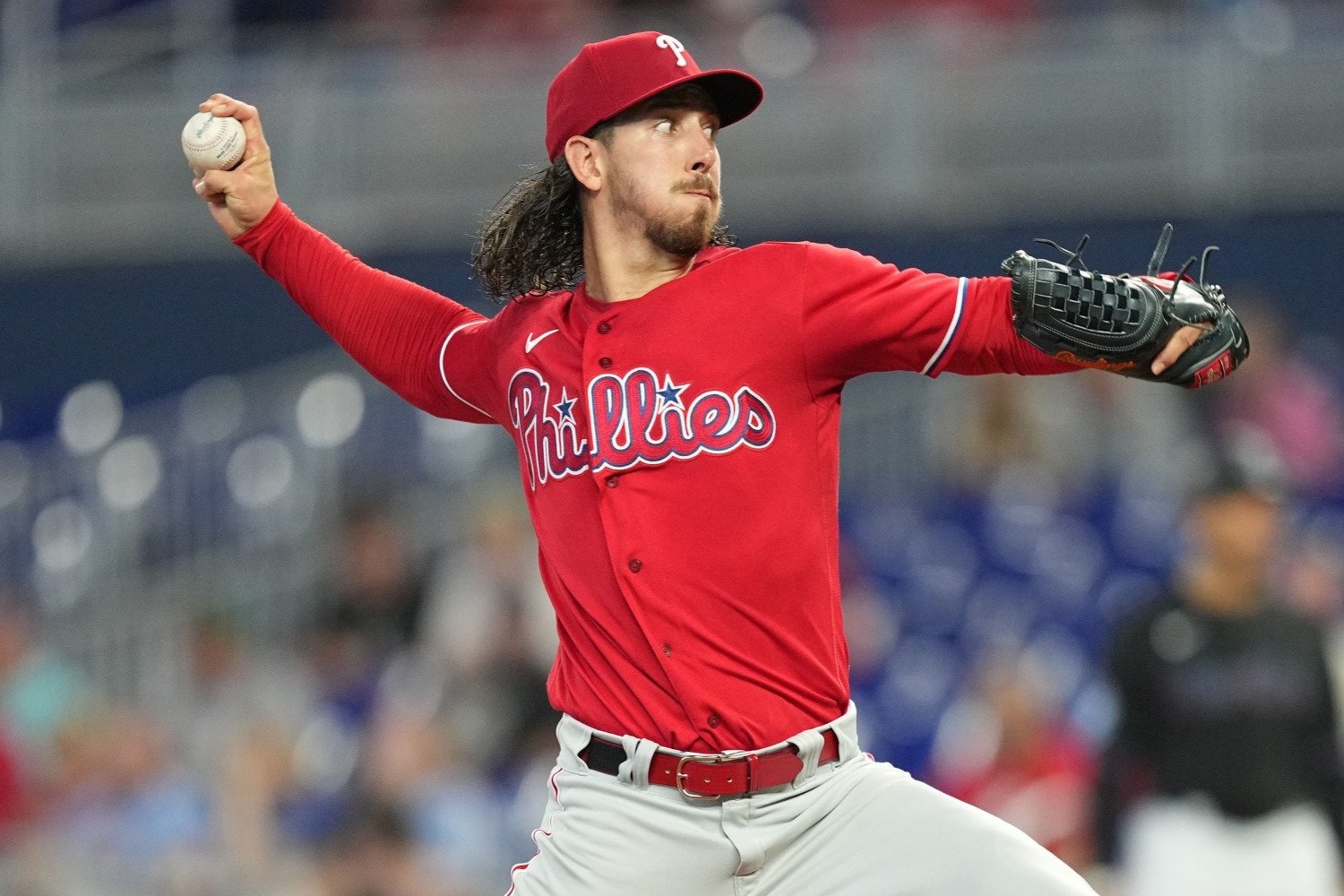 Currently, FanGraphs lists the Brewers as having a 70.2% chance to get into the playoffs, with a 59.1% chance of winning the division. The Chicago Cubs and Cincinnati Reds are hot on their tail inside the division, however, with the Cubs in particular on a scorching run. Outside of this, the Philadelphia Phillies have been on a strong run since mid-May after a slow start to the season, almost identical to the San Francisco Giants, who have just pushed aside the Diamondbacks for a Wild Card berth (for the time being). The Marlins have, sneakily, been performing very well in the NL East, while the Padres are looking to come in under the radar too. Let’s check in on how these clubs fared at the deadline. Cincinnati Reds Having had one of the hottest offenses in baseball, as well as the potential returns of Hunter Greene and Nick Lodolo, it was expected that with their vaunted farm system the Reds could make some big splashes at the deadline. Rumors of trading Jonathan India for a controllable starting pitcher faded to the wayside, and instead all they added was Sam Moll, a lefty reliever from Oakland. The offense was statistically overperforming their real talent over a two-month stretch, but even so, they had a real shot to grab hold of this division. Instead, they’re playing with what they’ve got and looking toward many more bites at the apple in the future, whilst hoping they have enough to sneak in this season. With so many rookies in their lineup, and the likes of Noelvi Marte pushing in Triple A, they’re well set up for sustained success. They’ve been caught cold by the Cubs, losing a series 3-1 against their division rivals who invested more strongly, and may regret down the line that they didn’t go harder here. Chicago Cubs A hot run of form leading up to the deadline (including winning eight straight games), as well as a front office that needs to show something from this season, changed the Cubs from sellers to buyers, from being 43-50 on July 17 to 56-53 now. They acquired Jeimer Candelario, who promptly brought eight hits in his first nine at-bats while playing quality third base defense, a position at which the Cubs struggled to gain consistency. Candelario is a quality upgrade for a team that’s getting hot at just the right time, and makes their lineup (already formidable and pesky) even more so. The most important piece for the Cubs has been the resurgent Cody Bellinger, who was smoking in July, and if he can sustain this production, they’ll be expecting a playoff run at the end of the year. San Francisco Giants The Giants didn't do a whole lot at the deadline, adding slumping veteran outfielder AJ Pollock, while not adding anything to their starting pitching, which could do with additions, especially with the Diamondbacks young roster, and the sleeping giant that is the Padres. They lost a starter on Sunday, with Anthony DeSclafani picking up an elbow strain. They could be due for some regression in the next couple of months, but have placed themselves firmly in the hunt after taking a series against the Diamondbacks. FanGraphs gives them odds of 60.9% to grab a Wild Card berth, and an outside shot of overtaking the LA Dodgers. Arizona Diamondbacks The Diamondbacks had an interesting deadline, trading a reliever with more history of late-inning situations in Andrew Chafin for young, controllable, up-and-down Peter Strzelecki from the Brewers, while also shoring up their bullpen with star closer Paul Sewald from the Mariners, and the mercurial bat and personality of Tommy Pham from New York. The latter two additions could be a big boost, with a leaky bullpen one reason for their recent run of poor play. However, the next few weeks are absolutely crucial for a team that is struggling of late, going 8-16 in the month of July, and the offense and bullpen were to blame. San Diego Padres As unlikely as it seemed, the Padres were buyers at the deadline, acquiring Ji-Man Choi and Rich Hill from the Pirates; Garrett Cooper from the Marlins; and Scott Barlow, an elite closer at his best, from Kansas City. Hill should help them as a fifth starter and innings eater, which may be all that’s needed given the offense has found some consistency of late, with the likes of Blake Snell proving one of the best pitchers in baseball over the last couple of months. They’ve gone 18-10 over their last 28 games, and have a real outside shot, but haven’t quite gone all in (in part due to a depleted farm system keeping them away from the bigger trades). However, they are estimated to have a 46% chance of making the playoffs, and definitely shouldn’t be ruled out at this point in time. Philadelphia Phillies After the early struggles of Trea Turner, Zack Wheeler, Kyle Schwarber, at al., the batting lineup has heated up with threats up and down the order. Defense isn’t much valued in this organization at the moment--perhaps one reason for the struggles of some of their pitching staff, which was expected to be high-end with Taijuan Walker, Aaron Nola, Ranger Suarez and Wheeler. The addition of 2023 All-Star Michael Lorenzen has been a big help. He went eight innings in his first start, and fortifies the starting rotation massively. They also traded for the Pirates' Rodolfo Castro as a utility infielder, having designated Josh Harrison for assignment, not really a needle mover but certainly adding value over the lackluster Harrison. This is a lineup to watch out for, with Nick Castellanos, Turner, Bryce Harper, Bryson Stott, Alec Bohm, J.T. Realmuto and Schwarber’s power, and they’re highly likely to mash their way to a Wild Card spot this October. Miami Marlins In selling off Cooper to their playoff rivals the Padres, the Marlins made a small partner move, acquiring Josh Bell for Jean Segura and top prospect Kahlil Watson. They also got swingman Ryan Weathers, in the Cooper deal. The lineup had a need for power outside of Jorge Soler’s bat, and they’ll be hoping Bell can provide that with his xBA of .275 and xSlg of .460 so far on the year. His actual numbers are lower, potentially due to Cleveland’s large park, but even so, he could be exactly what the Marlins needed, and they’ve traded away a first-round prospect they used to have high hopes for to get him. Segura had struggled massively so far this year, with just a .556 OPS and poor defense. He just couldn’t be a part of a playoff roster, so this is a big upgrade offensively. To truly address their power shortage, though, Miami made a much bigger splash, trading for slugging infielder Jake Burger from the Chicago White Sox. Burger cost the Fish one of their prized pitching prospects, Jake Eder, but he will slot into the middle of their lineup and add the minatory power bat that was missing therefrom until now. All in all, there was a curious lack of movement from both the Giants and the Reds at the deadline, perhaps in part due to the lack of options available because of the expanded playoff format. Either may come to rue their decisions in what are tight divisions, while the Cubs, Padres and Phillies have addressed their weaknesses effectively. Current standings are: Giants – 61-49 Phillies – 59-50 (Brewers) – 59-51 Reds – 59-52 Marlins – 58-52 D’Backs – 57-53 Cubs – 56-53 Padres – 54-55 Who do you think is most likely to grab the three Wild Card slots? Did any of these teams vault themselves past the Brewers with their deadline activity?
- 4 comments
-
- 2
-

-
- andrew chafin
- michael lorenzen
- (and 3 more)
-
The Brewers have a strong chance to win their division, or at the very least snag a Wild Card. Did the other NL contenders go big at the deadline to impact these chances? Image courtesy of © Jim Rassol-USA TODAY Sports Currently, FanGraphs lists the Brewers as having a 70.2% chance to get into the playoffs, with a 59.1% chance of winning the division. The Chicago Cubs and Cincinnati Reds are hot on their tail inside the division, however, with the Cubs in particular on a scorching run. Outside of this, the Philadelphia Phillies have been on a strong run since mid-May after a slow start to the season, almost identical to the San Francisco Giants, who have just pushed aside the Diamondbacks for a Wild Card berth (for the time being). The Marlins have, sneakily, been performing very well in the NL East, while the Padres are looking to come in under the radar too. Let’s check in on how these clubs fared at the deadline. Cincinnati Reds Having had one of the hottest offenses in baseball, as well as the potential returns of Hunter Greene and Nick Lodolo, it was expected that with their vaunted farm system the Reds could make some big splashes at the deadline. Rumors of trading Jonathan India for a controllable starting pitcher faded to the wayside, and instead all they added was Sam Moll, a lefty reliever from Oakland. The offense was statistically overperforming their real talent over a two-month stretch, but even so, they had a real shot to grab hold of this division. Instead, they’re playing with what they’ve got and looking toward many more bites at the apple in the future, whilst hoping they have enough to sneak in this season. With so many rookies in their lineup, and the likes of Noelvi Marte pushing in Triple A, they’re well set up for sustained success. They’ve been caught cold by the Cubs, losing a series 3-1 against their division rivals who invested more strongly, and may regret down the line that they didn’t go harder here. Chicago Cubs A hot run of form leading up to the deadline (including winning eight straight games), as well as a front office that needs to show something from this season, changed the Cubs from sellers to buyers, from being 43-50 on July 17 to 56-53 now. They acquired Jeimer Candelario, who promptly brought eight hits in his first nine at-bats while playing quality third base defense, a position at which the Cubs struggled to gain consistency. Candelario is a quality upgrade for a team that’s getting hot at just the right time, and makes their lineup (already formidable and pesky) even more so. The most important piece for the Cubs has been the resurgent Cody Bellinger, who was smoking in July, and if he can sustain this production, they’ll be expecting a playoff run at the end of the year. San Francisco Giants The Giants didn't do a whole lot at the deadline, adding slumping veteran outfielder AJ Pollock, while not adding anything to their starting pitching, which could do with additions, especially with the Diamondbacks young roster, and the sleeping giant that is the Padres. They lost a starter on Sunday, with Anthony DeSclafani picking up an elbow strain. They could be due for some regression in the next couple of months, but have placed themselves firmly in the hunt after taking a series against the Diamondbacks. FanGraphs gives them odds of 60.9% to grab a Wild Card berth, and an outside shot of overtaking the LA Dodgers. Arizona Diamondbacks The Diamondbacks had an interesting deadline, trading a reliever with more history of late-inning situations in Andrew Chafin for young, controllable, up-and-down Peter Strzelecki from the Brewers, while also shoring up their bullpen with star closer Paul Sewald from the Mariners, and the mercurial bat and personality of Tommy Pham from New York. The latter two additions could be a big boost, with a leaky bullpen one reason for their recent run of poor play. However, the next few weeks are absolutely crucial for a team that is struggling of late, going 8-16 in the month of July, and the offense and bullpen were to blame. San Diego Padres As unlikely as it seemed, the Padres were buyers at the deadline, acquiring Ji-Man Choi and Rich Hill from the Pirates; Garrett Cooper from the Marlins; and Scott Barlow, an elite closer at his best, from Kansas City. Hill should help them as a fifth starter and innings eater, which may be all that’s needed given the offense has found some consistency of late, with the likes of Blake Snell proving one of the best pitchers in baseball over the last couple of months. They’ve gone 18-10 over their last 28 games, and have a real outside shot, but haven’t quite gone all in (in part due to a depleted farm system keeping them away from the bigger trades). However, they are estimated to have a 46% chance of making the playoffs, and definitely shouldn’t be ruled out at this point in time. Philadelphia Phillies After the early struggles of Trea Turner, Zack Wheeler, Kyle Schwarber, at al., the batting lineup has heated up with threats up and down the order. Defense isn’t much valued in this organization at the moment--perhaps one reason for the struggles of some of their pitching staff, which was expected to be high-end with Taijuan Walker, Aaron Nola, Ranger Suarez and Wheeler. The addition of 2023 All-Star Michael Lorenzen has been a big help. He went eight innings in his first start, and fortifies the starting rotation massively. They also traded for the Pirates' Rodolfo Castro as a utility infielder, having designated Josh Harrison for assignment, not really a needle mover but certainly adding value over the lackluster Harrison. This is a lineup to watch out for, with Nick Castellanos, Turner, Bryce Harper, Bryson Stott, Alec Bohm, J.T. Realmuto and Schwarber’s power, and they’re highly likely to mash their way to a Wild Card spot this October. Miami Marlins In selling off Cooper to their playoff rivals the Padres, the Marlins made a small partner move, acquiring Josh Bell for Jean Segura and top prospect Kahlil Watson. They also got swingman Ryan Weathers, in the Cooper deal. The lineup had a need for power outside of Jorge Soler’s bat, and they’ll be hoping Bell can provide that with his xBA of .275 and xSlg of .460 so far on the year. His actual numbers are lower, potentially due to Cleveland’s large park, but even so, he could be exactly what the Marlins needed, and they’ve traded away a first-round prospect they used to have high hopes for to get him. Segura had struggled massively so far this year, with just a .556 OPS and poor defense. He just couldn’t be a part of a playoff roster, so this is a big upgrade offensively. To truly address their power shortage, though, Miami made a much bigger splash, trading for slugging infielder Jake Burger from the Chicago White Sox. Burger cost the Fish one of their prized pitching prospects, Jake Eder, but he will slot into the middle of their lineup and add the minatory power bat that was missing therefrom until now. All in all, there was a curious lack of movement from both the Giants and the Reds at the deadline, perhaps in part due to the lack of options available because of the expanded playoff format. Either may come to rue their decisions in what are tight divisions, while the Cubs, Padres and Phillies have addressed their weaknesses effectively. Current standings are: Giants – 61-49 Phillies – 59-50 (Brewers) – 59-51 Reds – 59-52 Marlins – 58-52 D’Backs – 57-53 Cubs – 56-53 Padres – 54-55 Who do you think is most likely to grab the three Wild Card slots? Did any of these teams vault themselves past the Brewers with their deadline activity? View full article
-
There is some seriously smooth power in that swing too. It's almost Yelich like when he gets his pitch, though obviously Yelich can do it far more often. But it's a joy to watch those 400 ft pulled homers to right field
-
They sort of did... it's an interesting one, but they gave up a AA pitcher with high strikeouts, high walks, but the potential to be either a big reliever or a TOR starter IF (and that's key) he puts it together. And a defense first SS that's unlikely to go too far, but is solid enough The Brewers may have had to part with a high ceiling pitching prospect, and even then short of Misiorowski I'm not sure if Henderson is developed enough for them to use him as a headliner
-
To add to that, Brian Anderson is a projected 86 WRC+ from steamer with 0.2 WAR, Andruw Monasterio with 85 WRC+ and 0.1 WAR Jimer Candelario is 106 WRC+ and 0.9 WAR Mark Canha is projected for 111 WRC+ with 0.5 WAR Tommy Pham is projected for 108 WRC+ on Steamer, though that surprised me given his underlying metrics being so strong, he's really pounding the ball this year. ZiPS has him at 101 WRC+ Obviously it depends more if these guys get hot or not, Canha was unlucky last night(as were the Brewer sin first two innings) with a ton of line drive outs. But the Candelario upgrade for even 1 win at this time of the year could be crucial
- 14 replies
-
- 1
-
-
- 2023 trade deadline
- jeimer candelario
- (and 3 more)
-
Adames is looking slightly better, and a fit Tellez I think can be a serious difference maker in this lineup What I tried to do was highlight different trades that actually didn't cost all that much, unlike the Rangers trading Luisangel Acuna for Max Scherzer for instance. The ones that interested me most were Pham, who was almost next to nothing, a lottery ticket, and Candelario, who's hit tool has been very good of late, including going 7/8 I think to start his Cubs career off, while also providing quality third base. He's more solid than Anderson has been, and better defensively than Monasterio who is due for regression. A signing like Candelario would have been toeing the line with the premium on the organisations pitching prospects (may even have required a Logan Henderson type + Robert Moore for instance), but he would have given you valuable production and consistency at the hot corner the Brewers haven't had all year, as well as moving that needle just slightly further around. I wouldn't have wanted Pham unless he's kept in solitary confinement in the clubhouse, but that bat is money
- 14 replies
-
- 1
-
-
- 2023 trade deadline
- jeimer candelario
- (and 3 more)
-
2023 Minor League Transaction Thread
Jake McKibbin replied to Jim Goulart's topic in Brewers Minor League Talk
It's maybe a promotion in the meantime til Queros fit again -
Phams potentially underpriced because of the toxic nature he can bring but he's probably the best performer on the list, and quite comfortably I think Frelick is sitting Vs lefties less because he struggles against them, and more to get him some days off here and there in his first stint with the big leagues, but that's just a hunch
-
Didn't see that coming... I like how the transaction log refers to Miller as a shortstop
-
Could the Brewers Have Swung Bigger at the Trade Deadline?
Jake McKibbin posted an article in Brewers
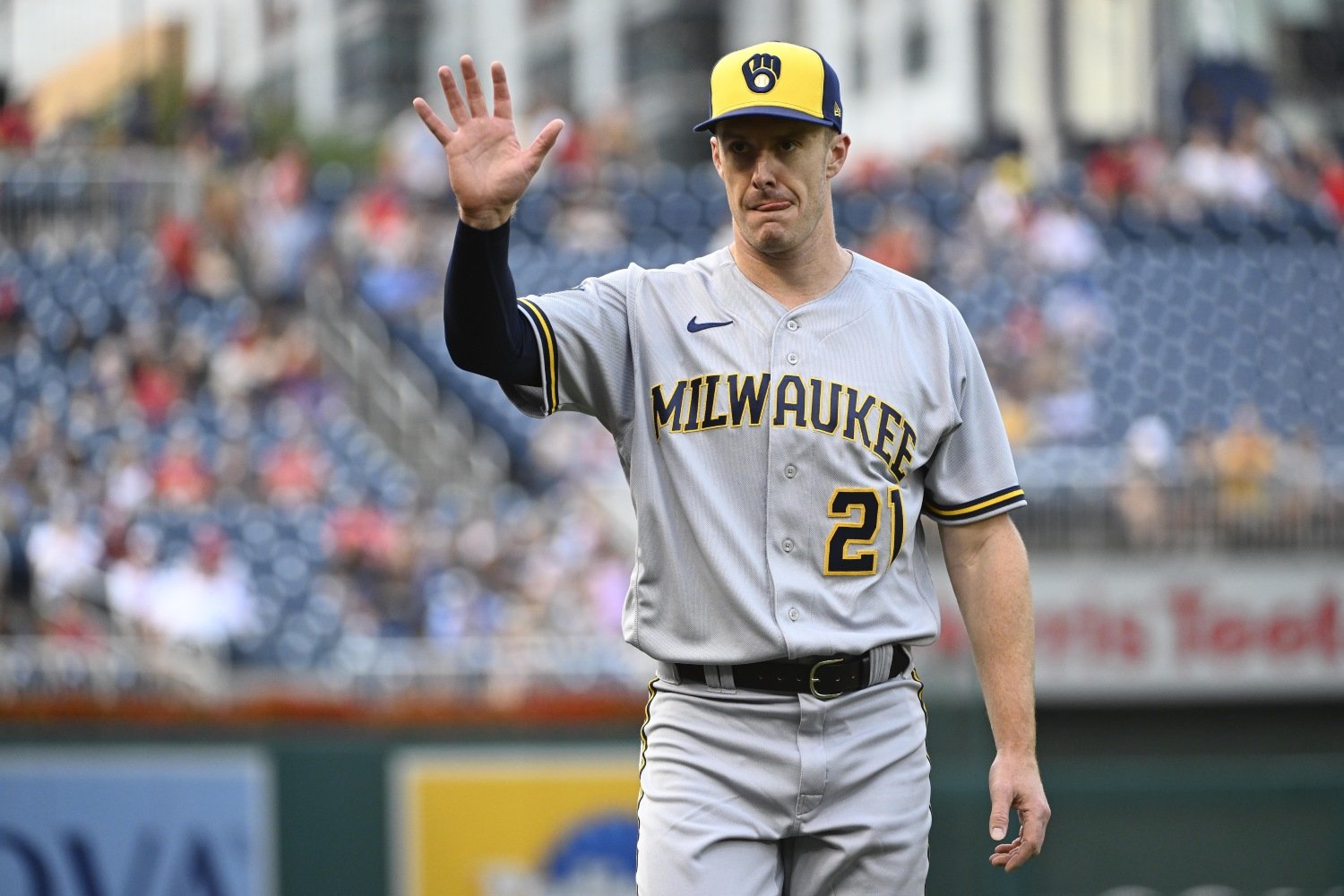 The roster is now set, but while some fans consider the likes of Mark Canha, Carlos Santana and Andrew Chafin smart, sensible upgrades, others are lamenting some bigger ones that might have been. Without further ado, let’s see what else they could have obtained; Jeimer Candelario – 3B Traded to: Chicago Cubs Cost: SS Kevin Made, LHP DJ Herz DJ Herz was an 8th-round pick in 2019, with a career 3.80 ERA in 66 starts in the minor leagues, with 360 strikeouts over 246 innings. He has a unique delivery, and has held right-handed hitters to a .197 batting average this year in Double A. He’s a talented pitcher whose funk and deception could make him a successful future starter at the back end of a rotation, although his walk rate of 15.1% does carry with it some reliever risk, mostly due to losing his release point, and he may never reach the big leagues unless his actions become more repeatable. Kevin Made is a defense-first shortstop, with a 65-grade arm and 60-grade glove, even as he’s added weight and lost a little mobility and range. He puts bat to ball at above-average rates, and has good discipline and a solid walk rate, giving him a high floor and a ceiling of being a league-average shortstop (though that’s a best-case scenario). Candelario has just gone 4-5 in his Cubs debut against the Reds. He's slashing .265/.348/.488 on the season, with 16 home runs, as well as being in the 93rd percentile for outs above average at third base, with great range and a slightly weaker arm for the hot corner. His underlying metrics of a .242 expected batting average and .413 expected slugging do show some regression may be incoming, but he has been one of the best third basemen in baseball and was a hot commodity as a result. He does have some weaknesses, particularly struggling against breaking balls this season, but on the whole, he has a chance to be a needle-mover at third. Could the Brewers have reasonably topped that? While having a lower ceiling, Justin Jarvis may have been a good trade chip here, along with a defense-first shortstop with a quality hit tool like Daniel Guilarte. Jarvis, of course, was dealt to New York just before this trade happened, so maybe the Nationals had interest in him, but the Brewers felt it better to use him in a 1-for-1 swap for a lower-upside lineup addition in Mark Canha. With Brian Anderson’s defense at third base, and Andrew Monasterio’s strong recent performance, the Brewers may have considered third base less of a need than their right field spot, where they’ve had limited production, and Anderson not covering ground particularly well in the outfield compared to how he defends the hot corner. Would this be a transaction you would have considered over acquiring Canha? CJ Cron and Randal Grichuk – 1B and OF Traded to: Los Angeles Angels Cost: RHP Jake Madden, LHP Mason Albright As always, the Rockies are looking for starting pitchers that can survive the high altitude and broad outfield expanse of Coors Field, with many free agents reluctant to play there due to the effect it will have on their future values. Both pitchers were at in A ball. Madden is a 6’6" fourth-round pick in 2022 with a 5.46 ERA and 66 strikeouts to 39 walks in 64 1/3 innings as a starter. He has wipeout stuff, but does carry some reliever risk, due to sketchy command of his fastball and subpar movement on the pitch despite its high velocity. Albright was a late-round pick in 2021 with a $1,250,000 signing bonus, with a 3.62 ERA in 14 starts that went fairly deep, allowing him to rack up 86 strikeouts and just 20 walks in 79 2/3 innings. He shows advanced command of his pitch mix and projects as a starter, with the potential upside of becoming a mid-rotation arm. Cron and Grichuk would have been exactly the kind of players the Brewers wanted, as evidenced by their pickups of Santana and Canha. However, there can be a fallout from players leaving Coors Field, including taking a little time to adjust. Cron has shown he can hit well away from Coors this year, but Grichuk’s production has dwindled a little, with a .946 OPS at home compared to a .782 OPS away from home this year. Both had the potential to be impact bats, but could have been more volatile than the steady production you’ll get from Santana and Canha--whose veteran presences are also valuable in a postseason run. Given both these pitchers were pitching below Double A, a comparable Brewers trade might have been headlined by someone like Logan Henderson, who flashes big potential with a 2.84 ERA this season and 67 strikeouts across 50 2/3 innings. He arguably has a higher ceiling than Albright, and an added lottery ticket arm to go with him may have sealed the deal. The Brewers likely have high hopes for Henderson, a valuable arm in what is a slightly pitching-deprived system, making this trade less attractive on the whole for the organization. Instead, by giving up a lottery ticket shortstop and Jarvis, they’ve probably paid less for similar, more consistent production. However, while being a liability in the field, Grichuk has an OPS of .869, and Cron appears to have been unfortunate, with an xSLG of .513 compared to his actual mark of .468, while still maintaining a .740 OPS on the road. Would this have been a better, more adventurous trade for the Brewers? Tommy Pham – Outfield Traded to: Arizona Diamondbacks Cost: Jeremy Rodriguez (Mets Included Cash consideration to increase prospect haul) Rodriguez was the 47th-ranked prospect in the international free-agent pool this year, and has appeared in just 37 games for the Diamondbacks DSL team, with six doubles, two triples and two home runs to go with 12 stolen bases. He's run a .348 OBP and .478 slugging percentage. The ability to hit for extra bases does stand out in the DSL, and he signed for $1.25 million while being one of the youngest players in the league. He’s a projectable shortstop, with advanced strike zone discipline and a nice left-handed swing, but it’s expected he has a lot of physical development left before there can be more concrete projections on him. He has potential, but is the very definition of a lottery ticket. Pham, on the other hand, is a proven contributor, with an xBA of .297 and xSlg of .524 this season; an average exit velocity of 92.9 mph and 47% hard hit rate; and a 21% strikeout rate. He’s a quality operator at the plate, with considerably more power than Canha has, while also having 11 stolen bases so far this year. A huge bat to add into the lineup, and an adequate defender in the outfield due to a strong throwing arm, albeit he doesn’t always get the best jumps on the ball (-1 OAA so far on the year). The one issue he faces is his personality, which could cause issues in the clubhouse, something the Brewers surr take more seriously after the Hader debacle last year. From infamous T-shirts to promises to fight fans who heckle him during games, as well as poor form during fantasy football leagues, Pham finds controversy everywhere he turns. There’s a myriad of reasons he may not fit the Brewers ethos, despite the unbridled quality in his bat, and it’s a big reason why his price wasn’t considerably higher. In terms of a comparable trade by the Brewers, potentially someone like Filippo di Turi or Demetrio Nadal could have beaten out the offer from the Diamondbacks. They're each players with potential and strong tools for their age, but are tough to project long-term because of that age and the numerous obstacles that will come as they move through the minor league system. Would Pham’s bat have outweighed his potentially toxic qualities? Should the Brewers have made an effort to steal him away from the Diamondbacks? Let me know in the comments below, or if you have any other trades you think the Brewers could have made before the deadline. All of these trades seem eminently possible for the Brewers front office to have made, without using any top-10 talent in what is now a system burgeoning with it. The reality is, anyone can get hot for two months, or cold for two months, and only time will tell if the decisions made were the right ones.
 -
Now that the trade deadline has passed, we can assess if the Brewers could have done more to upgrade their team. Spoiler: they could have. But would the cost have been worth it? The roster is now set, but while some fans consider the likes of Mark Canha, Carlos Santana and Andrew Chafin smart, sensible upgrades, others are lamenting some bigger ones that might have been. Without further ado, let’s see what else they could have obtained; Jeimer Candelario – 3B Traded to: Chicago Cubs Cost: SS Kevin Made, LHP DJ Herz DJ Herz was an 8th-round pick in 2019, with a career 3.80 ERA in 66 starts in the minor leagues, with 360 strikeouts over 246 innings. He has a unique delivery, and has held right-handed hitters to a .197 batting average this year in Double A. He’s a talented pitcher whose funk and deception could make him a successful future starter at the back end of a rotation, although his walk rate of 15.1% does carry with it some reliever risk, mostly due to losing his release point, and he may never reach the big leagues unless his actions become more repeatable. Kevin Made is a defense-first shortstop, with a 65-grade arm and 60-grade glove, even as he’s added weight and lost a little mobility and range. He puts bat to ball at above-average rates, and has good discipline and a solid walk rate, giving him a high floor and a ceiling of being a league-average shortstop (though that’s a best-case scenario). Candelario has just gone 4-5 in his Cubs debut against the Reds. He's slashing .265/.348/.488 on the season, with 16 home runs, as well as being in the 93rd percentile for outs above average at third base, with great range and a slightly weaker arm for the hot corner. His underlying metrics of a .242 expected batting average and .413 expected slugging do show some regression may be incoming, but he has been one of the best third basemen in baseball and was a hot commodity as a result. He does have some weaknesses, particularly struggling against breaking balls this season, but on the whole, he has a chance to be a needle-mover at third. Could the Brewers have reasonably topped that? While having a lower ceiling, Justin Jarvis may have been a good trade chip here, along with a defense-first shortstop with a quality hit tool like Daniel Guilarte. Jarvis, of course, was dealt to New York just before this trade happened, so maybe the Nationals had interest in him, but the Brewers felt it better to use him in a 1-for-1 swap for a lower-upside lineup addition in Mark Canha. With Brian Anderson’s defense at third base, and Andrew Monasterio’s strong recent performance, the Brewers may have considered third base less of a need than their right field spot, where they’ve had limited production, and Anderson not covering ground particularly well in the outfield compared to how he defends the hot corner. Would this be a transaction you would have considered over acquiring Canha? CJ Cron and Randal Grichuk – 1B and OF Traded to: Los Angeles Angels Cost: RHP Jake Madden, LHP Mason Albright As always, the Rockies are looking for starting pitchers that can survive the high altitude and broad outfield expanse of Coors Field, with many free agents reluctant to play there due to the effect it will have on their future values. Both pitchers were at in A ball. Madden is a 6’6" fourth-round pick in 2022 with a 5.46 ERA and 66 strikeouts to 39 walks in 64 1/3 innings as a starter. He has wipeout stuff, but does carry some reliever risk, due to sketchy command of his fastball and subpar movement on the pitch despite its high velocity. Albright was a late-round pick in 2021 with a $1,250,000 signing bonus, with a 3.62 ERA in 14 starts that went fairly deep, allowing him to rack up 86 strikeouts and just 20 walks in 79 2/3 innings. He shows advanced command of his pitch mix and projects as a starter, with the potential upside of becoming a mid-rotation arm. Cron and Grichuk would have been exactly the kind of players the Brewers wanted, as evidenced by their pickups of Santana and Canha. However, there can be a fallout from players leaving Coors Field, including taking a little time to adjust. Cron has shown he can hit well away from Coors this year, but Grichuk’s production has dwindled a little, with a .946 OPS at home compared to a .782 OPS away from home this year. Both had the potential to be impact bats, but could have been more volatile than the steady production you’ll get from Santana and Canha--whose veteran presences are also valuable in a postseason run. Given both these pitchers were pitching below Double A, a comparable Brewers trade might have been headlined by someone like Logan Henderson, who flashes big potential with a 2.84 ERA this season and 67 strikeouts across 50 2/3 innings. He arguably has a higher ceiling than Albright, and an added lottery ticket arm to go with him may have sealed the deal. The Brewers likely have high hopes for Henderson, a valuable arm in what is a slightly pitching-deprived system, making this trade less attractive on the whole for the organization. Instead, by giving up a lottery ticket shortstop and Jarvis, they’ve probably paid less for similar, more consistent production. However, while being a liability in the field, Grichuk has an OPS of .869, and Cron appears to have been unfortunate, with an xSLG of .513 compared to his actual mark of .468, while still maintaining a .740 OPS on the road. Would this have been a better, more adventurous trade for the Brewers? Tommy Pham – Outfield Traded to: Arizona Diamondbacks Cost: Jeremy Rodriguez (Mets Included Cash consideration to increase prospect haul) Rodriguez was the 47th-ranked prospect in the international free-agent pool this year, and has appeared in just 37 games for the Diamondbacks DSL team, with six doubles, two triples and two home runs to go with 12 stolen bases. He's run a .348 OBP and .478 slugging percentage. The ability to hit for extra bases does stand out in the DSL, and he signed for $1.25 million while being one of the youngest players in the league. He’s a projectable shortstop, with advanced strike zone discipline and a nice left-handed swing, but it’s expected he has a lot of physical development left before there can be more concrete projections on him. He has potential, but is the very definition of a lottery ticket. Pham, on the other hand, is a proven contributor, with an xBA of .297 and xSlg of .524 this season; an average exit velocity of 92.9 mph and 47% hard hit rate; and a 21% strikeout rate. He’s a quality operator at the plate, with considerably more power than Canha has, while also having 11 stolen bases so far this year. A huge bat to add into the lineup, and an adequate defender in the outfield due to a strong throwing arm, albeit he doesn’t always get the best jumps on the ball (-1 OAA so far on the year). The one issue he faces is his personality, which could cause issues in the clubhouse, something the Brewers surr take more seriously after the Hader debacle last year. From infamous T-shirts to promises to fight fans who heckle him during games, as well as poor form during fantasy football leagues, Pham finds controversy everywhere he turns. There’s a myriad of reasons he may not fit the Brewers ethos, despite the unbridled quality in his bat, and it’s a big reason why his price wasn’t considerably higher. In terms of a comparable trade by the Brewers, potentially someone like Filippo di Turi or Demetrio Nadal could have beaten out the offer from the Diamondbacks. They're each players with potential and strong tools for their age, but are tough to project long-term because of that age and the numerous obstacles that will come as they move through the minor league system. Would Pham’s bat have outweighed his potentially toxic qualities? Should the Brewers have made an effort to steal him away from the Diamondbacks? Let me know in the comments below, or if you have any other trades you think the Brewers could have made before the deadline. All of these trades seem eminently possible for the Brewers front office to have made, without using any top-10 talent in what is now a system burgeoning with it. The reality is, anyone can get hot for two months, or cold for two months, and only time will tell if the decisions made were the right ones. View full article
-
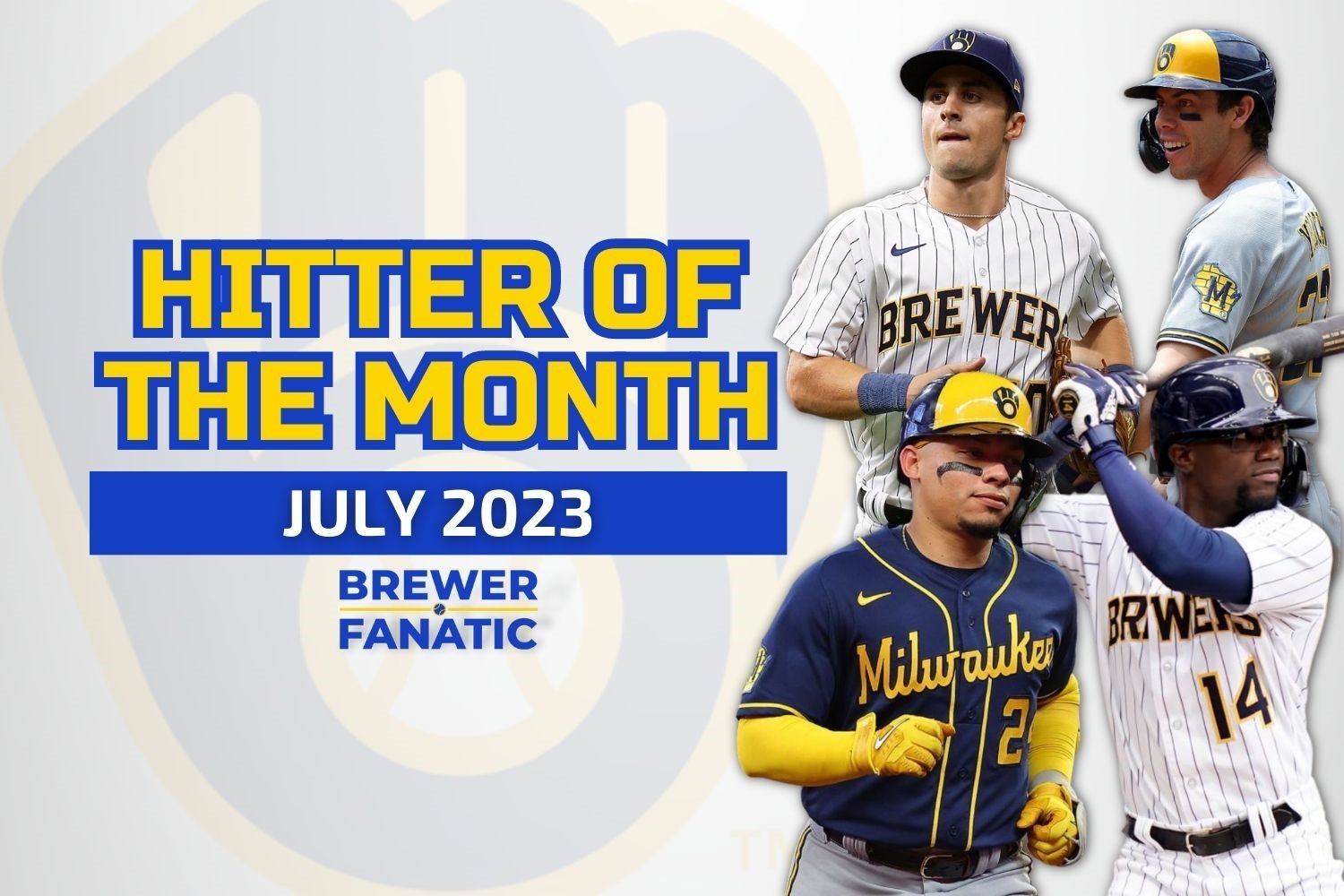 The Brewers pitching in July was good, as expected. But it was also fun to see that several hitters had really strong months as well. A rookie came up earlier in the month and earned more playing time. Then later in the month, another youngster debuted and provided a great spark late in the month. However, it was a veteran who has seemingly found a fountain of youth and is putting up numbers like he did five or more seasons ago. Before we discuss this month's Brewers Hitter of the Month, here are a few more Crew hitters who warrant recognition and discussion. Feel free to discuss the choices in the Comments section. Honorable Mentions William Contreras He’s incredibly unlucky not to be winning this month, having hit .365 and sporting a .955 OPS in July. He slugged .563 with three home runs and 13 extra base hits. Contreras has straight up mashed the baseball. He’s developed markedly from the streaky hitter the Braves traded, combining much improved defensive framing and pop times with a drastically reduced strikeout rate, leading to an .800 OPS bat from such a premium position, he’s been everything the Brewers dreamed of and more. While he is swinging and missing more against breaking pitches, he’s hitting them hard 57.9% of the time in July, a big jump from the 28% mark in June, as well as doubling the hard hit percentage on off speed pitches too. He’s not just a fastball hitter any more, and it’s provided some big wins for the Brewers when they needed it most. He could do with elevating the ball more often still, particularly against changeups, which average -20 degrees in July, but he has shown a steady improvement against breaking balls and fastballs in this category over the course of the season. Andruw Monasterio Since getting more regular playing time at third base with the injury to Brian Anderson, he can see himself in the lineup even when Anderson returns, potentially taking reps at second base as well due to his outstanding performance with the bat in July, sporting a .329/.390/.414 slash line with a 19% strikeout rate, and raking in particular against southpaws, he’s been a breath of fresh air, if over performing his expected numbers somewhat. The bat can play in this team however, and scoring 11 runs this month was the second highest on the team (along with Contreras), an aptitude to steal the occasional base, and good defense at the hot corner, he’s been a really pleasant surprise for this Brewers team, just a well rounded, smart baseball player that’s taken his opportunity with both hands Sal Frelick Never in contention to win this award due to a lack of big-league playing time with the late callup, but he deserves a nod for his elite bat to ball skills, with eight walks to five strikeouts (the majority of which were looking, he has barely any in zone swing and miss) and has a .269/.417/.423 slash line that has injected serious energy and excitement into the lineup, with both awe inspiring defense and stingy plate appearances, he’s brought at least a couple of wins that it’s unlikely Raimel Tapia would have influenced in the same way. Hitter of the Month – Christian Yelich For the second month in a row, Yelich was awe inspiring in July. He hit seven home runs across 23 games, with 22 RBI and a 1.015 OPS. He’s hitting the ball in the air more with a launch angle of six degrees compared to three degrees in June, which is a massive deal for Yelich, recording nine walks to just 12 strikeouts and has actually underperformed his expected metrics (he was expected to have a .340 batting average for July). His walk rate has dipped because he’s crushing pitches earlier in the count, and that’s a huge sign for him, given one trend that seems to follow his performance is how often he swings at the first pitch. In 2018 and 2019 these figures were at 28.9% and 30.3% respectively. In 2021 & 2022, they were at 22.8% and 21.7%. This season, it’s risen to 25.3%, not quite MVP caliber numbers but it’s rising as the year goes on. This is close to the kind of form Yelich produced to dominate in the second half of 2018, and it’s been consistent for several months now, almost since the start of May. He truly is back, and if he stays healthy, he’ll be key to the Brewers hopes both in the remainder of the season and in the playoffs. One interesting area he can still improve is his swing happiness around the edges of the strike zone. It’s resulting in less swing and miss than he had in 2019, but he’s also doing less damage when his swing realistically has almost no weaknesses save the down and in slider from right handers. That being said, the current approach has been so effective, and you’d be loath to change it when he had an ISO of .293 in July and his stats weren’t being propped up by extraordinary BABIP’s. His swing-% on fastballs when he gets ahead in the count has gone from 41.4% in April up to 60% in July, a huge increase and very important given how well he hits these pitches (xBA of .347, xSlg of .550 in July), while he’s taking more breaking pitches at the same time, just subtly tweaking his approach depending on what pitchers are attacking him with. In tandem with this, he’s reduced his ground ball rate against fastballs from 68% in June to 50% in July when he gets ahead in the count (still large, but for his exit velocities, again a massive difference maker). Overall he’s decreased his ground ball rate against both breaking pitches and fastball noticeably this last month, and it’s paying dividends. Yelich appears to be on a continuing upwards trajectory, and we could, excitingly, see yet more unlocked from him in terms of production. Can he sustain this torrid pace?
 -
With a really tough stretch of games against top tier teams in July, the Brewers offense took a step forward, with a number of quality contributions. One player, however, stood out from the chasing pack, and was truly lights out. The Brewers pitching in July was good, as expected. But it was also fun to see that several hitters had really strong months as well. A rookie came up earlier in the month and earned more playing time. Then later in the month, another youngster debuted and provided a great spark late in the month. However, it was a veteran who has seemingly found a fountain of youth and is putting up numbers like he did five or more seasons ago. Before we discuss this month's Brewers Hitter of the Month, here are a few more Crew hitters who warrant recognition and discussion. Feel free to discuss the choices in the Comments section. Honorable Mentions William Contreras He’s incredibly unlucky not to be winning this month, having hit .365 and sporting a .955 OPS in July. He slugged .563 with three home runs and 13 extra base hits. Contreras has straight up mashed the baseball. He’s developed markedly from the streaky hitter the Braves traded, combining much improved defensive framing and pop times with a drastically reduced strikeout rate, leading to an .800 OPS bat from such a premium position, he’s been everything the Brewers dreamed of and more. While he is swinging and missing more against breaking pitches, he’s hitting them hard 57.9% of the time in July, a big jump from the 28% mark in June, as well as doubling the hard hit percentage on off speed pitches too. He’s not just a fastball hitter any more, and it’s provided some big wins for the Brewers when they needed it most. He could do with elevating the ball more often still, particularly against changeups, which average -20 degrees in July, but he has shown a steady improvement against breaking balls and fastballs in this category over the course of the season. Andruw Monasterio Since getting more regular playing time at third base with the injury to Brian Anderson, he can see himself in the lineup even when Anderson returns, potentially taking reps at second base as well due to his outstanding performance with the bat in July, sporting a .329/.390/.414 slash line with a 19% strikeout rate, and raking in particular against southpaws, he’s been a breath of fresh air, if over performing his expected numbers somewhat. The bat can play in this team however, and scoring 11 runs this month was the second highest on the team (along with Contreras), an aptitude to steal the occasional base, and good defense at the hot corner, he’s been a really pleasant surprise for this Brewers team, just a well rounded, smart baseball player that’s taken his opportunity with both hands Sal Frelick Never in contention to win this award due to a lack of big-league playing time with the late callup, but he deserves a nod for his elite bat to ball skills, with eight walks to five strikeouts (the majority of which were looking, he has barely any in zone swing and miss) and has a .269/.417/.423 slash line that has injected serious energy and excitement into the lineup, with both awe inspiring defense and stingy plate appearances, he’s brought at least a couple of wins that it’s unlikely Raimel Tapia would have influenced in the same way. Hitter of the Month – Christian Yelich For the second month in a row, Yelich was awe inspiring in July. He hit seven home runs across 23 games, with 22 RBI and a 1.015 OPS. He’s hitting the ball in the air more with a launch angle of six degrees compared to three degrees in June, which is a massive deal for Yelich, recording nine walks to just 12 strikeouts and has actually underperformed his expected metrics (he was expected to have a .340 batting average for July). His walk rate has dipped because he’s crushing pitches earlier in the count, and that’s a huge sign for him, given one trend that seems to follow his performance is how often he swings at the first pitch. In 2018 and 2019 these figures were at 28.9% and 30.3% respectively. In 2021 & 2022, they were at 22.8% and 21.7%. This season, it’s risen to 25.3%, not quite MVP caliber numbers but it’s rising as the year goes on. This is close to the kind of form Yelich produced to dominate in the second half of 2018, and it’s been consistent for several months now, almost since the start of May. He truly is back, and if he stays healthy, he’ll be key to the Brewers hopes both in the remainder of the season and in the playoffs. One interesting area he can still improve is his swing happiness around the edges of the strike zone. It’s resulting in less swing and miss than he had in 2019, but he’s also doing less damage when his swing realistically has almost no weaknesses save the down and in slider from right handers. That being said, the current approach has been so effective, and you’d be loath to change it when he had an ISO of .293 in July and his stats weren’t being propped up by extraordinary BABIP’s. His swing-% on fastballs when he gets ahead in the count has gone from 41.4% in April up to 60% in July, a huge increase and very important given how well he hits these pitches (xBA of .347, xSlg of .550 in July), while he’s taking more breaking pitches at the same time, just subtly tweaking his approach depending on what pitchers are attacking him with. In tandem with this, he’s reduced his ground ball rate against fastballs from 68% in June to 50% in July when he gets ahead in the count (still large, but for his exit velocities, again a massive difference maker). Overall he’s decreased his ground ball rate against both breaking pitches and fastball noticeably this last month, and it’s paying dividends. Yelich appears to be on a continuing upwards trajectory, and we could, excitingly, see yet more unlocked from him in terms of production. Can he sustain this torrid pace? View full article
-
Hopefully get some excitement brewing at high A Wisconsin, especially with EBJ's injury and Misiorowskis promotion
- 9 replies
-
- 1
-
-
- mike boeve
- brock wilken
- (and 2 more)
-
I remember reading he had power, it's just the pounding i into the ground type... if he elevates with his strike zone discipline, that's a big big bat And yep to Wilken, if he was worked with a lot and started at Wisconsin next season, I wouldn't be averse to that. Though it'd be nice to see both of these guys in action at some point
- 9 replies
-
- 2
-
-
- mike boeve
- brock wilken
- (and 2 more)
-
Somehow with the schedule of difficulty in July featuring the high-flying Reds and six games against the Braves, the Brewers pitching has been quite incredible, particularly against the Reds offense with some big names standing up in both the rotation and in the bullpen. Who was the best among them all though? It was a solid month for Brewers started despite the fact that there were still some injured pitchers and others just coming back. The schedule wasn't easy, by any means, but the Brewers put together a nice stretch of good baseball, and that starts on the mound. Find out which pitchers led the way. Before we get to the pitcher of the month, here are a few honorable mentions that certainly deserve to be recognized. Honorable Mentions Joel Payamps Payamps has been an undisputed gem since arriving alongside Contreras in the Esteury Ruiz trade, and was truly lights out again in July with a number of close games. In 12 appearances, he conceded just two runs, going scoreless throughout July until running into the home run-happy Atlanta Braves in the third game of the series. He had recorded two saves, and his slider heavy approach has led to a lot of success, but over June and July it’s actually his fastball that has been incredible, with over a 50% whiff rate and a 100% chase rate in July, to complement a 71.4% chase rate on his slider. Devin Williams The late game innings have been monstrous from the Brewers, with Williams only slip up this month coming as a result of some unfortunate batted balls sneaking through against the Cubs, going 10/11 in save opportunities, with two earned runs across 11 2/3 innings of work. He’s got whiff rates of 48.3% on his fastball, and 52.6% on the changeup, nibbling around the edge of the strike zone with almost 50% of his pitches, meaning his electric stuff can be nearly impossible to hit, even after tangling hitters up with the location. He’s been perhaps better than Josh Hader ever was for the Brewers, and with Abner Uribe coming through, the Brewers stock of elite late inning relievers looks in good order. Hoby Milner Another lights out reliever who was undone only by the quality of the Atlanta Braves offense (and Marcell Ozuna suddenly finding form), Milner retained a 1.64 ERA in July with 11 innings conceding just two earned runs and 13 strikeouts, Milner is pushing to take over the seventh inning role from Elvis Peguero who struggled a little more this month. He doesn’t have much spin, he doesn’t throw hard, but he’s been incredibly effective against both right and left handed hitters this season after a shaky start, and his four seamer has a .121 xBA against it, ridiculous numbers on a pitch averaging 88.9 mph. He had a WHIP of just 0.73 in July, an outstanding effort. Pitcher of the Month – Corbin Burnes Corbin Burnes has found a level that he’s been searching for all year, with hitters sitting on the cutter and spitting on everything else. He’s adjusted what he throws and when, throwing curveballs almost twice as much this month when he gets ahead compared to June, just slightly tweaking his percentages and it’s been massive, with a curveball that has conceded just one hit, a single, in the entire month of July with a 56.4% whiff rate, matched by the solo single given up on his changeup which has a 41.7% whiff rate this month, as well as an in zone whiff rate of 42.1%. He’s making a big effort to stay in the strike zone more often and get ahead of hitters early, which has resulted in less cutters (he uses this over 70% of the time when he falls behind in the count). First pitch is often a cutter, which is in the strike zone 55% of the time, up by 8% from his last two months. In 0-0 counts, he’s at 60% in zone % with his sinker, 56% with his cutter and 52% with his curveball, as hitters have been very patient to start with against him earlier, in the year, not swinging and trying to get ahead early then sit on the inevitable cutter coming their way. When he gets into an 0-1 count, he has a 75% chase rate on changeups, and 50% chase rate on curveballs this month. He didn’t previously use the curveball at all this year in an 0-1 count. The reason this is so crucial is because of these stats: Behind the Batter: .250/.453/.429 for an .881 OPS Ahead of the Batter: .157/.174/.203 for a .377 OPS He is an incredible pitcher when he gets ahead, but a slight tweak to his 0-1 arsenal, and staying in the zone more often on his first pitch allows him to get ahead and stay ahead where his stuff can really play up to its full potential. As a result, in July he has a WHIP of 0.64, a .102 batting average, 42 strikeouts in 33 innings and a 1.64 ERA, truly elite stuff, and has brought a confidence to the rotation that even with regression to Julio Teheran likely, and Colin Rea too, the big boys are coming around to hold their own and carry the Brewers onwards. Was there a pitcher you enjoyed watching this month who I’ve missed? Was Burnes your pitcher of the month? View full article
-
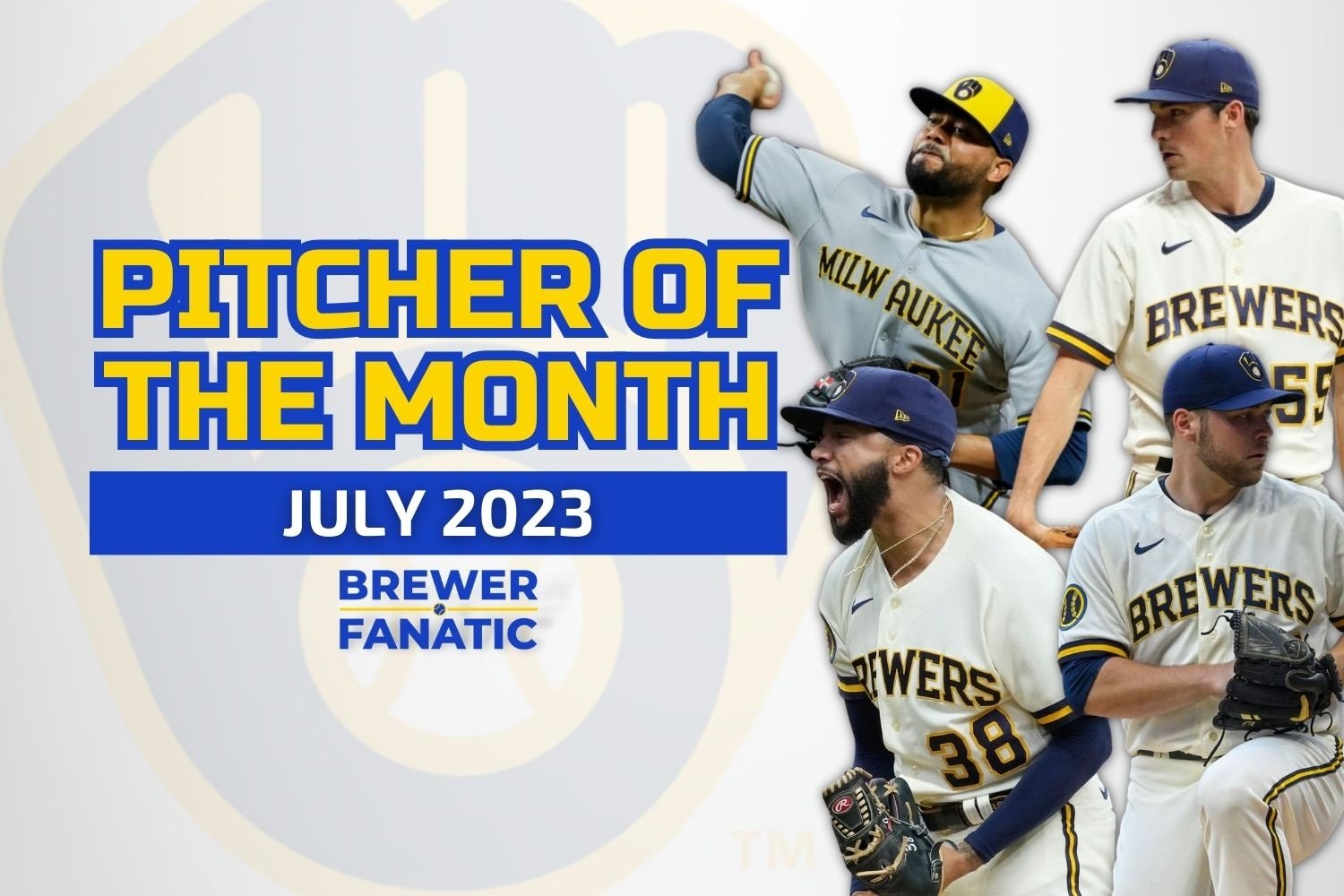 It was a solid month for Brewers started despite the fact that there were still some injured pitchers and others just coming back. The schedule wasn't easy, by any means, but the Brewers put together a nice stretch of good baseball, and that starts on the mound. Find out which pitchers led the way. Before we get to the pitcher of the month, here are a few honorable mentions that certainly deserve to be recognized. Honorable Mentions Joel Payamps Payamps has been an undisputed gem since arriving alongside Contreras in the Esteury Ruiz trade, and was truly lights out again in July with a number of close games. In 12 appearances, he conceded just two runs, going scoreless throughout July until running into the home run-happy Atlanta Braves in the third game of the series. He had recorded two saves, and his slider heavy approach has led to a lot of success, but over June and July it’s actually his fastball that has been incredible, with over a 50% whiff rate and a 100% chase rate in July, to complement a 71.4% chase rate on his slider. Devin Williams The late game innings have been monstrous from the Brewers, with Williams only slip up this month coming as a result of some unfortunate batted balls sneaking through against the Cubs, going 10/11 in save opportunities, with two earned runs across 11 2/3 innings of work. He’s got whiff rates of 48.3% on his fastball, and 52.6% on the changeup, nibbling around the edge of the strike zone with almost 50% of his pitches, meaning his electric stuff can be nearly impossible to hit, even after tangling hitters up with the location. He’s been perhaps better than Josh Hader ever was for the Brewers, and with Abner Uribe coming through, the Brewers stock of elite late inning relievers looks in good order. Hoby Milner Another lights out reliever who was undone only by the quality of the Atlanta Braves offense (and Marcell Ozuna suddenly finding form), Milner retained a 1.64 ERA in July with 11 innings conceding just two earned runs and 13 strikeouts, Milner is pushing to take over the seventh inning role from Elvis Peguero who struggled a little more this month. He doesn’t have much spin, he doesn’t throw hard, but he’s been incredibly effective against both right and left handed hitters this season after a shaky start, and his four seamer has a .121 xBA against it, ridiculous numbers on a pitch averaging 88.9 mph. He had a WHIP of just 0.73 in July, an outstanding effort. Pitcher of the Month – Corbin Burnes Corbin Burnes has found a level that he’s been searching for all year, with hitters sitting on the cutter and spitting on everything else. He’s adjusted what he throws and when, throwing curveballs almost twice as much this month when he gets ahead compared to June, just slightly tweaking his percentages and it’s been massive, with a curveball that has conceded just one hit, a single, in the entire month of July with a 56.4% whiff rate, matched by the solo single given up on his changeup which has a 41.7% whiff rate this month, as well as an in zone whiff rate of 42.1%. He’s making a big effort to stay in the strike zone more often and get ahead of hitters early, which has resulted in less cutters (he uses this over 70% of the time when he falls behind in the count). First pitch is often a cutter, which is in the strike zone 55% of the time, up by 8% from his last two months. In 0-0 counts, he’s at 60% in zone % with his sinker, 56% with his cutter and 52% with his curveball, as hitters have been very patient to start with against him earlier, in the year, not swinging and trying to get ahead early then sit on the inevitable cutter coming their way. When he gets into an 0-1 count, he has a 75% chase rate on changeups, and 50% chase rate on curveballs this month. He didn’t previously use the curveball at all this year in an 0-1 count. The reason this is so crucial is because of these stats: Behind the Batter: .250/.453/.429 for an .881 OPS Ahead of the Batter: .157/.174/.203 for a .377 OPS He is an incredible pitcher when he gets ahead, but a slight tweak to his 0-1 arsenal, and staying in the zone more often on his first pitch allows him to get ahead and stay ahead where his stuff can really play up to its full potential. As a result, in July he has a WHIP of 0.64, a .102 batting average, 42 strikeouts in 33 innings and a 1.64 ERA, truly elite stuff, and has brought a confidence to the rotation that even with regression to Julio Teheran likely, and Colin Rea too, the big boys are coming around to hold their own and carry the Brewers onwards. Was there a pitcher you enjoyed watching this month who I’ve missed? Was Burnes your pitcher of the month?
 -
Boeve was supposed to have limited power due to a lot of ground balls right? Surprised he homered so early in his pro career, but great to see for both! More worrying for Wilken is the strikeouts, but hoping that it's not huge gin his swing and they can give him better zone contact with some work he winter, because that power is nuts
- 9 replies
-
- 2
-
-
- mike boeve
- brock wilken
- (and 2 more)
-
The Brewers have lengthened their lineup and increased their offensive floor considerably over the last two days. What else do they need for the final push? Image courtesy of © Brett Davis-USA TODAY Sports Through acquisitions of outfielder Mark Canha and first baseman Carlos Santana, the Brewers have been making moves to address their issues in preparation for a postseason run. If they abandon their premium on defense, Canha could see more time in the outfield, but is likely cycling through reps at first and as the designated hitter, along with Santana, addressing a substantial need. However, to really solidify this team, there is more that could be done. The Bullpen Of late, the Brewers' primary seventh-inning man, Elvis Peguero, has shown signs of wear and tear, leading to a 6.39 ERA in July, with nine earned runs across 12.2 innings. Obviously, that culminated in his getting touched up in Monday night's loss to the Nationals. Hoby Milner’s form may push him into that higher-leverage spot, but the bullpen has been so crucial to their recent success that upgrades may be needed. One thing that could be added is an arm or two for the taxi squad--someone who can get outs at the big-league level, but also has options remaining. Peter Strzelecki may fit this mold, if he can show some of the form of last season. He has given up seven earned runs over his last eight innings with the Nashville Sounds, but did make four straight solid performances before being recalled. With relievers who have a track record of success, even a good stretch that brief can indicate that a guy is fixed. They also have to factor in the ability for Aaron Ashby to return in a bullpen role, but relying on an arm that’s been out for most of the season can be problematic (see: Justin Wilson). The Brewers have bullpen arms that could get major-league outs in Nashville at the moment, with Clayton Andrews performing well; the potential to do the Brewers-y thing and ease Robert Gasser in with a long relief role; and Thyago Vieira teasing his potential, being so close at times and so far away at others. In essence, the taxi squad role should be filled by these players, should they be needed, meaning an upgrade in the relief corps should be just that, an upgrade. Some options are: Keynan Middleton Middleton has produced a 3.96 ERA this season, with a 1.35 WHIP and 47 strikeouts through 36 innings. His most common pitch is the changeup, with only 27 percent of his offerings being fastballs this season, but the change in approach has worked well for him. On top of making his fastball dramatically more effective, he’s getting exit velocities of just 86 mph and 84.1 mph on his changeup and slider, respectively. With a 95th-percentile whiff rate, 89th-percentile strikeout rate and 71st-percentile hard-hit rate, this is the type of reliever who would do very well in the Brewers' ranks, if he can avoid barrels. He’s throwing a lot of first-pitch strikes, though he does walk hitters a little too often at times. A potentially valuable arm who’s more under the radar than some names being bandied about. He’s a free agent at year's end, so he shouldn’t come at a daunting cost, although that's also because he's more middle reliever than backend monster. Adam Ottavino A bigger name with a better track record and a bigger salary ($2.5 million left at the deadline), Ottavino has a 3.35 ERA with a 1.16 WHIP so far this season. A master at avoiding the barrel of the bat, his expected batting average (xBA) is 88th-percentile, and his expected slugging average (xSLG) is 92nd-percentile. Much of that is thanks to a wipeout sweeper that plays off his sinker beautifully to garner a ton of outs. You know the quality you’ll be getting: a player with a big-game temperament with a contract expiring at the end of the year with the Mets, who are in fire sale mode. He could do with shelving his cutter, which has been marmalized this year, but outside of that, you’ve got a late-inning reliever who can handle big games down the stretch. The Brewers are very well-known to make a reliever acquisition most seasons, and may look to do so now in light of Wilson’s injury, depending on his prognosis for the strain. Outside of this, the Brewers haven’t got many options to improve, with minimal up-the-middle help that won’t be overpriced, such as Tim Anderson. Jeimer Candelario is off the market to the Cubs as a third basemen, and they’re unlikely to make a big addition to the outfield, in view of the quality of the defensive options they already have combined with their desire to keep true to the run prevention strategy. They’re unlikely to be able to keep an additional starting pitcher on the roster for long, unless they have an option, with Wade Miley returning tomorrow and Brandon Woodruff potentially next week. They could have Colin Rea and Julio Teheran fighting for a spot, with Gasser lurking in the wings at Triple A. In short, the Brewers have a big boost coming to their rotation, but they are already above-average in the bullpen and average offensively in most positions, meaning an upgrade would have to be a big one, and could cost a lot of prospect capital they’re unlikely to want to part with. If the Brewers made one more acquisition before the trade deadline, who would you want it to be? View full article
-
 Through acquisitions of outfielder Mark Canha and first baseman Carlos Santana, the Brewers have been making moves to address their issues in preparation for a postseason run. If they abandon their premium on defense, Canha could see more time in the outfield, but is likely cycling through reps at first and as the designated hitter, along with Santana, addressing a substantial need. However, to really solidify this team, there is more that could be done. The Bullpen Of late, the Brewers' primary seventh-inning man, Elvis Peguero, has shown signs of wear and tear, leading to a 6.39 ERA in July, with nine earned runs across 12.2 innings. Obviously, that culminated in his getting touched up in Monday night's loss to the Nationals. Hoby Milner’s form may push him into that higher-leverage spot, but the bullpen has been so crucial to their recent success that upgrades may be needed. One thing that could be added is an arm or two for the taxi squad--someone who can get outs at the big-league level, but also has options remaining. Peter Strzelecki may fit this mold, if he can show some of the form of last season. He has given up seven earned runs over his last eight innings with the Nashville Sounds, but did make four straight solid performances before being recalled. With relievers who have a track record of success, even a good stretch that brief can indicate that a guy is fixed. They also have to factor in the ability for Aaron Ashby to return in a bullpen role, but relying on an arm that’s been out for most of the season can be problematic (see: Justin Wilson). The Brewers have bullpen arms that could get major-league outs in Nashville at the moment, with Clayton Andrews performing well; the potential to do the Brewers-y thing and ease Robert Gasser in with a long relief role; and Thyago Vieira teasing his potential, being so close at times and so far away at others. In essence, the taxi squad role should be filled by these players, should they be needed, meaning an upgrade in the relief corps should be just that, an upgrade. Some options are: Keynan Middleton Middleton has produced a 3.96 ERA this season, with a 1.35 WHIP and 47 strikeouts through 36 innings. His most common pitch is the changeup, with only 27 percent of his offerings being fastballs this season, but the change in approach has worked well for him. On top of making his fastball dramatically more effective, he’s getting exit velocities of just 86 mph and 84.1 mph on his changeup and slider, respectively. With a 95th-percentile whiff rate, 89th-percentile strikeout rate and 71st-percentile hard-hit rate, this is the type of reliever who would do very well in the Brewers' ranks, if he can avoid barrels. He’s throwing a lot of first-pitch strikes, though he does walk hitters a little too often at times. A potentially valuable arm who’s more under the radar than some names being bandied about. He’s a free agent at year's end, so he shouldn’t come at a daunting cost, although that's also because he's more middle reliever than backend monster. Adam Ottavino A bigger name with a better track record and a bigger salary ($2.5 million left at the deadline), Ottavino has a 3.35 ERA with a 1.16 WHIP so far this season. A master at avoiding the barrel of the bat, his expected batting average (xBA) is 88th-percentile, and his expected slugging average (xSLG) is 92nd-percentile. Much of that is thanks to a wipeout sweeper that plays off his sinker beautifully to garner a ton of outs. You know the quality you’ll be getting: a player with a big-game temperament with a contract expiring at the end of the year with the Mets, who are in fire sale mode. He could do with shelving his cutter, which has been marmalized this year, but outside of that, you’ve got a late-inning reliever who can handle big games down the stretch. The Brewers are very well-known to make a reliever acquisition most seasons, and may look to do so now in light of Wilson’s injury, depending on his prognosis for the strain. Outside of this, the Brewers haven’t got many options to improve, with minimal up-the-middle help that won’t be overpriced, such as Tim Anderson. Jeimer Candelario is off the market to the Cubs as a third basemen, and they’re unlikely to make a big addition to the outfield, in view of the quality of the defensive options they already have combined with their desire to keep true to the run prevention strategy. They’re unlikely to be able to keep an additional starting pitcher on the roster for long, unless they have an option, with Wade Miley returning tomorrow and Brandon Woodruff potentially next week. They could have Colin Rea and Julio Teheran fighting for a spot, with Gasser lurking in the wings at Triple A. In short, the Brewers have a big boost coming to their rotation, but they are already above-average in the bullpen and average offensively in most positions, meaning an upgrade would have to be a big one, and could cost a lot of prospect capital they’re unlikely to want to part with. If the Brewers made one more acquisition before the trade deadline, who would you want it to be?
 -
Without seeming to do a whole lot in July, the Brewers have taken a big step forward, and look more primed than ever for a postseason effort, despite a challenging schedule in the month of July. What has changed since June? Image courtesy of © Dale Zanine-USA TODAY Sports At the end of June, the Brewers were one game back of a surging Cincinnati Reds club who had caught fire following the promotions of a few rookies, with some remarkable offensive production covering a struggling rotation. Milwaukee was just four games above a .500 record, and it felt like they had barely earned that. They were the worst in the league in production from the right field, first base and designated hitter spots, as well as getting poor production from second base, while Willy Adames was struggling at the plate, and Brian Anderson proved very streaky at third. The division looks incredibly close as it stands, but the Brewers should have a lot more optimism moving forward, as their roster begins to bulge with talent. The First Base/Designated Hitter While making it clear the Brewers haven’t given up on Rowdy Tellez coming back and performing at a high level some time in mid-August, they had two slots here ideal for bat-first talent. Between Tellez’s injury and Owen Miller’s struggles at the plate since the month of May ended (while Keston Hiura struggles to get truly locked in at Nashville), the front office looked elsewhere. Insert Carlos Santana, a man reputed to have a big clubhouse effect and a premier defensive first baseman, two things that fit the DNA of the club. He provides a real consistency in the lineup, being a switch-hitter with extreme patience at the plate, as illustrated by his 17.4% strikeout rate and 11.6% walk rate. He essentially lengthens the order, given how William Contreras and Christian Yelich have almost singlehandedly carried the offense in July. We haven’t seen Miller's bat since the trade, which can only be a good thing, and Santana popped his first homer against the Braves. Santana has been hot since the All-Star break, with a .963 OPS. Between him and Rowdy, the Brewers have home run power that can make a difference. Starting Pitching Wade Miley, Julio Teheran and Colin Rea were almost holding the rotation together coming into June, with subpar performances from the likes of Corbin Burnes and Freddy Peralta really struggling to find their best form, and more crucially, their strikeouts. Peralta had a blow-up outing against the Atlanta Braves, whose offense is otherworldly, but sandwiched that with two starts against the Reds where he almost had a no-hitter in one, then struck out 13 across six innings in the other. The Brewers coaching staff talked about trying to get him to enjoy himself more on the mound and let his personality out, and little mental adjustments can make a world of difference. Overall, he struck out 34 in 22 1/3 innings for a 3.63 ERA in the month of June. Burnes has been, quite simply, lights out, especially since the break, embracing changing up his pitch mix and tapping into some real form while he does so. His only loss since the break came as a result of some awful batted-ball luck and a poor offensive showing. Coming into the month, he had fewer strikeouts than innings pitched, but has come out the other side with 42 Ks in July across 33 innings, and one more start to come against the Nationals tonight. There was a thought that, given the way the rotation was going (especially the two aces of the staff while Woodruff was down), reaching the playoffs would be almost pointless. Burnes and Peralta just couldn’t pitch with any authority in the postseason in their April and May iterations. Not so now, and on top of that, the Brewers are maybe just a week or two away from adding Woodruff back in and being a truly elite rotation again. Right Field Being regularly manned by Blake Perkins, whose quality defense is offset by his relatively poor performance with the bat, as well as Tyrone Taylor’s scuffles earlier in the season, this was another area where even an average bat could make a massive difference for the Brewers. Enter Sal Frelick, whose incredible range has seen him make a number of remarkable catches since his debut, but it’s the bat that has changed things. He has a regular, big cut at the ball until he gets to two strikes, and then becomes a brick wall, shortening his swing and using his hands to simply direct the ball into gaps, without a care in the world for exit velocity. He’s shown he can hit them out of the park when the pitch is in his wheelhouse, but it’s the 11.1% strikeout rate and .438 OBP that really stand out so far. Frelick gets on base, and has again lengthened the Brewers lineup through his ability to do so. He’s a pesky hitter, like Santana, and interestingly, he hasn’t swung at a first pitch yet this season. He's running a 96.4% contact rate in the strike zone, which is absurd. An average offense is all this rotation needs to get the job done over the final two months of the season, and Frelick brings the Brewers one step closer to that. Third Base Andruw Monasterio was not a name on many fans' lips at the start of the season, but he has provided consistency since Brian Anderson’s injury that had been sorely lacking beforehand. Not likely to hit for much home run power, but with the ability to walk (11.8% walk rate) and strong bat-to-ball skills while regularly keeping the ball off the ground (just a 37.5% ground ball rate), he provides a quality at-bat and has been really sound defensively at the hot corner, with more range (but less arm) than Anderson. He is due for some regression, but that's fine. He can regress and still have value as a role player. Most crucial is what he’s brought against left handers, hitting for a .970 OPS against southpaws and being a big part in righting the ship against them for a team that really struggled against them early on. In July alone, upon getting more regular playing time, he has hit .333/.397/.424, for an OPS of .821. Again, this is a small sample, and the underlying metrics suggest that the results are less than perfectly sustainable, but he has shown he has a developing bat at each level of the minor leagues, and he could keep improving with more time at the major-league level, too. Second Base Brice Turang’s smoothness at second base, and his range, are amazing to watch, and they're a big reason for the Brewers' success this season, with the sheer volume of ground-ball pitchers they possess. That being said, his first stint in the majors didn’t go well, with a plummeting OPS and a strikeout rate that just didn’t work with his lack of power. Since returning however, Turang has improved his floor considerably, most notably with an improved walk rate that gave him a .333 OBP in July. He’s not hitting consistently or for power yet, but he’s shown an ability to learn and adapt at every step up in his career, and this can only come through exposure to the top level of pitching. Getting an on base percentage like that from the bottom of your lineup, with Christian Yelich coming up immediately afterward, can only be a good thing, while the defensive premium of having both Turang and Adames up the middle is huge for the strategy of run prevention. Realistically, the Brewers need Adames and Tellez to start performing more to their capabilities in order to become an above-average offense, and the lack of power has hurt them a little in July. Yelich and Contreras have been almost the only places from which extra-base hits have come, but they have found the starting pitching that can dominate in October and noticeably improved their offensive floor with the acquisition of Santana, the promotion of Frelick, and the improved performance of Monasterio and (to a lesser extent) Turang. One more big bat could make all the difference, particularly if it allowed an average contribution offensively from second base or center field (altough Joey Wiemer looks to have developed a two-strike approach that’s borne recent fruits), but simply by passing the baton more, they can get the runs they need to get into the postseason and beyond. They fully deserved their 16-10 record in July. Keep this up, especially with a weaker schedule incoming, and they’ll be feeling very good about their chances in the postseason. View full article
-
- 2
-
-
- 2023 trade deadline
- carlos santana
- (and 3 more)
-
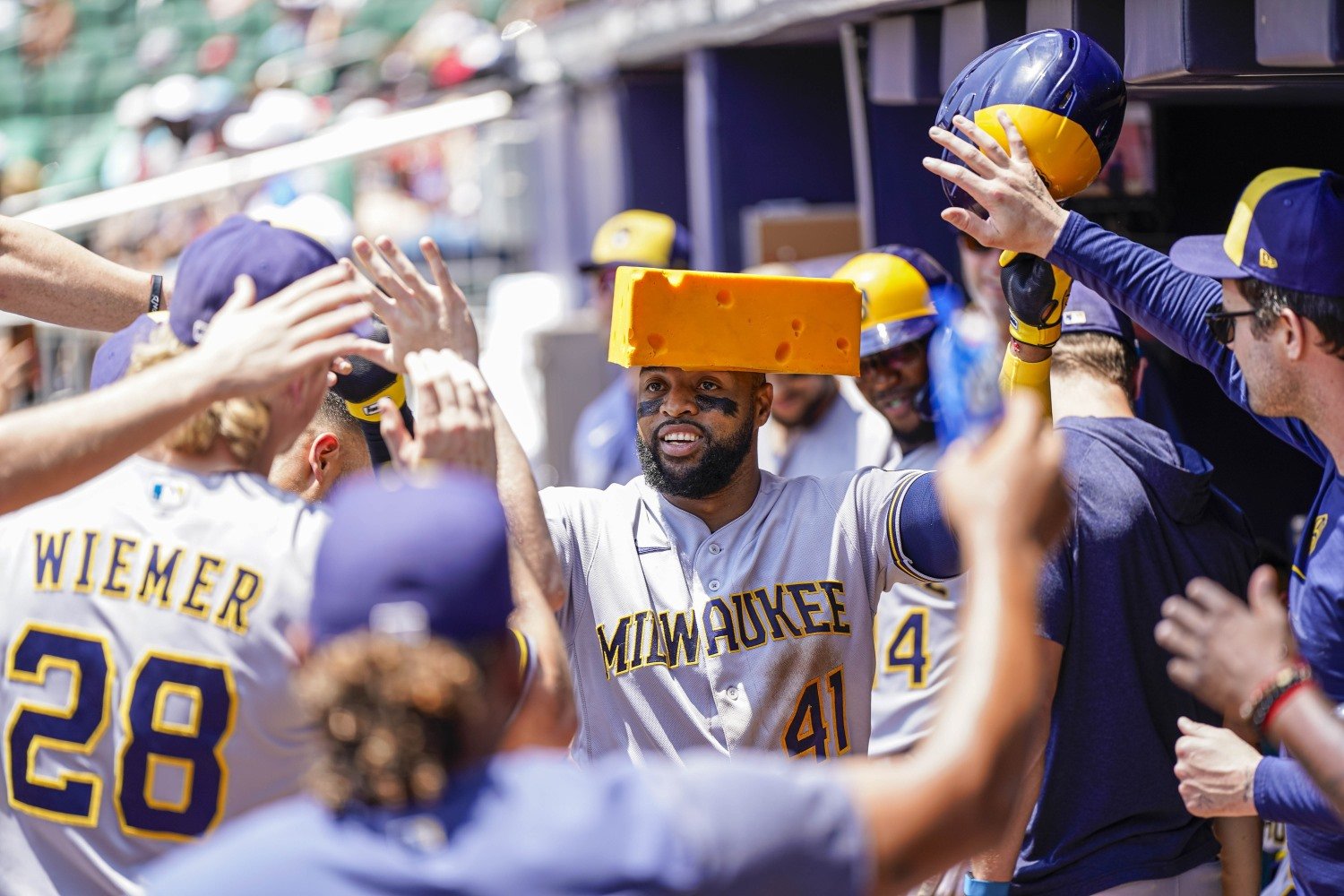 At the end of June, the Brewers were one game back of a surging Cincinnati Reds club who had caught fire following the promotions of a few rookies, with some remarkable offensive production covering a struggling rotation. Milwaukee was just four games above a .500 record, and it felt like they had barely earned that. They were the worst in the league in production from the right field, first base and designated hitter spots, as well as getting poor production from second base, while Willy Adames was struggling at the plate, and Brian Anderson proved very streaky at third. The division looks incredibly close as it stands, but the Brewers should have a lot more optimism moving forward, as their roster begins to bulge with talent. The First Base/Designated Hitter While making it clear the Brewers haven’t given up on Rowdy Tellez coming back and performing at a high level some time in mid-August, they had two slots here ideal for bat-first talent. Between Tellez’s injury and Owen Miller’s struggles at the plate since the month of May ended (while Keston Hiura struggles to get truly locked in at Nashville), the front office looked elsewhere. Insert Carlos Santana, a man reputed to have a big clubhouse effect and a premier defensive first baseman, two things that fit the DNA of the club. He provides a real consistency in the lineup, being a switch-hitter with extreme patience at the plate, as illustrated by his 17.4% strikeout rate and 11.6% walk rate. He essentially lengthens the order, given how William Contreras and Christian Yelich have almost singlehandedly carried the offense in July. We haven’t seen Miller's bat since the trade, which can only be a good thing, and Santana popped his first homer against the Braves. Santana has been hot since the All-Star break, with a .963 OPS. Between him and Rowdy, the Brewers have home run power that can make a difference. Starting Pitching Wade Miley, Julio Teheran and Colin Rea were almost holding the rotation together coming into June, with subpar performances from the likes of Corbin Burnes and Freddy Peralta really struggling to find their best form, and more crucially, their strikeouts. Peralta had a blow-up outing against the Atlanta Braves, whose offense is otherworldly, but sandwiched that with two starts against the Reds where he almost had a no-hitter in one, then struck out 13 across six innings in the other. The Brewers coaching staff talked about trying to get him to enjoy himself more on the mound and let his personality out, and little mental adjustments can make a world of difference. Overall, he struck out 34 in 22 1/3 innings for a 3.63 ERA in the month of June. Burnes has been, quite simply, lights out, especially since the break, embracing changing up his pitch mix and tapping into some real form while he does so. His only loss since the break came as a result of some awful batted-ball luck and a poor offensive showing. Coming into the month, he had fewer strikeouts than innings pitched, but has come out the other side with 42 Ks in July across 33 innings, and one more start to come against the Nationals tonight. There was a thought that, given the way the rotation was going (especially the two aces of the staff while Woodruff was down), reaching the playoffs would be almost pointless. Burnes and Peralta just couldn’t pitch with any authority in the postseason in their April and May iterations. Not so now, and on top of that, the Brewers are maybe just a week or two away from adding Woodruff back in and being a truly elite rotation again. Right Field Being regularly manned by Blake Perkins, whose quality defense is offset by his relatively poor performance with the bat, as well as Tyrone Taylor’s scuffles earlier in the season, this was another area where even an average bat could make a massive difference for the Brewers. Enter Sal Frelick, whose incredible range has seen him make a number of remarkable catches since his debut, but it’s the bat that has changed things. He has a regular, big cut at the ball until he gets to two strikes, and then becomes a brick wall, shortening his swing and using his hands to simply direct the ball into gaps, without a care in the world for exit velocity. He’s shown he can hit them out of the park when the pitch is in his wheelhouse, but it’s the 11.1% strikeout rate and .438 OBP that really stand out so far. Frelick gets on base, and has again lengthened the Brewers lineup through his ability to do so. He’s a pesky hitter, like Santana, and interestingly, he hasn’t swung at a first pitch yet this season. He's running a 96.4% contact rate in the strike zone, which is absurd. An average offense is all this rotation needs to get the job done over the final two months of the season, and Frelick brings the Brewers one step closer to that. Third Base Andruw Monasterio was not a name on many fans' lips at the start of the season, but he has provided consistency since Brian Anderson’s injury that had been sorely lacking beforehand. Not likely to hit for much home run power, but with the ability to walk (11.8% walk rate) and strong bat-to-ball skills while regularly keeping the ball off the ground (just a 37.5% ground ball rate), he provides a quality at-bat and has been really sound defensively at the hot corner, with more range (but less arm) than Anderson. He is due for some regression, but that's fine. He can regress and still have value as a role player. Most crucial is what he’s brought against left handers, hitting for a .970 OPS against southpaws and being a big part in righting the ship against them for a team that really struggled against them early on. In July alone, upon getting more regular playing time, he has hit .333/.397/.424, for an OPS of .821. Again, this is a small sample, and the underlying metrics suggest that the results are less than perfectly sustainable, but he has shown he has a developing bat at each level of the minor leagues, and he could keep improving with more time at the major-league level, too. Second Base Brice Turang’s smoothness at second base, and his range, are amazing to watch, and they're a big reason for the Brewers' success this season, with the sheer volume of ground-ball pitchers they possess. That being said, his first stint in the majors didn’t go well, with a plummeting OPS and a strikeout rate that just didn’t work with his lack of power. Since returning however, Turang has improved his floor considerably, most notably with an improved walk rate that gave him a .333 OBP in July. He’s not hitting consistently or for power yet, but he’s shown an ability to learn and adapt at every step up in his career, and this can only come through exposure to the top level of pitching. Getting an on base percentage like that from the bottom of your lineup, with Christian Yelich coming up immediately afterward, can only be a good thing, while the defensive premium of having both Turang and Adames up the middle is huge for the strategy of run prevention. Realistically, the Brewers need Adames and Tellez to start performing more to their capabilities in order to become an above-average offense, and the lack of power has hurt them a little in July. Yelich and Contreras have been almost the only places from which extra-base hits have come, but they have found the starting pitching that can dominate in October and noticeably improved their offensive floor with the acquisition of Santana, the promotion of Frelick, and the improved performance of Monasterio and (to a lesser extent) Turang. One more big bat could make all the difference, particularly if it allowed an average contribution offensively from second base or center field (altough Joey Wiemer looks to have developed a two-strike approach that’s borne recent fruits), but simply by passing the baton more, they can get the runs they need to get into the postseason and beyond. They fully deserved their 16-10 record in July. Keep this up, especially with a weaker schedule incoming, and they’ll be feeling very good about their chances in the postseason.
 -
Article: Keep Calm, and Wait for Rowdy
Jake McKibbin replied to Jake McKibbin's topic in Brewer Fanatic Front Page News
I think the forearm was a legitimate reason for his bat speed being slightly below where it normally is He was still hitting the ball hard, and he's for my money closer to an .800 OPS than he will be to a sub .500 OPS Definitely not a given that he pulls it off of course, but if you want a power 1B/DH to take a swing on, he's a better hope than CJ Cron
