



Jake McKibbin
-
Posts
2,394 -
Joined
-
Last visited
-
Days Won
6
Content Type
Profiles
Forums
Blogs
Events
News
2026 Milwaukee Brewers Top Prospects Ranking
Milwaukee Brewers Videos
2022 Milwaukee Brewers Draft Picks
Milwaukee Brewers Free Agent & Trade Rumors, Notes, & Tidbits
Guides & Resources
2023 Milwaukee Brewers Draft Picks
2024 Milwaukee Brewers Draft Picks
The Milwaukee Brewers Players Project
2025 Milwaukee Brewers Draft Pick Tracker
2026 Milwaukee Brewers Draft Tracker: Picks & Bonuses
Store
Downloads
Gallery
Everything posted by Jake McKibbin
-
Even amid a difficult stretch, the Brewers are a first-place team. Their problems are first-place problems, and there are signs that even they can be ameliorated. Here are five statistical foundations for optimism. Image courtesy of © Jeff Hanisch-USA TODAY Sports Darin Ruf is the Lefty Masher We Craved Ruf has shown an ability to make consistent, solid contact for the Brewers, striking out just twice so far, with only one groundout, and a lot of hard-hit balls to the outfield. He has a 58-percent hard hit rate and an expected batting average of .286. He is a subpar defender, even at first base, but his bat has shown value so far, doing exactly what it says on the tin, with more to come with a little better batted-ball luck. His at bats have been high quality, with a good eye at the plate and an ability to foul off pitches and draw out the at-bat, and I’m looking forward to seeing more of him in the heart of the order against lefties. The Untapped Potential The Milwaukee Brewers have won two and lost three of their last five games against the surging St Louis Cardinals and red-hot Tampa Bay Rays, yet even despite a poor performance from Eric Lauer (again) they’ve managed to eke out wins while going through a rough stretch with the bats when they needed them. The Brewers had just four hits in 42 at-bats with runners in scoring position against two top teams, and could have brought in another couple of wins had they been even league-average in this area. It’s an area of the game that has a lot to do with luck, and a rebound next week could get the Brewers back to winning ways in the next series. Tyrone Taylor’s Manageable Misfortune Taylor’s current slash line is a measly .179/.203/.268 for a .471 OPS. However, his expected stats would be a .244 batting average and a slugging percentage of .391–by no means dominant, but a significant improvement. He smashed several balls against Shane McClanahan that were a mere few feet from extra-base hits or home runs. That could have been a real difference-maker in such a low-scoring game. Taylor has a strikeout rate of 20.3 percent at the moment, and is lifting the ball well, but he will need to improve even his expected statistics. The Brewers have the worst output in baseball from their right fielders so far this season. Brian Anderson’s All-Around Presence This past week, a lot of the Brewers’ big names struggled, with Christian Yelich out of action in the Cardinals series. Rowdy Tellez, Willy Adames, and William Contreras showed some signs of life in the final game, but certainly, the hope was for more consistent production from those three. Enter Brian Anderson, with a .407 on-base percentage in the last week, with three strikeouts, six walks and two long home runs. Add that to his barehanded catch and laser throw for the first out of the ninth inning on Sunday, and you can see how valuable he is for this streaky Brewers team. He’s gotten on base at a .373 clip in his last 15 games, having gone through a rough patch, and with the way in which the Brewers have been hitting for power recently, that is invaluable going forward. Joel Payamps: Shut-Down Innings Payamps is in the 94th percentile for hard hit rate, and the 96th for walk rate, with his added reliance on the slider resulting in incredible results for him. He is recording career lows with 4.8-percent barrel rate and 3.2-percent solid contact rates, as well as a career high 26.6-percent strikeout rate (it was 17.7% last season). The only issue is that he has a .426 xBA and a .636 xSLG against his sinker, and his four-seam fastball has performed fantastically thus far, so he may tweak his pitch mix a little bit as the season progresses. It’s undeniable that he has been an incredible weapon in the 7th inning for the Brewers relief corps. View full article
-
When do they take away the stickier ball at AA this season? Have they set a date?
-
Also we're four weeks into Frelick's 6-8 weeks prognosis
-
That Burnes interview is kind of worrying if he thinks he's thrown the ball well so far this year and getting what he wants... the peripherals aren't great and the serious drop in swing and miss must be concerning
-
I think this is a great point and I wondered earlier in the year, I'm surprised they don't see dip in velocity and instantly say "go for an MRI". It's not exactly a huge cost but could absolutely be worth it in the long run
-
I'm also someone who loves watching big loopy high spin curveballs, so Knoth could be very interesting
- 3 replies
-
- 1
-

-
- mlb draft 2023
- brewer fanatic mlb draft
- (and 1 more)
-
I think this is the category I'm most excited about, the brewers clearly look for 3rd round + later pitching talent and it's worked out well in the past Really curious to see if they can grab anyone like that this time round I like the look of sykora and lord
- 3 replies
-
- 1
-
-
- mlb draft 2023
- brewer fanatic mlb draft
- (and 1 more)
-
Wainwright with one strikeout in 5.2 innings and a lot of hard contact. Shame we didn't catch him That cards offense is firing though
-
I had the exact same though, it's particularly interesting as he's a smart guy with these, I think he diagnosed Woodruff's injury immediately. With a strain it's the worst thing you can do, but it makes me wonder how often players play through injury and it works out for them
-
Brewers trade Erceg to Oakland
Jake McKibbin replied to markedman5's topic in Milwaukee Brewers Talk
Just cash considerations -
Absolutely! I love physiotherapy and how the body works, but damn if it isn't frustrating needing to write about it quite so often as I have in the first 6 weeks of the season. Shockingly bad luck so far
-
Brewers 3, Cardinals 2: Bullpen’s Back, Alright
Jake McKibbin commented on Jason Wang's article in Brewers
https://twitter.com/UmpScorecards/status/1658843366111555588/photo/1 A lot of Cards fans upset with the strike zone, but it appears the fault was with Bally sports zone being off -
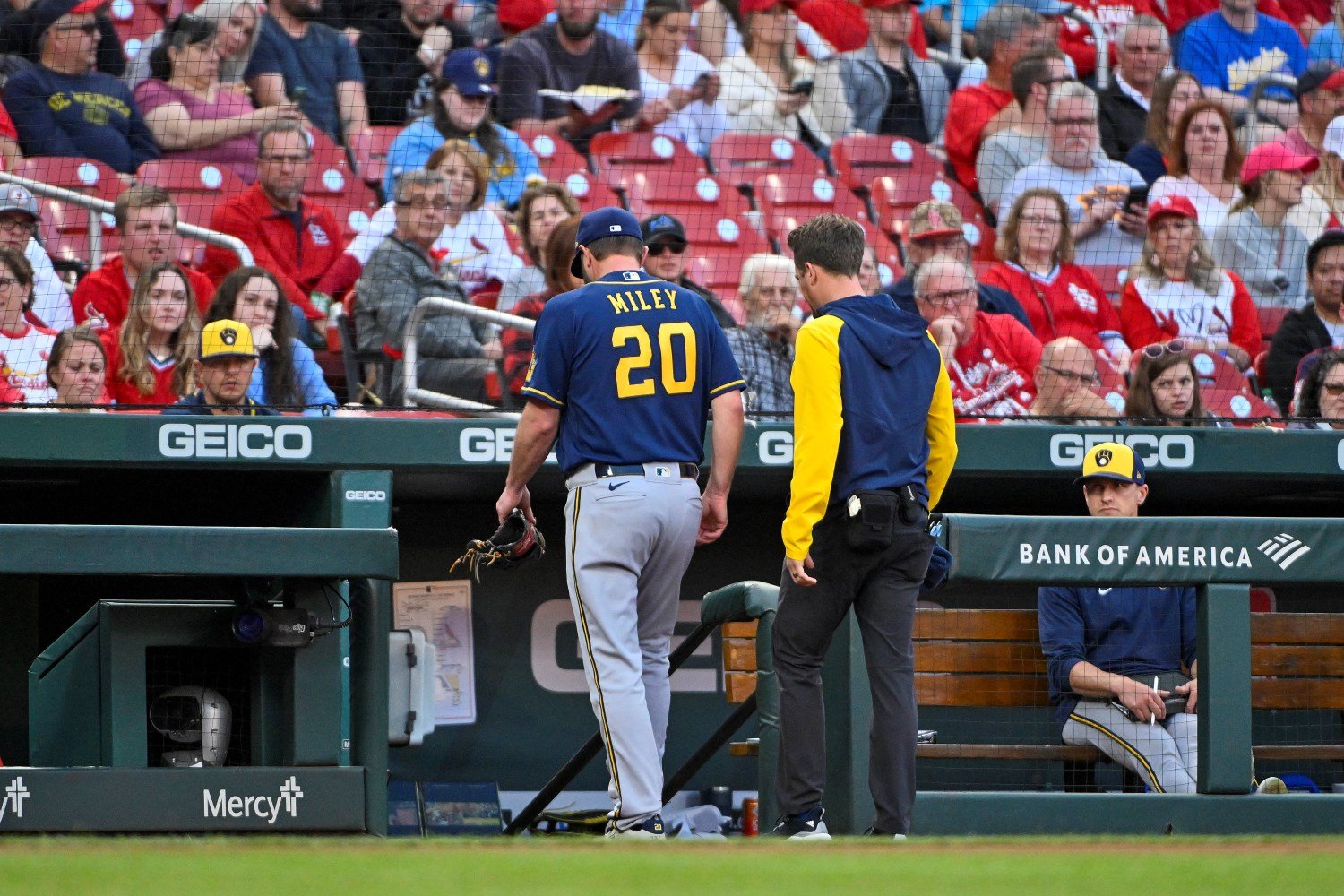 Wade Miley’s departure on Tuesday evening was another sad injury moment for a Milwaukee Brewers team that is currently plagued with a misfiring, depleted rotation. Given the early losses of Brandon Woodruff and Aaron Ashby to underwhelming performances from Corbin Burnes and Eric Lauer, Miley was one of the few positive points for the Brewers so far this season, but he was always going to be an injury concern, at his age and with his track record. Going off against a revived Cardinals outfit after just five outs was crushing, although the bullpen did a magnificent job of pulling them through it. It was later reported as a lat strain, so without further ado, let’s get down to it. What is a lat strain? The latissimus dorsi (or “lats”) are the muscles providing width in the middle of your back, connecting to the rotator cuff (specifically the subscapularis) in the shoulders. They’re used extensively in any motion where the hands and arms are extending away from the body. As such, a throwing motion heavily relies on this muscle group, and one of the best things about Tuesday night was that Miley didn’t try to pitch through the injury. Had he done so, the strain would have gotten significantly worse, very quickly. As you can see below, it is a very large muscle, and this is a more worrying injury than a pectoral strain–because of its contraction through the throwing range of motion, and because due to its size, it can be grossly overused as a stabilizer through the motion of both cocking and accelerating the arm. Image: Wikipedia Differential Diagnoses Grade One/Two Strain A grade one strain is categorized as mild, and this would involve feeling no loss of strength in the muscle, but a nipping pain that can make it difficult to throw. Grade two is a moderate injury, with some loss in the strength of the muscle, but both are partial tears, and neither would require surgical intervention. A grade one tear will commonly take two to three weeks to repair, which would be the best-case scenario. A grade two gets slightly longer, taking at least six weeks and probably closer to eight weeks for caution’s sake before beginning to ramp up the throwing schedule again Grade Three strain This is a full tear of the lat off of the tendon, and requires surgical intervention, which takes a significantly longer period of time. The hope is that Miley has avoided this by his responsible approach in alerting the medical staff. However, if he has done serious damage (usually more noticeable due to a palpable mass around the tendons), then the recovery time would be in the region of four to six months. Comparable Injuries Luis Severino 2019 Severino suffered a grade two lat strain on March 26, 2019. He started throwing again after six weeks, but promptly injured his shoulder due to the extra strain it had to bear. In hindsight, the lat wasn’t fully healed, and Aaron Boone confessed they should have taken another MRI before starting up his throwing program again. He has re-injured his lat to start this season, and still hasn’t pitched (although he claims he’s ready to go). Freddy Peralta 2022 Peralta suffered a grade two or three lat strain on July 31, 2022. He did return after six weeks, but his velocity deteriorated quickly, and the Brewers sat him down for the rest of the season after several worrying and short starts. Grayson Rodriguez 2022 Rodriguez suffered a grade two strain on June 1, 2022, a big disappointment given he was pushing to get a call-up to the major leagues at the time. It shut him down until September that year, taking him out for three months in total. The long and short of this injury is that it’s far better to take your time with it than to rush it if it’s a grade-two tear. The question then becomes how the Brewers will deal with his absence, and can you see an impending trade for a back-end starter that can hold down the fort?
 -
In an ill-timed and unhappy turn of events, the Brewers lost southpaw starter Wade Miley to a lat strain last night. Let's try to figure out how long the Crew might be without its wily veteran. Wade Miley’s departure on Tuesday evening was another sad injury moment for a Milwaukee Brewers team that is currently plagued with a misfiring, depleted rotation. Given the early losses of Brandon Woodruff and Aaron Ashby to underwhelming performances from Corbin Burnes and Eric Lauer, Miley was one of the few positive points for the Brewers so far this season, but he was always going to be an injury concern, at his age and with his track record. Going off against a revived Cardinals outfit after just five outs was crushing, although the bullpen did a magnificent job of pulling them through it. It was later reported as a lat strain, so without further ado, let’s get down to it. What is a lat strain? The latissimus dorsi (or “lats”) are the muscles providing width in the middle of your back, connecting to the rotator cuff (specifically the subscapularis) in the shoulders. They’re used extensively in any motion where the hands and arms are extending away from the body. As such, a throwing motion heavily relies on this muscle group, and one of the best things about Tuesday night was that Miley didn’t try to pitch through the injury. Had he done so, the strain would have gotten significantly worse, very quickly. As you can see below, it is a very large muscle, and this is a more worrying injury than a pectoral strain–because of its contraction through the throwing range of motion, and because due to its size, it can be grossly overused as a stabilizer through the motion of both cocking and accelerating the arm. Image: Wikipedia Differential Diagnoses Grade One/Two Strain A grade one strain is categorized as mild, and this would involve feeling no loss of strength in the muscle, but a nipping pain that can make it difficult to throw. Grade two is a moderate injury, with some loss in the strength of the muscle, but both are partial tears, and neither would require surgical intervention. A grade one tear will commonly take two to three weeks to repair, which would be the best-case scenario. A grade two gets slightly longer, taking at least six weeks and probably closer to eight weeks for caution’s sake before beginning to ramp up the throwing schedule again Grade Three strain This is a full tear of the lat off of the tendon, and requires surgical intervention, which takes a significantly longer period of time. The hope is that Miley has avoided this by his responsible approach in alerting the medical staff. However, if he has done serious damage (usually more noticeable due to a palpable mass around the tendons), then the recovery time would be in the region of four to six months. Comparable Injuries Luis Severino 2019 Severino suffered a grade two lat strain on March 26, 2019. He started throwing again after six weeks, but promptly injured his shoulder due to the extra strain it had to bear. In hindsight, the lat wasn’t fully healed, and Aaron Boone confessed they should have taken another MRI before starting up his throwing program again. He has re-injured his lat to start this season, and still hasn’t pitched (although he claims he’s ready to go). Freddy Peralta 2022 Peralta suffered a grade two or three lat strain on July 31, 2022. He did return after six weeks, but his velocity deteriorated quickly, and the Brewers sat him down for the rest of the season after several worrying and short starts. Grayson Rodriguez 2022 Rodriguez suffered a grade two strain on June 1, 2022, a big disappointment given he was pushing to get a call-up to the major leagues at the time. It shut him down until September that year, taking him out for three months in total. The long and short of this injury is that it’s far better to take your time with it than to rush it if it’s a grade-two tear. The question then becomes how the Brewers will deal with his absence, and can you see an impending trade for a back-end starter that can hold down the fort? View full article
-
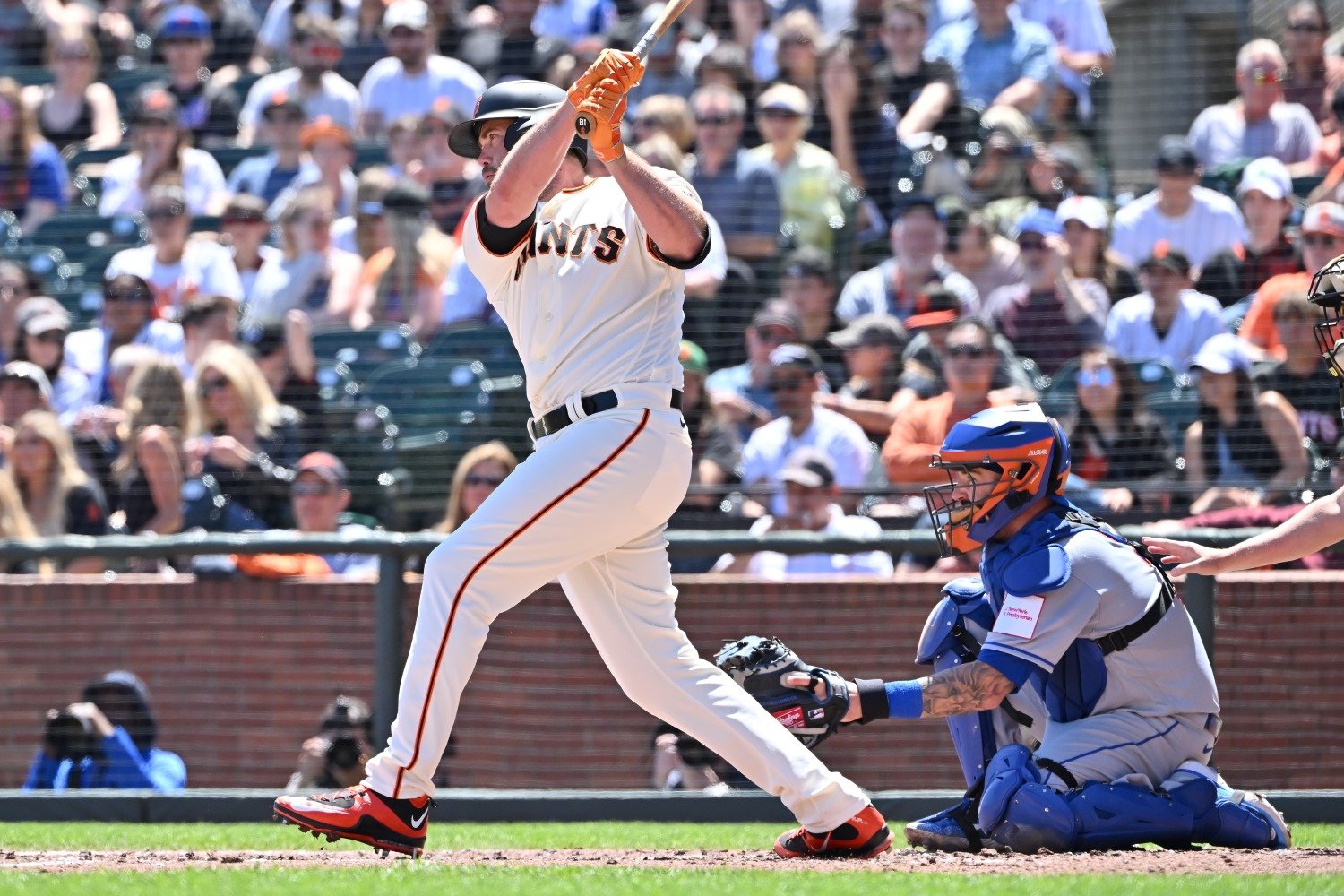 The Brewers signed Darin Ruf for one simple reason: he doesn’t look like a deer in the headlights when someone holds the ball in their left hand. He’s historically been an above-average hitter against left-handed pitching, and in a couple of outlier seasons, he’s done a huge amount of damage in those situations. He’s known for having a strong walk rate as well as a big strikeout rate, but hit nine home runs in 158 at-bats last season against left-handers to post a .753 OPS, something the Brewers would take in a heartbeat. Let’s take a little dive into a few more of the numbers, to see what else we can expect from the 37-year-old veteran. The Stats For a man who posted a .904 OPS across 312 plate appearances in 2021 (amid the astounding performance of that year’s whole San Francisco Giants team), last season was a huge letdown in which he couldn’t hit right-handed pitching at all. From what was a 22-walk, 28-strikeout season against southpaws in 2021, with an OPS of 1.004, he struck out almost twice as often in 2022, albeit still doing damage when he made contact. He is a potential rebound candidate, although at 37, it’s more likely his bat has just slowed considerably as well as his eye at the plate. In a modest 27 at-bats so far this season against left-handers, he’s averaged a 100.2-MPH exit velocity against the fastball; 95.6 against breaking pitches; and 97.5 against offspeed offerings. His minimal time at the plate has led to excessive swing and miss against breaking balls, but he’s crushing the pitches he connects with to the tune of an expected slugging percentage of .539 and an expected batting average of .305. This guy is still hitting, and were it not for how well LaMonte Wade, Jr. is playing, he might not have been cut by San Francisco at all. As you can see, he does most of his damage when he can free his arms, and struggles to create quality contact when pitched inside. Despite this, because of his very patient approach at the plate, he has a lower swing rate on the inside portion of the plate, waiting for a pitch he can drive early in the count. One benefit of his experience is that he knows his weaknesses and manages them well. Another facet of his game is his productivity down in the strike zone, with high exit velocities and lower whiff rates. He recorded eight runs above average against sinkers last season and nine in 2021, with two so far this year. Pitchers like, say, Jordan Montgomery on Tuesday evening will be especially wary of this. He also likes the changeup, which makes sense in that any pitch down in the zone and away from his body has historically been an area of dominance for him. How he can be used Ruf is predominantly a pull hitter who is poor defensively, but given that the Brewers are the worst offense in the league against left-handers, he is exactly what they need: a pinch-hitter late on against lefties, and a platoon DH, with the occasional start at first base sprinkled in there. Expect to see him tonight, and potentially some fireworks, finally, against a left-handed starter. What do you think of the Brewers new lefty masher?
 -
Still searching for a consistent source of power to lengthen the lineup against left-handed hurlers, the Brewers signed a notable (if limited) slugger on Monday. How does he fit into their roster? Image courtesy of © Robert Edwards-USA TODAY Sports The Brewers signed Darin Ruf for one simple reason: he doesn’t look like a deer in the headlights when someone holds the ball in their left hand. He’s historically been an above-average hitter against left-handed pitching, and in a couple of outlier seasons, he’s done a huge amount of damage in those situations. He’s known for having a strong walk rate as well as a big strikeout rate, but hit nine home runs in 158 at-bats last season against left-handers to post a .753 OPS, something the Brewers would take in a heartbeat. Let’s take a little dive into a few more of the numbers, to see what else we can expect from the 37-year-old veteran. The Stats For a man who posted a .904 OPS across 312 plate appearances in 2021 (amid the astounding performance of that year’s whole San Francisco Giants team), last season was a huge letdown in which he couldn’t hit right-handed pitching at all. From what was a 22-walk, 28-strikeout season against southpaws in 2021, with an OPS of 1.004, he struck out almost twice as often in 2022, albeit still doing damage when he made contact. He is a potential rebound candidate, although at 37, it’s more likely his bat has just slowed considerably as well as his eye at the plate. In a modest 27 at-bats so far this season against left-handers, he’s averaged a 100.2-MPH exit velocity against the fastball; 95.6 against breaking pitches; and 97.5 against offspeed offerings. His minimal time at the plate has led to excessive swing and miss against breaking balls, but he’s crushing the pitches he connects with to the tune of an expected slugging percentage of .539 and an expected batting average of .305. This guy is still hitting, and were it not for how well LaMonte Wade, Jr. is playing, he might not have been cut by San Francisco at all. As you can see, he does most of his damage when he can free his arms, and struggles to create quality contact when pitched inside. Despite this, because of his very patient approach at the plate, he has a lower swing rate on the inside portion of the plate, waiting for a pitch he can drive early in the count. One benefit of his experience is that he knows his weaknesses and manages them well. Another facet of his game is his productivity down in the strike zone, with high exit velocities and lower whiff rates. He recorded eight runs above average against sinkers last season and nine in 2021, with two so far this year. Pitchers like, say, Jordan Montgomery on Tuesday evening will be especially wary of this. He also likes the changeup, which makes sense in that any pitch down in the zone and away from his body has historically been an area of dominance for him. How he can be used Ruf is predominantly a pull hitter who is poor defensively, but given that the Brewers are the worst offense in the league against left-handers, he is exactly what they need: a pinch-hitter late on against lefties, and a platoon DH, with the occasional start at first base sprinkled in there. Expect to see him tonight, and potentially some fireworks, finally, against a left-handed starter. What do you think of the Brewers new lefty masher? View full article
-
Also nice to have your three best starters this season going to the cardinals series with peralta Miley and burnes
-
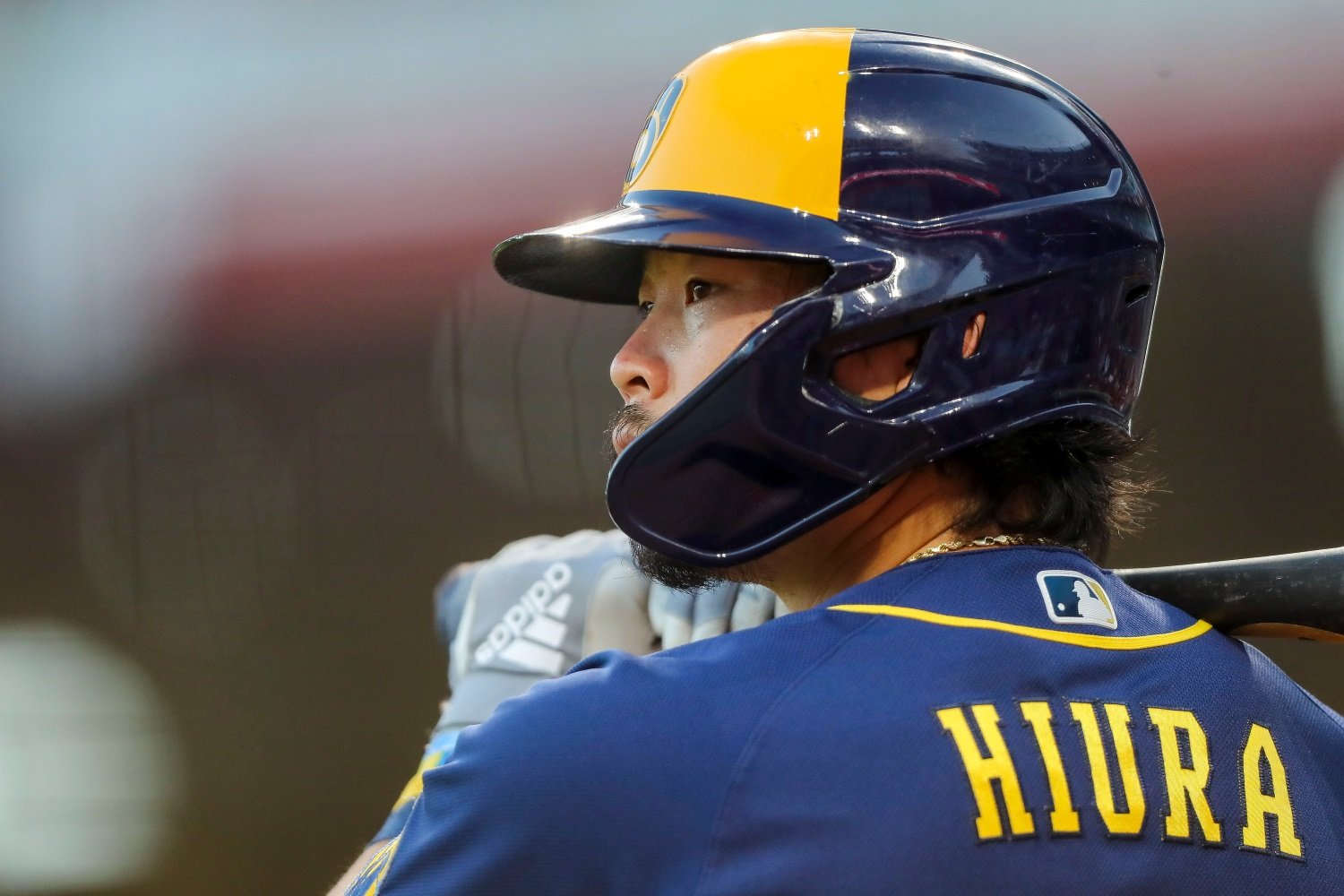 With a player and team who have been through as much together as the Brewers and Keston Hiura have, there are bound to be complications when considering giving things another try. In his case, there are two distinct questions to ask: What boxes does he still need to check in order to earn another chance, and what other move would open a place for him on both the 26- and 40-man rosters? Reasons for Caution Hiura produced an OPS of 1.181 last season in Nashville, across an admittedly small sample of 59 plate appearances. There, his strikeout rate was a viable 25.4 percent. Yet, he couldn’t translate that success to the majors. Part of this is down to the inconsistency of jumping around, not finding regular playing time, as well as what’s very likely a slight mental block at this stage. As such, the last thing you want to do with a promising bat in what is likely a last chance would be to bring him up and not use him, or react adversely to small sample results. Hiura needs to feel the confidence within the club, and confidence within himself having made this journey several times before. There is one other statistic that stands out, though again, a small sample. In late innings of close games, Hiura has 12 at bats, with just two hits and six strikeouts, implying that he perhaps needs to show his improvements off under pressure a little more before he can cope with the demands of playing in the midst of a big-league pennant race again. He has an .868 OPS with runners in scoring position and two outs–again, slightly below his current production, and something to keep an eye on as the season progresses. The more confidence he develops in himself and his approach, the more these stats will increase. How Does He Fit? DFA Jesse Winker Winker is currently occupying the DH slot for the Brewers, predominantly against right-handers, with William Contreras or others splitting the role when facing left-handed pitchers. He is expected to get some limited time in the outfield, and has shown good plate discipline but a total lack of power in the batter’s box. The Brewers are likely to give him a little more time to turn things around and regain the power stroke that made him such a fearsome hitter in Cincinnati, which would allow Hiura more time in the minors to solidify his base, increase the level of comfort in his approach, and make sure that he’s fully ready when he does come up again. As Matt Trueblood said though, time may be running short for Winker. Hiura can fulfill all the roles Jesse Winker currently performs and more, given just how awful Winker is in the outfield grass. He would get regular playing time in this position on the roster, mostly against right-handers but occasionally against left-handed pitching, giving him a real chance to thrive. One thing most people agree on is that Hiura needs regular playing time and opportunities. DFA Luke Voit This roster decision seems like it may be coming sooner rather than later, with Voit scuffling horribly against left-handed pitching, and showing a serious lack of power. He has made some very agile plays at first base, but in reality, his bat hasn’t performed quite the way the Brewers would have hoped, and he could be traded or cut by the end of the month. This may come a little too quickly for Hiura, as well as resigning him to far fewer plate appearances, and solely against left-handers (when they sit Rowdy Tellez). Tellez is struggling significantly in his few at-bats off southpaws so far, so the Brewers need someone who can hit left-handers, but to throw this burden on Hiura after last season may be a touch presumptuous, particularly if you want long-term success from him. DFA Mike Brosseau As is the case with Voit, Brosseau is in the lineup to hit lefties, but his inability to field balls makes him a liability at both first and third base, resulting in him playing as the DH against left-handed starters and getting just five at-bats in May so far. Again, Hiura shouldn’t be brought up in this case (he needs regular playing time), but Brosseau’s time in Milwaukee may be coming to an end in the short term. The most likely point of time is when Luis Urias returns from the 60-day injured list at the end of the month, making it even less likely that Hiura will be taking his place on the 40-man roster. *** Hiura provides a power bat that can carry an offense and punish pitchers in a way the Brewers aren’t managing to do consistently. If they want someone as an everyday DH, that hitter needs to be a serious slugger, posting an OPS of .800 or more, and they’re just not getting that level of production at the moment. It seems a matter of time before Hiura makes the big-league roster again, and when he does, prepare for fireworks.
 -
As the Brewers' quest for a more reliably productive designated hitter continues, Keston Hiura remains an interesting potential solution. Why isn't he already with the parent club again, and what needs to happen in order for him to get one last shot? Image courtesy of © Katie Stratman, Katie Stratman / USA TODAY NETWORK With a player and team who have been through as much together as the Brewers and Keston Hiura have, there are bound to be complications when considering giving things another try. In his case, there are two distinct questions to ask: What boxes does he still need to check in order to earn another chance, and what other move would open a place for him on both the 26- and 40-man rosters? Reasons for Caution Hiura produced an OPS of 1.181 last season in Nashville, across an admittedly small sample of 59 plate appearances. There, his strikeout rate was a viable 25.4 percent. Yet, he couldn’t translate that success to the majors. Part of this is down to the inconsistency of jumping around, not finding regular playing time, as well as what’s very likely a slight mental block at this stage. As such, the last thing you want to do with a promising bat in what is likely a last chance would be to bring him up and not use him, or react adversely to small sample results. Hiura needs to feel the confidence within the club, and confidence within himself having made this journey several times before. There is one other statistic that stands out, though again, a small sample. In late innings of close games, Hiura has 12 at bats, with just two hits and six strikeouts, implying that he perhaps needs to show his improvements off under pressure a little more before he can cope with the demands of playing in the midst of a big-league pennant race again. He has an .868 OPS with runners in scoring position and two outs–again, slightly below his current production, and something to keep an eye on as the season progresses. The more confidence he develops in himself and his approach, the more these stats will increase. How Does He Fit? DFA Jesse Winker Winker is currently occupying the DH slot for the Brewers, predominantly against right-handers, with William Contreras or others splitting the role when facing left-handed pitchers. He is expected to get some limited time in the outfield, and has shown good plate discipline but a total lack of power in the batter’s box. The Brewers are likely to give him a little more time to turn things around and regain the power stroke that made him such a fearsome hitter in Cincinnati, which would allow Hiura more time in the minors to solidify his base, increase the level of comfort in his approach, and make sure that he’s fully ready when he does come up again. As Matt Trueblood said though, time may be running short for Winker. Hiura can fulfill all the roles Jesse Winker currently performs and more, given just how awful Winker is in the outfield grass. He would get regular playing time in this position on the roster, mostly against right-handers but occasionally against left-handed pitching, giving him a real chance to thrive. One thing most people agree on is that Hiura needs regular playing time and opportunities. DFA Luke Voit This roster decision seems like it may be coming sooner rather than later, with Voit scuffling horribly against left-handed pitching, and showing a serious lack of power. He has made some very agile plays at first base, but in reality, his bat hasn’t performed quite the way the Brewers would have hoped, and he could be traded or cut by the end of the month. This may come a little too quickly for Hiura, as well as resigning him to far fewer plate appearances, and solely against left-handers (when they sit Rowdy Tellez). Tellez is struggling significantly in his few at-bats off southpaws so far, so the Brewers need someone who can hit left-handers, but to throw this burden on Hiura after last season may be a touch presumptuous, particularly if you want long-term success from him. DFA Mike Brosseau As is the case with Voit, Brosseau is in the lineup to hit lefties, but his inability to field balls makes him a liability at both first and third base, resulting in him playing as the DH against left-handed starters and getting just five at-bats in May so far. Again, Hiura shouldn’t be brought up in this case (he needs regular playing time), but Brosseau’s time in Milwaukee may be coming to an end in the short term. The most likely point of time is when Luis Urias returns from the 60-day injured list at the end of the month, making it even less likely that Hiura will be taking his place on the 40-man roster. *** Hiura provides a power bat that can carry an offense and punish pitchers in a way the Brewers aren’t managing to do consistently. If they want someone as an everyday DH, that hitter needs to be a serious slugger, posting an OPS of .800 or more, and they’re just not getting that level of production at the moment. It seems a matter of time before Hiura makes the big-league roster again, and when he does, prepare for fireworks. View full article
- 18 replies
-
- 1
-
-
- keston hiura
- jesse winker
- (and 2 more)
-
The question is could it hurt keston? He's clearly making strides, but he's maybe got a little more confidence to build in what'll be his last shot likely with the brewers. Is it better to give him sporadic time v left handers as Voit is getting? Or use him if winker fails?
-
As the Brewers' offensive rough patch continues, it's only natural to look to the Triple-A roster to consider alternatives to the current group of hitters. There's someone down there raking. The question is: are you ready to trust him again? Keston Hiura has had several chances with the Brewers. He demonstrated formidable promise in his first half-season, though his underlying numbers told a less inspiring story even then. He has struck out at alarming rates in all of his trials in the majors, and although he makes high-quality contact when he does put the ball in play, his slumps were too excessive and damaging to keep him on the major-league roster–particularly given his lack of a defensive home, and his inability to damage left-handed pitching. He’s currently down in Nashville, where he just hit his 12th home run of the year, and making hay. Could this time be different? The New & Improved Hiura has usually been quite successful in Triple A with the Nashville Sounds, but what is he doing differently that’s generating a modicum of hope? Well, historically, even despite the vast power output, he has still struck out with incredible regularity at the highest level of the minor-league system, failing to put the ball in play 31.6% of the time in his stints in 2021 and 2022. This, as you’d suspect, led to even higher strikeout rates against the higher-quality pitching in the majors, and made him almost un-rosterable. However, after a sluggish spring training, and a high strikeout start to the season while adapting his swing, he’s struck out at a 22.2% clip over his last 28 days, which falls even further (to just 17.9%) since April 21st. He has just two punchouts in his last 18 plate appearances. Hiura’s biggest issue has always been the high fastballs, with a golf-like swing destroying pitches low in the zone. In 2022, he swung and missed on over 50% of pitches in the upper third of the strike zone, with over a 40% whiff rate overall on the year. The contrast in his effectiveness depending on pitch location is most emphasized by his expected stats on sinkers vs four seamers; Four Seam Fastball – xBA .198, xSlg .489 Sinkers – xBA .349, xSlg .700 He has tried reducing the leg kick to improve his timing on those high fastballs, and this season, he’s worked on eliminating the leg kick altogether and just relying on his hands and hips to generate power. Have a look at two contrasting videos, one from 2022 and one from this season. Here's what a two-home game in Nashville looked like last year: And here he is hitting his 10th dinger of 2023. As you can see, this season, Hiura gets his foot down almost as soon as the pitcher starts his motion, leaving himself with a lot more time to read and react to the pitch. It’s resulted in a much higher contact rate up in the zone so far, as well as a better (lower) chase rate. His at-bats have been more selective, and he’s had better timing on the high fastball, not necessarily doing damage, but fouling off pitches, putting balls in play and then doing damage on any mistakes or pitches low in the strike zone. He’s forcing pitchers into areas they don’t want to be, and then he’s punishing them for it. He’s showing growth as the season goes on, demonstrating a better propensity to take his walks in May, though this could be down to being pitched around a little bit more. His declining strikeouts and improved plate discipline are huge developments, and he’s been a far cry from the three-pitch, three-whiff outs we saw with regularity last season. Secondly, he’s started to show an ability to hit left handers this season, hitting five home runs in 37 at-bats, with a manageable 25% strikeout rate. His OPS is 1.105, and he’s hitting the changeup effectively–a big bonus, given he had a .168 xwOBA against it last season. Forty plate appearances is a small sample, but it certainly shows some promise. Defensively, Hiura appears to have found a home in some respects, showing himself to have average speed and a solid enough glove in left field, with some highlight reel plays, including an outfield assist at home plate Wednesday night. It could easily be argued that he’s a better option than Jesse Winker, who has lost all semblance of speed, as well as being able to fill in at first base in an average way (also providing more range than Rowdy Tellez). Being able to use him to rest Yelich or Tellez on occasion would make him far more attractive to Craig Counsell. Tomorrow, we'll talk more about the understandable reservations the team might still have about calling up Hiura, but also how he can fit on the 26-man roster soon. In the meantime, let us know what you see as different in Hiura this year, and whether you believe these changes can translate to MLB. View full article
-
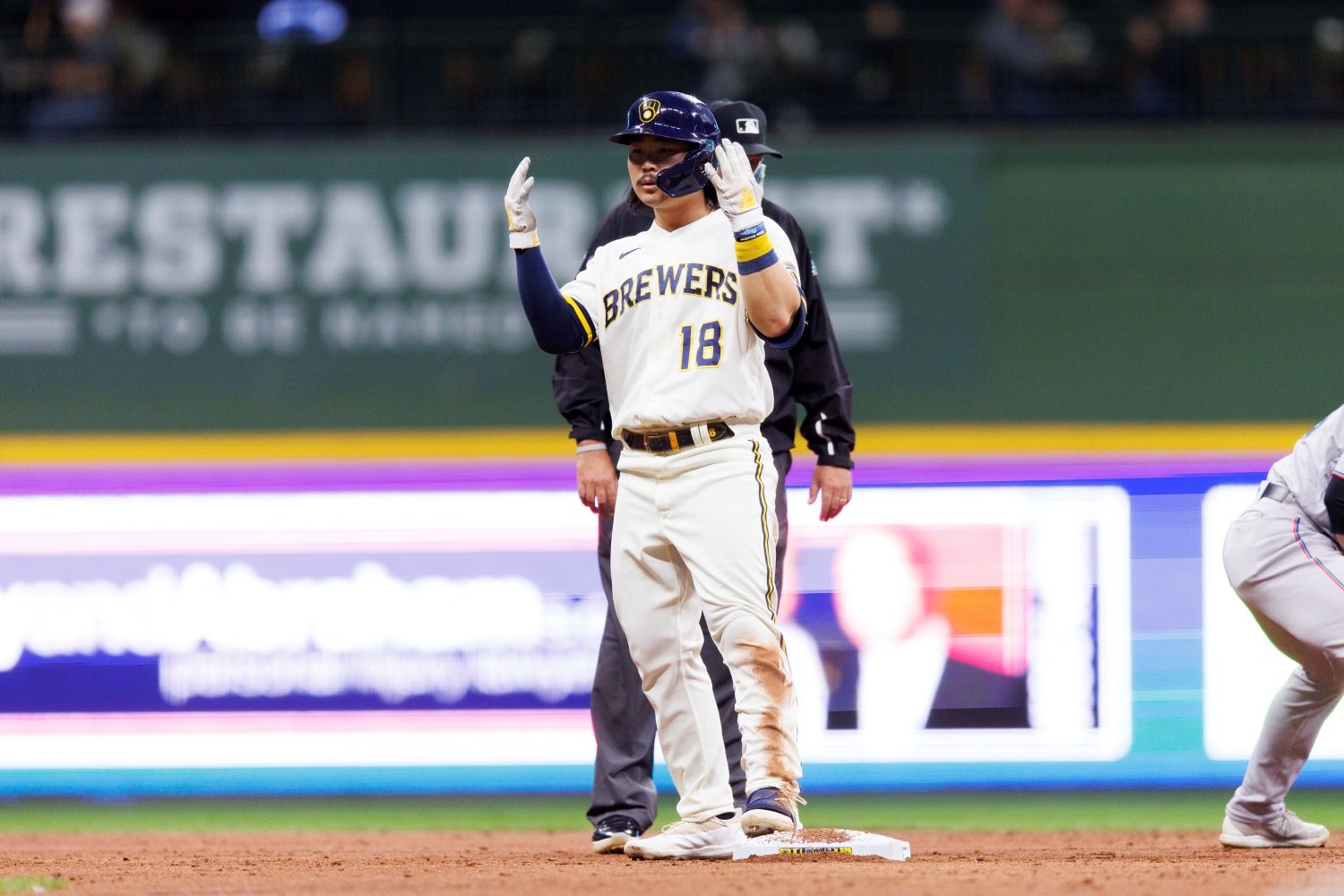 Keston Hiura has had several chances with the Brewers. He demonstrated formidable promise in his first half-season, though his underlying numbers told a less inspiring story even then. He has struck out at alarming rates in all of his trials in the majors, and although he makes high-quality contact when he does put the ball in play, his slumps were too excessive and damaging to keep him on the major-league roster–particularly given his lack of a defensive home, and his inability to damage left-handed pitching. He’s currently down in Nashville, where he just hit his 12th home run of the year, and making hay. Could this time be different? The New & Improved Hiura has usually been quite successful in Triple A with the Nashville Sounds, but what is he doing differently that’s generating a modicum of hope? Well, historically, even despite the vast power output, he has still struck out with incredible regularity at the highest level of the minor-league system, failing to put the ball in play 31.6% of the time in his stints in 2021 and 2022. This, as you’d suspect, led to even higher strikeout rates against the higher-quality pitching in the majors, and made him almost un-rosterable. However, after a sluggish spring training, and a high strikeout start to the season while adapting his swing, he’s struck out at a 22.2% clip over his last 28 days, which falls even further (to just 17.9%) since April 21st. He has just two punchouts in his last 18 plate appearances. Hiura’s biggest issue has always been the high fastballs, with a golf-like swing destroying pitches low in the zone. In 2022, he swung and missed on over 50% of pitches in the upper third of the strike zone, with over a 40% whiff rate overall on the year. The contrast in his effectiveness depending on pitch location is most emphasized by his expected stats on sinkers vs four seamers; Four Seam Fastball – xBA .198, xSlg .489 Sinkers – xBA .349, xSlg .700 He has tried reducing the leg kick to improve his timing on those high fastballs, and this season, he’s worked on eliminating the leg kick altogether and just relying on his hands and hips to generate power. Have a look at two contrasting videos, one from 2022 and one from this season. Here's what a two-home game in Nashville looked like last year: And here he is hitting his 10th dinger of 2023. As you can see, this season, Hiura gets his foot down almost as soon as the pitcher starts his motion, leaving himself with a lot more time to read and react to the pitch. It’s resulted in a much higher contact rate up in the zone so far, as well as a better (lower) chase rate. His at-bats have been more selective, and he’s had better timing on the high fastball, not necessarily doing damage, but fouling off pitches, putting balls in play and then doing damage on any mistakes or pitches low in the strike zone. He’s forcing pitchers into areas they don’t want to be, and then he’s punishing them for it. He’s showing growth as the season goes on, demonstrating a better propensity to take his walks in May, though this could be down to being pitched around a little bit more. His declining strikeouts and improved plate discipline are huge developments, and he’s been a far cry from the three-pitch, three-whiff outs we saw with regularity last season. Secondly, he’s started to show an ability to hit left handers this season, hitting five home runs in 37 at-bats, with a manageable 25% strikeout rate. His OPS is 1.105, and he’s hitting the changeup effectively–a big bonus, given he had a .168 xwOBA against it last season. Forty plate appearances is a small sample, but it certainly shows some promise. Defensively, Hiura appears to have found a home in some respects, showing himself to have average speed and a solid enough glove in left field, with some highlight reel plays, including an outfield assist at home plate Wednesday night. It could easily be argued that he’s a better option than Jesse Winker, who has lost all semblance of speed, as well as being able to fill in at first base in an average way (also providing more range than Rowdy Tellez). Being able to use him to rest Yelich or Tellez on occasion would make him far more attractive to Craig Counsell. Tomorrow, we'll talk more about the understandable reservations the team might still have about calling up Hiura, but also how he can fit on the 26-man roster soon. In the meantime, let us know what you see as different in Hiura this year, and whether you believe these changes can translate to MLB.
 -
2023 Minor League Transaction Thread
Jake McKibbin replied to Jim Goulart's topic in Brewers Minor League Talk
Right knee soreness (not the knee he had surgery on last season). Team thinks it's just a minor niggle but being especially careful given his track record on the treatment table -
Uribe's injury is right knee soreness, they don't think it's serious but worth noting he did have knee surgery in April last year Edit: Surgery was on his left knee
-
It's a lot more than that, his range has been immense in the outfield on a regular basis, something Hunter Renfroe really didn't have last season. He's starting to get a bit of a handle on things but if he can tap into his power even semi regularly, that's a great outcome Plus he's just fun

