Jake McKibbin
-
Posts
2,450 -
Joined
-
Last visited
-
Days Won
6
Content Type
Profiles
Forums
Blogs
Events
News
2026 Milwaukee Brewers Top Prospects Ranking
Milwaukee Brewers Videos
2022 Milwaukee Brewers Draft Picks
Milwaukee Brewers Free Agent & Trade Rumors, Notes, & Tidbits
Guides & Resources
2023 Milwaukee Brewers Draft Picks
2024 Milwaukee Brewers Draft Picks
The Milwaukee Brewers Players Project
2025 Milwaukee Brewers Draft Pick Tracker
2026 Milwaukee Brewers Draft Tracker: Picks & Bonuses
Store
Downloads
Gallery
Everything posted by Jake McKibbin
-
Joey hit a curve ball. THIS IS NOT A DRILL. HET HIT A BREAKING PITCH
-
What has the owner done to justify putting any effort into moving? It's a disgrace and I'd make him put a competitive product on the field first, because quite frankly who in Vegas wants to watch AAA players get raked on by major leaguers day after day
-
That's a good awful blown strike 3 call on Robert gasser with two in scoring position and one out. Just awful
-
Absolutely! Can't follow so much at the moment but wanted to see how misiorowski performed, didn't look too wild, be very interesting when they've built him up to 60-80 pitches
-
Adams fell behind 0-2, then ripped a meatball to third base, double play with outs at 1st and 3rd base, Guillarte scores with Hall at 2nd Quinton Low strikes out to end the inning
-
Top of the third, Guillarte takes three close pitches around the edge before knocking a ground ball through the right side of the infield for a leadoff single. Barrios follows by lining a single to left, the hitters showing good eyes at the plate so far in this game, though in Tayden Hall's AB the ump has called a middle-middle pitch a ball. He takes advantage and walks to load the bases for Luke Adams....
-
Misiorowski into his second inning, gives up a hit off a middle-away pitch in a 2-2 count, before forcing a double play off a meatball pitch. Slightly further away from the edges so far this inning Misiorowski replaced after 25 pitches (evidently being built up at the moment) but threw a ton of strikes and let his stuff do the talking Guerrero induces a first pitch groundout to end the second inning
-
It appears I do not have @Joseph Zarror @damuelle's touch for this... it wasn't Avina, it was E Fernandez with the double! Sorry for any false celebrations this may have caused
-
I dont mind it i have to say, it's nice to keep it even and actually enjoy all the different players in the league
-
And Jace Avina finally gets an extra base hit, a line drive double to left field
-
Can't get video, but Misiorowski with three straight strikeouts, two called, going three up three down in the first inning. 15 pitches, 10 strikes, and the balls were nipping the edges for most part too. A nice inning
-
Every team faced by the Brewers in this 13-5 run is either a pre-season outside shot to contend for playoffs (D'backs, Cubs) where they've gone 3-3, a likely wildcard team (Mariners 2-0) or a division winner/ World series contender in the Cardinals, Padres and Mets where they went 8-2 The Mets have gone 11-4 against any team not from Milwaukee
-
Just to clarify with Burnes latest comments that its just his ribs or sternum: Given there was no impact to create bruising, and no broken bone, then this is till a pectoral strain of the tendons connecting the muscle to the bone. That would potentially be more worrisome, as the injury is more problematic if the tendons detach from the bone. As such, it's still a muscle strain, but hopefully just a grade one outlook. I'm slightly concerned he's set on making every start again this season to boost his value, and ignoring his body with comments like this, which certainly haven't come from the team doctor as they make no sense.
-
The bullpen he throws in a few days is probably going to be the indicator, if the velocity or command aren't where they expect , or there's any tightness lingering, I think he'll skip it, but I think they plan on him missing just the one at most at this point
- 8 replies
-
- 1
-

-
- corbin burnes
- brandon woodruff
- (and 1 more)
-
So a grade one tear, which is very minor, return to play is around a week, grade two is in the 2-6 week range, and grade three is much longer. The question is if he played through it for the fifth inning and part of the sixth, did he do any extra damage to take it past the grade one threshold
-
Gilbert is in the 89th percentile for chase rate, one of the reasons he's been so successful this year despite only 48% of pitches being in zone, the Brewers will need to be patient Pitch mix of Four seamer (47%) - Primarily elevated and well located Slider (25%) - primarily located just at the bottom of the zone, interestingly on the inner half to right handers Curveball (17%) - Almost always down out of the zone Split Finger (11%) - Has a tendency to hang this pitch so far this season Has gone well so far, but can the Brewers work the count and take advantage?
-
Both of the Brewers' co-aces are suddenly question marks, after a week of rough injury news that makes the team's excellent start to the season feel a bit fragile. Let's dig more into the specific injuries with which both Corbin Burnes and Brandon Woodruff appear to be dealing. Image courtesy of © Stephen Brashear-USA TODAY Sports Both of the Brewers' co-aces are suddenly question marks, after a week of rough injury news that makes the team's excellent start to the season feel a bit fragile. Let's dig more into the specific injuries with which both Corbin Burnes and Brandon Woodruff appear to be dealing. Corbin Burnes Burnes left the field early during the 6th inning, citing a tightening feeling in his chest, and noticing his velocity start to drop against Julio Rodriguez, along with an inability to locate, describing the feeling as akin to cramping. After the game, Craig Counsell commented that it was minor, and that it occurred during the tag on Eugenio Suarez to end the fourth inning. What is a pectoral strain? The pectoral muscle is the large muscle in your chest used in the majority of upper body “push” movements, i.e. moving your arms forward and away from the body. It is a relatively sturdy muscle, and most of these injuries occur in higher intensity movements pushing too fast or too far (in the concentric contraction), usually on the dominant throwing or hitting side. The higher-intensity movement can lead to a higher chance of a full rupture, but because Burnes merely overstretched attempting a tag, stretching too sharply in a lower-intensity movement during the eccentric contraction, it’s likely the strain is just a small tear. As such, resting the muscle for a short period should suffice, as well as hot/cold treatment. Recovery Prognosis Low-grade strains (which are minor muscle tears) carry a recovery period for the average joe of a few weeks, and as such, it’s likely that Burnes will miss his next start–if only in the name of caution, given the mounting number of injuries the Brewers currently have. If it turns out to be a high-grade strain (known as a full thickness tear, or muscle rupture) then the return period is much longer, around six months. That could sideline Burnes for the remainder of the season. Current Player Examples Eloy Jimenez While leaping for a home-run robbery (stretching out with his glove arm like Burnes), Jiménez ruptured his left pectoral muscle, leaving him out for four months (a much faster recovery than expected) from late March to July 20, 2021. Sonny Gray Injured his right pectoralis while pitching on May 30, 2022. It was a minor strain, and he returned to pitch five innings of scoreless baseball on June 15. Brandon Woodruff There’s been a lot of discussion on the forum about the severity of Woodruff’s shoulder injury, so what exactly is the injury, and how can we expect him to come back from it? What is a Subscapular injury? The subscapularis is a large, triangular muscle underneath the scapula, part of the four-muscle group forming the “rotator cuff”. It’s the largest and strongest of the four, connecting the humerus bone to the front of the shoulder capsule, with its primary function being the internal rotation of the humerus (this is when your hand rotates clockwise). The muscle itself plays a key role in the stabilization of the shoulder, an incredibly complex task given the variety of ways in which the shoulder moves. The main symptoms occur when the arm is raised above shoulder height, with an overworked subscapularis making it feel as though you are unable to lift your arm. The most common symptoms in pitchers are either pain, or a decrease in velocity, the latter of which Woodruff demonstrated in his last outing after his first inning of work. Recovery Process The treatment of subscapularis tears depends on the severity of the injury, ideally not requiring surgery. The good news about Brandon Woodruff is that he has been diagnosed with a “mild” Grade II strain, which is a distinct lesion of over 25% of the craniocaudal diameter, but, crucially, the muscle is still attached to the bone. Therefore, the process for recovery will be simpler, likely involving hot/cold treatment and non-steroidal anti-inflammatory medication such as Ibuprofen, as well as physical therapy to prevent frozen shoulder during the recovery process. Timeline A survey performed on one unnamed professional baseball organization over the course of five years found 10 clinical findings (using MRIs) of subscapularis strains of various degrees of severity (four Grade I, four Grade II and two Grade III), all of which were treated without surgery. The average number of days without throwing activity was 27 days (the range was 11-61 days). The majority of these injuries were rehabbed with no lasting performance drop. Current Player Examples Corey Kluber Diagnosed with a subscapularis strain in late May 2021, he was shut down for four weeks, and took a further four weeks to build up again. The original prognosis was off by a month, and he didn’t return until August 30. Daniel Espino With a Grade III strain (torn off the bone), Espino was put on the 60-day injured list and shut down for a minimum of eight weeks, though it is important to stress this is a more severe form of Woodruff’s injury. Shane Bieber Initially upon diagnosis in May 2021, Bieber was shut down for two weeks, and re-evaluated after that on June 13. He didn’t return to action until three months later, on the September 24. Mark Melancon Currently on the 60-day injured list for an undetermined length of time. Kluber and Bieber are the most comparable out of these injuries, as both were Grade II tears, and each took around three months to return to the mound. With that in mind, it seems likely that the Milwaukee Brewers won’t see Woodruff back until just after the All-Star break. View full article
-
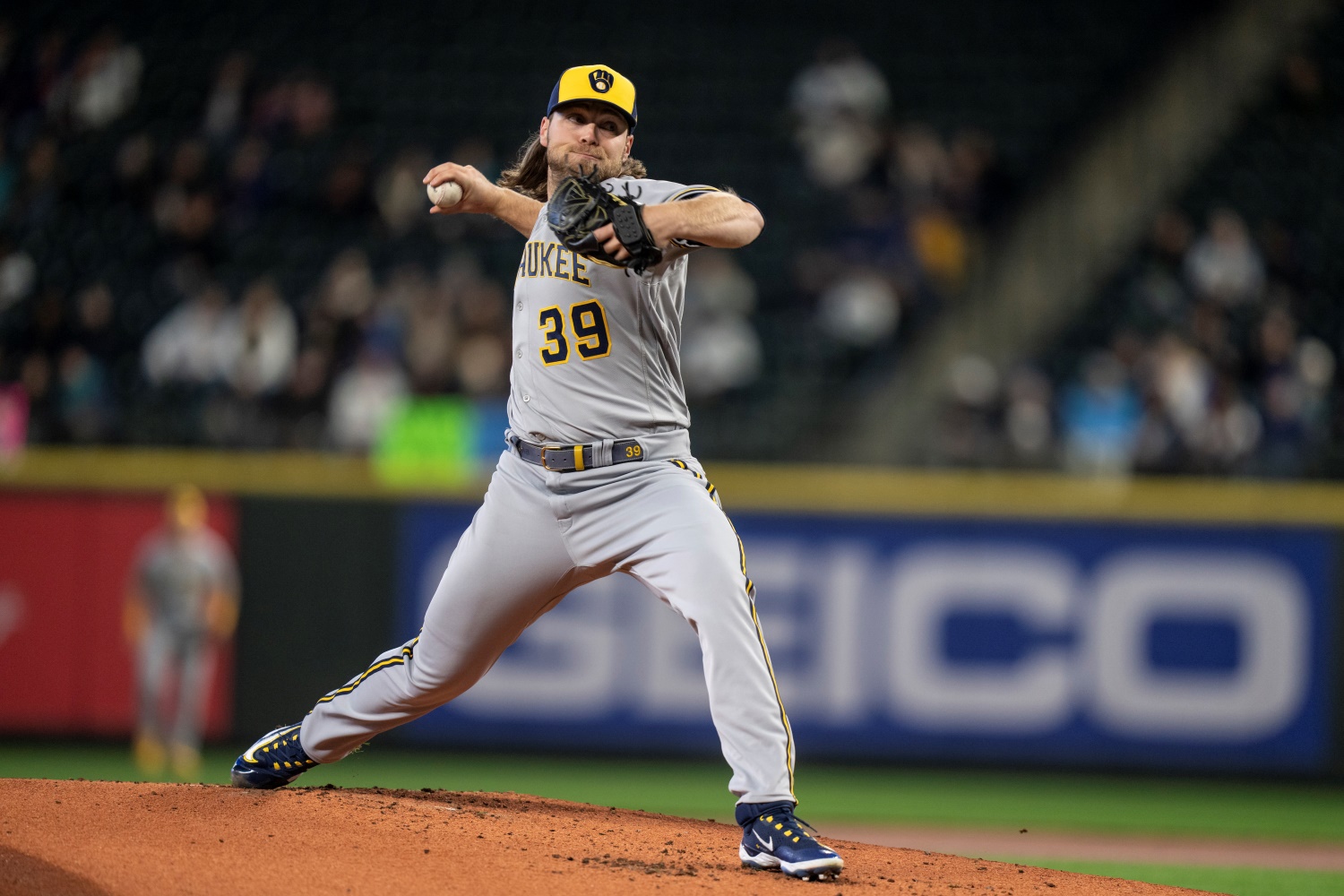 Corbin Burnes Burnes left the field early during the 6th inning, citing a tightening feeling in his chest, and noticing his velocity start to drop against Julio Rodriguez, along with an inability to locate, describing the feeling as akin to cramping. After the game, Craig Counsell commented that it was minor, and that it occurred during the tag on Eugenio Suarez to end the fourth inning. What is a pectoral strain? The pectoral muscle is the large muscle in your chest used in the majority of upper body “push” movements, i.e. moving your arms forward and away from the body. It is a relatively sturdy muscle, and most of these injuries occur in higher intensity movements pushing too fast or too far (in the concentric contraction), usually on the dominant throwing or hitting side. The higher-intensity movement can lead to a higher chance of a full rupture, but because Burnes merely overstretched attempting a tag, stretching too sharply in a lower-intensity movement during the eccentric contraction, it’s likely the strain is just a small tear. As such, resting the muscle for a short period should suffice, as well as hot/cold treatment. Recovery Prognosis Low-grade strains (which are minor muscle tears) carry a recovery period for the average joe of a few weeks, and as such, it’s likely that Burnes will miss his next start–if only in the name of caution, given the mounting number of injuries the Brewers currently have. If it turns out to be a high-grade strain (known as a full thickness tear, or muscle rupture) then the return period is much longer, around six months. That could sideline Burnes for the remainder of the season. Current Player Examples Eloy Jimenez While leaping for a home-run robbery (stretching out with his glove arm like Burnes), Jiménez ruptured his left pectoral muscle, leaving him out for four months (a much faster recovery than expected) from late March to July 20, 2021. Sonny Gray Injured his right pectoralis while pitching on May 30, 2022. It was a minor strain, and he returned to pitch five innings of scoreless baseball on June 15. Brandon Woodruff There’s been a lot of discussion on the forum about the severity of Woodruff’s shoulder injury, so what exactly is the injury, and how can we expect him to come back from it? What is a Subscapular injury? The subscapularis is a large, triangular muscle underneath the scapula, part of the four-muscle group forming the “rotator cuff”. It’s the largest and strongest of the four, connecting the humerus bone to the front of the shoulder capsule, with its primary function being the internal rotation of the humerus (this is when your hand rotates clockwise). The muscle itself plays a key role in the stabilization of the shoulder, an incredibly complex task given the variety of ways in which the shoulder moves. The main symptoms occur when the arm is raised above shoulder height, with an overworked subscapularis making it feel as though you are unable to lift your arm. The most common symptoms in pitchers are either pain, or a decrease in velocity, the latter of which Woodruff demonstrated in his last outing after his first inning of work. Recovery Process The treatment of subscapularis tears depends on the severity of the injury, ideally not requiring surgery. The good news about Brandon Woodruff is that he has been diagnosed with a “mild” Grade II strain, which is a distinct lesion of over 25% of the craniocaudal diameter, but, crucially, the muscle is still attached to the bone. Therefore, the process for recovery will be simpler, likely involving hot/cold treatment and non-steroidal anti-inflammatory medication such as Ibuprofen, as well as physical therapy to prevent frozen shoulder during the recovery process. Timeline A survey performed on one unnamed professional baseball organization over the course of five years found 10 clinical findings (using MRIs) of subscapularis strains of various degrees of severity (four Grade I, four Grade II and two Grade III), all of which were treated without surgery. The average number of days without throwing activity was 27 days (the range was 11-61 days). The majority of these injuries were rehabbed with no lasting performance drop. Current Player Examples Corey Kluber Diagnosed with a subscapularis strain in late May 2021, he was shut down for four weeks, and took a further four weeks to build up again. The original prognosis was off by a month, and he didn’t return until August 30. Daniel Espino With a Grade III strain (torn off the bone), Espino was put on the 60-day injured list and shut down for a minimum of eight weeks, though it is important to stress this is a more severe form of Woodruff’s injury. Shane Bieber Initially upon diagnosis in May 2021, Bieber was shut down for two weeks, and re-evaluated after that on June 13. He didn’t return to action until three months later, on the September 24. Mark Melancon Currently on the 60-day injured list for an undetermined length of time. Kluber and Bieber are the most comparable out of these injuries, as both were Grade II tears, and each took around three months to return to the mound. With that in mind, it seems likely that the Milwaukee Brewers won’t see Woodruff back until just after the All-Star break.
-
Corbin Burnes, in 2021 was without question the best pitcher in baseball. He gave up the fewest home runs per nine innings, had the best strikeout-to-walk ratio amongst starters, and had the best strikeouts per nine. His underlying expected stats were even better than his actual ones, demonstrating he was potentially unlucky in producing league-leading figures in ERA and FIP. Image courtesy of © Benny Sieu-USA TODAY Sports Corbin Burnes, in 2021 was without question the best pitcher in baseball. He gave up the fewest home runs per nine innings, had the best strikeout-to-walk ratio amongst starters, and had the best strikeouts per nine. His underlying expected stats were even better than his actual ones, demonstrating he was potentially unlucky in producing league-leading figures in ERA and FIP. In 2022, Corbin Burnes regressed somewhat, largely due to the home run bug that hit him, which is concerning given the ball was less “bouncy” compared to his Cy Young year. He was barreled up almost twice as much throughout the season; pitchers were whiffing far less often on his cutter (and he used it even more despite this in 2022), with his curveball, change up, and cutter all being hit harder. In short, last season had less to do with bad luck and was entirely due to a regression in his effectiveness on the mound. Predictability One of the standout things, as mentioned in part two of this deep dive, is that Burnes in later counts can become highly predictable, and he fell behind batters to this extent a lot more often in 2022, facing 98 batters in 3-0 or 3-1 counts, vs. just 74 in 2021. This is significant because the league adapted to his cutter-heavy pattern in these counts. Having likely seen several cutters to this point and being able to expect that a cutter is almost certainly being thrown in these counts, hitters had a .472 WOBA against him that rose to .576 in 2022 in 3-0 counts, as well as drawing more walks. Burnes has a lot of pitches he locates well, and even throwing the occasional change up, slider, or curveball in these counts could dramatically improve his effectiveness. The same issue comes in how he attacks hitters with the change up. It’s become such a deadly pitch that he utilizes it to great effect against left-handed hitters. Still, his velocity and above-average movement on this pitch could be paired well with the front-door cutter to right-handers or just dropping down and below the zone to give hitters something else to think about. He’s never been hit particularly hard with it, and the strict parameters he employs when using his pitch arsenal could be to his detriment. Given the sinker’s ineffectiveness and the change up averaging over 90 mph, he could almost use it to generate that other-way movement he wanted from the sinker to pair with his cutter. In 2022, each change up, slider, and curveball held whiff rates between 46.7%-49.7% range on plate appearances ending in these pitches. While the cutter gets a lot of attention, the efficiency of his alternate pitches is the main reason for his high strikeout rates since returning from 2019’s disaster. Improving the variation with which he uses his pitchers, and becoming comfortable throwing them in any count, could make his cutter yet more destructive and generate many swinging strikes as hitters adjust to the new change. So far, the change up has been worth over three runs above average (per FanGraphs) contrasted with almost minus two value for the entirety of last season. Adjusted for a per 100 pitches usage, look at the difference in his change up compared to the sinker, for six mph of difference in average velocity. Hitters are managing to foul Burnes's pitches off more, and that extra layer of deception could bring a big change in his effectiveness. Meanwhile, as you can see when the sinker is thrown… pray. The Breaking Pitches In 2021, Burnes didn’t allow many hits off his breaking pitches, mainly due to launch angles. An excessive average of 22 degrees launch angle on the curveball (with a 17% hard-hit rate) meant that many soft fly balls came down from it. On the other hand, his slider averaged just one degree, albeit with a higher hard-hit rate of 30%, and produced a ton of ground balls. In 2022, these two pitches averaged 14 and 18 degrees for the curveball and slider, respectively. However, the movement on these pitches didn’t change much, and his curveball and slider still weren’t hit particularly hard. This increased contact, dropping into the outfield for singles and more occasions with men on base. He occasionally hung his curveball more often in 2022, which didn’t help his cause. Interestingly, his expected averages barely changed from 2021, so there is an element of bounce back to be expected from Burnes this season, but it may depend again on how much variation he can add to his pitch mix. The Swing/Take Analysis As you can see above, Burnes improved his ability to deceive pitchers around the fringes of the strike zone, with an improved -11 runs in the “shadow.” However, he greatly struggled in the heart of the zone, an area he generated a lot of swing and miss in throughout 2021, in part due to occasionally hanging his curveball slightly more often but also because his cutter, which regularly plays in the heart of the plate, had more contact against it. Then again, whiff rates are less a factor over the middle of the plate, but it’s more the quality of contact; Take a look at these average exit velocities rates from 2021 (left) compared to 2022 (right): As you can see, he was hit much harder, particularly middle/middle and middle/away to the right-handers. The cutter’s late horizontal movement fooled a lot of hitters in 2021, but it seems they had adjusted in 2022, and that pitch needs to work a lot harder to be as effective as a result. Although the movement profile is almost identical, the cutter dropped 4% in whiff rate and over 8% in strikeout rate. Where can Burnes progress in 2023? Aside from the pitch above mix, there’s one other area I think Burnes can exploit more, especially when he wants an easy strike. Let’s take a look at the average exit velocities to right-handers in 2022: That inside part of the plate being attacked by sliders and cutters has produced astoundingly low exit velocities, yet is the most underused area for him to pitch into. Part of this is that hitters aren’t expecting it, but given how a lot of hitters look to work the count against him more so than ever to force that cutter, an early front-door cutter/slider would present a whole different look to the at-bat, forcing the hitter to cover the plate inside as well as away, and encouraging more chases on the cutter/slider combo. It also looks ideal for a down and in change up if he starts landing the cutter for strikes on the inner third. If only to add some variety to his slightly metronomic, predictable pitch usage, I feel this is an area he could massively exploit this coming season. What do you think, Fanatics? Did anything here take you by surprise? View full article
-
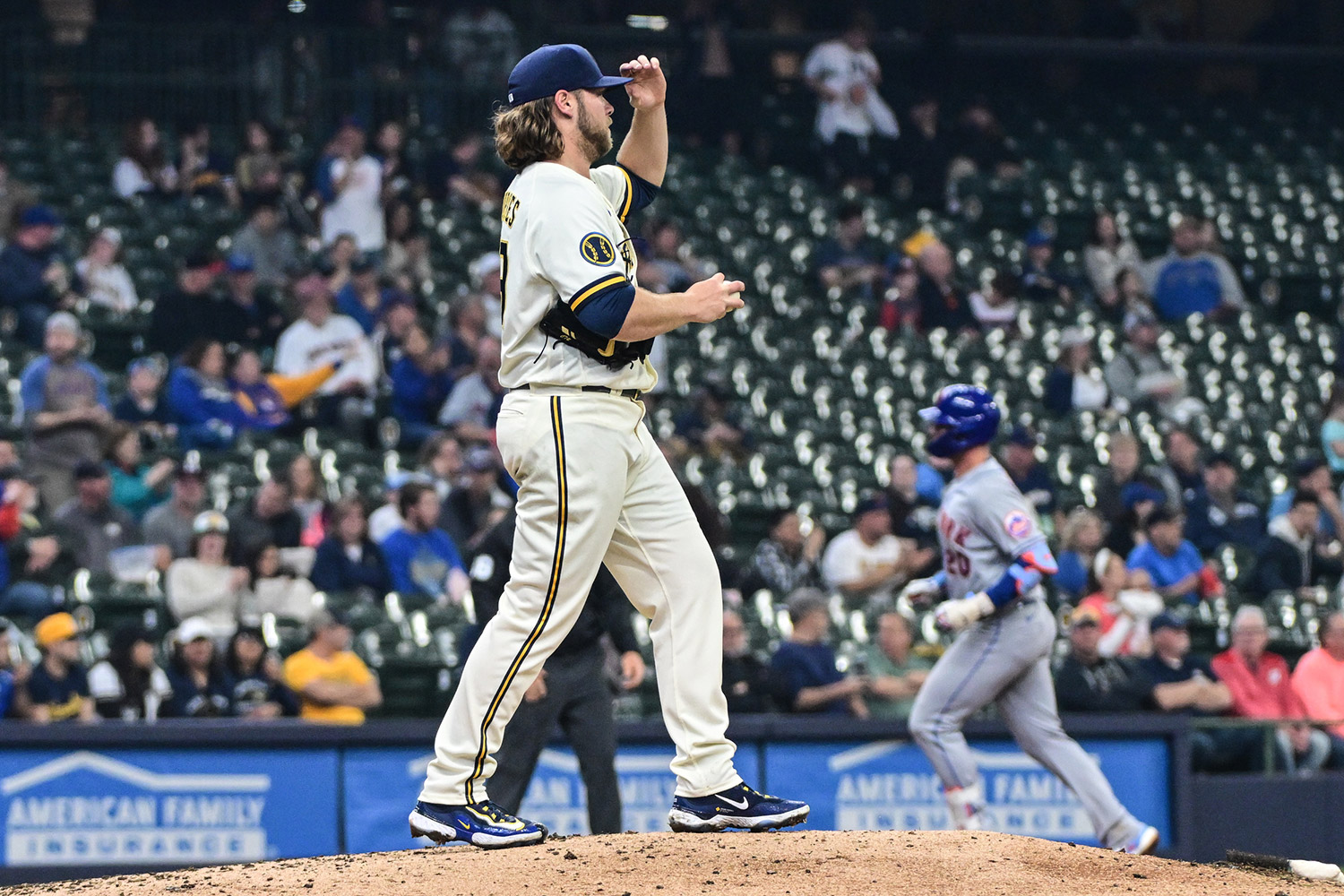 In 2022, Corbin Burnes regressed somewhat, largely due to the home run bug that hit him, which is concerning given the ball was less “bouncy” compared to his Cy Young year. He was barreled up almost twice as much throughout the season; pitchers were whiffing far less often on his cutter (and he used it even more despite this in 2022), with his curveball, change up, and cutter all being hit harder. In short, last season had less to do with bad luck and was entirely due to a regression in his effectiveness on the mound. Predictability One of the standout things, as mentioned in part two of this deep dive, is that Burnes in later counts can become highly predictable, and he fell behind batters to this extent a lot more often in 2022, facing 98 batters in 3-0 or 3-1 counts, vs. just 74 in 2021. This is significant because the league adapted to his cutter-heavy pattern in these counts. Having likely seen several cutters to this point and being able to expect that a cutter is almost certainly being thrown in these counts, hitters had a .472 WOBA against him that rose to .576 in 2022 in 3-0 counts, as well as drawing more walks. Burnes has a lot of pitches he locates well, and even throwing the occasional change up, slider, or curveball in these counts could dramatically improve his effectiveness. The same issue comes in how he attacks hitters with the change up. It’s become such a deadly pitch that he utilizes it to great effect against left-handed hitters. Still, his velocity and above-average movement on this pitch could be paired well with the front-door cutter to right-handers or just dropping down and below the zone to give hitters something else to think about. He’s never been hit particularly hard with it, and the strict parameters he employs when using his pitch arsenal could be to his detriment. Given the sinker’s ineffectiveness and the change up averaging over 90 mph, he could almost use it to generate that other-way movement he wanted from the sinker to pair with his cutter. In 2022, each change up, slider, and curveball held whiff rates between 46.7%-49.7% range on plate appearances ending in these pitches. While the cutter gets a lot of attention, the efficiency of his alternate pitches is the main reason for his high strikeout rates since returning from 2019’s disaster. Improving the variation with which he uses his pitchers, and becoming comfortable throwing them in any count, could make his cutter yet more destructive and generate many swinging strikes as hitters adjust to the new change. So far, the change up has been worth over three runs above average (per FanGraphs) contrasted with almost minus two value for the entirety of last season. Adjusted for a per 100 pitches usage, look at the difference in his change up compared to the sinker, for six mph of difference in average velocity. Hitters are managing to foul Burnes's pitches off more, and that extra layer of deception could bring a big change in his effectiveness. Meanwhile, as you can see when the sinker is thrown… pray. The Breaking Pitches In 2021, Burnes didn’t allow many hits off his breaking pitches, mainly due to launch angles. An excessive average of 22 degrees launch angle on the curveball (with a 17% hard-hit rate) meant that many soft fly balls came down from it. On the other hand, his slider averaged just one degree, albeit with a higher hard-hit rate of 30%, and produced a ton of ground balls. In 2022, these two pitches averaged 14 and 18 degrees for the curveball and slider, respectively. However, the movement on these pitches didn’t change much, and his curveball and slider still weren’t hit particularly hard. This increased contact, dropping into the outfield for singles and more occasions with men on base. He occasionally hung his curveball more often in 2022, which didn’t help his cause. Interestingly, his expected averages barely changed from 2021, so there is an element of bounce back to be expected from Burnes this season, but it may depend again on how much variation he can add to his pitch mix. The Swing/Take Analysis As you can see above, Burnes improved his ability to deceive pitchers around the fringes of the strike zone, with an improved -11 runs in the “shadow.” However, he greatly struggled in the heart of the zone, an area he generated a lot of swing and miss in throughout 2021, in part due to occasionally hanging his curveball slightly more often but also because his cutter, which regularly plays in the heart of the plate, had more contact against it. Then again, whiff rates are less a factor over the middle of the plate, but it’s more the quality of contact; Take a look at these average exit velocities rates from 2021 (left) compared to 2022 (right): As you can see, he was hit much harder, particularly middle/middle and middle/away to the right-handers. The cutter’s late horizontal movement fooled a lot of hitters in 2021, but it seems they had adjusted in 2022, and that pitch needs to work a lot harder to be as effective as a result. Although the movement profile is almost identical, the cutter dropped 4% in whiff rate and over 8% in strikeout rate. Where can Burnes progress in 2023? Aside from the pitch above mix, there’s one other area I think Burnes can exploit more, especially when he wants an easy strike. Let’s take a look at the average exit velocities to right-handers in 2022: That inside part of the plate being attacked by sliders and cutters has produced astoundingly low exit velocities, yet is the most underused area for him to pitch into. Part of this is that hitters aren’t expecting it, but given how a lot of hitters look to work the count against him more so than ever to force that cutter, an early front-door cutter/slider would present a whole different look to the at-bat, forcing the hitter to cover the plate inside as well as away, and encouraging more chases on the cutter/slider combo. It also looks ideal for a down and in change up if he starts landing the cutter for strikes on the inner third. If only to add some variety to his slightly metronomic, predictable pitch usage, I feel this is an area he could massively exploit this coming season. What do you think, Fanatics? Did anything here take you by surprise?
-
Up and in the outer third, he's whiffed every time this year, But the other two upper zones are 25% and 0% whiff rates. Also I'd 100% take Keston Hiura with Mitchell's defense any day
-
I retract this then! Must have been just dotted!
-
Last time, we took a look at Corbin Burnes's primary weapons and why he's so effective with them. Now let's look at his secondary offerings. Image courtesy of © Benny Sieu-USA TODAY Sports Last time, we took a look at Corbin Burnes's primary weapons and why he's so effective with them. Now let's look at his secondary offerings. The Change-Up A pitch that Corbin Burnes has steadily been using more often year on year, to the point that it’s currently his second most common pitch this season, has taken on a life of its own. As mentioned in part one, he used the change-up only to left-handers in 2022, fading down and away in the zone or sequencing with his cutter to create weak contact and forcing batters to stretch away. The standout for Burnes on this pitch is the speed at which he throws it, last season recording almost average major league movement on the pitch across both planes, but at 90.3mph. His change-up had 26.4 inches of vertical drop and 14.4 inches of horizontal movement and was thrown harder than Wade Miley’s fastball, recording a whiff rate of 46.7%. The pitch had an expected WOBA of just .288 (the MLB average is usually about .320), and this has continued to progress in the current season, with hitters recording just one hit across the 46 pitches he’s thrown so far. He’s historically used it to devastating effect against left-handers and has thrown a couple to right-handers this season; he may plan to use this more often in the coming season. The Slider The slider is a pitch Burnes used to devastating effect against right-handers last season; a slower, more exaggerated movement than his cutter made picking either of these pitches particularly difficult. Like the curveball, Burnes has historically kept this pitch out of the hitting zone at 65-70% for his last two seasons. Yet even when he keeps it in the strike zone, the batting average against this pitch has been incredibly low on a month-to-month basis, only exceeding .200 a handful of months. He primarily used it like his curve to right-handers, as a finishing pitch, getting the hitters to chase down and away, using it 36% of the time when he gets ahead to right-handers, compared to just 12% of the time when the hitter gets ahead. Opponents overall hit .160 on pitches ending in the slider, with a 49.7% whiff rate. As you can see below, one of the best things about his slider is how well he locates it, keeping it down in, or below, the zone almost 75% of the time. He averaged 85% more horizontal break than the average slider, as well as slightly more vertical drop, and likes to use this to his advantage with the cutter, locating the cutter down and away in zone, then using the slider to follow the same path and dart further off the plate. The Sinker Burnes has often looked for another fastball he could use to keep the pressure of his cutter, whether that be the occasional four-seamer, which has gotten hit regularly, or the sinker, which moves the opposite way and was hit slightly less frequently. Ideally, this post by the pitching ninja demonstrates exactly what Burnes was hoping for in his arsenal: However, it was comfortably the most hittable pitch he used last season (albeit his underlying metrics were more sound) to the tune of a battering average of .250 and a slugging percentage of .525. As such, he’s begun using this a lot more sparingly this season. However, when he has, it’s been crushed, in part because he doesn’t generate much movement either vertically or horizontally, comfortably below league average in both categories, as well as struggling a lot more with a location in the middle of the zone and spraying it when trying to encourage a chase. The issue is it had a potentially beneficial effect in emphasizing both his cutter and his slider’s performance, and we’ll see throughout 2023 if these pitches have become less effective. Pitch Usage The Brewers ace had relied heavily on his cutter over the last few years, particularly when behind a hitter, and then used his off-speed stuff under lower leverage counts or to finish off a hitter. It’s interesting to see how methodical he’s been in his approach to this. The mere fact he threw only cutters in 3-0 counts for an entire season shows how much faith he has in that pitch, as well as its prominence in 3-1 and 2-0 counts, but also how often he uses the off-speed variations early in the count with a lot more variety and usage. How the sinker and slider were used only for right-handers speaks to this approach, and it’s worked well for our Cy Young winner. However, he did start to get hit much harder in the three-ball counts than throughout 2021. He does have specific sequences he likes to use, from the back door cutter paired with a fading change-up to left-handed hitters, the cutter/slider combination down and away to right-handers, and the curveball is thrown in against both to have a three-pitch arsenal with which to attack each side of the plate. What do you think, Brewer Fanatics? Is anything that stands out to you? We’ll be back soon for part three, and an analysis of where he took a step back in 2022 and how he can learn going into this season. View full article
-
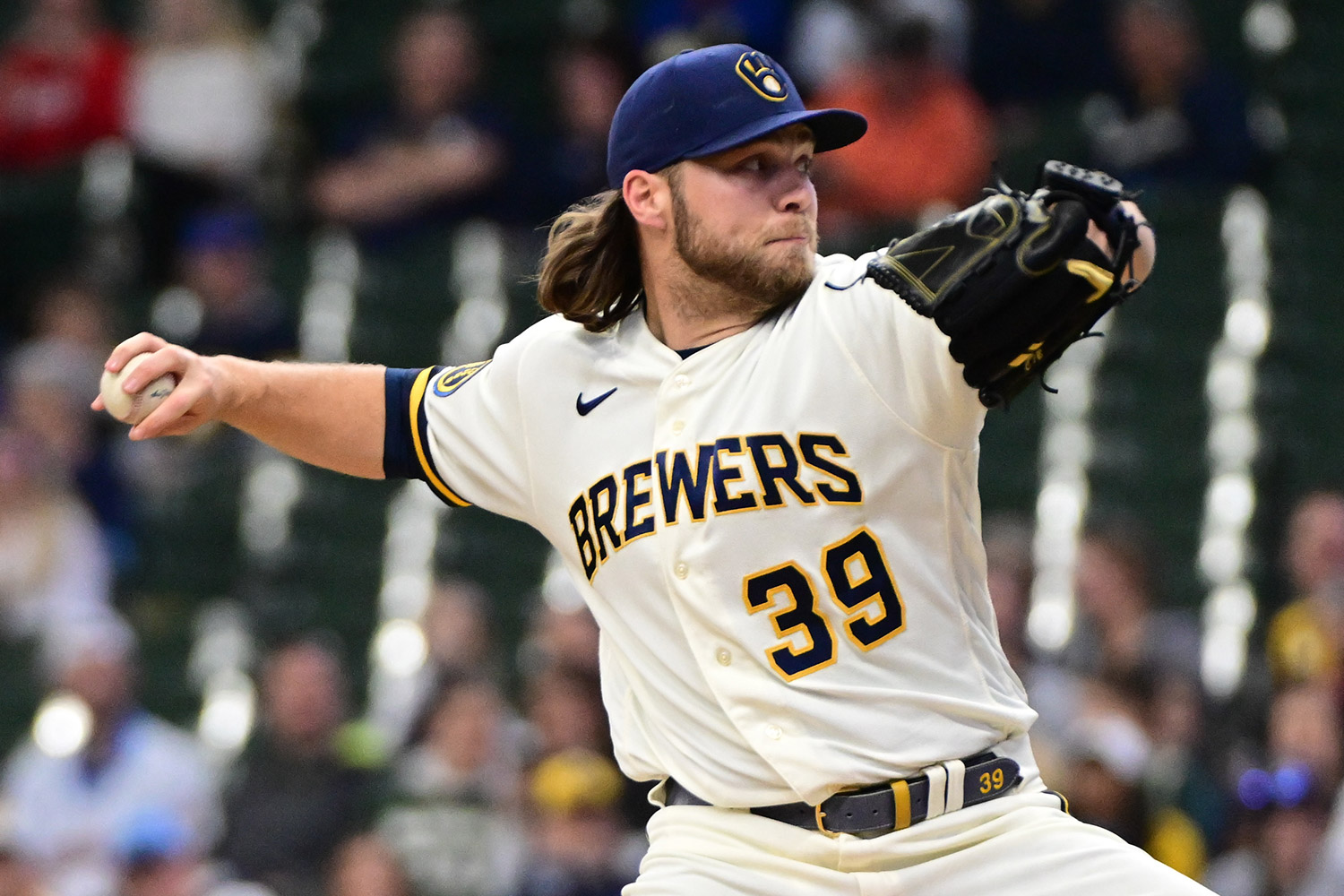 The Change-Up A pitch that Corbin Burnes has steadily been using more often year on year, to the point that it’s currently his second most common pitch this season, has taken on a life of its own. As mentioned in part one, he used the change-up only to left-handers in 2022, fading down and away in the zone or sequencing with his cutter to create weak contact and forcing batters to stretch away. The standout for Burnes on this pitch is the speed at which he throws it, last season recording almost average major league movement on the pitch across both planes, but at 90.3mph. His change-up had 26.4 inches of vertical drop and 14.4 inches of horizontal movement and was thrown harder than Wade Miley’s fastball, recording a whiff rate of 46.7%. The pitch had an expected WOBA of just .288 (the MLB average is usually about .320), and this has continued to progress in the current season, with hitters recording just one hit across the 46 pitches he’s thrown so far. He’s historically used it to devastating effect against left-handers and has thrown a couple to right-handers this season; he may plan to use this more often in the coming season. The Slider The slider is a pitch Burnes used to devastating effect against right-handers last season; a slower, more exaggerated movement than his cutter made picking either of these pitches particularly difficult. Like the curveball, Burnes has historically kept this pitch out of the hitting zone at 65-70% for his last two seasons. Yet even when he keeps it in the strike zone, the batting average against this pitch has been incredibly low on a month-to-month basis, only exceeding .200 a handful of months. He primarily used it like his curve to right-handers, as a finishing pitch, getting the hitters to chase down and away, using it 36% of the time when he gets ahead to right-handers, compared to just 12% of the time when the hitter gets ahead. Opponents overall hit .160 on pitches ending in the slider, with a 49.7% whiff rate. As you can see below, one of the best things about his slider is how well he locates it, keeping it down in, or below, the zone almost 75% of the time. He averaged 85% more horizontal break than the average slider, as well as slightly more vertical drop, and likes to use this to his advantage with the cutter, locating the cutter down and away in zone, then using the slider to follow the same path and dart further off the plate. The Sinker Burnes has often looked for another fastball he could use to keep the pressure of his cutter, whether that be the occasional four-seamer, which has gotten hit regularly, or the sinker, which moves the opposite way and was hit slightly less frequently. Ideally, this post by the pitching ninja demonstrates exactly what Burnes was hoping for in his arsenal: However, it was comfortably the most hittable pitch he used last season (albeit his underlying metrics were more sound) to the tune of a battering average of .250 and a slugging percentage of .525. As such, he’s begun using this a lot more sparingly this season. However, when he has, it’s been crushed, in part because he doesn’t generate much movement either vertically or horizontally, comfortably below league average in both categories, as well as struggling a lot more with a location in the middle of the zone and spraying it when trying to encourage a chase. The issue is it had a potentially beneficial effect in emphasizing both his cutter and his slider’s performance, and we’ll see throughout 2023 if these pitches have become less effective. Pitch Usage The Brewers ace had relied heavily on his cutter over the last few years, particularly when behind a hitter, and then used his off-speed stuff under lower leverage counts or to finish off a hitter. It’s interesting to see how methodical he’s been in his approach to this. The mere fact he threw only cutters in 3-0 counts for an entire season shows how much faith he has in that pitch, as well as its prominence in 3-1 and 2-0 counts, but also how often he uses the off-speed variations early in the count with a lot more variety and usage. How the sinker and slider were used only for right-handers speaks to this approach, and it’s worked well for our Cy Young winner. However, he did start to get hit much harder in the three-ball counts than throughout 2021. He does have specific sequences he likes to use, from the back door cutter paired with a fading change-up to left-handed hitters, the cutter/slider combination down and away to right-handers, and the curveball is thrown in against both to have a three-pitch arsenal with which to attack each side of the plate. What do you think, Brewer Fanatics? Is anything that stands out to you? We’ll be back soon for part three, and an analysis of where he took a step back in 2022 and how he can learn going into this season.
-
Also Joey Wiemer likes fastballs... Flexen's pitch mix is 48% four seamer, 29% cutter so far this season. Let's mash my child