


Matthew Trueblood
-
Posts
1,964 -
Joined
-
Last visited
-
Days Won
10
Content Type
Profiles
Forums
Blogs
Events
News
2026 Milwaukee Brewers Top Prospects Ranking
Milwaukee Brewers Videos
2022 Milwaukee Brewers Draft Picks
Milwaukee Brewers Free Agent & Trade Rumors, Notes, & Tidbits
Guides & Resources
2023 Milwaukee Brewers Draft Picks
2024 Milwaukee Brewers Draft Picks
The Milwaukee Brewers Players Project
2025 Milwaukee Brewers Draft Pick Tracker
2026 Milwaukee Brewers Draft Tracker: Picks & Bonuses
Store
Downloads
Gallery
Everything posted by Matthew Trueblood
-
.png.81b901f85be4c67f12086b117f4d959c.png) Over the course of the 2024 season, Freddy Peralta made a subtle but important move across the pitching rubber. He typically sets up on the third-base side of the mound, but within the season, he moved over to the first-base side. It wasn't a matter (at least directly, or consciously) of dealing with an injury, but rather, a needed change of alignment to help him perform at his best. "Naturally, I’ve always been on the third-base side. That’s my whole career," Peralta said Saturday at the Brewers' spring training complex in Maryvale. "So last year, I was having a little issue with my delivery. That’s why I moved to the middle, because I was feeling more comfortable. During the offseason, I worked to [be able to] be back on my third-base side, and I moved back again. It’s been good." Indeed, this spring, Peralta is back where he's generally been set up, on the third-base side of the rubber. He believes he's fixed the mechanical issue that was hindering his effectiveness from that spot, which particularly affected his ability to work to his glove side. "I wasn’t able to execute my fastball away from righties," he said. "It was getting hard, because I wasn’t having [my usual amount] of extension. But like I said, I worked on that, and I feel better now." We saw that, too. Peralta's extension was diminished for most of 2024, which is one number telling us a larger story about a bit of lost athletic explosion in his delivery—and therefore, a bit less of a problem posed to opposing hitters. Notably, though he recovered a chunk of that late in the season, by moving over on the rubber and reducing the crossfire element in his delivery a bit. If the diagnosed problem was mechanical, though, why wasn't the solution so? Why, instead, did Peralta approach the problem by starting from a different point? The answer lies in the difference between what's fixable within a season, and what has to wait for the longer feedback loops and less urgent need for rapid improvement of the offseason. "It’s hard to be changing—even little stuff, it’s hard to be changing that kind of stuff during the season," Peralta said. "You don’t want to deal with that, and then have something major happen. That’s why I chose to take the easier way, and work on it, but leave that work to the offseason." By thinking creatively and availing himself of his athleticism and proprioception, Peralta found a workaround for his fastball glitch for the balance of 2024 without risking injury. Was it perfect? No. He still allowed a higher OPS and saw his strikeout rate dip in the second half, even as he put up an impressive 3.06 ERA. It kept him on the mound and in position to help the team, though, and didn't risk a serious injury. Now, having put in a winter of work and feeling good enough to return to his home on the third-base side of the rubber, he has a chance to get back to full effectiveness in 2025—featuring a better interplay between his fastball and slider and more of the whiffs that are so vital to his profile.
Over the course of the 2024 season, Freddy Peralta made a subtle but important move across the pitching rubber. He typically sets up on the third-base side of the mound, but within the season, he moved over to the first-base side. It wasn't a matter (at least directly, or consciously) of dealing with an injury, but rather, a needed change of alignment to help him perform at his best. "Naturally, I’ve always been on the third-base side. That’s my whole career," Peralta said Saturday at the Brewers' spring training complex in Maryvale. "So last year, I was having a little issue with my delivery. That’s why I moved to the middle, because I was feeling more comfortable. During the offseason, I worked to [be able to] be back on my third-base side, and I moved back again. It’s been good." Indeed, this spring, Peralta is back where he's generally been set up, on the third-base side of the rubber. He believes he's fixed the mechanical issue that was hindering his effectiveness from that spot, which particularly affected his ability to work to his glove side. "I wasn’t able to execute my fastball away from righties," he said. "It was getting hard, because I wasn’t having [my usual amount] of extension. But like I said, I worked on that, and I feel better now." We saw that, too. Peralta's extension was diminished for most of 2024, which is one number telling us a larger story about a bit of lost athletic explosion in his delivery—and therefore, a bit less of a problem posed to opposing hitters. Notably, though he recovered a chunk of that late in the season, by moving over on the rubber and reducing the crossfire element in his delivery a bit. If the diagnosed problem was mechanical, though, why wasn't the solution so? Why, instead, did Peralta approach the problem by starting from a different point? The answer lies in the difference between what's fixable within a season, and what has to wait for the longer feedback loops and less urgent need for rapid improvement of the offseason. "It’s hard to be changing—even little stuff, it’s hard to be changing that kind of stuff during the season," Peralta said. "You don’t want to deal with that, and then have something major happen. That’s why I chose to take the easier way, and work on it, but leave that work to the offseason." By thinking creatively and availing himself of his athleticism and proprioception, Peralta found a workaround for his fastball glitch for the balance of 2024 without risking injury. Was it perfect? No. He still allowed a higher OPS and saw his strikeout rate dip in the second half, even as he put up an impressive 3.06 ERA. It kept him on the mound and in position to help the team, though, and didn't risk a serious injury. Now, having put in a winter of work and feeling good enough to return to his home on the third-base side of the rubber, he has a chance to get back to full effectiveness in 2025—featuring a better interplay between his fastball and slider and more of the whiffs that are so vital to his profile. -
I *promise* the Brewers are not manipulating anyone's appearance schedules based on the availability of telecasts. Most of their games have just not been telecast.
-
.png.5d78a9a3c11d2919023a04b021723042.png) There's a three-stall batch of lockers in a not-quite-corner of the Brewers' spring training clubhouse in Maryvale that aren't in line with any of the others lining the walls. It's between the showers and the back exit of the clubhouse, where players head to various workout areas, the field, or the training room. It screams "temporary," and the players the team puts there can count on being among the first to be reassigned to minor-league camp. This year, that stretch was also Weird Players Only: switch-hitting, (formerly) switch-throwing utility man (and sometimes-catcher) Anthony Seigler; bats-right, throws-left minor-league signee Jimmy Herron; and the funkmaster, Craig Yoho. On Friday, the team made their first round of cuts, and sure enough, Seigler and Herron were among the group. (image courtesy: Brewers PR) Yoho, then, is the lone survivor, and he has earned the right to stick around a little bit. His numbers this spring are remarkable (no runs and just two baserunners allowed, in five innings over four appearances; nine strikeouts in 17 batters faced), and they only just barely do him justice. He's baffled, overwhelmed, and even overpowered hitters, with four pitches working to perfection—and more than 1 mph of extra velocity on both his fastball and his trademark changeup. Throughout last season, Yoho's heat sat in the 92-93 mph range. This spring, he's averaging just under 94 mph in his Statcast-tracked appearances, and has been up to 96 on at least one occasion. There's a tangible difference there, one Yoho says is not only expected, but part of a longer-term plan. "I feel like I held that 92-93 throughout the year pretty well, had a couple 94s in there," he said Friday. "It was my first season. The priority that year for me was more longevity and health, staying healthy the whole year, not necessarily how hard I can throw this season? And the results spoke for themselves, it wasn’t like I needed a tick up in velocity. Whatever’s effective. How can I get outs? That’s all I care about." He also noted that early in his collegiate career at Indiana, his velocity was right in the range he's showing this spring, so the hope is that he can hold onto this uptick. If so, his whole arsenal becomes that much more devastating. Just as intriguing, though, is the greater emergence of the pitch labeled above as a curveball and called a slider by many, but which Yoho is thinking of as a sweeper. He got one of his strikeouts against the A's Thursday night with it, and believes it can be a difference-making offering as he matriculates to the majors. "It’s definitely been something I’ve been working on, just building confidence in," Yoho said. "I used it a lot in college, and once I got into pro ball, there was more of a focus on the changeup. It’s just something to always have in my back pocket, especially when I get late in counts, when I need a swing and miss or a freeze, it’s a good option to go to." That pitch works in concert with the screwball-style changeup he throws, because he often wants to start that pitch—especially right-on-right, which Yoho will do often—moving toward the first-base side of home plate, so it can look like a strike for a long time and then dip through and out of the zone en route to the hitter. In fact, that outer edge to righties (the inner edge to lefties) is the focal point of what Yoho does, because of his pitch shapes and the angle he creates with his setup on the mound and his arm slot. "From transitioning from a hitter to a pitcher, I got to the third-base side of the rubber because I thought that would be horrible to try and hit against," Yoho said, evoking the fact that he converted to the mound in college. "I picked that side of the rubber and I’ve stuck with it. So there’s definitely that extreme angle that I create with my arm slot, and then how far off I am on the rubber. It is kind of a focus for me to get to my glove side of home plate, just to keep everything a strike as long as possible. Out of the hand, I have to make everything look like a strike as long as possible, until all of a sudden it’s not." That angle is something he has in common with former Milwaukee closer Devin Williams, who made The Airbender such a weapon and made it easier for Yoho to bring his own unique changeup to the Brewers organization. Both guys need and want to do the same thing with their dominant offering, because it does more or less the same thing, and that's informed how each sets up on the rubber and aligns the delivery. However, the similarities largely stop there. Williams's fastball is a much truer four-seamer, riding and not running very much to the arm side. Yoho's heater has much more run and less ride, which affects the way he needs to build out the rest of his arsenal. That sweeper, then, is a huge separator for Yoho, to force hitters to expect something other than the changeup's bend back to the arm side—but so is the cutter, to play off his running fastball. "My fastball and changeup both move arm-side similarly," he said. "So [the cutter] is something to get their eyes—whether it’s a righty or a lefty—just off of where they’re looking for that changeup and heater to start. It’s all just playing with where they’re looking, what their approach is. Whether it’s front-dooring it to a righty, or maybe running it from a strike on the outside corner to a ball and getting a chase, or backdooring it to a lefty, or getting in under their hands. It’s just trying to keep the at-bats uncomfortable. Everybody in the ballpark knows I’m probably gonna throw a changeup at some point. So it’s trying to maybe never give it to them. Something to play that chess game with hitters a little bit better." If this is all starting to sound a lot like a starting-capable pitcher—four pitches, command, profound thoughts on how to confound the expectations even of hitters who have gotten a look at him already—you're not alone in thinking so. Our own @Jack Stern and @Spencer Michaelis responded to a listener question on the subject on the latest episode of the Brewer Fanatic Podcast. The question was also raised with Pat Murphy on Friday. Murphy didn't rule that out in the longer term, but for now, it's not under consideration. "I think they see him as a reliever," Murphy said about his conversations with the organization's other key decision-makers. "The discussion about him being a starter hasn’t been there. The injury history’s real. He’s a [converted] position player." Nor does Murphy foresee Yoho winning a job on the team for Opening Day, despite the dazzling Cactus League showing. He emphasized the need to look beyond performance, especially with players who are important parts of a longer-term organizational plan. "You certainly can. It’s not always a matter of how good their stuff is, you know what I mean?" the skipper said Thursday night, in the afterglow of Yoho's two-inning domination of the A's. "It’s being ready for the big leagues, which is a lot different than just throwing really good in spring training. There’s a lot that goes with it. That transition, sometimes, you take a step backwards, and some of these guys can’t afford that." In other words, expect Yoho to start the season in Nashville, because that's where the team can be sure he gets whatever remaining refinement is needed, and because it preserves their roster flexibility for the eventuality of injuries and poor performances. When the time does come, though, Yoho will be ready. That's why he was the only member of Weird Guys Only to stick around through the first cut: he needs reps against big-leaguers, and he has the maturity of approach and thought to keep getting them out once the games count, even if it's not right away.
There's a three-stall batch of lockers in a not-quite-corner of the Brewers' spring training clubhouse in Maryvale that aren't in line with any of the others lining the walls. It's between the showers and the back exit of the clubhouse, where players head to various workout areas, the field, or the training room. It screams "temporary," and the players the team puts there can count on being among the first to be reassigned to minor-league camp. This year, that stretch was also Weird Players Only: switch-hitting, (formerly) switch-throwing utility man (and sometimes-catcher) Anthony Seigler; bats-right, throws-left minor-league signee Jimmy Herron; and the funkmaster, Craig Yoho. On Friday, the team made their first round of cuts, and sure enough, Seigler and Herron were among the group. (image courtesy: Brewers PR) Yoho, then, is the lone survivor, and he has earned the right to stick around a little bit. His numbers this spring are remarkable (no runs and just two baserunners allowed, in five innings over four appearances; nine strikeouts in 17 batters faced), and they only just barely do him justice. He's baffled, overwhelmed, and even overpowered hitters, with four pitches working to perfection—and more than 1 mph of extra velocity on both his fastball and his trademark changeup. Throughout last season, Yoho's heat sat in the 92-93 mph range. This spring, he's averaging just under 94 mph in his Statcast-tracked appearances, and has been up to 96 on at least one occasion. There's a tangible difference there, one Yoho says is not only expected, but part of a longer-term plan. "I feel like I held that 92-93 throughout the year pretty well, had a couple 94s in there," he said Friday. "It was my first season. The priority that year for me was more longevity and health, staying healthy the whole year, not necessarily how hard I can throw this season? And the results spoke for themselves, it wasn’t like I needed a tick up in velocity. Whatever’s effective. How can I get outs? That’s all I care about." He also noted that early in his collegiate career at Indiana, his velocity was right in the range he's showing this spring, so the hope is that he can hold onto this uptick. If so, his whole arsenal becomes that much more devastating. Just as intriguing, though, is the greater emergence of the pitch labeled above as a curveball and called a slider by many, but which Yoho is thinking of as a sweeper. He got one of his strikeouts against the A's Thursday night with it, and believes it can be a difference-making offering as he matriculates to the majors. "It’s definitely been something I’ve been working on, just building confidence in," Yoho said. "I used it a lot in college, and once I got into pro ball, there was more of a focus on the changeup. It’s just something to always have in my back pocket, especially when I get late in counts, when I need a swing and miss or a freeze, it’s a good option to go to." That pitch works in concert with the screwball-style changeup he throws, because he often wants to start that pitch—especially right-on-right, which Yoho will do often—moving toward the first-base side of home plate, so it can look like a strike for a long time and then dip through and out of the zone en route to the hitter. In fact, that outer edge to righties (the inner edge to lefties) is the focal point of what Yoho does, because of his pitch shapes and the angle he creates with his setup on the mound and his arm slot. "From transitioning from a hitter to a pitcher, I got to the third-base side of the rubber because I thought that would be horrible to try and hit against," Yoho said, evoking the fact that he converted to the mound in college. "I picked that side of the rubber and I’ve stuck with it. So there’s definitely that extreme angle that I create with my arm slot, and then how far off I am on the rubber. It is kind of a focus for me to get to my glove side of home plate, just to keep everything a strike as long as possible. Out of the hand, I have to make everything look like a strike as long as possible, until all of a sudden it’s not." That angle is something he has in common with former Milwaukee closer Devin Williams, who made The Airbender such a weapon and made it easier for Yoho to bring his own unique changeup to the Brewers organization. Both guys need and want to do the same thing with their dominant offering, because it does more or less the same thing, and that's informed how each sets up on the rubber and aligns the delivery. However, the similarities largely stop there. Williams's fastball is a much truer four-seamer, riding and not running very much to the arm side. Yoho's heater has much more run and less ride, which affects the way he needs to build out the rest of his arsenal. That sweeper, then, is a huge separator for Yoho, to force hitters to expect something other than the changeup's bend back to the arm side—but so is the cutter, to play off his running fastball. "My fastball and changeup both move arm-side similarly," he said. "So [the cutter] is something to get their eyes—whether it’s a righty or a lefty—just off of where they’re looking for that changeup and heater to start. It’s all just playing with where they’re looking, what their approach is. Whether it’s front-dooring it to a righty, or maybe running it from a strike on the outside corner to a ball and getting a chase, or backdooring it to a lefty, or getting in under their hands. It’s just trying to keep the at-bats uncomfortable. Everybody in the ballpark knows I’m probably gonna throw a changeup at some point. So it’s trying to maybe never give it to them. Something to play that chess game with hitters a little bit better." If this is all starting to sound a lot like a starting-capable pitcher—four pitches, command, profound thoughts on how to confound the expectations even of hitters who have gotten a look at him already—you're not alone in thinking so. Our own @Jack Stern and @Spencer Michaelis responded to a listener question on the subject on the latest episode of the Brewer Fanatic Podcast. The question was also raised with Pat Murphy on Friday. Murphy didn't rule that out in the longer term, but for now, it's not under consideration. "I think they see him as a reliever," Murphy said about his conversations with the organization's other key decision-makers. "The discussion about him being a starter hasn’t been there. The injury history’s real. He’s a [converted] position player." Nor does Murphy foresee Yoho winning a job on the team for Opening Day, despite the dazzling Cactus League showing. He emphasized the need to look beyond performance, especially with players who are important parts of a longer-term organizational plan. "You certainly can. It’s not always a matter of how good their stuff is, you know what I mean?" the skipper said Thursday night, in the afterglow of Yoho's two-inning domination of the A's. "It’s being ready for the big leagues, which is a lot different than just throwing really good in spring training. There’s a lot that goes with it. That transition, sometimes, you take a step backwards, and some of these guys can’t afford that." In other words, expect Yoho to start the season in Nashville, because that's where the team can be sure he gets whatever remaining refinement is needed, and because it preserves their roster flexibility for the eventuality of injuries and poor performances. When the time does come, though, Yoho will be ready. That's why he was the only member of Weird Guys Only to stick around through the first cut: he needs reps against big-leaguers, and he has the maturity of approach and thought to keep getting them out once the games count, even if it's not right away. -
Don't look for the future relief ace on the Brewers' Opening Day roster—but don't let that downshift your confidence that that's what he'll be, either. Image courtesy of © Curt Hogg / USA TODAY NETWORK via Imagn Images There's a three-stall batch of lockers in a not-quite-corner of the Brewers' spring training clubhouse in Maryvale that aren't in line with any of the others lining the walls. It's between the showers and the back exit of the clubhouse, where players head to various workout areas, the field, or the training room. It screams "temporary," and the players the team puts there can count on being among the first to be reassigned to minor-league camp. This year, that stretch was also Weird Players Only: switch-hitting, (formerly) switch-throwing utility man (and sometimes-catcher) Anthony Seigler; bats-right, throws-left minor-league signee Jimmy Herron; and the funkmaster, Craig Yoho. On Friday, the team made their first round of cuts, and sure enough, Seigler and Herron were among the group. (image courtesy: Brewers PR) Yoho, then, is the lone survivor, and he has earned the right to stick around a little bit. His numbers this spring are remarkable (no runs and just two baserunners allowed, in five innings over four appearances; nine strikeouts in 17 batters faced), and they only just barely do him justice. He's baffled, overwhelmed, and even overpowered hitters, with four pitches working to perfection—and more than 1 mph of extra velocity on both his fastball and his trademark changeup. Throughout last season, Yoho's heat sat in the 92-93 mph range. This spring, he's averaging just under 94 mph in his Statcast-tracked appearances, and has been up to 96 on at least one occasion. There's a tangible difference there, one Yoho says is not only expected, but part of a longer-term plan. "I feel like I held that 92-93 throughout the year pretty well, had a couple 94s in there," he said Friday. "It was my first season. The priority that year for me was more longevity and health, staying healthy the whole year, not necessarily how hard I can throw this season? And the results spoke for themselves, it wasn’t like I needed a tick up in velocity. Whatever’s effective. How can I get outs? That’s all I care about." He also noted that early in his collegiate career at Indiana, his velocity was right in the range he's showing this spring, so the hope is that he can hold onto this uptick. If so, his whole arsenal becomes that much more devastating. Just as intriguing, though, is the greater emergence of the pitch labeled above as a curveball and called a slider by many, but which Yoho is thinking of as a sweeper. He got one of his strikeouts against the A's Thursday night with it, and believes it can be a difference-making offering as he matriculates to the majors. "It’s definitely been something I’ve been working on, just building confidence in," Yoho said. "I used it a lot in college, and once I got into pro ball, there was more of a focus on the changeup. It’s just something to always have in my back pocket, especially when I get late in counts, when I need a swing and miss or a freeze, it’s a good option to go to." That pitch works in concert with the screwball-style changeup he throws, because he often wants to start that pitch—especially right-on-right, which Yoho will do often—moving toward the first-base side of home plate, so it can look like a strike for a long time and then dip through and out of the zone en route to the hitter. In fact, that outer edge to righties (the inner edge to lefties) is the focal point of what Yoho does, because of his pitch shapes and the angle he creates with his setup on the mound and his arm slot. "From transitioning from a hitter to a pitcher, I got to the third-base side of the rubber because I thought that would be horrible to try and hit against," Yoho said, evoking the fact that he converted to the mound in college. "I picked that side of the rubber and I’ve stuck with it. So there’s definitely that extreme angle that I create with my arm slot, and then how far off I am on the rubber. It is kind of a focus for me to get to my glove side of home plate, just to keep everything a strike as long as possible. Out of the hand, I have to make everything look like a strike as long as possible, until all of a sudden it’s not." That angle is something he has in common with former Milwaukee closer Devin Williams, who made The Airbender such a weapon and made it easier for Yoho to bring his own unique changeup to the Brewers organization. Both guys need and want to do the same thing with their dominant offering, because it does more or less the same thing, and that's informed how each sets up on the rubber and aligns the delivery. However, the similarities largely stop there. Williams's fastball is a much truer four-seamer, riding and not running very much to the arm side. Yoho's heater has much more run and less ride, which affects the way he needs to build out the rest of his arsenal. That sweeper, then, is a huge separator for Yoho, to force hitters to expect something other than the changeup's bend back to the arm side—but so is the cutter, to play off his running fastball. "My fastball and changeup both move arm-side similarly," he said. "So [the cutter] is something to get their eyes—whether it’s a righty or a lefty—just off of where they’re looking for that changeup and heater to start. It’s all just playing with where they’re looking, what their approach is. Whether it’s front-dooring it to a righty, or maybe running it from a strike on the outside corner to a ball and getting a chase, or backdooring it to a lefty, or getting in under their hands. It’s just trying to keep the at-bats uncomfortable. Everybody in the ballpark knows I’m probably gonna throw a changeup at some point. So it’s trying to maybe never give it to them. Something to play that chess game with hitters a little bit better." If this is all starting to sound a lot like a starting-capable pitcher—four pitches, command, profound thoughts on how to confound the expectations even of hitters who have gotten a look at him already—you're not alone in thinking so. Our own @Jack Stern and @Spencer Michaelis responded to a listener question on the subject on the latest episode of the Brewer Fanatic Podcast. The question was also raised with Pat Murphy on Friday. Murphy didn't rule that out in the longer term, but for now, it's not under consideration. "I think they see him as a reliever," Murphy said about his conversations with the organization's other key decision-makers. "The discussion about him being a starter hasn’t been there. The injury history’s real. He’s a [converted] position player." Nor does Murphy foresee Yoho winning a job on the team for Opening Day, despite the dazzling Cactus League showing. He emphasized the need to look beyond performance, especially with players who are important parts of a longer-term organizational plan. "You certainly can. It’s not always a matter of how good their stuff is, you know what I mean?" the skipper said Thursday night, in the afterglow of Yoho's two-inning domination of the A's. "It’s being ready for the big leagues, which is a lot different than just throwing really good in spring training. There’s a lot that goes with it. That transition, sometimes, you take a step backwards, and some of these guys can’t afford that." In other words, expect Yoho to start the season in Nashville, because that's where the team can be sure he gets whatever remaining refinement is needed, and because it preserves their roster flexibility for the eventuality of injuries and poor performances. When the time does come, though, Yoho will be ready. That's why he was the only member of Weird Guys Only to stick around through the first cut: he needs reps against big-leaguers, and he has the maturity of approach and thought to keep getting them out once the games count, even if it's not right away. View full article
-
I just want to stress what was already in the article: this isn't a *truly* new pitch situation. The four-seamer has been there, it's just something he's trying to get more comfortable with to force hitters to respect it. The sweeper is the pitch that is currently classified by Statcast as a curve; he's working to get more sweep and less depth on it. By way of an update, he only threw one in the game in Mesa against the A's Wednesday night, but he did say the numbers were a bit better on that one and that he's feeling good about its changing shape in catch play.
-
.png.b28110e5bd76b9114b9cc05859053442.png) Initially, the indication was that Aaron Ashby had suffered a Grade 2 oblique strain. That would have been very bad news for the southpaw, who would probably have been barred from throwing for six to eight weeks in that scenario. The images "weren't super clear," though, Ashby said Friday, and upon a second look, the diagnosis was downgraded to a Grade 1 strain. "Yeah, they came back together and said it wasn’t as bad as they originally thought, which is good news," Ashby said. "I had kind of felt that way from the get-go. I felt like I had pulled the trigger early enough on coming out of the game. I just never felt like it was all that bad, talking to other guys who have had Grade 2s said that they couldn’t move the next day, they couldn’t get out of the car by themselves, they couldn’t get off the plane. I was like, ‘I feel like I could maybe throw a baseball right now.’ So all things considered, I think we’re in a great spot." Ashby's throwing will be paused for two weeks to let healing take place, and the timeline after that is difficult to predict. Even more than with other injuries, the progress of recovery and return to play depends on what the body tolerates. "It’s hard to put timelines on it, because you have to progress with obliques in a way that there’s no discomfort," he said. "Hopefully, we get to two weeks of a rehab thing and we can start some sort of throwing progression. I’m not really sure what that looks like—med balls, weighted balls, whatever that may look like. But some sort of something to begin this buildup again." When that happens, the team and the pitcher share the goal that he resumes stretching out to start. That could have been somewhat in question, after the team signed Jose Quintana this week to round out their projected starting rotation for Opening Day, but Ashby is committed to it, and he said Friday that the team shares that vision. For the Brewers, a part of that is thinking beyond the five (or six) pitchers they plan to have starting games when the season begins, which will include Freddy Peralta, Tobias Myers, Nestor Cortes, Quintana, and Aaron Civale. They should get Brandon Woodruff back sometime fairly early in the season (Woodruff said Friday that he hopes to get into a big-league Cactus League game before camp wraps up, though that would not mean he was ready to be on the roster immediately for the regular season), and they have depth in the minor leagues, but they'll need more than the six veterans—and even more than the extra help of young arms like Logan Henderson or Chad Patrick. "It’s not only for situations like what just happened with Ashby," manager Pat Murphy said Wednesday, in the wake of the Quintana signing. "We know that’s inevitable; guys are going to be hurt. It’s more just for continuing to make sure that all the wheels on our bus are at least functioning." Amassing depth (and keeping players with the ability to start prepared to do so) will be important for this year, to be sure, but Murphy also put it in a broader, longer-term context Friday, "It does factor in," Murphy said, when asked whether Ashby's injury history posed a temptation to move him back to the relief role where he found success last year, "but when you look down the road a little bit, it would be really important that he stays a starter. From an organizational standpoint, to produce starters that have that kind of stuff." Without saying it out loud, what Murphy is talking about is the fact that Freddy Peralta has just one more club option left on his team-friendly deal, after this year. The way the Brewers do things with most star-caliber veterans, they would trade him next winter, getting back players who help them compete in perpetuity. (Notably, they didn't do so with Willy Adames last offseason, because of what a special presence Adames was both on and off the field, and Peralta is the same kind of person and player. Still, the question looms.) Meanwhile, Civale, Quintana, Cortes, and Woodruff are all slated to hit free agency after 2025, even if a couple of them technically have mutual options that will need to be declined by one side or the other to make that official. It's possible that the team ends up re-signing or extending one of those established pitchers, but as of this moment, there is a yawning gap where any controllable, semi-established starting pitching core should be for this team. Myers is the only player who fits that description. Ashby can still be another. The team is optimistic about the future for Jacob Misiorowski, Logan Henderson, Chad Patrick, and others, but right now, they're staring down the barrel of a potential pitching shortfall beginning next season. They need to keep hurlers who have shown plus stuff in starting roles starter-capable, so Ashby will certainly continue to prepare as a starter—"unless you get to a spot that he's absolutely needed in the bullpen," Murphy put it. In that sense, the fact that this injury is less severe than it first appeared is a lifesaver. As Ashby noted, a long shutdown would have made it tough for him to build back up as a starter this year—not because he couldn't have gotten stretched out before the end of the season, but because his arm might have been needed to reinforce the bullpen sooner than that, and anyway, it becomes a different conversation if the player and team have to decide whether to stretch out as a starter if that process begins in May. It can still begin in March, as things stand, so Ashby doesn't have to worry about changing roles yet. The Brewers, who are already worrying beyond the bounds of this season (without compromising their focus on it), have dodged a different bullet, by still having a chance to get him a good developmental season of starting before needing to depend on him more heavily in the future.
Initially, the indication was that Aaron Ashby had suffered a Grade 2 oblique strain. That would have been very bad news for the southpaw, who would probably have been barred from throwing for six to eight weeks in that scenario. The images "weren't super clear," though, Ashby said Friday, and upon a second look, the diagnosis was downgraded to a Grade 1 strain. "Yeah, they came back together and said it wasn’t as bad as they originally thought, which is good news," Ashby said. "I had kind of felt that way from the get-go. I felt like I had pulled the trigger early enough on coming out of the game. I just never felt like it was all that bad, talking to other guys who have had Grade 2s said that they couldn’t move the next day, they couldn’t get out of the car by themselves, they couldn’t get off the plane. I was like, ‘I feel like I could maybe throw a baseball right now.’ So all things considered, I think we’re in a great spot." Ashby's throwing will be paused for two weeks to let healing take place, and the timeline after that is difficult to predict. Even more than with other injuries, the progress of recovery and return to play depends on what the body tolerates. "It’s hard to put timelines on it, because you have to progress with obliques in a way that there’s no discomfort," he said. "Hopefully, we get to two weeks of a rehab thing and we can start some sort of throwing progression. I’m not really sure what that looks like—med balls, weighted balls, whatever that may look like. But some sort of something to begin this buildup again." When that happens, the team and the pitcher share the goal that he resumes stretching out to start. That could have been somewhat in question, after the team signed Jose Quintana this week to round out their projected starting rotation for Opening Day, but Ashby is committed to it, and he said Friday that the team shares that vision. For the Brewers, a part of that is thinking beyond the five (or six) pitchers they plan to have starting games when the season begins, which will include Freddy Peralta, Tobias Myers, Nestor Cortes, Quintana, and Aaron Civale. They should get Brandon Woodruff back sometime fairly early in the season (Woodruff said Friday that he hopes to get into a big-league Cactus League game before camp wraps up, though that would not mean he was ready to be on the roster immediately for the regular season), and they have depth in the minor leagues, but they'll need more than the six veterans—and even more than the extra help of young arms like Logan Henderson or Chad Patrick. "It’s not only for situations like what just happened with Ashby," manager Pat Murphy said Wednesday, in the wake of the Quintana signing. "We know that’s inevitable; guys are going to be hurt. It’s more just for continuing to make sure that all the wheels on our bus are at least functioning." Amassing depth (and keeping players with the ability to start prepared to do so) will be important for this year, to be sure, but Murphy also put it in a broader, longer-term context Friday, "It does factor in," Murphy said, when asked whether Ashby's injury history posed a temptation to move him back to the relief role where he found success last year, "but when you look down the road a little bit, it would be really important that he stays a starter. From an organizational standpoint, to produce starters that have that kind of stuff." Without saying it out loud, what Murphy is talking about is the fact that Freddy Peralta has just one more club option left on his team-friendly deal, after this year. The way the Brewers do things with most star-caliber veterans, they would trade him next winter, getting back players who help them compete in perpetuity. (Notably, they didn't do so with Willy Adames last offseason, because of what a special presence Adames was both on and off the field, and Peralta is the same kind of person and player. Still, the question looms.) Meanwhile, Civale, Quintana, Cortes, and Woodruff are all slated to hit free agency after 2025, even if a couple of them technically have mutual options that will need to be declined by one side or the other to make that official. It's possible that the team ends up re-signing or extending one of those established pitchers, but as of this moment, there is a yawning gap where any controllable, semi-established starting pitching core should be for this team. Myers is the only player who fits that description. Ashby can still be another. The team is optimistic about the future for Jacob Misiorowski, Logan Henderson, Chad Patrick, and others, but right now, they're staring down the barrel of a potential pitching shortfall beginning next season. They need to keep hurlers who have shown plus stuff in starting roles starter-capable, so Ashby will certainly continue to prepare as a starter—"unless you get to a spot that he's absolutely needed in the bullpen," Murphy put it. In that sense, the fact that this injury is less severe than it first appeared is a lifesaver. As Ashby noted, a long shutdown would have made it tough for him to build back up as a starter this year—not because he couldn't have gotten stretched out before the end of the season, but because his arm might have been needed to reinforce the bullpen sooner than that, and anyway, it becomes a different conversation if the player and team have to decide whether to stretch out as a starter if that process begins in May. It can still begin in March, as things stand, so Ashby doesn't have to worry about changing roles yet. The Brewers, who are already worrying beyond the bounds of this season (without compromising their focus on it), have dodged a different bullet, by still having a chance to get him a good developmental season of starting before needing to depend on him more heavily in the future. -
A second opinion clarified the extent of the left-handed hurler's oblique injury, and the news is good. The Brewers know a role adjustment might be necessary again, but they have four very good reasons to build him back up as a starter. Image courtesy of © Kyle Ross-Imagn Images Initially, the indication was that Aaron Ashby had suffered a Grade 2 oblique strain. That would have been very bad news for the southpaw, who would probably have been barred from throwing for six to eight weeks in that scenario. The images "weren't super clear," though, Ashby said Friday, and upon a second look, the diagnosis was downgraded to a Grade 1 strain. "Yeah, they came back together and said it wasn’t as bad as they originally thought, which is good news," Ashby said. "I had kind of felt that way from the get-go. I felt like I had pulled the trigger early enough on coming out of the game. I just never felt like it was all that bad, talking to other guys who have had Grade 2s said that they couldn’t move the next day, they couldn’t get out of the car by themselves, they couldn’t get off the plane. I was like, ‘I feel like I could maybe throw a baseball right now.’ So all things considered, I think we’re in a great spot." Ashby's throwing will be paused for two weeks to let healing take place, and the timeline after that is difficult to predict. Even more than with other injuries, the progress of recovery and return to play depends on what the body tolerates. "It’s hard to put timelines on it, because you have to progress with obliques in a way that there’s no discomfort," he said. "Hopefully, we get to two weeks of a rehab thing and we can start some sort of throwing progression. I’m not really sure what that looks like—med balls, weighted balls, whatever that may look like. But some sort of something to begin this buildup again." When that happens, the team and the pitcher share the goal that he resumes stretching out to start. That could have been somewhat in question, after the team signed Jose Quintana this week to round out their projected starting rotation for Opening Day, but Ashby is committed to it, and he said Friday that the team shares that vision. For the Brewers, a part of that is thinking beyond the five (or six) pitchers they plan to have starting games when the season begins, which will include Freddy Peralta, Tobias Myers, Nestor Cortes, Quintana, and Aaron Civale. They should get Brandon Woodruff back sometime fairly early in the season (Woodruff said Friday that he hopes to get into a big-league Cactus League game before camp wraps up, though that would not mean he was ready to be on the roster immediately for the regular season), and they have depth in the minor leagues, but they'll need more than the six veterans—and even more than the extra help of young arms like Logan Henderson or Chad Patrick. "It’s not only for situations like what just happened with Ashby," manager Pat Murphy said Wednesday, in the wake of the Quintana signing. "We know that’s inevitable; guys are going to be hurt. It’s more just for continuing to make sure that all the wheels on our bus are at least functioning." Amassing depth (and keeping players with the ability to start prepared to do so) will be important for this year, to be sure, but Murphy also put it in a broader, longer-term context Friday, "It does factor in," Murphy said, when asked whether Ashby's injury history posed a temptation to move him back to the relief role where he found success last year, "but when you look down the road a little bit, it would be really important that he stays a starter. From an organizational standpoint, to produce starters that have that kind of stuff." Without saying it out loud, what Murphy is talking about is the fact that Freddy Peralta has just one more club option left on his team-friendly deal, after this year. The way the Brewers do things with most star-caliber veterans, they would trade him next winter, getting back players who help them compete in perpetuity. (Notably, they didn't do so with Willy Adames last offseason, because of what a special presence Adames was both on and off the field, and Peralta is the same kind of person and player. Still, the question looms.) Meanwhile, Civale, Quintana, Cortes, and Woodruff are all slated to hit free agency after 2025, even if a couple of them technically have mutual options that will need to be declined by one side or the other to make that official. It's possible that the team ends up re-signing or extending one of those established pitchers, but as of this moment, there is a yawning gap where any controllable, semi-established starting pitching core should be for this team. Myers is the only player who fits that description. Ashby can still be another. The team is optimistic about the future for Jacob Misiorowski, Logan Henderson, Chad Patrick, and others, but right now, they're staring down the barrel of a potential pitching shortfall beginning next season. They need to keep hurlers who have shown plus stuff in starting roles starter-capable, so Ashby will certainly continue to prepare as a starter—"unless you get to a spot that he's absolutely needed in the bullpen," Murphy put it. In that sense, the fact that this injury is less severe than it first appeared is a lifesaver. As Ashby noted, a long shutdown would have made it tough for him to build back up as a starter this year—not because he couldn't have gotten stretched out before the end of the season, but because his arm might have been needed to reinforce the bullpen sooner than that, and anyway, it becomes a different conversation if the player and team have to decide whether to stretch out as a starter if that process begins in May. It can still begin in March, as things stand, so Ashby doesn't have to worry about changing roles yet. The Brewers, who are already worrying beyond the bounds of this season (without compromising their focus on it), have dodged a different bullet, by still having a chance to get him a good developmental season of starting before needing to depend on him more heavily in the future. View full article
-
The sidearm pitcher the Brewers picked up this winter never meant to be one—not a sidearmer, and not even a pitcher, actually. Image courtesy of © Mark J. Rebilas-USA TODAY Sports McNeese State University is not exactly a powerhouse collegiate baseball program, but they play Div. I ball, and they wanted Grant Anderson. He wasn't drafted at the end of his high-school playing days, so off he went to McNeese State. When he arrived on campus, he was a catcher. That had been his position in high school, and when you compare Anderson to the (literally) huge majority of the pitchers who now populate the Brewers' clubhouse at their spring training complex in Maryvale, he looks a lot more like a catcher than he does like most of them. By the time baseball season actually came, though, that dream was dead. Anderson wasn't going to cut it in NCAA as a hitter, so the Cowboys and coach Justin Hill moved him to the mound. Initially, though, that wasn't working out much better. "I was a little inconsistent over the top, as far as being able to throw breaking pitches and offspeed pitches," Anderson recalled. "So they were like, ‘Well, you’ve got an athletic build; you’ve got a good arm. So why don’t you try dropping down sidearm?’ So we tried that, and it ended up working." In that freshman season, Anderson barely survived. In 15 innings across 12 mop-up appearances, he allowed 23 runs, good for an ERA of 13.80. Some of those outings and beatings-up came before the change in slot, though. When he came back the following season, after a full offseason to prepare as a sidewinder, he was much better—although still more 'good' than truly dominant. In fact, for the balance of his college career, he was endlessly intriguing, and often valuable, but never overwhelmingly valuable. He made many multi-inning relief appearances and a fistful of starts. He helped McNeese State, but he wasn't their ace, or even their relief ace. At the end of his junior year, he was selected in the 21st round of the MLB Draft—a round that wouldn't even exist a few years later. Nonetheless, he seized his chance to become a pro ballplayer, signing with the Seattle Mariners for $50,000. Ten months later, the Mariners dealt him to the Texas Rangers, where Anderson settled in nicely. He didn't explode onto the scene, though. He just steadily climbed the ladder. He survived the contraction of the minors, and a season lost to the pandemic in 2020. His command steadily improved, and he racked up more strikeouts against minor-league hitters than he had in college. He was very good—good enough, a half-decade after being selected, to crack the big leagues. He only managed 62 innings of work across two seasons in Texas, though, before the team designated him for assignment this winter, making room for the addition of Joc Pederson. The Brewers pounced on their chance, trading for him on Jan. 2. Milwaukee never does that kind of thing without a plan, and as soon as they had officially acquired Anderson, they approached him with theirs. It wasn't anything big or elaborate. It was just the next way for a dedicated baseball survivor to keep surviving. "Just some pitch usage stuff, maybe a couple pitch design things, making some pitches a little different movement-wise," Anderson said. "That was basically it." Specifically, Anderson recalled, the team sought to help him create more depth with his changeup, and to increase the sweeping action on his slider. Because of his funky arm angle, his slider actually rises, relative to the sinker he lives on. Giving the hitters the extra wrinkle of a changeup with vertical drop would diversify the looks with which they have to contend and (especially) make him tougher on left-handed batters, who have an OPS north of 1.000 against him since the start of 2023, at all levels. "I just have kind of a standard changeup grip," Anderson said, when asked in what ways he's trying to reengineer that pitch. "No circle change, I just put these two fingers on the middle laces, on a two-seam grip, basically, and throw it pretty similarly to my sinker. It’s actually the same grip I’ve had in previous years, but I just didn’t throw it at all the last two years." This seems to be one of the subtle specialties of the Brewers, when it comes to diamond hunts in the rough of the pitching landscape. It's unsexy, because there's nothing especially high-tech or high-concept to it, but they seem to pick up pitchers and give them the confidence to reimagine or resurrect pitches they've thrown in the past, with some frequency. In Anderson's case, the changeup is such a pivotal pitch that it's shocking either he or the Rangers would have let it slide through the cracks. On the other hand, good changeups from slots like his lie thin on the ground. Most of the time, since pitchers who throw like Anderson already have such heavy action on their sinkers, they don't go in much for changeups. The separation between that pitch and the sinker isn't great enough, and hitters spot what there is too easily. Atypically, though, Anderson doesn't only have that sinker. He can also throw a four-seamer, which would be heavy even by the standards of most pitchers' sinkers but rides quite a bit higher than his sinker does. Hitters strongly tend to expect the sinker, based on Anderson's slot, so that four-seamer comes with some degree of deception on its own. In this graphic, the topography map behind the circles representing the actual movement spread of Anderson's fastballs represents what a hitter intuitively expects, with brighter areas representing the greatest likelihood. Even given Anderson's low slot, his sinker is so heavy that it dips more than the hitter expects. Even more than that, though, the four-seamer confounds the hitter just by existing. Then, once he gets a hitter looking for that pitch a bit, room is created for the changeup underneath it. The change doesn't vary much from the sinker in the way it moves, but it's not meant to play off that pitch, anyway. In a perfect world, Anderson would get a lefty's eyes rising with a four-seamer, then throw the changeup to induce a bad swing and/or weak contact. Anderson threw his sinker exclusively to righties in 2024, and he went to the four-seamer almost exclusively against lefties. That approach didn't work, as he got lit up by lefties, but a big chunk of the reason for that lies in his not having used the changeup much at all. If he can throw that pitch more often and more consistently, he's part of the way to being an effective big-league reliever. The other key ingredient in reaching that goal for Anderson will be improving upon his slider, and that's the weapon he's even more excited about as he begins his stint with the Brewers. "With the slider, honestly, it’s a new pitch, so my first couple outings were rough, because I had no idea where the ball was going at the time," he said. "But the more I play catch with it, the more comfortable I get. So it becomes, where you’re starting the ball at, that determines if you’ll be able to get it glove-side or not. If I can get both of those pitches working together, sinker and slider, then I think I have a pretty good chance of being successful. The past couple of years, my slider’s been really short—almost cuttery. So I think getting more horizontal movement is going to help a lot." Sure enough, Anderson is already getting more sweep on that pitch, in his earliest introduction to the team. This scatter plot shows the average horizontal and vertical movement of his pitches by month, for all the months of his professional career in which he's pitched in stadia equipped with tracking systems. The red dot with the green box around it represents his slider movement this month. Only in August 2022, long before he made his big-league debut, did Anderson achieve this much horizontal movement on his slider. He's created the depth he needed, almost overnight, with a few tweaks made in concert with his new team. Whether that will be enough to turn him from a forgettable fringe big-league arm into a more thoroughly useful one remains to be seen. Once he learns to trust and deploy the changeup more often, Anderson will have four total pitches, and while he only needs two of them (the sinker and the not-so-cuttery-now slider) to righties, he has to find feel for both the four-seamer and the change, in order to take advantage of the new depth on his breaking ball against lefties. If he can manage that final synthesis, though, he could be a right-handed Hoby Milner for the Brewers for a few years. He's not built like a pitcher. He barely survived college ball to reach the pros, and barely survived the minors to reach the bigs. Anderson has dealt with a lot of adversity to get this far, but now he's closer than ever to establishing himself in the majors—thanks to open-mindedness and the Brewers' ideas about pitch usage and design, from the brilliant to the stunningly simple. View full article
-
.png.ada41582c4240f2ec93cb80a8b69eda4.png) McNeese State University is not exactly a powerhouse collegiate baseball program, but they play Div. I ball, and they wanted Grant Anderson. He wasn't drafted at the end of his high-school playing days, so off he went to McNeese State. When he arrived on campus, he was a catcher. That had been his position in high school, and when you compare Anderson to the (literally) huge majority of the pitchers who now populate the Brewers' clubhouse at their spring training complex in Maryvale, he looks a lot more like a catcher than he does like most of them. By the time baseball season actually came, though, that dream was dead. Anderson wasn't going to cut it in NCAA as a hitter, so the Cowboys and coach Justin Hill moved him to the mound. Initially, though, that wasn't working out much better. "I was a little inconsistent over the top, as far as being able to throw breaking pitches and offspeed pitches," Anderson recalled. "So they were like, ‘Well, you’ve got an athletic build; you’ve got a good arm. So why don’t you try dropping down sidearm?’ So we tried that, and it ended up working." In that freshman season, Anderson barely survived. In 15 innings across 12 mop-up appearances, he allowed 23 runs, good for an ERA of 13.80. Some of those outings and beatings-up came before the change in slot, though. When he came back the following season, after a full offseason to prepare as a sidewinder, he was much better—although still more 'good' than truly dominant. In fact, for the balance of his college career, he was endlessly intriguing, and often valuable, but never overwhelmingly valuable. He made many multi-inning relief appearances and a fistful of starts. He helped McNeese State, but he wasn't their ace, or even their relief ace. At the end of his junior year, he was selected in the 21st round of the MLB Draft—a round that wouldn't even exist a few years later. Nonetheless, he seized his chance to become a pro ballplayer, signing with the Seattle Mariners for $50,000. Ten months later, the Mariners dealt him to the Texas Rangers, where Anderson settled in nicely. He didn't explode onto the scene, though. He just steadily climbed the ladder. He survived the contraction of the minors, and a season lost to the pandemic in 2020. His command steadily improved, and he racked up more strikeouts against minor-league hitters than he had in college. He was very good—good enough, a half-decade after being selected, to crack the big leagues. He only managed 62 innings of work across two seasons in Texas, though, before the team designated him for assignment this winter, making room for the addition of Joc Pederson. The Brewers pounced on their chance, trading for him on Jan. 2. Milwaukee never does that kind of thing without a plan, and as soon as they had officially acquired Anderson, they approached him with theirs. It wasn't anything big or elaborate. It was just the next way for a dedicated baseball survivor to keep surviving. "Just some pitch usage stuff, maybe a couple pitch design things, making some pitches a little different movement-wise," Anderson said. "That was basically it." Specifically, Anderson recalled, the team sought to help him create more depth with his changeup, and to increase the sweeping action on his slider. Because of his funky arm angle, his slider actually rises, relative to the sinker he lives on. Giving the hitters the extra wrinkle of a changeup with vertical drop would diversify the looks with which they have to contend and (especially) make him tougher on left-handed batters, who have an OPS north of 1.000 against him since the start of 2023, at all levels. "I just have kind of a standard changeup grip," Anderson said, when asked in what ways he's trying to reengineer that pitch. "No circle change, I just put these two fingers on the middle laces, on a two-seam grip, basically, and throw it pretty similarly to my sinker. It’s actually the same grip I’ve had in previous years, but I just didn’t throw it at all the last two years." This seems to be one of the subtle specialties of the Brewers, when it comes to diamond hunts in the rough of the pitching landscape. It's unsexy, because there's nothing especially high-tech or high-concept to it, but they seem to pick up pitchers and give them the confidence to reimagine or resurrect pitches they've thrown in the past, with some frequency. In Anderson's case, the changeup is such a pivotal pitch that it's shocking either he or the Rangers would have let it slide through the cracks. On the other hand, good changeups from slots like his lie thin on the ground. Most of the time, since pitchers who throw like Anderson already have such heavy action on their sinkers, they don't go in much for changeups. The separation between that pitch and the sinker isn't great enough, and hitters spot what there is too easily. Atypically, though, Anderson doesn't only have that sinker. He can also throw a four-seamer, which would be heavy even by the standards of most pitchers' sinkers but rides quite a bit higher than his sinker does. Hitters strongly tend to expect the sinker, based on Anderson's slot, so that four-seamer comes with some degree of deception on its own. In this graphic, the topography map behind the circles representing the actual movement spread of Anderson's fastballs represents what a hitter intuitively expects, with brighter areas representing the greatest likelihood. Even given Anderson's low slot, his sinker is so heavy that it dips more than the hitter expects. Even more than that, though, the four-seamer confounds the hitter just by existing. Then, once he gets a hitter looking for that pitch a bit, room is created for the changeup underneath it. The change doesn't vary much from the sinker in the way it moves, but it's not meant to play off that pitch, anyway. In a perfect world, Anderson would get a lefty's eyes rising with a four-seamer, then throw the changeup to induce a bad swing and/or weak contact. Anderson threw his sinker exclusively to righties in 2024, and he went to the four-seamer almost exclusively against lefties. That approach didn't work, as he got lit up by lefties, but a big chunk of the reason for that lies in his not having used the changeup much at all. If he can throw that pitch more often and more consistently, he's part of the way to being an effective big-league reliever. The other key ingredient in reaching that goal for Anderson will be improving upon his slider, and that's the weapon he's even more excited about as he begins his stint with the Brewers. "With the slider, honestly, it’s a new pitch, so my first couple outings were rough, because I had no idea where the ball was going at the time," he said. "But the more I play catch with it, the more comfortable I get. So it becomes, where you’re starting the ball at, that determines if you’ll be able to get it glove-side or not. If I can get both of those pitches working together, sinker and slider, then I think I have a pretty good chance of being successful. The past couple of years, my slider’s been really short—almost cuttery. So I think getting more horizontal movement is going to help a lot." Sure enough, Anderson is already getting more sweep on that pitch, in his earliest introduction to the team. This scatter plot shows the average horizontal and vertical movement of his pitches by month, for all the months of his professional career in which he's pitched in stadia equipped with tracking systems. The red dot with the green box around it represents his slider movement this month. Only in August 2022, long before he made his big-league debut, did Anderson achieve this much horizontal movement on his slider. He's created the depth he needed, almost overnight, with a few tweaks made in concert with his new team. Whether that will be enough to turn him from a forgettable fringe big-league arm into a more thoroughly useful one remains to be seen. Once he learns to trust and deploy the changeup more often, Anderson will have four total pitches, and while he only needs two of them (the sinker and the not-so-cuttery-now slider) to righties, he has to find feel for both the four-seamer and the change, in order to take advantage of the new depth on his breaking ball against lefties. If he can manage that final synthesis, though, he could be a right-handed Hoby Milner for the Brewers for a few years. He's not built like a pitcher. He barely survived college ball to reach the pros, and barely survived the minors to reach the bigs. Anderson has dealt with a lot of adversity to get this far, but now he's closer than ever to establishing himself in the majors—thanks to open-mindedness and the Brewers' ideas about pitch usage and design, from the brilliant to the stunningly simple.
McNeese State University is not exactly a powerhouse collegiate baseball program, but they play Div. I ball, and they wanted Grant Anderson. He wasn't drafted at the end of his high-school playing days, so off he went to McNeese State. When he arrived on campus, he was a catcher. That had been his position in high school, and when you compare Anderson to the (literally) huge majority of the pitchers who now populate the Brewers' clubhouse at their spring training complex in Maryvale, he looks a lot more like a catcher than he does like most of them. By the time baseball season actually came, though, that dream was dead. Anderson wasn't going to cut it in NCAA as a hitter, so the Cowboys and coach Justin Hill moved him to the mound. Initially, though, that wasn't working out much better. "I was a little inconsistent over the top, as far as being able to throw breaking pitches and offspeed pitches," Anderson recalled. "So they were like, ‘Well, you’ve got an athletic build; you’ve got a good arm. So why don’t you try dropping down sidearm?’ So we tried that, and it ended up working." In that freshman season, Anderson barely survived. In 15 innings across 12 mop-up appearances, he allowed 23 runs, good for an ERA of 13.80. Some of those outings and beatings-up came before the change in slot, though. When he came back the following season, after a full offseason to prepare as a sidewinder, he was much better—although still more 'good' than truly dominant. In fact, for the balance of his college career, he was endlessly intriguing, and often valuable, but never overwhelmingly valuable. He made many multi-inning relief appearances and a fistful of starts. He helped McNeese State, but he wasn't their ace, or even their relief ace. At the end of his junior year, he was selected in the 21st round of the MLB Draft—a round that wouldn't even exist a few years later. Nonetheless, he seized his chance to become a pro ballplayer, signing with the Seattle Mariners for $50,000. Ten months later, the Mariners dealt him to the Texas Rangers, where Anderson settled in nicely. He didn't explode onto the scene, though. He just steadily climbed the ladder. He survived the contraction of the minors, and a season lost to the pandemic in 2020. His command steadily improved, and he racked up more strikeouts against minor-league hitters than he had in college. He was very good—good enough, a half-decade after being selected, to crack the big leagues. He only managed 62 innings of work across two seasons in Texas, though, before the team designated him for assignment this winter, making room for the addition of Joc Pederson. The Brewers pounced on their chance, trading for him on Jan. 2. Milwaukee never does that kind of thing without a plan, and as soon as they had officially acquired Anderson, they approached him with theirs. It wasn't anything big or elaborate. It was just the next way for a dedicated baseball survivor to keep surviving. "Just some pitch usage stuff, maybe a couple pitch design things, making some pitches a little different movement-wise," Anderson said. "That was basically it." Specifically, Anderson recalled, the team sought to help him create more depth with his changeup, and to increase the sweeping action on his slider. Because of his funky arm angle, his slider actually rises, relative to the sinker he lives on. Giving the hitters the extra wrinkle of a changeup with vertical drop would diversify the looks with which they have to contend and (especially) make him tougher on left-handed batters, who have an OPS north of 1.000 against him since the start of 2023, at all levels. "I just have kind of a standard changeup grip," Anderson said, when asked in what ways he's trying to reengineer that pitch. "No circle change, I just put these two fingers on the middle laces, on a two-seam grip, basically, and throw it pretty similarly to my sinker. It’s actually the same grip I’ve had in previous years, but I just didn’t throw it at all the last two years." This seems to be one of the subtle specialties of the Brewers, when it comes to diamond hunts in the rough of the pitching landscape. It's unsexy, because there's nothing especially high-tech or high-concept to it, but they seem to pick up pitchers and give them the confidence to reimagine or resurrect pitches they've thrown in the past, with some frequency. In Anderson's case, the changeup is such a pivotal pitch that it's shocking either he or the Rangers would have let it slide through the cracks. On the other hand, good changeups from slots like his lie thin on the ground. Most of the time, since pitchers who throw like Anderson already have such heavy action on their sinkers, they don't go in much for changeups. The separation between that pitch and the sinker isn't great enough, and hitters spot what there is too easily. Atypically, though, Anderson doesn't only have that sinker. He can also throw a four-seamer, which would be heavy even by the standards of most pitchers' sinkers but rides quite a bit higher than his sinker does. Hitters strongly tend to expect the sinker, based on Anderson's slot, so that four-seamer comes with some degree of deception on its own. In this graphic, the topography map behind the circles representing the actual movement spread of Anderson's fastballs represents what a hitter intuitively expects, with brighter areas representing the greatest likelihood. Even given Anderson's low slot, his sinker is so heavy that it dips more than the hitter expects. Even more than that, though, the four-seamer confounds the hitter just by existing. Then, once he gets a hitter looking for that pitch a bit, room is created for the changeup underneath it. The change doesn't vary much from the sinker in the way it moves, but it's not meant to play off that pitch, anyway. In a perfect world, Anderson would get a lefty's eyes rising with a four-seamer, then throw the changeup to induce a bad swing and/or weak contact. Anderson threw his sinker exclusively to righties in 2024, and he went to the four-seamer almost exclusively against lefties. That approach didn't work, as he got lit up by lefties, but a big chunk of the reason for that lies in his not having used the changeup much at all. If he can throw that pitch more often and more consistently, he's part of the way to being an effective big-league reliever. The other key ingredient in reaching that goal for Anderson will be improving upon his slider, and that's the weapon he's even more excited about as he begins his stint with the Brewers. "With the slider, honestly, it’s a new pitch, so my first couple outings were rough, because I had no idea where the ball was going at the time," he said. "But the more I play catch with it, the more comfortable I get. So it becomes, where you’re starting the ball at, that determines if you’ll be able to get it glove-side or not. If I can get both of those pitches working together, sinker and slider, then I think I have a pretty good chance of being successful. The past couple of years, my slider’s been really short—almost cuttery. So I think getting more horizontal movement is going to help a lot." Sure enough, Anderson is already getting more sweep on that pitch, in his earliest introduction to the team. This scatter plot shows the average horizontal and vertical movement of his pitches by month, for all the months of his professional career in which he's pitched in stadia equipped with tracking systems. The red dot with the green box around it represents his slider movement this month. Only in August 2022, long before he made his big-league debut, did Anderson achieve this much horizontal movement on his slider. He's created the depth he needed, almost overnight, with a few tweaks made in concert with his new team. Whether that will be enough to turn him from a forgettable fringe big-league arm into a more thoroughly useful one remains to be seen. Once he learns to trust and deploy the changeup more often, Anderson will have four total pitches, and while he only needs two of them (the sinker and the not-so-cuttery-now slider) to righties, he has to find feel for both the four-seamer and the change, in order to take advantage of the new depth on his breaking ball against lefties. If he can manage that final synthesis, though, he could be a right-handed Hoby Milner for the Brewers for a few years. He's not built like a pitcher. He barely survived college ball to reach the pros, and barely survived the minors to reach the bigs. Anderson has dealt with a lot of adversity to get this far, but now he's closer than ever to establishing himself in the majors—thanks to open-mindedness and the Brewers' ideas about pitch usage and design, from the brilliant to the stunningly simple. -
The Brewers' manager is staying open-minded about the best configuration of his young infield, for now. It's almost time for choosing, though, and he doesn't envision being fluid with it once the decisions are made. Image courtesy of © Dave Kallmann / Milwaukee Journal Sentinel / USA TODAY NETWORK via Imagn Images Pat Murphy knows life after Willy Adames will be different. The Brewers will have to align their infield defense differently, and that doesn't just mean the choice between sliding Joey Ortiz or Brice Turang to short to take Adames's vacated position. Fielder positioning has become such a fine art that the entire system of shading and manipulating player placement has to be redrawn after the departure of Adames. "I think that’s always the case. You take what you have, and you go, ‘Ok, we have to make this little adjustment. He doesn’t go as good to his backhand, so we might do that.’," Murphy said Wednesday. "That’s game-day, it’s even hitter-by-hitter adjustments, because we get all sorts of data on where to play guys, based on this type of pitcher, everything that you can think of. Then, because of those little differences, we make game-time adjustments." He also acknowledged that the specific loss of Adames is "huge", and that the decision of what to do to backfill the infield is a somewhat complicated one. Nonetheless, it's not far away. "We don’t know for sure how it’s gonna land right now," he said. "We’re getting pretty close to those times. But you can see clearly, it’s either we keep Ortiz [at third] or we try one of these young guys, Durbin or—I say try, but I have belief in both of [Caleb Durbin] and [Oliver Dunn], or [Andruw Monasterio], or [Vinny Capra] is certainly making a name for himself in spring training." That might sound like manager boilerplate, but it's relatively definitive, as Murphy's sphinxlike approach to spring training conversations goes. He also went on at some length about Dunn, whom he clearly views as the favorite for that job (though he won't admit as much). With each passing day, Ortiz becomes more clearly the shortstop, and Dunn gets closer to claiming the hot corner—especially amid struggles by Durbin at that position in his early looks. He's still toying with various options, but one path Murphy will not consider is a system whereby Ortiz and/or Turang move from one position to another, from day to day. "I don’t want to do that. I think that’s too much for the player, because each position is different," Murphy said. "We tend to think second and short are kind of similar, and while they’re similar, they’re very different. Very different angles on the field, very different throws they make, and second to third? Huge difference. Third to short, short to third? Shew. So, I don’t want to switch their positions. Injuries would create that [possibility]; that would be it." Left unsaid there, of course, are two facts: If an injury strikes, that very unfamiliarity—that position switch that was not much practiced for, but becomes unavoidable—hits like an aftershock of the quake that is the injury; and Not everyone has earned the privilege of not having to move around. "Murph’s absolutely right with that. It is different angles, and different stuff," said Capra, one of the merry men rattled off as theoretical options at third. "I think playing different positions, you just kind of take reps at each one every day and try to do your best with it. The footwork, the throws—it’s similar, and the more time you get under your belt playing at each one, the transition is easier and easier. I’ve played quite a bit of short, second, and third over the past couple of years. It’s kind of like the work you put in just plays out now, and they’re not so different. It takes a little bit of reps at the beginning of the day, and it smooths out." In short, Capra (who's played 769 innings at second base, 1,243 at third, and 1,530 at shortstop in his six minor-league seasons) buys Murphy's premise, but seems less worried about the conclusion his skipper draws therefrom. He talked about needing to get reps at each spot regularly, in practice, but he's also very comfortable with the preparation process involved. He trusts and profoundly respects infield coaches Matt Erickson and Mike Guerrero, whom he goes to when he thinks he needs help on a particular sequence of movements or the timing of a play, and he accepts the responsibility of being ready to play wherever and whenever he's called upon. Meanwhile, Ortiz barely notices the difference Murphy plays up so much. "I wouldn’t say so. It’s still the same game," Ortiz said, when asked if a year of playing third base had taught him anything about playing shortstop, giving him a new angle on things. "You’ve still gotta field the ball, throw the ball, hit the guy in the chest, get an out, no matter where you are in the field. I think, actually, coming up playing short probably helped me at third base a little bit, because you’ve gotta have a little more range to play short—gotta get better jumps, all these things that go into it, but it’s still the same game. Field the ball, throw the ball." The Brewers themselves are less worried about the added wrinkles created by moving between positions than their manager is—but that's Murphy's job, anyway. He's tasked with putting his players in the best possible position to succeed, and in his view, that means giving the players who merit everyday playing time an everyday position, at least on the dirt—and at least right now, with this set of players. If the season began tomorrow, there's no doubt whatsoever that Turang would be at second base, Ortiz would be at short, and Dunn would play third. There's still time for that to change, but the trends in the changeable spaces are pointing the same way as the hard facts. Don't expect to see much (if any) of Turang at short or Ortiz at third, as long as health allows Murphy to avoid those outcomes. At the moment, don't expect to see much of Monasterio or Durbin early in the season, anywhere. View full article
- 3 replies
-
- 1
-

-
- joey ortiz
- brice turang
- (and 3 more)
-
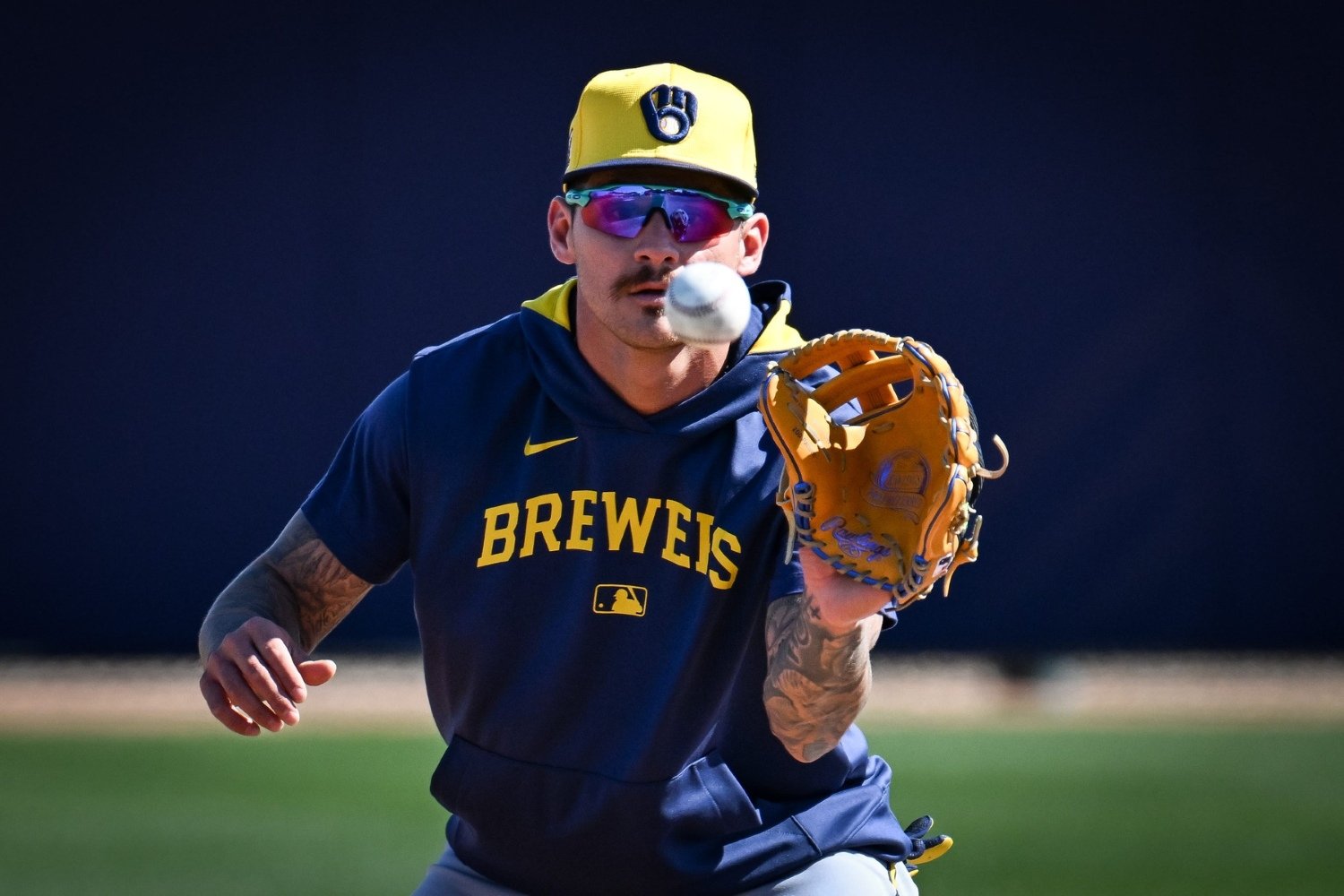 Pat Murphy knows life after Willy Adames will be different. The Brewers will have to align their infield defense differently, and that doesn't just mean the choice between sliding Joey Ortiz or Brice Turang to short to take Adames's vacated position. Fielder positioning has become such a fine art that the entire system of shading and manipulating player placement has to be redrawn after the departure of Adames. "I think that’s always the case. You take what you have, and you go, ‘Ok, we have to make this little adjustment. He doesn’t go as good to his backhand, so we might do that.’," Murphy said Wednesday. "That’s game-day, it’s even hitter-by-hitter adjustments, because we get all sorts of data on where to play guys, based on this type of pitcher, everything that you can think of. Then, because of those little differences, we make game-time adjustments." He also acknowledged that the specific loss of Adames is "huge", and that the decision of what to do to backfill the infield is a somewhat complicated one. Nonetheless, it's not far away. "We don’t know for sure how it’s gonna land right now," he said. "We’re getting pretty close to those times. But you can see clearly, it’s either we keep Ortiz [at third] or we try one of these young guys, Durbin or—I say try, but I have belief in both of [Caleb Durbin] and [Oliver Dunn], or [Andruw Monasterio], or [Vinny Capra] is certainly making a name for himself in spring training." That might sound like manager boilerplate, but it's relatively definitive, as Murphy's sphinxlike approach to spring training conversations goes. He also went on at some length about Dunn, whom he clearly views as the favorite for that job (though he won't admit as much). With each passing day, Ortiz becomes more clearly the shortstop, and Dunn gets closer to claiming the hot corner—especially amid struggles by Durbin at that position in his early looks. He's still toying with various options, but one path Murphy will not consider is a system whereby Ortiz and/or Turang move from one position to another, from day to day. "I don’t want to do that. I think that’s too much for the player, because each position is different," Murphy said. "We tend to think second and short are kind of similar, and while they’re similar, they’re very different. Very different angles on the field, very different throws they make, and second to third? Huge difference. Third to short, short to third? Shew. So, I don’t want to switch their positions. Injuries would create that [possibility]; that would be it." Left unsaid there, of course, are two facts: If an injury strikes, that very unfamiliarity—that position switch that was not much practiced for, but becomes unavoidable—hits like an aftershock of the quake that is the injury; and Not everyone has earned the privilege of not having to move around. "Murph’s absolutely right with that. It is different angles, and different stuff," said Capra, one of the merry men rattled off as theoretical options at third. "I think playing different positions, you just kind of take reps at each one every day and try to do your best with it. The footwork, the throws—it’s similar, and the more time you get under your belt playing at each one, the transition is easier and easier. I’ve played quite a bit of short, second, and third over the past couple of years. It’s kind of like the work you put in just plays out now, and they’re not so different. It takes a little bit of reps at the beginning of the day, and it smooths out." In short, Capra (who's played 769 innings at second base, 1,243 at third, and 1,530 at shortstop in his six minor-league seasons) buys Murphy's premise, but seems less worried about the conclusion his skipper draws therefrom. He talked about needing to get reps at each spot regularly, in practice, but he's also very comfortable with the preparation process involved. He trusts and profoundly respects infield coaches Matt Erickson and Mike Guerrero, whom he goes to when he thinks he needs help on a particular sequence of movements or the timing of a play, and he accepts the responsibility of being ready to play wherever and whenever he's called upon. Meanwhile, Ortiz barely notices the difference Murphy plays up so much. "I wouldn’t say so. It’s still the same game," Ortiz said, when asked if a year of playing third base had taught him anything about playing shortstop, giving him a new angle on things. "You’ve still gotta field the ball, throw the ball, hit the guy in the chest, get an out, no matter where you are in the field. I think, actually, coming up playing short probably helped me at third base a little bit, because you’ve gotta have a little more range to play short—gotta get better jumps, all these things that go into it, but it’s still the same game. Field the ball, throw the ball." The Brewers themselves are less worried about the added wrinkles created by moving between positions than their manager is—but that's Murphy's job, anyway. He's tasked with putting his players in the best possible position to succeed, and in his view, that means giving the players who merit everyday playing time an everyday position, at least on the dirt—and at least right now, with this set of players. If the season began tomorrow, there's no doubt whatsoever that Turang would be at second base, Ortiz would be at short, and Dunn would play third. There's still time for that to change, but the trends in the changeable spaces are pointing the same way as the hard facts. Don't expect to see much (if any) of Turang at short or Ortiz at third, as long as health allows Murphy to avoid those outcomes. At the moment, don't expect to see much of Monasterio or Durbin early in the season, anywhere.
 -
By the end of last season, the towering southpaw was arguably the Brewers' second- or third-best reliever—at least when things were going right. He enters 2025 hoping to have things going right even more often. Image courtesy of © Dave Kallmann / Milwaukee Journal Sentinel / USA TODAY NETWORK via Imagn Images Inside the Brewers' spring training clubhouse in Maryvale, the team has assigned the lockers in one corner to a collection of some of the biggest human beings in the league. At the far end is the locker for Trevor Megill, and next to him are Jared Koenig and Bryan Hudson. It's like the club is expecting a basketball game to break out at any moment, and believes the rim they need to protect will be right by the entrance to the showers. Megill is where he was last year, but there's been considerable turnover during the winter, and Hudson and Koenig are new to this sector. It's the lane reserved for players more or less locked into the bullpen. Last year, Hoby Milner was there, along with new signee Jakob Junis. Hudson and Koenig were on the other side, where roster hopefuls with only slim chances to claim a place line up—where, this year, the likes of Grant Wolfram, Easton McGee, Chad Patrick and Logan Henderson are. As a group, Megill, Hudson and Koenig average 6-foot-6, 248 pounds. Koenig is the shortest, but also the most sturdily built. As the team often does, they've dropped a prized prospect into the middle of a long line of veterans, to encourage them to learn from more experienced peers and to begin integrating them into the group. This year, it's Jacob Misiorowski, who stands 6-foot-7 himself—but who is absolutely dwarfed by his older, equally tall but almost unfathomably wider and stronger teammates. As a group, they're a testament to what the Brewers look for in relievers: the raw materials for more than they've achieved elsewhere, and a willingness to learn and grow in the game. Koenig might be the best example of all. The journeyman lefty has found a very comfortable home in the Brewers' pen, and this spring, he knows he's likely to be a trusted contributor. He did not, however, take anything for granted this winter. "Yeah, I had a good year, so that helps: going into the offseason knowing I’m most likely going to have a job," Koenig said, when asked about the human side of getting over the hump and into the majors in earnest for the first time. "That was a nice plus, for sure. I was a little more relaxed in the offseason; I got to enjoy it a little more, rather than having to stress whether, ‘Alright, is someone going to want me? Is someone going to sign me?’ So that was a luxury. Everything else was a continuousness to try to be better each time. My trainer’s always pushing me on that. So, with that, nothing else really changed. I was in the gym six days a week." Koenig said he first picked up a ball and began building back up just a few weeks after last season ended, following much the same process he would have in previous years. He believes the best way to protect his arm is to carefully manage offseason workload, but not lose touch or miss any kind of signal that something isn't right. Had such a problem flared up, he wanted to know as soon as possible, so he could treat and attack it—even before reporting to camp, perhaps. Not only has that not happened, but Koenig has hit the ground running this spring. In his lone Statcast-tracked outing of the spring so far, he sat just under 96 miles per hour with his fastballs—both his sinker and his four-seamer, the latter of which he threw more often Sunday than in some entire months of 2024. "There was a few more four-seamers [catcher Jorge Alfaro] called, and I’m fine throwing it, because I need to work on it a little bit," Koenig said of that pitch selection. "Trying it out. I’ve thrown it before, but it’s hard for me to keep that ball straight, as well. I don’t throw a ball that can stay straight. I’m still cutting it, but if it’s in the zone and it has the ride it needs to, it’s a good separation [from the sinker and cutter]." On Sunday, the pitch did have more induced vertical break than it did last year, so the limited experiment was a success. A catcher more intimately familiar with Koenig's arsenal might not have even prompted him to throw the handful he did, but the results were encouraging. Koenig also said that velocity number was the highest he's ever been this early in a season, which is hardly a surprise. Even last year, when he kept adding velocity all the way to the end of the season, it took until August for his juice to exceed what he's already shown this spring. The four-seamer could be a semi-new pitch for Koenig this season. He's much more comfortable with his command of the cutter and sinker, but if he can even occasionally throw a riding four-seamer at 96 or 97 miles per hour at the top of the zone, it will force hitters to build their strike zone against him in a whole new way. That's not the only offering Koenig is thinking of as somewhat new, though. "The other one is the sweeper. Just trying to get it, again," he said. "It came in last year where I wanted it, and then muscle memory took over during the season, and it became more curveballesque. It’s a constant battle with that one, trying to keep it where I want it." Indeed it is—so much so that the pitch he thinks of as a sweeper has been classified as a curve by all of the major classification systems available. It's a pitch with lots of depth, but not always as much horizontal movement as Koenig intends. He believes that an offseason of work might have fixed that. "The goal is, ‘Throw this as a ball, and hopefully, it comes back,’ but hopefully that forces me to spin it [laterally] rather than top to bottom," Koenig said. "There are a couple things I’m trying, to just get it a little more horizontal, and a little less depth-y. And if we can get that, then great. But even, to the righties, if it’s got a little depth to it, that’s fine, because it can get a swing and miss, down below." In that department, we've yet to see the progress. On Sunday, Koenig's so-called curve has more vertical depth and less horizontal movement than it averaged last year. He's right, though: Against righties, that's just fine. In fact, it might complement that budding four-seamer just as well this way as anything can. The good news, if the focus is making it a truer sweeper, is that the pitch was firmer (averaging around 82 mph) and located pretty consistently below the zone and inside on a righty, or away from a lefty. Koenig believes he can get even better, and the evidence is on his side. If he can live at 96 and touch higher; if he can throw the occasional four-seamer to make it even harder for hitters to spot his sinker and cutter; and if he can consistently execute his breaking ball, he might well emerge as a left-handed relief ace for the Crew in 2025. He's going to be huge for the Brewers, one way or another. View full article
-
.png.2b4cfab71ba73c4441f7e5c4cd62af34.png) Inside the Brewers' spring training clubhouse in Maryvale, the team has assigned the lockers in one corner to a collection of some of the biggest human beings in the league. At the far end is the locker for Trevor Megill, and next to him are Jared Koenig and Bryan Hudson. It's like the club is expecting a basketball game to break out at any moment, and believes the rim they need to protect will be right by the entrance to the showers. Megill is where he was last year, but there's been considerable turnover during the winter, and Hudson and Koenig are new to this sector. It's the lane reserved for players more or less locked into the bullpen. Last year, Hoby Milner was there, along with new signee Jakob Junis. Hudson and Koenig were on the other side, where roster hopefuls with only slim chances to claim a place line up—where, this year, the likes of Grant Wolfram, Easton McGee, Chad Patrick and Logan Henderson are. As a group, Megill, Hudson and Koenig average 6-foot-6, 248 pounds. Koenig is the shortest, but also the most sturdily built. As the team often does, they've dropped a prized prospect into the middle of a long line of veterans, to encourage them to learn from more experienced peers and to begin integrating them into the group. This year, it's Jacob Misiorowski, who stands 6-foot-7 himself—but who is absolutely dwarfed by his older, equally tall but almost unfathomably wider and stronger teammates. As a group, they're a testament to what the Brewers look for in relievers: the raw materials for more than they've achieved elsewhere, and a willingness to learn and grow in the game. Koenig might be the best example of all. The journeyman lefty has found a very comfortable home in the Brewers' pen, and this spring, he knows he's likely to be a trusted contributor. He did not, however, take anything for granted this winter. "Yeah, I had a good year, so that helps: going into the offseason knowing I’m most likely going to have a job," Koenig said, when asked about the human side of getting over the hump and into the majors in earnest for the first time. "That was a nice plus, for sure. I was a little more relaxed in the offseason; I got to enjoy it a little more, rather than having to stress whether, ‘Alright, is someone going to want me? Is someone going to sign me?’ So that was a luxury. Everything else was a continuousness to try to be better each time. My trainer’s always pushing me on that. So, with that, nothing else really changed. I was in the gym six days a week." Koenig said he first picked up a ball and began building back up just a few weeks after last season ended, following much the same process he would have in previous years. He believes the best way to protect his arm is to carefully manage offseason workload, but not lose touch or miss any kind of signal that something isn't right. Had such a problem flared up, he wanted to know as soon as possible, so he could treat and attack it—even before reporting to camp, perhaps. Not only has that not happened, but Koenig has hit the ground running this spring. In his lone Statcast-tracked outing of the spring so far, he sat just under 96 miles per hour with his fastballs—both his sinker and his four-seamer, the latter of which he threw more often Sunday than in some entire months of 2024. "There was a few more four-seamers [catcher Jorge Alfaro] called, and I’m fine throwing it, because I need to work on it a little bit," Koenig said of that pitch selection. "Trying it out. I’ve thrown it before, but it’s hard for me to keep that ball straight, as well. I don’t throw a ball that can stay straight. I’m still cutting it, but if it’s in the zone and it has the ride it needs to, it’s a good separation [from the sinker and cutter]." On Sunday, the pitch did have more induced vertical break than it did last year, so the limited experiment was a success. A catcher more intimately familiar with Koenig's arsenal might not have even prompted him to throw the handful he did, but the results were encouraging. Koenig also said that velocity number was the highest he's ever been this early in a season, which is hardly a surprise. Even last year, when he kept adding velocity all the way to the end of the season, it took until August for his juice to exceed what he's already shown this spring. The four-seamer could be a semi-new pitch for Koenig this season. He's much more comfortable with his command of the cutter and sinker, but if he can even occasionally throw a riding four-seamer at 96 or 97 miles per hour at the top of the zone, it will force hitters to build their strike zone against him in a whole new way. That's not the only offering Koenig is thinking of as somewhat new, though. "The other one is the sweeper. Just trying to get it, again," he said. "It came in last year where I wanted it, and then muscle memory took over during the season, and it became more curveballesque. It’s a constant battle with that one, trying to keep it where I want it." Indeed it is—so much so that the pitch he thinks of as a sweeper has been classified as a curve by all of the major classification systems available. It's a pitch with lots of depth, but not always as much horizontal movement as Koenig intends. He believes that an offseason of work might have fixed that. "The goal is, ‘Throw this as a ball, and hopefully, it comes back,’ but hopefully that forces me to spin it [laterally] rather than top to bottom," Koenig said. "There are a couple things I’m trying, to just get it a little more horizontal, and a little less depth-y. And if we can get that, then great. But even, to the righties, if it’s got a little depth to it, that’s fine, because it can get a swing and miss, down below." In that department, we've yet to see the progress. On Sunday, Koenig's so-called curve has more vertical depth and less horizontal movement than it averaged last year. He's right, though: Against righties, that's just fine. In fact, it might complement that budding four-seamer just as well this way as anything can. The good news, if the focus is making it a truer sweeper, is that the pitch was firmer (averaging around 82 mph) and located pretty consistently below the zone and inside on a righty, or away from a lefty. Koenig believes he can get even better, and the evidence is on his side. If he can live at 96 and touch higher; if he can throw the occasional four-seamer to make it even harder for hitters to spot his sinker and cutter; and if he can consistently execute his breaking ball, he might well emerge as a left-handed relief ace for the Crew in 2025. He's going to be huge for the Brewers, one way or another.
Inside the Brewers' spring training clubhouse in Maryvale, the team has assigned the lockers in one corner to a collection of some of the biggest human beings in the league. At the far end is the locker for Trevor Megill, and next to him are Jared Koenig and Bryan Hudson. It's like the club is expecting a basketball game to break out at any moment, and believes the rim they need to protect will be right by the entrance to the showers. Megill is where he was last year, but there's been considerable turnover during the winter, and Hudson and Koenig are new to this sector. It's the lane reserved for players more or less locked into the bullpen. Last year, Hoby Milner was there, along with new signee Jakob Junis. Hudson and Koenig were on the other side, where roster hopefuls with only slim chances to claim a place line up—where, this year, the likes of Grant Wolfram, Easton McGee, Chad Patrick and Logan Henderson are. As a group, Megill, Hudson and Koenig average 6-foot-6, 248 pounds. Koenig is the shortest, but also the most sturdily built. As the team often does, they've dropped a prized prospect into the middle of a long line of veterans, to encourage them to learn from more experienced peers and to begin integrating them into the group. This year, it's Jacob Misiorowski, who stands 6-foot-7 himself—but who is absolutely dwarfed by his older, equally tall but almost unfathomably wider and stronger teammates. As a group, they're a testament to what the Brewers look for in relievers: the raw materials for more than they've achieved elsewhere, and a willingness to learn and grow in the game. Koenig might be the best example of all. The journeyman lefty has found a very comfortable home in the Brewers' pen, and this spring, he knows he's likely to be a trusted contributor. He did not, however, take anything for granted this winter. "Yeah, I had a good year, so that helps: going into the offseason knowing I’m most likely going to have a job," Koenig said, when asked about the human side of getting over the hump and into the majors in earnest for the first time. "That was a nice plus, for sure. I was a little more relaxed in the offseason; I got to enjoy it a little more, rather than having to stress whether, ‘Alright, is someone going to want me? Is someone going to sign me?’ So that was a luxury. Everything else was a continuousness to try to be better each time. My trainer’s always pushing me on that. So, with that, nothing else really changed. I was in the gym six days a week." Koenig said he first picked up a ball and began building back up just a few weeks after last season ended, following much the same process he would have in previous years. He believes the best way to protect his arm is to carefully manage offseason workload, but not lose touch or miss any kind of signal that something isn't right. Had such a problem flared up, he wanted to know as soon as possible, so he could treat and attack it—even before reporting to camp, perhaps. Not only has that not happened, but Koenig has hit the ground running this spring. In his lone Statcast-tracked outing of the spring so far, he sat just under 96 miles per hour with his fastballs—both his sinker and his four-seamer, the latter of which he threw more often Sunday than in some entire months of 2024. "There was a few more four-seamers [catcher Jorge Alfaro] called, and I’m fine throwing it, because I need to work on it a little bit," Koenig said of that pitch selection. "Trying it out. I’ve thrown it before, but it’s hard for me to keep that ball straight, as well. I don’t throw a ball that can stay straight. I’m still cutting it, but if it’s in the zone and it has the ride it needs to, it’s a good separation [from the sinker and cutter]." On Sunday, the pitch did have more induced vertical break than it did last year, so the limited experiment was a success. A catcher more intimately familiar with Koenig's arsenal might not have even prompted him to throw the handful he did, but the results were encouraging. Koenig also said that velocity number was the highest he's ever been this early in a season, which is hardly a surprise. Even last year, when he kept adding velocity all the way to the end of the season, it took until August for his juice to exceed what he's already shown this spring. The four-seamer could be a semi-new pitch for Koenig this season. He's much more comfortable with his command of the cutter and sinker, but if he can even occasionally throw a riding four-seamer at 96 or 97 miles per hour at the top of the zone, it will force hitters to build their strike zone against him in a whole new way. That's not the only offering Koenig is thinking of as somewhat new, though. "The other one is the sweeper. Just trying to get it, again," he said. "It came in last year where I wanted it, and then muscle memory took over during the season, and it became more curveballesque. It’s a constant battle with that one, trying to keep it where I want it." Indeed it is—so much so that the pitch he thinks of as a sweeper has been classified as a curve by all of the major classification systems available. It's a pitch with lots of depth, but not always as much horizontal movement as Koenig intends. He believes that an offseason of work might have fixed that. "The goal is, ‘Throw this as a ball, and hopefully, it comes back,’ but hopefully that forces me to spin it [laterally] rather than top to bottom," Koenig said. "There are a couple things I’m trying, to just get it a little more horizontal, and a little less depth-y. And if we can get that, then great. But even, to the righties, if it’s got a little depth to it, that’s fine, because it can get a swing and miss, down below." In that department, we've yet to see the progress. On Sunday, Koenig's so-called curve has more vertical depth and less horizontal movement than it averaged last year. He's right, though: Against righties, that's just fine. In fact, it might complement that budding four-seamer just as well this way as anything can. The good news, if the focus is making it a truer sweeper, is that the pitch was firmer (averaging around 82 mph) and located pretty consistently below the zone and inside on a righty, or away from a lefty. Koenig believes he can get even better, and the evidence is on his side. If he can live at 96 and touch higher; if he can throw the occasional four-seamer to make it even harder for hitters to spot his sinker and cutter; and if he can consistently execute his breaking ball, he might well emerge as a left-handed relief ace for the Crew in 2025. He's going to be huge for the Brewers, one way or another. -
.png.4c7e53493182f83ca24ef766e8cd6238.png) On Wednesday, the Milwaukee Brewers officially signed left-handed starter Jose Quintana to a one-year deal with a mutual option for 2026. To make room on the 40-man roster, fellow lefty DL Hall was transferred to the 60-day injured list. Quintana, 36, said the unexpectedly long process of free agency ended in a relatively easy decision, because he's excited by the energy and winning style of the team he's joining. "I’m so excited to be part of this group. A lot of younger guys, and right away I feel that energy," Quintana told reporters inside the Brewers' clubhouse at American Family Fields of Phoenix. "Now, I understand in these couple days here, why they win—how they win. It’s a new journey for me, and I’m excited for the next chapter of my career. I can’t wait to be a Brewer." The 13-year veteran said he had other options this offseason, but that he chose the Brewers because he values the way they go about their business. Few pitchers throughout the league are more familiar to Brewers fans, and few who haven't already pitched for them are as familiar with the team as Quintana is, after years of pitching in the NL Central and often lining up to face the Crew. "I can see how electric they are, how hungry they show up and play the game," he said. "That was the most impressive thing; that made my decision really easy." A widely respected competitor with a reputation for gutting out quality outings, Quintana is a perfect fit, not just for the team's needs but for its ethos. While waiting to find a home in free agency, he was assiduously preparing on his own (as best one can), so he doesn't foresee being far behind his teammates or unable to contribute right away when the season begins on Mar. 27. "I’ve been doing my own spring training. I have two live BPs, and I’m probably a week behind, maybe two sessions," Quintana said. "But we have plenty of time. Tomorrow, I have a side, so it’s time to work, but I’ve been doing my things. This is a little different, needing to do it on your own." He did acknowledge that getting into games and facing hitters in competition will be different even than working in live BP settings, but he's stretched out to about 40 pitches already and believes he can be prepared for full starts before the season begins in earnest. Given the veterans already slotted into the Milwaukee rotation, it's unlikely that Quintana would be needed any sooner than Mar. 31, and perhaps not until the early days of April. That, indeed, leaves him plenty of time. In his prime, Quintana touched 95 miles per hour with some regularity and averaged nearly 93 mph on his fastball. Now, he's much more of a true finesse pitcher, needing all four of his pitches and changing some of his angles and pitch usage patterns to keep hitters guessing. He views that as part of the fun of the game he's continuing to play so well, into the latter half of his 30s. "I really enjoy my job. I really like to see players that stay hungry in the game," he said. "The game has changed a lot at this point, but to see guys that want to play and show the best they have is exciting. You want to be part of a group like that. It sounds as though the Brewers proactively talked to Quintana about ways they think they can help him continue to make the most of his stuff, and he expressed enthusiasm about the task ahead. "Being a while around the league, I make my adjustments every time, and I keep learning. I like to, over time, pay attention to the game, try to take advantage of whatever I see, and learn from the pitching coach: what they’ve got, how I can be better. So that’s a good thing: to keep playing." Meanwhile, the team is giddily enfolding Quintana into its fabric. Speaking before the deal became official Wednesday, manager Pat Murphy spoke in hypotheticals, but he was effusive. "A veteran that's like super-prepared, super-conscientious?" the skipper asked, rhetorically and with tongue firmly planted in cheek. "Those are the best kind to sign. I hope we sign one like that." Freddy Peralta and other teammates were equally exuberant. "The rotation looks way better—stronger," Peralta said, after throwing three scoreless innings in his latest Cactus League start against the White Sox. "We have more depth, now, and a lot of choices, too. There's going to be some movement we have to make, and we can't control that, but [we're] happy to have him here, and he's going to bring a lot of good stuff for us. I know that." Quintana adds to a bevy of Latin pitchers on the Brewers' staff, including not just Peralta, but Nestor Cortes, Abner Uribe, Joel Payamps, and Elvis Peguero, plus several more candidates for jobs at the edge of the roster. During his post-appearance scrum with reporters, Peralta got a question about his feelings about the Latin flavor of the pitching staff from an especially intrepid reporter—none other than Uribe. "It's great," Peralta said. "I remember back in 2019, 2020, I didn't have a lot of Latin pitchers with me here. And I was asking, back then, 'Hey, sign somebody, I want to be around somebody; I want some Latin players here. And look now: there's a lot—too many, now!" He was kidding, smiling wide. Quintana's addition strengthens the team's rotation, and it also seems to be very good for their collective vibe.
On Wednesday, the Milwaukee Brewers officially signed left-handed starter Jose Quintana to a one-year deal with a mutual option for 2026. To make room on the 40-man roster, fellow lefty DL Hall was transferred to the 60-day injured list. Quintana, 36, said the unexpectedly long process of free agency ended in a relatively easy decision, because he's excited by the energy and winning style of the team he's joining. "I’m so excited to be part of this group. A lot of younger guys, and right away I feel that energy," Quintana told reporters inside the Brewers' clubhouse at American Family Fields of Phoenix. "Now, I understand in these couple days here, why they win—how they win. It’s a new journey for me, and I’m excited for the next chapter of my career. I can’t wait to be a Brewer." The 13-year veteran said he had other options this offseason, but that he chose the Brewers because he values the way they go about their business. Few pitchers throughout the league are more familiar to Brewers fans, and few who haven't already pitched for them are as familiar with the team as Quintana is, after years of pitching in the NL Central and often lining up to face the Crew. "I can see how electric they are, how hungry they show up and play the game," he said. "That was the most impressive thing; that made my decision really easy." A widely respected competitor with a reputation for gutting out quality outings, Quintana is a perfect fit, not just for the team's needs but for its ethos. While waiting to find a home in free agency, he was assiduously preparing on his own (as best one can), so he doesn't foresee being far behind his teammates or unable to contribute right away when the season begins on Mar. 27. "I’ve been doing my own spring training. I have two live BPs, and I’m probably a week behind, maybe two sessions," Quintana said. "But we have plenty of time. Tomorrow, I have a side, so it’s time to work, but I’ve been doing my things. This is a little different, needing to do it on your own." He did acknowledge that getting into games and facing hitters in competition will be different even than working in live BP settings, but he's stretched out to about 40 pitches already and believes he can be prepared for full starts before the season begins in earnest. Given the veterans already slotted into the Milwaukee rotation, it's unlikely that Quintana would be needed any sooner than Mar. 31, and perhaps not until the early days of April. That, indeed, leaves him plenty of time. In his prime, Quintana touched 95 miles per hour with some regularity and averaged nearly 93 mph on his fastball. Now, he's much more of a true finesse pitcher, needing all four of his pitches and changing some of his angles and pitch usage patterns to keep hitters guessing. He views that as part of the fun of the game he's continuing to play so well, into the latter half of his 30s. "I really enjoy my job. I really like to see players that stay hungry in the game," he said. "The game has changed a lot at this point, but to see guys that want to play and show the best they have is exciting. You want to be part of a group like that. It sounds as though the Brewers proactively talked to Quintana about ways they think they can help him continue to make the most of his stuff, and he expressed enthusiasm about the task ahead. "Being a while around the league, I make my adjustments every time, and I keep learning. I like to, over time, pay attention to the game, try to take advantage of whatever I see, and learn from the pitching coach: what they’ve got, how I can be better. So that’s a good thing: to keep playing." Meanwhile, the team is giddily enfolding Quintana into its fabric. Speaking before the deal became official Wednesday, manager Pat Murphy spoke in hypotheticals, but he was effusive. "A veteran that's like super-prepared, super-conscientious?" the skipper asked, rhetorically and with tongue firmly planted in cheek. "Those are the best kind to sign. I hope we sign one like that." Freddy Peralta and other teammates were equally exuberant. "The rotation looks way better—stronger," Peralta said, after throwing three scoreless innings in his latest Cactus League start against the White Sox. "We have more depth, now, and a lot of choices, too. There's going to be some movement we have to make, and we can't control that, but [we're] happy to have him here, and he's going to bring a lot of good stuff for us. I know that." Quintana adds to a bevy of Latin pitchers on the Brewers' staff, including not just Peralta, but Nestor Cortes, Abner Uribe, Joel Payamps, and Elvis Peguero, plus several more candidates for jobs at the edge of the roster. During his post-appearance scrum with reporters, Peralta got a question about his feelings about the Latin flavor of the pitching staff from an especially intrepid reporter—none other than Uribe. "It's great," Peralta said. "I remember back in 2019, 2020, I didn't have a lot of Latin pitchers with me here. And I was asking, back then, 'Hey, sign somebody, I want to be around somebody; I want some Latin players here. And look now: there's a lot—too many, now!" He was kidding, smiling wide. Quintana's addition strengthens the team's rotation, and it also seems to be very good for their collective vibe. -
The Brewers' newest southpaw starting pitcher is officially on board—not just on the roster, but on campus and on task, with a smile on his face. Image courtesy of © Katie Stratman-Imagn Images On Wednesday, the Milwaukee Brewers officially signed left-handed starter Jose Quintana to a one-year deal with a mutual option for 2026. To make room on the 40-man roster, fellow lefty DL Hall was transferred to the 60-day injured list. Quintana, 36, said the unexpectedly long process of free agency ended in a relatively easy decision, because he's excited by the energy and winning style of the team he's joining. "I’m so excited to be part of this group. A lot of younger guys, and right away I feel that energy," Quintana told reporters inside the Brewers' clubhouse at American Family Fields of Phoenix. "Now, I understand in these couple days here, why they win—how they win. It’s a new journey for me, and I’m excited for the next chapter of my career. I can’t wait to be a Brewer." The 13-year veteran said he had other options this offseason, but that he chose the Brewers because he values the way they go about their business. Few pitchers throughout the league are more familiar to Brewers fans, and few who haven't already pitched for them are as familiar with the team as Quintana is, after years of pitching in the NL Central and often lining up to face the Crew. "I can see how electric they are, how hungry they show up and play the game," he said. "That was the most impressive thing; that made my decision really easy." A widely respected competitor with a reputation for gutting out quality outings, Quintana is a perfect fit, not just for the team's needs but for its ethos. While waiting to find a home in free agency, he was assiduously preparing on his own (as best one can), so he doesn't foresee being far behind his teammates or unable to contribute right away when the season begins on Mar. 27. "I’ve been doing my own spring training. I have two live BPs, and I’m probably a week behind, maybe two sessions," Quintana said. "But we have plenty of time. Tomorrow, I have a side, so it’s time to work, but I’ve been doing my things. This is a little different, needing to do it on your own." He did acknowledge that getting into games and facing hitters in competition will be different even than working in live BP settings, but he's stretched out to about 40 pitches already and believes he can be prepared for full starts before the season begins in earnest. Given the veterans already slotted into the Milwaukee rotation, it's unlikely that Quintana would be needed any sooner than Mar. 31, and perhaps not until the early days of April. That, indeed, leaves him plenty of time. In his prime, Quintana touched 95 miles per hour with some regularity and averaged nearly 93 mph on his fastball. Now, he's much more of a true finesse pitcher, needing all four of his pitches and changing some of his angles and pitch usage patterns to keep hitters guessing. He views that as part of the fun of the game he's continuing to play so well, into the latter half of his 30s. "I really enjoy my job. I really like to see players that stay hungry in the game," he said. "The game has changed a lot at this point, but to see guys that want to play and show the best they have is exciting. You want to be part of a group like that. It sounds as though the Brewers proactively talked to Quintana about ways they think they can help him continue to make the most of his stuff, and he expressed enthusiasm about the task ahead. "Being a while around the league, I make my adjustments every time, and I keep learning. I like to, over time, pay attention to the game, try to take advantage of whatever I see, and learn from the pitching coach: what they’ve got, how I can be better. So that’s a good thing: to keep playing." Meanwhile, the team is giddily enfolding Quintana into its fabric. Speaking before the deal became official Wednesday, manager Pat Murphy spoke in hypotheticals, but he was effusive. "A veteran that's like super-prepared, super-conscientious?" the skipper asked, rhetorically and with tongue firmly planted in cheek. "Those are the best kind to sign. I hope we sign one like that." Freddy Peralta and other teammates were equally exuberant. "The rotation looks way better—stronger," Peralta said, after throwing three scoreless innings in his latest Cactus League start against the White Sox. "We have more depth, now, and a lot of choices, too. There's going to be some movement we have to make, and we can't control that, but [we're] happy to have him here, and he's going to bring a lot of good stuff for us. I know that." Quintana adds to a bevy of Latin pitchers on the Brewers' staff, including not just Peralta, but Nestor Cortes, Abner Uribe, Joel Payamps, and Elvis Peguero, plus several more candidates for jobs at the edge of the roster. During his post-appearance scrum with reporters, Peralta got a question about his feelings about the Latin flavor of the pitching staff from an especially intrepid reporter—none other than Uribe. "It's great," Peralta said. "I remember back in 2019, 2020, I didn't have a lot of Latin pitchers with me here. And I was asking, back then, 'Hey, sign somebody, I want to be around somebody; I want some Latin players here. And look now: there's a lot—too many, now!" He was kidding, smiling wide. Quintana's addition strengthens the team's rotation, and it also seems to be very good for their collective vibe. View full article
-
The infielder and Opening Day roster hopeful comes from an organization famous for the way it trains its minor leaguers to dominate on the bases. How well that skill will translate to his new team—and what he gets back in instruction from them on a new level—might help determine whether he makes the club. Image courtesy of © Dave Kallmann / Milwaukee Journal Sentinel / USA TODAY NETWORK via Imagn Images In just 114 games, Caleb Durbin stole an eye-popping 60 bases last season: 31 in 90 games in the Yankees' minor-league system during the regular season, then 29 in just 24 contests in the Arizona Fall League. He's singularly aggressive when he reaches base, which is no accident. For the last few years, the Yankees have been the state of the art in player development when it comes to getting big leads and stealing bases—both in terms of success rate and in terms of volume. Durbin knows he's now joining the team who was most aggressive on the bases in the big leagues last year, and that the fit should be hand-in-glove—or foot-in-running shoe, as it were. “The Yankees, especially in the minor leagues, take baserunning super seriously.," Durbin said Monday, at the Brewers' spring complex in Maryvale. "So when you have an organization that feeds into what you’re trying to get better at and [make] a big part of your game, that helps a lot. It definitely helped me refine a lot of my baserunning tools that I can use here.” Milwaukee acquired Durbin as the crucial, team-controlled piece in this winter's Devin Williams trade, and now he's in camp, fighting for what are likely to be two open infield spots on the roster: one as the starting third baseman, and another as the utility infielder, roving and filling in for the starters. His speed will be a huge part of his case for one of those spots, though far from the only part. Durbin has come to camp ready to run himself, of course, but he's also doing his best to bring whatever expertise he acquired with him to his new team. "Yeah, we’ve talked about it a little bit," he said of his conversations about the discipline of basestealing. "Our first-base coach, Julio Borbon, he was with the Yankees at one point. So I’ve talked to him a ton about it, and it’s definitely something that I’ve gotten comfortable with the last couple seasons, with mixing up my looks at first and second to try to keep the defense honest. That’s something that I continue to talk about with guys and coaches here." The idea of using body language, varied rhythms when pacing out to one's lead, and the occasional bluff to confound opponents who might want to pick him off or anticipate a steal attempt is not talked about much, but it's easy to see how it would matter, once you think about it. Just as a runner wants to pick up tells as to when a pitcher will make a throw to their base, defenses want to know when a runner might take off. Throwing different looks at them makes that harder, and gives the runner an edge. Durbin also acknowledged that getting good information and knowing a pitcher or catcher in advance was essential to his success with the Yankees organization. "It is a lot of work," he said of maintaining that edge. "It’s more preparation on the pitcher, scouting the pitcher, than people might think. There’s a lot of work with the techniques involved, and the preparation with scouting the pitcher and the defense goes a long way as well." On that side of the ledger, Durbin has immediately brought value to the table for his new team. That exchange of valuable information goes both ways, though. As Durbin prepares for what he hopes will be his first taste of the big leagues, he can sense a new degree of granularity and aid in the coaching he's getting as a third baseman. "The Brewers have helped me a ton already in practice, and getting comfortable with positioning, trusting my hands and putting myself in the best position to make a good throw," Durbin said of his work at the hot corner. "All the little things that go into playing a quality third base, they’ve really helped me with so far. I think I’m at a higher level here with the Brewers than I was with the Yankees, so the higher you go, the more specific details you’re gonna go into. I’ve definitely talked a lot with the staff here about really small details that go into playing third base." That development will be the key to Durbin's roster hopes. The team already likes and trusts Oliver Dunn at third base, but Durbin could be a platoon partner for him. He's a good enough offensive weapon to make a fine complement to Dunn. The glove will determine his staying power, because the team will only hand him the keys if they believe he can man third base comfortably and sure-handedly, on a regular basis. "I think they’re pretty set on me just being the same player that I’ve been—just trying to do it at a higher level," Dunn said, describing the feedback he's gotten from the team on his offense. "I think what I’m good at as a baseball player fits in really well with the identity of the Brewers from an offensive standpoint, especially with using your legs on the bases, trying to create some chaos there and putting the ball in play." That's true, too, of Andruw Monasterio and Vinny Capra, when they're going well. The competition for that infield job is far from over. In it, however, Durbin has one big advantage: his speed, and all the value it can create when he leverages it well. His commitment to helping teammates tap into that value, too, might end up being one of the separators for him. View full article
-
.png.3c72af2df3460c96055de19b717a66fb.png) In just 114 games, Caleb Durbin stole an eye-popping 60 bases last season: 31 in 90 games in the Yankees' minor-league system during the regular season, then 29 in just 24 contests in the Arizona Fall League. He's singularly aggressive when he reaches base, which is no accident. For the last few years, the Yankees have been the state of the art in player development when it comes to getting big leads and stealing bases—both in terms of success rate and in terms of volume. Durbin knows he's now joining the team who was most aggressive on the bases in the big leagues last year, and that the fit should be hand-in-glove—or foot-in-running shoe, as it were. “The Yankees, especially in the minor leagues, take baserunning super seriously.," Durbin said Monday, at the Brewers' spring complex in Maryvale. "So when you have an organization that feeds into what you’re trying to get better at and [make] a big part of your game, that helps a lot. It definitely helped me refine a lot of my baserunning tools that I can use here.” Milwaukee acquired Durbin as the crucial, team-controlled piece in this winter's Devin Williams trade, and now he's in camp, fighting for what are likely to be two open infield spots on the roster: one as the starting third baseman, and another as the utility infielder, roving and filling in for the starters. His speed will be a huge part of his case for one of those spots, though far from the only part. Durbin has come to camp ready to run himself, of course, but he's also doing his best to bring whatever expertise he acquired with him to his new team. "Yeah, we’ve talked about it a little bit," he said of his conversations about the discipline of basestealing. "Our first-base coach, Julio Borbon, he was with the Yankees at one point. So I’ve talked to him a ton about it, and it’s definitely something that I’ve gotten comfortable with the last couple seasons, with mixing up my looks at first and second to try to keep the defense honest. That’s something that I continue to talk about with guys and coaches here." The idea of using body language, varied rhythms when pacing out to one's lead, and the occasional bluff to confound opponents who might want to pick him off or anticipate a steal attempt is not talked about much, but it's easy to see how it would matter, once you think about it. Just as a runner wants to pick up tells as to when a pitcher will make a throw to their base, defenses want to know when a runner might take off. Throwing different looks at them makes that harder, and gives the runner an edge. Durbin also acknowledged that getting good information and knowing a pitcher or catcher in advance was essential to his success with the Yankees organization. "It is a lot of work," he said of maintaining that edge. "It’s more preparation on the pitcher, scouting the pitcher, than people might think. There’s a lot of work with the techniques involved, and the preparation with scouting the pitcher and the defense goes a long way as well." On that side of the ledger, Durbin has immediately brought value to the table for his new team. That exchange of valuable information goes both ways, though. As Durbin prepares for what he hopes will be his first taste of the big leagues, he can sense a new degree of granularity and aid in the coaching he's getting as a third baseman. "The Brewers have helped me a ton already in practice, and getting comfortable with positioning, trusting my hands and putting myself in the best position to make a good throw," Durbin said of his work at the hot corner. "All the little things that go into playing a quality third base, they’ve really helped me with so far. I think I’m at a higher level here with the Brewers than I was with the Yankees, so the higher you go, the more specific details you’re gonna go into. I’ve definitely talked a lot with the staff here about really small details that go into playing third base." That development will be the key to Durbin's roster hopes. The team already likes and trusts Oliver Dunn at third base, but Durbin could be a platoon partner for him. He's a good enough offensive weapon to make a fine complement to Dunn. The glove will determine his staying power, because the team will only hand him the keys if they believe he can man third base comfortably and sure-handedly, on a regular basis. "I think they’re pretty set on me just being the same player that I’ve been—just trying to do it at a higher level," Dunn said, describing the feedback he's gotten from the team on his offense. "I think what I’m good at as a baseball player fits in really well with the identity of the Brewers from an offensive standpoint, especially with using your legs on the bases, trying to create some chaos there and putting the ball in play." That's true, too, of Andruw Monasterio and Vinny Capra, when they're going well. The competition for that infield job is far from over. In it, however, Durbin has one big advantage: his speed, and all the value it can create when he leverages it well. His commitment to helping teammates tap into that value, too, might end up being one of the separators for him.
In just 114 games, Caleb Durbin stole an eye-popping 60 bases last season: 31 in 90 games in the Yankees' minor-league system during the regular season, then 29 in just 24 contests in the Arizona Fall League. He's singularly aggressive when he reaches base, which is no accident. For the last few years, the Yankees have been the state of the art in player development when it comes to getting big leads and stealing bases—both in terms of success rate and in terms of volume. Durbin knows he's now joining the team who was most aggressive on the bases in the big leagues last year, and that the fit should be hand-in-glove—or foot-in-running shoe, as it were. “The Yankees, especially in the minor leagues, take baserunning super seriously.," Durbin said Monday, at the Brewers' spring complex in Maryvale. "So when you have an organization that feeds into what you’re trying to get better at and [make] a big part of your game, that helps a lot. It definitely helped me refine a lot of my baserunning tools that I can use here.” Milwaukee acquired Durbin as the crucial, team-controlled piece in this winter's Devin Williams trade, and now he's in camp, fighting for what are likely to be two open infield spots on the roster: one as the starting third baseman, and another as the utility infielder, roving and filling in for the starters. His speed will be a huge part of his case for one of those spots, though far from the only part. Durbin has come to camp ready to run himself, of course, but he's also doing his best to bring whatever expertise he acquired with him to his new team. "Yeah, we’ve talked about it a little bit," he said of his conversations about the discipline of basestealing. "Our first-base coach, Julio Borbon, he was with the Yankees at one point. So I’ve talked to him a ton about it, and it’s definitely something that I’ve gotten comfortable with the last couple seasons, with mixing up my looks at first and second to try to keep the defense honest. That’s something that I continue to talk about with guys and coaches here." The idea of using body language, varied rhythms when pacing out to one's lead, and the occasional bluff to confound opponents who might want to pick him off or anticipate a steal attempt is not talked about much, but it's easy to see how it would matter, once you think about it. Just as a runner wants to pick up tells as to when a pitcher will make a throw to their base, defenses want to know when a runner might take off. Throwing different looks at them makes that harder, and gives the runner an edge. Durbin also acknowledged that getting good information and knowing a pitcher or catcher in advance was essential to his success with the Yankees organization. "It is a lot of work," he said of maintaining that edge. "It’s more preparation on the pitcher, scouting the pitcher, than people might think. There’s a lot of work with the techniques involved, and the preparation with scouting the pitcher and the defense goes a long way as well." On that side of the ledger, Durbin has immediately brought value to the table for his new team. That exchange of valuable information goes both ways, though. As Durbin prepares for what he hopes will be his first taste of the big leagues, he can sense a new degree of granularity and aid in the coaching he's getting as a third baseman. "The Brewers have helped me a ton already in practice, and getting comfortable with positioning, trusting my hands and putting myself in the best position to make a good throw," Durbin said of his work at the hot corner. "All the little things that go into playing a quality third base, they’ve really helped me with so far. I think I’m at a higher level here with the Brewers than I was with the Yankees, so the higher you go, the more specific details you’re gonna go into. I’ve definitely talked a lot with the staff here about really small details that go into playing third base." That development will be the key to Durbin's roster hopes. The team already likes and trusts Oliver Dunn at third base, but Durbin could be a platoon partner for him. He's a good enough offensive weapon to make a fine complement to Dunn. The glove will determine his staying power, because the team will only hand him the keys if they believe he can man third base comfortably and sure-handedly, on a regular basis. "I think they’re pretty set on me just being the same player that I’ve been—just trying to do it at a higher level," Dunn said, describing the feedback he's gotten from the team on his offense. "I think what I’m good at as a baseball player fits in really well with the identity of the Brewers from an offensive standpoint, especially with using your legs on the bases, trying to create some chaos there and putting the ball in play." That's true, too, of Andruw Monasterio and Vinny Capra, when they're going well. The competition for that infield job is far from over. In it, however, Durbin has one big advantage: his speed, and all the value it can create when he leverages it well. His commitment to helping teammates tap into that value, too, might end up being one of the separators for him. -
The Brewers' backup catcher has considerable experience with the automated ball-strike system, challenges, and PitchCom. He has complicated feelings about them, but very simple ones about his job entering his second season with the Crew. Image courtesy of © Rick Scuteri-Imagn Images It's not lost on Eric Haase that his human presence—the little conversations, the politicking, the control over the pace and the tenor of the action around home plate—is a big part of why he's already enjoyed a substantial career in the major leagues. "It’s kind of hard, especially with some of these older umpires that I’m used to working with, have really good relationships with," Haase said Monday, in the Brewers' clubhouse at Maryvale, reflecting on the impact of a system that will (probably) soon bend the strike zone to the whims of computers and cameras, rather than umpires and catchers. "I get talking to them a lot behind the plate. It’s really hard for them to—you learn the strike zone when you’re coming up, and it’s part of the game. That’s kind of why guys like me have been able to survive." You probably won't be surprised, then, to hear that Haase is not excited about that prospect. However, he's not merely speaking out of self-interest. After spending chunks of the last two seasons in Triple A, he has specific qualms with the setup. "I’m not a fan. I think that we’re just getting a little too in the weeds," Haase said. "This is a game played by humans, judged by humans. I like the implementation of tech, as far as getting better and increasing the human aspect of it, but I think we’re getting a little too in the weeds. I got a chance to do it last year in Triple A. Quite a few issues with it. There’s a lot of calibration issues. It seems to be a little bit different everywhere you go. And I don’t know if that has to do with different stadiums, or where it’s placed or whatnot, but if we’re going to go to something like that, I’d like to see it a little more consistent." Catchers know perfectly well that the strike zone umpires call is imperfect. The imperfections feel patterned, though, and predictable. Haase (and the teams he's worked for, including and especially the Brewers) can pinpoint the places where specific umpires can be massaged into an extra strike or two, and where it's not worth it. He even knows who will be open to hearing feedback, and who won't. The variance in a system that is designed not to have any feels more random, less manipulable, and thus crueler. "You have certain guys behind the plate, and you’re like, ‘Ok, this is his zone. You might not get here, but you might be able to go here.’ So there’s a lot of nuance to that," Haase put it. "It takes a long time to figure those things out. That’s not the case when it’s, ‘Did it go through this imaginary square on the plate?’ It’s just a little bit different from an overall game perspective." Still, home plate is a solid thing, with a constant width. Whether the interested parties feel it's so or not, the computerized zone has an easy way to ensure accuracy when it comes to what's inside, what's outside, and what's over the dish. Vertically, though, the strike zone has always been (practically, if not literally) a subjective thing—a negotiated thing, with everyone involved fighting to tug the boundaries one direction of the other and the umpire doing their best to estimate the right line in empty space, accounting subjectively for crouches, differing body proportions, and unique planes of movement as the ball reaches the plate. It's up and down that we've seen real changes to the shape of the zone since it's begun to be automated, and Haase doesn't feel the new, arbitrary lines even meet the most important standard: consistency. "Top and bottom’s definitely different," he said. "Obviously, they take our measurements and whatnot, so it’s supposed to be different guy to guy, but I just don’t see the system being that good, able to change it guy to guy, that fast. So, like I said, calibration I think is a little bit of an issue. And even at the same time, it kind of goes back to, ‘Today we’ve got so-and-so behind the plate, the low zone’s there, but the high zone’s not.’ Or vice-versa. At least you know, ‘Ok, today this is a strike, or today it’s not.’ If you don’t feel like something’s a strike, but it says it’s clipping the thing, we really have no way of, not arguing with the umpire, but saying our piece." There will still be value in good receiving, if and when the new system comes to regular-season big-league games. Catchers who frame pitches well can still enlarge the strike zone at its corners, and force hitters who feel wronged to risk losing one of their team's precious challenges for the day if they're wrong. Nor has Haase been depending merely on talking his way into more strikes, all these years. Still, it's clear that some of the players closest to the new system feel frustrated by it, for reasons both practical and philosophical. Of course, the automation of the zone is not the only way in which technology has become a prominent part of the art of catching. PitchCom is still relatively new, but Haase (like many other catchers) already has much more experience with that system than with the ABS challenges. He's not against it—he readily acknowledges the necessity of the system, given the way teams were using still other technology to steal signs before it came along—but Haase feels significant ways in which PitchCom (along with the pitch timer) has changed the process. It's not just that he types pitches in with his fingers, instead of using them for traditional signaling. Having the device sometimes changes which pitches he calls. "Oh, for sure. I mean, it changes the game drastically," he said. "Obviously, with the pitch clock, if you give one sign the guy doesn’t want, ok, shake, put in another one. But if he shakes that one, now you only have a couple of seconds. So you’re either going to fingers, or you’re putting in something that you don’t really believe in. That can get a little hairy." Because coded digital language can be a bit more stilted than bodily signals, and because there's so little time between pitches, Haase acknowledged that it's more important to be on the same page as his pitchers. Playing the game at its new pace and utilizing its new technology demands a new level of preparedness, even as the league's standard for preparedness gets higher all the time. However dubious he might be of some of the changes, Haase is rolling with them. He understands that these decisions are above his paygrade. One thing he won't change, however, is the way he attacks his job, even though he enters this spring as a much more comfortable, established backup catcher, rather than one ticketed (in all likelihood) for Triple-A Nashville, as he was last year. "It’s the exact same. I’ll do the same exact thing as I did last spring training," he said. "Just trying to get better. And that might be something I can offer to a young pitcher in a game that I didn’t even play in. There’s always little bits of value that I can either learn from or try to help some of the younger guys [find]. So I don’t really care if they told me I was going to Nashville tomorrow or breaking with the team. I’m just trying to do what I have to do here." While there are a good 15 or 20 players who will provide more objective, individual, on-field value to the Brewers than Haase will this season, his insights on the ways that the game is starting to circumscribe human interactions serve as a good reminder of the ones he still offers. His dedication to being a teammate and to improving teamwork in all phases is still the source of Haase's value, even if he has to create that value in new ways. View full article
-
.png.2c98d425800a50c6bfcdd879c623f307.png) It's not lost on Eric Haase that his human presence—the little conversations, the politicking, the control over the pace and the tenor of the action around home plate—is a big part of why he's already enjoyed a substantial career in the major leagues. "It’s kind of hard, especially with some of these older umpires that I’m used to working with, have really good relationships with," Haase said Monday, in the Brewers' clubhouse at Maryvale, reflecting on the impact of a system that will (probably) soon bend the strike zone to the whims of computers and cameras, rather than umpires and catchers. "I get talking to them a lot behind the plate. It’s really hard for them to—you learn the strike zone when you’re coming up, and it’s part of the game. That’s kind of why guys like me have been able to survive." You probably won't be surprised, then, to hear that Haase is not excited about that prospect. However, he's not merely speaking out of self-interest. After spending chunks of the last two seasons in Triple A, he has specific qualms with the setup. "I’m not a fan. I think that we’re just getting a little too in the weeds," Haase said. "This is a game played by humans, judged by humans. I like the implementation of tech, as far as getting better and increasing the human aspect of it, but I think we’re getting a little too in the weeds. I got a chance to do it last year in Triple A. Quite a few issues with it. There’s a lot of calibration issues. It seems to be a little bit different everywhere you go. And I don’t know if that has to do with different stadiums, or where it’s placed or whatnot, but if we’re going to go to something like that, I’d like to see it a little more consistent." Catchers know perfectly well that the strike zone umpires call is imperfect. The imperfections feel patterned, though, and predictable. Haase (and the teams he's worked for, including and especially the Brewers) can pinpoint the places where specific umpires can be massaged into an extra strike or two, and where it's not worth it. He even knows who will be open to hearing feedback, and who won't. The variance in a system that is designed not to have any feels more random, less manipulable, and thus crueler. "You have certain guys behind the plate, and you’re like, ‘Ok, this is his zone. You might not get here, but you might be able to go here.’ So there’s a lot of nuance to that," Haase put it. "It takes a long time to figure those things out. That’s not the case when it’s, ‘Did it go through this imaginary square on the plate?’ It’s just a little bit different from an overall game perspective." Still, home plate is a solid thing, with a constant width. Whether the interested parties feel it's so or not, the computerized zone has an easy way to ensure accuracy when it comes to what's inside, what's outside, and what's over the dish. Vertically, though, the strike zone has always been (practically, if not literally) a subjective thing—a negotiated thing, with everyone involved fighting to tug the boundaries one direction of the other and the umpire doing their best to estimate the right line in empty space, accounting subjectively for crouches, differing body proportions, and unique planes of movement as the ball reaches the plate. It's up and down that we've seen real changes to the shape of the zone since it's begun to be automated, and Haase doesn't feel the new, arbitrary lines even meet the most important standard: consistency. "Top and bottom’s definitely different," he said. "Obviously, they take our measurements and whatnot, so it’s supposed to be different guy to guy, but I just don’t see the system being that good, able to change it guy to guy, that fast. So, like I said, calibration I think is a little bit of an issue. And even at the same time, it kind of goes back to, ‘Today we’ve got so-and-so behind the plate, the low zone’s there, but the high zone’s not.’ Or vice-versa. At least you know, ‘Ok, today this is a strike, or today it’s not.’ If you don’t feel like something’s a strike, but it says it’s clipping the thing, we really have no way of, not arguing with the umpire, but saying our piece." There will still be value in good receiving, if and when the new system comes to regular-season big-league games. Catchers who frame pitches well can still enlarge the strike zone at its corners, and force hitters who feel wronged to risk losing one of their team's precious challenges for the day if they're wrong. Nor has Haase been depending merely on talking his way into more strikes, all these years. Still, it's clear that some of the players closest to the new system feel frustrated by it, for reasons both practical and philosophical. Of course, the automation of the zone is not the only way in which technology has become a prominent part of the art of catching. PitchCom is still relatively new, but Haase (like many other catchers) already has much more experience with that system than with the ABS challenges. He's not against it—he readily acknowledges the necessity of the system, given the way teams were using still other technology to steal signs before it came along—but Haase feels significant ways in which PitchCom (along with the pitch timer) has changed the process. It's not just that he types pitches in with his fingers, instead of using them for traditional signaling. Having the device sometimes changes which pitches he calls. "Oh, for sure. I mean, it changes the game drastically," he said. "Obviously, with the pitch clock, if you give one sign the guy doesn’t want, ok, shake, put in another one. But if he shakes that one, now you only have a couple of seconds. So you’re either going to fingers, or you’re putting in something that you don’t really believe in. That can get a little hairy." Because coded digital language can be a bit more stilted than bodily signals, and because there's so little time between pitches, Haase acknowledged that it's more important to be on the same page as his pitchers. Playing the game at its new pace and utilizing its new technology demands a new level of preparedness, even as the league's standard for preparedness gets higher all the time. However dubious he might be of some of the changes, Haase is rolling with them. He understands that these decisions are above his paygrade. One thing he won't change, however, is the way he attacks his job, even though he enters this spring as a much more comfortable, established backup catcher, rather than one ticketed (in all likelihood) for Triple-A Nashville, as he was last year. "It’s the exact same. I’ll do the same exact thing as I did last spring training," he said. "Just trying to get better. And that might be something I can offer to a young pitcher in a game that I didn’t even play in. There’s always little bits of value that I can either learn from or try to help some of the younger guys [find]. So I don’t really care if they told me I was going to Nashville tomorrow or breaking with the team. I’m just trying to do what I have to do here." While there are a good 15 or 20 players who will provide more objective, individual, on-field value to the Brewers than Haase will this season, his insights on the ways that the game is starting to circumscribe human interactions serve as a good reminder of the ones he still offers. His dedication to being a teammate and to improving teamwork in all phases is still the source of Haase's value, even if he has to create that value in new ways.
It's not lost on Eric Haase that his human presence—the little conversations, the politicking, the control over the pace and the tenor of the action around home plate—is a big part of why he's already enjoyed a substantial career in the major leagues. "It’s kind of hard, especially with some of these older umpires that I’m used to working with, have really good relationships with," Haase said Monday, in the Brewers' clubhouse at Maryvale, reflecting on the impact of a system that will (probably) soon bend the strike zone to the whims of computers and cameras, rather than umpires and catchers. "I get talking to them a lot behind the plate. It’s really hard for them to—you learn the strike zone when you’re coming up, and it’s part of the game. That’s kind of why guys like me have been able to survive." You probably won't be surprised, then, to hear that Haase is not excited about that prospect. However, he's not merely speaking out of self-interest. After spending chunks of the last two seasons in Triple A, he has specific qualms with the setup. "I’m not a fan. I think that we’re just getting a little too in the weeds," Haase said. "This is a game played by humans, judged by humans. I like the implementation of tech, as far as getting better and increasing the human aspect of it, but I think we’re getting a little too in the weeds. I got a chance to do it last year in Triple A. Quite a few issues with it. There’s a lot of calibration issues. It seems to be a little bit different everywhere you go. And I don’t know if that has to do with different stadiums, or where it’s placed or whatnot, but if we’re going to go to something like that, I’d like to see it a little more consistent." Catchers know perfectly well that the strike zone umpires call is imperfect. The imperfections feel patterned, though, and predictable. Haase (and the teams he's worked for, including and especially the Brewers) can pinpoint the places where specific umpires can be massaged into an extra strike or two, and where it's not worth it. He even knows who will be open to hearing feedback, and who won't. The variance in a system that is designed not to have any feels more random, less manipulable, and thus crueler. "You have certain guys behind the plate, and you’re like, ‘Ok, this is his zone. You might not get here, but you might be able to go here.’ So there’s a lot of nuance to that," Haase put it. "It takes a long time to figure those things out. That’s not the case when it’s, ‘Did it go through this imaginary square on the plate?’ It’s just a little bit different from an overall game perspective." Still, home plate is a solid thing, with a constant width. Whether the interested parties feel it's so or not, the computerized zone has an easy way to ensure accuracy when it comes to what's inside, what's outside, and what's over the dish. Vertically, though, the strike zone has always been (practically, if not literally) a subjective thing—a negotiated thing, with everyone involved fighting to tug the boundaries one direction of the other and the umpire doing their best to estimate the right line in empty space, accounting subjectively for crouches, differing body proportions, and unique planes of movement as the ball reaches the plate. It's up and down that we've seen real changes to the shape of the zone since it's begun to be automated, and Haase doesn't feel the new, arbitrary lines even meet the most important standard: consistency. "Top and bottom’s definitely different," he said. "Obviously, they take our measurements and whatnot, so it’s supposed to be different guy to guy, but I just don’t see the system being that good, able to change it guy to guy, that fast. So, like I said, calibration I think is a little bit of an issue. And even at the same time, it kind of goes back to, ‘Today we’ve got so-and-so behind the plate, the low zone’s there, but the high zone’s not.’ Or vice-versa. At least you know, ‘Ok, today this is a strike, or today it’s not.’ If you don’t feel like something’s a strike, but it says it’s clipping the thing, we really have no way of, not arguing with the umpire, but saying our piece." There will still be value in good receiving, if and when the new system comes to regular-season big-league games. Catchers who frame pitches well can still enlarge the strike zone at its corners, and force hitters who feel wronged to risk losing one of their team's precious challenges for the day if they're wrong. Nor has Haase been depending merely on talking his way into more strikes, all these years. Still, it's clear that some of the players closest to the new system feel frustrated by it, for reasons both practical and philosophical. Of course, the automation of the zone is not the only way in which technology has become a prominent part of the art of catching. PitchCom is still relatively new, but Haase (like many other catchers) already has much more experience with that system than with the ABS challenges. He's not against it—he readily acknowledges the necessity of the system, given the way teams were using still other technology to steal signs before it came along—but Haase feels significant ways in which PitchCom (along with the pitch timer) has changed the process. It's not just that he types pitches in with his fingers, instead of using them for traditional signaling. Having the device sometimes changes which pitches he calls. "Oh, for sure. I mean, it changes the game drastically," he said. "Obviously, with the pitch clock, if you give one sign the guy doesn’t want, ok, shake, put in another one. But if he shakes that one, now you only have a couple of seconds. So you’re either going to fingers, or you’re putting in something that you don’t really believe in. That can get a little hairy." Because coded digital language can be a bit more stilted than bodily signals, and because there's so little time between pitches, Haase acknowledged that it's more important to be on the same page as his pitchers. Playing the game at its new pace and utilizing its new technology demands a new level of preparedness, even as the league's standard for preparedness gets higher all the time. However dubious he might be of some of the changes, Haase is rolling with them. He understands that these decisions are above his paygrade. One thing he won't change, however, is the way he attacks his job, even though he enters this spring as a much more comfortable, established backup catcher, rather than one ticketed (in all likelihood) for Triple-A Nashville, as he was last year. "It’s the exact same. I’ll do the same exact thing as I did last spring training," he said. "Just trying to get better. And that might be something I can offer to a young pitcher in a game that I didn’t even play in. There’s always little bits of value that I can either learn from or try to help some of the younger guys [find]. So I don’t really care if they told me I was going to Nashville tomorrow or breaking with the team. I’m just trying to do what I have to do here." While there are a good 15 or 20 players who will provide more objective, individual, on-field value to the Brewers than Haase will this season, his insights on the ways that the game is starting to circumscribe human interactions serve as a good reminder of the ones he still offers. His dedication to being a teammate and to improving teamwork in all phases is still the source of Haase's value, even if he has to create that value in new ways. -
I don't think he'd hold up to that kind of workload at all—and I don't get the sense that he's even interested in trying it. He's comfortable in this role. He wants to excel in it, rather than escaping it. Like, I think he would love to eventually emerge as a closer, or at least be the No. 1 lefty option in the pen for them, but not to try his hand again as a No. 4 starter.
-
Four-seam heat and a big, lethal sweeper were the calling cards for the huge lefty last season. Entering 2025, he feels like his third pitch is also in a great place—but is excited about the promise of a newfound fourth option. Image courtesy of © Darren Yamashita-Imagn Images It's excruciatingly hard to be a lefty starter in the big leagues without a changeup, so back when Bryan Hudson was trying to make it as a starter, he had one. It was never exactly the first option, though. "It was always my least favorite pitch, right?" Hudson reflected, in the Brewers' spring training clubhouse in Maryvale Sunday. "Hard to get confidence in it. It’s not a swing-and-miss pitch. I don’t really care to throw anything that gets hit very often. And the changeup was just one of those." When he made a switch to the bullpen, therefore, the changeup was the first bit of fat he cut out of his arsenal. In short bursts and with some selective matchup usage, Hudson could get righties out even while living mainly on his fastball and sweeper. Once he developed the cutter to force a third thought into opponents' heads, he was able to live without the change relatively comfortably—for a while. As Jack Stern noted after Hudson's 2025 Cactus League debut, though, there's change afoot. Hudson busted out the changeup a few times in that first appearance, creating a new movement pattern altogether. "I worked on it last year. Just kinda worked on it a little bit, and then kind of got away from it, just in-season. You know, I had my three pitches working," he said. "And then this offseason, I just went to work on that. Just being able to add something that goes left into my arsenal." The process of adding a pitch can be a long one, for a relief pitcher, though. Hudson worked on the change frequently throughout 2024, but never actually brought it into a game. Unlike starters, relievers have to be ready to pitch almost any day, which interferes a bit with the process of racking up reps on a new project pitch. Hudson feels finding the time to try it is one thing, but feeling good enough to trust it is another. "You just gotta find the right time to use it. I’d throw it in catch play and before, everyday, and that kind of stuff," he said. "But just because I’m doing all that doesn’t mean I’m gonna use it in the game—which I still probably will, but maybe not every day. It just kind of depends. The changeup’s a big feel pitch. It’s kind of a day-to-day basis with it right now. I throw it every day in catch play, and it all feels good, but do I feel good enough to throw it in a game and trust it over some of my other pitches? That differs day to day." The version of the pitch he's found at least some comfort with is a fairly typical circle-change, but Hudson holds it slightly offset, off one of the seams. That's how he feels he can best achieve the effect he wants, while still keeping the pitch on the plate and forcing hitters to chase it—or even take a called strike, when it catches them off-guard. "It’s moving good. It’s just, I gotta be consistent with it, have confidence to throw it in the zone," Hudson said. "Right now, I’m throwing it strike, strike, ball pretty often. Just need to get it to where it’s strike, strike, strike." Even as he works on this fourth offering, though, Hudson isn't backing off his dedication to the cutter, that third pitch he brought along so much in 2024. Throughout last season, the pitch largely worked as a way to subvert hitters who tried to sit on his fastball and sweeper. He had to deploy it carefully, to work back into counts and set up his better pitches without getting hurt on it. With his stuff recharged and his feel for the pitch improving all the time, though, he's hoping that will change in 2025. "I like my cutter, man. Last year was good trial and error for me," he said. "I kinda learned where I can throw it and where I can’t. I just took that this offseason. Up and in, down and away, I liked it. As long as they keep getting some ugly swings and misses, and I can keep putting it where I want it, I think I’ll be in a good spot with it." We live in the era of the four-pitch reliever. Even as pitchers seem to gain an advantage with each passing year, hitters are getting better all the time, too. With his offseason work, Hudson is following the latest trend among even those who work one inning at a time, most of the time: have enough weapons in the arsenal to make guess hitters go insane—or at least, go back to the dugout frustrated. View full article
-
.png.2ed63b43f878d887aa654ae551bf7faa.png) It's excruciatingly hard to be a lefty starter in the big leagues without a changeup, so back when Bryan Hudson was trying to make it as a starter, he had one. It was never exactly the first option, though. "It was always my least favorite pitch, right?" Hudson reflected, in the Brewers' spring training clubhouse in Maryvale Sunday. "Hard to get confidence in it. It’s not a swing-and-miss pitch. I don’t really care to throw anything that gets hit very often. And the changeup was just one of those." When he made a switch to the bullpen, therefore, the changeup was the first bit of fat he cut out of his arsenal. In short bursts and with some selective matchup usage, Hudson could get righties out even while living mainly on his fastball and sweeper. Once he developed the cutter to force a third thought into opponents' heads, he was able to live without the change relatively comfortably—for a while. As Jack Stern noted after Hudson's 2025 Cactus League debut, though, there's change afoot. Hudson busted out the changeup a few times in that first appearance, creating a new movement pattern altogether. "I worked on it last year. Just kinda worked on it a little bit, and then kind of got away from it, just in-season. You know, I had my three pitches working," he said. "And then this offseason, I just went to work on that. Just being able to add something that goes left into my arsenal." The process of adding a pitch can be a long one, for a relief pitcher, though. Hudson worked on the change frequently throughout 2024, but never actually brought it into a game. Unlike starters, relievers have to be ready to pitch almost any day, which interferes a bit with the process of racking up reps on a new project pitch. Hudson feels finding the time to try it is one thing, but feeling good enough to trust it is another. "You just gotta find the right time to use it. I’d throw it in catch play and before, everyday, and that kind of stuff," he said. "But just because I’m doing all that doesn’t mean I’m gonna use it in the game—which I still probably will, but maybe not every day. It just kind of depends. The changeup’s a big feel pitch. It’s kind of a day-to-day basis with it right now. I throw it every day in catch play, and it all feels good, but do I feel good enough to throw it in a game and trust it over some of my other pitches? That differs day to day." The version of the pitch he's found at least some comfort with is a fairly typical circle-change, but Hudson holds it slightly offset, off one of the seams. That's how he feels he can best achieve the effect he wants, while still keeping the pitch on the plate and forcing hitters to chase it—or even take a called strike, when it catches them off-guard. "It’s moving good. It’s just, I gotta be consistent with it, have confidence to throw it in the zone," Hudson said. "Right now, I’m throwing it strike, strike, ball pretty often. Just need to get it to where it’s strike, strike, strike." Even as he works on this fourth offering, though, Hudson isn't backing off his dedication to the cutter, that third pitch he brought along so much in 2024. Throughout last season, the pitch largely worked as a way to subvert hitters who tried to sit on his fastball and sweeper. He had to deploy it carefully, to work back into counts and set up his better pitches without getting hurt on it. With his stuff recharged and his feel for the pitch improving all the time, though, he's hoping that will change in 2025. "I like my cutter, man. Last year was good trial and error for me," he said. "I kinda learned where I can throw it and where I can’t. I just took that this offseason. Up and in, down and away, I liked it. As long as they keep getting some ugly swings and misses, and I can keep putting it where I want it, I think I’ll be in a good spot with it." We live in the era of the four-pitch reliever. Even as pitchers seem to gain an advantage with each passing year, hitters are getting better all the time, too. With his offseason work, Hudson is following the latest trend among even those who work one inning at a time, most of the time: have enough weapons in the arsenal to make guess hitters go insane—or at least, go back to the dugout frustrated.
It's excruciatingly hard to be a lefty starter in the big leagues without a changeup, so back when Bryan Hudson was trying to make it as a starter, he had one. It was never exactly the first option, though. "It was always my least favorite pitch, right?" Hudson reflected, in the Brewers' spring training clubhouse in Maryvale Sunday. "Hard to get confidence in it. It’s not a swing-and-miss pitch. I don’t really care to throw anything that gets hit very often. And the changeup was just one of those." When he made a switch to the bullpen, therefore, the changeup was the first bit of fat he cut out of his arsenal. In short bursts and with some selective matchup usage, Hudson could get righties out even while living mainly on his fastball and sweeper. Once he developed the cutter to force a third thought into opponents' heads, he was able to live without the change relatively comfortably—for a while. As Jack Stern noted after Hudson's 2025 Cactus League debut, though, there's change afoot. Hudson busted out the changeup a few times in that first appearance, creating a new movement pattern altogether. "I worked on it last year. Just kinda worked on it a little bit, and then kind of got away from it, just in-season. You know, I had my three pitches working," he said. "And then this offseason, I just went to work on that. Just being able to add something that goes left into my arsenal." The process of adding a pitch can be a long one, for a relief pitcher, though. Hudson worked on the change frequently throughout 2024, but never actually brought it into a game. Unlike starters, relievers have to be ready to pitch almost any day, which interferes a bit with the process of racking up reps on a new project pitch. Hudson feels finding the time to try it is one thing, but feeling good enough to trust it is another. "You just gotta find the right time to use it. I’d throw it in catch play and before, everyday, and that kind of stuff," he said. "But just because I’m doing all that doesn’t mean I’m gonna use it in the game—which I still probably will, but maybe not every day. It just kind of depends. The changeup’s a big feel pitch. It’s kind of a day-to-day basis with it right now. I throw it every day in catch play, and it all feels good, but do I feel good enough to throw it in a game and trust it over some of my other pitches? That differs day to day." The version of the pitch he's found at least some comfort with is a fairly typical circle-change, but Hudson holds it slightly offset, off one of the seams. That's how he feels he can best achieve the effect he wants, while still keeping the pitch on the plate and forcing hitters to chase it—or even take a called strike, when it catches them off-guard. "It’s moving good. It’s just, I gotta be consistent with it, have confidence to throw it in the zone," Hudson said. "Right now, I’m throwing it strike, strike, ball pretty often. Just need to get it to where it’s strike, strike, strike." Even as he works on this fourth offering, though, Hudson isn't backing off his dedication to the cutter, that third pitch he brought along so much in 2024. Throughout last season, the pitch largely worked as a way to subvert hitters who tried to sit on his fastball and sweeper. He had to deploy it carefully, to work back into counts and set up his better pitches without getting hurt on it. With his stuff recharged and his feel for the pitch improving all the time, though, he's hoping that will change in 2025. "I like my cutter, man. Last year was good trial and error for me," he said. "I kinda learned where I can throw it and where I can’t. I just took that this offseason. Up and in, down and away, I liked it. As long as they keep getting some ugly swings and misses, and I can keep putting it where I want it, I think I’ll be in a good spot with it." We live in the era of the four-pitch reliever. Even as pitchers seem to gain an advantage with each passing year, hitters are getting better all the time, too. With his offseason work, Hudson is following the latest trend among even those who work one inning at a time, most of the time: have enough weapons in the arsenal to make guess hitters go insane—or at least, go back to the dugout frustrated. -
.png.b2bf67b47b09bfb3f2c43b040ef5ebf0.png) Being sidelined by injury is never fun. Big-league pitchers don't like having to take all the competitive fire and energy that makes them great and channel it into something as controlled, steady, and tedious as rehabbing from injuries. Aaron Ashby, while not known as one of the league's most glove-biting maniacs on the mound, felt the strain of a long time away from the place where feels most at home: a big-league mound. With an active mind, though, improvement is always possible. Last season, while toiling in the minors and awaiting the chance to help the parent club down the stretch, Ashby found a way to improve his arsenal: more curveballs, in a wider variety of counts and locations. "It’s just something that started working for me," Ashby said Sunday at the Brewers' spring complex in Maryvale. "We used it more when I was in Triple A, after moving to the bullpen. We were having some success with it, and the slider was slow to come back, and after throwing the curveball harder, it actually kind of helped the slider. It was just adjusting to what the arsenal is and what plays." Indeed, Ashby pushed the velocity on his curve not just back up from the diminished version of everything he had in 2023, but to the highest average speed of his career. When he did, it brought his slider command back—not only precise location, but consistent movement. That's not because there's such a close inherent relationship between the two offerings ("it's a completely different pitch, grip, thought," Ashby said), but because using the curve more often as a sharp, swing-and-miss pitch helped him find the right mechanical cues for the slider. The slider should be the natural complement to Ashby's fastball; he's always favored a sinker. Because he works out of a higher slot than most sinker-ballers, though, the curve can confound hitters in its own way. "I think a lot of good curveball guys usually have a four-seam," Ashby said. "So I think [the curve] gets taken more early in counts, because it’s kind of like, ‘whoa, what is that?’ And then as long as I can get it down late in counts, it still plays off that sinker." The curve not only violates batters' expectations because of that unusually high sinker slot, but is made possible by it. Pitching from somewhere just north of three-quarters, Ashby nonetheless has a fastball shape that befits someone who throws from something much closer to a sidearm angle. Hitters are expecting a four-seamer in the first place, and when they get a sinker, it throws them off. Then, once they're looking for the sinker, the curve plays up. It's all part of the process of putting hitters permanently on the defensive. Stealing strikes with the curve is nice, but the pitch can be more versatile than that. Last year, once he finished tinkering and discovered the upside of using the curve in multiple ways, it became his primary breaking ball against righties—a very different approach than he's used in the past. As you can see, though, the most important secondary offering as Ashby tries to return to the rotation hasn't changed. It's the changeup. Ashby acknowledged that keeping that offering sharp when working in relief is difficult, but the pitch is his favorite, and he's eager to get it back to full functionality in 2025. "Changeup feels good. I want to continue to keep throwing it; I think I’ve only thrown like four up to this point [in the spring]," he said. "But it’s probably my favorite pitch, actually. I think the changeup’s the best pitch in baseball, and if you’re gonna be a starter, I believe you have to have a changeup." Ashby is still using the same grip he learned in college, watching this video of Max Scherzer demonstrating all his pitch grips. Here's the portion focused on the changeup: If he can master that offering again—not just getting whiffs with it, but limiting hard contact and deploying it in lots of different situations—it should allow Ashby to thrive in the rotation. On Monday night, watch for him to uncork more changeups as the Brewers visit the Reds in Goodyear—and for his curveball to flummox righties.
Being sidelined by injury is never fun. Big-league pitchers don't like having to take all the competitive fire and energy that makes them great and channel it into something as controlled, steady, and tedious as rehabbing from injuries. Aaron Ashby, while not known as one of the league's most glove-biting maniacs on the mound, felt the strain of a long time away from the place where feels most at home: a big-league mound. With an active mind, though, improvement is always possible. Last season, while toiling in the minors and awaiting the chance to help the parent club down the stretch, Ashby found a way to improve his arsenal: more curveballs, in a wider variety of counts and locations. "It’s just something that started working for me," Ashby said Sunday at the Brewers' spring complex in Maryvale. "We used it more when I was in Triple A, after moving to the bullpen. We were having some success with it, and the slider was slow to come back, and after throwing the curveball harder, it actually kind of helped the slider. It was just adjusting to what the arsenal is and what plays." Indeed, Ashby pushed the velocity on his curve not just back up from the diminished version of everything he had in 2023, but to the highest average speed of his career. When he did, it brought his slider command back—not only precise location, but consistent movement. That's not because there's such a close inherent relationship between the two offerings ("it's a completely different pitch, grip, thought," Ashby said), but because using the curve more often as a sharp, swing-and-miss pitch helped him find the right mechanical cues for the slider. The slider should be the natural complement to Ashby's fastball; he's always favored a sinker. Because he works out of a higher slot than most sinker-ballers, though, the curve can confound hitters in its own way. "I think a lot of good curveball guys usually have a four-seam," Ashby said. "So I think [the curve] gets taken more early in counts, because it’s kind of like, ‘whoa, what is that?’ And then as long as I can get it down late in counts, it still plays off that sinker." The curve not only violates batters' expectations because of that unusually high sinker slot, but is made possible by it. Pitching from somewhere just north of three-quarters, Ashby nonetheless has a fastball shape that befits someone who throws from something much closer to a sidearm angle. Hitters are expecting a four-seamer in the first place, and when they get a sinker, it throws them off. Then, once they're looking for the sinker, the curve plays up. It's all part of the process of putting hitters permanently on the defensive. Stealing strikes with the curve is nice, but the pitch can be more versatile than that. Last year, once he finished tinkering and discovered the upside of using the curve in multiple ways, it became his primary breaking ball against righties—a very different approach than he's used in the past. As you can see, though, the most important secondary offering as Ashby tries to return to the rotation hasn't changed. It's the changeup. Ashby acknowledged that keeping that offering sharp when working in relief is difficult, but the pitch is his favorite, and he's eager to get it back to full functionality in 2025. "Changeup feels good. I want to continue to keep throwing it; I think I’ve only thrown like four up to this point [in the spring]," he said. "But it’s probably my favorite pitch, actually. I think the changeup’s the best pitch in baseball, and if you’re gonna be a starter, I believe you have to have a changeup." Ashby is still using the same grip he learned in college, watching this video of Max Scherzer demonstrating all his pitch grips. Here's the portion focused on the changeup: If he can master that offering again—not just getting whiffs with it, but limiting hard contact and deploying it in lots of different situations—it should allow Ashby to thrive in the rotation. On Monday night, watch for him to uncork more changeups as the Brewers visit the Reds in Goodyear—and for his curveball to flummox righties. -
Last year, the hard-throwing lefty finally got back onto a big-league mound after a long injury rehab, and he had some new ideas for using his best weapons. Now, he's gearing up to return to the starting rotation, which means a new round of adjustments. Image courtesy of © Katie Stratman-Imagn Images Being sidelined by injury is never fun. Big-league pitchers don't like having to take all the competitive fire and energy that makes them great and channel it into something as controlled, steady, and tedious as rehabbing from injuries. Aaron Ashby, while not known as one of the league's most glove-biting maniacs on the mound, felt the strain of a long time away from the place where feels most at home: a big-league mound. With an active mind, though, improvement is always possible. Last season, while toiling in the minors and awaiting the chance to help the parent club down the stretch, Ashby found a way to improve his arsenal: more curveballs, in a wider variety of counts and locations. "It’s just something that started working for me," Ashby said Sunday at the Brewers' spring complex in Maryvale. "We used it more when I was in Triple A, after moving to the bullpen. We were having some success with it, and the slider was slow to come back, and after throwing the curveball harder, it actually kind of helped the slider. It was just adjusting to what the arsenal is and what plays." Indeed, Ashby pushed the velocity on his curve not just back up from the diminished version of everything he had in 2023, but to the highest average speed of his career. When he did, it brought his slider command back—not only precise location, but consistent movement. That's not because there's such a close inherent relationship between the two offerings ("it's a completely different pitch, grip, thought," Ashby said), but because using the curve more often as a sharp, swing-and-miss pitch helped him find the right mechanical cues for the slider. The slider should be the natural complement to Ashby's fastball; he's always favored a sinker. Because he works out of a higher slot than most sinker-ballers, though, the curve can confound hitters in its own way. "I think a lot of good curveball guys usually have a four-seam," Ashby said. "So I think [the curve] gets taken more early in counts, because it’s kind of like, ‘whoa, what is that?’ And then as long as I can get it down late in counts, it still plays off that sinker." The curve not only violates batters' expectations because of that unusually high sinker slot, but is made possible by it. Pitching from somewhere just north of three-quarters, Ashby nonetheless has a fastball shape that befits someone who throws from something much closer to a sidearm angle. Hitters are expecting a four-seamer in the first place, and when they get a sinker, it throws them off. Then, once they're looking for the sinker, the curve plays up. It's all part of the process of putting hitters permanently on the defensive. Stealing strikes with the curve is nice, but the pitch can be more versatile than that. Last year, once he finished tinkering and discovered the upside of using the curve in multiple ways, it became his primary breaking ball against righties—a very different approach than he's used in the past. As you can see, though, the most important secondary offering as Ashby tries to return to the rotation hasn't changed. It's the changeup. Ashby acknowledged that keeping that offering sharp when working in relief is difficult, but the pitch is his favorite, and he's eager to get it back to full functionality in 2025. "Changeup feels good. I want to continue to keep throwing it; I think I’ve only thrown like four up to this point [in the spring]," he said. "But it’s probably my favorite pitch, actually. I think the changeup’s the best pitch in baseball, and if you’re gonna be a starter, I believe you have to have a changeup." Ashby is still using the same grip he learned in college, watching this video of Max Scherzer demonstrating all his pitch grips. Here's the portion focused on the changeup: If he can master that offering again—not just getting whiffs with it, but limiting hard contact and deploying it in lots of different situations—it should allow Ashby to thrive in the rotation. On Monday night, watch for him to uncork more changeups as the Brewers visit the Reds in Goodyear—and for his curveball to flummox righties. View full article
-
The Brewers' starting rotation is on the cusp of a late infusion of depth. They're bringing in a veteran southpaw to shore up a unit with lots of uncertainty outside the top three spots. Image courtesy of © Brad Penner-Imagn Images The Brewers already had four hurlers—Freddy Peralta, Aaron Civale, Tobias Myers, and Nestor Cortes—from whom they hoped to get a relatively high volume of innings this season. Now, they've added a fifth. Jose Quintana is coming off a very strong season with the Mets, in which he was their Opening Day starter against the club for whom he'll now toil in 2025. His 170 innings and 3.75 ERA last year would normally put him in a position to command a hefty multi-year deal, but at this stage of his career, Quintana doesn't miss many bats. That's fine with the Brewers, though. They'll slot him into the back half of their sturdy starting group, in front of a defense they still trust immensely, and hope that his addition gives them more stability. With Brandon Woodruff and DL Hall set to begin the season on the injured list, Aaron Ashby was the leading candidate for the fifth spot in the rotation. Now, though, Quintana figures to land that gig, leaving open a fascinating question: Will the Brewers send Ashby back to Triple-A Nashville yet again, or move him into the bullpen? This move figures to have major ripple effects for the entire pitching staff heading into the coming season. We'll cover them closely in stories throughout the week. View full article
.png.81b901f85be4c67f12086b117f4d959c.png)
.png.5d78a9a3c11d2919023a04b021723042.png)

.png.b28110e5bd76b9114b9cc05859053442.png)
.png.ada41582c4240f2ec93cb80a8b69eda4.png)
.png.2b4cfab71ba73c4441f7e5c4cd62af34.png)
.png.4c7e53493182f83ca24ef766e8cd6238.png)
.png.3c72af2df3460c96055de19b717a66fb.png)
.png.2c98d425800a50c6bfcdd879c623f307.png)
.png.2ed63b43f878d887aa654ae551bf7faa.png)
.png.b2bf67b47b09bfb3f2c43b040ef5ebf0.png)