


Matthew Trueblood
-
Posts
1,964 -
Joined
-
Last visited
-
Days Won
10
Content Type
Profiles
Forums
Blogs
Events
News
2026 Milwaukee Brewers Top Prospects Ranking
Milwaukee Brewers Videos
2022 Milwaukee Brewers Draft Picks
Milwaukee Brewers Free Agent & Trade Rumors, Notes, & Tidbits
Guides & Resources
2023 Milwaukee Brewers Draft Picks
2024 Milwaukee Brewers Draft Picks
The Milwaukee Brewers Players Project
2025 Milwaukee Brewers Draft Pick Tracker
2026 Milwaukee Brewers Draft Tracker: Picks & Bonuses
Store
Downloads
Gallery
Everything posted by Matthew Trueblood
-
Between last summer's trade deadline and their offseason shopping, the Brewers have thoroughly overhauled their starting rotation in the last year. Their manager, though, is still going to employ a quick hook. His reason is simple: it's how you win games. Image courtesy of © Dave Kallmann / Milwaukee Journal Sentinel / USA TODAY NETWORK via Imagn Images When the Brewers began the 2024 campaign, Pat Murphy had little choice but to be aggressive in the way he used his bullpen. Other than ace Freddy Peralta, he didn't have a starter he could feel comfortable allowing to work deep into a game with any regularity. Colin Rea and Joe Ross were perfect starters to face an opposing lineup twice, getting anywhere from 13 to 17 outs, but they rapidly became vulnerable to all kinds of trouble thereafter. It took a while for Murphy to learn what he had in Tobias Myers, and even then, he had to manage Myers's skill set and matchups with opponents carefully. Injuries kept the team wheeling through other options in their rotation, nearly all of which needed to be shielded from heavy usage because of their limitations in either prior workload or pitch mix. That's not the case this year, by a longshot. The team still has Peralta, along with Myers, and they've held over Aaron Civale, whom they acquired last July. This winter, they not only targeted Nestor Cortes as part of the Devin Williams trade, but (partially thanks to Murphy's lobbying) signed accomplished veteran Jose Quintana as a free agent. The organization hopes they'll get Brandon Woodruff and Aaron Ashby back as full-fledged starters before June, and sometime before the All-Star break, any of DL Hall, Jacob Misiorowski, or Logan Henderson could be in play to fill in for anyone who gets hurt. There are a lot of good pitchers in the starting mix for this team this year—and that includes a few decorated hurlers who take pride in piling up innings and taking pressure off the bullpen. Will that change Murphy's approach to the decision at which he so excelled last year, about when to remove his starter? No. "Having 13 guys on your staff, and the way there’s just so many more available pitchers—so many more major-league pitchers, guys that are throwing 100, that can get outs even though they don’t know how to pitch yet," Murphy said. "There’s just so much more of that, that you’re able to mix and match that third time around, and get that guy out and get some fresh arm in. It’s turned into a young pitcher’s game, and there’s so much young pitching talent out there. The zone seems bigger to me than ever before, and pitchers definitely have the advantage back there." Murphy explained that he hears from old friends and fellow baseball lifers all the time about getting starters to go deeper in games, and that it's the version of the game he longs for, himself. As the manager of a 2025 roster, though, he has a fiduciary duty to push the buttons that give his team the best chance to win—and it would be an abdication of that duty to pass up a chance to create a bad matchup for opponents, even if that chance comes quite early in the game. "We’re not seeing that starter who dominates through seven like we always did. And we’re quicker to pull the trigger because these games are so meaningful, and so little separates the good from the not-so-good," he said. "So the strategies of the game have changed a little bit. The benches have changed—who’s on your bench, who’s not, all that has changed—so getting that matchup in the bottom of the fifth becomes a little more crucial in the game than people know. Data has shown us that. I’m not saying that pitchers shouldn’t go seven; pitchers should go seven. But if it comes at the expense of winning the game, then we don’t do it." That, of course, invites the question of how best to determine when leaving the starter in the game comes at the expense of winning the game, and when it doesn't. For that matter, it leaves out the important question of how the decision to lift a starter from one game affects the next. From Murphy's vantage point, though, that question can only play a small role in his decision within a game. His ethos from 2024—"Win Tonight"—was not forged then. It goes as far back as his coaching career does, and it extends into 2025. When he sees a chance to win the game, he wants to seize it. Murphy also noted that the team has carefully built a bullpen with more optionable arms than it had the last couple of years, the better to cycle through the last few pitchers in the relief corps when needed. That should allow the team to keep a fresh stable of hurlers, without compromising the caliber of pitching they get in the middle of games by stretching a tired starter. He also emphasized that the decision is not defined only by matchups, but by empirical (both technological and human) observation of when the starter begins to falter. "We have the readings every inning, of how their stuff is trending, and when it trends way down, most of the time you’ve got a better chance of getting hit, especially by the top of the order," Murphy explained. "So if your stuff is trending way down and you’re at 84 pitches (or 74 pitches for that matter) and you’ve gotta go a third time around and you’ve got a loaded pen, you may [lift the starter]." Murphy also mentioned the role the catcher can play in that, by providing feedback on how the pitcher is doing as the game progresses. Veteran backstop Eric Haase is always cognizant of that portion of his own job. While the coaching staff consults data on the pitcher's velocity, movement, release point, and location relative to targets, it's Haase's job to trust and relay the evidence of his own eyes. "Normally, I can see that happening before the data gets there," Haase said. "You have the printouts and the TrackMan data and all those things, but I’m seeing hitters’ reactions in the box, and I can tell, ‘Ok, they’re starting to catch up to it, they’re starting to sit on certain pitches,’ things like that. It’s more of a feeling than noticing anything technical." Haase said that while he understands his own responsibility to the manager and the coaches, it's also his job to be on the side of his pitcher—not to the extent of conspiring with them to keep them in the game, but by shaping his pitch calls to suit what's still working for them and what they're executing consistently, while staying true to the team's gameplan for each opposing batter. When the tension between those goals becomes noticeable, it's usually a sign that the time is ripe for a pitching change. Organizationally, the Brewers work relentlessly to maintain enough comprehension of pitching and do good enough scouting, development and acquisition to amass depth. They believe they're doing it well enough to allow them to deploy their pitchers aggressively, which (in 2025) means maximizing the chances of winning each game, rather than aggressively pushing the usage of any individual. That doesn't mean the job is easy. On the contrary, it's an exquisitely delicate balance that must be struck, by the manager, the pitching coach, the catcher, the pitchers themselves, and the front office, and mistakes and breakage are inevitable. Lately, though, no team conducts that balancing act better than the Crew, and Murphy deserves some credit for that—even if, occasionally, it means a needling text or two. "I just got a note today from a seven-time Cy Young winner," Murphy said, smirking. "His last line was, ‘Get those guys to go deeper in the game.’ At the expense of three runs? No. But I know what he’s saying." View full article
-
.png.58a95606a2a6257cdd57ffef3b75336b.png) When the Brewers began the 2024 campaign, Pat Murphy had little choice but to be aggressive in the way he used his bullpen. Other than ace Freddy Peralta, he didn't have a starter he could feel comfortable allowing to work deep into a game with any regularity. Colin Rea and Joe Ross were perfect starters to face an opposing lineup twice, getting anywhere from 13 to 17 outs, but they rapidly became vulnerable to all kinds of trouble thereafter. It took a while for Murphy to learn what he had in Tobias Myers, and even then, he had to manage Myers's skill set and matchups with opponents carefully. Injuries kept the team wheeling through other options in their rotation, nearly all of which needed to be shielded from heavy usage because of their limitations in either prior workload or pitch mix. That's not the case this year, by a longshot. The team still has Peralta, along with Myers, and they've held over Aaron Civale, whom they acquired last July. This winter, they not only targeted Nestor Cortes as part of the Devin Williams trade, but (partially thanks to Murphy's lobbying) signed accomplished veteran Jose Quintana as a free agent. The organization hopes they'll get Brandon Woodruff and Aaron Ashby back as full-fledged starters before June, and sometime before the All-Star break, any of DL Hall, Jacob Misiorowski, or Logan Henderson could be in play to fill in for anyone who gets hurt. There are a lot of good pitchers in the starting mix for this team this year—and that includes a few decorated hurlers who take pride in piling up innings and taking pressure off the bullpen. Will that change Murphy's approach to the decision at which he so excelled last year, about when to remove his starter? No. "Having 13 guys on your staff, and the way there’s just so many more available pitchers—so many more major-league pitchers, guys that are throwing 100, that can get outs even though they don’t know how to pitch yet," Murphy said. "There’s just so much more of that, that you’re able to mix and match that third time around, and get that guy out and get some fresh arm in. It’s turned into a young pitcher’s game, and there’s so much young pitching talent out there. The zone seems bigger to me than ever before, and pitchers definitely have the advantage back there." Murphy explained that he hears from old friends and fellow baseball lifers all the time about getting starters to go deeper in games, and that it's the version of the game he longs for, himself. As the manager of a 2025 roster, though, he has a fiduciary duty to push the buttons that give his team the best chance to win—and it would be an abdication of that duty to pass up a chance to create a bad matchup for opponents, even if that chance comes quite early in the game. "We’re not seeing that starter who dominates through seven like we always did. And we’re quicker to pull the trigger because these games are so meaningful, and so little separates the good from the not-so-good," he said. "So the strategies of the game have changed a little bit. The benches have changed—who’s on your bench, who’s not, all that has changed—so getting that matchup in the bottom of the fifth becomes a little more crucial in the game than people know. Data has shown us that. I’m not saying that pitchers shouldn’t go seven; pitchers should go seven. But if it comes at the expense of winning the game, then we don’t do it." That, of course, invites the question of how best to determine when leaving the starter in the game comes at the expense of winning the game, and when it doesn't. For that matter, it leaves out the important question of how the decision to lift a starter from one game affects the next. From Murphy's vantage point, though, that question can only play a small role in his decision within a game. His ethos from 2024—"Win Tonight"—was not forged then. It goes as far back as his coaching career does, and it extends into 2025. When he sees a chance to win the game, he wants to seize it. Murphy also noted that the team has carefully built a bullpen with more optionable arms than it had the last couple of years, the better to cycle through the last few pitchers in the relief corps when needed. That should allow the team to keep a fresh stable of hurlers, without compromising the caliber of pitching they get in the middle of games by stretching a tired starter. He also emphasized that the decision is not defined only by matchups, but by empirical (both technological and human) observation of when the starter begins to falter. "We have the readings every inning, of how their stuff is trending, and when it trends way down, most of the time you’ve got a better chance of getting hit, especially by the top of the order," Murphy explained. "So if your stuff is trending way down and you’re at 84 pitches (or 74 pitches for that matter) and you’ve gotta go a third time around and you’ve got a loaded pen, you may [lift the starter]." Murphy also mentioned the role the catcher can play in that, by providing feedback on how the pitcher is doing as the game progresses. Veteran backstop Eric Haase is always cognizant of that portion of his own job. While the coaching staff consults data on the pitcher's velocity, movement, release point, and location relative to targets, it's Haase's job to trust and relay the evidence of his own eyes. "Normally, I can see that happening before the data gets there," Haase said. "You have the printouts and the TrackMan data and all those things, but I’m seeing hitters’ reactions in the box, and I can tell, ‘Ok, they’re starting to catch up to it, they’re starting to sit on certain pitches,’ things like that. It’s more of a feeling than noticing anything technical." Haase said that while he understands his own responsibility to the manager and the coaches, it's also his job to be on the side of his pitcher—not to the extent of conspiring with them to keep them in the game, but by shaping his pitch calls to suit what's still working for them and what they're executing consistently, while staying true to the team's gameplan for each opposing batter. When the tension between those goals becomes noticeable, it's usually a sign that the time is ripe for a pitching change. Organizationally, the Brewers work relentlessly to maintain enough comprehension of pitching and do good enough scouting, development and acquisition to amass depth. They believe they're doing it well enough to allow them to deploy their pitchers aggressively, which (in 2025) means maximizing the chances of winning each game, rather than aggressively pushing the usage of any individual. That doesn't mean the job is easy. On the contrary, it's an exquisitely delicate balance that must be struck, by the manager, the pitching coach, the catcher, the pitchers themselves, and the front office, and mistakes and breakage are inevitable. Lately, though, no team conducts that balancing act better than the Crew, and Murphy deserves some credit for that—even if, occasionally, it means a needling text or two. "I just got a note today from a seven-time Cy Young winner," Murphy said, smirking. "His last line was, ‘Get those guys to go deeper in the game.’ At the expense of three runs? No. But I know what he’s saying."
When the Brewers began the 2024 campaign, Pat Murphy had little choice but to be aggressive in the way he used his bullpen. Other than ace Freddy Peralta, he didn't have a starter he could feel comfortable allowing to work deep into a game with any regularity. Colin Rea and Joe Ross were perfect starters to face an opposing lineup twice, getting anywhere from 13 to 17 outs, but they rapidly became vulnerable to all kinds of trouble thereafter. It took a while for Murphy to learn what he had in Tobias Myers, and even then, he had to manage Myers's skill set and matchups with opponents carefully. Injuries kept the team wheeling through other options in their rotation, nearly all of which needed to be shielded from heavy usage because of their limitations in either prior workload or pitch mix. That's not the case this year, by a longshot. The team still has Peralta, along with Myers, and they've held over Aaron Civale, whom they acquired last July. This winter, they not only targeted Nestor Cortes as part of the Devin Williams trade, but (partially thanks to Murphy's lobbying) signed accomplished veteran Jose Quintana as a free agent. The organization hopes they'll get Brandon Woodruff and Aaron Ashby back as full-fledged starters before June, and sometime before the All-Star break, any of DL Hall, Jacob Misiorowski, or Logan Henderson could be in play to fill in for anyone who gets hurt. There are a lot of good pitchers in the starting mix for this team this year—and that includes a few decorated hurlers who take pride in piling up innings and taking pressure off the bullpen. Will that change Murphy's approach to the decision at which he so excelled last year, about when to remove his starter? No. "Having 13 guys on your staff, and the way there’s just so many more available pitchers—so many more major-league pitchers, guys that are throwing 100, that can get outs even though they don’t know how to pitch yet," Murphy said. "There’s just so much more of that, that you’re able to mix and match that third time around, and get that guy out and get some fresh arm in. It’s turned into a young pitcher’s game, and there’s so much young pitching talent out there. The zone seems bigger to me than ever before, and pitchers definitely have the advantage back there." Murphy explained that he hears from old friends and fellow baseball lifers all the time about getting starters to go deeper in games, and that it's the version of the game he longs for, himself. As the manager of a 2025 roster, though, he has a fiduciary duty to push the buttons that give his team the best chance to win—and it would be an abdication of that duty to pass up a chance to create a bad matchup for opponents, even if that chance comes quite early in the game. "We’re not seeing that starter who dominates through seven like we always did. And we’re quicker to pull the trigger because these games are so meaningful, and so little separates the good from the not-so-good," he said. "So the strategies of the game have changed a little bit. The benches have changed—who’s on your bench, who’s not, all that has changed—so getting that matchup in the bottom of the fifth becomes a little more crucial in the game than people know. Data has shown us that. I’m not saying that pitchers shouldn’t go seven; pitchers should go seven. But if it comes at the expense of winning the game, then we don’t do it." That, of course, invites the question of how best to determine when leaving the starter in the game comes at the expense of winning the game, and when it doesn't. For that matter, it leaves out the important question of how the decision to lift a starter from one game affects the next. From Murphy's vantage point, though, that question can only play a small role in his decision within a game. His ethos from 2024—"Win Tonight"—was not forged then. It goes as far back as his coaching career does, and it extends into 2025. When he sees a chance to win the game, he wants to seize it. Murphy also noted that the team has carefully built a bullpen with more optionable arms than it had the last couple of years, the better to cycle through the last few pitchers in the relief corps when needed. That should allow the team to keep a fresh stable of hurlers, without compromising the caliber of pitching they get in the middle of games by stretching a tired starter. He also emphasized that the decision is not defined only by matchups, but by empirical (both technological and human) observation of when the starter begins to falter. "We have the readings every inning, of how their stuff is trending, and when it trends way down, most of the time you’ve got a better chance of getting hit, especially by the top of the order," Murphy explained. "So if your stuff is trending way down and you’re at 84 pitches (or 74 pitches for that matter) and you’ve gotta go a third time around and you’ve got a loaded pen, you may [lift the starter]." Murphy also mentioned the role the catcher can play in that, by providing feedback on how the pitcher is doing as the game progresses. Veteran backstop Eric Haase is always cognizant of that portion of his own job. While the coaching staff consults data on the pitcher's velocity, movement, release point, and location relative to targets, it's Haase's job to trust and relay the evidence of his own eyes. "Normally, I can see that happening before the data gets there," Haase said. "You have the printouts and the TrackMan data and all those things, but I’m seeing hitters’ reactions in the box, and I can tell, ‘Ok, they’re starting to catch up to it, they’re starting to sit on certain pitches,’ things like that. It’s more of a feeling than noticing anything technical." Haase said that while he understands his own responsibility to the manager and the coaches, it's also his job to be on the side of his pitcher—not to the extent of conspiring with them to keep them in the game, but by shaping his pitch calls to suit what's still working for them and what they're executing consistently, while staying true to the team's gameplan for each opposing batter. When the tension between those goals becomes noticeable, it's usually a sign that the time is ripe for a pitching change. Organizationally, the Brewers work relentlessly to maintain enough comprehension of pitching and do good enough scouting, development and acquisition to amass depth. They believe they're doing it well enough to allow them to deploy their pitchers aggressively, which (in 2025) means maximizing the chances of winning each game, rather than aggressively pushing the usage of any individual. That doesn't mean the job is easy. On the contrary, it's an exquisitely delicate balance that must be struck, by the manager, the pitching coach, the catcher, the pitchers themselves, and the front office, and mistakes and breakage are inevitable. Lately, though, no team conducts that balancing act better than the Crew, and Murphy deserves some credit for that—even if, occasionally, it means a needling text or two. "I just got a note today from a seven-time Cy Young winner," Murphy said, smirking. "His last line was, ‘Get those guys to go deeper in the game.’ At the expense of three runs? No. But I know what he’s saying."- 3 comments
-
- 1
-

-
- jose quintana
- nestor cortes
- (and 4 more)
-
"Immortality is nontransferable," John Updike once wrote of Ted Williams. But that was quite a few Disney movies and a whole sabermetric movement ago. Image courtesy of © Benny Sieu-Imagn Images It's not a secret that the Brewers emphasize good swing decisions. They're not primarily selecting hitters for the ability to blast the ball, not because they despair of the value of power—there's no question that power drives modern offense—but because that skill is usually very expensive, and because the team knows they have other options. They can, more consistently, excel at knowing when to swing, and where to place the ball. It's not that simple, of course. With pitchers getting better and their stuff getting more intense all the time, it's never been more difficult to hit the ball to a particular spot on the field, at least with any measure of authority. With the right approach, though, it's possible, and it's what the team does better than anyone else. In the last week, we've examined the team's unique knack for generating power when down to their last strike in the count; Oliver Dunn's efforts to round out his offensive skill set and cover the zone better this year; Blake Perkins's swing decisions-based approach to reducing his strikeout rate; and the unique talent of three young Milwaukee hitters for pushing ground balls to the opposite side of the diamond. We need to hear from another key source, though, because he's the very model of the modern Brewers batter. "Yeah, absolutely," said Mark Canha last week, when asked whether knowing how highly the team prizes the patience he brings to the batter's box helped him decide to sign with them. "I kind of saw that last year with the Tigers. I think that’s why they picked me up last year, and it’s kinda cool when I see that rubbing off on the younger guys, and it starts to become part of what people do. It shows up and helps. It helps you win ballgames." Canha is happy to set an example, but communicating what he's seeing to teammates can be difficult. That's the challenge of creating a cohesive and productive team approach: Even if there's a shared language within the clubhouse and the dugout, each batter's eye speaks its own language when it comes to reading and reacting to an incoming pitch. "That's well said," Canha remarked. "My door’s always open, and if I see something, I’m not afraid to go up to a guy and tell him what I think. It kind of just rubs off naturally, and I always tell young guys, ‘You’ve gotta make it your own thing, of how you go about it. Know what your strengths are, know what your weaknesses are, and try to play to your strengths.' That’s how I go about it." Some 4,000 plate appearances into his career and on the long-toothed side of his 36th birthday, Canha has remained consistently productive, thanks mostly to great swing decisions. He has a career strikeout rate of 20.5% and a walk rate of 10.1%, testifying to his ability to tell balls from strikes. From there, Canha tries to keep it simple: Put the best swing he can on the pitches that will be in the zone, and let the rest go. Simplicity is the watchword Pat Murphy would like his team to adopt, too. "I’m really big into the mentality when you go to the dish. I’m big into the mentality when you get to first base," Murphy said last week, in one of his daily meetings with the media. "I’m big into understanding how you have to wash it off when that result’s [not] there. You can’t be emotionally connected to the result; you’ve got to be emotionally connected to the process. "Understand if clarity is part of your process, you can’t confuse yourself with all the information and try to react to what the guy does. It is a reactionary position, but you’ve got to be able to react like"—a snap of his fingers—"THIS. So a clear mind and a convicted mind I think helps you do that, and they can’t hear it too much, because it’s really hard to get to in our game. It’s easy to talk about—like a lot of stuff, in coaching, it’s easy to talk about and profess. But how can you impact the player to actually do it—to stand there and do it? It’s hard." That's a lot of hitting philosophy packed into a few short, impassioned seconds, but it mirrors much of what Canha is saying: Hitting is and must be simple, and it is and must be a team effort. At the same time, it is and must be studied and executed by each individual, for themselves. "You talk to guys like [Christian Yelich], [Rhys Hoskins], Willy Adames, [William Contreras]—guys who have been around for a little while and have seen a lot of these pitchers, seen them multiple times," Joey Ortiz said. "But I think a lot of it comes down to your own study work. You’ve got to make sure that you’re prepared, and not leaning on anyone else to get you prepared. At least for me, when I was in a good position, I was preparing myself the day before or the evening before, after the game, and getting ready to face the next guy. I think a lot of it is preparation and putting yourself in a good position." Canha, like the other veterans Ortiz listed, is respected and trusted by younger teammates. He can't transfer them his vision or his instincts, though. He can only show them, and do his best to tell them what he's trying to do. The same goes for the team's made-over hitting coach co-op. Murphy is optimistic about the impact Al LeBoeuf will have on his new charges. "He’s simple," Murphy said, simply. "Hitting can become so convoluted today, with all the information that’s out there. Hitters can go to the plate, actually, with maybe too much on their plate, instead of convicted, confident, clear. I like to think of hitters going to the plate with confidence and conviction. I think Al can kind of get them to that point, where it’s more about the hitter than it is about the stuff. I like what he brings. I like his perspective, simplicity, experience. Guys love him. They pick up really quickly that, ‘Hey, this guy cares.’" Being great as a team is not optional for the Brewers. Neither is being great at controlling the strike zone. It's the first thing in a series of things they have to do at the plate to succeed, but if they don't do it, nothing else will matter—and if they let their focus stray beyond their first, simplest mandate, they probably won't accomplish it. Canha is in a battle with Jake Bauers, Manuel Margot and others for the final spot on the team's bench this year, but he's the heavy favorite for that job. Part of the reason is that, even if he can't imbue all his teammates with his own excellent plate discipline, he helps them all get there in their own ways. View full article
-
.png.f60df12d752441eba00447e0bdb07ed7.png) It's not a secret that the Brewers emphasize good swing decisions. They're not primarily selecting hitters for the ability to blast the ball, not because they despair of the value of power—there's no question that power drives modern offense—but because that skill is usually very expensive, and because the team knows they have other options. They can, more consistently, excel at knowing when to swing, and where to place the ball. It's not that simple, of course. With pitchers getting better and their stuff getting more intense all the time, it's never been more difficult to hit the ball to a particular spot on the field, at least with any measure of authority. With the right approach, though, it's possible, and it's what the team does better than anyone else. In the last week, we've examined the team's unique knack for generating power when down to their last strike in the count; Oliver Dunn's efforts to round out his offensive skill set and cover the zone better this year; Blake Perkins's swing decisions-based approach to reducing his strikeout rate; and the unique talent of three young Milwaukee hitters for pushing ground balls to the opposite side of the diamond. We need to hear from another key source, though, because he's the very model of the modern Brewers batter. "Yeah, absolutely," said Mark Canha last week, when asked whether knowing how highly the team prizes the patience he brings to the batter's box helped him decide to sign with them. "I kind of saw that last year with the Tigers. I think that’s why they picked me up last year, and it’s kinda cool when I see that rubbing off on the younger guys, and it starts to become part of what people do. It shows up and helps. It helps you win ballgames." Canha is happy to set an example, but communicating what he's seeing to teammates can be difficult. That's the challenge of creating a cohesive and productive team approach: Even if there's a shared language within the clubhouse and the dugout, each batter's eye speaks its own language when it comes to reading and reacting to an incoming pitch. "That's well said," Canha remarked. "My door’s always open, and if I see something, I’m not afraid to go up to a guy and tell him what I think. It kind of just rubs off naturally, and I always tell young guys, ‘You’ve gotta make it your own thing, of how you go about it. Know what your strengths are, know what your weaknesses are, and try to play to your strengths.' That’s how I go about it." Some 4,000 plate appearances into his career and on the long-toothed side of his 36th birthday, Canha has remained consistently productive, thanks mostly to great swing decisions. He has a career strikeout rate of 20.5% and a walk rate of 10.1%, testifying to his ability to tell balls from strikes. From there, Canha tries to keep it simple: Put the best swing he can on the pitches that will be in the zone, and let the rest go. Simplicity is the watchword Pat Murphy would like his team to adopt, too. "I’m really big into the mentality when you go to the dish. I’m big into the mentality when you get to first base," Murphy said last week, in one of his daily meetings with the media. "I’m big into understanding how you have to wash it off when that result’s [not] there. You can’t be emotionally connected to the result; you’ve got to be emotionally connected to the process. "Understand if clarity is part of your process, you can’t confuse yourself with all the information and try to react to what the guy does. It is a reactionary position, but you’ve got to be able to react like"—a snap of his fingers—"THIS. So a clear mind and a convicted mind I think helps you do that, and they can’t hear it too much, because it’s really hard to get to in our game. It’s easy to talk about—like a lot of stuff, in coaching, it’s easy to talk about and profess. But how can you impact the player to actually do it—to stand there and do it? It’s hard." That's a lot of hitting philosophy packed into a few short, impassioned seconds, but it mirrors much of what Canha is saying: Hitting is and must be simple, and it is and must be a team effort. At the same time, it is and must be studied and executed by each individual, for themselves. "You talk to guys like [Christian Yelich], [Rhys Hoskins], Willy Adames, [William Contreras]—guys who have been around for a little while and have seen a lot of these pitchers, seen them multiple times," Joey Ortiz said. "But I think a lot of it comes down to your own study work. You’ve got to make sure that you’re prepared, and not leaning on anyone else to get you prepared. At least for me, when I was in a good position, I was preparing myself the day before or the evening before, after the game, and getting ready to face the next guy. I think a lot of it is preparation and putting yourself in a good position." Canha, like the other veterans Ortiz listed, is respected and trusted by younger teammates. He can't transfer them his vision or his instincts, though. He can only show them, and do his best to tell them what he's trying to do. The same goes for the team's made-over hitting coach co-op. Murphy is optimistic about the impact Al LeBoeuf will have on his new charges. "He’s simple," Murphy said, simply. "Hitting can become so convoluted today, with all the information that’s out there. Hitters can go to the plate, actually, with maybe too much on their plate, instead of convicted, confident, clear. I like to think of hitters going to the plate with confidence and conviction. I think Al can kind of get them to that point, where it’s more about the hitter than it is about the stuff. I like what he brings. I like his perspective, simplicity, experience. Guys love him. They pick up really quickly that, ‘Hey, this guy cares.’" Being great as a team is not optional for the Brewers. Neither is being great at controlling the strike zone. It's the first thing in a series of things they have to do at the plate to succeed, but if they don't do it, nothing else will matter—and if they let their focus stray beyond their first, simplest mandate, they probably won't accomplish it. Canha is in a battle with Jake Bauers, Manuel Margot and others for the final spot on the team's bench this year, but he's the heavy favorite for that job. Part of the reason is that, even if he can't imbue all his teammates with his own excellent plate discipline, he helps them all get there in their own ways.
It's not a secret that the Brewers emphasize good swing decisions. They're not primarily selecting hitters for the ability to blast the ball, not because they despair of the value of power—there's no question that power drives modern offense—but because that skill is usually very expensive, and because the team knows they have other options. They can, more consistently, excel at knowing when to swing, and where to place the ball. It's not that simple, of course. With pitchers getting better and their stuff getting more intense all the time, it's never been more difficult to hit the ball to a particular spot on the field, at least with any measure of authority. With the right approach, though, it's possible, and it's what the team does better than anyone else. In the last week, we've examined the team's unique knack for generating power when down to their last strike in the count; Oliver Dunn's efforts to round out his offensive skill set and cover the zone better this year; Blake Perkins's swing decisions-based approach to reducing his strikeout rate; and the unique talent of three young Milwaukee hitters for pushing ground balls to the opposite side of the diamond. We need to hear from another key source, though, because he's the very model of the modern Brewers batter. "Yeah, absolutely," said Mark Canha last week, when asked whether knowing how highly the team prizes the patience he brings to the batter's box helped him decide to sign with them. "I kind of saw that last year with the Tigers. I think that’s why they picked me up last year, and it’s kinda cool when I see that rubbing off on the younger guys, and it starts to become part of what people do. It shows up and helps. It helps you win ballgames." Canha is happy to set an example, but communicating what he's seeing to teammates can be difficult. That's the challenge of creating a cohesive and productive team approach: Even if there's a shared language within the clubhouse and the dugout, each batter's eye speaks its own language when it comes to reading and reacting to an incoming pitch. "That's well said," Canha remarked. "My door’s always open, and if I see something, I’m not afraid to go up to a guy and tell him what I think. It kind of just rubs off naturally, and I always tell young guys, ‘You’ve gotta make it your own thing, of how you go about it. Know what your strengths are, know what your weaknesses are, and try to play to your strengths.' That’s how I go about it." Some 4,000 plate appearances into his career and on the long-toothed side of his 36th birthday, Canha has remained consistently productive, thanks mostly to great swing decisions. He has a career strikeout rate of 20.5% and a walk rate of 10.1%, testifying to his ability to tell balls from strikes. From there, Canha tries to keep it simple: Put the best swing he can on the pitches that will be in the zone, and let the rest go. Simplicity is the watchword Pat Murphy would like his team to adopt, too. "I’m really big into the mentality when you go to the dish. I’m big into the mentality when you get to first base," Murphy said last week, in one of his daily meetings with the media. "I’m big into understanding how you have to wash it off when that result’s [not] there. You can’t be emotionally connected to the result; you’ve got to be emotionally connected to the process. "Understand if clarity is part of your process, you can’t confuse yourself with all the information and try to react to what the guy does. It is a reactionary position, but you’ve got to be able to react like"—a snap of his fingers—"THIS. So a clear mind and a convicted mind I think helps you do that, and they can’t hear it too much, because it’s really hard to get to in our game. It’s easy to talk about—like a lot of stuff, in coaching, it’s easy to talk about and profess. But how can you impact the player to actually do it—to stand there and do it? It’s hard." That's a lot of hitting philosophy packed into a few short, impassioned seconds, but it mirrors much of what Canha is saying: Hitting is and must be simple, and it is and must be a team effort. At the same time, it is and must be studied and executed by each individual, for themselves. "You talk to guys like [Christian Yelich], [Rhys Hoskins], Willy Adames, [William Contreras]—guys who have been around for a little while and have seen a lot of these pitchers, seen them multiple times," Joey Ortiz said. "But I think a lot of it comes down to your own study work. You’ve got to make sure that you’re prepared, and not leaning on anyone else to get you prepared. At least for me, when I was in a good position, I was preparing myself the day before or the evening before, after the game, and getting ready to face the next guy. I think a lot of it is preparation and putting yourself in a good position." Canha, like the other veterans Ortiz listed, is respected and trusted by younger teammates. He can't transfer them his vision or his instincts, though. He can only show them, and do his best to tell them what he's trying to do. The same goes for the team's made-over hitting coach co-op. Murphy is optimistic about the impact Al LeBoeuf will have on his new charges. "He’s simple," Murphy said, simply. "Hitting can become so convoluted today, with all the information that’s out there. Hitters can go to the plate, actually, with maybe too much on their plate, instead of convicted, confident, clear. I like to think of hitters going to the plate with confidence and conviction. I think Al can kind of get them to that point, where it’s more about the hitter than it is about the stuff. I like what he brings. I like his perspective, simplicity, experience. Guys love him. They pick up really quickly that, ‘Hey, this guy cares.’" Being great as a team is not optional for the Brewers. Neither is being great at controlling the strike zone. It's the first thing in a series of things they have to do at the plate to succeed, but if they don't do it, nothing else will matter—and if they let their focus stray beyond their first, simplest mandate, they probably won't accomplish it. Canha is in a battle with Jake Bauers, Manuel Margot and others for the final spot on the team's bench this year, but he's the heavy favorite for that job. Part of the reason is that, even if he can't imbue all his teammates with his own excellent plate discipline, he helps them all get there in their own ways. -
Sure. I do know that has crossed the Brewers' minds. But it's a teeeeny-tiny market inefficiency, y'know? Like, a worthwhile talent whom everyone missed once (or who made a late reinvention or role conversion or whatever) has to not be added, then fall to you in the R5, then you have to get them past all 29 other teams... This might happen once every five years, somewhere in the league? And then half the time, the player won't pan out anyway, right? Fun little loophole to wriggle through if you have no better use of a roster spot for the winter, though.
-
Yeah, that's what I'm clarifying here. It gets talked about very differently, but it's not. A Rule 5 pick, until they clear waivers, is just like any other player who DOESN'T have minor-league options. Then, if they DO clear waivers, the choice to accept and outright them transfers from the team who drafted them back to the team from whom they were drafted, *unless* the player has been outrighted before, in which case they're just like any other player who's been outrighted before, and they can either accept the assignment or (much more commonly) elect to become a FA.
-
Breaking down batted balls by direction or trajectory is nothing new. Now, though, we can see them broken down by both, all in one place, and the picture the numbers paint shows the unique brilliance of three young Brewers batters. Image courtesy of © Max Correa / Milwaukee Journal Sentinel / USA TODAY NETWORK via Imagn Images This month, Baseball Savant released its latest new feature—a Batted Ball Profile leaderboard, which breaks down all of each hitter's batted balls into ground balls and Air Balls (line drives, fly balls, and pop-ups), and into pulled, straight, or opposite-field directions. The fascinating added wrinkle is that the leaderboard also has columns showing what percentage of all a player's batted balls have been hit in each direction within each trajectory category. Obviously, the page centers on showing which hitters pull the ball in the air most often, because there's no more valuable type of batted ball (without knowing exact launch angle, exit velocity, or defensive positioning) than a pulled ball in the air. That's where almost every batter finds almost all of their power, so naturally, the best hitters tend to hit lots of pulled flies. The 2024 Brewers did have two representatives high on the leaderboard when it's sorted by that column: Rhys Hoskins and Jake Bauers. That makes sense, but it's also a bit revealing. Hoskins and Bauers, despite their proclivity for pulling it in the air, had tough seasons last year, mostly because the hunt for pitches to drive to the pull field led to too many strikeouts and too few walks, and because hitting a lot of pulled Air Balls doesn't generally correlate well with hitting for average even on your balls in play. If you sort by another column, though, the Brewers are even more prominent at the top of the board. Again, it's not an unmitigated positive—but it's fascinating, and illuminating. In general, pulled ground balls are bad. They're especially bad for left-handed batters, because that means a short throw when any fielder gets a handle on the ball, but even right-handed hitters don't want to hit many pulled ground balls. Shift or no shift, teams are good at positioning defenders, and if a hitter hits lots of their ground balls to their pull side, the defense will usually be in position to collect a high percentage of them. The league, as a whole, had a .208 batting average on pulled grounders in 2024, against a .247 expected batting average, based on the launch angle and exit velocity of those grounders. Up the middle is better. Hitters had a .252 batting average on grounders to the middle of the field, virtually identical to their expected mark. The bad news, of course, is that a grounder up the middle lacks even the smallish chance of being a double that grounders down either line have, but on balance, better to hit straightaway grounders than pulled ones. Go the other way on the ground, though, and everything opens up. The league hit .405 on those batted balls last year, which is a wild-sounding number—until you remember that most of those balls are mishit, the defense is naturally anticipating the pulled grounder, and the fielders are out of position to make plays on those balls. If you could do it, intentionally hitting just enough grounders the other way to collect your hits without the defense wheeling around to shut down your plan would be as good a way as any to hit .300 in the modern game. Tony Gwynn is in the Hall of Fame because of opposite-way ground balls. Of the eight hitters who generated the most wrong-way grounders in MLB last year, three are Brewers: Brice Turang, Sal Frelick, and Joey Ortiz. Each of them hit lots of grounders overall, of course, but notice that both Turang and Frelick—the lefties in the group—had an exceptionally unusual directional profile with their worm-burners. They not only hit against the alignment of the defense, but forced fielders to make long throws across the diamond to get them. Z0daN1lfVjBZQUhRPT1fQndnRkFWSUNWbEVBQ2dRQkJRQUFWUWNGQUZrREFWWUFWZ05SVTFkV0JsVlJCUW9G.mp4 Rolling the ball that direction on a quasi-bunt, like that Turang hit, is just one way to put lots of pressure on a defense with opposite-field grounders. If they have to run a long way to make a play like that, the athletic demands of the play (a bare-handed pickup, in most cases; a fluid, single-motion throw; accuracy and power on it) are a good bet to exceed the capacity of the fielder. Then, if they're playing in to cut down the risk of a long run to field it before a long throw, you've taken away their margin for error, and shortened their reaction time. eVozd3dfWGw0TUFRPT1fQWdWU0FGTURWRkFBQ2xaUlVnQUFVMUpRQUFNQlZRVUFDZ0ZUQkFJQVVsZFNCQXBS.mp4 Ortiz, meanwhile, pulled a lot more grounders than the two lefties did—but again, a righty batter can put plenty of pressure on the defense even with pulled grounders, especially if they have some speed. OVpCYXlfWGw0TUFRPT1fQkFjQVhWMVdBbE1BQ1FFTEF3QUFVZ2RmQUZrRVd3SUFCMTFSQUZJTkNRcGRBQUFE.mp4 Jackson Chourio and William Contreras actually led the team in times reaching on singles, errors, or fielder's choices without outs recorded on ground balls hit to the third baseman or shortstop. They were less likely to go the other way with grounders, but because of how hard Contreras hits the ball and how fast Chourio runs, they got plenty of value from the grounders they pulled. On balance, the hope should be that the Brewers will hit fewer grounders in 2025. Lifting the ball is crucial to modern offense. That's why the league's average launch angle has risen steadily even within the decade-long Statcast Era, from 10.9° in 2015 to 13.3° in 2024. There's no slug on the ground, except that which you find through batting average, and that's not enough. Still, it's fun to see this breakdown, because it highlights the way Frelick, Turang and Ortiz—the quirky trio of young hitters on whom the team depends so heavily, even if they're not the true pillars of the lineup—find value by making unusual, sneakily high-value contact, whether they hit it hard or not. View full article
-
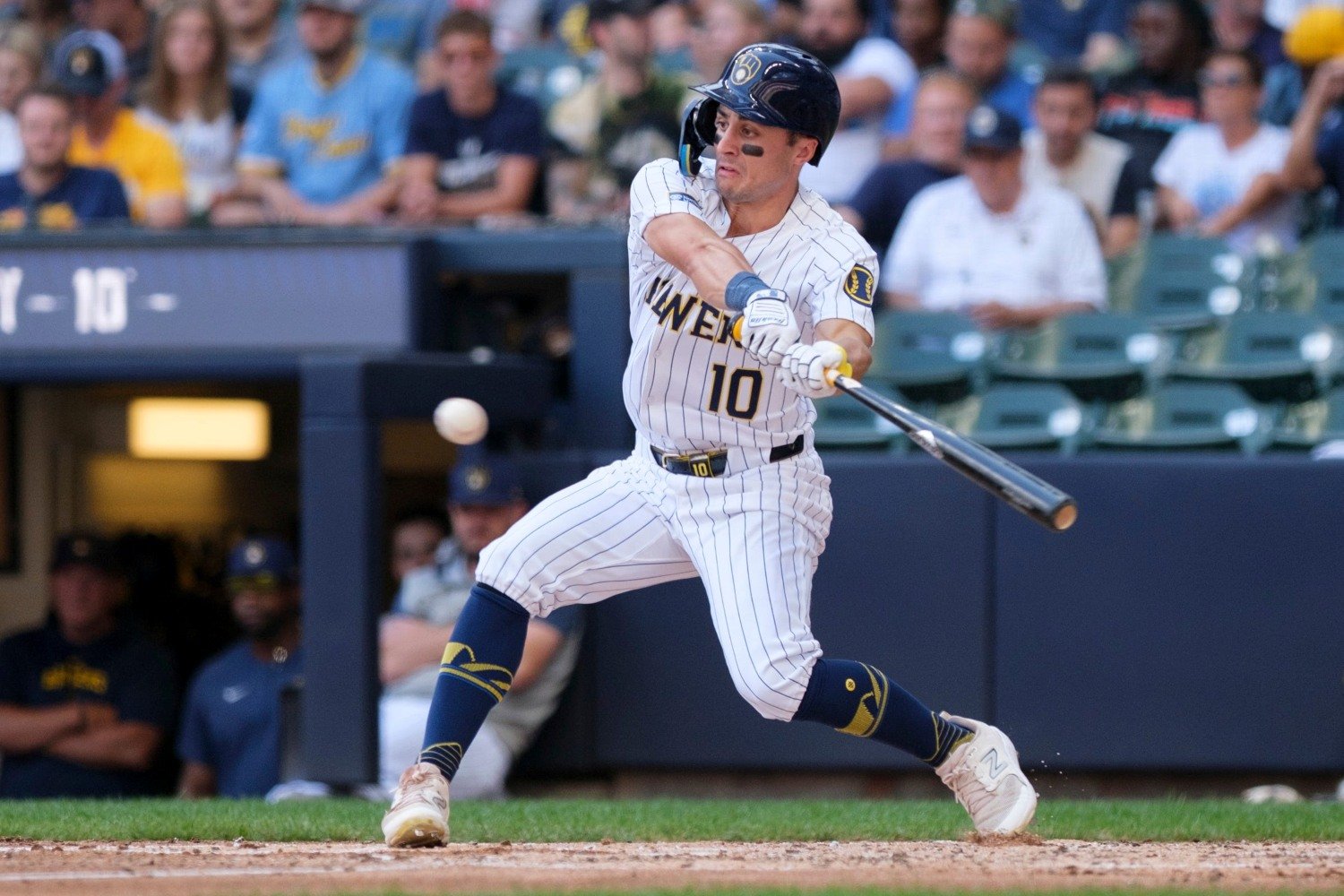 This month, Baseball Savant released its latest new feature—a Batted Ball Profile leaderboard, which breaks down all of each hitter's batted balls into ground balls and Air Balls (line drives, fly balls, and pop-ups), and into pulled, straight, or opposite-field directions. The fascinating added wrinkle is that the leaderboard also has columns showing what percentage of all a player's batted balls have been hit in each direction within each trajectory category. Obviously, the page centers on showing which hitters pull the ball in the air most often, because there's no more valuable type of batted ball (without knowing exact launch angle, exit velocity, or defensive positioning) than a pulled ball in the air. That's where almost every batter finds almost all of their power, so naturally, the best hitters tend to hit lots of pulled flies. The 2024 Brewers did have two representatives high on the leaderboard when it's sorted by that column: Rhys Hoskins and Jake Bauers. That makes sense, but it's also a bit revealing. Hoskins and Bauers, despite their proclivity for pulling it in the air, had tough seasons last year, mostly because the hunt for pitches to drive to the pull field led to too many strikeouts and too few walks, and because hitting a lot of pulled Air Balls doesn't generally correlate well with hitting for average even on your balls in play. If you sort by another column, though, the Brewers are even more prominent at the top of the board. Again, it's not an unmitigated positive—but it's fascinating, and illuminating. In general, pulled ground balls are bad. They're especially bad for left-handed batters, because that means a short throw when any fielder gets a handle on the ball, but even right-handed hitters don't want to hit many pulled ground balls. Shift or no shift, teams are good at positioning defenders, and if a hitter hits lots of their ground balls to their pull side, the defense will usually be in position to collect a high percentage of them. The league, as a whole, had a .208 batting average on pulled grounders in 2024, against a .247 expected batting average, based on the launch angle and exit velocity of those grounders. Up the middle is better. Hitters had a .252 batting average on grounders to the middle of the field, virtually identical to their expected mark. The bad news, of course, is that a grounder up the middle lacks even the smallish chance of being a double that grounders down either line have, but on balance, better to hit straightaway grounders than pulled ones. Go the other way on the ground, though, and everything opens up. The league hit .405 on those batted balls last year, which is a wild-sounding number—until you remember that most of those balls are mishit, the defense is naturally anticipating the pulled grounder, and the fielders are out of position to make plays on those balls. If you could do it, intentionally hitting just enough grounders the other way to collect your hits without the defense wheeling around to shut down your plan would be as good a way as any to hit .300 in the modern game. Tony Gwynn is in the Hall of Fame because of opposite-way ground balls. Of the eight hitters who generated the most wrong-way grounders in MLB last year, three are Brewers: Brice Turang, Sal Frelick, and Joey Ortiz. Each of them hit lots of grounders overall, of course, but notice that both Turang and Frelick—the lefties in the group—had an exceptionally unusual directional profile with their worm-burners. They not only hit against the alignment of the defense, but forced fielders to make long throws across the diamond to get them. Z0daN1lfVjBZQUhRPT1fQndnRkFWSUNWbEVBQ2dRQkJRQUFWUWNGQUZrREFWWUFWZ05SVTFkV0JsVlJCUW9G.mp4 Rolling the ball that direction on a quasi-bunt, like that Turang hit, is just one way to put lots of pressure on a defense with opposite-field grounders. If they have to run a long way to make a play like that, the athletic demands of the play (a bare-handed pickup, in most cases; a fluid, single-motion throw; accuracy and power on it) are a good bet to exceed the capacity of the fielder. Then, if they're playing in to cut down the risk of a long run to field it before a long throw, you've taken away their margin for error, and shortened their reaction time. eVozd3dfWGw0TUFRPT1fQWdWU0FGTURWRkFBQ2xaUlVnQUFVMUpRQUFNQlZRVUFDZ0ZUQkFJQVVsZFNCQXBS.mp4 Ortiz, meanwhile, pulled a lot more grounders than the two lefties did—but again, a righty batter can put plenty of pressure on the defense even with pulled grounders, especially if they have some speed. OVpCYXlfWGw0TUFRPT1fQkFjQVhWMVdBbE1BQ1FFTEF3QUFVZ2RmQUZrRVd3SUFCMTFSQUZJTkNRcGRBQUFE.mp4 Jackson Chourio and William Contreras actually led the team in times reaching on singles, errors, or fielder's choices without outs recorded on ground balls hit to the third baseman or shortstop. They were less likely to go the other way with grounders, but because of how hard Contreras hits the ball and how fast Chourio runs, they got plenty of value from the grounders they pulled. On balance, the hope should be that the Brewers will hit fewer grounders in 2025. Lifting the ball is crucial to modern offense. That's why the league's average launch angle has risen steadily even within the decade-long Statcast Era, from 10.9° in 2015 to 13.3° in 2024. There's no slug on the ground, except that which you find through batting average, and that's not enough. Still, it's fun to see this breakdown, because it highlights the way Frelick, Turang and Ortiz—the quirky trio of young hitters on whom the team depends so heavily, even if they're not the true pillars of the lineup—find value by making unusual, sneakily high-value contact, whether they hit it hard or not.
-
- 1
-

-
- brice turang
- joey ortiz
- (and 1 more)
-
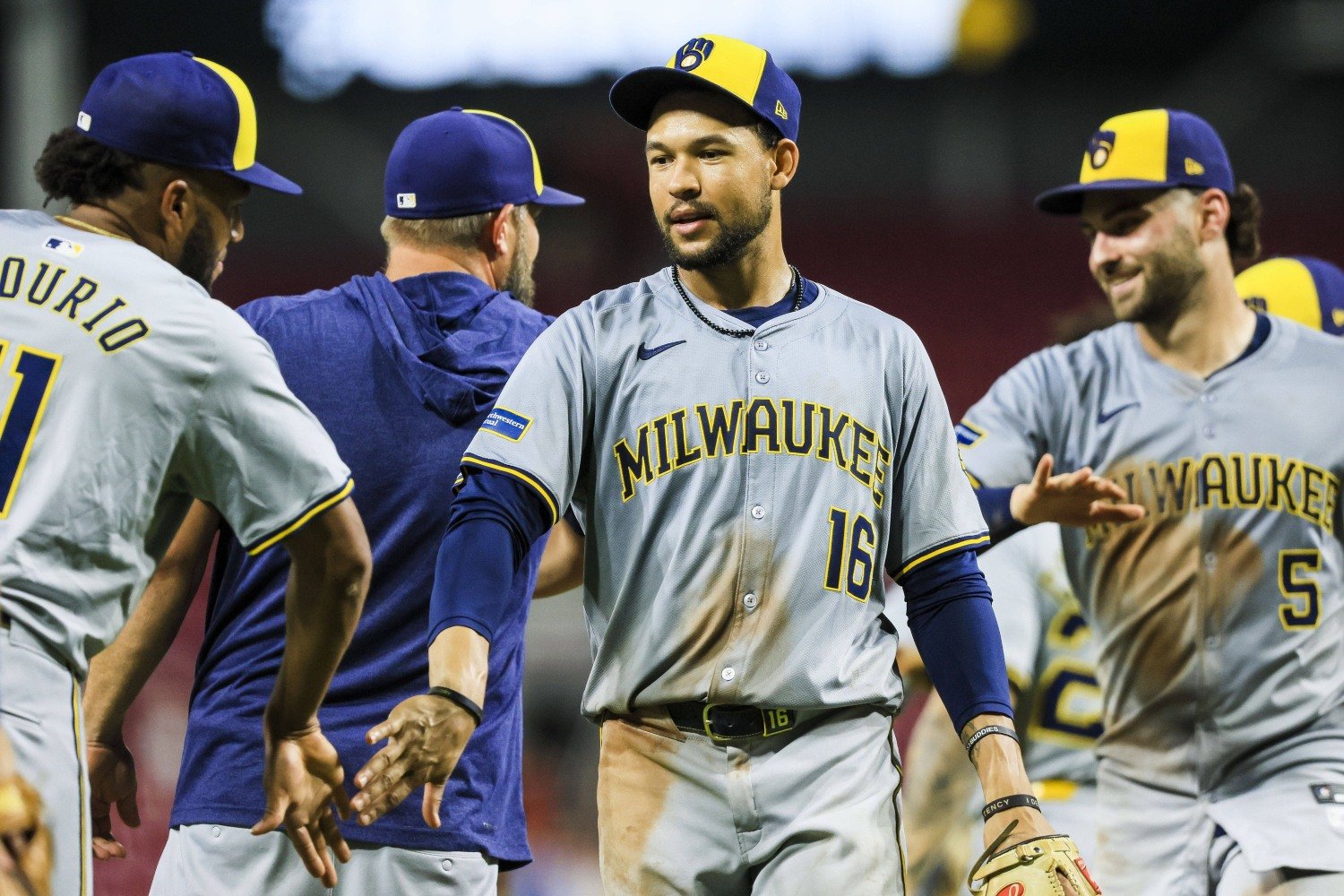 In the past, when Blake Perkins was injured, he might have withdrawn into himself a bit. That was only natural, and in most organizations, it's certainly permissible. "The only expectation I have [for injured players] is their commitment to getting healthy and keeping their attitude right—doing whatever they can to get ready, and to participate when the team is right," manager Pat Murphy said. "Influence others in a good way, speak about things in a good way, not a negative way, don’t become a dark cloud over people, and Perk is all of that." Being more honest with himself than anyone else asked him to be (and admitting to something no one had even accused him of), though, Perkins said he hasn't always met that standard in his heart. "Staying engaged is big—especially right now, when I can’t do anything," Perkins said Friday. "I can’t hit, I can’t do anything baseball-wise, so that’s what I get to do instead, is to support the guys around me. I love all these guys, so I enjoy watching them play. In the past when I’ve had injuries, I don’t think I’ve done the best job being the best supportive teammate, so this go-around, I’m really trying to make sure that’s a point of emphasis. Stay engaged, see what’s going on, and how the game’s moving." In that spirit, Perkins has been in the dugout for at least the first handful of innings of most of the Brewers' games this Cactus League season. It's a small thing, but it's noticeable—and noticed, not just by Murphy but by other coaches and teammates. Since signing as a minor-league free agent with the team late in 2022, Perkins has become an indispensable part of the Crew's clubhouse—and, of course, their outfield defense. He doesn't want to lose either place, or let down those who rely on him in either respect. Right now, of course, he can't take reps in the outfield, any more than he can take batting practice. He has to wait until (at least) this weekend to start getting back to work; he has to allow the fracture in his shin (suffered on a foul ball in live batting practice) to heal. He's confident, though, that he'll be able to get right back to his accustomed level, at least in the field. "The good thing is that I’ll have time to get my feet back under me, and I would like to believe that I’ve been doing this long enough that it won’t take a long time to get back into game shape, outfield-wise," he said. "I love playing out there. I’m really happy that I’ve been able to showcase what I can do. I don’t personally think that this will affect any of that, but I will make sure I do the work necessary to get back ready." The more frustrating thing, for him, is that the injury is stealing valuable preseason looks from him. Over the winter, his focus was on ways to reduce his strikeout rate—but that comes far more from changes he needs to make to his approach than from adjustments to his swing. "I think always with me, it’s just working on the hitting side, working on getting stronger," said Perkins. "It’s kind of hard to work on cutting down strikeouts during the offseason, because I’m not facing live pitching every day, but that was a goal coming into this year. Just being more aggressive early in counts." Indeed, making good swing decisions sometimes has to mean swinging more often, not less, and Perkins said more of his adjustments will be mental and centered on his approach within at-bats, rather than physical tweaks. That's hard to practice, though, when swinging is forbidden behavior. The consensus seems to be that Perkins got lucky; his injury could have been worse. It should heal quickly. and he might be back on the field (at least in a minor-league rehab setting) by the end of April. In the meantime, he can take some mental reps, but the surest sign of his maturation and his dedication might be the way he's taken the setback in stride—looking beyond himself and trying to help his teammates, even if be from behind the scenes.
 -
The injured Brewers outfielder has been oft-spotted in the team's dugout during Cactus League games, a sign of his commitment to the people around him. He's also committed to making more contact and being more of a force on offense when he returns. Image courtesy of © Katie Stratman-Imagn Images In the past, when Blake Perkins was injured, he might have withdrawn into himself a bit. That was only natural, and in most organizations, it's certainly permissible. "The only expectation I have [for injured players] is their commitment to getting healthy and keeping their attitude right—doing whatever they can to get ready, and to participate when the team is right," manager Pat Murphy said. "Influence others in a good way, speak about things in a good way, not a negative way, don’t become a dark cloud over people, and Perk is all of that." Being more honest with himself than anyone else asked him to be (and admitting to something no one had even accused him of), though, Perkins said he hasn't always met that standard in his heart. "Staying engaged is big—especially right now, when I can’t do anything," Perkins said Friday. "I can’t hit, I can’t do anything baseball-wise, so that’s what I get to do instead, is to support the guys around me. I love all these guys, so I enjoy watching them play. In the past when I’ve had injuries, I don’t think I’ve done the best job being the best supportive teammate, so this go-around, I’m really trying to make sure that’s a point of emphasis. Stay engaged, see what’s going on, and how the game’s moving." In that spirit, Perkins has been in the dugout for at least the first handful of innings of most of the Brewers' games this Cactus League season. It's a small thing, but it's noticeable—and noticed, not just by Murphy but by other coaches and teammates. Since signing as a minor-league free agent with the team late in 2022, Perkins has become an indispensable part of the Crew's clubhouse—and, of course, their outfield defense. He doesn't want to lose either place, or let down those who rely on him in either respect. Right now, of course, he can't take reps in the outfield, any more than he can take batting practice. He has to wait until (at least) this weekend to start getting back to work; he has to allow the fracture in his shin (suffered on a foul ball in live batting practice) to heal. He's confident, though, that he'll be able to get right back to his accustomed level, at least in the field. "The good thing is that I’ll have time to get my feet back under me, and I would like to believe that I’ve been doing this long enough that it won’t take a long time to get back into game shape, outfield-wise," he said. "I love playing out there. I’m really happy that I’ve been able to showcase what I can do. I don’t personally think that this will affect any of that, but I will make sure I do the work necessary to get back ready." The more frustrating thing, for him, is that the injury is stealing valuable preseason looks from him. Over the winter, his focus was on ways to reduce his strikeout rate—but that comes far more from changes he needs to make to his approach than from adjustments to his swing. "I think always with me, it’s just working on the hitting side, working on getting stronger," said Perkins. "It’s kind of hard to work on cutting down strikeouts during the offseason, because I’m not facing live pitching every day, but that was a goal coming into this year. Just being more aggressive early in counts." Indeed, making good swing decisions sometimes has to mean swinging more often, not less, and Perkins said more of his adjustments will be mental and centered on his approach within at-bats, rather than physical tweaks. That's hard to practice, though, when swinging is forbidden behavior. The consensus seems to be that Perkins got lucky; his injury could have been worse. It should heal quickly. and he might be back on the field (at least in a minor-league rehab setting) by the end of April. In the meantime, he can take some mental reps, but the surest sign of his maturation and his dedication might be the way he's taken the setback in stride—looking beyond himself and trying to help his teammates, even if be from behind the scenes. View full article
-
Certainly possible they have to waive him at some point. I will say, there's basically no chance he goes back to the Cardinals. Even if he clears waivers, because he was outrighted once before, he has the right to elect free agency instead of going back to St. Louis. He would 100% choose to re-sign with the Brewers, rather than return to the Cardinals org, where he was not especially happy.
-
.png.b8d56de3e7c10a6673a7a0e040759cd8.png) The Brewers fervently believe that Elvin Rodriguez can help them win games, but as was true of Grant Anderson and Grant Wolfram, it's more likely that he'll do so after Memorial Day. Unlike Anderson and Wolfram, Rodriguez survived Monday's roster cuts, but it's likely that he'll end up joining them in Nashville to open the campaign. That would leave, in effect, three pitchers battling for the final two spots in the Brewers' relief corps: Rule 5 pick Connor Thomas, and optionable but high-upside righties Elvis Peguero and Abner Uribe. Peguero has faced more batters in high-leverage situations since the start of 2023 than any Brewers relievers but Devin Williams and Joel Payamps. Uribe might have the most electric arm on the team. Thomas has to stay on the active roster, or be placed on waivers and (if he clears) offered the choice either to return to the Cardinals or to elect free agency. Leaving any of them out would pose some level of discomfort for the team. The safest bet in that set is that Thomas will make the team. He had an uneven outing Tuesday in Mesa, against the Cubs, but he's had a strong spring, and the Brewers are excited about what he can contribute. So, for that matter, is Thomas, who said he's a different, better pitcher than the one who was outrighted off the Cardinals' 40-man roster in Nov. 2023. "I think the biggest thing would be the role change," Thomas said Monday. "I went from starting to relieving, and seemed to have a lot of success there. And then from there, it was just kind of my usages. I dropped my sinker almost in half, versus my cutter [and] slider, so essentially I just stopped throwing fastballs—as crazy as that sounds, it seems to have worked for me." Indeed, not throwing fastballs would be highly unusual for a Brewers hurler—but the Brewers don't think of "fastballs" the same way the Cardinals, whence Thomas came, do. His sinker and cutter will be his predominant fastballs going forward, and that's a good thing, given his profile. Thomas said the team immediately reached out after taking him, to say that they had a new set of ideas about how to use the cutter. "Just figure out where I need to throw the cutter, and in what counts, and how to leverage that to allow me to use my arsenal to my full potential," he recalled. "I have a really good sinker and a really good changeup as well, so how to use that cutter to help everything else play better is huge." If Thomas's stuff plays up as the team helps him remix his arsenal, they won't let him get away easily at the front end of the season. The final spot, then, will come down to Peguero and Uribe. The first concern about trying to carry Uribe is the fact that he'd need to be placed on the suspended list for the first four games, forcing them to play an arm short over that span. In theory, the start of the season is a good time to live that way, because everyone should be relatively fresh and there's a built-in day off after Opening Day at Yankee Stadium in New York. However, the reason for that day off is the real risk of a weather-related postponement, and if that postponement happened, the four games would all come without an off day. The first three would be against a diminished but dangerous Yankees lineup. There's also some chance that Nestor Cortes will need to be away from the team over that span. His wife is due to give birth in mid-April, but should that joyous occasion come a couple of weeks early, the team would have to scramble a bit. Of course, they'd be able to place Cortes on the paternity list and call up an arm (Peguero, in this hypothetical) to take his place on the roster, but that would leave them with one fewer starter the first turn through the rotation and add pressure to the bullpen. Because Thomas, Tyler Alexander, and Bryan Hudson can all give them a bit of length, though, the Crew can navigate whatever comes at them—again, barring further injury issues, which would make their decision easier in an unfortunate way. Carrying Uribe to open the campaign is viable, and he's looked downright nasty this spring. We've seen him hit 100 mph a handful of times, and he's recovering well between appearances. His sweeper is a dark-horse candidate for the best pitch on the staff right now. That leaves Peguero. Manager Pat Murphy talked positively about the movement on Peguero's signature sinker after his last two appearances, but there's another pitch characteristic we need to talk about when it comes to the (usually!) hard-throwing right-hander. Peguero's velocity is down a full 2 mph from last season—even last March. He's more reliant on movement and less so on velocity than many two-pitch relievers, but there's a huge difference in what hitters can do with that sinker boring in on their hands and diving below their barrels if it's at 97, and what they can do if it's 94 or 95. Watch Peguero's velocity closely whenever he pitches in Statcast-tracked settings the rest of camp. If his velocity bounces back, he has a fair shot to edge out Uribe for the final spot in the pen. If not, though, expect to see him at Triple A when the team breaks camp in two weeks. Even if he eventually finds success at a lower velocity threshold, the team will want to make sure he has time to figure out how to do so, in a lower-stakes setting. Thomas and Uribe have a tangible set of advantages, but there's a lot of spring training left. As ever, that's a threat, not a promise. The Brewers' pen picture is getting clearer in a hurry—but it's drawn on an Etch-a-Sketch, and another balky elbow or oblique issue could shake it up.
The Brewers fervently believe that Elvin Rodriguez can help them win games, but as was true of Grant Anderson and Grant Wolfram, it's more likely that he'll do so after Memorial Day. Unlike Anderson and Wolfram, Rodriguez survived Monday's roster cuts, but it's likely that he'll end up joining them in Nashville to open the campaign. That would leave, in effect, three pitchers battling for the final two spots in the Brewers' relief corps: Rule 5 pick Connor Thomas, and optionable but high-upside righties Elvis Peguero and Abner Uribe. Peguero has faced more batters in high-leverage situations since the start of 2023 than any Brewers relievers but Devin Williams and Joel Payamps. Uribe might have the most electric arm on the team. Thomas has to stay on the active roster, or be placed on waivers and (if he clears) offered the choice either to return to the Cardinals or to elect free agency. Leaving any of them out would pose some level of discomfort for the team. The safest bet in that set is that Thomas will make the team. He had an uneven outing Tuesday in Mesa, against the Cubs, but he's had a strong spring, and the Brewers are excited about what he can contribute. So, for that matter, is Thomas, who said he's a different, better pitcher than the one who was outrighted off the Cardinals' 40-man roster in Nov. 2023. "I think the biggest thing would be the role change," Thomas said Monday. "I went from starting to relieving, and seemed to have a lot of success there. And then from there, it was just kind of my usages. I dropped my sinker almost in half, versus my cutter [and] slider, so essentially I just stopped throwing fastballs—as crazy as that sounds, it seems to have worked for me." Indeed, not throwing fastballs would be highly unusual for a Brewers hurler—but the Brewers don't think of "fastballs" the same way the Cardinals, whence Thomas came, do. His sinker and cutter will be his predominant fastballs going forward, and that's a good thing, given his profile. Thomas said the team immediately reached out after taking him, to say that they had a new set of ideas about how to use the cutter. "Just figure out where I need to throw the cutter, and in what counts, and how to leverage that to allow me to use my arsenal to my full potential," he recalled. "I have a really good sinker and a really good changeup as well, so how to use that cutter to help everything else play better is huge." If Thomas's stuff plays up as the team helps him remix his arsenal, they won't let him get away easily at the front end of the season. The final spot, then, will come down to Peguero and Uribe. The first concern about trying to carry Uribe is the fact that he'd need to be placed on the suspended list for the first four games, forcing them to play an arm short over that span. In theory, the start of the season is a good time to live that way, because everyone should be relatively fresh and there's a built-in day off after Opening Day at Yankee Stadium in New York. However, the reason for that day off is the real risk of a weather-related postponement, and if that postponement happened, the four games would all come without an off day. The first three would be against a diminished but dangerous Yankees lineup. There's also some chance that Nestor Cortes will need to be away from the team over that span. His wife is due to give birth in mid-April, but should that joyous occasion come a couple of weeks early, the team would have to scramble a bit. Of course, they'd be able to place Cortes on the paternity list and call up an arm (Peguero, in this hypothetical) to take his place on the roster, but that would leave them with one fewer starter the first turn through the rotation and add pressure to the bullpen. Because Thomas, Tyler Alexander, and Bryan Hudson can all give them a bit of length, though, the Crew can navigate whatever comes at them—again, barring further injury issues, which would make their decision easier in an unfortunate way. Carrying Uribe to open the campaign is viable, and he's looked downright nasty this spring. We've seen him hit 100 mph a handful of times, and he's recovering well between appearances. His sweeper is a dark-horse candidate for the best pitch on the staff right now. That leaves Peguero. Manager Pat Murphy talked positively about the movement on Peguero's signature sinker after his last two appearances, but there's another pitch characteristic we need to talk about when it comes to the (usually!) hard-throwing right-hander. Peguero's velocity is down a full 2 mph from last season—even last March. He's more reliant on movement and less so on velocity than many two-pitch relievers, but there's a huge difference in what hitters can do with that sinker boring in on their hands and diving below their barrels if it's at 97, and what they can do if it's 94 or 95. Watch Peguero's velocity closely whenever he pitches in Statcast-tracked settings the rest of camp. If his velocity bounces back, he has a fair shot to edge out Uribe for the final spot in the pen. If not, though, expect to see him at Triple A when the team breaks camp in two weeks. Even if he eventually finds success at a lower velocity threshold, the team will want to make sure he has time to figure out how to do so, in a lower-stakes setting. Thomas and Uribe have a tangible set of advantages, but there's a lot of spring training left. As ever, that's a threat, not a promise. The Brewers' pen picture is getting clearer in a hurry—but it's drawn on an Etch-a-Sketch, and another balky elbow or oblique issue could shake it up.- 11 comments
-
- 3
-
-
- abner uribe
- elvis peguero
- (and 1 more)
-
With two weeks left until Opening Day, the Brewers have to dodge injuries a while longer before zeroing in on their pitching staff for that day. Right now, though, it looks like there are three pitchers competing for the final two spots. Image courtesy of © Dave Kallmann / Milwaukee Journal Sentinel / USA TODAY NETWORK via Imagn Images The Brewers fervently believe that Elvin Rodriguez can help them win games, but as was true of Grant Anderson and Grant Wolfram, it's more likely that he'll do so after Memorial Day. Unlike Anderson and Wolfram, Rodriguez survived Monday's roster cuts, but it's likely that he'll end up joining them in Nashville to open the campaign. That would leave, in effect, three pitchers battling for the final two spots in the Brewers' relief corps: Rule 5 pick Connor Thomas, and optionable but high-upside righties Elvis Peguero and Abner Uribe. Peguero has faced more batters in high-leverage situations since the start of 2023 than any Brewers relievers but Devin Williams and Joel Payamps. Uribe might have the most electric arm on the team. Thomas has to stay on the active roster, or be placed on waivers and (if he clears) offered the choice either to return to the Cardinals or to elect free agency. Leaving any of them out would pose some level of discomfort for the team. The safest bet in that set is that Thomas will make the team. He had an uneven outing Tuesday in Mesa, against the Cubs, but he's had a strong spring, and the Brewers are excited about what he can contribute. So, for that matter, is Thomas, who said he's a different, better pitcher than the one who was outrighted off the Cardinals' 40-man roster in Nov. 2023. "I think the biggest thing would be the role change," Thomas said Monday. "I went from starting to relieving, and seemed to have a lot of success there. And then from there, it was just kind of my usages. I dropped my sinker almost in half, versus my cutter [and] slider, so essentially I just stopped throwing fastballs—as crazy as that sounds, it seems to have worked for me." Indeed, not throwing fastballs would be highly unusual for a Brewers hurler—but the Brewers don't think of "fastballs" the same way the Cardinals, whence Thomas came, do. His sinker and cutter will be his predominant fastballs going forward, and that's a good thing, given his profile. Thomas said the team immediately reached out after taking him, to say that they had a new set of ideas about how to use the cutter. "Just figure out where I need to throw the cutter, and in what counts, and how to leverage that to allow me to use my arsenal to my full potential," he recalled. "I have a really good sinker and a really good changeup as well, so how to use that cutter to help everything else play better is huge." If Thomas's stuff plays up as the team helps him remix his arsenal, they won't let him get away easily at the front end of the season. The final spot, then, will come down to Peguero and Uribe. The first concern about trying to carry Uribe is the fact that he'd need to be placed on the suspended list for the first four games, forcing them to play an arm short over that span. In theory, the start of the season is a good time to live that way, because everyone should be relatively fresh and there's a built-in day off after Opening Day at Yankee Stadium in New York. However, the reason for that day off is the real risk of a weather-related postponement, and if that postponement happened, the four games would all come without an off day. The first three would be against a diminished but dangerous Yankees lineup. There's also some chance that Nestor Cortes will need to be away from the team over that span. His wife is due to give birth in mid-April, but should that joyous occasion come a couple of weeks early, the team would have to scramble a bit. Of course, they'd be able to place Cortes on the paternity list and call up an arm (Peguero, in this hypothetical) to take his place on the roster, but that would leave them with one fewer starter the first turn through the rotation and add pressure to the bullpen. Because Thomas, Tyler Alexander, and Bryan Hudson can all give them a bit of length, though, the Crew can navigate whatever comes at them—again, barring further injury issues, which would make their decision easier in an unfortunate way. Carrying Uribe to open the campaign is viable, and he's looked downright nasty this spring. We've seen him hit 100 mph a handful of times, and he's recovering well between appearances. His sweeper is a dark-horse candidate for the best pitch on the staff right now. That leaves Peguero. Manager Pat Murphy talked positively about the movement on Peguero's signature sinker after his last two appearances, but there's another pitch characteristic we need to talk about when it comes to the (usually!) hard-throwing right-hander. Peguero's velocity is down a full 2 mph from last season—even last March. He's more reliant on movement and less so on velocity than many two-pitch relievers, but there's a huge difference in what hitters can do with that sinker boring in on their hands and diving below their barrels if it's at 97, and what they can do if it's 94 or 95. Watch Peguero's velocity closely whenever he pitches in Statcast-tracked settings the rest of camp. If his velocity bounces back, he has a fair shot to edge out Uribe for the final spot in the pen. If not, though, expect to see him at Triple A when the team breaks camp in two weeks. Even if he eventually finds success at a lower velocity threshold, the team will want to make sure he has time to figure out how to do so, in a lower-stakes setting. Thomas and Uribe have a tangible set of advantages, but there's a lot of spring training left. As ever, that's a threat, not a promise. The Brewers' pen picture is getting clearer in a hurry—but it's drawn on an Etch-a-Sketch, and another balky elbow or oblique issue could shake it up. View full article
-
There's no One Weird Trick Batters Hate, when it comes to the Brewers. What batters are left to hate is just how many tricks the Crew's crew of hurlers have up their sleeves. Image courtesy of © Allan Henry-Imagn Images Last season, only the St. Louis Cardinals and the Pittsburgh Pirates threw fewer offspeed pitches (as a percentage of all their pitches thrown) than did the Brewers, who went to the change or splitter just 10.0% of the time. Our own Jack Stern wrote about this trend as early as the beginning of May, and it kept up all year. The league zigged hard toward an array of offspeed stuff in 2024; the Brewers zagged. That wasn't some push to take advantage of a so-called market inefficiency, though. Nor was it a dogmatic denial of the utility of those pitches. It just happened that the pitchers they had collected last year (and especially, the ones who were healthy in the first half, before they got back the services of guys like Devin Williams and Aaron Ashby) didn't have great changeups, and instead of trying to push forward an offering with which most of Chris Hook's pupils were unskilled or inexperienced, the longtime Milwaukee pitching coach and his colleagues guided them toward offerings they could throw more confidently and with greater versatility. If you needed confirmation of that, it's everywhere you turn in camp this spring. The buzziest offering on the team, of course, is Craig Yoho's changeup. Arguably, it's more of a screwball, akin to the pitch Williams threw, but he applies a bit less extreme spin (and is clearly more prone to pronation, anyway, given the shape of his fastball), so we'll call it a changeup. Bryan Hudson brought a new changeup to camp, as we've already discussed. Hudson has always been more comfortable throwing his sweeper and cutter, but the changeup has the potential to force opposing hitters to cover the whole plate much more defensively. Grant Anderson's "marching orders," as Pat Murphy implied when he was optioned Monday, include working hard on the changeup the team has encouraged him to reemphasize this spring, to better neutralize left-handed batters. Suddenly, the Brewers are a changeup-forward group—and Yoho believes it was never really anything else. He believes that Williams blazed a trail that made it easier for him to thrive with his version of a similar offering. "There’s a confidence in a guy like that, who’s changeup-heavy, it works. You’ve seen it before, and the Brewers have seen it before. So there’s a little faith that goes into that, before I even touch the mound, like ‘Hey, a guy can be an elite-level reliever throwing primarily changeups’," Yoho said Friday. Ashby is excited about getting to deploy his own changeup this year, as he tries to move back into a starting role—or at least a multi-inning relief one. He called the changeup his "favorite pitch" earlier in camp. Hudson is an example of a player and the team conspiring to re-engineer and reintroduce the change, and he's working with a circle change (needing the arm-side action that generally comes with that grip). Anderson is an instance of the team encouraging a player to revive that pitch as part of his mix. Meanwhile, incoming lefties Tyler Alexander and Connor Thomas are testaments to the club's eagerness to support changeup development and address unexpected things with it—in two very different ways. Thomas, the team's Rule 5 pick from December, said his change has been a bit firmer and harder to manipulate in the new environment of an Arizona spring camp, and that he and coaches are striving to smooth it out. "Initially, I was having trouble—just putting in the dirt every time I threw it," Thomas said Monday. "So we made some tweaks, I moved it farther back in my hand, and I’m now in the strike zone with it, but it’s a little harder. So maybe switching back to the original now that I’ve got my sights right, can bring it back to the 82, 81 range where I had it last year. We’re tweaking it. Arizona atmosphere’s a little bit harder than Florida." What Thomas meant is that the elevation, heat, and dearth of humidity can affect the shape of pitches in ways we can now measure and grasp. As compared to Florida, the air in the desert highlands of the Phoenix area is much thinner, which makes fastballs carry less well and curveballs bite less sharply. Most of the problems pitchers have there are on pitches that depend on spin (and the resulting Magnus force of the air on the ball), but he's also had an issue with finding the proper grip under these conditions. "Yeah, everybody has grip down [in Florida]," Thomas said. "Humidity helps you with grip on the ball. Down here, everything’s dusty-dry. So just trying to figure out different atmospheres, different ways to hold the ball, to do the same things with it." The feel of that grip (and the back-and-forth adjustments he's trying with it, even as he strives to win a job) means is tricky to maintain, in part, because Thomas doesn't have one privilege that helps other pitchers succeed with the changeup: huge hands. "It’s pretty much the baby changeup they teach 10-year-olds," Thomas said of his grip on the change. "The basic two-seam changeup grip. It’s for small hands. I have small hands, and I’ve kind of just morphed it to do what I want it to do when I throw it." Pitching development is all an exercise in creative problem-solving, and the trick to being a good creative problem-solver is being flexible. Rigid plans and principles tend to make it harder to come up with good solutions, rather than easier. The Brewers' sharp swerve back from not relying on changeups much at all to having a bevy of pitchers in camp who will use theirs frequently demonstrates the flexibility. Even with Thomas, who's experiencing a new kind of difficulty with a pitch for which he doesn't have the optimal physiology, they're being patient, thoughtful, and experimentative. On the other hand (though he throws with the same one), Alexander is a reminder that sometimes, pitching development problems practically solve themselves. Quite the opposite of Thomas, he has much more depth on his changeup this spring, which should help his arsenal immensely. Did he set out to find a new way to create that movement over the winter? Did he change his grip? Did the Brewers do something fancy with pitch design? "No," Alexander said, sounding surprised, himself. "No. I just came into camp, and it was real depth-y. I haven’t really changed anything with it. Grip is the same, the way I throw it’s the same. It’s a variation of the circle change, across the two seams. Maybe, mechanically, I’ve changed some things where it’s affected the changeup in a positive way? I don’t know. I guess we’re just gonna ride with it." If you stay open to the whims and nudges of the pitching gods, sometimes, they smile on you. Alexander did talk about some mechanical changes the team recommended to help him find more vertical movement on his four-seam fastball, which could have had a knock-on effect on his changeup action. He said they even went so far as to schedule a meeting to dig into why the change in the change has taken place, because better understanding it will help them weaponize it. "Correct," Alexander said, when asked whether command was a concern in light of so much newfound movement. "Yeah, I threw it in the game at Cincinnati, over there, and I bounced pretty much all of them, but I’m just not used to the depth that it has. So it’ll be an adjustment on where my sights are set when I throw it and my usage on it when I throw it, if it’s gonna move like that." Pat Murphy has one idea already, though, as to how this might have happened. "We give them this Brewers magic dust thing," the skipper said with a chuckle. "Yeah, I mean, that’s kinda cool." New ideas. Resurrecting old ones. Refining and adjusting, and reacting to organic changes. The Brewers are adding changeups to their roster in all kinds of ways—including one last, perhaps most straightforward one: acquiring guys who lean heavily on that pitch. Jose Quintana has steadily increased his changeup usage almost every year of his career, reaching a career-high rate just under 20% last season. Freddy Peralta went to his change 17.6% of the time last year, the highest rate of his career, too. While the team found different, fastball-forward ways to solve the problem of getting out opposite-handed batters last season, they seem to be leaning toward more changeups this year. Organizational preferences are important. If you don't have them, you don't have direction and vision. Teams need to be discerning and analytical enough to know what they do and don't like, in a general sense. For some teams, though, those preferences and tendencies become traps. They make too few exceptions to their own rules, and believe too strongly in the predilections they develop. The Brewers strike a better balance. While they like pitchers to do certain things well, they think flexibly and change their approach when the situation demands it. There might be no better example of that flexibility this spring than their newfound dedication to the changeup. View full article
-
.png.0751b476f129534eaa5e5060b92513cb.png) Last season, only the St. Louis Cardinals and the Pittsburgh Pirates threw fewer offspeed pitches (as a percentage of all their pitches thrown) than did the Brewers, who went to the change or splitter just 10.0% of the time. Our own Jack Stern wrote about this trend as early as the beginning of May, and it kept up all year. The league zigged hard toward an array of offspeed stuff in 2024; the Brewers zagged. That wasn't some push to take advantage of a so-called market inefficiency, though. Nor was it a dogmatic denial of the utility of those pitches. It just happened that the pitchers they had collected last year (and especially, the ones who were healthy in the first half, before they got back the services of guys like Devin Williams and Aaron Ashby) didn't have great changeups, and instead of trying to push forward an offering with which most of Chris Hook's pupils were unskilled or inexperienced, the longtime Milwaukee pitching coach and his colleagues guided them toward offerings they could throw more confidently and with greater versatility. If you needed confirmation of that, it's everywhere you turn in camp this spring. The buzziest offering on the team, of course, is Craig Yoho's changeup. Arguably, it's more of a screwball, akin to the pitch Williams threw, but he applies a bit less extreme spin (and is clearly more prone to pronation, anyway, given the shape of his fastball), so we'll call it a changeup. Bryan Hudson brought a new changeup to camp, as we've already discussed. Hudson has always been more comfortable throwing his sweeper and cutter, but the changeup has the potential to force opposing hitters to cover the whole plate much more defensively. Grant Anderson's "marching orders," as Pat Murphy implied when he was optioned Monday, include working hard on the changeup the team has encouraged him to reemphasize this spring, to better neutralize left-handed batters. Suddenly, the Brewers are a changeup-forward group—and Yoho believes it was never really anything else. He believes that Williams blazed a trail that made it easier for him to thrive with his version of a similar offering. "There’s a confidence in a guy like that, who’s changeup-heavy, it works. You’ve seen it before, and the Brewers have seen it before. So there’s a little faith that goes into that, before I even touch the mound, like ‘Hey, a guy can be an elite-level reliever throwing primarily changeups’," Yoho said Friday. Ashby is excited about getting to deploy his own changeup this year, as he tries to move back into a starting role—or at least a multi-inning relief one. He called the changeup his "favorite pitch" earlier in camp. Hudson is an example of a player and the team conspiring to re-engineer and reintroduce the change, and he's working with a circle change (needing the arm-side action that generally comes with that grip). Anderson is an instance of the team encouraging a player to revive that pitch as part of his mix. Meanwhile, incoming lefties Tyler Alexander and Connor Thomas are testaments to the club's eagerness to support changeup development and address unexpected things with it—in two very different ways. Thomas, the team's Rule 5 pick from December, said his change has been a bit firmer and harder to manipulate in the new environment of an Arizona spring camp, and that he and coaches are striving to smooth it out. "Initially, I was having trouble—just putting in the dirt every time I threw it," Thomas said Monday. "So we made some tweaks, I moved it farther back in my hand, and I’m now in the strike zone with it, but it’s a little harder. So maybe switching back to the original now that I’ve got my sights right, can bring it back to the 82, 81 range where I had it last year. We’re tweaking it. Arizona atmosphere’s a little bit harder than Florida." What Thomas meant is that the elevation, heat, and dearth of humidity can affect the shape of pitches in ways we can now measure and grasp. As compared to Florida, the air in the desert highlands of the Phoenix area is much thinner, which makes fastballs carry less well and curveballs bite less sharply. Most of the problems pitchers have there are on pitches that depend on spin (and the resulting Magnus force of the air on the ball), but he's also had an issue with finding the proper grip under these conditions. "Yeah, everybody has grip down [in Florida]," Thomas said. "Humidity helps you with grip on the ball. Down here, everything’s dusty-dry. So just trying to figure out different atmospheres, different ways to hold the ball, to do the same things with it." The feel of that grip (and the back-and-forth adjustments he's trying with it, even as he strives to win a job) means is tricky to maintain, in part, because Thomas doesn't have one privilege that helps other pitchers succeed with the changeup: huge hands. "It’s pretty much the baby changeup they teach 10-year-olds," Thomas said of his grip on the change. "The basic two-seam changeup grip. It’s for small hands. I have small hands, and I’ve kind of just morphed it to do what I want it to do when I throw it." Pitching development is all an exercise in creative problem-solving, and the trick to being a good creative problem-solver is being flexible. Rigid plans and principles tend to make it harder to come up with good solutions, rather than easier. The Brewers' sharp swerve back from not relying on changeups much at all to having a bevy of pitchers in camp who will use theirs frequently demonstrates the flexibility. Even with Thomas, who's experiencing a new kind of difficulty with a pitch for which he doesn't have the optimal physiology, they're being patient, thoughtful, and experimentative. On the other hand (though he throws with the same one), Alexander is a reminder that sometimes, pitching development problems practically solve themselves. Quite the opposite of Thomas, he has much more depth on his changeup this spring, which should help his arsenal immensely. Did he set out to find a new way to create that movement over the winter? Did he change his grip? Did the Brewers do something fancy with pitch design? "No," Alexander said, sounding surprised, himself. "No. I just came into camp, and it was real depth-y. I haven’t really changed anything with it. Grip is the same, the way I throw it’s the same. It’s a variation of the circle change, across the two seams. Maybe, mechanically, I’ve changed some things where it’s affected the changeup in a positive way? I don’t know. I guess we’re just gonna ride with it." If you stay open to the whims and nudges of the pitching gods, sometimes, they smile on you. Alexander did talk about some mechanical changes the team recommended to help him find more vertical movement on his four-seam fastball, which could have had a knock-on effect on his changeup action. He said they even went so far as to schedule a meeting to dig into why the change in the change has taken place, because better understanding it will help them weaponize it. "Correct," Alexander said, when asked whether command was a concern in light of so much newfound movement. "Yeah, I threw it in the game at Cincinnati, over there, and I bounced pretty much all of them, but I’m just not used to the depth that it has. So it’ll be an adjustment on where my sights are set when I throw it and my usage on it when I throw it, if it’s gonna move like that." Pat Murphy has one idea already, though, as to how this might have happened. "We give them this Brewers magic dust thing," the skipper said with a chuckle. "Yeah, I mean, that’s kinda cool." New ideas. Resurrecting old ones. Refining and adjusting, and reacting to organic changes. The Brewers are adding changeups to their roster in all kinds of ways—including one last, perhaps most straightforward one: acquiring guys who lean heavily on that pitch. Jose Quintana has steadily increased his changeup usage almost every year of his career, reaching a career-high rate just under 20% last season. Freddy Peralta went to his change 17.6% of the time last year, the highest rate of his career, too. While the team found different, fastball-forward ways to solve the problem of getting out opposite-handed batters last season, they seem to be leaning toward more changeups this year. Organizational preferences are important. If you don't have them, you don't have direction and vision. Teams need to be discerning and analytical enough to know what they do and don't like, in a general sense. For some teams, though, those preferences and tendencies become traps. They make too few exceptions to their own rules, and believe too strongly in the predilections they develop. The Brewers strike a better balance. While they like pitchers to do certain things well, they think flexibly and change their approach when the situation demands it. There might be no better example of that flexibility this spring than their newfound dedication to the changeup.
Last season, only the St. Louis Cardinals and the Pittsburgh Pirates threw fewer offspeed pitches (as a percentage of all their pitches thrown) than did the Brewers, who went to the change or splitter just 10.0% of the time. Our own Jack Stern wrote about this trend as early as the beginning of May, and it kept up all year. The league zigged hard toward an array of offspeed stuff in 2024; the Brewers zagged. That wasn't some push to take advantage of a so-called market inefficiency, though. Nor was it a dogmatic denial of the utility of those pitches. It just happened that the pitchers they had collected last year (and especially, the ones who were healthy in the first half, before they got back the services of guys like Devin Williams and Aaron Ashby) didn't have great changeups, and instead of trying to push forward an offering with which most of Chris Hook's pupils were unskilled or inexperienced, the longtime Milwaukee pitching coach and his colleagues guided them toward offerings they could throw more confidently and with greater versatility. If you needed confirmation of that, it's everywhere you turn in camp this spring. The buzziest offering on the team, of course, is Craig Yoho's changeup. Arguably, it's more of a screwball, akin to the pitch Williams threw, but he applies a bit less extreme spin (and is clearly more prone to pronation, anyway, given the shape of his fastball), so we'll call it a changeup. Bryan Hudson brought a new changeup to camp, as we've already discussed. Hudson has always been more comfortable throwing his sweeper and cutter, but the changeup has the potential to force opposing hitters to cover the whole plate much more defensively. Grant Anderson's "marching orders," as Pat Murphy implied when he was optioned Monday, include working hard on the changeup the team has encouraged him to reemphasize this spring, to better neutralize left-handed batters. Suddenly, the Brewers are a changeup-forward group—and Yoho believes it was never really anything else. He believes that Williams blazed a trail that made it easier for him to thrive with his version of a similar offering. "There’s a confidence in a guy like that, who’s changeup-heavy, it works. You’ve seen it before, and the Brewers have seen it before. So there’s a little faith that goes into that, before I even touch the mound, like ‘Hey, a guy can be an elite-level reliever throwing primarily changeups’," Yoho said Friday. Ashby is excited about getting to deploy his own changeup this year, as he tries to move back into a starting role—or at least a multi-inning relief one. He called the changeup his "favorite pitch" earlier in camp. Hudson is an example of a player and the team conspiring to re-engineer and reintroduce the change, and he's working with a circle change (needing the arm-side action that generally comes with that grip). Anderson is an instance of the team encouraging a player to revive that pitch as part of his mix. Meanwhile, incoming lefties Tyler Alexander and Connor Thomas are testaments to the club's eagerness to support changeup development and address unexpected things with it—in two very different ways. Thomas, the team's Rule 5 pick from December, said his change has been a bit firmer and harder to manipulate in the new environment of an Arizona spring camp, and that he and coaches are striving to smooth it out. "Initially, I was having trouble—just putting in the dirt every time I threw it," Thomas said Monday. "So we made some tweaks, I moved it farther back in my hand, and I’m now in the strike zone with it, but it’s a little harder. So maybe switching back to the original now that I’ve got my sights right, can bring it back to the 82, 81 range where I had it last year. We’re tweaking it. Arizona atmosphere’s a little bit harder than Florida." What Thomas meant is that the elevation, heat, and dearth of humidity can affect the shape of pitches in ways we can now measure and grasp. As compared to Florida, the air in the desert highlands of the Phoenix area is much thinner, which makes fastballs carry less well and curveballs bite less sharply. Most of the problems pitchers have there are on pitches that depend on spin (and the resulting Magnus force of the air on the ball), but he's also had an issue with finding the proper grip under these conditions. "Yeah, everybody has grip down [in Florida]," Thomas said. "Humidity helps you with grip on the ball. Down here, everything’s dusty-dry. So just trying to figure out different atmospheres, different ways to hold the ball, to do the same things with it." The feel of that grip (and the back-and-forth adjustments he's trying with it, even as he strives to win a job) means is tricky to maintain, in part, because Thomas doesn't have one privilege that helps other pitchers succeed with the changeup: huge hands. "It’s pretty much the baby changeup they teach 10-year-olds," Thomas said of his grip on the change. "The basic two-seam changeup grip. It’s for small hands. I have small hands, and I’ve kind of just morphed it to do what I want it to do when I throw it." Pitching development is all an exercise in creative problem-solving, and the trick to being a good creative problem-solver is being flexible. Rigid plans and principles tend to make it harder to come up with good solutions, rather than easier. The Brewers' sharp swerve back from not relying on changeups much at all to having a bevy of pitchers in camp who will use theirs frequently demonstrates the flexibility. Even with Thomas, who's experiencing a new kind of difficulty with a pitch for which he doesn't have the optimal physiology, they're being patient, thoughtful, and experimentative. On the other hand (though he throws with the same one), Alexander is a reminder that sometimes, pitching development problems practically solve themselves. Quite the opposite of Thomas, he has much more depth on his changeup this spring, which should help his arsenal immensely. Did he set out to find a new way to create that movement over the winter? Did he change his grip? Did the Brewers do something fancy with pitch design? "No," Alexander said, sounding surprised, himself. "No. I just came into camp, and it was real depth-y. I haven’t really changed anything with it. Grip is the same, the way I throw it’s the same. It’s a variation of the circle change, across the two seams. Maybe, mechanically, I’ve changed some things where it’s affected the changeup in a positive way? I don’t know. I guess we’re just gonna ride with it." If you stay open to the whims and nudges of the pitching gods, sometimes, they smile on you. Alexander did talk about some mechanical changes the team recommended to help him find more vertical movement on his four-seam fastball, which could have had a knock-on effect on his changeup action. He said they even went so far as to schedule a meeting to dig into why the change in the change has taken place, because better understanding it will help them weaponize it. "Correct," Alexander said, when asked whether command was a concern in light of so much newfound movement. "Yeah, I threw it in the game at Cincinnati, over there, and I bounced pretty much all of them, but I’m just not used to the depth that it has. So it’ll be an adjustment on where my sights are set when I throw it and my usage on it when I throw it, if it’s gonna move like that." Pat Murphy has one idea already, though, as to how this might have happened. "We give them this Brewers magic dust thing," the skipper said with a chuckle. "Yeah, I mean, that’s kinda cool." New ideas. Resurrecting old ones. Refining and adjusting, and reacting to organic changes. The Brewers are adding changeups to their roster in all kinds of ways—including one last, perhaps most straightforward one: acquiring guys who lean heavily on that pitch. Jose Quintana has steadily increased his changeup usage almost every year of his career, reaching a career-high rate just under 20% last season. Freddy Peralta went to his change 17.6% of the time last year, the highest rate of his career, too. While the team found different, fastball-forward ways to solve the problem of getting out opposite-handed batters last season, they seem to be leaning toward more changeups this year. Organizational preferences are important. If you don't have them, you don't have direction and vision. Teams need to be discerning and analytical enough to know what they do and don't like, in a general sense. For some teams, though, those preferences and tendencies become traps. They make too few exceptions to their own rules, and believe too strongly in the predilections they develop. The Brewers strike a better balance. While they like pitchers to do certain things well, they think flexibly and change their approach when the situation demands it. There might be no better example of that flexibility this spring than their newfound dedication to the changeup.-
- 3
-
-
-
- tyler alexander
- connor thomas
- (and 4 more)
-
"The season’s the season," Christian Yelich said. And it is—but in a much more real sense, no, it isn't. Image courtesy of © Dave Kallmann / Milwaukee Journal Sentinel / USA TODAY NETWORK via Imagn Images Beginning in 2023, MLB made an important change to the schedule each team plays each year. Gone are the wildly imbalanced schedules that had been the status quo for the previous two decades. Each team plays 13 games against each divisional opponent, instead of 19—and all those games shaken loose (plus a few others) are scattered across the two divisions of the opposite league that a team used to miss in any given year. "Yeah, there’s a lot more teams you play, for one thing," Brewers manager Pat Murphy said on Sunday. "And every team you play, those games are important, and the amount of time that goes into preparation for the coaching staff is a way higher volume." The change, in other words, is not a mere matter of allowing every fan to watch Fernando Tatis Jr. or Jackson Chourio play against their favorite team every season. It comes with a new and substantial weight of needed preparation time. Coaches have to work harder, because there's less familiarity baked into the approaches of all of their pupils. The ever-climbing number of pitchers used per team only exacerbates that, at least when it comes to helping hitters feel ready. Maybe it's a sign of how coaches do that difficult work, or maybe it's a matter of the lifestyle of a ballplayer (board this bus, then the plane, then that bus; get some sleep; report to the park; hit), but the two most experienced big-league hitters in the Brewers clubhouse haven't felt the weight of the change. "Nope," Christian Yelich said, when asked if the schedule has made a difference he can feel in the day-to-day workload of getting ready to hit. "I mean, you’ve faced a lot of these guys. I’ve been around a minute, so unless it’s their first year in the league, I’ve probably got some sort of experience against guys, and at this point, I kind of know how to prepare and what you’re trying to do up there." This is in keeping with the first mandate of the hitter, in a way: think atomically. Don't think too far ahead, or try to extrapolate too much from past experience. It can sometimes be best to treat each encounter with a given pitcher as a new showdown, anyway. Brice Turang doesn't bother filing too many things away when he faces a given pitcher; he knows they'll be adjusting even as he does. "I mean, they change all the time," Turang said. "They’re adapting, so I just be on time for the fastball, and all the other things happen." Mark Canha is, to say the least, a more cerebral player, and he's noticed the difference, but he feels as though it's in keeping with other, bigger changes to the game. "You feel it," Canha acknowledged. "I just think, you can overthink it. In some cases, it just makes it less easy to prepare, and puts you in a place where you have to simplify things a little bit more. Just because of the more diverse pitchers that you’re going to face over the course of a year. That, and the pitch clock, just forces you to think less and be more instinctual, and just swing at strikes and take the balls—things like that." While the facts of the matter—there are more different teams on the schedule and fewer games against the most intimate ones—are clear, Canha proposed an alternative, multi-year explanation for the phenomenon: growing bullpens, and more frequent injuries. "You have smaller windows of opportunity now," he said of the periods over which players in previous generations (like Tony Gwynn, with his famous notebooks full of notes on opponents) could cultivate an expectation of how a pitcher would approach them, "and you just have to make the most of them." That explanation has plenty of merit, itself. In all likelihood, it's part of what's leading to that increased opponent diversity. The schedule is another unavoidable contributing factor, though. In Yelich's first full season (2014), he had 660 total plate appearances, and faced 203 different pitchers. There were 12 hurlers he saw at least 10 times that year. In 2023, when he had a comparable 632 trips to the plate, they came against 266 different pitchers, and he only got 10 looks at two of them. Canha had 497 plate appearances in 2019, against 207 pitchers, and 462 in 2024, against 219. Rhys Hoskins played a full season in the final year before the schedule change, 2022, and went to bat 672 times. He saw 238 pitchers and faced six of them 10 times or more. Last season, in just 517 at-bats, he saw more hurlers (253) and didn't face anyone 10 times. "Another advantage for the pitchers," Murphy said with a smirk. But then: "Trajekt!" He mock-shouted the word, as a way to emphasize the value of the $750,000 machine most big-league teams now use to prepare for specific pitchers using video and high-tech engineering to mimic the arsenals of each guy a player might face in their next at-bat, from velocity and release point to spin rate. For multiple seasons, now, the Brewers have not only had a Trajekt setup in their hitting cages at American Family Field, but transported it down to the spring complex in Phoenix so players can train on it throughout camp. "Now, with Trajekt, that machine is giving them such good feedback of live ABs," Murphy said. Can players use that technology to reduce their need for a raw number of reps, which might exceed what's advisable for a player trying to stay mentally and physically fresh over the 162-game gauntlet? "I think you can," Murphy said, noting it can be especially helpful to keep players from trying to swing 1,000 times to find their way out of slumps. "Guys get used to their routines and their habits, and then when things aren’t going well, what’s the first thing you do? You get in the cage. It can become counterproductive." You can tell how valuable the rig is not only by observing that teams are willing to pay a price tag equal to that of carrying a 27th player at the league's minimum salary all year, but by the secrecy players still use to guard it—even though the cat is long out of the bag. "I have, nothing to say about that," said Joey Ortiz, with a half-nervous laugh, when asked how the Trajekt informs his own preparation. The coaches apply elbow grease, the magic hitting machine makes it easier to learn fast, and players take such strict tunnel vision (literally, and figuratively) that they barely even notice the ground they're losing in their collective war with pitchers. When you ask a catcher, though, you quickly realize that the dynamic is real. "Yeah, for sure," Eric Haase said of whether the change has altered what goes into catching meetings. "Obviously, when you’re playing in division, you’re seeing the same guys over and over again. It really comes down to who’s making better adjustments, who’s executing. There are really no secrets. Everyone’s got the same data, they’ve got the same game-planning for the most part. It just comes down to execution. When you’re seeing a bigger list of guys, it obviously makes it a little hairier, but at the same time, it can be nice, not getting beat up by the usual suspects. There’s good and bad to it." In theory, that might make it easier to utilize certain options that typically don't work well when a hitter gets a few looks at them. It could give pitchers and catchers more leeway to approach opponents in unexpected ways. In practice, though, Haase noted that the game naturally constrains that set of choices. "That’s more of a day-to-day thing, too," he said. "That’s assuming that guys are having their third and fourth pitches, which, in baseball, that’s a big assumption. You hope it shows up there, but that’s not always the case, so it’s kind of just, you show up and whoever you’re playing, you’re playing. But the division stuff was definitely more of a comfort." That kind of stuff is what keeps catchers up nights—or at least keeps them in the room, planning and plotting and studying opponents, a bit longer than they might otherwise. It's the counterbalance in the great, slow lean toward more demographic and logistical advantages and more technological advances for the batters. Catchers, like their coaches, have to bear the extra burden of the more scattered schedule, at least in part. There's even more to consider, when it comes to the schedule change and its implications. So far in the new schedule era, the Brewers are averaging 28,073 miles traveled per year—that's for 2023, 2024, and 2025, since the schedule for this year is already set. (We're assuming only essential and direct travel, for these purposes.) Over the final six full seasons (not counting 2020, of course) of the previous format, they averaged 25,646 miles traveled. In so many small ways, this schedule requires more work, carries more risk of wearing players down, and poses more challenges to certain players. Only carefully honed "ballplayer brain", coaches working behind the scenes, and a futuristic, fortune-costing pitching machine protect them all from the extra strain. View full article
-
.png.f83a300eb48818575a65850dbf627a91.png) Beginning in 2023, MLB made an important change to the schedule each team plays each year. Gone are the wildly imbalanced schedules that had been the status quo for the previous two decades. Each team plays 13 games against each divisional opponent, instead of 19—and all those games shaken loose (plus a few others) are scattered across the two divisions of the opposite league that a team used to miss in any given year. "Yeah, there’s a lot more teams you play, for one thing," Brewers manager Pat Murphy said on Sunday. "And every team you play, those games are important, and the amount of time that goes into preparation for the coaching staff is a way higher volume." The change, in other words, is not a mere matter of allowing every fan to watch Fernando Tatis Jr. or Jackson Chourio play against their favorite team every season. It comes with a new and substantial weight of needed preparation time. Coaches have to work harder, because there's less familiarity baked into the approaches of all of their pupils. The ever-climbing number of pitchers used per team only exacerbates that, at least when it comes to helping hitters feel ready. Maybe it's a sign of how coaches do that difficult work, or maybe it's a matter of the lifestyle of a ballplayer (board this bus, then the plane, then that bus; get some sleep; report to the park; hit), but the two most experienced big-league hitters in the Brewers clubhouse haven't felt the weight of the change. "Nope," Christian Yelich said, when asked if the schedule has made a difference he can feel in the day-to-day workload of getting ready to hit. "I mean, you’ve faced a lot of these guys. I’ve been around a minute, so unless it’s their first year in the league, I’ve probably got some sort of experience against guys, and at this point, I kind of know how to prepare and what you’re trying to do up there." This is in keeping with the first mandate of the hitter, in a way: think atomically. Don't think too far ahead, or try to extrapolate too much from past experience. It can sometimes be best to treat each encounter with a given pitcher as a new showdown, anyway. Brice Turang doesn't bother filing too many things away when he faces a given pitcher; he knows they'll be adjusting even as he does. "I mean, they change all the time," Turang said. "They’re adapting, so I just be on time for the fastball, and all the other things happen." Mark Canha is, to say the least, a more cerebral player, and he's noticed the difference, but he feels as though it's in keeping with other, bigger changes to the game. "You feel it," Canha acknowledged. "I just think, you can overthink it. In some cases, it just makes it less easy to prepare, and puts you in a place where you have to simplify things a little bit more. Just because of the more diverse pitchers that you’re going to face over the course of a year. That, and the pitch clock, just forces you to think less and be more instinctual, and just swing at strikes and take the balls—things like that." While the facts of the matter—there are more different teams on the schedule and fewer games against the most intimate ones—are clear, Canha proposed an alternative, multi-year explanation for the phenomenon: growing bullpens, and more frequent injuries. "You have smaller windows of opportunity now," he said of the periods over which players in previous generations (like Tony Gwynn, with his famous notebooks full of notes on opponents) could cultivate an expectation of how a pitcher would approach them, "and you just have to make the most of them." That explanation has plenty of merit, itself. In all likelihood, it's part of what's leading to that increased opponent diversity. The schedule is another unavoidable contributing factor, though. In Yelich's first full season (2014), he had 660 total plate appearances, and faced 203 different pitchers. There were 12 hurlers he saw at least 10 times that year. In 2023, when he had a comparable 632 trips to the plate, they came against 266 different pitchers, and he only got 10 looks at two of them. Canha had 497 plate appearances in 2019, against 207 pitchers, and 462 in 2024, against 219. Rhys Hoskins played a full season in the final year before the schedule change, 2022, and went to bat 672 times. He saw 238 pitchers and faced six of them 10 times or more. Last season, in just 517 at-bats, he saw more hurlers (253) and didn't face anyone 10 times. "Another advantage for the pitchers," Murphy said with a smirk. But then: "Trajekt!" He mock-shouted the word, as a way to emphasize the value of the $750,000 machine most big-league teams now use to prepare for specific pitchers using video and high-tech engineering to mimic the arsenals of each guy a player might face in their next at-bat, from velocity and release point to spin rate. For multiple seasons, now, the Brewers have not only had a Trajekt setup in their hitting cages at American Family Field, but transported it down to the spring complex in Phoenix so players can train on it throughout camp. "Now, with Trajekt, that machine is giving them such good feedback of live ABs," Murphy said. Can players use that technology to reduce their need for a raw number of reps, which might exceed what's advisable for a player trying to stay mentally and physically fresh over the 162-game gauntlet? "I think you can," Murphy said, noting it can be especially helpful to keep players from trying to swing 1,000 times to find their way out of slumps. "Guys get used to their routines and their habits, and then when things aren’t going well, what’s the first thing you do? You get in the cage. It can become counterproductive." You can tell how valuable the rig is not only by observing that teams are willing to pay a price tag equal to that of carrying a 27th player at the league's minimum salary all year, but by the secrecy players still use to guard it—even though the cat is long out of the bag. "I have, nothing to say about that," said Joey Ortiz, with a half-nervous laugh, when asked how the Trajekt informs his own preparation. The coaches apply elbow grease, the magic hitting machine makes it easier to learn fast, and players take such strict tunnel vision (literally, and figuratively) that they barely even notice the ground they're losing in their collective war with pitchers. When you ask a catcher, though, you quickly realize that the dynamic is real. "Yeah, for sure," Eric Haase said of whether the change has altered what goes into catching meetings. "Obviously, when you’re playing in division, you’re seeing the same guys over and over again. It really comes down to who’s making better adjustments, who’s executing. There are really no secrets. Everyone’s got the same data, they’ve got the same game-planning for the most part. It just comes down to execution. When you’re seeing a bigger list of guys, it obviously makes it a little hairier, but at the same time, it can be nice, not getting beat up by the usual suspects. There’s good and bad to it." In theory, that might make it easier to utilize certain options that typically don't work well when a hitter gets a few looks at them. It could give pitchers and catchers more leeway to approach opponents in unexpected ways. In practice, though, Haase noted that the game naturally constrains that set of choices. "That’s more of a day-to-day thing, too," he said. "That’s assuming that guys are having their third and fourth pitches, which, in baseball, that’s a big assumption. You hope it shows up there, but that’s not always the case, so it’s kind of just, you show up and whoever you’re playing, you’re playing. But the division stuff was definitely more of a comfort." That kind of stuff is what keeps catchers up nights—or at least keeps them in the room, planning and plotting and studying opponents, a bit longer than they might otherwise. It's the counterbalance in the great, slow lean toward more demographic and logistical advantages and more technological advances for the batters. Catchers, like their coaches, have to bear the extra burden of the more scattered schedule, at least in part. There's even more to consider, when it comes to the schedule change and its implications. So far in the new schedule era, the Brewers are averaging 28,073 miles traveled per year—that's for 2023, 2024, and 2025, since the schedule for this year is already set. (We're assuming only essential and direct travel, for these purposes.) Over the final six full seasons (not counting 2020, of course) of the previous format, they averaged 25,646 miles traveled. In so many small ways, this schedule requires more work, carries more risk of wearing players down, and poses more challenges to certain players. Only carefully honed "ballplayer brain", coaches working behind the scenes, and a futuristic, fortune-costing pitching machine protect them all from the extra strain.
Beginning in 2023, MLB made an important change to the schedule each team plays each year. Gone are the wildly imbalanced schedules that had been the status quo for the previous two decades. Each team plays 13 games against each divisional opponent, instead of 19—and all those games shaken loose (plus a few others) are scattered across the two divisions of the opposite league that a team used to miss in any given year. "Yeah, there’s a lot more teams you play, for one thing," Brewers manager Pat Murphy said on Sunday. "And every team you play, those games are important, and the amount of time that goes into preparation for the coaching staff is a way higher volume." The change, in other words, is not a mere matter of allowing every fan to watch Fernando Tatis Jr. or Jackson Chourio play against their favorite team every season. It comes with a new and substantial weight of needed preparation time. Coaches have to work harder, because there's less familiarity baked into the approaches of all of their pupils. The ever-climbing number of pitchers used per team only exacerbates that, at least when it comes to helping hitters feel ready. Maybe it's a sign of how coaches do that difficult work, or maybe it's a matter of the lifestyle of a ballplayer (board this bus, then the plane, then that bus; get some sleep; report to the park; hit), but the two most experienced big-league hitters in the Brewers clubhouse haven't felt the weight of the change. "Nope," Christian Yelich said, when asked if the schedule has made a difference he can feel in the day-to-day workload of getting ready to hit. "I mean, you’ve faced a lot of these guys. I’ve been around a minute, so unless it’s their first year in the league, I’ve probably got some sort of experience against guys, and at this point, I kind of know how to prepare and what you’re trying to do up there." This is in keeping with the first mandate of the hitter, in a way: think atomically. Don't think too far ahead, or try to extrapolate too much from past experience. It can sometimes be best to treat each encounter with a given pitcher as a new showdown, anyway. Brice Turang doesn't bother filing too many things away when he faces a given pitcher; he knows they'll be adjusting even as he does. "I mean, they change all the time," Turang said. "They’re adapting, so I just be on time for the fastball, and all the other things happen." Mark Canha is, to say the least, a more cerebral player, and he's noticed the difference, but he feels as though it's in keeping with other, bigger changes to the game. "You feel it," Canha acknowledged. "I just think, you can overthink it. In some cases, it just makes it less easy to prepare, and puts you in a place where you have to simplify things a little bit more. Just because of the more diverse pitchers that you’re going to face over the course of a year. That, and the pitch clock, just forces you to think less and be more instinctual, and just swing at strikes and take the balls—things like that." While the facts of the matter—there are more different teams on the schedule and fewer games against the most intimate ones—are clear, Canha proposed an alternative, multi-year explanation for the phenomenon: growing bullpens, and more frequent injuries. "You have smaller windows of opportunity now," he said of the periods over which players in previous generations (like Tony Gwynn, with his famous notebooks full of notes on opponents) could cultivate an expectation of how a pitcher would approach them, "and you just have to make the most of them." That explanation has plenty of merit, itself. In all likelihood, it's part of what's leading to that increased opponent diversity. The schedule is another unavoidable contributing factor, though. In Yelich's first full season (2014), he had 660 total plate appearances, and faced 203 different pitchers. There were 12 hurlers he saw at least 10 times that year. In 2023, when he had a comparable 632 trips to the plate, they came against 266 different pitchers, and he only got 10 looks at two of them. Canha had 497 plate appearances in 2019, against 207 pitchers, and 462 in 2024, against 219. Rhys Hoskins played a full season in the final year before the schedule change, 2022, and went to bat 672 times. He saw 238 pitchers and faced six of them 10 times or more. Last season, in just 517 at-bats, he saw more hurlers (253) and didn't face anyone 10 times. "Another advantage for the pitchers," Murphy said with a smirk. But then: "Trajekt!" He mock-shouted the word, as a way to emphasize the value of the $750,000 machine most big-league teams now use to prepare for specific pitchers using video and high-tech engineering to mimic the arsenals of each guy a player might face in their next at-bat, from velocity and release point to spin rate. For multiple seasons, now, the Brewers have not only had a Trajekt setup in their hitting cages at American Family Field, but transported it down to the spring complex in Phoenix so players can train on it throughout camp. "Now, with Trajekt, that machine is giving them such good feedback of live ABs," Murphy said. Can players use that technology to reduce their need for a raw number of reps, which might exceed what's advisable for a player trying to stay mentally and physically fresh over the 162-game gauntlet? "I think you can," Murphy said, noting it can be especially helpful to keep players from trying to swing 1,000 times to find their way out of slumps. "Guys get used to their routines and their habits, and then when things aren’t going well, what’s the first thing you do? You get in the cage. It can become counterproductive." You can tell how valuable the rig is not only by observing that teams are willing to pay a price tag equal to that of carrying a 27th player at the league's minimum salary all year, but by the secrecy players still use to guard it—even though the cat is long out of the bag. "I have, nothing to say about that," said Joey Ortiz, with a half-nervous laugh, when asked how the Trajekt informs his own preparation. The coaches apply elbow grease, the magic hitting machine makes it easier to learn fast, and players take such strict tunnel vision (literally, and figuratively) that they barely even notice the ground they're losing in their collective war with pitchers. When you ask a catcher, though, you quickly realize that the dynamic is real. "Yeah, for sure," Eric Haase said of whether the change has altered what goes into catching meetings. "Obviously, when you’re playing in division, you’re seeing the same guys over and over again. It really comes down to who’s making better adjustments, who’s executing. There are really no secrets. Everyone’s got the same data, they’ve got the same game-planning for the most part. It just comes down to execution. When you’re seeing a bigger list of guys, it obviously makes it a little hairier, but at the same time, it can be nice, not getting beat up by the usual suspects. There’s good and bad to it." In theory, that might make it easier to utilize certain options that typically don't work well when a hitter gets a few looks at them. It could give pitchers and catchers more leeway to approach opponents in unexpected ways. In practice, though, Haase noted that the game naturally constrains that set of choices. "That’s more of a day-to-day thing, too," he said. "That’s assuming that guys are having their third and fourth pitches, which, in baseball, that’s a big assumption. You hope it shows up there, but that’s not always the case, so it’s kind of just, you show up and whoever you’re playing, you’re playing. But the division stuff was definitely more of a comfort." That kind of stuff is what keeps catchers up nights—or at least keeps them in the room, planning and plotting and studying opponents, a bit longer than they might otherwise. It's the counterbalance in the great, slow lean toward more demographic and logistical advantages and more technological advances for the batters. Catchers, like their coaches, have to bear the extra burden of the more scattered schedule, at least in part. There's even more to consider, when it comes to the schedule change and its implications. So far in the new schedule era, the Brewers are averaging 28,073 miles traveled per year—that's for 2023, 2024, and 2025, since the schedule for this year is already set. (We're assuming only essential and direct travel, for these purposes.) Over the final six full seasons (not counting 2020, of course) of the previous format, they averaged 25,646 miles traveled. In so many small ways, this schedule requires more work, carries more risk of wearing players down, and poses more challenges to certain players. Only carefully honed "ballplayer brain", coaches working behind the scenes, and a futuristic, fortune-costing pitching machine protect them all from the extra strain.-
- 2
-
-
-
- christian yelich
- rhys hoskins
- (and 2 more)
-
All of Monday's cuts for the Brewers were expected—inevitable, even. However, that doesn't mean either that the players farmed out won't help the team in 2025, or that no new information can be gleaned about the Opening Day roster from the moves. Image courtesy of © Dave Kallmann / Milwaukee Journal Sentinel / USA TODAY NETWORK via Imagn Images The Milwaukee Brewers optioned five more players to Triple-A Nashville Monday, and reassigned two non-roster players to minor-league camp. Among the cuts were pitchers Grant Anderson, Grant Wolfram, Carlos Rodriguez, and Logan Henderson; catchers Jeferson Quero and Ramon Rodriguez; and outfielder Jared Oliva. (image courtesy: Brewers PR) Those transactions leave 45 players in big-league camp, including 22 pitchers. None of these moves comes as a shock. Henderson and Carlos Rodriguez were clearly ticketed for the Nashville rotation all along, and both Anderson and Wolfram came to camp as optionable arms whom the team knew would likely need some time to make the adjustments they wanted to emphasize with them. Wolfram, 28, is a towering lefty who throws in the mid-90s, but he and the team are in the process of tweaking his arsenal. "It was my two-seam fastball they wanted me to work on," Wolfram said Wednesday in the clubhouse in Maryvale. "Add a sinker. That was something they recognized, that they think I was under-utilizing. So start to throw that a little bit more, Get comfortable throwing that a little bit more consistently. And then my curveball, too. Just add that in the mix a little bit more, and that should help my two main pitches, my four-seam and my slider. Just throwing those two pitches and refining those a little bit more, and they think that’ll help me out a lot." As Wolfram rightly said, he's worked primarily with the four-seamer and the slider, but the team has a vision of a different, more expansive arsenal for him—in keeping with their general pattern, which is to help newcoming relief options find more ways to get out hitters regardless of handedness. Sure enough, in Wolfram's rough outing Sunday in Surprise against the Royals, he was working on the things they want to see him do more often. The orange dots there are sinkers; he drilled on that offering even as the Royals made some hard contact against it. The blue dots down at the bottom of the image are curves. Wolfram has had a positive attitude and easy smile throughout camp, and diligently worked on what the team explained would give him the greatest chance for big-league success—even though everyone understood that the opportunity would have to wait until later in the season. "They like the runner. And then I have a grip that I’ve been working on that has some sink and some depth to it, too," Wolfram said. You can see evidence of that truer sinker in the one outlier orange dot above, well below the cluster. "Right now, we’re just messing with the two-seam and seeing how that’ll play, but then we’ll ease into the sinker, too. I’m excited. It’s clear, it’s easy to understand. They’re not asking me to do too much. I’m really excited. I have nothing but great things to say." Wolfram also acknowledged that there would be growing pains with the sinker, which will be targeted to different locations and used to set up different things than his four-seamer. Nonetheless, he was willing to take the fledgling offerings into games, to better learn how to accelerate their improvement. "It’s one thing when you work on it in a side. You don’t have all the stresses of a game, so it’s easy to just work on it.," he said. "And then when you’re in a game, your adrenaline ticks up a little bit, you’re moving a little bit faster. So I think it was good that I was able to throw it a ton in my last outing, and just build off that." Anderson is in a similar position. I broke down the adjustments he and the team are working on Thursday, but there was never much chance that he would be able to master them this month. He, too, is depth for later in the season, and one reason why the team targeted him was that they knew they would have the luxury of sending him to Triple A to await that opportunity. "He's definitely got a chance to help us, at some point," manager Pat Murphy said Sunday. "Obviously, a guy who throws [sidearm], you gotta figure out a way to get out lefties, in the day of the three-batter minimum. So, he's got his marching orders, so to speak. I think it's similar to a lot of guys: they're right there. With the number of pitchers we use, they're there." The rare Cactus League rainout Friday cost Anderson his last chance to make an in-game impression before being farmed out; he said that he'd been scheduled to pitch that day against the Padres. He could still appear in big-league games even after being optioned to the minors, though, given the fluidity of daily spring rosters. Murphy raved about Quero, one of his favorite young players in the system, but there was never a consideration that he would start the season with the parent club. The skipper did say that the club expects Quero to be ready to play—and even catch, occasionally—when Nashville's season begins. His progress with throwing will determine much about how soon he becomes an option for a call-up; his hitting is largely unaffected at this point. With these cuts, it's becoming clearer which choices the team faces for the final few spots on the pitching staff to open the season. Vinny Nittoli and Easton McGee remain in big-league camp, but like Anderson and Wolfram, each is more likely to help the team later in the season than immediately. Veterans Freddy Peralta, Tobias Myers, Aaron Civale, Nestor Cortes, Jose Quintana, Tyler Alexander, Trevor Megill, Joel Payamps, Nick Mears, Bryan Hudson and Jared Koenig are locks to make the team. That leaves two open places in the 13-arm arsenal, with Elvis Peguero, Abner Uribe, Elvin Rodriguez, and Rule 5 Draft selection Connor Thomas in the battle for them. Peguero, Uribe and Rodriguez can all be optioned to the minors, whereas Thomas would have to be waived and could be claimed by another team, so the lefty has a leg up. That would make for a four-lefty relief corps, but Murphy isn't worried about that. "Yeah. It’s all about if they can get out righties," Murphy said Sunday, when asked if he could be comfortable carrying four southpaws in that set. "We know Koenig and Hudson can. And [Alexander]’s crafty." Henderson, Rodriguez, Wolfram and Anderson could all still pitch for the Brewers this season—even relatively early in it. For now, though, they've been shipped out, as the team finds its way to a more concrete set of options. Opening Day is sneaking up fast—just 17 days away. View full article
-
.png.85d3cea64fabfaf7b0c90b236f2506c4.png) The Milwaukee Brewers optioned five more players to Triple-A Nashville Monday, and reassigned two non-roster players to minor-league camp. Among the cuts were pitchers Grant Anderson, Grant Wolfram, Carlos Rodriguez, and Logan Henderson; catchers Jeferson Quero and Ramon Rodriguez; and outfielder Jared Oliva. (image courtesy: Brewers PR) Those transactions leave 45 players in big-league camp, including 22 pitchers. None of these moves comes as a shock. Henderson and Carlos Rodriguez were clearly ticketed for the Nashville rotation all along, and both Anderson and Wolfram came to camp as optionable arms whom the team knew would likely need some time to make the adjustments they wanted to emphasize with them. Wolfram, 28, is a towering lefty who throws in the mid-90s, but he and the team are in the process of tweaking his arsenal. "It was my two-seam fastball they wanted me to work on," Wolfram said Wednesday in the clubhouse in Maryvale. "Add a sinker. That was something they recognized, that they think I was under-utilizing. So start to throw that a little bit more, Get comfortable throwing that a little bit more consistently. And then my curveball, too. Just add that in the mix a little bit more, and that should help my two main pitches, my four-seam and my slider. Just throwing those two pitches and refining those a little bit more, and they think that’ll help me out a lot." As Wolfram rightly said, he's worked primarily with the four-seamer and the slider, but the team has a vision of a different, more expansive arsenal for him—in keeping with their general pattern, which is to help newcoming relief options find more ways to get out hitters regardless of handedness. Sure enough, in Wolfram's rough outing Sunday in Surprise against the Royals, he was working on the things they want to see him do more often. The orange dots there are sinkers; he drilled on that offering even as the Royals made some hard contact against it. The blue dots down at the bottom of the image are curves. Wolfram has had a positive attitude and easy smile throughout camp, and diligently worked on what the team explained would give him the greatest chance for big-league success—even though everyone understood that the opportunity would have to wait until later in the season. "They like the runner. And then I have a grip that I’ve been working on that has some sink and some depth to it, too," Wolfram said. You can see evidence of that truer sinker in the one outlier orange dot above, well below the cluster. "Right now, we’re just messing with the two-seam and seeing how that’ll play, but then we’ll ease into the sinker, too. I’m excited. It’s clear, it’s easy to understand. They’re not asking me to do too much. I’m really excited. I have nothing but great things to say." Wolfram also acknowledged that there would be growing pains with the sinker, which will be targeted to different locations and used to set up different things than his four-seamer. Nonetheless, he was willing to take the fledgling offerings into games, to better learn how to accelerate their improvement. "It’s one thing when you work on it in a side. You don’t have all the stresses of a game, so it’s easy to just work on it.," he said. "And then when you’re in a game, your adrenaline ticks up a little bit, you’re moving a little bit faster. So I think it was good that I was able to throw it a ton in my last outing, and just build off that." Anderson is in a similar position. I broke down the adjustments he and the team are working on Thursday, but there was never much chance that he would be able to master them this month. He, too, is depth for later in the season, and one reason why the team targeted him was that they knew they would have the luxury of sending him to Triple A to await that opportunity. "He's definitely got a chance to help us, at some point," manager Pat Murphy said Sunday. "Obviously, a guy who throws [sidearm], you gotta figure out a way to get out lefties, in the day of the three-batter minimum. So, he's got his marching orders, so to speak. I think it's similar to a lot of guys: they're right there. With the number of pitchers we use, they're there." The rare Cactus League rainout Friday cost Anderson his last chance to make an in-game impression before being farmed out; he said that he'd been scheduled to pitch that day against the Padres. He could still appear in big-league games even after being optioned to the minors, though, given the fluidity of daily spring rosters. Murphy raved about Quero, one of his favorite young players in the system, but there was never a consideration that he would start the season with the parent club. The skipper did say that the club expects Quero to be ready to play—and even catch, occasionally—when Nashville's season begins. His progress with throwing will determine much about how soon he becomes an option for a call-up; his hitting is largely unaffected at this point. With these cuts, it's becoming clearer which choices the team faces for the final few spots on the pitching staff to open the season. Vinny Nittoli and Easton McGee remain in big-league camp, but like Anderson and Wolfram, each is more likely to help the team later in the season than immediately. Veterans Freddy Peralta, Tobias Myers, Aaron Civale, Nestor Cortes, Jose Quintana, Tyler Alexander, Trevor Megill, Joel Payamps, Nick Mears, Bryan Hudson and Jared Koenig are locks to make the team. That leaves two open places in the 13-arm arsenal, with Elvis Peguero, Abner Uribe, Elvin Rodriguez, and Rule 5 Draft selection Connor Thomas in the battle for them. Peguero, Uribe and Rodriguez can all be optioned to the minors, whereas Thomas would have to be waived and could be claimed by another team, so the lefty has a leg up. That would make for a four-lefty relief corps, but Murphy isn't worried about that. "Yeah. It’s all about if they can get out righties," Murphy said Sunday, when asked if he could be comfortable carrying four southpaws in that set. "We know Koenig and Hudson can. And [Alexander]’s crafty." Henderson, Rodriguez, Wolfram and Anderson could all still pitch for the Brewers this season—even relatively early in it. For now, though, they've been shipped out, as the team finds its way to a more concrete set of options. Opening Day is sneaking up fast—just 17 days away.
The Milwaukee Brewers optioned five more players to Triple-A Nashville Monday, and reassigned two non-roster players to minor-league camp. Among the cuts were pitchers Grant Anderson, Grant Wolfram, Carlos Rodriguez, and Logan Henderson; catchers Jeferson Quero and Ramon Rodriguez; and outfielder Jared Oliva. (image courtesy: Brewers PR) Those transactions leave 45 players in big-league camp, including 22 pitchers. None of these moves comes as a shock. Henderson and Carlos Rodriguez were clearly ticketed for the Nashville rotation all along, and both Anderson and Wolfram came to camp as optionable arms whom the team knew would likely need some time to make the adjustments they wanted to emphasize with them. Wolfram, 28, is a towering lefty who throws in the mid-90s, but he and the team are in the process of tweaking his arsenal. "It was my two-seam fastball they wanted me to work on," Wolfram said Wednesday in the clubhouse in Maryvale. "Add a sinker. That was something they recognized, that they think I was under-utilizing. So start to throw that a little bit more, Get comfortable throwing that a little bit more consistently. And then my curveball, too. Just add that in the mix a little bit more, and that should help my two main pitches, my four-seam and my slider. Just throwing those two pitches and refining those a little bit more, and they think that’ll help me out a lot." As Wolfram rightly said, he's worked primarily with the four-seamer and the slider, but the team has a vision of a different, more expansive arsenal for him—in keeping with their general pattern, which is to help newcoming relief options find more ways to get out hitters regardless of handedness. Sure enough, in Wolfram's rough outing Sunday in Surprise against the Royals, he was working on the things they want to see him do more often. The orange dots there are sinkers; he drilled on that offering even as the Royals made some hard contact against it. The blue dots down at the bottom of the image are curves. Wolfram has had a positive attitude and easy smile throughout camp, and diligently worked on what the team explained would give him the greatest chance for big-league success—even though everyone understood that the opportunity would have to wait until later in the season. "They like the runner. And then I have a grip that I’ve been working on that has some sink and some depth to it, too," Wolfram said. You can see evidence of that truer sinker in the one outlier orange dot above, well below the cluster. "Right now, we’re just messing with the two-seam and seeing how that’ll play, but then we’ll ease into the sinker, too. I’m excited. It’s clear, it’s easy to understand. They’re not asking me to do too much. I’m really excited. I have nothing but great things to say." Wolfram also acknowledged that there would be growing pains with the sinker, which will be targeted to different locations and used to set up different things than his four-seamer. Nonetheless, he was willing to take the fledgling offerings into games, to better learn how to accelerate their improvement. "It’s one thing when you work on it in a side. You don’t have all the stresses of a game, so it’s easy to just work on it.," he said. "And then when you’re in a game, your adrenaline ticks up a little bit, you’re moving a little bit faster. So I think it was good that I was able to throw it a ton in my last outing, and just build off that." Anderson is in a similar position. I broke down the adjustments he and the team are working on Thursday, but there was never much chance that he would be able to master them this month. He, too, is depth for later in the season, and one reason why the team targeted him was that they knew they would have the luxury of sending him to Triple A to await that opportunity. "He's definitely got a chance to help us, at some point," manager Pat Murphy said Sunday. "Obviously, a guy who throws [sidearm], you gotta figure out a way to get out lefties, in the day of the three-batter minimum. So, he's got his marching orders, so to speak. I think it's similar to a lot of guys: they're right there. With the number of pitchers we use, they're there." The rare Cactus League rainout Friday cost Anderson his last chance to make an in-game impression before being farmed out; he said that he'd been scheduled to pitch that day against the Padres. He could still appear in big-league games even after being optioned to the minors, though, given the fluidity of daily spring rosters. Murphy raved about Quero, one of his favorite young players in the system, but there was never a consideration that he would start the season with the parent club. The skipper did say that the club expects Quero to be ready to play—and even catch, occasionally—when Nashville's season begins. His progress with throwing will determine much about how soon he becomes an option for a call-up; his hitting is largely unaffected at this point. With these cuts, it's becoming clearer which choices the team faces for the final few spots on the pitching staff to open the season. Vinny Nittoli and Easton McGee remain in big-league camp, but like Anderson and Wolfram, each is more likely to help the team later in the season than immediately. Veterans Freddy Peralta, Tobias Myers, Aaron Civale, Nestor Cortes, Jose Quintana, Tyler Alexander, Trevor Megill, Joel Payamps, Nick Mears, Bryan Hudson and Jared Koenig are locks to make the team. That leaves two open places in the 13-arm arsenal, with Elvis Peguero, Abner Uribe, Elvin Rodriguez, and Rule 5 Draft selection Connor Thomas in the battle for them. Peguero, Uribe and Rodriguez can all be optioned to the minors, whereas Thomas would have to be waived and could be claimed by another team, so the lefty has a leg up. That would make for a four-lefty relief corps, but Murphy isn't worried about that. "Yeah. It’s all about if they can get out righties," Murphy said Sunday, when asked if he could be comfortable carrying four southpaws in that set. "We know Koenig and Hudson can. And [Alexander]’s crafty." Henderson, Rodriguez, Wolfram and Anderson could all still pitch for the Brewers this season—even relatively early in it. For now, though, they've been shipped out, as the team finds its way to a more concrete set of options. Opening Day is sneaking up fast—just 17 days away.- 3 comments
-
- 1
-
-
- grant anderson
- grant wolfram
- (and 2 more)
-
A major-league batter's box hasn't been this hazardous a work environment since (at least) the advent of the batting helmet. Some Brewers thrive in this world, through some combination of great physical courage and sheer stubbornness. The danger is very real, though, as the team is already learning this spring. Image courtesy of © Benny Sieu-Imagn Images Blake Perkins is almost philosophical about the foul ball that fractured his shin and will delay the start of his season. That injuries like his are happening more and more often throughout the league, as the frequency of high-speed offerings bearing in on batters, is just the way things are. "I think it’s just part of it. That’s why you see everyone wearing protective gear. I’m gonna be wearing a leg guard up to my knee, pretty much, when I come back," Perkins said Friday, with a half-sheepish, half-rueful laugh. "Pitchers are getting really good. It’s a reactionary job that hitters have, and sometimes stuff just happens that you don’t want to happen. You’ve got to live with it." Perkins, a switch-hitter, almost has it easy, compared to many of his contemporaries—almost. Sinkers running in on same-handed hitters pose the greatest threat, both to force a self-harming foul ball and to plunk a batter, but the problem is fairly pervasive. Some pitchers specialize so much in the back-foot slider that they've become prone to making that term momentarily and painfully literal. Some, like new Brewers southpaw Tyler Alexander, use a cutter to get in under the hands of opposite-handed batters—for two distinct reasons. "I’m not 100 percent sure if this is accurate, but I feel like when you throw up and in, it plays harder, as opposed to throwing away," Alexander said Sunday in Maryvale. (That is accurate, by the way.) "So with my four-seam fastball, which is around 90 miles an hour, if I can locate that well up and in, that plays harder—and then I can work a cutter and a two-seamer off of that. The way I pitch, I have to locate, because 90 doesn’t play as well down the middle as 98 down the middle. So the cutter was a huge thing for me to kind of open up the inner half of the plate, so I can go back away." Unsaid there, of course, is that if Alexander misses with that cutter (or the much tougher-to-locate glove-side sinker), it often ends up moving the feet or bouncing off the butt of a righty batter. Again, Alexander (a thoughtful, articulate, and open speaker, and no intimidating tough guy by nature) is just trying to live. If he can execute any of those hard pitches against righties on the inner half, everything else he does improves. "I’ve been ramping it up this spring, in terms of throwing [the sinker] glove side, like back toward a righty’s front hip. It’s something I do in-season," he said. "It’s a freeze pitch for me. It’s a very hard pitch to locate, in my opinion—especially front hip to a righty, backdoor to a lefty, it’s like you’re just throwing into open space, or throwing it right at the righty. I’m doing it more this spring; I’m just trying to get better at it. It’s something I like to do, [but] it’s a hard pitch to do it, so if I can really nail down that usage, it helps with the cutter in to righties, it opens up the sweeper away to lefties. It opens up my arsenal a lot. The inside pitches won't stop coming, then, because they're part of how pitchers like Alexander survive—and, equally, part of how much harder-throwing hurlers like Freddy Peralta and Jared Koenig dominate. Peralta and then-Brewers righty Colin Rea each plunked 10 batters last year; Koenig hit four in just 62 innings of work. New Brewers starter José Quintana hit 11 guys, working along the same lines of theory as Alexander. Of the 115 pitchers who threw at least 1,000 pitches to right-handed batters last year, Alexander had the 14th-highest rate of working inside on them. Some hitters have taken the initiative, of course, by making this a part of their game. A wave of players who love to get hit—who consider it an indispensable, if painful, means of contributing—entered the league a little over a decade ago, led by the likes of Anthony Rizzo, Starling Marte, and Mark Canha. "Yeah, I’m definitely not trying to get hit less," Canha said Saturday. He's a pledged and proud plunkster. "I want to get hit by pitches if I can. It’s a free base. It helps the team; it helps me. It’s the easiest way to get on base. I just have a certain approach; I don’t move too often when the ball’s coming at me. It’s kind of built into my game, and it’ll always be there for me." The same is true for Caleb Durbin, though at the moment, the diminutive infielder might wish it weren't so. He's as unrepentant and willing to wear one as Canha is, but after he was hit in the same part of his arm for a second time this spring on Saturday, manager Pat Murphy removed him from the game (over his objections) and compelled a day of rest and recovery that Durbin didn't even want. "He didn’t want to come, but I said he’s out," Murphy said Sunday, stressing that the move was precautionary. "And I’m not letting him play today, or even practice today. I just want him to be healthy. He’s that kid, you know? That he’ll play hurt." Murphy shares Canha's view that getting hit is a skill for batters, and a valuable one. It stems, he says, mostly from not moving too soon—from turning away from the ball, back toward the catcher, rather than being too ready to move the feet or bend the torso backward. Hitters, pitchers, and even catchers are in a fight of ever-increasing intensity for hegemony over the area just behind and over home plate, and a few inches on either side of it. That's why we've seen hit-by-pitch rates rise steadily, and the frequency of catcher interference rise much more than steadily, over the last 15 years. Ironically, much of that squabble over the inner part of the plate is really about the outer part. That, as Alexander noted, is why pitchers most often go inside in the first place: to set up something away. In Murphy's opinion, though, any need to crowd the plate is a symptom of a mechanical flaw in a batter. "I think the biggest thing is staying square. You can’t come off with your front side and cover away," he said. "So if your tendency is to come out with your upper body—which you shouldn’t do—but if that’s a habit of yours, you might have to scoot onto the plate. But you’re still not gonna hit that [outside] ball really good." Every hitter needs a plan for when hitters try to get into their kitchen. Every pitcher needs a way to force hitters to cover a wide zone. Every manager and coach, meanwhile, has to strike the balance between rewarding selfless and tough-minded play, and trying to help their players stay healthy. In the modern game, like most things, that balance is more delicate than ever. View full article
-
.png.c556a996cadb4da27759d80451948a98.png) Blake Perkins is almost philosophical about the foul ball that fractured his shin and will delay the start of his season. That injuries like his are happening more and more often throughout the league, as the frequency of high-speed offerings bearing in on batters, is just the way things are. "I think it’s just part of it. That’s why you see everyone wearing protective gear. I’m gonna be wearing a leg guard up to my knee, pretty much, when I come back," Perkins said Friday, with a half-sheepish, half-rueful laugh. "Pitchers are getting really good. It’s a reactionary job that hitters have, and sometimes stuff just happens that you don’t want to happen. You’ve got to live with it." Perkins, a switch-hitter, almost has it easy, compared to many of his contemporaries—almost. Sinkers running in on same-handed hitters pose the greatest threat, both to force a self-harming foul ball and to plunk a batter, but the problem is fairly pervasive. Some pitchers specialize so much in the back-foot slider that they've become prone to making that term momentarily and painfully literal. Some, like new Brewers southpaw Tyler Alexander, use a cutter to get in under the hands of opposite-handed batters—for two distinct reasons. "I’m not 100 percent sure if this is accurate, but I feel like when you throw up and in, it plays harder, as opposed to throwing away," Alexander said Sunday in Maryvale. (That is accurate, by the way.) "So with my four-seam fastball, which is around 90 miles an hour, if I can locate that well up and in, that plays harder—and then I can work a cutter and a two-seamer off of that. The way I pitch, I have to locate, because 90 doesn’t play as well down the middle as 98 down the middle. So the cutter was a huge thing for me to kind of open up the inner half of the plate, so I can go back away." Unsaid there, of course, is that if Alexander misses with that cutter (or the much tougher-to-locate glove-side sinker), it often ends up moving the feet or bouncing off the butt of a righty batter. Again, Alexander (a thoughtful, articulate, and open speaker, and no intimidating tough guy by nature) is just trying to live. If he can execute any of those hard pitches against righties on the inner half, everything else he does improves. "I’ve been ramping it up this spring, in terms of throwing [the sinker] glove side, like back toward a righty’s front hip. It’s something I do in-season," he said. "It’s a freeze pitch for me. It’s a very hard pitch to locate, in my opinion—especially front hip to a righty, backdoor to a lefty, it’s like you’re just throwing into open space, or throwing it right at the righty. I’m doing it more this spring; I’m just trying to get better at it. It’s something I like to do, [but] it’s a hard pitch to do it, so if I can really nail down that usage, it helps with the cutter in to righties, it opens up the sweeper away to lefties. It opens up my arsenal a lot. The inside pitches won't stop coming, then, because they're part of how pitchers like Alexander survive—and, equally, part of how much harder-throwing hurlers like Freddy Peralta and Jared Koenig dominate. Peralta and then-Brewers righty Colin Rea each plunked 10 batters last year; Koenig hit four in just 62 innings of work. New Brewers starter José Quintana hit 11 guys, working along the same lines of theory as Alexander. Of the 115 pitchers who threw at least 1,000 pitches to right-handed batters last year, Alexander had the 14th-highest rate of working inside on them. Some hitters have taken the initiative, of course, by making this a part of their game. A wave of players who love to get hit—who consider it an indispensable, if painful, means of contributing—entered the league a little over a decade ago, led by the likes of Anthony Rizzo, Starling Marte, and Mark Canha. "Yeah, I’m definitely not trying to get hit less," Canha said Saturday. He's a pledged and proud plunkster. "I want to get hit by pitches if I can. It’s a free base. It helps the team; it helps me. It’s the easiest way to get on base. I just have a certain approach; I don’t move too often when the ball’s coming at me. It’s kind of built into my game, and it’ll always be there for me." The same is true for Caleb Durbin, though at the moment, the diminutive infielder might wish it weren't so. He's as unrepentant and willing to wear one as Canha is, but after he was hit in the same part of his arm for a second time this spring on Saturday, manager Pat Murphy removed him from the game (over his objections) and compelled a day of rest and recovery that Durbin didn't even want. "He didn’t want to come, but I said he’s out," Murphy said Sunday, stressing that the move was precautionary. "And I’m not letting him play today, or even practice today. I just want him to be healthy. He’s that kid, you know? That he’ll play hurt." Murphy shares Canha's view that getting hit is a skill for batters, and a valuable one. It stems, he says, mostly from not moving too soon—from turning away from the ball, back toward the catcher, rather than being too ready to move the feet or bend the torso backward. Hitters, pitchers, and even catchers are in a fight of ever-increasing intensity for hegemony over the area just behind and over home plate, and a few inches on either side of it. That's why we've seen hit-by-pitch rates rise steadily, and the frequency of catcher interference rise much more than steadily, over the last 15 years. Ironically, much of that squabble over the inner part of the plate is really about the outer part. That, as Alexander noted, is why pitchers most often go inside in the first place: to set up something away. In Murphy's opinion, though, any need to crowd the plate is a symptom of a mechanical flaw in a batter. "I think the biggest thing is staying square. You can’t come off with your front side and cover away," he said. "So if your tendency is to come out with your upper body—which you shouldn’t do—but if that’s a habit of yours, you might have to scoot onto the plate. But you’re still not gonna hit that [outside] ball really good." Every hitter needs a plan for when hitters try to get into their kitchen. Every pitcher needs a way to force hitters to cover a wide zone. Every manager and coach, meanwhile, has to strike the balance between rewarding selfless and tough-minded play, and trying to help their players stay healthy. In the modern game, like most things, that balance is more delicate than ever.
Blake Perkins is almost philosophical about the foul ball that fractured his shin and will delay the start of his season. That injuries like his are happening more and more often throughout the league, as the frequency of high-speed offerings bearing in on batters, is just the way things are. "I think it’s just part of it. That’s why you see everyone wearing protective gear. I’m gonna be wearing a leg guard up to my knee, pretty much, when I come back," Perkins said Friday, with a half-sheepish, half-rueful laugh. "Pitchers are getting really good. It’s a reactionary job that hitters have, and sometimes stuff just happens that you don’t want to happen. You’ve got to live with it." Perkins, a switch-hitter, almost has it easy, compared to many of his contemporaries—almost. Sinkers running in on same-handed hitters pose the greatest threat, both to force a self-harming foul ball and to plunk a batter, but the problem is fairly pervasive. Some pitchers specialize so much in the back-foot slider that they've become prone to making that term momentarily and painfully literal. Some, like new Brewers southpaw Tyler Alexander, use a cutter to get in under the hands of opposite-handed batters—for two distinct reasons. "I’m not 100 percent sure if this is accurate, but I feel like when you throw up and in, it plays harder, as opposed to throwing away," Alexander said Sunday in Maryvale. (That is accurate, by the way.) "So with my four-seam fastball, which is around 90 miles an hour, if I can locate that well up and in, that plays harder—and then I can work a cutter and a two-seamer off of that. The way I pitch, I have to locate, because 90 doesn’t play as well down the middle as 98 down the middle. So the cutter was a huge thing for me to kind of open up the inner half of the plate, so I can go back away." Unsaid there, of course, is that if Alexander misses with that cutter (or the much tougher-to-locate glove-side sinker), it often ends up moving the feet or bouncing off the butt of a righty batter. Again, Alexander (a thoughtful, articulate, and open speaker, and no intimidating tough guy by nature) is just trying to live. If he can execute any of those hard pitches against righties on the inner half, everything else he does improves. "I’ve been ramping it up this spring, in terms of throwing [the sinker] glove side, like back toward a righty’s front hip. It’s something I do in-season," he said. "It’s a freeze pitch for me. It’s a very hard pitch to locate, in my opinion—especially front hip to a righty, backdoor to a lefty, it’s like you’re just throwing into open space, or throwing it right at the righty. I’m doing it more this spring; I’m just trying to get better at it. It’s something I like to do, [but] it’s a hard pitch to do it, so if I can really nail down that usage, it helps with the cutter in to righties, it opens up the sweeper away to lefties. It opens up my arsenal a lot. The inside pitches won't stop coming, then, because they're part of how pitchers like Alexander survive—and, equally, part of how much harder-throwing hurlers like Freddy Peralta and Jared Koenig dominate. Peralta and then-Brewers righty Colin Rea each plunked 10 batters last year; Koenig hit four in just 62 innings of work. New Brewers starter José Quintana hit 11 guys, working along the same lines of theory as Alexander. Of the 115 pitchers who threw at least 1,000 pitches to right-handed batters last year, Alexander had the 14th-highest rate of working inside on them. Some hitters have taken the initiative, of course, by making this a part of their game. A wave of players who love to get hit—who consider it an indispensable, if painful, means of contributing—entered the league a little over a decade ago, led by the likes of Anthony Rizzo, Starling Marte, and Mark Canha. "Yeah, I’m definitely not trying to get hit less," Canha said Saturday. He's a pledged and proud plunkster. "I want to get hit by pitches if I can. It’s a free base. It helps the team; it helps me. It’s the easiest way to get on base. I just have a certain approach; I don’t move too often when the ball’s coming at me. It’s kind of built into my game, and it’ll always be there for me." The same is true for Caleb Durbin, though at the moment, the diminutive infielder might wish it weren't so. He's as unrepentant and willing to wear one as Canha is, but after he was hit in the same part of his arm for a second time this spring on Saturday, manager Pat Murphy removed him from the game (over his objections) and compelled a day of rest and recovery that Durbin didn't even want. "He didn’t want to come, but I said he’s out," Murphy said Sunday, stressing that the move was precautionary. "And I’m not letting him play today, or even practice today. I just want him to be healthy. He’s that kid, you know? That he’ll play hurt." Murphy shares Canha's view that getting hit is a skill for batters, and a valuable one. It stems, he says, mostly from not moving too soon—from turning away from the ball, back toward the catcher, rather than being too ready to move the feet or bend the torso backward. Hitters, pitchers, and even catchers are in a fight of ever-increasing intensity for hegemony over the area just behind and over home plate, and a few inches on either side of it. That's why we've seen hit-by-pitch rates rise steadily, and the frequency of catcher interference rise much more than steadily, over the last 15 years. Ironically, much of that squabble over the inner part of the plate is really about the outer part. That, as Alexander noted, is why pitchers most often go inside in the first place: to set up something away. In Murphy's opinion, though, any need to crowd the plate is a symptom of a mechanical flaw in a batter. "I think the biggest thing is staying square. You can’t come off with your front side and cover away," he said. "So if your tendency is to come out with your upper body—which you shouldn’t do—but if that’s a habit of yours, you might have to scoot onto the plate. But you’re still not gonna hit that [outside] ball really good." Every hitter needs a plan for when hitters try to get into their kitchen. Every pitcher needs a way to force hitters to cover a wide zone. Every manager and coach, meanwhile, has to strike the balance between rewarding selfless and tough-minded play, and trying to help their players stay healthy. In the modern game, like most things, that balance is more delicate than ever.- 1 comment
-
- 1
-
-
- tyler alexander
- pat murphy
- (and 3 more)
-
Hitting is all reaction—except the part that's anticipation. It's all about adjustments—except the part that's about stubborn ambition. The Brewers found the sweet spot last year, and so far in camp, they're doing so again. Image courtesy of © Rick Scuteri-Imagn Images On Mar. 1, the Brewers swatted five home runs as part of a 9-4 win over the visiting Rangers, at American Family Fields of Phoenix. In itself, that's not news; it was a spring training contest. Notably, however, three of those homers came in two-strike counts, including two on 0-2. A week later, when Christian Yelich got his first hit of the spring by going over the batter's eye in center field against Angels starter Tyler Anderson, it came in a 1-2 count, too. That's all part of a pattern, and not a wholly new one. Only three teams (the Orioles, Diamondbacks, and Mets) had more extra-base hits in two-strike counts than the Brewers' 179 last season. For a team that finished 21st in the overall percentage of their plate appearances that ended in extra-base hits, that number stands out, even acknowledging the fact that they reached two-strike counts at a fairly high rate by being one of the most patient teams in the league. That ability to remain dangerous even when the pitcher gains leverage in the count is rare and valuable—and very much part of the team's plan for this year, too. "I don’t want guys to necessarily cut down with two strikes," Pat Murphy said, in what might be surprising asseveration for many Brewers fans. "Contact is an important segment of offense, but certain guys you don’t want to cut down that much. Certain guys, even when cut down, still have power. [Rhys Hoskins]. [William Contreras]. They’re still covering the whole plate, and then still can hit a mistake with the same swing. Cutting down doesn’t mean less damage, necessarily. It can for some. They make that type of adjustment. But for some, it’s just seeing the ball a little bit longer, or zeroing in on a location." Contreras's gift for this is hard to miss, though it's not always focused on generating power, per se. In that Mar. 1 game, he had a two-strike count against him in the first inning, with runners on base, and while he still used his huge, multi-stage lower-half process (toe tap, drawing back toward his back foot, then a big leg kick with a wide-open landing that pulls his bat through the zone fast), he did it a hair earlier, got his foot down sooner, and hit the ball smoothly into right field, for a single. Later in the game, when he faced another 0-2 hole but had no one on and two outs in the inning, he took more of a hunter's plan: the stride was not early, he went down to get a pitch shin-high, and he blasted it out of the park to left field. "He’s a good baseball player, man," Murphy said the next day. "The two-strike thing, we still want to be able to capitalize on mistakes. Put it in football terms: you still want to be able to score a touchdown on 3rd-and-1. Your whole goal might not be to do that, but when the opportunity comes, you still go ahead and do it." As the skipper also intimated, everyone has to do that differently. For Contreras and Hoskins, it can mean taking their usual plan, because their size and raw power allow them to cover so much of the zone. Contreras's preternatural hand-eye coordination make the job easier for him. Strikeouts are simply a part of Hoskins's game—the cost of doing business. He gets his two-strike value not only from hitting the ball a long way even when he takes extra care to put it in play, but from good takes that allow him to work his way back into a count or draw a walk. Yelich did the same thing Saturday, when he took a close 0-2 pitch from Anderson before hammering the elevated 1-2 offering over the fence. "[The result] doesn’t matter, but it’s always good to have positive steps, whether it’s a home run or not," he said after leaving the game. "Even if it’s just a good at-bat, or you feel like you’re putting good swings on balls and being on time." That includes those good takes, improving the position not only by applying a bit more pressure to the pitcher to throw a strike, but by making the next pitch a bit more predictable. Batters go to the plate knowing how pitchers want to attack them, and when they can get an extra pitch or two, it becomes easier for them to anticipate the next one—and pounce. Blessed with far less raw power than most of his teammates, Brice Turang nonetheless cracked 17 of his 35 extra-base hits last year in two-strike counts. That's not to mention his two-strike doubles in both Game 1 and Game 2 of the NL Wild Card Series last fall. He was 23% better than a league-average hitter in two-strike counts, and more of that value came from power than one would think. It's not a conscious change for him. He goes to the plate with a very simple plan, and if it's built correctly, he doesn't have to make any real adjustments based on the count—other than anticipating what the pitcher will try to do and seeing it clearly. "I mean, I always want to hit the ball hard," Turang said. "I don't really look into it. I just try to hit the ball hard, create a low line drive." Turang solves the problem of getting to his pop with two strikes differently, though. Unlike most hitters (who reduce their swing speed by 1-2 miles per hour, on average, with two strikes), Turang scaled back his swing speed early in counts last year, then didn't cut down at all when he got to two strikes. Turang's average bat speed in the second half of 2023 (the part for which data is publicly available) was 68.5 mph. In 2024, that number cratered, all the way to 66.2—but not because Turang, who came to camp for his second season stronger than the year before, had lost the ability or the nerve to swing fast. He simply decided to swing under more careful control. He was so much in command of that stroke, though, that he was exempt from the need to swing any slower to meet the ball when he got behind in the count. His average swing speed was 66.2 mph with 0 or 1 strike, and 66.1 with two strikes. As we've already discussed elsewhere, he had the league's most adaptable swing in 2024, and showed the ability to muscle up and create much more bat speed than you'd expect (based on his average alone) at times. What's particularly striking this spring, though, is how often he's reached for that extra power in the counts in which you'd least expect it. Turang, too, was among those who hit a two-strike homer on Mar. 1. It was not only an impressive blast to center field, but one that came on a visibly more aggressive swing. You can see the times when Turang is intentionally giving up an iota of bat control to generate more power potential. He torques his back elbow more to trigger the swing, deepening his hand load, and his weight transfer is more forceful. He drives off his back leg hard enough that his back foot comes off the ground and slides slightly back behind him, as he leans into the swing to maximize leverage. It's a common move for many hitters, but a rare one for Turang. We've seen it multiple times in 0-2 and 1-2 counts this spring, though. The Brewers have one fewer established power hitter in their lineup this season, but they still believe they'll find enough pop to win. "That’s a valid question, wondering where the power comes from," Yelich said Saturday. "We had it at times last year, and we didn’t have it at times. We’ve proven that we’ve got a lot of ways we can score. It doesn’t matter how you do it, as long as you can get the runs on the board. But obviously the, whatever it was, 10 or 11 three-run homers [Willy Adames] had last year, that helps. But he’s not here, so you’re gonna have to figure it out. Other guys will step up, or guys that build on previous years and mature in the league and learn themselves a little bit more." Indeed, as young players like Turang, Sal Frelick, and (much more so, really) Joey Ortiz and Jackson Chourio learn themselves and find the right times and methods to attack and create power, the Brewers will have plenty of chances to make up for a lack of raw power in the lineup. Their collective approach is more complete than that, and merits further discussion elsewhere, but when it comes to two-strike counts, look for the Brewers to continue being one of the most unexpectedly lethal teams in the league. View full article
-
.png.6bfe5be4f40117d16040313cebc8f9ef.png) On Mar. 1, the Brewers swatted five home runs as part of a 9-4 win over the visiting Rangers, at American Family Fields of Phoenix. In itself, that's not news; it was a spring training contest. Notably, however, three of those homers came in two-strike counts, including two on 0-2. A week later, when Christian Yelich got his first hit of the spring by going over the batter's eye in center field against Angels starter Tyler Anderson, it came in a 1-2 count, too. That's all part of a pattern, and not a wholly new one. Only three teams (the Orioles, Diamondbacks, and Mets) had more extra-base hits in two-strike counts than the Brewers' 179 last season. For a team that finished 21st in the overall percentage of their plate appearances that ended in extra-base hits, that number stands out, even acknowledging the fact that they reached two-strike counts at a fairly high rate by being one of the most patient teams in the league. That ability to remain dangerous even when the pitcher gains leverage in the count is rare and valuable—and very much part of the team's plan for this year, too. "I don’t want guys to necessarily cut down with two strikes," Pat Murphy said, in what might be surprising asseveration for many Brewers fans. "Contact is an important segment of offense, but certain guys you don’t want to cut down that much. Certain guys, even when cut down, still have power. [Rhys Hoskins]. [William Contreras]. They’re still covering the whole plate, and then still can hit a mistake with the same swing. Cutting down doesn’t mean less damage, necessarily. It can for some. They make that type of adjustment. But for some, it’s just seeing the ball a little bit longer, or zeroing in on a location." Contreras's gift for this is hard to miss, though it's not always focused on generating power, per se. In that Mar. 1 game, he had a two-strike count against him in the first inning, with runners on base, and while he still used his huge, multi-stage lower-half process (toe tap, drawing back toward his back foot, then a big leg kick with a wide-open landing that pulls his bat through the zone fast), he did it a hair earlier, got his foot down sooner, and hit the ball smoothly into right field, for a single. Later in the game, when he faced another 0-2 hole but had no one on and two outs in the inning, he took more of a hunter's plan: the stride was not early, he went down to get a pitch shin-high, and he blasted it out of the park to left field. "He’s a good baseball player, man," Murphy said the next day. "The two-strike thing, we still want to be able to capitalize on mistakes. Put it in football terms: you still want to be able to score a touchdown on 3rd-and-1. Your whole goal might not be to do that, but when the opportunity comes, you still go ahead and do it." As the skipper also intimated, everyone has to do that differently. For Contreras and Hoskins, it can mean taking their usual plan, because their size and raw power allow them to cover so much of the zone. Contreras's preternatural hand-eye coordination make the job easier for him. Strikeouts are simply a part of Hoskins's game—the cost of doing business. He gets his two-strike value not only from hitting the ball a long way even when he takes extra care to put it in play, but from good takes that allow him to work his way back into a count or draw a walk. Yelich did the same thing Saturday, when he took a close 0-2 pitch from Anderson before hammering the elevated 1-2 offering over the fence. "[The result] doesn’t matter, but it’s always good to have positive steps, whether it’s a home run or not," he said after leaving the game. "Even if it’s just a good at-bat, or you feel like you’re putting good swings on balls and being on time." That includes those good takes, improving the position not only by applying a bit more pressure to the pitcher to throw a strike, but by making the next pitch a bit more predictable. Batters go to the plate knowing how pitchers want to attack them, and when they can get an extra pitch or two, it becomes easier for them to anticipate the next one—and pounce. Blessed with far less raw power than most of his teammates, Brice Turang nonetheless cracked 17 of his 35 extra-base hits last year in two-strike counts. That's not to mention his two-strike doubles in both Game 1 and Game 2 of the NL Wild Card Series last fall. He was 23% better than a league-average hitter in two-strike counts, and more of that value came from power than one would think. It's not a conscious change for him. He goes to the plate with a very simple plan, and if it's built correctly, he doesn't have to make any real adjustments based on the count—other than anticipating what the pitcher will try to do and seeing it clearly. "I mean, I always want to hit the ball hard," Turang said. "I don't really look into it. I just try to hit the ball hard, create a low line drive." Turang solves the problem of getting to his pop with two strikes differently, though. Unlike most hitters (who reduce their swing speed by 1-2 miles per hour, on average, with two strikes), Turang scaled back his swing speed early in counts last year, then didn't cut down at all when he got to two strikes. Turang's average bat speed in the second half of 2023 (the part for which data is publicly available) was 68.5 mph. In 2024, that number cratered, all the way to 66.2—but not because Turang, who came to camp for his second season stronger than the year before, had lost the ability or the nerve to swing fast. He simply decided to swing under more careful control. He was so much in command of that stroke, though, that he was exempt from the need to swing any slower to meet the ball when he got behind in the count. His average swing speed was 66.2 mph with 0 or 1 strike, and 66.1 with two strikes. As we've already discussed elsewhere, he had the league's most adaptable swing in 2024, and showed the ability to muscle up and create much more bat speed than you'd expect (based on his average alone) at times. What's particularly striking this spring, though, is how often he's reached for that extra power in the counts in which you'd least expect it. Turang, too, was among those who hit a two-strike homer on Mar. 1. It was not only an impressive blast to center field, but one that came on a visibly more aggressive swing. You can see the times when Turang is intentionally giving up an iota of bat control to generate more power potential. He torques his back elbow more to trigger the swing, deepening his hand load, and his weight transfer is more forceful. He drives off his back leg hard enough that his back foot comes off the ground and slides slightly back behind him, as he leans into the swing to maximize leverage. It's a common move for many hitters, but a rare one for Turang. We've seen it multiple times in 0-2 and 1-2 counts this spring, though. The Brewers have one fewer established power hitter in their lineup this season, but they still believe they'll find enough pop to win. "That’s a valid question, wondering where the power comes from," Yelich said Saturday. "We had it at times last year, and we didn’t have it at times. We’ve proven that we’ve got a lot of ways we can score. It doesn’t matter how you do it, as long as you can get the runs on the board. But obviously the, whatever it was, 10 or 11 three-run homers [Willy Adames] had last year, that helps. But he’s not here, so you’re gonna have to figure it out. Other guys will step up, or guys that build on previous years and mature in the league and learn themselves a little bit more." Indeed, as young players like Turang, Sal Frelick, and (much more so, really) Joey Ortiz and Jackson Chourio learn themselves and find the right times and methods to attack and create power, the Brewers will have plenty of chances to make up for a lack of raw power in the lineup. Their collective approach is more complete than that, and merits further discussion elsewhere, but when it comes to two-strike counts, look for the Brewers to continue being one of the most unexpectedly lethal teams in the league.
On Mar. 1, the Brewers swatted five home runs as part of a 9-4 win over the visiting Rangers, at American Family Fields of Phoenix. In itself, that's not news; it was a spring training contest. Notably, however, three of those homers came in two-strike counts, including two on 0-2. A week later, when Christian Yelich got his first hit of the spring by going over the batter's eye in center field against Angels starter Tyler Anderson, it came in a 1-2 count, too. That's all part of a pattern, and not a wholly new one. Only three teams (the Orioles, Diamondbacks, and Mets) had more extra-base hits in two-strike counts than the Brewers' 179 last season. For a team that finished 21st in the overall percentage of their plate appearances that ended in extra-base hits, that number stands out, even acknowledging the fact that they reached two-strike counts at a fairly high rate by being one of the most patient teams in the league. That ability to remain dangerous even when the pitcher gains leverage in the count is rare and valuable—and very much part of the team's plan for this year, too. "I don’t want guys to necessarily cut down with two strikes," Pat Murphy said, in what might be surprising asseveration for many Brewers fans. "Contact is an important segment of offense, but certain guys you don’t want to cut down that much. Certain guys, even when cut down, still have power. [Rhys Hoskins]. [William Contreras]. They’re still covering the whole plate, and then still can hit a mistake with the same swing. Cutting down doesn’t mean less damage, necessarily. It can for some. They make that type of adjustment. But for some, it’s just seeing the ball a little bit longer, or zeroing in on a location." Contreras's gift for this is hard to miss, though it's not always focused on generating power, per se. In that Mar. 1 game, he had a two-strike count against him in the first inning, with runners on base, and while he still used his huge, multi-stage lower-half process (toe tap, drawing back toward his back foot, then a big leg kick with a wide-open landing that pulls his bat through the zone fast), he did it a hair earlier, got his foot down sooner, and hit the ball smoothly into right field, for a single. Later in the game, when he faced another 0-2 hole but had no one on and two outs in the inning, he took more of a hunter's plan: the stride was not early, he went down to get a pitch shin-high, and he blasted it out of the park to left field. "He’s a good baseball player, man," Murphy said the next day. "The two-strike thing, we still want to be able to capitalize on mistakes. Put it in football terms: you still want to be able to score a touchdown on 3rd-and-1. Your whole goal might not be to do that, but when the opportunity comes, you still go ahead and do it." As the skipper also intimated, everyone has to do that differently. For Contreras and Hoskins, it can mean taking their usual plan, because their size and raw power allow them to cover so much of the zone. Contreras's preternatural hand-eye coordination make the job easier for him. Strikeouts are simply a part of Hoskins's game—the cost of doing business. He gets his two-strike value not only from hitting the ball a long way even when he takes extra care to put it in play, but from good takes that allow him to work his way back into a count or draw a walk. Yelich did the same thing Saturday, when he took a close 0-2 pitch from Anderson before hammering the elevated 1-2 offering over the fence. "[The result] doesn’t matter, but it’s always good to have positive steps, whether it’s a home run or not," he said after leaving the game. "Even if it’s just a good at-bat, or you feel like you’re putting good swings on balls and being on time." That includes those good takes, improving the position not only by applying a bit more pressure to the pitcher to throw a strike, but by making the next pitch a bit more predictable. Batters go to the plate knowing how pitchers want to attack them, and when they can get an extra pitch or two, it becomes easier for them to anticipate the next one—and pounce. Blessed with far less raw power than most of his teammates, Brice Turang nonetheless cracked 17 of his 35 extra-base hits last year in two-strike counts. That's not to mention his two-strike doubles in both Game 1 and Game 2 of the NL Wild Card Series last fall. He was 23% better than a league-average hitter in two-strike counts, and more of that value came from power than one would think. It's not a conscious change for him. He goes to the plate with a very simple plan, and if it's built correctly, he doesn't have to make any real adjustments based on the count—other than anticipating what the pitcher will try to do and seeing it clearly. "I mean, I always want to hit the ball hard," Turang said. "I don't really look into it. I just try to hit the ball hard, create a low line drive." Turang solves the problem of getting to his pop with two strikes differently, though. Unlike most hitters (who reduce their swing speed by 1-2 miles per hour, on average, with two strikes), Turang scaled back his swing speed early in counts last year, then didn't cut down at all when he got to two strikes. Turang's average bat speed in the second half of 2023 (the part for which data is publicly available) was 68.5 mph. In 2024, that number cratered, all the way to 66.2—but not because Turang, who came to camp for his second season stronger than the year before, had lost the ability or the nerve to swing fast. He simply decided to swing under more careful control. He was so much in command of that stroke, though, that he was exempt from the need to swing any slower to meet the ball when he got behind in the count. His average swing speed was 66.2 mph with 0 or 1 strike, and 66.1 with two strikes. As we've already discussed elsewhere, he had the league's most adaptable swing in 2024, and showed the ability to muscle up and create much more bat speed than you'd expect (based on his average alone) at times. What's particularly striking this spring, though, is how often he's reached for that extra power in the counts in which you'd least expect it. Turang, too, was among those who hit a two-strike homer on Mar. 1. It was not only an impressive blast to center field, but one that came on a visibly more aggressive swing. You can see the times when Turang is intentionally giving up an iota of bat control to generate more power potential. He torques his back elbow more to trigger the swing, deepening his hand load, and his weight transfer is more forceful. He drives off his back leg hard enough that his back foot comes off the ground and slides slightly back behind him, as he leans into the swing to maximize leverage. It's a common move for many hitters, but a rare one for Turang. We've seen it multiple times in 0-2 and 1-2 counts this spring, though. The Brewers have one fewer established power hitter in their lineup this season, but they still believe they'll find enough pop to win. "That’s a valid question, wondering where the power comes from," Yelich said Saturday. "We had it at times last year, and we didn’t have it at times. We’ve proven that we’ve got a lot of ways we can score. It doesn’t matter how you do it, as long as you can get the runs on the board. But obviously the, whatever it was, 10 or 11 three-run homers [Willy Adames] had last year, that helps. But he’s not here, so you’re gonna have to figure it out. Other guys will step up, or guys that build on previous years and mature in the league and learn themselves a little bit more." Indeed, as young players like Turang, Sal Frelick, and (much more so, really) Joey Ortiz and Jackson Chourio learn themselves and find the right times and methods to attack and create power, the Brewers will have plenty of chances to make up for a lack of raw power in the lineup. Their collective approach is more complete than that, and merits further discussion elsewhere, but when it comes to two-strike counts, look for the Brewers to continue being one of the most unexpectedly lethal teams in the league.-
- 1
-
-
- rhys hoskins
- christian yelich
- (and 2 more)
-
I picked up this beat from R.J. Anderson about a decade ago, and I don't think either of us have ever put it down. Can make a huge difference! :D
-
"Good eye, man," the Brewers' ace said. "I didn't know anybody was looking at that." We were, though, and what we all saw was impressive. Over the course of the 2024 season, Freddy Peralta made a subtle but important move across the pitching rubber. He typically sets up on the third-base side of the mound, but within the season, he moved over to the first-base side. It wasn't a matter (at least directly, or consciously) of dealing with an injury, but rather, a needed change of alignment to help him perform at his best. "Naturally, I’ve always been on the third-base side. That’s my whole career," Peralta said Saturday at the Brewers' spring training complex in Maryvale. "So last year, I was having a little issue with my delivery. That’s why I moved to the middle, because I was feeling more comfortable. During the offseason, I worked to [be able to] be back on my third-base side, and I moved back again. It’s been good." Indeed, this spring, Peralta is back where he's generally been set up, on the third-base side of the rubber. He believes he's fixed the mechanical issue that was hindering his effectiveness from that spot, which particularly affected his ability to work to his glove side. "I wasn’t able to execute my fastball away from righties," he said. "It was getting hard, because I wasn’t having [my usual amount] of extension. But like I said, I worked on that, and I feel better now." We saw that, too. Peralta's extension was diminished for most of 2024, which is one number telling us a larger story about a bit of lost athletic explosion in his delivery—and therefore, a bit less of a problem posed to opposing hitters. Notably, though he recovered a chunk of that late in the season, by moving over on the rubber and reducing the crossfire element in his delivery a bit. If the diagnosed problem was mechanical, though, why wasn't the solution so? Why, instead, did Peralta approach the problem by starting from a different point? The answer lies in the difference between what's fixable within a season, and what has to wait for the longer feedback loops and less urgent need for rapid improvement of the offseason. "It’s hard to be changing—even little stuff, it’s hard to be changing that kind of stuff during the season," Peralta said. "You don’t want to deal with that, and then have something major happen. That’s why I chose to take the easier way, and work on it, but leave that work to the offseason." By thinking creatively and availing himself of his athleticism and proprioception, Peralta found a workaround for his fastball glitch for the balance of 2024 without risking injury. Was it perfect? No. He still allowed a higher OPS and saw his strikeout rate dip in the second half, even as he put up an impressive 3.06 ERA. It kept him on the mound and in position to help the team, though, and didn't risk a serious injury. Now, having put in a winter of work and feeling good enough to return to his home on the third-base side of the rubber, he has a chance to get back to full effectiveness in 2025—featuring a better interplay between his fastball and slider and more of the whiffs that are so vital to his profile. View full article
.png.58a95606a2a6257cdd57ffef3b75336b.png)
.png.f60df12d752441eba00447e0bdb07ed7.png)

.png.b8d56de3e7c10a6673a7a0e040759cd8.png)
.png.0751b476f129534eaa5e5060b92513cb.png)
.png.f83a300eb48818575a65850dbf627a91.png)
.png.85d3cea64fabfaf7b0c90b236f2506c4.png)
.png.c556a996cadb4da27759d80451948a98.png)
.png.6bfe5be4f40117d16040313cebc8f9ef.png)