


Matthew Trueblood
-
Posts
1,964 -
Joined
-
Last visited
-
Days Won
10
Content Type
Profiles
Forums
Blogs
Events
News
2026 Milwaukee Brewers Top Prospects Ranking
Milwaukee Brewers Videos
2022 Milwaukee Brewers Draft Picks
Milwaukee Brewers Free Agent & Trade Rumors, Notes, & Tidbits
Guides & Resources
2023 Milwaukee Brewers Draft Picks
2024 Milwaukee Brewers Draft Picks
The Milwaukee Brewers Players Project
2025 Milwaukee Brewers Draft Pick Tracker
2026 Milwaukee Brewers Draft Tracker: Picks & Bonuses
Store
Downloads
Gallery
Everything posted by Matthew Trueblood
-
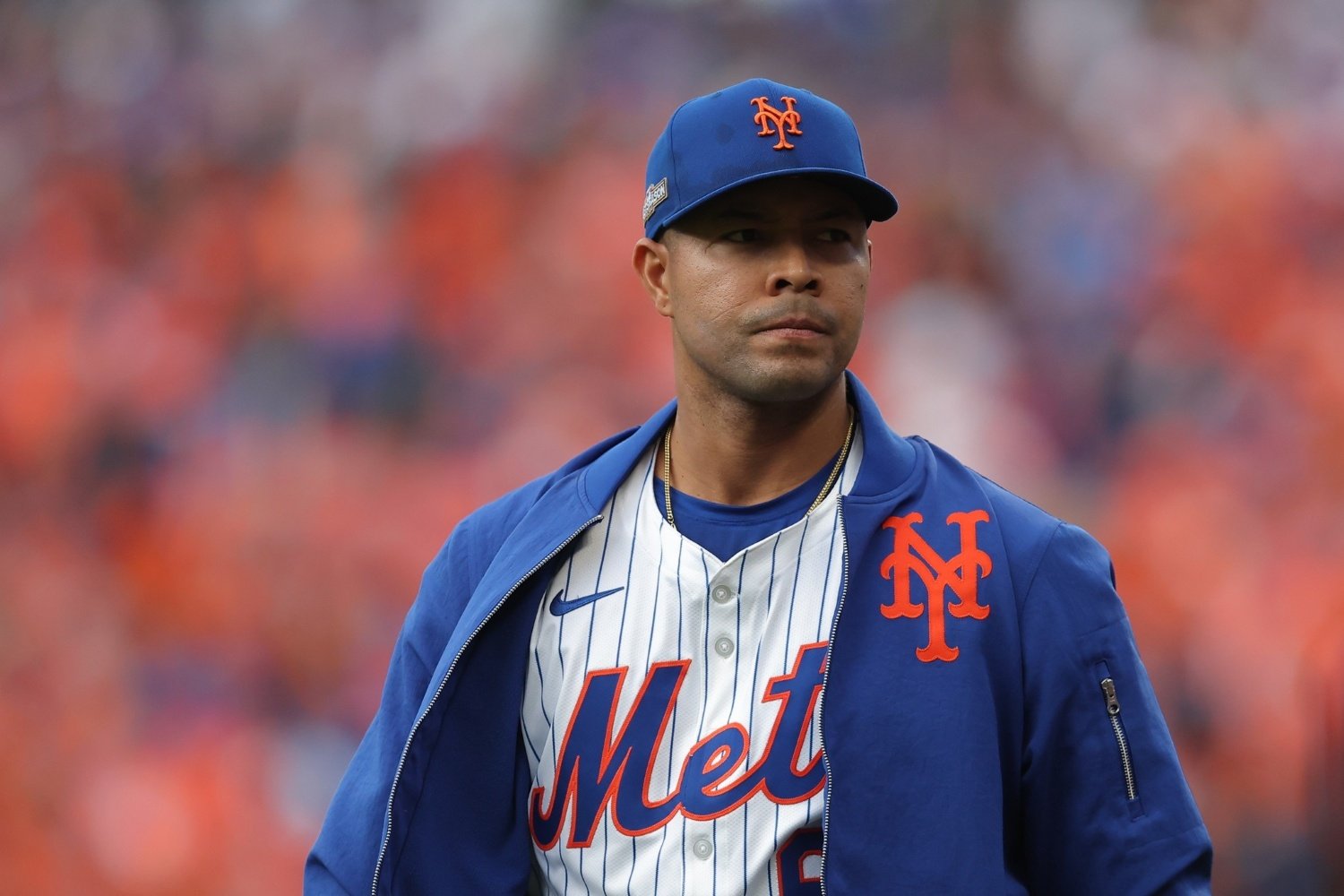 The Brewers already had four hurlers—Freddy Peralta, Aaron Civale, Tobias Myers, and Nestor Cortes—from whom they hoped to get a relatively high volume of innings this season. Now, they've added a fifth. Jose Quintana is coming off a very strong season with the Mets, in which he was their Opening Day starter against the club for whom he'll now toil in 2025. His 170 innings and 3.75 ERA last year would normally put him in a position to command a hefty multi-year deal, but at this stage of his career, Quintana doesn't miss many bats. That's fine with the Brewers, though. They'll slot him into the back half of their sturdy starting group, in front of a defense they still trust immensely, and hope that his addition gives them more stability. With Brandon Woodruff and DL Hall set to begin the season on the injured list, Aaron Ashby was the leading candidate for the fifth spot in the rotation. Now, though, Quintana figures to land that gig, leaving open a fascinating question: Will the Brewers send Ashby back to Triple-A Nashville yet again, or move him into the bullpen? This move figures to have major ripple effects for the entire pitching staff heading into the coming season. We'll cover them closely in stories throughout the week.
 -
When Statcast rolled out bat-tracking data to the public last spring, the Brewers' rookie infielder jumped out as a surprisingly gifted name. Turns out, that's because he'd already worked hard on it. Now, he's on to bigger and better things. Image courtesy of © Jay Biggerstaff-Imagn Images Oliver Dunn doesn't train for bat speed. That's not because he fails to understand its immense benefits, though. It's just a box he's already checked. "I have in the past," when asked in the Brewers clubhouse at spring training in Maryvale whether he uses the feedback tools provided by high-tech training aids to maximize his swing speed. "Now, I’m not trying to go get more. Now it’s the variability of it, and being able to cover more different zones. It was the focus at times, but not anymore." That's because, even in a first big-league season shortened by struggles at the plate and then an injury, Dunn demonstrated that he doesn't need any more than the bat speed he's already learned to generate. Along with Garrett Mitchell and William Contreras, he makes up part of the exceptional bat speed constituency within the Brewers' lineup—assuming he wins a job there, which is not yet safe to do. What Dunn said is true. His game is now much more dependent on the variability of his swing than on the sheer velocity he can achieve. Comparing him to Contreras (and even to Mitchell, who's hardly considered a bastion of the adaptable swing), it's easy to see why Dunn ran into trouble last year, in his brief stint with the team. He only had one gear. He couldn't manipulate the bat as deftly as many of his peers, so if his swing wasn't perfectly timed, it would end up as a miss, or a very poor mishit. Specifically, Dunn struggled mightily when pitchers worked down and in on him. It was a hole in his swing, and the league quickly identified and attacked it, relentlessly. It was the most frequent pitch location against him, and he was helpless with it. He whiffed often; rarely hit the ball hard when he managed to make contact; and frequently hit it right into the ground if he did get the barrel to it. The low-and-in pitch is the bread-and-butter of many lefty hitters with power, but Dunn said not hitting it well wasn't his primary concern. Instead, it was a frustrating symptom of an even more confounding problem: the swing that brought him such great success in 2023 and prompted the Brewers to trade for him that winter was never quite right in 2024. "That was just a sign of other things that needed to be adjusted, too," Dunn said. "That specific pitch isn’t something I try to gear toward, but having better swing planes will allow me to hit that pitch better, also. Looking for more coverage has absolutely been where the most focus has been, so I have made adjustments that’ll help me on that pitch, and other ones, too." It's that combination of thoughtful and determined desire to improve and impressive raw talent that the Brewers hope will yield better results for the infielder in 2025. He seemed to get things figured out after being optioned to Triple-A Nashville—only to have his season truncated abruptly by a back strain that lingered the rest of the year. He wasn't especially good in his brief stint in the Dominican Winter League, either. Some of this can't be helped. Pitchers at the highest level of professional baseball can consistently do things with the ball that the guys in Triple A can't. Dunn knows he'll have to adjust his approach, as much as his actual swing, to beat pitchers who execute so well. He did some of that even last season, and hopes to carry it forward in 2025. "Pitchers just get better at getting their pitches where they want them. At lower levels—not all the time, but guys will throw breaking balls [just] to throw breaking balls," Dunn said. "Guys in the big leagues will throw it with more conviction, know where they want it, miss on the side they want to miss on, versus back toward the middle." Still, on balance, Dunn enters this season feeling good. He's healthy, and he believes tweaks to his swing have unlocked more coverage of the zone for him. He's looked superb in early Cactus League play, not only posting an OPS north of 1.000 through Saturday's game but swinging well and liking his own swing decisions. He also has the comfort of knowing what position he's going to play, wherever he goes—something he attained after coming to camp last year branded as a more versatile player than he might have felt. Dunn spent lots of time at second base and in the outfield during his time in the Yankees system. With the Phillies organization in 2023, he mostly played the keystone. There was a little bit of shortstop and a little bit of third mixed in, but only when he got to Maryvale in the spring and things played out to open things up at the hot corner did he become a regular at a position for which he's always felt special affinity. "[That] developed in camp," Dunn said of the shift. "Kind of something that happened naturally; just a position that I liked and fit well at, and it lined up well for our infield." There was no culture shock involved. For Dunn, the feel wasn't radically different; he just needed to adapt to the ball getting to him faster and to the way range works based on being so much closer to the batter. "I mean, it’s definitely a different position than second," he said. "And I think it’s just a reps thing: just continue to hammer in reps and get in-game reps, and we have a great infield staff that helps with any of the questions that arise about how to play this ball or that ball." The team is ecstatic with the way he's managed that transition. He makes plays with confidence and rhythm, as though third was the spot for which he was always destined. Dunn takes pride in the change and the way he's managed it, and it might be the thing that secures his place on the team. Baserunning, on the other hand, remains an issue. As the lead runner in a first-and-third situation Saturday, Dunn got hung up and hesitated, contributing to a caught stealing for Jackson Chourio. He had just done a fine job going first to third on a single by Chourio, and he's been a fine basestealer in the minors, but his sneaky speed doesn't translate as cleanly to real value on the bases as one might hope. All the pieces of a very good player are there in Dunn. He hasn't yet been able to convert all those skills and tools into plus production, but his offseason work was aimed at that very thing. If he stays healthy, he's likely to get a shot, at least, to prove that that work has turned him from an intriguing late bloomer with big flaws into a meaningful contributor. View full article
-
.png.d4739eb6b741a5abe734135630f5f5cf.png) Oliver Dunn doesn't train for bat speed. That's not because he fails to understand its immense benefits, though. It's just a box he's already checked. "I have in the past," when asked in the Brewers clubhouse at spring training in Maryvale whether he uses the feedback tools provided by high-tech training aids to maximize his swing speed. "Now, I’m not trying to go get more. Now it’s the variability of it, and being able to cover more different zones. It was the focus at times, but not anymore." That's because, even in a first big-league season shortened by struggles at the plate and then an injury, Dunn demonstrated that he doesn't need any more than the bat speed he's already learned to generate. Along with Garrett Mitchell and William Contreras, he makes up part of the exceptional bat speed constituency within the Brewers' lineup—assuming he wins a job there, which is not yet safe to do. What Dunn said is true. His game is now much more dependent on the variability of his swing than on the sheer velocity he can achieve. Comparing him to Contreras (and even to Mitchell, who's hardly considered a bastion of the adaptable swing), it's easy to see why Dunn ran into trouble last year, in his brief stint with the team. He only had one gear. He couldn't manipulate the bat as deftly as many of his peers, so if his swing wasn't perfectly timed, it would end up as a miss, or a very poor mishit. Specifically, Dunn struggled mightily when pitchers worked down and in on him. It was a hole in his swing, and the league quickly identified and attacked it, relentlessly. It was the most frequent pitch location against him, and he was helpless with it. He whiffed often; rarely hit the ball hard when he managed to make contact; and frequently hit it right into the ground if he did get the barrel to it. The low-and-in pitch is the bread-and-butter of many lefty hitters with power, but Dunn said not hitting it well wasn't his primary concern. Instead, it was a frustrating symptom of an even more confounding problem: the swing that brought him such great success in 2023 and prompted the Brewers to trade for him that winter was never quite right in 2024. "That was just a sign of other things that needed to be adjusted, too," Dunn said. "That specific pitch isn’t something I try to gear toward, but having better swing planes will allow me to hit that pitch better, also. Looking for more coverage has absolutely been where the most focus has been, so I have made adjustments that’ll help me on that pitch, and other ones, too." It's that combination of thoughtful and determined desire to improve and impressive raw talent that the Brewers hope will yield better results for the infielder in 2025. He seemed to get things figured out after being optioned to Triple-A Nashville—only to have his season truncated abruptly by a back strain that lingered the rest of the year. He wasn't especially good in his brief stint in the Dominican Winter League, either. Some of this can't be helped. Pitchers at the highest level of professional baseball can consistently do things with the ball that the guys in Triple A can't. Dunn knows he'll have to adjust his approach, as much as his actual swing, to beat pitchers who execute so well. He did some of that even last season, and hopes to carry it forward in 2025. "Pitchers just get better at getting their pitches where they want them. At lower levels—not all the time, but guys will throw breaking balls [just] to throw breaking balls," Dunn said. "Guys in the big leagues will throw it with more conviction, know where they want it, miss on the side they want to miss on, versus back toward the middle." Still, on balance, Dunn enters this season feeling good. He's healthy, and he believes tweaks to his swing have unlocked more coverage of the zone for him. He's looked superb in early Cactus League play, not only posting an OPS north of 1.000 through Saturday's game but swinging well and liking his own swing decisions. He also has the comfort of knowing what position he's going to play, wherever he goes—something he attained after coming to camp last year branded as a more versatile player than he might have felt. Dunn spent lots of time at second base and in the outfield during his time in the Yankees system. With the Phillies organization in 2023, he mostly played the keystone. There was a little bit of shortstop and a little bit of third mixed in, but only when he got to Maryvale in the spring and things played out to open things up at the hot corner did he become a regular at a position for which he's always felt special affinity. "[That] developed in camp," Dunn said of the shift. "Kind of something that happened naturally; just a position that I liked and fit well at, and it lined up well for our infield." There was no culture shock involved. For Dunn, the feel wasn't radically different; he just needed to adapt to the ball getting to him faster and to the way range works based on being so much closer to the batter. "I mean, it’s definitely a different position than second," he said. "And I think it’s just a reps thing: just continue to hammer in reps and get in-game reps, and we have a great infield staff that helps with any of the questions that arise about how to play this ball or that ball." The team is ecstatic with the way he's managed that transition. He makes plays with confidence and rhythm, as though third was the spot for which he was always destined. Dunn takes pride in the change and the way he's managed it, and it might be the thing that secures his place on the team. Baserunning, on the other hand, remains an issue. As the lead runner in a first-and-third situation Saturday, Dunn got hung up and hesitated, contributing to a caught stealing for Jackson Chourio. He had just done a fine job going first to third on a single by Chourio, and he's been a fine basestealer in the minors, but his sneaky speed doesn't translate as cleanly to real value on the bases as one might hope. All the pieces of a very good player are there in Dunn. He hasn't yet been able to convert all those skills and tools into plus production, but his offseason work was aimed at that very thing. If he stays healthy, he's likely to get a shot, at least, to prove that that work has turned him from an intriguing late bloomer with big flaws into a meaningful contributor.
Oliver Dunn doesn't train for bat speed. That's not because he fails to understand its immense benefits, though. It's just a box he's already checked. "I have in the past," when asked in the Brewers clubhouse at spring training in Maryvale whether he uses the feedback tools provided by high-tech training aids to maximize his swing speed. "Now, I’m not trying to go get more. Now it’s the variability of it, and being able to cover more different zones. It was the focus at times, but not anymore." That's because, even in a first big-league season shortened by struggles at the plate and then an injury, Dunn demonstrated that he doesn't need any more than the bat speed he's already learned to generate. Along with Garrett Mitchell and William Contreras, he makes up part of the exceptional bat speed constituency within the Brewers' lineup—assuming he wins a job there, which is not yet safe to do. What Dunn said is true. His game is now much more dependent on the variability of his swing than on the sheer velocity he can achieve. Comparing him to Contreras (and even to Mitchell, who's hardly considered a bastion of the adaptable swing), it's easy to see why Dunn ran into trouble last year, in his brief stint with the team. He only had one gear. He couldn't manipulate the bat as deftly as many of his peers, so if his swing wasn't perfectly timed, it would end up as a miss, or a very poor mishit. Specifically, Dunn struggled mightily when pitchers worked down and in on him. It was a hole in his swing, and the league quickly identified and attacked it, relentlessly. It was the most frequent pitch location against him, and he was helpless with it. He whiffed often; rarely hit the ball hard when he managed to make contact; and frequently hit it right into the ground if he did get the barrel to it. The low-and-in pitch is the bread-and-butter of many lefty hitters with power, but Dunn said not hitting it well wasn't his primary concern. Instead, it was a frustrating symptom of an even more confounding problem: the swing that brought him such great success in 2023 and prompted the Brewers to trade for him that winter was never quite right in 2024. "That was just a sign of other things that needed to be adjusted, too," Dunn said. "That specific pitch isn’t something I try to gear toward, but having better swing planes will allow me to hit that pitch better, also. Looking for more coverage has absolutely been where the most focus has been, so I have made adjustments that’ll help me on that pitch, and other ones, too." It's that combination of thoughtful and determined desire to improve and impressive raw talent that the Brewers hope will yield better results for the infielder in 2025. He seemed to get things figured out after being optioned to Triple-A Nashville—only to have his season truncated abruptly by a back strain that lingered the rest of the year. He wasn't especially good in his brief stint in the Dominican Winter League, either. Some of this can't be helped. Pitchers at the highest level of professional baseball can consistently do things with the ball that the guys in Triple A can't. Dunn knows he'll have to adjust his approach, as much as his actual swing, to beat pitchers who execute so well. He did some of that even last season, and hopes to carry it forward in 2025. "Pitchers just get better at getting their pitches where they want them. At lower levels—not all the time, but guys will throw breaking balls [just] to throw breaking balls," Dunn said. "Guys in the big leagues will throw it with more conviction, know where they want it, miss on the side they want to miss on, versus back toward the middle." Still, on balance, Dunn enters this season feeling good. He's healthy, and he believes tweaks to his swing have unlocked more coverage of the zone for him. He's looked superb in early Cactus League play, not only posting an OPS north of 1.000 through Saturday's game but swinging well and liking his own swing decisions. He also has the comfort of knowing what position he's going to play, wherever he goes—something he attained after coming to camp last year branded as a more versatile player than he might have felt. Dunn spent lots of time at second base and in the outfield during his time in the Yankees system. With the Phillies organization in 2023, he mostly played the keystone. There was a little bit of shortstop and a little bit of third mixed in, but only when he got to Maryvale in the spring and things played out to open things up at the hot corner did he become a regular at a position for which he's always felt special affinity. "[That] developed in camp," Dunn said of the shift. "Kind of something that happened naturally; just a position that I liked and fit well at, and it lined up well for our infield." There was no culture shock involved. For Dunn, the feel wasn't radically different; he just needed to adapt to the ball getting to him faster and to the way range works based on being so much closer to the batter. "I mean, it’s definitely a different position than second," he said. "And I think it’s just a reps thing: just continue to hammer in reps and get in-game reps, and we have a great infield staff that helps with any of the questions that arise about how to play this ball or that ball." The team is ecstatic with the way he's managed that transition. He makes plays with confidence and rhythm, as though third was the spot for which he was always destined. Dunn takes pride in the change and the way he's managed it, and it might be the thing that secures his place on the team. Baserunning, on the other hand, remains an issue. As the lead runner in a first-and-third situation Saturday, Dunn got hung up and hesitated, contributing to a caught stealing for Jackson Chourio. He had just done a fine job going first to third on a single by Chourio, and he's been a fine basestealer in the minors, but his sneaky speed doesn't translate as cleanly to real value on the bases as one might hope. All the pieces of a very good player are there in Dunn. He hasn't yet been able to convert all those skills and tools into plus production, but his offseason work was aimed at that very thing. If he stays healthy, he's likely to get a shot, at least, to prove that that work has turned him from an intriguing late bloomer with big flaws into a meaningful contributor. -
Trevor Megill's Comfort Zone, in Fastball Usage and Elsewhere
Matthew Trueblood posted an article in Brewers
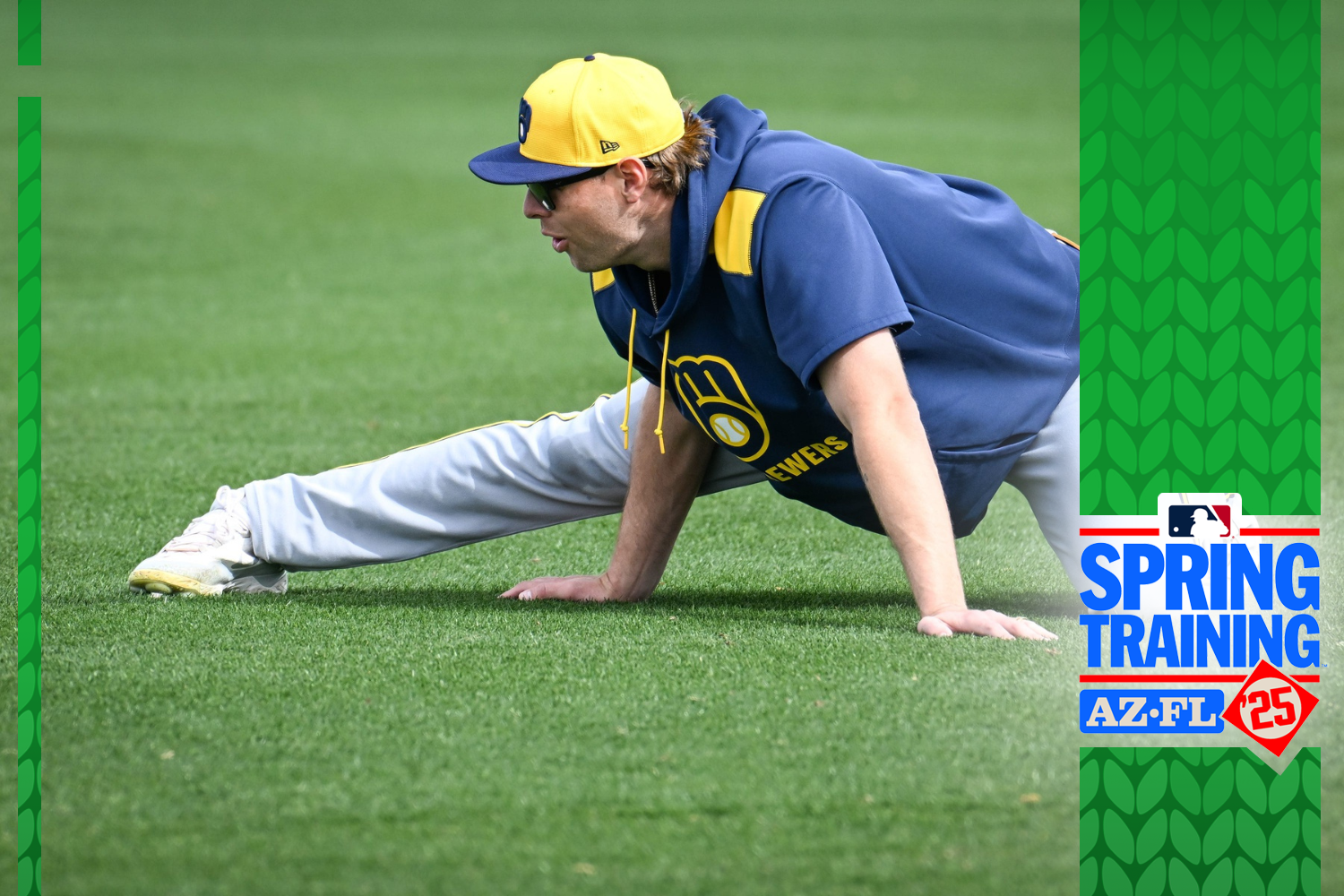 Because their appearances are so short (and, thus, their samples are so small), most relief pitchers experience some wide variations in the breakdown of their arsenals from month to month. Sometimes, it's not really what we would call a change in "pitch usage", for a starter; it's just the natural, wide vibrations that come with throwing 15 pitches at a time. Over 90 pitches, throwing 46 fastballs or 44 doesn't look much different. Over 15, throwing nine or seven is a relatively huge gap. The pocket of an opposing lineup you face on a given day might change your approach for the day, and that might show up even in a breakdown of pitch usage over a week or two. Not so with Trevor Megill, though. He's extremely stable in the way he attacks hitters—and that takes conscious effort. "I like to keep my fastball usage around 69 percent. That’s usually the goal," Megill said Saturday, in the Brewers clubhouse in Maryvale, Ariz. "I think that’s a good split—69/31. It just works out like that. It’s always been like that. It’s been like that for three years." As the chart above shows, that's not quite right, but you can certainly see the towering righthander working in that direction—and he got very close to his goal in 2024. While many modern pitchers try to mix in the breaking stuff increasingly often, toward 40 or 50 percent of the time—especially those who only work an inning or so per game and don't have to worry about opponents getting too many looks at that pitch. Megill, however, is sticking with a very fastball-forward approach. Partially, that's because he's so much more likely to find the zone with the heater than with the hook. He could only throw the curve much more if he could be sure that hitters would chase it at an extraordinarily high rate, and although we know why his curve does consistently induce chases, that's a risky game. Throwing enough strikes isn't the main reason why Megill thinks this pitch mix makes the most sense, though. Since he has an exceptionally hard, high-spin fastball he can locate in the top of the zone, he mostly fills that mixing his pitches that way makes it hardest for hitters to anticipate, identify and attack his stuff. He loses a few strikeouts this way, but arguably, he gets even more outs. "Last year was the first year where stressing over strikeouts wasn’t really a thing for me," Megill said. "It was more like, ‘How quick can we get the game over with? Let’s get the hell out of here in 12 pitches.’ I felt like being in the zone more, that put a lot more pressure on hitters to either make swings or make poor swing decisions." Attacking hitters more fearlessly was easy, Megill noted, because of the superb defense behind him. He felt confident that if a ball stayed in the park, his defense would snag it and convert an out. He also got better, though, at avoiding the center of the strike zone with his heater—especially the area middle-up where hitters can make hard contact without getting under the ball. In the graphic above, you can see how his locations were somewhat bifurcated: lots in the lower half of the zone, and lots along the top rail. In 2022 and 2023, his fastball locations were more amorphous, and less precise. Megill confirmed that the change was intentional, and focused on his long-term viability as the relief ace he became in the second half of 2023. "I knew I had to do that at some point in my career," he said. "There’s a long process to where I envision myself and how I envision myself throwing, and you gotta work on, for me it was stuff, and then get to location with the stuff that you have. So it took two years to get there, but now I feel comfortable moving it around and placing the ball in different places, in different counts." It all worked gorgeously, in ways not even fully captured by simple stats. Megill's new approach did reduce his strikeout rate, but it also drastically reduced his walk rate. If you strip out the four of his 14 walks on the year that were intentional (and also take them out of the denominator for walk rate, batters faced), Megill only gave out free passes to 5.6% of the batters he faced. It's clear that the self-confident Megill views himself as an elite reliever, capable of holding this level for years to come, as long as he can sustain that 69% fastball usage and continue making valuable adjustments. Injury risk notwithstanding, it's hard to argue with him. Perhaps because he's now entering the season as the presumptive closer for the second time (although it was just as a placeholder last time), Megill also seems exceptionally comfortable in camp. Though he reminisced about the way playing in warm, humid, sea-level climes can affect his pitch movement ("Florida spring training, your curveball is disgusting. Everything you throw out there is nasty. The air is so heavy."), he strongly prefers spring training in Arizona, for a simple reason: it's home. Megill moved to the area a decade ago, so coming to Maryvale and playing in the Cactus League requires no hassle. In fact, it means an extra month at home with his young family. For all the same reasons why relievers with stable pitch usage ratios are rare, relievers who stick around and thrive for more than a few years are similarly scarce. Megill is hoping to be among the exceptions to the latter, partially by dedicating himself so ardently to being an exception to the former.
 -
.png.f01c7f8e22ce9b23508499b761fc2383.png) When last season began, the Brewers (and specifically, their rookie manager) felt good about second baseman Brice Turang. They didn't know enough (or have enough objective cause for their optimism) to start the season with him as the regular leadoff man, though. Turang was coming off a season in which he had betted .218/.285/.300. He was better after a mid-season demotion to Triple-A Nashville, but nonetheless, that version of Turang was a poor fit for the top of the order. Over the first several weeks of the season, therefore, he mostly batted in the bottom four slots. Sal Frelick, Jackson Chourio, Oliver Dunn, and occasionally William Contreras manned the No. 1 spot, while Murphy waited to get Garrett Mitchell back from the injury that felled him on the eve of Opening Day. As Turang started hot and Mitchell's recuperation failed to progress, though, plans changed. On May 8, in the 36th game of the season, Murphy moved Turang up to the top of the lineup card—an arrangement that quickly became, functionally, permanent. By the time Mitchell returned from his injury at the start of July, Christian Yelich was already frequently dealing with the back problems that would eventually cut his season short and force him to undergo surgery. In the three weeks between Mitchell re-joining the active roster and Yelich being shelved for the year, they were only in the same lineup 10 times. They look likely to be on the same card about 10 times that often in 2025, and if that likelihood becomes a reality, Murphy is likely to use a lot of lineups that look like the one he wrote Saturday against the Rangers, when Texas visited Maryvale for a spring training game. Murphy's Mar. 1 lineup was: Jackson Chourio - LF Christian Yelich - DH William Contreras - C Garrett Mitchell - CF Rhys Hoskins - 1B Brice Turang - 2B Joey Ortiz - SS Sal Frelick - RF Oliver Dunn - 3B That's a significant departure from the shape of the lineup they used last year—even acknowledging that reproducing last year's group was not an option, after the departure of Willy Adames via free agency. However, it's not necessarily a signal that Murphy or the team have changed how they feel about Turang. Moving him up last year was more of a creative solution to what Murphy perceived as a problem than it was a demonstration of full-fledged belief in his short-term offensive upside. Murphy termed this strategy "stretching the lineup", and it's all about what's asked of whom, in an offense functioning at any less than its full capacity. "We did that a little bit last year with Turang, and I don’t know that everybody understands that, but sometimes when you take a guy that doesn’t profile as a leadoff hitter but you’re stretching your lineup a little bit, you’re allowing the other guys to hit one position lower," Murphy told reporters Saturday in Maryvale. "You’re gambling on the one player. We gambled on Brice Turang. He didn’t have the pedigree and the history that he would bat leadoff for us like he did, but when you do that, I believe you stretch your lineup. If you believe a player’s gonna overachieve and you’re right, you stretch your lineup, it makes you better offensively." In the absence of a second left-handed hitter who truly "profiled" as belonging in one of the most important places in the order, to match Yelich and offset the right-handed bats of William Contreras and Willy Adames, Murphy simply plugged Turang into the gap and asked him to be that guy. Doing so allowed Murphy not only to keep Contreras, Yelich and Adames in the places where he wanted them (Nos. 2-4, rather than Nos. 1-3), but to slide Frelick, Rhys Hoskins, Jake Bauers and Gary Sánchez (whenever each of them was starting) down a spot. That's how Hoskins, often a fourth or fifth hitter throughout his career, often ended up hitting sixth or even seventh in 2024. That was Murphy's theory in making the switch. Why did it work so well, prompting him to stick with it? "[Turang's] strike-ball was better," Murphy said. "His confidence. He exuded confidence, and with what he was doing to help us defensively, we felt like it would help our lineup to push guys down a little bit." Murphy is not at all naïve about the drawbacks or the risks of putting an underqualified hitter in the top spot in the order. He acknowledged that the "bottom line" is that the leadoff hitter bats most often, and that putting a player there whose overall skills either don't merit that much playing time or are limited to specific matchups requires a manager to be aggressive about in-game moves, or to be right in a big roll of the dice. That's why, this year, the team is more likely to embrace a different gamble. If Yelich and Mitchell are both healthy, they have their two dangerous lefty bats, to go with two dangerous righty ones. The risk lies in the fact that Mitchell (however good his numbers in MLB have been, thus far) has issues with strikeouts and ground balls, making it uncertain how well he can meet the requirements of a big-league cleanup hitter. He has ample raw power, though, and showed more signs of consistently tapping into it last season—after which he also went to Driveline Baseball and worked on doing that very thing over the winter. Securing great production from the top three hitters in the lineup seems to be best assured by slotting in Chourio, Yelich and Contreras there, with Mitchell being the young hitter on whom the team has to take a risk. Meanwhile, Turang, Joey Ortiz, Frelick and Dunn (plus Caleb Durbin, Eric Haase, and others who might win part-time jobs as rotational parts of the lineup) will all bat in lower-pressure positions. The stretching of the Brewers lineup, in 2025, will be a different kind than that felt in 2024. They lost their top slugger, but if they have better health, it could more than make up for that departure—to the point that Murphy won't feel the need to push any of his top bats down a spot. Instead, he might reduce his club's reliance on its glove-first youngsters.
When last season began, the Brewers (and specifically, their rookie manager) felt good about second baseman Brice Turang. They didn't know enough (or have enough objective cause for their optimism) to start the season with him as the regular leadoff man, though. Turang was coming off a season in which he had betted .218/.285/.300. He was better after a mid-season demotion to Triple-A Nashville, but nonetheless, that version of Turang was a poor fit for the top of the order. Over the first several weeks of the season, therefore, he mostly batted in the bottom four slots. Sal Frelick, Jackson Chourio, Oliver Dunn, and occasionally William Contreras manned the No. 1 spot, while Murphy waited to get Garrett Mitchell back from the injury that felled him on the eve of Opening Day. As Turang started hot and Mitchell's recuperation failed to progress, though, plans changed. On May 8, in the 36th game of the season, Murphy moved Turang up to the top of the lineup card—an arrangement that quickly became, functionally, permanent. By the time Mitchell returned from his injury at the start of July, Christian Yelich was already frequently dealing with the back problems that would eventually cut his season short and force him to undergo surgery. In the three weeks between Mitchell re-joining the active roster and Yelich being shelved for the year, they were only in the same lineup 10 times. They look likely to be on the same card about 10 times that often in 2025, and if that likelihood becomes a reality, Murphy is likely to use a lot of lineups that look like the one he wrote Saturday against the Rangers, when Texas visited Maryvale for a spring training game. Murphy's Mar. 1 lineup was: Jackson Chourio - LF Christian Yelich - DH William Contreras - C Garrett Mitchell - CF Rhys Hoskins - 1B Brice Turang - 2B Joey Ortiz - SS Sal Frelick - RF Oliver Dunn - 3B That's a significant departure from the shape of the lineup they used last year—even acknowledging that reproducing last year's group was not an option, after the departure of Willy Adames via free agency. However, it's not necessarily a signal that Murphy or the team have changed how they feel about Turang. Moving him up last year was more of a creative solution to what Murphy perceived as a problem than it was a demonstration of full-fledged belief in his short-term offensive upside. Murphy termed this strategy "stretching the lineup", and it's all about what's asked of whom, in an offense functioning at any less than its full capacity. "We did that a little bit last year with Turang, and I don’t know that everybody understands that, but sometimes when you take a guy that doesn’t profile as a leadoff hitter but you’re stretching your lineup a little bit, you’re allowing the other guys to hit one position lower," Murphy told reporters Saturday in Maryvale. "You’re gambling on the one player. We gambled on Brice Turang. He didn’t have the pedigree and the history that he would bat leadoff for us like he did, but when you do that, I believe you stretch your lineup. If you believe a player’s gonna overachieve and you’re right, you stretch your lineup, it makes you better offensively." In the absence of a second left-handed hitter who truly "profiled" as belonging in one of the most important places in the order, to match Yelich and offset the right-handed bats of William Contreras and Willy Adames, Murphy simply plugged Turang into the gap and asked him to be that guy. Doing so allowed Murphy not only to keep Contreras, Yelich and Adames in the places where he wanted them (Nos. 2-4, rather than Nos. 1-3), but to slide Frelick, Rhys Hoskins, Jake Bauers and Gary Sánchez (whenever each of them was starting) down a spot. That's how Hoskins, often a fourth or fifth hitter throughout his career, often ended up hitting sixth or even seventh in 2024. That was Murphy's theory in making the switch. Why did it work so well, prompting him to stick with it? "[Turang's] strike-ball was better," Murphy said. "His confidence. He exuded confidence, and with what he was doing to help us defensively, we felt like it would help our lineup to push guys down a little bit." Murphy is not at all naïve about the drawbacks or the risks of putting an underqualified hitter in the top spot in the order. He acknowledged that the "bottom line" is that the leadoff hitter bats most often, and that putting a player there whose overall skills either don't merit that much playing time or are limited to specific matchups requires a manager to be aggressive about in-game moves, or to be right in a big roll of the dice. That's why, this year, the team is more likely to embrace a different gamble. If Yelich and Mitchell are both healthy, they have their two dangerous lefty bats, to go with two dangerous righty ones. The risk lies in the fact that Mitchell (however good his numbers in MLB have been, thus far) has issues with strikeouts and ground balls, making it uncertain how well he can meet the requirements of a big-league cleanup hitter. He has ample raw power, though, and showed more signs of consistently tapping into it last season—after which he also went to Driveline Baseball and worked on doing that very thing over the winter. Securing great production from the top three hitters in the lineup seems to be best assured by slotting in Chourio, Yelich and Contreras there, with Mitchell being the young hitter on whom the team has to take a risk. Meanwhile, Turang, Joey Ortiz, Frelick and Dunn (plus Caleb Durbin, Eric Haase, and others who might win part-time jobs as rotational parts of the lineup) will all bat in lower-pressure positions. The stretching of the Brewers lineup, in 2025, will be a different kind than that felt in 2024. They lost their top slugger, but if they have better health, it could more than make up for that departure—to the point that Murphy won't feel the need to push any of his top bats down a spot. Instead, he might reduce his club's reliance on its glove-first youngsters. -
The two best left-handed hitters in the Brewers lineup were only actually in the lineup together 10 times in 2024. The team hopes that number will be much, much larger this season—which might let Pat Murphy change his approach to the top of his batting order. Image courtesy of © Rick Scuteri-Imagn Images When last season began, the Brewers (and specifically, their rookie manager) felt good about second baseman Brice Turang. They didn't know enough (or have enough objective cause for their optimism) to start the season with him as the regular leadoff man, though. Turang was coming off a season in which he had betted .218/.285/.300. He was better after a mid-season demotion to Triple-A Nashville, but nonetheless, that version of Turang was a poor fit for the top of the order. Over the first several weeks of the season, therefore, he mostly batted in the bottom four slots. Sal Frelick, Jackson Chourio, Oliver Dunn, and occasionally William Contreras manned the No. 1 spot, while Murphy waited to get Garrett Mitchell back from the injury that felled him on the eve of Opening Day. As Turang started hot and Mitchell's recuperation failed to progress, though, plans changed. On May 8, in the 36th game of the season, Murphy moved Turang up to the top of the lineup card—an arrangement that quickly became, functionally, permanent. By the time Mitchell returned from his injury at the start of July, Christian Yelich was already frequently dealing with the back problems that would eventually cut his season short and force him to undergo surgery. In the three weeks between Mitchell re-joining the active roster and Yelich being shelved for the year, they were only in the same lineup 10 times. They look likely to be on the same card about 10 times that often in 2025, and if that likelihood becomes a reality, Murphy is likely to use a lot of lineups that look like the one he wrote Saturday against the Rangers, when Texas visited Maryvale for a spring training game. Murphy's Mar. 1 lineup was: Jackson Chourio - LF Christian Yelich - DH William Contreras - C Garrett Mitchell - CF Rhys Hoskins - 1B Brice Turang - 2B Joey Ortiz - SS Sal Frelick - RF Oliver Dunn - 3B That's a significant departure from the shape of the lineup they used last year—even acknowledging that reproducing last year's group was not an option, after the departure of Willy Adames via free agency. However, it's not necessarily a signal that Murphy or the team have changed how they feel about Turang. Moving him up last year was more of a creative solution to what Murphy perceived as a problem than it was a demonstration of full-fledged belief in his short-term offensive upside. Murphy termed this strategy "stretching the lineup", and it's all about what's asked of whom, in an offense functioning at any less than its full capacity. "We did that a little bit last year with Turang, and I don’t know that everybody understands that, but sometimes when you take a guy that doesn’t profile as a leadoff hitter but you’re stretching your lineup a little bit, you’re allowing the other guys to hit one position lower," Murphy told reporters Saturday in Maryvale. "You’re gambling on the one player. We gambled on Brice Turang. He didn’t have the pedigree and the history that he would bat leadoff for us like he did, but when you do that, I believe you stretch your lineup. If you believe a player’s gonna overachieve and you’re right, you stretch your lineup, it makes you better offensively." In the absence of a second left-handed hitter who truly "profiled" as belonging in one of the most important places in the order, to match Yelich and offset the right-handed bats of William Contreras and Willy Adames, Murphy simply plugged Turang into the gap and asked him to be that guy. Doing so allowed Murphy not only to keep Contreras, Yelich and Adames in the places where he wanted them (Nos. 2-4, rather than Nos. 1-3), but to slide Frelick, Rhys Hoskins, Jake Bauers and Gary Sánchez (whenever each of them was starting) down a spot. That's how Hoskins, often a fourth or fifth hitter throughout his career, often ended up hitting sixth or even seventh in 2024. That was Murphy's theory in making the switch. Why did it work so well, prompting him to stick with it? "[Turang's] strike-ball was better," Murphy said. "His confidence. He exuded confidence, and with what he was doing to help us defensively, we felt like it would help our lineup to push guys down a little bit." Murphy is not at all naïve about the drawbacks or the risks of putting an underqualified hitter in the top spot in the order. He acknowledged that the "bottom line" is that the leadoff hitter bats most often, and that putting a player there whose overall skills either don't merit that much playing time or are limited to specific matchups requires a manager to be aggressive about in-game moves, or to be right in a big roll of the dice. That's why, this year, the team is more likely to embrace a different gamble. If Yelich and Mitchell are both healthy, they have their two dangerous lefty bats, to go with two dangerous righty ones. The risk lies in the fact that Mitchell (however good his numbers in MLB have been, thus far) has issues with strikeouts and ground balls, making it uncertain how well he can meet the requirements of a big-league cleanup hitter. He has ample raw power, though, and showed more signs of consistently tapping into it last season—after which he also went to Driveline Baseball and worked on doing that very thing over the winter. Securing great production from the top three hitters in the lineup seems to be best assured by slotting in Chourio, Yelich and Contreras there, with Mitchell being the young hitter on whom the team has to take a risk. Meanwhile, Turang, Joey Ortiz, Frelick and Dunn (plus Caleb Durbin, Eric Haase, and others who might win part-time jobs as rotational parts of the lineup) will all bat in lower-pressure positions. The stretching of the Brewers lineup, in 2025, will be a different kind than that felt in 2024. They lost their top slugger, but if they have better health, it could more than make up for that departure—to the point that Murphy won't feel the need to push any of his top bats down a spot. Instead, he might reduce his club's reliance on its glove-first youngsters. View full article
- 1 reply
-
- 1
-

-
- brice turang
- garrett mitchell
- (and 1 more)
-
The Brewers' projected closer for 2025 calibrates and maintains his fastball usage the way you tune your thermostat—and keeps it nice at all times. Image courtesy of © Dave Kallmann / Milwaukee Journal Sentinel / USA TODAY NETWORK via Imagn Images Because their appearances are so short (and, thus, their samples are so small), most relief pitchers experience some wide variations in the breakdown of their arsenals from month to month. Sometimes, it's not really what we would call a change in "pitch usage", for a starter; it's just the natural, wide vibrations that come with throwing 15 pitches at a time. Over 90 pitches, throwing 46 fastballs or 44 doesn't look much different. Over 15, throwing nine or seven is a relatively huge gap. The pocket of an opposing lineup you face on a given day might change your approach for the day, and that might show up even in a breakdown of pitch usage over a week or two. Not so with Trevor Megill, though. He's extremely stable in the way he attacks hitters—and that takes conscious effort. "I like to keep my fastball usage around 69 percent. That’s usually the goal," Megill said Saturday, in the Brewers clubhouse in Maryvale, Ariz. "I think that’s a good split—69/31. It just works out like that. It’s always been like that. It’s been like that for three years." As the chart above shows, that's not quite right, but you can certainly see the towering righthander working in that direction—and he got very close to his goal in 2024. While many modern pitchers try to mix in the breaking stuff increasingly often, toward 40 or 50 percent of the time—especially those who only work an inning or so per game and don't have to worry about opponents getting too many looks at that pitch. Megill, however, is sticking with a very fastball-forward approach. Partially, that's because he's so much more likely to find the zone with the heater than with the hook. He could only throw the curve much more if he could be sure that hitters would chase it at an extraordinarily high rate, and although we know why his curve does consistently induce chases, that's a risky game. Throwing enough strikes isn't the main reason why Megill thinks this pitch mix makes the most sense, though. Since he has an exceptionally hard, high-spin fastball he can locate in the top of the zone, he mostly fills that mixing his pitches that way makes it hardest for hitters to anticipate, identify and attack his stuff. He loses a few strikeouts this way, but arguably, he gets even more outs. "Last year was the first year where stressing over strikeouts wasn’t really a thing for me," Megill said. "It was more like, ‘How quick can we get the game over with? Let’s get the hell out of here in 12 pitches.’ I felt like being in the zone more, that put a lot more pressure on hitters to either make swings or make poor swing decisions." Attacking hitters more fearlessly was easy, Megill noted, because of the superb defense behind him. He felt confident that if a ball stayed in the park, his defense would snag it and convert an out. He also got better, though, at avoiding the center of the strike zone with his heater—especially the area middle-up where hitters can make hard contact without getting under the ball. In the graphic above, you can see how his locations were somewhat bifurcated: lots in the lower half of the zone, and lots along the top rail. In 2022 and 2023, his fastball locations were more amorphous, and less precise. Megill confirmed that the change was intentional, and focused on his long-term viability as the relief ace he became in the second half of 2023. "I knew I had to do that at some point in my career," he said. "There’s a long process to where I envision myself and how I envision myself throwing, and you gotta work on, for me it was stuff, and then get to location with the stuff that you have. So it took two years to get there, but now I feel comfortable moving it around and placing the ball in different places, in different counts." It all worked gorgeously, in ways not even fully captured by simple stats. Megill's new approach did reduce his strikeout rate, but it also drastically reduced his walk rate. If you strip out the four of his 14 walks on the year that were intentional (and also take them out of the denominator for walk rate, batters faced), Megill only gave out free passes to 5.6% of the batters he faced. It's clear that the self-confident Megill views himself as an elite reliever, capable of holding this level for years to come, as long as he can sustain that 69% fastball usage and continue making valuable adjustments. Injury risk notwithstanding, it's hard to argue with him. Perhaps because he's now entering the season as the presumptive closer for the second time (although it was just as a placeholder last time), Megill also seems exceptionally comfortable in camp. Though he reminisced about the way playing in warm, humid, sea-level climes can affect his pitch movement ("Florida spring training, your curveball is disgusting. Everything you throw out there is nasty. The air is so heavy."), he strongly prefers spring training in Arizona, for a simple reason: it's home. Megill moved to the area a decade ago, so coming to Maryvale and playing in the Cactus League requires no hassle. In fact, it means an extra month at home with his young family. For all the same reasons why relievers with stable pitch usage ratios are rare, relievers who stick around and thrive for more than a few years are similarly scarce. Megill is hoping to be among the exceptions to the latter, partially by dedicating himself so ardently to being an exception to the former. View full article
-
Losing one of the best defensive outfielders in baseball for any stretch is a bummer. Losing one who gave your outfield much-needed handedness balance is an especially nasty one. Still, the Brewers have lots of good options, thanks to their budding superstar. Image courtesy of © Dave Kallmann / Milwaukee Journal Sentinel / USA TODAY NETWORK via Imagn Images Blake Perkins is likely to miss at least the first month of the season after a foul tip fractured a bone in his leg early in spring training. That fell on the Brewers as a major blow, despite the fact that Perkins is not a full-time player or any kind of star. His glove work in center field over the last two years has been invaluable, and for a team built around superb defense, losing him would hurt no matter what, but there's another dynamic at play, too. Perkins is a switch-hitter, and if anything, he's slightly better as a right-handed batter, facing lefty pitchers. Meanwhile, Christian Yelich, Sal Frelick, Garrett Mitchell, and even rotational outfield piece Jake Bauers all bat left-handed. One reason why the team has been slow to move defensively inept infielder Tyler Black to the outfield is that they don't need another lefty bat out there. Perkins became a key cog in their attack at times over the last two years, despite being a below-average hitter, simply because he could hold his own against lefties better than some of his younger, left-hitting teammates. With Perkins out, the only right-hitting outfielder projected to make the Opening Day roster was Jackson Chourio, until the team signed both Manuel Margot and Mark Canha to minor-league deals. Since neither of those guys can play viable defense in center field at this stage of their careers, though, they didn't automatically solve the problem of replacing Perkins. Chourio covered that gap. He's now getting time in center in Cactus League games, and while that might have happened anyway, it's taken on new significance. He mostly played center in the minors, and has all the speed and ball-tracking skills needed to play that position. With some time to brush up, he's likely to be a fine center fielder again, which gives the team the flexibility it only momentarily lost in the move from Perkins to (most likely) Canha. With Chourio playing center against lefties, Rhys Hoskins can stay at first base. Canha can DH sometimes, and occasionally slide to left field, making room for William Contreras as the DH and Eric Haase to catch. On any given day when the opponent has a lefty on the mound, the team can get away with playing no more than two—and sometimes just one—of Yelich, Frelick, and Mitchell. Yelich hangs in just fine against lefties, but as he continues to age and returns from a major back injury, days off will be needed, and fitting them in when he'd be at a platoon disadvantage anyway just makes sense. Like most lefty batters, Frelick and Mitchell struggle against southpaws. They have very different swing paths and approaches, though, so they don't necessarily struggle against the same kinds of same-handed hurlers. Having Chourio move to center and Canha as a lineup brace allows Pat Murphy to play matchups judiciously. Most of the time, he'll still be able to shield whichever of Frelick and Mitchell profiles worse against that day's opposing moundsman from the bad matchup, thanks to the versatility of his best player. It will still be welcome, wonderful news when Perkins returns, restoring to full strength the two-time defending Team Gold Glove winners. Until then, though, the Crew should thank their lucky stars that Chourio is such a unique mixture of athleticism and baseball acumen. He'll easily adapt to playing center again, which will allow them to minimize the pain they feel in the absence of Perkins. He effectively levels up the addition of Canha. View full article
-
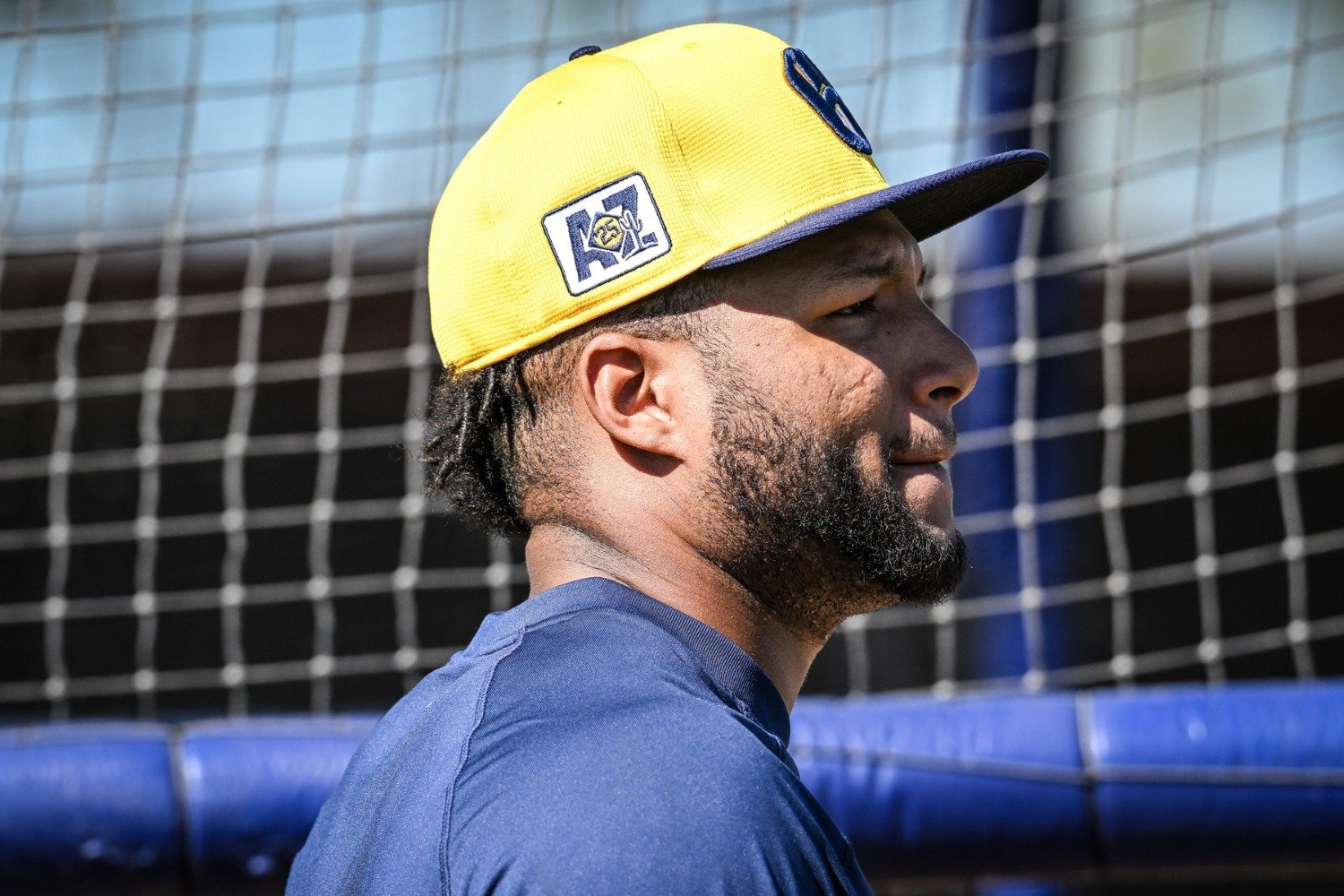 Blake Perkins is likely to miss at least the first month of the season after a foul tip fractured a bone in his leg early in spring training. That fell on the Brewers as a major blow, despite the fact that Perkins is not a full-time player or any kind of star. His glove work in center field over the last two years has been invaluable, and for a team built around superb defense, losing him would hurt no matter what, but there's another dynamic at play, too. Perkins is a switch-hitter, and if anything, he's slightly better as a right-handed batter, facing lefty pitchers. Meanwhile, Christian Yelich, Sal Frelick, Garrett Mitchell, and even rotational outfield piece Jake Bauers all bat left-handed. One reason why the team has been slow to move defensively inept infielder Tyler Black to the outfield is that they don't need another lefty bat out there. Perkins became a key cog in their attack at times over the last two years, despite being a below-average hitter, simply because he could hold his own against lefties better than some of his younger, left-hitting teammates. With Perkins out, the only right-hitting outfielder projected to make the Opening Day roster was Jackson Chourio, until the team signed both Manuel Margot and Mark Canha to minor-league deals. Since neither of those guys can play viable defense in center field at this stage of their careers, though, they didn't automatically solve the problem of replacing Perkins. Chourio covered that gap. He's now getting time in center in Cactus League games, and while that might have happened anyway, it's taken on new significance. He mostly played center in the minors, and has all the speed and ball-tracking skills needed to play that position. With some time to brush up, he's likely to be a fine center fielder again, which gives the team the flexibility it only momentarily lost in the move from Perkins to (most likely) Canha. With Chourio playing center against lefties, Rhys Hoskins can stay at first base. Canha can DH sometimes, and occasionally slide to left field, making room for William Contreras as the DH and Eric Haase to catch. On any given day when the opponent has a lefty on the mound, the team can get away with playing no more than two—and sometimes just one—of Yelich, Frelick, and Mitchell. Yelich hangs in just fine against lefties, but as he continues to age and returns from a major back injury, days off will be needed, and fitting them in when he'd be at a platoon disadvantage anyway just makes sense. Like most lefty batters, Frelick and Mitchell struggle against southpaws. They have very different swing paths and approaches, though, so they don't necessarily struggle against the same kinds of same-handed hurlers. Having Chourio move to center and Canha as a lineup brace allows Pat Murphy to play matchups judiciously. Most of the time, he'll still be able to shield whichever of Frelick and Mitchell profiles worse against that day's opposing moundsman from the bad matchup, thanks to the versatility of his best player. It will still be welcome, wonderful news when Perkins returns, restoring to full strength the two-time defending Team Gold Glove winners. Until then, though, the Crew should thank their lucky stars that Chourio is such a unique mixture of athleticism and baseball acumen. He'll easily adapt to playing center again, which will allow them to minimize the pain they feel in the absence of Perkins. He effectively levels up the addition of Canha.
 -
The league already has a formula to calculate market score. I'm not sure which criteria you're using here, but Tampa ranks 13th in the US in media market and 24th in NA in MSA population. Tampa isn't close to Orlando, and fan allegiance is lower there because many residents are transplants. I think we have a solid handle on who the behemoths and the have-nots are, here. And you'd certainly keep the market size disqualifier, which already exists in the CBA. If you have a market score that suggests you should be a revenue-sharing payor but your actual revenue positions you to RECEIVE shared funds instead, you get disqualified and your share is refunded to qualifying teams.
-
 With the next round of labor negotiations hanging over MLB and its players like the sword of Selig, the possibility (or lack thereof) of a salary cap and floor system for the sport has become a hot topic lately. As ever, the MLB Players Association views that structure as a non-starter, while a significant bloc of team owners view it as the best way forward. Whether or not there's a work stoppage that makes the winter of 2026-27 a horrible, echoing silence (or even steals games from the 2027 slate) depends somewhat heavily on how hard teams push to achieve a cap. Since that system is unlikely to come to fruition, though, the likely redress for the owners' concerns about costs and the union's concerns about teams not spending enough is reform of the revenue-sharing system already in place. That system is not working for anyone, right now, for a very simple reason: it's effectively a regressive income tax. Many fans are surprised when they learn that teams already pool 48% of their net local revenues, including gate receipts, local TV rights fees, and more. That sounds like a lot, and upon hearing it, the impulse is to assume that no more sharing is needed. Maybe the sheer size of the pool is sufficient, but reform is urgently necessary. Right now, using a three-year blended average of revenues, teams all owe 48% of what they make through eligible revenue streams, and then get back 1/30th of the money pooled that way. In practice, of course, it works differently than that. Based on revenue reports and projections, some teams make an estimated quarterly payment of what they'll owe (taking away what they would receive from the amount they pay), while others never make a payment but only receive the difference between their share of the pool and the amount they would have owed from their own revenue. In effect, though, everyone keeps 52% of what they make, and gets a dividend worth about 3% of all 30 teams' other 48% (less some money held by the central league office). Let's use some imaginary figures (but ones that certainly bear some strong relationship to reality) to explore the effect of that revenue-sharing plan. Say that: The Dodgers make $600 million in net local revenue; The Braves make $450 million; and The Brewers make $225 million. Under the current system, all three teams owe 48% of that sum to the league's pool. The Dodgers, then, would pay in $288 million; Atlanta would pay $216 million; and the Brewers would cough up $108 million. Even after taking out the money set aside for the Commissioner's Discretionary Fund and some to cover player benefits, though, each team's share of the resulting pool is somewhere around $160 million. So, the Dodgers would actually pay in $128 million; Atlanta would pay $56 million; and the Crew would receive $52 million. Again, these figures are all hypothetical, but you see the mechanisms at work. The problem with this system is that the Dodgers kept $312 million as their non-shared segment of the pool, and then another $160 million that they would have been due when the pool was disbursed again. Atlanta kept $234 million, plus $160 million. Milwaukee, meanwhile, only receives $52 million via revenue-sharing. So, the three teams end up with the following amounts of local revenue with which to work, after revenue sharing "levels the playing field": Dodgers: $472 million Atlanta: $394 million Brewers: $277 million Now, each team also has a huge amount of other money flowing in, mostly from national TV revenues—but also from any real estate or other investments attached to the product but not technically shareable under the rules. Add a flat $100 million or more to each of those numbers, and the percentage represented by the gap between each shrinks. Still, does this system give the Brewers any realistic way to compete with the Dodgers, financially? Of course not. That's because, even though the Dodgers are well over twice as rich as they are, the two teams pay the same (they won't call it this, but that's what it is) income tax to the league, on a rate basis. The gap doesn't close nearly enough. The system needs a more progressive approach. In this negotiation, neither side wants to put any constraints on revenue or disincentivize earning, but a modest increase in the tax rate for the teams who make the most money wouldn't do that. What if, instead of a flat 48%, the revenue-sharing rate was 40% for teams in the lower third of the league; 48% for the middle third; and 56% for the top third? In that altered situation, the three teams in our example would end up with very different amounts of revenue when the redistributions were complete. The league would collect more, and thus dole out more, and a larger share of that money would have come from the richest clubs in the league, to begin with. In that scenario, these three teams might end up keeping: Dodgers: $444 million Atlanta: $414 million Brewers: $315 million The gap still isn't closed, there, but it's much smaller. It's more plausible that a small-market team can keep its franchise player, and build a winner around them even as they enter their 30s. It's more likely that an owner will decide to flex their budget a bit and chase a championship. There would be messy bits to this, like teams jockeying to be on the right side of dividing lines between tiers, but this is one way for revenue sharing to do a much better job of addressing the massive inequalities in the modern game. Big-market teams would howl at this, of course. There would need to be other concessions—perhaps, much to the union's potential delight, a slackening of penalties on spending beyond the competitive-balance tax threshold, or fewer advantages for small-market teams in the draft and in free-agent compensation—to mollify them. Both small- and medium-market teams would benefit, though, and the whole league would become more invested in the earning power of everyone else in the league. It could be the best way to avoid a sport-shattering work stoppage, and to make it easier for David to compete with Goliath.
 -
A flat tax is almost never a good idea, because inequality exists almost everywhere, and flat taxes do far too little to address it. Major League Baseball is no exception, so their revenue-sharing system needs an overhaul. Image courtesy of © Dave Kallmann / Milwaukee Journal Sentinel / USA TODAY NETWORK via Imagn Images With the next round of labor negotiations hanging over MLB and its players like the sword of Selig, the possibility (or lack thereof) of a salary cap and floor system for the sport has become a hot topic lately. As ever, the MLB Players Association views that structure as a non-starter, while a significant bloc of team owners view it as the best way forward. Whether or not there's a work stoppage that makes the winter of 2026-27 a horrible, echoing silence (or even steals games from the 2027 slate) depends somewhat heavily on how hard teams push to achieve a cap. Since that system is unlikely to come to fruition, though, the likely redress for the owners' concerns about costs and the union's concerns about teams not spending enough is reform of the revenue-sharing system already in place. That system is not working for anyone, right now, for a very simple reason: it's effectively a regressive income tax. Many fans are surprised when they learn that teams already pool 48% of their net local revenues, including gate receipts, local TV rights fees, and more. That sounds like a lot, and upon hearing it, the impulse is to assume that no more sharing is needed. Maybe the sheer size of the pool is sufficient, but reform is urgently necessary. Right now, using a three-year blended average of revenues, teams all owe 48% of what they make through eligible revenue streams, and then get back 1/30th of the money pooled that way. In practice, of course, it works differently than that. Based on revenue reports and projections, some teams make an estimated quarterly payment of what they'll owe (taking away what they would receive from the amount they pay), while others never make a payment but only receive the difference between their share of the pool and the amount they would have owed from their own revenue. In effect, though, everyone keeps 52% of what they make, and gets a dividend worth about 3% of all 30 teams' other 48% (less some money held by the central league office). Let's use some imaginary figures (but ones that certainly bear some strong relationship to reality) to explore the effect of that revenue-sharing plan. Say that: The Dodgers make $600 million in net local revenue; The Braves make $450 million; and The Brewers make $225 million. Under the current system, all three teams owe 48% of that sum to the league's pool. The Dodgers, then, would pay in $288 million; Atlanta would pay $216 million; and the Brewers would cough up $108 million. Even after taking out the money set aside for the Commissioner's Discretionary Fund and some to cover player benefits, though, each team's share of the resulting pool is somewhere around $160 million. So, the Dodgers would actually pay in $128 million; Atlanta would pay $56 million; and the Crew would receive $52 million. Again, these figures are all hypothetical, but you see the mechanisms at work. The problem with this system is that the Dodgers kept $312 million as their non-shared segment of the pool, and then another $160 million that they would have been due when the pool was disbursed again. Atlanta kept $234 million, plus $160 million. Milwaukee, meanwhile, only receives $52 million via revenue-sharing. So, the three teams end up with the following amounts of local revenue with which to work, after revenue sharing "levels the playing field": Dodgers: $472 million Atlanta: $394 million Brewers: $277 million Now, each team also has a huge amount of other money flowing in, mostly from national TV revenues—but also from any real estate or other investments attached to the product but not technically shareable under the rules. Add a flat $100 million or more to each of those numbers, and the percentage represented by the gap between each shrinks. Still, does this system give the Brewers any realistic way to compete with the Dodgers, financially? Of course not. That's because, even though the Dodgers are well over twice as rich as they are, the two teams pay the same (they won't call it this, but that's what it is) income tax to the league, on a rate basis. The gap doesn't close nearly enough. The system needs a more progressive approach. In this negotiation, neither side wants to put any constraints on revenue or disincentivize earning, but a modest increase in the tax rate for the teams who make the most money wouldn't do that. What if, instead of a flat 48%, the revenue-sharing rate was 40% for teams in the lower third of the league; 48% for the middle third; and 56% for the top third? In that altered situation, the three teams in our example would end up with very different amounts of revenue when the redistributions were complete. The league would collect more, and thus dole out more, and a larger share of that money would have come from the richest clubs in the league, to begin with. In that scenario, these three teams might end up keeping: Dodgers: $444 million Atlanta: $414 million Brewers: $315 million The gap still isn't closed, there, but it's much smaller. It's more plausible that a small-market team can keep its franchise player, and build a winner around them even as they enter their 30s. It's more likely that an owner will decide to flex their budget a bit and chase a championship. There would be messy bits to this, like teams jockeying to be on the right side of dividing lines between tiers, but this is one way for revenue sharing to do a much better job of addressing the massive inequalities in the modern game. Big-market teams would howl at this, of course. There would need to be other concessions—perhaps, much to the union's potential delight, a slackening of penalties on spending beyond the competitive-balance tax threshold, or fewer advantages for small-market teams in the draft and in free-agent compensation—to mollify them. Both small- and medium-market teams would benefit, though, and the whole league would become more invested in the earning power of everyone else in the league. It could be the best way to avoid a sport-shattering work stoppage, and to make it easier for David to compete with Goliath. View full article
-
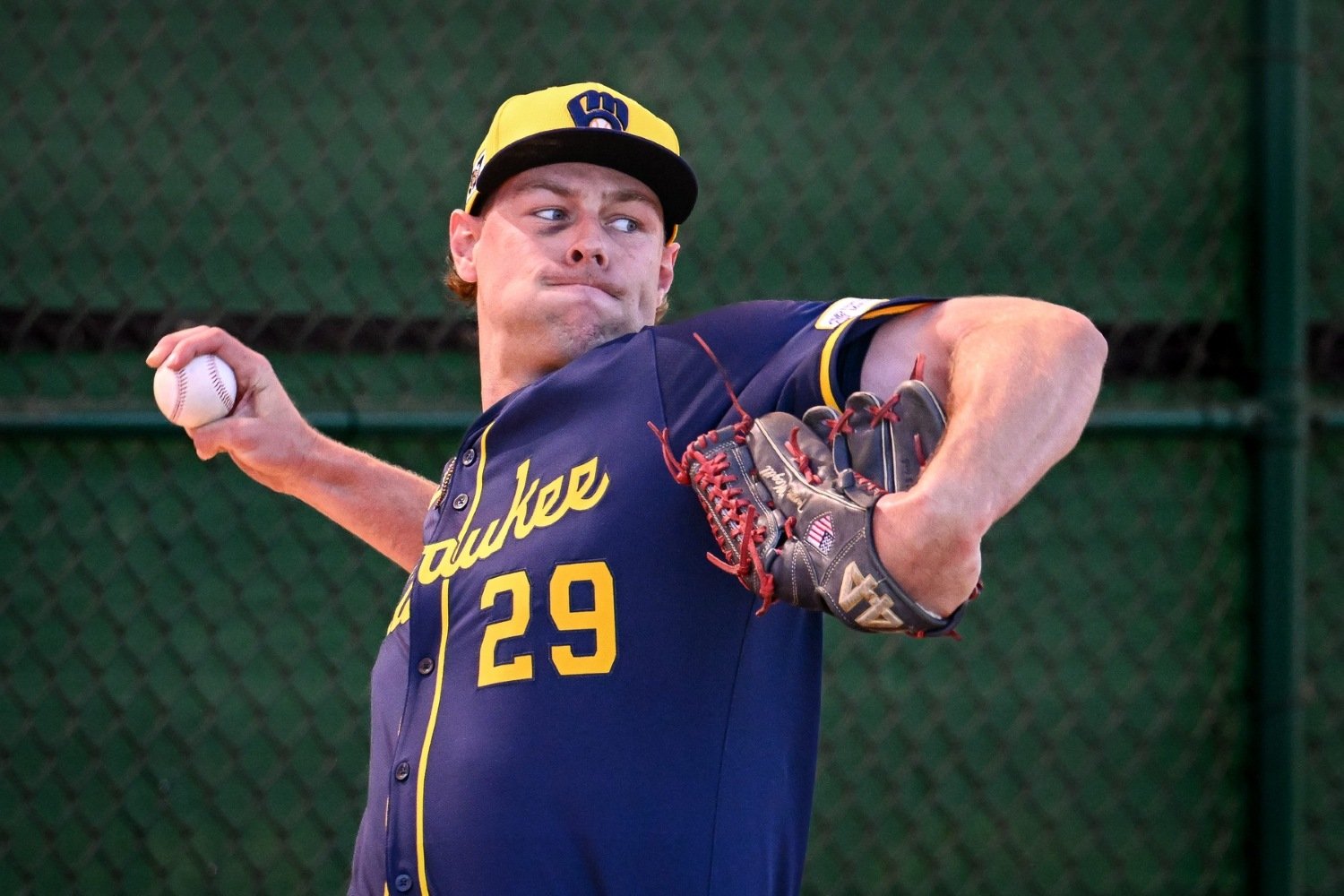
There are still a handful of useful pitchers available in free agency. The Brewers are dealing with some pitching injuries slated to affect the start of the season, but will that prompt them to shop in the late-winter bargain bin? Image courtesy of © Dave Kallmann / Milwaukee Journal Sentinel / USA TODAY NETWORK via Imagn Images Right-handed reliever J.B. Bukauskas will undergo surgery on his lat muscle and miss the entire 2025 season, according to Todd Rosiak of the Milwaukee Journal-Sentinel. It's the latest setback in a spring that has seen several Brewers hurlers go down with injuries of varying severity. With Bukauskas no longer in the mix, the team has one fewer arm vying for a place on the Opening Day roster, although he was a long shot to win one of those jobs. It was more likely that Bukauskas would be one of the several mid-season replacements to whom the Brewers have turned during the last few seasons, often with season-saving results. In general, it's safe to say that the Crew's pitching depth is a bit diminished, relative to last season. They've brought in a few arms, like Elvin Rodríguez and Tyler Alexander, in free agency, but the only truly reliable hurler they've acquired so far is Nestor Cortes, a key piece of the Devin Williams trade. A month away from Opening Day at Yankee Stadium, the Crew have a solid starting five, but only if they avoid any further attrition and Aaron Ashby (or Alexander) rounds into form to lock up the fifth spot. Meanwhile, their bullpen is noticeably weaker, without the bracing presence of Hoby Milner or Williams. At the moment, they're exposed to much more risk of a wobbly pitching staff than they were in either of the last two seasons, even as those teams, too, suffered major losses. The fixes for that problem are still out there—if the team views it as a problem, in the first place. Though Kyle Finnegan re-signed with the Nationals Tuesday (taking arguably the best remaining relief arm off the market), David Robertson, Phil Maton, and ex-Brewer Andrew Chafin highlight a small cluster of solid relievers who could step into the mix and make that unit more reliable. Meanwhile, José Quintana, Spencer Turnbull and Kyle Gibson are available as could-be innings eaters for the starting rotation, all at (presumably) a clearance price. Robertson would have a case for being the second-best reliever on the team from the moment he walked in the door. He's an especially appealing target, not only because he was so good in 2024 (72 innings, 99 strikeouts against just 27 walks, a 3.00 ERA), but because the bullpen needs precisely that kind of presence. Trevor Megill is on a slightly delayed schedule in camp, which is especially ominous in his case because he has a spotty health history. While everyone is excited about the prospect of a Craig Yoho emergence, no one in the organization will want to see that happen as the closer right out of the gate. One more reliever who profiles as a high-leverage weapon, rather than rubber-armed depth, could go a very long way for this group. Quintana, Turnbull and Gibson all project to be better than Ashby, according to PECOTA, and both Quintana and Gibson are durable starters who would reduce the risk of the team needing to call upon a young or underqualified starter early in the season. The Brewers aren't looking like world-beaters right now, and while they're likely to outplay their unimpressive projections, they're still not favorites to take the NL Central. They need a bit of reinforcement, and there are some easy avenues for that type of small but clear improvement still open for them. If they want to avoid a mid-May scramble or a July overpay for needed backfilling, they should make a small but crucial investment now. View full article
- 15 replies
-
- 1
-

-
- jose quintana
- david robertson
- (and 3 more)
-
 Right-handed reliever J.B. Bukauskas will undergo surgery on his lat muscle and miss the entire 2025 season, according to Todd Rosiak of the Milwaukee Journal-Sentinel. It's the latest setback in a spring that has seen several Brewers hurlers go down with injuries of varying severity. With Bukauskas no longer in the mix, the team has one fewer arm vying for a place on the Opening Day roster, although he was a long shot to win one of those jobs. It was more likely that Bukauskas would be one of the several mid-season replacements to whom the Brewers have turned during the last few seasons, often with season-saving results. In general, it's safe to say that the Crew's pitching depth is a bit diminished, relative to last season. They've brought in a few arms, like Elvin Rodríguez and Tyler Alexander, in free agency, but the only truly reliable hurler they've acquired so far is Nestor Cortes, a key piece of the Devin Williams trade. A month away from Opening Day at Yankee Stadium, the Crew have a solid starting five, but only if they avoid any further attrition and Aaron Ashby (or Alexander) rounds into form to lock up the fifth spot. Meanwhile, their bullpen is noticeably weaker, without the bracing presence of Hoby Milner or Williams. At the moment, they're exposed to much more risk of a wobbly pitching staff than they were in either of the last two seasons, even as those teams, too, suffered major losses. The fixes for that problem are still out there—if the team views it as a problem, in the first place. Though Kyle Finnegan re-signed with the Nationals Tuesday (taking arguably the best remaining relief arm off the market), David Robertson, Phil Maton, and ex-Brewer Andrew Chafin highlight a small cluster of solid relievers who could step into the mix and make that unit more reliable. Meanwhile, José Quintana, Spencer Turnbull and Kyle Gibson are available as could-be innings eaters for the starting rotation, all at (presumably) a clearance price. Robertson would have a case for being the second-best reliever on the team from the moment he walked in the door. He's an especially appealing target, not only because he was so good in 2024 (72 innings, 99 strikeouts against just 27 walks, a 3.00 ERA), but because the bullpen needs precisely that kind of presence. Trevor Megill is on a slightly delayed schedule in camp, which is especially ominous in his case because he has a spotty health history. While everyone is excited about the prospect of a Craig Yoho emergence, no one in the organization will want to see that happen as the closer right out of the gate. One more reliever who profiles as a high-leverage weapon, rather than rubber-armed depth, could go a very long way for this group. Quintana, Turnbull and Gibson all project to be better than Ashby, according to PECOTA, and both Quintana and Gibson are durable starters who would reduce the risk of the team needing to call upon a young or underqualified starter early in the season. The Brewers aren't looking like world-beaters right now, and while they're likely to outplay their unimpressive projections, they're still not favorites to take the NL Central. They need a bit of reinforcement, and there are some easy avenues for that type of small but clear improvement still open for them. If they want to avoid a mid-May scramble or a July overpay for needed backfilling, they should make a small but crucial investment now.
 -
 The center-field camera angle at the spring training home of the Cincinnati Reds and Cleveland Guardians is awful. It's not even really a center-field camera; it's from the vantage of a center fielder only if they've charged far into the gap in left-center to collect a double. That was one disappointing aspect of getting an otherwise exciting glimpse of Jacob Misiorowski in a sustained appearance against (basically) the starting lineup of the defending AL Central champions. Another was that, perhaps as vexed as the rest of us by the skew of that particular camera, the Statcast system there is in shoddy shape, yielding at least as many unread pitches and contact events as valid numbers. Still, it was a lot of fun to watch Misiorowski go after Steven Kwan and Carlos Santana, two of the most quintessentially professional hitters in the game, to lead off the bottom of the first. He got a pop-up from Kwan and then struck out Santana, thanks to a 99-mph fastball with such deceptive run that the grizzled veteran gave up on it, thinking it would be inside, only to have it slice off the inside edge of the zone. Santana was so sure he'd read the pitch right that he asked for a review from the automated ball-strike system, and he lost it, anyway. The day could not have started better. And then it could not have gone worse. Misiorowski walked the next three batters, then allowed a two-run single to spoil the fun, before limping out of the inning with a ground ball for the third out. There were a couple of close calls—including another pitch that prompted a review, this time resulting in a ball, whenm he threw another upper-90s heater that held its plane and skimmed just over the top of the robo-zone. Overall, though, he looked as he too often has, even during his thrilling ascent through the Brewers system: like a guy who's just not going to throw enough strikes to start. He couldn't land his breaking ball in the zone, except as a ball-to-strike offering that needs to be held in reserve as a surprise pitch. He couldn't consistently hit his targets on the third-base edge of the plate, where most right-handed pitchers are more comfortable throwing their heaters; his unique combination of arm slot and release angle stumps even him sometimes. There's still time for Misiorowski to mature and hone his arsenal, but the lack of a third true plus pitch and the markedly subpar control are starting to scream "reliever". On the surface, the Brewers have little reason to get antsy and call him up imminently to serve in that role, but his stuff is so electric that wasting any more of his bullets in the minors (where he proved even last year that opposing batters are overmatched, even as he also walked a busload of them) seems ill-advised. By midseason, it just feels like the right move will be to have Misiorowski slide to the bullpen and make his mark on the Brewers' playoff push from there. That his fastball, on its own, can have batters, umpires and computers scratching their heads all within a single inning is a testament to the intensity of Misiorowski's stuff. The walks just don't look like they'll abate any time soon, though. You'll often see his 14.4% walk rate from last season cited as evidence of that, but alas: that undersells the problem. Misiorowski also hit 13 batters, all in under 100 innings, so his plunks-adjusted free pass rate for the season was an untenable 17.5%. He was guilty of 15 wild pitches, too, and even if a better, MLB-caliber catcher might spare him one or two, that rate is also much too high. In other words, Misiorowski has a long way to go in refining his control, yet. Not even a reliever can live the way he did last year, against the best hitters on Earth. He learned that the hard way, although in a nice, soft setting, Tuesday. When he matriculates to the majors, it's probably going to be as a reliever. Before even that can happen, though, he has to find a way to corral all that extraordinary talent and get the ball over the plate more often—preferably, where the umpires can see it but the hitters can't.
 -
The Brewers' lanky righthander might be in the majors quite soon. On Tuesday afternoon in Goodyear, Ariz., his stuff was confounding for a star-laden big-league lineup—but just as elusive for him, leaving the role he'll fill when he does earn his promotion increasingly clear. Image courtesy of © Dave Kallmann / Milwaukee Journal Sentinel / USA TODAY NETWORK via Imagn Images The center-field camera angle at the spring training home of the Cincinnati Reds and Cleveland Guardians is awful. It's not even really a center-field camera; it's from the vantage of a center fielder only if they've charged far into the gap in left-center to collect a double. That was one disappointing aspect of getting an otherwise exciting glimpse of Jacob Misiorowski in a sustained appearance against (basically) the starting lineup of the defending AL Central champions. Another was that, perhaps as vexed as the rest of us by the skew of that particular camera, the Statcast system there is in shoddy shape, yielding at least as many unread pitches and contact events as valid numbers. Still, it was a lot of fun to watch Misiorowski go after Steven Kwan and Carlos Santana, two of the most quintessentially professional hitters in the game, to lead off the bottom of the first. He got a pop-up from Kwan and then struck out Santana, thanks to a 99-mph fastball with such deceptive run that the grizzled veteran gave up on it, thinking it would be inside, only to have it slice off the inside edge of the zone. Santana was so sure he'd read the pitch right that he asked for a review from the automated ball-strike system, and he lost it, anyway. The day could not have started better. And then it could not have gone worse. Misiorowski walked the next three batters, then allowed a two-run single to spoil the fun, before limping out of the inning with a ground ball for the third out. There were a couple of close calls—including another pitch that prompted a review, this time resulting in a ball, whenm he threw another upper-90s heater that held its plane and skimmed just over the top of the robo-zone. Overall, though, he looked as he too often has, even during his thrilling ascent through the Brewers system: like a guy who's just not going to throw enough strikes to start. He couldn't land his breaking ball in the zone, except as a ball-to-strike offering that needs to be held in reserve as a surprise pitch. He couldn't consistently hit his targets on the third-base edge of the plate, where most right-handed pitchers are more comfortable throwing their heaters; his unique combination of arm slot and release angle stumps even him sometimes. There's still time for Misiorowski to mature and hone his arsenal, but the lack of a third true plus pitch and the markedly subpar control are starting to scream "reliever". On the surface, the Brewers have little reason to get antsy and call him up imminently to serve in that role, but his stuff is so electric that wasting any more of his bullets in the minors (where he proved even last year that opposing batters are overmatched, even as he also walked a busload of them) seems ill-advised. By midseason, it just feels like the right move will be to have Misiorowski slide to the bullpen and make his mark on the Brewers' playoff push from there. That his fastball, on its own, can have batters, umpires and computers scratching their heads all within a single inning is a testament to the intensity of Misiorowski's stuff. The walks just don't look like they'll abate any time soon, though. You'll often see his 14.4% walk rate from last season cited as evidence of that, but alas: that undersells the problem. Misiorowski also hit 13 batters, all in under 100 innings, so his plunks-adjusted free pass rate for the season was an untenable 17.5%. He was guilty of 15 wild pitches, too, and even if a better, MLB-caliber catcher might spare him one or two, that rate is also much too high. In other words, Misiorowski has a long way to go in refining his control, yet. Not even a reliever can live the way he did last year, against the best hitters on Earth. He learned that the hard way, although in a nice, soft setting, Tuesday. When he matriculates to the majors, it's probably going to be as a reliever. Before even that can happen, though, he has to find a way to corral all that extraordinary talent and get the ball over the plate more often—preferably, where the umpires can see it but the hitters can't. View full article
-
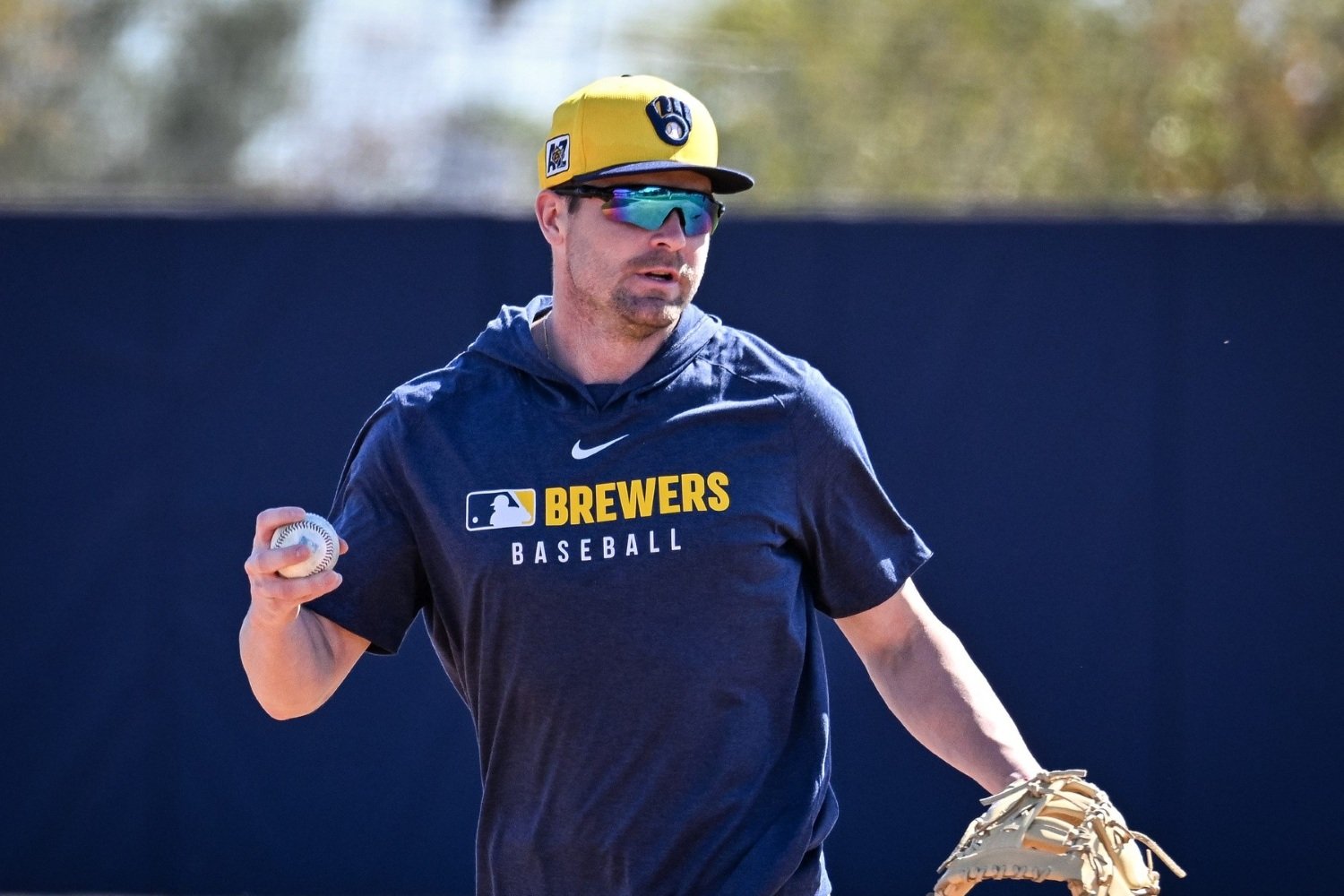 Entering spring training last year, Tyler Black had good prospect buzz all over him. He'd just torn through the top two levels of the minor leagues in 2023, hitting .284/.417/.513 with 18 home runs and 55 stolen bases. He'd shown superb plate discipline even after a second-half promotion from Double-A Biloxi to Triple-A Nashville, and most fans were happy to look past or downplay some of the slightly concerning underlying numbers, like a 102-mile-per-hour 90th-percentile exit velocity. By acclamation, his upside was high, and the future was close at hand. It never came. Black arrived last spring hoping to play a fair amount of third base, but that didn't pan out. They gave him lots of reps at first base in Arizona, and then with Nashville, with unsatisfactory results. Black is a good athlete, in a general way, but he utterly lacks a defensive home right now. The best plan seems to be to move him to the outfield, and he did play 12 games out there in 2024, but the Brewers don't have the level of need for help at those positions that would make Black especially valuable to them there, since he's not even an instinctive or successful defender when he ventures out there, like Sal Frelick and Blake Perkins are. Worse, Black sputtered in his 57 sporadic plate appearances in the majors, and he took a modest step backward offensively even in the minors. Over 462 plate appearances with Nashville, Black batted .258/.375/.429, and hit just 14 home runs. His 90th-percentile exit velocity actually got slightly worse, at 101.9 mph. His average exit velocity was a lousy 85.7 mph, and even if we focus only on the batted balls with a launch angle between 10 and 35 degrees, the figure is only 89.2 mph. He still piled up walks, because the technology-assisted strike zone in the high minors is hitter-friendly and because Black has a good eye. He still didn't strike out much, because he genuinely does have average-plus contact ability. It's not clear, though, whether Black can keep his strikeout rate well below average against big-league hurlers or not. His per-swing whiff rate at Nashville was under 20%, which would be about 80th-percentile in the majors. When he was actually in the majors, though, he whiffed over 24% of the time, which is more or less average. Big-league pitchers are better at throwing strikes than Triple-A pitchers are, and they have no reason to fear Black, given the lack of sock in his stick. Even if he maintains his Triple-A contact rate once he gets a longer runway in the majors, he's likely to strike out more and walk less than he's done in his 635 trips to the plate at Triple A. That's to be expected, and it's fine for a prospect with good power and/or ample defensive value. Since Black is short on both, though, the specter of regression in the value of his plate discipline is daunting, because that's really the only way he reliably creates value right now. Eventually, he might emerge as a better and different hitter. He might move to the outfield, get more consistent playing time there, and blossom into a fine center fielder; he has good speed. In the meantime, though, Black just isn't very helpful, especially to the Brewers. Many fans were still hoping he'd get a look at the hot corner this year in Maryvale. That isn't happening, and with good reason. Many assume he at least has an inside track on one of the bench jobs on the prospective Opening Day roster. That's not so, either, and nor would that track be deserved. There's no longer an expectation that further development in Nashville will smooth out his flaws. If it were going to, that should have happened already. At this point, he's ticketed to Triple A simply because he's not one of the team's best 26 players. Black is Frelick or Brice Turang without the glove right now. He's a disciplined but light-hitting designated hitter. Until something in that equation changes dramatically, don't expect to see him take on a significant role with the Brewers—and if he ever does get that significant role, it might well be for another team.
 -
The left-hitting Canadian has been Brewers Twitter's favorite prospect over the last few years. It was a nice little dream. Let's wake up now. Image courtesy of © Dave Kallmann / Milwaukee Journal Sentinel / USA TODAY NETWORK via Imagn Images Entering spring training last year, Tyler Black had good prospect buzz all over him. He'd just torn through the top two levels of the minor leagues in 2023, hitting .284/.417/.513 with 18 home runs and 55 stolen bases. He'd shown superb plate discipline even after a second-half promotion from Double-A Biloxi to Triple-A Nashville, and most fans were happy to look past or downplay some of the slightly concerning underlying numbers, like a 102-mile-per-hour 90th-percentile exit velocity. By acclamation, his upside was high, and the future was close at hand. It never came. Black arrived last spring hoping to play a fair amount of third base, but that didn't pan out. They gave him lots of reps at first base in Arizona, and then with Nashville, with unsatisfactory results. Black is a good athlete, in a general way, but he utterly lacks a defensive home right now. The best plan seems to be to move him to the outfield, and he did play 12 games out there in 2024, but the Brewers don't have the level of need for help at those positions that would make Black especially valuable to them there, since he's not even an instinctive or successful defender when he ventures out there, like Sal Frelick and Blake Perkins are. Worse, Black sputtered in his 57 sporadic plate appearances in the majors, and he took a modest step backward offensively even in the minors. Over 462 plate appearances with Nashville, Black batted .258/.375/.429, and hit just 14 home runs. His 90th-percentile exit velocity actually got slightly worse, at 101.9 mph. His average exit velocity was a lousy 85.7 mph, and even if we focus only on the batted balls with a launch angle between 10 and 35 degrees, the figure is only 89.2 mph. He still piled up walks, because the technology-assisted strike zone in the high minors is hitter-friendly and because Black has a good eye. He still didn't strike out much, because he genuinely does have average-plus contact ability. It's not clear, though, whether Black can keep his strikeout rate well below average against big-league hurlers or not. His per-swing whiff rate at Nashville was under 20%, which would be about 80th-percentile in the majors. When he was actually in the majors, though, he whiffed over 24% of the time, which is more or less average. Big-league pitchers are better at throwing strikes than Triple-A pitchers are, and they have no reason to fear Black, given the lack of sock in his stick. Even if he maintains his Triple-A contact rate once he gets a longer runway in the majors, he's likely to strike out more and walk less than he's done in his 635 trips to the plate at Triple A. That's to be expected, and it's fine for a prospect with good power and/or ample defensive value. Since Black is short on both, though, the specter of regression in the value of his plate discipline is daunting, because that's really the only way he reliably creates value right now. Eventually, he might emerge as a better and different hitter. He might move to the outfield, get more consistent playing time there, and blossom into a fine center fielder; he has good speed. In the meantime, though, Black just isn't very helpful, especially to the Brewers. Many fans were still hoping he'd get a look at the hot corner this year in Maryvale. That isn't happening, and with good reason. Many assume he at least has an inside track on one of the bench jobs on the prospective Opening Day roster. That's not so, either, and nor would that track be deserved. There's no longer an expectation that further development in Nashville will smooth out his flaws. If it were going to, that should have happened already. At this point, he's ticketed to Triple A simply because he's not one of the team's best 26 players. Black is Frelick or Brice Turang without the glove right now. He's a disciplined but light-hitting designated hitter. Until something in that equation changes dramatically, don't expect to see him take on a significant role with the Brewers—and if he ever does get that significant role, it might well be for another team. View full article
-
Andruw Monasterio had a strong half-season in 2023. Jace Peterson had one in 2022. I actually think they do a fine job finding diamonds in the rough into helpful pieces with hitters, too. It's just that those things (1-2 WAR in 300ish PA) catch the eye a bit less than a guy emerging as a really strong setup man—even though they're more or less exactly as valuable, in a very similar amount of playing time.
-
The Brewers suffered a painful medium-term loss last week, but they took immediate steps to address the situation. With spring games underway, the roster for the first game that counts is coming into focus. Image courtesy of © Dave Kallmann / Milwaukee Journal Sentinel / USA TODAY NETWORK via Imagn Images The loss of Blake Perkins for (at least) the first month of the season was a major blow for the Brewers. They need to play superb defense all over the diamond to defend their two straight NL Central titles, and Perkins has been a linchpin of that defense. They signed two players to minor-league deals to attempt a quick fix for the problem, but until Perkins returns, the Brewers won't quite be whole. That said, Perkins's loss clarifies some needs and begins to crystallize possibilities for the Opening Day roster in late March. Here's our best guess as to the shape of that roster, as of today. Lineup Brice Turang - 2B Jackson Chourio - LF Christian Yelich - DH William Contreras - C Garrett Mitchell - CF Rhys Hoskins - 1B Joey Ortiz - SS Sal Frelick - RF Caleb Durbin - 3B Bench Eric Haase - C Oliver Dunn - IF Vinny Capra - IF Mark Canha - OF/1B The team doesn't automatically need to have a strong defensive center fielder take Perkins's place, thanks to the defensive chops of Sal Frelick, Garrett Mitchell, and Jackson Chourio, and the ability of Christian Yelich to play left field competently on at least a part-time basis. Thus, Mark Canha gets the probabilistic nod over Manuel Margot, who also signed a minor-league deal and is theoretically better suited for center, but who isn't as good a hitter as Canha and had a poor season defensively for the Twins last year. Meanwhile, Vinny Capra is penciled in here over Tyler Black and Jake Bauers. Black still doesn't really have any big-league utility, until he finds his way to some power or ends up in a defensive spot he can actually play. Bauers is less needed with Canha in town, since the latter can man first base as a complement to Rhys Hoskins. Capra being out of options gives him a tiebreaker over either of these two or Andruw Monasterio, so if he performs well this spring, he'll earn at least a short-term role. Starting Rotation Freddy Peralta Tobias Myers Nestor Cortes Aaron Civale Aaron Ashby This group is suddenly much thinner than hoped, with Brandon Woodruff likely to start the season on the IL and DL Hall seemingly far from a return. That's why we're now hearing José Quintana connected to the team as a potential free-agent target. For now, though, this quintet looks like the best bet. If they can stay healthy for the relatively short time before Woodruff gets back into the mix, they should be fine—but they had so many problems early last season that it's a source of anxiety at this stage of camp. Bullpen Trevor Megill Joel Payamps Jared Koenig Elvis Peguero Bryan Hudson Nick Mears Tyler Alexander Connor Thomas The bottom two here are both candidates, if unlikely ones, to slot into the starting rotation at some point in the early going. The catch is that, since Alexander was a free agent signing and Thomas a Rule 5 Draft pick, they can't be sent to the minor leagues. That means keeping them stretched out in the bullpen, if they are to be available for that final rotation spot. If one were to win the job outright over Ashby, the latter might go back one more time to Triple-A Nashville, just out of roster convenience. Should that happen, look for Grant Anderson to get the first shot at the freed-up spot in the pen. Anderson, the low-slot righty, would nicely balance a pair of overhand hurlers (Megill and Mears) and a bevy of lefties in the current projected relief corps. Five weeks out from Opening Day, there's still ample uncertainty here. Four of these 26 spots are fluid, even before accounting for injuries. Right now, though, the Crew looks capable of surviving their spate of unfortunate early injuries. We'll see how the plan shifts over the next several days. View full article
-
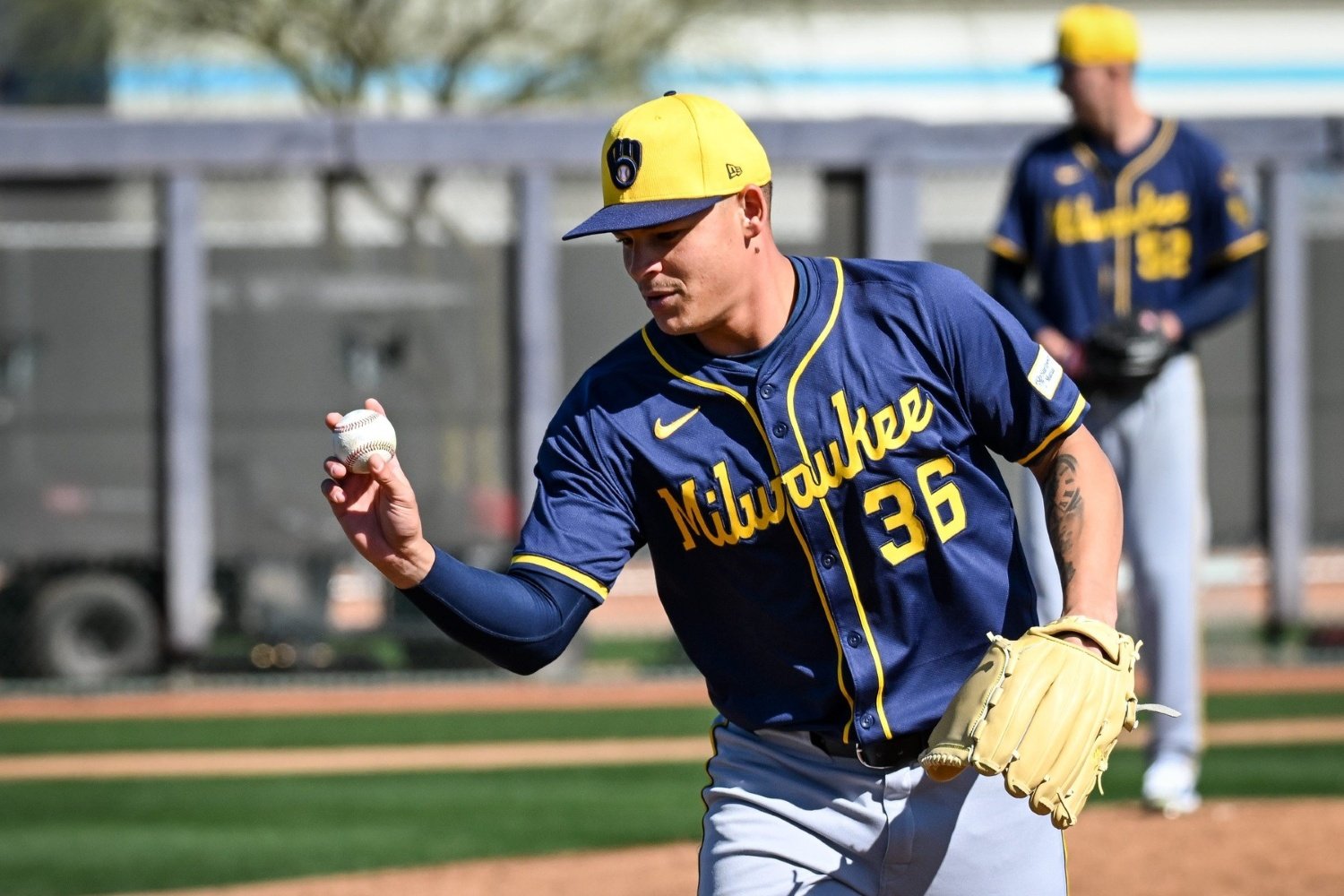 The loss of Blake Perkins for (at least) the first month of the season was a major blow for the Brewers. They need to play superb defense all over the diamond to defend their two straight NL Central titles, and Perkins has been a linchpin of that defense. They signed two players to minor-league deals to attempt a quick fix for the problem, but until Perkins returns, the Brewers won't quite be whole. That said, Perkins's loss clarifies some needs and begins to crystallize possibilities for the Opening Day roster in late March. Here's our best guess as to the shape of that roster, as of today. Lineup Brice Turang - 2B Jackson Chourio - LF Christian Yelich - DH William Contreras - C Garrett Mitchell - CF Rhys Hoskins - 1B Joey Ortiz - SS Sal Frelick - RF Caleb Durbin - 3B Bench Eric Haase - C Oliver Dunn - IF Vinny Capra - IF Mark Canha - OF/1B The team doesn't automatically need to have a strong defensive center fielder take Perkins's place, thanks to the defensive chops of Sal Frelick, Garrett Mitchell, and Jackson Chourio, and the ability of Christian Yelich to play left field competently on at least a part-time basis. Thus, Mark Canha gets the probabilistic nod over Manuel Margot, who also signed a minor-league deal and is theoretically better suited for center, but who isn't as good a hitter as Canha and had a poor season defensively for the Twins last year. Meanwhile, Vinny Capra is penciled in here over Tyler Black and Jake Bauers. Black still doesn't really have any big-league utility, until he finds his way to some power or ends up in a defensive spot he can actually play. Bauers is less needed with Canha in town, since the latter can man first base as a complement to Rhys Hoskins. Capra being out of options gives him a tiebreaker over either of these two or Andruw Monasterio, so if he performs well this spring, he'll earn at least a short-term role. Starting Rotation Freddy Peralta Tobias Myers Nestor Cortes Aaron Civale Aaron Ashby This group is suddenly much thinner than hoped, with Brandon Woodruff likely to start the season on the IL and DL Hall seemingly far from a return. That's why we're now hearing José Quintana connected to the team as a potential free-agent target. For now, though, this quintet looks like the best bet. If they can stay healthy for the relatively short time before Woodruff gets back into the mix, they should be fine—but they had so many problems early last season that it's a source of anxiety at this stage of camp. Bullpen Trevor Megill Joel Payamps Jared Koenig Elvis Peguero Bryan Hudson Nick Mears Tyler Alexander Connor Thomas The bottom two here are both candidates, if unlikely ones, to slot into the starting rotation at some point in the early going. The catch is that, since Alexander was a free agent signing and Thomas a Rule 5 Draft pick, they can't be sent to the minor leagues. That means keeping them stretched out in the bullpen, if they are to be available for that final rotation spot. If one were to win the job outright over Ashby, the latter might go back one more time to Triple-A Nashville, just out of roster convenience. Should that happen, look for Grant Anderson to get the first shot at the freed-up spot in the pen. Anderson, the low-slot righty, would nicely balance a pair of overhand hurlers (Megill and Mears) and a bevy of lefties in the current projected relief corps. Five weeks out from Opening Day, there's still ample uncertainty here. Four of these 26 spots are fluid, even before accounting for injuries. Right now, though, the Crew looks capable of surviving their spate of unfortunate early injuries. We'll see how the plan shifts over the next several days.
 -
One of the league's most aggressive fastball guys just joined the league's most fastball-heavy pitching staff. It's not hard to guess where this goes. Image courtesy of © Dave Kallmann / Milwaukee Journal Sentinel / USA TODAY NETWORK via Imagn Images The mission statement of most modern pitchers (and the teams who employ them) is simple: Throw your best pitch most often, and most often, your best pitch is a breaking ball. Fastballs do not dominate big-league repertoires the way they used to. In fact, many pitchers don't even build their arsenal out from their fastball. They engineer excellent breaking pitches, and then shape everything else around that. Not so in Milwaukee, where the Brewers lean heavier on fastballs than any other team in MLB—though they also vary that mix by using the four-seamer, the sinker and cutter in a more even mixture than most. Under Chris Hook, the Crew uses hard stuff to try to force weak contact and work ahead in counts, even if it means fewer strikeouts than other pitchers and teams might accrue. Whereas the focus elsewhere lies heavily on missing bats, the Brewers' ethos is to be satisfied (most of the time) with missing barrels. Nestor Cortes is as good a fit for that way of thinking as anyone. Cortes only threw a fistful of sinkers last year, but he's very fastball-forward, with a rising four-seamer and a good cutter that work in concert as the dominant offerings in his repertoire. Not only that, but even when he gets ahead, he keeps pounding away. In two-strike counts last year, Cortes threw a four-seamer, cutter or sinker 70.1% of the time, 20th-highest among all pitchers who threw at least 200 two-strike offerings. That's a crazy number, on its face, because Cortes doesn't have an overpowering fastball, and he doesn't have the kind of cutter that racks up whiffs. Instead, his plan with all those two-strike heaters seems to be just to keep opponents from properly timing things and doing damage. Hammering away with fastballs invites hitters to be aggressive, and indeed, Cortes's opponents were far above average in swing speed all year; that swing speed also diminished less in two-strike counts for Cortes than for most. He gave up a whopping 18 batted balls at 105 miles per hour or more of exit velocity on two-strike fastballs in 2024. Here's the thing, though: seven of those were foul balls. When Cortes uses the inner third in two-strike counts, batters jump at the ball—but all they get out of it is a frustratingly well-struck liner into the seats down the line. dk1BTWFfVjBZQUhRPT1fVWdWUVVGMVNVVmNBQUZRTFZnQUFVRmNIQUFOUVUxRUFCbDBBQkZWWFUxY0RVd3Rl.mp4 He most often does this with his cutter, as you see above, but he's also good at driving that four-seamer to the upper inside quadrant of the zone against righties, with similar results. bkdSR0dfWGw0TUFRPT1fRHdoUkFRSURWbFFBWFFSVFZRQUFBZzhGQUFCWFdsZ0FDMUFFQmd0VVZGQlJVVlFE.mp4 The danger, of course, lies in leaving a fastball in the heart of the zone, when you had two strikes on the batter and didn't need to risk that. Giving up long hits by missing middle-middle with a heater will drive a manager crazy. Z0dSb1dfWGw0TUFRPT1fQndWVEFGRURCVk1BWFZRS1ZRQUFWdzVlQUZoWEFBY0FVRmRUVTFFRlZ3TURWQVJT.mp4 The four-seamer does tend to get a little loose in terms of command, too, so Cortes occasionally gets burned. He's thinking like a power pitcher, but power really isn't his game. NFhET0JfV0ZRVkV3dEdEUT09X0JRTUVVVkVHVlFJQVdWcFVCd0FBQWdWVEFBQldWVmNBQ2dNRVZWZFVBUVZWVVFjRQ==.mp4 That's the bad news. The good news is that the veteran Cortes adapts and adjusts quickly. Later in the same game in which he surrendered the above double to Connor Wong, he was ahead of Wong in the count again. This time, he went to the cutter, and while Wong made hard contact again, he never had a chance to keep the ball fair. NFhET0JfV0ZRVkV3dEdEUT09X1VnVlNCUUpXVWdzQVdsc0VVd0FBQlZkVEFGZ05XbFlBQVYwTUNWSlVWQVpUVVFwUw==.mp4 By having multiple fastball looks and good command, Cortes induces enough whiffs (and throw more than enough strikes) to make up for whatever excess hard contact he gave up by living in the zone with straight(ish) stuff. His .226 opponents expected weighted on-base average (xwOBA) on two-strike fastballs and his .224 opponents xwOBA on all two-strike offerings were both better than the league average. The tradeoff is obvious, but important. Throw more stuff with big wrinkles (changeups and breaking stuff) and you'll miss more bats, but it's virtually impossible to fill up the zone that way as well as one can with the three flavors of fastball. Cortes's strikeout rate fell in 2024, as he got more aggressive within the zone. However, he also only walked 5.5% of opposing batters. Being fastball-forward in ostensibly breaking-ball counts costs you whiffs, but if you can limit hard contact by getting hitters anxious and exploiting the illusion of late movement based on multiple fastballs, it's worth doing so. Those extra fastballs limit walks and force hitters to earn their way on base—and, as we've discussed, the Brewers' defense is an extraordinarily good fit for Cortes's contact profile. For the Brewers to make it three NL Central titles in a row, they need Cortes to deliver plenty of innings and stable, solid performance. He's a good bet to do just that, though, which is why the team was so excited to get him in the Devin Williams trade—and he gets there by pitching precisely the way the team already prefers to do so. View full article
-
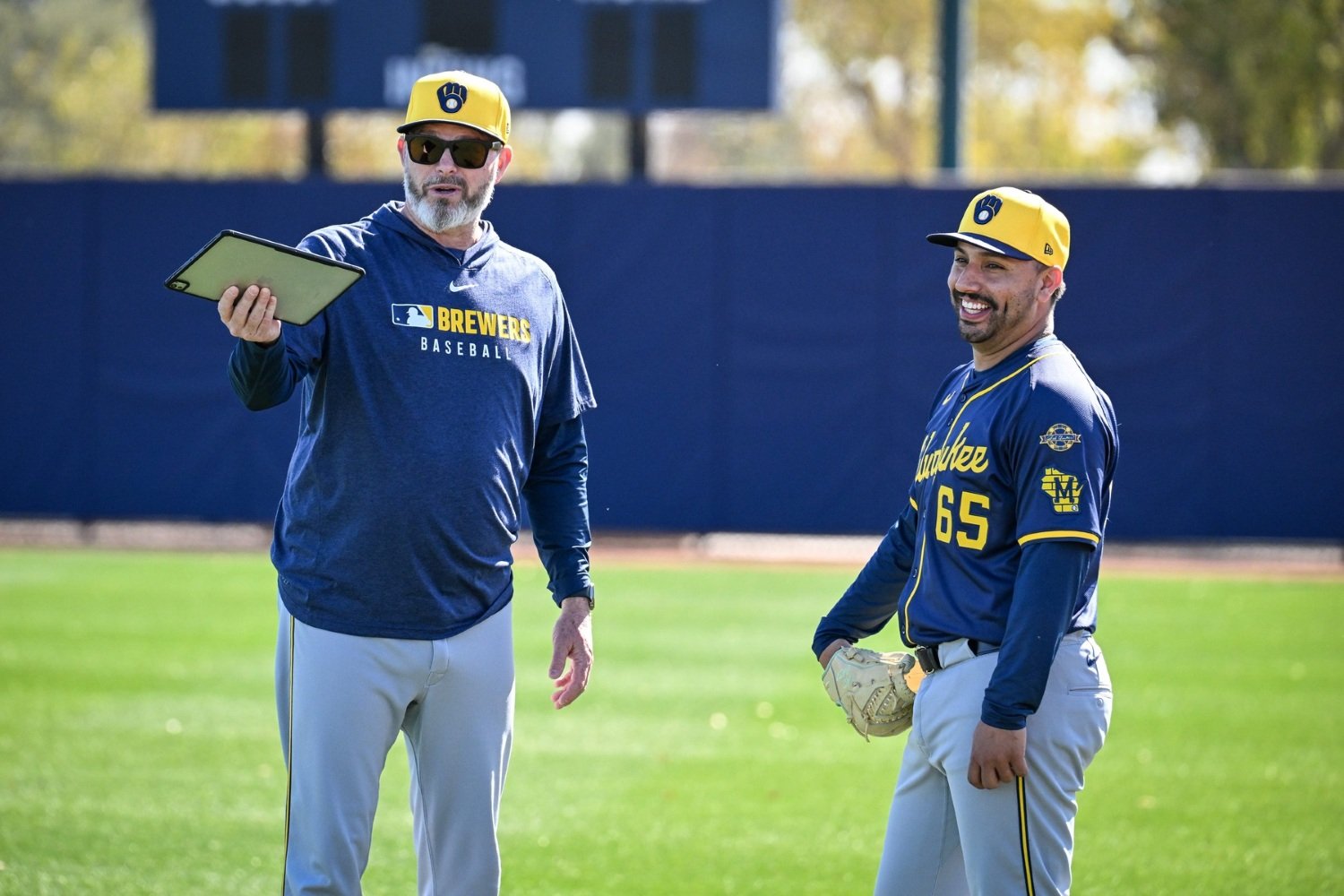 The mission statement of most modern pitchers (and the teams who employ them) is simple: Throw your best pitch most often, and most often, your best pitch is a breaking ball. Fastballs do not dominate big-league repertoires the way they used to. In fact, many pitchers don't even build their arsenal out from their fastball. They engineer excellent breaking pitches, and then shape everything else around that. Not so in Milwaukee, where the Brewers lean heavier on fastballs than any other team in MLB—though they also vary that mix by using the four-seamer, the sinker and cutter in a more even mixture than most. Under Chris Hook, the Crew uses hard stuff to try to force weak contact and work ahead in counts, even if it means fewer strikeouts than other pitchers and teams might accrue. Whereas the focus elsewhere lies heavily on missing bats, the Brewers' ethos is to be satisfied (most of the time) with missing barrels. Nestor Cortes is as good a fit for that way of thinking as anyone. Cortes only threw a fistful of sinkers last year, but he's very fastball-forward, with a rising four-seamer and a good cutter that work in concert as the dominant offerings in his repertoire. Not only that, but even when he gets ahead, he keeps pounding away. In two-strike counts last year, Cortes threw a four-seamer, cutter or sinker 70.1% of the time, 20th-highest among all pitchers who threw at least 200 two-strike offerings. That's a crazy number, on its face, because Cortes doesn't have an overpowering fastball, and he doesn't have the kind of cutter that racks up whiffs. Instead, his plan with all those two-strike heaters seems to be just to keep opponents from properly timing things and doing damage. Hammering away with fastballs invites hitters to be aggressive, and indeed, Cortes's opponents were far above average in swing speed all year; that swing speed also diminished less in two-strike counts for Cortes than for most. He gave up a whopping 18 batted balls at 105 miles per hour or more of exit velocity on two-strike fastballs in 2024. Here's the thing, though: seven of those were foul balls. When Cortes uses the inner third in two-strike counts, batters jump at the ball—but all they get out of it is a frustratingly well-struck liner into the seats down the line. dk1BTWFfVjBZQUhRPT1fVWdWUVVGMVNVVmNBQUZRTFZnQUFVRmNIQUFOUVUxRUFCbDBBQkZWWFUxY0RVd3Rl.mp4 He most often does this with his cutter, as you see above, but he's also good at driving that four-seamer to the upper inside quadrant of the zone against righties, with similar results. bkdSR0dfWGw0TUFRPT1fRHdoUkFRSURWbFFBWFFSVFZRQUFBZzhGQUFCWFdsZ0FDMUFFQmd0VVZGQlJVVlFE.mp4 The danger, of course, lies in leaving a fastball in the heart of the zone, when you had two strikes on the batter and didn't need to risk that. Giving up long hits by missing middle-middle with a heater will drive a manager crazy. Z0dSb1dfWGw0TUFRPT1fQndWVEFGRURCVk1BWFZRS1ZRQUFWdzVlQUZoWEFBY0FVRmRUVTFFRlZ3TURWQVJT.mp4 The four-seamer does tend to get a little loose in terms of command, too, so Cortes occasionally gets burned. He's thinking like a power pitcher, but power really isn't his game. NFhET0JfV0ZRVkV3dEdEUT09X0JRTUVVVkVHVlFJQVdWcFVCd0FBQWdWVEFBQldWVmNBQ2dNRVZWZFVBUVZWVVFjRQ==.mp4 That's the bad news. The good news is that the veteran Cortes adapts and adjusts quickly. Later in the same game in which he surrendered the above double to Connor Wong, he was ahead of Wong in the count again. This time, he went to the cutter, and while Wong made hard contact again, he never had a chance to keep the ball fair. NFhET0JfV0ZRVkV3dEdEUT09X1VnVlNCUUpXVWdzQVdsc0VVd0FBQlZkVEFGZ05XbFlBQVYwTUNWSlVWQVpUVVFwUw==.mp4 By having multiple fastball looks and good command, Cortes induces enough whiffs (and throw more than enough strikes) to make up for whatever excess hard contact he gave up by living in the zone with straight(ish) stuff. His .226 opponents expected weighted on-base average (xwOBA) on two-strike fastballs and his .224 opponents xwOBA on all two-strike offerings were both better than the league average. The tradeoff is obvious, but important. Throw more stuff with big wrinkles (changeups and breaking stuff) and you'll miss more bats, but it's virtually impossible to fill up the zone that way as well as one can with the three flavors of fastball. Cortes's strikeout rate fell in 2024, as he got more aggressive within the zone. However, he also only walked 5.5% of opposing batters. Being fastball-forward in ostensibly breaking-ball counts costs you whiffs, but if you can limit hard contact by getting hitters anxious and exploiting the illusion of late movement based on multiple fastballs, it's worth doing so. Those extra fastballs limit walks and force hitters to earn their way on base—and, as we've discussed, the Brewers' defense is an extraordinarily good fit for Cortes's contact profile. For the Brewers to make it three NL Central titles in a row, they need Cortes to deliver plenty of innings and stable, solid performance. He's a good bet to do just that, though, which is why the team was so excited to get him in the Devin Williams trade—and he gets there by pitching precisely the way the team already prefers to do so.
 -
After a winter in which they lost their top 2024 slugger, the 2025 Brewers need their MVP-caliber catcher to come out bashing the ball—in the air. He's ready. Image courtesy of © Dale Zanine-Imagn Images Almost no matter where a pitcher throws the ball, William Contreras is a lot more likely to hit a ground ball than the average hitter. On anything down and anything on the outer part of the plate, he's perhaps the most grounder-prone hitter in baseball, and even when he turns on a ball inside or attacks one up near his shoulders, he's not getting beneath it as often as a lot of modern, power-focused hitters are. There's a subtle difference there. He's better at elevating the high pitch, even relatively speaking, than he is otherwise. Still, he's going to hit it on the ground a lot, and the base rate for launch angle varies hugely by pitch location. Should a hitter like Contreras want to start tapping into more power, he would unavoidably benefit by swinging more at pitches up in the zone—and less on those down where even most air-raid sluggers often put it on the ground. In 2023, that was part of Contreras's problem. He swung at just 51.0% of the pitches he saw in the upper third of the zone, or just above it and over the middle third of the plate. That was the 400th-highest-ranking season of 587 player-seasons since 2022 in which a player has seen at least 300 such pitches. That pitch high—but not way out off the plate where it's unreachable, or way inside, forcing a spin out of the way—is a good one to swing at, if you're trying to slug. Contreras didn't swing at enough of them to do it, at least at an elite level. In trade, of course, he made very good swing decisions in the lower half of the strike zone, and he was still a productive hitter that year: .289/.367/.457, in 611 plate appearances. He only hit 17 home runs, though. Last year, Contreras changed. He upped his swing rate on those elevated offerings to 56.9%, which ranks a much healthier 205th of the aforementioned 587 player-seasons. According to Baseball Savant, his expected weighted on-base average (xwOBA) on those high pitches also shot up: .274 in 2023, 374th on our little list; .383 in 2024, 44th-best. Contreras began to raise his sights, not the angle of his swing, and it worked even better than adopting an uppercut could have. He swung faster when he attacked those pitches—with a 72.3-mph average swing speed on them in the second half of 2023, and a 73.4-mph mark in 2024. His contact was flatter, though, and he reduced the average launch angle on those pitches from 27° in 2023 to 20° last season. A lot of that, of course, came in the second half. For the season, Contreras hit .281/.365/.466, with 23 home runs—better than his first year with the Crew, but only incrementally, and all in the form of just a little extra power. In the second half, though, the improvement was more tangible, and larger. He hit .271/.387/.509 after the All-Star break, with 12 of those 23 home runs despite 150 fewer plate appearances than it took to hit the first 11. That's because, late in the going, he started really sitting on high pitches, and when hurlers tried to get him out there, he was ready. Here's a blast from August, when he was at his very best. a1puNTlfWGw0TUFRPT1fRGdFQ1UxQUVBZ1VBQ3dZR0FBQUFVdzVSQUFNRlcxQUFBd05XVkZGUkNBb0VWVlJS.mp4 His heavy workload slowly stole his ability to load up and hurl himself at the ball that way, as the season wore on. Still, though, he would look for that pitch, shorten his stride and stay upright, and find a way to generate hard contact on it. T1FBbjNfVjBZQUhRPT1fVlFBRVZGWUFVd1lBQUFaVFVRQUFBdzlmQUFNREFsRUFCRjFXQ1ZjQVUxZFFCZ0VF.mp4 The toe tap he switched to often in September and the earlier landing for his front foot made him a bit more stable, if a bit less able to rotate at full speed and beat the ball to its spot. With smart, subtle adjustments to his own moves in the box, he can get the head of the bat to the ball at a good swing speed, whether it happens deep in the hitting zone or whether he gets out around it. The biggest benefit of sitting on that elevated pitch is that you don't have to be perfect with the swing to find success that way. If you're looking for the ball up, you can mistime your attack a bit, get the ball off the end of the bat, and still hit a line drive that's almost impossible to defend. Z0daN1lfWGw0TUFRPT1fQUFJQ1hRRU5VbGNBQ3djR1ZnQUFBbFJmQUZnRlVWY0FCRk1FQmxJRkNGQUdBd3RV.mp4 It's a long way from promised, but the modified approach and the varied mechanics Contreras demonstrated down the stretch in 2024 makes him a superb candidate to hit 30-plus home runs in 2025. He's always evolving as a hitter. He's learning to anticipate the way pitchers will try to get him out, and thwart them, anyway. It's a bit reminiscent of Miguel Cabrera, Contreras's countryman and another No. 24 who found ways to cover the whole strike zone by outguessing pitchers and altering his swing brilliantly. A full bloom into the next Cabrera is unlikely from Contreras, but he's almost that caliber of hitter, at his best. With his rejiggered approach, he might be capable of sustaining his best for a full season. That's a scary proposition for the rest of the National League. View full article
-
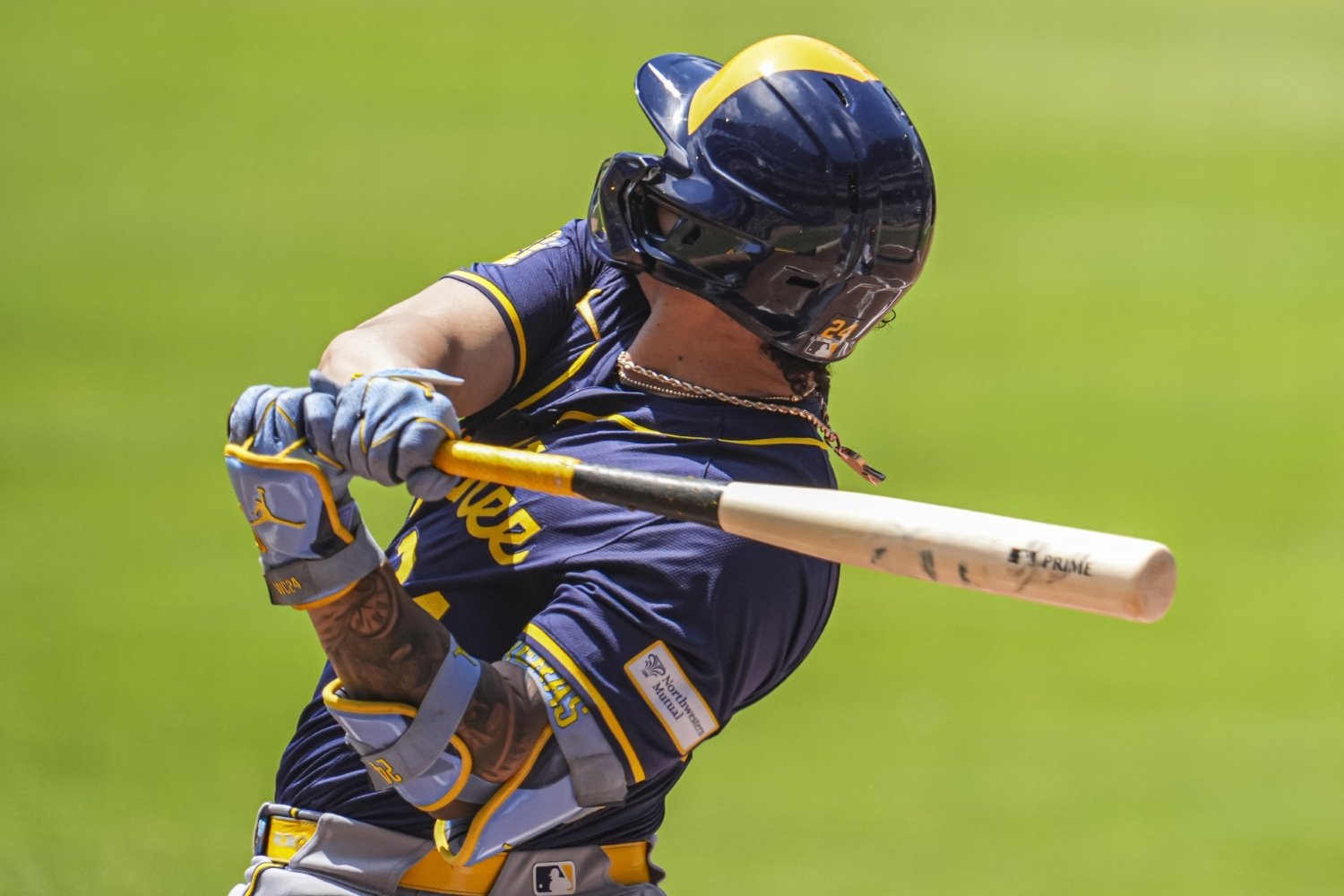 Almost no matter where a pitcher throws the ball, William Contreras is a lot more likely to hit a ground ball than the average hitter. On anything down and anything on the outer part of the plate, he's perhaps the most grounder-prone hitter in baseball, and even when he turns on a ball inside or attacks one up near his shoulders, he's not getting beneath it as often as a lot of modern, power-focused hitters are. There's a subtle difference there. He's better at elevating the high pitch, even relatively speaking, than he is otherwise. Still, he's going to hit it on the ground a lot, and the base rate for launch angle varies hugely by pitch location. Should a hitter like Contreras want to start tapping into more power, he would unavoidably benefit by swinging more at pitches up in the zone—and less on those down where even most air-raid sluggers often put it on the ground. In 2023, that was part of Contreras's problem. He swung at just 51.0% of the pitches he saw in the upper third of the zone, or just above it and over the middle third of the plate. That was the 400th-highest-ranking season of 587 player-seasons since 2022 in which a player has seen at least 300 such pitches. That pitch high—but not way out off the plate where it's unreachable, or way inside, forcing a spin out of the way—is a good one to swing at, if you're trying to slug. Contreras didn't swing at enough of them to do it, at least at an elite level. In trade, of course, he made very good swing decisions in the lower half of the strike zone, and he was still a productive hitter that year: .289/.367/.457, in 611 plate appearances. He only hit 17 home runs, though. Last year, Contreras changed. He upped his swing rate on those elevated offerings to 56.9%, which ranks a much healthier 205th of the aforementioned 587 player-seasons. According to Baseball Savant, his expected weighted on-base average (xwOBA) on those high pitches also shot up: .274 in 2023, 374th on our little list; .383 in 2024, 44th-best. Contreras began to raise his sights, not the angle of his swing, and it worked even better than adopting an uppercut could have. He swung faster when he attacked those pitches—with a 72.3-mph average swing speed on them in the second half of 2023, and a 73.4-mph mark in 2024. His contact was flatter, though, and he reduced the average launch angle on those pitches from 27° in 2023 to 20° last season. A lot of that, of course, came in the second half. For the season, Contreras hit .281/.365/.466, with 23 home runs—better than his first year with the Crew, but only incrementally, and all in the form of just a little extra power. In the second half, though, the improvement was more tangible, and larger. He hit .271/.387/.509 after the All-Star break, with 12 of those 23 home runs despite 150 fewer plate appearances than it took to hit the first 11. That's because, late in the going, he started really sitting on high pitches, and when hurlers tried to get him out there, he was ready. Here's a blast from August, when he was at his very best. a1puNTlfWGw0TUFRPT1fRGdFQ1UxQUVBZ1VBQ3dZR0FBQUFVdzVSQUFNRlcxQUFBd05XVkZGUkNBb0VWVlJS.mp4 His heavy workload slowly stole his ability to load up and hurl himself at the ball that way, as the season wore on. Still, though, he would look for that pitch, shorten his stride and stay upright, and find a way to generate hard contact on it. T1FBbjNfVjBZQUhRPT1fVlFBRVZGWUFVd1lBQUFaVFVRQUFBdzlmQUFNREFsRUFCRjFXQ1ZjQVUxZFFCZ0VF.mp4 The toe tap he switched to often in September and the earlier landing for his front foot made him a bit more stable, if a bit less able to rotate at full speed and beat the ball to its spot. With smart, subtle adjustments to his own moves in the box, he can get the head of the bat to the ball at a good swing speed, whether it happens deep in the hitting zone or whether he gets out around it. The biggest benefit of sitting on that elevated pitch is that you don't have to be perfect with the swing to find success that way. If you're looking for the ball up, you can mistime your attack a bit, get the ball off the end of the bat, and still hit a line drive that's almost impossible to defend. Z0daN1lfWGw0TUFRPT1fQUFJQ1hRRU5VbGNBQ3djR1ZnQUFBbFJmQUZnRlVWY0FCRk1FQmxJRkNGQUdBd3RV.mp4 It's a long way from promised, but the modified approach and the varied mechanics Contreras demonstrated down the stretch in 2024 makes him a superb candidate to hit 30-plus home runs in 2025. He's always evolving as a hitter. He's learning to anticipate the way pitchers will try to get him out, and thwart them, anyway. It's a bit reminiscent of Miguel Cabrera, Contreras's countryman and another No. 24 who found ways to cover the whole strike zone by outguessing pitchers and altering his swing brilliantly. A full bloom into the next Cabrera is unlikely from Contreras, but he's almost that caliber of hitter, at his best. With his rejiggered approach, he might be capable of sustaining his best for a full season. That's a scary proposition for the rest of the National League.
.png.d4739eb6b741a5abe734135630f5f5cf.png)

.png.f01c7f8e22ce9b23508499b761fc2383.png)
