


Matthew Trueblood
-
Posts
1,964 -
Joined
-
Last visited
-
Days Won
10
Content Type
Profiles
Forums
Blogs
Events
News
2026 Milwaukee Brewers Top Prospects Ranking
Milwaukee Brewers Videos
2022 Milwaukee Brewers Draft Picks
Milwaukee Brewers Free Agent & Trade Rumors, Notes, & Tidbits
Guides & Resources
2023 Milwaukee Brewers Draft Picks
2024 Milwaukee Brewers Draft Picks
The Milwaukee Brewers Players Project
2025 Milwaukee Brewers Draft Pick Tracker
2026 Milwaukee Brewers Draft Tracker: Picks & Bonuses
Store
Downloads
Gallery
Everything posted by Matthew Trueblood
-
The Brewers' stout middle reliever didn't exactly have a bad 2024, but it was largely frustrating for him. He didn't seem to dominate hitters the way it seemed that he should. Maybe we can now say why. Image courtesy of © Tommy Gilligan-Imagn Images It's not like Joel Payamps completely fell apart in 2024, after a very strong 2023 that made him one of the most prominent hurlers in the vaunted Brewers relief corps. He did seem to flirt with being designated for assignment occasionally, and as late as the end of July, his ERA was 4.26, underpinned by a pedestrian 22.5% strikeout rate. That was strange, too, because Payamps's stuff hadn't gone all that much downhill. He might have lost half a tick of velocity on the fastball, but his four pitches still had the ability to baffle hitters when he was right. Over the final two months, too, he locked all of that in. His ERA from Aug. 1 onward was 0.86, and he fanned 30.7% of opposing batters over a 21-inning span. In that slice of the season, then, Payamps did realize his strikeout upside. For most of the season, though, it eluded him, and it's worth unpacking why. Doing so should help us understand what to expect from him in 2025, and give us some insight into the craft of working as a short-burst reliever. Firstly, a word of gratitude and encouragement: I owe the ability to do this analysis to Baseball Prospectus, who rolled out a version of individual pitch grades in the middle of last year and built upon that with Arsenal metrics that tell us a bit about interaction factors between those pitches earlier this month. Thanks to that work, we can study a table like this, with Payamps's StuffPro and PitchPro (for each of which, 0 is average and a negative score is better, because it represents runs against average per 100 such pitches thrown) for each of his offerings and both the actual and the expected whiff rates on those pitches, according to the StuffPro framework. Pitch Type StuffPro PitchPro Actual Whiff% Exp. Whiff% Four-Seam 0.0 0.3 33.1 34 Sinker 0.3 -0.1 13.8 22 Slider -0.5 -1.0 29.5 41 Changeup -0.1 0.5 20.0 38 StuffPro grades each offering based on its release, velocity, movement, handedness, and count. PitchPro uses all of those inputs and adds location. As you can see, then, Payamps's sinker and slider benefited significantly from good location, whereas his four-seamer and changeup suffered on that basis. Moving over to the righthand columns, note that his four-seamer still basically misses as many bats as you'd hope, despite the imperfect location. Why? Because his errant locations tended to be in the middle of the zone. You can find whiffs there; you're just more likely to get hit hard when batters do connect. The rest of his pitches, however, came up well short of their expected whiff rates. Here's why. First, consider Payamps's pitch locations for each offering he used against lefties last year. From a left-handed batter's vantage point, that changeup is not located very deceptively. Obviously, as is true of virtually every pitcher, Payamps's change has considerably more arm-side run than his four-seamer. When he throws that four-seamer mostly up and away from lefties, then, and then complements it with a changeup more often on the inner half than out away from them—and especially when the change too often caught the bottom of the zone, rather than being buried below it—he's not going to fool them very well. Furthermore, for his slider to land in the center of the plate as often as it did, he had to be starting it out away from them. That could, in theory, make the pitch tunnel well with his four-seamer out of the hand, but in practice, it's Payamps's sinker that tunnels well with the slider—and the shapes of those two pitches complement each other much, much better against fellow righties than against lefties. About halfway through the season, Payamps practically gave up on his changeup, which had been his primary weapon against lefties before he got to the Brewers. The Brewers moved Payamps over a bit and altered his mechanics a bit when they acquired him, as they do with virtually every pitcher. He benefited in a few ways from that, as we documented during his strong 2023, but that move did somewhat neutralize his changeup. He hasn't found a feel for pairing the pitch with his fastball ever since, and didn't really compensate well for that against lefties in 2024. Against righties, there's a whole different dynamic at work—but some of the same things come of it. Payamps didn't seem able to consistently locate his sinker, so he often leaned on the four-seamer even against righties last year. As you can see, though, a lot of his four-seamers ended up in the fat part of the zone, and again, the slider works much better off the sinker. Between these two graphics, it's not that hard to see why he missed many fewer bats than his individual pitch grades would have led us to expect. To reinforce what we're seeing visually, here are Payamps's percentile scores in BP's Arsenal metrics, which Jack Stern explained through a Brewers lens this week: Pitch Type Probability: 29th percentile Movement Spread: 19th Velocity Spread: 10th Surprise Factor: 45th In other words, because of those faulty interactions—the changeup locations being all wrong to generate deception, pairing the wrong fastball with the slider to lefties, and the fastball filling up the zone against righties too much—Payamps's arsenal doesn't make him more than the sum of his parts. In fact, he's less than that sum. Hitters can spot his stuff relatively well, relatively early, and while he can occasionally fool them badly with the wide variance between the sinker and slider in movement, most of the time, hitters' identifications of his pitches are right. Tweaking where he threw his pitches and how he mixed them did make him better late in 2024, and the slider gained a little more sweep and the sinker gained a little more run. It wouldn't be surprising if Payamps came back in 2025 having totally scrapped the changeup, but with a better idea of how to attack lefties with the pitches left in his repertoire—and improved command, to complement that change in the mix. If he reimagines and recombinates his stuff, he can get much more out of it. When he's at least as much as the sum of his parts, he's awfully good. View full article
-
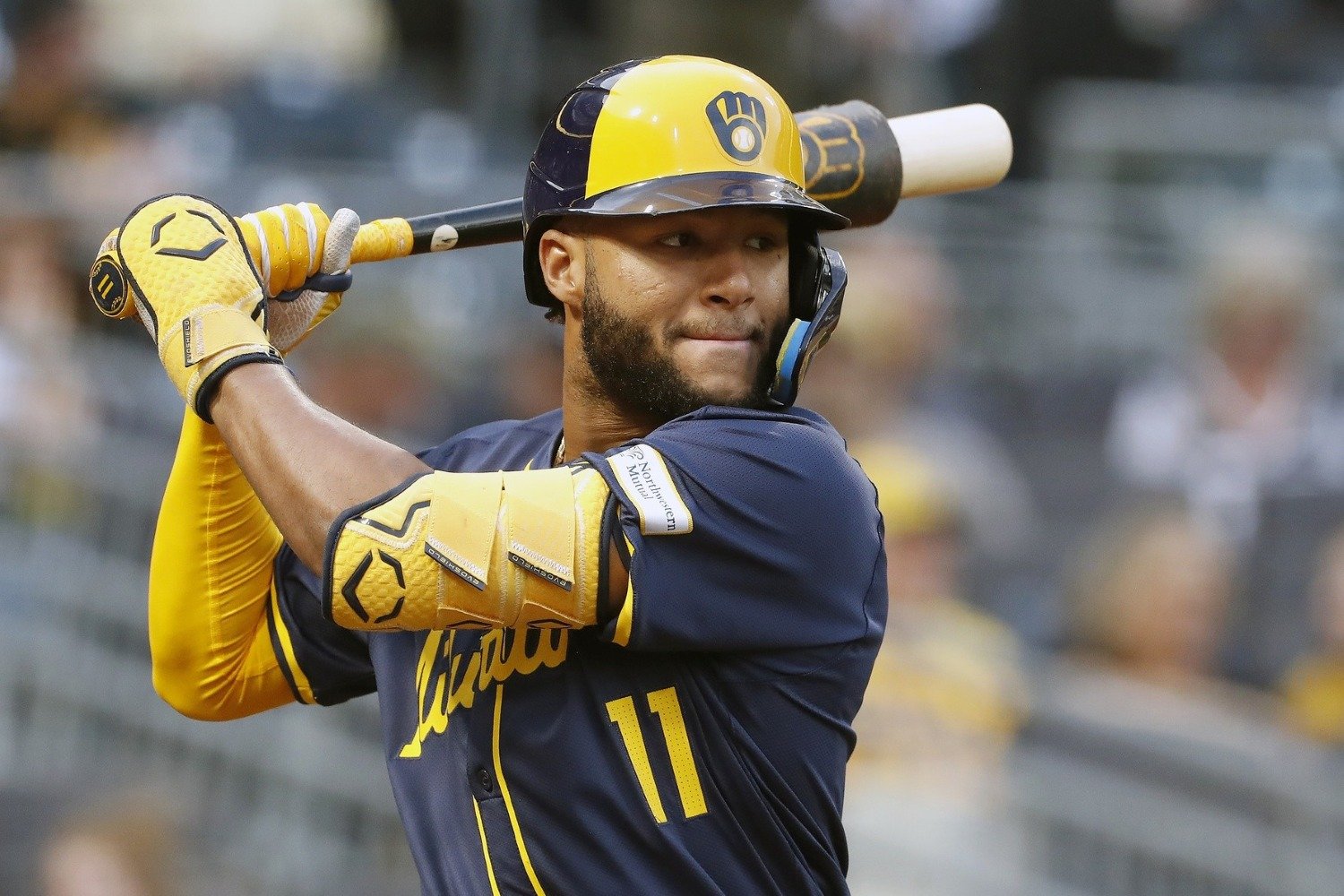 At the extremely tender age of 20, Jackson Chourio hit an impressive .275/.327/.464, with 54 extra-base hits. After Jun. 1, he was essentially a superstar in full bloom, hitting .303/.358/.525. He has awesome raw power, and it's not hard to imagine him doubling the 21 homers he hit last year in his best future campaigns. That's the good news. Here's the bad news: Chourio isn't yet tapping into all that power on a consistent basis, and it's relatively easy to see why. Right now, the young slugger seems to be attacking the ball at an angle that generates ample backspin, but (often) scatters his hardest-hit balls at suboptimal launch angles. You can see that by examining his distribution of launch angles, with each bucket colored by the average swing speed of the balls in that range. Chourio is plenty capable of generating exit velocity, but his fastest swings are often leading to balls he either chops into the ground or pops up. That means that his best-hit balls are rarely hit at the trajectories where they can do the most damage. Of the 192 hitters who had at least 50 hard-hit balls in 2024, Chourio ranked 155th in the percentage of them that clustered between 10° and 35°, at 43.5%. The top of that leaderboard reads: José Siri, Mookie Betts, Kyle Tucker, and Taylor Ward, which illustrates the value of squaring up your hard-hit balls on an upward swing plane. On the other hand, Siri's leadership does illustrate a problem with it: unless you're supremely talented and have a well-organized approach, hitting those hard-hit balls on a valuable upward trajectory risks big strikeout totals. We can't yet directly measure attack angle, in public spaces, though Baseball Savant is expected to add that data later this year. When they do, we might well find that Chourio is only beginning to tap fully into his power, because his swing—though lethally fast and highly adaptable, which is all one can reasonably ask of such a young player—is still focused on creating backspin and being direct to the ball, rather than maximizing home runs. That probably won't change in 2025, in a major way, but it could begin to adjust. Chourio's talent gives him a chance to excel at both contact and power, and he's going to get there. To do so, though, he might have to concentrate on creating a bat path that blasts upward through the zone more than the one he brought to the majors with him.
 -
It's hard to pick nits with the Brewers phenom's first ride of the senior circuit. As he tries to build on his superb rookie year in 2025, though, there's one clear way he could better tap into his power. Image courtesy of © Charles LeClaire-Imagn Images At the extremely tender age of 20, Jackson Chourio hit an impressive .275/.327/.464, with 54 extra-base hits. After Jun. 1, he was essentially a superstar in full bloom, hitting .303/.358/.525. He has awesome raw power, and it's not hard to imagine him doubling the 21 homers he hit last year in his best future campaigns. That's the good news. Here's the bad news: Chourio isn't yet tapping into all that power on a consistent basis, and it's relatively easy to see why. Right now, the young slugger seems to be attacking the ball at an angle that generates ample backspin, but (often) scatters his hardest-hit balls at suboptimal launch angles. You can see that by examining his distribution of launch angles, with each bucket colored by the average swing speed of the balls in that range. Chourio is plenty capable of generating exit velocity, but his fastest swings are often leading to balls he either chops into the ground or pops up. That means that his best-hit balls are rarely hit at the trajectories where they can do the most damage. Of the 192 hitters who had at least 50 hard-hit balls in 2024, Chourio ranked 155th in the percentage of them that clustered between 10° and 35°, at 43.5%. The top of that leaderboard reads: José Siri, Mookie Betts, Kyle Tucker, and Taylor Ward, which illustrates the value of squaring up your hard-hit balls on an upward swing plane. On the other hand, Siri's leadership does illustrate a problem with it: unless you're supremely talented and have a well-organized approach, hitting those hard-hit balls on a valuable upward trajectory risks big strikeout totals. We can't yet directly measure attack angle, in public spaces, though Baseball Savant is expected to add that data later this year. When they do, we might well find that Chourio is only beginning to tap fully into his power, because his swing—though lethally fast and highly adaptable, which is all one can reasonably ask of such a young player—is still focused on creating backspin and being direct to the ball, rather than maximizing home runs. That probably won't change in 2025, in a major way, but it could begin to adjust. Chourio's talent gives him a chance to excel at both contact and power, and he's going to get there. To do so, though, he might have to concentrate on creating a bat path that blasts upward through the zone more than the one he brought to the majors with him. View full article
-
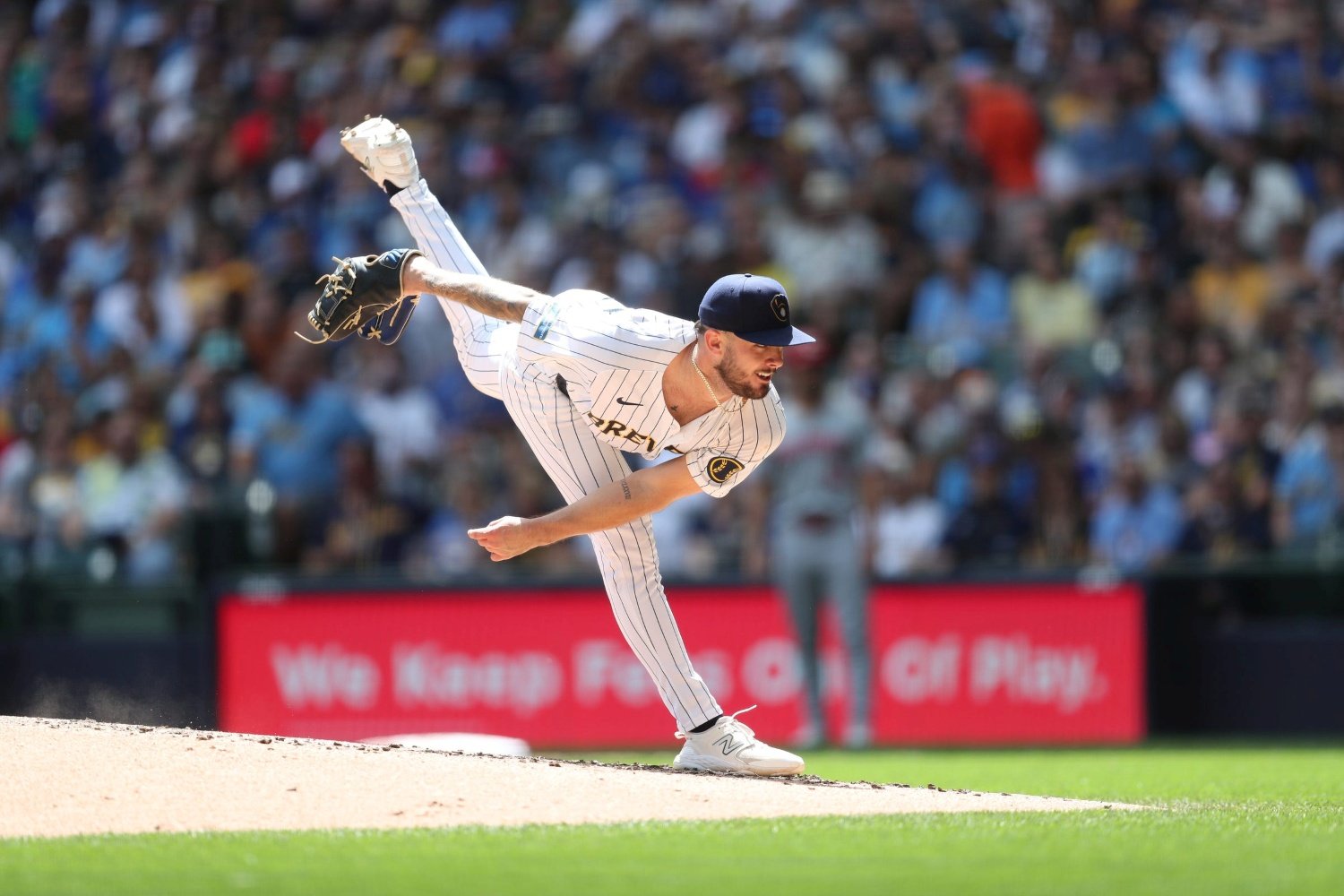 Baseball is a competitive sport, but for those of us watching (rather than playing), it's also art. There is, and ought to be, an aesthetic aspect to the enjoyment of the game, so when I argue that two Brewers pitchers are among the very best in the sport at its most beautiful skill, it matters. It does help the team win games, but that's not all it does; it also makes it more fun for us to watch them. The joy in watching a great pitcher can come in many forms, but for most guys, there has to be a combination of things happening. The craft requires deception, command and variability, and that makes it most fun to see someone who blends those things well. Nothing better captures all that, in my opinion, than when a pitcher with good velocity has a batter sitting on their formidable fastball but catches them looking with a curveball for a strike. This is all a matter of taste, of course. You can love to see the sheer athletic oomph of a really good heater thrown right by an opponent, or the foolish lunge and tumble of a hitter way out in front on a dancing changeup. For me, though, the grace of a strike stolen with the long arc of a curveball that still finds the zone is the highest form of baseball art. The Brewers do that as well as any team in baseball—or at least, a couple of their notable lefties do it as well as any individuals do. In 2024, some 244 pitchers threw at least 50 curveballs. Among them, only Shota Imanaga got called strikes on a higher percentage of his curves than did Aaron Ashby, who did so 38.7% of the time. DL Hall is not far down the list at all, nestling in at 13th with 29.5% of his hooks stealing strikes without a swing. That's two hurlers on the Crew within roughly the top 6 percent of the league in called strikes with curves; they thrive in this regard. The classic way to steal a strike with the curve, of course, is to throw one on the first pitch of an at-bat, when a hitter is sitting on a fastball almost every time and it's easy to lock them up and get an easy called strike by throwing them something slow and bendy. When you do it to a same-handed batter, we even get the funny little bonus of a flinch on a pitch that was nowhere near buzzing the tower. Here's Ashby doing that to Lars Nootbaar. Ashby Noot.mp4 If you can spot the curve on the outer edge of the dish to an opposite-handed batter on 0-0, you're also golden, because the hitter is almost certain to give up on the backdoor break. Here's Ashby pulling that trick on Shea Langeliers. Ashby Langel 0 0.mp4 The Brewers (who ultimately don't use the curve all that much, by the standards of the league) led MLB by getting called strikes on 39.3% of their first-pitch curves in 2024, with Ashby leading the way when he was healthy and on the bump. That's far from the only way to deploy this weapon, though. For instance, what if you could also spot the curve on the other side of the plate, and you had that poor hitter thinking about the lateral break after seeing it on 0-0, and you just changed lanes but not pitch types? Wouldn't that be a hilarious way to troll them? What do you think, Shea? Ashby Langel.mp4 It takes a little bit of guts to throw the curve for a strike, because if a hitter has seen your curve before and is expecting it, that pitch often works a bit like a batting-practice fastball. It takes a lot of guts, therefore, to double up with that pitch in the zone to start an at-bat. That only makes it more fun when it works, though. The pitch can be clever in deeper even counts, too. This requires you to know the opposing hitter. If it's 1-1, are they already thinking a bit more defensively (in which case the curve for a strike is a bad idea, because he's likely to stay back and hit the pitch cleanly to center or the opposite field), or are they still loading up to get the head out on a fastball? Randal Grichuk is the second kind of guy, which is why this worked gorgeously. Ashby 1 1 Grichuk.mp4 That's a nasty pitch in a clutch situation. Needing a strikeout, knowing Grichuk would just be wanting to lift the ball and bring home a run, Ashby froze him with a pitch that could have been conducive to that very goal—except, it wasn't the one Grichuk was looking for, and Ashby knew that. After that pitch, Grichuk fouled off two sinkers and a slider at the bottom of the zone, then swung right over a 1-2 curveball dipping out of the zone, showing the versatility of Ashby's breaker when he has command of his arsenal. The ball-to-strike curve can also get you back into a count from behind. Many hitters refuse to get aggressive on anything with a wrinkle in it when they have a 3-0 or 3-1 edge in the count. That's understandable, but probably unwise, because it lets pitchers who can throw the curve in the zone get back into the count relatively easily. Paul Goldschmidt found out the hard way that DL Hall can do that. Hall GOldy 3 1.mp4 The most fun, though, of course, is when a hitter has to be thinking defensively—when they know the curve is coming, and are aware of their need to attack it when it does—and you still catch them unready. The secret vulnerability of the hitter looking for a curve is that they're anticipating the break, so if you start the curve well within the zone but have it skidding toward an edge thereof, some hitters will identify the pitch and think they've wisely laid off—only to be rung up because the sizzling spinner nipped the corner after all. Jonathan India's patient approach and good recognition only hurt him here. DL Hall India 2 2.mp4 The slider can't do a lot of these things. The changeup can't. They don't have the same velocity differential from the fastball, or the same depth of movement, but also, they just aren't as pretty. The little dopamine hit I get from seeing the curve slant home against a flummoxed hitter is qualitatively but importantly different, and one of the joys of baseball. Hopefully, Ashby and Hall are healthy enough to show us even more such things of beauty in 2025.
 -
And no, we're not talking about the well-executed sacrifice bunt. Image courtesy of © Max Correa / The Milwaukee Journal Sentinel / USA TODAY NETWORK Baseball is a competitive sport, but for those of us watching (rather than playing), it's also art. There is, and ought to be, an aesthetic aspect to the enjoyment of the game, so when I argue that two Brewers pitchers are among the very best in the sport at its most beautiful skill, it matters. It does help the team win games, but that's not all it does; it also makes it more fun for us to watch them. The joy in watching a great pitcher can come in many forms, but for most guys, there has to be a combination of things happening. The craft requires deception, command and variability, and that makes it most fun to see someone who blends those things well. Nothing better captures all that, in my opinion, than when a pitcher with good velocity has a batter sitting on their formidable fastball but catches them looking with a curveball for a strike. This is all a matter of taste, of course. You can love to see the sheer athletic oomph of a really good heater thrown right by an opponent, or the foolish lunge and tumble of a hitter way out in front on a dancing changeup. For me, though, the grace of a strike stolen with the long arc of a curveball that still finds the zone is the highest form of baseball art. The Brewers do that as well as any team in baseball—or at least, a couple of their notable lefties do it as well as any individuals do. In 2024, some 244 pitchers threw at least 50 curveballs. Among them, only Shota Imanaga got called strikes on a higher percentage of his curves than did Aaron Ashby, who did so 38.7% of the time. DL Hall is not far down the list at all, nestling in at 13th with 29.5% of his hooks stealing strikes without a swing. That's two hurlers on the Crew within roughly the top 6 percent of the league in called strikes with curves; they thrive in this regard. The classic way to steal a strike with the curve, of course, is to throw one on the first pitch of an at-bat, when a hitter is sitting on a fastball almost every time and it's easy to lock them up and get an easy called strike by throwing them something slow and bendy. When you do it to a same-handed batter, we even get the funny little bonus of a flinch on a pitch that was nowhere near buzzing the tower. Here's Ashby doing that to Lars Nootbaar. Ashby Noot.mp4 If you can spot the curve on the outer edge of the dish to an opposite-handed batter on 0-0, you're also golden, because the hitter is almost certain to give up on the backdoor break. Here's Ashby pulling that trick on Shea Langeliers. Ashby Langel 0 0.mp4 The Brewers (who ultimately don't use the curve all that much, by the standards of the league) led MLB by getting called strikes on 39.3% of their first-pitch curves in 2024, with Ashby leading the way when he was healthy and on the bump. That's far from the only way to deploy this weapon, though. For instance, what if you could also spot the curve on the other side of the plate, and you had that poor hitter thinking about the lateral break after seeing it on 0-0, and you just changed lanes but not pitch types? Wouldn't that be a hilarious way to troll them? What do you think, Shea? Ashby Langel.mp4 It takes a little bit of guts to throw the curve for a strike, because if a hitter has seen your curve before and is expecting it, that pitch often works a bit like a batting-practice fastball. It takes a lot of guts, therefore, to double up with that pitch in the zone to start an at-bat. That only makes it more fun when it works, though. The pitch can be clever in deeper even counts, too. This requires you to know the opposing hitter. If it's 1-1, are they already thinking a bit more defensively (in which case the curve for a strike is a bad idea, because he's likely to stay back and hit the pitch cleanly to center or the opposite field), or are they still loading up to get the head out on a fastball? Randal Grichuk is the second kind of guy, which is why this worked gorgeously. Ashby 1 1 Grichuk.mp4 That's a nasty pitch in a clutch situation. Needing a strikeout, knowing Grichuk would just be wanting to lift the ball and bring home a run, Ashby froze him with a pitch that could have been conducive to that very goal—except, it wasn't the one Grichuk was looking for, and Ashby knew that. After that pitch, Grichuk fouled off two sinkers and a slider at the bottom of the zone, then swung right over a 1-2 curveball dipping out of the zone, showing the versatility of Ashby's breaker when he has command of his arsenal. The ball-to-strike curve can also get you back into a count from behind. Many hitters refuse to get aggressive on anything with a wrinkle in it when they have a 3-0 or 3-1 edge in the count. That's understandable, but probably unwise, because it lets pitchers who can throw the curve in the zone get back into the count relatively easily. Paul Goldschmidt found out the hard way that DL Hall can do that. Hall GOldy 3 1.mp4 The most fun, though, of course, is when a hitter has to be thinking defensively—when they know the curve is coming, and are aware of their need to attack it when it does—and you still catch them unready. The secret vulnerability of the hitter looking for a curve is that they're anticipating the break, so if you start the curve well within the zone but have it skidding toward an edge thereof, some hitters will identify the pitch and think they've wisely laid off—only to be rung up because the sizzling spinner nipped the corner after all. Jonathan India's patient approach and good recognition only hurt him here. DL Hall India 2 2.mp4 The slider can't do a lot of these things. The changeup can't. They don't have the same velocity differential from the fastball, or the same depth of movement, but also, they just aren't as pretty. The little dopamine hit I get from seeing the curve slant home against a flummoxed hitter is qualitatively but importantly different, and one of the joys of baseball. Hopefully, Ashby and Hall are healthy enough to show us even more such things of beauty in 2025. View full article
-
 The deal Jack Flaherty hoped he might find in free agency. There were concerns about his back at the trade deadline, nixing a trade to the Yankees, and some teams still seem to harbor those worries. Despite whatever lingering trouble there might be with that back, though, he did take the ball 28 times, pitch 162 innings, strike out 29.9% of opposing batters, and maintain a 3.17 ERA in 2024, and then he pitched well into October, helping the Dodgers beat the Yankees and secure their first full-season World Series championship since 1988. Entering the offseason, MLB Trade Rumors projected that he would command a five-year deal worth $115 million, and ranked him as the eighth-best player in the free-agent class. According to a source who has monitored Flaherty's market, a deal like that one is "totally out of the question" at this late stage of the hot stove, with February looming in just a few days. A three-year deal in line with those secured at the front end of the offseason by Yusei Kikuchi ($63 million) and Luis Severino ($67 million) is more realistic, but Flaherty, 29, might prefer a different, more flexible structure than those. That makes him a possible target for the Brewers, who have a bit more money to spend and could use more stability at the front end of their rotation. One version of a deal uniting Flaherty and Chris Hook could look like this: $15 million in 2025 A $25-million player option for 2026, with a $5-million buyout The Brewers can't spend much more than that $15 million figure for this season, without moving other money off their roster, which would make this style of deal somewhat appealing for them. It would, in effect, be a two-year, $40-million deal, not unlike the one-year, $25-million deal (with an attainable vesting option that ended up being worth $22.5 million) signed by Jordan Montgomery on the eve of Opening Day last winter. Flaherty has some features of interest to make him more exciting than Montgomery, but he hasn't been anywhere near as durable and was not as consistent in his postseason platform campaign as Montgomery was. His deal would have a lower ceiling but a higher floor than Montgomery's. From the Brewers' side, such a deal would carry a couple facets of appeal. Flaherty has never made more than $14 million in a season or been given a qualifying offer, and thus, they can make him that offer even if he opts out after 2025. In any case in which Flaherty turned down the option, it would be unlikely that he accepts a qualifying offer, because that would only mark a small salary increase relative to the option and be a one-year deal. If he did opt out and walked away, the Crew would be able to pocket a draft pick. If, on the other hand, Flaherty gets hurt or struggles in 2025 and elects to stick around for 2026, the Crew might well be happy to have him, anyway. They're likely to trade Freddy Peralta next winter, as they have Corbin Burnes and Devin Williams the last two offseasons. Aaron Civale and Nestor Cortes will both become free agents in the fall, and Brandon Woodruff's mutual option for 2026 is unlikely to be picked up, because all mutual options are unlikely to be picked up. Although the Crew have young pitchers set to take on larger roles this year and next (like Aaron Ashby, Rober Gasser, DL Hall, Logan Henderson, and Tobias Myers), they could use a veteran for 2026, and Flaherty being that guy might be fine, even if it means he had a poor 2025 that discouraged him from returning to the market. Not unlike Peralta, Flaherty is a relatively low-slot guy with deceptive carry on his four-seamer and two distinct breaking balls. He does a lot of things the Brewers like, which is why they had serious interest in him before pivoting to Frankie Montas at the trade deadline. On the right kind of deal, these two parties might make perfect partners this year, just as the Brewers and Rhys Hoskins did last January. It would be a boon to the roster in its own right, and could also open the door for another move, like trading Civale to a pitching-needy team for infield help.
 -
The Milwaukee Brewers have remained patient throughout this winter, and still have money to spend as free agency becomes a more sparse marketplace. Could they creatively capture a top-flight starter to round out their rotation? Image courtesy of © Brad Penner-Imagn Images The deal Jack Flaherty hoped he might find in free agency. There were concerns about his back at the trade deadline, nixing a trade to the Yankees, and some teams still seem to harbor those worries. Despite whatever lingering trouble there might be with that back, though, he did take the ball 28 times, pitch 162 innings, strike out 29.9% of opposing batters, and maintain a 3.17 ERA in 2024, and then he pitched well into October, helping the Dodgers beat the Yankees and secure their first full-season World Series championship since 1988. Entering the offseason, MLB Trade Rumors projected that he would command a five-year deal worth $115 million, and ranked him as the eighth-best player in the free-agent class. According to a source who has monitored Flaherty's market, a deal like that one is "totally out of the question" at this late stage of the hot stove, with February looming in just a few days. A three-year deal in line with those secured at the front end of the offseason by Yusei Kikuchi ($63 million) and Luis Severino ($67 million) is more realistic, but Flaherty, 29, might prefer a different, more flexible structure than those. That makes him a possible target for the Brewers, who have a bit more money to spend and could use more stability at the front end of their rotation. One version of a deal uniting Flaherty and Chris Hook could look like this: $15 million in 2025 A $25-million player option for 2026, with a $5-million buyout The Brewers can't spend much more than that $15 million figure for this season, without moving other money off their roster, which would make this style of deal somewhat appealing for them. It would, in effect, be a two-year, $40-million deal, not unlike the one-year, $25-million deal (with an attainable vesting option that ended up being worth $22.5 million) signed by Jordan Montgomery on the eve of Opening Day last winter. Flaherty has some features of interest to make him more exciting than Montgomery, but he hasn't been anywhere near as durable and was not as consistent in his postseason platform campaign as Montgomery was. His deal would have a lower ceiling but a higher floor than Montgomery's. From the Brewers' side, such a deal would carry a couple facets of appeal. Flaherty has never made more than $14 million in a season or been given a qualifying offer, and thus, they can make him that offer even if he opts out after 2025. In any case in which Flaherty turned down the option, it would be unlikely that he accepts a qualifying offer, because that would only mark a small salary increase relative to the option and be a one-year deal. If he did opt out and walked away, the Crew would be able to pocket a draft pick. If, on the other hand, Flaherty gets hurt or struggles in 2025 and elects to stick around for 2026, the Crew might well be happy to have him, anyway. They're likely to trade Freddy Peralta next winter, as they have Corbin Burnes and Devin Williams the last two offseasons. Aaron Civale and Nestor Cortes will both become free agents in the fall, and Brandon Woodruff's mutual option for 2026 is unlikely to be picked up, because all mutual options are unlikely to be picked up. Although the Crew have young pitchers set to take on larger roles this year and next (like Aaron Ashby, Rober Gasser, DL Hall, Logan Henderson, and Tobias Myers), they could use a veteran for 2026, and Flaherty being that guy might be fine, even if it means he had a poor 2025 that discouraged him from returning to the market. Not unlike Peralta, Flaherty is a relatively low-slot guy with deceptive carry on his four-seamer and two distinct breaking balls. He does a lot of things the Brewers like, which is why they had serious interest in him before pivoting to Frankie Montas at the trade deadline. On the right kind of deal, these two parties might make perfect partners this year, just as the Brewers and Rhys Hoskins did last January. It would be a boon to the roster in its own right, and could also open the door for another move, like trading Civale to a pitching-needy team for infield help. View full article
-
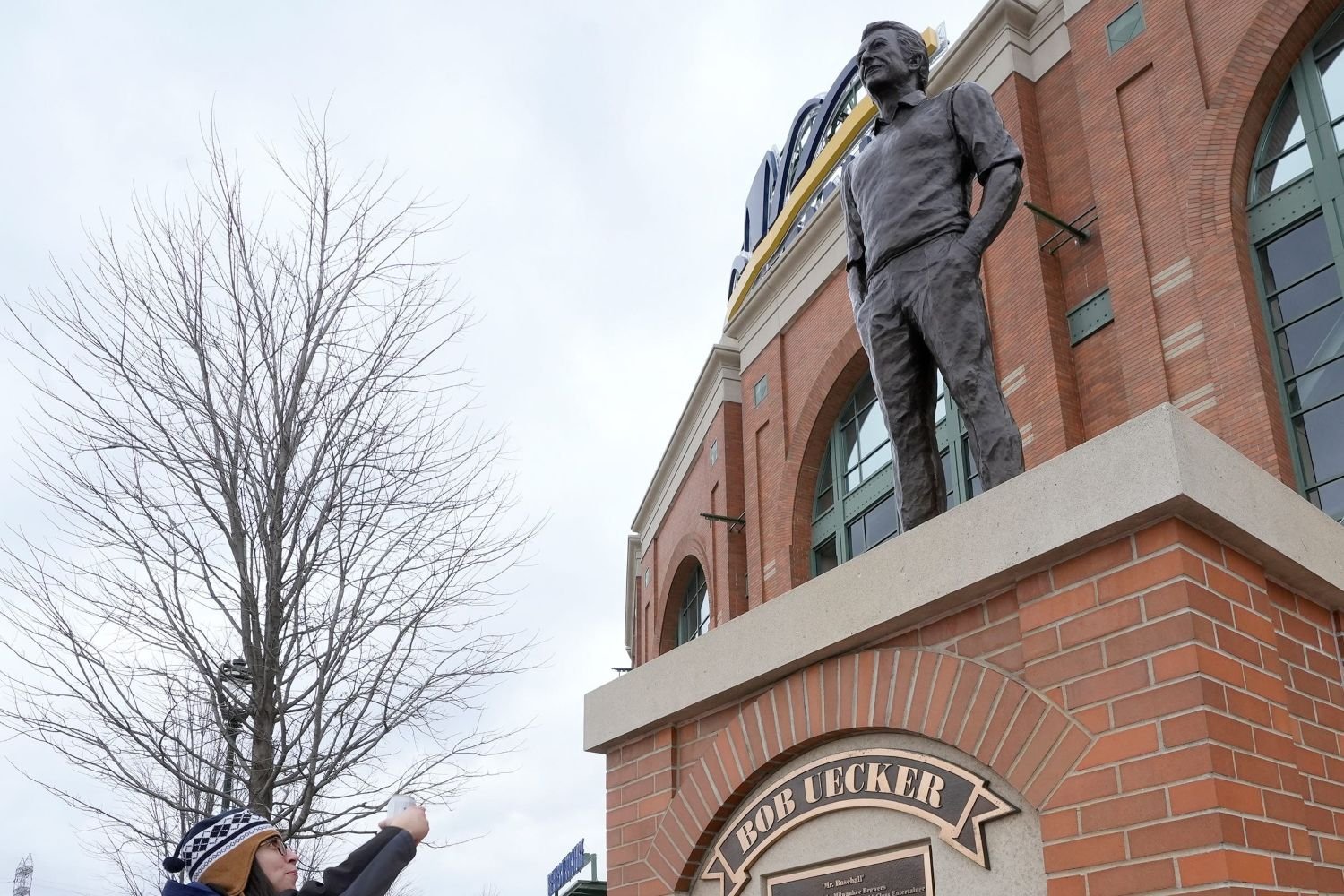 You can go re-read that introductory post, if you'd like, but I'll quickly recap the essentials from the bottom thereof. I made two forceful claims centered on Brewers nomenclature: The team's home is Miller Park, not American Family Field. Devin Williams's signature pitch is a screwball, not a changeup. I still believe the second one, for reasons I have expounded upon plenty. It relies on spin. It moves unlike any other changeup. It's a reverse breaking ball, and we call those screwballs. I feel a little badly about resisting Williams's own preference for calling it a changeup, but since I'm a person with eyes and a reasoning brain, I have a responsibility to use them. However, I want to issue a call for a new spin on the first take. I still fervently believe that we should resist calling the park American Family Field, or AmFam. That gigantic insurance company is paying the Brewers millions of dollars for the right to have the Brewers officially name a building after them, but neither I nor you are receiving any of that money. We are free to call the thing whatever we want. It might be the legal property of the Brewers, or of the government bodies created to build and maintain it, but when we interact with it, we do so unofficially. We can call the park whatever we want. For that very reason, though, I don't think I want to call it Miller Park anymore, either. That did feel a little truer to the brand, a little more lived-in and earned, but it was still a corporate name bought and paid for by a company to which few of us owe any fealty. When we buy into the idea by calling the park either of its corporate names, we not only give those companies a bit of our own independence, but relinquish our right to call it by some name that more pleasantly reflects the way we think about the place and what happens there. I'm serious about this: let's call the place Uecker Field, or The Ueck. Bob Uecker is already everywhere you turn, there, and God willing, he always will be. Why not call the very ground on which the Brewers play by the name of the most important person in the history of the franchise? Isn't that a last and most lasting tribute to Uecker, one befitting the way his enthusiasm and humor helped make baseball viable in Milwaukee for the long haul? The names of things matter, but parties at least one level removed from real encounter with or investment in those things have no legitimate right to decide upon those names. That right belongs to the people and communities to whom those things truly belong, in a sense much larger than having a deed or a lease. Baseball teams are public goods, and while the Attanasio family might own this one in a certain sense, fans in Milwaukee (and throughout Wisconsin) own them in a much more real and important sense. Fans don't have the right to put up signage or spraypaint any particular name on the grass alongside the baselines, but they have a right—every right, a much more substantial right than any corporation or billionaire family—to give the place where they gather to give their team the support that is essential to its survival whatever name they like best. Uecker's memory will not fade anytime soon, even if we don't elect to informally rename the place where he came to work for the last quarter-century of his life. Still, I think we should do it. It would be a neat way to assert a measure of resistance against the growing tendency to make decisions like these at a level that shuts out the most intimate and engaged stakeholders in a choice like this. It would subvert the farce and meaninglessness that comes with so many such naming decisions, made by people too far from the thing they're renaming to understand it. It would also bring a small smile to many fans' faces, every time they told a friend their plan for the evening. "I'm going down to The Ueck, to see a ball game."
 -
When I started here at Brewer Fanatic, I gave two foundational takes. Both were about what to call things. Today, I want to revisit one of those takes, in particular, because I think it needs amendment—for all kinds of reasons. Image courtesy of © Mike De Sisti / Milwaukee Journal Sentinel / USA TODAY NETWORK via Imagn Images You can go re-read that introductory post, if you'd like, but I'll quickly recap the essentials from the bottom thereof. I made two forceful claims centered on Brewers nomenclature: The team's home is Miller Park, not American Family Field. Devin Williams's signature pitch is a screwball, not a changeup. I still believe the second one, for reasons I have expounded upon plenty. It relies on spin. It moves unlike any other changeup. It's a reverse breaking ball, and we call those screwballs. I feel a little badly about resisting Williams's own preference for calling it a changeup, but since I'm a person with eyes and a reasoning brain, I have a responsibility to use them. However, I want to issue a call for a new spin on the first take. I still fervently believe that we should resist calling the park American Family Field, or AmFam. That gigantic insurance company is paying the Brewers millions of dollars for the right to have the Brewers officially name a building after them, but neither I nor you are receiving any of that money. We are free to call the thing whatever we want. It might be the legal property of the Brewers, or of the government bodies created to build and maintain it, but when we interact with it, we do so unofficially. We can call the park whatever we want. For that very reason, though, I don't think I want to call it Miller Park anymore, either. That did feel a little truer to the brand, a little more lived-in and earned, but it was still a corporate name bought and paid for by a company to which few of us owe any fealty. When we buy into the idea by calling the park either of its corporate names, we not only give those companies a bit of our own independence, but relinquish our right to call it by some name that more pleasantly reflects the way we think about the place and what happens there. I'm serious about this: let's call the place Uecker Field, or The Ueck. Bob Uecker is already everywhere you turn, there, and God willing, he always will be. Why not call the very ground on which the Brewers play by the name of the most important person in the history of the franchise? Isn't that a last and most lasting tribute to Uecker, one befitting the way his enthusiasm and humor helped make baseball viable in Milwaukee for the long haul? The names of things matter, but parties at least one level removed from real encounter with or investment in those things have no legitimate right to decide upon those names. That right belongs to the people and communities to whom those things truly belong, in a sense much larger than having a deed or a lease. Baseball teams are public goods, and while the Attanasio family might own this one in a certain sense, fans in Milwaukee (and throughout Wisconsin) own them in a much more real and important sense. Fans don't have the right to put up signage or spraypaint any particular name on the grass alongside the baselines, but they have a right—every right, a much more substantial right than any corporation or billionaire family—to give the place where they gather to give their team the support that is essential to its survival whatever name they like best. Uecker's memory will not fade anytime soon, even if we don't elect to informally rename the place where he came to work for the last quarter-century of his life. Still, I think we should do it. It would be a neat way to assert a measure of resistance against the growing tendency to make decisions like these at a level that shuts out the most intimate and engaged stakeholders in a choice like this. It would subvert the farce and meaninglessness that comes with so many such naming decisions, made by people too far from the thing they're renaming to understand it. It would also bring a small smile to many fans' faces, every time they told a friend their plan for the evening. "I'm going down to The Ueck, to see a ball game." View full article
-
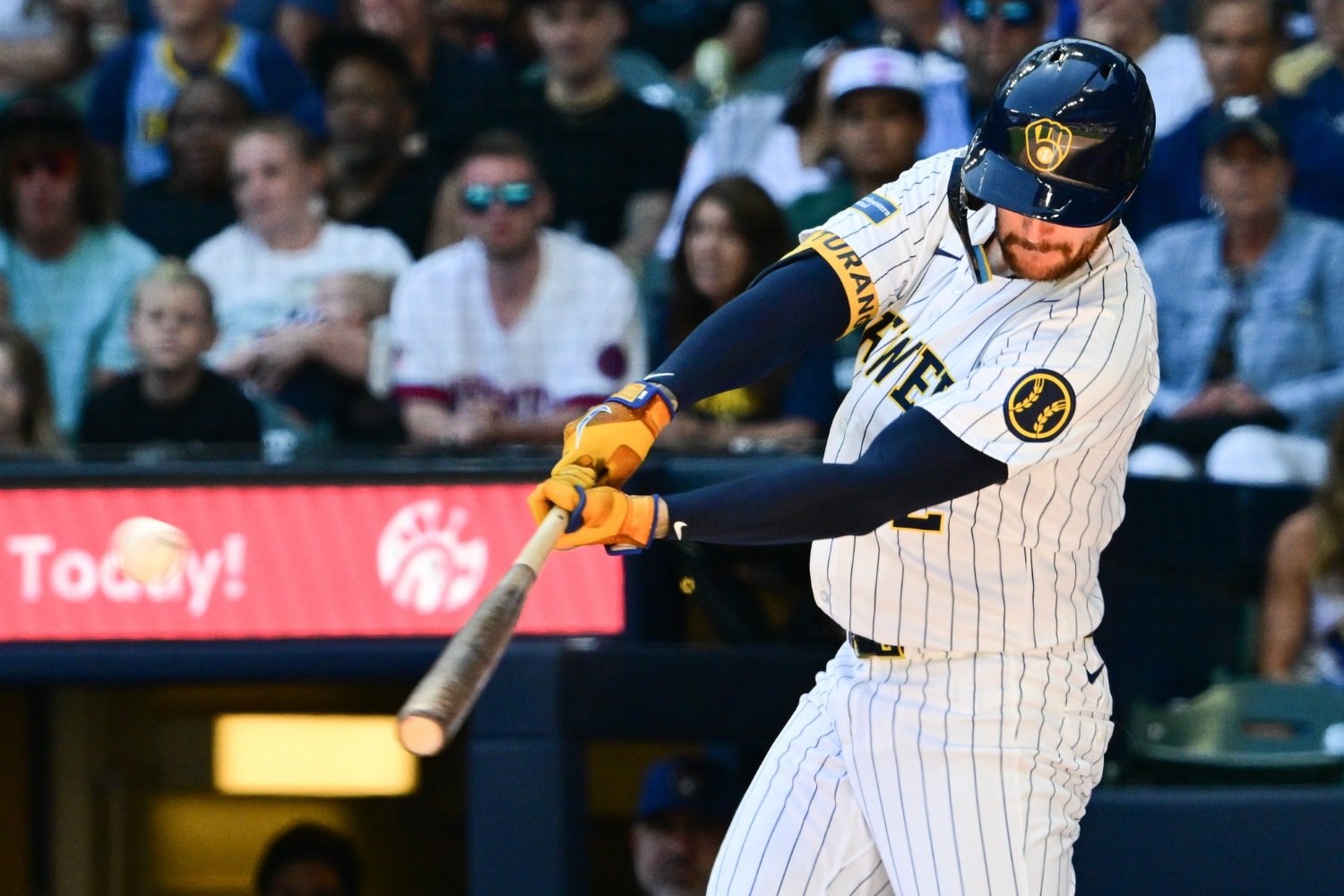 Last week, I wrote a bit about what I learned by watching some of Brice Turang's fastest swings of 2024. Turang has almost bottom-of-the-scale bat speed, according to the bat-tracking data from Statcast released on Baseball Savant early last season. Yet, he did show the ability to swing the bat as fast as 80 miles per hour, well above the needed line to generate power. Breaking down the times when he swung hardest helped me better understand what his ceiling is, in terms of power, but also why he hasn't gotten to much of that potential power thus far in the majors. More recently, Jack Stern dug in deep Wednesday on Rhys Hoskins's struggles in 2024, searching for a key that might unlock his talent anew for 2025. One insight there: Hoskins's ability to rotate and transfer his weight was compromised by the leg injuries he was dealing with throughout the season, and the best hope for a resurgent season lies in him recovering that capacity. As it happens, I wrote a piece for Baseball Prospectus this week that bears upon both Turang's and Hoskins's bat speed. Specifically, rather than being satisfied with the bat-tracking metrics served to us by Savant, I use the app developed by Kyle Bland, of Pitcher List—and that app offers numbers that give us more nuanced insight into the nature of swings and of hitters. Bland derived swing acceleration (in feet per second per second, a different thing from swing speed, which is reported in miles per hour (or, if you convert it, in feet per second) based on the time it took a hitter to execute their swing and their measured (final) swing speed. Using that data and the strong relationship between swing speed and swing acceleration, I found an expected acceleration for each hitter and compared it to their actual acceleration. Of all hitters with at least 600 competitive swings, Turang had the greatest positive difference between his real and his expected acceleration. Hoskins, on the other hand, had the fourth-greatest negative difference. Swing length is a key co-determinant of the gap between real and expected acceleration, and indeed, Hoskins's lack of acceleration has much to do with his long swing. However, even Turang's very, very short swing doesn't fully explain his boosted acceleration. Why does acceleration gap matter? I found, perhaps unsurprisingly, that accelerators like Turang tend strongly to have great contact rates. I also found, a bit more surprisingly, that they tend to have great batting averages on balls in play. Why? Because a hitter with great acceleration in their swing can hit the ball hard to the opposite field more reliably. Most hitters who decelerate (relative to what we'd expect, based on their swing speed at contact) find all their value to the pull field. These tend to be players who have to get started earlier, because their swings are designed to get below and/or around the ball, hitting it well out in front of themselves. Thus, a swing like Hoskins's is probably up to its desired speed only on the balls they catch out front and pull. An accelerator like Turang, by contrast, can catch the ball deeper in the hitting zone and with their bat perpendicular to the flight of the ball or even yet to get that far, and still have the barrel moving fast enough to hit it well. You can see the difference, in microcosm, by studying the average exit velocity on batted balls by direction for both Turang and Hoskins. Player Pull Straightaway Opposite Brice Turang 89.2 87.9 84.4 Rhys Hoskins 90.9 88.4 82.9 Hopefully, we'll get even more and better detailed information about swings in 2025. There are more data to crave, like attack angles and contact points. For now, though, we have enough data to draw some interesting conclusions not only about the sheer value of swing speed and length, but about how different hitters time their swings and where in the arc of those swings they try to maximize their bat speed in anticipation of contact. Turang and Hoskins, about as different as two hitters can be, help us see how that plays out in the numbers.
 -
Take a trip, with me, a little deeper into the wilds of bat-tracking data and its complexities. Two key Brewers hitters exemplify a particular wrinkle nicely. Image courtesy of © Benny Sieu-Imagn Images Last week, I wrote a bit about what I learned by watching some of Brice Turang's fastest swings of 2024. Turang has almost bottom-of-the-scale bat speed, according to the bat-tracking data from Statcast released on Baseball Savant early last season. Yet, he did show the ability to swing the bat as fast as 80 miles per hour, well above the needed line to generate power. Breaking down the times when he swung hardest helped me better understand what his ceiling is, in terms of power, but also why he hasn't gotten to much of that potential power thus far in the majors. More recently, Jack Stern dug in deep Wednesday on Rhys Hoskins's struggles in 2024, searching for a key that might unlock his talent anew for 2025. One insight there: Hoskins's ability to rotate and transfer his weight was compromised by the leg injuries he was dealing with throughout the season, and the best hope for a resurgent season lies in him recovering that capacity. As it happens, I wrote a piece for Baseball Prospectus this week that bears upon both Turang's and Hoskins's bat speed. Specifically, rather than being satisfied with the bat-tracking metrics served to us by Savant, I use the app developed by Kyle Bland, of Pitcher List—and that app offers numbers that give us more nuanced insight into the nature of swings and of hitters. Bland derived swing acceleration (in feet per second per second, a different thing from swing speed, which is reported in miles per hour (or, if you convert it, in feet per second) based on the time it took a hitter to execute their swing and their measured (final) swing speed. Using that data and the strong relationship between swing speed and swing acceleration, I found an expected acceleration for each hitter and compared it to their actual acceleration. Of all hitters with at least 600 competitive swings, Turang had the greatest positive difference between his real and his expected acceleration. Hoskins, on the other hand, had the fourth-greatest negative difference. Swing length is a key co-determinant of the gap between real and expected acceleration, and indeed, Hoskins's lack of acceleration has much to do with his long swing. However, even Turang's very, very short swing doesn't fully explain his boosted acceleration. Why does acceleration gap matter? I found, perhaps unsurprisingly, that accelerators like Turang tend strongly to have great contact rates. I also found, a bit more surprisingly, that they tend to have great batting averages on balls in play. Why? Because a hitter with great acceleration in their swing can hit the ball hard to the opposite field more reliably. Most hitters who decelerate (relative to what we'd expect, based on their swing speed at contact) find all their value to the pull field. These tend to be players who have to get started earlier, because their swings are designed to get below and/or around the ball, hitting it well out in front of themselves. Thus, a swing like Hoskins's is probably up to its desired speed only on the balls they catch out front and pull. An accelerator like Turang, by contrast, can catch the ball deeper in the hitting zone and with their bat perpendicular to the flight of the ball or even yet to get that far, and still have the barrel moving fast enough to hit it well. You can see the difference, in microcosm, by studying the average exit velocity on batted balls by direction for both Turang and Hoskins. Player Pull Straightaway Opposite Brice Turang 89.2 87.9 84.4 Rhys Hoskins 90.9 88.4 82.9 Hopefully, we'll get even more and better detailed information about swings in 2025. There are more data to crave, like attack angles and contact points. For now, though, we have enough data to draw some interesting conclusions not only about the sheer value of swing speed and length, but about how different hitters time their swings and where in the arc of those swings they try to maximize their bat speed in anticipation of contact. Turang and Hoskins, about as different as two hitters can be, help us see how that plays out in the numbers. View full article
-
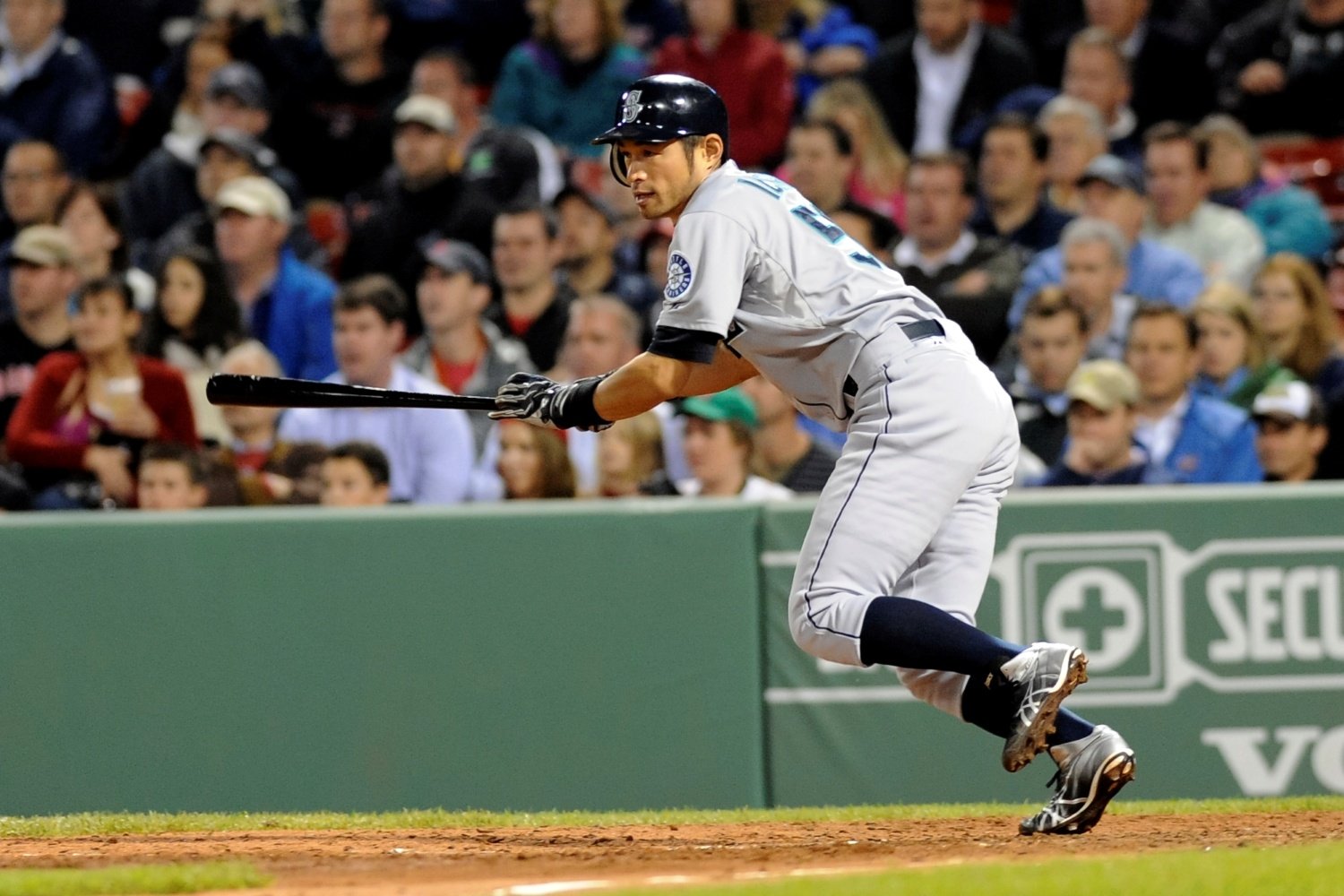 I hew to a few key principles when considering who I think deserves to enter the National Baseball Hall of Fame. It doesn't really matter, of course, because I don't have a vote, but I go through some version of the exercise each year, because I can't evaluate the choices made by the tenured members of the Baseball Writers Association of America without coming to my own conclusions about who should go in and why. Here are my main thoughts about the ballot as it exists these days, in no particular order: By and large, I'm a "big Hall" guy. There are, for my money, more important and wonderful players on the outside of Cooperstown looking in than guys who have plaques but didn't exactly merit them. Off-field matters notwithstanding, I tend to err on the side of letting in players who don't check all of some old-fashioned voters' boxes but who brightened the field with their presence over long careers. I'll usually favor peak over longevity, but I think some public discourse has run too far in that direction. We ought to value the desire, dedication, and adaptability to stay helpful for more than a decade, even if a player had a truly elite seven- or eight-year peak. I'm unwilling to exclude a player for using performance-enhancing drugs. I do discount players' numbers slightly if we know that they used, but the problem was huge and systemic and while each person bears personal responsibility for the choices they made about how to seek competitive edges during that era, I don't feel that using those drugs (or, in Carlos Beltrán's case, being the focal point of the investigation into the Astros' sign-stealing scandal) should keep a deserving player out of the Hall. On the other hand, I'm something of a hardliner when it comes to more egregious and (in my opinion) serious failures of character. This is the highest honor that can be conferred on a member of this profession, and it's my feeling that we should deny that honor to people who (most especially) inflict violence on family members, intimate partners, or any other group, especially if they were repeat offenders. That also goes for people who espouse hateful things (no Curt Schilling for me, when he was eligible) and those who drink and drive and don't learn from the egregious, wantonly dangerous misdeed (no Todd Helton for me, either, though I lost that argument). That should give you some clues as to whose names are about to appear below. Without further ado, here we go. CC Sabathia A no-brainer. Sabathia pitched 19 seasons as a workhorse, and not just an innings-eater, but an ace. He was, arguably, the last great pitcher of his kind, a threat to go eight innings every time he toed the rubber. Sabathia made 134 starts in which he went at least 7 1/3, which is not only the fifth-most since 1995, but 22 more than the most by any active hurler. (Justin Verlander sits at 112.) I heartily recommend his memoir, Till The End, which documents not only his career, but his long battle with alcohol dependence. He was larger than life on the mound, a great postseason pitcher, and late in his career, a big enough man to admit that he was hurting a great many people he loved by destroying himself. His journey to sobriety is as inspiring to many as his incredible talent and phenomenal performances. Ichiro Suzuki The most singular player in modern baseball history. Suzuki didn't even come to the States until he was 27, which hid some of his greatest brilliance from us, and yet, no one who ever watched him doubted he was a Hall of Famer. His feel for contact—especially the ability to hit the ball deep enough to the left side of the infield to secure a single almost every time, even if the shortstop managed to keep it on the dirt—was breathtaking, and his arm in right field was the most entertaining of his generation. That was true not only because he threw so well, but because he did it with such a whipsaw grace, from a small frame, and because he augmented the utility of his sheer arm strength by charging every single with fluid speed and confidence. He's one of the 25 best baseball players ever, if we widen our lens to remember that his skill set probably peaked during his final few years in Japan. If you've never looked up his NPB numbers, do so. His lowest full-season average there was .342, and he left after batting .387/.460/.539 in 2000. Alex Rodríguez Is he truly likable? No. Is he obnoxious on FOX broadcasts now? Yes. Did he use steroids, even after testing went into effect and everyone understood them to be taboo? Absolutely. But unlike (say) Barry Bonds and Roger Clemens, Rodríguez was never accused of being violent or criminally inappropriate toward women, and while he might have had a vague reputation as a self-satisfied jerk off the field, his sins outside the lines are relatively tame. They don't remotely erase the fact that, along with Bonds and Willie Mays and Henry Aaron, Rodríguez has a very strong case as the best player of all time. His pwoer and speed were incredible, but some players could loosely match those tools. What no one ever matched was the way he blended those loud tools with subtle but equally valuable refined skills, from an intelligent and adaptable approach at the plate to clever and dazzling defense. Carlos Beltrán I mentally bin Beltrán with Scott Rolen. While they were different in several obvious ways, both were extremely well-rounded—so much so that it was sometimes regrettably easy to overlook their greatest strengths in favor of marveling at their lack of weaknesses. Beltrán's raw numbers are slightly diminished by the mix of parks and league run environments he encountered over the years, and even so, they're gaudy. He was also, throughout his 20s, one of the best defensive center fielders of his generation, which often got lumped in and treated like an afterthought, given the balanced offensive dynamism he offered as a switch-hitter. That he helped engineer the banging scheme in 2017 is a shame, but not a dark enough mark on his record to make me think twice about wanting to see him enter the Hall. He found so many ways to be good late in his career, and was so respected by teammates throughout that career, that I'm more inclined to give him bonus points for baseball character than to strike him from the list for cheating in his senescence. Félix Hernández I think that, because he came up so young and was thus in decline by his age-30 season, people remember Hernández's peak as shorter than it really was. From 2009-15, Hernández made six All-Star teams, won a Cy Young Award, finished twice two other times and was in the top 10 for the honor thrice more. He averaged 228 innings and 221 strikeouts per season and had a 2.83 ERA. If those seven years were his whole peak, this would be a thorny conversation. In reality, though, he had come up in the middle of 2005 and had three full, perfectly solid campaigns before really hitting his stride in that 2009 campaign. He also pitched with personality, and was a bit of a throwback: he didn't have to strike you out for you to feel as though you had no chance when he was done with you. Andy Pettitte Yes, he used HGH, and yes, I hold that against him—almost more than I do for hitters, because one of the chief challenges for pitchers is to stay healthy and I consider things that artificially reduce that risk an especially egregious sin against the game. Pettitte was an emblem of an era, though. Every October, you'd turn on the TV, and he would be there, with the cap pulled so low over his eyes that his face was just a black abyss behind his glove. He'd be coming off a strong regular season, but there would be questions about him—and then he'd answer them with a resounding performance that helped vault his teams to one World Series after another. Pitchers deserve some extra credit for holding up under the hot lights, and for achieving longevity even when piling up extra innings after lots of their counterparts had gone home each fall. Chase Utley Like Beltrán, Utley was a winner, because he did everything well and sought the edge everywhere it could be found. He bordered on dirty, but if the rest of the league were as dedicated to playing the game ferociously as he was, they wouldn't have been in any danger from him. He was ruthless, and he was everywhere. During his peak, he hit for average, drew walks, stole bases more efficiently than anyone else in baseball, and played better defense at second base than anyone else in baseball. The thing people overlooked too often, because he tended to hit more doubles than homers, was his power. He averaged 27 homers and 67 total extra-base hits per year from 2005-10, and he also perfected the art of being hit by pitches. The second half of his career was underwhelming, but he should have won two MVPs (which, in a testament to him, went to teammtes instead) before that decline began. Billy Wagner I love the story of Wagner breaking his right arm playing hat football when he was a kid, and thus becoming an accidental lefty. It speaks not only to his resourcefulness, but to his passion for the sport; he couldn't be without baseball long enough to let an injury heal all the way. He just switched arms and kept hucking it. You'd like to see more volume, even from a reliever, to put them in. Yet, Wagner had more strikeouts than either Trevor Hoffman or Mariano Rivera, even though they had roughly 180 and 350 more career innings than he did, respectively. You'd like to see a better postseason track record, too. But the fact is that Wagner struck out 33.2% of opposing batters for his career, which would be an elite rate for a single season even now—and that was at a time when the baseline for strikeouts was about 20% lower than it is now. When he came in to close out a game against your team, you knew he was a Hall of Famer. Russell Martin For me, this is not as controversial as some have made it. Martin was a unique athlete who could have stuck on the infield if he'd insisted upon it, but instead, he made himself a great catcher—one of the best defenders at the most important non-pitching position on the field, in an era full of great defensive catchers. That so much of his value comes from pitch framing inevitably dings him for many, but I love framing and believe its value is real and should be acknowledged. Martin also brought a modicum of power and unusual speed to the position, and you didn't have to make the big tradeoffs that so many catchers force their teams to make. He was well-rounded, an average-plus hitter and a terrific run preventer, as well as a beloved teammate whose teams were a truly wild 212 games over .500 when he started during his career. In 11 different seasons, his team was at least 11 games to the good. Ben Zobrist This one, admittedly, is a fringy case. I'd like to see Zobrist stick around on the ballot, as much as I'd like to see him actually inducted. He's the guy who probably did have too short a career to make a compelling Hall case, but from 2009-16, he defined an evolving role for the whole league, playing all over the diamond (and being above-average at each spot) and hitting .271/.366/.439, despite a lot of those seasons being fallow ones for offense throughout the league. I also give him some extra credit for being instrumental in two straight World Series runs by teams he was on, the 2015 Royals and the 2016 Cubs. Excluded here, but worth a quick mention, are the following: Bobby Abreu makes a very strong case, and once Beltrán gets in, I think it will be easier to fairly judge him and for some voters to find room for him on their ballots. Andruw Jones, Manny Ramírez, Francisco Rodríguez, and Omar Vizquel were not considered, as I consider all of them to have been disqualifyingly violent and/or cruel away from the field. Dustin Pedroia is very close to Utley as a candidate, and probably could have gotten his slot. I'll certainly be taking another close look at him next year. Brian McCann is a similar candidate to Martin, but I want to advocate Martin first. David Wright and Troy Tulowitzki were clearly Hall of Fame talents. I'm not yet sure I can get them over the line, based on how truncated by injuries their careers were, but they're legitimate candidates. There's my ballot. It's imperfect; all ballots are. It was fun to put it together, though, and I'd love to hear what you think of it, as well as whom you would support.
 -
Tuesday evening will bring the results of the 2025 National Baseball Hall of Fame BBWAA election. Before that happens, here are my 10 selections from the annual ballot, and the reasons why I chose each—and why I excluded some other candidates. Image courtesy of © Bob DeChiara-Imagn Images I hew to a few key principles when considering who I think deserves to enter the National Baseball Hall of Fame. It doesn't really matter, of course, because I don't have a vote, but I go through some version of the exercise each year, because I can't evaluate the choices made by the tenured members of the Baseball Writers Association of America without coming to my own conclusions about who should go in and why. Here are my main thoughts about the ballot as it exists these days, in no particular order: By and large, I'm a "big Hall" guy. There are, for my money, more important and wonderful players on the outside of Cooperstown looking in than guys who have plaques but didn't exactly merit them. Off-field matters notwithstanding, I tend to err on the side of letting in players who don't check all of some old-fashioned voters' boxes but who brightened the field with their presence over long careers. I'll usually favor peak over longevity, but I think some public discourse has run too far in that direction. We ought to value the desire, dedication, and adaptability to stay helpful for more than a decade, even if a player had a truly elite seven- or eight-year peak. I'm unwilling to exclude a player for using performance-enhancing drugs. I do discount players' numbers slightly if we know that they used, but the problem was huge and systemic and while each person bears personal responsibility for the choices they made about how to seek competitive edges during that era, I don't feel that using those drugs (or, in Carlos Beltrán's case, being the focal point of the investigation into the Astros' sign-stealing scandal) should keep a deserving player out of the Hall. On the other hand, I'm something of a hardliner when it comes to more egregious and (in my opinion) serious failures of character. This is the highest honor that can be conferred on a member of this profession, and it's my feeling that we should deny that honor to people who (most especially) inflict violence on family members, intimate partners, or any other group, especially if they were repeat offenders. That also goes for people who espouse hateful things (no Curt Schilling for me, when he was eligible) and those who drink and drive and don't learn from the egregious, wantonly dangerous misdeed (no Todd Helton for me, either, though I lost that argument). That should give you some clues as to whose names are about to appear below. Without further ado, here we go. CC Sabathia A no-brainer. Sabathia pitched 19 seasons as a workhorse, and not just an innings-eater, but an ace. He was, arguably, the last great pitcher of his kind, a threat to go eight innings every time he toed the rubber. Sabathia made 134 starts in which he went at least 7 1/3, which is not only the fifth-most since 1995, but 22 more than the most by any active hurler. (Justin Verlander sits at 112.) I heartily recommend his memoir, Till The End, which documents not only his career, but his long battle with alcohol dependence. He was larger than life on the mound, a great postseason pitcher, and late in his career, a big enough man to admit that he was hurting a great many people he loved by destroying himself. His journey to sobriety is as inspiring to many as his incredible talent and phenomenal performances. Ichiro Suzuki The most singular player in modern baseball history. Suzuki didn't even come to the States until he was 27, which hid some of his greatest brilliance from us, and yet, no one who ever watched him doubted he was a Hall of Famer. His feel for contact—especially the ability to hit the ball deep enough to the left side of the infield to secure a single almost every time, even if the shortstop managed to keep it on the dirt—was breathtaking, and his arm in right field was the most entertaining of his generation. That was true not only because he threw so well, but because he did it with such a whipsaw grace, from a small frame, and because he augmented the utility of his sheer arm strength by charging every single with fluid speed and confidence. He's one of the 25 best baseball players ever, if we widen our lens to remember that his skill set probably peaked during his final few years in Japan. If you've never looked up his NPB numbers, do so. His lowest full-season average there was .342, and he left after batting .387/.460/.539 in 2000. Alex Rodríguez Is he truly likable? No. Is he obnoxious on FOX broadcasts now? Yes. Did he use steroids, even after testing went into effect and everyone understood them to be taboo? Absolutely. But unlike (say) Barry Bonds and Roger Clemens, Rodríguez was never accused of being violent or criminally inappropriate toward women, and while he might have had a vague reputation as a self-satisfied jerk off the field, his sins outside the lines are relatively tame. They don't remotely erase the fact that, along with Bonds and Willie Mays and Henry Aaron, Rodríguez has a very strong case as the best player of all time. His pwoer and speed were incredible, but some players could loosely match those tools. What no one ever matched was the way he blended those loud tools with subtle but equally valuable refined skills, from an intelligent and adaptable approach at the plate to clever and dazzling defense. Carlos Beltrán I mentally bin Beltrán with Scott Rolen. While they were different in several obvious ways, both were extremely well-rounded—so much so that it was sometimes regrettably easy to overlook their greatest strengths in favor of marveling at their lack of weaknesses. Beltrán's raw numbers are slightly diminished by the mix of parks and league run environments he encountered over the years, and even so, they're gaudy. He was also, throughout his 20s, one of the best defensive center fielders of his generation, which often got lumped in and treated like an afterthought, given the balanced offensive dynamism he offered as a switch-hitter. That he helped engineer the banging scheme in 2017 is a shame, but not a dark enough mark on his record to make me think twice about wanting to see him enter the Hall. He found so many ways to be good late in his career, and was so respected by teammates throughout that career, that I'm more inclined to give him bonus points for baseball character than to strike him from the list for cheating in his senescence. Félix Hernández I think that, because he came up so young and was thus in decline by his age-30 season, people remember Hernández's peak as shorter than it really was. From 2009-15, Hernández made six All-Star teams, won a Cy Young Award, finished twice two other times and was in the top 10 for the honor thrice more. He averaged 228 innings and 221 strikeouts per season and had a 2.83 ERA. If those seven years were his whole peak, this would be a thorny conversation. In reality, though, he had come up in the middle of 2005 and had three full, perfectly solid campaigns before really hitting his stride in that 2009 campaign. He also pitched with personality, and was a bit of a throwback: he didn't have to strike you out for you to feel as though you had no chance when he was done with you. Andy Pettitte Yes, he used HGH, and yes, I hold that against him—almost more than I do for hitters, because one of the chief challenges for pitchers is to stay healthy and I consider things that artificially reduce that risk an especially egregious sin against the game. Pettitte was an emblem of an era, though. Every October, you'd turn on the TV, and he would be there, with the cap pulled so low over his eyes that his face was just a black abyss behind his glove. He'd be coming off a strong regular season, but there would be questions about him—and then he'd answer them with a resounding performance that helped vault his teams to one World Series after another. Pitchers deserve some extra credit for holding up under the hot lights, and for achieving longevity even when piling up extra innings after lots of their counterparts had gone home each fall. Chase Utley Like Beltrán, Utley was a winner, because he did everything well and sought the edge everywhere it could be found. He bordered on dirty, but if the rest of the league were as dedicated to playing the game ferociously as he was, they wouldn't have been in any danger from him. He was ruthless, and he was everywhere. During his peak, he hit for average, drew walks, stole bases more efficiently than anyone else in baseball, and played better defense at second base than anyone else in baseball. The thing people overlooked too often, because he tended to hit more doubles than homers, was his power. He averaged 27 homers and 67 total extra-base hits per year from 2005-10, and he also perfected the art of being hit by pitches. The second half of his career was underwhelming, but he should have won two MVPs (which, in a testament to him, went to teammtes instead) before that decline began. Billy Wagner I love the story of Wagner breaking his right arm playing hat football when he was a kid, and thus becoming an accidental lefty. It speaks not only to his resourcefulness, but to his passion for the sport; he couldn't be without baseball long enough to let an injury heal all the way. He just switched arms and kept hucking it. You'd like to see more volume, even from a reliever, to put them in. Yet, Wagner had more strikeouts than either Trevor Hoffman or Mariano Rivera, even though they had roughly 180 and 350 more career innings than he did, respectively. You'd like to see a better postseason track record, too. But the fact is that Wagner struck out 33.2% of opposing batters for his career, which would be an elite rate for a single season even now—and that was at a time when the baseline for strikeouts was about 20% lower than it is now. When he came in to close out a game against your team, you knew he was a Hall of Famer. Russell Martin For me, this is not as controversial as some have made it. Martin was a unique athlete who could have stuck on the infield if he'd insisted upon it, but instead, he made himself a great catcher—one of the best defenders at the most important non-pitching position on the field, in an era full of great defensive catchers. That so much of his value comes from pitch framing inevitably dings him for many, but I love framing and believe its value is real and should be acknowledged. Martin also brought a modicum of power and unusual speed to the position, and you didn't have to make the big tradeoffs that so many catchers force their teams to make. He was well-rounded, an average-plus hitter and a terrific run preventer, as well as a beloved teammate whose teams were a truly wild 212 games over .500 when he started during his career. In 11 different seasons, his team was at least 11 games to the good. Ben Zobrist This one, admittedly, is a fringy case. I'd like to see Zobrist stick around on the ballot, as much as I'd like to see him actually inducted. He's the guy who probably did have too short a career to make a compelling Hall case, but from 2009-16, he defined an evolving role for the whole league, playing all over the diamond (and being above-average at each spot) and hitting .271/.366/.439, despite a lot of those seasons being fallow ones for offense throughout the league. I also give him some extra credit for being instrumental in two straight World Series runs by teams he was on, the 2015 Royals and the 2016 Cubs. Excluded here, but worth a quick mention, are the following: Bobby Abreu makes a very strong case, and once Beltrán gets in, I think it will be easier to fairly judge him and for some voters to find room for him on their ballots. Andruw Jones, Manny Ramírez, Francisco Rodríguez, and Omar Vizquel were not considered, as I consider all of them to have been disqualifyingly violent and/or cruel away from the field. Dustin Pedroia is very close to Utley as a candidate, and probably could have gotten his slot. I'll certainly be taking another close look at him next year. Brian McCann is a similar candidate to Martin, but I want to advocate Martin first. David Wright and Troy Tulowitzki were clearly Hall of Fame talents. I'm not yet sure I can get them over the line, based on how truncated by injuries their careers were, but they're legitimate candidates. There's my ballot. It's imperfect; all ballots are. It was fun to put it together, though, and I'd love to hear what you think of it, as well as whom you would support. View full article
-
Heh. We're trying something new with this section, folks. Don't expect everything to perfectly fit its heading in this space in the short term, and you'll be fine.
-
The Brewers Still Have $15 Million to Spend in Free Agency. But How?
Matthew Trueblood posted an article in Brewers
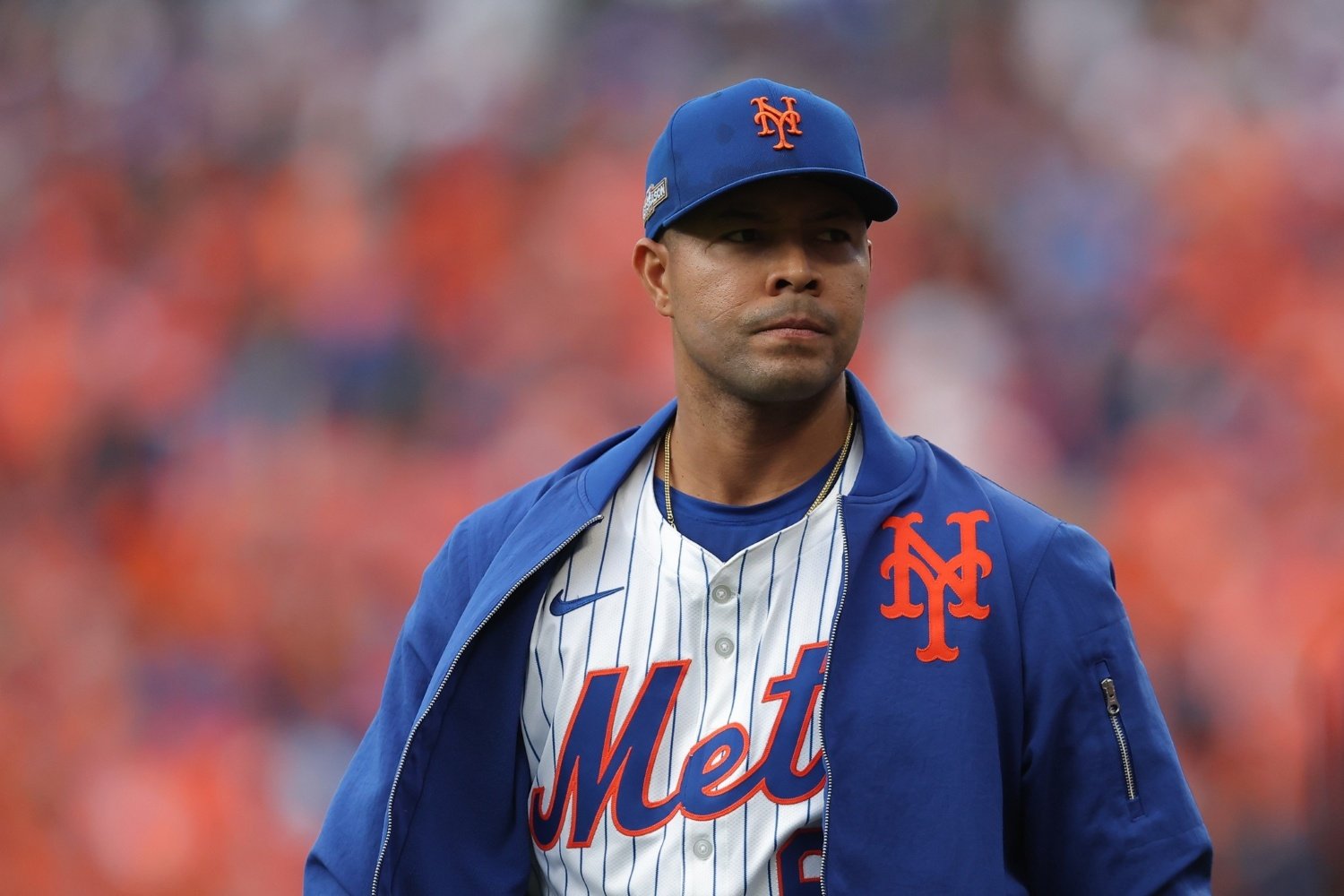 When the Brewers elected to retreat from their planned move to league-based production and distribution of broadcasts and re-upped with FanDuel Sports Network instead, it should have shaken free an extra few million dollars to be spent on payroll for 2025. In an offseason during which the team has traded erstwhile closer Devin Williams and watched star shortstop Willy Adames depart via free agency, the Crew already had at least $10 million to spend. Now, it seems fair to expect them to spend at least $15 million, and even that would leave them with a lower projected payroll than the ones they have run over the last two seasons. This is a team defending two straight division crowns, so (after bringing in Nestor Cortes as part of the Williams trade, to replace the departing Frankie Montas) they don't need to make a huge move from here. They do have enough question marks to make spending that $15 million important, though, and a few possible ways to do so stand out. José Quintana, Free Agent LHP That number the Brewers should be ready to pay someone—$15 million—happens to be a kind of boilerplate amount for which several free-agent starters are signing this offseason. It's what Alex Cobb got from the Tigers, and what Justin Verlander got from the Giants. Charlie Morton got it from the Orioles, and Matthew Boyd got it from the Cubs—with Boyd landing a two-year deal at that salary, once you bake in his likely incentives. Quintana has been, if anything, a bit more durable and consistent than those guys over the last few years, and he's still only 35 years old. However, he doesn't miss many bats, which is a major hangup for many teams when evaluating a pitcher in 2025. With identical 18.8% strikeout rates the last two campaigns, Quintana doesn't jump out for most teams in the league. The Brewers could almost certainly land him on the same deal for which the Cubs got Boyd, thanks to having waited two extra months for the market to cool off. Quintana's a better pitcher than Boyd, and just as importantly, he'd give the team depth and consistency as they head into the season with the huge question mark of Brandon Woodruff's shoulder capsule injury handing over their starting rotation. Max Scherzer, Free Agent RHP At 40, there's a chance that Scherzer is simply running out of gas. He was unable to get healthy for most of 2024, and when he did make it onto the mound, his velocity was down about 1.5 miles per hour—a sharp acceleration of a long downward trend in fastball efficacy. Still, Scherzer's overall results looked fine, with an ERA south of 4.00 and viable strikeout and walk rates. He would be a bold upside play, and although it doesn't feel like a very Brewers-y move, they might be due for that kind of out-of-character gambit. Ha-Seong Kim, Free Agent IF At the outset of this offseason, it would not have been possible to get Kim for $15 million, unless it be on a fairly long-term deal. Now, though, that door is wide open. Kim underwent shoulder surgery in October, and isn't expected to be ready to play again by Opening Day. Even when he can first return, he might need to stay on a longer-than-usual rehab assignment, to replace spring training and to let him build strength in that shoulder so he can play the infield when he does join an active roster. As that description of things suggests, Kim comes with some major, well-understood drawbacks and considerable risk. That's why he's likely to be available at a reasonable (albeit eight-figure) salary without a long-term commitment. The Brewers could weather the wait, though, and if Kim is a healthy, versatile piece on the infield for the second half and is in place at third base for a potential playoff run, signing him now would look like a very wise investment. He might even merit a qualifying offer at the end of the year, netting the team an eventual draft pick. That's not an exhaustive list of ways the Brewers can leverage their remaining budgetary flexibility. It's just a sampling of them. One way or another, the team should use the money between their current projected 40-man payroll of $108 million and the reasonable target of $120-125 million to give themselves more paths to a third straight division championship. If they don't make some opportunistic move in the weeks ahead, they'll have let a good pitch float by.
 -
The only big-league deal to which they've signed anyone all winter went to a reclamation arm pulled back over after a year in Japan. The Brewers have a bigger swing left in them this offseason, but have to choose their target carefully. Image courtesy of © Brad Penner-Imagn Images When the Brewers elected to retreat from their planned move to league-based production and distribution of broadcasts and re-upped with FanDuel Sports Network instead, it should have shaken free an extra few million dollars to be spent on payroll for 2025. In an offseason during which the team has traded erstwhile closer Devin Williams and watched star shortstop Willy Adames depart via free agency, the Crew already had at least $10 million to spend. Now, it seems fair to expect them to spend at least $15 million, and even that would leave them with a lower projected payroll than the ones they have run over the last two seasons. This is a team defending two straight division crowns, so (after bringing in Nestor Cortes as part of the Williams trade, to replace the departing Frankie Montas) they don't need to make a huge move from here. They do have enough question marks to make spending that $15 million important, though, and a few possible ways to do so stand out. José Quintana, Free Agent LHP That number the Brewers should be ready to pay someone—$15 million—happens to be a kind of boilerplate amount for which several free-agent starters are signing this offseason. It's what Alex Cobb got from the Tigers, and what Justin Verlander got from the Giants. Charlie Morton got it from the Orioles, and Matthew Boyd got it from the Cubs—with Boyd landing a two-year deal at that salary, once you bake in his likely incentives. Quintana has been, if anything, a bit more durable and consistent than those guys over the last few years, and he's still only 35 years old. However, he doesn't miss many bats, which is a major hangup for many teams when evaluating a pitcher in 2025. With identical 18.8% strikeout rates the last two campaigns, Quintana doesn't jump out for most teams in the league. The Brewers could almost certainly land him on the same deal for which the Cubs got Boyd, thanks to having waited two extra months for the market to cool off. Quintana's a better pitcher than Boyd, and just as importantly, he'd give the team depth and consistency as they head into the season with the huge question mark of Brandon Woodruff's shoulder capsule injury handing over their starting rotation. Max Scherzer, Free Agent RHP At 40, there's a chance that Scherzer is simply running out of gas. He was unable to get healthy for most of 2024, and when he did make it onto the mound, his velocity was down about 1.5 miles per hour—a sharp acceleration of a long downward trend in fastball efficacy. Still, Scherzer's overall results looked fine, with an ERA south of 4.00 and viable strikeout and walk rates. He would be a bold upside play, and although it doesn't feel like a very Brewers-y move, they might be due for that kind of out-of-character gambit. Ha-Seong Kim, Free Agent IF At the outset of this offseason, it would not have been possible to get Kim for $15 million, unless it be on a fairly long-term deal. Now, though, that door is wide open. Kim underwent shoulder surgery in October, and isn't expected to be ready to play again by Opening Day. Even when he can first return, he might need to stay on a longer-than-usual rehab assignment, to replace spring training and to let him build strength in that shoulder so he can play the infield when he does join an active roster. As that description of things suggests, Kim comes with some major, well-understood drawbacks and considerable risk. That's why he's likely to be available at a reasonable (albeit eight-figure) salary without a long-term commitment. The Brewers could weather the wait, though, and if Kim is a healthy, versatile piece on the infield for the second half and is in place at third base for a potential playoff run, signing him now would look like a very wise investment. He might even merit a qualifying offer at the end of the year, netting the team an eventual draft pick. That's not an exhaustive list of ways the Brewers can leverage their remaining budgetary flexibility. It's just a sampling of them. One way or another, the team should use the money between their current projected 40-man payroll of $108 million and the reasonable target of $120-125 million to give themselves more paths to a third straight division championship. If they don't make some opportunistic move in the weeks ahead, they'll have let a good pitch float by. View full article
-
We're all still grieving the loss of Bob Uecker last week, and on Thursday night, Avalon Atmospheric Theater in Milwaukee will give fans a chance to concelebrate him one more time in a fun way. They're holding a special screening of Major League at 7 PM. Never was Ueck's wit and comedic brilliance more boldly displayed than in the movie, in which he got to play some version of himself—with everything shaded just a hair more wry, cynical, and silly. His manipulation of a radio audience blind to the real action ("Juust a bit outside," in the most indelible case) was hilarious on multiple levels, not the least of which was that it reflected a real habit of many play-by-play announcers in a time when fewer games were available on TV. Meanwhile, the hard-bitten and occasionally cruel character he shaped for himself was a key part of the movie's acerbity and a vaccine against the tendency of almost all sports movies to be a bit too saccharine. Yet, Uecker also narrated key sequences of game action, and the way he settled into a very authentic facsimile of his own work calling real games heightened the film's veracity and sharpened all of its best features in the process. The baseball comedy would have been diminished both in its baseball value and its comedic value if anyone else were to take Uecker's place in the role of Harry Doyle. Tickets to the show at the Avalon can be purchased here. View full rumor
-
 We're all still grieving the loss of Bob Uecker last week, and on Thursday night, Avalon Atmospheric Theater in Milwaukee will give fans a chance to concelebrate him one more time in a fun way. They're holding a special screening of Major League at 7 PM. Never was Ueck's wit and comedic brilliance more boldly displayed than in the movie, in which he got to play some version of himself—with everything shaded just a hair more wry, cynical, and silly. His manipulation of a radio audience blind to the real action ("Juust a bit outside," in the most indelible case) was hilarious on multiple levels, not the least of which was that it reflected a real habit of many play-by-play announcers in a time when fewer games were available on TV. Meanwhile, the hard-bitten and occasionally cruel character he shaped for himself was a key part of the movie's acerbity and a vaccine against the tendency of almost all sports movies to be a bit too saccharine. Yet, Uecker also narrated key sequences of game action, and the way he settled into a very authentic facsimile of his own work calling real games heightened the film's veracity and sharpened all of its best features in the process. The baseball comedy would have been diminished both in its baseball value and its comedic value if anyone else were to take Uecker's place in the role of Harry Doyle. Tickets to the show at the Avalon can be purchased here.
 -
 After his promotion to Triple-A Nashville in the second half of 2024, Jacob Misiorowski transitioned from the starting role he had occupied at Double-A Biloxi to a late-game relief gig. For as long as he has been on the prospect radar, everyone has understood the fact that Misiorowski might end up in the bullpen anyway, and in the heat of the Brewers' push to a second straight division title and a looming playoff run, it seemed clear that Misiorowski's greatest short-term value was as a high-octane, high-leverage, short-burst flamethrower. In 14 appearances totaling 18 innings, Misiorowski certainly showed off the potency of his raw stuff. Opponents only managed five hits against him. He struck out 22 of the 70 batters he faced. On the other hand, though, he walked 10 of those batters, and he hit another three with pitches. Control is the big limiting factor for Misiorowski, whose stuff can be overpowering. In fact, after seeing him work in an intense role at the highest rung of the minor-league ladder, it's fair to wonder whether it will be the thing that pushes him to the pen—or the very reason why it's important that he stays in the rotation. Misiorowski's fastball sat at 98 miles per hour during his stint with Nashville, reflecting the ability to cut it loose each time in short appearances. The pitch still doesn't have elite vertical or horizontal movement, but it should have plenty of carry to baffle hitters when he can keep its velocity in the upper reaches of the 90s, given the relatively low slot from which he pitches. In the limited sample (his time with Nashville) for which we have detailed pitch data, he appears to be capable of filling up the zone with the heater, and to have a plan for it: he attacks the glove side, away from right-handed batters, quite well for a pitcher with this fastball shape. Combined with his velocity and extension, his ability to locate that pitch as he already did should be good enough to make his heater dominant. Misiorowski also showed a feel for locating his curveball, a pitch with plenty of velocity separation from the fastball and good vertical depth. He can hit the bottom of the zone with that offering, or drop it below the zone to induce chases. It's not as refined a secondary weapon as you'd like a starter to have, but it's a potent pitch already. As sped-up as hitters have to be when facing what is effectively a triple-digit fastball, that curve can devastate opponents. That leaves his slider, though, and that's the pitch we need to talk about. Whipsawing in at almost 93 miles per hour when he worked in short relief, the cutterish slider is a pitch that has the potential to make Misiorowski an ace starter, but only if he can get it under some semblance of control. Right now, or at least during his brief time in Triple A, Misiorowski can't locate that pitch competitively, and batters don't have to respect it. That will make it much easier for hitters to sit on one of his two main offerings, and give them more of a chance to handle him, especially if stretching back out as a starter takes a tick or two back off of his fastball. The key question, then, is this: Can Misiorowski modulate the effort in his delivery enough to exercise better control of his slider, when pacing himself to last in a game as a starter? If so, he's a candidate to be in an MLB rotation very soon, and to be superb there almost right away. If the slider/cutter is a pitch he can corral with just a bit more proprioception, and if that doesn't come at an undue cost to his fastball velocity and his overall execution of the three-pitch repertoire, then he's a star. However, if the slider remains this erratic, then so will Misiorowski. He'll be confined to the bullpen, and while that might be his fastest track to the majors, it will slightly reduce the impact he can have for the Brewers. Come spring training, we need to keep a close eye on his efforts to command the slider.
 -
It was an encouraging 2024 season for the Brewers' top pitching prospect, who got close enough to the big leagues to knock on the door thereto. Can he get there as a starting pitcher? Image courtesy of © Curt Hogg / USA TODAY NETWORK After his promotion to Triple-A Nashville in the second half of 2024, Jacob Misiorowski transitioned from the starting role he had occupied at Double-A Biloxi to a late-game relief gig. For as long as he has been on the prospect radar, everyone has understood the fact that Misiorowski might end up in the bullpen anyway, and in the heat of the Brewers' push to a second straight division title and a looming playoff run, it seemed clear that Misiorowski's greatest short-term value was as a high-octane, high-leverage, short-burst flamethrower. In 14 appearances totaling 18 innings, Misiorowski certainly showed off the potency of his raw stuff. Opponents only managed five hits against him. He struck out 22 of the 70 batters he faced. On the other hand, though, he walked 10 of those batters, and he hit another three with pitches. Control is the big limiting factor for Misiorowski, whose stuff can be overpowering. In fact, after seeing him work in an intense role at the highest rung of the minor-league ladder, it's fair to wonder whether it will be the thing that pushes him to the pen—or the very reason why it's important that he stays in the rotation. Misiorowski's fastball sat at 98 miles per hour during his stint with Nashville, reflecting the ability to cut it loose each time in short appearances. The pitch still doesn't have elite vertical or horizontal movement, but it should have plenty of carry to baffle hitters when he can keep its velocity in the upper reaches of the 90s, given the relatively low slot from which he pitches. In the limited sample (his time with Nashville) for which we have detailed pitch data, he appears to be capable of filling up the zone with the heater, and to have a plan for it: he attacks the glove side, away from right-handed batters, quite well for a pitcher with this fastball shape. Combined with his velocity and extension, his ability to locate that pitch as he already did should be good enough to make his heater dominant. Misiorowski also showed a feel for locating his curveball, a pitch with plenty of velocity separation from the fastball and good vertical depth. He can hit the bottom of the zone with that offering, or drop it below the zone to induce chases. It's not as refined a secondary weapon as you'd like a starter to have, but it's a potent pitch already. As sped-up as hitters have to be when facing what is effectively a triple-digit fastball, that curve can devastate opponents. That leaves his slider, though, and that's the pitch we need to talk about. Whipsawing in at almost 93 miles per hour when he worked in short relief, the cutterish slider is a pitch that has the potential to make Misiorowski an ace starter, but only if he can get it under some semblance of control. Right now, or at least during his brief time in Triple A, Misiorowski can't locate that pitch competitively, and batters don't have to respect it. That will make it much easier for hitters to sit on one of his two main offerings, and give them more of a chance to handle him, especially if stretching back out as a starter takes a tick or two back off of his fastball. The key question, then, is this: Can Misiorowski modulate the effort in his delivery enough to exercise better control of his slider, when pacing himself to last in a game as a starter? If so, he's a candidate to be in an MLB rotation very soon, and to be superb there almost right away. If the slider/cutter is a pitch he can corral with just a bit more proprioception, and if that doesn't come at an undue cost to his fastball velocity and his overall execution of the three-pitch repertoire, then he's a star. However, if the slider remains this erratic, then so will Misiorowski. He'll be confined to the bullpen, and while that might be his fastest track to the majors, it will slightly reduce the impact he can have for the Brewers. Come spring training, we need to keep a close eye on his efforts to command the slider. View full article
-
In a follow-up to Tuesday's release of their top 101 prospects list for 2025, the folks at Baseball Prospectus published a list Thursday of 10 prospects who weren't especially close to making that list, but whom they believe could land there at this time next year. Notable among the group was Brewers outfielder Yophery Rodriguez. A lefty hitter and thrower, Rodriguez played all of 2024 at age 18, and he played the whole season at Low-A Carolina. He held his own there, too, facing much older competition (even now that the minors have contracted and players at that lowest full-season level have gotten younger). He walked a lot and had a 100 DRC+ in 484 plate appearances, and his tools are evident. He could start 2025 with the Timber Rattlers, which would be remarkable progress for a 19-year-old. In brief chances to play with the big boys last spring training, he made an instant impression, too. Alongside the higher-upside Jesús Made, Rodríguez is a symbol of the Brewers' stellar recent work in Latin America and the sustainability of their system of consistent contention. View full rumor
-
 The Brewers announced the passing of the greatest single figure in the history of their franchise, and one of the lions of professional baseball itself, on Thursday morning. Bob Uecker, beloved player, broadcaster, pitch man and more, is dead. I reiterate what I wrote last month, for I meant it then and it's not diminished now: As heartbreaking as it is to lose Uecker before he could call a Brewers World Series win, we are all better and brighter for having had him as the voices of our summers (and often our autumns), wherever we have been and whichever teams we have rooted for over the last 60-plus years. His catchphrase is bigger, in cheeky signage in the rafters at American Family Field, than any championship banner would be, and that's only fitting. Uecker himself—the personality, the voice, the connective tissue across generations and celebrations and the unworried consolation on untold numbers of bad days for bad teams—is worth more than any of those banners would be. We'll have more remembrances of Uecker in the days ahead. For now, please share yours, and join us all in both mourning and celebrating Ueck.
 -
This one can't do anything but hurt right now. Let's make sure, though, to accept the inevitable with full-hearted gratitude for more good stories and more good days at the ballpark than any one person can ever be asked to give us again. Image courtesy of © Jovanny Hernandez / Milwaukee Journal Sentinel / USA TODAY NETWORK via Imagn Images The Brewers announced the passing of the greatest single figure in the history of their franchise, and one of the lions of professional baseball itself, on Thursday morning. Bob Uecker, beloved player, broadcaster, pitch man and more, is dead. I reiterate what I wrote last month, for I meant it then and it's not diminished now: As heartbreaking as it is to lose Uecker before he could call a Brewers World Series win, we are all better and brighter for having had him as the voices of our summers (and often our autumns), wherever we have been and whichever teams we have rooted for over the last 60-plus years. His catchphrase is bigger, in cheeky signage in the rafters at American Family Field, than any championship banner would be, and that's only fitting. Uecker himself—the personality, the voice, the connective tissue across generations and celebrations and the unworried consolation on untold numbers of bad days for bad teams—is worth more than any of those banners would be. We'll have more remembrances of Uecker in the days ahead. For now, please share yours, and join us all in both mourning and celebrating Ueck. View full article
-
 In a follow-up to Tuesday's release of their top 101 prospects list for 2025, the folks at Baseball Prospectus published a list Thursday of 10 prospects who weren't especially close to making that list, but whom they believe could land there at this time next year. Notable among the group was Brewers outfielder Yophery Rodriguez. A lefty hitter and thrower, Rodriguez played all of 2024 at age 18, and he played the whole season at Low-A Carolina. He held his own there, too, facing much older competition (even now that the minors have contracted and players at that lowest full-season level have gotten younger). He walked a lot and had a 100 DRC+ in 484 plate appearances, and his tools are evident. He could start 2025 with the Timber Rattlers, which would be remarkable progress for a 19-year-old. In brief chances to play with the big boys last spring training, he made an instant impression, too. Alongside the higher-upside Jesús Made, Rodríguez is a symbol of the Brewers' stellar recent work in Latin America and the sustainability of their system of consistent contention.
 -
What I Learned Watching Brice Turang's Five Fastest Swings of 2024
Matthew Trueblood posted an article in Brewers
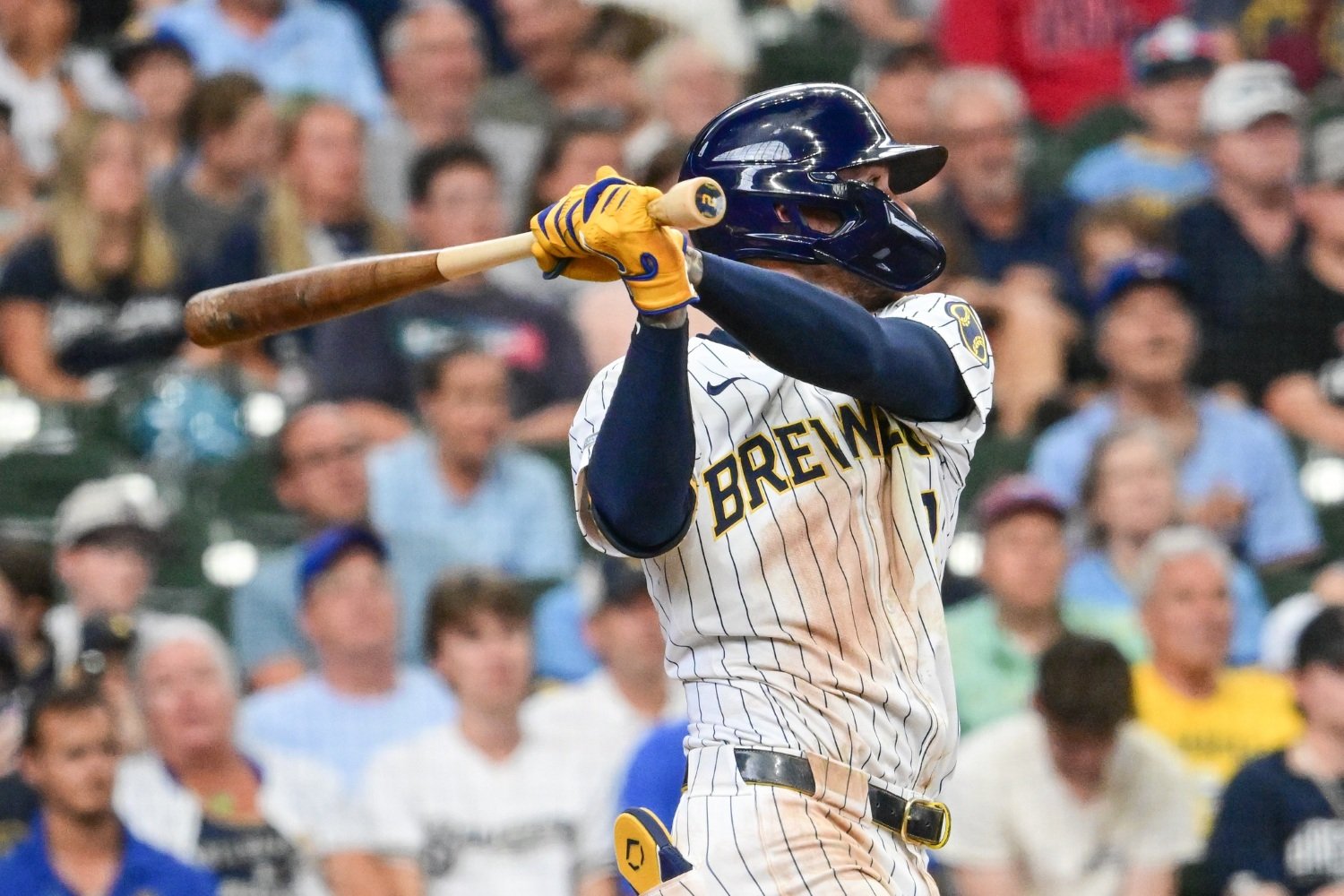 Thanks to the latest forward step from Statcast, last season marked the first time that fans could access detailed data about the movement of a hitter's bat when they swung. Baseball Savant offers leaderboards of the players who swung fastest and squared the ball up most often, and using the search tool on the site, one can also pull up hundreds of individual swings for any batter, with their bat speed and swing length on each, plus the usual metrics capturing the quality of the contact they made. As all of us would have expected, by and large, more bat speed is better. There are exceptions, though, and some of them are as telling and interesting as the insights we gained on the game's fastest swingers. Brice Turang had the 20th-slowest swing in MLB last year, but it was also the second-shortest. The man with both the slowest and the shortest stroke, on average, was Luis Arraez, en route to his third straight batting title. That's a good reminder that swinging slowly can be good, in its own way: a short, slow swing is often much better at generating contact. Turang isn't an Arraez-caliber contact savant, so he didn't hit for anywhere near the same batting average Arraez produced in 2024. On the other hand, he has more upside than Arraez and other, similarly slow swingers. He ranked 20th-lowest in average swing speed, yes, but he was merely 83rd-lowest in the percentage of his swings that eclipsed 75 miles per hour. Sal Frelick's rate was lower. So were those of Nico Hoerner (2 miles per hour faster, on average) and Brayan Rocchio (3.5 MPH faster). In other words, Turang can swing fast. At least in part, he chooses not to, as part of his approach in the box. Let's watch his five fastest swings of 2024 together, because I think doing so might help us learn more about this enigmatic, talented, sometimes-frustrating hitter. Fastest Swing: 79.6 MPH Z0daellfWGw0TUFRPT1fQTFjSEFsQUNYZ3NBQ2dkVUJRQUFVd1VGQUFNRkJsQUFWRlZRVXdCWFZ3Y0FDUUpW.mp4 On a 3-2 pitch, Turang was looking fastball but got a changeup. He got well out on his front foot, but was able to keep his hands back just enough to make contact. Alas, it was harmless contact, despite the speed of his swing, because he hit the very bottom of the ball. The lesson here: sometimes, swing speed comes from that crash of forward energy when one gets out on their front foot. In that case, some of the bat speed tends to be wasted, in one way or another, so such numbers are almost fakeouts. Not every fast swing is a good swing, although this one did at least show admirable hand-eye coordination. Second-Fastest: 78.9 MPH NjQxVk5fWGw0TUFRPT1fVUZSUlVBVlNYZ1lBQzFBSEJBQUFWQUJYQUFNQVUxQUFDd0FDVmxFQkFRcFFDRk1D.mp4 This is a fastball more or less down the middle, but in a 2-2 count, Turang had to be cognizant of the risk that Twins hurler Brock Stewart would throw him a slider. He still had the bat speed to catch up to 98 miles per hour, but he was late enough to push a harmless foul ball the other way. This is an example of valuable bat speed, but only indirectly. It kept an at-bat alive, but because he got that speed by going into emergency mode and still got beaten to his ideal contact point, it didn't translate into real production. Third-Fastest: 78.7 MPH Z0daellfWGw0TUFRPT1fQVZkV1ZGVU1BZ2NBQUZaV1ZRQUFBZzhEQUZrTkJWZ0FWQUJUVlFVQkJ3dFRCRlpm.mp4 Pitch type and location manipulate bat speed in a major way. Good hitters, of course, aren't letting pitchers throw off their timing by mixing things up or getting stuck in the rocking chair by variable timing, but the hitter has to adjust to what he sees, and that often means speeding up or slowing down the bat based on what he guessed, what he got, and what his eyes and hands do reflexively when the ball is moving. Here, Turang's barrel sped up enough to get down to a wicked slider diving down and in on him. It's very hard for hitters to speed up their bat going out and away from themselves, but the rotational nature of the swing lets you find some extra acceleration when you (in the argot) drop the head of the bat on a pitch like this. Again, though, it's just a foul ball, and not even a notably well-struck one, because the late adjustment didn't let him square the ball up. Fourth-Fastest: 78.6 MPH MzVEbjFfWGw0TUFRPT1fQjFOV0FWQUVWMU1BWEZJRlV3QUFWd0JSQUFCUUFWTUFCMXdNQkZFRUJGWlNWRkFG.mp4 Finally, bat speed you can see in the box score! This is a well-balanced swing, but a very powerful one. On an 0-1 count, Turang had guessed right, and while his swing plane led to a ball lanced to the opposite field despite being met well in front of home plate, it was a slicing, sizzling line drive, good for two bases. Other hitters don't address this kind of pitch this way. Their bat path is much longer (the swing length of 6.2 feet on this one is the lowest of these five swings, and around Turang's superbly short average), which lets them get the fat part of the bat behind the ball much more consistently and generate more power, especially to the pull field. However, those other hitters also swing and miss on this pitch much more often than Turang does. His approach is geared toward contact and the center of the field, and this is one example of it working to perfection. Fifth-Fastest: 78.6 MPH cmV4YUtfWGw0TUFRPT1fQndKVlYxY05YbEVBRDFCWFZnQUFBZ01DQUZrR1cxa0FDMUpSQUZGV0ExZFJDVmRW.mp4 This one combines a lot of the characteristics of the other pitches and swings. It's a breaking ball coming in on him, naturally speeding up his barrel. He actually hits it out in front, a little bit, but the angle of his bat at contact still generates a pop fly twisting foul the other way. It's one more glimpse at the adaptability of Turang's swing, but the fact that he doesn't set out to swing fast unless he has a good reason to. Here, he's defending against the triple-digit heat of Hunter Greene, so he's primed to be quick, but he also gets a bit of the speed from thinking fastball, getting breaking ball, and having his body weight pulling him forward into the ball. Turang has sensationally smart hands, as a hitter. That much jumped out over and over in this brief study. It's an interesting look at where bat speed comes from, and the mixed blessing it can be. Taken as a whole, these glimpses let us see why Turang would actively choose to swing more slowly much of the time. Simultaneously, it makes you wonder whether there are further adjustments he could and should make, to tap into a bit more of his latent power and reshape his profile as he matures in the majors.



