


Matthew Trueblood
-
Posts
1,964 -
Joined
-
Last visited
-
Days Won
10
Content Type
Profiles
Forums
Blogs
Events
News
2026 Milwaukee Brewers Top Prospects Ranking
Milwaukee Brewers Videos
2022 Milwaukee Brewers Draft Picks
Milwaukee Brewers Free Agent & Trade Rumors, Notes, & Tidbits
Guides & Resources
2023 Milwaukee Brewers Draft Picks
2024 Milwaukee Brewers Draft Picks
The Milwaukee Brewers Players Project
2025 Milwaukee Brewers Draft Pick Tracker
2026 Milwaukee Brewers Draft Tracker: Picks & Bonuses
Store
Downloads
Gallery
Everything posted by Matthew Trueblood
-
Image courtesy of © Charles LeClaire-Imagn Images The Boston Red Sox are going with an extreme approach against Brewers ace Freddy Peralta Wednesday. The first four batters in their lineup (Jarren Duran, Rafael Devers, Wilyer Abreu and Marcelo Mayer) are all left-handed batters. It's Sox manager Alex Cora's latest remix of a group stinging from the loss of Alex Bregman, but it's also a gambit. Cora, like many opposing managers, has watched Pat Murphy deploy a quick hook the third time through the order for starting pitchers this year, and he's betting on forcing Murphy to abandon Peralta and go back to a weary bullpen early in a day game, after a night game. With the Red Sox struggling early in a season that began with high expectations, Cora has to try something like this. He's trying to create an advantage, and he's going about it the right way. Both Duran (144 wRC+ against right-handed pitching since the start of last season; 82 against lefties) and Devers (166, 107) are the type of lefty hitter no righty wants to see a third time, and the Brewers' heavily left-leaning bullpen stands ready. Pushing Peralta out of the game early would play into Cora's hands, though, because the Brewers' relief corps has been so heavily used of late that it's showing cracks in several places. Really, though, this should be an easy call for the Crew. The countermove is simple: Peralta should be scratched and moved back to start Friday against the Phillies. He's been dealing with a mild groin strain that could use an extra two days of rest, anyway, and this start would be on four days' rest. Making that six would be lovely. Philadelphia manager Rob Thomson could try the same thing Friday with Kyle Schwarber, Bryce Harper, Bryson Stott, Max Kepler and/or Brandon Marsh, but that quartet is undermined a bit by the lack of a third hitter who's any real threat—and the Brewers wouldn't gain as much from the switcheroo, as both Schwarber and Harper hit lefties better than do Duran and Devers, let alone the rookie Mayer. Aaron Ashby gave the Brewers 37 pitches Tuesday, and is down for Wednesday. However, Jared Koenig might have a yellow light on him, and it's a full green on each of Tyler Alexander, Rob Zastryzny, and DL Hall. Murphy should just bullpen his way through the imbalanced, ill-constructed Boston lineup. If ever there were a day to lean right into the tendency to overuse a bullpen, this is it. Of course, the Red Sox could counter by pinch-hitting for the likes of Abreu, Mayer or David Hamilton with righty bat Rob Refsnyder or switch-hitter Abraham Toro, but they'd be blowing up their own strategy and forced into some tough defensive decisions thereafter. You gain a tactical advantage either way, and in the grand scheme, you also come out ahead in terms of managing the pitching staff. Wednesday would mark a sixth start on four days' rest for Peralta, tying him for the league lead. It would be better to give him the extra two days, and whatever exhaustion the bullpen endures as a result of the strategic pivot could be offset both by a roster move and by the scheduled day off Thursday. Cora's ploy is based on the disadvantage a team faces when they name a starter everyone knows they don't want to take down too soon. He's trying to put Murphy in a Catch-22, forced either to endure bad mid-game matchups or to admit a failure of confidence in his ace. Instead, the Brewers should pull back Peralta, and force the Red Sox to either make a shocking admission of no-confidence in one of their top hitters in left-on-left situations, or endure their own bad matchups all day long. This almost surely won't happen. It would be a bit too radical a response, for most baseball people; it would savor of having allowed the opponent the initiative. If played correctly, though, matching Cora's gambit with one of their own could make the Brewers more likely to win both Wednesday and this weekend. It's worth a discussion, anyway. View full article
-
Image courtesy of © Charles LeClaire-Imagn Images After a strong spring training in which he swore he wasn't doing anything differently (but plainly was), Brice Turang came into the regular season on a tear. He had hits in each of his first 12 games, and at the end of the Brewers' series in San Francisco to open a road trip during the fourth week of April, he was hitting .346/.386/.452. In 115 plate appearances, he had 21 strikeouts, and though he'd only drawn seven walks and managed five extra-base hits, three of those five cleared fences, and Turang's general talent for generating well-struck singles seemed newly sustainable. His exit velocities were way up. So, too, was his bat speed. Last year, Turang rarely nosed above the league average in terms of hitting the ball harder, but this year, he did it much more often than most batters, over a relatively long stretch. As you can see, however, Turang has come back to Earth since then. His bat speed remains better (er, faster; Turang is among the good examples of the fact that not all added bat speed is a positive thing) even during the difficult month of May. He's also lifting the ball, if anything, more than ever—with his average launch angle rising steadily as the season has progressed. Alas, he's been dramatically less productive as the season has progressed. Since that series in San Francisco, he's batting an atrocious .1183/.290/.247. In 107 trips to the plate, he's punched out 29 times (far more than his profile can bear), and has just four extra-base hits, three of them doubles. He's worked more walks (14 of them), but that hasn't made up for his lack of quality hits. Lately, in an attempt to put his revamped swing to its highest use, he's ratcheted up and is swinging more often, trying to avoid the deep counts where too many strikeouts take place. There was some evidence in Pittsburgh that he's getting closer, but right now, the results all sing an ugly song. In the past, we would have had a hard time saying exactly what has changed from last year to this for Turang, and (more importantly) why the changes worked briefly, then ceased to do so. We can study video and see that he's doing things a bit differently, but Turang doesn't talk about what he's tweaked with particular clarity (largely, by choice), and most of our looks on TV come from the center-field camera, where some important things are lost. Now, however, we can visualize the whole operation of Turang's swing in a much different, more complete, more valuable way. Firstly, Turang is far less spread-out in the box than he used to be, in terms of his setup. When he does swing, though, he's therefore striding much farther than he did in 2024. Here's what his stance and stride looked like in 2024. And here's what he's gone to this year. His stride length, as best I can estimate it using the visualizations here, has gone from roughly 11.2 inches to 21.2. That more exaggerated forward move means that even by the time his swing properly starts—when his front foot lands and his hands start the whip of the bat—there are some changes to his body position. Look at these side-by-side 3D renderings of his swing at that point, for each season. These are composites—many swings, averaged out and rendered as one—but we can still glean a lot from them. He's holding his hands closer to his body, meaning he's more ready to attack the hitting zone directly. His weight isn't coming forward as much, yet. You can see that in his back foot, which had turned more last year than it has at the same point this year; and in the angle of his hips. He's more balanced, and better able to create some tilt throughout his frame. Now, here's where he is at the point when his swing path gets on plane with the incoming pitch and starts to work uphill. The differences are even more obvious, now. Look at how, on the left, his hands are farther forward, and note (on the lefthand side of each screengrab) that his bat was going faster at this point in his swing last year than it is this year. However, by the time he makes contact, his swing is faster this year. That's because, as you can see, he has more left to his swing at the same point this year. His hands were farther forward last season. His weight was already shifting into his front leg. Look at how, in this year's image, he's still directly over his back thigh, which isn't leaning forward into the pitch. So, by the time Turang does get to the ball this year, he's both swinging faster and getting uphill more. His average attack angle is higher this year, meaning he's on time more consistently. Yet, his attack direction is much farther toward the opposite field. He's getting on plane deeper in his stance and swing, so he's up to a greater speed even at a deeper contact point. He's changed all of that this season, and none of it has really gone wrong during his fallow period this month. Span Bat Speed Swing Tilt Attack Angle Attack Dir. Contact Pt. (front edge of plate) Contact Pt. (center of mass) April 2024 66.8 29.8 -0.3 6.2 4.9 30.9 May 2024 66.3 29.2 2.1 5.3 7.7 31.8 June 2024 66.4 29.2 1.6 4.4 7.7 31.9 July 2024 66.5 29.3 1.9 4.4 7.5 32.8 August 2024 65.8 31.7 0.4 7.2 4.0 30.1 September 2024 65.5 32.2 0.5 9.6 2.4 28.7 April 2025 69.0 29.9 4.1 10.7 0.7 30.6 May 2025 69.3 29.6 5.7 9.4 -0.3 30.8 That's good news. It means that, for the most part, Turang's struggles stem from making some bad swing decisions. Because he can be in a stronger position at contact and have the bat up to speed a bit later, he doesn't have to do that. He can control the strike zone better, and he should get right back to having the great success he enjoyed over the first four weeks of the campaign. If he gets more comfortable with the unavoidable swing-and-miss in his new swing, Turang can bounce right back. His adjustments—in swing, stance and timing—are the right ones. This slump is just a manifestation of the growing pains that come with them. View full article
-
Brice Turang's Hot Start Has Gone Ice-Cold Again. Now What?
Matthew Trueblood posted an article in Brewers
 After a strong spring training in which he swore he wasn't doing anything differently (but plainly was), Brice Turang came into the regular season on a tear. He had hits in each of his first 12 games, and at the end of the Brewers' series in San Francisco to open a road trip during the fourth week of April, he was hitting .346/.386/.452. In 115 plate appearances, he had 21 strikeouts, and though he'd only drawn seven walks and managed five extra-base hits, three of those five cleared fences, and Turang's general talent for generating well-struck singles seemed newly sustainable. His exit velocities were way up. So, too, was his bat speed. Last year, Turang rarely nosed above the league average in terms of hitting the ball harder, but this year, he did it much more often than most batters, over a relatively long stretch. As you can see, however, Turang has come back to Earth since then. His bat speed remains better (er, faster; Turang is among the good examples of the fact that not all added bat speed is a positive thing) even during the difficult month of May. He's also lifting the ball, if anything, more than ever—with his average launch angle rising steadily as the season has progressed. Alas, he's been dramatically less productive as the season has progressed. Since that series in San Francisco, he's batting an atrocious .1183/.290/.247. In 107 trips to the plate, he's punched out 29 times (far more than his profile can bear), and has just four extra-base hits, three of them doubles. He's worked more walks (14 of them), but that hasn't made up for his lack of quality hits. Lately, in an attempt to put his revamped swing to its highest use, he's ratcheted up and is swinging more often, trying to avoid the deep counts where too many strikeouts take place. There was some evidence in Pittsburgh that he's getting closer, but right now, the results all sing an ugly song. In the past, we would have had a hard time saying exactly what has changed from last year to this for Turang, and (more importantly) why the changes worked briefly, then ceased to do so. We can study video and see that he's doing things a bit differently, but Turang doesn't talk about what he's tweaked with particular clarity (largely, by choice), and most of our looks on TV come from the center-field camera, where some important things are lost. Now, however, we can visualize the whole operation of Turang's swing in a much different, more complete, more valuable way. Firstly, Turang is far less spread-out in the box than he used to be, in terms of his setup. When he does swing, though, he's therefore striding much farther than he did in 2024. Here's what his stance and stride looked like in 2024. And here's what he's gone to this year. His stride length, as best I can estimate it using the visualizations here, has gone from roughly 11.2 inches to 21.2. That more exaggerated forward move means that even by the time his swing properly starts—when his front foot lands and his hands start the whip of the bat—there are some changes to his body position. Look at these side-by-side 3D renderings of his swing at that point, for each season. These are composites—many swings, averaged out and rendered as one—but we can still glean a lot from them. He's holding his hands closer to his body, meaning he's more ready to attack the hitting zone directly. His weight isn't coming forward as much, yet. You can see that in his back foot, which had turned more last year than it has at the same point this year; and in the angle of his hips. He's more balanced, and better able to create some tilt throughout his frame. Now, here's where he is at the point when his swing path gets on plane with the incoming pitch and starts to work uphill. The differences are even more obvious, now. Look at how, on the left, his hands are farther forward, and note (on the lefthand side of each screengrab) that his bat was going faster at this point in his swing last year than it is this year. However, by the time he makes contact, his swing is faster this year. That's because, as you can see, he has more left to his swing at the same point this year. His hands were farther forward last season. His weight was already shifting into his front leg. Look at how, in this year's image, he's still directly over his back thigh, which isn't leaning forward into the pitch. So, by the time Turang does get to the ball this year, he's both swinging faster and getting uphill more. His average attack angle is higher this year, meaning he's on time more consistently. Yet, his attack direction is much farther toward the opposite field. He's getting on plane deeper in his stance and swing, so he's up to a greater speed even at a deeper contact point. He's changed all of that this season, and none of it has really gone wrong during his fallow period this month. Span Bat Speed Swing Tilt Attack Angle Attack Dir. Contact Pt. (front edge of plate) Contact Pt. (center of mass) April 2024 66.8 29.8 -0.3 6.2 4.9 30.9 May 2024 66.3 29.2 2.1 5.3 7.7 31.8 June 2024 66.4 29.2 1.6 4.4 7.7 31.9 July 2024 66.5 29.3 1.9 4.4 7.5 32.8 August 2024 65.8 31.7 0.4 7.2 4.0 30.1 September 2024 65.5 32.2 0.5 9.6 2.4 28.7 April 2025 69.0 29.9 4.1 10.7 0.7 30.6 May 2025 69.3 29.6 5.7 9.4 -0.3 30.8 That's good news. It means that, for the most part, Turang's struggles stem from making some bad swing decisions. Because he can be in a stronger position at contact and have the bat up to speed a bit later, he doesn't have to do that. He can control the strike zone better, and he should get right back to having the great success he enjoyed over the first four weeks of the campaign. If he gets more comfortable with the unavoidable swing-and-miss in his new swing, Turang can bounce right back. His adjustments—in swing, stance and timing—are the right ones. This slump is just a manifestation of the growing pains that come with them.
 -
Image courtesy of © Charles LeClaire-Imagn Images Other people's clocks keep running out on Logan Henderson. The rookie righthander couldn't do much more for the Brewers than he has, with a 1.71 ERA across his first four big-league starts, but time and again, he's been sent right back to Nashville. The righty with 29 strikeouts and six walks in 81 batters faced gets jettisoned, this time, for the consistently inconsistent DL Hall, whose rehab clock was drawing near its endpoint after three weeks on assignments in Arizona and Nashville. Hall is, of course, a talented and vaguely intriguing pitcher, but his results haven't matched the upside the Brewers so prized when they traded for him before the 2024 campaign, and he's not ready to contribute the volume of a starting pitcher at the big-league level. Henderson's spot in the starting rotation seems destined to be taken by Brandon Woodruff, when next it comes around. That would be a welcome sight, from an emotional standpoint, for a team longing as much for leadership and a sense of normalcy as for starting pitchers themselves. Still, Henderson's demotion will be unwelcome news to many fans, since he's been the most consistent hurler anywhere on Milwaukee's staff (save arguably Jared Koenig) when called upon this year. His development has continued impressively, but it seems to be doing so as much despite the organization's treatment of him as because of it. The alternative possibility tantalizing enough to distract from any frustration about this, of course, is that Jacob Misiorowski could be ticketed for his big-league debut soon. Misiorowski has been excellent for a prolonged period in the minors and earned his chance to help the parent club, but a combination of rain and the need to squeeze in various rehab outings shortened his most recent appearance with the Sounds. If this move is the precursor to promoting Misiorowski (and if it eventually leads to both righties helping Freddy Peralta anchor Milwaukee's rotation), everyone will quickly get on board. For now, though, it's caused some vexation throughout the Brewers fan base. There's one other element to consider here, though. Because they've been beset by so many injuries that (often) finding five healthy starters they trust has been a challenge, the Brewers have used starters on four days' rest 23 times through Sunday. It will be 24 after Chad Patrick's start Monday against the Red Sox. Only the Royals have used starters on what is traditionally called "regular rest" more often on the young season. The rival Cubs have only had 11 such starts; the Dodgers have a whopping two (2). In the modern game, five days is closer to a true "regular" rest schedule, and Brewers starters are rarely enjoying it. With Peralta dealing with a groin problem and so many other pitchers either banged-up or learning to start successfully in the majors for the first time, it seems to make a world of sense to turn to a six-man rotation. Pat Murphy's preference, throughout his tenure with the team, has been to be exceptionally aggressive with his bullpen, including and especially by pulling starters early. That makes the idea of a six-man rotation and a seven-man bullpen daunting. If Murphy is willing and able to adapt his game management, though, the team could fit Peralta, Patrick, Henderson, Misiorowski, Woodruff, Quinn Priester, Aaron Civale, and the soon-to-return Jose Quintana into a rotation picture together just fine. More rest between starts would do several of them good, and a few extra outs per game from the starter could be the recipe for holding this bullpen together the rest of the way. Even so, that's eight names for six starting jobs, so someone will be squeezed out unless and until someone else gets hurt. That's ok. It might be Henderson, and that's ok, too. For a short time, however, fans are right to raise an eyebrow at the choice to send down a starter who has looked as good as anyone in the rotation, at a time when the team needs to string together some wins and make up for lost time in the race for the playoffs. View full article
-
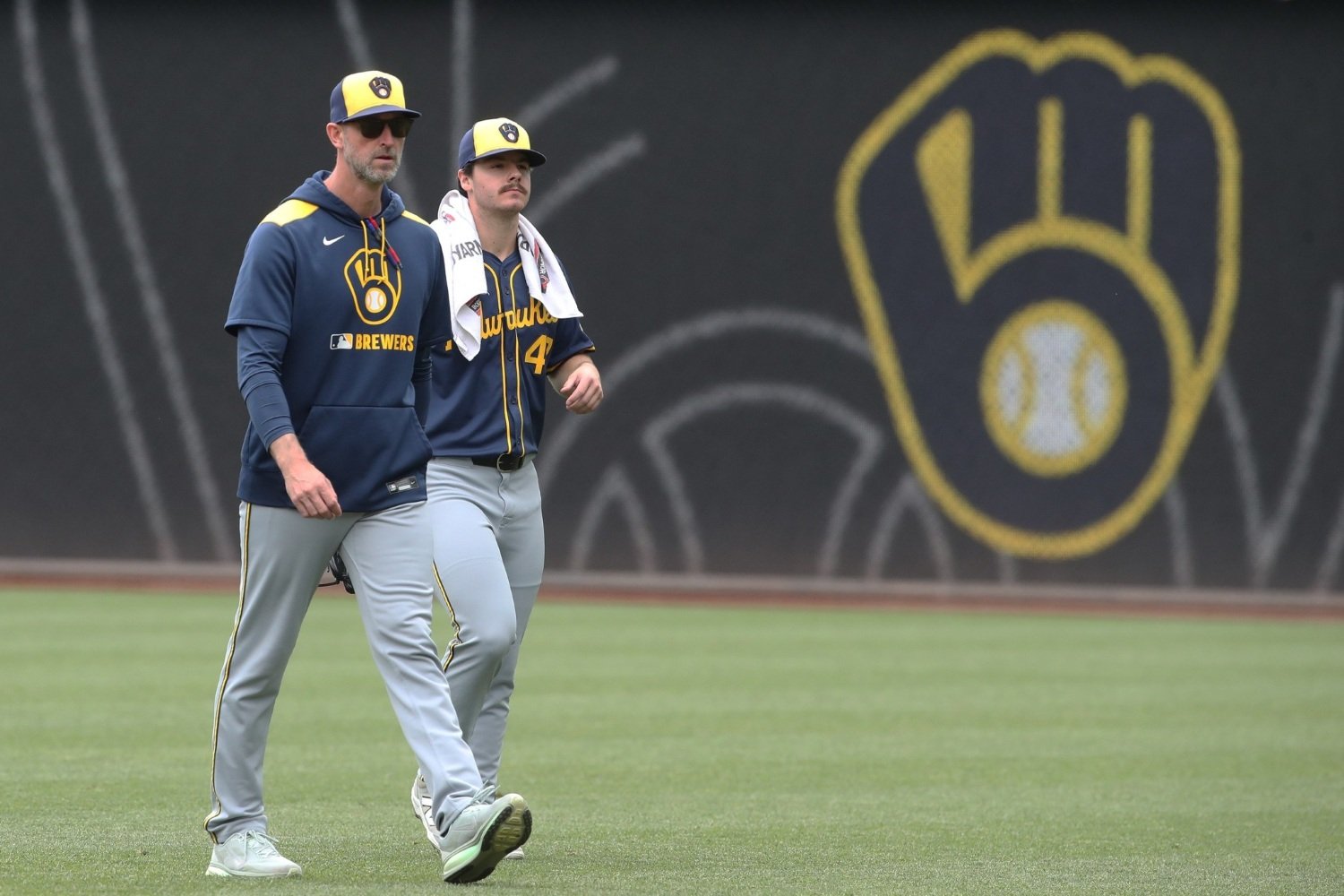 Other people's clocks keep running out on Logan Henderson. The rookie righthander couldn't do much more for the Brewers than he has, with a 1.71 ERA across his first four big-league starts, but time and again, he's been sent right back to Nashville. The righty with 29 strikeouts and six walks in 81 batters faced gets jettisoned, this time, for the consistently inconsistent DL Hall, whose rehab clock was drawing near its endpoint after three weeks on assignments in Arizona and Nashville. Hall is, of course, a talented and vaguely intriguing pitcher, but his results haven't matched the upside the Brewers so prized when they traded for him before the 2024 campaign, and he's not ready to contribute the volume of a starting pitcher at the big-league level. Henderson's spot in the starting rotation seems destined to be taken by Brandon Woodruff, when next it comes around. That would be a welcome sight, from an emotional standpoint, for a team longing as much for leadership and a sense of normalcy as for starting pitchers themselves. Still, Henderson's demotion will be unwelcome news to many fans, since he's been the most consistent hurler anywhere on Milwaukee's staff (save arguably Jared Koenig) when called upon this year. His development has continued impressively, but it seems to be doing so as much despite the organization's treatment of him as because of it. The alternative possibility tantalizing enough to distract from any frustration about this, of course, is that Jacob Misiorowski could be ticketed for his big-league debut soon. Misiorowski has been excellent for a prolonged period in the minors and earned his chance to help the parent club, but a combination of rain and the need to squeeze in various rehab outings shortened his most recent appearance with the Sounds. If this move is the precursor to promoting Misiorowski (and if it eventually leads to both righties helping Freddy Peralta anchor Milwaukee's rotation), everyone will quickly get on board. For now, though, it's caused some vexation throughout the Brewers fan base. There's one other element to consider here, though. Because they've been beset by so many injuries that (often) finding five healthy starters they trust has been a challenge, the Brewers have used starters on four days' rest 23 times through Sunday. It will be 24 after Chad Patrick's start Monday against the Red Sox. Only the Royals have used starters on what is traditionally called "regular rest" more often on the young season. The rival Cubs have only had 11 such starts; the Dodgers have a whopping two (2). In the modern game, five days is closer to a true "regular" rest schedule, and Brewers starters are rarely enjoying it. With Peralta dealing with a groin problem and so many other pitchers either banged-up or learning to start successfully in the majors for the first time, it seems to make a world of sense to turn to a six-man rotation. Pat Murphy's preference, throughout his tenure with the team, has been to be exceptionally aggressive with his bullpen, including and especially by pulling starters early. That makes the idea of a six-man rotation and a seven-man bullpen daunting. If Murphy is willing and able to adapt his game management, though, the team could fit Peralta, Patrick, Henderson, Misiorowski, Woodruff, Quinn Priester, Aaron Civale, and the soon-to-return Jose Quintana into a rotation picture together just fine. More rest between starts would do several of them good, and a few extra outs per game from the starter could be the recipe for holding this bullpen together the rest of the way. Even so, that's eight names for six starting jobs, so someone will be squeezed out unless and until someone else gets hurt. That's ok. It might be Henderson, and that's ok, too. For a short time, however, fans are right to raise an eyebrow at the choice to send down a starter who has looked as good as anyone in the rotation, at a time when the team needs to string together some wins and make up for lost time in the race for the playoffs.
 -
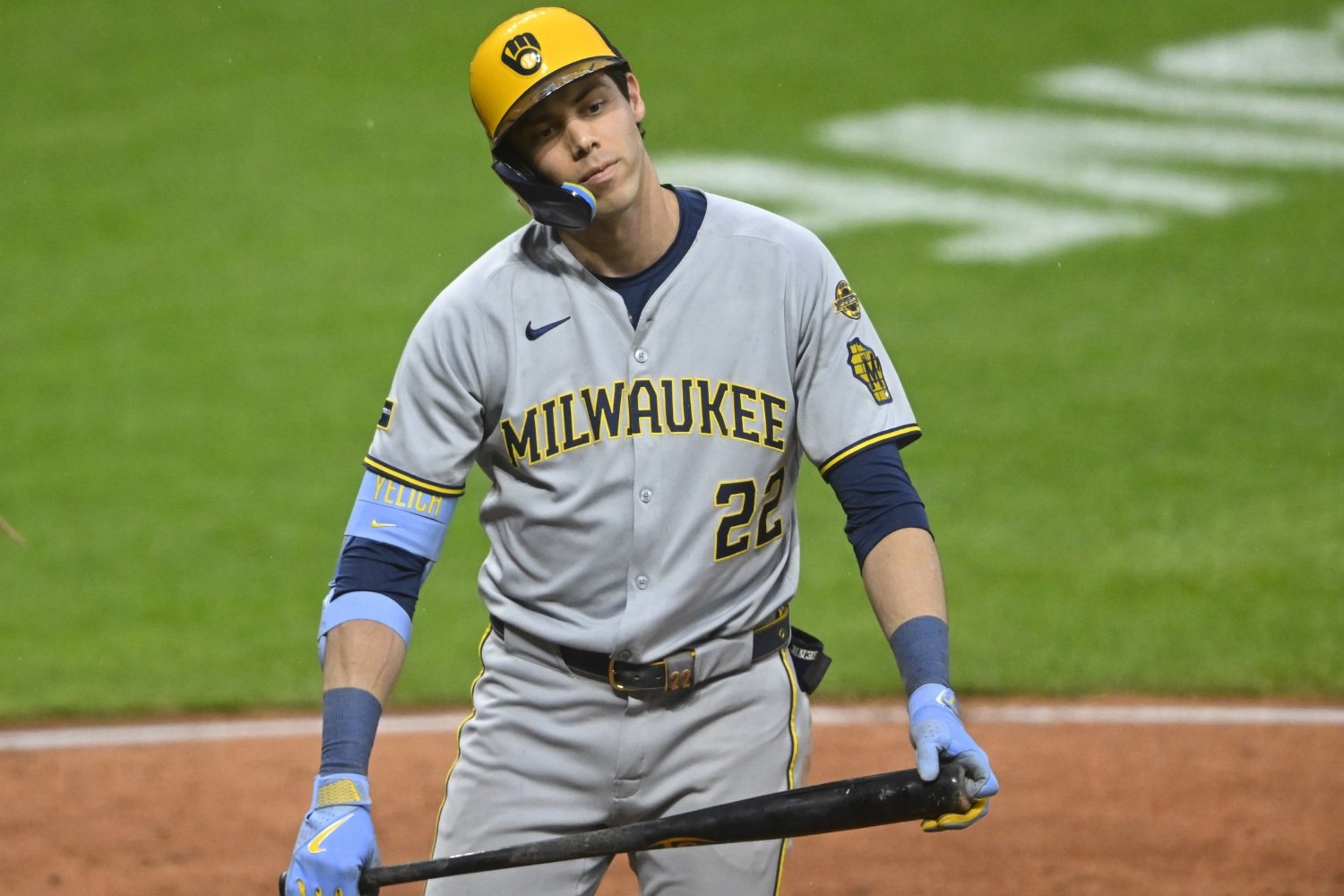 It's hard to put it any other way: Christian Yelich's bat path is broken. He's never been someone who could readily afford a downturn in launch angle, but that's exactly what he's seen this year. His average launch angle, in fact, is down from just over 5° last year to 0.2° this year. If you only saw that number, you'd be worried. If I were to introduce his exit velocity data into the conversation, though, you might feel a bit more encouraged. Yes, Yelich's average exit velocity has slightly dipped this year, and his 90th-percentile exit velocity is down a full mile per hour (106.6, from 107.6 last year). However, the raw numbers he's posting in each category are above-average, and so is his swing speed. He seems to be moving freely enough to attack the ball the same way he always has. He's squaring it up a bit less often (i.e., he's not getting to the top end of the spectrum in terms of the share of possible exit velocity he's realized, based on the speed of incoming pitches and of his swing), so that explains away the exit velocity dip almost on its own. His surface-level numbers (.199/.295/.349) are ugly, but the expected numbers suggest he should be a bit better. He's already blasted seven home runs and stolen eight bases. Should we dispense with worry and just check back in a month or so? Alas: it's not that simple. Yelich is showing tangible signs of having his swing plane out of whack, in a way that threatens to make him persistently anemic at the plate. We mentioned that he meets Statcast's criteria for a Squared Up ball less often this year. That's one problem. Here's another, though: even when he does square up the ball, Yelich's average launch angle this year is 4°. In the parts of three seasons for which we have bat-tracking data, there are 940 player-seasons in which a given hitter has had at least 50 Suqared Up balls. Here are Yelich's rankings on that list of 940: 2023: 7°, 879th 2024: 10°, 797th 2025: 4°, 931st Last year, we saw Yelich start getting the ball on a line more often. It was how he recovered his power, at least to some extent, and at least until he began to crumble a bit in July. Now, on the other side of the back trouble that drove him out of the lineup and compelled him to undergo surgery that ended his season, Yelich is truly a basement-dweller when it comes to lifting the balls on which he's getting the best part of the bat. Here's the obvious danger in that kind of swing: Yelich getting a 3-2 fastball, ripping cleanly through it to generate a 107-MPH exit velocity, and leaving with nothing but a 5-3 putout to show for it. a0Q5ZDBfWGw0TUFRPT1fVXdaWkFRVUFWZ1lBRFZkWFh3QUhWUUpmQUZrRVVBTUFWMUVDQUFJQVVBb0hDVlFG.mp4 The real and more pernicious problems, though, are more subtle. A swing as flat and downpointed as Yelich's is more prone to whiffs. That's why he's not squaring up the ball as often as he has in the past, too. He's not on plane with the pitch, so misses are more likely. Hence his 31.2% whiff rate on swings this year, worse than every year of his career except 2020—the last season in which he was coming back from a severe, season-ending injury. Almost as badly, his best swings right now look a lot like this. bGJlNG9fWGw0TUFRPT1fVkFoWFhRZFNBQUlBRDFVTEJRQUhCVlFEQUFNTlZ3SUFCUUFHQUFVQVVGWldBd1JV.mp4 Though hit almost 105 MPH and with a positive launch angle (7°), this has no chance to be anything more than a single. Yelich is, functionally, where a lot of talented but lost sluggers find themselves in their mid-20s, right before they discover the slight change in approach and swing path that unlocks a barrage of home runs for them. Unfortunately, Yelich already had his version of that epiphany, and he's now approaching his mid-30s. He's unlikely now, even more than before, to undergo some transformation a la J.D. Martinez, thereby tapping into his raw power anew. Much more likely, it would seem, is a long bout of frustration rooted in swings that feel fast and contact that feels flush—but batted balls that turn either into semi-routine outs or into underwhelming singles. Surely, the back is playing a role in this. Very slight tilts of the spine can help a hitter make crucial mid-swing adjustments and get on plane with the ball, almost subconsciously. Yelich doesn't look capable of them right now. He's as upright as he's ever been at the plate, and while he's trained himself to create as much rotational force as ever, the rest of the package that creates power—the elements of loft—is missing. If he can't rediscover it, he's not going to turn back into a productive slugger for the Brewers, and without him doing so, the Crew will struggle to score runs all year.
 -
Image courtesy of © David Richard-Imagn Images It's hard to put it any other way: Christian Yelich's bat path is broken. He's never been someone who could readily afford a downturn in launch angle, but that's exactly what he's seen this year. His average launch angle, in fact, is down from just over 5° last year to 0.2° this year. If you only saw that number, you'd be worried. If I were to introduce his exit velocity data into the conversation, though, you might feel a bit more encouraged. Yes, Yelich's average exit velocity has slightly dipped this year, and his 90th-percentile exit velocity is down a full mile per hour (106.6, from 107.6 last year). However, the raw numbers he's posting in each category are above-average, and so is his swing speed. He seems to be moving freely enough to attack the ball the same way he always has. He's squaring it up a bit less often (i.e., he's not getting to the top end of the spectrum in terms of the share of possible exit velocity he's realized, based on the speed of incoming pitches and of his swing), so that explains away the exit velocity dip almost on its own. His surface-level numbers (.199/.295/.349) are ugly, but the expected numbers suggest he should be a bit better. He's already blasted seven home runs and stolen eight bases. Should we dispense with worry and just check back in a month or so? Alas: it's not that simple. Yelich is showing tangible signs of having his swing plane out of whack, in a way that threatens to make him persistently anemic at the plate. We mentioned that he meets Statcast's criteria for a Squared Up ball less often this year. That's one problem. Here's another, though: even when he does square up the ball, Yelich's average launch angle this year is 4°. In the parts of three seasons for which we have bat-tracking data, there are 940 player-seasons in which a given hitter has had at least 50 Suqared Up balls. Here are Yelich's rankings on that list of 940: 2023: 7°, 879th 2024: 10°, 797th 2025: 4°, 931st Last year, we saw Yelich start getting the ball on a line more often. It was how he recovered his power, at least to some extent, and at least until he began to crumble a bit in July. Now, on the other side of the back trouble that drove him out of the lineup and compelled him to undergo surgery that ended his season, Yelich is truly a basement-dweller when it comes to lifting the balls on which he's getting the best part of the bat. Here's the obvious danger in that kind of swing: Yelich getting a 3-2 fastball, ripping cleanly through it to generate a 107-MPH exit velocity, and leaving with nothing but a 5-3 putout to show for it. a0Q5ZDBfWGw0TUFRPT1fVXdaWkFRVUFWZ1lBRFZkWFh3QUhWUUpmQUZrRVVBTUFWMUVDQUFJQVVBb0hDVlFG.mp4 The real and more pernicious problems, though, are more subtle. A swing as flat and downpointed as Yelich's is more prone to whiffs. That's why he's not squaring up the ball as often as he has in the past, too. He's not on plane with the pitch, so misses are more likely. Hence his 31.2% whiff rate on swings this year, worse than every year of his career except 2020—the last season in which he was coming back from a severe, season-ending injury. Almost as badly, his best swings right now look a lot like this. bGJlNG9fWGw0TUFRPT1fVkFoWFhRZFNBQUlBRDFVTEJRQUhCVlFEQUFNTlZ3SUFCUUFHQUFVQVVGWldBd1JV.mp4 Though hit almost 105 MPH and with a positive launch angle (7°), this has no chance to be anything more than a single. Yelich is, functionally, where a lot of talented but lost sluggers find themselves in their mid-20s, right before they discover the slight change in approach and swing path that unlocks a barrage of home runs for them. Unfortunately, Yelich already had his version of that epiphany, and he's now approaching his mid-30s. He's unlikely now, even more than before, to undergo some transformation a la J.D. Martinez, thereby tapping into his raw power anew. Much more likely, it would seem, is a long bout of frustration rooted in swings that feel fast and contact that feels flush—but batted balls that turn either into semi-routine outs or into underwhelming singles. Surely, the back is playing a role in this. Very slight tilts of the spine can help a hitter make crucial mid-swing adjustments and get on plane with the ball, almost subconsciously. Yelich doesn't look capable of them right now. He's as upright as he's ever been at the plate, and while he's trained himself to create as much rotational force as ever, the rest of the package that creates power—the elements of loft—is missing. If he can't rediscover it, he's not going to turn back into a productive slugger for the Brewers, and without him doing so, the Crew will struggle to score runs all year. View full article
-
Image courtesy of © Michael McLoone-Imagn Images All season, Jackson Chourio has filled up the stat sheet. That's the fun and the frustration of a sophomore season that feels more like a rookie year, from a player the team hoped was ready to mature into a full-fledged superstar. He's been all over the place—physically and figuratively. Only 19 players have come to the plate more often than has Chourio this year, and because he's been such an eager, almost desperate hitter, only one of them has more official at-bats than he does. Only eight outfielders have played more innings than he has. At the plate and in the field, he's made a stunning number of contributions—positive and negative; tantalizing and maddening. During the team's recent road trip, Chourio had a bad time in center field. An error on a should-have-been single in the first game of their set against the Rays in Tampa gave the home team an early run in what turned out to be a one-run Brewers loss. A misread on a bases-loaded fly ball in the first game of the team's series in Cleveland turned an inning-ending flyout into three runs, and the Brewers went down meekly. It's easy to miss the good things Chourio also did, even on that trip. He had a sloppy but highlight-laden .719 OPS in those six games, with a home run and five stolen bases. Again: filling up the stat sheet. He's swung so much and run so much and been plugged into key outfield positions so much that he feels ubiquitous when watching Brewers games. Were he playing the way he did in the second half of 2024, that would be wonderful news. Because he's playing a more ragged, rough-edged game thus far this year, it's been a mixed blessing. During the very same series in which he committed that miserable misplay to cost the team three runs, for instance, Chourio also made this fine catch. Statcast gives a 30% Catch Probability on this play; Chourio made it look easy because he accelerates so well and so smoothly, and was able to pull it down without physical drama. ZFh6NHpfWGw0TUFRPT1fVlFNRFZ3Y0dWZ1FBRFZFQVZnQUhVMU1GQUFCVFZWY0FVMVpSQVFVRkJndFNBMUJX.mp4 There have been plenty of catches like that this year for the youngster. They just don't make up for the gaffes, because baseball is a game more about payoffs than probabilities. Most defenders make the play more than 90% of the time, when the ball comes within the sphere of their reach. You can create value by making that circle of influence wider, with great range, or by being exceptionally efficient within the range you do have—but if you're erratic within your range, even making it as wide as practically possible can't quite make up the difference. Each big misplay erases the tiny marginal value you stack up with five or 10 good plays that other defenders might make very slightly less often. Every now and then, though, the game does give you a chance to get it all back with one swing—literally. The plays that test a fielder's range and their playmaking ability at the crucial moment (be it merely making the catch, or turning the catch into a quick throw, or taking a throw and making a lightning-fast tag) are extraordinarily rare, but when they come, they do give you a chance to erase some past sins. If they come in a big moment within a game, that goes double. Chourio got that redemptive opportunity Sunday against the Twins. Royce Lewis carried the tying run into the batter's box for the visitors, and given the way each team has played lately, it felt like tying it up would be as good as winning outright for Minnesota. The Brewers' offense just isn't good enough lately, and the Twins bullpen has been nails. Thus, when Lewis hit a long fly ball to left-center, every Brewers fan's heart was suddenly in their throat. eUxONjNfWGw0TUFRPT1fQVFSV0FRVU1VMVlBQ2xKWFVRQUhVMVZRQUZoUVdsTUFWMTFXVWxjTkFnVUhWQUlB.mp4 There are easy home run robberies in this world. They're always worth celebrating, but they're not all worth a whole lot of marginal value. Sometimes, a batter hits a high and readable fly ball, and the fielder has ample time to camp at the base of the wall, orient their body optimally, and go up to bring back the ball, with only well-managed contact with the wall. It's never quite routine, but the same way a quarterback hitting a wide-open receiver on the run or a wing hitting an unmolested corner three has become routine, so has that sort of homer heist. This is not one of those times. Chourio started the play 327 feet from home plate, around the average starting depth for big-league center fielders this year. Against Lewis, though, he'd ordinarily play about a step deeper. With an important run on second, he was still thinking a bit about being able to cut down the run at home if needed. Lewis also hit almost as much a line drive as a fly ball, getting on top of a high pitch from Nick Mears with a flatter swing than is his wont. It had a 26° launch angle. Chourio had little time to cover lots of ground, and none left to gather or square himself when he reached the wall. He did an excellent job of measuring his steps at an oblique angle as he crossed onto the warning track, but he never did glance back to find the barrier. Instead, having little time, he put his free hand out to find the wall as he made his one-footed leap. He was a bit closer to the wall than he'd guessed, but the hand helped him realize that before his whole frame hit the fence, so he was able to make a slight adjustment, turning into the contact so as not to bounce off the wall and have the ball sail just over his glove. That turn gave him the final stretch he needed for a marvelous backhanded grab, although he hadn't left any balance for a controlled descent. Instead, he slid down the wall almost clumsily—an artifact of great grace coming into contact with an unfriendly angular obstacle. The catch saved the game for the Brewers and salvaged a win, albeit their third straight lone win in a lost series. Chourio went 0-13 in the series and looks rough at the plate right now. His defense is still a work in progress. He won a game almost singlehandedly Sunday, though, and that might serve both as a catalyst for the team and as a reminder that Chourio has that sort of transcendent talent—that sort of potential. His journey to superstardom looked so smooth until about a month ago that it's felt alarming to see him go through even the most normal baseball adversity. If this dazzling play was a springboard back to where he can still be, on a regular basis, then it will also be one for the team—and we'll all quickly forget that one month where he looked talented but human. View full article
-
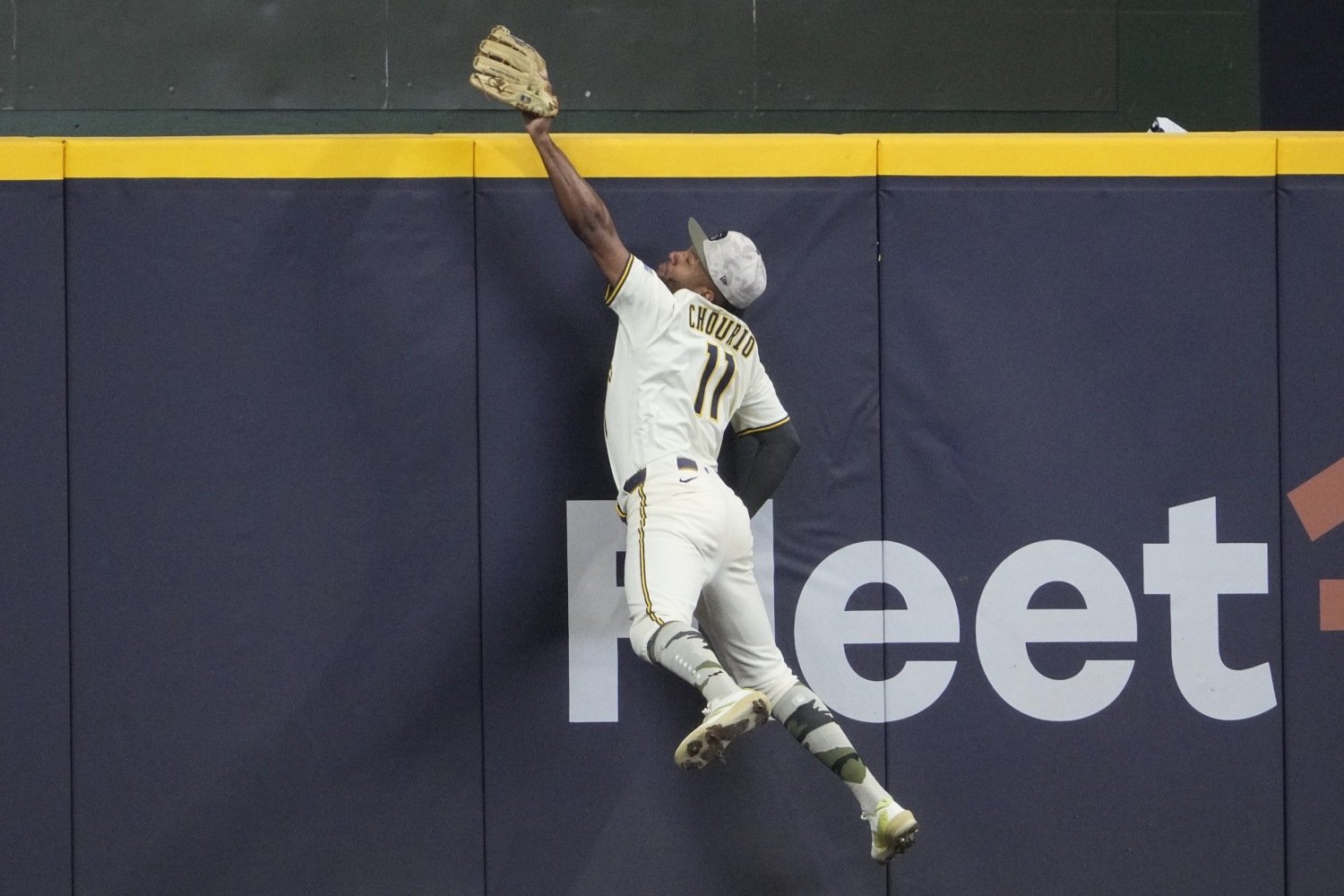 All season, Jackson Chourio has filled up the stat sheet. That's the fun and the frustration of a sophomore season that feels more like a rookie year, from a player the team hoped was ready to mature into a full-fledged superstar. He's been all over the place—physically and figuratively. Only 19 players have come to the plate more often than has Chourio this year, and because he's been such an eager, almost desperate hitter, only one of them has more official at-bats than he does. Only eight outfielders have played more innings than he has. At the plate and in the field, he's made a stunning number of contributions—positive and negative; tantalizing and maddening. During the team's recent road trip, Chourio had a bad time in center field. An error on a should-have-been single in the first game of their set against the Rays in Tampa gave the home team an early run in what turned out to be a one-run Brewers loss. A misread on a bases-loaded fly ball in the first game of the team's series in Cleveland turned an inning-ending flyout into three runs, and the Brewers went down meekly. It's easy to miss the good things Chourio also did, even on that trip. He had a sloppy but highlight-laden .719 OPS in those six games, with a home run and five stolen bases. Again: filling up the stat sheet. He's swung so much and run so much and been plugged into key outfield positions so much that he feels ubiquitous when watching Brewers games. Were he playing the way he did in the second half of 2024, that would be wonderful news. Because he's playing a more ragged, rough-edged game thus far this year, it's been a mixed blessing. During the very same series in which he committed that miserable misplay to cost the team three runs, for instance, Chourio also made this fine catch. Statcast gives a 30% Catch Probability on this play; Chourio made it look easy because he accelerates so well and so smoothly, and was able to pull it down without physical drama. ZFh6NHpfWGw0TUFRPT1fVlFNRFZ3Y0dWZ1FBRFZFQVZnQUhVMU1GQUFCVFZWY0FVMVpSQVFVRkJndFNBMUJX.mp4 There have been plenty of catches like that this year for the youngster. They just don't make up for the gaffes, because baseball is a game more about payoffs than probabilities. Most defenders make the play more than 90% of the time, when the ball comes within the sphere of their reach. You can create value by making that circle of influence wider, with great range, or by being exceptionally efficient within the range you do have—but if you're erratic within your range, even making it as wide as practically possible can't quite make up the difference. Each big misplay erases the tiny marginal value you stack up with five or 10 good plays that other defenders might make very slightly less often. Every now and then, though, the game does give you a chance to get it all back with one swing—literally. The plays that test a fielder's range and their playmaking ability at the crucial moment (be it merely making the catch, or turning the catch into a quick throw, or taking a throw and making a lightning-fast tag) are extraordinarily rare, but when they come, they do give you a chance to erase some past sins. If they come in a big moment within a game, that goes double. Chourio got that redemptive opportunity Sunday against the Twins. Royce Lewis carried the tying run into the batter's box for the visitors, and given the way each team has played lately, it felt like tying it up would be as good as winning outright for Minnesota. The Brewers' offense just isn't good enough lately, and the Twins bullpen has been nails. Thus, when Lewis hit a long fly ball to left-center, every Brewers fan's heart was suddenly in their throat. eUxONjNfWGw0TUFRPT1fQVFSV0FRVU1VMVlBQ2xKWFVRQUhVMVZRQUZoUVdsTUFWMTFXVWxjTkFnVUhWQUlB.mp4 There are easy home run robberies in this world. They're always worth celebrating, but they're not all worth a whole lot of marginal value. Sometimes, a batter hits a high and readable fly ball, and the fielder has ample time to camp at the base of the wall, orient their body optimally, and go up to bring back the ball, with only well-managed contact with the wall. It's never quite routine, but the same way a quarterback hitting a wide-open receiver on the run or a wing hitting an unmolested corner three has become routine, so has that sort of homer heist. This is not one of those times. Chourio started the play 327 feet from home plate, around the average starting depth for big-league center fielders this year. Against Lewis, though, he'd ordinarily play about a step deeper. With an important run on second, he was still thinking a bit about being able to cut down the run at home if needed. Lewis also hit almost as much a line drive as a fly ball, getting on top of a high pitch from Nick Mears with a flatter swing than is his wont. It had a 26° launch angle. Chourio had little time to cover lots of ground, and none left to gather or square himself when he reached the wall. He did an excellent job of measuring his steps at an oblique angle as he crossed onto the warning track, but he never did glance back to find the barrier. Instead, having little time, he put his free hand out to find the wall as he made his one-footed leap. He was a bit closer to the wall than he'd guessed, but the hand helped him realize that before his whole frame hit the fence, so he was able to make a slight adjustment, turning into the contact so as not to bounce off the wall and have the ball sail just over his glove. That turn gave him the final stretch he needed for a marvelous backhanded grab, although he hadn't left any balance for a controlled descent. Instead, he slid down the wall almost clumsily—an artifact of great grace coming into contact with an unfriendly angular obstacle. The catch saved the game for the Brewers and salvaged a win, albeit their third straight lone win in a lost series. Chourio went 0-13 in the series and looks rough at the plate right now. His defense is still a work in progress. He won a game almost singlehandedly Sunday, though, and that might serve both as a catalyst for the team and as a reminder that Chourio has that sort of transcendent talent—that sort of potential. His journey to superstardom looked so smooth until about a month ago that it's felt alarming to see him go through even the most normal baseball adversity. If this dazzling play was a springboard back to where he can still be, on a regular basis, then it will also be one for the team—and we'll all quickly forget that one month where he looked talented but human.
 -
Image courtesy of © Rick Scuteri-Imagn Images Since April 22, Jacob Misiorowski has gotten 92 outs in five starts. Thirty-eight of those have come via strikeouts, and he's walked only seven total batters along the way. He's yielded 16 hits and two runs. His stuff has gone nuclear, and he's landing it in the strike zone often enough to make the most of that tick upward. He's ready for the majors, and the Brewers shouldn't waste even one more bullet in his invaluable arm. Whether his long-term role is in the rotation or the bullpen, right now, he can be one of their two or three best starters at the big-league level. Misiorowski has found increased consistency in his release point recently, and added a changeup to his arsenal in the middle of April. Now a four-pitch guy (even if he's predominantly getting his outs with the fastball and hard slider), he can keep hitters in an even more defensive mode—and even big-league batters will struggle to handle the heat he's now firing. Misiorowski has struck out nearly a third of the batters he's faced in 2025. His stuff is utterly dominant, and he's spent a handful of outings learning how to work into a lineup for a third time and compete when there's traffic on the bases. Growing pains might still come, but those have to happen sometimes. With an arm as electric as Misiorowski's, it would be a shame to have him continue working against competition for which he's far too good, in games that only matter in the context of preparing players to win games at the next level. It's time to call up Misiorowski and make sure that every triple-digit fastball he throws counts, in full, beginning with his next start. The Brewers will host the struggling Orioles at American Family Field next week. When they take the field for the Wednesday matinee to close that series, Misiorowski should be the one picking up the ball and toeing the rubber. The Brewers' most urgent needs might be on offense, but a pitcher with the chance to be this good, this soon can only ever help matters. View full article
-
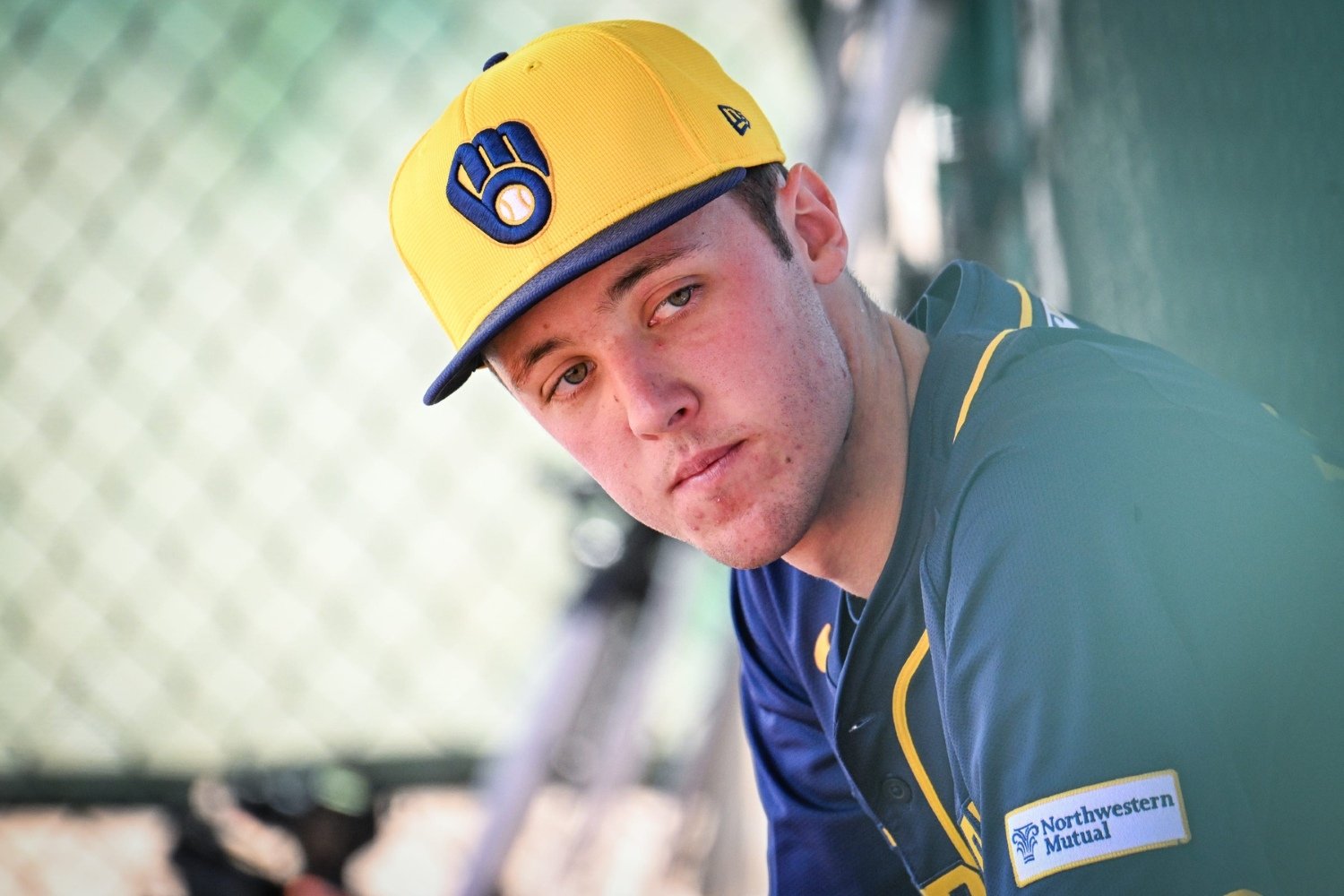 Since April 22, Jacob Misiorowski has gotten 92 outs in five starts. Thirty-eight of those have come via strikeouts, and he's walked only seven total batters along the way. He's yielded 16 hits and two runs. His stuff has gone nuclear, and he's landing it in the strike zone often enough to make the most of that tick upward. He's ready for the majors, and the Brewers shouldn't waste even one more bullet in his invaluable arm. Whether his long-term role is in the rotation or the bullpen, right now, he can be one of their two or three best starters at the big-league level. Misiorowski has found increased consistency in his release point recently, and added a changeup to his arsenal in the middle of April. Now a four-pitch guy (even if he's predominantly getting his outs with the fastball and hard slider), he can keep hitters in an even more defensive mode—and even big-league batters will struggle to handle the heat he's now firing. Misiorowski has struck out nearly a third of the batters he's faced in 2025. His stuff is utterly dominant, and he's spent a handful of outings learning how to work into a lineup for a third time and compete when there's traffic on the bases. Growing pains might still come, but those have to happen sometimes. With an arm as electric as Misiorowski's, it would be a shame to have him continue working against competition for which he's far too good, in games that only matter in the context of preparing players to win games at the next level. It's time to call up Misiorowski and make sure that every triple-digit fastball he throws counts, in full, beginning with his next start. The Brewers will host the struggling Orioles at American Family Field next week. When they take the field for the Wednesday matinee to close that series, Misiorowski should be the one picking up the ball and toeing the rubber. The Brewers' most urgent needs might be on offense, but a pitcher with the chance to be this good, this soon can only ever help matters.
 -
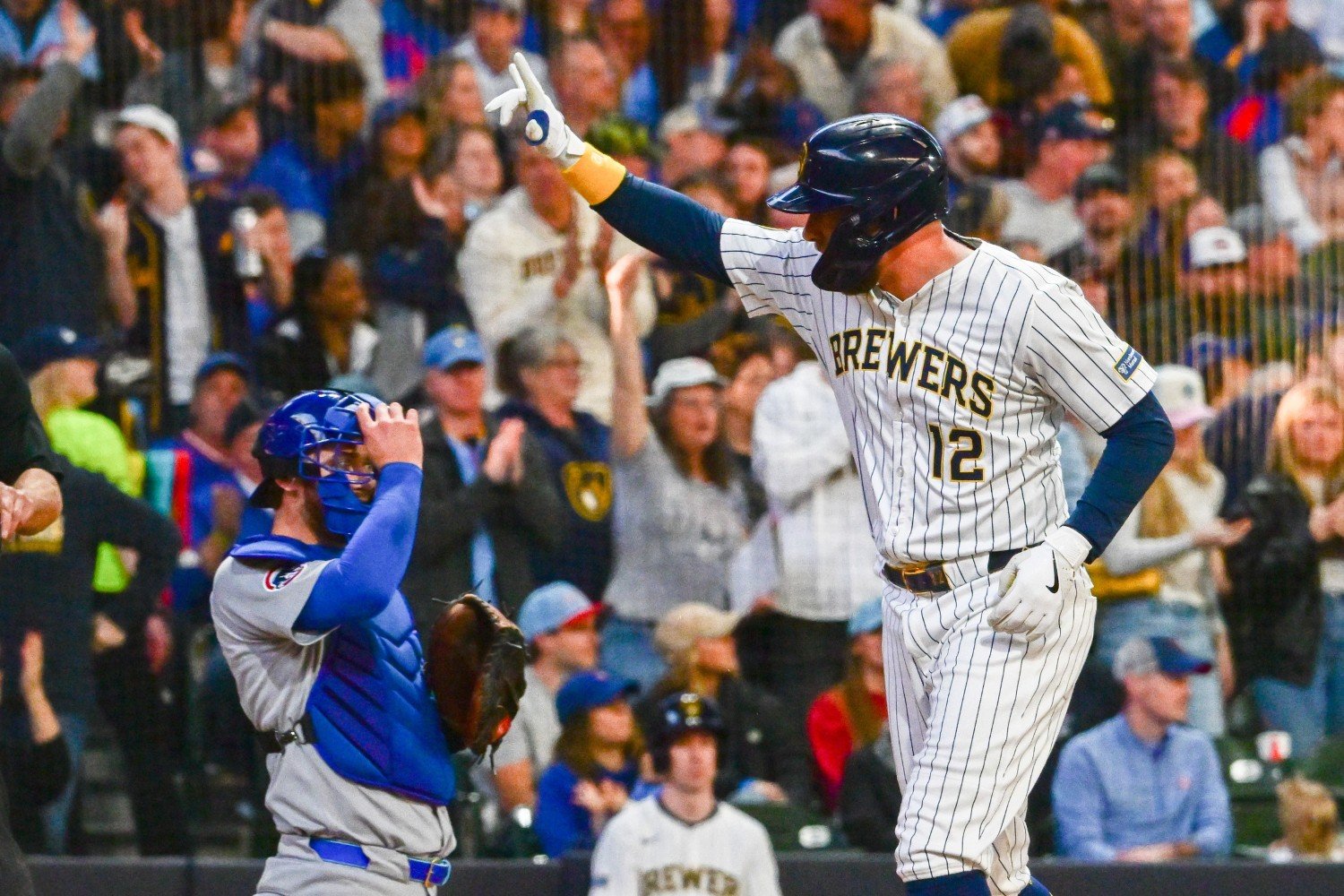 It's not a fun scenario to consider. From ownership down to the farm system, the Brewers organization takes great pride in fielding a perennial contender. No one involved therein wants to see the team take a significant step back; they believe they can compete for a playoff berth every season. If you don't count 2020—which you certainly shouldn't—their last losing season was 2016. They're always buyers at the trade deadline. Sometimes, they even make that type of move much sooner than most teams do—most famously, when they acquired Willy Adames in May 2021, but also when they dealt for Aaron Civale at the front end of July last year or when they made such a leap of faith on Quinn Priester last month. Rival front offices have heard from the Brewers already this spring (including within the last week) about deals that could be echoes of that memorable Adames deal. Matt Arnold and his staff are being proactive, behind the scenes, to see what's possible. Even as they do so, though, the team on the field looks less and less like one they'll be able to rescue. It might be that, for the first time in almost a decade, the Brewers will need to behave as true sellers at this year's trade deadline. Because of the financial constraints of the franchise, though, we already know that they have the right clubs in that bag for that course, too. If it comes to that, without giving up any indispensable parts of the 2026 team, they could land some crucial pieces of a longer-term divisional dynasty. Even at their best, teams like the Brewers (the Guardians, the Rays, etc.) benefit from the occasional opportunity to reset and regroup. This could be that kind of summer. Here are five guys on whom the team will receive lots of calls, if they pivot toward selling off assets in July—and who could net them big value in return. Rhys Hoskins Let's start simply. In a year when the Red Sox are trying to contend but have lost first baseman Triston Casas for the year; the Mariners lead the AL West despite running out the 2025 versions of Rowdy Tellez and Donovan Solano at first; and every contender in the American League seems to be faking it at DH, Rhys Hoskins would have a good deal of trade value. Hoskins, 32, will be a free agent at season's end, and the Brewers are more likely to have Jake Bauers back or promote Ernesto Martinez Jr. to take over first than to bring Hoskins back in 2026. In this platform season, though, Hoskins is enjoying what could be one of the best seasons of his career, even with only four home runs so far. His hard-hit rate would be the best of his career, if the season ended today. His strikeout rate would be close, higher only than in his rookie season of 2017. This season, drag on the ball is greater than it's been since at least 2016, which is steering offense downward and making Hoskins look less like a star than he otherwise might. That phenomenon is affecting the whole league, though, and Hoskins has weathered it much better than you might expect a power-centric fly-ball specialist to. Because the Phillies didn't attach a qualifying offer to Hoskins when he departed via free agency after 2023, if he keeps playing this way, the Brewers could make him such an offer this fall and recoup a draft pick if he signs elsewhere. Knowing that, Hoskins would surely prefer to be dealt, because that would pulverize the possibility of a QO, which would be a major drag on his market. For Milwaukee, though, it means that any interested suitor will need to make a strong offer to peel Hoskins away. Freddy Peralta It might be more natural to think about what Jose Quintana, Civale, or Nestor Cortes could fetch on the market, but there's a reason why the Brewers got Quintana for less than $5 million in early March: he has a skill set most of the league doesn't trust. With huge health questions hanging over Civale, Cortes and Brandon Woodruff, therefore, the only starter with a real chance to bring back huge value is the guy the team surely wants to trade least. On the other hand, Freddy Peralta's name was going to be all over the trade rumors ticker this winter, anyway. He's under contract for just one more season, via a club option for 2026, and as the recent cases of Josh Hader, Corbin Burnes and Devin Williams prove, this organization prefers to trade a player for longer-term pieces they believe can help—as opposed to holding them all the way to free agency, even with a mandate to be good every year. If they do tumble out of contention as spring gives way to summer, then, the team might consider trading him before the winter. At $8 million, Peralta is priced 200% below his market value. Teams would swarm to him, if the Crew made him available, especially with the promise of two playoff races in which he could play a key role, rather than one. The Astros, Mets, and Yankees (to name just a few) would be interested. Trading Peralta would cut deeply, for the fan base and within the clubhouse. It would have to mark a resolute pivot to a new era for the team. It could, however, bring a return too tantalizing to pass up. Nick Mears Rarely will the Brewers trade a valuable player with multiple years of team control remaining, and after some refinement this winter and spring, Mears is a valuable piece in the bullpen. He can't become a free agent until after 2027. On the other hand, he's out of options, so he doesn't help a pitching staff stay flexible—a key for building a winning team in a market like the Brewers'. After Arnold and company swooped in and grabbed Mears at a minimal cost last summer, they could get more for him this year than they gave up, even if it's unlikely to be a game-changing return. Trevor Megill It hasn't quite felt the same, with Megill stepping into the place vacated by Hader, then Williams. He's a fine closer, but he's the bridge between your true heroes—your catalytic bullpen aces, of which the team dearly hopes Craig Yoho will be the next one. If this season does go sour, Megill is the right kind of player to trade a year too soon, rather than a year too late. He could become a very imposing presence in another bullpen, but his performance profile makes it easier to like him as a setup man, anyway, and his health profile makes striking while the iron's hot feel like the right idea. Eric Haase Good backup catchers are a dime a dozen every winter. By midsummer, though, everyone realizes that the backup catcher they were so confident in actually kind of sucks. Not so with Haase, however. He's enjoying a second consecutive season of good performance and helpful work in the clubhouse, even though he had to spend much of last season providing those things at Triple-A Nashville. He's the type of player who is, inevitably, much more valuable to a winner than to any team in the midst of a transition year. Dealing him wouldn't net a ton, but given the Brewers' preference to invest coaching and player development resources (rather than cash) in the catching spot, it makes more sense to trade him than to hold on and end up cutting ties this offseason. This isn't even an exhaustive list of guys whom the team can discuss with other teams this summer, if they turn out not to have the juice. It's the right place to start, though. The way things are trending, the Crew needs to step back and think about how best to build a consistent winner for the next half-decade, again. These five players could be the ones you deal to make that kind of major turn toward the future.
- 5 comments
-
- 2
-

-
- rhys hoskins
- freddy peralta
- (and 3 more)
-
Image courtesy of © Benny Sieu-Imagn Images It's not a fun scenario to consider. From ownership down to the farm system, the Brewers organization takes great pride in fielding a perennial contender. No one involved therein wants to see the team take a significant step back; they believe they can compete for a playoff berth every season. If you don't count 2020—which you certainly shouldn't—their last losing season was 2016. They're always buyers at the trade deadline. Sometimes, they even make that type of move much sooner than most teams do—most famously, when they acquired Willy Adames in May 2021, but also when they dealt for Aaron Civale at the front end of July last year or when they made such a leap of faith on Quinn Priester last month. Rival front offices have heard from the Brewers already this spring (including within the last week) about deals that could be echoes of that memorable Adames deal. Matt Arnold and his staff are being proactive, behind the scenes, to see what's possible. Even as they do so, though, the team on the field looks less and less like one they'll be able to rescue. It might be that, for the first time in almost a decade, the Brewers will need to behave as true sellers at this year's trade deadline. Because of the financial constraints of the franchise, though, we already know that they have the right clubs in that bag for that course, too. If it comes to that, without giving up any indispensable parts of the 2026 team, they could land some crucial pieces of a longer-term divisional dynasty. Even at their best, teams like the Brewers (the Guardians, the Rays, etc.) benefit from the occasional opportunity to reset and regroup. This could be that kind of summer. Here are five guys on whom the team will receive lots of calls, if they pivot toward selling off assets in July—and who could net them big value in return. Rhys Hoskins Let's start simply. In a year when the Red Sox are trying to contend but have lost first baseman Triston Casas for the year; the Mariners lead the AL West despite running out the 2025 versions of Rowdy Tellez and Donovan Solano at first; and every contender in the American League seems to be faking it at DH, Rhys Hoskins would have a good deal of trade value. Hoskins, 32, will be a free agent at season's end, and the Brewers are more likely to have Jake Bauers back or promote Ernesto Martinez Jr. to take over first than to bring Hoskins back in 2026. In this platform season, though, Hoskins is enjoying what could be one of the best seasons of his career, even with only four home runs so far. His hard-hit rate would be the best of his career, if the season ended today. His strikeout rate would be close, higher only than in his rookie season of 2017. This season, drag on the ball is greater than it's been since at least 2016, which is steering offense downward and making Hoskins look less like a star than he otherwise might. That phenomenon is affecting the whole league, though, and Hoskins has weathered it much better than you might expect a power-centric fly-ball specialist to. Because the Phillies didn't attach a qualifying offer to Hoskins when he departed via free agency after 2023, if he keeps playing this way, the Brewers could make him such an offer this fall and recoup a draft pick if he signs elsewhere. Knowing that, Hoskins would surely prefer to be dealt, because that would pulverize the possibility of a QO, which would be a major drag on his market. For Milwaukee, though, it means that any interested suitor will need to make a strong offer to peel Hoskins away. Freddy Peralta It might be more natural to think about what Jose Quintana, Civale, or Nestor Cortes could fetch on the market, but there's a reason why the Brewers got Quintana for less than $5 million in early March: he has a skill set most of the league doesn't trust. With huge health questions hanging over Civale, Cortes and Brandon Woodruff, therefore, the only starter with a real chance to bring back huge value is the guy the team surely wants to trade least. On the other hand, Freddy Peralta's name was going to be all over the trade rumors ticker this winter, anyway. He's under contract for just one more season, via a club option for 2026, and as the recent cases of Josh Hader, Corbin Burnes and Devin Williams prove, this organization prefers to trade a player for longer-term pieces they believe can help—as opposed to holding them all the way to free agency, even with a mandate to be good every year. If they do tumble out of contention as spring gives way to summer, then, the team might consider trading him before the winter. At $8 million, Peralta is priced 200% below his market value. Teams would swarm to him, if the Crew made him available, especially with the promise of two playoff races in which he could play a key role, rather than one. The Astros, Mets, and Yankees (to name just a few) would be interested. Trading Peralta would cut deeply, for the fan base and within the clubhouse. It would have to mark a resolute pivot to a new era for the team. It could, however, bring a return too tantalizing to pass up. Nick Mears Rarely will the Brewers trade a valuable player with multiple years of team control remaining, and after some refinement this winter and spring, Mears is a valuable piece in the bullpen. He can't become a free agent until after 2027. On the other hand, he's out of options, so he doesn't help a pitching staff stay flexible—a key for building a winning team in a market like the Brewers'. After Arnold and company swooped in and grabbed Mears at a minimal cost last summer, they could get more for him this year than they gave up, even if it's unlikely to be a game-changing return. Trevor Megill It hasn't quite felt the same, with Megill stepping into the place vacated by Hader, then Williams. He's a fine closer, but he's the bridge between your true heroes—your catalytic bullpen aces, of which the team dearly hopes Craig Yoho will be the next one. If this season does go sour, Megill is the right kind of player to trade a year too soon, rather than a year too late. He could become a very imposing presence in another bullpen, but his performance profile makes it easier to like him as a setup man, anyway, and his health profile makes striking while the iron's hot feel like the right idea. Eric Haase Good backup catchers are a dime a dozen every winter. By midsummer, though, everyone realizes that the backup catcher they were so confident in actually kind of sucks. Not so with Haase, however. He's enjoying a second consecutive season of good performance and helpful work in the clubhouse, even though he had to spend much of last season providing those things at Triple-A Nashville. He's the type of player who is, inevitably, much more valuable to a winner than to any team in the midst of a transition year. Dealing him wouldn't net a ton, but given the Brewers' preference to invest coaching and player development resources (rather than cash) in the catching spot, it makes more sense to trade him than to hold on and end up cutting ties this offseason. This isn't even an exhaustive list of guys whom the team can discuss with other teams this summer, if they turn out not to have the juice. It's the right place to start, though. The way things are trending, the Crew needs to step back and think about how best to build a consistent winner for the next half-decade, again. These five players could be the ones you deal to make that kind of major turn toward the future. View full article
-
Image courtesy of © Nathan Ray Seebeck-Imagn Images According to Baseball Prospectus's PECOTA projection system and their projected standings, the Brewers have just a 6.2% chance to make the postseason in 2025. FanGraphs is a bit more optimistic, giving them an 18.6% shot. By either measurement, though, they're in some trouble. The Cubs have a large advantage on them in the division projections, and last week, the Cardinals surpassed them, too—in both Prospectus's and FanGraphs's estimations. Not since their collapse at the end of 2022 have the Brewers been in such a tough spot, according to anyone's playoff odds. In fact, you can go all the way back to 2018, and the only times they've been slung this low were that brutal September in 2022 and the beginning of that month in 2021—before a late surge vaulted them to the division title, after all. With not only poor overall odds but two teams in the division ahead of them, the Brewers are dealing with an unfamiliar problem: the threat of irrelevance. There were signs of trouble beginning on Opening Day, of course, to which the team has responded with the necessary alacrity. Pat Murphy's messaging has been clear since Day 1, as he's demanded crisper baseball than the club has played, but it hasn't yet yielded the results he's after. The front office has matched Murphy's energy, from the slightly impulsive Quinn Priester trade to significant roster tinkering. Oliver Dunn, Bryan Hudson and Tobias Myers have failed to capitalize on their opportunities, and been optioned to Triple-A Nashville. Vinny Capra's ineptitude at the plate led to him being designated for assignment. Sources in other front offices said this weekend that the Brewers are actively talking about trades, to a greater degree than is typical for this time of year. Unfortunately, few potential partners are ready to have those discussions, or at least to pull the trigger on big moves, so a real solution to the team's looming problems will be hard to shake loose for the next two months of so. Instead, the team will have to find some fixes within their own ranks. The good news there is that the team has some players with short-term impact potential in Nashville, beyond the aforementioned big-leaguers who have been shuttled back there to get themselves right. Ernesto Martinez Jr. still leads all Triple-A hitters in 90th-percentile exit velocity, while drawing plenty of walks and making ample contact within the strike zone. Jacob Misiorowski has turned a corner with his command, and deepened his arsenal. His prospect stock is rising; he might turn into an ace after all. Craig Yoho's first stint with the parent club wasn't as good as anyone might have hoped, but he'll be back at some point, and could be a major weapon for the bullpen. None of them can play shortstop, though, and Joey Ortiz still has a .461 OPS. His only home run, hit this weekend in Tampa, was a poke down the right-field line that wouldn't have been gone in any other park in the majors, according to Statcast. None of them are catchers, so they can't backfill if the team finally sells William Contreras on a stint on the injured list. Martinez has the bat they need to give their lineup some juice, but plays the same position as Rhys Hoskins, who's already one of the hitters actually performing up to snuff. Things are trending in a bad direction. The shakeups they've already attempted haven't gotten the team untracked, and the ones they might envision making will have to wait for a bit. For now, they're fighting for their lives. This is the two-time defending National League Central champion. It's been built by one of the most nimble front offices in baseball and is being run by an energetic, highly engaged manager. They're more talented than they've looked for much of this season, too. Thus far, they've only shown the ability to win games by totally shutting down the other team, but somewhere in there is the same group that found almost endless ways to win over the last two years. If they don't tap into that soon, though, their underlying talent and their great organizational fundamentals will go for naught—at least this season. View full article
-
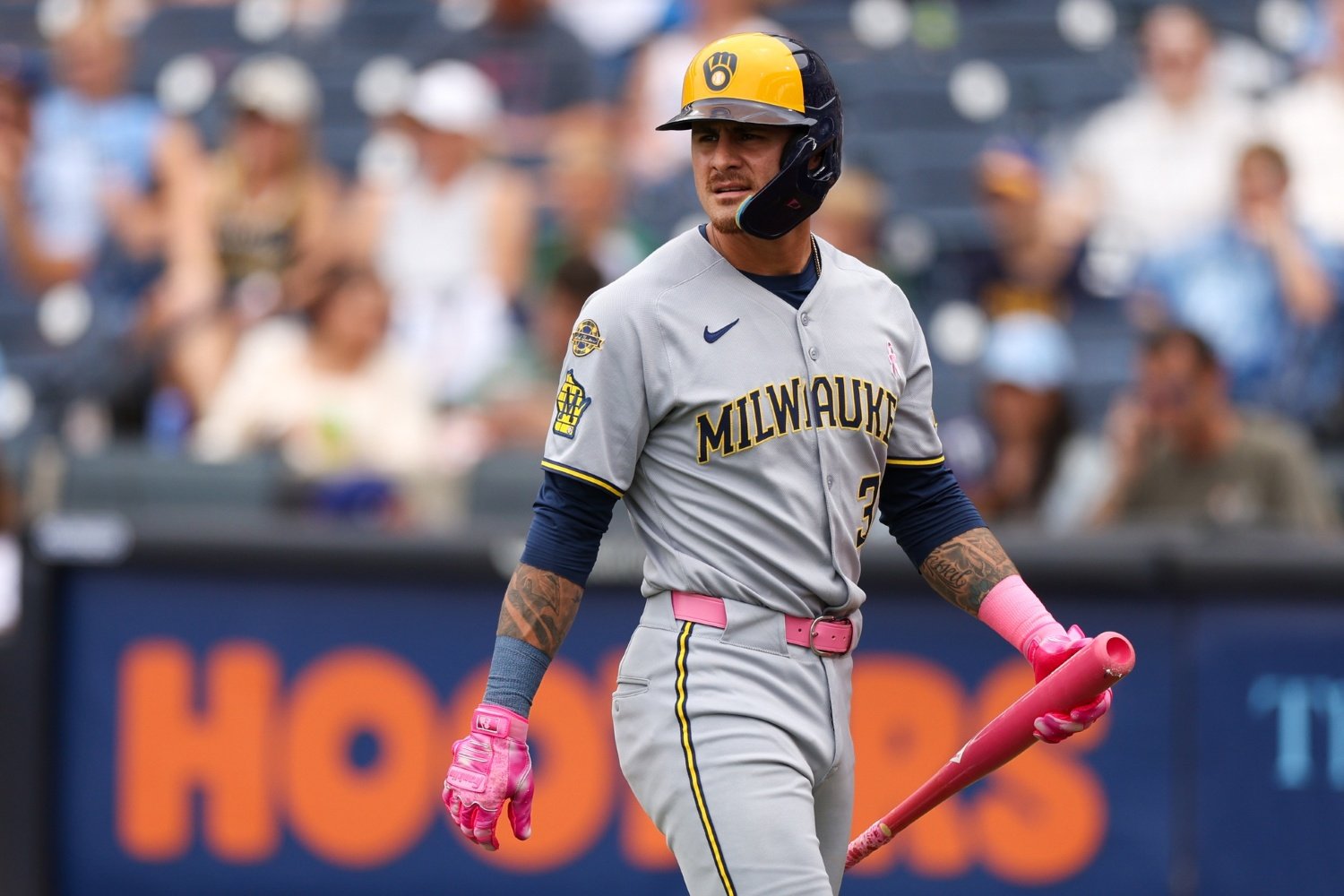 According to Baseball Prospectus's PECOTA projection system and their projected standings, the Brewers have just a 6.2% chance to make the postseason in 2025. FanGraphs is a bit more optimistic, giving them an 18.6% shot. By either measurement, though, they're in some trouble. The Cubs have a large advantage on them in the division projections, and last week, the Cardinals surpassed them, too—in both Prospectus's and FanGraphs's estimations. Not since their collapse at the end of 2022 have the Brewers been in such a tough spot, according to anyone's playoff odds. In fact, you can go all the way back to 2018, and the only times they've been slung this low were that brutal September in 2022 and the beginning of that month in 2021—before a late surge vaulted them to the division title, after all. With not only poor overall odds but two teams in the division ahead of them, the Brewers are dealing with an unfamiliar problem: the threat of irrelevance. There were signs of trouble beginning on Opening Day, of course, to which the team has responded with the necessary alacrity. Pat Murphy's messaging has been clear since Day 1, as he's demanded crisper baseball than the club has played, but it hasn't yet yielded the results he's after. The front office has matched Murphy's energy, from the slightly impulsive Quinn Priester trade to significant roster tinkering. Oliver Dunn, Bryan Hudson and Tobias Myers have failed to capitalize on their opportunities, and been optioned to Triple-A Nashville. Vinny Capra's ineptitude at the plate led to him being designated for assignment. Sources in other front offices said this weekend that the Brewers are actively talking about trades, to a greater degree than is typical for this time of year. Unfortunately, few potential partners are ready to have those discussions, or at least to pull the trigger on big moves, so a real solution to the team's looming problems will be hard to shake loose for the next two months of so. Instead, the team will have to find some fixes within their own ranks. The good news there is that the team has some players with short-term impact potential in Nashville, beyond the aforementioned big-leaguers who have been shuttled back there to get themselves right. Ernesto Martinez Jr. still leads all Triple-A hitters in 90th-percentile exit velocity, while drawing plenty of walks and making ample contact within the strike zone. Jacob Misiorowski has turned a corner with his command, and deepened his arsenal. His prospect stock is rising; he might turn into an ace after all. Craig Yoho's first stint with the parent club wasn't as good as anyone might have hoped, but he'll be back at some point, and could be a major weapon for the bullpen. None of them can play shortstop, though, and Joey Ortiz still has a .461 OPS. His only home run, hit this weekend in Tampa, was a poke down the right-field line that wouldn't have been gone in any other park in the majors, according to Statcast. None of them are catchers, so they can't backfill if the team finally sells William Contreras on a stint on the injured list. Martinez has the bat they need to give their lineup some juice, but plays the same position as Rhys Hoskins, who's already one of the hitters actually performing up to snuff. Things are trending in a bad direction. The shakeups they've already attempted haven't gotten the team untracked, and the ones they might envision making will have to wait for a bit. For now, they're fighting for their lives. This is the two-time defending National League Central champion. It's been built by one of the most nimble front offices in baseball and is being run by an energetic, highly engaged manager. They're more talented than they've looked for much of this season, too. Thus far, they've only shown the ability to win games by totally shutting down the other team, but somewhere in there is the same group that found almost endless ways to win over the last two years. If they don't tap into that soon, though, their underlying talent and their great organizational fundamentals will go for naught—at least this season.
 -
Image courtesy of © Kim Klement Neitzel-Imagn Images The Milwaukee Brewers optioned Tobias Myers to the Triple-A Nashville Sounds Sunday, and called up reliever Elvis Peguero in his stead. It's the latest sign of organizational frustration with Myers, who lasted just four innings in Saturday's loss to the Rays. Myers, 26, has made four starts this season, but worked even into the fifth inning just once. He's walked 10 (against only 11 strikeouts) in 75 batters faced. Almost immediately upon his return from an oblique injury suffered in spring training, Myers came in for critiques from Murphy, who found his struggles with command so unacceptable that he pulled Myers after just two innings in his second appearance (against the unthreatening White Sox) and gave him an inning of low-leverage relief work before his next start. While the walks are less than ideal, to be sure, it's hard not to wonder if there's an underlying misalignment between player and team on some matter of gameplanning, approach, or preparation, because although Myers came back at a moment when the team's need for starters was dire, the leash has been short with him—first within games, and now, in terms of his place on the roster. Freddy Peraltta, Jose Quintana and Chad Patrick all had fairly safe rotation spots. The surprise here is that, with Brandon Woodruff nearing a return at the head of what the team hopes will be a wave of injured hurlers coming back, it's Myers and not Quinn Priester who lost his place. Our @Jack Stern and @Spencer Michaelis speculated about this very possibility on the latest episode of the Brewer Fanatic Podcast, though, and whether it be solely because of performance or due to philosophical differences between the relevant parties, Myers is now ticketed back to the minors. Another option would have been to move Myers to the big-league bullpen, and in the medium-term future, that might still be the plan. As a starter, Myers's stuff has played as average or worse this year. In a shorter-outing relief role, he might gain a tick or two, and that stuff would play up significantly. He might also be able to streamline his arsenal, getting rid of or downplaying the cutter. It's unlikely the Brewers will readily give up on the chance of getting more starting work from him, but it's certainly more plausible than it was even a few weeks ago. Firstly, there's the fact of Myers's failures as a starter this year, but there's also the fact that Woodruff, Aaron Ashby and DL Hall are at various stages of the active rehab process. Furthermore, Jacob Misiorowski seems to have had some degree of epiphany at Nashville, and could be in line for an imminent promotion of his own. Peguero, meanwhile, comes back to the majors after five straight scoreless appearances for the Sounds. He has his own control issues, at times, but that's more viable for a short-burst relief arm, and he's ready for his next taste of the majors. The Brewers' bullpen is far from its most perfect or dominant form of the last few years, but it remains a deep and effective unit. Peguero becomes the latest brace for it, though someone will need to be swapped out again when next Myers's turn in the rotation comes up. That could be when Woodruff returns, though it's more likely that they'll use the day off Thursday to push Woodruff's spot back to the week of May 19. In the meantime, they could operate with a nine-man relief corps. Myers still has a chance to surge back into the team's rotation plans, but this abortive stint with the parent club and the parade of multi-inning options ready to make their own impact is slowly lengthening those odds. If a team who believes completely in Myers as a future starter comes calling in the next couple of months, the Brewers might be willing to trade him for the help they so badly need on the left side of the infield. Otherwise, he could end up contributing out of the bullpen down the stretch this season. View full article
- 4 replies
-
- 1
-
-
- tobias myers
- brandon woodruff
- (and 1 more)
-
 The Milwaukee Brewers optioned Tobias Myers to the Triple-A Nashville Sounds Sunday, and called up reliever Elvis Peguero in his stead. It's the latest sign of organizational frustration with Myers, who lasted just four innings in Saturday's loss to the Rays. Myers, 26, has made four starts this season, but worked even into the fifth inning just once. He's walked 10 (against only 11 strikeouts) in 75 batters faced. Almost immediately upon his return from an oblique injury suffered in spring training, Myers came in for critiques from Murphy, who found his struggles with command so unacceptable that he pulled Myers after just two innings in his second appearance (against the unthreatening White Sox) and gave him an inning of low-leverage relief work before his next start. While the walks are less than ideal, to be sure, it's hard not to wonder if there's an underlying misalignment between player and team on some matter of gameplanning, approach, or preparation, because although Myers came back at a moment when the team's need for starters was dire, the leash has been short with him—first within games, and now, in terms of his place on the roster. Freddy Peraltta, Jose Quintana and Chad Patrick all had fairly safe rotation spots. The surprise here is that, with Brandon Woodruff nearing a return at the head of what the team hopes will be a wave of injured hurlers coming back, it's Myers and not Quinn Priester who lost his place. Our @Jack Stern and @Spencer Michaelis speculated about this very possibility on the latest episode of the Brewer Fanatic Podcast, though, and whether it be solely because of performance or due to philosophical differences between the relevant parties, Myers is now ticketed back to the minors. Another option would have been to move Myers to the big-league bullpen, and in the medium-term future, that might still be the plan. As a starter, Myers's stuff has played as average or worse this year. In a shorter-outing relief role, he might gain a tick or two, and that stuff would play up significantly. He might also be able to streamline his arsenal, getting rid of or downplaying the cutter. It's unlikely the Brewers will readily give up on the chance of getting more starting work from him, but it's certainly more plausible than it was even a few weeks ago. Firstly, there's the fact of Myers's failures as a starter this year, but there's also the fact that Woodruff, Aaron Ashby and DL Hall are at various stages of the active rehab process. Furthermore, Jacob Misiorowski seems to have had some degree of epiphany at Nashville, and could be in line for an imminent promotion of his own. Peguero, meanwhile, comes back to the majors after five straight scoreless appearances for the Sounds. He has his own control issues, at times, but that's more viable for a short-burst relief arm, and he's ready for his next taste of the majors. The Brewers' bullpen is far from its most perfect or dominant form of the last few years, but it remains a deep and effective unit. Peguero becomes the latest brace for it, though someone will need to be swapped out again when next Myers's turn in the rotation comes up. That could be when Woodruff returns, though it's more likely that they'll use the day off Thursday to push Woodruff's spot back to the week of May 19. In the meantime, they could operate with a nine-man relief corps. Myers still has a chance to surge back into the team's rotation plans, but this abortive stint with the parent club and the parade of multi-inning options ready to make their own impact is slowly lengthening those odds. If a team who believes completely in Myers as a future starter comes calling in the next couple of months, the Brewers might be willing to trade him for the help they so badly need on the left side of the infield. Otherwise, he could end up contributing out of the bullpen down the stretch this season.
- 4 comments
-
- 1
-
-
- tobias myers
- brandon woodruff
- (and 1 more)
-
Image courtesy of © Benny Sieu-Imagn Images Baseball Prospectus has StuffPro grades on every pitch in each pitcher's arsenal, all the way back to 2020. The number is meant to reflect the number of runs that offering causes to score (or not) per 100 times thrown, relative to an exactly average pitch, so the average is 0.0 and negative numbers are better; they mean fewer runs are likely to score because of the influence of that pitch. Jose Quintana last had a pitch with a StuffPro below 0.0 in 2020, when he threw his curveball 57 times and it graded out at a cool -0.4. Every other data point—each weapon in his four-pitch arsenal for each of the last five-plus seasons, except that one long-ago iteration of the hook—points toward the conclusion that Quintana's stuff is below-average. This year hasn't changed that at all. This is why Quintana was available so cheaply on a free-agent market that values starting pitchers so highly. It's why his DRA- (a rate measurement of a pitcher's overall contribution to preventing runs, where 100 is average and lower is better) figures were 118 and 116 the last two seasons when he pitched for the Mets, despite an ERA under 3.70 in almost 250 innings. Quintana doesn't have the stuff to miss bats, or even to live in the middle of the zone and minimize walks without getting hit hard, so hardly anyone in the league believes he can keep up what he's done of late. Don't tell that to Quintana, or his 2.83 ERA this year, or the 94 DRA- that says that this time, it's not a fluke. He joined the Brewers, slightly lowered his arm slot, leaned more heavily into his sinker at the expense of his four-seamer, and has become even better in 2025—all despite his fastballs barely hanging onto an average velocity starting with 9. The change in mix is certainly one important aspect of the improvement. When most pitchers move from four-seamers to sinkers, they lose a lot of whiff potential, but since Quintana's four-seamer wasn't missing bats, anyway, it made a little more sense for him to become a sinker maven. What's most interesting is the way he's also leaned into his changeup, eschewing significant use of his curve. Note here, too, that Statcast draws a distinction Prospectus's model doesn't (but should) between the true curve and the slurve for Quintana. If you go back up to the plot of movement from Prospectus, alongside his StuffPro, you can see the small but real separation between two clusters that are both tagged as curves. The rest of the southpaw's unlikely late-career renaissance, though, comes down to deception—layers and layers of it. Firstly, nothing he throws moves quite the way the hitter anticipates. Statcast says he has five pitches, not four, thanks to breaking out the curve and the slurve. None of them has an average movement direction within 15° (or 30-minute, on the clock face presentation to which you might be accustomed) of what their spin direction out of the hand would have suggested. In this graphic, the image on the left shows the frequency with which he threw each pitch type with a given spin direction. Spin direction predicts the way the ball will move, at least fairly well, and it's one of the key things hitters try to identify. On the right is the actual distribution of movement directions for each pitch type. As you can see, the four-seamer rides (or carries) a bit more than the spin would predict, while both his changeup and his sinker dip substantially more. His curve plunges more than the spin implies. His slurve sweeps more and dives less. All of those modest but tricky variations give the hitter one kind of trouble. Another comes from the fact that, out of the hand, none of his pitches gives itself away. If Quintana threw a cutter or a true slider, we would expect to see a spin direction somewhere in the upper right quadrant of the clock face above. That pitch would be easy for the hitter to spot, because its spin would be along a totally different axis. They'd probably see a dot develop on the ball, due to the non-movement of the seams at one particular place as the ball spins along an imaginary line through that dot to a spot on the other side of it. These five pitches, however, all spin on something close to the same axis—the breaking stuff just spins the opposite direction on it from the fastballs and the changeup. There is a little bit of an offset, but not a very helpful one—especially because the hitter has to keep in mind that Quintana's two most oft-used pitches move the most off their spin axis, anyway. This is called spin-mirroring, and it makes it harder to pick out a pitch early. So does Quintana's tightly controlled release point, and the way he locates and angles his stuff to batters from each side. Here's his arsenal, rendered in 3-D color form, against right-handed batters this year. This is from the umpire's vantage point, more or less, and we can see a lot of what he's doing from it. That fastball should get off course from the rest of his offerings early. The changeup and the sinker move the same way, so that's a problem, but putting ourselves in hitters' shoes, we can imagine staying through the ball on the outer edge, trusting our hands, and at least making solid contact, without perfectly distinguishing between these two offerings. They move too similarly and end up too close to the same place to get swings and misses. The curve looks positively fat; we'll spot that out of the hand and crush it. Here's the same array, though, from the true vantage point of a righty batter. First of all, that ability to pick out the four-seamer was an illusion—or rather, now that we're standing in the place of a real hitter, we're susceptible to an illusion, just like they are. The angle of release and the initial trajectory of the changeup, the sinker and the four-seamer are all so similar that a hitter has a hard time telling them apart, after all. And from our new angle, the changeup seems to dive more than we though, relative to the sinker. That pitch is trouble, after all: weak contact ahead. The curve really does pop, right out of the hand. We can see that pitch coming, when he throws it! Alas: he throws it infrequently enough (and we have to be on our guard enough against the trio of other nastily similar-looking, harder offerings) that all we can often manage is to see it, go, 'Don't swing,' because it's a curveball and we're hunting heat, and then watch it drop in for a called strike. Against lefties, he's kept it simpler. The only two pitches with large enough samples against them are his sinker and his slurve. Here's what the umpire sees when Quintana works against a lefty batter. Aha! No problem of identical initial trajectory here! No real similarity of movement or final location, either. This should be easier. Welp. There's a problem here, after all. As unlikely as it might look from straight-on, the sinker and the slurve come out of Quintana's hand looking very similar for lefties. Then, the sheer degree of arm-side run for the sinker makes the batter feel defensive, because that ball is running in toward them—and the slurve bends away, to a side of the plate they're not covering at all by the time the ball arrives. And don't forget, he's still using his other pitches against lefties, too. This is a simplified version of the dilemma those hitters actually face, and it's still not very simple. Quintana is the poster boy, at this point, for the value of command, savvy, and repeating one's delivery. He's healthier than most pitchers his age, and far, far more successful than most pitchers his age—even though he has worse stuff than most pitchers his age. It's not fair to count on a sub-3.00 ERA the rest of the way, but don't expect Quintana to turn into a pumpkin, either. He's not under a magical spell. He's the one doing the casting. View full article
-
How Jose Quintana Keeps Fooling Opponents and Putting Up Numbers
Matthew Trueblood posted an article in Brewers
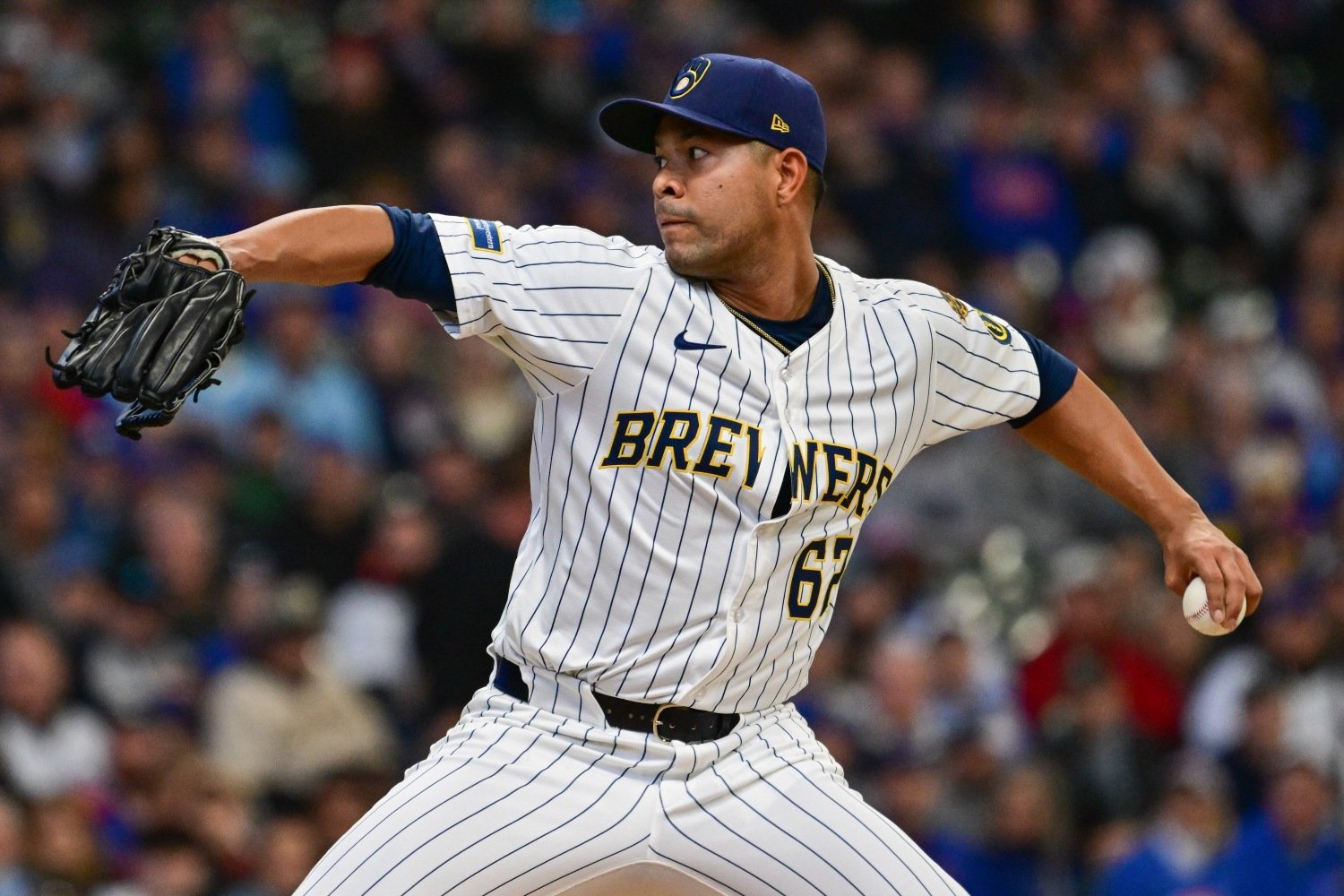 Baseball Prospectus has StuffPro grades on every pitch in each pitcher's arsenal, all the way back to 2020. The number is meant to reflect the number of runs that offering causes to score (or not) per 100 times thrown, relative to an exactly average pitch, so the average is 0.0 and negative numbers are better; they mean fewer runs are likely to score because of the influence of that pitch. Jose Quintana last had a pitch with a StuffPro below 0.0 in 2020, when he threw his curveball 57 times and it graded out at a cool -0.4. Every other data point—each weapon in his four-pitch arsenal for each of the last five-plus seasons, except that one long-ago iteration of the hook—points toward the conclusion that Quintana's stuff is below-average. This year hasn't changed that at all. This is why Quintana was available so cheaply on a free-agent market that values starting pitchers so highly. It's why his DRA- (a rate measurement of a pitcher's overall contribution to preventing runs, where 100 is average and lower is better) figures were 118 and 116 the last two seasons when he pitched for the Mets, despite an ERA under 3.70 in almost 250 innings. Quintana doesn't have the stuff to miss bats, or even to live in the middle of the zone and minimize walks without getting hit hard, so hardly anyone in the league believes he can keep up what he's done of late. Don't tell that to Quintana, or his 2.83 ERA this year, or the 94 DRA- that says that this time, it's not a fluke. He joined the Brewers, slightly lowered his arm slot, leaned more heavily into his sinker at the expense of his four-seamer, and has become even better in 2025—all despite his fastballs barely hanging onto an average velocity starting with 9. The change in mix is certainly one important aspect of the improvement. When most pitchers move from four-seamers to sinkers, they lose a lot of whiff potential, but since Quintana's four-seamer wasn't missing bats, anyway, it made a little more sense for him to become a sinker maven. What's most interesting is the way he's also leaned into his changeup, eschewing significant use of his curve. Note here, too, that Statcast draws a distinction Prospectus's model doesn't (but should) between the true curve and the slurve for Quintana. If you go back up to the plot of movement from Prospectus, alongside his StuffPro, you can see the small but real separation between two clusters that are both tagged as curves. The rest of the southpaw's unlikely late-career renaissance, though, comes down to deception—layers and layers of it. Firstly, nothing he throws moves quite the way the hitter anticipates. Statcast says he has five pitches, not four, thanks to breaking out the curve and the slurve. None of them has an average movement direction within 15° (or 30-minute, on the clock face presentation to which you might be accustomed) of what their spin direction out of the hand would have suggested. In this graphic, the image on the left shows the frequency with which he threw each pitch type with a given spin direction. Spin direction predicts the way the ball will move, at least fairly well, and it's one of the key things hitters try to identify. On the right is the actual distribution of movement directions for each pitch type. As you can see, the four-seamer rides (or carries) a bit more than the spin would predict, while both his changeup and his sinker dip substantially more. His curve plunges more than the spin implies. His slurve sweeps more and dives less. All of those modest but tricky variations give the hitter one kind of trouble. Another comes from the fact that, out of the hand, none of his pitches gives itself away. If Quintana threw a cutter or a true slider, we would expect to see a spin direction somewhere in the upper right quadrant of the clock face above. That pitch would be easy for the hitter to spot, because its spin would be along a totally different axis. They'd probably see a dot develop on the ball, due to the non-movement of the seams at one particular place as the ball spins along an imaginary line through that dot to a spot on the other side of it. These five pitches, however, all spin on something close to the same axis—the breaking stuff just spins the opposite direction on it from the fastballs and the changeup. There is a little bit of an offset, but not a very helpful one—especially because the hitter has to keep in mind that Quintana's two most oft-used pitches move the most off their spin axis, anyway. This is called spin-mirroring, and it makes it harder to pick out a pitch early. So does Quintana's tightly controlled release point, and the way he locates and angles his stuff to batters from each side. Here's his arsenal, rendered in 3-D color form, against right-handed batters this year. This is from the umpire's vantage point, more or less, and we can see a lot of what he's doing from it. That fastball should get off course from the rest of his offerings early. The changeup and the sinker move the same way, so that's a problem, but putting ourselves in hitters' shoes, we can imagine staying through the ball on the outer edge, trusting our hands, and at least making solid contact, without perfectly distinguishing between these two offerings. They move too similarly and end up too close to the same place to get swings and misses. The curve looks positively fat; we'll spot that out of the hand and crush it. Here's the same array, though, from the true vantage point of a righty batter. First of all, that ability to pick out the four-seamer was an illusion—or rather, now that we're standing in the place of a real hitter, we're susceptible to an illusion, just like they are. The angle of release and the initial trajectory of the changeup, the sinker and the four-seamer are all so similar that a hitter has a hard time telling them apart, after all. And from our new angle, the changeup seems to dive more than we though, relative to the sinker. That pitch is trouble, after all: weak contact ahead. The curve really does pop, right out of the hand. We can see that pitch coming, when he throws it! Alas: he throws it infrequently enough (and we have to be on our guard enough against the trio of other nastily similar-looking, harder offerings) that all we can often manage is to see it, go, 'Don't swing,' because it's a curveball and we're hunting heat, and then watch it drop in for a called strike. Against lefties, he's kept it simpler. The only two pitches with large enough samples against them are his sinker and his slurve. Here's what the umpire sees when Quintana works against a lefty batter. Aha! No problem of identical initial trajectory here! No real similarity of movement or final location, either. This should be easier. Welp. There's a problem here, after all. As unlikely as it might look from straight-on, the sinker and the slurve come out of Quintana's hand looking very similar for lefties. Then, the sheer degree of arm-side run for the sinker makes the batter feel defensive, because that ball is running in toward them—and the slurve bends away, to a side of the plate they're not covering at all by the time the ball arrives. And don't forget, he's still using his other pitches against lefties, too. This is a simplified version of the dilemma those hitters actually face, and it's still not very simple. Quintana is the poster boy, at this point, for the value of command, savvy, and repeating one's delivery. He's healthier than most pitchers his age, and far, far more successful than most pitchers his age—even though he has worse stuff than most pitchers his age. It's not fair to count on a sub-3.00 ERA the rest of the way, but don't expect Quintana to turn into a pumpkin, either. He's not under a magical spell. He's the one doing the casting.
 -
He's always been a bit of a tinkerer. I don't think that's the CAUSE of his issues, unfortunately. I think an increase in tinkering is just his instinctual response to them. There's just some important bat speed missing right now. Whether that's physical, mental or mechanical, he needs to fix it, and I think he knows that. It looks to me like moving around the box and changing up his setup—especially the minimized stride look—is an attempt to tap back into the violence we've seen from his swing in the past.
-
Image courtesy of © Mark Hoffman/Milwaukee Journal Sentinel / USA TODAY NETWORK via Imagn Images There have been bigger problems further down the lineup card, but the player who has most severely underachieved this season for the Milwaukee Brewers is William Contreras—and it's not all that close. Contreras is controlling the strike zone tolerably well, and therefore, he's running a .361 OBP. In 144 plate appearances, though, he has just five extra-base hits, and all five were clustered in a six-game stretch from April 8-13. Contreras had never before gone even 10 games or 50 plate appearances between extra-base hits in the majors. Right now, he's in a drought stretching back three weeks, running 19 games and 83 plate appearances. He's slugging an anemic .339—and unfortunately, that word feels very much apropos. The sturdy Contreras, always a bastion of fearsome, hard-won strength and the attendant power, is down 1.8 miles per hour in swing speed and 3.6 mph in exit velocity this season. Of all the things one might worry Contreras would lose—plate discipline, or the ability to make consistent contact, or the capacity for hitting the ball in the air that he found last summer—he's misplaced the least likely thing: his pop. It's strange, too, because he's lifting and pulling the ball more often during his latest dry spell—the opposite of what we'd expect. When he's going poorly, usually, it's because he's hitting too many grounders or not using the pull field enough. Right now, while he's certainly not launching it optimally, he's in the same ranges on each measurement that he was in at his best last July and August. Earlier this spring, we discussed Contreras's tendency to "step in the bucket," in old coaching parlance. He opens up much more with his stride than any hitting coach would advise, and more than almost any hitter in the majors. That was happening last year, though, so it's unlikely to be the culprit for his struggles this season. Nonetheless, it looks like Contreras himself (or one of the Brewers' hitting coaches whom he trusts, perhaps) views his setup as having been part of what got him into this rut. At the very least, it's clear that changing it is a big part of how they're going about fixing him (or so they hope). Here's where Contreras set up in March and April, against right-handed pitchers, and where his stride took him. There are limits to what these graphics really tell us, though. It's important, too, to watch the operation in real life. MTZXMjhfWGw0TUFRPT1fQXdSWFZWSldCUVFBWFFjREJRQUhVQVFFQUFCVEFRTUFWbFVEQndSWEFWQldBZ1Zl.mp4 We can't blame the swing mechanics, exactly, for this being a weakly hit ball. This is a swing decision problem. Watch Contreras's feet, though. Notice that toe tap, then the outward-angled step and turn. That's been his standard movement pattern for most of the last year. Contreras has always tried to utilize multiple swings and moves to attack various pitches, but starting around midseason last year, that toe tap-and-hinge move has been his go-to. It began to create problems for him, though, as teams recognized that tendency and started pounding him away, away, away. The move is designed to help him turn on the ball from the middle of the plate in. If he reaches out for pitches on the outer third from the hitting position he gets to using this move, he's doomed to weak contact off the end of the bat. Here's another clip from early this season that's equally illustrative, because it yields similarly underwhelming contact despite being a more hittable pitch. SzRkN2xfWGw0TUFRPT1fQmdnQ0FWSldWQUVBQ1ZSUlh3QUhDQWRVQUZrRFVWY0FCQUFDQjFKVENWWlNBMUVB.mp4 That's true, at least, if he works from the same old spot in the batter's box. One way Contreras appears to have tried to cover the outer third is to stack himself more tightly onto the plate. Here's a graphic to match the last one, showing Contreras's setup and stride against right-handed pitchers—only this one is for May, rather than April. Something, if you'll pardon the pun, is afoot. Contreras is much closer to the plate, but his stride has also changed—not least because he's spread out quite a bit more in the box. These graphics are composites, though, and the trick of it is, no composite or average measurement can capture what Contreras is doing right now. That's because he's changing multiple things, from one plate appearance to another. Here's a swing from Friday night's contest with the Cubs. RDFBNURfV0ZRVkV3dEdEUT09X1VsZFdCZ0VEVWxRQVdRTlFWd0FIQVFWZUFBQUZWVkFBVUZZQlZnWUNWd1pWVlFaVQ==.mp4 Spread out very wide in the box, Contreras has virtually gotten rid of his stride altogether here. He lifts his front foot, but it doesn't go anywhere. There's no complicated lower half here, at all. This particular swing came on a two-strike count, and this kind of stance and lower-half adjustment is somewhat common throughout the league in such counts, but Contreras wasn't doing this early this season, and he's been doing it on some occasions even in earlier or more advantageous counts over the last two weeks. Here's a clip from Saturday. eHk5VmtfWGw0TUFRPT1fVkFGUkFsTUhBbFlBQVZvTFVnQUhVQUpSQUFCVFUxRUFCZ2NOQ1ZCVFZRSlZBQVJW.mp4 This is more like a modified version of his typical move. He's tapping the toe, then taking a very purposeful stride. There's much less counterrotation to the initial movement, though, and the stepping in the bucket is gone. He's still crowding the plate more. With this combination of starting point and swing, Contreras has the outer edge covered much better—but, alas, this pitch hummed inside on him, right where his old, step-in-the-bucket move would have allowed him to tear into it. Another from Saturday shows how extreme he's been getting with these setups. eHk5VmtfWGw0TUFRPT1fQmxkU1hRWU5WZ1FBV3dBQ1ZnQUhCRkpRQUZnTlVRY0FDbFVHQUFNR1YxQlFCRkFF.mp4 This is the most we've seen him crowd the plate, maybe ever. His toes are on the chalk of the inner edge of the box. He's also got that impatient foot, waiting to fire—and when it does, when he thinks he has the timing cue he wants, it doesn't just turn up and down, but nor does it come back for a tap. It's a standard-issue, high, one-phase leg kick. He's trying everything, from everywhere. None of it is really working. If anything, he's making the opposite directional adjustment against lefties. Here's the graphic of his setup and stride for March and April against southpaws. You know what that version of Contreras looks like, by now. We won't review it right this second. Here's the same chart for May. He's still a bit more spread-out than in the past, but not to the same extent as against righties. He's not stacking himself on the plate against lefties; he doesn't seem worried that they're going to work him away. Meanwhile, this might be the most extreme we've seen that stride be—only he's doing it mostly without the toe tap. This is the clean-pickup leg kick, but with the long stride and exaggerated opening-up of the hips and feet that we saw before his crisis really began. OTc5MGJfVjBZQUhRPT1fQkFoVEIxMENCMU1BRGdjQVh3QUhWUU1GQUZnRkFWUUFDMUlIQkFGUkNRRmRBbFpU.mp4 Contreras has to hit for power. The Brewers can't be a strong offense without him doing so. Right now, he has no power whatsoever. The above is his very best swing under current conditions, and it was a single that never had a chance to be anything else. Watching him experiment so wildly is concerning, because it seems like he's hunting for something that a hitter like him should never misplace for all that long. His swing speed is down. Hard contact is relatively rare, and never has much lift to it. Moving around the box, standing differently and changing how he moves within it are valuable ways for a hitter to evolve and to manage key situations. At the moment, though, it just feels like Contreras is a cornered creature, fighting for survival and out of contact with his confidence, as much as with his swing. The Brewers need him to find a comfort zone and take some better swings, very soon. View full article
-
 There have been bigger problems further down the lineup card, but the player who has most severely underachieved this season for the Milwaukee Brewers is William Contreras—and it's not all that close. Contreras is controlling the strike zone tolerably well, and therefore, he's running a .361 OBP. In 144 plate appearances, though, he has just five extra-base hits, and all five were clustered in a six-game stretch from April 8-13. Contreras had never before gone even 10 games or 50 plate appearances between extra-base hits in the majors. Right now, he's in a drought stretching back three weeks, running 19 games and 83 plate appearances. He's slugging an anemic .339—and unfortunately, that word feels very much apropos. The sturdy Contreras, always a bastion of fearsome, hard-won strength and the attendant power, is down 1.8 miles per hour in swing speed and 3.6 mph in exit velocity this season. Of all the things one might worry Contreras would lose—plate discipline, or the ability to make consistent contact, or the capacity for hitting the ball in the air that he found last summer—he's misplaced the least likely thing: his pop. It's strange, too, because he's lifting and pulling the ball more often during his latest dry spell—the opposite of what we'd expect. When he's going poorly, usually, it's because he's hitting too many grounders or not using the pull field enough. Right now, while he's certainly not launching it optimally, he's in the same ranges on each measurement that he was in at his best last July and August. Earlier this spring, we discussed Contreras's tendency to "step in the bucket," in old coaching parlance. He opens up much more with his stride than any hitting coach would advise, and more than almost any hitter in the majors. That was happening last year, though, so it's unlikely to be the culprit for his struggles this season. Nonetheless, it looks like Contreras himself (or one of the Brewers' hitting coaches whom he trusts, perhaps) views his setup as having been part of what got him into this rut. At the very least, it's clear that changing it is a big part of how they're going about fixing him (or so they hope). Here's where Contreras set up in March and April, against right-handed pitchers, and where his stride took him. There are limits to what these graphics really tell us, though. It's important, too, to watch the operation in real life. MTZXMjhfWGw0TUFRPT1fQXdSWFZWSldCUVFBWFFjREJRQUhVQVFFQUFCVEFRTUFWbFVEQndSWEFWQldBZ1Zl.mp4 We can't blame the swing mechanics, exactly, for this being a weakly hit ball. This is a swing decision problem. Watch Contreras's feet, though. Notice that toe tap, then the outward-angled step and turn. That's been his standard movement pattern for most of the last year. Contreras has always tried to utilize multiple swings and moves to attack various pitches, but starting around midseason last year, that toe tap-and-hinge move has been his go-to. It began to create problems for him, though, as teams recognized that tendency and started pounding him away, away, away. The move is designed to help him turn on the ball from the middle of the plate in. If he reaches out for pitches on the outer third from the hitting position he gets to using this move, he's doomed to weak contact off the end of the bat. Here's another clip from early this season that's equally illustrative, because it yields similarly underwhelming contact despite being a more hittable pitch. SzRkN2xfWGw0TUFRPT1fQmdnQ0FWSldWQUVBQ1ZSUlh3QUhDQWRVQUZrRFVWY0FCQUFDQjFKVENWWlNBMUVB.mp4 That's true, at least, if he works from the same old spot in the batter's box. One way Contreras appears to have tried to cover the outer third is to stack himself more tightly onto the plate. Here's a graphic to match the last one, showing Contreras's setup and stride against right-handed pitchers—only this one is for May, rather than April. Something, if you'll pardon the pun, is afoot. Contreras is much closer to the plate, but his stride has also changed—not least because he's spread out quite a bit more in the box. These graphics are composites, though, and the trick of it is, no composite or average measurement can capture what Contreras is doing right now. That's because he's changing multiple things, from one plate appearance to another. Here's a swing from Friday night's contest with the Cubs. RDFBNURfV0ZRVkV3dEdEUT09X1VsZFdCZ0VEVWxRQVdRTlFWd0FIQVFWZUFBQUZWVkFBVUZZQlZnWUNWd1pWVlFaVQ==.mp4 Spread out very wide in the box, Contreras has virtually gotten rid of his stride altogether here. He lifts his front foot, but it doesn't go anywhere. There's no complicated lower half here, at all. This particular swing came on a two-strike count, and this kind of stance and lower-half adjustment is somewhat common throughout the league in such counts, but Contreras wasn't doing this early this season, and he's been doing it on some occasions even in earlier or more advantageous counts over the last two weeks. Here's a clip from Saturday. eHk5VmtfWGw0TUFRPT1fVkFGUkFsTUhBbFlBQVZvTFVnQUhVQUpSQUFCVFUxRUFCZ2NOQ1ZCVFZRSlZBQVJW.mp4 This is more like a modified version of his typical move. He's tapping the toe, then taking a very purposeful stride. There's much less counterrotation to the initial movement, though, and the stepping in the bucket is gone. He's still crowding the plate more. With this combination of starting point and swing, Contreras has the outer edge covered much better—but, alas, this pitch hummed inside on him, right where his old, step-in-the-bucket move would have allowed him to tear into it. Another from Saturday shows how extreme he's been getting with these setups. eHk5VmtfWGw0TUFRPT1fQmxkU1hRWU5WZ1FBV3dBQ1ZnQUhCRkpRQUZnTlVRY0FDbFVHQUFNR1YxQlFCRkFF.mp4 This is the most we've seen him crowd the plate, maybe ever. His toes are on the chalk of the inner edge of the box. He's also got that impatient foot, waiting to fire—and when it does, when he thinks he has the timing cue he wants, it doesn't just turn up and down, but nor does it come back for a tap. It's a standard-issue, high, one-phase leg kick. He's trying everything, from everywhere. None of it is really working. If anything, he's making the opposite directional adjustment against lefties. Here's the graphic of his setup and stride for March and April against southpaws. You know what that version of Contreras looks like, by now. We won't review it right this second. Here's the same chart for May. He's still a bit more spread-out than in the past, but not to the same extent as against righties. He's not stacking himself on the plate against lefties; he doesn't seem worried that they're going to work him away. Meanwhile, this might be the most extreme we've seen that stride be—only he's doing it mostly without the toe tap. This is the clean-pickup leg kick, but with the long stride and exaggerated opening-up of the hips and feet that we saw before his crisis really began. OTc5MGJfVjBZQUhRPT1fQkFoVEIxMENCMU1BRGdjQVh3QUhWUU1GQUZnRkFWUUFDMUlIQkFGUkNRRmRBbFpU.mp4 Contreras has to hit for power. The Brewers can't be a strong offense without him doing so. Right now, he has no power whatsoever. The above is his very best swing under current conditions, and it was a single that never had a chance to be anything else. Watching him experiment so wildly is concerning, because it seems like he's hunting for something that a hitter like him should never misplace for all that long. His swing speed is down. Hard contact is relatively rare, and never has much lift to it. Moving around the box, standing differently and changing how he moves within it are valuable ways for a hitter to evolve and to manage key situations. At the moment, though, it just feels like Contreras is a cornered creature, fighting for survival and out of contact with his confidence, as much as with his swing. The Brewers need him to find a comfort zone and take some better swings, very soon.
 -
Image courtesy of © Kamil Krzaczynski-Imagn Images In his first 41 plate appearances in the major leagues, Caleb Durbin has just two strikeouts. He's been hit by pitches twice as many times as he's had to carry his bat back to the rack. Pitchers can't punch him out. On the other hand, he's only managed three extra-base hits, and while one was a reasonably well-measured home run in San Francisco, the other two were a ground-ball double tucked so improbably inside the first-base line as to feel irreproducible and a bloop single on which no Cardinals infielder covered second. Durbin is short, but he's stoutly built. Consistently hitting the ball hard has never been part of his game, but he did find a modicum of power in each of the last two seasons in the minors, mostly by pulling the ball in the air more than most of his peers. He has enough bat speed to be dangerous, not because of that speed itself, but because he so frequently makes flush contact. Statcast rates 37.9% of his swings as resulting in squared-up contact (meaning the exit velocity on the ball was at least 80% of the maximum possible, given the speed of the swing and the incoming pitch), which ranks Durbin 15th out of the 387 hitters with at least 50 tracked swings this year. He's elite at making contact, and not just by managing to brush the ball with the end of his bat. To get there, though, Durbin has taken an extremely contact-focused approach since arriving in the majors. Specifically, his mechanics say he's prioritizing the head stillness and the stability that result in lots of contact over the kinds of moves that create more momentum and torque, unlocking hitters' power. OTc5bFFfWGw0TUFRPT1fRHdBQ1ZnRldYd2NBRHdRRUF3QUhBQUplQUZsUUJRTUFCVlVGQndBQkJnTlZDVlJT.mp4 It's easy to spot the big leg kick in Durbin's swing, but not all leg kicks are created equal. Durbin's is not an aggressive move to stride toward the pitcher. Rather, it's about timing and rotation. Watch that clip again, and notice how early the foot gets down—and how, despite traveling a good distance inward and backward as he counterrotated, it comes down very close to where it started. Notice, too, the back foot, which never fully gives up his weight. This is not a power swing. Guys who are trying to drive the ball push off their back side and land much more firmly on their front foot, after a longer stride. That's how they generate the force required to hit it hard. Here's an easier way to visualize Durbin's swing, especially in contrast with some ostensibly similar hitters. Using Statcast's new data on batter stances and intercept points, we can see Durbin's average stride from overhead. The black footprints here are where his feet start; the red ones show where they are when he reaches his contact point. In a vacuum, this probably doesn't look especially strange. If you can envision the animations offered at Baseball Savant, where an intermediate blue set of footprints briefly shows the player's feet positions when the pitcher releases the ball, it makes even more sense. There, you see the way Durbin's front foot swings all the way to the inside line of the batter's box, only to steadily come back to that final position. Now, though, let's compare Durbin's move to those of some other right-handed hitters with similarly open stances and leg kicks. We can start with teammates. Here's Isaac Collins. Obviously, that's a much more aggressive stride. We knew that. Collins has a history of hitting the ball hard in the minors. He's not, however, an elite contact hitter. He wants to go get the ball, with his bat up to a dangerous speed. Durbin just wants to meet it squarely. Joey Ortiz isn't doing either thing well this year, but he has the same basic movement pattern, in terms of starting open and using a leg kick to time his swing. Jake McKibbin recently did a great dive into Ortiz's diminished confidence and the way it shows up in his stride. Still, he's striding a good distance forward. His leg kick is meant to create some space and some speed—to attack the ball. That's different from what Durbin is doing. The Dodgers' Chris Taylor, like Durbin, starts with his feet very slightly angled away from the pitcher, to remind himself of the need to use the ground for leverage and rotate through the ball. He's far, far more aggressive in the way he strides into the ball, though. Tyler Freeman is the last comparable player we should study. Like Durbin, he's relatively short; a mid-20s right-handed batter and infielder; and an open-stance guy who keeps his feet about shoulder-width apart. His stride pattern, though, is much farther-reaching. All four of these guys stride much farther with their front foot than does Durbin. All four also let their back foot come off the ground, or at least drag forward on their toe. Durbin, with that more anchored back foot and that incredibly short stride, isn't going to hit the ball as hard as any of these guys—not even when he gets to one a bit early and catches it out in front, for a pulled fly ball and a potential homer. However, he's also not going to whiff nearly as often as any of them. He's a marvel of physical minimalism in the box. His swing isn't as short as those of guys like Steven Kwan and Luis Arraez. Instead, he achieves his elite contact skills by being so stable that he sees the ball better and longer than most of his peers. It costs him thump, but he's been willing to make that tradeoff, so far. Eventually, especially after the league adjusts to him a bit and he's forced to make an answering set of changes, Durbin might be wise to get slightly more aggressive in his lower half. That's the only way he'll hit even for 10-homer power or rack up doubles and triples at the rate generally required of a modern hitter. For now, however, it's hard to argue with the way he's organized his swing. If he can keep drawing walks (two so far) and being plunked at a rate totaling three times that at which he strikes out, he doesn't have to hit for any power to have value. View full article
-
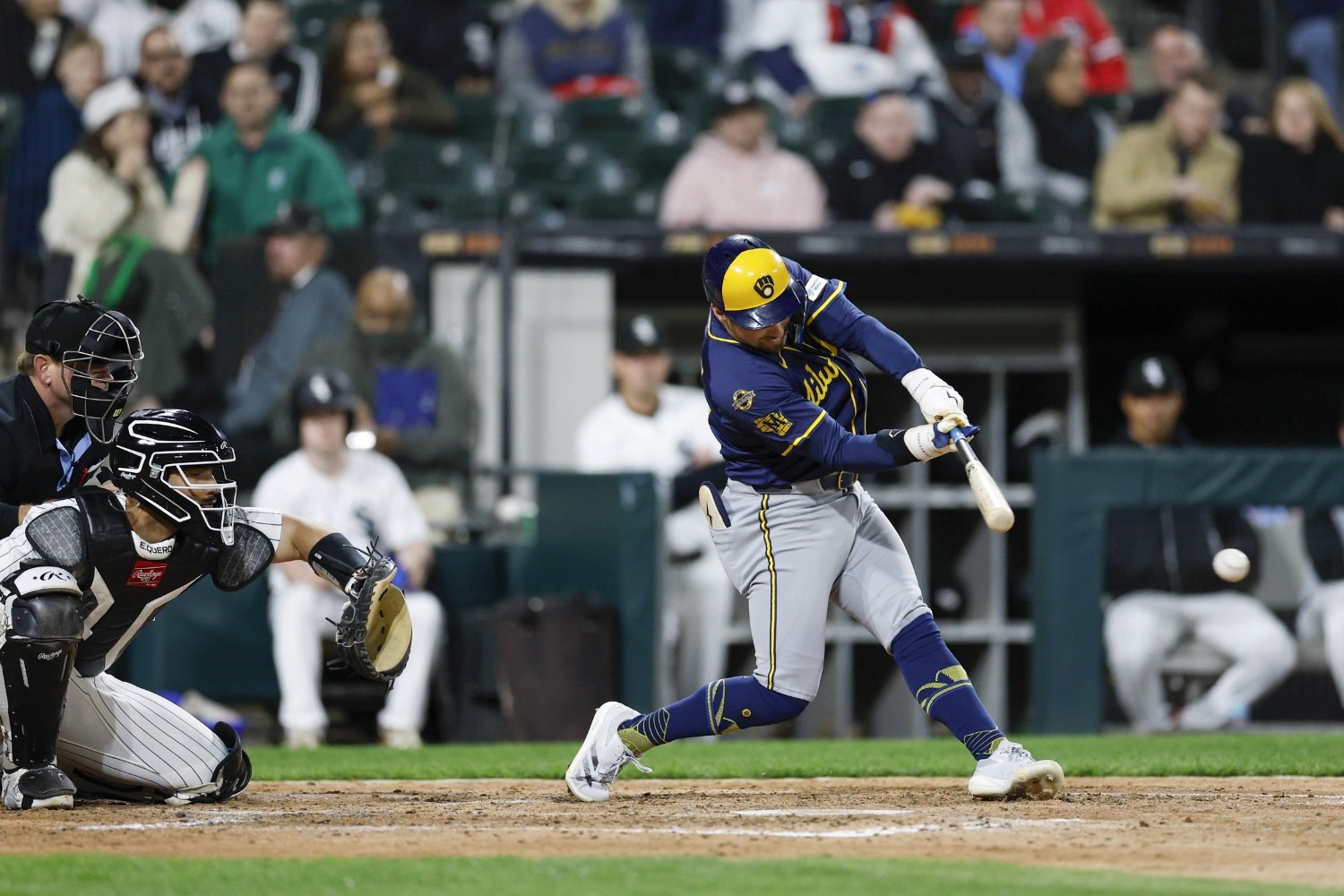 In his first 41 plate appearances in the major leagues, Caleb Durbin has just two strikeouts. He's been hit by pitches twice as many times as he's had to carry his bat back to the rack. Pitchers can't punch him out. On the other hand, he's only managed three extra-base hits, and while one was a reasonably well-measured home run in San Francisco, the other two were a ground-ball double tucked so improbably inside the first-base line as to feel irreproducible and a bloop single on which no Cardinals infielder covered second. Durbin is short, but he's stoutly built. Consistently hitting the ball hard has never been part of his game, but he did find a modicum of power in each of the last two seasons in the minors, mostly by pulling the ball in the air more than most of his peers. He has enough bat speed to be dangerous, not because of that speed itself, but because he so frequently makes flush contact. Statcast rates 37.9% of his swings as resulting in squared-up contact (meaning the exit velocity on the ball was at least 80% of the maximum possible, given the speed of the swing and the incoming pitch), which ranks Durbin 15th out of the 387 hitters with at least 50 tracked swings this year. He's elite at making contact, and not just by managing to brush the ball with the end of his bat. To get there, though, Durbin has taken an extremely contact-focused approach since arriving in the majors. Specifically, his mechanics say he's prioritizing the head stillness and the stability that result in lots of contact over the kinds of moves that create more momentum and torque, unlocking hitters' power. OTc5bFFfWGw0TUFRPT1fRHdBQ1ZnRldYd2NBRHdRRUF3QUhBQUplQUZsUUJRTUFCVlVGQndBQkJnTlZDVlJT.mp4 It's easy to spot the big leg kick in Durbin's swing, but not all leg kicks are created equal. Durbin's is not an aggressive move to stride toward the pitcher. Rather, it's about timing and rotation. Watch that clip again, and notice how early the foot gets down—and how, despite traveling a good distance inward and backward as he counterrotated, it comes down very close to where it started. Notice, too, the back foot, which never fully gives up his weight. This is not a power swing. Guys who are trying to drive the ball push off their back side and land much more firmly on their front foot, after a longer stride. That's how they generate the force required to hit it hard. Here's an easier way to visualize Durbin's swing, especially in contrast with some ostensibly similar hitters. Using Statcast's new data on batter stances and intercept points, we can see Durbin's average stride from overhead. The black footprints here are where his feet start; the red ones show where they are when he reaches his contact point. In a vacuum, this probably doesn't look especially strange. If you can envision the animations offered at Baseball Savant, where an intermediate blue set of footprints briefly shows the player's feet positions when the pitcher releases the ball, it makes even more sense. There, you see the way Durbin's front foot swings all the way to the inside line of the batter's box, only to steadily come back to that final position. Now, though, let's compare Durbin's move to those of some other right-handed hitters with similarly open stances and leg kicks. We can start with teammates. Here's Isaac Collins. Obviously, that's a much more aggressive stride. We knew that. Collins has a history of hitting the ball hard in the minors. He's not, however, an elite contact hitter. He wants to go get the ball, with his bat up to a dangerous speed. Durbin just wants to meet it squarely. Joey Ortiz isn't doing either thing well this year, but he has the same basic movement pattern, in terms of starting open and using a leg kick to time his swing. Jake McKibbin recently did a great dive into Ortiz's diminished confidence and the way it shows up in his stride. Still, he's striding a good distance forward. His leg kick is meant to create some space and some speed—to attack the ball. That's different from what Durbin is doing. The Dodgers' Chris Taylor, like Durbin, starts with his feet very slightly angled away from the pitcher, to remind himself of the need to use the ground for leverage and rotate through the ball. He's far, far more aggressive in the way he strides into the ball, though. Tyler Freeman is the last comparable player we should study. Like Durbin, he's relatively short; a mid-20s right-handed batter and infielder; and an open-stance guy who keeps his feet about shoulder-width apart. His stride pattern, though, is much farther-reaching. All four of these guys stride much farther with their front foot than does Durbin. All four also let their back foot come off the ground, or at least drag forward on their toe. Durbin, with that more anchored back foot and that incredibly short stride, isn't going to hit the ball as hard as any of these guys—not even when he gets to one a bit early and catches it out in front, for a pulled fly ball and a potential homer. However, he's also not going to whiff nearly as often as any of them. He's a marvel of physical minimalism in the box. His swing isn't as short as those of guys like Steven Kwan and Luis Arraez. Instead, he achieves his elite contact skills by being so stable that he sees the ball better and longer than most of his peers. It costs him thump, but he's been willing to make that tradeoff, so far. Eventually, especially after the league adjusts to him a bit and he's forced to make an answering set of changes, Durbin might be wise to get slightly more aggressive in his lower half. That's the only way he'll hit even for 10-homer power or rack up doubles and triples at the rate generally required of a modern hitter. For now, however, it's hard to argue with the way he's organized his swing. If he can keep drawing walks (two so far) and being plunked at a rate totaling three times that at which he strikes out, he doesn't have to hit for any power to have value.
 -
 After a series loss in San Francisco disappointing as much because of how it happened as because it happened at all, Pat Murphy held a closed-door meeting to convey his displeasure with the defensive dysfunction on display. On Saturday, after a poor start seemed to be dooming them to a blowout loss, Murphy removed Sal Frelick (who missed the cutoff man and gave away a base an inning earlier) and Caleb Durbin (who was picked off in an airheaded baserunning gaffe shortly afterward). Those are the most visible ways in which he's leaning on his levers and demanding more of his team, but there are others happening, too. In six games so far this week, Murphy has started Vinny Capra over Joey Ortiz at shortstop once, and pinch-hit for Ortiz with Jake Bauers twice. He knows Capra (whose struggles at the plate have become so profound that it's hard to justify keeping him on the roster any longer) is no replacement for Ortiz, and that Andruw Monasterio is doing nothing at Triple-A Nashville to inspire confidence in him as a stopgap. Thus, Murphy is getting creative: he tried to get Ortiz a mental health day, but he's also started putting in place some measures to reduce the harm done to the lineup by Ortiz's disastrous offensive start. The front office is doing its best to work with Murphy to remedy the various problems popping up all over the roster, as we saw when Bryan Hudson was optioned to the minors this week. The transactional solutions mostly have to wait until June or July, though, and Murphy knows that his team can't wait that long. He also knows that this is not the most talented team in the National League Central, let alone the league as a whole. For the last two years, they have won by playing sharper, smarter, more team-oriented baseball than their rivals. Murphy has taken proactive steps this month, because he knows that they'll have to rediscover those traits if they want to claim a third straight division crown. Barring a trade or a waiver claim in the immediate future, expect more of this. Murphy might even get more aggressive with Ortiz, pinch-hitting Bauers earlier if the situation demands it. If Frelick, Durbin and the rest of the team don't have an adequate response to the unsubtle messages he's sending them through stern meetings and disciplinary benchings, it won't matter. The problematic part of getting this active this early is that it amounts to a big bet—a season-defining one, in fact—on those players hearing Murphy; believing he still has their best interests at heart and is worthy of their respect and trust; and making concrete changes to their processes of preparation and situational awareness in response to him. Most modern managers take pride in holding very few closed-door meetings, or in handling all questions of effort or focus far from the media's view. Most managers try to wait as long as possible before making any major shakeup to the lineup, the rotation, the bullpen, or the tone they strike in the clubhouse. Murphy never swore an oath to that style. Even last year, he let the legendary college coach come out on occasion, diving deeper into details of the game than most big-league skippers do and holding players to a more rigid standard than some do. It was the perfect way to handle that particular team. This year's team is subtly different than that one, though, and perhaps crucially so. Murphy sees some talent deficits and believes fervently that they can be made up by a team playing disciplined, relentless baseball. So far, he doesn't see his team playing that way, so he's applying pressure and demanding that that change. It's the right thing to do—but that doesn't make it any less worrisome to ponder what happens if his demands aren't met.
