


Matthew Trueblood
-
Posts
1,964 -
Joined
-
Last visited
-
Days Won
10
Content Type
Profiles
Forums
Blogs
Events
News
2026 Milwaukee Brewers Top Prospects Ranking
Milwaukee Brewers Videos
2022 Milwaukee Brewers Draft Picks
Milwaukee Brewers Free Agent & Trade Rumors, Notes, & Tidbits
Guides & Resources
2023 Milwaukee Brewers Draft Picks
2024 Milwaukee Brewers Draft Picks
The Milwaukee Brewers Players Project
2025 Milwaukee Brewers Draft Pick Tracker
2026 Milwaukee Brewers Draft Tracker: Picks & Bonuses
Store
Downloads
Gallery
Everything posted by Matthew Trueblood
-
All season, the young outfielder has known he might face a moment just like the one he met Wednesday night. He could not have been more ready for it. Image courtesy of © Benny Sieu-Imagn Images In his entire MLB career, before Wednesday night, Garrett Mitchell had only pulled two non-ground balls on pitches over the outer third of the plate or farther away. One was a lineout to right field this August, against Atlanta utilityman-turned-emergency pitcher Luke Williams, on a lobbed pitch that came in just over 60 miles per hour. The other was a soft line drive to first base, which turned into a double play. Mitchell doesn't turn on the outside pitch, and when he does, it certainly isn't with loft and authority. This is not only true of Mitchell, but one of the most important truths about him as a player. Consistent power production has eluded the obviously strong and whippy Mitchell for much of his professional career, because he hits way too many ground balls. His power is over the outer third of the dish, especially against right-handed pitchers, but it tends to take the shape of hard-hit singles and doubles. Even as he finally stayed healthy enough to get prolonged big-league playing time this summer and managed 23 extra-base hits in 224 plate appearances, he had a 52% ground-ball rate. Phil Maton of the Mets was a thoroughly excellent matchup for Mitchell, though. In his fractured MLB career, he's been better against curveballs than against any other pitch type against righties. Many lefty batters see big swing-and-miss differentials by pitch type, but Mitchell is one who swings through a scary percentage of the four-seam fastballs he sees, so his more typical whiff rates against breaking and offspeed offerings feel tame, by comparison. After the curveball, the pitch against which he does the most damage is the cutter. Maton is a cutter-curveball righty. Mitchell had come on two innings earlier, as a pinch-runner for DH Gary Sánchez. He was batting for the first time in the game, but the matchup he got was one Pat Murphy had anticipated when he made the choice to lift Sánchez in favor of Mitchell. It was a chance at redemption, after Mitchell had been thrown out trying to steal in his pinch-running capacity, but it was also a familiar moment for the young hitter. Back in spring training, I asked Mitchell about coming off the bench, because it was obvious even then that that would be part of the story of his season. After Jake Bauers hit for him in a late-game situation in Minnesota just after the All-Star break, I asked him about the feeling on both sides of the decision a manager makes to remove one hitter and bring in another. Even more than the occasion called for--far beyond platitudes--he affirmed his willingness to fill whatever role the team required. Since he arrived in the majors in 2022, Mitchell has understood that he'd sometimes need to find his playing time by coming on midstream to help the team gain a tacitcal edge. It didn't faze him not to start; he made it part of his mental and logistical routine to prepare to perform as a pinch-hitter or substitute. In 27 career regular-season plate appearances as a sub--be it a pinch-hitter, a pinch-runner, or a defensive replacement who later came to bat--Mitchell has batted .391/.482/.652. He had three doubles off the bench this year alone. He has become a player the team can not only trust with this often-difficult role, but actively try to cast for it. His blend of plate discipline, ability to hit the ball hard, and speed have been calibrated just right, such that they give opposing pitchers and defenses something they can't quite handle in the back halves of games. Thus, Mitchell was in a role he's embraced and had a pitching matchup that favored him. With Willy Adames representing the go-ahead run in the bottom of the eighth, Mitchell stepped in against Maton, needing to lock in on something and create more of that extra-base jolt he's delivered off the bench so often. On the first pitch, he got a get-me-over backdoor breaking ball, and he was perfectly ready for it. Garrett Fukkin Mitchell.mp4 Had Maton started him with the cutter, Mitchell would have been able to punch the ball to the left side. Though it was ultimately extremely uncharacteristic contact and direction on a ball in that location, the swing Mitchell put on the pitch was balanced and knowing. He had gone up there with confidence and anticipated Maton's plan. He didn't risk falling behind in the count, and he didn't foul off the mistake pitch he got. Much of playoff baseball is that simple: When you get your pitch, don't miss it, even by a hair. Simple and easy are as different as a horse and a house, in this case, though. Mitchell had to be mentally, physically, and emotionally prepared--and still, the resulting moment was a combination of pitch location and batted ball that he'd never achieved before. Sometimes, playoff baseball also comes down to that: letting adrenaline flow just enough to do something that would ordinarily be on the fringe of your capacity, or beyond it. Maybe Mitchell is destined to figure things out on a more sustainable basis, and this will be remembered as the concretizing, clarifying moment in his transition from an exciting complementary piece to a lineup fixture. Maybe it won't. In either case, though, Mitchell's talent, makeup, and situation--the circumstance his manager helped create, in which he was set up to succeed--came together on that pitch to create a core memory for Brewers playoff history. For that, a great deal of credit is due, and no worrying about whether he can repeat it in the future is required. View full article
-
When the stakes are high and the opponent is feeling a certain amount of pressure, it's a good time to hit them where they're already weakest. Unfortunately for the Brewers, when that moment came Tuesday, the Mets' veteran starter knew how to do that. Image courtesy of © Benny Sieu-Imagn Images As good as the Milwaukee Brewers' offense has been all year, they do have a patterned weakness. Because the team is built around principles like being contact-oriented, using the whole field, and not expanding the strike zone, they like to hit the outside pitch. They do their greatest damage on pitches where they can get their arms extended, and they are more consistently able to move the ball the way they want even without power when pitchers throw toward their natural comfort zones, on the outer third of the plate. Come inside with a fastball, though, and the Crew are pretty vulnerable. This season, they had the fourth-lowest weighted on-base average and second-lowest slugging average on four-seamers and sinkers from the inner third of the plate farther in. Now, the first number was still .320, because by and large, pitchers can't afford to come inside with fastballs very often and expect success. If it's done as a show-me, it must often be in off the plate, and then all a hitter needs is the discipline to let it go. If it's on the plate, it's a pitch that might tie up the right hitter, if they aren't expecting it--but it's also a pitch that can be hit about 430 feet if the hitter is ready. The Rays' wOBA on inner-third fastballs this year was the league's worst, at .307. That's also the league's overall average wOBA for the year. Throw the Yankees inner-third fastballs, and they slug .498, with a .386 wOBA. The Brewers do a fine job of waiting out those fastballs, most of the time, and even if they go for a called strike, the Milwaukee batter knows they might get something more conducive to their swing on the next pitch. When it comes to actually hitting the inner-third fastball squarely, though, they do a poor job. Brice Turang and William Contreras handle that pitch fairly well, but all year, it's eaten up the likes of Rhys Hoskins, Joey Ortiz, and Jake Bauers. Right away in the first inning, though, Contreras set a positive tone. He did what he's done countless times this year, getting his hands in just enough to put the barrel on a high, inside fastball from Luis Severino to put the Brewers ahead 1-0, shooting the ball through a wide hole on the right side of the infield. The Brewers were exceptionally aggressive against Severino in Game 1 of the Wild Card Series, and the early returns on that surprising tack were encouraging. William Inside Out.mp4 The Mets and Brewers seesawed their way into the middle innings, and Sal Frelick did another fine job on an inside heater from Severino, rocketing his double into right field to catalyze a fourth-inning rally and give the home team the lead. After that, though, everything changed. You already know about the meltdown in the top of the fifth. The Brewers' two key strengths lapsed at the worst possible times, and although they were this close: to escaping the jam with no damage, they instead gave up five runs. (Joel, buddy: get over there sooner. Or take a better route to the base. Or, once you have the ball and a step on him like this, just launch yourself sideways into his path. Come on, man.) They would need their offense to muster a comeback. That was not in the cards, because Severino had settled in--thanks to the inside fastball. He mowed the Brewers down with it, getting not only weak contact in a few early instances and a key double play off the bat of Hoskins in the third inning, but a parade of harmless air outs once the Brewers were ahead and their hitters started pressing. Throughout the season--but especially in the second half--Severino has brought along his sweeper, turning it into a fearsome offering he throws over a quarter of the time, and which induces whiffs on nearly 39 percent of opponents' swings. Several times in the middle innings Tuesday, though, it wasn't the sweeper that got the Brewers out, but the expectation of it. Knowing that the Crew would have him scouted carefully and be looking away, sitting on the sweeper and the outside-lane fastball that might set it up, Severino instead went repeatedly to his four-seamer and sinker, running them in on right-handed batters. The weak contact piled up, the innings got late early, and Severino gave the Mets six strong innings to help cushion their recent heavy use of a weary bullpen. By the end of the game, 12 Brewers plate appearances had ended with heaters on the inner third, or in off the plate. There was Contreras's single, Frelick's double, a walk and a hit batsman in the first inning--and nine outs on the other eight decisive pitches, most of which looked a lot like this. Got Hoskins.mp4 No other team had more than seven plate appearances end on such pitches Tuesday. Severino, and relievers José Butto and Ryne Stanek, got right into the Brewers' kitchens, and it shut down their offense for the second half of the game. Pat Murphy's charges will have to prove they're not only undaunted and relentless, but nimble and adaptable, because they can't let the game be decided on inside heaters to them again Wednesday. If they do, it will spell the end of their season. View full article
-
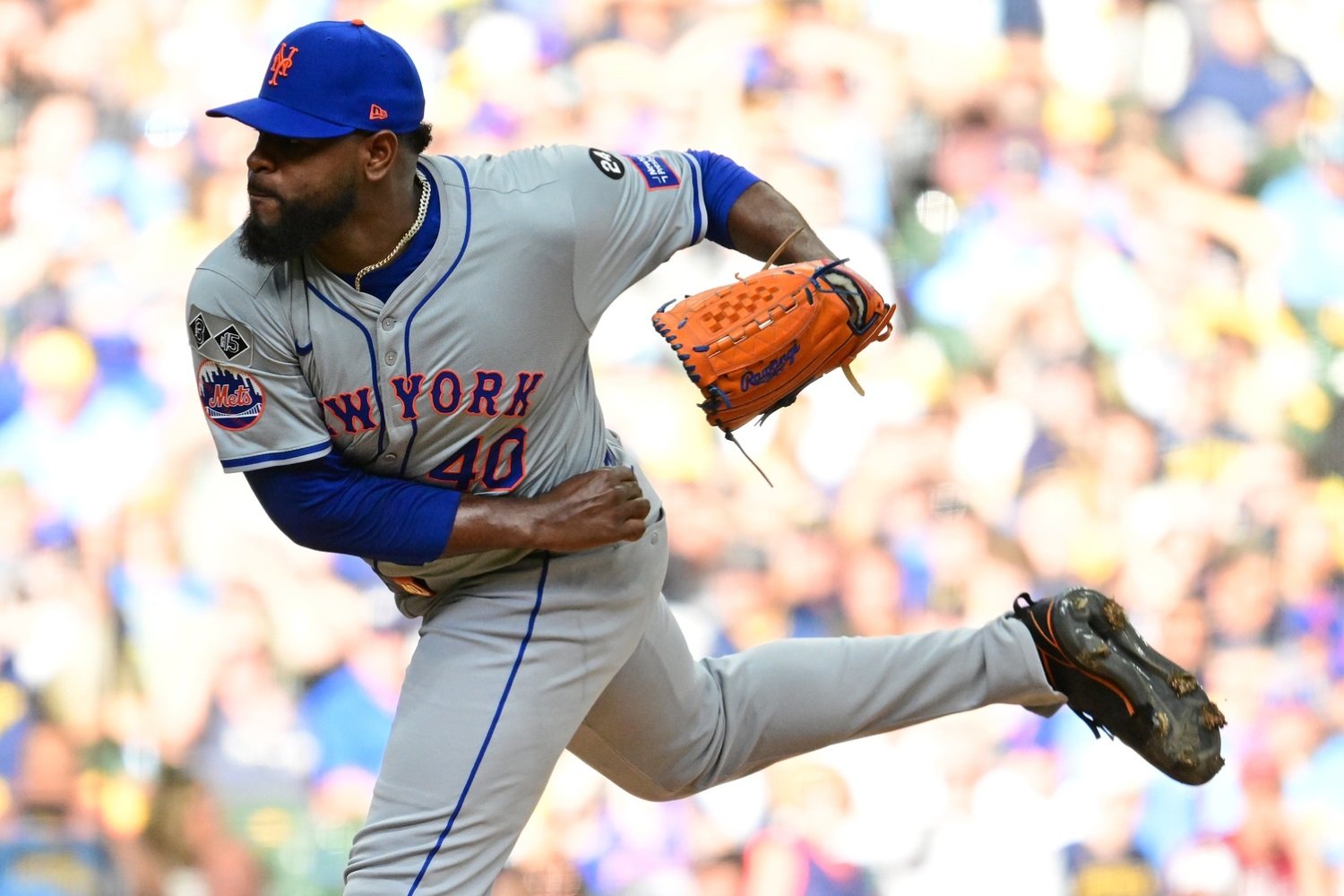 As good as the Milwaukee Brewers' offense has been all year, they do have a patterned weakness. Because the team is built around principles like being contact-oriented, using the whole field, and not expanding the strike zone, they like to hit the outside pitch. They do their greatest damage on pitches where they can get their arms extended, and they are more consistently able to move the ball the way they want even without power when pitchers throw toward their natural comfort zones, on the outer third of the plate. Come inside with a fastball, though, and the Crew are pretty vulnerable. This season, they had the fourth-lowest weighted on-base average and second-lowest slugging average on four-seamers and sinkers from the inner third of the plate farther in. Now, the first number was still .320, because by and large, pitchers can't afford to come inside with fastballs very often and expect success. If it's done as a show-me, it must often be in off the plate, and then all a hitter needs is the discipline to let it go. If it's on the plate, it's a pitch that might tie up the right hitter, if they aren't expecting it--but it's also a pitch that can be hit about 430 feet if the hitter is ready. The Rays' wOBA on inner-third fastballs this year was the league's worst, at .307. That's also the league's overall average wOBA for the year. Throw the Yankees inner-third fastballs, and they slug .498, with a .386 wOBA. The Brewers do a fine job of waiting out those fastballs, most of the time, and even if they go for a called strike, the Milwaukee batter knows they might get something more conducive to their swing on the next pitch. When it comes to actually hitting the inner-third fastball squarely, though, they do a poor job. Brice Turang and William Contreras handle that pitch fairly well, but all year, it's eaten up the likes of Rhys Hoskins, Joey Ortiz, and Jake Bauers. Right away in the first inning, though, Contreras set a positive tone. He did what he's done countless times this year, getting his hands in just enough to put the barrel on a high, inside fastball from Luis Severino to put the Brewers ahead 1-0, shooting the ball through a wide hole on the right side of the infield. The Brewers were exceptionally aggressive against Severino in Game 1 of the Wild Card Series, and the early returns on that surprising tack were encouraging. William Inside Out.mp4 The Mets and Brewers seesawed their way into the middle innings, and Sal Frelick did another fine job on an inside heater from Severino, rocketing his double into right field to catalyze a fourth-inning rally and give the home team the lead. After that, though, everything changed. You already know about the meltdown in the top of the fifth. The Brewers' two key strengths lapsed at the worst possible times, and although they were this close: to escaping the jam with no damage, they instead gave up five runs. (Joel, buddy: get over there sooner. Or take a better route to the base. Or, once you have the ball and a step on him like this, just launch yourself sideways into his path. Come on, man.) They would need their offense to muster a comeback. That was not in the cards, because Severino had settled in--thanks to the inside fastball. He mowed the Brewers down with it, getting not only weak contact in a few early instances and a key double play off the bat of Hoskins in the third inning, but a parade of harmless air outs once the Brewers were ahead and their hitters started pressing. Throughout the season--but especially in the second half--Severino has brought along his sweeper, turning it into a fearsome offering he throws over a quarter of the time, and which induces whiffs on nearly 39 percent of opponents' swings. Several times in the middle innings Tuesday, though, it wasn't the sweeper that got the Brewers out, but the expectation of it. Knowing that the Crew would have him scouted carefully and be looking away, sitting on the sweeper and the outside-lane fastball that might set it up, Severino instead went repeatedly to his four-seamer and sinker, running them in on right-handed batters. The weak contact piled up, the innings got late early, and Severino gave the Mets six strong innings to help cushion their recent heavy use of a weary bullpen. By the end of the game, 12 Brewers plate appearances had ended with heaters on the inner third, or in off the plate. There was Contreras's single, Frelick's double, a walk and a hit batsman in the first inning--and nine outs on the other eight decisive pitches, most of which looked a lot like this. Got Hoskins.mp4 No other team had more than seven plate appearances end on such pitches Tuesday. Severino, and relievers José Butto and Ryne Stanek, got right into the Brewers' kitchens, and it shut down their offense for the second half of the game. Pat Murphy's charges will have to prove they're not only undaunted and relentless, but nimble and adaptable, because they can't let the game be decided on inside heaters to them again Wednesday. If they do, it will spell the end of their season.
 -
Milwaukee Brewers Wild Card Series Roster: 3 Key Takeaways
Matthew Trueblood posted an article in Brewers
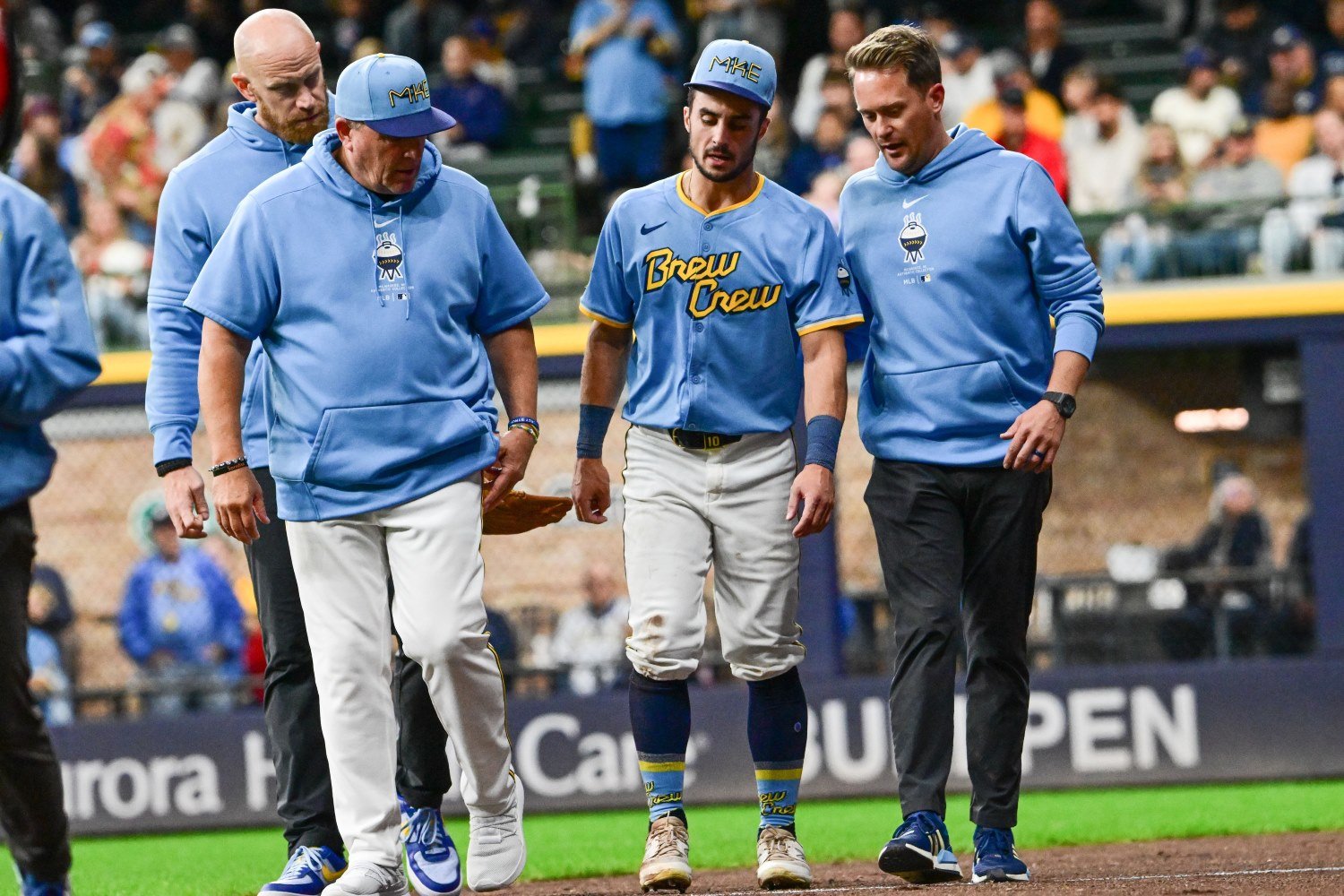 It's always interesting to see how a team with a wealth of options builds a playoff roster. Good playoff teams have lots of depth, which usually means at least one or two fringe cases rounding out the 26-man group, and you shouldn't build a roster for a playoff series the same way you build one for the regular season. Because of the injuries that have piled up on the Brewers over that long season, though, they had fairly few tough choices--even though they have great depth, overall. Let's examine the most interesting choices they did make. Sal Frelick Must Be Feeling Really Good It was encouraging and exhilarating to see Frelick on the roster, after he slammed so hard into the sidewall chasing down a fly ball during the final series of the season and ended up with a bone bruise. A tenacious, tough player, Frelick wasn't going to be left out if he could possibly help it, but the Mets will start two left-handed starters in this series, in Sean Manaea and José Quintana. As such, there didn't need to be overwhelming urgency to carry Frelick, if he wasn't close to 100 percent. Given the limited video we saw of him working out on the off day Monday, Frelick doesn't seem likely to impact the game with his legs the way he's capable of when fully healthy. He wasn't decelerating well, and the whole action of running looked more mentally and physically demanding than it usually does for him. Still, the team elected to carry him, and he's in the lineup for Game 1, against right-handed hurler Luis Severino. It wouldn't be surprising if, despite Pat Murphy's previous plan to play both Frelick and Brice Turang even against lefties throughout the playoffs, Frelick sits in Game 2 or Game 3, should things go that far. For now, though, he's unencumbered, which is great news. He's a vital piece of the best defensive phalanx in the majors. The Hurlers Left Behind (For Now) Bryan Hudson, Hoby Milner, and Colin Rea were all left off the roster, even as the team loaded up with 12 arms for three games. Aaron Ashby, DL Hall, and Jared Koenig are more than enough left-handed arms for a series against New York, whose only major lefty-only bat is Brandon Nimmo. It's more important to have not only Joe Ross, but Nick Mears, who can help the team neutralize formidable veteran righties like Pete Alonso, Starling Marte, and J.D. Martinez, plus slugger Mark Vientos. If the Crew advance to see lineups with more dangerous left-handed batters (like, say, Kyle Schwarber and Bryce Harper, or Shohei Ohtani and Freddie Freeman), Hudson and Milner come right back into play. They just aren't integral to the plan to beat the Mets. Nor is Rea, who gobbled up so many floating innings over the last few weeks of the regular season. It's a little bit sad that Rea, who had to step up and take on such a crucial role in the team's starting rotation for the first two-thirds of this season, is being deprioritized, but it's also inevitable. Here, the team's depth shines through, and forces some bittersweet conversations. Rea might be back for longer series ahead, if the team reaches them, but he didn't fit into the best possible puzzle for the Crew this week. All Three Catchers Should Get an At-Bat or Two Given the way the Mets' probable starters for the balance of the short series lean left, it was important to get as many dangerous right-handed bats onto the roster as possible. Willy Adames is a great right-handed hitter, but the way his approach works, he's genuinely better against righties than against lefties. Jackson Chourio also hasn't yet learned to crush southpaws. Rhys Hoskins is a bit better in that way, but the team needs more than he and William Contreras. That made it a no-brainer to carry both Gary Sánchez and Eric Haase, so the team can use one of those two as a designated hitter or pinch-hitter with impunity, knowing the other will be available in an emergency situation behind the plate. In fact, broadly speaking the Brewers had few tough choices on the positional side. They're carrying 14 position players, which is the very fewest a team should keep for a series of this length. That means that Sánchez and Haase make it easily, but so do Andruw Monasterio and Isaac Collins. Had Oliver Dunn had a healthier season, or Brewer Hicklen or Chris Roller seized their opportunities, things might be different, but the way things shook out, the team didn't need to sweat out leaving anyone off the positional side of the roster. On the contrary, they'd probably like to have had a couple of tougher calls.
 -
The roster for the best-of-three Wild Card Series is set. The Brewers made some expected but noteworthy choices, which reflect the important idiosyncrasies of their opponents, the New York Mets. Image courtesy of © Benny Sieu-Imagn Images It's always interesting to see how a team with a wealth of options builds a playoff roster. Good playoff teams have lots of depth, which usually means at least one or two fringe cases rounding out the 26-man group, and you shouldn't build a roster for a playoff series the same way you build one for the regular season. Because of the injuries that have piled up on the Brewers over that long season, though, they had fairly few tough choices--even though they have great depth, overall. Let's examine the most interesting choices they did make. Sal Frelick Must Be Feeling Really Good It was encouraging and exhilarating to see Frelick on the roster, after he slammed so hard into the sidewall chasing down a fly ball during the final series of the season and ended up with a bone bruise. A tenacious, tough player, Frelick wasn't going to be left out if he could possibly help it, but the Mets will start two left-handed starters in this series, in Sean Manaea and José Quintana. As such, there didn't need to be overwhelming urgency to carry Frelick, if he wasn't close to 100 percent. Given the limited video we saw of him working out on the off day Monday, Frelick doesn't seem likely to impact the game with his legs the way he's capable of when fully healthy. He wasn't decelerating well, and the whole action of running looked more mentally and physically demanding than it usually does for him. Still, the team elected to carry him, and he's in the lineup for Game 1, against right-handed hurler Luis Severino. It wouldn't be surprising if, despite Pat Murphy's previous plan to play both Frelick and Brice Turang even against lefties throughout the playoffs, Frelick sits in Game 2 or Game 3, should things go that far. For now, though, he's unencumbered, which is great news. He's a vital piece of the best defensive phalanx in the majors. The Hurlers Left Behind (For Now) Bryan Hudson, Hoby Milner, and Colin Rea were all left off the roster, even as the team loaded up with 12 arms for three games. Aaron Ashby, DL Hall, and Jared Koenig are more than enough left-handed arms for a series against New York, whose only major lefty-only bat is Brandon Nimmo. It's more important to have not only Joe Ross, but Nick Mears, who can help the team neutralize formidable veteran righties like Pete Alonso, Starling Marte, and J.D. Martinez, plus slugger Mark Vientos. If the Crew advance to see lineups with more dangerous left-handed batters (like, say, Kyle Schwarber and Bryce Harper, or Shohei Ohtani and Freddie Freeman), Hudson and Milner come right back into play. They just aren't integral to the plan to beat the Mets. Nor is Rea, who gobbled up so many floating innings over the last few weeks of the regular season. It's a little bit sad that Rea, who had to step up and take on such a crucial role in the team's starting rotation for the first two-thirds of this season, is being deprioritized, but it's also inevitable. Here, the team's depth shines through, and forces some bittersweet conversations. Rea might be back for longer series ahead, if the team reaches them, but he didn't fit into the best possible puzzle for the Crew this week. All Three Catchers Should Get an At-Bat or Two Given the way the Mets' probable starters for the balance of the short series lean left, it was important to get as many dangerous right-handed bats onto the roster as possible. Willy Adames is a great right-handed hitter, but the way his approach works, he's genuinely better against righties than against lefties. Jackson Chourio also hasn't yet learned to crush southpaws. Rhys Hoskins is a bit better in that way, but the team needs more than he and William Contreras. That made it a no-brainer to carry both Gary Sánchez and Eric Haase, so the team can use one of those two as a designated hitter or pinch-hitter with impunity, knowing the other will be available in an emergency situation behind the plate. In fact, broadly speaking the Brewers had few tough choices on the positional side. They're carrying 14 position players, which is the very fewest a team should keep for a series of this length. That means that Sánchez and Haase make it easily, but so do Andruw Monasterio and Isaac Collins. Had Oliver Dunn had a healthier season, or Brewer Hicklen or Chris Roller seized their opportunities, things might be different, but the way things shook out, the team didn't need to sweat out leaving anyone off the positional side of the roster. On the contrary, they'd probably like to have had a couple of tougher calls. View full article
-
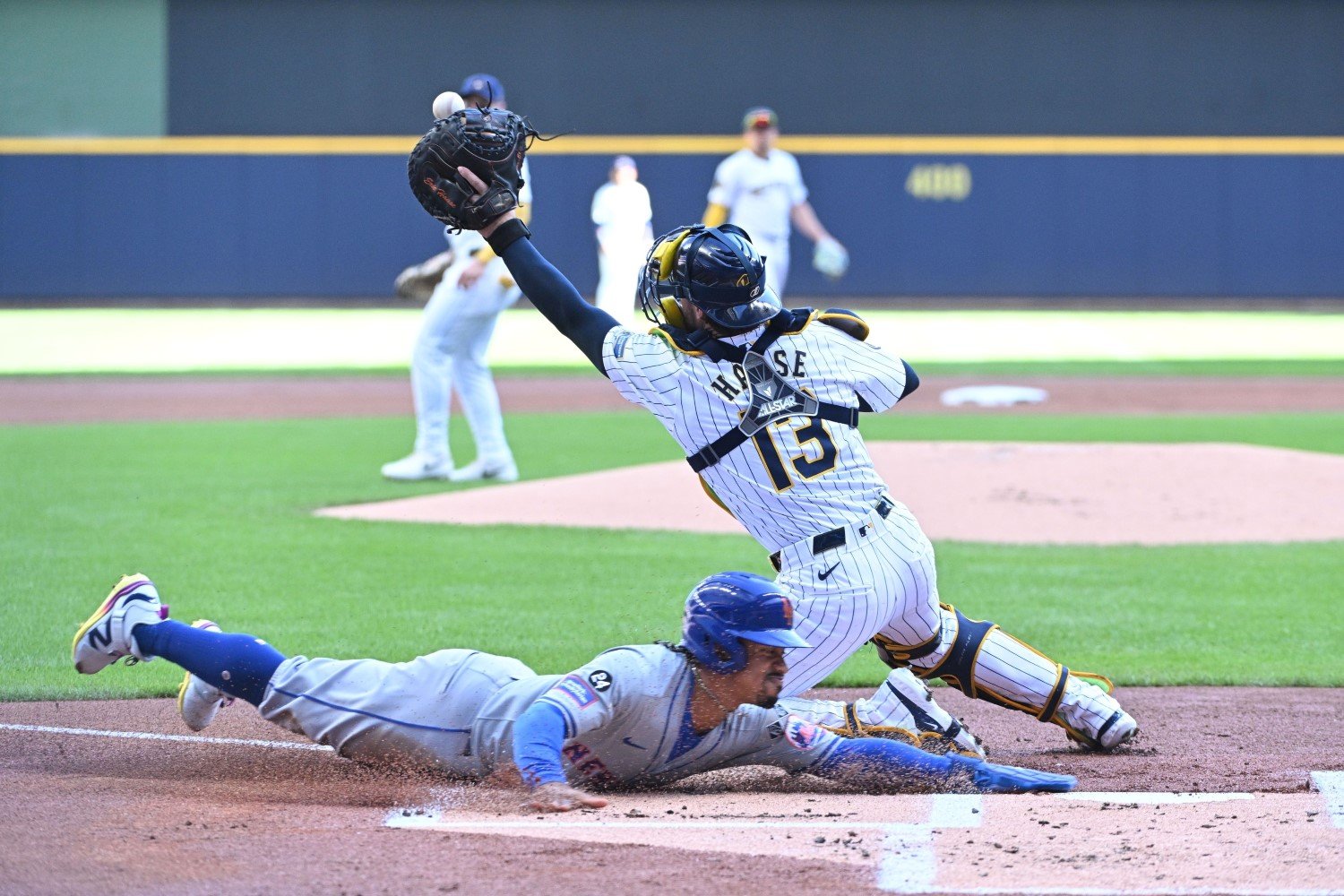 Sunday brought clarity for the Brewers about their playoff series this week--but only in terms of at what times and on which channels the games can be found. The question of whom they'll play will have to be settled Monday, far from Milwaukee, by a doubleheader between the Mets and Atlanta. The league did announce the start times of each Wild Card Series game, even though neither matchup is settled in the NL yet due to the chaos wrought by a hurricane in the Southeast last week. Here are the key details for the Crew's first playoff series: Game 1: Starts at 4:32 PM CT, on ESPN Game 2: Starts at 6:38 PM CT, on ESPN Game 3: Starts at 7:38 PM CT, on ESPN2 The first game will be at an awkward time, but thereafter, the Brewers get primetime treatment. That might have as much to do with logistics and the identity of their potential opponents as with their own national profile, but it's still fun. The sun could pour in rather viciously early in Game 1, making line drives to left field tricky, but otherwise, it will simply be a chance to get Miller Field rocking. Just as importantly, of course, the Brewers now have good reason to hope that their opponent will be game- and travel-weary, because the Mets and Braves are compelled to play a full doubleheader in order to settle the last two spots in the Wild Card race. Here are the scenarios for that entanglement, from a Brewers perspective: Split: All three of the teams involve finish 89-73. Because they each beat the Diamondbacks in their season series, both Atlanta and the Mets are in. Atlanta wins the tiebreaker with New York, so the Mets come back to Milwaukee to play the Brewers in the WCS. Mets sweep: Mets are in, and so are the Diamondbacks. Arizona finishes a game back of New York, so they come to Milwaukee. Atlanta sweep: The same as a Mets sweep, in effect, except Atlanta would go play the Padres, instead of the Mets doing so. The Diamondbacks still come to Milwaukee. That sounds like a 50/50 chance of the Snakes returning to the scene of their upset in last year's Wild Card Series, but it's not so. At the end of Game 1 on Monday, the winner of that game clinches a playoff spot. They'll then hold back any and all players without whom they can get through nine innings in Game 2, to minimize those players' tiredness in Tuesday's playoff opener. The loser, on the other hand, will be playing for their lives, and every pitcher they have will be available for the second contest. It would be a substantial surprise if the two sides don't manage a split. It's in both their best interests, although both sides will have to fight plenty hard enough to gain the edge of winning the first game in the twin bill to ensure that the Mets come to Wisconsin with their legs heavy and their bullpen depleted. The scramble of Game 1 will give way to a very relaxed Game 2, on the winning side, and the other side will face a huge amount of pressure. In other words, gear up for the Mets. We know for sure that it will be either them or Arizona, but the former is more likely--and, since the Diamondbacks will be able to sit around Monday or travel to Milwaukee on spec while they wait out the games, much more desirable. The Brewers just showed they can beat the Mets handily, and the Mets are probably going to come back even more tired. The Crew just has to be patient, and then take care of business.
 -
The combination of wins by Arizona and New York and an Atlanta loss Sunday forced a doubleheader today in the shadow of the highway interchange in Georgia. The Brewers can sit at home, cozy and relaxed, and wait for their potential playoff opponents to wear each other down. Image courtesy of © Michael McLoone-Imagn Images Sunday brought clarity for the Brewers about their playoff series this week--but only in terms of at what times and on which channels the games can be found. The question of whom they'll play will have to be settled Monday, far from Milwaukee, by a doubleheader between the Mets and Atlanta. The league did announce the start times of each Wild Card Series game, even though neither matchup is settled in the NL yet due to the chaos wrought by a hurricane in the Southeast last week. Here are the key details for the Crew's first playoff series: Game 1: Starts at 4:32 PM CT, on ESPN Game 2: Starts at 6:38 PM CT, on ESPN Game 3: Starts at 7:38 PM CT, on ESPN2 The first game will be at an awkward time, but thereafter, the Brewers get primetime treatment. That might have as much to do with logistics and the identity of their potential opponents as with their own national profile, but it's still fun. The sun could pour in rather viciously early in Game 1, making line drives to left field tricky, but otherwise, it will simply be a chance to get Miller Field rocking. Just as importantly, of course, the Brewers now have good reason to hope that their opponent will be game- and travel-weary, because the Mets and Braves are compelled to play a full doubleheader in order to settle the last two spots in the Wild Card race. Here are the scenarios for that entanglement, from a Brewers perspective: Split: All three of the teams involve finish 89-73. Because they each beat the Diamondbacks in their season series, both Atlanta and the Mets are in. Atlanta wins the tiebreaker with New York, so the Mets come back to Milwaukee to play the Brewers in the WCS. Mets sweep: Mets are in, and so are the Diamondbacks. Arizona finishes a game back of New York, so they come to Milwaukee. Atlanta sweep: The same as a Mets sweep, in effect, except Atlanta would go play the Padres, instead of the Mets doing so. The Diamondbacks still come to Milwaukee. That sounds like a 50/50 chance of the Snakes returning to the scene of their upset in last year's Wild Card Series, but it's not so. At the end of Game 1 on Monday, the winner of that game clinches a playoff spot. They'll then hold back any and all players without whom they can get through nine innings in Game 2, to minimize those players' tiredness in Tuesday's playoff opener. The loser, on the other hand, will be playing for their lives, and every pitcher they have will be available for the second contest. It would be a substantial surprise if the two sides don't manage a split. It's in both their best interests, although both sides will have to fight plenty hard enough to gain the edge of winning the first game in the twin bill to ensure that the Mets come to Wisconsin with their legs heavy and their bullpen depleted. The scramble of Game 1 will give way to a very relaxed Game 2, on the winning side, and the other side will face a huge amount of pressure. In other words, gear up for the Mets. We know for sure that it will be either them or Arizona, but the former is more likely--and, since the Diamondbacks will be able to sit around Monday or travel to Milwaukee on spec while they wait out the games, much more desirable. The Brewers just showed they can beat the Mets handily, and the Mets are probably going to come back even more tired. The Crew just has to be patient, and then take care of business. View full article
-
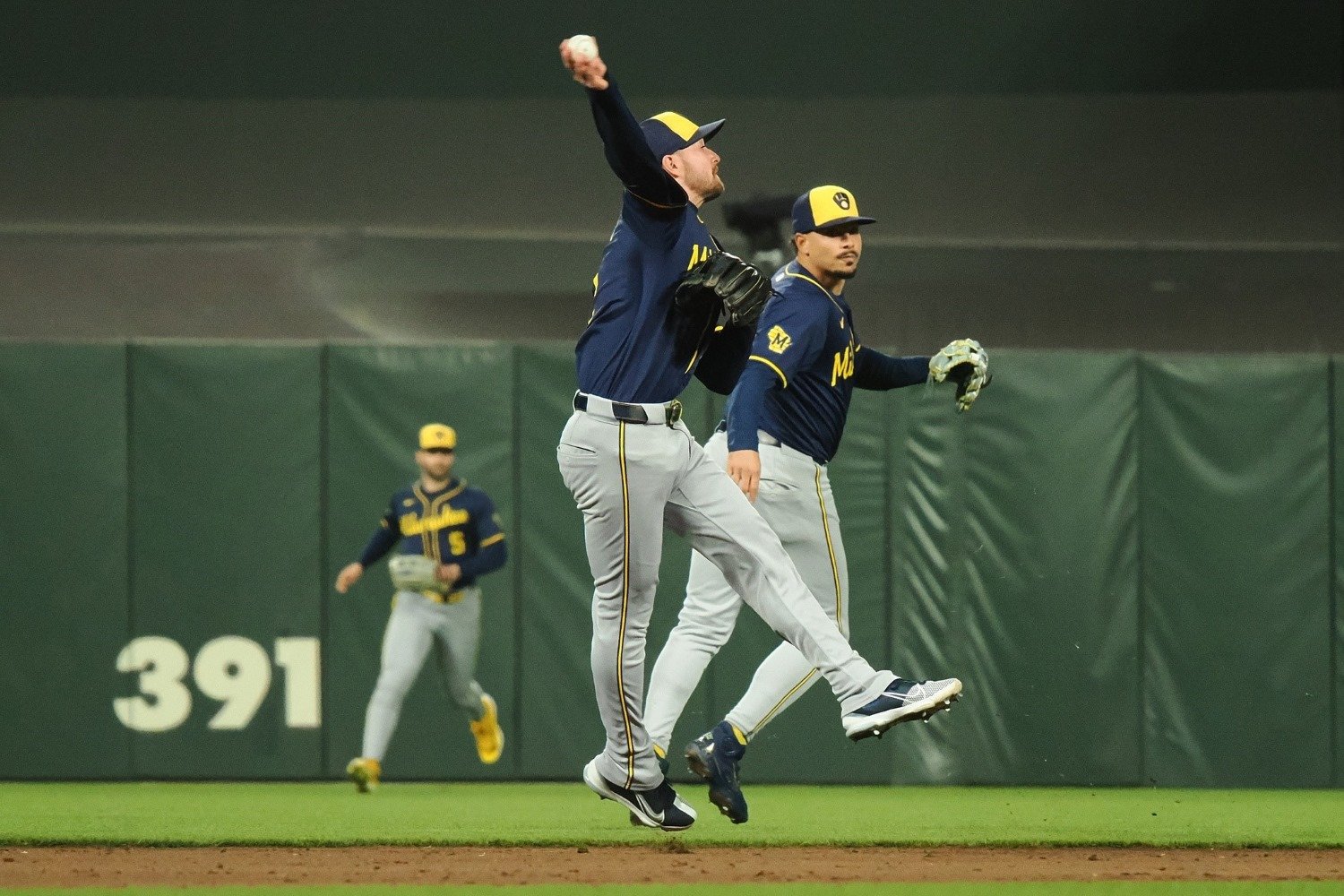 The more you watch Brice Turang play, the more involved you want him to be in your team. Maybe that, as much as the dearth of great alternatives after Christian Yelich's back took him out of commission, is what has kept Pat Murphy writing Turang's name in at the top of the Brewers batting order even in the late stages of September, despite the young player's .238/.300/.327 batting line since May 1. He doesn't want Turang to lose the vivacity of his game or the ability to infect the offense with the same quality by stashing him at the bottom of the batting order. One way or another, when a right-handed pitcher starts for the opponents, Turang is usually atop the lineup. He doesn't get on base nearly as often as a team wants a leadoff hitter to do so, but when he does, he's a dangerous, chaos-inducing presence. He's up to 47 steals in 53 attempts on the year. He goes first-to-third on nearly half the singles hit before he has a chance to steal second, and all season, he has not stopped at third when a single was hit while he was on second or a double was hit while he was on first. He moves runners over and brings them in exceptionally well. He's a good situational offensive player, even if he's being asked to bat more often than he would in a fully optimized Milwaukee offense. Defensively, though, none of that caveating or couching is required. Defensively, Turang is shaping up as one of the two or three best defensive second basemen of his generation, and he's having what could turn out to be the best single season at the position in over a decade. Defensively, he takes over games. On batted balls with a launch angle under 8 degrees hit in a 30-degree wedge from the second base bag over toward first (in other words, on all the batted balls we can reasonably say are the responsibility of a second baseman, if they can get to them), the Brewers have allowed opponents the lowest rate of reaching on balls in play (counting both hits and times reaching on errors) of any team in baseball, at .219. It's not a matter of their pitchers inducing good, weak contact or of ingenious positioning, even if both the pitchers and the coaching staff do those things quite well. It's a matter of Turang being really, really good at covering his ground. Turang 1.mp4 Shading toward the hole against a lefty batter is right and proper, but it makes things tough when that batter--a fairly fleet-footed one, for that matter--hits the ball up the middle. No matter. Turang gets up to speed quickly, and his ability to throw hard on the run is dazzling. He's just as comfortable going the other way, and his proprioception when he has to turn and find a target for a throw is superb. Turang 2.mp4 It hasn't been a great season, ironically, for the Brewers turning double plays. Willy Adames has struggled in multiple facets, and Turang has had a hard time feeding his strong-armed shortstop in ways that work for him this year. At times, though, his range and his aggressiveness are enough to make up for Adames's lack of quickness or lateness to get into position. Turang 3.mp4 The aggressiveness of that play, taking the lead runner after an accidental inside-out swing by Ha-Seong Kim, is an exemplar of Turang's style as a second baseman. He's always hunting, the way Adames has always done on the other side of the bag, and that's why they work well together--even in what has been a difficult year for the veteran shortstop. Turang 4.mp4 Turang is rangy, and he's sure-handed, and he's creative about getting his preferred hop on some balls. He shines brightest, though, when the ball is hit like a rocket in his general direction, and his job is just to react and snare it. Turang 5.mp4 That play is much more difficult than it looks, especially given the hop he was going to have to try to deal with if he didn't catch it in the air. Notice how much he gave ground, getting out into the grass to field the ball despite being confined to the dirt until the pitch is released. Turang has an unusual knack for that; most infielders struggle with the angle they create for themselves by moving away from the ball they're trying to catch. When I say he takes over games with his glove, I'm thinking especially of that game against the Marlins, when he did this: Turang 6.mp4 And then this, on the next play: Turang 7.mp4 These are two sharply hit line-drive should-be singles. Some second basemen get to them on a hop, but in the first case, even doing that would mean a run, because there was no double play to be had and the bases were loaded. He had to go left for one, and right for the other. That could have been three runs worth of clean singles, and against even most great defenders at second, it would have been one or two runs of ground balls merely kept in the dirt. Turang made it two outs, and the Brewers went on to win that game, 6-2. He doesn't just get horizontal. His vertical playmaking has also been exceptional, all year. Turang 8.mp4 Sports Info Solutions's Defensive Runs Saved (DRS) doesn't count those two diving plays against Miami as saving three runs. Like most offensive value metrics, DRS is designed to be context-neutral. It only gives Turang credit for the difference between the likely outcome of a play on an average run value basis and the actual outcome. Even so, the Crew's keystone stud has been worth 22 DRS this year, pacing the league. He could, with a strong final few games, finish with the most DRS by a second baseman since Darwin Barney of the Cubs, in 2012. Turang should unequivocally win the Fielding Bible Award at second base this year, but more important than the accolades are the impacts, and the aesthetics. Murphy talks often about seeing the game moving more toward having shortstop-qualified players stationed all the way around the infield, and center fielders stationed all the way around the outfield. Turang, who might yet slide to short when Adames departs via free agency this winter but is almost too good at this position to make that seem sensible, is a perfect embodiment of his vision. He makes the game different and harder for opposing offenses. He alters everything, tilting the contest in the Brewers' favor over and over. The limitations of his offensive skills are real and important to keep in mind, but Turang has established himself as a huge part of a very good team this year, and while they might want to upgrade the top of their roster and make him slightly less indispensable next year, the team won't want to lose the way he shapes their character on the field and shrinks the field for hitters from the other side.
 -
Though playing a bigger role in the Brewers offense than would be expected or ideal, the Brewers' second-year second baseman has been extremely valuable--and a joy to watch, all year. Image courtesy of © Kelley L Cox-Imagn Images The more you watch Brice Turang play, the more involved you want him to be in your team. Maybe that, as much as the dearth of great alternatives after Christian Yelich's back took him out of commission, is what has kept Pat Murphy writing Turang's name in at the top of the Brewers batting order even in the late stages of September, despite the young player's .238/.300/.327 batting line since May 1. He doesn't want Turang to lose the vivacity of his game or the ability to infect the offense with the same quality by stashing him at the bottom of the batting order. One way or another, when a right-handed pitcher starts for the opponents, Turang is usually atop the lineup. He doesn't get on base nearly as often as a team wants a leadoff hitter to do so, but when he does, he's a dangerous, chaos-inducing presence. He's up to 47 steals in 53 attempts on the year. He goes first-to-third on nearly half the singles hit before he has a chance to steal second, and all season, he has not stopped at third when a single was hit while he was on second or a double was hit while he was on first. He moves runners over and brings them in exceptionally well. He's a good situational offensive player, even if he's being asked to bat more often than he would in a fully optimized Milwaukee offense. Defensively, though, none of that caveating or couching is required. Defensively, Turang is shaping up as one of the two or three best defensive second basemen of his generation, and he's having what could turn out to be the best single season at the position in over a decade. Defensively, he takes over games. On batted balls with a launch angle under 8 degrees hit in a 30-degree wedge from the second base bag over toward first (in other words, on all the batted balls we can reasonably say are the responsibility of a second baseman, if they can get to them), the Brewers have allowed opponents the lowest rate of reaching on balls in play (counting both hits and times reaching on errors) of any team in baseball, at .219. It's not a matter of their pitchers inducing good, weak contact or of ingenious positioning, even if both the pitchers and the coaching staff do those things quite well. It's a matter of Turang being really, really good at covering his ground. Turang 1.mp4 Shading toward the hole against a lefty batter is right and proper, but it makes things tough when that batter--a fairly fleet-footed one, for that matter--hits the ball up the middle. No matter. Turang gets up to speed quickly, and his ability to throw hard on the run is dazzling. He's just as comfortable going the other way, and his proprioception when he has to turn and find a target for a throw is superb. Turang 2.mp4 It hasn't been a great season, ironically, for the Brewers turning double plays. Willy Adames has struggled in multiple facets, and Turang has had a hard time feeding his strong-armed shortstop in ways that work for him this year. At times, though, his range and his aggressiveness are enough to make up for Adames's lack of quickness or lateness to get into position. Turang 3.mp4 The aggressiveness of that play, taking the lead runner after an accidental inside-out swing by Ha-Seong Kim, is an exemplar of Turang's style as a second baseman. He's always hunting, the way Adames has always done on the other side of the bag, and that's why they work well together--even in what has been a difficult year for the veteran shortstop. Turang 4.mp4 Turang is rangy, and he's sure-handed, and he's creative about getting his preferred hop on some balls. He shines brightest, though, when the ball is hit like a rocket in his general direction, and his job is just to react and snare it. Turang 5.mp4 That play is much more difficult than it looks, especially given the hop he was going to have to try to deal with if he didn't catch it in the air. Notice how much he gave ground, getting out into the grass to field the ball despite being confined to the dirt until the pitch is released. Turang has an unusual knack for that; most infielders struggle with the angle they create for themselves by moving away from the ball they're trying to catch. When I say he takes over games with his glove, I'm thinking especially of that game against the Marlins, when he did this: Turang 6.mp4 And then this, on the next play: Turang 7.mp4 These are two sharply hit line-drive should-be singles. Some second basemen get to them on a hop, but in the first case, even doing that would mean a run, because there was no double play to be had and the bases were loaded. He had to go left for one, and right for the other. That could have been three runs worth of clean singles, and against even most great defenders at second, it would have been one or two runs of ground balls merely kept in the dirt. Turang made it two outs, and the Brewers went on to win that game, 6-2. He doesn't just get horizontal. His vertical playmaking has also been exceptional, all year. Turang 8.mp4 Sports Info Solutions's Defensive Runs Saved (DRS) doesn't count those two diving plays against Miami as saving three runs. Like most offensive value metrics, DRS is designed to be context-neutral. It only gives Turang credit for the difference between the likely outcome of a play on an average run value basis and the actual outcome. Even so, the Crew's keystone stud has been worth 22 DRS this year, pacing the league. He could, with a strong final few games, finish with the most DRS by a second baseman since Darwin Barney of the Cubs, in 2012. Turang should unequivocally win the Fielding Bible Award at second base this year, but more important than the accolades are the impacts, and the aesthetics. Murphy talks often about seeing the game moving more toward having shortstop-qualified players stationed all the way around the infield, and center fielders stationed all the way around the outfield. Turang, who might yet slide to short when Adames departs via free agency this winter but is almost too good at this position to make that seem sensible, is a perfect embodiment of his vision. He makes the game different and harder for opposing offenses. He alters everything, tilting the contest in the Brewers' favor over and over. The limitations of his offensive skills are real and important to keep in mind, but Turang has established himself as a huge part of a very good team this year, and while they might want to upgrade the top of their roster and make him slightly less indispensable next year, the team won't want to lose the way he shapes their character on the field and shrinks the field for hitters from the other side. View full article
-
With superb bat-to-ball skills and an impressive awareness, the team's third baseman has earned himself a bunch of valuable calls at the edges of the strike zone. Image courtesy of © Jeff Curry-Imagn Images Early this season, I wrote about the skill at which Rhys Hoskins excels, but which many fans probably didn't realize existed: batter framing. It's a funny way to think about the game, because even catchers framing pitches to earn extra calls has only emerged into the analytical consciousness of the sport within the last two decades. Once you grapple with it for a bit, though, it makes sense. The pitcher is the first person to influence the likelihood of a called strike, by throwing a pitch toward a particular target with a particular degree of command or control. The catcher is the last person to exert that influence, by catching the ball with a particular style. In between, though, the hitter gets to make their own contribution to the process. The better a hitter knows the edges of the zone, the more favorable the calls in that space turn out to be. Patterns of swinging or taking pitches that correlate with a real talent for pitch recognition and strike-zone judgment will lead to fewer called strikes on the borderlines of the zone, as long as a hitter also takes the determined approach of swinging when they identify a strike and taking when they identify a ball. Shaping your own zone that way--defending the edges, without expanding, and/or applying some subtle blend of politicking and body language--is a skill, although not one with a huge spread in terms of how many runs above or below average a hitter can be worth that way. As I wrote in the spring, Hoskins is elite in this regard. It turns out that a Brewers rookie joins him very high on that leaderboard, though. Yes, Joey Ortiz is getting multiple runs of value from forcing certain calls, based on his combination of skills in the box. Ortiz doesn't chase outside the zone very much, and doesn't even offer at fringy pitches with any great frequency. Among the 200 hitters with at least 400 plate appearances, Ortiz swings at the lowest percentage of close pitches--those with a probability of being called a strike between 20 and 80 percent, based on their location. He's assiduous about that, but what's striking is that he gets a lot of his value from not swinging at strikes much, period. No qualifying hitter swings at a lower share of all pitches in the zone. As a team, the Brewers don't expand the zone much, which is part of why Hoskins and Ortiz are not the only ones with good framing value at the plate. As you can see, though, there's more to the skill of defining the strike zone as a hitter than swing rates. Ortiz far outperforms Sal Frelick and Blake Perkins, who also don't expand their zones. It's a subtle art, but the rookie does seem to have a knack for selling a ball, with active takes that involve letting the bat start its arc toward the hitting zone, just a bit. He uses both approach skills and his mannerisms--plus good contact skills within the zone, which minimize the chances that he ever gets called out on strikes by getting the ball into play early in at-bats--to influence umpires on the pitches he doesn't choose to attack. Again, this is one of those tiny, fractional ways players amass value. It's not as important as most other offensive skills, though it's closely tied in with some of them, like minimizing strikeouts and maximizing walks. Mostly, it's just a way of better understanding a player. Though not superficially similar to Hoskins or Aaron Judge or any of the others who rank among the league's top five in batter framing runs, Ortiz has demonstrated the skill. His approach is very much akin to those of Dansby Swanson, Ha-Seong Kim, and Jonathan India, which is quite a compliment, since all of them are fairly seasoned veterans. Ortiz has learned to derive value by influencing the zone and fighting for the few inches around it that can decide games, and he does it both on his swings and on his takes. It can slip by unnoticed in many contests, but next week, it might just become one of the minuscule skills that flips a playoff series. At that point, we'd all notice. View full article
-
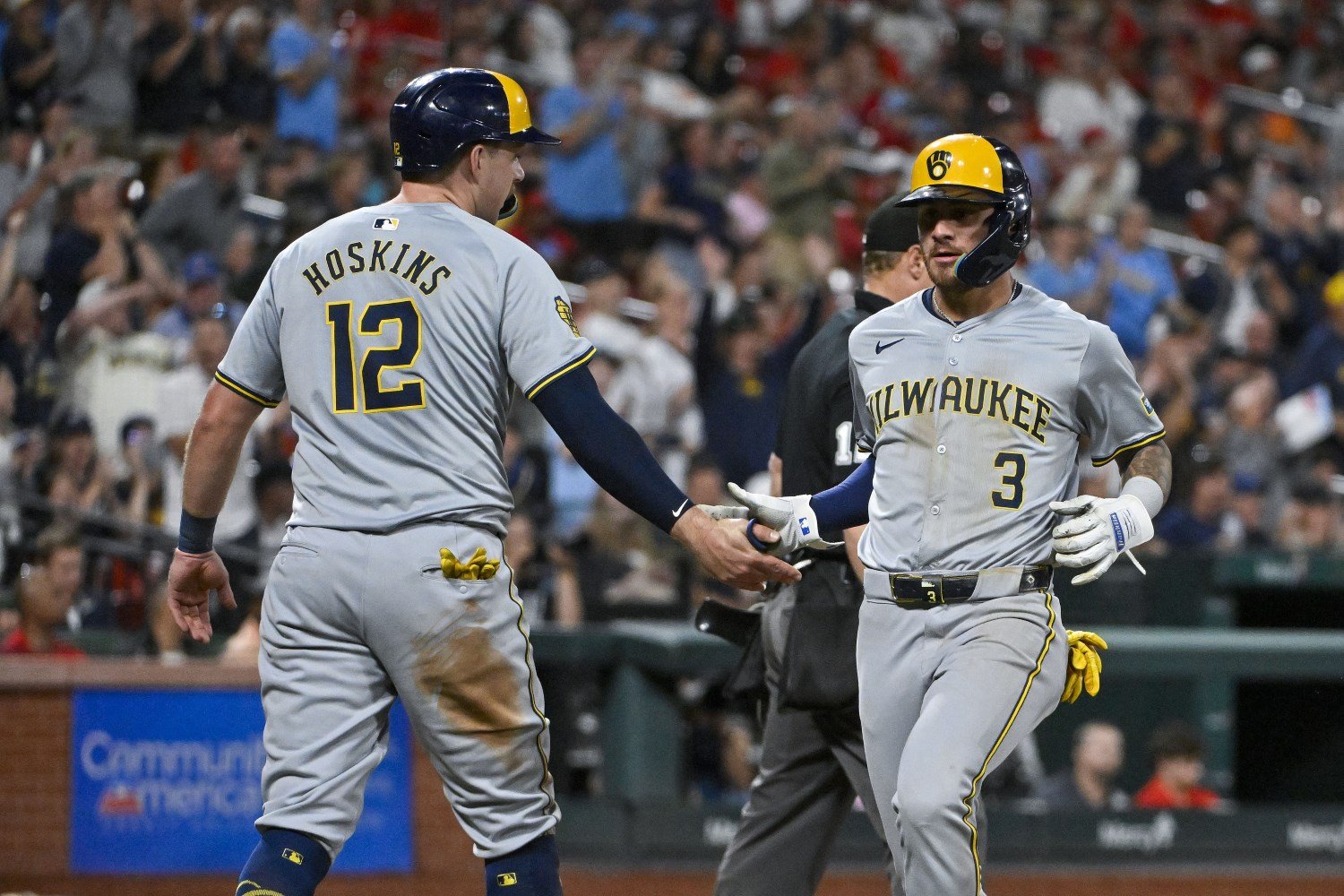 Early this season, I wrote about the skill at which Rhys Hoskins excels, but which many fans probably didn't realize existed: batter framing. It's a funny way to think about the game, because even catchers framing pitches to earn extra calls has only emerged into the analytical consciousness of the sport within the last two decades. Once you grapple with it for a bit, though, it makes sense. The pitcher is the first person to influence the likelihood of a called strike, by throwing a pitch toward a particular target with a particular degree of command or control. The catcher is the last person to exert that influence, by catching the ball with a particular style. In between, though, the hitter gets to make their own contribution to the process. The better a hitter knows the edges of the zone, the more favorable the calls in that space turn out to be. Patterns of swinging or taking pitches that correlate with a real talent for pitch recognition and strike-zone judgment will lead to fewer called strikes on the borderlines of the zone, as long as a hitter also takes the determined approach of swinging when they identify a strike and taking when they identify a ball. Shaping your own zone that way--defending the edges, without expanding, and/or applying some subtle blend of politicking and body language--is a skill, although not one with a huge spread in terms of how many runs above or below average a hitter can be worth that way. As I wrote in the spring, Hoskins is elite in this regard. It turns out that a Brewers rookie joins him very high on that leaderboard, though. Yes, Joey Ortiz is getting multiple runs of value from forcing certain calls, based on his combination of skills in the box. Ortiz doesn't chase outside the zone very much, and doesn't even offer at fringy pitches with any great frequency. Among the 200 hitters with at least 400 plate appearances, Ortiz swings at the lowest percentage of close pitches--those with a probability of being called a strike between 20 and 80 percent, based on their location. He's assiduous about that, but what's striking is that he gets a lot of his value from not swinging at strikes much, period. No qualifying hitter swings at a lower share of all pitches in the zone. As a team, the Brewers don't expand the zone much, which is part of why Hoskins and Ortiz are not the only ones with good framing value at the plate. As you can see, though, there's more to the skill of defining the strike zone as a hitter than swing rates. Ortiz far outperforms Sal Frelick and Blake Perkins, who also don't expand their zones. It's a subtle art, but the rookie does seem to have a knack for selling a ball, with active takes that involve letting the bat start its arc toward the hitting zone, just a bit. He uses both approach skills and his mannerisms--plus good contact skills within the zone, which minimize the chances that he ever gets called out on strikes by getting the ball into play early in at-bats--to influence umpires on the pitches he doesn't choose to attack. Again, this is one of those tiny, fractional ways players amass value. It's not as important as most other offensive skills, though it's closely tied in with some of them, like minimizing strikeouts and maximizing walks. Mostly, it's just a way of better understanding a player. Though not superficially similar to Hoskins or Aaron Judge or any of the others who rank among the league's top five in batter framing runs, Ortiz has demonstrated the skill. His approach is very much akin to those of Dansby Swanson, Ha-Seong Kim, and Jonathan India, which is quite a compliment, since all of them are fairly seasoned veterans. Ortiz has learned to derive value by influencing the zone and fighting for the few inches around it that can decide games, and he does it both on his swings and on his takes. It can slip by unnoticed in many contests, but next week, it might just become one of the minuscule skills that flips a playoff series. At that point, we'd all notice.
 -
Pat Murphy's 200 Club doesn't let up on the opposing pitching staff, even when they get two outs and the hurler starts sniffing the barn. Will they be able to transplant that regular-season skill into the very different beast that is the postseason? Image courtesy of © Kelley L Cox-Imagn Images In the comment section of a piece I wrote yesterday about the Brewers' power-speed combination and varied means of scoring runs, community moderator and site member @Team Canada made an astute observation: As most Brewer Fanatic denizens are, T.C. was right on the money. No team in MLB has scored more runs with two outs this year than have Murph's Marauders, at 321. They're the only team in the league with a better OPS after two are out than they have before that, and rank third in overall adjusted OPS in those situations, trailing only the Dodgers and Diamondbacks. We could describe them best, perhaps, as very good but not quite historic. They're tied for 94th since 1969 in relative production with two outs, and tied for 160th in absolute production. If we isolate two-out spots with runners in scoring position, the Crew lead the league in home runs this year, at 30. They're 15th-best since 1969 in relative production in those clutch moments, and 46th-best in absolute production. Obviously, we can't glean a lot from directly comparing run totals across seasons and eras, because the run environment has a lot to say about how many runs a team scores in an absolute sense. The 1999 Cleveland team scored an eye-popping 428 runs after recording two outs in innings, because in 1999, runs were everywhere. Runs were stadium giveaways. The Brewers' 321 two-out runs is already tied for the 123rd-highest total since 1969, though, and with six games to play, they could easily climb into the top 70. One more aside about these historical comparisons, before we try to pin down whether it's possible for the team to sustain this into the playoffs: Do you know who had the best overall production with two outs, since 1969, relative to the rest of the league? It was the 1978 Brewers! That team's 93 wins weren't enough to earn them a playoff berth, but they raked with two outs, giving the league notice of the half-decade of hurt ahead of them. Paul Molitor and Robin Yount were still finding their footing that year, but Larry Hisle, Gorman Thomas, Cecil Cooper, Sal Bando, Sixto Lezcano, Don Money and Ben Oglivie laid waste to the junior circuit--especially after two were down. That team batted .285/.355/.446 with two outs. Talk about a relentless offense. That long-ago iteration of the Crew had two fledgling expansion teams on whom to feast, in the Blue Jays and Mariners. It's a lot harder to excel that way in any aspect of the game in 2024, but this year's team is hitting .240/.325/.410 when they're down to their last out in a frame. Pair their power with the speed element to move runners into scoring position, and they have put up a whole bunch of runs even without crazy raw numbers in that situation. The question is whether, as they turn their attention toward the playoffs, the team can expect to sustain that excellence. Since 2015, there have been 10 teams who played at least six postseason games and sustained a two-out OPS of .750 of better during that run: 2020 Dodgers, .996 2018 Astros, .893 2019 Rays, .883 2021 Astros, .840 2021 Team Strip Mall, Suburban Georgia, .829 2023 Rangers, .806 2018 Red Sox, .805 2017 Yankees, .784 2020 Padres, .764 2019 Nationals, .756 That's an interesting group, and a telling one, if you vividly remember some of the teams in question. Half of them won the World Series, and six won their league's pennant. Obviously, hitting with two outs is a bit of a fluky thing, over such a small sample as any postseason run is, but if you worried that the higher quality of opposing pitching would make it impossible to produce consistently with two outs in October, you can slough off that concern. Making the playoffs is a privilege full of pain. You play until you lose, unless you win it all, and the expansion of the postseason means the odds of that are longer than ever. There are no guarantees of transferring any of the skills or characteristics that feel so intrinsic and important and virtuous from the regular season to the tournament, and if those things don't come to bear and a team fizzles in their moment in the spotlight, the whole endeavor takes on a sense of emptiness that's viciously unfair. Last year, that's precisely what happened to the Brewers. It could, of course, happen again. Under Murphy, though, the Brewers have become utterly relentless, and their two-out hitting is almost as much a matter of personality as of talent. It sure feels like this team will fight to the last out, within each game and series, but also within each inning. Maybe that will make for a deeper run into the autumn this time around. View full article
-
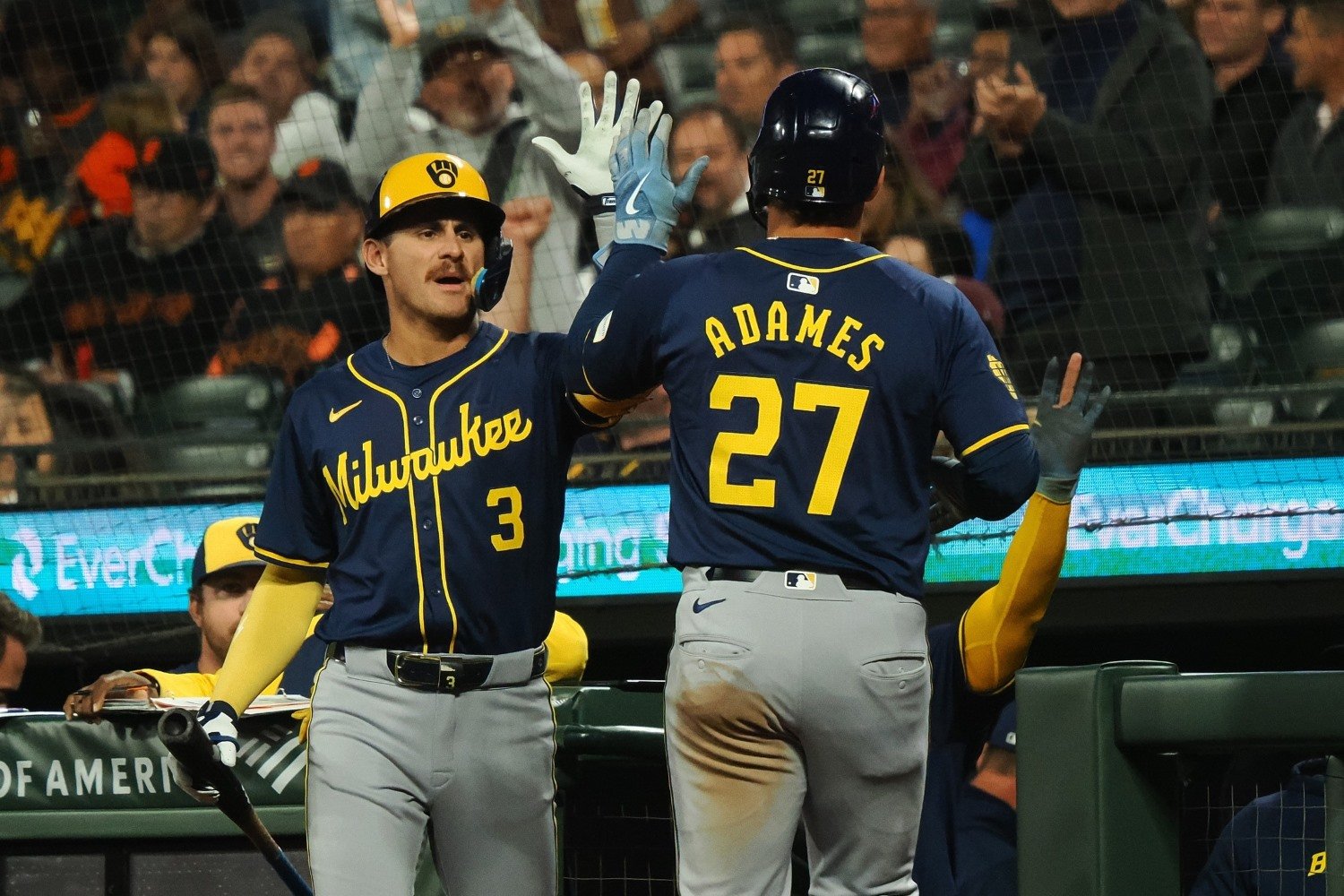 In the comment section of a piece I wrote yesterday about the Brewers' power-speed combination and varied means of scoring runs, community moderator and site member @Team Canada made an astute observation: As most Brewer Fanatic denizens are, T.C. was right on the money. No team in MLB has scored more runs with two outs this year than have Murph's Marauders, at 321. They're the only team in the league with a better OPS after two are out than they have before that, and rank third in overall adjusted OPS in those situations, trailing only the Dodgers and Diamondbacks. We could describe them best, perhaps, as very good but not quite historic. They're tied for 94th since 1969 in relative production with two outs, and tied for 160th in absolute production. If we isolate two-out spots with runners in scoring position, the Crew lead the league in home runs this year, at 30. They're 15th-best since 1969 in relative production in those clutch moments, and 46th-best in absolute production. Obviously, we can't glean a lot from directly comparing run totals across seasons and eras, because the run environment has a lot to say about how many runs a team scores in an absolute sense. The 1999 Cleveland team scored an eye-popping 428 runs after recording two outs in innings, because in 1999, runs were everywhere. Runs were stadium giveaways. The Brewers' 321 two-out runs is already tied for the 123rd-highest total since 1969, though, and with six games to play, they could easily climb into the top 70. One more aside about these historical comparisons, before we try to pin down whether it's possible for the team to sustain this into the playoffs: Do you know who had the best overall production with two outs, since 1969, relative to the rest of the league? It was the 1978 Brewers! That team's 93 wins weren't enough to earn them a playoff berth, but they raked with two outs, giving the league notice of the half-decade of hurt ahead of them. Paul Molitor and Robin Yount were still finding their footing that year, but Larry Hisle, Gorman Thomas, Cecil Cooper, Sal Bando, Sixto Lezcano, Don Money and Ben Oglivie laid waste to the junior circuit--especially after two were down. That team batted .285/.355/.446 with two outs. Talk about a relentless offense. That long-ago iteration of the Crew had two fledgling expansion teams on whom to feast, in the Blue Jays and Mariners. It's a lot harder to excel that way in any aspect of the game in 2024, but this year's team is hitting .240/.325/.410 when they're down to their last out in a frame. Pair their power with the speed element to move runners into scoring position, and they have put up a whole bunch of runs even without crazy raw numbers in that situation. The question is whether, as they turn their attention toward the playoffs, the team can expect to sustain that excellence. Since 2015, there have been 10 teams who played at least six postseason games and sustained a two-out OPS of .750 of better during that run: 2020 Dodgers, .996 2018 Astros, .893 2019 Rays, .883 2021 Astros, .840 2021 Team Strip Mall, Suburban Georgia, .829 2023 Rangers, .806 2018 Red Sox, .805 2017 Yankees, .784 2020 Padres, .764 2019 Nationals, .756 That's an interesting group, and a telling one, if you vividly remember some of the teams in question. Half of them won the World Series, and six won their league's pennant. Obviously, hitting with two outs is a bit of a fluky thing, over such a small sample as any postseason run is, but if you worried that the higher quality of opposing pitching would make it impossible to produce consistently with two outs in October, you can slough off that concern. Making the playoffs is a privilege full of pain. You play until you lose, unless you win it all, and the expansion of the postseason means the odds of that are longer than ever. There are no guarantees of transferring any of the skills or characteristics that feel so intrinsic and important and virtuous from the regular season to the tournament, and if those things don't come to bear and a team fizzles in their moment in the spotlight, the whole endeavor takes on a sense of emptiness that's viciously unfair. Last year, that's precisely what happened to the Brewers. It could, of course, happen again. Under Murphy, though, the Brewers have become utterly relentless, and their two-out hitting is almost as much a matter of personality as of talent. It sure feels like this team will fight to the last out, within each game and series, but also within each inning. Maybe that will make for a deeper run into the autumn this time around.
 -
No team good enough to reach the postseason has ever had the balance of power and speed the Brewers bring, and they add their offensive value in those dimensions with an extra benefit, too: efficiency. Image courtesy of © Michael McLoone-Imagn Images It's not really the identity of this Brewers team, but something wild happens when you sit down with the numbers, even for a moment. You realize that, despite their understated offensive profile, this is one of the most explosive teams who have ever reached October. By and large, stolen base totals don't correlate very well with overall team quality. That's not because stealing bases isn't valuable, but it reflects a couple of things that were true for a long stretch of baseball history, and one or two things that are true even now. Firstly, stealing bases is very valuable, but getting caught erases some of that value, so a team's baserunning value only continues to grow if they steal at a fairly high success rate. Secondly, for a lot of the game's history, there were a lot of players who were pretty bad, overall, but who carved out lots of playing time for themselves by being fast. Teams overvalued speed for much of the game's history, especially once integration took full effect and expansion altered the landscape of the sport. Until a couple of years ago, of course, stealing bases was also viewed by a lot of smart, forward-thinking teams as unduly risky strategy. If you're getting caught three times in every 10 attempts, you're barely breaking even, and sometimes you need to be even more successful than that. The league's average success rate tended to hover right in that range, and as the game became more focused on risk aversion and more vulnerable to groupthink, managers started shying away from the steal, just as they did from the bunt. Thankfully, with the implementation of the pitch timer came a set of necessary supplemental rules that made it easier to steal bases. Everyone in the league seemed to take that as a big, flashing sign reading, "GO!", and stolen-base rates have exploded since the start of 2023. That's why, when I say that the Brewers have a historic offense, it has to be taken with a small grain of salt. Still and all, you can't deny the coolness of this, or the truth of it. With two steals (one by Garrett Mitchell and one by Willy Adames) Sunday, the Crew surpassed 200 stolen bases for the season. They're now at 201, in fact, and they've only been caught 42 times. In the divisional era (before which steals were hardly prevalent, and were scored much differently in some cases), there are only 12 teams who have qualified for the postseason in a year in which they stole 180 or more bases. Query Results Table Season Team HR SB ▼ CS BA OBP SLG OPS OPS+ R/Gm 1976 KCR 65 218 106 .269 .327 .371 .699 103 4.4 1985 STL 87 314 96 .264 .335 .379 .714 100 4.6 1982 STL 67 200 91 .264 .334 .364 .697 95 4.2 1978 KCR 98 216 84 .268 .329 .399 .728 103 4.6 1975 OAK 151 183 82 .254 .333 .391 .724 106 4.7 1980 HOU 75 194 74 .261 .326 .367 .693 101 3.9 1987 STL 94 248 72 .263 .340 .378 .718 89 4.9 1995 CIN 161 190 68 .270 .342 .440 .782 106 5.2 1979 PIT 148 180 66 .272 .330 .416 .746 99 4.8 1976 CIN 141 210 57 .280 .357 .424 .781 120 5.3 1980 KCR 115 185 43 .286 .345 .413 .758 108 5.0 2024 MIL 174 201 42 .249 .326 .405 .732 103 4.8 Provided by Stathead.com: Found with Stathead. See Full Results. Generated 9/23/2024. As you can see, this group comes mostly from the heyday of AstroTurf and teams who leaned extremely heavily on speed, at the expense of power. Half of these teams hit fewer than 100 home runs all year. The Brewers already have more homers than any of them hit, even with six games to go. Notice, too, though, that the Crew have been caught fewer times than any of these teams, despite having more thefts than a fistful of them. There are other points to make here, but before we do, let's spend a little more time with the table above. What a list! Six of these 11 teams won the pennant, and the 1980 Astros and 1976 Royals only missed doing so after truly classic Championship Series showings. The 1976 Reds (the last gasp of the Big Red Machine, the most electrifying offense in baseball history), the 1979 Pirates, and (yes, alas) the 1982 Cardinals won the World Series. These are teams led by the likes of Joe Morgan, Pete Rose, George Brett, and Ozzie Smith. They had supporting sluggers like Mike Schmidt, Willie Stargell, Dave Parker, Johnny Bench, and Jack Clark. Their speed demons, from Willie Wilson and Omar Moreno to Barry Larkin and Cesar Cedeno, are some of the game's half-forgotten legends. This Brewers team is far more efficient in the way they take bases and far more loaded with power than any of those teams. Of course, it stands out less, because the aforementioned rules changes in 2023 make it easier to steal and the Crew are not the only team who have done so, and because the league hits far, far more home runs than it did in any of the seasons to which we're comparing this Milwaukee group. Still, the facts are the facts. Christian Yelich is a bit like cheating here, isn't he? He hit 11 home runs and stole 21 bases in 22 tries before back trouble ended his season. Here's the thing: Even if you strip out Yelich, you're left with enough steals to make this list and a better success rate on attempts than any of them had. You're also left with more homers than any of those teams hit. Not including Yelich, the Crew have three players who have stolen 20 or more bases, in Brice Turang (46), Blake Perkins (22), and Jackson Chourio (21). They've also gotten 19 of them from Adames and 17 from Sal Frelick, each at high success rates. Jake Bauers has 12 steals in 13 tries. This team can attack you on the bases from anywhere in the lineup. Just as importantly, though, they can hit the ball over the fence, with little warning. Rhys Hoskins, William Contreras, Adames, and Chourio all have more than 20 home runs. Bauers, Gary Sánchez, Joey Ortiz, and Garrett Mitchell all bring plenty of power in their own right, and if you reimagine Ortiz's season with better health in the middle of the summer or extrapolate Mitchell's eight homers in barely over 200 plate appearances, they look like 20-plus homer threats, too. This team has thrived in the past because of their ability to relentlessly develop solid pitching depth, and that's very much part of this year's story, too. Their core identity, this year, is not pitching, but the defenders arrayed behind them. They're an elite fielding group, and it's allowed their good pitchers to have success beyond that level. With those lingering narratives from previous years and some of the personnel issues that have plagued them at times, it's hard to think of this as an unusually dangerous offense for an opposing pitching staff come October. Nonetheless, that's the reality of this situation. In Chourio, this team has its superstar, a bit too young to be fairly expected to shine like Brett or Morgan in October but very much that caliber of talent. In Contreras, they have their steady, well-rounded and utterly fearsome slugger, akin to Clark or Parker. In Adames and Hoskins, they have specialized sluggers to make every sequence a dangerous one, and in Turang, Perkins, and Frelick, they have the gnats who can eat a great starting pitcher alive now and then. There are a lot of paths to wins and advancement in the postseason for this Brewers team. If it's possible, they're subtly historic. View full article
-
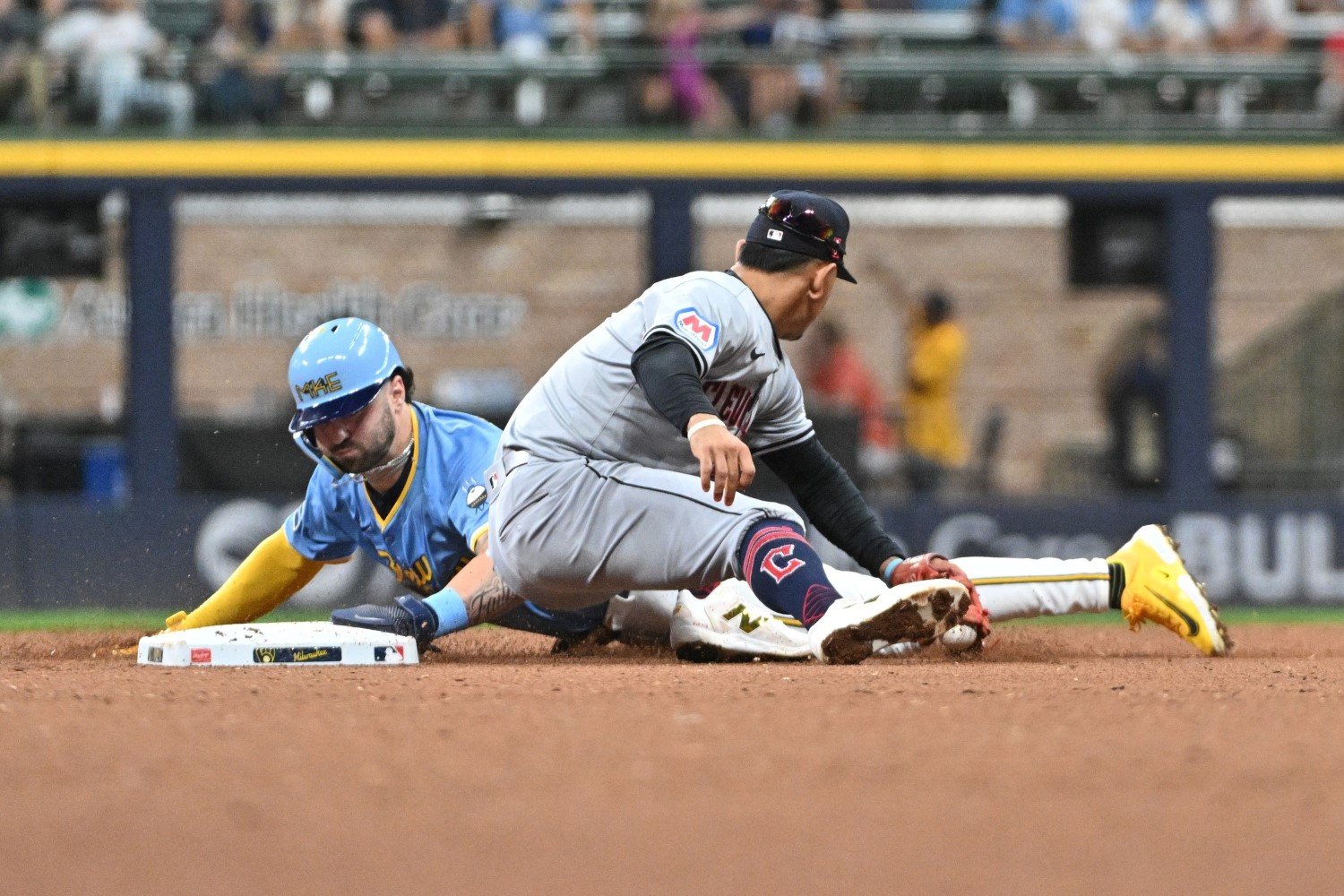 It's not really the identity of this Brewers team, but something wild happens when you sit down with the numbers, even for a moment. You realize that, despite their understated offensive profile, this is one of the most explosive teams who have ever reached October. By and large, stolen base totals don't correlate very well with overall team quality. That's not because stealing bases isn't valuable, but it reflects a couple of things that were true for a long stretch of baseball history, and one or two things that are true even now. Firstly, stealing bases is very valuable, but getting caught erases some of that value, so a team's baserunning value only continues to grow if they steal at a fairly high success rate. Secondly, for a lot of the game's history, there were a lot of players who were pretty bad, overall, but who carved out lots of playing time for themselves by being fast. Teams overvalued speed for much of the game's history, especially once integration took full effect and expansion altered the landscape of the sport. Until a couple of years ago, of course, stealing bases was also viewed by a lot of smart, forward-thinking teams as unduly risky strategy. If you're getting caught three times in every 10 attempts, you're barely breaking even, and sometimes you need to be even more successful than that. The league's average success rate tended to hover right in that range, and as the game became more focused on risk aversion and more vulnerable to groupthink, managers started shying away from the steal, just as they did from the bunt. Thankfully, with the implementation of the pitch timer came a set of necessary supplemental rules that made it easier to steal bases. Everyone in the league seemed to take that as a big, flashing sign reading, "GO!", and stolen-base rates have exploded since the start of 2023. That's why, when I say that the Brewers have a historic offense, it has to be taken with a small grain of salt. Still and all, you can't deny the coolness of this, or the truth of it. With two steals (one by Garrett Mitchell and one by Willy Adames) Sunday, the Crew surpassed 200 stolen bases for the season. They're now at 201, in fact, and they've only been caught 42 times. In the divisional era (before which steals were hardly prevalent, and were scored much differently in some cases), there are only 12 teams who have qualified for the postseason in a year in which they stole 180 or more bases. Query Results Table Season Team HR SB ▼ CS BA OBP SLG OPS OPS+ R/Gm 1976 KCR 65 218 106 .269 .327 .371 .699 103 4.4 1985 STL 87 314 96 .264 .335 .379 .714 100 4.6 1982 STL 67 200 91 .264 .334 .364 .697 95 4.2 1978 KCR 98 216 84 .268 .329 .399 .728 103 4.6 1975 OAK 151 183 82 .254 .333 .391 .724 106 4.7 1980 HOU 75 194 74 .261 .326 .367 .693 101 3.9 1987 STL 94 248 72 .263 .340 .378 .718 89 4.9 1995 CIN 161 190 68 .270 .342 .440 .782 106 5.2 1979 PIT 148 180 66 .272 .330 .416 .746 99 4.8 1976 CIN 141 210 57 .280 .357 .424 .781 120 5.3 1980 KCR 115 185 43 .286 .345 .413 .758 108 5.0 2024 MIL 174 201 42 .249 .326 .405 .732 103 4.8 Provided by Stathead.com: Found with Stathead. See Full Results. Generated 9/23/2024. As you can see, this group comes mostly from the heyday of AstroTurf and teams who leaned extremely heavily on speed, at the expense of power. Half of these teams hit fewer than 100 home runs all year. The Brewers already have more homers than any of them hit, even with six games to go. Notice, too, though, that the Crew have been caught fewer times than any of these teams, despite having more thefts than a fistful of them. There are other points to make here, but before we do, let's spend a little more time with the table above. What a list! Six of these 11 teams won the pennant, and the 1980 Astros and 1976 Royals only missed doing so after truly classic Championship Series showings. The 1976 Reds (the last gasp of the Big Red Machine, the most electrifying offense in baseball history), the 1979 Pirates, and (yes, alas) the 1982 Cardinals won the World Series. These are teams led by the likes of Joe Morgan, Pete Rose, George Brett, and Ozzie Smith. They had supporting sluggers like Mike Schmidt, Willie Stargell, Dave Parker, Johnny Bench, and Jack Clark. Their speed demons, from Willie Wilson and Omar Moreno to Barry Larkin and Cesar Cedeno, are some of the game's half-forgotten legends. This Brewers team is far more efficient in the way they take bases and far more loaded with power than any of those teams. Of course, it stands out less, because the aforementioned rules changes in 2023 make it easier to steal and the Crew are not the only team who have done so, and because the league hits far, far more home runs than it did in any of the seasons to which we're comparing this Milwaukee group. Still, the facts are the facts. Christian Yelich is a bit like cheating here, isn't he? He hit 11 home runs and stole 21 bases in 22 tries before back trouble ended his season. Here's the thing: Even if you strip out Yelich, you're left with enough steals to make this list and a better success rate on attempts than any of them had. You're also left with more homers than any of those teams hit. Not including Yelich, the Crew have three players who have stolen 20 or more bases, in Brice Turang (46), Blake Perkins (22), and Jackson Chourio (21). They've also gotten 19 of them from Adames and 17 from Sal Frelick, each at high success rates. Jake Bauers has 12 steals in 13 tries. This team can attack you on the bases from anywhere in the lineup. Just as importantly, though, they can hit the ball over the fence, with little warning. Rhys Hoskins, William Contreras, Adames, and Chourio all have more than 20 home runs. Bauers, Gary Sánchez, Joey Ortiz, and Garrett Mitchell all bring plenty of power in their own right, and if you reimagine Ortiz's season with better health in the middle of the summer or extrapolate Mitchell's eight homers in barely over 200 plate appearances, they look like 20-plus homer threats, too. This team has thrived in the past because of their ability to relentlessly develop solid pitching depth, and that's very much part of this year's story, too. Their core identity, this year, is not pitching, but the defenders arrayed behind them. They're an elite fielding group, and it's allowed their good pitchers to have success beyond that level. With those lingering narratives from previous years and some of the personnel issues that have plagued them at times, it's hard to think of this as an unusually dangerous offense for an opposing pitching staff come October. Nonetheless, that's the reality of this situation. In Chourio, this team has its superstar, a bit too young to be fairly expected to shine like Brett or Morgan in October but very much that caliber of talent. In Contreras, they have their steady, well-rounded and utterly fearsome slugger, akin to Clark or Parker. In Adames and Hoskins, they have specialized sluggers to make every sequence a dangerous one, and in Turang, Perkins, and Frelick, they have the gnats who can eat a great starting pitcher alive now and then. There are a lot of paths to wins and advancement in the postseason for this Brewers team. If it's possible, they're subtly historic.
- 2 comments
-
- 1
-

-
- brice turang
- willy adames
- (and 4 more)
-
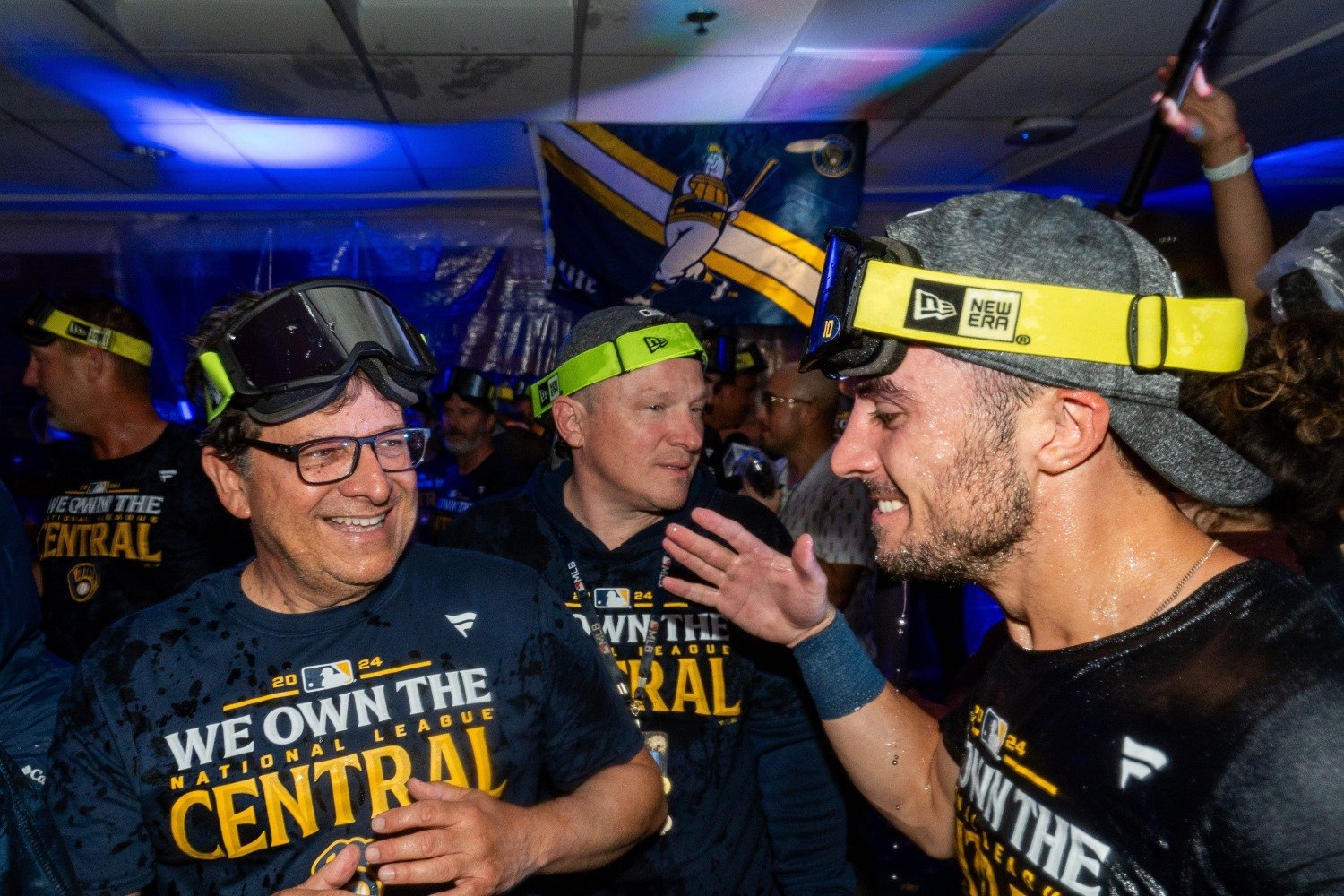 During the early weeks of the season, Rhys Hoskins was struggling. Watching him, though, I could still see a lot of what made Hoskins the Brewers' top target in free agency this past winter: the power, the well-organized approach, and the better feel for contact than you expect from the troglodytic first baseman. I wrote a piece predicting that Hoskins would turn a corner, and as a statistical premise, I created a statistic called weighted sweet-spot exit velocity. Hoskins ranked well in the number, which nicely captures the process battle of a hitter who can produce at an above-average level, especially with power. As it turns out, of course, Hoskins didn't quite turn that corner. He nosed upward for a couple of weeks, evincing all his talent and polish, but then he suffered a hamstring injury running the bases. Since coming back, he hasn't been the same guy, either in terms of real production or in wSSEV. The new stat still predicts and correlates with total production at the plate very impressively, though, and it's time to revisit it for a bit, in the context of a different Brewers hitter. To help the numbers land when I roll them out, let's quickly revisit the form of it. The centerpiece of the stat is the average exit velocity for a batter on balls with a launch angle between 10 degrees and 35 degrees. It's valuable to hit the ball hard, but it's especially valuable to do so with some air under it. The focus on that launch angle band ensures that we're measuring both bat speed and bat path. The weighting factor, though, is equally vital. We don't want to reward a hitter unduly for hitting it hard, even if it be in the air, if that high-quality contact is too rare to be of much use. So, we also weigh in the percentage of at-bats (originally, I used all plate appearances, but for these purposes, I've switched to at-bats, so we're not punishing a hitter for drawing walks) a hitter takes in which they do hit the ball within that launch-angle band. Hitting line drives and non-lazy fly balls is valuable; so is hitting it hard. This is a way to do both, and the resulting number reads just like a raw average exit velocity. Here's a chart plotting the rate at which every hitter produces exit velocities of 95 MPH or higher, on a per-plate appearance basis, along with their wSSEV. This is all batters who have come to the plate at least 200 times this year, and I've highlighted the Brewers for examination. Sal Frelick stands way, way apart from that crowd--not just the Brewers crowd, but the whole group. If we confined the chart only to players with at least 400 plate appearances, even those who look similar to Frelick--guys like Michael Siani, Cavan Biggio, and Nicky Lopez--would fall away. Of the nearly 200 hitters with at least 400 trips to the plate this year, Frelick's wSSEV is lowest by a whopping amount--nearly three miles per hour. The difference between Frelick and José Caballero, second-lowest on the list, is larger than the difference between Caballero and the ninth-lowest player. Frelick isn't terrible at hitting line drives, and he's downright good--very good, in fact--at putting the ball in play and drawing walks. He just really, really doesn't hit the ball hard very often, and when he does, it's nearly always on the ground. There are dozens of worse hitters in MLB, but not one who makes less impact. Frelick can only be a small, complementary piece at the bottom of a lineup. Still, he has substantial value. He plays great defense in right field, and he runs the bases well, and he gets on base at an above-average rate, so being unique in bis inability to drive the ball doesn't disqualify him. The Brewers are a team built around defense, and baserunning, and playing small ball. They're built to be and look and win just like Frelick. He's a very real candidate to play regularly for the Brewers, even when they reach the postseason, despite his faults and shortcomings. It's important to note, though, that the playoffs tend to be an environment friendlier to the long ball than to bunts and singles. Long-sequence offense doesn't work as well against good pitchers, who take the natural advantage pitchers have in the math game of baseball and increase it, swell it, exponentiate it. You have to try to ambush them and score fast. That's not a universal truth, but it's often a winning principle. The alternative to playing Frelick involves Blake Perkins, Garrett Mitchell, and Gary Sánchez. Perkins plays center in a configuration of the lineup that doesn't include Frelick. Mitchell plays right, and Sánchez slots in as the DH. That the team seems to have room on its roster for third catcher Eric Haase makes this plausible, because Sánchez can DH without the team being out on a limb and endangered by any foul tip off the mask of William Contreras. As you can see, neither Perkins nor Mitchell is a star in terms of creating high-value contact, either. Perkins is another level of defender even from Frelick, though, and he does hit it hard more often than Frelick does. Mitchell has had a strong second half and showed more offensive upside, and he's almost as good a right fielder as Frelick. They could replace Frelick with those guys, gain some power, and not lose anything much defensively. Sánchez is the kind of bat you really want to find a place for, if possible, because he's capable of changing a game in a single powerful swing. On the other hand, Frelick really does lengthen the lineup, in a way neither Mitchell nor Perkins reliably does. He bats left-handed and handles right-handed pitchers well, more so than Sánchez. He's also been there, all season, as part of the personality and fabric of the team, in addition to being part of their batting order. The team has to do some careful assessment, of the personal dynamics at play, but also about the odds that Frelick, Mitchell, or Perkins will experience a material difference in their production based on the interaction between their skill sets and the formidable ones of the pitchers the team will see in October. This is a tricky balancing act. The final three series of the season might help the team find some clarity on it, but the decisions will have to be Pat Murphy's, and they'll have to be made with high stakes and very imperfect information, because the amount and character of information needed to make the decisions well just won't be available in time. Frelick is important to the Brewers. So are Mitchell, Perkins, and Sánchez. The right answer is probably for each of them to play occasionally, for however long their playoff run lasts. That itself is a fraught approach, though--not only because the playoff run might not last long enough to even out any opportunities, but because picking the wrong options might ensure that it doesn't last long at all. Frelick is a player who wouldn't start for any other team likely to make the postseason, but he's a quintessentially Brewers player, and they're better for having him. It only magnifies their unique approach that such a player can be so integral. Unfortunately for Frelick, that doesn't mean he'll be their best option when the bright lights go on.
 -
It's not that he lags the entire field that makes it crazy. It's the breadth of the gap. Image courtesy of © Jovanny Hernandez / Milwaukee Journal Sentinel / USA TODAY NETWORK via Imagn Images During the early weeks of the season, Rhys Hoskins was struggling. Watching him, though, I could still see a lot of what made Hoskins the Brewers' top target in free agency this past winter: the power, the well-organized approach, and the better feel for contact than you expect from the troglodytic first baseman. I wrote a piece predicting that Hoskins would turn a corner, and as a statistical premise, I created a statistic called weighted sweet-spot exit velocity. Hoskins ranked well in the number, which nicely captures the process battle of a hitter who can produce at an above-average level, especially with power. As it turns out, of course, Hoskins didn't quite turn that corner. He nosed upward for a couple of weeks, evincing all his talent and polish, but then he suffered a hamstring injury running the bases. Since coming back, he hasn't been the same guy, either in terms of real production or in wSSEV. The new stat still predicts and correlates with total production at the plate very impressively, though, and it's time to revisit it for a bit, in the context of a different Brewers hitter. To help the numbers land when I roll them out, let's quickly revisit the form of it. The centerpiece of the stat is the average exit velocity for a batter on balls with a launch angle between 10 degrees and 35 degrees. It's valuable to hit the ball hard, but it's especially valuable to do so with some air under it. The focus on that launch angle band ensures that we're measuring both bat speed and bat path. The weighting factor, though, is equally vital. We don't want to reward a hitter unduly for hitting it hard, even if it be in the air, if that high-quality contact is too rare to be of much use. So, we also weigh in the percentage of at-bats (originally, I used all plate appearances, but for these purposes, I've switched to at-bats, so we're not punishing a hitter for drawing walks) a hitter takes in which they do hit the ball within that launch-angle band. Hitting line drives and non-lazy fly balls is valuable; so is hitting it hard. This is a way to do both, and the resulting number reads just like a raw average exit velocity. Here's a chart plotting the rate at which every hitter produces exit velocities of 95 MPH or higher, on a per-plate appearance basis, along with their wSSEV. This is all batters who have come to the plate at least 200 times this year, and I've highlighted the Brewers for examination. Sal Frelick stands way, way apart from that crowd--not just the Brewers crowd, but the whole group. If we confined the chart only to players with at least 400 plate appearances, even those who look similar to Frelick--guys like Michael Siani, Cavan Biggio, and Nicky Lopez--would fall away. Of the nearly 200 hitters with at least 400 trips to the plate this year, Frelick's wSSEV is lowest by a whopping amount--nearly three miles per hour. The difference between Frelick and José Caballero, second-lowest on the list, is larger than the difference between Caballero and the ninth-lowest player. Frelick isn't terrible at hitting line drives, and he's downright good--very good, in fact--at putting the ball in play and drawing walks. He just really, really doesn't hit the ball hard very often, and when he does, it's nearly always on the ground. There are dozens of worse hitters in MLB, but not one who makes less impact. Frelick can only be a small, complementary piece at the bottom of a lineup. Still, he has substantial value. He plays great defense in right field, and he runs the bases well, and he gets on base at an above-average rate, so being unique in bis inability to drive the ball doesn't disqualify him. The Brewers are a team built around defense, and baserunning, and playing small ball. They're built to be and look and win just like Frelick. He's a very real candidate to play regularly for the Brewers, even when they reach the postseason, despite his faults and shortcomings. It's important to note, though, that the playoffs tend to be an environment friendlier to the long ball than to bunts and singles. Long-sequence offense doesn't work as well against good pitchers, who take the natural advantage pitchers have in the math game of baseball and increase it, swell it, exponentiate it. You have to try to ambush them and score fast. That's not a universal truth, but it's often a winning principle. The alternative to playing Frelick involves Blake Perkins, Garrett Mitchell, and Gary Sánchez. Perkins plays center in a configuration of the lineup that doesn't include Frelick. Mitchell plays right, and Sánchez slots in as the DH. That the team seems to have room on its roster for third catcher Eric Haase makes this plausible, because Sánchez can DH without the team being out on a limb and endangered by any foul tip off the mask of William Contreras. As you can see, neither Perkins nor Mitchell is a star in terms of creating high-value contact, either. Perkins is another level of defender even from Frelick, though, and he does hit it hard more often than Frelick does. Mitchell has had a strong second half and showed more offensive upside, and he's almost as good a right fielder as Frelick. They could replace Frelick with those guys, gain some power, and not lose anything much defensively. Sánchez is the kind of bat you really want to find a place for, if possible, because he's capable of changing a game in a single powerful swing. On the other hand, Frelick really does lengthen the lineup, in a way neither Mitchell nor Perkins reliably does. He bats left-handed and handles right-handed pitchers well, more so than Sánchez. He's also been there, all season, as part of the personality and fabric of the team, in addition to being part of their batting order. The team has to do some careful assessment, of the personal dynamics at play, but also about the odds that Frelick, Mitchell, or Perkins will experience a material difference in their production based on the interaction between their skill sets and the formidable ones of the pitchers the team will see in October. This is a tricky balancing act. The final three series of the season might help the team find some clarity on it, but the decisions will have to be Pat Murphy's, and they'll have to be made with high stakes and very imperfect information, because the amount and character of information needed to make the decisions well just won't be available in time. Frelick is important to the Brewers. So are Mitchell, Perkins, and Sánchez. The right answer is probably for each of them to play occasionally, for however long their playoff run lasts. That itself is a fraught approach, though--not only because the playoff run might not last long enough to even out any opportunities, but because picking the wrong options might ensure that it doesn't last long at all. Frelick is a player who wouldn't start for any other team likely to make the postseason, but he's a quintessentially Brewers player, and they're better for having him. It only magnifies their unique approach that such a player can be so integral. Unfortunately for Frelick, that doesn't mean he'll be their best option when the bright lights go on. View full article
-
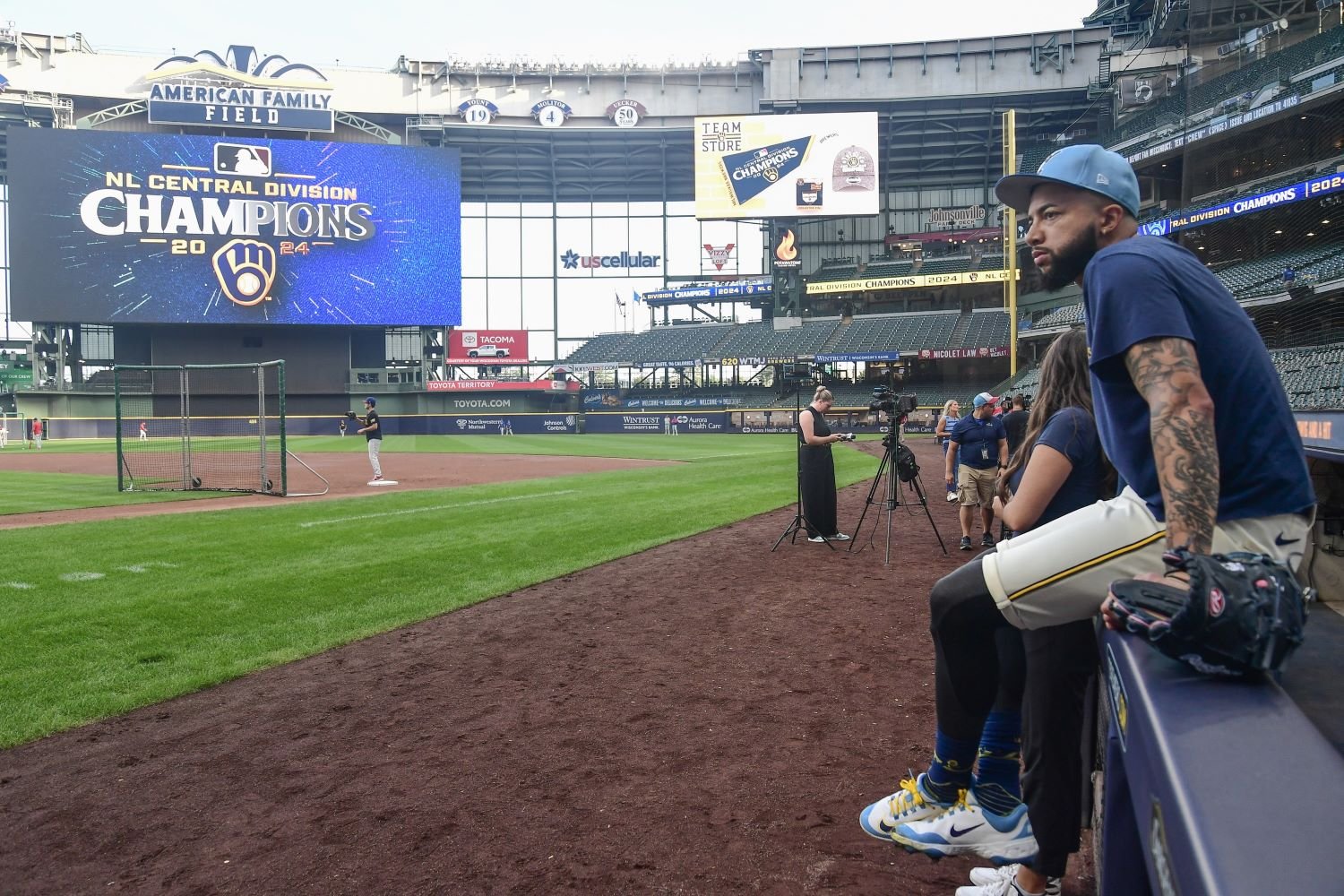 A great executive who never worked for the Brewers, named Pat Gillick, was fond of saying that a good team must fish in many rivers to collect enough talent to sustain success. There are lots of ways to find good players, and just as importantly, there are an increasing number of reliable ways--more, better ones than there were in Gillick's day--to develop merely viable players into robustly productive ones. If a team wants to win not just in cyclical phases, but over periods of several years, they have to acquire players through all of those means, and pursue all those paths to maximizing the value they extract from the talent they acquire. It's what great organizations do. Never has this been more important, because the game is more efficient, more competitive, and faster-changing than ever. Diversifying the ways you target and then instruct players keeps you nimble and ahead of the curve, to the extent that anyone can do so. Wednesday night was a delightful illustration of how the Brewers go about that task. They won in walkoff fashion, thanks to a leadoff triple in the bottom of the ninth by a player they signed as an amateur out of Venezuela, and whom they then signed to a bold, risky long-term contract before he first played in the majors. Before that, though, they got 27 outs and allowed only one run to one of the most fearsome lineups in baseball, and the five hurlers who combined to do it came from many different rivers. Freddy Peralta's roster-building backstory is too rarely discussed. Brewers fans have so internalized it that we tend to smooth over the remarkable nature of it. In a trade that could easily have ended up extremely forgettable, the Crew traded plodding lefty bat Adam Lind to the Mariners with just one year of team control remaining. Lind's value was low, and the three lottery-ticket minor-leaguers the team got for him could easily have come to nothing. Instead, Peralta, who was 19 at the time, blossomed into one of the best starters in the National League. It hasn't been a perfectly smooth process. The Brewers had to nail the development of Peralta from a live-armed, athletic, very raw youngster into a four-pitch starter with adaptability and command, as well as electric stuff. They did it, though, by understanding the specialness of his fastball shape and gradually tweaking his breaking ball shapes until they found a mix that worked. Wednesday, Peralta struck out nine in five innings, allowing just a solo home run to Alec Bohm before departing. The team now has the luxury of managing his workload for the final 10 days of the season and lining him up to start their first postseason game. He cost them almost nothing to acquire, and they long ago signed him to a wildly team-friendly extension, just as Jackson Chourio's has turned out to be. The first hurler in relief of Peralta was Joe Ross, who could not be less sexy a counterpoint to the exhilarating success story of the starter's emergence. The Brewers just scooped Ross up for $1.75 million in early December, because he wanted to sign early, he had a very limited market, and they wanted to set a floor for their back-end starting pitching depth. It sounds preposterous in a broader real-world context, but $1.75 million really is a paltry sum in the modern game. Almost no veteran with any big-league bona fides will work for that rate. Getting Ross, and getting him early in the run of the offseason, and getting him at that price was a tiny little coup, albeit one with almost no major upside. Ross has been so beset by injuries that he was available at as deep a discount as the market realistically allows. He hasn't stayed all that healthy this season, either, and after the team made midseason upgrades to its starting rotation, he finds himself in the bullpen. But lo, he's now thrown 68 innings, with a stout 3.57 ERA supported neatly by his peripheral numbers. Early on, he made 10 starts and helped them survive a spate of other injuries to their pitching staff. Lately, he's been a valuable multi-inning reliever. All along, he's hummed in his mid-90s fastball and sharp slider, not overwhelming hitters or racking up strikeouts but not allowing home runs or issuing a crazy number of walks, either. He's been a consummate professional, and he's given them a more versatile version of an average middle reliever's workload, with better results than any more standard middle reliever available at that price could be expected to provide. He's a tiny cog in the machine, but he turns when other gears press on him and he never jams things up. After Ross came Jared Koenig, who was on the verge of not being in affiliated baseball at all a year ago. He not only didn't pitch in the majors in 2023, but allowed 7.60 runs per nine innings while he was in Triple-A for the Padres and ended up in Double-A to finish that campaign. That was his age-29 season. For most guys, if that's what you are at 29, what you are at 30 is a coach or a youth instructor or a substitute teacher. But the Brewers made him a priority target last November, signed him early to a minor-league deal, and welcomed his improved stuff and tinkerings when he showed up to spring training. He's averaging 96 miles per hour with his sinker this month, and that number just keeps rising. After getting four outs with two strikeouts and no baserunners allowed, Koenig now has a 2.47 ERA as a lefty setup man, in almost 60 innings. They got Peralta in a traditional trade, and Ross via big-league free agency, and Koenig via minor-league free agency. They landed Trevor Megill, who pitched the eighth inning, in a minor, roster-crunch trade with the Twins in April 2023. Since he joined the big-league roster for Milwaukee last spring, he's pitched 78 innings, striking out over 31% of opposing batters and walking just 7.5% of them. The Brewers helped him consistently access his top-end velocity and embrace the steepness of his curveball, and the results have been sensational. He's a lockdown setup man, acquired for almost nothing and under team control for three more seasons. He set the Phillies down tidily, with another strikeout added to the pile. That just left Devin Williams, the only truly homegrown arm in the set. Yet, he had as circuitous a route to this roster as some of the others. Remember, the Brewers first took him in the second round way back in 2013. It took him more than half a decade to scale the minor-league ladder and reach the big leagues, surviving major injury trouble and a very belated move to the bullpen because he and the team found this special, otherworldly pitch, something only he could do. Once they found that weapon, they worked together to make it something life-changing for Williams and franchise-altering for the team. The Airbender was working gorgeously Wednesday night. Williams struck out the side in order. The position players who got the Brewers here represent the same diversity of avenues explored and the same assiduous player development, but the pitchers really distill the thing down to its core. On a night that was going to end in a celebration of this team either way, five hurlers put on a show and reminded everyone just how much of a team they really are. There might not be an org better at working tirelessly to augment depth and creatively solving the problems posed by various stages of player development. They fish in all the available rivers, and thus, they keep reeling in the big ones.
-
- 3
-

-
-
- freddy peralta
- joe ross
- (and 3 more)
-
Five pitchers held the formidable Phillies lineup to a lone run Wednesday night, making the party in the wake of the Brewers' NL Central title a little more perky and encapsulating the team's deftness in constructing winning rosters. Image courtesy of © Benny Sieu-Imagn Images A great executive who never worked for the Brewers, named Pat Gillick, was fond of saying that a good team must fish in many rivers to collect enough talent to sustain success. There are lots of ways to find good players, and just as importantly, there are an increasing number of reliable ways--more, better ones than there were in Gillick's day--to develop merely viable players into robustly productive ones. If a team wants to win not just in cyclical phases, but over periods of several years, they have to acquire players through all of those means, and pursue all those paths to maximizing the value they extract from the talent they acquire. It's what great organizations do. Never has this been more important, because the game is more efficient, more competitive, and faster-changing than ever. Diversifying the ways you target and then instruct players keeps you nimble and ahead of the curve, to the extent that anyone can do so. Wednesday night was a delightful illustration of how the Brewers go about that task. They won in walkoff fashion, thanks to a leadoff triple in the bottom of the ninth by a player they signed as an amateur out of Venezuela, and whom they then signed to a bold, risky long-term contract before he first played in the majors. Before that, though, they got 27 outs and allowed only one run to one of the most fearsome lineups in baseball, and the five hurlers who combined to do it came from many different rivers. Freddy Peralta's roster-building backstory is too rarely discussed. Brewers fans have so internalized it that we tend to smooth over the remarkable nature of it. In a trade that could easily have ended up extremely forgettable, the Crew traded plodding lefty bat Adam Lind to the Mariners with just one year of team control remaining. Lind's value was low, and the three lottery-ticket minor-leaguers the team got for him could easily have come to nothing. Instead, Peralta, who was 19 at the time, blossomed into one of the best starters in the National League. It hasn't been a perfectly smooth process. The Brewers had to nail the development of Peralta from a live-armed, athletic, very raw youngster into a four-pitch starter with adaptability and command, as well as electric stuff. They did it, though, by understanding the specialness of his fastball shape and gradually tweaking his breaking ball shapes until they found a mix that worked. Wednesday, Peralta struck out nine in five innings, allowing just a solo home run to Alec Bohm before departing. The team now has the luxury of managing his workload for the final 10 days of the season and lining him up to start their first postseason game. He cost them almost nothing to acquire, and they long ago signed him to a wildly team-friendly extension, just as Jackson Chourio's has turned out to be. The first hurler in relief of Peralta was Joe Ross, who could not be less sexy a counterpoint to the exhilarating success story of the starter's emergence. The Brewers just scooped Ross up for $1.75 million in early December, because he wanted to sign early, he had a very limited market, and they wanted to set a floor for their back-end starting pitching depth. It sounds preposterous in a broader real-world context, but $1.75 million really is a paltry sum in the modern game. Almost no veteran with any big-league bona fides will work for that rate. Getting Ross, and getting him early in the run of the offseason, and getting him at that price was a tiny little coup, albeit one with almost no major upside. Ross has been so beset by injuries that he was available at as deep a discount as the market realistically allows. He hasn't stayed all that healthy this season, either, and after the team made midseason upgrades to its starting rotation, he finds himself in the bullpen. But lo, he's now thrown 68 innings, with a stout 3.57 ERA supported neatly by his peripheral numbers. Early on, he made 10 starts and helped them survive a spate of other injuries to their pitching staff. Lately, he's been a valuable multi-inning reliever. All along, he's hummed in his mid-90s fastball and sharp slider, not overwhelming hitters or racking up strikeouts but not allowing home runs or issuing a crazy number of walks, either. He's been a consummate professional, and he's given them a more versatile version of an average middle reliever's workload, with better results than any more standard middle reliever available at that price could be expected to provide. He's a tiny cog in the machine, but he turns when other gears press on him and he never jams things up. After Ross came Jared Koenig, who was on the verge of not being in affiliated baseball at all a year ago. He not only didn't pitch in the majors in 2023, but allowed 7.60 runs per nine innings while he was in Triple-A for the Padres and ended up in Double-A to finish that campaign. That was his age-29 season. For most guys, if that's what you are at 29, what you are at 30 is a coach or a youth instructor or a substitute teacher. But the Brewers made him a priority target last November, signed him early to a minor-league deal, and welcomed his improved stuff and tinkerings when he showed up to spring training. He's averaging 96 miles per hour with his sinker this month, and that number just keeps rising. After getting four outs with two strikeouts and no baserunners allowed, Koenig now has a 2.47 ERA as a lefty setup man, in almost 60 innings. They got Peralta in a traditional trade, and Ross via big-league free agency, and Koenig via minor-league free agency. They landed Trevor Megill, who pitched the eighth inning, in a minor, roster-crunch trade with the Twins in April 2023. Since he joined the big-league roster for Milwaukee last spring, he's pitched 78 innings, striking out over 31% of opposing batters and walking just 7.5% of them. The Brewers helped him consistently access his top-end velocity and embrace the steepness of his curveball, and the results have been sensational. He's a lockdown setup man, acquired for almost nothing and under team control for three more seasons. He set the Phillies down tidily, with another strikeout added to the pile. That just left Devin Williams, the only truly homegrown arm in the set. Yet, he had as circuitous a route to this roster as some of the others. Remember, the Brewers first took him in the second round way back in 2013. It took him more than half a decade to scale the minor-league ladder and reach the big leagues, surviving major injury trouble and a very belated move to the bullpen because he and the team found this special, otherworldly pitch, something only he could do. Once they found that weapon, they worked together to make it something life-changing for Williams and franchise-altering for the team. The Airbender was working gorgeously Wednesday night. Williams struck out the side in order. The position players who got the Brewers here represent the same diversity of avenues explored and the same assiduous player development, but the pitchers really distill the thing down to its core. On a night that was going to end in a celebration of this team either way, five hurlers put on a show and reminded everyone just how much of a team they really are. There might not be an org better at working tirelessly to augment depth and creatively solving the problems posed by various stages of player development. They fish in all the available rivers, and thus, they keep reeling in the big ones. View full article
-
A Cubs loss sealed the deal Wednesday afternoon, but the Brewers did all the heavy lifting this season. In the face of substantial adversity, this team has thrived with noteworthy ease. Image courtesy of © Owen Ziliak/The Republic / USA TODAY NETWORK via Imagn Images There's nothing easy about losing your hometown manager to your fiercest rival, after nearly a decade in which he helped you surpass them and become the top dog in your division. There's nothing easy about piecing together a starting rotation after losing one ace to a devastating, career-altering injury last fall, trading another late in the offseason, and having both your most beloved veteran and your most promising rookie bitten by the Tommy John bug in the early part of the season. There's nothing easy about surviving two months of a 20-year-old rookie fighting for his life with a huge burden of hype and expectations on him, or a first half without your all-world closer, or a second half without your best all-around player and face of the franchise. There has been, in short, nothing easy about this Brewers division title-winning season--except the fact of it. Here, almost two full weeks before the end of the season, they have the division in hand. They're going to win 90 or more games, yet again. They've milled that underage rookie into a superstar, and they've replaced all those fallen arms, and they've even replaced that irreplaceable manager with his own former mentor-turned-lieutenant, all to find that they're better off under the new configuration. The Brewers dealt with myriad injuries, and with their major offseason investments (Rhys Hoskins, Wade Miley, Jakob Junis) largely going for naught, and with massive roster turnover, and they're better for it, somehow. Jackson Chourio is now a staple of their lineup; we essentially expected that. But so is Joey Ortiz, and expecting that before Opening Day would have felt a tad too optimistic. They still have a solid farm system, even though their risky draft strategy this summer backfired a bit, and they'll be able to replenish the system with a whole lot of draft capital next summer--despite a finish that figures to put them in the last handful of spots in the first round. If they could only keep one of Corbin Burnes and Willy Adames, they could not have more clearly picked the right one, even given Adames's defensive woes this year. He's the heartbeat of the team, and his alchemy with William Contreras carried the team through the early portion of the season. If they had to trade either player, it's hard to imagine doing any better than they did in the Burnes deal, getting Ortiz and DL Hall for one year of a hurler whom Tobias Myers is outpitching down the stretch. Pat Murphy brought a slightly new tenor and tone to a familiar coaching staff, making his group more visible and more holistic and more collaborative, without losing the elements that made Craig Counsell great at handling the same talent, on and off the field. The front office, from Matt Arnold out to biomechanists and scouts and obscure number-crunchers, continued to find edges everywhere. This team combines star power and depth, youth and veteran savvy, nimbleness and raw force as well as any organization in the league, and they're emerging as a genuine dynasty. I won't oversell the underdog angle. In preseason projections, there was a muddle atop the NL Central, but it was perfectly plausible to predict a Brewers division crown. I did. Still, on balance, this was not the way anyone saw things unfolding. While we throw "dynasty" around casually in sports, in history, it means a line of rule that stretches beyond a single person or generation. Only now, with David Stearns and Counsell elsewhere and Arnold and Murphy firmly in command, can we truly say that that's what the Brewers are. They've established hegemony in the NL Central. Earlier this summer, Miley told a reporter that the team thinks of this as their division. It didn't even sound all that bold, and now that they've won it in back-to-back seasons for the first time, amid so much change, it feels ludicrous to suggest that things could be any other way. Of course this is the Brewers' division. It could stay that way for a while, too. From Arizona to Milwaukee, from Mark Attanassio to Andruw Monasterio, and in all the well-valued places in between, this organization does things better than the teams it's been battling for regional supremacy. Now, the real fun starts. October looms, and the Brewers have a national reputation to burnish. View full article
-
Dynasty! The Milwaukee Brewers Win the 2024 NL Central Championship
Matthew Trueblood posted an article in Brewers
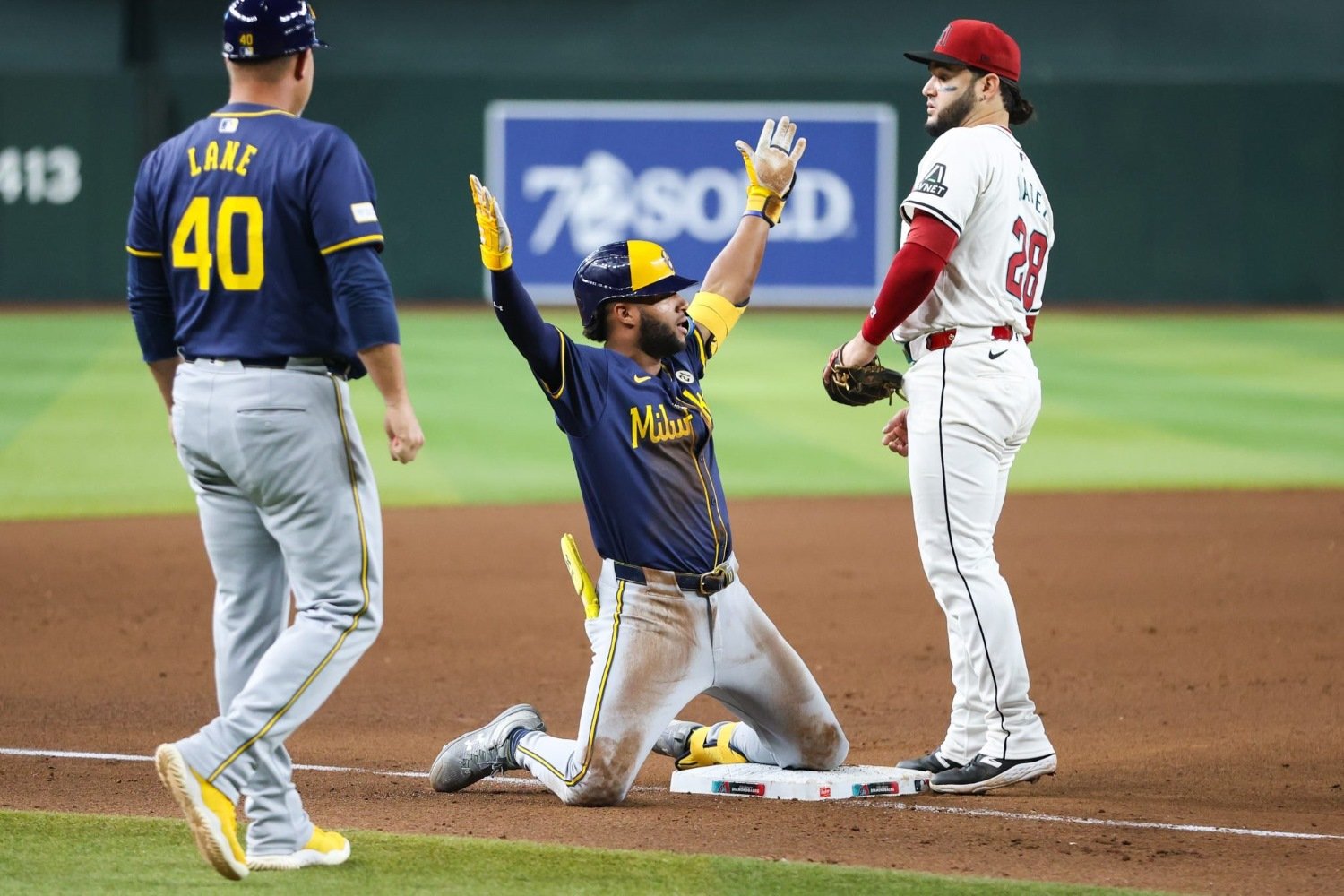 There's nothing easy about losing your hometown manager to your fiercest rival, after nearly a decade in which he helped you surpass them and become the top dog in your division. There's nothing easy about piecing together a starting rotation after losing one ace to a devastating, career-altering injury last fall, trading another late in the offseason, and having both your most beloved veteran and your most promising rookie bitten by the Tommy John bug in the early part of the season. There's nothing easy about surviving two months of a 20-year-old rookie fighting for his life with a huge burden of hype and expectations on him, or a first half without your all-world closer, or a second half without your best all-around player and face of the franchise. There has been, in short, nothing easy about this Brewers division title-winning season--except the fact of it. Here, almost two full weeks before the end of the season, they have the division in hand. They're going to win 90 or more games, yet again. They've milled that underage rookie into a superstar, and they've replaced all those fallen arms, and they've even replaced that irreplaceable manager with his own former mentor-turned-lieutenant, all to find that they're better off under the new configuration. The Brewers dealt with myriad injuries, and with their major offseason investments (Rhys Hoskins, Wade Miley, Jakob Junis) largely going for naught, and with massive roster turnover, and they're better for it, somehow. Jackson Chourio is now a staple of their lineup; we essentially expected that. But so is Joey Ortiz, and expecting that before Opening Day would have felt a tad too optimistic. They still have a solid farm system, even though their risky draft strategy this summer backfired a bit, and they'll be able to replenish the system with a whole lot of draft capital next summer--despite a finish that figures to put them in the last handful of spots in the first round. If they could only keep one of Corbin Burnes and Willy Adames, they could not have more clearly picked the right one, even given Adames's defensive woes this year. He's the heartbeat of the team, and his alchemy with William Contreras carried the team through the early portion of the season. If they had to trade either player, it's hard to imagine doing any better than they did in the Burnes deal, getting Ortiz and DL Hall for one year of a hurler whom Tobias Myers is outpitching down the stretch. Pat Murphy brought a slightly new tenor and tone to a familiar coaching staff, making his group more visible and more holistic and more collaborative, without losing the elements that made Craig Counsell great at handling the same talent, on and off the field. The front office, from Matt Arnold out to biomechanists and scouts and obscure number-crunchers, continued to find edges everywhere. This team combines star power and depth, youth and veteran savvy, nimbleness and raw force as well as any organization in the league, and they're emerging as a genuine dynasty. I won't oversell the underdog angle. In preseason projections, there was a muddle atop the NL Central, but it was perfectly plausible to predict a Brewers division crown. I did. Still, on balance, this was not the way anyone saw things unfolding. While we throw "dynasty" around casually in sports, in history, it means a line of rule that stretches beyond a single person or generation. Only now, with David Stearns and Counsell elsewhere and Arnold and Murphy firmly in command, can we truly say that that's what the Brewers are. They've established hegemony in the NL Central. Earlier this summer, Miley told a reporter that the team thinks of this as their division. It didn't even sound all that bold, and now that they've won it in back-to-back seasons for the first time, amid so much change, it feels ludicrous to suggest that things could be any other way. Of course this is the Brewers' division. It could stay that way for a while, too. From Arizona to Milwaukee, from Mark Attanassio to Andruw Monasterio, and in all the well-valued places in between, this organization does things better than the teams it's been battling for regional supremacy. Now, the real fun starts. October looms, and the Brewers have a national reputation to burnish.
 -
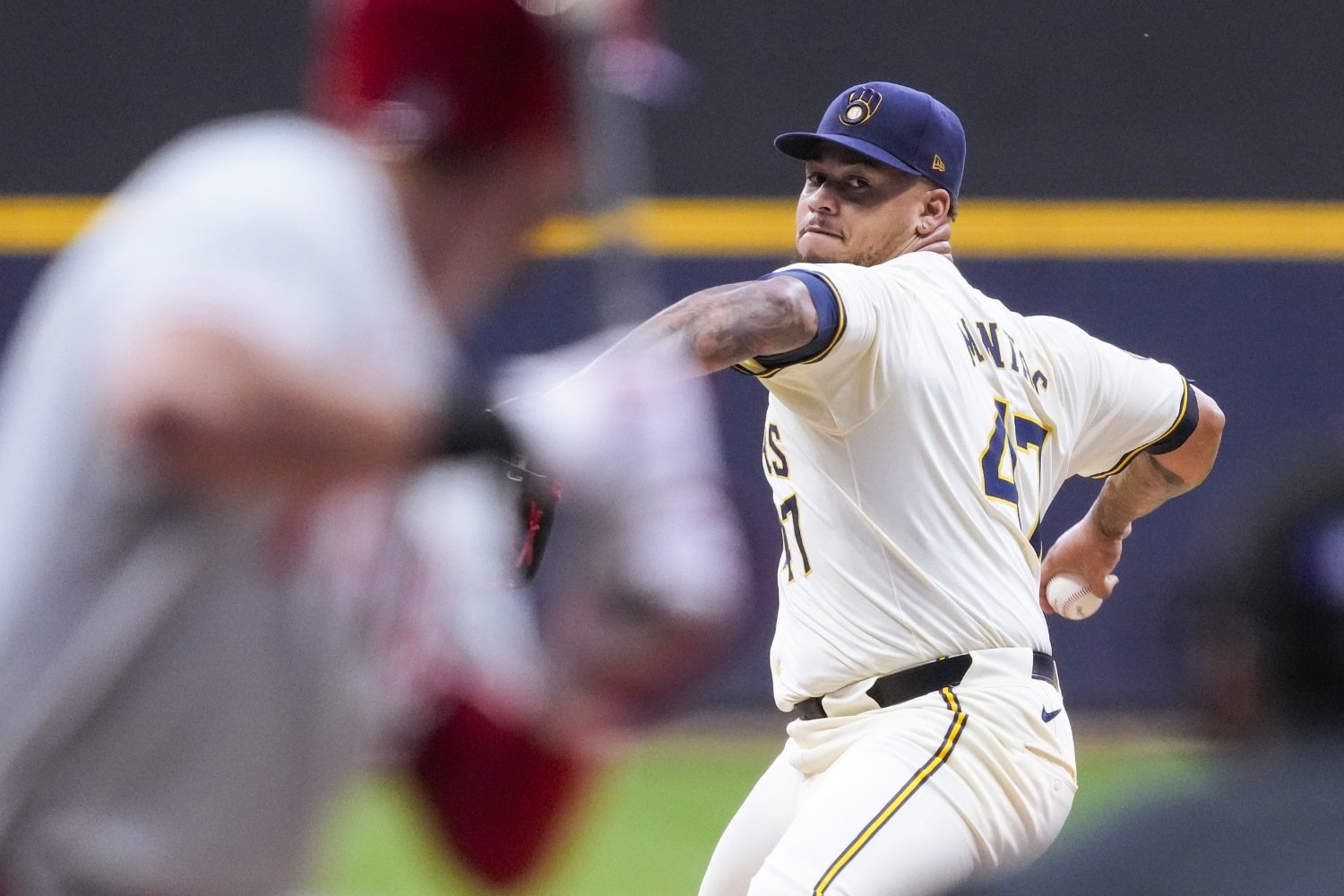 He ran into a spot of trouble in the sixth and took the loss, but Frankie Montas also struck out 10 Phillies Tuesday night. That gives him 28 punchouts over his last three starts, and he looks increasingly like a lock to start for the Brewers even in a short playoff series. When that postseason start comes, Pat Murphy will even be able and willing to truncate his appearances a bit more, and his effectiveness will be magnified. Over his last six starts, Montas has allowed only one run in the first three innings and four in the fourth. The rest of the damage against him (two runs in fifth frames and seven in sixths) has come at the phase of the contest when Murphy would probably go to his bullpen, in a playoff game. It's a marvelous stretch from the hurler the team acquired just before the trade deadline, to mixed and unenthusiastic reviews. Montas's ERA this season for the Reds was 5.01, and that wasn't all bad luck. The form that made him a hot commodity on the trade market a few years ago and a popular gamble on the free-agent market this past winter seemed more and more unreachable, and many fans expected only that he would deliver some stabilizing innings at the tail end of the rotation. Instead, he's clearly surpassed Colin Rea and Aaron Civale on the pecking order for potential postseason starts, and could very well be in line to start Game 2 of a Wild Card or Division Series, after Freddy Peralta takes his turn. When the team first landed him, I envisioned some of this success. However, I was partially wrong about how it would come about, and the real answers he and the Brewers have unlocked his talent again are worth some exploration. As I predicted, the team has invited Montas to lean more on his sinker and cutter and be less focused on his four-seam fastball. That forecast was a no-brainer; it's what the Brewers like to do and exactly what Montas needed to do. However, I also anticipated that the team would slide Montas over toward third base, to create a new set of angles for opposing hitters. Instead, they've kept him right where he is, and the changes they've implemented are to the way his body moves. Those changes have been very subtle, but their implications are huge. You might have noticed that Montas's velocity has trended upward since he joined the Brewers. With the Reds, he averaged 95.2 and 94.3 miles per hour with his four-seam fastball and sinker, respectively. With the Crew, those numbers are up to 96.3 and 95.3, which is a significant bump. Crucially, though, this isn't a matter of finding more adrenaline because he landed in a playoff race, or of humping up occasionally. On the contrary: Montas's maximum and 90th-percentile velocities on each heater are almost identical between his two stops this year. The rise in his averages have come from a higher floor. His 10th-percentile velocity on the four-seamer is up 1.4 miles per hour, from 93.5 to 94.9. On the sinker, it's up from 92.6 to 94.2. That kind of improvement comes from a methodical increase in mechanical consistency, and indeed, there's a difference here. Here's a Montas fastball from his time with the Reds. Frankie Reds 3.mp4 Pay special attention to the position of his hips and shoulders when his front foot lands--the literally pivotal movement of a delivery, which baseball people call "foot-strike". Now, compare that to this heater, thrown for the Crew. Frankie Brewers.mp4 To give ourselves the best chance of making direct comparisons, I'm using pairs of videos from the same venues. Hopefully, that will make the difficult work of seeing small mechanical changes a bit easier. Here, what you can notice is that his shoulders are slightly more closed when the front foot lands. He's creating more consistent torque, because his hip-shoulder separation is slightly greater. It would be much easier to see this from an open side angle, but his weight is also a bit more back with the Brewers--meaning that he's not drifting down the mound as much before foot strike, and thus reserves a bit more force with which to cut things loose. Now, let's take another pair of clips, to talk a bit about posture. You've probably heard commentators talk, at some point, about a pitcher's posture through release point. Some hurlers stay very upright, with good spinal stability. Others, sometimes intentionally and sometimes for reasons of misplaced priorities or wanting functional strength, tilt way over toward their glove side. Here's Montas with the Reds. Frankie Reds 2.mp4 Now, here he is for the Brewers. Frankie Brewers 3.mp4 Surprise! The way posture is typically framed, you might have expected that Montas would be more upright through his delivery with the Brewers. Not so. He's going with the rotational energy of his body more since joining the Crew, and that includes more spine tilt. Despite landing more solidly and transferring his energy more cleanly through his front leg since coming to Milwaukee, he's falling off to the first-base side as much as ever, because he's tilting to the side more. That's facilitating a slightly altered arm path; he's getting the arm higher earlier in his delivery and coming a bit more over the top. That's an important development, but before we discuss it further, we need to identify the other element of the same change. Here's Montas with the Reds again. Here, I want you to attend to the way he flexes his back, then extends it through release, as he comes over his landing leg. Frankie Reds.mp4 And here he is for the Brewers, back where he'd pitched his home games earlier in the year. Frankie brewers 2.mp4 Now, we're not quite comparing apples to apples anymore. The first clip here came with a runner on base, and Montas was working out of the stretch. That matters, more for Montas than for others. Importantly, though, whereas he lost almost a full tick (0.8 MPH) from bases empty to runners on during his time with the Reds, his velocity is almost identical (96.3 MPH when empty; 96.2 when runners are on) in those splits since joining the Brewers. Anyway, notice the greater lean and pinch of his back in the Brewers clip--and the way the altered arm angle and spine tilt work with this sharper transition from extension to flexion of the spine to create more firing power. Montas's release point is about two inches higher since he joined the Brewers, yet, his release extension--the distance between the front of the rubber and his release point--is higher with them, too. Usually, a pitcher gains extension when they lower their arm slot. The Brewers roster is full of examples of that. Montas is a counterexample, because of the way he and the team have worked together to optimize his natural mechanical signature. This has also had an effect on the shape of his pitches, which has as much to do with his rising strikeout rate as a little extra velocity--if not more. His command of the cutter and splitter are better since he came to the Crew, and his fastball has a bit more cut-ride action, which is valuable, especially given his velocity bump. By far, though, the biggest story here is his slider. See those sliders that rode as high as his cutter, but with more sweep, when he was with the Reds? Those are now completely gone, and good riddance. They were in a slider dead zone, lacking either the deception of a gyro slider or the magnitude of movement of a true sweeper. The successful version of that pitch, for him, is the one he's thrown exclusively since making these changes with the Brewers. A more vertical arm path has helped him steer that pitch toward the glove-side corner consistently, without needing to make the pitch swerve widely. It's a pitch with sharp, biting action. Hitters whiffed on just 28% of their swings against his slider with the Reds. As a Brewer, he misses bats on 42.5% of opponents' swings at that pitch. Montas is not a perfect pitcher. He's not fully restored to the best version of himself, as evidenced by the trouble he's gotten into late in starts. Still, the improvements he's made since the trade are real and vital. Now that he's comfortable with them, he's even reintroduced his signature pitch, the splitter, more often over these last three starts. In an NL playoff landscape full of teams limping toward the postseason with diminished rotations, a top pairing of Peralta and Montas suddenly looks plenty formidable to let Brewers fans dream on a run to the team's first pennant since 1982. Come October, Montas is going to have a central role in whatever happens to the team, and that's greatly to the credit of both Montas himself and Milwaukee's sensational pitching instruction infrastructure.
 -
Acquired amid very little fanfare just before the deadline, the right-handed starter has reemerged as the kind of pitcher you can imagine taking the ball in the postseason and turning in a season-defining gem. Image courtesy of © Jeff Hanisch-Imagn Images He ran into a spot of trouble in the sixth and took the loss, but Frankie Montas also struck out 10 Phillies Tuesday night. That gives him 28 punchouts over his last three starts, and he looks increasingly like a lock to start for the Brewers even in a short playoff series. When that postseason start comes, Pat Murphy will even be able and willing to truncate his appearances a bit more, and his effectiveness will be magnified. Over his last six starts, Montas has allowed only one run in the first three innings and four in the fourth. The rest of the damage against him (two runs in fifth frames and seven in sixths) has come at the phase of the contest when Murphy would probably go to his bullpen, in a playoff game. It's a marvelous stretch from the hurler the team acquired just before the trade deadline, to mixed and unenthusiastic reviews. Montas's ERA this season for the Reds was 5.01, and that wasn't all bad luck. The form that made him a hot commodity on the trade market a few years ago and a popular gamble on the free-agent market this past winter seemed more and more unreachable, and many fans expected only that he would deliver some stabilizing innings at the tail end of the rotation. Instead, he's clearly surpassed Colin Rea and Aaron Civale on the pecking order for potential postseason starts, and could very well be in line to start Game 2 of a Wild Card or Division Series, after Freddy Peralta takes his turn. When the team first landed him, I envisioned some of this success. However, I was partially wrong about how it would come about, and the real answers he and the Brewers have unlocked his talent again are worth some exploration. As I predicted, the team has invited Montas to lean more on his sinker and cutter and be less focused on his four-seam fastball. That forecast was a no-brainer; it's what the Brewers like to do and exactly what Montas needed to do. However, I also anticipated that the team would slide Montas over toward third base, to create a new set of angles for opposing hitters. Instead, they've kept him right where he is, and the changes they've implemented are to the way his body moves. Those changes have been very subtle, but their implications are huge. You might have noticed that Montas's velocity has trended upward since he joined the Brewers. With the Reds, he averaged 95.2 and 94.3 miles per hour with his four-seam fastball and sinker, respectively. With the Crew, those numbers are up to 96.3 and 95.3, which is a significant bump. Crucially, though, this isn't a matter of finding more adrenaline because he landed in a playoff race, or of humping up occasionally. On the contrary: Montas's maximum and 90th-percentile velocities on each heater are almost identical between his two stops this year. The rise in his averages have come from a higher floor. His 10th-percentile velocity on the four-seamer is up 1.4 miles per hour, from 93.5 to 94.9. On the sinker, it's up from 92.6 to 94.2. That kind of improvement comes from a methodical increase in mechanical consistency, and indeed, there's a difference here. Here's a Montas fastball from his time with the Reds. Frankie Reds 3.mp4 Pay special attention to the position of his hips and shoulders when his front foot lands--the literally pivotal movement of a delivery, which baseball people call "foot-strike". Now, compare that to this heater, thrown for the Crew. Frankie Brewers.mp4 To give ourselves the best chance of making direct comparisons, I'm using pairs of videos from the same venues. Hopefully, that will make the difficult work of seeing small mechanical changes a bit easier. Here, what you can notice is that his shoulders are slightly more closed when the front foot lands. He's creating more consistent torque, because his hip-shoulder separation is slightly greater. It would be much easier to see this from an open side angle, but his weight is also a bit more back with the Brewers--meaning that he's not drifting down the mound as much before foot strike, and thus reserves a bit more force with which to cut things loose. Now, let's take another pair of clips, to talk a bit about posture. You've probably heard commentators talk, at some point, about a pitcher's posture through release point. Some hurlers stay very upright, with good spinal stability. Others, sometimes intentionally and sometimes for reasons of misplaced priorities or wanting functional strength, tilt way over toward their glove side. Here's Montas with the Reds. Frankie Reds 2.mp4 Now, here he is for the Brewers. Frankie Brewers 3.mp4 Surprise! The way posture is typically framed, you might have expected that Montas would be more upright through his delivery with the Brewers. Not so. He's going with the rotational energy of his body more since joining the Crew, and that includes more spine tilt. Despite landing more solidly and transferring his energy more cleanly through his front leg since coming to Milwaukee, he's falling off to the first-base side as much as ever, because he's tilting to the side more. That's facilitating a slightly altered arm path; he's getting the arm higher earlier in his delivery and coming a bit more over the top. That's an important development, but before we discuss it further, we need to identify the other element of the same change. Here's Montas with the Reds again. Here, I want you to attend to the way he flexes his back, then extends it through release, as he comes over his landing leg. Frankie Reds.mp4 And here he is for the Brewers, back where he'd pitched his home games earlier in the year. Frankie brewers 2.mp4 Now, we're not quite comparing apples to apples anymore. The first clip here came with a runner on base, and Montas was working out of the stretch. That matters, more for Montas than for others. Importantly, though, whereas he lost almost a full tick (0.8 MPH) from bases empty to runners on during his time with the Reds, his velocity is almost identical (96.3 MPH when empty; 96.2 when runners are on) in those splits since joining the Brewers. Anyway, notice the greater lean and pinch of his back in the Brewers clip--and the way the altered arm angle and spine tilt work with this sharper transition from extension to flexion of the spine to create more firing power. Montas's release point is about two inches higher since he joined the Brewers, yet, his release extension--the distance between the front of the rubber and his release point--is higher with them, too. Usually, a pitcher gains extension when they lower their arm slot. The Brewers roster is full of examples of that. Montas is a counterexample, because of the way he and the team have worked together to optimize his natural mechanical signature. This has also had an effect on the shape of his pitches, which has as much to do with his rising strikeout rate as a little extra velocity--if not more. His command of the cutter and splitter are better since he came to the Crew, and his fastball has a bit more cut-ride action, which is valuable, especially given his velocity bump. By far, though, the biggest story here is his slider. See those sliders that rode as high as his cutter, but with more sweep, when he was with the Reds? Those are now completely gone, and good riddance. They were in a slider dead zone, lacking either the deception of a gyro slider or the magnitude of movement of a true sweeper. The successful version of that pitch, for him, is the one he's thrown exclusively since making these changes with the Brewers. A more vertical arm path has helped him steer that pitch toward the glove-side corner consistently, without needing to make the pitch swerve widely. It's a pitch with sharp, biting action. Hitters whiffed on just 28% of their swings against his slider with the Reds. As a Brewer, he misses bats on 42.5% of opponents' swings at that pitch. Montas is not a perfect pitcher. He's not fully restored to the best version of himself, as evidenced by the trouble he's gotten into late in starts. Still, the improvements he's made since the trade are real and vital. Now that he's comfortable with them, he's even reintroduced his signature pitch, the splitter, more often over these last three starts. In an NL playoff landscape full of teams limping toward the postseason with diminished rotations, a top pairing of Peralta and Montas suddenly looks plenty formidable to let Brewers fans dream on a run to the team's first pennant since 1982. Come October, Montas is going to have a central role in whatever happens to the team, and that's greatly to the credit of both Montas himself and Milwaukee's sensational pitching instruction infrastructure. View full article
-
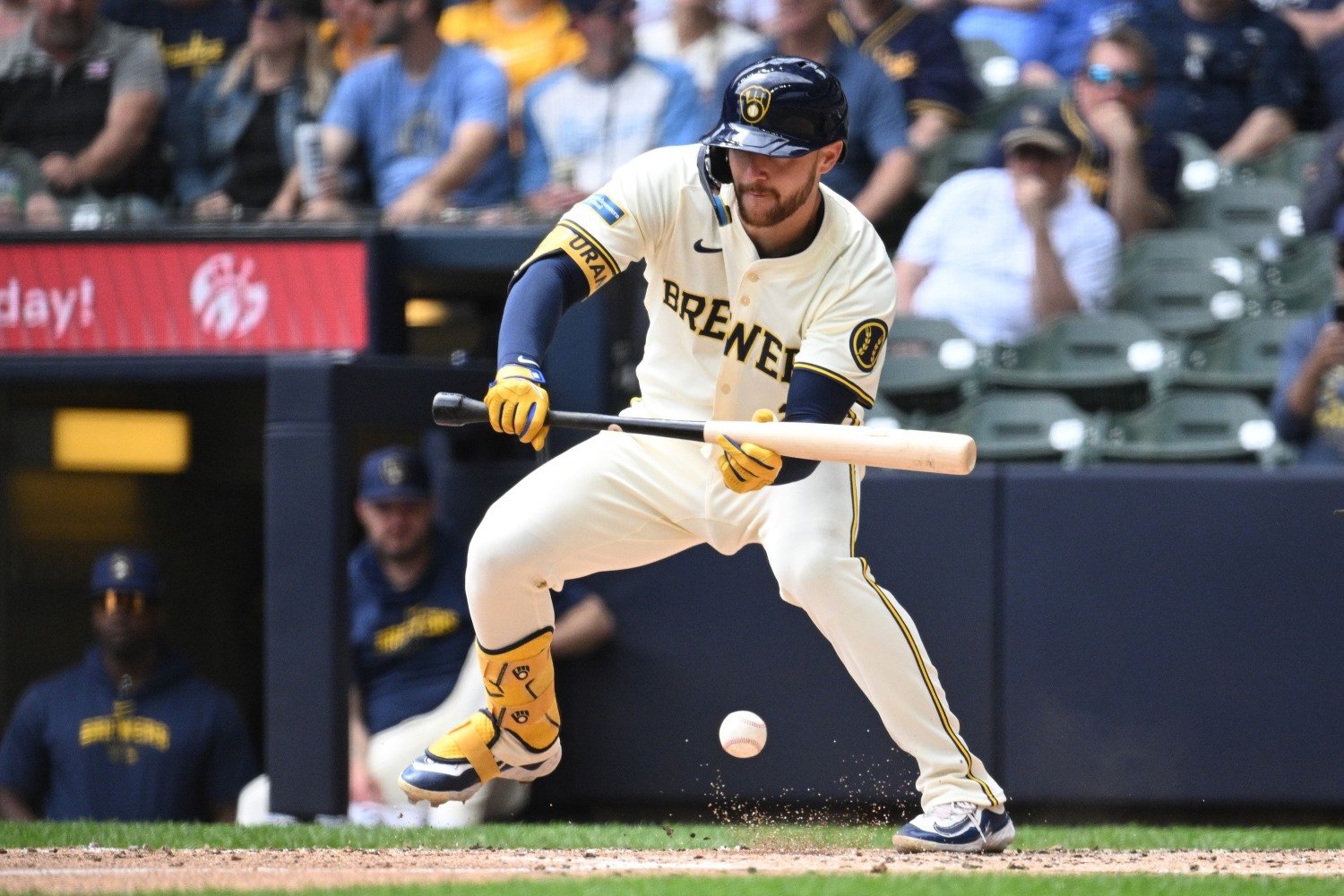 It was right after the All-Star break, and the Brewers were in Minnesota, playing the Twins. During the morning media session with manager Pat Murphy, the skipper asked the assembled group where his club ranked in terms of total bunt attempts. He was aghast to learn that they were just fourth in MLB, and appalled by the low total number of bunts the team had actually laid down, which then lingered just south of 40. That's not because Murphy is a fanatical believer in the dying art of the sacrifice bunt, though, or even because he believes especially fervently in bunting for hits. Indeed, while he wants his team to make use of the tactic, he has pointed out several situations over the course of the season in which players bunted without his say-so--even, at times, when he would have strongly preferred that they swing away. No, what Murphy likes about the bunt is the threat of it. Far beyond the mere impact of bunts that actually land in play, he sees value in squaring around often, for the effects it has on pitchers and defenses. "What's amazing," he said that morning in July, "is how many bunts where we put it out there and pull back, and how that leads to a result. People don't measure that; you can't measure that. The immeasurable--that's a good article. The immeasurable effect of the unsuccessful bunt attempt." Hopefully, he won't regard this as an act of aggression, but almost two months later, I've collected the very best data I can, and today, we're going to try to measure the effect of the unsuccessful bunt attempt. That doesn't have to come at the expense of a discussion of the immeasurable effects it also has, and Murphy is right that perfectly measuring it still isn't even possible. So, let's just let the concept of measuring it start a conversation. The first major hurdle to capturing the value of squaring to bunt is that, if you do just pull the bat back and take a called strike or a ball, the dataset goes blind to your flash of the bat. Perhaps, behind some velvet rope and heavy curtain, teams have data on aborted squarings-around, but the very best public data only captures the bunt attempts that are technically that: an attempt. We can only measure what happens after a missed or foul bunt, as opposed to one successfully laid down in play. The Brewers have made 134 of those full-fledged bunt attempts this year, and about half of them have resulted in balls in play. I went through all of them, though, and found 69 total plate appearances that included a foul or missed bunt, then ended on some other kind of batter-pitcher interaction: 38 in the first half, and 31 in the second half. When you first hear a manager allude to the intangible impact of an unsuccessful attempt to get a bunt down, you might think about the defense. Do they subtly shift in response to this apparent information about the batter's intention? Do they tense up and become more error-prone? Maybe so, in some specific cases. At the very least, that's a plausible hypothesis, especially if the batter wielding the bunt as a weapon has speed on his side. Here's Brice Turang shooting a single through an infield that, yes, might have reshaped itself a bit to try to take away the bunt he'd attempted earlier in the plate appearance. Turang Single Through Reshaped IF.mp4 We think a lot about how bat control and tactical hit placement can force a defense out of shape. It's a natural way to apply pressure to a defense: force them to defend small, often insignificant areas of the field, opening up more appealing and more reachable real estate. In practice, though, defenses don't just fold themselves up and step aside when you show bunt. The bunt isn't that scary. So, most of the time, hits that come after a failed bunt attempt look much more conventional. Here's one from Garrett Mitchell. Mitchell Single on 1 1 Meatball.mp4 That ball was smoked, and well it should have been. In fact, this is where we start to really tap into something, measurable or not: it sure seems like a mislaid bunt invites a pitcher to get themselves in trouble by grooving a pitch in the immediate wake of that pitch. Baserunning hijinks aside, look what a good, hittable pitch Turang gets on this should-have-been double, right after a foul bunt. Turang 0 2 Meatball Double Right After Foul Bunt.mp4 No left-handed pitcher should ever throw a lefty batter that good an 0-2 pitch. They do it anyway, sometimes, but the bad bunt seems to increase the frequency of that category of pitching error a bit. Turang, who doesn't have a whole lot of power in general, has gotten quite good at capitalizing on this specific vulnerability in opposing pitchers. Early in the season, he would get hangers on the heels of abortive bunts and foul them off. Now, he knows what to do with them. Turang HR after bunt att.mp4 The collective stress we imagine the bunt exerting on a defense isn't really there, but even with infrequent bunters who are excellent hitters--the kind of guy whom a hurler should least worry about bunt attempts from, and against whom the pitching approach should change least after one--there does seem to be a freakout factor for the battery. Jackson Chourio fouled off a bunt try in the shadow of some freeways north of Atlanta several weeks ago, then got an absolute meatball and absolutely meatballed it. Chourio Dong after bunt att.mp4 Again, pitchers make mistakes at times other than the immediate aftermath of a bunt attempt. There really does seem to be something wanting in the execution of certain pitch types by a hurler after such offerings, though, and if a hitter can be ready for it, the opportunities created by those mistakes can be highly valuable. Right, Joey Ortiz? OrtBomb after bunt att.mp4 This all feels highly anecdotal; so be it. We'll get to the numbers in a moment, but first, let's savor one more highlight. It comes to us all the way from mid-April, while much of this young team was still learning how to bunt and how to make use of whatever chinks in pitchers' armor those bunts opened up. Blake Perkins attempted to lay one down for a single late in a tie game, but when that didn't work, he was ready to compensate. PerkShot after bunt att.mp4 These are all the homers the Crew hit in at-bats that included failed bunts, but they've got a handful of other extra-base hits, too--plus a few very hard-hit outs, from fly balls caught at the wall to wicked one-hoppers by Christian Yelich at 107 miles per hour, snapped up on the infield. Pitchers throw fat strikes, sometimes, after a hitter puts the bunt in the back of their mind. It's not unlike the way a pitcher can flummox a hitter by putting their soft stuff in the back of their head early in the count, then throwing a fastball by them in the zone for a third strike. In plate appearances that include a bunt attempt, but don't conclude on one, the Brewers are batting .262/.294/.538 this year. That includes at-bats by Mitchell, Turang, Perkins, Chourio, Ortiz, Yelich, Sal Frelick, and more. A failed bunt attempt is, by definition, a strike, so it's not a surprise to see a low walk rate for such moments, but the power the group is able to generate by luring the pitcher with a bunt try is massive. I wasn't able to search for pitch locations immediately after bunt attempts, but it sure looks like pitchers make a lot of mistakes over the heart of the plate. When Murphy talked about eliciting a result on the heels of an unsuccessful bunt, this is the kind of thing he was talking about. Sometimes, it's about focusing a hitter and helping them see the ball longer or better. Sometimes, it's about the defense being dragged out of position. Most often, though, it's about putting a subtle, even sneaky pressure on the pitcher. They probably don't even realize it, but when a bunt rolls foul, they're heading for a trap. They're mentally processing what the batter just attempted, and maybe it's giving them unearned confidence. Maybe it's leading them to chase an easy out by throwing a more buntable ball. Maybe it's just changing the way they see the strike zone. Whatever the cause, they're now primed for an ambush, and few of them seem cognizant of the danger. We're not mapping the entire topography of this iceberg. We'll have to be happy with the tip of it, where we can see and understand what's going on. If you dislike the frequency with which the team tries to bunt, though, or if you doubt that that tactic has game-changing, galvanizing power for an offense, these are some good reasons to believe. The Brewers have gotten better at this as the season has progressed. They're a team full of interested bunters, and while some of the bunts they do get down might be aggravating, others will put pressure on the defense and spark rallies. Meanwhile, the ones they don't get down are having an impact, too--immeasurable or otherwise.
- 1 comment
-
- 4
-
-
- brice turang
- blake perkins
- (and 4 more)
-
"That's a good article [idea]," Pat Murphy said one day just after the All-Star break. Let's see if he was right. Image courtesy of © Michael McLoone-Imagn Images It was right after the All-Star break, and the Brewers were in Minnesota, playing the Twins. During the morning media session with manager Pat Murphy, the skipper asked the assembled group where his club ranked in terms of total bunt attempts. He was aghast to learn that they were just fourth in MLB, and appalled by the low total number of bunts the team had actually laid down, which then lingered just south of 40. That's not because Murphy is a fanatical believer in the dying art of the sacrifice bunt, though, or even because he believes especially fervently in bunting for hits. Indeed, while he wants his team to make use of the tactic, he has pointed out several situations over the course of the season in which players bunted without his say-so--even, at times, when he would have strongly preferred that they swing away. No, what Murphy likes about the bunt is the threat of it. Far beyond the mere impact of bunts that actually land in play, he sees value in squaring around often, for the effects it has on pitchers and defenses. "What's amazing," he said that morning in July, "is how many bunts where we put it out there and pull back, and how that leads to a result. People don't measure that; you can't measure that. The immeasurable--that's a good article. The immeasurable effect of the unsuccessful bunt attempt." Hopefully, he won't regard this as an act of aggression, but almost two months later, I've collected the very best data I can, and today, we're going to try to measure the effect of the unsuccessful bunt attempt. That doesn't have to come at the expense of a discussion of the immeasurable effects it also has, and Murphy is right that perfectly measuring it still isn't even possible. So, let's just let the concept of measuring it start a conversation. The first major hurdle to capturing the value of squaring to bunt is that, if you do just pull the bat back and take a called strike or a ball, the dataset goes blind to your flash of the bat. Perhaps, behind some velvet rope and heavy curtain, teams have data on aborted squarings-around, but the very best public data only captures the bunt attempts that are technically that: an attempt. We can only measure what happens after a missed or foul bunt, as opposed to one successfully laid down in play. The Brewers have made 134 of those full-fledged bunt attempts this year, and about half of them have resulted in balls in play. I went through all of them, though, and found 69 total plate appearances that included a foul or missed bunt, then ended on some other kind of batter-pitcher interaction: 38 in the first half, and 31 in the second half. When you first hear a manager allude to the intangible impact of an unsuccessful attempt to get a bunt down, you might think about the defense. Do they subtly shift in response to this apparent information about the batter's intention? Do they tense up and become more error-prone? Maybe so, in some specific cases. At the very least, that's a plausible hypothesis, especially if the batter wielding the bunt as a weapon has speed on his side. Here's Brice Turang shooting a single through an infield that, yes, might have reshaped itself a bit to try to take away the bunt he'd attempted earlier in the plate appearance. Turang Single Through Reshaped IF.mp4 We think a lot about how bat control and tactical hit placement can force a defense out of shape. It's a natural way to apply pressure to a defense: force them to defend small, often insignificant areas of the field, opening up more appealing and more reachable real estate. In practice, though, defenses don't just fold themselves up and step aside when you show bunt. The bunt isn't that scary. So, most of the time, hits that come after a failed bunt attempt look much more conventional. Here's one from Garrett Mitchell. Mitchell Single on 1 1 Meatball.mp4 That ball was smoked, and well it should have been. In fact, this is where we start to really tap into something, measurable or not: it sure seems like a mislaid bunt invites a pitcher to get themselves in trouble by grooving a pitch in the immediate wake of that pitch. Baserunning hijinks aside, look what a good, hittable pitch Turang gets on this should-have-been double, right after a foul bunt. Turang 0 2 Meatball Double Right After Foul Bunt.mp4 No left-handed pitcher should ever throw a lefty batter that good an 0-2 pitch. They do it anyway, sometimes, but the bad bunt seems to increase the frequency of that category of pitching error a bit. Turang, who doesn't have a whole lot of power in general, has gotten quite good at capitalizing on this specific vulnerability in opposing pitchers. Early in the season, he would get hangers on the heels of abortive bunts and foul them off. Now, he knows what to do with them. Turang HR after bunt att.mp4 The collective stress we imagine the bunt exerting on a defense isn't really there, but even with infrequent bunters who are excellent hitters--the kind of guy whom a hurler should least worry about bunt attempts from, and against whom the pitching approach should change least after one--there does seem to be a freakout factor for the battery. Jackson Chourio fouled off a bunt try in the shadow of some freeways north of Atlanta several weeks ago, then got an absolute meatball and absolutely meatballed it. Chourio Dong after bunt att.mp4 Again, pitchers make mistakes at times other than the immediate aftermath of a bunt attempt. There really does seem to be something wanting in the execution of certain pitch types by a hurler after such offerings, though, and if a hitter can be ready for it, the opportunities created by those mistakes can be highly valuable. Right, Joey Ortiz? OrtBomb after bunt att.mp4 This all feels highly anecdotal; so be it. We'll get to the numbers in a moment, but first, let's savor one more highlight. It comes to us all the way from mid-April, while much of this young team was still learning how to bunt and how to make use of whatever chinks in pitchers' armor those bunts opened up. Blake Perkins attempted to lay one down for a single late in a tie game, but when that didn't work, he was ready to compensate. PerkShot after bunt att.mp4 These are all the homers the Crew hit in at-bats that included failed bunts, but they've got a handful of other extra-base hits, too--plus a few very hard-hit outs, from fly balls caught at the wall to wicked one-hoppers by Christian Yelich at 107 miles per hour, snapped up on the infield. Pitchers throw fat strikes, sometimes, after a hitter puts the bunt in the back of their mind. It's not unlike the way a pitcher can flummox a hitter by putting their soft stuff in the back of their head early in the count, then throwing a fastball by them in the zone for a third strike. In plate appearances that include a bunt attempt, but don't conclude on one, the Brewers are batting .262/.294/.538 this year. That includes at-bats by Mitchell, Turang, Perkins, Chourio, Ortiz, Yelich, Sal Frelick, and more. A failed bunt attempt is, by definition, a strike, so it's not a surprise to see a low walk rate for such moments, but the power the group is able to generate by luring the pitcher with a bunt try is massive. I wasn't able to search for pitch locations immediately after bunt attempts, but it sure looks like pitchers make a lot of mistakes over the heart of the plate. When Murphy talked about eliciting a result on the heels of an unsuccessful bunt, this is the kind of thing he was talking about. Sometimes, it's about focusing a hitter and helping them see the ball longer or better. Sometimes, it's about the defense being dragged out of position. Most often, though, it's about putting a subtle, even sneaky pressure on the pitcher. They probably don't even realize it, but when a bunt rolls foul, they're heading for a trap. They're mentally processing what the batter just attempted, and maybe it's giving them unearned confidence. Maybe it's leading them to chase an easy out by throwing a more buntable ball. Maybe it's just changing the way they see the strike zone. Whatever the cause, they're now primed for an ambush, and few of them seem cognizant of the danger. We're not mapping the entire topography of this iceberg. We'll have to be happy with the tip of it, where we can see and understand what's going on. If you dislike the frequency with which the team tries to bunt, though, or if you doubt that that tactic has game-changing, galvanizing power for an offense, these are some good reasons to believe. The Brewers have gotten better at this as the season has progressed. They're a team full of interested bunters, and while some of the bunts they do get down might be aggravating, others will put pressure on the defense and spark rallies. Meanwhile, the ones they don't get down are having an impact, too--immeasurable or otherwise. View full article
- 1 reply
-
- 2
-
-
- brice turang
- blake perkins
- (and 4 more)

