


Matthew Trueblood
-
Posts
1,964 -
Joined
-
Last visited
-
Days Won
10
Content Type
Profiles
Forums
Blogs
Events
News
2026 Milwaukee Brewers Top Prospects Ranking
Milwaukee Brewers Videos
2022 Milwaukee Brewers Draft Picks
Milwaukee Brewers Free Agent & Trade Rumors, Notes, & Tidbits
Guides & Resources
2023 Milwaukee Brewers Draft Picks
2024 Milwaukee Brewers Draft Picks
The Milwaukee Brewers Players Project
2025 Milwaukee Brewers Draft Pick Tracker
2026 Milwaukee Brewers Draft Tracker: Picks & Bonuses
Store
Downloads
Gallery
Everything posted by Matthew Trueblood
-
The 2024 Milwaukee Brewers are in exceptionally good shape. They're heavy favorites to win their division, and they might even have a shot at a first-round bye in the postseason. Only one ingredient is missing from their recipe for a championship, and it's waiting for them in Detroit. Image courtesy of © Thomas Shea-USA TODAY Sports If the season ended today, and if whatever catastrophe caused that decision to be made didn't lead us all to forget such trivialities, the American League Cy Young Award could very well go to Tarik Skubal. The Tigers lefty stands in a virtual tie for the league leadership in WAR at both Baseball Reference and FanGraphs. In 110 innings, he's running a 2.37 ERA. He's striking out 30% of opposing batters and walking 5% of them. Balancing actual results with expected ones based on batted-ball data and per-batter rates, Skubal has a case for being the best pitcher in baseball. Alas, Skubal's Tigers are as toothless as ever. The White Sox have securely locked them out of the cellar in the AL Central, but they're safely ensconced in fourth place, and they're not especially close to the Wild Card positions in the AL, either. Skubal has been superb, but his team can't support him with enough runs, and not enough of his teammates are similarly excellent at run prevention. Skubal is still under team control for two and a half more years. Thus, the Tigers can wait and see a while. They don't have to trade him this month, and to do so, they'll require a team to pay through the nose. Nor will getting that kind of haul be a problem, because teams will line up for the right to bid on a pitcher this good, with the chance to affect three pennant races (and three postseasons) before hitting free agency. Still, Skubal would be a risky hurler to hold onto, and not only because each passing year reduces his trade value incrementally. In August 2022, Skubal underwent flexor tendon surgery on his left forearm. It's a less serious injury than a torn UCL, and he was back by the middle of 2023. Since then, he's been a true ace. The risk, though, is that the elbow monster might not be done with him yet. All pitchers are risky assets, these days. Skubal isn't an extroardinarily risky one, but nor has he demonstrated extraordinary durability. His career high in innings pitched in a season is 150, and that recent surgery is a lurking reminder of the danger of another, more serious one around the next corner. That might make the Tigers motivated sellers. How motivated should the Brewers, specifically, be as buyers? How Skubal Fits the Crew While Freddy Peralta has ace-caliber upside, he's rarely demonstrated it over sustained periods, and never for as long as Skubal has since making it back from the injured list last year. He's a strikeout machine who also doesn't walk anyone, and unlike erstwhile Milwaukee ace Corbin Burnes, he also doesn't surrender many home runs. Skubal is a ground-ball guy, so he won't make as much use of the elite Brewers outfield defense as other hurlers, but his ability to dominate with minimal defensive support is some of the best in baseball. He attacks with two distinct fastballs, which the Brewers love, and he uses both the four-seamer and the sinker against lefties and righties. Both offerings sit at 97 miles per hour and touch 100 or higher. It's the set of secondary offerings that set Skubal apart, though. His slider is a vicious weapon, inducing whiffs on nearly 40% of swings and ground balls on 54% of those hitters do put in play. His changeup is even more devastating, though, with a whiff rate of 47%. He keeps opponents off-balance with a curveball, too, but it's like gilding the lily. What Skubal does well is what the Brewers most look for. He's a five-pitch star with two distinct fastballs and the ability to land everything for strikes. He would, with due respect to Peralta, become the instant ace, and arguably (with due respect, this time, to Yovani Gallardo, Zack Greinke, Burnes, and Woodruff) the best pitcher the team has had since CC Sabathia spent a summer in town. But at What Cost? It wouldn't come cheaply, of course. Acquiring a pitcher like Skubal, especially at this time of year, has to hurt. If it doesn't hurt--if you're willing to even grudgingly nod and accept it, as a theoretical framework--it's almost certainly not a rich enough return to actually get a deal done. The Tigers are in position to demand multiple valuable pieces in return for Skubal, and again, the Brewers would be bidding against other teams, rather than just trying to stare down Detroit executive Scott Harris. Here's the skeleton of a trade that could work: One of the Brewers' young, left-handed hitters in the outfield (Sal Frelick or Garrett Mitchell), or Tyler Black Jacob Misiorowski One of the team's top two offensive prospects, Jeferson Quero and Brock Wilken A throw-in with some big-league upside That's a lot. That's a pillaging of the Milwaukee farm system, led by Misiorowski, whose recent surge in Double-A has his stock on the rise and teams dreaming a little bit on his potential to start in the big leagues again. It would degrade their outfield depth, although few teams in baseball are in better shape to withstand that than this one. It would force them to rebuild their farm with an eye on 2026 and 2027, rather than counting on contributions next year from whichever trio of players ended up headlining the package. Adding Skubal would improve their chances to win the World Series this year and in the next two, with Peralta and (starting next year, hopefully) Woodruff helping set a high floor and stretch toward a high ceiling. It would also apply more pressure, though, for players like Joey Ortiz and Jackson Chourio to build on their successful rookie seasons. It would be a very bold move, and it would be slightly out of character for this front office. They should do it, anyway. Misiorowski could complete this seeming emergence as a rotation ace, but there's still a perfectly good chance he ends up dealing with injuries or relegated to the bullpen. In fact, if you had to bet one way or the other, you'd still be well-advised to think of him as a relief ace, instead. Quero and Wilken come with their own array of concerns, and with the pick they got from the Orioles in the Burnes trade this winter, they're about to add a cornucopia of talent to the system in the 2024 Draft. The Crew can weather the loss of even a terrific package of young talent, and still be the favorites in the NL Central this year and next. In the meantime, Skubal would be the kind of transformational talent missing from their pitching staff for this particular pennant race. It's a risk worth taking. View full article
-
What Tarik Skubal Would Cost the Brewers, and Why It's Worth It
Matthew Trueblood posted an article in Brewers
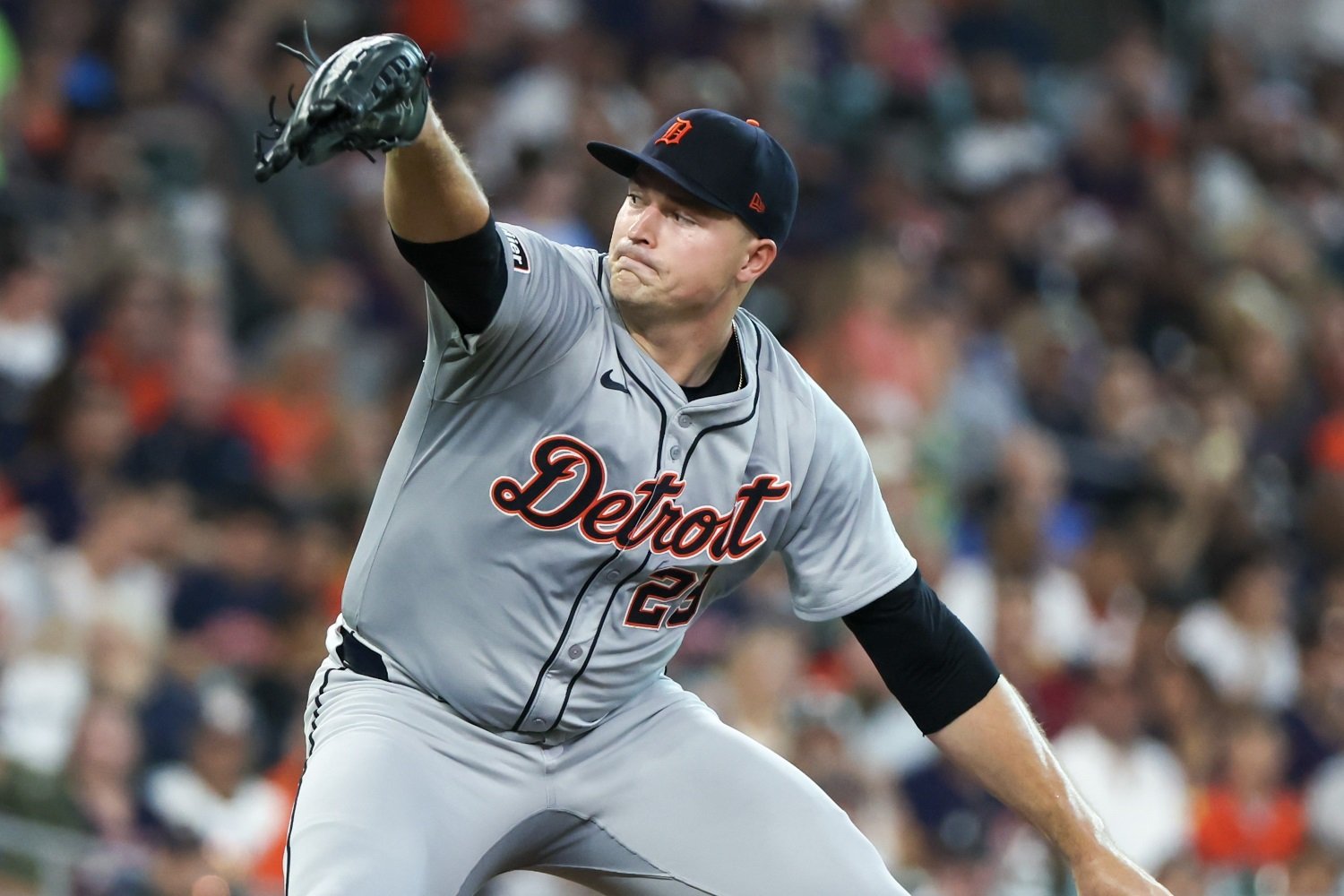 If the season ended today, and if whatever catastrophe caused that decision to be made didn't lead us all to forget such trivialities, the American League Cy Young Award could very well go to Tarik Skubal. The Tigers lefty stands in a virtual tie for the league leadership in WAR at both Baseball Reference and FanGraphs. In 110 innings, he's running a 2.37 ERA. He's striking out 30% of opposing batters and walking 5% of them. Balancing actual results with expected ones based on batted-ball data and per-batter rates, Skubal has a case for being the best pitcher in baseball. Alas, Skubal's Tigers are as toothless as ever. The White Sox have securely locked them out of the cellar in the AL Central, but they're safely ensconced in fourth place, and they're not especially close to the Wild Card positions in the AL, either. Skubal has been superb, but his team can't support him with enough runs, and not enough of his teammates are similarly excellent at run prevention. Skubal is still under team control for two and a half more years. Thus, the Tigers can wait and see a while. They don't have to trade him this month, and to do so, they'll require a team to pay through the nose. Nor will getting that kind of haul be a problem, because teams will line up for the right to bid on a pitcher this good, with the chance to affect three pennant races (and three postseasons) before hitting free agency. Still, Skubal would be a risky hurler to hold onto, and not only because each passing year reduces his trade value incrementally. In August 2022, Skubal underwent flexor tendon surgery on his left forearm. It's a less serious injury than a torn UCL, and he was back by the middle of 2023. Since then, he's been a true ace. The risk, though, is that the elbow monster might not be done with him yet. All pitchers are risky assets, these days. Skubal isn't an extroardinarily risky one, but nor has he demonstrated extraordinary durability. His career high in innings pitched in a season is 150, and that recent surgery is a lurking reminder of the danger of another, more serious one around the next corner. That might make the Tigers motivated sellers. How motivated should the Brewers, specifically, be as buyers? How Skubal Fits the Crew While Freddy Peralta has ace-caliber upside, he's rarely demonstrated it over sustained periods, and never for as long as Skubal has since making it back from the injured list last year. He's a strikeout machine who also doesn't walk anyone, and unlike erstwhile Milwaukee ace Corbin Burnes, he also doesn't surrender many home runs. Skubal is a ground-ball guy, so he won't make as much use of the elite Brewers outfield defense as other hurlers, but his ability to dominate with minimal defensive support is some of the best in baseball. He attacks with two distinct fastballs, which the Brewers love, and he uses both the four-seamer and the sinker against lefties and righties. Both offerings sit at 97 miles per hour and touch 100 or higher. It's the set of secondary offerings that set Skubal apart, though. His slider is a vicious weapon, inducing whiffs on nearly 40% of swings and ground balls on 54% of those hitters do put in play. His changeup is even more devastating, though, with a whiff rate of 47%. He keeps opponents off-balance with a curveball, too, but it's like gilding the lily. What Skubal does well is what the Brewers most look for. He's a five-pitch star with two distinct fastballs and the ability to land everything for strikes. He would, with due respect to Peralta, become the instant ace, and arguably (with due respect, this time, to Yovani Gallardo, Zack Greinke, Burnes, and Woodruff) the best pitcher the team has had since CC Sabathia spent a summer in town. But at What Cost? It wouldn't come cheaply, of course. Acquiring a pitcher like Skubal, especially at this time of year, has to hurt. If it doesn't hurt--if you're willing to even grudgingly nod and accept it, as a theoretical framework--it's almost certainly not a rich enough return to actually get a deal done. The Tigers are in position to demand multiple valuable pieces in return for Skubal, and again, the Brewers would be bidding against other teams, rather than just trying to stare down Detroit executive Scott Harris. Here's the skeleton of a trade that could work: One of the Brewers' young, left-handed hitters in the outfield (Sal Frelick or Garrett Mitchell), or Tyler Black Jacob Misiorowski One of the team's top two offensive prospects, Jeferson Quero and Brock Wilken A throw-in with some big-league upside That's a lot. That's a pillaging of the Milwaukee farm system, led by Misiorowski, whose recent surge in Double-A has his stock on the rise and teams dreaming a little bit on his potential to start in the big leagues again. It would degrade their outfield depth, although few teams in baseball are in better shape to withstand that than this one. It would force them to rebuild their farm with an eye on 2026 and 2027, rather than counting on contributions next year from whichever trio of players ended up headlining the package. Adding Skubal would improve their chances to win the World Series this year and in the next two, with Peralta and (starting next year, hopefully) Woodruff helping set a high floor and stretch toward a high ceiling. It would also apply more pressure, though, for players like Joey Ortiz and Jackson Chourio to build on their successful rookie seasons. It would be a very bold move, and it would be slightly out of character for this front office. They should do it, anyway. Misiorowski could complete this seeming emergence as a rotation ace, but there's still a perfectly good chance he ends up dealing with injuries or relegated to the bullpen. In fact, if you had to bet one way or the other, you'd still be well-advised to think of him as a relief ace, instead. Quero and Wilken come with their own array of concerns, and with the pick they got from the Orioles in the Burnes trade this winter, they're about to add a cornucopia of talent to the system in the 2024 Draft. The Crew can weather the loss of even a terrific package of young talent, and still be the favorites in the NL Central this year and next. In the meantime, Skubal would be the kind of transformational talent missing from their pitching staff for this particular pennant race. It's a risk worth taking.
- 18 comments
-
- 2
-

-
- tarik skubal
- jacob misiorowski
- (and 2 more)
-
It was a tough week out West for the NL Central leaders. Even in a series loss at Chavez Ravine, though, the Brewers showed that they're a very real threat to play deep into October--and gained a little more clarity about what it will take to do so. Image courtesy of © Jason Parkhurst-USA TODAY Sports Nowhere near full strength, the Brewers arrived in Los Angeles having split a series in the thin air of Denver and dropped two out of three to the behemoths of baseball. Even in doing so, though, they proved their mettle. The Dodgers are not a higher class of team than the Brewers. The latter just need a bit better pitching depth, to win the heavyweight fights that are games against the NL's daunting dynasty. When Christian Yelich is hitting like this, he can make up for a lot of deficiencies. Still, there are a lot of deficiencies for which to make up right now, with Joey Ortiz and Gary Sánchez on the injured list and Willy Adames struggling. This weekend demonstrated the depth of options--the number of ways the Brewers can score, even without Yelich carrying them. Jackson Chourio appears to have figured things out at the plate, and is a force to be reckoned with. William Contreras pulled out of his June fugue with a terrific first week of July. Brice Turang is lightning on the bases. Rhys Hoskins provides thunder at the plate. Blake Perkins is improving as a right-handed hitter. Pat Murphy's favorite word is 'relentless,' and his lineup embodies that objective. Holding the leads the relentless offense established proved to be beyond the ken of the team's depleted pitching staff. That's where their troubles lie, and how they'll need to get better this month in order to win another hard series at Dodger Stadium (if necessary) in October. We're starting to see (unsurprisingly) a bit of regression for Bryan Hudson, who is very good, because no one is as good as he was until his recent rough patch. Trying to buy back some of the bullets he spent early, Murphy was more cautious with some of his key arms this past week, but he used Hudson in back-to-back games, giving him a trial in that hard but important high-leverage reliever task. Hudson didn't pass that test, though. Nor did Elvis Peguero or Joel Payamps look good. That's a more alarming fact than Hudson's struggles, because those two have trended in the wrong direction for much of this season. The team has enough relief pitching to get them safely through the All-Star break, but by the end of this month, they need some reinforcement. Maybe that will come when DL Hall returns from the injured list, pushing Tobias Myers into the bullpen. Maybe it will come when Devin Williams returns from the injured list later this summer. Maybe Jared Koenig will be back in the mix soon. Even given all those possibilities, though, an extra relief arm should be on Matt Arnold's shopping list--and one who can pitch in late innings with small leads, rather than another mix-and-match arm who merely soaks up lower-leverage frames. They also need another starter, and it needs to be someone with frontline upside, rather than a Dallas Keuchel-like sponge. Aaron Civale acquitted himself nicely in his first start with a new team, facing perhaps the scariest lineup in baseball. If the Brewers see the Dodgers again in the playoffs, though, they have to tangle with that same crew, plus Mookie Betts (and, perhaps, Max Muncy). Freddy Peralta is good enough to match up with that group. Colin Rea and Civale can keep you in a game even against the full-strength Dodgers, with the Brewers' good gameplanning, great defense and a strong bullpen behind them, but you want them to appear in Games 3 and 4 in a series, rather than in Games 2 and 3. The plan should be to scour the landscape for a pitcher who slots into Game 2, or pushes Peralta there. Sunday's resounding win was a final affirmation that the Brewers can beat the Dodgers. They're going to be better the next time they see Los Angeles, but the Dodgers will be, too. The series provided a nice distillation of the needs the Crew face, as well as some reassurance that they're capable of doing something special if they fill them. View full article
-
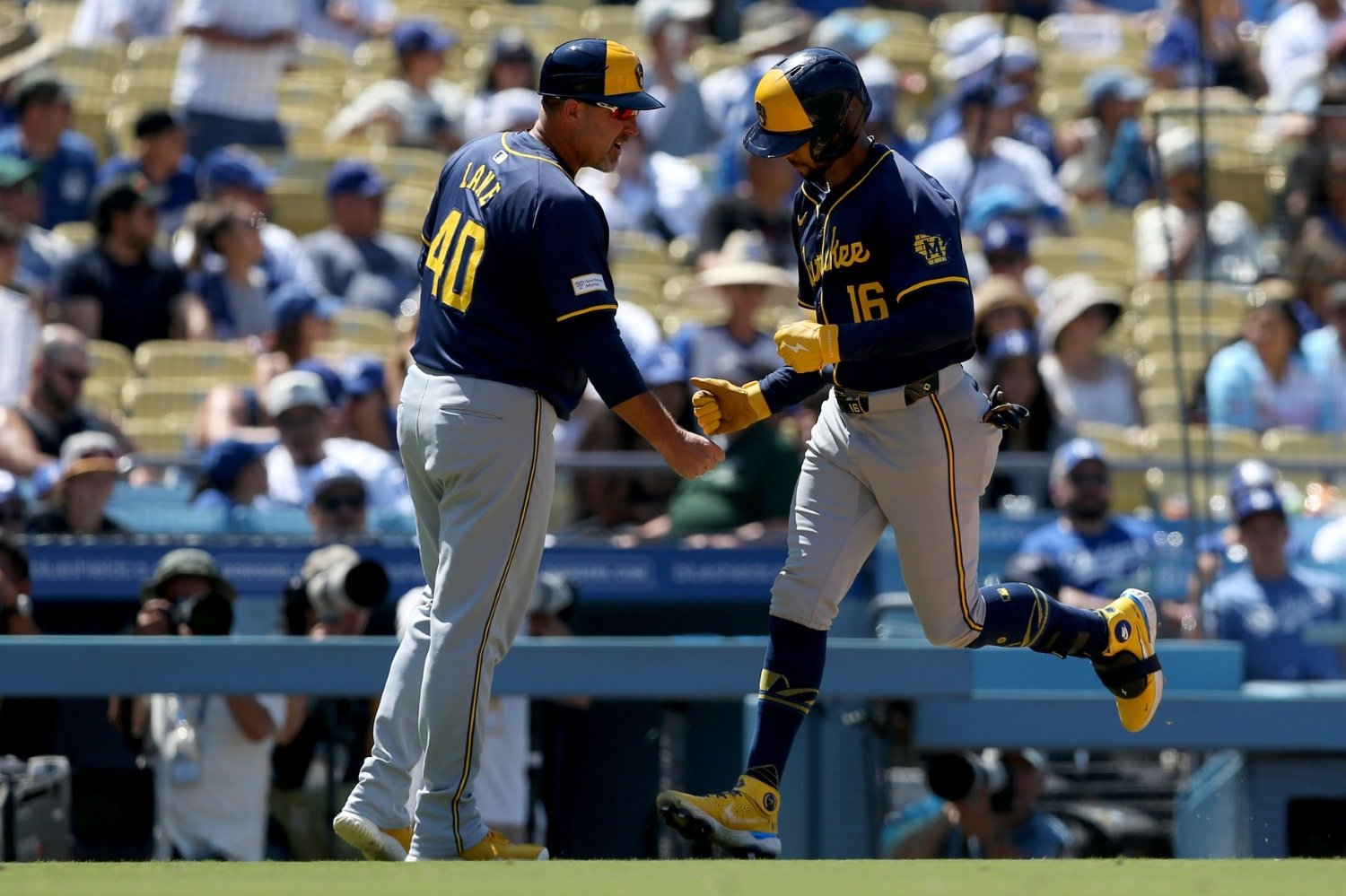 Nowhere near full strength, the Brewers arrived in Los Angeles having split a series in the thin air of Denver and dropped two out of three to the behemoths of baseball. Even in doing so, though, they proved their mettle. The Dodgers are not a higher class of team than the Brewers. The latter just need a bit better pitching depth, to win the heavyweight fights that are games against the NL's daunting dynasty. When Christian Yelich is hitting like this, he can make up for a lot of deficiencies. Still, there are a lot of deficiencies for which to make up right now, with Joey Ortiz and Gary Sánchez on the injured list and Willy Adames struggling. This weekend demonstrated the depth of options--the number of ways the Brewers can score, even without Yelich carrying them. Jackson Chourio appears to have figured things out at the plate, and is a force to be reckoned with. William Contreras pulled out of his June fugue with a terrific first week of July. Brice Turang is lightning on the bases. Rhys Hoskins provides thunder at the plate. Blake Perkins is improving as a right-handed hitter. Pat Murphy's favorite word is 'relentless,' and his lineup embodies that objective. Holding the leads the relentless offense established proved to be beyond the ken of the team's depleted pitching staff. That's where their troubles lie, and how they'll need to get better this month in order to win another hard series at Dodger Stadium (if necessary) in October. We're starting to see (unsurprisingly) a bit of regression for Bryan Hudson, who is very good, because no one is as good as he was until his recent rough patch. Trying to buy back some of the bullets he spent early, Murphy was more cautious with some of his key arms this past week, but he used Hudson in back-to-back games, giving him a trial in that hard but important high-leverage reliever task. Hudson didn't pass that test, though. Nor did Elvis Peguero or Joel Payamps look good. That's a more alarming fact than Hudson's struggles, because those two have trended in the wrong direction for much of this season. The team has enough relief pitching to get them safely through the All-Star break, but by the end of this month, they need some reinforcement. Maybe that will come when DL Hall returns from the injured list, pushing Tobias Myers into the bullpen. Maybe it will come when Devin Williams returns from the injured list later this summer. Maybe Jared Koenig will be back in the mix soon. Even given all those possibilities, though, an extra relief arm should be on Matt Arnold's shopping list--and one who can pitch in late innings with small leads, rather than another mix-and-match arm who merely soaks up lower-leverage frames. They also need another starter, and it needs to be someone with frontline upside, rather than a Dallas Keuchel-like sponge. Aaron Civale acquitted himself nicely in his first start with a new team, facing perhaps the scariest lineup in baseball. If the Brewers see the Dodgers again in the playoffs, though, they have to tangle with that same crew, plus Mookie Betts (and, perhaps, Max Muncy). Freddy Peralta is good enough to match up with that group. Colin Rea and Civale can keep you in a game even against the full-strength Dodgers, with the Brewers' good gameplanning, great defense and a strong bullpen behind them, but you want them to appear in Games 3 and 4 in a series, rather than in Games 2 and 3. The plan should be to scour the landscape for a pitcher who slots into Game 2, or pushes Peralta there. Sunday's resounding win was a final affirmation that the Brewers can beat the Dodgers. They're going to be better the next time they see Los Angeles, but the Dodgers will be, too. The series provided a nice distillation of the needs the Crew face, as well as some reassurance that they're capable of doing something special if they fill them.
 -
Spending more of Mark Attanasio's money instead of giving up significant young talent means the Brewers have a lot of options for the balance of this month. How will they try to cap a World Series-capable roster? Image courtesy of © Michael McLoone-USA TODAY Sports When news of Aaron Civale being traded to the Brewers hit Baseball Twitter Wednesday morning, it made for a few nervous moments among lovers of Brewers prospects. As it turned out, though, that agita was wasted energy, because all the Crew surrendered in the trade was Gregory Barrios, an infielder for the Timber Rattlers who has youth and athleticism to recommend him, but who didn't figure prominently into the team's future plans even before being dealt. It was possible to extract Civale from the Rays in exchange for Barrios not only because the veteran right-handed hurler is having a superficially tough season (5.07 ERA, 16 home runs allowed), but because the Rays were in no position to consider Civale even a medium-term asset. He's under team control through 2025, but in 2024, he's making $4.9 million as an arbitration-eligible player, and that salary will rise next year. When the Rays acquire pitchers like Civale (as they did last summer), they're thinking about how they can help that player make immediate improvements, and then about extending them on a team-friendly long-term deal. The improvement didn't materialize for Civale; the Rays appear to have taken the wrong tack in trying to unlock his talent. Because the fit of player and team didn't bear immediate fruit, though, they also missed their chance to get together on a mutually agreeable contract. The Rays never intended to pay Civale $7 million or more in 2025 and then watch him leave via free agency, which quickly became the most likely outcome, so they were ready to move on and willing to accept a fairly low-wattage prospect in return. For the Brewers, that circumstance is a boondoggle. They not only got Civale for a player whom they're unlikely to miss, but plugged one key hole in their résumé as a serious World Series contender without sacrificing the ability to plug another one via some other move in the next few weeks. Civale, from whom they surely expect to get reliable innings and a better level of performance, stabilizes their rotation even beyond this season, which gives them more flexibility and more opportunities. This deal coincides with this week's release of a couple of midseason updates to national top prospect lists, led by MLB Pipeline and Baseball America. The Brewers placed a trio of players (Jeferson Quero, Jacob Misiorowski, and Tyler Black) on each list and a fourth (Cooper Pratt) at the back end of one of them. That reflects the reality that their farm system is roughly average, and maybe a hair below that, but that, in turn, only reflects the fact that the team has graduated a handful of good players recently, including and especially Jackson Chourio, Joey Ortiz, Brice Turang, and Sal Frelick. Obtaining Civale didn't rob Matt Arnold and company of the talent they need to make an even bigger acquisition this month, and all those young players (not just the aforementioned ones, but pitchers who have had a tougher time yet might have bright futures, like DL Hall) make it an especially good time to trade from the depth they still enjoy. Prospects are never fully superfluous, for a team with the constraints the Brewers face, but they have long-term answers at a number of positions and the ninth-richest bonus pool allotment for the upcoming MLB Draft. There's been a reluctance, even and especially among Brewers fans themselves, to imagine and embrace that this might be the team who finally breaks through and wins a National League pennant--let alone what would be the first championship in franchise history. Even as many fans have enjoyed the team's fantastic first half, they've held some wariness in reserve, and they've bristled at the suggestion that they would go all-in to win this season. When Ken Rosenthal mentioned something along those lines on a YouTube show recently, it caused a kerfuffle at least as large as the one in response to his musings on whether the team would trade their starting shortstop, a month ago. Part of that problem is lexicographical. We don't have a much better term than 'all-in' to connote aggressive pursuit of a championship through deadline upgrades, but in truth, anything the Brewers would do this month would stop far short of being a full-fledged bet on this season, alone. The Brewers will be good in 2025 and beyond, or not, based not on whether they make trades that deplete their current stock of prospect talent, but on whether they can stay ahead of much of the rest of the league in scouting and player development, and on whether they continue to sniff out and pounce on opportunities like the one they seized in acquiring Civale. The Chourio-Christian Yelich-William Contreras-Freddy Peralta core of this team will not be threatened by expending the resource that is their trove of young talent this month, even though every trade that degrades the farm does put more pressure on them to get the next season's round of draft picks and international signings correct. I hope Brewers fans realize that this team is not a fluke, and that they're good enough to go deep into October. Although they're well ahead of the rest of the NL Central in the fundamentals of their organization (including and especially their talent base), that condition is not guaranteed to persist in perpetuity. In fact, it's unlikely to. The Cardinals don't have enough in the tank to catch this team this year, especially now that the Crew have added Civale, but they're going to catch up a bit soon. The Pirates and Reds are drawing incrementally closer to having a critical mass of talent and turning the corner all the time, and the Cubs (though mismanaged and disorganized right now) have a massive financial edge that could accelerate their return to contention. The Brewers should not, by any means, be treating this as a transitional year or the pinch point between two wider windows of contention. Their window is right now. It's wide open, and might never be more so again. There's no guarantee that this team will ever win a championship, but right now (while they have Willy Adames, for whom they can collect a solid draft pick this winter anyway; and Devin Williams, who might be gone by next Opening Day; and Rhys Hoskins, who might well be here again in 2025 but is only getting older) they have a real chance to do so. Civale was a good target. He draws them slightly nearer to that goal. Now, they should be grateful that acquiring him was so painless, and brace themselves for the necessary but profitable pain of another, bigger trade before the month is over. This pitching staff could use one more injection of dominance, especially if a rental starter emerges as a candidate, and the lineup could use a little bit more reinforcement. This is no time to stare fixedly at a glorious future that might never arrive. It's time to forge that glory right here in the present. View full article
-
 When news of Aaron Civale being traded to the Brewers hit Baseball Twitter Wednesday morning, it made for a few nervous moments among lovers of Brewers prospects. As it turned out, though, that agita was wasted energy, because all the Crew surrendered in the trade was Gregory Barrios, an infielder for the Timber Rattlers who has youth and athleticism to recommend him, but who didn't figure prominently into the team's future plans even before being dealt. It was possible to extract Civale from the Rays in exchange for Barrios not only because the veteran right-handed hurler is having a superficially tough season (5.07 ERA, 16 home runs allowed), but because the Rays were in no position to consider Civale even a medium-term asset. He's under team control through 2025, but in 2024, he's making $4.9 million as an arbitration-eligible player, and that salary will rise next year. When the Rays acquire pitchers like Civale (as they did last summer), they're thinking about how they can help that player make immediate improvements, and then about extending them on a team-friendly long-term deal. The improvement didn't materialize for Civale; the Rays appear to have taken the wrong tack in trying to unlock his talent. Because the fit of player and team didn't bear immediate fruit, though, they also missed their chance to get together on a mutually agreeable contract. The Rays never intended to pay Civale $7 million or more in 2025 and then watch him leave via free agency, which quickly became the most likely outcome, so they were ready to move on and willing to accept a fairly low-wattage prospect in return. For the Brewers, that circumstance is a boondoggle. They not only got Civale for a player whom they're unlikely to miss, but plugged one key hole in their résumé as a serious World Series contender without sacrificing the ability to plug another one via some other move in the next few weeks. Civale, from whom they surely expect to get reliable innings and a better level of performance, stabilizes their rotation even beyond this season, which gives them more flexibility and more opportunities. This deal coincides with this week's release of a couple of midseason updates to national top prospect lists, led by MLB Pipeline and Baseball America. The Brewers placed a trio of players (Jeferson Quero, Jacob Misiorowski, and Tyler Black) on each list and a fourth (Cooper Pratt) at the back end of one of them. That reflects the reality that their farm system is roughly average, and maybe a hair below that, but that, in turn, only reflects the fact that the team has graduated a handful of good players recently, including and especially Jackson Chourio, Joey Ortiz, Brice Turang, and Sal Frelick. Obtaining Civale didn't rob Matt Arnold and company of the talent they need to make an even bigger acquisition this month, and all those young players (not just the aforementioned ones, but pitchers who have had a tougher time yet might have bright futures, like DL Hall) make it an especially good time to trade from the depth they still enjoy. Prospects are never fully superfluous, for a team with the constraints the Brewers face, but they have long-term answers at a number of positions and the ninth-richest bonus pool allotment for the upcoming MLB Draft. There's been a reluctance, even and especially among Brewers fans themselves, to imagine and embrace that this might be the team who finally breaks through and wins a National League pennant--let alone what would be the first championship in franchise history. Even as many fans have enjoyed the team's fantastic first half, they've held some wariness in reserve, and they've bristled at the suggestion that they would go all-in to win this season. When Ken Rosenthal mentioned something along those lines on a YouTube show recently, it caused a kerfuffle at least as large as the one in response to his musings on whether the team would trade their starting shortstop, a month ago. Part of that problem is lexicographical. We don't have a much better term than 'all-in' to connote aggressive pursuit of a championship through deadline upgrades, but in truth, anything the Brewers would do this month would stop far short of being a full-fledged bet on this season, alone. The Brewers will be good in 2025 and beyond, or not, based not on whether they make trades that deplete their current stock of prospect talent, but on whether they can stay ahead of much of the rest of the league in scouting and player development, and on whether they continue to sniff out and pounce on opportunities like the one they seized in acquiring Civale. The Chourio-Christian Yelich-William Contreras-Freddy Peralta core of this team will not be threatened by expending the resource that is their trove of young talent this month, even though every trade that degrades the farm does put more pressure on them to get the next season's round of draft picks and international signings correct. I hope Brewers fans realize that this team is not a fluke, and that they're good enough to go deep into October. Although they're well ahead of the rest of the NL Central in the fundamentals of their organization (including and especially their talent base), that condition is not guaranteed to persist in perpetuity. In fact, it's unlikely to. The Cardinals don't have enough in the tank to catch this team this year, especially now that the Crew have added Civale, but they're going to catch up a bit soon. The Pirates and Reds are drawing incrementally closer to having a critical mass of talent and turning the corner all the time, and the Cubs (though mismanaged and disorganized right now) have a massive financial edge that could accelerate their return to contention. The Brewers should not, by any means, be treating this as a transitional year or the pinch point between two wider windows of contention. Their window is right now. It's wide open, and might never be more so again. There's no guarantee that this team will ever win a championship, but right now (while they have Willy Adames, for whom they can collect a solid draft pick this winter anyway; and Devin Williams, who might be gone by next Opening Day; and Rhys Hoskins, who might well be here again in 2025 but is only getting older) they have a real chance to do so. Civale was a good target. He draws them slightly nearer to that goal. Now, they should be grateful that acquiring him was so painless, and brace themselves for the necessary but profitable pain of another, bigger trade before the month is over. This pitching staff could use one more injection of dominance, especially if a rental starter emerges as a candidate, and the lineup could use a little bit more reinforcement. This is no time to stare fixedly at a glorious future that might never arrive. It's time to forge that glory right here in the present.
 -
The Milwaukee Brewers have an opportunity to do something big in 2024, and they have no intention of letting it slide by. They jumped the market and made the first major pitching acquisition of 2024 Wednesday morning. Image courtesy of © Charles LeClaire-USA TODAY Sports The Tampa Bay Rays have sputtered and struggled in the daunting AL East this season, and when they elected to make an early move in the pitching market, the Brewers met them there. Aaron Civale should slot right into the middle of the only weak segment of the Milwaukee roster, the starting rotation. This is a significant deal. Civale, who turned 29 last month, has ugly surface-level numbers this year (a 5.07 ERA, for instance), but he's under team control through 2025. He's also just a year removed from a 2023 season in which he was the Rays' prized deadline acquisition and posted a 3.46 ERA. In 87 innings pitched this year, he has 84 strikeouts and 27 walks. Home runs have been the major problem for Civale; he's allowed 16 of them on the year. Not a hard thrower by modern standards, he nonetheless has some upside, as evidenced not only by his 2021 and 2023 seasons but by his pitch mix, which includes a lot of the things (several pitches, multiple fastball looks, little reliance on offspeed stuff) that the Brewers love. We're likely to see Chris Hook and company go to work with Civale, not to overhaul his arsenal, but to tweak pitch usage and find a more successful mixture. In return for Civale, the Crew surrendered Gregory Barrios, a middle infielder who showed good upside with the bat this year during his time in Appleton, but who never figured to be a substantial part of the team's infield future. Matt Arnold and his staff seem to have bought low on Civale, with the hope and expectation that they can get more from him than the Rays have. That said, they needn't necessarily be done after this, and they certainly kept their powder dry for a bigger trade later this month, if they elect to go in that direction. There will be much more to come, from various angles, on this trade, but for now, let us know what you think. Was Civale the right target? Did the Brewers do well to jump the market, or should they have waited a bit longer to see what is out there? View full article
-
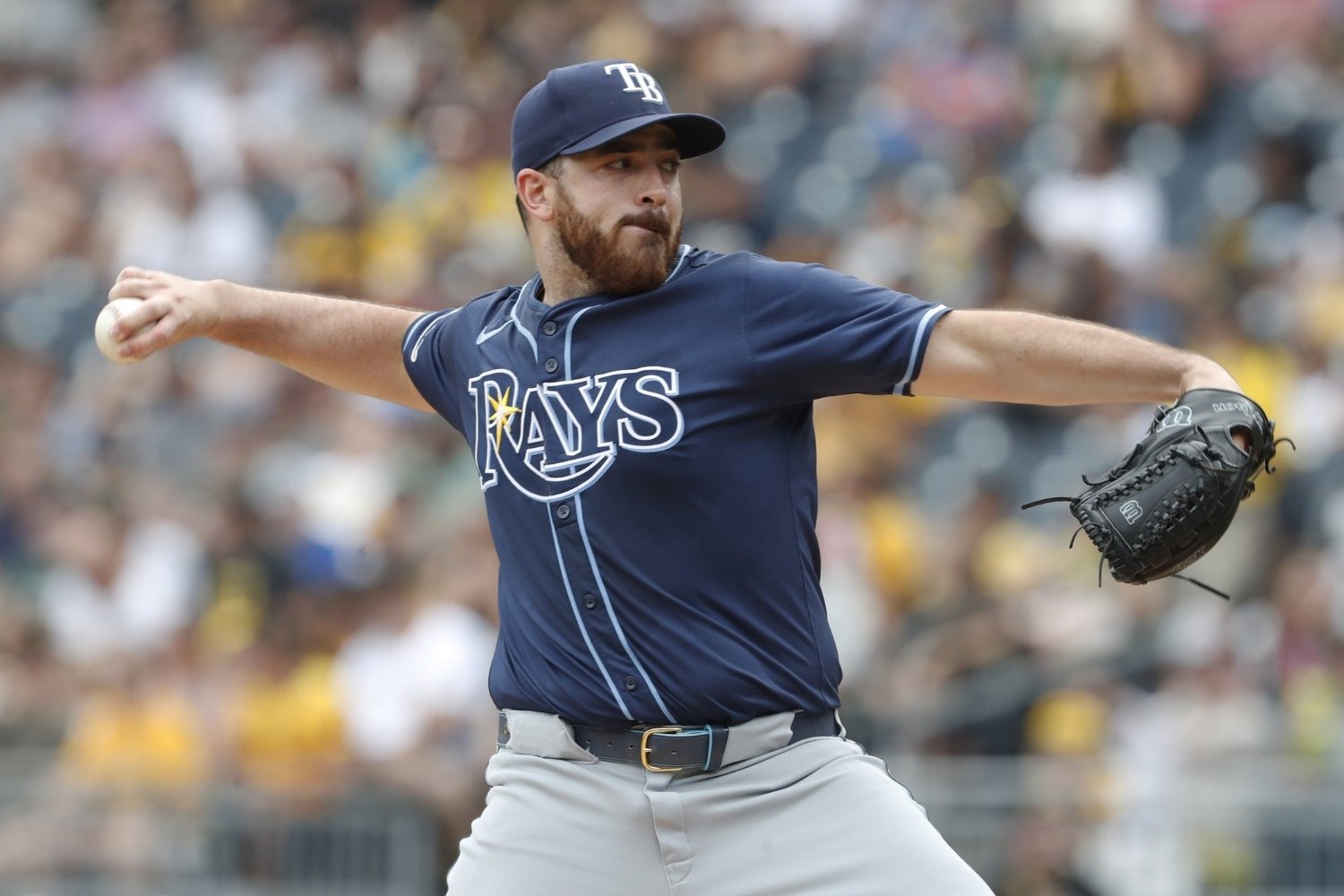 The Tampa Bay Rays have sputtered and struggled in the daunting AL East this season, and when they elected to make an early move in the pitching market, the Brewers met them there. Aaron Civale should slot right into the middle of the only weak segment of the Milwaukee roster, the starting rotation. This is a significant deal. Civale, who turned 29 last month, has ugly surface-level numbers this year (a 5.07 ERA, for instance), but he's under team control through 2025. He's also just a year removed from a 2023 season in which he was the Rays' prized deadline acquisition and posted a 3.46 ERA. In 87 innings pitched this year, he has 84 strikeouts and 27 walks. Home runs have been the major problem for Civale; he's allowed 16 of them on the year. Not a hard thrower by modern standards, he nonetheless has some upside, as evidenced not only by his 2021 and 2023 seasons but by his pitch mix, which includes a lot of the things (several pitches, multiple fastball looks, little reliance on offspeed stuff) that the Brewers love. We're likely to see Chris Hook and company go to work with Civale, not to overhaul his arsenal, but to tweak pitch usage and find a more successful mixture. In return for Civale, the Crew surrendered Gregory Barrios, a middle infielder who showed good upside with the bat this year during his time in Appleton, but who never figured to be a substantial part of the team's infield future. Matt Arnold and his staff seem to have bought low on Civale, with the hope and expectation that they can get more from him than the Rays have. That said, they needn't necessarily be done after this, and they certainly kept their powder dry for a bigger trade later this month, if they elect to go in that direction. There will be much more to come, from various angles, on this trade, but for now, let us know what you think. Was Civale the right target? Did the Brewers do well to jump the market, or should they have waited a bit longer to see what is out there?
 -
There are 13 MLB teams who have never signed a player to a $200-million contract. The Chicago Cubs have never gone there. Neither have the St. Louis Cardinals. The Brewers have, though, and the man on whom the smallest-market team in baseball took a leap of faith is repaying that in a beautiful way this season. Image courtesy of © Benny Sieu-USA TODAY Sports Maybe the best way to capture Christian Yelich's relentless and voluminous contributions to the 2024 Brewers is this: If you sort all players with at least 100 plate appearances this year by the percentage of their games played in which their total bases and walks drawn added up to four or more, Yelich ranks 17th of 365. That stat--I've dubbed it Big Game%, because meeting that threshold nearly always means you've had one and because performing so well is big for your team, alleviating pressure on teammates--nicely captures the way a hitter with power, the willingness to work a walk, and the ability to hit for average can impact a game more profoundly than one with a more limited skill set. That's not to denigrate singles and walks guys. Yelich has clawed his way back from a career crisis point three years ago, through a long stretch during which he was a light-hitting move-the-line type, and that player has value. Avoiding outs is still the most valuable atomic skill in baseball, because it lengthens the game and buys both yourself and your teammates an extra chance, an extra opportunity to score late if needed. Ultimately, though, it's the guys who can come up with multiple base hits in a game and/or hit for extra bases in a single shot that change the game. For a while, after his semi-tragic 2019 knee injury, that wasn't Yelich. Now, it is again. Yelich isn't the kind of offensive gamebreaker that Aaron Judge, a healthy Mike Trout, Kyle Tucker, Shohei Ohtani, or Gunnar Henderson are, but he's right there in the group just below that, and far clear of the larger cluster of hitters (including virtually all of his own teammates) who are roughly average--not just based on overall production, but in their ability to alter a specific contest. How is he doing it? Firstly, yes, Yelich is lifting the ball a bit more often than in the last few years. When pitchers elevate it at all, he elevates, too, rather than getting on top of it and hitting very hard but harmless ground balls with negative launch angles. His average launch angle is up, but only very slightly. He's not hitting the ball significantly harder, on average. The really important thing is that, yes, he's pulling the ball. A lot. Yelich's pull rate has gone through the roof, with 49% of his batted balls going that direction this season. At least as vitally, when he does pull it, it's not on the ground (or at least not right into the ground) nearly as often. These aren't rollovers. He's staying behind, beneath and through the ball at contact, but catching it farther out in front, with tremendous results. To get the bat head out on the ball and pull it so much more (at a healthy launch angle, no less), Yelich is getting more aggressive. He's swinging more often than he ever has before in the big leagues, although it's still just over 46% of the time. He's also making contact at his highest rate ever, within a tenth of a percentage point. The combination of those approach changes has led to the best strikeout rate of his career and a still-excellent 11.0% walk rate. There's probably something that has to be called good luck in Yelich's set of batted-ball outcomes, but he's always been a sensationally gifted hitter. At his best, he was a guy who could hit 40-plus homers, because of his exceptional combination of bat speed and feel for the barrel. He's not back at that level, and he never will be, but there was a rebirth last year that made him a solid complementary contributor. This season, the reborn Yelich has transmogrified, as though (after moving through his larval stage for a second time in his career last season) he's now emerging and spreading butterfly wings for the second time. He won't rival Judge or Henderson again, but he's become a slugger who doesn't strike out; a patient hitter who doesn't miss mistakes; and a speedster who never gets caught on the bases. It was such a frightening moment for the Brewers franchise when Yelich looked so diminished, in the season or two after his broken kneecap. They couldn't afford to be wrong on an investment as large as the one they'd already made in him. Happily, since then, he's proved that they never were wrong. He weathered a lot of peculiar adversity, and has come out on the other side as the linchpin of one of the league's best offenses. He might not even hit 20 homers this year, but with the ability to relentlessly lace singles and doubles and as one of the most efficient basestealers in baseball history, he's become the embodiment of this team's defiant brilliance in the first season of the Pat Murphy Era. View full article
-
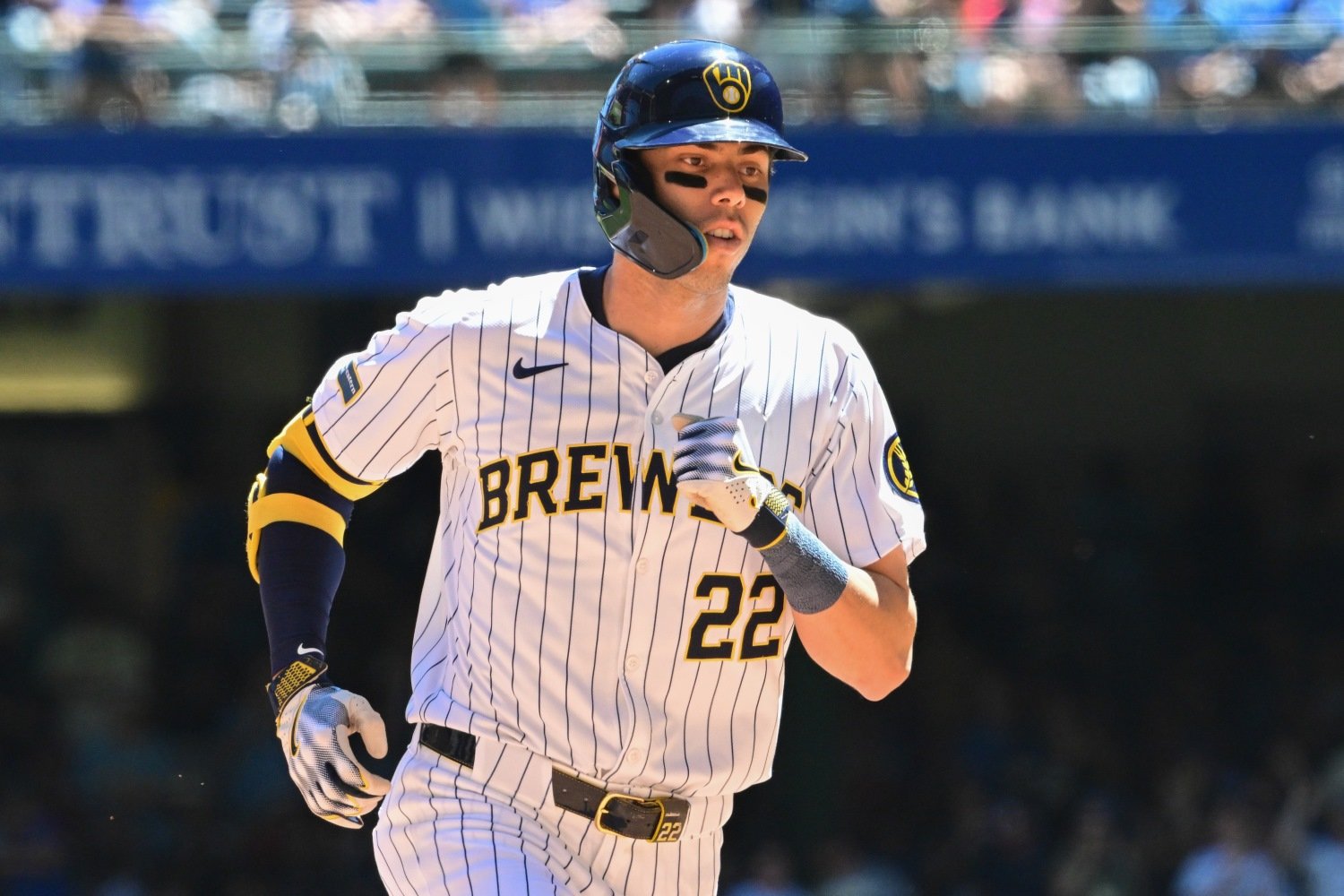 Maybe the best way to capture Christian Yelich's relentless and voluminous contributions to the 2024 Brewers is this: If you sort all players with at least 100 plate appearances this year by the percentage of their games played in which their total bases and walks drawn added up to four or more, Yelich ranks 17th of 365. That stat--I've dubbed it Big Game%, because meeting that threshold nearly always means you've had one and because performing so well is big for your team, alleviating pressure on teammates--nicely captures the way a hitter with power, the willingness to work a walk, and the ability to hit for average can impact a game more profoundly than one with a more limited skill set. That's not to denigrate singles and walks guys. Yelich has clawed his way back from a career crisis point three years ago, through a long stretch during which he was a light-hitting move-the-line type, and that player has value. Avoiding outs is still the most valuable atomic skill in baseball, because it lengthens the game and buys both yourself and your teammates an extra chance, an extra opportunity to score late if needed. Ultimately, though, it's the guys who can come up with multiple base hits in a game and/or hit for extra bases in a single shot that change the game. For a while, after his semi-tragic 2019 knee injury, that wasn't Yelich. Now, it is again. Yelich isn't the kind of offensive gamebreaker that Aaron Judge, a healthy Mike Trout, Kyle Tucker, Shohei Ohtani, or Gunnar Henderson are, but he's right there in the group just below that, and far clear of the larger cluster of hitters (including virtually all of his own teammates) who are roughly average--not just based on overall production, but in their ability to alter a specific contest. How is he doing it? Firstly, yes, Yelich is lifting the ball a bit more often than in the last few years. When pitchers elevate it at all, he elevates, too, rather than getting on top of it and hitting very hard but harmless ground balls with negative launch angles. His average launch angle is up, but only very slightly. He's not hitting the ball significantly harder, on average. The really important thing is that, yes, he's pulling the ball. A lot. Yelich's pull rate has gone through the roof, with 49% of his batted balls going that direction this season. At least as vitally, when he does pull it, it's not on the ground (or at least not right into the ground) nearly as often. These aren't rollovers. He's staying behind, beneath and through the ball at contact, but catching it farther out in front, with tremendous results. To get the bat head out on the ball and pull it so much more (at a healthy launch angle, no less), Yelich is getting more aggressive. He's swinging more often than he ever has before in the big leagues, although it's still just over 46% of the time. He's also making contact at his highest rate ever, within a tenth of a percentage point. The combination of those approach changes has led to the best strikeout rate of his career and a still-excellent 11.0% walk rate. There's probably something that has to be called good luck in Yelich's set of batted-ball outcomes, but he's always been a sensationally gifted hitter. At his best, he was a guy who could hit 40-plus homers, because of his exceptional combination of bat speed and feel for the barrel. He's not back at that level, and he never will be, but there was a rebirth last year that made him a solid complementary contributor. This season, the reborn Yelich has transmogrified, as though (after moving through his larval stage for a second time in his career last season) he's now emerging and spreading butterfly wings for the second time. He won't rival Judge or Henderson again, but he's become a slugger who doesn't strike out; a patient hitter who doesn't miss mistakes; and a speedster who never gets caught on the bases. It was such a frightening moment for the Brewers franchise when Yelich looked so diminished, in the season or two after his broken kneecap. They couldn't afford to be wrong on an investment as large as the one they'd already made in him. Happily, since then, he's proved that they never were wrong. He weathered a lot of peculiar adversity, and has come out on the other side as the linchpin of one of the league's best offenses. He might not even hit 20 homers this year, but with the ability to relentlessly lace singles and doubles and as one of the most efficient basestealers in baseball history, he's become the embodiment of this team's defiant brilliance in the first season of the Pat Murphy Era.
 -
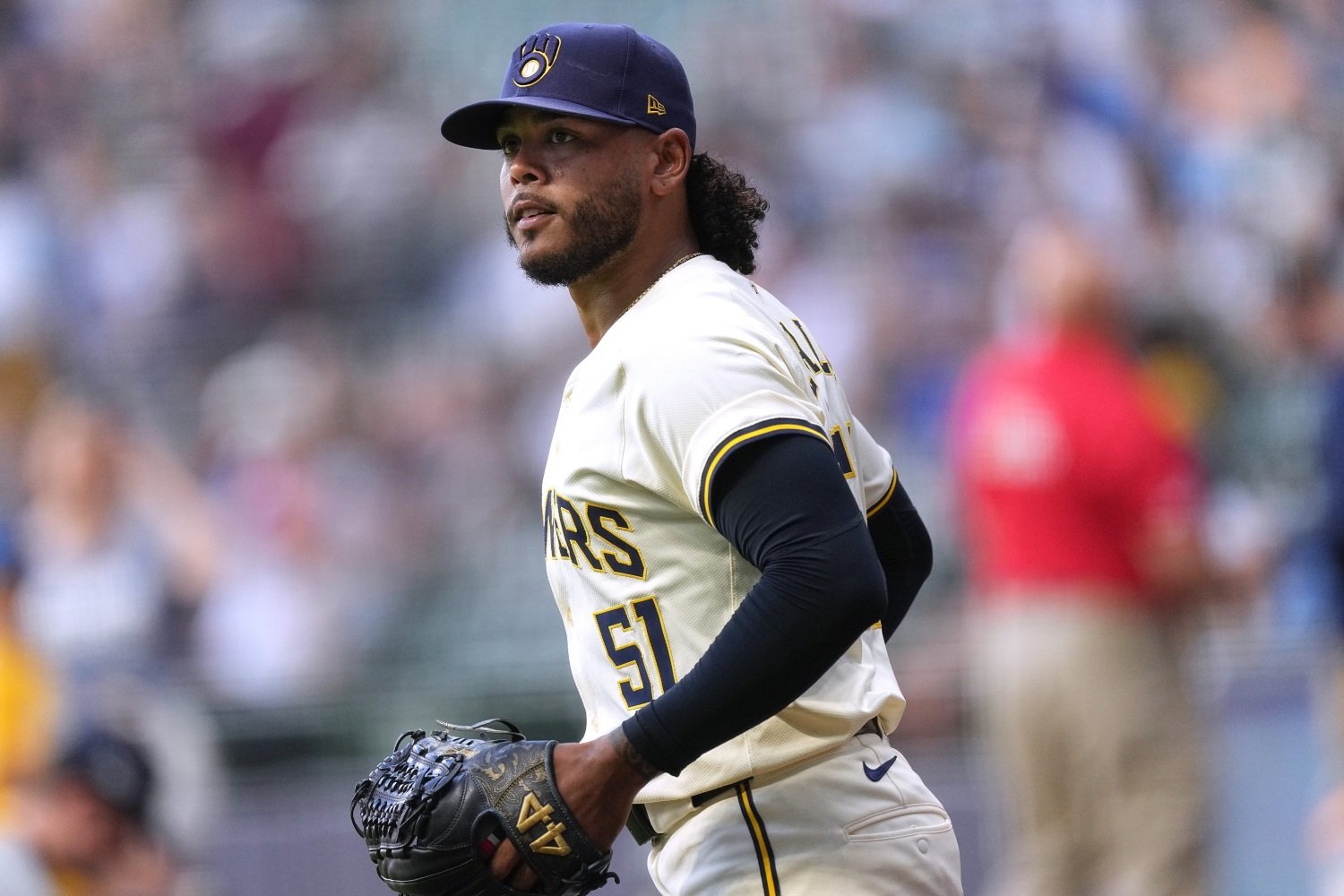 For all my reasoning in making these predictions in the first place, you can consult the original piece. This time through, I'll just restate the prediction and assess whether it looks likely to come to fruition (or even close) or not. Boldness is part of the privilege of spring. You get to be bold when the season is not yet underway--when the snow is still smooth and unpunctured by footprints, and everyone's ankles and elbows feel (almost) 100 percent. Let's embrace that privilege, before it's gone. 1. Freddy Peralta will be the runner-up in the NL Cy Young voting. Well, we're not off to a roaring start, are we? Peralta's performance this season has been uneven, much to the consternation of many fans. In 17 starts, he's 6-4, with a 3.83 ERA and only seven quality starts. You know what, though? I'm doubling down here. Last year at this time, Peralta's ERA was 4.67. Starting last Jul. 26, in his final 11 starts, he had a 2.44 ERA. This season, he has 94 innings pitched and a strikeout rate of 30.9%. It's perfectly possible that he'll have another torrid finish, and this time, he'd be doing so from a stronger platform of performance than he built for himself in the first half of 2023. For my money, he's still an ace. 2. William Contreras will have 180 or more hits. This is one where it's important to go back and revisit the original piece, to understand why I chose that benchmark and what it signifies. Suffice to say, though, that we're on track to see this one come true--albeit barely. With 99 hits through the first 85 games, Contreras is on track for 189 hits on the year. Not coincidentally, he's also on track to start the All-Star Game at catcher. That this one has a decent chance to come true is a testament to the strength of his first half, but the fact that it's still very much in question is a reminder of how hard a bar it is to clear for a catcher. 3. At least 14 pitchers will start a game for the Brewers. I guess I should have said "by the start of July," to sound really smart. Injuries accelerated the process here, but that was part of the prediction, of course. The Crew have now had 15 different pitchers take the ball to begin the game, and the question is whether they'll get over 20, or even threaten the record (held, because baseball is beautiful, by two different iterations of the Athletics, from 1915 in Philadelphia and 2023 in Oakland) of 24 different starters in a campaign. 4. Sal Frelick will start at least 54 games at third base. It was nine bold predictions. You didn't think I'd get them all right, or even be willing to bet on doing so by July, did you? It'd be fascinating to see an alternate-reality version of the early stages of the season in which Garrett Mitchell stayed healthy. Remember, Mitchell's injury resulted in the team urgently recalling Oliver Dunn to begin the season. Dunn replaced Mitchell because Frelick was no longer available to play third regularly. Still, this one was too ambitious. Frelick might get to 20 games played there, if Mitchell and Blake Perkins merit sustained playing time the rest of the way, but even that feels unlikely. 5. A Brewers hurler will win the Trevor Hoffman NL Reliever of the Year Award again. We knew it wouldn't be Devin Williams who did it. I felt, quietly, that Trevor Megill was the best bet. The prediction was as much about the team's penchant for turning anonymous relievers into stars as about any individual player, though, so I claim credit for a win here--because Bryan Hudson has a 32.1% strikeout rate, 5.0% walk rate, 0.82 ERA, and 1.2 fWAR. The latter figure is third-highest among NL relievers, and while Hudson probably won't make the All-Star team, he should. 6. Rhys Hoskins will opt INTO the 2025 portion of his contract. This one might be the most interesting, at this moment. There's still a wide avenue for Hoskins, with a strong finish, to elect free agency again at the end of the season. It feels very unlikely, though. I don't set much store by WAR for first basemen, for whom the positional adjustment can sometimes be overly unforgiving, but both FanGraphs and Baseball Reference peg him as essentially replacement-level so far this season. Hoskins can walk away by opting out this fall, taking a total of $16 million for his time in Milwaukee and eschewing $18 million. If he finishes strongly enough to even entertain that, though, he'll have to take something else into account. Because the Phillies didn't extend him a qualifying offer last fall, the Brewers could do so if he opts out. If he's worth more than $21 million on the open market, the Crew will probably make that offer (which will be valued right around that number) so they can claim a draft pick as he departs. To make opting out smart, then, Hoskins would have to finish pretty strongly, but in a way that had everyone feeling like he's going to be fine but not excellent in 2025. It feels like a needle that won't be threaded. At this moment, I expect Hoskins to stay right where he is for another season. What's less sure is whether Brewers fans will be pleased about that prospect or not. 7. Wade Miley, Colin Rea, and Joe Ross will combine for fewer than 270 total innings pitched. I led the paragraph below this prediction in March with the words, "This would hurt." It does. Miley is out for the season after having pitched just seven frames, and Ross is on the 60-day injured list. The team still hopes to get him back for the last two months of the season or so, but right now, he's stuck on 42 innings. Rea has been one of the club's workhorses, pitching 87 1/3 solid innings, but in total, the trio is only at 136 1/3, and with Miley already out, it looks like the other two will end up combining for 250 or fewer frames. A return and strong finish from Ross would be a welcome and wonderful development; it just feels remote. 8. Jackson Chourio will become the second-best power-speed rookie ever. In essence, this was a prediction that Chourio would hit at least 20 home runs and threaten 50 stolen bases. That sounds crazy, halfway into the season, as he sits on nine homers and eight steals. After two very tough months to begin his career, he came on very strongly in June, and the power benchmark feels within reach. Much more surprising to me, amid a roster leading baseball in aggressiveness in the running game, is the fact that Chourio has been so small a part of that. As he starts getting on base more frequently, that part could change, too. A 25-homer, 30-steal overall season remains a possibility, given how well he played last month. That would still be wildly successful, and it would involve an all-timer of a second half from the rookie. What I originally predicted, though, is obviously out of the question. 9. Tyler Black will finish the season in the outfield, one way or another. Hoskins looking increasingly likely to opt in. Jake Bauers showing some staying power as a left-handed option at first base. Continued defensive struggles with the glove and a bat that doesn't look like it will carry the heavy burden of first base's demands. Yes, this one still feels right. I would suggest, especially, that Black feels very likely to be involved in a trade this month. He would be a nice fit for what the Tigers seem to like, and Jack Flaherty might be my favorite potential trade target for the Crew this month. Without a doubt, Black's stock is down. The Brewers don't have to worry about that too much, though, because of the way Perkins, Chourio, and Joey Ortiz have stepped forward as this season has progressed, and thanks to the dazzling season-long performance of Brice Turang. It just seems that Black's highest utility for this organization might be as a trade chip. That's where we stand. Given that the goal was to be a bit bold, I'm pleased with the number of these that still seem to be on target, and I wonder if I ought to have been more aggressive. Then again, there remain sufficient reminders of the fact that baseball is relentlessly unpredictable, just as the Brewers are plain old relentless.
-
- 1
-
-
- freddy peralta
- bryan hudson
- (and 5 more)
-
At the very outset of the season, I wrote an article offering nine bold predictions for the 2024 Brewers, based on preseason observations, my time covering the team at spring training in Arizona, and my broad impressions of the team. Let's see how we're doing on them. Image courtesy of © Mark Hoffman/Milwaukee Journal Sentinel / USA TODAY NETWORK For all my reasoning in making these predictions in the first place, you can consult the original piece. This time through, I'll just restate the prediction and assess whether it looks likely to come to fruition (or even close) or not. Boldness is part of the privilege of spring. You get to be bold when the season is not yet underway--when the snow is still smooth and unpunctured by footprints, and everyone's ankles and elbows feel (almost) 100 percent. Let's embrace that privilege, before it's gone. 1. Freddy Peralta will be the runner-up in the NL Cy Young voting. Well, we're not off to a roaring start, are we? Peralta's performance this season has been uneven, much to the consternation of many fans. In 17 starts, he's 6-4, with a 3.83 ERA and only seven quality starts. You know what, though? I'm doubling down here. Last year at this time, Peralta's ERA was 4.67. Starting last Jul. 26, in his final 11 starts, he had a 2.44 ERA. This season, he has 94 innings pitched and a strikeout rate of 30.9%. It's perfectly possible that he'll have another torrid finish, and this time, he'd be doing so from a stronger platform of performance than he built for himself in the first half of 2023. For my money, he's still an ace. 2. William Contreras will have 180 or more hits. This is one where it's important to go back and revisit the original piece, to understand why I chose that benchmark and what it signifies. Suffice to say, though, that we're on track to see this one come true--albeit barely. With 99 hits through the first 85 games, Contreras is on track for 189 hits on the year. Not coincidentally, he's also on track to start the All-Star Game at catcher. That this one has a decent chance to come true is a testament to the strength of his first half, but the fact that it's still very much in question is a reminder of how hard a bar it is to clear for a catcher. 3. At least 14 pitchers will start a game for the Brewers. I guess I should have said "by the start of July," to sound really smart. Injuries accelerated the process here, but that was part of the prediction, of course. The Crew have now had 15 different pitchers take the ball to begin the game, and the question is whether they'll get over 20, or even threaten the record (held, because baseball is beautiful, by two different iterations of the Athletics, from 1915 in Philadelphia and 2023 in Oakland) of 24 different starters in a campaign. 4. Sal Frelick will start at least 54 games at third base. It was nine bold predictions. You didn't think I'd get them all right, or even be willing to bet on doing so by July, did you? It'd be fascinating to see an alternate-reality version of the early stages of the season in which Garrett Mitchell stayed healthy. Remember, Mitchell's injury resulted in the team urgently recalling Oliver Dunn to begin the season. Dunn replaced Mitchell because Frelick was no longer available to play third regularly. Still, this one was too ambitious. Frelick might get to 20 games played there, if Mitchell and Blake Perkins merit sustained playing time the rest of the way, but even that feels unlikely. 5. A Brewers hurler will win the Trevor Hoffman NL Reliever of the Year Award again. We knew it wouldn't be Devin Williams who did it. I felt, quietly, that Trevor Megill was the best bet. The prediction was as much about the team's penchant for turning anonymous relievers into stars as about any individual player, though, so I claim credit for a win here--because Bryan Hudson has a 32.1% strikeout rate, 5.0% walk rate, 0.82 ERA, and 1.2 fWAR. The latter figure is third-highest among NL relievers, and while Hudson probably won't make the All-Star team, he should. 6. Rhys Hoskins will opt INTO the 2025 portion of his contract. This one might be the most interesting, at this moment. There's still a wide avenue for Hoskins, with a strong finish, to elect free agency again at the end of the season. It feels very unlikely, though. I don't set much store by WAR for first basemen, for whom the positional adjustment can sometimes be overly unforgiving, but both FanGraphs and Baseball Reference peg him as essentially replacement-level so far this season. Hoskins can walk away by opting out this fall, taking a total of $16 million for his time in Milwaukee and eschewing $18 million. If he finishes strongly enough to even entertain that, though, he'll have to take something else into account. Because the Phillies didn't extend him a qualifying offer last fall, the Brewers could do so if he opts out. If he's worth more than $21 million on the open market, the Crew will probably make that offer (which will be valued right around that number) so they can claim a draft pick as he departs. To make opting out smart, then, Hoskins would have to finish pretty strongly, but in a way that had everyone feeling like he's going to be fine but not excellent in 2025. It feels like a needle that won't be threaded. At this moment, I expect Hoskins to stay right where he is for another season. What's less sure is whether Brewers fans will be pleased about that prospect or not. 7. Wade Miley, Colin Rea, and Joe Ross will combine for fewer than 270 total innings pitched. I led the paragraph below this prediction in March with the words, "This would hurt." It does. Miley is out for the season after having pitched just seven frames, and Ross is on the 60-day injured list. The team still hopes to get him back for the last two months of the season or so, but right now, he's stuck on 42 innings. Rea has been one of the club's workhorses, pitching 87 1/3 solid innings, but in total, the trio is only at 136 1/3, and with Miley already out, it looks like the other two will end up combining for 250 or fewer frames. A return and strong finish from Ross would be a welcome and wonderful development; it just feels remote. 8. Jackson Chourio will become the second-best power-speed rookie ever. In essence, this was a prediction that Chourio would hit at least 20 home runs and threaten 50 stolen bases. That sounds crazy, halfway into the season, as he sits on nine homers and eight steals. After two very tough months to begin his career, he came on very strongly in June, and the power benchmark feels within reach. Much more surprising to me, amid a roster leading baseball in aggressiveness in the running game, is the fact that Chourio has been so small a part of that. As he starts getting on base more frequently, that part could change, too. A 25-homer, 30-steal overall season remains a possibility, given how well he played last month. That would still be wildly successful, and it would involve an all-timer of a second half from the rookie. What I originally predicted, though, is obviously out of the question. 9. Tyler Black will finish the season in the outfield, one way or another. Hoskins looking increasingly likely to opt in. Jake Bauers showing some staying power as a left-handed option at first base. Continued defensive struggles with the glove and a bat that doesn't look like it will carry the heavy burden of first base's demands. Yes, this one still feels right. I would suggest, especially, that Black feels very likely to be involved in a trade this month. He would be a nice fit for what the Tigers seem to like, and Jack Flaherty might be my favorite potential trade target for the Crew this month. Without a doubt, Black's stock is down. The Brewers don't have to worry about that too much, though, because of the way Perkins, Chourio, and Joey Ortiz have stepped forward as this season has progressed, and thanks to the dazzling season-long performance of Brice Turang. It just seems that Black's highest utility for this organization might be as a trade chip. That's where we stand. Given that the goal was to be a bit bold, I'm pleased with the number of these that still seem to be on target, and I wonder if I ought to have been more aggressive. Then again, there remain sufficient reminders of the fact that baseball is relentlessly unpredictable, just as the Brewers are plain old relentless. View full article
-
Every walk is a potential double, and even when there are multiple runners on, they might well be moving. A team with MLB's fourth-best OBP and second-highest low-hit ball rate has a below-average number of double plays. Murph's Motorists are relentless. Image courtesy of © Lon Horwedel-USA TODAY Sports Early this season, the face of being aggressive in stealing bases was division rival Elly De La Cruz and his Cincinnati Reds. Another division rival (the ones they've hosted this weekend) has been similarly manic on the bases over the last six weeks or so. In the last 30 days, though, no team in baseball has been more relentless on the bases than the Milwaukee Brewers. Of all their stolen base opportunities (plate appearances in which a runner was on either first or second base, basically), the Brewers have attempted a steal in 11.8% of them. That's slightly higher than the Cubs (11.1%) and Reds (10.4%) for the league lead. The average among the 30 teams is just over half that, at 6.5%. The Crew have stolen 42 bases (five more than any other team in baseball) and been caught just eight times. Obviously, Brice Turang is a central figure in that effort, but he's been caught three times in his 12 attempts. Just as (or more) important to the team's success have been Christian Yelich (11-for-11) and Blake Perkins (7-for-8), and while Sal Frelick, Joey Ortiz, and Willy Adames have understandably run less often, they're a combined 9-for-10 in their own right over this stretch. Every time the Brewers reach base, you have to watch them closely, or they'll take an extra base on you and make keeping them off the board much more difficult. On hits, the Crew doesn't attempt to advance the extra base at an especially high rate. They're only 16th in MLB in that respect over the last month, at 47.0%. Instead, they put themselves in position not to need to do so as often. They hit dangerously, and lately, that includes lots of big hits with the bases clogged. They're just as dangerous once they get on base, too, though, which applies extra pressure to the defense and raises the opponent's anxiety. Pat Murphy has been preaching this and beseeching his guys to operate this way since the beginning of spring training. The Brewers made some ugly outs on the bases in the early games of Cactus League play, but Murphy was quick to say that he wanted to continue seeing that aggressiveness. Mistakes are tolerated, as long as they come from a place of calculated intensity and relentlessness, rather than from one of inattention or recklessness. Winning with this roster requires fearlessness--not because the Brewers have a talent deficit (by now, it's pretty clear that they don't), but because they're a young team with some pieces who would have become very popular trade targets if they hadn't gotten off to this strong a start, and because they know they're walking a tightrope due to the pitching injuries that have narrowed their path to success. The team's coaching staff has been fearless in their bullpen usage, and increasingly, they're turning that attitude toward run creation, as well as run prevention. Every out (like the one on which the would-be go-ahead run was thwarted at home plate late in Saturday's game) looks ugly, but that ugliness is masked and obliterated by the extraordinary number of times they're successful, and the times when they force the opponent into a mistake, instead. Even taking their full-season total of 117 steals through 83 games (rather than the sky-high pace they're on recently), the Brewers are on pace for 228 of them this year. That would be second in franchise history, behind only that wild 1992 team led by Pat Listach and Darryl Hamilton, who combined for nearly 100 of them by themselves. If you embrace the notion that they might steal 40 bases a month the rest of the way, they could come quite close, but it's almost impossible that they'll catch that team's total. Here's the punchline: the 1992 Brewers were caught stealing 115 times. This team only has 20 times caught stealing all season, putting them on pace for about 75 fewer than the 1992 squad, with an ultimately similar number of thefts. There has rarely been a team in baseball history who got as much value out of the running game as the 2024 Brewers are getting, let alone a Brewers team. Murphy and his staff have this team ruthlessly taking whatever they need to win every day, which is why they're running away with the NL Central. View full article
-
The Brewers Have Become the Most Aggressive Base Stealers in MLB
Matthew Trueblood posted an article in Brewers
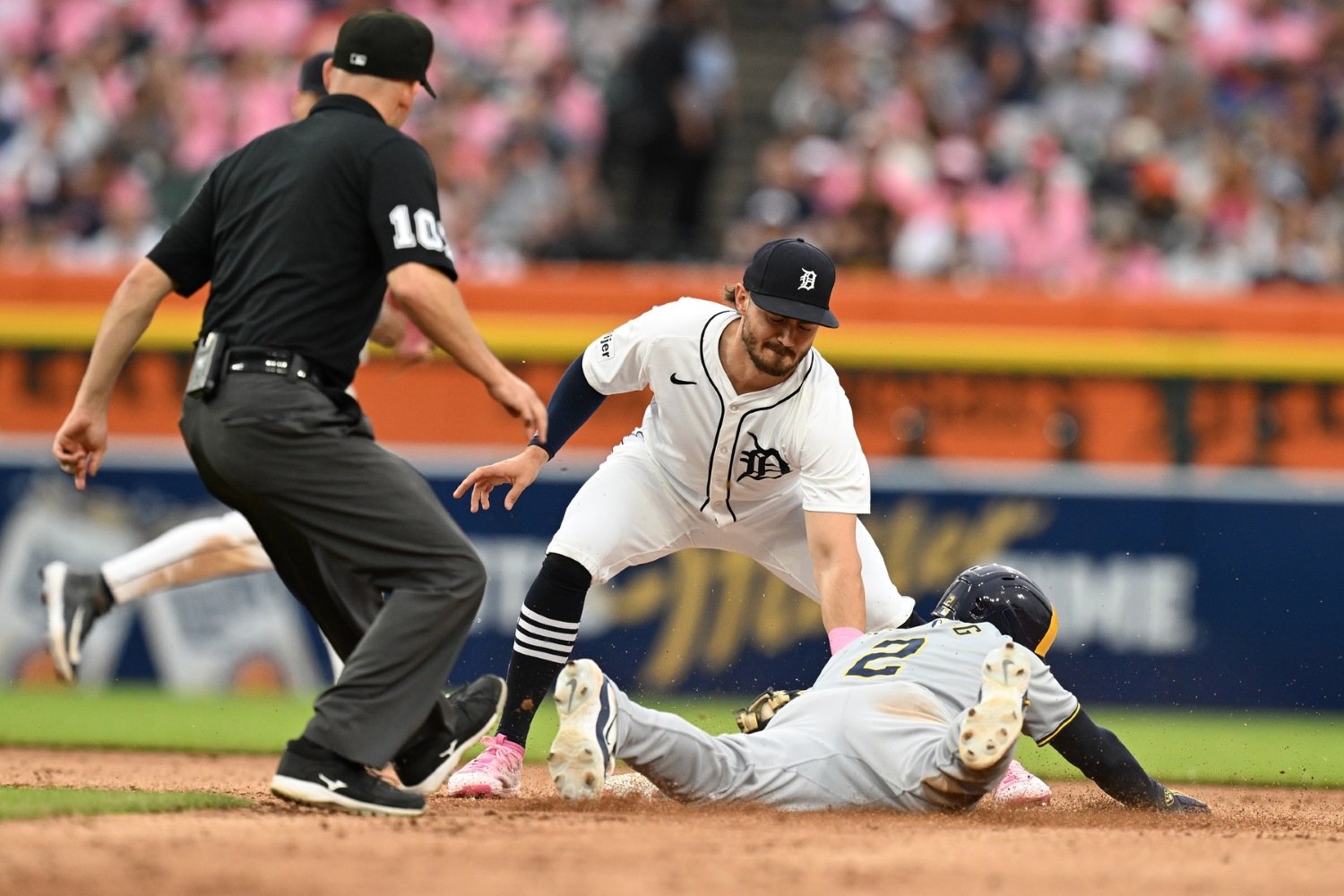 Early this season, the face of being aggressive in stealing bases was division rival Elly De La Cruz and his Cincinnati Reds. Another division rival (the ones they've hosted this weekend) has been similarly manic on the bases over the last six weeks or so. In the last 30 days, though, no team in baseball has been more relentless on the bases than the Milwaukee Brewers. Of all their stolen base opportunities (plate appearances in which a runner was on either first or second base, basically), the Brewers have attempted a steal in 11.8% of them. That's slightly higher than the Cubs (11.1%) and Reds (10.4%) for the league lead. The average among the 30 teams is just over half that, at 6.5%. The Crew have stolen 42 bases (five more than any other team in baseball) and been caught just eight times. Obviously, Brice Turang is a central figure in that effort, but he's been caught three times in his 12 attempts. Just as (or more) important to the team's success have been Christian Yelich (11-for-11) and Blake Perkins (7-for-8), and while Sal Frelick, Joey Ortiz, and Willy Adames have understandably run less often, they're a combined 9-for-10 in their own right over this stretch. Every time the Brewers reach base, you have to watch them closely, or they'll take an extra base on you and make keeping them off the board much more difficult. On hits, the Crew doesn't attempt to advance the extra base at an especially high rate. They're only 16th in MLB in that respect over the last month, at 47.0%. Instead, they put themselves in position not to need to do so as often. They hit dangerously, and lately, that includes lots of big hits with the bases clogged. They're just as dangerous once they get on base, too, though, which applies extra pressure to the defense and raises the opponent's anxiety. Pat Murphy has been preaching this and beseeching his guys to operate this way since the beginning of spring training. The Brewers made some ugly outs on the bases in the early games of Cactus League play, but Murphy was quick to say that he wanted to continue seeing that aggressiveness. Mistakes are tolerated, as long as they come from a place of calculated intensity and relentlessness, rather than from one of inattention or recklessness. Winning with this roster requires fearlessness--not because the Brewers have a talent deficit (by now, it's pretty clear that they don't), but because they're a young team with some pieces who would have become very popular trade targets if they hadn't gotten off to this strong a start, and because they know they're walking a tightrope due to the pitching injuries that have narrowed their path to success. The team's coaching staff has been fearless in their bullpen usage, and increasingly, they're turning that attitude toward run creation, as well as run prevention. Every out (like the one on which the would-be go-ahead run was thwarted at home plate late in Saturday's game) looks ugly, but that ugliness is masked and obliterated by the extraordinary number of times they're successful, and the times when they force the opponent into a mistake, instead. Even taking their full-season total of 117 steals through 83 games (rather than the sky-high pace they're on recently), the Brewers are on pace for 228 of them this year. That would be second in franchise history, behind only that wild 1992 team led by Pat Listach and Darryl Hamilton, who combined for nearly 100 of them by themselves. If you embrace the notion that they might steal 40 bases a month the rest of the way, they could come quite close, but it's almost impossible that they'll catch that team's total. Here's the punchline: the 1992 Brewers were caught stealing 115 times. This team only has 20 times caught stealing all season, putting them on pace for about 75 fewer than the 1992 squad, with an ultimately similar number of thefts. There has rarely been a team in baseball history who got as much value out of the running game as the 2024 Brewers are getting, let alone a Brewers team. Murphy and his staff have this team ruthlessly taking whatever they need to win every day, which is why they're running away with the NL Central.
- 2 comments
-
- 1
-
-
- brice turang
- blake perkins
- (and 2 more)
-
Being "roughly .500" in the 2024 NL doesn't preclude being bad, which is what I mean by "lowly". The Pirates are 31-36 against all teams except the A's, White Sox, Marlins, and Rockies, who are barely big-league teams. The Nationals are 27-37 when you remove those four opponents. They're lowly.
-
 The regular-season schedule lasts 162 games, no matter what. Good teams have to be built and managed such that they have at least something left in the tank thereafter, to play on into October. However, the season isn't a race to 162 games; it's a race to the number of wins you'll need to reach the postseason. This year, the Brewers can very safely expect to claim either the NL Central title or the first Wild Card spot if they win at least 88 games, so their season is a race to 88. After 81 games, they're a full week ahead of schedule. At 48-33, their current winning percentage would get them to 96 wins, so they could give back a few games from here and still comfortably reach the postseason. Their win total is 54.5% of the 88 wins they truly need, and 54.5% of 162 is 88, so they're seven games ahead of the pace on that front. A strong, balanced offense, a remarkably deep bullpen, and Murphy's management of each have the team in position to easily weather a dreadful week sometime in the heat of summer, or to put it in cruise control late in September and still claim a strong position for the postseason. The risk in playing so hard to win to this point--in having Bryan Hudson and Jared Koenig on pace to pitch 86 and 84 innings on the season, respectively, for instance, or in letting William Contreras and Willy Adames play every day at their highly demanding positions--is that injury or fatigue leaves a team unable to play like their best selves at the time of year to which fans attach the greatest importance. Brewers fans won't feel very good about the season if, after winning another division title, the team is unceremoniously swept out of the playoffs again. Again, though, winning so much in the first half means Murphy can use players more judiciously in the second. Just as importantly, having firmly established themselves as favorites to win the Central, the Brewers can now count on some reinforcements by the end of next month. Counting Thursday, the Crew have eight days off between now and Jul. 31, including an overgrown five-day All-Star break. Of their 27 games over the next five weeks, they play the lowly Rockies, Marlins, Cubs, Pirates, and Nationals 19 times. They'll have a relatively low-intensity month of July, with ample chances to rest, and they should have at least an additional starting pitcher in their mix thereafter. We've seen Brewers teams go on losing jags that really hurt their standing heading into All-Star breaks in the past. That could happen again. It also feels like the team is just one or two more injuries from really having the cumulative effects of so many hurt players land on their heads. Still, they're in excellent position. They can tentatively expect Devin Williams back sometime before the end of July. They have depth both in the infield and in the outfield, and their farm system is far from fallow. Neither winning a division nor advancing in the postseason is ever easy, but the team has rarely been as well-positioned to do both. Murphy is to be commended for working his way out ahead of the pace, and the team deserves credit for a lot of big hits, big plays, and little things done well. They've earned the inside lane in the long pennant race.
 -
Early this season, some fans worried that Brewers manager Pat Murphy was burning up his bullpen too much, and risking burning them out. That risk remains real, but 81 games into the 162-game marathon, Murphy and his team have bought themselves an entire week. Image courtesy of © Michael McLoone-USA TODAY Sports The regular-season schedule lasts 162 games, no matter what. Good teams have to be built and managed such that they have at least something left in the tank thereafter, to play on into October. However, the season isn't a race to 162 games; it's a race to the number of wins you'll need to reach the postseason. This year, the Brewers can very safely expect to claim either the NL Central title or the first Wild Card spot if they win at least 88 games, so their season is a race to 88. After 81 games, they're a full week ahead of schedule. At 48-33, their current winning percentage would get them to 96 wins, so they could give back a few games from here and still comfortably reach the postseason. Their win total is 54.5% of the 88 wins they truly need, and 54.5% of 162 is 88, so they're seven games ahead of the pace on that front. A strong, balanced offense, a remarkably deep bullpen, and Murphy's management of each have the team in position to easily weather a dreadful week sometime in the heat of summer, or to put it in cruise control late in September and still claim a strong position for the postseason. The risk in playing so hard to win to this point--in having Bryan Hudson and Jared Koenig on pace to pitch 86 and 84 innings on the season, respectively, for instance, or in letting William Contreras and Willy Adames play every day at their highly demanding positions--is that injury or fatigue leaves a team unable to play like their best selves at the time of year to which fans attach the greatest importance. Brewers fans won't feel very good about the season if, after winning another division title, the team is unceremoniously swept out of the playoffs again. Again, though, winning so much in the first half means Murphy can use players more judiciously in the second. Just as importantly, having firmly established themselves as favorites to win the Central, the Brewers can now count on some reinforcements by the end of next month. Counting Thursday, the Crew have eight days off between now and Jul. 31, including an overgrown five-day All-Star break. Of their 27 games over the next five weeks, they play the lowly Rockies, Marlins, Cubs, Pirates, and Nationals 19 times. They'll have a relatively low-intensity month of July, with ample chances to rest, and they should have at least an additional starting pitcher in their mix thereafter. We've seen Brewers teams go on losing jags that really hurt their standing heading into All-Star breaks in the past. That could happen again. It also feels like the team is just one or two more injuries from really having the cumulative effects of so many hurt players land on their heads. Still, they're in excellent position. They can tentatively expect Devin Williams back sometime before the end of July. They have depth both in the infield and in the outfield, and their farm system is far from fallow. Neither winning a division nor advancing in the postseason is ever easy, but the team has rarely been as well-positioned to do both. Murphy is to be commended for working his way out ahead of the pace, and the team deserves credit for a lot of big hits, big plays, and little things done well. They've earned the inside lane in the long pennant race. View full article
-
It's been a half-season of peaks and valleys for the two young guys the Crew hoped would anchor their outfield for the next half-decade. They're starting to demonstrate important and highly valuable adjustments, though, and not a moment too soon. Image courtesy of © Mark Hoffman/Milwaukee Journal Sentinel / USA TODAY NETWORK Coming into this season, the error bars on the Brewers' season projections were huge, because they were set to rely heavily on a bevy of young hitters with less than a full season of big-league experience on which to base any expectations. Most prominent among those players were Brice Turang, Sal Frelick, Jackson Chourio, Joey Ortiz, and Garrett Mitchell. Three months into the six-month marathon, we know practically everything about Turang and Ortiz; they look like very good players. We know practically nothing about Mitchell; he's been sidelined all year, and prematurely left his rehab game Wednesday with another possible injury. A good chunk of the remaining variance for this club lies in the middle, where we have a wealth of data but incomplete information on Frelick and Chourio. These two have played side by side almost all year, but they make a strange juxtaposition. Frelick is a high-floor, low-ceiling, left-hitting player whose value comes more from his glove than from his bat, and who is a bit old for a prospect of such pedigree in their first full season. Chourio, of course, is a right-handed batter with as high a ceiling as almost anyone in baseball, but whose defense has been adventurous and who hasn't quite proved he'll be able to consistently handle big-league pitching yet. Being only 20 years old, though, he has plenty of time to change that. Rather than try to treat their equally interesting and uncertain futures side by side, then, let's separate them and discuss each on their own. Just over three weeks ago, I wrote about the calamitous absence of loft or danger in the swing of Sal Frelick. He doesn't have the sheer size, strength, or bat speed to hit for even average power, but in order to maximize the potential production from his hit tool-focused approach, he needed to start elevating the ball. When that piece came out, Frelick had hit just nine balls 95 miles per hour or harder, at a launch angle of 10 degrees or higher. Require that such hard-hit air balls be hit to dead center or around toward Frelick's pull field in right, and the number was just five. Since Sunday, Frelick has four such batted balls, including one fly out to the warning track in dead center at Petco Park and one viciously well-struck high liner for an automatic double in that same game. Sal Bop.mp4 When he got home to Milwaukee, Frelick kept right on thrashing the ball, with almost identically scorched liners into the right-field corner on Monday and Wednesday. Sal Thrash.mp4 Even before his three-hit day in Wednesday's 6-5 win over the Rangers, Frelick was playing well. Since Jun. 7, in 60 plate appearances, he's hitting .339/.373/.393. There's still not much power here, but if he keeps generating hard-hit balls with air under them, some will come. In the meantime, he's cut down a strikeout rate that trended too high early in the season, and the overall result is (for the first time all year) a productive hitter with the promise of sustaining that for the long run. Meanwhile, Chourio's flashes of brilliance are getting a bit more frequent, and the price he's paying in outs and bad at-bats between those flashes is getting lower. Whereas Frelick is fighting his way to a profile that works as a complementary piece, Chourio is turning a corner in a more exciting, lethal way. In April, he batted .206/.257/.351, striking out 32 percent of the time. In May, he slashed that strikeout rate to 19.1%, but he only hit .215/.250/.292, so it was hard to see real progress at hand. In June, he's batting .302/.348/.492, with the strikeout rate down to 18.8%. He's chasing less, meeting the ball on a line, and making plays with both his pwoer and his speed. Joey Ortiz has a nagging neck problem, and left Wednesday's game early. Mitchell has been playing well in his rehab from a preseason hand injury, but seemed to tweak his hamstring and was forced out of what figured to be one of his last rehab games before returning. The Brewers were almost in a position to shrink the roles of Frelick, Chourio, or both, but they might now need to continue leaning on each for the foreseeable future. A month ago, that would have sounded like a threat--another problem to be solved for this team that keeps dodging bullets. Now, though, it sounds like a promise. It's exciting, even. Two young outfielders on whom the team was planning to rely anyway look like potential stars, as their bats become more consistently solid and they unlock the best versions of their respective games. View full article
-
- 1
-
-
- jackson chourio
- sal frelick
- (and 2 more)
-
Just In Time, Brewers' Young Outfielders Are Coming Into Their Own
Matthew Trueblood posted an article in Brewers
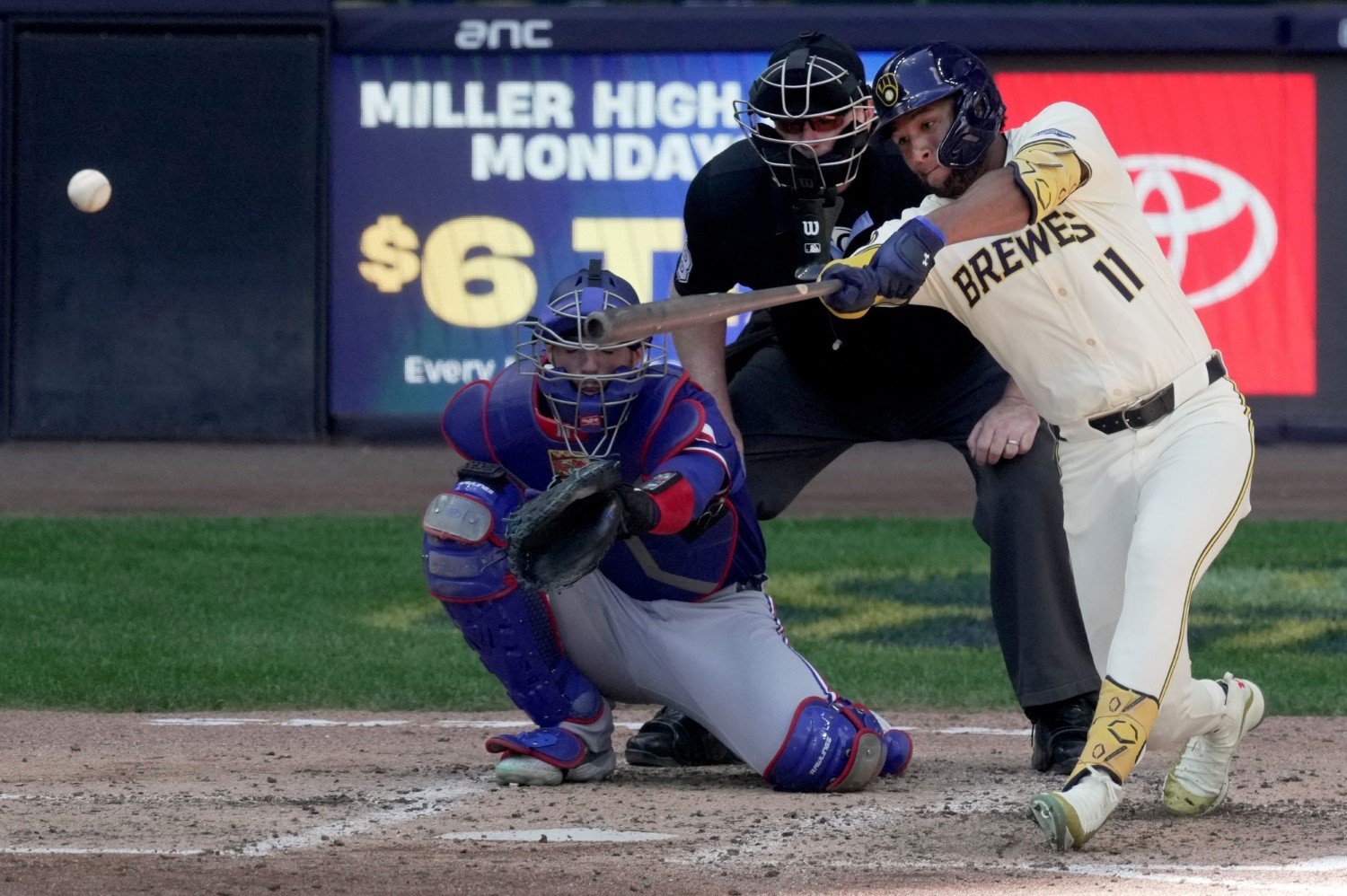 Coming into this season, the error bars on the Brewers' season projections were huge, because they were set to rely heavily on a bevy of young hitters with less than a full season of big-league experience on which to base any expectations. Most prominent among those players were Brice Turang, Sal Frelick, Jackson Chourio, Joey Ortiz, and Garrett Mitchell. Three months into the six-month marathon, we know practically everything about Turang and Ortiz; they look like very good players. We know practically nothing about Mitchell; he's been sidelined all year, and prematurely left his rehab game Wednesday with another possible injury. A good chunk of the remaining variance for this club lies in the middle, where we have a wealth of data but incomplete information on Frelick and Chourio. These two have played side by side almost all year, but they make a strange juxtaposition. Frelick is a high-floor, low-ceiling, left-hitting player whose value comes more from his glove than from his bat, and who is a bit old for a prospect of such pedigree in their first full season. Chourio, of course, is a right-handed batter with as high a ceiling as almost anyone in baseball, but whose defense has been adventurous and who hasn't quite proved he'll be able to consistently handle big-league pitching yet. Being only 20 years old, though, he has plenty of time to change that. Rather than try to treat their equally interesting and uncertain futures side by side, then, let's separate them and discuss each on their own. Just over three weeks ago, I wrote about the calamitous absence of loft or danger in the swing of Sal Frelick. He doesn't have the sheer size, strength, or bat speed to hit for even average power, but in order to maximize the potential production from his hit tool-focused approach, he needed to start elevating the ball. When that piece came out, Frelick had hit just nine balls 95 miles per hour or harder, at a launch angle of 10 degrees or higher. Require that such hard-hit air balls be hit to dead center or around toward Frelick's pull field in right, and the number was just five. Since Sunday, Frelick has four such batted balls, including one fly out to the warning track in dead center at Petco Park and one viciously well-struck high liner for an automatic double in that same game. Sal Bop.mp4 When he got home to Milwaukee, Frelick kept right on thrashing the ball, with almost identically scorched liners into the right-field corner on Monday and Wednesday. Sal Thrash.mp4 Even before his three-hit day in Wednesday's 6-5 win over the Rangers, Frelick was playing well. Since Jun. 7, in 60 plate appearances, he's hitting .339/.373/.393. There's still not much power here, but if he keeps generating hard-hit balls with air under them, some will come. In the meantime, he's cut down a strikeout rate that trended too high early in the season, and the overall result is (for the first time all year) a productive hitter with the promise of sustaining that for the long run. Meanwhile, Chourio's flashes of brilliance are getting a bit more frequent, and the price he's paying in outs and bad at-bats between those flashes is getting lower. Whereas Frelick is fighting his way to a profile that works as a complementary piece, Chourio is turning a corner in a more exciting, lethal way. In April, he batted .206/.257/.351, striking out 32 percent of the time. In May, he slashed that strikeout rate to 19.1%, but he only hit .215/.250/.292, so it was hard to see real progress at hand. In June, he's batting .302/.348/.492, with the strikeout rate down to 18.8%. He's chasing less, meeting the ball on a line, and making plays with both his pwoer and his speed. Joey Ortiz has a nagging neck problem, and left Wednesday's game early. Mitchell has been playing well in his rehab from a preseason hand injury, but seemed to tweak his hamstring and was forced out of what figured to be one of his last rehab games before returning. The Brewers were almost in a position to shrink the roles of Frelick, Chourio, or both, but they might now need to continue leaning on each for the foreseeable future. A month ago, that would have sounded like a threat--another problem to be solved for this team that keeps dodging bullets. Now, though, it sounds like a promise. It's exciting, even. Two young outfielders on whom the team was planning to rely anyway look like potential stars, as their bats become more consistently solid and they unlock the best versions of their respective games.
-
- 3
-
-
- jackson chourio
- sal frelick
- (and 2 more)
-
The Milwaukee Brewers knew their latest rookie starting pitcher wasn't fully ready, even as they called him up. Circumstances forced them to make the move. Now, the rookie himself is learning how much he still has to learn. Image courtesy of © Orlando Ramirez-USA TODAY Sports In scouting parlance, there are some common turns of phrase that attach themselves to particular players with unusual tenacity. For Carlos Rodriguez, the one that stuck was "kitchen sink." Rodriguez doesn't throw hard (by big-league standards) or have any one offering with which he's capable of dominating opposing batters. He leans on a holistic approach, throwing six different pitches to both lefties and righties--five, even if you discount the minimal usage he makes of the changeup to righties and the slider to lefties. Through three starts in the big leagues, it looks like Rodriguez's kitchen sink needs work. He has a 7.30 ERA, having allowed 19 hits (three of them homers) and struck out only nine of the 57 batters he's faced. Part of that is tough luck, and part of it might be the long-term deficiencies in Rodriguez's game showing through. Mostly, though, it's the league giving Rodriguez a rough lesson: the successful kitchen-sink approach in MLB is a complex one. Mixing pitches evenly isn't enough. Often, pitchers lean into the kitchen-sink approach because they can't execute a more streamlined one consistently or tightly enough. Take, for instance, Rodriguez's four-seam fastball. It's not a high-velocity offering, but coming from Rodriguez's low-three-quarter slot, it does have a flat vertical approach angle (VAA), a desirable trait for that pitch. Here's Rodriguez's first career strikeout, achieved with the fastball. C-Rod's First K.mp4 There are two problems--two drawbacks to the effectiveness of the four-seamer. Firstly, he gets that flat VAA not from especially good actual ride on the pitch (even accounting for arm slot), but from pounding away at the top of the zone with it. That limits the pitch's utility, because it can only get strikes and outs for him when he can locate it along the upper edge of the zone. That makes it likely to induce fly balls, and hard-hit fly balls turn into home runs. He's given up two homers on the heater already, and a few more hits, besides. In turn, that brings us to the other problem: Rodriguez isn't yet locating that fastball all that well. With loose command of a pitch that really only plays at the edge of the zone--and along just one edge, at that--he's not in any position to lean heavily on the fastball. Instead of being a four-seamer guy, then, Rodriguez has to be a multiple-fastball guy: four-seamer, cutter, sinker. In one sense, that's ok. The Brewers strongly prefer their pitchers be able to give opponents more than one fastball look, anyway. In this case, though, it starts a chain reaction. The flat-VAA fastball Rodriguez can only throw at the top of the zone pairs with his curveball, but not with his slider, and it works with the changeup, but only against lefties. His sinker works with his slider, but not with his curve. The cutter and sinker work in concert fairly well, but the cutter doesn't set up the slider or the curve very well. Nor is it a swing-and-miss pitch, itself. A year from now, much of that might have changed. Rodriguez has an athletic delivery, but it could be cleaned up a bit, and if and when that happens, perhaps his command will improve, too. Improve his command of even two of these six pitches, and the web of interactions between the offerings gets several new threads. It gets stronger. Throwing the kitchen sink at big-league hitters is tough. It's an attempt to beat guys who can handle better raw stuff than you have, using guile, sequencing, and location. Even for pitchers who have good pitchability, it takes a while to get those things right. Rodriguez projects as the type of hurler who will figure it out, but it doesn't quite count as a surprise that he hasn't done so out of the gate. He was called up because the team needed more reinforcement in the rotation, not because he was knocking down the door to the big leagues. These reps in the big leagues are valuable, but surely, the Brewers would love to get him back into a rhythm and restore his confidence in Triple-A this summer, so he can claim a bigger role and try to find success in 2025. Right now, their injuries and depth chart make that impractical, but it should be the medium-term goal. In the meantime, Rodriguez can continue to experiment with combinations, sequences, and mindsets that might help him improve on the job, even with the knowledge that full-fledged big-league success is a year away. View full article
-
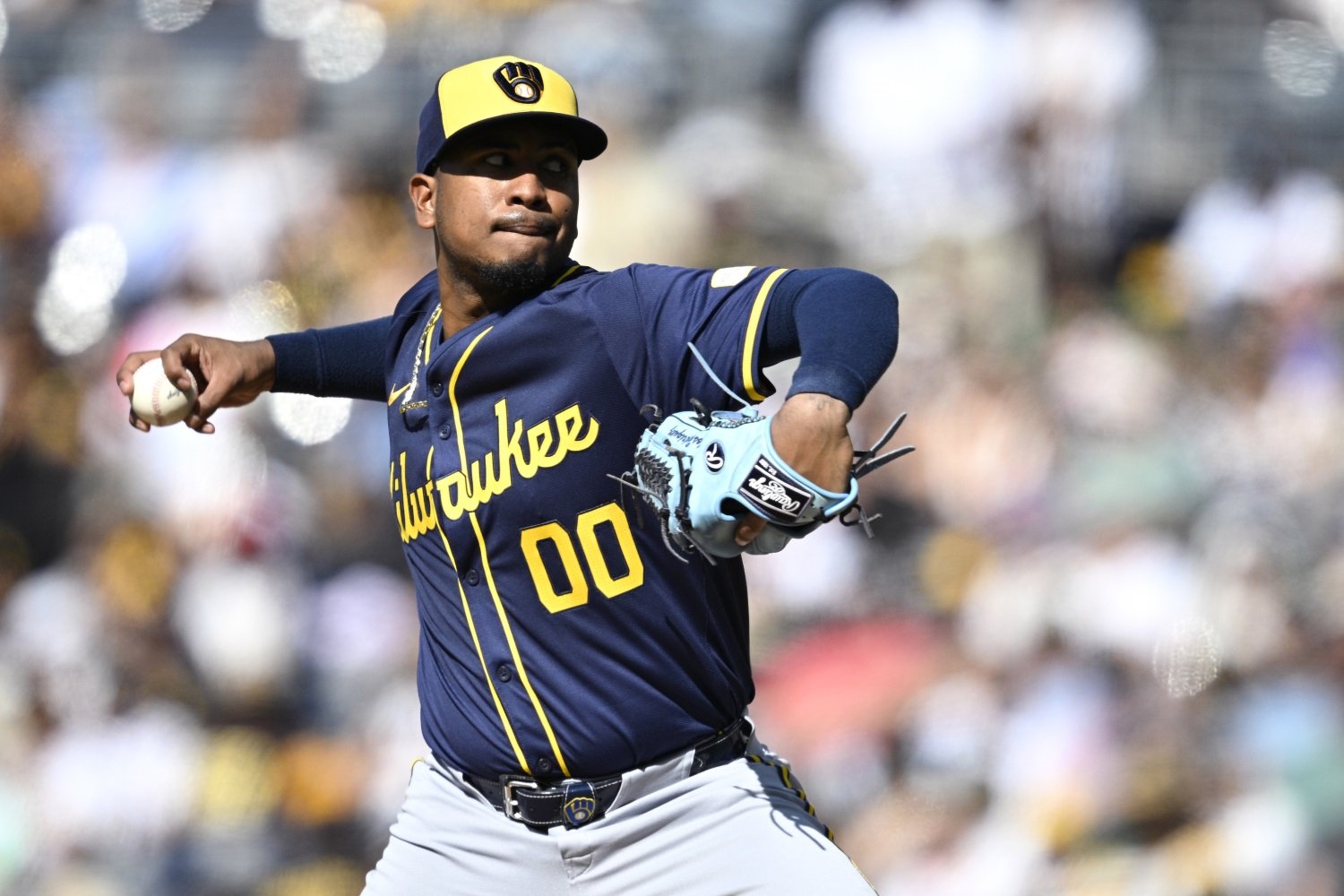 In scouting parlance, there are some common turns of phrase that attach themselves to particular players with unusual tenacity. For Carlos Rodriguez, the one that stuck was "kitchen sink." Rodriguez doesn't throw hard (by big-league standards) or have any one offering with which he's capable of dominating opposing batters. He leans on a holistic approach, throwing six different pitches to both lefties and righties--five, even if you discount the minimal usage he makes of the changeup to righties and the slider to lefties. Through three starts in the big leagues, it looks like Rodriguez's kitchen sink needs work. He has a 7.30 ERA, having allowed 19 hits (three of them homers) and struck out only nine of the 57 batters he's faced. Part of that is tough luck, and part of it might be the long-term deficiencies in Rodriguez's game showing through. Mostly, though, it's the league giving Rodriguez a rough lesson: the successful kitchen-sink approach in MLB is a complex one. Mixing pitches evenly isn't enough. Often, pitchers lean into the kitchen-sink approach because they can't execute a more streamlined one consistently or tightly enough. Take, for instance, Rodriguez's four-seam fastball. It's not a high-velocity offering, but coming from Rodriguez's low-three-quarter slot, it does have a flat vertical approach angle (VAA), a desirable trait for that pitch. Here's Rodriguez's first career strikeout, achieved with the fastball. C-Rod's First K.mp4 There are two problems--two drawbacks to the effectiveness of the four-seamer. Firstly, he gets that flat VAA not from especially good actual ride on the pitch (even accounting for arm slot), but from pounding away at the top of the zone with it. That limits the pitch's utility, because it can only get strikes and outs for him when he can locate it along the upper edge of the zone. That makes it likely to induce fly balls, and hard-hit fly balls turn into home runs. He's given up two homers on the heater already, and a few more hits, besides. In turn, that brings us to the other problem: Rodriguez isn't yet locating that fastball all that well. With loose command of a pitch that really only plays at the edge of the zone--and along just one edge, at that--he's not in any position to lean heavily on the fastball. Instead of being a four-seamer guy, then, Rodriguez has to be a multiple-fastball guy: four-seamer, cutter, sinker. In one sense, that's ok. The Brewers strongly prefer their pitchers be able to give opponents more than one fastball look, anyway. In this case, though, it starts a chain reaction. The flat-VAA fastball Rodriguez can only throw at the top of the zone pairs with his curveball, but not with his slider, and it works with the changeup, but only against lefties. His sinker works with his slider, but not with his curve. The cutter and sinker work in concert fairly well, but the cutter doesn't set up the slider or the curve very well. Nor is it a swing-and-miss pitch, itself. A year from now, much of that might have changed. Rodriguez has an athletic delivery, but it could be cleaned up a bit, and if and when that happens, perhaps his command will improve, too. Improve his command of even two of these six pitches, and the web of interactions between the offerings gets several new threads. It gets stronger. Throwing the kitchen sink at big-league hitters is tough. It's an attempt to beat guys who can handle better raw stuff than you have, using guile, sequencing, and location. Even for pitchers who have good pitchability, it takes a while to get those things right. Rodriguez projects as the type of hurler who will figure it out, but it doesn't quite count as a surprise that he hasn't done so out of the gate. He was called up because the team needed more reinforcement in the rotation, not because he was knocking down the door to the big leagues. These reps in the big leagues are valuable, but surely, the Brewers would love to get him back into a rhythm and restore his confidence in Triple-A this summer, so he can claim a bigger role and try to find success in 2025. Right now, their injuries and depth chart make that impractical, but it should be the medium-term goal. In the meantime, Rodriguez can continue to experiment with combinations, sequences, and mindsets that might help him improve on the job, even with the knowledge that full-fledged big-league success is a year away.
 -
Well, that's very very weird, Brian. The two sides of the spine are not, like, far apart. He hurt them pitching because he makes an especially explosive move from hyperextension to flexion of his spine in his delivery; it's a type of injury on the rise in baseball. Neither players nor teams are lying to you on purpose about injuries, except in extremely rare cases. They might hedge or lean toward optimism or secrecy, but what they do tell you, they believe to be true. The body is complicated. This injury is hard to diagnose. You gotta get comfortable with those facts.
-
I'm not sure I understand what case you're trying to make here, but neither the Brewers nor Devin Williams are misleading anyone about his injury, and his timeline is right around where it was set once the diagnosis was made back in March. I think there was a hoped-for best-case scenario in which he'd be back around now, maybe two weeks from now, but after the All-Star break was always more likely, and what injury do you think they're covering up here? I can't follow you on this.
-
Yyyyuppp. This. The Brewers have only champagne problems when it comes to the bullpen.
-
The game of baseball has never had a brighter, bigger star than Willie Mays. On Tuesday, the game and its fans lost Mays, at age 93. A few hours later, we were reminded of his legacy by a player born in the year 2000. Image courtesy of © Gary A. Vasquez-USA TODAY Sports Ho hum. It was just another win for the Brewers Tuesday night, as they jumped out to a 6-0 lead on the hapless Angels in Anaheim. In the bottom of the ninth, though, the halos mounted an incursion, putting three runs on the board and forcing Pat Murphy to wheel through two other pitchers and land on his closer, Trevor Megill. With two outs and two on, the home team got its best healthy hitter (get well soon, Mr. Trout), Taylor Ward, to the plate. Ward sliced a vicious drive toward the wall in right-center field, and for just a moment, you had to think: Shoot. Tie game. "That's what was going through my head: tie score," Murphy admitted after the game. If you kept your wits about you, though, you could quickly assuage that rising concern. That's because the center fielder on the play was Sal Frelick, and hardly anyone does this better. Frelick is far from a perfect player. His offense is an area of real concern right now, and even in the field, his weak arm causes problems that sometimes wash out his strengths. When it comes to going back on fly balls, though, he's terrific. For his very young career, he's +7 plays on deep fly balls, according to Sports Info Solutions's Plus/Minus framework. Brewers fans might not even need that numerical reassurance. In a short time, Frelick has piled up the anecdotal evidence, in highly visible and memorable ways. Remember when he took an extra-base hit away from Marcell Ozuna in his MLB debut last July? Sal in His Debut.mp4 And then remember when, in the very next plate appearance, he robbed Orlando Arcia of a home run? The Other One from Sal's Debut.mp4 The questions are rhetorical, of course. Those moments were instant classics, immortalized in the minds of Brewers fans and (since the game was nationally televised) plenty of others, too. Frelick arrived in the majors and immediately showed the ability to literally and figuratively fill up the TV screen. He got a fortuitous opportunity, and he made the most of it without delay. That's exactly how things went for Willie Mays, too. Obviously, Frelick is nowhere near a Mays-caliber player. Watching him play the outfield, though, we can be reminded of the legacy Mays left on baseball, even as he passes into memory and severs our last superstar link to the game's Golden Era. Mays didn't invent the home run robbery, but he certainly innovated within the field. His most famous catch took away a triple, not a homer, but it was in the spirit of the modern homer snatch: going back on the ball with everything one has and selling out. Frelick loves to do just that. Frelick Back to RCF.mp4 Ballplayers of the era immediately before Mays were famous for their willingness to destroy their bodies in the pursuit of wins, but hardly any of them were athletic enough to set the stakes as high as he did. Mays was fast, acrobatic, and incredibly strong, given his short stature. Frelick is just one of a great many spiritual descendants of him since, throwing themselves onto turf or rough warning tracks or bouncing themselves off walls to earn extra outs. Like Mays, he loves going back on the ball, and has a gorgeous knack for it--a feel for the ball even when he has to turn his gaze away from it to make up ground, and then a fine sense for the wall and how to decelerate when he gets near it. Like Mays was, he's unwilling to yield even to his own teammates, when he locks his sights on a ball. Frelick Collision w Perk.mp4 Tuesday wasn't even the first time Frelick made a boundary-stretching play to record the final out of a close game. He did so last August, too, against another AL West foe. Sal Frelick Aug 23.mp4 There's no replacing Mays, and there must be no forgetting him. He's emblematic of a generation of trailblazers and fighters for equality, as well as of the excellence that makes the game breathtaking, at its best. He revolutionized baseball, and changed how it's played forever. He was a faster, stronger-armed Frelick in the field, and the best hitter in the game for several seasons. He was everywhere you turned, for two solid decades. For many fans who loved Mays and all he meant to the game, it felt like time itself stopped when the news of his death went out Tuesday night. It certainly felt like baseball should stop. And yet, it went on. It had to. If (as Jackie Robinson, Mays's fierce rival, once said) a life is not important except in the impact it has on other lives, then an incredibly important life like Mays's can't be confined to the time he spent in the spotlight, or even the time he spent in his own skin. Willie Mays helped make baseball the kind of unifying, thrilling thing that transcends time and pulls us into itself, over and over, tying one generation to another. Every time a center fielder sprints back on a high line drive and steals a double with a leap or a twist or a stab or a belly flop, we'll think of Mays. Super Sal.mp4 Major League Baseball set ugly, self-defeating boundaries around itself for the first half of the 20th century, excluding great players like Mays because of the color of their skin. The league looked, back then, a lot more like Sal Frelick than it does now. To see Frelick reach just beyond the boundaries of the park to save a game Tuesday night was to be reminded that when Robinson, Mays, and the rest of that courageous cohort of barrier-breakers burst through those walls of bigotry, they didn't close off the game, the way it had been closed off to them previously. There's still room for the undersized kid from a Northeastern city. We just have the privilege, now, of watching that kid play and appreciating the way they were influenced (consciously or not) by the astounding talent and fearless style of a Black kid from a now-defunct mining town in Alabama, who had to endure a lot of other grief on the way to greatness. Frelick's play secured another win for a cruising Brewers team, and it also provided fitting punctuation on a bittersweet day for baseball. View full article
