


Matthew Trueblood
-
Posts
1,964 -
Joined
-
Last visited
-
Days Won
10
Content Type
Profiles
Forums
Blogs
Events
News
2026 Milwaukee Brewers Top Prospects Ranking
Milwaukee Brewers Videos
2022 Milwaukee Brewers Draft Picks
Milwaukee Brewers Free Agent & Trade Rumors, Notes, & Tidbits
Guides & Resources
2023 Milwaukee Brewers Draft Picks
2024 Milwaukee Brewers Draft Picks
The Milwaukee Brewers Players Project
2025 Milwaukee Brewers Draft Pick Tracker
2026 Milwaukee Brewers Draft Tracker: Picks & Bonuses
Store
Downloads
Gallery
Everything posted by Matthew Trueblood
-
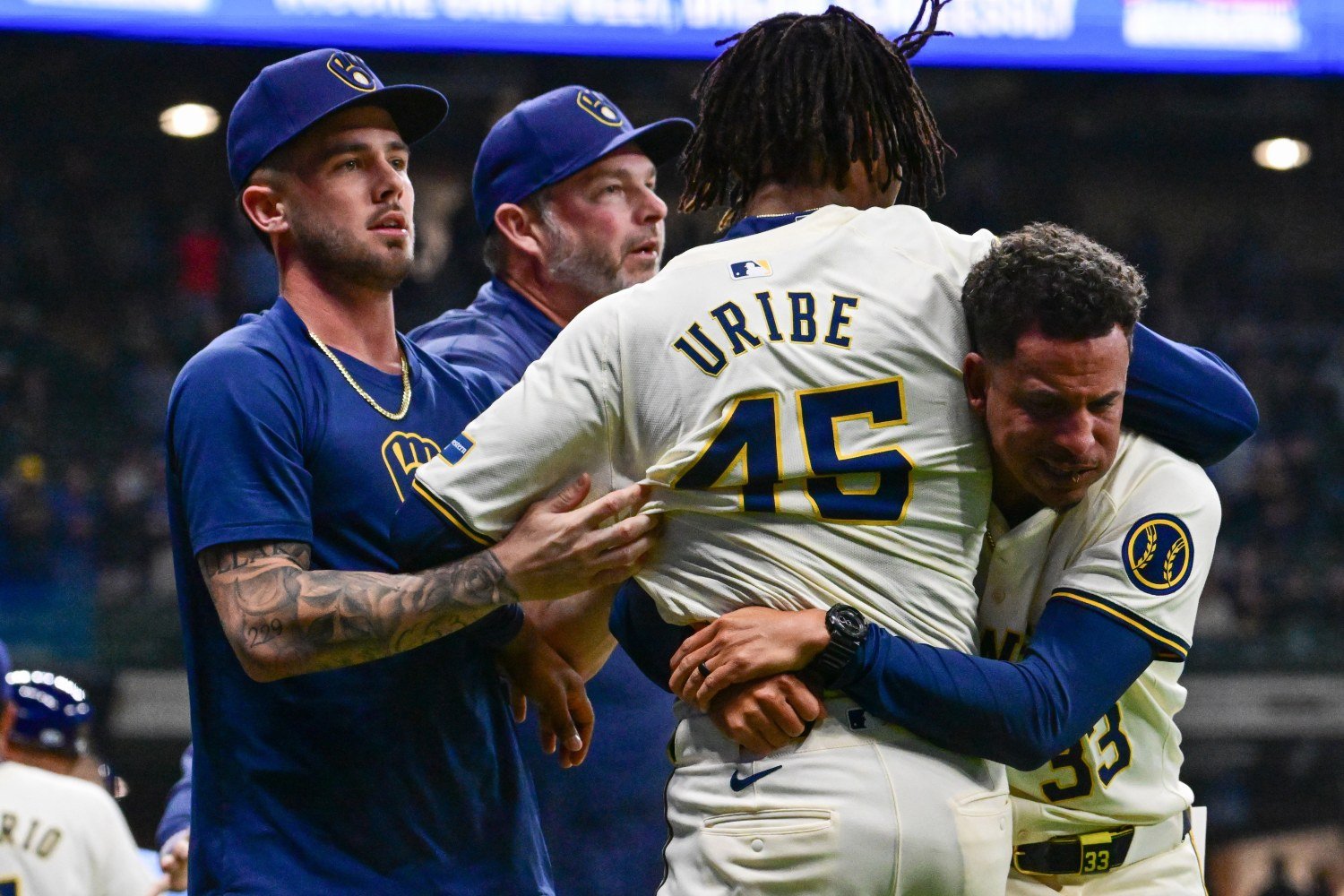 After a meteoric rise in 2023, Abner Uribe stalled out in ugly fashion in 2024. He has both a four-seam fastball and a sinker, and each can eclipse 100 miles per hour. He also has one of the filthiest sweepers in baseball, especially when you account for the way that breaking ball plays off all that velocity. All of that talent shined through in his rookie campaign in 2023, as Uribe overwhelmed big-league hitters and made them look like minor-leaguers at times. That made it all the more frustrating when, this spring, something was simply off. Uribe's command was a mess from the jump, and he would not find it again all year. In 14 appearances with the Brewers, he walked 12 and uncorked three wild pitches. The inability to fill up the zone also cost him strikeouts, and although it was still hard to square him up, his ERA soared to 6.91. Then, after an immature dust-up with José Siri of the Rays in early May, Uribe was suspended by the league, demoted to Triple-A Nashville by the team, and injured while playing there, forcing him to undergo knee surgery. Seasons can't go much wronger. The good news, of course, is that the injury was not to Uribe's arm, and that the team says he should be 100 percent ready to go upon arrival for spring training. This setback season also saved some bullets for him, in a way, and the Brewers' bullpen did fine without him. On the other hand, the Brewers' bullpen did fine without him. They might now feel that Uribe is expendable, in the right circumstances. To be sure, it's Trevor Megill, not Uribe, who stands first in line to take over the closer's gig after the team trades Williams. Several other players have a chance to zoom past Uribe on the organizational depth chart, too. Does that mean the team will trade Uribe before the hot stove burns itself out? If they do, it won't be just to get rid of him. While everyone was disappointed in the way he handled his own failures early in 2024 and the decisions he made amid building tensions between the Crew and the visiting Rays on the day when he earned his suspension, the organization has not soured on his makeup entirely, and his talent is still very much evident. He's most likely to hang around, absent any additions or subtractions beyond dealing Williams. After the Brewers took Connor Thomas in the Rule 5 Draft Wednesday, the squeeze in the bullpen got a bit tighter, because Thomas can only stay in the organization if he remains on the MLB roster all season. In general, though, the team's relief corps is remarkably flexible. Of their top 12 or 13 candidates for a place in the pen, only Joel Payamps and Nick Mears can't be optioned to the minors. Uribe, too, can be thus stashed away. Logistically, some of that flexibility evaporates as the season goes on, when injuries and the urgent progress of young players who aren't yet on the 40-man roster force the team to make unexpected changes. Right now, though, it's easy to see how Uribe could be kept without getting in the way of the team's efforts to build another superb pitching staff. When Uribe is right, he's as good as any reliever in the Milwaukee organization. Because they've amassed so much depth, however, the Brewers don't have to roll the dice on him being his best self. They don't even need to keep him around at all; doing so would purely be a means of ensuring that their depth remains bountiful into the middle of the 2025 campaign. His stuff profile is tantalizing, but after he showed such volatility in 2024, it's a welcome luxury for the team that they can afford not to overlook either that extraordinary talent or his equally salient faults. What they decide to do with him can boil down to what options present themselves throughout the winter and spring, and that's a good position in which to be.
 -
Brewers Sign Left-Handed Pitcher Grant Wolfram to Big-League Deal
Matthew Trueblood posted an article in Brewers
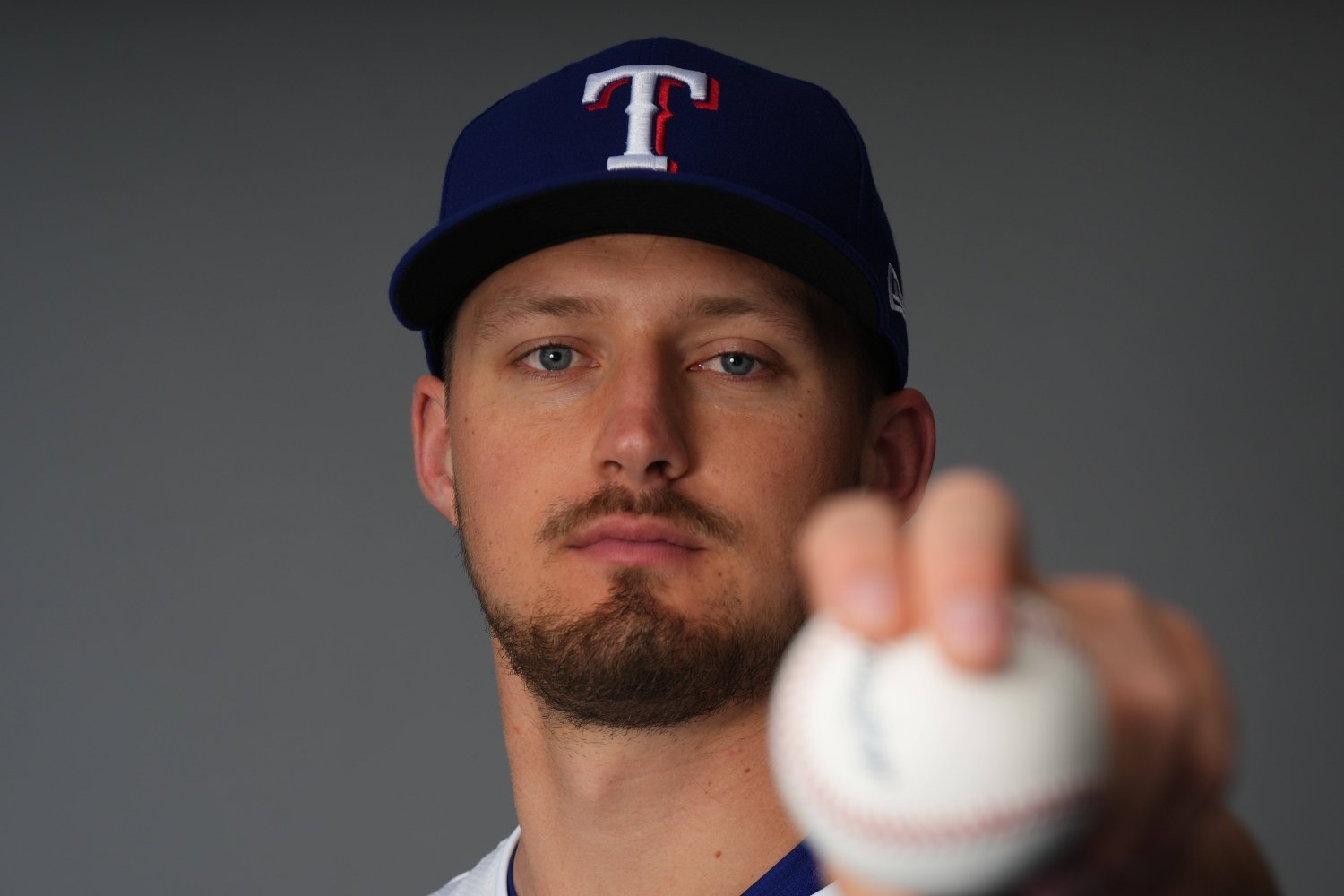 In the same flurry of transactions that saw them scoop up lefty swingman Connor Thomas in the Rule 5 Draft Wednesday, the Brewers also signed southpaw Grant Wolfram, the Brobdingnagian answer to the Lilliputian Thomas. Wolfram, who will soon turn 28, became a free agent this fall after seven years in the Rangers organization. He stands 6-foot-8, and throws 96 from the left side. Do you really need to know any more than that? Oh, shoot. You do, huh? Well, the rest of the news is not quite as exciting, so don't get all crazy. But keep in mind that he throws 96 and basically comes down out of the sky from the left side, ok? Wolfram has never reached the majors, and he doesn't even really dominate Triple-A hitters most of the time. His heater is fast, but it doesn't have a lot of carry on it, and his slider (though it has good velocity separation, at around 85 miles per hour) doesn't miss bats the way you'd like it to. Wolfram also walked 10.9% of opposing batters last season at Triple A, and while that figure was inflated by the puny semi-automated strike zone at that level, it still reflects suboptimal command. The one feature of real interest here is that Wolfram's fastball has a significant amount of relative cut on it. We could see the Brewers reshape it into a true cutter, and if he can maintain the velocity he's shown while making that change, all bets are off. A version of Wolfram who throws 95 or better with a true cutter, with the length of his levers and the slider working off of it, could be the next coming of Bryan Hudson. In some sense, since they gave him a big-league deal after he became a minor-league free agent, we see the Brewers betting on that already. Wolfram joins Hudson, Jared Koenig, DL Hall, Aaron Ashby, and Thomas as prominent options to fill out the left-handed half of the team's pitching staff in 2025. Whereas Thomas's place in the organization couldn't be more fragile, though, it's easy to envision Wolfram sticking around a while. The Brewers waited to make this signing official until after the Rule 5 Draft, because they knew he would be eligible to be taken in it if they signed him before it. That tells you there was some competition for his services. Moreover, he has three minor-league option years left, so he can be flexible depth for as long as the team's 40-man roster stays clear enough, riding the shuttle between Milwaukee and Triple-A Nashville as needed. Small upside plays like these are a specialty for the Brewers. It's wildly unlikely that Wolfram emerges as a star, but he could easily be the same kind of solid bullpen contributor Hudson was in 2024. Blake Perkins came into the organization under somewhat similar circumstances. Although he's a longshot, Wolfram is an intriguing one, and scooping him up is a reminder that the Brewers are always on their grind.
 -
They say you can never have too much left-handed pitching. The Brewers are going to prove that rule, or break it once and for all. Image courtesy of © Joe Camporeale-Imagn Images In the same flurry of transactions that saw them scoop up lefty swingman Connor Thomas in the Rule 5 Draft Wednesday, the Brewers also signed southpaw Grant Wolfram, the Brobdingnagian answer to the Lilliputian Thomas. Wolfram, who will soon turn 28, became a free agent this fall after seven years in the Rangers organization. He stands 6-foot-8, and throws 96 from the left side. Do you really need to know any more than that? Oh, shoot. You do, huh? Well, the rest of the news is not quite as exciting, so don't get all crazy. But keep in mind that he throws 96 and basically comes down out of the sky from the left side, ok? Wolfram has never reached the majors, and he doesn't even really dominate Triple-A hitters most of the time. His heater is fast, but it doesn't have a lot of carry on it, and his slider (though it has good velocity separation, at around 85 miles per hour) doesn't miss bats the way you'd like it to. Wolfram also walked 10.9% of opposing batters last season at Triple A, and while that figure was inflated by the puny semi-automated strike zone at that level, it still reflects suboptimal command. The one feature of real interest here is that Wolfram's fastball has a significant amount of relative cut on it. We could see the Brewers reshape it into a true cutter, and if he can maintain the velocity he's shown while making that change, all bets are off. A version of Wolfram who throws 95 or better with a true cutter, with the length of his levers and the slider working off of it, could be the next coming of Bryan Hudson. In some sense, since they gave him a big-league deal after he became a minor-league free agent, we see the Brewers betting on that already. Wolfram joins Hudson, Jared Koenig, DL Hall, Aaron Ashby, and Thomas as prominent options to fill out the left-handed half of the team's pitching staff in 2025. Whereas Thomas's place in the organization couldn't be more fragile, though, it's easy to envision Wolfram sticking around a while. The Brewers waited to make this signing official until after the Rule 5 Draft, because they knew he would be eligible to be taken in it if they signed him before it. That tells you there was some competition for his services. Moreover, he has three minor-league option years left, so he can be flexible depth for as long as the team's 40-man roster stays clear enough, riding the shuttle between Milwaukee and Triple-A Nashville as needed. Small upside plays like these are a specialty for the Brewers. It's wildly unlikely that Wolfram emerges as a star, but he could easily be the same kind of solid bullpen contributor Hudson was in 2024. Blake Perkins came into the organization under somewhat similar circumstances. Although he's a longshot, Wolfram is an intriguing one, and scooping him up is a reminder that the Brewers are always on their grind. View full article
-
While the Brewers lost one pitcher they'd hoped to hold onto as organizational depth in Wednesday's Rule 5 Draft, they also nabbed a hurler who suits a lot of the things they look for and cultivate—from a division rival, no less. Image courtesy of © Jim Rassol-Imagn Images Connor Thomas does not throw hard, and he probably never will. A 5-foot-11 lefty who throws just 90 miles per hour with a seldom-used four-seamer, Thomas primarily leans on a slider, cutter, and sinker. He's a smallish hurler who will turn 27 years old next May, and although he showed the ability to flummox Triple-A hitters in a multi-inning swingman role for the Memphis Redbirds in 2024, he seems like a low-ceiling pickup. He's something of a free replacement for Hoby Milner, with the caveat that in order to realize any value from him, the Brewers have to shave off any rough edges and get him ready to attack big-league batters by the end of spring training. Thomas doesn't have Milner levels of funk in his delivery, but the Brewers will have some immediate ideas for him. They can slide him over to the first-base side of the rubber to create tougher angles for lefties. His slider became more of a sweeper in 2024, with gratifying results, and the team probably views that as one unlock already checked off the to-do list. His slider was a subpar offering in 2023, with a 0.3 StuffPro according to Baseball Prospectus. (StuffPro is expressed on a scale of runs against average per 100 pitches thrown. Negative numbers mean fewer runs allowed and are thus better.) The sweeper was a much nicer -0.2 in 2024, and his PItchPro (which incorporates location) was an even better -0.6. Next, they might further emphasize his cutter. In any case, the team surely loves that he throws all three flavors of fastball, as they're one of the two or three teams (along with, most notably, ex-Brewers GM David Stearns's Mets) who most ardently advocate using multiple heaters. Here's a fun fact: Thomas has thrown at least one outing in front of Statcast cameras that fed public data sources every month since February, save this one. He has a bit of a rubber arm, which is highly valuable; the Brewers might like him purely on that basis. After a full season in Triple A, he's been down in the Dominican Winter League, pitching some more. Now, he'll get at least a look in a big-league spring training camp, and perhaps a stint in the majors with a new team. This is not a high-impact or a high-variance pick. It's straightforward depth work. As such selections go, however, it seems like a sound one. The Brewers will report to Maryvale in Feburary with one more candidate for the final lefty spot in their bullpen. View full article
-
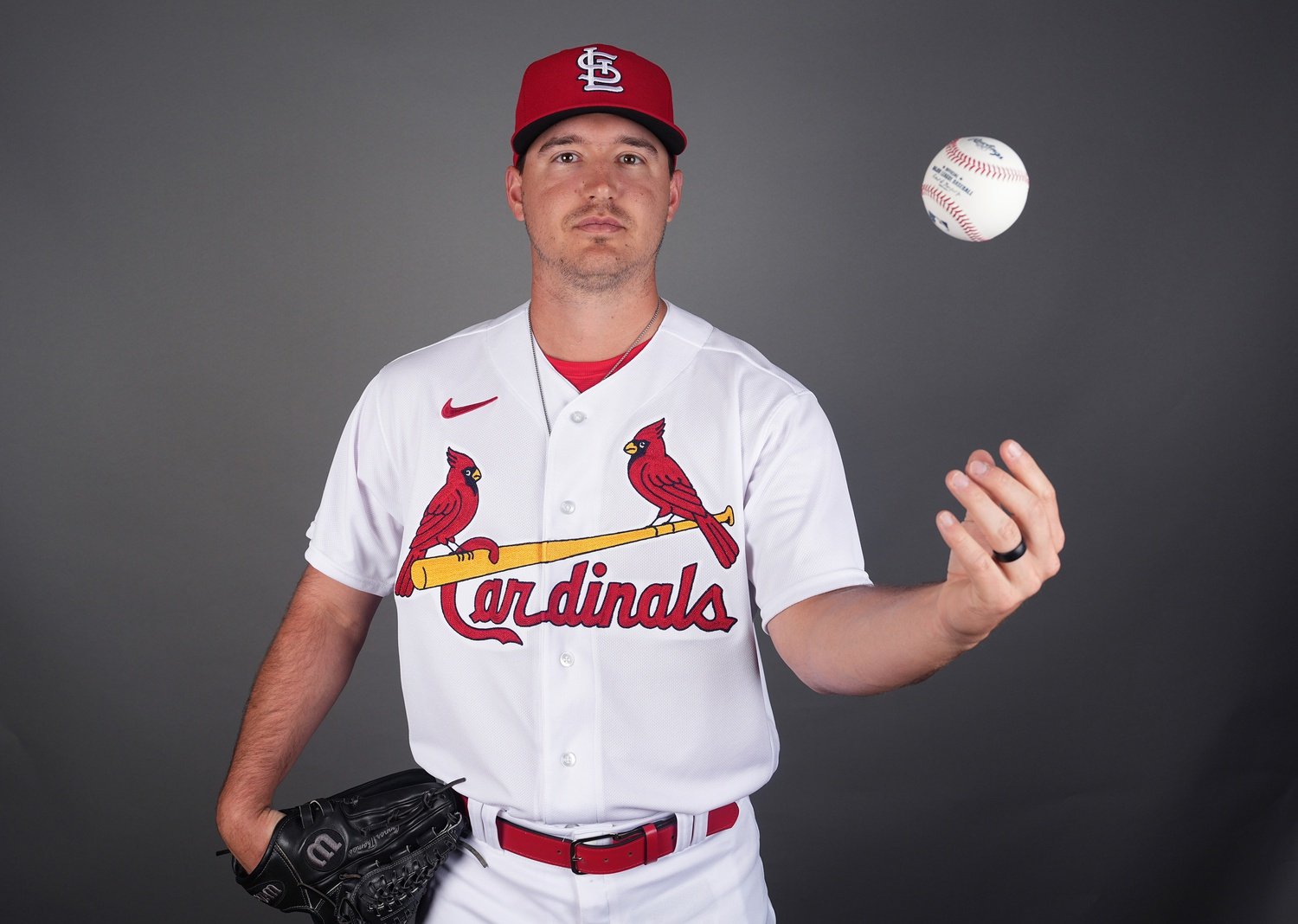 Connor Thomas does not throw hard, and he probably never will. A 5-foot-11 lefty who throws just 90 miles per hour with a seldom-used four-seamer, Thomas primarily leans on a slider, cutter, and sinker. He's a smallish hurler who will turn 27 years old next May, and although he showed the ability to flummox Triple-A hitters in a multi-inning swingman role for the Memphis Redbirds in 2024, he seems like a low-ceiling pickup. He's something of a free replacement for Hoby Milner, with the caveat that in order to realize any value from him, the Brewers have to shave off any rough edges and get him ready to attack big-league batters by the end of spring training. Thomas doesn't have Milner levels of funk in his delivery, but the Brewers will have some immediate ideas for him. They can slide him over to the first-base side of the rubber to create tougher angles for lefties. His slider became more of a sweeper in 2024, with gratifying results, and the team probably views that as one unlock already checked off the to-do list. His slider was a subpar offering in 2023, with a 0.3 StuffPro according to Baseball Prospectus. (StuffPro is expressed on a scale of runs against average per 100 pitches thrown. Negative numbers mean fewer runs allowed and are thus better.) The sweeper was a much nicer -0.2 in 2024, and his PItchPro (which incorporates location) was an even better -0.6. Next, they might further emphasize his cutter. In any case, the team surely loves that he throws all three flavors of fastball, as they're one of the two or three teams (along with, most notably, ex-Brewers GM David Stearns's Mets) who most ardently advocate using multiple heaters. Here's a fun fact: Thomas has thrown at least one outing in front of Statcast cameras that fed public data sources every month since February, save this one. He has a bit of a rubber arm, which is highly valuable; the Brewers might like him purely on that basis. After a full season in Triple A, he's been down in the Dominican Winter League, pitching some more. Now, he'll get at least a look in a big-league spring training camp, and perhaps a stint in the majors with a new team. This is not a high-impact or a high-variance pick. It's straightforward depth work. As such selections go, however, it seems like a sound one. The Brewers will report to Maryvale in Feburary with one more candidate for the final lefty spot in their bullpen.
 -
The left-handed hitter has been a favorite prospective target for some Brewers fans all offseason. Now, the Rangers have positioned themselves to send him out, and the Crew might have their shot. Image courtesy of © Jesse Johnson-Imagn Images All winter, the indications have been that the Rangers would endeavor to stay below the first threshold of the competitive-balance tax in 2025. However, we also knew them to be on the prowl for a starting pitcher, and on Tuesday night, they got their man, re-signing Nathan Eovaldi to a three-year deal worth $75 million. They weren't done, though, turning and trading three prospects to the Marlins for slugging first baseman Jake Burger. Having fallen five days of service time shy of qualifying for arbitration as a Super Two player, Burger will make just over the league minimum in 2025, but with Eovaldi's hefty salary on board, the Rangers still figure to offload some money to balance themselves out. The most natural candidate to be that jetsam is Nathaniel Lowe, whom MLB Trade Rumors projected to earn $10.7 million via arbitration this winter. Lowe, 29, has two years of team control remaining and is a solidly above-average hitter, but he's likely to become a casualty of the budget for Texas. The Brewers are in perfect position to capitalize on that circumstance, one way or another. As we know, the team has limited spending power this winter, and they're unlikely to want to add roughly $11 million to their current projected payroll. However, they still have Devin Williams hanging around, projected to make about $8 million in his own right. The Rangers, who stand to lose both Jose Leclerc and Kirby Yates to free agency this winter, are in the market for a new relief ace, and maybe the match is that simple: Williams to Texas, with Lowe as roughly half the return coming back. Surely, the Brewers wouldn't want to accept Lowe alone, since he plays a much more replaceable position and role and will be expensive to keep in 2026. They'd demand a second piece, likely a prospect at least as valuable as Lowe himself. Should the Rangers balk at that, though, Milwaukee has also left themselves some options. Although we close observers (and beneficiaries of a little close reporting) know they can't take on Lowe's salary without making some other move to reduce payroll, the front office is superb at staying non-committal. They could make a trade that brings Lowe to the team without sending out Williams, then trade Williams later in the winter, posing in the meantime as a team ready to get a little more aggressive in the wake of two straight NL Central titles and playoff letdowns. One more alternative occurs to me. Burger plays best as a first baseman, but he has ample experience at third. Could it be possible that the Rangers would play him there, and that his arrival therefore makes either Josh Smith or Josh Jung incrementally more available? Those young infielders would fill the Brewers' most glaring positional needs on the dirt even better than Lowe would, although their bats are a bit less reliable. Smith and Jung will each be 27 in 2025, and would round out an infield alongside Joey Ortiz and Brice Turang gorgeously. That version of a trade would be much more expensive, though, in terms of the talent and/or team control Matt Arnold and company would have to surrender. No trade has to happen Wednesday; the end of the Winter Meetings is not a trade deadline. However, the timing seems auspicious. With the Rangers slightly bloated and the eventual replacement for Lowe on hand, it might be the moment to pounce. View full article
-
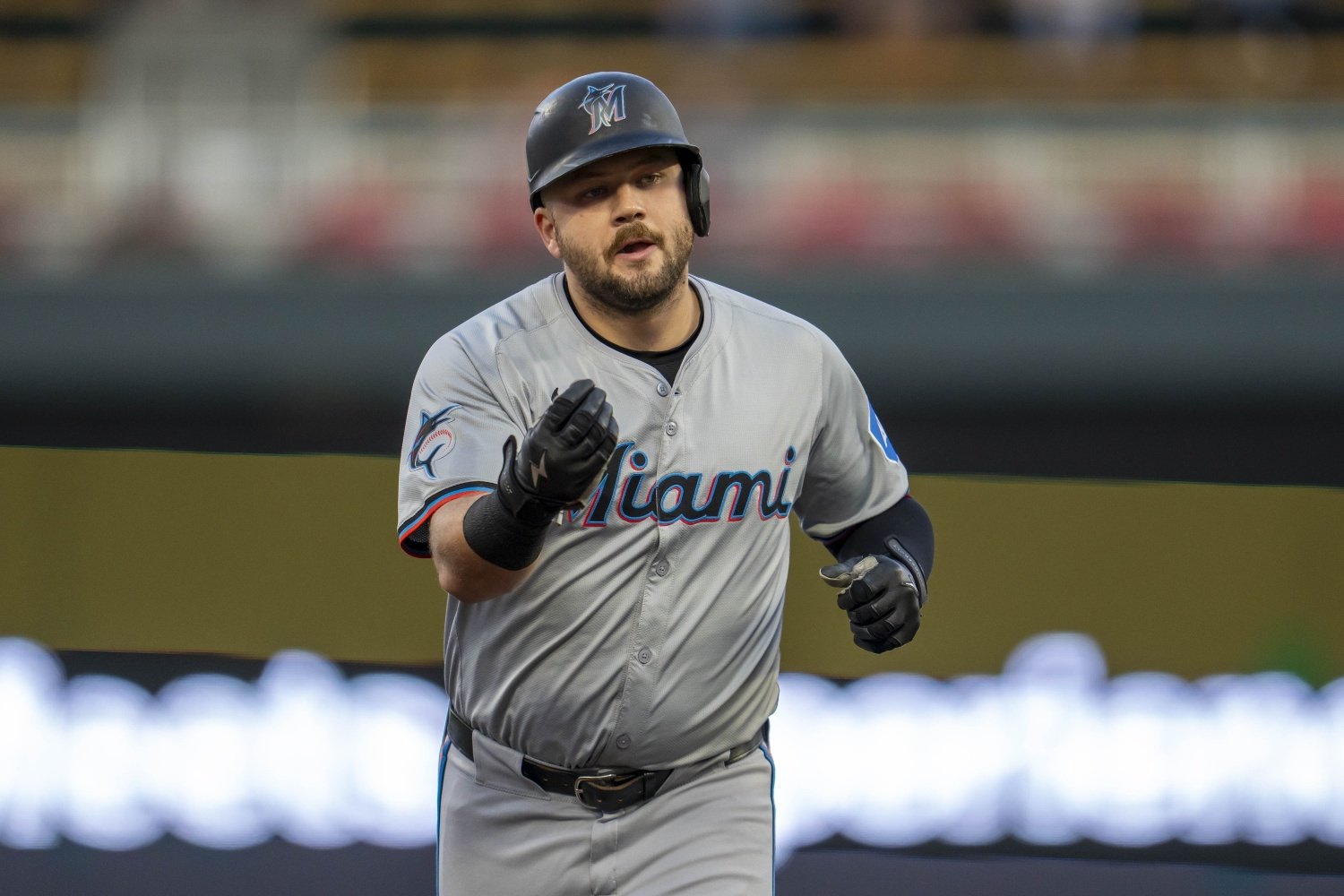 All winter, the indications have been that the Rangers would endeavor to stay below the first threshold of the competitive-balance tax in 2025. However, we also knew them to be on the prowl for a starting pitcher, and on Tuesday night, they got their man, re-signing Nathan Eovaldi to a three-year deal worth $75 million. They weren't done, though, turning and trading three prospects to the Marlins for slugging first baseman Jake Burger. Having fallen five days of service time shy of qualifying for arbitration as a Super Two player, Burger will make just over the league minimum in 2025, but with Eovaldi's hefty salary on board, the Rangers still figure to offload some money to balance themselves out. The most natural candidate to be that jetsam is Nathaniel Lowe, whom MLB Trade Rumors projected to earn $10.7 million via arbitration this winter. Lowe, 29, has two years of team control remaining and is a solidly above-average hitter, but he's likely to become a casualty of the budget for Texas. The Brewers are in perfect position to capitalize on that circumstance, one way or another. As we know, the team has limited spending power this winter, and they're unlikely to want to add roughly $11 million to their current projected payroll. However, they still have Devin Williams hanging around, projected to make about $8 million in his own right. The Rangers, who stand to lose both Jose Leclerc and Kirby Yates to free agency this winter, are in the market for a new relief ace, and maybe the match is that simple: Williams to Texas, with Lowe as roughly half the return coming back. Surely, the Brewers wouldn't want to accept Lowe alone, since he plays a much more replaceable position and role and will be expensive to keep in 2026. They'd demand a second piece, likely a prospect at least as valuable as Lowe himself. Should the Rangers balk at that, though, Milwaukee has also left themselves some options. Although we close observers (and beneficiaries of a little close reporting) know they can't take on Lowe's salary without making some other move to reduce payroll, the front office is superb at staying non-committal. They could make a trade that brings Lowe to the team without sending out Williams, then trade Williams later in the winter, posing in the meantime as a team ready to get a little more aggressive in the wake of two straight NL Central titles and playoff letdowns. One more alternative occurs to me. Burger plays best as a first baseman, but he has ample experience at third. Could it be possible that the Rangers would play him there, and that his arrival therefore makes either Josh Smith or Josh Jung incrementally more available? Those young infielders would fill the Brewers' most glaring positional needs on the dirt even better than Lowe would, although their bats are a bit less reliable. Smith and Jung will each be 27 in 2025, and would round out an infield alongside Joey Ortiz and Brice Turang gorgeously. That version of a trade would be much more expensive, though, in terms of the talent and/or team control Matt Arnold and company would have to surrender. No trade has to happen Wednesday; the end of the Winter Meetings is not a trade deadline. However, the timing seems auspicious. With the Rangers slightly bloated and the eventual replacement for Lowe on hand, it might be the moment to pounce.
 -
After the departure of one key right-handed slugger this fall, the Brewers probably aren't actively looking to get rid of another. If they need to move his money to free themselves up, though, they might find their opportunity in a highly unexpected place. Image courtesy of © Benny Sieu-Imagn Images In a notes column Monday, Ken Rosenthal of The Athletic mentioned the possibility that the Brewers would trade Rhys Hoskins this winter, to open up some room in their otherwise (seemingly) tight budget. It was the first reported indication that such a move is actually on the radar, much though our esteemed Tim Muma has begged for it. Hoskins is under contract for a total of $22 million more, with $18 million paid this year and a $4-million buyout on a mutual option for 2026. In 2024, Hoskins struggled, as he tried to bounce back from a knee injury that took the entire 2023 season from him but ran into hamstring issues and was rarely himself. The very fact that he opted into this deal (when he had the right to take a $4-million buyout and try to make more than $18 million more on the open market) tells us that he has negative trade value at that salary. On the other hand, Hoskins did still hit 26 home runs, and he remains a patient hitter with plus power. He's also a beloved clubhouse presence and leader. He probably won't ever be a superstar slugger again, but there's something left in the bat. If the Brewers believe they're capable of upgrading by signing a slugger like Christian Walker or (if we really dream a bit, and imagine his market failing to materialize the way he's hoped) Alex Bregman, and they do decide to trade Hoskins so as to afford that kind of pursuit, it would be more a matter of finding the right suitor than of simply dumping his salary. Maybe the destination to which Hoskins could most readily go is the last place you'd expect: West Sacramento, where the Athletics are under something just this side of a legal obligation to spend. The team has announced their intention to scale their payroll up substantially, but importantly, that's not out of some honest altruistic or competitive motive. Rather, it's because if they don't, they're likely to face a losing battle against a grievance from the MLB Players Association, who have secured guarantees of certain levels of spending across spans of fixed numbers of seasons in exchange for the A's remaining a revenue-sharing recipient. They A's have to add payroll, at a time when most other teams face a dictate to cut it, and they will have a hard time recruiting many true free agents to their minor-league park and substandard facilities. It's why they had to pay a premium somewhere north of $10 million to ink Luis Severino, for instance. For the A's, Hoskins's salary would be value added, rather than a drag against whatever value he brings on the field. Thus, they're a perfect fit. The Brewers could trade Hoskins there and get something in return, rather than having to attach more talent to jettison him elsewhere. If they did attach someone with higher traditional trade value in addition to Hoskins, they might even be able to get Sacramento talking about Brent Rooker—who would be the upgrade they'd need in order to truly justify trading Hoskins, anyway. It's not likely that the Brewers actually trade Hoskins. He wasn't as bad as many fans felt he was in 2024. He has intangible value. And that contract leaves them without a great chance to extract value in the process of dealing him. It's just hard to figure out how they would spend the money they owe him substantially better than they will do by paying him. If it does come to that, though, the A's might just be the place where it makes the most sense for Hoskins to land. View full article
-
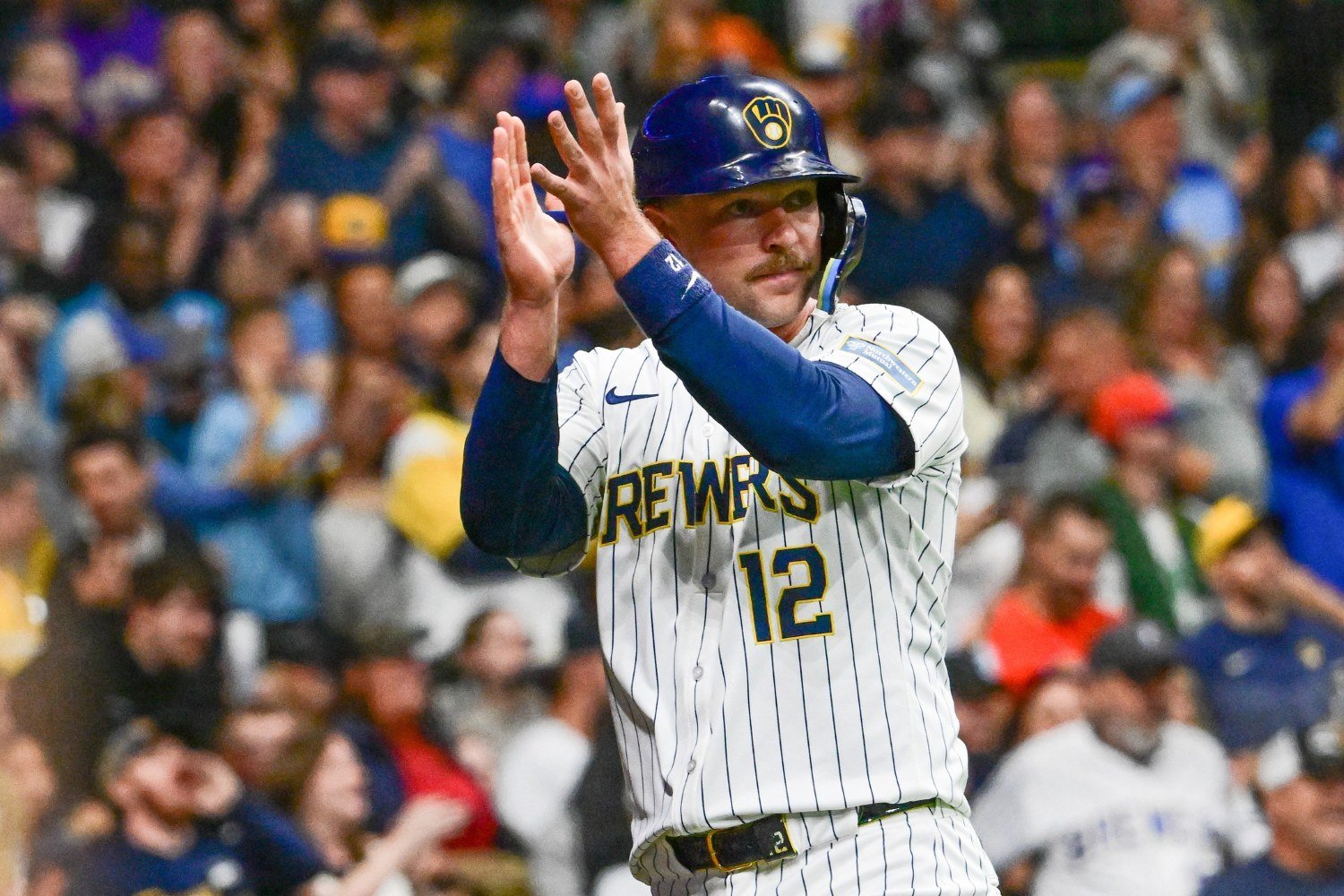 In a notes column Monday, Ken Rosenthal of The Athletic mentioned the possibility that the Brewers would trade Rhys Hoskins this winter, to open up some room in their otherwise (seemingly) tight budget. It was the first reported indication that such a move is actually on the radar, much though our esteemed Tim Muma has begged for it. Hoskins is under contract for a total of $22 million more, with $18 million paid this year and a $4-million buyout on a mutual option for 2026. In 2024, Hoskins struggled, as he tried to bounce back from a knee injury that took the entire 2023 season from him but ran into hamstring issues and was rarely himself. The very fact that he opted into this deal (when he had the right to take a $4-million buyout and try to make more than $18 million more on the open market) tells us that he has negative trade value at that salary. On the other hand, Hoskins did still hit 26 home runs, and he remains a patient hitter with plus power. He's also a beloved clubhouse presence and leader. He probably won't ever be a superstar slugger again, but there's something left in the bat. If the Brewers believe they're capable of upgrading by signing a slugger like Christian Walker or (if we really dream a bit, and imagine his market failing to materialize the way he's hoped) Alex Bregman, and they do decide to trade Hoskins so as to afford that kind of pursuit, it would be more a matter of finding the right suitor than of simply dumping his salary. Maybe the destination to which Hoskins could most readily go is the last place you'd expect: West Sacramento, where the Athletics are under something just this side of a legal obligation to spend. The team has announced their intention to scale their payroll up substantially, but importantly, that's not out of some honest altruistic or competitive motive. Rather, it's because if they don't, they're likely to face a losing battle against a grievance from the MLB Players Association, who have secured guarantees of certain levels of spending across spans of fixed numbers of seasons in exchange for the A's remaining a revenue-sharing recipient. They A's have to add payroll, at a time when most other teams face a dictate to cut it, and they will have a hard time recruiting many true free agents to their minor-league park and substandard facilities. It's why they had to pay a premium somewhere north of $10 million to ink Luis Severino, for instance. For the A's, Hoskins's salary would be value added, rather than a drag against whatever value he brings on the field. Thus, they're a perfect fit. The Brewers could trade Hoskins there and get something in return, rather than having to attach more talent to jettison him elsewhere. If they did attach someone with higher traditional trade value in addition to Hoskins, they might even be able to get Sacramento talking about Brent Rooker—who would be the upgrade they'd need in order to truly justify trading Hoskins, anyway. It's not likely that the Brewers actually trade Hoskins. He wasn't as bad as many fans felt he was in 2024. He has intangible value. And that contract leaves them without a great chance to extract value in the process of dealing him. It's just hard to figure out how they would spend the money they owe him substantially better than they will do by paying him. If it does come to that, though, the A's might just be the place where it makes the most sense for Hoskins to land.
 -
We know the shoe is going to drop, but it's unlikely to drop this week. There are too many ways the team benefits by waiting a while longer. Image courtesy of © Benny Sieu-Imagn Images There's a lot happening in the market for elite relief pitchers right now. According to some reports, the Cardinals—expected, previously, to trade Ryan Helsley—might be more inclined to hold onto their All-Star closer. The Mets snapped up one of the top relievers on the free-agent market over the weekend, in ex-Yankees righty Clay Holmes—but they intend to convert him to a starting pitcher. That continues a pattern, of late, and one that might well extend even further when fellow free agent Jeff Hoffman finds a home later this winter. For those reasons, don't expect the Brewers to trade Devin Williams this week. They're still very likely to trade him, just as they traded Corbin Burnes in the endgame of the offseason before this past campaign—but just as they benefited by waiting out the market until they got the offer they wanted for Burnes, they might believe they can do the same by waiting out suitors on Williams. Every converted reliever who moves to the rotation (be it a free agent, or an ace reliever staying put, like the Twins' Griffin Jax) creates ripple effects throughout the league. If the Cardinals are planning not to deal Helsley, that creates ripples, too. When other top relievers on the market who are not candidates to switch to starting (like Tanner Scott and Carlos Estévez) sign, they'll leave the teams who miss out on them increasingly hungry. Scarcity looks poised to prevail in the market for relievers, and the Brewers have the patience to foresee that and capitalize on it—even if that comes with some risk. If they end up trading Williams a month or more from now, they might have limited options when they turn around to spend some of the money they save in the transaction. Still, they know that eventually, the right deal will materialize. Moreover, we could see Matt Arnold spend the money he knows he'll eventually save by trading Williams even before he does so. Last winter, he signed Rhys Hoskins before trading Burnes. Ordinarily, teams are wary of doing things in that order, knowing that teams with whom they're negotiating on trades would try to use their budget as a cudgel against them if they were financially overextended. One reason why the Brewers are so careful not to commit themselves publicly to a payroll figure, or even a range, is so that they can avoid being thus pinned down. Does that mean they can really afford to both keep Williams and make any significant addition via free agency? Probably not. But they retain plausible deniability if a team does try to hold their feet to the fire that way. Thus, it's probably not the time for a Williams trade. That doesn't mean the Brewers won't be active at the Winter Meetings; they might well pull the trigger on an unrelated deal. As uncomfortable as it might be for fans, though, the team knows that even if they have to wait until late in the game to make their big offseason plays, they can execute them better than almost any other front office in the league. Like the man they'll eventually deal for multiple long-term pieces, they're superb closers. View full article
-
Here's Why Brewers Won't Trade Devin Williams at MLB Winter Meetings
Matthew Trueblood posted an article in Brewers
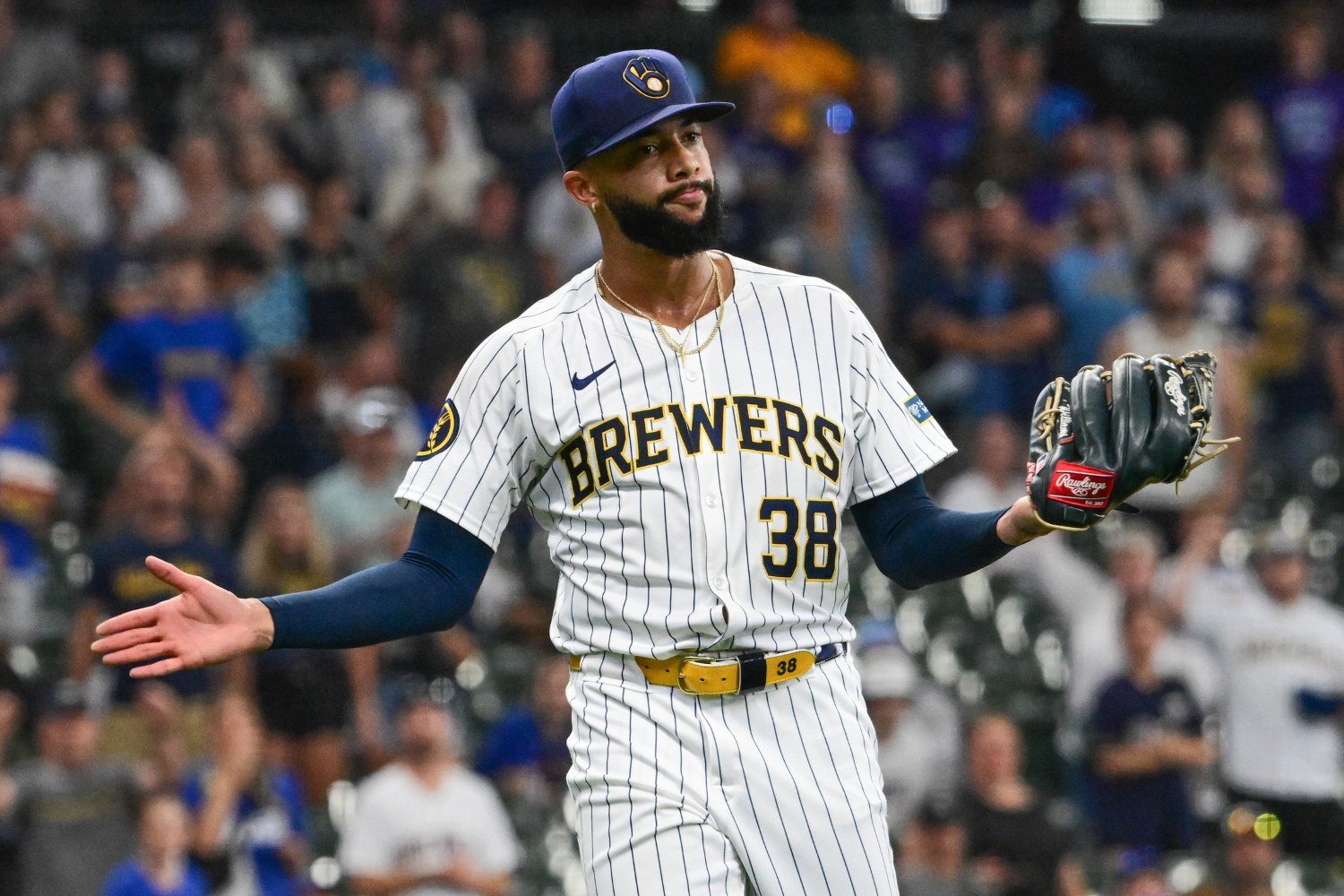 There's a lot happening in the market for elite relief pitchers right now. According to some reports, the Cardinals—expected, previously, to trade Ryan Helsley—might be more inclined to hold onto their All-Star closer. The Mets snapped up one of the top relievers on the free-agent market over the weekend, in ex-Yankees righty Clay Holmes—but they intend to convert him to a starting pitcher. That continues a pattern, of late, and one that might well extend even further when fellow free agent Jeff Hoffman finds a home later this winter. For those reasons, don't expect the Brewers to trade Devin Williams this week. They're still very likely to trade him, just as they traded Corbin Burnes in the endgame of the offseason before this past campaign—but just as they benefited by waiting out the market until they got the offer they wanted for Burnes, they might believe they can do the same by waiting out suitors on Williams. Every converted reliever who moves to the rotation (be it a free agent, or an ace reliever staying put, like the Twins' Griffin Jax) creates ripple effects throughout the league. If the Cardinals are planning not to deal Helsley, that creates ripples, too. When other top relievers on the market who are not candidates to switch to starting (like Tanner Scott and Carlos Estévez) sign, they'll leave the teams who miss out on them increasingly hungry. Scarcity looks poised to prevail in the market for relievers, and the Brewers have the patience to foresee that and capitalize on it—even if that comes with some risk. If they end up trading Williams a month or more from now, they might have limited options when they turn around to spend some of the money they save in the transaction. Still, they know that eventually, the right deal will materialize. Moreover, we could see Matt Arnold spend the money he knows he'll eventually save by trading Williams even before he does so. Last winter, he signed Rhys Hoskins before trading Burnes. Ordinarily, teams are wary of doing things in that order, knowing that teams with whom they're negotiating on trades would try to use their budget as a cudgel against them if they were financially overextended. One reason why the Brewers are so careful not to commit themselves publicly to a payroll figure, or even a range, is so that they can avoid being thus pinned down. Does that mean they can really afford to both keep Williams and make any significant addition via free agency? Probably not. But they retain plausible deniability if a team does try to hold their feet to the fire that way. Thus, it's probably not the time for a Williams trade. That doesn't mean the Brewers won't be active at the Winter Meetings; they might well pull the trigger on an unrelated deal. As uncomfortable as it might be for fans, though, the team knows that even if they have to wait until late in the game to make their big offseason plays, they can execute them better than almost any other front office in the league. Like the man they'll eventually deal for multiple long-term pieces, they're superb closers.
 -
He's never made an All-Star team and is headed into a phase of his career in which he doesn't even play every day. However, he might be the key to resupplying the Brewers lineup with the power it currently lacks. Image courtesy of © Katie Stratman-Imagn Images It's been a steady evolution for Randal Grichuk, the man first famous for (technically) being taken just before Mike Trout in the 2009 MLB Draft. He played very well in the minors, earning top prospect status, and he emerged as a credible outfield sidekick to Trout before being traded to St. Louis. Throughout what should have been his prime, though, he was held back by a near-calamitous amount of swing-and-miss. Only over the last few years has he fixed that flaw in his game, as he transitions from a fine defensive outfielder into more of a fringy corner guy and platoon DH. The culmination of that progress came in 2024. After years of more or less being deployed as a full-time player, this year saw Grichuk sign for a paltry $2 million with the Diamondbacks, and then play mostly against left-handed pitchers. For his career, through 2023, Grichuk took 30.6% of his plate appearances against lefties. That's about the platoon advantage rate an average right-handed hitter would have if they played every day. In 2024, though, that rate skyrocketed to 66%. Grichuk became a platoon bat, and he thrived in that role. For the year, Grichuk hit .291/.348/.528, and if you isolate his work against lefties, it was even better. In fact, since the start of 2022, he's been a downright elite hitter against lefty pitching, at .317/.367/.573. He's only struck out 17.3% of the time, and he's drawn walks in 7.0% of his plate appearances against southpaws. As Grichuk has matured at the plate, he's become one of the league's great situational lefty-mashers. Overall, through 2019, Grichuk struck out at a 28.3% clip. From 2020-22, the figure fell to 22.1%, but his power dipped, too. He was trying to figure out how not to trade contact for power, but it took a long time. Since the start of 2023, it's clicked. He's posted an 18.9% overall strikeout rate, hit 46.2% of his batted balls at least 95 miles per hour, and stopped hitting the ball on the ground the way he too-often did in that intermediate phase of his career. Back in May, I created a metric designed to capture overall offensive production through the prism of contact quality and the ability to avoid strikeouts. It's called Skills-Adjusted Exit Velocity (SAEV), and it's a very robust measurement of hitter quality. It not only correlates better with real production (as measured by weighted on-base average) than any other single metric of its kind, but is more consistent year-to-year than wOBA, and predicts a player's wOBA in the following season better than their actual wOBA does. Of the 325 hitters with at least 200 plate appearances in 2024, Grichuk's SAEV was 20th-best, at 93.5. Of course, there are major drawbacks. Grichuk did all that in just 279 plate appearances, and his track record tells us that either his performance or his health gives way if he's asked to play much more often than that. He's also 33 years old. He'll make more than $2 million this winter, but he'll make less than $10 million, for sure. In fact, he might well find a contract worth just about what Gary Sánchez got from the Brewers last winter: $7 million on a one-year deal, with a good chunk of the money deferred to 2026 via a mutual option. Grichuk is a perfect target for the Brewers. They need to replace some of the power they're losing with Willy Adames and Sánchez departing via free agency, but they can't afford to buy a player like Adames and they want to maintain their superb defense. They have an opening for some at-bats at DH and in the outfield, but they have to go to a right-handed hitter; the team is already set to play Garrett Mitchell more often in 2025 and will lean left by plenty when Mitchell, Sal Frelick, Brice Turang, and Christian Yelich are in the lineup together. Grichuk can slot right in as a right fielder or DH against lefties, occasionally come off the bench to give opponents a bad matchup, and deliver the punch the team could otherwise be missing. He's more or less a right-handed answer to Jake Bauers, but with much, much better recent indicators. He's Sánchez without defensive value, which sounds unsexy, but that very unsexiness is how the team can surely afford him. View full article
-
The Subtle Slugger Who Could Be the Coup of the Winter for Brewers
Matthew Trueblood posted an article in Brewers
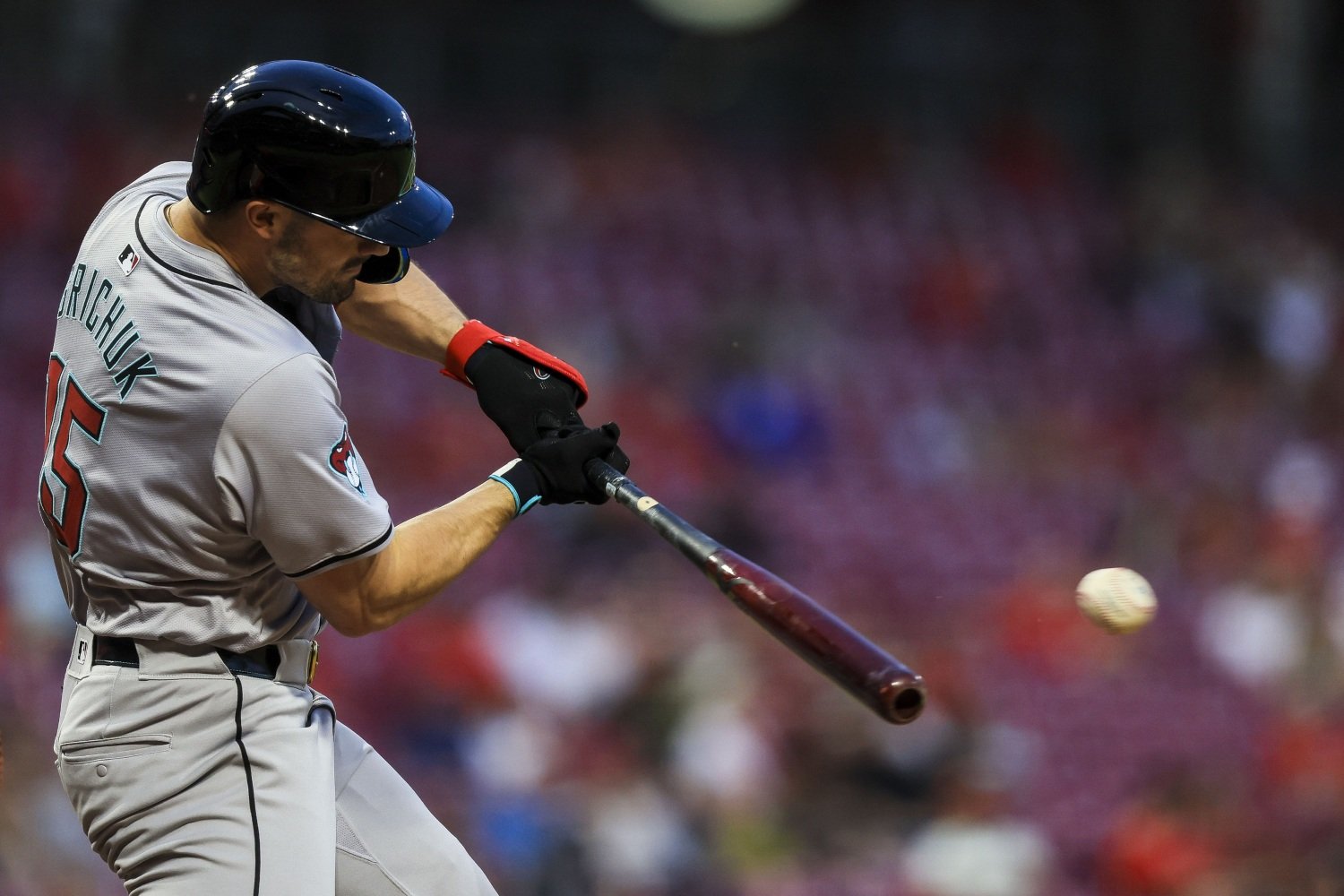 It's been a steady evolution for Randal Grichuk, the man first famous for (technically) being taken just before Mike Trout in the 2009 MLB Draft. He played very well in the minors, earning top prospect status, and he emerged as a credible outfield sidekick to Trout before being traded to St. Louis. Throughout what should have been his prime, though, he was held back by a near-calamitous amount of swing-and-miss. Only over the last few years has he fixed that flaw in his game, as he transitions from a fine defensive outfielder into more of a fringy corner guy and platoon DH. The culmination of that progress came in 2024. After years of more or less being deployed as a full-time player, this year saw Grichuk sign for a paltry $2 million with the Diamondbacks, and then play mostly against left-handed pitchers. For his career, through 2023, Grichuk took 30.6% of his plate appearances against lefties. That's about the platoon advantage rate an average right-handed hitter would have if they played every day. In 2024, though, that rate skyrocketed to 66%. Grichuk became a platoon bat, and he thrived in that role. For the year, Grichuk hit .291/.348/.528, and if you isolate his work against lefties, it was even better. In fact, since the start of 2022, he's been a downright elite hitter against lefty pitching, at .317/.367/.573. He's only struck out 17.3% of the time, and he's drawn walks in 7.0% of his plate appearances against southpaws. As Grichuk has matured at the plate, he's become one of the league's great situational lefty-mashers. Overall, through 2019, Grichuk struck out at a 28.3% clip. From 2020-22, the figure fell to 22.1%, but his power dipped, too. He was trying to figure out how not to trade contact for power, but it took a long time. Since the start of 2023, it's clicked. He's posted an 18.9% overall strikeout rate, hit 46.2% of his batted balls at least 95 miles per hour, and stopped hitting the ball on the ground the way he too-often did in that intermediate phase of his career. Back in May, I created a metric designed to capture overall offensive production through the prism of contact quality and the ability to avoid strikeouts. It's called Skills-Adjusted Exit Velocity (SAEV), and it's a very robust measurement of hitter quality. It not only correlates better with real production (as measured by weighted on-base average) than any other single metric of its kind, but is more consistent year-to-year than wOBA, and predicts a player's wOBA in the following season better than their actual wOBA does. Of the 325 hitters with at least 200 plate appearances in 2024, Grichuk's SAEV was 20th-best, at 93.5. Of course, there are major drawbacks. Grichuk did all that in just 279 plate appearances, and his track record tells us that either his performance or his health gives way if he's asked to play much more often than that. He's also 33 years old. He'll make more than $2 million this winter, but he'll make less than $10 million, for sure. In fact, he might well find a contract worth just about what Gary Sánchez got from the Brewers last winter: $7 million on a one-year deal, with a good chunk of the money deferred to 2026 via a mutual option. Grichuk is a perfect target for the Brewers. They need to replace some of the power they're losing with Willy Adames and Sánchez departing via free agency, but they can't afford to buy a player like Adames and they want to maintain their superb defense. They have an opening for some at-bats at DH and in the outfield, but they have to go to a right-handed hitter; the team is already set to play Garrett Mitchell more often in 2025 and will lean left by plenty when Mitchell, Sal Frelick, Brice Turang, and Christian Yelich are in the lineup together. Grichuk can slot right in as a right fielder or DH against lefties, occasionally come off the bench to give opponents a bad matchup, and deliver the punch the team could otherwise be missing. He's more or less a right-handed answer to Jake Bauers, but with much, much better recent indicators. He's Sánchez without defensive value, which sounds unsexy, but that very unsexiness is how the team can surely afford him.
 -
The new vogue in the ferocious battle for free-agent pitchers could hold the secret to the Brewers' next systematic pitching edge. All they have to do is embrace the happy medium everyone else is awkwardly avoiding. Image courtesy of © Brad Penner-Imagn Images As the starting pitching market continues to develop, one new free agent entered the talent pool this week: Clay Holmes. A reliever for the last few years with the Yankees, Holmes has even been an established closer in the recent past, but reportedly, multiple teams are interested in converting him to starting duty. A year or two ago, that would have counted as big, unexpected news, but suddenly it's practically old news. Earlier this offseason, we heard the same rumors about Phillies relief ace Jeff Hoffman. Either (or both) could still end up signing with a team in need of bullpen help and working solely in short relief next year, but they wouldn't be the first to make the move back from bullpen to rotation, anyway. Last season, both Jordan Hicks and Reynaldo López surprisingly signed as free agents to move back to starting duty, years after they'd established themselves as hard-throwing relievers. The incumbent clubs of Garrett Crochet and A.J. Puk also tried to convert each back to starting work, though only Crochet's transformation took. Seth Lugo and Nick Martinez are, in their mid-30s, just now putting down their roots in the starting rotations of the Royals and Reds, respectively, after careers split between that role and the bullpen. The Rays have moved Zack Littell, Drew Rasmussen, and Jeffrey Springs from relief to starting gigs within the last few years. This winter, in addition to free agents considering some upward mobility, players like Nate Pearson of the Cubs and Griffin Jax of the Twins are being considered for moves to the rotation by their teams while they remain under team control. These moves all spring from the same set of central facts: The continuing rise in injury rates among pitchers is making good starters scarce—so much so that it makes sense even to reassign high-end relievers to that job. The pitch design revolution has tended to make almost everyone's arsenals deeper. Even relievers have been given the tools to attack hitters with three or four pitches, and that makes them better suited to the harder in-game work of a starter than the same pitchers might have been several years ago. Whereas the roles of starters and relievers were once separated by a huge chasm, they're now much closer to the same thing. Starter workloads have shrunk so much—through extra rest between starts and quicker hooks within them—that many starters can work a full season and pitch little more than twice as many innings as relievers do. That's a far cry from a few decades ago, when it was most common for starters to work three times as many frames as relievers and the true workhorses might get to four times as much. With the advent of the three-batter minimum, too, even relievers have to be able to get out both left- and right-handed batters. Thus, a good reliever is likely to be relatively immune to platoon effects, and they might very well be able to sustain most of the velocity bump they get from moving to the bullpen, even while stretching back out to start. Starters and closers are still the only pitchers well-rewarded by the arbitration system, and only starters are paid their true worth in free agency. That incentivizes teams to bring good pitchers up as middle and long relievers, but motivates pitchers to pursue jobs as starters or closers whenever they can get them. Once you accept those four truths, though, an alternative plan becomes pretty clear. If pitchers who can be good relievers can also thrive as starters; and if it's relatively easy to equip them for the transition; and if the traditional roles of starters and relievers are converging all the time, then the natural question is: Why have those traditional roles at all? Why not, instead, let the pitchers not quite suited naturally to traditional starting work settle into rotational relief roles that involve facing 8-14 batters every three or four games? So far, the returns on DL Hall and on the restored health of Aaron Ashby suggest that they're exactly that type of pitcher. They have good stuff, but struggle to sustain it beyond that 60 or 70 pitch mark within an outing. They each have enough durability concerns for the team not to want to use them like traditional, high-leverage relievers, who have to prepare and enter games according to need and can't develop routines as well as starters. Yet, neither is a great fit for the starting rotation as it has generally been built. Rather than try to find the right role for either of these two southpaws, the Brewers should double down on their uniqueness and break away from the concept of two-tiered pitching hiring. They can simply assign each pitcher on their roster a role that suits their skills and biomechanical signatures, rather than lumping them into one of two bins that don't seem to be the right shape for them. This is how the Brewers can build great pitching staffs, above and beyond simply succeeding with the development of individual starting pitchers. They can cobble together the good work they need just by taking a more flexible, fluid approach to the whole endeavor. View full article
-
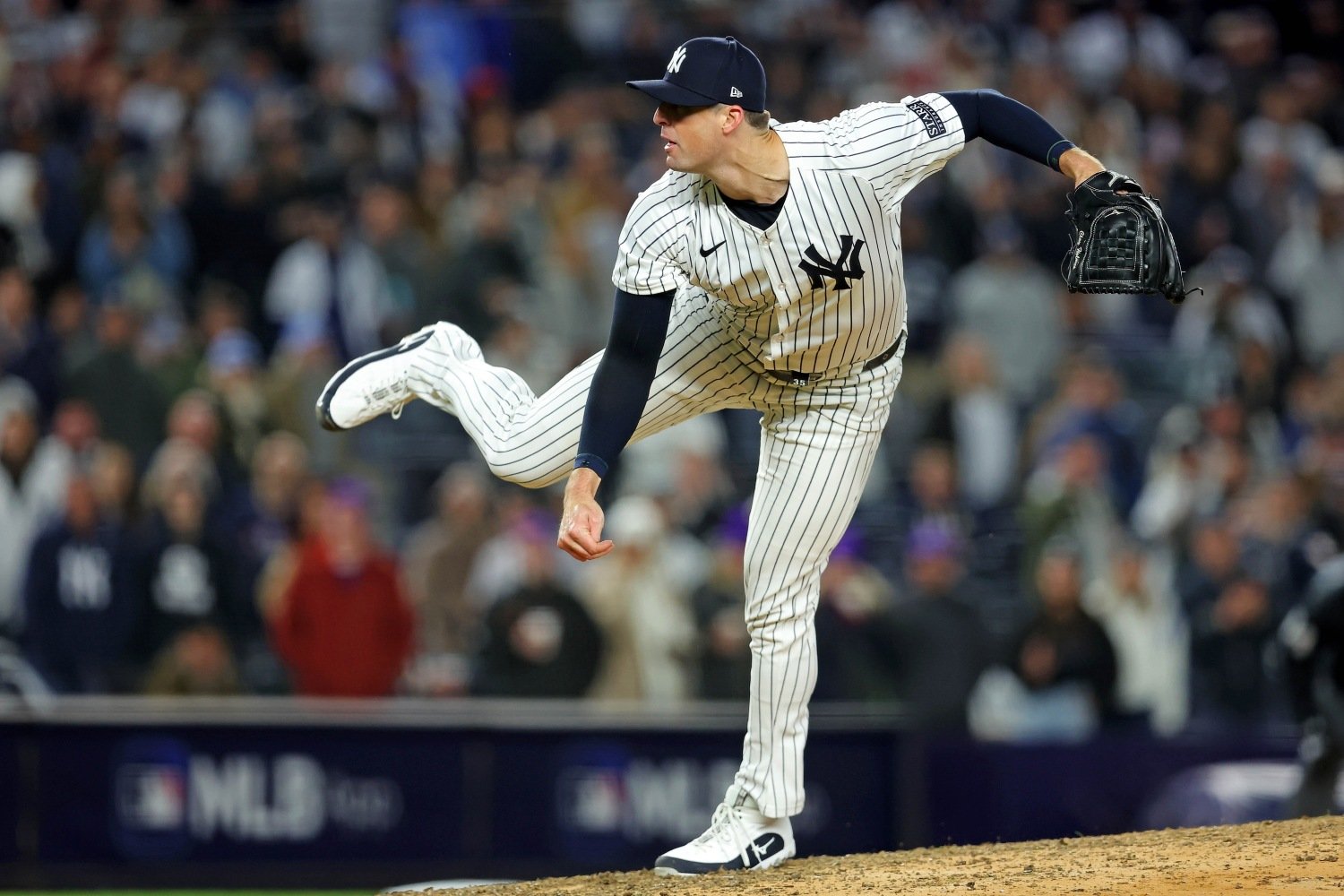 As the starting pitching market continues to develop, one new free agent entered the talent pool this week: Clay Holmes. A reliever for the last few years with the Yankees, Holmes has even been an established closer in the recent past, but reportedly, multiple teams are interested in converting him to starting duty. A year or two ago, that would have counted as big, unexpected news, but suddenly it's practically old news. Earlier this offseason, we heard the same rumors about Phillies relief ace Jeff Hoffman. Either (or both) could still end up signing with a team in need of bullpen help and working solely in short relief next year, but they wouldn't be the first to make the move back from bullpen to rotation, anyway. Last season, both Jordan Hicks and Reynaldo López surprisingly signed as free agents to move back to starting duty, years after they'd established themselves as hard-throwing relievers. The incumbent clubs of Garrett Crochet and A.J. Puk also tried to convert each back to starting work, though only Crochet's transformation took. Seth Lugo and Nick Martinez are, in their mid-30s, just now putting down their roots in the starting rotations of the Royals and Reds, respectively, after careers split between that role and the bullpen. The Rays have moved Zack Littell, Drew Rasmussen, and Jeffrey Springs from relief to starting gigs within the last few years. This winter, in addition to free agents considering some upward mobility, players like Nate Pearson of the Cubs and Griffin Jax of the Twins are being considered for moves to the rotation by their teams while they remain under team control. These moves all spring from the same set of central facts: The continuing rise in injury rates among pitchers is making good starters scarce—so much so that it makes sense even to reassign high-end relievers to that job. The pitch design revolution has tended to make almost everyone's arsenals deeper. Even relievers have been given the tools to attack hitters with three or four pitches, and that makes them better suited to the harder in-game work of a starter than the same pitchers might have been several years ago. Whereas the roles of starters and relievers were once separated by a huge chasm, they're now much closer to the same thing. Starter workloads have shrunk so much—through extra rest between starts and quicker hooks within them—that many starters can work a full season and pitch little more than twice as many innings as relievers do. That's a far cry from a few decades ago, when it was most common for starters to work three times as many frames as relievers and the true workhorses might get to four times as much. With the advent of the three-batter minimum, too, even relievers have to be able to get out both left- and right-handed batters. Thus, a good reliever is likely to be relatively immune to platoon effects, and they might very well be able to sustain most of the velocity bump they get from moving to the bullpen, even while stretching back out to start. Starters and closers are still the only pitchers well-rewarded by the arbitration system, and only starters are paid their true worth in free agency. That incentivizes teams to bring good pitchers up as middle and long relievers, but motivates pitchers to pursue jobs as starters or closers whenever they can get them. Once you accept those four truths, though, an alternative plan becomes pretty clear. If pitchers who can be good relievers can also thrive as starters; and if it's relatively easy to equip them for the transition; and if the traditional roles of starters and relievers are converging all the time, then the natural question is: Why have those traditional roles at all? Why not, instead, let the pitchers not quite suited naturally to traditional starting work settle into rotational relief roles that involve facing 8-14 batters every three or four games? So far, the returns on DL Hall and on the restored health of Aaron Ashby suggest that they're exactly that type of pitcher. They have good stuff, but struggle to sustain it beyond that 60 or 70 pitch mark within an outing. They each have enough durability concerns for the team not to want to use them like traditional, high-leverage relievers, who have to prepare and enter games according to need and can't develop routines as well as starters. Yet, neither is a great fit for the starting rotation as it has generally been built. Rather than try to find the right role for either of these two southpaws, the Brewers should double down on their uniqueness and break away from the concept of two-tiered pitching hiring. They can simply assign each pitcher on their roster a role that suits their skills and biomechanical signatures, rather than lumping them into one of two bins that don't seem to be the right shape for them. This is how the Brewers can build great pitching staffs, above and beyond simply succeeding with the development of individual starting pitchers. They can cobble together the good work they need just by taking a more flexible, fluid approach to the whole endeavor.
 -
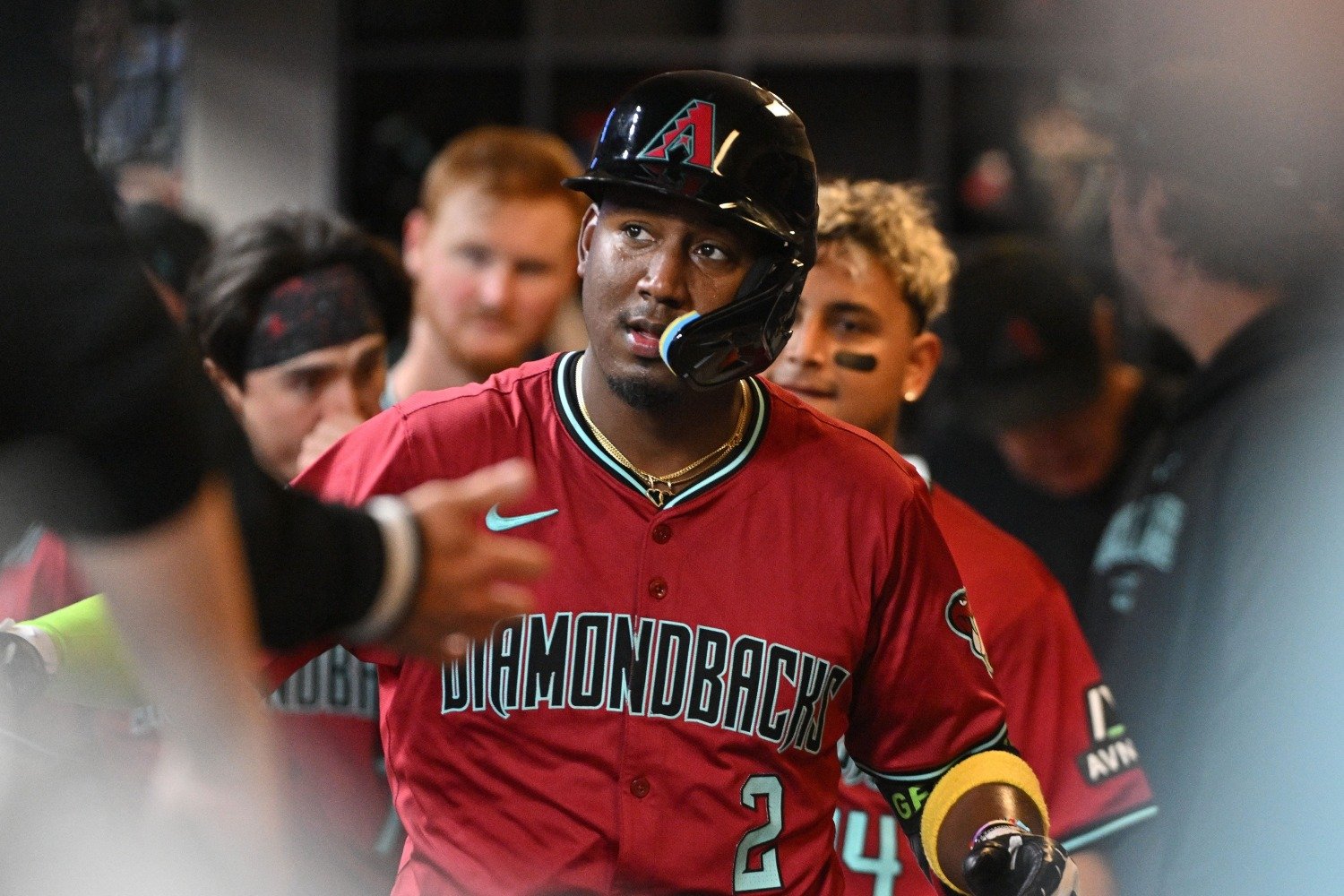 While the Mets and Atlanta slipped past them at the finish line to deny the Diamondbacks a second straight trip to the postseason, they remain a fairly deep and talented team, with a chance to reach the postseason in 2025 and in several seasons thereafter. The backbone of the team is its lineup, featuring quiet MVP candidate Ketel Marte and not-so-quiet young superstar Corbin Carroll, plus supporting cast members Eugenio Suárez, Lourdes Gurriel Jr., and Gabriel Moreno. Next season, the team hopes they'll be able to integrate a new face into the group: shortstop prospect Jordan Lawlar. Injuries wrecked Lawlar's 2024 season, or else he'd probably have established himself already. Next season, though, he still profiles as a high-impact rookie. The depth he represents is tremendously valuable, but it also poses a minor problem. With Suárez and Marte already ensconced at third and second base, respectively, the only role Lawlar could realistically take over is shortstop—where the team has played Geraldo Perdomo for most of the last three seasons, with gratifying returns. Perdomo, 25, has three years of team control remaining. He's steadily improved at the plate and acquitted himself nicely in the field, and he runs the bases well, to boot. He's not quite a superstar, but Perdomo is a slightly less toolsy reflection of Marte: switch-hitting, well-rounded, and dynamic. Though his overall line (.273/.344/.374) for 2024 doesn't suggest a great deal of offensive value, Perdomo really did stand out at the plate this season. He was one of the 20 most efficient hitters in baseball last year, according to successful plate appearance rate (SPA%), which is the percentage of all trips to the plate that ended in a hit, walk, hit-by-pitch, reach on an error, or catcher interference, or that resulted in the advancement of a lead runner in scoring position. Obviously, it doesn't capture the value of power, but it's a succinct way to measure the ability of a hitter to advance the cause of scoring runs on a consistent basis. Perdomo excels at it, thanks to his strong plate discipline and contact skills. As you can see, Perdomo would fit in nicely with the Brewers, who tend more toward that capacity for passing the baton and getting on base than toward creating runs with power in short sequences. Both Sal Frelick and Brice Turang have skill sets that lean hard that direction, though not to the same extreme as Perdomo does. Obviously, though, Perdomo would come with a very high acquisition cost. Maybe, given that fact and the fact that Perdomo would be slightly redundant for them, it makes more sense for the Brewers to pursue Lawlar, instead. The 22-year-old is something closer to the type of prospect Joey Ortiz was a year ago, when the Milwaukee front office targeted him in the Corbin Burnes trade. He hasn't yet demonstrated plus power, but there's a chance he will. He could end up a star, but because the last two years have left some uncertainty about his long-term outlook, he might be available—for instance, in a trade for an elite short-term talent like Devin Williams or Freddy Peralta. Perdomo is an established, above-average player whose lack of power prevents him from being a true star. Lawlar is a much higher-ceiling option, but could turn out not to even be an average regular on the infield. The good news is that either could slot fairly easily into any of the three open positions around the Brewers' infield. The question hinges on how the Brewers view their own roster, and what they want to do with it. Do they consider themselves to be short on power and in need of a shift in approach, with Adames leaving via free agency? Or do they want to lean even more into what was their offensive identity for much of the last two years? It's not totally clear how open the Diamondbacks are to trading either player. They have clear needs and an identifiable overflow of talent, though, and the Brewers have their own. There's a good trade fit between the two teams. Be it Perdomo or Lawlar, the Brewers should at least engage Arizona in discussions to replace Adames for the next few years.
 -
As Milwaukee scours the market for possible infielders to plug into the gap left by their departing All-Star, one NL rival's surplus of talent there provides them with options. Image courtesy of © Michael McLoone-Imagn Images While the Mets and Atlanta slipped past them at the finish line to deny the Diamondbacks a second straight trip to the postseason, they remain a fairly deep and talented team, with a chance to reach the postseason in 2025 and in several seasons thereafter. The backbone of the team is its lineup, featuring quiet MVP candidate Ketel Marte and not-so-quiet young superstar Corbin Carroll, plus supporting cast members Eugenio Suárez, Lourdes Gurriel Jr., and Gabriel Moreno. Next season, the team hopes they'll be able to integrate a new face into the group: shortstop prospect Jordan Lawlar. Injuries wrecked Lawlar's 2024 season, or else he'd probably have established himself already. Next season, though, he still profiles as a high-impact rookie. The depth he represents is tremendously valuable, but it also poses a minor problem. With Suárez and Marte already ensconced at third and second base, respectively, the only role Lawlar could realistically take over is shortstop—where the team has played Geraldo Perdomo for most of the last three seasons, with gratifying returns. Perdomo, 25, has three years of team control remaining. He's steadily improved at the plate and acquitted himself nicely in the field, and he runs the bases well, to boot. He's not quite a superstar, but Perdomo is a slightly less toolsy reflection of Marte: switch-hitting, well-rounded, and dynamic. Though his overall line (.273/.344/.374) for 2024 doesn't suggest a great deal of offensive value, Perdomo really did stand out at the plate this season. He was one of the 20 most efficient hitters in baseball last year, according to successful plate appearance rate (SPA%), which is the percentage of all trips to the plate that ended in a hit, walk, hit-by-pitch, reach on an error, or catcher interference, or that resulted in the advancement of a lead runner in scoring position. Obviously, it doesn't capture the value of power, but it's a succinct way to measure the ability of a hitter to advance the cause of scoring runs on a consistent basis. Perdomo excels at it, thanks to his strong plate discipline and contact skills. As you can see, Perdomo would fit in nicely with the Brewers, who tend more toward that capacity for passing the baton and getting on base than toward creating runs with power in short sequences. Both Sal Frelick and Brice Turang have skill sets that lean hard that direction, though not to the same extreme as Perdomo does. Obviously, though, Perdomo would come with a very high acquisition cost. Maybe, given that fact and the fact that Perdomo would be slightly redundant for them, it makes more sense for the Brewers to pursue Lawlar, instead. The 22-year-old is something closer to the type of prospect Joey Ortiz was a year ago, when the Milwaukee front office targeted him in the Corbin Burnes trade. He hasn't yet demonstrated plus power, but there's a chance he will. He could end up a star, but because the last two years have left some uncertainty about his long-term outlook, he might be available—for instance, in a trade for an elite short-term talent like Devin Williams or Freddy Peralta. Perdomo is an established, above-average player whose lack of power prevents him from being a true star. Lawlar is a much higher-ceiling option, but could turn out not to even be an average regular on the infield. The good news is that either could slot fairly easily into any of the three open positions around the Brewers' infield. The question hinges on how the Brewers view their own roster, and what they want to do with it. Do they consider themselves to be short on power and in need of a shift in approach, with Adames leaving via free agency? Or do they want to lean even more into what was their offensive identity for much of the last two years? It's not totally clear how open the Diamondbacks are to trading either player. They have clear needs and an identifiable overflow of talent, though, and the Brewers have their own. There's a good trade fit between the two teams. Be it Perdomo or Lawlar, the Brewers should at least engage Arizona in discussions to replace Adames for the next few years. View full article
-
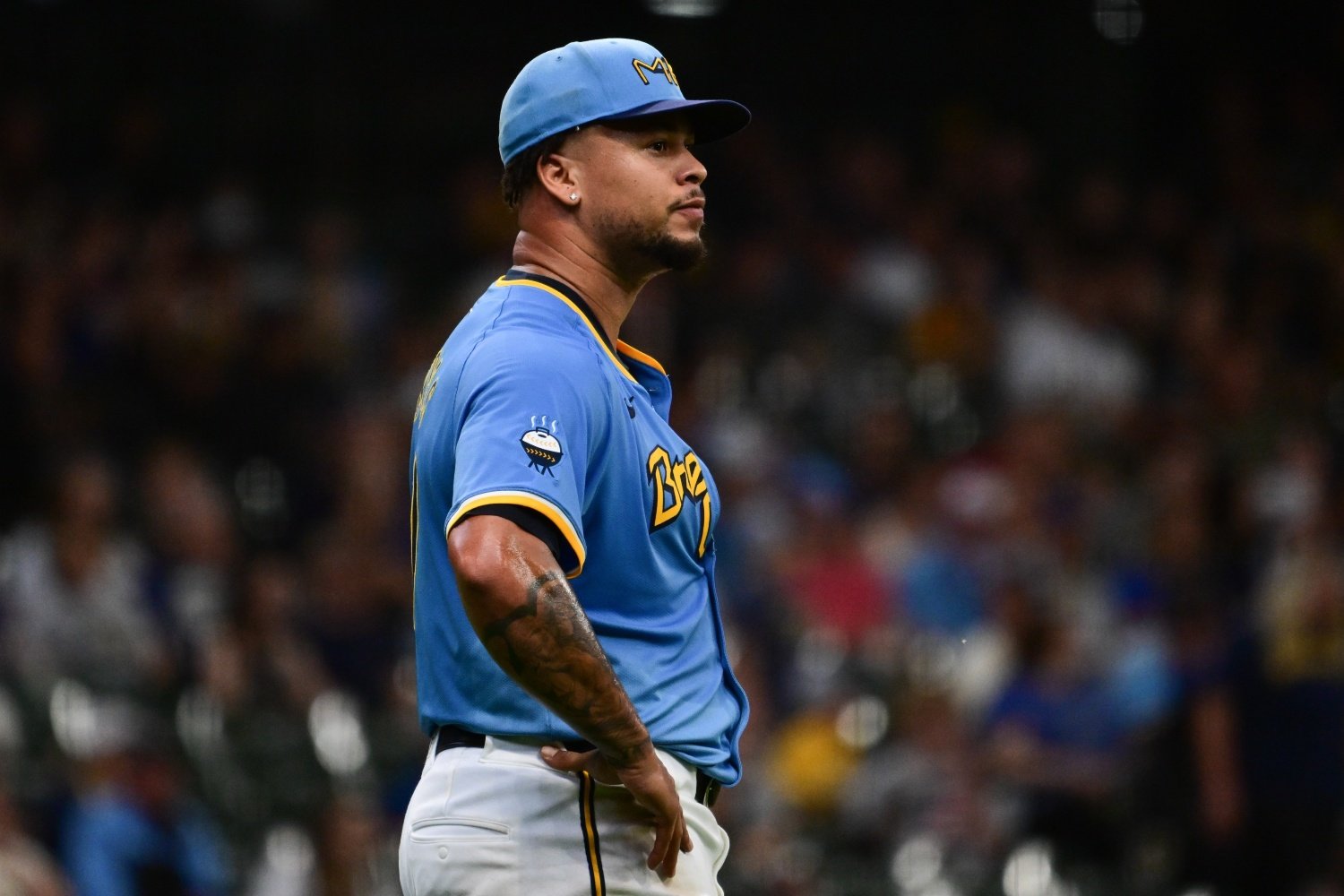 Late Sunday night, Brewers trade deadline acquisition Frankie Montas found his new home, signing with David Stearns and the New York Mets for up to $34 million over two years. Montas will make $17 million in 2025, then have the right to trigger a player option for 2026 for another $17 million. It's a deal that suggests, somewhat shockingly, that Montas was doing more than saving face when he turned down his side of a $20 million mutual option for 2025 on the deal he signed with the Reds last winter, and which the Brewers traded for ahead of the July trade deadline. While the Brewers likely wouldn't have exercised their side of that option anyway, given their budgetary constraints and the fact that Montas is more a middle-of-the-rotation starter with health questions than a potential ace or a reliable innings eater, the deal makes clear how tough it might turn out to be to replace him—or, for that matter, to replace Colin Rea, whom they elected not to retain on a deal worth barely a quarter of that Montas option at the outset of the offseason. That impression only deepens when one considers the similar move that broke overnight, as Matthew Boyd signed a two-year deal worth $29 million with the division-rival Cubs. Neither of these moves was likely to interest the Brewers, even if they had a bit more money to spend. Chicago, in particular, paid a small premium to lock up some upside with Boyd (who struck out almost 28% of his batters faced in 2024) early in the offseason, and while he's the type of pitcher the Brewers generally like (broad pitch mix, funky slot, good peripheral skills), they believe fervently in their ability to find arms as good or better for significantly less money. However, both New York and the Cubs are among the teams with whom the Crew figures to be directly competing for places in the NL playoff picture next season, and each got a bit better by adding these hurlers. Meanwhile, Milwaukee's rotation still has lots of question marks, and if Boyd costs almost $15 million per year, it's fair to wonder whether (let alone how much) the team can afford to get involved in the market for free-agent starters. That's the bad news. The good news, of course, is that the team has Freddy Peralta, Brandon Woodruff, Tobias Myers, and Aaron Civale already locked in, with a bevy of good young candidates beyond that. Civale sure seems to have meaningful trade value, should they decide to go that route, since he's a pitcher about on par with Montas and Boyd and is due less than half what Montas will make in 2025. The early flurry of the winter usually includes deals a bit richer than they would have been had the same player signed in the same place six weeks later, so Matt Arnold and company might still realize some bargains by waiting until January to make their move. In the long run, though, these deals continue to signal something simple and fairly obvious: the Brewers' single most important organizational competency is their ability to develop dubious pitchers into viable big-league starters. Myers is a tremendous example. The team also signed Deivi García earlier this offseason, a down payment on what could be a similar rags-to-riches story. They have to keep winning the tough battle to turn such pitchers into solid starters, and to find even more extreme (if much lower-ceiling) reclamation projects, like Rea and Eric Lauer and execute equally well. Eventually, though, they also need a new wave of homegrown aces, in order to sustain the success they've enjoyed since helping turn Corbin Burnes, Woodruff and Peralta into stars. That makes their failure to sign draft pick Chris Levonas this past summer hurt a little more. It makes the continued growth and development of Jacob Misiorowski and Logan Henderson crucial, and underscores the importance of DL Hall blossoming as a starter (rather than a reliever) if at all possible. The Brewers will recover and regroup after the financial setback of their TV rights going from a regional sports network to distribution by the league, but that will take time, and they might never see the gap shrink substantially between themselves and the Cubs, Mets, or Dodgers. To keep up with (or beat) those teams, they'll have to keep being brilliant in their scouting and player development, as well as roster building. If that wasn't clear enough before Montas and Boyd signed, it should be dramatically so now. Spending money on starting pitching won't be much of an option for Milwaukee for the foreseeable future. They'll have to win another way, just as they've always needed to.
 -
Sunday night and Monday morning brought news of two more free agents signing deals to join the starting rotations of NL contenders. The price tags on each clarify the stakes of the Brewers' ongoing effort to build a homegrown rotation. Image courtesy of © Benny Sieu-Imagn Images Late Sunday night, Brewers trade deadline acquisition Frankie Montas found his new home, signing with David Stearns and the New York Mets for up to $34 million over two years. Montas will make $17 million in 2025, then have the right to trigger a player option for 2026 for another $17 million. It's a deal that suggests, somewhat shockingly, that Montas was doing more than saving face when he turned down his side of a $20 million mutual option for 2025 on the deal he signed with the Reds last winter, and which the Brewers traded for ahead of the July trade deadline. While the Brewers likely wouldn't have exercised their side of that option anyway, given their budgetary constraints and the fact that Montas is more a middle-of-the-rotation starter with health questions than a potential ace or a reliable innings eater, the deal makes clear how tough it might turn out to be to replace him—or, for that matter, to replace Colin Rea, whom they elected not to retain on a deal worth barely a quarter of that Montas option at the outset of the offseason. That impression only deepens when one considers the similar move that broke overnight, as Matthew Boyd signed a two-year deal worth $29 million with the division-rival Cubs. Neither of these moves was likely to interest the Brewers, even if they had a bit more money to spend. Chicago, in particular, paid a small premium to lock up some upside with Boyd (who struck out almost 28% of his batters faced in 2024) early in the offseason, and while he's the type of pitcher the Brewers generally like (broad pitch mix, funky slot, good peripheral skills), they believe fervently in their ability to find arms as good or better for significantly less money. However, both New York and the Cubs are among the teams with whom the Crew figures to be directly competing for places in the NL playoff picture next season, and each got a bit better by adding these hurlers. Meanwhile, Milwaukee's rotation still has lots of question marks, and if Boyd costs almost $15 million per year, it's fair to wonder whether (let alone how much) the team can afford to get involved in the market for free-agent starters. That's the bad news. The good news, of course, is that the team has Freddy Peralta, Brandon Woodruff, Tobias Myers, and Aaron Civale already locked in, with a bevy of good young candidates beyond that. Civale sure seems to have meaningful trade value, should they decide to go that route, since he's a pitcher about on par with Montas and Boyd and is due less than half what Montas will make in 2025. The early flurry of the winter usually includes deals a bit richer than they would have been had the same player signed in the same place six weeks later, so Matt Arnold and company might still realize some bargains by waiting until January to make their move. In the long run, though, these deals continue to signal something simple and fairly obvious: the Brewers' single most important organizational competency is their ability to develop dubious pitchers into viable big-league starters. Myers is a tremendous example. The team also signed Deivi García earlier this offseason, a down payment on what could be a similar rags-to-riches story. They have to keep winning the tough battle to turn such pitchers into solid starters, and to find even more extreme (if much lower-ceiling) reclamation projects, like Rea and Eric Lauer and execute equally well. Eventually, though, they also need a new wave of homegrown aces, in order to sustain the success they've enjoyed since helping turn Corbin Burnes, Woodruff and Peralta into stars. That makes their failure to sign draft pick Chris Levonas this past summer hurt a little more. It makes the continued growth and development of Jacob Misiorowski and Logan Henderson crucial, and underscores the importance of DL Hall blossoming as a starter (rather than a reliever) if at all possible. The Brewers will recover and regroup after the financial setback of their TV rights going from a regional sports network to distribution by the league, but that will take time, and they might never see the gap shrink substantially between themselves and the Cubs, Mets, or Dodgers. To keep up with (or beat) those teams, they'll have to keep being brilliant in their scouting and player development, as well as roster building. If that wasn't clear enough before Montas and Boyd signed, it should be dramatically so now. Spending money on starting pitching won't be much of an option for Milwaukee for the foreseeable future. They'll have to win another way, just as they've always needed to. View full article
-
Jason I love you so much and say this in the very nicest way: shuuuut up. 😄
- 4 replies
-
- 1
-

-
- bj surhoff
- john henry johnson
- (and 2 more)
-
If the day after Thanksgiving isn't the occasion to travel back in time and savor a 1987 game between the Brewers and Tigers, what is? Image courtesy of YouTube Baseball doesn't have to have an offseason anymore. It's ok that it does; we don't want to gorge ourselves on so much baseball as to make ourselves dislike or resent it. But if you're stuffed as full of football as of turkey on this Black Friday, I want to invite you into a time machine. Back in June of 1987, the Brewers went to Detroit to play a series against the fierce Tigers. Thanks to YouTube, we can still watch that game now, almost 40 years later. This game was played at old Tiger Stadium, which is the first fun thing about it. County Stadium had its own charms, and we'll discuss them tomorrow in a recap of a different game, but Tiger Stadium is the old ballpark as cathedral: the enclosed, sacred space. It also had some truly wonderful traits, like the second deck being stacked directly atop the first one all around the outfield, meaning that a player could hit perhaps a 350-foot upper-deck homer if they pulled it down the line. The roof of the stadium didn't extend out over the field, of course, but there was a roof all the way around, keeping all the fans' attention funneled downward, toward the diamond. It was something close to a true diamond, too, unlike the rough-hewn wedges and cones more common today. Today, American Family Field is something closer to the industry standard, although it and Wrigley Field still stand slightly apart for their deep lines and shallow alleys. It's 345 feet to the corner and 400 to dead center, more or less. At Tiger Stadium, it was 325 to the right field line, 340 to the left field pole, 365 to left-center, 375 to right-center... and a seemingly impossible 440 feet out to center. This is also the shape of Yankee Stadium, prior to its big renovations. It's what the Polo Grounds were like, although a bit less extreme. Old Comiskey Park had this general shape. The field offered reachable porches down the lines, and some had easily reachable gaps. The center field fences were, intentionally, miles away. I mention that fact not only because it defines the aesthetic of Tiger Stadium games, but because it came into play immediately in this game. The Brewers sent Len Barker to the mound on that mid-June evening, trying to help him rediscover the magic that had leaked out of his arm. Barker had been an All-Star in 1981, the second straight season in which he led the American League in strikeouts and the same year he threw a perfect game. He'd broken down badly in the intervening half-decade, though. The Brewers were giving him his first big-league shot since 1985, and it wasn't going well. I won't mince words here: Barker didn't record an out that night. He faced five batters, they all collected hits, and he left, giving way to John Henry Johnson. That was a somewhat aggressive move by Brewers skipper Tom Trebelhorn, of course, but at the time, it wasn't as crazy as it now seems. The quick hook used to be a tool kept close at hand in a manager's tool belt. In the 1940 and 1950s, the average season saw about 60 starts (league-wide) in which a pitcher left after facing six or fewer batters. In the 1960s, that fell into the low 50s, and in the 1970s, it was usually in the 40s. That 1987 season saw 31 starts at least somewhat like Barker's, but then there wouldn't be as many as 30 in any season until 2018—when, of course, the frequency of that occurrence exploded, thanks to the advent of the opener. Now, there are anywhere from 90 to 130 such starts each year. But the true quick hook is still a lost art. Trebelhorn acted decisively, whereas almost every manager since that year has at least tried to get a modicum of length from starters who have a disastrous first handful of batters faced in a game. Alas, the first inning ended 4-0, and it seemed like perhaps the race to save Barker was wasted effort. Let's rewind a moment, though. It's not quite fair to Barker to pretend the inning even had to unfold the way it did. Leadoff man Lou Whitaker did smash the ball, over the head of right fielder Glenn Braggs and up against the wall for a loud double. After a tough at-bat, Bill Madlock put the ball in play with two strikes, but the shallow fly ball he hit was high enough to be an out almost anywhere, and any time. At Tiger Stadium, though, center fielders tended to play deep—very deep. Robin Yount was in center for the Brewers that night, and he gave a valiant effort, but he probably should have been shallower in the first place against the exceptional contact hitter in Madlock. Despite a racing dive and roll, the ball fell, sending Whitaker over to third and putting runners on the corners. While Kirk Gibson was batting, the Earth shook. It was only felt as an initially unexplained tremor in Detroit, where the commentators remarked on it with bemusement, but it was actually an earthquake of moderate magnitude (5.2). It was felt as such a remote rumble because its epicenter was in southern Illinois, hundreds of miles away. Fortunately, it didn't do major damage, even closer to the heart of its impact zone. Unfortunately, Gibson did plenty of damage. He hit a long fly to left-center, forcing Yount (still trying to catch his breath from running down Madlock's bloop) to flat-out sprint a long way to his right and attempt a leap and lunge. He missed the ball, and once he did, the ball kicked around out between the 400 and 440 signs in center field. Both runners scored, and Gibson pulled in with an easy triple. With the Brewers infield in, Alan Trammell then lofted a soft liner over the head of third baseman Jim Paciorek for an RBI single. It could have been caught, if the infield were back, but Trebelhorn had been trying to keep the game close. So much for that. Matt Nokes, the Tigers' star rookie catcher, then bounced a ball back up the middle to put runners on the corners all over again. It would unequivocally be a double play in 2024, because Nokes was a left-handed pull hitter and the hit was a two-hopper just to the shortstop side of second base. It's right where the team would position their shortstop now, but back then, teams were more circumspect in their shading. So, Barker gave up five hits, but two could have been outs with nothing more than modern defensive positioning, and another was a hit principally because of the situation and the way it changed the defense's setup. They still count, and Barker didn't appear to have any answers, but this is a good example of how much harder the game has gotten lately, as teams update information like this and make such sound adjustments—and of how playing in a park with fairly shallow corners but such an expansive center field subtly but profoundly changes baseball, relative to modern parks and their tendency to go the other way. Johnson came in and allowed one inherited runner to score, but cleaned up the mess nicely beyond that. The Brewers got out of the first down 4-0, knowing it could have been even worse. Nonetheless, falling behind 4-0 in just one frame is a problem. You won't win many in that circumstance. As it happens, though, that season, there were a fair number of comebacks from that type of deficit. Here's something even neater, too: the 2024 season was the best one in at least 50 years for such comebacks. Teams win about 88.7% of the games in which they lead by four or more after one inning. In 2003, the leading teams went on to win 122 of 131 such games. There are plenty of years in which you were down to a worse than 10% chance to win if you fell behind big after one. In 1987, though, teams came back to win 13 times in 81 games fitting those criteria. This season, they were even better at getting off the mat, with 16 wins in 82 games. While it would signal something broken about the game if teams ever won, say, 40 percent of such games, I think the game is at its best when an early lead is not automatic—when, as in 1987 and 2024, you're far from done with your work even if you jump out to a big lead in the first or second frame. The Brewers recovered gorgeously from the early Detroit barrage. Johnson (who, like Barker, would never appear again for another team after struggling badly with the 1987 Brewers) was the first hero. A journeyman lefty whose career was clearly on the ropes even before that season, he was on the fast track to being cut, but he turned in five shutout, one-hit innings of emergency long relief. The Detroit lineup didn't seem to lose interest; they just couldn't hit Johnson. It did help him a bit that Sparky Anderson, with a large lead in which to luxuriate, didn't immediately lift the hitters he usually used only in platoon spots against righty hurlers. Nonetheless, it was great work—the last good night of Johnson's career. He would give up four, four, and five runs in his next three outings and never appear in MLB again. Tigers starter Walt Terrell was having a good night, though, and it looked like he might suffocate the Brewers and make it an easy, boring night. He'd shut them down without so much as a true threat through four innings, when Braggs cracked a home run in the fifth to get the Crew on the board. B.J. Surhoff (like Nokes, a rookie catcher already having an impressive season) followed that with a bunt single, which is a good excuse and reminder to note that Surhoff caught the eye everywhere he went that night. Obviously, he had been the No. 1 overall pick just two years earlier, out of the University of North Carolina, so the team had high hopes, and he was showing the extraordinary athleticism that allowed him to have a long, solid career mostly at positions other than catcher. He also wore wristbands (one blue, one white) pulled high up his forearms, just below his elbows, making him vaguely reminiscent of fellow UNC alumnus Michael Jordan. It was a minor affectation, but a fun one. Surhoff came around to score a manufactured run, making it 4-2 after five frames. Terrell was going well enough, though, that Anderson left him in there. In the sixth, he set the Crew down again. He got all the way through the order three times without much trouble. Meanwhile, Brewers starter Juan Nieves entered the game to relieve Johnson, which gently but noticeably ratcheted up the stakes of the game. Nieves had been struck on the knee with a line drive in his previous start and was penciled in to pitch again for the first time at Yankee Stadium four days after this game, missing a turn in the rotation. As the game unfolded, though, Trebelhorn had Nieves warm, then enter, easing him back into action but also giving his team a chance, once they made a down payment on a comeback. Nieves worked a clean sixth. In the top of the seventh, Terrell got two quick outs again. That was at the bottom of the order for the third time, though, and upon getting a fourth look, the top of the Brewers order pounced. Paciorek (playing in place of Paul Molitor, who had sprained his ankle over the weekend) walked. Yount (playing through his own nagging injuries) singled. Then, Cecil Cooper had the last really good moment of his career, one much more illustrious than those of Barker or Johnson. The aged Brewers slugger had started that season disastrously, after a tough 1986, and it was clear he was near the end. His batting like was a miserable .143/.151/.171 when he was benched for a week in mid-May, but he'd heated up nicely since returning to the lineup, batting .367/.383/.608 in his last 81 plate appearances entering this game. Terrell made a mistake to him, and Cooper smashed it. The ball was gone the moment it left his bat, deep into the upper deck down the line, for the 200th homer of his career and a 5-4 Brewers lead. That was a wonderful moment. It would be, basically, the end for Cooper, who hit just .229/.324/.302 after that and ended the season embroiled in a frustrating staredown with the Brewers whereby he didn't play at all after Jul. 12, despite being on the roster the whole time. The team would have had to pay him his whole 1988 salary if they cut him in 1987, but they felt he wasn't worth playing, so they put him on the bench in mid-July and never gave him even a meaningless farewell plate appearance thereafter. On that one final night in mid-June in Detroit, though, Cooper had become the hero. Detroit fought back. Nieves and Chris Bosio combined to work a clean seventh, but in the eighth (despite Trebelhorn making a trio if moves to strengthen his defense and get Yount some rest, bringing on Mike Felder, Rick Manning and Juan Castillo), Dan Plesac gave up a tying tally. The game went to extra innings—where Surhoff showed up again. After a walk and a single, Surhoff blasted a three-run, go-ahead homer to right-center with two outs, landing the final blow in the back-and-forth battle. Plesac shut down the Tigers in the 10th, finishing a three-inning appearance that would be unheard-of for a modern closer. For Plesac, though, it was almost routine that year. He got at least eight outs in five different games in 1987, his first All-Star campaign. He pitched two innings another five times. This game was full of twists, and of players at extreme ends of long careers. It was played in one of baseball's great venues, but one that distorted the game to suit itself in ways we no longer expect to see ballparks do. It featured thoughtful yet aggressive managing, some huge hits, and heroic pitching performances. It seems, now, to belong to another time, but it's nice to know that while games quite like this one are few and far between, the central takeaway from the game is very much alive in 2024 and beyond: Don't let the first punch decide the bout. Keep swinging. View full article
-
Have Fun Watching an Old Brewers Game With Us: Don't Give Up
Matthew Trueblood posted an article in Brewers
 Baseball doesn't have to have an offseason anymore. It's ok that it does; we don't want to gorge ourselves on so much baseball as to make ourselves dislike or resent it. But if you're stuffed as full of football as of turkey on this Black Friday, I want to invite you into a time machine. Back in June of 1987, the Brewers went to Detroit to play a series against the fierce Tigers. Thanks to YouTube, we can still watch that game now, almost 40 years later. This game was played at old Tiger Stadium, which is the first fun thing about it. County Stadium had its own charms, and we'll discuss them tomorrow in a recap of a different game, but Tiger Stadium is the old ballpark as cathedral: the enclosed, sacred space. It also had some truly wonderful traits, like the second deck being stacked directly atop the first one all around the outfield, meaning that a player could hit perhaps a 350-foot upper-deck homer if they pulled it down the line. The roof of the stadium didn't extend out over the field, of course, but there was a roof all the way around, keeping all the fans' attention funneled downward, toward the diamond. It was something close to a true diamond, too, unlike the rough-hewn wedges and cones more common today. Today, American Family Field is something closer to the industry standard, although it and Wrigley Field still stand slightly apart for their deep lines and shallow alleys. It's 345 feet to the corner and 400 to dead center, more or less. At Tiger Stadium, it was 325 to the right field line, 340 to the left field pole, 365 to left-center, 375 to right-center... and a seemingly impossible 440 feet out to center. This is also the shape of Yankee Stadium, prior to its big renovations. It's what the Polo Grounds were like, although a bit less extreme. Old Comiskey Park had this general shape. The field offered reachable porches down the lines, and some had easily reachable gaps. The center field fences were, intentionally, miles away. I mention that fact not only because it defines the aesthetic of Tiger Stadium games, but because it came into play immediately in this game. The Brewers sent Len Barker to the mound on that mid-June evening, trying to help him rediscover the magic that had leaked out of his arm. Barker had been an All-Star in 1981, the second straight season in which he led the American League in strikeouts and the same year he threw a perfect game. He'd broken down badly in the intervening half-decade, though. The Brewers were giving him his first big-league shot since 1985, and it wasn't going well. I won't mince words here: Barker didn't record an out that night. He faced five batters, they all collected hits, and he left, giving way to John Henry Johnson. That was a somewhat aggressive move by Brewers skipper Tom Trebelhorn, of course, but at the time, it wasn't as crazy as it now seems. The quick hook used to be a tool kept close at hand in a manager's tool belt. In the 1940 and 1950s, the average season saw about 60 starts (league-wide) in which a pitcher left after facing six or fewer batters. In the 1960s, that fell into the low 50s, and in the 1970s, it was usually in the 40s. That 1987 season saw 31 starts at least somewhat like Barker's, but then there wouldn't be as many as 30 in any season until 2018—when, of course, the frequency of that occurrence exploded, thanks to the advent of the opener. Now, there are anywhere from 90 to 130 such starts each year. But the true quick hook is still a lost art. Trebelhorn acted decisively, whereas almost every manager since that year has at least tried to get a modicum of length from starters who have a disastrous first handful of batters faced in a game. Alas, the first inning ended 4-0, and it seemed like perhaps the race to save Barker was wasted effort. Let's rewind a moment, though. It's not quite fair to Barker to pretend the inning even had to unfold the way it did. Leadoff man Lou Whitaker did smash the ball, over the head of right fielder Glenn Braggs and up against the wall for a loud double. After a tough at-bat, Bill Madlock put the ball in play with two strikes, but the shallow fly ball he hit was high enough to be an out almost anywhere, and any time. At Tiger Stadium, though, center fielders tended to play deep—very deep. Robin Yount was in center for the Brewers that night, and he gave a valiant effort, but he probably should have been shallower in the first place against the exceptional contact hitter in Madlock. Despite a racing dive and roll, the ball fell, sending Whitaker over to third and putting runners on the corners. While Kirk Gibson was batting, the Earth shook. It was only felt as an initially unexplained tremor in Detroit, where the commentators remarked on it with bemusement, but it was actually an earthquake of moderate magnitude (5.2). It was felt as such a remote rumble because its epicenter was in southern Illinois, hundreds of miles away. Fortunately, it didn't do major damage, even closer to the heart of its impact zone. Unfortunately, Gibson did plenty of damage. He hit a long fly to left-center, forcing Yount (still trying to catch his breath from running down Madlock's bloop) to flat-out sprint a long way to his right and attempt a leap and lunge. He missed the ball, and once he did, the ball kicked around out between the 400 and 440 signs in center field. Both runners scored, and Gibson pulled in with an easy triple. With the Brewers infield in, Alan Trammell then lofted a soft liner over the head of third baseman Jim Paciorek for an RBI single. It could have been caught, if the infield were back, but Trebelhorn had been trying to keep the game close. So much for that. Matt Nokes, the Tigers' star rookie catcher, then bounced a ball back up the middle to put runners on the corners all over again. It would unequivocally be a double play in 2024, because Nokes was a left-handed pull hitter and the hit was a two-hopper just to the shortstop side of second base. It's right where the team would position their shortstop now, but back then, teams were more circumspect in their shading. So, Barker gave up five hits, but two could have been outs with nothing more than modern defensive positioning, and another was a hit principally because of the situation and the way it changed the defense's setup. They still count, and Barker didn't appear to have any answers, but this is a good example of how much harder the game has gotten lately, as teams update information like this and make such sound adjustments—and of how playing in a park with fairly shallow corners but such an expansive center field subtly but profoundly changes baseball, relative to modern parks and their tendency to go the other way. Johnson came in and allowed one inherited runner to score, but cleaned up the mess nicely beyond that. The Brewers got out of the first down 4-0, knowing it could have been even worse. Nonetheless, falling behind 4-0 in just one frame is a problem. You won't win many in that circumstance. As it happens, though, that season, there were a fair number of comebacks from that type of deficit. Here's something even neater, too: the 2024 season was the best one in at least 50 years for such comebacks. Teams win about 88.7% of the games in which they lead by four or more after one inning. In 2003, the leading teams went on to win 122 of 131 such games. There are plenty of years in which you were down to a worse than 10% chance to win if you fell behind big after one. In 1987, though, teams came back to win 13 times in 81 games fitting those criteria. This season, they were even better at getting off the mat, with 16 wins in 82 games. While it would signal something broken about the game if teams ever won, say, 40 percent of such games, I think the game is at its best when an early lead is not automatic—when, as in 1987 and 2024, you're far from done with your work even if you jump out to a big lead in the first or second frame. The Brewers recovered gorgeously from the early Detroit barrage. Johnson (who, like Barker, would never appear again for another team after struggling badly with the 1987 Brewers) was the first hero. A journeyman lefty whose career was clearly on the ropes even before that season, he was on the fast track to being cut, but he turned in five shutout, one-hit innings of emergency long relief. The Detroit lineup didn't seem to lose interest; they just couldn't hit Johnson. It did help him a bit that Sparky Anderson, with a large lead in which to luxuriate, didn't immediately lift the hitters he usually used only in platoon spots against righty hurlers. Nonetheless, it was great work—the last good night of Johnson's career. He would give up four, four, and five runs in his next three outings and never appear in MLB again. Tigers starter Walt Terrell was having a good night, though, and it looked like he might suffocate the Brewers and make it an easy, boring night. He'd shut them down without so much as a true threat through four innings, when Braggs cracked a home run in the fifth to get the Crew on the board. B.J. Surhoff (like Nokes, a rookie catcher already having an impressive season) followed that with a bunt single, which is a good excuse and reminder to note that Surhoff caught the eye everywhere he went that night. Obviously, he had been the No. 1 overall pick just two years earlier, out of the University of North Carolina, so the team had high hopes, and he was showing the extraordinary athleticism that allowed him to have a long, solid career mostly at positions other than catcher. He also wore wristbands (one blue, one white) pulled high up his forearms, just below his elbows, making him vaguely reminiscent of fellow UNC alumnus Michael Jordan. It was a minor affectation, but a fun one. Surhoff came around to score a manufactured run, making it 4-2 after five frames. Terrell was going well enough, though, that Anderson left him in there. In the sixth, he set the Crew down again. He got all the way through the order three times without much trouble. Meanwhile, Brewers starter Juan Nieves entered the game to relieve Johnson, which gently but noticeably ratcheted up the stakes of the game. Nieves had been struck on the knee with a line drive in his previous start and was penciled in to pitch again for the first time at Yankee Stadium four days after this game, missing a turn in the rotation. As the game unfolded, though, Trebelhorn had Nieves warm, then enter, easing him back into action but also giving his team a chance, once they made a down payment on a comeback. Nieves worked a clean sixth. In the top of the seventh, Terrell got two quick outs again. That was at the bottom of the order for the third time, though, and upon getting a fourth look, the top of the Brewers order pounced. Paciorek (playing in place of Paul Molitor, who had sprained his ankle over the weekend) walked. Yount (playing through his own nagging injuries) singled. Then, Cecil Cooper had the last really good moment of his career, one much more illustrious than those of Barker or Johnson. The aged Brewers slugger had started that season disastrously, after a tough 1986, and it was clear he was near the end. His batting like was a miserable .143/.151/.171 when he was benched for a week in mid-May, but he'd heated up nicely since returning to the lineup, batting .367/.383/.608 in his last 81 plate appearances entering this game. Terrell made a mistake to him, and Cooper smashed it. The ball was gone the moment it left his bat, deep into the upper deck down the line, for the 200th homer of his career and a 5-4 Brewers lead. That was a wonderful moment. It would be, basically, the end for Cooper, who hit just .229/.324/.302 after that and ended the season embroiled in a frustrating staredown with the Brewers whereby he didn't play at all after Jul. 12, despite being on the roster the whole time. The team would have had to pay him his whole 1988 salary if they cut him in 1987, but they felt he wasn't worth playing, so they put him on the bench in mid-July and never gave him even a meaningless farewell plate appearance thereafter. On that one final night in mid-June in Detroit, though, Cooper had become the hero. Detroit fought back. Nieves and Chris Bosio combined to work a clean seventh, but in the eighth (despite Trebelhorn making a trio if moves to strengthen his defense and get Yount some rest, bringing on Mike Felder, Rick Manning and Juan Castillo), Dan Plesac gave up a tying tally. The game went to extra innings—where Surhoff showed up again. After a walk and a single, Surhoff blasted a three-run, go-ahead homer to right-center with two outs, landing the final blow in the back-and-forth battle. Plesac shut down the Tigers in the 10th, finishing a three-inning appearance that would be unheard-of for a modern closer. For Plesac, though, it was almost routine that year. He got at least eight outs in five different games in 1987, his first All-Star campaign. He pitched two innings another five times. This game was full of twists, and of players at extreme ends of long careers. It was played in one of baseball's great venues, but one that distorted the game to suit itself in ways we no longer expect to see ballparks do. It featured thoughtful yet aggressive managing, some huge hits, and heroic pitching performances. It seems, now, to belong to another time, but it's nice to know that while games quite like this one are few and far between, the central takeaway from the game is very much alive in 2024 and beyond: Don't let the first punch decide the bout. Keep swinging.
- 4 comments
-
- 2
-

-
- bj surhoff
- john henry johnson
- (and 2 more)
-
 It has not been a good year or two for Brendan Rodgers. Once the third overall pick in the MLB Draft (in 2015), he's been hampered by injuries at times, but that excuse no longer holds much water. Faced with the prospect of paying him a healthy salary in his final season of arbitration eligibility, the Rockies elected to non-tender Rodgers Friday evening, making him a free agent at 28 years old. He hits the open market coming off a season in which he batted .267/.314/.407, with 13 home runs, all while playing his home games at Coors Field. Rodgers has some redeeming qualities as a hitter. He's about average in terms of plate discipline and contact within the zone, and he hits the ball hard at a strong rate. The missing ingredient in his game has been that second level of thoughtfulness in terms of approach. He also has pretty limited power utility, despite that capacity for hard contact, because he doesn't lift the ball much at all. The Brewers probably wouldn't be able to do much to help him with the latter, but they're quite good at helping hitters develop their approach beyond the basics of pitch recognition. In that sense, he'd be a fine bet, for a team that prizes contact and exit velocity over pulling the ball in the air, anyway. In truth, though, the separator for Rodgers was his glove. A couple years ago, he was one of the best defensive second basemen in baseball. After multiple hamstring strains and the second major shoulder injury of his career (he suffered one to his right labrum years ago, and one to his left in 2023), however, he has looked badly diminished the last two seasons. His arm strength and his range graded out as below-average in 2024. Without significant defensive value, he's not a very useful player. His offensive profile, like those of Brice Turang, Sal Frelick, and (so far) Joey Ortiz, is valuable primarily if it's attached to someone who helps prevent runs in bunches. That's the bad news. The good news is, he's still only 28, after all. Rodgers finished this season healthy, and could report to spring training ready for his first truly representative season in three years come February. If he's physically restored, he could recover both defensive and offensive value. He'd also benefit, almost certainly, from being on any team other than the Rockies, where elevation and lousy player development form a deadly cocktail for would-be stars. It's very unlikely that Rodgers finds a robust market after being non-tendered. He's a reclamation project, although a potentially promising one. This winter is going to be especially unkind to players in this position. With the TV bubble popping and uncertainty looming about the economy of the game, sellers and payroll trimmers are outnumbering aggressive buyers. This dynamic tends not to severely affect elite players like Juan Soto, but at the level of players like Rodgers, it can have a profound impact. The Brewers can probably scoop Rodgers up for less than $5 million on a one-year deal, if they're patient and if they elect to roll the dice with him. Because there are still tools to dream on and there's some hope for a rebound based on improving health, though, aiming low with Rodgers need not mean settling. He would become the team's second baseman, with Turang sliding over to shortstop, and the Brewers might not find a combination this winter that more nicely combines affordability and upside.
 -
One of the half-forgotten trailblazers for Dominican players passed away Sunday. Though it wasn't technically as a Brewer, he got his MLB start in Milwaukee. Image courtesy of © Malcolm Emmons-Imagn Images Sadly, the game does not remember Rico Carty as one of its all-time greats. He would have needed a much longer period of uninterrupted success to garner even semi-serious consideration for the Hall of Fame, and his sometimes stormy relations with teammates, media and fans made him a controversial figure. Yet, when you think of the ferocious slugger, Carty deserves to be one of those you picture. A big Dominican outfielder with a big personality, he came up to a team run by Henry Aaron and Eddie Mathews and asserted himself as an equally dangerous (if much more mercurial) hitter. One of the first stars to emerge from the Dominican Republic and establish himself in the majors, Carty debuted in 1963, but only got substantial playing time for the 1964 and 1965 Milwaukee Braves, before the team relocated to Atlanta. In those two seasons, though, he batted a magnificent .322/.376/.532, with 32 home runs in 798 plate appearances. He had more doubles and triples power than home-run power, but that was common even among sluggers at that time. Nothing about his game was truly common even then, though, and it would be almost unrecognizable today. We don't see players take that kind of aggressive approach, that kind of violent swing, and still make contact at a strong enough rate to avail themselves of great line-drive power. For Carty, though, that was no fluke. He sustained that style of hitting over a career that ultimately spanned over 15 years—despite some devastating setbacks. A Black man, Carty struggled to fit in from the moment he signed with Milwaukee and came to the States to play in the minor leagues. He was heckled with a special, ruthless, vile vehemence fans still reserved, then, for dark-skinned players who also didn't speak perfect English or share their American culture. Carty didn't always handle those situations gracefully. He assaulted one racist harasser while in the minors, and had run-ins with more fans, police officers, and Aaron himself throughout his career. In a perfect world, perhaps, a player would handle the abuse that was then commonplace with the stone-faced nonviolence of Jackie Robinson or Roberto Clemente, but while those players' restraint was admirable, we have to admit that Carty's fury (something that also defined and occasionally sidetracked the careers of others during that era, like Dick Allen and George Scott) was no less just or moral. Adversities heaped one on another for Carty, especially after he left Milwaukee. He actually found wider acceptance from the fan base in Atlanta than he had in Milwaukee, according to many reports, but he lost one season to tuberculosis, and another to a massive knee injury caused by an outfield collision while playing winter ball. He often played in those Caribbean leagues, especially in his native Dominican, and when he was healthy enough even to take the field, he was a force of nature. He had six seasons (including both of those Milwaukee campaigns) in which he was at least 40% better than an average hitter in substantial playing time, the last of which came at the ripe age of 38, in 1978. Yet, his teams habitually complained and expressed concern over his conditioning. Surely, some of that was justified, but most of it was probably another form of soft racism and of salary suppression. Carty was a career .299/.369/.464 career hitter, despite those major injury problems; once having to spend a year in the Mexican League to prove to MLB he could still rake; and all that off-field resistance. Carty died at age 85 Sunday. He should be remembered as one of the great hitters of his era, even if his star was dimmed slightly by injuries, a dearth of defensive value, and occasional turbulence. During the brief stay of the first big-league team to call Milwaukee home, multiple Black and Latino stars made their first impressions in the majors for them. Carty, while hardly the best and far from the best-remembered, was very much one of that group. View full article
-
 Sadly, the game does not remember Rico Carty as one of its all-time greats. He would have needed a much longer period of uninterrupted success to garner even semi-serious consideration for the Hall of Fame, and his sometimes stormy relations with teammates, media and fans made him a controversial figure. Yet, when you think of the ferocious slugger, Carty deserves to be one of those you picture. A big Dominican outfielder with a big personality, he came up to a team run by Henry Aaron and Eddie Mathews and asserted himself as an equally dangerous (if much more mercurial) hitter. One of the first stars to emerge from the Dominican Republic and establish himself in the majors, Carty debuted in 1963, but only got substantial playing time for the 1964 and 1965 Milwaukee Braves, before the team relocated to Atlanta. In those two seasons, though, he batted a magnificent .322/.376/.532, with 32 home runs in 798 plate appearances. He had more doubles and triples power than home-run power, but that was common even among sluggers at that time. Nothing about his game was truly common even then, though, and it would be almost unrecognizable today. We don't see players take that kind of aggressive approach, that kind of violent swing, and still make contact at a strong enough rate to avail themselves of great line-drive power. For Carty, though, that was no fluke. He sustained that style of hitting over a career that ultimately spanned over 15 years—despite some devastating setbacks. A Black man, Carty struggled to fit in from the moment he signed with Milwaukee and came to the States to play in the minor leagues. He was heckled with a special, ruthless, vile vehemence fans still reserved, then, for dark-skinned players who also didn't speak perfect English or share their American culture. Carty didn't always handle those situations gracefully. He assaulted one racist harasser while in the minors, and had run-ins with more fans, police officers, and Aaron himself throughout his career. In a perfect world, perhaps, a player would handle the abuse that was then commonplace with the stone-faced nonviolence of Jackie Robinson or Roberto Clemente, but while those players' restraint was admirable, we have to admit that Carty's fury (something that also defined and occasionally sidetracked the careers of others during that era, like Dick Allen and George Scott) was no less just or moral. Adversities heaped one on another for Carty, especially after he left Milwaukee. He actually found wider acceptance from the fan base in Atlanta than he had in Milwaukee, according to many reports, but he lost one season to tuberculosis, and another to a massive knee injury caused by an outfield collision while playing winter ball. He often played in those Caribbean leagues, especially in his native Dominican, and when he was healthy enough even to take the field, he was a force of nature. He had six seasons (including both of those Milwaukee campaigns) in which he was at least 40% better than an average hitter in substantial playing time, the last of which came at the ripe age of 38, in 1978. Yet, his teams habitually complained and expressed concern over his conditioning. Surely, some of that was justified, but most of it was probably another form of soft racism and of salary suppression. Carty was a career .299/.369/.464 career hitter, despite those major injury problems; once having to spend a year in the Mexican League to prove to MLB he could still rake; and all that off-field resistance. Carty died at age 85 Sunday. He should be remembered as one of the great hitters of his era, even if his star was dimmed slightly by injuries, a dearth of defensive value, and occasional turbulence. During the brief stay of the first big-league team to call Milwaukee home, multiple Black and Latino stars made their first impressions in the majors for them. Carty, while hardly the best and far from the best-remembered, was very much one of that group.
