


Matthew Trueblood
-
Posts
1,964 -
Joined
-
Last visited
-
Days Won
10
Content Type
Profiles
Forums
Blogs
Events
News
2026 Milwaukee Brewers Top Prospects Ranking
Milwaukee Brewers Videos
2022 Milwaukee Brewers Draft Picks
Milwaukee Brewers Free Agent & Trade Rumors, Notes, & Tidbits
Guides & Resources
2023 Milwaukee Brewers Draft Picks
2024 Milwaukee Brewers Draft Picks
The Milwaukee Brewers Players Project
2025 Milwaukee Brewers Draft Pick Tracker
2026 Milwaukee Brewers Draft Tracker: Picks & Bonuses
Store
Downloads
Gallery
Everything posted by Matthew Trueblood
-
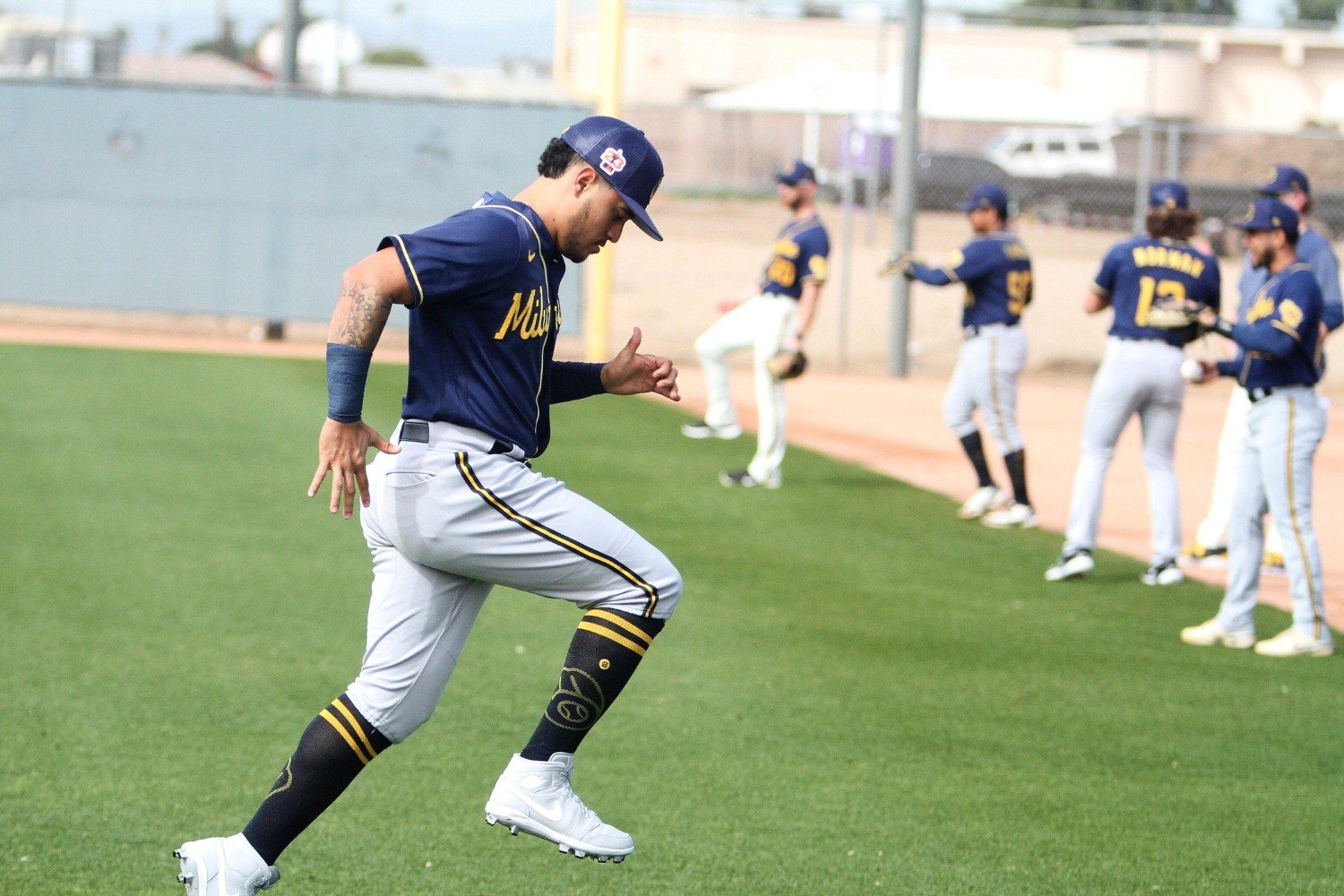 When Carlos Rodriguez finished the 2024 season in the minor leagues and off the 40-man roster, he stood on the doorstep of free agency. This was his seventh professional campaign, so the Brewers had to add him to the 40-man roster right after the World Series, or allow him to leave and seek other opportunities as a free agent. They didn't want to use that spot that way, and thus, Rodriguez left the organization. His free agency didn't last long, though. Atlanta signed him to a non-guaranteed deal that will not be lucrative in the short term, but which gives him a place on the 40-man roster. They had to give him that privilege in order to win the miniature bidding war that developed, because according to one report, over half the league inquired about the youngster's services. Any time you see a reporter mention the agent or agency representing a player in a note like this, you can be quite sure that that agent or agency is the source of the information, and we all know why those parties might (if not fabricate) embellish the degree of demand for their client or the options they provided them. Still, Ghiroli is not a credulous passer-along of nonsense, so we can boil this down and say with some confidence that Rodriguez was (as minor-league free agents go) a hot commodity. No one believes he's a star, but he's plainly viewed as a player with big-league value. This is similar to the way the Brewers had to give Blake Perkins a big-league deal to snare him as a minor-league free agent two winters ago. Does that mean they erred by not protecting Rodriguez? In short: No. While there are certainly teams with worse roster crunches right now, 40-man space is a scarce commodity for the team right now, and spending some of it (even briefly) on Rodriguez wouldn't have been the right use thereof. Here's why. This is a report of key hitting metrics Rodriguez put up in 128 plate appearances with Triple-A Nashville this season. PA Swing% Chase% ZSw-Chase InZoneWhiff% PHiA/SW 100+/Sw LandAng LaunchAng LowHit% MedHit% HighHit% 128 45.6% 22.3% 46.3% 7.7% 0.5% 2.7% -0.7 9.3 42.0% 29.0% 29.0% ExitVel 10thExitVel 90thExitVel Hit95+% Well Hit LA Sweet Spot EV BABIP Barrel% FBDst xWOBA wOBA SAEV 84.7 71.2 97.2 16.0% 3.4 85.4 .270 5.0% 263.5 .292 .298 77.5 Captured here are both the reasons why a team would want Rodriguez, and the reasons why they wouldn't. He makes very good swing decisions: that chase rate is well below the average figure, and the difference between his in-zone and out-of-zone swing rate is quite high. He doesn't swing and miss much at all, especially within the zone. That's the good news. Everyone likes players with plus contact and plus plate discipline from the left side of the plate. The bad news is everything else. Rodriguez's quality of contact, in terms of launch angles and exit speed, is lousy. There's genuine cause for concern that big-league pitching will knock the bat out of his hands, based on these data. He gives himself almost no chance to hit for power, based on his approach, and even running a high BABIP is tough when you just don't hit the ball hard with any regularity. Now, Rodriguez has two home runs and nine total extra-base hits in 119 plate appearances down in the Venezuelan Winter League, so it's possible he's made a swing change geared toward doing more damage. He only had five extra-base hits during his time in Triple A, and just 25 in 500 total plate appearances Stateside this season. Having this little power is often disqualifying, when it comes to having a big-league future. There were 902 batters who had 100 or more plate appearances at Triple A and/or in the majors this year, and only 10 had a lower 90th-percentile exit velocity than Rodriguez's. Needless to say, there are no stars in that group. We saw that he's had a bit more pop in Venezuela this fall, but that's in different parks, against uneven levels of competition. He's also been almost exclusively a center fielder there, and most scouts agree that he can play a capable center field in the big leagues. He's only set to turn 24 years old next month, too. Maybe he'll grow into a bit more power, even if it be just enough to make him playable. Maybe he'll turn into a plus defender at an up-the-middle position. Pair those factors with his demonstrated abilities as a contact hitter with on-base skills, and you can easily see his MLB utility. With the Brewers, though, he was rarely playing center field even in the minors. They don't need more left-handed bats in their outfield mix. They don't need more good defenders. Rodriguez was wildly unlikely to slide past any of several lefty bats who play solid defense in center on the team's big-league depth chart, and Luis Lara is a reasonable facsimile of him, anyway, not far behind on the developmental ladder. It's not a good idea to carelessly let players with even a modicum of trade value slough off the roster for free, but the Brewers recognized this as a simple case: Rodriguez is a fine player with real but very limited value as a player or commodity for them. The transaction costs they would have paid in adding him to the roster and then either trading him or dealing away one or more of the outfielders ahead of him would have wiped out whatever value they protected by putting him on the roster in the first place. If you're a really, really good organization who consistently develops homegrown talent, eventually, you leak talent. That has always been true, and it's especially unavoidable in the modern game, when there's such a surfeit of talent worldwide. Sometimes, trying to prevent that small loss of marginal value actually costs more than it earns. Rodriguez will go on to play in the big leagues, and he might even become a valuable role player in Atlanta for a while. Nonetheless, the Brewers were right not to spend their limited time, energy, or roster space trying to squeeze the last drop of excess value from him.
 -
The erstwhile Milwaukee farmhand signed a contract that gives him a place on the 40-man roster with Atlanta this week, after the Crew elected not to protect him from minor-league free agency. Did they make a mistake? Image courtesy of © Curt Hogg / Milwaukee Journal Sentinel / USA TODAY NETWORK When Carlos Rodriguez finished the 2024 season in the minor leagues and off the 40-man roster, he stood on the doorstep of free agency. This was his seventh professional campaign, so the Brewers had to add him to the 40-man roster right after the World Series, or allow him to leave and seek other opportunities as a free agent. They didn't want to use that spot that way, and thus, Rodriguez left the organization. His free agency didn't last long, though. Atlanta signed him to a non-guaranteed deal that will not be lucrative in the short term, but which gives him a place on the 40-man roster. They had to give him that privilege in order to win the miniature bidding war that developed, because according to one report, over half the league inquired about the youngster's services. Any time you see a reporter mention the agent or agency representing a player in a note like this, you can be quite sure that that agent or agency is the source of the information, and we all know why those parties might (if not fabricate) embellish the degree of demand for their client or the options they provided them. Still, Ghiroli is not a credulous passer-along of nonsense, so we can boil this down and say with some confidence that Rodriguez was (as minor-league free agents go) a hot commodity. No one believes he's a star, but he's plainly viewed as a player with big-league value. This is similar to the way the Brewers had to give Blake Perkins a big-league deal to snare him as a minor-league free agent two winters ago. Does that mean they erred by not protecting Rodriguez? In short: No. While there are certainly teams with worse roster crunches right now, 40-man space is a scarce commodity for the team right now, and spending some of it (even briefly) on Rodriguez wouldn't have been the right use thereof. Here's why. This is a report of key hitting metrics Rodriguez put up in 128 plate appearances with Triple-A Nashville this season. PA Swing% Chase% ZSw-Chase InZoneWhiff% PHiA/SW 100+/Sw LandAng LaunchAng LowHit% MedHit% HighHit% 128 45.6% 22.3% 46.3% 7.7% 0.5% 2.7% -0.7 9.3 42.0% 29.0% 29.0% ExitVel 10thExitVel 90thExitVel Hit95+% Well Hit LA Sweet Spot EV BABIP Barrel% FBDst xWOBA wOBA SAEV 84.7 71.2 97.2 16.0% 3.4 85.4 .270 5.0% 263.5 .292 .298 77.5 Captured here are both the reasons why a team would want Rodriguez, and the reasons why they wouldn't. He makes very good swing decisions: that chase rate is well below the average figure, and the difference between his in-zone and out-of-zone swing rate is quite high. He doesn't swing and miss much at all, especially within the zone. That's the good news. Everyone likes players with plus contact and plus plate discipline from the left side of the plate. The bad news is everything else. Rodriguez's quality of contact, in terms of launch angles and exit speed, is lousy. There's genuine cause for concern that big-league pitching will knock the bat out of his hands, based on these data. He gives himself almost no chance to hit for power, based on his approach, and even running a high BABIP is tough when you just don't hit the ball hard with any regularity. Now, Rodriguez has two home runs and nine total extra-base hits in 119 plate appearances down in the Venezuelan Winter League, so it's possible he's made a swing change geared toward doing more damage. He only had five extra-base hits during his time in Triple A, and just 25 in 500 total plate appearances Stateside this season. Having this little power is often disqualifying, when it comes to having a big-league future. There were 902 batters who had 100 or more plate appearances at Triple A and/or in the majors this year, and only 10 had a lower 90th-percentile exit velocity than Rodriguez's. Needless to say, there are no stars in that group. We saw that he's had a bit more pop in Venezuela this fall, but that's in different parks, against uneven levels of competition. He's also been almost exclusively a center fielder there, and most scouts agree that he can play a capable center field in the big leagues. He's only set to turn 24 years old next month, too. Maybe he'll grow into a bit more power, even if it be just enough to make him playable. Maybe he'll turn into a plus defender at an up-the-middle position. Pair those factors with his demonstrated abilities as a contact hitter with on-base skills, and you can easily see his MLB utility. With the Brewers, though, he was rarely playing center field even in the minors. They don't need more left-handed bats in their outfield mix. They don't need more good defenders. Rodriguez was wildly unlikely to slide past any of several lefty bats who play solid defense in center on the team's big-league depth chart, and Luis Lara is a reasonable facsimile of him, anyway, not far behind on the developmental ladder. It's not a good idea to carelessly let players with even a modicum of trade value slough off the roster for free, but the Brewers recognized this as a simple case: Rodriguez is a fine player with real but very limited value as a player or commodity for them. The transaction costs they would have paid in adding him to the roster and then either trading him or dealing away one or more of the outfielders ahead of him would have wiped out whatever value they protected by putting him on the roster in the first place. If you're a really, really good organization who consistently develops homegrown talent, eventually, you leak talent. That has always been true, and it's especially unavoidable in the modern game, when there's such a surfeit of talent worldwide. Sometimes, trying to prevent that small loss of marginal value actually costs more than it earns. Rodriguez will go on to play in the big leagues, and he might even become a valuable role player in Atlanta for a while. Nonetheless, the Brewers were right not to spend their limited time, energy, or roster space trying to squeeze the last drop of excess value from him. View full article
-
The Rockies cut ties with their former first-round pick Friday, and in what is shaping up to be a frigid market for second- and third-tier free agents, he should come cheaply now. Image courtesy of © Isaiah J. Downing-Imagn Images It has not been a good year or two for Brendan Rodgers. Once the third overall pick in the MLB Draft (in 2015), he's been hampered by injuries at times, but that excuse no longer holds much water. Faced with the prospect of paying him a healthy salary in his final season of arbitration eligibility, the Rockies elected to non-tender Rodgers Friday evening, making him a free agent at 28 years old. He hits the open market coming off a season in which he batted .267/.314/.407, with 13 home runs, all while playing his home games at Coors Field. Rodgers has some redeeming qualities as a hitter. He's about average in terms of plate discipline and contact within the zone, and he hits the ball hard at a strong rate. The missing ingredient in his game has been that second level of thoughtfulness in terms of approach. He also has pretty limited power utility, despite that capacity for hard contact, because he doesn't lift the ball much at all. The Brewers probably wouldn't be able to do much to help him with the latter, but they're quite good at helping hitters develop their approach beyond the basics of pitch recognition. In that sense, he'd be a fine bet, for a team that prizes contact and exit velocity over pulling the ball in the air, anyway. In truth, though, the separator for Rodgers was his glove. A couple years ago, he was one of the best defensive second basemen in baseball. After multiple hamstring strains and the second major shoulder injury of his career (he suffered one to his right labrum years ago, and one to his left in 2023), however, he has looked badly diminished the last two seasons. His arm strength and his range graded out as below-average in 2024. Without significant defensive value, he's not a very useful player. His offensive profile, like those of Brice Turang, Sal Frelick, and (so far) Joey Ortiz, is valuable primarily if it's attached to someone who helps prevent runs in bunches. That's the bad news. The good news is, he's still only 28, after all. Rodgers finished this season healthy, and could report to spring training ready for his first truly representative season in three years come February. If he's physically restored, he could recover both defensive and offensive value. He'd also benefit, almost certainly, from being on any team other than the Rockies, where elevation and lousy player development form a deadly cocktail for would-be stars. It's very unlikely that Rodgers finds a robust market after being non-tendered. He's a reclamation project, although a potentially promising one. This winter is going to be especially unkind to players in this position. With the TV bubble popping and uncertainty looming about the economy of the game, sellers and payroll trimmers are outnumbering aggressive buyers. This dynamic tends not to severely affect elite players like Juan Soto, but at the level of players like Rodgers, it can have a profound impact. The Brewers can probably scoop Rodgers up for less than $5 million on a one-year deal, if they're patient and if they elect to roll the dice with him. Because there are still tools to dream on and there's some hope for a rebound based on improving health, though, aiming low with Rodgers need not mean settling. He would become the team's second baseman, with Turang sliding over to shortstop, and the Brewers might not find a combination this winter that more nicely combines affordability and upside. View full article
-
Teams must decide whether or not to tender contracts to arbitration-eligible players by dinner time Friday, The Brewers habitually surprise fans with their willingness to move on from players in edge cases at this deadline each year. Will a tight budget make them more or less likely to do so this time? Image courtesy of © Stan Szeto-Imagn Images We won't waste undue time talking about the arbitration cases of William Contreras or Devin Williams today. Each is important, in its way, because while everyone falls in love with MLB Trade Rumors's projections of arbitration salaries each October, the reality is that those projections reflect only one possible midpoint in a range of potential outcomes. Contreras is projected to make $7.6 million in 2025, but that could easily be $6.5 million or $9 million. It depends on how eager each party is to strike a deal before an arbitration hearing; whether either party is interested in a long-term extension; and, possibly, how well each side argues its case before an arbitration panel. Williams's forecast calls for him to earn $7.7 million, but that could be $8.5 million without stirring any surprise for me. These margins are large enough to matter, because the Brewers are on a budget. The team might even agree to terms with Williams today, in order to head off any tension or confusion about his price tag. That would make him easier to trade, and give them cost certainty on the placeholding closer until they do move him. It's much less likely that they strike a deal with Contreras right away, though, and no newsworthy agreement—like an extension—is going to come to fruition Friday. We can safely set those two aside, for now. More interesting, by far, are the cases of the other six remaining arbitration-eligible Brewers. They began the offseason with 10 such players, including Williams and Contreras, but they soon cut Jake Bauers and Bryse Wilson, so those two no longer factor in. For those who do, let's consider their possible earning power, and how the team might approach their decision on each. Hoby Milner, LHP The most likely player to be non-tendered in this group is Milner, which should be bittersweet for many. Bringing the funk from the left side, the lanky Milner has been a steady and welcome presence in the clubhouse the last three years, as well as often delivering strong medium-leverage relief work. He's projected to make $2.7 million via arbitration, though, and while a team desperate for a solid southpaw might be willing to pay that, the Brewers aren't that kind of team. They figure to have Bryan Hudson, Jared Koenig, and whichever of DL Hall and Aaron Ashby don't win a place in the rotation, making Milner expendable. A trade is possible, but his excess value at his projected price is so negligible that it's more likely the team lets him seek his next fortune on his own terms. Aaron Civale, RHP While his projected $8-million salary is by no means untenable, nor is it a no-brainer. This is where I suspect there might be a surprising move coming. Civale would be a bummer of a non-tender, but if the team believes as much as they seem to in their remaining starting depth, a trade could be in the offing. Much like the one in which they sent Hunter Renfroe to the Angels a few years ago, this would be a deal for non-premium pieces, but that need not mean they wouldn't get value from the return. If any player is a barometer of the team's confidence about their spending power this winter, it's Civale. I think he finishes the day on another roster. Joel Payamps, RHP Payamps isn't much better than Milner, really, and he's projected to make $2.8 million himself. It's not like the team is starved for good righty relievers, either. Still, I think this will be a case in which the two sides strike a preemptive deal. The Brewers might inform Payamps and his agent that they're unwilling to go through the arbitration process and end up paying more than $3 million, but that they'd be happy to sign and keep him for something like $2.5 million. If the player is amenable to that, they can all sidestep the unenjoyable arbitration process. If he's not, they might proceed with the non-tender. Eric Haase, C Don't lose sight of the way the Brewers throttled back Contreras's workload behind the plate late in the season. After starting 93 of the first 122 games behind the plate, Contreras started just 26 of the final 40 there. Part of the reason was an opening at DH. Part of it was that Contreras needed a bit more rest and protection. However, another part of it was that Haase and Gary Sánchez were better defenders at catcher than he was, at that stage of the season. Sánchez is gone, but Haase is still here, and he's only projected for $1.8 million in earnings next year—with a pretty low ceiling, you'd think. It's possible the team wants to go the fully cheap route to fill the backup catcher gig, the way they did when they moved on from Victor Caratini last winter and signed Haase for $1 million in December. That would fit not only with their general approach to the position, but the hopes everyone continues to hold that Jeferson Quero could be ready to help them by midseason. In that case, they'd non-tender Haase. This one might go similarly to Payamps, but I think they do ultimately retain him. The market for even complementary catchers is just brutal right now. Nick Mears, RHP The MLB Trade Rumors projection only has Mears getting $900,000. I might bet the over on that, but it won't be by much, and remember, the league minimum is now $760,000. The gap between what he's likely to earn and what they'd have to pay even if they gave the job to a wholly untested rookie makes tendering Mears a contract a no-brainer. He might put it all together and become a monster in 2025. If he doesn't, he'll be easy to cut in May, with little lost along the way. Trevor Megill, RHP Multiple candidates exist for the role of closer, if and when the Brewers trade Williams, but Megill surely has a leg up. As closers go, he'll be dirt-cheap, at roughly $2 million. There's little to think about here, either. The team will giddily tender Megill a contract. The moves I'm guessing at here could create substantial new financial flexibility for the Brewers, who will also have plenty of open roster space if they go this route. Last year, the team traded for Bauers on the occasion of this deadline, and they might well acquire another player whose team doesn't want to tender them a deal, looking to check another box near the bottom end of the roster. One way or another, there will be news today. We'll know a bit more about the team's expectations, their outlook on various players, and their wherewithal for this winter after the deadline slides by. View full article
-
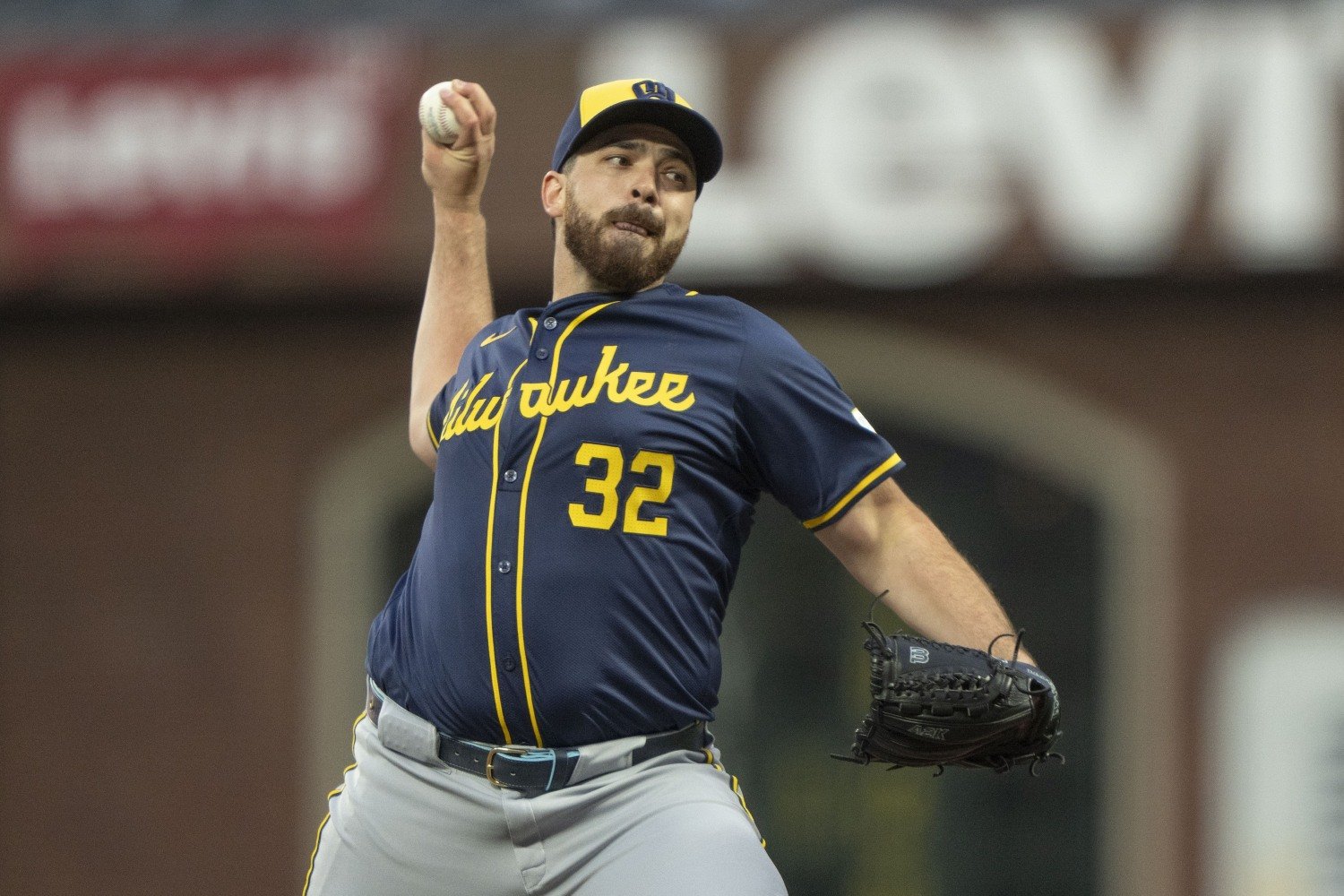 We won't waste undue time talking about the arbitration cases of William Contreras or Devin Williams today. Each is important, in its way, because while everyone falls in love with MLB Trade Rumors's projections of arbitration salaries each October, the reality is that those projections reflect only one possible midpoint in a range of potential outcomes. Contreras is projected to make $7.6 million in 2025, but that could easily be $6.5 million or $9 million. It depends on how eager each party is to strike a deal before an arbitration hearing; whether either party is interested in a long-term extension; and, possibly, how well each side argues its case before an arbitration panel. Williams's forecast calls for him to earn $7.7 million, but that could be $8.5 million without stirring any surprise for me. These margins are large enough to matter, because the Brewers are on a budget. The team might even agree to terms with Williams today, in order to head off any tension or confusion about his price tag. That would make him easier to trade, and give them cost certainty on the placeholding closer until they do move him. It's much less likely that they strike a deal with Contreras right away, though, and no newsworthy agreement—like an extension—is going to come to fruition Friday. We can safely set those two aside, for now. More interesting, by far, are the cases of the other six remaining arbitration-eligible Brewers. They began the offseason with 10 such players, including Williams and Contreras, but they soon cut Jake Bauers and Bryse Wilson, so those two no longer factor in. For those who do, let's consider their possible earning power, and how the team might approach their decision on each. Hoby Milner, LHP The most likely player to be non-tendered in this group is Milner, which should be bittersweet for many. Bringing the funk from the left side, the lanky Milner has been a steady and welcome presence in the clubhouse the last three years, as well as often delivering strong medium-leverage relief work. He's projected to make $2.7 million via arbitration, though, and while a team desperate for a solid southpaw might be willing to pay that, the Brewers aren't that kind of team. They figure to have Bryan Hudson, Jared Koenig, and whichever of DL Hall and Aaron Ashby don't win a place in the rotation, making Milner expendable. A trade is possible, but his excess value at his projected price is so negligible that it's more likely the team lets him seek his next fortune on his own terms. Aaron Civale, RHP While his projected $8-million salary is by no means untenable, nor is it a no-brainer. This is where I suspect there might be a surprising move coming. Civale would be a bummer of a non-tender, but if the team believes as much as they seem to in their remaining starting depth, a trade could be in the offing. Much like the one in which they sent Hunter Renfroe to the Angels a few years ago, this would be a deal for non-premium pieces, but that need not mean they wouldn't get value from the return. If any player is a barometer of the team's confidence about their spending power this winter, it's Civale. I think he finishes the day on another roster. Joel Payamps, RHP Payamps isn't much better than Milner, really, and he's projected to make $2.8 million himself. It's not like the team is starved for good righty relievers, either. Still, I think this will be a case in which the two sides strike a preemptive deal. The Brewers might inform Payamps and his agent that they're unwilling to go through the arbitration process and end up paying more than $3 million, but that they'd be happy to sign and keep him for something like $2.5 million. If the player is amenable to that, they can all sidestep the unenjoyable arbitration process. If he's not, they might proceed with the non-tender. Eric Haase, C Don't lose sight of the way the Brewers throttled back Contreras's workload behind the plate late in the season. After starting 93 of the first 122 games behind the plate, Contreras started just 26 of the final 40 there. Part of the reason was an opening at DH. Part of it was that Contreras needed a bit more rest and protection. However, another part of it was that Haase and Gary Sánchez were better defenders at catcher than he was, at that stage of the season. Sánchez is gone, but Haase is still here, and he's only projected for $1.8 million in earnings next year—with a pretty low ceiling, you'd think. It's possible the team wants to go the fully cheap route to fill the backup catcher gig, the way they did when they moved on from Victor Caratini last winter and signed Haase for $1 million in December. That would fit not only with their general approach to the position, but the hopes everyone continues to hold that Jeferson Quero could be ready to help them by midseason. In that case, they'd non-tender Haase. This one might go similarly to Payamps, but I think they do ultimately retain him. The market for even complementary catchers is just brutal right now. Nick Mears, RHP The MLB Trade Rumors projection only has Mears getting $900,000. I might bet the over on that, but it won't be by much, and remember, the league minimum is now $760,000. The gap between what he's likely to earn and what they'd have to pay even if they gave the job to a wholly untested rookie makes tendering Mears a contract a no-brainer. He might put it all together and become a monster in 2025. If he doesn't, he'll be easy to cut in May, with little lost along the way. Trevor Megill, RHP Multiple candidates exist for the role of closer, if and when the Brewers trade Williams, but Megill surely has a leg up. As closers go, he'll be dirt-cheap, at roughly $2 million. There's little to think about here, either. The team will giddily tender Megill a contract. The moves I'm guessing at here could create substantial new financial flexibility for the Brewers, who will also have plenty of open roster space if they go this route. Last year, the team traded for Bauers on the occasion of this deadline, and they might well acquire another player whose team doesn't want to tender them a deal, looking to check another box near the bottom end of the roster. One way or another, there will be news today. We'll know a bit more about the team's expectations, their outlook on various players, and their wherewithal for this winter after the deadline slides by.
- 6 comments
-
- 1
-

-
- hoby milner
- aaron civale
- (and 5 more)
-
With the budget tight, the always-clever Milwaukee front office will need to think beyond the big names this winter. One journeyman infielder stands out as a cheap place to find a solid third base solution for the medium-term future. Image courtesy of © Bruce Kluckhohn-Imagn Images The Royals scooped up infielder Emmanuel Rivera in the 2015 Draft, and they made him into a modestly desirable little player. He'd played in fewer than 100 games for them, though, when they traded him at the 2022 trade deadline for then-Diamondbacks righty Luke Weaver. (Royals should've kept Weaver. Oops.) Rivera carved out a part-time role as a platoon infielder in Arizona that lasted the rest of 2022 and all of 2023, including 19 (mostly ineffective) plate appearances during the postseason in the Diamondbacks' unexpected run to the World Series. However, Rivera didn't make the Opening Day roster for Arizona in 2024, and landed with the Marlins in a cash transaction in early April. Given a good, long look by a truly terrible team, Rivera had the worst stretch of his career, with a .214/.294/.269 batting line that will even get you bounced from the perpetual landfill that is Miami's infield. The Orioles claimed him, though, and he came back to life in a big way for them down the stretch, hitting .313/.370/.578 in very limited action. It was a great rebound for him, and proof that he didn't go permanently to pieces during his South Florida sojourn. He's torn the cover off the ball in a brief stint in two Caribbean Winter Leagues, too. Baltimore needed him mostly because of injuries, though, and won't have room on their crowded roster for him going forward. His projected $1.4 million salary is miles from onerous, but the Orioles have Jackson Holliday, Gunnar Henderson, Jordan Westburg, and Coby Mayo lined up for playing time around the infield. Rivera is going to be an odd man out, sooner or later. The Brewers should make it be sooner. Rivera was clearly dragged down by some fault of instruction, morale, or health while in Miami, but his swings got materially better when he made the move to Baltimore, right along with his numbers. Note the steady rise in his average bat speed after the change of team in late summer. Rivera will never be a high-end slugger, but he has a strong, balanced skill set. He chases outside the zone at an average or better rate. He doesn't swing and miss unduly often, especially within the zone. He lacks the ability to crush the ball, but he hits it fairly hard with above-average consistency. It's noteworthy that that combination—a high volume of solid contact, but paired with below-average top-end numbers—is a commonality Rivera shares with some very good hitters. Now 28 years old, Rivera has three years of team control remaining, although as three teams have already shown, he might be a bit less of a fixture than a nice bridge piece. He can be very much that, though. He's acquitted himself well at the hot corner over his career, with 2 Defensive Runs Saved at third base, where he would play if the Brewers landed him this winter. The resulting move of Joey Ortiz to shortstop is what most assume will happen, anyway, so Rivera is the right general type of player to fit expectations. Some fans, surely, are hoping for a player with more raw talent, but this would be a very inexpensive acquisition. If, for instance, the Brewers traded Devin Williams to Baltimore, Rivera could be a secondary piece in a package. Otherwise, a trade for him would require only a modest prospect or other piece to be sent the Orioles' way. Meanwhile, the team would keep most of their financial powder dry, and could spend more money or prospect capital elsewhere on the roster. Rivera would make an especially appealing platoon partner, should Oliver Dunn come to spring looking healthy and with the holes big-league pitchers pointed out in his swing last year patched up. These types of moves are so unsexy that fans tend neither to crave nor to like them. Often, though, they pay off in ways just as satisfying as brand-name acquisitions. Rivera is likely available. The deadline to tender contracts to arbitration-eligible players is Friday. These two teams could match up on a deal, and very soon. If they did, while it might seem unimpressive, the trade could be one that propels the Brewers incrementally toward a third straight NL Central championship. View full article
-
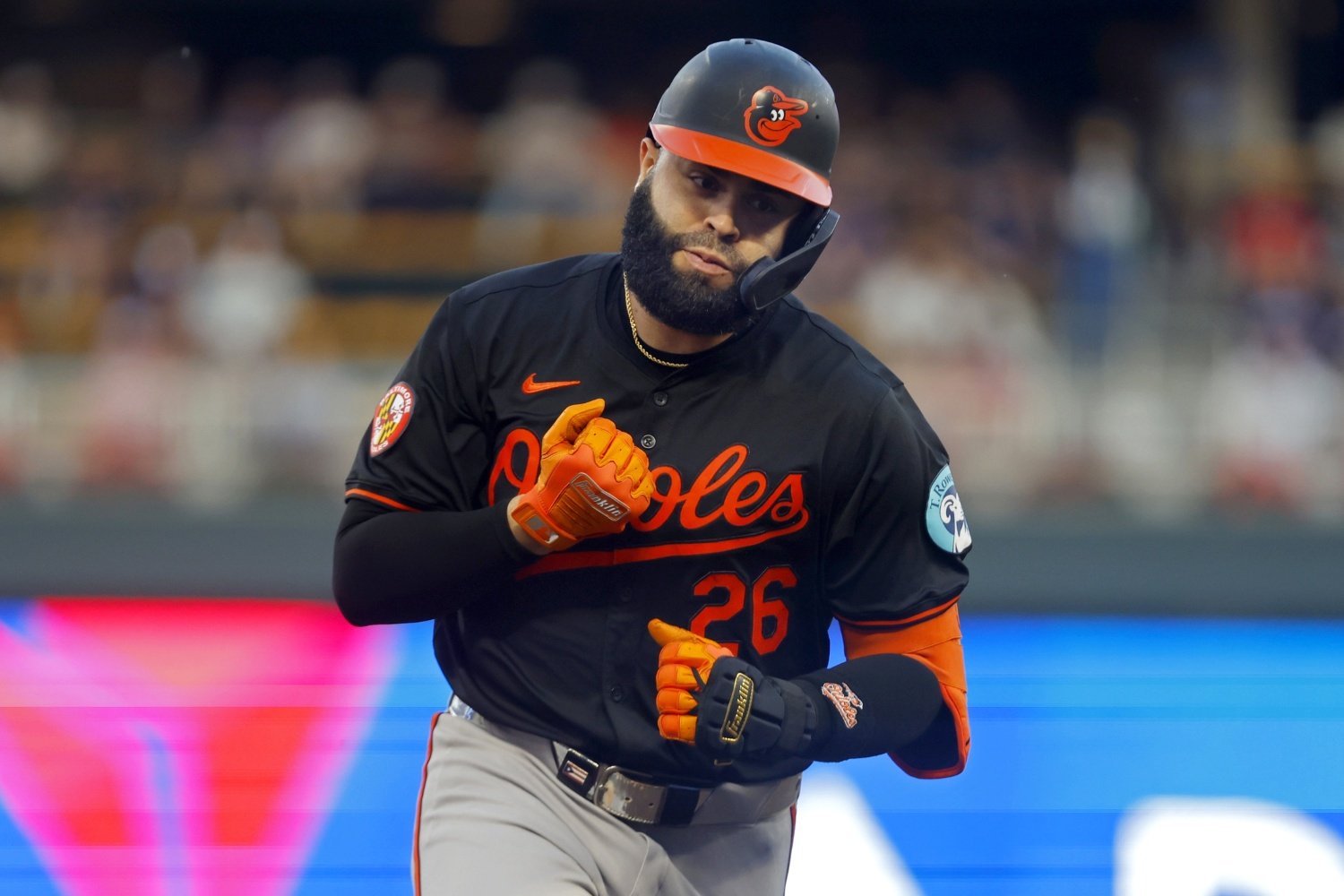 The Royals scooped up infielder Emmanuel Rivera in the 2015 Draft, and they made him into a modestly desirable little player. He'd played in fewer than 100 games for them, though, when they traded him at the 2022 trade deadline for then-Diamondbacks righty Luke Weaver. (Royals should've kept Weaver. Oops.) Rivera carved out a part-time role as a platoon infielder in Arizona that lasted the rest of 2022 and all of 2023, including 19 (mostly ineffective) plate appearances during the postseason in the Diamondbacks' unexpected run to the World Series. However, Rivera didn't make the Opening Day roster for Arizona in 2024, and landed with the Marlins in a cash transaction in early April. Given a good, long look by a truly terrible team, Rivera had the worst stretch of his career, with a .214/.294/.269 batting line that will even get you bounced from the perpetual landfill that is Miami's infield. The Orioles claimed him, though, and he came back to life in a big way for them down the stretch, hitting .313/.370/.578 in very limited action. It was a great rebound for him, and proof that he didn't go permanently to pieces during his South Florida sojourn. He's torn the cover off the ball in a brief stint in two Caribbean Winter Leagues, too. Baltimore needed him mostly because of injuries, though, and won't have room on their crowded roster for him going forward. His projected $1.4 million salary is miles from onerous, but the Orioles have Jackson Holliday, Gunnar Henderson, Jordan Westburg, and Coby Mayo lined up for playing time around the infield. Rivera is going to be an odd man out, sooner or later. The Brewers should make it be sooner. Rivera was clearly dragged down by some fault of instruction, morale, or health while in Miami, but his swings got materially better when he made the move to Baltimore, right along with his numbers. Note the steady rise in his average bat speed after the change of team in late summer. Rivera will never be a high-end slugger, but he has a strong, balanced skill set. He chases outside the zone at an average or better rate. He doesn't swing and miss unduly often, especially within the zone. He lacks the ability to crush the ball, but he hits it fairly hard with above-average consistency. It's noteworthy that that combination—a high volume of solid contact, but paired with below-average top-end numbers—is a commonality Rivera shares with some very good hitters. Now 28 years old, Rivera has three years of team control remaining, although as three teams have already shown, he might be a bit less of a fixture than a nice bridge piece. He can be very much that, though. He's acquitted himself well at the hot corner over his career, with 2 Defensive Runs Saved at third base, where he would play if the Brewers landed him this winter. The resulting move of Joey Ortiz to shortstop is what most assume will happen, anyway, so Rivera is the right general type of player to fit expectations. Some fans, surely, are hoping for a player with more raw talent, but this would be a very inexpensive acquisition. If, for instance, the Brewers traded Devin Williams to Baltimore, Rivera could be a secondary piece in a package. Otherwise, a trade for him would require only a modest prospect or other piece to be sent the Orioles' way. Meanwhile, the team would keep most of their financial powder dry, and could spend more money or prospect capital elsewhere on the roster. Rivera would make an especially appealing platoon partner, should Oliver Dunn come to spring looking healthy and with the holes big-league pitchers pointed out in his swing last year patched up. These types of moves are so unsexy that fans tend neither to crave nor to like them. Often, though, they pay off in ways just as satisfying as brand-name acquisitions. Rivera is likely available. The deadline to tender contracts to arbitration-eligible players is Friday. These two teams could match up on a deal, and very soon. If they did, while it might seem unimpressive, the trade could be one that propels the Brewers incrementally toward a third straight NL Central championship.
 -
You guys are great about following the minors. I know Patrick was no secret to any of you—nor to me! But there were people even within the Brewers who were unsure whether they'd protect him, as recently as early this month. So, calibrate your understanding of his place within the org and the broader baseball world accordingly. It was NOT a foregone conclusion this would happen, by any means, even if you think (perhaps correctly!) it should have been.
- 12 replies
-
- 1
-
-
- logan henderson
- chad patrick
- (and 1 more)
-
In their initial round of moves on what could be a very busy Tuesday, the Brewers added one prospect everyone expected to their big-league roster—and one who had been considered very much in limbo. The Milwaukee Brewers added both Logan Henderson and Chad Patrick to their 40-man roster Tuesday, shielding each from the Rule 5 Draft that takes place next month at the end of MLB's Winter Meetings. Henderson, one of the team's top pitching prospects, had been expected to join the reserve list, but the lesser-known Patrick is (perhaps) a mild surprise. He pitched well in Triple A last year, but the fact that the team never called him up amid ample need for pitching help late in the season led some to question whether they view him as a contributor at the highest level. They must, though, because Patrick (whom they got in a minor trade with Oakland last winter) might not have been selected in the Rule 5 anyway. By placing him on the 40-man, they affirmed their willingness to give him a valuable and scarce resource (that roster spot), a step they would not have taken if they didn't anticipate putting him on a big-league mound some time in 2025. Henderson, of course, is a different story. It was easy to see his selection coming. Earlier this fall, our community voted him the eighth-best prospect in a solid farm system. His low arm slot and hard, flat-VAA fastball are a great starting point, and his secondary stuff made solid progress in 2024. Had the Brewers not protected him, he would have been one of the first players snapped up. As it is, he now becomes a serious candidate to pitch for Milwaukee next season, too—although that would be unlikely to happen before roughly midseason. Perhaps most notably, these two additions leave two more vacant roster spots, with a handful of hours left before MLB's deadline for adding players to protect them from the Rule 5. The team could yet elect to protect, for instance, Coleman Crow (despite his discouraging turn in the Arizona Fall League, coming off Tommy John surgery) or Shane Smith. Failing that, and even more intriguingly, perhaps they'll look to scoop up a player or two the same way they did with Jake Bauers and Oliver Dunn last winter. It was this same week last November that they traded a quartet of far-off prospects for Bauers and Dunn, as the Yankees were prepared to non-tender Bauers and the Phillies were unwilling to add Dunn to their 40-man list. The team could merely keep those spots open to claim players who become available at other points in the winter or to sign free agents, of course, but the openings invite some speculation. While neither Bauers nor Dunn had quite the dream season some of their biggest boosters might have envisioned, each had moments in which they looked like strong pickups, and none of the minor-league talent dealt away feels like much of a loss a year on. Maybe Matt Arnold is interested in going back to the well with an acquisition strategy that served him well last November. Several other teams around the league face much tighter roster crunches than the Crew's, so opportunity is out there. View full article
-
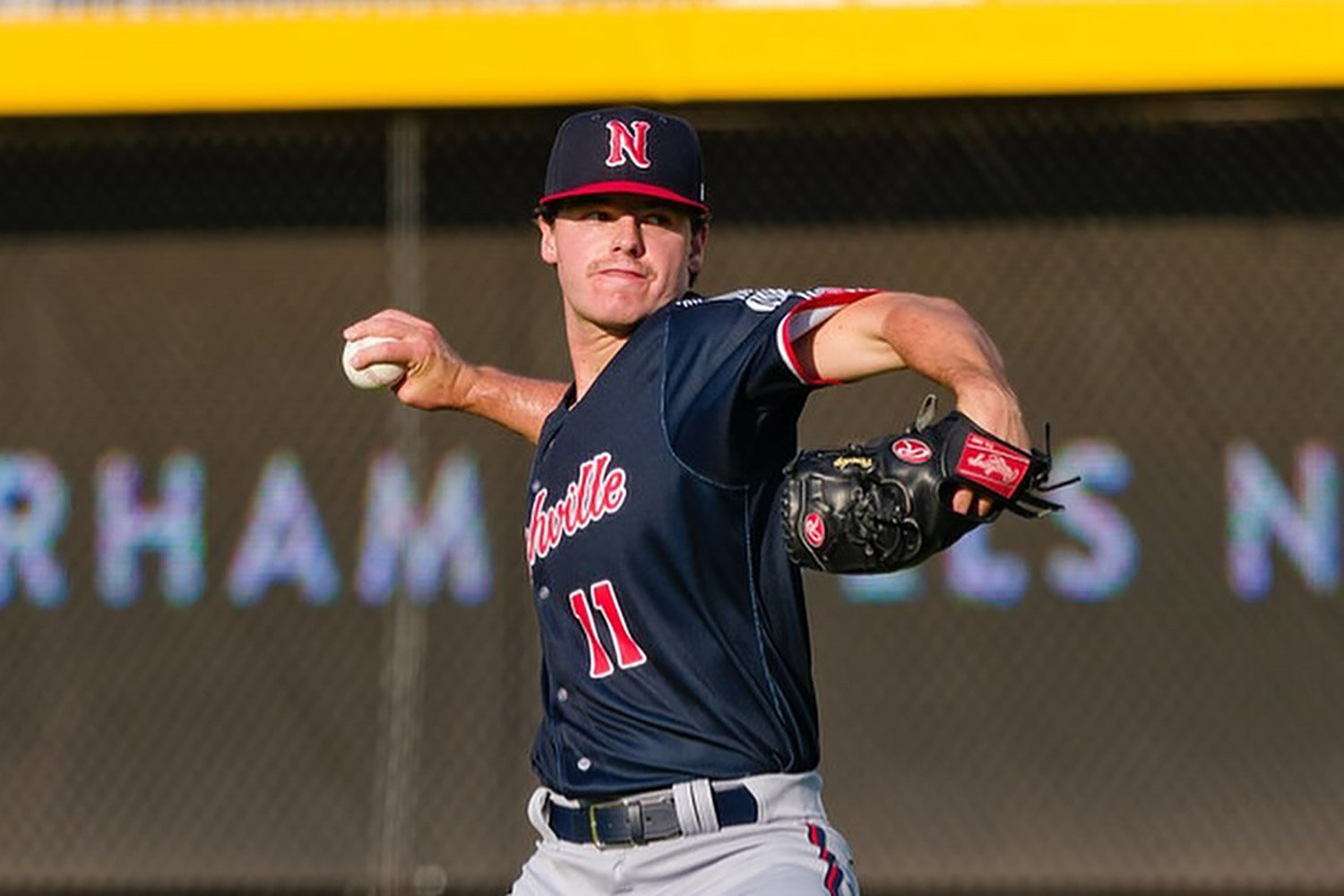 The Milwaukee Brewers added both Logan Henderson and Chad Patrick to their 40-man roster Tuesday, shielding each from the Rule 5 Draft that takes place next month at the end of MLB's Winter Meetings. Henderson, one of the team's top pitching prospects, had been expected to join the reserve list, but the lesser-known Patrick is (perhaps) a mild surprise. He pitched well in Triple A last year, but the fact that the team never called him up amid ample need for pitching help late in the season led some to question whether they view him as a contributor at the highest level. They must, though, because Patrick (whom they got in a minor trade with Oakland last winter) might not have been selected in the Rule 5 anyway. By placing him on the 40-man, they affirmed their willingness to give him a valuable and scarce resource (that roster spot), a step they would not have taken if they didn't anticipate putting him on a big-league mound some time in 2025. Henderson, of course, is a different story. It was easy to see his selection coming. Earlier this fall, our community voted him the eighth-best prospect in a solid farm system. His low arm slot and hard, flat-VAA fastball are a great starting point, and his secondary stuff made solid progress in 2024. Had the Brewers not protected him, he would have been one of the first players snapped up. As it is, he now becomes a serious candidate to pitch for Milwaukee next season, too—although that would be unlikely to happen before roughly midseason. Perhaps most notably, these two additions leave two more vacant roster spots, with a handful of hours left before MLB's deadline for adding players to protect them from the Rule 5. The team could yet elect to protect, for instance, Coleman Crow (despite his discouraging turn in the Arizona Fall League, coming off Tommy John surgery) or Shane Smith. Failing that, and even more intriguingly, perhaps they'll look to scoop up a player or two the same way they did with Jake Bauers and Oliver Dunn last winter. It was this same week last November that they traded a quartet of far-off prospects for Bauers and Dunn, as the Yankees were prepared to non-tender Bauers and the Phillies were unwilling to add Dunn to their 40-man list. The team could merely keep those spots open to claim players who become available at other points in the winter or to sign free agents, of course, but the openings invite some speculation. While neither Bauers nor Dunn had quite the dream season some of their biggest boosters might have envisioned, each had moments in which they looked like strong pickups, and none of the minor-league talent dealt away feels like much of a loss a year on. Maybe Matt Arnold is interested in going back to the well with an acquisition strategy that served him well last November. Several other teams around the league face much tighter roster crunches than the Crew's, so opportunity is out there.
 -
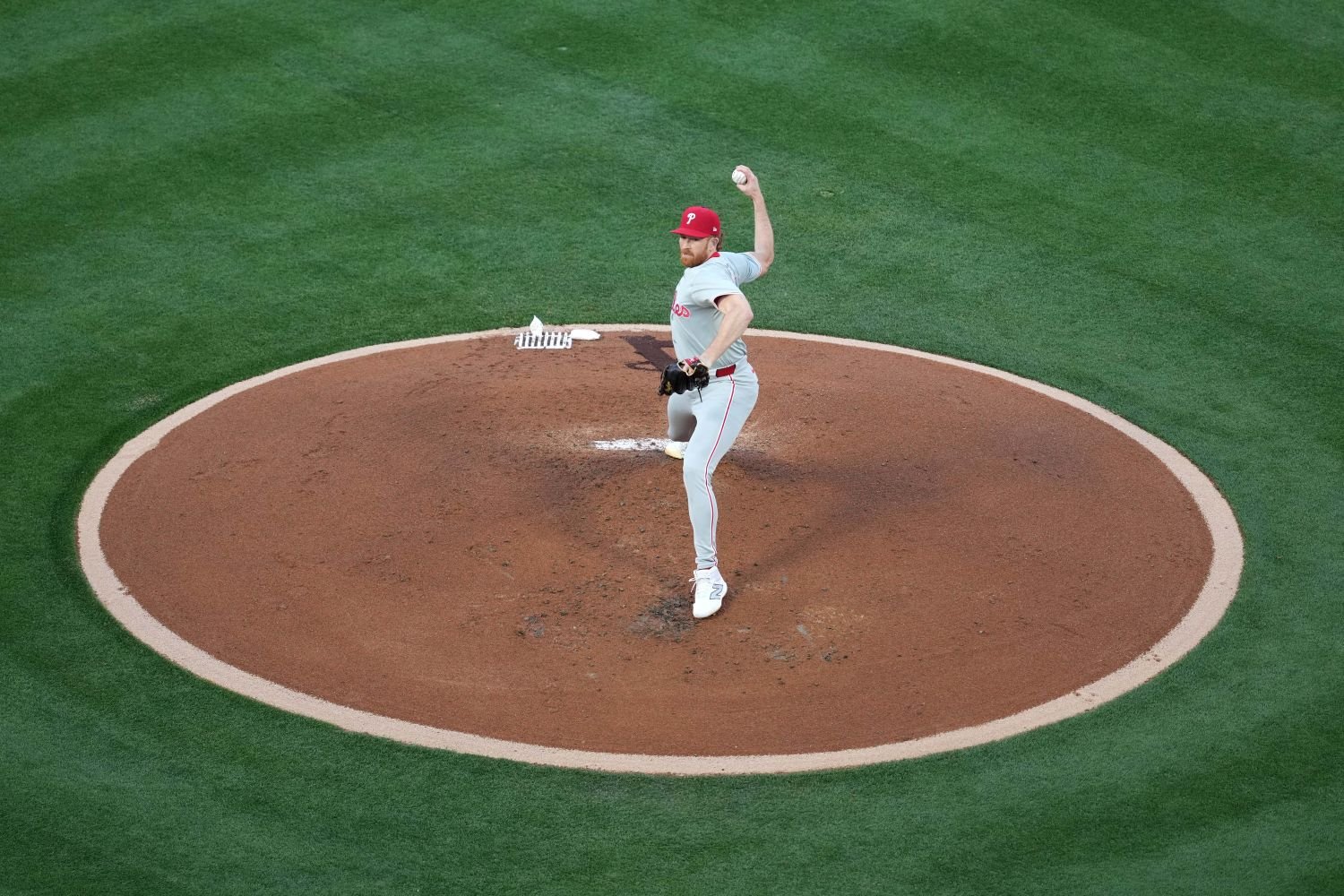 About a week after trading Corbin Burnes to the Orioles last winter, the Brewers turned around and made a surprising expenditure, signing right-handed hurler Jakob Junis to a one-year deal worth $7 million. It was an odd move, inasmuch as many onlookers had assumed that the primary reason for trading Burnes was to get rid of the eight-figure salary on which he and the team had agreed to avoid arbitration earlier in the winter. In truth, of course, the Crew traded Burnes not out of cheapness, but because they could never have recouped as much value by letting him walk in free agency and accepting a lone draft pick in return as they got by dealing him. Baltimore sent them Joey Ortiz, DL Hall, and a draft pick right around the one they would have gotten had they let Burnes leave with a qualifying offer this winter instead. Having done that, the team actually reinvested all the money they had owed him. Junis was one post-Burnes signee; Gary Sánchez was, ultimately, another. They made a combined $14 million for 2024, although the accounting trick that is the mutual option allowed the team to push some of that real cost off into 2025. After trading Burnes, the team spent every dime they would have spent by keeping Burnes, and although neither Hall nor Junis was expected to replace Burnes, the long-term value they found in the bargain was impossible to resist. This winter, the team is less likely to spend splashy amounts of money, before or after any trades to jettison committed salary. They'll trade Devin Williams, but in the wake of a change in their broadcasting distribution that will reduce their TV revenue substantially, they might not replace every dime they would have spent on Williams. Even if they do, it might need to be virtually their whole winter's worth of established external additions. They'll need to find the rest of their necessary improvements through players (like Brandon Woodruff and Christian Yelich) being healthier; young players getting better; and whatever talent they reel in by trading Williams, like Ortiz and Hall last offseason. Let's assume, though, that they can sign someone to at least partially replace the payroll they'll offload by moving Williams. It would be nice if that player were a starting pitcher, too, because at the moment, that's the thinnest unit on the roster as they look toward 2025. Enter Spencer Turnbull. The ex-Tigers righthander has been on the national radar before, but Tommy John surgery stopped his first attempt to break out. He'd just started to regain some juice in his new digs with the Phillies, when the injury bug bit again and he missed the entire second half of the 2024 campaign with a lat strain. He's a free agent, and everyone knows he has good stuff and the capacity to dominate. Yet, because of his checkered health record and lack of consistent big-league success to date, he's only projected to get $7 million on a one-year deal, according to MLB Trade Rumors. That's precisely what the Crew paid for Junis last year. With Turnbull, though, the ceiling is higher, and the floor is lower. He has devastating stuff, with heat that can sit anywhere from 92 to 95 and touches 97 miles per hour, when he sinks it. More often, he uses a four-seamer, but that pitch itself is more akin to a cutter: it's not as hard as his sinker, it doesn't have much ride, and he definitely commands it better to his glove side. The two offerings are great partners to each other, too, and Turnbull's arsenal was really set off this season by his development of a sweeper that plays nicely off of each. Turnbull Sweeper.mp4 With that potent combination going for him, Turnbull had a 2.65 ERA before going down with the lat issue. It's clear not only that he can dominate opposing hitters, but that he can do so as a starter, with a mix that runs as many as six pitches deep when needed. There are non-traditional and even risky things to this profile, even beyond the injury questions. As the large spread of those dots representing the movement of individual pitches hints, his sweeper and slider are pretty scattershot. He doesn't have the unfortunate habit some pitchers do, which is to hang that pitch, but he does miss so widely sometimes that the result is a non-competitive offering. As a result, he's run into some issues with walks in the past. Furthermore, other than his curveball (a fine but not primary pitch), he doesn't have a great way to truly change eye levels through movement alone. He struck out 26.1% of opposing batters in 2024, but his long-term rate is likely to come in lower. Without at least those yellow flags, of course, he wouldn't be available in the Brewers' price range. Turnbull isn't perfect, but he might be perfect for Milwaukee, where he could slide unobtrusively into the back end of the rotation. He's perfect for that role, because he has experience as a reliever, so if a young arm like Hall or Ashby impresses the team deeply in the spring, Turnbull can move to the bullpen. If someone gets hurt, though, the team would probably feel fairly good about sliding Turnbull up the hierarchy, toward the middle of the rotation. That sweet spot makes him a good fit, even if there's less money available this winter for that kind of reinforcement.
 -
Last winter, one of the most unexpected moves the Brewers made was snaring a swingman coming off a promising but low-wattage season. Maybe they should replicate that approach this offseason. Image courtesy of © Kirby Lee-Imagn Images About a week after trading Corbin Burnes to the Orioles last winter, the Brewers turned around and made a surprising expenditure, signing right-handed hurler Jakob Junis to a one-year deal worth $7 million. It was an odd move, inasmuch as many onlookers had assumed that the primary reason for trading Burnes was to get rid of the eight-figure salary on which he and the team had agreed to avoid arbitration earlier in the winter. In truth, of course, the Crew traded Burnes not out of cheapness, but because they could never have recouped as much value by letting him walk in free agency and accepting a lone draft pick in return as they got by dealing him. Baltimore sent them Joey Ortiz, DL Hall, and a draft pick right around the one they would have gotten had they let Burnes leave with a qualifying offer this winter instead. Having done that, the team actually reinvested all the money they had owed him. Junis was one post-Burnes signee; Gary Sánchez was, ultimately, another. They made a combined $14 million for 2024, although the accounting trick that is the mutual option allowed the team to push some of that real cost off into 2025. After trading Burnes, the team spent every dime they would have spent by keeping Burnes, and although neither Hall nor Junis was expected to replace Burnes, the long-term value they found in the bargain was impossible to resist. This winter, the team is less likely to spend splashy amounts of money, before or after any trades to jettison committed salary. They'll trade Devin Williams, but in the wake of a change in their broadcasting distribution that will reduce their TV revenue substantially, they might not replace every dime they would have spent on Williams. Even if they do, it might need to be virtually their whole winter's worth of established external additions. They'll need to find the rest of their necessary improvements through players (like Brandon Woodruff and Christian Yelich) being healthier; young players getting better; and whatever talent they reel in by trading Williams, like Ortiz and Hall last offseason. Let's assume, though, that they can sign someone to at least partially replace the payroll they'll offload by moving Williams. It would be nice if that player were a starting pitcher, too, because at the moment, that's the thinnest unit on the roster as they look toward 2025. Enter Spencer Turnbull. The ex-Tigers righthander has been on the national radar before, but Tommy John surgery stopped his first attempt to break out. He'd just started to regain some juice in his new digs with the Phillies, when the injury bug bit again and he missed the entire second half of the 2024 campaign with a lat strain. He's a free agent, and everyone knows he has good stuff and the capacity to dominate. Yet, because of his checkered health record and lack of consistent big-league success to date, he's only projected to get $7 million on a one-year deal, according to MLB Trade Rumors. That's precisely what the Crew paid for Junis last year. With Turnbull, though, the ceiling is higher, and the floor is lower. He has devastating stuff, with heat that can sit anywhere from 92 to 95 and touches 97 miles per hour, when he sinks it. More often, he uses a four-seamer, but that pitch itself is more akin to a cutter: it's not as hard as his sinker, it doesn't have much ride, and he definitely commands it better to his glove side. The two offerings are great partners to each other, too, and Turnbull's arsenal was really set off this season by his development of a sweeper that plays nicely off of each. Turnbull Sweeper.mp4 With that potent combination going for him, Turnbull had a 2.65 ERA before going down with the lat issue. It's clear not only that he can dominate opposing hitters, but that he can do so as a starter, with a mix that runs as many as six pitches deep when needed. There are non-traditional and even risky things to this profile, even beyond the injury questions. As the large spread of those dots representing the movement of individual pitches hints, his sweeper and slider are pretty scattershot. He doesn't have the unfortunate habit some pitchers do, which is to hang that pitch, but he does miss so widely sometimes that the result is a non-competitive offering. As a result, he's run into some issues with walks in the past. Furthermore, other than his curveball (a fine but not primary pitch), he doesn't have a great way to truly change eye levels through movement alone. He struck out 26.1% of opposing batters in 2024, but his long-term rate is likely to come in lower. Without at least those yellow flags, of course, he wouldn't be available in the Brewers' price range. Turnbull isn't perfect, but he might be perfect for Milwaukee, where he could slide unobtrusively into the back end of the rotation. He's perfect for that role, because he has experience as a reliever, so if a young arm like Hall or Ashby impresses the team deeply in the spring, Turnbull can move to the bullpen. If someone gets hurt, though, the team would probably feel fairly good about sliding Turnbull up the hierarchy, toward the middle of the rotation. That sweet spot makes him a good fit, even if there's less money available this winter for that kind of reinforcement. View full article
-
Ok, that's a joke. But also, only kind of. Image courtesy of © Rick Scuteri-Imagn Images When he was a prospect in the New York Yankees system, Deivi García really was called "Little Pedro" in some circles. That's a viciously unfair sobriquet to attach to a young pitcher, and García never came especially close to looking like Pedro Martínez against big-league batters for New York, but it's not an appellation anyone comes by through sheer coincidence. García was, like the Hall of Famer, a short (5-foot-9), right-handed Dominican starter with an electric arm and a devastating changeup. He just hasn't had the confluence of good health and consistent improvement necessary to emerge as a star. It's almost laughable to pretend that corner could still be turned. In 2024, García spent more of the season in Triple A than in the big leagues, despite playing for the White Sox. The very worst team in baseball history couldn't find room on their roster for him, and it's not solely through their own incompetence or stupidity: García had an unseemly 7.07 ERA and walked 11 in his 14 innings with the Sox. He is, right now, pretty bad, and at his current age, Martínez was just blooming into his full form, overwhelming and overpowering the National League en route to the 1997 NL Cy Young Award. So, what gives with the title of this piece? Again, it's kind of a gag. It's a joke about the former top prospect's name value outstripping his apparent on-field value, and about the Brewers' recent run of very impressive pitching development feats, and about that forced comp to a Hall of Famer that will hang on him like a 40-pound weight almost no matter what he does the rest of his career. But, it's also not entirely a joke. There's stuff to like with García—or rather, there's reason to believe the Crew really can fix some of the stuff that is currently not likable at all. García's biggest problem—not the only one, but you have to start somewhere—is an overlarge gap in his release points based on pitch type. Don't just see this chart; read the numbers and imagine the scope of variation they describe. García effectively has two different release points: one for his fastball and changeup, and a discernibly different one for his other offerings. That's never good. You can see that he does release the sweeper from the same cluster as the four-seamer and changeup, more or less. but it's not the tight distribution of release points you might prefer from a pitcher. It's important to ground-truth these things to ensure that a pitcher didn't make a midseason change in arm slot or position on the rubber, but García didn't. The same plot for Freddy Peralta can be mapped just as neatly onto a 16x16-inch plot, rather than 20x20, and without the same degree of misshapen spray. García hasn't found a way to be mechanically consistent, which was always a worry for him because of his size and how hard he throws. Let's flip that, though, and view it the other way. Sure, he's a bit of a mess in terms of repeating his delivery, but we know the Brewers are superb at helping such pitchers along. He also throws 95 with his fastball and touches 98, and we know that often, when the Brewers do adjust a pitcher's mechanics, they pick up a tick of velocity. Not only does García already throw hard, but he does it from a low release point, giving himself a 97th-percentile vertical approach angle. It's a flat, hard fastball, and thus, even with merely average induced vertical break, it can miss a lot of bats at the top of the strike zone. It's also a pitch with more horizontal movement than most four-seamers, and much more variability in terms of horizontal movement from one pitch to the next than most pitchers have. Look at that chart, and you can envision a lot of what the Brewers will be eager to do with him. That fastball can pretty readily split into two different ones, with more of a sinker to set up his sweeper and the riding four-seamer to set up his cutter (which is more like a hard slider). I would guess we'll see Milwaukee try to get him throwing the sweeper more, split out the fastball intwo two different pitches, and reemphasize the changeup at the expense of the hard breaker. The curveball, if it stays in the arsenal at all, will become a strike-stealing soul-snatcher when hitters least expect it. García just doesn't disguise that pitch well, and he doesn't really need it, if he takes to the adjustments the Brewers introduce. Throwing enough strikes will be paramount, and while Chris Hook and company have done a lot with less in the past, it would be unfair to assume they can automatically tame this wild arm. If they can, though, the upside is still great. García is a reliever, at this stage of his career, but he's the kind who can go multiple innings and work all the way through an opposing lineup once. With a sinker-sweeper-cutter-four-seamer mix for righties and a four-seamer-changeup-sweeper mix for lefties, he could be as tough as Joel Payamps in the pen. That he won't take up a spot on the 40-man this winter is a huge bonus for the Brewers. Now, they can bring him to camp In February, see how well he takes to some new pointers and how good the ball looks coming out of his hand, and delay any real decision point until around or beyond Opening Day. He's just a flier, but as fliers go, this one has real wings to it. The Brewers, meanwhile, are unbeatable flight instructors of late. View full article
-
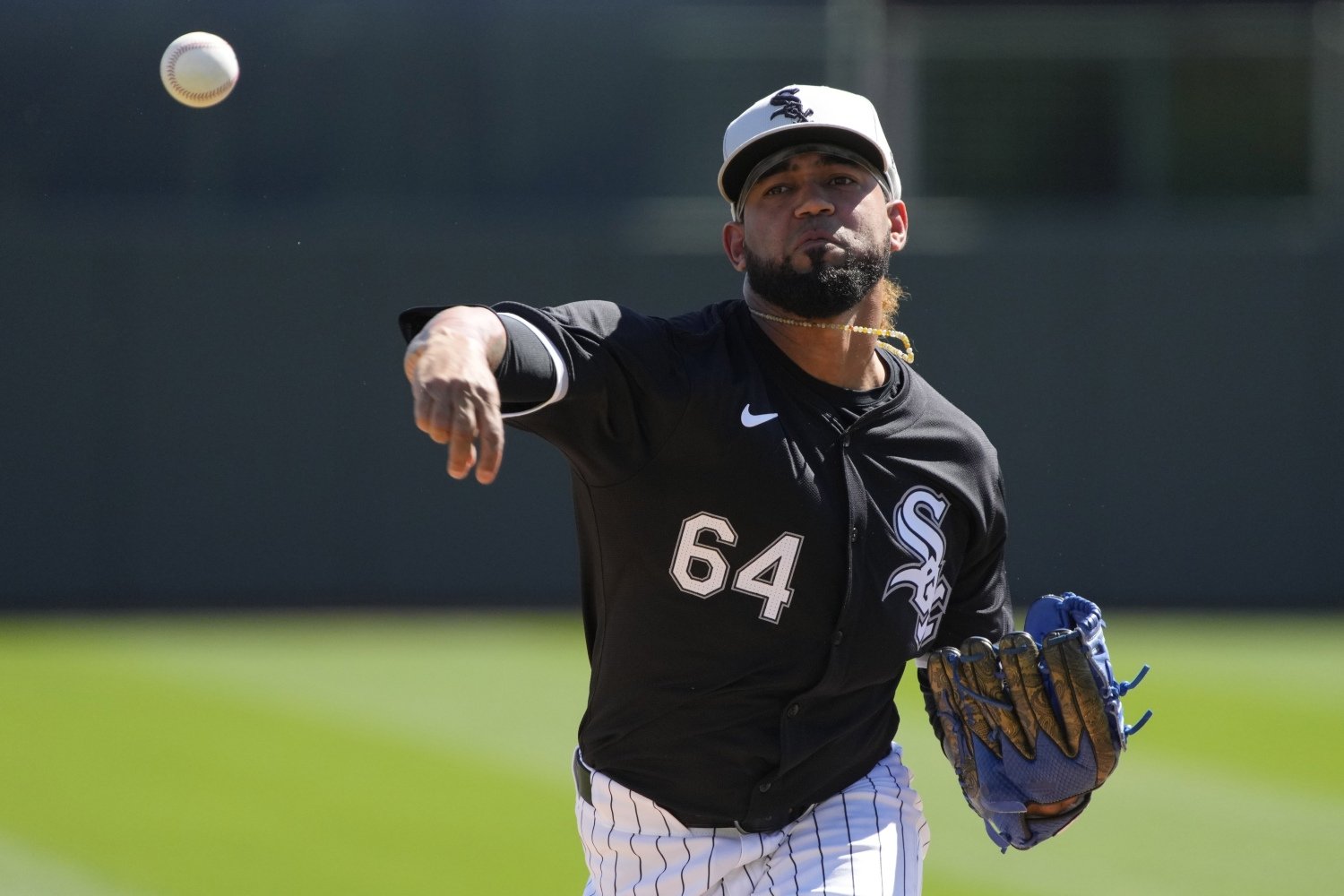 When he was a prospect in the New York Yankees system, Deivi García really was called "Little Pedro" in some circles. That's a viciously unfair sobriquet to attach to a young pitcher, and García never came especially close to looking like Pedro Martínez against big-league batters for New York, but it's not an appellation anyone comes by through sheer coincidence. García was, like the Hall of Famer, a short (5-foot-9), right-handed Dominican starter with an electric arm and a devastating changeup. He just hasn't had the confluence of good health and consistent improvement necessary to emerge as a star. It's almost laughable to pretend that corner could still be turned. In 2024, García spent more of the season in Triple A than in the big leagues, despite playing for the White Sox. The very worst team in baseball history couldn't find room on their roster for him, and it's not solely through their own incompetence or stupidity: García had an unseemly 7.07 ERA and walked 11 in his 14 innings with the Sox. He is, right now, pretty bad, and at his current age, Martínez was just blooming into his full form, overwhelming and overpowering the National League en route to the 1997 NL Cy Young Award. So, what gives with the title of this piece? Again, it's kind of a gag. It's a joke about the former top prospect's name value outstripping his apparent on-field value, and about the Brewers' recent run of very impressive pitching development feats, and about that forced comp to a Hall of Famer that will hang on him like a 40-pound weight almost no matter what he does the rest of his career. But, it's also not entirely a joke. There's stuff to like with García—or rather, there's reason to believe the Crew really can fix some of the stuff that is currently not likable at all. García's biggest problem—not the only one, but you have to start somewhere—is an overlarge gap in his release points based on pitch type. Don't just see this chart; read the numbers and imagine the scope of variation they describe. García effectively has two different release points: one for his fastball and changeup, and a discernibly different one for his other offerings. That's never good. You can see that he does release the sweeper from the same cluster as the four-seamer and changeup, more or less. but it's not the tight distribution of release points you might prefer from a pitcher. It's important to ground-truth these things to ensure that a pitcher didn't make a midseason change in arm slot or position on the rubber, but García didn't. The same plot for Freddy Peralta can be mapped just as neatly onto a 16x16-inch plot, rather than 20x20, and without the same degree of misshapen spray. García hasn't found a way to be mechanically consistent, which was always a worry for him because of his size and how hard he throws. Let's flip that, though, and view it the other way. Sure, he's a bit of a mess in terms of repeating his delivery, but we know the Brewers are superb at helping such pitchers along. He also throws 95 with his fastball and touches 98, and we know that often, when the Brewers do adjust a pitcher's mechanics, they pick up a tick of velocity. Not only does García already throw hard, but he does it from a low release point, giving himself a 97th-percentile vertical approach angle. It's a flat, hard fastball, and thus, even with merely average induced vertical break, it can miss a lot of bats at the top of the strike zone. It's also a pitch with more horizontal movement than most four-seamers, and much more variability in terms of horizontal movement from one pitch to the next than most pitchers have. Look at that chart, and you can envision a lot of what the Brewers will be eager to do with him. That fastball can pretty readily split into two different ones, with more of a sinker to set up his sweeper and the riding four-seamer to set up his cutter (which is more like a hard slider). I would guess we'll see Milwaukee try to get him throwing the sweeper more, split out the fastball intwo two different pitches, and reemphasize the changeup at the expense of the hard breaker. The curveball, if it stays in the arsenal at all, will become a strike-stealing soul-snatcher when hitters least expect it. García just doesn't disguise that pitch well, and he doesn't really need it, if he takes to the adjustments the Brewers introduce. Throwing enough strikes will be paramount, and while Chris Hook and company have done a lot with less in the past, it would be unfair to assume they can automatically tame this wild arm. If they can, though, the upside is still great. García is a reliever, at this stage of his career, but he's the kind who can go multiple innings and work all the way through an opposing lineup once. With a sinker-sweeper-cutter-four-seamer mix for righties and a four-seamer-changeup-sweeper mix for lefties, he could be as tough as Joel Payamps in the pen. That he won't take up a spot on the 40-man this winter is a huge bonus for the Brewers. Now, they can bring him to camp In February, see how well he takes to some new pointers and how good the ball looks coming out of his hand, and delay any real decision point until around or beyond Opening Day. He's just a flier, but as fliers go, this one has real wings to it. The Brewers, meanwhile, are unbeatable flight instructors of late.
 -
It's not how you start; it's how you finish. If the Brewers want to finish a season stronger than by exiting the playoffs in the first round, they have to get to the postseason fresher. Right? Image courtesy of © Brett Davis - Imagn Images On Tuesday afternoon, Willy Adames will officially turn down the qualifying offer the Brewers extended to him a few days after the end of the World Series. While that won't quite mark a final separation between the team and its erstwhile All-Star shortstop, in practice, that's what it is. Milwaukee is likely to reduce payroll (albeit slightly) in 2025, and Adames is set to achieve a massive payday in free agency. The loss will be deeply felt, because Adames was a tone-setter and a leader, as well as a brilliant performer. Most famously, perhaps, Adames and William Contreras wanted to be in the lineup every day for the bulk of 2024. Every. Single. Day. It was a somewhat old-school approach, and one the team first met with ambivalence—but then embraced. Pat Murphy tried to give both players a day off once in the early going, only to have them show up in his office pleading to play. That's the kind of energy, passion, and tenacity every team wants from its stars. Murphy acceded to their request, though each later rested at least a little. When October came, Adames still looked pretty strong, too. Brice Turang and Sal Frelick, who each played almost every day all season, played very well in the NL Wild Card Series, despite this being their first full and uninterrupted seasons in the majors and despite their smallish statures. Contreras, though, was a wreck. His knee was in pain, and required a heavy brace just to permit him to play. As much as the team depended on Contreras all season (and especially after Christian Yelich went down with back surgery in the summer), his incapacitation was a painful blow. Contreras is a perfect illustration of why few teams let their top stars play extremely often, relative to their positional peers. Doing so tends to erode plate discipline and other types of on-field decision-making, and it also increases injury risk. Days off to ensure rest and get players as far as the postseason without tiring out are part of the standard industry operating procedure, these days. The Brewers didn't do it as much as most of their rivals, and it did bite them, although not as early or as badly as it could have. Of course, Murphy had another, even better reason for letting Adames and Contreras set the standard and play almost every day: the Brewers' positional depth was immediately depleted and wasn't as good as hoped for much of the season. Giving Adames days off to permit some position switching and an appearance for Oliver Dunn made sense early on, but quickly, Dunn proved himself to have some major holes in his swing, and he then got hurt. Tyler Black's early returns in the big leagues weren't impressive. Andruw Monasterio became a fairly ineffectual extra infielder. Garrett Mitchell getting hurt early and Yelich getting hurt late alleviated much of the expected pressure on outfield playing time. Going forward, the Brewers want and expect to have better depth. If they accomplish that goal (despite modest means) this winter, Murphy will readily adapt. Early in the season, we should see more platooning of Turang and Frelick, or even of Joey Ortiz. We should see days off for every regular, almost in rotation, throughout the first four months. That should give them a bit of extra pep late in the season. Last year's Brewers did almost everything well, but they fell short in terms of load management. To do it better next year, they need better alternative options than Dunn, Monasterio, or Jake Bauers. That project begins this week, as the Brewers will be on the lookout for players to scoop up amid league-wide roster crunches. View full article
-
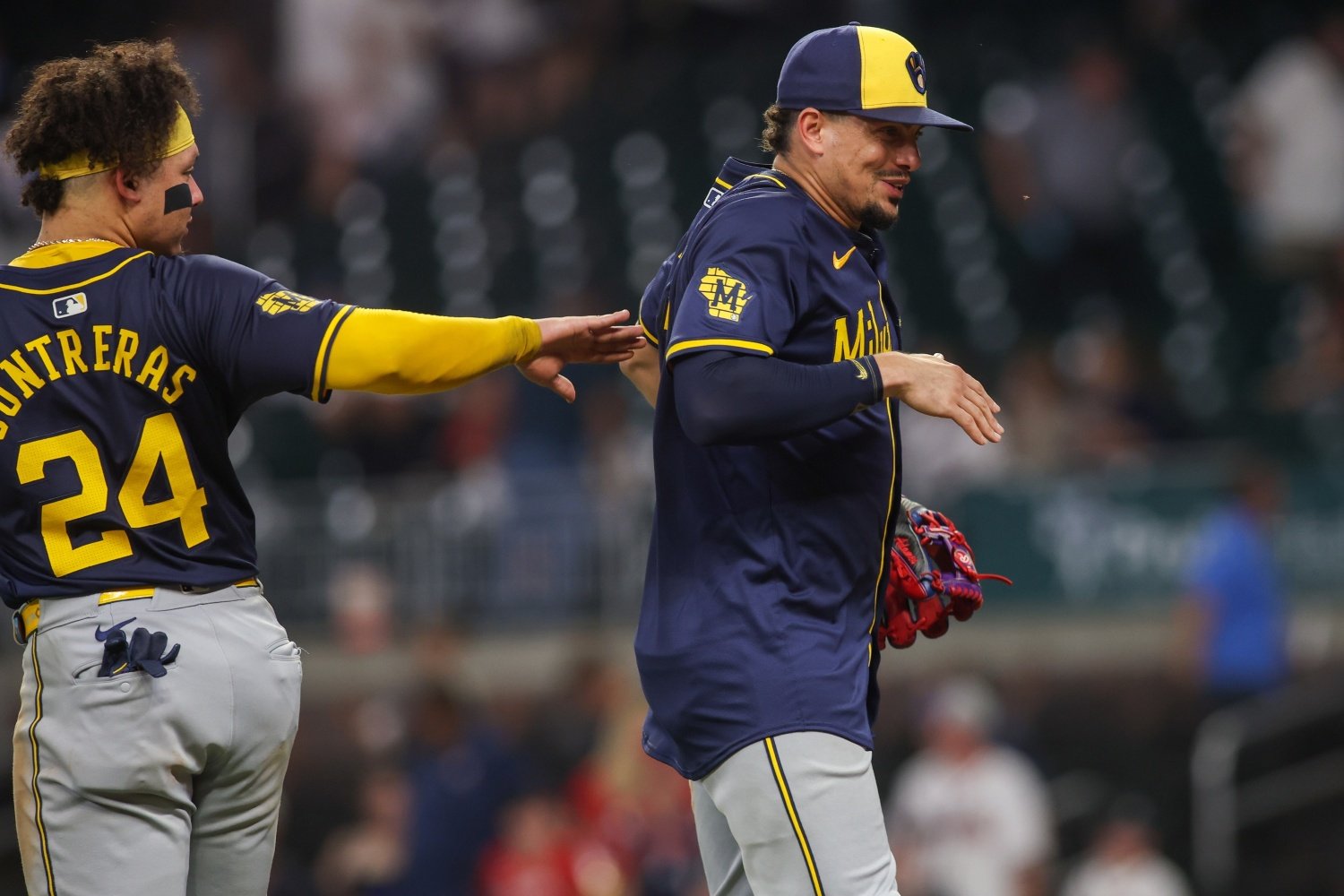 On Tuesday afternoon, Willy Adames will officially turn down the qualifying offer the Brewers extended to him a few days after the end of the World Series. While that won't quite mark a final separation between the team and its erstwhile All-Star shortstop, in practice, that's what it is. Milwaukee is likely to reduce payroll (albeit slightly) in 2025, and Adames is set to achieve a massive payday in free agency. The loss will be deeply felt, because Adames was a tone-setter and a leader, as well as a brilliant performer. Most famously, perhaps, Adames and William Contreras wanted to be in the lineup every day for the bulk of 2024. Every. Single. Day. It was a somewhat old-school approach, and one the team first met with ambivalence—but then embraced. Pat Murphy tried to give both players a day off once in the early going, only to have them show up in his office pleading to play. That's the kind of energy, passion, and tenacity every team wants from its stars. Murphy acceded to their request, though each later rested at least a little. When October came, Adames still looked pretty strong, too. Brice Turang and Sal Frelick, who each played almost every day all season, played very well in the NL Wild Card Series, despite this being their first full and uninterrupted seasons in the majors and despite their smallish statures. Contreras, though, was a wreck. His knee was in pain, and required a heavy brace just to permit him to play. As much as the team depended on Contreras all season (and especially after Christian Yelich went down with back surgery in the summer), his incapacitation was a painful blow. Contreras is a perfect illustration of why few teams let their top stars play extremely often, relative to their positional peers. Doing so tends to erode plate discipline and other types of on-field decision-making, and it also increases injury risk. Days off to ensure rest and get players as far as the postseason without tiring out are part of the standard industry operating procedure, these days. The Brewers didn't do it as much as most of their rivals, and it did bite them, although not as early or as badly as it could have. Of course, Murphy had another, even better reason for letting Adames and Contreras set the standard and play almost every day: the Brewers' positional depth was immediately depleted and wasn't as good as hoped for much of the season. Giving Adames days off to permit some position switching and an appearance for Oliver Dunn made sense early on, but quickly, Dunn proved himself to have some major holes in his swing, and he then got hurt. Tyler Black's early returns in the big leagues weren't impressive. Andruw Monasterio became a fairly ineffectual extra infielder. Garrett Mitchell getting hurt early and Yelich getting hurt late alleviated much of the expected pressure on outfield playing time. Going forward, the Brewers want and expect to have better depth. If they accomplish that goal (despite modest means) this winter, Murphy will readily adapt. Early in the season, we should see more platooning of Turang and Frelick, or even of Joey Ortiz. We should see days off for every regular, almost in rotation, throughout the first four months. That should give them a bit of extra pep late in the season. Last year's Brewers did almost everything well, but they fell short in terms of load management. To do it better next year, they need better alternative options than Dunn, Monasterio, or Jake Bauers. That project begins this week, as the Brewers will be on the lookout for players to scoop up amid league-wide roster crunches.
 -
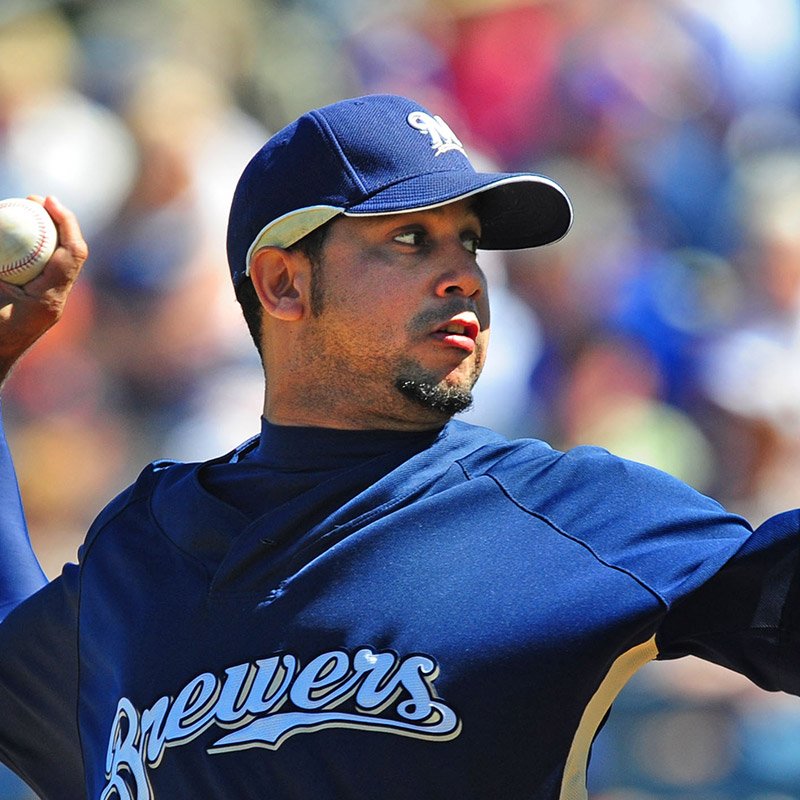 Go back to 1970, when the Seattle Pilots moved to Milwaukee and rebranded themselves as the Brewers, and their starting pitchers are just about the least dominant in the game. The only two franchises with a lower strikeout rate from their starters than the Crew has in the last five-plus decades are the Royals and Orioles. To many young Brewers fans, this might seem surprising--indeed, almost unimaginable--but they're traditionally been roughly the most pitch-to-contact team in the game. Things began to change with Ben Sheets, and that change seemed to gain a firmer foothold with the arrival of Yovani Gallardo. Over the last half-decade, with Corbin Burnes, Brandon Woodruff, and Freddy Peralta, the Brewers have had perhaps the most dominant starting pitchers in baseball. That word--"dominant"--never seemed to belong in the same sentence with Brewers starters before that, but now, it does. Right around the time of Sheets and Gallardo, though, the Crew also had guys like Claudio Vargas. In 2007, Vargas made 23 starts for a team that came up just shy in the race for the NL Central. His ERA was ugly (5.09), but he went 11-6 that year. It was his only stint as a Milwaukee starter, but he would return for a very successful run as a reliever in 2009--and then a much less successful, career-ending one in 2010. In May of 2007, though, Vargas started against the Washington Nationals. He started that contest by getting a flyout, then a groundout, then another flyout. In the second frame, he started with a flyout and another groundout, before Brian Schneider lined a single. Vargas would go on to pitch six innings of one-run ball that day. Here's why it's significant: in his career, spanning 114 starts, that's the deepest into a game Vargas ever carried a perfect game. He got twice as close to a no-hitter, as many as 10 outs before giving up his first hit in an outing. Since 1974, 708 pitchers have made at least 100 starts. Vargas is the only one who never once got through two clean innings to open things, and the only one to never get past 3 1/3 innings before surrendering a knock. That's extraordinary, but it's also typical, and not in a bad way, per se. No, Vargas wasn't an electric arm, and no, his one season as a starter with the Crew wasn't a star turn. He was a nice back-end option for a team trying to fight its way through the season, though, and more to the point, he was characteristic. Like Brewers starters throughout the franchise's history--like Jerry Augustine and Don August, like Jim Slaton and Jeff D'Amico--Vargas wasn't nasty. He didn't overwhelm or overpower hitters, though his stuff was more interesting when he came back as a reliever in 2009. He was reliant on the defense behind him, to such an extent that he never so much as turned over a lineup once before allowing a baserunner. He was valuable, though, because he was versatile, available, and viable, when other options were not. After he'd lost his rotation spot in 2007, in a Sept. 18 game in Houston, Vargas had to come on after just one inning of work from Sheets. The Crew's ace left with hamstring tightness and wouldn't pitch again that season. The Astros already had a one-run lead when Vargas took the bump, but he worked four scoreless frames, while the lineup exploded for six runs. He wasn't dominant, even that day, but Vargas could be good, and he had a knack for preventing opponents from stringing together their hits and running him out of the game. The 2007 season came to a bitter end, in no small part because of Sheets's injuries. Vargas wasn't good enough to stop the gap for the fortnight left in that campaign; just for a few emergency innings. Still, he did yeoman's work, and as the Brewers look ahead to a season without two of the three dominant pitchers who had defined them for the last several years, Vargas is an exemplar of the way the team has often succeeded by finding starters who were just good enough.
 -
Go back to 1970, when the Seattle Pilots moved to Milwaukee and rebranded themselves as the Brewers, and their starting pitchers are just about the least dominant in the game. The only two franchises with a lower strikeout rate from their starters than the Crew has in the last five-plus decades are the Royals and Orioles. To many young Brewers fans, this might seem surprising--indeed, almost unimaginable--but they're traditionally been roughly the most pitch-to-contact team in the game. Things began to change with Ben Sheets, and that change seemed to gain a firmer foothold with the arrival of Yovani Gallardo. Over the last half-decade, with Corbin Burnes, Brandon Woodruff, and Freddy Peralta, the Brewers have had perhaps the most dominant starting pitchers in baseball. That word--"dominant"--never seemed to belong in the same sentence with Brewers starters before that, but now, it does. Right around the time of Sheets and Gallardo, though, the Crew also had guys like Claudio Vargas. In 2007, Vargas made 23 starts for a team that came up just shy in the race for the NL Central. His ERA was ugly (5.09), but he went 11-6 that year. It was his only stint as a Milwaukee starter, but he would return for a very successful run as a reliever in 2009--and then a much less successful, career-ending one in 2010. In May of 2007, though, Vargas started against the Washington Nationals. He started that contest by getting a flyout, then a groundout, then another flyout. In the second frame, he started with a flyout and another groundout, before Brian Schneider lined a single. Vargas would go on to pitch six innings of one-run ball that day. Here's why it's significant: in his career, spanning 114 starts, that's the deepest into a game Vargas ever carried a perfect game. He got twice as close to a no-hitter, as many as 10 outs before giving up his first hit in an outing. Since 1974, 708 pitchers have made at least 100 starts. Vargas is the only one who never once got through two clean innings to open things, and the only one to never get past 3 1/3 innings before surrendering a knock. That's extraordinary, but it's also typical, and not in a bad way, per se. No, Vargas wasn't an electric arm, and no, his one season as a starter with the Crew wasn't a star turn. He was a nice back-end option for a team trying to fight its way through the season, though, and more to the point, he was characteristic. Like Brewers starters throughout the franchise's history--like Jerry Augustine and Don August, like Jim Slaton and Jeff D'Amico--Vargas wasn't nasty. He didn't overwhelm or overpower hitters, though his stuff was more interesting when he came back as a reliever in 2009. He was reliant on the defense behind him, to such an extent that he never so much as turned over a lineup once before allowing a baserunner. He was valuable, though, because he was versatile, available, and viable, when other options were not. After he'd lost his rotation spot in 2007, in a Sept. 18 game in Houston, Vargas had to come on after just one inning of work from Sheets. The Crew's ace left with hamstring tightness and wouldn't pitch again that season. The Astros already had a one-run lead when Vargas took the bump, but he worked four scoreless frames, while the lineup exploded for six runs. He wasn't dominant, even that day, but Vargas could be good, and he had a knack for preventing opponents from stringing together their hits and running him out of the game. The 2007 season came to a bitter end, in no small part because of Sheets's injuries. Vargas wasn't good enough to stop the gap for the fortnight left in that campaign; just for a few emergency innings. Still, he did yeoman's work, and as the Brewers look ahead to a season without two of the three dominant pitchers who had defined them for the last several years, Vargas is an exemplar of the way the team has often succeeded by finding starters who were just good enough. View full player
-
Yes, he has the screwball, just like Devin Williams's. Only none of the rest of his stuff is anything like Devin's. And actually, neither is the screwball. Image courtesy of © Curt Hogg / USA TODAY NETWORK It's remarkable that, just a year after being a relatively anonymous eighth-round pick, Craig Yoho had raised his profile so much that many Brewers fans were disappointed not to see him get a chance in the big leagues down the stretch this year. It's not normal for a pitcher to rise from that kind of entry point to professional baseball to the big leagues in a year, but Yoho nearly pulled it off, thanks to his devilish clone of the Devin Williams airbender. In 58 innings of work, he pitched to an eye-popping 0.94 ERA as he scaled three levels of the minor leagues, with 101 strikeouts. He did walk nine batters in 14 frames after a late-season promotion to Triple-A Nashville, effectively ensuring that he wouldn't get that call to the majors, but on the whole, the story of his season was dominance. Almost no one in professional baseball has a changeup that compares even loosely with the screwball thrown by Brewers closer Devin Williams, but Yoho's is similar enough to have been mentioned as the heir to the airbender many times in his year-plus as a pro. It's a natural connection, since the two offerings are more similar to one another (in terms of their depth and the extremeness of the arm-side run on them, with high spin rates to boot) than to anything anyone else in the league throws. In truth, though, they're very different pitchers—and because of that, even their twin screwballs don't really have a lot in common. Williams, on the left, has a mid-90s fastball with ample carry to it, such that the screwball plays off it the same with a power curve or a slider with good vertical depth would, only in the opposite direction laterally. Yoho, on the right, utilizes a sinker as his primary fastball, and it has the same amount of horizontal run as the scroogie. The differentiator is that extra depth on the screwball, but the vertical difference isn't as great for Yoho as for Williams. That said, you can imagine how this would be just as devastating as Williams's pitch pairing. The ball comes out of the hand doing the same thing whether Yoho is throwing the sinker or the screwball, and then it either stays on that plane or it dives, viciously. Williams used that cutter you see in the plot above in 2023, but never made real use of it in 2024. Yoho, by contrast, seems to have a good feel for his, and then he sets it all off against a big, sweeping curveball. As you can probably envision based on the plot above, Yoho throws from a low arm angle, so the curve can briefly look like it might be the sinker, before veering dramatically across the plate. The screwball caught all the headlines, but the curve missed a ton of bats in its own right as Yoho climbed the ladder. The sinker missed almost none, but it's the pitch that he has to throw into the strike zone, to force hitters to respect and chase the screwball and the curve. Here's the question on which everything hinges: Will hitters swing enough to make Yoho a dominant reliever, rather than a fun novelty act who has to make major concessions just to become viable in the long run? The differences between him and Williams become stark in a hurry when you chart all those nasty movements onto an actual strike zone. Williams is no comfortable at-bat for opponents, but his fastball comes out of the hand almost a sure bet for the zone. Its shape naturally forces hitters to expand often on the screwball, because they so often misidentify it and know they have to defend the zone against the heater. Yoho is a more complicated proposition. Since his sinker and screwball both move about a foot and a half one way en route to the plate, while his curve goes at least that far the other way, hitting the 17-inch plate is not easy. Hitters who take an assiduously patient approach against him could turn a nifty profit doing so. To this point, they haven't been able to. I created a stat I'm loosely calling Deception Rate, to gauge how often a pitcher fools opposing batters. It's simple to calculate: add in-zone take rate to out-of-zone swing rate. In his brief stint in Triple A, facing hitters whose seasons were rapidly winding down, Yoho posted a 70.5 Deception%, which is tremendous. It would be a 99th-percentile number in MLB. However, we should treat it with extreme skepticism, for now. His stuff runs a real risk of resulting in a below-average Deception%, which would be bad news, since he's unlikely to throw even an average number of pitches in the zone. Going into next season, the Brewers probably won't have Yoho break camp with the team. Even assuming Williams is traded, the first shot at high-leverage bullpen roles will go to Trevor Megill, Joel Payamps, and a few other veterans, while Yoho will try to polish up his arsenal and prove that hitters will keep chasing against him once they've seen him a time or two. As tough a look as he gives hitters, it's important not to assume that the first time he faces a given set of them will reliably predict what happens the second time. Still, his weirdness and wildness only make him more exciting. Rare is the relief prospect who stands out so much that their progress and matriculation from Triple-A to the majors rates this much conversation, but Yoho is in that class. If he can land any of his four pitches in the zone when hitters are sitting on something else, or fool them into bad swings the way he has so well to this point, Yoho could replace WIlliams seamlessly by the end of next season. It's just a matter of whether such a completely abnormal pitch mix can keep even the best hitters on Earth guessing over a prolonged exposure. View full article
-
 It's remarkable that, just a year after being a relatively anonymous eighth-round pick, Craig Yoho had raised his profile so much that many Brewers fans were disappointed not to see him get a chance in the big leagues down the stretch this year. It's not normal for a pitcher to rise from that kind of entry point to professional baseball to the big leagues in a year, but Yoho nearly pulled it off, thanks to his devilish clone of the Devin Williams airbender. In 58 innings of work, he pitched to an eye-popping 0.94 ERA as he scaled three levels of the minor leagues, with 101 strikeouts. He did walk nine batters in 14 frames after a late-season promotion to Triple-A Nashville, effectively ensuring that he wouldn't get that call to the majors, but on the whole, the story of his season was dominance. Almost no one in professional baseball has a changeup that compares even loosely with the screwball thrown by Brewers closer Devin Williams, but Yoho's is similar enough to have been mentioned as the heir to the airbender many times in his year-plus as a pro. It's a natural connection, since the two offerings are more similar to one another (in terms of their depth and the extremeness of the arm-side run on them, with high spin rates to boot) than to anything anyone else in the league throws. In truth, though, they're very different pitchers—and because of that, even their twin screwballs don't really have a lot in common. Williams, on the left, has a mid-90s fastball with ample carry to it, such that the screwball plays off it the same with a power curve or a slider with good vertical depth would, only in the opposite direction laterally. Yoho, on the right, utilizes a sinker as his primary fastball, and it has the same amount of horizontal run as the scroogie. The differentiator is that extra depth on the screwball, but the vertical difference isn't as great for Yoho as for Williams. That said, you can imagine how this would be just as devastating as Williams's pitch pairing. The ball comes out of the hand doing the same thing whether Yoho is throwing the sinker or the screwball, and then it either stays on that plane or it dives, viciously. Williams used that cutter you see in the plot above in 2023, but never made real use of it in 2024. Yoho, by contrast, seems to have a good feel for his, and then he sets it all off against a big, sweeping curveball. As you can probably envision based on the plot above, Yoho throws from a low arm angle, so the curve can briefly look like it might be the sinker, before veering dramatically across the plate. The screwball caught all the headlines, but the curve missed a ton of bats in its own right as Yoho climbed the ladder. The sinker missed almost none, but it's the pitch that he has to throw into the strike zone, to force hitters to respect and chase the screwball and the curve. Here's the question on which everything hinges: Will hitters swing enough to make Yoho a dominant reliever, rather than a fun novelty act who has to make major concessions just to become viable in the long run? The differences between him and Williams become stark in a hurry when you chart all those nasty movements onto an actual strike zone. Williams is no comfortable at-bat for opponents, but his fastball comes out of the hand almost a sure bet for the zone. Its shape naturally forces hitters to expand often on the screwball, because they so often misidentify it and know they have to defend the zone against the heater. Yoho is a more complicated proposition. Since his sinker and screwball both move about a foot and a half one way en route to the plate, while his curve goes at least that far the other way, hitting the 17-inch plate is not easy. Hitters who take an assiduously patient approach against him could turn a nifty profit doing so. To this point, they haven't been able to. I created a stat I'm loosely calling Deception Rate, to gauge how often a pitcher fools opposing batters. It's simple to calculate: add in-zone take rate to out-of-zone swing rate. In his brief stint in Triple A, facing hitters whose seasons were rapidly winding down, Yoho posted a 70.5 Deception%, which is tremendous. It would be a 99th-percentile number in MLB. However, we should treat it with extreme skepticism, for now. His stuff runs a real risk of resulting in a below-average Deception%, which would be bad news, since he's unlikely to throw even an average number of pitches in the zone. Going into next season, the Brewers probably won't have Yoho break camp with the team. Even assuming Williams is traded, the first shot at high-leverage bullpen roles will go to Trevor Megill, Joel Payamps, and a few other veterans, while Yoho will try to polish up his arsenal and prove that hitters will keep chasing against him once they've seen him a time or two. As tough a look as he gives hitters, it's important not to assume that the first time he faces a given set of them will reliably predict what happens the second time. Still, his weirdness and wildness only make him more exciting. Rare is the relief prospect who stands out so much that their progress and matriculation from Triple-A to the majors rates this much conversation, but Yoho is in that class. If he can land any of his four pitches in the zone when hitters are sitting on something else, or fool them into bad swings the way he has so well to this point, Yoho could replace WIlliams seamlessly by the end of next season. It's just a matter of whether such a completely abnormal pitch mix can keep even the best hitters on Earth guessing over a prolonged exposure.
 -
Though an impending free agent (a player type the Brewers rarely acquire), the left-handed on-base machine would be invaluable as a table-setter in the lineup and insurance against the risks posed by the team's two highest-paid players. Image courtesy of © Stan Szeto-Imagn Images Over the last two seasons, LaMonte Wade Jr. has batted .258/.376/.401. That's almost a whole article, right there. I want to discuss the particular ways in which he suits and could help the Brewers, and the hurdle posed by his status with regard to salary and team control, but the bones of this are extremely simple: The Giants are cutting payroll, and rumor has it they're listening on their first baseman (and occasional outfielder). Should the Brewers call on him? Well, he's run a .376 OBP over the last two seasons. It is more complicated than that, of course. Wade will be eligible for free agency at the end of the 2025 season, and before then, he's projected to earn $4.5-5 million via arbitration. As you've probably noticed, the Brewers tend not to acquire such players, but to trade them away, as they did with Corbin Burnes last year and are pondering doing with Devin Williams this year. They also face their own budgetary constraints this offseason, though it's less clear that they intend to reduce payroll than it is with many other teams throughout MLB. It helps that the team draws so well in terms of in-person attendance, and it hurts less for them to lose their RSN deal with Bally Sports Wisconsin than it does for many other teams in the same predicament because they were already receiving one of the smallest rights fees in the league. Nonetheless, that kind of salary is a bit tough to fit into the payroll picture. For Wade, though, it's worth it. He's quietly one of the best left-handed hitters in the league, especially against right-handed pitchers. A fine defensive first baseman, he would fit a perfect, currently open tripartite role for the 2025 Brewers: Leadoff man. As fun as Brice Turang's speed is at the top of the lineup, there's nothing fun about a leadoff hitter getting on base at roughly a .300 clip. The Brewers need to upgrade there, and they know it. Platoon partner and insurance policy for Rhys Hoskins. The hulking right-handed slugger opted into the second year of his deal with the team earlier this month, surprising no one, and while his thump is still welcome when he's right, the Crew can't enter 2025 blindly assuming that he will return to his previous form. They have to get better production from first base than they got from him in 2024, including better defense, and Wade can provide that. Even if Hoskins does play better, it would also be nice to have a left-handed batter who could spell him against the odd right-handed starter, thereby keeping him fresher and increasing the team's marginal edge in platoon matchups. A skill set very similar to that of Christian Yelich, as a complement to or replacement for the man himself. High OBPs are never redundant skill sets, so there's no problem if Wade ends up playing first or DHing often and bats two spots ahead of Yelich (DHing or playing left field) in the batting order. Should Yelich struggle to come back from the surgery on his back that truncated his 2024, though, the team desperately needs a good Plan B. Wade would be just that. Wade's on-base skills in front of players like Jackson Chourio, William Contreras and Yelich would be a massive boost for a lineup that already performed well last year. He's also a good enough hitter for average and power to punish teams who let the guys at the bottom of the batting order—perhaps including Turang, but also Sal Frelick, Joey Ortiz, Garrett Mitchell or Blake Perkins—get on base before the lineup card turns over. As you'd expect, few hitters have lower rates of swinging at pitches outside the zone than Wade's. He also doesn't whiff much in the strike zone, and he does pull the ball with authority in the air at an above-average rate. In 2024, he traded some of his lift for more consistent exit velocity, but that was a sound exchange in his case, because he got an extra 3 miles per hour on average out of it. He hasn't hit many home runs during his time in San Francisco, but he would provide considerable punch if transplanted to Milwaukee, in addition to those on-base skills. Because there isn't a great deal of leverage on the Giants' side, the cost to acquire Wade shouldn't be exorbitant. If the Brewers traded Devin Williams to San Francisco, Wade could be a key piece, but he would need to be just one of two or three pieces. Williams is worth more than Wade, because he's capable of elite production at a position in high demand. For better or worse, the modern game treats players like Wade as fundamentally replaceable, even if they excel at the things they do well to the extent that Wade does. A more likely framework might involve the Brewers sending San Francisco a cost-controlled player whose future with the team is uncertain anyway, like Perkins or DL Hall. That would be a bit of a risky, uncharacteristic move by Arnold and his front office, who tend to prefer a long-term focus and usually don't swap players with team control for short-term help. The Brewers are in a unique position right now, though, with uncertainty about Yelich and Hoskins; limited resources to try to improve their lineup via free agency; and a wide-open lane to a third straight NL Central championship. They should be in Buster Posey's ear in the coming days and weeks, trying to pry Wade loose and finish building one of the deepest lineups in the National League. View full article
-
 Over the last two seasons, LaMonte Wade Jr. has batted .258/.376/.401. That's almost a whole article, right there. I want to discuss the particular ways in which he suits and could help the Brewers, and the hurdle posed by his status with regard to salary and team control, but the bones of this are extremely simple: The Giants are cutting payroll, and rumor has it they're listening on their first baseman (and occasional outfielder). Should the Brewers call on him? Well, he's run a .376 OBP over the last two seasons. It is more complicated than that, of course. Wade will be eligible for free agency at the end of the 2025 season, and before then, he's projected to earn $4.5-5 million via arbitration. As you've probably noticed, the Brewers tend not to acquire such players, but to trade them away, as they did with Corbin Burnes last year and are pondering doing with Devin Williams this year. They also face their own budgetary constraints this offseason, though it's less clear that they intend to reduce payroll than it is with many other teams throughout MLB. It helps that the team draws so well in terms of in-person attendance, and it hurts less for them to lose their RSN deal with Bally Sports Wisconsin than it does for many other teams in the same predicament because they were already receiving one of the smallest rights fees in the league. Nonetheless, that kind of salary is a bit tough to fit into the payroll picture. For Wade, though, it's worth it. He's quietly one of the best left-handed hitters in the league, especially against right-handed pitchers. A fine defensive first baseman, he would fit a perfect, currently open tripartite role for the 2025 Brewers: Leadoff man. As fun as Brice Turang's speed is at the top of the lineup, there's nothing fun about a leadoff hitter getting on base at roughly a .300 clip. The Brewers need to upgrade there, and they know it. Platoon partner and insurance policy for Rhys Hoskins. The hulking right-handed slugger opted into the second year of his deal with the team earlier this month, surprising no one, and while his thump is still welcome when he's right, the Crew can't enter 2025 blindly assuming that he will return to his previous form. They have to get better production from first base than they got from him in 2024, including better defense, and Wade can provide that. Even if Hoskins does play better, it would also be nice to have a left-handed batter who could spell him against the odd right-handed starter, thereby keeping him fresher and increasing the team's marginal edge in platoon matchups. A skill set very similar to that of Christian Yelich, as a complement to or replacement for the man himself. High OBPs are never redundant skill sets, so there's no problem if Wade ends up playing first or DHing often and bats two spots ahead of Yelich (DHing or playing left field) in the batting order. Should Yelich struggle to come back from the surgery on his back that truncated his 2024, though, the team desperately needs a good Plan B. Wade would be just that. Wade's on-base skills in front of players like Jackson Chourio, William Contreras and Yelich would be a massive boost for a lineup that already performed well last year. He's also a good enough hitter for average and power to punish teams who let the guys at the bottom of the batting order—perhaps including Turang, but also Sal Frelick, Joey Ortiz, Garrett Mitchell or Blake Perkins—get on base before the lineup card turns over. As you'd expect, few hitters have lower rates of swinging at pitches outside the zone than Wade's. He also doesn't whiff much in the strike zone, and he does pull the ball with authority in the air at an above-average rate. In 2024, he traded some of his lift for more consistent exit velocity, but that was a sound exchange in his case, because he got an extra 3 miles per hour on average out of it. He hasn't hit many home runs during his time in San Francisco, but he would provide considerable punch if transplanted to Milwaukee, in addition to those on-base skills. Because there isn't a great deal of leverage on the Giants' side, the cost to acquire Wade shouldn't be exorbitant. If the Brewers traded Devin Williams to San Francisco, Wade could be a key piece, but he would need to be just one of two or three pieces. Williams is worth more than Wade, because he's capable of elite production at a position in high demand. For better or worse, the modern game treats players like Wade as fundamentally replaceable, even if they excel at the things they do well to the extent that Wade does. A more likely framework might involve the Brewers sending San Francisco a cost-controlled player whose future with the team is uncertain anyway, like Perkins or DL Hall. That would be a bit of a risky, uncharacteristic move by Arnold and his front office, who tend to prefer a long-term focus and usually don't swap players with team control for short-term help. The Brewers are in a unique position right now, though, with uncertainty about Yelich and Hoskins; limited resources to try to improve their lineup via free agency; and a wide-open lane to a third straight NL Central championship. They should be in Buster Posey's ear in the coming days and weeks, trying to pry Wade loose and finish building one of the deepest lineups in the National League.
 -
There is absolutely nothing glamorous about this segment of the player market. But sometimes, it's a rich vein to tap, especially as a way to maintain flexibility at the front end of an offseason. Image courtesy of © Dale Zanine-Imagn Images Welcome to the 2025 Offseason Handbook! This year, we’re offering the format online only through our Caretakers program. The Offseason Handbook is a comprehensive look at what challenges the Brewers face in the coming winter to field a competitive team in 2025. To become a Caretaker, visit this page. On top of receiving exclusive access to the Offseason Handbook, Caretakers also receive in-depth analysis from national writers you cannot find anywhere else. You will also receive exclusive access to events and an ad-free browsing option. In celebration of the Offseason Handbook’s release, we’re offering 20% off all Caretaker programs for the next week. Use the code HANDBOOK at checkout to receive 20% off your purchase! At the end of each season, a substantial number of players reach MLB free agency, because they exceeded six years of official service time in the big leagues during that campaign. These are the famous names, and the ones who go on to make hundreds of millions of dollars—or, in some cases, just hundreds of thousands. Still, this is what you're thinking of when someone says "baseball free agency". There is, however, a much less lucrative and thrilling way to reach free agency. Five days after the conclusion of the World Series, any player who has played at least six full professional seasons and is not on the 40-man roster for an MLB team can elect free agency, unless they're already signed to a multi-year minor-league deal. Thus, over 500 players become free agents each November almost without the baseball world noticing. In each class, somewhere around half are headed for some version of retirement, be that a voluntary change of lane or vocation or a lack of demand so profound that they end up having to pitch in an independent or foreign league. Let's talk about the guys with a chance to belong to the other half. In fact, let's talk about the guys who might belong to the upper decile of that better half, such that they might have a big-league career in front of them even after what feels like a major setback for a player with those aspirations. The Brewers signed Blake Perkins two years ago, after he became a free agent this way. We'll confine ourselves to pitching, this time, but even so, think of each of these guys as a possible answer to the question: "Who's the next Blake Perkins?" View full article
-
.png.495a0a7bb8e93e67cea15c8e30b55b7d.png) Welcome to the 2025 Offseason Handbook! This year, we’re offering the format online only through our Caretakers program. The Offseason Handbook is a comprehensive look at what challenges the Brewers face in the coming winter to field a competitive team in 2025. To become a Caretaker, visit this page. On top of receiving exclusive access to the Offseason Handbook, Caretakers also receive in-depth analysis from national writers you cannot find anywhere else. You will also receive exclusive access to events and an ad-free browsing option. In celebration of the Offseason Handbook’s release, we’re offering 20% off all Caretaker programs for the next week. Use the code HANDBOOK at checkout to receive 20% off your purchase! At the end of each season, a substantial number of players reach MLB free agency, because they exceeded six years of official service time in the big leagues during that campaign. These are the famous names, and the ones who go on to make hundreds of millions of dollars—or, in some cases, just hundreds of thousands. Still, this is what you're thinking of when someone says "baseball free agency". There is, however, a much less lucrative and thrilling way to reach free agency. Five days after the conclusion of the World Series, any player who has played at least six full professional seasons and is not on the 40-man roster for an MLB team can elect free agency, unless they're already signed to a multi-year minor-league deal. Thus, over 500 players become free agents each November almost without the baseball world noticing. In each class, somewhere around half are headed for some version of retirement, be that a voluntary change of lane or vocation or a lack of demand so profound that they end up having to pitch in an independent or foreign league. Let's talk about the guys with a chance to belong to the other half. In fact, let's talk about the guys who might belong to the upper decile of that better half, such that they might have a big-league career in front of them even after what feels like a major setback for a player with those aspirations. The Brewers signed Blake Perkins two years ago, after he became a free agent this way. We'll confine ourselves to pitching, this time, but even so, think of each of these guys as a possible answer to the question: "Who's the next Blake Perkins?"
Welcome to the 2025 Offseason Handbook! This year, we’re offering the format online only through our Caretakers program. The Offseason Handbook is a comprehensive look at what challenges the Brewers face in the coming winter to field a competitive team in 2025. To become a Caretaker, visit this page. On top of receiving exclusive access to the Offseason Handbook, Caretakers also receive in-depth analysis from national writers you cannot find anywhere else. You will also receive exclusive access to events and an ad-free browsing option. In celebration of the Offseason Handbook’s release, we’re offering 20% off all Caretaker programs for the next week. Use the code HANDBOOK at checkout to receive 20% off your purchase! At the end of each season, a substantial number of players reach MLB free agency, because they exceeded six years of official service time in the big leagues during that campaign. These are the famous names, and the ones who go on to make hundreds of millions of dollars—or, in some cases, just hundreds of thousands. Still, this is what you're thinking of when someone says "baseball free agency". There is, however, a much less lucrative and thrilling way to reach free agency. Five days after the conclusion of the World Series, any player who has played at least six full professional seasons and is not on the 40-man roster for an MLB team can elect free agency, unless they're already signed to a multi-year minor-league deal. Thus, over 500 players become free agents each November almost without the baseball world noticing. In each class, somewhere around half are headed for some version of retirement, be that a voluntary change of lane or vocation or a lack of demand so profound that they end up having to pitch in an independent or foreign league. Let's talk about the guys with a chance to belong to the other half. In fact, let's talk about the guys who might belong to the upper decile of that better half, such that they might have a big-league career in front of them even after what feels like a major setback for a player with those aspirations. The Brewers signed Blake Perkins two years ago, after he became a free agent this way. We'll confine ourselves to pitching, this time, but even so, think of each of these guys as a possible answer to the question: "Who's the next Blake Perkins?" -
In all likelihood, the All-Star shortstop who became a favorite of fans, teammates and media members alike is on his way out the door. To threepeat as NL Central champions, the Brewers have to replace him—and not just recreate him in the aggregate. Image courtesy of © Yukihito Taguchi-Imagn Images, © Brad Penner-Imagn Images, Welcome to the 2025 Offseason Handbook! This year, we’re offering the format online only through our Caretakers program. The Offseason Handbook is a comprehensive look at what challenges the Brewers face in the coming winter to field a competitive team in 2025. To become a Caretaker, visit this page. On top of receiving exclusive access to the Offseason Handbook, Caretakers also receive in-depth analysis from national writers you cannot find anywhere else. You will also receive exclusive access to events and an ad-free browsing option. In celebration of the Offseason Handbook’s release, we’re offering 20% off all Caretaker programs for the next week. Use the code HANDBOOK at checkout to receive 20% off your purchase! While you won't hear them put it this way, the Brewers are almost certainly entering this offseason hoping to replace WIlly Adames's power through the simple maturation and steady improvements of Jackson Chourio and Joey Ortiz. Those two each had strong rookie seasons, and in particular, each flashed much more power than they were able to get to on a consistent basis over a full season against the best pitchers on Earth. Adames takes 32 home runs with him to greener pastures this winter, but between Chourio, Ortiz, and Rhys Hoskins, the team probably hopes they'll get half of those lost dingers back from a mixture of development and regression. The team also has to write someone into the lineup every day to physically replace Adames, though, and that person can't be an automatic out or a non-threat at the plate. They need someone who can keep their lineup long, while holding together one of the best defenses in baseball. The potential for even better production from Chourio, Ortiz, and Christian Yelich—whose back surgery might finally resolve the lingering issues he's dealt with for years—takes some pressure off the process of that replacement, but it's never easy to find a player who can both play high-level defense on the infield and acquit themselves in the batter's box. Easy? No. Possible? For this front office, all things are, and this offseason seems to offer some especially intriguing possibilities. It's a good time to leverage a trade that might need to be made anyway to pad the middle of the lineup. It's a good time to sneak in and snatch away a player whose team has little chance of recognizing how good they just might be. It's a good time to fish in remote waters, embracing a small amount of risk to seize the potential reward. It's even a good time to take a bit of an unconventional swing, knowing there's a safety net below if a grand attempt doesn't yield the hoped-for results. The Brewers just need to pick their favorite opportunity and time their leap. View full article
.png.495a0a7bb8e93e67cea15c8e30b55b7d.png)