


Matthew Trueblood
-
Posts
1,964 -
Joined
-
Last visited
-
Days Won
10
Content Type
Profiles
Forums
Blogs
Events
News
2026 Milwaukee Brewers Top Prospects Ranking
Milwaukee Brewers Videos
2022 Milwaukee Brewers Draft Picks
Milwaukee Brewers Free Agent & Trade Rumors, Notes, & Tidbits
Guides & Resources
2023 Milwaukee Brewers Draft Picks
2024 Milwaukee Brewers Draft Picks
The Milwaukee Brewers Players Project
2025 Milwaukee Brewers Draft Pick Tracker
2026 Milwaukee Brewers Draft Tracker: Picks & Bonuses
Store
Downloads
Gallery
Everything posted by Matthew Trueblood
-
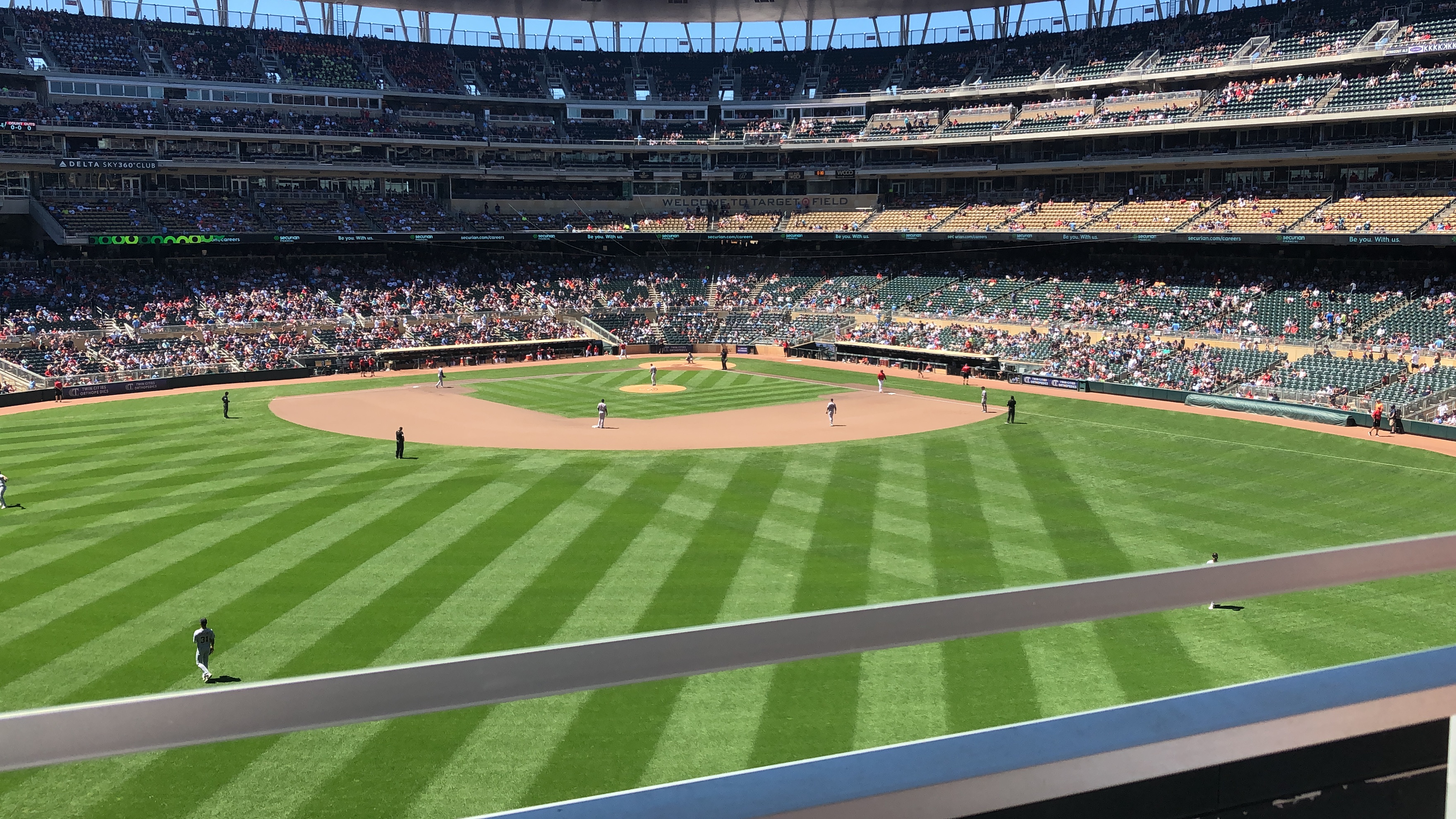
For this particular Fall Classic, the Midwest truly will be flyover country, as the Yankees and Dodgers pull the attention of the baseball world back and forth across the breadth of the continent. For fans who can set aside their provincialism and the bitterness of their own seasons' ends, though, it's going to be a whale of a matchup. Image courtesy of © Jayne Kamin-Oncea-Imagn Images Why does it affront so many fans when big-market teams succeed? That question is rhetorical, but not sneering, because once you think about it a bit, the reason is both obvious and reasonable: it makes us all feel small. Every baseball fan holds equal worth, and no team's worth and value depends solely on the size of their fan base, let alone some special merit that stretches past numbers. That's the truth, and it's fair and it's just, but the sharp-edged threat and snarl of it is this: there are more Yankees fans than there are Twins fans. There are more Dodgers fans than there are Twins fans. They aren't smarter, or more passionate, or more special, and neither the league nor its broadcast partners nor mainstream media intends to treat those fans as more valuable than Twins, Brewers, Cubs, or any other kinds of fans. But there are way, way more of them, and that raises the stakes of the whole affair when something like this World Series matchup happens. The league has a greater opportunity, and has a fiduciary duty—as much to Twins and Brewers and Cubs fans as to Yankees and Dodgers fans—to seize it. Their broadcast partners have a larger audience and the ability to justify more resources allocated toward serving it. The commentary media has a chance, especially in our polarized and friction-fueled social media world, to stir up some pride and some bile. They're all going to act accordingly, and it's hard to blame them—er, actually, it's very easy, fun, and wildly popular to blame them. But it's probably also wrong. Coverage of a series like Yankees-Dodgers tends to savor of triumphalism, which our Midwestern eyes tend to code as coastal elitism. In truth, though, it's just writers and marketers and TV producers working with what they have. We might fairly argue for a system that works harder to evenly distribute revenue throughout the league, but even if such a system went into effect today, it wou;dn't erase the last 125 years. Over that century and change, Yankee and Dodger triumphs pepper the landscape, and Yankees and Dodgers legends people the pages. Why is this Series exciting? Because these two teams are meeting in this context for the 12th time, more than anyone else has done it. When the Twins made the World Series, there were plenty of paeans to the value of Minnesotan baseball and its specific virtues. It's just been so long since the team made it that we tend to misremember those blandishments as smaller than the compliments paid to these teams. Certainly, when the Cubs were in the Series in 2016, a huge deal was made of it. Now, it's the Yankees' and Dodgers' turn. Have I convinced you to care about this fight between two evil corporate supervillains? If so, I hope you'll read on, especially if you're not yet a Caretaker. You can become one for just $6 on our monthly plan, which will get you my coverage throughout the Series and our Offseason Handbook right after it. After that, you can decide whether to stick around and continue enjoying the benefits of our premium content, along with extra perks. If not, hey, sign up anyway! Maybe I can sell you on it before the games run out. View full article
-
Brewers Need to Wean Themselves Off the Soft Cutter in 2025
Matthew Trueblood posted an article in Brewers
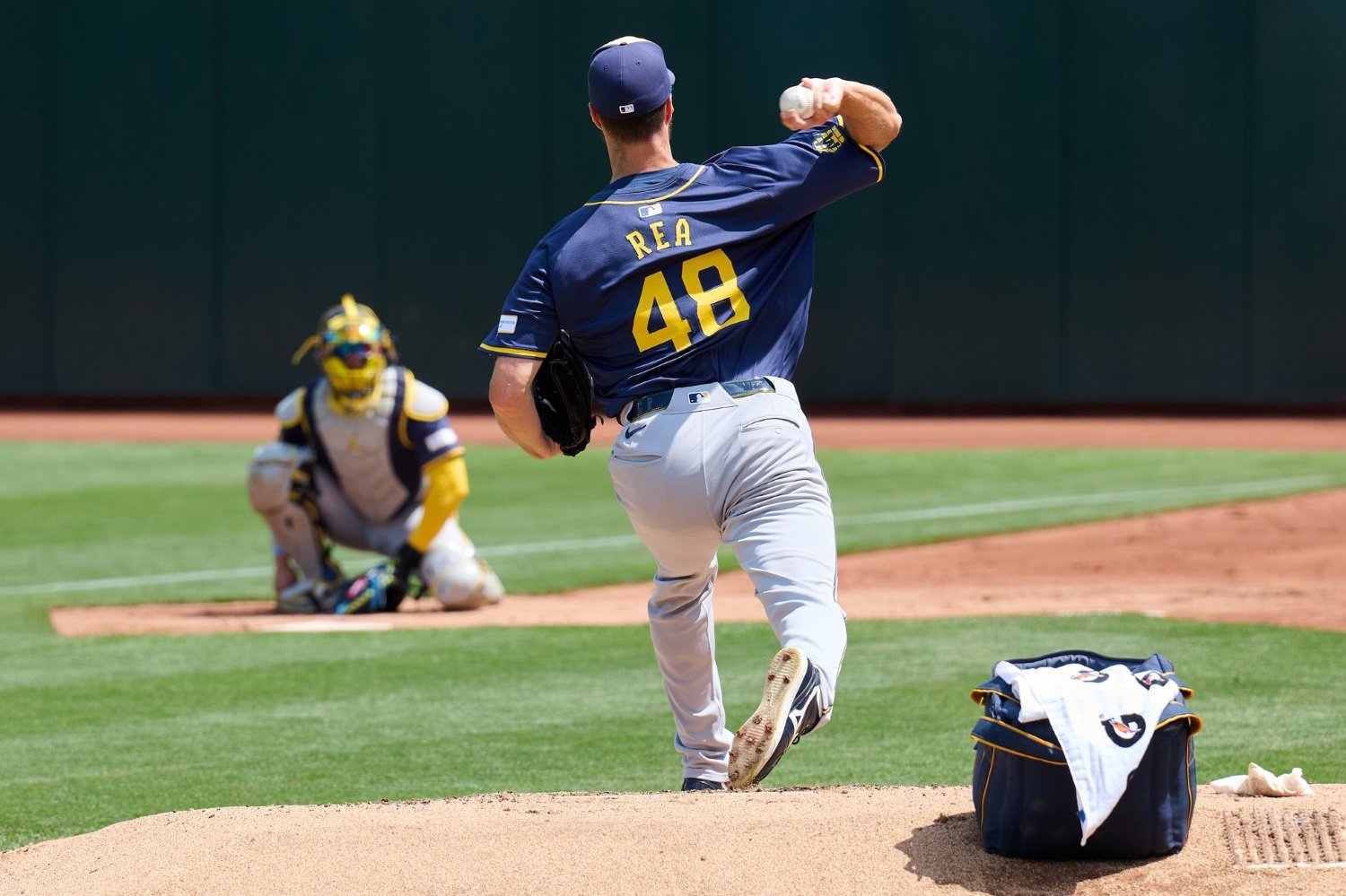 Late last week at Baseball Prospectus, I wrote about an interesting trend throughout MLB over the last several seasons: the league keeps throwing more cutters to opposite-handed batters, even though those pitches keep getting less effective. In short, while everyone has gotten used to the idea of throwing the cutter to crowd and jam a batter, it's not working for most pitchers. Some cutters--those thrown hardest, and with more of a fastball-like shape, like Corbin Burnes's and Justin Steele's--are still doing fine, but the ones that are basically a harder, shorter version of a pitcher's slider are getting tagged. Some of this is, in a sense, by design. As I wrote about Bryan Hudson back in June, a cutter is sometimes the sacrificial lamb within a pitcher's arsenal. The idea is to let hitters get occasional hits against that offering, while using it to set up pitches the hurler throws better and more often. Even if it's giving up hits, a cutter can force batters not to sit on other pitches, and thus make them less aggressive or dangerous overall. There's undoubtedly an upper bound to the value of that effect, though, and a lot of pitchers and teams are operating on the wrong side of it. Only the Red Sox, Rays, and White Sox threw more breaking ball-like cutters this year than did the Brewers, and of the top 25 users of that offering, the Crew could count Aaron Civale, Colin Rea, Bryse Wilson, and Tobias Myers as part of their fold. Few pitchers use all three fastball shapes--the four-seamer, the sinker, and the cutter--but the Brewers do it much more than most, and they do draw a benefit from that flexibility. As Jack Stern wrote at the beginning of May, many of these pitchers have struggled to find any effective changeup, so they use the mix of three different hard pitches as an alternative solution to the problem of predictability or a single plane onto which the hitter can lock. Some of the team's hurlers just need to back off on it a bit. Rea is an exemplar. After lefties beat him up in 2023, he adjusted his approach and kept them a bit better in check this past season, by leaning into his sweeper and getting more out of his splitter. He even upped his sinker usage to them. However, lefties slugged .558 off his cutter, in large part because he didn't get inside on them with it at all. Throwing that outside cutter occasionally does make it slightly harder to identify the sweeper, but Rea's usage of the pitch far exceeds the value of that advantage. He's not willing or able to jam lefties with his cutter, so he should throw it considerably less often to them. The story is similar for the likes of Myers and Civale. In all likelihood, the team will be best-served by simply moving on from Wilson this winter. Milwaukee can't afford to simply stockpile pitchers with elite raw stuff, so they'll continue to try creative ways to claw back the edge they give up when they send out pitchers who only throw in the low 90s or who lack a true putaway pitch. As the league gains familiarity both with cutters in general and with the way pitchers try to deploy breaking cutters in the modern game, though, Chris Hook and company need to throttle back that tactic and find some other gambit that will confound opponents, instead.
 -
Though it was an important part of their plan to neutralize hard contact and overcome their pitchers' collective lack of overpowering stuff, Milwaukee needs to alter an essential tenet of their hurlers' approach over the offseason. Image courtesy of © Robert Edwards-Imagn Images Late last week at Baseball Prospectus, I wrote about an interesting trend throughout MLB over the last several seasons: the league keeps throwing more cutters to opposite-handed batters, even though those pitches keep getting less effective. In short, while everyone has gotten used to the idea of throwing the cutter to crowd and jam a batter, it's not working for most pitchers. Some cutters--those thrown hardest, and with more of a fastball-like shape, like Corbin Burnes's and Justin Steele's--are still doing fine, but the ones that are basically a harder, shorter version of a pitcher's slider are getting tagged. Some of this is, in a sense, by design. As I wrote about Bryan Hudson back in June, a cutter is sometimes the sacrificial lamb within a pitcher's arsenal. The idea is to let hitters get occasional hits against that offering, while using it to set up pitches the hurler throws better and more often. Even if it's giving up hits, a cutter can force batters not to sit on other pitches, and thus make them less aggressive or dangerous overall. There's undoubtedly an upper bound to the value of that effect, though, and a lot of pitchers and teams are operating on the wrong side of it. Only the Red Sox, Rays, and White Sox threw more breaking ball-like cutters this year than did the Brewers, and of the top 25 users of that offering, the Crew could count Aaron Civale, Colin Rea, Bryse Wilson, and Tobias Myers as part of their fold. Few pitchers use all three fastball shapes--the four-seamer, the sinker, and the cutter--but the Brewers do it much more than most, and they do draw a benefit from that flexibility. As Jack Stern wrote at the beginning of May, many of these pitchers have struggled to find any effective changeup, so they use the mix of three different hard pitches as an alternative solution to the problem of predictability or a single plane onto which the hitter can lock. Some of the team's hurlers just need to back off on it a bit. Rea is an exemplar. After lefties beat him up in 2023, he adjusted his approach and kept them a bit better in check this past season, by leaning into his sweeper and getting more out of his splitter. He even upped his sinker usage to them. However, lefties slugged .558 off his cutter, in large part because he didn't get inside on them with it at all. Throwing that outside cutter occasionally does make it slightly harder to identify the sweeper, but Rea's usage of the pitch far exceeds the value of that advantage. He's not willing or able to jam lefties with his cutter, so he should throw it considerably less often to them. The story is similar for the likes of Myers and Civale. In all likelihood, the team will be best-served by simply moving on from Wilson this winter. Milwaukee can't afford to simply stockpile pitchers with elite raw stuff, so they'll continue to try creative ways to claw back the edge they give up when they send out pitchers who only throw in the low 90s or who lack a true putaway pitch. As the league gains familiarity both with cutters in general and with the way pitchers try to deploy breaking cutters in the modern game, though, Chris Hook and company need to throttle back that tactic and find some other gambit that will confound opponents, instead. View full article
-
- 1
-

-
- colin rea
- tobias myers
- (and 2 more)
-
Is Carrying Three Catchers More Viable Than It Seems for Brewers?
Matthew Trueblood posted an article in Brewers
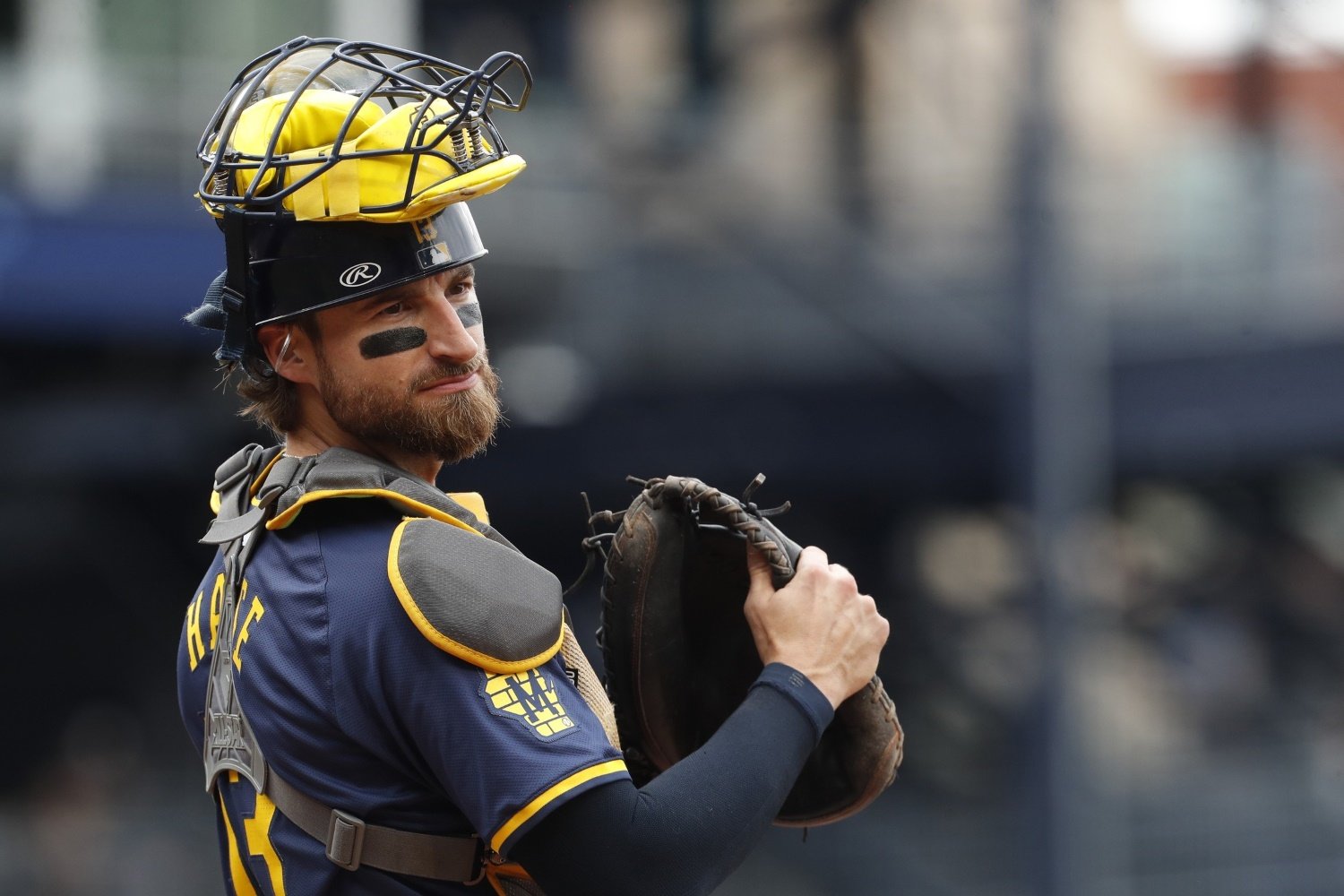 Because of the COVID-19 pandemic and the massive attendant disruption to the sport, it was a long time between the league passing rules limiting teams to 13 pitchers on their 26-man active roster and those rules actually taking effect. Eventually, though, it did happen, and ever since, on somewhere north of 98% of all gameday rosters, teams have carried exactly 13 pitchers. It's what you do. It's why the rule exists, in the first place. Teams feel they need to keep stacking their roster with hurlers, to withstand the rigors of the modern game and cover for the much lower volume most clubs get from their top arms. Every team you play, every day, all season, is going to have 13 pitchers and 13 position players. It's how they're built, and it's how they'll continue to be built. Maybe there would be an advantage, though--especially for the Milwaukee Brewers--in bucking that trend. Another set of recent rule changes has increased the plausibility of that plan, and the Brewers' particular roster construction might make it downright necessary. That second set of changes, of course, is the 2023 implementation of the pitch timer, the enlargement of the bases, and the constraints on defensive positioning and throws over to the bases. As a result of those tweaks, the number of stolen bases attempted by teams throughout the league has exploded, and (of course) the time between pitches has shrunk. The job of pitching is certainly harder, but less visibly, so is the job of catching. Many more throws are required, and there's less time for the mental portion of their jobs, too. It's tiring. Perhaps driven by that very fact, we've seen sharp downturns in offensive production from catchers late in the season over the last two years. Weighted On-Base Average By Month, MLB Catchers Month 2016-17 2018-19 2021-22 2023-24 Mar./Apr. .296 .300 .290 .303 May .302 .307 .286 .294 June .310 .300 .308 .285 July .314 .302 .303 .317 Aug. .316 .303 .302 .307 Sept./Oct. .307 .291 .295 .292 Playoffs .270 .239 .267 .249 Catchers wearing down a little bit in September is a tale as old as time, and the above data risks overstating it, anyway. After all, hitters at all positions typically hit a bit less well in September than in July and August, as the weather begins to cool a bit. Still, the fall-off has been more stark since the pitch timer went into effect than in previous years, and Brewers fans saw this happen in real time. William Contreras was a superstar in August, stepping up heroically to fill the void left by the back problems that ended Christian Yelich's season. Over the final few weeks of the regular season, however, he clearly wore down under the heavy workload he bore throughout the campaign. He was physically compromised and unable to deliver in key situations in the team's three-game Wild Card Series defeat. As the season went along, the team did prevail upon him to throttle back one of the heaviest catching loads in the league, and for most of the second half, they carried three catchers on their active roster. That was possible because Contreras could often be the designated hitter, keeping his bat in the lineup but sparing his knees, whatever body parts had recently taken a foul tip, and his mind, which had to be fully engaged and working fast whenever he caught. The strong bats of Sánchez and Haase made the arrangement more palatable, too, because penciling them in at catcher didn't mean taking a huge downgrade, relative to writing Contreras into that spot and using any other available hitter. In general, it was important both to have more than one usable offensive catcher, and three truly viable defenders, to make their juggling act work. Throughout the final two months, there was frequent speculation--including from me--about whether they would need to end the three-catcher setup and remove one of Sánchez and Haase. They stuck with it, though, even though they nearly always dedicated half their active roster spots to pitchers, just like everyone else. It got a little bit easier as injuries piled up and when September brought expanded rosters, but it still felt like a strain on the roster. With three catchers, they had just two or (for the final month) three other bench spots available; that's a tangible penalty paid for the luxury of three backstops. What if they just decided to make the plan permanent, though? Contreras's utility as a DH option doesn't figure to dwindle in 2025; he's a genuinely great hitter. Being able to spare him the abuse of catching on a more frequent basis would be a boon, but to do it without as often as they'd like, it would be nice to have three catchers around. You can play matchups offensively, and have a player to bring in for defense or in case of injury without disrupting Contreras's place in the DH slot. Doing so with just 13 position players on the roster would wobble toward infeasibility, but maybe there's a different kind of roster math to do here. The duties of the third catcher would, presumably, be almost entirely about run prevention. They'd still need to take batting practice and be ready to contribute in certain situations, of course, but they'd most likely deliver the bulk of their value by helping build game plans, coming on to catch late in games, and helping secure leads. This could be Haase's job, if Jeferson Quero recovers well from his shoulder injury and comes to camp looking MLB-ready next spring, since Haase is a smart and respected veteran. It could just as easily be another very inexpensive specialist, though. Austin Hedges will be a free agent this fall. He and Pat Murphy share a deep mutual appreciation, and Hedges might be the best all-around defensive catcher in the game; he just can't hit at all. As a late-game framing ace, he could help the Brewers continue dominating in run prevention, even if they don't find ways to miss more bats. Christian Bethancourt is also about to be available, and while he's merely solid as a framer, he might be the best throwing catcher in the game. As the running game becomes a more common and dangerous element for many teams, having someone who can shut it down off the bench would be tremendously valuable. If you're carrying a Hedges or a Bethancourt, or even sliding Haase into a similar role, why can't they be treated as something of a 13th pitcher, on what would technically be a 12-pitcher staff? The rules stop a team from carrying more than 13 arms, but it certainly allows them to carry fewer if they want. With so many great fielders and a primary catcher so essential to their offense, the Brewers' positional group does a lot of heavy lifting even on the run prevention side of the ledger. Maybe it would be wisest to use the 26th spot on the roster for a fifth bench player, whose main job is pitcher support, even if it means shuttling pitchers back and forth to Triple-A Nashville a bit more frequently.
 -
It's so ubiquitous it feels inevitable, but the league is full of teams operating at a totally voluntary extreme. Image courtesy of © Charles LeClaire-Imagn Images Because of the COVID-19 pandemic and the massive attendant disruption to the sport, it was a long time between the league passing rules limiting teams to 13 pitchers on their 26-man active roster and those rules actually taking effect. Eventually, though, it did happen, and ever since, on somewhere north of 98% of all gameday rosters, teams have carried exactly 13 pitchers. It's what you do. It's why the rule exists, in the first place. Teams feel they need to keep stacking their roster with hurlers, to withstand the rigors of the modern game and cover for the much lower volume most clubs get from their top arms. Every team you play, every day, all season, is going to have 13 pitchers and 13 position players. It's how they're built, and it's how they'll continue to be built. Maybe there would be an advantage, though--especially for the Milwaukee Brewers--in bucking that trend. Another set of recent rule changes has increased the plausibility of that plan, and the Brewers' particular roster construction might make it downright necessary. That second set of changes, of course, is the 2023 implementation of the pitch timer, the enlargement of the bases, and the constraints on defensive positioning and throws over to the bases. As a result of those tweaks, the number of stolen bases attempted by teams throughout the league has exploded, and (of course) the time between pitches has shrunk. The job of pitching is certainly harder, but less visibly, so is the job of catching. Many more throws are required, and there's less time for the mental portion of their jobs, too. It's tiring. Perhaps driven by that very fact, we've seen sharp downturns in offensive production from catchers late in the season over the last two years. Weighted On-Base Average By Month, MLB Catchers Month 2016-17 2018-19 2021-22 2023-24 Mar./Apr. .296 .300 .290 .303 May .302 .307 .286 .294 June .310 .300 .308 .285 July .314 .302 .303 .317 Aug. .316 .303 .302 .307 Sept./Oct. .307 .291 .295 .292 Playoffs .270 .239 .267 .249 Catchers wearing down a little bit in September is a tale as old as time, and the above data risks overstating it, anyway. After all, hitters at all positions typically hit a bit less well in September than in July and August, as the weather begins to cool a bit. Still, the fall-off has been more stark since the pitch timer went into effect than in previous years, and Brewers fans saw this happen in real time. William Contreras was a superstar in August, stepping up heroically to fill the void left by the back problems that ended Christian Yelich's season. Over the final few weeks of the regular season, however, he clearly wore down under the heavy workload he bore throughout the campaign. He was physically compromised and unable to deliver in key situations in the team's three-game Wild Card Series defeat. As the season went along, the team did prevail upon him to throttle back one of the heaviest catching loads in the league, and for most of the second half, they carried three catchers on their active roster. That was possible because Contreras could often be the designated hitter, keeping his bat in the lineup but sparing his knees, whatever body parts had recently taken a foul tip, and his mind, which had to be fully engaged and working fast whenever he caught. The strong bats of Sánchez and Haase made the arrangement more palatable, too, because penciling them in at catcher didn't mean taking a huge downgrade, relative to writing Contreras into that spot and using any other available hitter. In general, it was important both to have more than one usable offensive catcher, and three truly viable defenders, to make their juggling act work. Throughout the final two months, there was frequent speculation--including from me--about whether they would need to end the three-catcher setup and remove one of Sánchez and Haase. They stuck with it, though, even though they nearly always dedicated half their active roster spots to pitchers, just like everyone else. It got a little bit easier as injuries piled up and when September brought expanded rosters, but it still felt like a strain on the roster. With three catchers, they had just two or (for the final month) three other bench spots available; that's a tangible penalty paid for the luxury of three backstops. What if they just decided to make the plan permanent, though? Contreras's utility as a DH option doesn't figure to dwindle in 2025; he's a genuinely great hitter. Being able to spare him the abuse of catching on a more frequent basis would be a boon, but to do it without as often as they'd like, it would be nice to have three catchers around. You can play matchups offensively, and have a player to bring in for defense or in case of injury without disrupting Contreras's place in the DH slot. Doing so with just 13 position players on the roster would wobble toward infeasibility, but maybe there's a different kind of roster math to do here. The duties of the third catcher would, presumably, be almost entirely about run prevention. They'd still need to take batting practice and be ready to contribute in certain situations, of course, but they'd most likely deliver the bulk of their value by helping build game plans, coming on to catch late in games, and helping secure leads. This could be Haase's job, if Jeferson Quero recovers well from his shoulder injury and comes to camp looking MLB-ready next spring, since Haase is a smart and respected veteran. It could just as easily be another very inexpensive specialist, though. Austin Hedges will be a free agent this fall. He and Pat Murphy share a deep mutual appreciation, and Hedges might be the best all-around defensive catcher in the game; he just can't hit at all. As a late-game framing ace, he could help the Brewers continue dominating in run prevention, even if they don't find ways to miss more bats. Christian Bethancourt is also about to be available, and while he's merely solid as a framer, he might be the best throwing catcher in the game. As the running game becomes a more common and dangerous element for many teams, having someone who can shut it down off the bench would be tremendously valuable. If you're carrying a Hedges or a Bethancourt, or even sliding Haase into a similar role, why can't they be treated as something of a 13th pitcher, on what would technically be a 12-pitcher staff? The rules stop a team from carrying more than 13 arms, but it certainly allows them to carry fewer if they want. With so many great fielders and a primary catcher so essential to their offense, the Brewers' positional group does a lot of heavy lifting even on the run prevention side of the ledger. Maybe it would be wisest to use the 26th spot on the roster for a fifth bench player, whose main job is pitcher support, even if it means shuttling pitchers back and forth to Triple-A Nashville a bit more frequently. View full article
-
The market for relief pitchers tends to get hotter in the summer than around the stove in the winter. For various reasons, therefore, the Brewers might be well-suited to retain their relief ace heading into next season. Image courtesy of © Joe Camporeale-Imagn Images Multiple factors affect the demand for any given player on the trade market. Their salary matters. So do their track records of performance and health. Those tend to be fairly easy elements to capture and evaluate, even if they don't affect every player's value in precisely the same way. More nebulous, though, are the questions of how a player fits the specific needs and competitive timelines of various suitors, and of how much the availability of alternatives alters the conversations teams might have. This winter, the Brewers seem likely to at least entertain offers for Devin Williams, their All-Star closer. He's just one season from free agency, and even after the team declines their $10.5-million option for 2025 under the multi-year deal the parties signed in January, he'll make something like $8 million via arbitration. That's a big chunk of what figures to be a svelte payroll for the Crew next year, and given the way the team does business--the fact that they traded Josh Hader and Corbin Burnes in similar situations, their stated desire to be perennial contenders, and their marvelous relief depth--trading Williams seems almost inevitable. Demand might be a bit less rabid than the team would like, though, at least during the offseason. Williams won't be the only elite closer on the trade market; the Cardinals will also be looking to offload Ryan Helsley. The Athletics might trade the fireballing Mason Miller, who poses a more obvious injury risk but is under longer-term team control. There are also some formidable free-agent options coming onto the market, led by Carlos Estévez, Tanner Scott, Clay Holmes, and Jeff Hoffman. That surfeit of solutions, along with most teams' preference to build their bullpens cheaply and internally, might soften the market for Williams quite a bit. It's not that teams delude themselves into believing they won't have acute needs at the back end of the bullpen, come next summer. It's just that many of them would prefer to wait and see how acute those needs turn out to be, and what options remain for them then, even if it means paying surge prices at the trade deadline. Sometimes, your problems solve themselves, because the new cutter grip you try turns a forgettable middle reliever into a shutdown closer. Flexibility--what the consultant-infested front office culture of the game currently calls 'optionality'--is as much in demand as talent for some executives, especially if the latter comes with a steep cost. Theoretically, the Brewers should get more for Williams by trading him during the winter. An acquiring team would have the right to extend a qualifying offer to Williams next fall. They'd also gain the comforting certitude associated with working from the back end of the pen forward, using one of the top five relievers in the game as the foundation. In practice, though, it might not be that way. Many teams are wary of making the QO to relief pitchers. Many enter the winter in cost-cutting mode, making it as tough for them to take on Williams's expected salary as for the Brewers to hold onto it. The number of obvious, no-doubt contenders who will be willing to trade long-term value for a high-end reliever this winter will be small; it might even be zero. Are Matt Arnold and his front office most likely to maximize their value by trading Williams within the next few months, or by waiting until the summer? It's a messier question than it seems. The risks of holding onto him are obvious, and dangerous. If they do so, they'll have little money with which to seek other roster upgrades in free agency. They'll also carry the risk of a serious injury that both depletes the team's bullpen and obliterates Williams's trade value, which would be devastating. Perhaps most dauntingly, they'd face the likely scenario of trading a semi-disgruntled closer in July, probably while trying to win their third straight division title and bulk up for a longer playoff run. Just two and a half years ago, the entire organization and its fan base saw how risky that can be. On the other hand, though, the Williams and Hader situations don't have to be directly analogous. It was more surprising when Milwaukee traded Hader than it would be if they trade Williams next summer, because Williams will be on the cusp of free agency, whereas Hader was a year and a half away. Pat Murphy is a different skipper than Craig Counsell, and might better keep what is also a pretty different clubhouse humming. Though the Crew had Williams to replace Hader, they'll also have Trevor Megill in line to replace Williams, and their depth beyond the top options is probably better than was the depth behind Williams after Hader's departure. Beyond all that, of course, they'd have the option of just keeping Williams themselves, if they still feel he's integral to their staff next summer. It might be uncomfortable. It might be untenable. But if the Brewers are focused principally on getting as much for Williams as they can, it might make more sense to keep him all winter and reassess the landscape next July. View full article
-
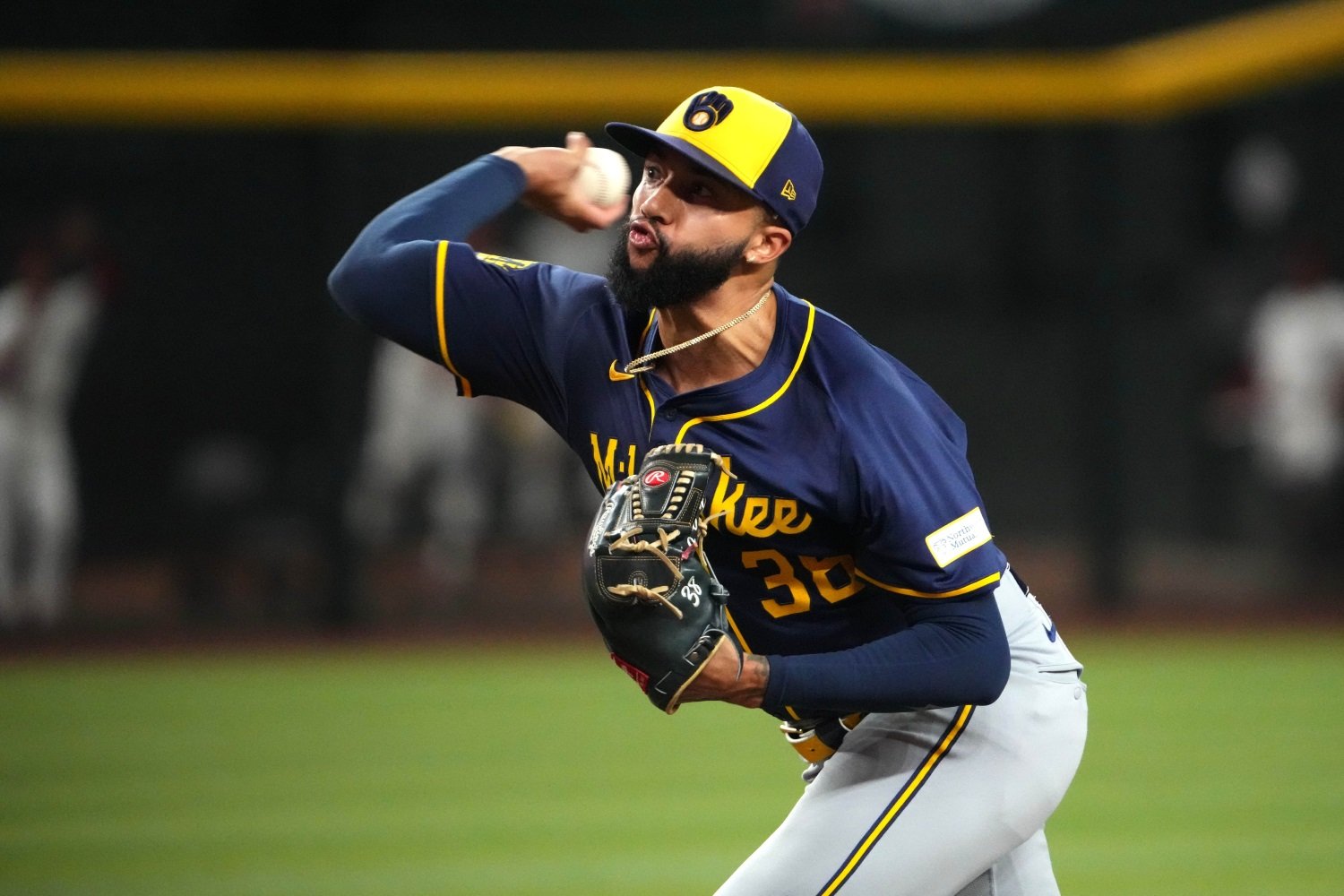 Multiple factors affect the demand for any given player on the trade market. Their salary matters. So do their track records of performance and health. Those tend to be fairly easy elements to capture and evaluate, even if they don't affect every player's value in precisely the same way. More nebulous, though, are the questions of how a player fits the specific needs and competitive timelines of various suitors, and of how much the availability of alternatives alters the conversations teams might have. This winter, the Brewers seem likely to at least entertain offers for Devin Williams, their All-Star closer. He's just one season from free agency, and even after the team declines their $10.5-million option for 2025 under the multi-year deal the parties signed in January, he'll make something like $8 million via arbitration. That's a big chunk of what figures to be a svelte payroll for the Crew next year, and given the way the team does business--the fact that they traded Josh Hader and Corbin Burnes in similar situations, their stated desire to be perennial contenders, and their marvelous relief depth--trading Williams seems almost inevitable. Demand might be a bit less rabid than the team would like, though, at least during the offseason. Williams won't be the only elite closer on the trade market; the Cardinals will also be looking to offload Ryan Helsley. The Athletics might trade the fireballing Mason Miller, who poses a more obvious injury risk but is under longer-term team control. There are also some formidable free-agent options coming onto the market, led by Carlos Estévez, Tanner Scott, Clay Holmes, and Jeff Hoffman. That surfeit of solutions, along with most teams' preference to build their bullpens cheaply and internally, might soften the market for Williams quite a bit. It's not that teams delude themselves into believing they won't have acute needs at the back end of the bullpen, come next summer. It's just that many of them would prefer to wait and see how acute those needs turn out to be, and what options remain for them then, even if it means paying surge prices at the trade deadline. Sometimes, your problems solve themselves, because the new cutter grip you try turns a forgettable middle reliever into a shutdown closer. Flexibility--what the consultant-infested front office culture of the game currently calls 'optionality'--is as much in demand as talent for some executives, especially if the latter comes with a steep cost. Theoretically, the Brewers should get more for Williams by trading him during the winter. An acquiring team would have the right to extend a qualifying offer to Williams next fall. They'd also gain the comforting certitude associated with working from the back end of the pen forward, using one of the top five relievers in the game as the foundation. In practice, though, it might not be that way. Many teams are wary of making the QO to relief pitchers. Many enter the winter in cost-cutting mode, making it as tough for them to take on Williams's expected salary as for the Brewers to hold onto it. The number of obvious, no-doubt contenders who will be willing to trade long-term value for a high-end reliever this winter will be small; it might even be zero. Are Matt Arnold and his front office most likely to maximize their value by trading Williams within the next few months, or by waiting until the summer? It's a messier question than it seems. The risks of holding onto him are obvious, and dangerous. If they do so, they'll have little money with which to seek other roster upgrades in free agency. They'll also carry the risk of a serious injury that both depletes the team's bullpen and obliterates Williams's trade value, which would be devastating. Perhaps most dauntingly, they'd face the likely scenario of trading a semi-disgruntled closer in July, probably while trying to win their third straight division title and bulk up for a longer playoff run. Just two and a half years ago, the entire organization and its fan base saw how risky that can be. On the other hand, though, the Williams and Hader situations don't have to be directly analogous. It was more surprising when Milwaukee traded Hader than it would be if they trade Williams next summer, because Williams will be on the cusp of free agency, whereas Hader was a year and a half away. Pat Murphy is a different skipper than Craig Counsell, and might better keep what is also a pretty different clubhouse humming. Though the Crew had Williams to replace Hader, they'll also have Trevor Megill in line to replace Williams, and their depth beyond the top options is probably better than was the depth behind Williams after Hader's departure. Beyond all that, of course, they'd have the option of just keeping Williams themselves, if they still feel he's integral to their staff next summer. It might be uncomfortable. It might be untenable. But if the Brewers are focused principally on getting as much for Williams as they can, it might make more sense to keep him all winter and reassess the landscape next July.
 -
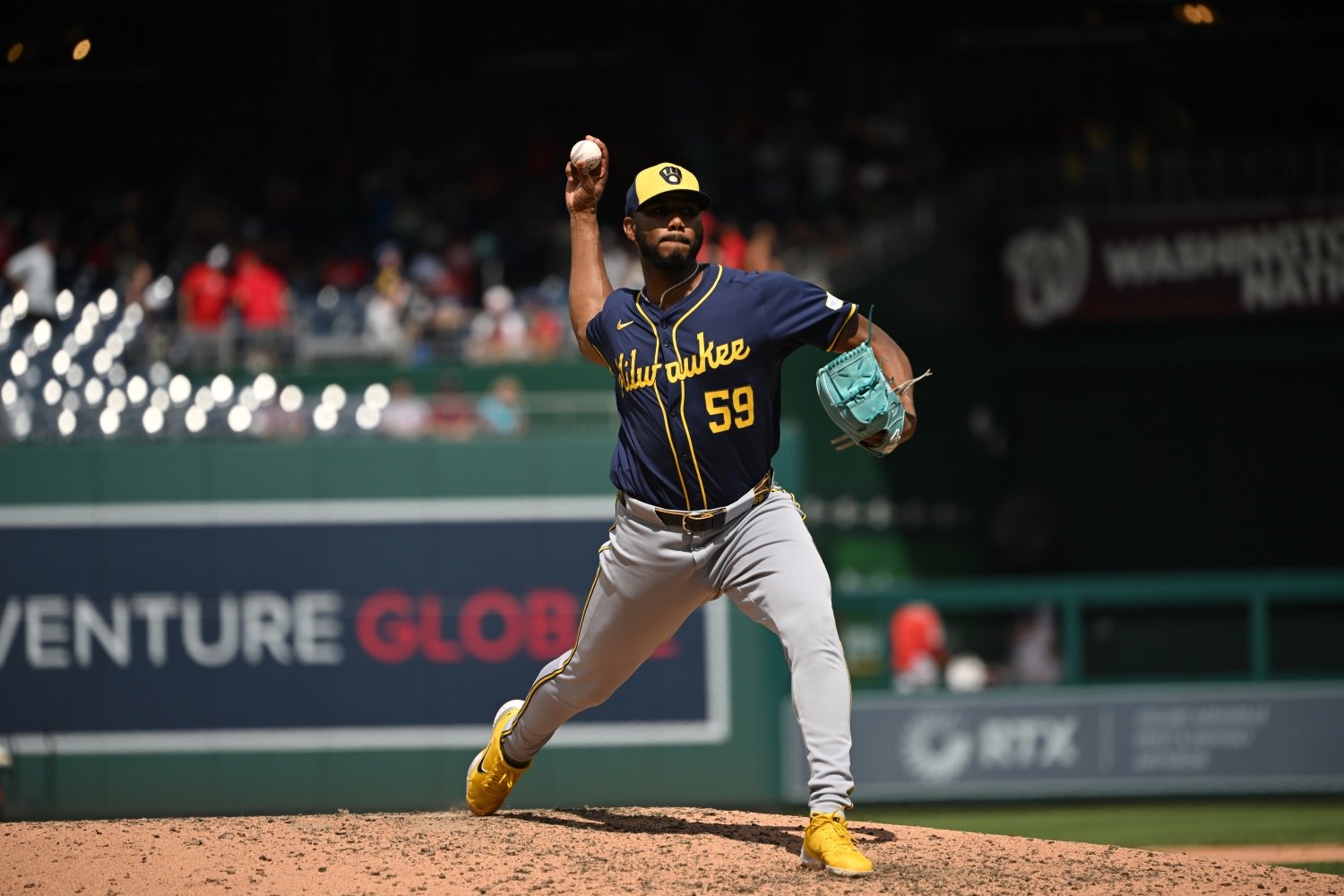 Back in March, Pat Murphy neatly articulated the important facets that make up bullpen construction in MLB right now. "We want an advantage," Murphy said of the objective when selecting matchups late in games. "What happens is, you’re looking at more major-league bullpens right now [where] all the pitchers in the bullpen, with the exception of some lefties, they all can face both sides." Murphy was talking about the ramifications not only of the three-batter minimum rule that has now been in place for half a decade in MLB, but about the slightly newer limits on the number of pitchers a team can carry, and about the creeping rise of volume teams must ask of their pens in an age of ever-shrinking starter workloads. "You have only 13 pitchers, so the guys with options become crucial—and being able to bounce back, and be in the type of shape that you want to be in," he said then. "There’s all sorts of stuff at stake here." As the Brewers wind down at the other end of a long season that bore out so much of what Murphy said, the truth of those statements is increasingly apparent. Flexibility is the name of the modern bullpen management game, and it takes many forms, from the ability to manipulate the roster to the ability to stick with a single pitcher through a pocket of the batting order containing varied hitters--and to the capacity to work on consecutive days, or three times in four, or across multiple up-downs within a game. Most of all, though, it's vital to seize a systemic advantage without needing it to be rooted in handedness. "It’s the guys who have success on both sides; those are the guys that make it into the pen at the end," Murphy said. "You just can’t have a staff where a guy just can get out righties or get out lefties. You might be able to get away with one lefty like that, for a two out of three situation." None of this much matters to the relief aces on the team. There's a threshold of sheer quality where ancillary concerns like durability, matchup vulnerability, and willingness to stretch beyond one inning per outing remain in the background. Devin Williams, Trevor Megill, and Joel Payamps all clear that bar with ease. For others, though, we do have to weigh these secondary indicators of fit and value, and they don't always come out positively. Here's a chart showing all right-handed pitchers who faced at least 200 batters in the big leagues last season, with the percentage of those batter confrontations in which they had the platoon advantage as the independent variable and their opponents' weighted on-base average as the dependent one. Obviously, the real dynamics aren't anywhere near that simple. The relationship between platoon advantage prevalence and overall performance is weak, not least because the best pitchers end up as starters and therefore face more opposite-handed batters. What it does tell us, though, is which pitchers were already being sheltered a bit by their employers. Thus, when we see Elvis Peguero and Bryse Wilson with well above-average platoon rates and subpar opponent wOBAs, the message is: these players were set up to succeed as well as practically possible, and they still didn't. Peguero, as has been discussed on this site before, boasts reverse platoon splits, despite a pitch mix that wouldn't traditionally lend itself to them. Thus, you can argue that his usage is a reflection of misunderstanding the player the team had on hand and setting him up to fail, rather than of coddling him. Nonetheless, his results this season were discouraging. That goes even more strongly for Wilson, a pretty standard-issue righty whose chief virtue was durability and length, but whose performance degraded as the season wore on and who didn't benefit from getting to see a lot of righty batters, as one might have hoped. Here's the same chart for left-handed pitchers. Naturally, given how funky his delivery is and the superior stuff of the other two southpaws in the pen, Hoby Milner was the one most carefully deployed against lefty batters. However, his results were still noticeably worse than those of both Bryan Hudson and Jared Koenig. When the trend arrows on pitchers point in opposite directions, it can be tough to suss out the relative importance of each. With Wilson, Milner, and Peguero, though, their usage and their outcomes both seem to point the wrong way. They were given chances to establish consistency and reliability, and they didn't do so. Milner and Wilson are arbitration-eligible, and MLB Trade Rumors projects them to earn a combined $4.2 million next season. Peguero isn't yet eligible, but he's now out of options. Reviewing the quotes from Murphy above and considering the seasons each of these three just had, it's not hard to argue that each could be replaced by players who can be deployed more flexibly and return greater value next season--at the same or lower total cost. That's not to say that all three will or should be jettisoned this winter. It's unlikely, though, that all three make it through the offseason as part of the Brewers organization. As the Brewers weigh the talent, availability, and versatility of their in-house options; evaluate potential waiver claims and free-agent signees; and try to make room for incoming talent at higher-priority positions than relief pitcher, they're likely to move one or two of the three, be it by simply non-tendering them, waiving them to open roster space, or finding a new home for them via trade. It's a numbers game, and the numbers say these three are a bit less valuable than their rivals for roles on next year's pitching staff.
 -
Milwaukee enters the offseason with a crowded roster of relievers, and even a likely trade won't fully alleviate that. Which other players might be on the outs? Image courtesy of © Rafael Suanes-USA TODAY Sports Back in March, Pat Murphy neatly articulated the important facets that make up bullpen construction in MLB right now. "We want an advantage," Murphy said of the objective when selecting matchups late in games. "What happens is, you’re looking at more major-league bullpens right now [where] all the pitchers in the bullpen, with the exception of some lefties, they all can face both sides." Murphy was talking about the ramifications not only of the three-batter minimum rule that has now been in place for half a decade in MLB, but about the slightly newer limits on the number of pitchers a team can carry, and about the creeping rise of volume teams must ask of their pens in an age of ever-shrinking starter workloads. "You have only 13 pitchers, so the guys with options become crucial—and being able to bounce back, and be in the type of shape that you want to be in," he said then. "There’s all sorts of stuff at stake here." As the Brewers wind down at the other end of a long season that bore out so much of what Murphy said, the truth of those statements is increasingly apparent. Flexibility is the name of the modern bullpen management game, and it takes many forms, from the ability to manipulate the roster to the ability to stick with a single pitcher through a pocket of the batting order containing varied hitters--and to the capacity to work on consecutive days, or three times in four, or across multiple up-downs within a game. Most of all, though, it's vital to seize a systemic advantage without needing it to be rooted in handedness. "It’s the guys who have success on both sides; those are the guys that make it into the pen at the end," Murphy said. "You just can’t have a staff where a guy just can get out righties or get out lefties. You might be able to get away with one lefty like that, for a two out of three situation." None of this much matters to the relief aces on the team. There's a threshold of sheer quality where ancillary concerns like durability, matchup vulnerability, and willingness to stretch beyond one inning per outing remain in the background. Devin Williams, Trevor Megill, and Joel Payamps all clear that bar with ease. For others, though, we do have to weigh these secondary indicators of fit and value, and they don't always come out positively. Here's a chart showing all right-handed pitchers who faced at least 200 batters in the big leagues last season, with the percentage of those batter confrontations in which they had the platoon advantage as the independent variable and their opponents' weighted on-base average as the dependent one. Obviously, the real dynamics aren't anywhere near that simple. The relationship between platoon advantage prevalence and overall performance is weak, not least because the best pitchers end up as starters and therefore face more opposite-handed batters. What it does tell us, though, is which pitchers were already being sheltered a bit by their employers. Thus, when we see Elvis Peguero and Bryse Wilson with well above-average platoon rates and subpar opponent wOBAs, the message is: these players were set up to succeed as well as practically possible, and they still didn't. Peguero, as has been discussed on this site before, boasts reverse platoon splits, despite a pitch mix that wouldn't traditionally lend itself to them. Thus, you can argue that his usage is a reflection of misunderstanding the player the team had on hand and setting him up to fail, rather than of coddling him. Nonetheless, his results this season were discouraging. That goes even more strongly for Wilson, a pretty standard-issue righty whose chief virtue was durability and length, but whose performance degraded as the season wore on and who didn't benefit from getting to see a lot of righty batters, as one might have hoped. Here's the same chart for left-handed pitchers. Naturally, given how funky his delivery is and the superior stuff of the other two southpaws in the pen, Hoby Milner was the one most carefully deployed against lefty batters. However, his results were still noticeably worse than those of both Bryan Hudson and Jared Koenig. When the trend arrows on pitchers point in opposite directions, it can be tough to suss out the relative importance of each. With Wilson, Milner, and Peguero, though, their usage and their outcomes both seem to point the wrong way. They were given chances to establish consistency and reliability, and they didn't do so. Milner and Wilson are arbitration-eligible, and MLB Trade Rumors projects them to earn a combined $4.2 million next season. Peguero isn't yet eligible, but he's now out of options. Reviewing the quotes from Murphy above and considering the seasons each of these three just had, it's not hard to argue that each could be replaced by players who can be deployed more flexibly and return greater value next season--at the same or lower total cost. That's not to say that all three will or should be jettisoned this winter. It's unlikely, though, that all three make it through the offseason as part of the Brewers organization. As the Brewers weigh the talent, availability, and versatility of their in-house options; evaluate potential waiver claims and free-agent signees; and try to make room for incoming talent at higher-priority positions than relief pitcher, they're likely to move one or two of the three, be it by simply non-tendering them, waiving them to open roster space, or finding a new home for them via trade. It's a numbers game, and the numbers say these three are a bit less valuable than their rivals for roles on next year's pitching staff. View full article
-
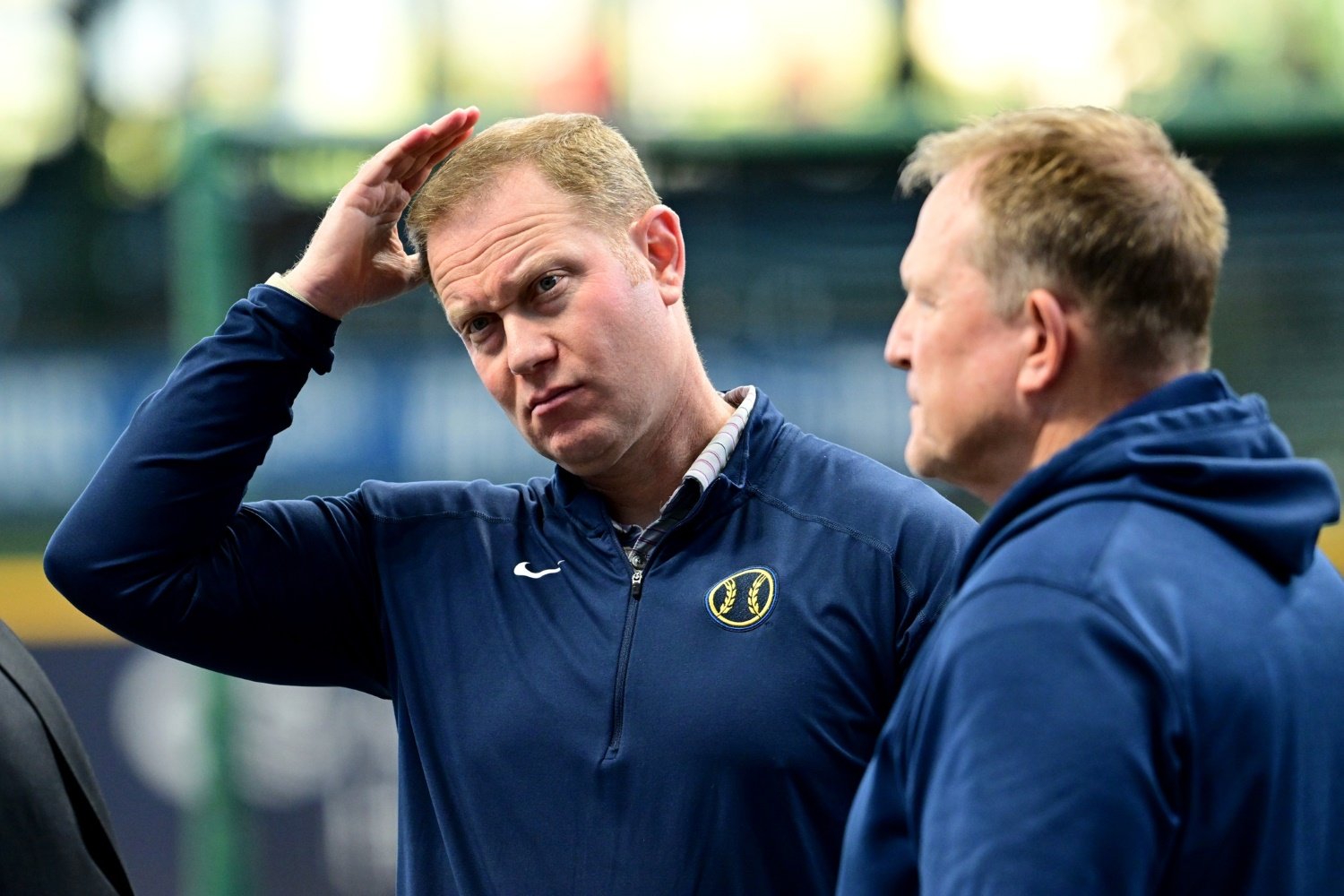 At a cursory glance, the Brewers might appear to have a good chunk of money to spend in free agency this offseason. In each of the last two seasons, they've spent just over $130 million on their 40-man roster by season's end. Meanwhile, according to Cot's Contracts, they have just $96 million in expected outlays for 2025, and that includes arbitration-eligible players and the buyouts on various options. Alas, that's only part of the story. Firstly, it's best to assume that the total budget for next year will be lower. The end of the Brewers' relationship with Bally Sports Wisconsin will mean more flexible forms of distribution to fans, but it figures to meaningfully decrease their local TV revenue. Put the number in the ballpark of $120 million, and you're probably much closer than at $130 or $135 million. That's not the extent of the bad news, either. Most calculations of expected expenditures, like that on Cot's Contracts, don't include the full salaries of players likely to have their options exercised. The Brewers will almost certainly retain Colin Rea, but his contract calls for a 2025 salary of $5.5 million. Only the would-be $1 million buyout is part of the $96 million figure mentioned above. Ditto for Freddy Peralta, whose buyout would be $1.5 million but who will certainly be paid $8 million to stick around, instead. Option buyouts on Wade Miley, Gary Sánchez, and Frankie Montas are part of that number, as are the buyouts that will lie forgotten for Rea and Peralta. So is a $250,000 buyout on the $10.5 million option the team holds on Devin Williams for next season, an option they're likely to decline because he'll make about $2.5 million less than that via arbitration. Teams don't really think of option buyouts as part of the budget for the year in which they pay out that money, though. They count those dollars with the money spent in the previous season, when the player was actually on the team. So, you can mentally lop off all those buyouts from the number Cot's is using, but they don't even quite offset the unaccounted-for salaries of Rea and Peralta. Then, we have to add Williams's projected arbitration award back in, because he's not going to get that $10.5 million via the option. MLB Trade Rumors projects Williams to get $7.7 million, so we'll use that estimate for now. Add it in, and the real expected salaries of existing Brewers players for 2025 total about $105 million. If their payroll does get reduced as expected, that sure doesn't leave much room to make external additions. Of course, Williams is the most notable--but not the only--player whom the team could trade as a means of opening up more such room. A trade that took his salary off the books would leave the Brewers with roughly $22 million to spend in free agency, or by acquiring players with significant guaranteed contracts or arbitration projections. It's also possible, though less likely, that the team will try to move other players with rising salaries, like Peralta, Aaron Civale (projected for $7.9 million), Joel Payamps ($2.65 million), Hoby Milner ($2.6 million), or Jake Bauers ($2.25 million). They could give themselves $30 million to spend with relative ease, given that the trades that would result in that much savings would also patch at least one of the holes they created. Sadly, $30 million doesn't go all that far on the modern free-agent market. The Brewers would be confined to a lone high-end player signed to a long-term deal that could quickly become onerous, or a trio or quartet of lesser targets who would provide depth, rather than star power--similar to the way they attacked last year's market by signing Rhys Hoskins, Sánchez, Jakob Junis, and the returning Brandon Woodruff. There's nothing wrong with the latter approach, but the team needs to get a better return on its investment than it did last winter. It's the one aspect of team-building at which they didn't do especially well in 2024. Hoskins, Sánchez, Junis, Joe Ross, and Eric Haase weren't a disastrous set of signings, but there wasn't a true hit in the bunch. To maximize their chances of securing a third straight NL Central crown next year, the Crew needs to perform better in free agency, and $30 million would lend them a thin margin for error. Playing and winning perennially in one of the smallest markets in the majors requires tradeoffs--literally. The Brewers can't stand pat, even after proving twice in a row that they stand well clear of their division rivals. They also can't throw endless streams of money at the task of sustaining their regional hegemony, especially because they consistently choose to invest heavily in their farm system as an alternative to lavish big-league spending. This winter, they'll have some money to spend, but it needs to be spent wisely. Deft moves will be key, as will a trade or two to augment the front office's optionality.
 -
Given their payroll projections and the way teams do year-to-year accounting, the Brewers have little flexibility for offseason spending, unless and until they make trades to clear added space. Image courtesy of © Benny Sieu-Imagn Images At a cursory glance, the Brewers might appear to have a good chunk of money to spend in free agency this offseason. In each of the last two seasons, they've spent just over $130 million on their 40-man roster by season's end. Meanwhile, according to Cot's Contracts, they have just $96 million in expected outlays for 2025, and that includes arbitration-eligible players and the buyouts on various options. Alas, that's only part of the story. Firstly, it's best to assume that the total budget for next year will be lower. The end of the Brewers' relationship with Bally Sports Wisconsin will mean more flexible forms of distribution to fans, but it figures to meaningfully decrease their local TV revenue. Put the number in the ballpark of $120 million, and you're probably much closer than at $130 or $135 million. That's not the extent of the bad news, either. Most calculations of expected expenditures, like that on Cot's Contracts, don't include the full salaries of players likely to have their options exercised. The Brewers will almost certainly retain Colin Rea, but his contract calls for a 2025 salary of $5.5 million. Only the would-be $1 million buyout is part of the $96 million figure mentioned above. Ditto for Freddy Peralta, whose buyout would be $1.5 million but who will certainly be paid $8 million to stick around, instead. Option buyouts on Wade Miley, Gary Sánchez, and Frankie Montas are part of that number, as are the buyouts that will lie forgotten for Rea and Peralta. So is a $250,000 buyout on the $10.5 million option the team holds on Devin Williams for next season, an option they're likely to decline because he'll make about $2.5 million less than that via arbitration. Teams don't really think of option buyouts as part of the budget for the year in which they pay out that money, though. They count those dollars with the money spent in the previous season, when the player was actually on the team. So, you can mentally lop off all those buyouts from the number Cot's is using, but they don't even quite offset the unaccounted-for salaries of Rea and Peralta. Then, we have to add Williams's projected arbitration award back in, because he's not going to get that $10.5 million via the option. MLB Trade Rumors projects Williams to get $7.7 million, so we'll use that estimate for now. Add it in, and the real expected salaries of existing Brewers players for 2025 total about $105 million. If their payroll does get reduced as expected, that sure doesn't leave much room to make external additions. Of course, Williams is the most notable--but not the only--player whom the team could trade as a means of opening up more such room. A trade that took his salary off the books would leave the Brewers with roughly $22 million to spend in free agency, or by acquiring players with significant guaranteed contracts or arbitration projections. It's also possible, though less likely, that the team will try to move other players with rising salaries, like Peralta, Aaron Civale (projected for $7.9 million), Joel Payamps ($2.65 million), Hoby Milner ($2.6 million), or Jake Bauers ($2.25 million). They could give themselves $30 million to spend with relative ease, given that the trades that would result in that much savings would also patch at least one of the holes they created. Sadly, $30 million doesn't go all that far on the modern free-agent market. The Brewers would be confined to a lone high-end player signed to a long-term deal that could quickly become onerous, or a trio or quartet of lesser targets who would provide depth, rather than star power--similar to the way they attacked last year's market by signing Rhys Hoskins, Sánchez, Jakob Junis, and the returning Brandon Woodruff. There's nothing wrong with the latter approach, but the team needs to get a better return on its investment than it did last winter. It's the one aspect of team-building at which they didn't do especially well in 2024. Hoskins, Sánchez, Junis, Joe Ross, and Eric Haase weren't a disastrous set of signings, but there wasn't a true hit in the bunch. To maximize their chances of securing a third straight NL Central crown next year, the Crew needs to perform better in free agency, and $30 million would lend them a thin margin for error. Playing and winning perennially in one of the smallest markets in the majors requires tradeoffs--literally. The Brewers can't stand pat, even after proving twice in a row that they stand well clear of their division rivals. They also can't throw endless streams of money at the task of sustaining their regional hegemony, especially because they consistently choose to invest heavily in their farm system as an alternative to lavish big-league spending. This winter, they'll have some money to spend, but it needs to be spent wisely. Deft moves will be key, as will a trade or two to augment the front office's optionality. View full article
-
If Brewers Trade a Young Outfielder, Which Teams Might Be Suitors?
Matthew Trueblood posted an article in Brewers
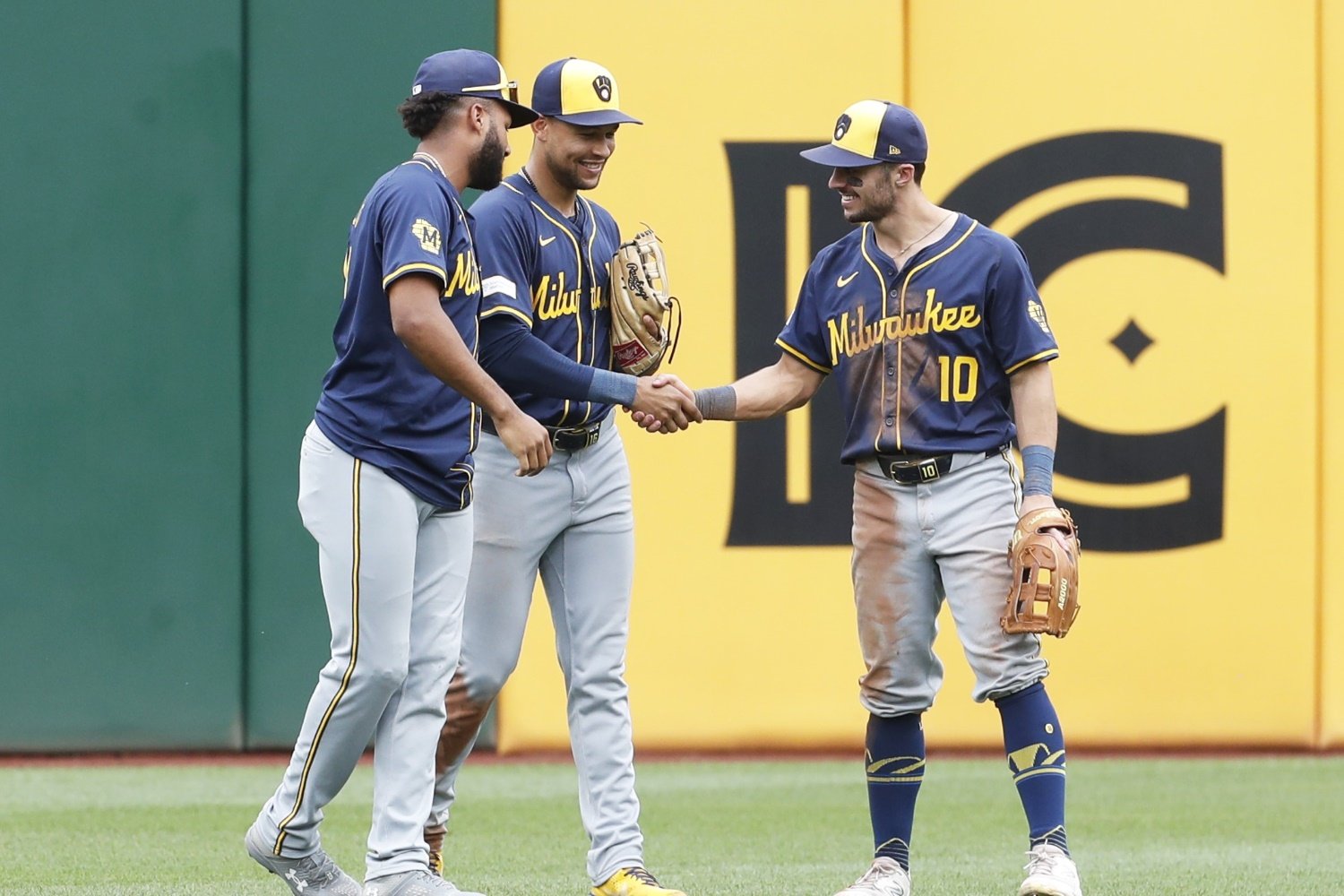 No one is talking about moving Jackson Chourio or Christian Yelich this winter, but the Brewers do need to consider the option of offloading their current surplus of young outfielders to shore up other areas of their roster, like the impending vacancy on the left side of the infield or the back half of the starting rotation. Spending big money in free agency probably isn't a viable way to do so, given the escalating contractual commitments to some members of the team next year and the likely decrease in local TV revenue after the team parted ways with Bally Sports and the Diamond Sports Group. That means, in all probability, trading one of Sal Frelick, Garrett Mitchell, or Blake Perkins. The good news about that prospect is that the team can weather it, and that each of those guys has relatively sound value on the market right now. Unlike Joey Wiemer, whose regression compelled the team to let him go in the Frankie Montas trade this summer, Frelick, Mitchell, and Perkins have all shown two-way competence in the big leagues, and all three can play any outfield position asked of them. The downside, of course, is that trading them will feel bittersweet, since each is well-liked and versatile, and each had a series of huge moments this season that endeared them to the fan base. It would be possible to keep all three and continue the carousel the team employed in the outfield last year, but they need a new starting infielder, and they need better depth in the starting rotation. Those are radically expensive things to acquire in free agency, and they only have speculative options in-house to address those needs in the short term. Everyone likes Carlos F. Rodriguez, Jacob Misiorowski, and Oliver Dunn. No one is eager to see the Brewers go to spring training next year depending on those players to have big roles and deliver consistent performances. Obviously, the team is also likely to trade Devin Williams this winter, but they need to keep their market for his services as flexible as possible. It's not only Williams who will be available to teams in the market for relief aces. The Cardinals are likely to trade MLB saves leader Ryan Helsley. The Athletics might revisit discussions about the controllable Mason Miller. The Twins face a tougher money crunch than the Brewers, and have two relief aces (Jhoan Durán and Griffin Jax) reaching arbitration for the first time this winter, thereby becoming much more expensive. Top-tier arms Carlos Estévez and Tanner Scott will headline a deep free-agent class. If the team approaches negotiations about Williams with a specific positional need in mind, they're unlikely to find the kind of value they want on the other side of the table. No, the easy way to attack this problem is to trade Williams for the best return they can find, whatever shape it might take. They could fill their specific positional needs by trading from their own farm depth, counting on the return for Williams and an impressive amount of 2025 Draft capital to replenish the system, but that risks leaving a glaring hole in the upper levels of the farm for the short term, and this team thrives on its ability to call up players and improve from within during a season. The cleanest way to find an infielder or a starter who can help the team is by dealing one of Mitchell, Frelick, or Perkins to a team more in need of outfielders. Which teams fit that description, though? Here are a few to keep in mind. Blue Jays Daulton Varsho is a star-caliber center fielder, if only because he's arguably the best outfield defender in the sport. Around him, though, the options are few and unappealing. Toronto still has two more years and $45 million committed to George Springer, but his time as a star-caliber outfield slugger is over. He'll be 35 years old next season, was already a below-average hitter in 2024, and stays on the field more out of toughness than due to real health. Their other outfield spot is currently a mix-and-match proposition, and their ability to spend big this winter is in doubt. They would make good suitors on a bit of a challenge trade, perhaps involving former top prospect Addison Barger. At 24, Barger is still very much young and in possession of some upside, but he struggled mightily in his first partial season in the majors. He's a left-handed batter who primarily plays third base, which would make him an excellent complement to Andruw Monasterio or even Brock Wilken in 2025, but a deal centered on him would have to reflect the Brewers believing that he can mature into a solid everyday infielder in short order. Barger isn't the only Jays player who might fit, though. He's just one example. Royals Anyone who watched Kansas City valiantly tangle with the Orioles and then the Yankees this fall knows that they're a team on the upswing, but they also saw the glaring weakness in that roster on full display. The best outfielder on the team, by the end of the year, was last-minute waiver claim Tommy Pham. They need an upgrade worse than almost any other team in the league, and they don't even have the plausible minor-league promise that some of the other laggards can boast. What the Royals do have, suddenly, is an interesting collection of arms. Since dismissing Cal Eldred and hiring Brian Sweeney and ex-Twins coordinator Zach Bove as the heads of their pitching coaching tree in the majors almost two years ago, Kansas City has remade its pitching development for the better, and there are a number of interesting hurlers the Brewers could target in a trade. Marlins No team seems poised for a broader-scale overhaul this offseason than the Marlins, who started that project by firing everyone they could get into a meeting room or onto a Zoom call during the first week of October. It would be shocking if that aggressive renovation didn't extend to the roster, which was a mess even when they snuck into the back door of the playoffs last fall and got much, much worse in 2024. As they always seem to, though, the Fish have a bevy of interesting players, be it too many talented (if frustrating and thus-far unactualized) starters for one rotation or position players whose raw ability has found no outlet in one of the most backward organizations in the league. The Brewers have a lot of viable options this winter. Their shopping list is a little longer than you'd like, given the tightness of their budget, but they have a number of interesting potential paths to solving the problems that predicament poses. Trading any of Frelick, Mitchell, or Perkins would hurt, but each of them deserve at least a shot at playing every day in the majors, and the team and the players might be best served by a trade that displaces one of them to strengthen another part of the Milwaukee roster.
 -
With their payroll unlikely to rise this winter, the Brewers will have to be creative in building their roster to sustain their recent success. One way to do that is via the trade market, and their best trade chips are in the outfield. Image courtesy of © Charles LeClaire-Imagn Images No one is talking about moving Jackson Chourio or Christian Yelich this winter, but the Brewers do need to consider the option of offloading their current surplus of young outfielders to shore up other areas of their roster, like the impending vacancy on the left side of the infield or the back half of the starting rotation. Spending big money in free agency probably isn't a viable way to do so, given the escalating contractual commitments to some members of the team next year and the likely decrease in local TV revenue after the team parted ways with Bally Sports and the Diamond Sports Group. That means, in all probability, trading one of Sal Frelick, Garrett Mitchell, or Blake Perkins. The good news about that prospect is that the team can weather it, and that each of those guys has relatively sound value on the market right now. Unlike Joey Wiemer, whose regression compelled the team to let him go in the Frankie Montas trade this summer, Frelick, Mitchell, and Perkins have all shown two-way competence in the big leagues, and all three can play any outfield position asked of them. The downside, of course, is that trading them will feel bittersweet, since each is well-liked and versatile, and each had a series of huge moments this season that endeared them to the fan base. It would be possible to keep all three and continue the carousel the team employed in the outfield last year, but they need a new starting infielder, and they need better depth in the starting rotation. Those are radically expensive things to acquire in free agency, and they only have speculative options in-house to address those needs in the short term. Everyone likes Carlos F. Rodriguez, Jacob Misiorowski, and Oliver Dunn. No one is eager to see the Brewers go to spring training next year depending on those players to have big roles and deliver consistent performances. Obviously, the team is also likely to trade Devin Williams this winter, but they need to keep their market for his services as flexible as possible. It's not only Williams who will be available to teams in the market for relief aces. The Cardinals are likely to trade MLB saves leader Ryan Helsley. The Athletics might revisit discussions about the controllable Mason Miller. The Twins face a tougher money crunch than the Brewers, and have two relief aces (Jhoan Durán and Griffin Jax) reaching arbitration for the first time this winter, thereby becoming much more expensive. Top-tier arms Carlos Estévez and Tanner Scott will headline a deep free-agent class. If the team approaches negotiations about Williams with a specific positional need in mind, they're unlikely to find the kind of value they want on the other side of the table. No, the easy way to attack this problem is to trade Williams for the best return they can find, whatever shape it might take. They could fill their specific positional needs by trading from their own farm depth, counting on the return for Williams and an impressive amount of 2025 Draft capital to replenish the system, but that risks leaving a glaring hole in the upper levels of the farm for the short term, and this team thrives on its ability to call up players and improve from within during a season. The cleanest way to find an infielder or a starter who can help the team is by dealing one of Mitchell, Frelick, or Perkins to a team more in need of outfielders. Which teams fit that description, though? Here are a few to keep in mind. Blue Jays Daulton Varsho is a star-caliber center fielder, if only because he's arguably the best outfield defender in the sport. Around him, though, the options are few and unappealing. Toronto still has two more years and $45 million committed to George Springer, but his time as a star-caliber outfield slugger is over. He'll be 35 years old next season, was already a below-average hitter in 2024, and stays on the field more out of toughness than due to real health. Their other outfield spot is currently a mix-and-match proposition, and their ability to spend big this winter is in doubt. They would make good suitors on a bit of a challenge trade, perhaps involving former top prospect Addison Barger. At 24, Barger is still very much young and in possession of some upside, but he struggled mightily in his first partial season in the majors. He's a left-handed batter who primarily plays third base, which would make him an excellent complement to Andruw Monasterio or even Brock Wilken in 2025, but a deal centered on him would have to reflect the Brewers believing that he can mature into a solid everyday infielder in short order. Barger isn't the only Jays player who might fit, though. He's just one example. Royals Anyone who watched Kansas City valiantly tangle with the Orioles and then the Yankees this fall knows that they're a team on the upswing, but they also saw the glaring weakness in that roster on full display. The best outfielder on the team, by the end of the year, was last-minute waiver claim Tommy Pham. They need an upgrade worse than almost any other team in the league, and they don't even have the plausible minor-league promise that some of the other laggards can boast. What the Royals do have, suddenly, is an interesting collection of arms. Since dismissing Cal Eldred and hiring Brian Sweeney and ex-Twins coordinator Zach Bove as the heads of their pitching coaching tree in the majors almost two years ago, Kansas City has remade its pitching development for the better, and there are a number of interesting hurlers the Brewers could target in a trade. Marlins No team seems poised for a broader-scale overhaul this offseason than the Marlins, who started that project by firing everyone they could get into a meeting room or onto a Zoom call during the first week of October. It would be shocking if that aggressive renovation didn't extend to the roster, which was a mess even when they snuck into the back door of the playoffs last fall and got much, much worse in 2024. As they always seem to, though, the Fish have a bevy of interesting players, be it too many talented (if frustrating and thus-far unactualized) starters for one rotation or position players whose raw ability has found no outlet in one of the most backward organizations in the league. The Brewers have a lot of viable options this winter. Their shopping list is a little longer than you'd like, given the tightness of their budget, but they have a number of interesting potential paths to solving the problems that predicament poses. Trading any of Frelick, Mitchell, or Perkins would hurt, but each of them deserve at least a shot at playing every day in the majors, and the team and the players might be best served by a trade that displaces one of them to strengthen another part of the Milwaukee roster. View full article
-
Sal has a similarly low average swing speed and a similarly high level of variability in those speeds. Swing length is not nearly as short as Turang's, though still shorter than the league average. Overall, his SAS is 25th-best, and this is out of 471, so he has an adaptable swing. I'm not sure you'd want him to shorten up any further, either, since he so rarely generates power. I think learning to occasionally get big and ambush a pitch is the best shot at turning a corner for him.
-
 As the centerpiece of the team's great defense and their leadoff hitter against most right-handed opposing starters, Brice Turang was obviously essential to the Brewers' success in 2024. He followed up a rookie season that included a long demotion to the minor leagues and some deep doubts about his viability as an everyday player with a campaign in which he still had periods of major struggle, but was unmistakably valuable and occasionally star-caliber. Power wasn't part of Turang's improvement, of course. He only had 35 extra-base hits in 619 regular-season plate appearances, and only seven of those were homers. He did, however, make lots of contact, which fueled a dramatic improvement in batting average and on-base percentage. Thanks to Statcast bat-tracking data released in early May, we know that a key element of his contact skills is the compactness of his swing. Among players with at least 300 tracked swings this year, only Luis Arraez had a "shorter" swing than Turang's--using the system's definition of swing length, which is the total three-dimensional movement of the tip of the bat from the start of the swing through the contact point. Most of the time, though, short swings mean slow swings, and indeed, Turang's average swing speed was the 10th-lowest in the qualifying group. That costs power, and when it comes from the fundamental inability to generate bat speed, it's a real problem. Inescapably low swing speeds make you unthreatening to the point where pitchers will come straight after you, denying you the ability to draw walks, and they leave you unable to generate the pop necessary to make up for that. So, we need to know more than average swing speeds and swing length. On his superb shiny app, analyst Kyle Bland offers a helpful tool: each batter's Coefficient of Variation (CoV) in swing speeds, which is calculated by dividing the standard deviation of a player's distribution of swing speeds by their average swing speed. Bland's table reports the raw CoV multiplied by 100, for ease of display and understanding. From it, we can figure out how much a hitter's swing speeds tended to vary. Did they get off their 'A' swing every time, or did they frequently slow things down, either because they had trouble identifying and attacking the ball or to give themselves a better chance of making contact? In 2024, only the Rays' Jose Caballero had a higher CoV than Turang's, which suggests a high level of adaptability in Turang's swing. But wait: is higher always better in CoV? Not really! Much depends on how hard you swing, on average. If you're capable of elite swing speeds on a consistent basis, like Aaron Judge or Giancarlo Stanton, you don't want to have a high CoV. It makes plenty of sense for you to swing at that maximally dangerous speed, more or less, every time. You're likely to hit for more than enough power to make up for swinging and missing a lot, if indeed that's what happens. The lower your average swing speed, the better news it is if you have a high CoV, because that means you're at least occasionally getting off a good, hard, lethal swing--but then again, lower average swing speed is a bad thing. So, I played with Bland's numbers a bit. Taking the geometric mean of each player's average swing speed and their CoV, I then divided by swing length--because there's a strong correlation between swing length and contact rate, and I wanted to make sure we weren't unduly rewarding players with long, sweeping swings who swing fast and modulate that speed a lot, but still whiff too much as a result of their bat paths. Here's the leaderboard for Swing Adaptability Score (SAS). Hitter Team SAS Brice Turang MIL 3.67 Alex Verdugo NYY 3.37 José Caballero TB 3.35 Luis Arraez SD 3.32 Nolan Schanuel LAA 3.30 Steven Kwan CLE 3.27 Nolan Jones COL 3.22 Anthony Rizzo NYY 3.22 Turang not only paces the league, but does so comfortably. He takes one of the most compact swings in the league, which is why he whiffed on barely over 13 percent of his swings this year, but unlike other specialists in short swings like Arraez, he can generate a lot of bat speed when he elects to sit on a pitch and attack it. This doesn't mean Turang will break out in some further way in 2025. That question will depend on how many adjustments he can continue to make, including in terms of approach and mindset. However, if a player's upside does hinge on their ability to adjust, it's awfully encouraging to have so much evidence that they do that specific thing better than just about anyone else in the league. Turang is a good and valuable player even if he doesn't get materially better at bat, because of the sheer brilliance of his defense and baserunning. Because he's shown a mature ability to throttle up and down with his bat speed and to address the ball directly, though, he has at least some chance of taking the quantum offensive leap his manager envisioned for him seven months ago.
 -
There are better players on the Brewers, but there's probably not one your uncle will ever like better. Image courtesy of © Mark Hoffman/USA TODAY Network via Imagn Images As the centerpiece of the team's great defense and their leadoff hitter against most right-handed opposing starters, Brice Turang was obviously essential to the Brewers' success in 2024. He followed up a rookie season that included a long demotion to the minor leagues and some deep doubts about his viability as an everyday player with a campaign in which he still had periods of major struggle, but was unmistakably valuable and occasionally star-caliber. Power wasn't part of Turang's improvement, of course. He only had 35 extra-base hits in 619 regular-season plate appearances, and only seven of those were homers. He did, however, make lots of contact, which fueled a dramatic improvement in batting average and on-base percentage. Thanks to Statcast bat-tracking data released in early May, we know that a key element of his contact skills is the compactness of his swing. Among players with at least 300 tracked swings this year, only Luis Arraez had a "shorter" swing than Turang's--using the system's definition of swing length, which is the total three-dimensional movement of the tip of the bat from the start of the swing through the contact point. Most of the time, though, short swings mean slow swings, and indeed, Turang's average swing speed was the 10th-lowest in the qualifying group. That costs power, and when it comes from the fundamental inability to generate bat speed, it's a real problem. Inescapably low swing speeds make you unthreatening to the point where pitchers will come straight after you, denying you the ability to draw walks, and they leave you unable to generate the pop necessary to make up for that. So, we need to know more than average swing speeds and swing length. On his superb shiny app, analyst Kyle Bland offers a helpful tool: each batter's Coefficient of Variation (CoV) in swing speeds, which is calculated by dividing the standard deviation of a player's distribution of swing speeds by their average swing speed. Bland's table reports the raw CoV multiplied by 100, for ease of display and understanding. From it, we can figure out how much a hitter's swing speeds tended to vary. Did they get off their 'A' swing every time, or did they frequently slow things down, either because they had trouble identifying and attacking the ball or to give themselves a better chance of making contact? In 2024, only the Rays' Jose Caballero had a higher CoV than Turang's, which suggests a high level of adaptability in Turang's swing. But wait: is higher always better in CoV? Not really! Much depends on how hard you swing, on average. If you're capable of elite swing speeds on a consistent basis, like Aaron Judge or Giancarlo Stanton, you don't want to have a high CoV. It makes plenty of sense for you to swing at that maximally dangerous speed, more or less, every time. You're likely to hit for more than enough power to make up for swinging and missing a lot, if indeed that's what happens. The lower your average swing speed, the better news it is if you have a high CoV, because that means you're at least occasionally getting off a good, hard, lethal swing--but then again, lower average swing speed is a bad thing. So, I played with Bland's numbers a bit. Taking the geometric mean of each player's average swing speed and their CoV, I then divided by swing length--because there's a strong correlation between swing length and contact rate, and I wanted to make sure we weren't unduly rewarding players with long, sweeping swings who swing fast and modulate that speed a lot, but still whiff too much as a result of their bat paths. Here's the leaderboard for Swing Adaptability Score (SAS). Hitter Team SAS Brice Turang MIL 3.67 Alex Verdugo NYY 3.37 José Caballero TB 3.35 Luis Arraez SD 3.32 Nolan Schanuel LAA 3.30 Steven Kwan CLE 3.27 Nolan Jones COL 3.22 Anthony Rizzo NYY 3.22 Turang not only paces the league, but does so comfortably. He takes one of the most compact swings in the league, which is why he whiffed on barely over 13 percent of his swings this year, but unlike other specialists in short swings like Arraez, he can generate a lot of bat speed when he elects to sit on a pitch and attack it. This doesn't mean Turang will break out in some further way in 2025. That question will depend on how many adjustments he can continue to make, including in terms of approach and mindset. However, if a player's upside does hinge on their ability to adjust, it's awfully encouraging to have so much evidence that they do that specific thing better than just about anyone else in the league. Turang is a good and valuable player even if he doesn't get materially better at bat, because of the sheer brilliance of his defense and baserunning. Because he's shown a mature ability to throttle up and down with his bat speed and to address the ball directly, though, he has at least some chance of taking the quantum offensive leap his manager envisioned for him seven months ago. View full article
-
The Mets defeated the Brewers in the Wild Card Series, in large part, because they kept punching the ball through the open side of the infield or finding grass just beyond the infielders. It was a vulnerability lurking all season beneath the surface for the Crew, and they need to address it. Image courtesy of © Mark Hoffman-Imagn Images It's hard to put together a team defense much better than that of the 2024 Brewers. It wasn't Brice Turang's fault that the Mets hit several key singles through the right side of the infield last week, often from right-handed batters who reached out and poked the ball that way. A defense can't afford to align itself based on the possibility that a team might uncharacteristically shorten up and go the other way, on the ground. More often than not, that will get you burned, and besides, the Brewers already use shaded infield positioning less often than almost any other team in the league. Most teams try to lift and pull the ball most of the time, but now and then, when a team has scouted an opposing pitcher well, they can simply decide to stroke the ball the opposite way. Many fans want to see players do it all the time, but it's impossible to do it consistently against top-level, modern competition. The thing is, you don't have to do it consistently to knock out a perfectly good team in MLB's current playoff format. You just have to do it for one game, or one especially hot inning. Pitchers can prevent hard contact in the air, much of the time, if they so choose. But they can't necessarily prevent soft, directed contact. No, the only way to reliably prevent what the Mets did to the Brewers in rallies throughout the series is to stop them from hitting the ball at all. The Brewers were 16th in MLB in strikeout rate this year. The median strikeout rate in the postseason for the last nine seasons' pennant winners is 26%; Milwaukee pitchers only fanned 21.2% of Mets hitters in the Wild Card Series. There's no surefire solution to playoff variance; it's the unavoidable nature of postseason baseball. To give themselves the best possible chance to advance deeper into October next year, though, the team has to miss more bats. The good news is, they already have that kind of potential. As much as any reorganization of their pitching staff to add talent, they just need to change their approach. Few teams in baseball throw fastballs more often than do the Brewers. That's fine; it helps them avoid issuing undue numbers of walks and can induce early, weak contact. However, hitters also make more contact on fastballs than on other pitch types. The team's tendency to lean hard on heaters allows their excellent defense to make plays, but in the process, it makes the whole team's run prevention dependent on that defense. Next season, Brewers pitchers need to take more of the responsibility for keeping runs off the board for themselves. The coaching staff needs to dig in with William Contreras and whoever works as his complementary catcher, to get them throwing more breaking balls and offspeed stuff. There will inevitably be some turnover in terms of pitching personnel, too, and that's healthy and good. Pitching to contact was not just a team-wide strategy or the product of Contreras's tendencies; it was also a good way to make up for the torrent of injuries that hit the pitching staff. Next year, with more of their better arms healthy, they'll organically get more whiffs, and if they're aggressive in pitching acquisition, that effect might be magnified. Still, though, even with the pitchers who remain in place, there need to be some changes. Taking some of the burden off the fielders and placing it on pitchers will broaden the team's base of run-prevention contributors and improve their chances of beating even great offensive teams. It might also help those defenders stay fresher. Behaving a little more like the rest of the league in terms of pitch mix should allow the Brewers to get their strikeout rate clear of the average, at minimal opportunity or financial cost. They don't need to leave their identity behind, but some tweaks are required, so that they're more ready to punch hitters out and make themselves rally-proof when they return to the postseason. View full article
-
Do Brewers Need to Give Their Great Defense Less to Do in 2025?
Matthew Trueblood posted an article in Brewers
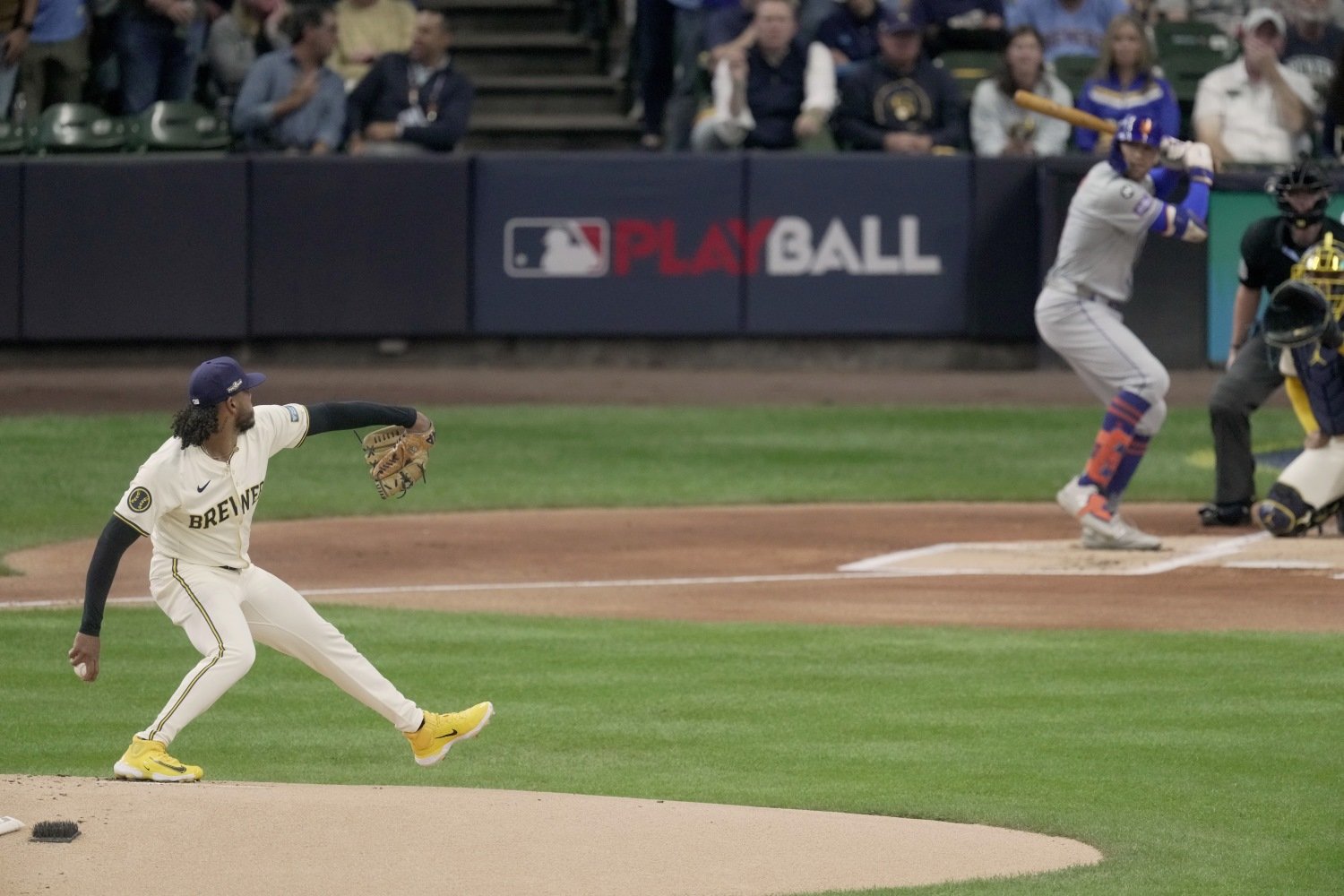 It's hard to put together a team defense much better than that of the 2024 Brewers. It wasn't Brice Turang's fault that the Mets hit several key singles through the right side of the infield last week, often from right-handed batters who reached out and poked the ball that way. A defense can't afford to align itself based on the possibility that a team might uncharacteristically shorten up and go the other way, on the ground. More often than not, that will get you burned, and besides, the Brewers already use shaded infield positioning less often than almost any other team in the league. Most teams try to lift and pull the ball most of the time, but now and then, when a team has scouted an opposing pitcher well, they can simply decide to stroke the ball the opposite way. Many fans want to see players do it all the time, but it's impossible to do it consistently against top-level, modern competition. The thing is, you don't have to do it consistently to knock out a perfectly good team in MLB's current playoff format. You just have to do it for one game, or one especially hot inning. Pitchers can prevent hard contact in the air, much of the time, if they so choose. But they can't necessarily prevent soft, directed contact. No, the only way to reliably prevent what the Mets did to the Brewers in rallies throughout the series is to stop them from hitting the ball at all. The Brewers were 16th in MLB in strikeout rate this year. The median strikeout rate in the postseason for the last nine seasons' pennant winners is 26%; Milwaukee pitchers only fanned 21.2% of Mets hitters in the Wild Card Series. There's no surefire solution to playoff variance; it's the unavoidable nature of postseason baseball. To give themselves the best possible chance to advance deeper into October next year, though, the team has to miss more bats. The good news is, they already have that kind of potential. As much as any reorganization of their pitching staff to add talent, they just need to change their approach. Few teams in baseball throw fastballs more often than do the Brewers. That's fine; it helps them avoid issuing undue numbers of walks and can induce early, weak contact. However, hitters also make more contact on fastballs than on other pitch types. The team's tendency to lean hard on heaters allows their excellent defense to make plays, but in the process, it makes the whole team's run prevention dependent on that defense. Next season, Brewers pitchers need to take more of the responsibility for keeping runs off the board for themselves. The coaching staff needs to dig in with William Contreras and whoever works as his complementary catcher, to get them throwing more breaking balls and offspeed stuff. There will inevitably be some turnover in terms of pitching personnel, too, and that's healthy and good. Pitching to contact was not just a team-wide strategy or the product of Contreras's tendencies; it was also a good way to make up for the torrent of injuries that hit the pitching staff. Next year, with more of their better arms healthy, they'll organically get more whiffs, and if they're aggressive in pitching acquisition, that effect might be magnified. Still, though, even with the pitchers who remain in place, there need to be some changes. Taking some of the burden off the fielders and placing it on pitchers will broaden the team's base of run-prevention contributors and improve their chances of beating even great offensive teams. It might also help those defenders stay fresher. Behaving a little more like the rest of the league in terms of pitch mix should allow the Brewers to get their strikeout rate clear of the average, at minimal opportunity or financial cost. They don't need to leave their identity behind, but some tweaks are required, so that they're more ready to punch hitters out and make themselves rally-proof when they return to the postseason.
 -
 We already knew the Brewers' contract with Diamond Sports Group, the parent company of Bally Sports Wisconsin, was up at the end of the season. Now, we know that there will be no renewal, on either a short- or a long-term basis. Instead, the team and MLB's central office moved decisively. The Brewers. Guardians, and Twins will join the Padres, Diamondbacks, and Rockies under a growing league umbrella for broadcast rights starting next season, with the league taking on the responsibility of producing and distributing the telecasts. The quick move to this form of distribution reflects a lack of desirable alternatives, more than a particular appetite or enthusiasm for this solution--at least in the short term. The league no longer wants to work with the bankrupt company behind the various Bally Sports networks, and that feeling is mutual. There's no one else in the sports broadcast distribution on this level, though, at least regionally. Unlike the NBA, it's not feasible for MLB to put a significant percentage of its games on national TV outlets, so their partnerships with ESPN, FOX and Turner Sports can't be expanded to stand in for local broadcasts. Besides, fans like to hear their local announcers call their games. For myriad reasons, the league can't provide teams with as much money as they were making under their contracts with major broadcast partners. Cable carriers no longer pay top dollar to keep the channels on which games air on board, and often silo those channels in premium packages few customers want to pay for. The cable TV bubble popped years ago; it's just taking effect now for much of the league. This move will have major financial ramifications for the whole league this winter, and in years to come. In the short term, though, it means that fans will be able to buy monthly or yearly subscriptions to a version of MLB.TV that allows them to tune into Brewers games. The rate for that subscription might feel onerous, or very reasonable, depending both on how badly those fans want the right to watch games that way and on whether they already paid for MLB.TV, anyway. Because the Brewers draw so well in person and were never making as much for their TV rights as many other teams in the league, this will hit them less hard than some of their neighbors, but it still means a diminution of revenue in one key sector, for an industry where virtually every decision over the last 30 years has been informed by a confident expectation of uninterrupted growth. That means a lot of uncertainty ahead, but for fans who have struggled to access Brewers telecasts in recent years, it's good news. Meanwhile, for fans who have watched the team on cable, little is likely to change. The league plans to negotiate small, non-disruptive deals with major cable and satellite carriers to get a designated channel where they can air games for subscribers, without the carriage fees that became bones of contention between entities like Diamond Sports Group and Spectrum. This feels like a transitional year toward what might end up being a very different kind of solution in the future, but in 2025, it looks like the Brewers will be easier to watch, and not much (if at all) more expensive. In that sense, it's probably good news for fans, who matter most in this equation and often get the least honest treatment.
 -
For the first time, starting in 2025, Brewers fans who live within the Brewers' local TV market will have the right to purchase a subscription to stream those games directly online. The league will produce and distribute the broadcasts, as the team and MLB pivot toward the future. Image courtesy of © Mark Hoffman / USA TODAY NETWORK We already knew the Brewers' contract with Diamond Sports Group, the parent company of Bally Sports Wisconsin, was up at the end of the season. Now, we know that there will be no renewal, on either a short- or a long-term basis. Instead, the team and MLB's central office moved decisively. The Brewers. Guardians, and Twins will join the Padres, Diamondbacks, and Rockies under a growing league umbrella for broadcast rights starting next season, with the league taking on the responsibility of producing and distributing the telecasts. The quick move to this form of distribution reflects a lack of desirable alternatives, more than a particular appetite or enthusiasm for this solution--at least in the short term. The league no longer wants to work with the bankrupt company behind the various Bally Sports networks, and that feeling is mutual. There's no one else in the sports broadcast distribution on this level, though, at least regionally. Unlike the NBA, it's not feasible for MLB to put a significant percentage of its games on national TV outlets, so their partnerships with ESPN, FOX and Turner Sports can't be expanded to stand in for local broadcasts. Besides, fans like to hear their local announcers call their games. For myriad reasons, the league can't provide teams with as much money as they were making under their contracts with major broadcast partners. Cable carriers no longer pay top dollar to keep the channels on which games air on board, and often silo those channels in premium packages few customers want to pay for. The cable TV bubble popped years ago; it's just taking effect now for much of the league. This move will have major financial ramifications for the whole league this winter, and in years to come. In the short term, though, it means that fans will be able to buy monthly or yearly subscriptions to a version of MLB.TV that allows them to tune into Brewers games. The rate for that subscription might feel onerous, or very reasonable, depending both on how badly those fans want the right to watch games that way and on whether they already paid for MLB.TV, anyway. Because the Brewers draw so well in person and were never making as much for their TV rights as many other teams in the league, this will hit them less hard than some of their neighbors, but it still means a diminution of revenue in one key sector, for an industry where virtually every decision over the last 30 years has been informed by a confident expectation of uninterrupted growth. That means a lot of uncertainty ahead, but for fans who have struggled to access Brewers telecasts in recent years, it's good news. Meanwhile, for fans who have watched the team on cable, little is likely to change. The league plans to negotiate small, non-disruptive deals with major cable and satellite carriers to get a designated channel where they can air games for subscribers, without the carriage fees that became bones of contention between entities like Diamond Sports Group and Spectrum. This feels like a transitional year toward what might end up being a very different kind of solution in the future, but in 2025, it looks like the Brewers will be easier to watch, and not much (if at all) more expensive. In that sense, it's probably good news for fans, who matter most in this equation and often get the least honest treatment. View full article
-
A Moonshot: The Brewers Should Sign Alex Bregman This Winter
Matthew Trueblood posted an article in Brewers
 It sounds faintly laughable, but don't laugh: the Milwaukee Brewers would be a sensational fit for free-agent third baseman Alex Bregman this winter. The erstwhile Astro is due to become a free agent for the first time, and in everything from the position he plays to his offensive profile, he suits this organization beautifully. Heading into the offseason after a heartbreaking playoff loss, the Crew's sights should be set on solidifying their hold on the NL Central for the next half-decade. They've already run the place for about that long, however imperfect their dominance has been, but they have every chance to sustain that state of affairs. Jackson Chourio is a magnificent cornerstone for any franchise. The trades of Josh Hader (William Contreras and Joel Payamps, eventually, plus Robert Gasser) and Corbin Burnes (Joey Ortiz and DL Hall) have netted them two controllable, sturdy position players with All-Star upside, plus ancillary depth. They figure to make a similar move this winter with Devin Williams, backfilling the bullpen with Payamps, Trevor Megill, and upcoming rookie sensations Jacob Misiorowski and Craig Yoho, and Williams could net them yet another piece for a puzzle that isn't missing many pieces, anyway. Holding over a pick they'll get for not signing Chris Levonas this summer, receiving their usual compensatory pick according to the Collective Bargaining Agreement, and getting another when Willy Adames departs as a high-dollar free agent, the Crew would lose less than almost any other potential suitor in terms of draft capital by signing Bregman. Either way, they'll amass talent as well as teams a half-dozen slots higher than them on next July's Draft board, so their farm system figures to remain fecund, even after their slew of graduations over the last two years. The one thing the team really needs, though, is a consistent, durable offensive contributor. They had hoped that would be Rhys Hoskins, and he might return to form in 2025, but he wasn't the thunderous presence they might have hoped for in 2024. With Adames on the way out, a vacancy is opening up on the infield. Brock Wilken, last year's first-round pick, is not ready to fill it, and Tyler Black, Sal Frelick, and Oliver Dunn are all various flavors of underwhelming as potential holders-down of the hot corner. Ortiz will slide to short in Adames's stead, or to second if Turang takes short, so the clear area of need is at third. Why not just re-sign Adames, instead? Well, firstly, Adames's track record is less consistent than Bregman's, and his skill set is inherently more volatile. Secondly, though, Adames is a shortstop. He's unlikely to be happy about sliding down the defensive spectrum even in a new home, but it's hard to imagine negotiating a reunion with him that includes the proviso of demoting him to third. Yet, he had a rough season afield in 2024, and Ortiz is markedly better, in addition to being younger. Specifically, Bregman would be a brilliant addition to this team, because he does all the things they already prize on offense. Last year was the first time his walk rate sagged over a full season, but even with that small crack in the armor, he looks to have considerable staying power as a productive hitter. He had his highest hard-hit rate since 2019 last year, and his strikeout rate is perennially one of the lowest in the league. He doesn't expand the strike zone, and you can't beat him often within it. The 25-homer power he's shown over the last three years probably wouldn't survive the move to Milwaukee, where the corners are deep. He hits line drives, though, and would get plenty of doubles down the line even at Miller Park, in addition to some extra homers in the friendlier areas from gap to gap. He uses the opposite field more often than most hitters, but not most Brewers hitters: his profile in that regard is very similar to those of William Contreras and Jackson Chourio. Nor should it be lost on anyone that Bregman, who will turn 31 just after Opening Day next year, already has six seasons with at least 626 plate appearances under his belt--not to mention his 434 career postseason plate appearances, with a .789 OPS. He's durable, available, and a primetime playoff performer, and at this stage of their battle with the ghosts of Octobers past, the team could probably use a swaggering two-time World Series champion who isn't afraid of those ghosts. This is a far-fetched notion. It's not the way the Brewers usually do business, and there are valid, valuable reasons for that. However, there's a window open here. The team receives excellent fan support, including and especially in-person attendance, which makes them a bit less exposed to the pain of the TV rights crash in which they, too, will be entangled this winter. They could use that problem as cover for not spending money, but they have money coming off their books, and reinvesting and expanding the payroll of this team would be the right thing to do, at this juncture. A regional dynasty and a real push to end the franchise's title drought are possible. Bregman would be a good way to amplify that possibility, and it need not come at the expense of other moves that would give the team a chance to be good well past next season.
 -
The two-time All-Star might not find the market he's hoping for this winter, and he's a uniquely excellent fit for this team. Image courtesy of © Troy Taormina-Imagn Images It sounds faintly laughable, but don't laugh: the Milwaukee Brewers would be a sensational fit for free-agent third baseman Alex Bregman this winter. The erstwhile Astro is due to become a free agent for the first time, and in everything from the position he plays to his offensive profile, he suits this organization beautifully. Heading into the offseason after a heartbreaking playoff loss, the Crew's sights should be set on solidifying their hold on the NL Central for the next half-decade. They've already run the place for about that long, however imperfect their dominance has been, but they have every chance to sustain that state of affairs. Jackson Chourio is a magnificent cornerstone for any franchise. The trades of Josh Hader (William Contreras and Joel Payamps, eventually, plus Robert Gasser) and Corbin Burnes (Joey Ortiz and DL Hall) have netted them two controllable, sturdy position players with All-Star upside, plus ancillary depth. They figure to make a similar move this winter with Devin Williams, backfilling the bullpen with Payamps, Trevor Megill, and upcoming rookie sensations Jacob Misiorowski and Craig Yoho, and Williams could net them yet another piece for a puzzle that isn't missing many pieces, anyway. Holding over a pick they'll get for not signing Chris Levonas this summer, receiving their usual compensatory pick according to the Collective Bargaining Agreement, and getting another when Willy Adames departs as a high-dollar free agent, the Crew would lose less than almost any other potential suitor in terms of draft capital by signing Bregman. Either way, they'll amass talent as well as teams a half-dozen slots higher than them on next July's Draft board, so their farm system figures to remain fecund, even after their slew of graduations over the last two years. The one thing the team really needs, though, is a consistent, durable offensive contributor. They had hoped that would be Rhys Hoskins, and he might return to form in 2025, but he wasn't the thunderous presence they might have hoped for in 2024. With Adames on the way out, a vacancy is opening up on the infield. Brock Wilken, last year's first-round pick, is not ready to fill it, and Tyler Black, Sal Frelick, and Oliver Dunn are all various flavors of underwhelming as potential holders-down of the hot corner. Ortiz will slide to short in Adames's stead, or to second if Turang takes short, so the clear area of need is at third. Why not just re-sign Adames, instead? Well, firstly, Adames's track record is less consistent than Bregman's, and his skill set is inherently more volatile. Secondly, though, Adames is a shortstop. He's unlikely to be happy about sliding down the defensive spectrum even in a new home, but it's hard to imagine negotiating a reunion with him that includes the proviso of demoting him to third. Yet, he had a rough season afield in 2024, and Ortiz is markedly better, in addition to being younger. Specifically, Bregman would be a brilliant addition to this team, because he does all the things they already prize on offense. Last year was the first time his walk rate sagged over a full season, but even with that small crack in the armor, he looks to have considerable staying power as a productive hitter. He had his highest hard-hit rate since 2019 last year, and his strikeout rate is perennially one of the lowest in the league. He doesn't expand the strike zone, and you can't beat him often within it. The 25-homer power he's shown over the last three years probably wouldn't survive the move to Milwaukee, where the corners are deep. He hits line drives, though, and would get plenty of doubles down the line even at Miller Park, in addition to some extra homers in the friendlier areas from gap to gap. He uses the opposite field more often than most hitters, but not most Brewers hitters: his profile in that regard is very similar to those of William Contreras and Jackson Chourio. Nor should it be lost on anyone that Bregman, who will turn 31 just after Opening Day next year, already has six seasons with at least 626 plate appearances under his belt--not to mention his 434 career postseason plate appearances, with a .789 OPS. He's durable, available, and a primetime playoff performer, and at this stage of their battle with the ghosts of Octobers past, the team could probably use a swaggering two-time World Series champion who isn't afraid of those ghosts. This is a far-fetched notion. It's not the way the Brewers usually do business, and there are valid, valuable reasons for that. However, there's a window open here. The team receives excellent fan support, including and especially in-person attendance, which makes them a bit less exposed to the pain of the TV rights crash in which they, too, will be entangled this winter. They could use that problem as cover for not spending money, but they have money coming off their books, and reinvesting and expanding the payroll of this team would be the right thing to do, at this juncture. A regional dynasty and a real push to end the franchise's title drought are possible. Bregman would be a good way to amplify that possibility, and it need not come at the expense of other moves that would give the team a chance to be good well past next season. View full article
-
 With their season on the line, the Brewers handed the ball to Tobias Myers Thursday night. It has been a wonderful rookie season for Myers, and the team was happy and fortunate to be able to turn to such a suitable starter, given all the injuries they've incurred over the course of the long season. Still, you don't want to hand your whole season to a rookie starter, and they never intended to do so. Myers was set to start, and the team knew they would need some innings from him to make up for heavy usage of their relief corps in Games 1 and 2, but he couldn't be the whole plan. Myers had two pitches that made him a good candidate to take on the Mets lineup: a tight, gyro slider and a high-rise fastball, both from the same high, overhand release. The nine batters who made up the New York batting order Thursday night, when facing breaking balls like Myers's from a righty with a high arm angle, batted .227/.329/.364 on plate appearances that ended on those pitches. In reality, though, they were more vulnerable to that type of slider than those numbers suggest. Firstly, those numbers are only on decisive pitches. There are a lot of walks baked in, and there are a lot of pitches not captured by results-centered data that didn't end at-bats, but could advance the pitcher toward getting an out, anyway. Those nine hitters whiffed on 47.7% of their swings against those breaking balls on the year, and their modest numbers overall came with a .350 BABIP. The Brewers knew Myers could attack the Mets with his slider and get a lot of strikes and outs, without risking giving up much power. He just had to locate. The other weapon Myers would have at his disposal was his high-rise four-seam fastball. The Mets' hitters did quite well against pitches like Myers's--with a high release, high induced vertical break, and a relatively straight shape, rather than lots of run to the arm side--but they weren't going to be able to settle in and hunt it. He threw the slider enough to keep them guessing, jumping at the ball, and freezing up on some fastballs at unexpected edges. His fastball shape sets up his slider gorgeously, and against the Mets, that turned out to be doubly true, thanks to some extra heat. What Myers was not doing, of course, was utilizing his cutter or changeup. That was wise, given the lineup he was facing and the fact that his fastball and slider are his best pitches, anyway, but what had worked for him through five dazzling shutout innings was not going to work upon entry into a third trip through the lineup. That's why Pat Murphy got him out of there after five innings, and why it was the right call, despite his low pitch count. The question was, whom should he go to to keep the Mets at bay? One highly effective approach in pairing up relievers with particular starters is to find ones with sharply contrasting styles. You give hitters one look a couple of times, and then radically change what they're looking at. Go from a sinker-slider guy to someone with a vertical profile, or from a soft tosser to a fireballer, or from a high-slot righty to a sidearm lefty. Drastic changes in style from one pitcher to the next can ruffle a batter, and force them to start over in the project of locking in on a release point. In this instance, the Brewers went completely the other way. They believed they had an approach--a combination of sheer stuff, location, release point, and mechanics--that could tear through the Mets, so they stuck to it. On came Trevor Megill, an extremely souped-up version of Myers, with his won lively fastball and a sharp breaking ball. Megill got three outs, and then, so did Nick Mears. All three of Myers, Megill and Mears have overhand slots--more so than anyone else on the team. Those three pitchers use their overhand mechanics to deliver great rising action on the fastball, along with breaking balls that have more power than depth but sharp movement. After they plowed througn the Mets, Freddy Peralta came on for the top of the eighth and did the same thing. Although he comes from a lower release point, he famously throws a fastball with good carry and a flat vertical approach angle. Peralta fits nicely with Myers, Megill, and Mears, too, in that recently, he's altered his delivery, his pitch usage, and his breaking ball shape, making the latter more vertical and less sweepy. The tighter action of that breaker is what kept the Mets off-balance all night. They kept waiting for the three-fastball Brewers to show up, and they kept getting rising four-seamers and a bunch of breaking balls tunneled perfectly off of them. Through eight innings, the four pitchers who recorded 24 outs without allowing a run barely made any use of changeups or cutters, and no one threw a sinker. Megill's breaking ball is a power curve, but in essence, the quartet of hurlers went with fastballs half the time and sliders 40 percent of the time. They made the Mets look helpless, as hitters who are caught guessing wildly wrong often do. There was just one more inning left--three more outs. At that point in the game, nifty little tricks you think have fooled an offense (whether because of the sheer quality of the pitches being thrown, the way it violated their scouting report and expectations, or both) fall away. If you have a superstar closer, when that moment comes, you bring them in and let them shut things down. Alas: Devin Williams was the one pitcher who didn't fit the mold of the night. That could have been fine; it could have been inconsequential. Williams does have incredible stuff. It's some of the best on the team, or even in the league. There was probably a remote, perverse sense of relief in the Mets dugout that the parade of the clones was over, and that they would have a chance to face a different kind of pitcher, but that, too, didn't have to matter. Williams doesn't beat teams because he poses a uniquely bad matchup for them; he beats them because he's exceptional. Here's the real problem: Williams didn't have command of his screwball. Unfortunately, that state of affairs has cropped up too often this season. His lower arm angle and looser fastball shape might have been a minor relief for the Mets, but eventually, the greater relief emerged: the man on the mound couldn't land his out pitch where he needed to. The writing for that has been on the wall all season, although that's of little comfort now. Since Williams returned from a major back injury in July, he's been using a more crossfire direction with his delivery. That might be a matter of protecting himself from some of the movements that contributed to getting hurt in the first place, or it might have been a change born of a desire for more deception, but it came with a cost. Against righties, especially, the Airbender has to come back from the edge of the plate and dip just below the zone, for maximal effectiveness. Last year, he could consistently hit that spot, and he got lots and lots of whiffs and weak contact with it. This year, he hasn't been able to dot it there. The incredible rightward swerve of Williams's screwball means that those pitches right on the outside corner to a righty at the knees go un-chased, and are never called a strike. He lacks a reliable breaking ball, so he needs righty batters to be fooled by the Airbender the same way they are on sliders for other pitchers. It has to look like a strike, then dip below the zone. This year, because Williams has been working around his own body more and not getting downhill as much, the pitch isn't doing that as often. Sometimes, he hangs it, especially over the glove-side third of the plate. The pitch has the same movement it always had, but the angles are different in his post-injury form, and for the delicate thing that is getting same-handed batters to miss on a pitch that moves to the arm side, the difference is crucial. He's escaped a good number of jams this year, because he's still a very good pitcher, but there's a chink in the armor now. It's hard to tell whether Pete Alonso knew that. Did the Mets have on their scouting report, don't give up on that Airbender to the outer edge, and stay through it, because it's been missing up? Or did Alonso just react quickly and swing with all the finely-controlled adrenaline that fills you up during a playoff game, and run into one? It doesn't really matter. What matters is what happened. On a 3-1 pitch with two runners on, Williams missed with the Airbender. It was above the knees, on the white of the plate, and then it was gone over the right-field wall and the Brewers' grand plan was a fun but unhelpful memory. The Brewers almost could have gotten out of the inning without even facing Alonso. Williams battled with Francisco Lindor before issuing a 3-2 walk, and then he left an 0-2 screwball over the plate to Brandon Nimmo and gave up another single, on an almost playable grounder. Their All-Star closer, their relief ace, just wasn't quite good enough, and it brought Alonso up, and then it brought the season down. It's a vicious way for a season to end, because they had such a great plan, and the only part of it that didn't work was the part that seemed to require no great thought or creativity at all. The offense gave the pitching staff just a scintilla of breathing room, and the pitchers all came through. Excruciatingly, in the ninth inning--his inning, his territory, the space he keeps sacred and wants to pitch every single time the team has the lead--their previously best pitcher couldn't do so. Williams might need to unwind the alignment change he made this year, in order to regain his previous levels of reliability. Then again, maybe he needs to preserve it, to keep himself healthy, and the tack will need to be developing a new pitch. Either way, and this is another punch to the gut, it probably won't happen in a Brewers uniform. Williams is one of the most obvious trade candidates in the game this offseason. That his final impression with the team will be such a miserable one, after all the heroics he delivered for them, is another level of frustration to heap onto this loss. We can't take much solace or joy from the fact that the Brewers aced everything before that, except to note that they still have a great process. They still have a lot of great pitchers who get the job done, and will still have a deep bullpen after trading Williams this winter. They still have every reason to look toward 2025 and view themselves as favorites in the NL Central. That's all great. It just doesn't make up for--doesn't neutralize the pain of--the thing they don't have, anymore, which is a chance to win the World Series this fall. That was really possible, and for a couple innings Thursday night, it started to feel tantalizingly real. Now, that chance is gone. They'll have to go through another 162 demanding games just to return to this stage and get another chance as good.
 -
The Brewers' plan to neutralize and overmatch the Mets lineup in a win-or-go-home Game 3 of the Wild Card Series was elegant. It was executed brilliantly. It was a triumph. And then it wasn't. Image courtesy of © Benny Sieu-Imagn Images With their season on the line, the Brewers handed the ball to Tobias Myers Thursday night. It has been a wonderful rookie season for Myers, and the team was happy and fortunate to be able to turn to such a suitable starter, given all the injuries they've incurred over the course of the long season. Still, you don't want to hand your whole season to a rookie starter, and they never intended to do so. Myers was set to start, and the team knew they would need some innings from him to make up for heavy usage of their relief corps in Games 1 and 2, but he couldn't be the whole plan. Myers had two pitches that made him a good candidate to take on the Mets lineup: a tight, gyro slider and a high-rise fastball, both from the same high, overhand release. The nine batters who made up the New York batting order Thursday night, when facing breaking balls like Myers's from a righty with a high arm angle, batted .227/.329/.364 on plate appearances that ended on those pitches. In reality, though, they were more vulnerable to that type of slider than those numbers suggest. Firstly, those numbers are only on decisive pitches. There are a lot of walks baked in, and there are a lot of pitches not captured by results-centered data that didn't end at-bats, but could advance the pitcher toward getting an out, anyway. Those nine hitters whiffed on 47.7% of their swings against those breaking balls on the year, and their modest numbers overall came with a .350 BABIP. The Brewers knew Myers could attack the Mets with his slider and get a lot of strikes and outs, without risking giving up much power. He just had to locate. The other weapon Myers would have at his disposal was his high-rise four-seam fastball. The Mets' hitters did quite well against pitches like Myers's--with a high release, high induced vertical break, and a relatively straight shape, rather than lots of run to the arm side--but they weren't going to be able to settle in and hunt it. He threw the slider enough to keep them guessing, jumping at the ball, and freezing up on some fastballs at unexpected edges. His fastball shape sets up his slider gorgeously, and against the Mets, that turned out to be doubly true, thanks to some extra heat. What Myers was not doing, of course, was utilizing his cutter or changeup. That was wise, given the lineup he was facing and the fact that his fastball and slider are his best pitches, anyway, but what had worked for him through five dazzling shutout innings was not going to work upon entry into a third trip through the lineup. That's why Pat Murphy got him out of there after five innings, and why it was the right call, despite his low pitch count. The question was, whom should he go to to keep the Mets at bay? One highly effective approach in pairing up relievers with particular starters is to find ones with sharply contrasting styles. You give hitters one look a couple of times, and then radically change what they're looking at. Go from a sinker-slider guy to someone with a vertical profile, or from a soft tosser to a fireballer, or from a high-slot righty to a sidearm lefty. Drastic changes in style from one pitcher to the next can ruffle a batter, and force them to start over in the project of locking in on a release point. In this instance, the Brewers went completely the other way. They believed they had an approach--a combination of sheer stuff, location, release point, and mechanics--that could tear through the Mets, so they stuck to it. On came Trevor Megill, an extremely souped-up version of Myers, with his won lively fastball and a sharp breaking ball. Megill got three outs, and then, so did Nick Mears. All three of Myers, Megill and Mears have overhand slots--more so than anyone else on the team. Those three pitchers use their overhand mechanics to deliver great rising action on the fastball, along with breaking balls that have more power than depth but sharp movement. After they plowed througn the Mets, Freddy Peralta came on for the top of the eighth and did the same thing. Although he comes from a lower release point, he famously throws a fastball with good carry and a flat vertical approach angle. Peralta fits nicely with Myers, Megill, and Mears, too, in that recently, he's altered his delivery, his pitch usage, and his breaking ball shape, making the latter more vertical and less sweepy. The tighter action of that breaker is what kept the Mets off-balance all night. They kept waiting for the three-fastball Brewers to show up, and they kept getting rising four-seamers and a bunch of breaking balls tunneled perfectly off of them. Through eight innings, the four pitchers who recorded 24 outs without allowing a run barely made any use of changeups or cutters, and no one threw a sinker. Megill's breaking ball is a power curve, but in essence, the quartet of hurlers went with fastballs half the time and sliders 40 percent of the time. They made the Mets look helpless, as hitters who are caught guessing wildly wrong often do. There was just one more inning left--three more outs. At that point in the game, nifty little tricks you think have fooled an offense (whether because of the sheer quality of the pitches being thrown, the way it violated their scouting report and expectations, or both) fall away. If you have a superstar closer, when that moment comes, you bring them in and let them shut things down. Alas: Devin Williams was the one pitcher who didn't fit the mold of the night. That could have been fine; it could have been inconsequential. Williams does have incredible stuff. It's some of the best on the team, or even in the league. There was probably a remote, perverse sense of relief in the Mets dugout that the parade of the clones was over, and that they would have a chance to face a different kind of pitcher, but that, too, didn't have to matter. Williams doesn't beat teams because he poses a uniquely bad matchup for them; he beats them because he's exceptional. Here's the real problem: Williams didn't have command of his screwball. Unfortunately, that state of affairs has cropped up too often this season. His lower arm angle and looser fastball shape might have been a minor relief for the Mets, but eventually, the greater relief emerged: the man on the mound couldn't land his out pitch where he needed to. The writing for that has been on the wall all season, although that's of little comfort now. Since Williams returned from a major back injury in July, he's been using a more crossfire direction with his delivery. That might be a matter of protecting himself from some of the movements that contributed to getting hurt in the first place, or it might have been a change born of a desire for more deception, but it came with a cost. Against righties, especially, the Airbender has to come back from the edge of the plate and dip just below the zone, for maximal effectiveness. Last year, he could consistently hit that spot, and he got lots and lots of whiffs and weak contact with it. This year, he hasn't been able to dot it there. The incredible rightward swerve of Williams's screwball means that those pitches right on the outside corner to a righty at the knees go un-chased, and are never called a strike. He lacks a reliable breaking ball, so he needs righty batters to be fooled by the Airbender the same way they are on sliders for other pitchers. It has to look like a strike, then dip below the zone. This year, because Williams has been working around his own body more and not getting downhill as much, the pitch isn't doing that as often. Sometimes, he hangs it, especially over the glove-side third of the plate. The pitch has the same movement it always had, but the angles are different in his post-injury form, and for the delicate thing that is getting same-handed batters to miss on a pitch that moves to the arm side, the difference is crucial. He's escaped a good number of jams this year, because he's still a very good pitcher, but there's a chink in the armor now. It's hard to tell whether Pete Alonso knew that. Did the Mets have on their scouting report, don't give up on that Airbender to the outer edge, and stay through it, because it's been missing up? Or did Alonso just react quickly and swing with all the finely-controlled adrenaline that fills you up during a playoff game, and run into one? It doesn't really matter. What matters is what happened. On a 3-1 pitch with two runners on, Williams missed with the Airbender. It was above the knees, on the white of the plate, and then it was gone over the right-field wall and the Brewers' grand plan was a fun but unhelpful memory. The Brewers almost could have gotten out of the inning without even facing Alonso. Williams battled with Francisco Lindor before issuing a 3-2 walk, and then he left an 0-2 screwball over the plate to Brandon Nimmo and gave up another single, on an almost playable grounder. Their All-Star closer, their relief ace, just wasn't quite good enough, and it brought Alonso up, and then it brought the season down. It's a vicious way for a season to end, because they had such a great plan, and the only part of it that didn't work was the part that seemed to require no great thought or creativity at all. The offense gave the pitching staff just a scintilla of breathing room, and the pitchers all came through. Excruciatingly, in the ninth inning--his inning, his territory, the space he keeps sacred and wants to pitch every single time the team has the lead--their previously best pitcher couldn't do so. Williams might need to unwind the alignment change he made this year, in order to regain his previous levels of reliability. Then again, maybe he needs to preserve it, to keep himself healthy, and the tack will need to be developing a new pitch. Either way, and this is another punch to the gut, it probably won't happen in a Brewers uniform. Williams is one of the most obvious trade candidates in the game this offseason. That his final impression with the team will be such a miserable one, after all the heroics he delivered for them, is another level of frustration to heap onto this loss. We can't take much solace or joy from the fact that the Brewers aced everything before that, except to note that they still have a great process. They still have a lot of great pitchers who get the job done, and will still have a deep bullpen after trading Williams this winter. They still have every reason to look toward 2025 and view themselves as favorites in the NL Central. That's all great. It just doesn't make up for--doesn't neutralize the pain of--the thing they don't have, anymore, which is a chance to win the World Series this fall. That was really possible, and for a couple innings Thursday night, it started to feel tantalizingly real. Now, that chance is gone. They'll have to go through another 162 demanding games just to return to this stage and get another chance as good. View full article
-
 In his entire MLB career, before Wednesday night, Garrett Mitchell had only pulled two non-ground balls on pitches over the outer third of the plate or farther away. One was a lineout to right field this August, against Atlanta utilityman-turned-emergency pitcher Luke Williams, on a lobbed pitch that came in just over 60 miles per hour. The other was a soft line drive to first base, which turned into a double play. Mitchell doesn't turn on the outside pitch, and when he does, it certainly isn't with loft and authority. This is not only true of Mitchell, but one of the most important truths about him as a player. Consistent power production has eluded the obviously strong and whippy Mitchell for much of his professional career, because he hits way too many ground balls. His power is over the outer third of the dish, especially against right-handed pitchers, but it tends to take the shape of hard-hit singles and doubles. Even as he finally stayed healthy enough to get prolonged big-league playing time this summer and managed 23 extra-base hits in 224 plate appearances, he had a 52% ground-ball rate. Phil Maton of the Mets was a thoroughly excellent matchup for Mitchell, though. In his fractured MLB career, he's been better against curveballs than against any other pitch type against righties. Many lefty batters see big swing-and-miss differentials by pitch type, but Mitchell is one who swings through a scary percentage of the four-seam fastballs he sees, so his more typical whiff rates against breaking and offspeed offerings feel tame, by comparison. After the curveball, the pitch against which he does the most damage is the cutter. Maton is a cutter-curveball righty. Mitchell had come on two innings earlier, as a pinch-runner for DH Gary Sánchez. He was batting for the first time in the game, but the matchup he got was one Pat Murphy had anticipated when he made the choice to lift Sánchez in favor of Mitchell. It was a chance at redemption, after Mitchell had been thrown out trying to steal in his pinch-running capacity, but it was also a familiar moment for the young hitter. Back in spring training, I asked Mitchell about coming off the bench, because it was obvious even then that that would be part of the story of his season. After Jake Bauers hit for him in a late-game situation in Minnesota just after the All-Star break, I asked him about the feeling on both sides of the decision a manager makes to remove one hitter and bring in another. Even more than the occasion called for--far beyond platitudes--he affirmed his willingness to fill whatever role the team required. Since he arrived in the majors in 2022, Mitchell has understood that he'd sometimes need to find his playing time by coming on midstream to help the team gain a tacitcal edge. It didn't faze him not to start; he made it part of his mental and logistical routine to prepare to perform as a pinch-hitter or substitute. In 27 career regular-season plate appearances as a sub--be it a pinch-hitter, a pinch-runner, or a defensive replacement who later came to bat--Mitchell has batted .391/.482/.652. He had three doubles off the bench this year alone. He has become a player the team can not only trust with this often-difficult role, but actively try to cast for it. His blend of plate discipline, ability to hit the ball hard, and speed have been calibrated just right, such that they give opposing pitchers and defenses something they can't quite handle in the back halves of games. Thus, Mitchell was in a role he's embraced and had a pitching matchup that favored him. With Willy Adames representing the go-ahead run in the bottom of the eighth, Mitchell stepped in against Maton, needing to lock in on something and create more of that extra-base jolt he's delivered off the bench so often. On the first pitch, he got a get-me-over backdoor breaking ball, and he was perfectly ready for it. Garrett Fukkin Mitchell.mp4 Had Maton started him with the cutter, Mitchell would have been able to punch the ball to the left side. Though it was ultimately extremely uncharacteristic contact and direction on a ball in that location, the swing Mitchell put on the pitch was balanced and knowing. He had gone up there with confidence and anticipated Maton's plan. He didn't risk falling behind in the count, and he didn't foul off the mistake pitch he got. Much of playoff baseball is that simple: When you get your pitch, don't miss it, even by a hair. Simple and easy are as different as a horse and a house, in this case, though. Mitchell had to be mentally, physically, and emotionally prepared--and still, the resulting moment was a combination of pitch location and batted ball that he'd never achieved before. Sometimes, playoff baseball also comes down to that: letting adrenaline flow just enough to do something that would ordinarily be on the fringe of your capacity, or beyond it. Maybe Mitchell is destined to figure things out on a more sustainable basis, and this will be remembered as the concretizing, clarifying moment in his transition from an exciting complementary piece to a lineup fixture. Maybe it won't. In either case, though, Mitchell's talent, makeup, and situation--the circumstance his manager helped create, in which he was set up to succeed--came together on that pitch to create a core memory for Brewers playoff history. For that, a great deal of credit is due, and no worrying about whether he can repeat it in the future is required.


