


Matthew Trueblood
-
Posts
1,964 -
Joined
-
Last visited
-
Days Won
10
Content Type
Profiles
Forums
Blogs
Events
News
2026 Milwaukee Brewers Top Prospects Ranking
Milwaukee Brewers Videos
2022 Milwaukee Brewers Draft Picks
Milwaukee Brewers Free Agent & Trade Rumors, Notes, & Tidbits
Guides & Resources
2023 Milwaukee Brewers Draft Picks
2024 Milwaukee Brewers Draft Picks
The Milwaukee Brewers Players Project
2025 Milwaukee Brewers Draft Pick Tracker
2026 Milwaukee Brewers Draft Tracker: Picks & Bonuses
Store
Downloads
Gallery
Everything posted by Matthew Trueblood
-
Though he's batted second against a couple of left-handed opposing starters lately, the highly-paid veteran slugger bats seventh most days. His rediscovered pull-side thump may mean it's time to change that. Image courtesy of © Benny Sieu-USA TODAY Sports Somewhat predictably, Rhys Hoskins's first season back from a torn ACL that cost him 2023 has really been three different campaigns. There was the first month and a half, before he strained his hamstring; then there was the period between his rapid return from that injury and the All-Star break; and now there's the time since the break. He's been three very different hitters during those spans, in ways that make plenty of sense. Early on, Hoskins was more or less the guy the Brewers paid for--the one whom the Phillies enjoyed from 2017 through 2022, before a knee injury wiped out his walk year ahead of free agency. He batted .233/.340/.474, with 9 home runs in 156 plate appearances, with a terrific walk rate and a very reasonable strikeout rate, for a prodigious slugger. It wasn't a roaring start, but that's basically what you'd expect from Hoskins in any of his previous seasons: a take-and-rake star tracking toward 35 home runs over a full season of playing time. The hamstring injury Hoskins suffered while rounding first base on a single May 13 threw all of that into chaos. Surely frustrated by the disruption, impatient to get back into the mix after losing a year, and thinking ahead to his possible free agency again this fall, Hoskins came back from the injury after just 17 days and 15 games. That was quick. Over the previous six full seasons, when a hitter suffered an early-season hamstring strain, their median number of days missed was 19, and the average was 25. When you account for the fact that Hoskins is 31 years old and was coming off a major leg injury, too, you'd have guessed he would miss more like four weeks than two. It quickly became clear, too, that Hoskins wasn't quite himself. He returned to the lineup, but his power didn't. From May 31, when he came back, to the All-Star break, he batted .195/.273/.350. In 140 plate appearances, he had just 5 home runs, drew 12 walks, and struck out a whopping 47 times. Whether he still had lingering damage in the hamstring or whether he was just out of rhythm and not yet confident in his moves from head to toe in the box, he lost touch with his talent. Thankfully, the team's unusual five-day All-Star break acted like a second IL stint for Hoskins. He got a full week off, since Pat Murphy sat him in the first-half finale. Since the beginning of the second half on Jul. 20, Hoskins is back. He's only come to the plate 83 times in that span, but he's batting .280/.325/.547 in that time, with 6 home runs. His strikeout rate is back under control, too. When you break out Hoskins's spray chart into those three season-fragments, it's fairly easy to see a change. Always a hitter focused on driving the ball in the air to the pull field, Hoskins has done that more effectively over the last four weeks than at any other time this season. He's not getting quite as far out in front of the ball, which means more balls to the gap and fewer down the line, but it also means fewer ground balls, and that he's on time more often, so more of his flies and liners go to the middle chunk of the diamond. His strength and the leverage in his swing are conducive to that subtle change in approach, and we've seen the results follow that improved process. Interestingly, though, that change in hit distribution reflects a less expected shift in his approach at the plate. Hoskins has always been the kind of hitter who patiently waits for the ball in his happy zone, from the upper thigh up and on the inner half. In the first half, you could see that approach in his swing rate heat map; it just didn't work equally well in the two subsets on either side of his injury. Since the break, though, part of the transformation in Hoskins has been a much more aggressive tack, especially on pitches away from him. He's expanding the zone more often than he ever does, and in a place where he's historically been notable for his patience. This isn't just a problem with pitch recognition, though. It's a conscious choice. Hoskins is creating damage on those outside pitches, in a way he didn't do in the first half this year and has rarely done in his career. Here's a homer from late last month, on a changeup in a location where Hoskins hardly ever has such good luck. Hos on CH Away.mp4 Here's a chart showing the average exit velocity of batted balls by Hoskins in the first half, based on the location of the pitch he hit. The numbers and color indicate how hard he hits balls in that spot. The size of each square shows, relative to other locations, how often he hits balls in that spot. Now, here's the same chart for the second half. Whether in reaction to the way pitchers have been attacking him, or as part of a change to cheat a bit on the ball and get his arms extended more, Hoskins has shifted his sights at the plate. He now wants that outer-third pitch, even though he's still a dead pull hitter. He's just pulling it to the gap, instead of down the line, unless the ball runs back over the plate and into his swing path. Not all of this is good. It's only been a small number of plate appearances, and his solid overall numbers are inflated by a considerably higher BABIP than he ran in the previous segments of his season. They're also achieved despite his increased aggressiveness and sagging walk rate. Most notably, though, he's not hitting the ball as hard as he did before the injury, or even hitting it hard as often. Maybe he's going to start drawing more walks as he settles into this altered approach, and maybe he doesn't need to hit it much harder than he already does, if he can keep hitting the ball with loft to the pull field. Maybe, on the other hand, opposing pitchers will figure out this new pattern from him, and he'll have to migrate to another one. So far, Murphy hasn't responded to this hot streak by moving Hoskins up in the batting order, except when the Brewers face left-handed starters. That might be the most reasonable course, given the uncertainty that remains about the staying power of this improvement. At the same time, the team needs more power to keep up with the rest of the powerhouses in the National League, and Hoskins can provide it, even without eye-popping exit velocities. As the balance of this month unfolds, if he stays hot, Hoskins should get more plate appearances, by creeping higher in the lineup. View full article
-
And maybe that's actually ok. Baseball is weird. Image courtesy of © Michael McLoone-USA TODAY Sports Way back in spring training, Brewers manager Pat Murphy anointed Brice Turang as a key part of his lineup. He predicted a "quantum leap" from the sophomore second baseman, and early on, it looked like that was exactly what was happening. Quickly, Turang established himself as the regular leadoff hitter against right-handed pitchers, thanks to a .312/.375/.441 April and his usual, excellent defensive work. Meanwhile, Sal Frelick sputtered and struggled to find his gear. He batted .262/.342/.313 in April, and slowly, the team and the player had to give up on the idea of him as an everyday, top-of-the-order hitter. Turang had, for the first month or two this year, clearly surpassed his fellow 2023 rookie. What if we just pretend April didn't happen, though? It changes almost nothing for Frelick. In 286 plate appearances since May 1, he's batting .268/.340/.350. The consistency he's demonstrated is nearly metronomic. It's just that, without adequate power, it doesn't make him an especially exciting player. He gets on base about 34 percent of the time. That's a full summary of his offensive skill set, and despite its brevity, it doesn't hold the attention of many fans or analysts for very long. Compared to what Turang has done over the same span, though, it's downright dominant. In a whopping 348 plate appearances since the start of May, Turang is hitting .238/.297/.330. When Turang is hot, he hits for below-average but noticeable gap power, and he's an elite contact hitter. When he's cold, though, he's merely average in terms of contact, and his power and plate discipline are almost nonexistent. Whether he's hot or not, Frelick puts the ball in play at an extraordinary rate for the modern game, and that sets a high floor for his offensive utility, relative to Turang. Note the smaller range of numbers on the y-axis in these charts. Frelick has a much higher floor than Turang, and he hovers mostly in a tighter range--although he doesn't spend as much time in the higher portion thereof as Turang can. Lopping off April makes Frelick look like a much more enticing option for the top of the lineup than Turang. Yet, it's Turang who keeps hitting there. Frelick last led off on May 7, and has batted sixth, seventh, and even eighth lately. Why? In the simplest terms, it's because we can all still see their Aprils in their stats. Though they take slightly different shapes, Frelick and Turang are separated by just .011 in OPS. Turang is a far better basestealer, and, well, he's been there. Inertia is working for him, and against Frelick. When Murphy, the coaching staff, and the front office survey their options each day, the numbers aren't screaming at them to swap those two players. From that statement follows another question: Shouldn't someone just do this basic trimming of the data, give everyone a new set of numbers, and prompt the change? Why doesn't some savvy wonk in the front office slip an incomplete set of data to Murphy to invite a new way of conceptualizing the lineup, especially with regard to these two hitters? The answer is chock-full of important truths about baseball, some of which just can't be fully understood in one swoop. It's also fairly simple, verbally: the game doesn't work that way. Recency bias rules the world, and can be especially powerful in this everyday game, where data piles up quickly and it can be easy to convince yourself the last month is sufficient evidence of a permanent change. In reality, though, what we've learned over parts of two seasons with Turang is Frelick is that one is streaky, one is consistent, and neither is a complete, above-average hitter. At that point, the questions are: How likely is it that Turang will get hot again down the stretch? Is that probability affected by whether he bats leadoff or gets moved down to the bottom of the batting order? Does the Frelick you can reasonably count on getting do enough to be a valuable leadoff hitter, even though he's so rarely going to score himself or put himself in scoring position with extra-base hits or steals? I would guess that the Brewers have waded through the data, recognized that there are physical and mental tweaks each player has made along the way, and understood that the questions above are the crucial ones. They appear to have decided, at least for now, that rolling the dice on a resurgence from Turang (and preserving his confidence while they await one) makes more sense than accepting the slight upgrade and lost upside of batting Frelick at the top. It's a reasonable stance, because baseball is so complicated and so unpredictable that the last three months are not necessarily more telling than the month right before them. However, with each 0-for-4 Turang takes and each passing day drawing the postseason nearer, it's becoming a more dangerous one. View full article
-
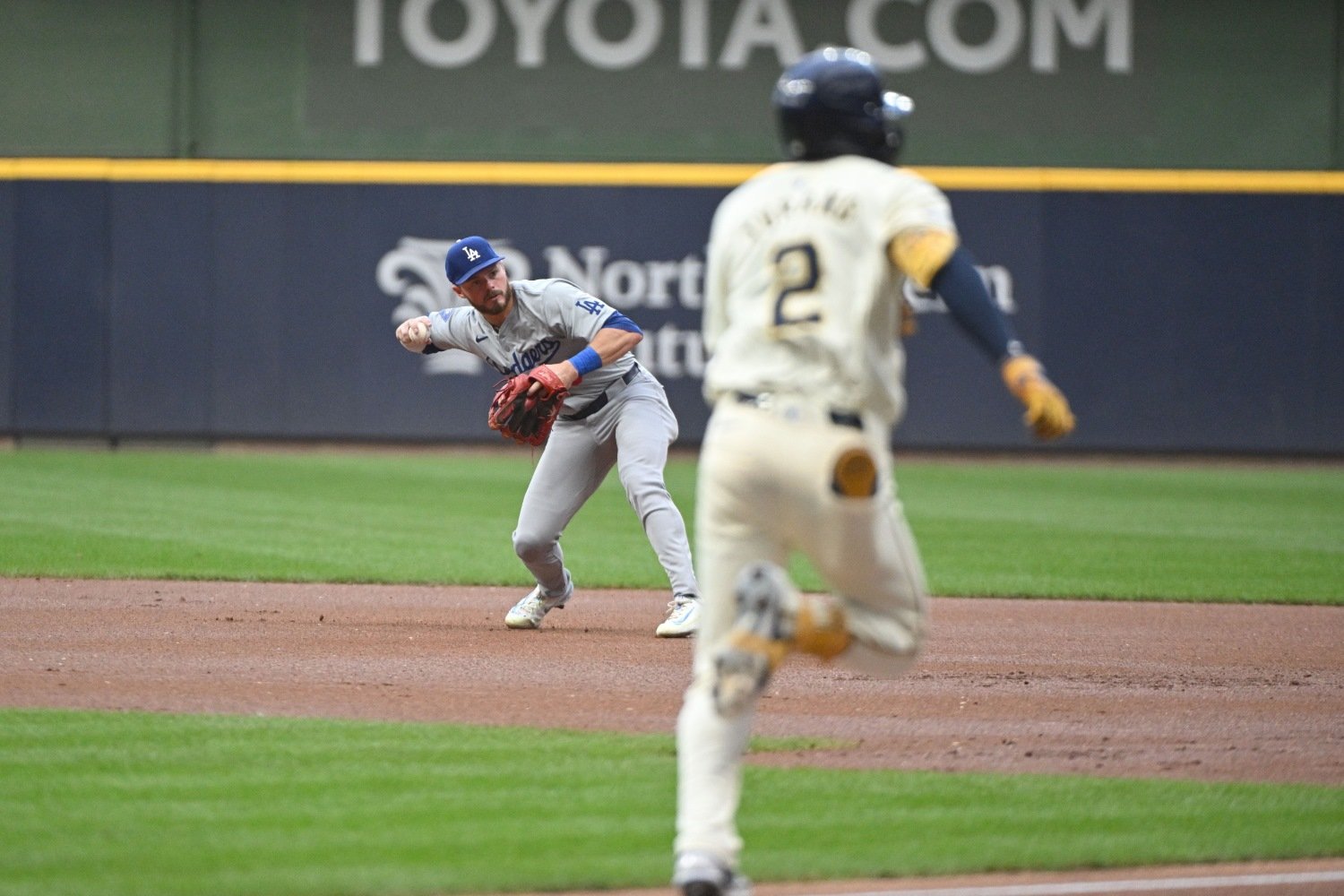 Way back in spring training, Brewers manager Pat Murphy anointed Brice Turang as a key part of his lineup. He predicted a "quantum leap" from the sophomore second baseman, and early on, it looked like that was exactly what was happening. Quickly, Turang established himself as the regular leadoff hitter against right-handed pitchers, thanks to a .312/.375/.441 April and his usual, excellent defensive work. Meanwhile, Sal Frelick sputtered and struggled to find his gear. He batted .262/.342/.313 in April, and slowly, the team and the player had to give up on the idea of him as an everyday, top-of-the-order hitter. Turang had, for the first month or two this year, clearly surpassed his fellow 2023 rookie. What if we just pretend April didn't happen, though? It changes almost nothing for Frelick. In 286 plate appearances since May 1, he's batting .268/.340/.350. The consistency he's demonstrated is nearly metronomic. It's just that, without adequate power, it doesn't make him an especially exciting player. He gets on base about 34 percent of the time. That's a full summary of his offensive skill set, and despite its brevity, it doesn't hold the attention of many fans or analysts for very long. Compared to what Turang has done over the same span, though, it's downright dominant. In a whopping 348 plate appearances since the start of May, Turang is hitting .238/.297/.330. When Turang is hot, he hits for below-average but noticeable gap power, and he's an elite contact hitter. When he's cold, though, he's merely average in terms of contact, and his power and plate discipline are almost nonexistent. Whether he's hot or not, Frelick puts the ball in play at an extraordinary rate for the modern game, and that sets a high floor for his offensive utility, relative to Turang. Note the smaller range of numbers on the y-axis in these charts. Frelick has a much higher floor than Turang, and he hovers mostly in a tighter range--although he doesn't spend as much time in the higher portion thereof as Turang can. Lopping off April makes Frelick look like a much more enticing option for the top of the lineup than Turang. Yet, it's Turang who keeps hitting there. Frelick last led off on May 7, and has batted sixth, seventh, and even eighth lately. Why? In the simplest terms, it's because we can all still see their Aprils in their stats. Though they take slightly different shapes, Frelick and Turang are separated by just .011 in OPS. Turang is a far better basestealer, and, well, he's been there. Inertia is working for him, and against Frelick. When Murphy, the coaching staff, and the front office survey their options each day, the numbers aren't screaming at them to swap those two players. From that statement follows another question: Shouldn't someone just do this basic trimming of the data, give everyone a new set of numbers, and prompt the change? Why doesn't some savvy wonk in the front office slip an incomplete set of data to Murphy to invite a new way of conceptualizing the lineup, especially with regard to these two hitters? The answer is chock-full of important truths about baseball, some of which just can't be fully understood in one swoop. It's also fairly simple, verbally: the game doesn't work that way. Recency bias rules the world, and can be especially powerful in this everyday game, where data piles up quickly and it can be easy to convince yourself the last month is sufficient evidence of a permanent change. In reality, though, what we've learned over parts of two seasons with Turang is Frelick is that one is streaky, one is consistent, and neither is a complete, above-average hitter. At that point, the questions are: How likely is it that Turang will get hot again down the stretch? Is that probability affected by whether he bats leadoff or gets moved down to the bottom of the batting order? Does the Frelick you can reasonably count on getting do enough to be a valuable leadoff hitter, even though he's so rarely going to score himself or put himself in scoring position with extra-base hits or steals? I would guess that the Brewers have waded through the data, recognized that there are physical and mental tweaks each player has made along the way, and understood that the questions above are the crucial ones. They appear to have decided, at least for now, that rolling the dice on a resurgence from Turang (and preserving his confidence while they await one) makes more sense than accepting the slight upgrade and lost upside of batting Frelick at the top. It's a reasonable stance, because baseball is so complicated and so unpredictable that the last three months are not necessarily more telling than the month right before them. However, with each 0-for-4 Turang takes and each passing day drawing the postseason nearer, it's becoming a more dangerous one.
 -
Well, his trade value is zero, or it's negative. But you can pretty safely DFA him, because no one else is going to claim him with the contract attached to him. He'd end up playing on that same deal in Nashville, as he is now, but not taking up a 40-man spot. I'm sure we'll see that happen some time in the next three weeks.
- 11 replies
-
- 2
-

-
- jared koenig
- bryan hudson
- (and 3 more)
-
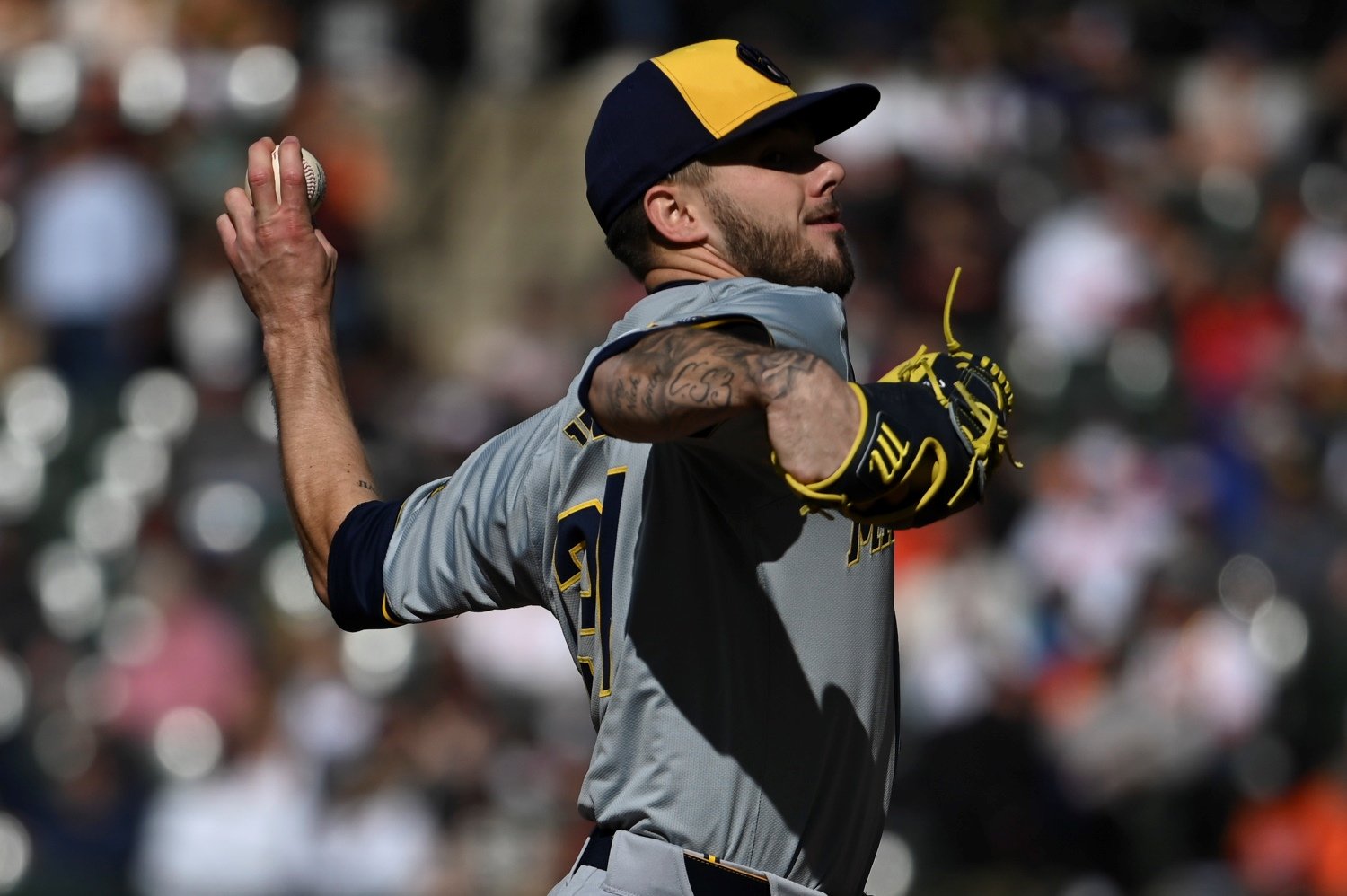 It could be that, when the Brewers return home Friday to face the Reds and try to oust the last gasps of hope Cincinnati retains to come back in the NL Central, they have at their disposal yet another impressive left-handed hurler. DL Hall has made a number of rehab appearances, on a stop-and-start basis, and it's decision time for the team when it comes to reinstating him from the injured list. Unless someone is nursing an unmentioned injury, adding Hall to the rotation would mean stretching that unit to six members. That's plausible, and perhaps even advisable, given that it's clear they'll need to pitch into October and that each current starter has some manner of workload concern worth monitoring. If the team does go that route, though, managing the bullpen quickly becomes a difficult juggling act for Pat Murphy, because he'd be down to seven relievers working behind a corps of starters who tend not to work very deep into games. One alternative is to bring Hall back in a relief role, which worked well for him with Baltimore last fall. However, in addition to whatever developmental setbacks that might cause, it would surely squeeze either Joe Ross or Bryse Wilson off the roster. Hall is on the 60-day injured list, which means that whenever he comes back, the team has to create a spot on the 40-man roster for him, as well as one on the active roster. Losing either Ross or Wilson would be a bitter pill to swallow, though, because of what Wilson has meant to the team and the clubhouse over the last year and a half and because cutting either would reduce the team's stock of starting pitching depth, in case of an injury. For that second reason, especially, it might make more sense to option Hall and have him to continue to work as a starter, stretched out at Nashville and ready to fill in if injury strikes. His performances in his rehab outings--especially a persistent lack of swing-and-miss and a persistent problem finding the fastball shape that made him such a prized acquisition over the winter--leave plenty of room to wonder whether he's as valuable to the current team as Ross or Wilson, even before accounting for the fact that he can be sent to the minors and they can't be. The downside of sending down Hall would be that the team couldn't do it again next year. All his minor-league outings so far this season have officially been rehab appearances. The team hasn't used up an option on him yet, and if they do, it will be his last season of eligibility to be thus treated. If the Brewers still see potential in him but worry he might need further polishing in 2025, there would be some value in retaining that option year heading into this winter. For me, though, that's a picayune little thought. The team should move beyond it. Either Hall will figure things out, and it will be clear by the end of spring training next year that he's a vital cog in their pitching staff, or he won't, and it will be clear by the end of spring training next year that the team needs to move on. He's not as young as his lack of big-league experience would suggest. He's had myriad injury issues. He's shown only inconsistent ability to succeed as a starter. The team should just option him and keep working to prepare him for the possibility of high-leverage spot starts or an emergency bullpen transition at the end of the season. Even if they do so, though, they won't be out of the woods, roster-wise. Bryan Hudson has made multiple rehab appearances for Nashville already, and his stuff looks pretty much normal. Jared Koenig worked through some rocky patches coming back off the injured list after the All-Star break, but is back to full strength and mowed down Atlanta batters Wednesday night. The returns of Devin Williams and Ross and the trades the team made for Frankie Montas and Nick Mears have loaded the roster with hurlers whom they can't option, and whom they probably wouldn't consider demoting, anyway. The optionable pitchers on the active roster are Williams, Tobias Myers, Koenig, Elvis Peguero, and Hoby Milner. It's unthinkable that Williams or Myers would be sent down, of course. Koenig has been too good, and while we all wait to see how much of Hudson's velocity comes back with him when he rejoins the roster, it's Koenig who offers the highest-octane stuff from the left side. Milner is such a rubber arm, and such a quiet but steady clubhouse presence, that sending him down feels unlikely, too. That leaves Peguero. It's a little surprising how immune to being optioned Peguero has seemed to be, despite often being an apparent candidate during the team's roster shifts over the last two seasons. Since he came up from Nashville in mid-April 2023, Peguero has not gone back, despite inconsistent (though often brilliant) work out of the pen. It's hard to figure out how he'd avoid getting sent down or shelved for at least a short period this time, though. In addition to Hall and Hudson, Trevor Megill is perhaps a week away from a return; he could pitch for Nashville this weekend. Again, Hall's move requires a 40-man swap somewhere, so it could involve jettisoning either Wilson or Ross. The easier move would be to dump Tyler Jay, who was recently optioned, especially if Hall himself is then optioned and stays in Nashville. Hudson's return will force someone from the group of Peguero, Milner, Wilson and Ross to go, though, and then Megill's will force another. Optioning Peguero, and maybe even Milner if no one else gets hurt in the process of these players marching back through the clubhouse doors, makes more sense than losing valuable pitching depth at this stage of the game, given the way the last two seasons have played out for the Crew. Jacob Misiorowski is not on the 40-man roster, but he is on the radar for some late-season and postseason secret weapon work. Ditto for Craig Yoho. There's a crunch coming even after the crunch, then, although those two pose less of a problem. If the team wants to add either to the 40-man, they still have Aaron Ashby and Kevin Herget to drop therefrom, and as part of a bigger reorganization of the pitching staff in the very last days of the season, it would make more sense to cut Wilson or Ross, or one of them could be placed on the injured list to allow the team to make Misiorowski or Yoho eligible to pitch in the playoffs. Whatever choices they make, the Brewers have an embarrassment of riches. They're six games up in the division, as pages keep tearing off the calendar, and they have more useful, healthy or healing pitchers than they can roster. They're not only surviving, but thriving--the envy of, perhaps, every other team in baseball. A bye to the DIvision Series is within reach, and a pitching staff more formidable than anyone else's come October is a remote but real possibility. They just need to spend some time sifting through their options.
- 11 comments
-
- 2
-
-
- jared koenig
- bryan hudson
- (and 3 more)
-
Though they appear to have been trying to avoid it, the Brewers might need to use the final option year on their southpaw swingman--and even that won't alleviate their looming roster crunch. Right now, though, they only have good problems on their pitching staff, and good problems are no problem at all. Image courtesy of © Tommy Gilligan-USA TODAY Sports It could be that, when the Brewers return home Friday to face the Reds and try to oust the last gasps of hope Cincinnati retains to come back in the NL Central, they have at their disposal yet another impressive left-handed hurler. DL Hall has made a number of rehab appearances, on a stop-and-start basis, and it's decision time for the team when it comes to reinstating him from the injured list. Unless someone is nursing an unmentioned injury, adding Hall to the rotation would mean stretching that unit to six members. That's plausible, and perhaps even advisable, given that it's clear they'll need to pitch into October and that each current starter has some manner of workload concern worth monitoring. If the team does go that route, though, managing the bullpen quickly becomes a difficult juggling act for Pat Murphy, because he'd be down to seven relievers working behind a corps of starters who tend not to work very deep into games. One alternative is to bring Hall back in a relief role, which worked well for him with Baltimore last fall. However, in addition to whatever developmental setbacks that might cause, it would surely squeeze either Joe Ross or Bryse Wilson off the roster. Hall is on the 60-day injured list, which means that whenever he comes back, the team has to create a spot on the 40-man roster for him, as well as one on the active roster. Losing either Ross or Wilson would be a bitter pill to swallow, though, because of what Wilson has meant to the team and the clubhouse over the last year and a half and because cutting either would reduce the team's stock of starting pitching depth, in case of an injury. For that second reason, especially, it might make more sense to option Hall and have him to continue to work as a starter, stretched out at Nashville and ready to fill in if injury strikes. His performances in his rehab outings--especially a persistent lack of swing-and-miss and a persistent problem finding the fastball shape that made him such a prized acquisition over the winter--leave plenty of room to wonder whether he's as valuable to the current team as Ross or Wilson, even before accounting for the fact that he can be sent to the minors and they can't be. The downside of sending down Hall would be that the team couldn't do it again next year. All his minor-league outings so far this season have officially been rehab appearances. The team hasn't used up an option on him yet, and if they do, it will be his last season of eligibility to be thus treated. If the Brewers still see potential in him but worry he might need further polishing in 2025, there would be some value in retaining that option year heading into this winter. For me, though, that's a picayune little thought. The team should move beyond it. Either Hall will figure things out, and it will be clear by the end of spring training next year that he's a vital cog in their pitching staff, or he won't, and it will be clear by the end of spring training next year that the team needs to move on. He's not as young as his lack of big-league experience would suggest. He's had myriad injury issues. He's shown only inconsistent ability to succeed as a starter. The team should just option him and keep working to prepare him for the possibility of high-leverage spot starts or an emergency bullpen transition at the end of the season. Even if they do so, though, they won't be out of the woods, roster-wise. Bryan Hudson has made multiple rehab appearances for Nashville already, and his stuff looks pretty much normal. Jared Koenig worked through some rocky patches coming back off the injured list after the All-Star break, but is back to full strength and mowed down Atlanta batters Wednesday night. The returns of Devin Williams and Ross and the trades the team made for Frankie Montas and Nick Mears have loaded the roster with hurlers whom they can't option, and whom they probably wouldn't consider demoting, anyway. The optionable pitchers on the active roster are Williams, Tobias Myers, Koenig, Elvis Peguero, and Hoby Milner. It's unthinkable that Williams or Myers would be sent down, of course. Koenig has been too good, and while we all wait to see how much of Hudson's velocity comes back with him when he rejoins the roster, it's Koenig who offers the highest-octane stuff from the left side. Milner is such a rubber arm, and such a quiet but steady clubhouse presence, that sending him down feels unlikely, too. That leaves Peguero. It's a little surprising how immune to being optioned Peguero has seemed to be, despite often being an apparent candidate during the team's roster shifts over the last two seasons. Since he came up from Nashville in mid-April 2023, Peguero has not gone back, despite inconsistent (though often brilliant) work out of the pen. It's hard to figure out how he'd avoid getting sent down or shelved for at least a short period this time, though. In addition to Hall and Hudson, Trevor Megill is perhaps a week away from a return; he could pitch for Nashville this weekend. Again, Hall's move requires a 40-man swap somewhere, so it could involve jettisoning either Wilson or Ross. The easier move would be to dump Tyler Jay, who was recently optioned, especially if Hall himself is then optioned and stays in Nashville. Hudson's return will force someone from the group of Peguero, Milner, Wilson and Ross to go, though, and then Megill's will force another. Optioning Peguero, and maybe even Milner if no one else gets hurt in the process of these players marching back through the clubhouse doors, makes more sense than losing valuable pitching depth at this stage of the game, given the way the last two seasons have played out for the Crew. Jacob Misiorowski is not on the 40-man roster, but he is on the radar for some late-season and postseason secret weapon work. Ditto for Craig Yoho. There's a crunch coming even after the crunch, then, although those two pose less of a problem. If the team wants to add either to the 40-man, they still have Aaron Ashby and Kevin Herget to drop therefrom, and as part of a bigger reorganization of the pitching staff in the very last days of the season, it would make more sense to cut Wilson or Ross, or one of them could be placed on the injured list to allow the team to make Misiorowski or Yoho eligible to pitch in the playoffs. Whatever choices they make, the Brewers have an embarrassment of riches. They're six games up in the division, as pages keep tearing off the calendar, and they have more useful, healthy or healing pitchers than they can roster. They're not only surviving, but thriving--the envy of, perhaps, every other team in baseball. A bye to the DIvision Series is within reach, and a pitching staff more formidable than anyone else's come October is a remote but real possibility. They just need to spend some time sifting through their options. View full article
-
Can Garrett Mitchell Be the Lefty Bat the Brewers Lineup Needs?
Matthew Trueblood posted an article in Brewers
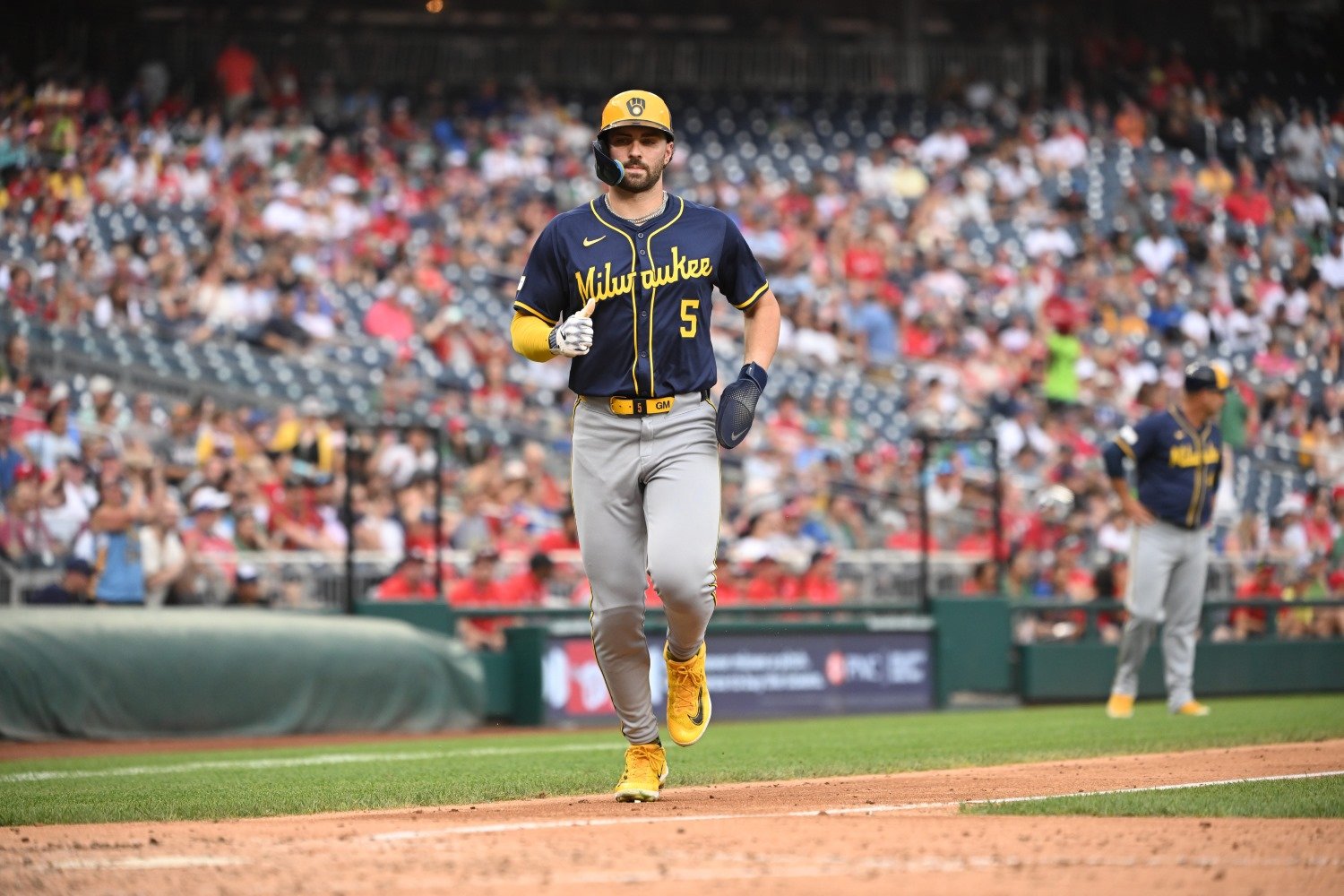 The sample is tiny. That's always one problem where evaluating Garrett Mitchell is concerned. He's batting .290/.372/.420 for the Brewers so far this year, but that's in just 78 plate appearances, after he missed the first three months of the season with a broken bone in his hand. If it wasn't for bad luck, Mitchell (who was a prized prospect heading into his junior year at UCLA, before COVID thwarted the bulk of that collegiate season and curtailed the pre-Draft scouting process) would have no injury luck at all. Last year, it was a major shoulder injury on a unique play at third base. This time, he just hurt his hand on a swing. Because so many of these have been freak injuries with no obvious risk of recurrence, though, maybe we can allow ourselves to hope that they're in the past. Mitchell has certainly looked healthy and strong so far, and not just in that the numbers are good. As ever, when he's fit enough to take the field, he looks the part of a very good big-league ballplayer. Dig beneath the surface of this small sample of performance, though, and the same old warning signs are there. He's whiffing on over 31 percent of all swings, one of the worst rates in baseball. He doesn't elevate the ball, and when a hitter both whiffs a lot and puts the ball on the ground a lot, the two flaws can sometimes feed into each other, overshadowing and choking out a bevy of other skills or virtues. It's why Mitchell has had so many doubters, even as he's played his way to the majors and put up good numbers just about every time he's gotten the chance. Maybe it's time to allow for a bit more optimism. He might never develop high-end in-game power, because of the ground ball rate, but Mitchell has quietly struck a fine balance this year, using his good batting eye to make up for his own lack of contact skills. He's walking at a very sturdy 11.5% rate, and he's only striking out at a 25.6% clip. Because he hits the ball fairly hard, albeit mostly on the ground and on low trajectories when in the air, and because he's blindingly fast, he's also running a superb batting average on balls in play. That's always been part of his profile; we should expect him to have stellar BABIPs unless he's playing through some hampering malady. That cocktail of patience and BABIP skills can easily cancel out a strikeout rate in his current range. The danger comes when he's on the wrong side of 30%, and at the moment, that's not the case. At the moment, it makes sense to pencil him in third in the lineup when the team faces a right-handed starting pitcher, which is what Pat Murphy did Tuesday night. Now, can he keep up (er, down) this strikeout rate, while whiffing as much as he currently does when he swings? Uhhh, no. Mitchell has only chased 11.9% of pitches outside the zone so far this year. That's an incredible figure--both in that it's deeply impressive, and in that it's not sustainable. Over a larger sample, Mitchell's plate discipline will fray slightly. It's inevitable. No one else in baseball is chasing as little as he is, because when you play more than a month's worth of games, it's impossible to do so. Mitchell is also swinging at almost 73% of the pitches he sees within the zone. Of the 473 batters who have at least 50 plate appearances this year, no one has as great a disparity between their in-zone and out-of-zone swing rates as Mitchell does. Maybe Mitchell can remain the leader, but in absolute terms, the gap between those two rates is going to shrink. Meanwhile, the number of pitches he sees inside the zone is going to increase. Right now, he's in the 36th percentile for zone rate, but that's just noise based on how little he's played. As pitchers realize that he's not driving the ball to the fences (let alone over them), they will throw him more strikes, and that will both expose his swing-and-miss issues and force him to expand the zone more, to protect the plate when behind in the count. A reckoning is coming, if he can stay healthy long enough to face it. That said, it doesn't have to be a reckoning in which he's found wanting and demoted again. He could very well meet the challenge, by either getting a bit more air under the ball (maybe that's just a matter of targeting specific locations within the zone where his bat path is conducive to loft and power) or getting the bat on the ball more often. It's just that the shape of his at-bats will have to change, especially if he stays in the heart of the lineup. Murphy and his staff need a stand-in for Christian Yelich. It's not fair to expect that of Mitchell, whose vulnerability to the strikeout makes him so different from the extraordinary pure hitter Yelich is, but as Mitchell well knows, baseball is not always fair. He has a big opportunity before him, and he's already made some impressive improvements. If he can sustain them, even as regression and adjustment curves come for him, then he could be the hero of the Brewers' stretch run.
 -
The former first-round pick has had a hard time getting underneath the ball, a hard time making enough contact against high-level pitching, and a hard time staying healthy. Is fixing two of those three good enough? Image courtesy of © Rafael Suanes-USA TODAY Sports The sample is tiny. That's always one problem where evaluating Garrett Mitchell is concerned. He's batting .290/.372/.420 for the Brewers so far this year, but that's in just 78 plate appearances, after he missed the first three months of the season with a broken bone in his hand. If it wasn't for bad luck, Mitchell (who was a prized prospect heading into his junior year at UCLA, before COVID thwarted the bulk of that collegiate season and curtailed the pre-Draft scouting process) would have no injury luck at all. Last year, it was a major shoulder injury on a unique play at third base. This time, he just hurt his hand on a swing. Because so many of these have been freak injuries with no obvious risk of recurrence, though, maybe we can allow ourselves to hope that they're in the past. Mitchell has certainly looked healthy and strong so far, and not just in that the numbers are good. As ever, when he's fit enough to take the field, he looks the part of a very good big-league ballplayer. Dig beneath the surface of this small sample of performance, though, and the same old warning signs are there. He's whiffing on over 31 percent of all swings, one of the worst rates in baseball. He doesn't elevate the ball, and when a hitter both whiffs a lot and puts the ball on the ground a lot, the two flaws can sometimes feed into each other, overshadowing and choking out a bevy of other skills or virtues. It's why Mitchell has had so many doubters, even as he's played his way to the majors and put up good numbers just about every time he's gotten the chance. Maybe it's time to allow for a bit more optimism. He might never develop high-end in-game power, because of the ground ball rate, but Mitchell has quietly struck a fine balance this year, using his good batting eye to make up for his own lack of contact skills. He's walking at a very sturdy 11.5% rate, and he's only striking out at a 25.6% clip. Because he hits the ball fairly hard, albeit mostly on the ground and on low trajectories when in the air, and because he's blindingly fast, he's also running a superb batting average on balls in play. That's always been part of his profile; we should expect him to have stellar BABIPs unless he's playing through some hampering malady. That cocktail of patience and BABIP skills can easily cancel out a strikeout rate in his current range. The danger comes when he's on the wrong side of 30%, and at the moment, that's not the case. At the moment, it makes sense to pencil him in third in the lineup when the team faces a right-handed starting pitcher, which is what Pat Murphy did Tuesday night. Now, can he keep up (er, down) this strikeout rate, while whiffing as much as he currently does when he swings? Uhhh, no. Mitchell has only chased 11.9% of pitches outside the zone so far this year. That's an incredible figure--both in that it's deeply impressive, and in that it's not sustainable. Over a larger sample, Mitchell's plate discipline will fray slightly. It's inevitable. No one else in baseball is chasing as little as he is, because when you play more than a month's worth of games, it's impossible to do so. Mitchell is also swinging at almost 73% of the pitches he sees within the zone. Of the 473 batters who have at least 50 plate appearances this year, no one has as great a disparity between their in-zone and out-of-zone swing rates as Mitchell does. Maybe Mitchell can remain the leader, but in absolute terms, the gap between those two rates is going to shrink. Meanwhile, the number of pitches he sees inside the zone is going to increase. Right now, he's in the 36th percentile for zone rate, but that's just noise based on how little he's played. As pitchers realize that he's not driving the ball to the fences (let alone over them), they will throw him more strikes, and that will both expose his swing-and-miss issues and force him to expand the zone more, to protect the plate when behind in the count. A reckoning is coming, if he can stay healthy long enough to face it. That said, it doesn't have to be a reckoning in which he's found wanting and demoted again. He could very well meet the challenge, by either getting a bit more air under the ball (maybe that's just a matter of targeting specific locations within the zone where his bat path is conducive to loft and power) or getting the bat on the ball more often. It's just that the shape of his at-bats will have to change, especially if he stays in the heart of the lineup. Murphy and his staff need a stand-in for Christian Yelich. It's not fair to expect that of Mitchell, whose vulnerability to the strikeout makes him so different from the extraordinary pure hitter Yelich is, but as Mitchell well knows, baseball is not always fair. He has a big opportunity before him, and he's already made some impressive improvements. If he can sustain them, even as regression and adjustment curves come for him, then he could be the hero of the Brewers' stretch run. View full article
-
Inability to Steal First Base Stalling Out Brewers Attack
Matthew Trueblood posted an article in Brewers
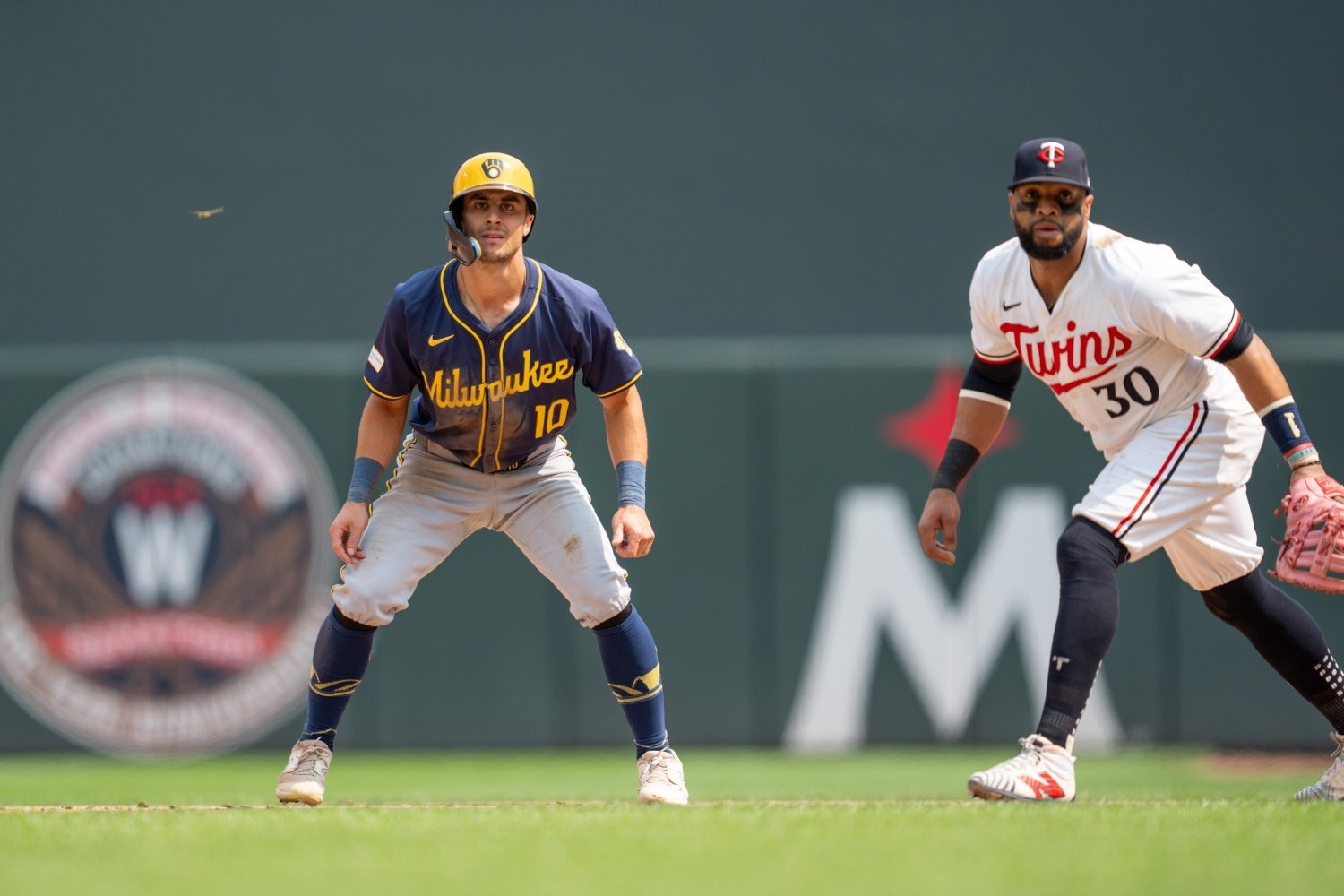 In the last 30 days, the Brewers are 10th in MLB in stolen base attempts. They've tried to steal 26 bases, and they've been caught on six of those attempts. Prior to Jul. 7, they were 121-for-143 stealing bases, so both their frequency of attempts and their success rate have sagged over the last month. Part of that, to be sure, is the loss of Christian Yelich, the on-base machine who also boasts 21 steals in 22 tries during his periods of good health this year. Even when the Brewers who do get on base get there, though, they're running less often. They were baseball's most aggressive team for a period of about six weeks, but they're 11th in Go Rate (the percentage of plate appearances qualifying as a stolen base opportunity in which they attempted a steal) over the last month. That can't be explained away by Yelich's absence. Rather, it's about who's reaching base for them--and who isn't. The four players who have reached base enough to cause some havoc there--who have at least 30 stolen base opportunities in these 30 days--are William Contreras, Jackson Chourio, Willy Adames, and Sal Frelick. Contreras and Adames have combined for just two attempts, both by Adames, which makes plenty of sense. Chourio and Frelick are a combined 6-for-8 on steal attempts in their chances, and at other times, we might expect them to be a hair more aggressive. For the most part, though, they've contributed enough. Brice Turang, however, has a .212 OBP in 81 plate appearances over this span. In 69 trips to the plate, Joey Ortiz has a .232 mark. Ortiz is only 6-for-10 when he does attempt steals this year, but he has the athleticism to make thefts an option, when he's on base. Alas, lately, neither he nor Turang have been on base, so they can't power this aspect of the Milwaukee offense. This is the time of year when teams often draw up the reins on the running game a bit, anyway. The grind of the season and the gathering heat of August make it a good time to restrain runners, to promote better health down the stretch. It's also a time when power can play up, because of that same heat, so it makes a bit more sense to lean on the sluggers and be less daring. Unfortunately, the Brewers don't have a strong power dimension in their lineup right now. Because he continues to struggle to get on base at his previously customary rate, Rhys Hoskins remains mired in the lower half of the batting order, and he's been the only consistent source of good power over the last month, save Chourio. The team sorely misses both Yelich's speed and his power. They can't afford to rush him back from his back injury, though, so it's incumbent upon the rest of the team's position players to rediscover whichever element they were in charge of contributing: a power stroke, or a disruptive, speedy presence on the bases.
- 1 comment
-
- 1
-
-
- brice turang
- christian yelich
- (and 3 more)
-
Briefly, it looked like Pat Murphy's team had broken out and become the most dangerous team in the league on the basepaths. Alas, in the wake of a key injury and amid some struggles from their young hitters, that spark has died. Image courtesy of © Matt Blewett-USA TODAY Sports In the last 30 days, the Brewers are 10th in MLB in stolen base attempts. They've tried to steal 26 bases, and they've been caught on six of those attempts. Prior to Jul. 7, they were 121-for-143 stealing bases, so both their frequency of attempts and their success rate have sagged over the last month. Part of that, to be sure, is the loss of Christian Yelich, the on-base machine who also boasts 21 steals in 22 tries during his periods of good health this year. Even when the Brewers who do get on base get there, though, they're running less often. They were baseball's most aggressive team for a period of about six weeks, but they're 11th in Go Rate (the percentage of plate appearances qualifying as a stolen base opportunity in which they attempted a steal) over the last month. That can't be explained away by Yelich's absence. Rather, it's about who's reaching base for them--and who isn't. The four players who have reached base enough to cause some havoc there--who have at least 30 stolen base opportunities in these 30 days--are William Contreras, Jackson Chourio, Willy Adames, and Sal Frelick. Contreras and Adames have combined for just two attempts, both by Adames, which makes plenty of sense. Chourio and Frelick are a combined 6-for-8 on steal attempts in their chances, and at other times, we might expect them to be a hair more aggressive. For the most part, though, they've contributed enough. Brice Turang, however, has a .212 OBP in 81 plate appearances over this span. In 69 trips to the plate, Joey Ortiz has a .232 mark. Ortiz is only 6-for-10 when he does attempt steals this year, but he has the athleticism to make thefts an option, when he's on base. Alas, lately, neither he nor Turang have been on base, so they can't power this aspect of the Milwaukee offense. This is the time of year when teams often draw up the reins on the running game a bit, anyway. The grind of the season and the gathering heat of August make it a good time to restrain runners, to promote better health down the stretch. It's also a time when power can play up, because of that same heat, so it makes a bit more sense to lean on the sluggers and be less daring. Unfortunately, the Brewers don't have a strong power dimension in their lineup right now. Because he continues to struggle to get on base at his previously customary rate, Rhys Hoskins remains mired in the lower half of the batting order, and he's been the only consistent source of good power over the last month, save Chourio. The team sorely misses both Yelich's speed and his power. They can't afford to rush him back from his back injury, though, so it's incumbent upon the rest of the team's position players to rediscover whichever element they were in charge of contributing: a power stroke, or a disruptive, speedy presence on the bases. View full article
-
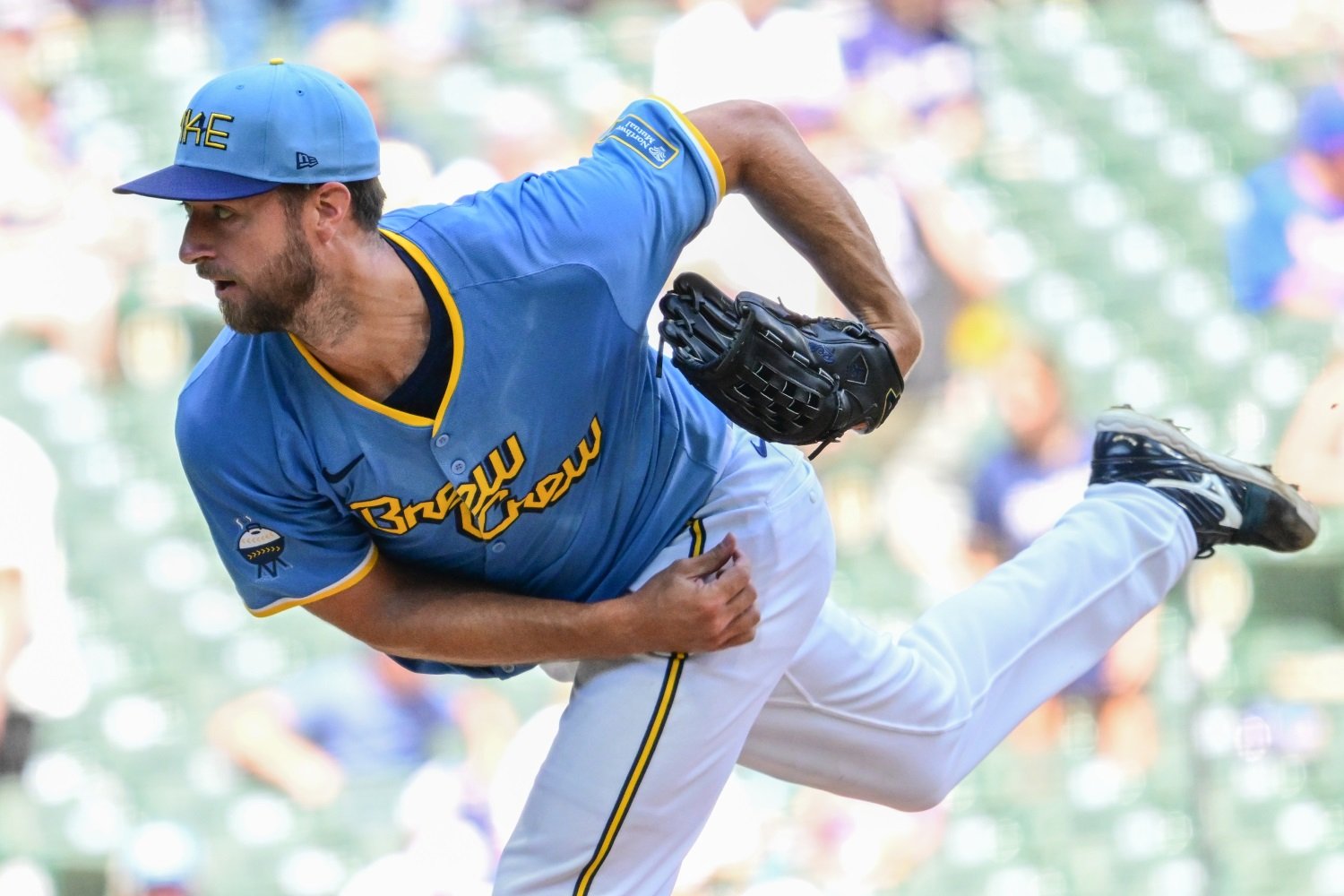 It's not like Colin Rea was striking batters out at some elite, obviously unsustainable rate in the past. Last season, when he had a respectable but pedestrian 4.55 ERA, he got there with a strikeout rate right around the league average for starters; good control; and a lot of defensive support. This year, though, he's posting a 3.59 ERA--even though he's made virtually no change in his walk rate and is striking out fewer hitters than before. He's pitching much the same way, and is arguably less effective in a raw, pitch-to-pitch sense, but his surface-level numbers have only gotten better. How? Firstly, you have to remember how Rea got into trouble in 2023, when he did so. It tended to be left-handed hitters creating a whole lot of power. As a group, they batted .251/.314/.502 against him, with 6.1% of the plate appearances in which he faced a lefty ending in home runs. It neutered his efforts to strand runners who reached base, and although he survived, he couldn't thrive that way. This season, Rea's strikeout and walk rates against lefties have gotten marginally worse. He's throwing them more splitters and more sweepers, and in a modern, whiff-focused way of looking at things, that's a recipe for disaster for a pitcher like Rea. In truth, though, he's getting much better results from the approach. Lefties are hitting .235/.300/.423 against Rea this year, and only 3.9% of their trips to the plate against him have ended in home runs. Last year, in 247 plate appearances, lefties hit 61 ground balls against Rea. This year, in 257 of them, that number has jumped to 84. The splitter has been an especially good weapon in this way. Rea has turned to it several times when he was in trouble, or when a good hitter has seen him a time or two already in a game. He got Rafael Devers with it during a very good outing in Boston in late May: Devers Out.mp4 And somewhat more dramatically, in a summer showdown in Philadelphia with Bryce Harper and with the game in the balance, he used it again: Lucky AND Good.mp4 Often, commentators talk about the one mistake that got a pitcher killed in a given game. The reality, though, is that even good hitters don't punish mistakes perfectly or evenly. If you lost a game based on a mistake pitch, it probably wasn't anywhere close to your only one. You got a little bit lucky. But maybe you also contributed to your own good fortune. For instance, Rea throws a six-pitch mix. That forces a hitter like Harper to cover the whole zone, think about multiple possible speeds, and still get off a fateful swing. It's hard to do, and for that reason, sometimes, a pitcher gets away with a hanging splitter in a spot like this one. Does that mean Rea is just due for lots of regression, and soon? Not by a long shot. That home run prevention is real, and Harper illustrates the point nicely. Rea not only has a deep arsenal, but is increasingly comfortable using it all. That's helped his ground-ball rate against lefty batters to spike from 36.0% to over 46%. He's still reliant on the superb defenders behind him, and you'd still rather see him increase his strikeout and per-swing whiff rates, instead of decreasing them, but Rea can succeed this way, if he can keep finding ways to create off-balance contact. When we talk about the variability of pitcher performance, too often, we treat the concept as indistinguishable from luck. We deride pitchers who appear to have gotten lucky--who, like Rea has, run opponent BABIPs in the .250s in consecutive seasons, or who don't pay for hanging a pitch like that to Harper. Often, though, it's very real. The thing is, it can still change almost instantly, because it requires a bit of luck and a lot of consistent, connected movements and thoughts. If Rea wanted to max out his whiff rate, he could lean harder into one or two pitch types, hone them for that capacity, and notch more strikeouts. Instead, he's accepting the diminution of his strikeout rate, and keeps hunting harmless contact. Rea and his catchers have to stay ahead of hitters mentally, and he has to have exceptionally good command. Without those two elements, his ability to throw many different pitches wouldn't be especially valuable, and Rea would get hit hard. He doesn't have the stuff to miss a lot of bats, especially now that the league roughly understands his scouting report. By providing enough of a moving target, though, he can avoid taking the brunt of that weakness. He forces hitters to think about him as carefully as they do harder throwers with nastier breaking balls. He sidesteps danger and keeps piling up outs, for a team who needs him desperately.
 -
At times this season, the broad-shouldered Iowan has been asked to carry the pitching staff on his back. Somehow, he's been up to the job. Image courtesy of © Benny Sieu-USA TODAY Sports It's not like Colin Rea was striking batters out at some elite, obviously unsustainable rate in the past. Last season, when he had a respectable but pedestrian 4.55 ERA, he got there with a strikeout rate right around the league average for starters; good control; and a lot of defensive support. This year, though, he's posting a 3.59 ERA--even though he's made virtually no change in his walk rate and is striking out fewer hitters than before. He's pitching much the same way, and is arguably less effective in a raw, pitch-to-pitch sense, but his surface-level numbers have only gotten better. How? Firstly, you have to remember how Rea got into trouble in 2023, when he did so. It tended to be left-handed hitters creating a whole lot of power. As a group, they batted .251/.314/.502 against him, with 6.1% of the plate appearances in which he faced a lefty ending in home runs. It neutered his efforts to strand runners who reached base, and although he survived, he couldn't thrive that way. This season, Rea's strikeout and walk rates against lefties have gotten marginally worse. He's throwing them more splitters and more sweepers, and in a modern, whiff-focused way of looking at things, that's a recipe for disaster for a pitcher like Rea. In truth, though, he's getting much better results from the approach. Lefties are hitting .235/.300/.423 against Rea this year, and only 3.9% of their trips to the plate against him have ended in home runs. Last year, in 247 plate appearances, lefties hit 61 ground balls against Rea. This year, in 257 of them, that number has jumped to 84. The splitter has been an especially good weapon in this way. Rea has turned to it several times when he was in trouble, or when a good hitter has seen him a time or two already in a game. He got Rafael Devers with it during a very good outing in Boston in late May: Devers Out.mp4 And somewhat more dramatically, in a summer showdown in Philadelphia with Bryce Harper and with the game in the balance, he used it again: Lucky AND Good.mp4 Often, commentators talk about the one mistake that got a pitcher killed in a given game. The reality, though, is that even good hitters don't punish mistakes perfectly or evenly. If you lost a game based on a mistake pitch, it probably wasn't anywhere close to your only one. You got a little bit lucky. But maybe you also contributed to your own good fortune. For instance, Rea throws a six-pitch mix. That forces a hitter like Harper to cover the whole zone, think about multiple possible speeds, and still get off a fateful swing. It's hard to do, and for that reason, sometimes, a pitcher gets away with a hanging splitter in a spot like this one. Does that mean Rea is just due for lots of regression, and soon? Not by a long shot. That home run prevention is real, and Harper illustrates the point nicely. Rea not only has a deep arsenal, but is increasingly comfortable using it all. That's helped his ground-ball rate against lefty batters to spike from 36.0% to over 46%. He's still reliant on the superb defenders behind him, and you'd still rather see him increase his strikeout and per-swing whiff rates, instead of decreasing them, but Rea can succeed this way, if he can keep finding ways to create off-balance contact. When we talk about the variability of pitcher performance, too often, we treat the concept as indistinguishable from luck. We deride pitchers who appear to have gotten lucky--who, like Rea has, run opponent BABIPs in the .250s in consecutive seasons, or who don't pay for hanging a pitch like that to Harper. Often, though, it's very real. The thing is, it can still change almost instantly, because it requires a bit of luck and a lot of consistent, connected movements and thoughts. If Rea wanted to max out his whiff rate, he could lean harder into one or two pitch types, hone them for that capacity, and notch more strikeouts. Instead, he's accepting the diminution of his strikeout rate, and keeps hunting harmless contact. Rea and his catchers have to stay ahead of hitters mentally, and he has to have exceptionally good command. Without those two elements, his ability to throw many different pitches wouldn't be especially valuable, and Rea would get hit hard. He doesn't have the stuff to miss a lot of bats, especially now that the league roughly understands his scouting report. By providing enough of a moving target, though, he can avoid taking the brunt of that weakness. He forces hitters to think about him as carefully as they do harder throwers with nastier breaking balls. He sidesteps danger and keeps piling up outs, for a team who needs him desperately. View full article
-
Why Pat Murphy Was Unequivocally Right to Remove Tobias Myers Sunday
Matthew Trueblood posted an article in Brewers
 It's never a good look when a manager removes a starting pitcher who appears to be cruising, while their pitch count remains low and the game is in the balance. That's what Pat Murphy did on Sunday, and when taking out Tobias Myers after five innings pitched and 64 pitches blew up with an immediate three-run Washington Nationals rally, it was only natural to ask: what was the skipper thinking? Well, we can start by listening to him in his own words. Here they are, as reported by Milwaukee Journal-Sentinel beat reporter Curt Hogg: As some fans were quick to point out, Murphy isn't perfectly accurate in that description of his own relief corps. While it's been stellar on the year as a whole, it's now struggling through a period of attrition and regression, with too much turnover and too few arms who feel like they're at full strength. In the last 30 days, they're 10th in MLB in reliever ERA, but 23rd in reliever FIP and 17th in both strikeout rate and strikeout rate-minus-walk rate. If you tighten the window to the period since the All-Star break, they're a hair better by ERA and FIP, but a bit worse in terms of missing bats and preventing free passes. So, maybe Murphy was drawing from a well he thought to be deeper than it really is right now. Those remarks also betray a tendency he has to harbor extremely stringent, slightly unfair expectations of his defenders. There was nothing cheap about the first two singles in the inning, and after the luckless dribbler that did pin them to the wall a bit, James Wood hit a ball that Jackson Chourio never had a real chance to reach. Murphy seemed to believe the rookie could have made that play, but the best-case scenario was that he'd cut it off and hold Wood to a single. The result was not unearned, even if it was a tad unlucky. He glazed over the real reasons for the move, rattling them off in non-specific fashion, but we should focus our attention there. Here are the essential claims to consider, moving beyond the momentary strength of the bullpen as a whole or the role of luck in determining the outcome of the game. The top of the lineup was coming up a third time. The day was hot and humid. Myers is young. The bullpen was full and needed to be used. We can stipulate to the middle two pretty readily. They shouldn't play a huge role in making decisions like these, but Murphy is far from alone in lifting a starter a bit more proactively when it's in the mid-80s. Starters have averaged about slightly fewer pitches per game under such conditions over the last few seasons than when it's in the 70s or even low 80s. Besides, that part of the talk is code, right? It's really Murphy saying that this staff can ill-afford more injuries, and occasionally lifting a pitcher without experience working deep into a season and piling up innings is the best way to try to avoid them. Myers built up to 140 innings last season, but he's already up to 105 this year, and pitching in the big leagues is a different animal from pitching only every sixth day in Double-A, as he did for most of last year. Let's allow that aspect of the justification, while admitting that it's far from sufficient on its own. We can best tackle this by asking: Was Myers likely to succeed the third time through the Washington batting order? No. He was not. This season, Myers has pretty substantial platoon splits. Righties have just a .572 OPS against him, but lefties hit for a much more robust .763 figure. He's also felt the times-through-the-order penalty pretty powerfully. Opponents' OPS actually dips from .675 to .624 in going from the first time through to the second, but the third time, it's .769. At a pitch level, each time through, batters chase outside the zone against him a bit less, and whiff a bit less when they swing, and hit the ball hard a bit more often. That's all fairly routine. Admittedly, the samples I'm about to cite are small, but check them out. Here's how Myers has performed by times through the order and batter handedness. Batter Times Through Order Batter Hand BF Chase% Miss% Barrel% K% BB% BA OBP SLG wOBA 1 Lefty 71 23.9% 21.4% 18.4% 19.7% 11.3% .194 .286 .371 .289 1 Righty 73 30.3% 22.7% 22.9% 26.0% 5.5% .212 .278 .470 .318 2 Lefty 70 34.7% 22.0% 10.0% 18.6% 7.1% .302 .357 .413 .336 2 Righty 72 31.9% 23.2% 17.6% 23.6% 4.2% .191 .236 .279 .229 3 Lefty 28 18.5% 12.2% 38.1% 14.3% 7.1% .440 .500 .720 .516 3 Righty 30 30.2% 20.7% 18.2% 20.0% 6.7% .143 .200 .250 .201 Even with small-sample caveats in play, one of these things is not like the others. By the third time they see him, so far, left-handed batters get it. They understand Myers, and they know what they want to do with him. Of the top five hitters in Washington's lineup Sunday, four are either left-handed batters or switch-hitters. Murphy and his staff were right to think that the best way to keep the game within reach was to go away from their young starter. The bullpen was rested, sure, but just as importantly, they knew they had an off day coming Monday. They had Milner, plus Jared Koenig, each of whom had only worked once in the previous four days, meaning two southpaws could help build a bridge to Devin Williams--who remains on a somewhat scheduled regimen and needed to get work in Sunday, anyway. That broke any remaining ties, and the decision became easy. In the long run, you want Myers to learn to face lefties a third time and find success. That's why, when the opportunity has been there, Murphy has pushed Myers a bit. This was the second straight start Myers departed after 18 batters faced, but over the previous four, he averaged over 26. He's gotten some chances to show and to develop that ability, but in a close game on a hot getaway day, with some relief arms itching for the work anyway, it was no time to force him through such a gauntlet. The move didn't work. Milner struggled to miss bats, which has been a pattern for him lately. The Crew will need him to be good down the stretch to win the NL Central, though, just as they'll need Myers healthy and at his best. The coaching staff followed a good process by turning to the lefty for that lefty-laden segment of the batting order, especially given their starter's inability to handle such hitters under those circumstances so far. The outcome just wasn't what they wanted. Sometimes, it goes that way.
- 5 comments
-
- 1
-
-
- pat murphy
- tobias myers
- (and 1 more)
-
The Brewers lost their second consecutive series over the weekend, dropping a heartbreaking two out of three to the sub-.500 Nationals. A midgame pitching decision by the manager drew sharp criticism, but when you dig into his rationale, it's clear he made the right call. Image courtesy of © Rafael Suanes-USA TODAY Sports It's never a good look when a manager removes a starting pitcher who appears to be cruising, while their pitch count remains low and the game is in the balance. That's what Pat Murphy did on Sunday, and when taking out Tobias Myers after five innings pitched and 64 pitches blew up with an immediate three-run Washington Nationals rally, it was only natural to ask: what was the skipper thinking? Well, we can start by listening to him in his own words. Here they are, as reported by Milwaukee Journal-Sentinel beat reporter Curt Hogg: As some fans were quick to point out, Murphy isn't perfectly accurate in that description of his own relief corps. While it's been stellar on the year as a whole, it's now struggling through a period of attrition and regression, with too much turnover and too few arms who feel like they're at full strength. In the last 30 days, they're 10th in MLB in reliever ERA, but 23rd in reliever FIP and 17th in both strikeout rate and strikeout rate-minus-walk rate. If you tighten the window to the period since the All-Star break, they're a hair better by ERA and FIP, but a bit worse in terms of missing bats and preventing free passes. So, maybe Murphy was drawing from a well he thought to be deeper than it really is right now. Those remarks also betray a tendency he has to harbor extremely stringent, slightly unfair expectations of his defenders. There was nothing cheap about the first two singles in the inning, and after the luckless dribbler that did pin them to the wall a bit, James Wood hit a ball that Jackson Chourio never had a real chance to reach. Murphy seemed to believe the rookie could have made that play, but the best-case scenario was that he'd cut it off and hold Wood to a single. The result was not unearned, even if it was a tad unlucky. He glazed over the real reasons for the move, rattling them off in non-specific fashion, but we should focus our attention there. Here are the essential claims to consider, moving beyond the momentary strength of the bullpen as a whole or the role of luck in determining the outcome of the game. The top of the lineup was coming up a third time. The day was hot and humid. Myers is young. The bullpen was full and needed to be used. We can stipulate to the middle two pretty readily. They shouldn't play a huge role in making decisions like these, but Murphy is far from alone in lifting a starter a bit more proactively when it's in the mid-80s. Starters have averaged about slightly fewer pitches per game under such conditions over the last few seasons than when it's in the 70s or even low 80s. Besides, that part of the talk is code, right? It's really Murphy saying that this staff can ill-afford more injuries, and occasionally lifting a pitcher without experience working deep into a season and piling up innings is the best way to try to avoid them. Myers built up to 140 innings last season, but he's already up to 105 this year, and pitching in the big leagues is a different animal from pitching only every sixth day in Double-A, as he did for most of last year. Let's allow that aspect of the justification, while admitting that it's far from sufficient on its own. We can best tackle this by asking: Was Myers likely to succeed the third time through the Washington batting order? No. He was not. This season, Myers has pretty substantial platoon splits. Righties have just a .572 OPS against him, but lefties hit for a much more robust .763 figure. He's also felt the times-through-the-order penalty pretty powerfully. Opponents' OPS actually dips from .675 to .624 in going from the first time through to the second, but the third time, it's .769. At a pitch level, each time through, batters chase outside the zone against him a bit less, and whiff a bit less when they swing, and hit the ball hard a bit more often. That's all fairly routine. Admittedly, the samples I'm about to cite are small, but check them out. Here's how Myers has performed by times through the order and batter handedness. Batter Times Through Order Batter Hand BF Chase% Miss% Barrel% K% BB% BA OBP SLG wOBA 1 Lefty 71 23.9% 21.4% 18.4% 19.7% 11.3% .194 .286 .371 .289 1 Righty 73 30.3% 22.7% 22.9% 26.0% 5.5% .212 .278 .470 .318 2 Lefty 70 34.7% 22.0% 10.0% 18.6% 7.1% .302 .357 .413 .336 2 Righty 72 31.9% 23.2% 17.6% 23.6% 4.2% .191 .236 .279 .229 3 Lefty 28 18.5% 12.2% 38.1% 14.3% 7.1% .440 .500 .720 .516 3 Righty 30 30.2% 20.7% 18.2% 20.0% 6.7% .143 .200 .250 .201 Even with small-sample caveats in play, one of these things is not like the others. By the third time they see him, so far, left-handed batters get it. They understand Myers, and they know what they want to do with him. Of the top five hitters in Washington's lineup Sunday, four are either left-handed batters or switch-hitters. Murphy and his staff were right to think that the best way to keep the game within reach was to go away from their young starter. The bullpen was rested, sure, but just as importantly, they knew they had an off day coming Monday. They had Milner, plus Jared Koenig, each of whom had only worked once in the previous four days, meaning two southpaws could help build a bridge to Devin Williams--who remains on a somewhat scheduled regimen and needed to get work in Sunday, anyway. That broke any remaining ties, and the decision became easy. In the long run, you want Myers to learn to face lefties a third time and find success. That's why, when the opportunity has been there, Murphy has pushed Myers a bit. This was the second straight start Myers departed after 18 batters faced, but over the previous four, he averaged over 26. He's gotten some chances to show and to develop that ability, but in a close game on a hot getaway day, with some relief arms itching for the work anyway, it was no time to force him through such a gauntlet. The move didn't work. Milner struggled to miss bats, which has been a pattern for him lately. The Crew will need him to be good down the stretch to win the NL Central, though, just as they'll need Myers healthy and at his best. The coaching staff followed a good process by turning to the lefty for that lefty-laden segment of the batting order, especially given their starter's inability to handle such hitters under those circumstances so far. The outcome just wasn't what they wanted. Sometimes, it goes that way. View full article
-
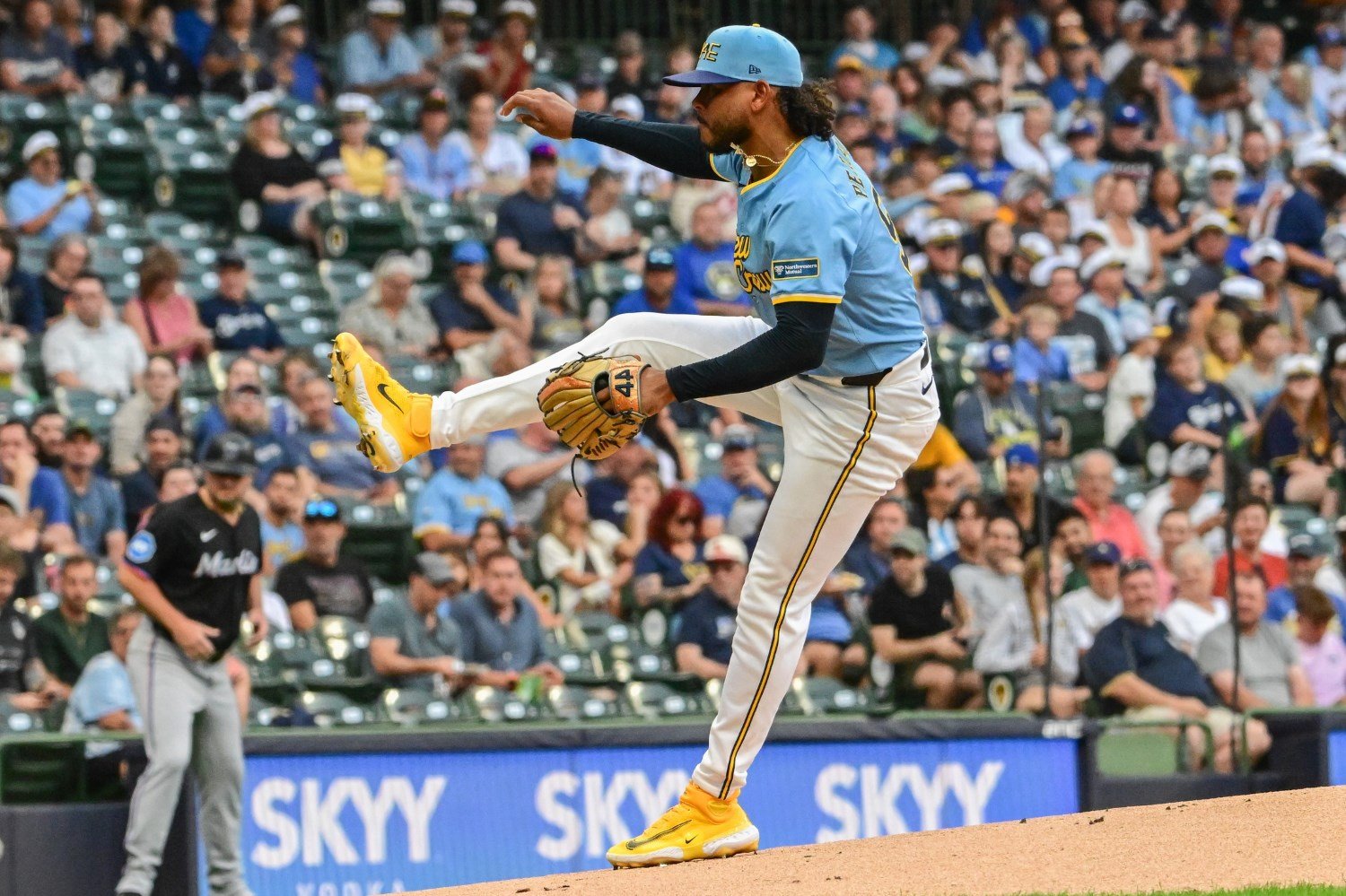 By now, you should be well aware that part of what makes Freddy Peralta special is his adaptability. The man once known as Fastball Freddy has become solidly four-pitch Freddy at times over the last two seasons. His slider is so manipulable and lethal that it effectively plays as four different pitches in itself, when he has the proper feel for it. He's an incredible athlete, and is always looking for the best way to put that physical brilliance to its highest use. Alas, this year hasn't been quite the follow-up Peralta would have envisioned, after a tremendous second half last season that helped the team feel confident trading Corbin Burnes this winter. Peralta is 6-6 with a 3.89 ERA through his first 22 starts, albeit with an exceptional strikeout rate that speaks to his still-sizzling sheer stuff. He's spent the campaign trying to find the right balance between the things that make him unique and the elements of his game that are most sustainable from one pitch, one at-bat, and one outing to the next. Specifically, Peralta has fought to find a delivery that he can repeat as well as he wants to, while holding onto the deception that made him unhittable down the stretch last year. He's gone through three distinct phases this year, in terms of setup and mechanics, and examining them gives us some insight into his season and what might come next within it. First, let's establish what we're talking about. Here's Peralta in April, against the Rays, throwing a fastball by a hitter for a strike. April Freddy.mp4 This is the iconic Peralta. From the blessedly square alignment of the center-field camera at home in Milwaukee, you can really see how crossfire he is. It's a long stride, and it takes him well toward the third-base line. Note, too, that he starts on that side of the mound, anyway. Peralta is practically throwing his combination of mid-90s heat and devastating breaking stuff around corners, in this formulation. It's viciously unfair to the hitter. It's also an insanely hard set of moves and angles for Peralta himself. The way he opens his foot while striding so far closed, alone, puts considerable strain on multiple joints, and it's not easy to consistently throw strikes this way. This is like if Kobe Bryant started shooting all his threes off the dribble, fading sideways out of bounds. Between his starts on May 11 and May 17, Peralta made a change. See if you can spot it. Late May Freddy.mp4 Ok, actually, there are a couple of tweaks here, but there's one big one: Peralta's no longer set up on the third-base side of the rubber. He's a bit more neutral in his starting point, so while that crossfire action still means he's coming from way over toward third base, it's a bit less steep a horizontal angle from there to his targets. Then, too, there's a mechanical tweak. Peralta is more upright in the moments just before release here. He maintains a taller posture, rather than tilting the spine back in the direction he was coming from with that off-kilter stride, so his arm action is a little more around than over-the-top. If the verbal description doesn't help you spot or grasp it, another way to say it is that Peralta's vertical release and approach angles on his fastball were flatter during this phase than in the previous one. Between his Jun. 14 and Jun. 19 starts, though, he made another change. This one will probably be more readily apparent. June Freddy.mp4 The change in position on the rubber is no longer subtle, and hopefully, neither is the mechanical difference. Peralta is now working from the first-base side of the rubber. When he delivers, the crossfire stride direction is virtually gone. He's much, much more direct to home plate. Why Peralta made each of these changes is not perfectly clear. It's certainly the kind of thing a pitcher might do to compensate for a nagging injury, especially to the back or knee, but it could just as easily be an effort to counteract some of the control trouble he ran into early this year. The most important questions are: Has it worked? And will he change again, for better or worse? SplitBy G P BF Chase% Miss% Barrel% K% BB% SO%-BB% HR% RBBIP BA OBP SLG WHIP ERA Phase 1 8 724 182 27.0% 34.0% 18.4% 31.9% 8.8% 23.1% 2.2% .278 .196 .289 .310 1.05 3.63 Phase 2 6 593 137 28.1% 30.8% 19.0% 29.2% 8.0% 21.2% 5.1% .338 .268 .336 .480 1.40 5.46 Phase 3 8 804 185 26.5% 30.3% 12.2% 27.6% 9.7% 17.8% 3.8% .271 .206 .288 .358 1.17 3.05 You didn't think the answers would be simple, did you? In brief, we can say that the middle phase (which appears to have been a conscious period of adjustment and stepwise progression anyway) was clearly the worst. Otherwise, though, it's muddier. Peralta has actually given up slightly more hard contact recently than early in the season, but less of it has been in launch angles where it tends to cause damage. His peripherals were better early, but his surface-level numbers are better now. What to make of that? In truth, we can only watch and wait to see what direction his evolution will turn next. The bulk of this article was free to read. However, Brewer Fanatic Caretakers get a little bit more coverage of the subject, as a bonus. We invite you to sign up, and if you're already a Caretaker, read on!
 -
If the team is to hang onto its division lead, and especially if it is to go anywhere in the postseason, the phenomenally athletic righthander has to be at his best. Image courtesy of © Benny Sieu-USA TODAY Sports By now, you should be well aware that part of what makes Freddy Peralta special is his adaptability. The man once known as Fastball Freddy has become solidly four-pitch Freddy at times over the last two seasons. His slider is so manipulable and lethal that it effectively plays as four different pitches in itself, when he has the proper feel for it. He's an incredible athlete, and is always looking for the best way to put that physical brilliance to its highest use. Alas, this year hasn't been quite the follow-up Peralta would have envisioned, after a tremendous second half last season that helped the team feel confident trading Corbin Burnes this winter. Peralta is 6-6 with a 3.89 ERA through his first 22 starts, albeit with an exceptional strikeout rate that speaks to his still-sizzling sheer stuff. He's spent the campaign trying to find the right balance between the things that make him unique and the elements of his game that are most sustainable from one pitch, one at-bat, and one outing to the next. Specifically, Peralta has fought to find a delivery that he can repeat as well as he wants to, while holding onto the deception that made him unhittable down the stretch last year. He's gone through three distinct phases this year, in terms of setup and mechanics, and examining them gives us some insight into his season and what might come next within it. First, let's establish what we're talking about. Here's Peralta in April, against the Rays, throwing a fastball by a hitter for a strike. April Freddy.mp4 This is the iconic Peralta. From the blessedly square alignment of the center-field camera at home in Milwaukee, you can really see how crossfire he is. It's a long stride, and it takes him well toward the third-base line. Note, too, that he starts on that side of the mound, anyway. Peralta is practically throwing his combination of mid-90s heat and devastating breaking stuff around corners, in this formulation. It's viciously unfair to the hitter. It's also an insanely hard set of moves and angles for Peralta himself. The way he opens his foot while striding so far closed, alone, puts considerable strain on multiple joints, and it's not easy to consistently throw strikes this way. This is like if Kobe Bryant started shooting all his threes off the dribble, fading sideways out of bounds. Between his starts on May 11 and May 17, Peralta made a change. See if you can spot it. Late May Freddy.mp4 Ok, actually, there are a couple of tweaks here, but there's one big one: Peralta's no longer set up on the third-base side of the rubber. He's a bit more neutral in his starting point, so while that crossfire action still means he's coming from way over toward third base, it's a bit less steep a horizontal angle from there to his targets. Then, too, there's a mechanical tweak. Peralta is more upright in the moments just before release here. He maintains a taller posture, rather than tilting the spine back in the direction he was coming from with that off-kilter stride, so his arm action is a little more around than over-the-top. If the verbal description doesn't help you spot or grasp it, another way to say it is that Peralta's vertical release and approach angles on his fastball were flatter during this phase than in the previous one. Between his Jun. 14 and Jun. 19 starts, though, he made another change. This one will probably be more readily apparent. June Freddy.mp4 The change in position on the rubber is no longer subtle, and hopefully, neither is the mechanical difference. Peralta is now working from the first-base side of the rubber. When he delivers, the crossfire stride direction is virtually gone. He's much, much more direct to home plate. Why Peralta made each of these changes is not perfectly clear. It's certainly the kind of thing a pitcher might do to compensate for a nagging injury, especially to the back or knee, but it could just as easily be an effort to counteract some of the control trouble he ran into early this year. The most important questions are: Has it worked? And will he change again, for better or worse? SplitBy G P BF Chase% Miss% Barrel% K% BB% SO%-BB% HR% RBBIP BA OBP SLG WHIP ERA Phase 1 8 724 182 27.0% 34.0% 18.4% 31.9% 8.8% 23.1% 2.2% .278 .196 .289 .310 1.05 3.63 Phase 2 6 593 137 28.1% 30.8% 19.0% 29.2% 8.0% 21.2% 5.1% .338 .268 .336 .480 1.40 5.46 Phase 3 8 804 185 26.5% 30.3% 12.2% 27.6% 9.7% 17.8% 3.8% .271 .206 .288 .358 1.17 3.05 You didn't think the answers would be simple, did you? In brief, we can say that the middle phase (which appears to have been a conscious period of adjustment and stepwise progression anyway) was clearly the worst. Otherwise, though, it's muddier. Peralta has actually given up slightly more hard contact recently than early in the season, but less of it has been in launch angles where it tends to cause damage. His peripherals were better early, but his surface-level numbers are better now. What to make of that? In truth, we can only watch and wait to see what direction his evolution will turn next. The bulk of this article was free to read. However, Brewer Fanatic Caretakers get a little bit more coverage of the subject, as a bonus. We invite you to sign up, and if you're already a Caretaker, read on! View full article
-
 Jon Heyman reports that the Marlins' enormous lefty has a warming trade market. All his recent trend markers are in the wrong direction--ugly stats this year, velocity and strikeout rate moving in the wrong direction, finally healthy but with a spotty injury history--but Rogers is under team control two more years after this one. The 2021 All-Star and Rookie of the Year runner-up hasn't looked the same in any season since, but he has a unique arsenal and release point, including both a four-seamer and a sinker with a ton of arm-side movement. He'd be a fascinating target for the Brewers, who do so well with such development projects. As Heyman notes, though, he wouldn't come cheaply. This would have to be a case of the organization believing they could work their magic with him right away, in a big way.
 -
Jon Heyman reports that the Marlins' enormous lefty has a warming trade market. All his recent trend markers are in the wrong direction--ugly stats this year, velocity and strikeout rate moving in the wrong direction, finally healthy but with a spotty injury history--but Rogers is under team control two more years after this one. The 2021 All-Star and Rookie of the Year runner-up hasn't looked the same in any season since, but he has a unique arsenal and release point, including both a four-seamer and a sinker with a ton of arm-side movement. He'd be a fascinating target for the Brewers, who do so well with such development projects. As Heyman notes, though, he wouldn't come cheaply. This would have to be a case of the organization believing they could work their magic with him right away, in a big way. View full rumor
-
 In 2021 and for the first four months of 2022, Frankie Montas was one of the best starting pitchers in baseball. In the latest (sadly, last) surprise season of competitiveness from the Oakland Athletics, Montas was their ace, with 187 innings pitched, 207 strikeouts, and a 3.37 ERA in 32 starts. As the A's fell back to Earth in 2022, though, they shopped him, then dealt him to the Yankees. Right at that juncture in the career of the player and the progress of one of the game's best pitching development groups, there couldn't have been a much worse fit. Montas struggled mightily for the balance of that campaign, and lost all but a single cursory appearance's worth of 2023 to shoulder surgery. For plenty of pitchers, that's the sad end of the story. He found a fairly lucrative one-year deal with the Reds, but that, too, failed to pan out, and since he turned 31 this spring, it's fair to say that the clock is ticking on him. His stuff has come back after the injury, but (as you'd expect) not quite all the way. Still, we should be clear about what has happened to Montas this season in Cincinnati. In piling up a 5.01 ERA exactly matched by his FIP, he really pitched very well--but only against right-handed batters. That collective has hit .232/.299/.345 against him this year, with a strikeout rate around 22% and a walk rate around 8%. That's perfectly livable. Alas, lefties have bashed his brains in. They're hitting .277/.370/.508 off him in 2024, with a strikeout rate that rounds to 17% and an ugly walk rate of 12%. As a starting pitcher, it's much too easy for opponents to stack their lineup and thwack you if you're that vulnerable to opposite-handed batters. His own team could try to counteract that strategy by using an opener, and it's notable that the Reds didn't. The Brewers certainly might, with either Jared Koenig or Hoby Milner, on an occasion or two down the stretch. Still, sooner or later, a righty starter has to face a bunch of lefty batters. Montas has not been equal to that crucial task this year. The Brewers can fix him. Let's break down how, in a few steps. Step 1: Get Right, Young Man Montas traditionally works from the first-base side of the rubber. That suits his natural movement profile, which (more on this later) favors arm-side stuff, so it's natural. Plenty of pitchers with similar profiles set up in the same spot. However, one thing the Brewers will definitely at least propose is a move toward the third-base side, if only by six or eight inches. Frankie Strikeout.mp4 Right-handed pitchers for the Reds pitch, on average, from the second-closest release point to the center of the rubber. Brewers righties, by contrast, average the third-widest release points. The same is true of Milwaukee southpaws, of course. Ask Milner, or Bryan Hudson. Ask Bryse Wilson or Colin Rea. When the Crew get ahold of a pitcher, one quick thing they try is creating a more deceptive horizontal angle to the plate for them, and while it's far from a one-size-fits-all approach, the most common and consistently valuable way to do that is to slide them toward their throwing arm side of the rubber. Step 2: The Remix Obviously, slightly changing where Montas throws from will have little effect, if he doesn't also change some of what he's throwing. It's easy to foresee how the Brewers will do so, though, especially because it bears resemblances to many other cases in which the team got a player after they have passed through an organization whom the Brewers feel might have messed with them the wrong way. Here's how Montas's pitch usage breaks down so far this year, against lefties and righties. Regardless of which type of hitter is up, Montas's chief weapon is the four-seamer. That's a bit of a problem, though, because despite good velocity, his four-seamer is not an especially good pitch--at least not to front an arsenal. Notably, it works much better in smaller doses and something closer to parity with the sinker and cutter, against same-handed batters (i.e., righties), but the pitch just isn't adequately engineered to consistently get whiffs, called strikes, or weak contact, be it on the ground or in the form of weak flies. It shares much in common, in fact, with Wilson's heater. For just that reason, though, Wilson isn't the same four-seamer-dominant pitcher he was when he first joined the Crew. Nor will Montas be. Let's flash back to how he attacked hitters in 2021 and 2022, removing the turbulent stop in New York. It's hard to be much more starkly different than the lefty pitch distribution described by these sets of data. He was mostly splitters and sinkers to lefties in his heyday. Now, he's pumping in that perfectly visible, hittable fastball to lefties over a third of the time, and neglecting the sinker that was his primary heater to them in the past. Why? Part of it, to be sure, could be that Montas is no longer comfortable leaning as much on his splitter as he did a few years ago. The Brewers will have to sound him out on that subject. Part of it, too, though, is more organizational dogma. The Reds are 28th in MLB in sinker usage to opposite-handed batters. In fairness, that's often the sign of an advanced organization. Sinkers generally do work better to same-handed batters than to opposite-handed ones. There's a certain rationale to throttling back sinker use against opposite-handed hitters, as a blanket approach. Step 3: Relocating Montas just doesn't fit under the blanket. Let's take a look at the way he located his sinkers to lefties back in his best seasons. That shouldn't shock you. The sinker was effectively his primary heater to lefties in those halcyon days. You have to fill up the whole zone with such a pitch. Here's where he's thrown his sinkers to lefties in 2024, though. After pushing the sinker into a secondary role, Montas has changed the way he targets the sinker, specializing it. He's not all over the zone, and he's especially never up with that pitch. It hasn't worked. Lefties have crushed his sinker to the tune of a .968 OPS this year. He's only induced one swing and miss with the pitch to such batters all season, The Brewers can not only help him restore the sinker as his primary fastball to lefties, but get him targeting the whole plate with it. Of sinkers thrown to opposite-handed batters, 39.5% of the Brewers' this year have been to the inside part of the plate--away from the natural place where pitchers throw their sinkers, giving hitters a highly unusual look. No other team throws such a high percentage of their sinkers on the inside part of the plate. The Reds, as you'd expect, eschew the inside sinker almost altogether. Montas's sinker, thrown to that glove side against lefties, will set up his splitter gorgeously. That's why that approach worked so well a few short years ago. You can't do everything with a midseason trade acquisition that you'd do with a new signee during spring training. Not discussed here are his slider and cutter, which seem to have a complicated relationship. You have to simplify and think small. These changes won't transform Montas into an ace, in all likelihood, but they can be implemented rapidly, and they have a chance to get Montas back to the level he reached a few years ago. The Reds aren't terrible at pitching development, but under Chris Hook, the Brewers are one of the very best outfits in baseball. The fit between Montas and the Reds wasn't great, in terms of philosophy and development. The fit in Milwaukee has a chance to be much better, and to last a few weeks past the end of the regular season.
 -
On the eve of the trade deadline, prices for even short-term starting pitcher acquisitions shifted suddenly and sharply, in favor of sellers. The Brewers secured an arm with uninspiring statistics so far in 2024, but for whom they'll have a fistful of easy and efficacious tips. In 2021 and for the first four months of 2022, Frankie Montas was one of the best starting pitchers in baseball. In the latest (sadly, last) surprise season of competitiveness from the Oakland Athletics, Montas was their ace, with 187 innings pitched, 207 strikeouts, and a 3.37 ERA in 32 starts. As the A's fell back to Earth in 2022, though, they shopped him, then dealt him to the Yankees. Right at that juncture in the career of the player and the progress of one of the game's best pitching development groups, there couldn't have been a much worse fit. Montas struggled mightily for the balance of that campaign, and lost all but a single cursory appearance's worth of 2023 to shoulder surgery. For plenty of pitchers, that's the sad end of the story. He found a fairly lucrative one-year deal with the Reds, but that, too, failed to pan out, and since he turned 31 this spring, it's fair to say that the clock is ticking on him. His stuff has come back after the injury, but (as you'd expect) not quite all the way. Still, we should be clear about what has happened to Montas this season in Cincinnati. In piling up a 5.01 ERA exactly matched by his FIP, he really pitched very well--but only against right-handed batters. That collective has hit .232/.299/.345 against him this year, with a strikeout rate around 22% and a walk rate around 8%. That's perfectly livable. Alas, lefties have bashed his brains in. They're hitting .277/.370/.508 off him in 2024, with a strikeout rate that rounds to 17% and an ugly walk rate of 12%. As a starting pitcher, it's much too easy for opponents to stack their lineup and thwack you if you're that vulnerable to opposite-handed batters. His own team could try to counteract that strategy by using an opener, and it's notable that the Reds didn't. The Brewers certainly might, with either Jared Koenig or Hoby Milner, on an occasion or two down the stretch. Still, sooner or later, a righty starter has to face a bunch of lefty batters. Montas has not been equal to that crucial task this year. The Brewers can fix him. Let's break down how, in a few steps. Step 1: Get Right, Young Man Montas traditionally works from the first-base side of the rubber. That suits his natural movement profile, which (more on this later) favors arm-side stuff, so it's natural. Plenty of pitchers with similar profiles set up in the same spot. However, one thing the Brewers will definitely at least propose is a move toward the third-base side, if only by six or eight inches. Frankie Strikeout.mp4 Right-handed pitchers for the Reds pitch, on average, from the second-closest release point to the center of the rubber. Brewers righties, by contrast, average the third-widest release points. The same is true of Milwaukee southpaws, of course. Ask Milner, or Bryan Hudson. Ask Bryse Wilson or Colin Rea. When the Crew get ahold of a pitcher, one quick thing they try is creating a more deceptive horizontal angle to the plate for them, and while it's far from a one-size-fits-all approach, the most common and consistently valuable way to do that is to slide them toward their throwing arm side of the rubber. Step 2: The Remix Obviously, slightly changing where Montas throws from will have little effect, if he doesn't also change some of what he's throwing. It's easy to foresee how the Brewers will do so, though, especially because it bears resemblances to many other cases in which the team got a player after they have passed through an organization whom the Brewers feel might have messed with them the wrong way. Here's how Montas's pitch usage breaks down so far this year, against lefties and righties. Regardless of which type of hitter is up, Montas's chief weapon is the four-seamer. That's a bit of a problem, though, because despite good velocity, his four-seamer is not an especially good pitch--at least not to front an arsenal. Notably, it works much better in smaller doses and something closer to parity with the sinker and cutter, against same-handed batters (i.e., righties), but the pitch just isn't adequately engineered to consistently get whiffs, called strikes, or weak contact, be it on the ground or in the form of weak flies. It shares much in common, in fact, with Wilson's heater. For just that reason, though, Wilson isn't the same four-seamer-dominant pitcher he was when he first joined the Crew. Nor will Montas be. Let's flash back to how he attacked hitters in 2021 and 2022, removing the turbulent stop in New York. It's hard to be much more starkly different than the lefty pitch distribution described by these sets of data. He was mostly splitters and sinkers to lefties in his heyday. Now, he's pumping in that perfectly visible, hittable fastball to lefties over a third of the time, and neglecting the sinker that was his primary heater to them in the past. Why? Part of it, to be sure, could be that Montas is no longer comfortable leaning as much on his splitter as he did a few years ago. The Brewers will have to sound him out on that subject. Part of it, too, though, is more organizational dogma. The Reds are 28th in MLB in sinker usage to opposite-handed batters. In fairness, that's often the sign of an advanced organization. Sinkers generally do work better to same-handed batters than to opposite-handed ones. There's a certain rationale to throttling back sinker use against opposite-handed hitters, as a blanket approach. Step 3: Relocating Montas just doesn't fit under the blanket. Let's take a look at the way he located his sinkers to lefties back in his best seasons. That shouldn't shock you. The sinker was effectively his primary heater to lefties in those halcyon days. You have to fill up the whole zone with such a pitch. Here's where he's thrown his sinkers to lefties in 2024, though. After pushing the sinker into a secondary role, Montas has changed the way he targets the sinker, specializing it. He's not all over the zone, and he's especially never up with that pitch. It hasn't worked. Lefties have crushed his sinker to the tune of a .968 OPS this year. He's only induced one swing and miss with the pitch to such batters all season, The Brewers can not only help him restore the sinker as his primary fastball to lefties, but get him targeting the whole plate with it. Of sinkers thrown to opposite-handed batters, 39.5% of the Brewers' this year have been to the inside part of the plate--away from the natural place where pitchers throw their sinkers, giving hitters a highly unusual look. No other team throws such a high percentage of their sinkers on the inside part of the plate. The Reds, as you'd expect, eschew the inside sinker almost altogether. Montas's sinker, thrown to that glove side against lefties, will set up his splitter gorgeously. That's why that approach worked so well a few short years ago. You can't do everything with a midseason trade acquisition that you'd do with a new signee during spring training. Not discussed here are his slider and cutter, which seem to have a complicated relationship. You have to simplify and think small. These changes won't transform Montas into an ace, in all likelihood, but they can be implemented rapidly, and they have a chance to get Montas back to the level he reached a few years ago. The Reds aren't terrible at pitching development, but under Chris Hook, the Brewers are one of the very best outfits in baseball. The fit between Montas and the Reds wasn't great, in terms of philosophy and development. The fit in Milwaukee has a chance to be much better, and to last a few weeks past the end of the regular season. View full article
-
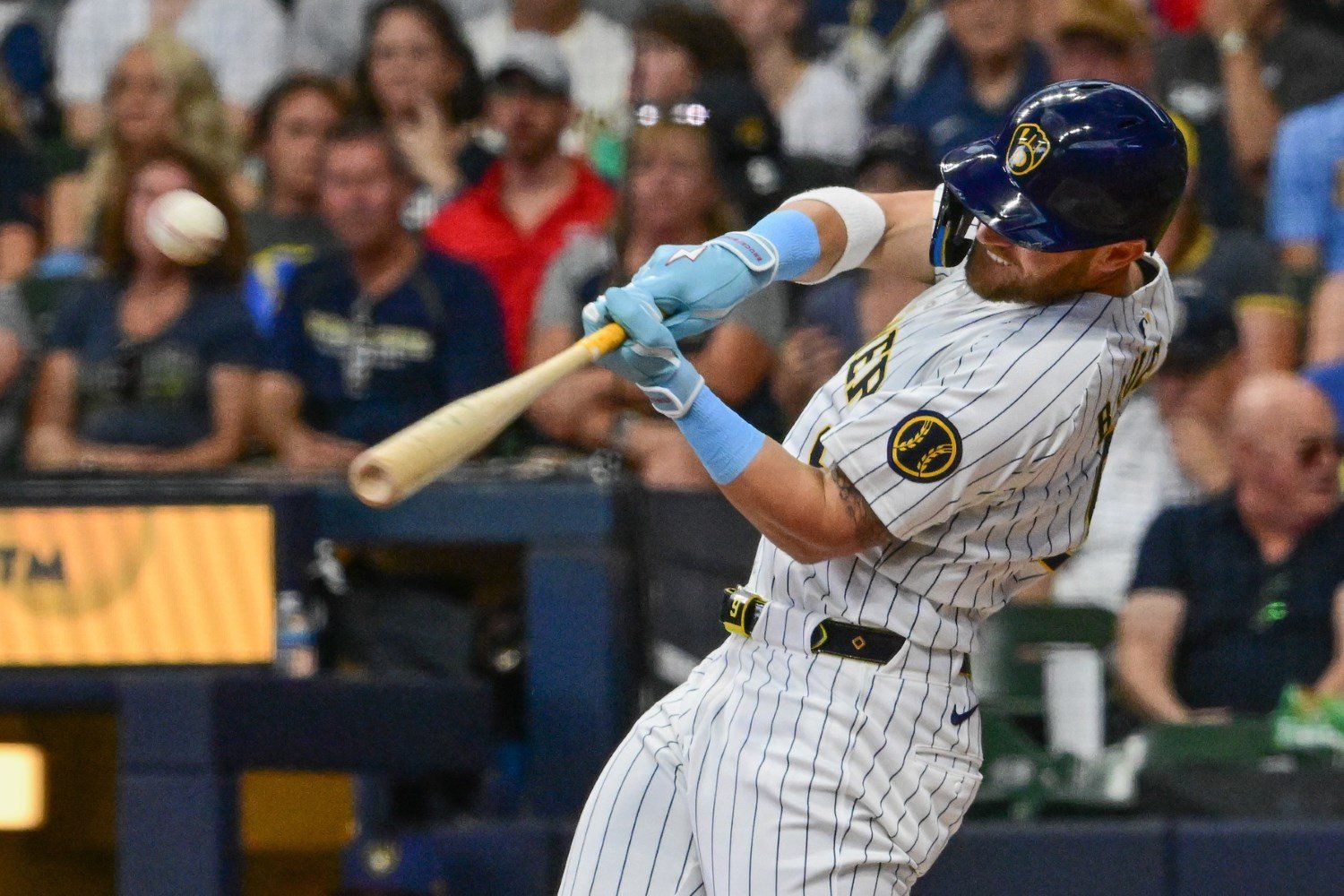 Every season and each offense is unique. Managers adjust and flex in response to changing circumstances, be they injuries or shifts in performance and projection. However, they also have tendencies and preferences, and when the vagaries of the season allow it, they tend to emphasize certain things at the expense of others. Craig Counsell is not afraid to stack hitters of the same handedness in key positions in his batting order--or at least, he wasn't last season. In 2022, with fairly stable production from the likes of Rowdy Tellez; two different switch-hitting catchers; and a limited set of desirable options, Counsell only placed hitters of the same handedness in consecutive spots within the top six slots of the card against right-handed pitchers 45 times. Last year, though, that number exploded, to 117. Christian Yelich and Jesse Winker frequently batted back-to-back. So did Willy Adames and William Contreras. Even the midseason acquisition of Carlos Santana didn't drive Counsell to eliminate clusters of hitters of the same handedness in the lineup. (Before going any further, a quick note: I'm using instances of consecutive batters with the same handedness in the top six places, against righties, for a couple of reasons. Firstly, the bottom third of the card usually contains players who were selected for their glove, not for their bat. Secondly, managers get less worried about alternating handedness as they go down the batting order, because they know they might pinch-hit for the fifth or sixth guy, and certainly for anyone lower than that. Also, on days when a team faces a lefty, skippers tend to stack lineups heavily with right-handed batters. This is not unique to Counsell, Murphy or anyone else. Almost every modern manager will sit a few left-hitting regulars on such days, then bring them off the bench aggressively as soon as a right-handed reliever appears. It's a very different dynamic than the much more frequent days on which a righty starts for the opponent.) This year, two-thirds of the way through the campaign, Pat Murphy has deployed lineups containing 49 instances of consecutive same-handed batters in his top six against righties. He's already exceeded Counsell's total for 2022, but that was a unique year. He's on pace to have many fewer this year than Counsell had last year, because he's assiduous about avoiding those stacks whenever possible. Rhys Hoskins has, admittedly, had an up-and-down year, but it's still fairly shocking to see him batting sixth (36) and fifth (27) far more times than he's been in the heart of the order. Hoskins signed a deal guaranteeing him $16 million to play in the smallest market in MLB. His bat is his lone source of real value. Yet, he mostly hits in the lower half of the lineup, and it's all driven by handedness concerns. That's why Sal Frelick has batted fifth 20 times, and Jake Bauers 22, despite being (if anything) worse hitters with much less power than Hoskins has. Against righties, Murphy basically assigns handedness to each spot in his lineup: Nos. 1, 3, and 5 are lefty spots. Nos. 2, 4 and 6 are righty ones. This will sound far more derogatory than it is, because this is a perfectly sound organizing principle, but there's really no way to understand Murphy's lineup construction except by studying handedness. For that reason, though, the team's offense has sputtered a bit lately. It's not Murphy's fault; there's a lack of depth when injuries strike. There's also quite a bit of youthful learning going on, and in the language of baseball, "youthful learning" rhymes with "failure". Without Yelich, this lineup lacks a quorum of solid left-handed hitters. The right-handed ones, meanwhile, are going through various flavors of struggle or slump, outside of the surging Jackson Chourio and the slowly emerging Hoskins. Murphy has to decide, on a daily basis, whether to bat Contreras and Adames consecutively or force a player like Frelick or Bauers between them, at a spot for which they're underqualified. On Sunday, against righty Kyle Tyler, he gave in and batted two sets of righty batters back-to-back within the top six of his lineup. There's not much to do about the uneven performances of Contreras, Adames, Hoskins, Chourio, and Joey Ortiz, other than to wait and hope that they achieve more consistent success down the stretch. Because the odds of a breakout from Brice Turang, Frelick, Bauers, or any other incumbent lefty or switch-hitter feel remote, though, trading for help in that department makes a lot of sense. Jesse Winker has already gone by the boards, but there remain some solid hitters who could well be dealt in the next 24 hours. Luis Rengifo makes some sense. So does Tampa Bay's Brandon Lowe, and so, even, could Cubs outfielder Mike Tauchman. Josh Bell is a low-grade, fallback option. LaMonte Wade Jr. is a more aspirational one. Because Murphy's way of building a lineup is roughly as sound as any one adhered to by the modern baseball world, it's hard to envision pushing him to change it, rather than giving him more talent and depth to work with. It's certainly a suboptimal way to use Hoskins, but then, Hoskins's performance has been suboptimal. If Chourio stays hot, Murphy might need to get more comfortable slotting him in alongside another right-handed batter or two, but right now, the focus should be on adding a left-handed one to the roster, for better balance.
- 4 comments
-
- 1
-
-
- sal frelick
- brice turang
- (and 5 more)
-
Last season, Craig Counsell used back-to-back left-handed hitters at the top of his batting order for long stretches. He lined up his best hitters at the top of the lineup card, worrying relatively little about handedness. The man who has replaced him this season takes a different approach. Image courtesy of © Benny Sieu-USA TODAY Sports Every season and each offense is unique. Managers adjust and flex in response to changing circumstances, be they injuries or shifts in performance and projection. However, they also have tendencies and preferences, and when the vagaries of the season allow it, they tend to emphasize certain things at the expense of others. Craig Counsell is not afraid to stack hitters of the same handedness in key positions in his batting order--or at least, he wasn't last season. In 2022, with fairly stable production from the likes of Rowdy Tellez; two different switch-hitting catchers; and a limited set of desirable options, Counsell only placed hitters of the same handedness in consecutive spots within the top six slots of the card against right-handed pitchers 45 times. Last year, though, that number exploded, to 117. Christian Yelich and Jesse Winker frequently batted back-to-back. So did Willy Adames and William Contreras. Even the midseason acquisition of Carlos Santana didn't drive Counsell to eliminate clusters of hitters of the same handedness in the lineup. (Before going any further, a quick note: I'm using instances of consecutive batters with the same handedness in the top six places, against righties, for a couple of reasons. Firstly, the bottom third of the card usually contains players who were selected for their glove, not for their bat. Secondly, managers get less worried about alternating handedness as they go down the batting order, because they know they might pinch-hit for the fifth or sixth guy, and certainly for anyone lower than that. Also, on days when a team faces a lefty, skippers tend to stack lineups heavily with right-handed batters. This is not unique to Counsell, Murphy or anyone else. Almost every modern manager will sit a few left-hitting regulars on such days, then bring them off the bench aggressively as soon as a right-handed reliever appears. It's a very different dynamic than the much more frequent days on which a righty starts for the opponent.) This year, two-thirds of the way through the campaign, Pat Murphy has deployed lineups containing 49 instances of consecutive same-handed batters in his top six against righties. He's already exceeded Counsell's total for 2022, but that was a unique year. He's on pace to have many fewer this year than Counsell had last year, because he's assiduous about avoiding those stacks whenever possible. Rhys Hoskins has, admittedly, had an up-and-down year, but it's still fairly shocking to see him batting sixth (36) and fifth (27) far more times than he's been in the heart of the order. Hoskins signed a deal guaranteeing him $16 million to play in the smallest market in MLB. His bat is his lone source of real value. Yet, he mostly hits in the lower half of the lineup, and it's all driven by handedness concerns. That's why Sal Frelick has batted fifth 20 times, and Jake Bauers 22, despite being (if anything) worse hitters with much less power than Hoskins has. Against righties, Murphy basically assigns handedness to each spot in his lineup: Nos. 1, 3, and 5 are lefty spots. Nos. 2, 4 and 6 are righty ones. This will sound far more derogatory than it is, because this is a perfectly sound organizing principle, but there's really no way to understand Murphy's lineup construction except by studying handedness. For that reason, though, the team's offense has sputtered a bit lately. It's not Murphy's fault; there's a lack of depth when injuries strike. There's also quite a bit of youthful learning going on, and in the language of baseball, "youthful learning" rhymes with "failure". Without Yelich, this lineup lacks a quorum of solid left-handed hitters. The right-handed ones, meanwhile, are going through various flavors of struggle or slump, outside of the surging Jackson Chourio and the slowly emerging Hoskins. Murphy has to decide, on a daily basis, whether to bat Contreras and Adames consecutively or force a player like Frelick or Bauers between them, at a spot for which they're underqualified. On Sunday, against righty Kyle Tyler, he gave in and batted two sets of righty batters back-to-back within the top six of his lineup. There's not much to do about the uneven performances of Contreras, Adames, Hoskins, Chourio, and Joey Ortiz, other than to wait and hope that they achieve more consistent success down the stretch. Because the odds of a breakout from Brice Turang, Frelick, Bauers, or any other incumbent lefty or switch-hitter feel remote, though, trading for help in that department makes a lot of sense. Jesse Winker has already gone by the boards, but there remain some solid hitters who could well be dealt in the next 24 hours. Luis Rengifo makes some sense. So does Tampa Bay's Brandon Lowe, and so, even, could Cubs outfielder Mike Tauchman. Josh Bell is a low-grade, fallback option. LaMonte Wade Jr. is a more aspirational one. Because Murphy's way of building a lineup is roughly as sound as any one adhered to by the modern baseball world, it's hard to envision pushing him to change it, rather than giving him more talent and depth to work with. It's certainly a suboptimal way to use Hoskins, but then, Hoskins's performance has been suboptimal. If Chourio stays hot, Murphy might need to get more comfortable slotting him in alongside another right-handed batter or two, but right now, the focus should be on adding a left-handed one to the roster, for better balance. View full article
-
So Far, The Art of Doubling Up Eludes William Contreras
Matthew Trueblood posted an article in Brewers
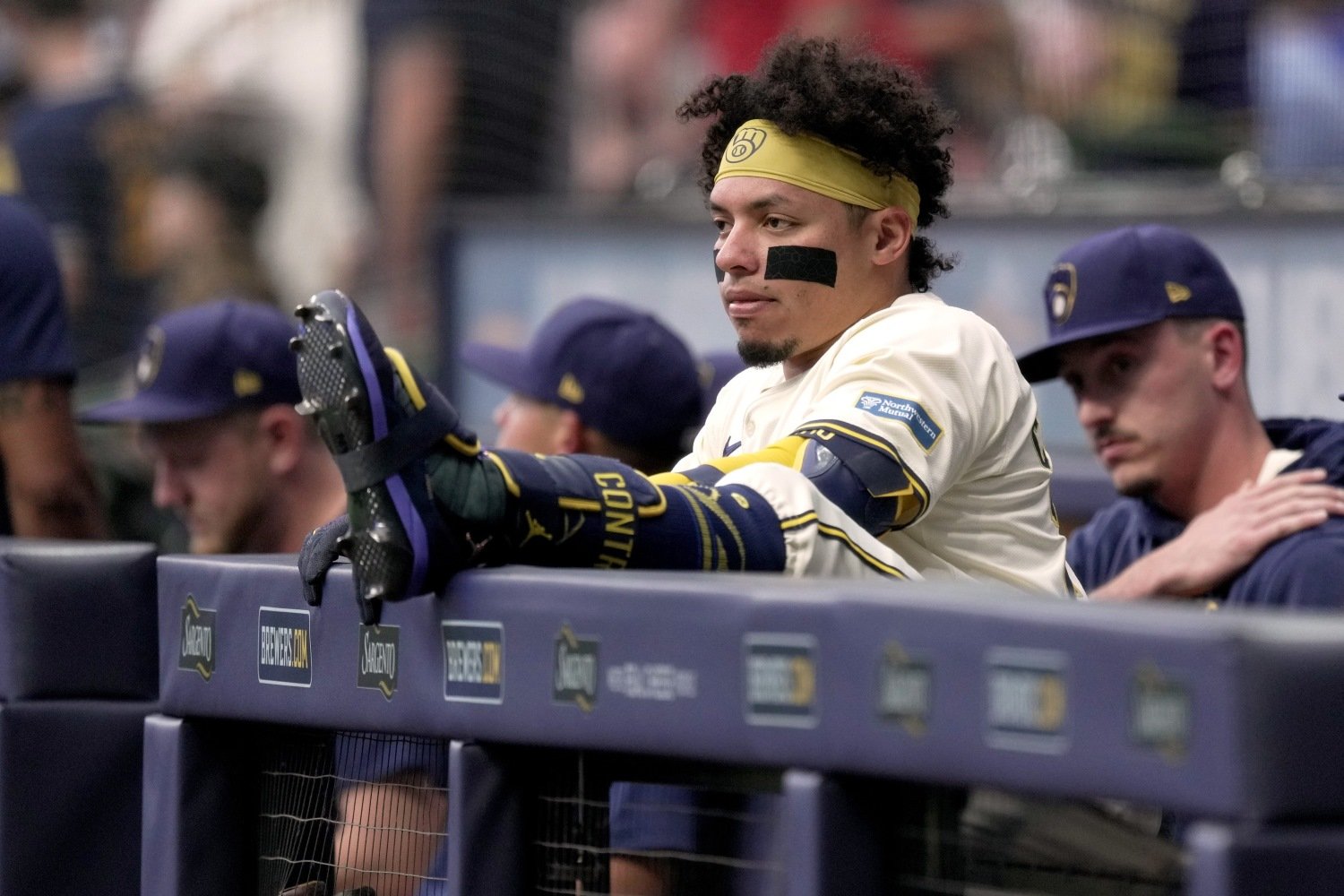 Pitch-calling is the most subtle, mysterious, and semi-spurious art of the great defensive catcher. As delicate a skill as pitch-framing is, it's essentially physical. Sequencing pitches to outsmart an opponent, though, is a much more layered and difficult thing to master. It requires many things: a great memory, high-level executive thinking, poise under pressure, and a certain immunity to boredom. To mix and remix what are often only three or four different options in unique and creative ways, without tying yourself into knots, is a task fraught with opportunities for error. Since the Brewers acquired him from Atlanta, William Contreras has come a long way as a pitch framer and as a collaborator with his hurlers. However, he has one glaring and somewhat predictable flaw as a pitch caller--or at least, he stands out from the crowd in a fairly obvious way, and it's worth asking whether he ought to do things differently. As a general rule, the Brewers use hard pitches about as often as any team in baseball. Contreras, in particular, uses four-seamers, sinkers, and cutters more than all but one other catcher in the league--Pittsburgh's Yasmani Grandal. Once he does turn to offspeed or breaking stuff, though, Contreras is especially likely to veer back to his base. After anything soft or breaking, Contreras calls hard pitches more often than anyone else, and by no small margin. The patterns into which Contreras often falls--hard stuff, hard stuff, breaking ball or offspeed pitch, then back to the hard stuff--get him into some trouble. Opposing hitters have an OPS in the lowest quintile of the league against Contreras this year, overall, but if we isolate the pitch after something soft or breaking, he's merely average, at .659. Often, the pitch after a breaking ball or changeup is in an advantageous count, so the league does at least that well in many cases. Going right back to hard pitches on the backs of breaking or offspeed ones has the unfortunate tendency to mean hittable pitches in the zone. Brewers pitchers have given up 22 home runs on hard pitches that came on the heels of soft ones with Contreras behind the plate. No catcher in the league has given up more such dingers. Consider the plate appearance in the 11th inning last Saturday in Minnesota, when Jakob Junis and Contreras were trying to finish off the Twins with a two-run lead. Junis set Carlos Santana up with a changeup, but then threw two errant sinkers. He got back into the count with a slider, breaking low and in, and if he'd backed it up with another, he might very well have closed out the contest. Instead, though, Contreras called another sinker. Junis missed badly with it, so the blame can't all fall on Contreras, but he grooved one on the inner portion of the plate, and Santana slammed the ball into the night, tying the game. Doubling up, with any pitch type, is highly valuable. Multiple studies over the last decade and change have demonstrated that throwing the same pitch type back-to-back is an effective way to increase overall effectiveness. Batters whiff more often when pitchers double up. Batters also whiff more often, regardless of previous pitch, on breaking and offspeed pitches. Contreras seems temperamentally unsuited to doubling up. He has a craving for novelty in the endeavor of pitch-calling, and he's struggling to balance the unavoidable simplicity of the task with the complexity required to keep hitters guessing. Maybe it doesn't have to be doubling up, in his case. Maybe there are other, more multilayered ways for him to help his batterymates problem-solve their way through at-bats. After all, he's still helped pitchers put up good numbers, on the whole. Clearly, though, there's more that Contreras could do to subvert hitters' approaches and give the Crew an edge through sequencing. He has to resist the pull back toward the fastball, especially right after something else.
 -
Baseball is, as much as anything, a cerebral showdown between one team's batter and the other team's battery. The Brewers win that fight as often as just about anyone, but their All-Star catcher struggles a bit in one minute aspect of it. Image courtesy of © Mark Hoffman/Milwaukee Journal Sentinel / USA TODAY NETWORK Pitch-calling is the most subtle, mysterious, and semi-spurious art of the great defensive catcher. As delicate a skill as pitch-framing is, it's essentially physical. Sequencing pitches to outsmart an opponent, though, is a much more layered and difficult thing to master. It requires many things: a great memory, high-level executive thinking, poise under pressure, and a certain immunity to boredom. To mix and remix what are often only three or four different options in unique and creative ways, without tying yourself into knots, is a task fraught with opportunities for error. Since the Brewers acquired him from Atlanta, William Contreras has come a long way as a pitch framer and as a collaborator with his hurlers. However, he has one glaring and somewhat predictable flaw as a pitch caller--or at least, he stands out from the crowd in a fairly obvious way, and it's worth asking whether he ought to do things differently. As a general rule, the Brewers use hard pitches about as often as any team in baseball. Contreras, in particular, uses four-seamers, sinkers, and cutters more than all but one other catcher in the league--Pittsburgh's Yasmani Grandal. Once he does turn to offspeed or breaking stuff, though, Contreras is especially likely to veer back to his base. After anything soft or breaking, Contreras calls hard pitches more often than anyone else, and by no small margin. The patterns into which Contreras often falls--hard stuff, hard stuff, breaking ball or offspeed pitch, then back to the hard stuff--get him into some trouble. Opposing hitters have an OPS in the lowest quintile of the league against Contreras this year, overall, but if we isolate the pitch after something soft or breaking, he's merely average, at .659. Often, the pitch after a breaking ball or changeup is in an advantageous count, so the league does at least that well in many cases. Going right back to hard pitches on the backs of breaking or offspeed ones has the unfortunate tendency to mean hittable pitches in the zone. Brewers pitchers have given up 22 home runs on hard pitches that came on the heels of soft ones with Contreras behind the plate. No catcher in the league has given up more such dingers. Consider the plate appearance in the 11th inning last Saturday in Minnesota, when Jakob Junis and Contreras were trying to finish off the Twins with a two-run lead. Junis set Carlos Santana up with a changeup, but then threw two errant sinkers. He got back into the count with a slider, breaking low and in, and if he'd backed it up with another, he might very well have closed out the contest. Instead, though, Contreras called another sinker. Junis missed badly with it, so the blame can't all fall on Contreras, but he grooved one on the inner portion of the plate, and Santana slammed the ball into the night, tying the game. Doubling up, with any pitch type, is highly valuable. Multiple studies over the last decade and change have demonstrated that throwing the same pitch type back-to-back is an effective way to increase overall effectiveness. Batters whiff more often when pitchers double up. Batters also whiff more often, regardless of previous pitch, on breaking and offspeed pitches. Contreras seems temperamentally unsuited to doubling up. He has a craving for novelty in the endeavor of pitch-calling, and he's struggling to balance the unavoidable simplicity of the task with the complexity required to keep hitters guessing. Maybe it doesn't have to be doubling up, in his case. Maybe there are other, more multilayered ways for him to help his batterymates problem-solve their way through at-bats. After all, he's still helped pitchers put up good numbers, on the whole. Clearly, though, there's more that Contreras could do to subvert hitters' approaches and give the Crew an edge through sequencing. He has to resist the pull back toward the fastball, especially right after something else. View full article
-
Savant's Barrel definition sucks. I always forget they do it that way; it's reverse-engineered based on results. The TruMedia one is just Batted Ball at 5+, LA 10 < x < 35. Much better, imo. Cleaner, more intuitive, more predictive.

