


Matthew Trueblood
-
Posts
1,964 -
Joined
-
Last visited
-
Days Won
10
Content Type
Profiles
Forums
Blogs
Events
News
2026 Milwaukee Brewers Top Prospects Ranking
Milwaukee Brewers Videos
2022 Milwaukee Brewers Draft Picks
Milwaukee Brewers Free Agent & Trade Rumors, Notes, & Tidbits
Guides & Resources
2023 Milwaukee Brewers Draft Picks
2024 Milwaukee Brewers Draft Picks
The Milwaukee Brewers Players Project
2025 Milwaukee Brewers Draft Pick Tracker
2026 Milwaukee Brewers Draft Tracker: Picks & Bonuses
Store
Downloads
Gallery
Everything posted by Matthew Trueblood
-
Sal Frelick Says Hey: A Heroic Catch on a Momentous Night
Matthew Trueblood posted an article in Brewers
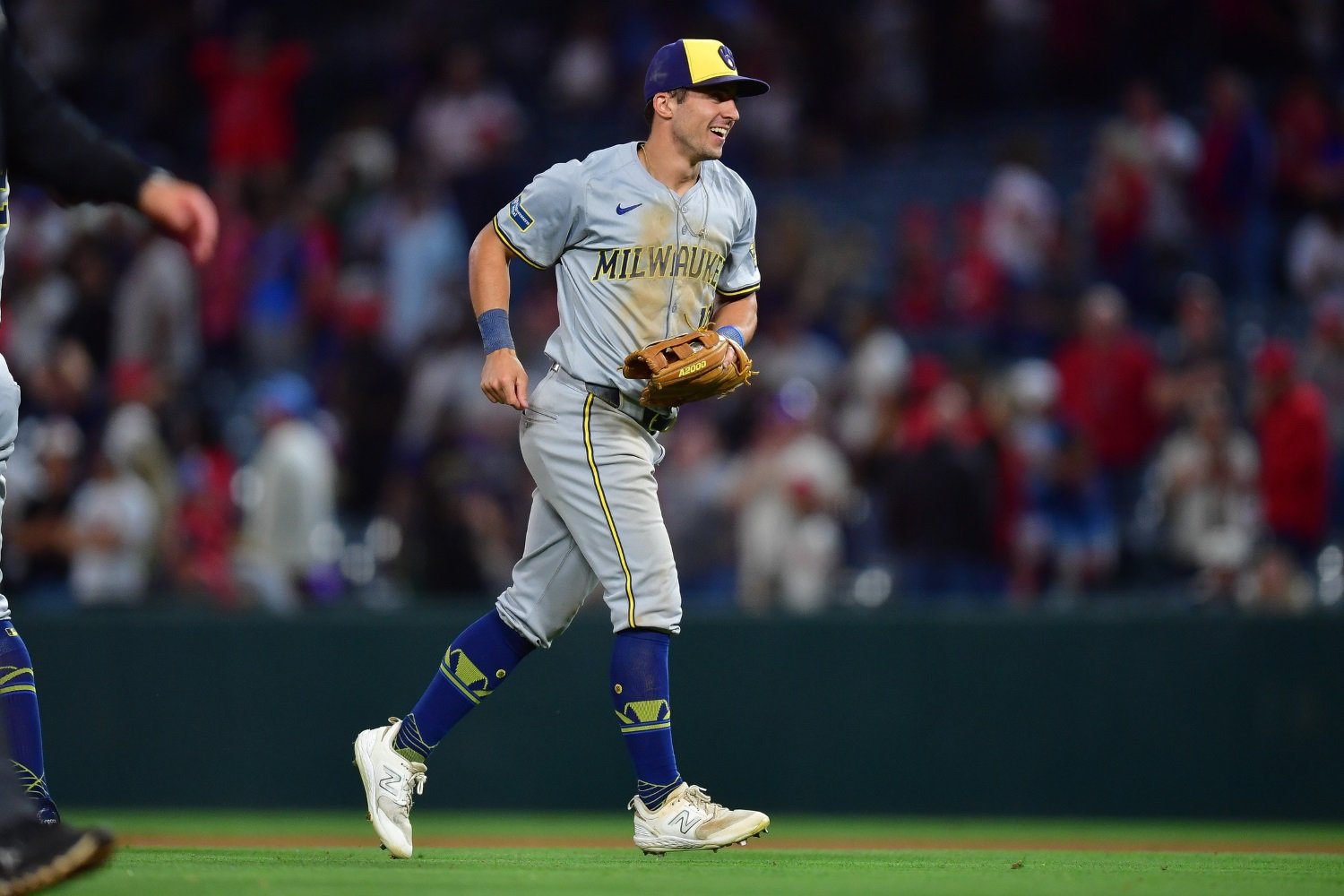 Ho hum. It was just another win for the Brewers Tuesday night, as they jumped out to a 6-0 lead on the hapless Angels in Anaheim. In the bottom of the ninth, though, the halos mounted an incursion, putting three runs on the board and forcing Pat Murphy to wheel through two other pitchers and land on his closer, Trevor Megill. With two outs and two on, the home team got its best healthy hitter (get well soon, Mr. Trout), Taylor Ward, to the plate. Ward sliced a vicious drive toward the wall in right-center field, and for just a moment, you had to think: Shoot. Tie game. "That's what was going through my head: tie score," Murphy admitted after the game. If you kept your wits about you, though, you could quickly assuage that rising concern. That's because the center fielder on the play was Sal Frelick, and hardly anyone does this better. Frelick is far from a perfect player. His offense is an area of real concern right now, and even in the field, his weak arm causes problems that sometimes wash out his strengths. When it comes to going back on fly balls, though, he's terrific. For his very young career, he's +7 plays on deep fly balls, according to Sports Info Solutions's Plus/Minus framework. Brewers fans might not even need that numerical reassurance. In a short time, Frelick has piled up the anecdotal evidence, in highly visible and memorable ways. Remember when he took an extra-base hit away from Marcell Ozuna in his MLB debut last July? Sal in His Debut.mp4 And then remember when, in the very next plate appearance, he robbed Orlando Arcia of a home run? The Other One from Sal's Debut.mp4 The questions are rhetorical, of course. Those moments were instant classics, immortalized in the minds of Brewers fans and (since the game was nationally televised) plenty of others, too. Frelick arrived in the majors and immediately showed the ability to literally and figuratively fill up the TV screen. He got a fortuitous opportunity, and he made the most of it without delay. That's exactly how things went for Willie Mays, too. Obviously, Frelick is nowhere near a Mays-caliber player. Watching him play the outfield, though, we can be reminded of the legacy Mays left on baseball, even as he passes into memory and severs our last superstar link to the game's Golden Era. Mays didn't invent the home run robbery, but he certainly innovated within the field. His most famous catch took away a triple, not a homer, but it was in the spirit of the modern homer snatch: going back on the ball with everything one has and selling out. Frelick loves to do just that. Frelick Back to RCF.mp4 Ballplayers of the era immediately before Mays were famous for their willingness to destroy their bodies in the pursuit of wins, but hardly any of them were athletic enough to set the stakes as high as he did. Mays was fast, acrobatic, and incredibly strong, given his short stature. Frelick is just one of a great many spiritual descendants of him since, throwing themselves onto turf or rough warning tracks or bouncing themselves off walls to earn extra outs. Like Mays, he loves going back on the ball, and has a gorgeous knack for it--a feel for the ball even when he has to turn his gaze away from it to make up ground, and then a fine sense for the wall and how to decelerate when he gets near it. Like Mays was, he's unwilling to yield even to his own teammates, when he locks his sights on a ball. Frelick Collision w Perk.mp4 Tuesday wasn't even the first time Frelick made a boundary-stretching play to record the final out of a close game. He did so last August, too, against another AL West foe. Sal Frelick Aug 23.mp4 There's no replacing Mays, and there must be no forgetting him. He's emblematic of a generation of trailblazers and fighters for equality, as well as of the excellence that makes the game breathtaking, at its best. He revolutionized baseball, and changed how it's played forever. He was a faster, stronger-armed Frelick in the field, and the best hitter in the game for several seasons. He was everywhere you turned, for two solid decades. For many fans who loved Mays and all he meant to the game, it felt like time itself stopped when the news of his death went out Tuesday night. It certainly felt like baseball should stop. And yet, it went on. It had to. If (as Jackie Robinson, Mays's fierce rival, once said) a life is not important except in the impact it has on other lives, then an incredibly important life like Mays's can't be confined to the time he spent in the spotlight, or even the time he spent in his own skin. Willie Mays helped make baseball the kind of unifying, thrilling thing that transcends time and pulls us into itself, over and over, tying one generation to another. Every time a center fielder sprints back on a high line drive and steals a double with a leap or a twist or a stab or a belly flop, we'll think of Mays. Super Sal.mp4 Major League Baseball set ugly, self-defeating boundaries around itself for the first half of the 20th century, excluding great players like Mays because of the color of their skin. The league looked, back then, a lot more like Sal Frelick than it does now. To see Frelick reach just beyond the boundaries of the park to save a game Tuesday night was to be reminded that when Robinson, Mays, and the rest of that courageous cohort of barrier-breakers burst through those walls of bigotry, they didn't close off the game, the way it had been closed off to them previously. There's still room for the undersized kid from a Northeastern city. We just have the privilege, now, of watching that kid play and appreciating the way they were influenced (consciously or not) by the astounding talent and fearless style of a Black kid from a now-defunct mining town in Alabama, who had to endure a lot of other grief on the way to greatness. Frelick's play secured another win for a cruising Brewers team, and it also provided fitting punctuation on a bittersweet day for baseball.
 -
Brewers manager Pat Murphy noted that the way the ball was hit on the final play of Sunday's win over the Reds made the out the team's defense manufactured especially impressive. He was on the money. Image courtesy of © Benny Sieu-USA TODAY Sports Let's set the scene completely, because in a moment like this, everything matters. The Brewers led the Reds 5-4 in the top of the ninth inning, with two outs and two runners on base. They had just intentionally walked Elly De La Cruz to get to Santiago Espinal, the light-hitting utility infielder who had taken over the previous inning. In the eighth, the Reds had used Jacob Hurtubise as a pinch-runner for slugging sluggard Jeimer Candelario, leading to Espinal coming on. As Curt Hogg of the Journal-Sentinel reported, during the at-bat, Brewers coach Quintin Berry instructed Blake Perkins to move in and toward right-center field a bit. Perkins had already been playing a bit shallower than usual; he was 310 feet from home plate when the first pitch of the plate appearance was thrown. At Berry's direction, though, he moved in to between 290 and 295 feet from home on the three pitches thereafter. That would prove crucial. Even on that first pitch, Perkins was 11 feet shallower than his average position for this season. At 321 feet, he plays a bit more shallow than the median center fielder in the first place, but he made the right adjustment to a hitter without much power. Berry, though, was right to diagnose the at-bat and see that the adjustment hadn't been large enough. Why? Well, firstly, Stuart Fairchild is fast. His Statcast Sprint Speed is 29 feet per second, near the high end of the MLB scale. He was the lead runner, and with two outs, he didn't have to hold up on any ball hit in the air, so on any single to the outfield, it was going to be hard to get him. Secondly, though, Espinal wasn't likely to hit the ball very hard, and as Murphy said after the game, soft-hit outfield singles are very hard to make hard throws on. It's hard to create a lot of energy in a small space, so gifted outfielders like Perkins make some of their best throws when they get to charge hard on a single and have a few strides to get up to speed. In this case, though, Perkins wouldn't have time to get the fleet Fairchild if he had to charge more than a few steps, so he had to play in and find a way to make a strong throw in a short window of time and space, like an infielder or a catcher. Listening to Perkins talk about his craft is fascinating. Even caught moments after the fact, before he's able to replay it many times in his head and retroactively assign himself motivations, he narrates his own plays like he saw it all in slow motion. This is almost certainly part of why he's such a phenomenal defender. He processes visual information extraordinarily quickly; it's why he gets such good jumps and makes such good decisions about routes; when to go all the way to the wall and when to lay back; or when to pull up on a bloop single, as happened Sunday. Ok, stage set. Let's talk about the guts of the play. On an inside fastball just under 100 miles per hour over the inner edge of the plate, Espinal hit a flare over Brice Turang at second base. It left his bat at 75.6 miles per hour, with a launch angle of 21 degrees. It dropped feather-soft on the outfield grass 233 feet from the plate, and while (as he said) Perkins had time to charge and to consider a diving attempt to make the play, the combination of the swing (a full one, on which he got jammed, which makes a good outfielder pause half a moment to assess the flight of the ball before taking off) and the lacking authority of contact left him no time to reach the ball before it fell. You know what happened next. Perkins's scoop and throw was gorgeous--perfect. He did everything Murphy talked about, creating a lot of energy and making a very strong peg with no time to gather himself after gathering the ball. It was a terrific throw. Perk Peg.mp4 Here's the thing: most of the time, terrific isn't good enough. Since 2015, when Statcast proliferated, there have been 641 plays on which: A single was hit There was a runner on second There were two outs The runner tried to score The ball had an exit velocity between 70 and 80 miles per hour The launch angle was between 10 and 30 degrees The ball was hit to the middle chunk of the field: center, right-center, or left-center Of those 641 runners racing around third to home, you know how many were out? Thirteen. Thirteen! That kind of hit, in that situation, has scored a run 628 times, and it's resulted in an out at home 13 times. It gets better. Of the 13 runners thrown out at home, seven of them were: Christian Vázquez, James McCann, Tomas Nido, Welington Castillo, Buster Posey, Daniel Vogelbach, and David Ortiz. This play is an out barely 2% of the time, and in half of those cases, it's because a catcher or a 290-pound designated hitter pushed their luck. The throw from Perkins was that good: so quick, so accurate, so strong that William Contreras had ample time to catch it with a lane open and then lunge into Fairchild's way (even if that, regrettably, led to a collision that might have concussed Contreras). With the game on the line, great coaching instincts, an extraordinary defender, and a little bit of good luck (the ball did come straight at Perkins, after all) created an out on a play that had somewhere just north of a 99-percent chance to be a game-tying RBI single. That's this Brewers team in a nutshell. They've had a few heartbreaking losses, born of boneheaded play (like Perkins's game-ending dumb bunt Friday night), terrible luck, or questionable calls, but much more often, they're winning close games by making great plays that other teams probably wouldn't have made. They communicate, cooperate, and execute better than (perhaps) any other team in baseball, and as a result, they're 42-29, even in a season that has featured a lot of injury trouble and some uncomfortable transitions. Perkins and Contreras made a play you see defenses make perhaps once a season Sunday, and they did it on the decisive play of the contest. What else can you ask for? View full article
- 4 replies
-
- 6
-

-

-
- blake perkins
- william contreras
- (and 1 more)
-
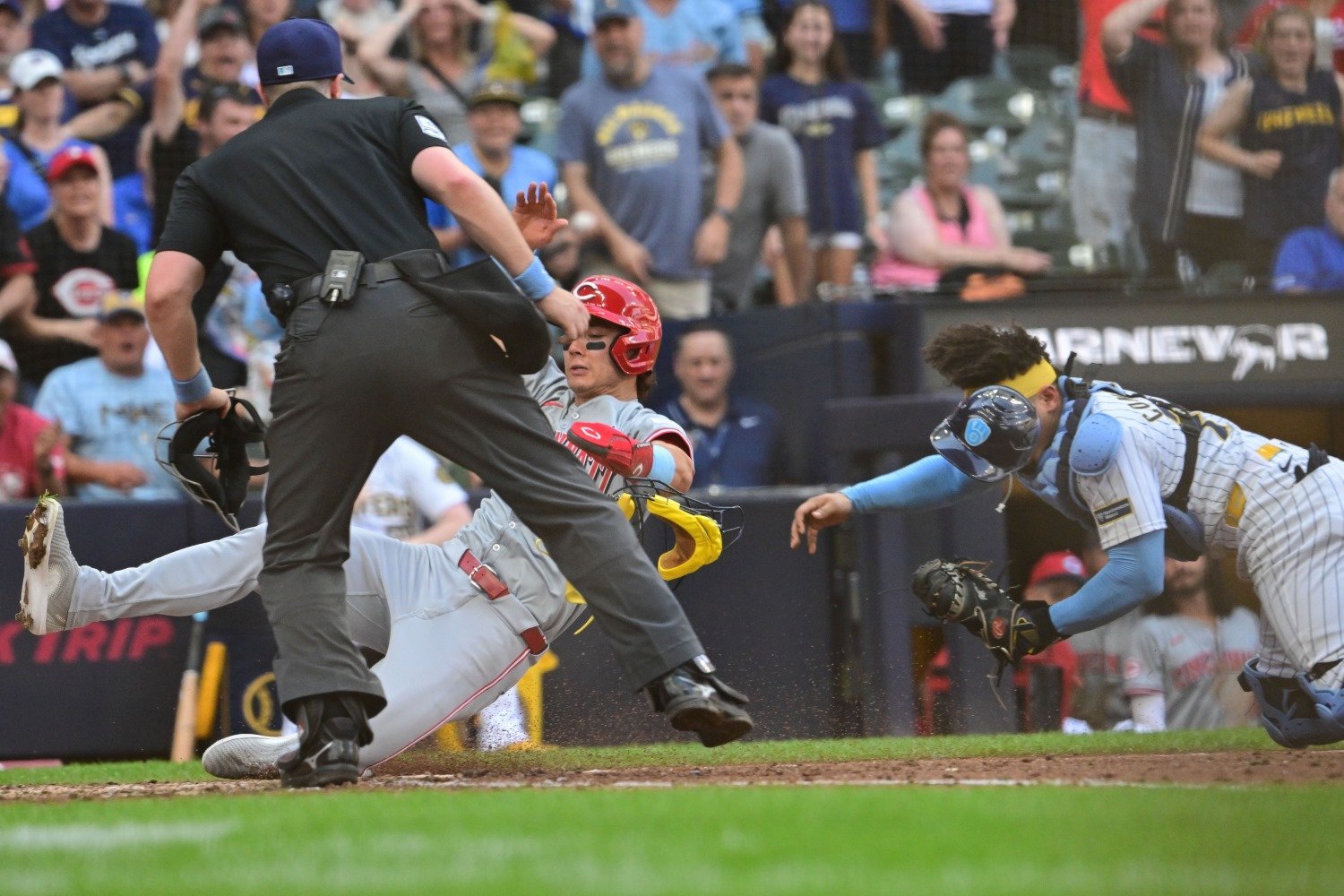 Let's set the scene completely, because in a moment like this, everything matters. The Brewers led the Reds 5-4 in the top of the ninth inning, with two outs and two runners on base. They had just intentionally walked Elly De La Cruz to get to Santiago Espinal, the light-hitting utility infielder who had taken over the previous inning. In the eighth, the Reds had used Jacob Hurtubise as a pinch-runner for slugging sluggard Jeimer Candelario, leading to Espinal coming on. As Curt Hogg of the Journal-Sentinel reported, during the at-bat, Brewers coach Quintin Berry instructed Blake Perkins to move in and toward right-center field a bit. Perkins had already been playing a bit shallower than usual; he was 310 feet from home plate when the first pitch of the plate appearance was thrown. At Berry's direction, though, he moved in to between 290 and 295 feet from home on the three pitches thereafter. That would prove crucial. Even on that first pitch, Perkins was 11 feet shallower than his average position for this season. At 321 feet, he plays a bit more shallow than the median center fielder in the first place, but he made the right adjustment to a hitter without much power. Berry, though, was right to diagnose the at-bat and see that the adjustment hadn't been large enough. Why? Well, firstly, Stuart Fairchild is fast. His Statcast Sprint Speed is 29 feet per second, near the high end of the MLB scale. He was the lead runner, and with two outs, he didn't have to hold up on any ball hit in the air, so on any single to the outfield, it was going to be hard to get him. Secondly, though, Espinal wasn't likely to hit the ball very hard, and as Murphy said after the game, soft-hit outfield singles are very hard to make hard throws on. It's hard to create a lot of energy in a small space, so gifted outfielders like Perkins make some of their best throws when they get to charge hard on a single and have a few strides to get up to speed. In this case, though, Perkins wouldn't have time to get the fleet Fairchild if he had to charge more than a few steps, so he had to play in and find a way to make a strong throw in a short window of time and space, like an infielder or a catcher. Listening to Perkins talk about his craft is fascinating. Even caught moments after the fact, before he's able to replay it many times in his head and retroactively assign himself motivations, he narrates his own plays like he saw it all in slow motion. This is almost certainly part of why he's such a phenomenal defender. He processes visual information extraordinarily quickly; it's why he gets such good jumps and makes such good decisions about routes; when to go all the way to the wall and when to lay back; or when to pull up on a bloop single, as happened Sunday. Ok, stage set. Let's talk about the guts of the play. On an inside fastball just under 100 miles per hour over the inner edge of the plate, Espinal hit a flare over Brice Turang at second base. It left his bat at 75.6 miles per hour, with a launch angle of 21 degrees. It dropped feather-soft on the outfield grass 233 feet from the plate, and while (as he said) Perkins had time to charge and to consider a diving attempt to make the play, the combination of the swing (a full one, on which he got jammed, which makes a good outfielder pause half a moment to assess the flight of the ball before taking off) and the lacking authority of contact left him no time to reach the ball before it fell. You know what happened next. Perkins's scoop and throw was gorgeous--perfect. He did everything Murphy talked about, creating a lot of energy and making a very strong peg with no time to gather himself after gathering the ball. It was a terrific throw. Perk Peg.mp4 Here's the thing: most of the time, terrific isn't good enough. Since 2015, when Statcast proliferated, there have been 641 plays on which: A single was hit There was a runner on second There were two outs The runner tried to score The ball had an exit velocity between 70 and 80 miles per hour The launch angle was between 10 and 30 degrees The ball was hit to the middle chunk of the field: center, right-center, or left-center Of those 641 runners racing around third to home, you know how many were out? Thirteen. Thirteen! That kind of hit, in that situation, has scored a run 628 times, and it's resulted in an out at home 13 times. It gets better. Of the 13 runners thrown out at home, seven of them were: Christian Vázquez, James McCann, Tomas Nido, Welington Castillo, Buster Posey, Daniel Vogelbach, and David Ortiz. This play is an out barely 2% of the time, and in half of those cases, it's because a catcher or a 290-pound designated hitter pushed their luck. The throw from Perkins was that good: so quick, so accurate, so strong that William Contreras had ample time to catch it with a lane open and then lunge into Fairchild's way (even if that, regrettably, led to a collision that might have concussed Contreras). With the game on the line, great coaching instincts, an extraordinary defender, and a little bit of good luck (the ball did come straight at Perkins, after all) created an out on a play that had somewhere just north of a 99-percent chance to be a game-tying RBI single. That's this Brewers team in a nutshell. They've had a few heartbreaking losses, born of boneheaded play (like Perkins's game-ending dumb bunt Friday night), terrible luck, or questionable calls, but much more often, they're winning close games by making great plays that other teams probably wouldn't have made. They communicate, cooperate, and execute better than (perhaps) any other team in baseball, and as a result, they're 42-29, even in a season that has featured a lot of injury trouble and some uncomfortable transitions. Perkins and Contreras made a play you see defenses make perhaps once a season Sunday, and they did it on the decisive play of the contest. What else can you ask for?
- 4 comments
-
- 7
-
-
-
- blake perkins
- william contreras
- (and 1 more)
-
The Milwaukee Brewers' 42nd win of the season ended in dramatic fashion, with a bullseye of a throw to the plate to kill the tying run. It came from the hand of the team's least heralded outfielder, but that very player might deserve an increasing degree of prioritization from the team. Image courtesy of © Michael McLoone-USA TODAY Sports If you start by setting a baseline for playing time from ages 24-27, then look for center fielders with an OPS+ between 90 and 105 and at least 20 Fielding Runs above average (Rfield, on Baseball Reference), you can find a list of pretty good comps for Blake Perkins at this moment. What's missing from his résumé, relative to the others, is a longer track record, but he's a reasonable facsimile of several of these players, based on his young Brewers career to date. Now, obviously, there are some illustrious names here, and comparing Perkins to them feels forced. There are also some who seem like perfectly fine comparators to Perkins, but don't get you very excited about his long-term future. That's the right way to feel. This profile doesn't age extraordinarily well, because it's dependent on defense, which usually has a relatively steep aging curve. Even a slight decline in offense puts you on the wrong side of average, and then a backslide defensively makes you a downright subpar player. Query Results Table Rk Player HR PA OPS+ ▼ Rfield From To HR SB CS BB SO BA OBP SLG OPS+ WAR WAA 1 Curt Flood 33 2837 104 41 1962 1965 33 42 32 178 217 .305 .353 .404 104 19.5 9.2 2 Aaron Rowand 50 1675 104 34 2002 2005 50 33 11 81 282 .282 .333 .453 104 11.3 5.4 3 Torii Hunter 87 2207 103 26 2000 2003 87 42 24 132 417 .268 .317 .472 103 12.2 4.4 4 Carlos Gómez 56 1618 103 52 2010 2013 56 111 18 89 380 .261 .311 .448 103 12.7 7.7 5 Marquis Grissom 50 2518 103 31 1991 1994 50 243 46 169 312 .282 .332 .415 103 18.5 11.1 6 Austin Jackson 42 2555 102 31 2011 2014 42 62 24 222 588 .269 .334 .402 102 15.1 6.6 7 Harrison Bader 44 1359 101 47 2018 2021 44 38 11 117 367 .244 .325 .420 101 10.5 6.0 8 Bill North 10 2038 101 52 1972 1975 10 143 58 241 288 .266 .358 .332 101 16.3 9.4 9 Peter Bourjos 22 1237 98 26 2011 2014 22 40 13 77 289 .254 .314 .389 98 8.3 4.0 10 Mike Cameron 62 2168 98 57 1997 2000 62 112 32 250 484 .250 .344 .424 98 15.5 8.2 11 Chris Young 84 2523 97 30 2008 2011 84 75 25 275 582 .240 .325 .431 97 11.5 3.9 12 Willie Davis 39 2510 97 36 1964 1967 39 108 38 80 273 .269 .295 .384 97 15.6 6.2 13 Ender Inciarte 30 2517 96 62 2015 2018 30 87 40 169 306 .291 .341 .395 96 14.8 7.1 14 Jackie Bradley Jr. 54 1855 94 50 2014 2017 54 28 5 169 457 .242 .321 .412 94 12.0 5.5 15 Juan Beníquez 17 1715 93 46 1974 1977 17 69 45 132 186 .268 .327 .362 93 8.8 2.8 16 Devon White 58 2363 90 61 1987 1990 58 114 41 137 464 .248 .294 .390 90 14.7 7.0 Provided by Stathead.com: Found with Stathead. See Full Results. Generated 6/16/2024. Therefore, the Brewers shouldn't entertain signing Perkins to a contract extension or anything. They don't have to make any long-term commitments to him. What they should do, however, is make sure to give him a nice long leash. In the short (and perhaps medium) term, Perkins should be an everyday presence in the lineup. He's a superb defender. Despite the athleticism of Jackson Chourio and the derring-do of Sal Frelick, and even if and when Garrett Mitchell and Joey Wiemer get healthy again, Perkins stands a stride ahead of any of his teammates with the glove. Making him the third jewel in an up-the-middle triangle of marvelous defenders (along with Willy Adames and Brice Turang) would give the Crew the lockdown defense they need to keep overachieving right on into October. That doesn't mean Perkins is a pure plug-and-play guy, and he's not quite a perfect complement to their existing corps of outfielders. As is true of just about every switch-hitter, there are two Blake Perkinses, and one can hit a lot better than the other. Perkins is a much stronger lefty batter (facing right-handed pitchers) than he is against southpaws. Blake Perkins, 2024 Platoon Splits Pitcher Hand PA Swing% Miss% 10/50/90 EV %iles Hit95+% LA10-30% Barrel% FBDst BA OBP SLG ISO BABIP K% BB% Righty 172 42.20% 30.60% 62/86/101 41.50% 30.20% 17.90% 332 0.26 0.331 0.39 0.13 0.353 28.50% 8.10% Lefty 58 41.20% 26.60% 67.7/83.7/.99.2 30.80% 20.50% 12.80% 286.7 0.212 0.293 0.308 0.096 0.263 22.40% 10.30% The samples here are small, but it's on Perkins's jacket, and you can see it in his swing, too: he's better from the left side. That said, some of the peripheral indicators listed alongside the raw outcomes above show how he can be a credible hitter even from his weaker side, much of the time. He's patient from either side of the plate. he whiffs a little bit less from the right side of it. He just doesn't have any power against lefty hurlers. In a perfect world, he'd be a bit more balanced, since all the current and looming alternatives to him (Frelick and Mitchell, most of all) also bat left-handed and are better against right-handed pitching. That's not a Perkins problem, though; it's a Wiemer and Chris Roller problem. Against right-handed starters, Perkins should bat sixth or seventh much of the time, and then he could be pinch-hit for. If that comes at the expense of Frelick--and even if it forces him off the roster--so be it. Against lefties, he can still squeeze into the lineup, batting ninth and offering tons of defensive value between at-bats. It's unfortunate, but the often-overpowering impulse for baseball people is to downplay the success of late bloomers with a dearth of sheer hitting skills that set a ceiling on their value. In this case, it's important to resist that temptation, even as it's also crucial to maintain perspective and avoid getting overly exuberant about him. Perkins has carved out a real role for himself. Given the production the Brewers are getting from William Contreras, Christian Yelich, Willy Adames, and Rhys Hoskins, they can easily afford to fold Perkins into the lineup, and they can get a lot of value out of him, the same way teams derived a lot of value from Inciarte, Bradley, and Bourjos. With more playing time throughout this summer, it should become fairly clear whether Perkins can be even more than that--whether he can have the kind of multi-faceted impact that Rowand, Gómez, Grissom, Cameron, and Davis had. Mitchell deserves to get a look again once he's fully healthy, but it should happen in relief and support of Perkins, rather than by way of supplanting him. View full article
-
Blake Perkins is Well Past Being Just a Nice Extra Guy
Matthew Trueblood posted an article in Brewers
 If you start by setting a baseline for playing time from ages 24-27, then look for center fielders with an OPS+ between 90 and 105 and at least 20 Fielding Runs above average (Rfield, on Baseball Reference), you can find a list of pretty good comps for Blake Perkins at this moment. What's missing from his résumé, relative to the others, is a longer track record, but he's a reasonable facsimile of several of these players, based on his young Brewers career to date. Now, obviously, there are some illustrious names here, and comparing Perkins to them feels forced. There are also some who seem like perfectly fine comparators to Perkins, but don't get you very excited about his long-term future. That's the right way to feel. This profile doesn't age extraordinarily well, because it's dependent on defense, which usually has a relatively steep aging curve. Even a slight decline in offense puts you on the wrong side of average, and then a backslide defensively makes you a downright subpar player. Query Results Table Rk Player HR PA OPS+ ▼ Rfield From To HR SB CS BB SO BA OBP SLG OPS+ WAR WAA 1 Curt Flood 33 2837 104 41 1962 1965 33 42 32 178 217 .305 .353 .404 104 19.5 9.2 2 Aaron Rowand 50 1675 104 34 2002 2005 50 33 11 81 282 .282 .333 .453 104 11.3 5.4 3 Torii Hunter 87 2207 103 26 2000 2003 87 42 24 132 417 .268 .317 .472 103 12.2 4.4 4 Carlos Gómez 56 1618 103 52 2010 2013 56 111 18 89 380 .261 .311 .448 103 12.7 7.7 5 Marquis Grissom 50 2518 103 31 1991 1994 50 243 46 169 312 .282 .332 .415 103 18.5 11.1 6 Austin Jackson 42 2555 102 31 2011 2014 42 62 24 222 588 .269 .334 .402 102 15.1 6.6 7 Harrison Bader 44 1359 101 47 2018 2021 44 38 11 117 367 .244 .325 .420 101 10.5 6.0 8 Bill North 10 2038 101 52 1972 1975 10 143 58 241 288 .266 .358 .332 101 16.3 9.4 9 Peter Bourjos 22 1237 98 26 2011 2014 22 40 13 77 289 .254 .314 .389 98 8.3 4.0 10 Mike Cameron 62 2168 98 57 1997 2000 62 112 32 250 484 .250 .344 .424 98 15.5 8.2 11 Chris Young 84 2523 97 30 2008 2011 84 75 25 275 582 .240 .325 .431 97 11.5 3.9 12 Willie Davis 39 2510 97 36 1964 1967 39 108 38 80 273 .269 .295 .384 97 15.6 6.2 13 Ender Inciarte 30 2517 96 62 2015 2018 30 87 40 169 306 .291 .341 .395 96 14.8 7.1 14 Jackie Bradley Jr. 54 1855 94 50 2014 2017 54 28 5 169 457 .242 .321 .412 94 12.0 5.5 15 Juan Beníquez 17 1715 93 46 1974 1977 17 69 45 132 186 .268 .327 .362 93 8.8 2.8 16 Devon White 58 2363 90 61 1987 1990 58 114 41 137 464 .248 .294 .390 90 14.7 7.0 Provided by Stathead.com: Found with Stathead. See Full Results. Generated 6/16/2024. Therefore, the Brewers shouldn't entertain signing Perkins to a contract extension or anything. They don't have to make any long-term commitments to him. What they should do, however, is make sure to give him a nice long leash. In the short (and perhaps medium) term, Perkins should be an everyday presence in the lineup. He's a superb defender. Despite the athleticism of Jackson Chourio and the derring-do of Sal Frelick, and even if and when Garrett Mitchell and Joey Wiemer get healthy again, Perkins stands a stride ahead of any of his teammates with the glove. Making him the third jewel in an up-the-middle triangle of marvelous defenders (along with Willy Adames and Brice Turang) would give the Crew the lockdown defense they need to keep overachieving right on into October. That doesn't mean Perkins is a pure plug-and-play guy, and he's not quite a perfect complement to their existing corps of outfielders. As is true of just about every switch-hitter, there are two Blake Perkinses, and one can hit a lot better than the other. Perkins is a much stronger lefty batter (facing right-handed pitchers) than he is against southpaws. Blake Perkins, 2024 Platoon Splits Pitcher Hand PA Swing% Miss% 10/50/90 EV %iles Hit95+% LA10-30% Barrel% FBDst BA OBP SLG ISO BABIP K% BB% Righty 172 42.20% 30.60% 62/86/101 41.50% 30.20% 17.90% 332 0.26 0.331 0.39 0.13 0.353 28.50% 8.10% Lefty 58 41.20% 26.60% 67.7/83.7/.99.2 30.80% 20.50% 12.80% 286.7 0.212 0.293 0.308 0.096 0.263 22.40% 10.30% The samples here are small, but it's on Perkins's jacket, and you can see it in his swing, too: he's better from the left side. That said, some of the peripheral indicators listed alongside the raw outcomes above show how he can be a credible hitter even from his weaker side, much of the time. He's patient from either side of the plate. he whiffs a little bit less from the right side of it. He just doesn't have any power against lefty hurlers. In a perfect world, he'd be a bit more balanced, since all the current and looming alternatives to him (Frelick and Mitchell, most of all) also bat left-handed and are better against right-handed pitching. That's not a Perkins problem, though; it's a Wiemer and Chris Roller problem. Against right-handed starters, Perkins should bat sixth or seventh much of the time, and then he could be pinch-hit for. If that comes at the expense of Frelick--and even if it forces him off the roster--so be it. Against lefties, he can still squeeze into the lineup, batting ninth and offering tons of defensive value between at-bats. It's unfortunate, but the often-overpowering impulse for baseball people is to downplay the success of late bloomers with a dearth of sheer hitting skills that set a ceiling on their value. In this case, it's important to resist that temptation, even as it's also crucial to maintain perspective and avoid getting overly exuberant about him. Perkins has carved out a real role for himself. Given the production the Brewers are getting from William Contreras, Christian Yelich, Willy Adames, and Rhys Hoskins, they can easily afford to fold Perkins into the lineup, and they can get a lot of value out of him, the same way teams derived a lot of value from Inciarte, Bradley, and Bourjos. With more playing time throughout this summer, it should become fairly clear whether Perkins can be even more than that--whether he can have the kind of multi-faceted impact that Rowand, Gómez, Grissom, Cameron, and Davis had. Mitchell deserves to get a look again once he's fully healthy, but it should happen in relief and support of Perkins, rather than by way of supplanting him.
 -
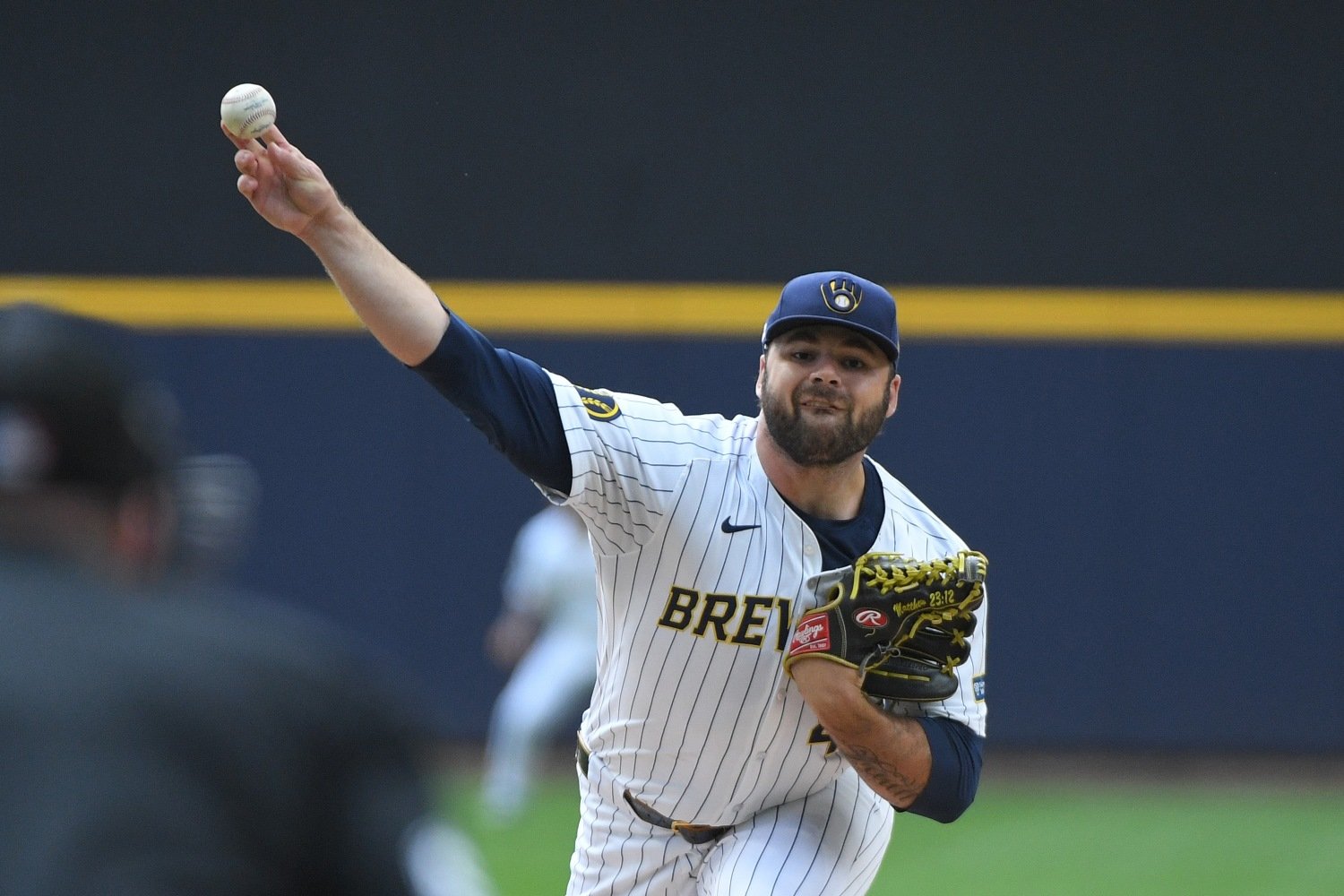 Since the start of last season, Bryse Wilson has an ERA of 3.15. His ERA- is 75, meaning he's allowed roughly 25 percent fewer earned runs than you'd expect, adjusting for the league and park contexts in which he's pitched. His bulk appearance Saturday against the Reds pushed him to 140 innings pitched in a Brewers uniform, and they've been fabulously successful--despite a lack of new strikeout stuff or any one identifiably excellent skill. Last fall, I wrote about how Wilson's sinker-cutter mix was working to induce a large volume of harmless fly balls. It's a hard way to live, because it requires a pitcher to be pretty fine and a little bit lucky, but even as he's been asked to stretch back out and pitch as a starter most of the time this year, Wilson has again met the challenge. His ERA is 3.84 for the season, and it's just 3.62 since he was moved into the rotation back in mid-April. One reason for that: he continues to avoid the roughest types of contact, if only by a little bit. Unlike some of his teammates, when Wilson gives up hard contact, he gets hitters to strike it to the center of the diamond. That means fewer of those hard-hit balls turn into extra-base hits, especially home runs. The best end of this chart to be at is the top left end, where you're not allowing opponents to pull the ball with authority and you are getting a lot of that hard contact to go out to center field, or back at you. Wilson is perched in just that position. That's a thin explanation for how he's avoided being hit harder, though, and no cause to believe especially strongly that he'll sustain this success going forward. Let's try to make the latter case, and see where it goes. Firstly, though his pitch mix feels like a globular, kitchen-sink approach, Wilson is really two distinct pitchers--as most of them are. Against righties, he focuses heavily on the combination of his sinker and his cutter, and the way they interact with one another. To speak more precisely (and to catch the most interesting feature of the above), Wilson is going very sinker- and cutter-heavy early in counts, then trying to put hitters away with his four-seamer and his curveball. Against lefties, meanwhile, he's much more diverse and unpredictable, right from the start of an at-bat. As you'd expect, the sinker becomes a secondary pitch for Wilson against lefties, unless and until he's way behind in a count. You might not have expected, though, that it would stick around, acting as a fourth partner in the effort to get outs against lefties, who have crushed Wilson throughout his career. It does. Wilson isn't going four-seamer, then curveball and attacking lefties totally differently than he does righties. The differences are more granular than that. Note that for both handednesses, Wilson uses the four-seamer as a putaway pitch. He throws that version of his fastball much more often with two strikes, and when he does, he's pretty much always aiming for the top edge of the zone. He doesn't actually get many whiffs with it, and probably needs to alter this pattern, because he's given up a home run in each month on two-strike four-seamers. It's how he's trying to give hitters a different look from his sinker or cutter, though, and in a certain way, it is working. As we can infer from the above charts by count, Wilson's sinker and cutter are two different pitches, based on who's batting. Against righties, for instance, the cutter is a pitch meant to get a lean across and a wave at an offering away. Against lefties, though, Wilson is much less willing to go inside to attack. That's partially reasonable, in that his cutter works more like a breaking ball than like a hard, on-plane heater, and it leads him to try to fill up the zone with what he hopes will be frustrating backdoor offerings to an opposite-handed batter. Something similar happens with sinkers. Against righties, it's the pitch that gets him ahead in the count, and with which he can push in on their hands, forcing them to pull those hands in and try to fend off what is increasingly mid-90s heat. For lefties, though, Wilson's sinker is a setup pitch. It claims plenty of the zone, and not just because he most often throws it when way behind in the count. He's setting up his other offerings. These shifts are about staying out of the nitro zones for opposing hitters from each side, but they're also about Wilson's unique curveball. It's a pitch with a ton of horizontal break, by modern standards, and very little actual vertical drop. If it were even a tick or two harder, it would surely be labeled a sweeper; that's the kind of pitch it is. To work off that, Wilson has to have the sinker working, to both sides. He also has to set hitters up to see stuff with plenty of room to move the way his curve does and still be a strike. The best option is to keep the pressure on and try to fool batters with his unique combination of size and mound setup, because he doesn't do it with raw movement. There's still no out pitch in this arsenal, at all. That's why Wilson has a low strikeout rate (and a higher walk rate than we might prefer), even as he keeps beating batters. What does exist here, in abundance, is a feel for pitching, and for the space where a hitter might get to a ball but won't truly blast it. Given his gargantuan dimensions (6-foot-7, 272 pounds, officially), his unassuming pitching style, and his no-nonsense ease in the clubhouse, I think Wilson should inherit a nickname that should always be in MLB circulation, anyway: Big Daddy. Rick Reuschel, who bore that nickname for nearly two full decades in the big leagues, was about the same size as Wilson, for his era. He, too, specialized in simply getting outs, rather than winning style points with punchouts or GIF-worthy individual offerings. Wilson is a worthy successor, even if he's a Tar Heel by birth, rather than a corn-fed farm kid from Illinois, like Reuschel was. He's unlikely to scale the heights Reuschel occasionally reached, in what was a quietly excellent career, but Wilson embodies what fans affectionately meant when they called Reuschel by that sobriquet. He takes care of the whole team, in the only ways he knows. In that light, then, we wish Wilson a happy Fathers Day. Lately, it seems like every time he takes the mound is another such happy occasion. Wilson is a FIP-defying, underwhelming, overgrown swingman, but in a season when the team has needed a stabilizing force in the rotation desperately, Big Daddy has been there. If he can find it in his heart to try sequencing the sinker, the cutter, and the curveball a little more creatively, he might even start seeing his peripheral numbers trend better, rather than seeing any of his solid real stats trend worse.
 -
It was another workmanlike showing. It was, like all the others, largely unremarkable. It was also another win. Bryse Wilson just keeps boring opponents to death. Image courtesy of © Michael McLoone-USA TODAY Sports Since the start of last season, Bryse Wilson has an ERA of 3.15. His ERA- is 75, meaning he's allowed roughly 25 percent fewer earned runs than you'd expect, adjusting for the league and park contexts in which he's pitched. His bulk appearance Saturday against the Reds pushed him to 140 innings pitched in a Brewers uniform, and they've been fabulously successful--despite a lack of new strikeout stuff or any one identifiably excellent skill. Last fall, I wrote about how Wilson's sinker-cutter mix was working to induce a large volume of harmless fly balls. It's a hard way to live, because it requires a pitcher to be pretty fine and a little bit lucky, but even as he's been asked to stretch back out and pitch as a starter most of the time this year, Wilson has again met the challenge. His ERA is 3.84 for the season, and it's just 3.62 since he was moved into the rotation back in mid-April. One reason for that: he continues to avoid the roughest types of contact, if only by a little bit. Unlike some of his teammates, when Wilson gives up hard contact, he gets hitters to strike it to the center of the diamond. That means fewer of those hard-hit balls turn into extra-base hits, especially home runs. The best end of this chart to be at is the top left end, where you're not allowing opponents to pull the ball with authority and you are getting a lot of that hard contact to go out to center field, or back at you. Wilson is perched in just that position. That's a thin explanation for how he's avoided being hit harder, though, and no cause to believe especially strongly that he'll sustain this success going forward. Let's try to make the latter case, and see where it goes. Firstly, though his pitch mix feels like a globular, kitchen-sink approach, Wilson is really two distinct pitchers--as most of them are. Against righties, he focuses heavily on the combination of his sinker and his cutter, and the way they interact with one another. To speak more precisely (and to catch the most interesting feature of the above), Wilson is going very sinker- and cutter-heavy early in counts, then trying to put hitters away with his four-seamer and his curveball. Against lefties, meanwhile, he's much more diverse and unpredictable, right from the start of an at-bat. As you'd expect, the sinker becomes a secondary pitch for Wilson against lefties, unless and until he's way behind in a count. You might not have expected, though, that it would stick around, acting as a fourth partner in the effort to get outs against lefties, who have crushed Wilson throughout his career. It does. Wilson isn't going four-seamer, then curveball and attacking lefties totally differently than he does righties. The differences are more granular than that. Note that for both handednesses, Wilson uses the four-seamer as a putaway pitch. He throws that version of his fastball much more often with two strikes, and when he does, he's pretty much always aiming for the top edge of the zone. He doesn't actually get many whiffs with it, and probably needs to alter this pattern, because he's given up a home run in each month on two-strike four-seamers. It's how he's trying to give hitters a different look from his sinker or cutter, though, and in a certain way, it is working. As we can infer from the above charts by count, Wilson's sinker and cutter are two different pitches, based on who's batting. Against righties, for instance, the cutter is a pitch meant to get a lean across and a wave at an offering away. Against lefties, though, Wilson is much less willing to go inside to attack. That's partially reasonable, in that his cutter works more like a breaking ball than like a hard, on-plane heater, and it leads him to try to fill up the zone with what he hopes will be frustrating backdoor offerings to an opposite-handed batter. Something similar happens with sinkers. Against righties, it's the pitch that gets him ahead in the count, and with which he can push in on their hands, forcing them to pull those hands in and try to fend off what is increasingly mid-90s heat. For lefties, though, Wilson's sinker is a setup pitch. It claims plenty of the zone, and not just because he most often throws it when way behind in the count. He's setting up his other offerings. These shifts are about staying out of the nitro zones for opposing hitters from each side, but they're also about Wilson's unique curveball. It's a pitch with a ton of horizontal break, by modern standards, and very little actual vertical drop. If it were even a tick or two harder, it would surely be labeled a sweeper; that's the kind of pitch it is. To work off that, Wilson has to have the sinker working, to both sides. He also has to set hitters up to see stuff with plenty of room to move the way his curve does and still be a strike. The best option is to keep the pressure on and try to fool batters with his unique combination of size and mound setup, because he doesn't do it with raw movement. There's still no out pitch in this arsenal, at all. That's why Wilson has a low strikeout rate (and a higher walk rate than we might prefer), even as he keeps beating batters. What does exist here, in abundance, is a feel for pitching, and for the space where a hitter might get to a ball but won't truly blast it. Given his gargantuan dimensions (6-foot-7, 272 pounds, officially), his unassuming pitching style, and his no-nonsense ease in the clubhouse, I think Wilson should inherit a nickname that should always be in MLB circulation, anyway: Big Daddy. Rick Reuschel, who bore that nickname for nearly two full decades in the big leagues, was about the same size as Wilson, for his era. He, too, specialized in simply getting outs, rather than winning style points with punchouts or GIF-worthy individual offerings. Wilson is a worthy successor, even if he's a Tar Heel by birth, rather than a corn-fed farm kid from Illinois, like Reuschel was. He's unlikely to scale the heights Reuschel occasionally reached, in what was a quietly excellent career, but Wilson embodies what fans affectionately meant when they called Reuschel by that sobriquet. He takes care of the whole team, in the only ways he knows. In that light, then, we wish Wilson a happy Fathers Day. Lately, it seems like every time he takes the mound is another such happy occasion. Wilson is a FIP-defying, underwhelming, overgrown swingman, but in a season when the team has needed a stabilizing force in the rotation desperately, Big Daddy has been there. If he can find it in his heart to try sequencing the sinker, the cutter, and the curveball a little more creatively, he might even start seeing his peripheral numbers trend better, rather than seeing any of his solid real stats trend worse. View full article
-
Earlier this week, The Athletic's senior national baseball writer proposed (for what seems the umpteenth time) that the Brewers could trade their star shortstop. They won't, and shouldn't, and it's getting harder for the national media to beat the allegations. Image courtesy of © Michael McLoone-USA TODAY Sports Firstly, let's make something clear. Rosenthal didn't offer news, or even a sourced rumor, in his piece. Because the great work of Rosenthal and other writers at that outlet is behind a paywall, I'll only reproduce a small portion of it here, but this is the telling tidbit. "Sure, the team’s offense would suffer. Its morale would, too. But how exactly are the Brewers going to get through the season with their rotation in such a dubious state?" Rosenthal wrote. "Brandon Woodruff and Wade Miley already are out for the year. Robert Gasser might soon join them. Both external free-agent additions, Jakob Junis ($7 million) and Joe Ross ($1.75 million), are on the injured list as well." The thrust of his argument was that, whereas Josh Hader was a year and a half from free agency when the Brewers traded him, Adames is only half a season away; that the injuries to the rotation make it hard to envision how the team will get to the end of the season (and beyond) without a major external infusion of talent; and that the prospect prices for controllable starters are likely to be higher than the Brewers are willing to pay. Some of those points have merit, but as a whole, the case Rosenthal tried to build here falls flat. Even more than Hader was--far more than Hader was, I would argue--Adames is a linchpin of both the lineup and the clubhouse. The Brewers need him, in a vital way, and they can't replace him just by sliding Joey Ortiz to shortstop. The first thing Rosenthal missed is how special Adames really is, as a person and a player. Another thing he missed, though, is that the Brewers are in command of the NL Central, and aren't likely to relinquish it. Rosenthal came of age as a beat reporter for the Baltimore Orioles, a team with some spiritual fraternity with the Brewers. He's not unfamiliar with the plight of the baseball underdog or the tendency on the part of big-market and national media to underestimate small-market teams and their worth. With each passing year, though, he seems to be subsumed more into the machine that treats the Brewers and other teams like them into something close to farm clubs for richer teams, especially on the coasts. I understand why outsiders don't believe the Brewers can make it through 162 (and beyond), because of their pitching injuries. Here's the thing about that belief: it's wrong. The Brewers are good enough at scouting and player development; nimble and proactive enough; and quietly deep enough, already, to improve as needed and cover the places where they've been weakened and deployed. This is not 2007. The Brewers aren't leading the NL Central solely by default. They're a well-managed, well-rounded, well-constructed team, and they're going to the playoffs. They can make noise there, too, if they make an important upgrade to the rotation. They absolutely can't do so if they trade Adames. That's the final place where I depart from Rosenthal's thinking in his piece. He suggests that the team will balk at the prices for Garrett Crochet and Jesús Luzardo, specifically, and that might be true. I think it would even be wise: Crochet and Luzardo carry both health and performance risks that I expect will not be weighed heavily enough when their teams set their asking prices this summer. There are other starting pitchers who are (or might become) available, though, and if the Brewers don't get aggressive enough to grab someone substantial, then shame on them. This team just locked up Jackson Chourio on an extremely team-friendly deal that could last a decade. They have long-term team control of Ortiz, Christian Yelich, William Contreras, and Brice Turang, not to mention a handful of prospects who range from interesting to downright exciting. The days Adames, Rhys Hoskins, Devin Williams, and maybe even Freddy Peralta will spend in this organization might be numbered, but the team has the skeleton of another very impressive core in place already. That's why this season, which felt like it might be a short-term step back and transition year, is turning out to be one to remember. It's time to invest in that, and take a chance on it. They can afford to surrender some prospect capital. They're going to get a bunch of new talent next month via the MLB Draft, especially after getting a very valuable pick as part of the Corbin Burnes trade, alongside Ortiz and DL Hall. The Brewers shouldn't even entertain Willy Adames trade offers. They should make sure they have his ring size right, and then go make that matter. View full article
-
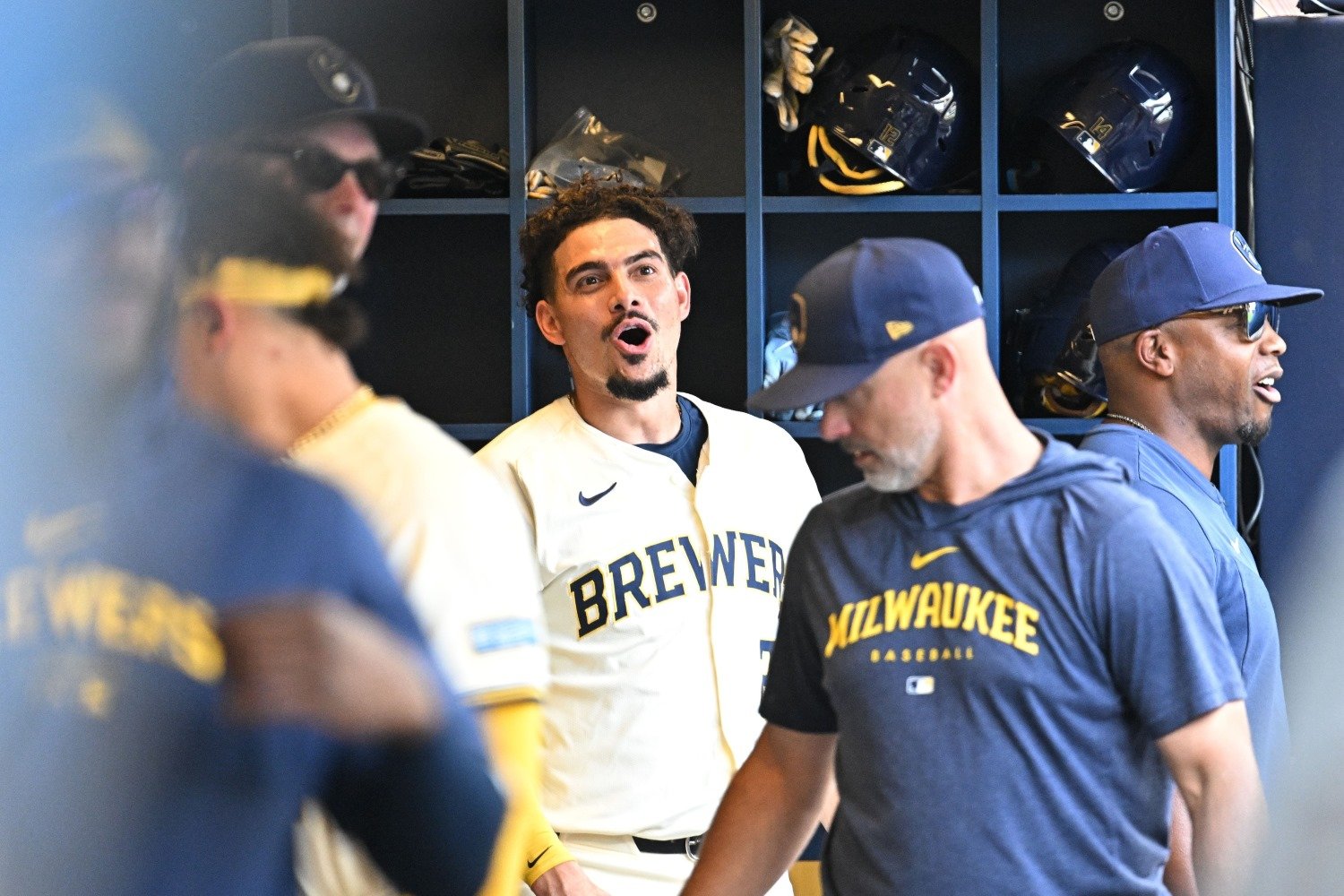 Firstly, let's make something clear. Rosenthal didn't offer news, or even a sourced rumor, in his piece. Because the great work of Rosenthal and other writers at that outlet is behind a paywall, I'll only reproduce a small portion of it here, but this is the telling tidbit. "Sure, the team’s offense would suffer. Its morale would, too. But how exactly are the Brewers going to get through the season with their rotation in such a dubious state?" Rosenthal wrote. "Brandon Woodruff and Wade Miley already are out for the year. Robert Gasser might soon join them. Both external free-agent additions, Jakob Junis ($7 million) and Joe Ross ($1.75 million), are on the injured list as well." The thrust of his argument was that, whereas Josh Hader was a year and a half from free agency when the Brewers traded him, Adames is only half a season away; that the injuries to the rotation make it hard to envision how the team will get to the end of the season (and beyond) without a major external infusion of talent; and that the prospect prices for controllable starters are likely to be higher than the Brewers are willing to pay. Some of those points have merit, but as a whole, the case Rosenthal tried to build here falls flat. Even more than Hader was--far more than Hader was, I would argue--Adames is a linchpin of both the lineup and the clubhouse. The Brewers need him, in a vital way, and they can't replace him just by sliding Joey Ortiz to shortstop. The first thing Rosenthal missed is how special Adames really is, as a person and a player. Another thing he missed, though, is that the Brewers are in command of the NL Central, and aren't likely to relinquish it. Rosenthal came of age as a beat reporter for the Baltimore Orioles, a team with some spiritual fraternity with the Brewers. He's not unfamiliar with the plight of the baseball underdog or the tendency on the part of big-market and national media to underestimate small-market teams and their worth. With each passing year, though, he seems to be subsumed more into the machine that treats the Brewers and other teams like them into something close to farm clubs for richer teams, especially on the coasts. I understand why outsiders don't believe the Brewers can make it through 162 (and beyond), because of their pitching injuries. Here's the thing about that belief: it's wrong. The Brewers are good enough at scouting and player development; nimble and proactive enough; and quietly deep enough, already, to improve as needed and cover the places where they've been weakened and deployed. This is not 2007. The Brewers aren't leading the NL Central solely by default. They're a well-managed, well-rounded, well-constructed team, and they're going to the playoffs. They can make noise there, too, if they make an important upgrade to the rotation. They absolutely can't do so if they trade Adames. That's the final place where I depart from Rosenthal's thinking in his piece. He suggests that the team will balk at the prices for Garrett Crochet and Jesús Luzardo, specifically, and that might be true. I think it would even be wise: Crochet and Luzardo carry both health and performance risks that I expect will not be weighed heavily enough when their teams set their asking prices this summer. There are other starting pitchers who are (or might become) available, though, and if the Brewers don't get aggressive enough to grab someone substantial, then shame on them. This team just locked up Jackson Chourio on an extremely team-friendly deal that could last a decade. They have long-term team control of Ortiz, Christian Yelich, William Contreras, and Brice Turang, not to mention a handful of prospects who range from interesting to downright exciting. The days Adames, Rhys Hoskins, Devin Williams, and maybe even Freddy Peralta will spend in this organization might be numbered, but the team has the skeleton of another very impressive core in place already. That's why this season, which felt like it might be a short-term step back and transition year, is turning out to be one to remember. It's time to invest in that, and take a chance on it. They can afford to surrender some prospect capital. They're going to get a bunch of new talent next month via the MLB Draft, especially after getting a very valuable pick as part of the Corbin Burnes trade, alongside Ortiz and DL Hall. The Brewers shouldn't even entertain Willy Adames trade offers. They should make sure they have his ring size right, and then go make that matter.
 -
We already know that the Brewers excel at finding pitchers on the baseball world's scrap heap and turning them into average or better hurlers. Now, we have a new way to identify a trait they use to identify targets for that kind of move. Image courtesy of © Wendell Cruz-USA TODAY Sports Thanks to the never-ending increase in our knowledge about the inner workings of baseball, there's now a way to concretely (if indirectly and imperfectly) measure a pitcher's arm angle, using Statcast data. Teams, of course, have access to more and better data, but through some impressive work by researchers in the public sphere, we can mimic some of those teams' insights. What does it tell us? Arguably, and immediately, not much of this is new, if you knew to be thinking about and looking for it, anyway. For any given team's handful of most prominent pitchers, most fans can readily give an approximation of arm angle, from watching the pitcher pitch. What this does begin to tell us, though, is whose arm works in an unusual way. In the next iteration (on which developer Trevor Thrash already seems to be plugging away), we might learn how a pitcher's movement varies from what we'd expect, based on their arsenal--and that might yield new insights into the nature of deception and why certain pitches without extraordinary raw movement characteristics have so much success, or vice-versa. Let's take a look at the data, in a visual format. Here's the horizontal and vertical release point for every pitcher in MLB so far this year, with position players-as-pitchers removed. The points are colored according to the arm angle class to which they were assigned, based on Thrash's work. The size of each bubble (though hard to differentiate, because of the scale) describes each pitcher's height. As you can probably tell from these data, there is overlap between each classification. Not all pitchers with identical release points are created equal. As you might also be able to tell, the high three-quarters delivery is the most common in baseball. If you're an observant and interested fan, you probably aren't surprised by that. Truly overhand hurlers are rare, and so are sidearmers. There's only one true submarine twirler in the big leagues. Most pitchers are somewhere on that three-quarters spectrum, and because coming from too low a slot usually gives opposite-handed batters an early look at the ball, the higher end of that spectrum is more heavily populated than the lower end. Specifically, guys who come from the high three-quarter slot are about twice as numerous as those who come from the low three-quarter slot. Of 625 pitchers overall, more than half (360) are high three-quarters guys. Low three-quarters arms make up around 70 percent of the remaining arms, at 195. Ok, but why is this interesting for Brewers fans, in particular? You might've already guessed: they stand out in this regard. Of the pitchers they've employed so far this year, 13 use low three-quarter slots. Then there are overhand guys Trevor Megill and Aaron Ashby, and sidearmer Hoby Milner, and nine guys who come from a high three-quarter angle. More telling than the sheer counts are the innings thrown by each group. Of just under 600 innings for the season, 376 were thrown by guys who come from the lower side of the three-quarters section, and if you add Milner, it soars past 400. By the league's standards, the Brewers heavily lean toward low three-quarters guys! Now, these are inferred arm angles, rather than directly measured ones. There are some players Thrash's system codes as low-three-quarters deliverers whom I might classify as a true three-quarters, if such a classification were created. I don't think of Bryse Wilson as having a low slot at all, and the way he's changed his setup to release the ball from as far toward third base as possible is part of why the system reads him as such. Wilson Arm Angle.mp4 If I'm more inclined to trust my human eye than the data on Wilson, though, I'm also happy to acknowledge that it's picking up something I would have missed with Joel Payamps, whose spine tilt pushes his release point higher but whose angle of shoulder adduction really is pretty low. Payamps Arm Angle.mp4 Why does this matter? There are at least three important reasons: Deception is influenced by arm angle, both in an absolute sense and in a relative one. As I wrote earlier this year, the Brewers like to give teams extremes of release point with which to contend. The arm angle that gets the ball to those release points is an important part of making that strategy work. Arm angle influences movement. When Thrash finishes creating a data set that will allow us to compare raw movement to that expected based on arm angle, we'll be better able to see this, but to take one broad-strokes example: it's hard to throw an effective sinker from a high three-quarters or an overhand slot. The low three-quarters gang (Wilson, Payamps, Jared Koenig, Colin Rea, Elvis Peguero, and so on) generate a lot of value with their good sinkers. It's also a good slot for creating sweep on breaking stuff, at which the team excels lately. It's hard to alter a pitcher's arm angle, without huge and unpredictable ripple effects on their whole game. It's much easier to tweak pitch mixes, grips, which side of the rubber a guy sets up on, or how their front side works. Those are all things that the team has tweaked to help players named above find tons of success in the last two seasons or so. If you can identify pitchers who aren't fully tapping into their stuff and who throw from angles not favored by other teams throughout the league, it gives you a head start on the kind of developmental wins that have helped the Crew dominate as a full pitching staff throughout their half-decade and change as the best team in the NL Central. This is just a first foray into a rich field of research and future learning. Thrash and others are delving into the available data and trying to find more ways to unspool it for our shared benefit. In the meantime, though, we've already learned some interesting things about the Brewers and the way they perennially overachieve on the mound. View full article
-
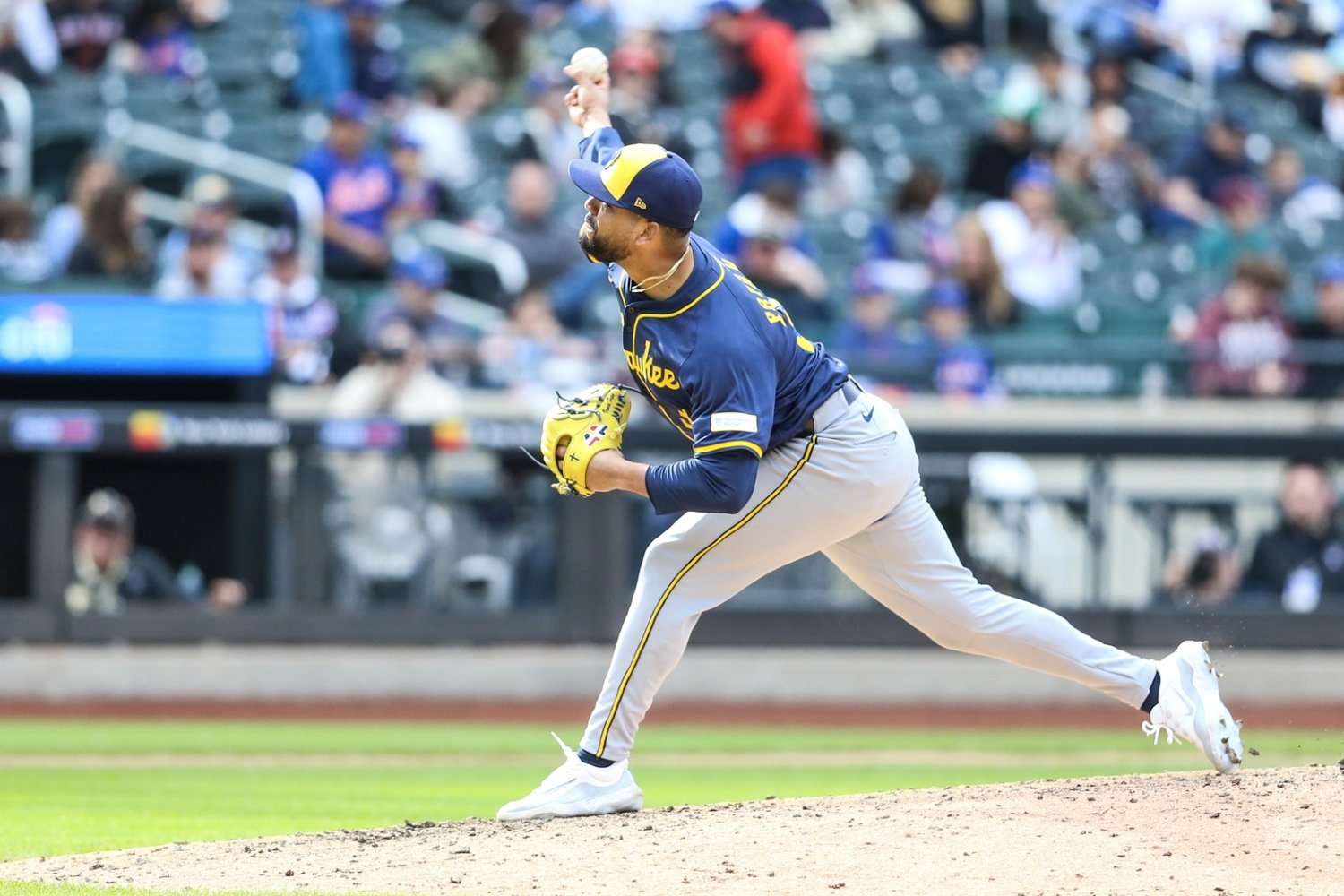 Thanks to the never-ending increase in our knowledge about the inner workings of baseball, there's now a way to concretely (if indirectly and imperfectly) measure a pitcher's arm angle, using Statcast data. Teams, of course, have access to more and better data, but through some impressive work by researchers in the public sphere, we can mimic some of those teams' insights. What does it tell us? Arguably, and immediately, not much of this is new, if you knew to be thinking about and looking for it, anyway. For any given team's handful of most prominent pitchers, most fans can readily give an approximation of arm angle, from watching the pitcher pitch. What this does begin to tell us, though, is whose arm works in an unusual way. In the next iteration (on which developer Trevor Thrash already seems to be plugging away), we might learn how a pitcher's movement varies from what we'd expect, based on their arsenal--and that might yield new insights into the nature of deception and why certain pitches without extraordinary raw movement characteristics have so much success, or vice-versa. Let's take a look at the data, in a visual format. Here's the horizontal and vertical release point for every pitcher in MLB so far this year, with position players-as-pitchers removed. The points are colored according to the arm angle class to which they were assigned, based on Thrash's work. The size of each bubble (though hard to differentiate, because of the scale) describes each pitcher's height. As you can probably tell from these data, there is overlap between each classification. Not all pitchers with identical release points are created equal. As you might also be able to tell, the high three-quarters delivery is the most common in baseball. If you're an observant and interested fan, you probably aren't surprised by that. Truly overhand hurlers are rare, and so are sidearmers. There's only one true submarine twirler in the big leagues. Most pitchers are somewhere on that three-quarters spectrum, and because coming from too low a slot usually gives opposite-handed batters an early look at the ball, the higher end of that spectrum is more heavily populated than the lower end. Specifically, guys who come from the high three-quarter slot are about twice as numerous as those who come from the low three-quarter slot. Of 625 pitchers overall, more than half (360) are high three-quarters guys. Low three-quarters arms make up around 70 percent of the remaining arms, at 195. Ok, but why is this interesting for Brewers fans, in particular? You might've already guessed: they stand out in this regard. Of the pitchers they've employed so far this year, 13 use low three-quarter slots. Then there are overhand guys Trevor Megill and Aaron Ashby, and sidearmer Hoby Milner, and nine guys who come from a high three-quarter angle. More telling than the sheer counts are the innings thrown by each group. Of just under 600 innings for the season, 376 were thrown by guys who come from the lower side of the three-quarters section, and if you add Milner, it soars past 400. By the league's standards, the Brewers heavily lean toward low three-quarters guys! Now, these are inferred arm angles, rather than directly measured ones. There are some players Thrash's system codes as low-three-quarters deliverers whom I might classify as a true three-quarters, if such a classification were created. I don't think of Bryse Wilson as having a low slot at all, and the way he's changed his setup to release the ball from as far toward third base as possible is part of why the system reads him as such. Wilson Arm Angle.mp4 If I'm more inclined to trust my human eye than the data on Wilson, though, I'm also happy to acknowledge that it's picking up something I would have missed with Joel Payamps, whose spine tilt pushes his release point higher but whose angle of shoulder adduction really is pretty low. Payamps Arm Angle.mp4 Why does this matter? There are at least three important reasons: Deception is influenced by arm angle, both in an absolute sense and in a relative one. As I wrote earlier this year, the Brewers like to give teams extremes of release point with which to contend. The arm angle that gets the ball to those release points is an important part of making that strategy work. Arm angle influences movement. When Thrash finishes creating a data set that will allow us to compare raw movement to that expected based on arm angle, we'll be better able to see this, but to take one broad-strokes example: it's hard to throw an effective sinker from a high three-quarters or an overhand slot. The low three-quarters gang (Wilson, Payamps, Jared Koenig, Colin Rea, Elvis Peguero, and so on) generate a lot of value with their good sinkers. It's also a good slot for creating sweep on breaking stuff, at which the team excels lately. It's hard to alter a pitcher's arm angle, without huge and unpredictable ripple effects on their whole game. It's much easier to tweak pitch mixes, grips, which side of the rubber a guy sets up on, or how their front side works. Those are all things that the team has tweaked to help players named above find tons of success in the last two seasons or so. If you can identify pitchers who aren't fully tapping into their stuff and who throw from angles not favored by other teams throughout the league, it gives you a head start on the kind of developmental wins that have helped the Crew dominate as a full pitching staff throughout their half-decade and change as the best team in the NL Central. This is just a first foray into a rich field of research and future learning. Thrash and others are delving into the available data and trying to find more ways to unspool it for our shared benefit. In the meantime, though, we've already learned some interesting things about the Brewers and the way they perennially overachieve on the mound.
- 1 comment
-
- 1
-
-
- jared koenig
- joel payamps
- (and 2 more)
-
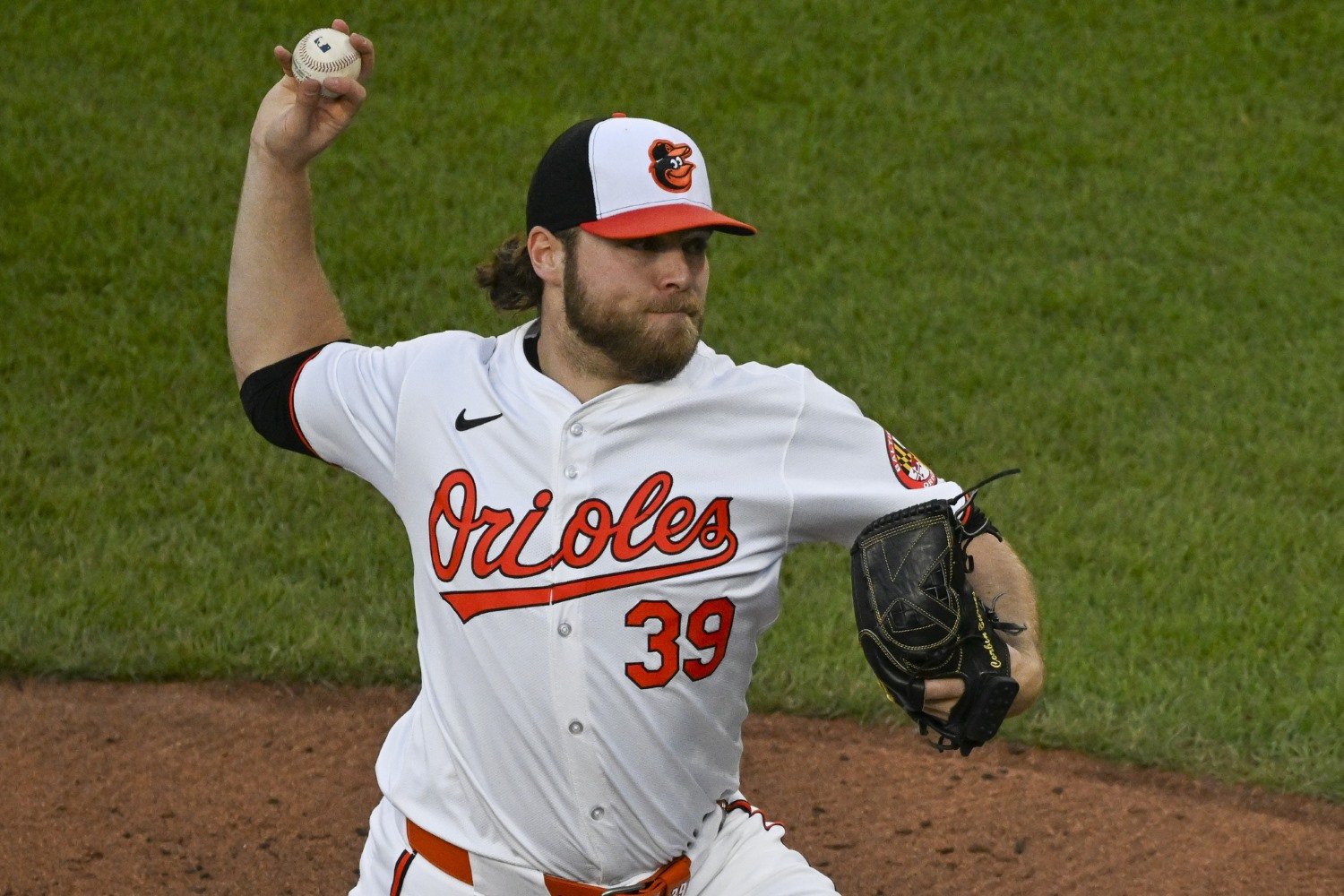 Corbin Burnes has been everything the Baltimore Orioles had hoped he would be this season. Only six starting pitchers have pitched more innings so far in 2024, and only six have a better DRA-, according to Baseball Prospectus. Burnes is 6-2, with a 2.26 ERA and 76 strikeouts. Of his 13 total starts, 10 have been quality starts. He is, in some ways, enjoying a better season than he had in either of his last two campaigns with the Brewers. That's no reason for the Brewers to worry much. They knew Burnes might have a great season in Baltimore when they decided to trade him, and they should be very happy with their own side of that deal so far. Joey Ortiz is in the running for the NL Rookie of the Year Award, and soon, the team will get to make use of the extra draft pick they acquired as part of the deal. Whether Burnes is good for the O's or not will only matter if they and the Brewers meet in the World Series, at which point it would be hard to call either side a loser in the transaction. However, we should still stop and take a close look at what's happening with Burnes, because it tells us some important things about the way the Brewers approach pitching--and what is both great and questionable about it. Stylistically, Burnes is a different pitcher in 2024 than he was in a Brewers uniform, in a way that reveals the divide between the Brewers' philosophy of pitching and that of another team known to be near the cutting edge in pitching instruction and development. Late in his Brewers tenure, almost two-thirds of Burnes's pitches were his hard stuff. He doesn't throw a four-seamer anymore, but the cutter and sinker accounted for roughly 64 percent of is offerings. This season, they're barely showing up more often than you'd expect by flipping a coin. He increasingly leans on the curveball and slider, at the expense of the harder stuff. Normally, you see this from a pitcher when they're trying to generate more whiffs and are willing to work outside the zone a bit more, but Burnes has been very aggressive since making his switch, and it's led to a dramatic reduction in walks and home runs, but also a steep decline in strikeout rate. Burnes remains an above-average starter in terms of strikeout rate, but he's much more of a contact manager this year. Burnes already did well at limiting exit velocity from opposing batters, but the rate at which batters hit it 95 miles per hour or harder has dropped even lower than it was with the Crew. I recently created a statistic called Harmless Contact, which (separate from exit velocity) gives the percentage of batted balls against a pitcher that left the bat at either a trajectory lower than -10 degrees or one higher than 45 degrees, where contact is almost as useless as striking out. Burnes's Harmless% sat in the mid-30s for each of the full seasons since the pandemic while he was with Milwaukee. So far in 2024, that number has jumped to a league-high 40.1%. It's strange to see Burnes throwing more strikes and getting weaker contact while varying his pitch mix so much more. It's harder to fill up the zone with four or five pitches than with two or three, and it was always assumed that Burnes's hard cutter neutralized hitters' power when he located it well. It's turning out that, perhaps, it's something more than that, because he's turning to softer stuff and still getting lots of weak, ineffectual contact. Absent any other info, it would reflect poorly on the Brewers that a player would go elsewhere and start doing these types of things better. Having lots of other info, though, we can say with conviction that the Brewers are very good at inducing weak contact, too, as a team. They just have a very different approach than do the Orioles, in terms of how to mix pitches to effectively chase either strikeouts or non-threatening contact. Consider Colin Rea, the very model of a kitchen-sink starter, and compare his pitch mix to that of Burnes, before and after leaving the Brewers. Rea is mixing pitches much more than Burnes, but in the end, he's throwing more hard pitches (the sinker, cutter, and four-seam fastball) than Burnes is. As a team, the Brewers throw one of those three pitches 61.0 percent of the time, second-highest in MLB. The Orioles, by contrast, use four-seamers, sinkers and cutters just a combined 56.9 percent of the time, 14th in MLB. The difference is that the Brewers are comfortable with--and at times, even insistent upon--having pitchers use multiple fastball looks. Burnes has cut way down on his sinker usage and entirely eliminated his four-seamer. Rea, along with pitchers like Bryse Wilson and even relievers like Joel Payamps, has stuck to using multiple heaters. That begets a lot of mishit balls, and some called strikes. It's not a recipe for elite peripheral numbers, absent elite talent. The Orioles are more in line with modern orthodoxy, and Burnes has looked more like a typical modern ace this year than he did last season. Still, the Brewers get nearly as much out of their less expensive, less famous pitching staff as the Orioles and other theoretically optimized teams do. There are many ways to skin a cat. As long as the outs keep coming, it's ok to be agnostic about which approach works better, and why. The Brewers are still fighting to maintain sufficient pitching depth this year, and their below-average team strikeout rate indicates that there might be trouble ahead. So far, though, despite trading their ace this winter and replacing him with cheap and damaged arms, the Brewers still boast a good pitching corps. That's a credit to their front office, their coaching staff, and their catchers, as well as the pitchers themselves, and it's a reminder that not everything about baseball has to evolve in the same direction in order to survive.
 -
The Brewers took a leap of faith late this offseason, trading their incumbent ace starter (a year from free agency) for three key pieces of their long-term future. He's thriving in his new home, but does that mean anything about the Brewers and their way of doing things? Image courtesy of © Tommy Gilligan-USA TODAY Sports Corbin Burnes has been everything the Baltimore Orioles had hoped he would be this season. Only six starting pitchers have pitched more innings so far in 2024, and only six have a better DRA-, according to Baseball Prospectus. Burnes is 6-2, with a 2.26 ERA and 76 strikeouts. Of his 13 total starts, 10 have been quality starts. He is, in some ways, enjoying a better season than he had in either of his last two campaigns with the Brewers. That's no reason for the Brewers to worry much. They knew Burnes might have a great season in Baltimore when they decided to trade him, and they should be very happy with their own side of that deal so far. Joey Ortiz is in the running for the NL Rookie of the Year Award, and soon, the team will get to make use of the extra draft pick they acquired as part of the deal. Whether Burnes is good for the O's or not will only matter if they and the Brewers meet in the World Series, at which point it would be hard to call either side a loser in the transaction. However, we should still stop and take a close look at what's happening with Burnes, because it tells us some important things about the way the Brewers approach pitching--and what is both great and questionable about it. Stylistically, Burnes is a different pitcher in 2024 than he was in a Brewers uniform, in a way that reveals the divide between the Brewers' philosophy of pitching and that of another team known to be near the cutting edge in pitching instruction and development. Late in his Brewers tenure, almost two-thirds of Burnes's pitches were his hard stuff. He doesn't throw a four-seamer anymore, but the cutter and sinker accounted for roughly 64 percent of is offerings. This season, they're barely showing up more often than you'd expect by flipping a coin. He increasingly leans on the curveball and slider, at the expense of the harder stuff. Normally, you see this from a pitcher when they're trying to generate more whiffs and are willing to work outside the zone a bit more, but Burnes has been very aggressive since making his switch, and it's led to a dramatic reduction in walks and home runs, but also a steep decline in strikeout rate. Burnes remains an above-average starter in terms of strikeout rate, but he's much more of a contact manager this year. Burnes already did well at limiting exit velocity from opposing batters, but the rate at which batters hit it 95 miles per hour or harder has dropped even lower than it was with the Crew. I recently created a statistic called Harmless Contact, which (separate from exit velocity) gives the percentage of batted balls against a pitcher that left the bat at either a trajectory lower than -10 degrees or one higher than 45 degrees, where contact is almost as useless as striking out. Burnes's Harmless% sat in the mid-30s for each of the full seasons since the pandemic while he was with Milwaukee. So far in 2024, that number has jumped to a league-high 40.1%. It's strange to see Burnes throwing more strikes and getting weaker contact while varying his pitch mix so much more. It's harder to fill up the zone with four or five pitches than with two or three, and it was always assumed that Burnes's hard cutter neutralized hitters' power when he located it well. It's turning out that, perhaps, it's something more than that, because he's turning to softer stuff and still getting lots of weak, ineffectual contact. Absent any other info, it would reflect poorly on the Brewers that a player would go elsewhere and start doing these types of things better. Having lots of other info, though, we can say with conviction that the Brewers are very good at inducing weak contact, too, as a team. They just have a very different approach than do the Orioles, in terms of how to mix pitches to effectively chase either strikeouts or non-threatening contact. Consider Colin Rea, the very model of a kitchen-sink starter, and compare his pitch mix to that of Burnes, before and after leaving the Brewers. Rea is mixing pitches much more than Burnes, but in the end, he's throwing more hard pitches (the sinker, cutter, and four-seam fastball) than Burnes is. As a team, the Brewers throw one of those three pitches 61.0 percent of the time, second-highest in MLB. The Orioles, by contrast, use four-seamers, sinkers and cutters just a combined 56.9 percent of the time, 14th in MLB. The difference is that the Brewers are comfortable with--and at times, even insistent upon--having pitchers use multiple fastball looks. Burnes has cut way down on his sinker usage and entirely eliminated his four-seamer. Rea, along with pitchers like Bryse Wilson and even relievers like Joel Payamps, has stuck to using multiple heaters. That begets a lot of mishit balls, and some called strikes. It's not a recipe for elite peripheral numbers, absent elite talent. The Orioles are more in line with modern orthodoxy, and Burnes has looked more like a typical modern ace this year than he did last season. Still, the Brewers get nearly as much out of their less expensive, less famous pitching staff as the Orioles and other theoretically optimized teams do. There are many ways to skin a cat. As long as the outs keep coming, it's ok to be agnostic about which approach works better, and why. The Brewers are still fighting to maintain sufficient pitching depth this year, and their below-average team strikeout rate indicates that there might be trouble ahead. So far, though, despite trading their ace this winter and replacing him with cheap and damaged arms, the Brewers still boast a good pitching corps. That's a credit to their front office, their coaching staff, and their catchers, as well as the pitchers themselves, and it's a reminder that not everything about baseball has to evolve in the same direction in order to survive. View full article
-
 Compared to the rest of the NL Central, the Milwaukee Brewers have looked superbly good this season. Watching them play fringe contenders and would-be rivals for the division title (the Cubs, Cardinals, Rays, Twins, and Mariners, for instance), you're not struck by the idea that those teams are deficient, but by the impression that the Brewers are really, really good. There have been little things that have faltered at times, and the team's starting rotation depth is thin, but they can win games in many ways. When they've run up against the elite teams in the league, though, the Brewers have gotten some uncomfortable reminders about the space that remains between what they are and what it is possible to be. The Yankees exposed the few weak points in their pitching depth and piled on runs relentlessly, and this week, the Phillies showed them just how hard creating runs is going to be if and when they reach October. In a three-game series, the Crew (who came into the matchup with one of the most productive offenses in baseball) scored just two total runs. They created opportunities, but they couldn't come up with the difference-making hit, and they didn't hit the ball over the fence, as the Phillies did when they needed to most. When the Crew tried to press their luck and make plays on the bases with their athleticism and speed, the Phillies' stout defense thwarted them. Batted balls couldn't quite find holes, against what has quietly become a solid fielding unit for the once-sluggardly Phils. The Brewers' pitching staff, as it has done all season, kept the team in each game. The Phillies' more well-rounded staff was just better, in a way that made clear what the Brewers will have to do to make a serious run in the playoffs this year. For the series, the Crew managed 15 hits and five walks, against 25 strikeouts. Zack Wheeler, Christopher Sánchez, and Aaron Nola combined for 20 innings pitched. That's a breezy style of dominance that has been out of reach for the Brewers not only this year, but perhaps since 2021, when last their starting rotation was at the height of its powers. Coming into this season, pundits marked Atlanta and the Dodgers as the class of the National League, with the Phillies a step or two behind. By now, it's clear that the two NL East teams in that conversation need to be flipped. The Brewers just got a good look at one of the powerhouses of the senior circuit at their best. They showed the ability to play with them, and give them a fight to the finish. What they did not show was the ability to actually beat them. This series underscored the need for slightly better depth in the starting lineup, and for at least one more legitimate, top-of-the-rotation starter. That's a lot to ask a front office to add at the trade deadline, and the team might need to find its offensive depth within. Maybe Tyler Black will be ready to contribute more consistently at some point this season. Maybe Garrett Mitchell can stay healthy and deliver that extra spark. The team doesn't need another star in the batting order; they just need to support the existing core slightly better to score against top-flight pitching staffs. The frontline starter is a different story. Not even in the Christian Yelich trade has the Crew recently shown a willingness to pay top prospect prices for external upgrades, but that's how they need to think this summer. This needn't be the season that closes any kind of window--not with William Contreras and Joey Ortiz playing the way they are, and with all the pitching depth in this organization. But it probably will be the last year Willy Adames will spend in Milwaukee. It might be their last go-round with Devin Williams, once he returns from injury. Yelich is not getting younger, and his back issues are unlikely to get materially better, any time soon. Yesterday, Ryan Pollak wrote about (among other targets) Jesús Luzardo as a potential trade candidate for the Crew. That's the kind of player they should be considering: a starter with more than a year of team control remaining, with very high upside. It will come at a significant cost, but the idea should be to help this team play more like the Phillies and Dodgers down the stretch, so they can have a chance to beat those teams come October. If Matt Arnold's front office does this right, they should be a thorn in the sides of those teams this fall, and for the next handful of them. This week was just a reminder that they have some major work to do.
 -
For three games in Philadelphia, the Brewers got a big, bitter taste of their own medicine. The Phillies made plays in the field, came up with big hits, and pitched with suffocatingly good stuff and ample depth. Now, Pat Murphy's team knows what they're really up against. Image courtesy of © Kyle Ross-USA TODAY Sports Compared to the rest of the NL Central, the Milwaukee Brewers have looked superbly good this season. Watching them play fringe contenders and would-be rivals for the division title (the Cubs, Cardinals, Rays, Twins, and Mariners, for instance), you're not struck by the idea that those teams are deficient, but by the impression that the Brewers are really, really good. There have been little things that have faltered at times, and the team's starting rotation depth is thin, but they can win games in many ways. When they've run up against the elite teams in the league, though, the Brewers have gotten some uncomfortable reminders about the space that remains between what they are and what it is possible to be. The Yankees exposed the few weak points in their pitching depth and piled on runs relentlessly, and this week, the Phillies showed them just how hard creating runs is going to be if and when they reach October. In a three-game series, the Crew (who came into the matchup with one of the most productive offenses in baseball) scored just two total runs. They created opportunities, but they couldn't come up with the difference-making hit, and they didn't hit the ball over the fence, as the Phillies did when they needed to most. When the Crew tried to press their luck and make plays on the bases with their athleticism and speed, the Phillies' stout defense thwarted them. Batted balls couldn't quite find holes, against what has quietly become a solid fielding unit for the once-sluggardly Phils. The Brewers' pitching staff, as it has done all season, kept the team in each game. The Phillies' more well-rounded staff was just better, in a way that made clear what the Brewers will have to do to make a serious run in the playoffs this year. For the series, the Crew managed 15 hits and five walks, against 25 strikeouts. Zack Wheeler, Christopher Sánchez, and Aaron Nola combined for 20 innings pitched. That's a breezy style of dominance that has been out of reach for the Brewers not only this year, but perhaps since 2021, when last their starting rotation was at the height of its powers. Coming into this season, pundits marked Atlanta and the Dodgers as the class of the National League, with the Phillies a step or two behind. By now, it's clear that the two NL East teams in that conversation need to be flipped. The Brewers just got a good look at one of the powerhouses of the senior circuit at their best. They showed the ability to play with them, and give them a fight to the finish. What they did not show was the ability to actually beat them. This series underscored the need for slightly better depth in the starting lineup, and for at least one more legitimate, top-of-the-rotation starter. That's a lot to ask a front office to add at the trade deadline, and the team might need to find its offensive depth within. Maybe Tyler Black will be ready to contribute more consistently at some point this season. Maybe Garrett Mitchell can stay healthy and deliver that extra spark. The team doesn't need another star in the batting order; they just need to support the existing core slightly better to score against top-flight pitching staffs. The frontline starter is a different story. Not even in the Christian Yelich trade has the Crew recently shown a willingness to pay top prospect prices for external upgrades, but that's how they need to think this summer. This needn't be the season that closes any kind of window--not with William Contreras and Joey Ortiz playing the way they are, and with all the pitching depth in this organization. But it probably will be the last year Willy Adames will spend in Milwaukee. It might be their last go-round with Devin Williams, once he returns from injury. Yelich is not getting younger, and his back issues are unlikely to get materially better, any time soon. Yesterday, Ryan Pollak wrote about (among other targets) Jesús Luzardo as a potential trade candidate for the Crew. That's the kind of player they should be considering: a starter with more than a year of team control remaining, with very high upside. It will come at a significant cost, but the idea should be to help this team play more like the Phillies and Dodgers down the stretch, so they can have a chance to beat those teams come October. If Matt Arnold's front office does this right, they should be a thorn in the sides of those teams this fall, and for the next handful of them. This week was just a reminder that they have some major work to do. View full article
-
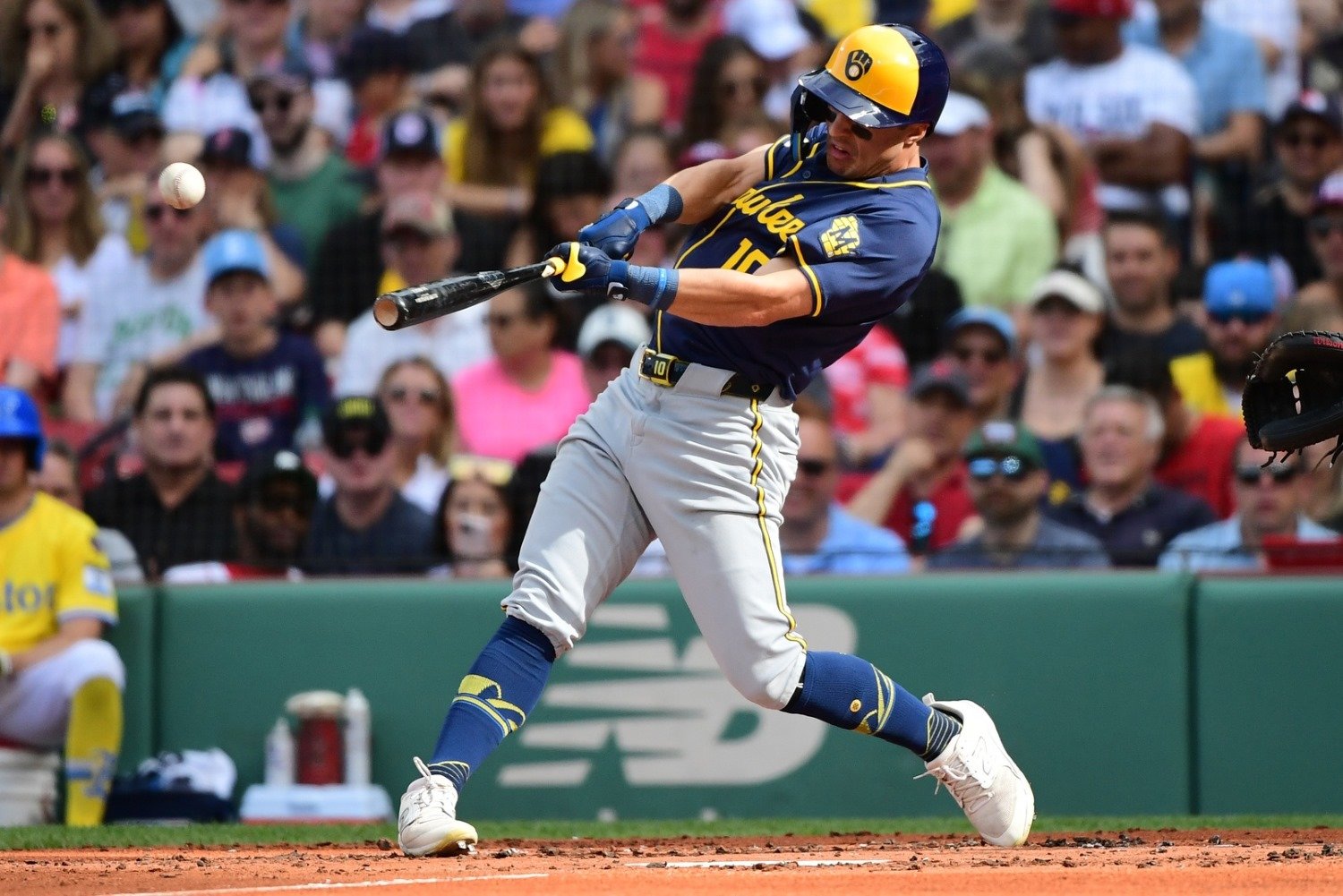 It was a nightmarish April for Sal Frelick. Early in spring training, he was one of the biggest stories of the Brewers' camp, and not just because of the juicy possibility of a position switch. After he demonstrated some impressive bat-to-ball skills (to complement great defense and good speed) in 2023, the hope was that he would take a big step forward and become a consistent top-of-the-order presence for the 2024 Crew. Pat Murphy wrote him in as the leadoff man in 19 of the first 35 games. Frelick failed to consolidate his skill set, though, and floundered his way through March and April, with a .262/.343/.313 line. He hasn't been back to the leadoff spot over the last 24 contests. In fact, he's batted seventh 14 times, including 10 since May 14. He's no longer an everyday player; he's been on the bench the last six times the Brewers have faced a left-handed starting pitcher. Yet, thanks only partially to shielding from lefties, Frelick has emerged since May 1. He hit .269/.360/.397 in May, and though he's off to an 0-for-6 start in June, he's trending in the right direction. His strikeouts are down; his walks are up. The math whizzes in the room will notice an uptick in power, as (after hitting just three doubles and a triple in 111 plate appearances through the end of April) Frelick socked four doubles and two homers in 89 trips to the dish in May. Given all that, it might surprise you to know that Frelick's hard-hit rate (maligned in these pages more than once in recent months) has actually decreased since May 1. He's still one of the lightest-hitting batters in baseball, and in one reading of that statement, we might surmise that he's merely been lucky--that what little hope May evinced was a mirage, and that he really does need to continue being marginalized within the mix of Brewers lineup options. Not so fast--literally. Because here's the thing: Frelick doesn't do better when he hits balls harder. He actually gets more of his hits when he focuses on squaring up the ball and getting a little air under it. Almost no one in baseball needs exit velocity less than Frelick does, and examining the fraternity of players who need it least reveals a lot about his profile. It even gives us a roadmap to the highly successful version of Frelick that has been missing for most of his fledgling MLB career. Here's the leaderboard for the players with the smallest gap between the average exit velocity on their hits and that on their outs on balls in play, along with a few other numbers that merit our attention here. Player Team Hit-Out EV Diff. LowHit% MedHit% HighHit% Weighted SS EV Well Hit LA Sweet Spot EV ExitVel LaunchAng Hit95+% LA10-30% Barrel% FBDst Steven Kwan CLE -1.4 31.30% 37.50% 31.30% 92.6 9 86.8 82.8 10.3 19.50% 35.20% 10.20% 298 Bryson Stott PHI -0.7 28.60% 33.80% 37.00% 93.6 13.6 90.3 85.4 16 26.10% 33.30% 11.80% 307.4 Sal Frelick MIL 0.9 45.40% 31.90% 22.70% 82.7 2.5 84.9 84.5 4.3 22.10% 26.20% 5.00% 282.5 Isiah Kiner-Falefa TOR 1.2 36.10% 32.60% 29.90% 91.3 12.5 88.1 82.6 7 23.20% 34.50% 14.10% 289.2 Jurickson Profar SD 1.3 31.80% 36.90% 31.30% 95.9 8.7 91.1 89.4 11.7 40.90% 35.80% 15.90% 329.4 Alex Verdugo NYY 1.5 36.20% 34.00% 29.80% 93.5 11.6 91.9 88.2 9.1 37.80% 31.40% 18.10% 313.8 Amed Rosario TB 1.8 43.40% 33.80% 22.80% 92.3 4.9 92.5 86.6 4.2 37.20% 31.00% 15.90% 307.5 José Caballero TB 2 35.20% 32.80% 32.00% 85.9 14.9 84.2 80.7 10.7 24.80% 28.80% 11.20% 315 Jared Triolo PIT 2.4 32.80% 36.60% 29.90% 93.6 6.4 88.9 87.6 8.6 37.60% 35.30% 18.80% 299.4 Cody Bellinger CHC 2.4 23.40% 27.90% 48.70% 94 18.9 91.5 88.1 20.7 33.80% 31.80% 14.90% 301.2 Most of these are hitters you want to emulate; most of them are very good hitters. Just below the top 10, you'll be unsurprised to hear, sit José Altuve and Luis Arráez. This is a list of hitters who don't hit the ball that hard, period, but still find plenty of hits, even in the modern, power-centric game. What separates Frelick from the rest of them? It's pretty simple, and easy to see. He hits too many ground balls. Specifically, he hits way too many balls downward, with launch angles under 2 degrees. (LowHit% is all batted balls under 2 degrees, as a percentage of the total. MedHit% is balls at 2-25 degrees. HighHit% is balls hit 25 degrees upward or higher. The league hits an equal number of balls in each of those bins, so being over 41% in LowHit% means hitting low ground balls at a very disproportionate rate.) Somewhat surprisingly, Frelick doesn't really have an exit velocity problem--not, anyway, if his goal is to be a player like Kwan, Stott, or Arráez, which is a great goal for him. He has a launch angle problem. He stands out as carrying a lower average launch angle than the rest of this group, and he stands out even more for the low launch angle on balls struck well. It's wildly counterintuitive to say that a player without power (and who isn't going to mutate into a power hitter, no matter what) needs to get under the ball better, but that's exactly the case for Frelick. You can be a successful hitter with his bat control and feel for the barrel, even without the ability to hit it hard. To do so, though, you have to hit line drives, not ground balls. That's where the hits live for players like this, and as Kwan and others prove, there are plenty of them to be found. Let's take those numerical statements and render them for more visual learners. Frelick has a lousy average swing speed, and that hasn't changed throughout this season, even when he's been hot. However, he meets the ball squarely--that is, he gets a high percentage of the possible exit velocity allowed by his swing and the incoming pitch--at an above-average level, and has surged toward elite status when feeling good over the last month. So, he specializes not in bat speed, but in hand-eye coordination. We knew that. Frelick himself knows that. Hitting the ball squarely (and thus, hitting line drives) should always be his focus. It's telling, though, that even his ability to meet it that way doesn't match up neatly with his getting hits. Here's a heat map showing the solidity of his contact (not exit velocity or launch angle, but the percentage of possible exit velocity created on that swing, meaning that he's hitting a bigger piece of the ball) based on pitch location. Now, here's a heat map showing his batting average on balls in play by location. We just said he needs to square up the ball to get hits, but the place where he struggles most to square up the ball is the place where he gets most of his hits. What gives? Ok, last picture. It's pretty simple: Frelick hits everything out away from him downward, even though he hits it relatively hard. He gets hits on pitches inside because that's where he lifts the ball. He mishits it quite often in there, but it doesn't matter. Mishit line drives and low flies are better, for him, than hard-hit balls that go only downward after contact. On balance, this is all good news. Again, Frelick is managing his strike zone better lately, and we can now see how he can get to a zone of success that matches that of the league's other great singles hitters--using that term as a compliment, rather than a gentle insult. Frelick has to make some further approach and swing adjustments, because he won't be able to cash in his skill set's potential until he learns to hit the ball upward. When he does, he won't hit 20 homers a year, or even 15. He will, however, start landing a lot of balls in the outfield grass, where Kwan and others Frelick should want to emulate are making their fortunes.
 -
In a season that has seen mostly encouraging, pleasantly surprising performances from young Brewers hitters, one former top prospect has struggled. A more successful May points the way for him to establish himself more fully as the summer arrives. Image courtesy of © Bob DeChiara-USA TODAY Sports It was a nightmarish April for Sal Frelick. Early in spring training, he was one of the biggest stories of the Brewers' camp, and not just because of the juicy possibility of a position switch. After he demonstrated some impressive bat-to-ball skills (to complement great defense and good speed) in 2023, the hope was that he would take a big step forward and become a consistent top-of-the-order presence for the 2024 Crew. Pat Murphy wrote him in as the leadoff man in 19 of the first 35 games. Frelick failed to consolidate his skill set, though, and floundered his way through March and April, with a .262/.343/.313 line. He hasn't been back to the leadoff spot over the last 24 contests. In fact, he's batted seventh 14 times, including 10 since May 14. He's no longer an everyday player; he's been on the bench the last six times the Brewers have faced a left-handed starting pitcher. Yet, thanks only partially to shielding from lefties, Frelick has emerged since May 1. He hit .269/.360/.397 in May, and though he's off to an 0-for-6 start in June, he's trending in the right direction. His strikeouts are down; his walks are up. The math whizzes in the room will notice an uptick in power, as (after hitting just three doubles and a triple in 111 plate appearances through the end of April) Frelick socked four doubles and two homers in 89 trips to the dish in May. Given all that, it might surprise you to know that Frelick's hard-hit rate (maligned in these pages more than once in recent months) has actually decreased since May 1. He's still one of the lightest-hitting batters in baseball, and in one reading of that statement, we might surmise that he's merely been lucky--that what little hope May evinced was a mirage, and that he really does need to continue being marginalized within the mix of Brewers lineup options. Not so fast--literally. Because here's the thing: Frelick doesn't do better when he hits balls harder. He actually gets more of his hits when he focuses on squaring up the ball and getting a little air under it. Almost no one in baseball needs exit velocity less than Frelick does, and examining the fraternity of players who need it least reveals a lot about his profile. It even gives us a roadmap to the highly successful version of Frelick that has been missing for most of his fledgling MLB career. Here's the leaderboard for the players with the smallest gap between the average exit velocity on their hits and that on their outs on balls in play, along with a few other numbers that merit our attention here. Player Team Hit-Out EV Diff. LowHit% MedHit% HighHit% Weighted SS EV Well Hit LA Sweet Spot EV ExitVel LaunchAng Hit95+% LA10-30% Barrel% FBDst Steven Kwan CLE -1.4 31.30% 37.50% 31.30% 92.6 9 86.8 82.8 10.3 19.50% 35.20% 10.20% 298 Bryson Stott PHI -0.7 28.60% 33.80% 37.00% 93.6 13.6 90.3 85.4 16 26.10% 33.30% 11.80% 307.4 Sal Frelick MIL 0.9 45.40% 31.90% 22.70% 82.7 2.5 84.9 84.5 4.3 22.10% 26.20% 5.00% 282.5 Isiah Kiner-Falefa TOR 1.2 36.10% 32.60% 29.90% 91.3 12.5 88.1 82.6 7 23.20% 34.50% 14.10% 289.2 Jurickson Profar SD 1.3 31.80% 36.90% 31.30% 95.9 8.7 91.1 89.4 11.7 40.90% 35.80% 15.90% 329.4 Alex Verdugo NYY 1.5 36.20% 34.00% 29.80% 93.5 11.6 91.9 88.2 9.1 37.80% 31.40% 18.10% 313.8 Amed Rosario TB 1.8 43.40% 33.80% 22.80% 92.3 4.9 92.5 86.6 4.2 37.20% 31.00% 15.90% 307.5 José Caballero TB 2 35.20% 32.80% 32.00% 85.9 14.9 84.2 80.7 10.7 24.80% 28.80% 11.20% 315 Jared Triolo PIT 2.4 32.80% 36.60% 29.90% 93.6 6.4 88.9 87.6 8.6 37.60% 35.30% 18.80% 299.4 Cody Bellinger CHC 2.4 23.40% 27.90% 48.70% 94 18.9 91.5 88.1 20.7 33.80% 31.80% 14.90% 301.2 Most of these are hitters you want to emulate; most of them are very good hitters. Just below the top 10, you'll be unsurprised to hear, sit José Altuve and Luis Arráez. This is a list of hitters who don't hit the ball that hard, period, but still find plenty of hits, even in the modern, power-centric game. What separates Frelick from the rest of them? It's pretty simple, and easy to see. He hits too many ground balls. Specifically, he hits way too many balls downward, with launch angles under 2 degrees. (LowHit% is all batted balls under 2 degrees, as a percentage of the total. MedHit% is balls at 2-25 degrees. HighHit% is balls hit 25 degrees upward or higher. The league hits an equal number of balls in each of those bins, so being over 41% in LowHit% means hitting low ground balls at a very disproportionate rate.) Somewhat surprisingly, Frelick doesn't really have an exit velocity problem--not, anyway, if his goal is to be a player like Kwan, Stott, or Arráez, which is a great goal for him. He has a launch angle problem. He stands out as carrying a lower average launch angle than the rest of this group, and he stands out even more for the low launch angle on balls struck well. It's wildly counterintuitive to say that a player without power (and who isn't going to mutate into a power hitter, no matter what) needs to get under the ball better, but that's exactly the case for Frelick. You can be a successful hitter with his bat control and feel for the barrel, even without the ability to hit it hard. To do so, though, you have to hit line drives, not ground balls. That's where the hits live for players like this, and as Kwan and others prove, there are plenty of them to be found. Let's take those numerical statements and render them for more visual learners. Frelick has a lousy average swing speed, and that hasn't changed throughout this season, even when he's been hot. However, he meets the ball squarely--that is, he gets a high percentage of the possible exit velocity allowed by his swing and the incoming pitch--at an above-average level, and has surged toward elite status when feeling good over the last month. So, he specializes not in bat speed, but in hand-eye coordination. We knew that. Frelick himself knows that. Hitting the ball squarely (and thus, hitting line drives) should always be his focus. It's telling, though, that even his ability to meet it that way doesn't match up neatly with his getting hits. Here's a heat map showing the solidity of his contact (not exit velocity or launch angle, but the percentage of possible exit velocity created on that swing, meaning that he's hitting a bigger piece of the ball) based on pitch location. Now, here's a heat map showing his batting average on balls in play by location. We just said he needs to square up the ball to get hits, but the place where he struggles most to square up the ball is the place where he gets most of his hits. What gives? Ok, last picture. It's pretty simple: Frelick hits everything out away from him downward, even though he hits it relatively hard. He gets hits on pitches inside because that's where he lifts the ball. He mishits it quite often in there, but it doesn't matter. Mishit line drives and low flies are better, for him, than hard-hit balls that go only downward after contact. On balance, this is all good news. Again, Frelick is managing his strike zone better lately, and we can now see how he can get to a zone of success that matches that of the league's other great singles hitters--using that term as a compliment, rather than a gentle insult. Frelick has to make some further approach and swing adjustments, because he won't be able to cash in his skill set's potential until he learns to hit the ball upward. When he does, he won't hit 20 homers a year, or even 15. He will, however, start landing a lot of balls in the outfield grass, where Kwan and others Frelick should want to emulate are making their fortunes. View full article
-
Freddy Peralta Is So Good, His Slider is Four Different Pitches
Matthew Trueblood posted an article in Brewers
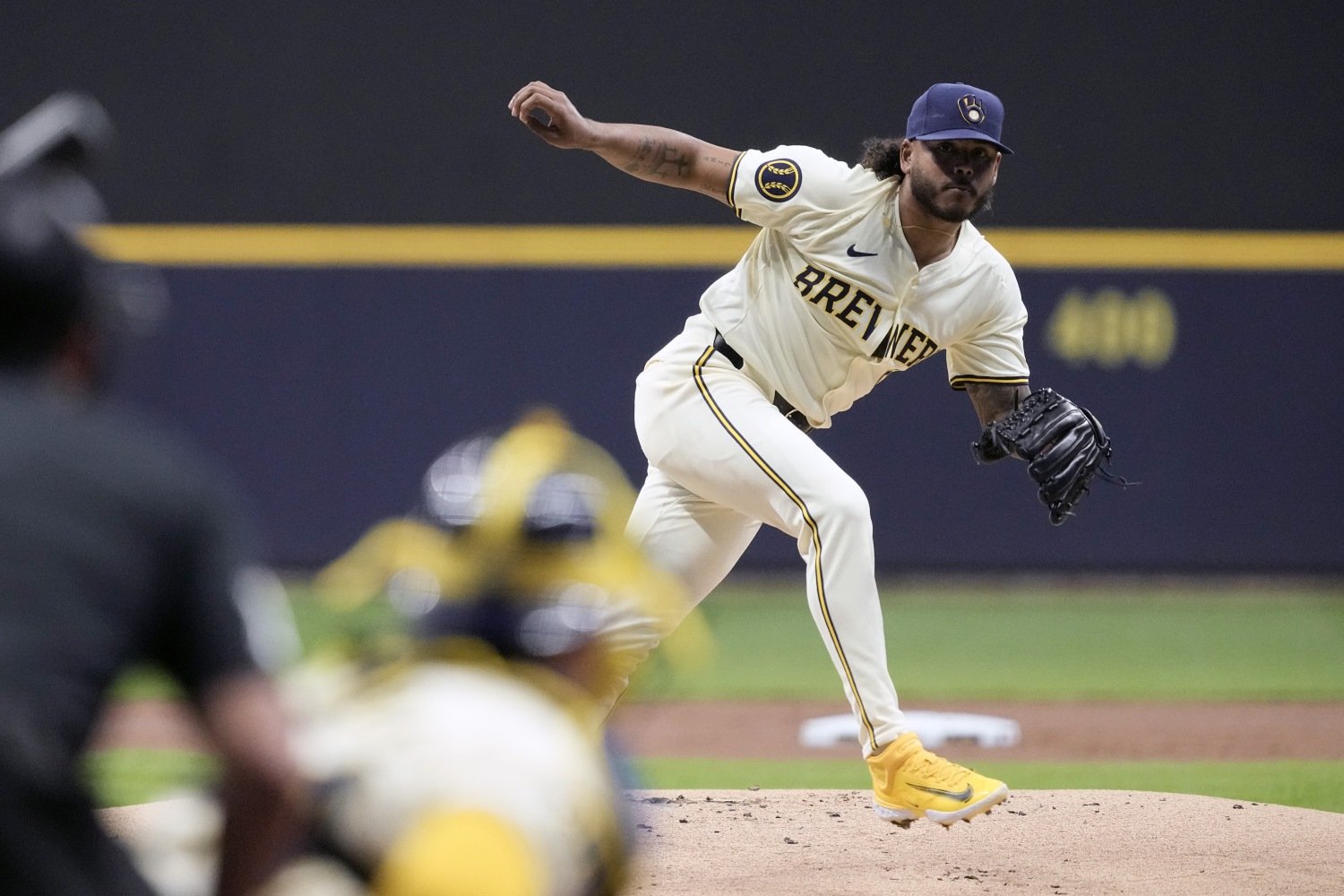 Pitchability is the silliest term in baseball. It's tautological. It's lazy word-building. You know what, though? It's also dead-on. It captures something real, in the simplest possible way. What do you want your pitchers to have, besides velocity and the ability to hit the broad side of a barn? Pitching ability. Pitchability. It means executing. It means thinking ahead of hitters. And it means doing something a bit more artistic and serious than throwing. Freddy Peralta has pitchability, in greater measure than might jump out to the casual viewer. With his breathtaking athleticism, great velocity, and reputation as a fastball-firing miniature mound bully, he invites you to consider him as a physical specimen. In truth, though, he's a mind at work on the mound, and he extends that mental game all the way to the tips of his toes--and his fingers. It's impossible to perfectly quantify pitchability, and thank goodness for that. What fun would there be in a world where we could slap a WAR on the soul? Just to get a conversation started on familiar terms, though, let's put a couple of numbers out there that loosely correlate to pitchability: movement ranges. This is simple: Take the 90th-percentile movement for a pitcher on a given pitch (i.e., the fastball that rises more than 90 percent of Peralta's other fastballs), subtract the 10th-percentile movement (the one that rises less than 90 percent of his heaters), and you've got movement range, in the vertical dimension. It's good to check on both dimensions, so we'll deal with two numbers, I guess. But I don't want to talk about Peralta's fastball, today. I want to talk about his slider. Having a wide range of movement in both dimensions on a slider is not an absolute good. (Remember, we're not trying to quantify, exactly! We just want to discuss an abstract concept in more concrete terms.) Some guys have a wide scatterplot on their slider movement just because they never know where the thing is going, or at what angle. That's not pitchability; it's close to being the opposite. And fellow Brewers starter Joe Ross, to take one example, has a great slider, specifically because he executes it in pretty close to the same way every time. The pitch doesn't beat hitters because they don't know what his slider will do; it beats them because he consistently fools them into thinking the pitch is his fastball. Maybe I've already tipped my hand here, but Peralta is the opposite of Ross. No pitcher in baseball has a greater set of movement ranges on their slider than Peralta--and it's not, like, close. That graph should make you gasp, or laugh out loud a little. Look at how far from everyone else Peralta is! It's almost hard to imagine how this could be a good thing. You can't scatter the movement on your slider this much without making a ton of bad mistakes, right? You're not really throwing a consistent pitch, at that point. Exactly. Only, it's for a really, really good reason. Peralta can make his slider into almost anything he needs it to be, from one pitch to the next--and thus, in essence, it becomes three or four different pitches in one. The maneuverability he brings to the pitch is otherworldly. Here's the scatter plot of his movement on the slider, from the batter and catcher's perspective, with a color gradient applied to show the velocity of each pitch. If it weren't for all the pitches connecting them like a bridge, we wouldn't even fathom calling the high-70s pitch on the lower right side of this chart the same thing as the mid-80s one on the upper left. The gap in movement and speed between them is funny. Yet, these are all sliders. They're clearly distinct from his curveball, and no one would mistake them for cutters. Rather, he can just throttle the pitch up and down in speed and change the shape and magnitude of its movement, based on who's up and what he wants to do against them. After starting with a promise not to quantify, I'm throwing some awfully esoteric stuff at you. Let's take this into the real world. I want to look at four Peralta sliders, very briefly. Here's one he threw to Mitch Haniger, way back at the beginning of the season, in a 2-1 count and with runners on base. Peralta High Slider v Haniger.mp4 That's a high slider. Most pitchers don't throw high sliders, at least on purpose. Note the target William Contreras flashed for him, though. That's exactly what they wanted to do with that pitch. They invited Haniger to see that the pitch was a slider, and that it wasn't going to be down where most sliders go, and thus, to swing out of his shoes. He came up with nothing but air, because that ball had some carry and stayed on plane, like a feather-soft (compared to his mid-90s fastball) cutter. Turning that slider left, like a sweeper, is a comfortable feel for Peralta, but he usually throws it much slower than he did to Haniger there. It usually looks more like this. Peralta Sweeper v Yainer.mp4 That pitch is nasty, all on its own. It doesn't need a whole piece about pitchability around it to be understood and appreciated. As we grasp the fullness of Peralta's capacity to mutate the slider, though, we can deepen that understanding and appreciation. Because, see, that sweeper-like upper-70s thing is gross, but it works mostly against a right-handed batter. What happens when you have to get a whiff against a lefty? Jackson Holliday, come find out. Peralta Bullet Slider v Holliday.mp4 Yurlgh. I mean YURLGH! That's a filthy, bullet-style slider. Six miles per hour harder than the sweepy thing thrown to Yainer Díaz, it's also going straight down, instead of coming in toward his bat path at all. I will reiterate my belief that the pitch classification algorithms are basically right, in labeling all three of the pitches above as the same pitch, but that's from an analytical bent. Just watching these videos, those are three totally different pitches. It's marvelous what he can do with them. Nor is he simply saying, "Sweepy sliders to righties, gyroballs to lefties". Were that the case--were it that clean, rather than being movements along a spectrum--we could make a stronger case for dividing the pitch up into two types. Instead, though, Peralta sometimes goes vertical on a righty--and he'll even get a bit of run on the pitch, occasionally, without having it flatten out and sit on a tee for the batter. Peralta Backup Slider v Goldy.mp4 This one is, partially, a mistake, but again, Peralta was aiming a slider with vertical tilt for the area just below the zone over the plate. Instead, he put it in off the plate on a right-handed batter, and the resulting contact was feeble. Review the four locations we just saw him hit with these: Up, Outside, Down, Inside. All four pitches had different movement shapes, and they had varying velocities, but he was throwing the same "pitch" each time. A really good pitcher, with great pitchability, can shape and move their fastball like this. One who is desperately trying to get by with deficient stuff, like Kyle Hendricks of the Cubs, sometimes comes up with something wildly creative, like throwing two versions of a changeup to attack hitters from either side. What we're looking at, though, is a pitcher who can throw his slider as four different pitches, without losing the integrity of the offering itself--and thus, one who can put the slider almost anywhere in or outside the zone, when the situation demands it. Pitchability doesn't mean never making mistakes, and Peralta does make mistakes. He's not yet the elite ace he's shown the ability to do, on a consistent basis. He's inching ever closer, though, and it's this kind of feel for his craft that will get him there.
 -
Old-school baseball fans and analysts talk a lot about modulating and modifying pitches--adding and subtracting on the fastball, changing the shape on breaking balls, and throwing to all quadrants of the zone. Rare are examples of pitchers practicing that art intentionally in the modern game. But the Brewers have one. Image courtesy of © Jeff Hanisch-USA TODAY Sports Pitchability is the silliest term in baseball. It's tautological. It's lazy word-building. You know what, though? It's also dead-on. It captures something real, in the simplest possible way. What do you want your pitchers to have, besides velocity and the ability to hit the broad side of a barn? Pitching ability. Pitchability. It means executing. It means thinking ahead of hitters. And it means doing something a bit more artistic and serious than throwing. Freddy Peralta has pitchability, in greater measure than might jump out to the casual viewer. With his breathtaking athleticism, great velocity, and reputation as a fastball-firing miniature mound bully, he invites you to consider him as a physical specimen. In truth, though, he's a mind at work on the mound, and he extends that mental game all the way to the tips of his toes--and his fingers. It's impossible to perfectly quantify pitchability, and thank goodness for that. What fun would there be in a world where we could slap a WAR on the soul? Just to get a conversation started on familiar terms, though, let's put a couple of numbers out there that loosely correlate to pitchability: movement ranges. This is simple: Take the 90th-percentile movement for a pitcher on a given pitch (i.e., the fastball that rises more than 90 percent of Peralta's other fastballs), subtract the 10th-percentile movement (the one that rises less than 90 percent of his heaters), and you've got movement range, in the vertical dimension. It's good to check on both dimensions, so we'll deal with two numbers, I guess. But I don't want to talk about Peralta's fastball, today. I want to talk about his slider. Having a wide range of movement in both dimensions on a slider is not an absolute good. (Remember, we're not trying to quantify, exactly! We just want to discuss an abstract concept in more concrete terms.) Some guys have a wide scatterplot on their slider movement just because they never know where the thing is going, or at what angle. That's not pitchability; it's close to being the opposite. And fellow Brewers starter Joe Ross, to take one example, has a great slider, specifically because he executes it in pretty close to the same way every time. The pitch doesn't beat hitters because they don't know what his slider will do; it beats them because he consistently fools them into thinking the pitch is his fastball. Maybe I've already tipped my hand here, but Peralta is the opposite of Ross. No pitcher in baseball has a greater set of movement ranges on their slider than Peralta--and it's not, like, close. That graph should make you gasp, or laugh out loud a little. Look at how far from everyone else Peralta is! It's almost hard to imagine how this could be a good thing. You can't scatter the movement on your slider this much without making a ton of bad mistakes, right? You're not really throwing a consistent pitch, at that point. Exactly. Only, it's for a really, really good reason. Peralta can make his slider into almost anything he needs it to be, from one pitch to the next--and thus, in essence, it becomes three or four different pitches in one. The maneuverability he brings to the pitch is otherworldly. Here's the scatter plot of his movement on the slider, from the batter and catcher's perspective, with a color gradient applied to show the velocity of each pitch. If it weren't for all the pitches connecting them like a bridge, we wouldn't even fathom calling the high-70s pitch on the lower right side of this chart the same thing as the mid-80s one on the upper left. The gap in movement and speed between them is funny. Yet, these are all sliders. They're clearly distinct from his curveball, and no one would mistake them for cutters. Rather, he can just throttle the pitch up and down in speed and change the shape and magnitude of its movement, based on who's up and what he wants to do against them. After starting with a promise not to quantify, I'm throwing some awfully esoteric stuff at you. Let's take this into the real world. I want to look at four Peralta sliders, very briefly. Here's one he threw to Mitch Haniger, way back at the beginning of the season, in a 2-1 count and with runners on base. Peralta High Slider v Haniger.mp4 That's a high slider. Most pitchers don't throw high sliders, at least on purpose. Note the target William Contreras flashed for him, though. That's exactly what they wanted to do with that pitch. They invited Haniger to see that the pitch was a slider, and that it wasn't going to be down where most sliders go, and thus, to swing out of his shoes. He came up with nothing but air, because that ball had some carry and stayed on plane, like a feather-soft (compared to his mid-90s fastball) cutter. Turning that slider left, like a sweeper, is a comfortable feel for Peralta, but he usually throws it much slower than he did to Haniger there. It usually looks more like this. Peralta Sweeper v Yainer.mp4 That pitch is nasty, all on its own. It doesn't need a whole piece about pitchability around it to be understood and appreciated. As we grasp the fullness of Peralta's capacity to mutate the slider, though, we can deepen that understanding and appreciation. Because, see, that sweeper-like upper-70s thing is gross, but it works mostly against a right-handed batter. What happens when you have to get a whiff against a lefty? Jackson Holliday, come find out. Peralta Bullet Slider v Holliday.mp4 Yurlgh. I mean YURLGH! That's a filthy, bullet-style slider. Six miles per hour harder than the sweepy thing thrown to Yainer Díaz, it's also going straight down, instead of coming in toward his bat path at all. I will reiterate my belief that the pitch classification algorithms are basically right, in labeling all three of the pitches above as the same pitch, but that's from an analytical bent. Just watching these videos, those are three totally different pitches. It's marvelous what he can do with them. Nor is he simply saying, "Sweepy sliders to righties, gyroballs to lefties". Were that the case--were it that clean, rather than being movements along a spectrum--we could make a stronger case for dividing the pitch up into two types. Instead, though, Peralta sometimes goes vertical on a righty--and he'll even get a bit of run on the pitch, occasionally, without having it flatten out and sit on a tee for the batter. Peralta Backup Slider v Goldy.mp4 This one is, partially, a mistake, but again, Peralta was aiming a slider with vertical tilt for the area just below the zone over the plate. Instead, he put it in off the plate on a right-handed batter, and the resulting contact was feeble. Review the four locations we just saw him hit with these: Up, Outside, Down, Inside. All four pitches had different movement shapes, and they had varying velocities, but he was throwing the same "pitch" each time. A really good pitcher, with great pitchability, can shape and move their fastball like this. One who is desperately trying to get by with deficient stuff, like Kyle Hendricks of the Cubs, sometimes comes up with something wildly creative, like throwing two versions of a changeup to attack hitters from either side. What we're looking at, though, is a pitcher who can throw his slider as four different pitches, without losing the integrity of the offering itself--and thus, one who can put the slider almost anywhere in or outside the zone, when the situation demands it. Pitchability doesn't mean never making mistakes, and Peralta does make mistakes. He's not yet the elite ace he's shown the ability to do, on a consistent basis. He's inching ever closer, though, and it's this kind of feel for his craft that will get him there. View full article
-
To consistently compete with (and often outpace) two bigger-market, richer division rivals, the Milwaukee Brewers have to find edges in unexpected places. As they march toward a second straight NL Central crown, the proof of their superiority there is all over the place. Image courtesy of © Benny Sieu-USA TODAY Sports Wednesday night was Blake Perkins Night at the ballpark. Fans didn't get a bobblehead or a t-shirt featuring Perkins on the way in, but everywhere they looked, they got to see Perkins doing something remarkable. He hit a home run. He robbed a home run. Then, he made a rally-thwarting catch on the warning track in the deepest part of the park that was even better than the home-run robbery. It was an incredible game, but not an altogether surprising one. Despite a profound recent slump, Perkins is hitting a respectable .232/.318/.361, with five home runs and five stolen bases in regular but not quite everyday playing time. He's hitting the ball hard much more consistently than in his spotty first season with the Crew, though still putting a lot of that hard contact on the ground. He's still striking out a lot, but he's also still walking a lot, and that general offensive profile--average on-base skills, slightly below-average power but a bit of danger near the bottom of the order--is more than enough to carry him, because he's also one of the half-dozen best defensive outfielders in baseball. A year and a half ago, though, Perkins had never played in the big leagues, and he couldn't crack the Yankees' 40-man roster. That undersells just how under-the-radar he was, too. He was only with the Yankees after signing a minor-league deal the previous winter, in the wake of being released by the Nationals, whose roster he also couldn't crack. Now, he looks like a potential second-division starter, or (as the Brewers use him) more of an excellent fourth outfielder, with the ability to step in nearly that often for long stretches without hurting the team one iota. He's a huge success story for the team's pro scouting department, but also for the front office executives themselves: Perkins was an in-demand minor-league free agent two autumns ago, and the Crew won the battle for his services by being willing to give him a 40-man roster spot for the first time. Then, the team also did fine player development to finish turning him into a no-doubt big-leaguer and valuable contributor. The thing is, Perkins is far from alone. Just on the active roster at the moment, the Brewers have two other players whom they signed as minor-league free agents, in Tobias Myers and Andruw Monasterio. In each of those cases, it took a full year and change for their investment to return big-league value, but in each case, what they've ultimately gotten has been eye-opening. Monasterio has no chance to be any kind of star in the league, but he's an infield version of Perkins, with a better contact rate. His ability to come off the bench after several days of inactivity and handle left-handed pitching is immensely valuable, and every time the team suffers an injury on their infield, we see the value of his versatility and superb glove, too. Meanwhile, Myers has posted an almost-forgettable 4.43 ERA over his first six career appearances. He's accumulated some strikeouts, but he gives up too much power and hasn't shown good enough control to get deep into games. And yet? He's also given the team a solid chance to win in four of his five starts, and had a stellar inning of relief just after being called up last week in Miami, en route to a comeback Brewers win. What Myers has given them is beyond the wildest hopes any team dares to hold for the 10th starting pitcher on their depth chart to begin the season, even if part of the credit must go to Pat Murphy for getting him out of games right on time. Those are just the guys the team has found in the bargain bin at the very end of the clearance aisle. As we know, they also do great work in minor trades and with low-level big-leaguers. They signed Hoby Milner to a minor-league deal after he elected free agency, even though he'd already spent a couple of seasons in the big leagues. They got Elvis Peguero, Janson Junk, and minor leaguer Adam Seminaris for one year of Hunter Renfroe, whom they couldn't afford anyway and who has done nothing since then. The Brewers find wins, and players who help create them across a number of seasons, in places where other teams find nothing but grist for the 40-man roster mill. It's easy to take role players for granted, but the roles Perkins, Monasterio and Myers are filling are important, and the admirable work each of them have done within them is a huge reason why the team looks poised to make its sixth playoff appearance in seven seasons. Wednesday night was just the latest forceful reminder of the fact that this front office is running circles around the rest of the NL Central. View full article
- 4 replies
-
- 2
-
-
- tobias myers
- andruw monasterio
- (and 2 more)
-
Brewers' Success Owes Majorly to Minor-League Signings
Matthew Trueblood posted an article in Brewers
 Wednesday night was Blake Perkins Night at the ballpark. Fans didn't get a bobblehead or a t-shirt featuring Perkins on the way in, but everywhere they looked, they got to see Perkins doing something remarkable. He hit a home run. He robbed a home run. Then, he made a rally-thwarting catch on the warning track in the deepest part of the park that was even better than the home-run robbery. It was an incredible game, but not an altogether surprising one. Despite a profound recent slump, Perkins is hitting a respectable .232/.318/.361, with five home runs and five stolen bases in regular but not quite everyday playing time. He's hitting the ball hard much more consistently than in his spotty first season with the Crew, though still putting a lot of that hard contact on the ground. He's still striking out a lot, but he's also still walking a lot, and that general offensive profile--average on-base skills, slightly below-average power but a bit of danger near the bottom of the order--is more than enough to carry him, because he's also one of the half-dozen best defensive outfielders in baseball. A year and a half ago, though, Perkins had never played in the big leagues, and he couldn't crack the Yankees' 40-man roster. That undersells just how under-the-radar he was, too. He was only with the Yankees after signing a minor-league deal the previous winter, in the wake of being released by the Nationals, whose roster he also couldn't crack. Now, he looks like a potential second-division starter, or (as the Brewers use him) more of an excellent fourth outfielder, with the ability to step in nearly that often for long stretches without hurting the team one iota. He's a huge success story for the team's pro scouting department, but also for the front office executives themselves: Perkins was an in-demand minor-league free agent two autumns ago, and the Crew won the battle for his services by being willing to give him a 40-man roster spot for the first time. Then, the team also did fine player development to finish turning him into a no-doubt big-leaguer and valuable contributor. The thing is, Perkins is far from alone. Just on the active roster at the moment, the Brewers have two other players whom they signed as minor-league free agents, in Tobias Myers and Andruw Monasterio. In each of those cases, it took a full year and change for their investment to return big-league value, but in each case, what they've ultimately gotten has been eye-opening. Monasterio has no chance to be any kind of star in the league, but he's an infield version of Perkins, with a better contact rate. His ability to come off the bench after several days of inactivity and handle left-handed pitching is immensely valuable, and every time the team suffers an injury on their infield, we see the value of his versatility and superb glove, too. Meanwhile, Myers has posted an almost-forgettable 4.43 ERA over his first six career appearances. He's accumulated some strikeouts, but he gives up too much power and hasn't shown good enough control to get deep into games. And yet? He's also given the team a solid chance to win in four of his five starts, and had a stellar inning of relief just after being called up last week in Miami, en route to a comeback Brewers win. What Myers has given them is beyond the wildest hopes any team dares to hold for the 10th starting pitcher on their depth chart to begin the season, even if part of the credit must go to Pat Murphy for getting him out of games right on time. Those are just the guys the team has found in the bargain bin at the very end of the clearance aisle. As we know, they also do great work in minor trades and with low-level big-leaguers. They signed Hoby Milner to a minor-league deal after he elected free agency, even though he'd already spent a couple of seasons in the big leagues. They got Elvis Peguero, Janson Junk, and minor leaguer Adam Seminaris for one year of Hunter Renfroe, whom they couldn't afford anyway and who has done nothing since then. The Brewers find wins, and players who help create them across a number of seasons, in places where other teams find nothing but grist for the 40-man roster mill. It's easy to take role players for granted, but the roles Perkins, Monasterio and Myers are filling are important, and the admirable work each of them have done within them is a huge reason why the team looks poised to make its sixth playoff appearance in seven seasons. Wednesday night was just the latest forceful reminder of the fact that this front office is running circles around the rest of the NL Central.
- 4 comments
-
- 4
-
-
- tobias myers
- andruw monasterio
- (and 2 more)
-
The Brewers and the Art of Getting the Starter Out on Time
Matthew Trueblood posted an article in Brewers
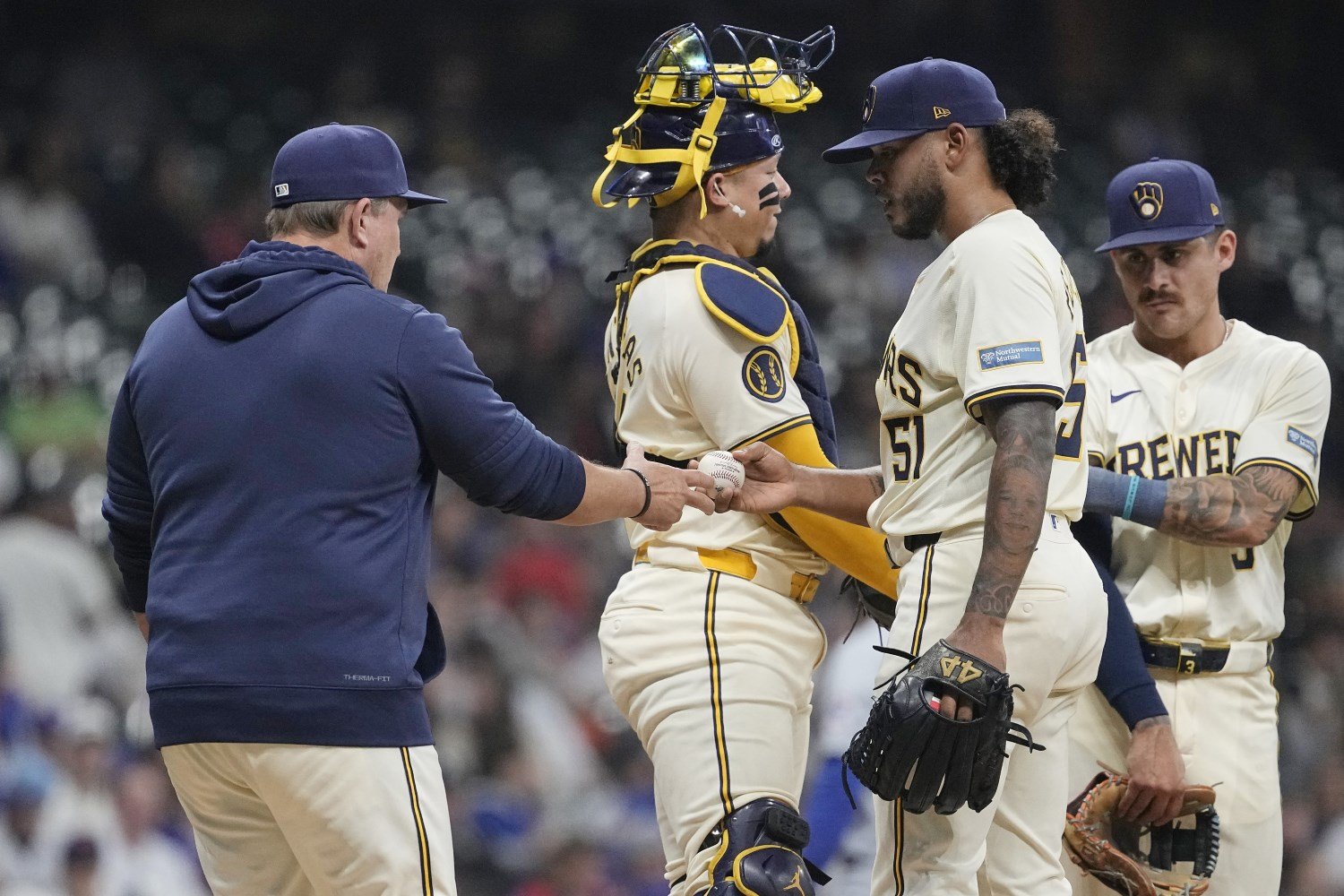 This is one aspect of managing within games at which, by general acclaim, Craig Counsell always excelled. Thus, especially with two of the team's three long-time co-aces absent along with Counsell, we might reasonably have worried that the Brewers would struggle to juggle the difficult, different weights of reliever and starter workloads and matchup questions in 2024. Pat Murphy is a respected baseball man, but he's never been a full-time MLB manager before, and we had no good way of knowing whether he stood in support of each of Counsell's decisions while he was making them over the years, or whether he silently thought there was a better way. Early in the season, there were ample questions raised about Murphy's usage of the pitching staff, especially with respect to the workloads of key relief pitchers. Two months in, though, he's beginning to allay those fears and frustrations, because he turns out to be just as good at threading this needle as his predecessor was. The simplest way to measure and display this is to think about runs allowed per game as a function of innings pitched per game, by both starters and relievers. Naturally, a team's innings totals from starters and relievers will move perfectly against one another, because all innings have to fall into one of those two bins. How many runs each group gives up for a team is a function of their quality, of course, but also of the number of outs the team asks them to get. To start at the end, consider this chart, showing reliever innings per game plotted against runs allowed per game by relievers. In all likelihood, this doesn't surprise you much, but it's revealing. The more relievers are asked to pitch, the more runs they usually allow. The Brewers (with a starting rotation that was piecemeal even before injuries ravaged it and with a couple of recent short starts (injury-related and opener-related) showing an effect) have thrown more reliever innings per game than anyone else in baseball, and you'd expect that to cause a strain that would show up in more runs allowed. That's what's happened to the Giants, Marlins, and Rays, for instance. We know that the Brewers have an exceptionally deep bullpen, and lo: that depth has allowed them to allow fewer runs per game than most bullpens, despite extremely heavy usage. It's a feather in the cap of Murphy, but also of Matt Arnold and the rest of the front office, who have been doing this consistently for years. Ok, let's look at the same chart for starting pitching. Aha! Here we have something more interesting happening. All else equal, in any given set of data, you'd expect more innings pitched to equate to more runs. Starting pitcher innings per game isn't an arbitrarily selected sample, however, and even in the era of careful workload management and wariness of the third trip through the batting order, the most common impetus for removing a starter continues to the simplest: getting hit and giving up runs. The fewer runs you give up, the longer the skipper will generally let you go, hoping to preserve his pen a bit. The Brewers don't. Neither do the Giants. In San Francisco's case, that hasn't quite paid off; see their runs per game from the bullpen. For the Crew, though, things are panning out as well as their mix of available arms will permit. The starter gets in some jabs, bobs, weaves, and floats away from the haymakers of opposing lineups, and then Murphy turns things over to a bullpen that delivers some thunder of its own. Whether that formula can work over a full 162 games remains to be seen. We know for sure that it won't be easy. So far, though, Murphy has done a tremendous job of lifting his starters before real trouble comes, and his bullpen has been as good as it is possible to be when pitching so much. Robert Gasser and Freddy Peralta each left their starts to open this week's Cubs series under some fire, but with very little actual damage done, and then the bullpen did marvelous work in each case. The early returns suggest that the departed manager wasn't integral to their recipe for success.
-
- 2
-
-
- pat murphy
- freddy peralta
- (and 4 more)
-
Though it's disdained as a process so scientific as to be inhuman in the modern game, there remains an art to removing the starting pitcher. Lift them too soon, and even with a deep, 21st-century bullpen, you end up overloading underqualified pitchers with important innings. Wait too long, and the hammer will fall, as the opposing lineup sees the starter a third or fourth time. Guess who does the best job in baseball at striking the delicate balance? Image courtesy of © Jeff Hanisch-USA TODAY Sports This is one aspect of managing within games at which, by general acclaim, Craig Counsell always excelled. Thus, especially with two of the team's three long-time co-aces absent along with Counsell, we might reasonably have worried that the Brewers would struggle to juggle the difficult, different weights of reliever and starter workloads and matchup questions in 2024. Pat Murphy is a respected baseball man, but he's never been a full-time MLB manager before, and we had no good way of knowing whether he stood in support of each of Counsell's decisions while he was making them over the years, or whether he silently thought there was a better way. Early in the season, there were ample questions raised about Murphy's usage of the pitching staff, especially with respect to the workloads of key relief pitchers. Two months in, though, he's beginning to allay those fears and frustrations, because he turns out to be just as good at threading this needle as his predecessor was. The simplest way to measure and display this is to think about runs allowed per game as a function of innings pitched per game, by both starters and relievers. Naturally, a team's innings totals from starters and relievers will move perfectly against one another, because all innings have to fall into one of those two bins. How many runs each group gives up for a team is a function of their quality, of course, but also of the number of outs the team asks them to get. To start at the end, consider this chart, showing reliever innings per game plotted against runs allowed per game by relievers. In all likelihood, this doesn't surprise you much, but it's revealing. The more relievers are asked to pitch, the more runs they usually allow. The Brewers (with a starting rotation that was piecemeal even before injuries ravaged it and with a couple of recent short starts (injury-related and opener-related) showing an effect) have thrown more reliever innings per game than anyone else in baseball, and you'd expect that to cause a strain that would show up in more runs allowed. That's what's happened to the Giants, Marlins, and Rays, for instance. We know that the Brewers have an exceptionally deep bullpen, and lo: that depth has allowed them to allow fewer runs per game than most bullpens, despite extremely heavy usage. It's a feather in the cap of Murphy, but also of Matt Arnold and the rest of the front office, who have been doing this consistently for years. Ok, let's look at the same chart for starting pitching. Aha! Here we have something more interesting happening. All else equal, in any given set of data, you'd expect more innings pitched to equate to more runs. Starting pitcher innings per game isn't an arbitrarily selected sample, however, and even in the era of careful workload management and wariness of the third trip through the batting order, the most common impetus for removing a starter continues to the simplest: getting hit and giving up runs. The fewer runs you give up, the longer the skipper will generally let you go, hoping to preserve his pen a bit. The Brewers don't. Neither do the Giants. In San Francisco's case, that hasn't quite paid off; see their runs per game from the bullpen. For the Crew, though, things are panning out as well as their mix of available arms will permit. The starter gets in some jabs, bobs, weaves, and floats away from the haymakers of opposing lineups, and then Murphy turns things over to a bullpen that delivers some thunder of its own. Whether that formula can work over a full 162 games remains to be seen. We know for sure that it won't be easy. So far, though, Murphy has done a tremendous job of lifting his starters before real trouble comes, and his bullpen has been as good as it is possible to be when pitching so much. Robert Gasser and Freddy Peralta each left their starts to open this week's Cubs series under some fire, but with very little actual damage done, and then the bullpen did marvelous work in each case. The early returns suggest that the departed manager wasn't integral to their recipe for success. View full article
-
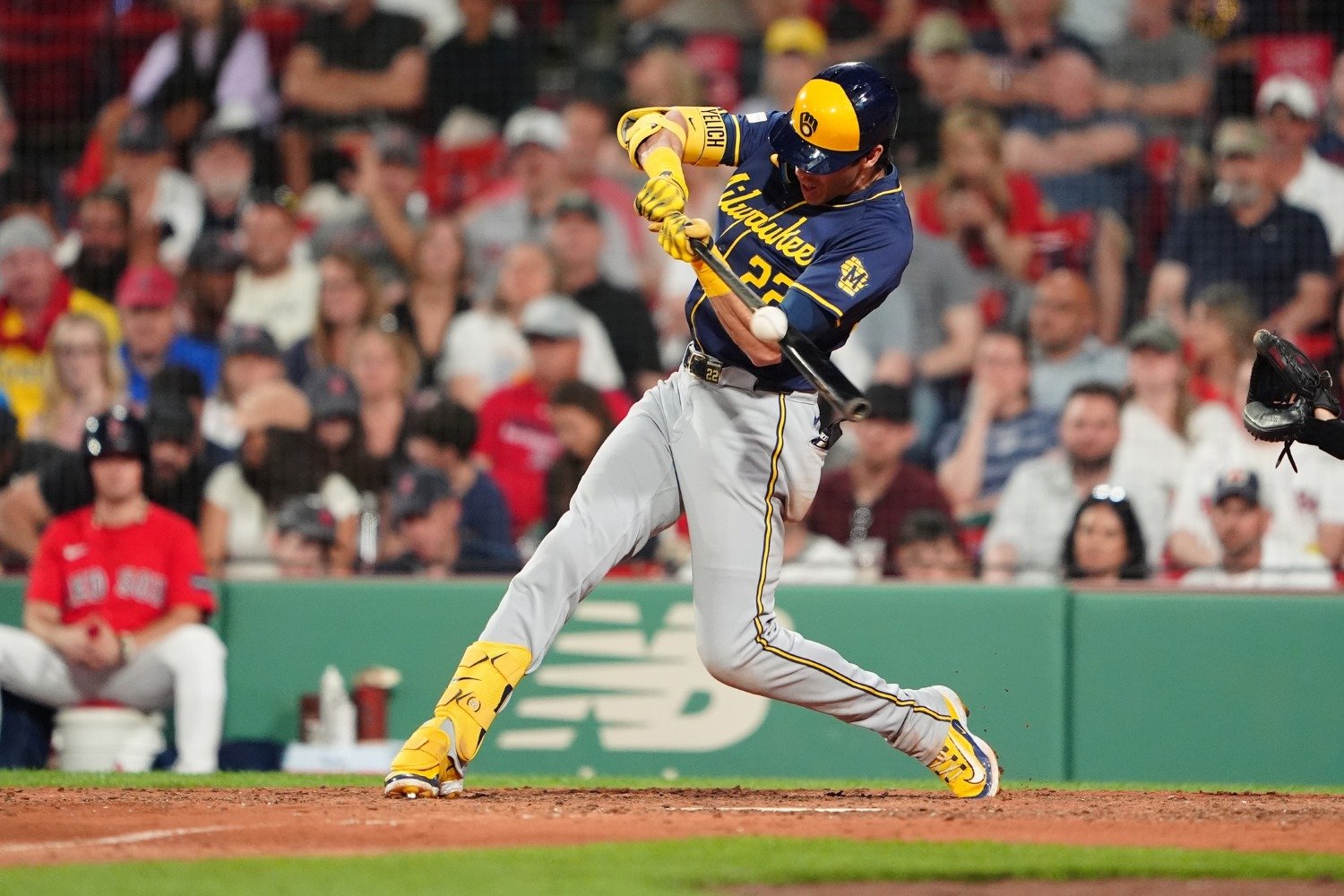 To win anything important in MLB these days, you have to hit well against high-velocity fastballs. They're everywhere, but they're especially prominent when the game is on the line. The best pitching staffs have many pitchers who throw hard, and even the bad ones have a couple of guys who throw extremely hard upon whom they can call in high-leverage situations. Just about everyone knows that velocity has trended upward throughout the pitch-tracking era, which dates back to 2008. Specifically, the average fastball for the first six innings of an MLB game has gotten nearly 2.5 miles per hour faster in the last decade and a half. It's intuitive, but much less often mentioned, that if you zoom in on high-leverage situations in the seventh inning and later, the trend is even more apparent. In fact, over the same period, the average late-game, high-leverage fastball velocity has risen 2.8 miles per hour. Thus, while there's more velocity to handle throughout the game, it gets especially intense (and difficult) when the chips are down. We crossed a milestone this spring. For the first time, isolating the portion of the season prior to June, the average velocity of a fastball thrown in the final few innings of a close game is 95.0 miles per hour. What was a marker of imposing dominance within the memory of most baseball fans is now the cover charge to get into a leverage role in the bullpen. The Brewers contribute to this themselves, of course, with fireballers like Trevor Megill, Elvis Peguero, and others who parade through their pen. It's especially good news for them, though, because their hitters handle velocity in excess of 95 miles per hour about as well as any team in baseball. This year, the Crew own a collective .324 wOBA on pitches at 95 or faster. That's the fourth-highest mark in baseball. They're fifth in hard-hit rate, and they even do a good job (as a group) of elevating against good heat. By my homespun weighted sweet-spot exit velocity (wSSEV) metric, they're eighth in MLB, despite the team's general tendency to hit balls on the ground too often, which makes them a bottom-10 team by wSSEV when we're not filtering for high-velocity heaters. Right now, they're missing one of their best premium fastball power threats, in Rhys Hoskins, but he looks to be close to a return. In his absence, though, they've still been fine, because they have a long list of hitters who crush even high-90s fastballs. Christian Yelich and Gary Sánchez both hit those pitches so well and so consistently that teams try to avoid throwing them fastballs unless the pitcher on the mound happens to have good command to one of their cold zones. Beyond those three, there's Brice Turang, who has a .382 wOBA against 95+. He, like Sal Frelick, contributes very little in terms of power against those offerings, because each tends even more strongly to hit their best batted balls downward when they see especially good fastballs. Each is capable of hitting a sharp grounder that gets through the infield, though, and neither swings and misses on those offerings very much. Add this to the growing list of impressive and exciting things about Joey Ortiz, too. With a 98.8-MPH average exit velocity in the launch angle sweet spot (SSEV, where the sweet spot is defined as 10-35 degrees) and a 16.2-degree average launch angle on well-hit balls, he's dangerous in a way Turang and Frelick aren't, but he also whiffs on 95+ fastballs less than all but three other hitters in baseball--in sharp contrast to, for instance, Hoskins, who makes similarly dangerous contact but pays for it with lots of swings and misses. William Contreras does the same things against 95 and above that he does against everything else: mash it. Jake Bauers finds tons of power on such pitches. The news is good almost all the way up and down the lineup. The only hitters who see significant time with the team but don't hit good velocity consistently are Blake Perkins, Oliver Dunn, and Jackson Chourio. Unfortunately, the news is very, very bad on Chourio. You might need both hands to count the hitters in the league who are worse than he is when a pitcher can get over 95 MPH, but you won't need your toes. Chourio doesn't generate decent exit velocity or square the ball up against those pitches, and he whiffs on nearly 38 percent of his swings on them. That would be an unfortunate whiff rate against good sliders. Against fastballs, it's catastrophic. Chourio's struggles (and the team's usage of him) continues to be a storyline to watch this season, and for one night, the broader, happier story of the Crew's ability to mash good fastballs was overshadowed by a rookie having the best night of his life. In general, though, this team has a dynamic, scary offense, and they'll hit as well in big moments as anyone in the game--including, perhaps, when the heat of October spotlights matches that of the fastballs coming at them.
 -
Sometimes, it's just the other guy's night. A Cubs rookie ripped through the Brewers lineup Tuesday night like a circus performer through a phone book--but just as is true with the strongman and the prop, part of what made Brown's brilliance so impressive was the difficulty of the chosen task. Image courtesy of © Gregory Fisher-USA TODAY Sports To win anything important in MLB these days, you have to hit well against high-velocity fastballs. They're everywhere, but they're especially prominent when the game is on the line. The best pitching staffs have many pitchers who throw hard, and even the bad ones have a couple of guys who throw extremely hard upon whom they can call in high-leverage situations. Just about everyone knows that velocity has trended upward throughout the pitch-tracking era, which dates back to 2008. Specifically, the average fastball for the first six innings of an MLB game has gotten nearly 2.5 miles per hour faster in the last decade and a half. It's intuitive, but much less often mentioned, that if you zoom in on high-leverage situations in the seventh inning and later, the trend is even more apparent. In fact, over the same period, the average late-game, high-leverage fastball velocity has risen 2.8 miles per hour. Thus, while there's more velocity to handle throughout the game, it gets especially intense (and difficult) when the chips are down. We crossed a milestone this spring. For the first time, isolating the portion of the season prior to June, the average velocity of a fastball thrown in the final few innings of a close game is 95.0 miles per hour. What was a marker of imposing dominance within the memory of most baseball fans is now the cover charge to get into a leverage role in the bullpen. The Brewers contribute to this themselves, of course, with fireballers like Trevor Megill, Elvis Peguero, and others who parade through their pen. It's especially good news for them, though, because their hitters handle velocity in excess of 95 miles per hour about as well as any team in baseball. This year, the Crew own a collective .324 wOBA on pitches at 95 or faster. That's the fourth-highest mark in baseball. They're fifth in hard-hit rate, and they even do a good job (as a group) of elevating against good heat. By my homespun weighted sweet-spot exit velocity (wSSEV) metric, they're eighth in MLB, despite the team's general tendency to hit balls on the ground too often, which makes them a bottom-10 team by wSSEV when we're not filtering for high-velocity heaters. Right now, they're missing one of their best premium fastball power threats, in Rhys Hoskins, but he looks to be close to a return. In his absence, though, they've still been fine, because they have a long list of hitters who crush even high-90s fastballs. Christian Yelich and Gary Sánchez both hit those pitches so well and so consistently that teams try to avoid throwing them fastballs unless the pitcher on the mound happens to have good command to one of their cold zones. Beyond those three, there's Brice Turang, who has a .382 wOBA against 95+. He, like Sal Frelick, contributes very little in terms of power against those offerings, because each tends even more strongly to hit their best batted balls downward when they see especially good fastballs. Each is capable of hitting a sharp grounder that gets through the infield, though, and neither swings and misses on those offerings very much. Add this to the growing list of impressive and exciting things about Joey Ortiz, too. With a 98.8-MPH average exit velocity in the launch angle sweet spot (SSEV, where the sweet spot is defined as 10-35 degrees) and a 16.2-degree average launch angle on well-hit balls, he's dangerous in a way Turang and Frelick aren't, but he also whiffs on 95+ fastballs less than all but three other hitters in baseball--in sharp contrast to, for instance, Hoskins, who makes similarly dangerous contact but pays for it with lots of swings and misses. William Contreras does the same things against 95 and above that he does against everything else: mash it. Jake Bauers finds tons of power on such pitches. The news is good almost all the way up and down the lineup. The only hitters who see significant time with the team but don't hit good velocity consistently are Blake Perkins, Oliver Dunn, and Jackson Chourio. Unfortunately, the news is very, very bad on Chourio. You might need both hands to count the hitters in the league who are worse than he is when a pitcher can get over 95 MPH, but you won't need your toes. Chourio doesn't generate decent exit velocity or square the ball up against those pitches, and he whiffs on nearly 38 percent of his swings on them. That would be an unfortunate whiff rate against good sliders. Against fastballs, it's catastrophic. Chourio's struggles (and the team's usage of him) continues to be a storyline to watch this season, and for one night, the broader, happier story of the Crew's ability to mash good fastballs was overshadowed by a rookie having the best night of his life. In general, though, this team has a dynamic, scary offense, and they'll hit as well in big moments as anyone in the game--including, perhaps, when the heat of October spotlights matches that of the fastballs coming at them. View full article


