Michael Trzinski
-
Posts
923 -
Joined
-
Last visited
-
Days Won
1
Content Type
Profiles
Forums
Blogs
Events
News
2026 Milwaukee Brewers Top Prospects Ranking
Milwaukee Brewers Videos
2022 Milwaukee Brewers Draft Picks
Milwaukee Brewers Free Agent & Trade Rumors, Notes, & Tidbits
Guides & Resources
2023 Milwaukee Brewers Draft Picks
2024 Milwaukee Brewers Draft Picks
The Milwaukee Brewers Players Project
2025 Milwaukee Brewers Draft Pick Tracker
2026 Milwaukee Brewers Draft Tracker: Picks & Bonuses
Store
Downloads
Gallery
Everything posted by Michael Trzinski
-
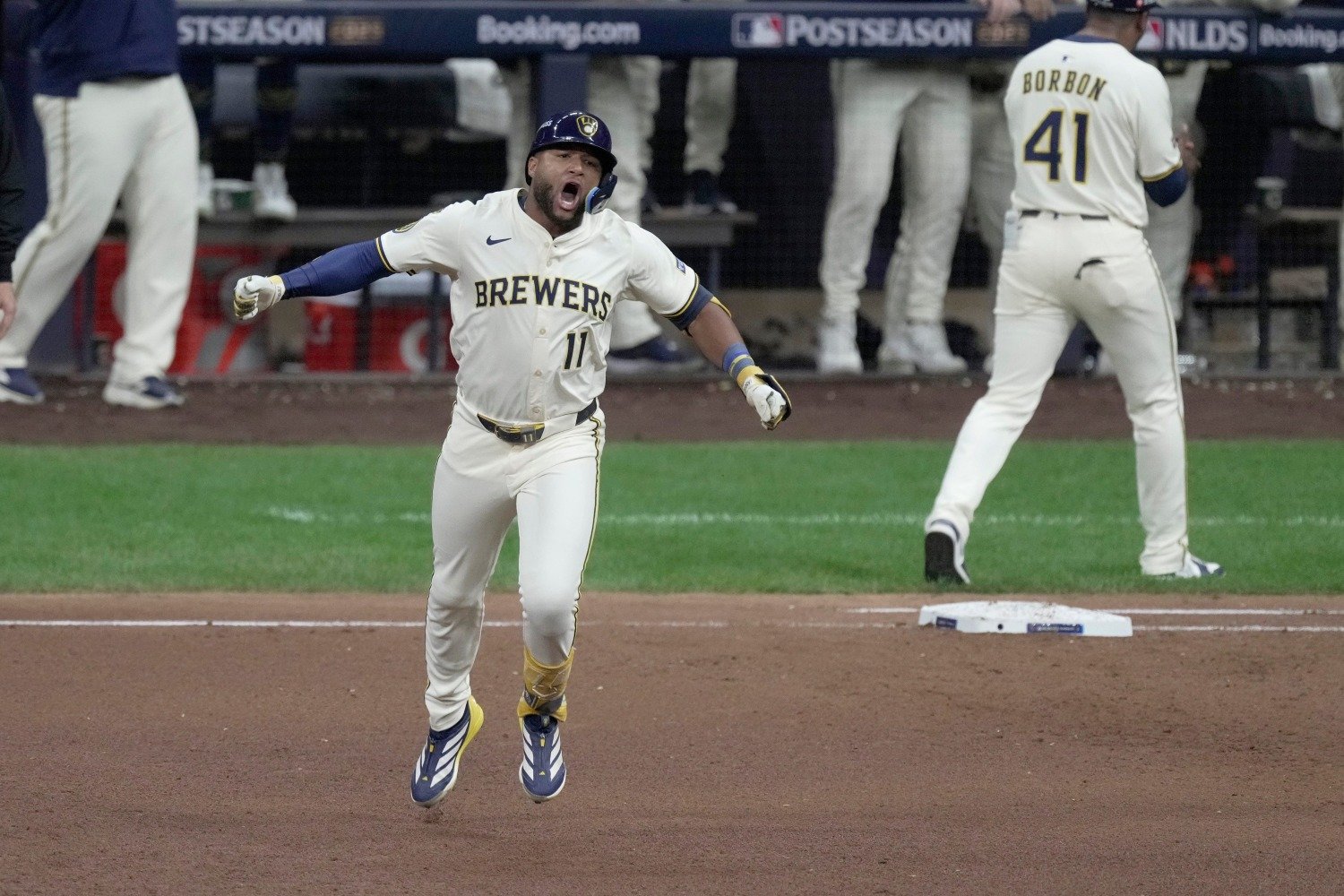 Pat Murphy's first move of the night backfired badly. After just four batters in the top of the first inning, the Chicago Cubs had three runs on the scoreboard, courtesy of Seiya Suzuki’s three-run blast to deep left field against lefty Aaron Ashby. The visitors' jubilation wouldn't last long, though. Not to be left out, the Brewers tied the game on Andrew Vaughn’s three-run homer in the bottom half of the inning—and would go on to add a pair of circuit clouts and use a very proficient bullpen outing to grab a 7-3 win in Game 2 of the NLDS match-up, sweeping both games in Milwaukee. Two Outs? No Problem. The Brewers got two-out singles by William Contreras and Christian Yelich in the first, before Vaughn slammed a homer to left field. In the third inning, ‘Wild Bill’ smashed a solo shot to left, taking a few seconds to admire his handiwork before starting his trot. One inning later, the Brewers put the game away, when Jackson Chourio crushed a ball off the hitter's background in center field with two outs, scoring Caleb Durbin and Joey Ortiz to run up the final tallies in the contest. Overall, the Brewers were 9-for-18 with two outs, impressive in any league. The Miz Leads the Bullpen Considering that he was doubtful to make the postseason roster, Jacob Misiorowski went above and beyond in his first playoff action, allowing one hit and two walks while striking out four in three innings; he garnered the win. Nick Mears, Chad Patrick, Jared Koenig, and Trevor Megill allowed no baserunners in 3 1/3 combined innings, while whiffing three Cubs. Abner Uribe continued his dominance by striking out the side in the ninth. Who’s Got The Best Defense? The Brewers had three web gems in the game, while the vaunted Chicago defense committed another error. With a runner on first and one out in the top of the fifth, Suzuki hit a fly ball down the right-field line. Sal Frelick got a great jump on the ball and made a fine catch in foul territory, while jumping on the wall padding in front of the right-field stands. The next batter, Ian Happ, hit a slicing foul down the left field line that a gimpy Chourio caught in foul ground, after losing his hat. Two innings later, Michael Busch hit a chopper down the first base line that Vaughn caught in foul territory and flipped to Koenig for the third out, beating the runner by a half-step. Top Performers William Contreras, 2-for-4, 2 R, HR, RBI Jackson Chourio, 1-for-4, R, HR, 3 RBI Christian Yelich, 3-for-4, R Andrew Vaughn, 1-for-3, R, HR, 3 RBI Joey Ortiz, 2-for-4, R Jacob Misiorowski, 3 IP, 1 H, 2 BB, 4 K Not So Great, Bob Brice Turang, 0-for-4, K What’s On Tap? After yet another day off, the NLDS will continue at Wrigley Field on Wednesday afternoon, with the Brewers’ Quinn Priester facing Jameson Taillon of the Cubs in a Game 3 closeout opportunity.
-
- 3
-

-
- jackson chourio
- andrew vaughn
- (and 3 more)
-
Image courtesy of © Jovanny Hernandez / Milwaukee Journal Sentinel / USA TODAY NETWORK via Imagn Images The team with the best record in baseball—the Milwaukee Brewers—came into today’s NLDS game showing it, as they batted around and scored six runs in the bottom of the first after Michael Busch led off the game for the Cubs with a home run. The Brewers added three more tallies in the second and cruised to a 9-3 victory in front of 42,678 fans at Uecker Field at American Family Park on a gorgeous fall Saturday afternoon. A Tale of Two Innings Trailing the Cubs 1-0 in the bottom of the initial inning, Jackson Chourio, Brice Turang, and William Contreras hit three consecutive two-base hits off Cubs starter Matthew Boyd, giving Milwaukee a 2-1 lead. After Christian Yelich grounded out, Andrew Vaughn reached on a free pass, putting runners at first and second. Sal Frelick hit a lazy grounder to second, and in his haste to make a play, the normally sure-handed Nico Hoerner failed to get his glove down, and the ball trickled off his mitt. Frelick reached first on the E-4 and Contreras hustled home for the third run of the inning. Caleb Durbin struck out for the second out before Blake Perkins added an RBI single to left, scoring Vaughn. That marked the end of the day for Boyd, who was working on three days’ rest. Reliever Mike Soroka walked Joey Ortiz, and then Chourio knocked in two more with a base hit past a diving Dansby Swanson. Turang struck out to end the inning with the Brewers leading 6-1. The second inning started much the same as the first for the home team. Contreras, Yelich, and Vaughn all collected base hits to load the sacks. Frelick flew to left after losing his bat and almost taking out manager Pat Murphy in the dugout. Luckily, the stair railing kept Murph from getting nailed, and the Brewers skipper laughed at the near miss. Durbin then hit a flare into short center, scoring Contreras and Yeli to make the score 8-1. After a groundout and a second walk by Ortiz, Soroka left in favor of former Brewer Aaron Civale. Chourio hit a grounder to a diving Matt Shaw at third base, and ‘Chewy’ easily beat the throw but pulled up lame as Vaughn scored easily from third. After a brief moment with Murphy and the training staff, Chourio came out of the game for pinch-runner Isaac Collins. In a reprise of his first inning AB, Turang again made the third out via the K. Civale and Ben Brown pitched well the last six and one-third, allowing only four hits and two walks while whiffing six Brewers. But the damage had been done. Top Performers Jackson Chourio, 3-for-3, R, 2B, 3 RBI Brice Turang, 2-for-5, R, 2B, RBI William Contreras, 2-for-5, 2 R, 2B, RBI Blake Perkins, 2-for-4, R 2B, RBI Freddy Peralta, 5.2 IP, 4 H, 2 ER, 3 BB, 9 K View full article
-
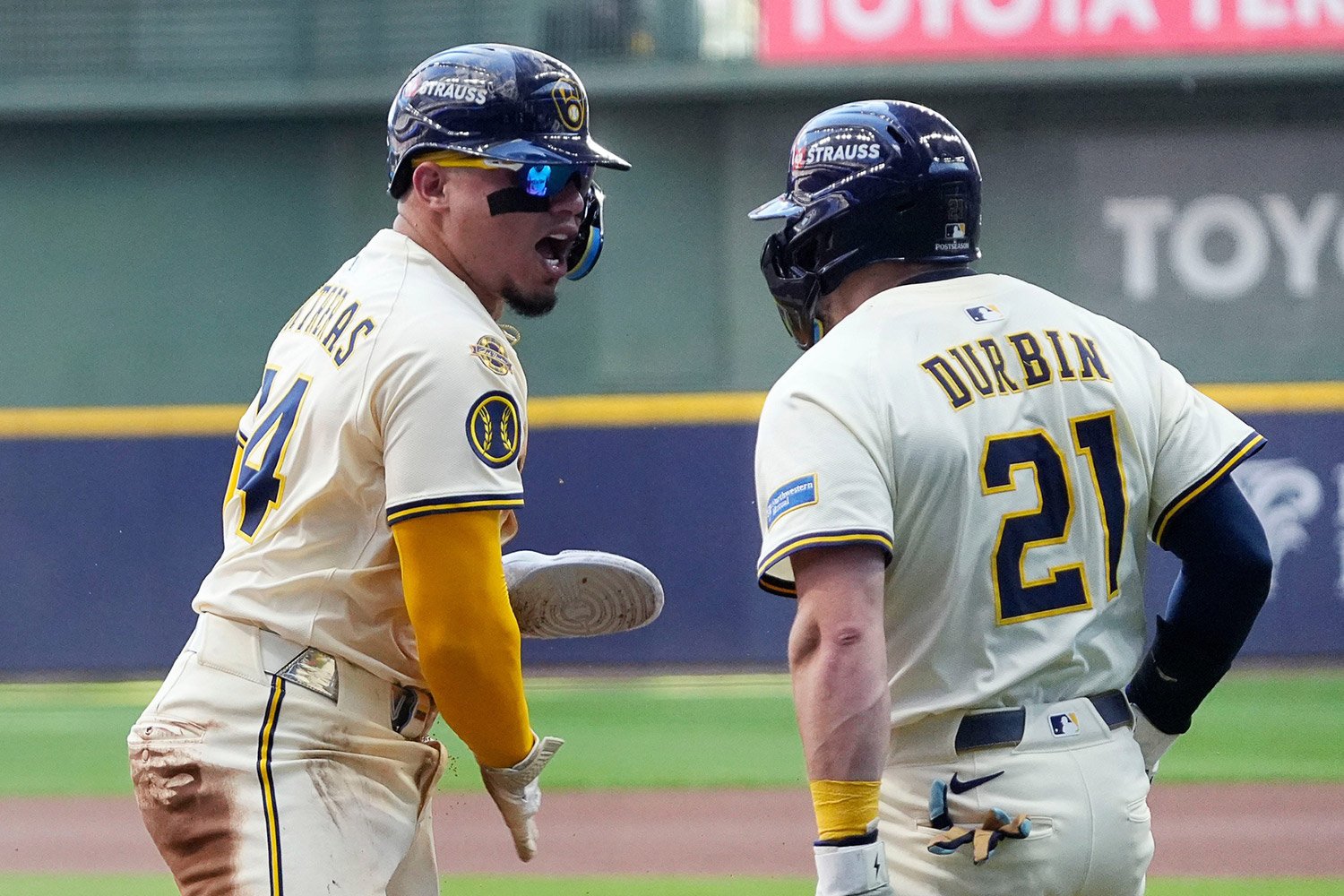 The team with the best record in baseball—the Milwaukee Brewers—came into today’s NLDS game showing it, as they batted around and scored six runs in the bottom of the first after Michael Busch led off the game for the Cubs with a home run. The Brewers added three more tallies in the second and cruised to a 9-3 victory in front of 42,678 fans at Uecker Field at American Family Park on a gorgeous fall Saturday afternoon. A Tale of Two Innings Trailing the Cubs 1-0 in the bottom of the initial inning, Jackson Chourio, Brice Turang, and William Contreras hit three consecutive two-base hits off Cubs starter Matthew Boyd, giving Milwaukee a 2-1 lead. After Christian Yelich grounded out, Andrew Vaughn reached on a free pass, putting runners at first and second. Sal Frelick hit a lazy grounder to second, and in his haste to make a play, the normally sure-handed Nico Hoerner failed to get his glove down, and the ball trickled off his mitt. Frelick reached first on the E-4 and Contreras hustled home for the third run of the inning. Caleb Durbin struck out for the second out before Blake Perkins added an RBI single to left, scoring Vaughn. That marked the end of the day for Boyd, who was working on three days’ rest. Reliever Mike Soroka walked Joey Ortiz, and then Chourio knocked in two more with a base hit past a diving Dansby Swanson. Turang struck out to end the inning with the Brewers leading 6-1. The second inning started much the same as the first for the home team. Contreras, Yelich, and Vaughn all collected base hits to load the sacks. Frelick flew to left after losing his bat and almost taking out manager Pat Murphy in the dugout. Luckily, the stair railing kept Murph from getting nailed, and the Brewers skipper laughed at the near miss. Durbin then hit a flare into short center, scoring Contreras and Yeli to make the score 8-1. After a groundout and a second walk by Ortiz, Soroka left in favor of former Brewer Aaron Civale. Chourio hit a grounder to a diving Matt Shaw at third base, and ‘Chewy’ easily beat the throw but pulled up lame as Vaughn scored easily from third. After a brief moment with Murphy and the training staff, Chourio came out of the game for pinch-runner Isaac Collins. In a reprise of his first inning AB, Turang again made the third out via the K. Civale and Ben Brown pitched well the last six and one-third, allowing only four hits and two walks while whiffing six Brewers. But the damage had been done. Top Performers Jackson Chourio, 3-for-3, R, 2B, 3 RBI Brice Turang, 2-for-5, R, 2B, RBI William Contreras, 2-for-5, 2 R, 2B, RBI Blake Perkins, 2-for-4, R 2B, RBI Freddy Peralta, 5.2 IP, 4 H, 2 ER, 3 BB, 9 K
-
- 2
-
-
- jackson chourio
- brice turang
- (and 2 more)
-
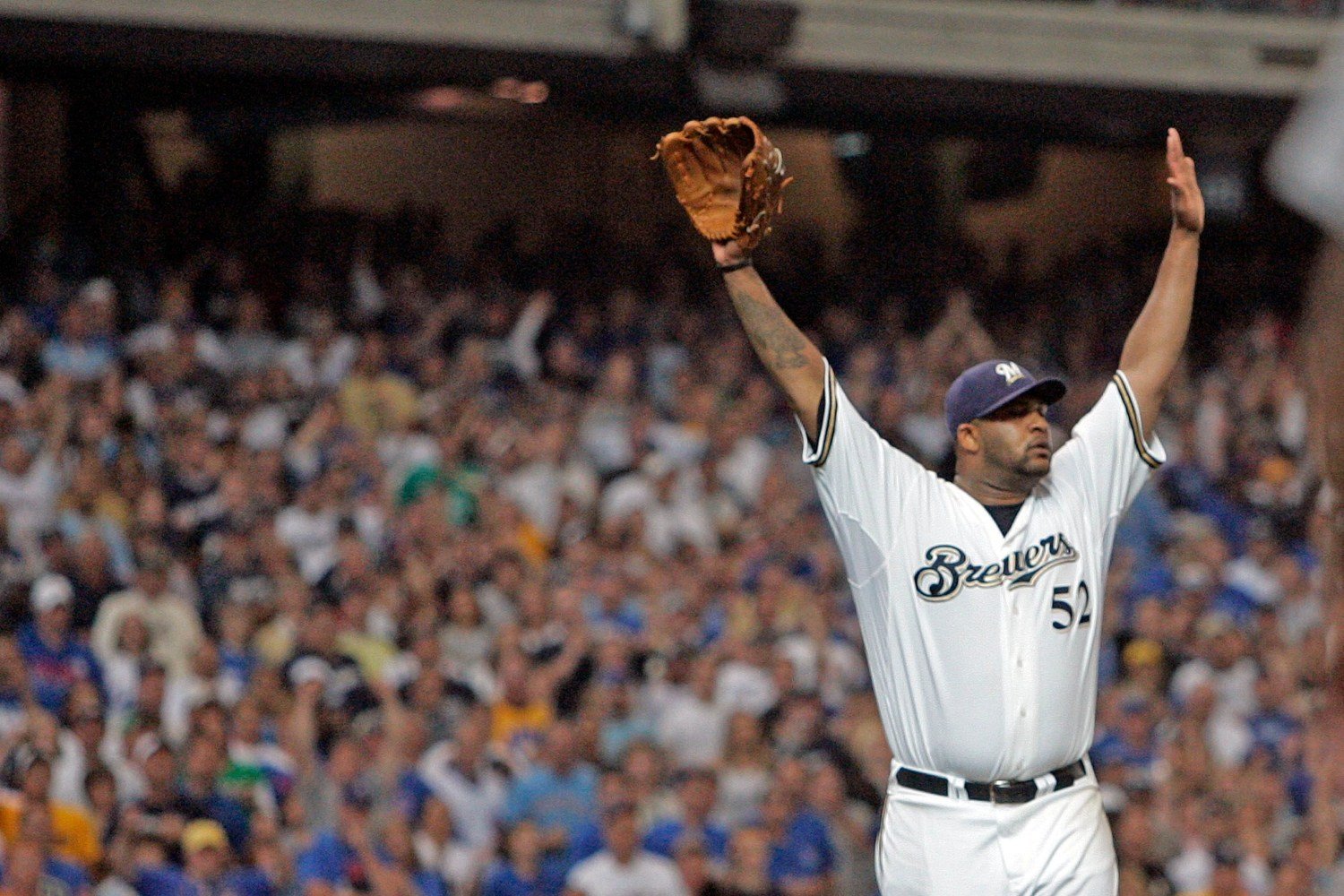 The Milwaukee Brewers started playing the Chicago Cubs in 1997, Milwaukee's last year in the American League. The Cubs won two of three contests in that first season of what would become a strong, sometimes bitter, rivalry. The next year, the Brewers moved over to the National League Central, and over the 28 years since, the Brewers and Cubs have each won the NL Central crown six times. Although each team has had stretches of domination over the other, for the most part, the two squads have been evenly matched. In the overall series since 1997, the Brewers hold a slight 230-226 margin over the Cubbies. This Saturday, the Brewers and Cubs will meet for the first time in a postseason series. Over the years, many noteworthy games and moments have come from this rivalry, one of the best in baseball. Brewers fans flock to Wrigley Field, calling it 'Miller Park South.' Likewise, many Cubs partisans make the 90-mile drive north on I-94 and do their best to turn the Brewers' home park into 'Wrigley North.' Sometimes it's all in good fun, but other times, it can get more intense—just like it is on the field. Without further ado, here is my list of 10 'Top Moments' that have occurred during the rivalry, listed chronologically. June 13, 1997 In the first interleague game ever played at a National League ballpark, the Brewers defeated the Cubs 4-2 behind Jeff D'Amico's eight-inning effort, in which he allowed five hits and two runs to earn his third victory of the young season. José Valentin had a double and a home run and drove in three to lead the Brewers. A crowd of 36,107 attended the initial game of the so-called 'Border War.' The next two games saw even bigger crowds, and even though the Brewers dropped both games, a rivalry had begun. September 6, 2003 Although the Brewers lost to the Cubs, 8-4, a couple of memorable events occurred. First, the largest crowd in Miller Park history (46,218) showed up, despite the fact that the Brewers were 17 games under .500 and had no chance at making the postseason. Second was the return of Randall Simon, the same one who knocked over the Italian racing sausage by swinging a bat at the runner's suit. Simon had been with the Pirates at the time, but was traded to Chicago in August. During the game, the scoreboard announced that Simon would buy Italian sausages for all 330 fans in Section 112. "I think it was an awesome idea," Simon said of the plan suggested by a Chicago coach. "It was a nice way of saying, 'Thank you and I'm sorry,'" September 28, 2008 C.C. Sabathia pitched a complete-game four-hitter, allowing only an unearned run while whiffing seven batters, and Ryan Braun hit a two-run homer in the eighth to break a 1-1 tie as the Brewers went on to a 3-1 win over the Cubs, clinching their first postseason berth since 1982. After the game, Braun said, "It's great for the city. Fans here have been waiting a long time." The Brewers came out on the field after celebrating, watching the Florida-New York game on the scoreboard, along with thousands of fans still in the stands. The Marlins beat the Mets, giving the Brewers a one-game edge over the Metropolitans, sending them to the playoffs. September 23, 2017 Trailing 2-1 heading into the bottom of the ninth, the Brewers tied the game on a leadoff home run by Orlando Arcia off Cubs closer Wade Davis, sending the game to extras. In the top of the 10th, it was the Cubs who roughed up an enemy reliever, using a walk, a bunt, and an RBI single by Jon Jay off Jeremy Jeffress to put the Cubs up by a run. In the bottom half, Braun doubled with one out before Travis Shaw slammed an oppo shot off Davis into the Brewers bullpen for a 4-3 walk-off win. "It just feels good to help us win," Shaw said. June 13, 2018 At the beginning of the game, the wind was blowing out to center field at a gusty 15 mph, but Wrigley Field played more like the wind was blowing in as the only run was scored on a Lorenzo Cain home run in the third inning off Cubs starter Mike Montgomery in a 1-0 pitcher's duel, a rare sight at the 'Friendly Confines.' The Brewers managed four hits, including a pair of safeties by Cain. The Cubs knocked out six hits, led by a single and double by Javier Báez. September 4, 2018 One day after the Brewers took a 4-3 decision on a walk-off groundout by Christian Yelich against the Cubs, the Brewers ran roughshod over the Cubs in the second game of the series, blowing out their Illinois rivals by an 11-1 score. Before the game, Cubs pitcher Cole Hamels downplayed the rivalry between the two clubs. The Brewers led 3-1 in the sixth inning and exploded for eight runs across the next three innings in a laugher. After the contest, a giant (25' x 15') 'L' flag was unfurled by Brewers fans in left field. The Brewers were three games behind the Cubs in the NL Central, but that would change. September 10, 2018 Before Josh Hader was the Brewers' closer, he was a pretty darned good middle- and high-leverage guy. He had perhaps his best game at Wrigley Field, with the Brewers leading 3-2 in the seventh inning. In that frame, he struck out David Bote, Addison Russell, and Daniel Murphy on 13 pitches, with all the strikeouts being of the swinging variety. In the eighth, Kris Bryant and Anthony Rizzo each struck out swinging on 1-2 pitches. Báez looked at strike three to end a dominating pitching performance by the long-haired lefty. Jeffress pitched the ninth for his 11th save of the season. October 1, 2018 Tied at the top of the NL Central after 162 games, the Cubs and Brewers met for an extra game to decide the winner of the division. The Brewers scored twice in the eighth inning to break a 1-1 tie and took the Central title, their first since 2011. The Brewers went ahead late in the game on RBI singles by Cain and Braun, and Hader pitched the last two innings for the save in the 3-1 final. The Brewers won 17 of 22 games after facing the Cubs early in the month, including eight victories in a row to end the season. November 6, 2023 In the only 'moment' that didn't occur in a game, the Brewers' managerial dynamic changed when Craig Counsell signed a $40-million contract with the hated Cubs, leaving after nine seasons at the Milwaukee helm. Counsell won 707 games while wearing the blue and gold uniform, 144 more than second-place Phil Garner. Milwaukee appeared in five postseasons during his reign and won three NL Central titles. Upon his return to Uecker Field in 2024, Counsell was booed relentlessly. July 28-29, 2025 Not exactly a moment, but it was perhaps the point of the 2025 campaign where the Brewers displayed their dominance over the Cubs, winning a pair of games before losing the final contest of the three-game set. The Brewers promptly went on a 14-game winning streak to, for all intents and purposes, win the NL Central crown. Although the Brewers won only two times in the infamous five-game series at Wrigley in mid-August, the Brewers had enough of a lead to edge the Cubs by five games.
 -
Image courtesy of Tapping the Keg Sports website The Milwaukee Brewers started playing the Chicago Cubs in 1997, Milwaukee's last year in the American League. The Cubs won two of three contests in that first season of what would become a strong, sometimes bitter, rivalry. The next year, the Brewers moved over to the National League Central, and over the 28 years since, the Brewers and Cubs have each won the NL Central crown six times. Although each team has had stretches of domination over the other, for the most part, the two squads have been evenly matched. In the overall series since 1997, the Brewers hold a slight 230-226 margin over the Cubbies. This Saturday, the Brewers and Cubs will meet for the first time in a postseason series. Over the years, many noteworthy games and moments have come from this rivalry, one of the best in baseball. Brewers fans flock to Wrigley Field, calling it 'Miller Park South.' Likewise, many Cubs partisans make the 90-mile drive north on I-94 and do their best to turn the Brewers' home park into 'Wrigley North.' Sometimes it's all in good fun, but other times, it can get more intense—just like it is on the field. Without further ado, here is my list of 10 'Top Moments' that have occurred during the rivalry, listed chronologically. June 13, 1997 In the first interleague game ever played at a National League ballpark, the Brewers defeated the Cubs 4-2 behind Jeff D'Amico's eight-inning effort, in which he allowed five hits and two runs to earn his third victory of the young season. José Valentin had a double and a home run and drove in three to lead the Brewers. A crowd of 36,107 attended the initial game of the so-called 'Border War.' The next two games saw even bigger crowds, and even though the Brewers dropped both games, a rivalry had begun. September 6, 2003 Although the Brewers lost to the Cubs, 8-4, a couple of memorable events occurred. First, the largest crowd in Miller Park history (46,218) showed up, despite the fact that the Brewers were 17 games under .500 and had no chance at making the postseason. Second was the return of Randall Simon, the same one who knocked over the Italian racing sausage by swinging a bat at the runner's suit. Simon had been with the Pirates at the time, but was traded to Chicago in August. During the game, the scoreboard announced that Simon would buy Italian sausages for all 330 fans in Section 112. "I think it was an awesome idea," Simon said of the plan suggested by a Chicago coach. "It was a nice way of saying, 'Thank you and I'm sorry,'" September 28, 2008 C.C. Sabathia pitched a complete-game four-hitter, allowing only an unearned run while whiffing seven batters, and Ryan Braun hit a two-run homer in the eighth to break a 1-1 tie as the Brewers went on to a 3-1 win over the Cubs, clinching their first postseason berth since 1982. After the game, Braun said, "It's great for the city. Fans here have been waiting a long time." The Brewers came out on the field after celebrating, watching the Florida-New York game on the scoreboard, along with thousands of fans still in the stands. The Marlins beat the Mets, giving the Brewers a one-game edge over the Metropolitans, sending them to the playoffs. September 23, 2017 Trailing 2-1 heading into the bottom of the ninth, the Brewers tied the game on a leadoff home run by Orlando Arcia off Cubs closer Wade Davis, sending the game to extras. In the top of the 10th, it was the Cubs who roughed up an enemy reliever, using a walk, a bunt, and an RBI single by Jon Jay off Jeremy Jeffress to put the Cubs up by a run. In the bottom half, Braun doubled with one out before Travis Shaw slammed an oppo shot off Davis into the Brewers bullpen for a 4-3 walk-off win. "It just feels good to help us win," Shaw said. June 13, 2018 At the beginning of the game, the wind was blowing out to center field at a gusty 15 mph, but Wrigley Field played more like the wind was blowing in as the only run was scored on a Lorenzo Cain home run in the third inning off Cubs starter Mike Montgomery in a 1-0 pitcher's duel, a rare sight at the 'Friendly Confines.' The Brewers managed four hits, including a pair of safeties by Cain. The Cubs knocked out six hits, led by a single and double by Javier Báez. September 4, 2018 One day after the Brewers took a 4-3 decision on a walk-off groundout by Christian Yelich against the Cubs, the Brewers ran roughshod over the Cubs in the second game of the series, blowing out their Illinois rivals by an 11-1 score. Before the game, Cubs pitcher Cole Hamels downplayed the rivalry between the two clubs. The Brewers led 3-1 in the sixth inning and exploded for eight runs across the next three innings in a laugher. After the contest, a giant (25' x 15') 'L' flag was unfurled by Brewers fans in left field. The Brewers were three games behind the Cubs in the NL Central, but that would change. September 10, 2018 Before Josh Hader was the Brewers' closer, he was a pretty darned good middle- and high-leverage guy. He had perhaps his best game at Wrigley Field, with the Brewers leading 3-2 in the seventh inning. In that frame, he struck out David Bote, Addison Russell, and Daniel Murphy on 13 pitches, with all the strikeouts being of the swinging variety. In the eighth, Kris Bryant and Anthony Rizzo each struck out swinging on 1-2 pitches. Báez looked at strike three to end a dominating pitching performance by the long-haired lefty. Jeffress pitched the ninth for his 11th save of the season. October 1, 2018 Tied at the top of the NL Central after 162 games, the Cubs and Brewers met for an extra game to decide the winner of the division. The Brewers scored twice in the eighth inning to break a 1-1 tie and took the Central title, their first since 2011. The Brewers went ahead late in the game on RBI singles by Cain and Braun, and Hader pitched the last two innings for the save in the 3-1 final. The Brewers won 17 of 22 games after facing the Cubs early in the month, including eight victories in a row to end the season. November 6, 2023 In the only 'moment' that didn't occur in a game, the Brewers' managerial dynamic changed when Craig Counsell signed a $40-million contract with the hated Cubs, leaving after nine seasons at the Milwaukee helm. Counsell won 707 games while wearing the blue and gold uniform, 144 more than second-place Phil Garner. Milwaukee appeared in five postseasons during his reign and won three NL Central titles. Upon his return to Uecker Field in 2024, Counsell was booed relentlessly. July 28-29, 2025 Not exactly a moment, but it was perhaps the point of the 2025 campaign where the Brewers displayed their dominance over the Cubs, winning a pair of games before losing the final contest of the three-game set. The Brewers promptly went on a 14-game winning streak to, for all intents and purposes, win the NL Central crown. Although the Brewers won only two times in the infamous five-game series at Wrigley in mid-August, the Brewers had enough of a lead to edge the Cubs by five games. View full article
-
Milwaukee Brewers In The Postseason: A Historical Recap
Michael Trzinski posted an article in History
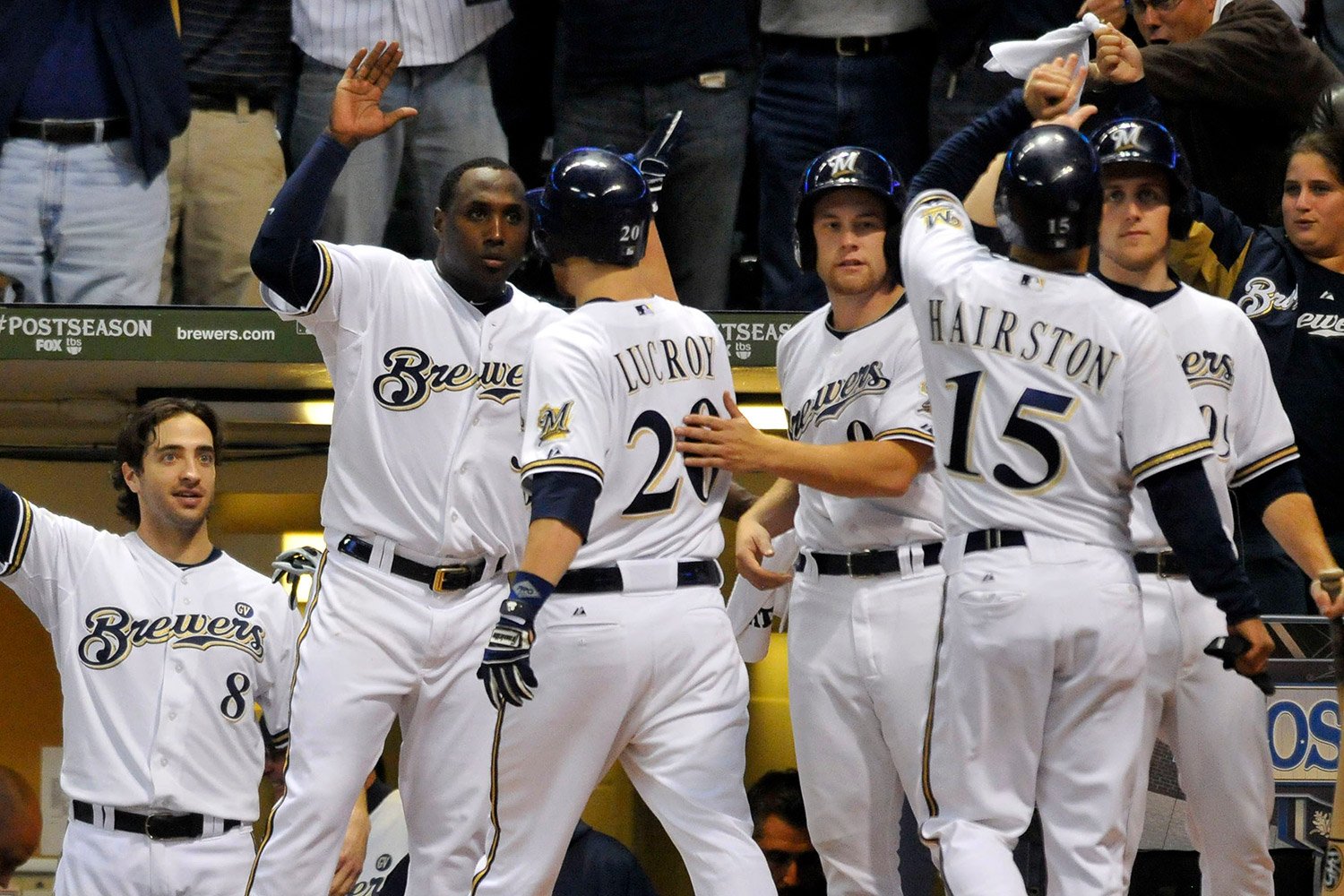 When the Milwaukee Brewers take the field on Saturday afternoon against the Chicago Cubs in the NLDS, it will mark the seventh time in the last eight seasons that the Brewers have made it to the postseason dance, including the last three years in a row. But it wasn’t always that way. The first Brew Crew team that advanced to postseason play was the 1981 team that competed in a strike-shortened season, winning the ‘second half’ before losing to the first half winner, the New York Yankees, in five games in the ALDS. The following year, the Brewers held on for dear life, winning the AL East crown on the last day of the regular season, then coming from a 2-0 deficit in the ALCS against the California Angels to win the championship in five games. Next up was the St. Louis Cardinals, who edged Milwaukee in seven games in the so-called ‘Suds Series.’ Then came a drought of a quarter-century, ending when the 2008 Brewers—led by C.C. Sabathia, Ryan Braun, and Prince Fielder—made it to the National League Division Series before falling to the Philadelphia Phillies in four games. Three years later, the Brewers beat the Arizona Diamondbacks in five games before coming out on the short end in six games against St. Louis in the National League Championship Series. From 2012 through 2017, the Brewers never won more than 86 games and finished in the bottom half of the NL Central four times. During the last eight seasons, the Brewers have run roughshod over the NL Central in the regular season but have gotten steamrolled in the postseason. Hopefully, this season will be different. 1981 The season was interrupted by a strike that began on June 12 and lasted until regular season play resumed on August 10. The ‘first half’ winner, New York, met the ‘second half’ winning Brewers in the AL East Division Series. The Brewers dropped two games at County Stadium, with saves going to Yankee closer Goose Gossage. Strangely, only 35,064 and 26,395 fans braved temps in the high 40s for the two games in Milwaukee. The Brewers won the first two games at Yankee Stadium, setting up Game 5, but the Yankees prevailed with a 7-3 win over the Brewers. 1982 Going into the final regular season weekend, the Brewers were leading second-place Baltimore by three games in the AL East. Milwaukee traveled to Memorial Stadium for a four-game set, including a Friday doubleheader. After the O's won the first three games, the two teams were tied going into the final match-up on Sunday. Behind Don Sutton's eight strong innings and two homers and a triple by Robin Yount, the Brewers cruised to a 10-2 victory. In the ALCS, the Brewers fell behind early, losing the two games at Anaheim Stadium before traveling east to the friendly confines of County Stadium. Milwaukee held on for a 5-3 win in Game 3, while reserve outfielder Mark Brouhard was the hero in a 9-5 Game 4 victory with three hits and four runs scored. In Game 5, the Brewers were trailing 3-2 in the bottom of the seventh with the sacks jammed and two outs. Cecil Cooper hit a liner to left to score Charlie Moore and Jim Gantner, giving the Crew a 4-3 lead. 'Big Foot' Pete Ladd came on in the ninth in relief of Bob McClure and set the Angels down in order, sending the Brewers to their first World Series. The Brewers shellacked St. Louis 10-0 in Game 1, led by Paul Molitor's five hits and four hits by Robin Yount. Mike Caldwell provided masterful twirling by throwing a complete-game three-hit shutout. The Cards evened the Series with a 5-4 victory in Game 2 at Busch Stadium. Back at County Stadium, the Cardinals took Game 3 before the Brewers won the next two games to take a 3-2 lead in the Series. St. Louis crushed Milwaukee 13-1 at Busch and then came from behind to earn a 6-3 Game 7 win and a World Championship. That Series was the first in Brewer history, and to this point, the only one. 2008 Thanks to early July trade acquisition C.C. Sabathia and his 11 wins, seven complete games, and three shutouts, the Brewers returned to the playoffs for the first time in 26 years and were hoping to advance deep in the playoffs. Unfortunately, the Philadelphia Phillies had other ideas, taking two wins at Citizens Bank Park with 'Lights Out' Brad Lidge earning a pair of saves. The Brewers won Game 3 at Miller Park with J.J. Hardy collecting three hits and starting pitcher Dave Bush going five strong, allowing five hits and one run. The season ended at 3 pm Sunday, October 5, with a 6-2 Phillies win. 2011 The Brewers took on the Arizona Diamondbacks in the NLDS. Each team won two games at their own park and headed back to Milwaukee for Game 5. The Brewers led 2-1 going into the top of the ninth, only to see closer John Axford give up three straight hits, scoring the tying run on a squeeze bunt single by Willie Bloomquist. It was Axford's first blown save since April 18. In the bottom of the tenth, Nyjer Morgan (aka 'Tony Plush') singled to send Carlos Gómez home with the winning run, and a massive celebration in the stands ensued. In the NLCS, the Brewers once again met the St. Louis Cardinals. The teams split at their home parks in the first four games, with Axford back on track with a pair of saves. Game 5 saw the Cardinals take an easy 7-1 win at Busch. Game 6 was a slugfest, with St Louis holding a 9-4 lead after three innings before an eerily silent crowd at Miller Park. The Brewers scored two more runs, but the Cards added three in a runaway 12-6 win and an end to the Brewers' season. 2018 In an NLDS match-up, Milwaukee swept Colorado in three games, including two shutouts. Unheralded catcher Erik Kratz led the team with five hits in eight ABs. The Brewers moved on to the NLCS, where they took on the Los Angeles Dodgers. The teams split the first four games at home, with three of the contests being one-run games. The Dodgers won Game 5 by a 5-2 margin behind Clayton Kershaw's seven-inning gem that included nine strikeouts. Milwaukee came back in Game 6 with a 7-2 win, courtesy of Jesús Aguilar's three hits and three RBIs. Although Milwaukee scored in the bottom of the first to take an early lead in Game 7, the Dodgers came back and scored five runs in the middle of the game for a 5-1 win and the NL crown. 2019 The Brewers held a 3-1 lead in the bottom of the eighth inning at Nationals Park against Washington in the NLWC game after Yasmani Grandal and Eric Thames hit home runs in the first two innings to give the Brewers a slim lead. That brought in Milwaukee closer Josh Hader, who had 12 consecutive saves before suffering a blown save in the last game of the regular season. Hader had two outs in the eighth with a man on first when disaster struck. A single and a walk loaded the bases for Juan Soto, who singled to right to knock in a pair before a bobble by Trent Grisham allowed a third run to score. The Brewers had Lorenzo Cain on first at the top of the ninth, but went down meekly with a foul pop and a flyball to center. The Brewers were 'one and done.' 2020 In the extremely strange season shortened by COVID, the Milwaukee Brewers found themselves in one of four NLWC series despite a 29-31 record. Once again, the Dodgers were the opponent, with the games played at Dodger Stadium. In Game 1, LA jumped out to a 3-0 lead after two innings. Orlando Arcia hit a two-run shot in the fourth to cut the lead to 3-2, but the Dodgers would tack on a run in the seventh and go on to a 4-2 win. Kershaw was once again the nemesis in Game 2, as he pitched eight strong innings, allowing only three hits while striking out 13 as the Dodgers rolled to a 3-0 whitewashing, ousting the Brewers once again. 2021 The Brewers faced the Atlanta Braves in an NLDS match-up after winning 95 games in the regular season. In Game 1, the contest was scoreless going into the bottom of the seventh at Miller Park when fan favorite Rowdy Tellez hit a two-run shot to center to give the Brewers a 2-0 lead. The Braves scored in the eighth to cut the lead to 2-1, but Hader made the finish interesting, allowing a walk and a single before getting the final out in a 2-1 victory. The Brewers' offense went away in a pair of 3-0 Atlanta wins, the next two games, giving the Braves a 2-1 series lead. In Game 4, both teams scored two runs in the fourth and fifth innings, and the score was tied at four apiece until the eighth, when Freddie Freeman hit a solo homer that would be the game-winner in a 5-4 Braves win. 2023 After missing the playoffs in 2022, the Brewers hosted the Diamondbacks in 2023. In Game 1, the Brewers got on the Miller Park scoreboard early and led 3-0 after two innings on an RBI single by Carlos Santana and a two-run homer by Tyrone Taylor. The D-Backs struck in the third and fourth innings on homers by Corbin Carroll, Ketel Marte, and Gabriel Moreno to take a 4-3 lead. Arizona finished the scoring in the ninth on a two-run double by Christian Walker off closer Devin Williams. Game 2 started much the same, as the Brewers scored twice in the first frame on a Sal Frelick sac fly and an RBI single by Willy Adames. That would be it for the Brewers as the Diamondbacks scored one in the fifth and four times in the sixth and coasted to a 5-2 win, eliminating the Brewers. 2024 The Brewers won 93 times in manager Pat Murphy's first season and faced the New York Mets in an NLWC best-of-three series held at Miller Park. William Contreras had an RBI single, and Rhys Hoskins knocked in a run after getting hit by a pitch with the bases loaded to give the home nine a 2-0 lead in the first. The Mets responded the next inning on a two-run three-bagger by former Brewer Jesse Winker and a sacrifice fly by Starling Marte to make it 3-2. The Brewers recaptured the lead in the fourth on an RBI single by Jackson Chourio and an RBI groundout by Contreras, and led 4-3. Once again, the Mets struck in the next inning, scoring five times on RBI-singles by Jose Iglesias, Mark Vientos, and J.D. Martinez to give the Mets an 8-4 lead, which would be the final. In Game 2, the Brewers were trailing 3-2 going into the bottom of the eighth when they scored three times on homers by Chourio and Garrett Mitchell to give the Brewers a 5-3 victory. In Game 3, it was looking good for the Brewers as they led 2-0 going into the ninth inning. With one out, Pete Alonso slammed a three-run homer off closer Williams, and Marte later added an RBI single to send Milwaukee to a heartbreaking 4-2 defeat. Could This Be The Year? After so many 'maybe next years,' maybe this WILL be the Brewers' year. Selected by most pundits to finish no better than third in the NL Central, the Brewers put their season into high gear after the All-Star break, taking over first place for good in the division in late July. They won 37 of their last 62 games to finish five games clear of the Chicago Cubs, who they will now take on for the first time in postseason play. The Cubs have been an up-and-down club this year, but looked pretty solid against San Diego, holding the Padres to a composite batting line of .189/.243/.305 in three games. On the downside, the Cubs only scored six runs and were shut out in Game 2. If the Brewers can sort out their starting pitching, stay healthy, and get effective relief outings, the Brewers should win this series. If Uecker Field at American Family Park becomes 'Wrigley North,' that makes it that much tougher for Milwaukee, as the Cubs fans make a lot of noise. Let's go, Brewers!!! Michael Trzinski loves Brewers history and loves to share it with his readers. Enjoy the stroll back through Milwaukee postseason baseball.
 -
Image courtesy of © Jeff Curry-Imagn Images When the Milwaukee Brewers take the field on Saturday afternoon against the Chicago Cubs in the NLDS, it will mark the seventh time in the last eight seasons that the Brewers have made it to the postseason dance, including the last three years in a row. But it wasn’t always that way. The first Brew Crew team that advanced to postseason play was the 1981 team that competed in a strike-shortened season, winning the ‘second half’ before losing to the first half winner, the New York Yankees, in five games in the ALDS. The following year, the Brewers held on for dear life, winning the AL East crown on the last day of the regular season, then coming from a 2-0 deficit in the ALCS against the California Angels to win the championship in five games. Next up was the St. Louis Cardinals, who edged Milwaukee in seven games in the so-called ‘Suds Series.’ Then came a drought of a quarter-century, ending when the 2008 Brewers—led by C.C. Sabathia, Ryan Braun, and Prince Fielder—made it to the National League Division Series before falling to the Philadelphia Phillies in four games. Three years later, the Brewers beat the Arizona Diamondbacks in five games before coming out on the short end in six games against St. Louis in the National League Championship Series. From 2012 through 2017, the Brewers never won more than 86 games and finished in the bottom half of the NL Central four times. During the last eight seasons, the Brewers have run roughshod over the NL Central in the regular season but have gotten steamrolled in the postseason. Hopefully, this season will be different. 1981 The season was interrupted by a strike that began on June 12 and lasted until regular season play resumed on August 10. The ‘first half’ winner, New York, met the ‘second half’ winning Brewers in the AL East Division Series. The Brewers dropped two games at County Stadium, with saves going to Yankee closer Goose Gossage. Strangely, only 35,064 and 26,395 fans braved temps in the high 40s for the two games in Milwaukee. The Brewers won the first two games at Yankee Stadium, setting up Game 5, but the Yankees prevailed with a 7-3 win over the Brewers. 1982 Going into the final regular season weekend, the Brewers were leading second-place Baltimore by three games in the AL East. Milwaukee traveled to Memorial Stadium for a four-game set, including a Friday doubleheader. After the O's won the first three games, the two teams were tied going into the final match-up on Sunday. Behind Don Sutton's eight strong innings and two homers and a triple by Robin Yount, the Brewers cruised to a 10-2 victory. In the ALCS, the Brewers fell behind early, losing the two games at Anaheim Stadium before traveling east to the friendly confines of County Stadium. Milwaukee held on for a 5-3 win in Game 3, while reserve outfielder Mark Brouhard was the hero in a 9-5 Game 4 victory with three hits and four runs scored. In Game 5, the Brewers were trailing 3-2 in the bottom of the seventh with the sacks jammed and two outs. Cecil Cooper hit a liner to left to score Charlie Moore and Jim Gantner, giving the Crew a 4-3 lead. 'Big Foot' Pete Ladd came on in the ninth in relief of Bob McClure and set the Angels down in order, sending the Brewers to their first World Series. The Brewers shellacked St. Louis 10-0 in Game 1, led by Paul Molitor's five hits and four hits by Robin Yount. Mike Caldwell provided masterful twirling by throwing a complete-game three-hit shutout. The Cards evened the Series with a 5-4 victory in Game 2 at Busch Stadium. Back at County Stadium, the Cardinals took Game 3 before the Brewers won the next two games to take a 3-2 lead in the Series. St. Louis crushed Milwaukee 13-1 at Busch and then came from behind to earn a 6-3 Game 7 win and a World Championship. That Series was the first in Brewer history, and to this point, the only one. 2008 Thanks to early July trade acquisition C.C. Sabathia and his 11 wins, seven complete games, and three shutouts, the Brewers returned to the playoffs for the first time in 26 years and were hoping to advance deep in the playoffs. Unfortunately, the Philadelphia Phillies had other ideas, taking two wins at Citizens Bank Park with 'Lights Out' Brad Lidge earning a pair of saves. The Brewers won Game 3 at Miller Park with J.J. Hardy collecting three hits and starting pitcher Dave Bush going five strong, allowing five hits and one run. The season ended at 3 pm Sunday, October 5, with a 6-2 Phillies win. 2011 The Brewers took on the Arizona Diamondbacks in the NLDS. Each team won two games at their own park and headed back to Milwaukee for Game 5. The Brewers led 2-1 going into the top of the ninth, only to see closer John Axford give up three straight hits, scoring the tying run on a squeeze bunt single by Willie Bloomquist. It was Axford's first blown save since April 18. In the bottom of the tenth, Nyjer Morgan (aka 'Tony Plush') singled to send Carlos Gómez home with the winning run, and a massive celebration in the stands ensued. In the NLCS, the Brewers once again met the St. Louis Cardinals. The teams split at their home parks in the first four games, with Axford back on track with a pair of saves. Game 5 saw the Cardinals take an easy 7-1 win at Busch. Game 6 was a slugfest, with St Louis holding a 9-4 lead after three innings before an eerily silent crowd at Miller Park. The Brewers scored two more runs, but the Cards added three in a runaway 12-6 win and an end to the Brewers' season. 2018 In an NLDS match-up, Milwaukee swept Colorado in three games, including two shutouts. Unheralded catcher Erik Kratz led the team with five hits in eight ABs. The Brewers moved on to the NLCS, where they took on the Los Angeles Dodgers. The teams split the first four games at home, with three of the contests being one-run games. The Dodgers won Game 5 by a 5-2 margin behind Clayton Kershaw's seven-inning gem that included nine strikeouts. Milwaukee came back in Game 6 with a 7-2 win, courtesy of Jesús Aguilar's three hits and three RBIs. Although Milwaukee scored in the bottom of the first to take an early lead in Game 7, the Dodgers came back and scored five runs in the middle of the game for a 5-1 win and the NL crown. 2019 The Brewers held a 3-1 lead in the bottom of the eighth inning at Nationals Park against Washington in the NLWC game after Yasmani Grandal and Eric Thames hit home runs in the first two innings to give the Brewers a slim lead. That brought in Milwaukee closer Josh Hader, who had 12 consecutive saves before suffering a blown save in the last game of the regular season. Hader had two outs in the eighth with a man on first when disaster struck. A single and a walk loaded the bases for Juan Soto, who singled to right to knock in a pair before a bobble by Trent Grisham allowed a third run to score. The Brewers had Lorenzo Cain on first at the top of the ninth, but went down meekly with a foul pop and a flyball to center. The Brewers were 'one and done.' 2020 In the extremely strange season shortened by COVID, the Milwaukee Brewers found themselves in one of four NLWC series despite a 29-31 record. Once again, the Dodgers were the opponent, with the games played at Dodger Stadium. In Game 1, LA jumped out to a 3-0 lead after two innings. Orlando Arcia hit a two-run shot in the fourth to cut the lead to 3-2, but the Dodgers would tack on a run in the seventh and go on to a 4-2 win. Kershaw was once again the nemesis in Game 2, as he pitched eight strong innings, allowing only three hits while striking out 13 as the Dodgers rolled to a 3-0 whitewashing, ousting the Brewers once again. 2021 The Brewers faced the Atlanta Braves in an NLDS match-up after winning 95 games in the regular season. In Game 1, the contest was scoreless going into the bottom of the seventh at Miller Park when fan favorite Rowdy Tellez hit a two-run shot to center to give the Brewers a 2-0 lead. The Braves scored in the eighth to cut the lead to 2-1, but Hader made the finish interesting, allowing a walk and a single before getting the final out in a 2-1 victory. The Brewers' offense went away in a pair of 3-0 Atlanta wins, the next two games, giving the Braves a 2-1 series lead. In Game 4, both teams scored two runs in the fourth and fifth innings, and the score was tied at four apiece until the eighth, when Freddie Freeman hit a solo homer that would be the game-winner in a 5-4 Braves win. 2023 After missing the playoffs in 2022, the Brewers hosted the Diamondbacks in 2023. In Game 1, the Brewers got on the Miller Park scoreboard early and led 3-0 after two innings on an RBI single by Carlos Santana and a two-run homer by Tyrone Taylor. The D-Backs struck in the third and fourth innings on homers by Corbin Carroll, Ketel Marte, and Gabriel Moreno to take a 4-3 lead. Arizona finished the scoring in the ninth on a two-run double by Christian Walker off closer Devin Williams. Game 2 started much the same, as the Brewers scored twice in the first frame on a Sal Frelick sac fly and an RBI single by Willy Adames. That would be it for the Brewers as the Diamondbacks scored one in the fifth and four times in the sixth and coasted to a 5-2 win, eliminating the Brewers. 2024 The Brewers won 93 times in manager Pat Murphy's first season and faced the New York Mets in an NLWC best-of-three series held at Miller Park. William Contreras had an RBI single, and Rhys Hoskins knocked in a run after getting hit by a pitch with the bases loaded to give the home nine a 2-0 lead in the first. The Mets responded the next inning on a two-run three-bagger by former Brewer Jesse Winker and a sacrifice fly by Starling Marte to make it 3-2. The Brewers recaptured the lead in the fourth on an RBI single by Jackson Chourio and an RBI groundout by Contreras, and led 4-3. Once again, the Mets struck in the next inning, scoring five times on RBI-singles by Jose Iglesias, Mark Vientos, and J.D. Martinez to give the Mets an 8-4 lead, which would be the final. In Game 2, the Brewers were trailing 3-2 going into the bottom of the eighth when they scored three times on homers by Chourio and Garrett Mitchell to give the Brewers a 5-3 victory. In Game 3, it was looking good for the Brewers as they led 2-0 going into the ninth inning. With one out, Pete Alonso slammed a three-run homer off closer Williams, and Marte later added an RBI single to send Milwaukee to a heartbreaking 4-2 defeat. Could This Be The Year? After so many 'maybe next years,' maybe this WILL be the Brewers' year. Selected by most pundits to finish no better than third in the NL Central, the Brewers put their season into high gear after the All-Star break, taking over first place for good in the division in late July. They won 37 of their last 62 games to finish five games clear of the Chicago Cubs, who they will now take on for the first time in postseason play. The Cubs have been an up-and-down club this year, but looked pretty solid against San Diego, holding the Padres to a composite batting line of .189/.243/.305 in three games. On the downside, the Cubs only scored six runs and were shut out in Game 2. If the Brewers can sort out their starting pitching, stay healthy, and get effective relief outings, the Brewers should win this series. If Uecker Field at American Family Park becomes 'Wrigley North,' that makes it that much tougher for Milwaukee, as the Cubs fans make a lot of noise. Let's go, Brewers!!! Michael Trzinski loves Brewers history and loves to share it with his readers. Enjoy the stroll back through Milwaukee postseason baseball. View full article
-
Jack, great analysis as always. And I think the roster will definitely swing depending on who wins the WC series. Both teams scare me, but if we get our Sh*t together, I think we can be unstoppable!
- 2 replies
-
- 1
-
-
- pat murphy
- jake bauers
- (and 4 more)
-
Great piece as always, Jason. On one hand, the Padres scare me. On the other hand, the Cubs scare me. Can we find a third option? 😁
-
Defense And Bullpen Stand Out, But Not Enough in Loss to Cincinnati
Michael Trzinski posted an article in Brewers
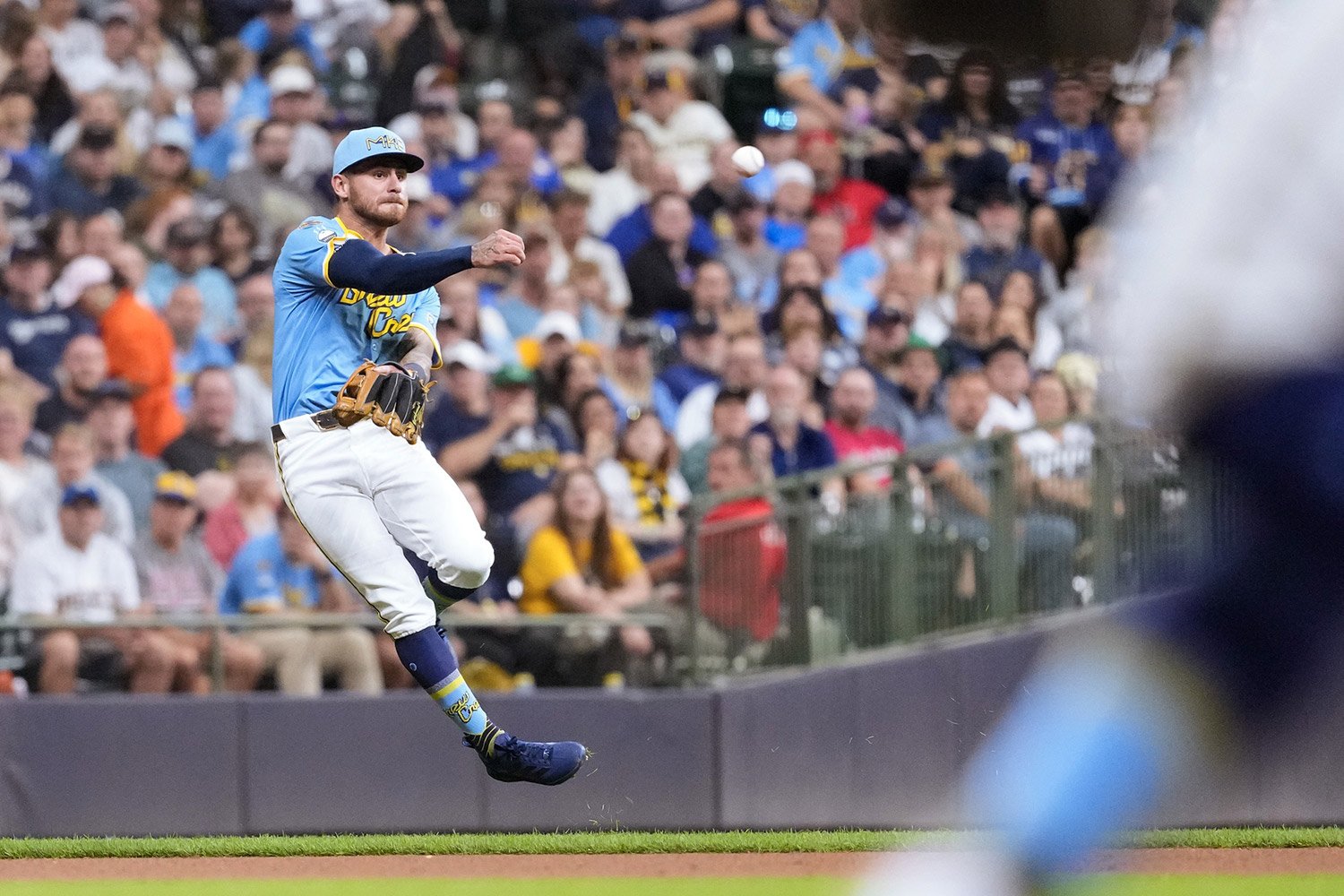 The Milwaukee Brewers came into the final regular season weekend needing one win or a Philadelphia Phillies loss to secure home-field advantage throughout the playoffs. The Cincinnati Reds were looking for one win to stay in the running for the final National League wild card spot. The Brewers failed but the Reds did not, with the visitors edging the Brewers 3-1 Friday night at Uecker Field at American Family Park. The Brewers got on the board first in the third inning when Brice Turang singled to center, scoring Christian Yelich, who had doubled with one out. Those two hits and one run were literally the extent of the Brewers' offense, with Sal Frelick's fourth-inning single the final safety of the game for Milwaukee. Kenosha native Gavin Lux made the Brewers question why they didn't acquire him a couple of years ago when they had a chance, as Lux hit a pair of two-base hits and scored two runs to lead the Reds to victory. Joey Ortiz, Brewers Defense Shine Although the Brewers were defeated 3-1, the score could have been worse if not for Joey O. and his defensive mates. In the top of the first, third baseman Andruw Monasterio fielded a grounder by Noelvi Marte. Brice Turang scooped his quick throw to second on one hop for the out. In the fourth inning, Ortiz fired a ball to second, and Turang's throw to first was short but was snagged by Andrew Vaughn to turn the twin killing. Ortiz made two more sensational plays against Marte and Matt McLain in the late innings to keep the Reds off the scoreboard. Bullpens Almost Flawless For Both Teams While Quinn (The Reverend) Priester struggled (5 IP, 9 H, 3 R, 1 BB, 4 K), his bullpen mates pitched quite well, with Nick Mears and Tobias Myers combining to allow only one walk in four innings while striking out three. For the Reds, after starter Zack Littell gave up three hits, one run, and two walks in 4.2 innings, a foursome of relievers were almost perfect. Connor Phillips, Graham Ashcraft, Tony Santillan, and Emilio Pagan gave up only one walk in 4.1 innings while striking out six batters. Top Performers Christian Yelich, 1-for-4, 2B, R Brice Turang, 1-for-4, RBI Sal Frelick, 1-for-4 Not Great, Bob Everybody else, 0-for-18 On Tap With Philadelphia beating the Minnesota Twins on Friday, the Brewers still need a win or a Philly loss for that home-field advantage. The Brewers close the regular season with two more games against Cincinnati. On Saturday, Robert Gasser will make his second start of the season for the Brewers against Andrew Abbott. The season finale features Freddy Peralta against the Reds' Brady Singer. Bullpen Usage MON TUE WED THU FRI TOT Ashby 16 0 5 0 0 21 Koenig 19 0 16 0 0 35 Fedde 0 0 33 0 0 33 Zastryzny 17 0 0 0 0 17 Myers 0 27 0 0 36 63 Anderson 2 0 0 0 0 2 Payamps 0 0 0 0 0 0 Uribe 10 0 17 0 0 27 Mears 22 0 18 0 9 49
-
- 1
-
-
- joey ortiz
- christian yelich
- (and 1 more)
-
Image courtesy of © Jeff Hanisch-Imagn Images The Milwaukee Brewers came into the final regular season weekend needing one win or a Philadelphia Phillies loss to secure home-field advantage throughout the playoffs. The Cincinnati Reds were looking for one win to stay in the running for the final National League wild card spot. The Brewers failed but the Reds did not, with the visitors edging the Brewers 3-1 Friday night at Uecker Field at American Family Park. The Brewers got on the board first in the third inning when Brice Turang singled to center, scoring Christian Yelich, who had doubled with one out. Those two hits and one run were literally the extent of the Brewers' offense, with Sal Frelick's fourth-inning single the final safety of the game for Milwaukee. Kenosha native Gavin Lux made the Brewers question why they didn't acquire him a couple of years ago when they had a chance, as Lux hit a pair of two-base hits and scored two runs to lead the Reds to victory. Joey Ortiz, Brewers Defense Shine Although the Brewers were defeated 3-1, the score could have been worse if not for Joey O. and his defensive mates. In the top of the first, third baseman Andruw Monasterio fielded a grounder by Noelvi Marte. Brice Turang scooped his quick throw to second on one hop for the out. In the fourth inning, Ortiz fired a ball to second, and Turang's throw to first was short but was snagged by Andrew Vaughn to turn the twin killing. Ortiz made two more sensational plays against Marte and Matt McLain in the late innings to keep the Reds off the scoreboard. Bullpens Almost Flawless For Both Teams While Quinn (The Reverend) Priester struggled (5 IP, 9 H, 3 R, 1 BB, 4 K), his bullpen mates pitched quite well, with Nick Mears and Tobias Myers combining to allow only one walk in four innings while striking out three. For the Reds, after starter Zack Littell gave up three hits, one run, and two walks in 4.2 innings, a foursome of relievers were almost perfect. Connor Phillips, Graham Ashcraft, Tony Santillan, and Emilio Pagan gave up only one walk in 4.1 innings while striking out six batters. Top Performers Christian Yelich, 1-for-4, 2B, R Brice Turang, 1-for-4, RBI Sal Frelick, 1-for-4 Not Great, Bob Everybody else, 0-for-18 On Tap With Philadelphia beating the Minnesota Twins on Friday, the Brewers still need a win or a Philly loss for that home-field advantage. The Brewers close the regular season with two more games against Cincinnati. On Saturday, Robert Gasser will make his second start of the season for the Brewers against Andrew Abbott. The season finale features Freddy Peralta against the Reds' Brady Singer. Bullpen Usage MON TUE WED THU FRI TOT Ashby 16 0 5 0 0 21 Koenig 19 0 16 0 0 35 Fedde 0 0 33 0 0 33 Zastryzny 17 0 0 0 0 17 Myers 0 27 0 0 36 63 Anderson 2 0 0 0 0 2 Payamps 0 0 0 0 0 0 Uribe 10 0 17 0 0 27 Mears 22 0 18 0 9 49 View full article
-
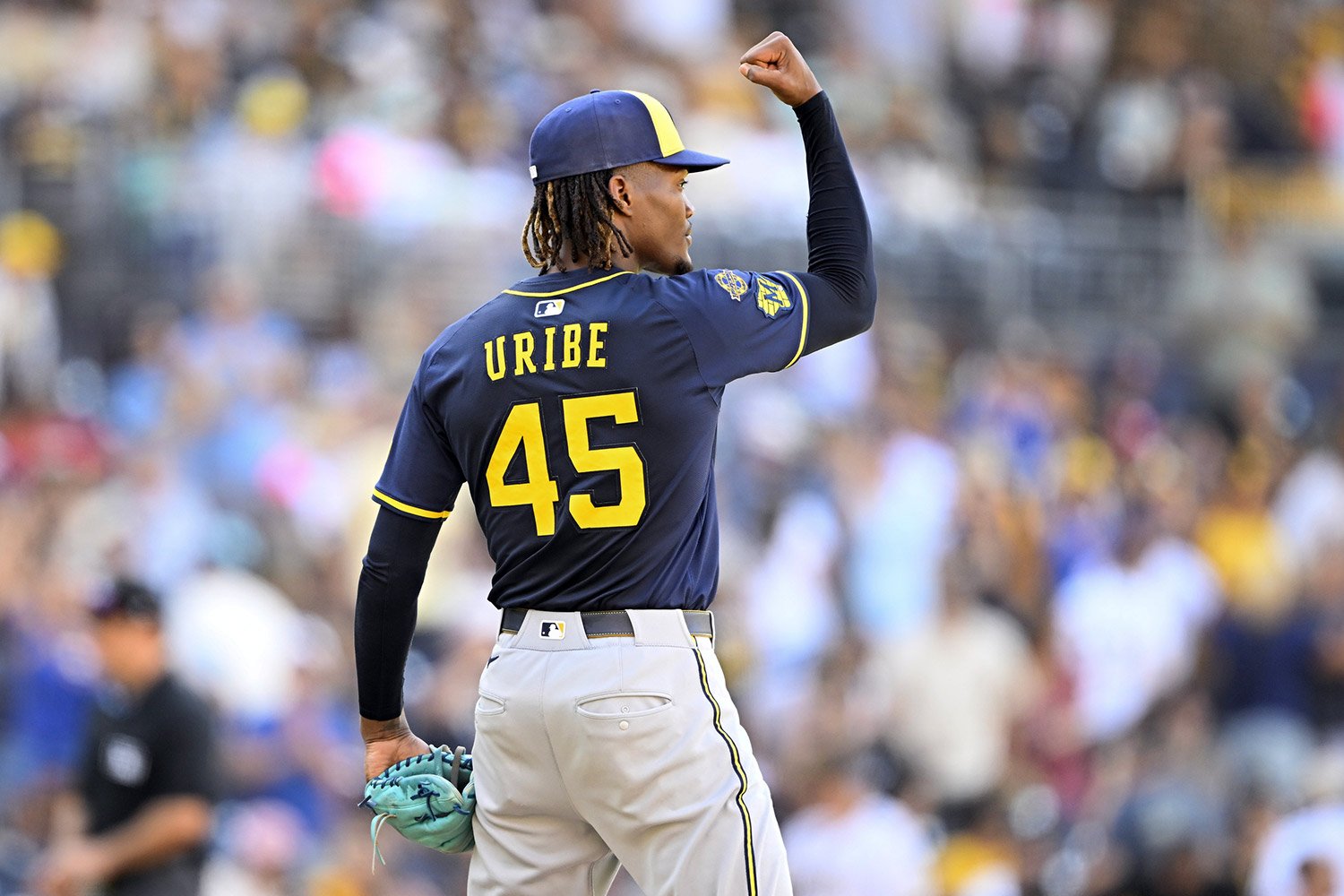 As the Milwaukee Brewers came to the conclusion of their 'Saints' road trip (St. Louis, San Diego) with a 1-4 record, they decided to show the Padres that the team with the best record in the major leagues still had a little gas left in their tank. After losing the first two games to San Diego at Petco Park, the Brewers played a solid all-around game on getaway day as they left town with a 3-1 win on Wednesday afternoon. The victory increased the Brewers' win total to 96, tying the previous franchise high, set in 2011 and 2018. They also lowered their magic number for earning the home-field advantage throughout the playoffs to 'one.' Pitching, hitting, and defense all played key roles in the team's win this afternoon. A Six-Pack of Pitchers Stands Out Chad Patrick, fresh off his start on Saturday against St. Louis, was handed the ball for what was expected to be a short outing today for manager Pat Murphy. It was short, but also very effective as Patrick allowed only two hits and two walks in three innings while striking out six batters. He was followed by Eric Fedde, who retired eight straight Padres before giving up a solo opposite-field home run to Jackson Merrill in the sixth frame. Aaron Ashby, Nick Mears, and Jared Koenig combined for 2.1 innings and allowed only three hits and a walk before turning the game over to Abner Uribe in the ninth. Uribe picked up his sixth save of the year with a 1-2-3 inning, including two strikeouts to end the contest. Turang and Jansen Come to the Rescue Brice Turang banged out three singles and knocked in a run. At the same time, Appleton West alum Danny Jansen ripped a ninth-inning jack off the Western Metal Supply building in left field, a 392-foot shot that hit just below where several Brewers fans were taking a group picture in the third deck. For Turang, it was his 46th multi-hit game of the year. Jano's homer was only his second as a Brewer, but the 13th of the season for the former Blue Jay. Jansen also threw out Luis Arraez trying to steal second base in the third inning. Chewy, Frelick, and Durbin All Make Key Defensive Plays With two on and two outs in the first inning, Xander Bogaerts hit a deep fly ball to left-center field. Jackson Chourio raced back to the wall, leaped, and robbed what would have been a three-run shot for the Pads. That play completely changed the complexion of the game. Three innings later, Gavin Sheets led off the inning with a short line drive to right field. Sal Frelick charged and made a diving, rolling catch just before the ball hit the grass. Fedde went on to retire the next two batters. And Caleb Durbin made a Brooks Robinson-type play in the bottom of the eighth. The Brewers held a slim 2-1 lead, and the Padres had a runner on first with two outs. Bogaerts hit a two-hopper down the third baseline that Durbin fielded near the line. His momentum carried him further, but he uncorked a strong one-hop throw to first that beat the runner by a step or two. Inning over. Bullpen Usage SAT SUN MON TUE WED TOT Ashby 39 0 16 0 5 60 Koenig 16 0 19 0 16 51 Fedde 0 56 0 0 33 89 Zastryzny 0 5 17 0 0 22 Myers 0 0 0 27 0 27 Anderson 0 14 2 0 0 16 Payamps 0 0 0 0 0 0 Uribe 17 0 10 0 17 44 Mears 0 0 22 0 18 40
-
- 3
-
-
- chad patrick
- brice turang
- (and 2 more)
-
As the Milwaukee Brewers came to the conclusion of their 'Saints' road trip (St. Louis, San Diego) with a 1-4 record, they decided to show the Padres that the team with the best record in the major leagues still had a little gas left in their tank. After losing the first two games to San Diego at Petco Park, the Brewers played a solid all-around game on getaway day as they left town with a 3-1 win Wednesday afternoon. The victory increased the Brewers win total to 96, tying the previous franchise high, set in 2011 and 2018. They also lowered their magic number for earning the home field advantage throughout the playoffs to 'one.' Pitching, hitting, and defense all played key roles in the team's win this afternoon. A Six-Pack of Pitchers Stands Out Chad Patrick, fresh off his start on Saturday against St. Louis, was handed the ball for what was expected to be a short outing today for manager Pat Murphy. It was short, but also very effective as Patrick allowed only two hits and two walks in three innings while striking out six batters. He was followed by Eric Fedde, who retired eight straight Padres before giving up a solo opposite field home run to Jackson Merrill in the sixth frame. Aaron Ashby, Nick Mears, and Jared Koenig combined for 2.1 innings and allowed only three hits and a walk before turning the game over to Abner Uribe in the ninth. Uribe picked up his sixth save of the year with a 1-2-3 inning, including two strikeouts to end the contest. Turang and Jansen Lead Hit Parade Brice Turang banged out three singles and knocked in a run while Appleton West alum Danny Jansen ripped a ninth inning jack off the Western Metal Supply building in a left field, a 392-foot shot that hit just below where several Brewers fans were taking a group picture in the third deck. For Turang, it was his 46th multi-hit game of the year. Jano's homer was only his second as a Brewer, but the 13th of the season for the former Blue Jay. Jansen also threw out Luis Arraez trying to steal second base in the third inning. He also had a single and drew a walk in the game. Chewy, Frelick, and Durbin Come to the Rescue With Key Defensive Plays With two on and two outs in the first inning, Xander Bogaerts hit a deep fly ball to left-center field. Jackson Chourio raced back to the wall, leaped and robbed what would have been a three-run shot for the Pads. That play completely changed the complexion of the game. Three innings later, Gavin Sheets led off the inning with a short line drive to right field. Sal Frelick charged and made a diving, rolling catch just before the ball hit the grass. Fedde went on to retire the next two batters. And Caleb Durbin made a Brooks Robinson-type play in the bottom of the eighth. The Brewers held a slim 2-1 lead and the Padres had a runner on first with two outs. Bogaerts hit a two-hopper down the third baseline that Durbin fielded near the line. His momentum carried him further, but he uncorked a strong one-hop throw to first that beat the runner by a step or two. Inning over. Top Performers Brice Turang, 3-for-4, RBI Danny Jansen, 2-for-3, HR, RBI Jake Bauers, 1-for-1, 2B, 2 BB Not Great, Bob Andruw Monasterio, 0-for-3, 3 K's What's On Tap The Brewers have a well-deserved off day on Thursday and will finish the regular season with three games this weekend at Uecker Field against Cincinnati, who is currently languishing in third-place in the NL Central, possibly looking to play the role of spoiler in Milwaukee's bid to gain the home field edge throughout the playoffs. View full article
-
Image courtesy of © Denis Poroy-Imagn Images Fresh off clinching their third straight National League Central title (and fourth in the last five years), the Milwaukee Brewers entered Monday night’s contest in San Diego with only one goal in mind: winning enough games to claim the top seed in the NL playoff race. But the Brewers would not add to their victory total in the opener of their series out West, as catcher Freddy Fermin laced a liner to left-center to score Bryce Johnson in the bottom of the 11th inning, giving the Padres a 5-4 win—and a spot in the postseason. Fastball Freddy Joins Select Company Freddy Peralta struck out six Padres, giving him 201 strikeouts on the year. It is the third time the Brewers' ace has struck out 200 or more batters in a season, joining Pedro Martínez (nine times), Juan Marichal (six), and Mario Soto (three) as Dominican hurlers who have been so prolific. In addition, he tied Corbin Burnes for second-most such seasons in Brewers history, trailing only Yovani Gallardo. Teddy Higuera (twice), Ben Sheets, Brandon Woodruff, Zack Greinke, and Doug Davis each reached the milestone, too. What Strike Zone? Home plate umpire Roberto Ortiz (no relation to Joey) seemed to have his own unique interpretation of a strike zone. On at least four occasions, Ortiz called pitches that were easily three inches above the zone as strikes, while a like number of offerings that touched the bottom line of the strike zone frame were called balls. Both dugouts were barking at the beleaguered arbiter at various times during the game. Top Performers Christian Yelich, 1-for-3, 2 RBI, 3 BB Andrew Vaughn, 2-for-3, BB Caleb Durbin, 2-for-5, RBI Not Great, Bob Jackson Chourio, 0-for-6, 2 K Grant Anderson, 2 Pitches, 1 H, 1 R, Loss Next Up The Brewers dropped to 95-62, but they still have a 2.5-game lead over Philadelphia for the top seed in the National League. Milwaukee has five games left, while the Phillies have six. In the middle game of the three-game set with San Diego Tuesday night, southpaw Bruce Zimmermann will make his first big-league start since June 15, 2022 for Milwaukee, against San Diego’s Randy Vasquez and several hungover teammates. Bullpen Usage THU FRI SAT SUN MON TOT Ashby 14 0 39 0 16 69 Koenig 14 0 16 0 19 49 Fedde 0 0 0 56 0 56 Zastryzny 0 22 0 5 17 44 Myers 0 28 0 0 0 28 Anderson 0 25 0 14 2 41 Payamps 0 18 0 0 0 18 Patrick 0 0 0 0 0 0 Uribe 24 0 17 0 10 51 Mears 0 0 0 0 22 22 View full article
-
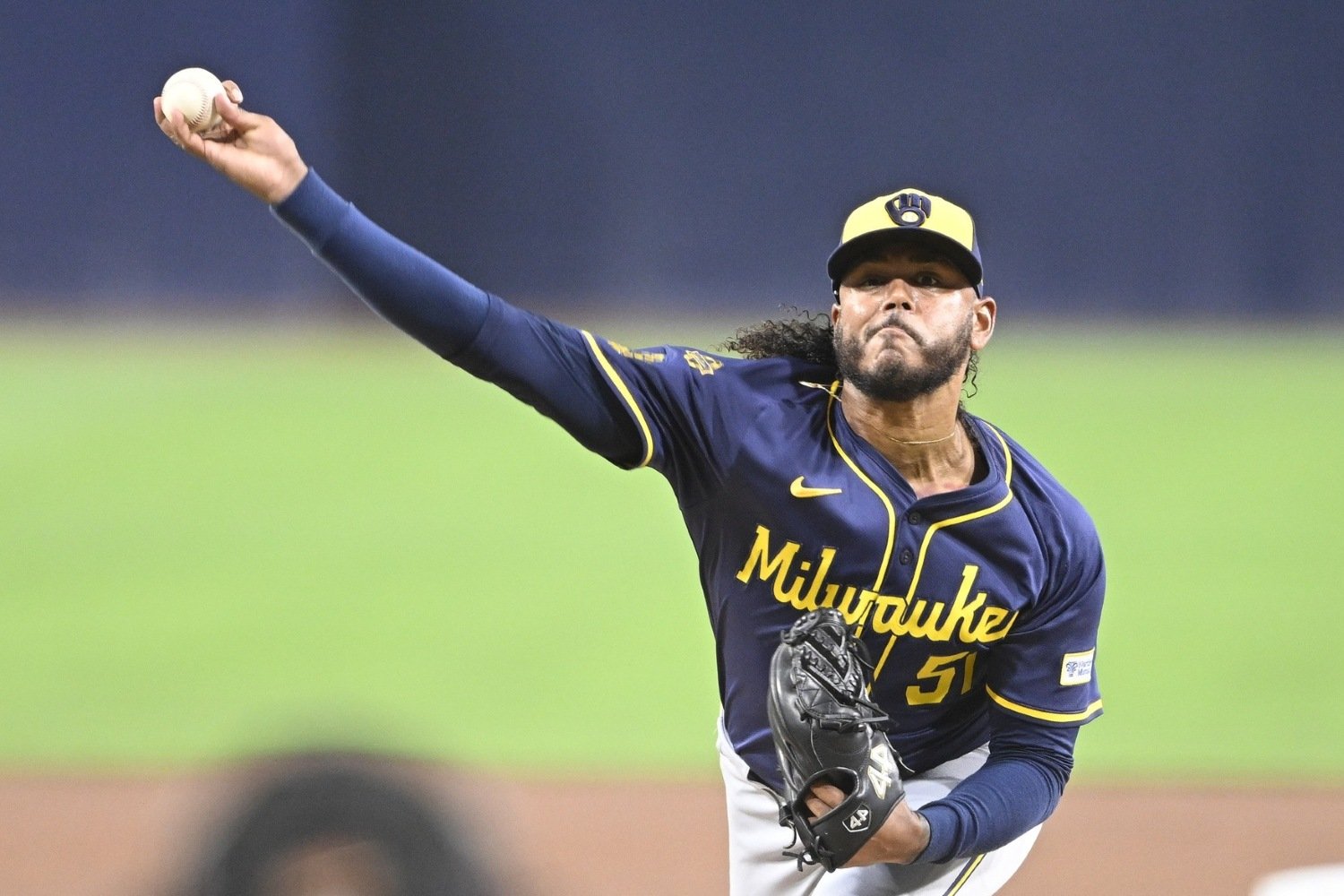 Fresh off clinching their third straight National League Central title (and fourth in the last five years), the Milwaukee Brewers entered Monday night’s contest in San Diego with only one goal in mind: winning enough games to claim the top seed in the NL playoff race. But the Brewers would not add to their victory total in the opener of their series out West, as catcher Freddy Fermin laced a liner to left-center to score Bryce Johnson in the bottom of the 11th inning, giving the Padres a 5-4 win—and a spot in the postseason. Fastball Freddy Joins Select Company Freddy Peralta struck out six Padres, giving him 201 strikeouts on the year. It is the third time the Brewers' ace has struck out 200 or more batters in a season, joining Pedro Martínez (nine times), Juan Marichal (six), and Mario Soto (three) as Dominican hurlers who have been so prolific. In addition, he tied Corbin Burnes for second-most such seasons in Brewers history, trailing only Yovani Gallardo. Teddy Higuera (twice), Ben Sheets, Brandon Woodruff, Zack Greinke, and Doug Davis each reached the milestone, too. What Strike Zone? Home plate umpire Roberto Ortiz (no relation to Joey) seemed to have his own unique interpretation of a strike zone. On at least four occasions, Ortiz called pitches that were easily three inches above the zone as strikes, while a like number of offerings that touched the bottom line of the strike zone frame were called balls. Both dugouts were barking at the beleaguered arbiter at various times during the game. Top Performers Christian Yelich, 1-for-3, 2 RBI, 3 BB Andrew Vaughn, 2-for-3, BB Caleb Durbin, 2-for-5, RBI Not Great, Bob Jackson Chourio, 0-for-6, 2 K Grant Anderson, 2 Pitches, 1 H, 1 R, Loss Next Up The Brewers dropped to 95-62, but they still have a 2.5-game lead over Philadelphia for the top seed in the National League. Milwaukee has five games left, while the Phillies have six. In the middle game of the three-game set with San Diego Tuesday night, southpaw Bruce Zimmermann will make his first big-league start since June 15, 2022 for Milwaukee, against San Diego’s Randy Vasquez and several hungover teammates. Bullpen Usage THU FRI SAT SUN MON TOT Ashby 14 0 39 0 16 69 Koenig 14 0 16 0 19 49 Fedde 0 0 0 56 0 56 Zastryzny 0 22 0 5 17 44 Myers 0 28 0 0 0 28 Anderson 0 25 0 14 2 41 Payamps 0 18 0 0 0 18 Patrick 0 0 0 0 0 0 Uribe 24 0 17 0 10 51 Mears 0 0 0 0 22 22
 -
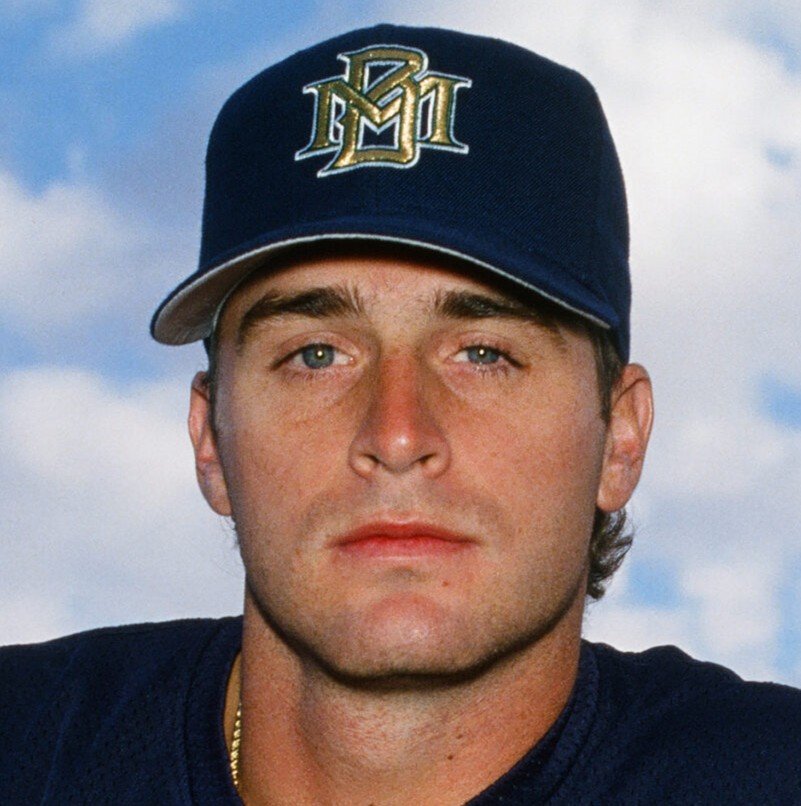 Mike Matheny probably needed a professional to help him update his curriculum vitae after he retired from baseball in February 2007 due to ongoing symptoms of post-concussion syndrome. He served as a special advisor to the St. Louis Cardinals during Spring Training 2008; coached Little League baseball; and in November 2011 was named manager of the Cardinals without any prior professional managing or coaching experience. All Matheny did was lead the Cardinals to the playoffs in each of his first four seasons, the first big-league manager to do so. The team won three NL Central crowns and lost to the Boston Red Sox in six games in the 2013 World Series. Although his teams had a winning percentage of .555 in his first six-plus seasons, he was fired by the Cardinals in mid-2018. Michael Scott Matheny graduated from Reynoldsburg (OH) HS in 1988 and was drafted in the 31st round of the MLB Amateur draft that year. He chose not to sign and instead attended the University of Michigan, where he was drafted in the eighth round of the 1991 draft by the Milwaukee Brewers. Matheny made stops at three different levels in the Brewers organization before making his big-league debut to start the 1994 campaign. After seeing limited action the first few weeks, Matheny was sent down after hitting .160/.222/.160 in 17 games. He was sent to Triple-A New Orleans but was recalled in July and hit .286/.355/.500 in 28 ABs before getting sent down to get additional playing time. The 6-foot-3 right-handed-hitting Matheny earned more playing time in 1995, getting 47 starts in 80 appearances. His solid defense offset his offense, which was average at best. During his last three years in Milwaukee, he played in more than 106 games each season and had a total batting line of .229/.272/.338 with 44 doubles and 18 home runs. He signed as a free agent with the Toronto Blue Jays for the 1999 season but only played in 57 games and was released after the season. The Cardinals signed him prior to the 2000 season and although Matheny's hitting improved a little, he shone on defense, winning three Gold Gloves in five seasons. In 27 post-season games across three seasons for the Cards, Matheny hit two home runs and drove in 10 while batting .253 (20-for-79). Matheny finished his career with two seasons in San Francisco, the second truncated in July 2006 when he suffered a serious concussion after several foul balls caromed off his catcher's mask. The 2005 season was arguably his best in the bigs as he won a fourth Gold Glove and set career highs with 34 doubles, 13 home runs, 59 RBI, and an OPS+ of 81. He retired in 2007. After managing the Cards, he spent two-plus years as the manager of the Kansas City Royals from 2020-2022.
 -
Mike Matheny probably needed a professional to help him update his curriculum vitae after he retired from baseball in February 2007 due to ongoing symptoms of post-concussion syndrome. He served as a special advisor to the St. Louis Cardinals during Spring Training 2008; coached Little League baseball; and in November 2011 was named manager of the Cardinals without any prior professional managing or coaching experience. All Matheny did was lead the Cardinals to the playoffs in each of his first four seasons, the first big-league manager to do so. The team won three NL Central crowns and lost to the Boston Red Sox in six games in the 2013 World Series. Although his teams had a winning percentage of .555 in his first six-plus seasons, he was fired by the Cardinals in mid-2018. Michael Scott Matheny graduated from Reynoldsburg (OH) HS in 1988 and was drafted in the 31st round of the MLB Amateur draft that year. He chose not to sign and instead attended the University of Michigan, where he was drafted in the eighth round of the 1991 draft by the Milwaukee Brewers. Matheny made stops at three different levels in the Brewers organization before making his big-league debut to start the 1994 campaign. After seeing limited action the first few weeks, Matheny was sent down after hitting .160/.222/.160 in 17 games. He was sent to Triple-A New Orleans but was recalled in July and hit .286/.355/.500 in 28 ABs before getting sent down to get additional playing time. The 6-foot-3 right-handed-hitting Matheny earned more playing time in 1995, getting 47 starts in 80 appearances. His solid defense offset his offense, which was average at best. During his last three years in Milwaukee, he played in more than 106 games each season and had a total batting line of .229/.272/.338 with 44 doubles and 18 home runs. He signed as a free agent with the Toronto Blue Jays for the 1999 season but only played in 57 games and was released after the season. The Cardinals signed him prior to the 2000 season and although Matheny's hitting improved a little, he shone on defense, winning three Gold Gloves in five seasons. In 27 post-season games across three seasons for the Cards, Matheny hit two home runs and drove in 10 while batting .253 (20-for-79). Matheny finished his career with two seasons in San Francisco, the second truncated in July 2006 when he suffered a serious concussion after several foul balls caromed off his catcher's mask. The 2005 season was arguably his best in the bigs as he won a fourth Gold Glove and set career highs with 34 doubles, 13 home runs, 59 RBI, and an OPS+ of 81. He retired in 2007. After managing the Cards, he spent two-plus years as the manager of the Kansas City Royals from 2020-2022. View full player
-
The number this year is only for Milwaukee. One thing that I didn't factor is that he has only played in 57 games for the Brewers. If I had doubled that bWAR to 2.8, he probably would have been top 5. My Bad...
- 7 replies
-
- 1
-
-
- isaac collins
- caleb durbin
- (and 3 more)
-
I don't disagree, and yes, it leaned on bWAR more than anything else really. Here are the numbers I went with: Name 2025 bWAR 2024 bWAR Increase Brice Turang 5.3 4.7 0.6 Caleb Durbin 2.6 0.0 2.6 Isaac Collins 2.2 -0.3 2.5 Sal Frelick 3.2 2.1 1.1 Andrew Vaughn 1.4 0.2 1.2 Freddy Peralta 5.4 2.6 2.8 Quinn Priester 3.0 -0.1 3.1 Abner Uribe 2.3 -0.4 2.7 Aaron Ashby 1.5 0.2 1.3 Maybe I took the lazy route...but I don't disagree with what you said.
- 7 replies
-
- 1
-
-
- isaac collins
- caleb durbin
- (and 3 more)
-
Image courtesy of © Charles LeClaire-Imagn Images In the early spring of 2025, most prognosticators opined that the Milwaukee Brewers would finish in the middle of the pack in the National League Central, behind the consensus favorite Chicago Cubs. The win total for the Brewers was usually predicted to be in the mid-80s, behind the Cubs and perhaps even behind the Cardinals, Reds, or Pirates. None of that has come true. With eight games left on the 2025 slate, the Brewers have fashioned a major league-best 94-59 mark (as of Friday before game time), three games ahead of the Philadelphia Phillies in the running for home-field advantage throughout the playoffs, and six games in front of the Cubbies in the hunt for the NL Central title, which would be their sixth such championship. The Brewers also earned division titles in both 1981 and 1982, when they played in the American League East. Here are some of the key performers who have scratched and clawed every day as manager Pat Murphy's 'Average Joes.' Honorable Mention Sal Frelick, Andrew Vaughn, Aaron Ashby. Using my hockey background, terminology-wise, here are the five 'stars' of the Brewers season (compared to last year). #5 Star-Isaac Collins Coming into the season, Collins was expected to play a bench role as primarily an outfielder, but spring injuries to Blake Perkins and Garrett Mitchell gave Collins an opportunity to be penciled into the everyday lineup in left field, where he has made 85 starts this season. According to FanGraphs' advanced stats, Collins ranks seventh among starting NL left fielders with a +1 Defensive Runs Saved (DRS) number. And the diminutive switch-hitter has certainly passed the eye-test, making several outstanding running or diving catches during the season. Collins can also swing the stick as evidenced by his top-5 rankings for Milwaukee with 21 doubles, three triples, 16 stolen bases, and an OPS of.368. Collins has also moved into the Rookie of the Year talk in the National League. #4 Star-Caleb Durbin Durbin came over to Milwaukee with Nestor Cortes from the New York Yankees in the Devin Williams trade last December. In spring training, Durbin was seen either as a platoon partner at third with Oliver Dunn or as a back-up infielder. By mid-April, Dunn was sent down to Nashville and Durbin became the starting third baseman. Although Durbin played twice as many games at second than he did at third in the minors, he was installed at the hot corner on a more-or-less regular basis in Milwaukee, making 110 starts so far at 3B. His FanGraphs' DRS number of +5 is tied for third in the NL with multiple-Gold Glove winner Nolan Arenado. At the plate, Durbin ranks in the top-5 for Milwaukee with 24 two-base hits and 16 stolen bases. #3 Star-Abner Uribe The excitable 6-foot-3 right-hander is in his third year as a Brewer and has already made 70 relief appearances, which tops the Brewers staff. With the injury to closer Trevor Megill nearly a month ago, Uribe has become the highest of high-leverage pitchers for the Brewers, appearing in the ninth or final inning in seven of his eight outings. Uribe's numbers show him in the top-5 on Milwaukee with a bWAR of 2.3, five saves, relief IP (70.1), relief K's (84), ERA+ of 234, and FIP of 2.91. The man with the baby blue '44' glove that dances off the mound after key innings is truly a key player in the Brewers' success this season. Will he go back to his eighth inning role when Megill returns? Only time will tell, but the Brewers will need both of them to continue their high level of play if the Brewers want to move deep into this postseason. #2 Star-Freddy Peralta Normally you wouldn't think that Fastball Freddy would be on this list, but his bWAR of 5.4 this year compared to last season's 2.6 says otherwise. The casual fan would be surprised to know that Peralta is in his eighth season as a Brewers but won't turn 30 until next June. On this year's stat sheet, Peralta is truly head-and-shoulders above not only the Brewers, but in the National League. Even though 'pitcher wins' aren't a 'big thing' in today's analytics, Freddy leads the major leagues with 17 victories. On the Brewers, Peralta leads the starters with an ERA of 2.65, 31 games started, 169.2 innings pitched, 195 strikeouts, and an ERA+ of 158. Freddy will be a key part of the Brewers postseason rotation. #1 Star-Quinn Priester The 'Reverend' came over in the highly-debated trade in early April 2025 with the Boston Red Sox that cost the Brewers top OF prospect Yophery Rodriguez, a Competitive Balance Round A pick, and a PTBNL, who turned out to be pitcher John Holobetz. Much grumbling went on in Brewer Nation because of Rodriguez and the draft pick, but after five quality months in the Brewers rotation by Priester, odds are that the Milwaukee fan base has forgotten all about Rodriguez and the draft selection. Holobetz has done well and has advanced to Double-A for Boston while 'Yoph' is struggling at High-A. In the meantime, Milwaukee has a starter that has helped lead the team to the playoffs. Priester is among team leaders with his bWAR of 3.0, 13 wins, 146.2 innings pitched, and 118 strikeouts. He won 12 straight decisions coming into Thursday's game and the Brewers have won the last 19 games he started, including a 5-2 win over the Angels in the final game of a three-game sweep Thursday. Once again, 'The Rev' pitched well, going 5.2 innings, allowing three hits, two runs, and two walks while striking out double-digit (10) hitters for the third time this year. Next Stop, World Series? All the players listed above have played huge roles in helping Brew City make it to 94 wins this season. Uribe and Peralta had prior success with Milwaukee and were expected to contribute again this year, and they have. But the others? Collins should finish in the top-5 (at worst) in the NL ROY race, while Durbin and Priester have performed as management and the fans had hoped they would. It is up to them, along with the other 20 players on the 28-man roster to keep on 'keepin' on' and send the Brewers to a place they haven't been since 1982--The World Series. View full article
-
Above And Beyond: Five Brewers That Greatly Improved In 2025
Michael Trzinski posted an article in Brewers
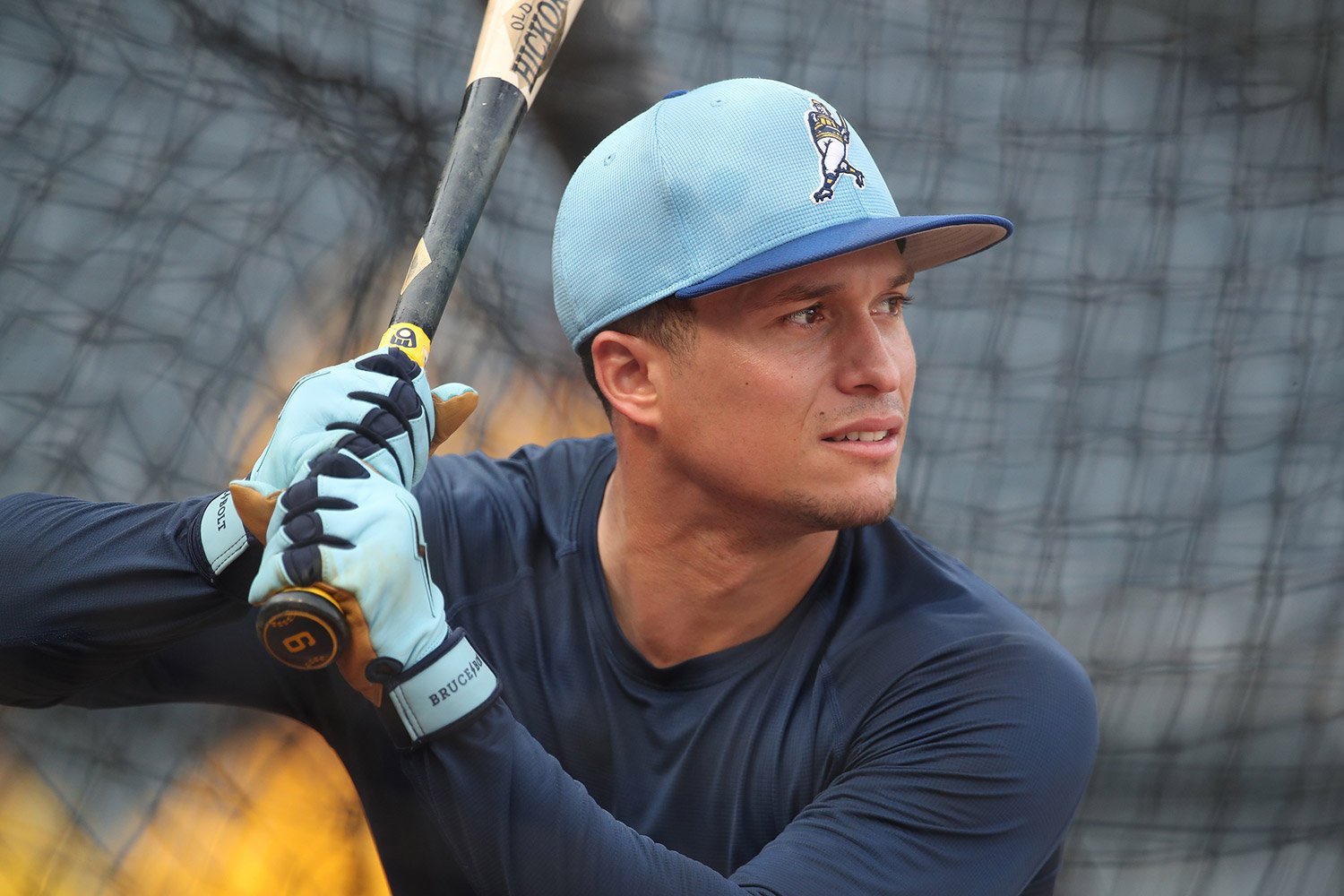 In the early spring of 2025, most prognosticators opined that the Milwaukee Brewers would finish in the middle of the pack in the National League Central, behind the consensus favorite Chicago Cubs. The win total for the Brewers was usually predicted to be in the mid-80s, behind the Cubs and perhaps even behind the Cardinals, Reds, or Pirates. None of that has come true. With eight games left on the 2025 slate, the Brewers have fashioned a major league-best 94-59 mark (as of Friday before game time), three games ahead of the Philadelphia Phillies in the running for home-field advantage throughout the playoffs, and six games in front of the Cubbies in the hunt for the NL Central title, which would be their sixth such championship. The Brewers also earned division titles in both 1981 and 1982, when they played in the American League East. Here are some of the key performers who have scratched and clawed every day as manager Pat Murphy's 'Average Joes.' Honorable Mention Sal Frelick, Andrew Vaughn, Aaron Ashby. Using my hockey background, terminology-wise, here are the five 'stars' of the Brewers season (compared to last year). #5 Star-Isaac Collins Coming into the season, Collins was expected to play a bench role as primarily an outfielder, but spring injuries to Blake Perkins and Garrett Mitchell gave Collins an opportunity to be penciled into the everyday lineup in left field, where he has made 85 starts this season. According to FanGraphs' advanced stats, Collins ranks seventh among starting NL left fielders with a +1 Defensive Runs Saved (DRS) number. And the diminutive switch-hitter has certainly passed the eye-test, making several outstanding running or diving catches during the season. Collins can also swing the stick as evidenced by his top-5 rankings for Milwaukee with 21 doubles, three triples, 16 stolen bases, and an OPS of.368. Collins has also moved into the Rookie of the Year talk in the National League. #4 Star-Caleb Durbin Durbin came over to Milwaukee with Nestor Cortes from the New York Yankees in the Devin Williams trade last December. In spring training, Durbin was seen either as a platoon partner at third with Oliver Dunn or as a back-up infielder. By mid-April, Dunn was sent down to Nashville and Durbin became the starting third baseman. Although Durbin played twice as many games at second than he did at third in the minors, he was installed at the hot corner on a more-or-less regular basis in Milwaukee, making 110 starts so far at 3B. His FanGraphs' DRS number of +5 is tied for third in the NL with multiple-Gold Glove winner Nolan Arenado. At the plate, Durbin ranks in the top-5 for Milwaukee with 24 two-base hits and 16 stolen bases. #3 Star-Abner Uribe The excitable 6-foot-3 right-hander is in his third year as a Brewer and has already made 70 relief appearances, which tops the Brewers staff. With the injury to closer Trevor Megill nearly a month ago, Uribe has become the highest of high-leverage pitchers for the Brewers, appearing in the ninth or final inning in seven of his eight outings. Uribe's numbers show him in the top-5 on Milwaukee with a bWAR of 2.3, five saves, relief IP (70.1), relief K's (84), ERA+ of 234, and FIP of 2.91. The man with the baby blue '44' glove that dances off the mound after key innings is truly a key player in the Brewers' success this season. Will he go back to his eighth inning role when Megill returns? Only time will tell, but the Brewers will need both of them to continue their high level of play if the Brewers want to move deep into this postseason. #2 Star-Freddy Peralta Normally you wouldn't think that Fastball Freddy would be on this list, but his bWAR of 5.4 this year compared to last season's 2.6 says otherwise. The casual fan would be surprised to know that Peralta is in his eighth season as a Brewers but won't turn 30 until next June. On this year's stat sheet, Peralta is truly head-and-shoulders above not only the Brewers, but in the National League. Even though 'pitcher wins' aren't a 'big thing' in today's analytics, Freddy leads the major leagues with 17 victories. On the Brewers, Peralta leads the starters with an ERA of 2.65, 31 games started, 169.2 innings pitched, 195 strikeouts, and an ERA+ of 158. Freddy will be a key part of the Brewers postseason rotation. #1 Star-Quinn Priester The 'Reverend' came over in the highly-debated trade in early April 2025 with the Boston Red Sox that cost the Brewers top OF prospect Yophery Rodriguez, a Competitive Balance Round A pick, and a PTBNL, who turned out to be pitcher John Holobetz. Much grumbling went on in Brewer Nation because of Rodriguez and the draft pick, but after five quality months in the Brewers rotation by Priester, odds are that the Milwaukee fan base has forgotten all about Rodriguez and the draft selection. Holobetz has done well and has advanced to Double-A for Boston while 'Yoph' is struggling at High-A. In the meantime, Milwaukee has a starter that has helped lead the team to the playoffs. Priester is among team leaders with his bWAR of 3.0, 13 wins, 146.2 innings pitched, and 118 strikeouts. He won 12 straight decisions coming into Thursday's game and the Brewers have won the last 19 games he started, including a 5-2 win over the Angels in the final game of a three-game sweep Thursday. Once again, 'The Rev' pitched well, going 5.2 innings, allowing three hits, two runs, and two walks while striking out double-digit (10) hitters for the third time this year. Next Stop, World Series? All the players listed above have played huge roles in helping Brew City make it to 94 wins this season. Uribe and Peralta had prior success with Milwaukee and were expected to contribute again this year, and they have. But the others? Collins should finish in the top-5 (at worst) in the NL ROY race, while Durbin and Priester have performed as management and the fans had hoped they would. It is up to them, along with the other 20 players on the 28-man roster to keep on 'keepin' on' and send the Brewers to a place they haven't been since 1982--The World Series.
- 7 comments
-
- 2
-
-
- isaac collins
- caleb durbin
- (and 3 more)
-
Image courtesy of © Michael McLoone-Imagn Images Freddy Peralta went six innings, allowed only two hits and two walks and struck out a season-high 10 batters in leading the Milwaukee Brewers to a 9-2 win over the Los Angeles Angels Tuesday evening at Uecker Field in Milwaukee. The home side scored single runs in the first three innings and then added a pair in the fourth, to build a 5-0 lead. The Angels tallied on solo shots in the fifth and seventh frames to cut the lead to 5-2, but Milwaukee responded with four runs in their final two innings to put the game out of reach. On the day that honored Pittsburgh Pirates great Roberto Clemente, many of the Brewers players wore the '21' that Clemente had emblazoned on his jersey for 18 years before his tragic death on Dec. 31, 1972. Fastball Freddy Makes a Statement Peralta had several full counts, but managed to strike out a season-high 10 batters while increasing his season strikeout total to 195, nearing the 200 mark for the third time in his career. While 'pitcher wins' aren't as valued as they used to be, Peralta's 17 victories lead the National League and are tied for eighth-most in a campaign in franchise history. Solid Start, Great Finish The Brewers scored a single run in each of the first three innings and two more in the next, to give the home team a 5-0 lead. Christian Yelich had three RBIs, on a two-run homer and an RBI double, while Sal Frelick had a sac fly and Caleb Durbin knocked in a run with a single. Andrew Vaughn had an RBI double in the seventh, and Jackson Chourio knocked in a run in the eighth before William Contreras tallied a pair on a base hit. Sal Frelick, Roberto Clemente Award Nominee As part of the annual program, each MLB club nominates one player to be considered for the league-wide award in tribute to Clemente’s achievements and character. This list of nominees features players whose various community and philanthropic activities have focused on important causes, such as underserved children and communities in the United States and around the world, individuals with cancer and other illnesses, educational programs, environmental advocacy, and more. In tonight's game, Frelick went 1-for-2 with a sac fly, two walks, and an RBI. Top Performers Freddy Peralta, 6 IP, 2 H, 1 ER, 2 BB, 10 K Christian Yelich, 3-for-5, 2B, HR, 3 RBI William Contreras, 2-for-4, 2 RBI Andrew Vaughn, 2-for-5, 2B, 2 RBI Caleb Durbin, 2-for-4, SB, RBI Not Great, Bob Joey Ortiz, 0-for-4 What's On Tap? The Brewers are now 92-59, two games ahead of Philadelphia for the best record in the National League. They currently lead the Chicago Cubs by five games in the NL Central. The Brewers take on the Angels in game two of the three-game series Wednesday. Jose Soriano takes on Brandon Woodruff in the middle game of the set. The Crew's magic number for the division title is 7. View full article
-
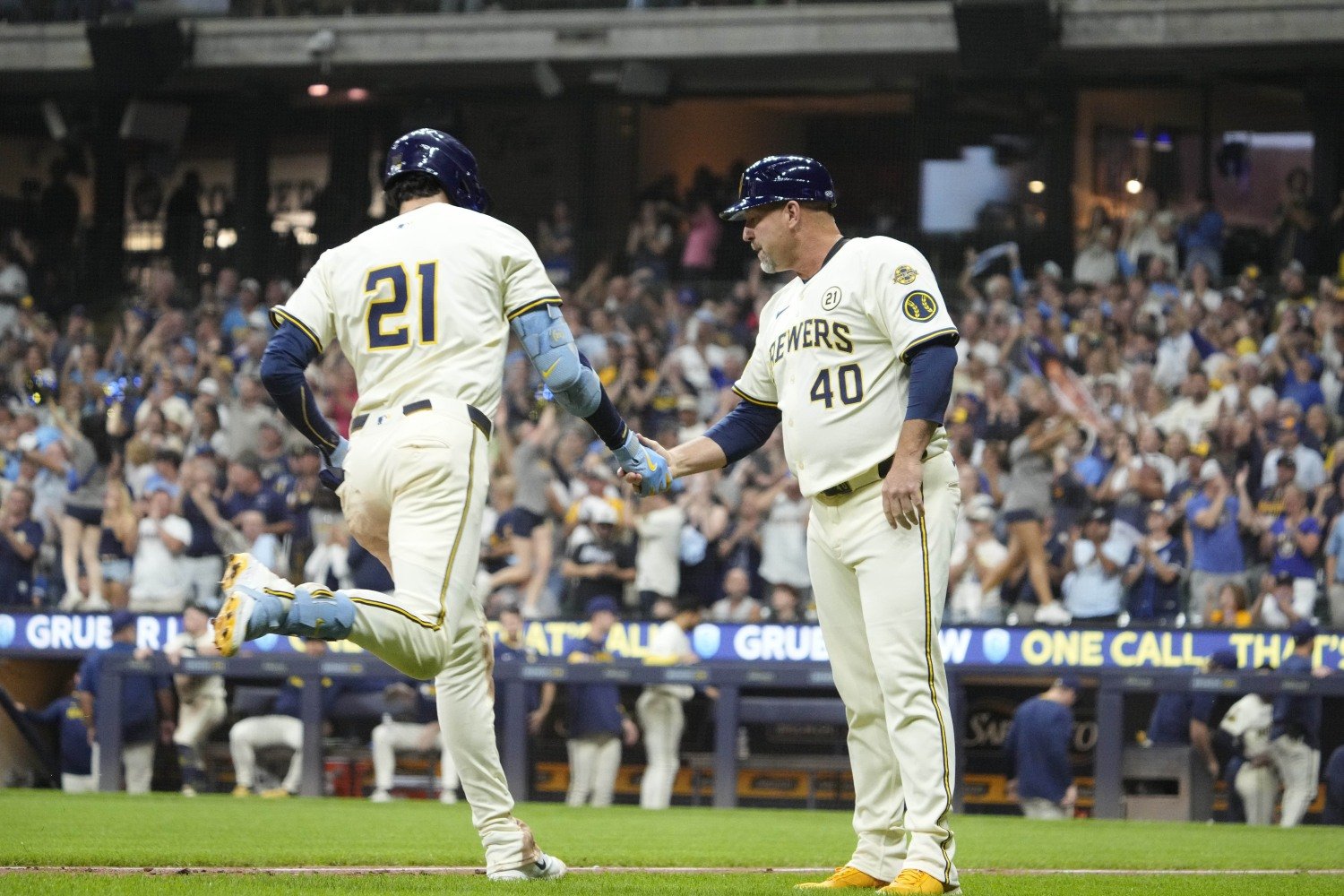 Freddy Peralta went six innings, allowed only two hits and two walks and struck out a season-high 10 batters in leading the Milwaukee Brewers to a 9-2 win over the Los Angeles Angels Tuesday evening at Uecker Field in Milwaukee. The home side scored single runs in the first three innings and then added a pair in the fourth, to build a 5-0 lead. The Angels tallied on solo shots in the fifth and seventh frames to cut the lead to 5-2, but Milwaukee responded with four runs in their final two innings to put the game out of reach. On the day that honored Pittsburgh Pirates great Roberto Clemente, many of the Brewers players wore the '21' that Clemente had emblazoned on his jersey for 18 years before his tragic death on Dec. 31, 1972. Fastball Freddy Makes a Statement Peralta had several full counts, but managed to strike out a season-high 10 batters while increasing his season strikeout total to 195, nearing the 200 mark for the third time in his career. While 'pitcher wins' aren't as valued as they used to be, Peralta's 17 victories lead the National League and are tied for eighth-most in a campaign in franchise history. Solid Start, Great Finish The Brewers scored a single run in each of the first three innings and two more in the next, to give the home team a 5-0 lead. Christian Yelich had three RBIs, on a two-run homer and an RBI double, while Sal Frelick had a sac fly and Caleb Durbin knocked in a run with a single. Andrew Vaughn had an RBI double in the seventh, and Jackson Chourio knocked in a run in the eighth before William Contreras tallied a pair on a base hit. Sal Frelick, Roberto Clemente Award Nominee As part of the annual program, each MLB club nominates one player to be considered for the league-wide award in tribute to Clemente’s achievements and character. This list of nominees features players whose various community and philanthropic activities have focused on important causes, such as underserved children and communities in the United States and around the world, individuals with cancer and other illnesses, educational programs, environmental advocacy, and more. In tonight's game, Frelick went 1-for-2 with a sac fly, two walks, and an RBI. Top Performers Freddy Peralta, 6 IP, 2 H, 1 ER, 2 BB, 10 K Christian Yelich, 3-for-5, 2B, HR, 3 RBI William Contreras, 2-for-4, 2 RBI Andrew Vaughn, 2-for-5, 2B, 2 RBI Caleb Durbin, 2-for-4, SB, RBI Not Great, Bob Joey Ortiz, 0-for-4 What's On Tap? The Brewers are now 92-59, two games ahead of Philadelphia for the best record in the National League. They currently lead the Chicago Cubs by five games in the NL Central. The Brewers take on the Angels in game two of the three-game series Wednesday. Jose Soriano takes on Brandon Woodruff in the middle game of the set. The Crew's magic number for the division title is 7.
 -
One of my favorite players when I was a kid. A great hitter, a wonderful person, and oh, what a cannon!!