Michael Trzinski
-
Posts
923 -
Joined
-
Last visited
-
Days Won
1
Content Type
Profiles
Forums
Blogs
Events
News
2026 Milwaukee Brewers Top Prospects Ranking
Milwaukee Brewers Videos
2022 Milwaukee Brewers Draft Picks
Milwaukee Brewers Free Agent & Trade Rumors, Notes, & Tidbits
Guides & Resources
2023 Milwaukee Brewers Draft Picks
2024 Milwaukee Brewers Draft Picks
The Milwaukee Brewers Players Project
2025 Milwaukee Brewers Draft Pick Tracker
2026 Milwaukee Brewers Draft Tracker: Picks & Bonuses
Store
Downloads
Gallery
Everything posted by Michael Trzinski
-
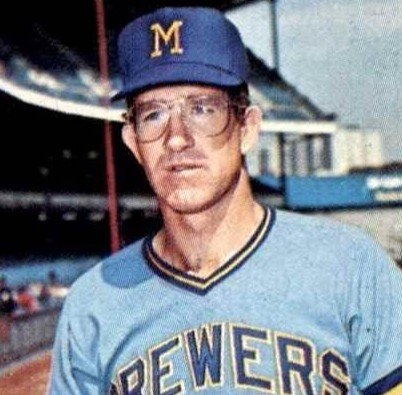 Frank Linzy wasn't considered a 'closer' when he began his major league career in 1963, but between 1965-1967, he collected 53 saves, finishing in the top five in the National League each year. Over his 11-year big-league career with four different teams, Linzy notched a total of 110 saves. He wasn't a star, never made an All-Star team, but was dependable enough that he made at least 50 appearances in seven different seasons. Frank Alfred Linzy was a star basketball player who was named to the Oklahoma Class B All-State teams in both his junior and senior seasons at Porter HS. He also was an All-State baseball player his senior season. After graduation in 1959, the right-handed pitcher attended Oklahoma State and Northeastern State College (Tahlequah, OK) and was signed in June 1960 by San Francisco Giants scout J.R. McLean. Linzy spent four years in the minors before getting called up to the Giants in August 1963. The 6-foot-1 Linzy led the Double-A Eastern League in wins (16), ERA (1.55), and complete games (18) while pitching for Springfield (MA) prior to his call-up. Linzy struggled for the Giants, pitching in eight games (one start) with an ERA+ of just 68. He spent the 1964 season at Triple-A Tacoma, winning 11 games with 11 complete games in 28 starts. Linzy spent the next nine seasons in the majors. He pitched for San Francisco from 1965 until the middle of 1970, when he was traded to St. Louis. In his first five years with the Giants, Linzy pitched in at least 50 games each season and had at least 10 saves each year, with a high of 20 in 1965. He finished third in the National League Rookie of the Year voting and even finished 13th in the MVP voting in 1965, ahead of players like Willie Stargell and Frank Robinson. In his first five years with the Giants, he posted an ERA+ of 143. In his two seasons with the Cardinals, Linzy appeared in 97 games with an ERA+ of 134. In two campaigns with Milwaukee, after being acquired in a trade with St. Louis prior to the 1972 season, Linzy saved 25 games for Milwaukee, including a team-high 13 in 1973. Linzy was traded to Philadelphia after the 1973 season and pitched in 22 games for the Phillies in 1974 and was released after that season, He signed with the San Diego Padres prior to 1975 but did not make it back to the big leagues, instead playing for Triple-A Hawaii in his last professional season.
 -
Frank Linzy wasn't considered a 'closer' when he began his major league career in 1963, but between 1965-1967, he collected 53 saves, finishing in the top five in the National League each year. Over his 11-year big-league career with four different teams, Linzy notched a total of 110 saves. He wasn't a star, never made an All-Star team, but was dependable enough that he made at least 50 appearances in seven different seasons. Frank Alfred Linzy was a star basketball player who was named to the Oklahoma Class B All-State teams in both his junior and senior seasons at Porter HS. He also was an All-State baseball player his senior season. After graduation in 1959, the right-handed pitcher attended Oklahoma State and Northeastern State College (Tahlequah, OK) and was signed in June 1960 by San Francisco Giants scout J.R. McLean. Linzy spent four years in the minors before getting called up to the Giants in August 1963. The 6-foot-1 Linzy led the Double-A Eastern League in wins (16), ERA (1.55), and complete games (18) while pitching for Springfield (MA) prior to his call-up. Linzy struggled for the Giants, pitching in eight games (one start) with an ERA+ of just 68. He spent the 1964 season at Triple-A Tacoma, winning 11 games with 11 complete games in 28 starts. Linzy spent the next nine seasons in the majors. He pitched for San Francisco from 1965 until the middle of 1970, when he was traded to St. Louis. In his first five years with the Giants, Linzy pitched in at least 50 games each season and had at least 10 saves each year, with a high of 20 in 1965. He finished third in the National League Rookie of the Year voting and even finished 13th in the MVP voting in 1965, ahead of players like Willie Stargell and Frank Robinson. In his first five years with the Giants, he posted an ERA+ of 143. In his two seasons with the Cardinals, Linzy appeared in 97 games with an ERA+ of 134. In two campaigns with Milwaukee, after being acquired in a trade with St. Louis prior to the 1972 season, Linzy saved 25 games for Milwaukee, including a team-high 13 in 1973. Linzy was traded to Philadelphia after the 1973 season and pitched in 22 games for the Phillies in 1974 and was released after that season, He signed with the San Diego Padres prior to 1975 but did not make it back to the big leagues, instead playing for Triple-A Hawaii in his last professional season. View full player
-
Image courtesy of © Michael McLoone-Imagn Images After getting swept by the Texas Rangers in a three-game series, the Brewers saw all facets of their game click Friday evening in an 8-2 win over NL Central rival St. Louis at Uecker Field. Quinn (The Reverend) Priester went 5-plus innings for Milwaukee in earning his 12th straight victory. At the same time, Christian Yelich responded to chants of 'Yeli, Yeli' by slamming the next pitch for a 432-foot homer off the centerfield scoreboard. Add to that a scoreless bullpen outing by three relief pitchers, and it added up to a big win over the Cardinals, extending the Brewers' lead in the NL Central to 5.5 games over the Chicago Cubs. The Inning That Was In the bottom of the third, Jake Bauers and Caleb Durbin both drew walks off starter Andre Pallante, who had retired six straight Brewers on grounders to start the game. Joey Ortiz dropped a perfect bunt between the mound and the third base line and reached first on a bad throw to first by Pallante. Sal Frelick drew a walk to force in Bauers for the Brewers' first run. Jackson Chourio hit a flyball to medium right field that was caught by Jordan Walker. The outfielder's strong throw bounced off Durbin's helmet as he slid into home, also allowing Ortiz to score on the play to give Milwaukee a 3-0 lead. Brice Turang grounded into a fielder's choice, scoring Frelick to make it 4-0. The four-run inning was the 52nd time Milwaukee has scored four runs or more in an inning, leading the major leagues. The Inning That Wasn't Three innings later, the Brewers had four base runners but failed to score. Leading 5-2 going into the bottom of the sixth, Yelich led off and grounded out. Isaac Collins singled but then made a major blunder, taking off for second against lefthander John King. Two throws later, the scorebook showed a 1-3-6 caught stealing for the second out. Andrew Vaughn pinch-hit and walked, ending King's night. Reliever Jorge Alcala was greeted by a bunt single by Durbin and a 'swinging bunt' by Ortiz to load the bases. Unfortunately for Milwaukee, Frelick lined to second to end the inning. Yeli, Yeli In a scene that was reminiscent of a Hollywood movie, Yelich came to the plate in the bottom of the seventh with a runner on second and the Brewers leading, 5-2. With two strikes on the Brewers' star, the crowd started chanting 'Yeli, Yeli.' Yelich rifled a 432-foot shot off the center field scoreboard to send the crowd into a delirious state and give Milwaukee a 7-2 lead. I'm not sure why the fans didn't demand a curtain call, but they should have. It was a key moment by the Brewers legend. Top Performers Jackson Chourio, 2-for-3, 2 RBI Christian Yelich, 1-for-4, HR, 2 RBI Isaac Collins, 2-for-4 Joey Ortiz, 2-for-4 Quinn Priester, 5.1 IP, 5 H, 2 ER, 1 BB, 5 K On Tap The Brewers host St. Louis Saturday and Sunday. The Brewers currently lead the season series five games to 3. View full article
-
The 'Reverend,' 'Yeli,' & The Bullpen Key In Brewers Win
Michael Trzinski posted an article in Brewers
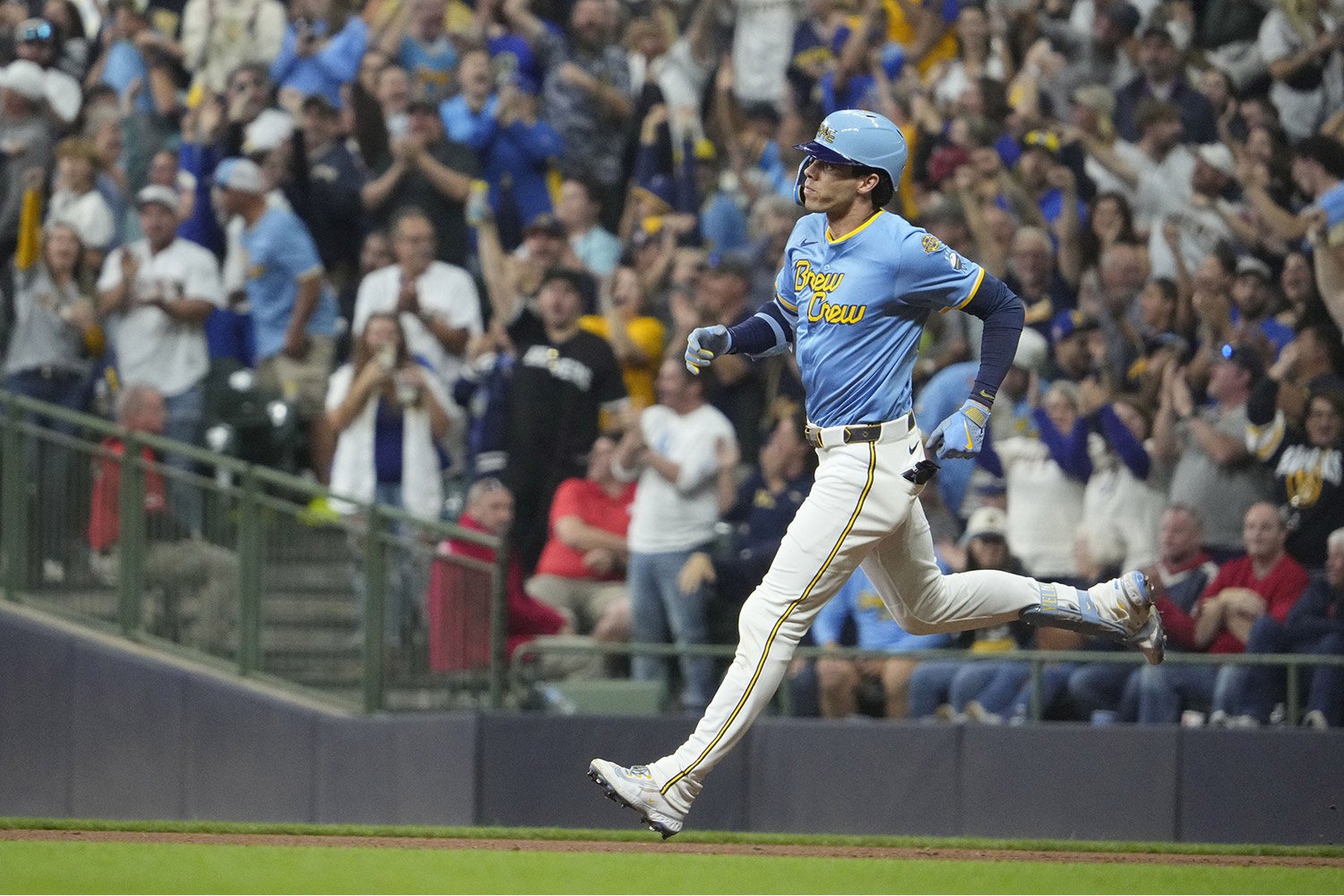 After getting swept by the Texas Rangers in a three-game series, the Brewers saw all facets of their game click Friday evening in an 8-2 win over NL Central rival St. Louis at Uecker Field. Quinn (The Reverend) Priester went 5-plus innings for Milwaukee in earning his 12th straight victory. At the same time, Christian Yelich responded to chants of 'Yeli, Yeli' by slamming the next pitch for a 432-foot homer off the centerfield scoreboard. Add to that a scoreless bullpen outing by three relief pitchers, and it added up to a big win over the Cardinals, extending the Brewers' lead in the NL Central to 5.5 games over the Chicago Cubs. The Inning That Was In the bottom of the third, Jake Bauers and Caleb Durbin both drew walks off starter Andre Pallante, who had retired six straight Brewers on grounders to start the game. Joey Ortiz dropped a perfect bunt between the mound and the third base line and reached first on a bad throw to first by Pallante. Sal Frelick drew a walk to force in Bauers for the Brewers' first run. Jackson Chourio hit a flyball to medium right field that was caught by Jordan Walker. The outfielder's strong throw bounced off Durbin's helmet as he slid into home, also allowing Ortiz to score on the play to give Milwaukee a 3-0 lead. Brice Turang grounded into a fielder's choice, scoring Frelick to make it 4-0. The four-run inning was the 52nd time Milwaukee has scored four runs or more in an inning, leading the major leagues. The Inning That Wasn't Three innings later, the Brewers had four base runners but failed to score. Leading 5-2 going into the bottom of the sixth, Yelich led off and grounded out. Isaac Collins singled but then made a major blunder, taking off for second against lefthander John King. Two throws later, the scorebook showed a 1-3-6 caught stealing for the second out. Andrew Vaughn pinch-hit and walked, ending King's night. Reliever Jorge Alcala was greeted by a bunt single by Durbin and a 'swinging bunt' by Ortiz to load the bases. Unfortunately for Milwaukee, Frelick lined to second to end the inning. Yeli, Yeli In a scene that was reminiscent of a Hollywood movie, Yelich came to the plate in the bottom of the seventh with a runner on second and the Brewers leading, 5-2. With two strikes on the Brewers' star, the crowd started chanting 'Yeli, Yeli.' Yelich rifled a 432-foot shot off the center field scoreboard to send the crowd into a delirious state and give Milwaukee a 7-2 lead. I'm not sure why the fans didn't demand a curtain call, but they should have. It was a key moment by the Brewers legend. Top Performers Jackson Chourio, 2-for-3, 2 RBI Christian Yelich, 1-for-4, HR, 2 RBI Isaac Collins, 2-for-4 Joey Ortiz, 2-for-4 Quinn Priester, 5.1 IP, 5 H, 2 ER, 1 BB, 5 K On Tap The Brewers host St. Louis Saturday and Sunday. The Brewers currently lead the season series five games to 3.
-
- 1
-

-
- quinn priester
- christian yelich
- (and 1 more)
-
Sunday Turning Points: Masterful Miz, 414 Start, Four Hits For Vaughn
Michael Trzinski posted an article in Brewers
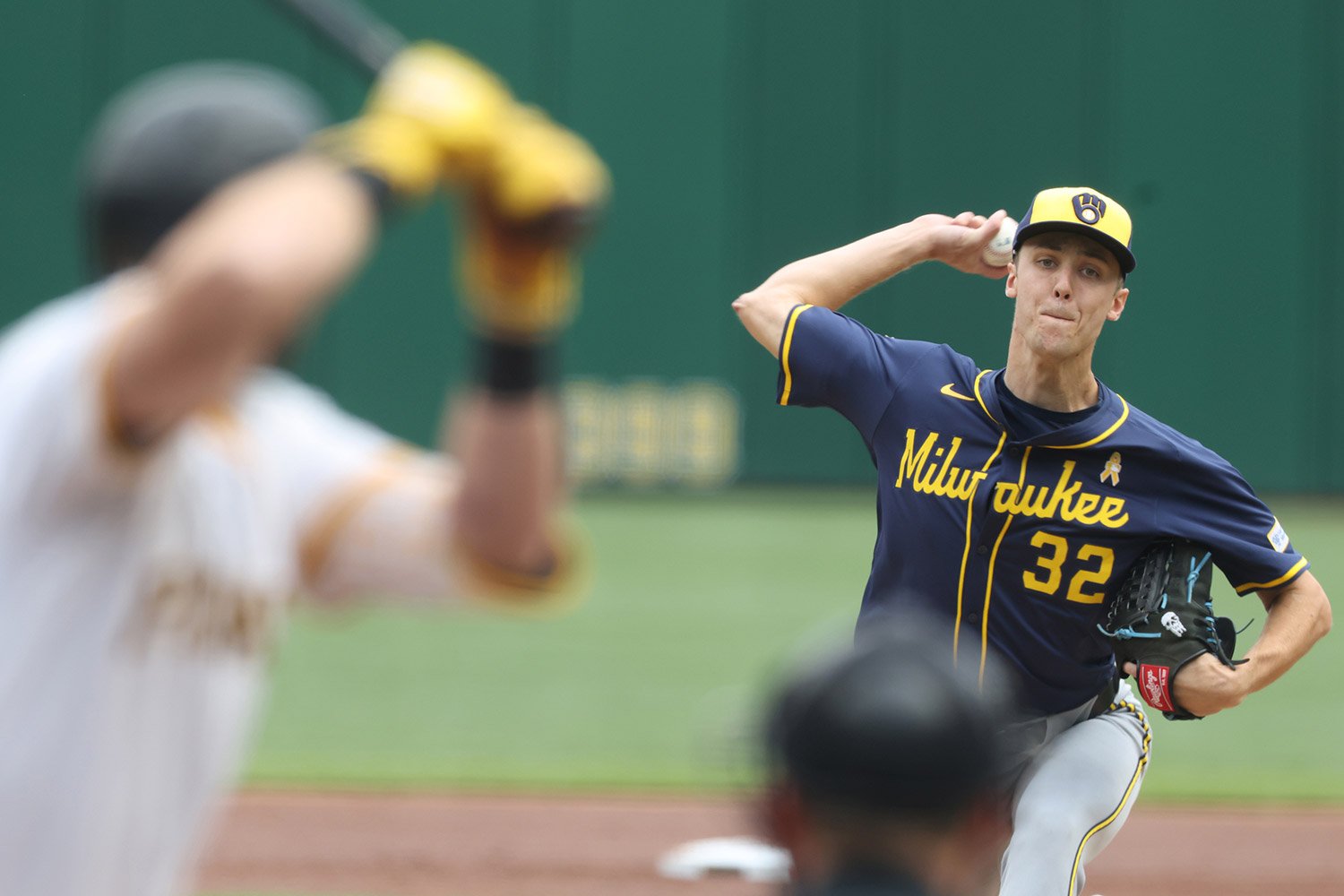 In a pre-game chat with Brock Beauchamp, I commented that Jacob Misiorowski needs to stop clowning around on the field and get back to pitching; that I hoped Jake Bauers would maintain his hot streak; and that Andrew Vaughn needs to 'step up a bit.' Check, check, and check! After the Brewers scored four runs in the first inning off Pittsburgh über-prospect Bubba Chandler, the Miz walked the first two batters to begin the home first. Any chance the Pirates had was dashed when pitching coach Chris Hook came out to have a chat with his young phenom. One batter later, the Brewers infield turned a twin-killing to get out of the inning unscathed. The Buccos did score a run in the second but after that, Misiorowski dialed his pitching amp up to '11' as he retired 15 out of the 16 batters he faced in the next five frames, including 13 in a row in a seven-inning outing that was his longest in the big-leagues. Bauers had struggled coming into this series, but went 6-for-12 with a double, home run, and six RBI in three games in Pittsburgh. Welcome back, Jake! Vaughn had one of the most scintillating starts ever for a Brewer, batting .343/.403/.648 in his first 29 games, during which Milwaukee went 25-4. Lately though, he had cooled down, slashing just .219/.286/.246 since then. He has showed some signs of breaking out of his funk, with a pair of three-hit games in the last week. But it didn't seem like he was doing that well. Today, that changed. Vaughn went 4-for-5 with a double and an RBI in the win that stretched Milwaukee's NL Central lead to 7.5 games over the Cubs, who lost to the Nationals 6-3 today, courtesy of a five-run ninth off Cubs flamethrowing closer Daniel Palencia. Oh yeah...if you looked at the line score for the first three innings for Milwaukee, it read 4-1-4. And anybody in Milwaukee knows what that means. Is it a sign from above? Only if you are a Brewers fan. Here are the three top key plays and the Sunday storylines. Top of the First, Jake Bauers vs. Bubba Chandler, +13.4% Win Expectancy It seems like Bauers is always involved in one of the key plays for Milwaukee. Chandler, another one of the great young Pirate pitching prospects, was in a jam in the first inning of his first MLB start. Brice Turang and Isaac Collins both took 100-mph fastballs the opposite way for base hits before William Contreras drew a full-count walk to loads the bags. Up stepped Bauers, who smacked a 3-1 pitch down the first base line past a diving Spencer Horwitz. Two runs scored and the Brewers never looked back. Bottom of the First, Nick Gonzales vs. Jacob Misiorowski, +8.6% Win Expectancy As mentioned previously, the Miz ran into trouble from the jump. He walked Jared Triolo and Horwitz on 12 pitches total. Captain Hook came out for a heart-to-heart with Miz, who gulped and nodded his head. 'Yes sir.' Brewer killer Bryan Reynolds forced Horwitz at second but reached on an FC. It didn't work quite as well with Nick Gonzales. The Pirate second baseman hit a two-hopper to Caleb Durbin at third. Five seconds later, the official scorekeeper wrote a 5-4-3 double play in the scorebook and the inning was over. And as far as The Miz was concerned, so was the game. Top of the Third, Blake Perkins vs. Bubba Chandler, 5.5% Win Expectancy The Brewers led 5-1 after two innings and were beating up on Chandler. Bauers walked and Vaughn singled to begin the third before Durbin struck out. Blake Perkins then proved that he is not just a pretty defensive face as he ripped a long liner over left fielder Ji Hwan Bae that bounced off the fence. Bauers scored and Vaughn moved to third. The Brewers would tack on another three runs in the inning and the game was over, the wind completely out of the Pirates sails. Top Performers 1. Jake Bauers, 13.9% WPA: 2-for-4, 3 R, 2 RBI 2. Andrew Vaughn, 7.5% WPA, 4-for-5, 1 R, 1 RBI Sunday Storylines How Rude! Roy Ruben Chandler, better known as Bubba, was making his first start in the bigs against the Brewers. Chandler had made three relief appearances during his rookie season, coming in as the seventh overall prospect as listed by MLB.com. Milwaukee did not care. In 2.2 innings, Chandler made 68 pitches and allowed nine hits, nine runs, and three walks while striking out three. Welcome to ‘The Show,’ Bubba. The Rock Rules Today was the 67th birthday of the former Brewer and current Brewers announcer Bill Schroeder. One of his favorite sayings is ‘It’s gravy day!’ Not exactly sure what that means. Maybe Tim Dillard can tell us. Feeling Left Out Everyone in the Brewers starting lineup had at least one hit--except for third sacker Caleb Durbin, who went 0-for-5, including three strikeouts and grounding into a double play. But he did play solid 'D' at third base. Next Up Three games at Texas against the Rangers.
- 2 comments
-
- 1
-
-
- jake bauers
- jacob misiorowski
- (and 1 more)
-
Image courtesy of © Charles LeClaire-Imagn Images In a pre-game chat with Brock Beauchamp, I commented that Jacob Misiorowski needs to stop clowning around on the field and get back to pitching; that I hoped Jake Bauers would maintain his hot streak; and that Andrew Vaughn needs to 'step up a bit.' Check, check, and check! After the Brewers scored four runs in the first inning off Pittsburgh über-prospect Bubba Chandler, the Miz walked the first two batters to begin the home first. Any chance the Pirates had was dashed when pitching coach Chris Hook came out to have a chat with his young phenom. One batter later, the Brewers infield turned a twin-killing to get out of the inning unscathed. The Buccos did score a run in the second but after that, Misiorowski dialed his pitching amp up to '11' as he retired 15 out of the 16 batters he faced in the next five frames, including 13 in a row in a seven-inning outing that was his longest in the big-leagues. Bauers had struggled coming into this series, but went 6-for-12 with a double, home run, and six RBI in three games in Pittsburgh. Welcome back, Jake! Vaughn had one of the most scintillating starts ever for a Brewer, batting .343/.403/.648 in his first 29 games, during which Milwaukee went 25-4. Lately though, he had cooled down, slashing just .219/.286/.246 since then. He has showed some signs of breaking out of his funk, with a pair of three-hit games in the last week. But it didn't seem like he was doing that well. Today, that changed. Vaughn went 4-for-5 with a double and an RBI in the win that stretched Milwaukee's NL Central lead to 7.5 games over the Cubs, who lost to the Nationals 6-3 today, courtesy of a five-run ninth off Cubs flamethrowing closer Daniel Palencia. Oh yeah...if you looked at the line score for the first three innings for Milwaukee, it read 4-1-4. And anybody in Milwaukee knows what that means. Is it a sign from above? Only if you are a Brewers fan. Here are the three top key plays and the Sunday storylines. Top of the First, Jake Bauers vs. Bubba Chandler, +13.4% Win Expectancy It seems like Bauers is always involved in one of the key plays for Milwaukee. Chandler, another one of the great young Pirate pitching prospects, was in a jam in the first inning of his first MLB start. Brice Turang and Isaac Collins both took 100-mph fastballs the opposite way for base hits before William Contreras drew a full-count walk to loads the bags. Up stepped Bauers, who smacked a 3-1 pitch down the first base line past a diving Spencer Horwitz. Two runs scored and the Brewers never looked back. Bottom of the First, Nick Gonzales vs. Jacob Misiorowski, +8.6% Win Expectancy As mentioned previously, the Miz ran into trouble from the jump. He walked Jared Triolo and Horwitz on 12 pitches total. Captain Hook came out for a heart-to-heart with Miz, who gulped and nodded his head. 'Yes sir.' Brewer killer Bryan Reynolds forced Horwitz at second but reached on an FC. It didn't work quite as well with Nick Gonzales. The Pirate second baseman hit a two-hopper to Caleb Durbin at third. Five seconds later, the official scorekeeper wrote a 5-4-3 double play in the scorebook and the inning was over. And as far as The Miz was concerned, so was the game. Top of the Third, Blake Perkins vs. Bubba Chandler, 5.5% Win Expectancy The Brewers led 5-1 after two innings and were beating up on Chandler. Bauers walked and Vaughn singled to begin the third before Durbin struck out. Blake Perkins then proved that he is not just a pretty defensive face as he ripped a long liner over left fielder Ji Hwan Bae that bounced off the fence. Bauers scored and Vaughn moved to third. The Brewers would tack on another three runs in the inning and the game was over, the wind completely out of the Pirates sails. Top Performers 1. Jake Bauers, 13.9% WPA: 2-for-4, 3 R, 2 RBI 2. Andrew Vaughn, 7.5% WPA, 4-for-5, 1 R, 1 RBI Sunday Storylines How Rude! Roy Ruben Chandler, better known as Bubba, was making his first start in the bigs against the Brewers. Chandler had made three relief appearances during his rookie season, coming in as the seventh overall prospect as listed by MLB.com. Milwaukee did not care. In 2.2 innings, Chandler made 68 pitches and allowed nine hits, nine runs, and three walks while striking out three. Welcome to ‘The Show,’ Bubba. The Rock Rules Today was the 67th birthday of the former Brewer and current Brewers announcer Bill Schroeder. One of his favorite sayings is ‘It’s gravy day!’ Not exactly sure what that means. Maybe Tim Dillard can tell us. Feeling Left Out Everyone in the Brewers starting lineup had at least one hit--except for third sacker Caleb Durbin, who went 0-for-5, including three strikeouts and grounding into a double play. But he did play solid 'D' at third base. Next Up Three games at Texas against the Rangers. View full article
-
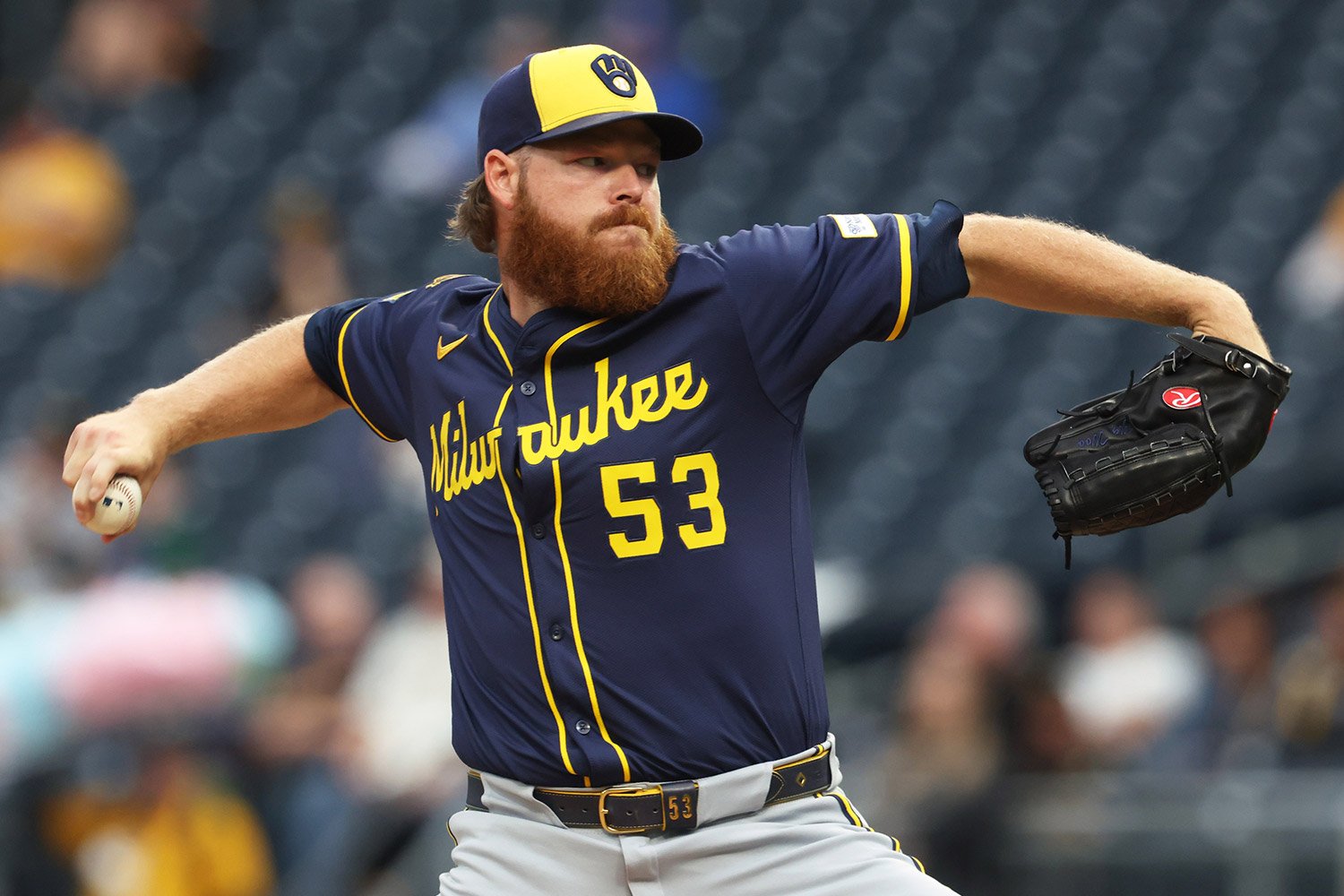 Ten years ago, I was covering Brewers baseball for another website and part of my workload involved covering the minor leagues, including the Brevard County Manatees, the Brewers entry in the High-A Florida State League. One of the players on that team was a pitcher by the name of Brandon Woodruff. Today, 'Big Woo' pitched deep into the game and led the Brewers to a 4-1 victory over the Pittsburgh Pirates on Saturday evening at PNC Park. The win was the seventh straight victory over the Pirates this year and the Brewers have won nine of 12 in the season series, with the final contest set for Sunday afternoon. Here are the key plays and other miscellany about the game in Pittsburgh tonight. Top of the Fourth, Jake Bauers vs. Mitch Keller, +24.0% Win Expectancy Bauers, continuing his recent hot streak, had singled in the second inning. After an Oneil Cruz misplay in center field gave the Brewers life in the fourth, allowing William Contreras to reach, Bauers lined a ball over the 21-foot-high right field 'Clemente Wall,' named after Pirate legend Roberto Clemente, for a two-run shot to give the Brewers an early 2-0 lead. The blast traveled 382 feet with an exit velo of 99 mph off an inside fastball. Bottom of the Seventh, Rob Zastryzny vs. Nick Yorke, +7.4% Win Expectancy Bryan Reynolds, a long time nemesis of the Brewers, had doubled to left to lead off the inning for Pittsburgh. Tommy Pham flew out and Nick Gonzales grounded out before Cruz drew a full-count walk to put runners on first and second. Nick Yorke, making only his fourth big league appearance this year, fouled out to third baseman Caleb Durbin for the final out of the seventh inning. Top of the Eighth, Jackson Chourio vs. Evan Sisk, +9.4% Win Expectancy Sisk had come into the game in the top of the seventh with one out and Andrew Vaughn on first and promptly struck out Caleb Durbin and Blake Perkins to end the inning. After getting Joey Ortiz to ground out to short to start the eighth, Sal Frelick shot a base hit up the middle. On a 1-1 pitch, Jackson Chourio lined a ball that just barely cleared the left field wall for a two-run jack that ended a 0-for-17 skid. Top Performers 1. Brandon Woodruff, 36.2% WPA: 6 IP, 0 BB, 8 K 2. Jake Bauers, 25% WPA, 2-for-3, HR Not Great, Bob 1. Caleb Durbin, -10.3% WPA, 0-for-4, 1 K Game Notes Pittsburgh 1B Spencer Horwitz handled five grounders at first, resulting in three 3U plays, and two 3-1 putouts. Woodruff is not the same pitcher he used to be, but has shown he is more of a 'pitcher,' and less of a 'thrower.' In five of his first starts in 2025, he was pretty much lights out, winning four times while posting an ERA of 2.29 across 35.1 innings. He struggled in his next four outings, posting an ERA of 6.38. But after five days rest, Woodruff came across as a top-of-the-rotation stud, allowing two hits in six innings while whiffing eight. Woodruff retired 15 straight batters from the first into the sixth. 'Big Woo' is back. Brice Turang batted third for the first time all year and struggled early, going 0-for-3 with two strikeouts before banging a single in the eighth inning. Pittsburgh southpaw Evan Sisk made an grab of a line drive off the bat of Durbin in the ninth inning. Sisk caught the ball blindly behind his back, much to the amazement of Durbin. Bullpen Usage TUE WED THU FRI SAT TOT Myers 0 0 20 0 13 33 Uribe 0 18 0 8 0 26 Ashby 0 17 14 0 20 51 Koenig 0 13 0 17 0 30 Zastryzny 0 0 18 0 9 27 Fedde 0 0 0 0 10 10 Payamps 0 0 18 0 0 18
-
- 1
-
-
- brandon woodruff
- jake bauers
- (and 2 more)
-
Image courtesy of © Charles LeClaire-Imagn Images Ten years ago, I was covering Brewers baseball for another website and part of my workload involved covering the minor leagues, including the Brevard County Manatees, the Brewers entry in the High-A Florida State League. One of the players on that team was a pitcher by the name of Brandon Woodruff. Today, 'Big Woo' pitched deep into the game and led the Brewers to a 4-1 victory over the Pittsburgh Pirates on Saturday evening at PNC Park. The win was the seventh straight victory over the Pirates this year and the Brewers have won nine of 12 in the season series, with the final contest set for Sunday afternoon. Here are the key plays and other miscellany about the game in Pittsburgh tonight. Top of the Fourth, Jake Bauers vs. Mitch Keller, +24.0% Win Expectancy Bauers, continuing his recent hot streak, had singled in the second inning. After an Oneil Cruz misplay in center field gave the Brewers life in the fourth, allowing William Contreras to reach, Bauers lined a ball over the 21-foot-high right field 'Clemente Wall,' named after Pirate legend Roberto Clemente, for a two-run shot to give the Brewers an early 2-0 lead. The blast traveled 382 feet with an exit velo of 99 mph off an inside fastball. Bottom of the Seventh, Rob Zastryzny vs. Nick Yorke, +7.4% Win Expectancy Bryan Reynolds, a long time nemesis of the Brewers, had doubled to left to lead off the inning for Pittsburgh. Tommy Pham flew out and Nick Gonzales grounded out before Cruz drew a full-count walk to put runners on first and second. Nick Yorke, making only his fourth big league appearance this year, fouled out to third baseman Caleb Durbin for the final out of the seventh inning. Top of the Eighth, Jackson Chourio vs. Evan Sisk, +9.4% Win Expectancy Sisk had come into the game in the top of the seventh with one out and Andrew Vaughn on first and promptly struck out Caleb Durbin and Blake Perkins to end the inning. After getting Joey Ortiz to ground out to short to start the eighth, Sal Frelick shot a base hit up the middle. On a 1-1 pitch, Jackson Chourio lined a ball that just barely cleared the left field wall for a two-run jack that ended a 0-for-17 skid. Top Performers 1. Brandon Woodruff, 36.2% WPA: 6 IP, 0 BB, 8 K 2. Jake Bauers, 25% WPA, 2-for-3, HR Not Great, Bob 1. Caleb Durbin, -10.3% WPA, 0-for-4, 1 K Game Notes Pittsburgh 1B Spencer Horwitz handled five grounders at first, resulting in three 3U plays, and two 3-1 putouts. Woodruff is not the same pitcher he used to be, but has shown he is more of a 'pitcher,' and less of a 'thrower.' In five of his first starts in 2025, he was pretty much lights out, winning four times while posting an ERA of 2.29 across 35.1 innings. He struggled in his next four outings, posting an ERA of 6.38. But after five days rest, Woodruff came across as a top-of-the-rotation stud, allowing two hits in six innings while whiffing eight. Woodruff retired 15 straight batters from the first into the sixth. 'Big Woo' is back. Brice Turang batted third for the first time all year and struggled early, going 0-for-3 with two strikeouts before banging a single in the eighth inning. Pittsburgh southpaw Evan Sisk made an grab of a line drive off the bat of Durbin in the ninth inning. Sisk caught the ball blindly behind his back, much to the amazement of Durbin. Bullpen Usage TUE WED THU FRI SAT TOT Myers 0 0 20 0 13 33 Uribe 0 18 0 8 0 26 Ashby 0 17 14 0 20 51 Koenig 0 13 0 17 0 30 Zastryzny 0 0 18 0 9 27 Fedde 0 0 0 0 10 10 Payamps 0 0 18 0 0 18 View full article
-
Image courtesy of © Charles LeClaire-Imagn Images On a dark, gloomy, overcast night where the sky over the Roberto Clemente Bridge resembled the angry rumbling of clouds in the movie Ghostbusters, the Milwaukee Brewers overcame a slow start. They scored four runs late in the game to overcome the Pittsburgh Pirates and take a 5-2 win in Game One of the three-game series at PNC Park. Here are three key turning points and other miscellany that you might find interesting or amusing. Top of the First, William Contreras vs. Johan Oviedo, +14.4% Win Probability In the top of the first inning, the Brewers had two runners on, courtesy of a lead-off single by Brice Turang and a full-count walk to Isaac Collins. Jackson Chourio struck out on a slider from Pittsburgh starter Johan Oviedo. William Contreras then hit a hard grounder that ate up third baseman Jared Triolo, allowing Contreras to reach first on the E5. Oviedo put on his big-boy pants and got Sal Frelick on a pop foul to first and then struck out Andrew Vaughn to end the threat. Bottom of the Third, Quinn Priester vs. Tommy Pham, -13.4% Win Probability The Buccos started the third inning against Brewers starter Quinn Priester on a Spencer Horwitz grounder to a diving Turang. The Brewers' second baseman rolled over and tried a sitting throw to first, but it sailed wide, allowing a generous infield single. Bryan Reynolds grounded to third, and Caleb Durbin threw to second for a 5-6 force-out. That brought up Tommy Pham. The left fielder is a Brewer killer, posting an .863 OPS against Milwaukee, including 12 career home runs. Pham drove a pitch down the left field line, knocking in Reynolds to give the Pirates a 2-1 lead. ‘The Reverend’ Priester struck out Andrew McCutchen and got Nick Gonzales to line out to Turang. Top of the Sixth, Jake Bauers vs. Carmen Mlodzinski, +28.8% Win Probability The longest inning—eight batters—is the one that put the Pirates away. Chourio grounded out on a bang-bang 3-1 play in which both Horwitz and pitcher Carmen Mlodzinski made nice plays to record the out. Contreras and Frelick singled and each advanced a base on a wild pitch. Vaughn struck out, but then Jake Bauers—on a 1-for-21 skid in his last 12 games—lined a 2-2 pitch to right field to knock in two runs. Durbin got a base hit and Joey Ortiz walked, but Turang grounded out to end the inning, which gave the Brewers a 3-2 lead. Top Performers 1. Jake Bauers, 26.2% WPA: 2-for-5, 2 RBI 2. Quinn Priester, 22.5% WPA: 7 IP, 2 ER, 6 K 3. William Contreras, 20% WPA, 2-for-5 Not Great, Bob 1. Andrew Vaughn, -22.5% WPA: 1-for-5, 2 K 2. Jackson Chourio, -15.7% WPA: 0-for-5, 2 K Bucco Boots In addition to Triolo's error in the first, he committed another after moving to shortstop in the ninth. Nick Gonzales, who had moved from short to second the same inning, airmailed a throw over the first baseman's head that allowed Contreras to score the fifth and final run for Milwaukee. Special ‘Wall of Fame’ honors go to the sideline reporter Tricia Whitaker, who, in a reprise of her earlier interview with Brewers manager Pat Murphy that made the ‘Pocket Pancake’ famous, has now added a ‘Pocket Quesadilla,’ complete with maple syrup from Manitowoc, Wisconsin. Murphy and Whitaker both took a bite, and who knows, maybe another All-Star 'Pocket Meal' is born! Bullpen Usage MON TUE WED THU FRI TOT Myers 0 0 0 20 0 20 Uribe 25 0 18 0 8 51 Ashby 9 0 17 14 0 40 Koenig 16 0 13 0 17 46 Mears 18 0 0 0 0 18 Zastryzny 13 0 0 18 0 31 Yoho 0 0 0 0 0 0 Miller 8 0 0 0 0 8 Payamps 0 0 0 18 0 18 View full article
-
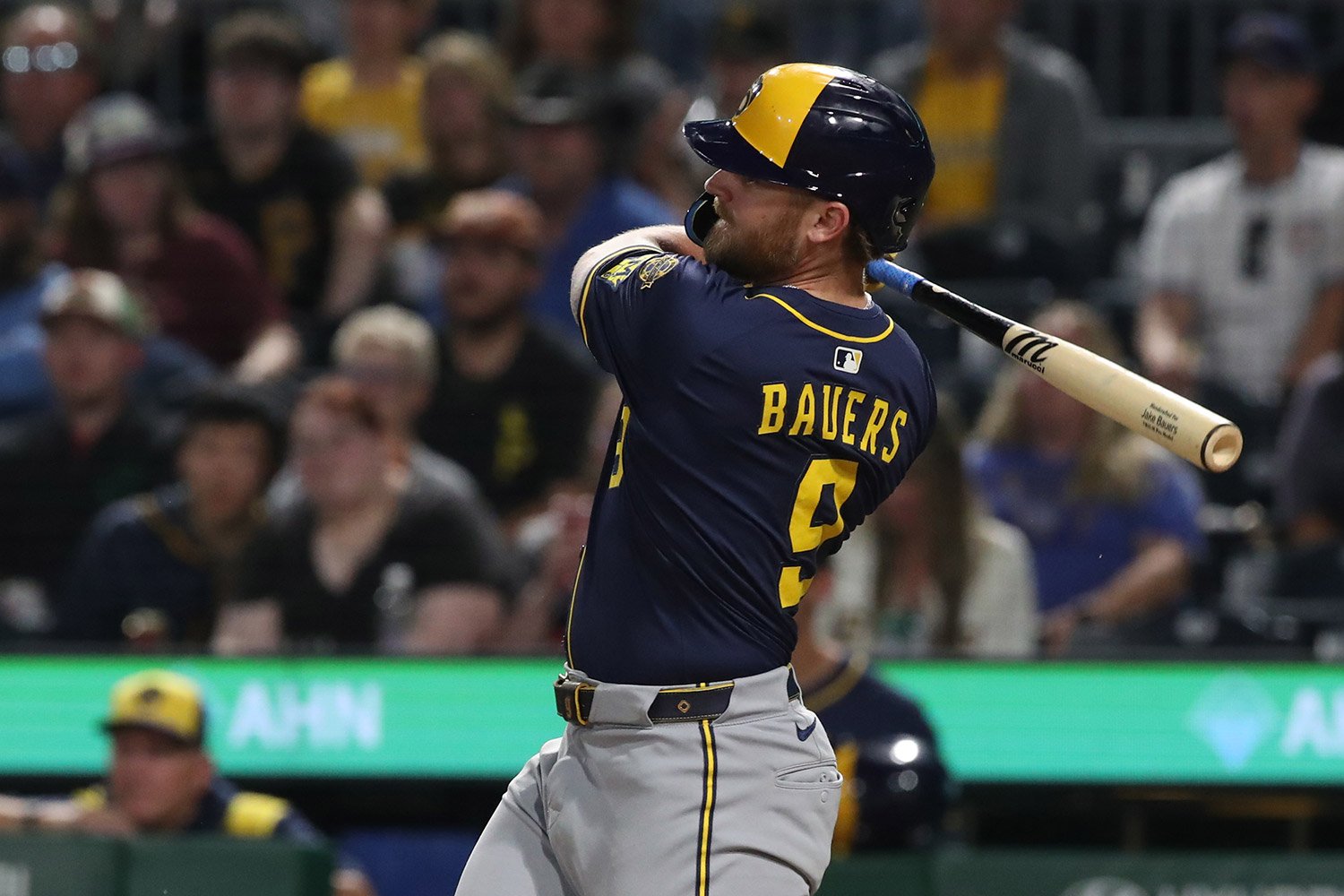 On a dark, gloomy, overcast night where the sky over the Roberto Clemente Bridge resembled the angry rumbling of clouds in the movie Ghostbusters, the Milwaukee Brewers overcame a slow start. They scored four runs late in the game to overcome the Pittsburgh Pirates and take a 5-2 win in Game One of the three-game series at PNC Park. Here are three key turning points and other miscellany that you might find interesting or amusing. Top of the First, William Contreras vs. Johan Oviedo, +14.4% Win Probability In the top of the first inning, the Brewers had two runners on, courtesy of a lead-off single by Brice Turang and a full-count walk to Isaac Collins. Jackson Chourio struck out on a slider from Pittsburgh starter Johan Oviedo. William Contreras then hit a hard grounder that ate up third baseman Jared Triolo, allowing Contreras to reach first on the E5. Oviedo put on his big-boy pants and got Sal Frelick on a pop foul to first and then struck out Andrew Vaughn to end the threat. Bottom of the Third, Quinn Priester vs. Tommy Pham, -13.4% Win Probability The Buccos started the third inning against Brewers starter Quinn Priester on a Spencer Horwitz grounder to a diving Turang. The Brewers' second baseman rolled over and tried a sitting throw to first, but it sailed wide, allowing a generous infield single. Bryan Reynolds grounded to third, and Caleb Durbin threw to second for a 5-6 force-out. That brought up Tommy Pham. The left fielder is a Brewer killer, posting an .863 OPS against Milwaukee, including 12 career home runs. Pham drove a pitch down the left field line, knocking in Reynolds to give the Pirates a 2-1 lead. ‘The Reverend’ Priester struck out Andrew McCutchen and got Nick Gonzales to line out to Turang. Top of the Sixth, Jake Bauers vs. Carmen Mlodzinski, +28.8% Win Probability The longest inning—eight batters—is the one that put the Pirates away. Chourio grounded out on a bang-bang 3-1 play in which both Horwitz and pitcher Carmen Mlodzinski made nice plays to record the out. Contreras and Frelick singled and each advanced a base on a wild pitch. Vaughn struck out, but then Jake Bauers—on a 1-for-21 skid in his last 12 games—lined a 2-2 pitch to right field to knock in two runs. Durbin got a base hit and Joey Ortiz walked, but Turang grounded out to end the inning, which gave the Brewers a 3-2 lead. Top Performers 1. Jake Bauers, 26.2% WPA: 2-for-5, 2 RBI 2. Quinn Priester, 22.5% WPA: 7 IP, 2 ER, 6 K 3. William Contreras, 20% WPA, 2-for-5 Not Great, Bob 1. Andrew Vaughn, -22.5% WPA: 1-for-5, 2 K 2. Jackson Chourio, -15.7% WPA: 0-for-5, 2 K Bucco Boots In addition to Triolo's error in the first, he committed another after moving to shortstop in the ninth. Nick Gonzales, who had moved from short to second the same inning, airmailed a throw over the first baseman's head that allowed Contreras to score the fifth and final run for Milwaukee. Special ‘Wall of Fame’ honors go to the sideline reporter Tricia Whitaker, who, in a reprise of her earlier interview with Brewers manager Pat Murphy that made the ‘Pocket Pancake’ famous, has now added a ‘Pocket Quesadilla,’ complete with maple syrup from Manitowoc, Wisconsin. Murphy and Whitaker both took a bite, and who knows, maybe another All-Star 'Pocket Meal' is born! Bullpen Usage MON TUE WED THU FRI TOT Myers 0 0 0 20 0 20 Uribe 25 0 18 0 8 51 Ashby 9 0 17 14 0 40 Koenig 16 0 13 0 17 46 Mears 18 0 0 0 0 18 Zastryzny 13 0 0 18 0 31 Yoho 0 0 0 0 0 0 Miller 8 0 0 0 0 8 Payamps 0 0 0 18 0 18
 -
Image courtesy of © Benny Sieu-Imagn Images On a chilly early September afternoon, a start that had even Front Row Amy bundled up, a pair of elite pitchers met at Uecker Field in Game 3 of the Philadelphia-Milwaukee series. In a matchup of opposing styles, Fastball Freddy Peralta took on Phillies southpaw Ranger Suárez, who employs the ‘slow, slower, and slowest’ technique of pitching to enemy batters. Burly Brellenthin, a 100-year-old World War II vet, threw out the ceremonial first pitch to a nice round of applause from an appreciative crowd. Both pitchers kept the game scoreless through three, but Peralta struggled a bit in the top of the fourth. Bryce Harper walked, and J.T. Realmuto dumped a parachute shot into short right, which had been vacated when Andruw Monasterio covered second on a Harper steal attempt. Peralta got two quick strikeouts of Brandon Marsh and Harrison Bader, but issued his third free pass of the game to Max Kepler. On his 31st pitch of the inning, Peralta struck out Alex Bohm to end the scoring threat. Suárez ran into trouble in the home half, giving up solid line drive singles to Andrew Vaughn and Caleb Durbin. The Brewers went meekly after that, with Danny Jansen bunting into a force play at third, while Monasterio popped to short and Blake Perkins looked at a called strike three to keep the contest scoreless. Peralta left after five innings (and 92 pitches), allowing two hits and three walks while whiffing eight. He extended his scoreless streak to 29 innings with a solid effort. Aaron Ashby came on in relief in the top of the sixth inning and got two groundouts to third and a strikeout to keep the Phils off the scoreboard. The Crew had a golden opportunity in the bottom of the sixth when William Contreras walked and Vaughn hit a one-hop double off the wall in left-center. The ‘gold’ turned into iron pyrite after two groundouts and a flyout to medium center ended the frame. Suárez left after six innings, allowing six hits and two walks while striking out a quartet of Brewers. With one out in the Phillies' seventh, Bohm lined a ball to right off reliever Tobias Myers that went past a diving Isaac Collins and into the corner as Bohm coasted into third. The Brewers moved the infield in, and Vaughn made a nice backhand play on Bryson Stott for the second out, keeping the runner at third. Pesky Trea Turner lined a shin-high splitter over a leaping Joey Ortiz to give the Phils a 1-0 lead. Rob Zastryzny came and promptly wild-pitched Turner to second, but got Kyle Schwarber to roll to second to keep the deficit at one. Trailing 1-0 in the bottom half of the eighth, Vaughn lined a two-out single to right off gangly lefthander Matt Strahm. Jake Bauers came in to pinch-run and advanced all the way to third when Realmuto couldn’t handle a pitch in the dirt and then airmailed the throw to second. Unfortunately, Durbin skied to center to end the inning. Beleaguered reliever Joel Payamps came on in the ninth and gave up a double to Bader past a diving Durbin at third. Payamps got a groundout and a strikeout, but Stott lined a low inside pitch to right that went to the wall, scoring Bader for a 2-0 lead as Stott collected a two-base hit. That brought in Phillies closer Jhoan Duran and his triple-digit fastball for the save opportunity. With one out, Monasterio drilled a ball to deep left-center, but Bader leapt and caught the ball as he crashed into the wall for the second out, robbing an extra-base hit. Pinch-hitter Sal Frelick struck out to end the game. Suárez notched his 11th win while Duran picked up his 26th save. Myers took the loss. Both teams left eight runners on base, but Milwaukee was 0-for-10 with runners in scoring position. The Brewers had runners on first and second with nobody out in both the fourth and the sixth, but were unable to score. One piece of good news for Milwaukee was the performance of Vaughn, who went 3-for-4 with a double. Vaughn had batted only .161 (5-for-31) over the last ten days. Durbin also had a pair of hits. "We left runners on base," manager Pat Murphy said after the game. "We didn't get the big hit." The Brewers have a 5.5 game lead over the idle Cubs and will head to PNC Park for a three-game set with NL Central rival Pittsburgh. View full article
-
 On a chilly early September afternoon, a start that had even Front Row Amy bundled up, a pair of elite pitchers met at Uecker Field in Game 3 of the Philadelphia-Milwaukee series. In a matchup of opposing styles, Fastball Freddy Peralta took on Phillies southpaw Ranger Suárez, who employs the ‘slow, slower, and slowest’ technique of pitching to enemy batters. Burly Brellenthin, a 100-year-old World War II vet, threw out the ceremonial first pitch to a nice round of applause from an appreciative crowd. Both pitchers kept the game scoreless through three, but Peralta struggled a bit in the top of the fourth. Bryce Harper walked, and J.T. Realmuto dumped a parachute shot into short right, which had been vacated when Andruw Monasterio covered second on a Harper steal attempt. Peralta got two quick strikeouts of Brandon Marsh and Harrison Bader, but issued his third free pass of the game to Max Kepler. On his 31st pitch of the inning, Peralta struck out Alex Bohm to end the scoring threat. Suárez ran into trouble in the home half, giving up solid line drive singles to Andrew Vaughn and Caleb Durbin. The Brewers went meekly after that, with Danny Jansen bunting into a force play at third, while Monasterio popped to short and Blake Perkins looked at a called strike three to keep the contest scoreless. Peralta left after five innings (and 92 pitches), allowing two hits and three walks while whiffing eight. He extended his scoreless streak to 29 innings with a solid effort. Aaron Ashby came on in relief in the top of the sixth inning and got two groundouts to third and a strikeout to keep the Phils off the scoreboard. The Crew had a golden opportunity in the bottom of the sixth when William Contreras walked and Vaughn hit a one-hop double off the wall in left-center. The ‘gold’ turned into iron pyrite after two groundouts and a flyout to medium center ended the frame. Suárez left after six innings, allowing six hits and two walks while striking out a quartet of Brewers. With one out in the Phillies' seventh, Bohm lined a ball to right off reliever Tobias Myers that went past a diving Isaac Collins and into the corner as Bohm coasted into third. The Brewers moved the infield in, and Vaughn made a nice backhand play on Bryson Stott for the second out, keeping the runner at third. Pesky Trea Turner lined a shin-high splitter over a leaping Joey Ortiz to give the Phils a 1-0 lead. Rob Zastryzny came and promptly wild-pitched Turner to second, but got Kyle Schwarber to roll to second to keep the deficit at one. Trailing 1-0 in the bottom half of the eighth, Vaughn lined a two-out single to right off gangly lefthander Matt Strahm. Jake Bauers came in to pinch-run and advanced all the way to third when Realmuto couldn’t handle a pitch in the dirt and then airmailed the throw to second. Unfortunately, Durbin skied to center to end the inning. Beleaguered reliever Joel Payamps came on in the ninth and gave up a double to Bader past a diving Durbin at third. Payamps got a groundout and a strikeout, but Stott lined a low inside pitch to right that went to the wall, scoring Bader for a 2-0 lead as Stott collected a two-base hit. That brought in Phillies closer Jhoan Duran and his triple-digit fastball for the save opportunity. With one out, Monasterio drilled a ball to deep left-center, but Bader leapt and caught the ball as he crashed into the wall for the second out, robbing an extra-base hit. Pinch-hitter Sal Frelick struck out to end the game. Suárez notched his 11th win while Duran picked up his 26th save. Myers took the loss. Both teams left eight runners on base, but Milwaukee was 0-for-10 with runners in scoring position. The Brewers had runners on first and second with nobody out in both the fourth and the sixth, but were unable to score. One piece of good news for Milwaukee was the performance of Vaughn, who went 3-for-4 with a double. Vaughn had batted only .161 (5-for-31) over the last ten days. Durbin also had a pair of hits. "We left runners on base," manager Pat Murphy said after the game. "We didn't get the big hit." The Brewers have a 5.5 game lead over the idle Cubs and will head to PNC Park for a three-game set with NL Central rival Pittsburgh.
 -
 On 'Bark in the Park Night' Wednesday evening, the Milwaukee Brewers showed more bite than bark, as they used a five-run first inning to propel them past the Philadelphia Phillies 6-3 before a crowd of 28,528 people (and several dozen well-behaved canines) at Uecker Field. Rookie of the Year front-runner Isaac Collins blasted a three-run homer into the Aurora Health Care Bullpen in right field, to break the game open right at its start. Just before that, Sal Frelick had driven home two runs with a single to center. The party was on, and would last all evening. Brewers starter Jose Quintana held the Phillies scoreless for four innings, while theCrew added their sixth run in the bottom of the fourth. Jake Bauers singled, stole second, and then scored on Brice Turang's line-drive double off the left-field wall. But in a repeat of what happened Monday in a 10-8 Brewers loss, the Phillies fought back. Nick Castellanos and Edmundo Sosa each singled to lead off the top of the fifth. One out later, Trea Turner singled to right to score Castellanos. Quintana buckled down to strike out Kyle Schwarber and got Bryce Harper on a fielder's choice to escape further damage. Quintana finally ran out of gas in the seventh after a single by Castellanos and a long two-run shot by Weston Wilson that cut the lead to 6-3. Aaron Ashby and Abner Uribe combined for five outs, before Jared Koenig came on for the ninth inning and earned his first save of the year to cap off the Brewers win over the team that trails the Brewers with the second-best record in the National League. Turang had a double and a triple to lead Milwaukee's offense, in addition to Collin's home run. (Wilson and Harrison Bader collided on the warning track in left-center field, allowing Turang to race to third on a play in the second inning with one out, but Turang was stranded at third after Jackson Chourio and William Contreras struck out.) Quintana recovered from a subpar outing on August 28 against Arizona by going 6 1/3 solid innings, allowing seven hits, three runs, and three walks while striking out six to earn his 11th victory. Increasingly, it looks like there will be a role for Quintana on the pitching staff even in October, so a good showing against a potential NLCS opponent was nice to see. The win improved the Brewers' league-best record to 86-54, six games ahead of the Chicago Cubs in the NL Central. The Brewers and Phillies meet Thursday night for the rubber match in their three-game series, but having swept the previous matchup in Philadelphia, Milwaukee now has the tiebreaker between the two clubs. Should they finish with the same record, the Crew would get the top seed, assuring themselves of home-field advantage throughout the bracket.
 -
Image courtesy of © Jeff Hanisch-Imagn Images On 'Bark in the Park Night' Wednesday evening, the Milwaukee Brewers showed more bite than bark, as they used a five-run first inning to propel them past the Philadelphia Phillies 6-3 before a crowd of 28,528 people (and several dozen well-behaved canines) at Uecker Field. Rookie of the Year front-runner Isaac Collins blasted a three-run homer into the Aurora Health Care Bullpen in right field, to break the game open right at its start. Just before that, Sal Frelick had driven home two runs with a single to center. The party was on, and would last all evening. Brewers starter Jose Quintana held the Phillies scoreless for four innings, while theCrew added their sixth run in the bottom of the fourth. Jake Bauers singled, stole second, and then scored on Brice Turang's line-drive double off the left-field wall. But in a repeat of what happened Monday in a 10-8 Brewers loss, the Phillies fought back. Nick Castellanos and Edmundo Sosa each singled to lead off the top of the fifth. One out later, Trea Turner singled to right to score Castellanos. Quintana buckled down to strike out Kyle Schwarber and got Bryce Harper on a fielder's choice to escape further damage. Quintana finally ran out of gas in the seventh after a single by Castellanos and a long two-run shot by Weston Wilson that cut the lead to 6-3. Aaron Ashby and Abner Uribe combined for five outs, before Jared Koenig came on for the ninth inning and earned his first save of the year to cap off the Brewers win over the team that trails the Brewers with the second-best record in the National League. Turang had a double and a triple to lead Milwaukee's offense, in addition to Collin's home run. (Wilson and Harrison Bader collided on the warning track in left-center field, allowing Turang to race to third on a play in the second inning with one out, but Turang was stranded at third after Jackson Chourio and William Contreras struck out.) Quintana recovered from a subpar outing on August 28 against Arizona by going 6 1/3 solid innings, allowing seven hits, three runs, and three walks while striking out six to earn his 11th victory. Increasingly, it looks like there will be a role for Quintana on the pitching staff even in October, so a good showing against a potential NLCS opponent was nice to see. The win improved the Brewers' league-best record to 86-54, six games ahead of the Chicago Cubs in the NL Central. The Brewers and Phillies meet Thursday night for the rubber match in their three-game series, but having swept the previous matchup in Philadelphia, Milwaukee now has the tiebreaker between the two clubs. Should they finish with the same record, the Crew would get the top seed, assuring themselves of home-field advantage throughout the bracket. View full article
-
I just think he should do his bouncing and skipping in the dugout. Kinda like the bat flips and two minute HR trots? "But that is just today's generation," says the Boomer. And starter vs. reliever? I think he should stay right where he is because if he implodes in the 9th, there is really no room for error, whereas in the 3rd? Well, a little more chance for a comeback.
-
A few starts ago, a 'cocky' Miz started skipping off the mound after quick, proficient innings. Shortly after, the opponents pounded him for hits and runs that he had previously not given up in those games. Three thoughts: 1) The opposing team gets fired up and hammers the youngster. 2) Miz loses focus, thinking he is 'all that' and doesn't think he needs to 'bring it.' 3) Combination of 1 and 2. Is it just me, or is the Miz getting too big for his britches and is getting pounded because of it?
-
The Brewers' Most Memorable Labor Day Wins—and Their Next One
Michael Trzinski posted an article in History
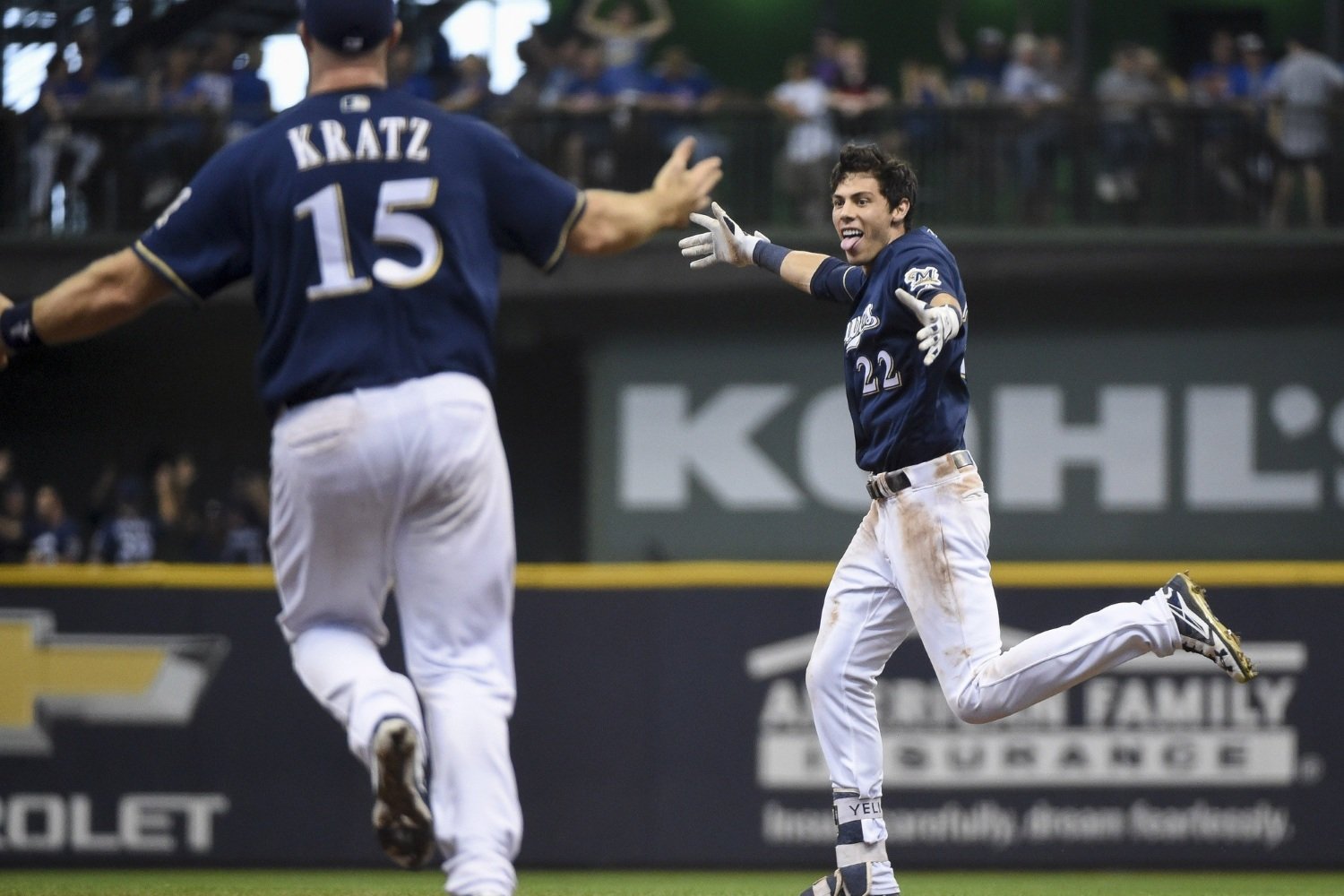 While Labor Day is a day off for many working people, it is rare that Major League Baseball players get to take an extra day off during the season. The Brewers have gotten the holiday off only four times since they have been in existence: 1989, 1994 (the strike year), 1999, and 2020 (when COVID left stadiums empty and the incentive to schedule games on the holiday was muted). Since their inaugural season of 1970, the Brewers have played a total of 60 games on Labor Day, winning 25 while losing 35. Somewhat ironically, it used to be common that teams would play doubleheaders on Labor Day. In fact, the Brewers played twin-bills in nine different seasons, the last one coming in 2002. Milwaukee split in seven of those seasons, and were swept in 1971 and 1990. Here are a few fun facts for Labor Day games. Largest attendance at Milwaukee County Stadium: 41,348 (1992) Largest attendance at Miller Park/American Family Field/Uecker Field: 44,462 (2018) Smallest attendance at Milwaukee County Stadium: 10,627 (1976) Smallest attendance at The Ueck: 19,588 (2003) Record at Milwaukee County Stadium: 8-10 Record at The Ueck: 3-9 Record on the road: 14-16 On Labor Day 2025, the Brewers host the Philadelphia Phillies to begin a three-game series, with a chance to cement their playoff status against a team that is in the hunt for a bye in the National League postseason. Here’s hoping the Brewers can turn around their lack of success at home on Labor Day. Without further ado, here are three of the top wins for Milwaukee over the last 55 seasons on this Labor Day holiday. September 3, 2018 (Milwaukee 4, Chicago Cubs 3) The Brewers woke up Labor Day morning 2018 with a record of 77-61, five games behind Chicago. The Crew had been fairly hot over the previous two weeks, winning nine of 13 games since mid-August, but the Cubs were a bit better, going 10-4 over the same span. That brought the two front-runners in the National League Central to a short two-game holiday showdown. The Cubs struck early before a crowd of 44,462, many of them pro-Cubs. With Javier Báez on first with one out, Anthony Rizzo singled to center, and as Báez was going first-to-third, center fielder Lorenzo Cain lost his grip on the ball while trying to throw, allowing Báez to score. The 1-0 lead held until the bottom of the fifth, as both Cubs pitcher Cole Hamels and Brewers hurler Zach Davies showed their stingy sides. Orlando Arcia singled with one out and moved to second after a strikeout and a balk by Hamels. Cain atoned for his earlier miscue by stroking an RBI single and moving to second on the throw. Cain stole third and then scored on Christian Yelich’s single. After five, the Brewers led 2-1. Davies left after five innings, bringing on Josh Hader, who in his second year as a Brewer was more of a medium-leverage pitcher than a closer. The flame-throwing southpaw retired six straight hitters before running into trouble in the top of the eighth. He walked Ian Happ before striking out Daniel Murphy and Báez. Happ stole second. Then, Rizzo blasted a two-run shot to the right-field bleachers to give Chicago a 3-2 lead. Corey Knebel took over for Hader and retired Kris Bryant on a flyball to right. The Brewers greeted reliever Carl Edwards, Jr. in the bottom of the eighth with a pair of singles by Curtis Granderson and Cain before two strikeouts. Ryan Braun walked to load the bases, before yet another walk to Mike Moustakas forced in a run. Steve Cishek came in to put out the fire, and the teams went to the top of the ninth tied 3-3. Jeremy Jeffress took care of the Cubs in the ninth, allowing a single and a stolen base but keeping the visitors off the scoreboard. The Brewers used an unconventional bottom of the ninth to score the game-winner. Erik Kratz walked and was replaced by pinch-runner Keon Broxton. Arcia was hit by a pitch, and both runners moved up a base on a passed ball by Cubs catcher Willson Contreras. After a Granderson strikeout, Cain was hit by a pitch to load the bases. With one out, Jesse Chavez relieved Cishek to face Yelich. On a 1-2 count, Yelich hit a chopper to a diving Bryant at third. The third baseman tagged the base for the second out, but his throw to first was too late to get Yelich as Broxton scored the winning run. The win cut the Cubs’ lead to four games. A hot September (19-7) allowed the Brewers to catch them, and a Game 163 playoff went the Brewers' way, sending the Crew to the postseason and vaulting them all the way to Game 7 of the NLCS. September 2, 1996 (Milwaukee 7, Cleveland Indians 6) The Brewers entered this contest with a record of 66-72, 16 games behind the Indians in the AL Central race. But on this ‘Indian Summer’ day with temps in the low 80s, the Brewers would come from behind and come out ahead, in a game at County Stadium that they trailed early by a 5-1 score. The Indians got to Brewer starter Ben McDonald in the first frame, scoring a pair of runs on RBI singles by Albert Belle and Julio Franco. Omar Vizquel led off the top of the second with a home run just inside the right-field foul pole to increase the lead to 3-0. The Brewers got that run back in the bottom half of the second, courtesy of a home run to deep right field by John Jaha on the first pitch from Albie Lopez. In the top of the third, Belle and Manny Ramírez walked and then scored on a ground-rule double by Sandy Alomar to increase the Indians' lead to 5-1. The Brewers tied the score in the bottom of the fifth. Matt Mieske singled and was followed by free passes to Jesse Levis and Mark Loretta to load the sacks. Jeff Cirillo drew a four-pitch walk to force in a run and end Lopez’s day. Kent Mercker came on in relief and immediately gave up a sacrifice fly to Dave Nilsson that scored Levis, to make it 5-3. Jaha then singled to left to push Loretta across the plate, and José Valentín followed with a sac fly to center that scored Cirillo to tie the game. The Indians went ahead in the top of the ninth when Franco singled to center to score Belle, who had doubled against closer Doug Jones. The Brewers entered the home half of the ninth trailing 6-5 against All-Star closer José Mesa, who came into the game with 31 saves. It didn’t look good for Milwaukee after Cirillo singled with one out and was forced at second by a Nilsson groundout. David Hulse pinch-ran, though, and promptly stole second and advanced to third on an infield single by Jaha. A wild pitch scored Hulse and moved Jaha to second, tying the game. Valentín hit a looping liner to left field and danced down the first base line, as Jaha scored the winning run. “It doesn’t get any better than that,” Jaha said. “It’s real big, it shows this team can play.” The Brewers would move up one spot in the standings by winning 14 of 24 games in September and finish just below .500, at 80-82. September 6, 1976 (Game 1: Milwaukee 3, Cleveland 2) The Brewers came into the Bicentennial Labor Day doubleheader at County Stadium mired in last place in the AL East, a dismal 20.5 games behind the eventual AL champion New York Yankees. After a scoreless first, the Tribe tallied a pair of runs in the second off Brewers starter Jim Colborn. Buddy Bell and Ray Fosse led off the inning with singles. Tommy Smith doubled to left to score Bell and move Fosse to third. Frank Duffy then hit a fly ball to center that scored Fosse, but Smith was caught trying to move to third: 8-2-5 if you're scoring at home. Sixto Lezcano led off the bottom of the fourth with a walk and moved to third on a pair of groundouts. Darrell Porter cut the lead in half when he laced a single to right field off Cleveland starter Stan Thomas to score Lezcano and make it 2-1. Milwaukee tied the game in the bottom of the sixth after Lezcano and Bernie Carbo singled, with Lezcano moving to third. Lezcano scored on Mike Hegan's 3-6 groundout. Stan Thomas was still on the mound in the ninth inning, in a 2-2 game. With one out, Porter walked. Then Danny Thomas, 'The Sundown Kid,' banged a double off the left field wall to score Porter for the 3-2 win. (The Indians won the second game by an identical 3-2 score.) Labor Day 2025 As the Brewers head into September, their 6.5-game lead over the ‘Jekyll-and-Hyde’ Cubs is comfortable and substantial. Milwaukee has looked mortal at times, and unbeatable at others. The 14-game win streak was followed by a stretch of games that showed equal parts strengths and weaknesses. Is Milwaukee the team that can find ways to win no matter what the situation, or are they the team that has gone 7-9 in the fortnight that followed the long winning skein? With key players like Rhys Hoskins, Trevor Megill, and Joey Ortiz expected to return from injuries sometime during the month, one would expect the team to be fortified and finish the season with a win total near 100. Jackson Chourio has proved he is back, going 6-for-9 with a homer and two doubles in a pair of games against Toronto in his return. September 1 is the starting line for the final sprint to the postseason, and if the Brewers can start and finish fast, they will go a long way toward reaching the pinnacle. All of that can begin with another memorable Labor Day win—after which, yes, the team that has played 19 times in 18 days will finally get a day of rest.
 -
Image courtesy of © Benny Sieu-Imagn Images While Labor Day is a day off for many working people, it is rare that Major League Baseball players get to take an extra day off during the season. The Brewers have gotten the holiday off only four times since they have been in existence: 1989, 1994 (the strike year), 1999, and 2020 (when COVID left stadiums empty and the incentive to schedule games on the holiday was muted). Since their inaugural season of 1970, the Brewers have played a total of 60 games on Labor Day, winning 25 while losing 35. Somewhat ironically, it used to be common that teams would play doubleheaders on Labor Day. In fact, the Brewers played twin-bills in nine different seasons, the last one coming in 2002. Milwaukee split in seven of those seasons, and were swept in 1971 and 1990. Here are a few fun facts for Labor Day games. Largest attendance at Milwaukee County Stadium: 41,348 (1992) Largest attendance at Miller Park/American Family Field/Uecker Field: 44,462 (2018) Smallest attendance at Milwaukee County Stadium: 10,627 (1976) Smallest attendance at The Ueck: 19,588 (2003) Record at Milwaukee County Stadium: 8-10 Record at The Ueck: 3-9 Record on the road: 14-16 On Labor Day 2025, the Brewers host the Philadelphia Phillies to begin a three-game series, with a chance to cement their playoff status against a team that is in the hunt for a bye in the National League postseason. Here’s hoping the Brewers can turn around their lack of success at home on Labor Day. Without further ado, here are three of the top wins for Milwaukee over the last 55 seasons on this Labor Day holiday. September 3, 2018 (Milwaukee 4, Chicago Cubs 3) The Brewers woke up Labor Day morning 2018 with a record of 77-61, five games behind Chicago. The Crew had been fairly hot over the previous two weeks, winning nine of 13 games since mid-August, but the Cubs were a bit better, going 10-4 over the same span. That brought the two front-runners in the National League Central to a short two-game holiday showdown. The Cubs struck early before a crowd of 44,462, many of them pro-Cubs. With Javier Báez on first with one out, Anthony Rizzo singled to center, and as Báez was going first-to-third, center fielder Lorenzo Cain lost his grip on the ball while trying to throw, allowing Báez to score. The 1-0 lead held until the bottom of the fifth, as both Cubs pitcher Cole Hamels and Brewers hurler Zach Davies showed their stingy sides. Orlando Arcia singled with one out and moved to second after a strikeout and a balk by Hamels. Cain atoned for his earlier miscue by stroking an RBI single and moving to second on the throw. Cain stole third and then scored on Christian Yelich’s single. After five, the Brewers led 2-1. Davies left after five innings, bringing on Josh Hader, who in his second year as a Brewer was more of a medium-leverage pitcher than a closer. The flame-throwing southpaw retired six straight hitters before running into trouble in the top of the eighth. He walked Ian Happ before striking out Daniel Murphy and Báez. Happ stole second. Then, Rizzo blasted a two-run shot to the right-field bleachers to give Chicago a 3-2 lead. Corey Knebel took over for Hader and retired Kris Bryant on a flyball to right. The Brewers greeted reliever Carl Edwards, Jr. in the bottom of the eighth with a pair of singles by Curtis Granderson and Cain before two strikeouts. Ryan Braun walked to load the bases, before yet another walk to Mike Moustakas forced in a run. Steve Cishek came in to put out the fire, and the teams went to the top of the ninth tied 3-3. Jeremy Jeffress took care of the Cubs in the ninth, allowing a single and a stolen base but keeping the visitors off the scoreboard. The Brewers used an unconventional bottom of the ninth to score the game-winner. Erik Kratz walked and was replaced by pinch-runner Keon Broxton. Arcia was hit by a pitch, and both runners moved up a base on a passed ball by Cubs catcher Willson Contreras. After a Granderson strikeout, Cain was hit by a pitch to load the bases. With one out, Jesse Chavez relieved Cishek to face Yelich. On a 1-2 count, Yelich hit a chopper to a diving Bryant at third. The third baseman tagged the base for the second out, but his throw to first was too late to get Yelich as Broxton scored the winning run. The win cut the Cubs’ lead to four games. A hot September (19-7) allowed the Brewers to catch them, and a Game 163 playoff went the Brewers' way, sending the Crew to the postseason and vaulting them all the way to Game 7 of the NLCS. September 2, 1996 (Milwaukee 7, Cleveland Indians 6) The Brewers entered this contest with a record of 66-72, 16 games behind the Indians in the AL Central race. But on this ‘Indian Summer’ day with temps in the low 80s, the Brewers would come from behind and come out ahead, in a game at County Stadium that they trailed early by a 5-1 score. The Indians got to Brewer starter Ben McDonald in the first frame, scoring a pair of runs on RBI singles by Albert Belle and Julio Franco. Omar Vizquel led off the top of the second with a home run just inside the right-field foul pole to increase the lead to 3-0. The Brewers got that run back in the bottom half of the second, courtesy of a home run to deep right field by John Jaha on the first pitch from Albie Lopez. In the top of the third, Belle and Manny Ramírez walked and then scored on a ground-rule double by Sandy Alomar to increase the Indians' lead to 5-1. The Brewers tied the score in the bottom of the fifth. Matt Mieske singled and was followed by free passes to Jesse Levis and Mark Loretta to load the sacks. Jeff Cirillo drew a four-pitch walk to force in a run and end Lopez’s day. Kent Mercker came on in relief and immediately gave up a sacrifice fly to Dave Nilsson that scored Levis, to make it 5-3. Jaha then singled to left to push Loretta across the plate, and José Valentín followed with a sac fly to center that scored Cirillo to tie the game. The Indians went ahead in the top of the ninth when Franco singled to center to score Belle, who had doubled against closer Doug Jones. The Brewers entered the home half of the ninth trailing 6-5 against All-Star closer José Mesa, who came into the game with 31 saves. It didn’t look good for Milwaukee after Cirillo singled with one out and was forced at second by a Nilsson groundout. David Hulse pinch-ran, though, and promptly stole second and advanced to third on an infield single by Jaha. A wild pitch scored Hulse and moved Jaha to second, tying the game. Valentín hit a looping liner to left field and danced down the first base line, as Jaha scored the winning run. “It doesn’t get any better than that,” Jaha said. “It’s real big, it shows this team can play.” The Brewers would move up one spot in the standings by winning 14 of 24 games in September and finish just below .500, at 80-82. September 6, 1976 (Game 1: Milwaukee 3, Cleveland 2) The Brewers came into the Bicentennial Labor Day doubleheader at County Stadium mired in last place in the AL East, a dismal 20.5 games behind the eventual AL champion New York Yankees. After a scoreless first, the Tribe tallied a pair of runs in the second off Brewers starter Jim Colborn. Buddy Bell and Ray Fosse led off the inning with singles. Tommy Smith doubled to left to score Bell and move Fosse to third. Frank Duffy then hit a fly ball to center that scored Fosse, but Smith was caught trying to move to third: 8-2-5 if you're scoring at home. Sixto Lezcano led off the bottom of the fourth with a walk and moved to third on a pair of groundouts. Darrell Porter cut the lead in half when he laced a single to right field off Cleveland starter Stan Thomas to score Lezcano and make it 2-1. Milwaukee tied the game in the bottom of the sixth after Lezcano and Bernie Carbo singled, with Lezcano moving to third. Lezcano scored on Mike Hegan's 3-6 groundout. Stan Thomas was still on the mound in the ninth inning, in a 2-2 game. With one out, Porter walked. Then Danny Thomas, 'The Sundown Kid,' banged a double off the left field wall to score Porter for the 3-2 win. (The Indians won the second game by an identical 3-2 score.) Labor Day 2025 As the Brewers head into September, their 6.5-game lead over the ‘Jekyll-and-Hyde’ Cubs is comfortable and substantial. Milwaukee has looked mortal at times, and unbeatable at others. The 14-game win streak was followed by a stretch of games that showed equal parts strengths and weaknesses. Is Milwaukee the team that can find ways to win no matter what the situation, or are they the team that has gone 7-9 in the fortnight that followed the long winning skein? With key players like Rhys Hoskins, Trevor Megill, and Joey Ortiz expected to return from injuries sometime during the month, one would expect the team to be fortified and finish the season with a win total near 100. Jackson Chourio has proved he is back, going 6-for-9 with a homer and two doubles in a pair of games against Toronto in his return. September 1 is the starting line for the final sprint to the postseason, and if the Brewers can start and finish fast, they will go a long way toward reaching the pinnacle. All of that can begin with another memorable Labor Day win—after which, yes, the team that has played 19 times in 18 days will finally get a day of rest. View full article
-
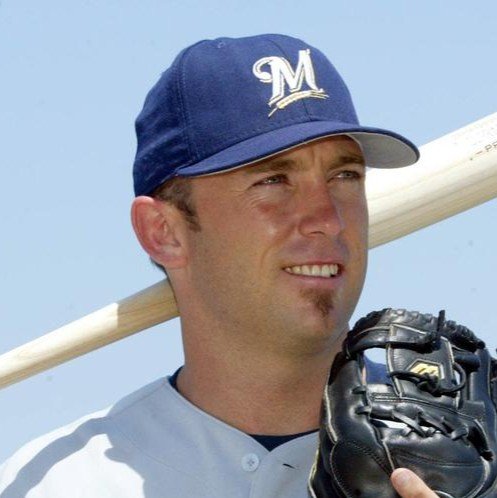 In 1993, Trent Durrington joined a growing number of Australians that were signed by major league baseball teams when he was inked as an international free agent by the California Angels. Durrington had played in tournaments and exhibitions over the previous two years and had caught the eye of Angels scouts with his batting eye and speed. The right-handed hitting infielder began his professional career with the Angels entry in the Arizona rookie league in 1994 and steadily moved up, spending five-plus years in the minors, showing a penchant for drawing walks and stealing bases (174 steals from 1996-99). He made his big-league debut with the newly-named Anaheim Angels in August 1999 and made an immediate impression, hitting safely in seven of hit first eight games, going 10-for-27 (.370). Durrington cooled off after that and finished the season with a batting line of .180/.237/.197 across 136 plate appearances. He missed most of 2000 with a knee injury and was released after the season. He signed with the other Los Angeles team (Dodgers) but only played 22 games for them at Triple-A Las Vegas in 2001 before being released again. The Angels re-signed him during the season but he didn't get back to the majors until 2003, when he spent six weeks with Anaheim at the end of the season, playing in just 12 games, making 17 plate appearances. 'Durro' was released by the Angels and was signed by the Brewers just before Thanksgiving 2003. Durrington split time between Triple-A and the Brewers in 2004 and 2005, playing in 81 games overall for Milwaukee, hitting .229/.267/.385, hitting his only two big-league home runs (both of the pinch-hit variety) in 2004, as well as legging out three triples in just 82 ABs. Durrington was released after the 2005 campaign and never returned to the bigs, spending time at Triple-A the next two years for Boston and Cleveland. He retired after the 2007 season.
 -
In 1993, Trent Durrington joined a growing number of Australians that were signed by major league baseball teams when he was inked as an international free agent by the California Angels. Durrington had played in tournaments and exhibitions over the previous two years and had caught the eye of Angels scouts with his batting eye and speed. The right-handed hitting infielder began his professional career with the Angels entry in the Arizona rookie league in 1994 and steadily moved up, spending five-plus years in the minors, showing a penchant for drawing walks and stealing bases (174 steals from 1996-99). He made his big-league debut with the newly-named Anaheim Angels in August 1999 and made an immediate impression, hitting safely in seven of hit first eight games, going 10-for-27 (.370). Durrington cooled off after that and finished the season with a batting line of .180/.237/.197 across 136 plate appearances. He missed most of 2000 with a knee injury and was released after the season. He signed with the other Los Angeles team (Dodgers) but only played 22 games for them at Triple-A Las Vegas in 2001 before being released again. The Angels re-signed him during the season but he didn't get back to the majors until 2003, when he spent six weeks with Anaheim at the end of the season, playing in just 12 games, making 17 plate appearances. 'Durro' was released by the Angels and was signed by the Brewers just before Thanksgiving 2003. Durrington split time between Triple-A and the Brewers in 2004 and 2005, playing in 81 games overall for Milwaukee, hitting .229/.267/.385, hitting his only two big-league home runs (both of the pinch-hit variety) in 2004, as well as legging out three triples in just 82 ABs. Durrington was released after the 2005 campaign and never returned to the bigs, spending time at Triple-A the next two years for Boston and Cleveland. He retired after the 2007 season. View full player
-
A great play, definitely a game-saver. Well, maybe a game-saver...lol.
-
They're all jealous of his flow...lol.
-
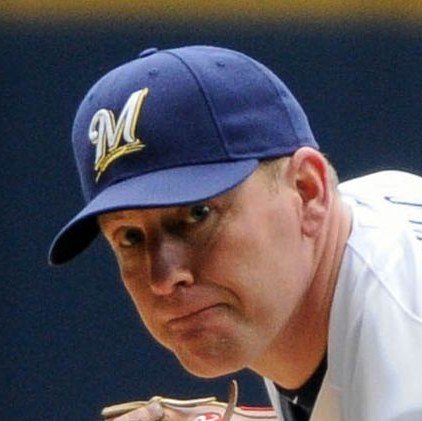 Randy Wolf wasn’t a superstar. The left-hander was named to only one All-Star team. But he made over 30 starts seven times, compiled 200+ innings six times, and won 133 games in a 16-year career that included stops in Milwaukee, Philadelphia, Los Angeles, San Diego, Houston, Detroit, Miami, and Baltimore. If you look up the phrase ‘dependable starter’ in your baseball dictionary, he picture was beside it. Randall Christopher Wolf was born in Canoga Park, California and although he was drafted out of high school by the Dodgers in the 25th round of the 1994 MLB Amateur Draft, he elected not to sign. He attended Pepperdine University where he became an All-American pitcher. He was drafted by the Phillies in the second round of the 1997 MLB draft. The player known as ‘Wolfie’ made his big-league debut with Philadelphia after just two-plus years in the minors. He became a regular starter in 1999 and made 142 starts over the next five years, culminating in a 16-win season and his only All-Star nod in 2003. Wolf underwent Tommy John surgery in 2005 and missed half of that season and the next. After the 2006 season, he signed as a free agent with the Dodgers. In 2007, Wolf made 18 starts for the Dodgers before undergoing season-ending shoulder surgery. He pitched for both San Diego and Houston in 2008 before going back to the Dodgers in 2009, where he had one of his best seasons, compiled a 3.9 bWAR, an ERA+ of 124, and a FIP of 3.96. Wolf signed as a free agent with the Brewers in December 2009 and played for Milwaukee for the better part of three seasons, making a total of 91 starts. He won 13 games in both 2010 and 2011. Wolf was a major part of the rotation during the 2011 campaign in which the Brewers fell one win short of reaching the World Series, losing to St. Louis in six games in the NLCS. Wolf was the winning pitcher in a 4-2 Game 4 victory for the Brewers. He underwent a second TJ surgery in 2012 and missed the following season. Over the next two years, Wolf pitched in only 14 major league games and retired after the 2015 season.
 -
Randy Wolf wasn’t a superstar. The left-hander was named to only one All-Star team. But he made over 30 starts seven times, compiled 200+ innings six times, and won 133 games in a 16-year career that included stops in Milwaukee, Philadelphia, Los Angeles, San Diego, Houston, Detroit, Miami, and Baltimore. If you look up the phrase ‘dependable starter’ in your baseball dictionary, he picture was beside it. Randall Christopher Wolf was born in Canoga Park, California and although he was drafted out of high school by the Dodgers in the 25th round of the 1994 MLB Amateur Draft, he elected not to sign. He attended Pepperdine University where he became an All-American pitcher. He was drafted by the Phillies in the second round of the 1997 MLB draft. The player known as ‘Wolfie’ made his big-league debut with Philadelphia after just two-plus years in the minors. He became a regular starter in 1999 and made 142 starts over the next five years, culminating in a 16-win season and his only All-Star nod in 2003. Wolf underwent Tommy John surgery in 2005 and missed half of that season and the next. After the 2006 season, he signed as a free agent with the Dodgers. In 2007, Wolf made 18 starts for the Dodgers before undergoing season-ending shoulder surgery. He pitched for both San Diego and Houston in 2008 before going back to the Dodgers in 2009, where he had one of his best seasons, compiled a 3.9 bWAR, an ERA+ of 124, and a FIP of 3.96. Wolf signed as a free agent with the Brewers in December 2009 and played for Milwaukee for the better part of three seasons, making a total of 91 starts. He won 13 games in both 2010 and 2011. Wolf was a major part of the rotation during the 2011 campaign in which the Brewers fell one win short of reaching the World Series, losing to St. Louis in six games in the NLCS. Wolf was the winning pitcher in a 4-2 Game 4 victory for the Brewers. He underwent a second TJ surgery in 2012 and missed the following season. Over the next two years, Wolf pitched in only 14 major league games and retired after the 2015 season. View full player
-
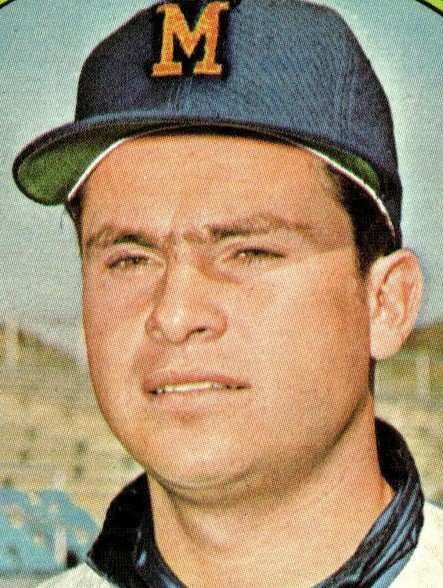 Mike Ferraro played five games in April 1969 for the Seattle Pilots before he was traded to the New York Yankees. The infielder didn’t return to the big leagues until 1972 when he made 100 starts at third base for the Brewers. He amassed only 500 at-bats in four big league seasons but made his mark as a minor league manager in the Yankees chain, winning three league championships in five seasons. Michael Dennis Ferraro was born in Kingston, New York and was signed by the Yankees in 1962 as an amateur free agent. Ferraro spent five years in the minors—including winning a batting title as a 19-year-old for Class-A Fort Lauderdale in 1964—before making his big-league debut with New York in a 10-game September audition. He played 29 games for the Yanks in 1968 and was drafted in the offseason by the Pilots in the expansion draft. After just a couple weeks with Seattle in 1969, he was traded to the Baltimore Orioles. He played two minor league seasons with the Orioles and then got traded to Milwaukee after the 1971 season. Ferraro was the everyday third sacker for the Brewers, but four other players made starts, including first baseman George Scott, who got the call 20 times at the hot corner during the year. Ferraro batted .255/.284/.323 over 406 plate appearances. He was traded to the Twins before the 1973 season but played a few games in the minors before being released. The Yankees signed him for minor league depth. He was released by the Yankees during spring training the following season but a few days later became a special instructor and then manager of the Oneonta Yankees in the short-season A New York-Penn League. He led the team to a 53-16 record in his first season, winning the league title and earning Manager of the Year honors. He had a 35-34 record the following season. He moved up the ladder all the way up to Triple-A over the next three years, including piloting his squads to a pair of league titles. Ferraro was named to the manager job for Cleveland in November 1982, but prior to the 1983 season, he underwent surgery to remove a cancerous left kidney. He recovered and managed the Indians for 100 games (40-60) before he got fired in late July. In 1986, Ferraro led the Kansas City Royals for 74 games after Dick Howser stepped down with health issues related to a brain tumor. Ferraro was a coach for the Royals for 2 1/2 seasons prior to taking over for Howser. Ferraro also served as a coach for New York from 1979-1982, 1987-88 and 1990-91. He also coached for Baltimore in 1993. Ferraro passed away in July 2024.