



Jack Stern
-
Posts
764 -
Joined
-
Last visited
-
Days Won
2
Content Type
Profiles
Forums
Blogs
Events
News
2026 Milwaukee Brewers Top Prospects Ranking
Milwaukee Brewers Videos
2022 Milwaukee Brewers Draft Picks
Milwaukee Brewers Free Agent & Trade Rumors, Notes, & Tidbits
Guides & Resources
2023 Milwaukee Brewers Draft Picks
2024 Milwaukee Brewers Draft Picks
The Milwaukee Brewers Players Project
2025 Milwaukee Brewers Draft Pick Tracker
2026 Milwaukee Brewers Draft Tracker: Picks & Bonuses
Store
Downloads
Gallery
Everything posted by Jack Stern
-
 Image courtesy of © Ken Blaze-Imagn Images Just over three weeks after a strong big-league debut, Logan Henderson was similarly effective in his second start. The 23-year-old tossed five innings of two-run ball, helping the Brewers avoid a sweep by the Guardians in Cleveland. “His second start right out of the Triple-A cooler, and he’s going out competing against a really hot team,” Pat Murphy said. “I thought he had a great outing.” “Impressive stuff,” Rhys Hoskins said. “He’s super poised out there, and he’s executed pitches super well.” In his first two outings, Henderson has struck out 40% of his batters faced. He’s doing it with the signature four-seam fastball and changeup combination that carried him through the minor leagues. He generates above-average backspin and carry on his four-seamer from a low three-quarters arm slot, making it challenging for hitters to get on top of. Pairing those heaters at the top of the zone with fading changeups at the bottom creates a difficult spread for opponents. “Those are my bread and butter,” Henderson said, “so definitely feel confident about those.” A whopping 92% of Henderson’s pitches so far have been either four-seamers or changeups. Opponents have whiffed on 28% of swings against the fastball and 35% of swings against the changeup. His first two outings have demonstrated that the righthander can carve through opposing lineups with just those two offerings, particularly when they are unfamiliar with them in their first meetings. The key to sustained success remains the development of a reliable third pitch, with glove-side movement. At some point, it will become necessary to keep guys off his fastball and changeup and give him another option—particularly if either of those pitches is not sharp on a given day. Finding that third offering can be a challenge for natural pronators like Henderson. So far, his cutter and slider have featured inconsistent movement, and neither has emerged as a reliable pitch. He’s aware of that, and while he will continue pitching to his strengths, he remains focused on rounding out his arsenal. “I know the cutter and slider have a lot of work to do,” he said. “It’s primarily going to be fastball and changeup, but the more I can throw the cutter and slider in there, it’s going to camouflage my other two best pitches.” Henderson flashed both pitches during his second foray through the Cleveland lineup, including three sliders in his final inning. “He brought out a couple sliders and cutters that second and third time through, just to throw a new wrinkle at them,” Hoskins said. “Which is a huge thing for a starter to be able to complete that third time through, or at least that two-and-a-half times through a lineup.” With no need in the starting rotation a few weeks ago, the Brewers optioned Henderson back to Triple-A Nashville after an impressive debut. He has a chance to stick around longer this time. With José Quintana hitting the injured list and an ankle injury pausing Brandon Woodruff’s rehab, Henderson will get a few more starts. “I mean, he’s two-for-two for me,” Murphy said. “That’s a good start. And he’s poised.” View full article
 -
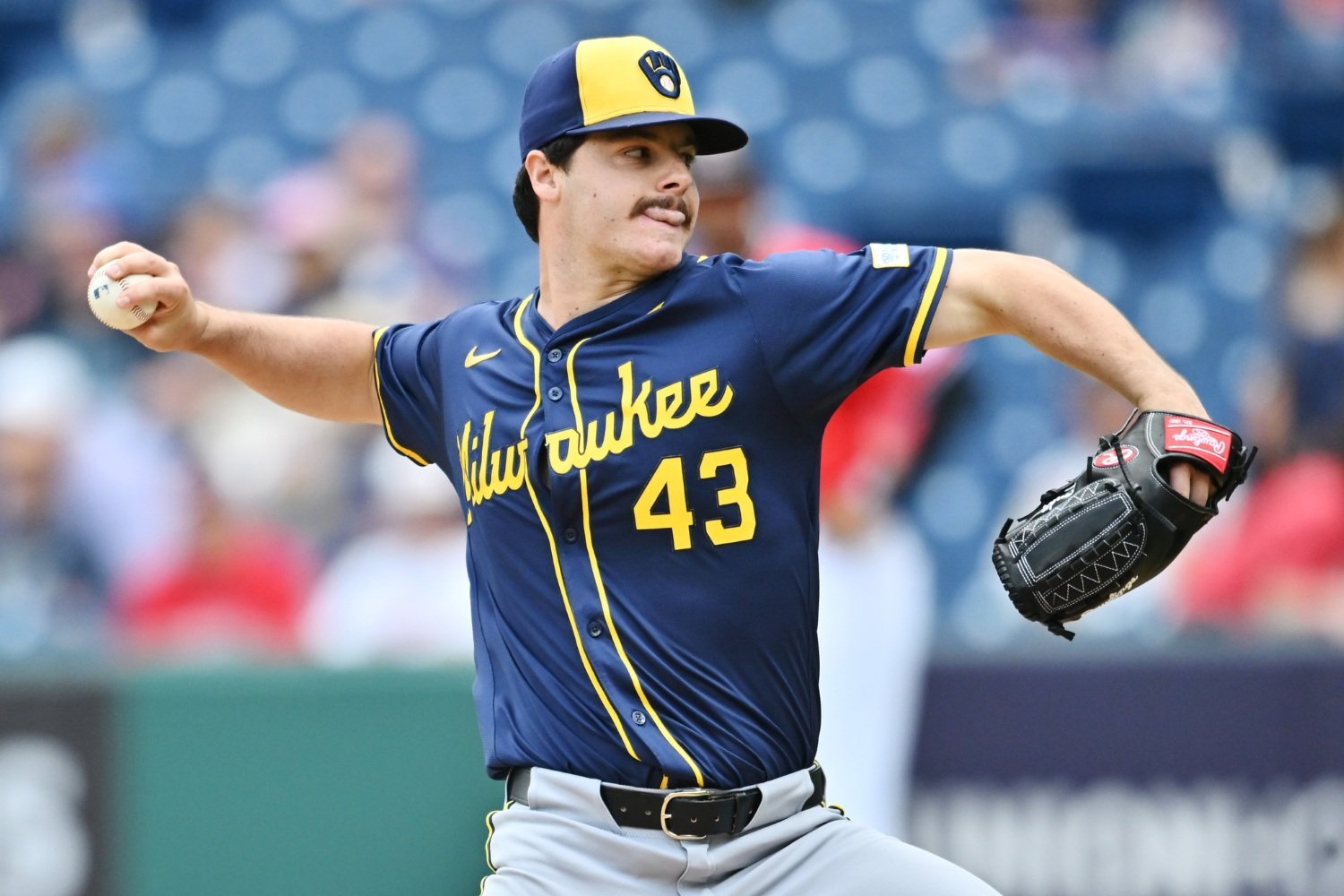 Just over three weeks after a strong big-league debut, Logan Henderson was similarly effective in his second start. The 23-year-old tossed five innings of two-run ball, helping the Brewers avoid a sweep by the Guardians in Cleveland. “His second start right out of the Triple-A cooler, and he’s going out competing against a really hot team,” Pat Murphy said. “I thought he had a great outing.” “Impressive stuff,” Rhys Hoskins said. “He’s super poised out there, and he’s executed pitches super well.” In his first two outings, Henderson has struck out 40% of his batters faced. He’s doing it with the signature four-seam fastball and changeup combination that carried him through the minor leagues. He generates above-average backspin and carry on his four-seamer from a low three-quarters arm slot, making it challenging for hitters to get on top of. Pairing those heaters at the top of the zone with fading changeups at the bottom creates a difficult spread for opponents. “Those are my bread and butter,” Henderson said, “so definitely feel confident about those.” A whopping 92% of Henderson’s pitches so far have been either four-seamers or changeups. Opponents have whiffed on 28% of swings against the fastball and 35% of swings against the changeup. His first two outings have demonstrated that the righthander can carve through opposing lineups with just those two offerings, particularly when they are unfamiliar with them in their first meetings. The key to sustained success remains the development of a reliable third pitch, with glove-side movement. At some point, it will become necessary to keep guys off his fastball and changeup and give him another option—particularly if either of those pitches is not sharp on a given day. Finding that third offering can be a challenge for natural pronators like Henderson. So far, his cutter and slider have featured inconsistent movement, and neither has emerged as a reliable pitch. He’s aware of that, and while he will continue pitching to his strengths, he remains focused on rounding out his arsenal. “I know the cutter and slider have a lot of work to do,” he said. “It’s primarily going to be fastball and changeup, but the more I can throw the cutter and slider in there, it’s going to camouflage my other two best pitches.” Henderson flashed both pitches during his second foray through the Cleveland lineup, including three sliders in his final inning. “He brought out a couple sliders and cutters that second and third time through, just to throw a new wrinkle at them,” Hoskins said. “Which is a huge thing for a starter to be able to complete that third time through, or at least that two-and-a-half times through a lineup.” With no need in the starting rotation a few weeks ago, the Brewers optioned Henderson back to Triple-A Nashville after an impressive debut. He has a chance to stick around longer this time. With José Quintana hitting the injured list and an ankle injury pausing Brandon Woodruff’s rehab, Henderson will get a few more starts. “I mean, he’s two-for-two for me,” Murphy said. “That’s a good start. And he’s poised.”
-
- 1
-

-
- logan henderson
- jose quintana
- (and 1 more)
-
Image courtesy of © David Richard-Imagn Images When Jackson Chourio drew a walk in the third inning on Monday night, it was just his fourth of the season. The 21-year-old’s 2.2% walk rate is the lowest among qualified hitters this year. In 40 games, he’s had two stretches of at least 70 plate appearances without a walk. “We know Chourio is allergic to a walk,” quipped Pat Murphy, who has repeatedly warned that his talented young outfielder must refine his plate discipline to enjoy sustained success against big-league pitching. Chourio will never run a high walk rate in his prime seasons—nor should he. With lightning-quick hands that can get the barrel to nearly any pitch in or near the strike zone, an aggressive approach allows Chourio to shine. He should swing often at strikes, to maximize his electrifying talent. The aggressiveness has gone too far in Chourio’s sophomore season, though, and is restricting his production. After a torrid finish to his debut campaign, he has often looked less polished to begin his follow-up year. The former top prospect’s 103 wRC+ is slightly above average, but it’s a step back from his 117 wRC+ mark as a rookie, and advanced metrics that consider swing decisions and quality of contact over pure results say he’s been a below-average hitter. His .292 xwOBA is in the 17th percentile of hitters, and his 92 DRC+ is underwhelming. Chourio’s 44% chase rate on pitches outside the zone is third among qualified hitters. According to Statcast, he’s one of 16 hitters who do not have a positive run value in the chase zone. These pitches are typically favorable for hitters, because they are most often taken for balls. Chourio has swung at so many of them that his value against them so far has been neutral. Chourio has made 42 outs on out-of-zone pitches this year, the 18th-most in baseball. Murphy believes that his quickness and hand-eye coordination have actually worked against him at times to create some of those outs. “For the normal guy, some of those pitches are fouled off, and they live for another pitch,” he said. “Chourio, his hand-eye’s so good that he puts those balls in play.” Simply telling a hitter to watch more pitches is rarely a productive solution, particularly for one with Chourio’s tools. He shouldn’t take more pitches he can hit for strikes. Rather, it’s up to him to develop an awareness that yields more nuanced swing decisions, without straying from his strengths. He might also need a swing adjustment that leads to less contact; swinging so much and whiffing so rarely is a recipe for a high-wire profile. “Discerning between, ‘This is borderline, I don't need to swing at it early,’ or, ‘This is a ball, but because I have one strike, I'm putting it in play, and I'm good enough, and my hands are fast enough, that I can put it in play,’” Murphy explained. Chourio has also shown that he’s not a finished product in the field. Almost exclusively a center fielder in the minor leagues, he shifted to the outfield corners last year. While his reads were questionable at times (particularly in left field), his athleticism helped him accrue 12 Defensive Runs Saved and 6 Outs Above Average. After injuries to Blake Perkins and Garrett Mitchell, Chourio is back at his natural position, partially due to his comfort level there and the club’s preference to keep Gold Glove winner Sal Frelick in right field. He’s made two run-scoring misplays within the last week: letting a ground ball roll past him against the Tampa Bay Rays on Friday, and taking a poor route on a fly ball Monday night that turned an inning-ending flyout for Freddy Peralta into a bases-clearing double. “He's going to be a great player, and mistakes like this or plays like this that he doesn't make, he'll learn from,” Murphy said postgame. Chourio has looked capable in center, outside of those two gaffes, and he’s continued to show flashes of the talent that made him a highly-regarded prospect. The development process remains ongoing, though. Chourio demonstrated his adaptability throughout the minors and last season, and he must do so again. “He's in his second year in the big leagues, and he's 21 years old,” Murphy said. “So I think it's going to be a process. But I’ve noticed little changes lately, so that’s good.” View full article
-
 When Jackson Chourio drew a walk in the third inning on Monday night, it was just his fourth of the season. The 21-year-old’s 2.2% walk rate is the lowest among qualified hitters this year. In 40 games, he’s had two stretches of at least 70 plate appearances without a walk. “We know Chourio is allergic to a walk,” quipped Pat Murphy, who has repeatedly warned that his talented young outfielder must refine his plate discipline to enjoy sustained success against big-league pitching. Chourio will never run a high walk rate in his prime seasons—nor should he. With lightning-quick hands that can get the barrel to nearly any pitch in or near the strike zone, an aggressive approach allows Chourio to shine. He should swing often at strikes, to maximize his electrifying talent. The aggressiveness has gone too far in Chourio’s sophomore season, though, and is restricting his production. After a torrid finish to his debut campaign, he has often looked less polished to begin his follow-up year. The former top prospect’s 103 wRC+ is slightly above average, but it’s a step back from his 117 wRC+ mark as a rookie, and advanced metrics that consider swing decisions and quality of contact over pure results say he’s been a below-average hitter. His .292 xwOBA is in the 17th percentile of hitters, and his 92 DRC+ is underwhelming. Chourio’s 44% chase rate on pitches outside the zone is third among qualified hitters. According to Statcast, he’s one of 16 hitters who do not have a positive run value in the chase zone. These pitches are typically favorable for hitters, because they are most often taken for balls. Chourio has swung at so many of them that his value against them so far has been neutral. Chourio has made 42 outs on out-of-zone pitches this year, the 18th-most in baseball. Murphy believes that his quickness and hand-eye coordination have actually worked against him at times to create some of those outs. “For the normal guy, some of those pitches are fouled off, and they live for another pitch,” he said. “Chourio, his hand-eye’s so good that he puts those balls in play.” Simply telling a hitter to watch more pitches is rarely a productive solution, particularly for one with Chourio’s tools. He shouldn’t take more pitches he can hit for strikes. Rather, it’s up to him to develop an awareness that yields more nuanced swing decisions, without straying from his strengths. He might also need a swing adjustment that leads to less contact; swinging so much and whiffing so rarely is a recipe for a high-wire profile. “Discerning between, ‘This is borderline, I don't need to swing at it early,’ or, ‘This is a ball, but because I have one strike, I'm putting it in play, and I'm good enough, and my hands are fast enough, that I can put it in play,’” Murphy explained. Chourio has also shown that he’s not a finished product in the field. Almost exclusively a center fielder in the minor leagues, he shifted to the outfield corners last year. While his reads were questionable at times (particularly in left field), his athleticism helped him accrue 12 Defensive Runs Saved and 6 Outs Above Average. After injuries to Blake Perkins and Garrett Mitchell, Chourio is back at his natural position, partially due to his comfort level there and the club’s preference to keep Gold Glove winner Sal Frelick in right field. He’s made two run-scoring misplays within the last week: letting a ground ball roll past him against the Tampa Bay Rays on Friday, and taking a poor route on a fly ball Monday night that turned an inning-ending flyout for Freddy Peralta into a bases-clearing double. “He's going to be a great player, and mistakes like this or plays like this that he doesn't make, he'll learn from,” Murphy said postgame. Chourio has looked capable in center, outside of those two gaffes, and he’s continued to show flashes of the talent that made him a highly-regarded prospect. The development process remains ongoing, though. Chourio demonstrated his adaptability throughout the minors and last season, and he must do so again. “He's in his second year in the big leagues, and he's 21 years old,” Murphy said. “So I think it's going to be a process. But I’ve noticed little changes lately, so that’s good.”
 -
Image courtesy of © Benny Sieu-Imagn Images Ahead of Friday night's series opener against the Tampa Bay Rays, the Brewers announced an infield shakeup. The club designated Vinny Capra for assignment and recalled Andruw Monasterio from Triple-A Nashville. Bryan Hudson was also recalled to take the spot of Elvin Rodríguez, whom the team optioned after a 74-pitch relief outing on Wednesday. The first two transactions complete a full overhaul of the Brewers' big-league third base mix. Oliver Dunn and Capra opened the year in a platoon at the hot corner, but the duo combined for a .111/.155/.167 slash and -12 wRC+. The latter's output was particularly pitiful: a .074/.121/.130 line (-33 wRC+) that featured an 0-for-36 streak that tied for the third-longest hitless streak in franchise history. The club replaced Dunn with Caleb Durbin in mid-April. Three weeks later, Capra is also on the way out. With Durbin entrenched as the everyday third baseman, Monasterio slides into the infield bench role. The 27-year-old is not an offensive threat, either, owning a career .243/.322/.324 line (82 wRC+). However, that's significantly better production than Capra's. Monasterio has also seen an average of 4.36 pitches per plate appearance and walked at a 9.6% clip in the big leagues, so he at least works counts and reaches base at a passable level. The utility man is also rounding into better form after a rough first week with Nashville. After starting 2-for-27, Monasterio has hit .306/.400/.518 (150 wRC+) since April 8. Hudson returns after control issues loosened his grasp on a bullpen spot. He showed improvement on that front in four Triple-A appearances, issuing zero walks and spending significantly more time in the strike zone. With Nashville, 60.3% of his pitches were in the strike zone, compared to 49.5% at the time of his demotion. However, the southpaw's velocity has remained inconsistent. His four-seam fastball hit 94.2 mph but dipped as low as 86.1. Similarly, his sweeper velocity has ranged from 84.7 mph to 76.2. For now, Hudson figures to occupy a lower-leverage role in the bullpen, but Pat Murphy could also utilize him situationally against certain left-handed hitters. View full article
-
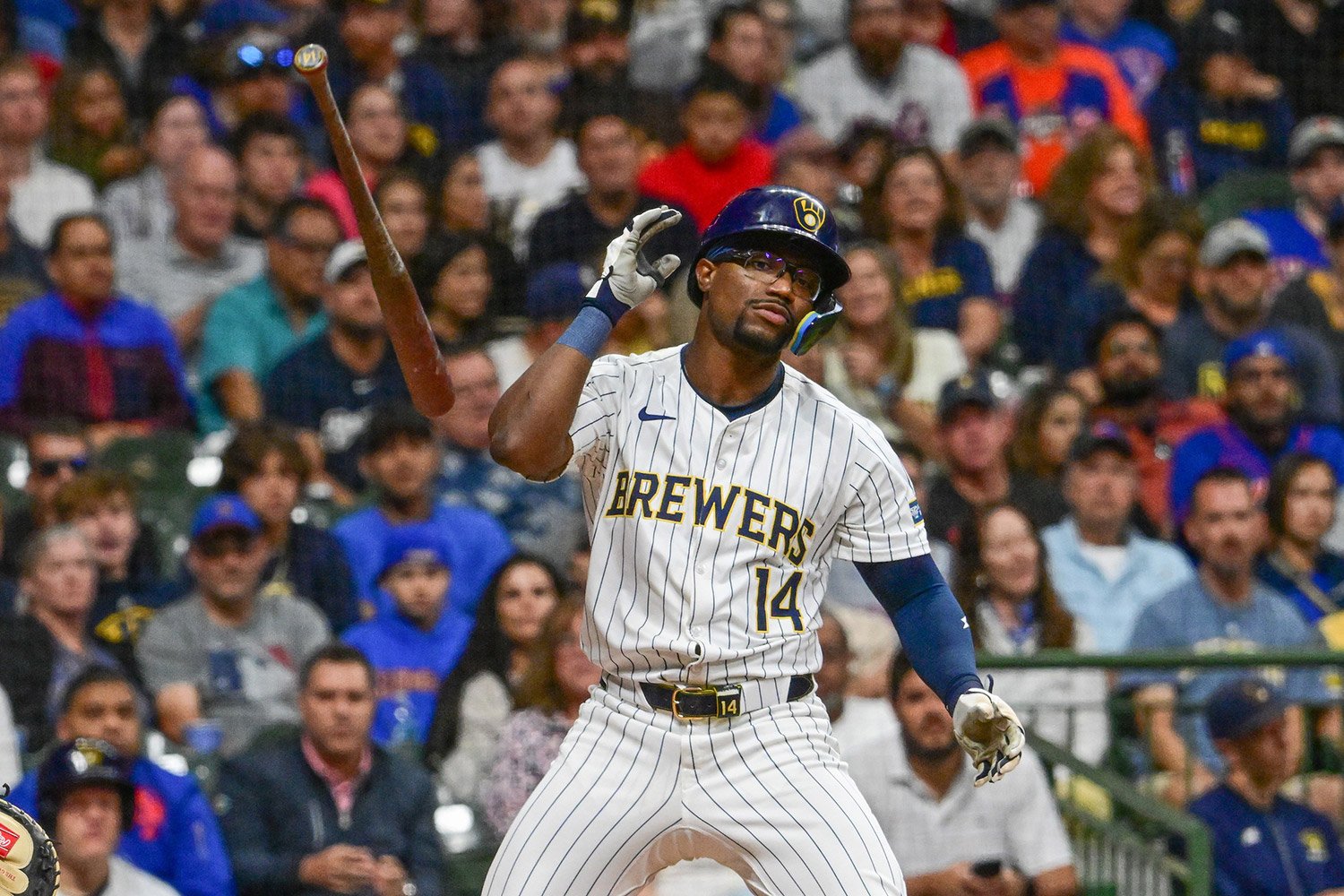 Ahead of Friday night's series opener against the Tampa Bay Rays, the Brewers announced an infield shakeup. The club designated Vinny Capra for assignment and recalled Andruw Monasterio from Triple-A Nashville. Bryan Hudson was also recalled to take the spot of Elvin Rodríguez, whom the team optioned after a 74-pitch relief outing on Wednesday. The first two transactions complete a full overhaul of the Brewers' big-league third base mix. Oliver Dunn and Capra opened the year in a platoon at the hot corner, but the duo combined for a .111/.155/.167 slash and -12 wRC+. The latter's output was particularly pitiful: a .074/.121/.130 line (-33 wRC+) that featured an 0-for-36 streak that tied for the third-longest hitless streak in franchise history. The club replaced Dunn with Caleb Durbin in mid-April. Three weeks later, Capra is also on the way out. With Durbin entrenched as the everyday third baseman, Monasterio slides into the infield bench role. The 27-year-old is not an offensive threat, either, owning a career .243/.322/.324 line (82 wRC+). However, that's significantly better production than Capra's. Monasterio has also seen an average of 4.36 pitches per plate appearance and walked at a 9.6% clip in the big leagues, so he at least works counts and reaches base at a passable level. The utility man is also rounding into better form after a rough first week with Nashville. After starting 2-for-27, Monasterio has hit .306/.400/.518 (150 wRC+) since April 8. Hudson returns after control issues loosened his grasp on a bullpen spot. He showed improvement on that front in four Triple-A appearances, issuing zero walks and spending significantly more time in the strike zone. With Nashville, 60.3% of his pitches were in the strike zone, compared to 49.5% at the time of his demotion. However, the southpaw's velocity has remained inconsistent. His four-seam fastball hit 94.2 mph but dipped as low as 86.1. Similarly, his sweeper velocity has ranged from 84.7 mph to 76.2. For now, Hudson figures to occupy a lower-leverage role in the bullpen, but Pat Murphy could also utilize him situationally against certain left-handed hitters.
 -
Image courtesy of © Kelley L Cox-Imagn Images Jared Koenig was a breakout contributor in last year's Brewers bullpen, authoring a 2.47 ERA, 3.28 FIP, and 88 DRA- in 62 innings, while ascending to a high-leverage role by season's end. It was fair to wonder, though, whether that success would carry into his second full big-league season. Relief pitcher is the most volatile position in baseball, and one year's surprising success story can fizzle out just as abruptly. At first glance, Koenig profiled as such an arm. He came out of nowhere last year at age 30, and his raw stuff is more solid than elite. Instead of regressing, however, the left-hander has improved across the board to begin his follow-up campaign. He leads Brewers relievers with 17 appearances this year, posting a 2.25 ERA, 2.31 FIP, and 77 DRA-. "It feels like every game for me," Pat Murphy said. "It's nice having him down there. I have a ton of confidence in him." Pitching is all about keeping hitters off-balance, but the path to that destination differs for every pitcher. While Koenig will sometimes mix speeds and locations, his method of attack is more straightforward than most, to the point that it might look unsustainable. He comes right at hitters with a relentless onslaught of fastballs over the plate. According to Statcast, among 283 relievers who have thrown at least 30 innings since the start of the 2024 season, Koenig's 58% zone rate ranks 12th. A staggering 50% of his total pitches have been fastballs in the strike zone, the fourth-highest rate among the same number of relievers to throw at least 500 pitches in that span. Overall, 83% of his pitches have been heaters. "Even before I started throwing harder, I was always a heavy fastball thrower," Koenig said, adding that he already understood how he wanted to attack hitters before joining the Brewers. Koenig's velocity has climbed since his conversion to a full-time reliever. He's gone from averaging 89 mph with his primary fastball in 2022 to 93 in 2023 and 95 in each of his two seasons in the Milwaukee bullpen. With that extra heat, he's taken his approach to even greater extremes. "Now I throw harder, so my chance to miss in the zone helps," he said. "I don't have to worry about spotting it as much. I think it frees me up a little more." On its face, it doesn't seem like an approach that would yield such a high level of success, but it keeps working. Last season, hitters posted a modest .314 wOBA when they put Koenig's fastballs in play. This year, that figure is down to .258. His 27.5% hard-hit rate and 2.5% Barrel rate both put him in the best 4% of all pitchers in the league in terms of minimizing damage. Koenig keeps throwing sinkers and cutters over the heart of the plate, and opponents keep struggling to barrel them up. Why can't they do anything with pitches that appear so hittable to anyone watching the game? "I think it's just the knack of how I throw, and then my movement profile is not necessarily a normal movement profile," he said. The raw movement of Koenig's sinker is not all that impressive. It averages 11.2 inches of induced vertical break, meaning it neither sinks nor has much carry. At 15.1 inches of arm-side run, it tails slightly less than the average left-handed sinker However, that movement plays up because it's unexpected. Based on the direction Koenig spins his sinker, a hitter's eyes do not expect it to tail at all. "People call it the seam-shift stuff, or whatever," he said. "It's how I've always thrown my two-seam fastball." Seam-shifted wake is a phenomenon that creates late and unexpected horizontal movement on a pitch when a pitcher orients the baseball's seams a certain way. The seams produce an uneven airflow around the sides of the ball, creating a force that imparts lateral break. If that brief definition is difficult to comprehend, the image below provides a visual demonstration. The graphic on the left depicts the direction in which Koenig spins his pitches. The one on the right shows the direction in which his pitches actually move. Koenig's breaking ball occupies similar positions on the clock in both visuals. That means when hitters see the ball spinning like a curveball, it moves in the direction they expect from that spin. His fastballs are different. Hitters read the spin of Koenig's sinker from his crossfire delivery and expect a ball that moves like a traditional backspin four-seamer or has slight glove-side cut. Instead, the ball tails, after they've already made a swing decision. "Especially inside to righties, it looks like a ball and then it comes back, because it looks like it's cutting," Koenig said. "Plus, with how I throw, it already looks like, when I'm throwing that way, it's coming across before it sinks back." Adding to Koenig's deception is that his sinker and cutter often spin in the same direction, but break differently. It's hard for hitters to take a comfortable swing when they cannot trust their eyes to tell them which direction the ball will move. Koenig's sinker did enough heavy lifting in his pitch mix last year, when he threw it 57% of the time. This year, he's upped his sinker usage to 66%, and opponents have hit just .194 with a .259 wOBA against it. Still, he mixes in just enough cutters for different movement from the same initial look. "That's when the back-door cutters come into play," he said, referring to at-bats in which right-handed batters start to get used to the sinker's surprise movement away from them. "I got Elly (De La Cruz) looking on a back-door cutter." While Koenig says he takes outs any way he can get them, as a high-leverage reliever, he looks for strikeouts whenever possible. His high sinker usage means he must take an unconventional route to get them. Koenig's whiff per swing rate this year ranks in the 36th percentile, and his chase rate on pitches outside the strike zone ranks in the 15th percentile. However, he uses his breaking ball strategically when he needs a whiff outside the zone, and his sinker and cutter pairing generate plenty of called strikes. "I'm not getting chase, I'm getting quality looking strikes," he said. "So it's like, take one or the other. I'd rather have them not swing the bat, because it's a lesser chance of them hitting the baseball. It's a zero chance." Last year, opponents swung at 63% of Koenig's pitches in the zone, which trailed the MLB average of 66%. This year, they're swinging at just 51% of such pitches. Since the start of last year, Koenig's 26 called strikeouts are 19th among all relievers. It is an atypical form of dominance, but Koenig has proven that it's legitimate. Hitters know they're getting something hard over the plate. They just can't track it, producing uncomfortable takes and weak contact on pitches that might typically be in their hot zones. "I'm funky," he said. "I'm heavy cross-body. Everything is different. I'm not like a normal, standard pitcher, I guess. Everyone's got to be different and find their own niche. I think that's my niche." View full article
-
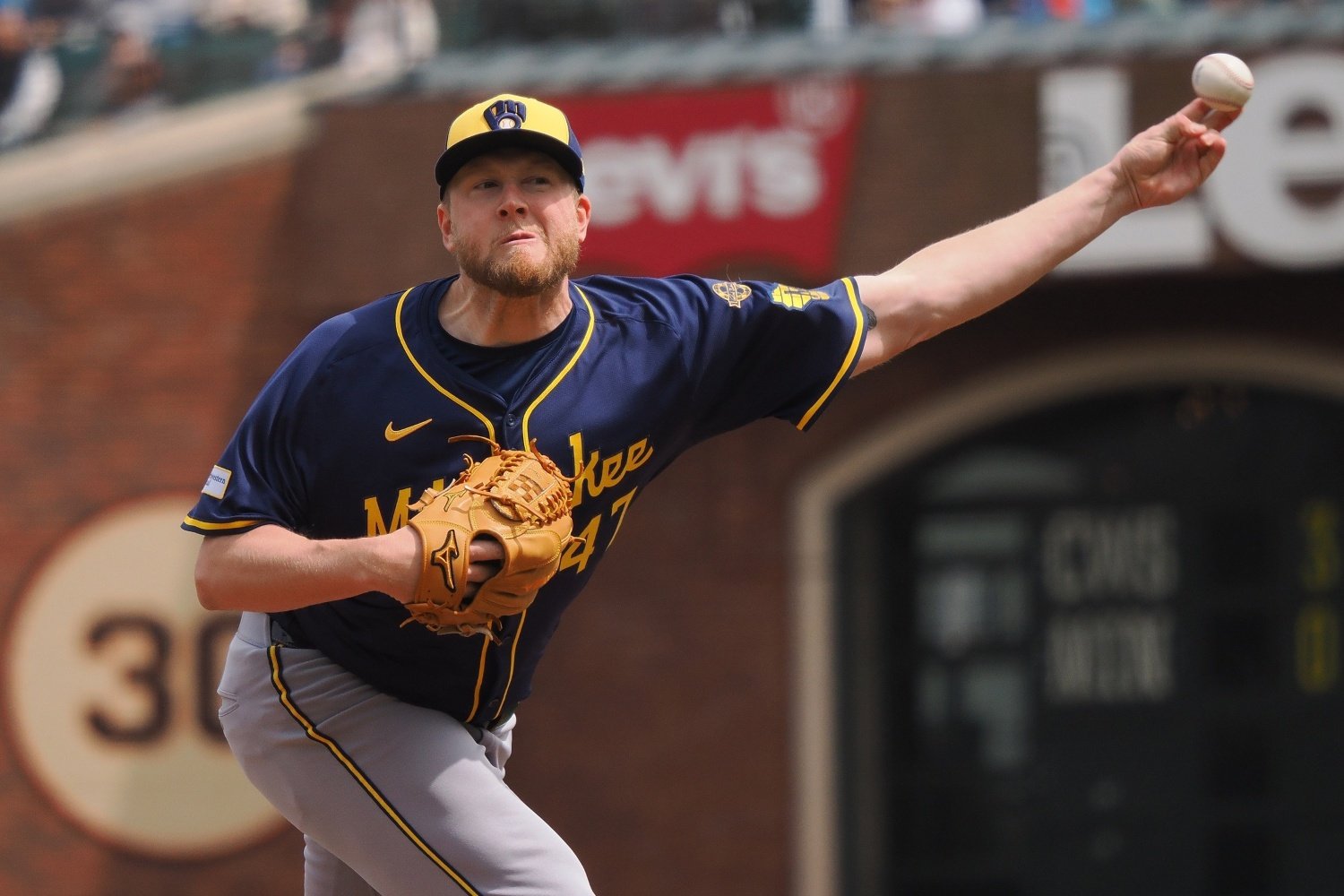 Jared Koenig was a breakout contributor in last year's Brewers bullpen, authoring a 2.47 ERA, 3.28 FIP, and 88 DRA- in 62 innings, while ascending to a high-leverage role by season's end. It was fair to wonder, though, whether that success would carry into his second full big-league season. Relief pitcher is the most volatile position in baseball, and one year's surprising success story can fizzle out just as abruptly. At first glance, Koenig profiled as such an arm. He came out of nowhere last year at age 30, and his raw stuff is more solid than elite. Instead of regressing, however, the left-hander has improved across the board to begin his follow-up campaign. He leads Brewers relievers with 17 appearances this year, posting a 2.25 ERA, 2.31 FIP, and 77 DRA-. "It feels like every game for me," Pat Murphy said. "It's nice having him down there. I have a ton of confidence in him." Pitching is all about keeping hitters off-balance, but the path to that destination differs for every pitcher. While Koenig will sometimes mix speeds and locations, his method of attack is more straightforward than most, to the point that it might look unsustainable. He comes right at hitters with a relentless onslaught of fastballs over the plate. According to Statcast, among 283 relievers who have thrown at least 30 innings since the start of the 2024 season, Koenig's 58% zone rate ranks 12th. A staggering 50% of his total pitches have been fastballs in the strike zone, the fourth-highest rate among the same number of relievers to throw at least 500 pitches in that span. Overall, 83% of his pitches have been heaters. "Even before I started throwing harder, I was always a heavy fastball thrower," Koenig said, adding that he already understood how he wanted to attack hitters before joining the Brewers. Koenig's velocity has climbed since his conversion to a full-time reliever. He's gone from averaging 89 mph with his primary fastball in 2022 to 93 in 2023 and 95 in each of his two seasons in the Milwaukee bullpen. With that extra heat, he's taken his approach to even greater extremes. "Now I throw harder, so my chance to miss in the zone helps," he said. "I don't have to worry about spotting it as much. I think it frees me up a little more." On its face, it doesn't seem like an approach that would yield such a high level of success, but it keeps working. Last season, hitters posted a modest .314 wOBA when they put Koenig's fastballs in play. This year, that figure is down to .258. His 27.5% hard-hit rate and 2.5% Barrel rate both put him in the best 4% of all pitchers in the league in terms of minimizing damage. Koenig keeps throwing sinkers and cutters over the heart of the plate, and opponents keep struggling to barrel them up. Why can't they do anything with pitches that appear so hittable to anyone watching the game? "I think it's just the knack of how I throw, and then my movement profile is not necessarily a normal movement profile," he said. The raw movement of Koenig's sinker is not all that impressive. It averages 11.2 inches of induced vertical break, meaning it neither sinks nor has much carry. At 15.1 inches of arm-side run, it tails slightly less than the average left-handed sinker However, that movement plays up because it's unexpected. Based on the direction Koenig spins his sinker, a hitter's eyes do not expect it to tail at all. "People call it the seam-shift stuff, or whatever," he said. "It's how I've always thrown my two-seam fastball." Seam-shifted wake is a phenomenon that creates late and unexpected horizontal movement on a pitch when a pitcher orients the baseball's seams a certain way. The seams produce an uneven airflow around the sides of the ball, creating a force that imparts lateral break. If that brief definition is difficult to comprehend, the image below provides a visual demonstration. The graphic on the left depicts the direction in which Koenig spins his pitches. The one on the right shows the direction in which his pitches actually move. Koenig's breaking ball occupies similar positions on the clock in both visuals. That means when hitters see the ball spinning like a curveball, it moves in the direction they expect from that spin. His fastballs are different. Hitters read the spin of Koenig's sinker from his crossfire delivery and expect a ball that moves like a traditional backspin four-seamer or has slight glove-side cut. Instead, the ball tails, after they've already made a swing decision. "Especially inside to righties, it looks like a ball and then it comes back, because it looks like it's cutting," Koenig said. "Plus, with how I throw, it already looks like, when I'm throwing that way, it's coming across before it sinks back." Adding to Koenig's deception is that his sinker and cutter often spin in the same direction, but break differently. It's hard for hitters to take a comfortable swing when they cannot trust their eyes to tell them which direction the ball will move. Koenig's sinker did enough heavy lifting in his pitch mix last year, when he threw it 57% of the time. This year, he's upped his sinker usage to 66%, and opponents have hit just .194 with a .259 wOBA against it. Still, he mixes in just enough cutters for different movement from the same initial look. "That's when the back-door cutters come into play," he said, referring to at-bats in which right-handed batters start to get used to the sinker's surprise movement away from them. "I got Elly (De La Cruz) looking on a back-door cutter." While Koenig says he takes outs any way he can get them, as a high-leverage reliever, he looks for strikeouts whenever possible. His high sinker usage means he must take an unconventional route to get them. Koenig's whiff per swing rate this year ranks in the 36th percentile, and his chase rate on pitches outside the strike zone ranks in the 15th percentile. However, he uses his breaking ball strategically when he needs a whiff outside the zone, and his sinker and cutter pairing generate plenty of called strikes. "I'm not getting chase, I'm getting quality looking strikes," he said. "So it's like, take one or the other. I'd rather have them not swing the bat, because it's a lesser chance of them hitting the baseball. It's a zero chance." Last year, opponents swung at 63% of Koenig's pitches in the zone, which trailed the MLB average of 66%. This year, they're swinging at just 51% of such pitches. Since the start of last year, Koenig's 26 called strikeouts are 19th among all relievers. It is an atypical form of dominance, but Koenig has proven that it's legitimate. Hitters know they're getting something hard over the plate. They just can't track it, producing uncomfortable takes and weak contact on pitches that might typically be in their hot zones. "I'm funky," he said. "I'm heavy cross-body. Everything is different. I'm not like a normal, standard pitcher, I guess. Everyone's got to be different and find their own niche. I think that's my niche."
 -
Image courtesy of © Kamil Krzaczynski-Imagn Images Less than two weeks after a highly anticipated big-league debut, Craig Yoho is returning to Nashville. The Brewers optioned the changeup specialist to Triple-A on Saturday and recalled right-hander Elvin Rodríguez. It was a shorter first stay than anyone hoped. The Brewers needed a fresh arm, and Yoho was the optionable reliever with the heaviest recent workload. However, he likely would have stayed, were it not for an inconsistent inaugural stint capped by a five-run outing against the Chicago White Sox on Thursday. Spotty command was the only legitimate knock against Yoho's dominant minor-league performance, and he issued four walks in that fateful appearance. Unsurprisingly, Pat Murphy said the Brewers seek improvement on that front. "You can't just rely on a changeup for a strike," Murphy said. "He's got to do more than that. So he's got to locate the heater better, and it's got to be money. He's got to be a strike-throwing machine. Then the changeup comes into play a lot better." There is a give-and-take for pitchers like Yoho, who creates extreme movement with his secondary pitches. His stuff can be nearly impossible to hit when he's on, but it's also difficult to keep it in the strike zone. Like Devin Williams, who also throws a screwball-like changeup, Yoho will always have to work around free passes, even after the Brewers nudged him toward the middle of the rubber this spring to get him in the zone more. "Knowing where your hand is when you throw," Murphy said. "That sounds remedial, but actually feeling where it is every time, that's going to lead to better command. And the way he throws and kind of comes off it, he kind of loses where that is sometimes. So yeah, he might be a guy that always deals with this type of thing." When Yoho was in the strike zone, his stuff played as expected. According to Statcast, big-league opponents posted an in-zone contact rate of 81.6% against Yoho, a similar rate to Triple-A hitters. Only 35.3% of batted balls hit against him were hard-hit (95 mph or faster off the bat), and 52.9% were ground balls. The Miguel Vargas home run against his changeup was a 94.6-mph fly ball with an expected batting average of .110. The difference was that Yoho stopped inducing poor swings on pitches outside the zone. His Triple-A chase rate was 31.6%, but that figure fell to 20.5% after his promotion. That was mainly due to so many misses well off the plate, but could also point to tunneling and sequencing issues. His outing in Chicago was not only Yoho's first blow-up inning in the big leagues, but the first time he struggled that badly in a professional game. He posted a 1.16 ERA in the minors, where he never allowed more than three earned runs in an appearance. Thursday raised personally unprecedented adversity for the righthander, a fact that is not lost on Murphy. "The first question I asked him (Friday night) was, 'Has that changeup ever been hit for a home run?' And he went, 'No, I don't think so,'" Murphy said. "So think about it. What a great experience for the kid. You hate to have it, but a great experience. He's the type of kid I really think will respond. I think he's just really locked in." For now, the Brewers believe that Yoho's ability to respond is best tested back in Triple A. "You can't risk it in a situation we're in," Murphy said, alluding to his club's need to get going after an inconsistent first month. "We're just trying to, right now, just bob and weave and survive and not lose too many rounds—and then be in position to win a decision." Yoho remains very much a part of the big-league bullpen picture. He's closer to helping than his surface-level numbers suggest, which means he could return soon if the Brewers see progress. "Yoho is a big part of our future," Murphy said. "I really think so. I think we have something there that's pretty special. He's an incredible kid." View full article
-
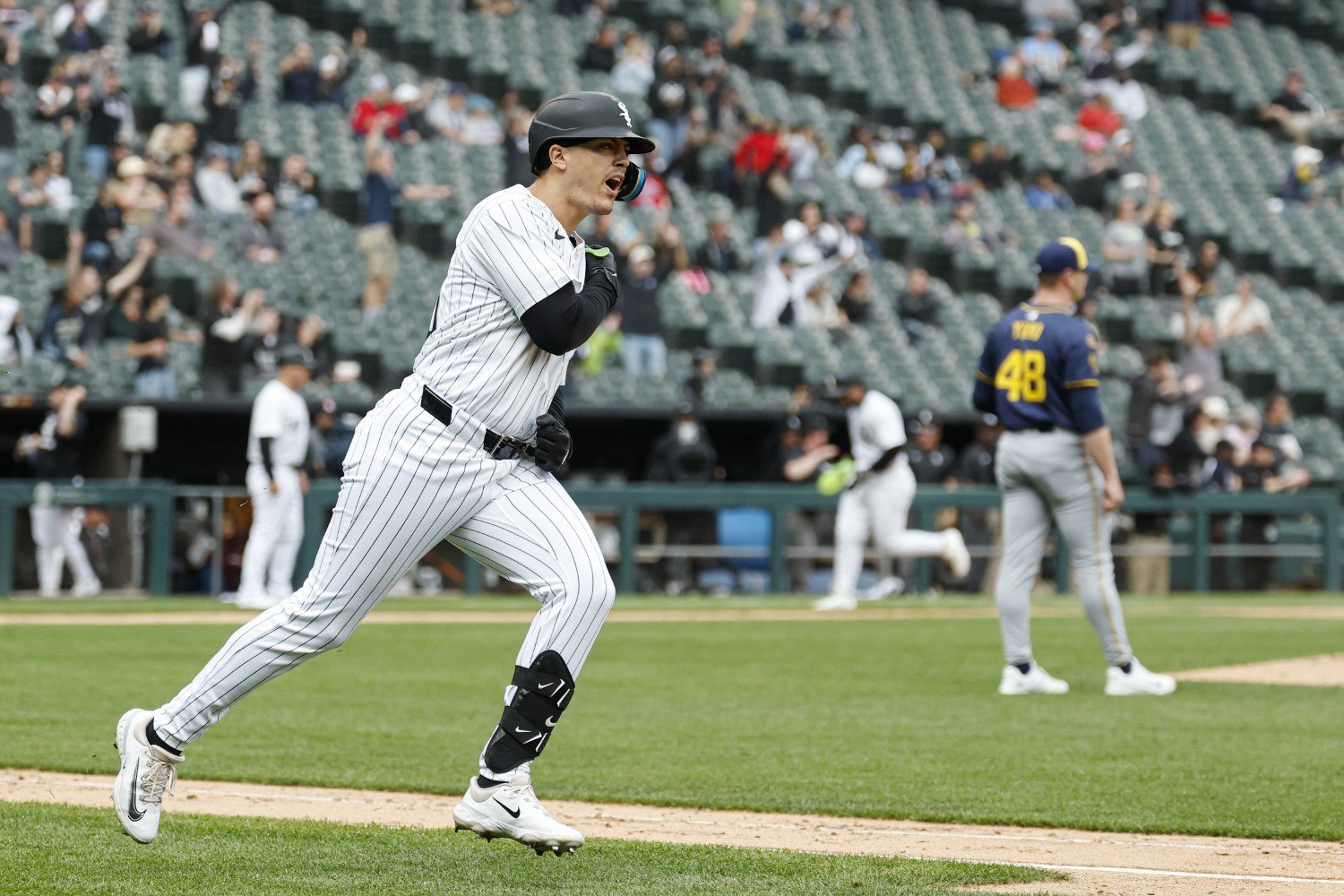 Less than two weeks after a highly anticipated big-league debut, Craig Yoho is returning to Nashville. The Brewers optioned the changeup specialist to Triple-A on Saturday and recalled right-hander Elvin Rodríguez. It was a shorter first stay than anyone hoped. The Brewers needed a fresh arm, and Yoho was the optionable reliever with the heaviest recent workload. However, he likely would have stayed, were it not for an inconsistent inaugural stint capped by a five-run outing against the Chicago White Sox on Thursday. Spotty command was the only legitimate knock against Yoho's dominant minor-league performance, and he issued four walks in that fateful appearance. Unsurprisingly, Pat Murphy said the Brewers seek improvement on that front. "You can't just rely on a changeup for a strike," Murphy said. "He's got to do more than that. So he's got to locate the heater better, and it's got to be money. He's got to be a strike-throwing machine. Then the changeup comes into play a lot better." There is a give-and-take for pitchers like Yoho, who creates extreme movement with his secondary pitches. His stuff can be nearly impossible to hit when he's on, but it's also difficult to keep it in the strike zone. Like Devin Williams, who also throws a screwball-like changeup, Yoho will always have to work around free passes, even after the Brewers nudged him toward the middle of the rubber this spring to get him in the zone more. "Knowing where your hand is when you throw," Murphy said. "That sounds remedial, but actually feeling where it is every time, that's going to lead to better command. And the way he throws and kind of comes off it, he kind of loses where that is sometimes. So yeah, he might be a guy that always deals with this type of thing." When Yoho was in the strike zone, his stuff played as expected. According to Statcast, big-league opponents posted an in-zone contact rate of 81.6% against Yoho, a similar rate to Triple-A hitters. Only 35.3% of batted balls hit against him were hard-hit (95 mph or faster off the bat), and 52.9% were ground balls. The Miguel Vargas home run against his changeup was a 94.6-mph fly ball with an expected batting average of .110. The difference was that Yoho stopped inducing poor swings on pitches outside the zone. His Triple-A chase rate was 31.6%, but that figure fell to 20.5% after his promotion. That was mainly due to so many misses well off the plate, but could also point to tunneling and sequencing issues. His outing in Chicago was not only Yoho's first blow-up inning in the big leagues, but the first time he struggled that badly in a professional game. He posted a 1.16 ERA in the minors, where he never allowed more than three earned runs in an appearance. Thursday raised personally unprecedented adversity for the righthander, a fact that is not lost on Murphy. "The first question I asked him (Friday night) was, 'Has that changeup ever been hit for a home run?' And he went, 'No, I don't think so,'" Murphy said. "So think about it. What a great experience for the kid. You hate to have it, but a great experience. He's the type of kid I really think will respond. I think he's just really locked in." For now, the Brewers believe that Yoho's ability to respond is best tested back in Triple A. "You can't risk it in a situation we're in," Murphy said, alluding to his club's need to get going after an inconsistent first month. "We're just trying to, right now, just bob and weave and survive and not lose too many rounds—and then be in position to win a decision." Yoho remains very much a part of the big-league bullpen picture. He's closer to helping than his surface-level numbers suggest, which means he could return soon if the Brewers see progress. "Yoho is a big part of our future," Murphy said. "I really think so. I think we have something there that's pretty special. He's an incredible kid."
 -
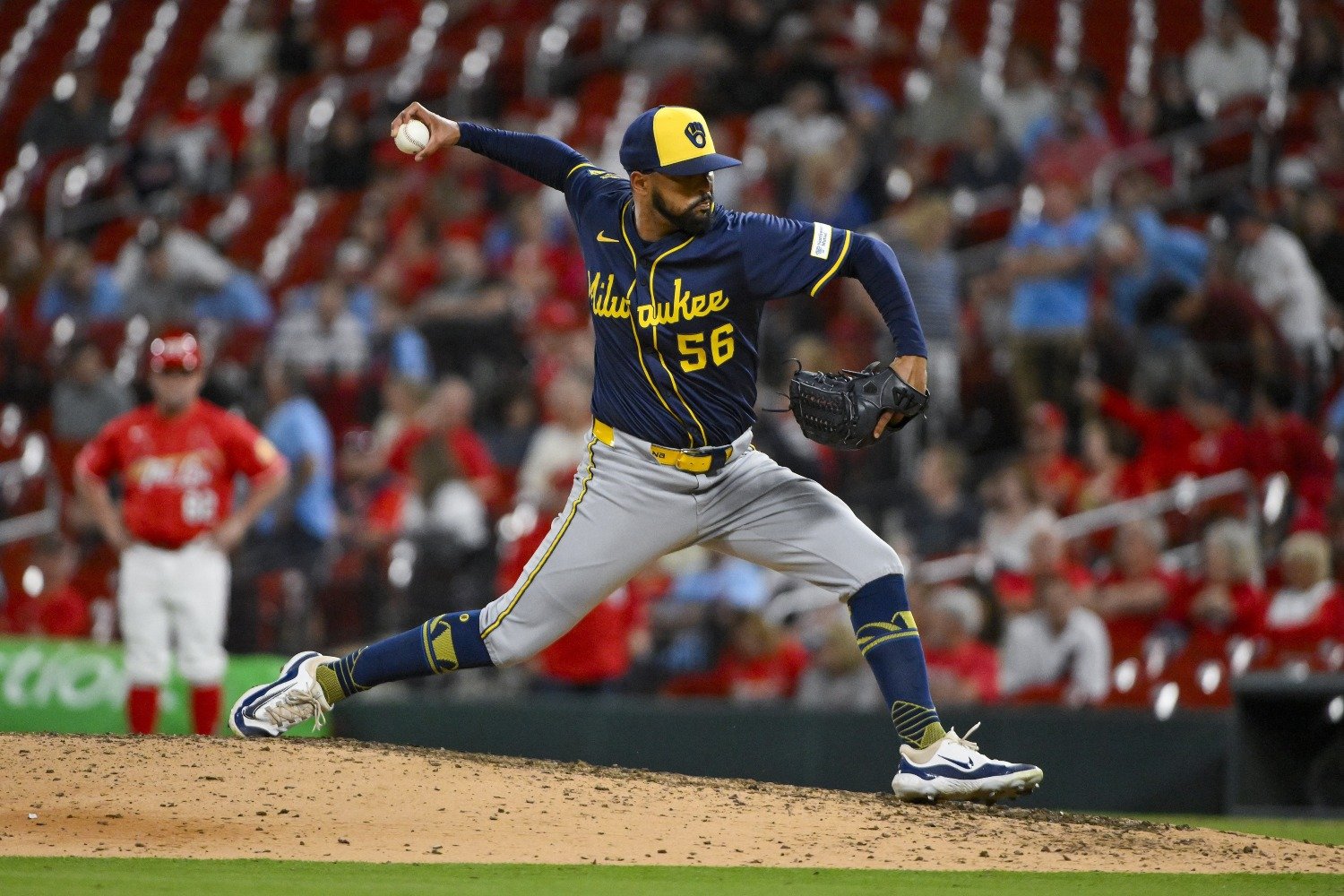
Image courtesy of © Jeff Curry-Imagn Images As a slew of early injuries hit the Brewers' pitching staff in spring training, Pat Murphy compiled a list of the next 13 arms he expected to lean on in the regular season. Grant Anderson didn't make the cut. "I didn't have him on any piece of paper I was writing on out of spring training," Murphy admitted on the club's last homestand. Despite his omission from the manager's list and the Opening Day roster, Anderson quickly emerged as Murphy's most prominent middle reliever. In a team-leading 17 relief innings, the sidewinding right-hander has pitched to a 3.18 ERA and 3.26 FIP. "I was wrong," Murphy said. "And I love being wrong in these situations." Most of Anderson's success is thanks to a sweeping slider he developed under the instruction of his new pitching coaches. Opponents are hitting .115 with a 35.1% whiff rate against the sweeper, which has already been worth four runs on its own. It's not an entirely new pitch. Anderson said he once had a bigger slider, but lost the feel for it in the upper minors before his MLB debut. "In (2022), before I got up (to the big leagues), I had a pretty decent-sized sweeper," he recalled. "I just kind of lost it after that. I couldn't really figure out how to get it back to breaking where I wanted to, and then I was kind of searching for it the last couple years, but just couldn't really figure it out." Anderson wanted a breaking ball with more lateral movement. So did the Brewers, who acquired him from the Texas Rangers in January. They felt his existing slider, which often behaved more like a cutter, did not properly complement his heavy sinker. "It was just too lifty," said pitching coach Chris Hook. "It didn't make any sense with where the arsenal was." The chart below is Anderson's 2024 pitch movement plot. Note how the slider cluster is well above the zero line, while the sinker cluster is slightly below it. That means the slider lacked the same depth as the sinker, and was not approaching the hitter on the same plane—making it easier for opponents to identify it out of his hand. The new sweeper's movement comes much closer to mirroring that of the sinker, both vertically and horizontally. That makes for a tougher identification and gives hitters more break to cover in opposing directions. "Off the bat, they just wanted something to kind of go equal with the sinker," Anderson said. "Kind of make it more of a 50-50 decision from a hitter standpoint, making it harder to check one or the other off." Sidearm pitchers like Anderson are often best served by maximizing horizontal movement across their repertoire. Compared to a traditional over-the-top or three-quarters arm slot, their hands are better positioned to throw the ball with the sidespin that makes a sweeping slider break. Anderson was struggling to tap into that ability. "It was kind of weird that he wasn't getting there," Hook said. Seeing an opportunity to add more movement, assistant pitching and strategy coach Jim Henderson spearheaded the sweeper's development early in spring training. "It's kind of like when I saw [Joel Payamps] a couple years ago in the first live BPs out of spring," Henderson said. "It was just one of those things where I saw Grant coming in, and I just thought there was a lot more potential there for how it was moving." Henderson and Anderson spent over a week working daily on a new grip to unlock the movement both parties desired. "His hand's already in the right position," Henderson said. "His slot's in the right position. He can work underneath the baseball if he needs to and lift the sweeper. He was already there, so it made it an easy transition for him." "The right wordage was kind of what helped me figure it out, so that was obviously very beneficial and much-needed," Anderson said. It helped that the Brewers could draw from a past success story. When discussing Anderson's development, both coaches quickly evoked Hoby Milner, who preceded him as the team's most versatile and durable middle reliever. Due to his arm slot and pitch shapes, Anderson profiled as a mirror of Milner, albeit with more velocity. Those similarities were, indeed, part of the thinking when he became the club's latest pitching development project. "It was like, we already have the blueprint in Hoby Milner and how he used all his stuff, and now we can use this with Grant," Henderson said. "That's kind of how our minds are shaped with this, is that Hoby kind of led the way with it." Fast-forward a few months, and Anderson is now recording outs with a game plan similar to Milner's: working both sides of the plate with sweepers, sinkers, and changeups, and elevating an upshoot four-seamer for whiffs at the top of the zone. Achieving the desired break on the sweeper also required cleaning up Anderson's noisy mechanics. With the Rangers, he came set with his hands in his lap and his back to the hitter, before beginning his motion with a dramatic twist and arm swing. anderson_2024.mp4 All of that movement made it challenging for Anderson to repeat his delivery. The Brewers saw it as unnecessary. "He's already deceptive," said Henderson. "He doesn't really need to do anything else that's deceptive." "Every pitcher has to deal with timing," Hook elaborated. "And when that timing's so inconsistent that you're dealing with just your hand getting on time well enough, that's very difficult, and you can't get the consistent movement that we need. For him, he's coming in and facing right-handed batters a lot. (With the sweeper), you've got to be on time to get in front of it and spin it the right way." With guidance from Hook and Henderson, Anderson cut the superfluous movement from his delivery. His front foot remains turned away from the hitter, but his hips now start in a straighter line toward home plate. He also comes set with his hands near his head. anderson_2025.mp4 "It was just a little much," Anderson said of his previous mechanics. "Being more direct to the plate with the lower half, and then the hands just going straight down to the plate, makes it a lot easier to be on time and be more consistent with the release point for all four of my pitches." "He's rooted in the ground now with his back leg, and he's working around his back leg, as opposed to just trying to find whatever on the way up and hoping that he gets on time on the way down," Hook said. Learning to control a bigger breaking ball with retooled mechanics was a bumpy ordeal. Anderson walked 20% of the hitters he faced in spring training, leading to his omission from Murphy's list. "He got beat up a little bit with it in spring, but that's a great opportunity to use it and work at stuff in spring training, even though he was fighting for a job," Henderson said. "So credit to him for sticking with it." Anderson is still walking too many, issuing free passes at a 10.7% clip in the regular season. Still, he's off to a productive start as another potential success story for Milwaukee's pitching development team, which has helped another hurler maximize his natural abilities. "This is what the organization does," Murphy said. "It goes out and gets these people, and you might not see it right away, but here you've got a guy that I trust and will put in there at any time." View full article
-
 As a slew of early injuries hit the Brewers' pitching staff in spring training, Pat Murphy compiled a list of the next 13 arms he expected to lean on in the regular season. Grant Anderson didn't make the cut. "I didn't have him on any piece of paper I was writing on out of spring training," Murphy admitted on the club's last homestand. Despite his omission from the manager's list and the Opening Day roster, Anderson quickly emerged as Murphy's most prominent middle reliever. In a team-leading 17 relief innings, the sidewinding right-hander has pitched to a 3.18 ERA and 3.26 FIP. "I was wrong," Murphy said. "And I love being wrong in these situations." Most of Anderson's success is thanks to a sweeping slider he developed under the instruction of his new pitching coaches. Opponents are hitting .115 with a 35.1% whiff rate against the sweeper, which has already been worth four runs on its own. It's not an entirely new pitch. Anderson said he once had a bigger slider, but lost the feel for it in the upper minors before his MLB debut. "In (2022), before I got up (to the big leagues), I had a pretty decent-sized sweeper," he recalled. "I just kind of lost it after that. I couldn't really figure out how to get it back to breaking where I wanted to, and then I was kind of searching for it the last couple years, but just couldn't really figure it out." Anderson wanted a breaking ball with more lateral movement. So did the Brewers, who acquired him from the Texas Rangers in January. They felt his existing slider, which often behaved more like a cutter, did not properly complement his heavy sinker. "It was just too lifty," said pitching coach Chris Hook. "It didn't make any sense with where the arsenal was." The chart below is Anderson's 2024 pitch movement plot. Note how the slider cluster is well above the zero line, while the sinker cluster is slightly below it. That means the slider lacked the same depth as the sinker, and was not approaching the hitter on the same plane—making it easier for opponents to identify it out of his hand. The new sweeper's movement comes much closer to mirroring that of the sinker, both vertically and horizontally. That makes for a tougher identification and gives hitters more break to cover in opposing directions. "Off the bat, they just wanted something to kind of go equal with the sinker," Anderson said. "Kind of make it more of a 50-50 decision from a hitter standpoint, making it harder to check one or the other off." Sidearm pitchers like Anderson are often best served by maximizing horizontal movement across their repertoire. Compared to a traditional over-the-top or three-quarters arm slot, their hands are better positioned to throw the ball with the sidespin that makes a sweeping slider break. Anderson was struggling to tap into that ability. "It was kind of weird that he wasn't getting there," Hook said. Seeing an opportunity to add more movement, assistant pitching and strategy coach Jim Henderson spearheaded the sweeper's development early in spring training. "It's kind of like when I saw [Joel Payamps] a couple years ago in the first live BPs out of spring," Henderson said. "It was just one of those things where I saw Grant coming in, and I just thought there was a lot more potential there for how it was moving." Henderson and Anderson spent over a week working daily on a new grip to unlock the movement both parties desired. "His hand's already in the right position," Henderson said. "His slot's in the right position. He can work underneath the baseball if he needs to and lift the sweeper. He was already there, so it made it an easy transition for him." "The right wordage was kind of what helped me figure it out, so that was obviously very beneficial and much-needed," Anderson said. It helped that the Brewers could draw from a past success story. When discussing Anderson's development, both coaches quickly evoked Hoby Milner, who preceded him as the team's most versatile and durable middle reliever. Due to his arm slot and pitch shapes, Anderson profiled as a mirror of Milner, albeit with more velocity. Those similarities were, indeed, part of the thinking when he became the club's latest pitching development project. "It was like, we already have the blueprint in Hoby Milner and how he used all his stuff, and now we can use this with Grant," Henderson said. "That's kind of how our minds are shaped with this, is that Hoby kind of led the way with it." Fast-forward a few months, and Anderson is now recording outs with a game plan similar to Milner's: working both sides of the plate with sweepers, sinkers, and changeups, and elevating an upshoot four-seamer for whiffs at the top of the zone. Achieving the desired break on the sweeper also required cleaning up Anderson's noisy mechanics. With the Rangers, he came set with his hands in his lap and his back to the hitter, before beginning his motion with a dramatic twist and arm swing. anderson_2024.mp4 All of that movement made it challenging for Anderson to repeat his delivery. The Brewers saw it as unnecessary. "He's already deceptive," said Henderson. "He doesn't really need to do anything else that's deceptive." "Every pitcher has to deal with timing," Hook elaborated. "And when that timing's so inconsistent that you're dealing with just your hand getting on time well enough, that's very difficult, and you can't get the consistent movement that we need. For him, he's coming in and facing right-handed batters a lot. (With the sweeper), you've got to be on time to get in front of it and spin it the right way." With guidance from Hook and Henderson, Anderson cut the superfluous movement from his delivery. His front foot remains turned away from the hitter, but his hips now start in a straighter line toward home plate. He also comes set with his hands near his head. anderson_2025.mp4 "It was just a little much," Anderson said of his previous mechanics. "Being more direct to the plate with the lower half, and then the hands just going straight down to the plate, makes it a lot easier to be on time and be more consistent with the release point for all four of my pitches." "He's rooted in the ground now with his back leg, and he's working around his back leg, as opposed to just trying to find whatever on the way up and hoping that he gets on time on the way down," Hook said. Learning to control a bigger breaking ball with retooled mechanics was a bumpy ordeal. Anderson walked 20% of the hitters he faced in spring training, leading to his omission from Murphy's list. "He got beat up a little bit with it in spring, but that's a great opportunity to use it and work at stuff in spring training, even though he was fighting for a job," Henderson said. "So credit to him for sticking with it." Anderson is still walking too many, issuing free passes at a 10.7% clip in the regular season. Still, he's off to a productive start as another potential success story for Milwaukee's pitching development team, which has helped another hurler maximize his natural abilities. "This is what the organization does," Murphy said. "It goes out and gets these people, and you might not see it right away, but here you've got a guy that I trust and will put in there at any time."
 -
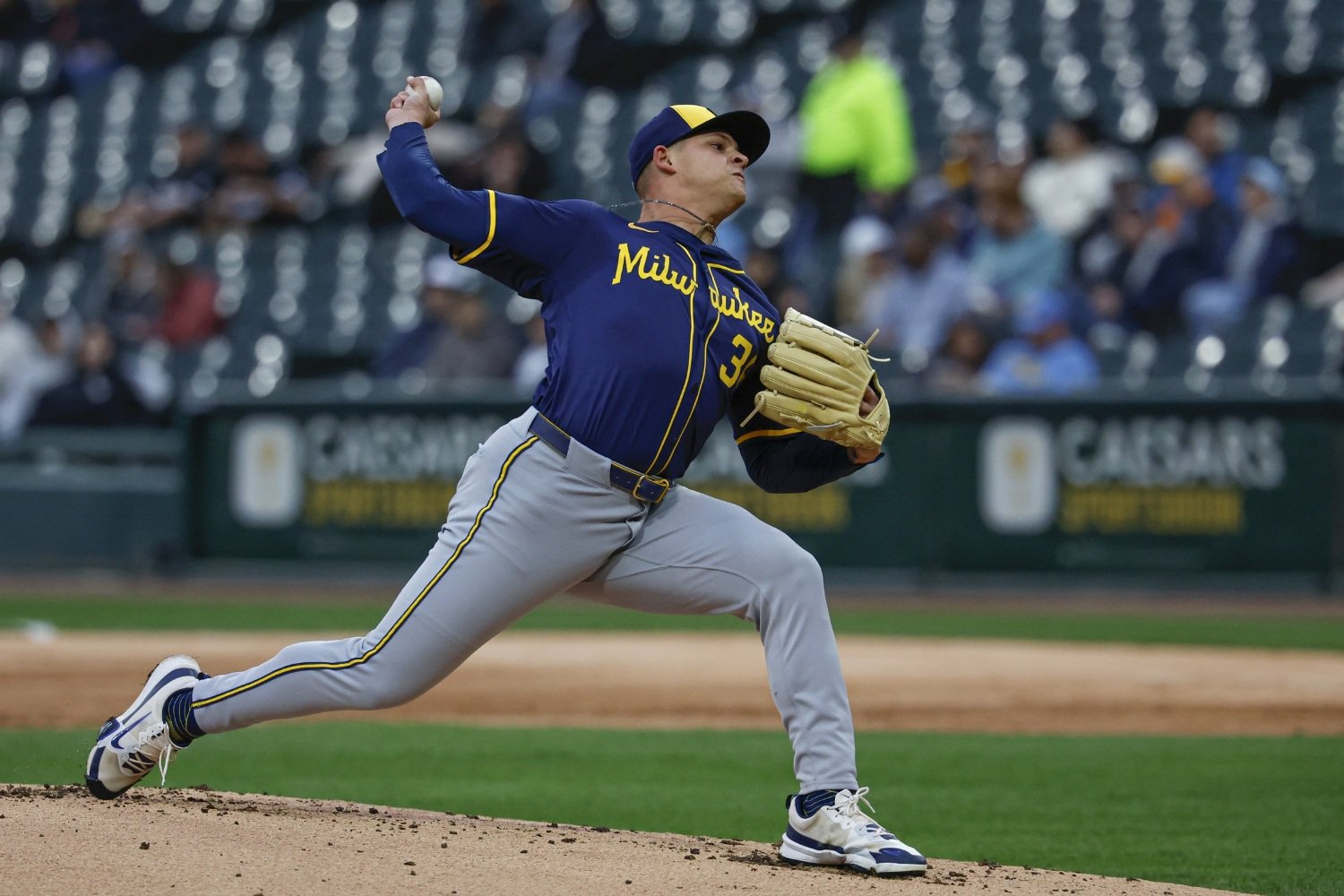
Image courtesy of © Kamil Krzaczynski-Imagn Images Pat Murphy took an aggressive gamble with his pitching staff on Wednesday night, the kind that blows up in a manager's face if his team loses but makes him look shrewd if it wins. "Every call I made was great," Murphy quipped after the Brewers defeated the Chicago White Sox 6-3. "If anybody writes that, I was joking." However, he was not joking with his willingness to deploy a rested bullpen behind a struggling Tobias Myers, who once again battled control issues in his second start since returning from the injured list. After Myers walked three and hit a batter in two innings, Murphy pulled the plug in a tie game. There was no explanation for the quick hook when he returned to the dugout, Myers said. It wasn't necessary. "Pretty self-explanatory," he said. "Just not commanding the zone, not throwing strikes, and just not giving the team a chance to win." "It was more of a message to Tobias than it was anything else," Murphy explained. "I knew we had a full bullpen, but still. This is how we're going to do it, man." It's the second instance in two series of Murphy sending a message through aggressive benchings. He pulled Sal Frelick and Caleb Durbin midgame in St. Louis on Saturday—the former for missing the cutoff man, and the latter for getting picked off first base. Wednesday was different, though. Frelick and Durbin made isolated mistakes, but Myers repeatedly failed to find the strike zone, and the Brewers stood no chance of winning if he remained in the game in that form. So Murphy went to the bullpen, using six of his eight relievers. Many of those pitching changes occurred mid-inning. Grant Anderson inherited runners from Tyler Alexander, Nick Mears from Anderson, and Abner Uribe from Jared Koenig. It worked well enough for the Brewers to hold on, after Jake Bauers's tie-breaking double in the top of the eighth. "The bullpen stood up," said Trevor Megill, who closed things out for his third save. "Couldn't be more proud of those guys. They did great." Murphy deployed an aggressive style at times last year, but the way he is steering the ship now feels like a manager working earnestly to spark a roster whose wheels have been spinning for much of the season. The pitching has been inconsistent, a typically elite defense has been unimpressive, and the left side of the infield has produced little offensively. This year's Brewers have shown flashes of the resiliency that served last season's group so well, but such moments have often been followed by a backslide. The cycle has kept Milwaukee hovering around .500 throughout the season's first month. It's been a similar story for the longest road trip of the year. With a win on Thursday, the Brewers will have gone 5-5 on the trip, but with plenty of ups and downs along the way. "Winning games," Murphy said when asked for positives from the last week-plus. "I mean, it's still been a miserable trip in so many ways, but all close games." The team made it through April in a decent spot, sitting a game over .500 and two behind the division-leading Cubs in the standings. But the sooner the Brewers can plug their holes and start playing more complete and consistent baseball, the better. "Our team grinds, and I like what we have," Megill said. "Just time to keep putting the pieces together like the last two games." View full article
-
 Pat Murphy took an aggressive gamble with his pitching staff on Wednesday night, the kind that blows up in a manager's face if his team loses but makes him look shrewd if it wins. "Every call I made was great," Murphy quipped after the Brewers defeated the Chicago White Sox 6-3. "If anybody writes that, I was joking." However, he was not joking with his willingness to deploy a rested bullpen behind a struggling Tobias Myers, who once again battled control issues in his second start since returning from the injured list. After Myers walked three and hit a batter in two innings, Murphy pulled the plug in a tie game. There was no explanation for the quick hook when he returned to the dugout, Myers said. It wasn't necessary. "Pretty self-explanatory," he said. "Just not commanding the zone, not throwing strikes, and just not giving the team a chance to win." "It was more of a message to Tobias than it was anything else," Murphy explained. "I knew we had a full bullpen, but still. This is how we're going to do it, man." It's the second instance in two series of Murphy sending a message through aggressive benchings. He pulled Sal Frelick and Caleb Durbin midgame in St. Louis on Saturday—the former for missing the cutoff man, and the latter for getting picked off first base. Wednesday was different, though. Frelick and Durbin made isolated mistakes, but Myers repeatedly failed to find the strike zone, and the Brewers stood no chance of winning if he remained in the game in that form. So Murphy went to the bullpen, using six of his eight relievers. Many of those pitching changes occurred mid-inning. Grant Anderson inherited runners from Tyler Alexander, Nick Mears from Anderson, and Abner Uribe from Jared Koenig. It worked well enough for the Brewers to hold on, after Jake Bauers's tie-breaking double in the top of the eighth. "The bullpen stood up," said Trevor Megill, who closed things out for his third save. "Couldn't be more proud of those guys. They did great." Murphy deployed an aggressive style at times last year, but the way he is steering the ship now feels like a manager working earnestly to spark a roster whose wheels have been spinning for much of the season. The pitching has been inconsistent, a typically elite defense has been unimpressive, and the left side of the infield has produced little offensively. This year's Brewers have shown flashes of the resiliency that served last season's group so well, but such moments have often been followed by a backslide. The cycle has kept Milwaukee hovering around .500 throughout the season's first month. It's been a similar story for the longest road trip of the year. With a win on Thursday, the Brewers will have gone 5-5 on the trip, but with plenty of ups and downs along the way. "Winning games," Murphy said when asked for positives from the last week-plus. "I mean, it's still been a miserable trip in so many ways, but all close games." The team made it through April in a decent spot, sitting a game over .500 and two behind the division-leading Cubs in the standings. But the sooner the Brewers can plug their holes and start playing more complete and consistent baseball, the better. "Our team grinds, and I like what we have," Megill said. "Just time to keep putting the pieces together like the last two games."
 -
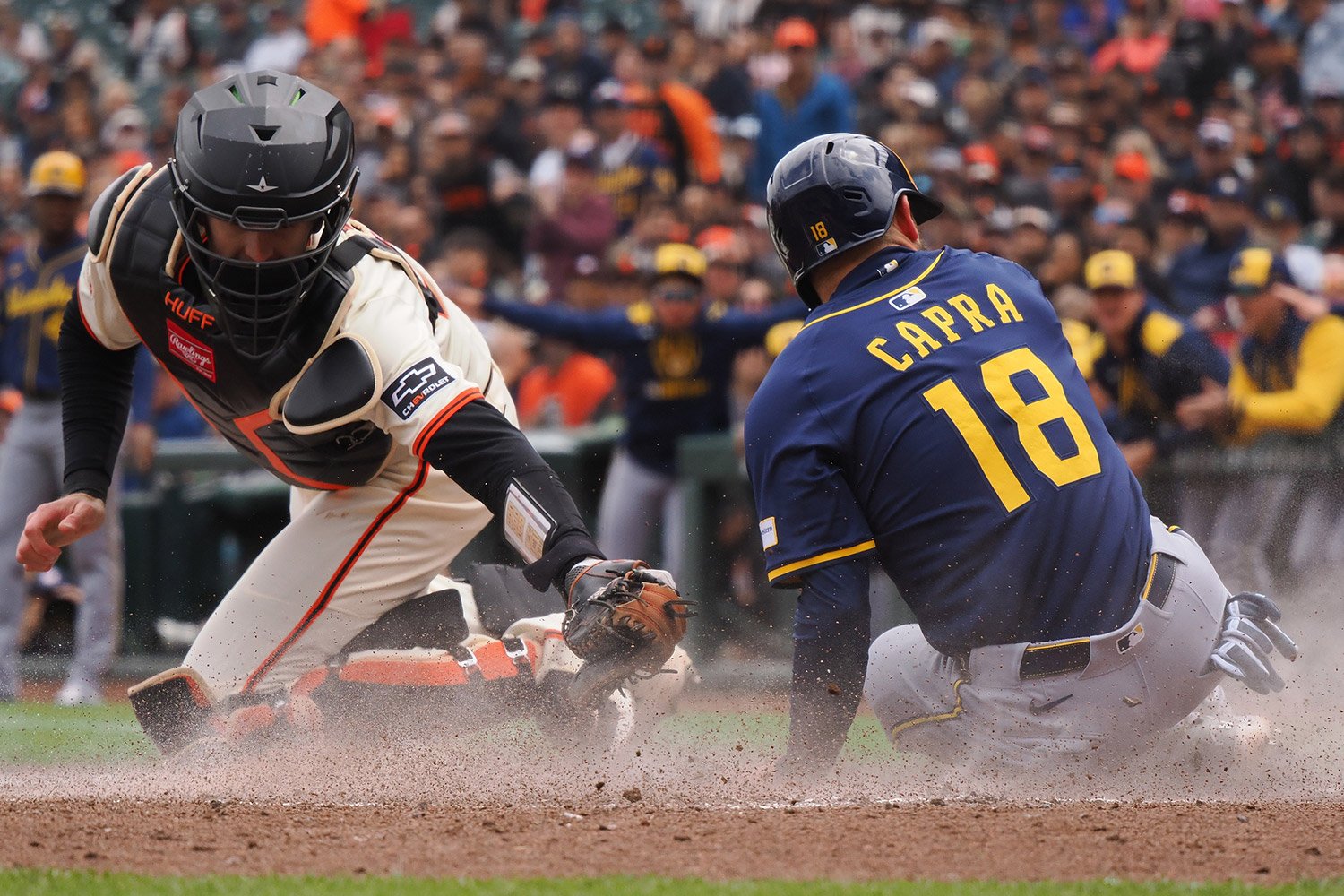
A productive spring training has not carried into the regular season for the Brewers' utility infielder, who has been part of the team's struggles on the left side of the infield. His former platoon partner was already demoted. Could he be next? Image courtesy of © Kelley L Cox-Imagn Images A productive spring training has not carried into the regular season for the Brewers' utility infielder, who has been part of the team's struggles on the left side of the infield. His former platoon partner was already demoted. Could he be next? It has already become a disconcerting theme: a left-side Brewers' infielder is off to a woeful start, sparking uncomfortable conversations about that area of the roster in late April. Joey Ortiz's 35 wRC+ is the worst among qualified shortstops. Oliver Dunn fared even worse, prompting the Brewers to replace him with Caleb Durbin last week. Dunn's former platoon partner is not as pressing a concern now that Durbin's arrival has relegated him to a strict bench role, but a conversation about his future has also become necessary. Vinny Capra is riding a 0-for-26 streak. With just three hits this year, the utility infielder currently sits on a -17 wRC+. Capra said early in spring training that he focused on bat speed training over the offseason, but the specific regimen he divulged after making the Opening Day roster – building explosive rotational movement through mixed martial arts training – was more focused on his overall strength and mobility in the box. His goal was to hit the ball harder, but he didn't directly train bat speed. That made the topic worth revisiting shortly into the regular season, when public swing tracking data from Statcast became available. Now, the results are in: Capra is not swinging harder. In fact, a couple of his five competitive big-league swings last year were faster than any he's taken in 2025. The 28-year-old has not helped his cause in the field. It's far too small a sample to trust any defensive metrics, but Capra has looked shaky at times by the eye test. He's struggled to convert moderately difficult but expected plays at third base. On Thursday, he forwent a double-play opportunity to look the tying runner back at third, leaving the go-ahead runner on second to eventually score in a 6-5 loss. TkE5Mk9fVjBZQUhRPT1fQndVREIxRUZWUU1BWGxGWEFnQUhCZ0FEQUZnQlcxVUFCbHdNVmdvQVUxVUhBQWNE.mp4 Capra has just 44 plate appearances and occupies a limited role, but the Brewers have quickly moved on from unproductive out-of-options players in the past. They designated reliever Javy Guerra for assignment at this time two years ago, and Luke Voit only lasted 74 plate appearances with a 53 wRC+ the year prior. With Andrew Monasterio heating up in Triple-A, a move could be approaching. View full article
-
 It has already become a disconcerting theme: a left-side Brewers' infielder is off to a woeful start, sparking uncomfortable conversations about that area of the roster in late April. Joey Ortiz's 35 wRC+ is the worst among qualified shortstops. Oliver Dunn fared even worse, prompting the Brewers to replace him with Caleb Durbin last week. Dunn's former platoon partner is not as pressing a concern now that Durbin's arrival has relegated him to a strict bench role, but a conversation about his future has also become necessary. Vinny Capra is riding a 0-for-26 streak. With just three hits this year, the utility infielder currently sits on a -17 wRC+. Capra said early in spring training that he focused on bat speed training over the offseason, but the specific regimen he divulged after making the Opening Day roster – building explosive rotational movement through mixed martial arts training – was more focused on his overall strength and mobility in the box. His goal was to hit the ball harder, but he didn't directly train bat speed. That made the topic worth revisiting shortly into the regular season, when public swing tracking data from Statcast became available. Now, the results are in: Capra is not swinging harder. In fact, a couple of his five competitive big-league swings last year were faster than any he's taken in 2025. The 28-year-old has not helped his cause in the field. It's far too small a sample to trust any defensive metrics, but Capra has looked shaky at times by the eye test. He's struggled to convert moderately difficult but expected plays at third base. On Thursday, he forwent a double-play opportunity to look the tying runner back at third, leaving the go-ahead runner on second to eventually score in a 6-5 loss. TkE5Mk9fVjBZQUhRPT1fQndVREIxRUZWUU1BWGxGWEFnQUhCZ0FEQUZnQlcxVUFCbHdNVmdvQVUxVUhBQWNE.mp4 Capra has just 44 plate appearances and occupies a limited role, but the Brewers have quickly moved on from unproductive out-of-options players in the past. They designated reliever Javy Guerra for assignment at this time two years ago, and Luke Voit only lasted 74 plate appearances with a 53 wRC+ the year prior. With Andrew Monasterio heating up in Triple-A, a move could be approaching.
 -
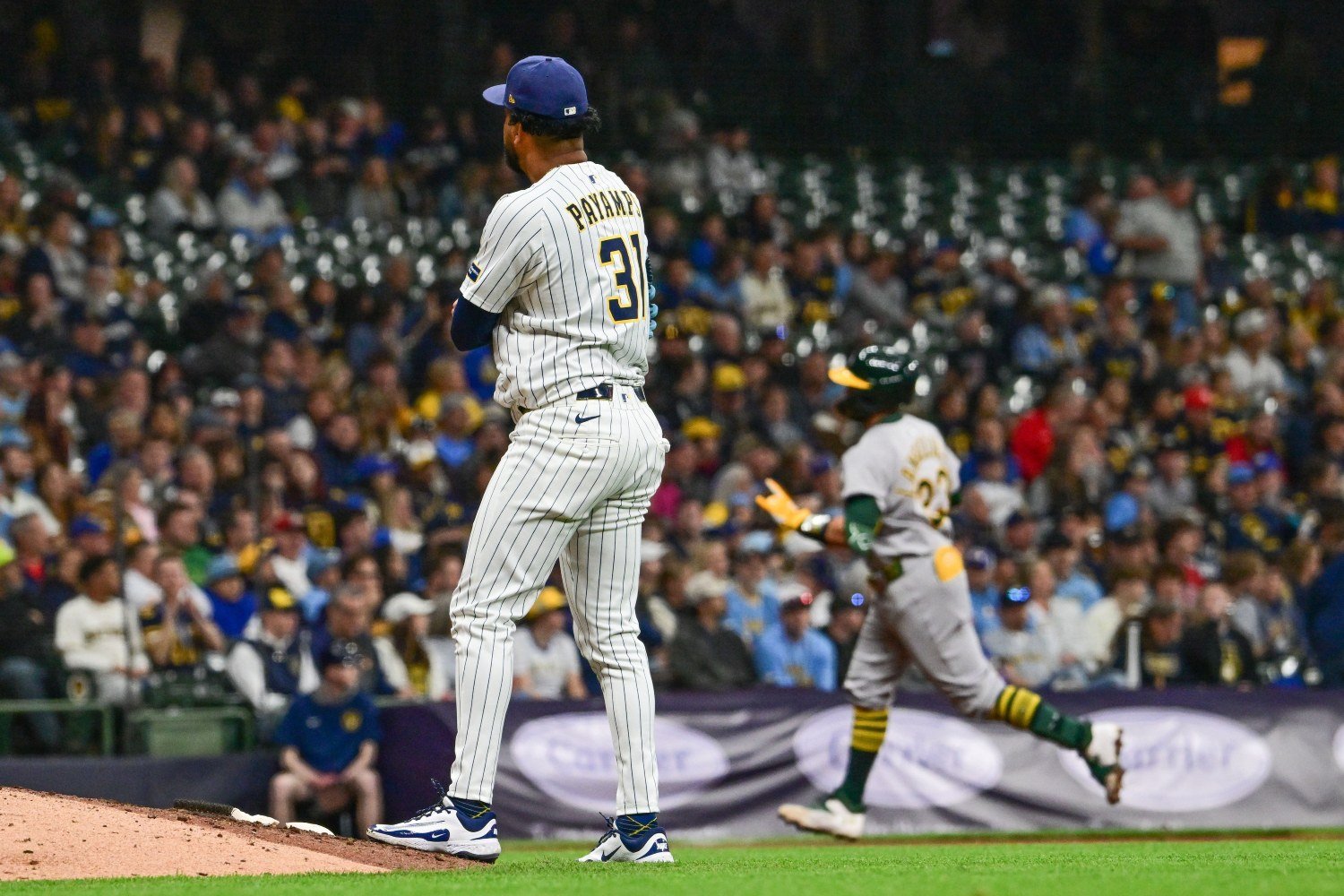
The Brewers could keep their airbending relief prospect in Triple-A Nashville through the first few weeks of the season because they didn't need him. Now they do. Image courtesy of © Benny Sieu-Imagn Images The Brewers could keep their airbending relief prospect in Triple-A Nashville through the first few weeks of the season because they didn't need him. Now they do. Craig Yoho’s stuff has been big league-ready for some time. Yet, it was no surprise when the Brewers reassigned him to minor-league camp near the end of spring training. Yes, service time considerations are an unfortunate part of prospect promotion timelines, but Yoho remained in Triple A as the deadline for reaching a full year of service came and went. The main reason is that the Brewers have a full 40-man roster and entered the season with a strong bullpen. There was no need to expunge depth to create space for Yoho. “We’re excited about his future,” Pat Murphy said the day of Yoho’s reassignment. “Right now, we think it’s best with the way our whole thing is constructed. Depth is a real big, important thing.” For the first few weeks of the season, that argument held up. It no longer does. The struggles of Joel Payamps and Bryan Hudson have Murphy and the Brewers effectively operating with a six-man bullpen. There’s an obvious need, and Yoho is the best candidate to fill it. Payamps, whose 13 earned runs allowed have him two-thirds of the way to last year’s total in a tenth of the workload, has become the most upfront liability. After he initiated the bullpen’s collapse in Arizona on April 12, the righty didn't pitch for a week. On Saturday, Murphy bluntly explained that he’s been reassigned to a role that “is not one of leverage.” That night, recent workloads throughout the rest of the bullpen forced him to use Payamps with the Brewers trailing 2-1. He allowed a leadoff home run to Shea Langeliers on a 2-0 fastball. “He gave up a big hit again, and that’s concerning,” Murphy said. “The track record has been pretty darn good, and he’s pitched well, even this year. In spring training, he was lights-out. Not that spring is our evaluation tool, but we just felt good about him coming [into the] season. It just hasn’t happened for him.” A hesitancy to remove Payamps from the roster is somewhat understandable. Since he can't be optioned to the minors, the only way to get him off the roster without offering him to the rest of the league would be to place him on the injured list. Murphy correctly noted that his stuff remains the same as last year, when he pitched to a 3.05 ERA and 3.73 FIP and finished the year strong. His average fastball velocity of 94.6 mph is nearly identical to his 2024 mark, as is his Stuff+ across his entire arsenal. Payamps has spent his downtime working with the Brewers' pitching coaches on smaller tweaks, and they may feel he is close to a return to his effective self. Season Stf+ 4FB Stf+ 2FB Stf+ SL Stf+ CH Stuff+ 2024 111 91 106 80 102 2025 105 91 108 85 103 That leaves Hudson, who has a minor-league option remaining, as the other demotion candidate. After receding stuff prompted a late-season assignment to Triple A last year, the southpaw has returned with inconsistent velocity and little control. In nine appearances, Hudson has issued walks at a 21.6% clip against an 18.9% strikeout rate. Tasked with closing out a four-run lead on Friday, Hudson issued two walks and allowed an RBI double while recording just one out, forcing Trevor Megill into the game. The following day, Murphy implied his roster spot is not secure. “Guys that don’t throw good and don’t have a long history of success are always going to be in that situation,” he said. “Hudson’s not throwing the ball good, so heads up. You never know.” The unreliability of Payamps and Hudson has boxed Murphy into necessary overuse of other relievers. Grant Anderson has pitched five times in the last eight days, often in situations once reserved for an effective Payamps. Anderson and Jared Koenig had to pitch with the Brewers trailing on Saturday. It’s not sustainable bullpen construction. The relief corps needs help in the middle innings, and even though Yoho has been more good than great so far in Triple-A—he’s posted a 3.17 FIP, with a diminished 23.7% strikeout rate in 9 ⅔ innings—he remains the best internal candidate to provide it. The Brewers have avenues for adding him to the 40-man roster. They could designate Payamps for assignment, or they could option Hudson and transfer Aaron Ashby to the 60-day injured list. Which route is best is debatable, but the Brewers cannot continue carrying both struggling relievers. The time to promote Yoho has arrived. View full article
-
 Craig Yoho’s stuff has been big league-ready for some time. Yet, it was no surprise when the Brewers reassigned him to minor-league camp near the end of spring training. Yes, service time considerations are an unfortunate part of prospect promotion timelines, but Yoho remained in Triple A as the deadline for reaching a full year of service came and went. The main reason is that the Brewers have a full 40-man roster and entered the season with a strong bullpen. There was no need to expunge depth to create space for Yoho. “We’re excited about his future,” Pat Murphy said the day of Yoho’s reassignment. “Right now, we think it’s best with the way our whole thing is constructed. Depth is a real big, important thing.” For the first few weeks of the season, that argument held up. It no longer does. The struggles of Joel Payamps and Bryan Hudson have Murphy and the Brewers effectively operating with a six-man bullpen. There’s an obvious need, and Yoho is the best candidate to fill it. Payamps, whose 13 earned runs allowed have him two-thirds of the way to last year’s total in a tenth of the workload, has become the most upfront liability. After he initiated the bullpen’s collapse in Arizona on April 12, the righty didn't pitch for a week. On Saturday, Murphy bluntly explained that he’s been reassigned to a role that “is not one of leverage.” That night, recent workloads throughout the rest of the bullpen forced him to use Payamps with the Brewers trailing 2-1. He allowed a leadoff home run to Shea Langeliers on a 2-0 fastball. “He gave up a big hit again, and that’s concerning,” Murphy said. “The track record has been pretty darn good, and he’s pitched well, even this year. In spring training, he was lights-out. Not that spring is our evaluation tool, but we just felt good about him coming [into the] season. It just hasn’t happened for him.” A hesitancy to remove Payamps from the roster is somewhat understandable. Since he can't be optioned to the minors, the only way to get him off the roster without offering him to the rest of the league would be to place him on the injured list. Murphy correctly noted that his stuff remains the same as last year, when he pitched to a 3.05 ERA and 3.73 FIP and finished the year strong. His average fastball velocity of 94.6 mph is nearly identical to his 2024 mark, as is his Stuff+ across his entire arsenal. Payamps has spent his downtime working with the Brewers' pitching coaches on smaller tweaks, and they may feel he is close to a return to his effective self. Season Stf+ 4FB Stf+ 2FB Stf+ SL Stf+ CH Stuff+ 2024 111 91 106 80 102 2025 105 91 108 85 103 That leaves Hudson, who has a minor-league option remaining, as the other demotion candidate. After receding stuff prompted a late-season assignment to Triple A last year, the southpaw has returned with inconsistent velocity and little control. In nine appearances, Hudson has issued walks at a 21.6% clip against an 18.9% strikeout rate. Tasked with closing out a four-run lead on Friday, Hudson issued two walks and allowed an RBI double while recording just one out, forcing Trevor Megill into the game. The following day, Murphy implied his roster spot is not secure. “Guys that don’t throw good and don’t have a long history of success are always going to be in that situation,” he said. “Hudson’s not throwing the ball good, so heads up. You never know.” The unreliability of Payamps and Hudson has boxed Murphy into necessary overuse of other relievers. Grant Anderson has pitched five times in the last eight days, often in situations once reserved for an effective Payamps. Anderson and Jared Koenig had to pitch with the Brewers trailing on Saturday. It’s not sustainable bullpen construction. The relief corps needs help in the middle innings, and even though Yoho has been more good than great so far in Triple-A—he’s posted a 3.17 FIP, with a diminished 23.7% strikeout rate in 9 ⅔ innings—he remains the best internal candidate to provide it. The Brewers have avenues for adding him to the 40-man roster. They could designate Payamps for assignment, or they could option Hudson and transfer Aaron Ashby to the 60-day injured list. Which route is best is debatable, but the Brewers cannot continue carrying both struggling relievers. The time to promote Yoho has arrived.
- 4 comments
-
- 3
-
-
- joel payamps
- bryan hudson
- (and 3 more)
-
Brewers Swap Oliver Dunn and Caleb Durbin in Hopeful Infield Upgrade
Jack Stern posted an article in Brewers
 The Brewers are shaking up their infield mix. The club announced on Thursday morning that it had optioned third baseman Oliver Dunn to Triple-A Nashville, and MLB.com’s Adam McCalvy reported that Caleb Durbin will be promoted for his big-league debut this weekend. It’s still early, but Milwaukee has experienced dreadful offense at the hot corner. Through 20 games, Brewers third basemen have combined for a 12 wRC+ that ranks 29th out of 30 teams. Most of the playing time has gone to Dunn, who received the initial opportunity on the strong side of a platoon with Vinny Capra. However, an early string of left-handed opposing starters and Dunn’s low floor limited his offensive contributions. Unfortunately, the work he’s put in on his swing has not paid off, as the issues that hindered him last year have not subsided at all. Pitchers continue to attack him relentlessly in the strike zone, with the confidence that he won’t touch such pitches—and they’ve again been proven correct. Season Zone% Z-Contact% Whiff% BB% K% 2024 59.3% 78.4% 31.4% 5.8% 38.5% 2025 57.8% 72.7% 30.8% 4.9% 26.8% Dunn’s power and speed still give him a tantalizingly high floor, and Pat Murphy emphasized his potential on Wednesday. However, he’s never received an extended chance to develop in Triple A. A long-term demotion could prove beneficial. Durbin’s offense comes with its own questions (most importantly, whether he can achieve any game power in the big leagues), but the Brewers will hope he can provide a boost. The greater concern is his defense. Primarily a second baseman for most of his career, the 25-year-old’s reads and actions at third base were rough in spring training, and it’s been a mixed bag in Nashville. Nonetheless, the Brewers evidently see him as the best option there for the time being.
 -
After the shortcomings that plagued his rookie season persisted, it seems Oliver Dunn’s runway as the Brewers’ primary third baseman has run out. Now, Caleb Durbin gets his shot. Image courtesy of © Dave Kallmann / Milwaukee Journal Sentinel / USA TODAY NETWORK via Imagn Images After the shortcomings that plagued his rookie season persisted, it seems Oliver Dunn’s runway as the Brewers’ primary third baseman has run out. Now, Caleb Durbin gets his shot. The Brewers are shaking up their infield mix. The club announced on Thursday morning that it had optioned third baseman Oliver Dunn to Triple-A Nashville, and MLB.com’s Adam McCalvy reported that Caleb Durbin will be promoted for his big-league debut this weekend. It’s still early, but Milwaukee has experienced dreadful offense at the hot corner. Through 20 games, Brewers third basemen have combined for a 12 wRC+ that ranks 29th out of 30 teams. Most of the playing time has gone to Dunn, who received the initial opportunity on the strong side of a platoon with Vinny Capra. However, an early string of left-handed opposing starters and Dunn’s low floor limited his offensive contributions. Unfortunately, the work he’s put in on his swing has not paid off, as the issues that hindered him last year have not subsided at all. Pitchers continue to attack him relentlessly in the strike zone, with the confidence that he won’t touch such pitches—and they’ve again been proven correct. Season Zone% Z-Contact% Whiff% BB% K% 2024 59.3% 78.4% 31.4% 5.8% 38.5% 2025 57.8% 72.7% 30.8% 4.9% 26.8% Dunn’s power and speed still give him a tantalizingly high floor, and Pat Murphy emphasized his potential on Wednesday. However, he’s never received an extended chance to develop in Triple A. A long-term demotion could prove beneficial. Durbin’s offense comes with its own questions (most importantly, whether he can achieve any game power in the big leagues), but the Brewers will hope he can provide a boost. The greater concern is his defense. Primarily a second baseman for most of his career, the 25-year-old’s reads and actions at third base were rough in spring training, and it’s been a mixed bag in Nashville. Nonetheless, the Brewers evidently see him as the best option there for the time being. View full article
-
 After a rocky beginning to his Brewers tenure last season, Nick Mears has started his 2025 campaign strong. In five appearances, he’s thrown 4 ⅔ perfect innings with a 42.9% strikeout rate. “He’s been literally flawless,” said Pat Murphy, who has already entrusted Mears with high-leverage situations. The right-hander is having early success after modifying his delivery. Compare one of his last outings before the Brewers acquired him from the Colorado Rockies with his return to Coors Field last week. mears_deliveries.mp4 Mears now starts more closed off from the hitter, but most notably, he brings his hands up to his chest with his leg kick. He and the Brewers implemented the change to correct a mechanical flaw that prevented him from locating his fastball to both sides of the plate. “That was something we were working on right from the get-go when I came over here,” he recalled. “If you were to look at my tendencies last year, I was very glove-side oriented.” According to Statcast, Mears threw 46% of his in-zone fastballs last year to the glove-side third. Just 18% were to the arm-side third. “Without my hands moving, my timing was getting a little stuck, so my arm was lagging behind,” he said. “The only way for me to get back to square in my release point was for me to yank it a little bit, so go glove side, or in to lefties.” Predictable locations allowed hitters to lock in on Mears’s fastball, contributing to the home run woes he experienced after last year’s trade deadline. He surrendered five home runs in 13 appearances, and all but one came against a fastball over the middle or glove-side third of the plate. Raising his hands helps Mears stay through the ball with his delivery, so he no longer has to force his release point out in front by throwing to his glove side. It’s enabled him to locate better in more areas throughout the zone. “One of the things that we were hoping was that he could get to both sides and not just be more of a vanilla guy on one side of the plate,” Murphy said. “He’s opened some things up for himself.” “It was very hard for me to go inside to [right-handers] last year, just because of my mechanics and how I was moving,” Mears explained. “Whereas now, I feel like I can go in to them and also go away from them, so they’re not diving to one side of the plate. They have to acknowledge that I’m going to go in eventually, it’s just about when I’m going to. I mean, part of pitching is hoping they’re not going to be ready for it.” Mears’s new delivery has made it more difficult for hitters to be ready, by making it harder to see the ball. With a late arm, they had an earlier and wider window to see the ball once he started coming through. “I thought when he came over last year, he was late most of the time on his breaking ball, and it popped out early,” said pitching coach Chris Hook. “His hands were dead, he kind of got stuck, and he would come out of it with an early-see breaking ball.” With his arm more in sync with the rest of his body, Mears now hides the ball better, creating a later look for opponents. “I think it’s a tougher see,” Hook said. “That was part of the idea, too, just letting everything be a little bit later to add a little bit more deception to what he’s doing.” Mears experienced early results when he debuted some of the tweaks near the end of last season. He made two appearances in the Wild Card Series against the New York Mets, tossing 2 ⅓ perfect innings with three strikeouts. “The moment he had in the playoffs, that was a lot of work and a lot of courage he put in to kind of change some things to try to get him a little bit more on time,” Hook said. “For him to show up in the playoffs and do what he did was pretty spectacular.” Further improving his mechanics and throwing to more locations to keep hitters off-balance remained a focus heading into 2025. Mears said his adjustments have also helped him tunnel his fastball and breaking pitches more effectively. “This year in spring training, we were really focusing on the fastballs down and away to both sides of the plate,” he said, “just so that if I go into a 1-2 count and I try to expand outside to someone with a slider or a curveball, now I can tunnel that fastball straight through that offspeed pitch and try and get the strikeout with it.” In the past, hitters knew a pitch starting near the top of the zone would be a fastball, and a pitch near the bottom would be a breaking ball. Spotting fastballs down allows Mears to exploit incorrect guesses and force late swings. He set up Brenton Doyle with a low fastball in Colorado before getting a chase on a slider off the plate, and he froze Jake McCarthy with one in Arizona. “Sometimes you can out-stuff guys, but tunneling is a very good concept to understand as a pitcher at any level, really,” he said. “I think that the fastballs down set up my slider a lot better.” “They have to make a tough decision,” said Hook, painting a hitter’s perspective of a pitch that starts low and away. “That’s when you see those half swings and easy fly balls to center.” Mears’s stuff has actually been worse than last year. His average fastball velocity is down from 96.7 mph to 94.3, and his Stuff+ has dropped from 108 to 87. However, the added deception and unpredictability have it playing better than ever. Like last season, Mears is generating whiffs on nearly one-third of swings, and his chase rate has increased from 30.4% to 36.8%. “I think sometimes location plus a little deception, and then no popping out or no earliness to the breaking ball, can have some benefits,” Hook said. The Brewers want the velocity to return. An illness that sidelined Mears in spring training and caused him to lose nearly 10 pounds didn’t help. He started the season on the injured list due to his delayed progression. “It’s almost like another build-up,” noted Hook. “You know what I mean? You’re down, and then you’ve got to build back up, and you have a little dead arm, and you get back built back up after that.” Hook still views Mears as an unfinished product, both stuff-wise and mechanically. However, he has made strides and is on the right path. “I expect him to get back to where he normally is, but I do like where he’s at," the Crew's pitching coach said. "I think we can get a little cleaner, but I like where his start is.”
 -
Last season's midseason pickup has not had the same stuff he did last year. Yet, he's performing much better, thanks to some delivery tweaks. Image courtesy of © Isaiah J. Downing-Imagn Images Last season's midseason pickup has not had the same stuff he did last year. Yet, he's performing much better, thanks to some delivery tweaks. After a rocky beginning to his Brewers tenure last season, Nick Mears has started his 2025 campaign strong. In five appearances, he’s thrown 4 ⅔ perfect innings with a 42.9% strikeout rate. “He’s been literally flawless,” said Pat Murphy, who has already entrusted Mears with high-leverage situations. The right-hander is having early success after modifying his delivery. Compare one of his last outings before the Brewers acquired him from the Colorado Rockies with his return to Coors Field last week. mears_deliveries.mp4 Mears now starts more closed off from the hitter, but most notably, he brings his hands up to his chest with his leg kick. He and the Brewers implemented the change to correct a mechanical flaw that prevented him from locating his fastball to both sides of the plate. “That was something we were working on right from the get-go when I came over here,” he recalled. “If you were to look at my tendencies last year, I was very glove-side oriented.” According to Statcast, Mears threw 46% of his in-zone fastballs last year to the glove-side third. Just 18% were to the arm-side third. “Without my hands moving, my timing was getting a little stuck, so my arm was lagging behind,” he said. “The only way for me to get back to square in my release point was for me to yank it a little bit, so go glove side, or in to lefties.” Predictable locations allowed hitters to lock in on Mears’s fastball, contributing to the home run woes he experienced after last year’s trade deadline. He surrendered five home runs in 13 appearances, and all but one came against a fastball over the middle or glove-side third of the plate. Raising his hands helps Mears stay through the ball with his delivery, so he no longer has to force his release point out in front by throwing to his glove side. It’s enabled him to locate better in more areas throughout the zone. “One of the things that we were hoping was that he could get to both sides and not just be more of a vanilla guy on one side of the plate,” Murphy said. “He’s opened some things up for himself.” “It was very hard for me to go inside to [right-handers] last year, just because of my mechanics and how I was moving,” Mears explained. “Whereas now, I feel like I can go in to them and also go away from them, so they’re not diving to one side of the plate. They have to acknowledge that I’m going to go in eventually, it’s just about when I’m going to. I mean, part of pitching is hoping they’re not going to be ready for it.” Mears’s new delivery has made it more difficult for hitters to be ready, by making it harder to see the ball. With a late arm, they had an earlier and wider window to see the ball once he started coming through. “I thought when he came over last year, he was late most of the time on his breaking ball, and it popped out early,” said pitching coach Chris Hook. “His hands were dead, he kind of got stuck, and he would come out of it with an early-see breaking ball.” With his arm more in sync with the rest of his body, Mears now hides the ball better, creating a later look for opponents. “I think it’s a tougher see,” Hook said. “That was part of the idea, too, just letting everything be a little bit later to add a little bit more deception to what he’s doing.” Mears experienced early results when he debuted some of the tweaks near the end of last season. He made two appearances in the Wild Card Series against the New York Mets, tossing 2 ⅓ perfect innings with three strikeouts. “The moment he had in the playoffs, that was a lot of work and a lot of courage he put in to kind of change some things to try to get him a little bit more on time,” Hook said. “For him to show up in the playoffs and do what he did was pretty spectacular.” Further improving his mechanics and throwing to more locations to keep hitters off-balance remained a focus heading into 2025. Mears said his adjustments have also helped him tunnel his fastball and breaking pitches more effectively. “This year in spring training, we were really focusing on the fastballs down and away to both sides of the plate,” he said, “just so that if I go into a 1-2 count and I try to expand outside to someone with a slider or a curveball, now I can tunnel that fastball straight through that offspeed pitch and try and get the strikeout with it.” In the past, hitters knew a pitch starting near the top of the zone would be a fastball, and a pitch near the bottom would be a breaking ball. Spotting fastballs down allows Mears to exploit incorrect guesses and force late swings. He set up Brenton Doyle with a low fastball in Colorado before getting a chase on a slider off the plate, and he froze Jake McCarthy with one in Arizona. “Sometimes you can out-stuff guys, but tunneling is a very good concept to understand as a pitcher at any level, really,” he said. “I think that the fastballs down set up my slider a lot better.” “They have to make a tough decision,” said Hook, painting a hitter’s perspective of a pitch that starts low and away. “That’s when you see those half swings and easy fly balls to center.” Mears’s stuff has actually been worse than last year. His average fastball velocity is down from 96.7 mph to 94.3, and his Stuff+ has dropped from 108 to 87. However, the added deception and unpredictability have it playing better than ever. Like last season, Mears is generating whiffs on nearly one-third of swings, and his chase rate has increased from 30.4% to 36.8%. “I think sometimes location plus a little deception, and then no popping out or no earliness to the breaking ball, can have some benefits,” Hook said. The Brewers want the velocity to return. An illness that sidelined Mears in spring training and caused him to lose nearly 10 pounds didn’t help. He started the season on the injured list due to his delayed progression. “It’s almost like another build-up,” noted Hook. “You know what I mean? You’re down, and then you’ve got to build back up, and you have a little dead arm, and you get back built back up after that.” Hook still views Mears as an unfinished product, both stuff-wise and mechanically. However, he has made strides and is on the right path. “I expect him to get back to where he normally is, but I do like where he’s at," the Crew's pitching coach said. "I think we can get a little cleaner, but I like where his start is.” View full article
-
 It was a silver lining in an otherwise uninspiring blowout loss—the Brewers' fourth in their first 17 games, which Pat Murphy deemed "concerning"—in multiple ways. Yes, Elvin Rodríguez spared the rest of an overworked bullpen by eating five innings in long relief on Monday night, but more important was how he did it. The 27-year-old's MLB return (after pitching in Nippon Professional Baseball last year) got off to a dreadful start. Forced to make two starts due to injuries throughout the rotation, he coughed up 11 runs—including five home runs—in nine innings. A suspect game plan underlaid those struggles. In spring training, the Brewers had Rodríguez lean heavily on his four-seamer and cutter, and the results were similarly uninspiring: a strong 7.5 strikeout-to-walk ratio, but a .370 opponent batting average and nine earned runs allowed in 10 ⅔ innings. Those numbers would be easy to shrug off, were player and team merely refining those two fastballs in a low-pressure environment before switching to a more balanced mix in the regular season. That wasn't the case. In those first two starts, 73.6% of Rodríguez's pitches were a four-seamer or cutter, following a staff-wide trend of Milwaukee starters: throwing fastballs roughly 70% of the time. The Brewers have some sound motivations behind instructing many of their arms to lean on multiple fastball variants, but that approach never made the most sense for Rodríguez. His backspin four-seamer can be an above-average pitch due to its elite carry and solid velocity, but his cutter is a poor one. By contrast, the highlight of his five-pitch arsenal is his sweeping slider, which was pivotal to his success last year. The NPB pitch modeling app (created by Twitter user @bouno05) tagged Rodríguez's sweeper with a 169 Stuff+ rating in 2024. It induced whiffs on 44% of swings and rarely allowed loud contact. His curveball yielded less impressive box score results, but posted a gaudy 68% ground ball rate. His cutter, meanwhile, graded poorly, producing neither whiffs nor favorable contact. Differences in the size and tackiness of the NPB baseball make it break more than the MLB ball, so the same pitch can move less and grade slightly worse (through no fault of a pitcher) simply by crossing to the States. Still, since Rodríguez's return, the models at FanGraphs and Baseball Prospectus have given similar estimates of his arsenal. Most notably, they are bullish on the sweeper and bearish on the cutter. (For Stuff+, 100 is average and higher is better. For StuffPro, 0 is average and negative numbers are better.) Pitch Type Stuff+ StuffPro Four-Seam FB 97 -0.2 Cutter 82 0.7 Curveball 88 0.3 Sweeper 114 -1.0 Changeup 84 0.3 After two starts of throwing plenty of fastballs—including perhaps the worst pitch in his arsenal—and largely eschewing his breaking stuff, Rodríguez implied that the new mix was leaving him uncomfortable on the mound and unable to best attack hitters. "In Japan, I just pitched a little bit more free," he said through an interpreter after allowing seven runs in his second start. "What I did over there was just mixed all my pitches. I used the curveball, I used the changeup, and really, I just mixed. So I don't think I've felt completely comfortable. I don't feel like I've felt completely myself as a pitcher out there to date. Just missing the feeling of being a little bit more free out there, using all of my pitches." Last week's acquisition of Quinn Priester bumped Rodríguez to a long relief role. Before he appeared in the series finale in Colorado, he spoke to Eric Haase about his preferred method of attacking hitters. He threw 15 pitches, including five breaking balls and no cutters. He had a similar conversation with William Contreras before his outing on Monday night, and the two deployed a dramatically different game plan from his first couple of outings. Rodríguez threw two straight four-seamers to Kerry Carpenter to open his appearance, the second of which Carpenter sent over the wall in center for another home run. After that, this was the breakdown of his remaining 66 pitches: 23 four-seamers (35%) 21 sweepers (32%) 13 curveballs (20%) 7 changeups (10%) 2 cutters (3%) It was a complete reversal, from the fastball-heavy approach to one centered around Rodríguez's breaking pitches. "As soon as I got in there, it really felt like we were on the same page about what we wanted to do," he said of enacting the new strategy with Contreras. It worked. The homer was the lone run Rodríguez allowed in his five innings. He scattered two more hits and struck out seven. His sweeper generated five whiffs out of 10 swings, and several routine flyouts. "When you get knocked around a little bit in some games, you say to yourself, 'Okay, what adjustments can I make? What about this? Maybe this is a better pitch than I thought. Maybe I'll go about it a little differently,'" Murphy said. "So credit to him." "I feel like whenever you're able to mix your pitches, that's how you're able to keep hitters off-balance," Rodríguez said. "And I think that's where all pitchers find their success, is finding good sequences and mixing their pitches." Regardless of how the Brewers and Rodríguez arrived at the mix he initially used, these last few weeks should serve as a cautionary tale. Emphasizing fastball variants has worked for Colin Rea, Bryse Wilson, Tobias Myers, and others because their arsenals fit that approach. Rodríguez differs from those pitchers. Trying to fit any hurler into a mold that does not match his strengths and pitch characteristics, whether intentional or not, is a misstep. If that's what happened here, it's a surprising error by a pitching development team that has otherwise excelled by letting guys be themselves. No pitch mix will look exactly the same across every outing. Due to matchups, feel for certain pitches that day, and myriad other factors, there will be times when it makes sense for Rodríguez to throw a few more fastballs than he did on Monday. However, the starting point should always be what he's good at: spinning his breaking balls, working his riding four-seamer off of them, and sprinkling in some of his other offerings.
 -
It should have been the strategy for the journeyman righthander all along, but that misstep is in the past. He and the Brewers are now both in tune with the best way to use his stuff. Image courtesy of © Jeff Hanisch-Imagn Images It should have been the strategy for the journeyman righthander all along, but that misstep is in the past. He and the Brewers are now both in tune with the best way to use his stuff. It was a silver lining in an otherwise uninspiring blowout loss—the Brewers' fourth in their first 17 games, which Pat Murphy deemed "concerning"—in multiple ways. Yes, Elvin Rodríguez spared the rest of an overworked bullpen by eating five innings in long relief on Monday night, but more important was how he did it. The 27-year-old's MLB return (after pitching in Nippon Professional Baseball last year) got off to a dreadful start. Forced to make two starts due to injuries throughout the rotation, he coughed up 11 runs—including five home runs—in nine innings. A suspect game plan underlaid those struggles. In spring training, the Brewers had Rodríguez lean heavily on his four-seamer and cutter, and the results were similarly uninspiring: a strong 7.5 strikeout-to-walk ratio, but a .370 opponent batting average and nine earned runs allowed in 10 ⅔ innings. Those numbers would be easy to shrug off, were player and team merely refining those two fastballs in a low-pressure environment before switching to a more balanced mix in the regular season. That wasn't the case. In those first two starts, 73.6% of Rodríguez's pitches were a four-seamer or cutter, following a staff-wide trend of Milwaukee starters: throwing fastballs roughly 70% of the time. The Brewers have some sound motivations behind instructing many of their arms to lean on multiple fastball variants, but that approach never made the most sense for Rodríguez. His backspin four-seamer can be an above-average pitch due to its elite carry and solid velocity, but his cutter is a poor one. By contrast, the highlight of his five-pitch arsenal is his sweeping slider, which was pivotal to his success last year. The NPB pitch modeling app (created by Twitter user @bouno05) tagged Rodríguez's sweeper with a 169 Stuff+ rating in 2024. It induced whiffs on 44% of swings and rarely allowed loud contact. His curveball yielded less impressive box score results, but posted a gaudy 68% ground ball rate. His cutter, meanwhile, graded poorly, producing neither whiffs nor favorable contact. Differences in the size and tackiness of the NPB baseball make it break more than the MLB ball, so the same pitch can move less and grade slightly worse (through no fault of a pitcher) simply by crossing to the States. Still, since Rodríguez's return, the models at FanGraphs and Baseball Prospectus have given similar estimates of his arsenal. Most notably, they are bullish on the sweeper and bearish on the cutter. (For Stuff+, 100 is average and higher is better. For StuffPro, 0 is average and negative numbers are better.) Pitch Type Stuff+ StuffPro Four-Seam FB 97 -0.2 Cutter 82 0.7 Curveball 88 0.3 Sweeper 114 -1.0 Changeup 84 0.3 After two starts of throwing plenty of fastballs—including perhaps the worst pitch in his arsenal—and largely eschewing his breaking stuff, Rodríguez implied that the new mix was leaving him uncomfortable on the mound and unable to best attack hitters. "In Japan, I just pitched a little bit more free," he said through an interpreter after allowing seven runs in his second start. "What I did over there was just mixed all my pitches. I used the curveball, I used the changeup, and really, I just mixed. So I don't think I've felt completely comfortable. I don't feel like I've felt completely myself as a pitcher out there to date. Just missing the feeling of being a little bit more free out there, using all of my pitches." Last week's acquisition of Quinn Priester bumped Rodríguez to a long relief role. Before he appeared in the series finale in Colorado, he spoke to Eric Haase about his preferred method of attacking hitters. He threw 15 pitches, including five breaking balls and no cutters. He had a similar conversation with William Contreras before his outing on Monday night, and the two deployed a dramatically different game plan from his first couple of outings. Rodríguez threw two straight four-seamers to Kerry Carpenter to open his appearance, the second of which Carpenter sent over the wall in center for another home run. After that, this was the breakdown of his remaining 66 pitches: 23 four-seamers (35%) 21 sweepers (32%) 13 curveballs (20%) 7 changeups (10%) 2 cutters (3%) It was a complete reversal, from the fastball-heavy approach to one centered around Rodríguez's breaking pitches. "As soon as I got in there, it really felt like we were on the same page about what we wanted to do," he said of enacting the new strategy with Contreras. It worked. The homer was the lone run Rodríguez allowed in his five innings. He scattered two more hits and struck out seven. His sweeper generated five whiffs out of 10 swings, and several routine flyouts. "When you get knocked around a little bit in some games, you say to yourself, 'Okay, what adjustments can I make? What about this? Maybe this is a better pitch than I thought. Maybe I'll go about it a little differently,'" Murphy said. "So credit to him." "I feel like whenever you're able to mix your pitches, that's how you're able to keep hitters off-balance," Rodríguez said. "And I think that's where all pitchers find their success, is finding good sequences and mixing their pitches." Regardless of how the Brewers and Rodríguez arrived at the mix he initially used, these last few weeks should serve as a cautionary tale. Emphasizing fastball variants has worked for Colin Rea, Bryse Wilson, Tobias Myers, and others because their arsenals fit that approach. Rodríguez differs from those pitchers. Trying to fit any hurler into a mold that does not match his strengths and pitch characteristics, whether intentional or not, is a misstep. If that's what happened here, it's a surprising error by a pitching development team that has otherwise excelled by letting guys be themselves. No pitch mix will look exactly the same across every outing. Due to matchups, feel for certain pitches that day, and myriad other factors, there will be times when it makes sense for Rodríguez to throw a few more fastballs than he did on Monday. However, the starting point should always be what he's good at: spinning his breaking balls, working his riding four-seamer off of them, and sprinkling in some of his other offerings. View full article
-
 When Garrett Mitchell lined an elevated Antonio Senzetla fastball for a double on Wednesday night, it was just the second non-bunt hit on a high fastball in his big-league career. All hitters have varying weaknesses, but Mitchell's swing has so far featured a gaping hole against velocity at the top third of the strike zone or above. According to Statcast, he has hit .051 in 59 career at-bats ending on a high fastball and whiffed on 50% of his swings at such pitches. Being a near-automatic out on what has become an increasingly common pitch in modern baseball, along with a high ground-ball rate preventing him from turning his raw strength into consistent game power, has made Mitchell a challenging player to project despite his undeniable talent. He has arguably the highest ceiling in the Milwaukee outfield behind Jackson Chourio, but his weaknesses have long raised serious red flags. Mitchell is aware of those shortcomings and is working to address them. As part of his training at Driveline Baseball last winter, he focused on working behind the baseball, allowing him to pull it in the air without selling out for a contact point out in front of the plate. His primary emphasis, though, was curbing his greatest weakness of hitting high fastballs. "For the most part, it's every hitter's weakness in some regard," Mitchell said. "Just a tough pitch to get to. So a lot of my work is just trying to be able to control that, whether it's recognizing strike to ball, fouling them off on a two-strike approach, or even just making good quality contact with it." Mitchell is not looking to change his profile and start destroying high fastballs. Instead, he's trying to shrink his hole at the top of the zone enough to force pitchers to attack him in ways that better play to his strengths. Sometimes, all that takes is a good enough swing to foul that fastball straight back or enough discernment to watch it for a ball. "You don't necessarily have to crush it every single time," he said. "I'm just playing that game with (the pitcher) of, if you're going to throw it there and the swing looks good enough, you go, 'Oh, maybe I don't want to try that again.'" Attacking with high fastballs will always be part of the plan against Mitchell, even if he improves against them. However, each additional pitch he can coax into other areas of the zone is impactful. As poorly as he's fared at the top, he's found big-league success by being just as lethal against pitches at his belt and knees. Maximizing that damage is key. "I do damage on pitches down in the zone or down and in," Mitchell said. "If I can keep getting you to push to that spot, now you're playing my game." It's too early to say whether he has reached his goal, but there are preliminary signs he is on the right track. Mitchell pinpointed a plate appearance against Kansas City Royals left-hander Cole Ragans last week. He fouled off a high fastball with two strikes, then took another for ball four when Ragans climbed the ladder further. "To me," Mitchell said, "that was a perfect example of an at-bat where you have to protect because you never know, but then also having the recognition to go, 'Okay, I just saw that one above the zone and fouled it off,' but then take the next one and spit on it.'" Statistically, things are trending in the right direction. Mitchell is seeing fewer high fastballs, and while his whiff rate against them remains much higher than the league average, it's fallen considerably from previous seasons. Season High FB% High FB Whiff% 2022 26.3% 45.7% 2023 28.4% 60.0% 2024 30.8% 50.0% 2025 23.2% 35.7% Still, that's not good enough to give pitchers serious reservations about elevating against him. Pat Murphy, while encouraged that his center fielder is working to narrow that hole in his swing, said he still needs to see more progress from him offensively. He's aware of Mitchell's high ceiling if he makes those strides. "He's just a very, very small margin away from being very, very good," Murphy said. Mitchell has the right mindset. He's not eschewing his identity as a hitter in pursuit of improvement. Instead, he's working within the framework of how his body moves and trying to minimize his weaknesses to maximize his strengths. He and the Brewers will soon learn if that work will translate into results.


