



Jack Stern
-
Posts
764 -
Joined
-
Last visited
-
Days Won
2
Content Type
Profiles
Forums
Blogs
Events
News
2026 Milwaukee Brewers Top Prospects Ranking
Milwaukee Brewers Videos
2022 Milwaukee Brewers Draft Picks
Milwaukee Brewers Free Agent & Trade Rumors, Notes, & Tidbits
Guides & Resources
2023 Milwaukee Brewers Draft Picks
2024 Milwaukee Brewers Draft Picks
The Milwaukee Brewers Players Project
2025 Milwaukee Brewers Draft Pick Tracker
2026 Milwaukee Brewers Draft Tracker: Picks & Bonuses
Store
Downloads
Gallery
Everything posted by Jack Stern
-
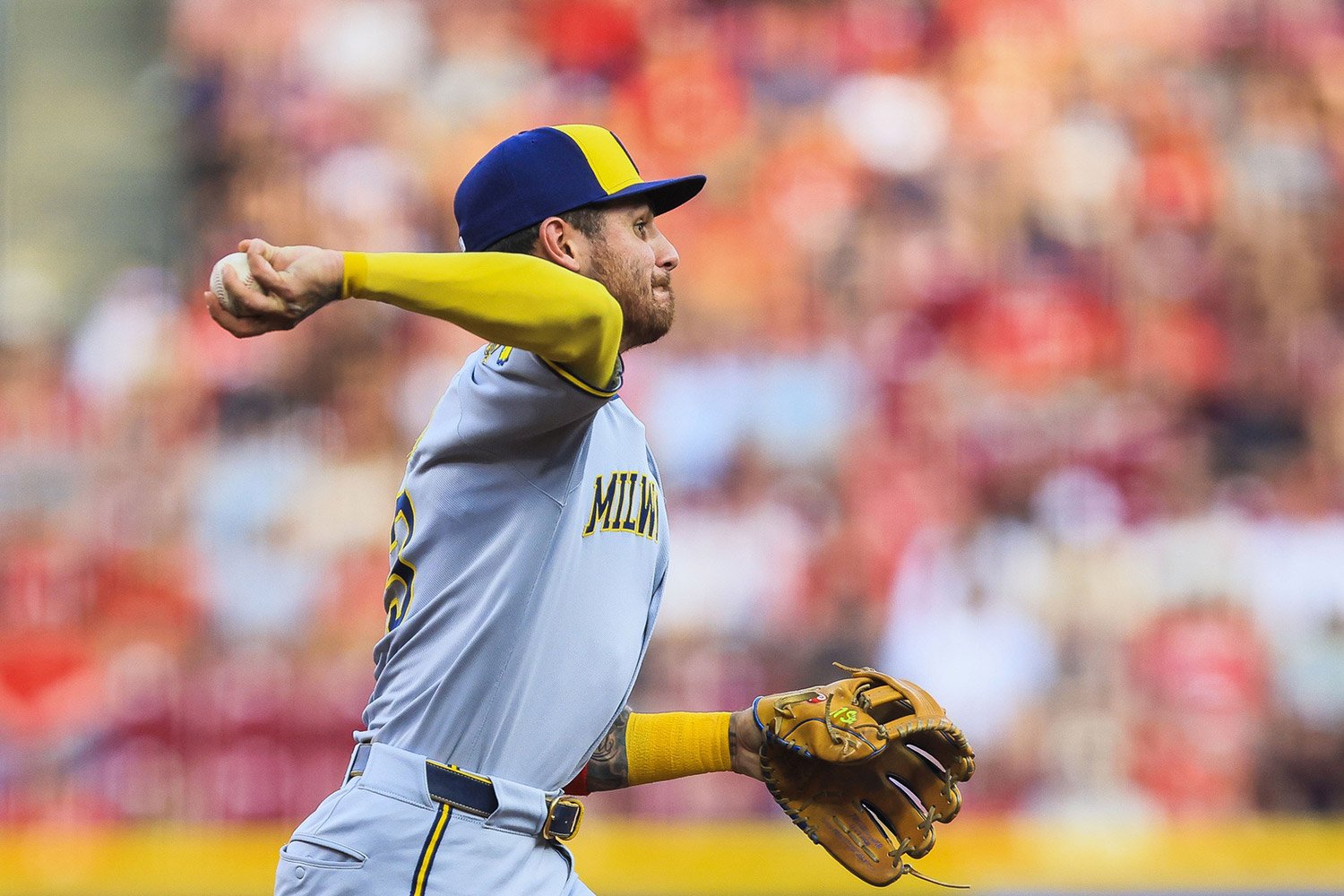 While Joey Ortiz may have tested his manager’s patience with his poor plate discipline throughout a trying 2025 season, the Brewers continued to give him a long leash as their everyday shortstop. It seems there’s still plenty of slack left on that leash, as president of baseball operations Matt Arnold said during last month’s Winter Meetings that the team remains confident in Ortiz’s upside. The Brewers should remain open-minded about the position, but they shouldn’t feel a pressing need to upgrade. Even if Ortiz does not reach that perceived ceiling, he’s still a capable big-leaguer at a premium defensive position, and the organization’s long-term solution at shortstop could reach the majors within the next two seasons. Even though his 67 wRC+ last year was the third-lowest among qualified hitters, Ortiz’s defense still made him worth 1.4 fWAR. His 0.3 bWAR was closer to replacement level because it was calculated using his -2 Defensive Runs Saved rather than his +10 Fielding Run Value, but given his defensive improvements throughout the summer, the latter seems to be a better preview of how valuable his glove will be this year. To replace Ortiz, the Brewers would need to find a shortstop who is clearly better than him. The free agents in their price range wouldn’t move that needle; only the recently-signed Bo Bichette is projected by FanGraphs’ Depth Charts system for a higher 2026 fWAR than Ortiz’s 2.5. Player 2025 fWAR Projected 2026 fWAR Joey Ortiz 1.4 2.5 Ha-Seong Kim (signed by ATL) 0.3 2.4 Willi Castro (signed by COL) 0.5 1.4 Miguel Rojas (signed by LAD) 1.7 0.6 Isiah Kiner-Falefa 0.7 0.5 Jon Berti -0.4 0.5 Jose Iglesias -0.2 0.4 Because even the worst version of Ortiz was still above replacement-level in 2025, he’s at least a capable holdover while the organization’s best shortstop prospects continue developing in the upper minors. Cooper Pratt appears poised to start the season in Triple-A, and Jesús Made seems to be on Jackson Chourio’s track of beginning his third professional season in Double-A and debuting in 2027. It’s also possible that a reworked group of hitting coaches led by Eric Theisen gets Ortiz in a better hitting position. His strong 84.6% contact rate in 2025 indicated that his hit tool hadn’t disappeared. Most of his issues stemmed from timing; Ortiz had above-average bat speed, but he usually started his swing so late in a pitch’s trajectory that he rarely had a chance to extend his arms and get his barrel through the zone by the time he made contact. Ortiz’s leash will expire eventually if he doesn’t significantly improve his offense, but he remains the Brewers’ best option at shortstop for now. Giving him another shot in 2026 is the right call.
 -
 Image courtesy of © Benny Sieu-Imagn Images For the second year in a row, the Brewers exchanged salary figures with William Contreras, rather than agreeing to a new contract ahead of baseball's filing deadline for arbitration-eligible players. It's been unsurprising both times. Contreras is the closest of Milwaukee's position players to a true star, which means he's looked to push the limits of how much money he can earn in a system based on precedent. As of this writing, the two camps are reportedly likely to go to a hearing to determine Contreras's 2026 salary. Because a team must argue against the player to win its case, there is always a risk of souring the relationship between the two. The Brewers and Contreras avoided that fate last year by agreeing to a one-year deal with a club option for 2026 at the end of January. Like most teams, the Brewers maintain an informal policy that proscribes agreeing to one-year deals after exchanging figures, so the club option was an escape hatch that allowed both sides to dodge the hearing but Milwaukee to claim that they had adhered to their policy. The tradeoff was that Contreras's 2025 salary was higher than the precedent for first-year arbitration catchers of his caliber, but depending on how well he played, the club could either exercise or decline the option to keep him from setting a new baseline the following year. While the sides could again reach a similar arrangement, there was greater incentive then for the Brewers to maintain a positive relationship with their starting catcher. It may be different this time, as history suggests that Contreras is nearing his final chapter in Milwaukee. Signing Contreras to a market-value extension would be an unusually risky investment for the club, which would be better off acquiring or developing another catcher entering his prime. In that case, they should entertain trading him next winter, before he hits free agency. A hearing would strain the relationship for one season, with little impact on his future with the team. Furthermore, of the two parties, the Brewers appear better positioned to win a potential hearing. Contreras filed at $9.9 million, which would set a new record for a catcher in his second year of arbitration, while the Brewers filed at $8.55 million, the current record set by Will Smith in 2024. (As a reminder, it doesn't matter that even $9.9 million would be a bargain for Contreras, whose free-agent value in 2025 was estimated at $29.2 million by FanGraphs. Arbitration is an entirely different system of player compensation in which salary increases are determined based on past raises given to similar players.) The burden will be on Contreras's camp to persuade a panel of arbitrators that he has been more valuable than Smith was at the same point in his career. Statistically, it's not a particularly convincing case. Smith was a slightly better hitter, and Contreras's edge in games played is mainly due to Smith's second season being the pandemic-shortened 2020 campaign. Player Team Games Player Games HR OPS wRC+ fWAR Contreras (2020-2025) 870 599 85 .805 123 16.9 Smith (2019-2023) 708 484 91 .840 128 15.7 On the surface, the Brewers and Contreras are in the same situation as last winter: he wants to raise the bar for catcher salaries, the Brewers would rather maintain the status quo, and the right contract can satisfy both sides. The context is different this time, though. Everyone involved should prepare for a more contentious process—and yes, that's likely to be the first in a series of events blazing his trail out of town. View full article
 -
How William Contreras's Second Season of Arbitration Differs From His First
Jack Stern posted an article in Brewers
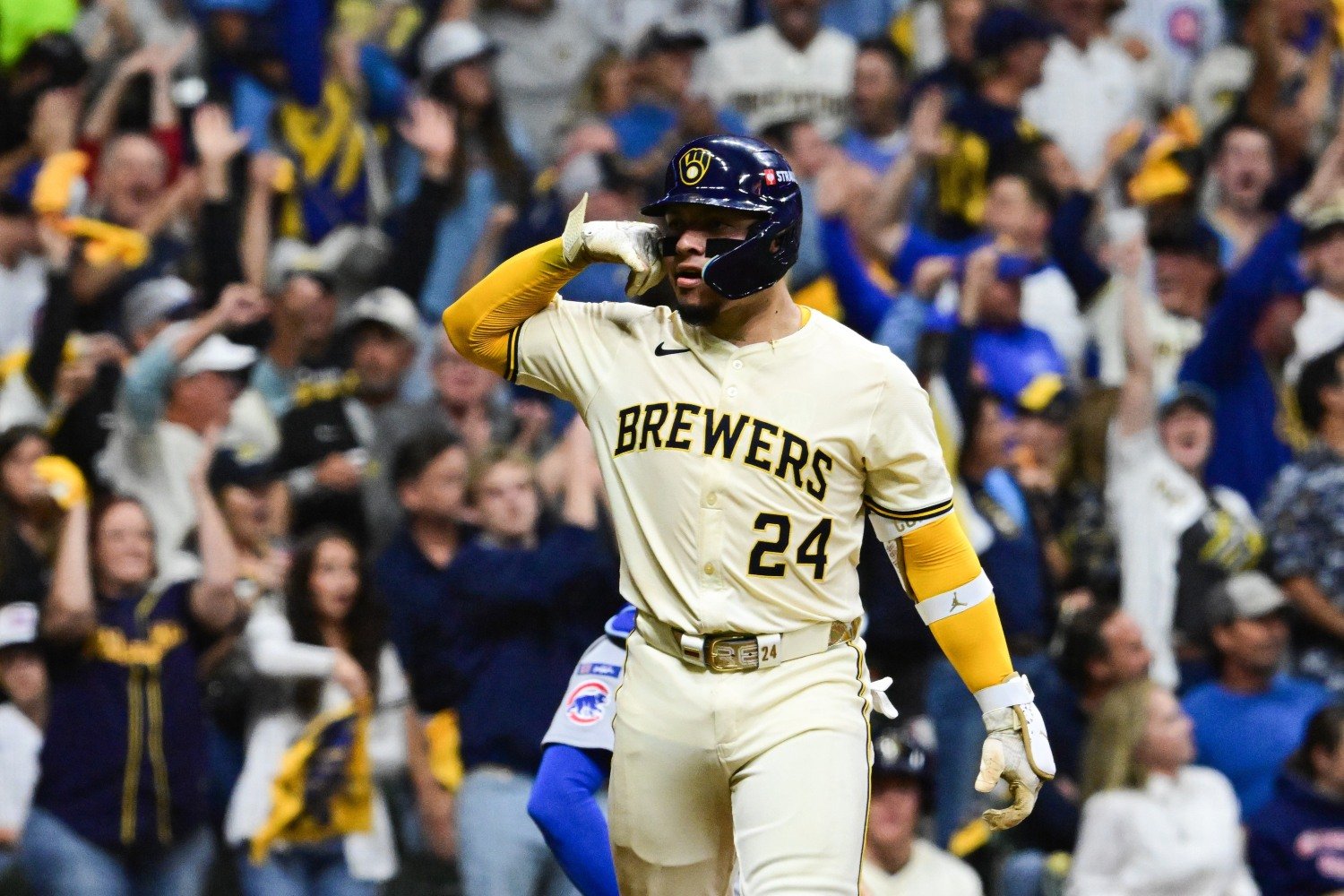 For the second year in a row, the Brewers exchanged salary figures with William Contreras, rather than agreeing to a new contract ahead of baseball's filing deadline for arbitration-eligible players. It's been unsurprising both times. Contreras is the closest of Milwaukee's position players to a true star, which means he's looked to push the limits of how much money he can earn in a system based on precedent. As of this writing, the two camps are reportedly likely to go to a hearing to determine Contreras's 2026 salary. Because a team must argue against the player to win its case, there is always a risk of souring the relationship between the two. The Brewers and Contreras avoided that fate last year by agreeing to a one-year deal with a club option for 2026 at the end of January. Like most teams, the Brewers maintain an informal policy that proscribes agreeing to one-year deals after exchanging figures, so the club option was an escape hatch that allowed both sides to dodge the hearing but Milwaukee to claim that they had adhered to their policy. The tradeoff was that Contreras's 2025 salary was higher than the precedent for first-year arbitration catchers of his caliber, but depending on how well he played, the club could either exercise or decline the option to keep him from setting a new baseline the following year. While the sides could again reach a similar arrangement, there was greater incentive then for the Brewers to maintain a positive relationship with their starting catcher. It may be different this time, as history suggests that Contreras is nearing his final chapter in Milwaukee. Signing Contreras to a market-value extension would be an unusually risky investment for the club, which would be better off acquiring or developing another catcher entering his prime. In that case, they should entertain trading him next winter, before he hits free agency. A hearing would strain the relationship for one season, with little impact on his future with the team. Furthermore, of the two parties, the Brewers appear better positioned to win a potential hearing. Contreras filed at $9.9 million, which would set a new record for a catcher in his second year of arbitration, while the Brewers filed at $8.55 million, the current record set by Will Smith in 2024. (As a reminder, it doesn't matter that even $9.9 million would be a bargain for Contreras, whose free-agent value in 2025 was estimated at $29.2 million by FanGraphs. Arbitration is an entirely different system of player compensation in which salary increases are determined based on past raises given to similar players.) The burden will be on Contreras's camp to persuade a panel of arbitrators that he has been more valuable than Smith was at the same point in his career. Statistically, it's not a particularly convincing case. Smith was a slightly better hitter, and Contreras's edge in games played is mainly due to Smith's second season being the pandemic-shortened 2020 campaign. Player Team Games Player Games HR OPS wRC+ fWAR Contreras (2020-2025) 870 599 85 .805 123 16.9 Smith (2019-2023) 708 484 91 .840 128 15.7 On the surface, the Brewers and Contreras are in the same situation as last winter: he wants to raise the bar for catcher salaries, the Brewers would rather maintain the status quo, and the right contract can satisfy both sides. The context is different this time, though. Everyone involved should prepare for a more contentious process—and yes, that's likely to be the first in a series of events blazing his trail out of town.
 -
Image courtesy of © Kiyoshi Mio-Imagn Images He may not have received much love during baseball’s awards season, but Chad Patrick’s rookie season was among the most productive in baseball. The right-hander filled in admirably for an injury-ravaged Milwaukee rotation during the first half and posted a 3.53 ERA and 3.90 SIERA in 119 ⅔ innings. His 2.6 fWAR tied for second among National League rookies. Despite that value, the shape of Patrick’s season left him somewhat overlooked. After the Brewers got healthier, he bounced on and off the roster throughout the second half. Even though his fWAR matched those of Caleb Durbin and Isaac Collins, who finished third and fourth in NL Rookie of the Year voting, respectively, Patrick finished seventh. After serving as an unsung hero during the regular season, Patrick vaulted himself into the national spotlight when he moved to the bullpen for the postseason. His average fastball velocity climbed to nearly 96 mph in shorter spurts, and he allowed just three hits in nine innings, with a 35% strikeout rate. The Brewers will likely stretch Patrick back out in spring training, and he might be the most intriguing of last season's returning starters. He was second in Stuff+ among regular Brewers starters, trailing only Jacob Misiorowski and finishing ahead of Milwaukee ace (and popular trade target) Freddy Peralta. Jacob Misiorowski (119 Stuff+) Chad Patrick (105) Freddy Peralta (102) Quinn Priester (97) Brandon Woodruff (96) Given his perceived shortcomings, seeing Patrick as the runner-up on that list may initially be surprising. For most of the season, the narrative was that his limited arsenal was effective early in games but made him vulnerable as a true starter. When the Brewers optioned him back to Nashville on July 6, 87% of his pitches thrown had been some kind of fastball. Without reliable secondary pitches, he got hit hard as the game progressed. Opponents had a .398 wOBA the third time through the order against Patrick. Left-handed hitters posted an overall .341 wOBA against him. When the Brewers recalled Patrick for a spot start on August 19, he returned with a new breaking ball that had greater movement separation from his signature cutter. Statcast classifies it as a slurve, but Patrick usually calls it a curveball. The new pitch worked wonders for him. Including the postseason, opponents managed just three singles in 16 at-bats while whiffing on 45% of swings. During that time, he limited left-handers to a .268 wOBA. The curveball’s 117 Stuff+ was well above average. There had always been a tradeoff with Patrick’s arsenal: his three distinct fastball shapes made it challenging for hitters to identify which kind of heater they were seeing, but they could almost always gear up for something between 87 and 95 mph, without much drop. According to Baseball Prospectus, his movement and velocity spreads both ranked in the 7th percentile of qualified pitchers. Averaging nearly 86 mph, Patrick’s curveball didn’t significantly expand his poor velocity spread, but it did fix his movement spread problem. Each of his fastballs averaged at least 11.1 inches of induced vertical break, but the curveball averaged -4.3 inches. Hitters could no longer eliminate a pitch with true downward bite and now had a wider range of movement and location to cover. Patrick also masked the pitch incredibly well. According to Baseball Prospectus’s tunneling metrics, hitters had only a 12% chance of correctly identifying it as a curveball by the time they needed to decide whether to swing. That was the sixth-lowest probability among pitches thrown at least 25 times during the regular season. Instead, they were 47% likely to misidentify it as a cutter. Even if those probabilities become less extreme as Patrick throws more curveballs over a larger sample, the pitch should still be plenty deceptive. Given how well the cutter and curveball tunnel off one another, it should come as no surprise that he leaned more on that pairing during his dominant postseason. While that October excellence generated the most buzz surrounding Patrick’s future, his potential is not tied to the bullpen. His new breaking ball will play in any role, and while those shorter outings gave his velocity an extra nudge, his average four-seamer and two-seamer were already climbing toward 95 mph as a starter. Patrick isn’t the youngest arm in a deep stable of potential Brewers starters; nor does his arsenal look the flashiest at first glance. But he revealed more upside late last year than he did earlier in the season. His new breaking ball can keep hitters off-balance deeper into games and make him less vulnerable against lefties. Other Brewers might garner more popularity as breakout picks, but Patrick appears as close as any of them to putting it all together. It's time to stop overlooking him. View full article
- 3 replies
-
- 3
-

-

-
- chad patrick
- jacob misiorowski
- (and 1 more)
-
Chad Patrick's New Breaking Ball Could Help Him Put Everything Together
Jack Stern posted an article in Brewers
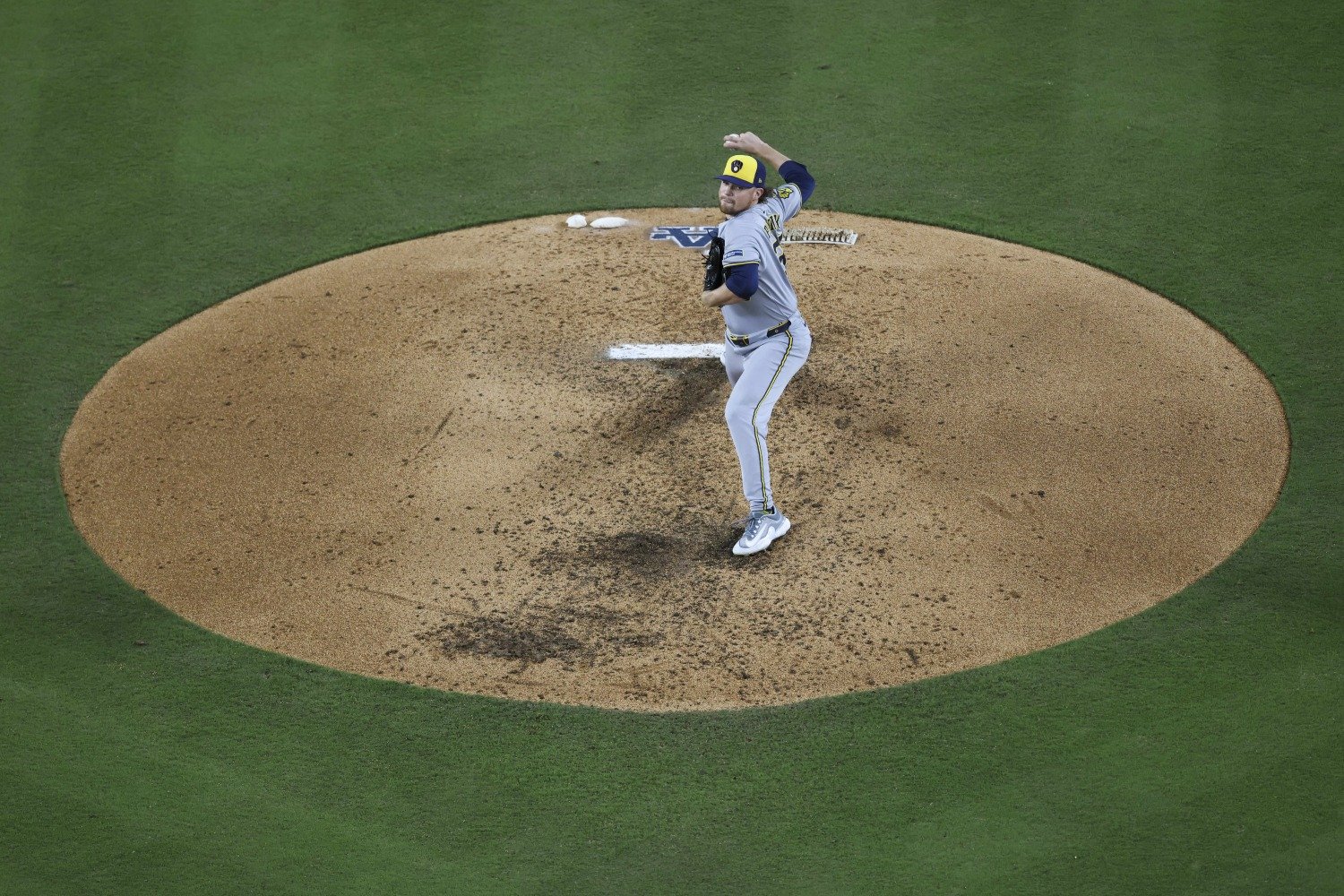 He may not have received much love during baseball’s awards season, but Chad Patrick’s rookie season was among the most productive in baseball. The right-hander filled in admirably for an injury-ravaged Milwaukee rotation during the first half and posted a 3.53 ERA and 3.90 SIERA in 119 ⅔ innings. His 2.6 fWAR tied for second among National League rookies. Despite that value, the shape of Patrick’s season left him somewhat overlooked. After the Brewers got healthier, he bounced on and off the roster throughout the second half. Even though his fWAR matched those of Caleb Durbin and Isaac Collins, who finished third and fourth in NL Rookie of the Year voting, respectively, Patrick finished seventh. After serving as an unsung hero during the regular season, Patrick vaulted himself into the national spotlight when he moved to the bullpen for the postseason. His average fastball velocity climbed to nearly 96 mph in shorter spurts, and he allowed just three hits in nine innings, with a 35% strikeout rate. The Brewers will likely stretch Patrick back out in spring training, and he might be the most intriguing of last season's returning starters. He was second in Stuff+ among regular Brewers starters, trailing only Jacob Misiorowski and finishing ahead of Milwaukee ace (and popular trade target) Freddy Peralta. Jacob Misiorowski (119 Stuff+) Chad Patrick (105) Freddy Peralta (102) Quinn Priester (97) Brandon Woodruff (96) Given his perceived shortcomings, seeing Patrick as the runner-up on that list may initially be surprising. For most of the season, the narrative was that his limited arsenal was effective early in games but made him vulnerable as a true starter. When the Brewers optioned him back to Nashville on July 6, 87% of his pitches thrown had been some kind of fastball. Without reliable secondary pitches, he got hit hard as the game progressed. Opponents had a .398 wOBA the third time through the order against Patrick. Left-handed hitters posted an overall .341 wOBA against him. When the Brewers recalled Patrick for a spot start on August 19, he returned with a new breaking ball that had greater movement separation from his signature cutter. Statcast classifies it as a slurve, but Patrick usually calls it a curveball. The new pitch worked wonders for him. Including the postseason, opponents managed just three singles in 16 at-bats while whiffing on 45% of swings. During that time, he limited left-handers to a .268 wOBA. The curveball’s 117 Stuff+ was well above average. There had always been a tradeoff with Patrick’s arsenal: his three distinct fastball shapes made it challenging for hitters to identify which kind of heater they were seeing, but they could almost always gear up for something between 87 and 95 mph, without much drop. According to Baseball Prospectus, his movement and velocity spreads both ranked in the 7th percentile of qualified pitchers. Averaging nearly 86 mph, Patrick’s curveball didn’t significantly expand his poor velocity spread, but it did fix his movement spread problem. Each of his fastballs averaged at least 11.1 inches of induced vertical break, but the curveball averaged -4.3 inches. Hitters could no longer eliminate a pitch with true downward bite and now had a wider range of movement and location to cover. Patrick also masked the pitch incredibly well. According to Baseball Prospectus’s tunneling metrics, hitters had only a 12% chance of correctly identifying it as a curveball by the time they needed to decide whether to swing. That was the sixth-lowest probability among pitches thrown at least 25 times during the regular season. Instead, they were 47% likely to misidentify it as a cutter. Even if those probabilities become less extreme as Patrick throws more curveballs over a larger sample, the pitch should still be plenty deceptive. Given how well the cutter and curveball tunnel off one another, it should come as no surprise that he leaned more on that pairing during his dominant postseason. While that October excellence generated the most buzz surrounding Patrick’s future, his potential is not tied to the bullpen. His new breaking ball will play in any role, and while those shorter outings gave his velocity an extra nudge, his average four-seamer and two-seamer were already climbing toward 95 mph as a starter. Patrick isn’t the youngest arm in a deep stable of potential Brewers starters; nor does his arsenal look the flashiest at first glance. But he revealed more upside late last year than he did earlier in the season. His new breaking ball can keep hitters off-balance deeper into games and make him less vulnerable against lefties. Other Brewers might garner more popularity as breakout picks, but Patrick appears as close as any of them to putting it all together. It's time to stop overlooking him.
- 3 comments
-
- 4
-
-
-
- chad patrick
- jacob misiorowski
- (and 1 more)
-
Image courtesy of © Mark Hoffman/Milwaukee Journal Sentinel / USA TODAY NETWORK via Imagn Images The Brewers announced their coaching staff under Pat Murphy for the 2026 season on Monday morning, including significant shakeups from last year's group. Four existing coaches have assumed new roles, a few others have taken jobs elsewhere in the organization, and four have joined the big-league staff. The first notable takeaway is that several coaches who have been heavily involved in game planning have been promoted to roles centered on those duties. Jason Lane has been elevated from third-base coach to offense and strategy coordinator; Jim Henderson from assistant pitching coach to pitching coordinator; and Daniel de Mondesert from assistant coach to game preparation specialist. To fill the vacancies left by those changes, Matt Erickson will become the third-base coach, while continuing to coach infielders, and Juan Sandoval will be the new assistant pitching coach. The promotion continues Sandoval's quick rise through the organization's coaching ranks. He started as a pitching coach in the Dominican Republic in 2022, before becoming assistant coordinator of minor-league pitching, a role in which he roamed throughout the farm system. The most notable shakeups may be to the hitting and baserunning staffs. The Brewers announced that former lead hitting coach Al LeBeouf and first base coach Julio Borbón will transition to front-office roles with an emphasis on player development and scouting. Eric Theisen has been promoted from assistant hitting coach to lead hitting coach, where he'll be flanked by new hires Daniel Vogelbach and former Toronto Blue Jays hitting coach Guillermo Martinez. Former director of player development Spencer Allen will be the new first-base coach. Vogelbach may be the most interesting hire. He's the youngest of the bunch, and his emphasis on swing decisions as a player could gel nicely with how the Brewers coach plate discipline. He swung at just 47.7% of in-zone pitches during his career, preferring to offer only at those in his wheelhouse. Milwaukee hitters have baseball's lowest in-zone swing rate over the past two seasons (62.1%), with Murphy saying that his young players must know which strikes not to swing at based on their bat paths. Allen, who was previously the organization's outfield and baserunning instructor, will look to lead a bounce-back at stealing bases. Coincidentally or not, the Brewers took a significant step back in that department last year, when Borbón replaced baserunning guru Quintin Berry. Murphy attributed it to more hesitant reads and jumps against opposing pitchers. Perhaps a new voice at first base will get them back to their more aggressive ways. Pitching coach Chris Hook, bullpen coach Charlie Greene, and field coordinator Nestor Corredor will all return for 2026 in their existing roles. The other notable members of the 2025 staff were Connor Dawson, who left for a hitting coach job with the Royals, and Rickie Weeks, who also moves back to a front-office role after two years as Murphy's lieutenant in the dugout. View full article
-
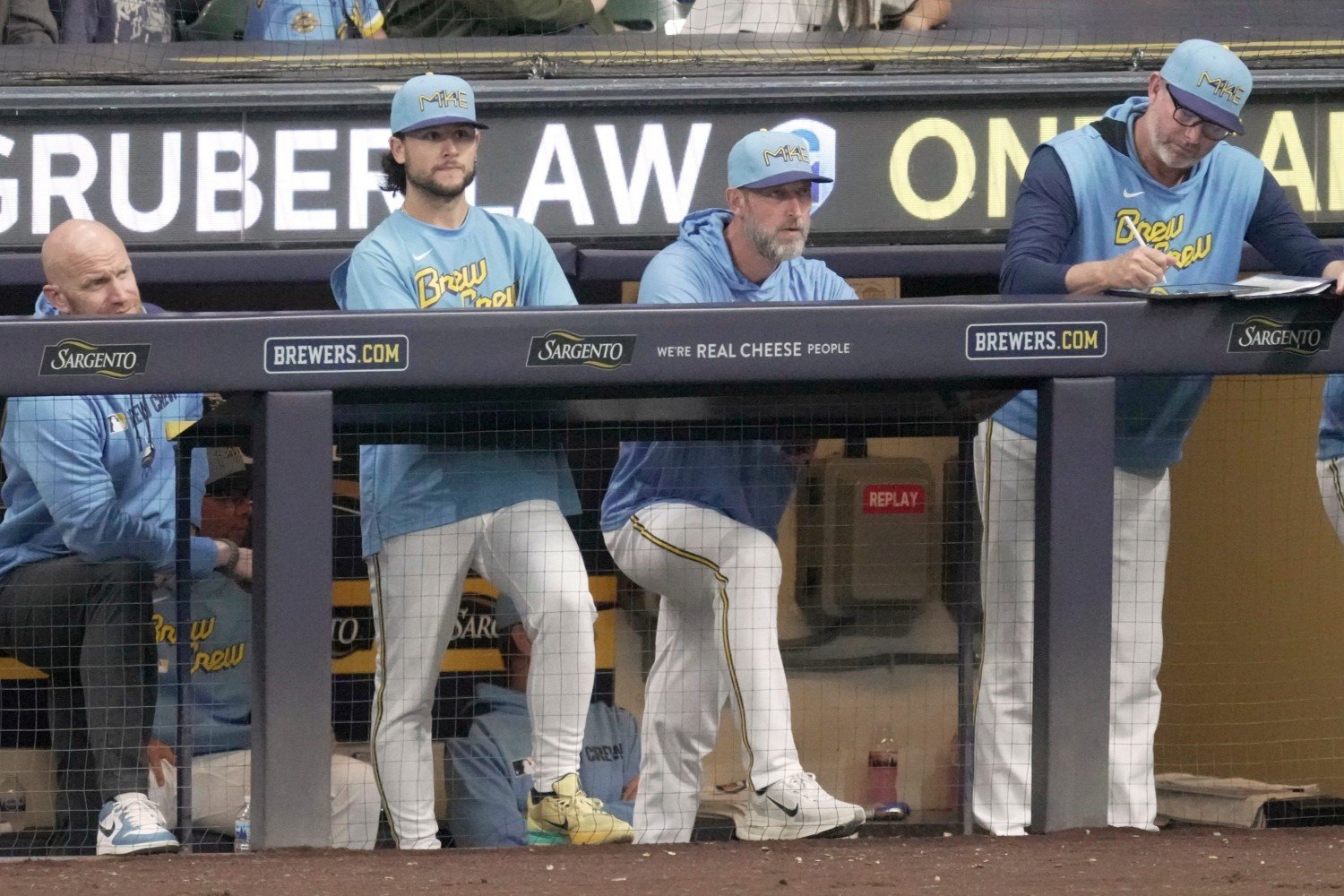 The Brewers announced their coaching staff under Pat Murphy for the 2026 season on Monday morning, including significant shakeups from last year's group. Four existing coaches have assumed new roles, a few others have taken jobs elsewhere in the organization, and four have joined the big-league staff. The first notable takeaway is that several coaches who have been heavily involved in game planning have been promoted to roles centered on those duties. Jason Lane has been elevated from third-base coach to offense and strategy coordinator; Jim Henderson from assistant pitching coach to pitching coordinator; and Daniel de Mondesert from assistant coach to game preparation specialist. To fill the vacancies left by those changes, Matt Erickson will become the third-base coach, while continuing to coach infielders, and Juan Sandoval will be the new assistant pitching coach. The promotion continues Sandoval's quick rise through the organization's coaching ranks. He started as a pitching coach in the Dominican Republic in 2022, before becoming assistant coordinator of minor-league pitching, a role in which he roamed throughout the farm system. The most notable shakeups may be to the hitting and baserunning staffs. The Brewers announced that former lead hitting coach Al LeBeouf and first base coach Julio Borbón will transition to front-office roles with an emphasis on player development and scouting. Eric Theisen has been promoted from assistant hitting coach to lead hitting coach, where he'll be flanked by new hires Daniel Vogelbach and former Toronto Blue Jays hitting coach Guillermo Martinez. Former director of player development Spencer Allen will be the new first-base coach. Vogelbach may be the most interesting hire. He's the youngest of the bunch, and his emphasis on swing decisions as a player could gel nicely with how the Brewers coach plate discipline. He swung at just 47.7% of in-zone pitches during his career, preferring to offer only at those in his wheelhouse. Milwaukee hitters have baseball's lowest in-zone swing rate over the past two seasons (62.1%), with Murphy saying that his young players must know which strikes not to swing at based on their bat paths. Allen, who was previously the organization's outfield and baserunning instructor, will look to lead a bounce-back at stealing bases. Coincidentally or not, the Brewers took a significant step back in that department last year, when Borbón replaced baserunning guru Quintin Berry. Murphy attributed it to more hesitant reads and jumps against opposing pitchers. Perhaps a new voice at first base will get them back to their more aggressive ways. Pitching coach Chris Hook, bullpen coach Charlie Greene, and field coordinator Nestor Corredor will all return for 2026 in their existing roles. The other notable members of the 2025 staff were Connor Dawson, who left for a hitting coach job with the Royals, and Rickie Weeks, who also moves back to a front-office role after two years as Murphy's lieutenant in the dugout.
- 2 comments
-
- 1
-
-
- daniel vogelbach
- spencer allen
- (and 4 more)
-
Image courtesy of © Patrick Gorski-Imagn Images When Garrett Mitchell hit the injured list in late April while Blake Perkins continued recovering from a fractured shin, the Brewers handed Jackson Chourio the keys to center field. The results were mixed. Chourio had a positive Outs Above Average (2), but that net estimate came from some extremes of performance. Chourio both rated well metrically and passed the eye test when pursuing balls laterally, but struggled when going back or coming straight in on the ball. Only 11 outfielders made at least four 5-star catches (those with an estimated catch probability under 10%), according to Statcast. Chourio was one of them. However, those 11 players' success rates on catches the system rated as easier (1-4 stars) went as follows: Ceddanne Rafaela - 94.6% Victor Scott II - 94.4 Denzel Clarke - 93.6 Jacob Young - 92.5 Pete Crow-Armstrong - 91.4 Myles Straw - 91.3 Kyle Isbel - 88.5 Steven Kwan - 85.7 Wilyer Abreu - 81.4 Isaac Collins - 78.4 Jackson Chourio - 76.8 In other words, Chourio could be exceptionally rangy, but he was also mistake-prone. No Brewers fan has much trouble reconciling that data with their day-to-day experience. akQ5Z0FfWGw0TUFRPT1fVWdnRFVGTURCVllBQ1ZjTFV3QUhWUVJTQUFCV1ZGY0FCUVFFQVFRRlZ3WURVUUJU.mp4 After coming up through the minor leagues as a center fielder, Chourio played exclusively in the corners in his rookie campaign of 2024. Gold Glove right fielder Sal Frelick entered the year with 55 career big-league appearances in center and has been more fundamentally consistent in the field. The Brewers moved Chourio instead, though, because his skill set is better suited to play up the middle. While Frelick plays an aggressive outfield in his own right, Chourio is the more explosive athlete. He had the superior sprint speed—29.2 feet per second in 2025, which ranked in the 93rd percentile. That early quickness enabled him to have better jumps on batted balls, while still taking average routes. Moving quickly on contact leaves an outfielder with less time to read the ball, so most players with better jumps take less direct routes. As the defenders tasked with covering the most ground, good center fielders must be able to do both. Chourio falls into that category in the graph above. He’s one of the defenders near the vertical midpoint and to the right of the average line. His neighbors include Daulton Varsho, Bryce Teodosio, and Andy Pages, all of whom are strong defensive center fielders. Frelick, meanwhile, sits right along the line, meaning his reaction time and routes make him best suited for a corner spot. Scouts knew Chourio had the tools to be an above-average center fielder, with most prospect rankings assigning a 60 grade to his glove. The numbers back up those eye tests. It’s still a question whether he will develop the increased awareness and confidence to turn that athleticism into more consistent defense. If he can’t, he’ll be better off in the corners, where his speed can compensate for some of his weaknesses with less ground to cover. For instance, he'll have to get better at managing space and feeling the wall when pushed back to the barrier. ek1MNTBfWGw0TUFRPT1fVjFNRkJWZFZYd2NBRFZRSEFBQUhWRkFBQUZsV1V3SUFBd1pSVXdOVVVnZFhCVllG.mp4 The Brewers may be best off if Chourio can make those strides in 2026. While Mitchell, Perkins, Brandon Lockridge, and Steward Berroa are great defensive center fielders, none of them is likely to fill Milwaukee’s need for more consistent power. The most in-house help could come from a change in left field, where Chourio has played most of his big-league innings. Jake Bauers has long flashed impressive raw power, and he finally made enough contact in September to start taking advantage of it. Shifting Christian Yelich back to the field semi-regularly would also give the Brewers more flexibility to slide another bat into the DH spot. However, both are poor fielders on a defensively-minded roster. Bauers has been worth -11 DRS and -12 OAA in just over 200 games in the outfield, while Yelich has not graded positively in either metric since 2018. Barring significant roster changes, the Brewers face a decision between defensive floor and offensive upside in their outfield. Inserting a bigger bat in left field may only be worth the gamble if they have a center fielder who can run down balls in the gap that Bauers or Yelich won’t reach. That risk becomes easier to take if Chourio becomes more trustworthy in center. View full article
-
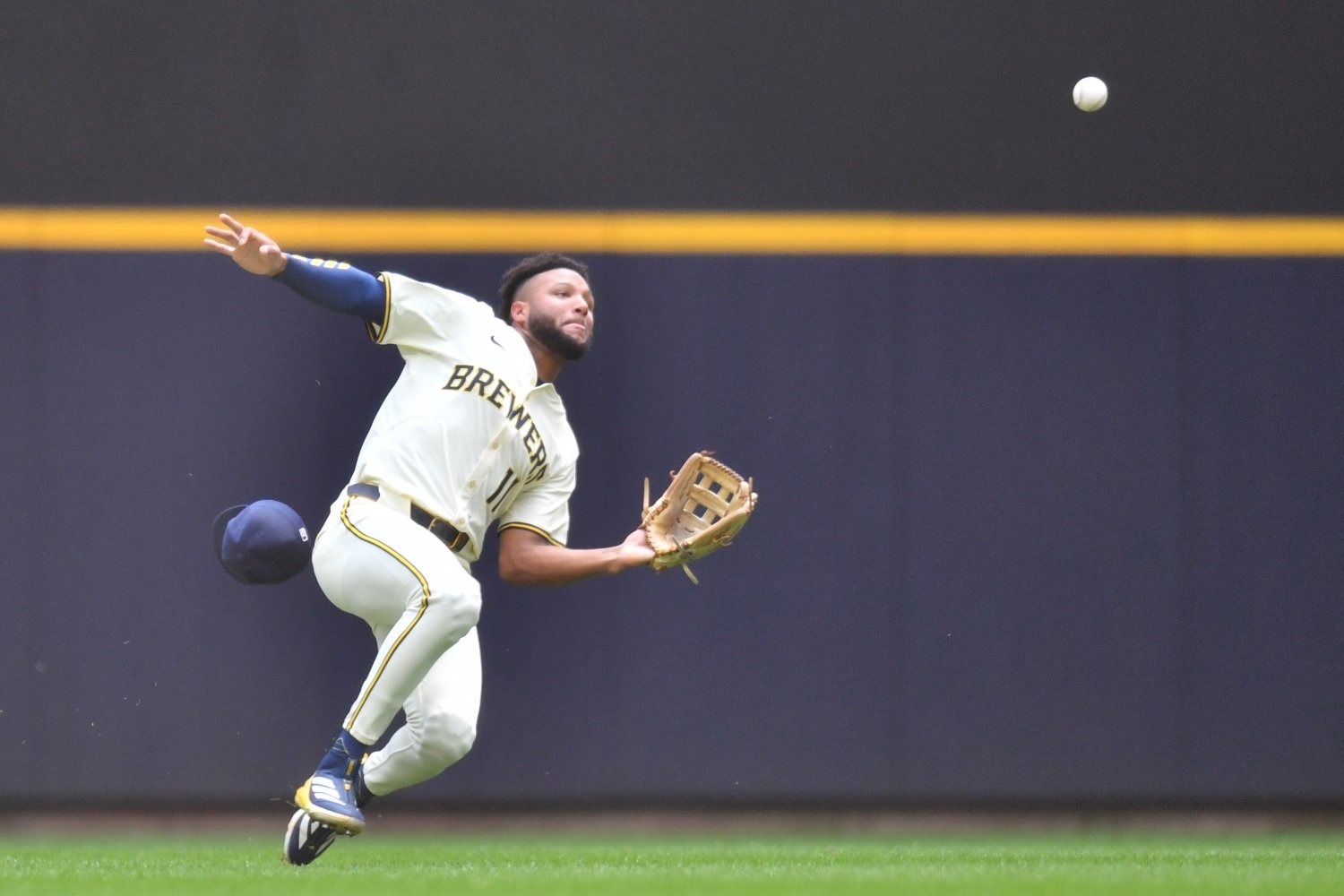 When Garrett Mitchell hit the injured list in late April while Blake Perkins continued recovering from a fractured shin, the Brewers handed Jackson Chourio the keys to center field. The results were mixed. Chourio had a positive Outs Above Average (2), but that net estimate came from some extremes of performance. Chourio both rated well metrically and passed the eye test when pursuing balls laterally, but struggled when going back or coming straight in on the ball. Only 11 outfielders made at least four 5-star catches (those with an estimated catch probability under 10%), according to Statcast. Chourio was one of them. However, those 11 players' success rates on catches the system rated as easier (1-4 stars) went as follows: Ceddanne Rafaela - 94.6% Victor Scott II - 94.4 Denzel Clarke - 93.6 Jacob Young - 92.5 Pete Crow-Armstrong - 91.4 Myles Straw - 91.3 Kyle Isbel - 88.5 Steven Kwan - 85.7 Wilyer Abreu - 81.4 Isaac Collins - 78.4 Jackson Chourio - 76.8 In other words, Chourio could be exceptionally rangy, but he was also mistake-prone. No Brewers fan has much trouble reconciling that data with their day-to-day experience. akQ5Z0FfWGw0TUFRPT1fVWdnRFVGTURCVllBQ1ZjTFV3QUhWUVJTQUFCV1ZGY0FCUVFFQVFRRlZ3WURVUUJU.mp4 After coming up through the minor leagues as a center fielder, Chourio played exclusively in the corners in his rookie campaign of 2024. Gold Glove right fielder Sal Frelick entered the year with 55 career big-league appearances in center and has been more fundamentally consistent in the field. The Brewers moved Chourio instead, though, because his skill set is better suited to play up the middle. While Frelick plays an aggressive outfield in his own right, Chourio is the more explosive athlete. He had the superior sprint speed—29.2 feet per second in 2025, which ranked in the 93rd percentile. That early quickness enabled him to have better jumps on batted balls, while still taking average routes. Moving quickly on contact leaves an outfielder with less time to read the ball, so most players with better jumps take less direct routes. As the defenders tasked with covering the most ground, good center fielders must be able to do both. Chourio falls into that category in the graph above. He’s one of the defenders near the vertical midpoint and to the right of the average line. His neighbors include Daulton Varsho, Bryce Teodosio, and Andy Pages, all of whom are strong defensive center fielders. Frelick, meanwhile, sits right along the line, meaning his reaction time and routes make him best suited for a corner spot. Scouts knew Chourio had the tools to be an above-average center fielder, with most prospect rankings assigning a 60 grade to his glove. The numbers back up those eye tests. It’s still a question whether he will develop the increased awareness and confidence to turn that athleticism into more consistent defense. If he can’t, he’ll be better off in the corners, where his speed can compensate for some of his weaknesses with less ground to cover. For instance, he'll have to get better at managing space and feeling the wall when pushed back to the barrier. ek1MNTBfWGw0TUFRPT1fVjFNRkJWZFZYd2NBRFZRSEFBQUhWRkFBQUZsV1V3SUFBd1pSVXdOVVVnZFhCVllG.mp4 The Brewers may be best off if Chourio can make those strides in 2026. While Mitchell, Perkins, Brandon Lockridge, and Steward Berroa are great defensive center fielders, none of them is likely to fill Milwaukee’s need for more consistent power. The most in-house help could come from a change in left field, where Chourio has played most of his big-league innings. Jake Bauers has long flashed impressive raw power, and he finally made enough contact in September to start taking advantage of it. Shifting Christian Yelich back to the field semi-regularly would also give the Brewers more flexibility to slide another bat into the DH spot. However, both are poor fielders on a defensively-minded roster. Bauers has been worth -11 DRS and -12 OAA in just over 200 games in the outfield, while Yelich has not graded positively in either metric since 2018. Barring significant roster changes, the Brewers face a decision between defensive floor and offensive upside in their outfield. Inserting a bigger bat in left field may only be worth the gamble if they have a center fielder who can run down balls in the gap that Bauers or Yelich won’t reach. That risk becomes easier to take if Chourio becomes more trustworthy in center.
- 12 comments
-
- 1
-
-
- jackson chourio
- sal frelick
- (and 4 more)
-
Image courtesy of © Jayne Kamin-Oncea-Imagn Images When Jacob Misiorowski reached the big leagues in June, it was fair to assume that the Brewers would avoid overcomplicating things and tell him to let his signature fastball eat. Since the start of 2024, no team has had its starting pitchers throw fastballs a greater percentage of the time than the Brewers. Misiorowski’s four-seamer just might be the best among starters, leading all non-openers in Stuff+ (121) and StuffPro (-1.2) in 2025. That wasn’t how it played out. Misiorowski threw his fastball less as a Brewer than he did in Triple A. During his electrifying performance as a long reliever in the postseason, he threw it less than 50% of the time. Misiorowski and the Brewers replaced those four-seamers with more sliders, even though his power curveball is arguably his best secondary pitch and proved tougher for hitters to barrel up in his rookie season. Pitch Type Stuff+ Whiff% Chase% xwOBA SL 118 24.1% 21.8% .309 CU 127 33.3% 34.3% .255 This wasn’t Milwaukee’s pitching coaches abandoning their affinity for fastballs. What Misiorowski calls his slider is effectively a cutter. There is not always a clear line between those two pitch types, but in this case, the distinction matters. The Brewers want most of their starters to throw multiple fastball variants, and thinking of Misiorowski’s slider as a cutter checks that box. They consistently kept his overall fastball usage around 80%, and only changed how he played those two heaters off one another. Misiorowski’s so-called slider had the mid-90s velocity of a cutter, leading all qualified sliders in average velocity by more than 2 mph. It also spun like a cutter; a relatively high spin efficiency means it had a cutter’s offset backspin instead of a bullet slider’s true football spin, and fewer spin units means it spun less than a typical slider would at that velocity. That combination of velocity and spin made it move like a cutter; it didn’t drop much and had less glove-side break. Metric Misiorowski SL MLB RH SL MLB RH CT MPH 94.1 86.1 89.7 Spin Efficiency 45.5% 33.0% 46.9% Spin Units 26.4 28.3 26.9 iVB 6.4 1.8 8.2 HB 3.0 4.5 2.1 If it has the velocity of a cutter, spins like a cutter, and moves like a cutter, it’s probably a cutter. On a graph of velocity and spin, Misiorowski’s pitch lands in its own unique space, but it’s much closer to the brown cutter cluster than the yellow slider one. Most importantly, he and the Brewers used it like a cutter. A traditional slider is often a chase pitch thrown around the edges of the plate, but Misiorowski threw 59.5% of his cutters in the zone. That was the highest in-zone rate of any pitch in his arsenal, and it would have ranked 20th among 405 sliders thrown at least 50 times. He often threw it up and in to righties, a target location similar to his four-seamer. The Brewers believe mixing different kinds of fastballs improves pitch masking. It’s easier to make a four-seamer, two-seamer, and cutter look alike out of hand than other pitch types. Their spin is similar enough to keep a hitter from differentiating them early in the ball’s flight, and the pitcher doesn’t need to change his release to get on top of or in front of the ball, as he does to throw a sweeping breaking ball. Misiorowski is no exception. Look at how tightly his four-seamer (the red tracer) and cutter (the yellow tracer) mirror each other during a right-handed hitter’s decision window, while his curveball (the blue tracer) pops above them immediately. Baseball Prospectus attempts to quantify pitch masking using tunneling metrics, which measure the probability that a hitter will correctly identify a pitch by the time he must decide whether to swing or take. According to this model, hitters were likely to recognize Misiorowski’s curveball, but they could easily mistake a cutter for a four-seamer. Pitch Type FA Probability CT Probability CU Probability CH Probability FA 79.3% 15.7% 2.7% 2.4% FC 38.2% 57.2% 1.6% 2.9% CU 18.3% 4.7% 72.4% 4.6% CH 32.2% 17.6% 8.6% 41.7% That’s not to say Misiorowski’s curveball is not a weapon. Its strong results demonstrate that it has sufficient velocity and movement to generate off-balance swings without great deception. However, the Brewers are often more focused on how a starter’s arsenal comes together as a whole than how each of his pitches plays individually. Through that lens, Misiorowski’s four-seamer and cutter are his best pairing, with the curveball remaining a put-away pitch and an extra tool against left-handed hitters. His postseason sample showed how effective that combination can be when properly sequenced. Opponents managed only a .277 wOBA against Misiorowski’s four-seamer in October, while his cutter yielded just a .147 wOBA and a 41.9% whiff rate. It’s safe to assume the Brewers will keep him on some version of the multi-fastball plan until further notice, even if he labels that second fastball as a breaking pitch. As the guy throwing it, Misiorowski reserves the right to call it whatever he wants, but you and I know what we're seeing. View full article
-
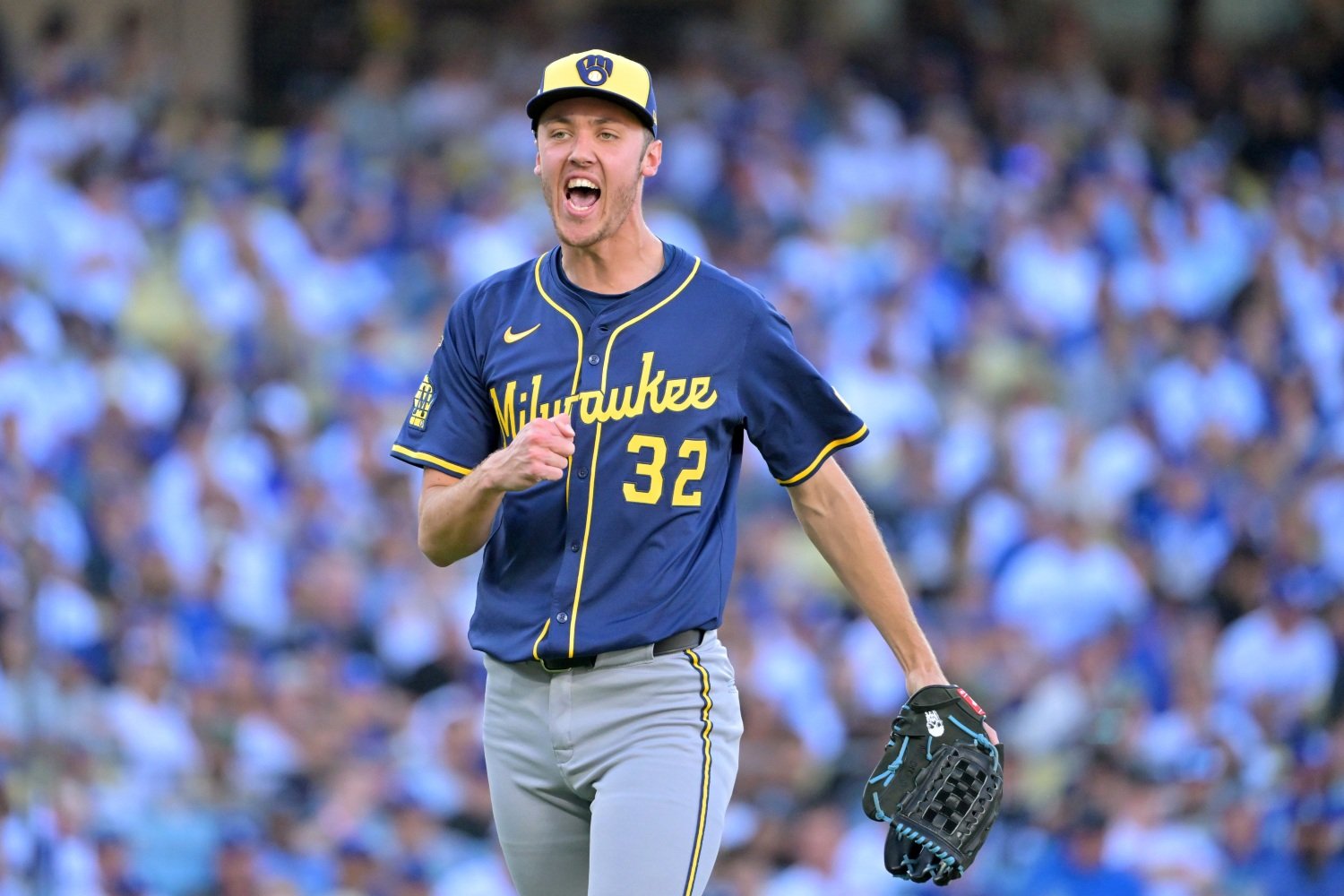 When Jacob Misiorowski reached the big leagues in June, it was fair to assume that the Brewers would avoid overcomplicating things and tell him to let his signature fastball eat. Since the start of 2024, no team has had its starting pitchers throw fastballs a greater percentage of the time than the Brewers. Misiorowski’s four-seamer just might be the best among starters, leading all non-openers in Stuff+ (121) and StuffPro (-1.2) in 2025. That wasn’t how it played out. Misiorowski threw his fastball less as a Brewer than he did in Triple A. During his electrifying performance as a long reliever in the postseason, he threw it less than 50% of the time. Misiorowski and the Brewers replaced those four-seamers with more sliders, even though his power curveball is arguably his best secondary pitch and proved tougher for hitters to barrel up in his rookie season. Pitch Type Stuff+ Whiff% Chase% xwOBA SL 118 24.1% 21.8% .309 CU 127 33.3% 34.3% .255 This wasn’t Milwaukee’s pitching coaches abandoning their affinity for fastballs. What Misiorowski calls his slider is effectively a cutter. There is not always a clear line between those two pitch types, but in this case, the distinction matters. The Brewers want most of their starters to throw multiple fastball variants, and thinking of Misiorowski’s slider as a cutter checks that box. They consistently kept his overall fastball usage around 80%, and only changed how he played those two heaters off one another. Misiorowski’s so-called slider had the mid-90s velocity of a cutter, leading all qualified sliders in average velocity by more than 2 mph. It also spun like a cutter; a relatively high spin efficiency means it had a cutter’s offset backspin instead of a bullet slider’s true football spin, and fewer spin units means it spun less than a typical slider would at that velocity. That combination of velocity and spin made it move like a cutter; it didn’t drop much and had less glove-side break. Metric Misiorowski SL MLB RH SL MLB RH CT MPH 94.1 86.1 89.7 Spin Efficiency 45.5% 33.0% 46.9% Spin Units 26.4 28.3 26.9 iVB 6.4 1.8 8.2 HB 3.0 4.5 2.1 If it has the velocity of a cutter, spins like a cutter, and moves like a cutter, it’s probably a cutter. On a graph of velocity and spin, Misiorowski’s pitch lands in its own unique space, but it’s much closer to the brown cutter cluster than the yellow slider one. Most importantly, he and the Brewers used it like a cutter. A traditional slider is often a chase pitch thrown around the edges of the plate, but Misiorowski threw 59.5% of his cutters in the zone. That was the highest in-zone rate of any pitch in his arsenal, and it would have ranked 20th among 405 sliders thrown at least 50 times. He often threw it up and in to righties, a target location similar to his four-seamer. The Brewers believe mixing different kinds of fastballs improves pitch masking. It’s easier to make a four-seamer, two-seamer, and cutter look alike out of hand than other pitch types. Their spin is similar enough to keep a hitter from differentiating them early in the ball’s flight, and the pitcher doesn’t need to change his release to get on top of or in front of the ball, as he does to throw a sweeping breaking ball. Misiorowski is no exception. Look at how tightly his four-seamer (the red tracer) and cutter (the yellow tracer) mirror each other during a right-handed hitter’s decision window, while his curveball (the blue tracer) pops above them immediately. Baseball Prospectus attempts to quantify pitch masking using tunneling metrics, which measure the probability that a hitter will correctly identify a pitch by the time he must decide whether to swing or take. According to this model, hitters were likely to recognize Misiorowski’s curveball, but they could easily mistake a cutter for a four-seamer. Pitch Type FA Probability CT Probability CU Probability CH Probability FA 79.3% 15.7% 2.7% 2.4% FC 38.2% 57.2% 1.6% 2.9% CU 18.3% 4.7% 72.4% 4.6% CH 32.2% 17.6% 8.6% 41.7% That’s not to say Misiorowski’s curveball is not a weapon. Its strong results demonstrate that it has sufficient velocity and movement to generate off-balance swings without great deception. However, the Brewers are often more focused on how a starter’s arsenal comes together as a whole than how each of his pitches plays individually. Through that lens, Misiorowski’s four-seamer and cutter are his best pairing, with the curveball remaining a put-away pitch and an extra tool against left-handed hitters. His postseason sample showed how effective that combination can be when properly sequenced. Opponents managed only a .277 wOBA against Misiorowski’s four-seamer in October, while his cutter yielded just a .147 wOBA and a 41.9% whiff rate. It’s safe to assume the Brewers will keep him on some version of the multi-fastball plan until further notice, even if he labels that second fastball as a breaking pitch. As the guy throwing it, Misiorowski reserves the right to call it whatever he wants, but you and I know what we're seeing.
 -
Image courtesy of © Benny Sieu-Imagn Images It's become an annual tradition in Milwaukee: A pitcher acquired in a minor transaction breaks out as a consistent middle reliever who can handle occasional high-leverage work for a couple of seasons. It was Hoby Milner in 2022, Joel Payamps the following year, Jared Koenig after that, and Grant Anderson in 2025. None of them truly emerged out of nowhere, though. The Brewers brought each of them in because they saw qualities that could make them effective: Milner and Anderson's deception; Payamps's sweeping slider; and Koenig's velocity spike upon becoming a full-time reliever. The front office constructs strong bullpens by continually stockpiling intriguing pitch qualities throughout the organization. Not all of those guys pan out, but if you collect enough spaghetti to throw at the wall, some will stick to round out an eight-man bullpen. Easton McGee fit that mold from the moment the Brewers signed him to a two-year, minor-league deal in November 2023, making him a name to watch in his first full season back from Tommy John surgery. Sure enough, he joined the 40-man roster in May and spent the summer riding the bullpen shuttle between Milwaukee and Nashville. The results were unimposing. In 14 ⅔ low-leverage innings, McGee pitched to a 5.52 ERA and 103 DRA-. The real accomplishment of his season was that he showcased the qualities in his post-surgery arsenal that could yield future success. A former starter, McGee throws five pitches with distinct shapes, plus a rarely-used changeup. Between Triple-A and the big leagues, his sinker induced ground balls on 57.8% of batted balls, while his four-seamer produced a 31.1% whiff rate. Both pitches jumped from averaging 90 mph to 93 mph with the move to the bullpen. A more consistent cutter gave McGee the fully-developed trio of fastballs the Brewers love, and he has two big breaking pitches to choose from based on the angles he wants to play in a given matchup. Pitch grading models see McGee's stuff as average, but some of the movement he creates is more impressive from his arm angle. He stands 6-foot-7, but his low-three-quarters delivery pushes his average release height (5.5 feet) below the league norm for right-handed pitchers (5.8 feet). From that slot, one would expect McGee to be a sinker-slider guy, and those two pitches made up his primary mix to righties in 2025. However, his four-seamer and curveball are arguably his most deceptive offerings. The former had two more inches of carry than usual for his arm angle, while the latter had three more inches of unexpected depth. McGee could join Anderson as a sinkerballer by trade who leans more heavily on an effective high four-seamer over time. He already used his curveball more frequently in the big leagues, perhaps because it's the only secondary offering he throws from a nearly identical arm slot to his fastballs. The right-hander still has some hurdles to clear before a breakout season. His delivery puts him at risk of struggling with platoon splits, which was already the case in his debut. While righties managed just a .252 xwOBA against McGee, his low slot is a much easier look for lefties, who tagged him for a .366 xwOBA. To hedge those splits, McGee must find a way to be deceptive most of the time, not just with a particular pitch. Given the array of shapes in his arsenal, that may be a matter of deciding which pitches to use, learning how to sequence them, and developing more consistent release points. If McGee makes those strides, don't be surprised if he ascends from the roster bubble to become a regular contributor. View full article
- 8 replies
-
- 1
-
-
- easton mcgee
- grant anderson
- (and 3 more)
-
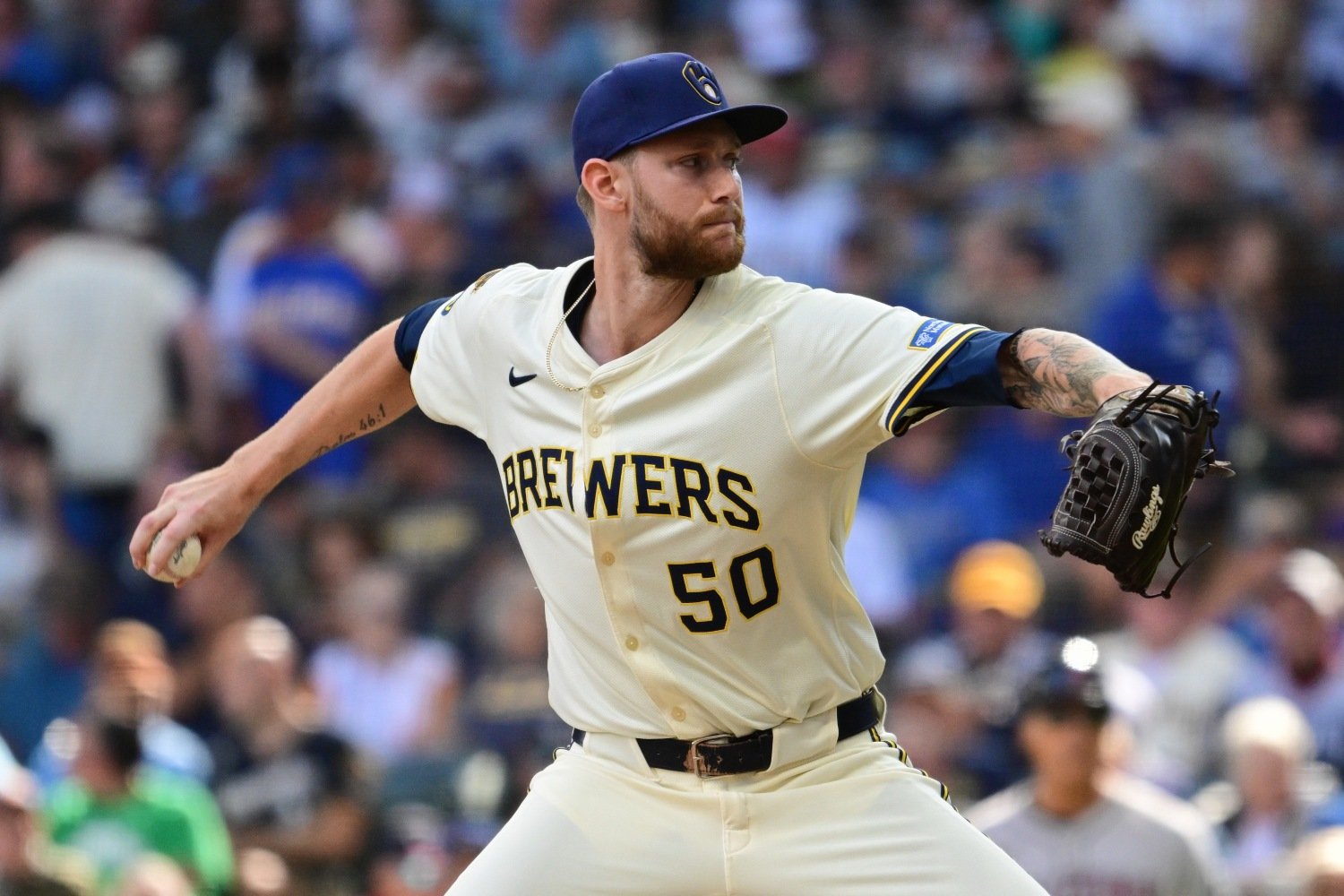 It's become an annual tradition in Milwaukee: A pitcher acquired in a minor transaction breaks out as a consistent middle reliever who can handle occasional high-leverage work for a couple of seasons. It was Hoby Milner in 2022, Joel Payamps the following year, Jared Koenig after that, and Grant Anderson in 2025. None of them truly emerged out of nowhere, though. The Brewers brought each of them in because they saw qualities that could make them effective: Milner and Anderson's deception; Payamps's sweeping slider; and Koenig's velocity spike upon becoming a full-time reliever. The front office constructs strong bullpens by continually stockpiling intriguing pitch qualities throughout the organization. Not all of those guys pan out, but if you collect enough spaghetti to throw at the wall, some will stick to round out an eight-man bullpen. Easton McGee fit that mold from the moment the Brewers signed him to a two-year, minor-league deal in November 2023, making him a name to watch in his first full season back from Tommy John surgery. Sure enough, he joined the 40-man roster in May and spent the summer riding the bullpen shuttle between Milwaukee and Nashville. The results were unimposing. In 14 ⅔ low-leverage innings, McGee pitched to a 5.52 ERA and 103 DRA-. The real accomplishment of his season was that he showcased the qualities in his post-surgery arsenal that could yield future success. A former starter, McGee throws five pitches with distinct shapes, plus a rarely-used changeup. Between Triple-A and the big leagues, his sinker induced ground balls on 57.8% of batted balls, while his four-seamer produced a 31.1% whiff rate. Both pitches jumped from averaging 90 mph to 93 mph with the move to the bullpen. A more consistent cutter gave McGee the fully-developed trio of fastballs the Brewers love, and he has two big breaking pitches to choose from based on the angles he wants to play in a given matchup. Pitch grading models see McGee's stuff as average, but some of the movement he creates is more impressive from his arm angle. He stands 6-foot-7, but his low-three-quarters delivery pushes his average release height (5.5 feet) below the league norm for right-handed pitchers (5.8 feet). From that slot, one would expect McGee to be a sinker-slider guy, and those two pitches made up his primary mix to righties in 2025. However, his four-seamer and curveball are arguably his most deceptive offerings. The former had two more inches of carry than usual for his arm angle, while the latter had three more inches of unexpected depth. McGee could join Anderson as a sinkerballer by trade who leans more heavily on an effective high four-seamer over time. He already used his curveball more frequently in the big leagues, perhaps because it's the only secondary offering he throws from a nearly identical arm slot to his fastballs. The right-hander still has some hurdles to clear before a breakout season. His delivery puts him at risk of struggling with platoon splits, which was already the case in his debut. While righties managed just a .252 xwOBA against McGee, his low slot is a much easier look for lefties, who tagged him for a .366 xwOBA. To hedge those splits, McGee must find a way to be deceptive most of the time, not just with a particular pitch. Given the array of shapes in his arsenal, that may be a matter of deciding which pitches to use, learning how to sequence them, and developing more consistent release points. If McGee makes those strides, don't be surprised if he ascends from the roster bubble to become a regular contributor.
- 8 comments
-
- 3
-
-
- easton mcgee
- grant anderson
- (and 3 more)
-
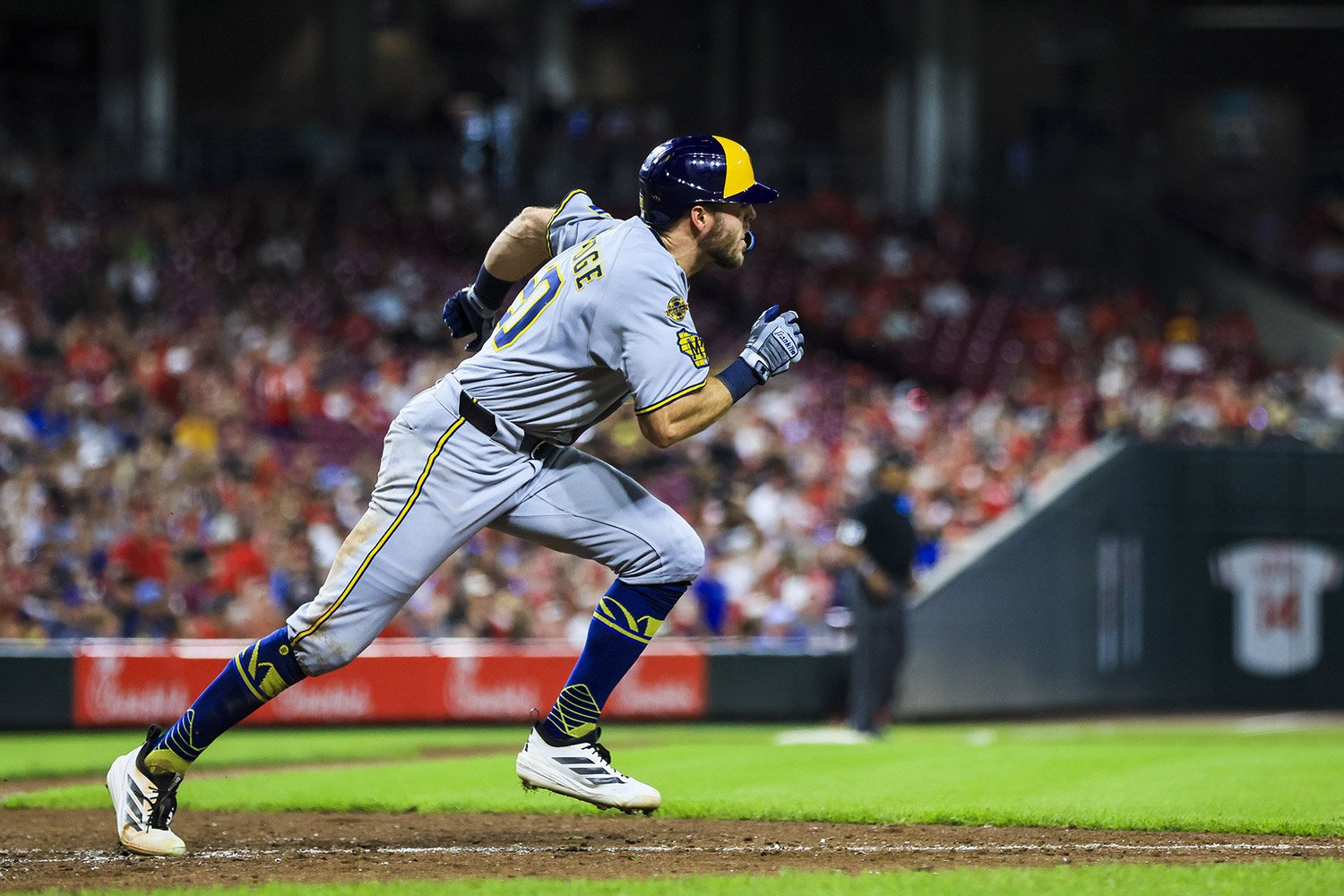 It was easy to see that the Brewers valued Brandon Lockridge’s speed and defense the moment they acquired him at the 2025 trade deadline. The 28-year-old’s sprint speed of 30.1 feet per second ranked seventh among all baserunners, and he has accrued 5 Defensive Runs Saved in just 394 ⅔ career big-league innings in the outfield. That profile fit in nicely with Milwaukee’s existing team identity. Lockridge’s approach has been geared toward maximizing the havoc he can wreak on the bases rather than hitting for power. In 196 games across the 2023 and 2024 minor-league seasons, he reached base at a .396 clip and stole 86 bases while hitting just five home runs. That offensive profile has yet to translate into success in the majors, where Lockridge has hit .226/.268/.308 for a 62 wRC+ in 160 plate appearances, but his defensive value has kept him slightly above replacement level in 79 games. Like Blake Perkins, Lockridge doesn’t need to do much offensively to be a productive fourth outfielder. However, the Brewers are high on him to an extent that suggests they see more potential in his bat. They acquired him for veteran starter Nestor Cortes in a deal that also saw them pay down the remainder of Cortes’s salary. Milwaukee also shipped Isaac Collins to Kansas City last week, a move that opens up more playing time for Lockridge next season. A fifth-round pick of the New York Yankees in 2018, Lockridge was scouted during his early prospect days as a power-speed threat who regularly pulled the ball in the air. He popped a combined 39 home runs over his first three full years in the system. Serious swing-and-miss issues stalled Lockridge’s progression, though, with a 68.5% contact rate and 26.9% strikeout rate holding him to a .230/.300/.379 line (90 wRC+) in Double-A in 2022. By 2025, Lockridge’s contact rate improved to 80.6% in Triple-A, but the home runs have evaporated because he’s stopped pulling balls in the air. His 50.1% hard-hit rate ranked in the 92nd percentile of Triple-A hitters this year, but his 8.1% pull air rate ranked in the 11th percentile. In the big leagues, Lockridge hit 36.9% of his batted balls to the opposite field, the fifth-highest rate among hitters with at least 100 plate appearances. Many hitters who typically prioritize going to the opposite field stand further back in the batter’s box. This gives them time to let the ball get deep over the plate and still make decent contact, rather than meeting the ball before their hands and barrel have a chance to work through it. Lockridge, however, doesn’t set up like a hitter with an extreme opposite-field approach. He stands a few inches closer to the pitcher in a much wider stance than most of his oppo-minded contemporaries, meaning he typically makes contact in front of the plate. The biggest reason Lockridge rarely pulls the ball in the air is not where in a pitch’s flight he makes contact; it’s his swing path. Despite making contact in front with decent tilt, Lockridge’s average attack angle of 5 degrees was only half the league average, meaning his barrel doesn’t switch to much of an upward trajectory by the time it reaches the ball. In other words, he’s often chopping at it – swinging down and leveling out, instead of swinging down to lead into a slight uppercut as his hands work through the pitch. That choppiness was immediately on display in his Brewers debut, initially in a productive fashion. He notched his first hit with a 104.4-mph grounder through the right side. VndNNndfV0ZRVkV3dEdEUT09X0JnTllVbEpRVjFFQVdRTlFBQUFIQkFCU0FGa0NWVmdBQmwxWFZBWUFWUVJWQndjRg==.mp4 He later smoked a 102.1-mph liner to right on a hanging breaking ball. VndNNndfV0ZRVkV3dEdEUT09X1Z3TlpBRkZTQUFZQUNGWUZBd0FIQ1FkV0FGaFhVRkVBVVZJQkFRWlhWQUlHVkFGUw==.mp4 That’s not a fundamentally bad swing – it can produce worm-burner and line-drive singles, just like those two hits – but it may not be the best utilization of Lockridge’s athleticism in the box. Despite posting a solid 40.5% hard-hit rate during his small sample as a Brewer, he slugged just .370 with an 86 wRC+. Lockridge may be capable of a more balanced profile, and Pat Murphy prefers the versatility of a more vertical bat path for the right hitters. He and the Brewers shouldn’t try to turn him into a power hitter – his speed is his greatest asset – but some small tweaks to get him meeting the ball at a better angle could yield a valuable payoff.
 -
Image courtesy of © Katie Stratman-Imagn Images It was easy to see that the Brewers valued Brandon Lockridge’s speed and defense the moment they acquired him at the 2025 trade deadline. The 28-year-old’s sprint speed of 30.1 feet per second ranked seventh among all baserunners, and he has accrued 5 Defensive Runs Saved in just 394 ⅔ career big-league innings in the outfield. That profile fit in nicely with Milwaukee’s existing team identity. Lockridge’s approach has been geared toward maximizing the havoc he can wreak on the bases rather than hitting for power. In 196 games across the 2023 and 2024 minor-league seasons, he reached base at a .396 clip and stole 86 bases while hitting just five home runs. That offensive profile has yet to translate into success in the majors, where Lockridge has hit .226/.268/.308 for a 62 wRC+ in 160 plate appearances, but his defensive value has kept him slightly above replacement level in 79 games. Like Blake Perkins, Lockridge doesn’t need to do much offensively to be a productive fourth outfielder. However, the Brewers are high on him to an extent that suggests they see more potential in his bat. They acquired him for veteran starter Nestor Cortes in a deal that also saw them pay down the remainder of Cortes’s salary. Milwaukee also shipped Isaac Collins to Kansas City last week, a move that opens up more playing time for Lockridge next season. A fifth-round pick of the New York Yankees in 2018, Lockridge was scouted during his early prospect days as a power-speed threat who regularly pulled the ball in the air. He popped a combined 39 home runs over his first three full years in the system. Serious swing-and-miss issues stalled Lockridge’s progression, though, with a 68.5% contact rate and 26.9% strikeout rate holding him to a .230/.300/.379 line (90 wRC+) in Double-A in 2022. By 2025, Lockridge’s contact rate improved to 80.6% in Triple-A, but the home runs have evaporated because he’s stopped pulling balls in the air. His 50.1% hard-hit rate ranked in the 92nd percentile of Triple-A hitters this year, but his 8.1% pull air rate ranked in the 11th percentile. In the big leagues, Lockridge hit 36.9% of his batted balls to the opposite field, the fifth-highest rate among hitters with at least 100 plate appearances. Many hitters who typically prioritize going to the opposite field stand further back in the batter’s box. This gives them time to let the ball get deep over the plate and still make decent contact, rather than meeting the ball before their hands and barrel have a chance to work through it. Lockridge, however, doesn’t set up like a hitter with an extreme opposite-field approach. He stands a few inches closer to the pitcher in a much wider stance than most of his oppo-minded contemporaries, meaning he typically makes contact in front of the plate. The biggest reason Lockridge rarely pulls the ball in the air is not where in a pitch’s flight he makes contact; it’s his swing path. Despite making contact in front with decent tilt, Lockridge’s average attack angle of 5 degrees was only half the league average, meaning his barrel doesn’t switch to much of an upward trajectory by the time it reaches the ball. In other words, he’s often chopping at it – swinging down and leveling out, instead of swinging down to lead into a slight uppercut as his hands work through the pitch. That choppiness was immediately on display in his Brewers debut, initially in a productive fashion. He notched his first hit with a 104.4-mph grounder through the right side. VndNNndfV0ZRVkV3dEdEUT09X0JnTllVbEpRVjFFQVdRTlFBQUFIQkFCU0FGa0NWVmdBQmwxWFZBWUFWUVJWQndjRg==.mp4 He later smoked a 102.1-mph liner to right on a hanging breaking ball. VndNNndfV0ZRVkV3dEdEUT09X1Z3TlpBRkZTQUFZQUNGWUZBd0FIQ1FkV0FGaFhVRkVBVVZJQkFRWlhWQUlHVkFGUw==.mp4 That’s not a fundamentally bad swing – it can produce worm-burner and line-drive singles, just like those two hits – but it may not be the best utilization of Lockridge’s athleticism in the box. Despite posting a solid 40.5% hard-hit rate during his small sample as a Brewer, he slugged just .370 with an 86 wRC+. Lockridge may be capable of a more balanced profile, and Pat Murphy prefers the versatility of a more vertical bat path for the right hitters. He and the Brewers shouldn’t try to turn him into a power hitter – his speed is his greatest asset – but some small tweaks to get him meeting the ball at a better angle could yield a valuable payoff. View full article
-
The Brewers Can Unlock Ángel Zerpa's Upside by Making Him More Deceptive
Jack Stern posted an article in Brewers
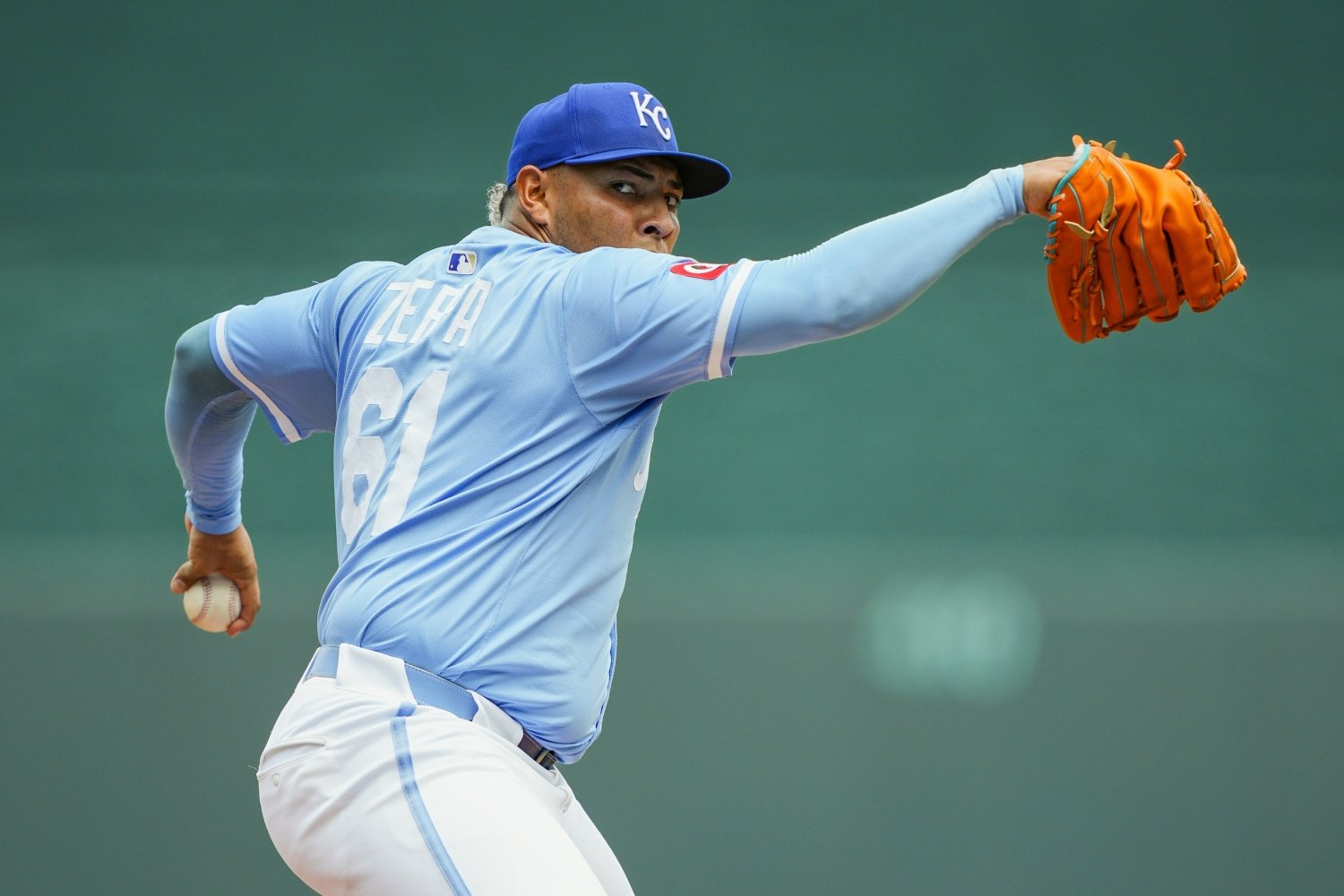 Every team must look ahead at all times to remain competitive. Not getting stuck in the past—or, in certain situations, the present—is especially crucial for the Brewers, who aim to compete every year in baseball’s smallest market. Shipping Isaac Collins and Nick Mears to Kansas City for left-handed reliever Ángel Zerpa was their latest forward-thinking move. It was also a reminder that the front office, like most these days, looks well beyond surface-level results when projecting a player’s future performance. The Brewers gave away more 2025 value in the trade than they brought in. Collins and Mears combined for 2.6 rWAR this season, with the former finishing fourth in National League Rookie of the Year voting. Zerpa, meanwhile, contributed just 0.3 rWAR and a 4.18 ERA (99 ERA+) out of the Royals’ bullpen. Despite their recent success, both Collins and Mears had unclear outlooks in Milwaukee. Collins overperformed his expected results based on his quality of contact, and his defense fell off badly in the second half. Mears lost a tick of velocity, leaving him without a fastball that could miss barrels and tanking his strikeout rate. The Brewers, undoubtedly aware of those trends, moved them into lesser roles down the stretch. Collins received just 10 postseason plate appearances, and Mears was omitted from their NLCS roster. Both players might still be viable big-leaguers next year. Even if his hitting regresses, Collins’s plate discipline should still get him on base often, and Mears’s slider is still lethal against right-handed batters. While other players passed the pair on Milwaukee’s depth chart, their respective strengths fit nicely on a Kansas City roster with low-floor outfielders and shaky relievers. Zerpa, meanwhile, is trending more clearly in a positive direction. Whereas Collins’s and Mears’s peripherals suggested their performance was actually slightly below average at the plate and on the mound, Zerpa’s well-above-average 3.38 SIERA and 3.36 DRA (74 DRA-) were career bests. His 117 Stuff+ tied him with new teammate Abner Uribe for 16th among qualified relievers, pointing to his greater potential to be a significant piece moving forward than the players the Brewers gave up. The best pitch in Zerpa’s arsenal is a 96.4-mph sinker. It sinks more than expected from his arm angle, which helped him post an elite 62.3% groundball rate in 2025. Switching his focus to that sinker (at the expense of a four-seamer that also had heavier action than a hitter would anticipate out of the hand, but with a deleterious effect instead of a beneficial one) has been a major change for Zerpa. Here are the inches by which his average movement has varied from the estimated "dead zone" for each flavor of heater for each of the last three years, according to Pitch Leaderboard. Pitch Four-Seamer Sinker Season Horiz. DZ Delta Vert. DZ Delta Horiz. DZ Delta Vert. DZ Delta 2023 0.6 -1.5 0.7 -0.3 2024 -0.3 -2.3 1.5 -1.2 2025 0.2 -2.3 1.8 -1.7 The Brewers like sinkers (especially deceptive ones), so their vision for Zerpa likely centers around keeping things simple and letting that power sinker do most of the work. From there, they should branch out by tweaking the rest of his arsenal to complement his best pitch better. Zerpa will always be a ground-ball pitcher first, but he has good enough stuff to run an above-average strikeout rate. Some pitch models like his slider even more than his sinker. His flat four-seamer can coax swings underneath it at the top of the zone, when set up properly. A sparingly-used changeup has shown flashes of being a decent fourth pitch. Yet, Zerpa’s whiff rate has consistently been among the lowest in baseball since his debut. Those whiffs have not shown up because Zerpa lacks deception. That’s where the Brewers come in, as perhaps the best organization to help him. Their pitching coaches preach the value of masking pitches as effectively as possible out of the hand. It’s why they emphasize throwing multiple fastball variations, and it’s why they often prefer short, tight sliders that hold the same plane as a heater over bigger curveballs. Zerpa’s slider will be a great place for them to start. It evolved into more of a slurve this year, after some mechanical tweaks impacted how he spun the ball. Zerpa threw that more vertical breaking ball more frequently toward the back foot of right-handed hitters, where it induced more rollovers. Their groundball rate against the pitch jumped from 40.1% in 2024 to 62.5% in 2025. However, that newfound movement pushed Zerpa’s breaking ball further into a liminal space when it came to deceiving hitters. It didn’t mirror his fastball out of his hand (like Mears’s or Trevor Megill’s breaking balls), nor did it have the kind of break that could miss bats regardless of tunneling (like Uribe’s or Aaron Ashby’s). Zerpa’s slider has always been easier to pick up than others at release. In the visual below, captured from a right-handed batter’s perspective, the yellow tracer (the slider) immediately separates from the rest of his arsenal. The difference is slightly less perceptible to left-handers, who have a much tougher angle against Zerpa, but it’s still there. Part of the issue is that Zerpa has a relatively wide spread of release points. Most hitters cannot reliably perceive an arm angle difference of a few degrees in real time with the naked eye, but Zerpa’s varies enough based on what kind of pitch he’s throwing that it can become an issue. Pitch Type Arm Angle Sinker 25.9° Slider 33.5° 4-Seam 30.2° Changeup 34.9° Of the 23 pitchers to throw at least 10 innings for the 2025 Brewers, 15 had less than a 3-degree difference between their average arm angle on their primary fastball and their primary breaking ball. Zerpa’s 7.6-degree difference between his sinker and slider would have been the fourth-highest. To make pitch recognition harder for hitters, Zerpa and his new coaches could shorten his slider to a harder pitch with more gyrospin, or develop a cutter as a bridge pitch and mold his breaking ball into a sweeper. The goal should be to focus on what he does best (inducing grounders) and tightening up the rest of his arsenal from there to make him a more well-rounded late-inning reliever. Even if he doesn’t take that next step, Zerpa’s solid peripherals, three years of club control, and the roster flexibility afforded by his remaining option year give him good odds of being more valuable to the Brewers than Collins and Mears would have been. After both had career years, the front office took advantage of the opportunity to cash them in for the kind of reliever they’ve turned into a bullpen weapon several times.
- 10 comments
-
- 5
-
-
-
- angel zerpa
- isaac collins
- (and 4 more)
-
Image courtesy of © Jay Biggerstaff-Imagn Images Every team must look ahead at all times to remain competitive. Not getting stuck in the past—or, in certain situations, the present—is especially crucial for the Brewers, who aim to compete every year in baseball’s smallest market. Shipping Isaac Collins and Nick Mears to Kansas City for left-handed reliever Ángel Zerpa was their latest forward-thinking move. It was also a reminder that the front office, like most these days, looks well beyond surface-level results when projecting a player’s future performance. The Brewers gave away more 2025 value in the trade than they brought in. Collins and Mears combined for 2.6 rWAR this season, with the former finishing fourth in National League Rookie of the Year voting. Zerpa, meanwhile, contributed just 0.3 rWAR and a 4.18 ERA (99 ERA+) out of the Royals’ bullpen. Despite their recent success, both Collins and Mears had unclear outlooks in Milwaukee. Collins overperformed his expected results based on his quality of contact, and his defense fell off badly in the second half. Mears lost a tick of velocity, leaving him without a fastball that could miss barrels and tanking his strikeout rate. The Brewers, undoubtedly aware of those trends, moved them into lesser roles down the stretch. Collins received just 10 postseason plate appearances, and Mears was omitted from their NLCS roster. Both players might still be viable big-leaguers next year. Even if his hitting regresses, Collins’s plate discipline should still get him on base often, and Mears’s slider is still lethal against right-handed batters. While other players passed the pair on Milwaukee’s depth chart, their respective strengths fit nicely on a Kansas City roster with low-floor outfielders and shaky relievers. Zerpa, meanwhile, is trending more clearly in a positive direction. Whereas Collins’s and Mears’s peripherals suggested their performance was actually slightly below average at the plate and on the mound, Zerpa’s well-above-average 3.38 SIERA and 3.36 DRA (74 DRA-) were career bests. His 117 Stuff+ tied him with new teammate Abner Uribe for 16th among qualified relievers, pointing to his greater potential to be a significant piece moving forward than the players the Brewers gave up. The best pitch in Zerpa’s arsenal is a 96.4-mph sinker. It sinks more than expected from his arm angle, which helped him post an elite 62.3% groundball rate in 2025. Switching his focus to that sinker (at the expense of a four-seamer that also had heavier action than a hitter would anticipate out of the hand, but with a deleterious effect instead of a beneficial one) has been a major change for Zerpa. Here are the inches by which his average movement has varied from the estimated "dead zone" for each flavor of heater for each of the last three years, according to Pitch Leaderboard. Pitch Four-Seamer Sinker Season Horiz. DZ Delta Vert. DZ Delta Horiz. DZ Delta Vert. DZ Delta 2023 0.6 -1.5 0.7 -0.3 2024 -0.3 -2.3 1.5 -1.2 2025 0.2 -2.3 1.8 -1.7 The Brewers like sinkers (especially deceptive ones), so their vision for Zerpa likely centers around keeping things simple and letting that power sinker do most of the work. From there, they should branch out by tweaking the rest of his arsenal to complement his best pitch better. Zerpa will always be a ground-ball pitcher first, but he has good enough stuff to run an above-average strikeout rate. Some pitch models like his slider even more than his sinker. His flat four-seamer can coax swings underneath it at the top of the zone, when set up properly. A sparingly-used changeup has shown flashes of being a decent fourth pitch. Yet, Zerpa’s whiff rate has consistently been among the lowest in baseball since his debut. Those whiffs have not shown up because Zerpa lacks deception. That’s where the Brewers come in, as perhaps the best organization to help him. Their pitching coaches preach the value of masking pitches as effectively as possible out of the hand. It’s why they emphasize throwing multiple fastball variations, and it’s why they often prefer short, tight sliders that hold the same plane as a heater over bigger curveballs. Zerpa’s slider will be a great place for them to start. It evolved into more of a slurve this year, after some mechanical tweaks impacted how he spun the ball. Zerpa threw that more vertical breaking ball more frequently toward the back foot of right-handed hitters, where it induced more rollovers. Their groundball rate against the pitch jumped from 40.1% in 2024 to 62.5% in 2025. However, that newfound movement pushed Zerpa’s breaking ball further into a liminal space when it came to deceiving hitters. It didn’t mirror his fastball out of his hand (like Mears’s or Trevor Megill’s breaking balls), nor did it have the kind of break that could miss bats regardless of tunneling (like Uribe’s or Aaron Ashby’s). Zerpa’s slider has always been easier to pick up than others at release. In the visual below, captured from a right-handed batter’s perspective, the yellow tracer (the slider) immediately separates from the rest of his arsenal. The difference is slightly less perceptible to left-handers, who have a much tougher angle against Zerpa, but it’s still there. Part of the issue is that Zerpa has a relatively wide spread of release points. Most hitters cannot reliably perceive an arm angle difference of a few degrees in real time with the naked eye, but Zerpa’s varies enough based on what kind of pitch he’s throwing that it can become an issue. Pitch Type Arm Angle Sinker 25.9° Slider 33.5° 4-Seam 30.2° Changeup 34.9° Of the 23 pitchers to throw at least 10 innings for the 2025 Brewers, 15 had less than a 3-degree difference between their average arm angle on their primary fastball and their primary breaking ball. Zerpa’s 7.6-degree difference between his sinker and slider would have been the fourth-highest. To make pitch recognition harder for hitters, Zerpa and his new coaches could shorten his slider to a harder pitch with more gyrospin, or develop a cutter as a bridge pitch and mold his breaking ball into a sweeper. The goal should be to focus on what he does best (inducing grounders) and tightening up the rest of his arsenal from there to make him a more well-rounded late-inning reliever. Even if he doesn’t take that next step, Zerpa’s solid peripherals, three years of club control, and the roster flexibility afforded by his remaining option year give him good odds of being more valuable to the Brewers than Collins and Mears would have been. After both had career years, the front office took advantage of the opportunity to cash them in for the kind of reliever they’ve turned into a bullpen weapon several times. View full article
- 10 replies
-
- 4
-
-
- angel zerpa
- isaac collins
- (and 4 more)
-
Quinn Priester's Changeup is the Next Step to Watch in His Development
Jack Stern posted an article in Brewers
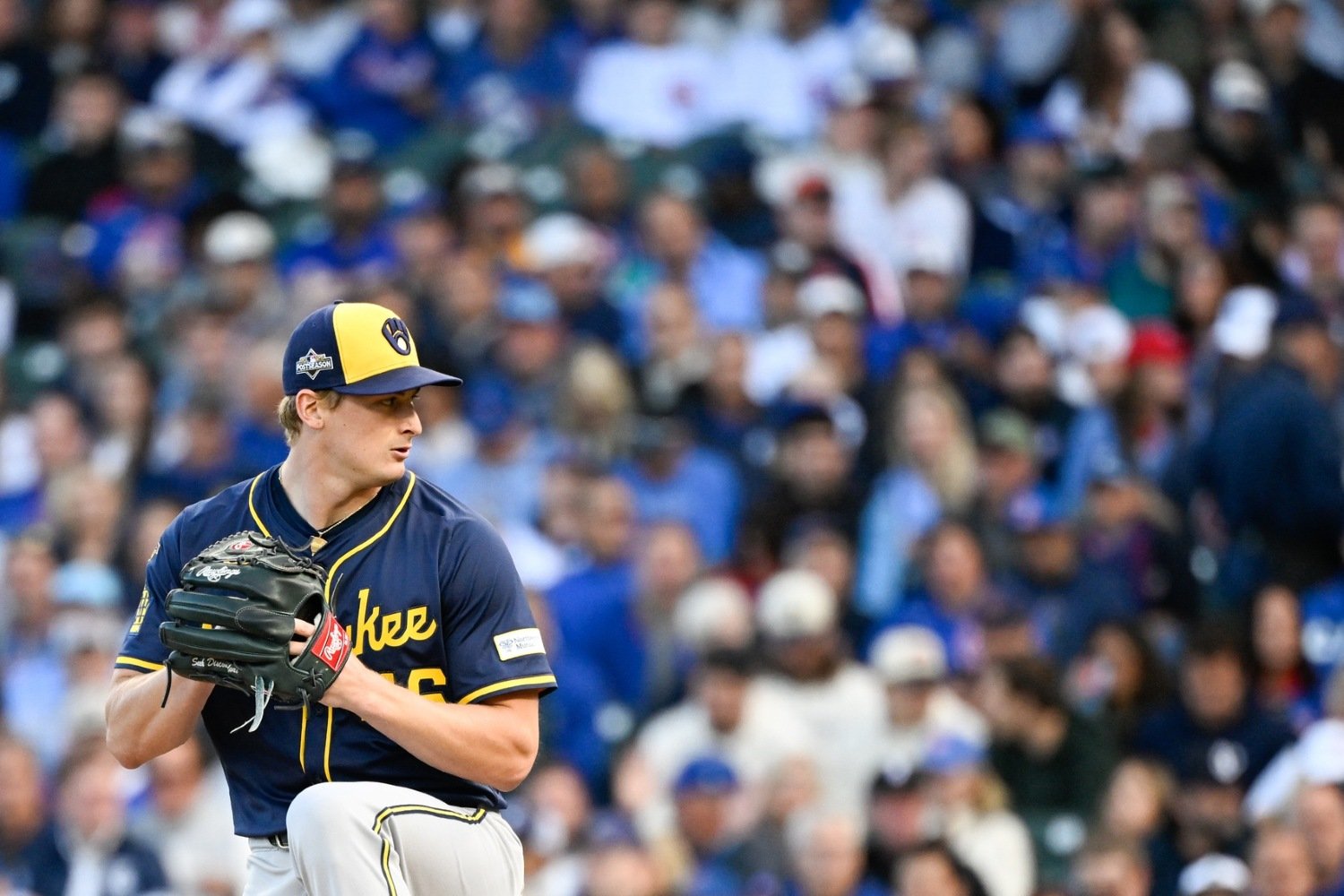 Quinn Priester made incredible in-season strides shortly after joining the Brewers via trade in early April. They first found success by leaning on his two best existing pitches—his sinker and slider—before working a retooled cut fastball and more curveballs into his mix. In 157 ⅓ innings, Priester posted a career-best 3.32 ERA and 82 DRA-, with an excellent 56.7% ground ball rate. Even after all that progress, there was still something missing from his arsenal by season's end: a reliable changeup. As the Brewers have emphasized mixing fastball variations, they've largely avoided throwing mediocre changeups, and Priester was no exception. He threw his changeup at a decent rate early in his career, but after joining the Brewers, he only used it sparingly for a few starts—before ditching it almost entirely. Without a slower pitch to break away from lefties, Priester attacked them with more cutters and curveballs in addition to his sinker. It created noticeable platoon splits: righties managed just a .275 xwOBA against him, but lefties posted a .317 mark. The Brewers used an opener ahead of him five times during the regular season against lineups with left-handed sluggers at the top, and his postseason usage suggested they were shielding him from those matchups with added urgency. To become a more well-rounded starter, Priester will need another weapon against opposite-handed opponents. When talking in early June about his sinker-slider pairing, pitching coach Chris Hook kept coming back to the changeup. They were still working at it on the side, he said, adding that he expected it to become a more significant factor in the future. "I think the changeup is there," Hook said. "We've got to get to a point where we can trust it and throw it in spots that it's good for him, but he's got to be on time [mechanically] to be able to do it." That point, seemingly, never arrived. For the rest of the season, Priester threw just 10 changeups. Even if his execution improves to the Brewers' liking, he would benefit from adding a little more depth to the pitch. In 2025, the average right-handed sinker and changeup differed by 7.5 mph, 3.4 inches of spin-induced vertical movement, and 9.1 inches of total vertical drop. For Priester, those figures were 5.5, 2.7, and 6.5, respectively, meaning his changeup lacked separation from his heavy sinker. Notice in the movement plot below how close the green cluster of changeups is to the orange cluster of sinkers. As someone who slightly cuts the ball at release and relies on seam effects to make it sink, Priester could be a candidate for a kick changeup, which incorporates a spiked middle finger to promote more sidespin. Another option may be a split-change, which became a weapon for Tobias Myers after he adopted it midseason. Regardless of what it takes to get there, it's clear that Priester will need more dependable offspeed stuff to close one of the remaining holes in his arsenal, and the Brewers want him to develop it. "He's showing me that he's able to do it," Hook said. "I look forward to the day that he's going to be able to incorporate the changeup as well."
 -
Image courtesy of © Matt Marton-Imagn Images Quinn Priester made incredible in-season strides shortly after joining the Brewers via trade in early April. They first found success by leaning on his two best existing pitches—his sinker and slider—before working a retooled cut fastball and more curveballs into his mix. In 157 ⅓ innings, Priester posted a career-best 3.32 ERA and 82 DRA-, with an excellent 56.7% ground ball rate. Even after all that progress, there was still something missing from his arsenal by season's end: a reliable changeup. As the Brewers have emphasized mixing fastball variations, they've largely avoided throwing mediocre changeups, and Priester was no exception. He threw his changeup at a decent rate early in his career, but after joining the Brewers, he only used it sparingly for a few starts—before ditching it almost entirely. Without a slower pitch to break away from lefties, Priester attacked them with more cutters and curveballs in addition to his sinker. It created noticeable platoon splits: righties managed just a .275 xwOBA against him, but lefties posted a .317 mark. The Brewers used an opener ahead of him five times during the regular season against lineups with left-handed sluggers at the top, and his postseason usage suggested they were shielding him from those matchups with added urgency. To become a more well-rounded starter, Priester will need another weapon against opposite-handed opponents. When talking in early June about his sinker-slider pairing, pitching coach Chris Hook kept coming back to the changeup. They were still working at it on the side, he said, adding that he expected it to become a more significant factor in the future. "I think the changeup is there," Hook said. "We've got to get to a point where we can trust it and throw it in spots that it's good for him, but he's got to be on time [mechanically] to be able to do it." That point, seemingly, never arrived. For the rest of the season, Priester threw just 10 changeups. Even if his execution improves to the Brewers' liking, he would benefit from adding a little more depth to the pitch. In 2025, the average right-handed sinker and changeup differed by 7.5 mph, 3.4 inches of spin-induced vertical movement, and 9.1 inches of total vertical drop. For Priester, those figures were 5.5, 2.7, and 6.5, respectively, meaning his changeup lacked separation from his heavy sinker. Notice in the movement plot below how close the green cluster of changeups is to the orange cluster of sinkers. As someone who slightly cuts the ball at release and relies on seam effects to make it sink, Priester could be a candidate for a kick changeup, which incorporates a spiked middle finger to promote more sidespin. Another option may be a split-change, which became a weapon for Tobias Myers after he adopted it midseason. Regardless of what it takes to get there, it's clear that Priester will need more dependable offspeed stuff to close one of the remaining holes in his arsenal, and the Brewers want him to develop it. "He's showing me that he's able to do it," Hook said. "I look forward to the day that he's going to be able to incorporate the changeup as well." View full article
-
 According to Ken Rosenthal of The Athletic, the Brewers agreed on Thursday to sign outfielder Akil Baddoo to a major-league deal. The 27-year-old owns a career .224/.305/.369 line (87 wRC+) across parts of five seasons with the Detroit Tigers. His most successful big-league stint was his rookie campaign, in which he hit .259/.330/.436 (108 wRC+) after the Tigers selected him in the 2020 Rule 5 Draft. Swing-and-miss issues and a lack of hard contact started catching up to him after that, though, and he has since bounced on and off Detroit's roster. Baddoo spent most of 2025 with Triple-A Toledo, pairing a .385 on-base percentage with 15 home runs for a 136 wRC+. That wasn't enough to secure a more stable future in a talented Tigers' outfield, so they outrighted him off their 40-man roster in June, and he elected minor-league free agency at the end of the season. In Milwaukee, he'll join an outfield with a plethora of left-handed outfield options, including Sal Frelick, Jake Bauers, Garrett Mitchell, Tyler Black, and switch-hitters Isaac Collins, Blake Perkins, and Steward Berroa. There's some uncertainty throughout that group, but Baddoo falls into the same boat. Barring injuries or underperformance, that could be a tough roster to make out of spring training. While Baddoo's deal is reportedly a big-league contract, he does have one option year remaining. At first glance, he looks like minor-league depth with some upside, should the Brewers need to change things up on the grass during the season. Because the Brewers' 40-man roster entered Thursday at 39 players, no corresponding move is necessary to add Baddoo. The roster is now full.
- 13 comments
-
- 1
-
-
- akil baddoo
- garrett mitchell
- (and 4 more)
-
Image courtesy of © Junfu Han / USA TODAY NETWORK via Imagn Images According to Ken Rosenthal of The Athletic, the Brewers agreed on Thursday to sign outfielder Akil Baddoo to a major-league deal. The 27-year-old owns a career .224/.305/.369 line (87 wRC+) across parts of five seasons with the Detroit Tigers. His most successful big-league stint was his rookie campaign, in which he hit .259/.330/.436 (108 wRC+) after the Tigers selected him in the 2020 Rule 5 Draft. Swing-and-miss issues and a lack of hard contact started catching up to him after that, though, and he has since bounced on and off Detroit's roster. Baddoo spent most of 2025 with Triple-A Toledo, pairing a .385 on-base percentage with 15 home runs for a 136 wRC+. That wasn't enough to secure a more stable future in a talented Tigers' outfield, so they outrighted him off their 40-man roster in June, and he elected minor-league free agency at the end of the season. In Milwaukee, he'll join an outfield with a plethora of left-handed outfield options, including Sal Frelick, Jake Bauers, Garrett Mitchell, Tyler Black, and switch-hitters Isaac Collins, Blake Perkins, and Steward Berroa. There's some uncertainty throughout that group, but Baddoo falls into the same boat. Barring injuries or underperformance, that could be a tough roster to make out of spring training. While Baddoo's deal is reportedly a big-league contract, he does have one option year remaining. At first glance, he looks like minor-league depth with some upside, should the Brewers need to change things up on the grass during the season. Because the Brewers' 40-man roster entered Thursday at 39 players, no corresponding move is necessary to add Baddoo. The roster is now full. View full article
-
Trevor Megill Trade Rumors Swirl: Why Brewers Should Be Open to Dealing Him
Jack Stern posted an article in Brewers
 Freddy Peralta has been the most popular Brewer in trade speculation this offseason, but the New York Post’s Joel Sherman reported on Monday evening that Milwaukee has also received calls about reliever Trevor Megill, including from the New York Mets and New York Yankees. It’s best to take most rumors with a grain of salt during hot stove season, but if Megill is indeed drawing interest from multiple contenders, the Brewers should strongly consider selling high on him. Generally speaking, relievers are baseball’s most volatile players and often have short shelf lives. What worked for three to six outs at a time one season could be less effective the next. Even if their performance quality remains similar from one year to the next, their results can fluctuate more in smaller sample sizes than those of starting pitchers or position players. Given the fickle nature of the position, consistently cycling through relievers each year is typically the shrewdest way to build bullpens. Acquire them when their value is low, roster them for a few seasons when they’re at their best, and trade them away before they regress or become free agents. The Brewers have adhered to that pattern during their sustained run of competitiveness. They traded away All-Star closers Josh Hader and Devin Williams for controllable talent as they neared free agency, backfilling them with in-house arms and breakout scrap-heap pickups like Joel Payamps, Jared Koenig, Grant Anderson, and Megill himself three years ago. (To further illustrate the point, Payamps crashed and burned in 2025, after the Brewers transformed him into a reliable high-leverage arm for two seasons.) This situation is slightly different. Unlike Hader and Williams, Megill has two full seasons of club control remaining before he’ll reach free agency. The Brewers have not reached the crossroads with the 32-year-old that they did with their previous two closers. Even so, they should be motivated to move him for the right return. No one can dispute the quality of Megill’s performance with Milwaukee—a 2.88 ERA, 2.99 SIERA, 85 DRA-, and 31% strikeout rate in 128 innings are sparkling numbers—but it is fair to question whether his best work is behind him. Megill’s stuff dominates when things are clicking, but he lacks the shapes and angles to miss enough barrels when he’s not at his best. When he’s properly sequencing his 99-mph backspin fastball and hard knuckle curve, they rack up whiffs and chases. When he isn’t, that straight fastball yields plenty of hard-hit fly balls. Since 2023, batted balls against it have had an average exit velocity of 92.3 mph and an average launch angle of 18°. Even though Megill threw harder than ever in 2025, his fastball whiff rate declined for the second consecutive season. While he successfully adapted by leaning more on his curveball as the year progressed, things could get dicier if his fastball loses another bit of effectiveness for any reason. Season FB Run Value FB xwOBA FB Whiff% 2023 1 0.309 22.00% 2024 9 0.282 25.40% 2025 1 0.336 20.50% Those concerns are particularly relevant after a late-season elbow scare. A flexor strain limited Megill to 47 frames in 2025 and sidelined him for nearly all of September. He was noticeably diminished when he returned for the postseason, and while his velocity was trending in the right direction throughout October, it never quite returned to its pre-injury level. The Brewers deemed Megill fully recovered after their season ended in the NLCS. Even if his elbow is entirely healthy, though, it’s worth noting that he enters his mid-30s without having reached 50 innings in a big-league season. None of this is to say that the front office must prioritize selling Megill for any return. Given his contractual situation, they should aim higher than the two-player package they received for Williams last year. However, Megill’s star is likelier to dim than to continue brightening next season, and Abner Uribe is poised to anchor the bullpen after closing games in his absence. If a fair deal for Megill is available, the Brewers should take it.
- 19 comments
-
- 4
-
-
- trevor megill
- abner uribe
- (and 4 more)
-
Image courtesy of © Benny Sieu-Imagn Images Freddy Peralta has been the most popular Brewer in trade speculation this offseason, but the New York Post’s Joel Sherman reported on Monday evening that Milwaukee has also received calls about reliever Trevor Megill, including from the New York Mets and New York Yankees. It’s best to take most rumors with a grain of salt during hot stove season, but if Megill is indeed drawing interest from multiple contenders, the Brewers should strongly consider selling high on him. Generally speaking, relievers are baseball’s most volatile players and often have short shelf lives. What worked for three to six outs at a time one season could be less effective the next. Even if their performance quality remains similar from one year to the next, their results can fluctuate more in smaller sample sizes than those of starting pitchers or position players. Given the fickle nature of the position, consistently cycling through relievers each year is typically the shrewdest way to build bullpens. Acquire them when their value is low, roster them for a few seasons when they’re at their best, and trade them away before they regress or become free agents. The Brewers have adhered to that pattern during their sustained run of competitiveness. They traded away All-Star closers Josh Hader and Devin Williams for controllable talent as they neared free agency, backfilling them with in-house arms and breakout scrap-heap pickups like Joel Payamps, Jared Koenig, Grant Anderson, and Megill himself three years ago. (To further illustrate the point, Payamps crashed and burned in 2025, after the Brewers transformed him into a reliable high-leverage arm for two seasons.) This situation is slightly different. Unlike Hader and Williams, Megill has two full seasons of club control remaining before he’ll reach free agency. The Brewers have not reached the crossroads with the 32-year-old that they did with their previous two closers. Even so, they should be motivated to move him for the right return. No one can dispute the quality of Megill’s performance with Milwaukee—a 2.88 ERA, 2.99 SIERA, 85 DRA-, and 31% strikeout rate in 128 innings are sparkling numbers—but it is fair to question whether his best work is behind him. Megill’s stuff dominates when things are clicking, but he lacks the shapes and angles to miss enough barrels when he’s not at his best. When he’s properly sequencing his 99-mph backspin fastball and hard knuckle curve, they rack up whiffs and chases. When he isn’t, that straight fastball yields plenty of hard-hit fly balls. Since 2023, batted balls against it have had an average exit velocity of 92.3 mph and an average launch angle of 18°. Even though Megill threw harder than ever in 2025, his fastball whiff rate declined for the second consecutive season. While he successfully adapted by leaning more on his curveball as the year progressed, things could get dicier if his fastball loses another bit of effectiveness for any reason. Season FB Run Value FB xwOBA FB Whiff% 2023 1 0.309 22.00% 2024 9 0.282 25.40% 2025 1 0.336 20.50% Those concerns are particularly relevant after a late-season elbow scare. A flexor strain limited Megill to 47 frames in 2025 and sidelined him for nearly all of September. He was noticeably diminished when he returned for the postseason, and while his velocity was trending in the right direction throughout October, it never quite returned to its pre-injury level. The Brewers deemed Megill fully recovered after their season ended in the NLCS. Even if his elbow is entirely healthy, though, it’s worth noting that he enters his mid-30s without having reached 50 innings in a big-league season. None of this is to say that the front office must prioritize selling Megill for any return. Given his contractual situation, they should aim higher than the two-player package they received for Williams last year. However, Megill’s star is likelier to dim than to continue brightening next season, and Abner Uribe is poised to anchor the bullpen after closing games in his absence. If a fair deal for Megill is available, the Brewers should take it. View full article
-
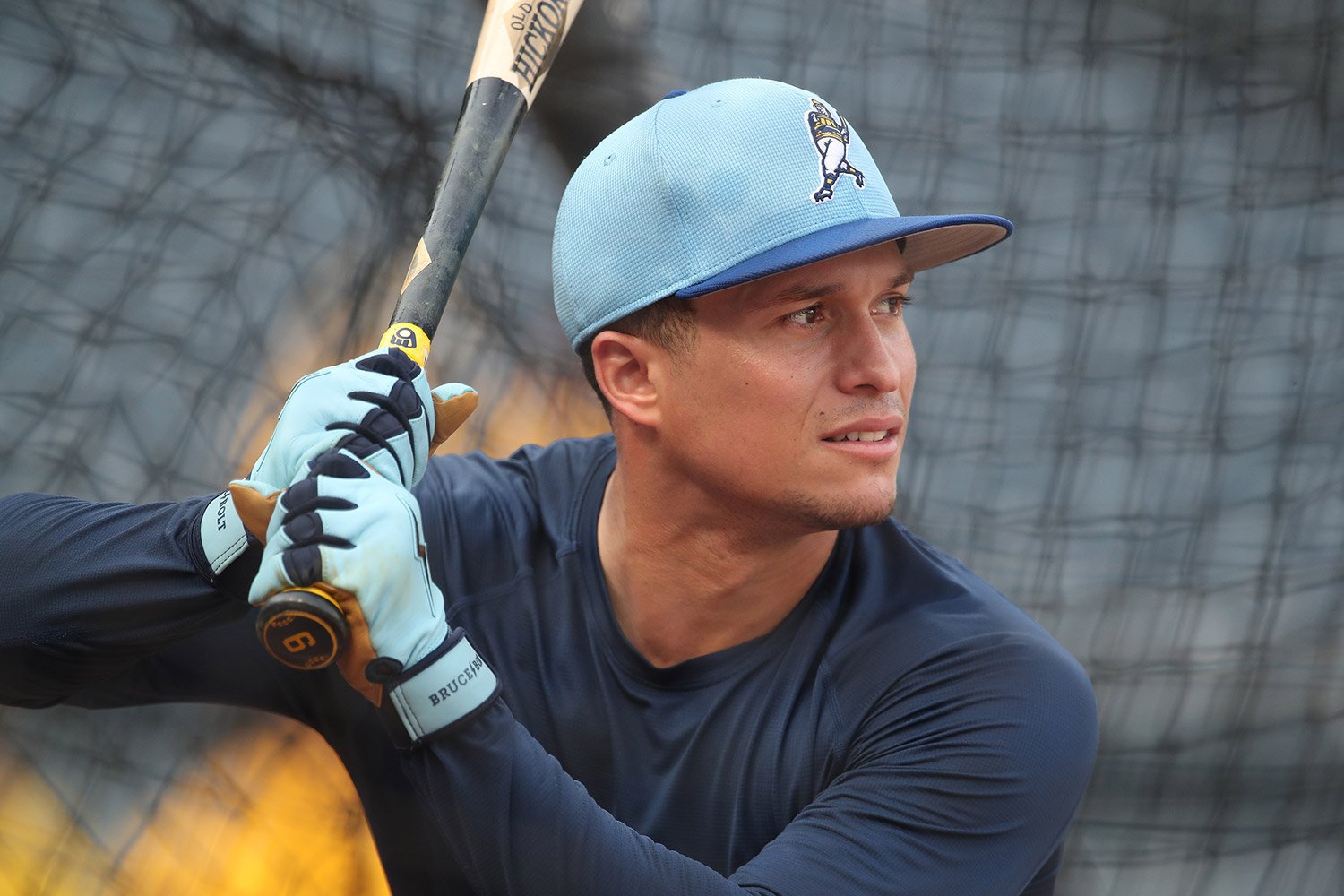 For most of this season, Isaac Collins was a bona fide contender for National League Rookie of the Year. Through August, the 28-year-old hit .274/.371/.425 (126 wRC+) and tied Drake Baldwin for the most fWAR (2.5) among NL rookies. Yet, by the time October rolled around, Collins had been effectively relegated to a bench role. He received just 58 plate appearances in September, his fewest in a month since April, and started just one of Milwaukee’s nine playoff games. That was partially due to the emergence of Jake Bauers, who posted an OPS north of 1.000 in September and whose bat has always carried more upside. However, Collins’s production waned during that same stretch, as he hit just .191/.345/.319 (97 wRC+) during the regular season’s final month. He only reached base once via a walk in 10 postseason plate appearances. After the Brewers’ season ended, Pat Murphy reinforced that they saw what Collins is capable of, but would not commit to giving him a significant enough role in 2026 for him to bounce back closer to that form. “You have to get that opportunity,” Murphy said. “The key for him is going to be, does he get the opportunity to do that? If he does, I think he’ll be even better because he’s a student of the game and he’s aware of what makes him good.” Collins is a microcosm of Milwaukee’s 2026 outfield picture. It’s a deep group of athletes with the tools to be regulars but uncertain outlooks. Sal Frelick and Jackson Chourio are locked into starting roles; flanking them on the depth chart are Collins, Bauers, Garrett Mitchell, Blake Perkins, Tyler Black, Brandon Lockridge, and Steward Berroa, each of whom comes with questions. The concern surrounding Collins is the legitimacy of his breakout performance. His excellent plate discipline and swing decisions are no fluke, but his hitting ability looks less reliable. While Collins’s 122 wRC+ and .344 wOBA were third among NL rookies with at least 350 plate appearances, his 99 DRC+ and .319 xwOBA suggest he performed more like a competent hitter with batted ball luck on his side than a truly good one. His future production largely hinges on repeating a 20.4% pull air rate that helped him post better power numbers than his quality of contact would typically yield. His actual level of talent in the field is also uncertain. Collins looked like a Gold Glove candidate for much of the year, accruing a Fielding Run Value of 5 through July by using his instincts as a former infielder to get great jumps in left field. Across August and September, though, he limped to a -5 Fielding Run Value as poor routes became more detrimental to his defensive efficiency down the stretch. If Collins projects as an on-base specialist with little pop who plays unremarkable corner outfield defense, it should force the Brewers to reconfigure their outfield. Internal shuffling could mean more starts for Bauers and Mitchell, but there’s an argument to be made that the club would benefit from bringing in a right-handed outfield bat to offer more stable offense than Lockridge or the switch-hitting Berroa. Collins has three minor-league option years remaining, so the Brewers could send him to Triple-A should they decide there is no suitable role for him on the 26-man roster. It may not come to that – even if his 2025 proves mostly a fluke, he could still be useful off the bench – but they should be keeping their options open in the outfield.
- 8 comments
-
- 1
-
-
- isaac collins
- garrett mitchell
- (and 4 more)
-
Image courtesy of © Charles LeClaire-Imagn Images For most of this season, Isaac Collins was a bona fide contender for National League Rookie of the Year. Through August, the 28-year-old hit .274/.371/.425 (126 wRC+) and tied Drake Baldwin for the most fWAR (2.5) among NL rookies. Yet, by the time October rolled around, Collins had been effectively relegated to a bench role. He received just 58 plate appearances in September, his fewest in a month since April, and started just one of Milwaukee’s nine playoff games. That was partially due to the emergence of Jake Bauers, who posted an OPS north of 1.000 in September and whose bat has always carried more upside. However, Collins’s production waned during that same stretch, as he hit just .191/.345/.319 (97 wRC+) during the regular season’s final month. He only reached base once via a walk in 10 postseason plate appearances. After the Brewers’ season ended, Pat Murphy reinforced that they saw what Collins is capable of, but would not commit to giving him a significant enough role in 2026 for him to bounce back closer to that form. “You have to get that opportunity,” Murphy said. “The key for him is going to be, does he get the opportunity to do that? If he does, I think he’ll be even better because he’s a student of the game and he’s aware of what makes him good.” Collins is a microcosm of Milwaukee’s 2026 outfield picture. It’s a deep group of athletes with the tools to be regulars but uncertain outlooks. Sal Frelick and Jackson Chourio are locked into starting roles; flanking them on the depth chart are Collins, Bauers, Garrett Mitchell, Blake Perkins, Tyler Black, Brandon Lockridge, and Steward Berroa, each of whom comes with questions. The concern surrounding Collins is the legitimacy of his breakout performance. His excellent plate discipline and swing decisions are no fluke, but his hitting ability looks less reliable. While Collins’s 122 wRC+ and .344 wOBA were third among NL rookies with at least 350 plate appearances, his 99 DRC+ and .319 xwOBA suggest he performed more like a competent hitter with batted ball luck on his side than a truly good one. His future production largely hinges on repeating a 20.4% pull air rate that helped him post better power numbers than his quality of contact would typically yield. His actual level of talent in the field is also uncertain. Collins looked like a Gold Glove candidate for much of the year, accruing a Fielding Run Value of 5 through July by using his instincts as a former infielder to get great jumps in left field. Across August and September, though, he limped to a -5 Fielding Run Value as poor routes became more detrimental to his defensive efficiency down the stretch. If Collins projects as an on-base specialist with little pop who plays unremarkable corner outfield defense, it should force the Brewers to reconfigure their outfield. Internal shuffling could mean more starts for Bauers and Mitchell, but there’s an argument to be made that the club would benefit from bringing in a right-handed outfield bat to offer more stable offense than Lockridge or the switch-hitting Berroa. Collins has three minor-league option years remaining, so the Brewers could send him to Triple-A should they decide there is no suitable role for him on the 26-man roster. It may not come to that – even if his 2025 proves mostly a fluke, he could still be useful off the bench – but they should be keeping their options open in the outfield. View full article

