



Harold Hutchison
-
Posts
6,909 -
Joined
-
Last visited
Content Type
Profiles
Forums
Blogs
Events
News
2026 Milwaukee Brewers Top Prospects Ranking
Milwaukee Brewers Videos
2022 Milwaukee Brewers Draft Picks
Milwaukee Brewers Free Agent & Trade Rumors, Notes, & Tidbits
Guides & Resources
2023 Milwaukee Brewers Draft Picks
2024 Milwaukee Brewers Draft Picks
The Milwaukee Brewers Players Project
2025 Milwaukee Brewers Draft Pick Tracker
2026 Milwaukee Brewers Draft Tracker: Picks & Bonuses
Store
Downloads
Gallery
Everything posted by Harold Hutchison
-
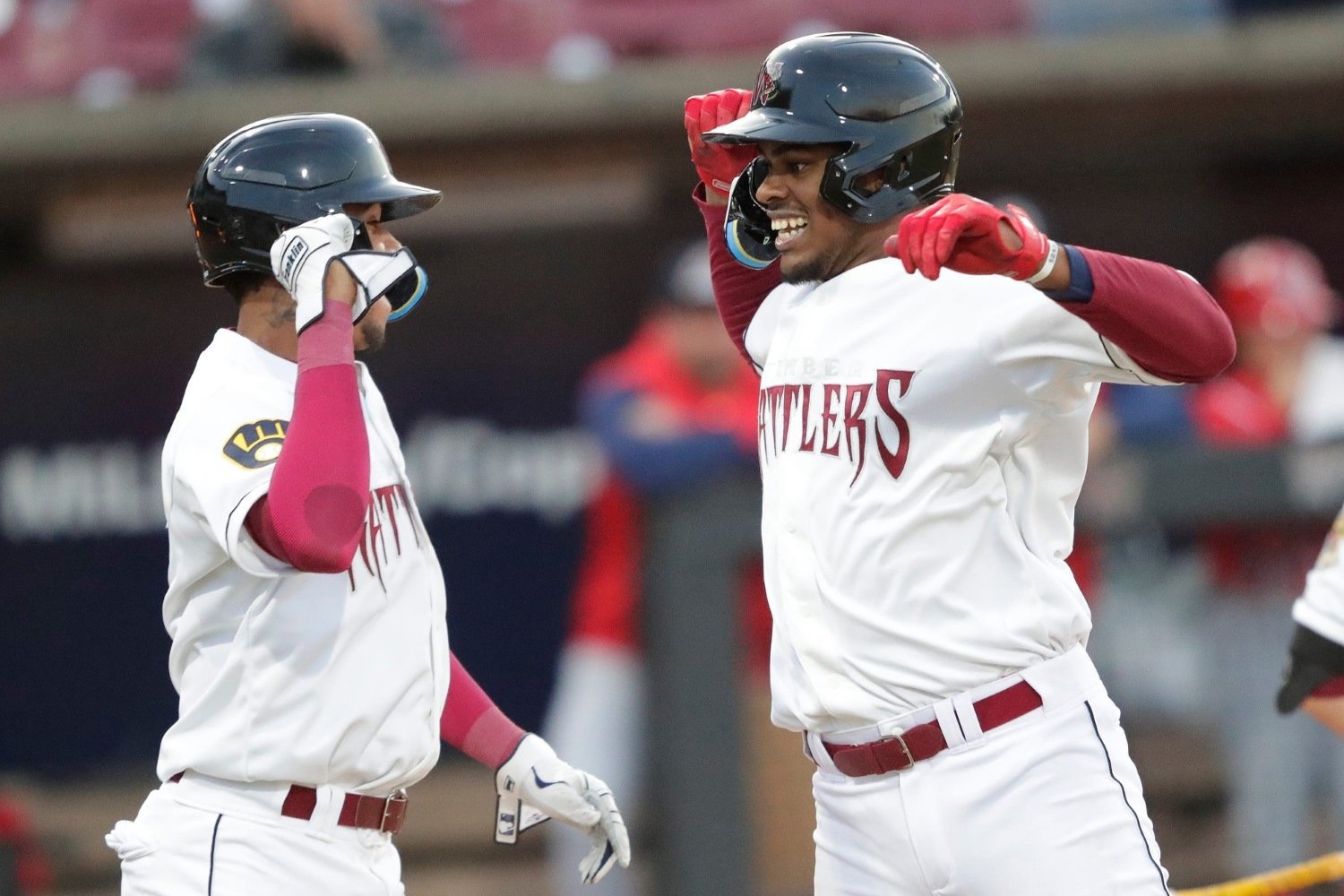 When we discussed the battle for Third Baseman of the Future, it was noted that both Tyler Black and Brock Wilken could be options at first base and designated hitter. Neither of them would be atrocious options at the position, but let’s look a little more below the radar of top prospects lists–or even the fringes. The Brewers have two prospects who could make the situation at first interesting. Andruw Monasterio is, perhaps, the best reason why it never hurts to look past the top prospects list. He won the title of Brewer Fanatic Top Rookie in 2023, having never appeared on MLB Pipeline or the BF list. He was a minor-league signee a year and a half before making his impact in the majors. The Crew has two candidates to replicate Monasterio’s surprising contributions and cult hero status in the upper minors, Wes Clarke and Ernesto Martinez. Let’s look them over. The Case For Wes Clarke Here’s a bit of trivia for you: Between Wes Clarke and Jackson Chourio, who had the higher totals for OPS, home runs, doubles, and walks in 2023? It wasn’t the guy who signed a record contract this offseason. That’s right. Clarke, a 10th-round pick in the 2021 draft, topped Chourio in those four categories, and finished a respectable second in RBI. Clarke primarily manned first base for the Shuckers, but also saw a lot of time behind the plate when Jeferson Quero was on the injured list. As if his monster season in Biloxi wasn’t enough, Clarke then went to the Arizona Fall League and posted a 1.002 OPS, with another three doubles, five homers, and 17 walks. Clarke is a fairly extreme three-true-outcomes bat, with 45 homers and 172 walks in 806 professional at-bats. That also means he strikes out a lot–272 times in that sample. Still, he did hit for a ,297 average in the AFL. Even if his bat doesn't ultimately reach its ceiling, his ability to fill in behind the plate gives him a chance to be a solid bench asset, with the departure of Victor Caratini. The Crew’s need for a right-handed power bat, though, could get Clarke some at-bats in Milwaukee, especially since William Contreras spends a lot of time at designated hitter, and Eric Haase has been very inconsistent at the plate. Clarke should start the season in Triple-A Nashville, but his relatively rapid rise through the system could point to him being in Milwaukee soon. The Case For Ernesto Martinez Martinez hasn't matched Clarke's smooth, fast progress, partially due to the pandemic in 2020 and a lost 2022 season (he totaled 78 at-bats). But when he has been on the field, the hulking Martinez (6’5”, 250 pounds) flashed a very solid left-handed power bat that looks like it would work well at American Family Field. An international free-agent signing, Martinez first showed promising power and OBP in the Dominican Summer League in 2017, before muddling through in the Arizona Complex the following year, where his OBP skills stayed solid despite a downturn from his DSL stats. In 2019, he posted strong numbers with the Rocky Mountain Vibe before the pandemic. In those years, Martinez looked like a version of Eric Thames, who provided the Crew with solid production at the major-league level between his power and OBP skills. In 2021, he had a huge breakout, posting a .862 OPS with Low-A Carolina after earning a call-up from extended spring training, and proved he was more than just a slugger by stealing 30 bases in 32 attempts and seeing action in center field as well as holding down first base, despite a frame that suggests the former would be difficult. However, Martinez also began missing time with injury–something that turned up big-time in 2022. Martinez, however, rebounded from the lost season in 2023, posting a .754 OPS and solid power numbers with High-A Wisconsin before earning a promotion to Double-A Biloxi and holding his own (.704 OPS). More importantly, he cut down on strikeouts. From 2017-2022, he struck out in 33.5 percent of his at-bats. Given his power and OBP skills, that was understandable, but it made him essentially non-viable as a big-league prospect. But in 2023, he cut that down to 79 strikeouts in 349 at-bats, while still generating good power numbers in pitcher-friendly leagues. Martinez has had a long road, but he’s beaten some long odds and persevered through injuries, and could be a contender for a 40-man spot in the 2024-2025 offseason, a path similar to that of Tyrone Taylor, albeit with far less pedigree. Breakdown While both players have been at the fringe of prospect consideration, the numbers indicate that they could be a decent platoon for the Crew in the 2025 timeframe at a very cheap price (you can thank the Bally Sports bankruptcy for the financial uncertainty). It would not be a horrible option at first base; both have been solid defensively, but they also backfill other positions (Clarke is a decent backstop, and Martinez showed he can handle the outfield in a pinch) and they hit well enough to be plugged in at designated hitter. In essence, like the case of Ace of the Future and somewhat similarly to Third Baseman of the Future, the Brewers may not be faced with a strict either/or choice here. The platoon option could work well for the team, and these somewhat versatile players, like Cooper Hummel, could even be flipped for help at the trade deadline. Do you view Clarke and/or Martinez as future big-league options? Can they help fill gaps left by the team's reluctance to spend more money for more talented alternatives? Let's discuss it in the comment section.
 -
I really went all-in on Suter during and after 2015. Simply put, something clicked and that soft-tossing lefty starter just simply shut offenses down. I didn't see how, but the box scores weren't lying. SOMETHING was happening. The clincher, though, was what didn't happen when Suter was promoted to Triple-A Colorado Springs. Baby seals meeting Canadian fishermen in the Arctic breath a sigh of relief that they ain't pitching in that ballpark. Put it this way - here's pitcher A, a very successful major-leaguer with multiple all-star appearances. Here's a line from his 2016 performance: 1-7, 5.22 ERA. Suter's numbers? 6-6, 3.50 ERA after going 3-1 with a 3.31 ERA in 2015.
-
There has been considerable debate about the lack of big moves in the 2023-2024 offseason. Some are expressing concerns, while others are urging people to wait and see. But is there a way that the Brewers plan to improve in 2024 that involves neither big deals nor standing pat? Image courtesy of Casey Gower, Nashville Sounds (photo of Gasser), Mike Krebs, Biloxi Shuckers (photo of Misiorowski), Carlos Hurtado (photo of Carlos Rodriguez) The fact is, some of the holes the Brewers currently have (third base, first base, designated hitter, starting rotation after Corbin Burnes, Freddy Peralta, and Wade Miley) could easily be filled from the farm system--and even improved upon from 2023, whether directly or indirectly. It won’t cost the Crew anything, except having to clear spots on the 40-man roster. How might that happen? Let’s take a look around the diamond. First Base/Designated Hitter As of now, the depth chart at Brewers.com lists Jake Bauers as the team’s starter at both first base and designated hitter. The Crew is hoping that, like Rowdy Tellez, he can come alive at American Family Field, even though his track record shows he is more of a three-true-outcomes bat who has major issues hitting for contact. That being said, the farm system could change that situation in one of several ways. Tyler Black could end up at either first base or designated hitter, should the Crew decide his arm isn’t up for the hot corner. That would be a direct improvement for them at either position over 2023, with Black replacing the .667 OPS of Tellez at first or the .567 OPS of Jesse Winker at DH. Wes Clarke, who broke into MLB Pipeline’s list of Brewers prospects, could also be a factor after a monster season in Biloxi and the Arizona Fall League. There are multiple scenarios for indirect improvement at these positions as well, still due to the farm. Jeferson Quero, the No. 32 prospect in the MLB Pipeline Top 100, could force William Contreras up the first base line or have him serve as the primary DH when he arrives. The Crew won’t call a Top 100 prospect up to be the backup catcher. Then there is the arrival of Jackson Chourio in Milwaukee, following his record-breaking contract. Sal Frelick, Garrett Mitchell, and Joey Wiemer all provided contributions to one extent or another in 2023, and could improve a lot. That already was putting pressure on Christian Yelich. Add the No. 2 prospect in all of baseball to the list, and Yelich could spend a lot of time at DH or finally pick up a first baseman’s glove, even though he never played that position in the pros (the Marlins originally drafted him as a first baseman). Alas, that is emphatically not in the plans right now, but it has to be a conversation at some point. Third Base Andruw Monasterio emerged as the team’s primary third baseman in the second half of the 2023 season, earning Top Rookie honors from Brewer Fanatic. He was not horrible, providing a lot of doubles and OBP skills while also proving very competent on the defensive side. That said, there is room for improvement on the offensive side of things. In 2023, Black performed well at both Double-A Biloxi and Triple-A Nashville. In essence, his bat had nothing left to prove in the minors. His defense at third has been a non-liability, as well, which means that during spring training, Black (the No. 51 prospect in the minors) could very well win the third-base job and start on Opening Day. Even if he drops 100 OPS points from the .930 he posted in 2023, Black still represents about 150 points of improvement over Monasterio (.678 OPS) and Brian Anderson (also .678) at the hot corner. Not too shabby. There is also the chance of a direct bump coming from offseason acquisitions Oliver Dunn and Vinny Capra, not to mention 2022-2023 offseason pick-up Owen Miller. Prospects Zavier Warren and Patrick Dorrian could also be surprise candidates to see time at third, and fellow prospect Freddy Zamora could allow the Crew to consider dealing Willy Adames at some point in the season for help at the hot corner. Starting Rotation Janson Junk, acquired in the Hunter Renfroe trade, was a solid starter at Triple-A Nashville, and at the very least will be on the Milwaukee-Nashville shuttle in 2024. That said, Jacob Misiorowski, Robert Gasser and Carlos F. Rodriguez look to be mainstays of the Brewers rotation in the future, and their arrivals in late 2024 cannot be ruled out. Whether their arrivals are like Freddy Peralta’s immediate entry into the rotation at the major-league level, or going the bullpen route that Brandon Woodruff and Corbin Burnes took in 2018 is to be determined, but it is quite likely they could be helping the Crew down the stretch. Aside from top prospects, contributions from James Meeker and Evan McKendry cannot be ruled out in 2024, either. The former followed up a dominating 2022-2023 winter season in Brisbane by becoming a solid emergency starter for Double-A Biloxi, while the latter was solid as a Triple-A starter between Durham (Rays) and Nashville (Brewers). Adam Seminaris and Coleman Crow will be on the comeback trail from injuries, and Chad Patrick and Easton McGee could also be factors. Overall Yes, the Brewers have been quiet in the free-agent market. That’s not necessarily a bad thing. Free agents can get expensive, and the Brewers' financial situation has been complicated by the bankruptcy of Bally Sports parent company Diamond Sports Group. Thus, it might not make sense to sign a free agent that would need to be dealt or who would cost the Brewers a lot of money. In addition, there is the issue of clubhouse chemistry. Bringing in a free agent, then having to deal him or sit him, could cause some real issues on that front, and a team whose decision-makers admitted to underestimating the effects of the Josh Hader trade may be unwilling to take that sort of risk. On the other hand, it is easier to deal or waive a Jahmai Jones, Capra, Blake Perkins, Chris Roller, Junk, J.B. Bukauskas or Thyago Vieira to clear space for a prospect or two, and with much less risk of disrupting the clubhouse. The Brewers farm system has taken huge leaps forward and has already had a track record of providing real contributors to the major-league club’s success. The team has little to lose by rolling with their farm talent in 2024. View full article
-
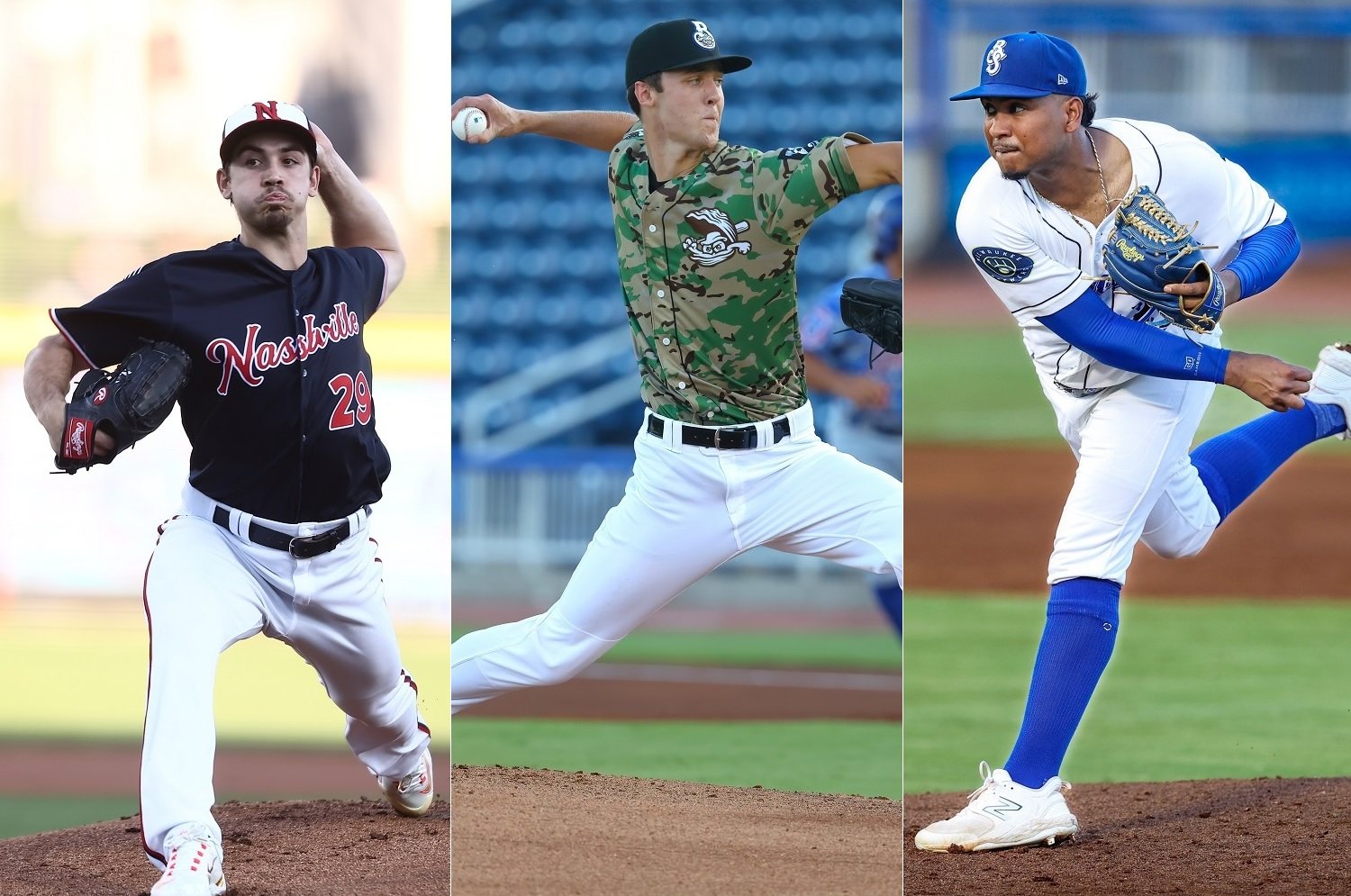 The fact is, some of the holes the Brewers currently have (third base, first base, designated hitter, starting rotation after Corbin Burnes, Freddy Peralta, and Wade Miley) could easily be filled from the farm system--and even improved upon from 2023, whether directly or indirectly. It won’t cost the Crew anything, except having to clear spots on the 40-man roster. How might that happen? Let’s take a look around the diamond. First Base/Designated Hitter As of now, the depth chart at Brewers.com lists Jake Bauers as the team’s starter at both first base and designated hitter. The Crew is hoping that, like Rowdy Tellez, he can come alive at American Family Field, even though his track record shows he is more of a three-true-outcomes bat who has major issues hitting for contact. That being said, the farm system could change that situation in one of several ways. Tyler Black could end up at either first base or designated hitter, should the Crew decide his arm isn’t up for the hot corner. That would be a direct improvement for them at either position over 2023, with Black replacing the .667 OPS of Tellez at first or the .567 OPS of Jesse Winker at DH. Wes Clarke, who broke into MLB Pipeline’s list of Brewers prospects, could also be a factor after a monster season in Biloxi and the Arizona Fall League. There are multiple scenarios for indirect improvement at these positions as well, still due to the farm. Jeferson Quero, the No. 32 prospect in the MLB Pipeline Top 100, could force William Contreras up the first base line or have him serve as the primary DH when he arrives. The Crew won’t call a Top 100 prospect up to be the backup catcher. Then there is the arrival of Jackson Chourio in Milwaukee, following his record-breaking contract. Sal Frelick, Garrett Mitchell, and Joey Wiemer all provided contributions to one extent or another in 2023, and could improve a lot. That already was putting pressure on Christian Yelich. Add the No. 2 prospect in all of baseball to the list, and Yelich could spend a lot of time at DH or finally pick up a first baseman’s glove, even though he never played that position in the pros (the Marlins originally drafted him as a first baseman). Alas, that is emphatically not in the plans right now, but it has to be a conversation at some point. Third Base Andruw Monasterio emerged as the team’s primary third baseman in the second half of the 2023 season, earning Top Rookie honors from Brewer Fanatic. He was not horrible, providing a lot of doubles and OBP skills while also proving very competent on the defensive side. That said, there is room for improvement on the offensive side of things. In 2023, Black performed well at both Double-A Biloxi and Triple-A Nashville. In essence, his bat had nothing left to prove in the minors. His defense at third has been a non-liability, as well, which means that during spring training, Black (the No. 51 prospect in the minors) could very well win the third-base job and start on Opening Day. Even if he drops 100 OPS points from the .930 he posted in 2023, Black still represents about 150 points of improvement over Monasterio (.678 OPS) and Brian Anderson (also .678) at the hot corner. Not too shabby. There is also the chance of a direct bump coming from offseason acquisitions Oliver Dunn and Vinny Capra, not to mention 2022-2023 offseason pick-up Owen Miller. Prospects Zavier Warren and Patrick Dorrian could also be surprise candidates to see time at third, and fellow prospect Freddy Zamora could allow the Crew to consider dealing Willy Adames at some point in the season for help at the hot corner. Starting Rotation Janson Junk, acquired in the Hunter Renfroe trade, was a solid starter at Triple-A Nashville, and at the very least will be on the Milwaukee-Nashville shuttle in 2024. That said, Jacob Misiorowski, Robert Gasser and Carlos F. Rodriguez look to be mainstays of the Brewers rotation in the future, and their arrivals in late 2024 cannot be ruled out. Whether their arrivals are like Freddy Peralta’s immediate entry into the rotation at the major-league level, or going the bullpen route that Brandon Woodruff and Corbin Burnes took in 2018 is to be determined, but it is quite likely they could be helping the Crew down the stretch. Aside from top prospects, contributions from James Meeker and Evan McKendry cannot be ruled out in 2024, either. The former followed up a dominating 2022-2023 winter season in Brisbane by becoming a solid emergency starter for Double-A Biloxi, while the latter was solid as a Triple-A starter between Durham (Rays) and Nashville (Brewers). Adam Seminaris and Coleman Crow will be on the comeback trail from injuries, and Chad Patrick and Easton McGee could also be factors. Overall Yes, the Brewers have been quiet in the free-agent market. That’s not necessarily a bad thing. Free agents can get expensive, and the Brewers' financial situation has been complicated by the bankruptcy of Bally Sports parent company Diamond Sports Group. Thus, it might not make sense to sign a free agent that would need to be dealt or who would cost the Brewers a lot of money. In addition, there is the issue of clubhouse chemistry. Bringing in a free agent, then having to deal him or sit him, could cause some real issues on that front, and a team whose decision-makers admitted to underestimating the effects of the Josh Hader trade may be unwilling to take that sort of risk. On the other hand, it is easier to deal or waive a Jahmai Jones, Capra, Blake Perkins, Chris Roller, Junk, J.B. Bukauskas or Thyago Vieira to clear space for a prospect or two, and with much less risk of disrupting the clubhouse. The Brewers farm system has taken huge leaps forward and has already had a track record of providing real contributors to the major-league club’s success. The team has little to lose by rolling with their farm talent in 2024.
- 5 comments
-
- 1
-

-
- tyler black
- wes clarke
- (and 2 more)
-
Don't think I've met him, but I'll point something else out: Also, one cannot predict what could happen down the road. If Tampa Rays GM Peter Bendix called Dave Arnold tomorrow and offered Shane McClanahan for Wilken, would you tell Arnold to say no? I don't think I would.
-
Baez is still a long way from the majors, and a lot can happen. A bit soon to write someone off, or lock someone in.
-
The Brewers have a hole at the hot corner, and two blue-chip prospects who could fill it by the end of the 2024 season. This year, Tyler Black and Brock Wilken both are making cases to man the position for the next few years. But which one will take the spot? Image courtesy of Mike Krebs (photo of Black), Carlos Hurtado (photo of Wilken) A year ago, the Brewers were in need of help at third base down on the farm. In the 2023 farm system preview for that position, although we noted some decent options from other positions who moved to third. A year later, the Brewers are in a very different world. Now, Tyler Black and Brock Wilken give the Brewers two third basemen in the Top 10 of both the MLB Pipeline and Brewer Fanatic prospect lists for the team. Let’s see the case each makes to handle the hot corner. The Case For Tyler Black Tyler Black had a massive breakout in 2023, posted a .284/.417/.513 line with 25 doubles, 12 triples, and 18 home runs, while adding 55 steals. Black’s power took a big step up, with his .229 isolated power being a roughly 50-percent increase over his 2022 ISO of .143. Black’s development into a dynamic threat, beyond just a pure hitter who held down third base, is arguably the most pleasant surprise of the 2023 season in the minor-league system. His offensive profile looks to be a lot like that of Jimmy Rollins, only with better OBP skills to compensate for a little less power. Black also has been solid defensively at third and second, with the only knock on him being arm strength per MLB Pipeline, while Brewer Fanatic’s report seemed harsher. He also saw time in the outfield, but that is not likely, with Sal Frelick, Jackson Chourio, Garrett Mitchell, and Joey Wiemer having reached Milwaukee. Still, his offensive profile is one that would be extremely solid at third base (or any position), and he is at No. 51 in the MLB Pipeline Top 100, one of four Brewers farmhands to reach that list. One other strong factor in Black’s favor is his proximity to the MLB level. He took things up a slight step after a late-season promotion to Nashville, and he seems to have nothing left to prove in the minors. In essence, he is a plug-and-play option at the hot corner for 2024, and teams could do far worse. Failing that, he could be an option for the Crew at first base (although he's a little short for the position, at 5 feet, 10 inches) or designated hitter. The Case For Brock Wilken With Wilken, his case starts with his raw power--71 homers over three years in college, and five more in the two months of minor-league play in 2023. Wilken can hit the ball out of the park, and has drawn more than his fair share of walks. He proved capable of stealing bases, too, and legged out four triples, so he is not a liability on the basepaths when he doesn’t get a true outcome. Wilken’s defense is also solid, if not spectacular, at the hot corner, and he proved capable. That said, he does have some aspects of his game that could use work. His strikeout rate went higher when he got to Double-A Biloxi, and he did see it climb during the sophomore year of his college career. On defense, there is some question about whether he has the range to handle third base. Granted, having the likes of Willy Adames and Brice Turang could help the team mask Wilken’s deficiencies there, and Andruw Monasterio is an option as a defensive replacement. Should Juan Báez win the shortstop of the future showdown as a bat-first option at the position, Wilken’s lack of range at third base could be an issue. Then again, the Crew is looking for a long-term option at first base as well, and Wilken could be a defensive asset there. The bat will play at either of the corner infield positions (or the corner outfield in a pinch), and Wilken’s bat would be an asset at DH as well. Breakdown Assuming both players develop, this is one position battle that is a can't-lose situation for the Crew. No matter who comes out on top, the other is likely to see a lot of time at first base, designated hitter, both, or possibly even another position. A more painful, but still positive scenario could see the Brewers deal one of them to close out a deadline deal (the Matt LaPorta-for-CC Sabathia scenario comes to mind). That said, as of right now, both Black and Wilken are likely to be significant contributors to the Brewers in the near future. The “loser” of this competition will still provide a lot of value to the team, whether he ends up wearing the blue and gold in Milwaukee or some other team’s jersey. Who you got? Would you move either player in a trade, or take them away from the position, or do you prefer to see them play their way into or out of opportunities? View full article
-
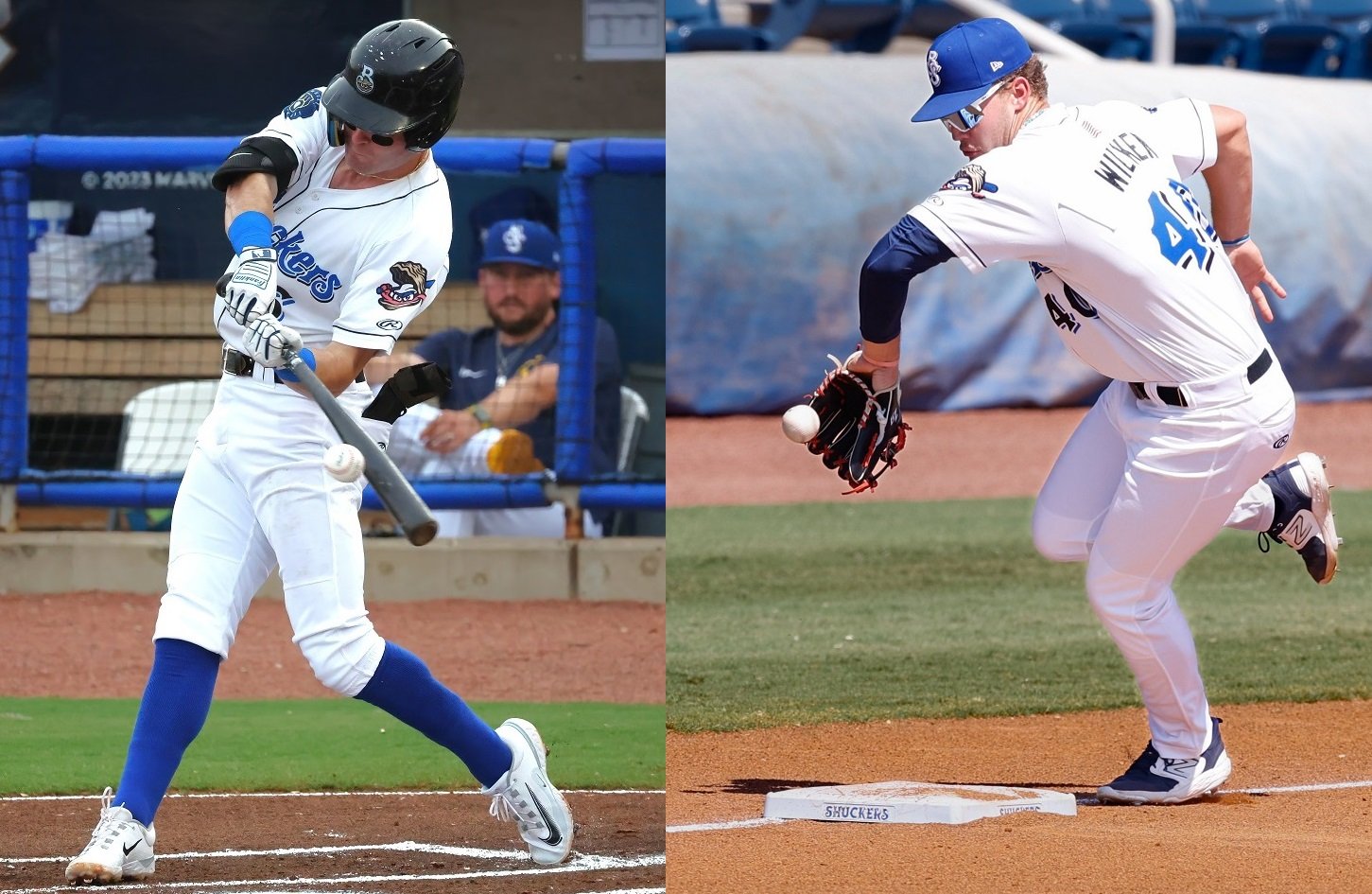 A year ago, the Brewers were in need of help at third base down on the farm. In the 2023 farm system preview for that position, although we noted some decent options from other positions who moved to third. A year later, the Brewers are in a very different world. Now, Tyler Black and Brock Wilken give the Brewers two third basemen in the Top 10 of both the MLB Pipeline and Brewer Fanatic prospect lists for the team. Let’s see the case each makes to handle the hot corner. The Case For Tyler Black Tyler Black had a massive breakout in 2023, posted a .284/.417/.513 line with 25 doubles, 12 triples, and 18 home runs, while adding 55 steals. Black’s power took a big step up, with his .229 isolated power being a roughly 50-percent increase over his 2022 ISO of .143. Black’s development into a dynamic threat, beyond just a pure hitter who held down third base, is arguably the most pleasant surprise of the 2023 season in the minor-league system. His offensive profile looks to be a lot like that of Jimmy Rollins, only with better OBP skills to compensate for a little less power. Black also has been solid defensively at third and second, with the only knock on him being arm strength per MLB Pipeline, while Brewer Fanatic’s report seemed harsher. He also saw time in the outfield, but that is not likely, with Sal Frelick, Jackson Chourio, Garrett Mitchell, and Joey Wiemer having reached Milwaukee. Still, his offensive profile is one that would be extremely solid at third base (or any position), and he is at No. 51 in the MLB Pipeline Top 100, one of four Brewers farmhands to reach that list. One other strong factor in Black’s favor is his proximity to the MLB level. He took things up a slight step after a late-season promotion to Nashville, and he seems to have nothing left to prove in the minors. In essence, he is a plug-and-play option at the hot corner for 2024, and teams could do far worse. Failing that, he could be an option for the Crew at first base (although he's a little short for the position, at 5 feet, 10 inches) or designated hitter. The Case For Brock Wilken With Wilken, his case starts with his raw power--71 homers over three years in college, and five more in the two months of minor-league play in 2023. Wilken can hit the ball out of the park, and has drawn more than his fair share of walks. He proved capable of stealing bases, too, and legged out four triples, so he is not a liability on the basepaths when he doesn’t get a true outcome. Wilken’s defense is also solid, if not spectacular, at the hot corner, and he proved capable. That said, he does have some aspects of his game that could use work. His strikeout rate went higher when he got to Double-A Biloxi, and he did see it climb during the sophomore year of his college career. On defense, there is some question about whether he has the range to handle third base. Granted, having the likes of Willy Adames and Brice Turang could help the team mask Wilken’s deficiencies there, and Andruw Monasterio is an option as a defensive replacement. Should Juan Báez win the shortstop of the future showdown as a bat-first option at the position, Wilken’s lack of range at third base could be an issue. Then again, the Crew is looking for a long-term option at first base as well, and Wilken could be a defensive asset there. The bat will play at either of the corner infield positions (or the corner outfield in a pinch), and Wilken’s bat would be an asset at DH as well. Breakdown Assuming both players develop, this is one position battle that is a can't-lose situation for the Crew. No matter who comes out on top, the other is likely to see a lot of time at first base, designated hitter, both, or possibly even another position. A more painful, but still positive scenario could see the Brewers deal one of them to close out a deadline deal (the Matt LaPorta-for-CC Sabathia scenario comes to mind). That said, as of right now, both Black and Wilken are likely to be significant contributors to the Brewers in the near future. The “loser” of this competition will still provide a lot of value to the team, whether he ends up wearing the blue and gold in Milwaukee or some other team’s jersey. Who you got? Would you move either player in a trade, or take them away from the position, or do you prefer to see them play their way into or out of opportunities?
 -
To me, the Brewers look like they are preparing a roll of the dice for 2024. Keep Burnes for a final run, keep Devin Williams for this offseason, but have Abner Uribe handle the 8th. If we're looking at the 40-man, I still see some turnover. Why? Because there are a couple of in-house solutions for a few holes. Robert Gasser and Evan McKendry could win spots at the back of the rotation. Tyler Black is arguably a contender to start at third base - does he really have anything left to prove in the minors? There is still ridiculous outfield depth (Frelick, Mitchell, Wiemer, and Chourio are an excellent top four). Yelich can hold down DH, even if the Crew is oddly resistant to moving him to first base (which would solve that problem). Wilken and Quero both could be up in 2024 as well. Assuming the Crew signs Santana, this would be the likely 26-man roster on Opening Day: cf: Frelick c: Contreras dh: Yelich 1b: Santana ss: Adames rf: Mitchell lf: Chourio 3b: Black 2b: Turang bench: Haase, Monasterio, Wiemer, Miller rotation: Burnes, Peralta, Miley, Ross, Rea, Ashby bullpen: Williams, Uribe, Payamps, Milner, Megill, Peguero, B. Wilson Good enough for the division. Then figure the Crew uses Carlos F. Rodriguez, Gasser, and Jacob Misiorowski the way they used Burnes and Woodruff in 2018... (replacing Payamps, Milner, and Peguero), Wilken bumps Santana, Quero bumps Haase... the Crew then looks younger and ready to roll for the next five years.
-
When it comes to naming the top pitching prospect in the Brewers system, two names close to the majors come to mind: Carlos F. Rodriguez and Jacob Misiorowski. Which one could claim the title as Ace of the Future? Image courtesy of © Steven Bisig-USA TODAY Sports Carlos Rodriguez and Jacob Misiorowski both rate very highly on the MLB Pipeline and Brewer Fanatic top prospects lists. Misiorowski holds the No. 3 spot in both lists, while Rodriguez ranks sixth on MLB Pipeline’s list and seventh on Brewer Fanatic’s. They had some overlap this year at Double-A Biloxi, but have had different paths in their professional careers. Misiorowski rocketed up in 2023, while Rodriguez has seen a slower, steadier climb. Let’s look at the case each of them have as ace of the future. The Case For Jacob Misiorowski This one comes down to one word: Stuff. His fastball regularly hits triple digits. His slider and curveball are both plus pitches. MLB Pipeline grades two of his pitches – the fastball and slider – at 70 on the 20-80 scale. Two other pitches, a cutter and a curveball, are at 55. He also adds a changeup to the mix. A second-round pick in the 2022 draft, Misiorowski saw his first extended action in 2023 after being wooed from an LSU commitment by a $2.35-million bonus that was just in time to give Misiorowski a brief cup of coffee with Low-A Carolina in 2022. The results in 2023, his first full professional season, were extremely impressive. He struck out 13.9 hitters per nine innings across three minor-league affiliates (Carolina, High-A Wisconsin, and Double-A Biloxi). He gave up only two home runs all season (both with Biloxi). He also allowed only 5.3 hits per nine innings. His biggest issues are control (he issued 5.3 walks per nine innings in 2023) and endurance (he averaged less than four innings in his 20 starts). Given what else he brings, though, those are somewhat minor issues. In fact, the Crew could insert him into the 2024 bullpen as a late-inning relief ace if the team was so inclined. However, with Misiorowski at Biloxi and with quite a while to go before he is Rule 5 eligible, that would be a very short-sighted move. The Case For Carlos F. Rodriguez Rodriguez has not risen as rapidly. A sixth-round pick in 2021, he split time between Carolina and Wisconsin in 2022, then spent the bulk of 2023 at Biloxi. What stands out is the sheer depth of his arsenal – an outlier in and of itself. His entry in the Brewer Fanatic prospect list features three variants of a fastball (four-seam, sinker, and cutter), topping out at 96 miles per hour; two curveballs (one in the 70s, the other a slow curve in the 60s); a slider; and a changeup. Statistically, what stands out is what Rodriguez doesn’t do: He doesn’t surrender many hits – only 6.1 per nine innings pitched. He also cut down his walks in the second half of Biloxi’s season – not that he was horrible from April to June (3.09 ERA). His major strength, according to MLB Pipeline, is his ability to locate his pitches. He also generates a lot of strikeouts – 11.1 per nine innings in 2023 and 10.8 per nine innings in 2022 – despite a lack of overpowering “stuff.” He would not be the first Brewers prospect to overachieve despite a lack of high-end velocity. In this case, Rodriguez has such an arsenal that a hitter will be kept guessing. While Rodriguez spent the entire 2023 season in the rotation, and most of 2022 there as well, the one big question will be if he can eat more innings. His only other weakness – at least compared to Misiorowski – would be that he surrendered ten go-fer balls. Still, at worst, he ends up like Adrian Houser, a serviceable starter. But he could very well outperform his “stuff,” and be an ace by making the most of his arsenal. Breakdown Come 2025, the Brewers will likely have both of these pitchers in their rotation, or knocking at the door very insistently. Unlike the clash between Cooper Pratt and Juan Baez for “Shortstop Of The Future,” the Crew doesn’t have to make an either/or decision as to which one is in the rotation – both will likely be there. The only either/or choice they have to make is which one gets the ball for the second game of the season, behind Freddy Peralta. Which prospect do you prefer? Does the question of which might be an ace tip in one's favor, as opposed to the other? Tell us about it in the comments. View full article
-
Ace Of The Future: Jacob Misiorowski vs. Carlos Rodriguez
Harold Hutchison posted an article in Minor Leagues
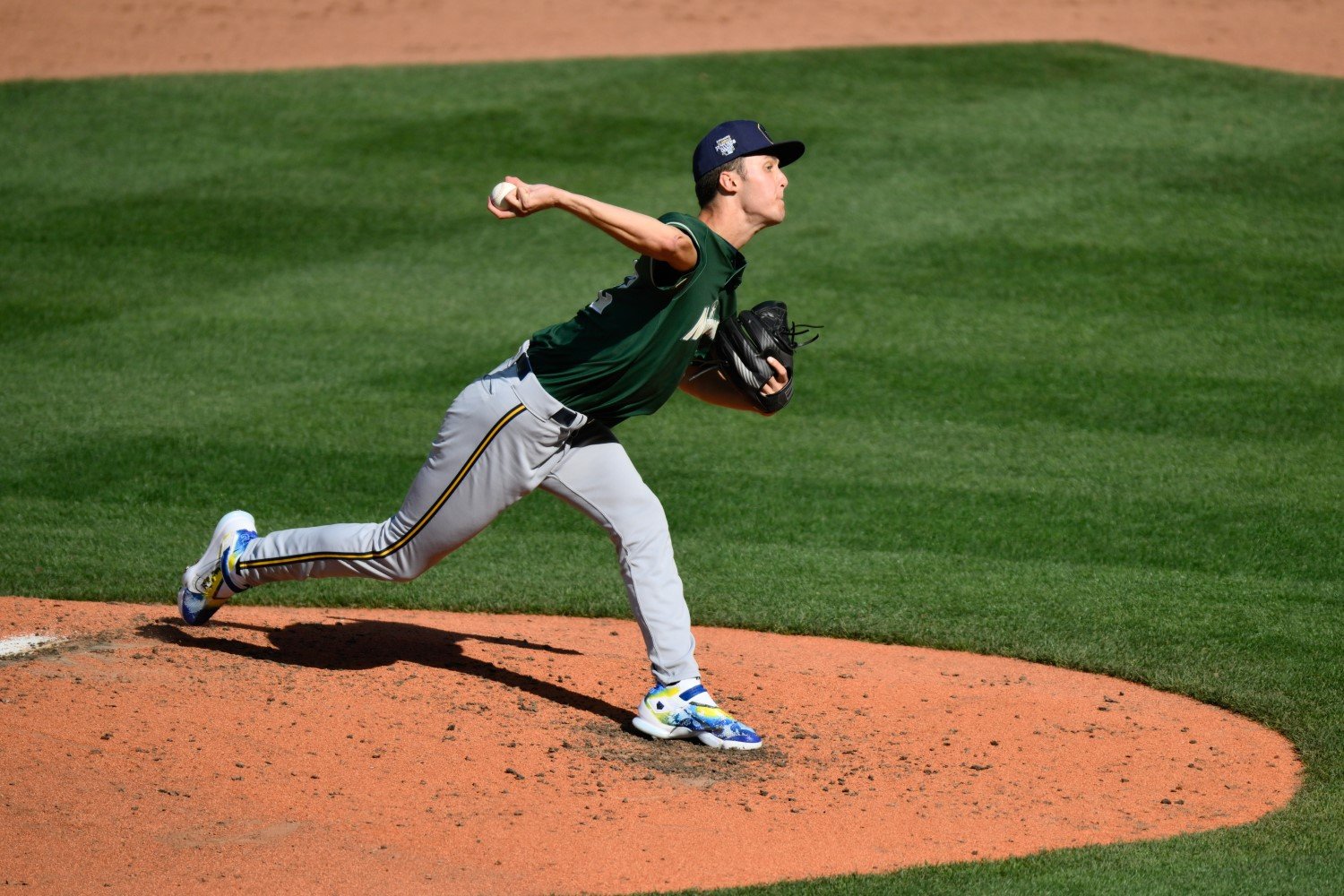 Carlos Rodriguez and Jacob Misiorowski both rate very highly on the MLB Pipeline and Brewer Fanatic top prospects lists. Misiorowski holds the No. 3 spot in both lists, while Rodriguez ranks sixth on MLB Pipeline’s list and seventh on Brewer Fanatic’s. They had some overlap this year at Double-A Biloxi, but have had different paths in their professional careers. Misiorowski rocketed up in 2023, while Rodriguez has seen a slower, steadier climb. Let’s look at the case each of them have as ace of the future. The Case For Jacob Misiorowski This one comes down to one word: Stuff. His fastball regularly hits triple digits. His slider and curveball are both plus pitches. MLB Pipeline grades two of his pitches – the fastball and slider – at 70 on the 20-80 scale. Two other pitches, a cutter and a curveball, are at 55. He also adds a changeup to the mix. A second-round pick in the 2022 draft, Misiorowski saw his first extended action in 2023 after being wooed from an LSU commitment by a $2.35-million bonus that was just in time to give Misiorowski a brief cup of coffee with Low-A Carolina in 2022. The results in 2023, his first full professional season, were extremely impressive. He struck out 13.9 hitters per nine innings across three minor-league affiliates (Carolina, High-A Wisconsin, and Double-A Biloxi). He gave up only two home runs all season (both with Biloxi). He also allowed only 5.3 hits per nine innings. His biggest issues are control (he issued 5.3 walks per nine innings in 2023) and endurance (he averaged less than four innings in his 20 starts). Given what else he brings, though, those are somewhat minor issues. In fact, the Crew could insert him into the 2024 bullpen as a late-inning relief ace if the team was so inclined. However, with Misiorowski at Biloxi and with quite a while to go before he is Rule 5 eligible, that would be a very short-sighted move. The Case For Carlos F. Rodriguez Rodriguez has not risen as rapidly. A sixth-round pick in 2021, he split time between Carolina and Wisconsin in 2022, then spent the bulk of 2023 at Biloxi. What stands out is the sheer depth of his arsenal – an outlier in and of itself. His entry in the Brewer Fanatic prospect list features three variants of a fastball (four-seam, sinker, and cutter), topping out at 96 miles per hour; two curveballs (one in the 70s, the other a slow curve in the 60s); a slider; and a changeup. Statistically, what stands out is what Rodriguez doesn’t do: He doesn’t surrender many hits – only 6.1 per nine innings pitched. He also cut down his walks in the second half of Biloxi’s season – not that he was horrible from April to June (3.09 ERA). His major strength, according to MLB Pipeline, is his ability to locate his pitches. He also generates a lot of strikeouts – 11.1 per nine innings in 2023 and 10.8 per nine innings in 2022 – despite a lack of overpowering “stuff.” He would not be the first Brewers prospect to overachieve despite a lack of high-end velocity. In this case, Rodriguez has such an arsenal that a hitter will be kept guessing. While Rodriguez spent the entire 2023 season in the rotation, and most of 2022 there as well, the one big question will be if he can eat more innings. His only other weakness – at least compared to Misiorowski – would be that he surrendered ten go-fer balls. Still, at worst, he ends up like Adrian Houser, a serviceable starter. But he could very well outperform his “stuff,” and be an ace by making the most of his arsenal. Breakdown Come 2025, the Brewers will likely have both of these pitchers in their rotation, or knocking at the door very insistently. Unlike the clash between Cooper Pratt and Juan Baez for “Shortstop Of The Future,” the Crew doesn’t have to make an either/or decision as to which one is in the rotation – both will likely be there. The only either/or choice they have to make is which one gets the ball for the second game of the season, behind Freddy Peralta. Which prospect do you prefer? Does the question of which might be an ace tip in one's favor, as opposed to the other? Tell us about it in the comments.
 -
I'm a bit of the same on this. Give Woodruff $5 million in 2024, $17.5 million a year in 2025 and 2026, team options for $20 million in 2027 and 2028, and a $25 million mutual option for 2029, but also defer $40 million of that deal over 20 years. Failing that, maybe look at an extension for Freddy Peralta. Make him a 5-year, $125 million offer ($50 million deferred over 25 years).
-
Moving Yelich to DH (or possibly first base) full-time could not just help him manage his back better, but it also could alleviate the outfield logjam - imagine going into 2024 with an opening day outfield of Frelick (LF), Mitchell/Wiemer (CF), and Chourio (RF). DH gets improved by 250 points of OPS from Winker, who was the primary DH in 2023. First base goes up 150 points from Rowdy Tellez. Brewers can maximize their young outfield talent.
-
As much as I like Hader, I think it makes no sense to sign him or Williams long term. Uribe, on the other hand, might be worth trying to lock up long term. Say something like this: 2024-2025: $1.5 million a year 2026-2027: $3.5 million a year 2028-2030: $5 million a year 2031-2033: $7.5 million a year team option 2034: $10 million or $5 million buyout.
-
The Brewers have a good amount of organizational depth behind Willy Adames at shortstop, but two prospects are contending to claim the position for the long term in Milwaukee. Image courtesy of © Mark J. Rebilas-USA TODAY Sports Both Cooper Pratt and Juan Báez were in their age-18 seasons in 2023. Pratt turned 19 in August, while Báez hit 18 in June. Both performed well in the Maryvale squad’s championship run, and both saw action at multiple infield positions for the Arizona Complex League Brewers. Each has a strong claim to be a blue-chip prospect for the Crew, at a highly valuable position. Let’s look at the case each of them can make. The Case For Juan Báez Baez’s case is simple: He was, arguably, the MVP of the 2023 ACL Brewers, posting a .952 OPS with 24 extra-base hits in 192 at-bats, then added three more doubles in a short stint at full-season Low A in Zebulon, N.C. Add in 19 stolen bases in 21 attempts, and you have what looks like a dynamic offensive package from a bargain signing ($10,000, per MLB Pipeline). Baez only walked 10 times in 2023, but that figure isn’t a red flag when you consider that he struck out at only a 12.2% rate, and that includes his late-season cup of coffee with the Mudcats. To put that into perspective, Jackson Chourio posted a 12.9% strikeout rate in the second half of 2023. In other words, Baez’s ability to hit for contact is impressive, even if it's less advanced that Chourio's. Pipeline also noted that Báez made adjustments from a solid 2022 season in the DSL. He began spraying the ball to all fields, as opposed to being a mere pull hitter. Báez has been dinged over defensive struggles at shortstop and third base, where he made 18 errors over 46 games. Scouting reports say that the issues on defense are “fixable,” though, and if so, then he could be a threat to post double figures in doubles, triples, homers, and steals at shortstop, provided the power continues to develop. In the (relative) worst case, Báez becomes a bat-first option at shortstop. If that is the situation, it’s still not a bad outcome. When an OPS is in the .900s, then sub-.900 fielding percentages are a lot easier to live with. The Case For Cooper Pratt The Brewers drafted Pratt (previously rated as a top-100 pick by FanGraphs, MLB Pipeline, and Baseball America, in the sixth round of the 2023 draft. They managed to sign him for a $1.3-million bonus, wooing him away from a commitment to Ole Miss. Like Báez, Pratt is a high-contact bat, with his Brewer Fanatic Top 20 listing noting his miss rate was 12%. In 12 games with the ACL Brewers, he posted a .356/.426/.444 line, with five walks and 11 strikeouts in 45 at-bats. Pratt also added four stolen bases, showing in-game speed and smart baserunning. More notably, Pratt’s defense in nine games at shortstop was error-free. He also saw time at second base, where he had one miscue, but scouts report his defense is very good at the position, and that he could also handle third base if necessary. Pratt’s current statistical profile looks a lot like that of Wade Boggs in the 1990s: a solid performer who hit for a .300 average and got on base to the tune of a 112+ OPS. In addition, the 1990s version of Boggs delivered very good defense (Boggs won a pair of Gold Gloves during that timeframe). Of course, the difference between an established Hall of Famer in the second half of their big-league career and a teenager just entering pro ball is the difference between a horse and a seahorse. Still, that is an excellent plausible outcome for a sixth-round pick--the same place where the Brewers have found Scott Karl, Bill Travers, Bill Hall, Randy Ready, and Drew Rasmussen (who was the key piece in the Willy Adames trade) over the years. That said, Pratt could be much better. He’s been compared to Baltimore’s Gunnar Henderson on both the Pipeline and Brewer Fanatic lists, and Henderson developed significant power after his time in Rookie ball. Obviously, the stats look different, but Henderson played in the Gulf Coast League, as opposed to the more hitter-friendly Arizona Complex League. The real questions are whether Pratt can develop the power from a frame (6’4”, 195 pounds) that should deliver more in that department, and if he can adjust to professional pitching and reduce his strikeouts. If one happens, the Crew gets a solid player. If both happen, Pratt’s ceiling could be very high, indeed--no matter what position he plays. Breakdown In one sense, the Brewers are in a no-lose situation in this head-to-head competition. As it stands, if either player develops as well as fans hope, the Crew ends up with a very good shortstop. Which of these prospects impresses you more? What kind of future do you envision for each? View full article
-
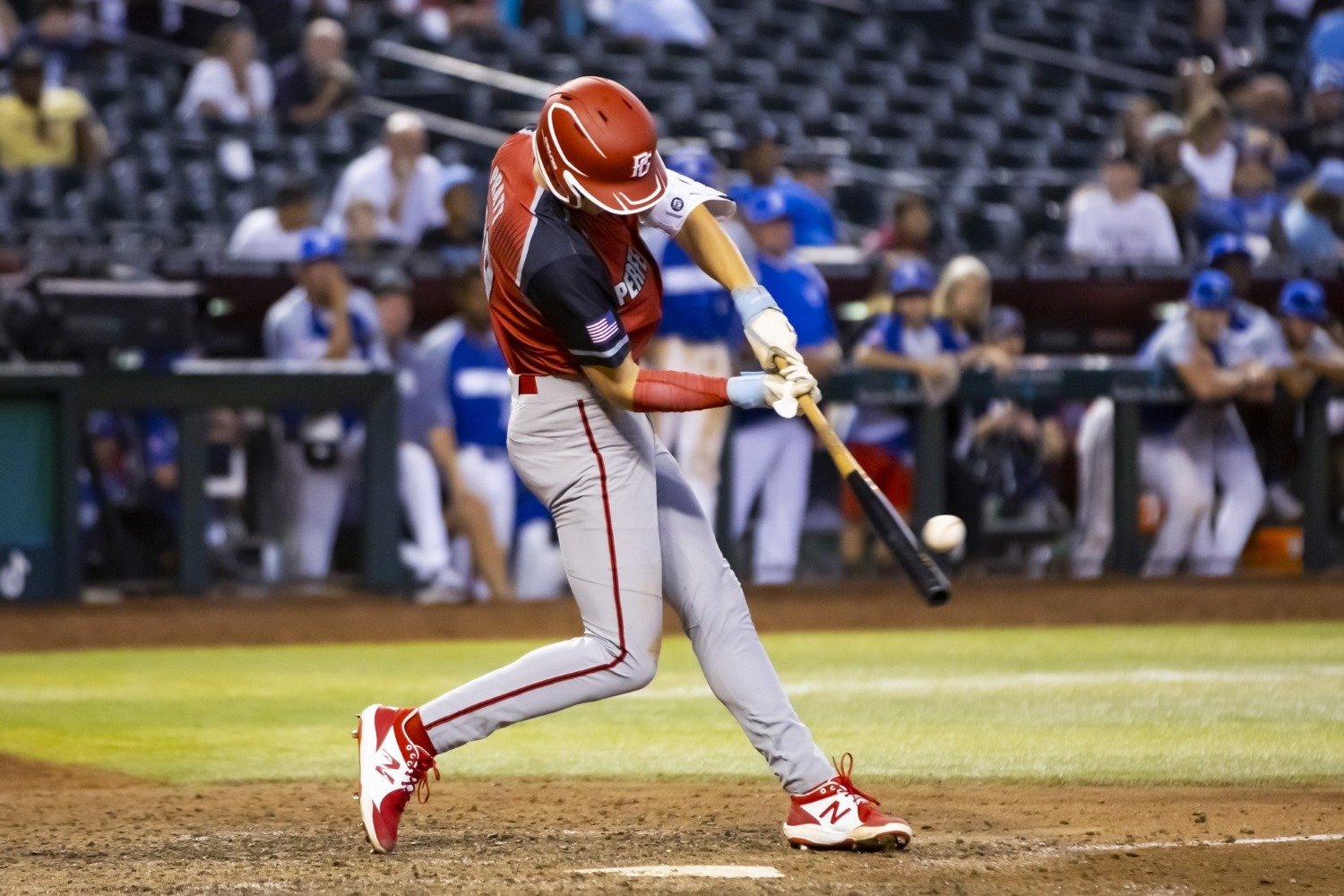 Both Cooper Pratt and Juan Báez were in their age-18 seasons in 2023. Pratt turned 19 in August, while Báez hit 18 in June. Both performed well in the Maryvale squad’s championship run, and both saw action at multiple infield positions for the Arizona Complex League Brewers. Each has a strong claim to be a blue-chip prospect for the Crew, at a highly valuable position. Let’s look at the case each of them can make. The Case For Juan Báez Baez’s case is simple: He was, arguably, the MVP of the 2023 ACL Brewers, posting a .952 OPS with 24 extra-base hits in 192 at-bats, then added three more doubles in a short stint at full-season Low A in Zebulon, N.C. Add in 19 stolen bases in 21 attempts, and you have what looks like a dynamic offensive package from a bargain signing ($10,000, per MLB Pipeline). Baez only walked 10 times in 2023, but that figure isn’t a red flag when you consider that he struck out at only a 12.2% rate, and that includes his late-season cup of coffee with the Mudcats. To put that into perspective, Jackson Chourio posted a 12.9% strikeout rate in the second half of 2023. In other words, Baez’s ability to hit for contact is impressive, even if it's less advanced that Chourio's. Pipeline also noted that Báez made adjustments from a solid 2022 season in the DSL. He began spraying the ball to all fields, as opposed to being a mere pull hitter. Báez has been dinged over defensive struggles at shortstop and third base, where he made 18 errors over 46 games. Scouting reports say that the issues on defense are “fixable,” though, and if so, then he could be a threat to post double figures in doubles, triples, homers, and steals at shortstop, provided the power continues to develop. In the (relative) worst case, Báez becomes a bat-first option at shortstop. If that is the situation, it’s still not a bad outcome. When an OPS is in the .900s, then sub-.900 fielding percentages are a lot easier to live with. The Case For Cooper Pratt The Brewers drafted Pratt (previously rated as a top-100 pick by FanGraphs, MLB Pipeline, and Baseball America, in the sixth round of the 2023 draft. They managed to sign him for a $1.3-million bonus, wooing him away from a commitment to Ole Miss. Like Báez, Pratt is a high-contact bat, with his Brewer Fanatic Top 20 listing noting his miss rate was 12%. In 12 games with the ACL Brewers, he posted a .356/.426/.444 line, with five walks and 11 strikeouts in 45 at-bats. Pratt also added four stolen bases, showing in-game speed and smart baserunning. More notably, Pratt’s defense in nine games at shortstop was error-free. He also saw time at second base, where he had one miscue, but scouts report his defense is very good at the position, and that he could also handle third base if necessary. Pratt’s current statistical profile looks a lot like that of Wade Boggs in the 1990s: a solid performer who hit for a .300 average and got on base to the tune of a 112+ OPS. In addition, the 1990s version of Boggs delivered very good defense (Boggs won a pair of Gold Gloves during that timeframe). Of course, the difference between an established Hall of Famer in the second half of their big-league career and a teenager just entering pro ball is the difference between a horse and a seahorse. Still, that is an excellent plausible outcome for a sixth-round pick--the same place where the Brewers have found Scott Karl, Bill Travers, Bill Hall, Randy Ready, and Drew Rasmussen (who was the key piece in the Willy Adames trade) over the years. That said, Pratt could be much better. He’s been compared to Baltimore’s Gunnar Henderson on both the Pipeline and Brewer Fanatic lists, and Henderson developed significant power after his time in Rookie ball. Obviously, the stats look different, but Henderson played in the Gulf Coast League, as opposed to the more hitter-friendly Arizona Complex League. The real questions are whether Pratt can develop the power from a frame (6’4”, 195 pounds) that should deliver more in that department, and if he can adjust to professional pitching and reduce his strikeouts. If one happens, the Crew gets a solid player. If both happen, Pratt’s ceiling could be very high, indeed--no matter what position he plays. Breakdown In one sense, the Brewers are in a no-lose situation in this head-to-head competition. As it stands, if either player develops as well as fans hope, the Crew ends up with a very good shortstop. Which of these prospects impresses you more? What kind of future do you envision for each?
 -
Three trade proposals from Twins Daily
Harold Hutchison replied to Brock Beauchamp's topic in Transaction Rumors & Proposals
Why? Defensively, that saves a TON of runs. My thinking? Chourio in left, Frelick in center, Mitchell in right, Taylor 4th OF, Wiemer DH. You can rotate them around a bit to give them days off, or to address a platoon situation. It means moving Yelich to first base, but thinking this group "needs to be thinned" is a good way to end up losing a trade. -
While many fans may look to free agency to plug holes, they often focus on major-league free agents. But could minor-league free agents help Milwaukee fill some holes? Image courtesy of © Sam Greene/The Enquirer / USA TODAY NETWORK A minor-league free agent can be an excellent pickup. Look no further than Andruw Monasterio, who was signed in the 2021-2022 offseason as a minor-league free agent, and who was named Brewer Fanatic’s Top Brewers Rookie of 2023. Can they secure others who could make a similar difference for the Crew? When looking at the minor-league free agents, we’re not just looking at those who could have a big impact in 2024 at the major-league level, but those the Crew could develop. That doesn't mean, though, that we won't find some 2024 contributors in the process. Here are ten contenders to help out, either in 2024 or beyond, currently on the minor-league free-agent market. C Mario Feliciano Feliciano had a number of injured list stints in 2023, but the Brewers will be looking for either a decent backup for William Contreras or someone to take a lot of Triple-A catcher time when Jeferson Quero forces his way to Milwaukee (assuming they choose to keep Wes Clarke at first base). Feliciano could fit in well, knows how the Brewers handle pitching, and offers a solid bat when he's healthy. A one-time top prospect for the Crew, the 25-year-old Feliciano still could turn things around, or at the very least be a decent No. 2 for Contreras or Quero (or both). LHP Alemao Hernandez If the Brewers are looking for a pitching equivalent to Monasterio, Hernandez might be a worthwhile signing. The 24-year-old lefthander worked from the rotation, going from High A to Triple A in one season after pitching in the Mexican League for the entirety of his previous professional career. If the Brewers are looking for potential Nashville-Milwaukee shuttle candidates, Hernandez is arguably one at whom they should take a long look. RHP Max Lazar Lazar was a prospect who looked like an under-the-radar steal prior to the pandemic. He recovered from a pair of injury-riddled seasons, starting with winter ball in Brisbane. The Crew should look to bring him back as rotation depth within the system. At 24, he still has plenty of gas left in the tank; he could be a potential replacement for Bryse Wilson. 1B Lewin Diaz While he scuffled in three major-league stints with the Miami Marlins, in 2023, Díaz’s OBP skills seemed to level up. He has flashed some good glove work in the majors, finishing second in Total Zone Runs in 2022, despite only playing 58 games. A left-handed power hitter, Díaz could surprise in American Family Field (see Eric Thames for one example). RHP Nick Neidert Neidert is a one-time blue-chip pitching prospect who has been decent in three MLB stints with the Marlins. He had injury issues in 2022 (nothing related to his arm), and was healthy for all of 2023. Neidert looks like a prime candidate for the Crew’s pitching lab, and could be a sneaky-good pickup for the team. He would also have plenty of team control for the Crew, should he stick with the club. LHP Cam Vieaux Vieaux could be an option as a lefty out of the pen and an eventual replacement for Hoby Milner (nothing against Milner, but he is 32, and he's now arbitration-eligible). Vieaux had a brief cup of coffee with the Pirates in 2022, and while he’s 30, he still offers multi-inning capability and past starting experience, and has plenty of team control. RHP Jason Alexander Like Monasterio, Alexander is proof that minor-league free agency can be a significant source of help for a big-league club, coming over after the 2021 season as a minor-league free agent from the Angels system to be the fill-in hero for the Brewers pitching staff in 2022. He had his own injury problems in 2023, but his past performance has been solid. Reuniting with Alexander would not be the worst move the Crew could make. C/IF Tony Wolters With the Crew in need of a new backup catcher following Victor Caratini’s departure, Wolters makes for an interesting option. A left-handed hitter who has demonstrated good OBP skills, he has also played second base, shortstop, and third base in the majors, offering some additional versatility to the bench. Wolters is not likely to start, given the presence of Contreras and Quero, but he may fit right in as a backup. LHP Garrett Williams Since moving to the bullpen after the 2020 season, Williams has averaged more than a strikeout per inning. While control has been an issue (he also averaged more than a walk an inning), Williams does offer the ability to go multiple innings, avoided the go-fer ball in 2023 (except for one occasion), and still can fill in as a starter if needed. Williams could be a candidate for the pitching lab, although at 28, he still is a bit of a project. 1B/3B Jason Vosler Vosler is a left-handed power bat who plays third base and first base. That general profile fits American Family Field very well. In Vosler’s case, he has shown some solid OBP skills and some legitimate power in the minors, even though he scuffled in two out of three major-league cups of coffee. What do you think of these minor-league free agents? Are there any you think should be added to the list? Let us know in the comments below. View full article
-
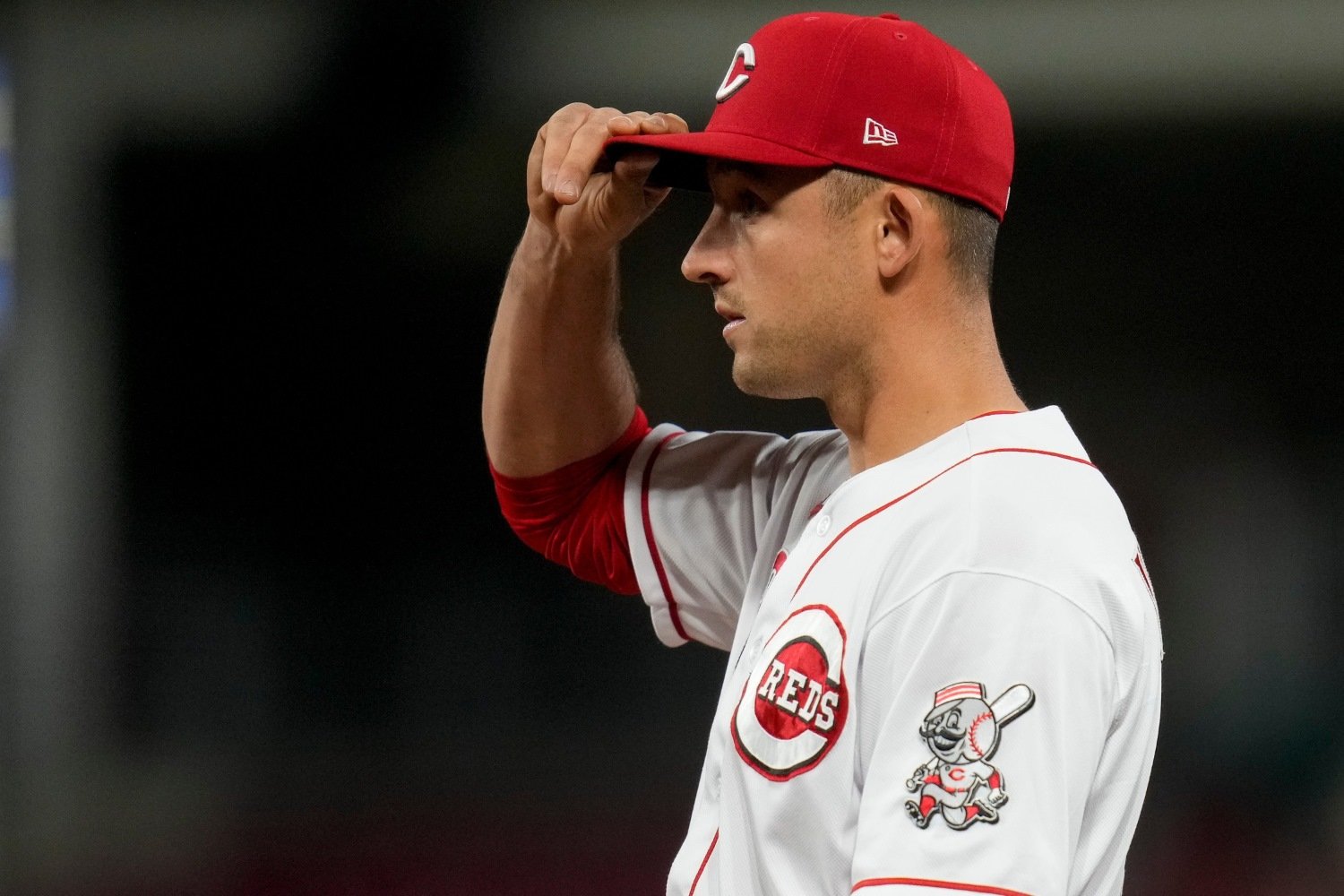 A minor-league free agent can be an excellent pickup. Look no further than Andruw Monasterio, who was signed in the 2021-2022 offseason as a minor-league free agent, and who was named Brewer Fanatic’s Top Brewers Rookie of 2023. Can they secure others who could make a similar difference for the Crew? When looking at the minor-league free agents, we’re not just looking at those who could have a big impact in 2024 at the major-league level, but those the Crew could develop. That doesn't mean, though, that we won't find some 2024 contributors in the process. Here are ten contenders to help out, either in 2024 or beyond, currently on the minor-league free-agent market. C Mario Feliciano Feliciano had a number of injured list stints in 2023, but the Brewers will be looking for either a decent backup for William Contreras or someone to take a lot of Triple-A catcher time when Jeferson Quero forces his way to Milwaukee (assuming they choose to keep Wes Clarke at first base). Feliciano could fit in well, knows how the Brewers handle pitching, and offers a solid bat when he's healthy. A one-time top prospect for the Crew, the 25-year-old Feliciano still could turn things around, or at the very least be a decent No. 2 for Contreras or Quero (or both). LHP Alemao Hernandez If the Brewers are looking for a pitching equivalent to Monasterio, Hernandez might be a worthwhile signing. The 24-year-old lefthander worked from the rotation, going from High A to Triple A in one season after pitching in the Mexican League for the entirety of his previous professional career. If the Brewers are looking for potential Nashville-Milwaukee shuttle candidates, Hernandez is arguably one at whom they should take a long look. RHP Max Lazar Lazar was a prospect who looked like an under-the-radar steal prior to the pandemic. He recovered from a pair of injury-riddled seasons, starting with winter ball in Brisbane. The Crew should look to bring him back as rotation depth within the system. At 24, he still has plenty of gas left in the tank; he could be a potential replacement for Bryse Wilson. 1B Lewin Diaz While he scuffled in three major-league stints with the Miami Marlins, in 2023, Díaz’s OBP skills seemed to level up. He has flashed some good glove work in the majors, finishing second in Total Zone Runs in 2022, despite only playing 58 games. A left-handed power hitter, Díaz could surprise in American Family Field (see Eric Thames for one example). RHP Nick Neidert Neidert is a one-time blue-chip pitching prospect who has been decent in three MLB stints with the Marlins. He had injury issues in 2022 (nothing related to his arm), and was healthy for all of 2023. Neidert looks like a prime candidate for the Crew’s pitching lab, and could be a sneaky-good pickup for the team. He would also have plenty of team control for the Crew, should he stick with the club. LHP Cam Vieaux Vieaux could be an option as a lefty out of the pen and an eventual replacement for Hoby Milner (nothing against Milner, but he is 32, and he's now arbitration-eligible). Vieaux had a brief cup of coffee with the Pirates in 2022, and while he’s 30, he still offers multi-inning capability and past starting experience, and has plenty of team control. RHP Jason Alexander Like Monasterio, Alexander is proof that minor-league free agency can be a significant source of help for a big-league club, coming over after the 2021 season as a minor-league free agent from the Angels system to be the fill-in hero for the Brewers pitching staff in 2022. He had his own injury problems in 2023, but his past performance has been solid. Reuniting with Alexander would not be the worst move the Crew could make. C/IF Tony Wolters With the Crew in need of a new backup catcher following Victor Caratini’s departure, Wolters makes for an interesting option. A left-handed hitter who has demonstrated good OBP skills, he has also played second base, shortstop, and third base in the majors, offering some additional versatility to the bench. Wolters is not likely to start, given the presence of Contreras and Quero, but he may fit right in as a backup. LHP Garrett Williams Since moving to the bullpen after the 2020 season, Williams has averaged more than a strikeout per inning. While control has been an issue (he also averaged more than a walk an inning), Williams does offer the ability to go multiple innings, avoided the go-fer ball in 2023 (except for one occasion), and still can fill in as a starter if needed. Williams could be a candidate for the pitching lab, although at 28, he still is a bit of a project. 1B/3B Jason Vosler Vosler is a left-handed power bat who plays third base and first base. That general profile fits American Family Field very well. In Vosler’s case, he has shown some solid OBP skills and some legitimate power in the minors, even though he scuffled in two out of three major-league cups of coffee. What do you think of these minor-league free agents? Are there any you think should be added to the list? Let us know in the comments below.
 -
Australian Baseball League - 2023/2024
Harold Hutchison replied to Ro Mueller's topic in Brewers Minor League Talk
James Meeker had a similar breakout in Brisbane last year, -
Much of the trade talk for the Brewers surrounds Corbin Burnes and Willy Adames, both of whom could fetch a big haul. But could some small-scale deals land the Crew a similarly (if less obviously) valuable payoff? Image courtesy of © Isaiah J. Downing-USA TODAY Sports The harsh economic realities exposed by the departure of Craig Counsell may drive the blockbuster moves that get the heat in the hot stove season, but the Brewers have a crowd in the outfield, the middle infield, and the bullpen. With their surfeit of talent, they could make some under-the-radar deals to address some areas of concern. At the same time, these deals won’t involve the team's top young prospects. In these scenarios, the Crew keeps their young outfielders (Sal Frelick, Jackson Chourio, Joey Wiemer and Garrett Mitchell) and the effective Tyrone Taylor, plus face of the franchise Christian Yelich. Here are five deals the Crew could make this winter, all rated as either fair or a minor overpay by BaseballTradeValues.com: Cleveland Guardians get RHP Joel Payamps for RHP Hunter Gaddis and Competitive Balance Round A pick Payamps pitched well out of the bullpen early in 2023 and became a top setup man for Devin Williams, but he has arguably been bypassed for late-inning work by Abner Uribe and Trevor Megill. That said, his 169 ERA+ would be tops in the Guardians bullpen. In return, the Crew gets starter Hunter Gaddis and Cleveland’s Competitive Balance A pick. Gaddis gives the Brewers another starter as insurance behind Wade Miley and Joe Ross, both of whom have been known to spend time on the injured list in the past. Adding the pick makes up the difference between the value of Payamps, who still has three years of team control left, and the largely fungible Gaddis. Kansas City Royals get LHP Hoby Milner and Competitive Balance Round B pick for LHP James McArthur and Competitive Balance Round A pick Milner had been an unsung hero and earned a late-inning spot for the Crew, but the Royals’ desperation for bullpen help makes dealing him to Kansas City viable. (This one is complicated by the late-breaking news, which we learned Sunday, that they signed lefty Will Smith to stabilize that unit, but it's still possible to make it work.) While Milner is behind several other relievers on the Crew, he could be an invaluable weapon for Kansas City--especially if Smith assumes the closer role there. In return, the Crew gets reliever James McArthur and the Royals’ 2024 Competitive Balance A pick. McArthur could be a lefty in the pen to replace Milner, but with a lot more team control (and he comes a bit cheaper). The Royals’ Competitive Balance A pick is also a nice add for the Crew, even if they have to chip in their own Competitive Balance B pick to make this deal work. Colorado Rockies get OF Blake Perkins and SS Freddy Zamora for C David Isea, OF Aldalay Kolokie, and LHP Ervin Torres With Chourio’s long-term deal in place, the Brewers will need to clear a 40-man roster spot. In this case, Colorado, who had poor performance from their outfielders in 2023, could be a nice destination for Perkins, whose spot on the Nashville-Milwaukee shuttle could be in jeopardy after the addition of Chris Roller. Zamora seems similarly blocked by the acquisitions of Vinny Capra and Oliver Dunn. The Crew relieves some of their middle-infield congestion, and the Rockies get potential help in the outfield and middle infield in return for three rookie-ball prospects. Cincinnati Reds get RHP Elvis Peguero and SS Eduardo Garcia for Comp Balance B pick and $500,000 in international bonus money Peguero started off well, but got hit harder as the season went on and has been bypassed by multiple relievers. That said, Peguero and Eduardo García can be moved to the Reds for a Competitive Balance B pick and $500,000 in international bonus money for the Crew to bolster their farm. The Reds are in just the right place to trade a little long-term value for the kind of pitching depth that they couldn't maintain down the stretch last season, as they faded from playoff contention. Pittsburgh Pirates get LHP Ethan Small for 2B Wesley Zapata and $594,800 in international bonus money Small has been on the Milwaukee-Nashville shuttle for two seasons and is on his last year of being optionable. With McArthur (or Milner, if you couldn't swing that deal) on the roster, Clayton Andrews having one more option year, and Aaron Ashby as an option from the bullpen, he could be moved. In return, the Crew gets second baseman Wesley Zapata, a switch-hitter with excellent OBP skills who’s posted solid numbers in the Pirates system, and some international bonus money. Overall, these moves don’t seem like much, but the Brewers would get a starter with lots of team control for depth; a left-handed reliever whom they'd control through 2030; a young outfield prospect who can replace the outfielders dealt to acquire Dunn and Jake Bauers; another young pitching prospect; a young catcher; and a middle-infield prospect. They would also net two additional picks in the 2024 MLB draft, both of which would be in the Competitive Balance A round--giving the Crew a very good chance to stock their farm system with blue-chip talent with three picks in the top 40. They'd even add almost $1.1 million in international bonus money to bolster their farm system further and seek the next Chourio. What do you think about these trades? Would you make these moves? Who else would you consider dealing? Let us know in the comments below. View full article
-
Five Small Deals The Brewers Could Make For Long-Term Help
Harold Hutchison posted an article in Brewers
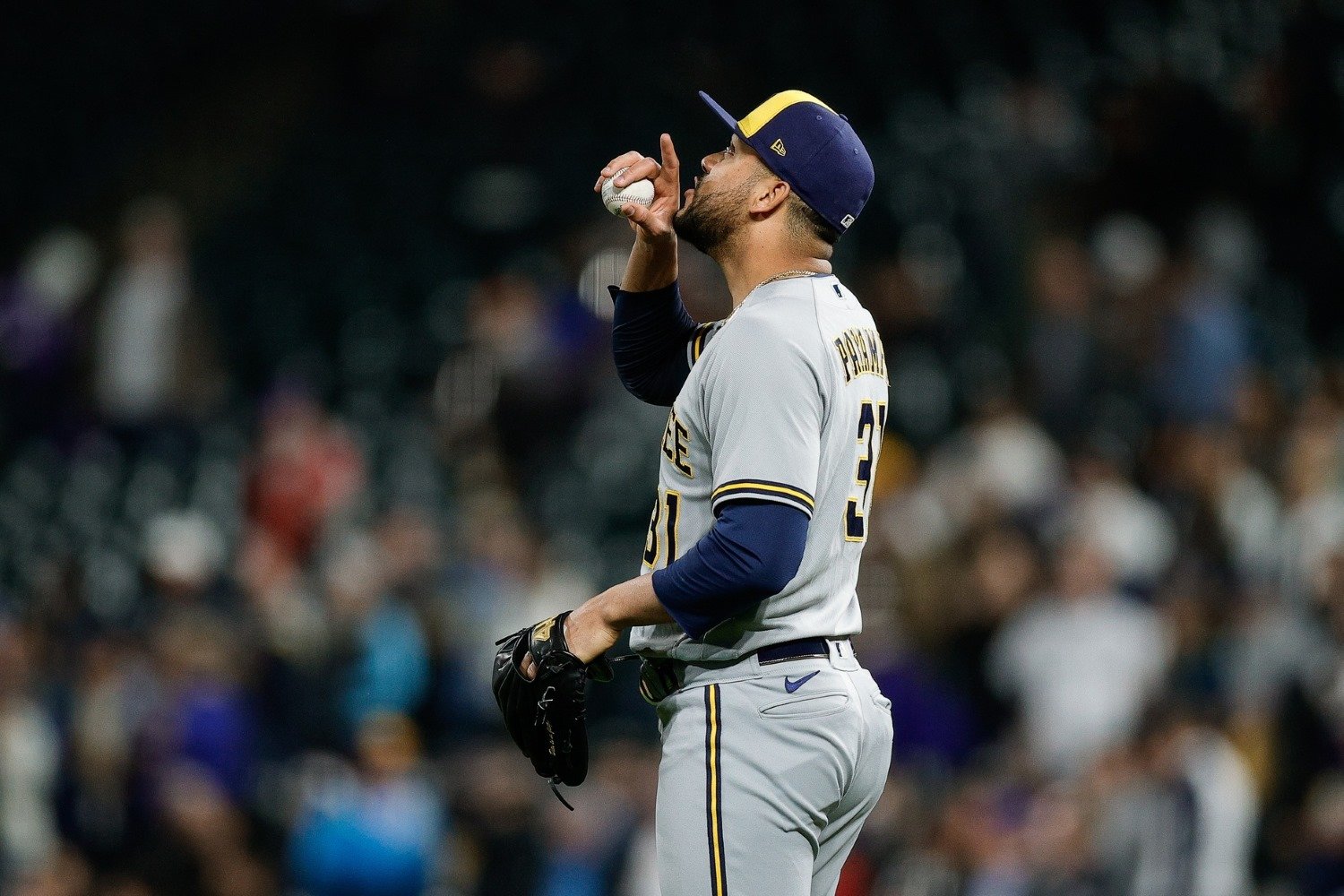 The harsh economic realities exposed by the departure of Craig Counsell may drive the blockbuster moves that get the heat in the hot stove season, but the Brewers have a crowd in the outfield, the middle infield, and the bullpen. With their surfeit of talent, they could make some under-the-radar deals to address some areas of concern. At the same time, these deals won’t involve the team's top young prospects. In these scenarios, the Crew keeps their young outfielders (Sal Frelick, Jackson Chourio, Joey Wiemer and Garrett Mitchell) and the effective Tyrone Taylor, plus face of the franchise Christian Yelich. Here are five deals the Crew could make this winter, all rated as either fair or a minor overpay by BaseballTradeValues.com: Cleveland Guardians get RHP Joel Payamps for RHP Hunter Gaddis and Competitive Balance Round A pick Payamps pitched well out of the bullpen early in 2023 and became a top setup man for Devin Williams, but he has arguably been bypassed for late-inning work by Abner Uribe and Trevor Megill. That said, his 169 ERA+ would be tops in the Guardians bullpen. In return, the Crew gets starter Hunter Gaddis and Cleveland’s Competitive Balance A pick. Gaddis gives the Brewers another starter as insurance behind Wade Miley and Joe Ross, both of whom have been known to spend time on the injured list in the past. Adding the pick makes up the difference between the value of Payamps, who still has three years of team control left, and the largely fungible Gaddis. Kansas City Royals get LHP Hoby Milner and Competitive Balance Round B pick for LHP James McArthur and Competitive Balance Round A pick Milner had been an unsung hero and earned a late-inning spot for the Crew, but the Royals’ desperation for bullpen help makes dealing him to Kansas City viable. (This one is complicated by the late-breaking news, which we learned Sunday, that they signed lefty Will Smith to stabilize that unit, but it's still possible to make it work.) While Milner is behind several other relievers on the Crew, he could be an invaluable weapon for Kansas City--especially if Smith assumes the closer role there. In return, the Crew gets reliever James McArthur and the Royals’ 2024 Competitive Balance A pick. McArthur could be a lefty in the pen to replace Milner, but with a lot more team control (and he comes a bit cheaper). The Royals’ Competitive Balance A pick is also a nice add for the Crew, even if they have to chip in their own Competitive Balance B pick to make this deal work. Colorado Rockies get OF Blake Perkins and SS Freddy Zamora for C David Isea, OF Aldalay Kolokie, and LHP Ervin Torres With Chourio’s long-term deal in place, the Brewers will need to clear a 40-man roster spot. In this case, Colorado, who had poor performance from their outfielders in 2023, could be a nice destination for Perkins, whose spot on the Nashville-Milwaukee shuttle could be in jeopardy after the addition of Chris Roller. Zamora seems similarly blocked by the acquisitions of Vinny Capra and Oliver Dunn. The Crew relieves some of their middle-infield congestion, and the Rockies get potential help in the outfield and middle infield in return for three rookie-ball prospects. Cincinnati Reds get RHP Elvis Peguero and SS Eduardo Garcia for Comp Balance B pick and $500,000 in international bonus money Peguero started off well, but got hit harder as the season went on and has been bypassed by multiple relievers. That said, Peguero and Eduardo García can be moved to the Reds for a Competitive Balance B pick and $500,000 in international bonus money for the Crew to bolster their farm. The Reds are in just the right place to trade a little long-term value for the kind of pitching depth that they couldn't maintain down the stretch last season, as they faded from playoff contention. Pittsburgh Pirates get LHP Ethan Small for 2B Wesley Zapata and $594,800 in international bonus money Small has been on the Milwaukee-Nashville shuttle for two seasons and is on his last year of being optionable. With McArthur (or Milner, if you couldn't swing that deal) on the roster, Clayton Andrews having one more option year, and Aaron Ashby as an option from the bullpen, he could be moved. In return, the Crew gets second baseman Wesley Zapata, a switch-hitter with excellent OBP skills who’s posted solid numbers in the Pirates system, and some international bonus money. Overall, these moves don’t seem like much, but the Brewers would get a starter with lots of team control for depth; a left-handed reliever whom they'd control through 2030; a young outfield prospect who can replace the outfielders dealt to acquire Dunn and Jake Bauers; another young pitching prospect; a young catcher; and a middle-infield prospect. They would also net two additional picks in the 2024 MLB draft, both of which would be in the Competitive Balance A round--giving the Crew a very good chance to stock their farm system with blue-chip talent with three picks in the top 40. They'd even add almost $1.1 million in international bonus money to bolster their farm system further and seek the next Chourio. What do you think about these trades? Would you make these moves? Who else would you consider dealing? Let us know in the comments below.
- 1 comment
-
- 1
-
-
- elvis peguero
- joel payamps
- (and 1 more)
-
They'd really be risking a run into luxury tax territory if they did - because they'd probably want to get Burnes locked up to some sort of deal, and I see Milwaukee holding out for a very good haul.
-
Brewers Interested in Isiah Kiner-Falefa
Harold Hutchison replied to Jastro's topic in Transaction Rumors & Proposals
I look at IKF, and ask... why? Monasterio and Turang are two decent SS options, there's Devanney and Capra at AAA, Zamora and even Dunn in AA. I'd rather offer Adames three years at $20 million per year, and see if Baez's bat holds up. If Baez pulls a Chourio (and based on a VERY low K rate and the increase in power from 2022-2023, he could), the Crew could have a nice orderly transition from A to B in 2026-2027. -
I'd probably stick Flores in Carolina at the start of the year. He's had two in the DSL, and quite frankly, since all the outings were starts, why put him in the ACL?
- 11 replies
-
- 1
-
-
- logan henderson
- enniel cortez
- (and 3 more)
