Underachiever
-
Posts
3,972 -
Joined
-
Last visited
-
Days Won
9
Content Type
Profiles
Forums
Blogs
Events
News
2026 Milwaukee Brewers Top Prospects Ranking
Milwaukee Brewers Videos
2022 Milwaukee Brewers Draft Picks
Milwaukee Brewers Free Agent & Trade Rumors, Notes, & Tidbits
Guides & Resources
2023 Milwaukee Brewers Draft Picks
2024 Milwaukee Brewers Draft Picks
The Milwaukee Brewers Players Project
2025 Milwaukee Brewers Draft Pick Tracker
2026 Milwaukee Brewers Draft Tracker: Picks & Bonuses
Store
Downloads
Gallery
Everything posted by Underachiever
-
What did Ernie Grunfeld ever do to you?
-

Uribe will serve suspension tonight
Underachiever replied to markedman5's topic in Milwaukee Brewers Talk
Chris Carpenter can look his son in the eye today. -
Brewers (Drohan) vs Reds (Lowder): 6/24/26, 6:10pm
Underachiever replied to Brock Beauchamp's topic in Archived Game Threads
Murph was really managing to win those games, especially last night, with his bullpen usage. I fully expected Grant Anderson at some point the last two nights, but Murphy went with his A team of Ashby, Uribe, Megill. Any thought if Anderson is quietly hurt? Hasn't pitched since last Thursday, and he has been quite good this year. -
NL Central Discussion 2026
Underachiever replied to Frisbee Slider's topic in Milwaukee Brewers Talk
This is the play in question. I mean, part of Bauers' heel obviously missed the bag...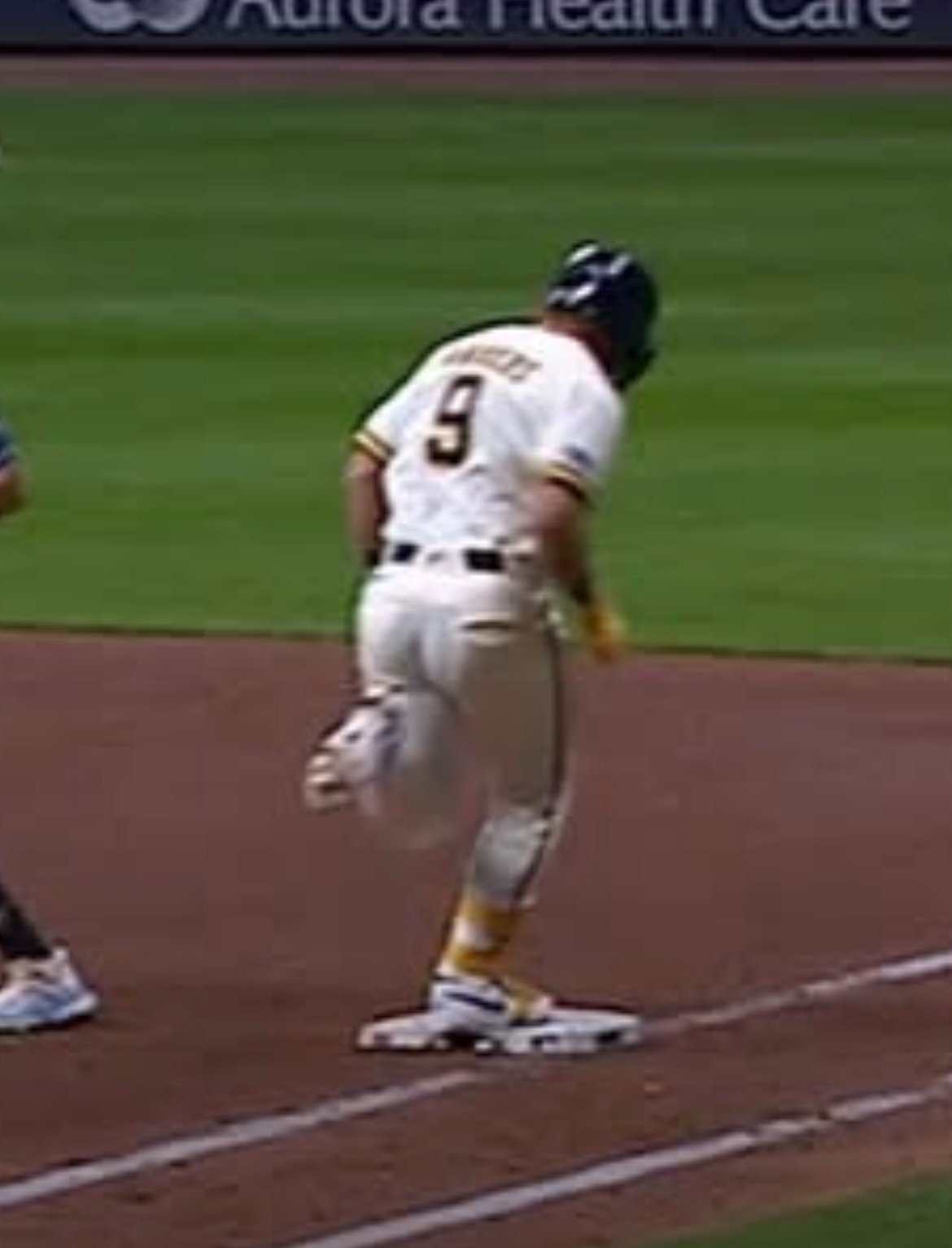
-
Brewers (Sproat) vs Reds (Lodolo): 6/23/26, 6:10pm
Underachiever replied to Brock Beauchamp's topic in Archived Game Threads
This whole series is boring af. World Cup time. -
Brewers (Sproat) vs Reds (Lodolo): 6/23/26, 6:10pm
Underachiever replied to Brock Beauchamp's topic in Archived Game Threads
Very Brewersy start to the inning -
Brewers (Sproat) vs Reds (Lodolo): 6/23/26, 6:10pm
Underachiever replied to Brock Beauchamp's topic in Archived Game Threads
1, according to the box score -
Brewers (Sproat) vs Reds (Lodolo): 6/23/26, 6:10pm
Underachiever replied to Brock Beauchamp's topic in Archived Game Threads
Series so far: 13 innings, 3 runs, 5 hits, 3 walks, combined WHIP of .31 -
Not a ton of college baseball players get full scholarships. It has changed some in the past few years, but it is not uncommon for college players to get partial rides and supplement it with financial aid of some sort. I am curious how NCAA baseball coaches feel about this. Were they surprised when the "no drafting high-school kids" made the news? I don't know what the NIL game is for college baseball, but cannot imagine that it is as lucrative as basketball or football. This is from an article I found online on baseball NIL. I have no idea how good the information is. Why the Top Doesn’t Tell the Whole Story Here’s the part the rankings miss. That Top 13 represents 13 players. College baseball rosters average roughly 42 players each — and programs split just 11.7 scholarships among all of them. Men’s basketball, by comparison, has 13 scholarships for rosters of about 16. Partial scholarships are the baseball norm. For most players, NIL income isn’t a windfall on top of a free ride — it’s how they close the gap on tuition, housing, and the cost of staying in school. As Royals pitcher Chris Stratton put it, NIL can genuinely help “the kids whose parents don’t have a lot.” And the real market reflects that. The headline valuations belong to a tiny group of draft-eligible stars. Below them are thousands of D1, D2 and D3 baseball players whose NIL reality looks nothing like the SportsGrid list. For them, a deal is more likely to be a few hundred dollars from a local business or a hometown fan than a national apparel partnership. Source: https://blog.rallyfuel.com/highest-paid-college-baseball-nil-deals-2026 My final point is that I think a lot of what we are seeing from owners is them getting ahead of the public relations battle before the real negotiations. Some of these changes being floated are probably not realistic, but can be used as a chip later to come off of it.
-
Brewers (TBD) vs Reds (Singer): 6/22/26, 6:10pm
Underachiever replied to Brock Beauchamp's topic in Archived Game Threads
Good win -
Brewers (TBD) vs Reds (Singer): 6/22/26, 6:10pm
Underachiever replied to Brock Beauchamp's topic in Archived Game Threads
I was wrong. -
Brewers (TBD) vs Reds (Singer): 6/22/26, 6:10pm
Underachiever replied to Brock Beauchamp's topic in Archived Game Threads
Feels like a Grant Anderson day -
Brewers (Harrison) vs Braves (Sale): 6/20/26, 3:10pm
Underachiever replied to Brandon Glick's topic in Archived Game Threads
Man, when they said Rowdy Tellez was pinch-hitting I thought it was some joke I didn’t understand. Then I see Rowdy in the batter’s box. Didn’t know he was still in MLB -
NL Central Discussion 2026
Underachiever replied to Frisbee Slider's topic in Milwaukee Brewers Talk
Now 7. -
NL Central Discussion 2026
Underachiever replied to Frisbee Slider's topic in Milwaukee Brewers Talk
Cubs hang six on the Blue Jays in the first. Gausman walks four and gives up a grand slam. Ugly. -
In this ranking, the Brewers are third in MLB in Defensive challenges (+2.9), but their hitters are 25th (-0.8).
-
The proposal to ban high school players is stunning. It sounds like MLB would like the colleges to take on the development costs of young talent. The article cited how colleges "have made college baseball an increasingly important pathway that is producing major league-ready talent at an accelerated rate." Is MLB jealous that the NFL has a ready-made minor league and they don't? There aren't enough college baseball programs to take on the additional players and give them playing time for their development. And if the UW is any indication, I don't see schools adding baseball anytime soon. MLB seems to be telling us that colleges, with their aluminum bats, limited seasons, and practice limits, will do a better job at refining talent than if the player makes baseball a full-time job in the various Rookie leagues, A ball, etc as they do now. I don't buy it. And the international 18-year-olds would be eligible for the international draft, so I guess they would still go through what's left of the minor league system? Because they aren't going to college.
-
Come on, who else you gonna play there? Is Jake B gonna bring that one back? I would rank home run robbery far down the list of what makes a good outfielder.
-
Bummer on that rocket from Joey. Nice play by the RF
-
I think the player gets to decide if he gets surgery or not. Brewers can't force anyone to get cut on.
-
Brewers Archived Media Links - 2026
Underachiever replied to Jim Goulart's topic in Milwaukee Brewers Talk
i assumed that Hook always covered his mouth with his hand when he talks. -
That ball was in a hurry to get out!
-
That was a weird decision. I hate it.
-
Ho hum. Another 0 zero runs in 5+ by the starter (Runner on first pending). Just remarkable the way that the starters keep the Brewers in the games, even when the offense starts slowly.
-
Rickie Weeks would have thought pitch 5 was center cut and swung at it.