



Jake McKibbin
-
Posts
2,395 -
Joined
-
Last visited
-
Days Won
6
Content Type
Profiles
Forums
Blogs
Events
News
2026 Milwaukee Brewers Top Prospects Ranking
Milwaukee Brewers Videos
2022 Milwaukee Brewers Draft Picks
Milwaukee Brewers Free Agent & Trade Rumors, Notes, & Tidbits
Guides & Resources
2023 Milwaukee Brewers Draft Picks
2024 Milwaukee Brewers Draft Picks
The Milwaukee Brewers Players Project
2025 Milwaukee Brewers Draft Pick Tracker
2026 Milwaukee Brewers Draft Tracker: Picks & Bonuses
Store
Downloads
Gallery
Everything posted by Jake McKibbin
-
I couldn't agree more, and perhaps should have stretched this into two pieces. Rodriguez has done better vs lefty's than righty's so far this season, and his main reason for success is the minuscule walk rate. Rodriguez 2.5% rate is just incredible and it's allowing him to go deep into starts than, as you say, they would usually allow at that age. Control like that is unusual as a teenager and it'll be interesting to see how the stuff holds up moving up levels. That being said, an almost 14% whiff rate while pounding the strike zone is pretty damn impressive. Haha thanks very much, eloquent and sexy is a new one for me! Yoho's arsenal involves a: A two seamer at 92-93 mph with over 202 of arm side run A slider/curveball (it has so much depth it sometimes gets miscategorised as a curve, but I think it's a slider) with serious two plane depth glove side A cutter in the high 80's he added this summer And last but certainly not least, an airbending changeup to rival Devin Williams Perhaps the best aspect of it all for Yoho is all his pitches have extreme movement profiles, and he has both two fastballs and tow breaking pitches that move in opposite directions. It's a hitting nightmare Shane Smith is one I really wanted to talk about, and can't wait to get more data about him and his arsenal when he reaches Triple A. He has good command and works ahead in the count well. Although his stuff doesn't necessarily stand out like some of the others mentioned, it's his combination of command and stuff that really stands out in his results. A 15% swinging strike rate is well above average and my favourite pitch is that incredible curveball. He leans most heavily on the fastball/curve but he does have a decent slider as well for a third pitch. If the Brewers can throw a changeup in there that could be a big difference maker as his splits are noticeable with a 16.8% swinging strike rate to righties vs just 12.9% to lefties. I think the main reason for him moving into the rotation was injury based. Starting out of the bullpen Smith had only pitched 10 1/3 innings at Wake Forest and that included a TJ recovery in there. With a full season behind him, they maybe felt they could start stretching him out more and see how he handles it which, so far, is with absolute aplomb.
- 14 replies
-
- 2
-

-

-
- logan henderson
- josh knoth
- (and 5 more)
-
He very well may end up spending most of this year at Double A and begin next year at Triple A with a delayed ramp up perhaps. I think it all hinges on that slider, can he locate it well enough to be an effective third offering. If he can make strides here then he may force the Brewers hand in chancing adding him early next year and just seeing how well the body holds up. Thanks! I really enjoyed writing it, the fact I couldn't go as deep into Smith and Hunt as I'd have wanted without writing a novel both plagues me and excites me in equal measures
- 14 replies
-
- 1
-
-
- logan henderson
- josh knoth
- (and 5 more)
-
If you want the lowdown on the Brewers next wave of pitching, look no further. It appears the 2023 draft class has brought a lot of new, young arms into the Brewers development system and it seems they may have struck gold. Image courtesy of Craig Yoho Sixteen of the Brewers' 21 picks in the 2023 draft were pitchers, especially towards the later rounds, and it seems these rounds may have borne a lot of fruit with some talented arms such as Bishop Letson, Brett Wichrowski, Hayden Robinson, and more. With a lot of high-upside arms have taken considerable jumps already; the Brewers have a massive variety of arms that could all be elite in one way or another. Add that to some already strong pitching that has taken leaps forward, and you will have a recipe for more dominant pitching in the next few years. One of the best indicators of a pitcher’s raw stuff is their swinging strike rate, especially in the lower minors, where defenses can be iffy at best, so it’s better to focus on that which a pitcher can control. Being able to miss bats with regularity is perhaps the best indicator of quality “stuff,” we’ll use that and other factors to look beyond mere ERA totals that may not tell the whole story. Logan Henderson - Double-A, Biloxi Shuckers Key Statistics - 17.3% swinging strike rate; 33.1% whiff rate; 1.56 ERA Henderson missed the month of April due to an oblique strain during spring training, and his debut was met with anticipation. Over the offseason, reports were coming out that Henderson had added a couple of ticks to his fastball velocity, which now sits 93-95 mph, and some serious induced vertical break, which averages an elite 18-20 inches of ride. Add that to his deadly, unique changeup and improving slider, and it could be said that he’s the best guaranteed starting pitching prospect the Brewers have. Henderson has strong command to go along with his raw stuff, spending most of last season at Low-A Carolina before jumping to High-A at the end of the year. He ramped up there in May this season before quickly earning promotion to Double-A Biloxi and has started to show why some prospect hounds have been raving about him as a breakout star this season. He pitched on Saturday evening and threw 5 ⅔ innings of 10 strikeout ball with one of the very few mistake pitches getting hit for a two-run homer by James Triantos of the Cubs. Usually, the jump to Double-A takes some adjustment for any player. Logan Henderson struck out ten batters and walked none, but Henderson has taken it like a duck to water. His 10K performance in just 77 pitches showcases both his efficiency and wipeout pitching mix that leaves a lot to salivate over. His fastball has seen a lot more swing and miss so far this season, with those improved characteristics making a noticeable difference, but the biggest area for Henderson to improve is the slider. Currently, the command isn’t quite the same as he has on the changeup and fastball, and that can make it a waste pitch a little too often. When he gets it right, it has some sharp, late break that should let it play well, but he needs to start hitting his spots a little more often. If he can, the fastball and changeup could be even more effective in a true three-pitch mix, and at 22, he’s maybe got a little more physical development in the tank. He still has work to do, but Henderson could be a quality number three starter at some point next season for the Brewers. Yujanyer Herrera - High-A Wisconsin Timber Rattlers Key Statistics - 16.5% swinging strike rate, 32.7% whiff rate Yujanyer Herrera is a 20-year-old free agent signing in 2019 who didn’t play his first game for a Milwaukee affiliate until 2021 due to the Covid season. His slider moves like a wiffle ball, and a mid-90s fastball have seen him dominate low A and earn a promotion to High-A Wisconsin this season. Again, as a young pitcher for the level, Herrera was the only pitcher in Low-A under 21 with a strikeout rate above 35% (he sat at 42%). There have been some struggles early adjusting at High-A, but he’s still showing above-average swing and miss at the level, and when he settles, there’s no reason he can’t begin to dominate just as he did at Low-A. Herrera is perhaps a more underrated arm in the Brewers system, in part due to a lack of helium as a prospect. But he’s standing out emphatically this season with at least one plus pitch in the slider that overmatches hitters at this level. The fastball is well-commanded at the top of the zone with good velocity, sitting around 93-94 mph, and the changeup is developing but showing good characteristics with some nice late fade. When I say the slider is nasty, this is what I mean: Bishop Letson - Low-A Carolina Mudcats Key Statistics - 14.4% swinging strike rate, 31.8% whiff rate Bishop Letson was the 11th-round pick of the 2023 draft and is one of the more intriguing arms out there. The Brewers area scout who picked him up talked about his changeup making some big strides in 2023, along with some velocity jumps on the fastball, which reached 94 mph (it was sitting in the upper 80s earlier in the season). He threw a lot of strikes, but one of the most interesting things was that he’d never had a pitching coach, and the Brewers thought they could take him forward. They see a ton of projectability in his frame and arm, and it’s been shown so far this season. Letson is still just 19 and young for Low-A, which is important to note here, but he’s more than held his own at the level. The slider, for now, looks downright nasty, while the fastball, like Henderson’s, appears to have some good ride at the top of the zone to help him miss bats and get some ugly swings. As with some other Low-A/High-A level arms, the ERA isn’t quite telling of his talent, and a little more polishing will see that drop significantly, but he’s missing bats regularly and looks like someone in a couple of years that could be a top 100 prospect. He looks poised and balanced on the mound, and you’d expect to see his results tick upwards as the season progresses. Josh Knoth - Low-A Carolina Mudcats Key Statistics - 13.5% swinging strike rate; 29.5% whiff rate Josh Knoth was a comp A pick in the 2023 draft with some pitches that are just mana for a statistical scouting department. His fastball took a big jump in 2023 from the low 90s to hitting 98 mph at the end of the season, combined with a 3,000 rpm slider and curveball, showing a real feel for a spin. Knoth is still just 18 years old and has been plagued by a few command struggles early on but of late his results have been a lot more promising. Over the last 30 days, Knoth boasts a 17.2% swinging strike rate and 33.5% whiff rate overall, mowing down hitters left and right with some truly nasty offerings. He sits 95-96 mph, which at his age should give some strong long-term projectability to adding more velocity. He may have the highest ceiling as a pitcher for anyone not named Jacob Misiorowski. Those breaking pitches combined with an upper 90s fastball would be truly deadly. These four are perhaps my favorite pitchers to watch in the Brewers system, but I’m leaving out countless others here: Brett Wichrowski - Double-A Biloxi Wichrowski was the Brewers 13th round pick in the 2023 draft, and the Brewers' development system has seen him jump to a high 90’s sinker with incredible arm-side movement to complement an electric slider that, to steal prospect Tilt’s vocabulary, is just goofy. He’s taking some time to adjust to Double-A and has some big platoon splits so far with struggles against left-handers, but that raw stuff can play if the Brewers can help him develop a changeup offering. Hayden Robinson - ACL Brewers 14th round pick in the 2023 draft (can you see a trend here?) Robinson has started the season in the Arizona Complex League, and at just 19 years old, he’s absolutely shoved. Twenty-eight strikeouts in 18 ⅔ innings, he’s struck out 16 in his last eight innings and looks a surefire bet to be promoted to Low-A Carolina before too long. He appears to have a strong multi-pitch arsenal with a changeup and slider baffling hitters at the complex league. Craig Yoho - Double-A Biloxi Perhaps the name most recognizable of this lot, Yoho was the eighth-round pick in 2023 for just $10,000 as a signing bonus. His arsenal is quite freakish, and he’s progressed rapidly from Low-A to Double-A with an eye on maybe even impacting the majors later this year. Yoho has an airbender similar to Devin Williams, who has hitters looking utterly confused, with a 1.33 ERA in 27 innings pitched this season. Until his last outing at Double-A, he had a negative FIP and boasted a 17% swinging strike rate and 38% whiff rate overall at Double-A. It may not be long before he’s in Nashville and eyeing up a major league spot as the Brewers chase the playoffs. I haven't even mentioned names like Ryan Birchard, Mark Manfredi, and Jason Woodward, who, with more playing time, could fit right into this bracket. Woodward and Birchard both have the potential to soar through the system if they can stay healthy. Woodward is currently recovering from TJ surgery, and Birchard is close to making his return after a couple of months out. Then you have relievers turned starters like Shane Smith and the 2023 undrafted KC Hunt, who are just tearing up in High-A and Double-A. It's wealth beyond imagination in the pitching department with such strength in depth. View full article
- 14 replies
-
- 6
-
-
-
- logan henderson
- josh knoth
- (and 5 more)
-
The Brewers Farm System Is (Once Again) An Arm Factory
Jake McKibbin posted an article in Minor Leagues
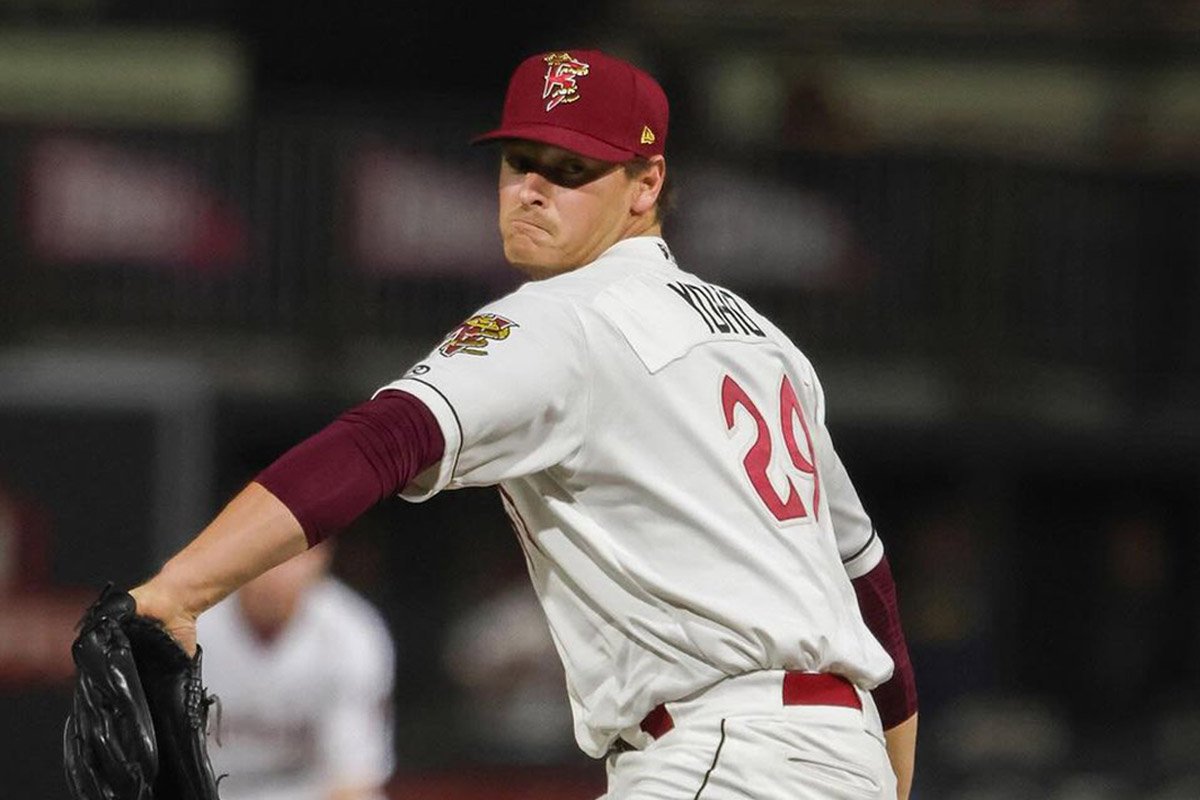 Sixteen of the Brewers' 21 picks in the 2023 draft were pitchers, especially towards the later rounds, and it seems these rounds may have borne a lot of fruit with some talented arms such as Bishop Letson, Brett Wichrowski, Hayden Robinson, and more. With a lot of high-upside arms have taken considerable jumps already; the Brewers have a massive variety of arms that could all be elite in one way or another. Add that to some already strong pitching that has taken leaps forward, and you will have a recipe for more dominant pitching in the next few years. One of the best indicators of a pitcher’s raw stuff is their swinging strike rate, especially in the lower minors, where defenses can be iffy at best, so it’s better to focus on that which a pitcher can control. Being able to miss bats with regularity is perhaps the best indicator of quality “stuff,” we’ll use that and other factors to look beyond mere ERA totals that may not tell the whole story. Logan Henderson - Double-A, Biloxi Shuckers Key Statistics - 17.3% swinging strike rate; 33.1% whiff rate; 1.56 ERA Henderson missed the month of April due to an oblique strain during spring training, and his debut was met with anticipation. Over the offseason, reports were coming out that Henderson had added a couple of ticks to his fastball velocity, which now sits 93-95 mph, and some serious induced vertical break, which averages an elite 18-20 inches of ride. Add that to his deadly, unique changeup and improving slider, and it could be said that he’s the best guaranteed starting pitching prospect the Brewers have. Henderson has strong command to go along with his raw stuff, spending most of last season at Low-A Carolina before jumping to High-A at the end of the year. He ramped up there in May this season before quickly earning promotion to Double-A Biloxi and has started to show why some prospect hounds have been raving about him as a breakout star this season. He pitched on Saturday evening and threw 5 ⅔ innings of 10 strikeout ball with one of the very few mistake pitches getting hit for a two-run homer by James Triantos of the Cubs. Usually, the jump to Double-A takes some adjustment for any player. Logan Henderson struck out ten batters and walked none, but Henderson has taken it like a duck to water. His 10K performance in just 77 pitches showcases both his efficiency and wipeout pitching mix that leaves a lot to salivate over. His fastball has seen a lot more swing and miss so far this season, with those improved characteristics making a noticeable difference, but the biggest area for Henderson to improve is the slider. Currently, the command isn’t quite the same as he has on the changeup and fastball, and that can make it a waste pitch a little too often. When he gets it right, it has some sharp, late break that should let it play well, but he needs to start hitting his spots a little more often. If he can, the fastball and changeup could be even more effective in a true three-pitch mix, and at 22, he’s maybe got a little more physical development in the tank. He still has work to do, but Henderson could be a quality number three starter at some point next season for the Brewers. Yujanyer Herrera - High-A Wisconsin Timber Rattlers Key Statistics - 16.5% swinging strike rate, 32.7% whiff rate Yujanyer Herrera is a 20-year-old free agent signing in 2019 who didn’t play his first game for a Milwaukee affiliate until 2021 due to the Covid season. His slider moves like a wiffle ball, and a mid-90s fastball have seen him dominate low A and earn a promotion to High-A Wisconsin this season. Again, as a young pitcher for the level, Herrera was the only pitcher in Low-A under 21 with a strikeout rate above 35% (he sat at 42%). There have been some struggles early adjusting at High-A, but he’s still showing above-average swing and miss at the level, and when he settles, there’s no reason he can’t begin to dominate just as he did at Low-A. Herrera is perhaps a more underrated arm in the Brewers system, in part due to a lack of helium as a prospect. But he’s standing out emphatically this season with at least one plus pitch in the slider that overmatches hitters at this level. The fastball is well-commanded at the top of the zone with good velocity, sitting around 93-94 mph, and the changeup is developing but showing good characteristics with some nice late fade. When I say the slider is nasty, this is what I mean: Bishop Letson - Low-A Carolina Mudcats Key Statistics - 14.4% swinging strike rate, 31.8% whiff rate Bishop Letson was the 11th-round pick of the 2023 draft and is one of the more intriguing arms out there. The Brewers area scout who picked him up talked about his changeup making some big strides in 2023, along with some velocity jumps on the fastball, which reached 94 mph (it was sitting in the upper 80s earlier in the season). He threw a lot of strikes, but one of the most interesting things was that he’d never had a pitching coach, and the Brewers thought they could take him forward. They see a ton of projectability in his frame and arm, and it’s been shown so far this season. Letson is still just 19 and young for Low-A, which is important to note here, but he’s more than held his own at the level. The slider, for now, looks downright nasty, while the fastball, like Henderson’s, appears to have some good ride at the top of the zone to help him miss bats and get some ugly swings. As with some other Low-A/High-A level arms, the ERA isn’t quite telling of his talent, and a little more polishing will see that drop significantly, but he’s missing bats regularly and looks like someone in a couple of years that could be a top 100 prospect. He looks poised and balanced on the mound, and you’d expect to see his results tick upwards as the season progresses. Josh Knoth - Low-A Carolina Mudcats Key Statistics - 13.5% swinging strike rate; 29.5% whiff rate Josh Knoth was a comp A pick in the 2023 draft with some pitches that are just mana for a statistical scouting department. His fastball took a big jump in 2023 from the low 90s to hitting 98 mph at the end of the season, combined with a 3,000 rpm slider and curveball, showing a real feel for a spin. Knoth is still just 18 years old and has been plagued by a few command struggles early on but of late his results have been a lot more promising. Over the last 30 days, Knoth boasts a 17.2% swinging strike rate and 33.5% whiff rate overall, mowing down hitters left and right with some truly nasty offerings. He sits 95-96 mph, which at his age should give some strong long-term projectability to adding more velocity. He may have the highest ceiling as a pitcher for anyone not named Jacob Misiorowski. Those breaking pitches combined with an upper 90s fastball would be truly deadly. These four are perhaps my favorite pitchers to watch in the Brewers system, but I’m leaving out countless others here: Brett Wichrowski - Double-A Biloxi Wichrowski was the Brewers 13th round pick in the 2023 draft, and the Brewer's development system has seen him jump to a high 90’s sinker with incredible arm-side movement to complement an electric slider that, to steal prospect Tilt’s vocabulary, is just goofy. He’s taking some time to adjust to Double-A and has some big platoon splits so far with struggles against left-handers, but that raw stuff can play if the brewers can help him develop a changeup offering. Hayden Robinson - ACL Brewers 14th round pick in the 2023 draft (can you see a trend here?) Robinson has started the season in the Arizona Complex League, and at just 19 years old, he’s absolutely shoved. Twenty-eight strikeouts in 18 ⅔ innings, he’s struck out 16 in his last eight innings and looks a surefire bet to be promoted to Low-A Carolina before too long. He appears to have a strong multi-pitch arsenal with a changeup and slider baffling hitters at the complex league. Craig Yoho - Double-A Biloxi Perhaps the name most recognizable of this lot, Yoho was the eighth-round pick in 2023 for just $10,000 as a signing bonus. His arsenal is quite freakish, and he’s progressed rapidly from Low-A to Double-A with an eye on maybe even impacting the majors later this year. Yoho has an airbender similar to Devin Williams, who has hitters looking utterly confused, with a 1.33 ERA in 27 innings pitched this season. Until his last outing at Double-A, he had a negative FIP and boasted a 17% swinging strike rate and 38% whiff rate overall at Double-A. It may not be long before he’s in Nashville and eyeing up a major league spot as the Brewers chase the playoffs. I haven't even mentioned names like Ryan Birchard, Mark Manfredi, and Jason Woodward, who, with more playing time, could fit right into this bracket. Woodward and Birchard both have the potential to soar through the system if they can stay healthy. Woodward is currently recovering from TJ surgery, and Birchard is close to making his return after a couple of months out. Then you have relievers turned starters like Shane Smith and the 2023 undrafted KC Hint, who are just tearing up in High-A and Double-A. It's wealth beyond imagination in the pitching department with such strength in depth.
- 14 comments
-
- 4
-
-
-
- logan henderson
- josh knoth
- (and 5 more)
-
Yeah I think so. I'm aware a rental shortstop usually doesn't bring in a top 100 prospect, but if someone genuinely wants the Crew to trade him they'll have to be ready to overpay and to have their arm twisted. Willy means too much to this team for that not to be the case. Also if you're looking at an October run, you need players who rise to the occasion and that is most certainly something Adames has shone at. If you want him, it ain't coming cheap.
-
Well that doesn't look like a fair trade at all.. To save the clickbait links, it's Willy Adames and Mike Boeve for Dodgers no .12 prospect Landon Knack
-
Sorry just seeing this now! I think Myers and Rodriguez can be solid back end starters but I tried to look at this less from a regular season point of view and instead, given where the Brewers currently stand, from a playoff perspective. If they lined up a three man starting rotation, it would likely be Peralta, Rea and one other. Now I'm not saying that couldn't work, and I've a theory that ground ball pitchers can be perhaps more successful in the playoffs than high strikeout/fly ball pitchers but it just looks a little light and from that perspective I didn't include either in this particular discussion. Definitely not trying to undervalue either though and I think they'll both make starts for the Brewers next season.
-
I'm tempted to agree, and may involve one of Wilken/Black + Misiorowski. I do think it's a trade that can be great or horrific, and it makes me nervous but I can see sense in it in some ways. The White Sox maybe aren't helping their cause in the build up to the deadline, they seem ready to test if his arm can handle it
-
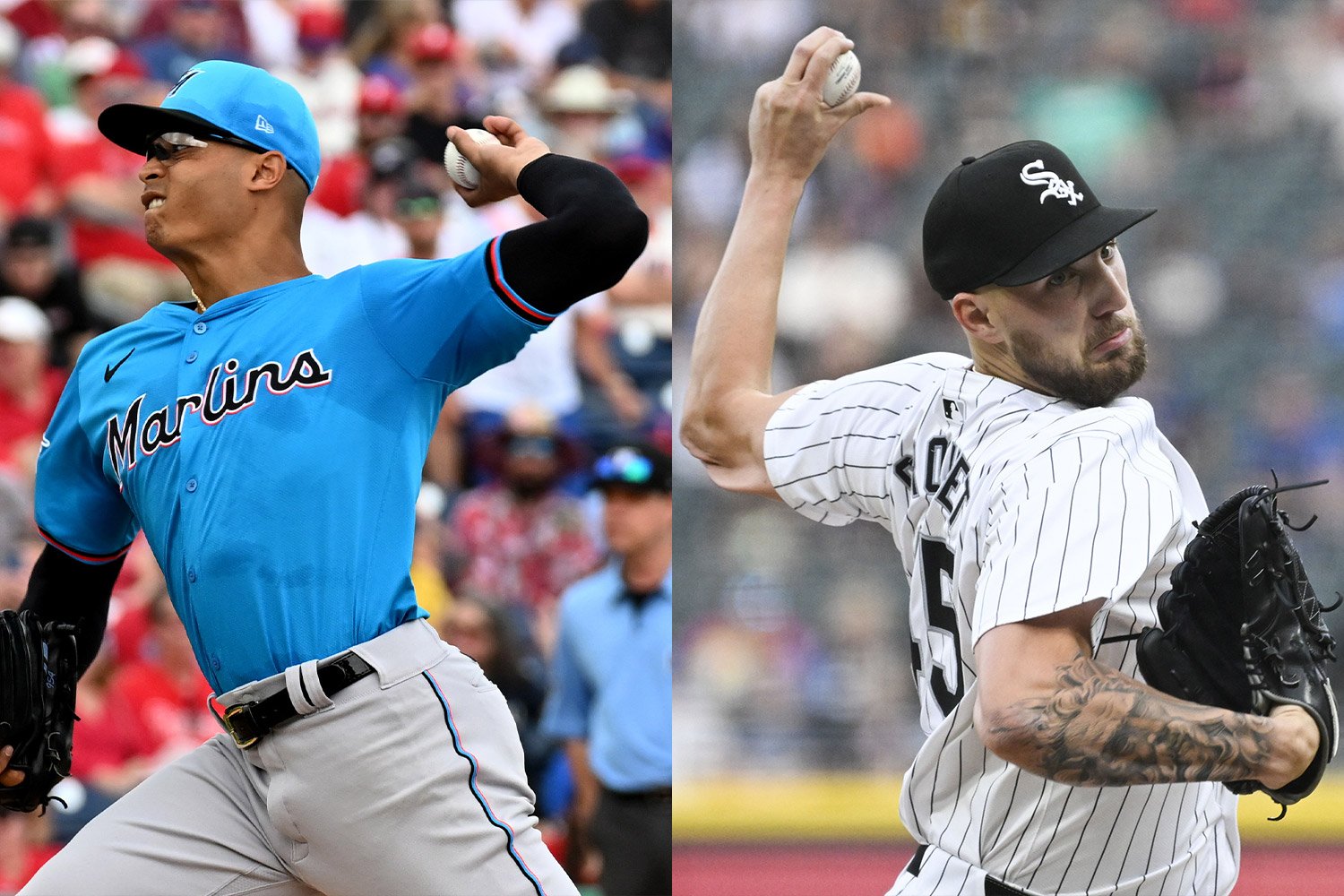 The Brewers have spent several years stocking up their minor league quality using impressive drafting to become one of the top farm systems in the league. They have a particular need this year, and potentially into the next two years as well and they could address that in the here and now with several viable options on the table. Their last big trade involved trading four prospects to the Marlins for Christian Yelich. Can they replicate the success of that deal by going big on a top-of-the-rotation arm? Why Does Investing Long Term Make Sense? The Brewers' last “competitive window” may have shut with the departure of Corbin Burnes, or at least many expected it to disappear gracefully after the loss of Brandon Woodruff and Wade Miley to season-ending injuries. It appears those were mistaken, as the Brewers have formed a capable offensive lineup just as their pitching unit has come undone. Peralta’s struggles have perhaps been the biggest issue, as his promotion to ace of the staff started well before petering out. Despite all the talent in the world, Peralta’s command, especially in two-strike counts, has been found wanting and left him unable to eat innings with any of the consistency he’s capable of. Pat Murphy recently talked about Peralta wanting to carry the rotation on his back, and that stress and self-made pressure were perhaps weighing him down, something a new acquisition at the top of the rotation may help. Then you factor in the injuries to DL Hall, who was touted for a breakout like the one Garrett Crochet is experiencing in his bullpen-to-starter conversion, Wade Miley’s UCL, and injuries to Joe Ross, Jakob Junis, and Robert Gasser after strong starts, and the Brewers are left not only thin on starting arms but also on high-quality starting arms. Then you look at next season; Peralta is still under club control with an option, as is Colin Rea and the return of Brandon Woodruff looms large. It seems unreasonable to expect Woodruff, after a surgery that has grounded many a pitcher for good, to be his indomitable old self, and there is a chance the Brewers may waste what is a potentially very strong lineup. Jacob Misiorowski, as a starter at least, has a long way to go, and Logan Henderson isn’t quite a top-of-the-rotation caliber arm. Other than that, the Brewers don’t have a lot of quality in the upper minors pitching, albeit spades of talent in the lower minors. As such, if they want to remain competitive next season, they may want to gamble on one more high-ceiling arm that they control through 2025. If all clicks, DL Hall (post knee problems), Peralta, and Woodruff all have the talent to lead a rotation, but adding one more to that mix would create a special unit of starting pitchers with the depth to survive injuries that have been seen this season. A rotation led by those four with a lineup featuring Joey Ortiz, a seasoned Jackson Chourio, Brice Turang, Christian Yelich, and William Contreras, plus more, would be a sight to behold and a force for any playoff run. By 2026, the army of high-quality arms in Brewers' lower minor leagues will have risen and developed to the point that they may have enough arms of their own to take his place. Who Might The Brewers Trade? To get talent you have to give up talent, and the Brewers are loaded with high potential, controllable players in a variety of positions. Which of these may form part of the trades? Jacob Misiorowski Perhaps the highest-ceiling arm in the minor leagues, Misiorwski’s control issues are well documented and, perhaps more worryingly, he has found himself at times hittable when he has stayed inside the strike zone. This is largely as a result of staying over the heart of the plate when he does stay in zone, but it is a worry. Trading Misiorowski would depend entirely on how the Brewers see him going forward; if they think he’s destined for a relief role, then no matter how good he is Crochet is infinitely more valuable to them for two and a half years. If they believe they can correct his command issues and see improvements that can lead to him starting, then he’s off the table. Tyler Black Black is on a hot streak with elite plate discipline and a developing ability to hit for power despite low average exit velocities. He elevates the ball well but the absence of a defensive home may make him tradable and it would be tough to argue with that decision. His future home may be in the outfield and he may need to hit the ball harder and more consistently to justify poor defense, but the discipline, speed and surface stats say he’s a valuable player. Jeferson Quero Out with a shoulder injury for the season, Quero is one of the best defensive catchers in the minors and has grown some solid pop in the bat. His receiving skills are allied with a cannon of a throwing arm that brought a 35% caught stealing rate last season. Quero is a jewel and at only 20 years old has a lot of room to develop offensively and be one of the best catchers in the game. William Contreras may complicate matters and make him more available, but the Brewers should be loath to part with Quero. Garrett Mitchell Strong surface statistics bely a poor contact rate at the major league level combined with a high ground ball rate unlikely to lead to future success. Mitchell has some of the fastest legs in the game and plays incredible defense in center field when healthy, and that’s been a big problem for him so far in his fledgling career. The Brewers are loaded with outfielders, and Mitchell’s value may never be higher than it is right now. He’s a very tradable asset especially with the development of Perkins in recent months whose defense and above-average offensive output have been remarkable. Brock Wilken Early struggles and a fractured jaw from being beamed earlier in the season, Wilken is beginning to heat up a little at the plate and is in the one area the Brewers may want to upgrade. With Willy Adames likely leaving after 2024, and Joey Ortiz moving to shortstop, a vacancy at third base will be filled most likely be either Oliver Dunn or Brock Wilken. If Dunn had excelled early on this may be a different story, but his in zone swing-and-miss has caused problems for him early doors and the power Wilken has in his bat may make him a tough asset to part with. Garrett Crochet Is The Perfect Fit For The Brewers As indicated earlier, Crochet has had the kind of season that makes you sit up and take notice. He’s tweaked his pitch mix since the start of the season and his last start he ate seven innings with 13 strikeouts in 102 pitches. Of those, 101 were four-seam fastballs (perceived average velocity 98 mph) and cutters (90 mph). His pitches are electric in velocity and movement, but his command is perhaps the most underrated part of his game. You can see him hitting the locations laid down by his catcher with unerring accuracy. In his last 48 innings, Crochet has given up just six earned runs since the start of May, recording 69 strikeouts. It’s some of the most un-hittable raw stuff in the majors, and when combined with a mere ten walks over that span, it’s fair to say Crochet is an elite arm. The below is Crochet’s expected WOBA since May 1st. Inside the strike zone is possibly the most comprehensively dominant pitch chart I’ve ever seen, and it's just the four-seam fastball and cutter results this season. I could wax lyrical about the pitch shapes and effectiveness of these pitches in a variety of different ways but this image alone tells it better than I ever could: these two pitches are basically un-hittable. The sea of blue is extraordinary, and xWOBA under .300 is good but most pitchers would find this more around the edges, whereas Crochet's raw stuff is so good it almost doesn't matter. Crochet was promoted to the big leagues before playing a single minor league game, straight from college, and it may have hampered his development as it’s taken him a few years to access his potential while dealing with injuries and general pitching progression. He’s a survivor of Tommy John surgery in 2022 and has dealt with niggling shoulder injuries on top of that, which may lower his value slightly, and he has two and a half years of control remaining (under team control through 2026). One other query surrounding Crochet is that he’s never thrown 100 innings in a baseball season, and it remains to be seen how he holds up throughout a lengthy season. Can his body and arm stay sharp over the course? The unknowns make it risky, but the Brewers can’t make trades like this without an element of risk involved. Given the length of control, and recent dominance, the White Sox would be trading Crochet at his peak and he won’t come cheap. They have also been quite ludicrous in demands that perhaps only the Padres would be crazy enough to match, but there are some offers that may be viable that I think the Brewers should consider: Tyler Black, Garrett Mitchell, Carlos F Rodriguez, and Luke Adams for Garrett Crochet The Brewers avoid giving their top arm while trading from positions of strength within their system. If the Brewers see Jacob Misiorowski as a reliever only, this is the one trade I would consider involving him in, but if they can avoid it, then all the better. For the White Sox, they’re getting three controllable long-term talents, with a potential star center fielder to replace Luis Robert Jr. (who is also being shopped), Tyler Black as an offensive weapon, and Carlos F Rodriguez as a very young hurler with a talented arm and command of a vast array of pitches who can get outs at the big league level right now. The White Sox may ask for a fourth lower league, high-ceiling arm/bat to go along with the deal, so I included Luke Adams, who's powerful bat could make him a star one day, but as with all deals, the value depends a lot on what the White Sox internal metrics say about each of these players. Crochet is an injury risk, and I’d maybe keep away from offering more than that because of his past but a trade like this is likely to be judged not on what happens at the time but on the results after a few seasons. If Crochet gets two healthy, dominant years then the Brewers will consider it a win; if either Mitchell or Black torch the league and Crochet spends more time on the IL and never pitches in October then they’ll likely regret it. Jesus Luzardo Is Talented, But Is He Reliable? Another name being bandied about is Luzardo after the Marlins hapless start left them all but eliminated from playoff contention by mid-May. Luzardo has had problems of his own with staying healthy and is perhaps similar to a Freddy Peralta where his raw stuff doesn’t match up with the results he’s getting on the mound, Capable of dismantling a lineup or blowing up, it’s not always clear which version of Luzardo you’re going to get. A lot of this stems from fastballs, which despite touching 98 mph have a tendency to get hard and in the air. Average exit velocity is 90 mph and 93 mph on his four-seamer and sinker, respectively, while even his usually effective slider has been left hanging far too often this season: The above is every pitch thrown by Luzardo this year, and you can see a couple of problems. He doesn’t work the top of the zone often, so hitters can sit on a pitch down just like we saw with Corbin Burnes last year; and he also leaves far too much over the middle stripe of the plate which sees him get hit often and hard. I'm not a huge fan of the Brewer's making this move, but Luzardo has seen success in previous seasons and if anyone can get more out of his talented arm it's the Brewers. Luzardo is likely to cost a pretty penny based on reputation alone, and the question the Brewers will have is whether or not they can get more out of him than the Marlins currently are. He’s controllable through 2026 like Crochet but if the Brewers don’t see an avenue to improved results then he’s probably not the pitcher they’re looking for. The Marlins have many needs, most of which are in the hitting department. With a strong rotation to return for next year, they’ll likely want controllable hitting talent. As such, I would suggest the following deal may get it done (though I’m not convinced in the arm, and it may be light because of that): Tyler Black and Mike Boeve for Jesus Luzardo The Marlins get two promising bats centered around hit tools, one of which is a capable infield defender, while the other is more of an outfielder. They have need for production all over the diamond, but they may need an extra piece to get the deal over the line given Luzardo may be a hot commodity this summer if he improves on his early season results. I'm not sure I'd offer this up if I was in Matt Arnold's shoes based on what I can see with Luzardo, but time will tell if he entices the Milwaukee club in an hour of need. Other notable options The two other names that may get a look in are Eric Fedde and Trevor Rogers. Teammates of the two players listed above, neither have the high ceiling the Brewers may look for in a deal such as this, but that cheaper costs while remaining controllable could be of interest to a Brewers front office who are more comfortable playing the margins than being in the spotlight. Fedde is back from Korea and has seen a massive improvement in command since his time with the Nationals, while Rogers was a former runner-up in Rookie of the Year in 2021 but has seen middling results since then. Can you see the Brewers making either of these trades? How much would you be willing to part with to sign either of these top of the rotation arms? Or do you have someone else in mind? Let us know your thoughts in the comments below!
 -
The Brewers need an ace, and a controllable arm like Garrett Crochet makes sense in a lot of ways. Aces aren't cheap, however, so could Misiorowski or Black be part of an era-defining deal? Is it worth it? The Brewers have spent several years stocking up their minor league quality using impressive drafting to become one of the top farm systems in the league. They have a particular need this year, and potentially into the next two years as well and they could address that in the here and now with several viable options on the table. Their last big trade involved trading four prospects to the Marlins for Christian Yelich. Can they replicate the success of that deal by going big on a top-of-the-rotation arm? Why Does Investing Long Term Make Sense? The Brewers' last “competitive window” may have shut with the departure of Corbin Burnes, or at least many expected it to disappear gracefully after the loss of Brandon Woodruff and Wade Miley to season-ending injuries. It appears those were mistaken, as the Brewers have formed a capable offensive lineup just as their pitching unit has come undone. Peralta’s struggles have perhaps been the biggest issue, as his promotion to ace of the staff started well before petering out. Despite all the talent in the world, Peralta’s command, especially in two-strike counts, has been found wanting and left him unable to eat innings with any of the consistency he’s capable of. Pat Murphy recently talked about Peralta wanting to carry the rotation on his back, and that stress and self-made pressure were perhaps weighing him down, something a new acquisition at the top of the rotation may help. Then you factor in the injuries to DL Hall, who was touted for a breakout like the one Garrett Crochet is experiencing in his bullpen-to-starter conversion, Wade Miley’s UCL, and injuries to Joe Ross, Jakob Junis, and Robert Gasser after strong starts, and the Brewers are left not only thin on starting arms but also on high-quality starting arms. Then you look at next season; Peralta is still under club control with an option, as is Colin Rea and the return of Brandon Woodruff looms large. It seems unreasonable to expect Woodruff, after a surgery that has grounded many a pitcher for good, to be his indomitable old self, and there is a chance the Brewers may waste what is a potentially very strong lineup. Jacob Misiorowski, as a starter at least, has a long way to go, and Logan Henderson isn’t quite a top-of-the-rotation caliber arm. Other than that, the Brewers don’t have a lot of quality in the upper minors pitching, albeit spades of talent in the lower minors. As such, if they want to remain competitive next season, they may want to gamble on one more high-ceiling arm that they control through 2025. If all clicks, DL Hall (post knee problems), Peralta, and Woodruff all have the talent to lead a rotation, but adding one more to that mix would create a special unit of starting pitchers with the depth to survive injuries that have been seen this season. A rotation led by those four with a lineup featuring Joey Ortiz, a seasoned Jackson Chourio, Brice Turang, Christian Yelich, and William Contreras, plus more, would be a sight to behold and a force for any playoff run. By 2026, the army of high-quality arms in Brewers' lower minor leagues will have risen and developed to the point that they may have enough arms of their own to take his place. Who Might The Brewers Trade? To get talent you have to give up talent, and the Brewers are loaded with high potential, controllable players in a variety of positions. Which of these may form part of the trades? Jacob Misiorowski Perhaps the highest-ceiling arm in the minor leagues, Misiorwski’s control issues are well documented and, perhaps more worryingly, he has found himself at times hittable when he has stayed inside the strike zone. This is largely as a result of staying over the heart of the plate when he does stay in zone, but it is a worry. Trading Misiorowski would depend entirely on how the Brewers see him going forward; if they think he’s destined for a relief role, then no matter how good he is Crochet is infinitely more valuable to them for two and a half years. If they believe they can correct his command issues and see improvements that can lead to him starting, then he’s off the table. Tyler Black Black is on a hot streak with elite plate discipline and a developing ability to hit for power despite low average exit velocities. He elevates the ball well but the absence of a defensive home may make him tradable and it would be tough to argue with that decision. His future home may be in the outfield and he may need to hit the ball harder and more consistently to justify poor defense, but the discipline, speed and surface stats say he’s a valuable player. Jeferson Quero Out with a shoulder injury for the season, Quero is one of the best defensive catchers in the minors and has grown some solid pop in the bat. His receiving skills are allied with a cannon of a throwing arm that brought a 35% caught stealing rate last season. Quero is a jewel and at only 20 years old has a lot of room to develop offensively and be one of the best catchers in the game. William Contreras may complicate matters and make him more available, but the Brewers should be loath to part with Quero. Garrett Mitchell Strong surface statistics bely a poor contact rate at the major league level combined with a high ground ball rate unlikely to lead to future success. Mitchell has some of the fastest legs in the game and plays incredible defense in center field when healthy, and that’s been a big problem for him so far in his fledgling career. The Brewers are loaded with outfielders, and Mitchell’s value may never be higher than it is right now. He’s a very tradable asset especially with the development of Perkins in recent months whose defense and above-average offensive output have been remarkable. Brock Wilken Early struggles and a fractured jaw from being beamed earlier in the season, Wilken is beginning to heat up a little at the plate and is in the one area the Brewers may want to upgrade. With Willy Adames likely leaving after 2024, and Joey Ortiz moving to shortstop, a vacancy at third base will be filled most likely be either Oliver Dunn or Brock Wilken. If Dunn had excelled early on this may be a different story, but his in zone swing-and-miss has caused problems for him early doors and the power Wilken has in his bat may make him a tough asset to part with. Garrett Crochet Is The Perfect Fit For The Brewers As indicated earlier, Crochet has had the kind of season that makes you sit up and take notice. He’s tweaked his pitch mix since the start of the season and his last start he ate seven innings with 13 strikeouts in 102 pitches. Of those, 101 were four-seam fastballs (perceived average velocity 98 mph) and cutters (90 mph). His pitches are electric in velocity and movement, but his command is perhaps the most underrated part of his game. You can see him hitting the locations laid down by his catcher with unerring accuracy. In his last 48 innings, Crochet has given up just six earned runs since the start of May, recording 69 strikeouts. It’s some of the most un-hittable raw stuff in the majors, and when combined with a mere ten walks over that span, it’s fair to say Crochet is an elite arm. The below is Crochet’s expected WOBA since May 1st. Inside the strike zone is possibly the most comprehensively dominant pitch chart I’ve ever seen, and it's just the four-seam fastball and cutter results this season. I could wax lyrical about the pitch shapes and effectiveness of these pitches in a variety of different ways but this image alone tells it better than I ever could: these two pitches are basically un-hittable. The sea of blue is extraordinary, and xWOBA under .300 is good but most pitchers would find this more around the edges, whereas Crochet's raw stuff is so good it almost doesn't matter. Crochet was promoted to the big leagues before playing a single minor league game, straight from college, and it may have hampered his development as it’s taken him a few years to access his potential while dealing with injuries and general pitching progression. He’s a survivor of Tommy John surgery in 2022 and has dealt with niggling shoulder injuries on top of that, which may lower his value slightly, and he has two and a half years of control remaining (under team control through 2026). One other query surrounding Crochet is that he’s never thrown 100 innings in a baseball season, and it remains to be seen how he holds up throughout a lengthy season. Can his body and arm stay sharp over the course? The unknowns make it risky, but the Brewers can’t make trades like this without an element of risk involved. Given the length of control, and recent dominance, the White Sox would be trading Crochet at his peak and he won’t come cheap. They have also been quite ludicrous in demands that perhaps only the Padres would be crazy enough to match, but there are some offers that may be viable that I think the Brewers should consider: Tyler Black, Garrett Mitchell, Carlos F Rodriguez, and Luke Adams for Garrett Crochet The Brewers avoid giving their top arm while trading from positions of strength within their system. If the Brewers see Jacob Misiorowski as a reliever only, this is the one trade I would consider involving him in, but if they can avoid it, then all the better. For the White Sox, they’re getting three controllable long-term talents, with a potential star center fielder to replace Luis Robert Jr. (who is also being shopped), Tyler Black as an offensive weapon, and Carlos F Rodriguez as a very young hurler with a talented arm and command of a vast array of pitches who can get outs at the big league level right now. The White Sox may ask for a fourth lower league, high-ceiling arm/bat to go along with the deal, so I included Luke Adams, who's powerful bat could make him a star one day, but as with all deals, the value depends a lot on what the White Sox internal metrics say about each of these players. Crochet is an injury risk, and I’d maybe keep away from offering more than that because of his past but a trade like this is likely to be judged not on what happens at the time but on the results after a few seasons. If Crochet gets two healthy, dominant years then the Brewers will consider it a win; if either Mitchell or Black torch the league and Crochet spends more time on the IL and never pitches in October then they’ll likely regret it. Jesus Luzardo Is Talented, But Is He Reliable? Another name being bandied about is Luzardo after the Marlins hapless start left them all but eliminated from playoff contention by mid-May. Luzardo has had problems of his own with staying healthy and is perhaps similar to a Freddy Peralta where his raw stuff doesn’t match up with the results he’s getting on the mound, Capable of dismantling a lineup or blowing up, it’s not always clear which version of Luzardo you’re going to get. A lot of this stems from fastballs, which despite touching 98 mph have a tendency to get hard and in the air. Average exit velocity is 90 mph and 93 mph on his four-seamer and sinker, respectively, while even his usually effective slider has been left hanging far too often this season: The above is every pitch thrown by Luzardo this year, and you can see a couple of problems. He doesn’t work the top of the zone often, so hitters can sit on a pitch down just like we saw with Corbin Burnes last year; and he also leaves far too much over the middle stripe of the plate which sees him get hit often and hard. I'm not a huge fan of the Brewer's making this move, but Luzardo has seen success in previous seasons and if anyone can get more out of his talented arm it's the Brewers. Luzardo is likely to cost a pretty penny based on reputation alone, and the question the Brewers will have is whether or not they can get more out of him than the Marlins currently are. He’s controllable through 2026 like Crochet but if the Brewers don’t see an avenue to improved results then he’s probably not the pitcher they’re looking for. The Marlins have many needs, most of which are in the hitting department. With a strong rotation to return for next year, they’ll likely want controllable hitting talent. As such, I would suggest the following deal may get it done (though I’m not convinced in the arm, and it may be light because of that): Tyler Black and Mike Boeve for Jesus Luzardo The Marlins get two promising bats centered around hit tools, one of which is a capable infield defender, while the other is more of an outfielder. They have need for production all over the diamond, but they may need an extra piece to get the deal over the line given Luzardo may be a hot commodity this summer if he improves on his early season results. I'm not sure I'd offer this up if I was in Matt Arnold's shoes based on what I can see with Luzardo, but time will tell if he entices the Milwaukee club in an hour of need. Other notable options The two other names that may get a look in are Eric Fedde and Trevor Rogers. Teammates of the two players listed above, neither have the high ceiling the Brewers may look for in a deal such as this, but that cheaper costs while remaining controllable could be of interest to a Brewers front office who are more comfortable playing the margins than being in the spotlight. Fedde is back from Korea and has seen a massive improvement in command since his time with the Nationals, while Rogers was a former runner-up in Rookie of the Year in 2021 but has seen middling results since then. Can you see the Brewers making either of these trades? How much would you be willing to part with to sign either of these top of the rotation arms? Or do you have someone else in mind? Let us know your thoughts in the comments below! View full article
-
I wouldn't mind if it brings back controllable high end talent. If we lost Black as part of a Crochet trade for instance. Especially because it's just hard to see an avenue to playing time, but either way I think he still has some work to do to force himself back to the majors. A lot of potential though given the array of talents at the plate
-
Isaac Paredes is one of the American League’s best batters this year, but only because he continues to defy many of Statcast’s batted-ball metrics and produce unexpected power. Is Tyler Black following the same trend, or should we begin to worry about his horrible exit velocities in Triple A? Image courtesy of © Nick Turchiaro-USA TODAY Sports Tyler Black does not hit the ball hard with any great regularity. Yet, he continues to put up power numbers just like the Rays' third baseman, and it may be baffling to some people. However, it all stem from some models undervaluing two key statistics: how often does a hitter find the sweet spot for launch angle, and how well they pull the ball in the air with this ideal launch angle. How Does Isaac Paredes Access His Power? The above is Paredes's current Statcast percentiles page, with one of the slowest bats and lowest average exit velocities in all of Major League Baseball. To put this in context, Andruw Monasterio has swung the bat faster and created better exit velocities than Paredes, yet Paredes has hit 10 home runs (the same as Rhys Hoskins and Willy Adames) and 13 doubles so far this season, with a .287/.369/.474 slash line. Hitting the ball harder more often should result in more extra-base hits, and there’s a clear correlation between the two. All the evidence so far this year suggests that when a ball is hit harder, the expected slugging numbers go up: So where does Paredes's power come from? Well, expected slugging takes into account the exit velocity and trajectory of a batted ball and ascertains how often that results in a hit and how many bases (on average) the batter could expect from that batted ball. What it doesn’t factor in is the location of the batted ball. While a 120-mph, 27° launch will have an xBA of 1.000 and xSlg of 4.000 (because it’s always out of the ballpark, no matter where you hit it), a 98-mph, 27° launch angle can also get out in some parks if it’s located into the corners. Statcast compares this to other fly balls hit all across the diamond, and the majority would be easy fly balls that result in outs, so the expected data doesn’t match the result. If a player can do this consistently, then their batted ball data will always be significantly outstripped by real production. Paredes's home run locations fully support this. They're all pulled, and many of them are 350- to 360-foot fly balls. So perhaps the biggest metric for Paredes isn’t his average exit velocity, but his fly ball rate and his spray angles. Over half (55%) of his batted balls are fly balls or line drives, well above league average. To integrate a statistic based on the new Sweet Spot Exit Velocity created by our very own Matthew Trueblood, let's tweak it to suit Paredes better. Sweet-spot launch angles are between 10° and 30°. However, for hitters like Paredes who don’t hit it particularly hard, they want to be more in the 20° - 30° range to access their power. So if we take Paredes's batted balls in this “power range,” he averages a fly ball distance of 349 feet, with an average exit velocity of 90 mph. For most hitters, that would be on the light side, but it's more than enough to clear the fence frequently for assiduous pull-side hitters. By being in such control of the locations to which he hits the ball, Paredes is allowing his contact-oriented swing to bring about significantly more power production than it otherwise would, and Tyler Black may be in the same boat. So How Does Tyler Black Compare? Tyler Black has an average exit velocity of just 85.2 mph in Triple A, which ranks 106th out of 126 qualified hitters. Yet, he has nine home runs, six doubles and four triples in 48 games at the highest level of the minors this season. How has he managed it? Well, quite similarly to Paredes: The home run that appears misplaced (near the batter's box) was another 391-foot blast to right field, and you can see that the majority of Black’s power comes to the pull side and down the lines for both doubles and home runs. Up the middle is somewhere he doesn’t quite have the power to go to regularly, but because of his incredible contact skills and plate discipline (highlighted by the 12% walk rate and an 8.2% swinging strike rate), Black is able to make consistent contact and control the barrel well enough that he can access that power with regularity. In the 15°- 30° range, he averaged almost a barrel every other ball, and to qualify for that statistic requires him to be hitting the ball hard when he does get those launch angles--which is borne out by the 45.1% hard-hit rate in this range. In June, nearly all of his hits have been down the foul lines, and it’s brought him two booming home runs and four doubles. It’s the mark of a hitter who knows his approach and his swing with incredible confidence, and there’s no reason to believe this can’t be replicated in the major leagues. There is one concern, however. As you may have noticed at the top, Isaac Paredes is one of the best in the major leagues at concentrating his batted balls in the launch-angle sweet spot, but Black isn’t quite so prolific, even at Triple A. Over his recent hot stretch, he’s put 39.1% of his batted balls into that band. However, the same hasn’t been true over the rest of the season at Triple A (31.4%), when he's been much closer to league-average. Where he makes up for this is his speed and ability to put the ball in play. However, if he’s to make it with his defensive limitations, he may need to tap into that pull side with more regularity. It’s something he seems to have worked on recently, but here are his hit locations from 2022 to 2024: There was a minimal sample size in 2022, but in 2023 and 2024, you can see him pulling more often. Still, it’s significantly less than Paredes’s 49.5% pull rate, and he might need to come closer to that in order to generate the power required of a player like him. That's the question for him going forward. Black knows how to access his power, and seems to be trending that way, but it may come down to pitch selection: As you can see, Black has a tendency toward heavy ground balls on pitches down and away from him, and there is a clear correlation with where he best controls the launch angle and drives the ball. Reaching out on pitches isn't a strong suit for him, so perhaps he can use his incredible eye at the plate for a different purpose. Whereas currently, Black is one of the best at determining balls and strikes, he could be more selective as to where he swings most within the zone. He swings just as much down and away as he does up and in, and it's taking away from his power. By being more selective early in counts, trusting his ability to be pesky even if he falls behind, and sitting on pitches on the inner half he could see his power output skyrocket. As for whether Black is the next coming of Isaac Paredes, I'm not sold just yet. He doesn't elevate as well as Paredes does across the entirety of the zone, but he does possess slightly more pop and other attributes that can help him along the way to being successful at the plate. There may be growth to come. I think Black may (especially if he can't find a home at first base or the outfield) have to sell out for more power production, but he's not quite at that point yet. View full article
-
Is Tyler Black’s Bat Following The Path Of A Leading AL Third Baseman?
Jake McKibbin posted an article in Brewers
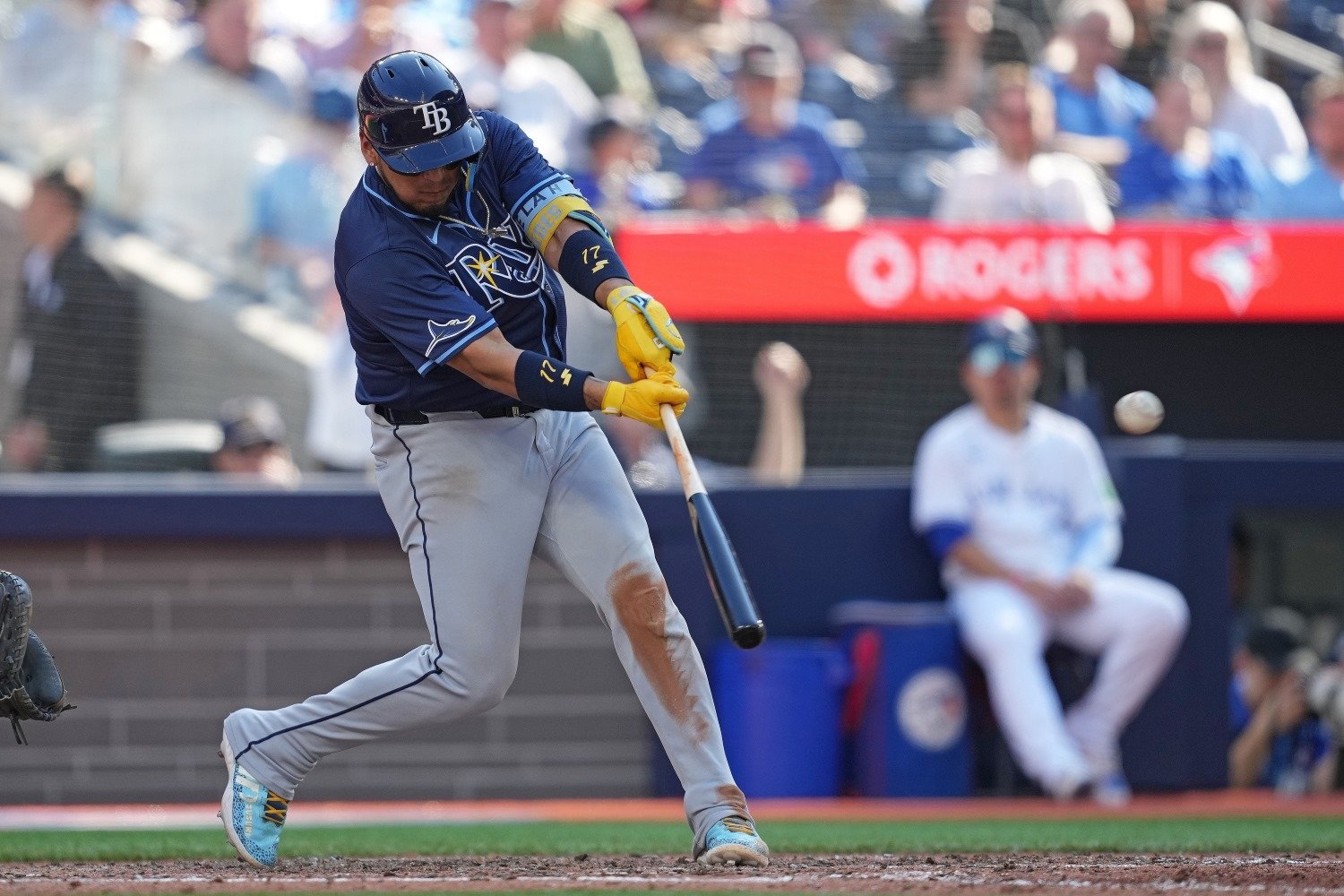 Tyler Black does not hit the ball hard with any great regularity. Yet, he continues to put up power numbers just like the Rays' third baseman, and it may be baffling to some people. However, it all stem from some models undervaluing two key statistics: how often does a hitter find the sweet spot for launch angle, and how well they pull the ball in the air with this ideal launch angle. How Does Isaac Paredes Access His Power? The above is Paredes's current Statcast percentiles page, with one of the slowest bats and lowest average exit velocities in all of Major League Baseball. To put this in context, Andruw Monasterio has swung the bat faster and created better exit velocities than Paredes, yet Paredes has hit 10 home runs (the same as Rhys Hoskins and Willy Adames) and 13 doubles so far this season, with a .287/.369/.474 slash line. Hitting the ball harder more often should result in more extra-base hits, and there’s a clear correlation between the two. All the evidence so far this year suggests that when a ball is hit harder, the expected slugging numbers go up: So where does Paredes's power come from? Well, expected slugging takes into account the exit velocity and trajectory of a batted ball and ascertains how often that results in a hit and how many bases (on average) the batter could expect from that batted ball. What it doesn’t factor in is the location of the batted ball. While a 120-mph, 27° launch will have an xBA of 1.000 and xSlg of 4.000 (because it’s always out of the ballpark, no matter where you hit it), a 98-mph, 27° launch angle can also get out in some parks if it’s located into the corners. Statcast compares this to other fly balls hit all across the diamond, and the majority would be easy fly balls that result in outs, so the expected data doesn’t match the result. If a player can do this consistently, then their batted ball data will always be significantly outstripped by real production. Paredes's home run locations fully support this. They're all pulled, and many of them are 350- to 360-foot fly balls. So perhaps the biggest metric for Paredes isn’t his average exit velocity, but his fly ball rate and his spray angles. Over half (55%) of his batted balls are fly balls or line drives, well above league average. To integrate a statistic based on the new Sweet Spot Exit Velocity created by our very own Matthew Trueblood, let's tweak it to suit Paredes better. Sweet-spot launch angles are between 10° and 30°. However, for hitters like Paredes who don’t hit it particularly hard, they want to be more in the 20° - 30° range to access their power. So if we take Paredes's batted balls in this “power range,” he averages a fly ball distance of 349 feet, with an average exit velocity of 90 mph. For most hitters, that would be on the light side, but it's more than enough to clear the fence frequently for assiduous pull-side hitters. By being in such control of the locations to which he hits the ball, Paredes is allowing his contact-oriented swing to bring about significantly more power production than it otherwise would, and Tyler Black may be in the same boat. So How Does Tyler Black Compare? Tyler Black has an average exit velocity of just 85.2 mph in Triple A, which ranks 106th out of 126 qualified hitters. Yet, he has nine home runs, six doubles and four triples in 48 games at the highest level of the minors this season. How has he managed it? Well, quite similarly to Paredes: The home run that appears misplaced (near the batter's box) was another 391-foot blast to right field, and you can see that the majority of Black’s power comes to the pull side and down the lines for both doubles and home runs. Up the middle is somewhere he doesn’t quite have the power to go to regularly, but because of his incredible contact skills and plate discipline (highlighted by the 12% walk rate and an 8.2% swinging strike rate), Black is able to make consistent contact and control the barrel well enough that he can access that power with regularity. In the 15°- 30° range, he averaged almost a barrel every other ball, and to qualify for that statistic requires him to be hitting the ball hard when he does get those launch angles--which is borne out by the 45.1% hard-hit rate in this range. In June, nearly all of his hits have been down the foul lines, and it’s brought him two booming home runs and four doubles. It’s the mark of a hitter who knows his approach and his swing with incredible confidence, and there’s no reason to believe this can’t be replicated in the major leagues. There is one concern, however. As you may have noticed at the top, Isaac Paredes is one of the best in the major leagues at concentrating his batted balls in the launch-angle sweet spot, but Black isn’t quite so prolific, even at Triple A. Over his recent hot stretch, he’s put 39.1% of his batted balls into that band. However, the same hasn’t been true over the rest of the season at Triple A (31.4%), when he's been much closer to league-average. Where he makes up for this is his speed and ability to put the ball in play. However, if he’s to make it with his defensive limitations, he may need to tap into that pull side with more regularity. It’s something he seems to have worked on recently, but here are his hit locations from 2022 to 2024: There was a minimal sample size in 2022, but in 2023 and 2024, you can see him pulling more often. Still, it’s significantly less than Paredes’s 49.5% pull rate, and he might need to come closer to that in order to generate the power required of a player like him. That's the question for him going forward. Black knows how to access his power, and seems to be trending that way, but it may come down to pitch selection: As you can see, Black has a tendency toward heavy ground balls on pitches down and away from him, and there is a clear correlation with where he best controls the launch angle and drives the ball. Reaching out on pitches isn't a strong suit for him, so perhaps he can use his incredible eye at the plate for a different purpose. Whereas currently, Black is one of the best at determining balls and strikes, he could be more selective as to where he swings most within the zone. He swings just as much down and away as he does up and in, and it's taking away from his power. By being more selective early in counts, trusting his ability to be pesky even if he falls behind, and sitting on pitches on the inner half he could see his power output skyrocket. As for whether Black is the next coming of Isaac Paredes, I'm not sold just yet. He doesn't elevate as well as Paredes does across the entirety of the zone, but he does possess slightly more pop and other attributes that can help him along the way to being successful at the plate. There may be growth to come. I think Black may (especially if he can't find a home at first base or the outfield) have to sell out for more power production, but he's not quite at that point yet.
 -
The Brewers Are Reportedly Promoting Top Prospect Carlos F Rodriguez
Jake McKibbin posted an article in Brewers
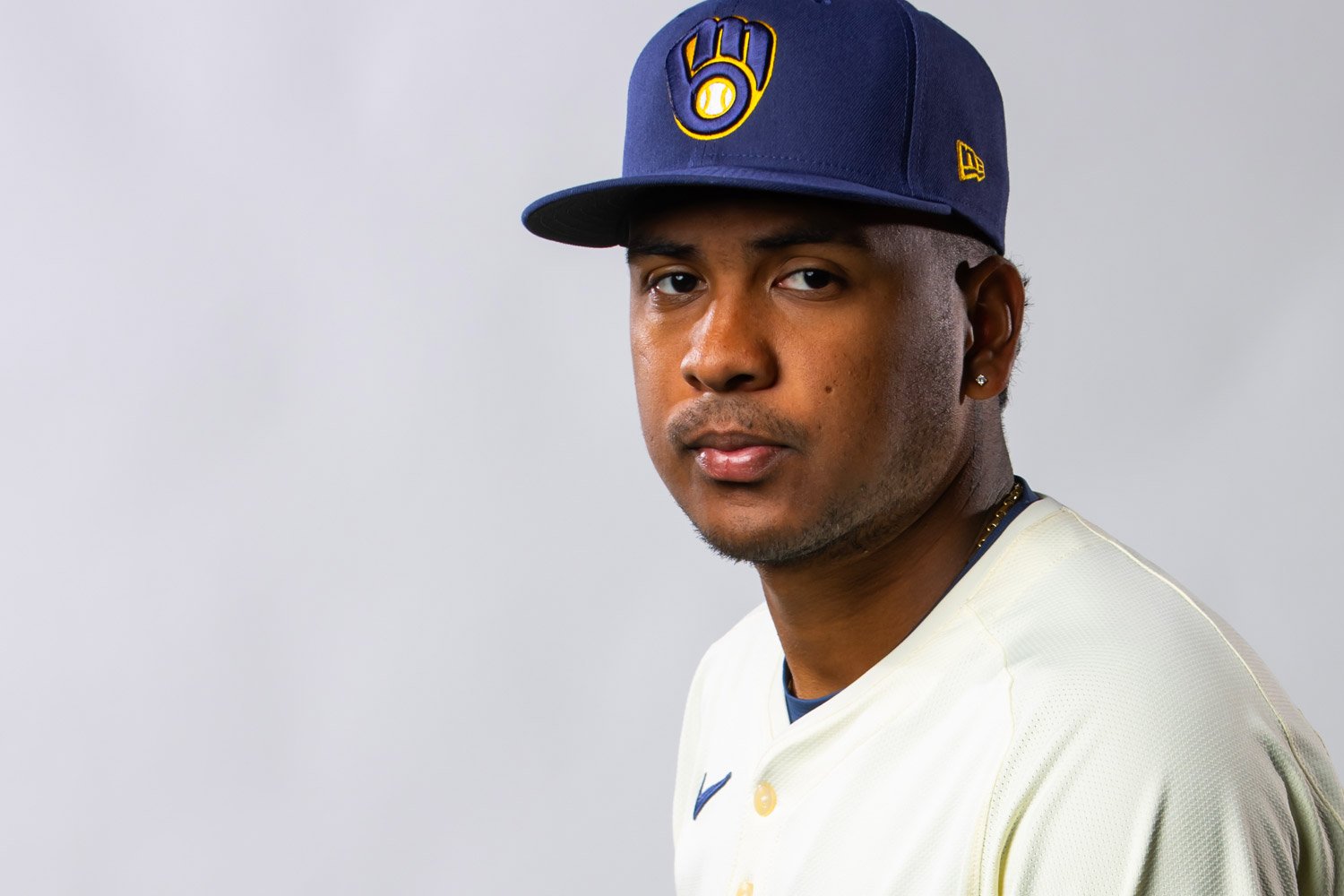 Carlos F Rodriguez (not to be confused with outfielder Carlos D Rodriguez) had a slow start to 2024 but really began to heat up in May. Plagued by wayward command, he has found the strike zone considerably more often of late, and it led to his pitcher of the month award, with Rodriguez's last out featuring 76 pitches over 5 1/3 innings of one-hit ball (hitless through his first five innings). Rodriguez was acquired in round six of the 2022 draft from Florida Southwestern and has gone from strength to strength in the Brewers system. His command has sometimes been a struggle, especially with the tacky ball in the southern league last season. However, he's managed to develop it at every level to the point where his raw stuff can play up. His arsenal isn't highlighted by many lights-out pitches, but it is incredibly deep, as some would say, with a "kitchen sink" approach. He has a four-seamer, sinker, cutter, slider, changeup, and a curveball, each of which has been thrown over 100 times this season in the minors. The variety of pitches should stand him in good stead in helping him keep hitters honest and produce weaker contact. The command will be key to his performance in the majors, and it hasn't totally gone away, but he does have some improved/elite pitches to fall back on. He's added velocity and rise to his four-seam fastball while his changeup is up there with the best of its kind in the minor leagues in both movement and command. Rodriguez is a durable, effective starting pitcher. If he can hover around the strike zone, especially without the ABS challenge system in Triple-A, His expected slash line in May was .184/.251/.332 with a 28% strikeout rate and just a 5.9% walk rate, which should give him a ton of confidence coming to the big leagues. What do you think of Carlos F Rodriguez? Is he ready for the jump? Let us know your thoughts in the comments below!
 -
The Brewers have yet another pitcher ready to start next week, but who is Carlos F Rodriguez, and is he another gem uncovered by the Brewers pitching lab? Image courtesy of © Mark J. Rebilas-USA TODAY Sports Carlos F Rodriguez (not to be confused with outfielder Carlos D Rodriguez) had a slow start to 2024 but really began to heat up in May. Plagued by wayward command, he has found the strike zone considerably more often of late, and it led to his pitcher of the month award, with Rodriguez's last out featuring 76 pitches over 5 1/3 innings of one-hit ball (hitless through his first five innings). Rodriguez was acquired in round six of the 2022 draft from Florida Southwestern and has gone from strength to strength in the Brewers system. His command has sometimes been a struggle, especially with the tacky ball in the southern league last season. However, he's managed to develop it at every level to the point where his raw stuff can play up. His arsenal isn't highlighted by many lights-out pitches, but it is incredibly deep, as some would say, with a "kitchen sink" approach. He has a four-seamer, sinker, cutter, slider, changeup, and a curveball, each of which has been thrown over 100 times this season in the minors. The variety of pitches should stand him in good stead in helping him keep hitters honest and produce weaker contact. The command will be key to his performance in the majors, and it hasn't totally gone away, but he does have some improved/elite pitches to fall back on. He's added velocity and rise to his four-seam fastball while his changeup is up there with the best of its kind in the minor leagues in both movement and command. Rodriguez is a durable, effective starting pitcher. If he can hover around the strike zone, especially without the ABS challenge system in Triple-A, His expected slash line in May was .184/.251/.332 with a 28% strikeout rate and just a 5.9% walk rate, which should give him a ton of confidence coming to the big leagues. What do you think of Carlos F Rodriguez? Is he ready for the jump? Let us know your thoughts in the comments below! View full article
-
 The Brewers offense has been scorching hot, finding ways to score using their speed on the basepaths, the reliable top of the order, and the power scattered throughout their lineup. With no shortage of weapons and plenty of young players, can they even upgrade further? Should they? The Infield (William Contreras, Rhys Hoskins, Brice Turang, Willy Adames, Joey Ortiz) At catcher, the Brewers have the best unit in the majors (per Baseball Reference), and William Contreras is inserting himself into the MVP conversation. He’s not just one of the best offensive catchers, but one of the best offensive players in baseball this season. Rhys Hoskins has just returned from a hamstring strain, and after a year out following ACL surgery you would expect it to take him a little time to adjust. Think again, Hoskins leads the Brewers in home runs and has an .813 OPS through May. Not the most agile defender, he struggled with some picks early in the season, but these have calmed down in the month of May. Brice Turang has been far beyond any expectations coming into the year, shortening his swing even further and becoming a contact machine. He has a 121 OPS+ and has 20 steals with just one failed attempt on the year, while his defense is Gold Glove-caliber. Turang is contributing in every way possible, and has really made the keystone position his own. Willy Adames has been incredibly unlucky so far, with an expected slash line of .269/.348/.492. If he had hit only in Milwaukee this season, he would have an extra six home runs on the year. He’s hit to the wrong parts of various parks, but has been instrumental offensively, defensively and in a leadership capacity. That came through big-time in a big week for the Crew against the Cubs and the White Sox, showcasing all that he brings to the team. At this point, he's almost untradeable, barring a massive overpay at the deadline or a Brewers collapse. Then there’s Joey Ortiz, who is showing exactly why the Brewers targeted him in the Corbin Burnes trade. With a 153 OPS+ alongside some lightning-fast hands at the hot corner, Ortiz has been a revelation for the Brewers thus far in 2024. The leading third baseman offensively in the National League, he's put himself into All-Star consideration, and the bat seems to be getting better and better as the season goes on. He's finding ways to lift the ball more often, and his plate discipline is markedly improved from his 2023 performances, suggesting there's a lot of stickability to his early season results. The Outfield (Christian Yelich, Sal Frelick, Jackson Chourio, Blake Perkins) The outfield has been a little more questionable and streaky than the infield thus far, with Christian Yelich (as always) the main man. Before tweaking his back, Yelich looked like the MVP version of himself, with a 1.100 OPS and barreled balls in all directions. Since returning, he has been more like the version from last year, pounding the ball and getting on base without that extra-base power showing up quite so often. Yet, he has been invaluable in the team’s offensive production over the last few weeks. Blake Perkins has, perhaps, been the best defensive center fielder in baseball, and his bat hasn’t been half bad, either. A switch-hitter, he looks better from the left side and has been streaky, but his 1.3 WAR so far this season would almost make it an insult to reduce him to the fourth outfielder role many assume he will end up in. Sal Frelick has had more prolific ebbs and flows, and perhaps more material inconsistencies. A dearth of power requires Frelick to be a contact hitter in the same mold as Turang, but he hasn’t been able to find the same quality or quantity of contact, and to pile on, his defense hasn’t been particularly strong, either. He is on a hot streak at the moment, but it features a lot of weak ground balls finding holes. He may need time in Triple-A to find a source of power again. Jackson Chourio is the most enigmatic player on the Brewers. His first two months have been a learning curve for him, but you can see improvements month to month in the quality of his at-bats and the pitch recognition. You can see the natural hand speed, raw power and speed that made him such a vaunted prospect. When it clicks, it’s going to be a sudden whirlwind, but he’s not there yet and is struggling to get regular playing time with his current role as a weak side platoon player. The Bench (Gary Sánchez, Oliver Dunn, Jake Bauers and an Outfielder) This is the weakest part of the Brewers corps so far: Gary Sánchez is perhaps the only one living up to his billing. You could easily argue that both Dunn and Bauers have the ability to turn a corner and become consistently lethal later in the year. Sánchez has shown extreme power and some big-game feel, with late-inning heroics against the Cubs and Pirates, among others. He’s had somewhat limited playing time, but there are few more imposing bench bats in a big moment late in the game. Deputizing admirably at catcher on days when Contreras deigns to take a half-rest and DH, the Brewers may be looking for ways to increase Sánchez’s workload given his recent performances. Jake Bauers switched to a toe tap in early May and absolutely shoved for a few weeks, but those results didn’t last long, and he’s returned to a below-average offensive player with power that’s just waiting to be unlocked. He’s shown glimpses, but needs to find a way to put it all together. Oliver Dunn has been an early season favorite of Pat Murphy, and I can see why. Prodigious (if occasional) power, massive bat speed, outstanding range, and a great eye at the plate... are all completely negated by his massive swing-and-miss problems inside the strike zone. He’s almost jumped straight from Double-A to the majors, and with more game time, he could become a valuable asset with his left-handed bat. For now, however, he isn’t someone the Brewers can rely on. The Brewers Are Craving an Impactful Left-Handed Power Bat Thanks to injuries and that thinnish bench, the Crew have not yet gotten much value from pinch-hitters this year. Murphy’s approach has been very platoon-heavy, with Chourio a prime target for removal based on matchups, and it’s granted the likes of Sal Frelick and Oliver Dunn a significant number of opportunities to hit in important, late-game situations; that hasn’t gone well. Frelick has an expected slash line of .233 (expected batting average)/.294 (expected SLG). Yes, you read that correctly: an expected slugging under .300. That’s quite a shocking mark, and despite above-average plate discipline marks, it’s not someone a pitcher would fear as a pinch hitter. Dunn has the opposite problem, but because of a lack of contact, he has an expected line of .209/.329 and a strikeout rate of 77% in pinch-hitting situations this season. Jake Bauers has a .290 OBP in pinch hitting situations. The bench just hasn’t been formidable for the Brewers so far this season. One area that may bear closer scrutiny is the role of Bauers. His walk rate doubled in May from where it was in April, and his OPS of .734 was serviceable, despite some bad luck on batted balls that suggest he deserved a mark closer to .800. He provides very strong defense at first base, which the Brewers need, but he’s just off a long hitless streak, and his excellent fortnight a fortnight ago feels increasingly like a mirage. As you can see, since going to the toe tap, he's been better able to square up pitches on the outer half of the plate and do greater damage within the zone as a whole. Combining this with improved plate discipline has helped him increase his floor, but there is still considerable swing-and-miss inside the strike zone, which will result in him being a streaky hitter for the most part. Is There An Internal Option Sneaking Up? Pat Murphy is craving a left handed pinch hitting option who can have some form of success, and I tentatively suggest that one may be returning from the IL. Garrett Mitchell is blessed with raw talent, perhaps rivaling Perkins as a center fielder due to his incredible speed--but far more important will be the bat. Mitchell has a .795 OPS in the majors, but in a very small sample size of just 126 at-bats. Undermining that is a strikeout rate in the realms of Keston Hiura; it doesn’t inspire a ton of confidence that these results are sustainable in the long run. Mitchell brings electricity and excitement, with a sense for the big moments, and may be exactly what the Brewers need, or maybe just more of the same: another promising young outfielder still finding his feet. The tentative target for Mitchell (providing all goes well) is the 17th of June, which should give the Brewers enough time to assess his capability in this role and whether further reinforcements are needed off the bench. There aren't many other options tearing up trees in the minor leagues so far, and in fact, a lot of the position players have really struggled so far in 2024--meaning the help may need to come in the form of a trade if Mitchell doesn't quite pan out, likely as either a left-handed first baseman (unless Tyler Black or Dunn can sorts things out) or in the outfield. This lineup has a lot fewer holes than in other recent seasons, but that final piece could be enough to push them over the edge in a playoff scenario--where one big at-bat can make all the difference.
- 13 comments
-
- 3
-
-
- garrett mitchell
- jake bauers
- (and 2 more)
-
The Brewers are at the time of writing leading or runners up in numerous offensive categories, yet they may have further developments they can make at the deadline. Where could these improvements come from? Image courtesy of © Benny Sieu-USA TODAY Sports The Brewers offense has been scorching hot, finding ways to score using their speed on the basepaths, the reliable top of the order, and the power scattered throughout their lineup. With no shortage of weapons and plenty of young players, can they even upgrade further? Should they? The Infield (William Contreras, Rhys Hoskins, Brice Turang, Willy Adames, Joey Ortiz) At catcher, the Brewers have the best unit in the majors (per Baseball Reference), and William Contreras is inserting himself into the MVP conversation. He’s not just one of the best offensive catchers, but one of the best offensive players in baseball this season. Rhys Hoskins has just returned from a hamstring strain, and after a year out following ACL surgery you would expect it to take him a little time to adjust. Think again, Hoskins leads the Brewers in home runs and has an .813 OPS through May. Not the most agile defender, he struggled with some picks early in the season, but these have calmed down in the month of May. Brice Turang has been far beyond any expectations coming into the year, shortening his swing even further and becoming a contact machine. He has a 121 OPS+ and has 20 steals with just one failed attempt on the year, while his defense is Gold Glove-caliber. Turang is contributing in every way possible, and has really made the keystone position his own. Willy Adames has been incredibly unlucky so far, with an expected slash line of .269/.348/.492. If he had hit only in Milwaukee this season, he would have an extra six home runs on the year. He’s hit to the wrong parts of various parks, but has been instrumental offensively, defensively and in a leadership capacity. That came through big-time in a big week for the Crew against the Cubs and the White Sox, showcasing all that he brings to the team. At this point, he's almost untradeable, barring a massive overpay at the deadline or a Brewers collapse. Then there’s Joey Ortiz, who is showing exactly why the Brewers targeted him in the Corbin Burnes trade. With a 153 OPS+ alongside some lightning-fast hands at the hot corner, Ortiz has been a revelation for the Brewers thus far in 2024. The leading third baseman offensively in the National League, he's put himself into All-Star consideration, and the bat seems to be getting better and better as the season goes on. He's finding ways to lift the ball more often, and his plate discipline is markedly improved from his 2023 performances, suggesting there's a lot of stickability to his early season results. The Outfield (Christian Yelich, Sal Frelick, Jackson Chourio, Blake Perkins) The outfield has been a little more questionable and streaky than the infield thus far, with Christian Yelich (as always) the main man. Before tweaking his back, Yelich looked like the MVP version of himself, with a 1.100 OPS and barreled balls in all directions. Since returning, he has been more like the version from last year, pounding the ball and getting on base without that extra-base power showing up quite so often. Yet, he has been invaluable in the team’s offensive production over the last few weeks. Blake Perkins has, perhaps, been the best defensive center fielder in baseball, and his bat hasn’t been half bad, either. A switch-hitter, he looks better from the left side and has been streaky, but his 1.3 WAR so far this season would almost make it an insult to reduce him to the fourth outfielder role many assume he will end up in. Sal Frelick has had more prolific ebbs and flows, and perhaps more material inconsistencies. A dearth of power requires Frelick to be a contact hitter in the same mold as Turang, but he hasn’t been able to find the same quality or quantity of contact, and to pile on, his defense hasn’t been particularly strong, either. He is on a hot streak at the moment, but it features a lot of weak ground balls finding holes. He may need time in Triple-A to find a source of power again. Jackson Chourio is the most enigmatic player on the Brewers. His first two months have been a learning curve for him, but you can see improvements month to month in the quality of his at-bats and the pitch recognition. You can see the natural hand speed, raw power and speed that made him such a vaunted prospect. When it clicks, it’s going to be a sudden whirlwind, but he’s not there yet and is struggling to get regular playing time with his current role as a weak side platoon player. The Bench (Gary Sánchez, Oliver Dunn, Jake Bauers and an Outfielder) This is the weakest part of the Brewers corps so far: Gary Sánchez is perhaps the only one living up to his billing. You could easily argue that both Dunn and Bauers have the ability to turn a corner and become consistently lethal later in the year. Sánchez has shown extreme power and some big-game feel, with late-inning heroics against the Cubs and Pirates, among others. He’s had somewhat limited playing time, but there are few more imposing bench bats in a big moment late in the game. Deputizing admirably at catcher on days when Contreras deigns to take a half-rest and DH, the Brewers may be looking for ways to increase Sánchez’s workload given his recent performances. Jake Bauers switched to a toe tap in early May and absolutely shoved for a few weeks, but those results didn’t last long, and he’s returned to a below-average offensive player with power that’s just waiting to be unlocked. He’s shown glimpses, but needs to find a way to put it all together. Oliver Dunn has been an early season favorite of Pat Murphy, and I can see why. Prodigious (if occasional) power, massive bat speed, outstanding range, and a great eye at the plate... are all completely negated by his massive swing-and-miss problems inside the strike zone. He’s almost jumped straight from Double-A to the majors, and with more game time, he could become a valuable asset with his left-handed bat. For now, however, he isn’t someone the Brewers can rely on. The Brewers Are Craving an Impactful Left-Handed Power Bat Thanks to injuries and that thinnish bench, the Crew have not yet gotten much value from pinch-hitters this year. Murphy’s approach has been very platoon-heavy, with Chourio a prime target for removal based on matchups, and it’s granted the likes of Sal Frelick and Oliver Dunn a significant number of opportunities to hit in important, late-game situations; that hasn’t gone well. Frelick has an expected slash line of .233 (expected batting average)/.294 (expected SLG). Yes, you read that correctly: an expected slugging under .300. That’s quite a shocking mark, and despite above-average plate discipline marks, it’s not someone a pitcher would fear as a pinch hitter. Dunn has the opposite problem, but because of a lack of contact, he has an expected line of .209/.329 and a strikeout rate of 77% in pinch-hitting situations this season. Jake Bauers has a .290 OBP in pinch hitting situations. The bench just hasn’t been formidable for the Brewers so far this season. One area that may bear closer scrutiny is the role of Bauers. His walk rate doubled in May from where it was in April, and his OPS of .734 was serviceable, despite some bad luck on batted balls that suggest he deserved a mark closer to .800. He provides very strong defense at first base, which the Brewers need, but he’s just off a long hitless streak, and his excellent fortnight a fortnight ago feels increasingly like a mirage. As you can see, since going to the toe tap, he's been better able to square up pitches on the outer half of the plate and do greater damage within the zone as a whole. Combining this with improved plate discipline has helped him increase his floor, but there is still considerable swing-and-miss inside the strike zone, which will result in him being a streaky hitter for the most part. Is There An Internal Option Sneaking Up? Pat Murphy is craving a left handed pinch hitting option who can have some form of success, and I tentatively suggest that one may be returning from the IL. Garrett Mitchell is blessed with raw talent, perhaps rivaling Perkins as a center fielder due to his incredible speed--but far more important will be the bat. Mitchell has a .795 OPS in the majors, but in a very small sample size of just 126 at-bats. Undermining that is a strikeout rate in the realms of Keston Hiura; it doesn’t inspire a ton of confidence that these results are sustainable in the long run. Mitchell brings electricity and excitement, with a sense for the big moments, and may be exactly what the Brewers need, or maybe just more of the same: another promising young outfielder still finding his feet. The tentative target for Mitchell (providing all goes well) is the 17th of June, which should give the Brewers enough time to assess his capability in this role and whether further reinforcements are needed off the bench. There aren't many other options tearing up trees in the minor leagues so far, and in fact, a lot of the position players have really struggled so far in 2024--meaning the help may need to come in the form of a trade if Mitchell doesn't quite pan out, likely as either a left-handed first baseman (unless Tyler Black or Dunn can sorts things out) or in the outfield. This lineup has a lot fewer holes than in other recent seasons, but that final piece could be enough to push them over the edge in a playoff scenario--where one big at-bat can make all the difference. View full article
-
2024 Minor League Transaction Thread
Jake McKibbin replied to Jim Goulart's topic in Brewers Minor League Talk
Has there been any word on his injury? -
 Jackson Chourio hasn’t hit his stride just yet in the big leagues; he's still in the process of adapting to the sequencing and quality of pitches he’s facing. This isn’t unexpected for a 20-year-old plunged so suddenly into the deep water of MLB competition, but to properly adjust would require Chourio to regularly see big-league pitching--and those adjustments will be crucial to his contributions in the longer term. Adapting to not just the quality of pitching but the pressure and grind of baseball in the big leagues is an arduous process, so let’s take a look at some of Pat Murphy’s decisions about how to ease that process for his star pupil. The Art of The Carrot and the Stick In his first press conference, a former English rugby manager talked about the art of managing players and their egos to get the best out of them, and how some players need compliments and positivity to thrive, while others need a more critical directive. Balancing those disparate and sometimes competing needs for 26 players is complicated, but it’s a tightrope managers are required to walk. As early as spring training, we got a preview of Murphy giving the stick to Chourio with condemnation of his outfield reads, and that’s continued into the season. Though gentle to the point of near-subliminality, Murphy has made comments questioning his star rookie's professionalism and preparation. Chourio may respond well to this, and it seems as though Murphy has singled him out more than others (such as Oliver Dunn). He's certainly made the occasional positive public reference, as well. When it comes to the carrot and the stick, the results are the only thing that matters, and how Chourio responds will be a barometer of Murphy’s managerial capabilities, especially given Chourio’s age and moldability. Experience--something Murphy has in spades--often helps with this nuance, and with the respect he's garnered among the rest of the team, it may actually be effective with Chourio. The “Reset” Break Between Apr. 30 and May 3, Chourio got only a lone pinch-hit appearance, in the eighth inning of a game, effectively taking 25 innings and an off day away from the field. He was eased back into it, getting no more than three innings from May 8-12, usually as a fielding replacement. Murphy, when asked about this, suggested Chourio may need a reset after some issues with contact, and asked him to focus on how veteran players took their at-bats and prepared for games. It was a wake-up call, and it seemed to work. His contact skills have improved considerably, and the following markers show definite improvement since May 4 (compared to April): 16.7% strikeout rate (↓16.6%) Average exit velocity 89.4 mph (↑2.8 mph) Whiff rate 24.2% (↓7.7%) Chourio has reset and come back hitting the ball harder, making more contact and avoiding cheap outs. These are backed up by the eye test, with Chourio looking more patient and comfortable at the plate, chasing fewer ridiculous pitches and takine a higher-quality at-bat overall. It’s a solid improvement, although he does still need to get the ball in the air more often to access the full potential of his power. He’s by no means the finished article yet, but these are strong indicators that Murphy’s decision to bench Chourio for a period has paid dividends. The Pinch-Hitting and Winning Now Murphy has taken Chourio down for a pinch-hitter eight times so far this season, and in some ways, that makes sense. The rookie skipper has put winning above player development when forced to choose between them. That being said, Chourio needs a different approach, with a focus on what will help him in the long term as well. The team committed to him for eight to 10 years, depending on options. Even if it’s a struggle now, the benefits of developing Chourio well down the line are worthwhile. Pinch-hitting in high-leverage situations does nothing to help Chourio develop. It was particularly noticeable when Murphy made the decision to pinch-hit a struggling Blake Perkins (with two hits in two weeks) over Chourio, purely because of a right-handed reliever being on the mound. In the same vein as learning to use lower-leverage relievers when behind in the game, it’s also vital that Murphy can adjust to allow Chourio to face these kinds of situations, even if it doesn’t always work out in the short term. He’s expected to be a middle-of-the-order bat for the Brewers for a long time, and he’ll be facing plenty of these down the line; that experience will be vital even later in the 2024 season. Murphy’s management of Chourio is open to interpretation. Whether or not the “stick” approach works will be judged by how the outfield phenom grows in the next few months. It seems like it’s paid off once already, but players can get tired if all they face is criticism. Just as importantly, when a manager calls out the performance of a player and starts removing that player from situations where they might have a huge impact, the player's confidence can take a hit. What do you think of Murphy's management style? Can you see the logic behind it, or does it baffle you slightly? Let us know in the comments below!
 -
Tasked with the difficult dual responsibilities of winning games at the highest possible rate and developing the franchise's most important young player, Pat Murphy has occasionally sidelined (and at other times merely deprioritized) Jackson Chourio. Is he making the right calls? Image courtesy of © Michael McLoone-USA TODAY Sports Jackson Chourio hasn’t hit his stride just yet in the big leagues; he's still in the process of adapting to the sequencing and quality of pitches he’s facing. This isn’t unexpected for a 20-year-old plunged so suddenly into the deep water of MLB competition, but to properly adjust would require Chourio to regularly see big-league pitching--and those adjustments will be crucial to his contributions in the longer term. Adapting to not just the quality of pitching but the pressure and grind of baseball in the big leagues is an arduous process, so let’s take a look at some of Pat Murphy’s decisions about how to ease that process for his star pupil. The Art of The Carrot and the Stick In his first press conference, a former English rugby manager talked about the art of managing players and their egos to get the best out of them, and how some players need compliments and positivity to thrive, while others need a more critical directive. Balancing those disparate and sometimes competing needs for 26 players is complicated, but it’s a tightrope managers are required to walk. As early as spring training, we got a preview of Murphy giving the stick to Chourio with condemnation of his outfield reads, and that’s continued into the season. Though gentle to the point of near-subliminality, Murphy has made comments questioning his star rookie's professionalism and preparation. Chourio may respond well to this, and it seems as though Murphy has singled him out more than others (such as Oliver Dunn). He's certainly made the occasional positive public reference, as well. When it comes to the carrot and the stick, the results are the only thing that matters, and how Chourio responds will be a barometer of Murphy’s managerial capabilities, especially given Chourio’s age and moldability. Experience--something Murphy has in spades--often helps with this nuance, and with the respect he's garnered among the rest of the team, it may actually be effective with Chourio. The “Reset” Break Between Apr. 30 and May 3, Chourio got only a lone pinch-hit appearance, in the eighth inning of a game, effectively taking 25 innings and an off day away from the field. He was eased back into it, getting no more than three innings from May 8-12, usually as a fielding replacement. Murphy, when asked about this, suggested Chourio may need a reset after some issues with contact, and asked him to focus on how veteran players took their at-bats and prepared for games. It was a wake-up call, and it seemed to work. His contact skills have improved considerably, and the following markers show definite improvement since May 4 (compared to April): 16.7% strikeout rate (↓16.6%) Average exit velocity 89.4 mph (↑2.8 mph) Whiff rate 24.2% (↓7.7%) Chourio has reset and come back hitting the ball harder, making more contact and avoiding cheap outs. These are backed up by the eye test, with Chourio looking more patient and comfortable at the plate, chasing fewer ridiculous pitches and takine a higher-quality at-bat overall. It’s a solid improvement, although he does still need to get the ball in the air more often to access the full potential of his power. He’s by no means the finished article yet, but these are strong indicators that Murphy’s decision to bench Chourio for a period has paid dividends. The Pinch-Hitting and Winning Now Murphy has taken Chourio down for a pinch-hitter eight times so far this season, and in some ways, that makes sense. The rookie skipper has put winning above player development when forced to choose between them. That being said, Chourio needs a different approach, with a focus on what will help him in the long term as well. The team committed to him for eight to 10 years, depending on options. Even if it’s a struggle now, the benefits of developing Chourio well down the line are worthwhile. Pinch-hitting in high-leverage situations does nothing to help Chourio develop. It was particularly noticeable when Murphy made the decision to pinch-hit a struggling Blake Perkins (with two hits in two weeks) over Chourio, purely because of a right-handed reliever being on the mound. In the same vein as learning to use lower-leverage relievers when behind in the game, it’s also vital that Murphy can adjust to allow Chourio to face these kinds of situations, even if it doesn’t always work out in the short term. He’s expected to be a middle-of-the-order bat for the Brewers for a long time, and he’ll be facing plenty of these down the line; that experience will be vital even later in the 2024 season. Murphy’s management of Chourio is open to interpretation. Whether or not the “stick” approach works will be judged by how the outfield phenom grows in the next few months. It seems like it’s paid off once already, but players can get tired if all they face is criticism. Just as importantly, when a manager calls out the performance of a player and starts removing that player from situations where they might have a huge impact, the player's confidence can take a hit. What do you think of Murphy's management style? Can you see the logic behind it, or does it baffle you slightly? Let us know in the comments below! View full article
-
It comes down to timing, and the fact these changes came immediately after the switch is where I'd suggest some stickability to the results. He's making better swing decisions and significantly more contact as a result and while I'm not saying he'll be slugging 1.000 over the rest of the season the swing being on time has been a massive boost to what was untapped talent in his bat
-
Over the last week and change, the Brewers have suddenly had impressive left-handed production in their lineup, from a surprising source. He's on time against all pitch types. His whiff rate is down. Is this the beginning of Jake Bauers, the star? Image courtesy of © Benny Sieu-USA TODAY Sports Some Brewers fans balked when the team traded Jace Avina and Brian Sanchez for Jake Bauers last November. Many close watchers of the farm system predicted Avina would have a breakout season, while Bauers had some flashy underlying metrics but no real substance to back it up. Very rarely does a player with over 1,200 at-bats in the majors get better overnight, but the Milwaukee front office bet on being able to do just that, after the Yankees worked to change Bauers's bat path to tap into more power in 2023. Upon joining the Brewers, Bauers's negatives were more obvious than his positives, with extreme swing-and-miss tendencies preventing him from getting the most out of what was usually solid contact--when he did manage to impact the ball. Twenty strikeouts in 57 plate appearances in April didn’t look pretty, and by his own admission, he just wasn’t on time, given how in and out of the lineup he was. Then came the change. Why Does A Toe Tap Suit Jake Bauers? Using a toe tap over a big leg kick to start the swing usually results in less forward momentum through your body as you impact the baseball, but it also reduces some of the variables that can go wrong when the timing is off. For Bauers, who has terrific raw power and leads the Brewers in bat speed, it may seem like a simple adjustment. However, by his own admission, having inconsistent playing time made it tough to maintain the timing necessary to make consistent contact with the leg kick. The toe tap gives him greater variability. That’s no slight on Pat Murphy, who gave Bauers ample opportunity in the first month despite poor results. In fact, having been forced into this change might be a blessing for Bauers. The toe tap allows him to rely on his natural timing and eye at the plate, rather than using a big windup that compromises his balance. Recent results have helped, but as Jack Stern pointed out, Bauers is fourth in the league in expected wOBA. This takes into account the quality and consistency of batted-ball contact while eliminating the strikeouts, showing that when Bauers does connect, the effects are quite destructive. He also leads the league in “launch angle sweet spot” rate, so when you put that power and the regular elevation together, you have a dangerous hitter--that is, when he makes contact. The Effects of the Tap Bauers may have always had a good eye at the plate, but his lack of timing has prevented him from using it. Alternatively, perhaps the big leg kick meant having to identify pitches earlier, but that constraint forced him to hone his eye at the plate. Either way, since going to a more simple pre-swing motion, the results have been astounding. As you can see, Bauers not only whiffed a lot inside the zone, but was chasing excessively, which exacerbated the issue. Since going to his toe tap, he’s shown a keen eye at the plate. He's chased just two out of the last 37 pitches outside the strike zone, a superb demonstration of plate discipline. In doing so, he's forced pitchers into the strike zone more often, and Bauers has pounced. Waiting on a pitch he can make contact with more often and achieving more hitter-friendly counts is a strong cocktail for success. On top of this, Bauers has found one other benefit so far. Early in the season, he was getting under a lot of pitches that he should have found very hittable. He was reaching the outfield, but with far too much elevation to do any real damage. Ideal launch angles are between 10° and 30°, but Bauers was hitting it over 50° too often. In the last week, he hasn’t hit a single ground ball but has found a ton of line drives: Rates like this won’t necessarily last. There will be some regression here, as there will be with the chase rates. That being said, if he can remain elite in both categories, then Bauers may be the type of first baseman who can carry an offense, with elite defense to boot. The final points to mention for Bauers are his contact rates and his aggressiveness within the strike zone. Some hitters, when they stop chasing, also find themselves taking a lot of called strikes, but that’s not been the case with Bauers in the last week. His swing decisions and contact metrics have improved considerably in the following stats: Whiff rate - 32.8% to 21.6% Called strike rate - 37.5% to 27.5% Chase rate - 26.1% to 5.4% Strikeout rate - 39.7% to 21.1% Avg exit velocity - 89.9 mph to 96.7 mph Some of this is, undeniably, the result of capitalizing on his chances, but it’s important to note that these results have come against some quality pitchers, including Sonny Gray, Lance Lynn and Brady Singer--all of whom are off to excellent starts this year. The league may adjust, but he’s crushed breaking pitches, offspeed stuff and fastballs alike during this stretch. There will be some regression, but Bauers may be the devastating bat that the Brewers could really use, with Rhys Hoskins's hamstring injury. Perhaps the moral of the story is that we should really stop questioning the Brewers front office since Matt Arnold took over. Do you think this is as sustainable as the underlying numbers suggest? Or is this just another flash in the pan for the Brewers at first base? Let us know your thoughts in the comments below. View full article
-
Jake Bauers is Tip-Toeing and Toe-Tapping His Way to Success
Jake McKibbin posted an article in Brewers
 Some Brewers fans balked when the team traded Jace Avina and Brian Sanchez for Jake Bauers last November. Many close watchers of the farm system predicted Avina would have a breakout season, while Bauers had some flashy underlying metrics but no real substance to back it up. Very rarely does a player with over 1,200 at-bats in the majors get better overnight, but the Milwaukee front office bet on being able to do just that, after the Yankees worked to change Bauers's bat path to tap into more power in 2023. Upon joining the Brewers, Bauers's negatives were more obvious than his positives, with extreme swing-and-miss tendencies preventing him from getting the most out of what was usually solid contact--when he did manage to impact the ball. Twenty strikeouts in 57 plate appearances in April didn’t look pretty, and by his own admission, he just wasn’t on time, given how in and out of the lineup he was. Then came the change. Why Does A Toe Tap Suit Jake Bauers? Using a toe tap over a big leg kick to start the swing usually results in less forward momentum through your body as you impact the baseball, but it also reduces some of the variables that can go wrong when the timing is off. For Bauers, who has terrific raw power and leads the Brewers in bat speed, it may seem like a simple adjustment. However, by his own admission, having inconsistent playing time made it tough to maintain the timing necessary to make consistent contact with the leg kick. The toe tap gives him greater variability. That’s no slight on Pat Murphy, who gave Bauers ample opportunity in the first month despite poor results. In fact, having been forced into this change might be a blessing for Bauers. The toe tap allows him to rely on his natural timing and eye at the plate, rather than using a big windup that compromises his balance. Recent results have helped, but as Jack Stern pointed out, Bauers is fourth in the league in expected wOBA. This takes into account the quality and consistency of batted-ball contact while eliminating the strikeouts, showing that when Bauers does connect, the effects are quite destructive. He also leads the league in “launch angle sweet spot” rate, so when you put that power and the regular elevation together, you have a dangerous hitter--that is, when he makes contact. The Effects of the Tap Bauers may have always had a good eye at the plate, but his lack of timing has prevented him from using it. Alternatively, perhaps the big leg kick meant having to identify pitches earlier, but that constraint forced him to hone his eye at the plate. Either way, since going to a more simple pre-swing motion, the results have been astounding. As you can see, Bauers not only whiffed a lot inside the zone, but was chasing excessively, which exacerbated the issue. Since going to his toe tap, he’s shown a keen eye at the plate. He's chased just two out of the last 37 pitches outside the strike zone, a superb demonstration of plate discipline. In doing so, he's forced pitchers into the strike zone more often, and Bauers has pounced. Waiting on a pitch he can make contact with more often and achieving more hitter-friendly counts is a strong cocktail for success. On top of this, Bauers has found one other benefit so far. Early in the season, he was getting under a lot of pitches that he should have found very hittable. He was reaching the outfield, but with far too much elevation to do any real damage. Ideal launch angles are between 10° and 30°, but Bauers was hitting it over 50° too often. In the last week, he hasn’t hit a single ground ball but has found a ton of line drives: Rates like this won’t necessarily last. There will be some regression here, as there will be with the chase rates. That being said, if he can remain elite in both categories, then Bauers may be the type of first baseman who can carry an offense, with elite defense to boot. The final points to mention for Bauers are his contact rates and his aggressiveness within the strike zone. Some hitters, when they stop chasing, also find themselves taking a lot of called strikes, but that’s not been the case with Bauers in the last week. His swing decisions and contact metrics have improved considerably in the following stats: Whiff rate - 32.8% to 21.6% Called strike rate - 37.5% to 27.5% Chase rate - 26.1% to 5.4% Strikeout rate - 39.7% to 21.1% Avg exit velocity - 89.9 mph to 96.7 mph Some of this is, undeniably, the result of capitalizing on his chances, but it’s important to note that these results have come against some quality pitchers, including Sonny Gray, Lance Lynn and Brady Singer--all of whom are off to excellent starts this year. The league may adjust, but he’s crushed breaking pitches, offspeed stuff and fastballs alike during this stretch. There will be some regression, but Bauers may be the devastating bat that the Brewers could really use, with Rhys Hoskins's hamstring injury. Perhaps the moral of the story is that we should really stop questioning the Brewers front office since Matt Arnold took over. Do you think this is as sustainable as the underlying numbers suggest? Or is this just another flash in the pan for the Brewers at first base? Let us know your thoughts in the comments below.
 -
Pat Murphy has limited Joey Ortiz's playing time in recent weeks in favor of testing out Oliver Dunn. Is there a legitimate reason for this decision? Image courtesy of © Jeff Hanisch-USA TODAY Sports Pat Murphy attributed the last week or so to seeing what Oliver Dunn can do when given the opportunity, and to be fair, Dunn has shown some positives. 50% of his batted balls are at least 95 mph, but unlocking that quality contact consistently has provided issues. His defense has been magnificent, and he’s one of the fastest players in the majors. So the question is, can Murphy’s decisions be justified? The Bat Profiles Joey Ortiz has taken strides forward from his Triple-A performance last season. Big exit velocities in 2023 were contrasted with big ground ball rates due to chasing excessively inside and below the strike zone, which limited the damage he could do. So far this season, he hasn't quite accessed the same hard-hit balls; however, there’s been a big change in his patience and understanding of what pitches he can damage. Ortiz’s chase and swing-and-miss rates are in the top 15% of baseball’s hitters, alongside a walk rate in the top 3%. Due to the lower exit velocities and ground balls, his expected numbers are significantly lower than his counting stats so far, with an expected slugging of just .346 on the year, mostly because he struggled to get the ball in the air, exactly as advertised. However, since the 19th of April, his expected line is .259/.373/.548, which matches the eye test. He’s been getting the ball in the air with a 29% fly ball rate, but there remains a slight question as to whether he can recover some of the extremely high exit velocities from Triple-A in 2023. It’s generally easier to hit the ball hard into the ground than in the air, but it is an area for even more growth in Ortiz’s hitting profile. Oliver Dunn, on the other hand since April 19th has just a 70% contact rate, absurdly low for a hitter with real strength for staying inside the strike zone. Jack Stern recently wrote about how hitters have adjusted to pummeling him in the strike zone as he’s shown no ability to punish them when they do. When making contact over this time, he has a 55% hard-hit rate, so you can see the appeal from Murphy in that if the contact skills improve, then Oliver Dunn could be a difference-making bat but perhaps needs a little more seasoning at this time. His expected line in contrast with Ortiz is a measly .152/.217/.221. Here is how his bat profiles contact-wise in the zone: Dunn doesn’t miss a lot on belt-high pitches, but anything near the strike zone's edges is proving an extraordinary challenge for him. You shouldn't have a swing-and-miss rate of 50% or more in any area of the strike zone to be effective at the big league level, but it's pervaded Oliver Dunn's strike zone. For comparison’s sake, Ortiz’s whiff map is here: The argument for Oliver Dunn’s extra playing time of late is perhaps the Brewers believe he will develop more effectively and quickly with that seasoning happening at the big league level instead of at Triple-A, and perhaps he’s not that far away. It can take just one minor tweak to click, and Dunn could go off, but this may be costing the Brewers wins in the here and now. Ortiz has shown improved patience at the plate, allowing him to take considerably more walks than expected. He’s never been an on-base machine, but that patience is allowing him to avoid ground balls and get on base, which gives his hitting profile a high floor even if the power output does fluctuate. The Matchups So here is where there may be a method to Murphy’s madness. Joey Ortiz has been demolishing sliders and sweepers this season, with an expected slugging of .540 against sliders and .680 against sweepers. Seth Lugo aside (who still has a very effective slider) each of Sonny Gray (52% whiff rate, 16% usage), Brady Singer (42.2% usage) and Hayden Wesneski (39.7% usage) in Ortiz’s last three starts have featured either highly used or highly effective sweepers/sliders. It’s too early in the season for adequate numbers per pitch type, but it may be one of the reasons why Ortiz is getting starts in these matchups. Dunn’s struggles, even when deployed, suggest it may have been more effective to keep Ortiz in the starting lineup regardless, simply because his contact skills and eye at the plate will allow him to be far more passable at the plate even if not quite as explosive. Defensive Chops Based on scouting reports coming into the year, if someone had suggested Oliver Dunn was a better defender than Joey Ortiz at third base, you’d have been laughed out of the room. Dunn has been exceptional in this regard, though, with a cannon of an arm reaching up to 90 mph this season and using his elite speed to showcase above-average range. Dunn’s arm has also been very accurate and reliable, something which may have let Ortiz down so far. Dunn has three defensive runs saved at third base in the equivalent of just 13 games, which would be on pace for a platinum glove winner at the end of the season. On the other hand, Joey Ortiz has some of the quickest hands you’ll see in major league baseball, and he uses these to get his throws off quickly enough that he doesn’t need to fire the ball to first base. His arm strength grades may look low, but the quick release is why, and he’s more than capable of handling the left-hand side of the infield. He has good range but has been slightly slow with his first step, and the fielding metrics are not so kind to him early, with -2 defensive runs saved and -1.4 UZR. Both of these are lower than the number he demonstrated last season, similar to the work with Adames, whose first step has greatly improved with the Brewers. Time in the field will likely even these out and showcase Ortiz as the plus defender he really is. That being said, it’s hard to argue with results, and Dunn has been exceptional defensively to start the season. I’d imagine there is work going on behind the scenes with Joey Ortiz, and it may be why we’ve seen some late-inning substitutions for him defensively. So What Should Murphy Do Next? All in all, as things stand, Ortiz looks like a more consistent, MLB-ready bat with sneaky pop and elite bat-to-ball skills, whereas Dunn is slightly out of his depth at the plate so far at this level. Of the two, it’s also possible to argue that Dunn has a higher ceiling with the bat. At the same time, the same is true in reverse defensively as Ortiz, with a little bit of polishing, has all the capability to be a premium shortstop. All being equal, it’s clear that Ortiz is more ready at this level right now and should be seeing the majority of the playing time at third base. Even considering matchups, while they may have helped Ortiz in some ways, they haven't helped Oliver Dunn at all, and Ortiz’s contact skills and eye at the plate are far more beneficial even if the situation isn’t quite as perfect for him. What do you think of the Ortiz v Dunn dilemma? Does it require an adjustment in management from Murphy, or could Dunn break out in a big way? View full article
-
Joey Ortiz & Oliver Dunn: Is There A Method To Pat Murphy’s Madness?
Jake McKibbin posted an article in Brewers
 Pat Murphy attributed the last week or so to seeing what Oliver Dunn can do when given the opportunity, and to be fair, Dunn has shown some positives. 50% of his batted balls are at least 95 mph, but unlocking that quality contact consistently has provided issues. His defense has been magnificent, and he’s one of the fastest players in the majors. So the question is, can Murphy’s decisions be justified? The Bat Profiles Joey Ortiz has taken strides forward from his Triple-A performance last season. Big exit velocities in 2023 were contrasted with big ground ball rates due to chasing excessively inside and below the strike zone, which limited the damage he could do. So far this season, he hasn't quite accessed the same hard-hit balls; however, there’s been a big change in his patience and understanding of what pitches he can damage. Ortiz’s chase and swing-and-miss rates are in the top 15% of baseball’s hitters, alongside a walk rate in the top 3%. Due to the lower exit velocities and ground balls, his expected numbers are significantly lower than his counting stats so far, with an expected slugging of just .346 on the year, mostly because he struggled to get the ball in the air, exactly as advertised. However, since the 19th of April, his expected line is .259/.373/.548, which matches the eye test. He’s been getting the ball in the air with a 29% fly ball rate, but there remains a slight question as to whether he can recover some of the extremely high exit velocities from Triple-A in 2023. It’s generally easier to hit the ball hard into the ground than in the air, but it is an area for even more growth in Ortiz’s hitting profile. Oliver Dunn, on the other hand since April 19th has just a 70% contact rate, absurdly low for a hitter with real strength for staying inside the strike zone. Jack Stern recently wrote about how hitters have adjusted to pummeling him in the strike zone as he’s shown no ability to punish them when they do. When making contact over this time, he has a 55% hard-hit rate, so you can see the appeal from Murphy in that if the contact skills improve, then Oliver Dunn could be a difference-making bat but perhaps needs a little more seasoning at this time. His expected line in contrast with Ortiz is a measly .152/.217/.221. Here is how his bat profiles contact-wise in the zone: Dunn doesn’t miss a lot on belt-high pitches, but anything near the strike zone's edges is proving an extraordinary challenge for him. You shouldn't have a swing-and-miss rate of 50% or more in any area of the strike zone to be effective at the big league level, but it's pervaded Oliver Dunn's strike zone. For comparison’s sake, Ortiz’s whiff map is here: The argument for Oliver Dunn’s extra playing time of late is perhaps the Brewers believe he will develop more effectively and quickly with that seasoning happening at the big league level instead of at Triple-A, and perhaps he’s not that far away. It can take just one minor tweak to click, and Dunn could go off, but this may be costing the Brewers wins in the here and now. Ortiz has shown improved patience at the plate, allowing him to take considerably more walks than expected. He’s never been an on-base machine, but that patience is allowing him to avoid ground balls and get on base, which gives his hitting profile a high floor even if the power output does fluctuate. The Matchups So here is where there may be a method to Murphy’s madness. Joey Ortiz has been demolishing sliders and sweepers this season, with an expected slugging of .540 against sliders and .680 against sweepers. Seth Lugo aside (who still has a very effective slider) each of Sonny Gray (52% whiff rate, 16% usage), Brady Singer (42.2% usage) and Hayden Wesneski (39.7% usage) in Ortiz’s last three starts have featured either highly used or highly effective sweepers/sliders. It’s too early in the season for adequate numbers per pitch type, but it may be one of the reasons why Ortiz is getting starts in these matchups. Dunn’s struggles, even when deployed, suggest it may have been more effective to keep Ortiz in the starting lineup regardless, simply because his contact skills and eye at the plate will allow him to be far more passable at the plate even if not quite as explosive. Defensive Chops Based on scouting reports coming into the year, if someone had suggested Oliver Dunn was a better defender than Joey Ortiz at third base, you’d have been laughed out of the room. Dunn has been exceptional in this regard, though, with a cannon of an arm reaching up to 90 mph this season and using his elite speed to showcase above-average range. Dunn’s arm has also been very accurate and reliable, something which may have let Ortiz down so far. Dunn has three defensive runs saved at third base in the equivalent of just 13 games, which would be on pace for a platinum glove winner at the end of the season. On the other hand, Joey Ortiz has some of the quickest hands you’ll see in major league baseball, and he uses these to get his throws off quickly enough that he doesn’t need to fire the ball to first base. His arm strength grades may look low, but the quick release is why, and he’s more than capable of handling the left-hand side of the infield. He has good range but has been slightly slow with his first step, and the fielding metrics are not so kind to him early, with -2 defensive runs saved and -1.4 UZR. Both of these are lower than the number he demonstrated last season, similar to the work with Adames, whose first step has greatly improved with the Brewers. Time in the field will likely even these out and showcase Ortiz as the plus defender he really is. That being said, it’s hard to argue with results, and Dunn has been exceptional defensively to start the season. I’d imagine there is work going on behind the scenes with Joey Ortiz, and it may be why we’ve seen some late-inning substitutions for him defensively. So What Should Murphy Do Next? All in all, as things stand, Ortiz looks like a more consistent, MLB-ready bat with sneaky pop and elite bat-to-ball skills, whereas Dunn is slightly out of his depth at the plate so far at this level. Of the two, it’s also possible to argue that Dunn has a higher ceiling with the bat. At the same time, the same is true in reverse defensively as Ortiz, with a little bit of polishing, has all the capability to be a premium shortstop. All being equal, it’s clear that Ortiz is more ready at this level right now and should be seeing the majority of the playing time at third base. Even considering matchups, while they may have helped Ortiz in some ways, they haven't helped Oliver Dunn at all, and Ortiz’s contact skills and eye at the plate are far more beneficial even if the situation isn’t quite as perfect for him. What do you think of the Ortiz v Dunn dilemma? Does it require an adjustment in management from Murphy, or could Dunn break out in a big way?

