



Jake McKibbin
-
Posts
2,395 -
Joined
-
Last visited
-
Days Won
6
Content Type
Profiles
Forums
Blogs
Events
News
2026 Milwaukee Brewers Top Prospects Ranking
Milwaukee Brewers Videos
2022 Milwaukee Brewers Draft Picks
Milwaukee Brewers Free Agent & Trade Rumors, Notes, & Tidbits
Guides & Resources
2023 Milwaukee Brewers Draft Picks
2024 Milwaukee Brewers Draft Picks
The Milwaukee Brewers Players Project
2025 Milwaukee Brewers Draft Pick Tracker
2026 Milwaukee Brewers Draft Tracker: Picks & Bonuses
Store
Downloads
Gallery
Everything posted by Jake McKibbin
-
2024 Draft Signings Thread
Jake McKibbin replied to Jake McKibbin's topic in MLB Draft & International Signings
The Brewers have $2,341,620 left to go over slot with. I can see large bonuses for Meccage and Levonas but at this point I think there's going to be comfortably over $1m of bonus pool money available to spread around day 3 picks -
2024 Draft Signings Thread
Jake McKibbin replied to Jake McKibbin's topic in MLB Draft & International Signings
Sloan appears to have demanded $3m which would be way over slot for his pick, first round value and the Brewers must have believed the a combo of Levonas or Meccage plus another $1m for later rounds like Broughton was more valuable than Sloan on his own especially given the volatility of HS arms -
2024 Draft Signings Thread
Jake McKibbin replied to Jake McKibbin's topic in MLB Draft & International Signings
It was more a general guide but yeah they'll get sizeable bonuses thought the rounds 2 & 3 slots have hefty enough slot value to start with -
The Brewers are in need of quality (as opposed to quantity) to reinforce their playoff-aspiring pitching staff. The good news is that they may have the talent internally to bolster their roster. Have they what they need to get by without a major addition? Image courtesy of © Tommy Gilligan-USA TODAY Sports With the bullpen faltering of late and crying out for someone who can lock down the eighth and ninth innings, the Brewers may need an arm that works in high leverage. Hoby Milner has been snakebitten so far this season, while Joel Payamps and Elvis Peguero have proved unreliable and taken a step back from their 2023 performances. Even Trevor Megill and Bryan Hudson have shown signs of wear and tear in recent games. They also are in dire need of someone with the type of elite stuff that can start games and get several times through the order while not relying entirely on their defense. So where might these upgrades come from? The Bullpen With one of the most heavily-used bullpens in baseball, it's no surprise that things have looked a little shakier in July than the lockdown versions in earlier months. The Brewers have incredible depth, but a lack of minor-league options among those players does hamper them slightly. Peguero is the only core piece who can be optioned, as of now. Peguero has seen a lot of action in the 8th inning of late, but has been as up-and-down as they come, with a propensity for ground balls and walks that can lead to some blow-up innings. Thankfully, the most obvious “upgrade” may be able to fix this. Devin Williams is likely due back after another three to four relief outings, at most--perhaps by the middle of next week, if things go well in recovering from each appearance. The fastball was a tick down (with a little less extension and IVB than usual) in his latest rehab outing, but it’s not a massive difference. Hopefully, it will tick up again as he loosens and limbers. More importantly, the changeup was as good as ever, with that unique two-plane break, and he was commanding it to the edges of the strike zone well. It won’t be long at all until Williams returns, which can push Megill to a setup role and (hopefully) solidify the closers (plural) spots a little. Megill has worked fewer innings than any other full-year reliever so far, and his stuff is still electric, meaning this recent stretch might just be a small blip. The Brewers may have that dominant closing pair that can reduce games to a seven-inning affair for the opposition again soon. Hopefully, that will allow more leverage to use the likes of Hudson more sparingly because of the limited workload on the Megill/Williams pairing thus far. Having that quality in even lower-leverage spots will be a real boost to the scrappy offense the Crew have this season. The other option is very out-there, but brings a ton of excitement. Craig Yoho was the 8th-round selection out of Arkansas in 2023, and not many people realized just how electric his stuff was. With a screwball/changeup to rival Williams's (accompanied by a boomerang sweeper and a sinker), Yoho has a variety of looping pitches that work in contrasting ways to tunnel together. He was aggressively promoted to Double-A Biloxi, and has shown himself almost too good for the level: 0.42 FIP 41.6% Whiff rate xFIP 1.22 45% Strikeout rate 0.505 OPS Yoho has been an absolute stud this season, and there’s a very tangible reason the Brewers should believe he could get outs right now in the major leagues. It may not necessarily be immediately in that high-leverage role, but he has the stuff to do it, and even as that unorthodox right-handed reliever, he can be really effective in the middle innings or to clean up messes on the base paths with the swing-and-miss stuff. The Brewers have a lot of depth in their bullpen, and are already struggling with the lack of optionability. They may even end up trading some of these players at the deadline, to teams needing bullpen reinforcements, and if they do (especially given the expanded 28-man September rosters), we may see Yoho getting a shot. The Starting Rotation The one ingredient the Brewers are missing right now is a lights-out starter who can wipe out opposing hitters with nasty stuff. Everyone knows the name Jacob Misiorowski and what he can do, but it's an issue on which I vacillate often. First among these is the workload concern with Misiorowski pitching, having already passed the 70-inning mark he reached last season before getting shut down due to “arm fatigue”, on top of some poorer performances when pushed to four days' rest instead of five. There’s a concern the increased pressure and added stress may end horribly for the Brewers in this sense. Then, there’s the fact that he has been more susceptible to the long ball since he’s found the strike zone more. His last two starts have been magnificent, but he had two separate appearances in June in which he gave up three home runs, which raises the question of whether he’s truly ready for the jump. The Southern League is a very pitcher-friendly environment, especially this year, and it might be leading us to view Misiorowski more favorably than he's really earning. With all that taken into account, though, there is an undeniable sense that he’s growing into his own. His fastball is getting quicker as the year goes on, while the control has turned with the weather. Since Jun. 1, he has just a 7.2% walk rate, and he hasn’t walked more than two hitters in any of his last seven outings. Also, during that span, he has a 34% whiff rate (which has gotten even better in July), and he worked into the 7th inning for the first time in his professional career. Matt Arnold has made it clear that the Brewers are seriously considering promoting Misiorowski in the second half of the season, while also being mindful of the injury risk that’s there already. Ideally, I would love it if Misiorowski was an amalgamation of the relief and starter role, perhaps going through four to five innings in a game in September and getting a taste for the big leagues--while not pushing too hard on the results element of the process to keep the stress levels down. He’s very, very unlikely to be going six innings at a time or be treated like a regular starter, but he may be able to go a couple of times through the batting order, and with his profile, that can be incredibly valuable in late September and October. Finally, there’s the eventual return of DL Hall. For all of my optimism about the improved pitch shape and the velocity on his fastball returning somewhat, there’s a nagging concern about the results he’s going to get in the majors. He hasn’t been overmatching hitters the way an 80-grade fastball and 60/70-grade breaking pitches should, and it worries me what’s going to happen if he returns to the rotation. His last start against Norfolk wasn’t ideal, and perhaps suggested more of a long relief profile (he went just 49 pitches), but he struggled to find the zone and has been getting fouled off a lot, dragging his pitch count up. I think he can be serviceable at the big-league level, but I’m not entirely sure the dreamed-upon elite version of him as a starter will come through until 2025 at this point after the knee surgery and some offseason work. Is It Enough? I still think the Brewers may need someone who can provide some length in their rotation, and Erick Fedde may be the perfect target. Assuming they won’t go big on Garrett Crochet or Tarik Skubal and will rely on development of their top prospects to remain competitive in the coming years, Fedde possibly is the best option in terms of team control. He's signed through 2025 on an affordable contract, while providing excellence in all facets that can be elevated further by the Brewers' run prevention unit. Aaron Civale could produce similar results, if he can keep his command in check, but DL Hall hasn’t convinced me that I’d want him starting in October. Joe Ross getting lit up by the Orioles' Triple-A affiliate (and Jackson Holliday, in particular) doesn’t assuage many fears, either. The Brewers have strength in depth coming into the second half, but they could really do with some strength in isolation to go with it. View full article
- 9 replies
-
- 1
-

-
- jacob misiorowski
- craig yoho
- (and 3 more)
-
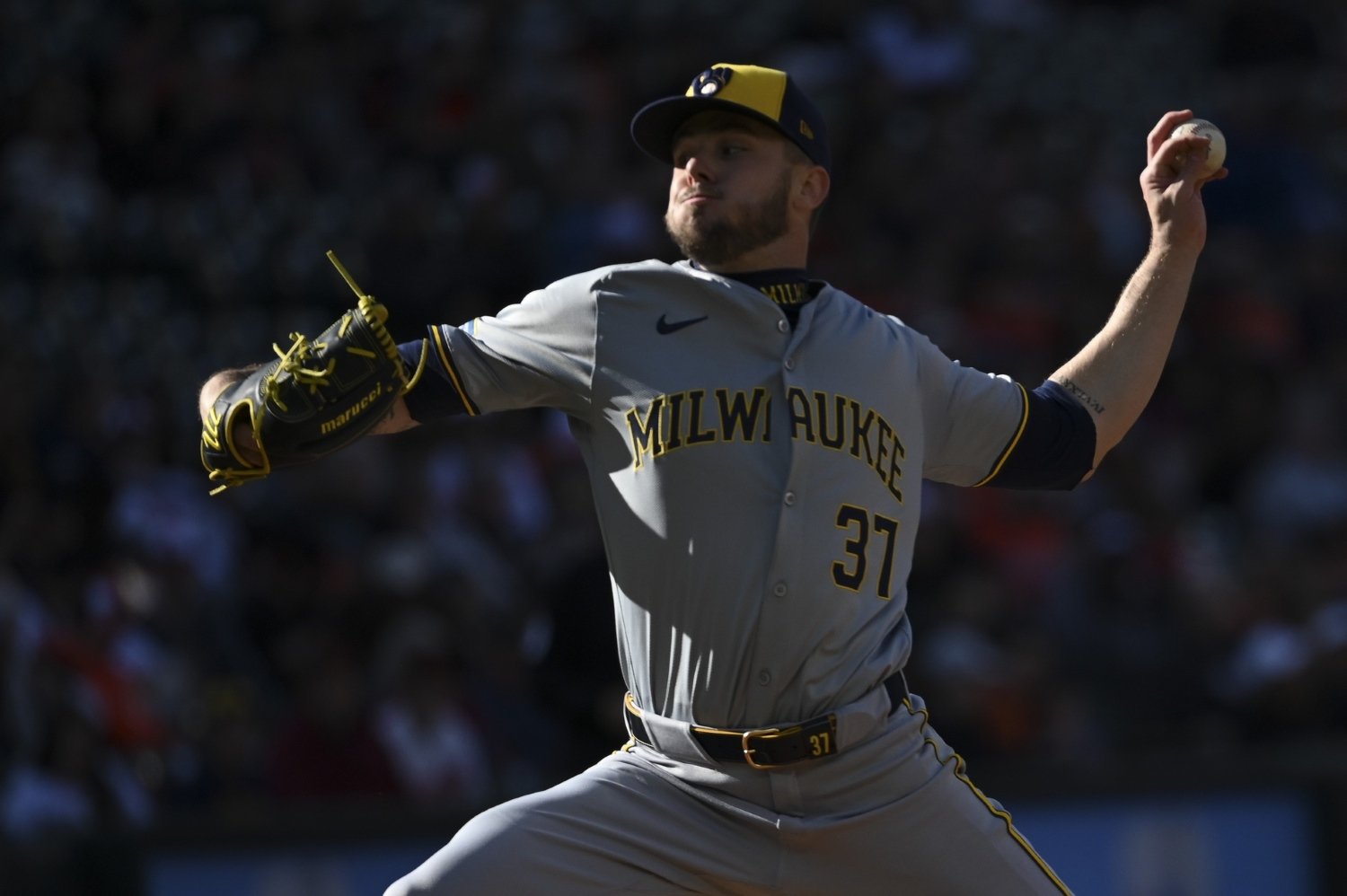 With the bullpen faltering of late and crying out for someone who can lock down the eighth and ninth innings, the Brewers may need an arm that works in high leverage. Hoby Milner has been snakebitten so far this season, while Joel Payamps and Elvis Peguero have proved unreliable and taken a step back from their 2023 performances. Even Trevor Megill and Bryan Hudson have shown signs of wear and tear in recent games. They also are in dire need of someone with the type of elite stuff that can start games and get several times through the order while not relying entirely on their defense. So where might these upgrades come from? The Bullpen With one of the most heavily-used bullpens in baseball, it's no surprise that things have looked a little shakier in July than the lockdown versions in earlier months. The Brewers have incredible depth, but a lack of minor-league options among those players does hamper them slightly. Peguero is the only core piece who can be optioned, as of now. Peguero has seen a lot of action in the 8th inning of late, but has been as up-and-down as they come, with a propensity for ground balls and walks that can lead to some blow-up innings. Thankfully, the most obvious “upgrade” may be able to fix this. Devin Williams is likely due back after another three to four relief outings, at most--perhaps by the middle of next week, if things go well in recovering from each appearance. The fastball was a tick down (with a little less extension and IVB than usual) in his latest rehab outing, but it’s not a massive difference. Hopefully, it will tick up again as he loosens and limbers. More importantly, the changeup was as good as ever, with that unique two-plane break, and he was commanding it to the edges of the strike zone well. It won’t be long at all until Williams returns, which can push Megill to a setup role and (hopefully) solidify the closers (plural) spots a little. Megill has worked fewer innings than any other full-year reliever so far, and his stuff is still electric, meaning this recent stretch might just be a small blip. The Brewers may have that dominant closing pair that can reduce games to a seven-inning affair for the opposition again soon. Hopefully, that will allow more leverage to use the likes of Hudson more sparingly because of the limited workload on the Megill/Williams pairing thus far. Having that quality in even lower-leverage spots will be a real boost to the scrappy offense the Crew have this season. The other option is very out-there, but brings a ton of excitement. Craig Yoho was the 8th-round selection out of Arkansas in 2023, and not many people realized just how electric his stuff was. With a screwball/changeup to rival Williams's (accompanied by a boomerang sweeper and a sinker), Yoho has a variety of looping pitches that work in contrasting ways to tunnel together. He was aggressively promoted to Double-A Biloxi, and has shown himself almost too good for the level: 0.42 FIP 41.6% Whiff rate xFIP 1.22 45% Strikeout rate 0.505 OPS Yoho has been an absolute stud this season, and there’s a very tangible reason the Brewers should believe he could get outs right now in the major leagues. It may not necessarily be immediately in that high-leverage role, but he has the stuff to do it, and even as that unorthodox right-handed reliever, he can be really effective in the middle innings or to clean up messes on the base paths with the swing-and-miss stuff. The Brewers have a lot of depth in their bullpen, and are already struggling with the lack of optionability. They may even end up trading some of these players at the deadline, to teams needing bullpen reinforcements, and if they do (especially given the expanded 28-man September rosters), we may see Yoho getting a shot. The Starting Rotation The one ingredient the Brewers are missing right now is a lights-out starter who can wipe out opposing hitters with nasty stuff. Everyone knows the name Jacob Misiorowski and what he can do, but it's an issue on which I vacillate often. First among these is the workload concern with Misiorowski pitching, having already passed the 70-inning mark he reached last season before getting shut down due to “arm fatigue”, on top of some poorer performances when pushed to four days' rest instead of five. There’s a concern the increased pressure and added stress may end horribly for the Brewers in this sense. Then, there’s the fact that he has been more susceptible to the long ball since he’s found the strike zone more. His last two starts have been magnificent, but he had two separate appearances in June in which he gave up three home runs, which raises the question of whether he’s truly ready for the jump. The Southern League is a very pitcher-friendly environment, especially this year, and it might be leading us to view Misiorowski more favorably than he's really earning. With all that taken into account, though, there is an undeniable sense that he’s growing into his own. His fastball is getting quicker as the year goes on, while the control has turned with the weather. Since Jun. 1, he has just a 7.2% walk rate, and he hasn’t walked more than two hitters in any of his last seven outings. Also, during that span, he has a 34% whiff rate (which has gotten even better in July), and he worked into the 7th inning for the first time in his professional career. Matt Arnold has made it clear that the Brewers are seriously considering promoting Misiorowski in the second half of the season, while also being mindful of the injury risk that’s there already. Ideally, I would love it if Misiorowski was an amalgamation of the relief and starter role, perhaps going through four to five innings in a game in September and getting a taste for the big leagues--while not pushing too hard on the results element of the process to keep the stress levels down. He’s very, very unlikely to be going six innings at a time or be treated like a regular starter, but he may be able to go a couple of times through the batting order, and with his profile, that can be incredibly valuable in late September and October. Finally, there’s the eventual return of DL Hall. For all of my optimism about the improved pitch shape and the velocity on his fastball returning somewhat, there’s a nagging concern about the results he’s going to get in the majors. He hasn’t been overmatching hitters the way an 80-grade fastball and 60/70-grade breaking pitches should, and it worries me what’s going to happen if he returns to the rotation. His last start against Norfolk wasn’t ideal, and perhaps suggested more of a long relief profile (he went just 49 pitches), but he struggled to find the zone and has been getting fouled off a lot, dragging his pitch count up. I think he can be serviceable at the big-league level, but I’m not entirely sure the dreamed-upon elite version of him as a starter will come through until 2025 at this point after the knee surgery and some offseason work. Is It Enough? I still think the Brewers may need someone who can provide some length in their rotation, and Erick Fedde may be the perfect target. Assuming they won’t go big on Garrett Crochet or Tarik Skubal and will rely on development of their top prospects to remain competitive in the coming years, Fedde possibly is the best option in terms of team control. He's signed through 2025 on an affordable contract, while providing excellence in all facets that can be elevated further by the Brewers' run prevention unit. Aaron Civale could produce similar results, if he can keep his command in check, but DL Hall hasn’t convinced me that I’d want him starting in October. Joe Ross getting lit up by the Orioles' Triple-A affiliate (and Jackson Holliday, in particular) doesn’t assuage many fears, either. The Brewers have strength in depth coming into the second half, but they could really do with some strength in isolation to go with it.
- 9 comments
-
- 3
-
-
- jacob misiorowski
- craig yoho
- (and 3 more)
-
2024 Draft Signings Thread
Jake McKibbin replied to Jake McKibbin's topic in MLB Draft & International Signings
I'll keep this updated as signings and slot values continue to roll in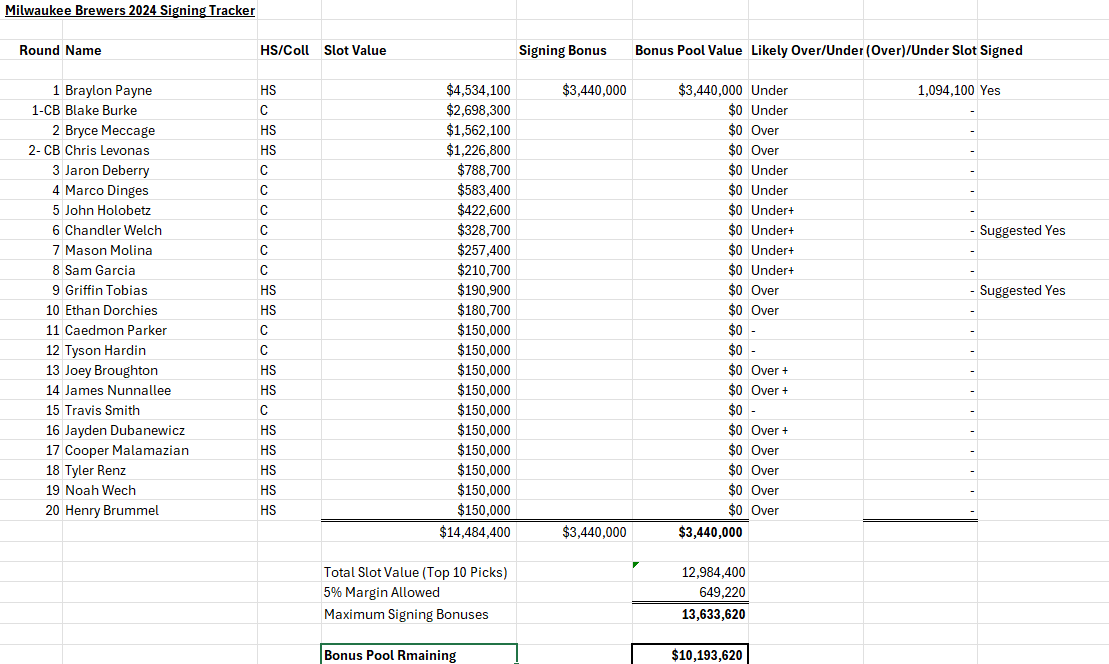
-
Sat. 7/20 - Two Mudcats Games Planned
Jake McKibbin replied to Jim Goulart's topic in Brewers Minor League Talk
Also a 2.78 ERA and 3.37 FIP to right handers, so despite the aggressive promotion hes done really well against same side hitters If the platoon disadvantage can even put, and the Brewers may need to develop a pitch that can get whiffs against lefties to do it, we have something here. -
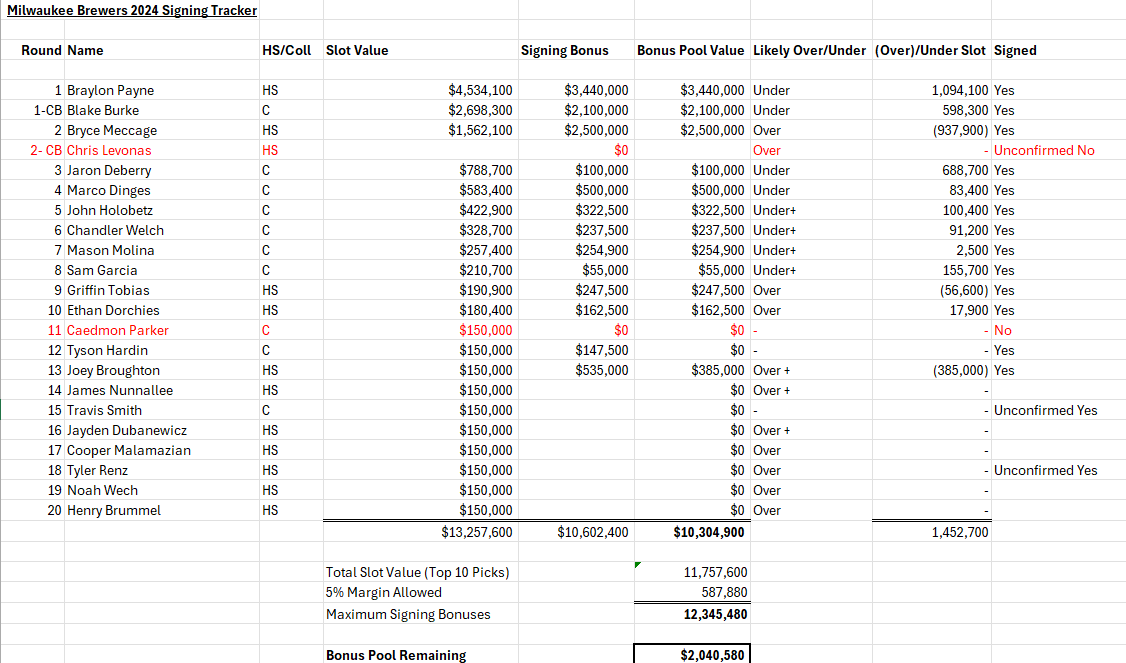
In case anyone's wondering how to track signings, this is updated in real time. https://brewerfanatic.com/milwaukee-brewers-draft-picks/2024/ And of course here should be a good place to discuss any and all bonuses as they come through
-
https://brewerfanatic.com/milwaukee-brewers-draft-picks/2024/
-
There's part of it that's coincidence but I do believe part of it is the style of baseball played by most of these teams, certainly from 2021-2023. The mental grind of being ready to fight day after day in tough situations to gain small advantages here and there wears a team down. Having a dominant rotation and offense combined, or being less intense can help teams but there's also the view that that intensity is a big reason for why they've been so successful early on and post ASB after the mental refresher. Short answer is I can't say there's anything conclusive but that's a theory
-
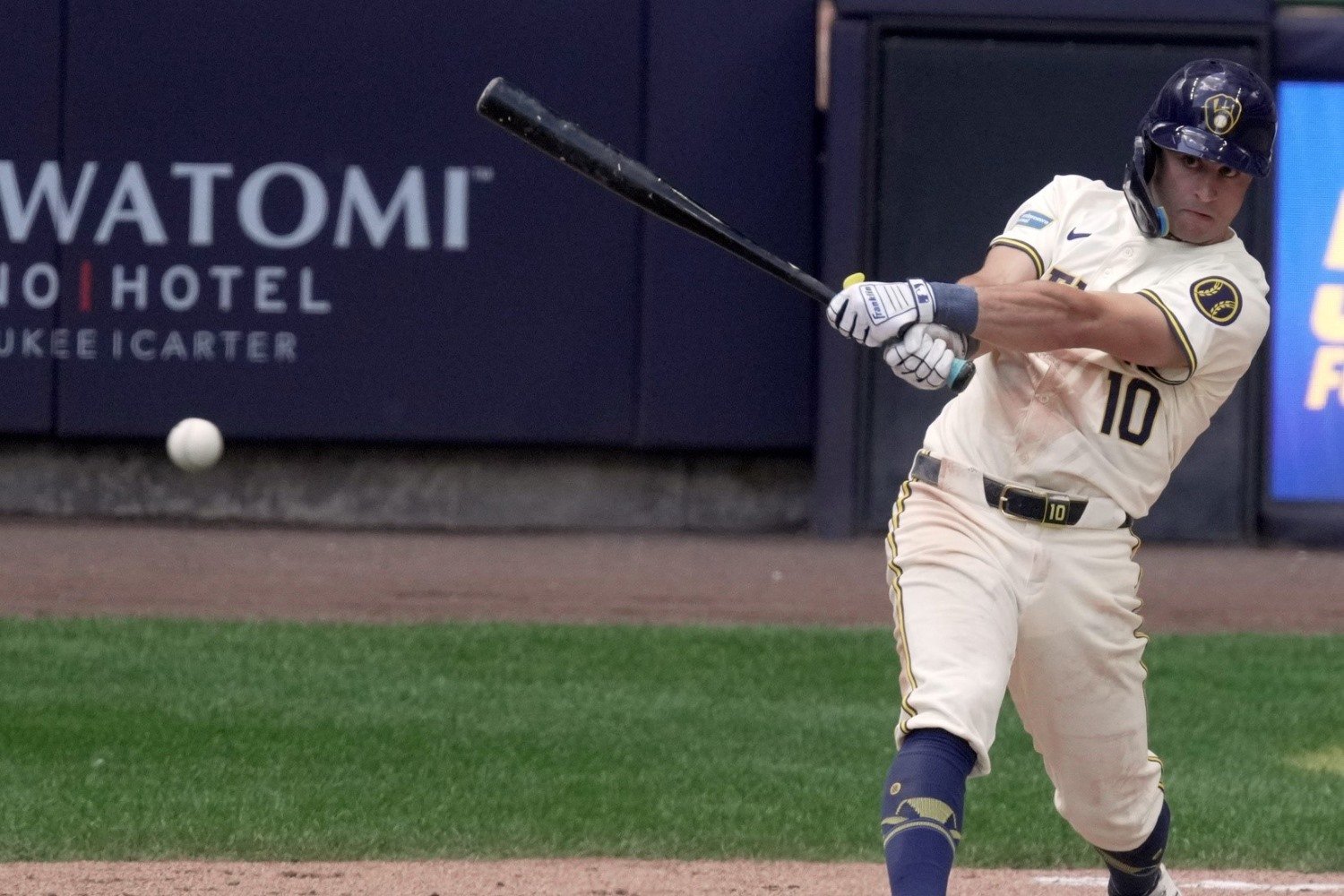 Coming into the year, many expected Sal Frelick to make the kind of quantum leap that (instead) Brice Turang has made, with gap-to-gap power complementing elite bat-to-ball skills and defense. There was even an expectation of more power production from Frelick than Turang has shown so far, but it hasn’t quite come to fruition, despite the gritty center fielder grinding away for all he’s worth. That grind may be starting to pay off. Frelick is beginning to square up more balls into the gaps, as well as being an on-base machine, with a .405 OBP in July and a .388 mark in the last 30 days. In that month's worth of action, he has as many walks as he does strikeouts. Has he begun to crack the code? Learning At The Big-League Level A lot of this comes down to big-league learning. We’ve seen a little of this with Turang, and it’s something Christian Yelich has referenced in the past. It takes time to discern how your swing works in the major leagues, and to zero in on the pitches against which your swing can do damage. It’s a process that takes time, but Frelick seems to have had a rough idea since coming up. In his short career, it's been obvious that he feels he can attack pitches inside with some mighty hacks, especially in the lower part of the zone. The shortness of his swing actually lends itself to squaring up balls on the upper part of the plate, however, and we’ve seen that play out in July. He can turn on inside pitches with that short swing and do damage to the pull side, but the quality of his contact has increased exponentially in the last 30 days. Statistic To 31st May Last 30 Days Slugging .365 .519 Sweet Spot Launch Angle 16.5 25.9 Average Exit Velocity 84.5 mph 87.1 mph Barrel Rate 2% 14.8% Frelick’s underlying metrics have gotten significantly stronger, in terms of both elevating the ball and hitting it hard'. That's leading to an increase in extra-base potential. Why? A lot of it has to do with him being more on time to the ball. There haven’t been any real swing changes, although his legs do seem to be working more smoothly throughout, but that’s likely more through confidence than a concerted change. Another big indicator is how, to all fields, Sal Frelick has raised his line drive rate (almost entirely by reducing his ground ball rate) from 24% to 31%, which is a near-elite number. This may not be entirely good, given that he has a better batting average on ground balls than on flies, but if the end goal is to have that 10-homer power production, then it’s the perfect development for his profile. To the opposite and center field, the results are a little more polarizing statistically, but I believe Frelick is improving there, as well. He’s actually got lower average exit velocities to both areas, but his hard-hit rates have remained the same or better. It all leads me to believe that it’s a small-sample issue, with some topped balls dragging the average down. Most importantly he’s barreling the ball more often, and that can only be good for Frelick as we move into the second “half” of the season. Should He Be Leading Off? Given this increased quality of contact; the absurdly low whiff rates and strikeout rate; and Turang coming back to Earth slightly, I wouldn't be surprised if Frelick ends up leading off more games. For players with over 50 plate appearances in the last 30 days: Frelick is striking out less than Turang, walking more, and has an on-base percentage over 70 points higher. He may not be quite as efficient on the base paths, but he's still fast and seems to be getting better jumps so far this season. Coming out of the All-Star break, I wouldn't be surprised at all to see him setting the table for the Brewers, as they look to extend their division lead over the Cardinals. What do you think of Frelick's recent performance? Is it a true breakout, or a small sample size fluke? Let us know your thoughts in the comments below!
 -
Sal Frelick has an .864 OPS in July, with a strikeout rate under 10%. Is he finally finding his footing at the major-league level? Image courtesy of © Mark Hoffman/Milwaukee Journal Sentinel / USA TODAY NETWORK Coming into the year, many expected Sal Frelick to make the kind of quantum leap that (instead) Brice Turang has made, with gap-to-gap power complementing elite bat-to-ball skills and defense. There was even an expectation of more power production from Frelick than Turang has shown so far, but it hasn’t quite come to fruition, despite the gritty center fielder grinding away for all he’s worth. That grind may be starting to pay off. Frelick is beginning to square up more balls into the gaps, as well as being an on-base machine, with a .405 OBP in July and a .388 mark in the last 30 days. In that month's worth of action, he has as many walks as he does strikeouts. Has he begun to crack the code? Learning At The Big-League Level A lot of this comes down to big-league learning. We’ve seen a little of this with Turang, and it’s something Christian Yelich has referenced in the past. It takes time to discern how your swing works in the major leagues, and to zero in on the pitches against which your swing can do damage. It’s a process that takes time, but Frelick seems to have had a rough idea since coming up. In his short career, it's been obvious that he feels he can attack pitches inside with some mighty hacks, especially in the lower part of the zone. The shortness of his swing actually lends itself to squaring up balls on the upper part of the plate, however, and we’ve seen that play out in July. He can turn on inside pitches with that short swing and do damage to the pull side, but the quality of his contact has increased exponentially in the last 30 days. Statistic To 31st May Last 30 Days Slugging .365 .519 Sweet Spot Launch Angle 16.5 25.9 Average Exit Velocity 84.5 mph 87.1 mph Barrel Rate 2% 14.8% Frelick’s underlying metrics have gotten significantly stronger, in terms of both elevating the ball and hitting it hard'. That's leading to an increase in extra-base potential. Why? A lot of it has to do with him being more on time to the ball. There haven’t been any real swing changes, although his legs do seem to be working more smoothly throughout, but that’s likely more through confidence than a concerted change. Another big indicator is how, to all fields, Sal Frelick has raised his line drive rate (almost entirely by reducing his ground ball rate) from 24% to 31%, which is a near-elite number. This may not be entirely good, given that he has a better batting average on ground balls than on flies, but if the end goal is to have that 10-homer power production, then it’s the perfect development for his profile. To the opposite and center field, the results are a little more polarizing statistically, but I believe Frelick is improving there, as well. He’s actually got lower average exit velocities to both areas, but his hard-hit rates have remained the same or better. It all leads me to believe that it’s a small-sample issue, with some topped balls dragging the average down. Most importantly he’s barreling the ball more often, and that can only be good for Frelick as we move into the second “half” of the season. Should He Be Leading Off? Given this increased quality of contact; the absurdly low whiff rates and strikeout rate; and Turang coming back to Earth slightly, I wouldn't be surprised if Frelick ends up leading off more games. For players with over 50 plate appearances in the last 30 days: Frelick is striking out less than Turang, walking more, and has an on-base percentage over 70 points higher. He may not be quite as efficient on the base paths, but he's still fast and seems to be getting better jumps so far this season. Coming out of the All-Star break, I wouldn't be surprised at all to see him setting the table for the Brewers, as they look to extend their division lead over the Cardinals. What do you think of Frelick's recent performance? Is it a true breakout, or a small sample size fluke? Let us know your thoughts in the comments below! View full article
-
The Brewers are Fast but not Aggressive
Jake McKibbin commented on Stealofhome's blog entry in Breakdowns around the Bubbler
Great piece! From what I've seen they seem determined to maximise efficiency more than than EDLC model of just steal every time and are trying top negate the value of a caught stealing. Quentin Berry has been magnificent at that so far this season but I am interested to see if the likes of Turang et al can be slightly more aggressive in the second half -
Thanks, I really appreciate that! Glad you enjoyed it. I like Areinamo and actually should've covered him here as he fits this group well. His problem is he lacks both power and the ability to draw walks but he is a pretty solid defender in his own right (likely to end up more at second base than shortstop) and strikes out just 12.3% of the time as a 20 year old in High A. He's young for his current level and it'll be interesting to see if that power comes on some over the next year but I am concerned he chases a little much that he'll be found out against better pitchers as he moves up the levels. One thing to note is his ISO has ticked up in June and July, The July sample is an outlier but even seeing it rise to .158 in June is a positive step with 5 homers since the start of June. There's a potential breakout for him if he keeps this up. I'd have him comfortably ahead of Guilarte and value wise slightly ahead of EBJ in that the prospect helium of EBJ plus the bat to ball skills and better defense at a higher level can match Areinamo's superior production at a lower level with Jadher getting the edge based on his seemingly continuing growth and development. I think he'll be moderately available but the Brewers won't be too keen to throw him into a trade when the power numbers might be coming around.
- 4 replies
-
- 1
-

-
- dylan orae
- cooper pratt
- (and 5 more)
-
2024 MLB Draft Day 3 Thread
Jake McKibbin replied to Jeremy Nygaard's topic in MLB Draft & International Signings
I wonder how many of these guys were the Cooper Pratt style of pick where the crew had an offer in mind and ran it by the high schoolers before selecting them. They have a history of really strong signing rates but this'll be fascinating to follow -
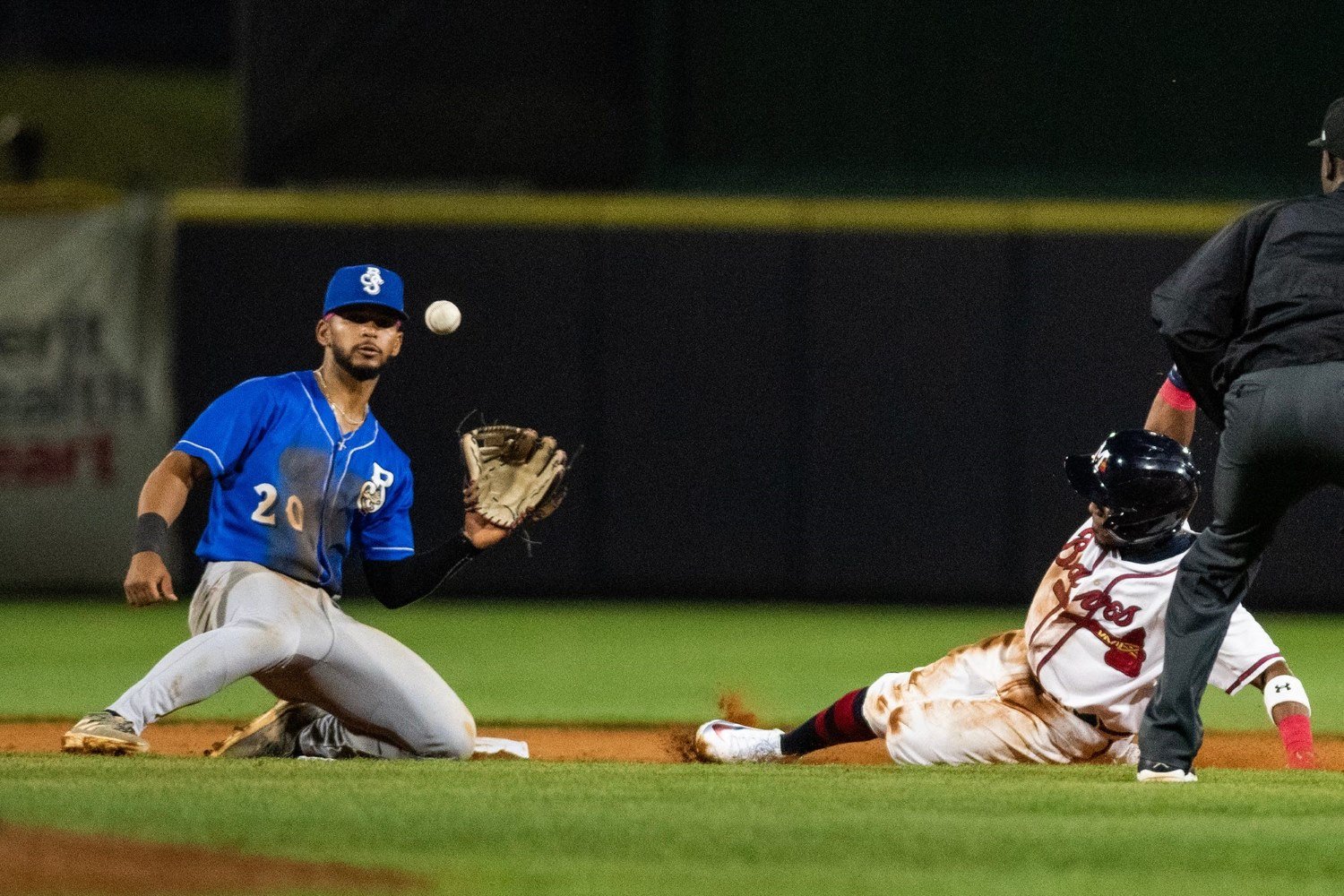 Leaving out a name like Tyler Black (who is currently blocked), let’s focus a little more on those further down the prospect rankings. Middle infielders are a fascinating subsection of the Brewers' farm system, with a ton of talent and versatility. In Cooper Pratt, Eric Bitonti, Juan Baez, Daniel Guillarte, Dylan O’Rae, Eric Brown Jr and Filippo Di Turi, they have a lot of strong defensive players with solid hit tools, any of whom could bring in solid value at the deadline. Which trade chips might the Brewers prefer to cash in, in this scenario? The Power Potential Is Off The Table Eric Bitonti and Cooper Pratt are not likely to be on the market for the Brewers, in large part because both have so much upside. Bitonti, in particular, is working on getting the strikeout rate under control, but his raw power and athleticism have shown through in the complex leagues. He’s hit seven home runs, 13 doubles and three triples in less than 200 plate appearances. Pratt’s power hasn’t shown up yet in game play, but the swing is geared toward it, and there’s a feeling that he can tap into significantly more as he goes through the levels. Both are strong defensive players on the left side of the infield, and Pratt just entered MLB’’s top 100 prospect list. The real reason for their protection will be because of the dearth of power among the team's other infielders. For the same reason (although he’s not a middle infielder), the Brewers are very unlikely to part with Brock Wilken at this point. He’s worked through some early struggles in Double-A, and his massive power ceiling for an organization lacking it in their farm system is tough to part with. Availability - Very Low/Nil Juan Baez Báez is a fascinating player, already in Low-A Carolina at age 19. Báez is currently on the IL, but has shown some big improvements so far this season. He has as many walks (12) as he does strikeouts, and has generated high-end exit velocities for his age demographic. That may indicate more power production, if he can elevate with greater regularity. Still young for the level, Báez is hitting .292/.348/.411 with the Mudcats, with 15 extra-base hits on the year. Only one home run so far, but there is projection for more power to come, and to boot, Báez has managed to improve significantly with the leather. He committed 12 errors in 24 games for the ACL Brewers in 2023, with a throwing arm that struggled to find its mark. However, this season, his range and arm have been much-improved. He may even be an above-average defender on the left side of the infield. He can play second base, shortstop and third base, and at his age, there is a lot of potential. I can’t see the Brewers moving him just yet, given the profile and the developments he’s shown so far. His being injured could be an extra hurdle. Still, in the right deal, he’s not off the table. Availability - Moderate to Low Eric Brown Jr The Brewers' first-round pick in 2022, Brown is an athletic shortstop with great range and a solid arm, to the point that his only flaw defensively is the occasional excessively “showy” play. Otherwise, he’s a no-doubt shortstop, but the athleticism in the field hasn’t translated well to the batter's box. Brown is starting to show signs of recovery from a slow start to the season, hitting .324/.415/.382 in July, but he struggles to hit the ball hard with any regularity. When he squares the ball up, there is punch there, but it doesn’t occur with enough regularity. He can be a menace on the base paths, with strong baserunning instincts and above-average speed, but he’s not likely to ever be a premium base stealer. There is still potential with Brown that someone can translate that athleticism into his bat, but it hasn’t worked out yet for the Brewers. When it comes to Brown’s value, things are balancing on a knife edge. He’s still at the stage where teams may feel there’s something they can unlock, but if the bat-to-ball and on-base skills take another downturn, that value will take a significant downturn due to his age and injury struggles. Availability - Moderate to High Daniel Guilarte A premium defensive shortstop, Guilarte has had good plate discipline and solid bat-to-ball skills, but these have taken a real downturn in 2024, as he's had a power outage. A strikeout rate of 27.4% as a 20-year-old in Low-A isn’t going to cut the mustard with a slash line of .224/.319/.301 to complement it, and if Guilarte can’t find the bat quickly, he may be at risk of release from the Brewers system in 2025. The defensive ability is not even remotely in question, and he’s a lock to stick at short, but the Brewers will be concerned by the bat. With an influx of new talent coming Stateside from the DSL and ACL later this year and in 2025, Guilarte needs to start showing something. He will be available to those inquiring, but his value may have taken a dip from where it was at the start of 2024. Availability - High Dylan O’Rae Perhaps the most interesting name here, O’Rae has elite plate discipline and bat-to-ball skills. The Brewers have been aggressive, pushing him from ACL ball last summer to Double-A Biloxi early this season. He performed well at High-A, but wasn’t necessarily smashing down the door for a promotion. What he does have is the ability to cover second base or center field, with elite speed that he puts to good use on the base paths and strong coverage of the strike zone to go with good plate discipline. The aggressive push to Double-A may have looked like the Brewers attempting to increase his value, but I think there’s more here than the metrics say. O’Rae has a walk rate of over 10% in every month so far this year, and although he’s striking out more often in Biloxi, that’s not unexpected for a player making an adjustment to a higher level. He had a 6.5% swinging strike rate in May and June, and that’s likely to translate to the upper minors, eventually, The really interesting thing for me is that, although O’Rae had 30-grade power when the Brewers drafted him, he’s not a ground-ball slap hitter by any means, and it seems like he’s getting closer to better in-game power production. Watching games, you can see him barreling balls that aren’t quite reaching the fence, but he has a lot of filling out left on his frame. If he can bulk up somewhat over the offseason, there’s a chance that he has double-digit home run pop. That may not sound like much, but his bat-to-ball skills are so good (alongside the defensive strengths and baserunning excellence) that he can be a very valuable player. I think the Brewers are big believers in him. As such, they’re unlikely to cash him in unless absolutely necessary--and thus, not sooner than this offseason. Availability - Low These aren't the only blocked players in the minors, but the Brewers have a lot of similar profiles in terms of the strong defense and hit-tool mold, but they may prioritize keeping those with power potential where possible. I believe O'Rae is an exception to that, given the impressiveness of his other tools, but one other name I could maybe add is Brewer Hicklen. The Brewers are stacked in the outfield, with young bodies trying to prove themselves. Although he may be the next man up, it's tough to envisage a path to regular playing time. He's been absolutely mashing at Triple-A, and could be a sweetener for a rebuilding team in the final months of 2024 to get a deal across the line. He was also recently added to the 40-man roster, to avoid an opt-out clause in his contract, with Adam McCalvy reporting that other teams have been taking note of his strong performances for the Nashville Sounds. What do you think of the middle infielders listed? Do you agree with their availability ratings? Let us know your thoughts in the comments below!
 -
The Brewers have a lot of middle infield talent with strong hit tools in their system, a fact that may play into their needs at the trade deadline. Which of these talented players may be involved, if the Brewers are active over the next fortnight? Image courtesy of © Lauren Witte/Clarion Ledger / USA TODAY NETWORK Leaving out a name like Tyler Black (who is currently blocked), let’s focus a little more on those further down the prospect rankings. Middle infielders are a fascinating subsection of the Brewers' farm system, with a ton of talent and versatility. In Cooper Pratt, Eric Bitonti, Juan Baez, Daniel Guillarte, Dylan O’Rae, Eric Brown Jr and Filippo Di Turi, they have a lot of strong defensive players with solid hit tools, any of whom could bring in solid value at the deadline. Which trade chips might the Brewers prefer to cash in, in this scenario? The Power Potential Is Off The Table Eric Bitonti and Cooper Pratt are not likely to be on the market for the Brewers, in large part because both have so much upside. Bitonti, in particular, is working on getting the strikeout rate under control, but his raw power and athleticism have shown through in the complex leagues. He’s hit seven home runs, 13 doubles and three triples in less than 200 plate appearances. Pratt’s power hasn’t shown up yet in game play, but the swing is geared toward it, and there’s a feeling that he can tap into significantly more as he goes through the levels. Both are strong defensive players on the left side of the infield, and Pratt just entered MLB’’s top 100 prospect list. The real reason for their protection will be because of the dearth of power among the team's other infielders. For the same reason (although he’s not a middle infielder), the Brewers are very unlikely to part with Brock Wilken at this point. He’s worked through some early struggles in Double-A, and his massive power ceiling for an organization lacking it in their farm system is tough to part with. Availability - Very Low/Nil Juan Baez Báez is a fascinating player, already in Low-A Carolina at age 19. Báez is currently on the IL, but has shown some big improvements so far this season. He has as many walks (12) as he does strikeouts, and has generated high-end exit velocities for his age demographic. That may indicate more power production, if he can elevate with greater regularity. Still young for the level, Báez is hitting .292/.348/.411 with the Mudcats, with 15 extra-base hits on the year. Only one home run so far, but there is projection for more power to come, and to boot, Báez has managed to improve significantly with the leather. He committed 12 errors in 24 games for the ACL Brewers in 2023, with a throwing arm that struggled to find its mark. However, this season, his range and arm have been much-improved. He may even be an above-average defender on the left side of the infield. He can play second base, shortstop and third base, and at his age, there is a lot of potential. I can’t see the Brewers moving him just yet, given the profile and the developments he’s shown so far. His being injured could be an extra hurdle. Still, in the right deal, he’s not off the table. Availability - Moderate to Low Eric Brown Jr The Brewers' first-round pick in 2022, Brown is an athletic shortstop with great range and a solid arm, to the point that his only flaw defensively is the occasional excessively “showy” play. Otherwise, he’s a no-doubt shortstop, but the athleticism in the field hasn’t translated well to the batter's box. Brown is starting to show signs of recovery from a slow start to the season, hitting .324/.415/.382 in July, but he struggles to hit the ball hard with any regularity. When he squares the ball up, there is punch there, but it doesn’t occur with enough regularity. He can be a menace on the base paths, with strong baserunning instincts and above-average speed, but he’s not likely to ever be a premium base stealer. There is still potential with Brown that someone can translate that athleticism into his bat, but it hasn’t worked out yet for the Brewers. When it comes to Brown’s value, things are balancing on a knife edge. He’s still at the stage where teams may feel there’s something they can unlock, but if the bat-to-ball and on-base skills take another downturn, that value will take a significant downturn due to his age and injury struggles. Availability - Moderate to High Daniel Guilarte A premium defensive shortstop, Guilarte has had good plate discipline and solid bat-to-ball skills, but these have taken a real downturn in 2024, as he's had a power outage. A strikeout rate of 27.4% as a 20-year-old in Low-A isn’t going to cut the mustard with a slash line of .224/.319/.301 to complement it, and if Guilarte can’t find the bat quickly, he may be at risk of release from the Brewers system in 2025. The defensive ability is not even remotely in question, and he’s a lock to stick at short, but the Brewers will be concerned by the bat. With an influx of new talent coming Stateside from the DSL and ACL later this year and in 2025, Guilarte needs to start showing something. He will be available to those inquiring, but his value may have taken a dip from where it was at the start of 2024. Availability - High Dylan O’Rae Perhaps the most interesting name here, O’Rae has elite plate discipline and bat-to-ball skills. The Brewers have been aggressive, pushing him from ACL ball last summer to Double-A Biloxi early this season. He performed well at High-A, but wasn’t necessarily smashing down the door for a promotion. What he does have is the ability to cover second base or center field, with elite speed that he puts to good use on the base paths and strong coverage of the strike zone to go with good plate discipline. The aggressive push to Double-A may have looked like the Brewers attempting to increase his value, but I think there’s more here than the metrics say. O’Rae has a walk rate of over 10% in every month so far this year, and although he’s striking out more often in Biloxi, that’s not unexpected for a player making an adjustment to a higher level. He had a 6.5% swinging strike rate in May and June, and that’s likely to translate to the upper minors, eventually, The really interesting thing for me is that, although O’Rae had 30-grade power when the Brewers drafted him, he’s not a ground-ball slap hitter by any means, and it seems like he’s getting closer to better in-game power production. Watching games, you can see him barreling balls that aren’t quite reaching the fence, but he has a lot of filling out left on his frame. If he can bulk up somewhat over the offseason, there’s a chance that he has double-digit home run pop. That may not sound like much, but his bat-to-ball skills are so good (alongside the defensive strengths and baserunning excellence) that he can be a very valuable player. I think the Brewers are big believers in him. As such, they’re unlikely to cash him in unless absolutely necessary--and thus, not sooner than this offseason. Availability - Low These aren't the only blocked players in the minors, but the Brewers have a lot of similar profiles in terms of the strong defense and hit-tool mold, but they may prioritize keeping those with power potential where possible. I believe O'Rae is an exception to that, given the impressiveness of his other tools, but one other name I could maybe add is Brewer Hicklen. The Brewers are stacked in the outfield, with young bodies trying to prove themselves. Although he may be the next man up, it's tough to envisage a path to regular playing time. He's been absolutely mashing at Triple-A, and could be a sweetener for a rebuilding team in the final months of 2024 to get a deal across the line. He was also recently added to the 40-man roster, to avoid an opt-out clause in his contract, with Adam McCalvy reporting that other teams have been taking note of his strong performances for the Nashville Sounds. What do you think of the middle infielders listed? Do you agree with their availability ratings? Let us know your thoughts in the comments below! View full article
-
2024 Minor League Transaction Thread
Jake McKibbin replied to Jim Goulart's topic in Brewers Minor League Talk
In a corresponding move: Milwaukee Brewers transferred 2B Oliver Dunn from the 10-day injured list to the 60-day injured list. Back strain. -
The Brewers lost their last three series before the All-Star break, with their own manager referring to them as "emotionally drained". Roughly 60 percent of the way through the season, why are they mentally fatigued, and what can they do to ameliorate it after the break? Image courtesy of © Benny Sieu-USA TODAY Sports Pairing short starts, extensive bullpen usage and a grinding, scrape-and-scramble offense can wear any team down over a 100-day period. The Brewers are in a funk at the moment, and seem desperate for the All-Star break to arrive yet again. However, the problem remains: After this five-day respite, they’ll be the same team they were before. So what has to change for the Brewers? The Offense The Brewers' offense have been much more formidable than was expected this season, with Joey Ortiz and Brice Turang complementing a resurgent Christian Yelich and (early on) an MVP-level William Contreras. However, despite massive power production from both Yelich and Contreras in April, the Brewers have struggled with the long ball since May and rank just 26th in MLB with 60 home runs. For a team consisting of Willy Adames, Contreras, Gary Sánchez and Rhys Hoskins (plus the young, dynamic Ortiz and Jackson Chourio), there have been too many cold stretches that brought power outages. Maybe we shouldn’t expect Yelich and Contreras to hit 25-plus home runs, given their ground-ball proclivities. Still, Contreras turning into a substandard hitter for two months hurt the offense enormously, while the aforementioned sluggers were struggling in and with a lack of playing time. Yelich may yet find a hot stretch like he did in April, but at least he’s continued hitting for average during his cooler patches. The solution for Contreras, as much as he may dislike it, is that Sánchez has to catch more often. Between them, they have (on paper) the best offensive catching tandem in Major League Baseball, but the Brewers haven’t used this advantageous situation to give their number-one any real rest early in the season. Sánchez is likely to return after the break, and Contreras needs to be given more proper days off (not just DH days), to make sure you’re getting not just quantity, but quality from him. That’s infinitely more valuable than making appearances in over 150 games this season just for the sake of it. The extra downtime should bring benefits both offensively and defensively for the star catcher, because if they want to perform in September and October, then he’ll be a vital cog. In regard to the middle-of-the-order sluggers, the high-pull, high-fly ball hitters will always be streaky. Adames, Hoskins, Sánchez and Bauers all fall into this category, and all have shown an ability to carry the offense when they get hot, but it’s been too sporadic so far. Hoskins appears to have found some timing, and Adames heated up significantly over the final week before the break. The long and short of it is that the Brewers need more long balls to take the pressure off their offense's short game, to free up Brice Turang, Sal Frelick, and Chourio somewhat and reduce the mental fatigue that will no doubt be coming back, otherwise, in late August and September. The Pitching Thankfully, one part of this may already be getting fixed. The reassigned Bryse Wilson and the rehabilitated Jakob Junis have strengthened the Brewers' middle-relief corps, who can now take pressure off those previously going multiple innings when they hadn’t built up for it. In the interim, Hoby Milner, Elvis Peguero, and others were filling these innings, with Milner in particular worked to the bone. Having that long relief will be essential when the starting pitchers have struggled to work deeper into games. Speaking of that: The Brewers' starting pitchers rank 29th in total innings from their starting pitchers--although that incorporates a slight penalty, given their occasional usage of “openers”. Averaging around 4 ⅔ innings per appearance from their starters is not going to cut it for what is already looking like a strained bullpen. Dallas Keuchel wasn’t the answer. There is some hope the flashes from DL Hall in Nashville and Joe Ross before his back injury will provide some quality on their return, but a lot of this will come down to Freddy Peralta. The Brewers are going to need him to find some semblance of the dominance he demonstrated in the latter stages of last season, or that bullpen will be on its last legs when it's needed most. A comment from Chris Hook last season that preceded the breakout was about Peralta’s mental approach on the mound, trying to bring through his personality on the mound. Peralta referenced this, as well, his infectious enthusiasm being shelved for a more serious demeanor that played havoc with him in pressured situations. This year, as the projected leader of the pitching staff, it seems the tension has racked up on his shoulders again. Murphy has alluded to that as a reason for his struggles. Peralta can attempt to be “too perfect,” in situations where his raw swing-and-miss stuff should be sufficient. He doesn’t need to be wasting pitches and inflating his own pitch counts. The Brewers staff need to find a way to release some of the internal pressure Peralta puts on himself. Only then will he be able to reach his very lofty ceiling. What Lessons Can Pat Murphy Learn? Pat Murphy has developed a lot already as a manager this season, and his bullpen management has improved significantly. He appears to believe in momentum in some ways, with a focus on using his best available players to stop losing streaks or even to get off to a good start earlier in the season. The next step is to find moments when he can get away with testing some of his least proven players and alleviate the pressure on the core. Murphy hasn't had his best weapons at his disposal for much of the year, but even once he does, he may have to leave DL Hall or Joe Ross in for those extra few batters when they come back and save an inning here and there for arms who figure to be bigger pieces of their postseason plans. It may not show perfectly in the win column at times, but in the long run, it could make a big difference. In return, the back end of the rotation needs to repay that faith with quality performance, which is still a matter in question. One thing Murphy hasn’t done a lot of early in the year is rotating the offensive contributors, especially his main core. He’s listened to his players, and perhaps that hasn’t always been the wisest choice--particularly with Contreras, but also with Turang and Yelich, who had played 50-plus consecutive games leading up to the All-Star break. Both are gritty players, and that mental grind requires time off--maybe even more than is needed if you go about your at-bats the way a team like Atlanta does. In short, Murphy needs to trust the depth of the team to perform, or they can’t be at their best at the back end of the season. It might mean more appearances for Monasterio to give Turang the occasional day off, or more of Sánchez and Eric Haase, but that’s not something to scoff at. The Crew’s depth has been an underutilized resource in the first half, and while there may be reinforcements coming, the point remains the same. Murphy needs his starters to step up, and to keep half an eye on the potential for players to succeed past September and into October. View full article
-
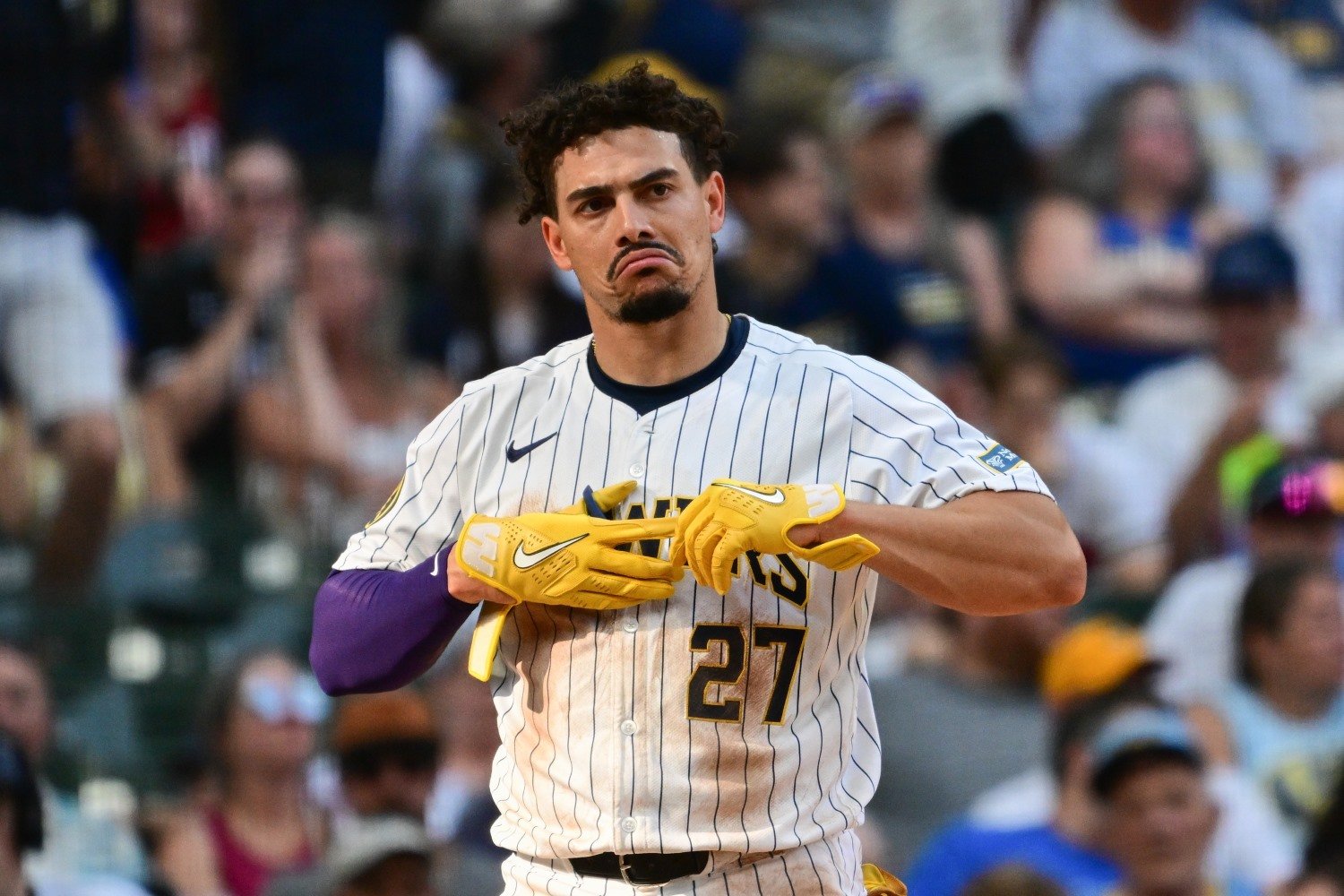 Pairing short starts, extensive bullpen usage and a grinding, scrape-and-scramble offense can wear any team down over a 100-day period. The Brewers are in a funk at the moment, and seem desperate for the All-Star break to arrive yet again. However, the problem remains: After this five-day respite, they’ll be the same team they were before. So what has to change for the Brewers? The Offense The Brewers' offense have been much more formidable than was expected this season, with Joey Ortiz and Brice Turang complementing a resurgent Christian Yelich and (early on) an MVP-level William Contreras. However, despite massive power production from both Yelich and Contreras in April, the Brewers have struggled with the long ball since May and rank just 26th in MLB with 60 home runs. For a team consisting of Willy Adames, Contreras, Gary Sánchez and Rhys Hoskins (plus the young, dynamic Ortiz and Jackson Chourio), there have been too many cold stretches that brought power outages. Maybe we shouldn’t expect Yelich and Contreras to hit 25-plus home runs, given their ground-ball proclivities. Still, Contreras turning into a substandard hitter for two months hurt the offense enormously, while the aforementioned sluggers were struggling in and with a lack of playing time. Yelich may yet find a hot stretch like he did in April, but at least he’s continued hitting for average during his cooler patches. The solution for Contreras, as much as he may dislike it, is that Sánchez has to catch more often. Between them, they have (on paper) the best offensive catching tandem in Major League Baseball, but the Brewers haven’t used this advantageous situation to give their number-one any real rest early in the season. Sánchez is likely to return after the break, and Contreras needs to be given more proper days off (not just DH days), to make sure you’re getting not just quantity, but quality from him. That’s infinitely more valuable than making appearances in over 150 games this season just for the sake of it. The extra downtime should bring benefits both offensively and defensively for the star catcher, because if they want to perform in September and October, then he’ll be a vital cog. In regard to the middle-of-the-order sluggers, the high-pull, high-fly ball hitters will always be streaky. Adames, Hoskins, Sánchez and Bauers all fall into this category, and all have shown an ability to carry the offense when they get hot, but it’s been too sporadic so far. Hoskins appears to have found some timing, and Adames heated up significantly over the final week before the break. The long and short of it is that the Brewers need more long balls to take the pressure off their offense's short game, to free up Brice Turang, Sal Frelick, and Chourio somewhat and reduce the mental fatigue that will no doubt be coming back, otherwise, in late August and September. The Pitching Thankfully, one part of this may already be getting fixed. The reassigned Bryse Wilson and the rehabilitated Jakob Junis have strengthened the Brewers' middle-relief corps, who can now take pressure off those previously going multiple innings when they hadn’t built up for it. In the interim, Hoby Milner, Elvis Peguero, and others were filling these innings, with Milner in particular worked to the bone. Having that long relief will be essential when the starting pitchers have struggled to work deeper into games. Speaking of that: The Brewers' starting pitchers rank 29th in total innings from their starting pitchers--although that incorporates a slight penalty, given their occasional usage of “openers”. Averaging around 4 ⅔ innings per appearance from their starters is not going to cut it for what is already looking like a strained bullpen. Dallas Keuchel wasn’t the answer. There is some hope the flashes from DL Hall in Nashville and Joe Ross before his back injury will provide some quality on their return, but a lot of this will come down to Freddy Peralta. The Brewers are going to need him to find some semblance of the dominance he demonstrated in the latter stages of last season, or that bullpen will be on its last legs when it's needed most. A comment from Chris Hook last season that preceded the breakout was about Peralta’s mental approach on the mound, trying to bring through his personality on the mound. Peralta referenced this, as well, his infectious enthusiasm being shelved for a more serious demeanor that played havoc with him in pressured situations. This year, as the projected leader of the pitching staff, it seems the tension has racked up on his shoulders again. Murphy has alluded to that as a reason for his struggles. Peralta can attempt to be “too perfect,” in situations where his raw swing-and-miss stuff should be sufficient. He doesn’t need to be wasting pitches and inflating his own pitch counts. The Brewers staff need to find a way to release some of the internal pressure Peralta puts on himself. Only then will he be able to reach his very lofty ceiling. What Lessons Can Pat Murphy Learn? Pat Murphy has developed a lot already as a manager this season, and his bullpen management has improved significantly. He appears to believe in momentum in some ways, with a focus on using his best available players to stop losing streaks or even to get off to a good start earlier in the season. The next step is to find moments when he can get away with testing some of his least proven players and alleviate the pressure on the core. Murphy hasn't had his best weapons at his disposal for much of the year, but even once he does, he may have to leave DL Hall or Joe Ross in for those extra few batters when they come back and save an inning here and there for arms who figure to be bigger pieces of their postseason plans. It may not show perfectly in the win column at times, but in the long run, it could make a big difference. In return, the back end of the rotation needs to repay that faith with quality performance, which is still a matter in question. One thing Murphy hasn’t done a lot of early in the year is rotating the offensive contributors, especially his main core. He’s listened to his players, and perhaps that hasn’t always been the wisest choice--particularly with Contreras, but also with Turang and Yelich, who had played 50-plus consecutive games leading up to the All-Star break. Both are gritty players, and that mental grind requires time off--maybe even more than is needed if you go about your at-bats the way a team like Atlanta does. In short, Murphy needs to trust the depth of the team to perform, or they can’t be at their best at the back end of the season. It might mean more appearances for Monasterio to give Turang the occasional day off, or more of Sánchez and Eric Haase, but that’s not something to scoff at. The Crew’s depth has been an underutilized resource in the first half, and while there may be reinforcements coming, the point remains the same. Murphy needs his starters to step up, and to keep half an eye on the potential for players to succeed past September and into October.
 -
Article: 2024 MLB Draft Day 1 Thread
Jake McKibbin replied to Jeremy Nygaard's topic in MLB Draft & International Signings
2600 RPM on a fastball is insane. I wonder what the IVB numbers on that must be like, those are sticky stuff level numbers -
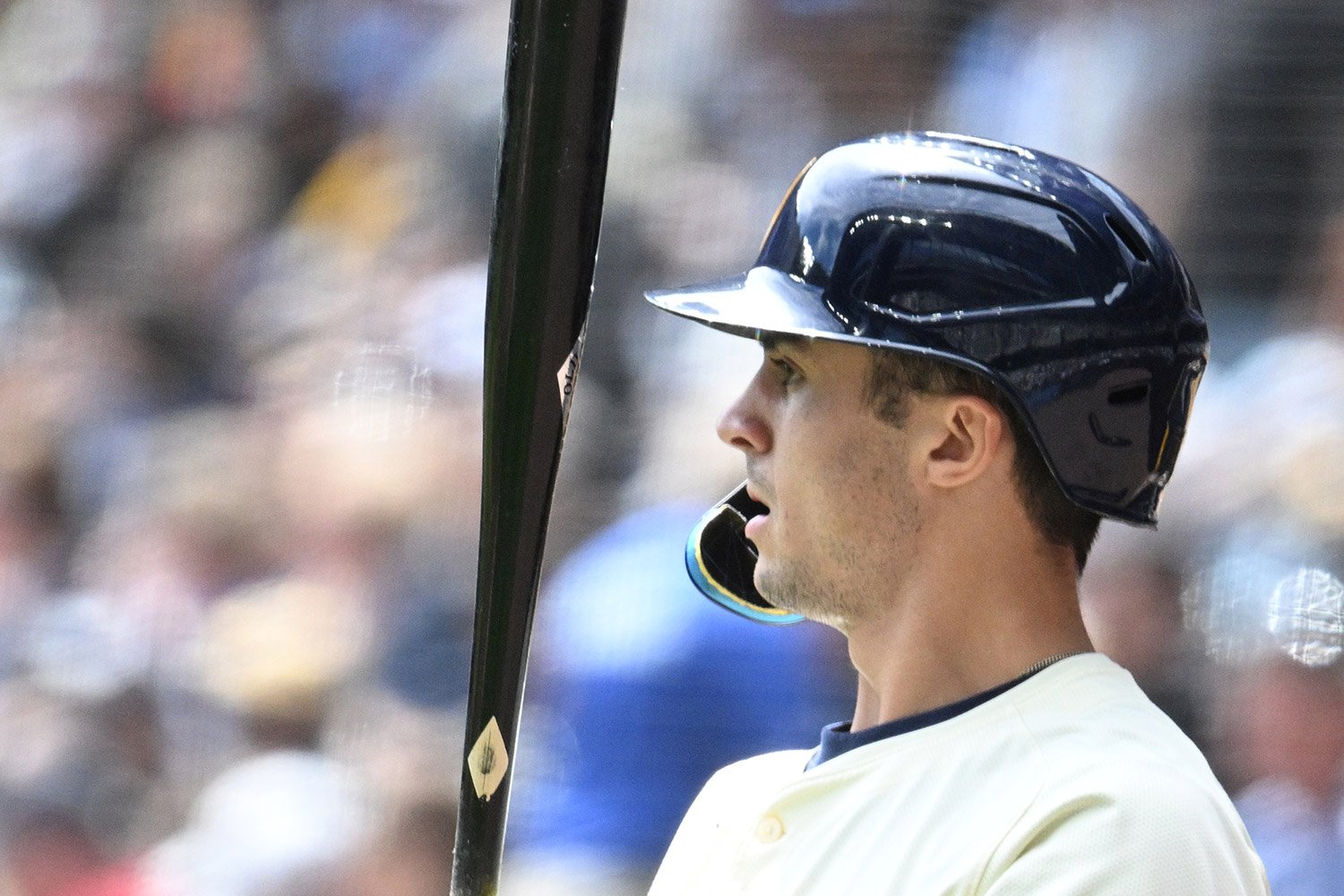 The Brewers, in recent years, have shied away from those big deals involving the upper echelons of their prospect capital, a vital dance for a small market team. Now that they have such extreme depth within their organization, however, they may be able to leverage some of their top assets, so what would these players be worth on the trade market? Using the Brewer fanatic prospect rankings as a guide, let’s have a look. 1. Jacob Misiorowski As polarizing as they come in some respects, Misiorowski has the raw stuff to be as dominant as Paul Skenes on the mound with even close to average command. With a fastball touching triple digits with above-average induced vertical break (IVB), a wicked slider, and a curveball with different profiles, he’s a jewel if the command comes around. That may be starting to happen of late, with Misiorowski looking more balanced on the mound and falling off slightly less violently to the first base side while he’s seen his walk rate plummet from 18.8% in May to 6.5% in June, and he’s maintained that drop in July so far. If this keeps trending up, that reliever risk may trend down and increase his value significantly. The contrast is that he’s become slightly more home run prone with two starts since June that have combined for six homers. One of these was on shorter rest (Misiorowski has been accustomed to five days in between starts rather than the MLB regular of four), but it merits concern if he becomes more hittable when he stays in the zone more often. There is a difference between control and command, and should he be locating pitches consistently over the middle of the plate, professional hitters will do damage no matter how good your raw stuff is. Misiorowski worked into the 7th inning for the first time in his last start and took just 89 pitches while striking out 10 of the 23 hitters he faced. Arguably, his value has never been higher, but he could be taking some major steps forward to be (potentially) the most dominant pitcher in the major leagues. With all the raw talent in his arm, the only way the Brewers will trade him is if they see no path to him starting in the major leagues, and in return for a bonafide long-term team-controlled ace such as Matthew Trueblood wrote about here. Value: Extremely High Trade Likelihood: Very Low Trades That He May Headline: Tarik Skubal, Garrett Crochet (High-End Pitchers, Multiple Years of Control) 2. Tyler Black Tyler Black has the potential to be a very interesting hitter at the big leagues with an awareness of how to access power production without necessarily having the high exit velocities of a power hitter and combining that with pace to burn and perhaps the best eye at the plate in the minor leagues. He’ll take his HBP, take his walks, steal bases, leg out triples and doubles, and get the ball over the fence perhaps 15-20 times a year. So why is he not with the big league club now? Well, that comes mostly from his defensive value, and despite his athleticism, the footwork just isn't there on the dirt to cover third base, and he’s somehow looked even worse at first base. The Brewers may have gone to a solution this week that our resident guru Spencer Michaelis has been clamoring for and moved Black to the outfield where his speed can play up defensively, and he showed some good coverage in his first game in center field since 2022. This move could indicate that one of the Brewers' outfield cores, Garrett Mitchell, Joey Wiemer, or Sal Frelick, are on the trade block, or perhaps Black himself is being shown off to potential suitors by moving him to this role. Even a passable center field with Tyler Black’s offensive profile is a very valuable player. Reaching that level will require time and experience to rival the kind of jumps a player like Blake Perkins gets on the ball. Black is slashing .281/.381/.481 after a slower start to the season in terms of power. He has had a good sweet spot rate since the start of June of 38.8% and a barrel rate of 15%, so he’s ready for the majors now. Whether that comes with Milwaukee or another club remains to be seen, but there’s no doubt that Black can be an offensive weapon now with the type of profile that doesn't usually take as long to acclimate to the big leagues. Value - High Trade Likelihood - Moderate to Low Trades That He May Headline: Erik Fedde, Tyler Anderson (Mid Range Pitchers, Multiple Years Control) 3. Jeferson Quero Jeferson Quero has been voted as the best defensive catcher in the minor leagues for two years running due to his skills in receiving pitches combined with an absolute cannon of an arm that’s led to a 31% caught stealing rate in 2022 and a 35% rate in 2023 with Double-A Biloxi. However, there is a spanner in the works with Quero tearing the labrum in his shoulder during a dive back to first base for Triple-A Nashville, and it’s a surgery that may affect his arm going forward. Quero began showing more power in 2023 but did have considerable swings and misses that may concern evaluators. Incredibly young for his age, at just 20 in Biloxi last season, he had just a 17.8% strikeout rate despite a contact rate of just 75.1%. A walk rate of 10% was also improved, and overall, Quero looks like he may grow even more power while possessing potentially average bat-to-ball skills. Combined with plus defensive skills, you have the makings of a franchise catcher. Two other factors may come into play, the first being the incredible catcher the Brewers currently have in William Contreras. Contreras is unlikely to take a demotion to DH particularly well, given how insistent he has been on catching day in and day out in 2024. However, he hasn’t shown strong defensive abilities behind the plate this season, especially regarding his framing. The injury may help the Brewers push Quero back until 2026 and evaluate Contreras and Quero during that season, which also may involve the ABS challenge system that makes framing less important for catchers. Quero still has (or had) the better arm for controlling the running game, but that would emphasize the catcher’s ability at the plate. Quero produced massive exit velocities at 20 and may become a difference-maker at the plate, but it’s still an area of development for him. An air of uncertainty will surround Quero until he plays again. Not playing regularly reduces some of the hype and shine, alongside concerns about the long-term effects of shoulder surgery. He retains incredible value because of his defensive prowess and solid bat with sneaky power. Still, there is a sense that the Brewers would be trading Quero at a lower value because of the current situation. Value: Very High Trade Likelihood: Very Low Trades That He May Headline: Garrett Crochet Trades That May Require Him: Tarik Skubal (High-End Pitchers, Multiple Years of Control) 4. Robert Gasser (Injured) For the Purposes Of This, It Seems Safe To Assume He’s Not On The Trading Block, as there’s uncertainty about how he’ll return from Tommy John surgery, and he’s a pitcher the Brewers may see as important to their success in 2025 and beyond. 5. Brock Wilken The first-round draft pick in 2023, Wilken looks significantly more mobile this season at third base with a cannon of an arm that may allow him to stick at the hot corner. His carrying tool, however, is the explosive bat, and that’s just beginning to show up of late in Double-A Biloxi. Wilken had a horrid start to the season with a broken cheekbone from an errant fastball, leading to him playing almost two months of baseball in a mask. Hitting a baseball is hard enough without having something on your face that impairs your peripheral vision, but Wilken has held his own in a pitching-friendly league and has begun to show signs of life. Wilken is a very patient hitter. He doesn't swing a lot but seeks to attack those pitches he feels he can do damage on, and as a result, he has both a high strikeout rate and a high walk rate. In July, however, he has a 78% contact rate, above average, and just a 9.4% swinging strike rate. When he swings, he makes contact, and it's good contact more often than not. The power is undeniable, and Wilken hit more home runs than anyone in ACC history, with 71 in three years, including 35 in his final season with Wake Forest. He’s shown time and again since joining the Brewers that when he connects, they leave the park, and he has a really good ability to elevate with 54% of his contact, either a fly ball or line drive. He could be the power third basemen the crew has dreamed of for several years now, which may make him less likely to be traded. The Southern League has repressed hitting stats as a whole with dominant pitching this season and maybe doesn't highlight how Wilken has been, and he may just now be adjusting to dominate at the level with a .828 OPS in July so far and just a 13.9% strikeout rate. He needs to find a way to cover more of the zone and thus find more areas where he can impact the baseball, but this is a very talented member of the Brewers farm system. The third base job may be up for grabs next season with Joey Ortiz sliding over to take Adames place, and that could come down to Oliver Dunn and Brock Wilken. Two talented bats need more seasoning, but there is a real possibility that one of these two will open the season with the Brewers at the hot corner. If Dunn can't find a way to fix his in-zone swing and miss problems, the Brewers may regret letting Brock Wilken go. Value: High Trade Likelihood: Low Trades That He May Headline: Erik Fedde, Tyler Anderson (Mid Range Pitchers, Multiple Years Control) Trades That May Require Him: Tarik Skubal, Garrett Crochet (High-End Pitchers, Multiple Years of Control) What do you think of the evaluations above? Can you see anyone in a different uniform coming August 1st? Let us know your thoughts in the comments below! And stay tuned for evaluations of prospects six to ten.
 -
The Brewers have helium prospects and talented strength in depth behind them. With the deadline approaching, how much value would their top five prospects have on the trade market? Image courtesy of © Michael McLoone-USA TODAY Sports The Brewers, in recent years, have shied away from those big deals involving the upper echelons of their prospect capital, a vital dance for a small market team. Now that they have such extreme depth within their organization, however, they may be able to leverage some of their top assets, so what would these players be worth on the trade market? Using the Brewer fanatic prospect rankings as a guide, let’s have a look. 1. Jacob Misiorowski As polarizing as they come in some respects, Misiorowski has the raw stuff to be as dominant as Paul Skenes on the mound with even close to average command. With a fastball touching triple digits with above-average induced vertical break (IVB), a wicked slider, and a curveball with different profiles, he’s a jewel if the command comes around. That may be starting to happen of late, with Misiorowski looking more balanced on the mound and falling off slightly less violently to the first base side while he’s seen his walk rate plummet from 18.8% in May to 6.5% in June, and he’s maintained that drop in July so far. If this keeps trending up, that reliever risk may trend down and increase his value significantly. The contrast is that he’s become slightly more home run prone with two starts since June that have combined for six homers. One of these was on shorter rest (Misiorowski has been accustomed to five days in between starts rather than the MLB regular of four), but it merits concern if he becomes more hittable when he stays in the zone more often. There is a difference between control and command, and should he be locating pitches consistently over the middle of the plate, professional hitters will do damage no matter how good your raw stuff is. Misiorowski worked into the 7th inning for the first time in his last start and took just 89 pitches while striking out 10 of the 23 hitters he faced. Arguably, his value has never been higher, but he could be taking some major steps forward to be (potentially) the most dominant pitcher in the major leagues. With all the raw talent in his arm, the only way the Brewers will trade him is if they see no path to him starting in the major leagues, and in return for a bonafide long-term team-controlled ace such as Matthew Trueblood wrote about here. Value: Extremely High Trade Likelihood: Very Low Trades That He May Headline: Tarik Skubal, Garrett Crochet (High-End Pitchers, Multiple Years of Control) 2. Tyler Black Tyler Black has the potential to be a very interesting hitter at the big leagues with an awareness of how to access power production without necessarily having the high exit velocities of a power hitter and combining that with pace to burn and perhaps the best eye at the plate in the minor leagues. He’ll take his HBP, take his walks, steal bases, leg out triples and doubles, and get the ball over the fence perhaps 15-20 times a year. So why is he not with the big league club now? Well, that comes mostly from his defensive value, and despite his athleticism, the footwork just isn't there on the dirt to cover third base, and he’s somehow looked even worse at first base. The Brewers may have gone to a solution this week that our resident guru Spencer Michaelis has been clamoring for and moved Black to the outfield where his speed can play up defensively, and he showed some good coverage in his first game in center field since 2022. This move could indicate that one of the Brewers' outfield cores, Garrett Mitchell, Joey Wiemer, or Sal Frelick, are on the trade block, or perhaps Black himself is being shown off to potential suitors by moving him to this role. Even a passable center field with Tyler Black’s offensive profile is a very valuable player. Reaching that level will require time and experience to rival the kind of jumps a player like Blake Perkins gets on the ball. Black is slashing .281/.381/.481 after a slower start to the season in terms of power. He has had a good sweet spot rate since the start of June of 38.8% and a barrel rate of 15%, so he’s ready for the majors now. Whether that comes with Milwaukee or another club remains to be seen, but there’s no doubt that Black can be an offensive weapon now with the type of profile that doesn't usually take as long to acclimate to the big leagues. Value - High Trade Likelihood - Moderate to Low Trades That He May Headline: Erik Fedde, Tyler Anderson (Mid Range Pitchers, Multiple Years Control) 3. Jeferson Quero Jeferson Quero has been voted as the best defensive catcher in the minor leagues for two years running due to his skills in receiving pitches combined with an absolute cannon of an arm that’s led to a 31% caught stealing rate in 2022 and a 35% rate in 2023 with Double-A Biloxi. However, there is a spanner in the works with Quero tearing the labrum in his shoulder during a dive back to first base for Triple-A Nashville, and it’s a surgery that may affect his arm going forward. Quero began showing more power in 2023 but did have considerable swings and misses that may concern evaluators. Incredibly young for his age, at just 20 in Biloxi last season, he had just a 17.8% strikeout rate despite a contact rate of just 75.1%. A walk rate of 10% was also improved, and overall, Quero looks like he may grow even more power while possessing potentially average bat-to-ball skills. Combined with plus defensive skills, you have the makings of a franchise catcher. Two other factors may come into play, the first being the incredible catcher the Brewers currently have in William Contreras. Contreras is unlikely to take a demotion to DH particularly well, given how insistent he has been on catching day in and day out in 2024. However, he hasn’t shown strong defensive abilities behind the plate this season, especially regarding his framing. The injury may help the Brewers push Quero back until 2026 and evaluate Contreras and Quero during that season, which also may involve the ABS challenge system that makes framing less important for catchers. Quero still has (or had) the better arm for controlling the running game, but that would emphasize the catcher’s ability at the plate. Quero produced massive exit velocities at 20 and may become a difference-maker at the plate, but it’s still an area of development for him. An air of uncertainty will surround Quero until he plays again. Not playing regularly reduces some of the hype and shine, alongside concerns about the long-term effects of shoulder surgery. He retains incredible value because of his defensive prowess and solid bat with sneaky power. Still, there is a sense that the Brewers would be trading Quero at a lower value because of the current situation. Value: Very High Trade Likelihood: Very Low Trades That He May Headline: Garrett Crochet Trades That May Require Him: Tarik Skubal (High-End Pitchers, Multiple Years of Control) 4. Robert Gasser (Injured) For the Purposes Of This, It Seems Safe To Assume He’s Not On The Trading Block, as there’s uncertainty about how he’ll return from Tommy John surgery, and he’s a pitcher the Brewers may see as important to their success in 2025 and beyond. 5. Brock Wilken The first-round draft pick in 2023, Wilken looks significantly more mobile this season at third base with a cannon of an arm that may allow him to stick at the hot corner. His carrying tool, however, is the explosive bat, and that’s just beginning to show up of late in Double-A Biloxi. Wilken had a horrid start to the season with a broken cheekbone from an errant fastball, leading to him playing almost two months of baseball in a mask. Hitting a baseball is hard enough without having something on your face that impairs your peripheral vision, but Wilken has held his own in a pitching-friendly league and has begun to show signs of life. Wilken is a very patient hitter. He doesn't swing a lot but seeks to attack those pitches he feels he can do damage on, and as a result, he has both a high strikeout rate and a high walk rate. In July, however, he has a 78% contact rate, above average, and just a 9.4% swinging strike rate. When he swings, he makes contact, and it's good contact more often than not. The power is undeniable, and Wilken hit more home runs than anyone in ACC history, with 71 in three years, including 35 in his final season with Wake Forest. He’s shown time and again since joining the Brewers that when he connects, they leave the park, and he has a really good ability to elevate with 54% of his contact, either a fly ball or line drive. He could be the power third basemen the crew has dreamed of for several years now, which may make him less likely to be traded. The Southern League has repressed hitting stats as a whole with dominant pitching this season and maybe doesn't highlight how Wilken has been, and he may just now be adjusting to dominate at the level with a .828 OPS in July so far and just a 13.9% strikeout rate. He needs to find a way to cover more of the zone and thus find more areas where he can impact the baseball, but this is a very talented member of the Brewers farm system. The third base job may be up for grabs next season with Joey Ortiz sliding over to take Adames place, and that could come down to Oliver Dunn and Brock Wilken. Two talented bats need more seasoning, but there is a real possibility that one of these two will open the season with the Brewers at the hot corner. If Dunn can't find a way to fix his in-zone swing and miss problems, the Brewers may regret letting Brock Wilken go. Value: High Trade Likelihood: Low Trades That He May Headline: Erik Fedde, Tyler Anderson (Mid Range Pitchers, Multiple Years Control) Trades That May Require Him: Tarik Skubal, Garrett Crochet (High-End Pitchers, Multiple Years of Control) What do you think of the evaluations above? Can you see anyone in a different uniform coming August 1st? Let us know your thoughts in the comments below! And stay tuned for evaluations of prospects six to ten. View full article
- 12 replies
-
- 1
-
-
- jacob misiorowski
- tyler black
- (and 5 more)
-
Week In Review: Could've Been Worse
Jake McKibbin replied to Kyle Ginsbach's topic in Brewer Fanatic Front Page News
A bullpen that had Megill in the 8th and Williams in the 9th potentially makes this a 5-2 week. One of those ones where a few games slipped away especially having a lead in each game against the Dodgers. Some not great ball at times but a fascinating week -
Is DL Hall Ready To Return To The Majors?
Jake McKibbin replied to Jake McKibbin's topic in Brewer Fanatic Front Page News
Small update: Hall will make one more triple A start after rain cut the last one short before returning to the crew post ASB

