



Jake McKibbin
-
Posts
2,395 -
Joined
-
Last visited
-
Days Won
6
Content Type
Profiles
Forums
Blogs
Events
News
2026 Milwaukee Brewers Top Prospects Ranking
Milwaukee Brewers Videos
2022 Milwaukee Brewers Draft Picks
Milwaukee Brewers Free Agent & Trade Rumors, Notes, & Tidbits
Guides & Resources
2023 Milwaukee Brewers Draft Picks
2024 Milwaukee Brewers Draft Picks
The Milwaukee Brewers Players Project
2025 Milwaukee Brewers Draft Pick Tracker
2026 Milwaukee Brewers Draft Tracker: Picks & Bonuses
Store
Downloads
Gallery
Everything posted by Jake McKibbin
-
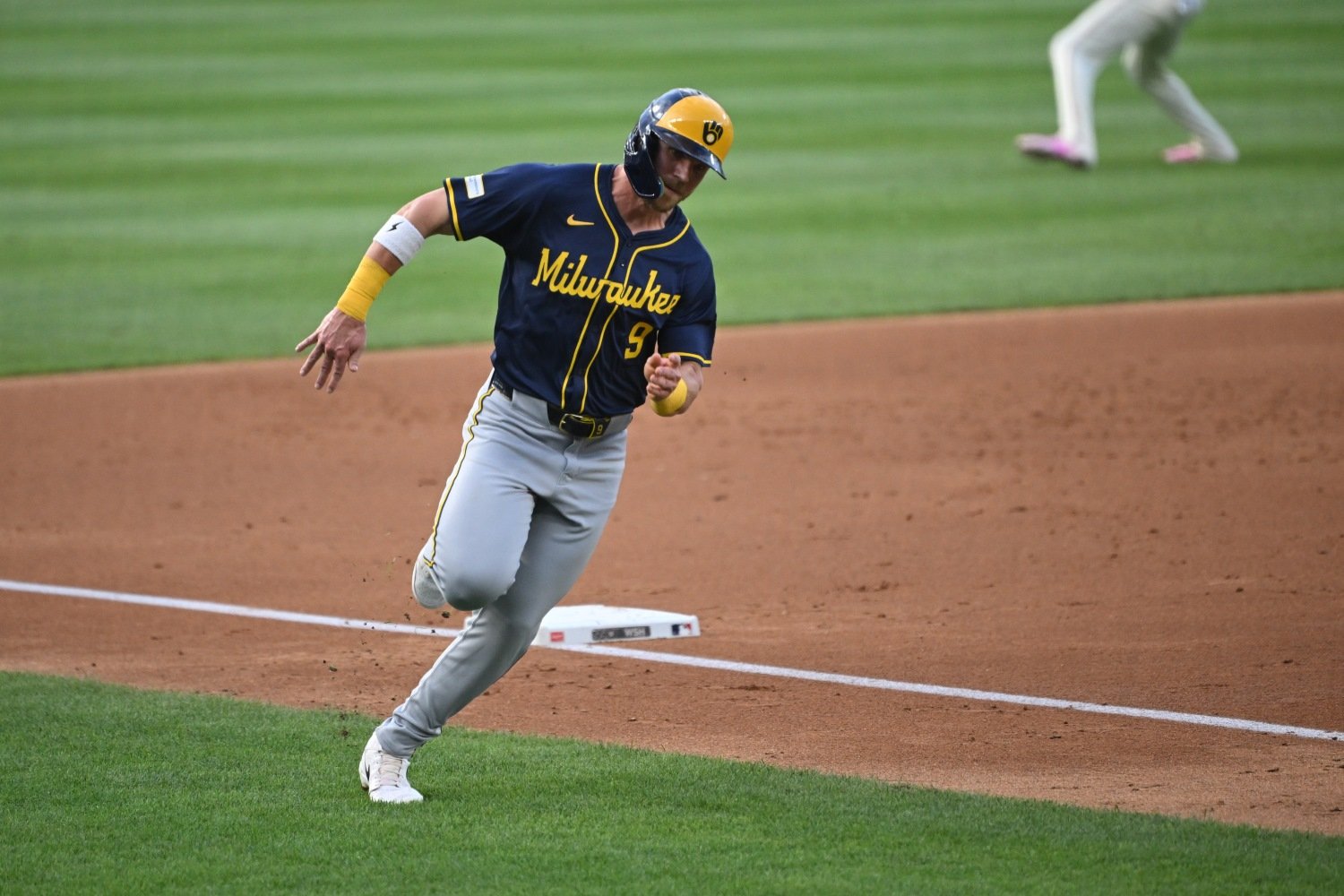 Bryan Hudson’s option to Nashville to make room for Hoby Milner was as much to give Milner a chance to push a postseason case as it was to recuperate Hudson’s arm. Jake Bauers has seen more time at first base in the last 10 days than he had in the first 29 days of August. It seems both are being given an opportunity to fill a specific role, but it’s safe to say neither have quite taken the opportunity before them. The Bauers audition is specifically for that first base role. Rhys Hoskins, Gary Sánchez and Andruw Monasterio are subpar defensive first basemen compared to Bauers, who actually grades out relatively well. He had been seeing more time at DH, with Pat Murphy feeling more comfortable pinch-hitting in that role, but the use of him at first base is to see whether the Brewers can shore up defensively while still having two power bats, in Bauers and a DH of Hoskins or Sánchez. We’ve seen some streaky hot hitting from Bauers when his plate discipline has been impeccable, but that hasn’t been the case since the start of August. For a short period after going to a toe tap instead of a big leg kick, Bauers's chase rate was at an elite level of 9.9%--a fairly unsustainable rate, to be frank, but it brought about some impressive production. Since the start of August, that rate has almost doubled, to 18.8%. That's still better than average, but it’s meant a massive downturn, because he cannot seem to make any contact when chasing. In the same time period, he made contact with just 30% of the out-of-zone pitches he swung at, meaning he can’t foul off good pitches in two-strike counts and therefore has far less opportunity for a mistake pitch he can do damage against. Then you have the bigger issue: he isn’t doing damage on those mistakes anymore. Above, you can see the difference in expected slugging during his hot stretch in May, compared to his showing since Aug. 1. The hitter on the left would be invaluable to the Brewers this season, but the one on the right (with all the additional weaknesses Bauers brings) is borderline unplayable. He looks lost and very low on confidence, which has left him on the outskirts of a playoff roster, perhaps only as a late-inning defensive replacement. Hitting .128 with a 42.6% strikeout rate since the trade deadline is not going to push his case all that far. The Brewers are likely to pivot to a more experienced and trustworthy weapon in their arsenal, in Gary Sánchez, for that DH role, and to gamble on Hoskins defensively at first base. Both have considerably more experience in a playoff run. Both are the same type of streaky hitter as Bauers. But crucially, they have shown themselves able to handle the bright lights of October and the big moments; Bauers has not. The Brewers have enough left-handed bats to keep a balance in their lineup while doing this, and I’d expect to see more Sánchez at-bats as the season comes to a close. Meanwhile, Hoby Milner returned from the IL on Sept. 3, with two appearances in high-leverage situations so far. They haven’t gone well. Milner’s role would have been in that left-on-left matchup, with his release point particularly difficult for southpaws to pick up. However, in those at-bats, Milner gave up a seeing-eye single to score an inherited baserunner against the Cardinals (this was against a right-handed batter, after the Cardinals pinch-hit for Brendan Donovan) and a three-run home run against the Rockies to break a tie on Sunday. Note the pinch-hit move. Remember, that is a very likely response from an opposing manager in the postseason, and as such, it fits the audition quite nicely. Milner has been a resounding success story for the Brewers in recent seasons, but even accounting for some early-season misfortune, he hasn’t been getting the results you would expect. For him to have two successive failures in the exact situation to which Milner would be used during the playoffs is quite damning. He’s getting less swing-and-miss and fewer chases than in 2023, and the extra balls in play have found holes, while the hard contact has left the ballpark more regularly. Hudson’s struggles with velocity on both his fastball and breaking pitches compared to the start of the season opened a door for Milner, but it doesn’t seem like he’s ready to take it. The Brewers will have Aaron Ashby and DL Hall as strong lefthanders out of the bullpen who can get outs against both sides of the platoon, while Jared Koenig has also shown great results this year. They have enough southpaw arms for the spaced-out playoffs, and even a depleted Hudson has shown significantly more promise than Milner has this season. If Milner makes the Brewers' 26-man playoff roster at this point, I would be surprised. Bauers is fading away, into a position where he may not see a single playoff at-bat. Both of these players will need some strong performances to push their cases as the season comes to a close. What do you think of Hoby Milner and Jake Bauers in the context of a playoff roster? Can you see them having a chance to make an impact? Let us know your thoughts in the comments below!
- 4 comments
-
- 3
-

-
- jake bauers
- hoby milner
- (and 2 more)
-
Each player has gotten lots of opportunity to assert themselves as deserving of a playoff roster spot. Neither has quite done so. What now? Image courtesy of © Rafael Suanes-Imagn Images Bryan Hudson’s option to Nashville to make room for Hoby Milner was as much to give Milner a chance to push a postseason case as it was to recuperate Hudson’s arm. Jake Bauers has seen more time at first base in the last 10 days than he had in the first 29 days of August. It seems both are being given an opportunity to fill a specific role, but it’s safe to say neither have quite taken the opportunity before them. The Bauers audition is specifically for that first base role. Rhys Hoskins, Gary Sánchez and Andruw Monasterio are subpar defensive first basemen compared to Bauers, who actually grades out relatively well. He had been seeing more time at DH, with Pat Murphy feeling more comfortable pinch-hitting in that role, but the use of him at first base is to see whether the Brewers can shore up defensively while still having two power bats, in Bauers and a DH of Hoskins or Sánchez. We’ve seen some streaky hot hitting from Bauers when his plate discipline has been impeccable, but that hasn’t been the case since the start of August. For a short period after going to a toe tap instead of a big leg kick, Bauers's chase rate was at an elite level of 9.9%--a fairly unsustainable rate, to be frank, but it brought about some impressive production. Since the start of August, that rate has almost doubled, to 18.8%. That's still better than average, but it’s meant a massive downturn, because he cannot seem to make any contact when chasing. In the same time period, he made contact with just 30% of the out-of-zone pitches he swung at, meaning he can’t foul off good pitches in two-strike counts and therefore has far less opportunity for a mistake pitch he can do damage against. Then you have the bigger issue: he isn’t doing damage on those mistakes anymore. Above, you can see the difference in expected slugging during his hot stretch in May, compared to his showing since Aug. 1. The hitter on the left would be invaluable to the Brewers this season, but the one on the right (with all the additional weaknesses Bauers brings) is borderline unplayable. He looks lost and very low on confidence, which has left him on the outskirts of a playoff roster, perhaps only as a late-inning defensive replacement. Hitting .128 with a 42.6% strikeout rate since the trade deadline is not going to push his case all that far. The Brewers are likely to pivot to a more experienced and trustworthy weapon in their arsenal, in Gary Sánchez, for that DH role, and to gamble on Hoskins defensively at first base. Both have considerably more experience in a playoff run. Both are the same type of streaky hitter as Bauers. But crucially, they have shown themselves able to handle the bright lights of October and the big moments; Bauers has not. The Brewers have enough left-handed bats to keep a balance in their lineup while doing this, and I’d expect to see more Sánchez at-bats as the season comes to a close. Meanwhile, Hoby Milner returned from the IL on Sept. 3, with two appearances in high-leverage situations so far. They haven’t gone well. Milner’s role would have been in that left-on-left matchup, with his release point particularly difficult for southpaws to pick up. However, in those at-bats, Milner gave up a seeing-eye single to score an inherited baserunner against the Cardinals (this was against a right-handed batter, after the Cardinals pinch-hit for Brendan Donovan) and a three-run home run against the Rockies to break a tie on Sunday. Note the pinch-hit move. Remember, that is a very likely response from an opposing manager in the postseason, and as such, it fits the audition quite nicely. Milner has been a resounding success story for the Brewers in recent seasons, but even accounting for some early-season misfortune, he hasn’t been getting the results you would expect. For him to have two successive failures in the exact situation to which Milner would be used during the playoffs is quite damning. He’s getting less swing-and-miss and fewer chases than in 2023, and the extra balls in play have found holes, while the hard contact has left the ballpark more regularly. Hudson’s struggles with velocity on both his fastball and breaking pitches compared to the start of the season opened a door for Milner, but it doesn’t seem like he’s ready to take it. The Brewers will have Aaron Ashby and DL Hall as strong lefthanders out of the bullpen who can get outs against both sides of the platoon, while Jared Koenig has also shown great results this year. They have enough southpaw arms for the spaced-out playoffs, and even a depleted Hudson has shown significantly more promise than Milner has this season. If Milner makes the Brewers' 26-man playoff roster at this point, I would be surprised. Bauers is fading away, into a position where he may not see a single playoff at-bat. Both of these players will need some strong performances to push their cases as the season comes to a close. What do you think of Hoby Milner and Jake Bauers in the context of a playoff roster? Can you see them having a chance to make an impact? Let us know your thoughts in the comments below! View full article
-
I'm not entirely sure, what sort of matchup advantage would you hope to gain? Peraltas strikeout stuff seems pretty indiscriminate and as likely to give up a homer to someone with 50 WRC+ a a Freeman in some ways It's such a mystery how regularly Peralta either completely missed the bat, or finds the barrel. A two true outcome pitcher 😂
- 7 replies
-
- 1
-
-
- freddy peralta
- aaron civale
- (and 1 more)
-
Freddy Peralta is all but guaranteed to start Game 1 of the playoffs for the Milwaukee Brewers, but he’s far from the most ascendant or successful pitcher on this staff. How much will this matter in October? Image courtesy of © Benny Sieu-Imagn Images In medicine, there’s a famous saying: When you hear hoofbeats, you should think of horses not zebras. It's about not being so fascinated with a marvelous possibility that one misses a more mundane probability. In the case of Freddy Peralta, despite the incredible success he had in 2021 and in the second half of 2023, it would be folly to expect that sort of dominance next month, on the heels of what has been a slightly disappointing season. Peralta has been prone to home runs, poor command, an inability to put away hitters efficiently and short starts with high pitch counts. Sunday against the Rockies was just the latest example although pulling him with 83 pitches through 4 ⅔ was more likely a product of load management than of his coaching staff believing he was no longer the man for the job. The lack of depth in his pitching arsenal, either through an elite secondary offering or a fastball variation, means that Peralta struggles upon reaching a third time through the batting order, while scores of non-competitive pitches in two strike counts leverage him into excessive walks and pitch counts that do his arm no good. Opponent xwOBA by Time Through Batting Order, Freddy Peralta, 2024 Couple that with a struggle to command both of his breaking pitches early in his start (as you can see below, he has a tendency to hang them in pitches 0-20), and how his breaking stuff gets hammered from his 60th pitch onward (42% hard hit rate, 32% sweet spot launch angle rate) and you’re almost removing his out pitches at the beginning and end of his starts. The changeup has been crushed the second and third time through a lineup, as well (see below), with the fastball then shouldering a lot more responsibility than it can handle. Thus, the heater is being hit hard no matter when hitters are seeing it, appearing to have lost an element of deception. In short, once hitters see Peralta’s arsenal the first time through, they really begin to settle in, and if they see him a third time, it’s barrel o’clock, with every single one of his pitches getting squared up with aplomb. Watching Peralta tiptoe around lower-order, struggling hitters is nothing new this season, and it’s been exacerbated by the lack of consistent and dependable offspeed offerings that have allowed hitters to just sit on that fastball (whose movement has an almost identical profile to 2021 and the second half of 2023) and let it rip. As none of his pitches can come close usage-wise, it’s a safe bet to sit on, even if it means a few more strikeouts. Those strikeouts are the great caveat, of course. Any quality of contact metric tends to use batted balls as the denominator, so we have to notice that Peralta's ability to miss so many bats brings that number down, in order to properly evaluate him. However, the ability to rack up strikeouts is just one part of pitching. Peralta is good at it, but not very good at most of the rest of the parts of the craft, at least this season. The best hitters in October will crush fastballs, but there is some relatively good news. Peralta's breaking pitches do have success the first two times through, or at least enough success to get by. The structure of the Brewers' staff in October (will likely feature arms like Aaron Civale, DL Hall, Aaron Ashby, Frankie Montas and Joe Ross as long relief options) may actually allow Peralta to get through just the three or four innings in which he currently seems capable of truly excelling, before passing the baton. Following a pitcher like Peralta with the left-handed breaking pitches of Hall (whom I talked about here as a viable option) would present a tough matchup for most opposing lineups. By leaning into this strength, the Brewers, while perhaps not getting the very best of Peralta, may be able to get by well enough and as a whole present a strong standard from which to begin their series on the right foot. At the very least, Peralta has shown he can be effective if his inning is curtailed that third time through the order. He's a solid starter, if not the dominant one many were hoping for coming into this season. Getting the pitch mix right will be absolutely essential, but if the Brewers manage him correctly, they can mitigate some of the concerns around his Game 1 start. What do you think of Freddy Peralta as a game one starter? Does it give you concern to start the series off? Or do you think he can still find some form? Let us know your thoughts in the comments below! View full article
-
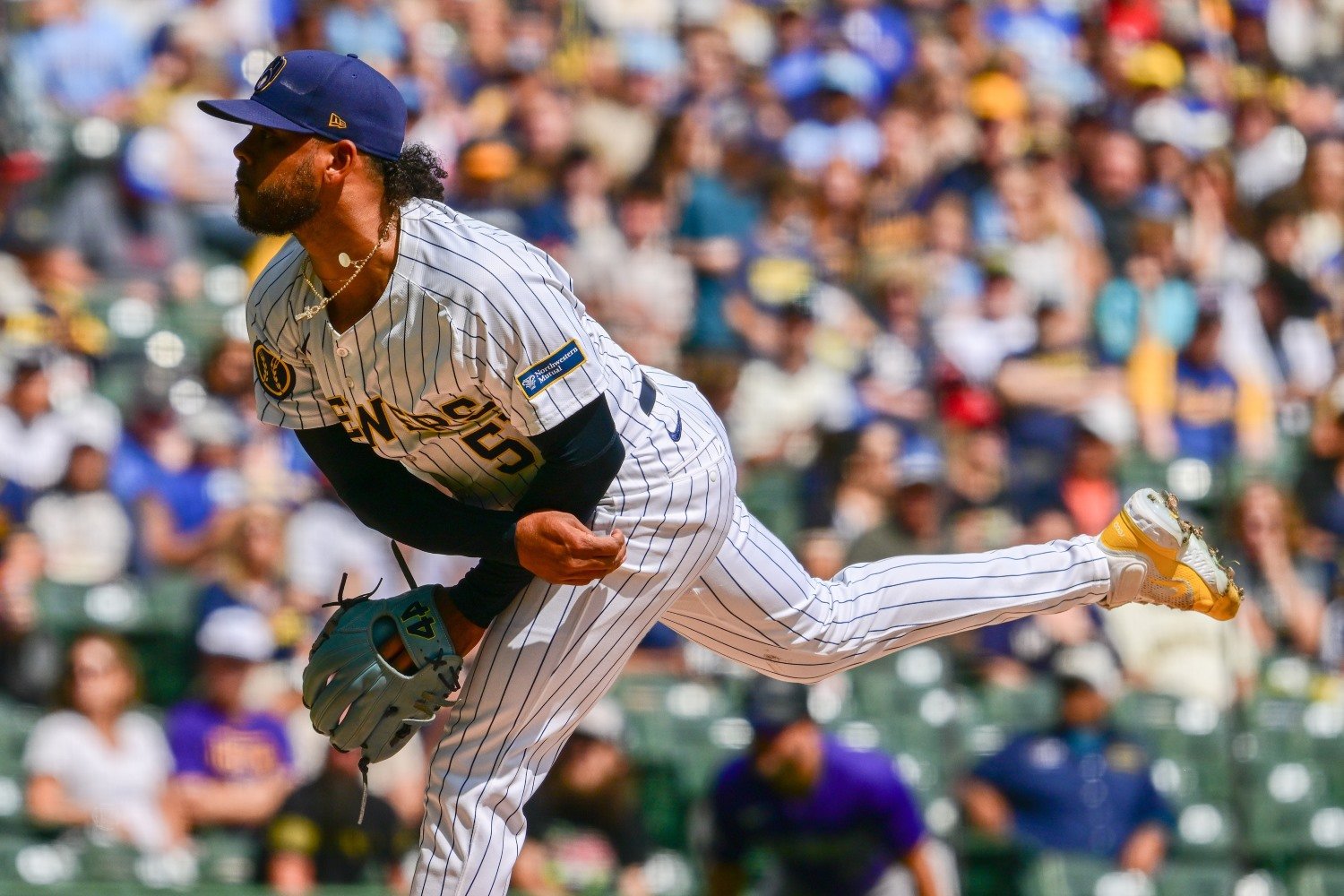 In medicine, there’s a famous saying: When you hear hoofbeats, you should think of horses not zebras. It's about not being so fascinated with a marvelous possibility that one misses a more mundane probability. In the case of Freddy Peralta, despite the incredible success he had in 2021 and in the second half of 2023, it would be folly to expect that sort of dominance next month, on the heels of what has been a slightly disappointing season. Peralta has been prone to home runs, poor command, an inability to put away hitters efficiently and short starts with high pitch counts. Sunday against the Rockies was just the latest example although pulling him with 83 pitches through 4 ⅔ was more likely a product of load management than of his coaching staff believing he was no longer the man for the job. The lack of depth in his pitching arsenal, either through an elite secondary offering or a fastball variation, means that Peralta struggles upon reaching a third time through the batting order, while scores of non-competitive pitches in two strike counts leverage him into excessive walks and pitch counts that do his arm no good. Opponent xwOBA by Time Through Batting Order, Freddy Peralta, 2024 Couple that with a struggle to command both of his breaking pitches early in his start (as you can see below, he has a tendency to hang them in pitches 0-20), and how his breaking stuff gets hammered from his 60th pitch onward (42% hard hit rate, 32% sweet spot launch angle rate) and you’re almost removing his out pitches at the beginning and end of his starts. The changeup has been crushed the second and third time through a lineup, as well (see below), with the fastball then shouldering a lot more responsibility than it can handle. Thus, the heater is being hit hard no matter when hitters are seeing it, appearing to have lost an element of deception. In short, once hitters see Peralta’s arsenal the first time through, they really begin to settle in, and if they see him a third time, it’s barrel o’clock, with every single one of his pitches getting squared up with aplomb. Watching Peralta tiptoe around lower-order, struggling hitters is nothing new this season, and it’s been exacerbated by the lack of consistent and dependable offspeed offerings that have allowed hitters to just sit on that fastball (whose movement has an almost identical profile to 2021 and the second half of 2023) and let it rip. As none of his pitches can come close usage-wise, it’s a safe bet to sit on, even if it means a few more strikeouts. Those strikeouts are the great caveat, of course. Any quality of contact metric tends to use batted balls as the denominator, so we have to notice that Peralta's ability to miss so many bats brings that number down, in order to properly evaluate him. However, the ability to rack up strikeouts is just one part of pitching. Peralta is good at it, but not very good at most of the rest of the parts of the craft, at least this season. The best hitters in October will crush fastballs, but there is some relatively good news. Peralta's breaking pitches do have success the first two times through, or at least enough success to get by. The structure of the Brewers' staff in October (will likely feature arms like Aaron Civale, DL Hall, Aaron Ashby, Frankie Montas and Joe Ross as long relief options) may actually allow Peralta to get through just the three or four innings in which he currently seems capable of truly excelling, before passing the baton. Following a pitcher like Peralta with the left-handed breaking pitches of Hall (whom I talked about here as a viable option) would present a tough matchup for most opposing lineups. By leaning into this strength, the Brewers, while perhaps not getting the very best of Peralta, may be able to get by well enough and as a whole present a strong standard from which to begin their series on the right foot. At the very least, Peralta has shown he can be effective if his inning is curtailed that third time through the order. He's a solid starter, if not the dominant one many were hoping for coming into this season. Getting the pitch mix right will be absolutely essential, but if the Brewers manage him correctly, they can mitigate some of the concerns around his Game 1 start. What do you think of Freddy Peralta as a game one starter? Does it give you concern to start the series off? Or do you think he can still find some form? Let us know your thoughts in the comments below!
 -
Since returning from an elongated stint on the injured list, he's produced results that matched expectations in the wake of the Corbin Burnes trade. Can he find a way to leverage his form into a starting role for the playoffs? Image courtesy of © Jeff Hanisch-Imagn Images DL Hall has looked filthy since returning to the Brewers roster, especially in the usage and command of his offspeed offerings. It’s been a slow return to form for Hall, after a 7.71 ERA in April that involved playing through a knee injury impacting his pitches' movement and velocity in a notable way. In 15 ⅔ innings since his return, Hall has posted a 0.57 ERA, with significant jumps in velocity, movement, command--and desirable outcomes. He is currently being used as a spot starter and long reliever, and they’re keeping him stretched out for these roles, which could allow him to push for a starting role in October. One of the reasons this could be on the table is the variability in performance from those competing for the third starting pitcher spot. Tobias Myers has regressed, by the eye test, for a little longer than the statistics show. He’s got a lower swinging strike rate than any of his contemporaries, while averaging 91.5 mph exit velocities since the start of August, and while Frankie Montas and Aaron Civale have been very impressive of late with intriguingly different arsenals, there is a blow-up potential with both that may give some cause for concern. I could go into a lot of detail on who I think would suit best for this role, but let’s focus on Hall for now. The breaking pitches have looked phenomenal since he returned, generating a lot of swing-and-miss, and some of the swings make it appear that hitters are struggling to pick up the pitch out of the hand. With a changeup, a looping curve and a sweeping slider, he has a lot of different movement profiles to enable him to be effective against both left- and right-handed hitters. The changeup tunnels beautifully with the fastball, while the depth difference between the curveball and slider can make both difficult to square up. As a pitcher struggling in two-strike counts earlier in the year, with many hitters sitting on what was quite a hittable fastball, it’s notable that Hall’s mixing in a lot more breaking pitches in two-strike counts of late. Compare the two diagrams from earlier in the year and the period since Aug. 1: Hall is leaning far more heavily on the slider and changeup to finish off opposing hitters, and it’s been mightily effective, jumping from a swinging-strike rate of 11.1% up to 20.1% since Aug. 1 in putaway counts. The command of these pitches that are pounding the bottom of the strike zone has been very impressive, and the biggest reason for his success in these counts. One slight worry, however, is that fastball shape, which is much improved but is hovering between a plus offering and a below-average one. Before digressing, I should say it’s markedly improved from the meatball he had earlier in the season: He’s getting more rise, and averaging over 2 mph in terms of “perceived velocity,” as well as a flatter angle when entering the zone. All of this combines to enhance a pitch that should have a lot of hitters swinging under it. However, he still isn’t consistently reached the registers that he will need to make it a genuine swing-and-miss offering: As you can see, crossing the 15” mark is really key for Hall, in terms of how much swing-and-miss he gets with the four seam fastball. Hall’s fastball was graded as an 80 pitch on the scouting scale (i.e. the same level as Jacob Misiorowski’s) because of that ride, but until he reaches 15” and above on a more consistent basis, it just won’t play like that. However, it is limiting hard contact extremely well, and as such, I could argue that it’s quite close to that elite offering he's hunting. Since coming back, hitters have averaged an exit velocity of 81 mph on Hall’s fastball, with a 20% pop-up rate and 41.7% fly-ball rate. Pairing those velocities with anything in the air is a recipe for cheap, quick outs, which can allow Hall to work deeper into games and perhaps be effective on the fastball in a different way. As a cherry on top he’s only allowed one line drive in the Majors since the start of August. The fact that I’m even discussing a DL Hall start in October shows just how far he’s come since the start of the year, and potentially how much more he can provide after surgery in the offseason to heal the lingering issue he’s managed for years. A red-hot September might force him into the reckoning for a Game 3 start, especially if the Brewers feel he has the mentality to hold up in the bright lights of playoff baseball. It may not be a long start, maybe only twice through the order, but with the way Hall has been pitching, it is certainly not something to rule out. What do you think of DL Hall’s return to the Brewers? Have you been impressed enough to slot him into a playoff rotation? Let us know your thoughts in the comments below! View full article
-
Can DL Hall Force His Way Into The Playoff Rotation Conversation?
Jake McKibbin posted an article in Brewers
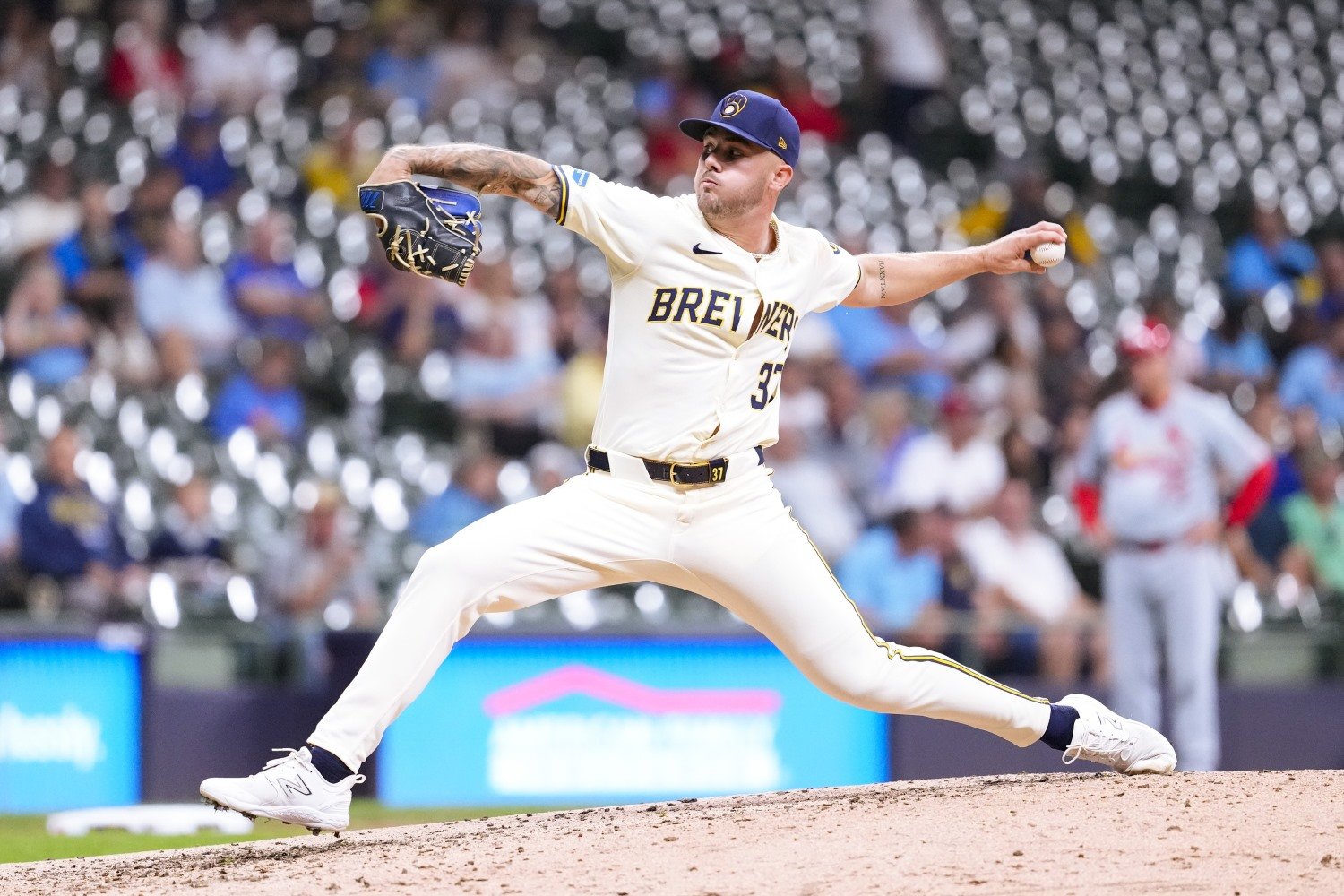 DL Hall has looked filthy since returning to the Brewers roster, especially in the usage and command of his offspeed offerings. It’s been a slow return to form for Hall, after a 7.71 ERA in April that involved playing through a knee injury impacting his pitches' movement and velocity in a notable way. In 15 ⅔ innings since his return, Hall has posted a 0.57 ERA, with significant jumps in velocity, movement, command--and desirable outcomes. He is currently being used as a spot starter and long reliever, and they’re keeping him stretched out for these roles, which could allow him to push for a starting role in October. One of the reasons this could be on the table is the variability in performance from those competing for the third starting pitcher spot. Tobias Myers has regressed, by the eye test, for a little longer than the statistics show. He’s got a lower swinging strike rate than any of his contemporaries, while averaging 91.5 mph exit velocities since the start of August, and while Frankie Montas and Aaron Civale have been very impressive of late with intriguingly different arsenals, there is a blow-up potential with both that may give some cause for concern. I could go into a lot of detail on who I think would suit best for this role, but let’s focus on Hall for now. The breaking pitches have looked phenomenal since he returned, generating a lot of swing-and-miss, and some of the swings make it appear that hitters are struggling to pick up the pitch out of the hand. With a changeup, a looping curve and a sweeping slider, he has a lot of different movement profiles to enable him to be effective against both left- and right-handed hitters. The changeup tunnels beautifully with the fastball, while the depth difference between the curveball and slider can make both difficult to square up. As a pitcher struggling in two-strike counts earlier in the year, with many hitters sitting on what was quite a hittable fastball, it’s notable that Hall’s mixing in a lot more breaking pitches in two-strike counts of late. Compare the two diagrams from earlier in the year and the period since Aug. 1: Hall is leaning far more heavily on the slider and changeup to finish off opposing hitters, and it’s been mightily effective, jumping from a swinging-strike rate of 11.1% up to 20.1% since Aug. 1 in putaway counts. The command of these pitches that are pounding the bottom of the strike zone has been very impressive, and the biggest reason for his success in these counts. One slight worry, however, is that fastball shape, which is much improved but is hovering between a plus offering and a below-average one. Before digressing, I should say it’s markedly improved from the meatball he had earlier in the season: He’s getting more rise, and averaging over 2 mph in terms of “perceived velocity,” as well as a flatter angle when entering the zone. All of this combines to enhance a pitch that should have a lot of hitters swinging under it. However, he still isn’t consistently reached the registers that he will need to make it a genuine swing-and-miss offering: As you can see, crossing the 15” mark is really key for Hall, in terms of how much swing-and-miss he gets with the four seam fastball. Hall’s fastball was graded as an 80 pitch on the scouting scale (i.e. the same level as Jacob Misiorowski’s) because of that ride, but until he reaches 15” and above on a more consistent basis, it just won’t play like that. However, it is limiting hard contact extremely well, and as such, I could argue that it’s quite close to that elite offering he's hunting. Since coming back, hitters have averaged an exit velocity of 81 mph on Hall’s fastball, with a 20% pop-up rate and 41.7% fly-ball rate. Pairing those velocities with anything in the air is a recipe for cheap, quick outs, which can allow Hall to work deeper into games and perhaps be effective on the fastball in a different way. As a cherry on top he’s only allowed one line drive in the Majors since the start of August. The fact that I’m even discussing a DL Hall start in October shows just how far he’s come since the start of the year, and potentially how much more he can provide after surgery in the offseason to heal the lingering issue he’s managed for years. A red-hot September might force him into the reckoning for a Game 3 start, especially if the Brewers feel he has the mentality to hold up in the bright lights of playoff baseball. It may not be a long start, maybe only twice through the order, but with the way Hall has been pitching, it is certainly not something to rule out. What do you think of DL Hall’s return to the Brewers? Have you been impressed enough to slot him into a playoff rotation? Let us know your thoughts in the comments below!
 -
Was thinking exactly the same, love the adjustability around the barrel to get it on the ball as well
-
Logan Henderson has been scratched for today, as well as last Sunday. Could be more innings control at the back end of the year, but does make these games a little less fun to tune in to
-
Logan Henderson is no longer scheduled to start this week
-
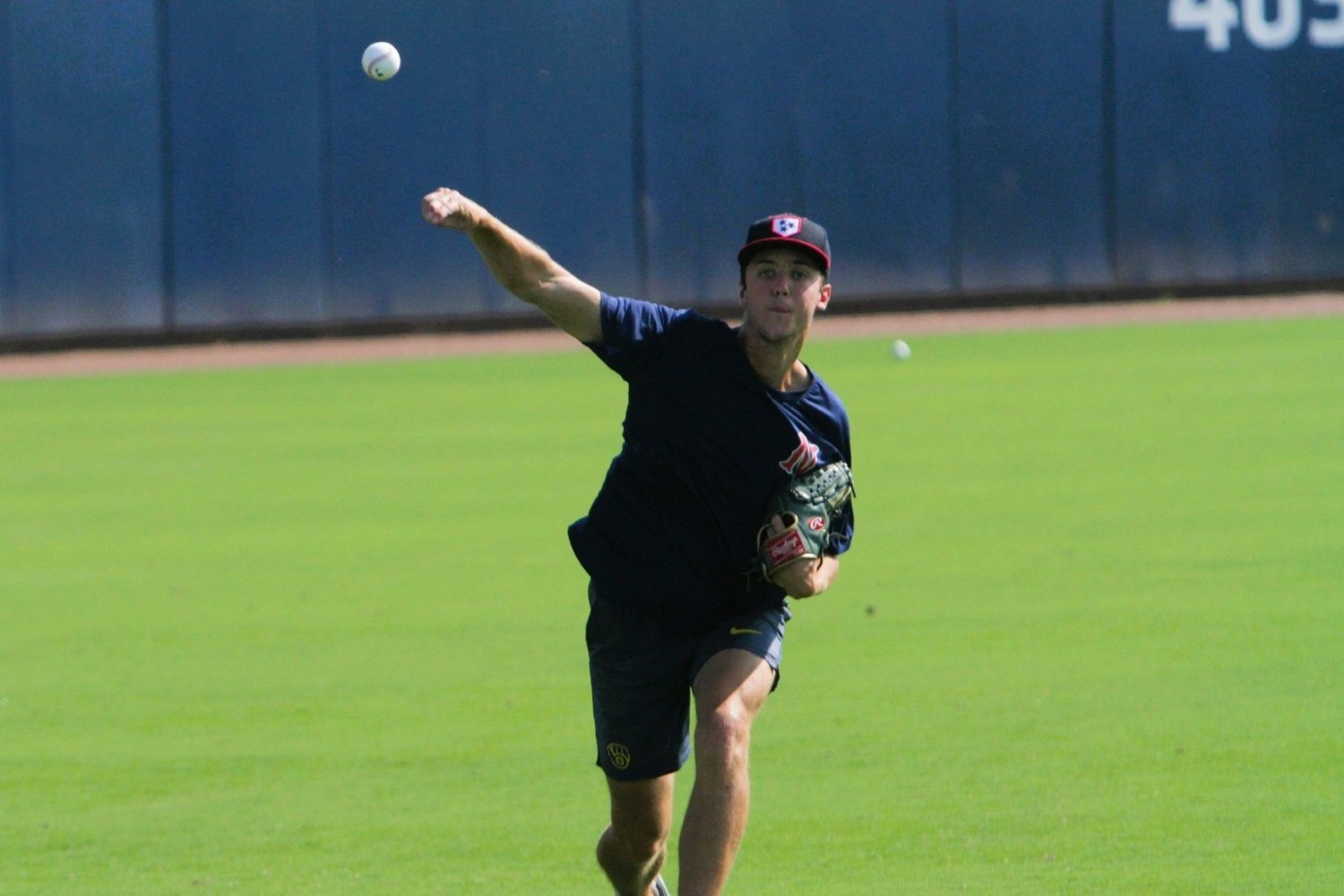 Expanded rosters brought about the return of DL Hall as the extra pitcher for the Brewers to begin September, despite a lot of hype about both Jacob Misiorowski and Craig Yoho at Nashville. There were some loud rumblings of a potential Misiorowski callup, in particular, that never came to fruition--but there are some fairly solid reasons for this, not least that neither is yet on a fairly crowded 40-man roster. First of all, the team might still be focused on determining whether Misiorowski is ready to start in the major leagues next season. His control looks markedly better at Triple-A, despite a blip of three walks in his last appearance, but those control problems continued to waver in his starting role at Biloxi before his promotion. There's also a difference between control and command, the distinction between which may not get by quite so successfully in the major leagues. Consider Misiorowski’s pitch map, below: There is also an issue in starting his service clock before he’s ready. If the Brewers have intentions of him continuing in a starting role, he will most likely need more time at Triple-A next season to continue refining his command and potentially developing a pitch that moves to the arm side. Then there is the concern over his innings and pitch counts. Misiorowski was shut down early in August of 2023 due to arm fatigue, and the violence of his delivery has created concerns about the workload on his shoulder and elbow joints. He threw just 71 ⅓ innings in 2023, but has reached 92 ⅓ so far in 2024, with around 100 innings a likely figure the Brewers front office have in mind. Bringing him up after that mark to pitch highly stressful innings in October would be a concern on their part, for a player of his talent. Realistically, the raw stuff plays out of the bullpen right now if he’s promoted, but to lose a year of his talent for a small bullpen upgrade (and it would be small given the talent the Brewers already have in the pen at their disposal) doesn’t quite align with the organization's paradigm. The Brewers have preached about the balance of looking after today and tomorrow in equilibrium, and you’d best believe that plays a part in the Misiorowski decision. Craig Yoho is a different kettle of fish, and perhaps with the all-relief profile and the potential to start next season with the Brewers out of spring training, he was a strong candidate. Possessing a screwball comparable to Devin Williams's alongside a wiffleball slider and a two-seamer, Yoho also has stuff capable of getting outs from the bullpen right now. Yoho is still quite new to pitching, which is one reason why he went under the radar and signed for just $10,000 in the 2023 draft, and that leaves with it a certain element of the unknown in how a player responds to those high-octane environments. Yoho’s stuff can dismantle anyone in the minor leagues, but against the best bats on the biggest stage, you need more than just raw stuff to carry you as a pitcher. I’m potentially grasping at straws a little with Yoho, but the Brewers evidently felt he needed more time, and are potentially also a little concerned with his innings usage, given the injury struggles he faced in college with a history of two Tommy John surgeries. He threw a total of 37 innings with Indiana in 2023, the only innings of his college career, so a modicum of caution is warranted. In the end, the main reason will still be the 40-man crunch the Brewers currently have, with Enoli Paredes, Bryse Wilson and Nick Mears all on the IL and vying for a September return--meaning there are already some tough decisions in store. The next big question is whether either can still force their way into the Brewers' plans for October. The general rule is that, to be postseason-eligible, a player must be on the 40-man roster or the 60-day IL on Aug. 31. Josh Donaldson was claimed off waivers in 2023 while on the 60-day IL, which allowed him to play for the Brewers in October but obviously that’s not the case for Misiorowski or Yoho. However, there is one loophole: So if there is a player on the IL and has served their allotted time, the Brewers can replace them on the 40-man roster, with approval from the commissioner's office. This situation could arise later in the month, but two interesting such cases do exist. Mears is currently on the 15-day IL with elbow inflammation, and early reports are good, but it’s the kind of injury that can suddenly regress and put you back to square one. With Hoby Milner back but Bryan Hudson optioned to Nashville, the revolving door is spinning quickly right now--but it's hard to get a pitcher from off the 40-man into the rotation. It's easy to get the waivers alluded to in that rule comment. Since Misiorowski and Yoho were both in the organization well before the deadline, eligibility isn't a problem. It's more likely that the team is just keeping its powder dry, knowing that calling up either would force moves that would take certain other options off the table--whereas leaving them in Nashville preserves all those options and extends their window to evaluate some of the other fringe candidates for October inclusion. All in all, it seems at this point as though both the young hurlers will be watching on while the brewers play in October, but there’s still room for all manner of chaos to erupt in September. How the Brewers handle that is anyone’s guess. What do you think of the decision to keep Yoho and Misiorowski off the 40 man roster, and the side effects of doing so? Do you agree with it? Let us know your thoughts in the comments below!
 -
Roster expansion day came and went, leaving two potential studs down in Nashville. Why did the Brewers opt against recalling their two most interesting minor-league hurlers? More importantly, can they still be eligible for the postseason? Image courtesy of © Curt Hogg / USA TODAY NETWORK Expanded rosters brought about the return of DL Hall as the extra pitcher for the Brewers to begin September, despite a lot of hype about both Jacob Misiorowski and Craig Yoho at Nashville. There were some loud rumblings of a potential Misiorowski callup, in particular, that never came to fruition--but there are some fairly solid reasons for this, not least that neither is yet on a fairly crowded 40-man roster. First of all, the team might still be focused on determining whether Misiorowski is ready to start in the major leagues next season. His control looks markedly better at Triple-A, despite a blip of three walks in his last appearance, but those control problems continued to waver in his starting role at Biloxi before his promotion. There's also a difference between control and command, the distinction between which may not get by quite so successfully in the major leagues. Consider Misiorowski’s pitch map, below: There is also an issue in starting his service clock before he’s ready. If the Brewers have intentions of him continuing in a starting role, he will most likely need more time at Triple-A next season to continue refining his command and potentially developing a pitch that moves to the arm side. Then there is the concern over his innings and pitch counts. Misiorowski was shut down early in August of 2023 due to arm fatigue, and the violence of his delivery has created concerns about the workload on his shoulder and elbow joints. He threw just 71 ⅓ innings in 2023, but has reached 92 ⅓ so far in 2024, with around 100 innings a likely figure the Brewers front office have in mind. Bringing him up after that mark to pitch highly stressful innings in October would be a concern on their part, for a player of his talent. Realistically, the raw stuff plays out of the bullpen right now if he’s promoted, but to lose a year of his talent for a small bullpen upgrade (and it would be small given the talent the Brewers already have in the pen at their disposal) doesn’t quite align with the organization's paradigm. The Brewers have preached about the balance of looking after today and tomorrow in equilibrium, and you’d best believe that plays a part in the Misiorowski decision. Craig Yoho is a different kettle of fish, and perhaps with the all-relief profile and the potential to start next season with the Brewers out of spring training, he was a strong candidate. Possessing a screwball comparable to Devin Williams's alongside a wiffleball slider and a two-seamer, Yoho also has stuff capable of getting outs from the bullpen right now. Yoho is still quite new to pitching, which is one reason why he went under the radar and signed for just $10,000 in the 2023 draft, and that leaves with it a certain element of the unknown in how a player responds to those high-octane environments. Yoho’s stuff can dismantle anyone in the minor leagues, but against the best bats on the biggest stage, you need more than just raw stuff to carry you as a pitcher. I’m potentially grasping at straws a little with Yoho, but the Brewers evidently felt he needed more time, and are potentially also a little concerned with his innings usage, given the injury struggles he faced in college with a history of two Tommy John surgeries. He threw a total of 37 innings with Indiana in 2023, the only innings of his college career, so a modicum of caution is warranted. In the end, the main reason will still be the 40-man crunch the Brewers currently have, with Enoli Paredes, Bryse Wilson and Nick Mears all on the IL and vying for a September return--meaning there are already some tough decisions in store. The next big question is whether either can still force their way into the Brewers' plans for October. The general rule is that, to be postseason-eligible, a player must be on the 40-man roster or the 60-day IL on Aug. 31. Josh Donaldson was claimed off waivers in 2023 while on the 60-day IL, which allowed him to play for the Brewers in October but obviously that’s not the case for Misiorowski or Yoho. However, there is one loophole: So if there is a player on the IL and has served their allotted time, the Brewers can replace them on the 40-man roster, with approval from the commissioner's office. This situation could arise later in the month, but two interesting such cases do exist. Mears is currently on the 15-day IL with elbow inflammation, and early reports are good, but it’s the kind of injury that can suddenly regress and put you back to square one. With Hoby Milner back but Bryan Hudson optioned to Nashville, the revolving door is spinning quickly right now--but it's hard to get a pitcher from off the 40-man into the rotation. It's easy to get the waivers alluded to in that rule comment. Since Misiorowski and Yoho were both in the organization well before the deadline, eligibility isn't a problem. It's more likely that the team is just keeping its powder dry, knowing that calling up either would force moves that would take certain other options off the table--whereas leaving them in Nashville preserves all those options and extends their window to evaluate some of the other fringe candidates for October inclusion. All in all, it seems at this point as though both the young hurlers will be watching on while the brewers play in October, but there’s still room for all manner of chaos to erupt in September. How the Brewers handle that is anyone’s guess. What do you think of the decision to keep Yoho and Misiorowski off the 40 man roster, and the side effects of doing so? Do you agree with it? Let us know your thoughts in the comments below! View full article
-
The argument here is more on the issues with the Brewers going to a six man rotation. They'd need length from their starters to compensate for a smaller bullpen, however by pushing DL Hall into long relief it makes Wilson's role slightly more redundant in the wake of other more successful reliefarms. Either way it seems the IL stint has taken him first and we'll see how long that lasts for, but Ashby, Ross and Hall all look like genuine weapons out of the bullpen. That being said, the Bryan Hudson demotion is something to watch, it's most likely to do with keeping him fresh but he is one of the multi inning relief arms mentioned above and if the Brewers are concerned about his place on the playoff roster that may open a hole for Wilson or others
-
No It seems perfect Jack Sterns questioning that this is more about being able to replace Bauer's with Sanchez in PH situations where they're uncertain about Sanchez and Monasterio at first base, and rightly so. Whether that's as beneficial, who knows, but that's Murphy's reasoning. Seeing him knock a breaking ball down in the zone out yesterday was a sight for sore eyes, but he also showed a lot of chase down and away still so a lot of work to be done there and on his overall selectivity at the plate
-
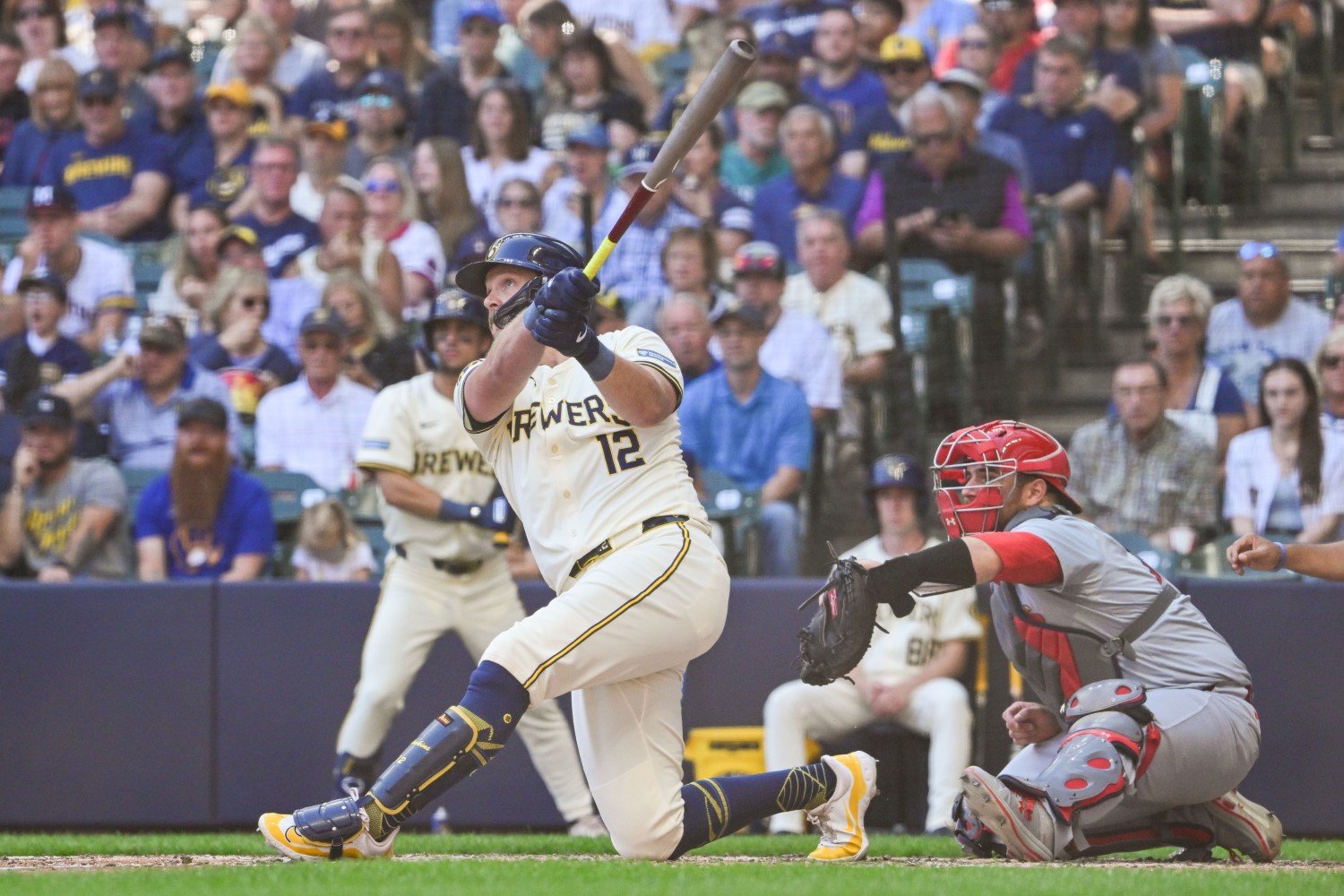 For a hitter like Rhys Hoskins, who features a lot of power to the shorter fields on his pull side, expected statistics aren’t an ideal measurement of his prowess. However, compare him to his own production month-to-month (rather than league averages), and a very stark trend begins to show: Hoskins has just not squared the ball up with any consistency since coming back from the IL. Two key metrics for the quality of contact and output by Hoskins are his expected weighted on-base average and his expected slugging marks, both of which show a considerable decrease since his hamstring injury. Hoskins is never going to hit for a high average. He's too slow, and he whiffs too much. No matter where or how hard it’s hit, Hoskins has almost no chance of legging out a single on a ball that's nabbed by an infielder. In addition to that, even balls pounded into a gap don’t guarantee him a double. Factoring in the amount of swing and miss and strikeouts in his game, in order to bring value, Hoskins has to be either walking a lot or crushing the ball when the pitcher errs. These two can go hand-in-hand, in that if pitchers feel a hitter can hurt them, they’re more likely to nibble, and the likelihood of a walk rises. The freefall Hoskins has been in, however, has led them to be aggressive in the zone, especially attacking some gaping holes in his swing. As you can see in the table above, his xWOBA and his expected slugging have been in a sharp decline since he returned in June. This emphasizes just how fortunate the surface numbers in July were. He’s a far cry from the Hoskins we saw pre-injury, with the high walk rates and slugging rates, so what’s changed? Well, first off, Hoskins's long swing and modest bat speed require a very strong eye at the plate. He needs to recognize pitches much earlier than most hitters, to make high-quality contact. It’s a big reason why he talks a lot about swing decisions when things are going well for him, and also why he can chase some ludicrous pitches on occasion. I’d like to take things a little further in terms of the quality of his swing decisions and suggest he’s become a little too swing-happy, especially in areas where he struggles to create quality contact: Hoskins has an xWOBA of just .142 in 2024 when swinging down and away in the zone, yet he’s swinging 10 percentage points more often in this zone than he was earlier in the year. You might ask whether this is a factor of good sequencing, and him being forced to swing in two-strike counts. Instead, when you strip out those situations, the disparity grows. In April and May, he swung in that zone just 30% of the time with zero or one strike, whereas since the return in June, that number has skyrocketed to 52%. His swing doesn’t have a lot of adjustability, and he struggles to even stretch the barrel of the bat to cover this zone--which makes it all the more perplexing how often he’s swinging at these pitches. Combine that with the heavy slider usage to that down-and-away location, a pitch Hoskins has a measly .313 OPS against from the start of June, and it begins to explain some of the issues he's had in recent months. In this three-month period, against the slider, Hoskins has one bloop double down the left-field line and one warning track flyball out to show any sign of pop. His bat speed has stayed consistent throughout the year, if not a little faster since returning from injury so it seems like the hamstring injury hasn’t affected him in this particular way. It has seemed to affect his comfort at the plate more, with a far less confident and patient approach. Although I’ve dumped a little on his July numbers belying some of the underlying numbers, there’s a clear pattern in terms of his approach, and it feeds into his struggles down and away. One thing you pretty much can’t do with that pitch is attempt to pull it, and yet, look at Hoskins's trends on a month-by-month basis: His best three months (ignoring March, for sample size reasons) have all come with comfort hitting to the opposite field. June and August, on the other hand, have been about as pull-heavy as you’ll see from any hitter. He has the raw power to torch balls out to center field, unlike the mold of an Isaac Paredes, and it should allow him to find the barrel with more consistency against all pitches. Perhaps that will play a big factor in whether he can rekindle some of his early-season heroics down the stretch. One thing’s for sure, the Brewers with a fully firing Rhys Hoskins are a truly fearsome lineup. What do you think of Hoskins's struggles? Can you see a quick fix? Let us know your thoughts in the comments below!
 -
The slugger hit just .189/.260/.344 in August, completely unable to square up the ball for long stretches. Even his “hot” July showed some considerable regress under the surface. Can the Brewers fix him before the playoffs? Image courtesy of © benny sieu-usa today sports For a hitter like Rhys Hoskins, who features a lot of power to the shorter fields on his pull side, expected statistics aren’t an ideal measurement of his prowess. However, compare him to his own production month-to-month (rather than league averages), and a very stark trend begins to show: Hoskins has just not squared the ball up with any consistency since coming back from the IL. Two key metrics for the quality of contact and output by Hoskins are his expected weighted on-base average and his expected slugging marks, both of which show a considerable decrease since his hamstring injury. Hoskins is never going to hit for a high average. He's too slow, and he whiffs too much. No matter where or how hard it’s hit, Hoskins has almost no chance of legging out a single on a ball that's nabbed by an infielder. In addition to that, even balls pounded into a gap don’t guarantee him a double. Factoring in the amount of swing and miss and strikeouts in his game, in order to bring value, Hoskins has to be either walking a lot or crushing the ball when the pitcher errs. These two can go hand-in-hand, in that if pitchers feel a hitter can hurt them, they’re more likely to nibble, and the likelihood of a walk rises. The freefall Hoskins has been in, however, has led them to be aggressive in the zone, especially attacking some gaping holes in his swing. As you can see in the table above, his xWOBA and his expected slugging have been in a sharp decline since he returned in June. This emphasizes just how fortunate the surface numbers in July were. He’s a far cry from the Hoskins we saw pre-injury, with the high walk rates and slugging rates, so what’s changed? Well, first off, Hoskins's long swing and modest bat speed require a very strong eye at the plate. He needs to recognize pitches much earlier than most hitters, to make high-quality contact. It’s a big reason why he talks a lot about swing decisions when things are going well for him, and also why he can chase some ludicrous pitches on occasion. I’d like to take things a little further in terms of the quality of his swing decisions and suggest he’s become a little too swing-happy, especially in areas where he struggles to create quality contact: Hoskins has an xWOBA of just .142 in 2024 when swinging down and away in the zone, yet he’s swinging 10 percentage points more often in this zone than he was earlier in the year. You might ask whether this is a factor of good sequencing, and him being forced to swing in two-strike counts. Instead, when you strip out those situations, the disparity grows. In April and May, he swung in that zone just 30% of the time with zero or one strike, whereas since the return in June, that number has skyrocketed to 52%. His swing doesn’t have a lot of adjustability, and he struggles to even stretch the barrel of the bat to cover this zone--which makes it all the more perplexing how often he’s swinging at these pitches. Combine that with the heavy slider usage to that down-and-away location, a pitch Hoskins has a measly .313 OPS against from the start of June, and it begins to explain some of the issues he's had in recent months. In this three-month period, against the slider, Hoskins has one bloop double down the left-field line and one warning track flyball out to show any sign of pop. His bat speed has stayed consistent throughout the year, if not a little faster since returning from injury so it seems like the hamstring injury hasn’t affected him in this particular way. It has seemed to affect his comfort at the plate more, with a far less confident and patient approach. Although I’ve dumped a little on his July numbers belying some of the underlying numbers, there’s a clear pattern in terms of his approach, and it feeds into his struggles down and away. One thing you pretty much can’t do with that pitch is attempt to pull it, and yet, look at Hoskins's trends on a month-by-month basis: His best three months (ignoring March, for sample size reasons) have all come with comfort hitting to the opposite field. June and August, on the other hand, have been about as pull-heavy as you’ll see from any hitter. He has the raw power to torch balls out to center field, unlike the mold of an Isaac Paredes, and it should allow him to find the barrel with more consistency against all pitches. Perhaps that will play a big factor in whether he can rekindle some of his early-season heroics down the stretch. One thing’s for sure, the Brewers with a fully firing Rhys Hoskins are a truly fearsome lineup. What do you think of Hoskins's struggles? Can you see a quick fix? Let us know your thoughts in the comments below! View full article
-
The table was to do with the ERA's the third time through the order, it was meant to look more at the current starting rotations struggles going deep than to assess Wilson!
- 11 replies
-
- 1
-
-
- bryse wilson
- dl hall
- (and 2 more)
-
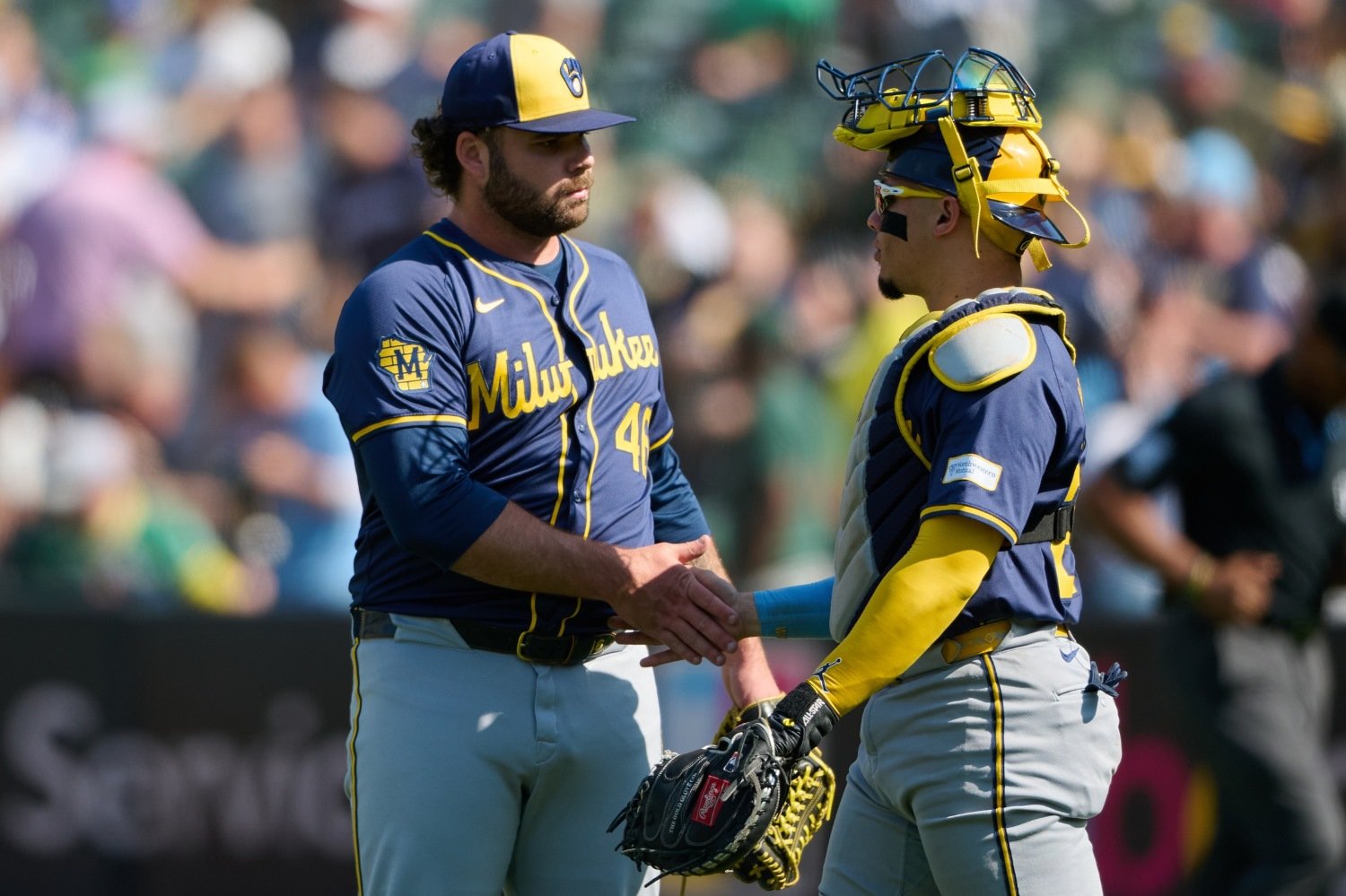 Before delving into the topic, it should be noted just how valuable Bryse Wilson was on Sunday in saving the rest of the bullpen, whose usage had been quite heavy in the wake of a doubleheader on Friday. The reinforcement of September roster expansion wasn’t of much use to the Brewers, who elected to reinstate DL Hall after his seven-inning epic on Friday instead of an available relief arm. As such, the Crew were left with only Jared Koenig and Wilson to support Tobias Myers and keep their pen fresh for the remainder of September. Avoiding overuse will be of primary importance to the Brewers down the stretch, with a comfortable nine-game divisional lead over the Chicago Cubs (functionally, 10, because of the tiebreaker), but quality is still paramount while chasing a top-two seed and the playoff bye. It’s a delicate balance, but with the sheer volume of arms the Brewers have at their disposal, it may be that Wilson gets squeezed off the roster before the playoffs come. It's therefore also notable that, with the intention of saving arms, Wilson was left out on the mound until the game finished. He has pitched into a fourth inning just once (in the middle of July) since leaving the starting rotation, and it appeared as though Pat Murphy had no plans to use any other bullpen arms in that contest. The lack of care toward the arm of Wilson, compared to other relievers, does give a hint as to how the Brewers see him on the depth chart at the moment. The Brewers' current starting pitchers have struggled the third time through an order (see above), which prevents the club from getting the length out of their starters that you would need to make a six-man rotation viable--compared to an extra arm in the bullpen. Having the expanded roster may tweak this, but the likelihood is that DL Hall will get most of his innings in a long relief role (with the occasional start) in September. Factoring that in, you have Joe Ross, Aaron Ashby and DL Hall all being used in multi-inning roles. All of them have shown more quality in performance out of the pen than Wilson. Since the start of July, Wilson has a 1.48 WHIP with an ERA of 5.00, all while seeing his workload gradually decrease. He threw 17 innings in July (and that includes an All-Star break), but just 10 innings in August--largely because of Joe Ross’s emergence. Ross moved to a relief role on Aug. 6, but with five days less in the month, he pitched three innings more than Wilson, allowing just one earned run and a 0.85 WHIP. He’s looked extremely effective. Add in Ashby and Hall as converted starters who thus feel comfortable working multiple innings, and the squeeze on Wilson's role is obvious. Nor is contract math on his side. Wilson is out of minor-league options and destined for a second trip through arbitration this winter. He figures to make upward of $3 million, if tendered a contract come November. The Brewers historically don’t give out large sums of money to relievers, especially not to those in lower-leverage spots. He’s a strong candidate to become a roster casualty this fall, if not sooner. So, with four high-quality long relief options and little chance of a return engagement for the two parties in 2025, the pressure really ramps up on Wilson toward the middle of September. Nick Mears is expected to come back from elbow inflammation around then, and even if the recovery goes poorly, there’s still Elvis Peguero waiting in the wings. If the team does cut Wilson this month, it will be a painful, cruel baseball moment. Wilson might well land with another contender for the final week or three, but if he does change teams now, he won't be eligible to pitch in the playoffs. Alas, that's the nature of the game. Despite yeoman's work across nearly two full seasons during which the team sometimes needed him desperately, Wilson is now an extra piece Milwaukee might not be able to carry.
 -
With the likely return of several players in September, in tandem with his position on the depth chart, should Bryse Wilson be concerned about his place on the roster? Image courtesy of © Robert Edwards-USA TODAY Sports Before delving into the topic, it should be noted just how valuable Bryse Wilson was on Sunday in saving the rest of the bullpen, whose usage had been quite heavy in the wake of a doubleheader on Friday. The reinforcement of September roster expansion wasn’t of much use to the Brewers, who elected to reinstate DL Hall after his seven-inning epic on Friday instead of an available relief arm. As such, the Crew were left with only Jared Koenig and Wilson to support Tobias Myers and keep their pen fresh for the remainder of September. Avoiding overuse will be of primary importance to the Brewers down the stretch, with a comfortable nine-game divisional lead over the Chicago Cubs (functionally, 10, because of the tiebreaker), but quality is still paramount while chasing a top-two seed and the playoff bye. It’s a delicate balance, but with the sheer volume of arms the Brewers have at their disposal, it may be that Wilson gets squeezed off the roster before the playoffs come. It's therefore also notable that, with the intention of saving arms, Wilson was left out on the mound until the game finished. He has pitched into a fourth inning just once (in the middle of July) since leaving the starting rotation, and it appeared as though Pat Murphy had no plans to use any other bullpen arms in that contest. The lack of care toward the arm of Wilson, compared to other relievers, does give a hint as to how the Brewers see him on the depth chart at the moment. The Brewers' current starting pitchers have struggled the third time through an order (see above), which prevents the club from getting the length out of their starters that you would need to make a six-man rotation viable--compared to an extra arm in the bullpen. Having the expanded roster may tweak this, but the likelihood is that DL Hall will get most of his innings in a long relief role (with the occasional start) in September. Factoring that in, you have Joe Ross, Aaron Ashby and DL Hall all being used in multi-inning roles. All of them have shown more quality in performance out of the pen than Wilson. Since the start of July, Wilson has a 1.48 WHIP with an ERA of 5.00, all while seeing his workload gradually decrease. He threw 17 innings in July (and that includes an All-Star break), but just 10 innings in August--largely because of Joe Ross’s emergence. Ross moved to a relief role on Aug. 6, but with five days less in the month, he pitched three innings more than Wilson, allowing just one earned run and a 0.85 WHIP. He’s looked extremely effective. Add in Ashby and Hall as converted starters who thus feel comfortable working multiple innings, and the squeeze on Wilson's role is obvious. Nor is contract math on his side. Wilson is out of minor-league options and destined for a second trip through arbitration this winter. He figures to make upward of $3 million, if tendered a contract come November. The Brewers historically don’t give out large sums of money to relievers, especially not to those in lower-leverage spots. He’s a strong candidate to become a roster casualty this fall, if not sooner. So, with four high-quality long relief options and little chance of a return engagement for the two parties in 2025, the pressure really ramps up on Wilson toward the middle of September. Nick Mears is expected to come back from elbow inflammation around then, and even if the recovery goes poorly, there’s still Elvis Peguero waiting in the wings. If the team does cut Wilson this month, it will be a painful, cruel baseball moment. Wilson might well land with another contender for the final week or three, but if he does change teams now, he won't be eligible to pitch in the playoffs. Alas, that's the nature of the game. Despite yeoman's work across nearly two full seasons during which the team sometimes needed him desperately, Wilson is now an extra piece Milwaukee might not be able to carry. View full article
-
Sat. 8/31 - Sounds Try Again to Get Two In
Jake McKibbin replied to Jim Goulart's topic in Brewers Minor League Talk
Looks like Bitonti is playing third base! Nice to see him getting reps there -
It’s no secret that William Contreras loves calling fastballs, and despite praise from the Brewers staff, there’s a suspicion that it’s not bringing the desired results. Just how much is it hurting the Brewers' pitching staff? Image courtesy of © Rafael Suanes-USA TODAY Sports William Contreras calls fastball variations more regularly than any other catcher in baseball outside of Yasmani Grandal. And at least Grandal has the excuse of Jared Jones' and Paul Skenes' elite fastballs to justify it. Contreras has some justification in that pitchers like Colin Rea, Frankie Montas and Aaron Civale have multiple fastball variations in their arsenal but even so, for a team with a dearth of elite fastballs (outside of ace Freddy Peralta), this is an unusual trend. Perhaps the best way to isolate whether this is a team-wide instruction or just Contreras himself is to compare him to Gary Sanchez. Where Contreras calls these so-called hard pitches 64.5% of the time, Sanchez is at a more manageable 60.4%, which would still place him sixth on the list but also closer in percentage points to the bottom half of the list than to Contreras in second place. However, fastball calling on its own isn’t necessarily the issue so much as how Contreras doubles up on the fastball. He ranks in the top eight in the league for following one fastball variation in all counts: pitcher’s and pitcher’s counts with two strikes. Out of 71 qualified catchers, here’s where the two rank in doubling up on hard pitches: William Contreras Gary Sanchez All Counts 63.6% (8th) 59.1% (25th) All Pitchers Counts 56.9% (5th) 51.8% (25th) Pitcher’s Counts with 2 Strikes 58.3% (5th) 54.0% (26th) Contreras doesn’t lead the league in any of these categories. Still, it is noticeable how often he’s doubling up on the fastball more than his counterpart behind the dish. With both in the top 30 of the 71 qualified catchers, it seems an organizational approach to be more fastball-heavy. However, those four percentage points make a big difference in effectiveness, particularly (contrary to my expectations) in non-two-strike counts. The 2024 Milwaukee Brewers have faced over 2,500 batters this season, giving us a large sample size for the following data. When following a four-seam fastball, a sinker, or a cutter, there have been definitively different results for each category of pitch thereafter: As you can see, following one fastball variation with another has been hit quite hard and consistently throughout the year compared to using different pitch types in those counts. The changeups and splitters have done remarkably well in creating poor-quality contact while breaking pitches have been hard-hit almost 20% less often. It’s important to have variety in how you pitch in a multitude of counts, and as such, doubling down on pitches is essential, but for these instances to result in 64.9% of pitches ending plate appearances is quite startling. Part of the success of the changeup comes with how often the Brewers keep it out of the rulebook strike zone at just a 29% clip following a fastball variant, but the breaking pitches are kept in the zone more often while generating more swing and machine. So, how does this play out in two-strike counts? Interestingly, it plays out quite well. The breaking pitches are getting a little more swing and miss while fewer called strikes, but overall, both strikeout rates are quite comparable in two-strike counts. The results of balls in play are slightly misleading, and the xFIP of the breaking pitches is a good indicator of their overall success. However, it is a positive note and may be one reason the Brewers are leaning so heavily into doubling up on fastballs. It’s one reason the Brewers have leaned into players with three different fastball variants. They intend to miss barrels with late movement, keep hitters on their toes, and ultimately get outs using their defense while keeping pitch counts relatively under control. Frankie Montas is a prime example, and the Brewers, as predicted by Matt Trueblood, have leaned heavier on the fastball variants to achieve great success. Increasing the usage of the cutter and sinker from Montas while pushing aside the pitch he was previously best known for, his splitter seems contrary to success; however, his cutter, sinker, and four seams have quite different movement profiles that allow him to miss a lot more bats. The four-seam, in particular, has an elite 34.6% whiff rate with the Brewers despite a fairly average movement profile, and it’s all because of how the Brewers mix within their fastball arsenals rather than mix between pitch groupings. Despite this, I can still see a strong argument for Contreras going too far with these fastball calls, particularly given the staff's lack of fastball excellence, especially with pitchers who have just one type of fastball. The most noticeable change has been how Bryan Hudson has been called over his last three starts. As Lucas notes, that’s an absurdly different strategy for a pitcher whose primary out pitch is an incredible sweeper. To call one in 40 pitches of action is extreme, and it may be down to Hudson feeling uncomfortable with the pitch in warming up; however, even then, you would expect more than a solitary offering even to keep the hitter honest. It does seem to be a specific call by the Brewers to hone in on heavy fastball usage, and for some, that’s brought about some unmitigated success this season. However, there is a worry that they’re teetering on the edge of the brilliance and insanity line with Contreras behind the plate on some nights. It’s becoming a concern, and they may need to address it before the postseason begins. View full article
-
Is William Contreras’ Obsession With Fastballs Hurting The Brewers?
Jake McKibbin posted an article in Brewers
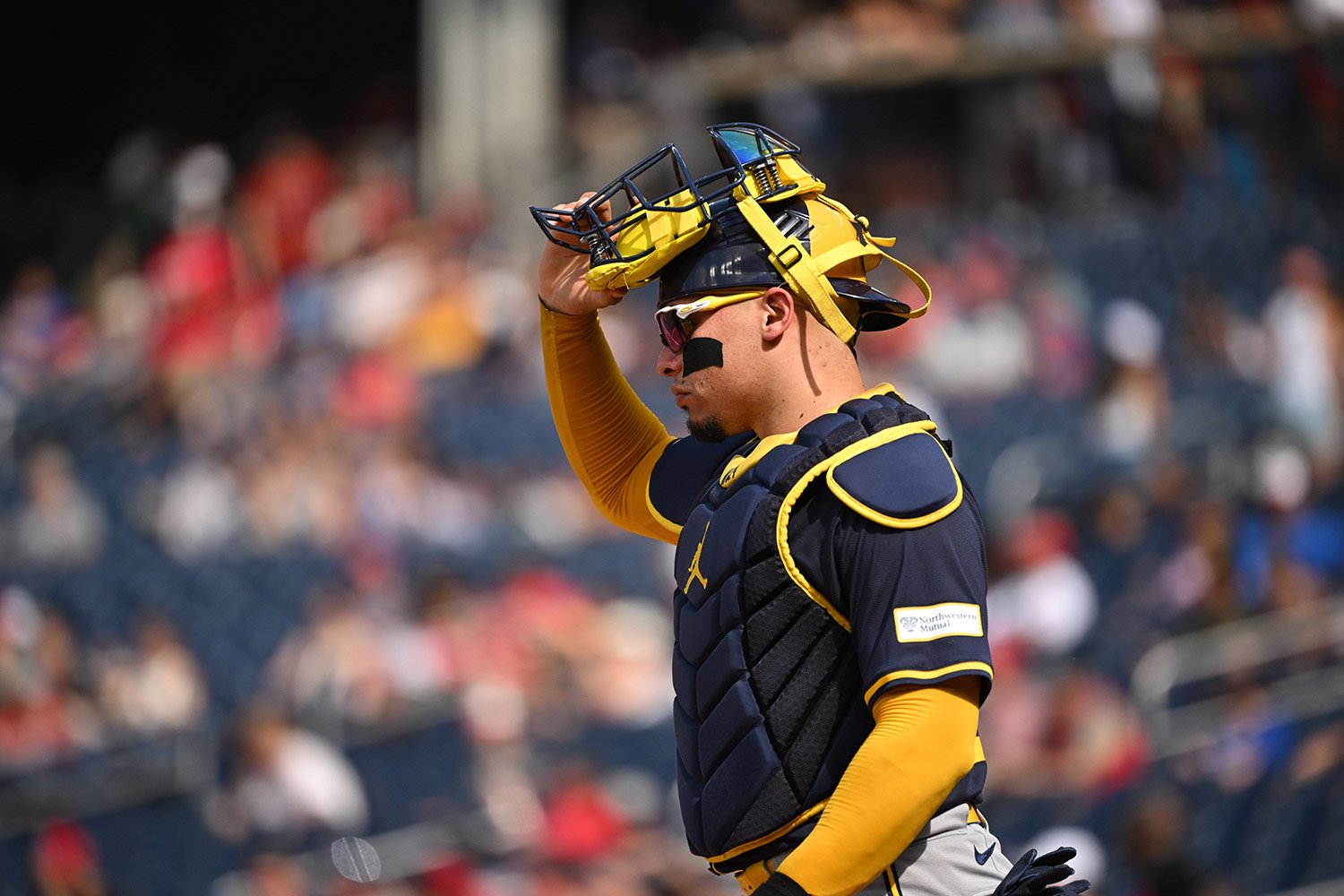 William Contreras calls fastball variations more regularly than any other catcher in baseball outside of Yasmani Grandal. And at least Grandal has the excuse of Jared Jones' and Paul Skenes' elite fastballs to justify it. Contreras has some justification in that pitchers like Colin Rea, Frankie Montas and Aaron Civale have multiple fastball variations in their arsenal but even so, for a team with a dearth of elite fastballs (outside of ace Freddy Peralta), this is an unusual trend. Perhaps the best way to isolate whether this is a team-wide instruction or just Contreras himself is to compare him to Gary Sanchez. Where Contreras calls these so-called hard pitches 64.5% of the time, Sanchez is at a more manageable 60.4%, which would still place him sixth on the list but also closer in percentage points to the bottom half of the list than to Contreras in second place. However, fastball calling on its own isn’t necessarily the issue so much as how Contreras doubles up on the fastball. He ranks in the top eight in the league for following one fastball variation in all counts: pitcher’s and pitcher’s counts with two strikes. Out of 71 qualified catchers, here’s where the two rank in doubling up on hard pitches: William Contreras Gary Sanchez All Counts 63.6% (8th) 59.1% (25th) All Pitchers Counts 56.9% (5th) 51.8% (25th) Pitcher’s Counts with 2 Strikes 58.3% (5th) 54.0% (26th) Contreras doesn’t lead the league in any of these categories. Still, it is noticeable how often he’s doubling up on the fastball more than his counterpart behind the dish. With both in the top 30 of the 71 qualified catchers, it seems an organizational approach to be more fastball-heavy. However, those four percentage points make a big difference in effectiveness, particularly (contrary to my expectations) in non-two-strike counts. The 2024 Milwaukee Brewers have faced over 2,500 batters this season, giving us a large sample size for the following data. When following a four-seam fastball, a sinker, or a cutter, there have been definitively different results for each category of pitch thereafter: As you can see, following one fastball variation with another has been hit quite hard and consistently throughout the year compared to using different pitch types in those counts. The changeups and splitters have done remarkably well in creating poor-quality contact while breaking pitches have been hard-hit almost 20% less often. It’s important to have variety in how you pitch in a multitude of counts, and as such, doubling down on pitches is essential, but for these instances to result in 64.9% of pitches ending plate appearances is quite startling. Part of the success of the changeup comes with how often the Brewers keep it out of the rulebook strike zone at just a 29% clip following a fastball variant, but the breaking pitches are kept in the zone more often while generating more swing and machine. So, how does this play out in two-strike counts? Interestingly, it plays out quite well. The breaking pitches are getting a little more swing and miss while fewer called strikes, but overall, both strikeout rates are quite comparable in two-strike counts. The results of balls in play are slightly misleading, and the xFIP of the breaking pitches is a good indicator of their overall success. However, it is a positive note and may be one reason the Brewers are leaning so heavily into doubling up on fastballs. It’s one reason the Brewers have leaned into players with three different fastball variants. They intend to miss barrels with late movement, keep hitters on their toes, and ultimately get outs using their defense while keeping pitch counts relatively under control. Frankie Montas is a prime example, and the Brewers, as predicted by Matt Trueblood, have leaned heavier on the fastball variants to achieve great success. Increasing the usage of the cutter and sinker from Montas while pushing aside the pitch he was previously best known for, his splitter seems contrary to success; however, his cutter, sinker, and four seams have quite different movement profiles that allow him to miss a lot more bats. The four-seam, in particular, has an elite 34.6% whiff rate with the Brewers despite a fairly average movement profile, and it’s all because of how the Brewers mix within their fastball arsenals rather than mix between pitch groupings. Despite this, I can still see a strong argument for Contreras going too far with these fastball calls, particularly given the staff's lack of fastball excellence, especially with pitchers who have just one type of fastball. The most noticeable change has been how Bryan Hudson has been called over his last three starts. As Lucas notes, that’s an absurdly different strategy for a pitcher whose primary out pitch is an incredible sweeper. To call one in 40 pitches of action is extreme, and it may be down to Hudson feeling uncomfortable with the pitch in warming up; however, even then, you would expect more than a solitary offering even to keep the hitter honest. It does seem to be a specific call by the Brewers to hone in on heavy fastball usage, and for some, that’s brought about some unmitigated success this season. However, there is a worry that they’re teetering on the edge of the brilliance and insanity line with Contreras behind the plate on some nights. It’s becoming a concern, and they may need to address it before the postseason begins.
 -
2024 Minor League Transaction Thread
Jake McKibbin replied to Jim Goulart's topic in Brewers Minor League Talk
-
After years of having to slide in beneath bloated win totals for teams from the NL East and West, the Brewers are just one game back from leading the National League. Given the makeup of their roster and their brand of baseball, that race could be more pivotal than ever. Image courtesy of © Benny Sieu-USA TODAY Sports Since the changes to the playoff format in 2022 that created a bye to the Division Series for each league's top two division winners, a handful of early-round upsets have happened. It's led some to wonder whether that break between the regular season and the start of a playoff run is beneficial or not. Talk of a drop in intensity, the form factor and more have been bandied about, but if you ask any MLB front office, they’d snap your hand off at the opportunity to reach a World Series by playing only two series and not three. This may be even more important for the 2024 Brewers, though, due to their likely formula for winning games in the postseason and how they’ve won in the regular season. How Will It Affect The Brewers' Postseason Strategy? The way the playoffs are structured (with days off between more games) should play right into the Brewers' hands, with their potentially monstrous bullpen and mix of starters. Given the struggles of every Brewers starter who goes through the order a third time, it seems quite likely there will be a lot of four and five inning starts once the team reaches October, complemented by the use of that elite bullpen. With multi-inning arms like DL Hall and Aaron Civale; the lockdown late-inning mix of Trevor Megill, Devin Williams, Bryan Hudson, and Joel Payamps; and potentially even Craig Yoho and Jacob Misiorowski thrown into the mix, the strategy seems ideal. The problem is that the Brewers have thrown more innings in relief than any other team but the San Francisco Giants. A lot of contributors to their early-season success have had stints on the IL of late (including Hudson and Megill, which are seemingly more for workload management than anything else), and having those days off between the end of the regular season and the start of the playoffs will allow that bullpen to be completely refreshed heading into the postseason. We saw early in the season how effective Hudson was, before being worn down a little by usage. The same could be said of Hoby Milner, who was a little snake-bitten earlier in the year but whose real level of performance has sagged in the second half, perhaps as a result of throwing so many innings. Having that selection of arms fresh is a mighty combination, compared to what they look like when worn down. There can also be playoff matchup advantages, but it all hinges on that first game. Theoretically, if a team were involved in a three-game Wild Card Series win, they would have used their first three starters on consecutive days. Even in a two-game series, they’ll be using their third-most effective starter against the Brewers' number one, should the Crew earn a bye. Since Milwaukee hasn’t had a bona fide ace this season, that could prove crucial in avoiding the likes of Zac Gallen, Tyler Glasnow or Chris Sale until later in the series. Starting pitching matchups aren't determinative, especially in the postseason, but getting an edge from schedule alignment has real value to the Brewers, with their flat rotation. The inconsistency of Freddy Peralta across the year is a concern, but there remains time for him to find the best version of himself in time for the playoffs, as he did during the second half of last season. His ERA is also mostly down to his results going the third time through the order this season, with a 2.94 ERA his first two times through and a 7.90 ERA on his third time facing a lineup. His strikeout rate drops with each time through the order, but that can definitely be negated by playoff matchup machinations. With the way the playoff schedule works, pairing Peralta for the first 18 hitters with Hall for the next nine to 12 should spell some different looks for hitters to get through six to seven innings, allowing the arsenal of closers to shut the door from there. It's the kind of setup that should bring a lot of confidence into a matchup with the third- or fourth-choice starter of their opponents and give the Brewers an initial edge, especially with how adept the Brewers have been at pressuring some of the elite arms in baseball this year (see Chris Sale). Is The Additional Rest A Help Or A Hindrance? Perhaps most obvious in the workload equation is the burden placed on some of the Brewers' key offensive contributors, who react to a day off as if it were a dose of smallpox. Willy Adames has played every single game at shortstop this season, while William Contreras has featured in 120 of the 124 games played so far this year, with almost 80% of those being as a catcher. Both have been incredibly productive in August, but the last thing this Brewers team can afford is for both of them to tail off due to the intense workload of the season just when the stakes get raised. There’s also the style of baseball the Brewers play, which can take a greater toll than most. They grind and scrap mentally for every possible inch, playing a speed and discipline game which is highly conducive to playoff baseball. However, it also wears you down far faster than a more relaxed style. The intensity with which Adames, Sal Frelick, Brice Turang, Colin Rea and others approach baseball is tough to maintain over a concerted period, and is a big reason why the Brewers fell into a slump leading into the All-Star break. They cannot afford for the same phenomenon to hit them at the end of a long season, going straight into the playoffs, and may have to decide between giving players appropriate rest in the final few weeks or chasing hard for that playoff bye. Their division lead should make September relatively stress-free, but the race for the top two seeds could go down to the wire. Skipping straight to the NLCS has a lot of advantages: playing a more worn-down team (albeit one experiencing high levels of momentum and adrenaline); the initial matchup advantage to get off to a good start in the series; and the additional home game involved. Financially, Mark Attanasio would be very happy with the additional revenue, and the rest will be absolutely invaluable to a team who plays the most gritty and intense style of baseball possible in the modern era. Their overworked bullpen will thank them. Their offensive stalwarts will thank them. This is the best chance to see the best form of Brewers baseball in the postseason. What do you think of the Brewers pursuit of a bye? Is it a notable advantage? Let us know your thoughts in the comments below! View full article
-
 Since the changes to the playoff format in 2022 that created a bye to the Division Series for each league's top two division winners, a handful of early-round upsets have happened. It's led some to wonder whether that break between the regular season and the start of a playoff run is beneficial or not. Talk of a drop in intensity, the form factor and more have been bandied about, but if you ask any MLB front office, they’d snap your hand off at the opportunity to reach a World Series by playing only two series and not three. This may be even more important for the 2024 Brewers, though, due to their likely formula for winning games in the postseason and how they’ve won in the regular season. How Will It Affect The Brewers' Postseason Strategy? The way the playoffs are structured (with days off between more games) should play right into the Brewers' hands, with their potentially monstrous bullpen and mix of starters. Given the struggles of every Brewers starter who goes through the order a third time, it seems quite likely there will be a lot of four and five inning starts once the team reaches October, complemented by the use of that elite bullpen. With multi-inning arms like DL Hall and Aaron Civale; the lockdown late-inning mix of Trevor Megill, Devin Williams, Bryan Hudson, and Joel Payamps; and potentially even Craig Yoho and Jacob Misiorowski thrown into the mix, the strategy seems ideal. The problem is that the Brewers have thrown more innings in relief than any other team but the San Francisco Giants. A lot of contributors to their early-season success have had stints on the IL of late (including Hudson and Megill, which are seemingly more for workload management than anything else), and having those days off between the end of the regular season and the start of the playoffs will allow that bullpen to be completely refreshed heading into the postseason. We saw early in the season how effective Hudson was, before being worn down a little by usage. The same could be said of Hoby Milner, who was a little snake-bitten earlier in the year but whose real level of performance has sagged in the second half, perhaps as a result of throwing so many innings. Having that selection of arms fresh is a mighty combination, compared to what they look like when worn down. There can also be playoff matchup advantages, but it all hinges on that first game. Theoretically, if a team were involved in a three-game Wild Card Series win, they would have used their first three starters on consecutive days. Even in a two-game series, they’ll be using their third-most effective starter against the Brewers' number one, should the Crew earn a bye. Since Milwaukee hasn’t had a bona fide ace this season, that could prove crucial in avoiding the likes of Zac Gallen, Tyler Glasnow or Chris Sale until later in the series. Starting pitching matchups aren't determinative, especially in the postseason, but getting an edge from schedule alignment has real value to the Brewers, with their flat rotation. The inconsistency of Freddy Peralta across the year is a concern, but there remains time for him to find the best version of himself in time for the playoffs, as he did during the second half of last season. His ERA is also mostly down to his results going the third time through the order this season, with a 2.94 ERA his first two times through and a 7.90 ERA on his third time facing a lineup. His strikeout rate drops with each time through the order, but that can definitely be negated by playoff matchup machinations. With the way the playoff schedule works, pairing Peralta for the first 18 hitters with Hall for the next nine to 12 should spell some different looks for hitters to get through six to seven innings, allowing the arsenal of closers to shut the door from there. It's the kind of setup that should bring a lot of confidence into a matchup with the third- or fourth-choice starter of their opponents and give the Brewers an initial edge, especially with how adept the Brewers have been at pressuring some of the elite arms in baseball this year (see Chris Sale). Is The Additional Rest A Help Or A Hindrance? Perhaps most obvious in the workload equation is the burden placed on some of the Brewers' key offensive contributors, who react to a day off as if it were a dose of smallpox. Willy Adames has played every single game at shortstop this season, while William Contreras has featured in 120 of the 124 games played so far this year, with almost 80% of those being as a catcher. Both have been incredibly productive in August, but the last thing this Brewers team can afford is for both of them to tail off due to the intense workload of the season just when the stakes get raised. There’s also the style of baseball the Brewers play, which can take a greater toll than most. They grind and scrap mentally for every possible inch, playing a speed and discipline game which is highly conducive to playoff baseball. However, it also wears you down far faster than a more relaxed style. The intensity with which Adames, Sal Frelick, Brice Turang, Colin Rea and others approach baseball is tough to maintain over a concerted period, and is a big reason why the Brewers fell into a slump leading into the All-Star break. They cannot afford for the same phenomenon to hit them at the end of a long season, going straight into the playoffs, and may have to decide between giving players appropriate rest in the final few weeks or chasing hard for that playoff bye. Their division lead should make September relatively stress-free, but the race for the top two seeds could go down to the wire. Skipping straight to the NLCS has a lot of advantages: playing a more worn-down team (albeit one experiencing high levels of momentum and adrenaline); the initial matchup advantage to get off to a good start in the series; and the additional home game involved. Financially, Mark Attanasio would be very happy with the additional revenue, and the rest will be absolutely invaluable to a team who plays the most gritty and intense style of baseball possible in the modern era. Their overworked bullpen will thank them. Their offensive stalwarts will thank them. This is the best chance to see the best form of Brewers baseball in the postseason. What do you think of the Brewers pursuit of a bye? Is it a notable advantage? Let us know your thoughts in the comments below!
- 3 comments
-
- 1
-
-
- freddy peralta
- willy adames
- (and 1 more)

